


Abstract
Climate change is radically altering the Earth’s natural ecosystems, with temperature/precipitation alterations resulting in mismatches between specific ecosystems and their ‘new’ climatic profiles. Without political action to curb greenhouse gas emissions, most plant/animal species will need to move to higher latitudes to ensure survival. Many are incapable of migrating rapidly and will thus be reliant on human intervention to relocate to new regions (assisted migration). The first hypothetical steps of assisted migration are explored here, using the UK as a model. Urban parks/gardens have a history of hosting non-native plant species and could be used to test the validity of moving non-native plants and animals to regions of higher latitude. In this perspective paper, we added a small experimental component to examine public attitudes to species introductions into urban parks/gardens. Results showed support for using parks and gardens to protect both UK native and non-native wildlife. Indeed, >50% of respondents favoured utilising urban landscapes to conserve small non-native animals (e.g., tortoises and bee-eaters). These results imply there may be some public acceptance of assisted migration. Thus, the paper explores the potential to develop novel, but more sustainable ecosystems in new localities.
1. Introduction
This perspective paper examines the mismatches between our understanding of climate change impacts and our actions to conserve biodiversity. It calls for ‘forward thinking’ and dialogue as to where active conservation should take place. This is a consequence of equatorial regions becoming increasingly hot and the potential difficulties in sustaining their natural ecosystems as the climate continues to warm. We discuss the potential of assisted migration (moving species from one part of the globe to another through human intervention) to help conserve plant and animal species and sustain ecosystem functionality in the host site. We use the UK as a model system to propose that urban parks and gardens could serve as transitional landscapes to test this assisted-migration process. We test public opinion on the presence of more wild plant and animal communities in parks and gardens through a short questionnaire. We use this data, the literature, and wider conceptual issues to discuss the benefits and drawbacks of using urban landscapes to implement assisted migration.
Climate change is radically altering the world’s atmospheric processes and natural ecosystems. Global temperatures have risen by 1.4 °C since the start of the Industrial Revolution [1] and are currently predicted to reach 2–3 °C warming by 2100 [2] depending on political action to curb further greenhouse gas emissions. Without such action, temperatures are expected to exceed those after 2100 [3]. In an attempt to demonstrate more tangibly what these scenarios mean in practice, Bastin et al. [4] indicated how individual city climates by 2050 might change. For example, the climate of London, UK, would become more like current-day Barcelona, Spain, i.e., moving from a temperate towards a Mediterranean type climate. And, feasibly, without effective control of greenhouse gas emissions after that, London would experience an even warmer climate—perhaps not unlike parts of North Africa at present [3,5]. This would only be partly comparable, however, because climate models suggest weather patterns will also be more variable and turbulent than they currently are [6,7]. Hence, despite being within a new Mediterranean climatic region, the London of 2100 could also experience, for example, severe flooding at intermittent periods [8].
While it is acknowledged that many plant and animal species demonstrate significant tolerance to abiotic and biotic pressures, it seems likely that numerous species living in and around London at present would struggle to survive in the future due to such climatic shifts and extremes [9,10,11,12]. This would be true of species across the globe [13]. To survive, most species would need to migrate 2000–3000 km further away from the equator to find a climate broadly comparable to that in which they are adapted. Already, many species have been shifting their ranges to remain within their niche space, with movements towards the poles and to higher altitudes [14], yet such adaptive responses are often insufficient [15] to keep up with the pace of climate change [14,16,17,18,19]. Even when species have the capacity to migrate, this is inhibited by both natural features (rivers, lakes, mountain ranges, etc.) and anthropogenic actions, such as habitat loss and fragmentation from agricultural or urban land use [20,21]. The reality is that many animal and plant populations face a high risk of extinction this century [18].
Rapid climate change then raises the moral question: Should humans aid the movement of species away from lower to higher latitudes (assisted migration) and develop novel but supportive ecosystems in the new locations? The aim is to help conserve global biodiversity and to retain ecosystem function at the host site, albeit through a range of plant and animal species new to that location [22]. The processes involved in assisted migration would be complex and challenging, and it needs to be stressed that the most feasible means to protect the planet’s biodiversity remain effective policies and practices that reduce human reliance on fossil fuels, e.g., [23,24]. Yet progress on this is currently insufficient [25,26], and the scientific community, policymakers, and, indeed, society in general need to start contemplating much more radical, alternative solutions to protect the planet’s wildlife and ecosystems.
This perspective paper examines the controversial concept of assisted migration of plants, animals, and even microbial species (e.g., in soil samples), the potential processes involved, and their feasibility. Our discussions, though, assume that other factors are in place to support the concept. For example, human society itself remains relatively stable and is not undermined by food shortages or political instability due to mass human migration and the resource shortages brought on by climate change [27,28,29]. The arguments also relate to scenarios of net warming in the European region, not, for example, overall cooling due to the Atlantic Meridional Overturning Circulation (AMOC) system collapsing, as in [30]. The UK is used to provide a degree of context and focus to the discussions, but many of the principles and processes are applicable globally. The UK provides a particularly useful model, though, as it is a series of islands, and thus not easily colonised by terrestrial plants and animals naturally. It also has a strong cultural history of introducing novel, non-native species, especially plants, to its landscapes [31,32]. Thus, there may arguably be greater political and societal acceptance of such change in the UK than elsewhere.
1.1. Assisted Migration
Although the concept of assisted migration has been aired before, there has been, up to now, a general reluctance to move species around the globe, out of fear of damaging existing ecosystems. Assisted migration is a proactive strategy to physically move plant and animal species to geographical locations with more favourable future climates [33,34,35]. This approach aims to conserve species and, as discussed here, to establish new ecosystems and retain ecosystem functionality in new locations [36]. Assisted migration could be a vital tool in preserving biodiversity and ecosystem health in a changing climate [37,38,39]. It has also been used in the past for economic gain—e.g., the introduction of new tree species for silviculture [40,41,42] or for food crops or livestock [43,44,45]. The implementation of assisted migration, however, involves several uncertainties and concerns. It is unclear how effectively artificially introduced species can adapt to the new location (e.g., climate may be comparable to the former species’ range, but other key factors may differ—photoperiod, light intensity, soil type, magnetic field strength [e.g., important for bird navigation]). There are potential significant risks of disrupting existing ecosystems and causing unforeseen ecological imbalances [46,47,48].
Probably the greatest concern with assisted migration is the risk that individual species may become invasive and overly dominant in the landscape. The introduction of non-native plants and animals into new locations has a long history of causing damage to endemic species native to the host region, as the introduced biota can become ‘invasive aliens’, i.e., exploiting new ecological niches and outcompeting the native flora and fauna [49]. Native species possessing limited resistance to the introduced alien species, and the introduced aliens are ‘freed’ from their normal regulating processes, such as natural predators or pathogens. It is thought that 10% of introduced species can become invasive [50] and radically alter existing stable ecosystems. Indeed, invasiveness is considered the third most detrimental factor to global biodiversity [51], but also see [52], after habitat loss and climate change. These factors are linked, of course, and climate change has been associated with more species becoming invasive, and the colonisation potential increasing as ecosystems become less resilient to external pressures.
In a review of assisted migration, Hewitt et al. cited additional concerns. Notably, it is difficult to predict ecosystem impacts and interactions, genetic impacts, the diversion of resources from other conservation activities, possible bias towards species that humans deem important, and finally, socio-economic and cultural impacts [53]. Conversely the benefits were cited as: preventing biodiversity loss/extinctions, helping species with poor dispersal or other limiting life-history traits, a capacity to counteract the effects of fragmented landscapes (e.g., polar/alpine distribution ranges), a capacity to retain ecosystem services, improve genetic fitness (between separated populations of a given species) and socio-economic and cultural benefits [53].
1.2. Pragmatic Points with Assisted Migration and Public Attitudes and Engagement
In practice, assisted migration is most common for plants (particularly trees), followed by birds, and is less frequently implemented for other taxa [35]. Limited assisted migration has been carried out for conservation purposes per se, with more case studies being associated with research agendas, forestry requirements, and angling (e.g., moving fish species to new lakes/rivers for recreational fishing). Specific examples of habitat loss or climatic impacts include the translocation of Lepidoptera, Amphibia, and Reptilia. Most assisted movements tend to be within (65%) rather than outside (35%) species ranges [35]. In their review, Twardek et al. reported that the majority of assisted migration interventions occurred in North America (n = 129), followed by Europe (n = 54), Oceania (n = 14), and then Asia (n = 7) [35]. The lack of case studies and their recent implementation means there is a dearth of knowledge about the longer-term population- and community-level impacts [54].
While implementation of assisted migration for conservation purposes due to climate change has been infrequent, pertinent information exists to help guide assisted migration decisions, including various decision frameworks and protocols [55,56], methods to identify priority species for introduction [57], and models to map suitable future habitat [58,59].
In terms of silviculture and urban tree selection, it is acknowledged that many tree species can grow outside their natural distribution (e.g., in European cities such as Geneva, Switzerland, 90% of trees present in the city are non-native [60]). When introduced to new locations, practical tree management aspects, such as irrigation during establishment [19], awareness of pest/pathogen pressures, and the use of protective nurse plant species to help insulate and avoid herbivory of the desired trees, can aid their establishment.
Public acceptance of assisted migration is not clear. In Canada, in the context of forestry, the principle of assisted migration (both within and outside natural ranges) was supported. However, concerns were raised specifically for introductions outside natural ranges, and 69% of respondents believed more research was needed before this could be implemented [61]. Stakeholders emphasised the importance of the economic viability of tree species introductions, public participation in decision-making, and transparency in forestry processes [62]. In Chile, the movement of Liolaemus nigroviridis (black-green lizard), a high-altitudinal species, was broadly accepted by alpine communities, but only if translocated to public land on the new host mountain ranges. Private landowners, such as farmers, were not in favour of introductions on their own land [63]. This report also indicated that animal aesthetics were important for their acceptance as translocated species.
Assisted migration is often seen as an academic debate, with greater engagement with policymakers and citizens required. Hewitt et al. recommend advancing the debate by adopting strategies that carefully evaluate risks, benefits, and trade-offs, and by including all stakeholders in decisions about whether to proceed with assisted migration [53]. They argue that, if and when it is implemented, assisted migration needs to be conducted experimentally, learning from experience and adjusting policies and plans accordingly [53].
1.3. Not Just Moving Individual Species—Moving Whole Ecosystems
Most of the literature on assisted migration has discussed moving individual species of conservation concern or perhaps species with economic importance [44,54]. Surprisingly, little literature deals with the issue of moving numerous species, or parts or whole ecosystems. We anticipate that this will be exponentially more difficult. Although the introduction of individual species has proven problematic for endemic species and ecosystems, it is less clear what happens when a significant part, or even an entire ecosystem, moves from one location to another. Do the transferred species remain in balance? Even if theoretically possible, challenges remain in practice for artificially moving large numbers of species from location A to B within a short period of time. Despite these huge logistical dilemmas and the ethical considerations around mass species migration, such radical solutions will likely need to be considered if much of the planet’s biodiversity is to be saved. The concept being discussed here is problem-ridden and potentially unethical in a conventional context, but in reality, it may be ‘the lesser of two evils’ in the long term. Traditional conservation practices (especially those aligned with ‘location tied’ nature reserves) are unlikely to save global biodiversity from a rapidly warming climate, e.g., [64]. However, radical thinking around assisted migration of existing ecosystems just might provide a chance.
1.4. What Would Be the First Steps for Assisted Migration—Do Urban Parks and Gardens (Yards) Provide a Possible Catalyst for Assisted Migration?
If the paradigms and concepts around assisted migration are challenging for conservation bodies (and stakeholders and communities—see above), the practicalities of implementing it may be even more problematic. We foresee selecting scientifically important nature reserves and translocating all the essential elements (soil samples, flora, and fauna) 2000–3000 km further away from the equator would be fraught with problems, not only logistically but also, probably, politically. Taking a specific example, such as the Site of Scientific Interest (SSSI) at Wicken Fen, East Anglia, UK and moving all the key ecological components 1700 km north to, for example, Svanaträskmyran in Sweden, then immediately replacing those at Wicken Fen with microbiota, flora and animals from, for example, the Guerbès wetlands in Algiers, imposes huge risks. Even within the context of a changing climate and biodiversity concerns, it would be politically challenging to ‘strip out’ all the species from an SSSI and replace them with species from lower latitudes. There are two landscape typologies, however, in which species have been artificially introduced from near the equator (and indeed elsewhere) for the last 2–3 centuries, largely without significant political outcry: namely parks and gardens (yards in North America). At least in terms of plant biodiversity, parks and gardens are significant repositories for many non-native species [65,66]. Thus, urban garden and park space could be utilised to test not only the introduction of plants from lower latitudes, but also, progressively, the faunal associations with such plant communities. In an urban context, this is likely to be, in the first place, smaller animals and those less threatening to humans. If successful, the process could be evolved to facilitate the introduction of larger or more culturally problematic animal species into the wider rural landscape later. We believe this slower, progressive approach to species introductions may have more socio-political support than the rapid transformations in plant and animal communities over a very short timeframe. Some of these points echo the advice from Butt et al. [33] and Van Meerbeek et al. [22] on assisted migration in general, namely, focusing on species with the following properties: i. low invasion risk; ii. selecting species with anticipated adaptation to both the new climate they are placed in and the future climate predicted for that location; iii. attempting assisted migrations at small scales (at least initially); iv. matching soil conditions (if plants); v. prioritising species that help address functional gaps; vi. ensuring political and public support for any interventions.
Parks and gardens provide useful model systems. This is because there are arguably fewer legal restrictions on what can be planted in such spaces than, e.g., in nature reserves or the countryside in general. Parks and gardens are already novel ecosystems as they combine flora from many parts of the planet [67] and can be biologically rich, at least for some taxonomic groups [65,68]. They are also heavily managed [66,69,70]. Hence, ecological developments could be observed and monitored closely, for example, through citizen science approaches. Urban sites are notably warmer than their rural counterparts due to the urban heat island effect [71]. Therefore, they could be at the forefront of this research and provide early warning signs of potential ecological imbalances. They are small in scale, allowing the microcosm (stepping stone) approach to testing new introductions without necessarily leading to rapid, uncontrolled species spread. For example, park areas could be physically restricted or isolated in the first instance, if required.
Private (and public) garden styles vary widely but include numerous examples of residents trying to encourage wildlife [72] (or even adopt urban rewilding principles, e.g., encouraging ‘native plants and animals into urban infrastructure’ [73]). In addition, in mid-latitudes such as northern Europe and northern USA, some garden managers mimic Mediterranean-style plantings [74,75]. Thus, private gardens, as well as some public gardens and parks, could become “living test-tubes” that represent components of subtropical ecosystems, not simply collections of Mediterranean flora for aesthetic purposes. In the UK, for example, frost episodes may disappear from southern and south-west regions between 2070 and 2100 [76], thus radically increasing the sub-tropical plant flora that could survive after that point. Although new entire ecosystems are envisaged, in reality, their development would be carried out in steps over time, with checks and balances to minimise overdominance or underrepresentation of key species. We propose that the process could start with urban gardens and parks but then expand into non-agricultural land in the rural environment.
1.5. Challenges and People’s Opinions on Non-Native Species Introductions
As outlined above, there is limited dialogue within society about the requirement for assisted migration (with the possible exception within the forestry and urban tree sectors) and how it might work in practice. We speculate that the most challenging aspects in terms of public acceptance (for a country like the UK at least) of assisted migration would likely be the introduction of the following:
- Toxic plants
- Venomous (to humans) invertebrates and vertebrates
- Large, potentially dangerous herbivores
- Apex predators
Although attitudinal studies have been carried out for species reintroductions, rewilding principles, and climate-adapted vegetation [75,77], few studies have explored the public’s attitudes to non-native introductions as a conservation measure. In light of this, we were keen to explore how receptive people were, in principle, to non-native plants and animals, especially in an urban context, where citizens might encounter these species more readily. Thus, to better inform our arguments on assisted migration, we conducted a short online questionnaire to test public acceptability of non-native species.
2. Experimental Component
2.1. Examining Attitudes to Urban Parks and Gardens Being Used as Refuge Sites for Native and Non-Native Plants and Animals via Questionnaire
To engage public opinion on climate change and its impact on global biodiversity, and specifically on people’s willingness to accommodate non-native ‘assisted’ species in their ‘familiar’ urban green spaces, we conducted a short online questionnaire with a UK audience. To help distinguish views on non-native plants and animals and attitudes to wildlife in general, we also asked questions about the acceptability of native species, both those commonly found in urban settings and those less common.
The questionnaire was set up to test the following hypotheses.
- 1
- Most people are concerned about climate change and its impacts.
- 2
- Most people would welcome a wider range of native plants and animals in urban parks and gardens.
- 3
- Most people would not welcome the presence of non-native plant communities and animals in urban parks and gardens.
2.2. Materials and Methods for the Questionnaire
This study adopted a quantitative and qualitative, cross-sectional survey design. We investigated the public appreciation of native and non-native species within urban green spaces, including key plant communities and specific representative plant and animal taxa, and the perceptions of their future viability in the context of climate change. A structured online questionnaire was selected as the data collection instrument due to its efficiency in reaching a broad and diverse audience [78].
The UK was used to provide context, and most responses, but not all, came from the UK. The online questionnaire was distributed through social media platforms (Facebook, X, LinkedIn, and TikTok), local community groups (including ‘friends of’ local museums, parks, and industrial heritage features), and student cohorts and clubs. While this method does not guarantee a representative sample, it was a practical way to collect a large dataset from individuals likely to be engaged with the topic [79]. Data was collected on Google Forms, a platform recommended and approved by the host university. The questionnaire was organised into four sections. First, a demographic section captured the sample’s composition (age, gender, location, occupation type, and current area of residence). This section was optional, except for a single mandatory item that asked respondents to indicate their current area of residence. This was a single-choice question with non-identifying response options to protect anonymity. The second section assessed public acknowledgement/understanding of climate change, and the third section measured public appreciation of native and non-native species. These sections combined nominal single-choice items (e.g., Yes/No/Not sure) or Likert-scale statements measuring degrees of agreement or concern [78]. Public responses to a range of native vegetation types in the UK and to different plant communities associated with a Mediterranean climate were determined; these varying in the level of greenery and flower colour. Animals and associated images were chosen to reflect differences in size, colour, trophic level (herbivore, omnivore, carnivore) and possible responses based on biophilic or socio-cultural perceptions or biases (colourful ‘harmless’ bird compared against ‘threatening’ medium sized carnivore), with three familiar species in the UK and six species found in the region spanning from the Mediterranean to central Africa, being selected (Figure 1). The rationale for more detailed plant community and animal species selection is outlined in Table 1. Images were sourced from free-to-use platforms (Microsoft Bing, with permission to ‘free to share and use’) and from students/staff within the host Department. Copyright was obtained to use the images in the questionnaire, but not necessarily to publish them. Thus, during the preparation of this manuscript, the authors used either their own personal images or generated similar images with Adobe AI Firefly Image 5 to closely represent those in the questionnaire. The aim here is to provide additional context for the reader; note that any comments on images in the results refer to the images the participants actually viewed. The authors have reviewed and edited the output and take full responsibility for the content of this publication. Finally, in the fourth section of the questionnaire, open-ended questions explored the conditions under which participants would welcome or oppose the introduction of non-native plants and animals into urban green spaces. The questionnaire was piloted with a small group before dissemination to check clarity, flow, and content validity. The questions are outlined in Supplementary Materials 1.
Figure 1.
Representative images similar to those used in the questionnaire. Copyright was obtained for the images to be used for research, but not subsequent publication. Thus, the use of representatives here is for the reader’s benefit. Images used in parts of the questionnaire see later figures. * Image from Cameron. • Image from Farris. † Image generated from AI Adobe Firefly Image 5.
Table 1.
The rationale for plant community and animal species selections within the questionnaire.
2.3. Data Analysis
The collected data were analysed using SPSS (Statistical Package for the Social Sciences), version 29, and R, version 4.5.1 (R Foundation, Vienna, Austria). Demographic descriptive analyses used frequency analysis [80]. The relationships between the responses and demographic factors (gender, age group, current living environment) were explored using multinomial logistic regression. The full multinomial model tables are reported in Supplementary Materials 2. Some Likert scales were converted to numbers, e.g., No = −2, Not sure = −1, Perhaps = 0, Yes = 1, and Yes, very much so = 2, and nonparametric Kruskal–Wallis tests were used to determine significant differences between the median values, with post hoc Bonferroni tests used to rank the medians.
Ethical approval (No. 070341) was granted by the host university’s ethics administration on 3 July 2025. All participants consented to the Participant Consent Form and the Participant Information Sheet before participating in any study procedure. All data were pseudonymised and securely protected.
2.4. Results from the Questionnaire
There were 258 respondents to the online questionnaire over a 3-week period. These comprised 122 females, 134 males, and 2 people who did not disclose their gender. The demographics tended to represent younger age groups with the greatest number of participants (n) aged from 18–25 years (n = 70) with 26–35 years (n = 53), 36–45 years (n = 56), 46–55 years (n = 44), 56–65 years (n = 25) and >65 years old (n = 9). Greater than 98% of respondents were from the UK. Gender sometimes had a significant effect on the responses, and data for female/male comparisons are presented. Due to the low replication among those who did not disclose any gender identity, this data was omitted from the statistical analyses.
Within the female cohort, 76% believed climate change was occurring, 10% were unsure, and 14% believed it was not occurring. In males, the percentages were 70%, 11%, and 19%, respectively. Gender differences were not significant in the regression analysis of this question, but males were more likely to say they were “not concerned” by climate change than females (Odds Ratio = 1.30, Confidence Interval = 0.24–2.38, p = 0.02). Most people expressed some concern about climate change (Figure 2), with females particularly very concerned: over 20% indicated it could threaten humanity. In contrast, over 20% of males considered it a myth, or its impacts were likely to be vastly exaggerated. This was confirmed by the regression model: males were 3.8 times more likely than females to state that climate change is a myth (Odds Ratio = 3.81, Confidence Interval = 0.31–2.31, p = 0.01).
Figure 2.
Percentage of female and male respondents concerned about climate change and humanity’s capacity to deal with it.
Both genders were largely supportive of the notion of urban green space being used more to support native wildlife (79% of females and 73% of males), although females were stronger advocates for rewilding initiatives in such spaces (Question—“Would you like to see more green space ‘Rewilded’, for example, areas left ‘to nature’ and not intensively managed by humans?” Females—Yes = 69%, No = 18%; Males—Yes = 53%, No = 34%). The regression analysis showed that males were at least twice as likely to answer “No” to the question, compared with females (Odds Ratio = 2.66, Confidence Interval = 0.36–1.60, p < 0.01). When asked if urban green space should be used to prioritise native plant species, irrespective of what the future climate might be, the response was less strong, but still positive: Females, Yes and very much so = 53%, No = 12%; Males, Yes and very much so = 47%, No = 9%. When asked about attitudes to specific vegetation types in urban green space, people were most positive about colourful perennial flower meadows (60–74% overall approval) and native woodland (67–80%), with more mixed results for arguably the less aesthetically pleasing rough grassland (48–50% overall approval) and scrub (46–49%) (Figure 3). Respondents were positive about the spaces supporting UK animal wildlife, with overall approval rates of Aglais io [peacock butterfly] = 66–76%, Erinaceus europaeus [hedgehog] = 66–71%, and Lutra lutra [otter] = 59–67% (Figure 4).
Figure 3.
The acceptance of different types of native vegetation more often used in urban parks and gardens, as determined by female or male respondents.
Figure 4.
The acceptance of different types of native animals present in urban parks and gardens, as determined by female or male respondents. Peacock butterfly—Aglais io; hedgehog—Erinaceus europaeus; otter—Lutra lutra.
When the concept of non-native wildlife being supported or introduced into urban green spaces was suggested, there was a positive response to plants (61–65% approval), but a more muted response to animals (42–49%) (Figure 5).
Figure 5.
The acceptance in principle of non-native plants and animals present in urban parks and gardens, as determined by female or male respondents.
When asked specifically if urban green space should be used to grow Mediterranean flora to reflect a warming climate, the majority of both females and males were in favour, with Females—Yes and very much so = 69%, No = 6%; Males—Yes and very much so = 56%, No = 11%.
Different types of Mediterranean plant communities met with mixed receptions (Figure 6). The notion of a Mediterranean garden style proved popular (60–70% overall approval), with Mediterranean woodland intermediate (56–61% approval) and a drier xeric Mediterranean plant community least popular (40–45% approval).
Figure 6.
The acceptance of different types of non-native plant communities more often used in urban parks and gardens, as determined by female or male respondents.
The types of animals considered appropriate for introduction varied widely. Merops nubicus [northern carmine bee-eater] (53–56% approval) and Testudo hermanni hermanni [Hermann’s tortoise] (57–58% approval) were accepted by a majority of participants (Figure 7). There was some ambiguity about the introduction of Scarturus tetradactylus [four-toed jerboa]—Females—Not sure 27%, Perhaps 21%; Males—Not sure 22%, Perhaps 27%, and largely a negative reaction to the introduction of Vipera aspis [European asp] (64–73% No or Not sure) or Crocuta crocuta [spotted hyena] (67–68% No or Not sure). Perhaps most surprisingly, 40–43% of participants were broadly in favour of the introduction of Equus quagga [plains zebra], despite it being a large herbivore.
Figure 7.
The acceptance of different types of non-native animals in urban parks and gardens, as determined by female and male respondents. Northern carmine bee-eater—Merops nubicus; Hermann’s tortoise—Testudo hermanni hermanni; four-toed jerboa—Scarturus tetradactylus; European asp—Vipera aspis; plains zebra—Equus quagga; spotted hyena—Crocuta crocuta.
Converting responses to ranked scores and applying a nonparametric Kruskal–Wallis test revealed significant differences in median values across vegetation types (p < 0.01). Wildflower meadows and native woodlands were ranked the highest in acceptance, with Mediterranean gardens and Mediterranean woodlands intermediate, and native rough grass, scrub, and dry Mediterranean plant communities the least popular (Figure 8). Kruskal–Wallis tests were also significant for animals (p < 0.01), with the native animals Aglais io [peacock butterfly], Erinaceus europaeus [hedgehog], and Lutra lutra [otter] significantly more popular than Merops nubicus [bee eater] and Testudo hermanni hermanni [tortoise], and these more popular than Scarturus tetradactylus [jerboa] and Equus quagga [zebra], with Crocuta crocuta [hyena] and Vipera aspis [asp] least popular (Figure 9).
Figure 8.
Acceptance of vegetation types across questions. Median values (circles) and interquartile range (bars) when responses were ranked as scores. Letters denote significant differences between medians, from Bonferroni post hoc tests.
Figure 9.
Acceptance of animals across questions. Median values (circles) and interquartile range (bars) when responses ranked as scores. Letters denote significant differences between medians, from Bonferroni post hoc tests. Peacock butterfly—Aglais io; hedgehog—Erinaceus europaeus; otter—Lutra lutra; Northern carmine bee-eater—Merops nubicus; Hermann’s tortoise—Testudo hermanni hermanni; four-toed jerboa—Scarturus tetradactylus; European asp—Vipera aspis; plains zebra—Equus quagga; spotted hyena—Crocuta crocuta.
2.5. Key Points from the Questionnaire
The questionnaire found that most people believed climate change was occurring, and that 66% of females and 54% of males were concerned or very concerned about it. Thus, this data supports our initial hypothesis that most people are concerned about climate change and its impacts. Perhaps more of a concern from a scientific/policy angle, however, was a sizeable minority—almost one in five males —who did not believe climate change was happening at all.
There was support for using urban green spaces more to protect UK native wildlife, with over 50% of both genders open to the idea of parks and gardens being ‘rewilded’. There was general support for such locations to support UK fauna, including animals as large as Lutra lutra (otter). In terms of vegetation, there was a preference for native plant communities that provided colour (wildflower meadows) and greater structure (native woodlands) over perhaps less aesthetically pleasing vegetation, such as rough grassland or scrub. The woodland may have been popular, as the image presented showed blue Hyacinthoides non-scripta [bluebell] in the ground flora—i.e., the image was relatively colourful. Flower colour has been associated with interest and preference in the landscape [81,82]. These points may relate to UK parks and gardens, which are often characterized by tidy, well-managed plantings [83]. Overall, the data supported our second hypothesis—most people would welcome a wider range of native plants and animals in urban parks and gardens.
Responses to non-native species being introduced were intriguing. Over 40% of respondents were relatively positive about the introduction of Equus quagga (plains zebra), with even more support for Testudo hermanni hermanni (Hermann’s tortoise) (57–58% approval) and Merops nubicus (northern carmine bee-eater) (53–56% approval). Somewhat less surprisingly, potentially dangerous animals such as the venomous snake Vipera aspis (European asp) and mammalian carnivore Crocuta crocuta (spotted hyena) were less popular. But even here, notable minorities (15–20%) engaged positively with the notion of introductions of these species.
Resistance against non-native plants was even lower than that against non-native animals (Figure 5 and Figure 6), although there was a strong preference for plant communities that represented Mediterranean garden styles (60–70% approval), with dry xeric flora being the least popular (40–45% approval).
Overall, the data indicated high levels of tolerance/acceptance of non-native species introductions. This was most strongly expressed with plants, and those animals considered ‘benign’ and non-dangerous to humans (e.g., bee-eaters and tortoises). Nevertheless, this acceptance of some non-native wildlife in a native landscape is an astounding point, suggesting that citizens are concerned not only about native wildlife but also about the fate of non-native species and their habitats. A concern that extends to altering urban green spaces to serve as refugia for non-native species and potentially facilitating the development of new ecosystems. Such concerns and thoughts (albeit from a largely lay audience) contradict many current conservation policies in the UK and elsewhere, which are often aimed at excluding non-native species [84,85]. Thus, issues around climate change may be challenging long-held paradigms about what should be conserved and where. Taken in the round, the data refutes our third hypothesis that most people would not welcome the presence of non-native plants and animals in urban parks and gardens. At least some—Mediterranean garden and woodland plant communities, tortoises, and bee-eaters—are evidently welcomed by the majority of participants.
As indicated above, not all non-native species were equally welcomed, however. There were obvious concerns about animals considered dangerous, perhaps reflecting a highly urbanised society and a country with very few dangerous indigenous species. Our study specifically addressed the context of urban green space, and future research should determine how opinions on the more dangerous species might vary in the rural environment or in locations partially enclosed or semi-excluded from humans. Debates around rewilding may help here. The return of locally extinct, but native predator species (e.g., Canis lupus lupus—Eurasian wolf, Ursus arctos arctos—Eurasian brown bear, Lynx lynx—Eurasian lynx) that may pose a threat to humans and their livestock has met with both tolerance and resistance in recent years [77,86,87,88]. The aesthetics of the animals in question may also be a factor [63]– colourful peacock butterflies and Northern carmine bee-eaters being particularly popular in this study. Such emotional responses may also explain the difference in popularity between the Mediterranean garden flora image (with elements of human design and vernacular buildings present) and the flora of the more arid ‘wild’ landscape [83].
In several instances, we observed differences in response strength between females and males. Females showed greater interest in or support for landscapes that might allow rewilding or support Mediterranean flora, and wildflower meadows and native woodland were relatively more popular with female participants than with male participants. Other studies have suggested that females may be more pro-environmental in outlook and attitudes, and may favour landscapes that prioritise emotional connection with nature, whereas the functionality of the landscape may be a more important component for males [89,90].
We believe these results on the general acceptance of (some) plants and animals are important and relatively novel. We are not aware of a similar survey covering the range of theoretical species/introductions represented. Most other studies focus on a single taxonomic group or functional group, such as timber trees [62] or mangrove forests [91]. The subjective nature of which species are preferred/accepted, however, is mirrored elsewhere, e.g., in attitudes to control programmes for invasive or problematic species, i.e., the ‘cuteness’ factor—public resistance to control of attractive or iconic non-native species [92,93,94] and to prioritise their conservation [63].
2.6. Limitations to the Questionnaire
This questionnaire’s methodological approach has several limitations. Our survey was conducted over a short time frame and used a gender-balanced, but relatively small, sample. Further research should consider a larger population and wider targeting of more difficult-to-access demographic groups. Our dataset was under-represented among older citizens (>65 years), some of whom may hold more ‘conservative views’ on both climate change and species movement. The age disparity may relate to the mode of survey distribution, with the internet and the routes for publicising it being less accessible for older citizens. Although we approached groups often associated with older age demographics, e.g., ‘friends of groups’, we should have offered the option of paper-based surveys in addition to purely online electronic surveys. Future research should consider alternative distribution methods for similar surveys. Despite this, there is no clear indication that the results would necessarily differ with wider sampling. For example, we found gender differences reported elsewhere, e.g., in concern for climate change [95]. Whilst the demographics are skewed towards younger adults, this is not necessarily a great limitation in a study such as this when the scenarios discussed are about the future, i.e., perhaps more relevant to younger adults. Another potential limitation is that images were selected that represented landscapes, plants, and animals relevant to the study. However, we cannot eliminate the fact that other aspects of the images presented to participants could also have influenced their responses—for example, colour, brightness, or additional ancillary factors within the images.
3. Using Parks and Gardens for Assisted Migration
3.1. How Do the Results Presented Contribute to the Assisted Migration Debate?
The questionnaire data suggest that citizens understand the implications of climate change for both native and non-native wildlife. There appeared to be strong support for parks and gardens being used for ‘rewilding’ purposes in principle, with greater effectiveness in species conservation. However, there was still a desire for landscapes that were meadowlike, colourful, or composed of woodland [96,97]. Landscapes that were wildlife-rich but also attractive to look at, perhaps offering a strong narrative for policymakers and practitioners to consider, particularly at the earlier stages of landscape transitions. However, it would be vital to stress when engaging with the public that a full suite of species is required for a functional ecosystem, not just those that are visually attractive. The educational process could help improve the popularity of less iconic species [98]. Overall, there was surprising support for using these locations as refuge/conservation sites for non-native plant communities (61–65%) and non-native animals (42–49%), indicating that assisted migration of plants would be largely acceptable. If non-native plants are already common in parks and gardens, then transposing plant taxa that represent entire (non-native) ecological plant communities would seem to meet with public approval. This could provide a platform for the subsequent establishment of non-native animals. Again, the data largely suggested that smaller or more benign non-native animals could be moved from the south and accepted in such landscapes. These data indicate that partial migration (plants and benign animals) transposed progressively is more feasible than previously considered. Of the two genders, females seemed the more conducive to rewilding approaches and certain introductions, e.g., non-native plants. Thus, this demographic group may provide more political support for both rewilding and assisted migration agendas in the future.
A less surprising result was the greater resistance/less tolerance to animal species introduced into these locations that could prove dangerous to humans. This is a fundamental point, however, for such species are often keystone species, regulating, for example, the number of herbivores and thus integral to an effective ecology for these ecosystems. Ecosystems without key predators, including apex predators (Panthera leo—lion, Panthera pardus—leopard, Crocuta crocuta—spotted hyena, etc.), are unbalanced and will be difficult to establish/maintain without their presence. The sustainability of the novel ecosystems without these keystone species would be called into question. Dialogue and debate are thus required regarding how such species integrate into the UK (and other industrialised) societies.
3.2. Required Next Steps Before Assisted Migration Would Be Accepted and Implemented
Assisted migration, especially of an identified entire ecosystem, is immensely challenging and fraught with many practical and ethical issues. For such (radical) change to be implemented, there would be a requirement to gain public and governmental support beforehand; a point made by other studies [91,92]. We believe one key element is to make the case for change. This, in turn, would involve a more comprehensive educational programme and greater awareness of how climate change is likely to impact current native flora and fauna, as well as threatened species in other parts of the globe. There is some evidence that the full impacts of climate change are not fully understood in many sectors of the public [99,100,101], and this would need to be addressed to help activate change. Sizeable minorities in our study (e.g., 21% of men) who consider climate change a myth or its impacts exaggerated confirm that this remains a challenging component before discussions can move on to address assisted migration specifically. Current (and arguably ‘soon to be outdated’) policies also need to change. There would need to be a broad consensus that many policies focused on conserving native species shift to conserving global ecosystems and species in their entirety, and that relocations are required. Modelling habitat suitability and population dynamics, and other techniques used in existing species translocation programmes, may be useful here [102,103,104], but would likely need to be scaled up and address greater complexities—opening up opportunities for appropriate Artificial Intelligence processes and procedures [105,106].
Further and ongoing research would be required to better understand not only how a shifting climate impacts plant and animal communities, but also the anticipated increase in climate turbulence. What would be the impact of more variable rainfall patterns, greater storm frequency and strength, and more rapid oscillations in temperature on these communities [66,101,107,108,109]? What resilience do plants and animals possess, and what capacity do they have to adapt to these additional factors? We deem these aspects should be given much greater research priority.
There are also huge logistical challenges in physically moving large numbers of species, especially if there is a requirement to transpose a single ecosystem in a short period of time. Much of the previous literature on assisted migration inadequately addresses the concept of ecosystem migration, with the focus often on a single or a limited number of species. With ecosystem migration, there would be winners and losers, just within the process itself. Which species might struggle to survive the transportation, fail to establish in the new location, or are just unfeasible to move in the first place? Even if it is possible to translocate a species, its ecological profile is unlikely to be translocated. For example, only small, juvenile examples of tree species are likely to be able to be relocated; hence, a forest will have to survive for a period without its mature specimens, making it incomplete for the whole assemblage of appropriate animals over the short term. Thus, moving entire ecosystems would take time, and in the interim, only novel hybrid ecosystems would exist.
One potential first step toward evolving these ecosystem changes would be to start ‘small’, and we postulate that gardens and parks lend themselves to this transition, with success here determining subsequent actions (Figure 10). As mentioned before, these landscape typologies already host many non-native plant species (and the occasional non-native animal). However, the selection has been based on aesthetics and is random in its choice of species by source location (native region), rather than systematically replicating a particular ecosystem. It should also be noted that gardens and parks host many hybrids, cultivated taxa that do not occur in the wild. The fact that garden and park managers are relatively free to choose the plant taxa incorporated (with a few notable exceptions) makes these environments prime trial sites for new plant introductions. Organisations in the UK, such as the Royal Horticultural Society, Botanical Gardens, Urban Wildlife Trusts, the Royal Society for the Protection of Birds, Urban Park management teams, and Park Friends Groups, would be well placed to promote and guide these transitions.
Figure 10.
Potential process for species introductions—UK Model.
Many of these organisations have been promoting the idea of designing and planting urban green spaces to help native wildlife over recent years (e.g., [110,111]). As such, a precedent has been set to consider the needs of ‘nature’ when designing and managing parks and gardens. The current messages about supporting native wildlife could be expanded to accommodate capacity for non-native species in due time. Step-by-step transitions may be useful here; again, encouraging a more acceptable ‘evolutionary’ rather than ‘revolutionary’ approach to park/garden design. For example, designing parks/gardens that firstly provide resources for bird species that no longer migrate to lower latitudes in winter [112], then secondly providing habitat and resources for mobile bird and invertebrate species moving to higher latitudes under their own vocation, and finally, adding plant communities that support the less mobile animal species that ultimately need to be translocated by humans (i.e., the points identified in Figure 10). The questionnaire indicated that larger species, especially venomous and carnivorous animals, would be the least acceptable to the public (e.g., UK). However, secure locations (for example, much extended safari parks) or extensive rewilded areas may provide solutions here, but again, only after extensive public consultation.
One of the most challenging factors in assisted migration is the fate of native species, specifically the individual plants and animals that remain in their native regions. Would assisted migration quicken their demise? Even if some specimens of a species are transported to locations/countries further north (or further south in the southern hemisphere), many other individuals of that species are left behind and at the mercy of the newly introduced competitors and predators. This would raise many ethical issues. Perhaps again, approaches along the lines of starting at the small scale and zoning off certain areas (e.g., providing specific sanctuaries for native species) could help lessen the impact on the species being replaced, at least in the short term. There could be phased periods of introduction and removals—allowing batches of individuals from a given area to be collected and moved, before new competitors or predators moved in. This may preserve more individuals. But the logistics of this would need careful consideration, and costs would increase.
4. Conclusions
Citizens need to embrace the likely changes climate change will bring and the implications for both human society and the natural world. The logical and most feasible route away from a changing, warmer climate is to reduce human reliance on fossil fuels—and whilst significant advances have been made in adopting renewable, sustainable ‘green’ energy sources, carbon dioxide and other greenhouse gas emissions remain too high. Without radical political action to curb these emissions, the climate will continue to warm, making large landmasses unsuitable for the species that presently occupy them. Natural migration rates are slow for some species and will be outpaced by the changing climate. If such species and allied ecosystems are to survive, they will need to be transposed to regions further north and south of the equator. Such assisted migration will be fraught with pragmatic, political, and ethical problems, yet these need to be embraced and resolved if the planet’s biodiversity is to be secured. From a socio-political viewpoint, the data from our questionnaire are noteworthy in that they suggest that introducing species into new (non-native) regions is not discounted by the public. A large proportion of the sample expressed concern about a changing climate and was open to introducing new non-native plants and animals into urban green spaces. This was especially the case if the plants and animals were deemed non-dangerous. Dialogue needs to commence about the potential of parks and gardens to act as refuge ‘stepping stones’ for individual species and communities, and their capacity to act as a platform for new and sustainable ecosystems to be developed in both northern and southern latitudes. There is a responsibility on researchers and policymakers to communicate more effectively the impacts of climate change on global biodiversity and to raise the issues (pros and cons) around assisted migration. The preliminary results reported here indicate that UK citizens are, in principle, prepared to welcome non-native species into their home country, but further studies are required to investigate this across broader demographic profiles and international audiences. The wider components of assisted migration (e.g., costs, likely impacts to native flora and fauna, land availability, balanced’ species introductions, long-term sustainable populations, and implications for agriculture and other land uses) need to be tested against both public opinion and practical feasibility.
Supplementary Materials
The following supporting information can be downloaded at https://www.mdpi.com/article/10.3390/su18073219/s1. Supplementary Materials 1: Project/Participant Information Sheet; Supplementary Materials 2: Statistical Procedures.
Author Contributions
Conceptualization, R.C. and G.R.; methodology, R.C., Y.L., and S.F.; software, Y.L. and S.F.; validation, G.R.; analysis, Y.L. and S.F.; investigation, Y.L.; data curation, Y.L.; writing—original draft, Y.L. and R.C.; writing—review and editing, S.F. and G.R.; supervision, R.C. All authors have read and agreed to the published version of the manuscript.
Funding
This research received no external funding.
Institutional Review Board Statement
The study was conducted in accordance with the Declaration of Helsinki and approved by the Ethics Committee of the School of Architecture and Landscape, University of Sheffield (070341 on 3 July 2025).
Informed Consent Statement
Informed consent was obtained from all subjects involved in the study.
Data Availability Statement
The datasets presented in this article are not available because the raw data were deleted to comply with the requirement that personal data not be held beyond the period of analysis.
Acknowledgments
The authors are grateful to the University Statistical Team for their advice and assistance with data analysis. During the preparation of this manuscript/study, the authors used generative Adobe AI Firefly Image 5 to generate some of the images used in the questionnaire. The authors have reviewed and edited the output and take full responsibility for the content of this publication.
Conflicts of Interest
The authors declare no conflicts of interest.
References
- Jones, M.W.; Peters, G.P.; Gasser, T.; Andrew, R.M.; Schwingshackl, C.; Gütschow, J.; Houghton, R.A.; Friedlingstein, P.; Pongratz, J.; Le Quéré, C. National contributions to climate change due to historical emissions of carbon dioxide, methane, and nitrous oxide since 1850. Sci. Data 2023, 10, 155. [Google Scholar] [CrossRef] [Scilit]
- Pielke, R., Jr.; Burgess, M.G.; Ritchie, J. Plausible 2005–2050 emissions scenarios project between 2 and 3 degrees C of warming by 2100. Environ. Res. Lett. 2022, 17, 024027. [Google Scholar] [CrossRef] [Scilit]
- Lyon, C.; Saupe, E.E.; Smith, C.J.; Hill, D.J.; Beckerman, A.P.; Stringer, L.C.; Marchant, R.; McKay, J.; Burke, A.; O’Higgins, P.; et al. Climate change research and action must look beyond 2100. Glob. Change Biol. 2022, 28, 349–361. [Google Scholar] [CrossRef] [Scilit]
- Bastin, J.F.; Clark, E.; Elliott, T.; Hart, S.; Van Den Hoogen, J.; Hordijk, I.; Ma, H.; Majumder, S.; Manoli, G.; Maschler, J.; et al. Understanding climate change from a global analysis of city analogues. PLoS ONE 2019, 14, e0217592. [Google Scholar] [CrossRef] [Scilit]
- Schwingshackl, C.; Sillmann, J.; Vicedo-Cabrera, A.M.; Sandstad, M.; Aunan, K. Heat stress indicators in CMIP6: Estimating future trends and exceedances of impact-relevant thresholds. Earth’s Future 2021, 9, e2020EF001885. [Google Scholar] [CrossRef] [Scilit]
- Lee, S.; Zhao, J. Adaptation to climate change: Extreme events versus gradual changes. J. Econ. Dyn. Control 2021, 133, 104262. [Google Scholar] [CrossRef] [Scilit]
- Outten, S.; Sobolowski, S. Extreme wind projections over Europe from the Euro-CORDEX regional climate models. Weather Clim. Extrem. 2021, 33, 100363. [Google Scholar] [CrossRef] [Scilit]
- Hanlon, H.M.; Bernie, D.; Carigi, G.; Lowe, J.A. Future changes to high impact weather in the UK. Clim. Change 2021, 166, 50. [Google Scholar] [CrossRef] [Scilit]
- Wilby, R.L.; Perry, G.L. Climate change, biodiversity and the urban environment: A critical review based on London, UK. Prog. Phys. Geogr. 2006, 30, 73–98. [Google Scholar] [CrossRef] [Scilit]
- Martay, B.; Brewer, M.J.; Elston, D.A.; Bell, J.R.; Harrington, R.; Brereton, T.M.; Barlow, K.E.; Botham, M.S.; Pearce-Higgins, J.W. Impacts of climate change on national biodiversity population trends. Ecography 2017, 40, 1139–1151. [Google Scholar] [CrossRef] [Scilit]
- Sabater, S.; Freixa, A.; Jiménez, L.; López-Doval, J.; Pace, G.; Pascoal, C.; Perujo, N.; Craven, D.; González-Trujillo, J.D. Extreme weather events threaten biodiversity and functions of river ecosystems: Evidence from a meta-analysis. Biol. Rev. 2023, 98, 450–461. [Google Scholar] [CrossRef] [Scilit]
- Gu, S.; Qi, T.; Rohr, J.R.; Liu, X. Meta-analysis reveals less sensitivity of non-native animals than natives to extreme weather worldwide. Nat. Ecol. Evol. 2023, 7, 2004–2027. [Google Scholar] [CrossRef] [Scilit]
- Mantyka-Pringle, C.S.; Visconti, P.; Di Marco, M.; Martin, T.G.; Rondinini, C.; Rhodes, J.R. Climate change modifies risk of global biodiversity loss due to land-cover change. Biol. Conserv. 2015, 187, 103–111. [Google Scholar] [CrossRef] [Scilit]
- Chen, I.C.; Hill, J.K.; Ohlemüller, R.; Roy, D.B.; Thomas, C.D. Rapid range shifts of species associated with high levels of climate warming. Science 2011, 333, 1024–1026. [Google Scholar] [CrossRef] [Scilit]
- Radchuk, V.; Reed, T.; Teplitsky, C.; van de Pol, M.; Charmantier, A.; Hassall, C.; Adamík, P.; Adriaensen, F.; Ahola, M.P.; Arcese, P.; et al. Adaptive responses of animals to climate change are most likely insufficient. Nat. Commun. 2019, 10, 3109. [Google Scholar] [CrossRef] [Scilit]
- Bertrand, R.; Lenoir, J.; Piedallu, C.; Riofrío-Dillon, G.; De Ruffray, P.; Vidal, C.; Pierrat, J.C.; Gégout, J.C. Changes in plant community composition lag behind climate warming in lowland forests. Nature 2011, 479, 517–520. [Google Scholar] [CrossRef] [Scilit]
- Ash, J.D.; Givnish, T.J.; Waller, D.M. Tracking lags in historical plant species’ shifts in relation to regional climate change. Glob. Change Biol. 2017, 23, 1305–1315. [Google Scholar] [CrossRef] [Scilit]
- Román-Palacios, C.; Wiens, J.J. Recent responses to climate change reveal the drivers of species extinction and survival. Proc. Natl. Acad. Sci. USA 2020, 117, 4211–4217. [Google Scholar] [CrossRef] [Scilit] [PubMed]
- Al Farsi, K.A.; Lupton, D.; Hitchmough, J.D.; Cameron, R.W. How fast can conifers climb mountains? Investigating the effects of a changing climate on the viability of Juniperus seravschanica within the mountains of Oman, and developing a conservation strategy for this tree species. J. Arid Environ. 2017, 147, 40–53. [Google Scholar] [CrossRef] [Scilit]
- Marjakangas, E.L.; Bosco, L.; Versluijs, M.; Xu, Y.; Santangeli, A.; Holopainen, S.; Mäkeläinen, S.; Herrando, S.; Keller, V.; Voříšek, P.; et al. Ecological barriers mediate spatiotemporal shifts of bird communities at a continental scale. Proc. Natl. Acad. Sci. USA 2023, 120, e2213330120. [Google Scholar] [CrossRef] [Scilit] [PubMed]
- Platts, P.J.; Mason, S.C.; Palmer, G.; Hill, J.K.; Oliver, T.H.; Powney, G.D.; Fox, R.; Thomas, C.D. Habitat availability explains variation in climate-driven range shifts across multiple taxonomic groups. Sci. Rep. 2019, 9, 15039. [Google Scholar] [CrossRef] [Scilit]
- Van Meerbeek, K.; Spreij, S.; Geuskens, M.; Liu, C.; Goossens, W.; Haesen, S. Functional assisted migration to sustain ecosystem functions under climate change. ecoRxiv 2025. [Google Scholar] [CrossRef] [Scilit]
- Franco, C.; Melica, G.; Palermo, V.; Bertoldi, P. Evidence on local climate policies achieving emission reduction targets by 2030. Urban Clim. 2025, 59, 102242. [Google Scholar] [CrossRef] [Scilit]
- Erdoğdu, A.; Dayi, F.; Yanik, A.; Yildiz, F.; Ganji, F. Innovative solutions for combating climate change: Advancing sustainable energy and consumption practices for a greener future. Sustainability 2025, 17, 2697. [Google Scholar] [CrossRef] [Scilit]
- IPCC. Climate Change 2021: The Physical Science Basis. Contribution of Working Group I to the Sixth Assessment Report of the Intergovernmental Panel on Climate Change; Masson-Delmotte, V., Zhai, P., Pirani, A., Connors, S.L., Péan, C., Berger, S., Caud, N., Chen, Y., Goldfarb, L., Gomis, M.I., et al., Eds.; Cambridge University Press: Cambridge, UK, 2021. [Google Scholar] [CrossRef] [Scilit]
- IPCC. Climate Change 2022: Impacts, Adaptation, and Vulnerability. Contribution of Working Group II to the Sixth Assessment Report of the Intergovernmental Panel on Climate Change; Pörtner, H.-O., Roberts, D.C., Tignor, M., Poloczanska, E.S., Mintenbeck, K., Alegría, A., Craig, M., Langsdorf, S., Löschke, S., Möller, V., et al., Eds.; Cambridge University Press: Cambridge, UK, 2022. [Google Scholar] [CrossRef] [Scilit]
- Rezaei, E.E.; Webber, H.; Asseng, S.; Boote, K.; Durand, J.L.; Ewert, F.; Martre, P.; MacCarthy, D.S. Climate change impacts on crop yields. Nat. Rev. Earth Environ. 2023, 4, 831–846. [Google Scholar] [CrossRef] [Scilit]
- Aurélien, A.B.H. Do Climate Change and Food Price Volatility Influence Political Instability? Evidence from African Countries. J. Knowl. Econ. 2025, 1–39. Available online: https://link.springer.com/article/10.1007/s13132-025-02813-7 (accessed on 7 January 2026). [CrossRef] [Scilit]
- Britchenko, I. Climate change as a threat multiplier: Assessing its impact on resource scarcity, migration, and political instability. Politics Secur. 2025, 12, 41–58. [Google Scholar] [CrossRef] [Scilit]
- Nobre, P.; Veiga, S.F.; Giarolla, E.; Marquez, A.L.; da Silva, M.B., Jr.; Capistrano, V.B.; Malagutti, M.; Fernandez, J.P.; Soares, H.C.; Bottino, M.J.; et al. AMOC decline and recovery in a warmer climate. Sci. Rep. 2023, 13, 15928. [Google Scholar] [CrossRef] [Scilit]
- Ignatieva, M. Evolution of the approaches to planting design of parks and gardens as main greenspaces of green infrastructure. In Urban Services to Ecosystems: Green Infrastructure Benefits from the Landscape to the Urban Scale; Springer International Publishing: Cham, Switzerland, 2021; pp. 435–452. [Google Scholar]
- Tedeschi, L.; Biancolini, D.; Capinha, C.; Rondinini, C.; Essl, F. Introduction, spread, and impacts of invasive alien mammal species in Europe. Mammal Rev. 2022, 52, 252–266. [Google Scholar] [CrossRef] [Scilit] [PubMed]
- Butt, N.; Chauvenet, A.L.; Adams, V.M.; Beger, M.; Gallagher, R.V.; Shanahan, D.F.; Ward, M.; Watson, J.E.; Possingham, H.P. Importance of species translocations under rapid climate change. Conserv. Biol. 2021, 35, 775–783. [Google Scholar] [CrossRef] [Scilit] [PubMed]
- Chen, Z.; Grossfurthner, L.; Loxterman, J.L.; Masingale, J.; Richardson, B.A.; Seaborn, T.; Smith, B.; Waits, L.P.; Narum, S.R. Applying genomics in assisted migration under climate change: Framework, empirical applications, and case studies. Evol. Appl. 2022, 15, 3–21. [Google Scholar] [CrossRef] [Scilit]
- Twardek, W.M.; Taylor, J.J.; Rytwinski, T.; Aitken, S.N.; MacDonald, A.L.; Van Bogaert, R.; Cooke, S.J. The application of assisted migration as a climate change adaptation tactic: An evidence map and synthesis. Biol. Conserv. 2023, 280, 109932. [Google Scholar] [CrossRef] [Scilit]
- Gardner, C.J.; Bullock, J.M. Revisiting the case for assisted colonisation under rapid climate change. J. Appl. Ecol. 2025, 62, 1071–1077. [Google Scholar] [CrossRef] [Scilit]
- Gustafson, E.J.; Kern, C.C.; Kabrick, J.M. Can assisted tree migration today sustain forest ecosystem goods and services for the future? For. Ecol. Manag. 2023, 529, 120723. [Google Scholar] [CrossRef] [Scilit]
- Park, A.; Rodgers, J.L. Provenance trials in the service of forestry assisted migration: A review of North American field trials and experiments. For. Ecol. Manag. 2023, 537, 120854. [Google Scholar] [CrossRef] [Scilit]
- Szamosvári, E.; Chakraborty, D.; Schüler, S.; van Loo, M. Assisted Migration as a Climate Change Adaptation Strategy. In Ecological Connectivity of Forest Ecosystems; Springer Nature: Cham, Switzerland, 2025; pp. 297–309. [Google Scholar]
- Williams, M.I.; Dumroese, R.K. Preparing for climate change: Forestry and assisted migration. J. For. 2013, 111, 287–297. [Google Scholar] [CrossRef] [Scilit]
- Stanturf, J.A.; Ivetić, V.; Dumroese, R.K. Framing recent advances in assisted migration of trees: A special issue. For. Ecol. Manag. 2024, 551, 121552. [Google Scholar] [CrossRef] [Scilit]
- Streit, K.; Brang, P.; Frei, E.R. The Swiss common garden network: Testing assisted migration of tree species in Europe. Front. For. Glob. Change 2024, 7, 1396798. [Google Scholar] [CrossRef] [Scilit]
- Baranski, M. The Globalization of Wheat: A Critical History of the Green Revolution; University of Pittsburgh Press: Pittsburgh, PA, USA, 2022. [Google Scholar]
- Bray, F.; Hahn, B.; Lourdusamy, J.B.; Saraiva, T. Moving Crops and the Scales of History; Yale University Press: New Haven, CT, USA, 2023. [Google Scholar]
- Nayak, S.S.; Rajawat, D.; Jain, K.; Sharma, A.; Gondro, C.; Tarafdar, A.; Dutt, T.; Panigrahi, M. A comprehensive review of livestock development: Insights into domestication, phylogenetics, diversity, and genomic advances. Mamm. Genome 2024, 35, 577–599. [Google Scholar] [CrossRef] [Scilit]
- Vitt, P.; Havens, K.; Kramer, A.T.; Sollenberger, D.; Yates, E. Assisted migration of plants: Changes in latitudes, changes in attitudes. Biol. Conserv. 2010, 143, 18–27. [Google Scholar] [CrossRef] [Scilit]
- Aubin, I.; Garbe, C.M.; Colombo, S.; Drever, C.R.; McKenney, D.W.; Messier, C.; Pedlar, J.; Saner, M.A.; Venier, L.; Wellstead, A.M.; et al. Why we disagree about assisted migration: Ethical implications of a key debate regarding the future of Canada’s forests. For. Chron. 2011, 87, 755–765. [Google Scholar] [CrossRef] [Scilit]
- Tíscar, P.A.; Lucas-Borja, M.E.; Candel-Pérez, D. Lack of local adaptation to the establishment conditions limits assisted migration to adapt drought-prone Pinus nigra populations to climate change. For. Ecol. Manag. 2018, 409, 719–728. [Google Scholar] [CrossRef] [Scilit]
- Gentili, R.; Schaffner, U.; Martinoli, A.; Citterio, S. Invasive alien species and biodiversity: Impacts and management. Biodiversity 2021, 22, 1–3. [Google Scholar] [CrossRef] [Scilit]
- Cuthbert, R.N.; Bartlett, A.C.; Turbelin, A.J.; Haubrock, P.J.; Diagne, C.; Pattison, Z.; Courchamp, F.; Catford, J.A. Economic costs of biological invasions in the United Kingdom. NeoBiota 2021, 67, 299–328. [Google Scholar] [CrossRef] [Scilit]
- Duenas, M.A.; Hemming, D.J.; Roberts, A.; Diaz-Soltero, H. The threat of invasive species to IUCN-listed critically endangered species: A systematic review. Glob. Ecol. Conserv. 2021, 26, e01476. [Google Scholar] [CrossRef] [Scilit]
- Bellard, C.; Marino, C.; Courchamp, F. Ranking threats to biodiversity and why it doesn’t matter. Nat. Commun. 2022, 13, 2616. [Google Scholar] [CrossRef] [Scilit] [PubMed]
- Hewitt, N.; Klenk, N.; Smith, A.L.; Bazely, D.R.; Yan, N.; Wood, S.; MacLellan, J.I.; Lipsig-Mumme, C.; Henriques, I. Taking stock of the assisted migration debate. Biol. Conserv. 2011, 144, 2560–2572. [Google Scholar] [CrossRef] [Scilit]
- Sáenz-Romero, C.; O’Neill, G.; Aitken, S.N.; Lindig-Cisneros, R. Assisted migration field tests in Canada and Mexico: Lessons, limitations, and challenges. Forests 2020, 12, 9. [Google Scholar] [CrossRef] [Scilit]
- Abeli, T.; Dalrymple, S.E.; Mondoni, A.; Orsenigo, S.; Rossi, G. Integrating a biogeographical approach into assisted colonization activities is urgently needed. Plant Biosyst.-Int. J. Deal. All Asp. Plant Biol. 2014, 148, 1355–1357. [Google Scholar] [CrossRef] [Scilit]
- Karasov-Olson, A.; Schwartz, M.W.; Olden, J.D.; Skikne, S.; Hellmann, J.J.; Allen, S.; Brigham, C.; Buttke, D.; Lawrence, D.J.; Miller-Rushing, A.J.; et al. Ecological Risk Assessment of Managed Relocation as a Climate Change Adaptation Strategy. 2021. Available online: https://digitalcommons.unl.edu/natlpark/226/ (accessed on 24 November 2025).
- Rout, T.M.; McDonald-Madden, E.; Martin, T.G.; Mitchell, N.J.; Possingham, H.P.; Armstrong, D.P. How to decide whether to move species threatened by climate change. PLoS ONE 2013, 8, e75814. [Google Scholar] [CrossRef] [Scilit] [PubMed]
- Palmer, C.; Larson, B.M. Should we move the whitebark pine? Assisted migration, ethics and global environmental change. Environ. Values 2014, 23, 641–662. [Google Scholar] [CrossRef] [Scilit]
- Dade, M.C.; Pauli, N.; Mitchell, N.J. Mapping a new future: Using spatial multiple criteria analysis to identify novel habitats for assisted colonization of endangered species. Anim. Conserv. 2014, 17, 4–17. [Google Scholar] [CrossRef] [Scilit]
- Schlaepfer, M.A.; Guinaudeau, B.P.; Martin, P.; Wyler, N. Quantifying the contributions of native and non-native trees to a city’s biodiversity and ecosystem services. Urban For. Urban Green. 2020, 56, 126861. [Google Scholar] [CrossRef] [Scilit]
- Peterson St-Laurent, G.; Hagerman, S.; Kozak, R. What risks matter? Public views about assisted migration and other climate-adaptive reforestation strategies. Clim. Change 2018, 151, 573–587. [Google Scholar] [CrossRef] [Scilit]
- Moreira, F.J.T.; Bissonnette, J.F.; Raymond, P.; Munson, A.D. Public perception of forest assisted migration (FAM): A useful approach which requires cautious implementation? Front. For. Glob. Change 2024, 7, 1440500. [Google Scholar] [CrossRef] [Scilit]
- Mella-Romero, J.; Véliz, D.; Zorondo-Rodríguez, F.; Simonetti, J.A. Assessing the willingness to accept assisted migration for a sky island lizard. Hum. Dimens. Wildl. 2025, 31, 1–16. [Google Scholar] [CrossRef] [Scilit]
- Araújo, M.B.; Alagador, D.; Cabeza, M.; Nogués-Bravo, D.; Thuiller, W. Climate change threatens European conservation areas. Ecol. Lett. 2011, 14, 484–492. [Google Scholar] [CrossRef] [Scilit] [PubMed]
- Delahay, R.J.; Sherman, D.; Soyalan, B.; Gaston, K.J. Biodiversity in residential gardens: A review of the evidence base. Biodivers. Conserv. 2023, 32, 4155–4179. [Google Scholar] [CrossRef] [Scilit]
- Cameron, R.; Hitchmough, J. Environmental Horticulture: Science and Management of Green Landscapes; CABI: Wallingford, UK, 2016. [Google Scholar]
- Russo, A.; Esperon-Rodriguez, M.; St-Denis, A.; Tjoelker, M.G. Native vs. Non-Native Plants: Public Preferences, Ecosystem Services, and Conservation Strategies for Climate-Resilient Urban Green Spaces. Land 2025, 14, 954. [Google Scholar] [CrossRef] [Scilit]
- Steven, R.; Newsome, D. More than garden plants: Extending the conversation of urban gardens as an important refuge for Australian birds. Biodivers. Conserv. 2025, 34, 1139–1154. [Google Scholar] [CrossRef] [Scilit]
- Cameron, R.W.; Blanuša, T.; Taylor, J.E.; Salisbury, A.; Halstead, A.J.; Henricot, B.; Thompson, K. The domestic garden–Its contribution to urban green infrastructure. Urban For. Urban Green. 2012, 11, 129–137. [Google Scholar] [CrossRef] [Scilit]
- Cameron, R. “Do we need to see gardens in a new light?” Recommendations for policy and practice to improve the ecosystem services derived from domestic gardens. Urban For. Urban Green. 2023, 80, 127820. [Google Scholar] [CrossRef] [Scilit]
- Deilami, K.; Kamruzzaman, M.; Liu, Y. Urban heat island effect: A systematic review of spatio-temporal factors, data, methods, and mitigation measures. Int. J. Appl. Earth Obs. Geoinf. 2018, 67, 30–42. [Google Scholar] [CrossRef] [Scilit]
- García-Antúnez, O.; Lindgaard, J.; Lampinen, J.; Stahl Olafsson, A. Gardening for wildlife: A mixed-methods exploration of the factors underlying engagement in wildlife-friendly gardening. People Nat. 2023, 5, 808–825. [Google Scholar] [CrossRef] [Scilit]
- Moxon, S.; Webb, J.; Semertzi, A.; Samangooei, M. Wild ways: A scoping review to understand urban-rewilding behaviour in relation to adaptations to private gardens. Cities Health 2023, 7, 888–902. [Google Scholar] [CrossRef] [Scilit]
- Webster, E.; Cameron, R.; Culham, A. Gardening in a Changing Climate; Royal Horticultural Society: London, UK, 2017. [Google Scholar]
- Hoyle, H.; Hitchmough, J.; Jorgensen, A. Attractive, climate-adapted and sustainable? Public perception of non-native planting in the designed urban landscape. Landsc. Urban Plan. 2017, 164, 49–63. [Google Scholar] [CrossRef] [Scilit]
- Arnell, N.W.; Freeman, A. The effect of climate change on agro-climatic indicators in the UK. Clim. Change 2021, 165, 40. [Google Scholar] [CrossRef] [Scilit]
- Hawkins, S.A.; Brady, D.; Mayhew, M.; Smith, D.; Iversen, S.V.; Lipscombe, S.; White, C.; Eagle, A.; Convery, I. Community perspectives on the reintroduction of Eurasian lynx (Lynx lynx) to the UK. Restor. Ecol. 2020, 28, 1408–1418. [Google Scholar] [CrossRef] [Scilit]
- van Baal, K.; Stiel, S.; Schulte, P. Public Perceptions of Climate Change and Health: A Cross-Sectional Survey Study. Int. J. Environ. Res. Public Health 2023, 20, 1464. [Google Scholar] [CrossRef] [Scilit]
- Dosek, T. Snowball Sampling and Facebook: How Social Media Can Help Access Hard-to-Reach Populations. Political Sci. Politics 2021, 54, 651–655. [Google Scholar] [CrossRef] [Scilit]
- Kotronoulas, G.; Miguel, S.; Dowling, M.; Fernández-Ortega, P.; Colomer-Lahiguera, S.; Bağçivan, G.; Pape, E.; Drury, A.; Semple, C.; Dieperink, K.B.; et al. An overview of the fundamentals of data management, analysis, and interpretation in quantitative research. Semin. Oncol. Nurs. 2023, 39, 151398. [Google Scholar] [CrossRef] [Scilit]
- Hoyle, H.; Norton, B.; Dunnett, N.; Richards, J.P.; Russell, J.M.; Warren, P. Plant species or flower colour diversity? Identifying the drivers of public and invertebrate response to designed annual meadows. Landsc. Urban Plan. 2018, 180, 103–113. [Google Scholar] [CrossRef] [Scilit]
- Zhang, L.; Dempsey, N.; Cameron, R. Flowers–Sunshine for the soul! How does floral colour influence preference, feelings of relaxation and positive up-lift? Urban For. Urban Green. 2023, 79, 127795. [Google Scholar] [CrossRef] [Scilit]
- Hostetler, M. Cues to care: Future directions for ecological landscapes. Urban Ecosyst. 2021, 24, 11–19. [Google Scholar] [CrossRef] [Scilit]
- UK Government. Guidance—Invasive Non-Native (Alien) Plant Species: Rules in England and Wales. 2024. Available online: https://www.gov.uk/guidance/invasive-non-native-alien-plant-species-rules-in-england-and-wales (accessed on 18 December 2025).
- Roy, H.E.; Pauchard, A.; Stoett, P.J.; Renard Truong, T.; Meyerson, L.A.; Bacher, S.; Galil, B.S.; Hulme, P.E.; Ikeda, T.; Kavileveettil, S.; et al. Curbing the major and growing threats from invasive alien species is urgent and achievable. Nat. Ecol. Evol. 2024, 8, 1216–1223. [Google Scholar] [CrossRef] [Scilit]
- Slagle, K.M.; Wilson, R.S.; Bruskotter, J.T. Tolerance for wolves in the United States. Front. Ecol. Evol. 2022, 10, 817809. [Google Scholar] [CrossRef] [Scilit]
- Convery, I.; Nevin, O.; Blackshaw-Crosby, E.; Brady, D.; Fisher, M. The case for wolves in the UK. In The Wolf: Culture, Nature, Heritage; The Boydell Press: Woodbridge, UK, 2023; Volume 25, p. 295. [Google Scholar]
- Whitehead, T.; Hare, D. A shifting baseline theory of debates over potential lynx and wolf reintroductions to Scotland. Ambio 2025, 54, 1598–1610. [Google Scholar] [CrossRef] [Scilit] [PubMed]
- Jiang, G.; Cao, S.; Chen, S.; Tian, X.; Cao, M. Gender Differences in Visual Perception of Park Landscapes Based on Eye-Tracking Technology: A Case Study of Beihai Park in Beijing. Buildings 2025, 15, 2858. [Google Scholar] [CrossRef] [Scilit]
- Nurse, G.A.; Benfield, J.; Bell, P.A. Women engaging the natural world: Motivation for sensory pleasure may account for gender differences. Ecopsychology 2010, 2, 171–178. [Google Scholar] [CrossRef] [Scilit]
- Lewis, C.L.; Granek, E.F.; Nielsen-Pincus, M. Assessing local attitudes and perceptions of non-native species to inform management of novel ecosystems. Biol. Invasions 2019, 21, 961–982. [Google Scholar] [CrossRef] [Scilit]
- Bremner, A.; Park, K. Public attitudes to the management of invasive non-native species in Scotland. Biol. Conserv. 2007, 139, 306–314. [Google Scholar] [CrossRef] [Scilit]
- Dunn, M.; Marzano, M.; Forster, J.; Gill, R.M. Public attitudes towards “pest” management: Perceptions on squirrel management strategies in the UK. Biol. Conserv. 2018, 222, 52–63. [Google Scholar] [CrossRef] [Scilit]
- Crowley, S.L.; Hinchliffe, S.; McDonald, R.A. The parakeet protectors: Understanding opposition to introduced species management. J. Environ. Manag. 2019, 229, 120–132. [Google Scholar] [CrossRef] [Scilit]
- Knight, K.W. Explaining cross-national variation in the climate change concern gender gap: A research note. Soc. Sci. J. 2019, 56, 627–632. [Google Scholar] [CrossRef] [Scilit]
- Wang, R.; Zhao, J.; Meitner, M.J. Urban woodland understory characteristics in relation to aesthetic and recreational preference. Urban For. Urban Green. 2017, 24, 55–61. [Google Scholar] [CrossRef] [Scilit]
- Hoyle, H.; Jorgensen, A.; Warren, P.; Dunnett, N.; Evans, K. “Not in their front yard” The opportunities and challenges of introducing perennial urban meadows: A local authority stakeholder perspective. Urban For. Urban Green. 2017, 25, 139–149. [Google Scholar] [CrossRef] [Scilit]
- Brambilla, M.; Gustin, M.; Celada, C. Species appeal predicts conservation status. Biol. Conserv. 2013, 160, 209–213. [Google Scholar] [CrossRef] [Scilit]
- Pidgeon, N. Public understanding of, and attitudes to, climate change: UK and international perspectives and policy. Clim. Policy 2012, 12, S85–S106. [Google Scholar] [CrossRef] [Scilit]
- Khatibi, F.S.; Dedekorkut-Howes, A.; Howes, M.; Torabi, E. Can public awareness, knowledge and engagement improve climate change adaptation policies? Discov. Sustain. 2021, 2, 18. [Google Scholar] [CrossRef] [Scilit]
- Rising, J.; Tedesco, M.; Piontek, F.; Stainforth, D.A. The missing risks of climate change. Nature 2022, 610, 643–651. [Google Scholar] [CrossRef] [Scilit]
- Parlato, E.H.; Fischer, J.H.; Steeves, T.E.; Graydon, K.; Kennedy, E.; Makan, T.; Patterson, E.; Thurley, T.; Welch, J.; Parker, K.A. To translocate or not to translocate? Embedding population modelling in an inclusive structured decision-making process to overcome a conservation impasse. Anim. Conserv. 2025, 28, 79–92. [Google Scholar] [CrossRef] [Scilit]
- Evans, M.J.; Pierson, J.C.; Neaves, L.E.; Gordon, I.J.; Ross, C.E.; Brockett, B.; Rapley, S.; Wilson, B.A.; Smith, K.J.; Andrewartha, T.; et al. Trends in animal translocation research. Ecography 2023, 2023, e06528. [Google Scholar] [CrossRef] [Scilit]
- Eyre, A.C.; Briscoe, N.J.; Harley, D.K.; Lumsden, L.F.; McComb, L.B.; Lentini, P.E. Using species distribution models and decision tools to direct surveys and identify potential translocation sites for a critically endangered species. Divers. Distrib. 2022, 28, 700–711. [Google Scholar] [CrossRef] [Scilit]
- Kesavan, N. Machine Learning-Based Threatened Species Translocation Under Climate Vulnerability. Intell. Autom. Soft Comput. 2023, 36, 327. [Google Scholar] [CrossRef] [Scilit]
- Spillias, S.; Trebilco, R.; Adams, M.P.; Boschetti, F.; Constable, A.; Dunstan, P.; Ferrier, S.; Porobic, J.; Grimberg, E.; Grigg, N.; et al. The future of artificial intelligence in ecosystem modeling. BioScience 2026, 76, 57–70. [Google Scholar] [CrossRef] [Scilit]
- Foden, W.B.; Young, B.E.; Akçakaya, H.R.; Garcia, R.A.; Hoffmann, A.A.; Stein, B.A.; Thomas, C.D.; Wheatley, C.J.; Bickford, D.; Carr, J.A.; et al. Climate change vulnerability assessment of species. Wiley Interdiscip. Rev. Clim. Change 2019, 10, e551. [Google Scholar] [CrossRef] [Scilit]
- Lewis, E.; Phoenix, G.K.; Alexander, P.; David, J.; Cameron, R.W. Rewilding in the Garden: Are garden hybrid plants (cultivars) less resilient to the effects of hydrological extremes than their parent species? A case study with Primula. Urban Ecosyst. 2019, 22, 841–854. [Google Scholar] [CrossRef] [Scilit]
- Maxwell, S.L.; Butt, N.; Maron, M.; McAlpine, C.A.; Chapman, S.; Ullmann, A.; Segan, D.B.; Watson, J.E. Conservation implications of ecological responses to extreme weather and climate events. Divers. Distrib. 2019, 25, 613–625. [Google Scholar] [CrossRef] [Scilit]
- Thomas, A. RSPB Gardening for Wildlife: New Edition; Bloomsbury Publishing: London, UK, 2017. [Google Scholar]
- Baines, C. RHS Companion to Wildlife Gardening; Frances Lincoln: London, UK, 2023. [Google Scholar]
- Andrade, P.; Franco, A.M.; Acácio, M.; Afonso, S.; Marques, C.I.; Moreira, F.; Carneiro, M.; Catry, I. Mechanisms underlying the loss of migratory behaviour in a long-lived bird. J. Anim. Ecol. 2025, 94, 1061–1075. [Google Scholar] [CrossRef] [Scilit] [PubMed]
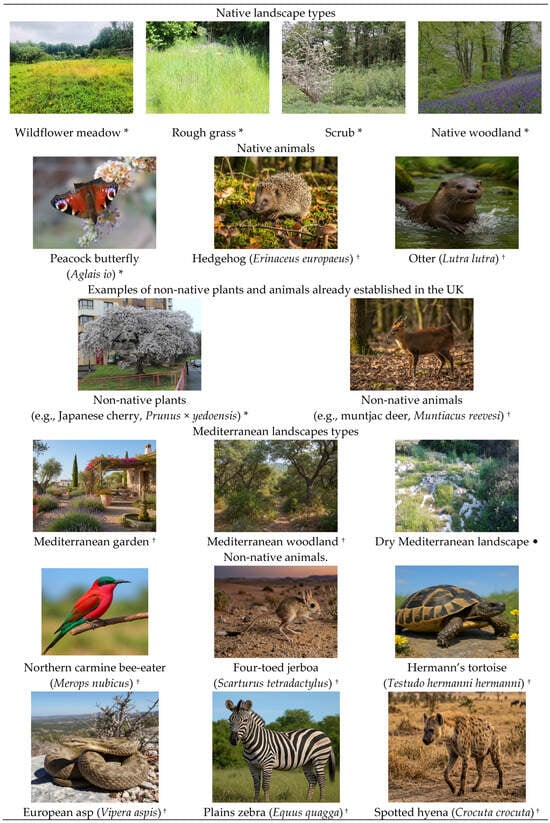
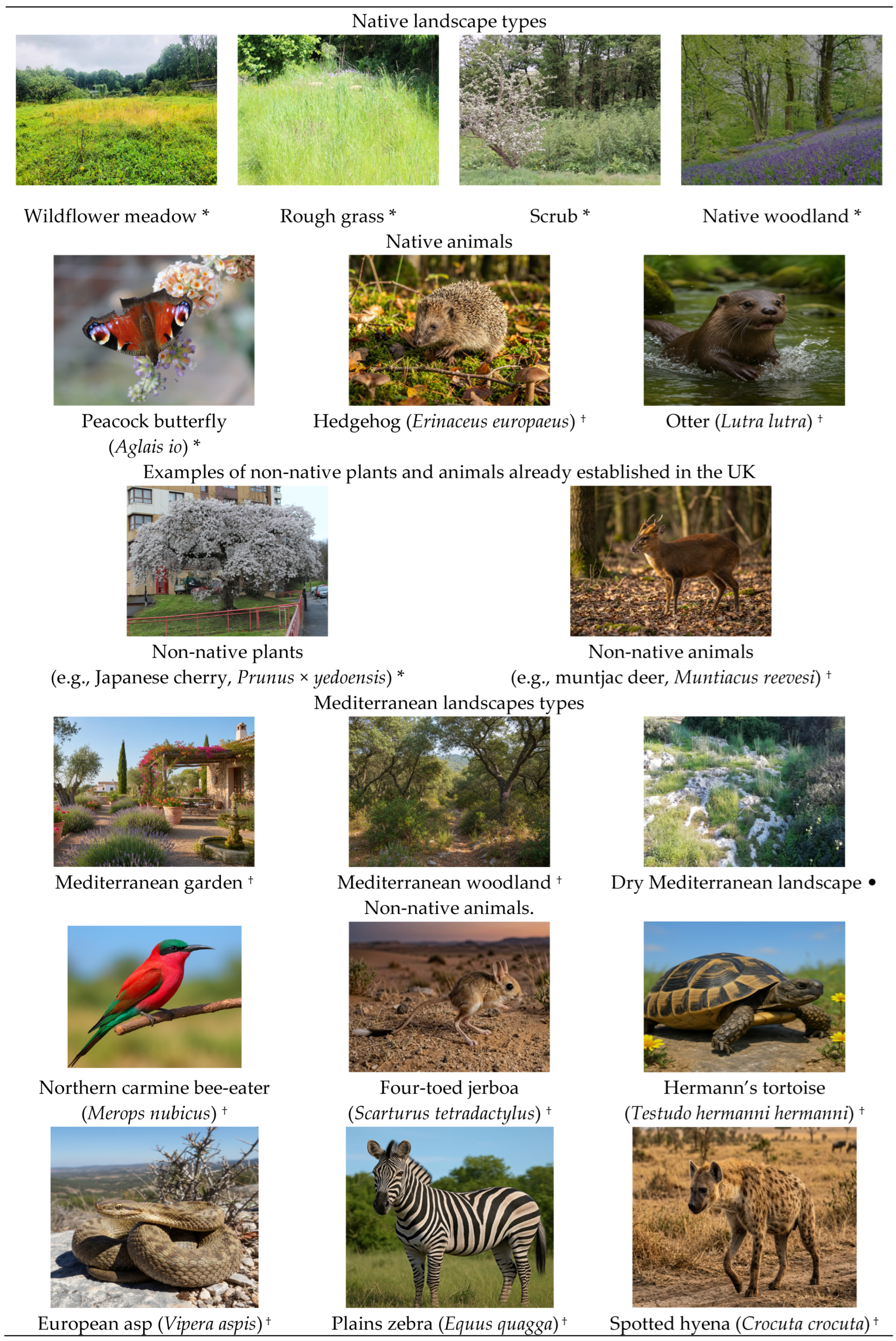
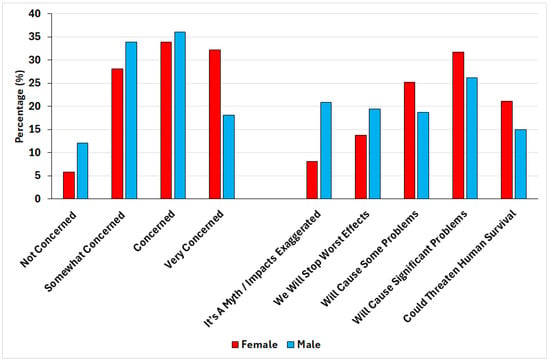
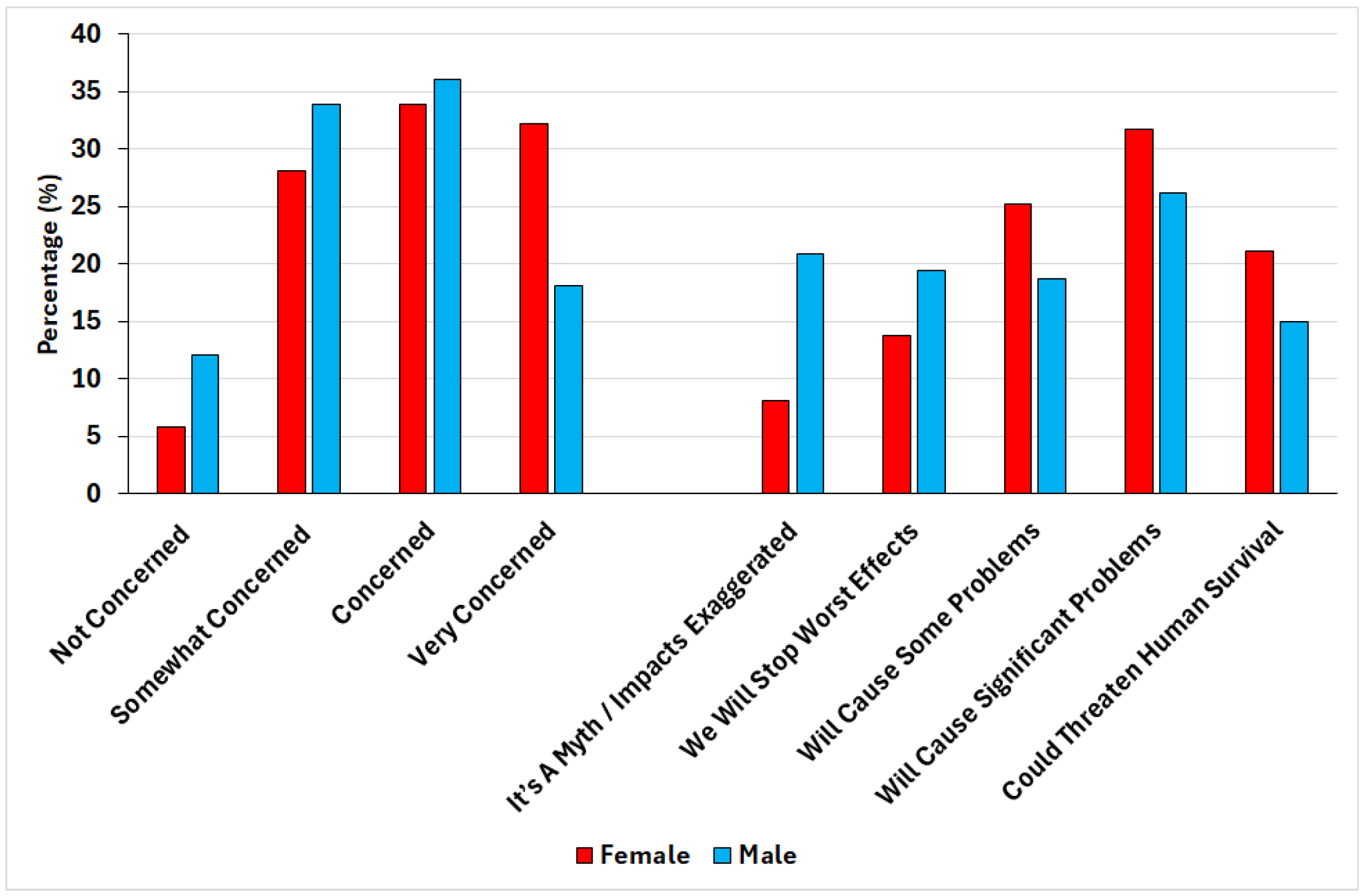
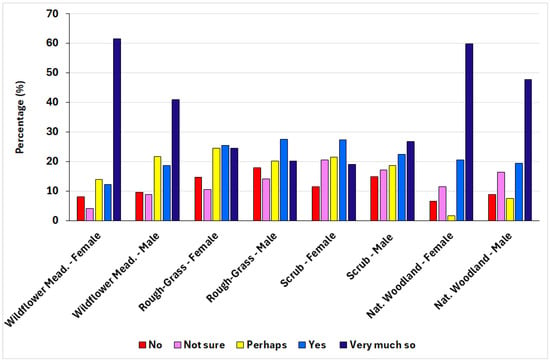
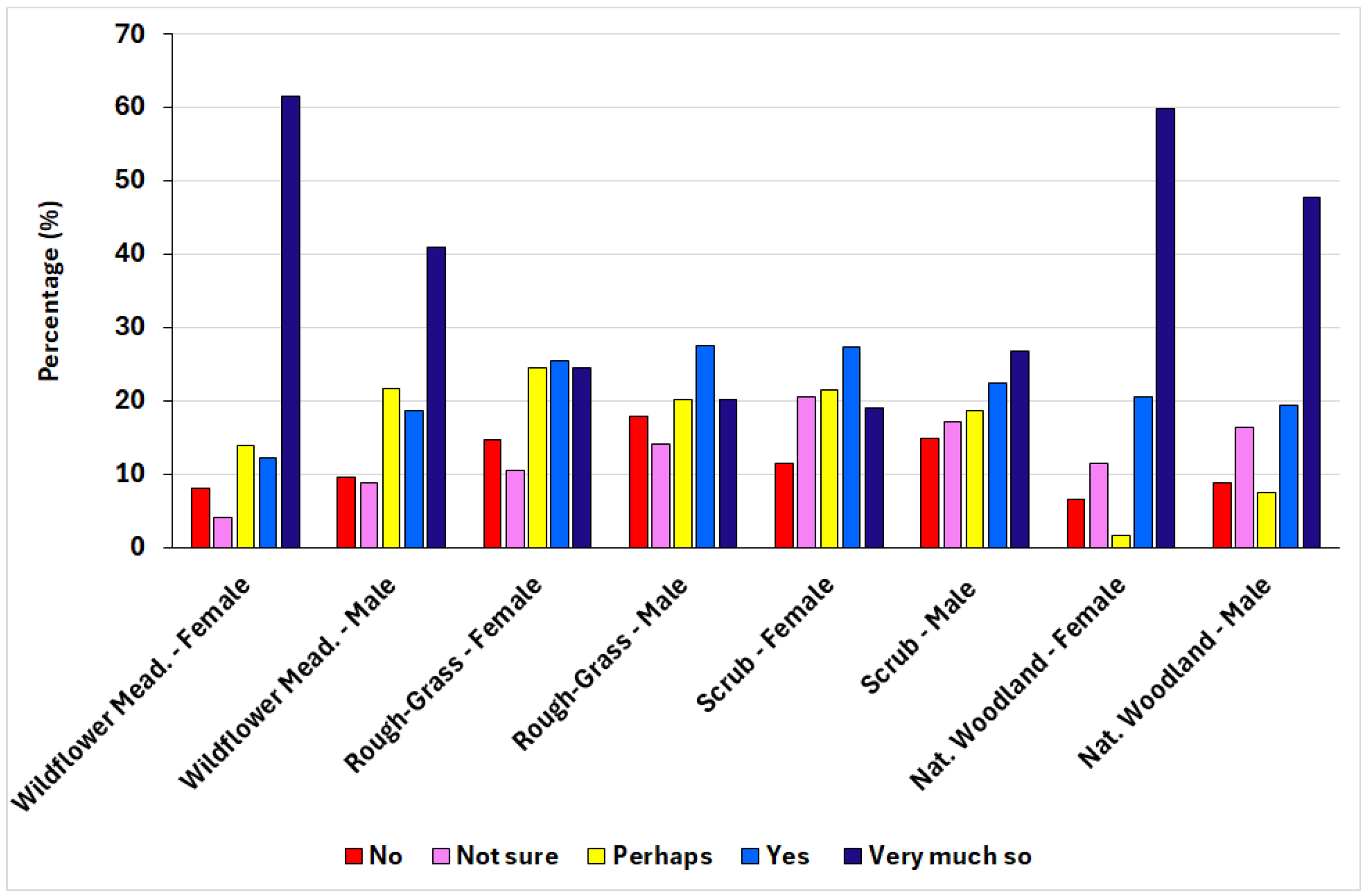
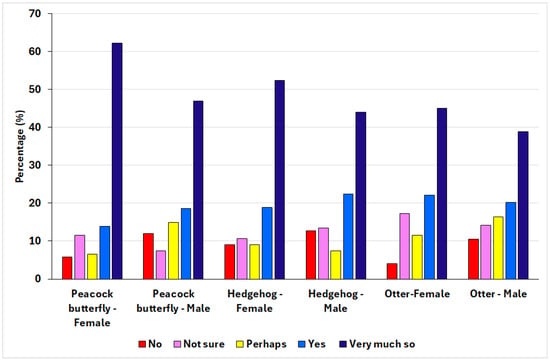
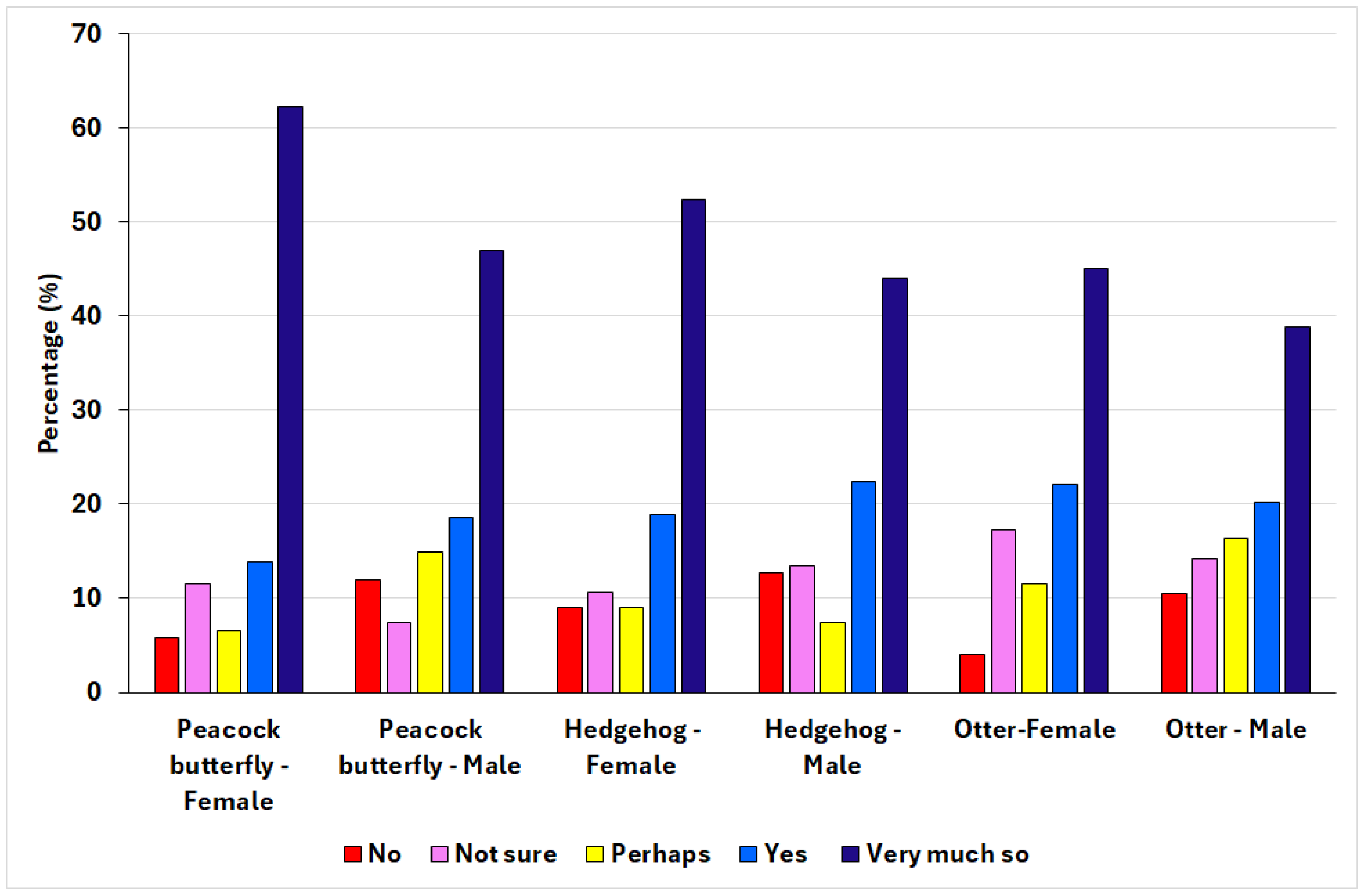
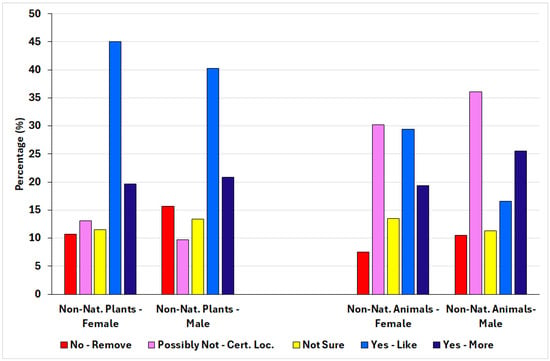
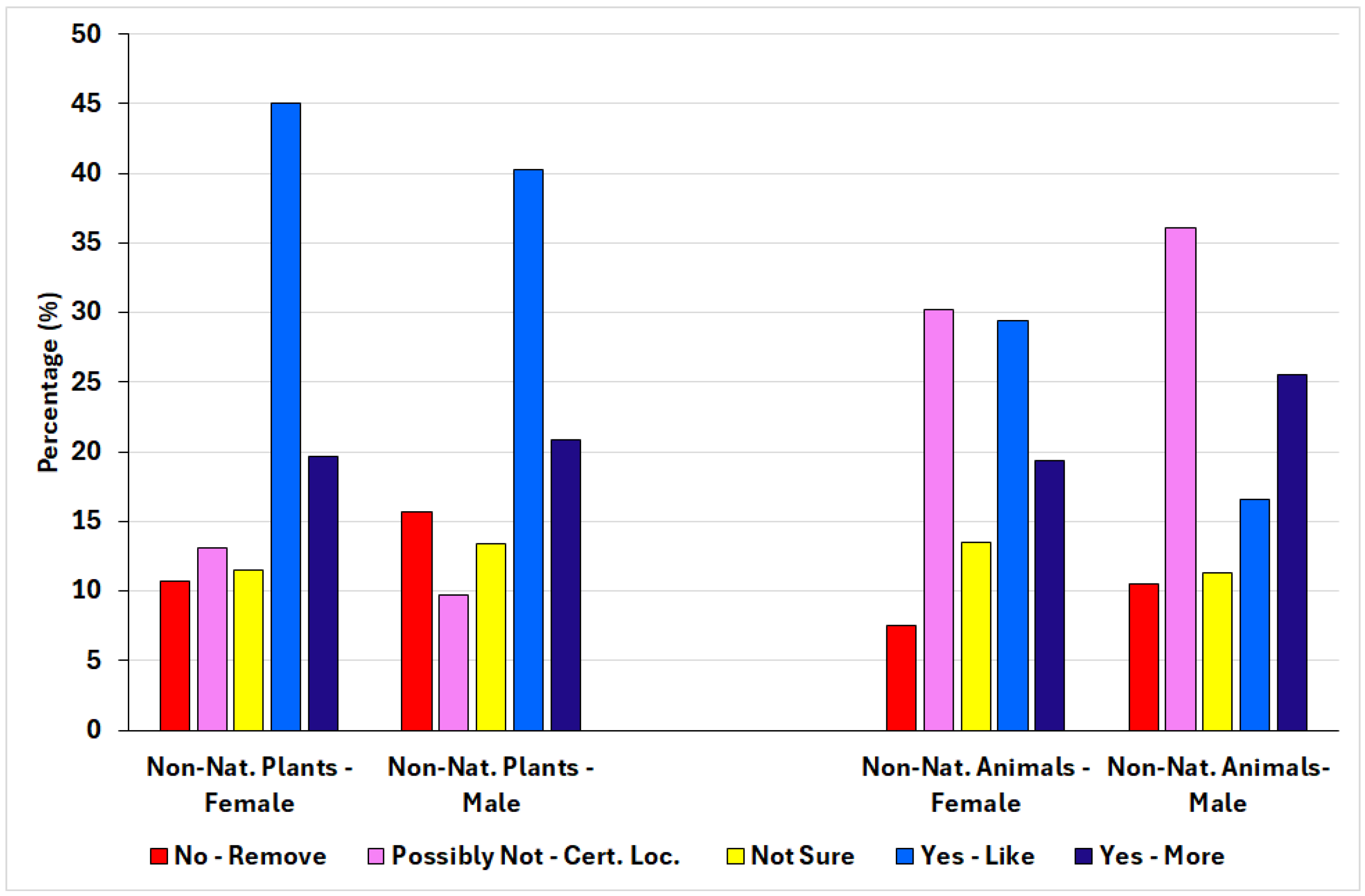
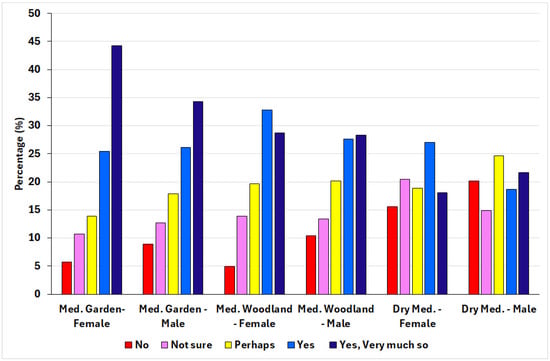
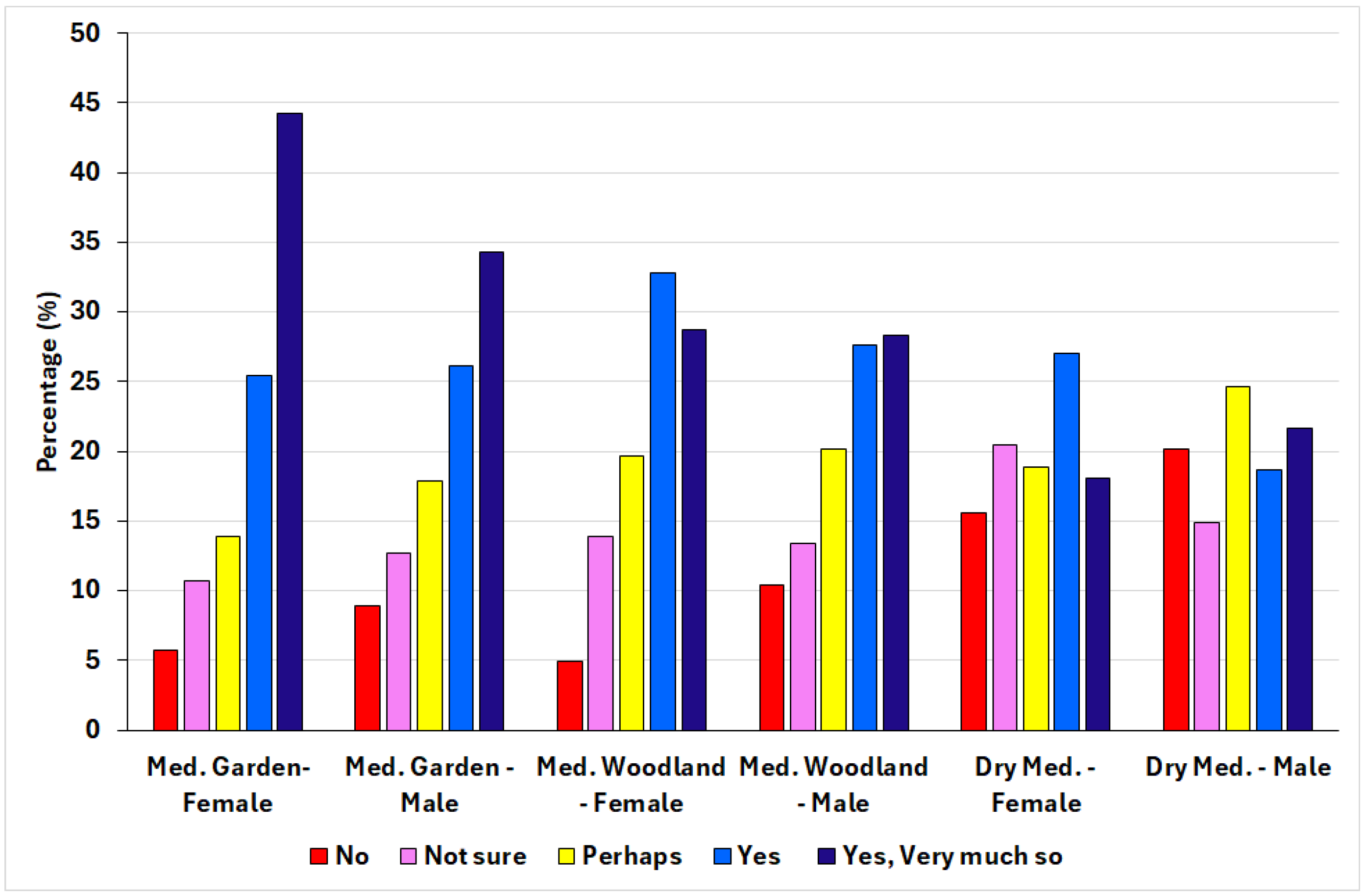
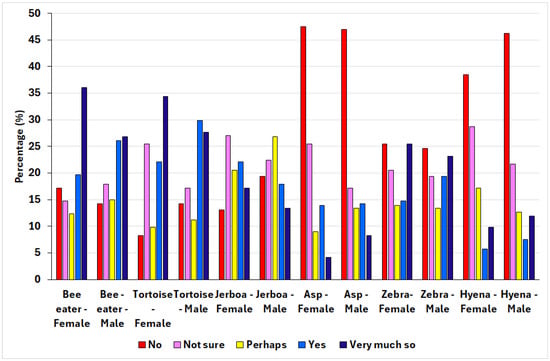
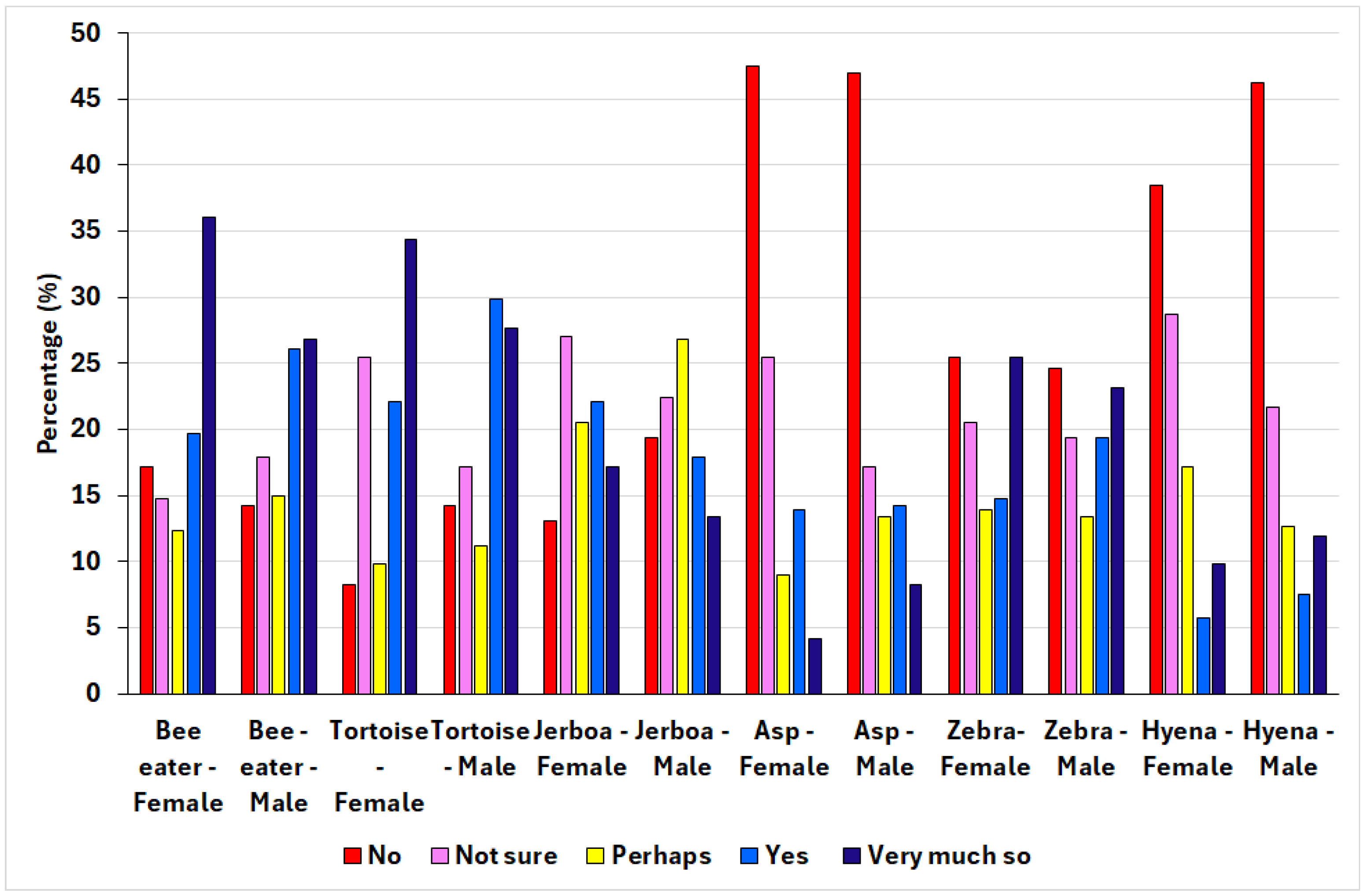
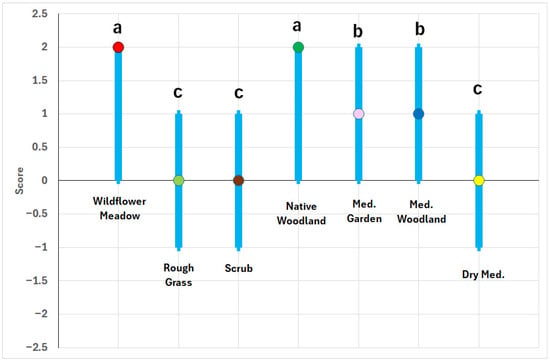
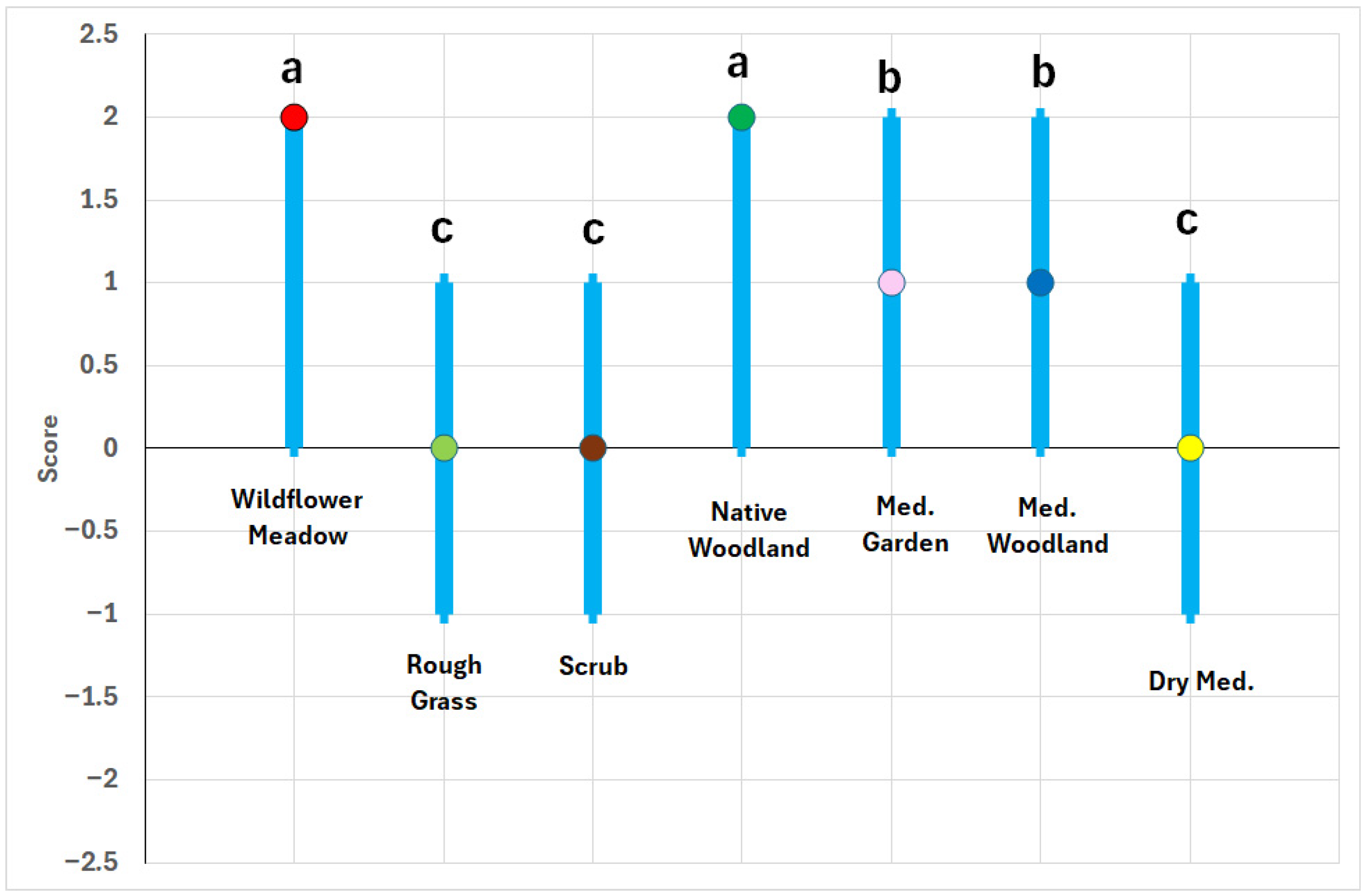
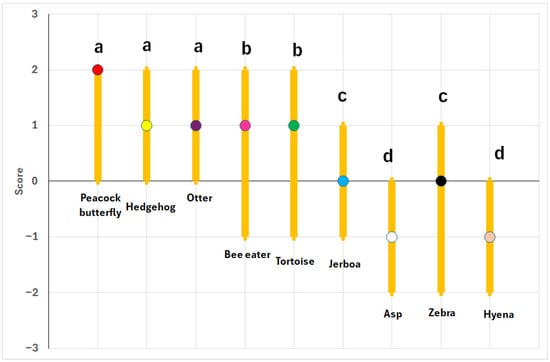
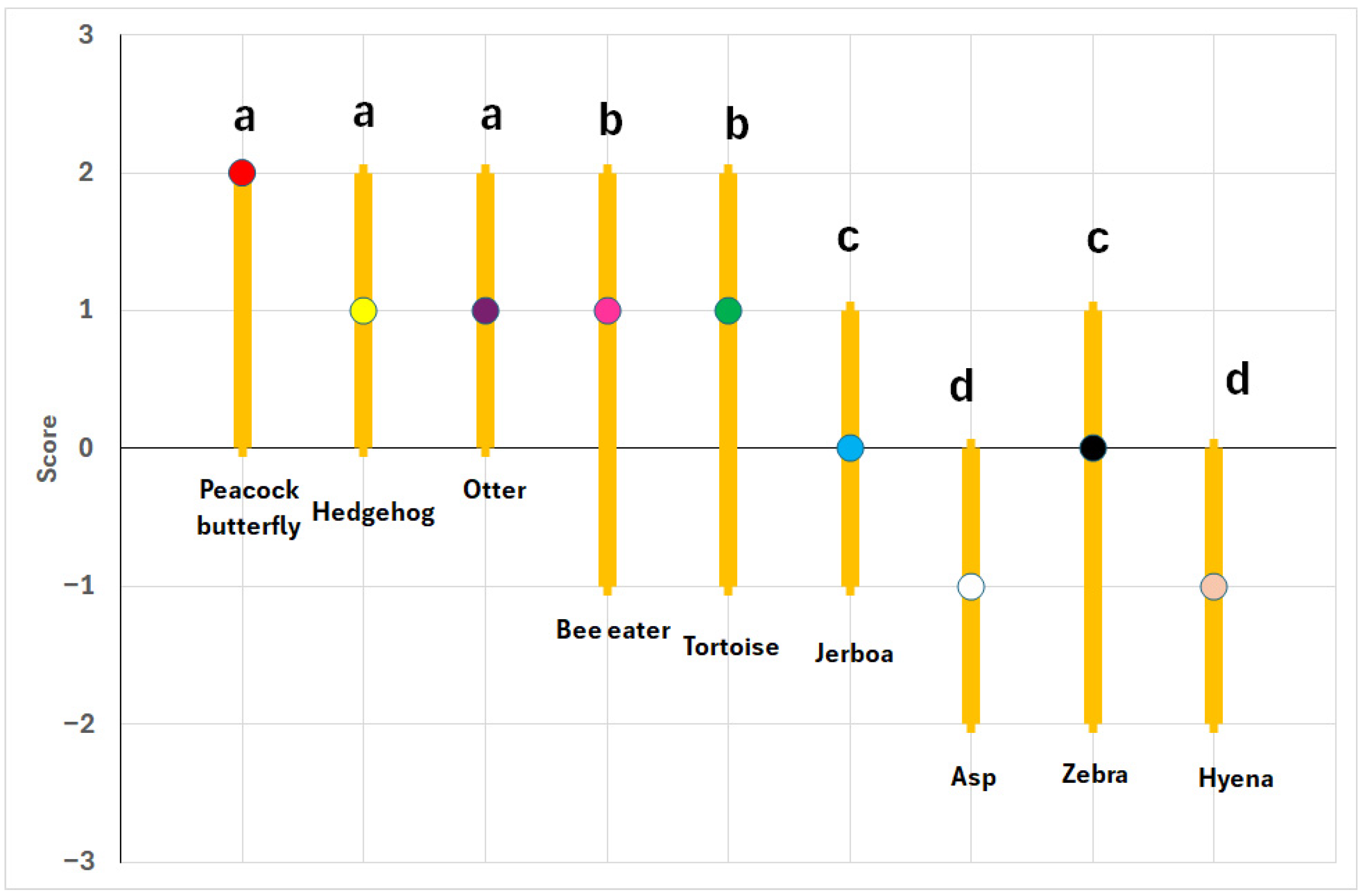
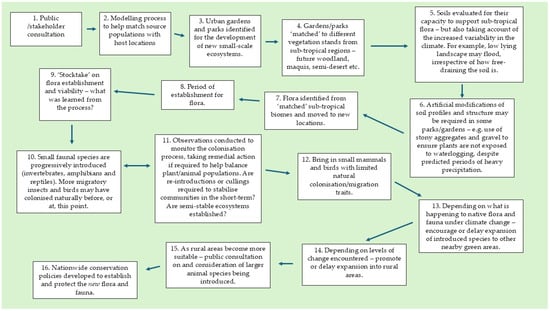
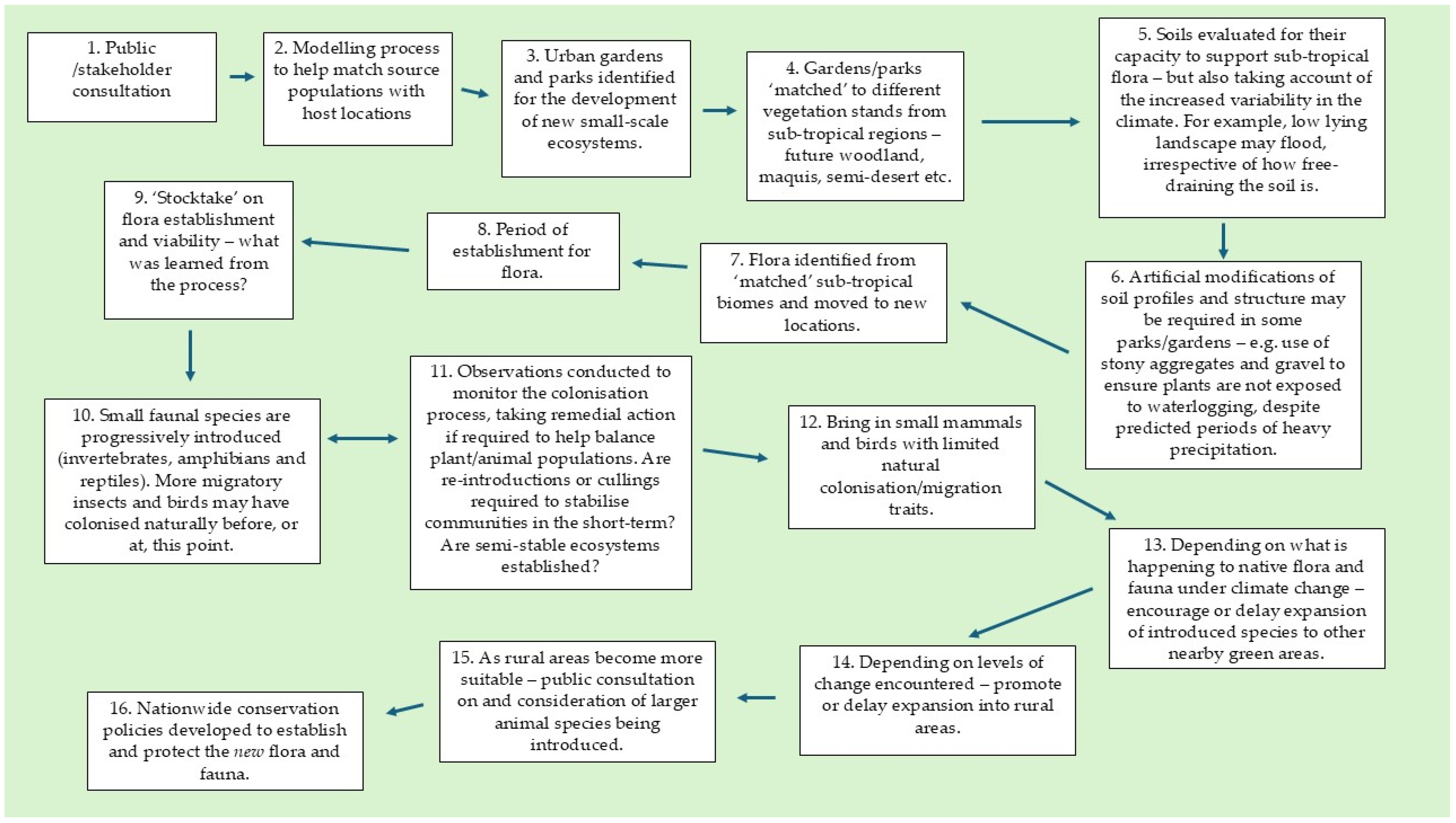

Disclaimer/Publisher’s Note: The statements, opinions and data contained in all publications are solely those of the individual author(s) and contributor(s) and not of MDPI and/or the editor(s). MDPI and/or the editor(s) disclaim responsibility for any injury to people or property resulting from any ideas, methods, instructions or products referred to in the content. |
© 2026 by the authors. Licensee MDPI, Basel, Switzerland. This article is an open access article distributed under the terms and conditions of the Creative Commons Attribution (CC BY) license.