Article

Sustainable Destination Marketing in Saudi Arabia: Effects of Sustainability Storytelling and Smart Tourism Interactivity on Responsible Visit Intention via Destination Trust

by
Fatma Alkhofaily
1 and
Amr Noureldin
2,3,*
1
Department of Business Administration, College of Business and Economics, Qassim University, Buraydah 52571, Saudi Arabia
2
Department of Business Administration, Faculty of Administrative and Human Sciences, Buraydah Colleges, Buraydah 51418, Saudi Arabia
3
Department of Business Administration, Faculty of Graduate Studies, Sinai University, Arish Branch, Arish 16020, Egypt
*
Author to whom correspondence should be addressed.
Sustainability 2026, 18(6), 3124; https://doi.org/10.3390/su18063124
Submission received: 8 February 2026 / Revised: 15 March 2026 / Accepted: 18 March 2026 / Published: 23 March 2026

Abstract

This study investigates the impact of sustainable destination marketing on enhancing tourists’ intention for responsible visitation in Saudi Arabia by fostering destination trust through two manageable digital levers: the quality of sustainability storytelling and the interactivity of smart tourism. Based on a trust-based S-O-R framework and supplemented by signaling and uncertainty reduction theories, the research posits that high-quality, credible sustainability narratives and responsive, two-way smart touchpoints serve as trust indicators that lead to enhanced responsibility-oriented intentions. An online survey of digitally engaged tourists and potential tourists (N = 420) was used to gather the data. We used SmartPLS, version 4.1.1.7 (SmartPLS GmbH, Monheim am Rhein, Germany), with bootstrapping (5000 resamples) to assess the measurement and structural models. The findings demonstrate that the quality of sustainability storytelling significantly predicts destination trust (β = 0.418, p < 0.001), as does smart tourism interactivity (β = 0.347, p < 0.001). Destination trust positively affects responsible visit intention (β = 0.318, p < 0.001) and partially mediates the impacts of storytelling quality (β = 0.133, p < 0.001) and interactivity (β = 0.110, p < 0.001) on responsible visit intention. The model elucidates 40.9% of the variance in destination trust and 40.6% in responsible visit intention, underscoring trust as a pivotal mechanism by which credible sustainability storytelling and efficient smart interactivity can promote more responsible visitation.

1. Introduction

Concerns about environmental deterioration, pressure on resources, and socio-cultural impacts have placed more focus on types of tourism that not only increase visitation but also prompt visitors to behave responsibly while at the destination (e.g., respect local code, inflict minimum harm, and follow destination recommendations). In this regard, the responsible visit intention is becoming more and more a crucial constituent as a proximal determinant of behavior: intentions are commonly considered as the closest correlate of behavior and determined by evaluative beliefs and perceived feasibility [1,2]. However, while policy and industry are interested, the psychological pathways by which destination-level promotion and digital technologies cultivate responsible intentions are not yet well explained, especially in growing tourism locations.
Parallel e-communication at the destination level has, however, been influenced by fast digitalization. Today’s hot spots depend on the official places, social media environments, and clever apps to broadcast sustainability actions and direct tourists pre-travel and during. But sustainability communication does not always inspire confidence. If sustainability claims are seen as vague, overstated, or unprovable, they can lead to skepticism and reduced trust, diminishing the motivational foundation for prosocial behavior [3,4]. On the other hand, communication of honest, helpful, and detailed enough sustainability information can enhance credibility and trust-related judgments [5,6]. This twofold potential indicates that destinations have to deal with not only the simple existence of sustainability messages, but also its quality and credibility.
In this digital context, the quality of sustainability storytelling is defined as a holistic assessment of whether destination sustainability narratives are accurate, beneficial, and appealing, as opposed to generic “green” messaging. Signaling logic posits that in situations of information asymmetry, audiences deduce authenticity and quality from reliable indicators [7,8]. In tourism, where many results are only seen after a purchase, these signals are even more important. High-quality sustainability stories can therefore serve as trust-building signals by rendering claims more diagnostic and difficult to dismiss as greenwashing, while contradictory or unverifiable narratives may function as negative signals that increase uncertainty and diminish trust [7,8,9].
Concurrently, smart tourism interactivity indicates the level to which destination technologies facilitate responsive, two-way communication (e.g., real-time feedback, information exchange, and open discussion). In terms of information uncertainty reduction, interactive settings are low in ambiguity since people can request clarification, ask questions, and receive immediate answers [9]. From an empirical perspective, interactive smart touchpoints of government (e.g., mobile applications, destination platforms, and live-streaming interfaces) have been shown to positively influence trust judgments by indicating competence, transparency, and governance ability [10,11,12,13,14]. Nevertheless, the same reasoning leads to a critical caveat: interactivity can only create trust if it works consistently; unresponsiveness or obscurity may magnify uncertainty and destroy confidence.
This study formulates and evaluates a trust-based behavioral rationale elucidating how sustainable destination marketing in Saudi Arabia can convert digital communication into responsible visitation intentions through destination trust. Based on the Stimulus-Organism-Response (S-O-R) framework, the quality of sustainability storytelling and the interactivity of smart tourism are proposed as destination-steerable stimuli that shape an internal evaluative state (destination trust) and subsequently influence approach-oriented behavioral responses [15,16,17]. This reasoning is augmented by signaling theory and uncertainty reduction theory as mechanisms for trust formation [7,8,9], alongside the Theory of Planned Behavior (TPB), which identifies intention as the closest predictor of behavior [1].
Accordingly, this study is guided by the following research questions: RQ1: To what extent do sustainability storytelling quality and smart tourism interactivity shape destination trust? RQ2: To what extent does destination trust influence responsible visit intention? RQ3: Does destination trust mediate the effects of sustainability storytelling quality and smart tourism interactivity on responsible visit intention?
This study elucidates the functioning of two manageable digital levers: storytelling quality and interactivity as credibility and competence indicators that foster trust. Additionally, it expands trust intention research beyond traditional loyalty outcomes to encompass responsibility-oriented intentions vital for sustainable tourism practices in a rapidly evolving digital destination environment.

2. Underpinned Theories

Based on a trust-based behavioral rationale, the research delineates how sustainable destination marketing in Saudi Arabia can transform digital communication into responsible visit intention through destination trust. In particular, the model views sustainability storytelling quality and smart tourism interactivity as destination-steerable external stimuli that mold an internal appraising state destination trust that, in turn, catalyzes prospective behavior responsible for visit intention. To bracket these linkages, this study incorporates elements of Stimulus-Organism-Response (S-O-R) theorizing [15] in combination with signaling theory [7,8] and uncertainty reduction theory [9] as initial trust formers and supplements these using intention-based logic from Theory of Planned Behavior (TPB) [1].

2.1. Stimulus-Organism-Response (S-O-R) Framework

According to the S-O-R framework, external environmental cues (stimuli) determine internal cognitive and affective responses (organism) that lead to behavioral responses (response) [15]. In this sense, the quality of sustainability storytelling and the interactivity provided by smart tourism are two highly salient stimuli bundles in destination marketing today as they shape how tourists encounter destination claims and interpret credibility/risk. When stimuli possess competence and reliability cues, they should elicit destination trust as an internal assurance state, which further leads to approach intentions such as visiting responsibly.

2.2. Signaling Theory and Uncertainty Reduction Logic for Trust Formation

Decisions concerning tourism inherently contain a great deal of uncertainty, as consumption is typically experienced after the purchase, outcomes differ through time and place, and travelers often depend on mediated information rather than direct examination. In this context, for example, signaling theory holds that credible signals (e.g., clarity, consistency, and richness of information) could lower information asymmetry and allow tourists to infer quality and honesty from communications [7,8]. Prospectively, according to the uncertainty reduction theory, a communicative environment that permits explanation, clarification, and feedback will reduce ambiguity and perceived risk, paving the way for increased confidence toward the object of judgment [9].
In the context of this study, sustainability storytelling quality can be further considered as a trust-building signal: higher-quality stories render those claims easier to assess and verify (diagnostic), which will make them more difficult to dismiss as ill-founded green-washing marketing, hence increasing trust. But these theories also suggest an important proviso: if sustainability claims are seen to be contradictory, exaggerated, or unverifiable, they can serve as negative signals that increase uncertainty and undermine trust. In this way, the trust-building potential of stories hinges on whether they offer enough believable and checkable cues to lower uncertainty rather than provoke doubt.
In the same vein, interactivity in smart tourism can be theorized as a dynamic signal of destination capability and transparency. Interactive features (e.g., real-time response, two-way information provision, and ease of access to the information) facilitate tourists’ trial of reliability through instant nonmediated contact or feedback for uncertainty reduction, which in turn builds trust. Importantly, the logic still indicates that interactivity increases trust only if it works well; poor responsiveness or opacity can increase uncertainty and thereby undermine trust.

2.3. Theory of Planned Behavior and Responsible Visit Intention

To justify why trust results in responsible visit intention, the theoretical framework of this study is rooted in TPB theory and assumes that intention is at the center of one’s behavior and thus most proximal to action [1]. Understood in these terms, trust of destination may involve a confidence-based assessment that enhances both the desirability and feasibility assumption associated with acting responsibly; that is, when tourists believe in the integrity and competence of a particular destination, they attach less value to uncertainty management and are more inclined to be compliant with local regulations or engage in low-impact behavior.

2.4. Integrative Logic and the Mediating Role of Destination Trust

This literature is integrated to form the core theoretical claim of this study: The story quality of sustainability storytelling and interactivity in smart tourism will be predicted to impact responsible visit intention through destination trust as an early-stage component, because trust is an internal assurance mechanism that converts destination-controlled signals into behavioral readiness. The integrated model thus offers the theory that it is not just an issue of ‘does digital sustainable destination marketing matter’ but how it works via trust formation (S-O-R) and uncertainty reduction/signaling leading to intention (TPB).

3. The Hypotheses’ Development

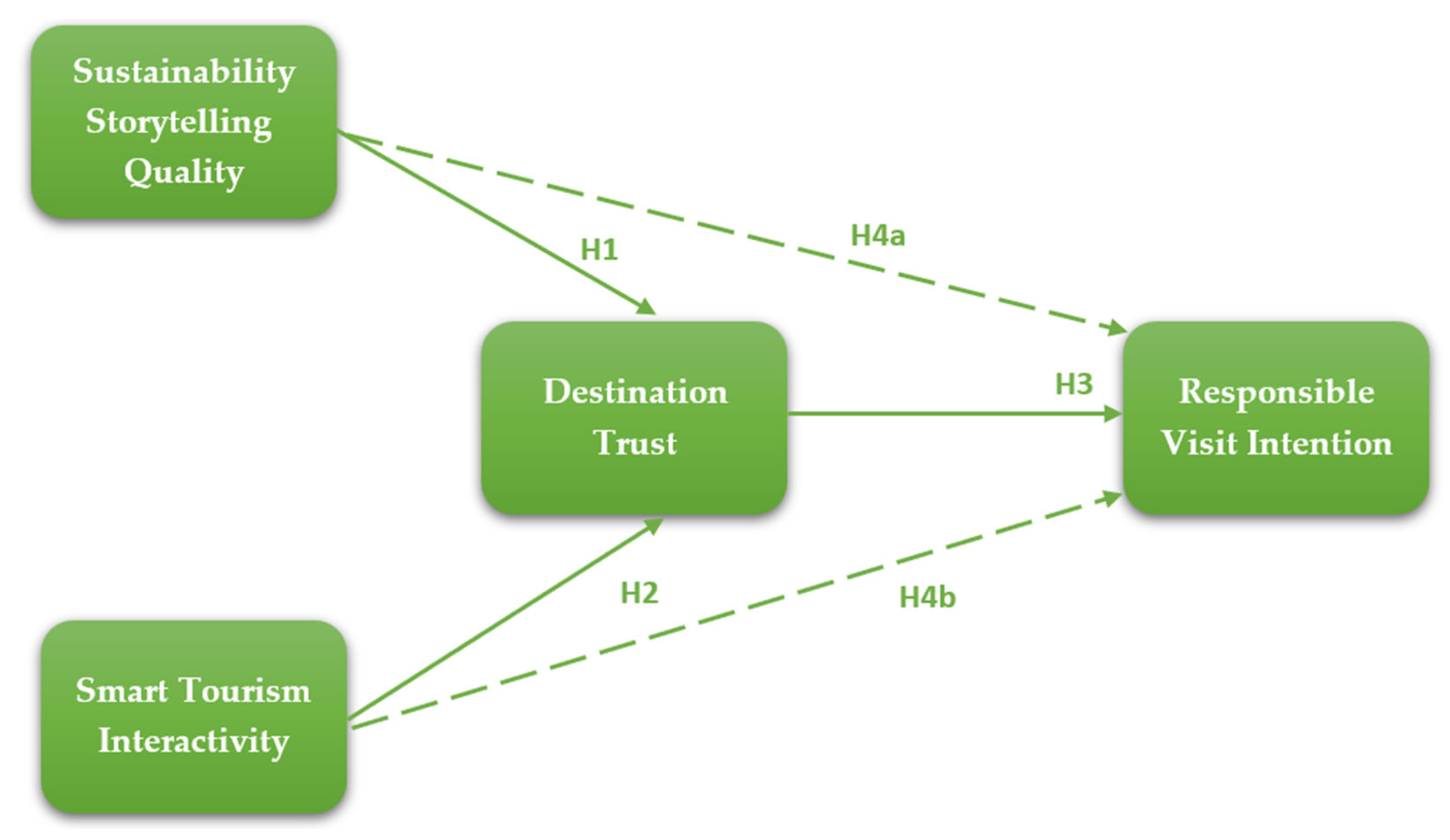
As presented in Figure 1, the proposed model postulates direct effects of sustainability storytelling quality and smart tourism interactivity on responsible visit intention, as well as indirect effects through destination trust. The model suggests that both sustainability storytelling quality and smart tourism interactivity contribute to destination trust as a central, trust-based evaluative state with tourists’ willingness to perform responsible visiting behaviors. Thus, destination trust is theoretically posited as a central cognitive mediating process that converts DSTP-induced sustainability messages and smart interactive experiences into responsible intentions in the Saudi touristic context.

3.1. Sustainability Storytelling Quality and Destination Trust

Destination trust is commonly defined as the confidence of tourists in a destination to be reliable, have credibility, and deliver on its promises, which supports minimizing perceived risk and reducing uncertainty during planning the trip and consumption [18,19]. According to signaling and uncertainty reduction theories, better message quality (clarity, informativeness, and credibility) should be a strong signal that makes tourists surer of claims about a destination, which in turn builds trust in that destination [7,8,9]. Empirically, earlier studies on tourism research suggest that more credible and useful online information cues, but not specifically e-WOM, help to enhance the destination trust by reducing ambiguity in perceiving and boosting tourists’ confidence in “what they see is what they get” [20]. Related research based on trust transfer theory indicates that when marketing communications are regarded as genuine or when communicators are seen as credible, trust-related assessments can be transferred to the destination itself [21,22]. Consistent with these notions, narrative devices (e.g., transportation and story structure) can enhance credibility-related inferences and influence relational outcomes that involve a trust-like descriptor as part of their antecedents [23,24]. However, sustainability communication does not consistently enhance trust; when sustainability assertions are ambiguous, deceptive, or regarded as greenwashing, skepticism arises, eroding confidence in the purported sustainability initiatives [3,4]. Against this backdrop, previous research suggests that destination communications directly advocating sustainability and open up by revealing environmental practices and objective/verifiable cues (e.g., awards, EMSs), including green certifications, considerably enhance credibility of the messages, thereby contributing to trust in sustainable destinations [25,26]. This is in accordance with other green communication research that shows that honest, useful, and appealing sustainability information makes people trust the sender more [5] and with credibility frameworks that say honesty, clarity, and enough detail are key factors in trust-relevant evaluations [6]. Nonetheless, a good portion of this work conceptualizes sustainability communication at the micro-level connected to isolated information cues (claims or labels) or examines trust in settings other than those related to destination branding, which results in limited evidence available to demonstrate how perceived quality of sustainability storytelling per se (as an integrated narrative quality consisting construct) actually leads to destination trust development and particularly across emerging destinations such as Saudi Arabia while being embedded in models explaining trust effects on responsible visit intentions pinpointing a necessity and added value for the ensuing study.
H1: 
Sustainability storytelling quality has a positive effect on destination trust.

3.2. Smart Tourism Interactivity and Destination Trust

Destination trust indicates tourists’ belief in the destination’s credibility, believability, and ability to deliver the experience promised with relatively low risk or uncertainty in travel-related decision-making. Interactivity is primarily a tool by which the smart environment (destinations) transmits its trustworthiness, transparency, and responsiveness to tourists, facilitating an indirect relationship through tourism perceptions. Signaling theory [7,8] posits that interactive smart technologies serve as high-quality signals, bridging information asymmetry between travelers and destinations. Smart applications, mobile platforms, and location-based services enable real-time interactions that foster instant feedback and tailored information for travelers with the destination perceived as being competent and credible [10]. These interactive signals build travelers’ confidence in a destination, reassuring them of the quality of the services and the dependability of that location.
Pioneering research on uncertainty reduction theory suggests interactive communication environments have the benefit of reducing ambiguity and perceived risk through tourists’ abilities to seek information, ask questions, and get real-time answers. In the current study, we perceive smart tourism interactivity not just as direct responsiveness from the platform to the psychophysiological needs of a traveler but also during visible reciprocal exchange (e.g., question-and-answer interactions among travelers) enabled by consideration of the platform capacity. These involve more practical modes of two-way interaction, as they enable users to see and partake in dialogic interchanges rather than have one-way information sent to them. As highlighted in some empirical studies, the smart tourism interactivity of mobile applications, destination platforms, and live-streaming technology may promote information transparency and corroborate its credibility, which is one determining factor for trust establishment in destination systems [11,12]. Accordingly, interactivity is thus approached here as a wider communication affordance enabled by the specific platform designed to facilitate responsiveness, reciprocal exchange, and socially visible information interaction. They also argue that interactivity not only helps access information but also affects trust-related evaluations.
Using the Stimulus-Organism-Response (S-O-R) framework, smart tourism interactivity acts as a technological stimulus that changes tourists’ internal cognitive and emotional states, especially trust, which then changes how they act. Research in destination live streaming contexts indicates that interactivity has a significantly greater impact on destination trust than other technological attributes, including vividness or immediacy [13,14]. Interactive elements like two-way communication, social presence, and real-time feedback promote psychological intimacy and perceived authenticity, thereby enhancing trust development. On top of conventional digital modalities, novel research uncovers the interactivity in immersive and AI-based settings. Interactive video game tourism experiences and AI chatbot-derived information indicate that trust built through online interaction can be applied to real destinations, influencing destination credibility and reliability [27,28]. These results highlight the increasing relevance of interactivity as a means by which trust is built in developed smart tourism environments.
Despite the growing body of empirical evidence supporting a positive relationship between smart tourism interactivity and destination trust, existing studies exhibit several limitations. First, much of the literature examines interactivity in isolated technological settings (e.g., live streaming, mobile apps, or chatbots) rather than conceptualizing smart tourism interactivity as an integrated construct spanning multiple touchpoints. Second, previous studies have primarily concentrated on well-established destinations and developed digital markets, providing insufficient understanding of how interactivity-driven trust formation functions in nascent smart destinations. Third, destination trust is frequently regarded as a mediating or secondary variable rather than a primary outcome of smart tourism interactivity. Addressing these gaps, the present study advances the literature by conceptualizing smart tourism interactivity as a holistic, multi-dimensional construct and empirically examining its direct effect on destination trust within an emerging destination context. By applying signaling theory, uncertainty reduction theory, and the S-O-R paradigm in a tourism context, this research contributes to a more comprehensive theoretical understanding of how interactive smart technologies act as trust-building devices and also offers new perspectives on destination trust formation mechanisms in smart tourism. This leads to the following hypothesis:
H2: 
Smart tourism interactivity has a positive effect on destination trust.

3.3. Destination Trust and Responsible Visit Intention

RVI or responsible visit intention describes a tourist’s attitude and prospective readiness to behave in a local-friendly, low-impact, rule-compliant, and other destination-respectful manner while visiting a destination. In this regard, RVI is being defined in this study as an intention embedded in the context of the host community, covering pro-social orientation towards members of that community, awareness and compliance with destination norms, and engaged participation in environmentally good practices. Hence, it is wider than ecological visit intention, which mainly addresses environmental protection, yet narrower and more context-specific compared with ethical tourist behavior that usually addresses a broader scope of moral and consumption-related issues. In this vein, RVI portrays the desired quality of tourist behavior during travel; that is, respect for local customs and traditions and compliance with local rules and regulations, support for local products, and minimal damage to natural resources or wildlife.
Destination trust is defined as tourists’ perception of the capability and trustworthiness of the destination to offer promised experiences with low risk related to governance capability, security management, and service reliability [29]. This construct is theoretically pertinent to responsible visit intention because trust not only guides tourists’ willingness to visit, but also their willingness to behave themselves while visiting. intentions refer to the most proximate predictor of behavior, formed through individuals’ perception of how feasible and desirable it is to behave in a particular way [2], according to the Theory of Planned Behavior (TPB). In this logic, trust in a destination’s integrity and competence can promote responsible visit intention through reduced uncertainty about responsible behavior (epidemiological), improved positive expectations regarding the responsible behavior of plenty of stakeholders in education and tourism, producing responsibilities as well as willingness to conform to local standards.
An alternative explanation based on the Stimulus-Organism-Response (S-O-R) perspective is provided. As external stimuli, destination-level cues or signals such as reliable digital information, transparency signals, and sustainability ORG-provided practices can positively shape trust (an internal evaluative state) that influences behavioral responses [16,17]. Within this framework, destination trust can be understood as an internal process whereby communicated destination attributes, via digital interaction, spur not only visit intention but also intention to act responsibly during the visit.
Previous studies have consistently demonstrated a positive relationship between destination trust and visit intention as well as loyalty-related constructs, such as revisit intention and recommendation [30,31,32,33], either alone or in conjunction with other variables like destination quality, brand value, e-WOM, and destination social responsibility. Nonetheless, most of this evidence has been mainly focused on traditional instead of responsible visit intention as a unique sustainability-related response variable [34,35]. In addition, even though digital and social media environments can help foster trust through information richness, credibility, and user-generated content (for example), trust is often viewed as a predictor of visitation rather than responsible visitation choices [36,37]. Aligning with this, the present study builds upon previous works by investigating whether or not trust towards destinations facilitates tourist engagement in respectful, norm-compliant, and light footprint behaviors while on holiday.
H3: 
Destination trust has a positive effect on responsible visit intention.

3.4. Mediating Role of Destination Trust

Destination trust—tourists’ belief that a destination is trustworthy, credible, and can deliver on its promises with little risk—is a key psychological factor that links sustainability-focused marketing messages to responsible visit intention [18,19,29]. The mediation logic corresponds with a Stimulus-Organism-Response (S-O-R) framework: the quality of sustainability storytelling and the interactivity of smart tourism serve as stimuli that influence an internal evaluative state (organism), specifically destination trust, which subsequently encourages approach-oriented responses, such as the intention to visit responsibly [16,17]. In line with the Theory of Planned Behavior, trust can be seen as an evaluation based on confidence that makes it easier and more appealing to act responsibly, which helps form intentions that lead to behavior [2].
First, high-quality sustainability storytelling (clear, informative, and credible narratives) should indirectly strengthen responsible visit intention by reducing ambiguity and signaling authenticity, which builds destination trust [7,8,9,20]. Trust transfer arguments suggest that when communications are regarded as authentic, and the communicator is deemed credible, trust-related evaluations can be transmitted to the destination brand itself [21,22]. But this path isn’t always clear: vague or exaggerated claims about sustainability can make people doubt greenwashing, which hurts trust and makes people less likely to want to be responsible [3,4]. Consequently, verifiable indicators (e.g., certifications, awards, and transparent environmental practices) are essential for transforming sustainability narratives into trust—and thereby into responsible visitation intentions—particularly in emerging destinations like Saudi Arabia [6,25,26].
Second, smart tourism interactivity may also affect responsible visit intention mainly through trust. Interactive features (two-way communication, real-time feedback, responsive platforms) serve as robust indicators of transparency and competence, mitigating perceived uncertainty and facilitating trust development [7,8,10,11,12]. Previous research in digitally mediated tourism contexts (e.g., live streaming, mobile platforms, AI interfaces) indicates that interactivity enhances trust and influences intention-related outcomes. This suggests that tourists are more inclined to engage in responsible visiting when they perceive destination systems as credible and well-managed [13,14,28]. However, much of the current research examines trust pathways leading to conventional intentions (visit/revisit), resulting in a scarcity of direct evidence regarding trust as the conduit from sustainability storytelling and interactivity to responsible visit intention—underscoring the theoretical and contextual significance of our integrated mediation model [34,35].
H4a (Mediation):
Destination trust mediates the relationship between sustainability storytelling quality and responsible visit intention.
H4b (Mediation):
Destination trust mediates the relationship between smart tourism interactivity and responsible visit intention.

4. Methods

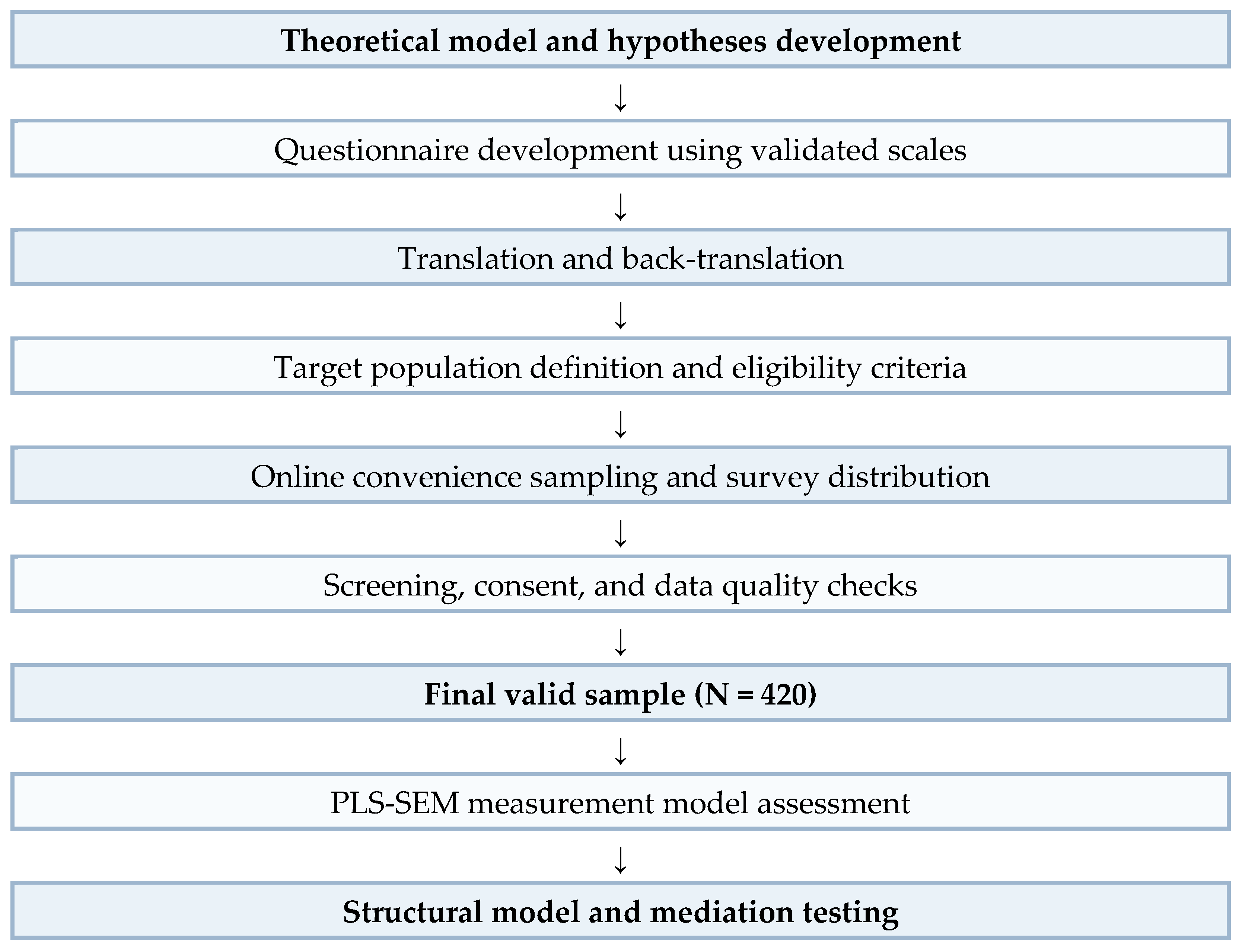
To provide a clearer overview of the study procedure, the methodology was organized as a sequential workflow covering research design, instrument development, sampling and data collection, screening and data quality control, and data analysis. Figure 2 presents a visual summary of these stages.

4.1. Research Design and Methodological Workflow

The current study employed a quantitative cross-sectional survey research design to examine sustainability storytelling quality and smart tourism interactivity on responsible visit intention in the Saudi tourism context. The methodological approach included five successive phases: [a] the development of the theoretical model and hypotheses, [b] questionnaire development and adaptation, [c] sampling and online data gathering, [d] screening and data quality assurance, and [e] PLS-SEM output. This approach was taken to ensure that readers have a clearer view of how this study flowed from concept development through to hypothesis testing.

4.2. Instrument Development and Measures

The questionnaire is based on validated multi-item scales adapted from previous studies. The construct sustainability storytelling quality (SSQ) was operationalized as a second-order reflective construct and contained three first-order dimensions: usefulness (3 items), attractiveness (5 items), and truthfulness (4 items); the scales were adapted to the sustainable destination marketing context [5]. Four items based on [12] to measure smart tourism interactivity (STI), which is defined as perceived two-way engagement, responsiveness, and the exchange of destination-related information through smart tourism platforms. Despite the fact that one of the richer items featured phrasing in which enactment was included, it was kept in place since its general focus concerned the respondents’ perception their exchange as questions alongside answers can be visible to other travelers on this particular type of platform, which we considered a practical enactment of two-way interactivity rather than simply a form of use on part of a segment. We assessed destination trust (DT) using four items describing tourists’ belief in the will of the tourism destination to respond to their needs, expectations, and friendly environment [38]. It was assessed with four items concerning intention to respect local culture, support of local products, wildlife conservancy, and adherence to local regulations during the visit [39]. The full measurement items of all study constructs are provided in Appendix A (Table A1).
All items were assessed using a five-point Likert scale from 1 (strongly disagree) to 5 (strongly agree). The questionnaire was developed initially in English and translated later into Arabic. In accordance with established cross-cultural instrument adaptation guidelines [40,41], an independent back-translation procedure was then performed to ensure semantic equivalence and reduce translation bias. Minor wording tweaks were made as appropriate to enhance understanding and cultural relevance among respondents in Saudi Arabia.

4.3. Target Population, Sampling, and Data Collection

This aggregated study dealt with digitally connected travelers and potential tourists who are Arabic speaking (Saudi natives, residence permit holders in the Kingdom, and citizens from other nationalities), aged 18 years old and older, who use digital platforms, including social media sites, official destination terrestrial channels, or apps regularly to search for information about destinations in Saudi Arabia and plan visits. Eligible respondents were also required to have either previously visited Saudi Arabia or to have considered visiting it seriously. This population was deemed conceptually suitable as the salient constructs (i.e., sustainability storytelling quality and smart tourism interactivity) are predominantly experienced at the digital touchpoints that frame tourists’ trust evaluations of governance, safety, and service reliability by destinations that steer responsible visit intention.
Since a sampling frame for digitally oriented visitors interacting with or consuming Saudi destination-related digital content in the absence of highly engaged users was not available, non-probability online convenience sampling, complemented by patchy snowball sampling, was utilized. The self-administered online questionnaire was disseminated via WhatsApp, X (formerly Twitter), Instagram, Snapchat, and relevant tourism-related OCI and university campus fraternities. While this approach was convenient for successfully accessing digitally active responders, it may have exacerbated self-selection bias and limited population-level generalizability. Notwithstanding, the resultant sample must be interpreted as comprising digitally engaged tourists and potential tourists, rather than the wider respondent community. Thus, the results should be viewed in light of visitors with a digital engagement profile, and the findings should be considered cautiously when applied to more traditional segments (lower approach to, or affinity for, digital technologies and online communication on a destination).
To calculate the required sample size, we followed the prevalent recommendation practice on statistical power and needed reporting standards in PLS-SEM [42,43]. Since destination trust, the most complex endogenous construct in the structural model, had two antecedent predictors, a multiple regression power analysis (α = 0.05, power = 0.80) identified that a minimum of 325 observations was necessary to identify a small effect size [44]. The resulting sample size of 420 responses was adequate, as it exceeded the minimum threshold and therefore provided sufficient statistical power for a reliable PLS-SEM estimation stage (both in terms of PLS path modeling and PLS bootstrapping) [45].

4.4. Ethics, Screening, Data Quality, and Sample Profile

Participation was anonymous and voluntary, with informed consent gathered at the start of the survey. To confirm eligibility, screening questions were administered based on (a) age above 18 years old [41], (b) use of digital channels for information on Saudi destination, and (c) previous visitation or serious intention to visit. To improve the quality of the data, all incomplete and inconsistencies were removed from the dataset, culminating in 420 completed and consistent questionnaires.
The final sample consisted of mostly male respondents (53.6%) and was skewed towards younger-to-middle-age categories, with 67.4% aged between 18 and 34 years old in terms of status, 56.0% were citizens of Saudi Arabia, 33.8% were residents, and 10.2% were international visitors. Additionally, 46.0% reported having visited Saudi Arabia previously. Table 1 shows the characteristics of this sample.
The respondents are over-represented by digitally active individuals more likely to encounter sustainability storytelling and smart tourism touchpoints, given that this study used a non-probability online convenience sample. The sample also seems relatively young and well educated, which hints at/suggests some level of demographic self-selection, and means that generalization is limited. However, this profile aligns with the target classification of tourists and potential travelers who actively consider Saudi destinations based on digital media. Longitudinal studies could also add to the body of knowledge by testing the model using probability-based sampling or multi-group analysis across demographic segments.

4.5. Data Analysis

Partial least squares structural equation modeling (PLS-SEM) was used for analyzing data considered to be appropriate in research with a predictive- and explanatory-type orientation, especially when the model has a mediation effect and/or a higher-order construct as well as survey data that potentially lead to violation of multivariate normality assumptions [42,43]. SmartPLS, version 4.1.1.7 (SmartPLS GmbH, Monheim am Rhein, Germany), was used to estimate the model.
The analysis was performed in two steps. To assess the measurement model, indicator reliability was assessed with outer loadings; internal consistency reliability using Cronbach’s alpha and composite reliability; convergent validity based on average variance extracted (AVE); and discriminant validity according to established criteria. Second, the structural model was assessed to assess both direct links among constructs and indirect effects rela-tive the transmission via destination trust. Path coefficient and mediation effects were tested using nonparametric bootstrapping (5000 resamples) as recommended in common reporting practices for PLS-SEM studies [43].

5. Result

5.1. Common Method Bias (CMB) and Data Normality

According to Harman’s single-factor test, the first unrotated factor explained 37.298% of the variance, which is less than the suggested 50% cutoff, indicating that common method bias (CMB) is not likely to be a significant issue in this study [46]. Additionally, indicator-level skewness and kurtosis statistics were used to assess the normality of the data. Skewness values ranged from −1.055 to 0.126, and kurtosis values ranged from −1.290 to 0.147, as shown in Table 2. These values fall well within the generally accepted limits (2 for skewness and 7 for kurtosis), indicating a suitable distributional profile for further PLS-SEM analysis [47]. The indicator-level statistics, such as factor loadings, VIF values, and descriptive distributional moments (M, SD, skewness, and kurtosis), that were used to assess the measurement model are listed in Table 2.

5.2. Outer Model Evaluation

The measurement model was evaluated for the indicator reliability (outer loadings), internal consistency reliability (Cronbach’s alpha and composite reliability), and convergent validity (average variance extracted; AVE). Table 2 also revealed that each indicator loading was higher than the required threshold value of 0.70, and all VIFs were in suitable ranges, which is indicative of good indicator reliability and no over-collinearity problem. The constructs also presented acceptable internal consistency (Cronbach’s alpha and Composite reliability > 0.70) and good convergent validity (AVE > 0.50), further endorsing the reflective measurement form-fit to the model [42,43].
Discriminant validity was assessed based on the Fornell–Larcker criterion regarding the heterotrait–monotrait ratio (HTMT). According to Table 3, the square roots of AVE (diagonal elements) for first-order constructs fell between 0.806 and 0.874, while that of second order model was reported between the ranges of 0.806 to 0.850, and all were greater than specified inter-constructs correlations (r = 0.280–0.644), thus fulfilling the requirement of the Fornell–Larcker criterion [48]. Moreover, the HTMT values of all the constructs were smaller than 0.90 (minimum = 0.280 and maximum = 0.811), indicating that discriminant validity was achieved [45].

5.3. Structural Model Assessment and Hypotheses Testing

We examined collinearity between the predictor constructs first, as suggested by PLS-SEM reporting guidelines, before looking at the structural model. The inner VIF values for the structural paths were between 1.183 and 1.692, which is much lower than the usual cutoff of 5.0. This means that multicollinearity is unlikely to affect the estimated relationships.
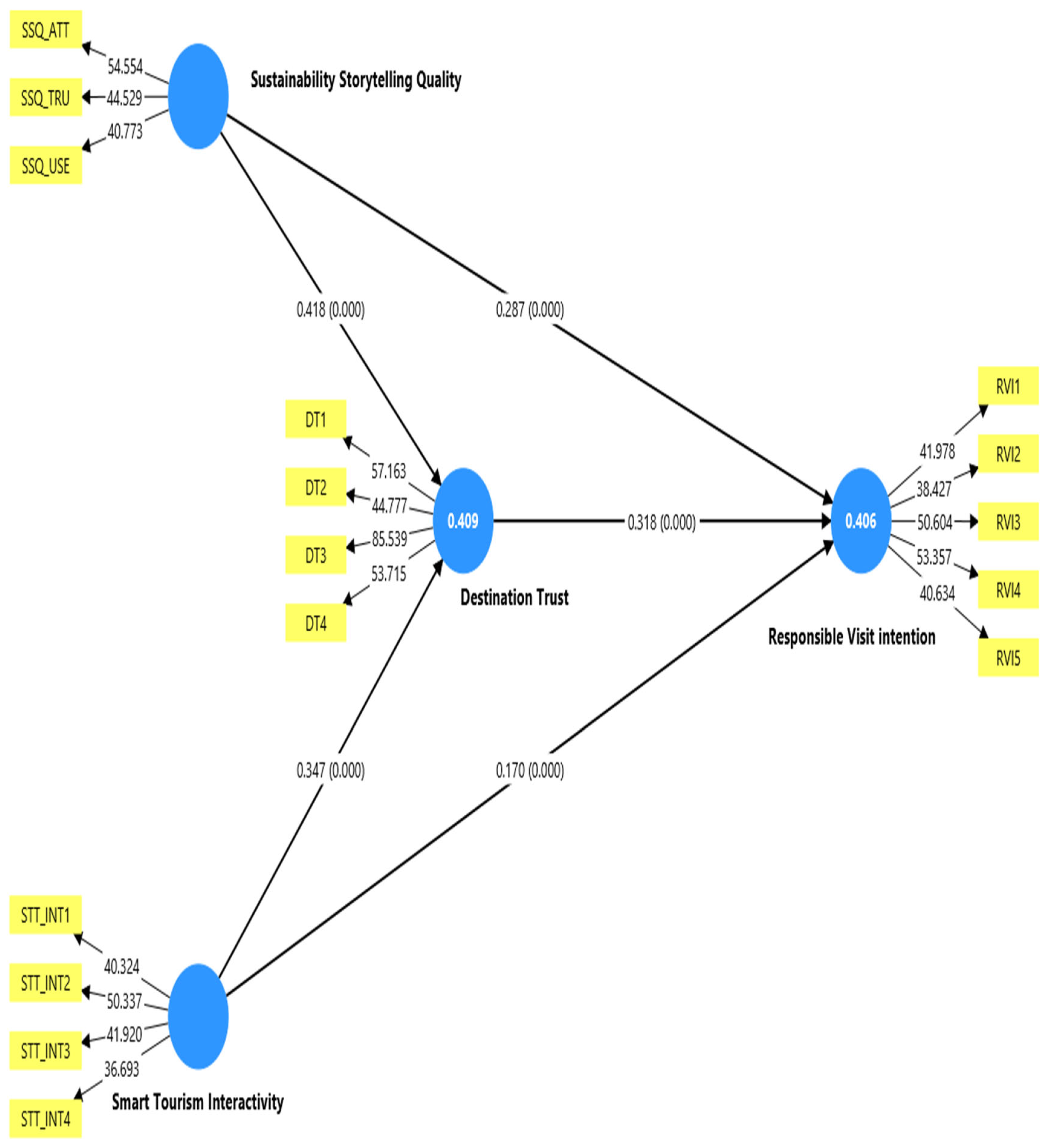
Table 4 shows the estimates for the structural model and the results of the hypothesis tests. The results show that the quality of sustainability storytelling has a strong positive effect on destination trust (β = 0.418, t = 10.164, p < 0.001), which supports H1. The same is true for smart tourism interactivity (β = 0.347, t = 8.402, p < 0.001), which supports H2. In turn, destination trust has a strong positive effect on responsible visit intention (β = 0.318, t = 6.440, p < 0.001), which supports H3. In terms of mediation, the indirect effect of sustainability storytelling quality on responsible visit intention through destination trust is significant (β = 0.133, t = 5.272, p < 0.001), which supports H4a. The indirect effect of smart tourism interactivity on responsible visit intention through destination trust is also significant (β = 0.110, t = 5.078, p < 0.001), which supports H4b. These results suggest that destination trust is a key factor that links both the quality of sustainability-focused communication and smart interactive features to stronger intentions to visit responsibly. These structural relationships and the explained variance of the endogenous constructs are illustrated in Figure 3.

6. Discussion

This study’s model posits destination trust as the primary psychological mechanism that transforms two destination-controlled antecedents, sustainability storytelling quality, and smart tourism interactivity into responsible visit intention within the Saudi tourism context. In this framework, high-quality sustainability narratives and interactive smart touchpoints are expected to function as credibility- and competence-related cues that shape tourists’ confidence in the destination’s integrity, governance, and reliability; once established, this trust should increase tourists’ willingness to comply with norms and adopt low-impact behaviors during their visit. This reasoning suggests that the impact of sustainability storytelling quality and smart tourism interactivity on responsible visit intention may function both directly and indirectly through destination trust, establishing trust as a crucial intermediary in sustainable destination marketing.
In line with H1, the quality of sustainability storytelling was positively related to destination trust, which is suggestive that clear, informative, and credible sustainability narratives may lessen perceptions of ambiguity and reinforce tourists’ confidence in destination promises. However, this relationship is not unconditional: prior research cautions that when sustainability claims are perceived as vague or exaggerated, greenwashing skepticism may erode trust, turning sustainability discourse into a liability rather than an asset [3,4]. In the context of Saudi Arabia, where sustainability visibility is increasing due to Vision 2030, our findings highlight the significance of verifiable indicators (such as certifications and tangible practices) as credibility anchors that facilitate the earning of trust in storytelling, rather than merely signaling it [18,25,26].
Consistent with H2, the interactivity of smart tourism positively affected destination trust, indicating that responsive and two-way digital touchpoints can act as competence and transparency signals to reduce perceived risk in travel decisions [10,11,12]. Nevertheless, interactivity is not inherently trust-enhancing: inconsistent information and poor responsiveness or ambiguous data practices may act to strengthen uncertainty, suggesting that the quality of smart interactions as a form of governance matters [13,14]. This nuance is particularly relevant for Saudi destinations accelerating digital transformation, where tourists may interpret platform performance as a proxy for broader institutional capability.
Consistent with H3, destination trust was positively associated with responsible visit intention in this study, indicating trust not only led to loyalty-type outcomes but also influenced more demanding intentions that required either voluntary compliance with norms and less harmful behavior [29,34,38]. This provides a valuable contextual insight: in Saudi tourism, where cultural propriety and site conservation desires may be paramount, trust can potentially lower the psychological cost of compliance by making responsible behavior feel backed, meaningful, and doable.
Additionally, the effects of sustainability storytelling quality and smart tourism interactivity on the intention to visit responsibly were mediated by destination trust, in line with H4a and H4b. Our findings suggest that smart technologies and sustainability communication are more likely to influence responsible visiting through a trust-based assurance mechanism rather than acting as direct triggers of responsibility intentions. This is this study’s main scientific contribution, as it grounds the model in an emerging destination context and expands the scope of sustainability tourism research beyond traditional revisit/recommendation metrics [2,16,17,35].

7. Conclusions

This study investigated the process of sustainable destination marketing in Saudi Arabia, where digitally based sustainability stories and smart tourism experiences transfer into responsible visit intention via the mediating role of positioning trust at a destination, as a primary psychological mechanism. Based on a survey (N = 420) and PLS-SEM results, sustainability storytelling quality and smart tourism interactivity are found as two significant predictors of destination trust. In return, greater trust is associated with a higher tendency to engage in responsible visiting behavior (e.g., showing respect for local culture, preserving resources, and abiding to rules). Crucially, trust seems to function as a medium of partial transmission, where storytelling and interactivity count most if they manage to make the destination seem credible, well-managed, dependable rather than simply promoted.
Overall, the results suggest that Saudi destinations are likely to enhance responsibility-oriented intentions when they (i) offer evidence-based sustainability storytelling (clear claims, concrete practices, and verifiable cues) and (ii) ensure high-quality interactivity across smart touchpoints (responsive two-way communication, consistent information, and transparent digital guidance). This means that instead of just using attractive messages or “smart” features for their own sake, we should use both as signals of good governance that build trust and make responsible behavior seem possible, supported, and worth it in the context of the Saudi tourism transformation.

7.1. Theoretical Implications

This study offers multiple theoretical contributions. First, it adds to the research on sustainable destination marketing by empirically confirming an integrated S-O-R trust pathway, where the quality of sustainability storytelling and smart tourism interactivity serve as external stimuli, destination trust represents internal organismic appraisal, and responsible visit intention signifies behavioral response. This enhances prior S-O-R applications in tourism by dissecting trust as the principal psychological outcome mechanism that converts destination-generated digital cues into responsibility-oriented intentions.
Second, the findings advance trust formation theory by synthesizing two complementary pathways for establishing trust—message-based signaling and information-driven uncertainty reduction, both rooted in interaction—into a unified model. At the conceptual level, high-quality sustainability storytelling serves as a credibility and diagnostic signal, while smart interactivity acts as a dynamic capability and responsiveness signal; both avenues substantially bolster destination trust, thereby supporting the idea that tourists assess a destination’s reliability based not only on its statements but also on the behavior of its signals.
Third, the research contributes to intention-based theorization of destination trust (TPB logic) in showing that destination trust anticipates responsible visit intention, moving beyond the recurring focus in destination trust literature on loyalty-type outcomes (e.g., revisit/recommend) to responsibility-oriented intentions, which frequently feature compliance, self-regulation, and acceptance of behavioral constraints. The substantial direct and indirect effects demonstrate that trust is not a ‘nice-to-have’ belief, but a proximal antecedent to one’s willingness to act responsibly in a destination.
Finally, by testing this mechanism in the Saudi tourism context—where smart transformation and sustainability visibility are accelerating—this study adds cross-context evidence that digitally mediated trust-building processes can support responsible visiting, while also implying that the strength of such effects is likely contingent on the credibility of sustainability cues and the functionality of interactive touchpoints.

7.2. Practical Implications

The findings offer practical implications to managers and policymakers for enhancing the responsible visit intention in Saudi Arabia through utilizing destination trust as a pivotal factor. The results demonstrate that smart tourism interactivity, sustainability storytelling quality, and destination trust have an influence on visitors’ intentions to engage in responsible behavior during their stay.
First, destination marketers and DMOs need to see sustainability storytelling as more than just a way to sell things. It should also be seen as a way to build trust. This means making sustainability messages that are honest, clear, and backed up by real actions (like conservation activities, heritage protection, or measurable environmental strategies) and clear proof (like third-party certifications, awards, public reporting dashboards, or claims that can be verified). Also, making sustainability claims less vague can help customers judge and trust the claim, which can lead to responsible behavior.
Second, tourism officials and platform owners should put money into high-quality interactive smart touchpoints (apps, official destination platforms, and social media service layers) that show that they are responsive and able to govern. Service-level targets, such as standards for response time, accuracy checks, and escalation protocols, should be put in place for features like real-time Q&A, quick complaint handling, two-way engagement, and easy information sharing. It’s important to manage interactivity for quality because slow responses, inconsistent information, or unclear procedures can hurt trust and make the intended behavioral benefits less effective.
Third, the dual impact of storytelling and interactivity means that destinations should use a cross-functional coordination approach. For example, marketing, sustainability units, operations, and site management all need to share content governance to make sure that digital claims, on-ground practices, and visitor guidance are all consistent. Integrating “responsible visit” cues within digital journeys (e.g., culturally sensitive social norms, conservation prompts, location-based nudges, clear rules of behavior in sensitive sites) can translate trust into actual intention to act, particularly when such guidelines describe the desired behavior as easy to perform and a supported destination-endorsed option.
Lastly, policymakers and regulators can reinforce the positive effects by setting higher standards for digital sustainability communication and eco-claims in tourism. Clearer guidance for sustainable disclosures, eco-label governance mechanisms that are more credible, and public awareness programs that aid visitors in interpreting sustainability information can create market-level clarity, reduce distrust, and strengthen trust. Such measures can support Vision 2030 objectives by ensuring that the digital transformation of destinations drives not only visitation, but also responsible visitor behavior.

7.3. Study Limitations and Future Research

This study has several limitations that should be considered when interpreting its findings. First, this study adopted a cross-sectional self-reported online design, which constrains causal inference and could have been subject to common method variance and social desirability bias, albeit procedural remedies and statistical checks were undertaken to help reduce these issues. Second, deployment of a non-probability online convenience sample, recruited from purely electronic sources, very likely skewed the sample toward younger and better digitally connected respondents with prior exposure to destination-related content in online forums. This results in a sample that is far more representative of digitally inclined tourists and potential visitors compared with the overall visitor population. Furthermore, the differences in digital affinity displayed by this sample population may have affected the strength of even significant relationships studied here (especially those between sustainability storytelling quality and smart tourism interactivity) because people with high levels of digital affinity are more likely to notice, value, and react to combined interactive/storyline-based digital cues. Notably, therefore, the reported effects may be relatively more pronounced than for visitor segments with lower digital engagement or affinity for technology. Third, as an outcome of perceived sustainability storytelling quality, smart tourism interactivity, and destination trust, the current research targeted responsible visit intention instead of actual responsible travel behavior. Thus, the existence of an intention–behavior gap cannot be excluded, indicating that stated intentions for responsible visits may not lead to low-impact or sustainability-oriented behaviors during travel. Moreover, since the model was tested in a Saudi destination context, contextual elements such as destination maturity, governance signals, and digital ecosystem readiness might change the strength and direction of relationships posited across contexts. It warrants mentioning that caution is needed in the generalization of these effect sizes directly to other national or regional tourism contexts.
Future research ought to transcend generic replication by implementing more specific and theory-driven methodologies. Subsequent studies could enhance causal inference by utilizing longitudinal, experimental, or field-based designs that manipulate both the framing of sustainability narratives and the degree of smart interactivity, thereby isolating the causal effects of these digital levers on destination trust and responsible visit intention. For instance, experimental studies could juxtapose sustainability narratives that highlight personal advantages (e.g., comfort, safety, quality of experience, or self-enhancement) against those that underscore environmental or communal benefits (e.g., conservation, community welfare, or resource protection), while concurrently manipulating the level of interactivity integrated into the platform. These designs would help figure out if interactivity makes some narrative frames more persuasive than others, and if trust is built better when sustainability messages match tourists’ underlying motivations.
Future studies can further explore the degree to which this process reflects a boundary condition on which the culture of tourism depends. Particularly, cultural orientations like individualism–collectivism, uncertainty avoidance, and long-term orientation could moderate how tourists interpret sustainability storytelling, respond to interactive platform features, and translate trust into responsible visit intention. Accordingly, comparative research between Saudi nationals, residents, and international visitors or cross-country or multi-group experimental designs could shed greater light on whether the trust-building role of digital sustainability communication is culturally contingent.
Another critical avenue is tying intention as driven by trust to behavior through observable data, including booking decisions, digital trace data, compliance with destination rules upon visiting, or post-visit participation in conservation or local-supportive activities. Future research may also explore the disaggregation of smart tourism interactivity by particular touchpoints, e.g., mobile applications, live streaming, chatbots, social media Q&A systems, and AI-based recommendation interfaces to assess which varieties of interactivity act as trust-enhancing signals under what conditions (and/or when they might actually introduce ambiguity or information overload). Collectively, such directions would underpin more context-sensitive theorizing about how digitally communicated cues of sustainable performances may inform responsible visit formation within smart-tourism environments.

Author Contributions

Conceptualization, A.N.; methodology, A.N.; software, F.A.; validation, F.A.; formal analysis, A.N.; investigation, A.N.; resources, F.A.; data curation, F.A.; writing—original draft, A.N.; writing—review and editing, A.N.; visualization, F.A.; supervision, F.A.; project administration, A.N. All authors have read and agreed to the published version of the manuscript.

Funding

The researchers would like to thank the Deanship of Graduate Studies and Scientific Research at Qassim University for their financial support (QU-APC–2026). The article processing charge (APC) was initially self-funded by the authors and will be supported after publication by Qassim University.

Institutional Review Board Statement

This study was conducted in accordance with the Declaration of Helsinki and approved by the Research Ethics Committee (REC), College of Administrative and Human Sciences, Buraydah Colleges, Saudi Arabia (protocol code BPC-CAHS-REC-2026-Feb-09).

Informed Consent Statement

Informed consent was obtained from all subjects involved in the study.

Data Availability Statement

The data presented in this study are available on request from the corresponding author due to privacy and ethical restrictions, as they contain information that could compromise participant confidentiality.

Conflicts of Interest

The authors declare no conflicts of interest.

Appendix A

Table A1. Measurement items of key variables.
Sustainability storytelling quality [5]
Sustainability Storytelling Usefulness
SSQ_USE1: I believe the story of Saudi Destination promoting sustainability is a stronger message compared to advertising for destinations.
SSQ_USE2: I think the story of Saudi Destination sustainable is more informative than traditional destination marketing.
SSQ_USE3: The message of sustainability from Saudi Destination gives me more useful information than the standard destination promotion.
Sustainability Storytelling Attractiveness
SSQ_ATT1: I think the sustainability story of Saudi Destination looks better than most destination ads.
SSQ_ATT2: I think that the way the sustainability story of Saudi Destination is presented is pretty new compared to other destination promotions.
SSQ_ATT3: I believe that the sustainability story content of Saudi Destination is more interesting and vivid than most destination marketing messages.
SSQ_ATT4: After reading the sustainability story about Saudi Destination, I am more interested in learning more about it than I am in most destination promotions.
SSQ_ATT5: I think that the sustainability story of Saudi Destination is more interesting than most destination ads.
Sustainability Storytelling Truthfulness
SSQ_TRU1: I think the story of Saudi Destination’s sustainability claims are not too far off from what you would see in most destination marketing messages.
SSQ_TRU2: I think the information about sustainability in the story of Saudi Destination is true and fair, unlike most destination marketing messages.
SSQ_TRU3: I believe the information about sustainability in the story of Saudi Destination is true, unlike most destination ads.
SSQ_TRU4: I think the information about sustainability in the story of Saudi Destination is true and trustworthy, unlike most destination marketing messages.
Smart tourism interactivity [12]
STT_INT1: I make use of my destination’s smart tourism platforms so I can see the questions and answers from many other travellers when travelling in Saudi Destination.
STT_INT2: The destination’s smart tourism platforms respond promptly to my questions/requests.
STT_INT3: Two-way engagement (not unidirectional one-way flow of information) is possible through the destination’s smart tourism platforms.
STT_INT4: Destination-related information/content can be shared easily through the destination’s smart tourism platforms.
Destination Trust [39]
DT1: I believe that Saudi Destination will satisfy me.
DT2: I believe that Saudi Destination will meet my needs.
DT3: I believe that Saudi Destination will not disappoint me.
DT4: I believe that local people in Saudi Destination are welcoming to visitors.
Responsible Visit Intention [39]
RVI1: During my visit to Saudi Destination, I will respect local culture and traditions.
RVI2: During my visit to Saudi Destination, I will buy locally made products.
RVI3: During my visit to Saudi Destination, I will protect wildlife (animals and plants).
RVI4: During my visit to Saudi Destination, I will follow local rules and regulations.
RVI5: During my visit to Saudi Destination, I will conserve water and electricity.

References

  1. Ajzen, I. The Theory of Planned Behavior. Organ. Behav. Hum. Decis. Process. 1991, 50, 179–211. [Google Scholar] [CrossRef]
  2. Mohaidin, Z.; Wei, K.T.; Ali Murshid, M. Factors Influencing the Tourists’ Intention to Select Sustainable Tourism Destination: A Case Study of Penang, Malaysia. Int. J. Tour. Cities 2017, 3, 442–465. [Google Scholar] [CrossRef]
  3. De Sio, S.; Zamagni, A.; Casu, G.; Gremigni, P. Green Trust as a Mediator in the Relationship between Green Advertising Skepticism, Environmental Knowledge, and Intention to Buy Green Food. J. Environ. Res. Public Health 2022, 19, 16757. [Google Scholar] [CrossRef]
  4. Khan, U.; Ali, F.; Ali, L.; Parvez, M.O.; Alotaibi, S. The Effectiveness of Sustainability Badges in Hospitality: Examining Credibility and Its Impact on Booking Intentions. J. Tour. Res. 2025, 27, e70142. [Google Scholar] [CrossRef]
  5. Wang, J.; Li, A. The Impact of Green Advertising Information Quality Perception on Consumers’ Response: An Empirical Analysis. Sustainability 2022, 14, 13248. [Google Scholar] [CrossRef]
  6. Verleye, G.; De Ruyck, A.; Vermeulen, W.; Schoenaers, I. Credibility of Green Advertising: Six Elements That Drive Credibility in Green Advertising. Front. Commun. 2023, 8, 1056020. [Google Scholar] [CrossRef]
  7. Akerlof, G.A. The Market for “Lemons”: Quality Uncertainty and the Market Mechanism. Q. J. Econ. 1970, 84, 488. [Google Scholar] [CrossRef]
  8. Spence, M. Job Market Signaling. Q. J. Econ. 1973, 87, 355. [Google Scholar] [CrossRef]
  9. Berger, C.R.; Calabrese, R.J. Some Explorations in Initial Interaction and Beyond: Toward a Developmental Theory of Interpersonal Communication. Hum. Commun. Res. 1975, 1, 99–112. [Google Scholar] [CrossRef]
  10. Afolabi, O.O.; Ozturen, A.; Ilkan, M. Effects of Privacy Concern, Risk, and Information Control in a Smart Tourism Destination. Econ. Res. Ekon. Istraž. 2021, 34, 3119–3138. [Google Scholar] [CrossRef]
  11. Lee, T.-H.; Jan, F.-H. Development and Validation of the Smart Tourism Experience Scale. Sustainability 2022, 14, 16421. [Google Scholar] [CrossRef]
  12. Pai, C.-K.; Liu, Y.; Kang, S.; Dai, A. The Role of Perceived Smart Tourism Technology Experience for Tourist Satisfaction, Happiness and Revisit Intention. Sustainability 2020, 12, 6592. [Google Scholar] [CrossRef]
  13. Zhang, H.; Gordon, S.; Buhalis, D.; Ding, X. Experience Value Cocreation on Destination Online Platforms. J. Travel Res. 2018, 57, 1093–1107. [Google Scholar] [CrossRef]
  14. Zhang, W.; Wang, Y.; Zhang, T. Can “Live Streaming” Really Drive Visitors to the Destination? From the Aspect of “Social Presence”. Sage Open 2021, 11, 21582440211006691. [Google Scholar] [CrossRef]
  15. Mehrabian, A.; Russell, J.A. An Approach to Environmental Psychology; The MIT Press: Cambridge, MA, USA, 1974; ISBN 0-262-13090-4. [Google Scholar]
  16. Mercadé Melé, P.; Molina Gómez, J.; Sousa, M.J. Influence of Sustainability Practices and Green Image on the Re-Visit Intention of Small and Medium-Size Towns. Sustainability 2020, 12, 930. [Google Scholar] [CrossRef]
  17. Omeish, F.; Sharabati, A.-A.A.; Abuhashesh, M.; Al-Haddad, S.; Nasereddin, A.Y.; Alghizzawi, M.; Badran, O.N. The Role of Social Media Influencers in Shaping Destination Image and Intention to Visit Jordan: The Moderating Impact of Social Media Usage Intensity. Int. J. Data Netw. Sci. 2024, 8, 1701–1714. [Google Scholar] [CrossRef]
  18. Veasna, S.; Wu, W.-Y.; Huang, C.-H. The Impact of Destination Source Credibility on Destination Satisfaction: The Mediating Effects of Destination Attachment and Destination Image. Tour. Manag. 2013, 36, 511–526. [Google Scholar] [CrossRef]
  19. Liu, J.; Wang, C.; Fang, S.; Zhang, T. Scale Development for Tourist Trust toward a Tourism Destination. Tour. Manag. Perspect. 2019, 31, 383–397. [Google Scholar] [CrossRef]
  20. Abubakar, A.M.; Ilkan, M. Impact of Online WOM on Destination Trust and Intention to Travel: A Medical Tourism Perspective. J. Destin. Mark. Manag. 2016, 5, 192–201. [Google Scholar] [CrossRef]
  21. Shang, Z.; Luo, J.M. Modeling of the Impact of the Credibility of the Destination Endorser on the Place Attachment of Potential Tourists. Front. Psychol. 2021, 12, 759207. [Google Scholar] [CrossRef]
  22. Cheung, C.; Song, H. Exploring Tourism Marketing Message Authenticity and Destination Trust: The Role of Benefit Appeal, Framing Strategy, and Tourist Attributes. J. Vacat. Mark. 2025, 13567667251385259. [Google Scholar] [CrossRef]
  23. Ryu, K.; Lehto, X.Y.; Gordon, S.E.; Fu, X. Effect of a Brand Story Structure on Narrative Transportation and Perceived Brand Image of Luxury Hotels. Tour. Manag. 2019, 71, 348–363. [Google Scholar] [CrossRef]
  24. Jo, M.; Cha, J.; Kim, J. The Effects of Tourism Storytelling on Tourism Destination Brand Value, Lovemarks and Relationship Strength in South Korea. Sustainability 2022, 14, 16495. [Google Scholar] [CrossRef]
  25. Chang, W.; Li, H.; Khamarudin, M.; Khan, W.A. Influencing Eco-Conscious Travelers: The Role of Green Marketing in Promoting Sustainable Destinations. Acta Psychol. 2025, 260, 105506. [Google Scholar] [CrossRef]
  26. Japutra, A.; Can, A.S.; Alphun, C. Environmental or Personal Benefit? The Role of Message Appeal and Information Type in Destination Social Media Advertisements. J. Travel Res. 2025, 64, 1537–1555. [Google Scholar] [CrossRef]
  27. Ben Arbia, M.; Bouzaabia, R.; Beck, M. Trusting the Virtual, Traveling the Real: How Destination Trust in Video Games Shapes Real-World Travel Willingness Through Player Type Differences. Adm. Sci. 2025, 15, 470. [Google Scholar] [CrossRef]
  28. Yamagishi, K.; Bitong, C.A.; Badilla, M.C. How Does AI Chatbot-Generated Information Influence Destination Trust and Purchase Decisions in Tourism? J. Hosp. Tour. Insights 2025, 1–22. [Google Scholar] [CrossRef]
  29. Goeltom, A.D.L.; Hurriyati, R. Destination Attractiveness and Visit Intention: Integrating Image, Cultural Experience, and Sustainable Practices in Tourist Decision-Making. J. Tour. Hosp. Travel Manag. 2024, 2, 43–57. [Google Scholar] [CrossRef]
  30. Celep, E. Destinasyon Marka Değerinin Destinasyon Güveni ve Tekrar Ziyaret Niyeti Üzerine Etkisi: Ziyaret Sıklığının Moderatör Rolü. Bus. Manag. Stud. Int. J. 2025, 13, 357–378. [Google Scholar] [CrossRef]
  31. Kusumawati, A.; Utomo, H.S. Perceived Sustainability and Its Effects on Trust and WOM Intention: A Study in Nature and Cultural Tourism. Int. J. Innov. Creat. Change 2019, 8, 279–295. [Google Scholar]
  32. Nurhidayati, S.; Brahmasari, I.A.; Ratih, I.A.B. Influence of Destination Image, Augmented Reality and Destination Social Responsibility on Destination Beliefs, Motivation and Intention to Visit of Tourists Which Are Moderate by Digital Wom in Berau District, East Kalimantan. Edelweiss Appl. Sci. Technol. 2024, 8, 3267–3278. [Google Scholar] [CrossRef]
  33. Wibawa, D.P.; Yanto, Y.; Zulkarnain, A. How Destination Image and Trust Mediate E-WOM’s Impact on Halal Tourism Intentions. J. Eko. Keu. Isl. 2025, 11, 29–46. [Google Scholar] [CrossRef]
  34. De Nisco, A.; Mainolfi, G.; Marino, V.; Napolitano, M.R. Tourism Satisfaction Effect on General Country Image, Destination Image, and Post-Visit Intentions. J. Vacat. Mark. 2015, 21, 305–317. [Google Scholar] [CrossRef]
  35. Nguyen, T.T.T.; Duong, T.D.H. The Role of Nostalgic Emotion in Shaping Destination Image and Behavioral Intentions—An Empirical Study. J. Hosp. Tour. Insights 2025, 8, 735–752. [Google Scholar] [CrossRef]
  36. Apidana, Y.H.; Prasetyo, A.; Kholifah, K. User Generated Content and Generation Z Tourists’ Visit Intention: Evidence from the Newly Inaugurated Kebumen Geopark, Indonesia. Amkop Manag. Account. Rev. (AMAR) 2025, 5, 1133–1153. [Google Scholar] [CrossRef]
  37. Fajri, M.R.I.; Suhud, U.; Wolor, C.W. Examining Tourists’ Intention to Visit Karimunjawa National Park: The Role of Social Media. J. Glob. Econ. Manag. Bus. Res. 2024, 16, 22–33. [Google Scholar] [CrossRef]
  38. Sodawan, A.; Hsu, R.L.-W. Halal-Friendly Attributes and Muslims’ Visit Intention: Exploring the Roles of Perceived Value and Destination Trust. Sustainability 2022, 14, 12002. [Google Scholar] [CrossRef]
  39. Ko, E.E.; Cho, M. Exploring Determinants of Tourists’ Ethical Behavior Intention for Sustainable Tourism: The Role of Both Pursuit of Happiness and Normative Goal Framing. Sustainability 2022, 14, 9384. [Google Scholar] [CrossRef]
  40. Sousa, V.D.; Rojjanasrirat, W. Translation, Adaptation and Validation of Instruments or Scales for Use in Cross-cultural Health Care Research: A Clear and User-friendly Guideline. Eval. Clin. Pract. 2011, 17, 268–274. [Google Scholar] [CrossRef]
  41. Tsang, S.; Royse, C.; Terkawi, A. Guidelines for Developing, Translating, and Validating a Questionnaire in Perioperative and Pain Medicine. Saudi J. Anaesth. 2017, 11, 80. [Google Scholar] [CrossRef]
  42. Hair, J.F.; Hauff, S.; Hult, G.T.M.; Richter, N.F.; Ringle, C.M.; Sarstedt, M. Partial Least Squares Strukturgleichungsmodellierung: Eine Anwendungsorientierte Einführung; Verlag Franz Vahlen GmbH: Munich, Germany, 2017; ISBN 978-3-8006-5361-4. [Google Scholar]
  43. Hair, J.F.; Risher, J.J.; Sarstedt, M.; Ringle, C.M. When to Use and How to Report the Results of PLS-SEM. Eur. Bus. Rev. 2019, 31, 2–24. [Google Scholar] [CrossRef]
  44. Cohen, J. Statistical Power Analysis for the Behavioral Sciences, 2nd ed.; Routledge: Oxfordshire, UK, 2013; ISBN 978-1-134-74270-7. [Google Scholar]
  45. Henseler, J.; Ringle, C.M.; Sarstedt, M. A New Criterion for Assessing Discriminant Validity in Variance-Based Structural Equation Modeling. J. Acad. Mark. Sci. 2015, 43, 115–135. [Google Scholar] [CrossRef]
  46. Podsakoff, P.M.; MacKenzie, S.B.; Lee, J.-Y.; Podsakoff, N.P. Common Method Biases in Behavioral Research: A Critical Review of the Literature and Recommended Remedies. J. Appl. Psychol. 2003, 88, 879–903. [Google Scholar] [CrossRef]
  47. Curran, P.J.; West, S.G.; Finch, J.F. The Robustness of Test Statistics to Nonnormality and Specification Error in Confirmatory Factor Analysis. Psychol. Methods 1996, 1, 16–29. [Google Scholar] [CrossRef]
  48. Fornell, C.; Larcker, D.F. Evaluating Structural Equation Models with Unobservable Variables and Measurement Error. J. Mark. Res. 1981, 18, 39–50. [Google Scholar] [CrossRef]
Figure 1. Study’s conceptual framework and hypothesized paths.
Sustainability 18 03124 g001
Figure 2. Research methodology workflow.
Sustainability 18 03124 g002
Figure 3. Structural model results (PLS-SEM).
Sustainability 18 03124 g003
Table 1. Respondents’ characteristics (N = 420).
CategoryGroupFrequency%
GenderMale22553.6
Female19546.5
Age (years)18–2411828.1
25–3416539.3
35–448620.5
45–54337.9
55+184.3
StatusSaudi citizen23556.0
Resident14233.8
International visitor4310.2
Visited Saudi beforeYes19346.0
No22754.0
Table 2. Measurement model assessment: confirmatory factor analysis of latent constructs.
Construct and Itemsλ (>0.7)VIF (<5)MSDSKKU
Measurement Items of the First-Order Constructs
Attractiveness (α = 0.869, CR = 0.905, AVE = 0.657)
SSQ_ATT10.7761.7202.9121.3730.104−1.236
SSQ_ATT20.8342.1102.9621.4050.032−1.249
SSQ_ATT30.7901.8333.0051.354−0.043−1.170
SSQ_ATT40.8512.2172.9121.3660.126−1.166
SSQ_ATT50.8011.9552.9071.3530.088−1.187
Truthfulness (α = 0.826, CR = 0.885, AVE = 0.657)
SSQ_TRU10.7601.5483.0101.333−0.011−1.240
SSQ_TRU20.8141.7893.0001.343−0.018−1.258
SSQ_TRU30.8211.8252.9741.3380.005−1.266
SSQ_TRU40.8461.9312.9811.349−0.005−1.244
Usefulness (α = 0.846, CR = 0.907, AVE = 0.764)
SSQ_USE10.8511.9153.0571.345−0.067−1.228
SSQ_USE20.9012.2203.0021.371−0.012−1.290
SSQ_USE30.8692.0343.0021.370−0.012−1.284
Smart Tourism Interactivity (α = 0.828, CR = 0.886, AVE = 0.660)
STT_INT10.8061.6823.0261.333−0.042−1.246
STT_INT20.8452.0062.9861.3530.008−1.243
STT_INT30.8051.7263.0021.344−0.021−1.262
STT_INT40.7921.6873.0101.333−0.030−1.246
Destination Trust (α = 0.872, CR = 0.912, AVE = 0.723)
DT10.8432.1012.9981.352−0.009−1.246
DT20.8272.0013.0101.338−0.011−1.241
DT30.8842.4013.0101.357−0.010−1.279
DT40.8462.1262.9811.3640.024−1.255
Responsible Visit Intention (α = 0.865, CR = 0.902, AVE = 0.649)
RVI10.7971.8473.0051.349−0.023−1.249
RVI20.7781.7692.9951.346−0.007−1.261
RVI30.8231.9782.9951.344−0.007−1.255
RVI40.8292.0802.9831.3560.006−1.254
RVI50.7991.8492.9861.3470.009−1.258
Measurement Items of the Second-Order Constructs
Sustainability Storytelling Quality (α = 0.765, CR = 0.864, AVE = 0.680)
Attractiveness0.8421.5762.9401.109−1.0230.147
Truthfulness0.8211.5323.0051.107−0.9720.013
Usefulness0.8101.5552.9931.205−1.0550.016
Table 3. Discriminant validity assessment (Fornell–Larcker criterion and HTMT).
Construct123456
First-order constructs
1. Attractiveness0.8110.5380.5240.3810.4840.478
2. Usefulness0.6190.8740.5090.2800.4280.402
3. Truthfulness0.6140.6110.8110.3130.4620.431
4. Smart Tourism Interactivity0.4470.3300.3770.8120.5110.445
5. Destination Trust0.5540.4930.5400.5980.8500.563
6. Responsible Visit Intention0.5470.4670.5080.5260.6440.806
Construct1234
Second-order constructs
1. Sustainability Storytelling Quality0.8250.4910.6740.647
2. Smart Tourism Interactivity0.3930.8120.5980.526
3. Destination Trust0.5540.5110.8500.644
4. Responsible Visit Intention0.5300.4450.5630.806
Note: Diagonal values (bold) represent the square root of AVE (Fornell–Larcker). Values below the diagonal are inter-construct correlations, whereas values above the diagonal indicate HTMT ratios. HTMT values below 0.85/0.90 suggest adequate discriminant validity.
Table 4. Results of hypothesis testing.
Path (Hypothesis)βS.T (STDEV)T ValueSig. (p)Result
Direct Effects
H1: SSQ → DT0.4180.04110.164<0.001Supported
H2: STI → DT0.3470.0418.402<0.001Supported
H3: DT → RVI0.3180.0496.440<0.001Supported
Indirect Mediating Effect
H4a: SSQ → DT → RVI0.1330.0255.272<0.001Partial mediation
H4b: STI → DT → RVI0.1100.0225.078<0.001Partial mediation
Explained variance (R2): Destination Trust = 0.409; Responsible Visit Intention = 0.406. Note: SSQ = Sustainability Storytelling Quality; STI = Smart Tourism Interactivity; DT = Destination Trust; RVI = Responsible Visit Intention. β = path coefficient; S.T (STDEV) = standard deviation; Sig. = p-value (p < 0.001 shown as <0.001). For mediation rows (H4a, H4b), “Partial mediation” indicates that the indirect effect via Destination Trust is significant while the model also estimates direct paths to the outcome.
Disclaimer/Publisher’s Note: The statements, opinions and data contained in all publications are solely those of the individual author(s) and contributor(s) and not of MDPI and/or the editor(s). MDPI and/or the editor(s) disclaim responsibility for any injury to people or property resulting from any ideas, methods, instructions or products referred to in the content.