Article

Toward Sustainable Hydrometallurgy: A Closed-Loop Acetic Acid Recycling Process for Transforming Mining Waste Rock into High-Grade Phosphate Ore and Brushite Mineral

Geology and Sustainable Mining Institute (GSMI), Mohammed VI Polytechnic University, Lot 660, Hay Moulay Rachid, Ben Guerir 43150, Morocco
*
Author to whom correspondence should be addressed.
Sustainability 2026, 18(6), 3031; https://doi.org/10.3390/su18063031
Submission received: 9 February 2026 / Revised: 13 March 2026 / Accepted: 17 March 2026 / Published: 19 March 2026
(This article belongs to the Special Issue Application of Chemical Technology in Waste Recycling and Reuse)

Abstract

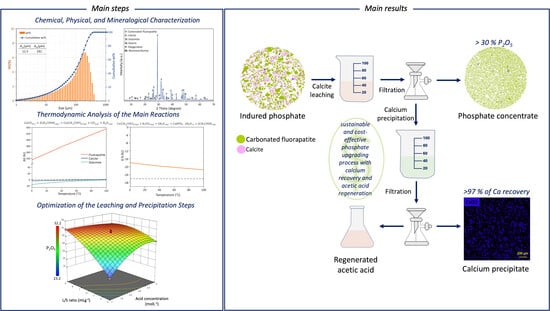
Given the rising demand for phosphate, a critical mineral for many countries due to its essential role in fertilizer production and global food security, reprocessing waste generated during phosphate mining has become increasingly important to mitigate demand pressures and reduce the environmental impact of the mining industry. This study aims to develop a sustainable hydrometallurgical process to recover residual phosphate from a lithology present in mining waste rock. To this end, a thermodynamic analysis was first performed to assess reaction feasibility during leaching and precipitation. A two-step process was then proposed: the first step involves leaching carbonates (mainly calcite) using acetic acid, optimized through response surface methodology based on a Box–Behnken design; the second step consists of precipitating calcium with phosphoric acid to produce a value-added by-product (brushite) while simultaneously regenerating the acetic acid. A preliminary economic assessment was conducted to evaluate process feasibility. The results show that acetic acid is highly selective for carbonates, yielding a phosphate concentrate containing 30% P2O5 with complete phosphate recovery under the following conditions: 3.4 molL−1 acid concentration, 28 °C reaction temperature, a liquid-to-solid ratio of 6 mLg−1 (14.2% solids), and a reaction time of 49 min. In the precipitation step, a calcium recovery of 97% was achieved under optimal conditions (20 °C, 15 min, 500 rpm stirring, and a P:Ca ratio of 1). Furthermore, the preliminary economic assessment indicates that the developed process, based on the use of an organic acid and its recycling, generates a net profit, confirming its economic viability and its contribution to environmentally sustainable phosphate processing.

Graphical Abstract

1. Introduction

Phosphate is regarded as a vital mineral resource required for the production of fertilizers and, consequently, for the maintenance of global food security [1]. In terms of reserves, it is noted that over 67% of the world’s known phosphate reserves are found in Morocco, while more than 5% are located in China [2]. This geographic distribution of phosphate rock renders it a critical raw material for many countries and economic groups [3,4]. With rising demand, the preservation of this primary resource, the valorization of low-grade phosphate, and the reprocessing of phosphate mine waste have been deemed increasingly important [5]. However, the mining and processing of phosphate generate various waste streams, including waste rock from mining and preconcentration, tailings from beneficiation, and phosphogypsum from chemical processing, all of which still contain recoverable amounts of phosphate and other valuable elements [6,7,8]. The storage of these waste materials poses significant environmental challenges, particularly when they originate from chemical processing activities, such as phosphogypsum generated during phosphoric acid production [8].
In Morocco, phosphate waste rocks generated during mining typically consist of overburden, interlayers, and thin phosphate layers [5]. The phosphate present in these waste rocks occurs in three main lithologies: (i) indured phosphate (primarily composed of carbonates and phosphate, known as calcareous phosphate); (ii) phosphate flint (mainly quartz and phosphate, known as siliceous phosphate); and (iii) sandy phosphate [9,10]. Indured phosphate, identified as the phosphate-bearing lithology present in significant amounts in the coarse fraction, exhibits a P2O5 content ranging from 14% to 25%. Based on this range, it can be classified as low- to medium-grade phosphate [9,10]. This lithology requires further treatment to meet market quality standards. Various methods can be employed to upgrade low-grade phosphate, including classification techniques (e.g., grinding, screening, scrubbing, attrition, and washing), physical separation (e.g., gravity separation), physicochemical processes (e.g., flotation), thermal treatment (e.g., calcination), hydrometallurgical processes (e.g., leaching), among other methods [11,12,13].
However, when calcite is the primary gangue mineral, as in the case of indured phosphate, both gravity separation and flotation are often limited. Gravity separation is hampered by the small difference in density between the phosphate and calcite. Flotation is constrained by the similar surface properties of carbonated fluorapatite and calcite (both containing Ca2+ as the active site) [14,15,16]. While calcination is a viable method, it introduces significant environmental challenges, including substantial CO2 emissions resulting from the thermal decomposition of carbonate minerals as well as from the combustion of fossil fuels required to achieve high operating temperatures, in addition to its high energy consumption [14,17]. Selective carbonate leaching using organic acids has gained prominence as a promising alternative process for upgrading low-grade phosphate ores that contain carbonate as the primary gangue mineral [18]. This selective leaching process using organic acids involves dissolving carbonate without leaching the phosphate-bearing minerals (apatite, fluorapatite, or carbonated fluorapatite). During leaching, the organic acid reacts with calcium carbonate (e.g., calcite, dolomite) to produce carbon dioxide gas [11]. One of the principal advantages of this method lies in the recyclability of the organic acid, as well as the possibility of recovering elements such as calcium and magnesium from the leaching solution through precipitation [19]. This helps offset processing costs and enhances the economic viability of the process. Several key parameters affect the efficiency of carbonate leaching. These include the type of leaching reagent (i.e., the acid type), acid concentration, liquid-to-solid ratio, particle size, reaction temperature, and reaction time [20]. Among the most widely used acids are acetic acid, citric acid, formic acid, and succinic acid [12,18,19]. According to Economou and Vaimakis (1997), a P2O5 content of 31% was achieved from an initial concentration of 13.9% P2O5 [21]. This was accomplished through carbonate leaching using acetic acid under the following conditions: a reaction time of 60 min, a stirring speed of 200 rpm, an acid concentration of 1 M, and a particle size fraction between 250 and 300 µm. Another study conducted by Sengul et al. (2006) reported that under conditions of 40 min reaction time, 200 rpm stirring, 0.5 M acetic acid, 22 °C, and 250 and 355 µm. particle size, the P2O5 content increased from 12.7% to 29% [22]. Arroug et al. (2021) compared acetic, citric, and lactic acids and optimized key parameters, achieving 30.7% P2O5 with 7 wt% acetic acid, 100 min, and 40 °C [19]. The leaching of carbonate with acetic acid produces a calcium-rich solution in the form of calcium acetate [23]. A precipitation step could enable both acid regeneration and calcium recovery. The choice of reagent determines the form of the precipitated calcium compound. Although several studies have mentioned that the regeneration of organic acids can be achieved after carbonate leaching; however, only a limited number of studies have successfully proposed a regeneration process. Zafar et al. (2006) proposed a process for recovering formic acid by adding sulfuric acid [24]. The addition of sulfuric acid to a calcium-rich solution allows the recovery of formic acid and the precipitation of calcium sulfate.
In the context of leaching carbonate using acetic acid, adding sulfuric acid to the calcium-rich solution can yield calcium sulfate while regenerating acetic acid [14,25]. Within this framework, the originality of this study lies in introducing phosphoric acid into the leachate solution highly concentrated in calcium, in order to recycle acetic acid and recover calcium in a high added-value form, specifically the dicalcium phosphate (brushite), a valuable product due to its significance in agriculture [26].
The overall objective of this work is to address this gap by developing a sustainable closed-loop process that enables the upgrading of indured phosphate to marketable quality. To achieve this, a two-step process optimization was conducted: first, carbonate leaching using acetic acid; second, calcium precipitation from the leach solution by adding phosphoric acid. The leaching step was optimized by examining four key factors influencing carbonate dissolution efficiency, while the precipitation step was optimized by varying the phosphoric acid concentration. Acetic acid was selected due to its high selectivity toward carbonates, allowing the retention of phosphorus in the phosphate concentrate (solid residue). Overall, this strategy provides a new route for acetic acid regeneration and represents a low-impact process, as organic acids are environmentally friendly. Furthermore, recycling acetic acid reduces reagent consumption, enabling the development of a process that allows for a sustainable secondary source of phosphate while mitigating the environmental impacts associated with waste rock accumulation.

2. Materials and Methods

2.1. Materials

The studied indured phosphate (IP) sample was collected from phosphate waste generated during mining operations at the Ben Guerir mine site. The collected sample was stored in a closed bag to prevent contamination during transport. The sample was first homogenized and subsequently crushed using a jaw crusher to reduce the particle size to below 1 mm. Following further homogenization via the cone and quarter method, it was ground with a disc mill to achieve a particle size below 300 µm. Finally, the sample was dried at 105 °C for 24 h. For the leaching experiments, high-purity acetic acid (VWR, Radnor, PA, USA) was used, while phosphoric acid (VWR, USA) was employed for the precipitation process. Deionized water (18.25 MΩ) was utilized for all washing steps and for the preparation of solutions.

2.2. Experimental Procedures

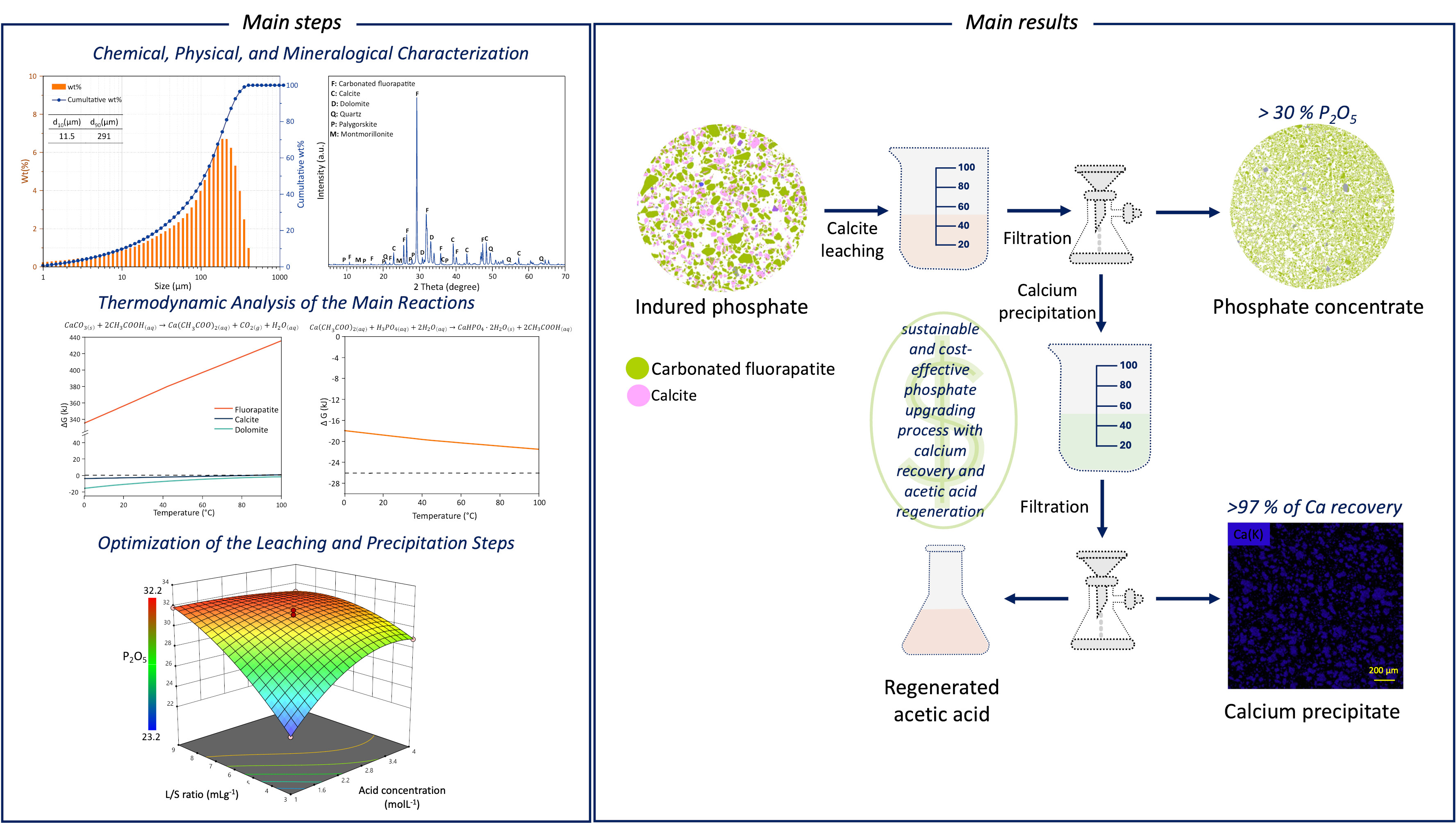
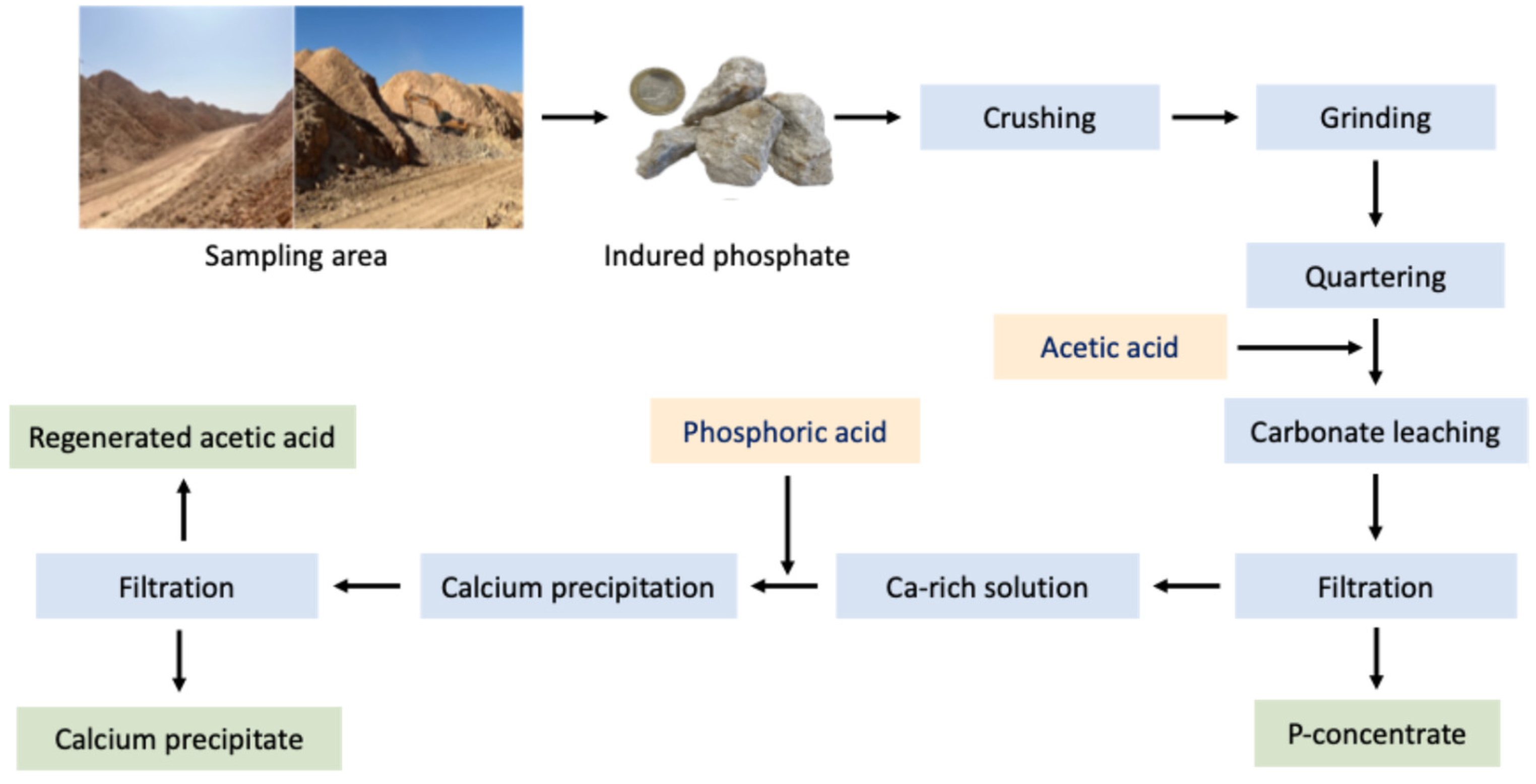
The developed flowsheet for the valorization of the indured phosphate is illustrated in Figure 1. The process comprises two main steps. The first step involves optimizing the leaching of carbonates using acetic acid. During this stage, an experimental design was employed to investigate the effects of four factors: temperature, acid concentration, reaction time, and solid-to-liquid ratio.
The leaching step results in a phosphate concentrate (leaching residue) and a solution highly concentrated in calcium (calcium acetate). In the second step, phosphoric acid was used to precipitate calcium through the reaction of calcium acetate with phosphoric acid. In this step, calcium was precipitated in the form of brushite (dicalcium phosphate dihydrate). During this step, various phosphorus-to-calcium (P:Ca) ratios were explored, specifically 0.19, 0.58, 0.93, 0.97, 1.01, 1.08, 1.16, 1.35, and 1.74. Moreover, the use of phosphoric acid enabled the recycling of the acetic acid.

2.2.1. Leaching Experiments

Before the leaching experiment, acetic acid solutions were prepared at various concentrations using deionized water. The indured phosphate (IP) was then added to the acetic acid, which had been preheated to the set temperature. The mixture was agitated at a constant speed of 400 rpm, with the reaction timer started immediately upon addition of the IP. After completion of the reaction time, the slurry was filtered using a polypropylene Büchner funnel to separate the calcium-rich solution from the phosphate concentrate. The recovered solid was subsequently dried in an oven at 105 °C for 24 h to remove residual water.

2.2.2. Experimental Design and Statistical Analysis

Response Surface Methodology (RSM) was employed to optimize the leaching of carbonate using acetic acid. RSM is an effective experimental design tool that minimizes the number of necessary tests while comprehensively assessing the influence of individual factors and their interactions on the response variable. Additionally, it facilitates the development of empirical model equations that describe the response in terms of the significant process parameters. The graphical representations of the response surfaces further enhance experimental analysis by providing clear visual insights into the behavior of the system and guiding the optimization of key factors [27,28]. The factors examined included acid concentration, reaction time, temperature, and liquid-to-solid ratio. The review of the literature indicated that these parameters have the most significant influence on the leaching of carbonate [14]. The fixed upper and lower limits of the parameters in this study are presented in Table 1. These limits were established based on preliminary experiments.
By employing a Box–Behnken design, 31 experiments were required to obtain the same conclusions that would have been derived from 81 experiments (the full set for four variables at three levels). These 31 experiments comprised 24 factorial points and 7 replicates at the center point (Table 2). To directly address the goal of phosphate upgrading, the P2O5 grade (%) of the leaching residues was adopted as the response variable. The model equation for the response (Y) as a function of the four independent variables is given in the following equation:
Y = β 0 +   i = 1 n β i x i   + i = 1 n β i i x i 2   +   i < j β i j x i   x j
where Y represents the dependent variable, β0 represents the fixed response value at the center of the experiment, βᵢ indicates the coefficient associated with the linear effect, βᵢᵢ expresses the coefficient corresponding to the quadratic effect, and βᵢⱼ characterizes the coefficient for the interaction effect.

2.2.3. Calcium Precipitation and Acetic Acid Regeneration

After the optimization of the leaching step, a scale-up test was conducted, increasing the volume from a 50 mL beaker to a 5 L reactor. The aim was to prepare a sufficient volume of leachate solution for the optimization of the calcium precipitation step. This step consists of adding phosphoric acid as a precipitation agent to the leachate solution containing calcium acetate. The process involves a reaction between calcium acetate and phosphoric acid to produce brushite and regenerate acetic acid (Equation (6)). During this step, the P:Ca molar ratio was varied, while other conditions were kept constant under the following parameters: 85 wt% phosphoric acid, a reaction time of 15 min, temperature of 20 °C, and stirring speed of 500 rpm. Following the reaction, the precipitate was filtered, dried at 60 °C for 48 h, and characterized using X-ray diffraction (XRD) and scanning electron microscopy combined with EDX detectors (SEM-EDX).

2.3. Analytical Procedure

The mineralogical composition and textural parameters of the indured phosphate were determined by automated mineralogy. The analysis was conducted on a polished section using a Tescan Integrated Mineral Analyzer (TIMA®) equipped with an EDAX Element 30 detector (TESCAN, Brno, Czech Republic). Black carbon nanoparticles were used during polished section preparation. The analysis was performed under the following conditions: a beam energy of 25 keV, a beam current of 9.49 nA, a spot size of 82.4 nm, a pixel spacing of 2 µm, and a total analysis time of 3 h 45 min. The mineralogical data obtained were processed using TIMA software version 2.9.0. X-ray diffraction (XRD) analysis was conducted using a Miniflex 600 diffractometer (Rigaku, Tokyo, Japan). The diffraction patterns were recorded over a 2θ range of 5–70° using Cu Kα radiation. The resulting data were processed using HighScore software (version 3.0, Panalytical B.V.). The concentration of major and minor elements in the indured phosphate and leaching residues was determined by X-ray fluorescence (XRF) with a detection limit of 0.01 wt%. A ZSX Primus IV spectrometer (Rigaku, Japan) was used. The analysis procedure started by grinding the samples to a particle size below 60 µm. Following that, all samples were calcined for 2 h at 950 °C to ensure complete decomposition of carbon. Then, sodium tetraborate (Na2B4O7) was added to the calcined samples to facilitate the melting process, forming homogeneous glass beads. Major and minor elements present in the aqueous samples were analyzed using inductively coupled plasma optical emission spectrometry (ICP-OES). Trace and ultra-trace elements were determined using inductively coupled plasma mass spectrometry (ICP-MS). Quality assurance (QA) and quality control (QC) protocols were implemented to ensure the accuracy of the chemical analyses conducted in this study using XRF, ICP-OES, and ICP-MS. The thermodynamic behavior of the reactions occurring during the two process steps was thoroughly analyzed. The first step involves the interaction of various mineral phases in the indured phosphate with acetic acid during leaching, while the second step consists of the reaction between calcium acetate and phosphoric acid during precipitation. Calculations were conducted using HSC Sim Chemistry software version 10 from Metso Outotec (Espoo, Finland). The spontaneity of these reactions was assessed via Gibbs free energy (ΔG) calculations, and their exothermic or endothermic nature was evaluated by examining the enthalpy changes (ΔH). This detailed thermodynamic evaluation provided critical insights into the optimal temperature ranges necessary for achieving efficient chemical transformations.

3. Results and Discussion

3.1. Physical, Chemical, and Mineralogical Characterization

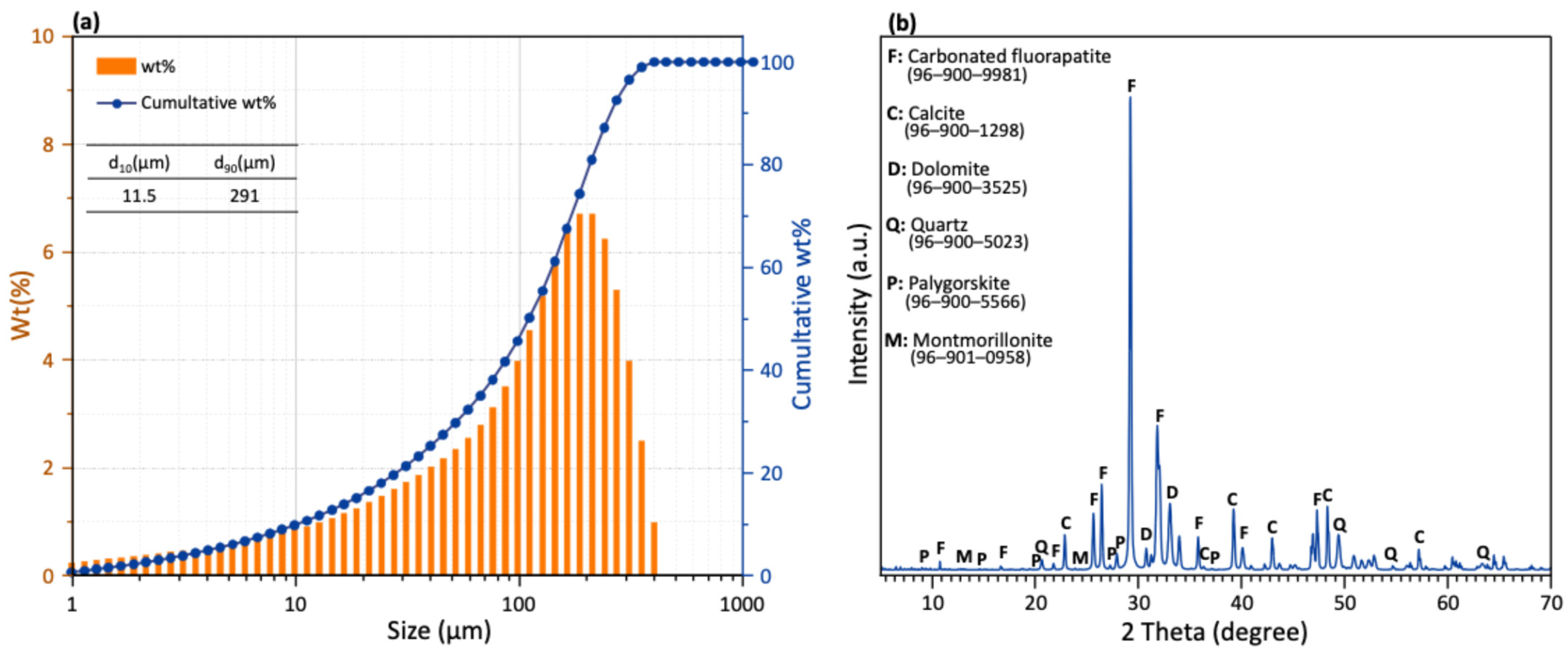
The indured phosphate was subjected to comprehensive characterization to determine its physicochemical properties. The particle size distribution and associated parameters, obtained by laser diffraction, are presented in Figure 2a. The analysis reveals a uniform distribution: approximately 90% of particles fall below 292 µm, and 10% below 11.5 µm, confirming the effectiveness of the mechanical preparation step.
Chemical composition results (Table 3) show that CaO, P2O5, and SiO2 are the dominant components, accounting for 52.5%, 19.1%, and 5.2%, respectively, with a loss on ignition (LOI) of 20.2%. According to [29], phosphate ores with P2O5 contents between 17 and 25% are classified as medium grade. With an analysed P2O5 content of 19.1% (Table 3), the indured phosphate therefore qualifies as a medium-grade ore. The concentrations of other critical and strategic elements are summarized in Table 3. The indured phosphate exhibits a total rare earth element (REE) content of 133.2 ppm, with yttrium (Y) being the most abundant at 46.3 ppm. Strontium (Sr) was also notable, present at 562 ppm. This elevated Sr concentration represents a potential added value, suggesting that indured phosphate could serve as a secondary resource for strontium recovery.
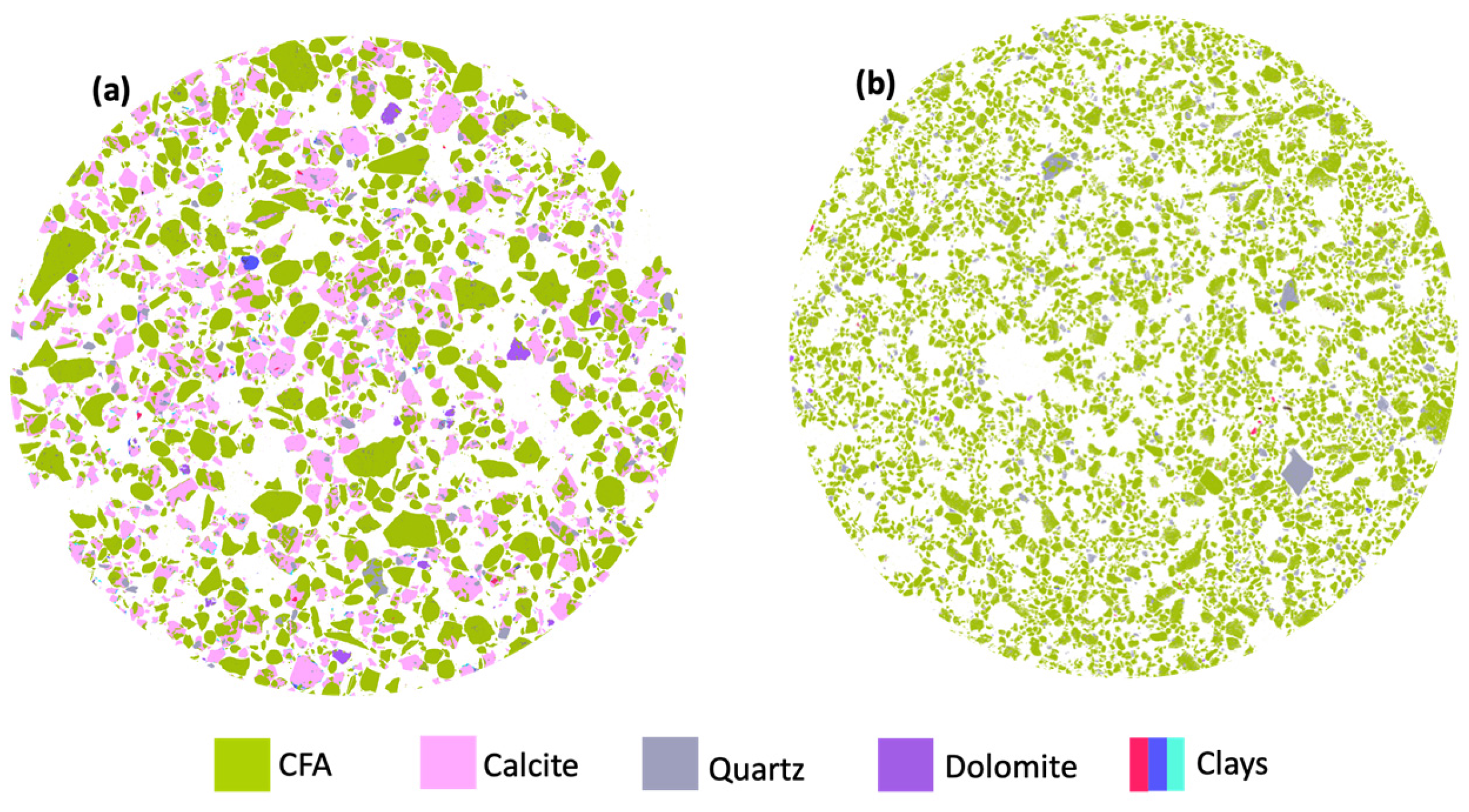
XRD analysis (Figure 2b) reveals that the phosphate-bearing mineral in the indured phosphate is carbonated fluorapatite (CFA). The diffractogram also identifies quartz, calcite, dolomite, palygorskite, and montmorillonite as additional phases present in the indured phosphate [30,31]. According to quantitative analysis (Table 3), the indured phosphate is composed of 52.45% CFA and 39.64% calcite. This mineralogical composition is further confirmed by the TIMA® image (Figure 5a), which shows that CFA and calcite are the predominant phases. The determined characteristics of the indured phosphate align with previous studies. In a study by Chlahbi et al. (2025) on the interlayer of the Benguerir mine site, they reported the occurrence of phosphate in an unexploited layer within a carbonate matrix composed mainly of CFA and calcite [10].

3.2. Thermodynamic Analysis of Calcite Leaching

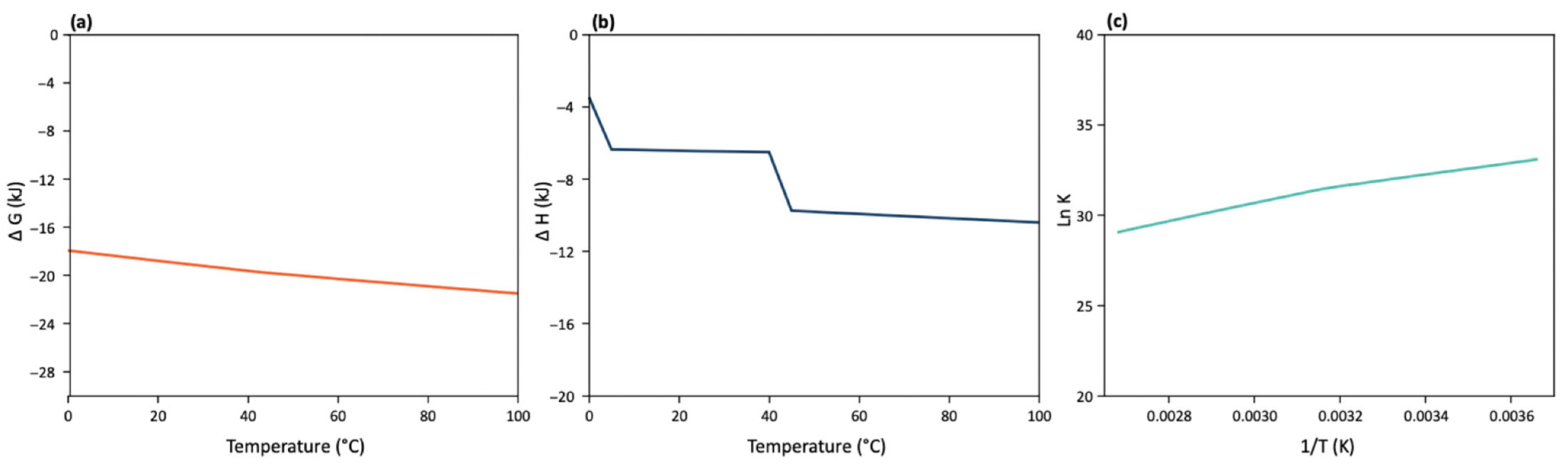
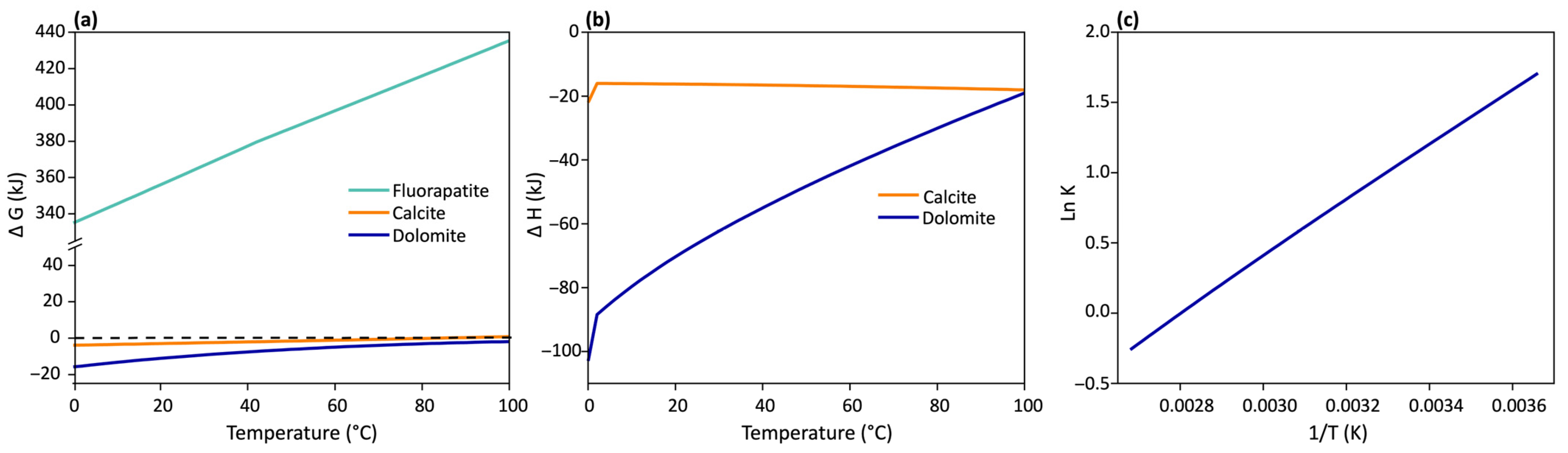
The thermodynamic analysis provides insights into the selective interaction of acetic acid with carbonate and fluorapatite minerals within the studied temperature range (0–100 °C) [20]. Figure 3a illustrates that those reactions of acetic acid with carbonate minerals, specifically calcite and dolomite (Equations (2) and (3)), exhibit negative Gibbs free energy values consistently across the entire temperature range analyzed. This indicates spontaneous reactions, confirming the thermodynamic favorability of selective leaching of calcite and dolomite by acetic acid. Equation (4) represents the theoretical interaction between fluorapatite and acetic acid for thermodynamic comparison. However, the positive Gibbs free energy values calculated across the studied temperature range indicate that this reaction is non-spontaneous. This confirms that fluorapatite remains stable under the investigated conditions, thereby ensuring the selective dissolution of carbonate minerals and the preservation of phosphorus in the solid residue.
C a C O 3 ( s ) + 2 C H 3 C O O H ( a q ) C a ( C H 3 C O O ) 2 ( a q ) + C O 2 ( g ) + H 2 O ( a q )
C a M g ( C O 3 ) 2 ( s ) + 4 C H 3 C O O H ( a q ) C a ( C H 3 C O O ) 2 + M g ( C H 3 C O O ) 2 + 2 C O 2 ( g ) + 2 H 2 O ( a q )
C a 5 ( P O 4 ) 3 F ( s ) + 10 C H 3 C O O H ( a q ) 5 C a ( C H 3 C O O ) 2 ( a q ) + 3 H 3 P O 4 ( a q ) + H F ( g )
Figure 3b demonstrates that the interaction between acetic acid and calcite and dolomite is inherently exothermic, leading to heat generation during leaching. According to Le Châtelier’s principle, these exothermic reactions become more efficient in the absence of external heating, as the reaction equilibrium shifts to favor increased product formation when the generated heat is dissipated. The Van’t Hoff plot (Figure 3c) illustrates the relationship between the equilibrium constant (ln K) and the reciprocal temperature (1/T). The observed linear trend indicates a consistent thermodynamic behavior within the investigated range.

3.3. Calcite Leaching Experiments

The leaching behavior of calcite was investigated using a Box–Behnken design comprising 31 experiments. All experiments were conducted according to the randomized sequence to minimize extraneous effects such as environmental variations (temperature, humidity) and instrumentation variability. Accurate model validation is essential to avoid erroneous conclusions. For this purpose, the response surface methodology (RSM) validation criteria were evaluated and are summarized in Table 4. According to RSM guidelines, a model is considered adequate when its overall p-value is below 0.05 and its lack-of-fit p-value exceeds 0.05. Analysis of variance (ANOVA) applied to the quadratic model yielded an overall p-value < 0.0001 (Table 4), confirming strong statistical significance, while the lack-of-fit test produced a p-value of 0.8, indicating no significant lack-of-fit. Furthermore, an adequate precision (signal-to-noise) ratio of 40.3 underscores the model’s robustness and its ability to navigate the design space effectively. The high R2 value of 0.9957 (Table 4) confirms an excellent fit between experimental and predicted values, indicating normal distribution of P2O5 concentrations.
It should be noted that the P2O5 grade (%) of the leaching residues was used as the response variable to better assess the efficiency of phosphate upgrading. After removing insignificant parameters, the final equation for P2O5 content (%) based on the experimental factor values is presented below (Equation (5)):
P2O5 (%) = 31.09 + 1.22 A + 0.59 B + 0.32 C + 1.78 D − 1.58 AD + 0.11 BC − 0.91 CD − 1.17 A2 − 0.44 B2 − 0.76 C2 − 1.12 D2
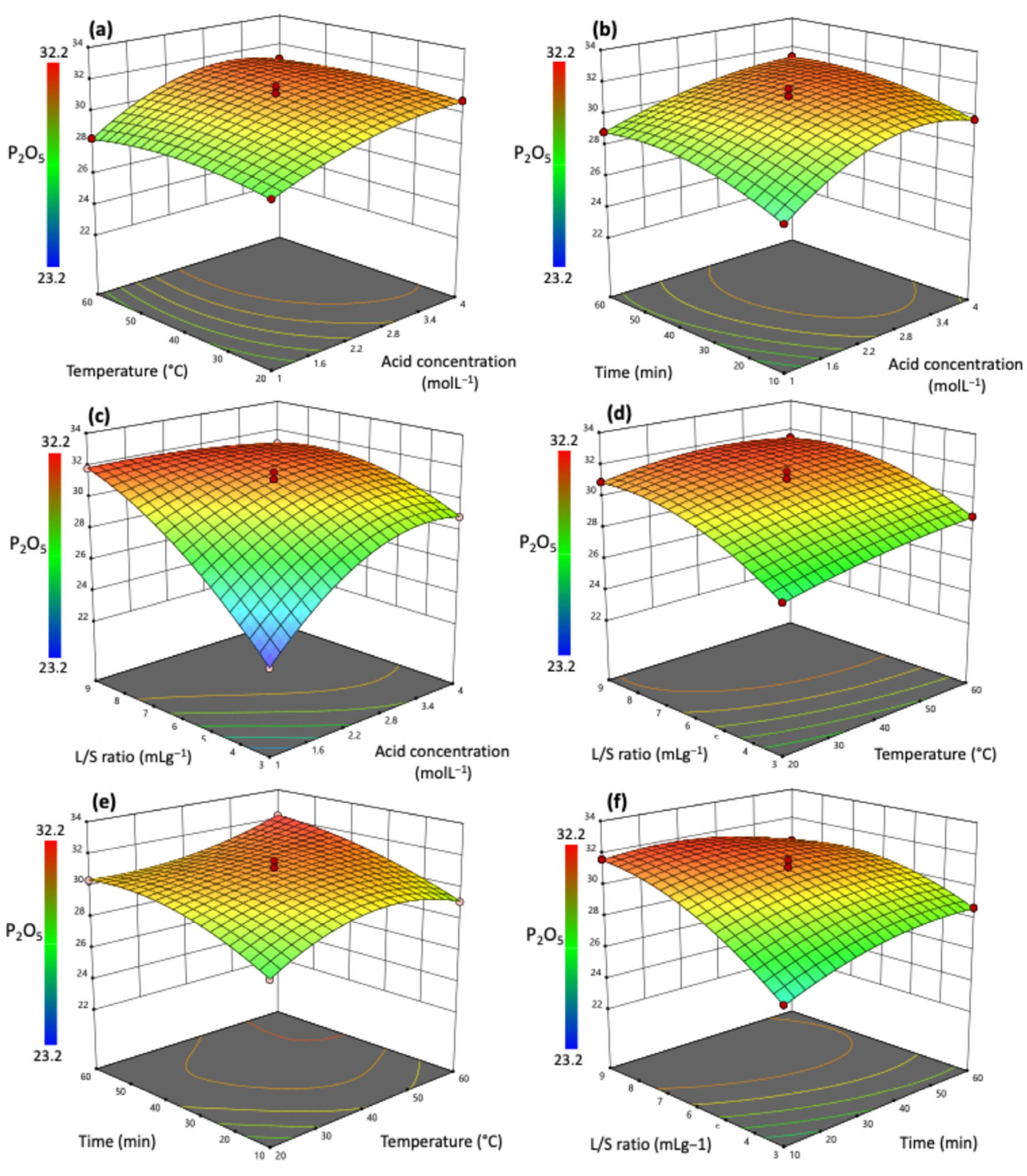
The effects of the four experimental factors (temperature, acetic acid concentration, reaction time, and solid to liquid ratio) on P2O5 grade were systematically mapped using three-dimensional response surface plots. The Response surface plots illustrating the effects of two variables on P2O5 content while the other two variables are held at their center levels are presented in the (Figure 4a–f).
These figures demonstrate that a P2O5 content ranging from 23% to 32% was achieved. The corresponding solid mass loss ranged from 14.4% to 35.5%. The liquid-to-solid ratio (L/S) and acid concentration were found to be the primary factors affecting phosphate upgrading, followed by reaction time and temperature, respectively. As shown in Figure 4c, an increase in the L/S ratio, while fixing the other factors at an acid concentration of 1 molL−1, a reaction temperature of 40 °C, and a reaction time of 35 min, produced a rise in P2O5 content from 25% to 31%. Regarding acid concentration (Figure 4b), increasing it from 1 to 4 molL−1, while holding all other parameters at their central levels (reaction time: 35 min; reaction temperature: 40 °C; liquid-to-solid ratio: 6 mLg−1), led to a rise in P2O5 content from 28% to 31%. For temperature and reaction time (Figure 4e), raising these factors from 20 °C to 60 °C and from 10 min to 60 min, respectively, while maintaining the other two at their center levels (L/S ratio: 6 mLg−1; acid concentration: 2.5 molL−1), resulted in an increase in P2O5 content from 27% to 31%.
To determine the optimal conditions for maximum phosphate enrichment, a numerical optimization was performed with the primary objectives of maximizing P2O5 content while minimizing the liquid-to-solid ratio, reaction temperature, and reaction time. Acid concentration was left unconstrained, since a regeneration route for the acid was developed during this study.
The predicted optimum conditions are presented in Table 5. These conditions include an acid concentration of 3.4 molL−1, a temperature of 28 °C, a reaction time of 49 min, and a liquid-to-solid ratio of 6 mLg−1. Under these conditions, the predicted P2O5 content ranged from 30.5% to 31.8%, while the experimental results were between 30.54% and 31.21%, with a standard deviation of 0.34%. The strong agreement between the predicted and experimental P2O5 content values confirm the reliability and robustness of the model. The low standard deviation (0.34%) observed in the experimental results indicates high reproducibility under optimal conditions. Therefore, the developed model can be considered well validated and suitable for predicting the P2O5 content within the studied parameter range. This also highlights the model’s potential to guide future optimization and scale-up of the process with confidence. Among previously reported optimal leaching conditions for upgrading carbonate-rich phosphate ores with acetic acid, Gharabaghi et al. (2009) identified a solid content of 15%, a reaction temperature of 40 °C, and a reaction time of 60 min, which raised the P2O5 content from 10% to 32.14% [25]. These conditions, however, require both a higher reaction temperature and a longer reaction time than those optimized in the present study (28 °C and 49 min). In a similar context, Sengul et al. (2006) achieved a P2O5 content of 29–30% starting from a calcareous phosphate ore containing 12.7% P2O5, using a stirring speed of 200 rpm, a reaction temperature of 22 °C, and a reaction time of 40 min [22]. However, the process was restricted to the +250/−355 µm size fraction, and a further reduction in particle size could improve carbonate leaching efficiency. Moreover, conducting the leaching exclusively on this fraction means that the phosphate contained in other size fractions is not treated and may be lost.
The characterization of the leaching residue (phosphate concentrate) using TIMA confirmed the efficient removal of carbonates and showed that the concentrate is highly enriched in CFA (Figure 5b). The chemical characterization of the leaching solution is presented in Table 6. The results show that the leachate contains 3.27% CaO, while the P2O5 concentration was below the detection limit, confirming that, under the optimized conditions, leaching using the acetic acid enables the complete recovery of phosphate in the solid residue. The leach liquor also contains 0.03% MgO, which can be attributed to the partial dissolution of the minor dolomite content (~1%) present in the indured phosphate. The relatively high Ca concentration (3.27%) results from the selective leaching of calcite and dolomite. Regarding REE, their concentration in the leachate solution remained below 0.08 ppm. This low level is explained by the mineral phase bearing these elements in the indured phosphate, namely carbonated fluorapatite, and by the condition that only carbonate minerals were leached. The presence of these elements within the carbonated fluorapatite of Moroccan phosphate waste rock has been previously investigated, and the results have confirmed a strong positive correlation between these elements and phosphate content [5,7]. The presence of REE in the carbonated fluorapatite minerals arises from their substitution for calcium [32,33]. Similarly, Al2O3, Fe2O3, and Na2O concentrations were below the detection limit, since the silicate minerals are the primary host of these elements (e.g., palygorskite and montmorillonite).

3.4. Calcium Precipitation and Acid Regeneration

To achieve a more cost-effective process and further minimize reagent usage in line with circular hydrometallurgy principles, a regeneration step was integrated into the process after the leaching stage [34]. In this step, phosphoric acid is introduced to the calcium-rich leachate, initiating a reaction that precipitates calcium as dicalcium phosphate (brushite) while simultaneously regenerating acetic acid. This reaction, detailed in Equation (6), constitutes a pivotal component of the overall process.
C a ( C H 3 C O O ) 2 ( a q ) + H 3 P O 4 ( a q ) + 2 H 2 O ( a q ) C a H P O 4 2 H 2 O ( s ) + 2 C H 3 C O O H ( a q )
The leach solution was characterized by a high calcium content, primarily present as calcium acetate. Phosphoric acid was identified as a suitable reagent for recovering calcium in the form of dicalcium phosphate and simultaneously regenerating acetic acid. To evaluate the feasibility of this approach, a thermodynamic analysis was conducted to determine the spontaneity of the reaction.
Figure 6a illustrates the Gibbs free energy (ΔG) of the reaction as a function of temperature. The plot indicates that the reaction is thermodynamically favorable, as evidenced by the negative values of ΔG throughout the entire temperature range investigated [20]. This implies that phosphoric acid can effectively donate protons (H+) to the acetate ions, thereby forming acetic acid. Concurrently, hydrogen phosphate ions (HPO4) readily bind with calcium ions (Ca2+), resulting in the precipitation of dicalcium phosphate (CaHPO4).
Moreover, in Figure 6b, the analysis of enthalpy (ΔH) reveals that the reaction is mildly exothermic. According to Le Chatelier’s principle, this suggests that reaction efficiency could be enhanced at lower temperatures [35].
However, examination of the Van’t Hoff plot (Figure 6c) shows a linear relationship between ln K and 1/T with a relatively shallow slope, indicating a weak temperature dependence of the equilibrium constant over the studied range [36]. Therefore, it was decided to carry out subsequent optimization experiments at ambient temperature, balancing practical considerations with thermodynamic insights.
In the calcium recovery step, phosphoric acid serves three critical roles: (i) as a precursor reagent providing phosphate ions necessary for brushite precipitation [37,38], (ii) as a sacrificial acid facilitating the regeneration of acetic acid, and (iii) as a pH modifier to achieve conditions favorable for effective brushite precipitation. To simultaneously meet these objectives, systematic optimization was conducted by varying the volume of phosphoric acid added. The results presented in Table 7 demonstrate the sensitivity of calcium recovery to the P:Ca ratio. Initially, increasing this ratio from 0.19 to approximately 1.01 markedly improved calcium recovery, achieving an optimal recovery rate of approximately 97.41%. However, further increments beyond this optimal ratio led to a reduction in calcium recovery, decreasing to 33.43% at a P:Ca ratio of 1.74.
The data illustrates a clear correlation between the P:Ca ratio, solution pH, and calcium recovery efficiency, underscoring the importance of precise reagent dosage to maximize process performance. Specifically, an insufficient amount of phosphoric acid results in inadequate phosphate ion availability, leading predominantly to the formation of phosphate ions (PO43−), which are not suitable for brushite precipitation. Conversely, excessive phosphoric acid significantly lowers the pH, resulting primarily in the formation of dihydrogen phosphate ions (H2PO4), which similarly inhibit effective brushite precipitation [39]. Thus, maintaining an optimal phosphoric acid volume is essential for achieving maximum calcium recovery.
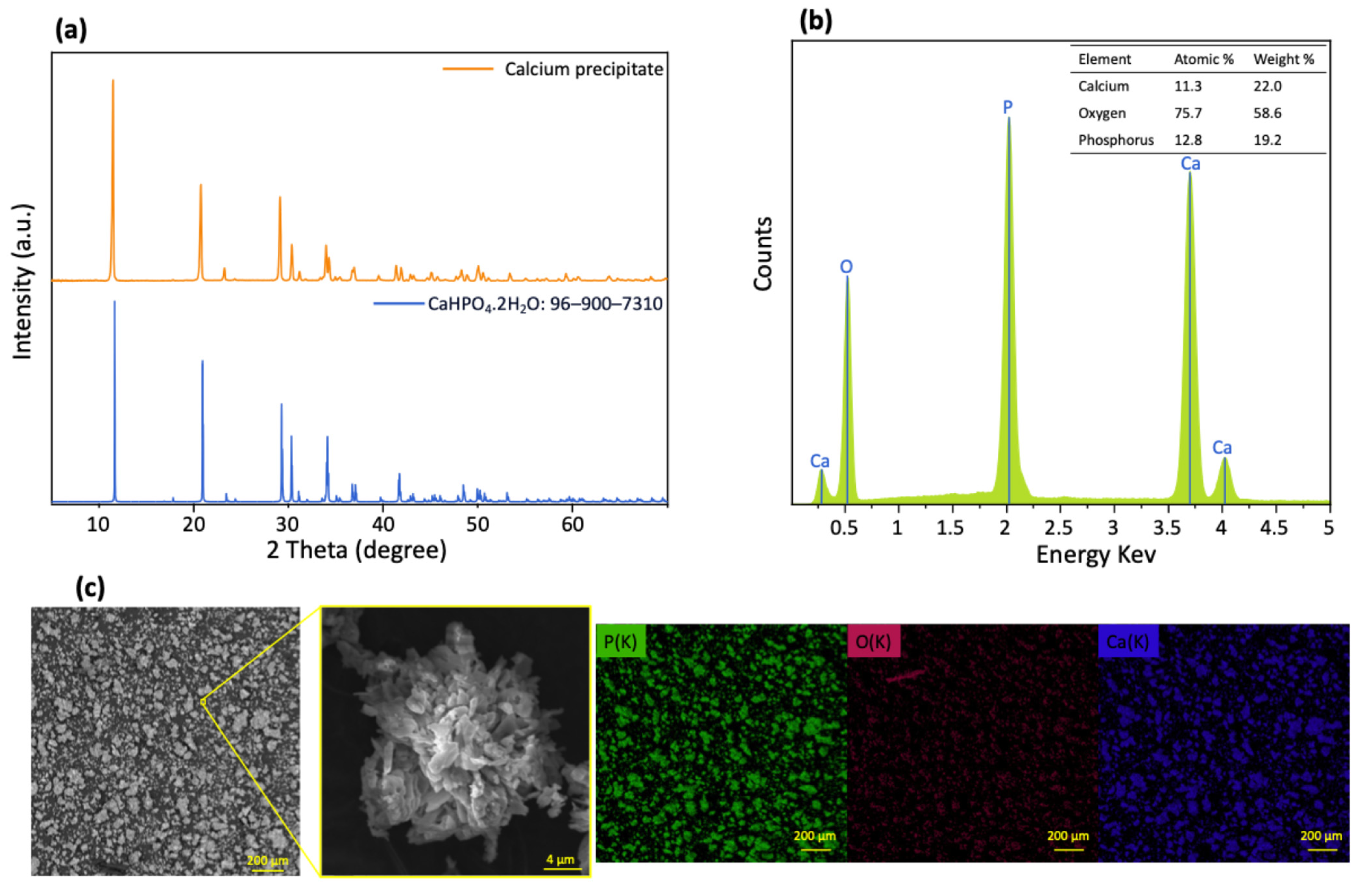
The product obtained at the optimal P:Ca ratio (1.01), corresponding to the highest calcium recovery, was characterized using XRD and SEM-EDX. XRD analysis confirmed that the product predominantly consisted of high purity brushite (CaHPO4·2H2O), as evidenced by distinct and well-defined diffraction peaks at 11.6°, 20.9°, and 29.2°, which represent the characteristic peaks of brushite and are consistent with the standard reference pattern (ICDD 96–900–7310) (Figure 7a). SEM-EDX analyses provided additional chemical and morphological insights, revealing characteristic tabular crystals typical of brushite (Figure 7c) [40]. Elemental mapping confirmed a homogeneous distribution of calcium (Ca), phosphorus (P), and oxygen (O) across the crystal surfaces. The corresponding EDX spectra (Figure 7b) showed elemental compositions of approximately 22 wt% Ca, 17 wt% P, and 62 wt% O, confirming the absence of heavy metals in the calcium precipitate [41]. These combined analytical methods conclusively demonstrated the successful and efficient precipitation of highly pure brushite through the optimized process conditions.

3.5. Preliminary Economic Assessment

The proposed process for the valorization of the indured phosphate, known as calcareous phosphate, is presented in Figure 1. The process first involves the leaching of carbonates, mainly calcite. This step uses acetic acid (CH3COOH) as the leaching agent and produces a phosphate concentrate with 30% P2O5 and a calcium-rich solution (Ca(C2H3O2)2). The second step employs phosphoric acid (H3PO4) as a precipitation agent for calcium. This step yields a calcium precipitate in the form of brushite (CaHPO4·2H2O) and regenerates the acetic acid used in the first step.
The preliminary economic assessment considers the cost of all reagents used and the technology employed during the process. The prices of acetic acid, phosphoric acid, brushite, and phosphate concentrate at industrial supply scale are presented in Table 8. The generated products are assumed to be of commercial grade, and the amount of regenerated acetic acid is assumed to correspond to a recovery rate of 97%. The price of water was obtained from the website of the National Office of Electricity and Drinking Water in Morocco (ONEE). Meanwhile, the potential technology evaluation costs were sourced from [42], which in turn were based on [43]. The selected costs were facilities maintenance at $0.33/m3, laboratory costs at $0.52/m3, and the filtration process at $0.15/m3.
After calculating the total price by considering the volumes and weights, the results are presented in Table 8. The total cost of reagents necessary for the treatment of 1 ton of indured phosphate was $980.95 for acetic acid, $400.13 for phosphoric acid, and $3.53 for water. The cost of the potential technology was $12.00. The total value of the process products was estimated at $2084.06, including the phosphate concentrate, the brushite, and the regenerated acetic acid.
After subtracting the total cost ($1396.61), the net profit from treating 1 ton of indured phosphate is $687.44. The preliminary assessment confirms the economic feasibility of the developed process. However, this preliminary economic assessment is based on a set of simplifying assumptions, highlighting the importance of further investment in a more detailed and comprehensive analysis.
Currently, treated indured phosphate is considered mining waste and is deposited in piles during the mining process [5]. This practice leads to the loss of valuable phosphate resources, which are classified as critical materials by many countries and economic blocs [44]. These waste piles not only occupy large areas but also pose significant environmental challenges. Their rehabilitation through land leveling requires substantial financial investment from the industry [45].
The proposed process represents a significant advance compared to conventional waste management practices, as it enables the recovery of critical phosphate resources from previously discarded materials through a selective and environmentally friendly approach. By using a low-impact organic acid system with potential for reagent recycling, the process reduces chemical consumption and minimizes secondary pollution. In addition to generating added economic value, this approach contributes to resource efficiency and circular economy principles.
In addition, the regeneration approach demonstrated in this study may have broader applications in other hydrometallurgical processes, such as ion-exchange systems where acetic acid is employed as a desorption or regeneration agent [46]. The ability to regenerate acetic acid within a closed-loop framework could reduce reagent consumption and operational costs in such systems, further enhancing process sustainability.
However, while the laboratory-scale results are promising, further investigation is required to assess large-scale implementation, including process optimization, operational costs, and long-term environmental performance. Overall, the proposed strategy offers a sustainable alternative for valorizing phosphate waste while mitigating the environmental and economic impacts associated with past mining activities.

4. Conclusions

Despite ongoing debate, sustainable mining has emerged as a key objective for governments and industries aiming to secure mineral supplies while minimizing environmental impacts. Within this framework, the present study aims to enhance the sustainability of the phosphate mining industry by introducing an innovative approach to reprocess phosphate mining waste rock lithology, specifically indured phosphate. The main conclusions and perspectives drawn from the study are as follows:
  • The thermodynamic study showed that acetic acid is selective for carbonates and does not react with the phosphate-bearing mineral under the studied conditions, allowing for total phosphate recovery.
  • The leaching of calcite using acetic acid resulted in carbonate removal and produced a phosphate concentrate with 30% P2O5.
  • The use of phosphoric acid as a precipitation agent for calcium enabled the regeneration of acetic acid and the formation of a high-value calcium product, brushite.
  • Under optimized precipitation conditions, a calcium recovery rate of 97% was achieved.
  • The preliminary economic assessment confirmed the potential economic feasibility of the proposed process.
These findings demonstrate the potential of the developed process to simultaneously create a sustainable secondary phosphate resource and reduce the environmental footprint of phosphate mining. However, since the economic analysis was based on assumptions, further detailed investigation is necessary. Future work should include (i) precise determination of the dosage and quality of regenerated acetic acid, (ii) leaching tests using the recovered acid, and (iii) a full cost analysis of the developed process, including transportation, mechanical preparation, leaching, and precipitation, based on local energy prices.

Author Contributions

M.H. Conceptualization, investigation, methodology, data curation, formal analysis, software, visualization, writing—original draft preparation. Z.B. Conceptualization, investigation, methodology, data curation, formal analysis, software, visualization, writing—original draft preparation. Y.A.-K. Conceptualization, investigation, methodology, supervision, writing—review and editing. A.E. Conceptualization, investigation, methodology, supervision, writing—review and editing. M.B. Conceptualization, investigation, methodology, supervision, writing—review and editing, resources. Y.T. Conceptualization, investigation, methodology, supervision, writing—review and editing, project administration, funding acquisition. All authors have read and agreed to the published version of the manuscript.

Funding

This project was financially supported through the APRA research program between OCP and UM6P under the project ZeroPhosWaste.

Data Availability Statement

The data presented in this study are available on request from the corresponding author.

Acknowledgments

The authors gratefully acknowledge the OCP Group for its support of the Zero-PhosWaste project.

Conflicts of Interest

The authors declare no conflicts of interest.

References

  1. Penuelas, J.; Coello, F.; Sardans, J. A better use of fertilizers is needed for global food security and environmental sustainability. Agric. Food Secur. 2023, 12, 5. [Google Scholar] [CrossRef]
  2. USGS. Mineral Commodity Summaries 2024; U.S. Geological Survey: Reston, VA, USA, 2024. [Google Scholar]
  3. Su, Y.; Hu, D. Global Dynamics and Reflections on Critical Minerals; E3S Web of Conferences; EDP Sciences: Les Ulis, France, 2022; Volume 352. [Google Scholar] [CrossRef]
  4. Chernoburova, O.; Chagnes, A. Mining and Processing Residues Future’s Source of Critical Raw Materials; Elsevier: Amsterdam, The Netherlands, 2023. [Google Scholar]
  5. Haidouri, M.; Ait-Khouia, Y.; Elghali, A.; El Ghorfi, M.; Benzaazoua, M.; Taha, Y. Phosphate Waste Rock Piles as a Secondary Resource: Insights into Composition and Strategic Element Potential. Minerals 2025, 15, 1319. [Google Scholar] [CrossRef]
  6. Geissler, B.; Mew, M.C.; Steiner, G. Phosphate supply security for importing countries: Developments and the current situation. Sci. Total Environ. 2019, 677, 511–523. [Google Scholar] [CrossRef]
  7. Erraihani, K.; Taha, Y.; Bouhlali, N.; El Ghorfi, M.; Derhy, M.; Benzaazoua, M.; Ait-Khouia, Y. Assessing the potential of phosphate mine tailings through advanced characterization and spatial modelling. Miner. Eng. 2026, 238, 110046. [Google Scholar] [CrossRef]
  8. Rais, K.; Hadji, R.; Boudiba, L.; Melkia, C.; Hamad, A.; Djebbassi, T.; Hanini, K. Environmental impact assessment of phosphate chemical complex in NE Algeria. Min. Miner. Depos. 2025, 19, 98–105. [Google Scholar] [CrossRef]
  9. Amar, H.; Benzaazoua, M.; Elghali, A.; Taha, Y.; El Ghorfi, M.; Krause, A.; Hakkou, R. Mine waste rock reprocessing using sensor-based sorting (SBS): Novel approach toward circular economy in phosphate mining. Miner. Eng. 2023, 204, 108415. [Google Scholar] [CrossRef]
  10. Chlahbi, S.; Benzaazoua, M.; Elghali, A.; Rochdane, S.; Zerouali, E.; Belem, T. Interlayers geo-environmental assessment of phosphate waste rock for sustainable management practices. Environ. Geochem. Health 2025, 47, 24. [Google Scholar] [CrossRef]
  11. Kawatra, S.K. Beneficiation of Phosphate ore; Society for Mining, Metallurgy, and Exploration: Englewood, CO, USA, 2014. [Google Scholar]
  12. Amar, H.; Benzaazoua, M.; Elghali, A.; Hakkou, R.; Taha, Y. Waste rock reprocessing to enhance the sustainability of phosphate reserves: A critical review. J. Clean. Prod. 2022, 381, 135151. [Google Scholar] [CrossRef]
  13. Ruan, Y.; He, D.; Chi, R. Review on beneficiation techniques and reagents used for phosphate ores. Minerals 2019, 9, 253. [Google Scholar] [CrossRef]
  14. Gharabaghi, M.; Irannajad, M.; Noaparast, M. A review of the beneficiation of calcareous phosphate ores using organic acid leaching. Hydrometallurgy 2010, 103, 96–107. [Google Scholar] [CrossRef]
  15. El-bahi, A.; Rudolph, M.; Ait-Khouia, Y.; Benzaazoua, M.; Taha, Y. Improving selectivity in phosphate direct flotation: The role of anionic biopolymers for carbonate gangue depression. Appl. Surf. Sci. 2026, 727, 166096. [Google Scholar] [CrossRef]
  16. Derhy, M.; Taha, Y.; Hakkou, R.; Benzaazoua, M. Review of the main factors affecting the flotation of phosphate ores. Minerals 2020, 10, 1109. [Google Scholar] [CrossRef]
  17. Rachid, S.; Taha, Y.; Muller, E.; Benzaazoua, M. Life cycle assessment of phosphate mining and beneficiation in Morocco: Performance evaluation. J. Environ. Manag. 2025, 373, 123453. [Google Scholar] [CrossRef] [PubMed]
  18. Ashraf, M.; Zafar, Z.I.; Ansari, T.M. Selective leaching kinetics and upgrading of low-grade calcareous phosphate rock in succinic acid. Hydrometallurgy 2005, 80, 286–292. [Google Scholar] [CrossRef]
  19. Arroug, L.; Elaatmani, M.; Zegzouti, A.; Aitbabram, M. Low-grade phosphate tailings beneficiation via organic acid leaching: Process optimization and kinetic studies. Minerals 2021, 11, 492. [Google Scholar] [CrossRef]
  20. Balagh, Z.; Ait-khouia, Y.; Benzaazoua, M.; Taha, Y. Magnesium and calcium extraction from phosphate mine waste rock using phosphoric acid: Thermodynamics, parameter optimization, kinetics, and reaction mechanism. J. Ind. Eng. Chem. 2025, 146, 812–825. [Google Scholar] [CrossRef]
  21. Economou, E.D.; Vaimakis, T.C. Beneficiation of Greek Calcareous Phosphate Ore Using Acetic Acid Solutions. Ind. Eng. Chem. Res. 1997, 36, 1491–1497. [Google Scholar] [CrossRef]
  22. Sengul, H.; Ozer, A.K.; Gulaboglu, M.S. Beneficiation of Mardin-Mazidaǧi (Turkey) calcareous phosphate rock using dilute acetic acid solutions. Chem. Eng. J. 2006, 122, 135–140. [Google Scholar] [CrossRef]
  23. Seesanong, S.; Seangarun, C.; Boonchom, B.; Ohpasee, N.; Laohavisuti, N.; Boonmee, W.; Rungrojchaipon, P. Green Ca-source of cockle shells converted to calcium acetate for environmental sustainability. Heliyon 2024, 10, e32153. [Google Scholar] [CrossRef]
  24. Zafar, Z.I.; Anwar, M.M.; Pritchard, D.W. Selective leaching of calcareous phosphate rock in formic acid: Optimisation of operating conditions. Miner. Eng. 2006, 19, 1459–1461. [Google Scholar] [CrossRef]
  25. Gharabaghi, M.; Noaparast, M.; Irannajad, M. Selective leaching kinetics of low-grade calcareous phosphate ore in acetic acid. Hydrometallurgy 2009, 95, 341–345. [Google Scholar] [CrossRef]
  26. Coker, H.R.; Yang, R.; Robertson, I.J.; Doria, J.M.; Lewis, K.L.; Howe, J.A. Brushite: A Reclaimed Phosphorus Fertilizer for Agricultural Nutrient Fertilization. J. Soil. Sci. Plant Nutr. 2025, 25, 2085–2097. [Google Scholar] [CrossRef]
  27. Yuan, Y.; Zhang, Y.; Liu, T.; Hu, P.; Zheng, Q. Optimization of microwave roasting-acid leaching process for vanadium extraction from shale via response surface methodology. J. Clean. Prod. 2019, 234, 494–502. [Google Scholar] [CrossRef]
  28. Behera, S.K.; Meena, H.; Chakraborty, S.; Meikap, B.C. Application of response surface methodology (RSM) for optimization of leaching parameters for ash reduction from low-grade coal. Int. J. Min. Sci. Technol. 2018, 28, 621–629. [Google Scholar] [CrossRef]
  29. Ryszko, U.; Rusek, P.; Kołodyńska, D. Quality of Phosphate Rocks from Various Deposits Used in Wet Phosphoric Acid and P-Fertilizer Production. Materials 2023, 16, 793. [Google Scholar] [CrossRef]
  30. Profeta, D.O.; da Silva, M.A.; Faria, D.N.; Cipriano, D.F.; Freitas, J.C.C.; dos Santos, F.S.; Lima, T.M.; Vasconcelos, S.C.; Pietre, M.K. Zeolite/calcium carbonate composite for a synergistic adsorption of cadmium in aqueous solution. Next Mater. 2025, 6, 100493. [Google Scholar] [CrossRef]
  31. Garg, N.; Mukherji, S. Pretreatment of Basic Oxygen Furnace (BOF) Slag using Water Washing and its Effect on Acid Leaching and Bioleaching of Metals. Water Air Soil Pollut. 2025, 236, 543. [Google Scholar] [CrossRef]
  32. El Bamiki, R.; Raji, O.; Ouabid, M.; Elghali, A.; Yazami, O.K.; Bodinier, J.L. Phosphate rocks: A review of sedimentary and igneous occurrences in Morocco. Minerals 2021, 11, 1137. [Google Scholar] [CrossRef]
  33. McClellan, G.H. Mineralogy of carbonate fluorapatites. J. Geol. Soc. 1980, 137, 675–681. [Google Scholar] [CrossRef]
  34. Binnemans, K.; Jones, P.T. The Twelve Principles of Circular Hydrometallurgy. J. Sustain. Metall. 2023, 9, 1–25. [Google Scholar] [CrossRef]
  35. Quilez-Pardo, J.; Solaz-Portoles, J.J. Students’ and Teachers’ Misapplication of Le Chatelier’s Principle: Implications for the Teaching of Chemical Equilibrium. J. Res. Sci. Teach. 1995, 32, 939–957. [Google Scholar] [CrossRef]
  36. Keleti, T. Errors in the evaluation of Arrhenius and van’t Hoff plots. Biochem. J. 1983, 209, 277–280. [Google Scholar] [CrossRef]
  37. Lundager Madsen, H.E.; Thorvardarson, G. Precipitation of Calcium Phosphate from Moderately Acid Solution. J. Cryst. Growth 1984, 66, 369–376. [Google Scholar] [CrossRef]
  38. Raimbekova, A.S.; Kapralova, V.I.; Dalbanbai, A.; Kubekova, S.H.N.; Popova, A.K. Effect of various phosphate inhibitors on corrosion of low carbon steel in 3% sodium chloride solution. Eng. J. Satbayev Univ. 2023, 145, 25–31. [Google Scholar] [CrossRef]
  39. Gilmour, R. Phosphoric Acid Purification, Uses, Technology, and Economics; CRC Press: Boca Raton, FL, USA, 2013. [Google Scholar]
  40. Oliveira, A.P.; Motisuke, M.; Leal, C.V.; Beppu, M.M. A comparative study between β-TCP prepared by solid state reaction and by aqueous solution precipitation: Application in cements. Key Eng. Mater. 2008, 361–363, 355–358. [Google Scholar] [CrossRef]
  41. Yusa, Y.; Shimizu, Y.; Okada, Y.; Hayashi, M.; Aizawa, T.; Izumi, M.; Sato, A.; Miura, C.; Imai, Y. Analysis of Corrosion Behavior of Brushite-Coated Magnesium in Different Environments: Non-Hematoma vs. Hematoma. J. Biomed. Mater. Res. B Appl. Biomater. 2025, 113, e35622. [Google Scholar] [CrossRef] [PubMed]
  42. Gu, H.; Zhou, G.; Wen, H.; Wang, N. Using of phosphoric acid to dissolve phosphate ore flotation tailings for stepwise separation of calcium and magnesium values. Chem. Eng. Sci. 2025, 307, 121356. [Google Scholar] [CrossRef]
  43. Shu, J.; Wu, H.; Chen, M.; Peng, H.; Li, B.; Liu, R.; Liu, Z.; Wang, B.; Huang, T.; Hu, Z. Fractional removal of manganese and ammonia nitrogen from electrolytic metal manganese residue leachate using carbonate and struvite precipitation. Water Res. 2019, 153, 229–238. [Google Scholar] [CrossRef]
  44. Sarker, S.K.; Haque, N.; Bhuiyan, M.; Bruckard, W.; Pramanik, B.K. Recovery of strategically important critical minerals from mine tailings. J. Environ. Chem. Eng. 2022, 10, 107622. [Google Scholar] [CrossRef]
  45. Hakkou, R.; Benzaazoua, M.; Bussière, B. Valorization of Phosphate Waste Rocks and Sludge from the Moroccan Phosphate Mines: Challenges and Perspectives. Procedia Eng. 2016, 138, 110–118. [Google Scholar] [CrossRef]
  46. Salces, A.M.; Kelly, N.; Anand, A.; Vanderbruggen, A.; Rudolph, M.; Chagnes, A.; Patil, A.B. Selective desorption strategy for efficient lithium recovery from battery recycling effluents using cationic exchange resin. Sep. Purif. Technol. 2026, 394, 137385. [Google Scholar] [CrossRef]
Figure 1. Schematic representation of the proposed process in this study.
Sustainability 18 03031 g001
Figure 2. (a) Particle size distribution of the indured phosphate, (b) XRD pattern of the sample.
Sustainability 18 03031 g002
Figure 3. (a) Gibbs free energy, (b) Enthalpy, (c) Van’t Hoff plot.
Sustainability 18 03031 g003
Figure 4. 3D response surface plots illustrating the effects of two variables on P2O5 content, while the other two variables are held at their center levels: (a) Temperature and acid concentration, (b) Time and acid concentration, (c) L/S ratio and acid concentration, (d) L/S ratio and temperature, (e) Time and temperature, and (f) L/S ratio and time.
Sustainability 18 03031 g004
Figure 5. False-color TIMA® images of the indured phosphate: (a) before leaching; (b) after leaching.
Sustainability 18 03031 g005
Figure 6. (a) Gibbs free energy, (b) Enthalpy, (c) Van’t Hoff plot of the precipitation reaction.
Sustainability 18 03031 g006
Figure 7. (a) XRD diffractogram of the calcium precipitate, (b) EDX spectrum of the precipitate, and (c) elemental chemical maps obtained by SEM-EDX.
Sustainability 18 03031 g007
Table 1. Levels and codes of factors for Box–Behnken design.
FactorsSymbolUnitLow
(−1)
Center
(0)
High
(+1)
Acid concentrationAmolL−112.54
TemperatureB°C204060
TimeCmin103560
L/S RatioDmLg−1369
Table 2. Design of experiments matrix.
RunAcid ConcentrationTemperatureReaction TimeL/S Ratio
molL−1°CminmLg−1
1440606
22.540603
3420356
4140353
52.520359
62.560359
72.560353
82.560106
9120356
10140606
112.520106
122.540356
13140106
142.540356
15440106
162.560606
17440353
18160356
192.540356
202.520353
212.540356
222.540356
232.540609
242.540109
25140359
26440359
272.520606
282.540356
292.540103
302.540356
31460356
Table 3. Chemical characterization of the indured phosphate.
Major and minor elements (wt%) using XRF
CaOSiO2Al2O3Fe2O3MgOP2O5LOIOthers
52.845.230.460.250.9519.1320.280.85
Trace and ultra-trace elements (ppm) ICP-MS
ScYLaCePrNdSmEuGdTb
0.0946.3126.0625.353.8315.642.810.660.770.54
DyHoErTmYbLu∑REESrV
3.940.793.010.392.630.42133.2456272
XRD mineralogical quantification (wt%)
CFACalcitePalygorskiteQuartzDolomiteMontmorillonite
52.4539.644.072.70.970.17
Table 4. Anova table of the P2O5 content in the leaching residue.
SourceSum of SquaresMean SquareF-Valuep-ValueComment
Model122.55.5583.71<0.0001Significant
A: Acid concentration5.955.9589.77<0.0001Significant
B: Temperature1.391.3920.990.0018Significant
C: Time0.4160.4166.270.0367Significant
D: L/S ratio12.7112.71191.62<0.0001Significant
AB0.00040.00040.00600.9400Not significant
AC0.06760.06761.020.3423Not significant
AD10.0510.05151.51<0.0001Significant
BC0.04840.04840.72970.4178Significant
BD0.44890.44896.770.0315Not significant
CD3.373.3750.77<0.0001Significant
A29.759.75147.00<0.0001Significant
B21.401.4021.130.0018Significant
C24.204.2063.34<0.0001Significant
D28.998.99135.58<0.0001Significant
Lack of fit0.03270.01640.19710.8262Not significant
R20.9957
R2 adj0.9838
Adeq precision40.3012
Table 5. Numerical optimization of the design.
FactorsAcid ConcentrationTemperatureReaction TimeL/S RatioP2O5 ContentMeanSD
UnitmolL−1°CMinmLg−1%
Predicted LowPredicted HighExperimental
Test 13.42849630.531.830.7630.840.34
Test 23.42849631.21
Test 33.42849630.54
Table 6. Elemental composition of the leach liquor.
Oxides (wt%) ICP-OES
P2O5Al2O3CaOFe2O3K2OMgOMnONa2O
LODLOD3.27LODLOD0.03LOD0.02
Trace and ultra-trace elements (ppm) ICP-MS
ScYLaCePrNdSmEuGdTb
0.0260.0250.0070.0070.0010.0020.0010.0010.002LOD
DyHoErTmYbLu∑REE
0.001LOD0.002LOD0.0040.0010.08
Table 7. Calcium recovery as a function of the P:Ca ratio and solution pH.
P:Ca ratio0.190.580.930.971.011.081.161.351.74
Solution pH3.913.673.453.243.192.812.562.352.02
Ca recovery (%)26.3577.2289.7892.0197.4192.0374.5862.9033.43
Table 8. Economic assessment of treating one ton of the indured phosphate using the proposed process.
Stream CategoryQuantityUnitUnit Price ($)Total ($)
Industrial acetic acidInput1167.8L0.84980.95
Industrial phosphoric acidInput312.6L1.28400.13
WaterInput4834.6L0.000733.53
Facilities maintenanceInput12,004.8L0.000333.96
Laboratory costInput12,004.8L0.000526.24
Filtration process Input12,004.8L0.000151.80
BrushiteOutput484.5kg2.11017.45
Phosphate concentrate Output646.2kg0.18116.32
Regenerated acetic acid Output1131.3L0.84950.29
Total cost 1396.61
Total revenue 2084.06
Net profit 687.44
Disclaimer/Publisher’s Note: The statements, opinions and data contained in all publications are solely those of the individual author(s) and contributor(s) and not of MDPI and/or the editor(s). MDPI and/or the editor(s) disclaim responsibility for any injury to people or property resulting from any ideas, methods, instructions or products referred to in the content.