Article

Synergistic Seepage-Reduction and Immobilization Effect and Mechanism of Microbial-Induced Calcium Carbonate Precipitation Bio-Coating on Heavy Metal


College of Water Resource Science and Engineering, Taiyuan University of Technology, Taiyuan 030024, China
*
Author to whom correspondence should be addressed.
Sustainability 2026, 18(6), 3024; https://doi.org/10.3390/su18063024
Submission received: 5 January 2026 / Revised: 4 March 2026 / Accepted: 9 March 2026 / Published: 19 March 2026

Abstract

Industrial activities have caused heavy metals, such as cadmium (Cd), chromium (Cr), lead (Pb), and copper (Cu), to seriously threaten groundwater safety through seepage pathways. This study explored the formation of biofilms using microbe-induced calcium carbonate precipitation (MICP) technology to simultaneously reduce seepage in contaminated water and immobilize heavy metals. By optimizing the cementation fluid concentration and the intermittent grouting time, the optimal operating conditions for forming a biofilm were determined to be 1.5 mol/L cementation fluid and an intermittent time of 12 h, under which the stable infiltration rate of the sandy loam soil column can be reduced by more than 80%. We found that this biofilm can effectively inhibit the convective transport of Cd, Cr, Pb, and Cu, with the cumulative convective flux reduction rates reaching 56.25%, 56.25%, 54.54%, and 55.59%, respectively. SEM and XRD analysis indicate that the physical blockage of soil pores by calcium carbonate crystals is the dominant mechanism controlling infiltration flow, while the detection of new mineral phases, such as lead carbonate (PbCO3), cadmium carbonate (CdCO3), and basic copper carbonate (Cu2(OH)2CO3) provides direct evidence for the chemical co-precipitation immobilization of heavy metals. This study demonstrates that MICP biofilm is a green and sustainable technology for in situ remediation of heavy metal pollution through physical–chemical synergistic effects, offering a promising alternative with a lower environmental footprint compared to conventional methods.

1. Introduction

Since the start of the 21st century, China’s economy has entered the fast lane of development. With the growth in population, economic development, urbanization, and industrialization, the “three wastes” in emissions have been gradually increasing. Wastewater discharged from non-ferrous metal smelting (such as lead, zinc, and copper smelting) and related chemical enterprises often contains high concentrations of heavy metal pollutants, such as Cd, Cr, Pb, and Cu [1,2,3]. These heavy metals can enter the aquatic environment through various pathways, including wastewater discharge, the migration and deposition of atmospheric particulate matter containing heavy metals, and wind erosion and surface runoff. When infiltrating heavy-metal-containing sewage in rivers or drainage ditches to recharge groundwater, heavy metal pollutants enter the vadose zone with the infiltration water flow. During their migration through sediment media in riverbeds and bank slopes, they undergo a series of complex physical (such as mechanical filtration and dispersion), chemical (such as adsorption/desorption, precipitation/dissolution, and oxidation–reduction), and biological (such as microbial transformation) processes [4]. Although these processes can retain and transform some pollutants to an extent, when the pollution load exceeds the environmental capacity, heavy metals will still penetrate natural barriers and eventually enter groundwater aquifers, deteriorating groundwater quality and posing a significant challenge to sustainable water resource management [5,6]. Therefore, developing groundwater pollution prevention and control technologies that synergistically inhibit wastewater seepage and immobilize heavy metals is a core aspect of ensuring groundwater safety.
Techniques used to mitigate the impact of surface wastewater leakage on groundwater are categorized into three types based on their primary mechanisms. The first type is physical barrier technology, encompassing compacted clay liners, geomembranes (such as HDPE), and other artificial liners [7,8,9,10,11,12]. This technology effectively reduces permeability but faces challenges, including significant construction disturbance, non-degradable materials, and limited functionality, particularly regarding pollutant purification. The second type is chemical stabilization technology, which involves adding adsorbents or passivators (such as biochar, zeolite, phosphate, etc.) to the soil to immobilize heavy metals [13,14,15,16,17,18,19,20,21,22]. Although this method enhances pollutant mobility, its primary function is chemical immobilization and thus has a limited ability to reduce soil macroscopic permeability. It may even elevate infiltration risks by altering the soil structure and can effectively control the transport of pollution plumes. The third type is ecological restoration techniques, which employ plants to absorb, immobilize, or volatilize pollutants [23,24,25]. These technologies encounter issues such as excessively lengthy restoration periods (years or even decades), limited plant biomass leading to poor tolerance for high-concentration pollution and limited restoration capacity, and root depth that typically only affects the shallow part of the vadose zone, providing weak direct protection for deeper layers and groundwater. While some conventional and nature-based remediation methods hold sustainability merits, they often face challenges such as high energy consumption, secondary pollution risks, non-biodegradable materials, or long remediation periods when applied to scenarios demanding immediate, co-optimized control of seepage and high-concentration heavy metal pollution, which is the focus of this study.
To summarize, existing technical solutions generally suffer from being functionally singular and cannot achieve multiple objectives simultaneously when dealing with heavy metal leakage pollution. Physical barrier technology mainly excels in controlling leakage but lacks repair capabilities, while chemical immobilization technology primarily fixes pollutants but struggles to effectively regulate leakage pathways. Moreover, phytoremediation has a lengthy cycle, and even with hyperaccumulator species, phytoremediation often requires long timeframes and does not address the immediate need for seepage control.
Therefore, there is a pressing need to develop a sustainable, efficient, and multi-functional in situ technology that can simultaneously inhibit contaminant seepage and immobilize heavy metals with minimal environmental disturbance. Microbe-induced calcium carbonate precipitation (MICP) technology, an emerging biogeochemical method, provides new insights to address the aforementioned challenges. This technology utilizes the metabolic activity of urea-hydrolyzing bacteria (such as Sporosarcina pasteurii) to generate calcium carbonate crystals in the soil, thereby cementing soil particles and filling pores [26,27]. Numerous studies have confirmed that MICP can significantly enhance soil strength and reduce its permeability, demonstrating great potential in the fields of geotechnical reinforcement and seepage control [28,29,30,31,32,33]. Simultaneously, the generated calcium carbonate exhibits excellent adsorption and co-precipitation capabilities for various heavy metal ions, making MICP attractive in the remediation of heavy-metal-contaminated soil [34,35,36]. However, existing research primarily focuses on a single function of MICP, either soil reinforcement or heavy metal immobilization, and systematic studies on its dual efficacy of “reducing infiltration” and “contaminant immobilization” as a synergistic control technology are relatively scarce. There is also a lack of understanding regarding the mechanism by which MICP bio-coating synergistically regulates water flow and solute transport. While the fundamental MICP process is established, its systematic application as a tailored, dual-functional bio-coating for the synergistic control of both water seepage and heavy metal transport from surface wastewater—and the explicit quantification of this synergy—remains underexplored.
Therefore, to address this gap, four typical heavy metals (Cd, Cr, Pb, and Cu), selected for their distinct chemical properties and environmental behaviors, were used to evaluate the performance of the MICP bio-coating. The study was designed to assess the universal control efficacy of the MICP bio-coating in mitigating contaminated wastewater seepage and immobilizing heavy metals. Key process parameters (cementation fluid concentration and perfusion intermittent time) were optimized for forming biofilm through indoor seepage experiments, and optimal operating conditions were determined. Under these conditions, this study quantitatively characterizes the synergistic inhibitory effect of bio-coating on the seepage dynamics and pollutant migration of heavy-metal-containing wastewater. Finally, combined with microscopic characterization techniques such as scanning electron microscopy (SEM) and X-ray diffraction (XRD), the study reveals the synergistic mechanism of calcium carbonate in pore blockage and heavy metal immobilization. This study aims to deepen the current understanding of MICP’s synergistic control mechanism and provide a theoretical basis and data support for developing green and sustainable technologies for in situ prevention and control of surface heavy metal pollution.

2. Materials and Methods

2.1. Experimental Materials

2.1.1. Test Soil

The undisturbed sediment, collected from the riverbed of the Xiaoheyuanvor dam on the Loess Plateau in China, was air-dried and ground for future use. The clay content in the soil sample is 4.36%, the silt content is 16.14%, and the sand content is 76.52%. The background values of four heavy metals, Cd, Cr, Pb, and Cu, in the soil sample are 0.24 mg/kg, 18.62 mg/kg, 18.52 mg/kg and 11.03 mg/kg, respectively.

2.1.2. Bacterial Strain and Culture Conditions

The strain used in the experiment was Sporosarcina pasteurii ATCC 11859, purchased from the Shanghai Microbiological Culture Collection (Shanghai, China). It was cultured in LB medium (Luria–Bertani medium) (formula: add 10 g of tryptone, 5 g of beef extract, and 10 g of sodium chloride per liter) at 30 °C and 110 rpm until the late logarithmic phase (approximately 24 h). The cells were collected by centrifugation and resuspended to a specified concentration (OD600 = 0.437) for use.

2.1.3. Main Chemical Reagents

The chemical reagents utilized were all of analytical grade and included urea and calcium chloride for preparing the cementation solution; cadmium chloride (CdCl2·2.5H2O), chromium chloride (CrCl3·6H2O), lead sulfate (PbSO4), and copper sulfate (CuSO4·5H2O) for simulating heavy metal wastewater; and hydrochloric acid for CaCO3 quantification.

2.1.4. Main Equipment and Instruments

The experimental apparatus included a laboratory seepage apparatus (Nanjing Soil Instrument Factory, Nanjing, China), a laser particle size analyzer (Rise-2022, Rise Science & Technology Co., Ltd., Jinan, China), an atomic absorption spectrophotometer (TAS-990, Beijing Purkinje General Instrument Co., Ltd., Beijing, China), an automatic double water distiller (SZ-93A, Shanghai Dobetter Instruments & Equipment Co., Ltd., Shanghai, China), a biochemical incubator (LRH-150, Nanbei Instrument Limited, Zhengzhou, China), an X-ray diffractometer (AerisX, Malvern Panalytical B.V., Almelo, The Netherlands), a field-emission scanning electron microscope (FE-SEM, Hitachi High-Tech, Tokyo, Japan), and a mechanical shaker (Thermo Fisher Scientific, Waltham, MA, USA).

2.2. Experimental Methods

2.2.1. Cementing Fluid Treatment

The cementing solution was an equimolar mixture of urea and calcium chloride (CaCl2). Design three intermittent periods for bacterial solution infusion: 6 h, 12 h, and 24 h. Spray 70 mL of prepared bacterial solution onto the surface of the packed soil column (the volume was calculated based on the porosity of the packed soil, as detailed in the following explanation), and after a certain period of standing, spray an equal amount of cementing solution again. The porosity (n) of the packed soil column was calculated from the preset dry bulk density (ρb = 1.35 g/cm3) and the measured soil particle density (ρs = 2.65 g/cm3) using the equation n = 1 − (ρb/ρs) = 0.49. The volume of bacterial solution (70 mL) was then determined as the pore volume of the target treatment zone, which was designed to be the top 5 cm layer of the soil column. The calculation is as follows: Volume = π × (column radius)2 × (treatment depth) × n = 3.14 × (3 cm)2 × (5 cm) × 0.49 ≈ 70 mL. Repeat this process four times, with each cycle consisting of one spray of bacterial solution and four sprays of cementing solution. Complete three such cycles to conclude the experiment.

2.2.2. Soil Column Filling and Infiltration Experiment

A one-dimensional soil column pressure infiltration experiment was conducted at the Water Engineering Laboratory of Taiyuan University of Technology in China. The soil column was filled with riverbed soil according to the set bulk density of 1.35 g/cm3 and the measured moisture content of 7.16%. The experimental water head was 0.35 m. The soil was filled in layers with a thickness of 2 cm. The soil mass required for each 2 cm layer was calculated, and the soil was evenly placed and compacted into the column to reach the controlled height. To avoid artificial soil layer interfaces, the compacted soil surface was roughened before filling each layer. Drainage holes were arranged correspondingly on the filter layer and nozzle at the bottom of the soil column to collect seepage water.

2.2.3. Heavy Metal Wastewater Configuration

Tap water was dechlorinated by standing rather than using chemical agents (e.g., nitrates) to avoid introducing additional ions that could interfere with the MICP reaction and heavy metal chemistry. By adding the compounds of Cd, Cr, Pb, and Cu (analytically pure) listed in Section 2.1.3 to tap water that has been statically dechlorinated, a simulated wastewater containing heavy metals was prepared. The initial concentrations of each heavy metal were set to be 10 times the limit values of Class III water standards [37], specifically Cd 0.05 mg/L, Cr 0.5 mg/L, Pb 0.1 mg/L, and Cu 10 mg/L. The setting of these concentration levels is based on the following scientific rationale. Firstly, it significantly exceeds the environmental background values, creating a notable concentration gradient that facilitates accurate tracking of metal migration and retention dynamics during the MICP treatment process, thereby ensuring the reliability of analytical measurements. Secondly, this level simulates moderate to severe anthropogenic pollution scenarios commonly found in areas affected by industrial or mining activities. Evaluating the efficacy of MICP technology under these conditions provides crucial evidence for its potential for field application. Lastly, using higher challenging concentrations enables rigorous assessment of the maximum immobilization capacity and long-term stability of bio-coating, testing the limits of the technology’s performance.

2.2.4. Experimental Design for Determining the Optimal Operating Conditions

The experiment to explore the impact of bio-coating on seepage reduction and determine the optimal operating conditions took the intermittent time and cementing fluid concentration as two variables, with a total of 12 operating conditions listed in Table 1. The selected ranges for these variables were based on preliminary tests and established practices in MICP research to cover a broad yet practical spectrum: cementation fluid concentrations (0.5, 1.0, 1.5, and 2.0 mol/L) were chosen to span from typical effective doses to levels where potential inhibition of microbial activity might occur; intermittent times (6, 12, and 24 h) were selected to represent short, moderate, and long intervals allowing for varying degrees of bacterial metabolic recovery and reactant diffusion [38].

2.2.5. Detection and Analysis Methods

Particle size analysis in soil samples was conducted using a Rise-2022 laser particle size analyzer with a wet method. The measurement of heavy metal background values followed the method described in Soil Agricultural Chemistry Analysis by Bao Shidan [39]. The content of heavy metals in water samples and soil column leachate was determined using an atomic absorption spectrophotometer. To analyze the microstructure, the samples were vacuum-dried, gold-plated, and then observed using a Hitachi FE-SEM cold field emission scanning electron microscope. Phase analysis was performed using an Aeris X-ray diffractometer produced in the Netherlands, with a scanning range of 20°~79.98° (2θ). Additionally, the content of CaCO3 generated by the reaction was determined by the hydrochloric acid immersion method to evaluate the progress of the MICP process.

2.2.6. Evaluation of Seepage-Reduction Effect

In the analysis of experimental results in this paper, the reduction rate of seepage rate under the microbial-induced calcium carbonate precipitation bio-coating conditions, also known as the seepage-reduction effect, is characterized by the seepage-reduction rate, denoted by η1.
η 1 = i c t r l i M I C P / i c t r l × 100 %
In the formula: η1 represents the seepage-reduction rate (%); ictrl represents the stable seepage rate of the control group (cm/min); iMICP represents the stable seepage rate of the bio-coating-treated group (cm/min).

2.2.7. Quantitative Evaluation of the Inhibitory Effect on Heavy Metal Convective Transport

In this study, the convective transport of heavy metals primarily refers to the process where dissolved heavy metals are transported together with the seepage solution through soil pores. To quantitatively evaluate the inhibitory effect of bio-coating on this process, the cumulative flux of heavy metals was calculated and characterized. In the seepage experiment, the concentration of heavy metals in the effluent changes dynamically and is difficult to collect continuously throughout the entire process. A simplified model was thus adopted for effective comparison. Specifically, the heavy metal concentration in the seepage solution was assumed to be constant at the initial injection concentration (C0) throughout the entire monitoring period.
Based on this assumption, the cumulative convective flux (M, mg) of heavy metals was estimated by the following equation.
M = C 0 × V
In the formula: C0 represents the initial concentration of heavy metals in the seepage sewage (mg/L); V denotes the cumulative seepage volume (L) during the monitoring period.
After calculating the cumulative convection flux of the control group (Mctrl) and the bio-coating-treated group (MMICP), respectively, the heavy metal cumulative transport reduction rate (η2, %) was calculated by the following formula.
η 2 = M c t r l M M I C P / M c t r l × 100 %
In the formula: η2 represents the cumulative convection transport reduction rate of heavy metals (%); Mctrl) represents the cumulative convection transport flux of heavy metals in the control group (mg); MMICP represents the cumulative convection transport flux of heavy metals in the bio-coating-treated group (mg).
The fundamental principle of this simplified model is that the dominant mechanism by which bio-coatings inhibit the convection transport of heavy metals is the reduction in the sewage flow of heavy metal-containing wastewater caused by physical blockage. Although the simplified assumption of maintaining the sewage fluid concentration constant at C0 systematically overestimates the absolute mass flux, this overestimation effect is more pronounced in the control group due to its lower adsorption capacity compared to the calcium carbonate-rich biofilm. Therefore, this model provides a conservative and reliable assessment for highlighting the relative control advantage brought by the bio-coating through its sewage reduction effect.

2.2.8. Seepage Water Sampling and Heavy Metal Concentration Detection

To quantify the immobilization effect of bio-coating on heavy metals, after the seepage process reached a quasi-steady state, all the seepage water from the control group and the bio-coating-treated group was collected during the last hour of the experiment. The water collected from each group was mixed evenly to prepare composite samples. This mixing approach was adopted to obtain a time-representative average concentration for evaluating the overall immobilization efficiency under quasi-steady-state conditions, rather than tracking transient concentration variations. Subsequently, three parallel samples were taken from each composite sample, and the concentrations of Cd, Cr, Pb, and Cu were determined using atomic absorption spectrophotometry. The arithmetic mean of the three parallel measurements was taken as the quasi-steady-state effluent concentration for that group. The statistical significance of differences in heavy metal concentrations between the control and MICP-treated groups was assessed using an independent samples t-test. A p-value < 0.05 was considered statistically significant.
Based on the measured effluent concentration, the relative immobilization efficiency of the bio-coating for each heavy metal can be calculated using the following formula.
η 3 = c c t r l c M I C P / c c t r l × 100 %
In the formula: η3 represents the relative reduction rate of effluent concentration (%); cctrl represents the average effluent concentration of heavy metals in the control group (mg/L); cMICP represents the average effluent concentration of heavy metals in the bio-coating-treated group (mg/L).

3. Results

3.1. Synergistic Effect Mechanism of Cementing Fluid Concentration and Intermittent Grouting Time on the Seepage-Reduction Efficiency of Bio-Coating

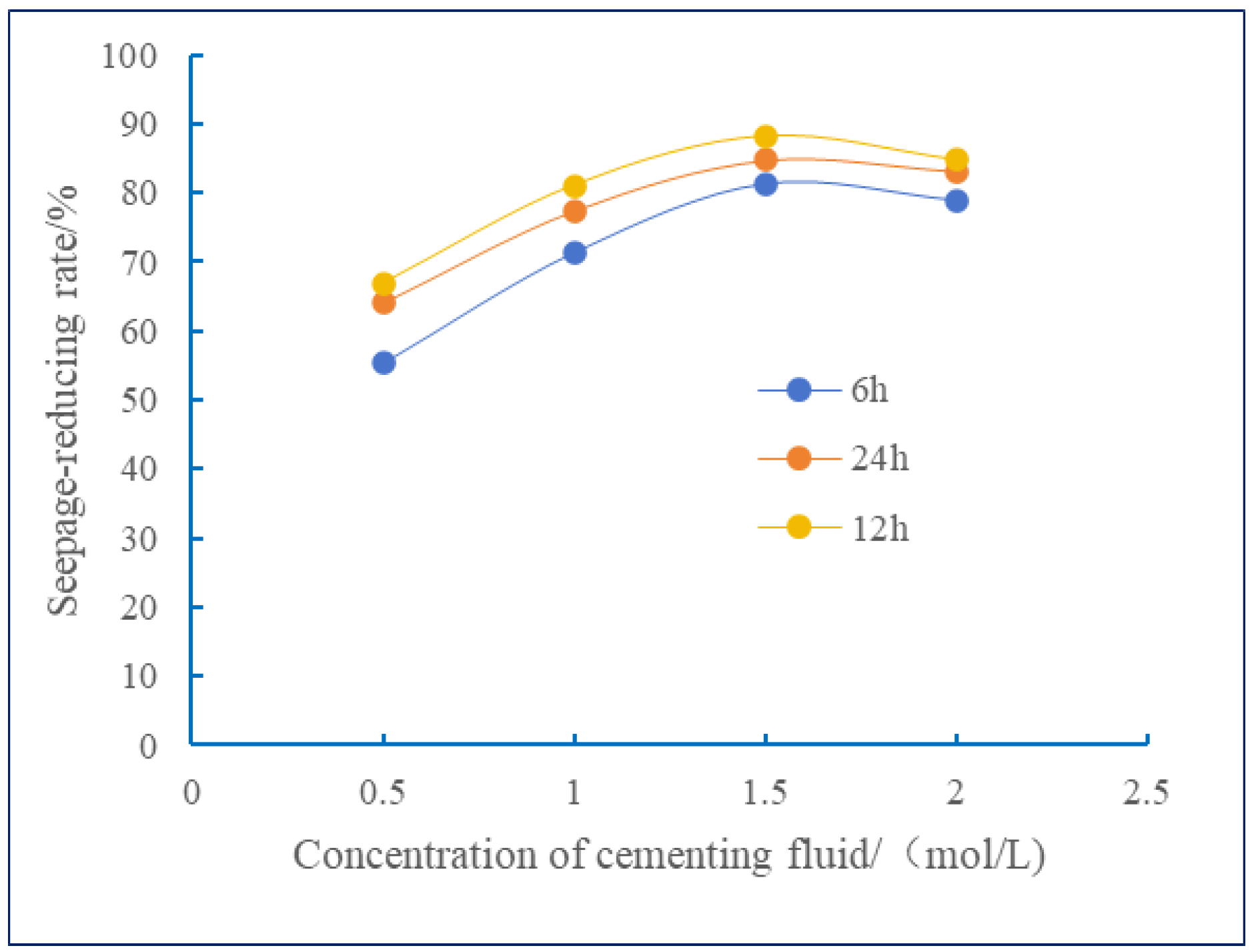
Figure 1 illustrates the sewage-reduction rate (η1) achieved after bio-coating under 12 different working conditions. Observations from the soil indicate that:
Under various intermittent grouting times and cementation-fluid concentrations, the seepage-reduction rate after bio-coating consistently exceeded 50%, demonstrating a notable seepage-reduction effect. When the intermittent time remained constant, the seepage-reduction rate exhibited a trend of initial increase followed by a decrease as the cementation-fluid concentration increased. The seepage-reduction effect was most pronounced when the cementation-fluid concentration reached 1.5 mol/L, achieving a seepage-reduction rate of 81.3~88.2%. When the cementation-fluid concentration was consistent, and the intermittent time was set to 6 h, 12 h, and 24 h in the experiment, the best seepage-reduction effect was observed when the intermittent time was set to 12 h.

3.2. Validation of Synergistic Effect Based on CaCO3 Content Analysis

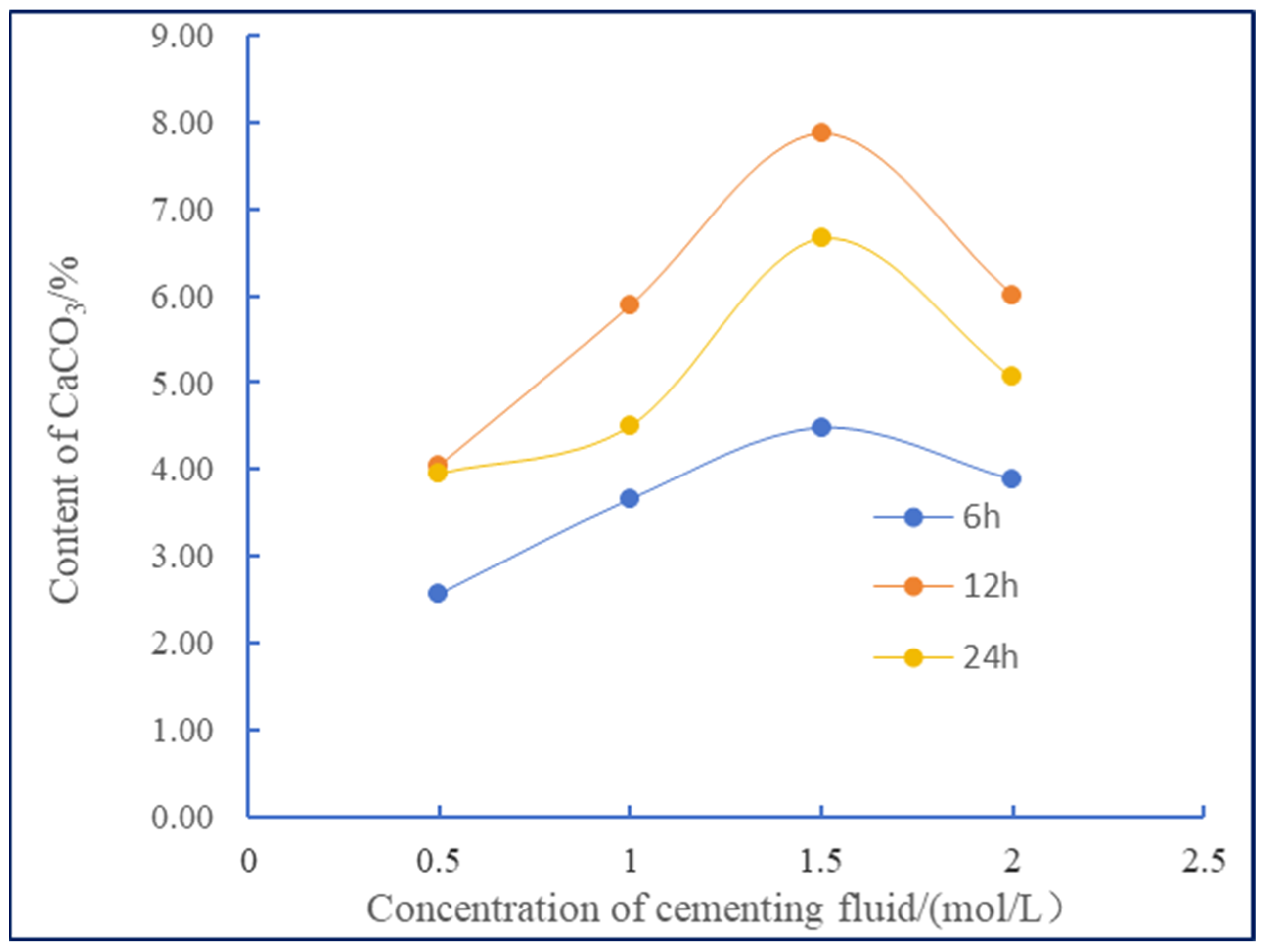
The influence mechanisms of cementation-fluid concentration and intermittent grouting time on the seepage-reduction effectiveness of bio-coating were verified by determining the CaCO3 content under twelve different testing conditions. The results were shown in Figure 2: When the intermittent time was the same, the CaCO3 content exhibited a trend of first increasing and then decreasing with the increase in cementing-fluid concentration. The CaCO3 content reached its maximum when the cementing-fluid concentration reached 1.5 mol/L. When the intermittent time was set to 6 h, 12 h, and 24 h in the experiment, the CaCO3 content was highest when the intermittent time was 12 h.
Based on the above results and analysis, it can be concluded that the cementation-fluid concentration and intermittent time jointly determine the seepage-reduction efficiency of the bio-coating by regulating the production and distribution morphology of calcium carbonate. Considering the comprehensive factors affecting the seepage-reduction rate under the conditions of this experiment, the optimal operating conditions for forming a biofilm are determined to be a cementation-fluid concentration of 1.5 mol/L and an intermittent time of 12 h. This condition ensures high precipitation while avoiding proximal clogging caused by rapid reaction, achieving a relatively uniform cementing effect. All subsequent experiments on heavy metal retention efficiency and mechanism characterization are conducted based on these optimized operating conditions.

3.3. Macro-Performance of Bio-Coating in Controlling Heavy Metal Convective Transport

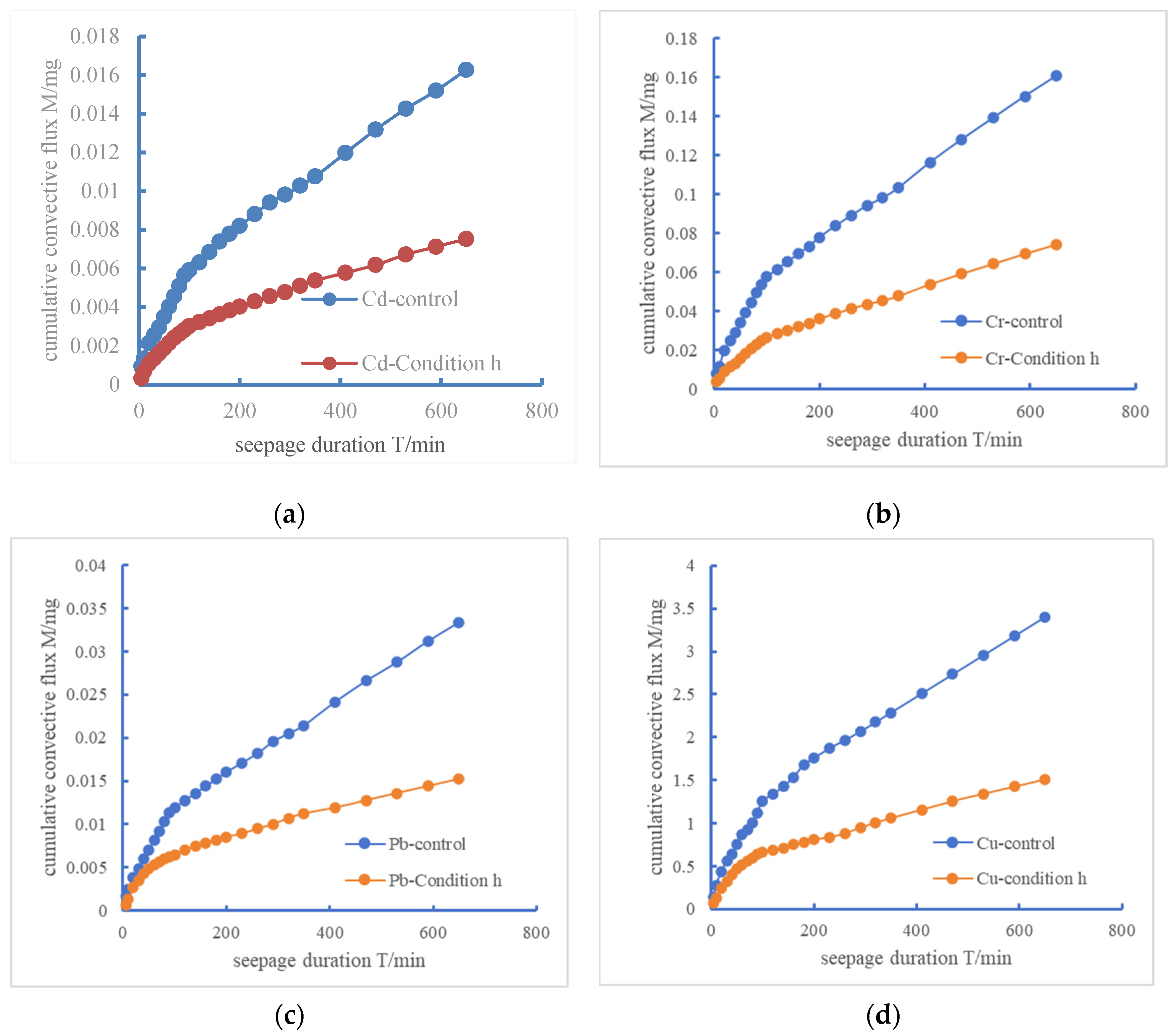
The calculation results (Figure 3) based on Equation (2) in Section 2.2.7 indicate that biofilm had a significant inhibitory effect on the convective transport of heavy metals. After a 650 min seepage, the estimated cumulative fluxes of heavy metals Cd, Cr, Pb, and Cu in the control group were 0.016 mg, 0.16 mg, 0.033 mg, and 3.4 mg, respectively, while the estimated cumulative fluxes of Cd, Cr, Pb, and Cu in the treated group dropped to 0.007 mg, 0.07 mg, 0.015 mg, and 1.51 mg. After calculation, the cumulative convective transport reduction rate (η2) of bio-coating for Cd, Cr, Pb, and Cu reached 56.25%, 56.25%, 54.54% and 55.59%, respectively.

3.4. Change in Heavy Metal Concentration in Seepage Water

To evaluate the chemical immobilization efficiency of MICP bio-coating on heavy metals, we tested the concentration of heavy metals in the effluent after the seepage experiment. As shown in Table 2, compared with the control group, the concentrations of Cd, Pb, and Cu in the leachate were significantly reduced after biofilm treatment (p < 0.05), with relative reduction rates of 37.2%, 36.4%, and 17.7%, respectively. Although a decreasing trend was observed for Cr (5.5% reduction), the difference was not statistically significant (p > 0.05). These results demonstrate that the biofilm not only hinders water flow but also effectively immobilizes certain heavy metals (Cd, Pb, Cu), thereby reducing their mobility.

4. Discussion

4.1. Mechanism of Cementing Fluid Concentration on Seepage Reduction Effect

(1) Within the low-to-medium range of cementing fluid concentration (0~1.5 mol/L), the seepage rate of the matrix in the experimental group decreased as the concentration of CaCl2-CO(NH2)2 mixed solution increased; that is, the seepage reduction rate increased with the increase in cementing fluid concentration. The main mechanisms were as follows: ① AsCO(NH2)2 and Ca2+ concentrations increased, the urease-catalyzed hydrolysis reaction intensified, generating more CO32−, which combined with Ca2+ to form CaCO3 precipitate. This precipitate filled the matrix pores, reducing permeability, i.e., the seepage rate decreased, and the seepage reduction rate increased. ② Sporosarcina pasteurii coating promoted biocementation, further reducing porosity, which led to a decrease in the seepage rate and an increase in the seepage reduction rate. (2) When the concentration of the cementing fluid reached the high concentration range (2 mol/L) and surpassed a specific critical value, the seepage rate unexpectedly rebounded. The primary mechanisms behind this phenomenon were as follows: ① Urea hydrolysis generated NH4+ and OH, causing an increase in pH (>9), which exceeded the optimal range for urease (pH 7~9). This led to decreases in enzyme activity, CO32− formation, and CaCO3 precipitation [40]. ② High concentrations of Ca2+ may directly competitively inhibit urease activity [41,42], further reducing the amount of CaCO3 precipitation. This may have resulted in insufficient filling of the matrix pores, leading to an increase in permeability. ③ Extremely high ion concentrations may alter the surface charges of matrix particles, affecting microbial attachment and spatial distribution of precipitation and resulting in uneven cementation, while some areas retain high permeability.

4.2. Mechanism of Intermittent Grouting Time on Seepage Reduction Effect

When the intermittent time was 6 h, representing a relatively short period, the metabolism of Sporosarcina pasteurii and urease activity did not fully recover, resulting in insufficient CaCO3 precipitation, leading to a weaker cementation effect and a limited reduction in the seepage rate. When the intermittent time was 12 h, Sporosarcina pasteurii had sufficient time to recover its urease activity, ensuring efficient urea hydrolysis and CaCO3 precipitation. Additionally, the cementation fluid fully penetrated and uniformly mineralized, forming a dense and continuous calcium carbonate layer and significantly reducing the seepage rate. An excessively long intermittent time of 24 h may lead to the dissolution of some precipitated CaCO3 by microbial metabolic by-products (such as NH4+) (pH fluctuation) [43], and the cementation fluid diffuses excessively in the matrix, resulting in dispersed precipitation distribution and making it difficult to form a continuous seepage reduction layer.

4.3. Microscale Mechanisms of Pore Clogging and Heavy Metal Immobilization

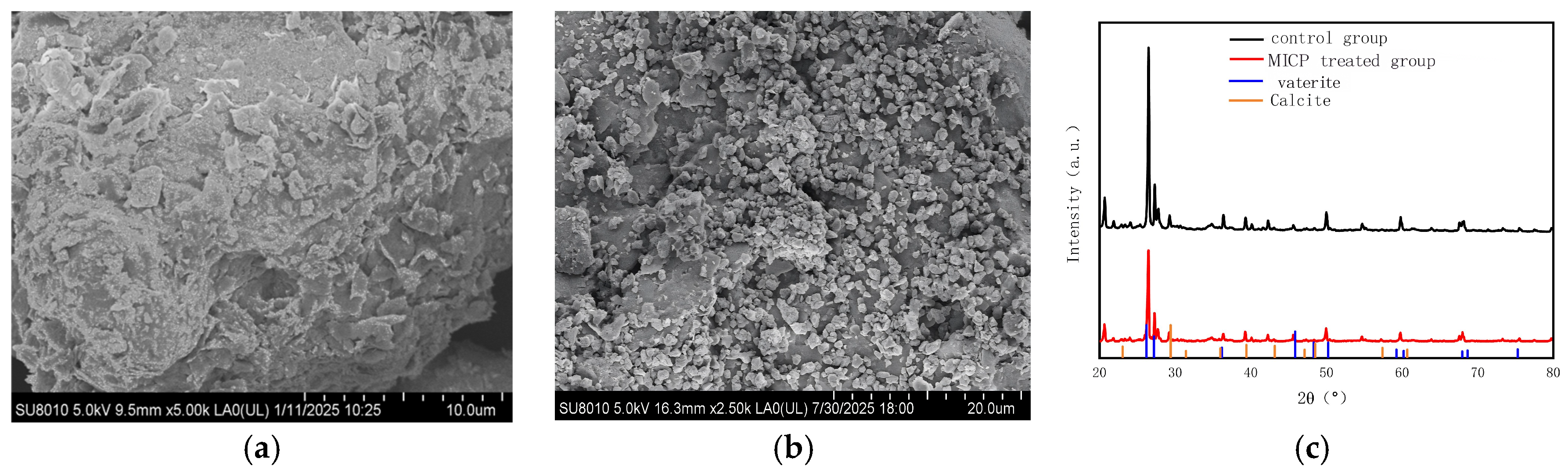
To explore the underlying mechanism of the aforementioned macroscopic seepage reduction and barrier control effectiveness, we used SEM and XRD to analyze the microstructure and mineral composition of the biofilm.
Figure 4a,b show typical SEM images of samples of the control group and the MICP-treated group, respectively. A large number of calcium carbonate crystals induced by Sporosarcina pasteurii in the treated group were deposited on the surfaces and contact points of soil particles, effectively filling and bridging large pores, dividing them into multiple small pores, and reducing the number and area ratio of large pores within the soil. This increased the directional probability entropy of pores within the soil, making the pore distribution more uniform and thereby reducing the seepage channels within the sample, leading to a decrease in its macroscopic permeability. This significant change in microstructure provided strong morphological support for the sharp decrease in permeability observed at the macroscale.
The XRD pattern in Figure 4c further confirms the composition of the precipitated minerals. The treated group exhibited distinct characteristic diffraction peaks near 2θ = 26.222°, 45.859°, 48.31° and 50.24° (vaterite) and 2θ = 26.222°, 39.412°, 48.31° and 57.405° (calcite), confirming that the calcium carbonate crystals formed in the cracks exist as calcite and vaterite. These in situ-generated crystals collectively constitute the key material basis for blocking soil pores and reducing their permeability.
In summary, the SEM and XRD results jointly confirm that the calcium carbonate crystals (calcite and vaterite) generated in situ during the MICP process changed the soil’s pore structure through physical filling and bridging effects, thereby forming a dense physical barrier that hindered water flow. This provided a reasonable explanation for the significant reduction in convective transport flux at the microscale.

4.4. Mineral Evidence for Immobilization Mechanisms

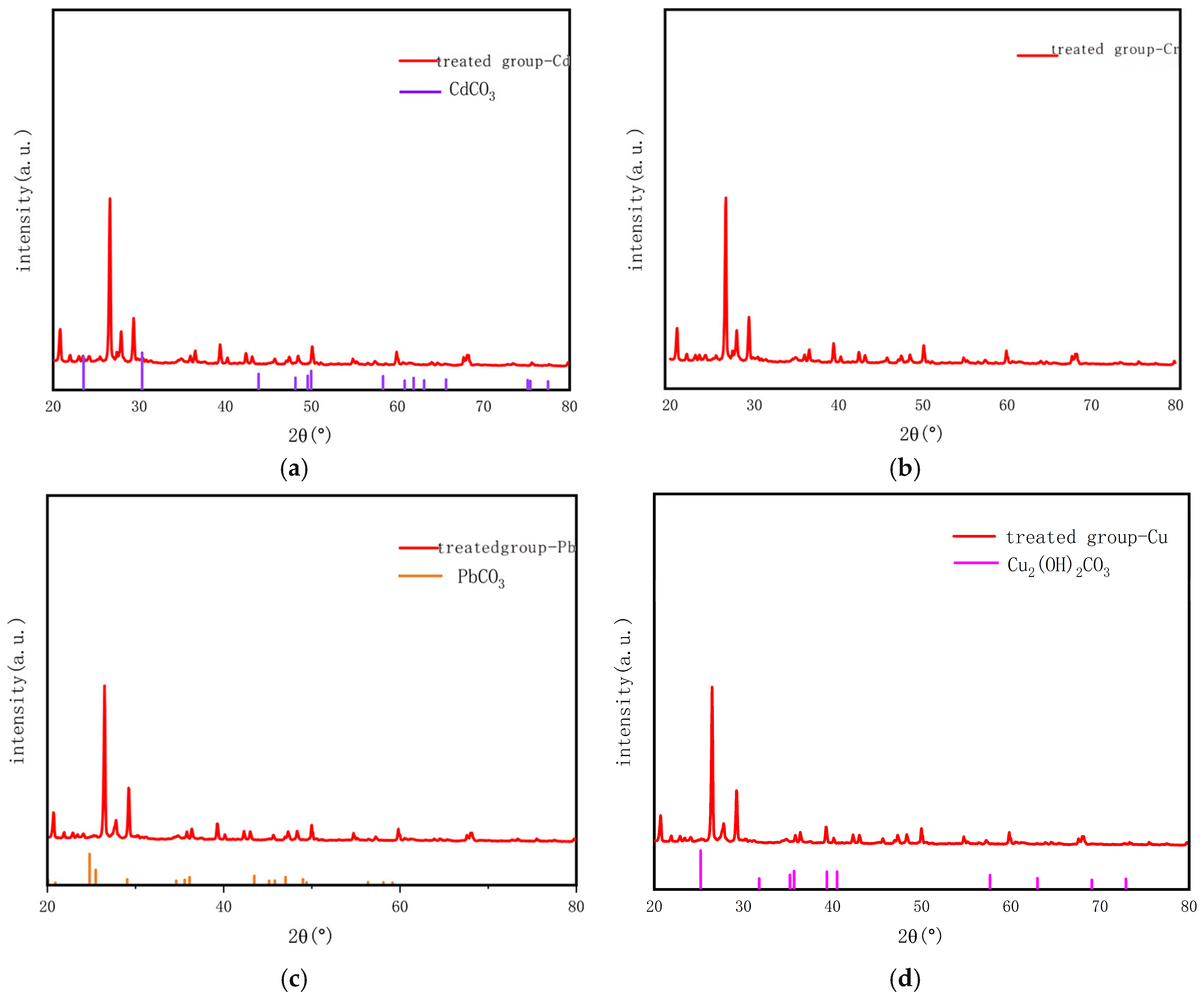
The XRD pattern (Figure 5) clearly demonstrates that after seepage of heavy-metal-containing wastewater, various heavy-metal-precipitated mineral phases, including characteristic diffraction peaks of cadmium carbonate, lead carbonate, and basic copper carbonate, were newly formed in the biofilm. This discovery provides direct mineralogical evidence for the immobilization of heavy metals by MICP, indicating that the immobilization mechanism goes beyond physical adsorption and involves a more stable chemical co-precipitation process.
The efficacy and stability of this immobilization are inherently linked to the local pH environment. The MICP process itself creates an alkaline microenvironment through urea hydrolysis, which strongly favors the precipitation and stability of heavy metal carbonates and hydroxides [44]. While these newly formed phases (e.g., PbCO3) are relatively stable under such alkaline conditions, their long-term fate under potential environmental acidification (e.g., acid rain infiltration) requires careful consideration. Future research should assess the leachability of these immobilized metals under dynamic pH conditions to comprehensively evaluate the long-term stability and environmental safety of MICP-based remediation.

4.5. Synergistic Effect Between Physical Barrier and Chemical Immobilization

The superior performance of the MICP bio-coating in reducing heavy metal transport is not attributable to a single mechanism, but rather to the synergistic interplay between a physical hydraulic barrier and chemical immobilization. This synergy is evident both in the macroscopic flux reduction (Section 3.3) and the microscopic mineralogical evidence (Section 4.4).
The primary mechanism is the formation of a dense, low-permeability layer through the physical clogging of soil pores by microbially induced CaCO3 precipitates (calcite and vaterite), as confirmed by SEM analysis. This barrier significantly reduces the seepage velocity and volumetric flux of contaminated water, thereby decreasing the convective transport of dissolved heavy metals. Importantly, this physical barrier does not merely function as a passive filter; it actively promotes chemical immobilization by extending the hydraulic retention time of the seepage water within the treated zone. The prolonged contact time between the heavy-metal-laden solution and the reactive CaCO3 matrix provides a critical window for chemical interactions to occur.
Concurrently, chemical immobilization reinforces and sustains the physical barrier. XRD analysis confirmed the in situ formation of stable heavy metal carbonate minerals (e.g., PbCO3, CdCO3, and Cu2(OH)2CO3). This chemical co-precipitation process effectively removes soluble heavy metal ions from the aqueous phase, converting them into integral, stable components of the solid matrix. This not only directly reduces the mobility and toxicity of heavy metals but may also contribute to further pore filling and barrier densification. For instance, the newly formed metal carbonates can nucleate and grow on existing CaCO3 crystals, enhancing the overall clogging effect and barrier longevity.
This synergy explains the significant gap between the reduction in water flux and the even greater reduction in heavy metal flux observed in our results. While the physical barrier alone would reduce mass transport proportionally to the reduction in water flow, the additional chemical fixation leads to a supra-proportional decrease in heavy metal output. For elements like Pb, Cd, and Cu, where direct carbonate precipitation was mineralogically verified, the chemical mechanism plays a dominant role in long-term stabilization. For Cr, which may rely more on adsorption to CaCO3 or biomass surfaces, the extended retention time provided by the physical barrier is equally crucial for achieving high removal efficiency.
The demonstrated synergy between “clogging” and “fixing” positions the MICP bio-coating as a robust, multi-functional technology for in situ pollution control. It moves beyond simple containment towards active stabilization, offering a more sustainable solution for mitigating heavy metal leaching in contaminated sites. Future research should focus on optimizing treatment protocols to maximize this synergy under field-relevant conditions and investigating the long-term stability of the co-precipitated phases under dynamic hydrogeochemical environments. This synergy underscores the potential of MICP not just as a remediation tool but also as a sustainable engineering solution for creating resilient barriers against contaminant migration.

4.6. Practical Considerations and Limitations of Induced Seepage Reduction

The formation of a low-permeability barrier to achieve seepage reduction is the intended outcome and a well-documented effect of MICP treatment [45,46]. However, as rightly noted, significant seepage reduction is not universally desirable in environmental engineering. In applications such as agricultural drainage, slope stabilization requiring internal drainage, or managed aquifer recharge, drastically reduced infiltration could indeed compromise water management objectives and potentially lead to adverse effects like surface ponding or elevated pore pressures.
The context of the present study is distinctly different, focusing on creating an in situ hydraulic barrier to prevent the downward migration (seepage) of contaminated surface wastewater, a scenario where maximizing seepage reduction is the primary and explicit goal. In this targeted application for pollution source control, the potential “limitation” raised becomes the core design feature. Nonetheless, this consideration highlights the importance of site-specific engineering design. For field implementation, the treatment depth, area, and the degree of seepage reduction must be carefully calibrated based on the site’s hydrogeology and the risk assessment of the contaminant plume to avoid unintended negative impacts on the local water cycle.
Furthermore, this discussion points toward valuable future research directions: developing strategically localized or gradient MICP treatments that selectively block contaminant pathways while preserving background drainage functions, or exploring controlled and/or reversible bioclogging processes for applications where only temporary seepage reduction is required.

4.7. Comparative Analysis with Other Immobilization Approaches

To position the MICP bio-coating technology within the broader context of existing remediation strategies, a comparative analysis with several established heavy metal immobilization/removal approaches is presented in Table 3. This comparison encompasses phytoremediation, chemical stabilization, biochar, and functionalized materials (exemplified by COTPG), evaluated against key criteria including primary mechanism, typical efficiency, advantages, and limitations.
The analysis highlights that conventional techniques often excel in a single function: either as efficient adsorbents (e.g., biochar, functional materials) or as chemical immobilizers. However, they generally lack the inherent capability to simultaneously and significantly alter the soil’s macroscopic hydraulic conductivity to control contaminant plume migration. In contrast, the MICP bio-coating developed in this study offers a distinct dual-function synergy. It couples the formation of a physical hydraulic barrier (via CaCO3 pore-clogging) with stable chemical immobilization (via co-precipitation, e.g., PbCO3 formation). This synergy enables concurrent control of water seepage and heavy metal transport, which is a critical requirement for in situ prevention at pollution sources. Furthermore, MICP operates under ambient conditions using environmentally benign reagents (urea, calcium salts), aligning with principles of green and sustainable remediation. The primary challenges for field translation involve process optimization for heterogeneous subsurface environments and ensuring long-term stability under dynamic hydrogeochemical conditions. This comparative framework underscores the unique value proposition of MICP bio-coating as an integrated solution for scenarios demanding synergistic control of infiltration and contaminant mobility.

4.8. Sustainability Advantages and Practical Implications

Beyond its technical efficacy, the MICP bio-coating technology presents compelling sustainability advantages over conventional remediation methods. Firstly, it operates under ambient conditions with low energy input, primarily relying on microbial metabolic activity. Secondly, as an in situ strategy, it minimizes site disturbance, avoids large-scale excavation and disposal of contaminated soil, and reduces transportation-related carbon emissions. Thirdly, the primary reactants (urea and calcium salts) and the main product (calcium carbonate) are common, have low toxicity, and are environmentally benign, aligning with the principles of green chemistry. Most importantly, the synergy between permanent physical clogging and stable chemical co-precipitation (e.g., formation of PbCO3) suggests the potential for long-term stability of the remediation effect, thereby minimizing the risk of secondary pollution and the need for repeated interventions—a key aspect of sustainable environmental management.
For practical implementation, the scalability of this technology depends on optimizing delivery systems (e.g., infiltration galleries and injection wells) for heterogeneous field conditions and conducting rigorous cost–benefit analyses against established barriers like geomembranes. While initial reagent costs exist, the long-term benefits of in situ treatment, reduced maintenance, and avoided liability from pollutant breakthrough could make MICP cost competitive. Furthermore, this technology directly supports the Sustainable Development Goals (SDGs), particularly SDG 6 (Clean Water and Sanitation) by protecting groundwater resources and SDG 11 (Sustainable Cities and Communities) by enabling the remediation of contaminated sites in urban and industrial areas. Future field trials and life cycle assessment (LCA) studies are crucial to fully validating its environmental footprint and economic viability, paving the way for integration into environmental policy frameworks aiming to achieve sustainable land and water management.

5. Conclusions

This study explored the efficacy and mechanism of utilizing microbe-induced calcium carbonate precipitation (MICP) technology to construct a bio-coating for synergistic control of heavy metal seepage and convective transport. Through a series of experiments, the following conclusions were drawn:
  • Process optimization identified key parameters for the efficient formation of a bio-coating. The concentration of cementing solution and the intermittent time of infusion have a synergistic effect on the seepage reduction effect. When the concentration of cementing solution is 1.5 mol/L and the intermittent time is 12 h, the densest bio-coating can be formed, reducing the stable seepage rate of porous media by more than 80% and providing an efficient physical barrier for subsequent heavy metal control.
  • The bio-coating significantly inhibited the transport of various heavy metals. Under optimal conditions, the bio-coating not only significantly reduced water seepage flux but also effectively inhibited the transport of heavy metals. Specifically, the reduction rates of cumulative throughfall for Cd, Cr, Pb, and Cu reached 56.25%, 56.25%, 54.54%, and 55.59%, respectively. This confirms the universality and effectiveness of this technology in treating composite heavy metal pollution.
  • The microscopic mechanism reveals the synergistic effect between physical impermeability and chemical immobilization. SEM analysis confirmed that the physical blockage of soil pores by calcium carbonate crystals was the dominant mechanism for forming a hydraulic barrier and reducing seepage. XRD analysis provided direct mineralogical evidence of chemical immobilization, detecting new mineral phases such as PbCO3, CdCO3, and Cu2(OH)2CO3, indicating that for heavy metals such as Pb, Cd, and Cu, chemical co-precipitation was a key approach to achieve their long-term stable fixation. For Cr, its fixation may rely more on mechanisms such as surface adsorption.
  • This study highlights the sustainability merits of MICP bio-coating technology. Compared to conventional methods, it offers a lower environmental footprint through in situ application, the use of benign materials, and the potential for long-term stability via chemical co-precipitation. These attributes, combined with its dual functionality, position MICP as a promising green and sustainable alternative for mitigating heavy metal leaching and protecting groundwater resources. Future work should focus on field-scale validation, cost-effectiveness analysis, and assessing long-term performance under dynamic environmental conditions to facilitate its integration into sustainable environmental management practices and policies.
In summary, the MICP bio-coating technology constructed an effective in situ pollution control barrier through the synergy of the “physical barrier” and “chemical immobilization”. This study provides a solid scientific basis and theoretical foundation for applying this technology to prevent and control surface heavy metal pollution and protect groundwater safety from both macro-efficacy and micro-mechanism perspectives.

Author Contributions

Conceptualization, Z.D. and W.G.; methodology, Z.D.; software, W.G.; validation, C.N., Z.D. and J.L.; formal analysis, Z.D.; investigation, C.N. and Z.D.; resources, Z.D.; data curation, C.N. and Z.D.; writing—original draft preparation, Z.D.; writing—review and editing, W.G.; visualization, Z.D.; supervision, Z.D., J.L. and W.G.; project administration, Z.D.; funding acquisition, Z.D. All authors have read and agreed to the published version of the manuscript.

Funding

This research was funded by Fundamental Research Programs of Shanxi Province, grant number 202203021222137.

Institutional Review Board Statement

Not applicable.

Informed Consent Statement

Not applicable.

Data Availability Statement

The raw data supporting the conclusions of this article will be made available by the authors on request.

Conflicts of Interest

The funders had no role in the design of the study; in the collection, analyses, or interpretation of data; in the writing of the manuscript; or in the decision to publish the results.

References

  1. Nriagu, J.O.; Pacyna, J.M. Quantitative assessment of worldwide contamination of air, water and soils by trace-metals. Nature 1988, 333, 134–139. [Google Scholar] [CrossRef] [PubMed]
  2. Cheng, H.F.; Hu, Y.A. Lead (Pb) isotopic fingerprinting and its applications in lead pollution studies in China: A review. Environ. Pollut. 2010, 158, 1134–1146. [Google Scholar] [CrossRef]
  3. Malaviya, P.; Singh, A. Physicochemical technologies for remediation of chromium-containing waters and wastewaters. Crit. Rev. Environ. Sci. Technol. 2011, 41, 1111–1172. [Google Scholar] [CrossRef]
  4. Sparks, D.L. Environmental Soil Chemistry, 2nd ed.; Academic Press: Cambridge, MA, USA, 2003; pp. 125–190+231–280. [Google Scholar]
  5. Fetter, C.W. Applied Hydrogeology, 4th ed.; Pearson Education: Hoboken, HJ, USA, 2018; pp. 401–450. [Google Scholar]
  6. Hu, B.F.; Jia, X.L.; Hu, J.; Xu, D.Y.; Xia, F.; Li, Y. Assessment of heavy metal pollution and health risks in the soil-plant-human system in the Yangtze River Delta, China. Int. J. Environ. Res. Public Health 2017, 14, 1042. [Google Scholar] [CrossRef]
  7. Viswanadham, B.V.S.; Muthukumaran, A.E. Influence of geogrid layer on the integrity of compacted clay liners of landfills. Soils Found. 2007, 47, 517–532. [Google Scholar] [CrossRef]
  8. Sarabadani, H.; Rayhani, M.T. Geosynthetic clay liners shrinkage under simulated daily thermal cycles. Waste Manag. Res. 2014, 32, 543–550. [Google Scholar] [CrossRef] [PubMed]
  9. Wu, C.F.; Li, C.X. Coupled model for one-dimensional large-strain nonlinear consolidation and contaminant transport in natural clay liners of dredged sludge disposal sites considering non-Darcian flow. Eur. J. Environ. Civ. Eng. 2025, 963, 178539. [Google Scholar] [CrossRef]
  10. Nefso, E.K.; Burns, S.E. Comparison of the equilibrium sorption of five organic compounds to HDPE, PP, and PVC geomembranes. Geotext. Geomembr. 2007, 25, 360–365. [Google Scholar] [CrossRef]
  11. Rowe, R.K.; Rimal, S. Depletion of antioxidants from an HDPE geomembrane in a composite liner. J. Geotech. Geoenviron. Eng. 2008, 134, 68–78. [Google Scholar] [CrossRef]
  12. Develioglu, L.; Pulat, H.F. Effects of Pore Fluid and Surface Roughness on Geomembrane-Soil Interface Behavior. Turk. J. Civ. Eng. 2023, 34, 35–36. [Google Scholar] [CrossRef]
  13. Liang, Y.; Li, X.R.; Yang, F.; Liu, S. Tracing the synergistic migration of biochar and heavy metals based on 13C isotope signature technique: Effect of ionic strength and flow rate. Sci. Total Environ. 2023, 859, 160229. [Google Scholar] [CrossRef]
  14. Han, S.B.; Cao, W.; Chou, Y.L.; Peng, E.R. Experimental Study on the Change in Freezing Temperature During the Remediation of Pb-Contaminated Soils with Biochar. Atmosphere 2024, 15, 1483. [Google Scholar] [CrossRef]
  15. Meng, Z.W.; Wu, J.W.; Huang, S.; Xin, L.; Zhao, Q. Competitive adsorption behaviors and mechanisms of Cd, Ni, and Cu by biochar when coexisting with microplastics under single, binary, and ternary systems. Sci. Total Environ. 2024, 913, 169524. [Google Scholar] [CrossRef]
  16. Kumar, P.; Singhania, R.R.; Sumathi, Y.; Kurrey, N.K.; Chen, C.W.; Patel, A.K.; Dong, C.D. Investigating innovative techniques for biochar modification to enhance the removal of heavy metals from aqueous environments: A comprehensive review. Clean Technol. Environ. Policy 2025, 27, 3271–3293. [Google Scholar] [CrossRef]
  17. Shi, W.Y.; Shao, H.B.; Li, H.; Du, S. Progress in the remediation of hazardous heavy metal-polluted soils by natural zeolite. J. Hazard. Mater. 2009, 170, 1–6. [Google Scholar] [CrossRef]
  18. Zhao, Y.N. Review of the Natural, Modified, and Synthetic Zeolites for Heavy Metals Removal from Wastewater. Environ. Eng. Sci. 2016, 33, 443–454. [Google Scholar] [CrossRef]
  19. Zhang, Y.F.; Ma, J.; Miao, J.J.; Yue, L.; Cheng, M.Z.; Li, Y.; Jing, Z.Z. Self-regulated immobilization behavior of multiple heavy metals via zeolitization towards a novel hydrothermal technology for soil remediation. Environ. Res. 2023, 216, 114726. [Google Scholar] [CrossRef] [PubMed]
  20. Hallam, L.; Papasergio, A.E.; Lessio, M.; Veliscek-Carolan, L. Phosphate functionalised titania for heavy metal removal from acidic sulfate solutions. J. Colloid Interface Sci. 2021, 600, 719–728. [Google Scholar] [CrossRef] [PubMed]
  21. Zhang, S.; Wang, Y.; Wang, Y.Q.; Bai, X. Adsorption effect of sodium dihydrogen phosphate-modified kaolin on heavy metals during MSW pyrolysis. Energy Sources Part A-Recovery Util. Environ. Eff. 2025, 47, 755–769. [Google Scholar]
  22. Arogundade, I.; Hefnawy, M.; Ofudje, E.A.; El Gamal, A.; Emran, T.B. Pb2+ and Cd2+ removal from aqueous solutions onto calcium-phosphate hydroxyl surface: Kinetics, isotherms and thermodynamic investigations. J. Taibah Univ. Sci. 2025, 19, 2504745. [Google Scholar] [CrossRef]
  23. Mahar, A.; Wang, P.; Ali, A.; Awasthi, M.K.; Lahori, A.H.; Wang, Q.; Li, R.H.; Zhang, Z.Q. Challenges and opportunities in the phytoremediation of heavy metals contaminated soils: A review. Ecotoxicol. Environ. Saf. 2016, 126, 111–121. [Google Scholar] [CrossRef] [PubMed]
  24. Zhou, W.Q.; Cai, X.X.; Chen, K.; Zheng, L.X.; Guan, H.J.; Hao, T.L.; Yang, J.J.; Qi, L.H.; Guan, C.F. Dual roles of MWCNTs on plant growth and remediation efficiency during PGPR-assisted phytoremediation of Cd-Ni contaminated soil. Microbiol. Res. 2026, 302, 128339. [Google Scholar] [CrossRef] [PubMed]
  25. Galahitigama, H.; Amarasiri, D.; Wijesooriya, M.M.; Wijesekara, H.; Rinklebe, J. Wild Plants as a Promising Tool for Phytoremediation of Trace Metal(loid)s Contaminated Soil: A Review. Rev. Environ. Contam. Toxicol. 2025, 263, 12. [Google Scholar] [CrossRef]
  26. DeJong, J.T.; Fritzges, M.B.; Nüsslein, K. Microbially induced cementation to control sand response to undrained shear. J. Geotech. Geoenviron. Eng. 2006, 132, 1381–1392. [Google Scholar] [CrossRef]
  27. DeJong, J.T.; Soga, K.; Kavazanjian, E.; Burns, S.E.; Van Paassen, L.A.; Al Qabany, A.; Aydilek, A.; Bang, S.S.; Burbank, M.; Caslake, L.F. Biogeochemical processes and geotechnical applications: Progress, opportunities and challenges. Geotechnique 2013, 63, 287–301. [Google Scholar] [CrossRef]
  28. van Paassen, L.A.; Daza, C.M.; Staal, M.; Sorokin, D.Y.; van der Zon, W.; van Loosdrecht, M.C.M. Potential soil reinforcement by biological denitrification. Ecol. Eng. 2010, 36, 168–175. [Google Scholar] [CrossRef]
  29. van Wijngaarden, W.K.; Vermolen, F.J.; van Meurs, G.A.M.; Vuik, C. A mathematical model for Biogrout. Comput. Geosci. 2013, 17, 463–478. [Google Scholar] [CrossRef]
  30. Liu, D.; Shao, A.L.; Li, H.; Jin, C.Y.; Li, Y.L. A study on the enhancement of the mechanical properties of weak structural planes based on microbiologically induced calcium carbonate precipitation. Bull. Eng. Geol. Environ. 2020, 79, 4349–4362. [Google Scholar] [CrossRef]
  31. Zou, Y.L.; Bai, H.; Shen, F.; Xu, H.; Shou, Y.D. Experimental Investigation on Effects of Bacterial Concentration, Crack Inclination Angle, Crack Roughness, and Crack Opening on the Fracture Permeability Using Microbially Induced Carbonate Precipitation. Adv. Civ. Eng. 2021, 2021, 4959229. [Google Scholar] [CrossRef]
  32. Yang, Y.; Chu, J.; Liu, H.L.; Cheng, L. Construction of Water Pond Using Bioslurry-Induced Biocementation. J. Mater. Civ. Eng. 2022, 34, 06021009. [Google Scholar] [CrossRef]
  33. Hang, L.; Gao, Y.F.; van Paassen, L.A.; He, J.; Wang, L.Y.; Li, C. Microbially induced carbonate precipitation for improving the internal stability of silty sand slopes under seepage conditions. Actageotechnica 2023, 18, 2719–2732. [Google Scholar] [CrossRef]
  34. Wang, S.; Fang, L.Y.; Dapaah, M.F.; Niu, Q.J.; Cheng, L. Bio-Remediation of Heavy Metal-Contaminated Soil by Microbial-Induced Carbonate Precipitation (MICP)-A Critical Review. Sustainability 2023, 15, 7622. [Google Scholar] [CrossRef]
  35. Ji, G.S.; Huan, C.C.; Zeng, Y.; Lyu, Q.; Du, Y.L.; Liu, Y.; Xu, L.S.; He, Y.; Tian, X.P.; Yan, Z.Y. Microbiologically induced calcite precipitation (MICP) in situ remediated heavy metal contamination in sludge nutrient soil. J. Hazard. Mater. 2024, 473, 134600. [Google Scholar] [CrossRef] [PubMed]
  36. Wang, Y.; Zhu, P.; Li, X.X.; Liu, C. Immobilization of multiple heavy metals in contaminated soil using multi-walled carbon nanotubes enhanced MICP. Chem. Eng. J. 2025, 552, 167716. [Google Scholar] [CrossRef]
  37. GB/T 14848-2017; Standard for Groundwater Quality. China Standard Press: Beijing, China, 2017.
  38. Wu, H. Study on Seepage Control of Microbiological Layer in Calcium Carbonate Precipitation Produced by Microorganism. Master’s Thesis, Tianjin University, Tianjin, China, 2016. [Google Scholar]
  39. Bao, S.D. Soil Agricultural Chemistry Analysis; China Agriculture Press: Beijing, China, 2000. [Google Scholar]
  40. Zhang, Y. Research on Sand Cementation and Concrete Cracks Repairment by Microbially Induced Carbonate Precipitation Technology. Master’s Thesis, Tsinghua University, Beijing, China, 2014. [Google Scholar]
  41. Whiffin, V.S. Microbial CaCO3 Precipitation for the Production of Biocement. Ph.D. Thesis, Murdoch University, Perth, Australia, 2004. [Google Scholar]
  42. Zhao, Q. Experimental Study on Soil Improvement using Microbial Induced Calcite Precipitation (MICP). Ph.D. Thesis, China University of Geosciences, Beijing, China, 2014. [Google Scholar]
  43. Gat, D.; Ronen, Z.; Tsesarsky, M. Long-term sustainability of microbial-induced CaCO3 precipitation in aqueous media. Chemosphere 2017, 184, 524–531. [Google Scholar] [CrossRef]
  44. Zhang, W.C.; Zhang, H.; Xu, R.Y.; Qin, H.C.; Liu, H.W.; Zhao, K. Heavy metal bioremediation using microbially induced carbonate precipitation: Key factors and enhancement strategies. Front. Microbiol. 2023, 14, 1116970. [Google Scholar] [CrossRef] [PubMed]
  45. Stabnikov, V.; Naeimi, M.; Ivanov, V.; Chu, J. Formation of water-impermeable crust on sand surface using biocement. Cem. Concr. Res. 2011, 41, 1143–1149. [Google Scholar] [CrossRef]
  46. Qabany, A.A.L.; Soga, K. Effect of chemical treatment used in MICP on engineering properties of cementedsoils. Geotechnique 2013, 63, 331–339. [Google Scholar] [CrossRef]
  47. Lux, A.; Martinka, M.; Vaculik, M.; White, P.J. Root responses to cadmium in the rhizosphere: A review. J. Exp. Bot. 2011, 62, 21–37. [Google Scholar] [CrossRef]
  48. Ye, P.; Cui, H.; Cheng, J.; Liang, J.; Zhou, J. Biological Removal Efficiency of Different Plants of Copper and Cadmium in Contaminated Soil. J. Ecol. Rural. Environ. 2024, 40, 1113–1120. [Google Scholar]
  49. Hao, H.Z.; Chen, T.B.; Jin, M.G.; Lei, M.; Liu, C.W.; Zu, W.P.; Huang, L.M. Recent advance in solidification/stabilization technology for the remediation of heavy metals-contaminated soil. Chin. J. Appl. Ecol. 2011, 22, 816–824. [Google Scholar]
  50. And, A.C.; Adriano, D.C. Mimicked In-Situ Stabilization of Metals in a Cropped Soil: Bioavailability and Chemical Form of Zinc. Environ. Sci. Technol. 1996, 30, 3294–3303. [Google Scholar] [CrossRef]
  51. Maenpaa, K.A.; Kukkonen, J.V.K.; Lydy, M.J. Remediation of HeavyMetal-Contaminated Soils Using Phosphorus: Evaluation of Bioavailability Using an Earthworm Bioassay. Arch. Environ. Contam. Toxicol. 2002, 43, 389–398. [Google Scholar] [CrossRef] [PubMed]
  52. Nakic, D.; Posavcic, H.; Licht, K.; Vouk, D. Sewage Sludge Gasification as an Adsorbent for Heavy Metals Removal. Sustainability 2025, 17, 997. [Google Scholar] [CrossRef]
  53. Pahlavan, F.; Kaur, H.; Khodadaditirkolaei, H.; Faisal Kabir, S.K.; Lin, J.-Y.; Ackerman-Biegasiewiczb, L.K.G.; Fini, E.H. A novel adsorbent for efficient metal recovery from aqueous solutions: Carbon-coated oil-treated plastic granules as a sustainable approach to resource conservation. Resour. Conserv. Recycl. 2025, 223, 108521. [Google Scholar] [CrossRef]
Figure 1. Trend of seepage-reduction rate across 12 different working conditions.
Sustainability 18 03024 g001
Figure 2. Trend of content of CaCO3 across 12 different working conditions.
Sustainability 18 03024 g002
Figure 3. The relationship between the cumulative convective flux of heavy metals in sewage and the seepage duration. (a) Estimated cumulative flux of heavy metal Cd after 650 min of seepage. (b) Estimated cumulative flux of heavy metal Cr after 650 min of seepage. (c) Estimated cumulative flux of heavy metal Pb after 650 min of seepage. (d) Estimated cumulative flux of heavy metal Cu after 650 min of seepage.
Sustainability 18 03024 g003
Figure 4. (a,b) Combined SEM image and (c) XRD pattern.
Sustainability 18 03024 g004
Figure 5. Formation of new metal-bearing phases in the biofilm after heavy metal seepage. (a) XRD pattern of the biofilm soil sample after percolation with Cd-containing wastewater. (b) XRD pattern of the biofilm soil sample after percolation with Cr-containing wastewater. (c) XRD pattern of the biofilm soil sample after percolation with Pb-containing wastewater. (d) XRD pattern of the biofilm soil sample after percolation with Cu-containing wastewater.
Sustainability 18 03024 g005
Table 1. Summary table of experiment conditions.
Test ConditionsCementing Fluid Concentration/(mol/L)Intermittent Time/h
Condition a0.56
Condition b12
Condition c24
Condition d16
Condition e12
Condition f24
Condition g1.56
Condition h12
Condition i24
Condition j26
Condition k12
Condition l24
Table 2. The heavy metal concentration in seepage water.
Heavy MetalConcentration in Seepage Water/(mg/L)
Control GroupMICP-Treated Group
Sample 1Sample 2Sample 3Mean ± SDSample 1Sample 2Sample 3Mean ± SD
Cd0.0050.0040.0040.0043 ± 0.0060.0020.0030.0030.0027 ± 0.006 *
Cr0.0450.0480.0490.0473 ± 0.0210.0410.0450.0480.0447 ± 0.0035
Pb0.0170.0190.0160.0173 ± 0.00150.0110.0090.0130.0110 ± 0.0020 *
Cu0.9930.9640.9820.9797 ± 0.01460.8120.7930.8140.8063 ± 0.0120 *
Note: Values are presented as mean ± standard deviation (n = 3). An asterisk (*) indicates a statistically significant difference from the control group (p < 0.05, independent samples t-test).
Table 3. Comparative analysis of heavy metal immobilization/removal technologies.
TechnologyPrimary MechanismEfficiency for Cd, Cr, Pb, CuKey AdvantagesKey Limitations/Challenges
PhytoremediationPlant uptake, accumulation, volatilization [47]Low efficiency, long cycle (years), poor tolerance to high-concentration pollution [48]In situ, esthetic, low costExtremely long remediation time, limited biomass, only affects shallow soil, risk of introducing metals into the food chain
Silica-based/
Chemical Stabilization
Adsorption, precipitation, formation of stable minerals [49]Material-dependent, limited sorption capacity, may alter soil properties [50,51]Can target specific metals, relatively fast reactionDoes not reduce soil permeability, may increase seepage risk; risk of chemical additive residue
BiocharAdsorption, ion exchange, surface complexationHigh-efficiency adsorbent, high capacity for Pb, Cu, Cr(VI), Cd (>40 mg/g) [52]Porous structure, abundant surface functional groups, wide material sources, carbon sequestrationSingle function: Primarily an adsorbent, does not alter macroscale hydraulic conductivity; pH-dependent; long-term stability needs verification
COTPGAdsorption (surface functional groups, cation-π interaction)Strong affinity and selectivity for Cu2+, performance depends on functionalization design [53]Waste-to-resource, upcycling of plastic waste; designable for specific metalsSingle function: Pure adsorbent; complex scale-up production and post-treatment (separation, regeneration); long-term environmental fate of plastic matrix needs assessment
MICP1. Physical barrier: CaCO3 clogging reduces seepage. 2. Chemical immobilization: Co-precipitation/adsorption forms stable minerals (e.g., PbCO3)Synergistic and efficient: Convective flux reduction rates for Cd, Pb, Cu reached 56.25%, 54.54%, 55.59%, respectively, with direct mineralogical evidence of carbonate formationDual-function synergy: Simultaneously controls water (seepage) and solute (heavy metal) transport; in situ, green application (low energy, eco-friendly materials)Complex process optimization (concentration, intermittent time); microbial activity may be affected under high pollutant concentrations; challenges in delivery and uniformity control for large-scale field application
Disclaimer/Publisher’s Note: The statements, opinions and data contained in all publications are solely those of the individual author(s) and contributor(s) and not of MDPI and/or the editor(s). MDPI and/or the editor(s) disclaim responsibility for any injury to people or property resulting from any ideas, methods, instructions or products referred to in the content.