Review

Microplastics in Aquatic Ecosystems: Implications for Ecosystem Services and the Sustainability of Fisheries


by
Doaa M. Mokhtar
1,2
1
Department of Cell and Tissues, Faculty of Veterinary Medicine, Assiut University, Assiut 71526, Egypt
2
Department of Anatomy and Histology, School of Veterinary Medicine, Badr University in Assiut, New Nasser City, West of Assiut, Assiut 71511, Egypt
Sustainability 2026, 18(6), 3021; https://doi.org/10.3390/su18063021
Submission received: 18 February 2026 / Revised: 16 March 2026 / Accepted: 17 March 2026 / Published: 19 March 2026

Abstract

Microplastic pollution has become widespread in aquatic ecosystems worldwide; however, its consequences for ecosystem service provision and fisheries’ long-term sustainability remain poorly integrated across scientific disciplines. While previous reviews have primarily focused on sources, distribution patterns, and toxicological responses, this review advances the field by synthesizing existing evidence through an ecosystem-service framework. Specifically, it integrates organism-level biological responses with population dynamics and fishery productivity to evaluate how microplastic exposure may influence provisioning, regulating, and supporting services. It also critically provides patterns of sublethal effects, trophic transfer dynamics, and interactions with co-stressors. Particular attention is given to the challenge of scaling from physiological responses to measurable impacts on biomass production, recruitment stability, and habitat functionality. To clarify these linkages, the review provides a structured synthesis of service pathways connecting microplastic exposure to fishery-relevant outcomes and highlights priority research gaps necessary for quantitative risk assessment. In conclusion, advancing sustainability assessments requires long-term, field-based integration of ecotoxicology, population modeling, and ecosystem process metrics. By reframing microplastic pollution within a service-delivery context, this review offers a focused analytical foundation for evaluating its significance to sustainable fisheries and aquatic resource governance.

1. Introduction

In recent decades, microplastic pollution has emerged as one of the most pressing environmental challenges of the Anthropocene [1]. Microplastics, defined as plastic fragments less than five millimeters in size, are now ubiquitous in marine, estuarine, and freshwater systems across the globe [2]. Their persistence, buoyancy, and chemical versatility allow them to disperse across trophic levels and ecological compartments, from the surface microlayer of oceans to the deep-sea benthos [3]. These particles originate from a vast range of anthropogenic activities, including industrial production, textile washing, tire abrasion, packaging degradation, and mismanaged plastic waste [4]. As a result, aquatic habitats that once sustained diverse and productive fisheries are increasingly burdened with synthetic materials that neither degrade easily nor remain inert in biological systems [5].
The growing concern regarding microplastics stems not only from their physical presence but also from their potential to interfere with biological processes and ecosystem functions. Numerous studies have shown that aquatic organisms, from plankton to large pelagic fish, inadvertently ingest microplastics, mistaking them for food particles [6,7]. This ingestion can lead to physiological stress, feeding impairment, oxidative damage, and altered energy budgets [8]. More subtly, the surfaces of microplastic particles act as carriers of adsorbed pollutants such as heavy metals, persistent organic pollutants (POPs), and pathogenic microorganisms [9,10]. These contaminants can desorb within the digestive tracts of aquatic animals, creating complex mixtures of physical and chemical stressors that compromise organismal health [11]. Over time, these impacts can ripple through populations and communities, altering the structure and function of entire ecosystems [12].
Despite extensive attention to toxicological and ecological consequences, the implications of microplastics for ecosystem services remain insufficiently examined. Ecosystem services provide a powerful conceptual link between environmental integrity and human well-being. In aquatic systems, they encompass provisioning services (such as fish and shellfish harvests), regulating services (including water purification and nutrient cycling), supporting services (such as habitat formation and primary production), and cultural services (recreation and aesthetic value) [13]. When microplastics disrupt aquatic biota and their ecological functions, these services are inevitably affected, thereby posing long-term threats to food security, livelihoods, and the sustainability of fisheries [2]. For instance, reduced reproductive output or altered larval development due to microplastic exposure may translate into lower recruitment rates and diminished catches over time [14]. Additionally, the bioaccumulation of plastic-associated chemicals in edible species raises concerns about food safety and market acceptability [15].
A critical gap in current research lies in connecting microplastic impacts on biota with measurable changes in ecosystem services. Although laboratory and field studies have documented ingestion, tissue damage, and behavioral anomalies in numerous species [16,17,18], few have translated these biological findings into ecosystem or service-level outcomes. Understanding such linkages is essential for developing effective management and policy responses. For instance, quantifying how microplastic exposure affects fish growth rates, recruitment, or mortality can inform stock-assessment models and guide adaptive fishery management. Similarly, identifying how altered benthic communities influence nutrient recycling can help evaluate the resilience of coastal ecosystems under pollution stress.
Framing microplastic pollution within an ecosystem-services perspective aligns this topic with global sustainability agendas, particularly the United Nations Sustainable Development Goals (SDGs). SDG 14 emphasizes reducing marine pollution to protect aquatic biodiversity and fishery productivity, whereas SDG 12 highlights waste prevention and circular-economy approaches [19]. By examining how microplastics disrupt ecosystem services, this review contributes to discussions on sustainable resource use, pollution control, and fishery management.
The novelty of this review lies in its integrative ecosystem-service framework, which connects environmental chemistry, aquatic ecology, fishery science, and sustainability policy. Although research on microplastics in aquatic systems has expanded rapidly, significant gaps remain in understanding their broader ecological and socio-economic consequences. Most studies have focused on the occurrence, distribution, and ingestion of microplastics by individual organisms, while far fewer have examined how these effects influence ecosystem processes and fishery productivity. In addition, research is often fragmented across disciplines: ecotoxicological studies typically investigate physiological responses under laboratory conditions, whereas ecological and fishery research tends to address population dynamics without explicitly incorporating microplastic stressors. This separation has limited the development of frameworks linking organism-level responses to ecosystem functioning and service delivery. By synthesizing evidence through the lens of ecosystem-service theory, this review explicitly connects microplastic impacts at organismal and habitat levels to provisioning, regulating, supporting, and cultural services that underpin fishery sustainability.
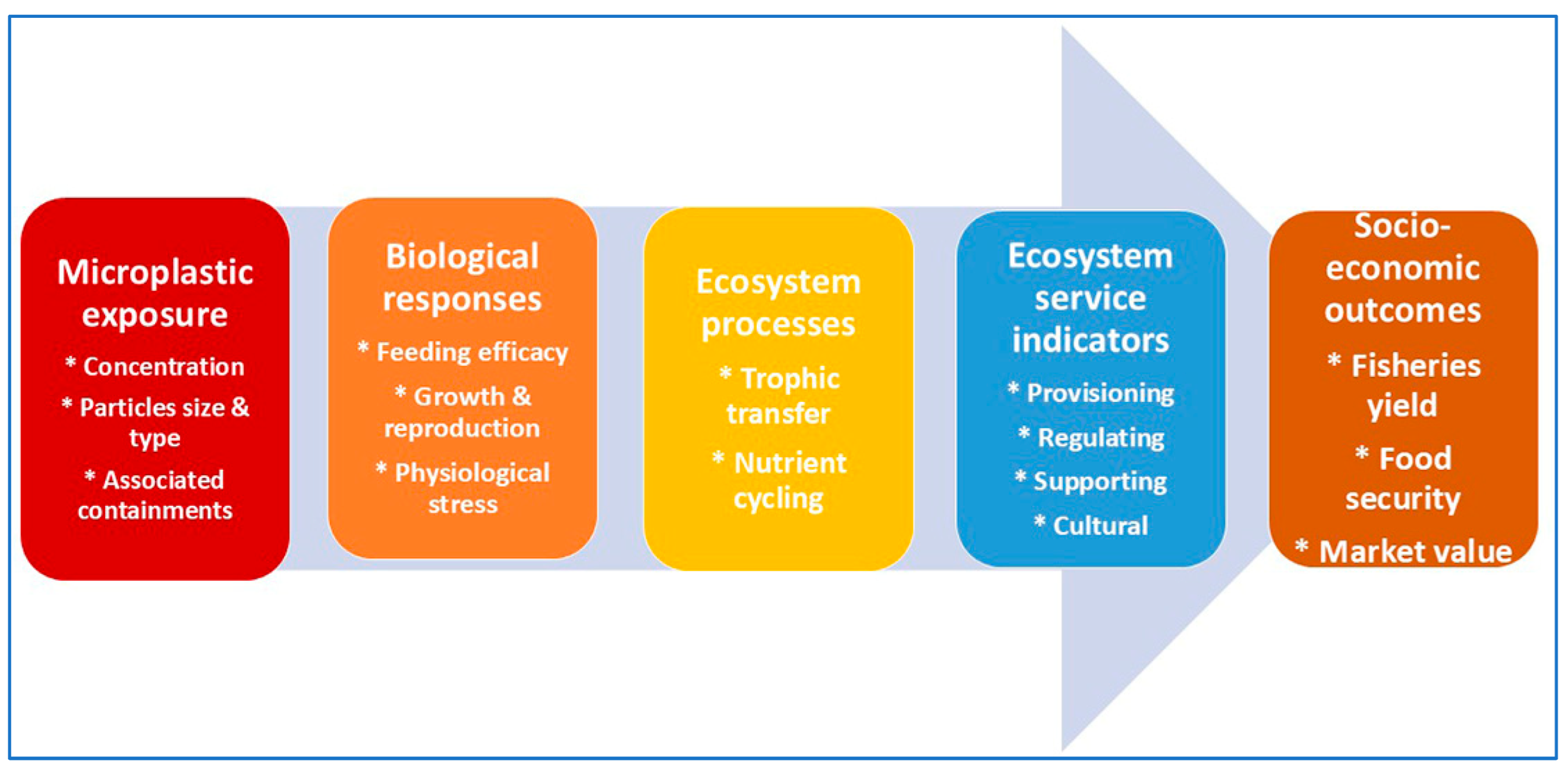
Although numerous studies have documented the occurrence of microplastics and their biological interactions in aquatic organisms, there is limited direct evidence linking these exposures to ecosystem-scale changes in productivity or fishery yields. Consequently, many current interpretations rely on mechanistic pathways derived from experimental studies rather than long-term field observations. Specifically, this review aims to: (1) examine the sources, pathways, and physicochemical characteristics of microplastics that determine environmental distribution and biological availability; (2) synthesize current evidence on organismal and food-web-level impacts; and (3) evaluate how these impacts translate into degradation of ecosystem services and long-term fishery sustainability. Through this cross-disciplinary synthesis, the study seeks to provide a structured foundation for policy-relevant risk assessment and integrated management strategies (Figure 1).

2. Literature Search and Review Methodology

To ensure a comprehensive and transparent synthesis of the literature, this review followed a structured search and screening approach designed to capture studies addressing microplastics, ecosystem processes, and fishery sustainability.

Literature Search, Screening, and Evidence Evaluation

A structured literature search was conducted to identify peer-reviewed studies addressing microplastic contamination in aquatic ecosystems and its implications for aquatic organisms, ecosystem processes, and fishery sustainability. The search was performed using the Web of Science, Scopus, and Google Scholar databases, covering publications from 2009 to 2026, a period during which research on microplastics has expanded rapidly.
Search queries combined keywords related to plastics, aquatic environments, ecological impacts, and fishery outcomes. Representative search strings included “microplastics AND aquatic organisms,” “microplastics AND trophic transfer,” “microplastics AND fisheries,” “microplastics AND ecosystem services,” and “plastic pollution AND aquatic ecosystems.” Additional studies were identified through reference screening of relevant reviews and key articles.
The search initially yielded 428 records. After removing duplicate entries (n = 96), 332 articles remained for title and abstract screening. During this stage, 207 records were excluded because they addressed unrelated topics, such as terrestrial systems or engineering aspects of plastic degradation. The remaining 125 studies were assessed through full-text evaluation to confirm eligibility.
Studies were included if they (i) examined the occurrence or biological effects of microplastics in freshwater, estuarine, or marine organisms; (ii) investigated trophic transfer or ecosystem-level responses; or (iii) discussed implications for fisheries, food webs, or ecosystem services. Articles focusing solely on macroplastic pollution or lacking ecological or fishery relevance were excluded.
For each selected study, key information was extracted, including ecosystem type, study species, exposure characteristics (particle type, concentration, and duration), experimental context (laboratory or field), and reported biological responses. Evidence was then categorized according to study type (laboratory experiment, field observation, or modeling study) and strength of inference, distinguishing between causal evidence derived from experimental studies and correlative evidence based on observational data. This structured screening and classification process enabled a transparent synthesis of the literature and supported the development of the conceptual framework and synthesis tables presented in this review.

3. Microplastics as Drivers of Ecosystem Service Disruption

Microplastics are not only persistent contaminants but also emerging ecological stressors capable of altering processes that sustain aquatic ecosystem services [2]. To understand their broader implications, it is necessary to move beyond descriptions of occurrence and instead examine how their presence intersects with biologically productive compartments that support fisheries and related services.

3.1. Exposure Pathways in Service-Supporting Compartments

Aquatic ecosystems receive microplastics from multiple land- and sea-based sources, including wastewater effluents, surface runoff, aquaculture operations, and fragmentation of larger debris [20,21,22]. Once introduced, these particles are redistributed by hydrodynamic processes and accumulate in surface waters, sediments, and benthic habitats [23,24,25]. Importantly, these compartments overlap with spawning grounds, nursery areas, and feeding zones of commercially important species [26].
Filter feeders, detritivores, and planktivorous organisms are particularly vulnerable due to their feeding strategies [27,28]. Many of these taxa play central roles in water clarification, nutrient recycling, and energy transfer through food webs [29]. Consequently, exposure is not ecologically neutral; it directly affects organisms that underpin provisioning, regulating, and supporting services [30].

3.2. Trophic Transfer and Implications for Fishery Productivity

The small size and persistence of microplastics enable their ingestion by organisms across multiple trophic levels, including invertebrates and commercially important fish species [31]. Although lethal effects under environmentally realistic concentrations are uncommon, sublethal responses, such as reduced feeding efficiency, impaired growth, and altered reproductive performance, have been consistently reported [32,33,34]. These physiological disturbances may become ecologically meaningful when viewed at the population and stock scales. Even moderate reductions in growth or fecundity among lower trophic organisms can decrease prey availability and alter energy transfer efficiency within food webs, with potential consequences for recruitment and long-term yield stability in fisheries [35,36].
In aquatic environments, microplastics can act as carriers of chemical contaminants and microorganisms because their hydrophobic surfaces readily adsorb pollutants such as hydrophobic organic compounds and heavy metals [37]. Laboratory studies have shown that these contaminants can be transferred to organisms after ingestion, suggesting that microplastics may represent a secondary exposure pathway within aquatic food webs [38,39,40]. However, their relative importance compared with other environmental sources remains uncertain, as dissolved pollutants and those associated with natural particles or sediments often represent larger exposure pathways [41,42]. The strength of this vector effect depends on factors such as polymer type, particle size, surface aging, contaminant affinity, and environmental concentrations [43,44,45,46].
Evidence for the trophic transfer of microplastics from prey to predators has been documented in both laboratory and field studies [36,47]. In contrast, biomagnification, defined as increasing concentrations across trophic levels, remains debated. Some studies have reported limited accumulation due to rapid egestion [40,48,49], whereas others have observed retention in certain taxa, particularly benthic feeders [29,50]. As a result, current evidence supports the occurrence of trophic transfer, whereas the extent to which microplastics biomagnify across successive trophic levels remains uncertain and likely depends on species-specific feeding strategies, particle characteristics, and environmental exposure conditions. From a fishery perspective, the key concern is not only the presence of microplastics in higher trophic species but also whether their retention leads to energetic, reproductive, or product-quality impacts that could influence stock productivity and market value [33]. Addressing these questions will require integrated research linking trophic dynamics with population- and ecosystem-level indicators.

3.3. Habitat Integrity and Functional Stability

Microplastics also accumulate in sediments and structurally complex habitats such as coral reefs and estuarine bottoms [51,52]. These areas provide essential nursery and refuge functions for juvenile fish and invertebrates [53,54,55]. Physical accumulation may alter sediment characteristics, influence microbial assemblages, and interfere with benthic-pelagic coupling [56,57,58]. Disturbances in sediment processes can modify nutrient fluxes and oxygen exchange [59], thereby affecting primary productivity and overall ecosystem functioning [60,61]. Because fishery productivity ultimately depends on the integrity of these foundational processes, habitat-level alterations raise concerns regarding long-term sustainability [62].

4. Biological Effects and Their Implications for Ecosystem Services and Fisheries

Although laboratory experiments provide valuable insights into physiological and behavioral responses to microplastic exposure, translating these findings to natural ecosystems remains challenging because environmental concentrations, species interactions, and exposure regimes often differ substantially from controlled experimental conditions. Evidence for biological interaction between microplastics and aquatic organisms is substantial, yet interpretation of its ecological significance remains contested.

4.1. From Individual Responses to Service-Level Consequences

Most reported impacts occur at the sublethal level, including altered feeding behavior [63], reduced growth efficiency [47], inflammatory responses [64], and changes in reproductive output [33]. Although acute mortality is rare under environmentally relevant concentrations [47], chronic physiological stress may influence population performance over time [65,66].
The key uncertainty lies in the scaling. Individual-level impairments do not automatically translate into measurable declines in fish stocks or aquaculture yield. Population resilience, compensatory growth, and density-dependent processes may buffer moderate stress [54]. However, persistent reductions in growth or fecundity, if widespread, could influence recruitment stability and long-term biomass production, thereby affecting provisioning services [67]. At present, direct empirical links between microplastic exposure and documented fishery declines are limited. Most inferences are mechanistic rather than observational. This distinction is critical: the literature supports biological interaction, but evidence for ecosystem-scale productivity loss remains emerging rather than conclusive.

4.2. Interactions with Co-Stressors

Microplastics rarely occur in isolation. Aquatic systems are simultaneously affected by warming, acidification, eutrophication, and chemical contamination [32]. Evidence regarding the role of microplastics as significant vectors of sorbed pollutants under environmental conditions remains mixed. Some studies suggest limited transfer relative to natural exposure pathways [40]; others indicate additive or synergistic effects [68]. This uncertainty complicates risk assessment. If microplastics amplify existing stressors, their contribution to ecosystem instability may be underestimated. Conversely, if vector effects are minimal under field conditions, regulatory emphasis may need recalibration. Clarifying these interactions is central to understanding cumulative impacts on regulating and supporting services.

4.3. Laboratory vs. Field Evidence in Freshwater and Marine Systems

Current knowledge on microplastic impacts on aquatic biota is derived from both controlled laboratory experiments and field-based observations across freshwater and marine environments. Laboratory studies provide valuable mechanistic insights by exposing organisms to controlled concentrations of microplastics, allowing researchers to evaluate physiological, behavioral, and biochemical responses under standardized conditions [69,70]. These experiments frequently report effects such as reduced feeding efficiency, oxidative stress, impaired growth, and altered reproductive performance [64,65,66].
In contrast, field studies document the presence and ingestion of microplastics under natural environmental conditions. Such studies often focus on monitoring contamination levels in water, sediments, and aquatic organisms and may reveal spatial and temporal variability in exposure [29,63,71]. However, field investigations are typically correlational and may not directly demonstrate causality because organisms are exposed to multiple environmental stressors simultaneously [72].
Another important distinction concerns ecosystem type. Freshwater systems often receive microplastics directly from urban runoff [73], wastewater effluents [74], and riverine transport [44], whereas marine environments accumulate plastics through ocean circulation and coastal activities [67]. Consequently, differences in particle abundance, polymer types, and ecological exposure pathways may influence biological responses across these environments [38,46]. Therefore, integrating findings from both laboratory and field studies across freshwater and marine ecosystems is essential for developing a comprehensive understanding of microplastic impacts on aquatic organisms and fishery resources (Table 1).

5. Ecosystem-Service Framework

The concept of ecosystem services provides a unifying language that connects environmental processes to human well-being. It translates ecological structure and function into tangible benefits that sustain economies, cultures, and societies. Within aquatic ecosystems, services encompass the full spectrum of provisioning, regulating, supporting, and cultural functions that collectively underpin sustainable fisheries [79]. Provisioning services provide material goods, such as food, raw materials, and genetic resources. Regulating services maintain environmental stability through processes like nutrient cycling, climate regulation, and water purification. Supporting services form the ecological foundation that enables all other services, including primary production, habitat provision, and biodiversity maintenance. Cultural services offer non-material benefits, including recreation, aesthetic enjoyment, and traditional practices linked to aquatic environments [80].
Evaluating microplastic pollution through this lens reveals how disruptions at the organismal and ecological levels translate into losses of ecological productivity, environmental stability, and social value. Such a perspective moves beyond conventional toxicity assessments and situates microplastic contamination within the broader sustainability discourse (Figure 2).

5.1. Impacts on Provisioning Services

Provisioning services are the most visibly affected by microplastic pollution, as they include the harvest of fish and other aquatic organisms for food and economic use. Declines in fish growth, fecundity, and survival, documented in numerous laboratory and field studies, directly reduce stock productivity. Even moderate reductions in reproductive output or larval survival can significantly influence population trajectories, particularly for species with slow growth or limited spawning success [75]. For commercial and subsistence fisheries, this translates into smaller catches, lower income, and increased exploitation pressure on remaining stocks [81].
Beyond population effects, microplastics introduce quality and safety concerns that diminish the value of aquatic products. Contamination of edible tissues with plastic residues or associated chemicals can undermine consumer confidence and market access. In export-oriented fisheries, such reputational risks can have economic consequences comparable to yield declines [81]. Additionally, aquaculture systems are not immune: microplastics in feed, water, or sediment can impair cultured species’ health and growth performance [82]. As aquaculture continues to expand globally to meet rising protein demand, addressing microplastic contamination becomes integral to ensuring food safety and maintaining trust in “sustainable seafood.”
Provisioning losses also extend beyond fish to other biological resources. Shellfish, sea cucumbers, and seaweeds, which are vital commodities in many coastal economies, can accumulate high concentrations of microplastics due to their filter-feeding or sediment-dwelling habits [83]. These organisms serve not only as food sources but also as pharmaceuticals and biomaterials sources. Therefore, their contamination represents a loss of both nutritional and biotechnological potential.

5.2. Effects on Regulating Services

Regulating services encompass the ecological processes that maintain the health and resilience of aquatic systems. Microplastics can disrupt these functions in subtle yet consequential ways.
  • Water purification is compromised when filter feeders and benthic organisms that normally remove particulates from the water column suffer population declines or altered filtration efficiency. The reduced activity of mussels, oysters, and zooplankton diminishes the natural biofiltration capacity, allowing suspended matter and pollutants to persist longer in the environment [84].
  • Nutrient cycling may also be altered by microplastic ingestion affects the feeding, excretion, and burrowing behavior of key invertebrates and detritivores. This can influence nitrogen and phosphorus turnover, organic matter decomposition, and sediment oxygenation [85].
  • Climate regulation is indirectly impacted through changes in primary production and carbon sequestration. Phytoplankton exposed to microplastics may experience reduced photosynthetic efficiency, while disrupted zooplankton grazing can modify carbon fluxes between surface and deep waters [86].
Furthermore, the persistence of plastics contributes to habitat modification. In sediments, accumulated fragments can change the porosity, permeability, and microbial composition, influencing the biogeochemical cycles. Floating plastics provide new artificial substrates for microbial and algal colonization, some of which may include harmful or invasive species [87]. The spread of such organisms across bioregions can disrupt native communities and alter ecosystem stability. Collectively, these disturbances weaken the self-regulating capacity of aquatic ecosystems, making them less able to recover from stress and less predictable in supporting fishery productivity.

5.3. Disruption of Supporting Services

Supporting services form the ecological scaffolding upon which all other functions depend. Microplastics threaten these foundational processes by reducing biodiversity, habitat quality, and energy flow. The loss of biodiversity due to selective species sensitivity affects ecosystem resilience; communities dominated by tolerant or opportunistic taxa may lose critical functional traits [88]. Altered planktonic and benthic communities, in turn, affect the transfer of energy and matter through trophic webs, reducing overall ecosystem efficiency [89].
Habitat degradation is another key mechanism. Coral reefs, seagrass meadows, and mangroves, which are essential nursery grounds for many fish species, are vulnerable to microplastic accumulation [51]. Particles trapped within coral mucus can block light penetration and hinder calcification, while plastic films covering sediments can limit oxygen diffusion, suffocating benthic flora and fauna [52]. The decline of these habitats reduces shelter and food availability for juvenile fish, compromising recruitment and biodiversity maintenance.
Supporting services also include genetic resources, a pool of genetic diversity that allows adaptation to environmental change. Chronic pollution may exert selective pressures that reduce genetic variability or favor resistant genotypes at the expense of overall resilience. From a fishery perspective, this erosion of adaptive potential could limit the ability of species to cope with climate-driven shifts, compounding long-term sustainability challenges [90].

5.4. Cultural and Socioeconomic Services

Beyond ecological functions, aquatic ecosystems provide profound cultural, aesthetic, and recreational values. Many communities maintain spiritual, traditional, and livelihood connections to rivers, lakes, and seas. The visual presence of plastic pollution, beaches littered with debris, or waters clouded by floating fragments, diminishes the aesthetic appeal of natural landscapes and deters ecotourism, an increasingly important source of income for coastal populations [91].
Microplastic contamination also undermines the public perception of seafood safety, influencing consumption patterns and eroding trust in local fisheries [92]. For small-scale fishing communities, such reputational damage can be devastating, reducing market demand even where contamination levels remain within regulatory limits. Furthermore, the psychological effects of environmental degradation, feelings of loss, guilt, or helplessness associated with polluted ecosystems, represent an often overlooked but significant cultural cost [93].
Educational and scientific opportunities associated with healthy aquatic ecosystems may also decline as microplastic contamination complicates fieldwork, introduces sampling biases, and distracts from other pressing conservation issues [94]. Thus, cultural ecosystem services, though intangible, form an essential part of the sustainability equation, reflecting society’s relationship with nature.
Microplastic pollution exemplifies a systemic threat, where small, persistent stressors accumulate and interact across spatial and temporal scales [95]. Because ecosystem services are co-produced by ecological processes and human activities, restoring them requires addressing both ecological degradation and the socio-economic drivers of plastic waste. This recognition supports a transition from reactive cleanup efforts to preventive, circular-economy strategies that minimize plastic input and enhance system resilience.
To clarify how microplastic stressors propagate from organism-level responses to broader ecosystem functions and fishery outcomes, pathways linking biological endpoints with ecosystem processes and service categories are summarized in Table 2.
This synthesis highlights that the ecological consequences of microplastic contamination extend beyond individual organisms and may influence key ecological functions that underpin fishery productivity and aquatic ecosystem resilience.

6. Implications for Sustainable Fisheries

Sustainable fisheries represent a cornerstone of global food security, economic stability, and cultural heritage [96]. Their viability depends not only on the biological productivity of aquatic species but also on the integrity of the ecosystems that support them. Microplastic contamination poses a multifaceted threat to this balance. Its effects extend beyond the direct physiological harm to fish and invertebrates, encompassing ecological degradation, food-web disruption, and socio-economic consequences that challenge long-term sustainability [82]. Understanding these implications is essential for integrating pollution control into fishery management and achieving international sustainability targets, including the United Nations Sustainable Development Goals (SDGs 12 and 14).
Microplastic pollution may also have implications for fishery stock assessment and management frameworks [97]. Many stock assessment models rely on biological parameters, such as growth rates, mortality, and recruitment, to estimate reference points including maximum sustainable yield (MSY) [38]. At present, most evidence linking microplastic exposure to fishery sustainability is indirect, relying on mechanistic pathways such as reduced growth, altered feeding efficiency, or trophic transfer rather than direct measurements of stock productivity or recruitment dynamics in natural populations [46]. From a bioenergetic perspective, microplastic exposure can impose additional energetic costs associated with stress responses and detoxification processes, potentially reducing the energy available for growth and reproduction [54]. Such changes may contribute to recruitment variability or recruitment failure in sensitive life stages [55]. Incorporating emerging knowledge on microplastic stressors into fishery bioenergetic and population models may therefore improve understanding of how environmental pollution interacts with traditional drivers of stock dynamics and fishery sustainability.

6.1. Effects on Fish Health and Population Dynamics

The most immediate implications of microplastics for fisheries arise from their effects on fish health, reproduction, and survival. Numerous studies across freshwater and marine taxa have shown that ingestion of microplastics can induce oxidative stress, inflammatory responses, and metabolic disorders [64]. These physiological disruptions reduce growth rates, impair reproductive success, and increase susceptibility to disease [33,34]. Larval and juvenile stages appear particularly vulnerable, as microplastics can occupy limited gut volume, leading to pseudo-satiation and nutritional deprivation during critical developmental periods [55].
At the population level, these sublethal effects can accumulate into significant demographic consequences. Reduced fecundity and recruitment translate into smaller breeding populations, while altered energy allocation can delay maturation and lower resilience to environmental stress [98]. For heavily exploited stocks, such additional pressures may accelerate collapse or hinder recovery even when traditional management measures, such as catch limits or protected areas, are in place [99]. The potential for microplastics to interact synergistically with other pollutants, including heavy metals and persistent organic compounds, further complicates population dynamics by amplifying toxic effects across generations [100].

6.2. Microplastics and Food Web Alterations

In benthic systems, changes in community structure caused by microplastic contamination can shift the balance between deposit feeders, filter feeders, and detritivores. Such alterations affect sediment turnover, organic matter decomposition, and nutrient cycling, all processes that underpin the productivity of demersal fisheries [28]. Pelagic food webs can also experience cascading effects. For example, a decline in zooplankton grazing may lead to phytoplankton blooms, altering oxygen levels, and promoting hypoxic conditions that are unfavorable for fish spawning [101]. These complex interactions emphasize that microplastics threaten not only individual species but also the functional architecture that supports entire fisheries.

6.3. Economic and Livelihood Implications

From an economic perspective, microplastic pollution imposes both direct and indirect costs on fisheries and aquaculture. Contaminated catches can lose market value due to food-safety concerns, particularly in export markets with strict quality standards. Even trace levels of plastic fragments detected in seafood products can trigger consumer alarm, prompting stricter regulations or reduced demand. This reputational risk disproportionately affects small-scale fishers and coastal communities that rely on clean, high-quality seafood as their primary income source [81].
In aquaculture, microplastics can infiltrate production systems via contaminated feed, water, or equipment. Their presence has been linked to reduced growth performance, immune suppression, and increased mortality in farmed species. These outcomes translate into higher operational costs and lower profitability [82]. Moreover, maintenance expenses rise as microplastics accumulate in tanks, filtration systems, and sediments, necessitating frequent cleaning or replacement. When aggregated across regions, such losses can significantly undermine the economic stability of the aquaculture sector [102].
The broader socio-economic implications extend to employment, trade, and food security. Fisheries provide livelihoods for over 120 million people globally and serve as a major source of animal protein, especially in developing nations. As microplastic contamination reduces yields or deters consumers, communities already facing climate and economic pressures may experience income loss and food insecurity. These social impacts highlight the need to view microplastic mitigation not merely as an environmental issue but as a socioeconomic imperative [1].

6.4. Implications for Food Safety and Human Health

Microplastics in fishery products raise legitimate concerns about human health. Laboratory and field evidence confirm that small plastic fragments, along with adsorbed pollutants such as PCBs, PAHs, and heavy metals, can enter edible tissues [103]. Although the full extent of human exposure remains under investigation, early findings suggest that microplastic ingestion could contribute to inflammatory and oxidative stress responses, potentially affecting the gastrointestinal and immune systems [104]. Even in the absence of definitive toxicity data, the mere perception of contamination can undermine consumer confidence in seafood safety.
Public anxiety over microplastics has tangible implications for fishery sustainability. Reduced demand for certain products, particularly filter-feeding species like mussels and oysters, can reshape market dynamics and force producers to shift to alternative, sometimes less sustainable, resources [94]. To safeguard consumer trust, transparent monitoring and communication are essential. Implementing standardized testing protocols, traceability systems, and labeling schemes that certify low-contamination seafood can help maintain market integrity while incentivizing cleaner production practices.

6.5. Long-Term Ecological and Economic Consequences

If left unchecked, microplastic pollution could impose irreversible changes on marine and freshwater ecosystems, leading to long-term declines in fish productivity and profitability. Chronic contamination may induce genetic adaptation or selective pressure that alters species composition and ecological interactions [105]. Over decades, this could transform the character of fisheries, favoring small, low-value, or pollution-tolerant species over traditional commercial stocks. The resulting shifts in ecosystem structure would diminish biodiversity, reduce ecosystem resilience, and complicate restoration efforts [88].
Economically, the cumulative costs of microplastic pollution, including loss of yield, increased management expenses, and reduced consumer trust, could reach billions of dollars annually. The degradation of ecosystem services, particularly those related to nutrient cycling and water purification, would necessitate costly technological substitutes. Investing in prevention now is therefore not only an environmental necessity but also an economically prudent strategy.

7. Management and Mitigation Strategies

The sustainability of fisheries in the age of pervasive plastic pollution demands an integrated framework that links ecology, economics, and governance. Mitigation should operate on multiple fronts: reducing plastic input through waste management and material innovation; enhancing ecosystem resilience through habitat restoration and biodiversity conservation; and strengthening social systems through education, participation, and equitable policy design [106]. Moreover, sustainability requires balancing ecological recovery with economic opportunity. Innovations in circular economy approaches, such as converting recovered plastics into construction materials or energy sources, can create alternative livelihoods while reducing environmental burdens [107].
Effective management requires a combination of preventive and restorative actions grounded in sustainability principles and guided by the ecosystem-based management (EBM) framework. While the total elimination of microplastics is unrealistic in the near term, integrated mitigation strategies can substantially reduce inputs, limit exposure to aquatic biota, and restore critical ecosystem services essential for sustainable fisheries [108].
The most efficient and sustainable approach to controlling microplastic pollution is to prevent its release at the source. This principle aligns with the waste hierarchy and the circular-economy model, which prioritize reduction and reuse over remediation. Preventive measures should begin with product design and material innovation. Transitioning from conventional petroleum-based plastics to biodegradable or compostable alternatives can reduce persistence in aquatic environments [109]. Biopolymers such as polylactic acid (PLA) and polyhydroxyalkanoates (PHA) show promise, although their degradation under marine conditions remains variable [110]. At the consumer level, policies that encourage behavioral change, such as bans on single-use plastics, deposit-return systems for bottles, and incentives for reusable packaging, have already demonstrated success in several regions.

7.1. Control of Microplastic Release from Industrial and Urban Sources

A major portion of microplastics originates from secondary sources, including the degradation of larger plastic debris, abrasion of synthetic textiles, tire wear, and losses from industrial pellets [60,111]. Managing these pathways requires technical interventions at multiple stages of production and waste handling. For example, upgrading wastewater treatment plants to include tertiary filtration technologies, such as membrane bioreactors, sand filtration, or electrocoagulation, can significantly reduce microplastic effluent discharge [112]. In textile industries, innovations like fiber-capture filters in washing machines and the development of less-shedding fabrics can limit synthetic microfibre pollution [113].
Urban runoff, stormwater systems, and road dust also contribute substantial microplastic loads. Implementing green-infrastructure solutions, constructed wetlands, vegetated buffer strips, and permeable pavements, can trap plastic particles before they reach aquatic habitats [114]. Such measures not only reduce pollution but also provide co-benefits, including flood control and improved water quality, thus reinforcing broader sustainability objectives.

7.2. Management of Marine-Based Sources

Fisheries and aquaculture themselves are both victims and contributors to microplastic pollution. Lost, abandoned, or discarded fishing gear, often termed “ghost gear”, represents a persistent source of macro- and microplastics [97]. Management strategies here must combine regulatory, technological, and economic approaches [115].
  • Regulatory measures may include mandatory gear-marking schemes, retrieval obligations, and penalties for non-compliance.
  • Technological innovations involve the design of biodegradable fishing nets, traps, and lines that maintain performance during use but degrade under environmental conditions.
  • Economic incentives, such as gear buy-back programs or port-reception facilities offering free waste disposal, can encourage responsible behavior.
For aquaculture, best-practice guidelines should promote the use of durable, recyclable materials for cages and infrastructure, coupled with regular maintenance to prevent fragmentation. Monitoring programs within farms can detect microplastic accumulation in sediments and biota, allowing timely remediation [112].

7.3. Restoration and Remediation of Contaminated Environments

While prevention is paramount, existing microplastic contamination necessitates targeted remediation efforts. Physical cleanup of beaches, riverbanks, and surface waters remains the most visible form of intervention, though it often addresses only macroplastic fractions [116]. More specialized technologies, such as floating skimmers, bubble curtains, or magnetic nanocomposites, are being developed to capture micro- and nanoplastics in situ [117]. These must, however, be deployed carefully to avoid unintended ecological disturbance.
Bioremediation offers a promising complementary pathway. Certain microbial consortia and fungi possess enzymes capable of degrading polyethylene, polypropylene, and other polymers under controlled conditions [118]. Harnessing such biological processes for large-scale applications could contribute to long-term reduction in microplastic burdens, provided that environmental safety and efficiency are ensured. In sediments, restoration of benthic communities, through reseeding of filter feeders or rehabilitation of seagrass meadows, can enhance natural purification processes and restore lost ecosystem services [119].

7.4. Circular Economy and Resource Recovery

Transitioning toward a circular-economy model is fundamental to breaking the link between economic growth and plastic pollution. This framework envisions plastics as valuable resources rather than disposable waste. Recycling and resource recovery must therefore become central to industrial strategies [120]. Improved waste segregation, investment in mechanical and chemical recycling technologies, and the development of secondary markets for recycled materials can drastically reduce virgin plastic production [112].
In the fishery sector, circularity can be achieved through the valorization of waste streams. Discarded fishing gear, packaging, and aquaculture materials can be collected and transformed into new products such as construction panels, textiles, or energy feedstock [121]. Pilot programs in northern Europe and East Asia have shown that such initiatives not only reduce marine litter but also generate employment opportunities, contributing to social sustainability. Integration of these practices into local economies ensures long-term viability while reinforcing the “blue economy” concept advocated by international organizations [122].

7.5. Governance, Policy Integration, and Stakeholder Engagement

Effective microplastic management requires coherent governance across scales, local, national, and global. Many existing regulatory frameworks address marine litter in general but lack specific mechanisms for microplastic control. Developing comprehensive strategies demands coordination between environmental agencies, fishery departments, industry stakeholders, and civil society. At the international level, conventions such as the London Convention, MARPOL Annex V, and the emerging Global Plastics Treaty offer platforms for harmonized action [123]. Regional agreements, for example under the Regional Seas Programme, can tailor solutions to specific ecological and socio-economic contexts [124]. Nationally, integrating microplastic considerations into fishery legislation, water-quality standards, and waste-management policies will create a more consistent and enforceable system.

8. Future Directions and Research Gaps

Despite rapid growth in microplastic research, substantial knowledge gaps remain regarding their ecological, physiological, and socio-economic implications for aquatic ecosystems and fisheries. The diversity of microplastic sources, polymer compositions, and environmental interactions complicates environmental assessment and limits our understanding of long-term impacts on ecosystem functioning and service delivery. Addressing these challenges requires integrative approaches that combine ecological research, technological advances, and governance strategies.
One major limitation is the absence of standardized methodologies for sampling, identification, and quantification of microplastics. Studies often apply different mesh sizes, extraction procedures, and analytical techniques, making cross-study comparisons difficult. Establishing harmonized international protocols is therefore essential for reliable monitoring and global assessments. Advanced analytical tools such as Fourier-transform infrared spectroscopy, Raman spectroscopy, and Pyrolysis–gas chromatography–mass spectrometry offer improved polymer identification but require further calibration and inter-laboratory validation [125].
Another important research priority is improving the detection and understanding of nanoplastics, which remain poorly quantified in environmental samples. Future studies should investigate their cellular uptake, translocation, and interactions with biomolecules using interdisciplinary approaches that integrate molecular biology, materials science, and ecotoxicology.
Long-term field studies are also needed to evaluate the effects of chronic microplastic exposure under realistic environmental conditions. Much of the current knowledge derives from short-term laboratory experiments that may not reflect natural variability or multiple environmental stressors such as warming, acidification, and nutrient enrichment. Field-based monitoring across freshwater, estuarine, and marine ecosystems will be essential for assessing impacts on population dynamics, community structure, and ecosystem resilience.
Finally, future research should better link organism-level responses to ecosystem processes and socio-economic outcomes. Developing ecosystem-service indicators that connect biophysical metrics (e.g., productivity or nutrient flux) with fishery yields, economic impacts, and food-security risks would help translate ecological findings into policy-relevant information. Strengthening international collaboration, coordinated monitoring programs, and interdisciplinary research will be crucial for developing effective strategies to mitigate microplastic pollution and safeguard aquatic ecosystem services.

9. Conclusions

Microplastics are now recognized as pervasive contaminants across freshwater and marine ecosystems, with widespread ingestion documented in diverse aquatic organisms. Laboratory studies provide consistent evidence that microplastic exposure can induce physiological and behavioral effects, including reduced feeding efficiency, oxidative stress, altered energy allocation, and impaired growth or reproduction. Evidence for trophic transfer within food webs is also increasingly reported. However, several key uncertainties remain. In particular, the degree to which microplastics biomagnify across trophic levels and their long-term effects on population dynamics and ecosystem processes are still debated, largely due to limited long-term field evidence.
These organism-level responses may have implications for fishery-relevant indicators. Physiological stress and reproductive impairment could influence recruitment success, growth rates, and overall stock productivity, while trophic transfer may alter food-web interactions that underpin ecosystem functioning. In addition, the presence of microplastics in seafood raises concerns related to food safety perceptions and potential economic impacts on fishery-dependent livelihoods. Such pathways highlight the potential influence of microplastic contamination on ecosystem services, particularly provisioning services related to food production and supporting services linked to biodiversity and ecosystem stability. Overall, the available evidence indicates plausible ecological pathways through which microplastics may influence ecosystem functioning and fishery sustainability; however, direct field-based evidence connecting microplastic exposure to measurable changes in ecosystem productivity or fishery yields remains limited.
Future research should prioritize standardized sampling and quality assurance protocols, harmonized biological effect endpoints, and long-term field validation of laboratory findings. Integrating ecological, fishery, and socio-economic approaches will be essential to translate organism-level impacts into indicators relevant for fishery management, ecosystem service assessments, and sustainable resource governance.

Funding

This research received no external funding.

Institutional Review Board Statement

Not applicable.

Informed Consent Statement

Not applicable.

Data Availability Statement

No new data were created or analyzed in this study.

Conflicts of Interest

The author declares no conflicts of interest.

References

  1. Ziani, K.; Ioniță-Mîndrican, C.-B.; Mititelu, M.; Neacșu, S.M.; Negrei, C.; Moroșan, E.; Drăgănescu, D.; Preda, O.-T. Microplastics: A Real Global Threat for Environment and Food Safety: A State of the Art Review. Nutrients 2023, 15, 617. [Google Scholar] [CrossRef]
  2. Sunny, A.R.; Sazzad, S.A.; Islam, M.A.; Mithun, M.H.; Hussain, M.; Raposo, A.; Bhuiyan, M.K.A. Microplastics in Aquatic Ecosystems: A Global Review of Distribution, Ecotoxicological Impacts, and Human Health Risks. Water 2025, 17, 1741. [Google Scholar] [CrossRef]
  3. Huang, W.; Song, B.; Liang, J.; Niu, Q.; Zeng, G.; Shen, M.; Zhang, Y. Microplastics and Associated Contaminants in the Aquatic Environment: Ecotoxicological Effects, Trophic Transfer, and Potential Impacts on Human Health. J. Hazard. Mater. 2021, 405, 124187. [Google Scholar] [CrossRef] [PubMed]
  4. Su, X.; Yuan, J.; Lu, Z.; Xu, J.; He, Y. An enlarging ecological risk: Review on co-occurrence and migration of microplastics and microplastic-carrying organic pollutants in natural and constructed wetlands. Sci. Total Environ. 2022, 837, 155772. [Google Scholar] [CrossRef]
  5. Alimi, O.S.; Farner Budarz, J.; Hernandez, L.M.; Tufenkji, N. Microplastics and Nanoplastics in Aquatic Environments: Aggregation, Deposition, and Contaminant Transport. Environ. Sci. Technol. 2018, 52, 1704–1724. [Google Scholar] [CrossRef]
  6. Samitra, I.; Werorilangi, S.; Burhanuddin, A.I. Microplastic Contamination in Commercially Important Fish from Labuan Bajo Fish Landing Site, Indonesia. Egypt. J. Aquat. Biol. Fish. 2025, 29, 1323–1345. [Google Scholar] [CrossRef]
  7. Rochman, C.M.; Tahir, A.; Williams, S.L.; Baxa, D.V.; Lam, R.; Miller, J.T.; Teh, F.C.; Werorilangi, S.; Teh, S.J. Anthropogenic Debris in Seafood: Plastic Debris and Fibers in Fish and Bivalves Sold for Human Consumption. Sci. Rep. 2015, 5, 14340. [Google Scholar] [CrossRef]
  8. Sharma, S.; Chatterjee, S. Microplastic Pollution: A Threat to Marine Ecosystems and Human Health. Environ. Sci. Pollut. Res. 2017, 24, 21530–21547. [Google Scholar] [CrossRef] [PubMed]
  9. Rafa, N.; Ahmed, B.; Zohora, F.; Bakya, J.; Ahmed, S.; Ahmed, S.F.; Mofijur, M.; Chowdhury, A.A.; Almomani, F. Microplastics as Carriers of Toxic Pollutants: Sources, Transport, and Toxicological Effects. Environ. Pollut. 2024, 343, 123190. [Google Scholar] [CrossRef]
  10. Beans, C. Are Microplastics Spreading Infectious Disease? Proc. Natl. Acad. Sci. USA 2023, 120, e2311253120. [Google Scholar] [CrossRef]
  11. Subaramaniyam, U.; Allimuthu, R.S.; Vappu, S.; Ramalingam, D.; Balan, R.; Paital, B.; Panda, N.; Rath, P.K.; Ramalingam, N.; Sahoo, D.K. Effects of Microplastics, Pesticides, and Nanomaterials on Fish Health and Oxidative Stress. Front. Physiol. 2023, 14, 1217666. [Google Scholar] [CrossRef]
  12. Zitouni, N.; Bousserrhine, N.; Missawi, O.; Boughattas, I.; Chèvre, N.; Santos, R.; Belbekhouche, S.; Alphonse, V.; Tisserand, F.; Balmassiere, L.; et al. Uptake, Tissue Distribution, and Toxicological Effects of Environmental Microplastics in Juvenile Fish Dicentrarchus labrax. J. Hazard. Mater. 2021, 403, 124055. [Google Scholar] [CrossRef]
  13. Vaughn, C.C. Ecosystem Services Provided by Freshwater Mussels. Hydrobiologia 2018, 810, 15–27. [Google Scholar] [CrossRef]
  14. Cormier, B.; Cachot, J.; Blanc, M.; Cabar, M.; Clérandeau, C.; Dubocq, F.; Le Bihanic, F.; Morin, B.; Zapata, S.; Bégout, M.-L.; et al. Environmental Microplastics Disrupt Swimming Activity and Reproductive Success in Fish. Environ. Pollut. 2022, 308, 119721. [Google Scholar] [CrossRef]
  15. Yu, Y.; Tian, D.; Yu, Y.; Lu, L.; Shi, W.; Liu, G. Microplastics Aggravate Bioaccumulation of Antibiotics in Edible Bivalves. Sci. Total Environ. 2024, 908, 168436. [Google Scholar] [CrossRef]
  16. Lee, Y.; Cho, J.; Sohn, J.; Kim, C. Health Effects of Microplastic Exposures: Current Issues and Perspectives in South Korea. Yonsei Med. J. 2023, 64, 301–308. [Google Scholar] [CrossRef]
  17. Lei, L.; Wu, S.; Lu, S.; Liu, M.; Song, Y.; Fu, Z.; Shi, H.; Raley-Susman, K.M.; He, D. Microplastic Particles Cause Intestinal Damage and Other Adverse Effects in Zebrafish (Danio rerio) and Nematode (Caenorhabditis elegans). Sci. Total Environ. 2018, 619–620, 1–8. [Google Scholar] [CrossRef] [PubMed]
  18. Ghosh, S.; Sinha, J.K.; Ghosh, S.; Vashisth, K.; Han, S.; Bhaskar, R. Microplastics as an Emerging Threat to the Global Environment and Human Health. Sustainability 2023, 15, 10821. [Google Scholar] [CrossRef]
  19. Elliff, C.I.; Mansor, M.T.C.; Feodrippe, R.; Turra, A. Microplastics and the UN Sustainable Development Goals. In Handbook of Microplastics in the Environment; Rocha-Santos, T., Costa, M., Mouneyrac, C., Eds.; Springer: Cham, Switzerland, 2021. [Google Scholar] [CrossRef]
  20. Browne, M.A.; Galloway, T.S.; Thompson, R.C. Spatial Patterns of Plastic Debris along Estuarine Shorelines. Environ. Sci. Technol. 2010, 44, 3404–3409. [Google Scholar] [CrossRef] [PubMed]
  21. Ibrahim, N.; Rahman, A.M.N.A.A.; Shafiq, M.D.; Lockman, Z.; Jaafar, M.; Kameda, Y. Microplastic Pollution: Sources, Degradation Mechanisms, Analytical Advances, and Mitigation Strategies for Environmental Sustainability. Rev. Environ. Contam. Toxicol. 2025, 263, 27. [Google Scholar] [CrossRef]
  22. Jolaosho, T.L.; Rasaq, M.F.; Omotoye, E.V.; Araomo, O.V.; Adekoya, O.S.; Abolaji, O.Y.; Hungbo, J.J. Microplastics in Freshwater and Marine Ecosystems: Occurrence, Characterization, Sources, Distribution Dynamics, Fate, Transport Processes, Potential Mitigation Strategies, and Policy Interventions. Ecotoxicol. Environ. Saf. 2025, 294, 118036. [Google Scholar] [CrossRef]
  23. Akyildiz, S.H.; Fiore, S.; Bruno, M.; Sezgin, H.; Yalcin-Enis, I.; Yalcin, B.; Bellopede, R. Release of Microplastic Fibers from Synthetic Textiles during Household Washing. Environ. Pollut. 2024, 357, 124455. [Google Scholar] [CrossRef] [PubMed]
  24. De Falco, F.; Gullo, M.P.; Gentile, G.; Di Pace, E.; Cocca, M.; Gelabert, L.; Brouta-Agnésa, M.; Rovira, A.; Escudero, R.; Villalba, R.; et al. Evaluation of Microplastic Release Caused by Textile Washing Processes of Synthetic Fabrics. Environ. Pollut. 2018, 236, 916–925. [Google Scholar] [CrossRef]
  25. Napper, I.E.; Thompson, R.C. Release of Synthetic Microplastic Fibres from Domestic Washing Machines: Effects of Fabric Type and Washing Conditions. Mar. Pollut. Bull. 2016, 112, 39–45. [Google Scholar] [CrossRef] [PubMed]
  26. Grgurević, Š.; Sanchez Varela, Z.; Slišković, M.; Ukić Boljat, H. Unseen Threats at Sea: Awareness of Plastic Pellets Pollution among Maritime Professionals and Students. Sustainability 2025, 17, 6875. [Google Scholar] [CrossRef]
  27. Rong, Y.; Tang, Y.; Ren, L.; Taylor, W.D.; Razlutskij, V.; Naselli-Flores, L.; Liu, Z.; Zhang, X. Effects of the Filter-Feeding Benthic Bivalve Corbicula fluminea on Plankton Community and Water Quality in Aquatic Ecosystems: A Mesocosm Study. Water 2021, 13, 1827. [Google Scholar] [CrossRef]
  28. Fraissinet, S.; Arduini, D.; Martines, A.; De Benedetto, G.E.; Malitesta, C.; Giangrande, A.; Rossi, S. Microplastics Uptake by Four Filter Feeders. J. Mar. Sci. Eng. 2024, 12, 1000. [Google Scholar] [CrossRef]
  29. Filgueiras, A.V.; Preciado, I.; Cartón, A.; Gago, J. Microplastic Ingestion by Pelagic and Benthic Fish and Diet Composition: A Case Study in the NW Iberian Shelf. Mar. Pollut. Bull. 2020, 160, 111623. [Google Scholar] [CrossRef]
  30. Witczak, A.; Przedpełska, L.; Pokorska-Niewiada, K.; Cybulski, J. Microplastics as a Threat to Aquatic Ecosystems and Human Health. Toxics 2024, 12, 571. [Google Scholar] [CrossRef]
  31. Pal, D.; Prabhakar, R.; Barua, V.B.; Zekker, I.; Burlakovs, J.; Krauklis, A.; Hogland, W.; Vincevica-Gaile, Z. Microplastics in Aquatic Systems: A Comprehensive Review of Distribution, Environmental Interactions, and Health Risks. Environ. Sci. Pollut. Res. 2025, 32, 56–88. [Google Scholar] [CrossRef]
  32. Fröhlich, E. Local and Systemic Effects of Microplastic Particles through Cell Damage, Release of Chemicals and Drugs, Dysbiosis, and Interference with Nutrient Absorption. J. Toxicol. Environ. Health B 2024, 27, 315–344. [Google Scholar] [CrossRef]
  33. Bilal, M.; Ul Hassan, H.; Taj, M.; Rafiq, N.; Nabi, G.; Ali, A.; Gabol, K.; Shah, M.I.A.; Ghaffar, R.A.; Sohail, M.; et al. Biological Magnification of Microplastics: Induced Reproductive Toxicity from Invertebrates to Vertebrates. Water 2023, 15, 2831. [Google Scholar] [CrossRef]
  34. Ullah, I.; Chen, H.; Wang, J.; Kaiser, H.; Basher, A.A.; Li, J.; Zhu, X. Impacts of Microplastics on Early Life Stages of Fish: Sources, Mechanisms, Ecological Consequences, and Mitigation Strategies. Toxics 2026, 14, 27. [Google Scholar] [CrossRef]
  35. Cole, M.; Lindeque, P.; Fileman, E.; Halsband, C.; Galloway, T.S. The Impact of Polystyrene Microplastics on Feeding, Function and Fecundity in the Marine Copepod Calanus helgolandicus. Environ. Sci. Technol. 2015, 49, 1130–1137. [Google Scholar] [CrossRef]
  36. Oros, A. Bioaccumulation and Trophic Transfer of Heavy Metals in Marine Fish: Ecological and Ecosystem-Level Impacts. J. Xenobiot. 2025, 15, 59. [Google Scholar] [CrossRef] [PubMed]
  37. Conesa, J.A. Adsorption of PAHs and PCDD/Fs in Microplastics: A Review. Microplastics 2022, 1, 346–358. [Google Scholar] [CrossRef]
  38. Enyoh, C.E.; Shafea, L.; Verla, A.W.; Verla, E.N.; Qingyue, W.; Chowdhury, T.; Paredes, M. Microplastics Exposure Routes and Toxicity Studies to Ecosystems: An Overview. Environ. Anal. Health Toxicol. 2020, 35, e2020004. [Google Scholar] [CrossRef]
  39. Lopes, C.; Ambrosino, A.C.; Figueiredo, C.; Caetano, M.; Santos, M.M.; Garrido, S.; Raimundo, J. Microplastic Distribution in Different Tissues of Small Pelagic Fish of the Northeast Atlantic Ocean. Sci. Total Environ. 2023, 901, 166050. [Google Scholar] [CrossRef]
  40. Sinha, P.; Saini, V.; Varshney, N.; Pandey, R.K.; Jha, H.C. Infiltration of Microplastics in Human Systems: Gastrointestinal Accumulation and Pathogenic Impacts. Heliyon 2025, 11, e42606. [Google Scholar] [CrossRef] [PubMed]
  41. Nash, R.; Joyce, H.; Pagter, E.; Frias, J.; Guinan, J.; Healy, L.; Kavanagh, F.; Deegan, M.; O’Sullivan, D. Deep Sea Microplastic Pollution Extends Out to Sediments in the Northeast Atlantic Ocean Margins. Environ. Sci. Technol. 2023, 57, 201–213. [Google Scholar] [CrossRef]
  42. Jiang, H.; Li, Z.; Zhu, L.; Zhou, J.; Huang, Y.; Sun, D. Comprehensive Review of the Co-Transport of Microplastics and Suspended Sediments in Aquatic Environments: Macroscopic Transport and Microscopic Mechanisms. Environ. Sci. Eur. 2025, 37, 210. [Google Scholar] [CrossRef]
  43. Yousif, E.; Haddad, R. Photodegradation and Photostabilization of Polymers, Especially Polystyrene: Review. SpringerPlus 2013, 2, 398. [Google Scholar] [CrossRef]
  44. Kumar, R.; Sharma, P.; Verma, A.; Jha, P.K.; Singh, P.; Gupta, P.K.; Chandra, R.; Prasad, P.V.V. Effect of Physical Characteristics and Hydrodynamic Conditions on Transport and Deposition of Microplastics in Riverine Ecosystems. Water 2021, 13, 2710. [Google Scholar] [CrossRef]
  45. Soliz, D.L.; Paniagua González, G.; Muñoz-Arnanz, J.; Bravo-Yagüe, J.C.; Fernández Hernando, P.; Garcinuño Martínez, R.M. Identification and Morphological Characterization of Different Types of Plastic Microparticles. Heliyon 2024, 10, e30749. [Google Scholar] [CrossRef]
  46. Zhang, X.; Yin, Z.; Xiang, S.; Yan, H.; Tian, H. Degradation of Polymer Materials in the Environment and Its Impact on the Health of Experimental Animals: A Review. Polymers 2024, 16, 2807. [Google Scholar] [CrossRef]
  47. Uy, C.A.; Johnson, D.W. Effects of Microplastics on the Feeding Rates of Larvae of a Coastal Fish: Direct Consumption, Trophic Transfer, and Effects on Growth and Survival. Mar. Biol. 2022, 169, 27. [Google Scholar] [CrossRef] [PubMed]
  48. Amponsah, A.K.; Afrifa, E.A.; Essandoh, P.K.; Enyoh, C.E. Evidence of microplastics accumulation in the gills and gastrointestinal tract of fishes from an estuarine system in Ghana. Heliyon 2024, 10, e25608. [Google Scholar] [CrossRef]
  49. Pace, G.; Melfe, F.; Rodrigues, C.; Ribeiro, D.; Lourenço, J.; Carvalho, F.; Ribeiro, C.A.; Cássio, F.; Pascoal, C.; Arunava, P. Microplastic accumulation in benthic macroinvertebrates is widespread, regardless of the river ecological status. Hydrobiologia 2025. [Google Scholar] [CrossRef]
  50. Porter, A.; Godbold, J.A.; Lewis, C.N.; Savage, G.; Solan, M.; Galloway, T.S. Microplastic Burden in Marine Benthic Invertebrates Depends on Species Traits and Feeding Ecology. Nat. Commun. 2023, 14, 8023. [Google Scholar] [CrossRef]
  51. Pantos, O. Microplastics: Impacts on corals and other reef organisms. Emerg. Top. Life Sci. 2022, 6, 81–93. [Google Scholar] [CrossRef] [PubMed]
  52. Junjie, R.K.; Browne, N.K.; Erftemeijer, P.L.A.; Todd, P.A. Impacts of sediments on coral energetics: Partitioning the effects of turbidity and settling particles. PLoS ONE 2014, 8, e107195. [Google Scholar] [CrossRef]
  53. Farhan, M.; Yaqin, K.; Djawad, M.I. Microplastic Contamination in the Hemolymph and Organs (Gills and Hepatopancreas) of Perna viridis. Arch. Environ. Contam. Toxicol. 2024, 87, 321–334. [Google Scholar] [CrossRef] [PubMed]
  54. Savoca, D.; Martino, C.; Maccotta, A.; Arizza, V.; Amorello, D.; Arrabito, G.; Orecchio, S. Silent Disruptors: The Multifaceted Impact of Phthalates across Aquatic Invertebrate and Vertebrate Taxa. Appl. Sci. 2025, 15, 12937. [Google Scholar] [CrossRef]
  55. Amran, N.H.; Zaid, S.S.M.; Mokhtar, M.H.; Manaf, L.A.; Othman, S. Exposure to Microplastics during Early Developmental Stage: Review of Current Evidence. Toxics 2022, 10, 597. [Google Scholar] [CrossRef] [PubMed]
  56. Gaylarde, C.C.; de Almeida, M.P.; Neves, C.V.; Neto, J.A.B.; da Fonseca, E.M. The Importance of Biofilms on Microplastic Particles in Their Sinking Behavior and the Transfer of Invasive Organisms between Ecosystems. Micro 2023, 3, 320–337. [Google Scholar] [CrossRef]
  57. Zhang, X.; Dong, Z.; Zhang, S.; Ma, J.; Liu, S. Microplastic Biofilm as Hotspots of Antibiotic Resistance Genes and Potential Pathogens. NPJ Biofilms Microbiomes 2025, 12, 24. [Google Scholar] [CrossRef]
  58. Lange, M.L.; Brenninger, F.A.; Cao, C.; Richter, X.-Y.L. The Impact of Microplastics on Small Organism Dispersal: Mechanisms, Risks, and Research Gaps. Evol. Ecol. 2025, 39, 731–743. [Google Scholar] [CrossRef]
  59. Chen, Y.; Wang, X.; Wang, X.; Cheng, T.; Fu, K.; Qin, Z.; Feng, K. Biofilm Structural and Functional Features on Microplastic Surfaces in Greenhouse Agricultural Soil. Sustainability 2022, 14, 7024. [Google Scholar] [CrossRef]
  60. Xiang, P.; Zhang, T.; Wu, Q.; Li, Q. Systematic Review of Degradation Processes for Microplastics: Progress and Prospects. Sustainability 2023, 15, 12698. [Google Scholar] [CrossRef]
  61. Meng, X.; Yuan, J.; Huang, Q.; Liu, R.; Yang, Y.; Yang, X.; Wang, K. A Review of Sources, Hazards, and Removal Methods of Microplastics in the Environment. Water 2025, 17, 102. [Google Scholar] [CrossRef]
  62. Bour, A.; Avio, C.G.; Gorbi, S.; Regoli, F.; Hylland, K. Presence of microplastics in benthic and epibenthic organisms: Influence of habitat, feeding mode and trophic level. Environ. Pollut. 2018, 243, 1217–1225. [Google Scholar] [CrossRef]
  63. Plee, T.A.; Pomory, C.M. Microplastics in Sandy Environments in the Florida Keys and the Panhandle of Florida, and Ingestion by Sea Cucumbers and Sand Dollars. Mar. Pollut. Bull. 2020, 158, 111437. [Google Scholar] [CrossRef]
  64. Cao, J.; Xu, R.; Wang, F.; Geng, Y.; Xu, T.; Zhu, M.; Lv, H.; Xu, S.; Guo, M.Y. Polyethylene Microplastics Trigger Cell Apoptosis and Inflammation via Oxidative Stress and Activation of the NLRP3 Inflammasome in Carp Gills. Fish. Shellfish. Immunol. 2023, 132, 108470. [Google Scholar] [CrossRef]
  65. Kadac-Czapska, K.; Ośko, J.; Knez, E.; Grembecka, M. Microplastics and Oxidative Stress—Current Problems and Prospects. Antioxidants 2024, 13, 579. [Google Scholar] [CrossRef] [PubMed]
  66. Kovacs, K.; Bodis, J.; Vass, R.A. Microplastics, Endocrine Disruptors, and Oxidative Stress: Mechanisms and Health Implications. Int. J. Mol. Sci. 2026, 27, 399. [Google Scholar] [CrossRef]
  67. Zhang, J.; Chen, Z.; Shan, D.; Wu, Y.; Zhao, Y.; Li, C.; Shu, Y.; Linghu, X.; Wang, B. Adverse Effects of Exposure to Fine and Ultrafine Particles on Different Organs. J. Environ. Sci. 2024, 135, 449–473. [Google Scholar] [CrossRef] [PubMed]
  68. Lu, K.; Que, Y.; Wang, L.; Wang, Y.; Qiu, J.; Jia, Y.; Ding, C.; Wang, D.; Cheng, W.; Zhang, Y. Environmental Exposure Pathways of Microplastics and Their Toxic Effects on Ecosystems and the Nervous System. Front. Toxicol. 2025, 7, 1649282. [Google Scholar] [CrossRef] [PubMed]
  69. Kadac-Czapska, K.; Ośko, J.; Nowak, N.; Jażdżewska, K.; Kowalczyk, P.; Grembecka, M. Unseen Hazards—Toxicological Effects and Human Health Impacts of Nanoplastics and Microplastics. Appl. Sci. 2025, 15, 10146. [Google Scholar] [CrossRef]
  70. Amiard-Triquet, C. Behavioral Disturbances: The Missing Link between Sub-Organismal and Supra-Organismal Responses to Stress? Hum. Ecol. Risk Assess. 2009, 15, 87–110. [Google Scholar] [CrossRef]
  71. Inoue, K.; Onitsuka, Y.; Koito, T. Mussel Biology: From the Byssus to Ecology and Physiology, Including Microplastic Ingestion and Deep-Sea Adaptations. Fish. Sci. 2021, 87, 761–771. [Google Scholar] [CrossRef]
  72. Singh, A.; Sarethy, I.P.; Bhatt, E. Microplastics: An In-Depth Analysis of Its Fate, Environmental Impact, Implications, and Innovative Remediation Strategies. Soil Sediment Contam. 2025, 1–36. [Google Scholar] [CrossRef]
  73. Kwarciak-Kozłowska, A.; Madeła, M. The Occurrence and Removal of Microplastics from Stormwater Using Green Infrastructure. Water 2025, 17, 2089. [Google Scholar] [CrossRef]
  74. Reza, T.; Mohamad Riza, Z.H.; Sheikh Abdullah, S.R.; Abu Hasan, H.; Ismail, N.; Othman, A.R. Microplastic Removal in Wastewater Treatment Plants (WWTPs) by Natural Coagulation: A Literature Review. Toxics 2023, 12, 12. [Google Scholar] [CrossRef]
  75. Huang, C.-H.; Chu, T.-W.; Kuo, C.-H.; Hong, M.-C.; Chen, Y.-Y.; Chen, B. Effects of Microplastics on Reproduction and Growth of Freshwater Live Feeds Daphnia magna. Fishes 2022, 7, 181. [Google Scholar] [CrossRef]
  76. Oh, J.-K.; Lee, J.; Lee, S.Y.; Kim, T.K.; Chung, D.; Seo, J. Microplastic Distribution and Characteristics in Common Carp (Cyprinus carpio) from Han River, South Korea. Water 2023, 15, 4113. [Google Scholar] [CrossRef]
  77. Scott, N.; Porter, A.; Santillo, D.; Simpson, H.; Lloyd-Williams, S.; Lewis, C. Particle characteristics of microplastics contaminating the mussel Mytilus edulis and their surrounding environments. Mar. Pollut. Bull. 2019, 146, 125–133. [Google Scholar] [CrossRef]
  78. Ciucă, A.-M.; Stoica, E.; Barbeș, L. First Report of Microplastic Ingestion and Bioaccumulation in Commercially Valuable European Anchovies (Engraulis encrasicolus, Linnaeus, 1758) from the Romanian Black Sea Coast. J. Mar. Sci. Eng. 2025, 13, 394. [Google Scholar] [CrossRef]
  79. Booi, S.; Mishi, S.; Andersen, O. Ecosystem Services: A Systematic Review of Provisioning and Cultural Ecosystem Services in Estuaries. Sustainability 2022, 14, 7252. [Google Scholar] [CrossRef]
  80. Quijas, S.; Balvanera, P. Biodiversity and Ecosystem Services. In Encyclopedia of Biodiversity, 2nd ed.; Simon, A.L., Ed.; Academic Press: Cambridge, MA, USA, 2013; pp. 341–356. [Google Scholar] [CrossRef]
  81. Alberghini, L.; Truant, A.; Santonicola, S.; Colavita, G.; Giaccone, V. Microplastics in Fish and Fishery Products and Risks for Human Health: A Review. Int. J. Environ. Res. Public Health 2022, 20, 789. [Google Scholar] [CrossRef]
  82. Wu, H.; Hou, J.; Wang, X. A review of microplastic pollution in aquaculture: Sources, effects, removal strategies and prospects. Ecotoxicol. Environ. Saf. 2023, 252, 114567. [Google Scholar] [CrossRef]
  83. Bhuyan, S.; Jenzri, M.; Pandit, D.; Adikari, D.; Alam, W.; Kunda, M. Microplastics occurrence in sea cucumbers and impacts on sea cucumbers & human health: A systematic review. Sci. Total Environ. 2024, 951, 175792. [Google Scholar] [CrossRef]
  84. Yu, X.; Yang, Q.; Zhao, Z.; Tang, X.; Xiong, B.; Su, S.; Wu, Z.; Yao, W. Ecological Efficiency of the Mussel Hyriopsis cumingii (Lea, 1852) on Particulate Organic Matter Filtering, Algal Controlling and Water Quality Regulation. Water 2021, 13, 297. [Google Scholar] [CrossRef]
  85. Scherer, C.; Brennholt, N.; Reifferscheid, G.; Wagner, M. Feeding type and development drive the ingestion of microplastics by freshwater invertebrates. Sci. Rep. 2017, 5, 17006. [Google Scholar] [CrossRef] [PubMed]
  86. da Fonseca, E.M.; Gaylarde, C.C. Climate change and microplastics: A two-way interaction. Emerg. Contam. Environ. Health 2025, 4, 15. [Google Scholar] [CrossRef]
  87. Ma, W.; Liang, X.; Ding, C.; Ye, Y.; Li, J. From Enrichment to Fate: Transport, Transformation, and Fate of Micro- and Nanoplastics in Marine Environments. Toxics 2026, 14, 120. [Google Scholar] [CrossRef]
  88. De Souza Machado, A.A.; Kloas, W.; Zarfl, C.; Hempel, S.; Rillig, M.C. Microplastics as an emerging threat to terrestrial ecosystems. Glob. Change Biol. 2018, 24, 1405–1416. [Google Scholar] [CrossRef] [PubMed]
  89. Bisinicu, E.; Lazar, L. Planktonic Trophic Transitions in the Black Sea: Functional Perspectives and Ecosystem Policy Relevance. Phycology 2025, 5, 39. [Google Scholar] [CrossRef]
  90. Sadler, D.E.; Watts, P.C.; Uusi-Heikkilä, S. The Riddle of How Fisheries Influence Genetic Diversity. Fishes 2023, 8, 510. [Google Scholar] [CrossRef]
  91. Jachimowicz, P.; Klik, B.; Osińska, A.D. Plastic Pollution in Paradise: Analyzing Plastic Litter on Malta’s Beaches and Assessing the Release of Potentially Toxic Elements. Toxics 2024, 12, 568. [Google Scholar] [CrossRef]
  92. Smith, M.; Love, D.C.; Rochman, C.M.; Neff, R.A. Microplastics in Seafood and the Implications for Human Health. Curr. Environ. Health Rep. 2018, 5, 375–386. [Google Scholar] [CrossRef]
  93. Thangamayan, S.; Sundaram, A. Psychological Impacts of Environmental Degradation: A Comprehensive Study. J. Reatt. Ther. Dev. Divers. 2023, 6, 695–699. [Google Scholar]
  94. Yu, R.-S.; Singh, S. Microplastic Pollution: Threats and Impacts on Global Marine Ecosystems. Sustainability 2023, 15, 13252. [Google Scholar] [CrossRef]
  95. Karak, P.; Parveen, A.; Modak, A.; Adhikari, A.; Chakrabortty, S. Microplastic Pollution: A Global Environmental Crisis Impacting Marine Life, Human Health, and Potential Innovative Sustainable Solutions. Int. J. Environ. Res. Public Health 2025, 22, 889. [Google Scholar] [CrossRef]
  96. Dahri, A.M.; Yongtong, M. Enhancing Sustainable Fisheries Trade and Food Security Through CPEC in Pakistan. Sustainability 2025, 17, 9121. [Google Scholar] [CrossRef]
  97. Apete, L.; Martin, O.V.; Iacovidou, E. Fishing Plastic Waste: Knowns and Known Unknowns. Mar. Pollut. Bull. 2024, 205, 116530. [Google Scholar] [CrossRef]
  98. Yang, J.; Kamstra, J.; Legler, J.; Aardema, H. The Impact of Microplastics on Female Reproduction and Early Life. Anim. Reprod. 2023, 20, e20230037. [Google Scholar] [CrossRef] [PubMed]
  99. Abahussain, A.A.M.; Nasr, F.A.; bin Jumah, A.; Saravanan, P.; Kumar, N.S.; Al-Zharani, M.; Guganathan, L.; Sasikumar, G.; Alsalamah, S.A.; Qurtam, A.A.; et al. Toxic threats from plastic waste: Human health impacts, challenges, and policy solutions. RSC Adv. 2025, 27, 40761–40788. [Google Scholar] [CrossRef]
  100. Li, M.; Ma, W.; Fang, J.K.H.; Mo, J.; Li, L.; Pan, M.; Li, R.; Zeng, X.; Lai, K.P. A review on the combined toxicological effects of microplastics and their attached pollutants. Emerg. Contam. 2025, 11, 100486. [Google Scholar] [CrossRef]
  101. Ekau, W.; Auel, H.; Pörtner, H.-O.; Gilbert, D. Impacts of hypoxia on the structure and processes in pelagic communities (zooplankton, macro-invertebrates and fish). Biogeosciences 2010, 7, 1669–1699. [Google Scholar] [CrossRef]
  102. Issac, M.N.; Kandasubramanian, B. Effect of microplastics in water and aquatic systems. Env. Sci. Pollut. Res. Int. 2021, 28, 19544–19562. [Google Scholar] [CrossRef] [PubMed]
  103. Das, R.K.; Marma, M.; Mizan, A.; Chen, G.; Alam, M.S. Heavy Metals and Microplastics as Emerging Contaminants in Bangladesh’s River Systems: Evidence from Urban–Industrial Corridors. Toxics 2025, 13, 803. [Google Scholar] [CrossRef] [PubMed]
  104. Abbas, G.; Ahmed, U.; Ahmad, M.A. Impact of Microplastics on Human Health: Risks, Diseases, and Affected Body Systems. Microplastics 2025, 4, 23. [Google Scholar] [CrossRef]
  105. Han, L.; Chen, L.; Feng, Y.; Kuzyakov, Y.; Chen, Q.; Zhang, S.; Chao, L.; Cai, Y.; Ma, C.; Sun, K.; et al. Microplastics Alter Soil Structure and Microbial Community Composition. Environ. Int. 2024, 185, 108508. [Google Scholar] [CrossRef]
  106. Prata, J.C.; Silva, A.L.P.; da Costa, J.P.; Mouneyrac, C.; Walker, T.R.; Duarte, A.C.; Rocha-Santos, T. Solutions and Integrated Strategies for the Control and Mitigation of Plastic and Microplastic Pollution. Int. J. Environ. Res. Public Health 2019, 16, 2411. [Google Scholar] [CrossRef] [PubMed]
  107. Yadav, K.; Singh, A.; Bhat, O.N.; Sharma, R.L. Transforming waste into innovation: A review of plastic bricks as sustainable construction materials. Discov. Civ. Eng. 2024, 1, 38. [Google Scholar] [CrossRef]
  108. Um, N.; Cho, S.-J.; Yoon, Y.-S. New Management Strategy Framework for Effectively Managing Microplastic in Circular System from Plastic Product Manufacturing to Waste Treatment Facility. Sustainability 2024, 16, 10054. [Google Scholar] [CrossRef]
  109. Costa, P.; Lackner, M. Biodegradable Microplastics: Environmental Fate and Persistence in Comparison to Micro- and Nanoplastics from Traditional, Non-Degradable Polymers. Macromol 2025, 5, 29. [Google Scholar] [CrossRef]
  110. Naser, A.Z.; Deiab, I.; Darras, B.M. Poly(lactic acid) (PLA) and polyhydroxyalkanoates (PHAs), green alternatives to petroleum-based plastics: A review. RSC Adv. 2021, 11, 17151–17196. [Google Scholar] [CrossRef]
  111. Ma, H.; Chao, L.; Wan, H.; Zhu, Q. Microplastic Pollution in Water Systems: Characteristics and Control Methods. Diversity 2024, 16, 70. [Google Scholar] [CrossRef]
  112. Miino, M.C.; Galafassi, S.; Zullo, R.; Torretta, V.; Rada, E.C. Microplastics removal in wastewater treatment plants: A review of the different approaches to limit their release in the environment. Sci. Total Environ. 2024, 930, 172675. [Google Scholar] [CrossRef] [PubMed]
  113. Periyasamy, A.P. Environmentally Friendly Approach to the Reduction of Microplastics during Domestic Washing: Prospects for Machine Vision in Microplastics Reduction. Toxics 2023, 11, 575. [Google Scholar] [CrossRef]
  114. Motlagh, A. Urban Stormwater and Groundwater Quality: Pathways, Risks, and Green Infrastructure Solutions. Environments 2025, 12, 446. [Google Scholar] [CrossRef]
  115. Matavos-Aramyan, S. Addressing the microplastic crisis: A multifaceted approach to removal and regulation. Environ. Adv. 2024, 17, 100579. [Google Scholar] [CrossRef]
  116. Cleveland, P.; Cleveland, D.; Morrison, A.; Dinh, K.H.; Hai, A.N.P.; Freitas Ribeiro, L.; Duy, K.T. Uncovering Plastic Pollution: A Scoping Review of Urban Waterways, Technologies, and Interdisciplinary Approaches. Sustainability 2025, 17, 7009. [Google Scholar] [CrossRef]
  117. Briceño, S.; Arevalo-Fester, J.E.; Fierro-Sanchez, I.A. Sustainable Magnetic Nanorobots for Microplastics Remediation. Microplastics 2025, 4, 97. [Google Scholar] [CrossRef]
  118. Jeyachandran, S.; Aman, M. Microbial Consortium-Mediated Degradation of Polyethylene Terephthalate in Orthodontic Aligners: A Comprehensive Review. Int. J. Microbiol. 2025, 15, 7509196. [Google Scholar] [CrossRef]
  119. Mistri, M.; Albéri, M.; Chiarelli, E.; Cozzula, C.; Cunsolo, F.; Elek, N.I.; Mantovani, F.; Padoan, M.; Paletta, M.G.; Pezzi, M.; et al. Effects of Restoration Through Nature-Based Solution on Benthic Biodiversity: A Case Study in a Northern Adriatic Lagoon. Water 2025, 17, 366. [Google Scholar] [CrossRef]
  120. Calisto Friant, M.; Lakerveld, D.; Vermeulen, W.J.V.; Salomone, R. Transition to a Sustainable Circular Plastics Economy in The Netherlands: Discourse and Policy Analysis. Sustainability 2022, 14, 190. [Google Scholar] [CrossRef]
  121. Vasmara, C.; Martini, A. Transforming Livestock and Aquaculture Waste into Renewable Energy and Materials—A Review. Sustainability 2025, 17, 10590. [Google Scholar] [CrossRef]
  122. Eriegha, O.J.; Eyo, V.O.; Sam, K.; Joseph, A.P. Marine Pollution and Its Impacts on the Blue Economy. In Handbook of Sustainable Blue Economy; Leal Filho, W., Salvia, A.L., Eustachio, J.P.P., Dinis, M.A.P., Eds.; Springer: Cham, Switzerland, 2025. [Google Scholar] [CrossRef]
  123. Chang, Y.-C.; Saqib, M. International Legal Systems in Tackling the Marine Plastic Pollution: A Critical Analysis of UNCLOS and MARPOL. Water 2025, 17, 1547. [Google Scholar] [CrossRef]
  124. Luo, B.; Cao, X.; Sun, K. Dilemma in global governance of marine plastic pollution and regulatory coordination: Convention reconstruction via integrated international law. Front. Mar. Sci. 2025, 12, 1687898. [Google Scholar] [CrossRef]
  125. Rauert, C.; Charlton, N.; Bagley, A.; Dunlop, S.A.; Symeonides, C.; Thomas, K.V. Assessing the Efficacy of Pyrolysis–Gas Chromatography–Mass Spectrometry for Nanoplastic and Microplastic Analysis in Human Blood. Environ. Sci. Technol. 2025, 59, 1984–1994. [Google Scholar] [CrossRef] [PubMed]
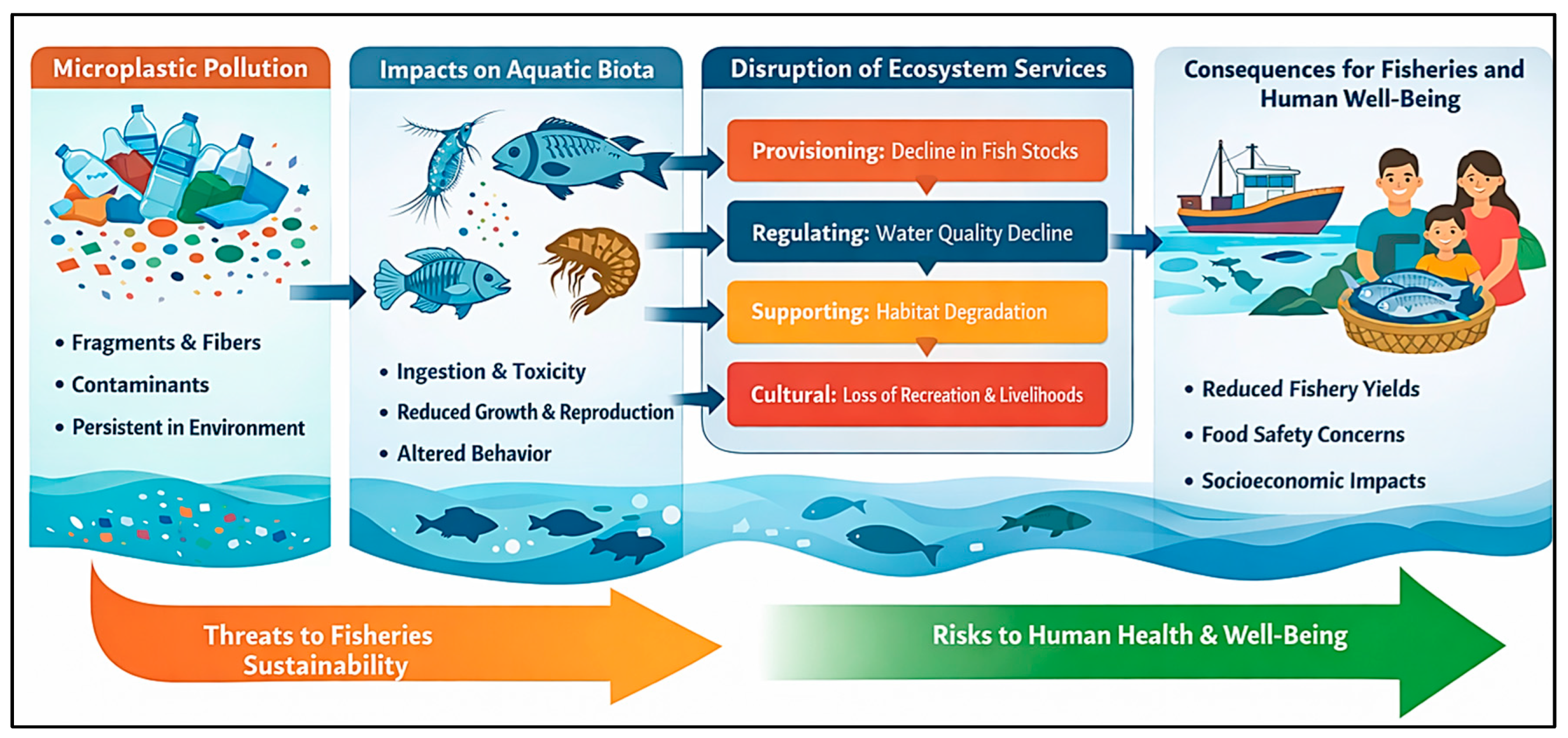
Figure 1. Conceptual framework illustrating the pathways by which microplastic pollution affects aquatic biota, disrupts ecosystem services, and ultimately threatens fishery sustainability and human well-being.
Sustainability 18 03021 g001
Figure 2. Indicator pipeline linking microplastic exposure to ecosystem services and fishery outcomes, illustrating the progression from biophysical responses to ecosystem processes, service metrics, and socio-economic impacts.
Sustainability 18 03021 g002
Table 1. Summary of representative laboratory and field studies [75,76,77,78] examining microplastic exposure in freshwater and marine organisms, including species studied, exposure levels, and observed biological effects.
EcosystemStudy TypeSpeciesExposure LevelMicroplastic TypeObserved EffectEvidence Type
FreshwaterLaboratoryDaphnia magna1–100 particles/mLPolystyrene beadsReduced feeding and growthExperimental
FreshwaterFieldCyprinus carpioEnvironmental exposureMixed polymersMicroplastic ingestion detected in gutObservational
MarineLaboratoryMytilus edulis10–1000 particles/LPolyethylene fragmentsReduced filtration rate and oxidative stressExperimental
MarineFieldEngraulis encrasicolusEnvironmental exposureMixed polymersMicroplastics detected in digestive tractObservational
Table 2. Pathways linking microplastic stressors to ecosystem processes, ecosystem services, and fishery outcomes. Evidence types distinguish laboratory (L) and field (F) studies, as well as whether the relationships are empirically demonstrated or hypothesized.
Microplastic StressorBiological EndpointEcosystem Process AffectedEcosystem Service CategoryFishery OutcomeEvidence TypeLinkage Strength
Particle ingestion by zooplanktonReduced feeding efficiency and energy assimilationLower trophic energy transfer from plankton to fish larvaeSupportingReduced prey availability for larval fish, affecting recruitment successLaboratory experimentsEmpirically demonstrated
Microplastic exposure in benthic invertebrates (bivalves, crustaceans)Altered metabolism and reduced bioturbationSediment mixing and nutrient recycling declineRegulating/SupportingLower benthic productivity supporting demersal fish speciesField observations and laboratory studiesPartially demonstrated
Microplastics in filter feeders (mussels, oysters)Reduced filtration rates and physiological stressDecreased water filtration and suspended particle removalRegulatingDeclining water quality affecting coastal fisheries and aquacultureLaboratory experiments; limited field evidenceModerately supported
Trophic transfer of microplasticsParticle accumulation in fish digestive systemsAltered energy allocation and potential contaminant transfer through food websProvisioningPossible reductions in growth performance of commercial fishLaboratory feeding studiesEmpirically demonstrated but variable
Microplastics associated with adsorbed pollutantsOxidative stress and tissue damage in aquatic organismsDisruption of physiological functions and survival ratesSupporting/ProvisioningPotential decline in population resilience of exploited speciesLaboratory toxicological studiesDemonstrated in controlled conditions
Microplastic exposure in coral reef organismsTissue stress and reduced calcificationDegradation of reef-building processesSupportingHabitat degradation affecting reef-associated fisheriesLaboratory and limited field evidenceModerately supported
Microplastic accumulation in aquaculture systemsStress responses and altered feeding behaviorReduced growth efficiency in farmed speciesProvisioningEconomic losses and reduced aquaculture productivityLaboratory and farm-based studiesEmpirically demonstrated
Microplastics in seafood organismsContamination of edible tissuesAlteration of food quality and safety perceptionCultural/ProvisioningChanges in consumer confidence and seafood market demandObservational studiesCorrelational evidence
Long-term microplastic accumulation in ecosystemsChronic exposure across trophic levelsPotential restructuring of food websSupportingPossible long-term changes in fish stock dynamicsLimited field dataHypothesized/uncertain
Disclaimer/Publisher’s Note: The statements, opinions and data contained in all publications are solely those of the individual author(s) and contributor(s) and not of MDPI and/or the editor(s). MDPI and/or the editor(s) disclaim responsibility for any injury to people or property resulting from any ideas, methods, instructions or products referred to in the content.