1. Introduction
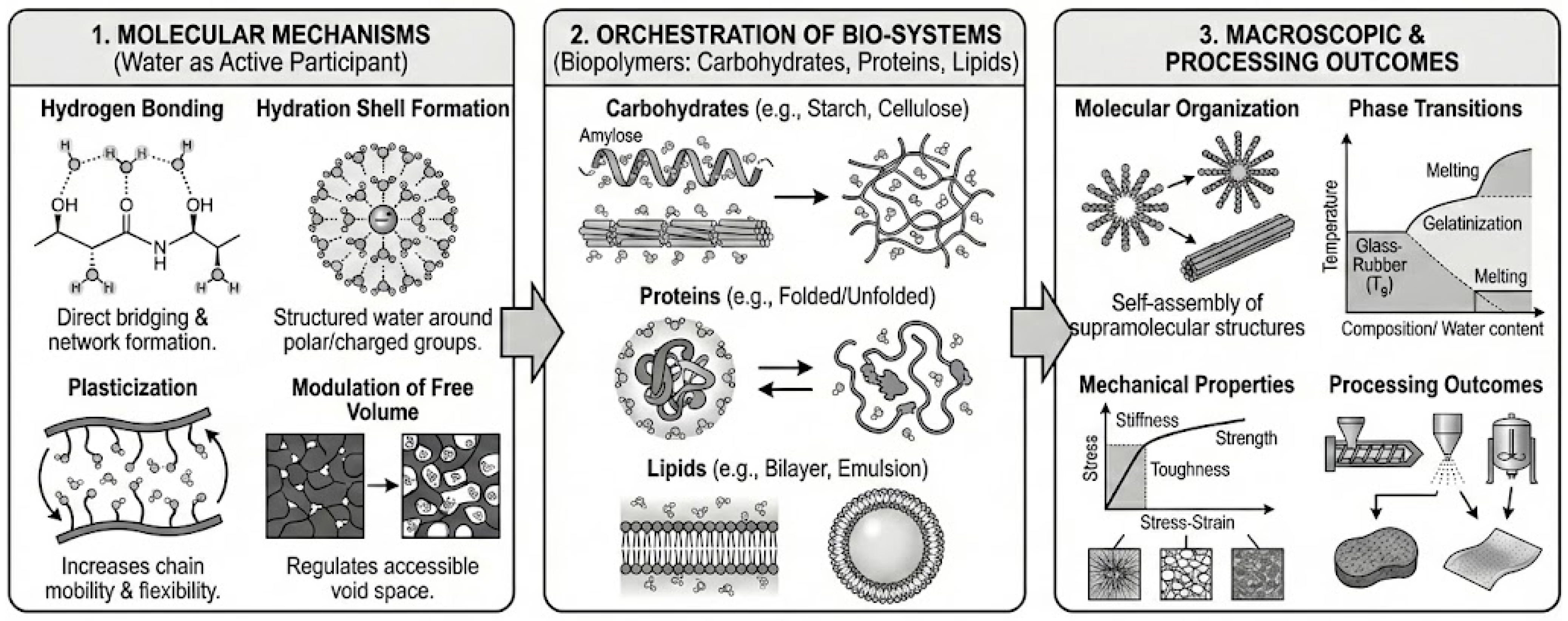
Water is the most pervasive and structurally influential component in both biological and engineered materials, yet its significance is frequently overshadowed by the macromolecules it surrounds. In biopolymer systems (including carbohydrates, proteins, and lipids), water orchestrates molecular organization, phase transitions, mechanical properties, and processing outcomes [
1,
2]. Through mechanisms such as hydrogen bonding, hydration shell formation, plasticization, and modulation of free volume, water functions not only as a solvent but as an active participant in molecular interactions and material transformations [
3,
4,
5,
6]. Thus, a mechanistic understanding of hydration dynamics is essential for predicting stability, designing sustainable processes, and engineering advanced biobased products (
Figure 1).
The manifestations of water–biopolymer interactions are diverse and highly system-specific. In carbohydrate matrices (e.g., starch, cellulose, hemicelluloses), water drives swelling, gelatinization, and retrogradation, facilitating transitions from rigid granules to viscoelastic gels [
7,
8,
9,
10]. Protein systems depend on water to stabilize native conformations, mediate denaturation, and enable aggregation; phenomena central to texturization in plant-based foods, foaming in dairy analogs, and gelation in biomaterials [
11,
12,
13,
14]. Even lipids, typically considered hydrophobic, exhibit hydration-dependent behaviors through interfacial water layers that affect emulsion stability, polymorphic transitions, and crystallization pathways [
15,
16,
17]. These interactions are dynamic, responding to variables such as temperature, humidity, shear, pH, and processing history, making hydration both a challenge to control and a powerful design variable [
18,
19,
20].
Sustainability imperatives in food, bioindustries, and bioprocessing have elevated hydration science to strategic importance. Moisture content and water activity govern energy-intensive operations, including drying, extrusion, fermentation, and storage, and determine microbial stability, shelf life, and food waste, all of which contribute to resource inefficiency and greenhouse gas emissions. In biomaterials and packaging, water influences biodegradability, mechanical integrity, and environmental fate. As industries move toward circularity and low-carbon manufacturing, the ability to predict and manipulate water–biopolymer interactions are critical for sustainable innovation.
Global priorities reinforce this urgency. The United Nations Sustainable Development Goals (SDGs), notably SDG 12 (Responsible Consumption and Production) and SDG 6 (Clean Water and Sanitation), emphasize the need for resource-efficient and water-conscious manufacturing. Food waste, much of it linked to inadequate moisture management, accounts for a significant share of global greenhouse gas emissions [
21]. The expanding bioeconomy, projected to reach trillions of dollars, relies on biobased materials that must balance performance, durability, and environmental degradability which all governed by hydration behavior [
22].
Despite extensive research, hydration phenomena remain challenging to model and optimize due to water’s nonlinear, context-dependent behavior in heterogeneous matrices. Traditional experimental techniques such as nuclear magnetic resonance (NMR), differential scanning calorimetry (DSC), and sorption isotherm analysis could offer valuable insights but are limited in capturing multiscale interactions or providing real-time predictive capability [
23,
24]. This gap between empirical understanding and practical optimization constrains the development of low-energy processes, moisture-responsive materials, and predictive shelf-life systems.
Emerging computational technologies present a transformative opportunity to address these challenges. By integrating large datasets with thermodynamic principles, computational models can capture nonlinear relationships, forecast sorption isotherms, glass transition behavior, protein hydration and denaturation thresholds, and lipid crystallization patterns under varying humidity conditions. These tools enable optimization of moisture–temperature–shear windows in extrusion, reduction in energy consumption in drying, and design of formulations with targeted water activity profiles. Digital twins of bioprocesses facilitate real-time simulation of water migration, structural transitions, and degradation pathways, supporting proactive control and sustainability-driven decision-making.
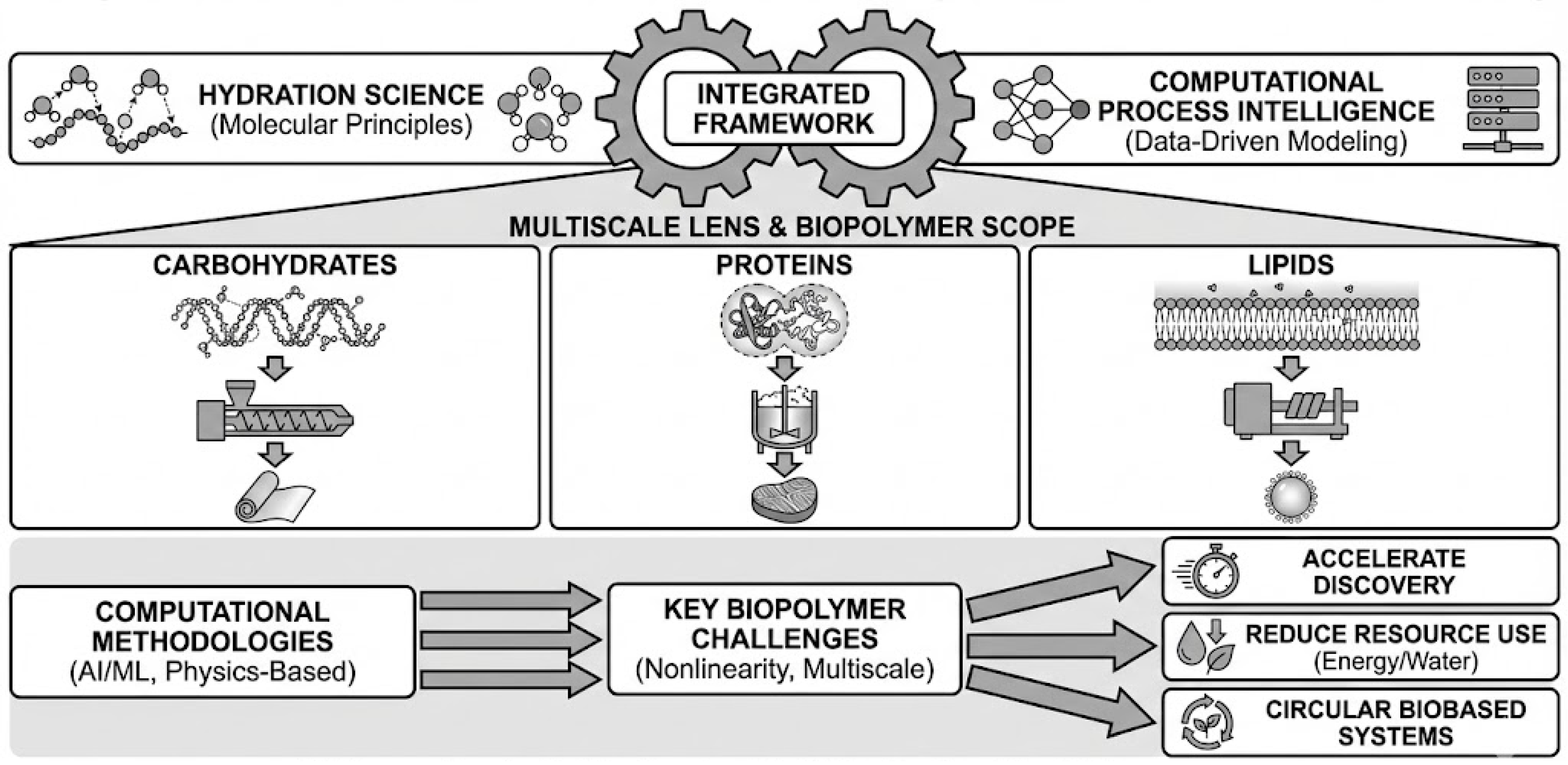
This paper presents an integrated framework that unites hydration science with computational process intelligence, positioning water as a controllable design variable for a resilient economy (
Figure 2). By examining water interactions in carbohydrates, proteins, and lipids through a multiscale lens, we demonstrate how molecular hydration principles translate into process performance and environmental outcomes. Computational methodologies are mapped to key challenges in each biopolymer class, illustrating how data-driven modeling accelerates discovery, reduces resource use, and supports the development of circular, resilient biobased systems. Ultimately, water emerges not as a passive component but as a catalyst for sustainability, with computational intelligence providing the analytical and predictive power to unlock its full potential.
2. Fundamentals of Water–Biopolymer Interactions
2.1. Carbohydrates: Stereochemistry as Code
Carbohydrates exhibit some of the most intricate hydration behaviors among biopolymers, owing to their dense array of hydroxyl groups and diverse stereochemical configurations. Their interactions with water govern swelling, gelatinization, glass transition, crystallinity, and gelation, a phenomenon that underpin food processing, biomaterials engineering, and moisture-responsive packaging. Foundational studies [
25,
26,
27] demonstrated that carbohydrate hydration cannot be understood simply by classifying functional groups. Instead, the three-dimensional orientation of hydroxyl groups, the configuration of glycosidic linkages, and the balance between hydrophilic and hydrophobic domains collectively determine how water binds, structures, and modulates carbohydrate behavior. These stereochemical details shape both molecular interactions and macroscopic properties, making carbohydrates a critical class for understanding hydration-driven phenomena in sustainable bioprocessing.
Hydrogen bonding is the primary mechanism through which carbohydrates interact with water, but the strength and geometry of these interactions depend heavily on stereochemistry. Early work [
28] emphasized that equatorial versus axial hydroxyl positions, ring puckering, and the spatial arrangement of substituents determine the accessibility and orientation of hydrogen-bond donors and acceptors. As a result, structurally similar sugars can exhibit significantly different hydration capacities, solubilities, and conformational preferences. This stereospecificity is central to understanding why certain carbohydrates act as cryoprotectants, why others form strong gels, and why some resist hydration altogether.
2.1.1. Saccharides
Small carbohydrates, including monosaccharides and disaccharides, provide a clear window into the interplay between hydrophilic and hydrophobic interactions. A study proposed that sugars stabilize biological systems during freezing or dehydration by interacting with water in ways that mimic or preserve its structure [
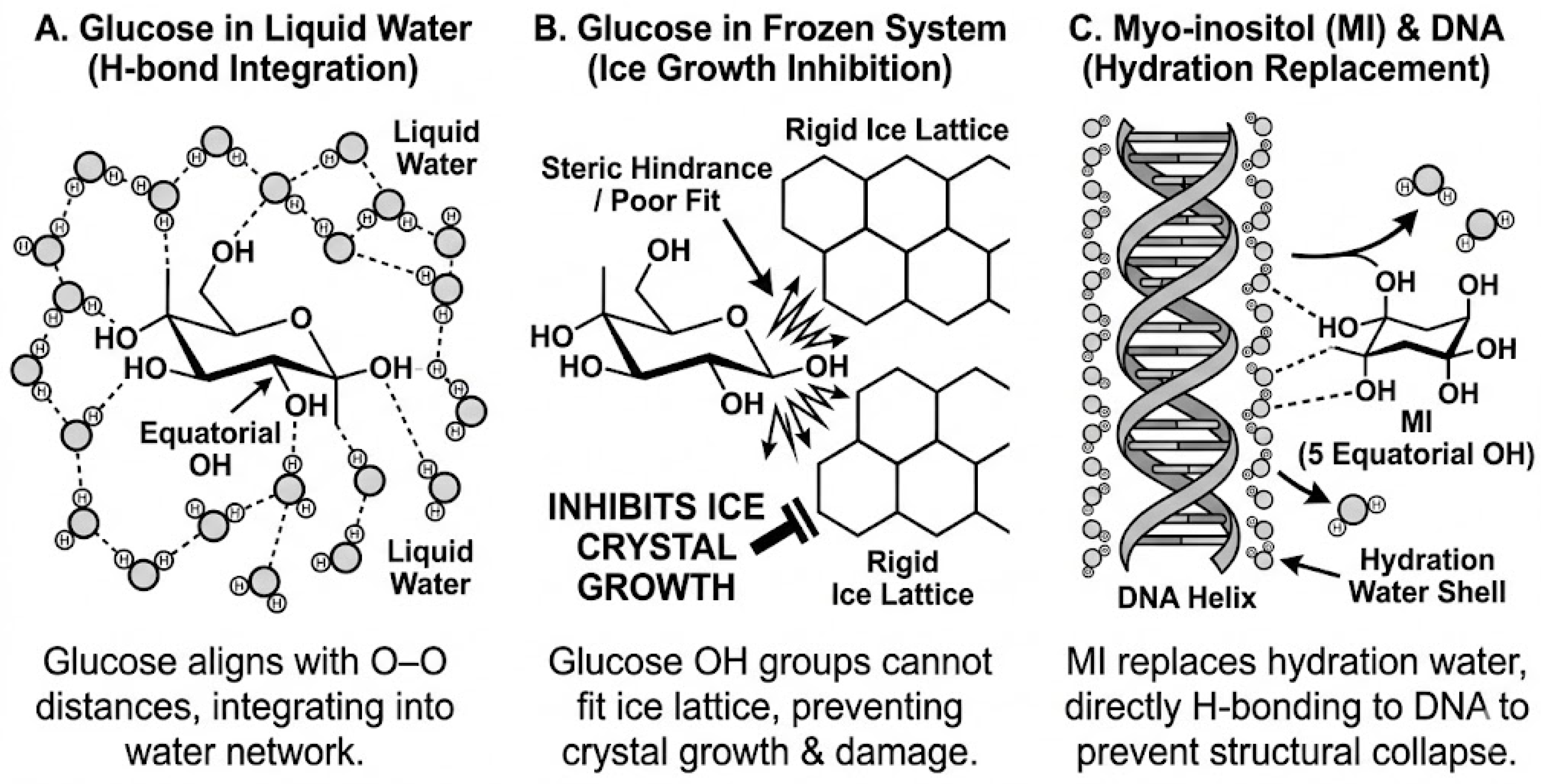
29]. Glucose, with its predominantly equatorial hydroxyl groups, aligns well with the O–O distances in liquid water, enabling it to integrate into the hydrogen-bond network. In frozen systems, however, sugar hydroxyls cannot easily fit into the rigid ice lattice, thereby inhibiting ice crystal growth and reducing cellular damage. Myo-inositol (MI), with five equatorial hydroxyl groups, can even replace hydration water around DNA, preventing dehydration-induced structural collapse (
Figure 3).
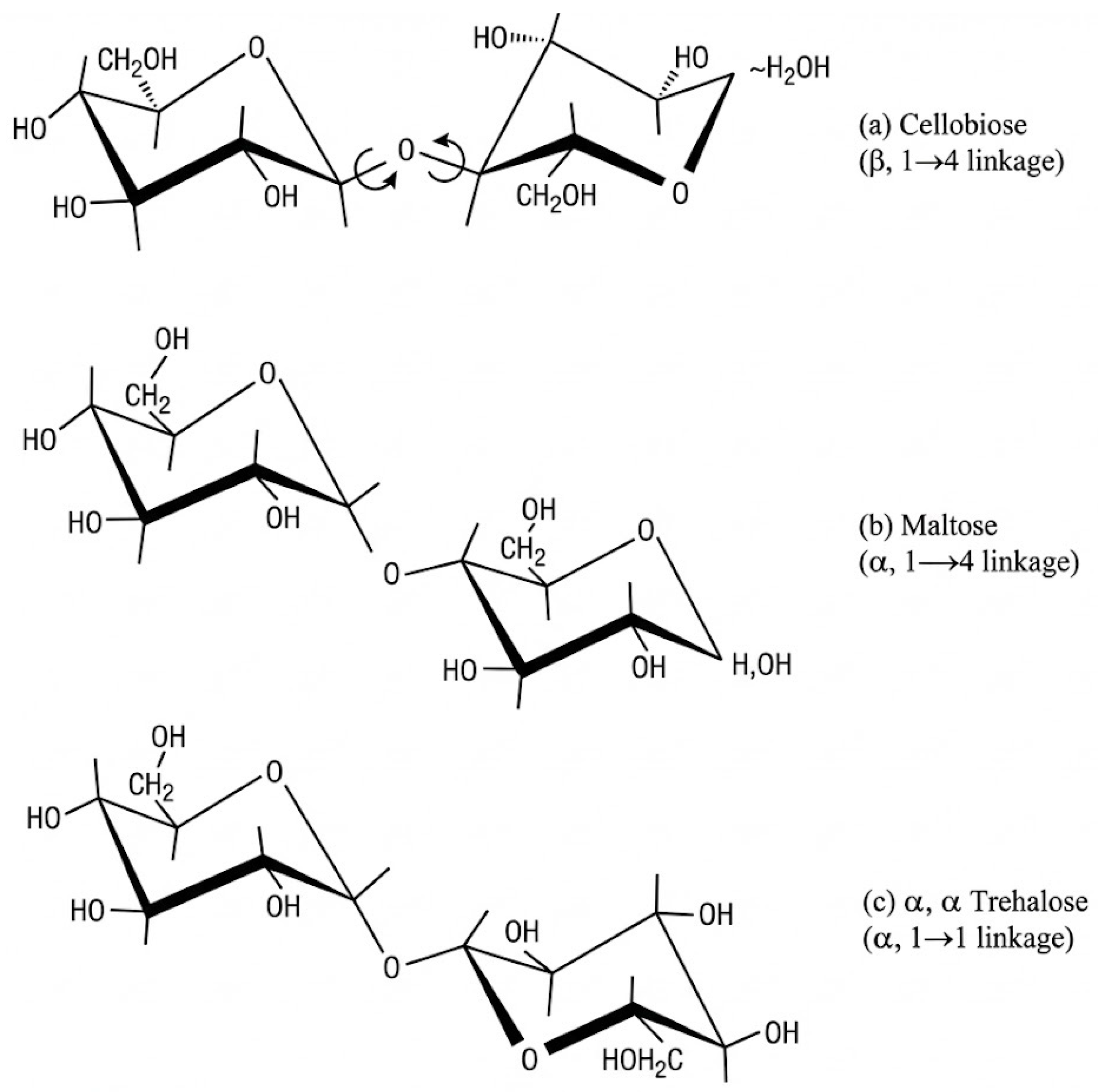
Although monosaccharides are dominated by hydrophilic interactions, hydrophobic effects become more pronounced in disaccharides and oligosaccharides. Glycosidic bond rotation introduces conformational flexibility, allowing intramolecular interactions that influence hydration (
Figure 4). Studies of cellobiose and maltose in crystals and nonaqueous solvents revealed distinct inter-residue hydrogen bonds, while solution studies using
13C NMR and optical rotation methods showed that these disaccharides adopt different conformations in water [
30]. The work demonstrated that cellobiose maintains similar conformations across environments, whereas maltose adopts a folded aqueous conformation driven by intramolecular hydrophobic contacts [
31]. This folding behavior explains anomalous expansibility in α-linked disaccharides and extends to maltodextrins, cyclodextrins, and amylose.
2.1.2. Polysaccharides
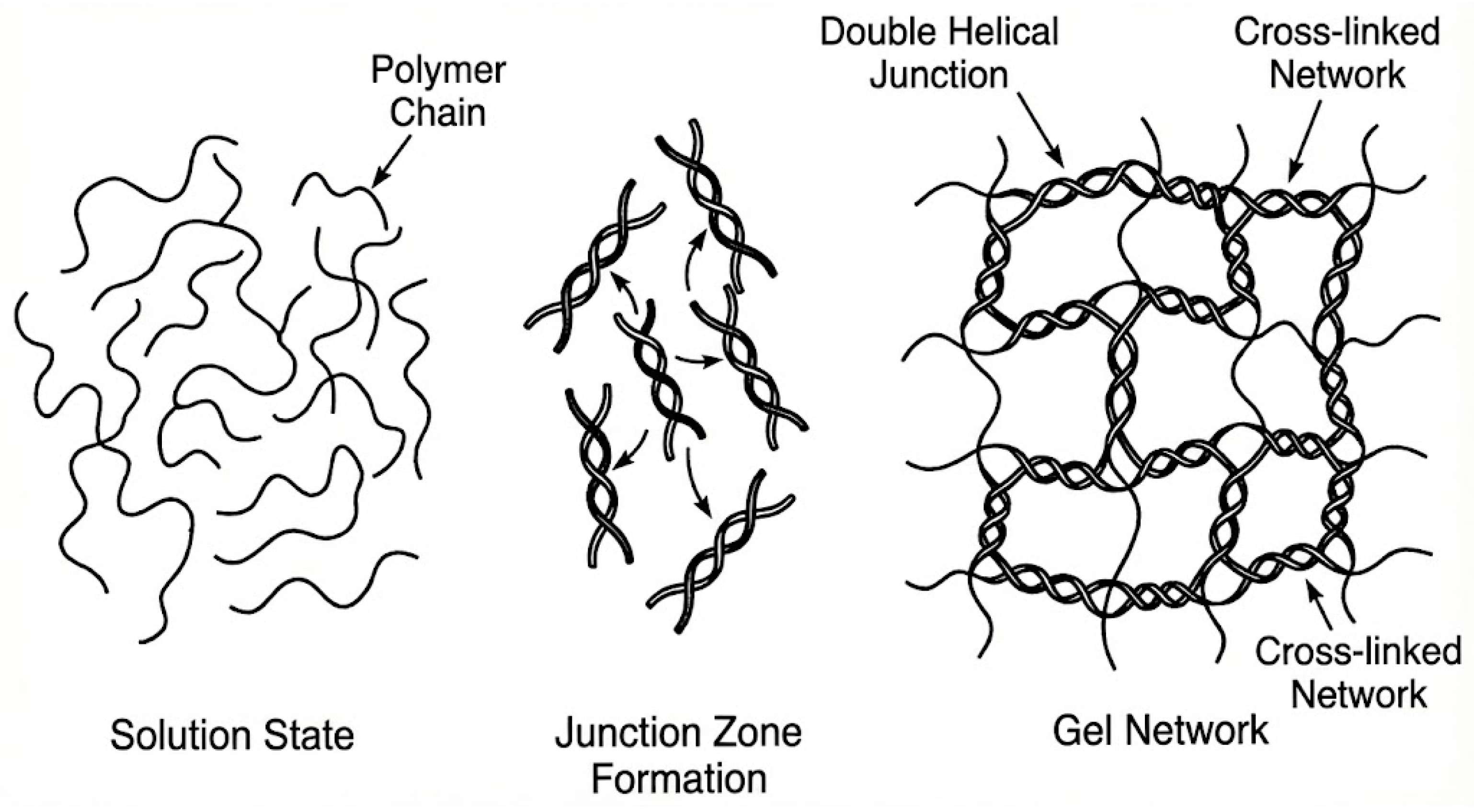
Polysaccharides display a wide range of gelation mechanisms, each shaped by their chemical structure, substitution patterns, and ionic interactions. Rees’s classification of reversible polysaccharide gels provides a useful framework for understanding these systems [
32]. In double-helical junction zones, characteristic of agar, agarose, and carrageenans, hot solutions cool to form double helices that aggregate into three-dimensional networks (
Figure 5). The degree of sulphation strongly influences helix aggregation, with ι-carrageenan forming weaker aggregates than κ-carrageenan or agarose. In stacked junction systems such as alginates and low-methoxy pectins, gelation occurs through calcium-mediated crosslinking, where Ca
2+ ions bind specifically to polyguluronic acid blocks in the classic “egg-box” model [
33]. A third mechanism, micellar junction formation, is observed in methylcellulose and hydroxypropylcellulose, where heating induces hydrophobic association of substituted regions while hydrophilic segments remain solvated [
34].
Although polysaccharide helices themselves are not inherently aqueous structures, gelation does not occur in nonaqueous environments, underscoring the essential role of water in enabling and stabilizing gel networks. Water-structure-breaking agents, such as certain chaotropes, inhibit gelation in systems like agarose and carrageenan [
35], suggesting that water plays a decisive role in controlling polymer conformation, much as it does in disaccharide hydration. The solid-like nature of polysaccharide gels arises primarily from polymer–polymer interactions rather than from any large-scale ordering of water. Even in micellar gels, where hydrophobic association drives network formation, water remains essential as a catalytic medium that facilitates chain mobility and association, although solvent effects beyond water are comparatively minor.
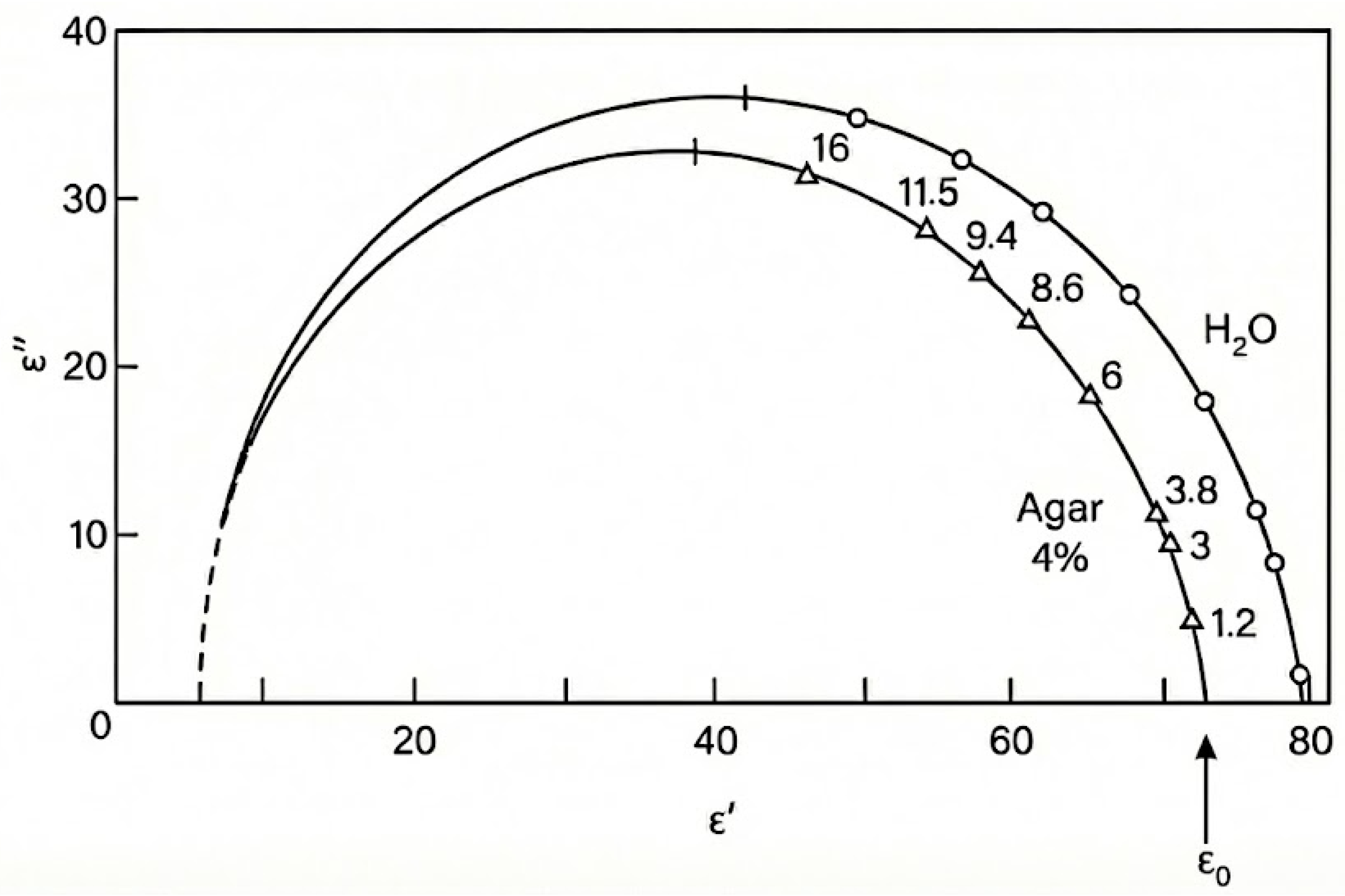
NMR and dielectric relaxation studies have shown that most water in polysaccharide gels remains rotationally mobile, behaving similarly to bulk liquid water (
Figure 6). The dielectric relaxation time of bulk water is virtually identical in pure liquid and agar gel, indicating that water molecules in the gel do not form ‘ordered’ or ‘structured’ networks despite high macroscopic viscosity. Specifically, while a small fraction of water is ‘bound’ to hydroxyl groups or confined within helices, calculations based on the assumption of a shape factor for the solute cavity demonstrate that this non-mobile fraction is strictly limited to less than 0.8 g of H
2O/g of agar. This confirms that water’s primary role is to catalyze conformational transitions and facilitate junction zone formation rather than creating large-scale, ice-like structures within the gel [
36,
37].
Carbohydrates exhibit complex moisture sorption behavior, often described by BET or GAB models, reflecting the presence of multiple water-binding sites and hydration states [
38]. Water can disrupt crystalline regions, as seen in starch, where hydration enables gelatinization by swelling granules and breaking hydrogen-bonded crystalline lamellae [
39]. Conversely, during storage, water can facilitate retrogradation, promoting recrystallization of amylose and amylopectin. Water also acts as a potent plasticizer, lowering the glass transition temperature of amorphous carbohydrates and thereby influencing stickiness, stability, and mechanical behavior in humid environments. These hydration-dependent transitions are central to the performance of carbohydrate-based films, coatings, and packaging materials [
40].
Amylose provides a particularly illustrative example of the interplay between hydration, hydrophobic interactions, and conformational transitions. Native amylose is only sparingly soluble in water at ambient temperatures, but it forms soluble helical V-amylose complexes when associated with hydrophobic guest molecules such as 1-butanol, fatty acids, or iodine [
41]. These complexes adopt helices with six to eight glucose residues per turn, depending on guest size and the presence of internal water molecules that stabilize the structure [
42]. Space-filling models indicate that the helical cavity is larger than required for linear alcohol, leading to propose that spiral chains of water molecules hydrogen-bonded to glycosidic oxygens create a clathrate-like environment within the helix. Although direct evidence is limited, analogous observations in agarose helices support the plausibility of internal hydration.
Upon heating and cooling, amylose undergoes retrogradation, in which soluble chains re-associate into more ordered structures. Retrogradation rates depend on amylose source, molecular weight, concentration, pH, temperature, and solvent composition [
43]. Monovalent ions retard retrogradation in a sequence reminiscent of the Hofmeister series, with anions and cations influencing stability in predictable orders. Protein denaturants such as urea, detergents, or alkaline conditions stabilize soluble amylose, suggesting that retrograded amylose represents a “native” helical state, while the soluble coil resembles a denatured conformation. These parallels highlight the broader principle that salts and non-electrolytes modulate biopolymer conformations through their effects on solvent structure, a theme consistent across polysaccharides, proteins, and nucleic acids.
2.1.3. Parallels Between Carbohydrates and Proteins
A notable aspect of water–biopolymer interactions is the parallels between carbohydrates and proteins, particularly in gelation and conformational stability. In amylose retrogradation, the process mirrors protein denaturation: the helical form is “native,” and the soluble coil is “denatured.” The Hofmeister series influences both, with chaotropes like I
− stabilizing the soluble state in amylose and denaturing proteins. Protein denaturants (urea, detergents, high temperature) similarly stabilize amylose solutions. This commonality extends to polysaccharides, proteins, nucleic acids, and polypeptides, despite structural differences, implying indirect effects via solvent structure modification. For gelation, polysaccharide double-helical junctions resemble protein beta-sheet or alpha-helix aggregations in gels, where water acts catalytically and controls conformation without large-scale ordering [
44].
These parallels suggest unified hydration principles across biopolymers, valuable for modeling in mixed systems like food matrices or biomaterials. For instance, predicting gelation in protein–carbohydrate blends can optimize texture in plant-based foods, reducing energy in processing.
The hydration behavior of carbohydrates has direct implications for sustainable manufacturing and circular economy strategies. Predicting gelatinization, swelling, and glass transition enables more energy-efficient drying, extrusion, and thermal processing. Water mobility and binding influence barrier properties, biodegradability, and mechanical stability in bio-based packaging materials. In fermentation and enzymatic hydrolysis, hydration governs solubility, viscosity, and substrate accessibility. These relationships create opportunities for computational intelligence to model sorption isotherms, gelation kinetics, and hydration-driven conformational changes, enabling precision control and reduced resource use. Carbohydrates thus represent a rich platform for computationally enabled modeling of hydration phenomena, with significant potential to advance low-energy and moisture-aware bioprocessing.
2.2. Proteins: Hydrophobic Hydration
Proteins exhibit amphiphilic behavior, with hydration patterns determined by their amino acid composition, tertiary structure, and environmental conditions [
45]. Water interacts with proteins in ways that stabilize, destabilize, or transform their structure, making hydration a central determinant of protein functionality in food systems, biomaterials, and bioprocessing [
46]. Extensive evidence from hydrodynamic measurements, NMR spectroscopy, density studies, and dielectric analyses demonstrate that proteins in aqueous solutions are substantially hydrated in both native and denatured states [
47]. Notably, denatured proteins bind even more water than their native counterparts, and a fraction of this hydration water remains unfrozen at temperatures as low as −60 °C, reflecting tightly associated hydration layers that differ fundamentally from bulk water and contribute to altered solvent properties [
48].
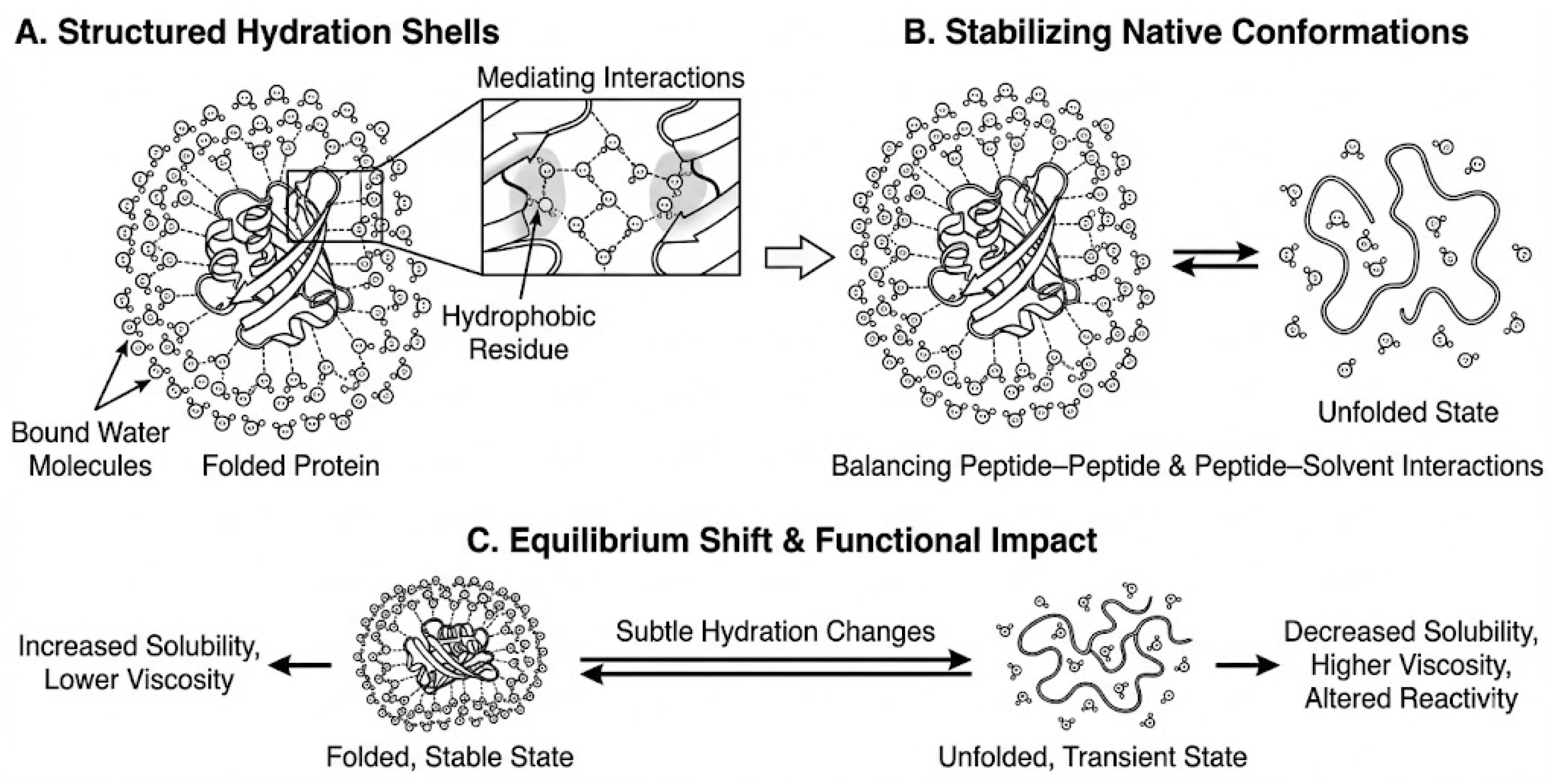
Structured hydration shells composed of bound water molecules surround proteins, mediating hydrogen bonding, shielding hydrophobic residues, and modulating intramolecular interactions [
49]. These hydration layers stabilize native conformations by balancing peptide–peptide and peptide–solvent interactions. Subtle changes in hydration can shift the equilibrium between folded and unfolded states, influencing solubility, viscosity, and reactivity. While the helix and random coil are often treated as distinct conformational states, this simplification overlooks the diversity of partially folded or denatured structures that arise under different solvent conditions (
Figure 7). Nevertheless, the helix–coil framework provides a useful conceptual basis for understanding how water stabilizes specific conformations among many statistically accessible alternatives [
50].
Environmental factors, including temperature, pH, ionic strength, and mechanical stress could alter water–protein interactions. As hydration shells reorganize, proteins may denature, aggregate, or form gels. In high-moisture extrusion, water acts both as a plasticizer and a reactant, enabling alignment, unfolding, and cross-linking required for fibrous textures in plant-based proteins. Insufficient hydration, by contrast, leads to brittle structures, incomplete denaturation, or poor network formation [
51].
Parallels with carbohydrate gelation are instructive. Just as polysaccharide gels rely on water to catalyze helix formation and aggregation without inducing bulk water ordering, protein gels often form through β-sheet aggregation or other junction zones that depend on water-mediated transitions (
Figure 8). Hofmeister effects on protein stability mirror the ion-dependent modulation of amylose retrogradation, suggesting shared hydration mechanisms across biopolymer classes. These analogies highlight the unifying role of water as a catalytic medium that enables conformational transitions without requiring large-scale structuring of the solvent.
Thermodynamic analyses consistently show that hydrophobic hydration plays a dominant role in stabilizing the helix in aqueous environments. Denaturation exposes buried hydrophobic side chains, increasing hydration and altering solvent structure. Although direct measurements of single side-chain transfer are not feasible, model studies of nonpolar solutes transferring from hydrocarbons to water reveal small positive free energies, negative enthalpies, and large negative entropies which are signatures of hydrophobic hydration driven by water structuring. These effects are highly temperature-dependent, as illustrated by valyl side-chain transfer, where enthalpy, entropy, and heat capacity change dramatically between 0 °C and 70 °C. Large heat capacity changes are characteristic of hydrophobic contributions and reinforce the central role of water in protein stability.
Enthalpy–entropy compensation, a recurring feature of protein processes, further implicates water. Many apparent protein transitions are better interpreted as transitions between different water states, with the protein acting as a perturbing agent. Thermal denaturation studies of ribonuclease in water–ethanol mixtures support this view, showing compensation temperatures around 285 K.
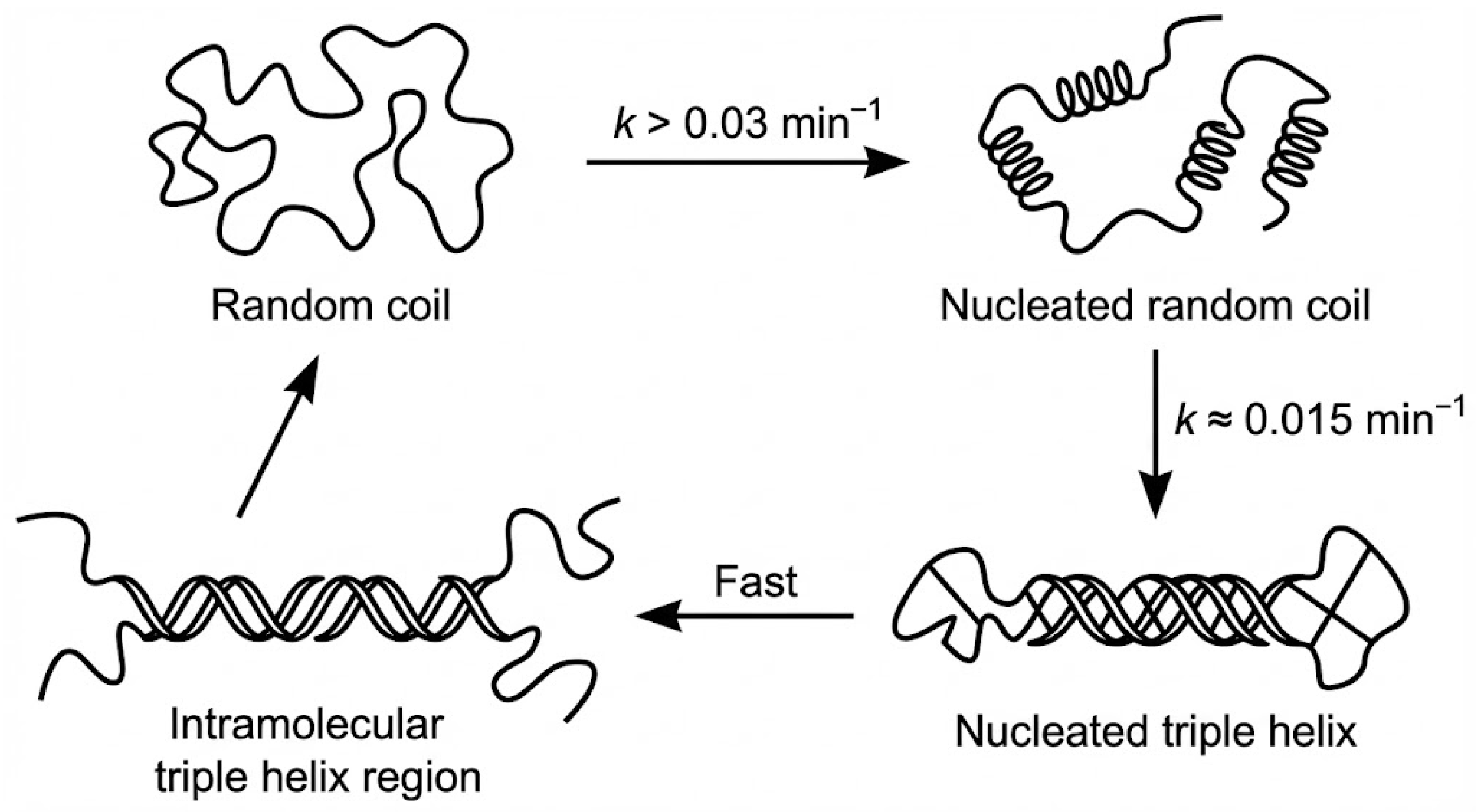
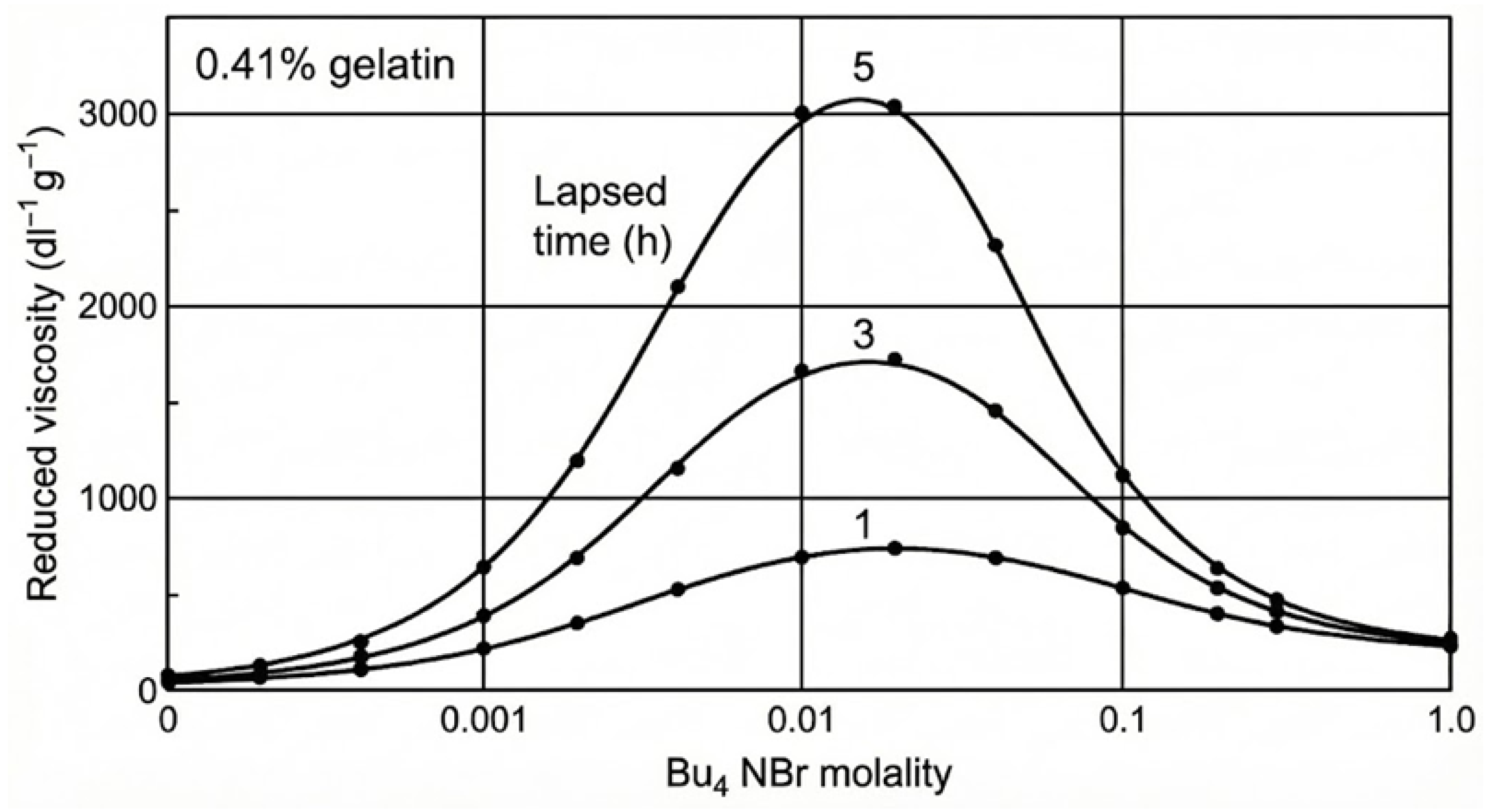
Electrolytes influence protein hydration and conformational stability through complex interactions involving protein–solvent, protein–electrolyte, and electrolyte–solvent relationships. Protein hydration typically increases at moderate electrolyte concentrations (~0.15 mol/dm
3) but decreases at higher concentrations as ion–protein interactions dominate. Studies of α-gelatin in tetrabutylammonium solutions show maximal reversion to the collagen fold at intermediate concentrations, with effects enhanced by hydrophobic cations and suppressed at higher ionic strengths (
Figure 9). These behaviors reflect the suppression of the electric double layer around macromolecules at moderate ionic strengths, largely independent of the specific electrolyte or macromolecule [
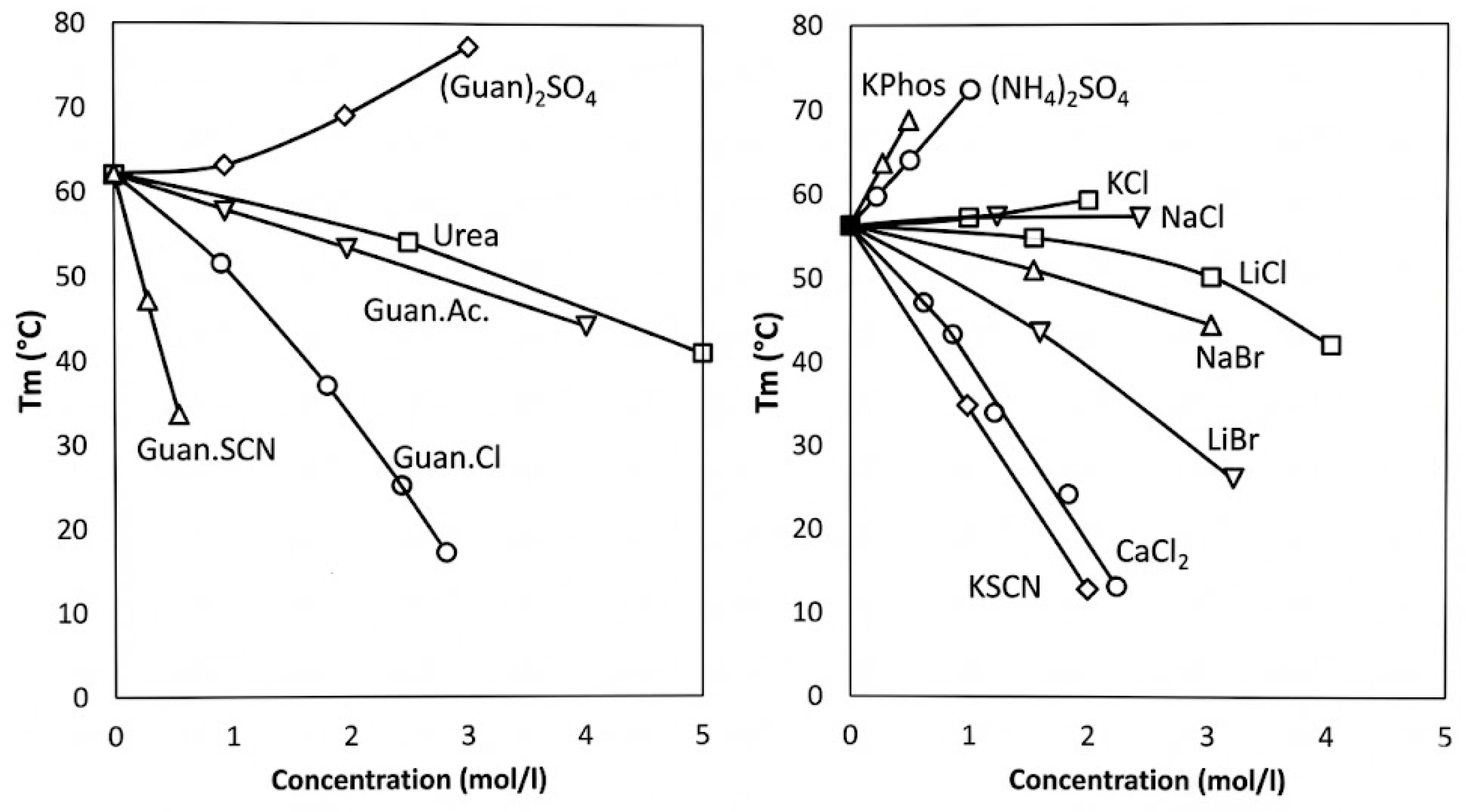
52,
53]. Failure to account for electrolyte concentration can lead to discrepancies in thermodynamic measurements, as illustrated by conflicting reports on ribonuclease denaturation enthalpies. These findings underscore the importance of solvent composition in interpreting protein hydration and temperature stability (
Figure 10).
Water availability directly influences enzyme kinetics by modulating substrate mobility, active-site accessibility, and conformational flexibility. In low-moisture environments such as dry fermentation, concentrated biocatalysis, or solid-state processing, hydration becomes the limiting factor for reaction rates. Enzymes may require only monolayer hydration to remain active, but insufficient water restricts conformational dynamics and reduces catalytic efficiency. Understanding these hydration-dependent behaviors is essential for designing low-water, low-energy bioprocesses that maintain high enzymatic performance.
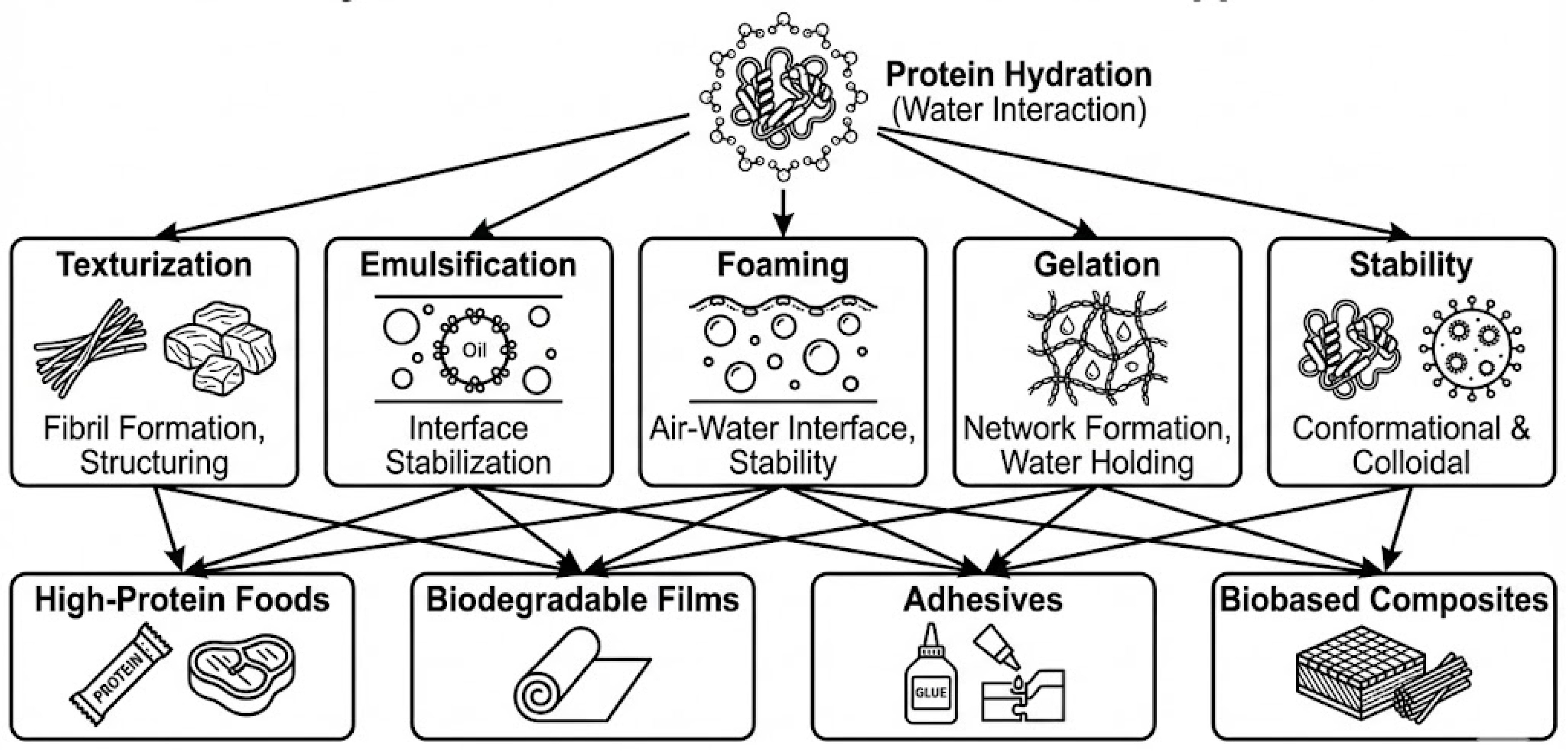
Protein hydration governs texturization, emulsification, foaming, gelation, and stability across food and biomaterial applications. These hydration-driven behaviors shape the performance of high-protein foods, biodegradable films, adhesives, and biobased composites. Insights from carbohydrate gelation, particularly the catalytic role of water and the influence of ions, parallel protein systems and provide a conceptual foundation for computationally enabled process optimization (
Figure 11). Systems that incorporate hydration thermodynamics, helix–coil equilibria, and Hofmeister effects can predict denaturation thresholds, optimize extrusion conditions, and reduce energy use in protein structuring. By integrating hydration science with data-driven modeling, sustainable protein processing can be achieved with greater precision and lower resource intensity.
2.3. Lipids: Interfacial Leverage
Although lipids are typically regarded as hydrophobic molecules, water plays a decisive and multifaceted role in their structural organization, dynamics, and functional properties. Unlike carbohydrates and proteins, lipids engage in minimal direct hydrogen bonding with water due to their long hydrocarbon tails. However, the polar headgroups of amphiphilic lipids interact intimately with interfacial water, and these interactions are essential for self-assembly, membrane stability, and phase behavior (
Figure 12). Remarkably, even a few water molecules per lipid can significantly alter bilayer spacing, mobility, and thermodynamic properties, making lipid hydration, though spatially confined, a critical determinant of both biological membrane function and engineered lipid-based systems.
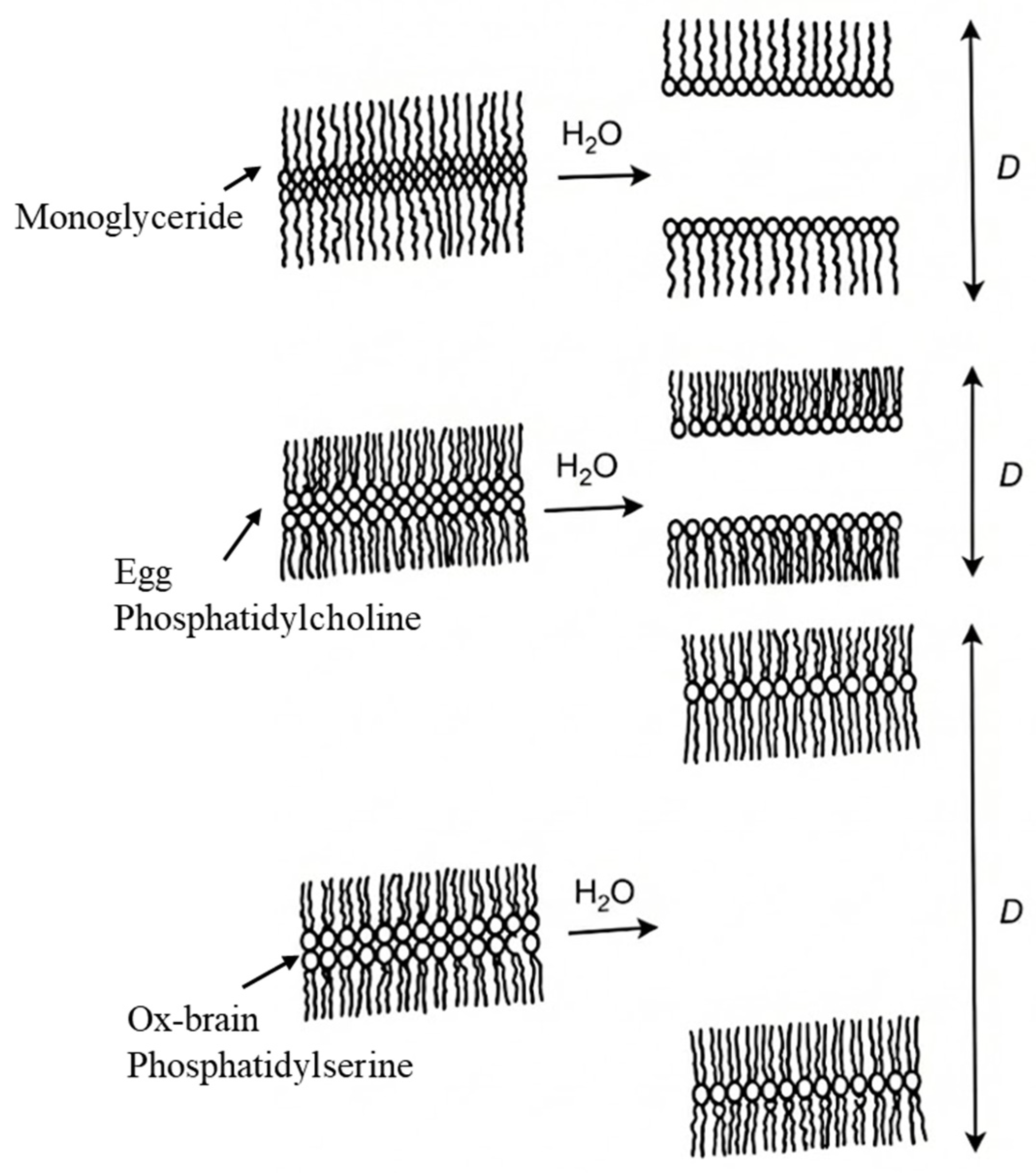
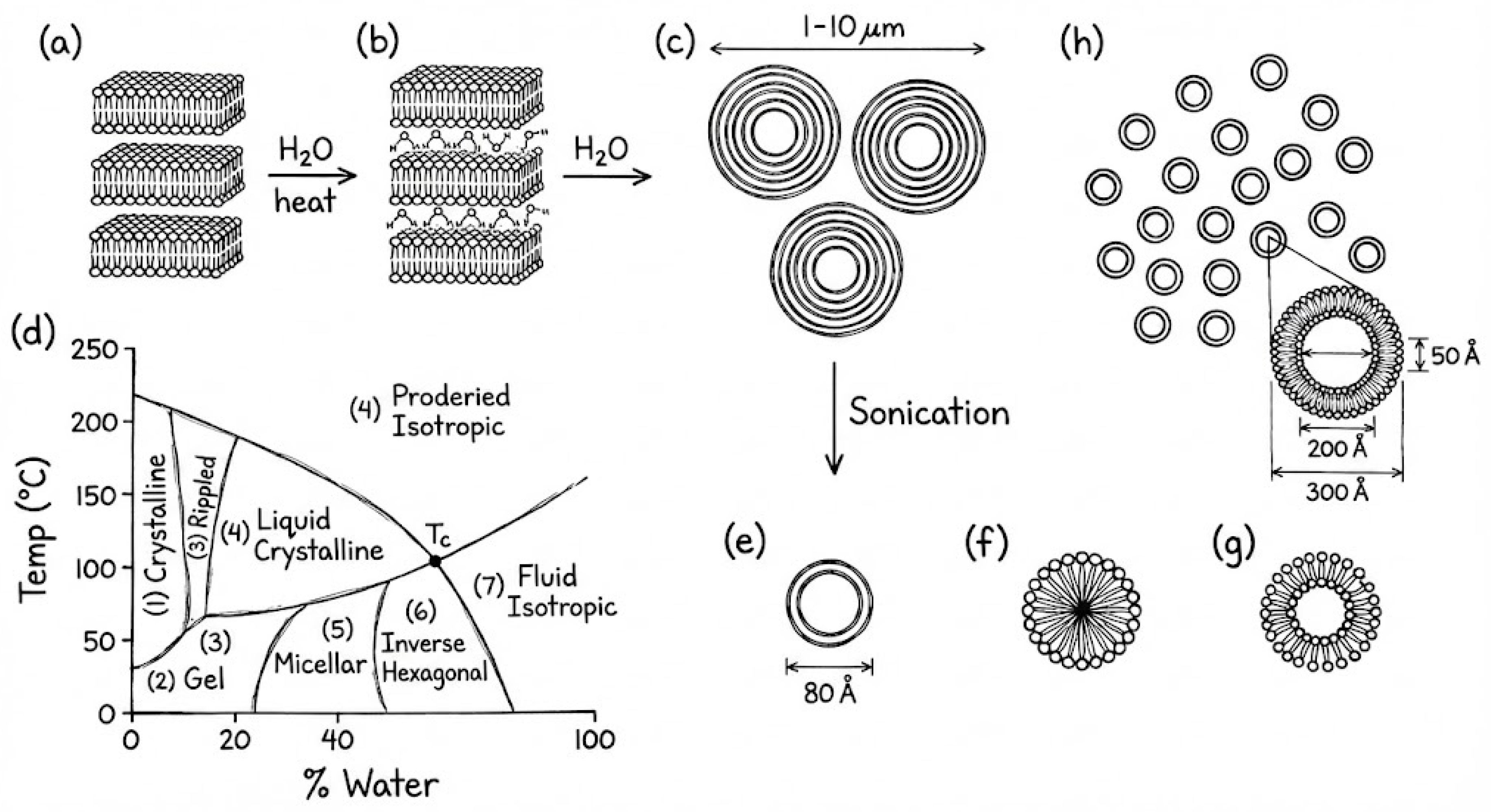
Polar lipids such as phospholipids, with their hydrophilic headgroups and hydrophobic acyl chains, spontaneously associate into supramolecular structures including bilayers, vesicles, and various liquid crystalline phases [
54]. Cohesion within these assemblies is driven by van der Waals and hydrophobic forces in the tail region, and by dipole–dipole, hydrogen bonding, and electrostatic interactions in the headgroup region. Hydration profoundly modulates these interactions: water penetration into the headgroup region solvates polar moieties, increases lamellar spacing, and shifts the balance of intermolecular forces (
Figure 13). The extent and strength of hydration are primarily dictated by headgroup chemistry, but are also influenced by chain length, unsaturation, and the ionic composition of the aqueous medium [
55].
At the interface, hydration water is highly structured and dynamically distinct from bulk water. Molecular dynamics simulations and spectroscopic studies reveal that interfacial water responds sensitively to headgroup charge, dipole orientation, and local curvature, exhibiting a spectrum of reorientation dynamics depending on proximity to hydrophobic or hydrophilic groups. Experimental evidence such as ESR studies of DOPC bilayers confirm that hydration layers are thin, typically only one to two water molecules per headgroup in fully hydrated bilayers [
56]. This bound water, often termed “unfreezable,” displays reduced mobility and alters thermodynamic properties, contributing to hydration forces that arise when solvating layers are removed or compressed [
57].
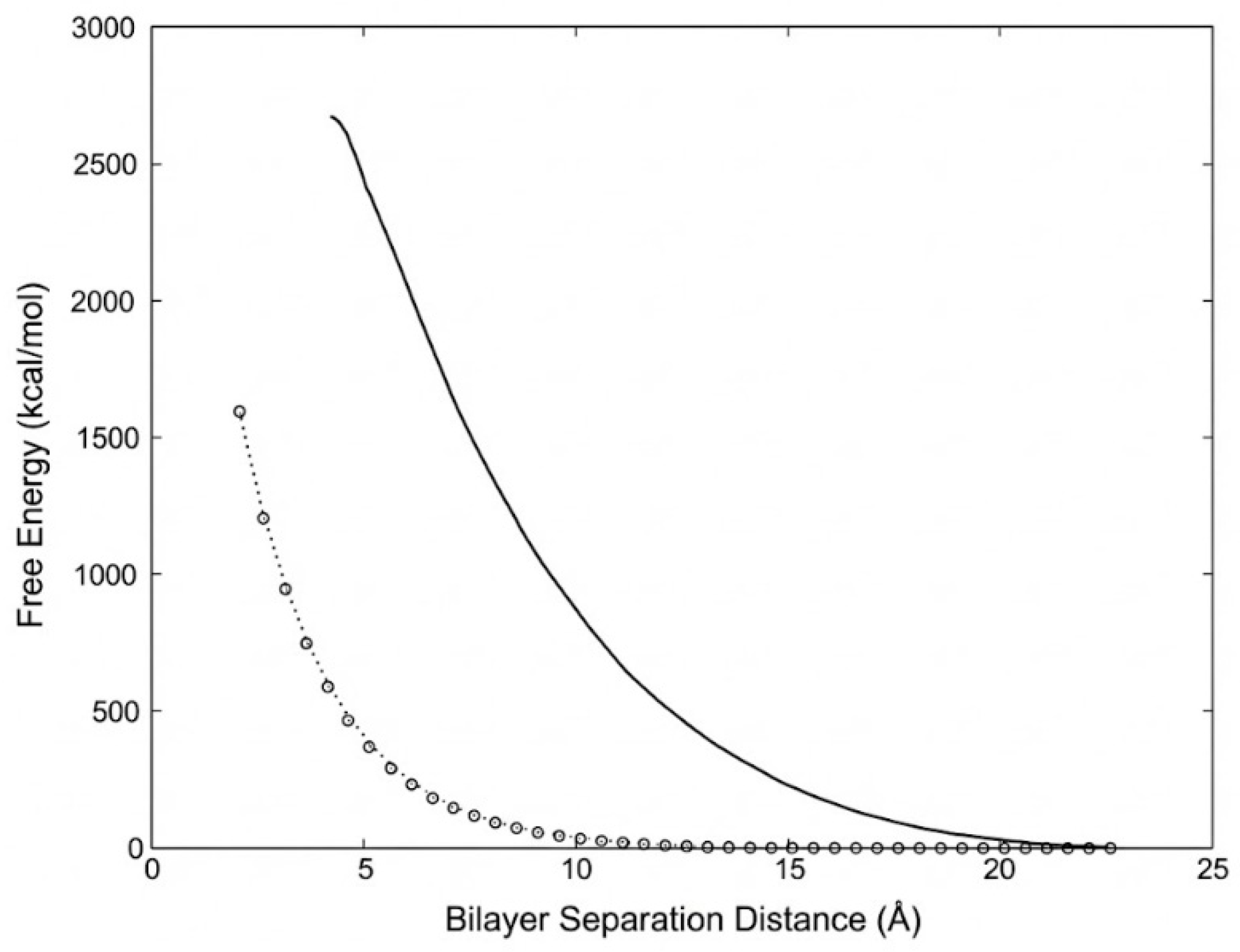
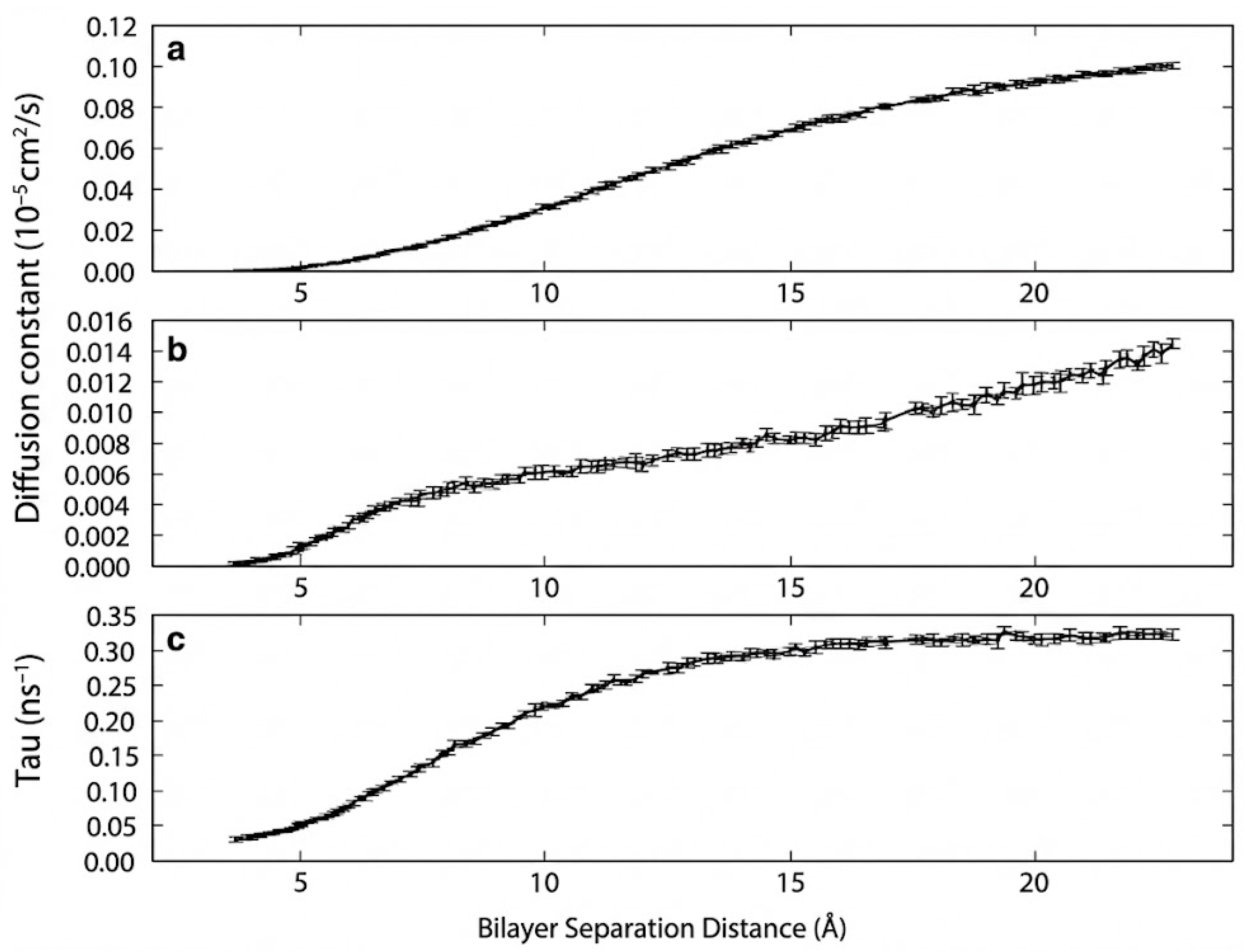
Hydration level strongly influences lipid dynamics. Segmental chain motions, headgroup mobility, and dynamical transitions differ markedly between fully hydrated and low-hydration states, with consequences for membrane fluidity and permeability. Even modest dehydration can substantially reduce lateral diffusion, underscoring the sensitivity of lipid mobility to hydration (
Figure 14). Simultaneously, headgroups form hydrogen bonds with interfacial water, modulating packing density and interfacial tension. Even trace amounts of water can reorganize lipid assemblies by altering headgroup hydration and electrostatic screening [
58].
Biological membranes exhibit additional complexity. Interfacial water aligns in response to zwitterionic headgroup dipoles, and countercharges modulate this orientation. Cholesterol further influences hydration dynamics by altering hydrogen-bond lifetimes and headgroup spacing in a temperature-dependent manner. In mixed lipid systems, hydration mediates domain formation, phase separation, and curvature generation, contributing to vesicle budding, membrane fusion, and the formation of non-lamellar phases.
Lipids crystallize into multiple polymorphic forms, each with distinct melting points, textures, and mechanical properties. Moisture influences nucleation rates, crystal growth, and transitions between polymorphs (
Figure 15). In confectionery fats such as cocoa butter, trace moisture accelerates the β′ → β transition, promoting fat bloom. In oleogels and structured emulsions, controlled hydration tunes viscoelasticity and enable the design of fat-reduced or fat-replacer systems [
59].
Water also plays a dual role in lipid oxidation. In bulk oils, very low moisture levels minimize oxidation by limiting hydroperoxide formation, while in emulsions, interfacial water facilitates radical propagation and accelerates oxidation. The distribution of water, whether at droplet interfaces, within microenvironments, or in confined lamellae will determines whether water inhibits or promotes oxidative reactions. Hydration forces correlate with oxidation rates, and additives such as DMSO alter water dynamics and interfacial structure. Antioxidants like tocopherols interact with hydrated interfaces to stabilize emulsions and extend shelf life. These hydration-dependent oxidation pathways are central to designing stable lipid-based delivery systems, encapsulation matrices, and food emulsions [
60].
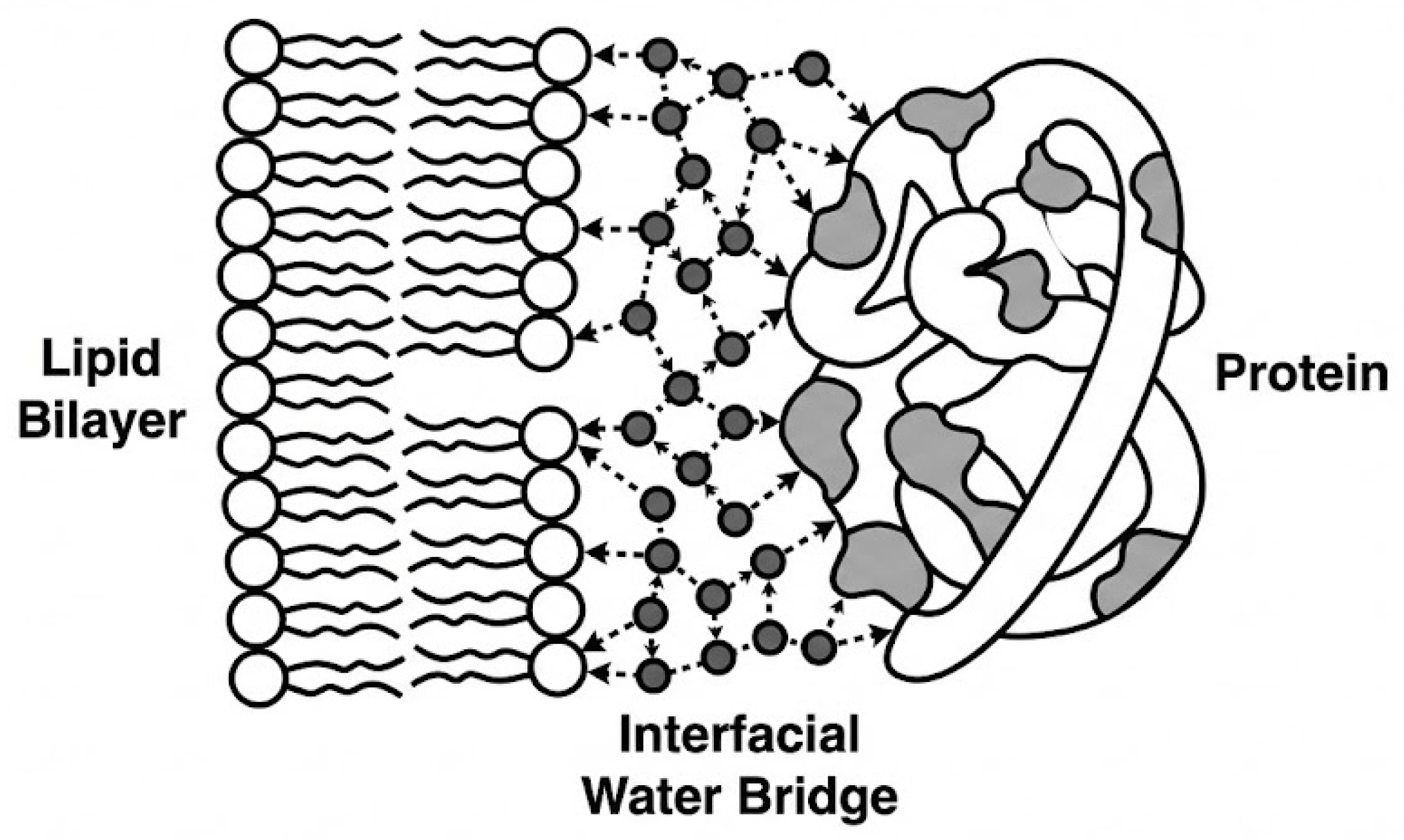
Hybrid lipid–protein systems, including biological membranes, lipoproteins, fusion assemblies, and engineered biomimetic vesicles, exemplify the synergistic interplay between lipid and protein hydration. In these systems, water acts as a molecular bridge between hydrophobic lipid tails and hydrophilic protein surfaces, stabilizing interfaces and modulating structure, dynamics, and function (
Figure 16). Only a few water molecules at the lipid–protein interface can regulate lipid mobility and protein conformation, demonstrating the extraordinary leverage of interfacial hydration. Embedded proteins such as aquaporins and ion channels rely on hydration dynamics for gating, transport, and conformational transitions, with cholesterol-mediated arrays illustrating how hydration patterns at the interface stabilize protein assemblies [
60].
Protein hydration shells in hybrid systems exhibit slowed dynamics due to confinement, and biomolecular condensates can modulate membrane packing by altering interfacial water hydrogen-bond networks [
61]. Increased wetting affinity reduces dipolar relaxation of interfacial water and correlates with secondary structure rearrangements in the protein phase. Molecular dynamics simulations reveal lipid-specific interactions in fusion peptides, where lipidation alters hydration and structure in temperature-dependent ways [
62]. Advanced hybrid algorithms show that hydration governs thermodynamic stability by mediating lipid exchange and domain equilibration, with water model selection significantly affecting predicted protein–lipid interactions [
63].
Engineered hybrid systems, such as lipid–polymer vesicles, demonstrate that membrane hydration is minimally affected by polymer incorporation, yet high-resolution scattering reveals hydration-driven domain segregation. Biomolecular condensates interacting with lipid membranes induce dehydration and packing changes, suggesting a general wetting mechanism that parallels carbohydrate–protein hybrid systems. Across these systems, Hofmeister effects and hydrophobic hydration emerge as unifying principles, providing a foundation for predictive modeling.
Hydration governs spreadability, crystallization behavior, oxidative stability, and the performance of lipid-rich foods and biomaterials. Effective moisture management is therefore essential for shelf life, sensory quality, and environmental stability. In sustainable contexts, understanding hydration enables low-energy lipid processing, enhanced encapsulation for drug delivery, and biodegradable coatings with tunable moisture responses. Models that incorporate molecular dynamics simulations and interfacial hydration data can predict lipid–protein interactions, optimize formulations, and reduce resource use in bio-based industries.
3. The Computational Framework: From Molecules to Process
The convergence of hydration science and computational intelligence transitions water from a passive component to a strategic design variable. To enable manufacturability, hydration must be accounted for across multiple scales, linking molecular properties to macroscopic industrial performance.
3.1. Predictive Modeling of Hydration States
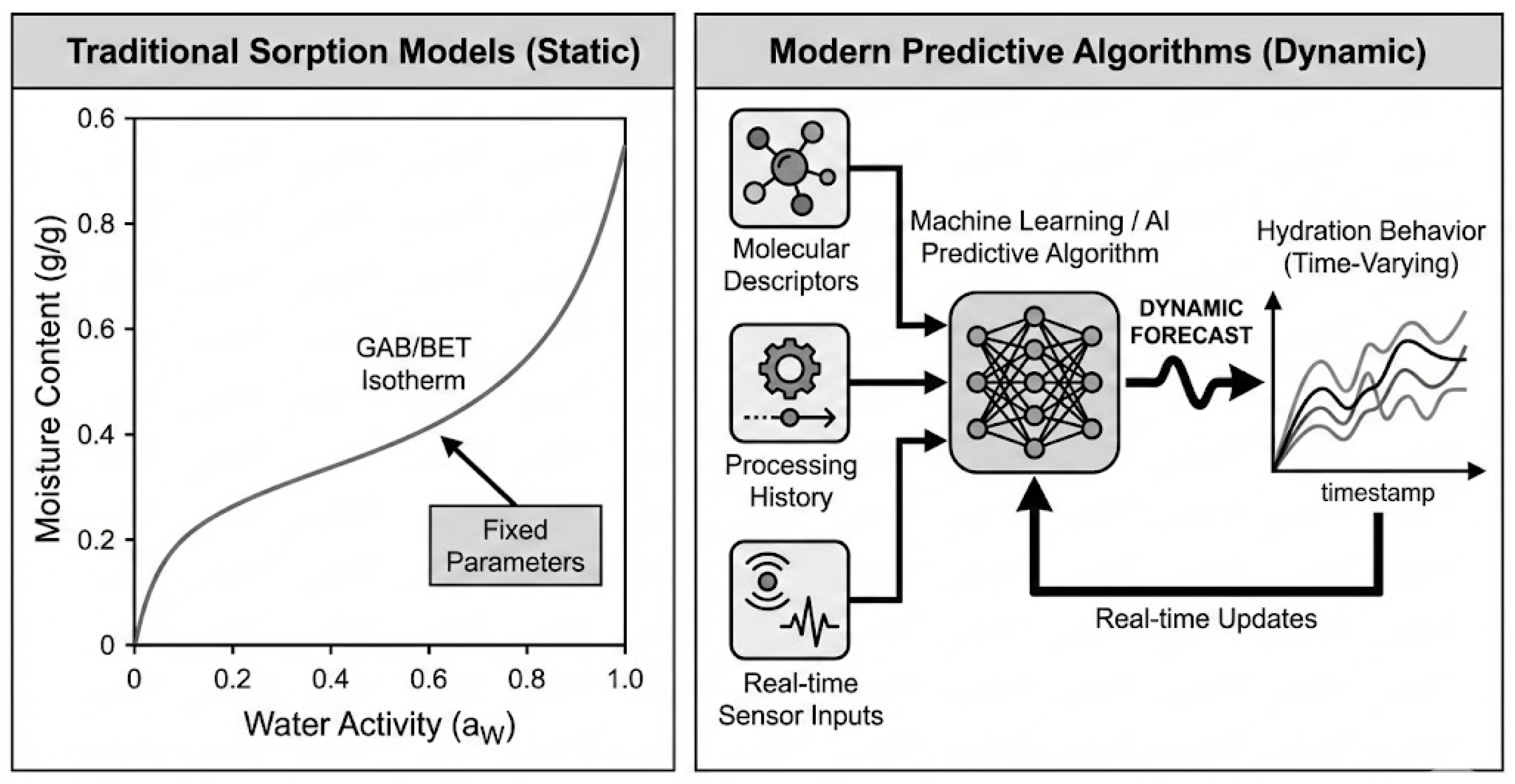
Traditional sorption models, such as GAB and BET, are inherently static. By integrating multiscale data—from quantum hydrogen bonding to macroscopic rheology—these predictive systems enable data-driven decisions that reduce total resource use by 30–50% (
Figure 17).
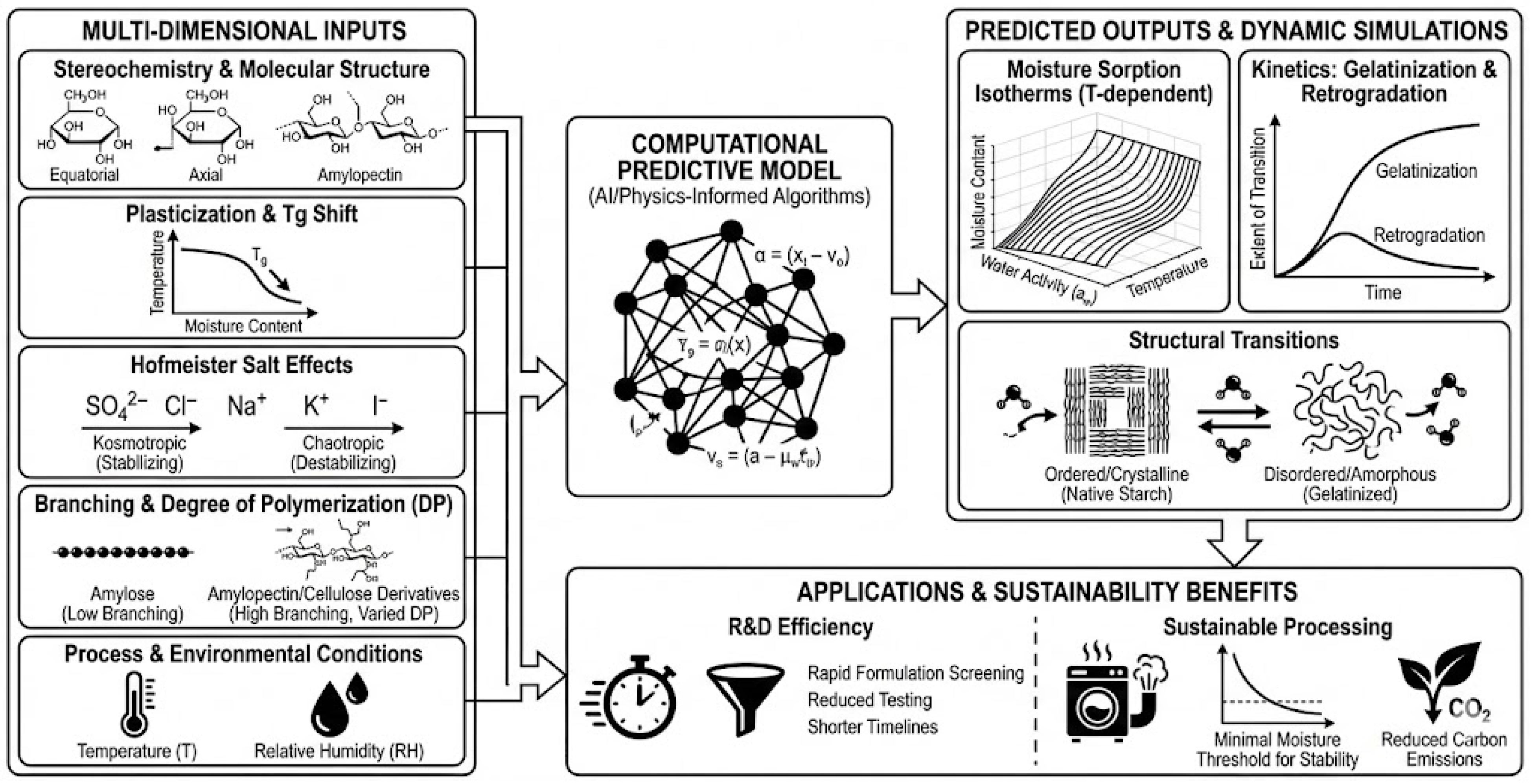
For carbohydrates, these systems anticipate moisture sorption isotherms across temperature and humidity ranges, accounting for stereochemical influences and plasticization effects that significantly shift glass transition temperatures. They simulate gelatinization and retrogradation kinetics, incorporate salt effects aligned with the Hofmeister series, and model structural transitions in starch and cellulose derivatives by integrating branching patterns and degrees of polymerization. This capability reduces the need for extensive sorption testing, enabling rapid formulation screening and shortening R&D timelines (
Figure 18). Specifically, in sustainable processing, these models can identify minimal moisture thresholds for stability, allowing for the optimization of drying curves that lower energy consumption by up to 25%.
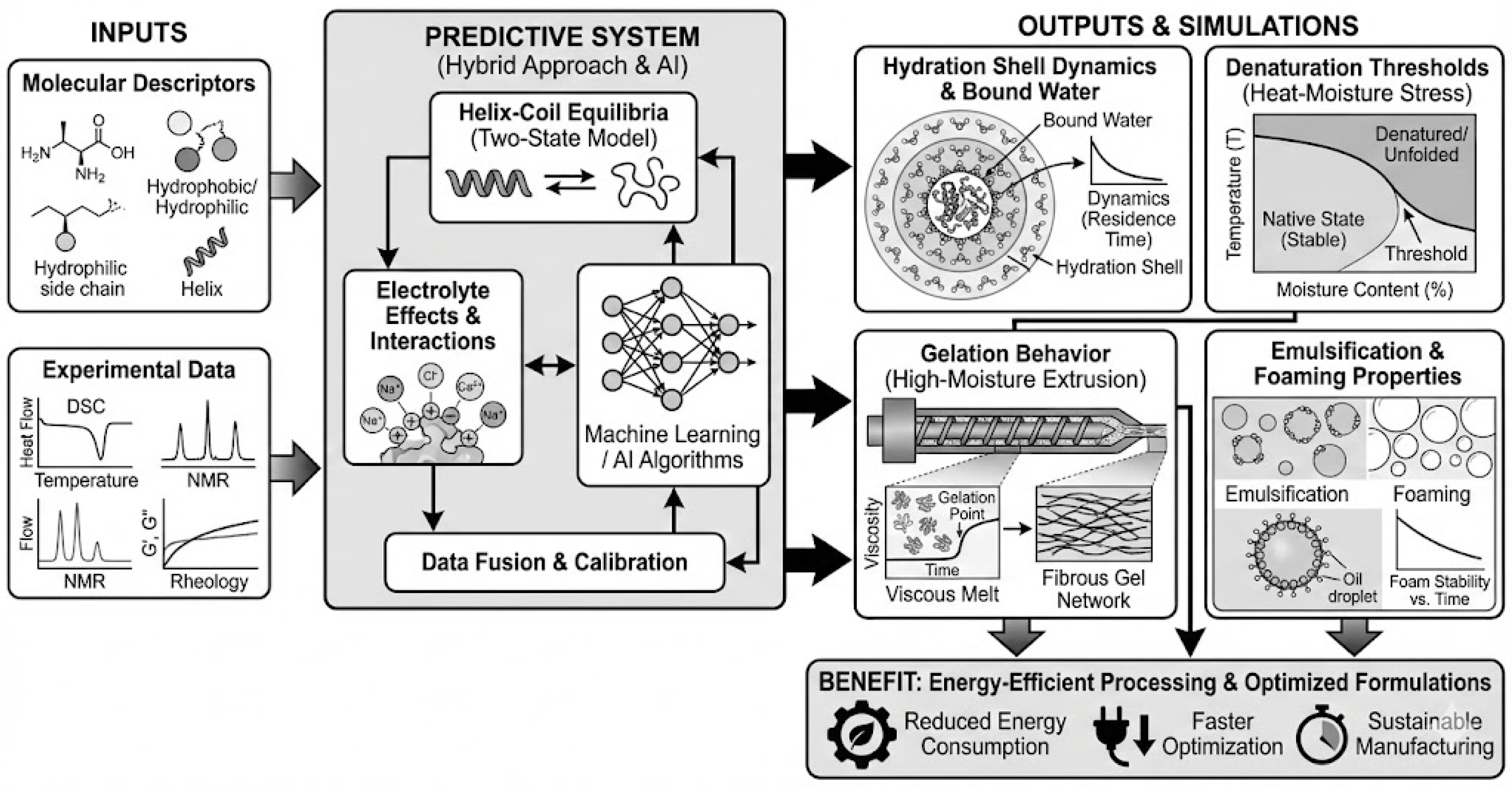
For proteins, predictive systems estimate hydration shell dynamics and bound water content, forecast denaturation thresholds under combined heat–moisture stress, and simulate gelation behavior in high-moisture extrusion. They capture two-state helix–coil equilibria and electrolyte effects, enabling accurate prediction of water-dependent emulsification and foaming properties. Hybrid approaches that blend molecular descriptors with experimental data allow precise anticipation of unfolding and aggregation, supporting energy-efficient processing.
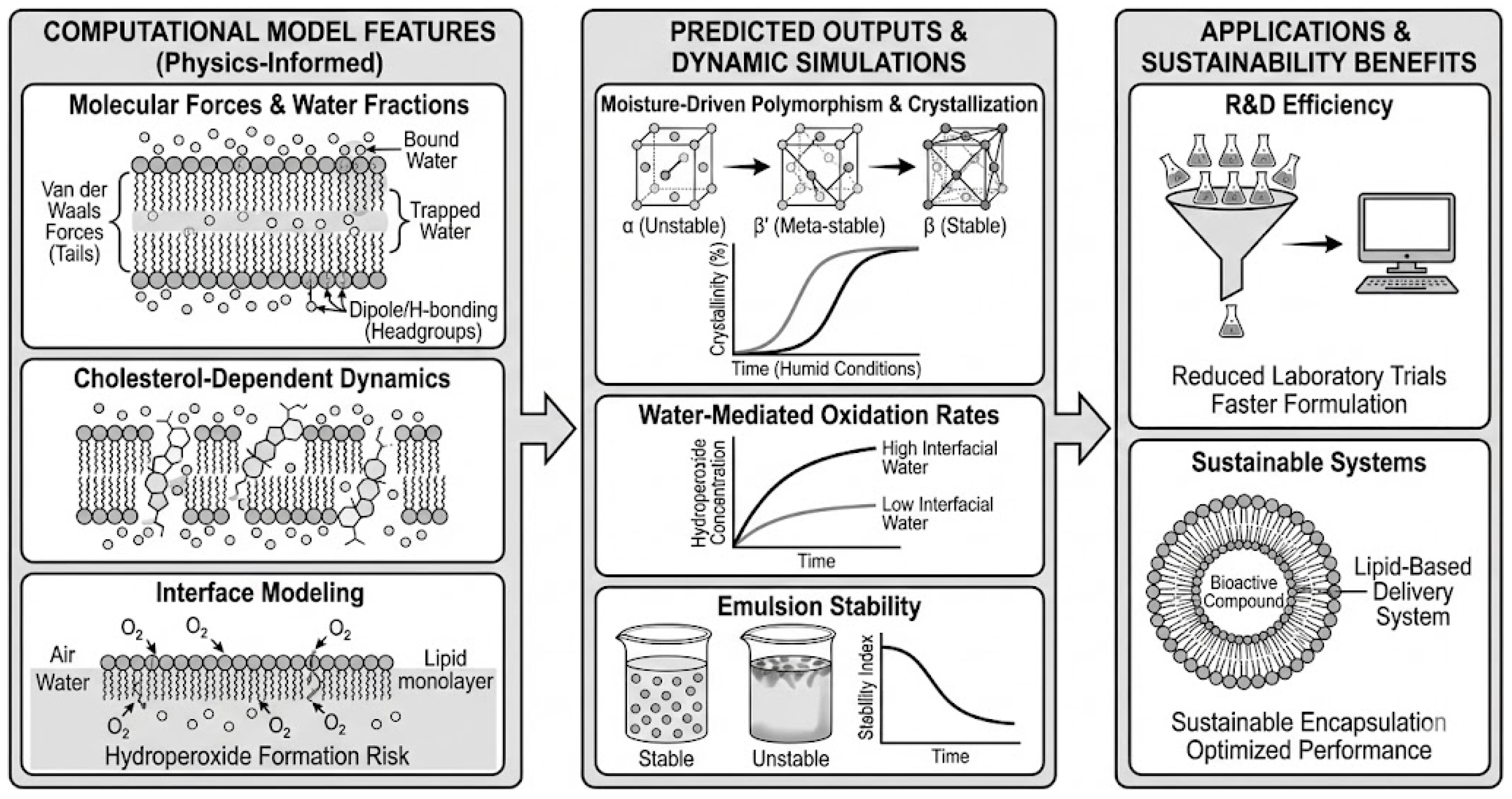
For lipids, these models predict moisture-driven polymorphic transitions, simulate crystallization kinetics under humid conditions, and account for bound and trapped water fractions. They estimate water-mediated oxidation rates by modeling hydroperoxide formation at interfaces and anticipate emulsion stability, incorporating cholesterol-dependent hydrogen-bond dynamics. Physics-informed approaches capture phase behavior by blending van der Waals forces in hydrocarbon tails with dipole interactions in headgroups. These tools reduce laboratory trials and support sustainable encapsulation and lipid-based delivery systems (
Figure 19).
Across all biopolymer classes, predictive modeling integrates multiscale data, from quantum hydrogen bonding to macroscopic rheology, would enable data-driven decisions that reduce resource use by 30–50%. The logic of this accounting is summarized in
Table 1.
3.2. Thermodynamically Constrained Optimization
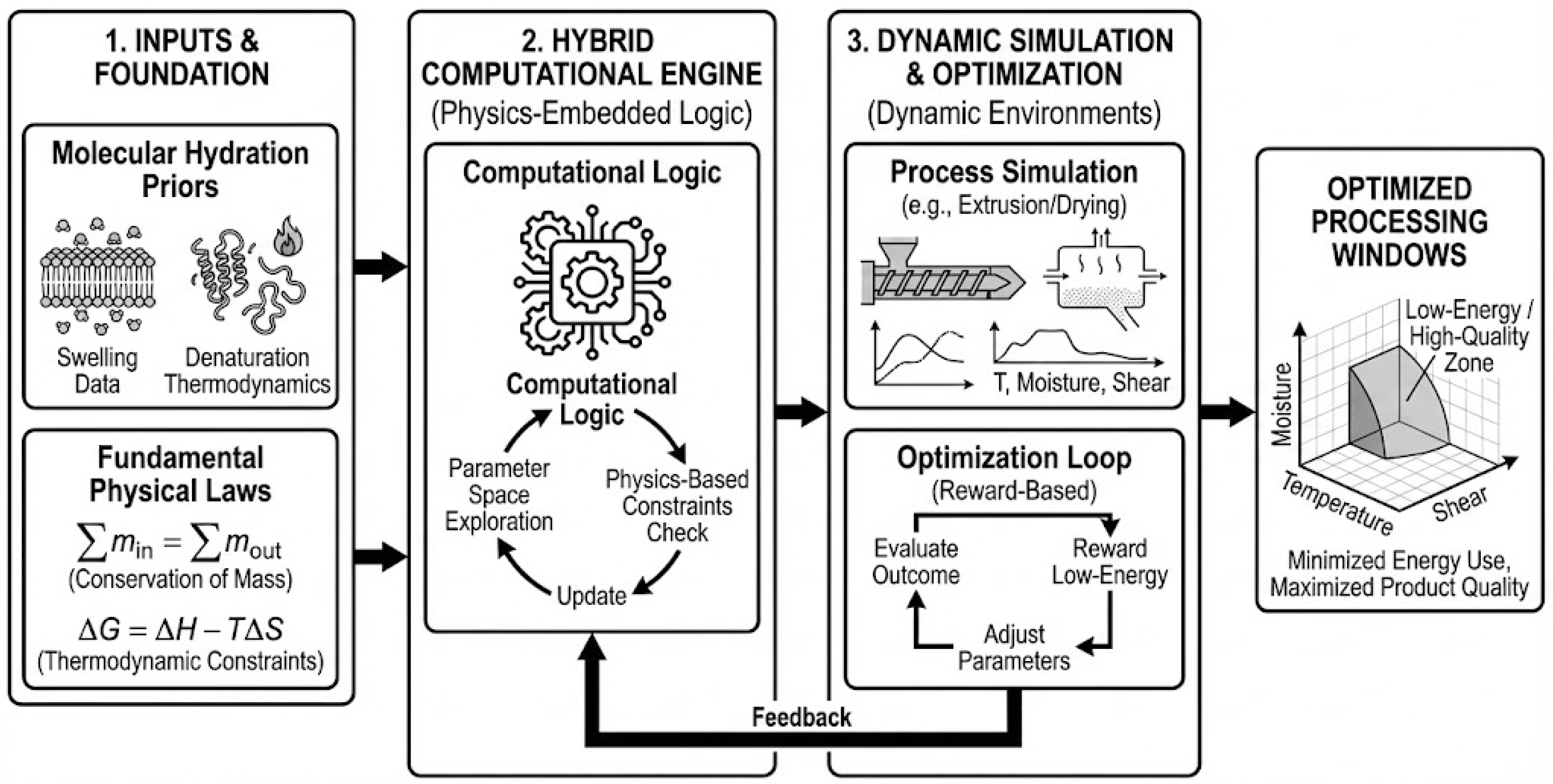
Pure data mining can yield physically implausible results; therefore, this framework embeds fundamental physical laws, such as the conservation of mass and thermodynamic constraints, into its logic. By treating processes as dynamic environments, the system identifies moisture–temperature–shear windows that minimize energy use (
Table 2). For example, by leveraging protein plasticization data and sorption kinetics, the optimization loop identifies processing windows that minimize mechanical energy. In industrial reactive extrusion, this approach allows for the optimization of shear–moisture interactions to produce superior fibrous textures while reducing mechanical torque by 30% and significantly lowering associated carbon emissions. Furthermore, in fermentation systems, forecasting low-water metabolism can reduce freshwater consumption and wastewater generation by up to 50%, directly advancing water security goals.
Moreover, the proposed framework employs hybrid modeling approaches that embed fundamental physical laws, such as conservation of mass and thermodynamic constraints, into computational logic. These systems explore parameter spaces using priors derived from molecular hydration studies, such as phospholipid swelling or protein denaturation thermodynamics, to identify moisture–temperature–shear windows that minimize energy use and maximize product quality. Processes are treated as dynamic environments, rewarding low-energy outcomes in extrusion or drying simulations (
Figure 20).
Applications include optimizing drying curves to reduce energy consumption by 25%, using sorption kinetics from carbohydrate systems, and identifying moisture levels that minimize mechanical energy in extrusion by leveraging protein plasticization behavior. Surrogate models tune water activity to extend shelf life by predicting microbial stability thresholds, while active learning optimizes enzymatic hydration in low-water biocatalysis, minimizing bound water while maintaining catalytic efficiency.
These tools support real-time decision-making in industrial settings through integration with IoT sensors and adaptive control systems. In reactive extrusion, they optimize shear–moisture interactions to produce fibrous textures while reducing torque by 30% and lowering emissions. In fermentation, they forecast low-water metabolism, reducing wastewater generation by up to 50%. By linking hydration science to sustainability metrics, optimization frameworks enable net-zero processes aligned with circular economy principles.
3.3. Digital Formulation and Discovery
While
Section 3.1 and
Section 3.2 establish how hydration can be quantified and operationalized across molecular, mesoscale, and process levels, the ultimate value of hydration intelligence lies in its system-level sustainability impact. Digital formulation and discovery translate hydration-aware modeling into measurable environmental gains by linking molecular water interactions directly to circularity, waste reduction, and resource efficiency. As summarized in
Table 3, hydration intelligence acts as a unifying design principle across bioplastics, biocatalysis, and food systems, enabling disproportionate sustainability benefits from targeted control of water at interfaces, within matrices, and across diffusion pathways.
Collectively, these examples demonstrate that hydration-aware digital discovery is not application-specific but framework-driven, enabling scalable sustainability gains by treating water as a controllable design variable rather than a passive constraint.
Building on these sustainability outcomes, the development of moisture-responsive materials has traditionally relied on slow, trial-and-error experimental formulation. Hydration-aware computational formulation engines now enable the virtual screening of thousands of biopolymer combinations, linking interfacial water dynamics directly to performance metrics such as degradation rate, mechanical stability, and moisture sensitivity. By simulating hydrophilic–hydrophobic interfaces, bound-water fractions, and diffusion pathways, these tools translate the high-level sustainability gains summarized in
Table 3 into actionable formulation strategies, accelerating material discovery while minimizing experimental waste.
These approaches will reduce experimental trials and accelerate the development of circular, biobased materials such as self-degrading packaging and moisture-adaptive films. By linking molecular hydration behavior to macroscopic performance, they enable rational design of materials that reduce plastic waste and support sustainable manufacturing, accelerating the development cycle from concept to prototype (
Figure 21).
4. Case Studies in Sustainable Innovation
Computational intelligence applied to hydration dynamics yields tangible sustainability benefits across bioprocessing applications, as summarized in the following table for key examples in reactive extrusion, shelf-life prediction, and low-water biocatalysis (
Table 4).
Further applications of computational hydration modeling are demonstrated in advanced protein texturization and bioplastic engineering. In AI-guided high-moisture extrusion (HME) of proteins, predictive systems simulate phase separation under combined heat, moisture, and shear, capturing gelation and denaturation kinetics while integrating molecular descriptors such as hydrophobic side-chain transfer energies. These tools enable real-time optimization of water injection, temperature profiles, and screw configurations, resulting in uniform fibrous textures with fewer experimental trials compared to conventional methods. For soy and pea-based proteins, this approach identifies low-moisture processing windows that preserve functional properties while minimizing mechanical input, reducing energy consumption. This supports the development of sustainable plant-based proteins with improved mouthfeel, nutritional quality, and lower production costs, accelerating the adoption of alternatives to animal-derived products and aligning with the global shift toward resource-efficient food systems.
In the realm of moisture-responsive bioplastics, computational platforms predict water uptake and diffusion coefficients using sorption data, simulating plasticization and mechanical softening across humidity gradients while accounting for stereochemical effects and “unfreezable” water fractions. These generative tools forecast biodegradation rates in composting environments by modeling how hydration facilitates microbial colonization and hydrolysis. High-throughput screening identifies optimal blends such as starch–protein–lipid composites, that balance hydrophilicity for rapid breakdown with sufficient stability for practical use. In real-world applications, these engineered films may achieve up to 80% faster degradation while maintaining robust barrier properties, enabling circular packaging that decomposes predictably in moist environments. This reduces reliance on fossil-based plastics, mitigates microplastic pollution, and supports closed-loop systems advancing environmental sustainability.
5. Discussion
The evidence synthesized across carbohydrates, proteins, and lipids clearly demonstrates that water functions as an active structural participant in biopolymer systems rather than as a passive solvent. Although each biopolymer class exhibits distinct hydration mechanisms—ranging from carbohydrate stereospecific hydrogen bonding to protein hydrophobic hydration, to lipid interfacial water bridges—common principles emerge that enable a unified, cross-cutting interpretation. These shared features provide the conceptual foundation for a generalized computational framework in which hydration is treated as a primary driver of structure, dynamics, and functionality across diverse biobased materials.
A central outcome of this review is the identification of unified hydration principles that transcend macromolecular class. Notably, the parallels between amylose retrogradation and protein denaturation illustrate that solvent structure modification operates as a universal lever governing biopolymer conformational transition. In both cases, salts, chaotropic, and non-electrolytes modulate structural stability primarily through their effects on water organization rather than through direct macromolecule–macromolecule interactions. This convergence suggests that hydration-mediated effects can be abstracted into common descriptors, enabling a single computational framework to model otherwise disparate systems by positioning water as the catalytic agent for structural transitions.
The catalytic role of water further emerges as a unifying theme in biopolymer functionality. In both polysaccharide and protein gels, water enables chain mobility, conformational rearrangement, and junction-zone formation without inducing large-scale ordering of the bulk solvent. Experimental evidence from dielectric relaxation and NMR studies consistently shows that most of the water within gel networks remains rotationally mobile and dynamically similar to bulk liquid water. Only a limited fraction of water is tightly bound or confined, yet this small population exerts disproportionate control over mechanical stability, glass transition behavior, and processing response. By explicitly distinguishing between mobile and bound hydration fractions, computational frameworks can more accurately predict stability windows, textural outcomes, and moisture-driven failure modes during drying, extrusion, and storage.
At interfaces, hydration exerts even greater leverage. In lipid and hybrid lipid–protein systems, only a few water molecules per headgroup or interfacial site are sufficient to regulate lipid mobility, phase behavior, and protein conformation. These findings underscore that microscopic hydration patterns can propagate into macroscopic consequences for material performance. From an industrial perspective, this interfacial plasticization effect provides a powerful design handle: precise moisture control enables substantial reductions in mechanical torque during extrusion (≈30%) and meaningful decreases in thermal energy demand during drying (≈25%). Such gains illustrate how shifting from empirical moisture management to physics-informed, hydration-aware computational modeling enables the transition toward precision hydration, where water content is deliberately tuned to achieve both functional performance and sustainability targets.
Collectively, these insights reinforce the central thesis of this review: hydration is not merely a boundary condition but a controllable design variable that links molecular-scale interactions to process-scale efficiency and environmental outcomes. By embedding hydration thermodynamics and dynamics into computational intelligence, the bioeconomy can move beyond heuristic process optimization toward predictive, resource-efficient manufacturing aligned with global sustainability goals.
6. Future Challenges and Perspectives
Despite the promise of hydration-aware computational frameworks, several multiscale and data-centric challenges must be addressed to enable their widespread industrial adoption. A primary hurdle lies in bridging quantum-level hydrogen-bonding interactions with macroscopic process variables such as rheology, heat transfer, and mechanical energy dissipation. While digital twins of bioprocesses already allow real-time simulation of water migration and structural transitions, the next generation of these tools must incorporate high-fidelity surrogate models capable of preserving physical accuracy while operating under the computational constraints of industrial IoT environments.
An additional challenge arises from system complexity. Although the current framework performs robustly for relatively pure biopolymer systems, extending it to heterogeneous matrices—such as whole foods, soil-integrated bioplastics, or multi-component fermentation substrates—introduces strongly nonlinear and context-dependent interactions. In such systems, hydration behavior is influenced by spatial heterogeneity, competing sorption sites, and dynamic phase boundaries that are not readily captured by traditional empirical models. Addressing these complexities will require hybrid modeling strategies that combine physics-based constraints with adaptive, data-driven learning.
Data standardization represents a further bottleneck. At present, experimental techniques such as nuclear magnetic resonance (NMR), differential scanning calorimetry (DSC), and sorption isotherm analysis provide complementary yet sometimes conflicting insights into hydration shell dynamics and bound-water fractions. The absence of standardized digital descriptors for hydration states complicates data integration and limits the effectiveness of machine learning models trained on heterogeneous datasets. Developing unified hydration descriptors and data-fusion protocols will be essential for improving model transferability and accelerating R&D workflows.
Looking forward, the field is poised to evolve from predictive modeling toward generative formulation and discovery. Emerging computational engines already enable the virtual screening of thousands of biopolymer combinations, allowing researchers to design moisture-responsive materials with targeted degradation rates, mechanical properties, and stability profiles. In this future paradigm, computational intelligence will not merely forecast how materials respond to moisture but will actively propose novel starch–protein–lipid architectures that balance functional performance with environmental circularity.
By treating water as a precise, strategic design variable rather than a chaotic ingredient, the bio-based sector can unlock unprecedented efficiencies in low-energy manufacturing and material innovation. This transition positions hydration science—revitalized through computational intelligence—as a central catalyst in the global shift toward a low-carbon, resource-efficient, and circular bioeconomy.
7. Conclusions
Water is the silent architect of the bioeconomy. By governing the structure of carbohydrates, proteins, and lipids, hydration dynamics determine the energy footprint of processing and the fate of biomaterials. The convergence of foundational hydration science with advanced computational intelligence offers a new paradigm for the industry.
This framework demonstrates that we can move beyond empirical guesswork. By utilizing data-driven systems to decipher the complex language of molecular hydration, industries can design low-energy manufacturing systems and create resilient, circular materials. The future of sustainable bioprocessing lies in treating water not as a chaotic variable, but as a precise, controllable design element. As industries confront rising energy costs, water scarcity, and climate pressures, hydration-aware computational systems offer a pathway to transformative sustainability gains. By treating water not as a passive ingredient but as a strategic design variable, the bio-based sector can unlock new efficiencies, reduce waste, and create materials and processes aligned with planetary boundaries. Hydration science, revitalized through computational intelligence, becomes a catalyst for innovation in the transition to a low-carbon future.