1. Introduction
South Africa is nationally food secure, yet approximately one in five households’ experiences inadequate access to nutritious food, largely due to persistent poverty and income inequality. Rural provinces such as the Eastern Cape face the deepest levels of food insecurity, with many households depending on small parcels of land for supplementary food production [
1]. Despite multiple policy efforts including the National Development Plan and the Integrated Household Food Security Programme smallholder productivity has remained low, constrained by factors such as limited fertilisation, pest pressures, and, critically, the use of poor-quality seed [
2,
3]. Access to quality seed is widely recognized as a key driver of agricultural productivity and resilience, as reflected in the dramatic growth of South Africa’s commercial sector, which benefits from high-quality, often genetically improved seed varieties.
However, the country’s seed regulatory framework has been criticized for its heavy reliance on formal certification models that, while ensuring standards, create significant barriers for smallholder and community-based producers [
4,
5]. These constraints have reinforced a dual seed economy: a technologically advanced, commercially driven formal sector on one side, and an under-resourced informal system on the other. As a result, smallholder farmers particularly in remote rural areas continue to rely on informal channels such as local markets, farm-saved seed, and farmer-to-farmer exchanges. This raises important questions about how smallholders understand and evaluate seed quality, and the extent to which knowledge gaps shape their sourcing decisions [
6].
Seed systems in sub-Saharan Africa operate through both formal and informal channels, each shaped by distinct institutional logics. Formal systems emphasize certified varieties, regulatory oversight, and commercial distribution, often dominated by multinational companies. Informal systems, by contrast, rely on community seed saving, social networks, and local markets that preserve indigenous varieties adapted to local agroecological conditions. While informal systems provide affordability and accessibility, they often face challenges related to genetic purity, disease susceptibility, and climate variability. Understanding how farmers navigate these systems requires attention not only to structural constraints but also to the cognitive and evaluative capacities that guide seed choices.
Seed is the foundational input for agricultural production and a critical determinant of crop yields, food security, and resilience to climate change [
7]. In smallholder agriculture, particularly in sub-Saharan Africa, the seed system operates through both formal and informal channels [
8]. The formal seed system involves research, breeding, certification, and commercial distribution by seed companies, governed by national regulatory frameworks [
9]. The informal seed system, on the other hand, relies on farmer-to-farmer exchanges, community seed saving, and local markets, often preserving indigenous crop varieties that are adapted to local agroecological conditions [
10].
In South Africa, the formal seed sector is technologically advanced, dominated by a few multinational corporations supplying high-yielding, often genetically modified varieties [
11]. While this sector has contributed significantly to productivity gains in commercial agriculture, it remains largely inaccessible to resource constrained smallholder farmers due to its high costs, limited distribution in rural areas, and strict certification requirements [
5]. Even though the informal sector is vital for rural livelihoods, it continues to face challenges related to seed quality, genetic purity, and vulnerability to climate variability [
6]. This dualism in seed systems shapes the opportunities and constraints faced by rural households in areas such as the Eastern Cape in South Africa [
12]. Given this backdrop, the question remains on what constitutes a “quality seed” in the smallholder context becomes central.
In smallholder contexts, perceptions of “quality seed” frequently diverge from technical definitions such as genetic purity, germination rate, and moisture content [
13]. Farmers tend to prioritize attributes like appearance, taste, cultural value, and adaptability to local conditions. Yet research in South Africa indicates limited awareness of formal quality standards and their benefits. Studies show that many smallholders lack information about stewardship requirements for genetically modified seed, perceive certification processes as overly restrictive, or prefer informal markets due to affordability and perceived local adaptation. These findings highlight the importance of seed literacy—the capacity to understand, assess, and apply knowledge related to seed quality, seed systems, and management practices [
14,
15].
Seed literacy encompasses multiple dimensions: cognitive knowledge of seed types and standards; evaluative capacity to assess quality beyond visual cues; navigational competence to access information and institutions; and practical management skills for seed saving, storage, and exchange [
16,
17]. Evidence from Southern Africa suggests that higher seed literacy is associated with adoption of improved varieties, use of recommended practices, and greater climate resilience. Yet literacy levels remain low in many rural communities due to limited extension services, inadequate farmer training, and communication gaps [
18,
19]. Gender dynamics further shape literacy outcomes, as women who play central roles in seed selection and storage often face disproportionate barriers to training and information [
20,
21].
Community seed banks (CSBs) have emerged globally as an alternative model to strengthen seed access, conserve local diversity, and enhance collective learning. Experiences from Nepal, Zimbabwe, Uganda, and parts of South Africa demonstrate that well-designed CSBs can improve household seed security, increase varietal diversity, and institutionalize platforms for farmer training and exchange [
22,
23]. These cases illustrate the potential of CSBs to serve both conservation and capacity-building functions when embedded in local social networks and supported by policy frameworks [
24].
South Africa’s seed system has evolved through historical forces including colonization, apartheid, and globalization, producing a highly advanced formal sector alongside a marginalized informal one [
25]. Understanding this historical trajectory is essential for situating current institutional challenges and exploring opportunities for more inclusive seed governance. Within this dual landscape, seed literacy becomes an intermediary capability that shapes how farmers interpret information, engage with institutions, and make sourcing decisions. Drawing on Rogers’ Diffusion of Innovations theory, seed literacy is expected to influence perceptions of relative advantage, compatibility, complexity, and observability, thereby shaping adoption behaviours [
26,
27].
Despite the importance of seed literacy, limited empirical research has examined how smallholder farmers in rural South Africa understand and practice seed management at household level, or how their interactions with informal vendors and extension services shape outcomes. This study addresses this gap by assessing seed literacy levels among smallholder farmers in KwaMkhiva village and examining their seed sourcing practices, quality assessment criteria, and access to institutional support. By conceptualizing and operationalizing seed literacy as a multidimensional construct, this study contributes a novel analytical lens to seed systems research and provides insights into how knowledge capabilities mediate decision-making within dual seed economies.
1.1. South Africa’s Historical Evolution of Seed Policies
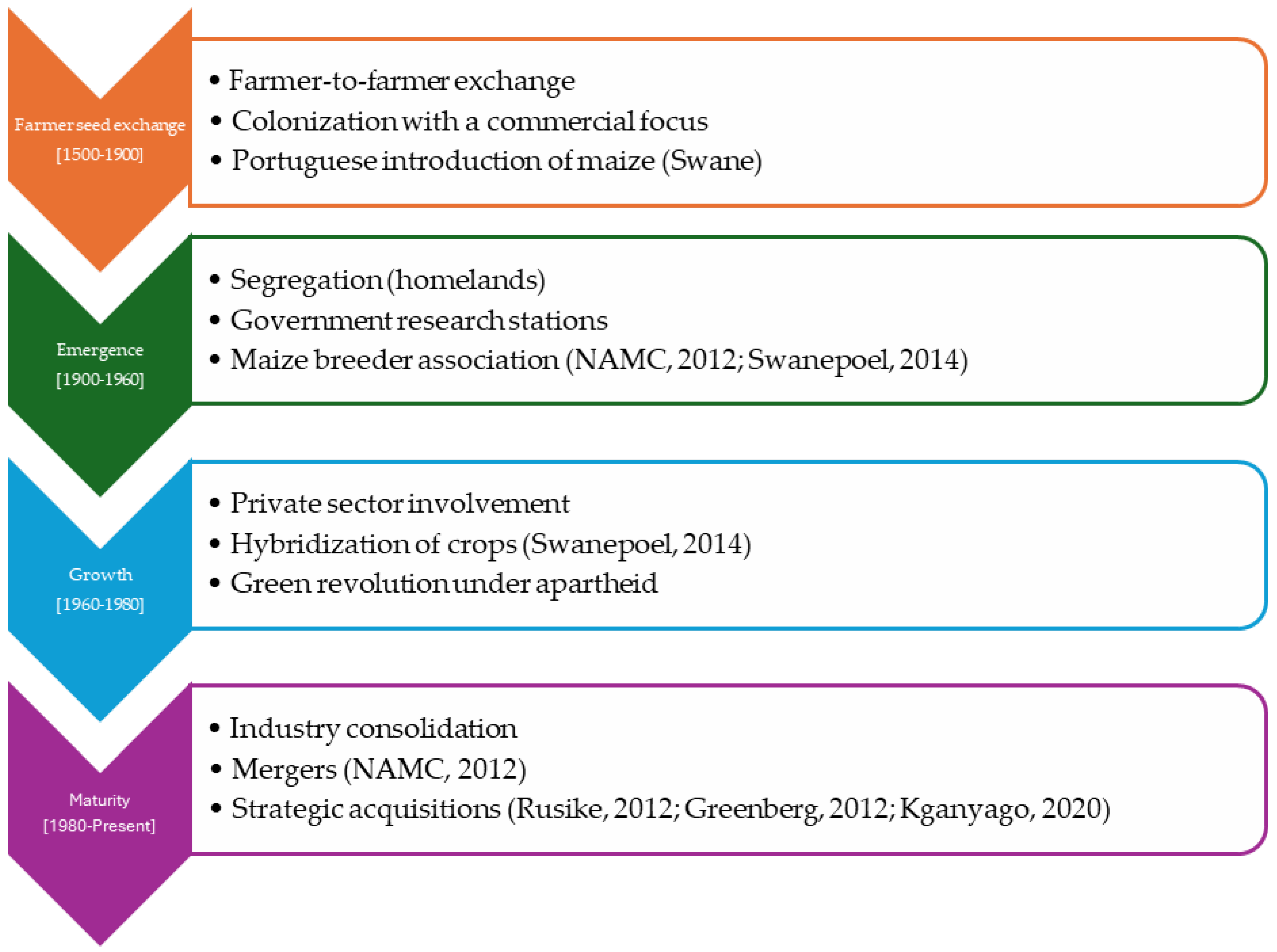
To comprehend the present issues confronting South Africa’s seed systems, it is crucial to investigate their historical origins as indicated in
Figure 1. Agricultural policy and seed legislation are not developed randomly but rather influenced by political, economic, and social circumstances that frequently reveal underlying structural imbalances [
28]. South Africa possesses the most advanced formal system on the continent [
29]. However, there is a noticeable gap between the advanced formal seed system and the poor resource informal seed system [
29]. Three distinct historical forces the colonization, apartheid, and globalization have influenced South Africa’s seed system [
30], the South African seed system has been gradually progressing in stages since the 1500s and is now in the mature stage, shaped by distinct historical forces.
1.2. Conceptual Framework: Seed Literacy as an Intermediary Capability in Smallholder Seed Systems
Seed systems theory highlights that farmers’ seed access and use are shaped by the interplay of formal institutions (certification, regulation, market standardization) and informal networks (affordability, local adaptation, social trust), with decisions emerging at their intersection rather than within either system alone. Within this dualism, seed literacy operates as an intermediary capability that conditions how farmers interpret information, engage with institutions, and choose among seed options, shaping perceptions of relative advantage, compatibility, complexity, trialability, and observability in line with Rogers’ Diffusion of Innovations.
We conceptualize seed literacy as a multidimensional construct comprising: (i) cognitive knowledge of seed types, certification, and quality indicators; (ii) evaluative capacity to assess seed quality beyond visible traits and to compare sources; (iii) access and navigational competence to locate and use information from extension, markets, and community networks; and (iv) management practices for selection, storage, saving, and exchange. These dimensions jointly influence observable behaviours (e.g., sourcing, saving/exchange, crop choice, openness to certified varieties) and are themselves shaped by demographics (age, gender, education), institutional conditions (extension coverage, regulatory inclusiveness), and social learning (peer and vendor networks). Our framework posits that institutional access and information flows affect seed literacy; seed literacy mediates the relationship between institutions and seed choices; and low literacy helps sustain informal systems despite policy efforts to expand formal seed use, thereby offering a theoretically grounded account of knowledge–institution–decision dynamics in smallholder contexts.
3. Results and Discussion
The findings indicate that 100% of farmers reported no formal agricultural extension training, revealing a structural institutional gap. Policy responses should prioritize reactivating extension systems, strengthen farmer-to-farmer mentoring, and integrate municipal agricultural support structures. Given that 49% of farmers rely on local markets, community seed banks should function as complementary institutions rather than replacements. Integration mechanisms may include quality assurance partnerships and collective procurement arrangements with existing vendors. Consistent with Rogers’ Diffusion of Innovations theory, lower adoption of certified seeds among experienced farmers may reflect perceived incompatibility with traditional practices rather than information deficits.
A summary of the demographic information of our respondents is presented in
Table 1. Demographic analysis reveals that many respondents are aged 36 and above (98%), with a significant proportion over 56 years, indicating an aging farming population. The dominance of older farmers suggests potential constraints to innovation uptake, as older farmers tend to exhibit higher risk aversion and lower engagement with new technologies. Conversely, the high participation of women highlights their central role in seed systems but also exposes structural barriers to training, credit, and extension services. This trend is consistent with findings by the [
39], which highlight the dominance of older individuals in rural agricultural sectors due to youth migration. Women constitute 66% of the sample, underscoring their critical role in smallholder farming systems, as emphasized by [
40]. Educational attainment is largely concentrated at the secondary level (66%), while tertiary education is minimal (2%), potentially limiting access to advanced agricultural innovations [
41]. Most participants (70%) have over a decade of farming experience, which reflects a strong base of indigenous knowledge and established practices. Extensive experience can correlate with lower adoption of new technologies because seasoned farmers often perceive innovations as incompatible with their proven methods, view change as risky, and rely on social norms that reinforce traditional practices. This suggests that while experience enhances resilience and local expertise, it may also slow the uptake of modern farming techniques unless interventions address perceived risks and demonstrate clear relative advantages. Furthermore, 88% of respondents operate on smaller pieces of land (ranging from 0.5–4 hectares), reflecting the prevalence of subsistence farming in rural Africa [
42]. These findings highlight the need for age- and gender-sensitive agricultural policies that promote education and innovation among smallholder farmers.
3.1. Types of Crops Produced in KwaMkhiva
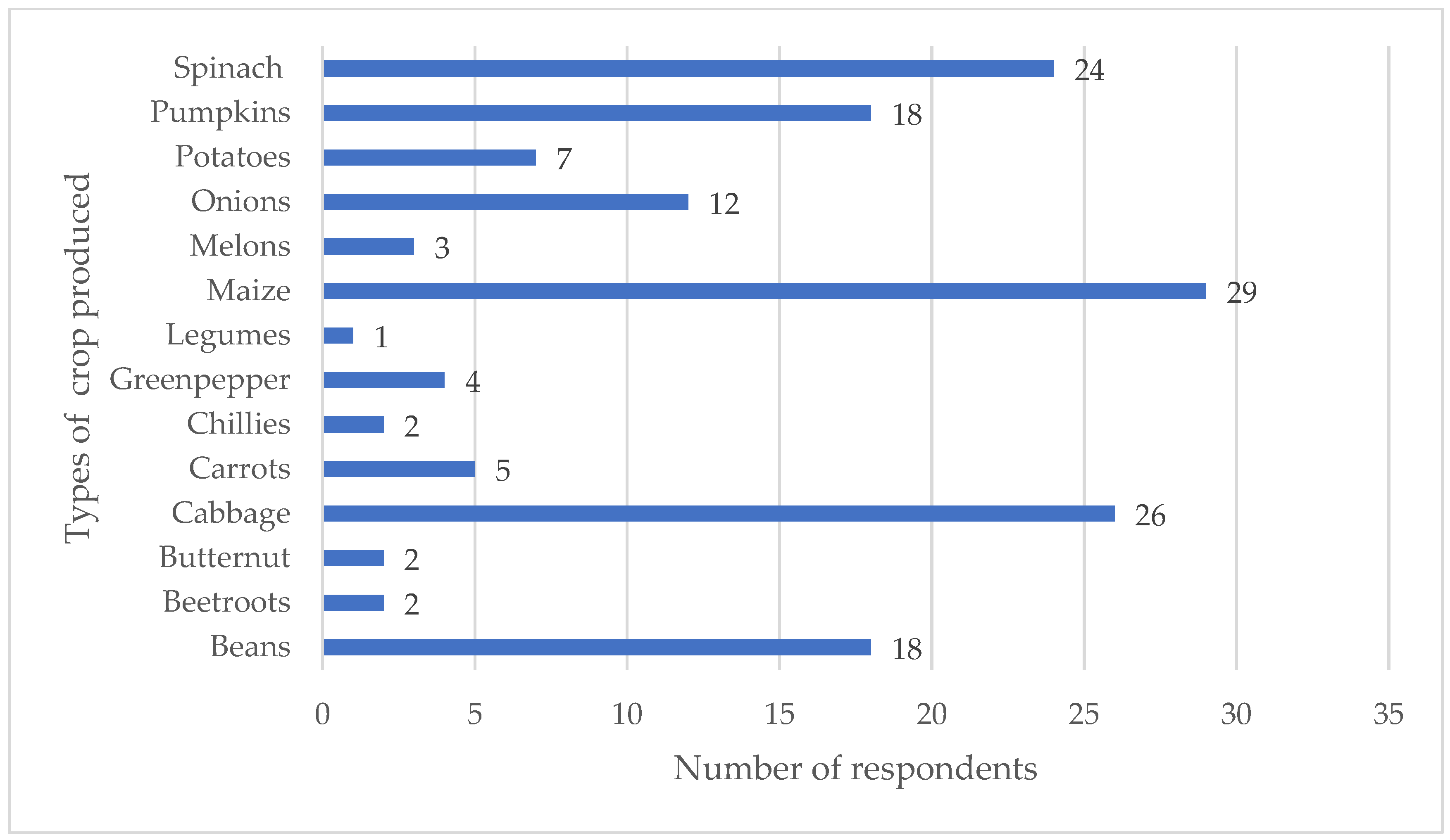
Figure 3 shows the types of vegetables produced by respondents, revealing notable trends in crop preference and possibly land use or market demand. Like in many South African rural areas, maize is the most produced crop (produce by 29 respondents). Maize is normally cultivated as the main crop, with small patches of vegetables such as cabbage (
n = 26) and spinach (
n = 24). The choice of these crops is that they are staple foods and used for everyday meals while they are well-suited to local agroecological conditions. It is also worth to note that these crops are chosen because they have long history of being planted for example one of the respondents mentioned that she grew up her parents producing these crops. This also means that it is easy to sell surplus to fellow villagers. This aligns with findings from smallholder farming systems where leafy greens and cereals are prioritized for both consumption and income generation [
43].
Mid-range crops include Pumpkins and Beans (produced by 18 farmers), and Onions (produced by 12 farmers), indicating moderate importance in the cropping system. In contrast, crops like Legumes (1 unit), Chillies, Butternut, and Beetroots (2 units each) are minimally produced, which may reflect limited demand, consumption, or lack of agronomic knowledge.
The low production of nutrient-dense crops such as legumes and root vegetables could have implications for household dietary diversity and nutrition. Interventions promoting crop diversification and nutrition-sensitive agriculture may be beneficial [
44].
3.2. Sources of Seed Supply
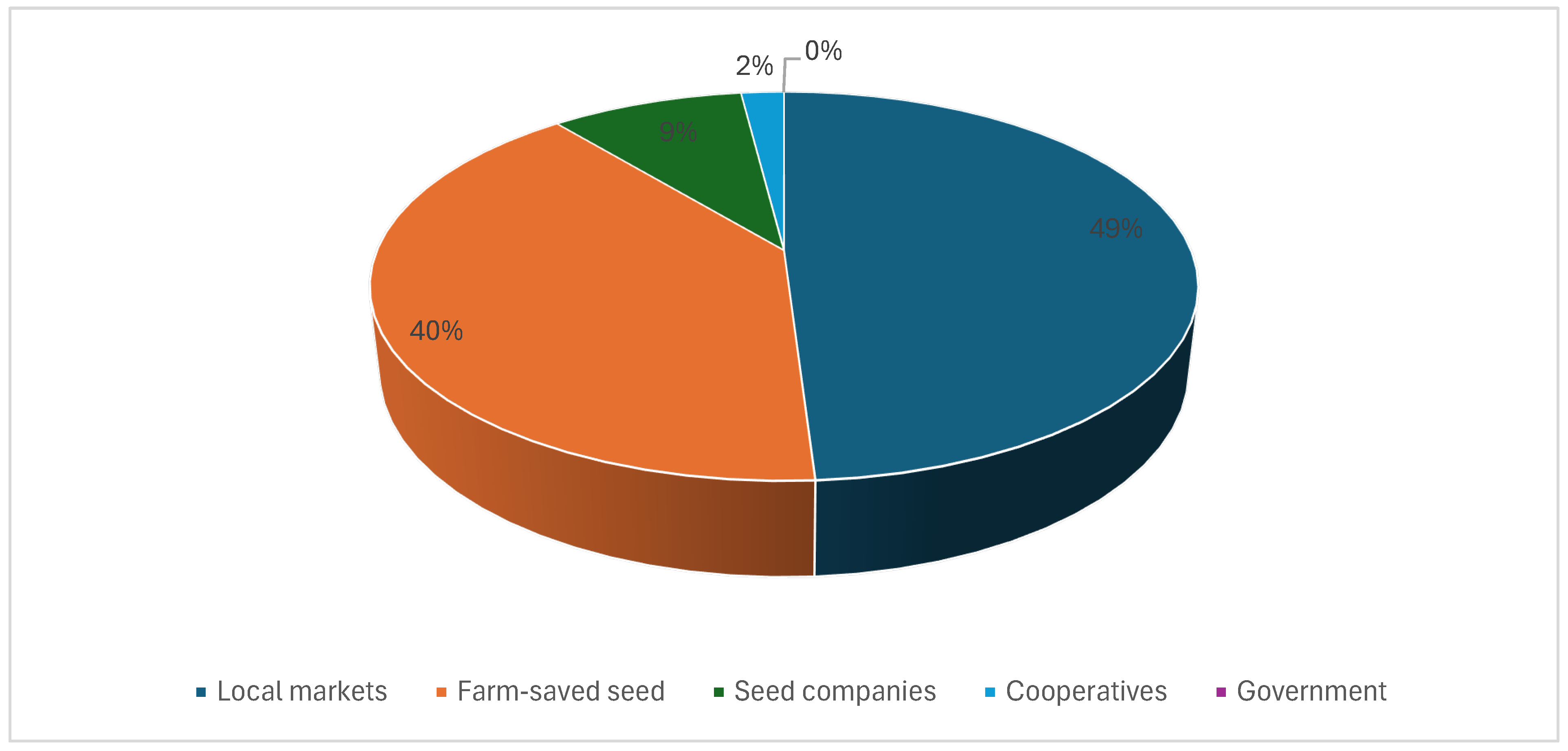
The pie chart explains (
Figure 4) the distribution of seed sources among respondents. The local market is the most common source, accounting for 31 (49%), followed by own farm-saved seeds at 25 (40%). This indicates a strong reliance on informal seed systems, which are often more accessible and affordable for smallholder farmers [
39]. Seed companies contribute only 6 (9%), suggesting limited access to or trust in commercial seed systems, which may be due to cost, availability, or lack of awareness. Cooperatives account for just 1 (2%), while government and other sources are not utilized at all (0%), highlighting a potential gap in institutional support or outreach. This distribution underscores the importance of strengthening both formal and informal seed systems to ensure seed quality, availability, and resilience in farming communities [
45].
3.3. Interpretation of Factors Influencing Seed Use (in %)
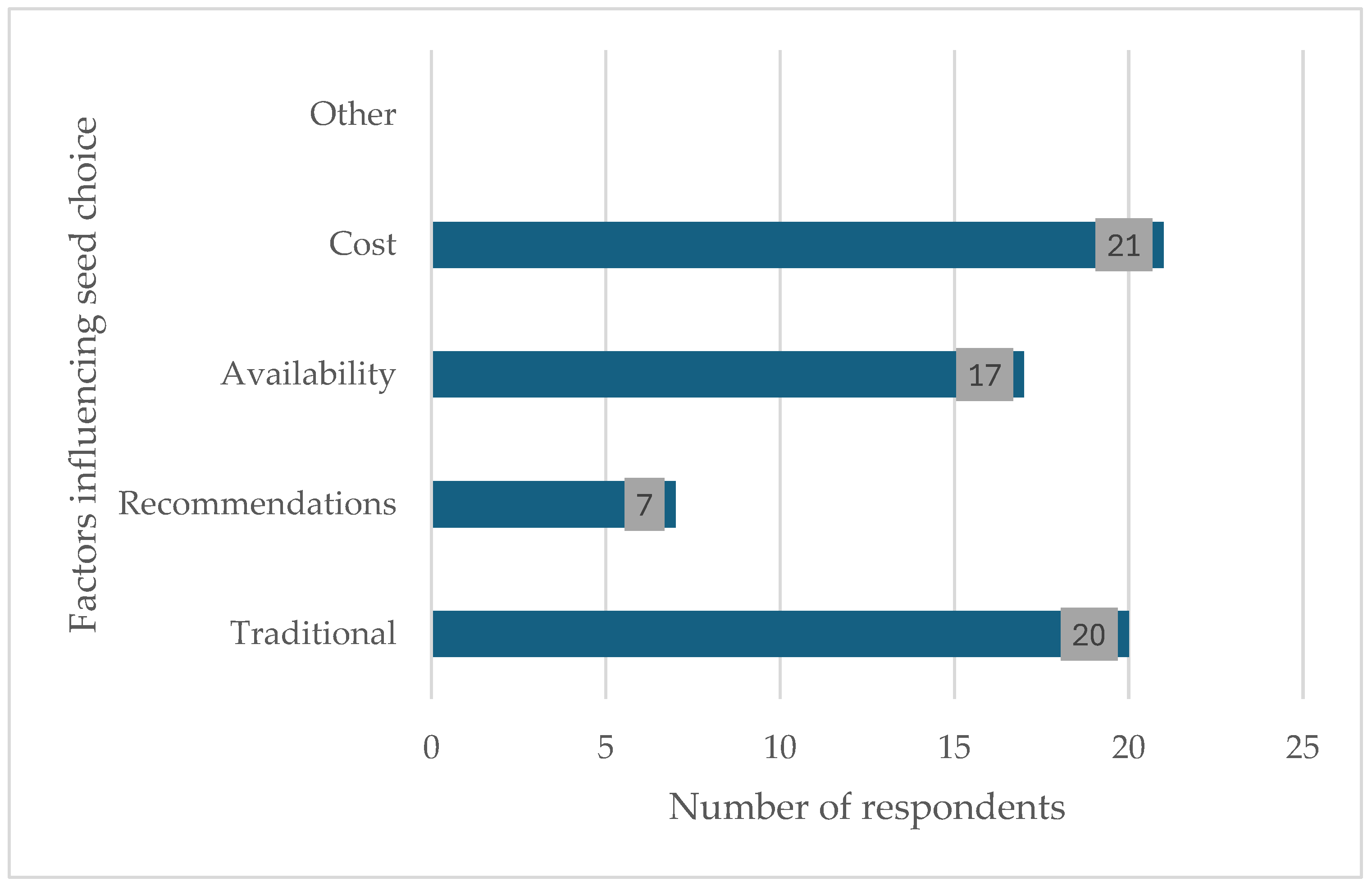
For the question on factors influencing seed use, respondents were permitted to select multiple options, including cost, availability, traditional practices, recommendations, and other factors. Consequently, the percentages shown in
Figure 5 reflect the proportion of cases selecting each factor rather than mutually exclusive categories, and the total number of responses exceeds the sample size due to multiple selections. The bar chart illustrates that among the 50 farmers surveyed, cost was reported by 21 respondents (42%), traditional practices by 20 (40%), availability by 17 (34%), and recommendations by 7 (14%), while other factors were negligible. These findings suggest that economic considerations and cultural familiarity play a dominant role in seed selection, which is consistent with studies on smallholder seed systems where affordability and tradition often outweigh innovation [
15].
Recommendations from extension services or peers account for only 7%, indicating limited influence of formal advisory systems or peer networks in seed decision-making. The “Other” category is not represented, implying that most influencing factors are captured within the main categories. This distribution underscores the need for seed system interventions that address affordability and availability while also integrating culturally accepted practices to enhance adoption.
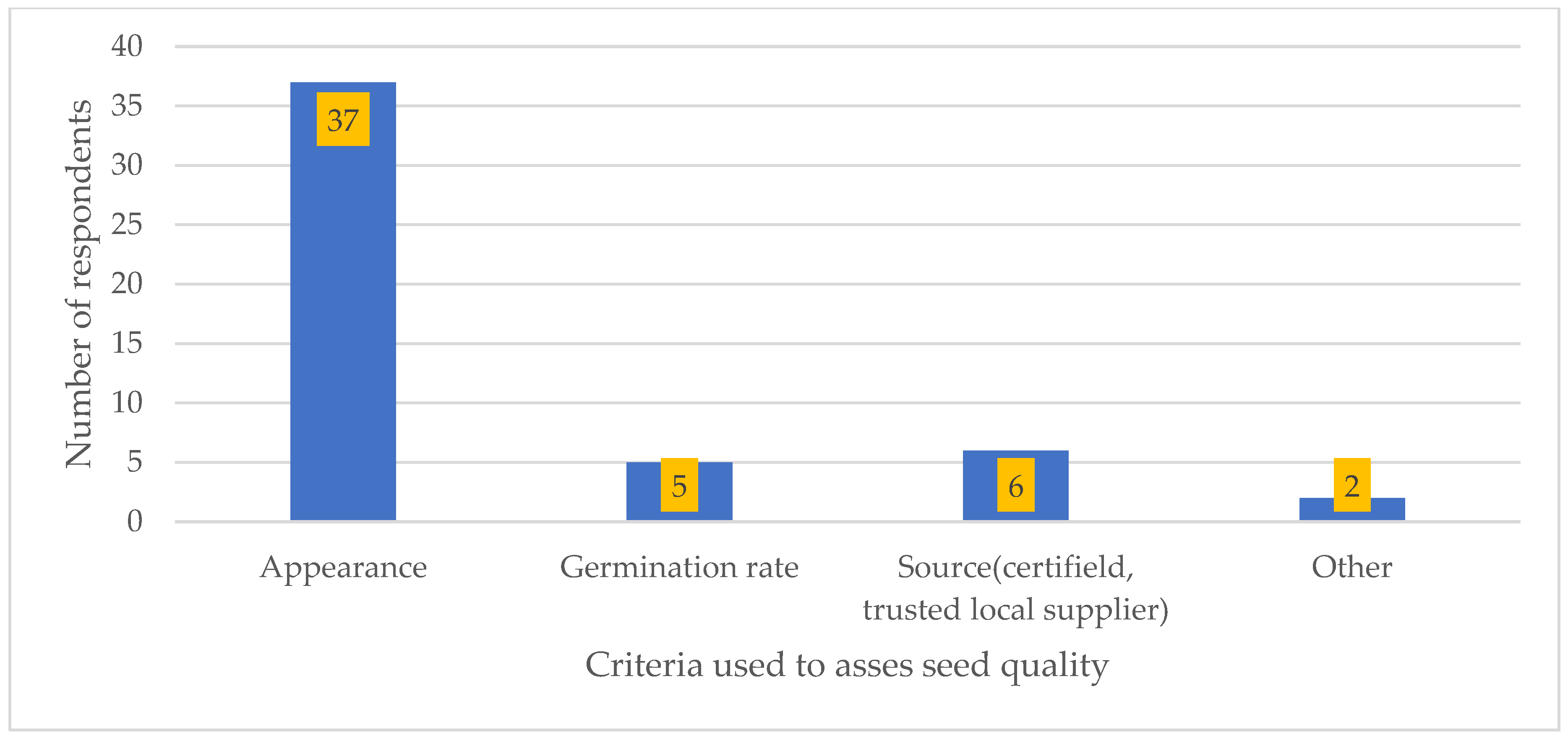
The bar chart titled “understanding of seed quality” or
Figure 6 demonstrates how respondents perceive the concept of seed quality based on four criteria. Most respondents, 37, identified appearances as the most important factor, indicating a strong reliance on visual traits such as size, colour, and uniformity when assessing seed quality. This shows seed illiteracy as seed appearance can be misleading when one assesses seed quality as it only deals with phenotypical features and not genetic features of a seed. In contrast, only 5 respondents considered germination rate and 6 cited the source of the seed (e.g., certified or trusted local supplier) as key indicators. A small number of only two respondents selected other factors. This suggests that while appearance is widely used as a quick and accessible measure, there is limited awareness or emphasis on more technical and performance-based indicators like germination potential and seed origin. The findings highlight a need for increased farmer education on the importance of using certified seeds and understanding germination rates to ensure better crop outcomes and long-term productivity.
3.4. Seed Knowledge and Practices Among Farmers
Table 2 below summarizes responses from farmers regarding their awareness and practices related to seed management. The findings reveal significant knowledge gaps in key areas such as certified seeds, seed adaptability, crop rotation, and risks associated with saved seeds. While 70% of respondents understand what certified seeds are, awareness of seed adaptability to local conditions (18%) and crop rotation (20%) remains very low. Similarly, only 14% recognize the risks of using saved seeds, despite 44% saving seeds for future planting. Seed exchange is moderately practiced (46%), yet formal training on seed management is almost absent, with only 10% having received any guidance. Awareness of local agricultural programs is also limited (24%). Notably, farmers expressed strong interest in regular training, with 32% preferring monthly sessions. These results underscore the urgent need for targeted extension services and capacity-building initiatives to improve seed literacy and promote sustainable farming practices.
Furthermore, we tested whether binary responses in
Table 2 (see
Appendix A,
Table A1) deviated from an equal 50/50 split using chi-square goodness-of-fit. Knowledge of certified seed (χ
2 = 35.28, df = 1,
p < 0.001,
w = 0.84), awareness of risks of saved seed (χ
2 = 25.92, df = 1,
p < 0.001,
w = 0.72), and receipt of seed-management training (χ
2 = 32.00, df = 1,
p < 0.001,
w = 0.80) showed large, significant deviations—strongly favouring “No” in the latter two and “Yes” for certified seed knowledge. Familiarity with seed adaptability (χ
2 = 20.48, df = 1,
p < 0.001,
w = 0.64) and knowledge of crop-rotation relevance (χ
2 = 18.00, df = 1,
p < 0.001,
w = 0.60) also deviated substantially from 50/50, indicating limited literacy in these areas. In contrast, saving own seed (χ
2 = 0.72, df = 1,
p = 0.396,
w = 0.12) and seed exchange (χ
2 = 0.32, df = 1,
p = 0.572,
w = 0.08) did not significantly differ from a 50/50 split. Preferred training frequency did not deviate from equal category proportions (χ
2 = 2.80, df = 3,
p = 0.424,
w = 0.24).
Correlation analysis revealed a positive association between SLI scores and adoption of certified seeds (
r = 0.42,
p < 0.01) and crop diversification (
r = 0.36,
p < 0.05). Chi-square tests confirmed significant deviations from equal distribution for key literacy indicators (e.g., knowledge of certified seeds, χ
2 = 35.28,
p < 0.001). These results suggest that higher seed literacy is linked to improved seed sourcing practices, supporting our conceptual framework [
46].
3.5. Challenges in Seed Literacy
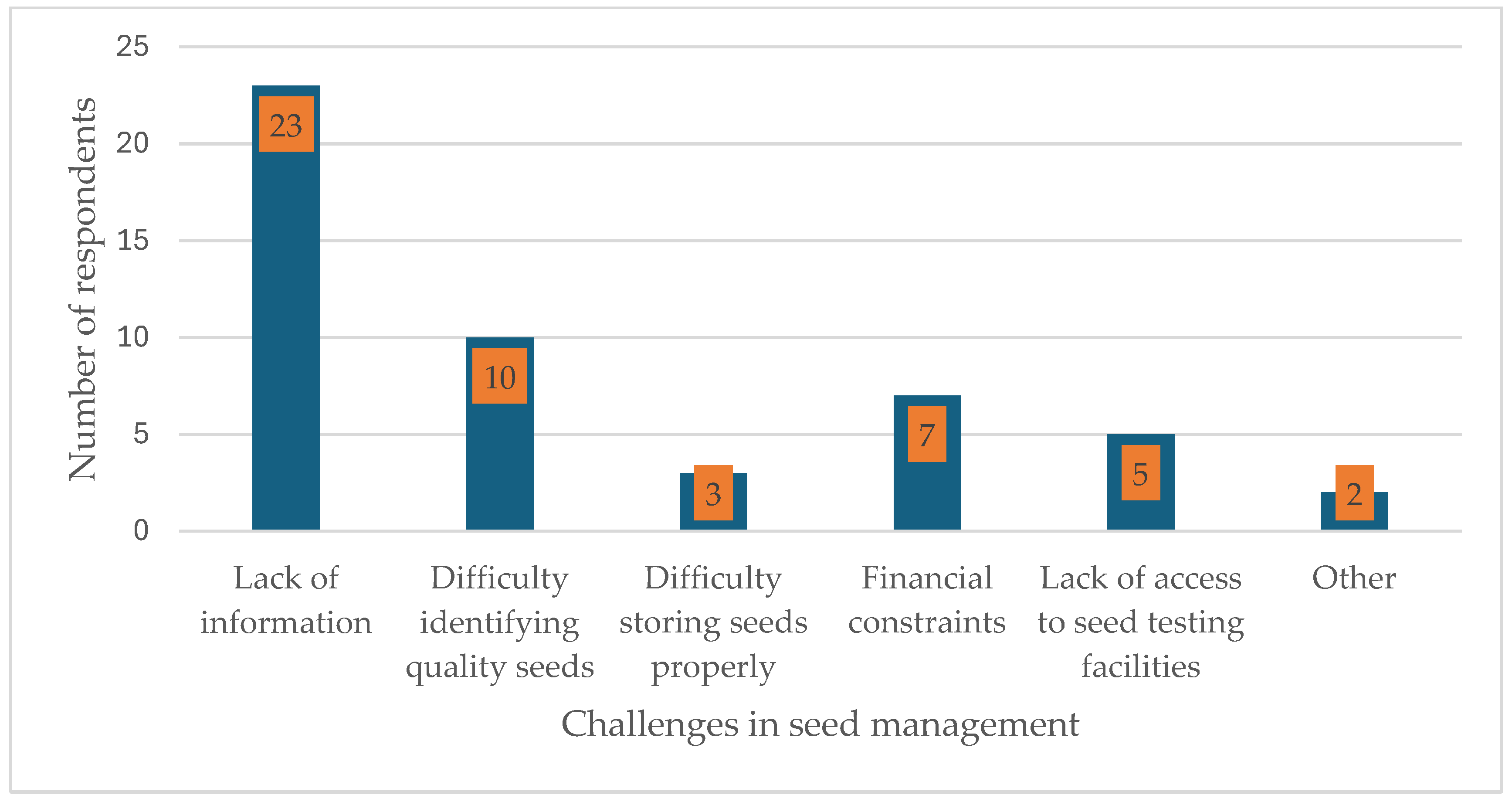
The chart (
Figure 7) highlights several challenges faced by respondents in relation to seed management. The most prominent issue is lack of information, reported by 23 respondents, which accounts for 46% of the total. Difficulty identifying quality seeds follows with 10 responses (20%), while financial constraints were noted by 7 respondents (14%). Lack of access to seed testing was cited by 5 respondents (10%), and difficulty storing seeds properly was mentioned by 3 respondents (6%). The “Other” category had the fewest responses, with 2 respondents, making up 4% of the total. These findings suggest that improving access to information and support for identifying quality seeds could significantly enhance seed management practices among farmers. Furthermore, these figures highlight that informational barriers outweigh financial ones, suggesting that literacy programs could yield higher returns than subsidies alone.
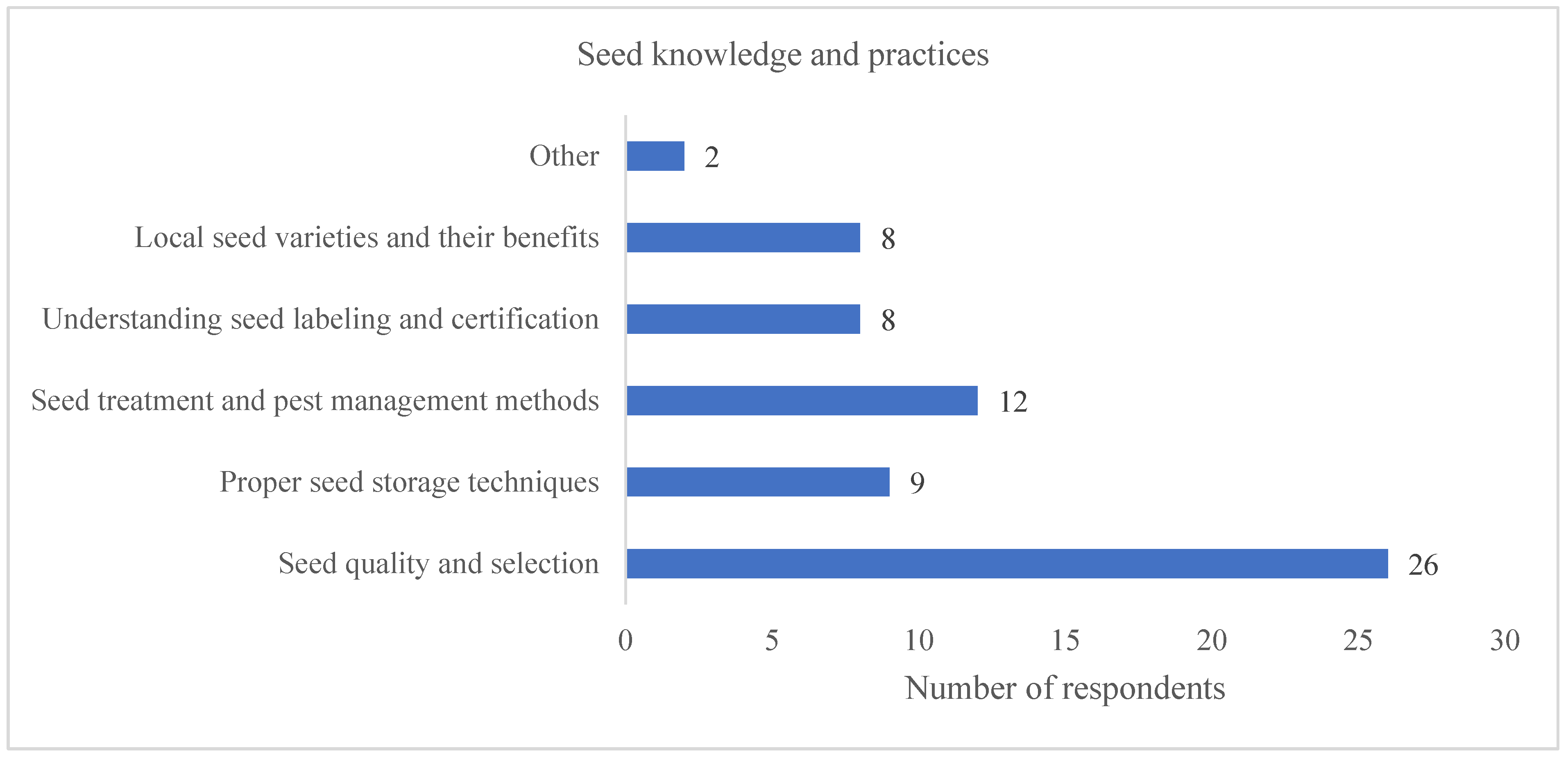
Figure 8 presents responses to various topics related to seed knowledge and practices. The categories include seed quality and selection, proper seed storage techniques, seed treatment and pest management methods, understanding seed labelling and certification, local seed varieties and their benefits, and others. Many respondents (40.91%) indicated that seed quality and selection is the most important topic. This was followed by seed treatment and pest management methods at 18.18%, and local seed varieties and their benefits at 15.15%. Understanding seed labelling and certification accounted for 12.12%, while proper seed storage techniques made up 10.61%. Only 3.03% selected other topics. These results highlight a strong interest in practical seed quality and health management, with less emphasis on regulatory or certification knowledge.
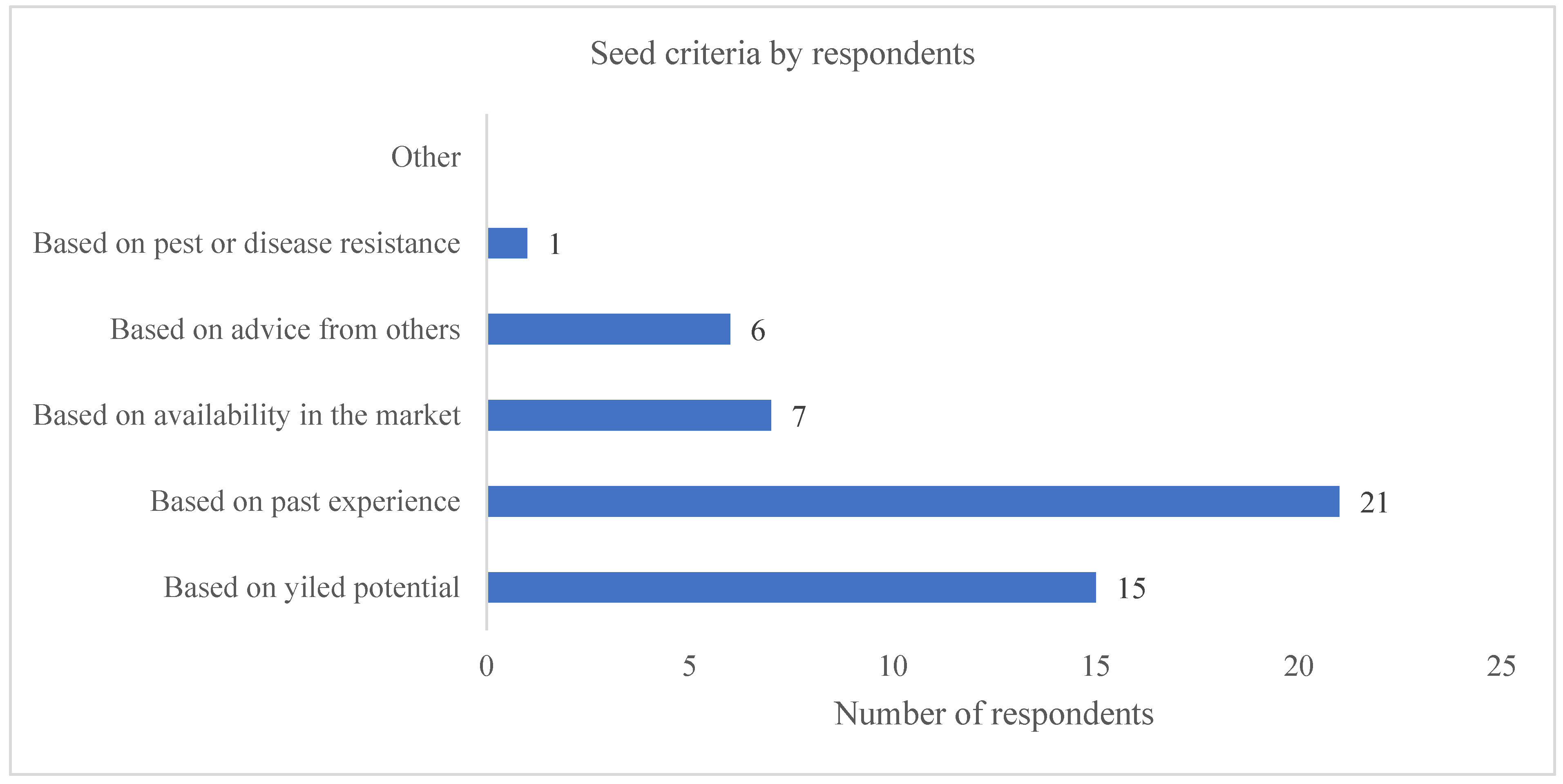
The bar chart titled “How do you select seeds for planting?” or
Figure 9 illustrates the various criteria used by respondents when choosing seeds. The most common factor influencing seed selection is experience, cited by approximately 21% of respondents, indicating that many farmers rely on what has worked for them in the past. This is followed by yield potential, which accounts for around 18%, showing that productivity remains a key consideration. Availability in the market influences about 8% of respondents, while advice from others plays a role for approximately 7%. Only 3% of respondents consider pest or disease resistance, and a mere 1% fall under the “Other” category. These results suggest that while experiential knowledge and yield expectations are dominant factors, there is relatively low awareness or prioritization of scientific traits like pest resistance, which could be critical for long-term crop resilience and productivity. This highlights an opportunity for extension services to promote more informed seed selection practices among farmers.
3.6. Informal Seed Distribution and Gender Dynamics in Butterworth
In addition to the farmer survey, we conducted semi-structured interviews with 12 street vendors who sell vegetable seedlings in Butterworth and surrounding areas. Vendors were selected purposively based on their active involvement in informal seed markets and accessibility to smallholder farmers. Recruitment was facilitated through local market visits, and participation was voluntary. The interview guide focused on four key areas: (i) sources of seeds and seedlings, (ii) criteria used to assess seed quality, (iii) knowledge of certification standards and pest resistance, and (iv) perceived challenges in seed distribution. Interviews lasted approximately 30–40 min and were audio-recorded with consent. Data were analyzed thematically to identify patterns in vendor practices and knowledge gaps. This component complements the quantitative farmer survey and introduces a qualitative dimension, making the study a mixed-methods design that integrates descriptive statistics with thematic analysis for richer insights.
The majority of the vendors were women, actively engaged in selling vegetable seedlings such as cabbage, spinach, beetroot, and onions. These vendors play a critical role in the informal seed system, serving as intermediaries between small-scale seed growers and resource-constrained farmers. Their operations are characterized by accessibility and affordability, enabling rural households to obtain planting material in small quantities suited to household-level production. The predominance of women among these vendors underscores the gendered nature of informal agricultural markets. Women’s participation in seed distribution not only provides income opportunities but also strengthens local food systems by ensuring timely access to planting material. This finding aligns with broader evidence that women are central actors in informal seed systems, often managing both production and distribution networks.
However, interviews revealed significant gaps in seed literacy among vendors. Most assessed seed quality based on visual appearance (e.g., leaf size and colour) rather than technical indicators such as germination rates or varietal adaptability. This mirrors patterns observed among smallholder farmers in KwaMkhiva village, where 75% of respondents relied on appearance as the primary measure of seed quality. Vendors also reported limited knowledge of certification standards and pest resistance traits, which raises concerns about the long-term sustainability and productivity of crops sourced through informal channels.
Despite these challenges, the KwaMkhiva case illustrates the socio-economic importance of informal seed markets. By reducing transaction costs and providing flexible purchasing options, street vendors enable farmers to respond quickly to planting opportunities, particularly in rain-fed systems with narrow planting windows. Strengthening this model through targeted training and integration with community seed banks could enhance seed quality while preserving affordability and accessibility.
3.7. Farmer–Extension Officer Collaboration in Community-Based Seed Systems in KwaMkhiva
Among the farmers interviewed, no one acknowledged having collaborated with extension officers on seed-related activities or training. This lack of participation suggests an imbalance between advisory services and the populations they are intended to assist. 100% of the farmers reported receiving no training or support related to seeds. The absence of extension contact (100%) reflects systemic gaps in advisory services. This disconnect is compounded by policy restrictions that prioritize formal seed systems, limiting informal integration. Strengthening extension mandates and training is critical.
To complement farmer data, semi-structured interviews were conducted with three extension officers serving the Mnquma Local Municipality. Officers were purposively selected based on their direct involvement in crop advisory services in the study area, and recruitment was facilitated through the local Department of Agriculture. The interviews explored four key areas: (i) frequency and nature of interactions with smallholder farmers, (ii) training received on seed systems and community-based seed banks (CBSS), (iii) institutional and policy constraints affecting seed-related advisory services, and (iv) perceptions of informal seed systems. Each interview lasted approximately 45 min and was audio-recorded with consent. Data were analysed thematically following Braun and Clarke’s approach, which allowed identification of recurring patterns such as limited farmer engagement, lack of CBSS training, and policy restrictions. Representative quotes illustrate these themes, for example: “We rarely interact with farmers on seed issues; most of our work focuses on livestock and soil conservation” and “We have not received formal training on community seed banks, so we cannot guide farmers effectively.” These findings highlight systemic gaps in extension services rather than farmer resistance, underscoring the need for institutional reforms and capacity building.
Table 3 indicates that limited knowledge emerged as the predominant barrier to participating in community-based seed systems, underscoring the structural information gap caused by the absence of extension engagement. Financial challenges were also noted, but these appear secondary to informational constraints. This indicates that strengthening farmer learning pathways may yield higher returns than purely financial interventions.
Extension officers acknowledge that they did not receive any formal training in CBSS and that they typically have only occasional interactions with farmers. They pointed out the lack of institutional support and policy clarity. The main restrictions for participating in these systems were from seed producers they are working together with, as reusing or saving seeds from harvested crops changes the genetics/traits of the original seed. Among the restrictions, there is also economic and market control.
By preventing the reuse of seed, they ensure farmers return each season to purchase new seeds, and that creates a steady revenue stream and market dominance. This demonstrates that the inadequate farmer–extension connection is not attributable to farmer resistance, but instead to institutional and regulatory restrictions.
3.8. Implications for CBSS Implementation
The capability and scalability of CBSS are threatened by the lack of cooperation between extension agents and farmers, as already established. Farmers remain isolated and ill-prepared to implement adaptable seed techniques in the absence of reliable middlemen to direct seed selection, support native varieties, and make resources more accessible.
The results show significant shortcomings in the relationship between extension agents and farmers. Extension agents lack the resources, expertise, and policy reform necessary to successfully address the many difficulties farmers encounter in developing seed systems. Building sustainable community-based seed systems, enhancing seed access, and empowering smallholder farmers all depend on strengthening this relationship.
3.9. Interpreting Seed Literacy Index (SLI) Findings
Understanding the Seed Literacy Index (SLI) is essential for interpreting how farmers engage with seed systems and make decisions about seed sourcing, quality assessment, and variety adoption. While the descriptive results presented earlier highlight specific knowledge gaps and behavioural patterns, the SLI provides a more integrated, multidimensional view of farmers’ capabilities across cognitive, evaluative, navigational, and management domains. By converting multiple indicators into a composite metric, the SLI enables comparison across households and reveals broader trends that may not be evident from individual variables alone. Introducing the SLI in this way helps explain variation in seed choices, sheds light on the underlying factors shaping reliance on informal systems and provides a structured basis for understanding how literacy constraints influence adoption behaviour and resilience within the dual seed economy [
45].
3.9.1. Cognitive Knowledge (Seed Types, Certification, Adaptability, Rotation)
Most farmers reported knowing what certified seed is (92%; 46/50), but knowledge of seed adaptability to local conditions (18%; 9/50) and the importance of crop rotation for seed/variety selection (20%; 10/50) was low. Chi-square goodness-of-fit tests showed large deviations from a 50/50 split for these items (e.g., certified seed knowledge χ2 = 35.28, p < 0.001; adaptability χ2 = 20.48, p < 0.001; crop-rotation χ2 = 18.00, p < 0.001), indicating substantive literacy gaps beyond basic certification awareness.
3.9.2. Evaluative Capacity (How Quality Is Assessed)
Quality assessment relied predominantly on appearance (n = 37), with few citing germination rate (n = 5) or source/certification (n = 6). This visual-cue bias suggests limited evaluative depth regarding genetic purity or physiological quality. Correlation analysis showed higher SLI scores were associated with adoption of certified seed (r = 0.42, p < 0.01) and crop diversification (r = 0.36, p < 0.05), implying that enhanced evaluative capacity translates into more resilient seed choices.
3.9.3. Navigational Competence (Information Access and Institutions)
Formal training on seed management was rare (10%; 5/50), and awareness of local agricultural programmes was limited (24%; 12/50). Farmers identified lack of information (46%; 23/50) as the leading challenge, followed by difficulty identifying quality seeds (20%). Interviews with extension officers corroborated low engagement on seed-related topics and limited institutional capacity, aligning with the farmers’ reports and reinforcing systemic advisory gaps.
3.9.4. Management Practices (Saving, Exchange, Storage)
Seed saving (44%; 22/50) and exchange (46%; 23/50) were common, yet awareness of the risks of saved seed (e.g., disease, yield decline) was low (14%; 7/50). The distribution of saving/exchange did not differ significantly from 50/50 (χ2 = 0.72 and 0.32, respectively), indicating heterogeneity of practice within the community. Preferences for training frequency skewed toward regular engagement (e.g., monthly = 32%).
3.9.5. Crop Choices and Sources (Context for SLI)
Maize was the most common crop (n = 29), typically complemented by small plots of cabbage (n = 26) and spinach (n = 24). Seed sources were dominated by local markets (49%; 31/50) and farm-saved seed (40%; 25/50); seed companies accounted for 9% (6/50) and cooperatives 2% (1/50). These patterns underscore the importance of informal channels in the local seed economy.
3.9.6. Integrative Interpretation (SLI and Adoption)
Aggregating across dimensions, most farmers fell in the low-to-medium SLI range (approx. 25–55 on a 0–100 scale). Higher SLI scores were positively associated with certified seed adoption and diversification, suggesting that literacy mediates how farmers evaluate risks/benefits and navigate seed channels. A single DOI-based interpretation (see above) explains lower certified seed uptake among experienced farmers without repeating theory in multiple sections. While the cross-sectional design limits causal claims, the pattern is consistent with literacy acting as an intermediary capability between institutions and seed choices [
46].
4. Conclusions and Implications
4.1. Conclusions
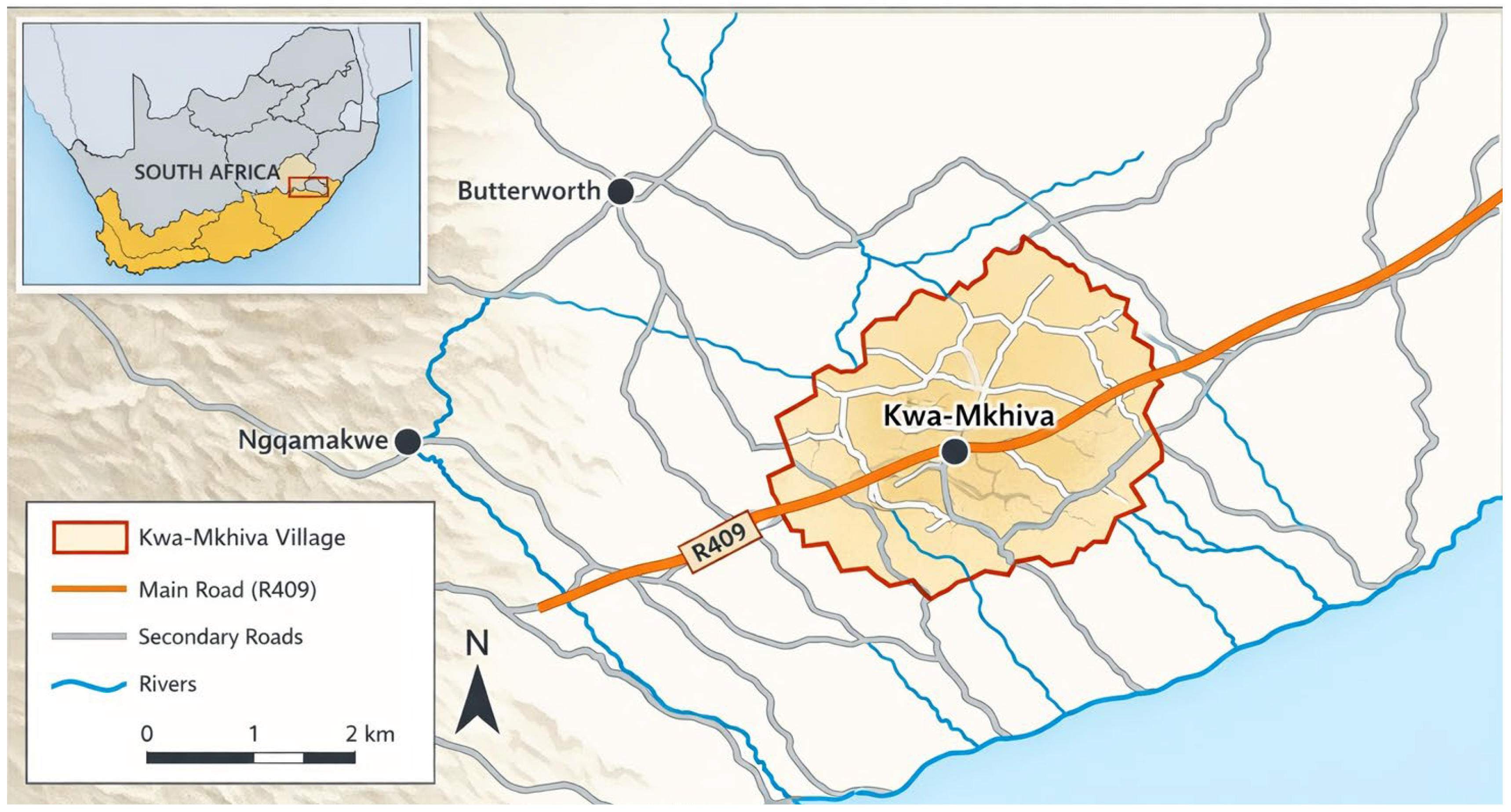
This study assessed seed literacy and seed access among smallholder farmers in Kwa-Mkhiva village in the Eastern Cape. The results show that while most farmers are familiar with the concept of certified seed, deeper understanding of seed quality such as varietal adaptability, germination potential, and crop rotation remains limited. Farmers largely rely on visual cues to judge seed quality and depend heavily on informal seed sources, particularly local markets and farm-saved seed. Access to training and extension support is minimal, contributing to low evaluative and navigational seed literacy. These gaps help explain the continued dominance of informal systems and the slow uptake of improved varieties.
The findings highlight several practical implications. First, improving seed literacy, especially farmers’ ability to assess quality beyond appearance could enhance adoption of higher-performing varieties and support more resilient cropping systems. Second, strengthening extension services is essential. The near-absence of seed-related advisory support limits farmers’ ability to engage with both formal and community-based seed systems. Third, community seed banks offer a viable approach for improving access to diverse, locally adapted seed while also serving as platforms for collective learning. Finally, reforms that make seed regulations more inclusive would reduce barriers for smallholders and informal vendors, enabling them to participate more meaningfully in local seed markets.
Overall, the study demonstrates that seed literacy is a critical but underdeveloped capability that shapes smallholder decision-making within South Africa’s dual seed economy. Interventions that combine farmer-centred training, improved institutional support, and locally grounded seed systems are likely to yield meaningful improvements in productivity, resilience, and household food security.
4.2. Limitations of the Study
This study has several limitations that should be acknowledged. First, the sample size was relatively small (50 farmers and 12 vendors) and drawn from a single village, which restricts the generalizability of the findings to other regions or contexts. Second, the use of a cross-sectional design limits the ability to establish causal relationships between seed literacy and farming outcomes; longitudinal studies would provide deeper insights into changes over time. Third, purposive sampling may introduce selection bias, as participants were chosen based on active crop production, potentially excluding households with different seed practices. Fourth, data collection relied on self-reported responses, which may be subject to recall bias or social desirability bias. Finally, the analysis was primarily descriptive, with limited inferential testing due to sample size constraints, which restricts the depth of statistical conclusions. Future research should employ larger, randomly selected samples across multiple villages, incorporate mixed methods approaches, and apply more robust statistical analyses to strengthen validity and reliability. The absence of mediation or causal analysis limits the empirical testing of the proposed framework.
4.3. Implication for Future Research
Future studies should explore the relationship between seed literacy levels and yield performance across different crops and agro-ecological zones. Moreover, longitudinal research is needed to assess how improved seed literacy and the establishment of CSBs affect household food security outcomes over time. Understanding how social networks mediate seed knowledge exchange could also help design more effective local learning systems.




 ,
,