1. Introduction
In recent years, environmental degradation, climate change, the rapid depletion of natural resources [
1] and increasing social inequalities have placed the concept of sustainability at the center of social and political debates as well as the academic literature. These global challenges have made the ecological and social limits of prevailing production and consumption patterns more visible, thereby necessitating a reassessment of the relationship between societies and the natural and social systems with which they interact [
2]. In this context, sustainability is defined as the capacity of a society or an ecosystem to maintain its functions continuously, while sustaining its existence without overexploiting natural resources or exerting irreversible pressures on ecosystems [
3].
Sustainability also represents a normative approach that aims to ensure that contemporary societies utilize the resources necessary for life in a balanced, conscious, and responsible manner. This approach treats the consideration of future generations’ living opportunities as a fundamental principle while individuals and institutions seek to meet present needs [
4]. Similarly, sustainability is regarded not merely as an environmental sensitivity, but as a value system that encompasses both individual and collective responsibilities [
5]. In this respect, the concept embodies a holistic framework that incorporates economic, social, and ethical dimensions alongside the environmental dimension [
6].
The intergenerational responsibility dimension of sustainability gained a global conceptual framework with the publication of the Brundtland Report in 1987. In the report, sustainability is defined as “meeting the needs of the present without compromising the ability of future generations to meet their own needs,” and this definition has been widely accepted at the international level [
7,
8]. The Brundtland Report did not merely frame sustainability as an environmental concern; rather, it emphasized the need to establish a balanced relationship among economic growth, social welfare, and environmental protection. This perspective laid the groundwork for integrating sustainability into development processes and formed the theoretical foundation of the concept of sustainable development [
9].
Within this framework, sustainability exerts a broad sphere of influence ranging from individual life practices to institutional structures and public policies. This approach, which necessitates the long-term, equitable, and responsible structuring of development processes, requires the protection of natural resources, the organization of economic and social systems in a manner that takes future generations into account, and the formulation of development goals through a holistic perspective. Accordingly, sustainable development emerges as a fundamental approach in which the principle of sustainability is integrated with economic and social dimensions, jointly considering the well being of present and future generations [
10].
In line with these developments, sustainability has been institutionalized at the global level through the United Nations Sustainable Development Goals (SDGs), which provide a comprehensive framework for addressing interconnected environmental, social, and economic challenges [
11]. Among the 17 SDGs, SDG 12 (Responsible Consumption and Production) explicitly targets the transformation of consumption patterns, while SDG 4 (Quality Education) emphasizes the role of education in fostering sustainability-oriented knowledge, values, and behaviors [
12,
13]. In addition, SDG 13 (Climate Action) highlights the critical role of individual and collective actions, including consumption-related behaviors, in mitigating climate change [
14]. Within this global policy framework, higher education institutions and university students are recognized as key agents in advancing the SDGs by shaping sustainability awareness, attitudes, and responsible behavioral orientations [
15].
1.1. Sustainable Development
The integration of the sustainability perspective into development processes paved the way for the emergence of the concept of sustainable development. The notion was initially articulated in the 1987 report Our Common Future, widely known as the Brundtland Report, prepared by the World Commission on Environment and Development. Following the publication of this landmark document, the concept achieved broad international recognition and was increasingly embraced within global policy and academic discourse [
16,
17]. According to the report, sustainable development is described as “development that meets the needs of the present without compromising the ability of future generations to meet their own needs”; in this respect, it aims to establish a balanced relationship among environmental protection, economic development, and social welfare. The Brundtland Report is regarded as a theoretical turning point in that it conceptualizes sustainable development not merely as an environmental sensitivity, but as an approach that requires the long-term and holistic restructuring of development policies [
18,
19].
Over time, sustainable development has moved beyond academic debates to become one of the core elements of national and international policy documents. This approach, embraced by global actors such as the United Nations and the European Union, requires that development goals be addressed within the framework of environmental limits and principles of social equity [
20,
21]. In this context, sustainable development provides a normative framework aimed at ensuring that economic growth is pursued in a manner consistent with environmental integrity and social justice. At the same time, some studies point out that the Brundtland definition entails conceptual limitations, particularly in treating economic growth as a necessary component of development and in positioning the natural environment only indirectly at the center of the framework [
19,
22].
One of the prominent approaches in the sustainable development literature is the “triple bottom line” model, which advocates the simultaneous consideration of environmental, economic, and social dimensions. Through this model, Elkington [
23] emphasized that environmental and social impacts should be taken into account in development and policy decisions alongside financial outcomes. Subsequent studies indicate that sustainable development is a multi-actor and dynamic process, shaped not only by policymakers and institutions but also through individuals’ values, attitudes, and behaviors [
24,
25,
26]. This underscores the critical role of individuals in developing sustainability consciousness for the effective implementation of sustainable development goals. Accordingly, sustainability consciousness emerges as one of the fundamental mechanisms through which sustainable development is internalized at the individual level.
1.2. Sustainability Consciousness
The realization of the sustainable development approach at the societal level is closely associated with the development of individuals’ cognitive and awareness-based foundations related to this process. In this context, sustainability consciousness is defined as a multidimensional cognitive superstructure encompassing individuals’ levels of knowledge, awareness, and perceptions regarding environmental, social, and economic sustainability. A relatively recent concept in the literature, sustainability consciousness is often regarded as an outcome of sustainability education and learning processes; it refers to individuals’ capacity to recognize sustainability issues, comprehend their causes and consequences, and develop mental representations related to solution processes [
27]. In this respect, sustainability consciousness constitutes a fundamental cognitive basis that enables the internalization of sustainable development at the individual level.
Gericke et al. [
28] conceptualize sustainability consciousness not merely as a construct limited to levels of knowledge, but as an integrated system composed of knowledge, attitude, and behavior components that holistically shape individuals’ awareness of and engagement with sustainability issues. This perspective reveals that sustainability consciousness is not a static accumulation of information, but rather a dynamic structure encompassing individuals’ processes of evaluation, interpretation, and orientation. Accordingly, sustainability consciousness is regarded as an important determinant that shapes individuals’ perceptions of sustainable development goals and determines their level of psychological readiness to engage with these goals.
However, it is emphasized that although sustainability consciousness is a necessary precondition for the emergence of pro-sustainability behaviors, it is not sufficient on its own to fully explain behavioral change. Kollmuss and Agyeman [
29] argue that awareness of environmental and social issues constitutes an important starting point for sustainable behaviors; however, the transformation of this awareness into consistent behavioral change depends on a range of psychosocial processes. Similarly, Salas Zapata et al. [
30] demonstrate that the development of sustainability consciousness occurs through processes of knowledge acquisition, attitude transformation, and behavioral improvement. Within this framework, the effect of sustainability consciousness on behavior is not direct; rather, it is shaped through mediating mechanisms such as individuals’ attitudes toward sustainable development and their perceptions of responsibility. Therefore, it can be argued that sustainability consciousness plays a foundational preparatory role in the formation of attitudes toward sustainable development.
1.3. Attitudes Toward Sustainability
One of the most widely used theoretical approaches to explaining the transition from individual awareness to behavior is the Theory of Planned Behavior [
31]. According to this theory, behaviors do not emerge as direct outcomes of knowledge or awareness; rather, they arise through intentions to perform the behavior. The formation of intentions is based on three core components: individuals’ attitudes toward the behavior, their perceptions of social expectations, and their self-assessments of their capacity to perform the behavior. In particular, the dimension of perceived behavioral control plays a critical role in the formation of intentions by reflecting the extent to which individuals feel competent and effective in performing the behavior [
32].
When behaviors with long-term consequences and strong value-based and normative orientations, such as sustainable consumption, are considered, the environmental and social awareness that individuals acquire through sustainability consciousness constitutes a fundamental cognitive foundation for all of these theoretical components. In this respect, the Theory of Planned Behavior provides a holistic explanatory framework for understanding individuals’ evaluative processes and behavioral orientations in the context of sustainability, particularly by emphasizing the central role of attitudes [
33].
Within this framework, attitudes emerge as a fundamental cognitive and evaluative mechanism through which individuals assess a given behavior in either positive or negative terms. It is acknowledged that sustainability consciousness performs an important preparatory function in shaping individuals’ attitudes toward sustainable development and, through these attitudes, contributes indirectly to behavioral processes. Indeed, the orientation of attitudes toward sustainability is of critical importance in determining individuals’ tendencies to support sustainable practices or to avoid them. It is emphasized that these attitudes may be shaped in either positive or negative directions and that such orientations are decisive in influencing individual behavioral preferences [
34].
Attitudes toward sustainability are regarded as a multidimensional attitudinal construct that reflects individuals’ evaluations of the principles of environmental protection, social responsibility, and economic balance. This construct encompasses various components, including the motivation to engage in environmentally friendly behavior, value orientations, individuals’ levels of satisfaction with the relationship they establish with themselves and their environment, willingness to take action, and emotional responses and concerns regarding environmental issues [
30]. Kalsoom [
35], in turn, defines sustainability attitudes as a relatively stable tendency that encompasses individuals’ evaluations of environmental, social, and economic sustainability and has the potential to guide sustainable behaviors.
Although there is strong evidence that positive attitudes toward sustainability support environmentally friendly and responsible consumption behaviors, the fact that these attitudes do not always translate into actual behavior indicates the presence of a gap between attitudes and behavior that requires explanation [
36]. This suggests that additional psychosocial mechanisms come into play in the process through which attitudes are transformed into behavior. One such mechanism is the concept of perceived global social responsibility, which refers to the extent to which individuals feel responsible for social and environmental issues at the global level.
1.4. Perceived Global Social Responsibility
Perceived global social responsibility is regarded as a normative and moral construct that refers to individuals’ sense of responsibility not only toward their immediate surroundings but also toward environmental, social, and ethical issues that emerge at the global level, as well as their belief that individual actions can make a meaningful difference in addressing these issues. Within the perspective of global citizenship, this sense of responsibility is associated with individuals’ adoption of a conception of “good citizenship” on a worldwide scale, extending beyond their national boundaries [
37,
38]. This approach enables individuals to evaluate sustainability issues not as abstract and distant threats, but as ethical obligations that can be linked to their own behaviors. Indeed, it is emphasized that individuals with high levels of global social responsibility develop sensitivity toward the well being of others and the protection of shared living spaces, even when personal costs are involved [
39]. In line with this, research suggests that a generally optimistic outlook can further support individuals’ psychological well being and their positive approach to such responsibilities [
40].
In the literature, perceived global social responsibility is positioned as a critical mediating mechanism that is associated with the transformation of attitudes into behavior. Başer and Kılınç [
41] conceptualize global social responsibility as a multidimensional construct encompassing altruistic, ecological, national, and action-oriented responsibility dimensions, thereby explaining the link between individuals’ value orientations and their behavioral outcomes. In particular, the action-oriented responsibility dimension refers to individuals’ capacity to translate their evaluations of global-level issues into concrete behaviors. In this context, global social responsibility creates an internal domain of obligation that does not leave individuals’ positive attitudes toward sustainability merely at a cognitive level, but rather supports the manifestation of these attitudes in the behavioral domain [
38,
42].
Perceived global social responsibility is also closely associated with environmental responsibility and sustainability-oriented behaviors. Growing awareness of the environmental and social consequences of production, consumption, and supply chains at the global level provides a basis for individuals to re-evaluate their consumption preferences within an ethical and responsible framework [
43]. It is noted that individuals with a heightened sense of environmental responsibility are more likely to exhibit pro-environmental and sustainable behaviors, and that this tendency is further strengthened in conjunction with perceived global responsibility [
44,
45]. Accordingly, perceived global social responsibility emerges as a key psychosocial binding factor that enables individuals to view their sustainable consumption behaviors not merely as personal choices, but as ethical actions with global environmental and social consequences.
1.5. Sustainable Consumption Behavior
Considering the influence of perceived global social responsibility on individuals’ value orientations and attitudes, it can be argued that one of the domains in which this sense of responsibility becomes most visibly manifested in everyday life is consumption behavior. Individuals’ feelings of responsibility toward environmental and social problems at the global level lead them to regard individual actions aimed at addressing these problems as meaningful and necessary. In this context, consumption behavior is considered one of the most critical domains in which sustainability is concretized in daily life. Accordingly, forms of consumption that protect natural resources, minimize environmental impacts [
46], and take into account the rights of future generations while meeting individuals’ needs are addressed under the concept of “sustainable consumption” as the practical reflection of sustainability [
47]. In this respect, sustainable consumption is defined as an approach that emphasizes goods and services aimed at improving quality of life while meeting basic needs, and that limits the use of natural resources, reduces the use of harmful substances, and minimizes waste and emissions released into the environment throughout the life cycle, including the stages of production, use, and disposal. This approach adopts the preservation of future generations’ ability to meet their needs as a fundamental principle [
48,
49].
Accordingly, sustainable consumption emerges as a significant domain of practice that is not confined to individual choices alone, but rather offers a key pathway for transformation at the societal level. This approach necessitates the implementation of a holistic perspective in everyday life that extends beyond the environmental dimension of sustainability to encompass economic, social, and ethical responsibilities. In particular, individuals’ consumption habits play a critical role in transforming sustainability from a theoretical concept into a practical and actionable way of life [
50].
Within this framework, sustainable consumption behaviors refer to individuals’ efforts to guide their consumption choices in line with environmental responsibility awareness in a manner that minimizes negative impacts on the environment [
51,
52,
53]. Through conscious and planned consumption practices that prioritize the conservation of resources and enable the realization of sustainability goals in everyday life, these behavior patterns play a decisive role in the internalization of sustainability at the individual level [
54].
Identifying the psychosocial processes through which sustainable consumption behaviors are shaped at the individual level is of critical importance for deepening theoretical debates in this field. In this context, the literature widely acknowledges that cognitive and psychological factors play a decisive role in explaining such behaviors, with sustainability awareness being among the foremost of these factors [
33,
55,
56]. However, sustainable consumption behaviors should be addressed not only in terms of individual characteristics, but also by considering the social and sectoral contexts in which these behaviors are enacted. Indeed, the manifestations of sustainability in everyday life take on different forms across various social domains, making it necessary to evaluate sustainable consumption behaviors within the framework of sector-specific dynamics.
1.6. Sustainability in Sports Sciences
Sustainability debates have concrete manifestations across different fields, one of which is the sports sector. Activities such as sporting events, facilities, equipment production, and sports tourism generate significant economic and environmental impacts [
57]. With the influence of globalization, the sports sector has become culturally popular by transcending traditional boundaries and integrating elements of the entertainment industry [
58]. In this respect, the sports industry encompasses not only the provision of products, materials, and services, but also facilities, equipment, and content for sporting activities, as well as management, legal, and marketing processes [
59].
The sports industry constitutes a critical domain for sustainability due to its environmental impacts, including the use of natural resources, waste generation, and carbon emissions. In this context, the adoption of sustainability practices within sports industries is of considerable importance for both mitigating environmental impacts and fulfilling social responsibility [
55,
60,
61]. Sustainability practices, such as energy conservation, waste management, and the protection of natural resources, can serve as exemplars and contribute to fostering more conscious and responsible practices across other industries.
Moreover, athletes and sports professionals possess the potential to assume social responsibility as role models capable of reaching broad audiences [
62]. Accordingly, students in sports sciences are regarded as a strategic group in terms of sustainability, as they are likely to assume active roles within the sports industry in the future [
63]. Their sustainability awareness, attitudes, and perceptions of global social responsibility have the capacity to shape not only their personal consumption behaviors but also their prospective professional practices and the messages they convey to society. In general, it is emphasized that strong foundations are required to support and sustain sustainability. Critical strategies emerge at several levels: from an individual perspective, promoting youth participation and development in sports; at the institutional level, building robust sports infrastructures; and from an environmental perspective, encouraging environmentally sustainable modes of transportation [
60].
Sports science students represent a strategically important population for sustainability research, as they are future athletes, coaches, managers, and decision makers within an industry that has a substantial environmental and social footprint. Beyond their individual consumption behaviors, these individuals are likely to influence sustainability-related decisions, practices, and value orientations within the sports sector through their professional roles. Moreover, the sports industry holds a unique capacity to shape public attitudes and behaviors due to its high visibility and strong role-modeling potential. Therefore, examining the psychosocial mechanisms underlying sustainable consumption behaviors among sports science students offers critical insights not only at the individual level but also for the future sustainability practices of the sports industry as a whole.
1.7. The Present Study
Building upon the theoretical foundations outlined above, the present study advances existing sustainability research by testing a structured serial mediation model that explains how sustainability consciousness is translated into sustainable consumption behavior among sports science students. Rather than focusing solely on direct or bivariate associations, this study adopts a process-oriented perspective and empirically examines the sequential cognitive attitudinal normative mechanisms underlying sustainable consumption behavior.
Within the literature, sustainability awareness is widely recognized as a key determinant shaping sustainable consumption behaviors through its influence on individuals’ attitudes toward sustainability and their perceived levels of global social responsibility [
33,
55,
56]. However, much of the existing research relies predominantly on bivariate analyses, and multivariate, interaction-based, and process-oriented models remain relatively limited, particularly within samples of sports science students [
59].
Although research addressing sustainability practices and social responsibility in the sports sector has substantially contributed to understanding environmental management and organizational responsibility dimensions [
57,
58,
62], fewer empirical studies have centered on the cognitive, attitudinal, and normative characteristics of the human capital that will shape the future of the sports industry. As future professionals who are likely to assume decision-making, implementation, and leadership roles, sports science students represent a strategically important group. Their sustainability consciousness and perceptions of global social responsibility may influence not only their personal consumption behaviors but also their future professional practices and the sustainability-oriented values they transmit within society.
In this context, the study examines the statistical effect of sustainability consciousness on sustainable consumption behavior not only at the level of direct relationships, but also within the framework of indirect processes operating through attitudes toward sustainability and perceived global social responsibility. The proposed serial mediation model aims to elucidate the role of multistage psychosocial mechanisms extending from individual awareness to attitudinal evaluations and normative responsibility perceptions in the formation of sustainable consumption behaviors.
From this perspective, the study offers an integrative assessment that conceptualizes sustainable consumption behaviors not merely as phenomena confined to individual preferences, but as outcomes shaped by the integration of cognitive, attitudinal, and moral responsibility dimensions. Accordingly, the mediating roles of attitudes toward sustainability and perceived global social responsibility in the relationship between sustainability consciousness and behavior are systematically tested within the context of sports sciences. The findings are expected to contribute theoretically to the literature on sustainability and consumption behaviors, while also providing practical implications for the development of sports education curricula and the promotion of sustainable practices within the sports industry.
To the best of our knowledge, this study is among the first to empirically test a serial mediation model linking sustainability consciousness to sustainable consumption behavior through attitudes toward sustainable development and perceived global social responsibility within the context of sports science education. By doing so, the study provides a direct empirical contribution to the United Nations Sustainable Development Goals, particularly SDG 12 (Responsible Consumption and Production) and SDG 4 (Quality Education), by revealing the psychosocial mechanisms through which education-based sustainability awareness is translated into responsible consumption behaviors among future sports professionals. Moreover, by emphasizing the role of perceived global social responsibility in shaping consumption choices, the findings are also aligned with SDG 13 (Climate Action), as individual consumption practices constitute a critical component of climate change mitigation strategies [
11,
14].
1.8. Theoretical Framework, Mediation Pathway, and Theoretical Contribution
The present study is grounded in an integrative theoretical framework that combines sustainability awareness theory, the Theory of Planned Behavior (TPB), and global social responsibility perspectives to explain sustainable consumption behavior among sports science students. Sustainability awareness constitutes a foundational cognitive construct reflecting individuals’ understanding of environmental, social, and economic sustainability issues. Prior research consistently highlights awareness as a critical starting point for pro-sustainability processes, as it shapes individuals’ perceptions of responsibility and the anticipated consequences of consumption-related decisions [
29]. However, empirical evidence also suggests that awareness alone is insufficient to generate consistent behavioral outcomes, underscoring the need to examine intermediary psychosocial mechanisms. Similarly, findings among athlete students indicate that awareness may be associated with distinct psychological responses, highlighting the complexity of its effects [
64].
Within the TPB framework, attitudes toward sustainability represent a key evaluative mechanism through which sustainability awareness is translated into behavioral tendencies [
31]. Attitudes reflect individuals’ favorable or unfavorable evaluations of sustainability-oriented practices and have been shown to play a central role in consumption-related decision making. In the context of sports science education, attitudes toward sustainability are particularly salient, as students are exposed to both personal consumption choices and the broader environmental and social impacts of the sports industry. Accordingly, sustainability awareness is expected to foster more positive attitudes toward sustainability, which subsequently influence downstream outcomes.
Although the Theory of Planned Behavior [
31] includes attitudes, subjective norms, and perceived behavioral control, the present study focused exclusively on the attitudinal component. This decision was theoretically grounded in prior sustainability research suggesting that attitudes represent the most proximal and consistent predictor of sustainable consumption behavior among university students [
65].
Extending beyond individual cognition and attitudes, the present study incorporates perceived global social responsibility as a moral and ethical construct that captures individuals’ sense of responsibility toward global environmental and social challenges. Drawing on global citizenship theory and social responsibility theory, perceived global social responsibility reflects the internalization of global sustainability norms and the belief that individuals have an active role in addressing global issues through everyday behaviors, including consumption [
66]. This construct is particularly relevant in sports-related contexts, where future sports professionals are increasingly expected to act as role models who promote ethical, socially responsible, and sustainable practices at both local and global levels.
Based on these theoretical perspectives, the present study proposes a serial mediation pathway in which sustainability awareness is associated with sustainable consumption behavior indirectly through attitudes toward sustainability and perceived global social responsibility. This sequential process represents a cognitive attitudinal moral mechanism, whereby awareness enhances positive attitudes, attitudes strengthen perceptions of global social responsibility, and global social responsibility ultimately predicts statistically sustainable consumption behavior. By conceptualizing and empirically testing this serial mediation model, the study advances existing sustainability research by moving beyond direct effect models and offering a more nuanced explanation of how sustainability awareness is transformed into sustainable consumption behavior.
From a theoretical standpoint, this study makes several important contributions. First, it extends the sustainable consumption literature by empirically demonstrating a sequential mediation mechanism that clarifies the psychosocial processes linking awareness to consumption behavior. Second, by integrating the TPB with global social responsibility and global citizenship perspectives, the study provides a more comprehensive theoretical framework that incorporates not only evaluative and intentional components but also moral and global considerations. Third, the study contributes to the sports science literature by situating sustainable consumption within the context of sports science education, an area that has received limited scholarly attention despite the growing environmental and social footprint of the sports industry. By focusing on sports science students as future sports professionals and potential opinion leaders, the study underscores the theoretical importance of sustainability-oriented education in shaping attitudes, global responsibility perceptions, and consumption-related behaviors.
Based on established theoretical frameworks, including sustainability awareness, the Theory of Planned Behavior, and global social responsibility, the present study investigates the relationships between sustainability consciousness, attitudes toward sustainability, perceived global social responsibility, and sustainable consumption behavior among sports science students.
Specifically, the study posits that sustainability consciousness is positively associated with both attitudes toward sustainability and sustainable consumption behavior. In turn, attitudes toward sustainability are hypothesized to positively predict perceived global social responsibility, which is expected to be positively linked to sustainable consumption behavior.
Accordingly, the following hypotheses are proposed:
H1. Sustainability consciousness is positively associated with attitudes toward sustainable development.
H2. Sustainability consciousness is positively associated with sustainable consumption behavior.
H3. Attitudes toward sustainable development are positively associated with sustainable consumption behavior.
H4. Sustainability consciousness exerts an indirect effect on sustainable consumption behavior through attitudes toward sustainable development.
H5. Sustainability consciousness exerts a sequential indirect effect on sustainable consumption behavior through attitudes toward sustainable development and sustainable consumption intention (serial mediation).
H6. Attitudes toward sustainability and perceived global social responsibility operate as sequential mediators in the relationship between sustainability consciousness and sustainable consumption behavior.
This conceptual framework suggests that sustainability consciousness not only directly influences sustainable consumption behavior but also operates indirectly via attitudinal and social responsibility pathways, highlighting the critical role of both individual attitudes and global social responsibility in promoting sustainable behaviors among students through the relationship between sustainability awareness and sustainable consumption behavior.
Although prior research has examined the associations between sustainability awareness, attitudes, and sustainable consumption behavior, these relationships have largely been tested through direct or parallel mediation models. The present study advances the literature by proposing and empirically validating a serial mediation mechanism in which sustainability consciousness operates through a sequential cognitive attitudinal moral pathway. Unlike traditional TPB-based models that emphasize attitudes and intentions, this study integrates a global moral dimension perceived global social responsibility into the explanatory framework. By doing so, it extends sustainable consumption research beyond individual evaluative processes and incorporates global ethical internalization as a downstream mechanism. This sequential modeling approach provides a more process-oriented explanation of how awareness is transformed into behavior, thereby addressing the frequently observed awareness-behavior gap in sustainability research [
29,
67].
2. Materials and Methods
2.1. Research Model
In this research, a relational screening model was utilized to investigate the associations among the variables. This model seeks to determine the degree to which two or more variables vary together and to evaluate whether a statistically meaningful relationship can be identified based on this covariation. As a non-experimental design, it enables the examination of both the direction and magnitude of relationships, thereby offering a basis for potential predictive interpretations [
68,
69].
2.2. Study Model
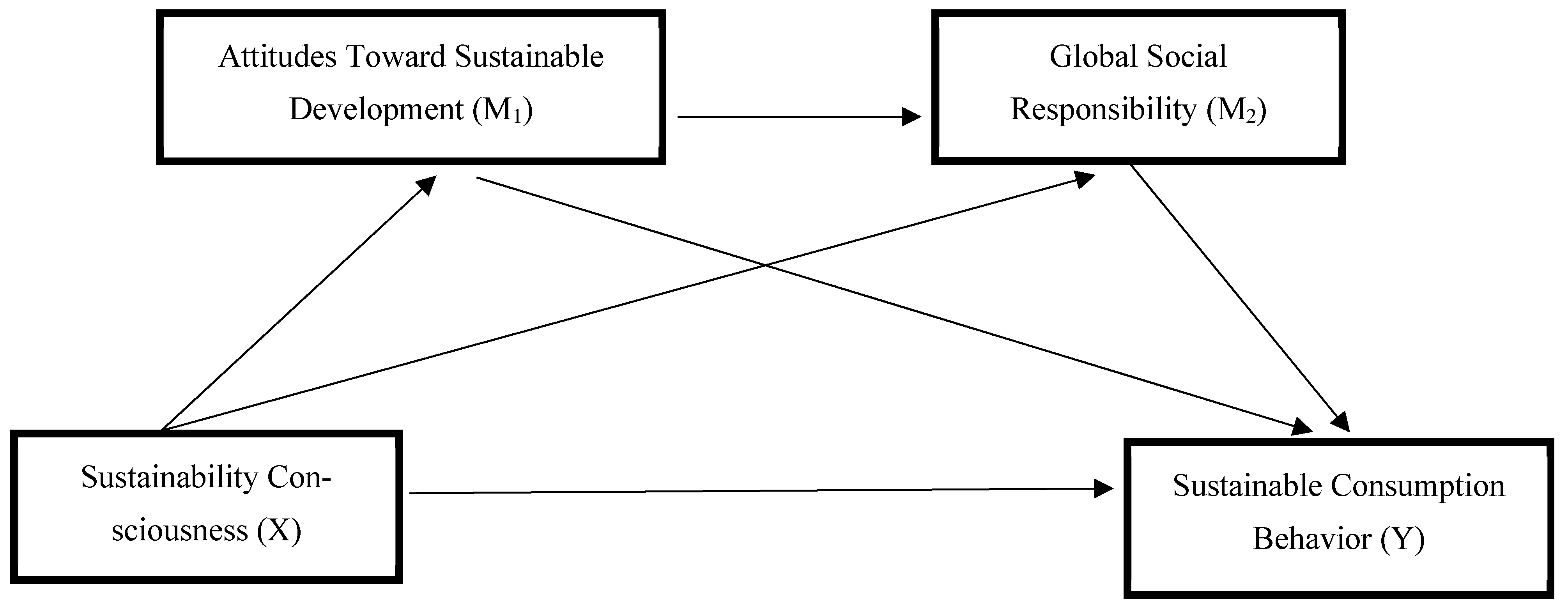
This study aims to examine the relationship between the sustainability consciousness level and sustainable consumption behavior among sports sciences students and reveal the serial mediation role of attitudes toward sustainable development and global social responsibility in this relationship.
Serial multiple mediation refers to a statistical framework in which the influence of an independent variable on a dependent variable is conveyed through two or more mediating variables arranged in a predetermined causal order. This approach enables the examination of whether the mediators operate sequentially as components of a causal pathway connecting the predictor variable to the outcome variable [
70,
71].
Accordingly, the serial mediation effects of attitudes of sustainable development (M
1) and global social responsibility (M
2) in the relationship between sustainability consciousness (X) and sustainable consumption behavior (Y) were examined in the data analysis.
Figure 1 shows the statistical effect of sustainability consciousness on sustainable consumption behavior, and
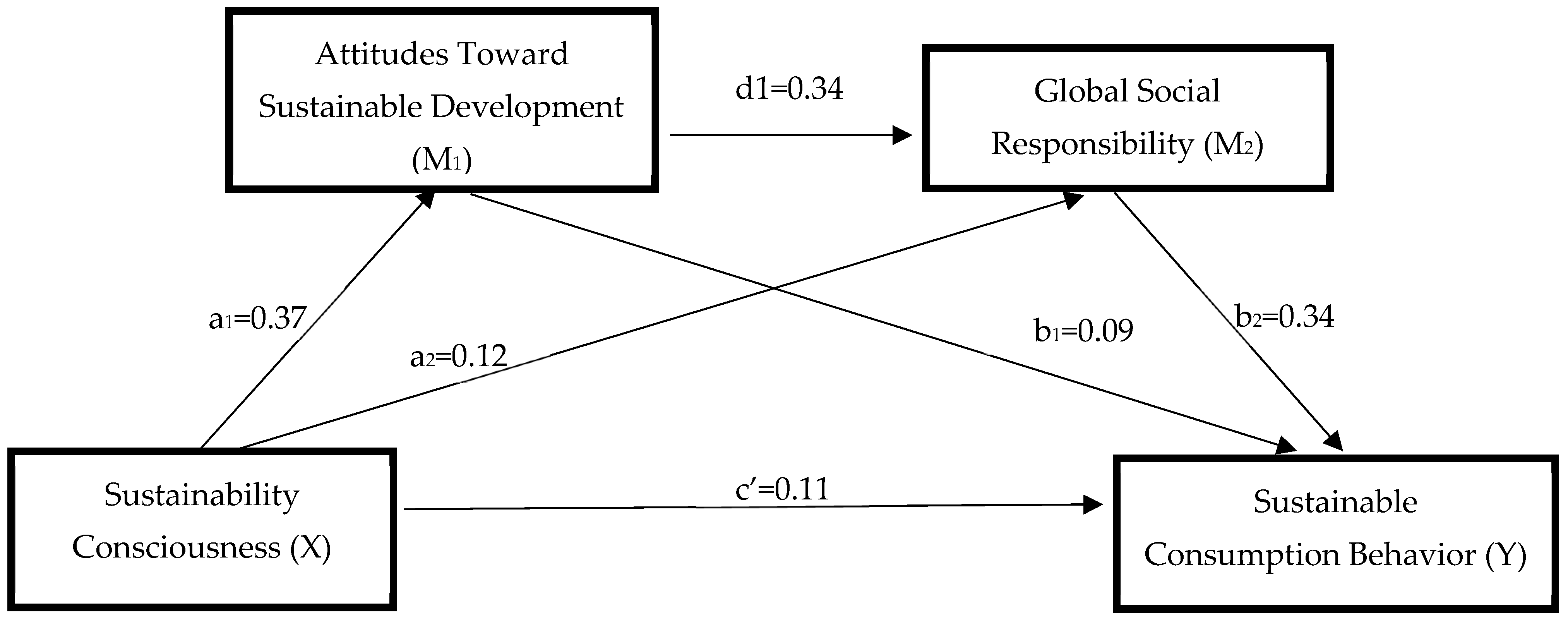
Figure 2 shows the serial mediation effects of attitudes toward sustainable development and global social responsibility.
2.3. Determination of Sample Size Using Monte Carlo Simulation
To determine whether the planned sample size was sufficient to detect the hypothesized serial indirect effects, a Monte Carlo simulation-based power analysis was conducted. Monte Carlo methods are recommended for complex mediation models, as they provide more accurate power estimates than traditional analytical approaches, particularly for indirect effects [
72,
73]. The proposed serial mediation model consisted of sustainability awareness as the independent variable, attitudes toward sustainability as the first mediator, perceived global social responsibility as the second mediator, and sustainable consumption behavior as the outcome variable. Consistent with prior research in sustainability and social psychology, medium effect sizes (β = 0.30) were assumed for all structural paths [
70]. Medium effect sizes (β = 0.30) were assumed based on prior empirical research in sustainability and social psychological models, where structural path coefficients typically range between 0.20 and 0.40 [
29,
67]. Given the theoretical robustness of the proposed pathways and the relatively strong associations reported in previous TPB-based sustainability studies, a medium effect size assumption was considered both conservative and theoretically justified.
Using 2000 simulated replications and a significance level of α = 0.05, the results indicated that a sample size of at least 150 participants yielded statistical power exceeding 0.95 for detecting the serial indirect effect. Therefore, the final sample size targeted in the present study was considered more than adequate to ensure sufficient statistical power and robust estimation of the hypothesized mediation effects.
2.4. Participants
The participants of this study consisted of undergraduate students enrolled in Faculties of Sport Sciences at nine public universities located in different regions of Türkiye during the 2024–2025 academic year. This multi-institutional sampling strategy was adopted to enhance regional diversity and institutional representation. A total of 758 sports science students participated in the study. Participants were recruited using a convenience sampling method, and participation was entirely voluntary. Prior to data collection, informed consent was obtained from all participants, and anonymity and confidentiality were strictly maintained throughout the research process.
To be included in the study, individuals were required to meet the following criteria:
- (a)
Currently enrolled as an undergraduate student in a sports-science-related department (Physical Education and Sport, Coaching Education, Sport Management, or Recreation);
- (b)
Eighteen years of age or older;
- (c)
Provided informed consent to participate in the study;
- (d)
Completed all measurement instruments in full without missing responses.
Participants were excluded from the study if they:
- (a)
Were not registered in a sports science program;
- (b)
Declined to provide informed consent;
- (c)
Submitted incomplete or inconsistent questionnaire responses;
- (d)
Demonstrated response patterns indicating random or inattentive answering (e.g., identical responses across all items).
Following the application of these criteria, all 758 questionnaires were deemed valid and included in the final analyses.
The sample size was considered adequate for the purposes of the present study, particularly for testing the proposed serial mediation model. This adequacy was further supported by a Monte Carlo simulation-based power analysis, which indicated that the obtained sample size exceeded the minimum requirement for detecting medium-sized indirect effects with high statistical power.
2.5. Data Collection Tools
2.5.1. Personal Information Form
A personal information form consisting of five variables was prepared to collect demographic and professional data about the participants. These variables include gender, age, field of study, income level, and academic success level.
When
Table 1 is examined, it is observed that 42.0% are female and 58.0% are male. Regarding age groups, 38.9% are between 18 and 20 years, 38.5% are between 21 and 23 years, and 22.6% are 24 years and above. Regarding field of study, 24.4% are physical education and sport, 24.9% are coaching education, 26.1% are sport management, and 24.5% are recreation. Concerning income level, 39.8% earned 0–7500 TL, 23.1% earned 15,001–25,000 TL, 18.6% earned 15,001–25,000 TL, and 18.5% earned 25,001 TL and above. Regarding the academic success level, 6.2% are 0.00–1.80, 62.1% are 1.81–3.50, and 31.7% are 3.51–4.00.
2.5.2. The Sustainability Consciousness Questionnaire (SCQ)
The Sustainability Consciousness Questionnaire (SCQ) was originally developed by Michalos et al. [
74] and subsequently adapted into Turkish by Yüksel and Yıldız [
75]. The questionnaire consists of a total of 50 items, including statements such as “Reducing water consumption is necessary for sustainable development,” and is structured around three subdimensions: Knowledge, Attitude, and Behavior.
The Knowledge subdimension aims to assess individuals’ level of knowledge and awareness regarding the concept of sustainability. The Attitude subdimension evaluates individuals’ attitudes toward environmental issues as well as their value orientations related to sustainability. The Behavior subdimension focuses on individuals’ knowledge and awareness in the context of sustainability, specifically assessing their level of consciousness regarding sustainable living practices and environmental responsibilities. In this respect, the Behavior dimension serves as an indicator of individuals’ sustainability consciousness prior to the implementation stage, reflecting awareness rather than actual behavioral enactment.
The SCQ is designed using a five-point Likert-type scale, with response options ranging from “1 = Strongly Disagree” to “5 = Strongly Agree.” The questionnaire does not include any reverse-coded items. Scoring is based on either the total score or the mean score derived from participants’ responses. Reliability analysis revealed a Cronbach’s alpha coefficient of 0.860 for the overall scale [
75].
2.5.3. The Attitudes of Sustainable Development Scale (ASDS)
The Attitudes of Sustainable Development Scale (ASDS) was developed by Kaya [
76] and consists of a total of 21 items, including statements such as “I try to be economical in paper consumption.” Factor analysis results indicate that the scale exhibits a three-factor structure, comprising the Social Dimension, Environmental Dimension, and Economic Dimension.
Within the conceptual framework of the scale, the Environmental Dimension of sustainable development emphasizes the protection of the natural environment and biodiversity in which human activities are embedded. The Economic Dimension addresses approaches related to the use of natural resources within production processes, whereas the Social Dimension highlights issues such as the promotion of social equity, the reduction in poverty, the support of pluralism, and the preservation of cultural diversity.
Reliability analysis yielded a Cronbach’s alpha coefficient of 0.93 for the overall scale. The reliability coefficients for the subdimensions were reported as 0.85 for the Social Dimension, 0.85 for the Environmental Dimension, and 0.84 for the Economic Dimension. Items on the ASDS are rated using a five-point Likert-type scale ranging from “1 = Strongly Disagree” to “5 = Strongly Agree” [
76].
2.5.4. The Global Social Responsibility Scale (GSRD)
The Global Social Responsibility Scale (GSRD) was developed by Başer and Kılınç [
41] and consists of a total of 30 items, including statements such as “I take an active role in the development of global social responsibility projects.” Exploratory factor analysis results indicate that the scale demonstrates a four-factor structure. The factors were named according to the content of the items they comprise.
Accordingly, the first factor, Action Oriented Responsibility, includes 12 items. The second factor, Ecological Responsibility, consists of 5 items. The third factor, Altruistic Responsibility, comprises 7 items. The fourth factor, National Responsibility, includes 6 items.
Reliability analysis revealed a Cronbach’s alpha coefficient of 0.89 for the overall scale. The reliability coefficients for the subdimensions were reported as 0.88 for Action Oriented Responsibility, 0.74 for Ecological Responsibility, 0.77 for Altruistic Responsibility, and 0.73 for National Responsibility.
Of the 30 items included in the scale, 21 are positively worded and 9 are negatively worded. The GSRD is administered using a five-point Likert-type scale ranging from “1 = Strongly Disagree” to “5 = Strongly Agree,” with negatively worded items reverse-coded during the scoring process [
41].
2.5.5. The Sustainable Consumption Behavior Scale (SCBS)
The Sustainable Consumption Behavior Scale (SCBS) was developed by Doğan, Bulut, and Çımrın [
77] and consists of a total of 17 items, including statements such as “I purchase clothing made from natural materials.” The scale is designed to assess sustainable consumption behaviors across four subdimensions: Environmental Sensitivity, Unnecessary Purchasing, Saving, and Reusability.
The SCBS is administered using a five-point Likert-type scale, with response options ranging from “1 = Never” to “5 = Always.” Higher scores on the Environmental Sensitivity, Saving, and Reusability subdimensions indicate higher levels of sustainable consumption behavior. In contrast, lower scores on the Unnecessary Purchasing subdimension reflect a greater degree of sustainability in consumption patterns.
Validity and reliability analyses were conducted as part of the scale development process. Construct reliability was evaluated using the composite reliability (CR) approach, while internal consistency was assessed through Cronbach’s alpha coefficients. The reported Cronbach’s alpha values exceeding 0.70 indicate that the SCBS demonstrates an adequate level of reliability [
77].
The Cronbach alpha values obtained according to the responses of the participants are presented in
Table 2.
When
Table 2 is examined, Cronbach’s alpha values indicate that the internal consistency coefficient is 0.97 for the Sustainability Consciousness Scale, 0.96 for the Attitudes of Sustainable Development Scale, 0.81 for the Global Social Responsibility Scale, and 0.92 for the Sustainable Consumption Behavior Scale.
Cronbach’s alpha is a statistical indicator employed to evaluate the internal reliability of scales composed of multiple items. Specifically, it examines the degree of interrelatedness among the items, thereby indicating whether they consistently reflect the same underlying construct. The coefficient ranges from 0 to 1, with values of 0.70 or higher commonly regarded as demonstrating acceptable internal consistency [
78]. The coefficients obtained in the present study suggest that participants’ responses across these scales meet the threshold for satisfactory internal reliability.
2.6. Measures
Discriminant Validity Assessment
To address potential conceptual overlap between sustainability consciousness and the mediator and outcome variables, discriminant validity was evaluated using the Fornell–Larcker [
79] criterion and the heterotrait–monotrait ratio of correlations (HTMT). Average variance extracted (AVE) values exceeded inter-construct correlations, and all HTMT values were below the recommended threshold of 0.85, supporting adequate discriminant validity [
79,
80].
Robustness Analysis Using Knowledge Dimension
Given that the Sustainability Consciousness Questionnaire (SCQ) includes Knowledge, Attitude, and Behavior dimensions, an additional robustness analysis was conducted using only the Knowledge dimension as the independent variable. The serial mediation model was re-estimated and produced a pattern of results consistent with the primary analysis, indicating that the mediation structure is not driven by conceptual overlap between constructs.
2.7. Analysis of Data
Because the data were obtained exclusively through self-report instruments, the possibility of common method variance was examined. Results of Harman’s single-factor analysis showed that a single factor did not explain the majority of the total variance, indicating that common method bias was not likely to represent a substantial threat to the validity of the results.
All statistical analyses were conducted using SPSS Statistics v26.0. To evaluate whether the data met the assumption of normal distribution, the Kolmogorov–Smirnov test, one of the commonly applied normality assessment procedures, was performed [
81]. The findings regarding the distributional characteristics of the study variables are summarized in
Table 3.
An examination of
Table 3 indicates that the skewness and kurtosis coefficients for the study variables remained within the ±2 threshold. Coefficients falling within ±2 are generally considered to reflect no substantial departure from a normal distribution [
82]. Accordingly, the data were deemed to satisfy the assumption of normality and were therefore appropriate for parametric statistical procedures.
Pearson product–moment correlation analysis was conducted to explore the associations among the variables. In addition, regression analysis was performed to evaluate the predictive effect of sustainability consciousness on sustainable consumption behavior. To investigate the sequential mediating roles of attitudes toward sustainable development and global social responsibility, a regression-based indirect effect analysis employing the bootstrap technique was applied through the PROCESS v4.2 macro. Specifically, Model 6 of the PROCESS macro, developed by Andrew F. Hayes, was utilized to test the serial mediation model, with 5000 bootstrap resamples generated. For the indirect effects to be considered statistically significant, the 95% confidence intervals derived from the bootstrap analysis were required not to include zero [
83,
84]. To further assess common method bias (CMB), a common latent factor (CLF) test was conducted. A latent factor representing common variance among all items was added to the measurement model. The inclusion of the CLF did not substantially change standardized regression weights (Δ < 0.20), suggesting that common method variance did not significantly bias the results [
85].
3. Results
As shown in
Table 4, the sports science students who participated in the study demonstrated a mean sustainability consciousness score of 182.68 ± 36.76, a mean attitudes toward sustainable development score of 80.93 ± 17.10, a mean global social responsibility score of 98.36 ± 13.54, and a mean sustainable consumption behavior score of 58.05 ± 13.09.
In addition, a strong positive correlation was found between sustainability consciousness and attitudes toward sustainable development (r = 0.79), as well as between sustainability consciousness and global social responsibility (r = 0.65). A moderate positive correlation was observed between sustainability consciousness and sustainable consumption behavior (r = 0.62). Attitudes toward sustainable development were strongly and positively correlated with global social responsibility (r = 0.67) and with sustainable consumption behavior (r = 0.59). Finally, a strong positive correlation was identified between global social responsibility and sustainable consumption behavior (r = 0.63).
Although sustainability consciousness was strongly correlated with attitudes toward sustainable development (r = 0.79), this value remained below the threshold (0.85) suggested for construct redundancy [
86]. Furthermore, discriminant validity diagnostics indicated that the constructs represent empirically distinguishable dimensions.
As shown in
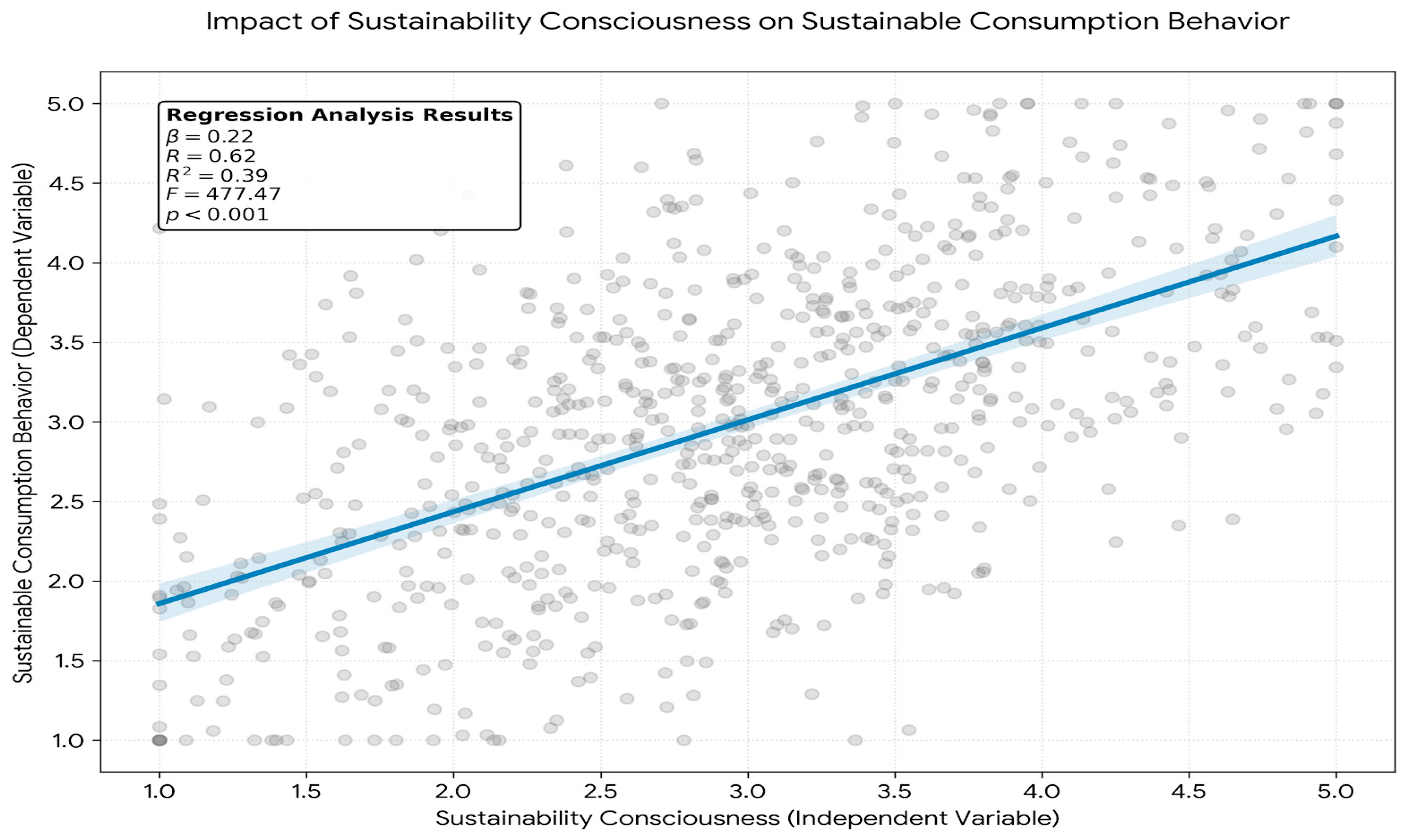
Table 5, the regression model indicates a statistically significant relationship between sustainability consciousness and sustainable consumption behavior among sports science students (F(1, 756) = 477.47,
p < 0.001). According to the
t-test results for the significance of the regression coefficient, sustainability consciousness significantly predicts sustainable consumption behavior (t = 21.85,
p < 0.001). This model explains 39% of the variance in participants’ sustainable consumption behavior (R
2 = 0.39,
p < 0.001).
Figure 3 illustrates the effect of sustainability consciousness on sustainable consumption behavior among sports science students, while
Figure 4 presents the histogram of the dependent variable, sustainable consumption behavior.
Table 6 presents the multicollinearity statistics for the predictor variables included in the model. The tolerance values are above 0.10, and the VIF values are well below 10. These findings indicate that there is no serious multicollinearity problem among sustainability consciousness, attitudes toward sustainable development, and global social responsibility. Therefore, it can be concluded that the predictor variables make independent contributions to the model and that the assumptions of the regression analysis regarding multicollinearity are satisfied.
Table 7 reports Cook’s distance statistics for the model. The maximum Cook’s distance value is 0.062, and the mean value remains at a very low level (0.002). These values are well below the commonly accepted threshold values of 0.50 and 1.00, indicating that there are no influential or outlying observations that disproportionately affect the regression results. Therefore, the findings suggest that the model estimates are not distorted by individual cases and that the regression results are reliable. This further supports the statistical stability and robustness of the reported regression findings. In addition, all key statistical assumptions required for regression and mediation analyses, including normality, multicollinearity, and influence diagnostics, were carefully examined and met. These diagnostics further support the robustness and stability of the reported findings.
Table 8 presents the summary statistics for the regression model. The findings indicate a moderate to strong relationship (R = 0.691) and show that approximately 47.7% of the total variance in the dependent variable is explained by the predictor variables (R
2 = 0.477; Adjusted R
2 = 0.475). The overall model is statistically significant (F = 229.178,
p < 0.001). In addition, the acceptable level of the standard error of the estimate (SE = 9.48) suggests that the model demonstrates a good fit to the data. These results indicate that the proposed regression model has strong and reliable explanatory power.
Table 9 presents the results of the analysis of variance (ANOVA) for the regression model. The findings indicate that the model is statistically significant,
F(3, 754) = 229.178,
p < 0.001. With the simultaneous inclusion of the predictor variables, the regression sum of squares (SS = 61,847.53) is substantially larger than the residual sum of squares, indicating that a significant proportion of the total variance is explained by the model. These results demonstrate the high explanatory power of the model and show that the predictor variables make statistically significant contributions to the dependent variable. Overall, the findings suggest that the three independent variables jointly account for a meaningful portion of the variance in the dependent variable and that the regression model fits the data well.
Table 10 presents the regression coefficients for the variables predicting sustainable consumption behavior. The findings indicate that attitudes toward sustainable development have a positive and statistically significant effect on sustainable consumption behavior (β = 0.302,
t = 6.847,
p < 0.001). Similarly, global social responsibility is also a positive and significant predictor of sustainable consumption behavior (β = 0.119,
t = 2.636,
p = 0.009). In contrast, sustainability consciousness does not make a statistically significant contribution to the model (
t = −0.867,
p = 0.386). These results suggest that, in explaining sustainable consumption behavior, attitudinal and social-responsibility-based variables are more influential than sustainability consciousness alone.
As shown in
Table 11, sustainability consciousness has a positive and statistically significant effect on attitudes toward sustainable development (path a
1; a
1 = 0.37, t = 7.27,
p < 0.001). The effect of attitudes toward sustainable development on sustainable consumption behavior is also positive and statistically significant (path b
1; b
1 = 0.09, t = 2.64,
p = 0.01). In addition, sustainability consciousness exerts a positive and statistically significant effect on global social responsibility (path a
2; a
2 = 0.12, t = 7.50,
p < 0.001). Global social responsibility, in turn, has a positive and significant effect on sustainable consumption behavior (path b
2; b
2 = 0.34, t = 9.48,
p < 0.001). Furthermore, attitudes toward sustainable development positively and significantly predict global social responsibility (path d
1; d
1 = 0.34, t = 10.11,
p < 0.001). Finally, when the direct effect of sustainability consciousness on sustainable consumption behavior is examined (path c′), this effect remains positive and statistically significant (c′ = 0.11, t = 6.85,
p < 0.001).
Figure 5 illustrates the serial mediation effects of attitudes toward sustainable development and global social responsibility.
As shown in
Table 12, sustainability consciousness has a positive and statistically significant effect on attitudes toward sustainable development (path a
1; a
1 = 0.37, t = 7.27,
p < 0.001). The effect of attitudes toward sustainable development on sustainable consumption behavior is also positive and significant (path b
1; b
1 = 0.09, t = 2.64,
p = 0.01). In addition, sustainability consciousness exerts a positive and statistically significant effect on global social responsibility (path a
2; a
2 = 0.12, t = 7.50,
p < 0.001). Global social responsibility has a positive and significant effect on sustainable consumption behavior (path b
2; b
2 = 0.34, t = 9.48,
p < 0.001). Furthermore, attitudes toward sustainable development positively and significantly predict global social responsibility (path d
1; d
1 = 0.34, t = 10.11,
p < 0.001). Finally, when the direct effect of sustainability consciousness on sustainable consumption behavior is examined (path c′), the effect remains positive and statistically significant (c′ = 0.11, t = 6.85,
p < 0.001).
Figure 5 illustrates the serial mediation effects of attitudes toward sustainable development and global social responsibility in the proposed model.
As illustrated in
Figure 5, a serial multiple mediation model (Model 6) was employed. The model includes two mediators, three indirect effects, and one direct effect. Specifically, the indirect effects are as follows: the effect of sustainability consciousness on sustainable consumption behavior through attitudes toward sustainable development (a
1b
1), the indirect effect of sustainability consciousness on sustainable consumption behavior through global social responsibility (a
2b
2), and the serial indirect effect of sustainability consciousness on sustainable consumption behavior through attitudes toward sustainable development and global social responsibility (a
1d
1b
2). The sum of these three indirect paths represents the total indirect effect on sustainable consumption behavior (serial mediation effect: a
1b
1 + a
2b
2 + a
1d
1b
2).
As reported in
Table 12, sustainability consciousness has a positive and statistically significant total indirect effect on sustainable consumption behavior (B = 0.11, SE = 0.01, 95% CI [0.09, 0.14]).
The first indirect effect reflects the pathway from sustainability consciousness to sustainable consumption behavior through attitudes toward sustainable development [Ind1: sustainability consciousness → attitudes toward sustainable development → sustainable consumption behavior]. This indirect effect is statistically significant (B = 0.03, SE = 0.01, 95% CI [0.01, 0.06]).
The second indirect effect represents the pathway from sustainability consciousness to sustainable consumption behavior through global social responsibility [Ind2: sustainability consciousness → global social responsibility → sustainable consumption behavior]. This indirect effect is also statistically significant (B = 0.04, SE = 0.01, 95% CI [0.03, 0.05]).
The third indirect effect captures the serial mediation pathway through attitudes toward sustainable development and global social responsibility [Ind3: sustainability consciousness → attitudes toward sustainable development → global social responsibility → sustainable consumption behavior]. This serial indirect effect is statistically significant (B = 0.04, SE = 0.01, 95% CI [0.03, 0.06]).
4. Discussion
This study examined the psychosocial mechanisms through which sustainable consumption behaviors are shaped among sports science students. Specifically, the serial mediating roles of attitudes toward sustainable development and perceived global social responsibility were tested in the relationship between sustainability consciousness and sustainable consumption behavior. By addressing the frequently emphasized knowledge–behavior gap in the sustainability literature within a sports science student sample, the study adopts a multivariate and theory-driven framework to provide a holistic account of the process extending from individual awareness to behavioral outcomes. The findings suggest that sustainable consumption behaviors among sports science students are shaped not solely by cognitive awareness, but also through attitudinal and socially oriented responsibility-based mechanisms. This pattern is consistent with the conceptualization of the sustainability-related structure commonly described as the “gap between knowing and doing” [
29,
87,
88].
The descriptive statistics obtained in this study indicate that sports science students’ levels of sustainability consciousness, attitudes toward sustainable development, perceived global social responsibility, and sustainable consumption behavior are generally distributed above a moderate level. This finding suggests that sports science students are not entirely unfamiliar with sustainability-related issues; however, the translation of this awareness into actual behavior appears to require specific psychosocial mediating mechanisms. Consistent with the literature, it is emphasized that the transformation of sustainability knowledge into behavioral outcomes is closely associated with attitudes, normative orientations, and value systems [
27,
28]. Moreover, studies conducted with student populations indicate that relatively high levels of perceived global social responsibility reflect a sensitivity to social and environmental issues within this group [
89]. Given the social visibility of sports and the role model potential of sports professionals, these levels can be considered meaningful, while also representing an area open to further development [
62].
The findings reveal that the variables examined in this study are generally characterized by positive and statistically significant relationships. A strong association was observed between sustainability consciousness and attitudes toward sustainable development, while perceived global social responsibility and sustainable consumption behavior exhibited moderate to strong relationships. Similarly, attitudes toward sustainable development were found to be strongly related to both global social responsibility and sustainable consumption behavior. These results indicate that sustainable consumption behavior represents a multidimensional construct that should be examined through the combined consideration of cognitive, attitudinal, and social-responsibility-based components. In line with this interpretation, research grounded in the Theory of Planned Behavior highlights the central role of attitudes in explaining environmental and sustainable behaviors [
31,
90]. Likewise, studies conducted with young consumers report that environmental attitudes and perceived environmental responsibility are significantly and positively associated with sustainable consumption behaviors [
91,
92,
93,
94].
The results indicate that sustainability consciousness significantly and positively predicts sustainable consumption behavior; however, when attitudes toward sustainable development and perceived global social responsibility are included in the model, this direct effect is substantially attenuated.
The attenuation of the direct effect of sustainability consciousness when mediators are introduced provides important theoretical clarification regarding the psychological mechanisms underlying sustainable consumption behavior. Although sustainability consciousness initially demonstrates a significant total effect on sustainable consumption behavior, the inclusion of attitudes toward sustainable development and perceived global social responsibility substantially reduces this direct association. This pattern indicates that sustainability consciousness primarily operates through indirect pathways, suggesting a mediation-dominant explanatory structure. From the perspective of the Theory of Planned Behavior [
31], awareness-related cognitive structures do not automatically translate into behavior unless they are transformed into favorable evaluative judgments. Attitudes represent the evaluative mechanism through which individuals assign personal meaning and desirability to sustainability-related practices. Thus, sustainability consciousness appears to function as a foundational cognitive precursor that shapes attitudinal orientations rather than directly activating behavior. Moreover, the role of perceived global social responsibility introduces a normative moral dimension that extends beyond individual evaluation. This finding is consistent with the Norm Activation Theory [
95] and the Value Belief–Norm (VBN) framework [
96], which argue that pro-environmental behavior is activated when personal norms and perceived responsibility toward others are internalized. In this context, sustainability consciousness alone reflects awareness of environmental and social issues; however, behavioral activation appears to require the internalization of moral obligation and responsibility toward global sustainability challenges. The present findings therefore offer empirical support for the widely discussed awareness–behavior gap in sustainability research [
29,
67,
87]. Educational interventions that focus solely on increasing sustainability-related knowledge may enhance cognitive awareness but may not be sufficient to produce consistent behavioral change. Instead, the results suggest that attitudinal transformation and the strengthening of global social responsibility perceptions are critical bridging mechanisms that convert awareness into action. Importantly, within the context of sports science students, this mediation pattern carries additional theoretical implications. As future sports professionals and potential social role models, these individuals may possess sustainability knowledge; however, unless this knowledge is accompanied by strong sustainability-oriented attitudes and an internalized sense of global responsibility, its behavioral consequences may remain limited. Therefore, the findings emphasize that sustainable consumption behavior emerges through a sequential cognitive attitudinal normative process rather than through awareness alone.
This pattern suggests that sustainability consciousness alone has a limited capacity to generate behavioral outcomes and that the translation of awareness into behavior operates through deeper psychosocial processes, such as attitudinal evaluations and normative responsibility perceptions. These findings support the widely discussed knowledge–behavior gap in the sustainability literature and align with studies arguing that environmental awareness by itself is insufficient to produce consistent behavioral change [
29,
87].
The multiple regression analyses revealed that attitudes toward sustainable development and perceived global social responsibility are statistically significant predictors of sustainable consumption behavior. In contrast, the attenuation of the direct effect of sustainability consciousness suggests that this variable plays a primarily indirect role in shaping behavior. This result is consistent with studies proposing that sustainable consumption behaviors are influenced not only by environmental knowledge but also by individuals’ value orientations and perceptions of social responsibility [
30,
37,
42]. Likewise, positive and significant relationships between global social responsibility and green and sustainable behaviors have been reported across different samples [
38,
97].
The serial mediation analyses provide the study’s most original and theoretically robust findings. The results demonstrate that sustainability consciousness first enhances attitudes toward sustainable development, which in turn increases perceived global social responsibility, and that the sequential influence of these two variables ultimately strengthens sustainable consumption behavior. These findings indicate that the process of behavior formation is not linear but rather gradual and multistage, thereby supporting mediation-based models of behavior [
98]. In a similar vein, Kağıtçı [
91] reported that consumer involvement serves as a partial mediator in the association between environmental attitudes, perceived environmental responsibility, and sustainable consumption behavior. This finding is consistent with earlier empirical evidence in the literature [
51].
This sequential structure indicates that sustainability consciousness initially fosters an attitudinal transformation in individuals, which subsequently supports their perception of themselves as actors who bear social and global responsibility. The literature emphasizes that perceived responsibility, environmental values, and personal norms strengthen pro-environmental and socially responsible behaviors [
99,
100,
101,
102]. Moreover, it has been suggested that consumers, when engaging in sustainable consumption behavior, simultaneously consider economic interests, environmental impacts, and the well being of future generations [
103,
104,
105].
When evaluated specifically in the context of sports science students, these findings gain particular significance. Students in sports science are individuals who are likely to assume decision-making roles in the future as athletes, coaches, administrators, and professionals across various sectors of the sports industry. Therefore, this group’s sustainability consciousness, attitudes, and perceptions of social responsibility have the potential to influence not only their individual consumption behaviors but also, indirectly, the institutional and societal practices of the sports industry. Indeed, the literature emphasizes that sports professionals and organizations possess a strong capacity to shape social behavior patterns and normative orientations within society [
60,
62].
5. Conclusions
In conclusion, this study demonstrates that, in the formation of sustainable consumption behaviors among sports science students, sustainability awareness is a necessary but insufficient condition. Rather, such awareness translates into behavioral outcomes through attitudes toward sustainable development and perceived global social responsibility. The findings indicate that sustainability awareness positively shapes individuals’ attitudes toward sustainable development, which in turn enhance levels of perceived global social responsibility, thereby supporting sustainable consumption behaviors through both direct and indirect pathways. The serial mediation model reveals a sequential structure, emphasizing that sustainable consumption behaviors should be conceptualized within a multilayered framework that operates not only through cognitive processes, but also through attitudinal, social-responsibility-based, and normative awareness mechanisms. In particular, the role of perceived global social responsibility in reinforcing a sense of accountability that extends beyond individual consumption choices to encompass global environmental and social challenges strengthens the study’s theoretical contribution. Given that sports science students, as future sports professionals and societal role models, occupy a strategic position in the dissemination of sustainable consumption norms, the practical significance of these findings is further enhanced. In this context, the study offers an original and innovative theoretical contribution to the sustainable consumption literature by presenting the sequential mechanism among sustainability awareness, attitudes, and global social responsibility within a holistic framework, while also providing a scientific basis for the development of sustainability-oriented educational policies and sustainability strategies within the sports sector.
Beyond its theoretical and practical contributions, the findings of this study are directly aligned with the United Nations Sustainable Development Goals (SDGs). In particular, the results contribute to SDG 12 (Responsible Consumption and Production) by identifying the psychosocial pathways through which sustainability awareness, attitudes toward sustainable development, and perceived global social responsibility foster sustainable consumption behaviors. Moreover, the emphasis on sustainability-oriented education among sports science students supports SDG 4 (Quality Education) by highlighting the role of higher education in cultivating values, attitudes, and social responsibility related to sustainability. By promoting responsibility toward global environmental and social challenges, the study also offers indirect contributions to SDG 13 (Climate Action), as well as SDG 3 (Good Health and Well being) and SDG 11 (Sustainable Cities and Communities), through the encouragement of environmentally responsible and socially conscious consumption patterns. In this respect, the present study provides an empirically grounded framework that connects individual-level psychosocial processes with global sustainability objectives.
6. Limitations
Despite the contributions of the present study, several limitations should be considered when interpreting the findings. First, the cross-sectional design limits causal inferences. Although the serial mediation model is theoretically grounded, longitudinal or experimental research would be necessary to establish temporal precedence. Second, the study relied exclusively on self-report measurement instruments, which are subject to several methodological constraints. Self-report data are particularly vulnerable to social desirability bias, whereby participants may avoid expressing their genuine thoughts, attitudes, or behaviors and instead provide responses they perceive as socially acceptable [
106]. This tendency is especially pronounced when addressing value-laden and socially sensitive constructs such as sustainability, social responsibility, and consumption behaviors, potentially reducing the accuracy of the data [
107].
Moreover, self-report techniques depend on individuals’ subjective perceptions and cognitive processes; thus, recall errors, selective memory, response exaggeration, and motivational tendencies to present oneself in an overly positive or negative manner may systematically bias responses [
108]. In addition, participants’ personality traits, current mood states, attentional focus, and the phrasing of questionnaire items may influence response consistency and reliability [
85,
109]. Collectively, these factors may limit the objectivity and internal validity of the findings and, consequently, constrain the generalizability of the results [
110].
A second important limitation concerns the cross-sectional research design of the study. Although a serial mediation model was tested to examine the indirect effects of sustainability consciousness on sustainable consumption behavior through attitudes toward sustainable development and perceived global social responsibility, the temporal ordering of these psychological and attitudinal constructs cannot be empirically established. Therefore, the observed relationships should be interpreted as statistically significant associative and indirect effects that are consistent with the proposed theoretical framework, rather than as definitive evidence of causal pathways [
70]. The relational screening model employed in this study does not allow for firm conclusions regarding the cause–effect relationships or the developmental dynamics of sustainability-related attitudes and behaviors. The use of convenience sampling may limit the generalizability of findings beyond sports science students in Türkiye. Cultural context may shape both global responsibility perceptions and sustainability-related norms; therefore, cross-cultural replications are encouraged. Finally, future research could incorporate behavioral observation or objective consumption indicators to complement self-reported sustainable consumption behavior.
In addition, the characteristics of the sample represent another limitation. The study was conducted exclusively with undergraduate students enrolled in sports science programs, and participation was limited to individuals who were actively studying in this field at the time of data collection. While this population is theoretically relevant given their potential future roles in the sports industry, the findings may not be readily generalizable to students from other academic disciplines or to non-student populations. Furthermore, although basic demographic variables were considered, other potentially influential factors such as socioeconomic status, family background, and broader cultural contexts were not included in the analysis, despite their possible impact on sustainable consumption behaviors.
Finally, the collection of data at a single time point restricts the ability to capture temporal changes and dynamic processes underlying sustainability consciousness, attitudinal development, and consumption behavior. Future research employing longitudinal, experimental, or intervention-based designs is therefore recommended to clarify the directionality of the observed relationships and to more rigorously examine the causal mechanisms through which sustainability consciousness is translated into sustainable consumption behavior via attitudinal and social-responsibility-based processes.



 ,
,