Article

Enzymatic Saccharification of Delignified Biomass Intensified by Hydrodynamic Cavitation

by
María del Pilar Balbi
1,2,
Santiago Fleite
1,2,3,
Candela González Giqueaux
3,
María Alejandra Ayude
4,5 and
Miryan Cassanello
1,2,*
1
Departamento de Industrias, Facultad de Ciencias Exactas y Naturales, Universidad de Buenos Aires, Ciudad Autónoma de Buenos Aires C1428EGA, Argentina
2
Instituto de Tecnología de Alimentos y Procesos Químicos—ITAPROQ, Consejo Nacional de Investigaciones Científicas y Técnicas (CONICET), Universidad de Buenos Aires, Ciudad Autónoma de Buenos Aires C1428EGA, Argentina
3
Cátedra de Química Inorgánica y Analítica, Facultad de Agronomía, Universidad de Buenos Aires, Ciudad Autónoma de Buenos Aires C1417DSE, Argentina
4
Departamento de Ingeniería Química y de Alimentos, Universidad Nacional de Mar del Plata, Mar del Plata B7600BWV, Argentina
5
Área Catalizadores y Superficies, Instituto de Investigaciones en Ciencia y Tecnología de Materiales (INTEMA), Consejo Nacional de Investigaciones Científicas y Técnicas (CONICET), Universidad Nacional de Mar del Plata, Mar del Plata B7606BWV, Argentina
*
Author to whom correspondence should be addressed.
Sustainability 2026, 18(6), 2816; https://doi.org/10.3390/su18062816
Submission received: 29 January 2026 / Revised: 26 February 2026 / Accepted: 11 March 2026 / Published: 13 March 2026

Abstract

Lignocellulosic biomass is a promising renewable resource for sustainable biorefineries, although its commercial use remains limited by the complex biomass structure and process inefficiencies. This work investigates the use of hydrodynamic cavitation (HC) as a process-intensification strategy during the washing step following hydrogen peroxide–acetic acid (HPAC) delignification, with the aim of enhancing subsequent enzymatic saccharification to produce glucose. Wood residues from Eucalyptus sp., Tipuana tipu, and Pinus sp. were delignified using HPAC under mild conditions (1:1 v/v glacial acetic acid: 30% w/w H2O2 solutions, at 90 °C, 15 g/L, 1 h orbital shake) and washed either by conventional soaking or by HC-assisted recirculation prior to enzymatic hydrolysis using the Novozymes Cellic CTec3 blend at optimal initial conditions (40 FPU/g substrate, pH = 5, and 53 °C). HC applied during washing significantly increased glucose yields and initial hydrolysis rates for delignified angiosperm species. Glucose yields after 28 h increased significantly for Eucalyptus sp. and Tipuana tipu compared to conventional washing, while little effect was found for Pinus sp. Overall, the glucose yield, expressed per 100 g of precursor dry mass, attained 34.5 g/100 g for Eucalyptus sp., 30.2 g/100 g for Tipuana tipu, and only 12.9 g/100 g for Pinus sp. Structural and morphological analyses indicate that the effectiveness of HC is species-dependent and might be associated with fiber disruption and the removal of inhibitory compounds rather than changes in cellulose crystallinity. Implementing HC during the washing step involved 7% extra energy compared to the energy required for HPAC, thus resulting in less energy required per unit mass of glucose generated. These results demonstrate that HC-assisted washing is an effective and energy-efficient intensification step when combined with HPAC, contributing to improved biomass valorization while avoiding harsher pretreatment conditions. Since HC is relatively simple to scale up, the proposed strategy offers an energy-convenient approach for enhancing enzymatic saccharification in sustainable biorefinery processes.

1. Introduction

The transition toward sustainable energy and chemical production systems has intensified the interest in lignocellulosic biomasses (LCBs) as renewable and widely available feedstock for biorefineries. Agricultural residues, forestry by-products, and urban green waste represent underutilized resources with significant potential for conversion into fuels, chemicals, and biomaterials [1]. However, efficient valorization of LCBs remains challenging due to technology bottlenecks: pretreatment of the residues to promote the cellulose bioavailability [2], and saccharification to readily produce the fermentable sugars [3]. Increasing the availability of sugars arising from lignocellulosic residues will accelerate a spectrum of sustainable processes for chemicals, fuels, and polymeric materials [4] under the concept of integrated biorefineries [5].
LCBs are basically composed of a complex matrix formed by hemicellulose, cellulose, and lignin. Enzymatic saccharification into fermentable sugars requires disentanglement of the complex matrix. Consequently, effective lignin removal plays a key role in enhancing enzyme accessibility to cellulose fibers [6] and promoting subsequent hydrolysis [7]. Typical delignification pretreatments include the use of alkaline and acid reactants, deep eutectic solvents, and organic solvents [8]. Although these approaches reduce the lignin content, leading to a solid with an increased proportion of cellulose, many pretreatments conducted at severe conditions also dissolve the hemicellulose and part of the cellulose, which reduces the yield [9]. In the last decade, the hydrogen peroxide–acetic acid (HPAC) digestion has been proposed [10] as a mild delignification pretreatment performed at moderate conditions for softwood [11], hardwood [12], and other LCBs [13]. During this process, peracetic acid is formed, inducing oxidative cleavage and removal of lignin from the lignocellulosic matrix [14]. Mota et al. [13] reported approximately 75% lignin removal from different LCBs using HPAC, resulting in up to 20-fold increase in the enzymatic saccharification step. Ying et al. [11,15] and Lin et al. [14] reported successful delignification of poplar wood, with more than 80% recovery of glucan and xylan. Recently, Meng et al. [16] and Ying et al. [17] evidenced the suitability of HPAC for enhancing the enzymatic digestibility of bamboo residues, while Kildegaard et al. [18] achieved lignin removals exceeding 85% from leaf litter with good solid yield.
Recent works devoted to examining pretreatments that include acid-oxidative delignification of LCBs, particularly softwood and Bamboo, oriented to thoroughly recovering glucose from the cellulose content in the raw biomass are summarized in Table S1 of the Supplementary Material. Conditions that led to the highest glucose yield obtained, informed as the mass of glucose per 100 g of precursor dry mass, are included in the table. For instance, Ying et al. [19] recently applied HPAC catalyzed with sulfuric acid as pretreatment to recover glucose from Chinese Fir. An optimal volume ratio of hydrogen peroxide to acetic acid of 80:20 was found for achieving maximum lignin removal. Higher concentrations of sulfuric acid as a catalyst progressively improved the glucose yield, leading to 33 g of glucose per 100 g dry mass of precursor with 200 mM sulfuric acid in the HPAC mixture. The yield was further improved by subsequent alkaline digestion, leading to almost complete recovery of the glucose contained in the biomass, a yield of more than 40 g/100 dry mass. Ying et al. [17] also employed a similar pretreatment to produce glucose and xylose from Bamboo. A glucose yield of 27.3 g/100 g of precursor dry mass was obtained without the subsequent alkaline incubation using an enzyme loading of 40 FPU/g. Alkaline incubation allowed reducing the enzyme loading to 10 FPU/g and led to 29.8 g/100 g of precursor dry mass. Meng et al. [20] employed HPAC 1:1 v/v catalyzed with 0.5% v/v of sulfuric acid to delignified Bamboo at 80 °C during 3 h, achieving a glucose yield of 35.4 g/100 g raw dry mass. However, they found an increased yield using citric acid instead of acetic acid, reaching values higher than 40 g/100 g raw dry mass. Guo et al. [21] have also recently evidenced the efficacy of an acid-oxidative pretreatment using mixtures of a 50% w/w gluconic acid (GA) solution and 30% w/w hydrogen peroxide (HP). The authors reported an excellent delignification degree using these mixtures, achieving the best performance with the 7.5/2.5 HP/GA v/v ratio. After the complete pretreatment, including an initial extraction step, HP-GA delignification, and subsequent enzymatic hydrolysis, a glucose yield of 38.3 g per 100 g of dry Masson pine was achieved. This yield represented almost complete conversion of the glucan remaining after delignification pretreatment, which was 86.5% of the glucan content in the raw dry mass (circa 40%). Lin et al. [14] used HPAC prepared with various proportions of 30% w/w hydrogen peroxide (HP) and glacial acetic acid (AC) and catalyzed with 100 mM sulfuric acid to pretreat poplar wood. The authors found that a mixture of HP:AC with an 80:20 volume ratio provided the optimum delignification. The pretreated samples were then subjected to dilute acid hydrolysis using 2% w/w acetic or lactic acid aqueous solutions, and finally an alkaline incubation. A yield of more than 30 g of glucose per 100 g dry mass of Poplar was attained. The pretreatment also led to the production of a low proportion of xylose (around 10% of glucose mass produced).
Among emerging process-intensification technologies, cavitation has attracted considerable attention due to its potential to induce energy-efficient intensification of various processes [22]. Both cavitation by ultrasound (US) and hydrodynamic cavitation (HC) have been investigated as pretreatment strategies for LCBs, demonstrating effectiveness in promoting cellulose recovery. It has been reported that cavitation can facilitate partial dismantling of the lignocellulosic matrix with delignification at a relatively low temperature [9]. Additionally, cavitation may reduce cellulose crystallinity and enhance enzyme accessibility to the fibers, thereby improving enzymatic saccharification efficiency [23].
While acoustic cavitation has been extensively investigated for its ability to induce chemical effects, the short wavelength of US severely limits its transmission efficiency, thereby constraining its scalability [24]. In contrast, HC offers superior scalability, as fluid dynamic disturbances can be readily generated and multiplied for different scales, and the behavior of the downstream fluid is more easily understood and handled [25]. From an energy consumption standpoint, HC generally requires lower energy input than US (even less than 65% of the energy involved in US operation), resulting in higher energy efficiency [26]. Consequently, HC has emerged in recent years as a promising alternative with greater potential for industrial-scale applications than US, primarily due to the reduced costs associated with process scale-up [27].
During the last decades, HC technology has been extensively applied in water and wastewater treatment for the removal of bio-refractory compounds, such as dyes, pesticides, pharmaceuticals, polyaromatic compounds, among others [28]. More recently, its application has expanded to the intensification of several industrial processes, like biofuels generation [29], extraction of bioactive compounds [30], and as a pretreatment method of lignocellulosic residues to improve the production of biogas [31] and of bioethanol [32]. Glucose and xylose generation from sugar cane bagasse was promoted by HC-assisted alkaline hydrolysis in batch [33] and in continuous operation [34]. It was also evaluated using other pretreatments, as summarized in a recent review [9]. However, compared to other emerging technologies (i.e., microwave and ultrasound), the use of HC as a pretreatment strategy has been scarcely investigated, despite the good results reported so far. As emphasized in the review of Sun et al. [35], HC is able to promote lignin removal of various LCBs itself and can be effectively applied with intensification means to other pretreatment methods. Moreover, it induces positive effects, like heating, size reduction, and media viscosity reduction, being readily applicable at full scale.
As pretreatment, HC can be applied to the LCBs directly or combined with other processes. Nagarajan and Ranade [31] directly treated sugar cane bagasse with HC for biogas production, resulting in biogas yield increases, even larger than 100% for milled particles. The solid was recirculated through the cavitation device, and the improvements were likely related to the enhanced bioavailability of the lignocellulosic material for microorganism attacks. Ramirez-Cadavid et al. [36] used HC for the direct treatment of corn mill, improving the subsequent enzymatic amylase-saccharification step to produce ethanol, enhancing the ethanol production with significantly reduced enzyme dose. Teran Hilares et al. [32] and Madison et al. [37] combined HC with an alkaline pretreatment for sugar cane bagasse, achieving enhanced glucose yields during the subsequent enzymatic saccharification step. More recently, Prado et al. [38] extended the application to an acid-oxidative pretreatment by combining a dilute sulfuric acid (pH = 4–7) pretreatment intensified with ozone and HC, eventually assisting with iron addition to promote a Fenton-type advanced oxidation process. The pretreated sugar cane bagasse was subsequently enzymatically hydrolyzed to feed a simultaneous ethanologenic fermentation in interconnected reactors, resulting in improved ethanol yields. Several studies have also highlighted the relevance of process parameters such as the solid/liquid ratio, indicating that low-solid loadings (<5% solids, w/w) led to higher intensification [28]. In addition, HC has also been used to intensify an alkaline pretreatment with the aim of using alternative non-wood sources for paper production [39]. Overall, the use of HC as a pretreatment itself or for intensifying other pretreatment methods represents a promising strategy for promoting the cost-efficient generation of fermentable sugars.
In this context, the aim of this work is to analyze the effect of applying HC in combination with a HPAC acid-oxidative pretreatment of LCBs on the subsequent evolution of glucose during enzymatic hydrolysis. First, efficient delignification is achieved with the acid-oxidative action of 50% v/v mixture of acetic acid and hydrogen peroxide, promoting lignin removal under relatively mild conditions. Then, the delignified biomass is filtered to separate the liquor containing the depolymerized lignin and washed to eliminate the excess of acid and hydrogen peroxide. HC is applied specifically during the washing step in order to assess whether the operation can intensify the subsequent enzymatic hydrolysis of the solid. In addition, the effect of HC applied to filter paper prior to enzymatic hydrolysis is tested as a reference system for comparison, allowing the influence of biomass complexity to be distinguished from purely cellulose-based effects.

2. Materials and Methods

The whole saccharification process involved four steps, as schematized in Figure 1. First, the LCBs used were mechanically treated to obtain an approximately uniform granulometry for systematic analysis. Then, the samples were subjected to acid-oxidative hydrolysis, followed by a washing step. HC was applied during the washing step to analyze its effect on the final saccharification step, which was carried out by enzymatic hydrolysis.

2.1. Materials

The LCBs used were wood residues from different origins. Eucalyptus sp. was obtained from fruit crates typically used in the western area of Argentina. Tipuana tipu and Pinus sp. sawdust were obtained from a commercial market supplying wood for construction purposes. The fractions of cellulose and lignin in the raw LCBs were determined by Standard methods from the Technical Association of the Pulp and Paper Industry (TAPPI), as described in Kildegaard et al. [18].
Glacial acetic acid (Sintorgan) and 30% hydrogen peroxide (Cicarelli) were used to prepare a 50% (v/v) solution (HPAC) for the delignification step. The 1:1 volume ratio was selected following recommendations from previous studies [10].
A commercial Trichoderma reesi cellulase cocktail Cellic (CTec3 HS) provided by Novozymes Latin America Ltda. (Araucária, Paraná, Brazil) was used for the saccharification step. The protein concentration of cellulase was 127 mg/mL, and its cellulase activity was 175 FPU/mL, determined according to the technical methodology suggested by Adney and Baker [40].
The filter paper used was regular Munktell Grade 3 W 80 g/m2. The filter paper sheets were cut into square pieces of 5 × 5 mm.
Glucose concentration was determined with an enzymatic kit purchased from Wiener Lab. (Rosario, Santa Fe, Argentina). All other reagents were of analytical grade.

2.2. LCBs Mechanical Pretreatment

Eucalyptus sp., Tipuana tipu, and Pinus sp. were milled with a lab-scale high-speed multifunctional grinder. The milled solids were sieved to obtain sawdust with particle diameters in the range of 297–590 µm and 590–3350 µm. Platanus acerifolia leaves, treated as described by Kildegaard et al. [18], were also used for comparison.

2.3. Acid-Oxidative Hydrolysis Using HPAC

After mechanical treatment, the LCBs were subjected to acid-oxidative hydrolysis with HPAC solution for delignification following the methodology proposed by Kildegaard et al. [18]. The process was carried out under orbital agitation (100 rpm) for 60 min at 90 °C in batch mode operation using a 1 L Erlenmeyer, with a solid/liquid relation of 15 g/250 mL. The operating conditions corresponded to those that led to the highest delignification (86%) for the Platanus acerifolia leaves reported by Kildegaard et al. [18]. Optimal conditions for the softwood samples were not searched for since the aim of the work is to illustrate the influence of applying HC during the washing step for different species. After treating the sawdust of Eucalyptus sp., Tipuana tipu, and Pinus sp. with HPAC under the mentioned conditions, the insoluble lignin remaining in the solid was almost negligible for the three samples.
The solid recovery after delignification was determined after the washing step as indicated in Equation (1).
S o l i d   r e c o v e r y   %   ( S R ) = m a f t e r   p r e t r e a t m e n t m r a w 100
where m a f t e r   p r e t r e a t m e n t is the dry mass of the solid obtained after pretreatment (including HPAC hydrolysis and washing step), and m r a w is the initial dry mass corresponding to the raw solid.

2.4. Washing Methods

Once delignified, the LCBs were subjected to different washing methods in order to analyze their effect on the subsequent enzymatic hydrolysis. The washing was carried out using distilled water to avoid the introduction of uncontrolled external factors.
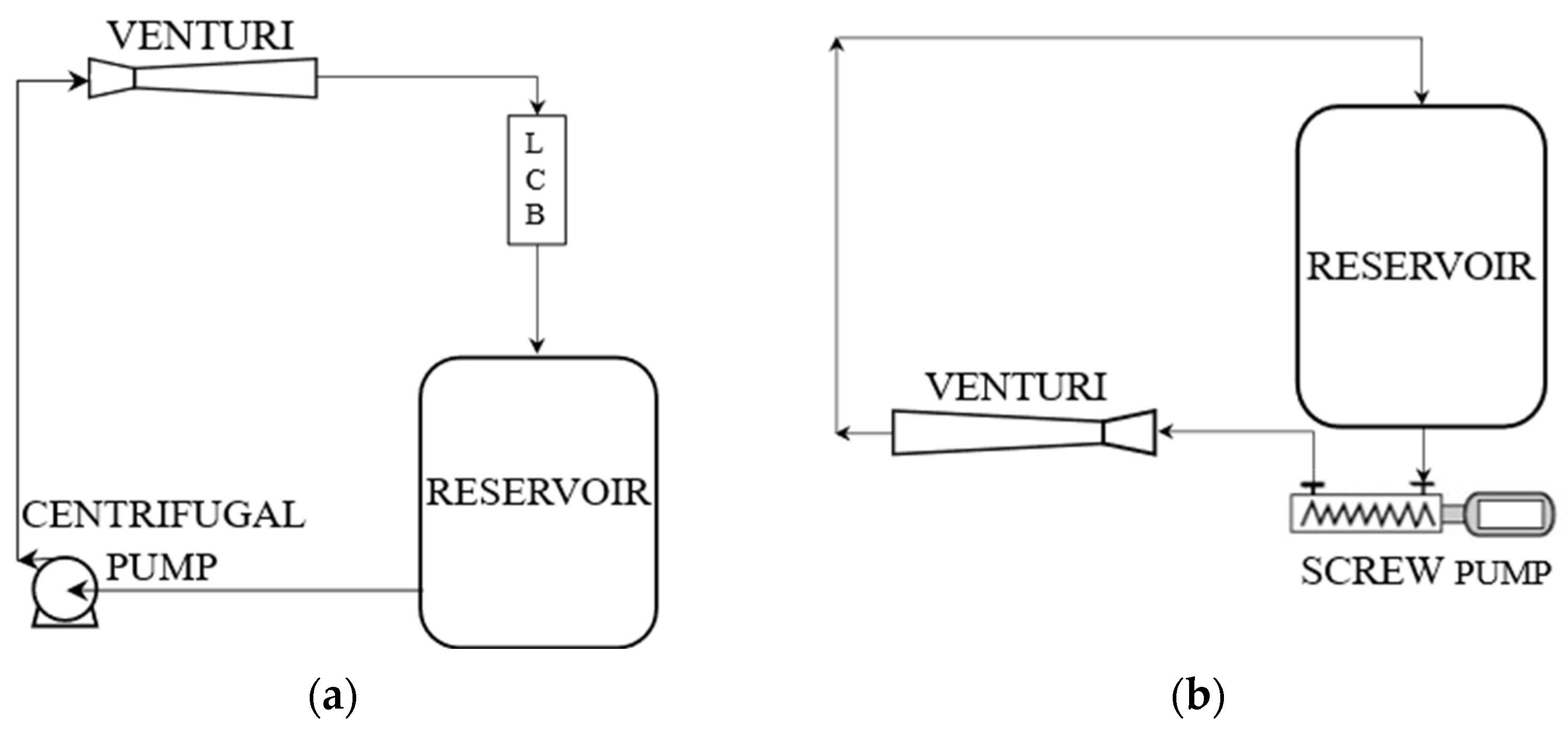
Four different washing methods were tested for the pretreated LCBs: (i). soaking of the solid in 5 L of water during 1 h, with gentle agitation of the liquid using a submergible pump circulating the liquid within the vessel; (ii). recirculation of 5 L of water through the solid, kept as a fixed bed in an acrylic conical column, using a centrifugal pump; (iii). the same configuration as in (ii) intensified by HC induced by a venturi-type device located immediately upstream of the fixed bed; and iv. recirculation of 5 L of the solid–liquid suspension across the HC device using a screw pump.
Figure 2 shows a scheme of the setups used for the last two methods. Photographs of both setups are shown in Figure S1 of the Supplementary Materials. The reservoir was filled with 5 L of distilled water at a temperature of 35 ± 5 °C. HC was carried out using a Venturi-type device with a pressure drop of 4 bar. The Venturi tube was built in acrylic following the design characteristics presented by Saharan et al. [41]. The inlet diameter was 17 mm, while the throat diameter was 2 mm. These dimensions were selected to maximize the flow velocity at the throat, avoiding energy losses due to turbulence or flow resistance.
For methods (ii) and (iii), the solid was retained in a filter cloth to prevent its circulation through the system.
Although the filter paper did not require delignification pretreatment, it was also subjected to the washing methods (filter paper prewetting) to analyze the effect on the saccharification step. Since the delignified LCBs contained hydrogen peroxide from the HPAC pretreatment, filter paper prewetting was performed both with and without H2O2 addition, to evaluate the relevance of a possible synergistic effect [42].

2.5. Enzymatic Hydrolysis

Saccharification of filter paper and pretreated LCBs was carried out at the optimal pH and temperature conditions recommended by the enzyme blend manufacturer (pH = 5 and 53 °C for the Novozymes Cellic CTec3). This step was done using a solid loading (dry mass of raw or delignified LCB, or filter paper) of 0.2% w/w. The enzyme dosage was 25 µL (~40 FPU/g substrate). The initial pH was adjusted to the optimal value, but no buffer solution was added during the process [3]. The final pH was registered, and variations were always lower than 10%.
The glucose concentration was determined with an enzymatic kit (peroxidase-glucose oxidase) to quantify glucose. The glucose yield was calculated assuming that the initial mass of substrate corresponded to 100% cellulose, as expressed in Equation (2). This assumption was adopted to enable comparison of saccharification performance among samples. Nevertheless, it is acknowledged that HPAC delignification does not completely remove hemicellulose; therefore, the reported glucose yields should be interpreted as apparent yields rather than absolute cellulose-to-glucose conversion values.
G l u c o s e   Y i e l d   ( % ) = 0.9   ( C g l u , f C g l u , 0 ) C s s , 0 100
where C g l u , f is the final glucose concentration, C g l u , 0 is the initial glucose concentration, and C s s , 0 is the initial biomass concentration, i.e., the mass of delignified and washed solid substrate in the volume used for enzymatic hydrolysis.
Table 1 summarizes the experimental conditions used for the acid-oxidative (HPAC) and the enzymatic hydrolysis.

2.6. Characterization

2.6.1. Morphology Analysis

The morphologies of the samples were examined by field emission scanning electron microscopy (SEM) using a Zeiss GeminiSEM 560 (Zeiss, Wetzlar, Germany) ultra-high-resolution FE-SEM operated at a voltage of 3 kV. Samples were mounted on conductive plates, followed by a sputter coating with gold prior to observation.

2.6.2. Presence of Lignin

Samples were also examined by optical microscopy with staining to evaluate their morphology and detect the presence of lignin. Sample preparation followed the method recommended by the American Association of Textile Chemists and Colorists (AATCC) for fiber identification through microscopy. For this purpose, wet samples were treated with a 1:1 mixture of a 2% w/w phloroglucinol solution and concentrated HCl. Coniferyl aldehyde, a characteristic component of lignin, reacts with phloroglucinol in an acidic medium to form a colored compound (pink or purple), known as the Wiesner reaction [43,44].

2.6.3. XRD Analysis

The X-ray diffraction (XRD) spectra of the samples were obtained with an X-ray powder diffractometer, Panalytical Empyrean, equipped with a Cu Kα1 = 1.54 Å and a PIXcel3D area detector. The scanning range spanned 5 to 35 degrees with a step of 0.026 degrees and a counting time of 200 s. The crystallinity index (%) of the samples was estimated using Equation (3) as proposed in the literature [45,46].
Crystallinity   ( % ) = I c r I a m I c r × 100
where Icr and Iam are the peak intensities of the crystalline and amorphous regions, respectively.

2.6.4. FTIR Analysis

Samples were mixed with KBr powder and compressed into pellets to prepare for Fourier Transform Infrared (FTIR) analysis. FTIR spectra were recorded using a FTIR spectrophotometer (VERTEX 70, Bruker, Ettlingen, Germany) in the range of 4000–650 cm−1 at a resolution of 4 cm−1. Several works have established a relationship between specific IR spectral bands and lignin content, particularly those associated with aromatic ring vibrations near 1512 cm−1, which are absent in cellulose [47,48]. Lignin content of the samples was estimated by integrating the region between 1490 and 1530 cm−1, corresponding to aromatic skeletal vibrations characteristic of lignin, following the approach suggested by Kostryukov et al. [49]. The integration values were consistent with those obtained using the TAPPI standard method.

3. Results and Discussion

3.1. Effect of HC on the Saccharification of Filter Paper

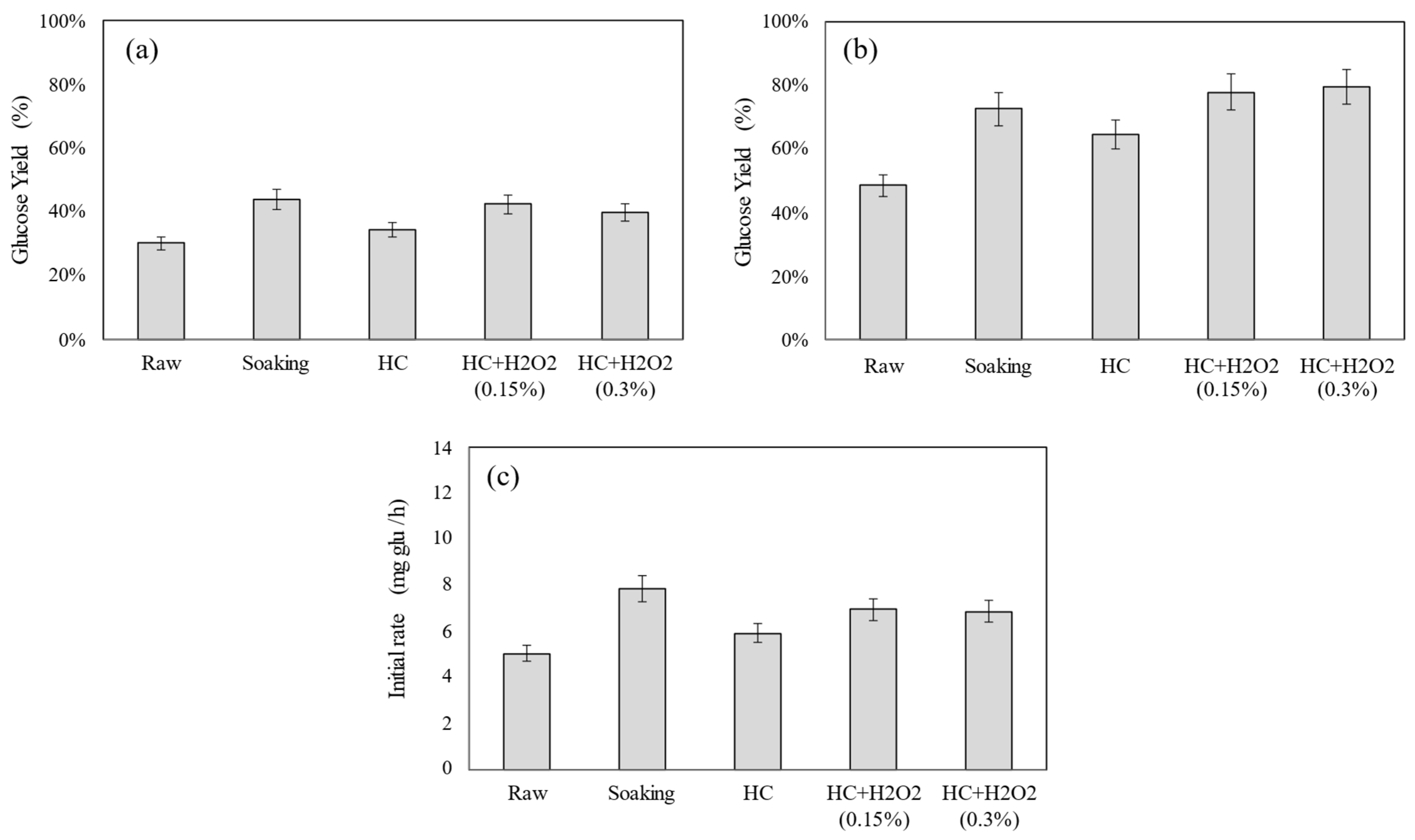
Figure 3 illustrates the effect of subjecting filter paper to HC prior to the enzymatic hydrolysis in the saccharification step, compared with both untreated filter paper and filter paper prewetted by soaking in water. The results evidenced the improvement of the initial saccharification rate and glucose yield induced by HC. However, when comparing with the results obtained for filter paper soaked in water for the same period before saccharification, it appears that there is a large effect of substrate humectation.
After 28 h of enzymatic hydrolysis, raw filter paper reached a glucose yield of 49%, whereas prewetting by soaking for 1 h increased the yield to 73%. HC-assisted prewetting led to higher yields (close to 80%), but only when hydrogen peroxide was added to the washing medium. Increasing the hydrogen peroxide concentration from 0.15 to 0.3% w/w resulted in only marginal additional improvement, suggesting that low peroxide levels are sufficient to enhance the cavitation effect under the conditions studied. These concentrations of H2O2 were selected to reproduce those remaining in the washing liquid after HPAC delignification of LCBs. Because filter paper consists of nearly pure cellulose, the observed improvements cannot be attributed to lignin removal or mitigation of lignin–enzyme interactions. Instead, the enhanced glucose yields are more plausibly related to structural and morphological modifications of the cellulose fibers. Cavitation is known to promote the formation of hydroxyl radicals, and the formation rate is significantly boosted in the presence of even low concentrations of hydrogen peroxide. Then, the effect of subjecting the filter paper to HC before the enzymatic hydrolysis is likely due to the cleavage of the cellulose fibers, increasing enzyme accessibility.
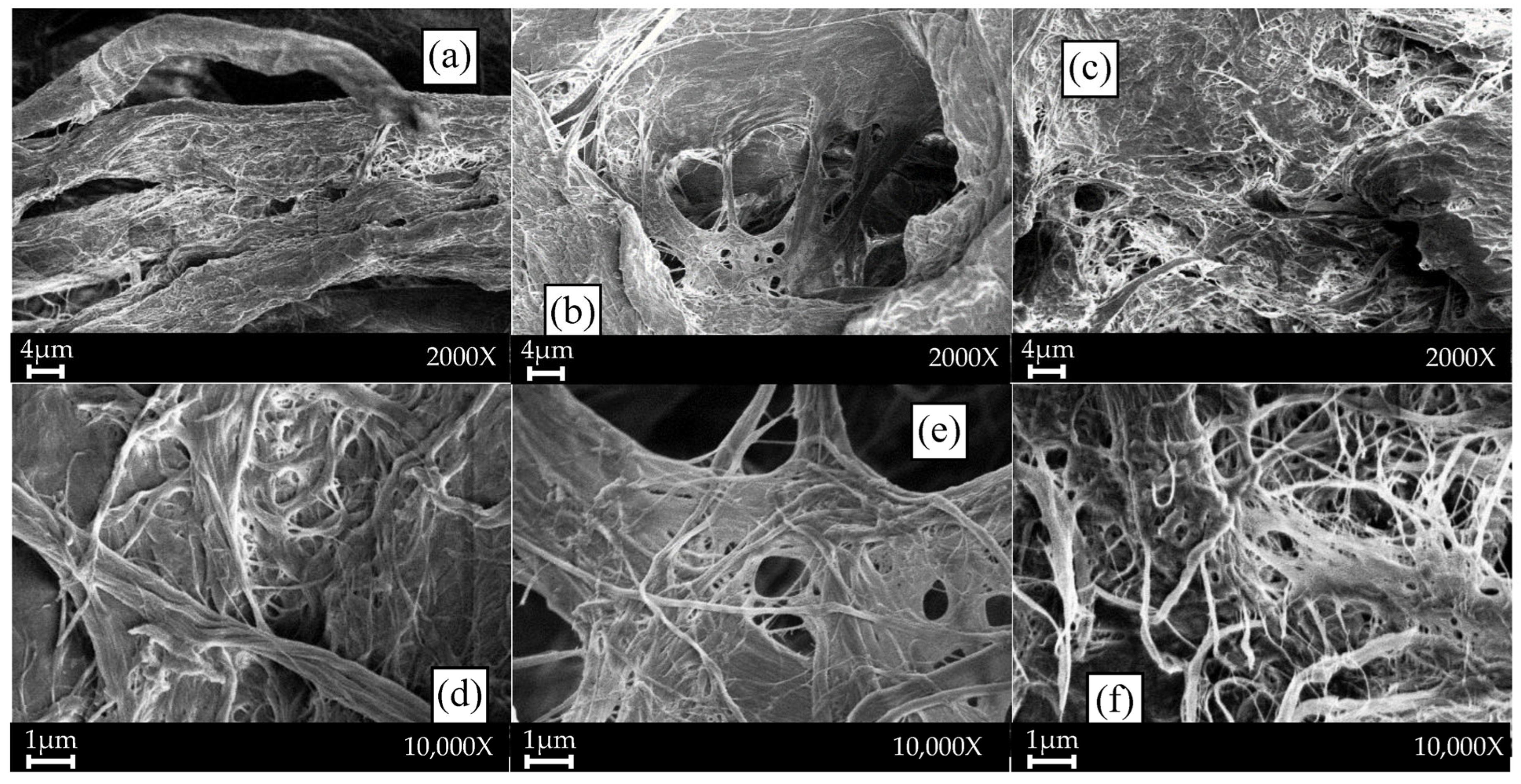
X-ray diffraction analysis indicates that the crystallinity index of the filter paper remained close to 80%, regardless of the prewetting method (Table S2). No clear correlation was observed between crystallinity changes and saccharification performance, suggesting that crystallinity was not the controlling factor governing glucose yield in this case. Instead, morphological changes appear to play a more relevant role. SEM images support this interpretation. Prewetted samples with or without being subjected to HC exhibit a more rugose surface and an open matrix compared to raw filter paper (Figure 4a,b,d,e). When hydrogen peroxide is added during the prewetting with HC, the cellulose fibers become thinner, and the surface is more scratched and wrinkled (Figure 4c,f), enhancing the accessibility of the matrix and the fibers to the enzyme.

3.2. Effect of HC-Assisted Washing on the Saccharification of Delignified LCBs

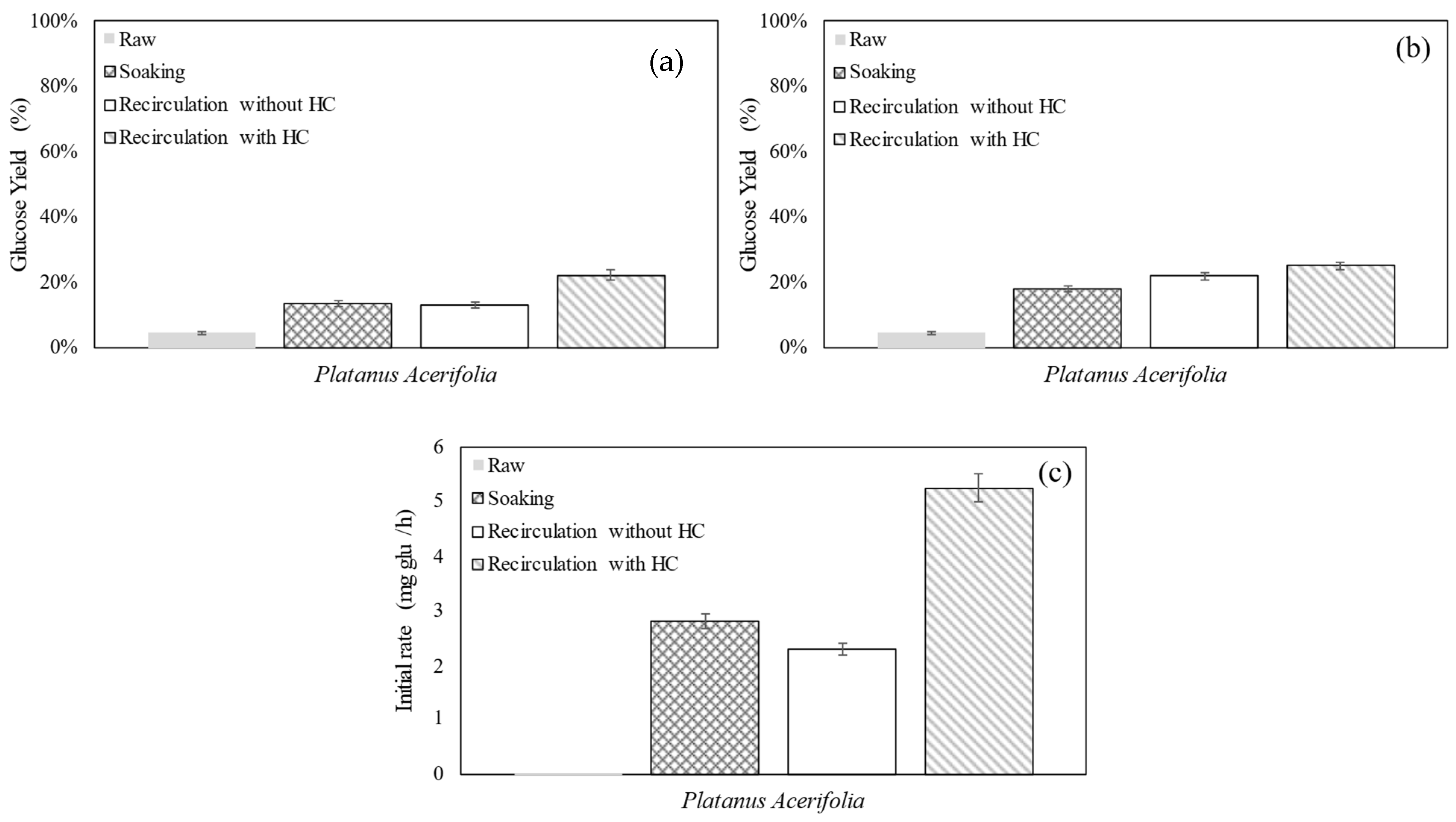
The saccharification of the raw and delignified Platanus acerifolia leaves, subjected to different washing methods, is illustrated in Figure 5. The raw biomass led to approximately 5% glucose yield after 28 h, with no further increase after the initial 6 h. This behavior reflects the strong recalcitrance of the untreated solid.
Delignification with HPAC significantly enhanced both the initial hydrolysis rate and glucose yield. After 6 h, samples washed by soaking or by simple recirculation without HC reached around 15%. The initial hydrolysis rate of the samples subjected to HC-assisted washing increased the glucose yield to around 22% after 6 h, and almost doubled the hydrolysis rate and reached values close to those obtained for raw filter paper. However, the hydrolysis rate of all the samples slowed down after 6 h, and final yields after 28 h remained limited (around 25% for the sample washed with HC and around 20% for those washed with the other methods). These results suggest that, although delignification with HPAC, followed by HC-assisted washing, led to a 5-fold increase in the glucose yield, it was not enough to eliminate the detrimental effect associated with residual lignin, which was ~14%. The typical washing methods of soaking with gentle agitation or recirculation without HC always provided similar results; differences were within the uncertainty of the measurements. Both methods improved the glucose yield four times compared with the results of the raw biomass. Given their similar performance, soaking was selected as the reference washing method for subsequent experiments due to its lower energy demand and wider industrial adoption.
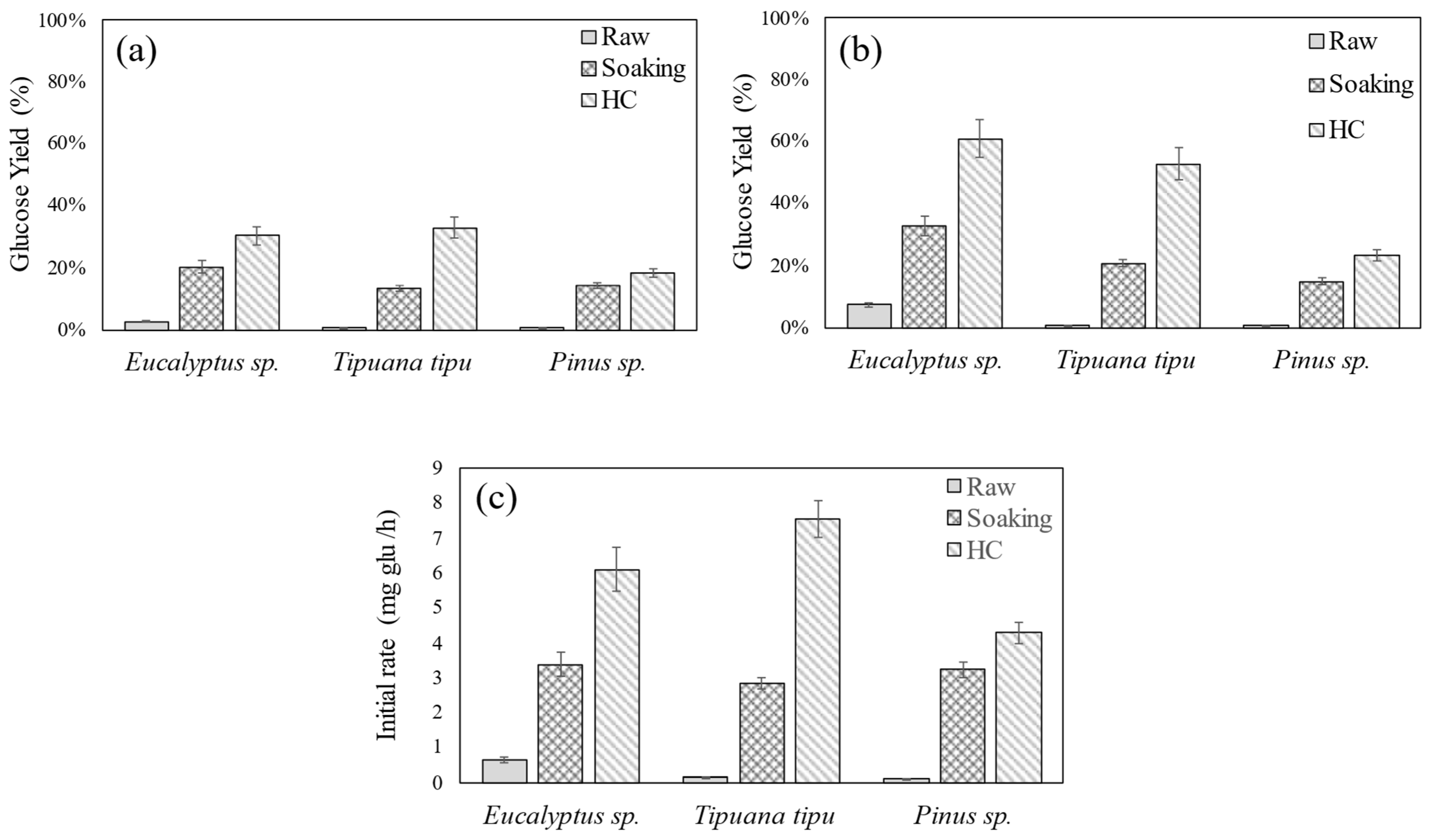
HPAC is particularly convenient for delignification of wood sawdust [10]; then, three species of softwood (Eucalyptus sp., Tipuana tipu, and Pinus sp.) were studied to analyze the efficiency of HC-assisted washing on enzymatic saccharification. Table S3 of the Supplementary Materials summarizes the lignin and cellulose content of the raw and delignified wood samples, and the solid recovery after delignification for both washing procedures. Delignification with HPAC led to samples with almost negligible amounts of lignin. Figure 6 and Table 2 summarize the glucose yields and initial hydrolysis rates obtained for raw and delignified samples, highlighting the influence of different washing methods. As indicated in Section 2.5, glucose yields were calculated assuming that the delignified samples consisted only of cellulose to enable the comparison of saccharification performance among samples. Hence, the reported glucose yields should be interpreted as apparent yields rather than absolute cellulose-to-glucose conversion values.
Raw sawdust samples of Tipuana tipu and Pinus sp. exhibited very low initial hydrolysis rates, with glucose yields around 1% after 6 h and no further increase after 28 h. Eucalyptus sp. sawdust showed three times higher initial hydrolysis rate, reaching a glucose yield of 3% after 6 h, which increased to 8% after 28 h. However, these values are still too low for practical applications and suggest the convenience of chemical pretreatment before the enzymatic hydrolysis step. Delignification with HPAC of the raw samples significantly increased the glucose yields and the reaction rates, remarking the relevance of removing the lignin of the lignocellulose matrix to allow recovering the fermentable sugars. Moreover, the washing step intensified with HC led to enhanced glucose yields and initial saccharification rates compared to results obtained using the standard methods of soaking or recirculation without simultaneous cavitation. Hence, the delignification step cannot be replaced by direct HC of the raw samples.
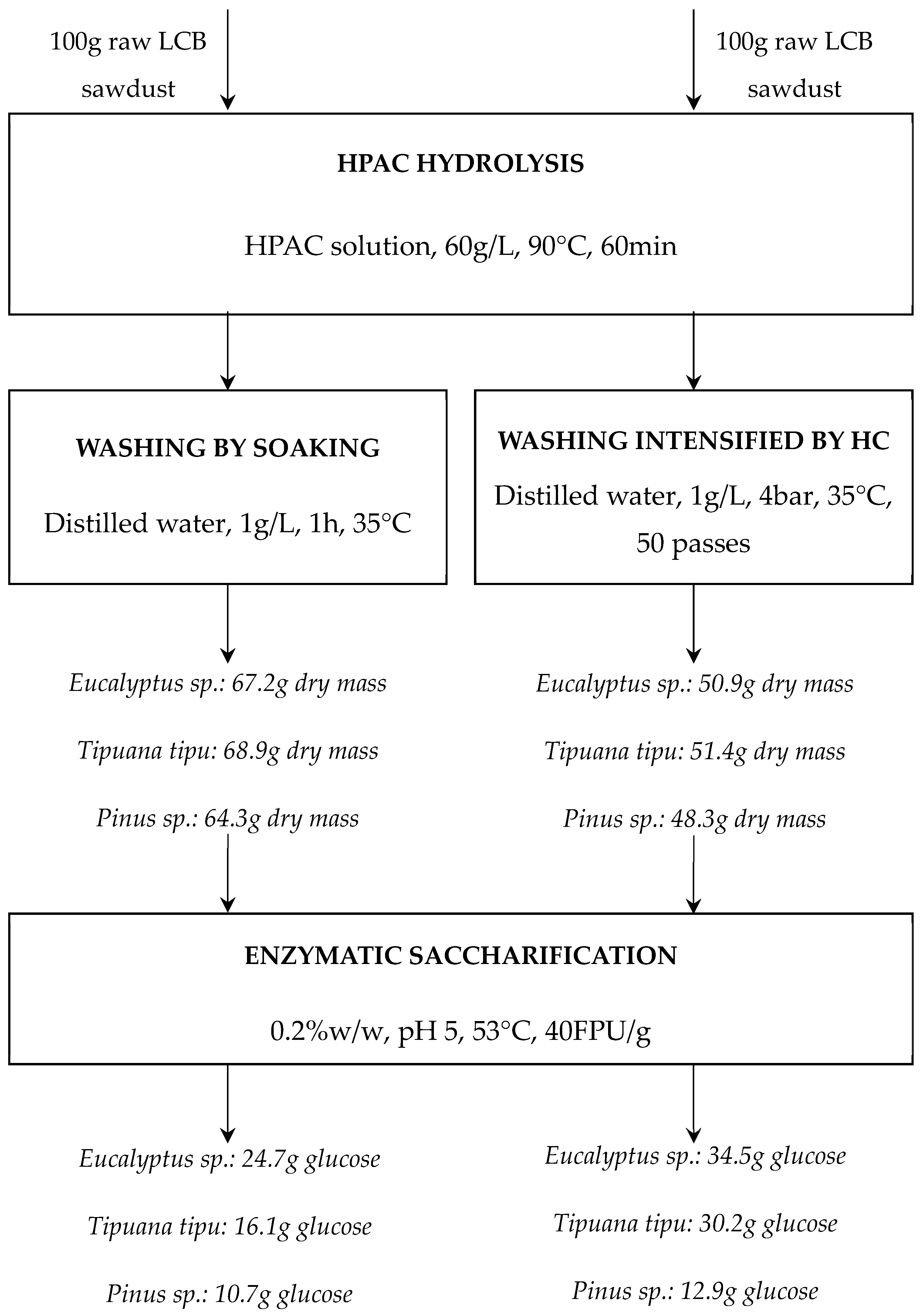
Although the solid recovery of the samples subjected to HC-assisted washing is always lower than that for the traditional washing method, the final yield of glucose, expressed per 100 g precursor dry mass, was higher. Figure 7 provides a graphical representation of the process mass balance, indicating the yield obtained for each species. The yields are also listed in Table S4 of the Supplementary Material.
The highest glucose yield after 28 h was obtained with the delignified sample of Eucalyptus sp., increasing the yield more than seven times the one obtained with the raw biomass. The samples washed with HC reached a glucose yield of 61%, i.e., representing an increase of more than 85% relative to typical washing methods. For Tipuana tipu, the effect of HC-assisted washing was even more notable, which reached only 1% glucose yield for the raw sample and rose to 53% after HPAC when the washing step was intensified by HC. With standard washing methods, the yield was less than half, around 20%. When expressed based on 100 g of precursor dry mass, the yield increments were 40% and 88% for Eucalyptus sp. and Tipuana tipu, respectively. The effect was particularly strong on the initial hydrolysis rate. In contrast, the improvement for Pinus sp. was low, with glucose yields increasing from 15% to 24%. However, the increment per 100 g of dry mass is less than 20%.
The higher yields obtained with delignified LCBs with HC-assisted washing can be attributed to the cleavage of the cellulose fibers and the removal of toxic compounds that could have remained from the original lignocellulosic matrix or formed during the acid-oxidative hydrolysis due to the HPAC procedure. The collapse of cavitation bubbles induces shock waves and generates hydroxyl radicals that are able to remove organic compounds that can inhibit the enzyme. It can also modify the morphology of the samples, increasing the surface accessibility. When lignin is not completely removed with HPAC, although improvements induced by HC are observed during the initial period, the final yield is low, likely due to enzyme inhibition by the remaining organic compounds.
The crystallinity index of delignified samples subjected to different washing methods is reported in Table 3. When HC is used during the washing step, the crystallinity index is lower than the one obtained with the traditional washing methods, so there could be an effect of an increasing amount of amorphous cellulose available for hydrolysis. However, the low magnitude of these changes can doubtfully account for the large differences observed in glucose yield, reinforcing the conclusion that morphological accessibility and inhibitors removal, rather than crystallinity alone, dominate saccharification efficiency.
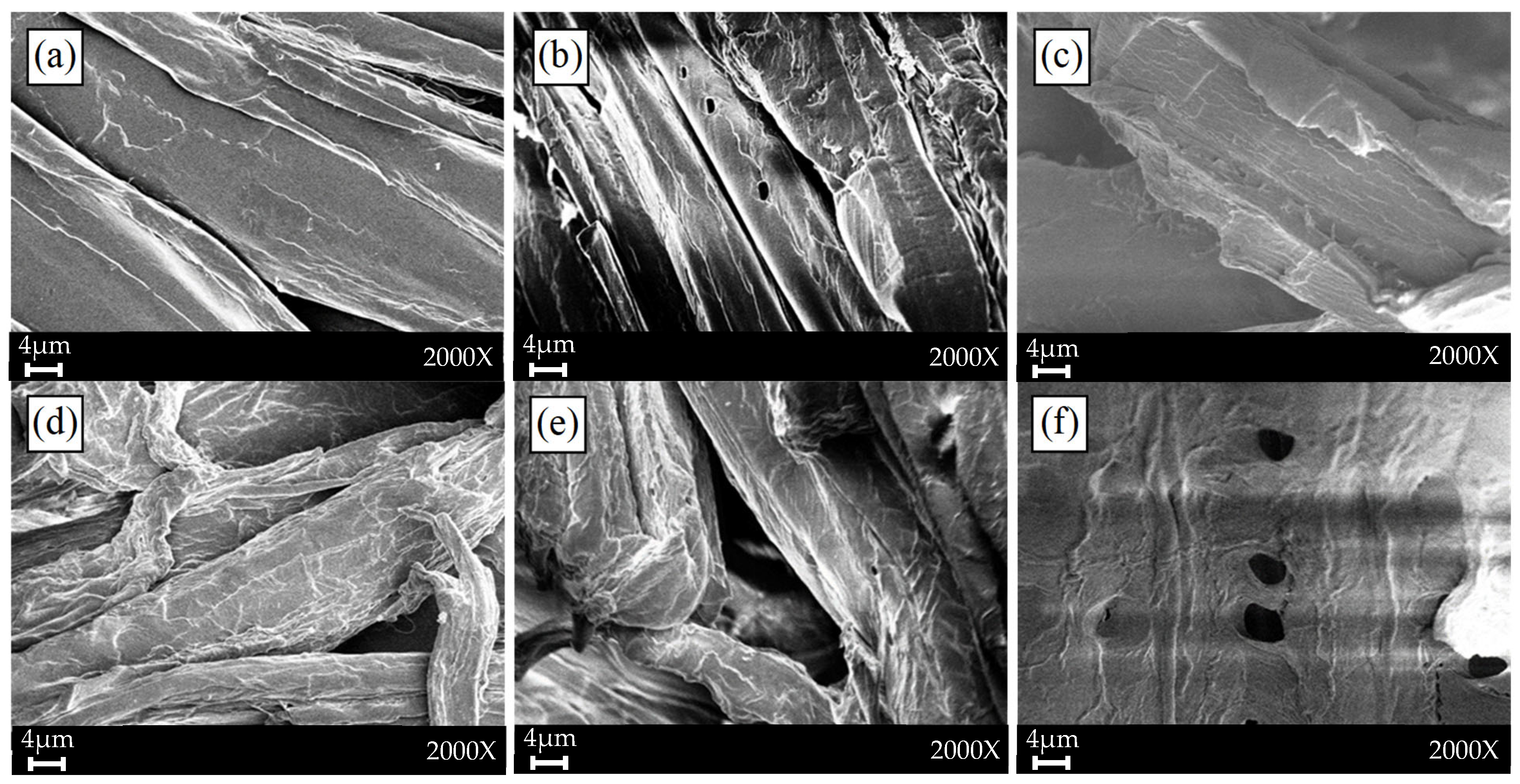
The morphology of the samples examined with SEM is shown in Figure 8. The images reveal pronounced morphological differences between samples washed with and without HC, as illustrated in Figure 8d,e, compared to Figure 8a,b. Eucalyptus sp. and Tipuana tipu samples washed with HC exhibited significantly rougher surfaces and untidier matrices. Such a different morphology can partly explain the larger glucose yields obtained with the samples subjected to HC-assisted washing. On the other hand, Pinus sp. fibers maintained a more packed structure and a rather smooth surface, regardless of the washing method used (Figure 8c,f). Hence, the lower saccharification efficiency attained for the delignified Pinus sp. samples can be related to the different morphology of the surface, reducing the cellulose bioavailability for the enzyme blend, which is only slightly improved by the application of HC-assisted washing.
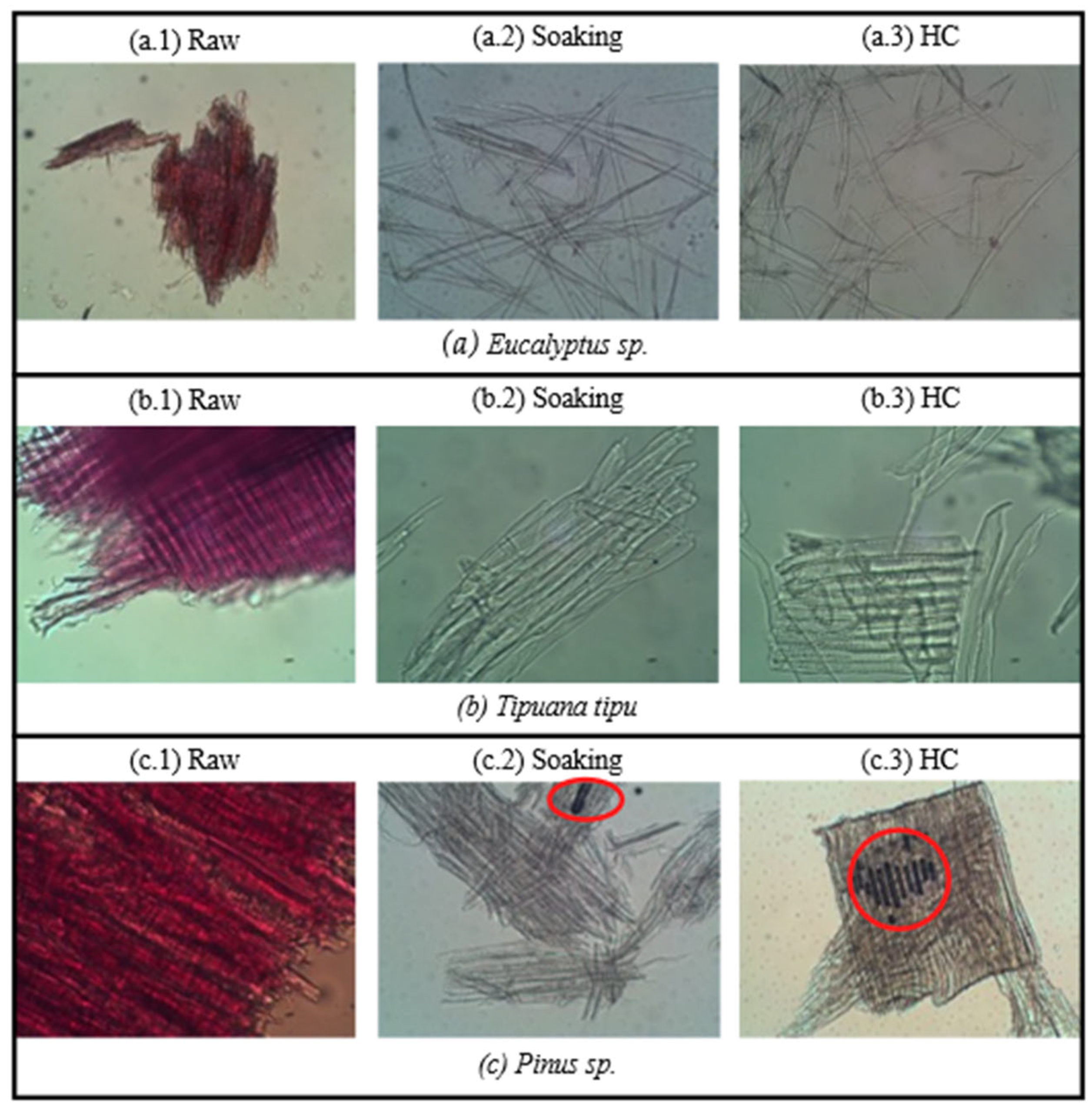
Figure 9 shows optical microscopy with lignin-specific staining, which confirmed the effective lignin removal by HPAC for all wood species. In the case of the raw (untreated) samples, the staining developed a burgundy-purple color, indicating the presence of lignin, which completely disappeared in the samples delignified by HPAC. The fibers of the Eucalyptus sp. and Tipuana tipu samples treated with HPAC appeared disaggregated, thinned, and disordered, pointing to an accessible substrate for enzymatic reactions.
Eucalyptus sp. samples treated with HPAC displayed the most open fibers, suggesting greater cellulose availability, which led to the highest glucose yield. In contrast, the delignified samples of Pinus sp. retained a denser and more interwoven structure. Moreover, in the delignified samples of Pinus sp., air bubbles can be observed trapped inside the tracheids, which are the main water-conducting cells in gymnosperm species (marked with red circles in Figure 9b,c). This is particularly evident in the sample subjected to HPAC, followed by a HC-assisted washing step, highlighting the structural stability of this species. Hence, the Pinus sp. samples maintain their original dense and less accessible structure after delignification, likely because its xylem structure, a characteristic of gymnosperms, presents a specific challenge for liquid penetration. FTIR spectroscopy indicated almost complete elimination of lignin. Lignin content is evidenced in the region between 1490 and 1530 cm−1, corresponding to aromatic skeletal vibrations, a characteristic of lignin, which are absent in cellulose and hemicellulose [49]. The integration values were consistent with those obtained using the TAPPI standard method and the results presented in Table 4. The undetectable trace of lignin for the Pinus sp. delignified sample indicates that the limitations observed in the saccharification are not associated with the presence of lignin in the samples. The influence arising from structural features inherent to each species may have been responsible for the large differences found. Eucalyptus sp. and Tipuana tipu are angiosperm species that mainly contain vessel elements acting as water conduit cells, which facilitate liquid penetration. These structures are more open and thus likely more accessible to the pretreatment method and sensitive to the action of HC.
As a whole, it appears that the influence of HC depends on the biomass species. Eucalyptus sp. and Tipuana tipu, angiosperm species, showed a less stable and more accessible matrix, allowing a higher effect of applying HC during the washing step. Pinus sp. (a gymnosperm) exhibited a denser and more stable structure, posing a greater challenge for HC to effectively disentangle the fibers for increasing the enzyme accessibility. In addition, although HC slightly reduced the crystallinity index of delignified samples, crystallinity alone does not appear to be the determining factor governing saccharification efficiency. Instead, morphological modifications and enhanced mass transfer during washing appear to play a more relevant role, since samples with greater crystallinity, such as filter paper, led to higher glucose yields.

3.3. Effect of the Number of Passes Through the HC Device and of the Solid Recirculation

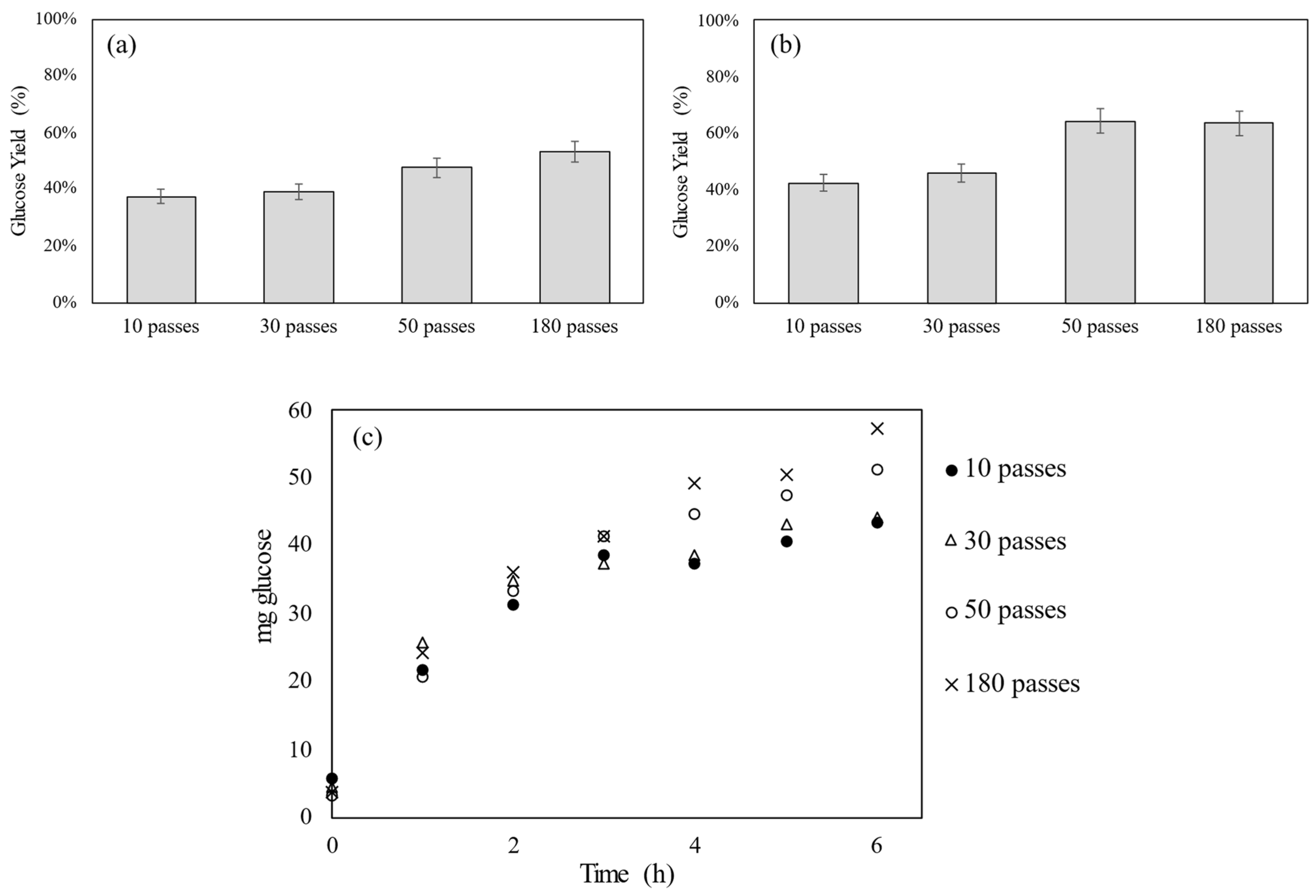
The influence of the number of passes through the cavitation device was evaluated using HPAC-delignified Eucalyptus sp. sawdust with a smaller particle size. Figure 10 illustrates the glucose yields after 6 and 28 h and the time evolution of the generated mass of glucose. As the number of passes increased, the yield of glucose increased up to 50 passes (corresponding to 1 h cavitation). When the number of passes was 180, no further improvements were observed. For a given number of passes, results were comparable to those obtained with larger particle diameters, indicating that the solid size had a negligible effect within the range of conditions examined.
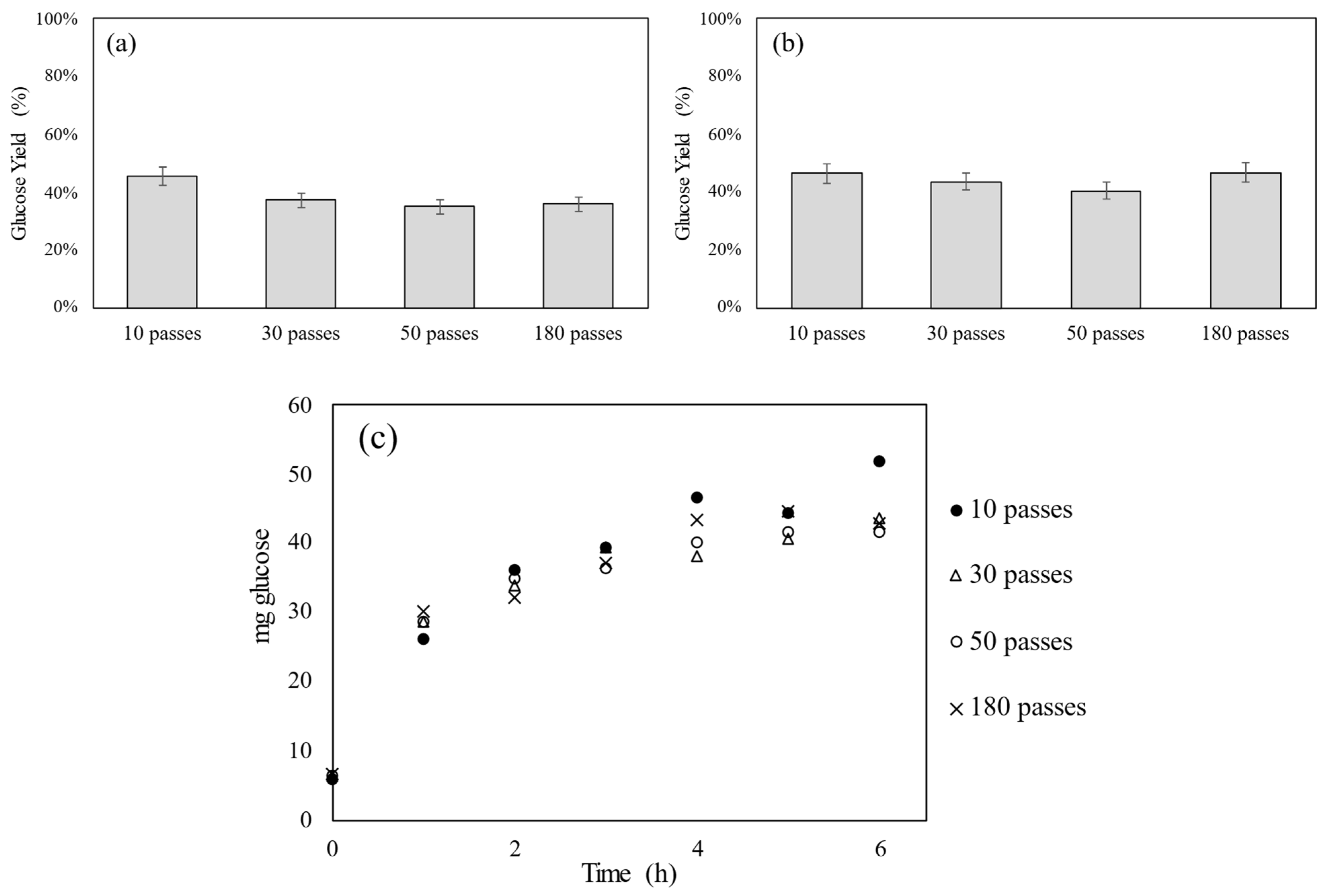
The results shown until now corresponded to the solid kept in a basket forming a fixed bed, without recirculation. The cavitation device was located just before the solid, as schematized in Figure 2a. HC induces mechanical modifications of the solid surface that could be larger if the solid was forced through the cavitation device [50]. Hence, a screw pump was installed to perform the same experiments with solid recirculation through the cavitation device (Figure 2b). The time evolution of the mass of glucose and the glucose yields at 6 and 28 h are shown in Figure 11.
The glucose yield obtained with solid recirculation was almost independent of the number of passes; even a slightly negative effect of the number of passes was observed. Moreover, the attained yields were lower than those obtained with the solid kept in a fixed bed downstream of the cavitation device and approached their maximum yields after approximately 6 h. The solid was thoroughly destroyed even after 10 passes, due to the shear occasioned by forcing it through the orifice of the Venturi-type cavitation system. The reduced performance compared to the fixed bed configuration may be related to a change in the rheological features of the circulating fluid, which could diminish the intensity of the cavitation bubbles’ collapse. Otherwise, inhibitory or toxic compounds occluded within the solid particles may have been released during disintegration, or their degradation may have been less effective because cavities acted more on the disintegration of the solid.
The number of passes through the cavitation device improved the saccharification yield of HPAC-delignified Eucalyptus sp. when it was arranged as a fixed bed, up to 50 passes. In contrast, when the solid was circulated through the cavitation device, saccharification yield was practically independent of the number of passes. Furthermore, circulating the solids through the Venturi device, which requires finer grinding of the substrate, did not show improvement. Consequently, arranging the solid as a fixed bed downstream of the HC device during the washing step and optimizing the number of passes appears to be a more convenient strategy than using finely ground, circulating solids, as it reduces energy consumption during operation and minimizes milling costs.

4. Conclusions

This work demonstrates that HC can effectively intensify the washing step following HPAC delignification, leading to enhanced enzymatic saccharification of LCBs. The glucose yields produced per 100 g of precursor dry mass increased 40% for Eucalyptus sp., 88% for Tipuana tipu, and only 20% for Pinus sp., indicating a strong influence of the wood species on the process performance. The extra energy required to implement HC during the washing step is low and results in energy savings per unit mass of produced glucose. The results confirm that efficient lignin removal is a prerequisite for HC to exert a significant positive effect. In this context, HPAC proved to be a suitable pretreatment since the produced delignified LCBs contained residual hydrogen peroxide, which enhanced the effect of HC during the washing step. The oxidative effects associated with HC likely contribute to the partial removal or transformation of inhibitory compounds remaining after the delignification step. However, the exact nature and relative contribution of these effects were not independently quantified in this work.
From a sustainability and process-engineering perspective, these results show that introducing HC as a washing-step intensification strategy improves sugar recovery without increasing chemical severity or enzyme loading, offering a practical route toward more energy-efficient and scalable biomass valorization processes.

Supplementary Materials

The following supporting information can be downloaded at: https://www.mdpi.com/article/10.3390/su18062816/s1, Figure S1. Photographs of the set-ups used for the washing step intensified by HC. (a) Without solid circulation, showing an enlargement of the sample container; (b) With solid circulation. Table S1. Comparison of glucose yields per 100 of precursor dry mass attained in several recent works using acid oxidative delignification. Table S2. Crystallinity index of raw and treated filter paper. Table S3. Cellulose and lignin content of the raw and delignified LCBs obtained with the different washing methods, including solid recovery. Table S4. Glucose yields obtained expressed as mass of glucose generated per 100 g of precursor dry mass. Table S5. Extra energy consumption required for performing HC during the washing step referred to the energy consumed for HPAC. Ratio of the energy consumed per unit of generated glucose mass using HC referred to the same when using traditional washing methods for which energy consumption is assumed to be negligible. Energy savings by implementing HC during the washing step.

Author Contributions

Conceptualization; methodology, investigation, software, validation, data curation, formal analysis, and writing—original draft preparation: M.d.P.B.; investigation and data curation: C.G.G.; software, validation, and formal analysis: S.F.; investigation, resources, data curation, writing—review and editing, visualization, supervision, project administration, and funding acquisition: M.A.A. and M.C. All authors have read and agreed to the published version of the manuscript.

Funding

This research was funded by the Universidad de Buenos Aires, grant number UBACyT 20020220100154BA.

Institutional Review Board Statement

Not applicable.

Informed Consent Statement

Not applicable.

Data Availability Statement

The original contributions presented in this study are mainly included in the article/Supplementary Material. Further inquiries can be directed to the corresponding author. The raw data supporting the conclusions of this article will be made available by the authors on request.

Acknowledgments

Donation of the Trichoderma reesi cellulase cocktail Cellic (CTec3 HS) from Novo-zymes Latin America Ltda. (Araucária, Paraná, Brazil) is gratefully acknowledged.

Conflicts of Interest

The authors declare no conflicts of interest. The funders had no role in the design of the study; in the collection, analyses, or interpretation of data; in the writing of the manuscript; or in the decision to publish the results.

Abbreviations

The following abbreviations are used in this manuscript:
AATCCAmerican Association of Textile Chemists and Colorists
FTIRFourier Transform Infrared
HCHydrodynamic Cavitation
HPACAcid-oxidative Pretreatment Using Acetic Acid and Hydrogen Peroxide
LCBLignocellulosic Biomass
SEMScanning Electron Microscopy
TAPPITechnical Association of the Pulp and Paper Industry
XRDX-ray diffraction

References

  1. Zhu, J.Y.; Pan, X. Efficient sugar production from plant biomass: Current status, challenges, and future directions. Renew. Sustain. Energy Rev. 2022, 164, 112583. [Google Scholar] [CrossRef]
  2. Zhou, Z.; Ouyang, D.; Liu, D.; Zhao, X. Oxidative pretreatment of lignocellulosic biomass for enzymatic hydrolysis: Progress and challenges. Bioresour. Technol. 2023, 367, 128208. [Google Scholar] [CrossRef] [PubMed]
  3. Balbi, M.P.; Fleite, S.; Kildegaard, G.; Cassanello, M. Cellulose Enzymatic Saccharification Intensified by Nonionic Surfactants. Ind. Eng. Chem. Res. 2023, 62, 19043–19054. [Google Scholar] [CrossRef]
  4. Escobar, N.; Laibach, N. Sustainability check for bio-based technologies: A review of process-based and life cycle approaches. Renew. Sustain. Energy Rev. 2021, 135, 110213. [Google Scholar] [CrossRef]
  5. De Blasio, C. Fundamentals of Biofuels Engineering and Technology, 1st ed.; Springer: New York, NY, USA, 2019. [Google Scholar]
  6. Li, X.; Wang, Y.; Tang, W.; Fan, B.; He, Y.-C.; Ma, C. Co-production of reducing sugars and xylo-oligosaccharides from rape straw through sodium dodecyl sulfate-mediated p-toluenesulfonic acid pretreatment. Ind. Crops Prod. 2024, 222, 119888. [Google Scholar] [CrossRef]
  7. Wang, J.; Lan, D.; Zhuang, J.; Wang, Y. Pretreatment of Camellia oleifera shell by ethanolamine-based solvents for selective delignification and enhanced enzymatic saccharification. Ind. Crops Prod. 2024, 222, 119523. [Google Scholar] [CrossRef]
  8. Huang, C.; Jiang, X.; Shen, X.; Hu, J.; Tang, W.; Wu, X.; Ragauskas, A.; Jameel, H.; Meng, X.; Yong, Q. Lignin-enzyme interaction: A roadblock for efficient enzymatic hydrolysis of lignocellulosics. Renew. Sustain. Energy Rev. 2022, 154, 111822. [Google Scholar] [CrossRef]
  9. Prado, C.A.; Cunha, M.L.S.; Arruda, G.L.; Cruz-Santos, M.M.; Antunes, F.A.F.; Shibukawa, V.P.; Teran-Hilares, R.; da Silva, S.S.; Santos, J.C. Hydrodynamic cavitation-assisted acid pretreatment and fed-batch simultaneous saccharification and co-fermentation for ethanol production from sugarcane bagasse using immobilized cells of Scheffersomyces parashehatae. Bioresour. Technol. 2024, 394, 130234. [Google Scholar] [CrossRef] [PubMed]
  10. Wi, S.G.; Cho, E.J.; Lee, D.; Lee, S.J.; Lee, Y.J.; Bae, H. Lignocellulose conversion for biofuel: A new pretreatment greatly improves downstream biocatalytic hydrolysis of various lignocellulosic materials. Biotechnol. Biofuels 2015, 8, 228. [Google Scholar] [CrossRef]
  11. Ying, W.; Fang, X.; Xu, Y.; Zhang, J. Combined acetic acid and enzymatic hydrolysis for xylooligosaccharides and monosaccharides production from poplar. Biomass Bioenerg. 2022, 158, 106377. [Google Scholar] [CrossRef]
  12. Huang, Y.; Chu, Q.; Tong, W.; Wu, S.; Jin, Y.; Hu, J.; Song, K. Carbocation scavenger assisted acid pretreatment followed by mild alkaline hydrogen peroxide (AHP) treatment for efficient production of fermentable sugars and lignin adsorbents from hardwood biomass. Ind. Crops Prod. 2021, 170, 113737. [Google Scholar] [CrossRef]
  13. Mota, T.R.; Oliveira, D.M.; Morais, G.R.; Marchiosi, R.; Buckeridge, M.S.; Ferrarese-Filho, O.; dos Santos, W.D. Hydrogen Peroxide-Acetic Acid Pretreatment Increases the Saccharification and Enzyme Adsorption on Lignocellulose. Ind. Crops Prod. 2019, 140, 111657. [Google Scholar] [CrossRef]
  14. Lin, Z.; Ying, W.; Wen, P.; Lian, Z.; Zhang, J. Effect of peracetic acid generation in hydrogen peroxide-acetic acid pretreatment on production of xylooligosaccharides from poplar by organic acid hydrolysis. Bioresour. Technol. 2023, 376, 128848. [Google Scholar] [CrossRef]
  15. Ying, W.; Zhu, J.; Xu, Y.; Zhang, J. High solid loading enzymatic hydrolysis of acetic acid-peroxide/acetic acid pretreated poplar and cellulase recycling. Bioresour. Technol. 2021, 340, 125624. [Google Scholar] [CrossRef]
  16. Meng, F.; Li, N.; Yang, H.; Shi, Z.; Zhao, P.; Yang, J. Investigation of hydrogen peroxide-acetic acid pretreatment to enhance the enzymatic digestibility of bamboo residues. Bioresour. Technol. 2022, 344, 126162. [Google Scholar] [CrossRef]
  17. Ying, W.; Sun, F.; Li, X.; Zhang, J. Efficient high solid loading enzymatic hydrolysis of hydrogen peroxide/acetic acid-pretreated bamboo for monosaccharides production. Ind. Crops Prod. 2023, 197, 116588. [Google Scholar] [CrossRef]
  18. Kildegaard, G.; Balbi, M.P.; Salierno, G.; Cassanello, M.; De Blasio, C.; Galvagno, M.A. Cleaner Delignification of Urban Leaf Waste Biomass for Bioethanol Production, Optimised by Experimental Design. Processes 2022, 10, 943. [Google Scholar] [CrossRef]
  19. Ying, W.; Zhu, J.; Zhang, J. Improving enzymatic hydrolysis efficiency of highly recalcitrant Chinese fir biomass via hydrogen peroxide/acetic acid pretreatment and alkaline incubation. Renew. Energy 2025, 239, 122116. [Google Scholar] [CrossRef]
  20. Meng, F.; Fan, J.; Cui, F.; Yang, H.; Shi, Z.; Wang, D.; Yang, J. An innovative and efficient hydrogen peroxide-citric acid pretreatment of bamboo residues to enhance enzymatic hydrolysis and ethanol production. Bioresour. Technol. 2023, 383, 129230. [Google Scholar] [CrossRef]
  21. Guo, J.; Liu, Y.; Zhou, X.; Liu, D.; Huang, K.; Xu, Y. Complete breakdown the cellulose-saccharification barrier of inert Masson pine by gluconic acid-peroxide pretreatment under moderate temperature. Chem. Eng. J. 2025, 505, 159155. [Google Scholar] [CrossRef]
  22. Zheng, H.; Zheng, Y.; Zhu, J. Recent Developments in Hydrodynamic Cavitation Reactors: Cavitation Mechanism, Reactor Design, and Applications. Engineering 2022, 19, 180–198. [Google Scholar] [CrossRef]
  23. Verdini, F.; Calcio Gaudino, E.; Grillo, G.; Tabasso, S.; Cravotto, G. Cellulose Recovery from Agri-Food Residues by Effective Cavitational Treatments. Appl. Sci. 2021, 11, 4693. [Google Scholar] [CrossRef]
  24. Thanekar, P.; Gogate, P.R. Combined hydrodynamic cavitation based processes as an efficient treatment option for real industrial effluent. Ultrason. Sonochem. 2019, 53, 202–213. [Google Scholar] [CrossRef]
  25. Holkar, C.R.; Jadhav, A.J.; Pinjari, D.V.; Pandit, A.B. Cavitationally driven transformations: A technique of process intensification. Ind. Eng. Chem. Res. 2019, 58, 5797–5819. [Google Scholar] [CrossRef]
  26. Gogate, P.R. Alternative Energy Sources for Green Chemistry; Stefanidis, G., Stankiewicz, A., Eds.; The Royal Society of Chemistry: London, UK, 2016; pp. 126–160. [Google Scholar]
  27. Agarkoti, C.; Gogate, P.R.; Pandit, A.B. Comparison of acoustic and hydrodynamic cavitation based hybrid AOPs for COD reduction of commercial effluent from CETP. J. Environ. Manag. 2021, 281, 111792. [Google Scholar] [CrossRef]
  28. Szaja, A.; Montusiewicz, A.; Lebiocka, M. Challenges of Hydrodynamic Cavitation of Organic Wastes. Appl. Sci. 2022, 12, 7936. [Google Scholar] [CrossRef]
  29. Hamidi, R.; Damizia, M.; De Filippis, P.; Patrizi, D.; Verdone, N.; Vilardi, G.; de Caprariis, B. Recent developments and future outlooks of hydrodynamic cavitation as an intensification technology for renewable biofuels production. J. Environ. Chem. Eng. 2023, 11, 110819. [Google Scholar] [CrossRef]
  30. Askarniya, Z.; Sun, X.; Wang, Z.; Boczkaj, G. Cavitation-based technologies for pretreatment and processing of food wastes: Major applications and mechanisms—A review. Chem. Eng. J. 2023, 454, 140388. [Google Scholar] [CrossRef]
  31. Nagarajan, S.; Ranade, V.V. Pretreatment of milled and unchopped sugarcane bagasse with vortex based hydrodynamic cavitation for enhanced biogas production. Bioresour. Technol. 2022, 361, 127663. [Google Scholar] [CrossRef]
  32. Terán Hilares, R.; Dos Santos, J.C.; Ahmed, M.A.; Jeon, S.H.; da Silva, S.S.; Han, J.I. Hydrodynamic cavitation-assisted alkaline pretreatment as a new approach for sugarcane bagasse biorefineries. Bioresour. Technol. 2016, 214, 609–614. [Google Scholar] [CrossRef] [PubMed]
  33. Terán Hilares, R.; Ienny, J.V.; Marcelino, P.F.; Ahmed, M.A.; Antunes, F.A.F.; da Silva, S.S.; dos Santos, J.C. Ethanol production in a simultaneous saccharification and fermentation process with interconnected reactors employing hydrodynamic cavitation-pretreated sugarcane bagasse as raw material. Bioresour. Technol. 2017, 243, 652–659. [Google Scholar] [CrossRef]
  34. Terán Hilares, R.; Dionízio, R.M.; Prado, C.A.; Ahmed, M.A.; da Silva, S.S.; Santos, J.C. Pretreatment of sugarcane bagasse using hydrodynamic cavitation technology: Semi-continuous and continuous process. Bioresour. Technol. 2019, 290, 121777. [Google Scholar] [CrossRef] [PubMed]
  35. Sun, X.; Liu, S.; Zhang, X.; Tao, Y.; Boczkaj, G.; Yoon, J.Y.; Xuan, X. Recent advances in hydrodynamic cavitation-based pretreatments of lignocellulosic biomass for valorization. Bioresour. Technol. 2022, 345, 126251. [Google Scholar] [CrossRef]
  36. Ramirez-Cadavid, D.A.; Kozyuk, O.; Lyle, P.; Michel, F.C., Jr. Effects of hydrodynamic cavitation on dry mill corn ethanol production. Process Biochem. 2016, 51, 500–508. [Google Scholar] [CrossRef]
  37. Madison, M.; Coward-Kelly, G.; Liang, C.; Nazmul Karim, M.; Falls, M.; Holtzapple, M. Mechanical pretreatment of biomass—Part I: Acoustic and hydrodynamic cavitation. Biomass Bioenerg. 2017, 98, 135–141. [Google Scholar] [CrossRef]
  38. Prado, C.A.; Antunes, F.A.F.; Rocha, T.M.; Sanchez-Muñoz, S.; Barbosa, F.G.; Teran-Hilares, R.; Cruz-Santos, M.M.; Arruda, G.L.; da Silva, S.S.; Santos, J.C. A review on recent developments in hydrodynamic cavitation and advanced oxidative processes for pretreatment of lignocellulosic materials. Bioresour. Technol. 2022, 345, 126458. [Google Scholar] [CrossRef]
  39. Tsalagkas, D.; Börcsök, Z.; Pásztory, Z.; Gogate, P.; Csóka, L. Assessment of the papermaking potential of processed Miscanthus × giganteus stalks using alkaline pre-treatment and hydrodynamic cavitation for delignification. Ultrason. Sonochem. 2021, 72, 105462. [Google Scholar] [CrossRef] [PubMed]
  40. Adney, B.; Baker, J. Measurement of Cellulase Activities. Laboratory Analytical Procedure (LAP); Technical Report NREL/TP-510-42628; National Renewable Energy Laboratory, U.S. Department of Energy: Golden, CO, USA, 2008.
  41. Saharan, V.K.; Badve, M.P.; Pandit, A.B. Degradation of Reactive Red 120 dye using hydrodynamic cavitation. Chem. Eng. J. 2011, 178, 100–107. [Google Scholar] [CrossRef]
  42. Fleite, S.N.; Torres, R.; Lagorio, M.G.; Ranade, V.V.; Cassanello, M.C. Hydrodynamic cavitation effects over complex organic mixtures. Chem. Eng. Res. Des. 2024, 204, 371–381. [Google Scholar] [CrossRef]
  43. Davidson, R.S.; Choudhury, H.; Origgi, S.; Castellan, A.; Trichet, V.; Capretti, G. The reaction of phloroglucinol in the presence of acid with lignin-containing materials. J. Photochem. Photobiol. A Chem. 1995, 91, 87–93. [Google Scholar] [CrossRef]
  44. Lin, S.Y.; Dence, C.W. (Eds.) Methods in Lignin Chemistry; Springer Science & Business Media: New York, NY, USA, 2012. [Google Scholar]
  45. Segal, L.; Creely, J.J.; Maartin, A.E.; Conrad, C.M. An empirical method for estimating the degree of crystallinity of native cellulose using the X-Ray diffractometer. Text Res. J. 1959, 29, 786–794. [Google Scholar] [CrossRef]
  46. Yupanqui-Mendoza, S.L.; Prado, C.A.; dos Santos, J.C.; Arantes, V. Hydrodynamic cavitation as a promising pretreatment technology to enhance the efficiency of cellulose nanocrystal production via enzymatic hydrolysis. Chem. Eng. J. 2023, 472, 144821. [Google Scholar] [CrossRef]
  47. Javier-Astete, R.; Jimenez-Davalos, J.; Zolla, G. Determination of hemicellulose, cellulose, holocellulose and lignin content using FTIR in Calycophyllum spruceanum (Benth.) K. Schum. and Guazuma crinita Lam. PLoS ONE 2021, 16, e0256559. [Google Scholar] [CrossRef]
  48. Wittner, N.; Slezsák, J.; Broos, W.; Geerts, J.; Gergely, S.; Vlaeminck, S.E.; Cornet, I. Rapid lignin quantification for fungal wood pretreatment by ATR-FTIR spectroscopy. Spectrochim. Acta A Mol. Biomol. Spectrosc. 2023, 285, 121912. [Google Scholar] [CrossRef]
  49. Kostryukov, S.G.; Matyakubov, H.B.; Masterova, Y.Y.; Kozlov, A.S.; Pryanichnikova, M.K.; Pynenkov, A.A.; Khluchina, N.A. Determination of lignin, cellulose, and hemicellulose in plant materials by FTIR spectroscopy. J. Anal. Chem. 2023, 78, 718–727. [Google Scholar] [CrossRef]
  50. Nagarajan, S.; Ranade, V.V. Pretreatment of Lignocellulosic Biomass Using Vortex-Based Devices for Cavitation: Influence on Biomethane Potential. Ind. Eng. Chem. Res. 2019, 58, 15975–15988. [Google Scholar] [CrossRef]

Figure 1. Flow diagram of the process, indicating the relevant steps.
Sustainability 18 02816 g001
Figure 2. Scheme of the setups used for the washing step intensified by HC. (a) Without solid circulation; (b) with solid circulation.
Sustainability 18 02816 g002
Figure 3. Effect of subjecting the filter paper to soaking or HC during prewetting on the subsequent enzymatic saccharification. (a) Glucose yield after 6 h; (b) glucose yield after 28 h; and (c) initial rate.
Sustainability 18 02816 g003
Figure 4. Scanning electron microscopies of the filter paper samples (a,d) soaked in water for 1 h, (b,e) washed or prewetted with HC during 1 h, (c,f) adding hydrogen peroxide to the water used for prewetting with HC. SEMs obtained with two enhancements: (ac): ×2000, the scale line indicates 4 µm, and (df): ×10,000, the scale line indicates 1 µm.
Sustainability 18 02816 g004
Figure 5. Effect of the washing method on the enzymatic saccharification of Platanus acerifolia leaves. Glucose yield calculated assuming that the initial mass is cellulose, (a) after 6 h and (b) after 28 h. (c) Initial hydrolysis rate.
Sustainability 18 02816 g005
Figure 6. Effect of the washing method on the enzymatic saccharification of the LCBs sawdust. Glucose yields, assuming that the initial mass is cellulose, (a) after 6 h and (b) after 28 h. (c) Initial hydrolysis rate.
Sustainability 18 02816 g006
Figure 7. Mass balance of HPAC + enzymatic hydrolysis pretreatment to produce glucose, with or without HC assisting during the washing step.
Sustainability 18 02816 g007
Figure 8. Scanning electron microscopies of LCBs after different washing methods: soaked in water for 1 h: (a) Eucalyptus sp., (b) Tipuana tipu, and (c) Pinus sp.; washed with HC for 1 h: (d) Eucalyptus sp., (e) Tipuana tipu, and (f) Pinus sp. Enhancement: ×2000, scale line indicates 4 µm.
Sustainability 18 02816 g008
Figure 9. Optical microscopy images of the different LCBs after different pretreatments. (a) Eucalyptus sp.: (a.1) raw; (a.2) delignified with HPAC and washed by soaking; and (a.3) delignified with HPAC and washed with HC. (b) Tipuana tipu: (b.1) raw; (b.2) delignified with HPAC and washed by soaking; and (b.3) delignified with HPAC and washed with HC. (c) Pinus sp.: (c.1) raw; (c.2) delignified with HPAC and washed by soaking; and (c.3) delignified with HPAC and washed with HC.
Sustainability 18 02816 g009
Figure 10. Effect of the number of passes through the HC device for the HPAC pretreated Eucalyptus sp. sawdust, without solid circulation. (a) Glucose yield after 6 h. (b) Glucose yield after 28 h. (c) Glucose production during the first 6 h.
Sustainability 18 02816 g010
Figure 11. Effect of the number of passes through the HC device for the HPAC pretreated Eucalyptus sp. sawdust, with solid circulation. (a) Glucose yield after 6 h. (b) Glucose yield after 28 h. (c) Glucose production during the first 6 h.
Sustainability 18 02816 g011
Table 1. Experimental conditions of the HPAC and enzymatic hydrolysis processes.
Acid-Oxidative HydrolysisEnzymatic Hydrolysis
Solid concentration (g/L)602
Temperature (°C)9053
Time (h)128
Stirring modeOrbital 100 rpmOrbital 100 rpm
pH 5
Enzyme dosage (µL)25
Table 2. Glucose yields after 28 h, assuming that the initial mass is only cellulose, and the initial rate for saccharification of LCBs, using different washing methods.
Glucose Yield (28 h) Initial Rate (mg glu/h)
Washing Method Raw Soaking HC Raw Soaking HC
Eucalyptus sp.8%33%61%0.653.46.1
Tipuana tipu1%21%53%0.152.97.5
Pinus sp.1%15%24%0.133.24.3
Table 3. Crystallinity index of filter paper and LCBs samples.
Crystallinity Index (%)
Washing MethodRaw (Without Pretreatment)TraditionalIntensified by HC
Eucalyptus sp.53.256.651.2
Tipuana tipu30.844.035.0
Pinus sp.38.346.238.9
Table 4. Lignin content of LCB samples subjected to different washing methods.
Lignin Content (%)
Washing MethodRawSoakingHC
Eucalyptus sp.24 *3.3 **2.7 **
Tipuana tipu **293.10
Pinus sp. **3400
* measured by TAPPI T222 and consistent with FTIR results; ** estimated from FTIR.
Disclaimer/Publisher’s Note: The statements, opinions and data contained in all publications are solely those of the individual author(s) and contributor(s) and not of MDPI and/or the editor(s). MDPI and/or the editor(s) disclaim responsibility for any injury to people or property resulting from any ideas, methods, instructions or products referred to in the content.