Article

SDG Disclosure in Sustainability Reports of Italian Listed SMEs on Euronext Growth Milan: Preparing for EU Compliance


1
Department of Medicine, UniCamillus-Saint Camillus International University of Health Sciences, 00131 Rome, Italy
2
Department of Human Science, IUL Digital University, 50122 Florence, Italy
3
Department of Business Law and Economic, Sapienza University of Rome, 00161 Rome, Italy
*
Author to whom correspondence should be addressed.
Sustainability 2026, 18(5), 2594; https://doi.org/10.3390/su18052594
Submission received: 9 October 2025 / Revised: 13 February 2026 / Accepted: 24 February 2026 / Published: 6 March 2026

Abstract

The topic of sustainability reporting by SMEs is gaining significant importance in European contexts such as Italy. However, recent regulations, constantly evolving in terms of legal requirements and practical standards, do not yet provide solid foundations to guide small and medium-sized enterprises. This study aims to examine how Italian listed SMEs address sustainability issues in terms of Sustainable Development Goals (SDGs) in their sustainability reports, in light of the recent requirements set out in European directives (i.e., Directive 2022/2464/EU—Corporate Sustainability Reporting Directive (CSRD) and Directive 2025/794/EU—Stop the Clock). The analysis is based on a content review of 17 sustainability reports published in 2023 by Italian SMEs listed on Euronext Growth Milan of Borsa Italiana. The research protocol was structured around the key SDG themes found in the reports, using Python 3.14.2 libraries including Pandas, NumPy, NLTK, and Matplotlib. The findings highlight heterogeneous approaches to sustainability. Most firms adopt symbolic approaches based on formal narrative disclosures without addressing sustainability reporting’s substantive dimensions. They overlook both the principle of double materiality, actually recommended by the CSR Directive, and the provision of assurance statements on reports. Although mandatory sustainability reporting is not imminent, particularly in light of the “Stop the Clock” measure, this research offers significant insights into both theoretical and practical implications. From a theoretical standpoint, it contributes to the growing body of literature on sustainability practices among SMEs. From a managerial standpoint, it underscores the importance of designing tailored reporting practices for SMEs that avoid administrative costs and overload issues, at the same time fostering a substantive approach to disclosure able to convey meaningful information to stakeholders.

1. Introduction

Non-financial disclosure started to gain formal recognition in Europe with the introduction of Directive 2014/95/EU, widely referred to as the Non-Financial Reporting Directive (NFRD) [1,2]. This legislation mandated that large companies report non-financial information to their stakeholders. Before this regulatory framework was established, companies disclosed such information voluntarily, under what was commonly termed voluntary disclosure [3].
The growing significance of the shift from a voluntary to a mandatory reporting system prompted the European legislature to expand the scope of non-financial reporting obligations with the adoption of European Directive No. 2022/2464/EU, referred to as the Corporate Sustainability Reporting Directive (CSRD) [4]. This legislative intervention significantly extended reporting obligations to additional categories of companies, such as listed small and medium-sized enterprises (SMEs), and replaced the focus from a “non-financial report” to a “sustainability report” [5].
In practice, sustainability reporting is primarily grounded in the United Nations’ Sustainable Development Goals (SDGs), published in 2015, and in the ESG (Environmental, Social, and Governance) criteria, which serve as key performance indicators for measuring sustainable actions [6,7]. Along this trajectory, EU Directive 2024/1760 (CSDDD) introduced a preliminary taxonomy aimed at identifying and promoting sustainable business practices [8].
In Italy, the CSRD was transposed into national law through Legislative Decree No. 125/2024, which mandates listed SMEs to publish sustainability reports starting from fiscal year 2027. However, the European Directive known as “Stop the Clock” (Directive EU—2025/794) recently postponed this obligation to fiscal year 2028. Italy adopted these provisions through Law No. 118 of 8 August 2025, which converted with amendments Decree-Law No. 95 of 30 June 2025.
This recent provision, introduced as part of the “Omnibus” amendment package on sustainability reporting, postpones the mandatory reporting requirement for listed Italian SMEs to fiscal year 2028.
In parallel with the individual directives’ legislative evolution, various international institutional bodies have also made a concerted effort to regulate best practices in sustainability reporting and accountability. These efforts initiated the development of specific reporting standards aimed at guiding corporate sustainability disclosure. Among others, the Global Reporting Institute (GRI) offers universal, sectoral, and specific guidelines [9]. The International Sustainability Standards Board (ISSB) of the IFRS Foundation also published principles on general ESG disclosure requirements (IFRS S1) and climate-related disclosure (IFRS S2). The European Financial Reporting Advisory Group (EFRAG) has developed ESRS standards, focusing on the three ESG dimensions: environmental, social, and governance. These include themes such as climate change, biodiversity, workforce, and corporate boards.
Although the regulatory framework concerning sustainability reporting has evolved over time, several issues remain unclear, particularly with regard to SMEs and their approach to reporting in light of their upcoming obligations.
Recently, EFRAG updated its sustainability reporting guidance for SMEs, known as the “VSME,” with the aim of encouraging adoption and increasing market acceptance of this form of disclosure. Specifically, in the most recent version of the VSME released in 2025, EFRAG provided a standardized reporting template, a dedicated taxonomy for the XBRL reporting format, and, importantly, a guidance document addressing specific thematic areas. The topics explored in greater depth in this latest version include the description of practices, policies, and future initiatives aimed at transitioning toward a more sustainable economy (Disclosure C2); greenhouse gas (GHG) reduction targets and climate transition strategies (Disclosure C3); and incidents involving severe negative impacts on human rights (Disclosure C7).
In this context, this study aims to analyze the current state of sustainability reporting by listed Italian SMEs in preparation for the forthcoming obligations introduced by Directive No. 2022/2464/EU (Corporate Sustainability Reporting Directive—CSRD) and Directive No. 2025/794/EU (Stop the Clock), through the formulation of the following research question:
  • (RQ1) What are the most recurring SDG topics contained in listed Italian SMEs’ sustainability reports?
  • (RQ2) What is the main reporting approach adopted by SMEs to disclose information related to sustainability reports?
The study is supported by a qualitative content analysis [10] conducted using Python-based methods [11] on the sustainability reports of listed Italian SMEs as of 10 January 2025. At the time of analysis, only 17 out of 189 companies listed on the Euronext Growth Milan segment were found to be compliant with the publication of a sustainability report.
The results indicate that listed Italian SMEs tend to adopt reporting standards aligned with the GRI framework. The most frequently addressed topics relate to innovation, labor, well-being, health, and the environment, which correspond to SDGs 3, 7, 8, and 9. Regarding the reporting approach, the majority of sustainability reports issued by listed Italian SMEs primarily rely on narrative and symbolic approaches, without providing substantive explanations. In all of the 17 reports examined, companies neglect the principle of double materiality as recommended by the CSRD. Moreover, only one includes an assurance letter, supporting the reliability of the content and its alignment with recognized sustainability auditing standards, as recommended by the International Standard on Assurance Engagements (ISAE) No. 3000 [12].
The originality of this study lies in its contribution to a deeper understanding of the awareness and responsiveness of listed Italian SMEs toward sustainability issues, in light of their upcoming obligation to develop and publish sustainability reports. The implications of this work are both theoretical and practical.
From the theoretical perspective, the study contributes to the literature on sustainability and small and medium-sized enterprises (SMEs) by highlighting the link between sustainability and SME growth. On the practical side, implications arise at both managerial and policy-making levels. From a managerial perspective, the findings offer practitioners valuable insights into the current sustainability reporting practices adopted by SMEs and their orientation toward sustainable development. From a policy standpoint, the evidence presented may support regulators in designing a regulatory framework that not only facilitates SMEs’ compliance with reporting requirements but also shifts the focus from symbolic approaches to more substantive and narrative-driven practices.
This study is structured as follows. Section 2 presents the literature on SMEs and sustainability, framing the theoretical foundations supporting the research. Section 3 is dedicated to the methodology and outlines the research protocol adopted. Section 4 reports the results of the analysis. The discussion and conclusions are addressed in Section 5, while Section 6 discusses the study’s limitations and outlines directions for future research.

2. Theoretical Background

The topic of sustainability reporting is gaining increasing prominence in academic research. Its origin can be related to the Corporate Social Responsibility (CSR) notion, a key managerial approach wherein companies voluntarily implement initiatives to promote social and environmental welfare. Initially framed around philanthropy and voluntary good deeds, CSR evolved into a more structured concept addressing corporations’ broader societal roles [13]. Over time, CSR’s scope widened to integrate environmental stewardship and governance, culminating in the umbrella concept of sustainability.
This conceptual journey from CSR to sustainability also led to the emergence of sustainability reporting, a vehicle through which companies communicate their environmental and social performance. The transition was catalyzed by civil society pressures, financial markets, and, increasingly, policymakers aiming to align corporate performance with societal goals [14,15,16]. Since the 1990s, the Triple Bottom Line (TBL) framework, emphasizing the integration of “people, planet, and profit,” has gained prominence as a holistic approach to sustainability. By addressing these three dimensions, organizations can contribute positively to societal well-being while enhancing financial performance [17]. From a comprehensive perspective, sustainability can be defined as a form of development that meets the needs and aspirations of the present generation without destroying the resources required for future generations to meet their needs [18].
Over time, several developments have contributed to reinforcing the concept initially introduced by the Triple Bottom Line (TBL) framework.
In 2004, the Who Cares Wins report introduced the foundational pillars of environmental, social, and governance (ESG), encouraging companies to integrate sustainability strategies into their operations and promoting the development of global regulations for sustainable business practices [19,20,21]
In 2015, the United Nations launched the Sustainable Development Goals (SDGs), a global agenda comprising 17 interconnected objectives designed to guide the actions that organizations must undertake to achieve and ensure sustainable development. The principles are grounded in the “5Ps” approach (people, planet, prosperity, peace, and partnership) and specifically address areas such as water, energy, climate, oceans, urbanization, transport, science, and technology. Their overarching aim is to tackle key global challenges, including poverty, inequality, climate change, and environmental degradation. The SDGs serve as strategic reference points for shaping and directing corporate sustainability initiatives.
The SDGs emerged as a response to the limitations identified in the previous Millennium Development Goals. The United Nations framework requires interpretation of these principles in terms of the impacts to be achieved. Specifically, the SDGs can be categorized based on their effects on the biosphere, society, and the economy [22]. The seventeenth goal emphasizes the importance of an integrated approach that considers the overall effects of all goals, fostering cooperation and partnerships for their achievement. Key SDG objectives include mitigating the effects of climate change, combating poverty, improving working conditions, and promoting gender equality [23,24,25]. Other priorities include supporting fair, technologically advanced, and innovative industry [26,27,28]. Unlike the SDGs, which describe actions, ESG factors provide metrics to measure the sustainable actions undertaken, often within the framework of the SDGs. In other words, while the SDGs describe, the ESGs measure [29].
Shortly after the launch of the United Nations’ 2030 Agenda related to the Sustainable Development Goals (SDGs), the European context began transitioning toward formalized sustainability reporting with the adoption of Directive 2014/95/EU [30,31]. Prior to its implementation, the disclosure of ESG-related information was limited to a small number of virtuous companies that communicated non-financial information on a purely voluntary basis [32,33].
Over time, however, the reporting of non-financial information became mandatory, initially for large enterprises, and is now being extended to include SMEs. At the same time, the increased focus on sustainability has led to the development of standardized frameworks for disclosing environmental, social, and governance (ESG) impacts [34].
Today, the most important reference framework for sustainability reporting is established by the Corporate Sustainability Reporting Directive (CSRD), adopted in 2022 and introduced in January 2023. The CSRD significantly broadens the scope of reporting requirements, mandating nearly 50,000 companies to disclose sustainability information as an integral part of their economic and financial reporting. This information is now considered a component of annual financial statements. In Italy, for example, this document will be incorporated into the management report (namely, relazione sulla gestione) as required by Article 2428 of the Italian Civil Code.
Over time, in addition to legal provisions governing sustainability reporting both at the EU and national levels, various standards have been issued by institutional bodies, such as the Global Reporting Initiative (GRI), the IFRS Foundation, and EFRAG, to support companies in disclosing sustainability-related information in a way that ensures consistency, comparability, and reliability of ESG disclosures across the EU.
A fundamental aspect of the recent sustainability reporting regulations is the interconnection between ESG aspects and the firm’s financial dimension [35]. This is embodied in the concept of double materiality, which considers, separately, both the risks to the undertaking (financial materiality) and the company’s societal and environmental impacts (impact materiality) [36].
In other words, the double materiality perspective evaluates corporate performance through an economic, social, and environmental lens. The aim is to simultaneously capture all relevant dimensions of business operations and events that affect both the company and its stakeholders [37].
It therefore becomes essential to understand the rationale behind these recommendations for sustainability disclosure. On one hand, we are currently witnessing a convergence effort among various reporting standards, culminating in the release of the interoperability guidance by the IFRS Foundation, aimed at harmonizing and clarifying the diverse approaches companies adopt to communicate sustainability-related information. On the other hand, the CSRD requires that such information be reported following an approach that involves a broad range of stakeholders.
This study’s theoretical framework is rooted in this direction, aiming to explore the underlying theories that explain how companies engage in sustainability communication with their stakeholders [38]. The main theories that dominate the academic debate on sustainability disclosure are the legitimacy theory, stakeholder theory, and institutional theory.
Legitimacy theory is extensively applied in social responsibility and sustainability reporting research [39]. It examines the interaction between organizations and the societies in which they operate [40]. The theory, based on a “social contract” between business and society [41,42], maintains that an organization’s ongoing existence depends on its ability to be regarded as legitimate by its social environment. Firms encounter increasing pressures when corporate conduct falls short of societal expectations, exposing them to intensified public scrutiny and heightened threats to their legitimacy [43].
Companies with weak environmental performance are typically exposed to stronger public criticism. Under these circumstances, voluntary and selective disclosure practices can help reduce adverse effects on legitimacy and corporate reputation. Consequently, sustainability reporting can be viewed as an important risk management mechanism, enhancing social approval and reinforcing organizational legitimacy through alignment with societal expectations [43]. From a theoretical standpoint, legitimacy theory provides a conceptual link between the organization and its broader social context, facilitating the reconciliation of diverse stakeholder interests [42]. Whereas legitimacy theory considers the relationship between the organization and society at large, stakeholder theory extends this approach by emphasizing the need to address the specific expectations and concerns of distinct stakeholder groups [34,44].
This perspective connects to stakeholder theory, which argues that organizations should create value for all stakeholders involved, surpassing the traditional model of value creation exclusively for shareholders [45]. Providing stakeholders with information about the economic, social, and environmental impacts of corporate activities becomes essential, as they play a critical role in monitoring and influencing corporate behavior [46].
Finally, institutional theory complements and extends the previous two perspectives by explaining how organizations respond to social and institutional pressures to maintain legitimacy, stability, and the resources necessary for their survival [42,47]. According to this theory, organizations operate within an institutional context that shapes their behavior and strategies [48,49].
However, the achievement of each theory’s objectives is not automatically ensured through the mere disclosure of information. Rather, over time, scholars have identified and studied two distinct approaches adopted by companies in communicating sustainability information. These approaches are referred to as the substantial and symbolic approaches [50].
The substantial approach involves communication of information to stakeholders with the goal of concretely describing the company’s sustainable actions and their actual impact on society and the environment [51,52]. The concept of double materiality, introduced in the new CSRD, aligns with this perspective, as it requires firms to account for both the impact of sustainability factors on the company and the company’s impact on external environmental and social systems.
Conversely, the symbolic approach refers to a more formalistic and compliance-driven behavior, in which firms report sustainability information primarily to fulfil legal obligations without truly conveying the values or substance of their actions [53,54]. In this context, Nicolò et al. [34] emphasize that many companies, particularly SMEs, still struggle to internalize the SDGs beyond symbolic references in mission statements. The challenge lies in the operationalization of sustainability goals and in conducting a materiality assessment of SDG contributions, an effort often hindered by limited guidance and diverging stakeholder expectations. Moreover, compliance with such regulatory requirements imposes economic and financial burdens that SMEs often find difficult to sustain.
In this regard, it becomes clear that only the substantive approach effectively aims to transfer real and useful information to stakeholders, thereby creating a genuine connection of legitimacy between the company and its external environment. In contrast, a symbolic approach views disclosure merely as a tool for complying with regulatory requirements, without considering the exchange of information as truly beneficial to the company–stakeholder relationship.
Adopting substantive reporting approaches strengthens the relationship between the company and its stakeholders, legitimizing the company’s behavior over time both in the eyes of stakeholders and the broader environment.
Recent studies confirm the dichotomy between substantive approaches and legitimacy theory [55], which posits that a firm operates under a “social contract” with the wider community, requiring it to contribute to collective well-being and economic development while adhering to prevailing norms, values, and principles [56].
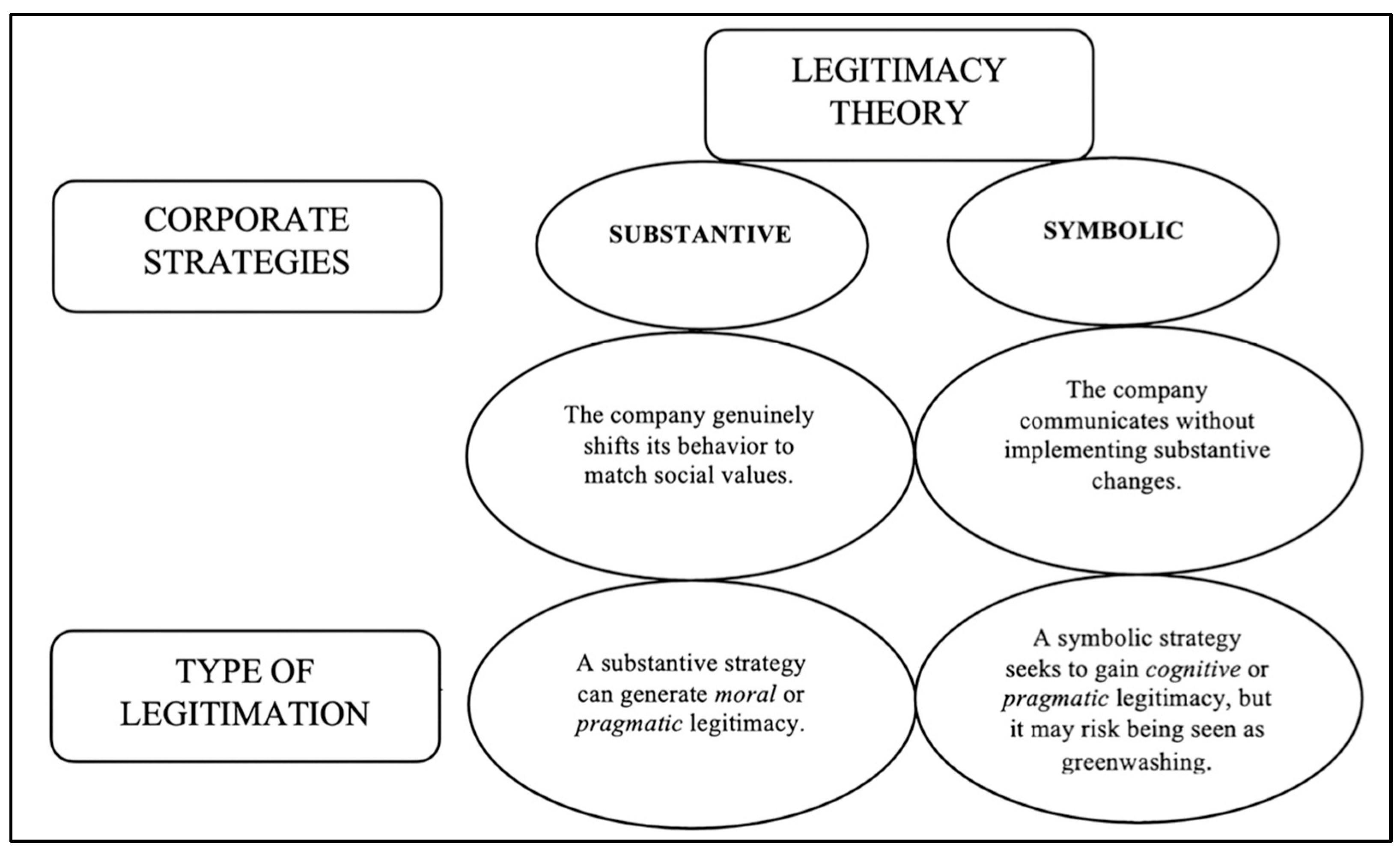
The legitimacy link between companies and their external environment is an increasingly relevant topic that has attracted the attention of several scholars. Ferraro et al. (2026) [57] present the differences between substantive and symbolic approaches in B-Corps, proposing a framework that helps explain how the use of these approaches stems from differing corporate strategies. These divergent strategies lead to distinct forms of legitimacy. The proposed framework is also relevant to this study and is illustrated below in Figure 1.
The distinction between the two approaches in terms of legitimacy behavior is even more pronounced in SMEs, which are faced with the choice of either incurring higher costs to develop efficient reporting systems or adopting a merely narrative (and symbolic) approach, aimed solely at fulfilling the disclosure requirements mandated by regulation.
For this reason, this study aims to assess whether Italian listed SMEs are genuinely prepared to meet the upcoming sustainability reporting obligations, and how they are currently implementing such reporting practices, particularly regarding the Sustainable Development Goals (SDGs).

3. Methods

Using a qualitative content analysis approach [10], this research examined how Italian listed SMEs prepare to comply with the upcoming CSR Directive requirements for Sustainable Development Goals (SDGs). The analysis was conducted using Python [11,58,59]. This open-source programming language is widely used for data analysis due to its flexibility and reliability. The study builds on interdisciplinary research that applied Python as an analytical instrument [60] and used dedicated libraries to strengthen analytical accuracy and depth. Specifically, tools such as Pandas, NumPy, NLTK, and Matplotlib were used to support data processing, text examination, and visualization tasks [61,62].
The research protocol is organized into three main phases. First, all 189 companies listed on the Euronext Growth Milan website as of 15 February 2025 were analyzed. For each company, the balance sheet and any sustainability disclosure documents present were downloaded. Only a few (17 items) sustainability disclosure documents were found. Second, the authors classified the companies by activity sector using the current ATECO macro-classification in Italy. Third, the authors analyzed the reports’ contents using Python and its associated libraries. This analysis was structured around the 17 macro-topics of the Sustainable Development Goals (SDGs). It identified the key topics that SMEs addressed and observed the most commonly used sustainability reporting (SR) frameworks. The analysis necessarily used keywords in the native language of the SMEs’ reports, i.e., Italian. Focusing on the specific analyses conducted with Python (phase 3), the authors used three distinct types of tools for both the overall dataset and individual sectors: heatmaps, word clouds, and journal maps. Heatmaps generated using the Pandas library provided a powerful tool for data manipulation and analysis. Pandas enabled efficient handling of structured data and allowed displaying patterns and relationships through customizable heatmaps. Word clouds created using the Natural Language Tool-Kit (NLTK) highlighted the texts’ most frequently used terms. NLTK’s comprehensive capabilities for text processing, including tokenization and filtering, offered valuable insights into key themes and trends. Journal maps produced using the NetworkX library illustrated data relationships and interactions. NetworkX facilitated the creation, manipulation, and study of complex networks and graphs, providing an insightful representation of interconnected elements.

4. Results

This section is devoted to presenting the main research findings, highlighting the Italian listed SMEs that publish sustainability reporting, with a particular focus on SDGs.
According to research protocol, the first analysis phase identified SMEs that have published documents. By exploring the websites of the 189 listed SMEs and of the Euronext Growth Milan portal, particularly the “Investor Relations” section, it was found that only 17 companies had published a sustainability report. Deepening the classification proposed by the ATECO code, the sample can be categorized as shown in Table 1.
Table 1 highlights differing levels of sensitivity to sustainability reporting among companies across the six identified sectors. Only three of these sectors include firms that have published a sustainability report (representing just 8.99% of the entire sample, or 17 out of 189 companies). The services sector, accounting for 13.75% of the sample (11 out of 80 companies), and the technology sector, with 13.64% (3 out of 22 companies), show the highest levels of engagement with sustainability topics, indicating a greater awareness of and responsiveness to non-financial disclosure. This is followed by the trade sector, which demonstrates only marginal engagement, with 4.29% (3 out of 70 companies) publishing a sustainability report. In contrast, companies in the financial, agricultural, and tourism sectors did not show any real interest in sustainability reporting at the time of the analysis, as none had produced a dedicated sustainability report.
After defining the sample through which to observe the phenomenon of sustainability, the following paragraph presents the findings of the content analysis conducted on the sustainability reports, with specific reference to sustainable development issues.

4.1. SDG Content in SME Sustainability Reporting

In line with the proposed research protocol, this section seeks to explore both the content of the sustainability reports of listed Italian SMEs and the approaches adopted by these firms in preparing their sustainability disclosures. By applying the selected analytical techniques, the authors aim to address the following research questions:
  • (RQ1) What are the most recurring SDG topics contained in the sustainability reports of listed Italian SMEs?
  • (RQ2) What is the main reporting approach adopted by SMEs to disclose information related to sustainability reports?
The analysis was conducted for each sector, focused on the topic of SDGs. Given the specific context, the content analysis was conducted in Italian, the sustainability reports’ original language. To perform the general analysis aimed at examining the reports’ content, all terms related to the macro-topics of the 17 SDGs were employed, such as education, energy, inequality, gender, poverty, industry, and innovation. This approach supported the authors in identifying the macro-topic of sustainability towards which SMEs operating in a specific sector are oriented. In order to better perform the analysis, specific keywords for each Sustainable Development Goal (SDG) were identified, based on the various GRI Standards, which represent the most commonly adopted reporting framework by Italian SMEs at the time of analysis.

4.1.1. SDG Content Within SR of Listed SMEs Operating in the Service Sector

According to this research, among listed Italian SMEs, the service sector is the most receptive and responsive to sustainability reporting. A total of 11 reports were subjected to content analysis.
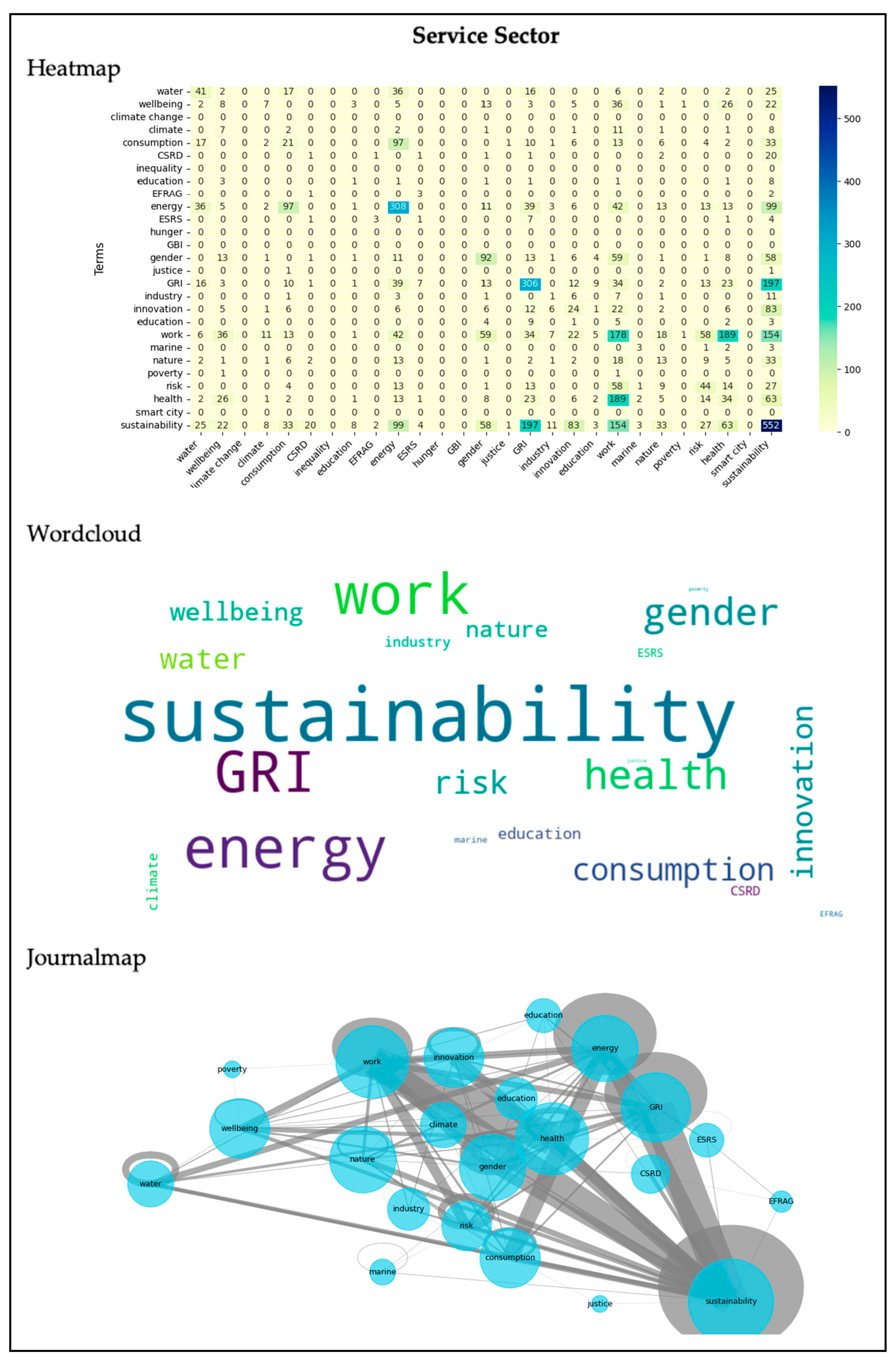
The analysis reveals that, in general terms, the topics addressed by SMEs related to sustainability mainly concern labor, energy, and health. These topics, as highlighted by the concentrations in the heatmap analysis, align with SDGs 3, 7, and 8. Additionally, the wordmap analysis remarks this result, as the most recurrent words are precisely related to the aforementioned topics. Residual profiles emerge with reference to climate, well-being, nature, industry, gender, and education. In the sustainability reports of listed SMEs operating in the services sector, the most recurrent themes are “energy” (308 occurrences), “health” (189 occurrences), and “work” (178 occurrences).
The journalmap analysis highlights a profile worthy of further investigation. All the topics addressed in the reports point to a unidirectional flow towards the generic term “sustainability.”
From a comprehensive perspective, the journalmap graph generated with Python provides an interesting point for reflection. The links show a ‘unidirectional’ flow of all the macro-themes of the Sustainable Development Goals (SDGs) towards the single term ‘sustainability’. This evidence could be interpreted as general communication in terms of sustainability and SDG factors without going into the substance of each target set out in the individual SDG principles.
The figure below (Figure 2) illustrates the above description.
Moving the focus of the analysis to materiality themes, the types of standards adopted, and the presence of audit processes in the sustainability reports, several considerations can be drawn.
As of the reporting dates examined, materiality assessments are limited to a description of impact materiality, with no evidence of double materiality—that is, assessments that also consider financial materiality.
Regarding reporting standards, as also confirmed by the visual data presented, listed SMEs in the service sector show a clear preference for the GRI Standards. Of the 11 reports analyzed, 8 companies (72% of the sample) explicitly refer to the content and recommendations of the Global Reporting Initiative (GRI).
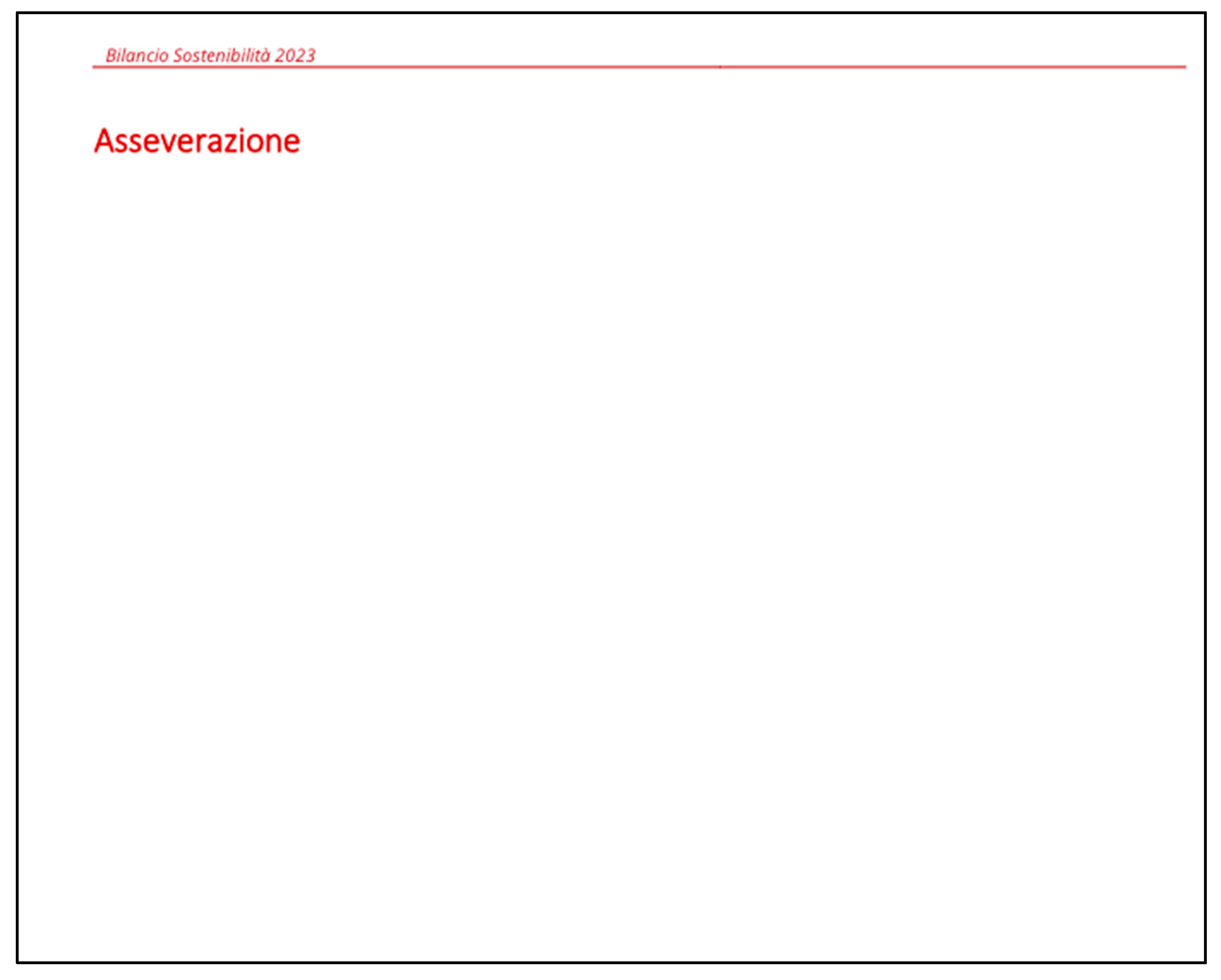
Finally, at the time of analysis, none of the reports underwent any form of audit or assurance. The reporting remains voluntary and unaudited, lacking any external verification. A particularly telling case is that of Renovalo, which claims in the index to have included an assurance statement, yet the relevant section consists of blank pages, indicating the absence of actual audit content (Figure 3).

4.1.2. SDG Content Within SR of Listed SMEs Operating in Technology Sector

In the technology sector, only three reports were included in the content analysis.
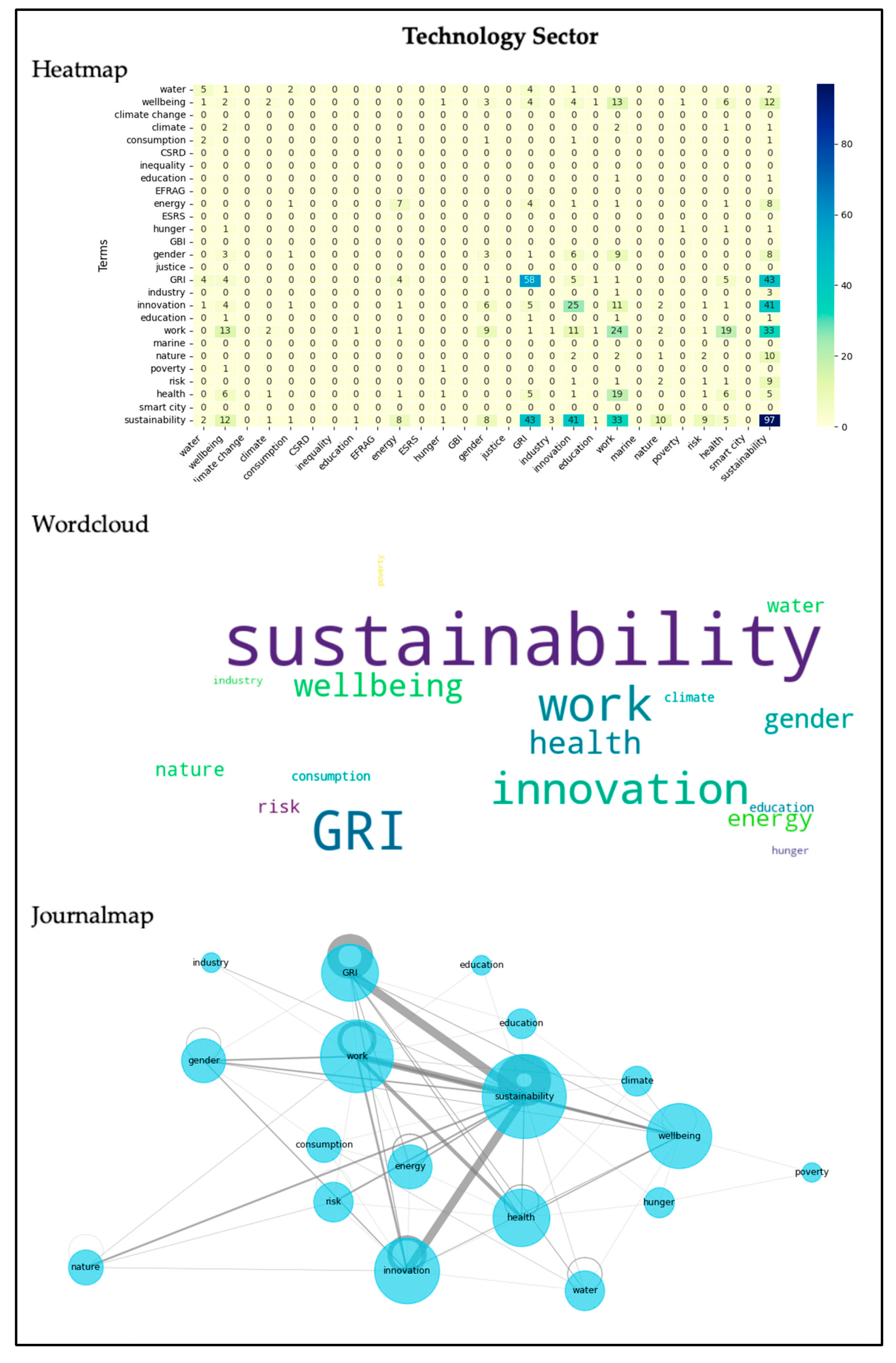
In general terms, it can be observed that compliant companies address the following main sustainability topics: innovation, labor, well-being, health, and environment. These topics, as highlighted by the concentrations in the heatmap analysis, align with SDGs 3, 8, and 9. By delving deeper into the analysis using the wordmap, it becomes evident that, in addition to the aforementioned topics, less recurrent ones such as gender, industry, poverty, and hunger also emerge. The most frequently recurring themes in the sustainability reports of listed SMEs operating in the technology sector are “innovation” (41 occurrences), “work” (33 occurrences), and “health” (19 occurrences).
Having outlined the general topics addressed in the technology sector, the relationships between the various topics can then be observed through the journalmap analysis. This visualization shows how labor, health, well-being, and innovation are interconnected. These topics are linked by a general theme concerning risk factors. The journalmap also reveals a minor node related to “climate,” which is directly connected to sustainability, well-being, labor, and health.
Analyzing the relationships provided by the journalmap, the most relevant nodes, “energy” and “health,” can be observed, along with their direct connections to other nodes on the map. An interesting profile that emerges from this analysis is represented by the marginal nodes in the graph, namely water, biodiversity, disposal, and gas. This representation might suggest that these significant issues are addressed by companies in a compartmentalized manner.
The figure below (Figure 4) illustrates the description provided.
Focusing on the materiality themes, the types of standards applied, and the presence of audit processes in the sustainability reports, several observations can be made.
As of the reporting dates reviewed, materiality assessments are limited to descriptions of impact materiality only. No evidence was found of the implementation of double materiality frameworks; that is, the inclusion of both environmental/social and financial perspectives. With regard to reporting standards, and as confirmed by the graphical analysis, only 1 out of 3 listed SMEs in the technology sector applies the GRI Standards, representing 33% of the sample within that sector. Lastly, at the time of report analysis, no audit or assurance processes were identified in any of the documents. The reporting remains entirely voluntary and unaudited, with no form of external assurance in place.

4.1.3. SDG Content Within SR of Listed SMEs Operating in Trade Sector

As with the technology sector, only three reports from the trade sector were included in the content analysis.
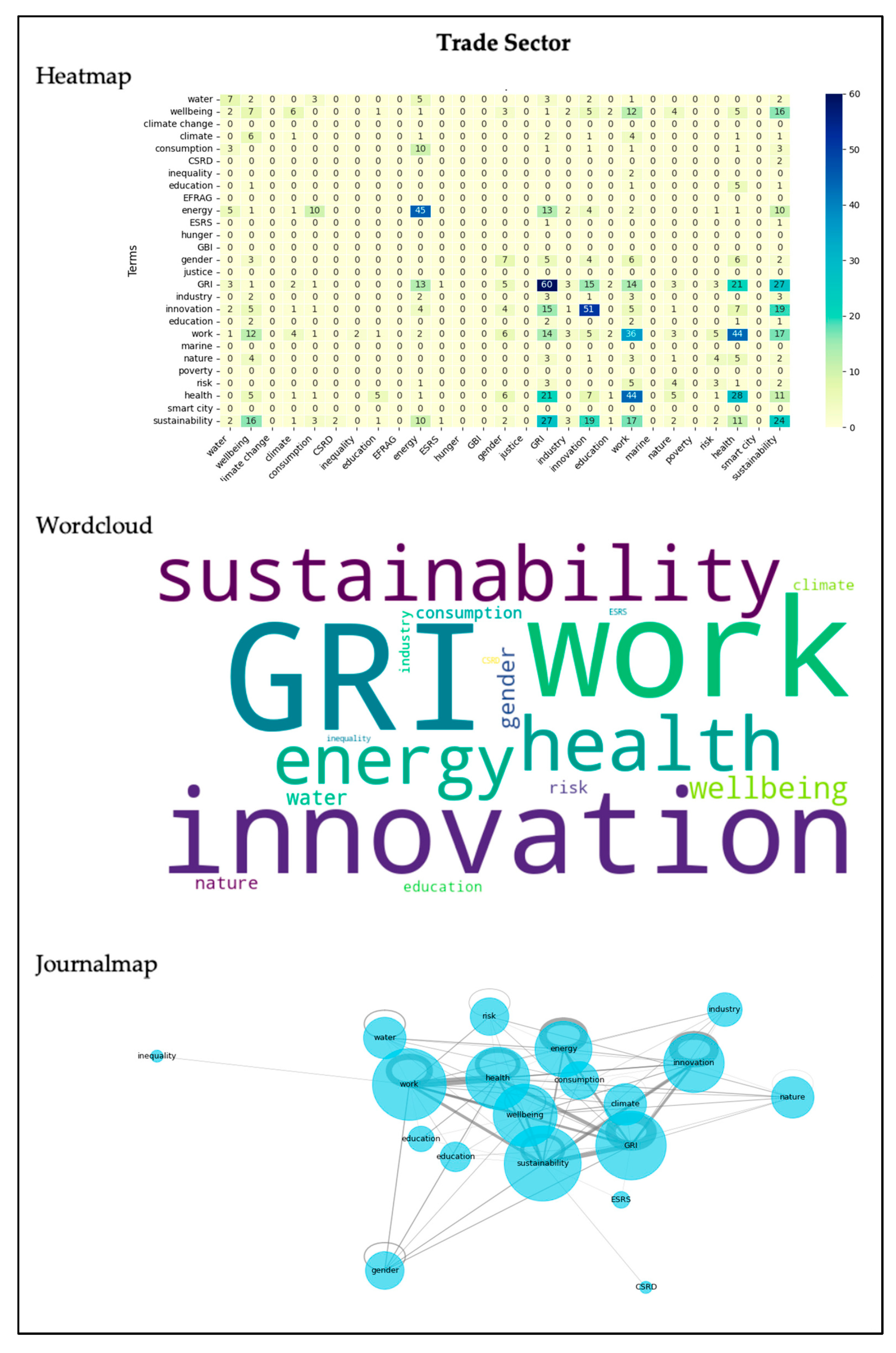
Unlike the previous sector, the reports analyzed in the trade sector show significant concentrations on general sustainability-related topics. In particular, as illustrated by the heatmap and word cloud, the most recurrent terms are innovation, labor, health, and well-being. These topics align with the overarching themes of SDGs 3, 8, and 9. Specifically, the most frequently recurring themes in the sustainability reports of listed SMEs operating in the trade sector are “innovation” (51 occurrences), “energy” (45 occurrences), “work” (44 occurrences), and “health” (28 occurrences).
The word cloud also highlights other less prominent topics, such as education, gender, inequality, nature, climate, and learning.
Analyzing the relationships among these topics, the journalmap confirms the most relevant nodes: labor, health, well-being, and innovation. The outer edges of the graph reveal that topics related to protection, inequality, and gender are addressed in a unidirectional manner, lacking integration with the other themes.
Moving on to the analysis of relationships, the journalmap confirms the most frequent nodes as energy, health, and waste, emphasizing a strong bidirectional relationship with terms such as recovery, diversity, and gas.
Critical profiles may be represented by the graph’s outer edges, which highlight particularly relevant terms such as warming, disposal, source, water, and consumption. This representation may suggest a lack of integration with other topics, potentially compromising adequate information for stakeholders.
The figure below (Figure 5) illustrates the above description.
Moving toward materiality topics, the types of standards used, and the presence of audit processes in sustainability reports, it is possible to develop several observations.
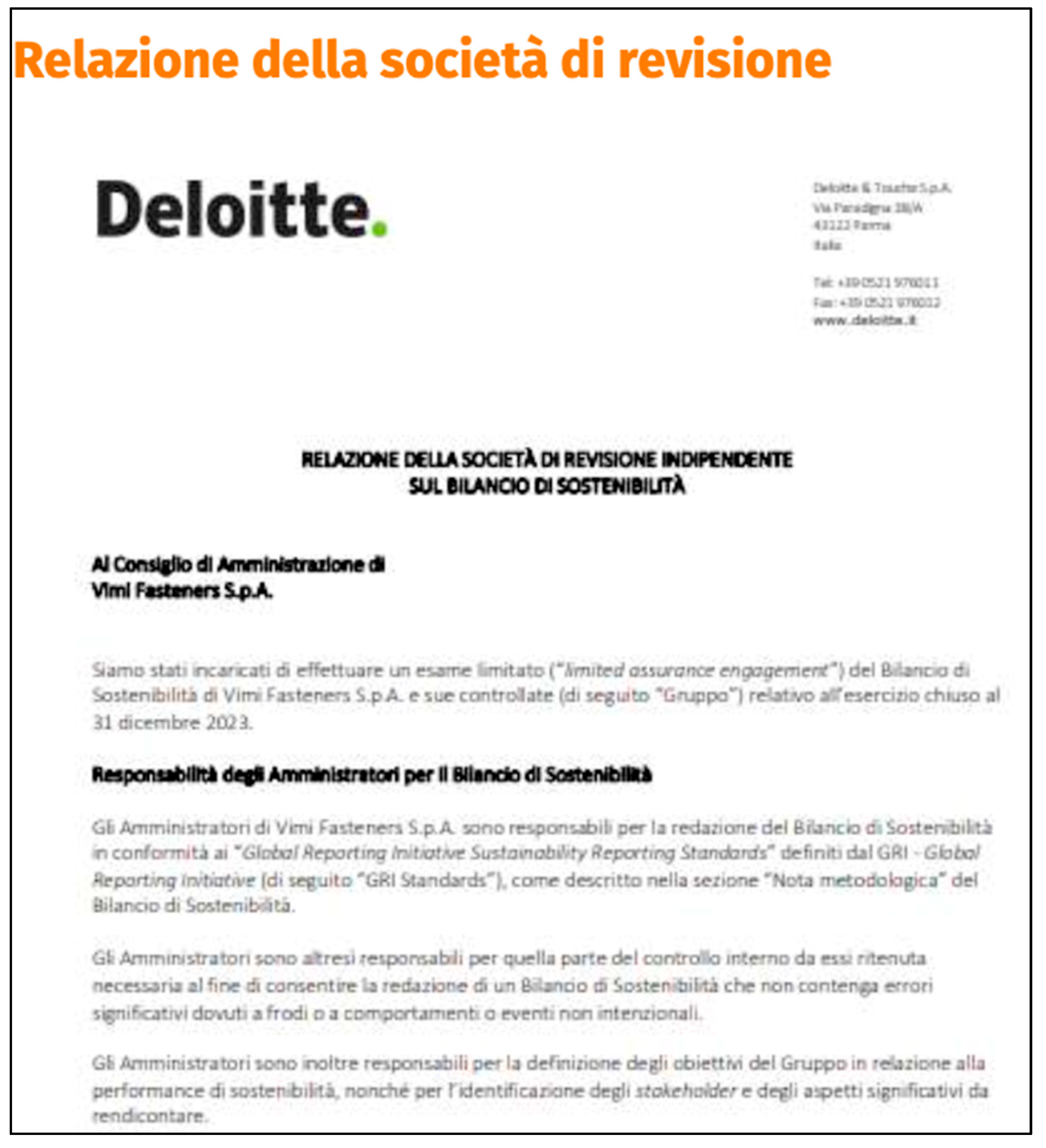
At the date of the analysis, materiality assessments are limited to describing impact materiality, not including the financial materiality dimension. As for the reporting standards adopted, also confirmed by graphical evidence, only one out of three SMEs operating in the trade sector applies GRI Standards (that is, 33% of the sample of companies operating in the trade sector). Lastly, at the time of report analysis, only one company had implemented an audit process for its sustainability report. This company is VimiFasteners, and the audit statement was issued by Deloitte. Below is an excerpt from the document (Figure 6).
The analyses conducted reveal that, despite increasing attention to sustainability and the forthcoming requirement to prepare sustainability reports, only a small proportion of listed SMEs engage in the publication of non-financial reporting. Sector-specific trends indicate that organizations within the services and technology sectors exhibit a relatively higher level of engagement with sustainability-related issues.
The content analysis results suggest that the primary motivation for preparing sustainability documents lies in legitimacy-driven considerations. Organizations aim to enhance their social standing and align with prevailing societal expectations, as evidenced by prior research [38]. The sectoral analysis further distinguishes between symbolic and substantive approaches to legitimacy. Specifically, organizations in the technology and trade sectors tend to adopt a symbolic approach, as their sustainability reports often demonstrate a limited integration of information. This suggests that their non-financial disclosures primarily serve to reshape corporate image rather than drive meaningful organizational transformation.
In contrast, firms operating in the services sector display a more integrated approach to sustainability issues. This reflects a substantive approach to legitimacy, characterized by actions that yield tangible impacts on internal management and operational processes [51,52].

5. Discussion and Conclusions

This work presents a preliminary overview of how Italian listed SMEs are addressing the sustainability obligations outlined in Directive EU No. 2022/2464 and the recent Directive EU No. 2025/794. It focuses in particular on how their reports address Sustainable Development Goals (SDGs). Starting from 2028, Italian listed SMEs will be required to prepare sustainability reports in compliance with the CSR Directive.
Like financial disclosures [63], non-financial disclosures [50,64] are expected to assume a central role within corporate reporting frameworks. In Italy, such information will be incorporated into the management report as required by Civil Code Article 2428. This study conducts a qualitative examination of sustainability disclosures issued by Italian small and medium-sized enterprises (SMEs) listed on Euronext Growth Milan, a segment of Borsa Italiana. Drawing from various theoretical lenses, particular emphasis is placed on legitimacy theory, a framework widely employed to interpret sustainability and non-financial reporting practices, especially concerning environmental and social dimensions [32]. Legitimacy theory offers insight into the motivations behind corporate disclosure of sustainability performance [39,42], positioning legitimacy-building as a strategic objective aimed at enhancing transparency, narrowing information gaps, and fostering stakeholder engagement. Within this context, substantive disclosures reflect tangible organizational practices that influence governance and operational decisions [51,52], whereas symbolic disclosures primarily serve to shape external perceptions, prioritizing image and corporate reputation over substantive transformation [53,54]. Nonetheless, the critique that legitimacy efforts often default to symbolic gestures rather than internal integration [53] invites scrutiny, particularly in light of the increasing significance attributed to the Sustainable Development Goals (SDGs) and their demand for authentic, embedded sustainability practices.
The results show that only 17 out of 189 analyzed listed SMEs provide non-financial information related to sustainability.
Answering RQ1, the most recurrent SDG-related themes are energy, innovation, and work and health. However, these themes are addressed exclusively from an impact materiality perspective, and none of the companies analyzed develops the dimension of financial materiality. This evidence shows that listed SMEs approach sustainability reporting primarily from a formal compliance perspective, without providing information that goes beyond what is required by regulation. Indeed, at the time of analysis, the concept of double materiality had not yet been incorporated into the applicable reporting standards.
With regard to the standards adopted, none of the companies in the sample applies the ESRS. Most firms rely on the GRI standards, while a limited number do not adopt any formal standard and instead engage in voluntary, unstructured reporting.
Finally, only one company (Vimi Fasteners) produced an independent assurance report on its sustainability disclosure, issued by a third party (Deloitte).
Based on these findings, it is possible to address RQ2. At the time of analysis, the reporting approach adopted by Italian listed SMEs appears to be predominantly symbolic, as firms do not go beyond what is prescribed by regulation in terms of sustainability reporting. The absence of financial materiality assessments for specific topics, as well as the lack of assurance statements on sustainability reports, are clear examples of this tendency.
Overall, many listed SMEs remain unprepared to meet the requirements for comprehensive and accurate sustainability information. Nevertheless, sustainability reporting has the potential to enhance transparency, foster stakeholder engagement, and increase organizational competitiveness, particularly in capital markets [27].
In conclusion, this study highlights that sustainable information is often not fully integrated with other dimensions of sustainability and does not accurately reflect the actions that companies intend to pursue in practice. Furthermore, companies that disclose such information appear primarily motivated by the desire to enhance their corporate image and reputation, rather than by a commitment to substantive organizational change.
These findings could be linked to the reporting costs for SMEs (the overload issue) to develop more accurate and complex reporting approaches oriented toward substantive disclosure practices. Following the framework presented in the literature review section [57], this symbolic approach reflects firms’ willingness to communicate information without actually implementing substantial changes through their actions [37,41].
The study offers several contributions. Theoretically, it adds to the body of literature on SMEs by deepening the understanding of financial and non-financial reporting practices, further asserting the paradigm linking substantive reporting approaches with mechanisms for legitimizing corporate behavior toward stakeholders (legitimacy theory). From a managerial perspective, it advocates for the development of tailored guidelines and principles for SMEs, which would facilitate a more effective engagement with sustainability issues while avoiding overly burdensome compliance obligations. Furthermore, this work offers a contribution from a regulatory perspective. The evidence presented could help regulators develop a framework that not only facilitates SMEs’ compliance with reporting requirements but also shifts the focus from symbolic approaches to more substantive practices that delve deeper into the actions that companies intend to take. A first step in this direction could be the introduction of letters of assurance from an external auditor who verifies the accuracy of the information provided, without restricting their judgment on the correct application of reporting standards, and therefore of limited assurance.

6. Limitations and Future Directions of Research

Nonetheless, the study presents several limitations that must be considered. The analysis is restricted to a relatively small sample of Italian listed SMEs, which inevitably constrains the generalizability of the findings beyond this specific context. Furthermore, the content analysis was mainly centered on disclosures related to selected Sustainable Development Goals (SDGs), while many other relevant areas of sustainability reporting remain underexplored. Most importantly, the evidence collected highlights a predominance of symbolic and narrative approaches, often lacking substantial engagement with the double materiality dimensions of sustainability. This gap suggests the need for future research to move beyond quantitative content analysis and focus instead on in-depth case studies. In this regard, one of the most virtuous companies to be analyzed through a case study is Vimi Fasteners. In addition to having an assurance letter for its sustainability reporting, even before the introduction of the mandatory sustainability audit, the company provides a comprehensive report in all its sections. In the future, it would be possible to examine the evolution of its reporting approach in light of the new ESRS standards and the double materiality requirement. Developing this future line of research would help improve understanding of firms’ willingness to establish stronger legitimization mechanisms with the external environment. In other words, this research stream can contribute to examining how such practices shape corporate legitimacy in the evolving field of sustainability reporting.

Author Contributions

Conceptualization, G.M. and V.P.; Methodology, G.M. and M.M.; Formal analysis, S.I.; Resources, G.M.; Writing—original draft, G.M.; Writing—review & editing, G.M.; Supervision, G.M. All authors have read and agreed to the published version of the manuscript.

Funding

This research received no external funding.

Institutional Review Board Statement

Not applicable.

Informed Consent Statement

Not applicable.

Data Availability Statement

All data presented in this work come from the Euronext Growth portal of the Italian Stock Exchange, accessible at the website https://www.borsaitaliana.it/borsa/azioni/ftse-italia-growth/lista.html. The data were extracted and consulted on 10 February 2025.

Conflicts of Interest

The authors declare no conflicts of interest.

References

  1. Paoloni, P.; Modaffari, G.; Piedepalumbo, P. Italian listed SMEs and corporate sustainability reporting directive: An exploratory content analysis focused on climate change. Manag. Decis. 2025, 1–25. [Google Scholar] [CrossRef]
  2. Cicchiello, A.F.; Marrazza, F.; Perdichizzi, S. Non-financial disclosure regulation and environmental, social, and governance (ESG) performance: The case of EU and US firms. Corp. Soc. Responsib. Environ. Manag. 2023, 30, 1121–1128. [Google Scholar] [CrossRef]
  3. Fiandrino, S.; Gromis di Trana, M.; Tonelli, A.; Lucchese, A. The multi-faceted dimensions for the disclosure quality of non-financial information in revising directive 2014/95/EU. J. Appl. Account. Res. 2022, 23, 274–300. [Google Scholar] [CrossRef]
  4. Lombardi, R.; Cosentino, A.; Sura, A.; Galeotti, M. The impact of the EU Directive on non-financial information: Novel features of the Italian case. Meditari Account. Res. 2022, 30, 1419–1448. [Google Scholar] [CrossRef]
  5. Setyaningsih, S.; Widjojo, R.; Kelle, P. Challenges and opportunities in sustainability reporting: A focus on small and medium enterprises (SMEs). Cogent Bus. Manag. 2024, 11, 2298215. [Google Scholar] [CrossRef]
  6. Diouf, D.; Boiral, O. The quality of sustainability reports and impression management: A stakeholder perspective. Account. Audit. Account. J. 2017, 30, 643–667. [Google Scholar] [CrossRef]
  7. Grewal, J.; Hauptmann, C.; Serafeim, G. Material sustainability information and stock price informativeness. J. Bus. Ethics 2021, 171, 513–544. [Google Scholar] [CrossRef]
  8. Venter, E.R.; Krasodomska, J. Research on extended external reporting assurance: An update on recent developments. J. Int. Financ. Manag. Account. 2024, 35, 390–428. [Google Scholar] [CrossRef]
  9. Ortiz-Martínez, E.; Marín-Hernández, S. European SMEs and non-financial information on sustainability. Int. J. Sustain. Dev. World Ecol. 2022, 29, 112–124. [Google Scholar] [CrossRef]
  10. Harwood, T.G.; Garry, T. An overview of content analysis. Mark. Rev. 2003, 3, 479–498. [Google Scholar] [CrossRef]
  11. Hong, I. Python-based integrated architecture for geotweet analysis. Int. J. Softw. Eng. Its Appl. 2016, 10, 247–256. [Google Scholar] [CrossRef]
  12. ISAE 3000; (Revised), Assurance Engagements Other than Audits or Reviews of Historical Financial Information. International Federation of Accountants: New York, NY, USA, 2011.
  13. Carroll, A.B. Corporate social responsibility: Evolution of a definitional construct. Bus. Soc. 1999, 38, 268–295. [Google Scholar] [CrossRef]
  14. Khan, S.A.R.; Yu, Z.; Umar, M. How environmental awareness and corporate social responsibility practices benefit the enterprise? An empirical study in the context of emerging economy. Manag. Environ. Qual. Int. J. 2021, 32, 863–885. [Google Scholar] [CrossRef]
  15. Ye, N.; Kueh, T.B.; Hou, L.; Liu, Y.; Yu, H. A bibliometric analysis of corporate social responsibility in sustainable development. J. Clean. Prod. 2020, 272, 122679. [Google Scholar] [CrossRef]
  16. Herrera, J.; de las Heras-Rosas, C. Corporate social responsibility and human resource management: Towards sustainable business organizations. Sustainability 2020, 12, 841. [Google Scholar] [CrossRef]
  17. Elkington, J. Partnerships from cannibals with forks: The triple bottom line of 21st-century business. Environ. Qual. Manag. 1998, 8, 37–51. [Google Scholar] [CrossRef]
  18. Keeble, B.R. The Brundtland report: ‘Our common future’. Med. War 1988, 4, 17–25. [Google Scholar] [CrossRef]
  19. Tanjung, M. Cost of capital and firm performance of ESG companies: What can we infer from COVID-19 pandemic? Sustain. Account. Manag. Policy J. 2023, 14, 1242–1267. [Google Scholar] [CrossRef]
  20. de Zwaan, L.; Brimble, M.; Stewart, J. Member perceptions of ESG investing through superannuation. Sustain. Account. Manag. Policy J. 2015, 6, 79–102. [Google Scholar] [CrossRef]
  21. Khan, M.A. ESG disclosure and firm performance: A bibliometric and meta analysis. Res. Int. Bus. Financ. 2022, 61, 101668. [Google Scholar] [CrossRef]
  22. Manes-Rossi, F.; Nicolo’, G. Exploring sustainable development goals reporting practices: From symbolic to substantive approaches—Evidence from the energy sector. Corp. Soc. Responsib. Environ. Manag. 2022, 29, 1799–1815. [Google Scholar] [CrossRef]
  23. Zampone, G.; Nicolò, G.; Sannino, G.; De Iorio, S. Gender diversity and SDG disclosure: The mediating role of the sustainability committee. J. Appl. Account. Res. 2024, 25, 171–193. [Google Scholar] [CrossRef]
  24. Khanchel, I.; Lassoued, N.; Baccar, I. Sustainability and firm performance: The role of environmental, social and governance disclosure and green innovation. Manag. Decis. 2023, 61, 2720–2739. [Google Scholar] [CrossRef]
  25. Nicolò, G.; Zampone, G.; Sannino, G.; De Iorio, S. Sustainable corporate governance and non-financial disclosure in Europe: Does the gender diversity matter? J. Appl. Account. Res. 2021, 23, 227–249. [Google Scholar] [CrossRef]
  26. Mondal, S.; Singh, S.; Gupta, H. Exploring the impact of green entrepreneurial orientation on sustainable performance: Insights from CSR, policy and innovation. Manag. Decis. 2024, 62, 3946–3977. [Google Scholar] [CrossRef]
  27. Paoloni, P.; Modaffari, G. Business incubators vs start-ups: A sustainable way of sharing knowledge. J. Knowl. Manag. 2022, 26, 1235–1261. [Google Scholar] [CrossRef]
  28. Maier, D.; Maier, A.; Așchilean, I.; Anastasiu, L.; Gavriș, O. The relationship between innovation and sustainability: A bibliometric review of the literature. Sustainability 2020, 12, 4083. [Google Scholar] [CrossRef]
  29. Modaffari, G.; Beck, T. ESG performance in mutual funds: An investigation towards sustainability. Riv. Banc.-Minerva Banc. 2025, 1–2, 1–30. [Google Scholar] [CrossRef]
  30. Dinh, T.; Husmann, A.; Melloni, G. Corporate sustainability reporting in Europe: A scoping review. Account. Eur. 2023, 20, 91–119. [Google Scholar] [CrossRef]
  31. Jackson, G.; Bartosch, J.; Avetisyan, E.; Kinderman, D.; Knudsen, J.S. Mandatory non-financial disclosure and its influence on CSR: An international comparison. J. Bus. Ethics 2020, 162, 323–342. [Google Scholar] [CrossRef]
  32. Mio, C.; Venturelli, A.; Leopizzi, R. Management by objectives and corporate social responsibility disclosure: First results from Italy. Account. Audit. Account. J. 2015, 28, 325–364. [Google Scholar] [CrossRef]
  33. Mahoney, L.S.; Thorne, L.; Cecil, L.; LaGore, W. A research note on standalone corporate social responsibility reports: Signaling or greenwashing? Crit. Perspect. Account. 2013, 24, 350–359. [Google Scholar] [CrossRef]
  34. Nicolò, G.; Zampone, G.; Sannino, G.; Tiron-Tudor, A. Worldwide evidence of corporate governance influence on ESG disclosure in the utilities sector. Util. Policy 2023, 82, 101549. [Google Scholar] [CrossRef]
  35. Appelbaum, D.; Duan, H.K.; Hu, H.; Sun, T. The double materiality audit: Attestation of ESG disclosures in financial statements. Account. Horiz. 2025, 39, 13–28. [Google Scholar] [CrossRef]
  36. Shami, A. Non-Financial Reporting, Double Materiality, and Business Model Evaluation: An Empirical Study of ESG Ratings in Europe. J. Bus. Models 2025, 13, 97–145. [Google Scholar] [CrossRef]
  37. Nobes, C. From no materiality to double materiality: A long-run conceptual analysis of corporate reporting regulation. Account. Bus. Res. 2026, 56, 41–68. [Google Scholar] [CrossRef]
  38. Mio, C.; Fasan, M.; Marcon, C.; Panfilo, S. The predictive ability of legitimacy and agency theory after the implementation of the EU directive on non-financial information. Corp. Soc. Responsib. Environ. Manag. 2020, 27, 2465–2476. [Google Scholar] [CrossRef]
  39. Dagilien, L. An institutional theory perspective on non-financial reporting: The developing Baltic context. J. Financ. Report. Account. 2018, 16, 490–521. [Google Scholar] [CrossRef]
  40. Fernando, S.; Lawrence, S. A theoretical framework for CSR practices: Integrating legitimacy theory, stakeholder theory and institutional theory. J. Theor. Account. 2014, 10, 149–178. [Google Scholar]
  41. Deegan, C. The legitimising effect of social and environmental disclosures: A theoretical foundation. Account. Audit. Account. J. 2002, 15, 282–311. [Google Scholar] [CrossRef]
  42. Amran, A.; Haniffa, R. Evidence in development of sustainability reporting: A case of a developing country. Bus. Strategy Environ. 2011, 20, 141–156. [Google Scholar] [CrossRef]
  43. Garcia-Sánchez, I.-M.; Rodriquez-Ariza, L.; Frias-Aceituno, J.-V. The cultural system and integrated reporting. Int. Bus. Rev. 2013, 22, 828–838. [Google Scholar] [CrossRef]
  44. Deegan, C.; Blomquist, C. Stakeholder influence on corporate reporting: An exploration of the interaction between WWF-Australia and the Australian minerals industry. Account. Organ. Soc. 2006, 31, 343–372. [Google Scholar] [CrossRef]
  45. Freudenreich, B.; Lüdeke-Freund, F.; Schaltegger, S. A stakeholder theory perspective on business models: Value creation for sustainability. J. Bus. Ethics 2020, 166, 3–18. [Google Scholar] [CrossRef]
  46. Rodriguez-Fernandez, M. Social responsibility and financial performance: The role of good corporate governance. BRQ Bus. Res. Q. 2016, 19, 137–151. [Google Scholar] [CrossRef]
  47. Dillard, J.F.; Rigsby, J.T.; Goodman, C. The making and remaking of organization context: Duality and the institutionalization process. Account. Audit. Account. J. 2004, 17, 506–542. [Google Scholar] [CrossRef]
  48. Campbell, J.L. Why would corporations behave in socially responsible ways? An institutional theory of corporate social responsibility. Acad. Manag. Rev. 2007, 32, 946–967. [Google Scholar] [CrossRef]
  49. Frias-Aceituno, J.V.; Rodríguez-Ariza, L.; García-Sánchez, I.M. Is integrated reporting determined by a country’s legal system? An exploratory study. J. Clean. Prod. 2013, 44, 45–55. [Google Scholar] [CrossRef]
  50. Krasodomska, J.; Zarzycka, E.; Zieniuk, P. Voluntary sustainability reporting assurance in the European Union before the advent of the corporate sustainability reporting directive: The country and firm-level impact of Sustainable Development Goals. Sustain. Dev. 2024, 32, 1652–1664. [Google Scholar] [CrossRef]
  51. Adams, C.A.; Frost, G.R. Integrating sustainability reporting into management practices. Account. Forum 2008, 32, 288–302. [Google Scholar] [CrossRef]
  52. Maas, K.; Schaltegger, S.; Crutzen, N. Advancing the integration of corporate sustainability measurement, management and reporting. J. Clean. Prod. 2016, 133, 859–862. [Google Scholar] [CrossRef]
  53. Bebbington, J.; Larrinaga, C.; Moneva, J.M. Corporate social reporting and reputation risk management. Account. Audit. Account. J. 2008, 21, 337–361. [Google Scholar] [CrossRef]
  54. Perez-Batres, L.A.; Doh, J.P.; Miller, V.V.; Pisani, M.J. Stakeholder pressures as determinants of CSR strategic choice: Why do firms choose symbolic versus substantive self-regulatory codes of conduct? J. Bus. Ethics 2012, 110, 157–172. [Google Scholar] [CrossRef]
  55. Stevens, J.M.; Kevin Steensma, H.; Harrison, D.A.; Cochran, P.L. Symbolic or substantive document? The influence of ethics codes on financial executives’ decisions. Strateg. Manag. J. 2005, 26, 181–195. [Google Scholar] [CrossRef]
  56. Dowling, J.; Pfeffer, J. Organizational Legitimacy: Social Values and Organizational Behavior. Pac. Sociol. Rev. 1975, 18, 122–136. [Google Scholar] [CrossRef]
  57. Ferraro, L.; Rubino, F.E.; Arena, C.; Mazzitelli, D. Substantive or Symbolic? Analyzing the Quality of Impact Reports in Italian B-Corps Through Legitimacy Theory. Corp. Soc. Responsib. Environ. Manag. 2026, 1, 1–16. [Google Scholar] [CrossRef]
  58. Gonina, E.; Friedland, G.; Battenberg, E.; Koanantakool, P.; Driscoll, M.; Georganas, E.; Keutzer, K. Scalable multimedia content analysis on parallel platforms using python. ACM Trans. Multimed. Comput. Commun. Appl. (TOMM) 2014, 10, 1–22. [Google Scholar] [CrossRef]
  59. Krylova-Grek, Y.; Burov, O.Y. A content analysis software system for efficient monitoring and detection of hate speech in online media. In Proceedings of the 11th Workshop on Cloud Technologies in Education (CTE 2023), Kryvyi Rih, Ukraine, 22 December 2023; Volume 3679, pp. 224–233. Available online: https://ceur-ws.org/Vol-3679/paper06.pdf (accessed on 8 October 2025).
  60. Zairbani, A.; Senthil Kumar, J.P. Organizational mission statement components: A comparative study between Indian and Singaporean mission statements in the healthcare sector via Python analysis. Corp. Commun. Int. J. 2024, 29, 692–711. [Google Scholar] [CrossRef]
  61. Nelli, F. Python Data Analytics with Pandas, NumPy, and Matplotlib, 2nd ed.; Apress: Berkeley, CA, USA, 2018; pp. 87–180. [Google Scholar] [CrossRef]
  62. Mahalaxmi, G.; Donald, A.D.; Srinivas, T.A.S. A short review of Python libraries and data science tools. S. Asian Res. J. Eng. Technol. 2023, 5, 1–5. [Google Scholar] [CrossRef]
  63. Sorrentino, M.; Smarra, M. The burden of accounting standards for Small and Medium Enterprises. A suggestive solution. Corp. Ownersh. Control 2014, 11, 223–232. [Google Scholar] [CrossRef]
  64. Nicolò, G.; Zampone, G.; Sannino, G.; Polcini, P.T. Sustainable development goals disclosure and analyst forecast quality. J. Appl. Account. Res. 2025, 26, 1–25. [Google Scholar] [CrossRef]
Figure 1. Ferraro et al.’s substantive or symbolic legitimacy theory. The above figure provides a graphical representation of how legitimacy theory works. Source: Ferraro et al., 2026 [57], p. 4.
Sustainability 18 02594 g001
Figure 2. Content analysis concerning SMEs operating in the services sector. Source: Authors.
Sustainability 18 02594 g002
Figure 3. Renovalo’s sustainability reporting case. Source: Renovalo, 2023. Bilancio Sostenibilità 2023 means “Sustainability Reporting 2023”. Asseverazione means “assessment”.
Sustainability 18 02594 g003
Figure 4. Content analysis concerning SMEs operating in the technology sector. Source: Authors.
Sustainability 18 02594 g004
Figure 5. Content analysis concerning SMEs operating in the trade sector. Source: Authors.
Sustainability 18 02594 g005
Figure 6. Vimifasteners sustainability reporting audit letter. Source: Vimifasteners, Sustainability report 2023, p. 127.
Sustainability 18 02594 g006
Table 1. Description of the sample and evidence from sustainability reports by sector.
SectorFinancialTradeTechAgricultureTourismServicesTotal
Firms1070221680189
SR033001117
% SR compliant0.00%4.29%13.64%0.00%0.00%13.75%8.99%
Source: Authors.
Disclaimer/Publisher’s Note: The statements, opinions and data contained in all publications are solely those of the individual author(s) and contributor(s) and not of MDPI and/or the editor(s). MDPI and/or the editor(s) disclaim responsibility for any injury to people or property resulting from any ideas, methods, instructions or products referred to in the content.