1. Introduction
Water and mud inrush is a typical hydrodynamic disaster faced by tunnels when crossing the intersection area of karst and fault fracture zones, which involves a complex geological–mechanical–seepage coupling process. The west section of the Baiyunshan Tunnel on the Yu-Xiang Highway in the area of Chongqing, a city in western China, encountered a sudden water and mud inrush accident at a section during excavation. This resulted in the inflow of up to approximately 150,000 m3 of water and mud into the construction tunnel within an hour and a half. Subsequently, intermittent water inrushes, occasionally accompanied by mud and sand, occurred at the section. The average water inflow was around 20,000 m3, with occasional instances lasting up to three months. This is a typical disaster-causing feature of a fault and karst underground river system, which has had a severe impact on both the construction and subsequent maintenance of the project.
In the past, risk assessments for water and mud inrush disasters were predominantly conducted through evaluations of hazard susceptibility or system vulnerability. Methods such as the Analytic Hierarchy Process (AHP) [
1] and the “Three Maps-Two Predictions” method [
2], commonly used in coal mine water inrush assessments, typically provided possible causes and consequences in qualitative or semi-quantitative forms. In recent years, significant progress has been made in the research on the mechanism of sudden water and mud inrush in tunnels, especially in the high-distribution mountainous areas of southwest China [
3,
4,
5,
6]. Notable advancements have been achieved in field investigations of geological conditions, scale model experiments, and numerical simulations of the mechanisms involved [
7,
8,
9,
10]. At some research institutions in China, the development of large-scale experimental platforms has been underway to simulate true 3D loading systems, enabling model tests for complex stress fields and engineering environments [
11,
12,
13]. In terms of risk assessment, Rajat M. Gangrade et al. [
14] proposed a probabilistic evaluation method based on geostatistical modeling. They applied the Pluri-Gaussian Simulation (PGS) technique to analyze borehole data from a karst geological tunnel project in Malaysia, quantifying the uncertainty in the occurrence probability, number, frequency, and spatial distribution of karst cavities of various sizes. However, due to limitations in the scale of experimental systems, challenges in replicating complex geological environments, the development of analogous materials, as well as difficulties in field data collection and high safety risks, research breakthroughs are still facing significant challenges. A more accurate assessment, however, requires the establishment of an intuitive and quantitatively explicit evaluation model.
Based on high-precision exploration data, a 3D geological model can be constructed, which characterizes the spatial distribution of fault-karst conduit-groundwater systems, enabling an in-depth understanding of the mechanism of water and mud inrush disasters and improving disaster prevention and control levels [
15], whereas various geophysical methods, which rely on the differences in medium properties as the basis for signal acquisition, are significantly constrained in their application range due to the influence of transmitted power. Commonly used methods in engineering, such as tunnel seismic detection, transient electromagnetic (TEM) methods, and ground-penetrating radar (GPR), have limitations in terms of shallow detection depth and are suitable for interpreting geological structures at a local scale, typically used for advanced detection [
16,
17]. However, for large-scale geological structures involving the entire engineering scale, further exploration is still needed.
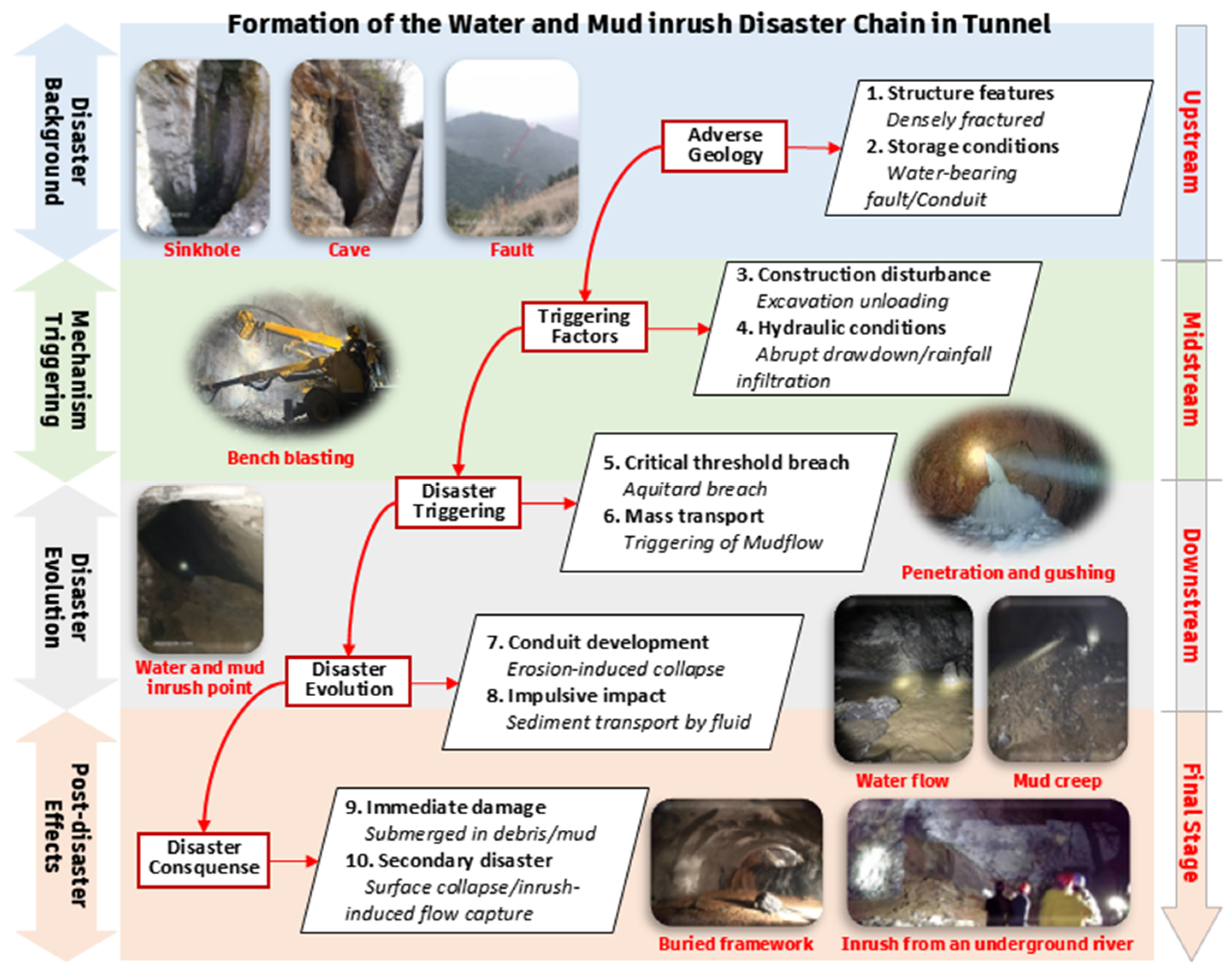
Tunnel water inrush and mud inrush disasters are typical chain disaster processes, where the evolution involves the dynamic coupling of multiple factors, including geology, hydrology, and mechanics. Overall, the process can be divided into four stages: disaster background (upstream), triggering mechanism (midstream), disaster evolution (downstream), and disaster consequences (final stage). The chain process of the disaster and the analysis of its key stages are shown in
Figure 1. China has witnessed a high output of research on water and mud inrush in tunnels, largely driven by the large-scale construction of high-speed railways and expressways over the past decade. Extensive engineering practice has significantly advanced the understanding of inrush mechanisms, improved prediction accuracy, and enhanced prevention technologies.
While not explicitly framed within sustainable development theory, this research closely aligns with its multidimensional objectives. Environmentally, it clarifies the mechanisms of water and mud inrush and their interaction with groundwater, providing a scientific basis for protecting fragile karst hydrogeological settings during construction and minimizing ecosystem disturbance. Economically, the developed disaster simulation and prediction framework enhances engineering risk prevention, helping to avert substantial financial losses, resource waste, and project delays, thereby improving the life-cycle sustainability of major infrastructure. Socially, it prioritizes the safety of personnel during construction and operation—a people-centered approach—while boosting infrastructure reliability and resilience to support regional connectivity and community well-being.
Methodologically, the integrated use of multi-source data fusion, 3D geological modeling, and multiphysics-coupled numerical simulation constitutes a systematic, preventive analytical framework. This technical approach not only advances the precision and scientific rigor of disaster mitigation but also reduces the reliance on large-scale physical experiments, lowering the environmental footprint of the research itself and demonstrating how innovation drives sustainability [
18].
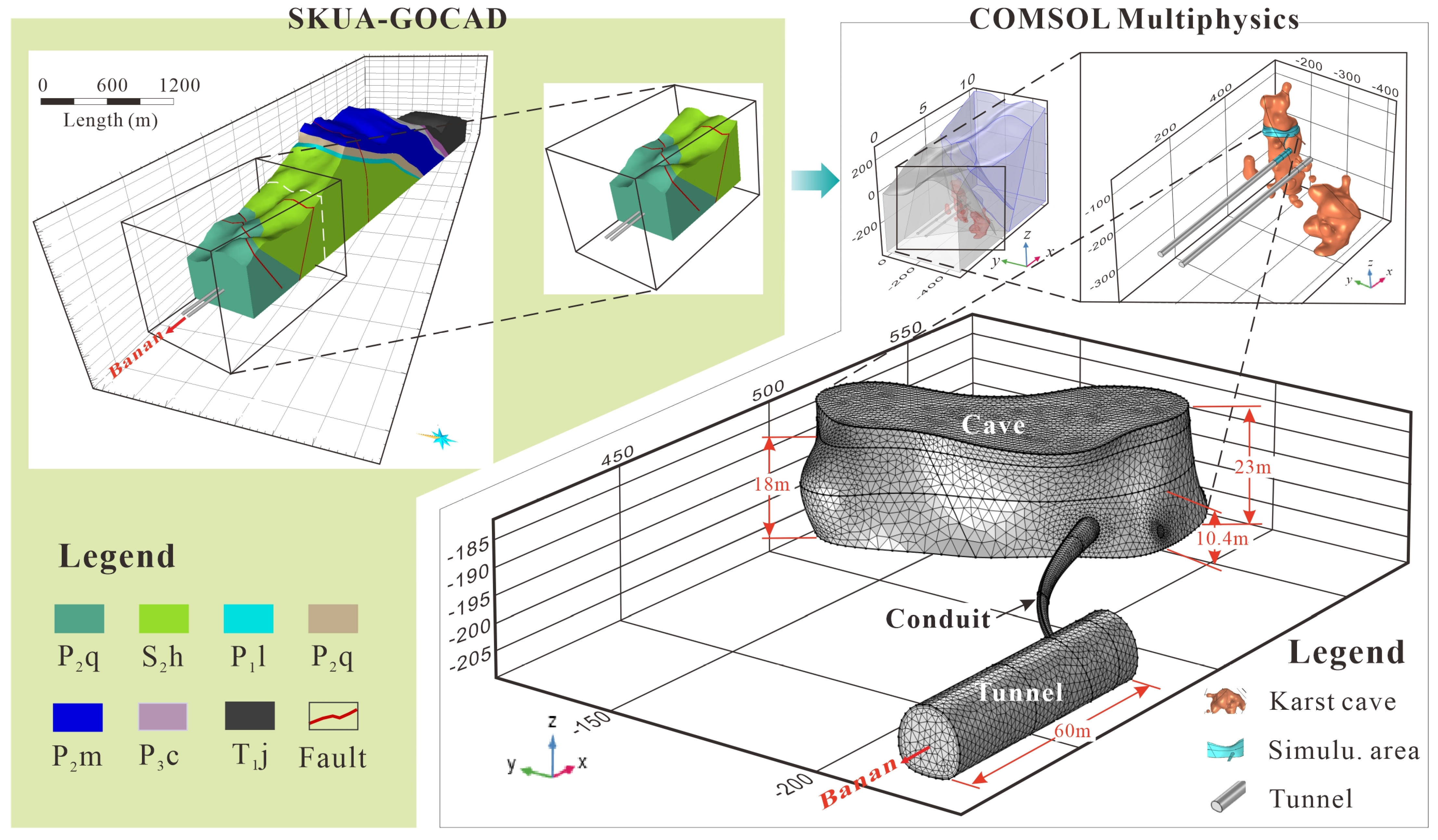
This study investigated a water and mud inrush incident in the Baiyunshan Tunnel, located on an expressway section in Chongqing. Following a systematic analysis of the geological background and disaster scenario, the inrush event was identified as a karst water inrush triggered by construction blasting. A 3D visualization model of the tunnel geology was developed through the integration of multi-source data, including geological exploration, geophysical survey, and remote sensing. A 3D numerical model was subsequently established for the inrush section, with focused simulation and analysis of the connected system comprising karst caves, underground conduits, and the tunnel. The study successfully reconstructed the entire disaster process, revealing its evolutionary characteristics and underlying physical mechanisms related to destructive forces (such as the relationship between Reynolds number and drag force). This research provides a comprehensive methodological framework for high-fidelity simulation and the mechanistic analysis of water and mud inrush disasters while establishing a theoretical basis for the prevention and mitigation of similar hazards.
In summary, the study builds a complete technological chain—from geological insight and mechanistic understanding to intelligent hazard prevention—delivering key scientific and technical support for achieving safe, green, and economical tunnel construction under complex geological conditions. It represents proactive infrastructure-sector practice toward sustainable development goals.
3. Water and Mud Inrush in Tunnel Construction
3.1. In Site Water-Mud Inrush Incident Scenarios
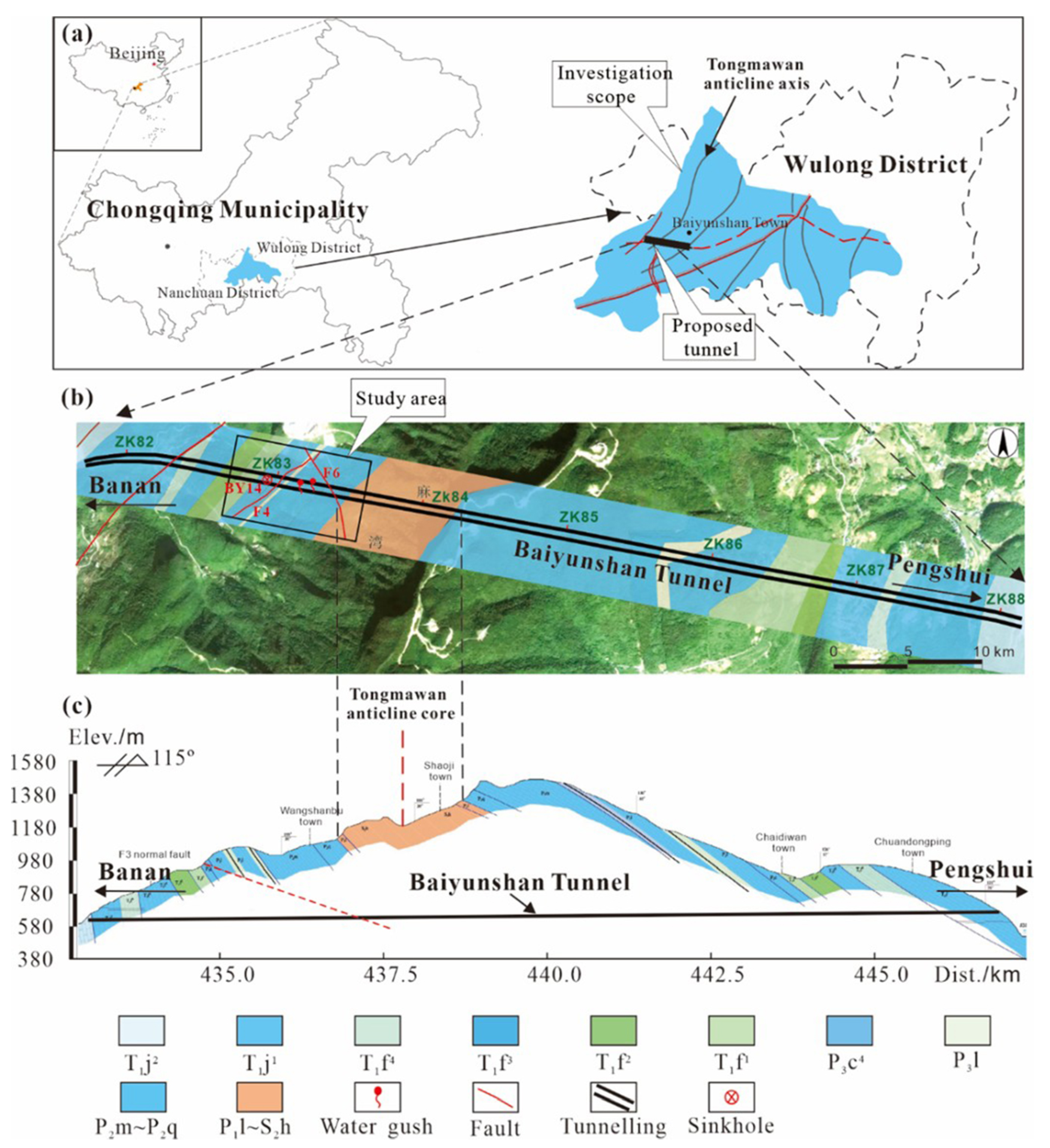
Baiyunshan Tunnel is constructed as part of
Section 6 of the Banan–Pengshui segment on the Chongqing–Hunan highway duplicate line. It is designed as a fully separated twin-bore tunnel, with the left bore extending 6442 m and the right bore 6404 m in total length. The tunnel has a maximum overburden of 803.6 m, qualifying it as a deep-buried, extra-long mountain tunnel.
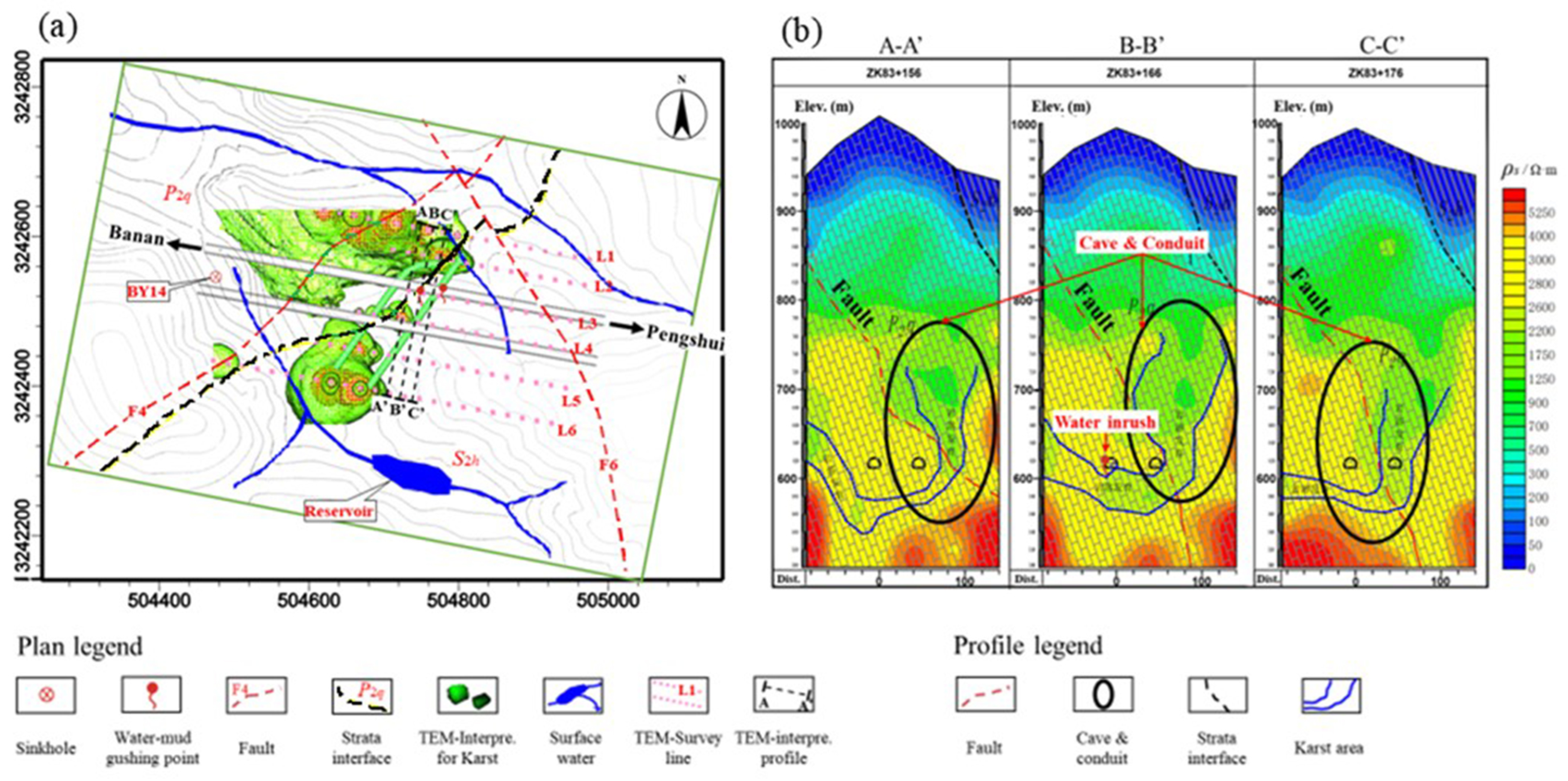
The water inrush section is located on the western limb of an inverted anticline within a well-developed karst groundwater system. The conjugate fault system (F4 and F6), formed under local compressive stress during folding, exhibits significant hydraulic conductivity, and is interpreted to have hydraulically connected to the underground river system, thereby inducing the water and mud inrush event.
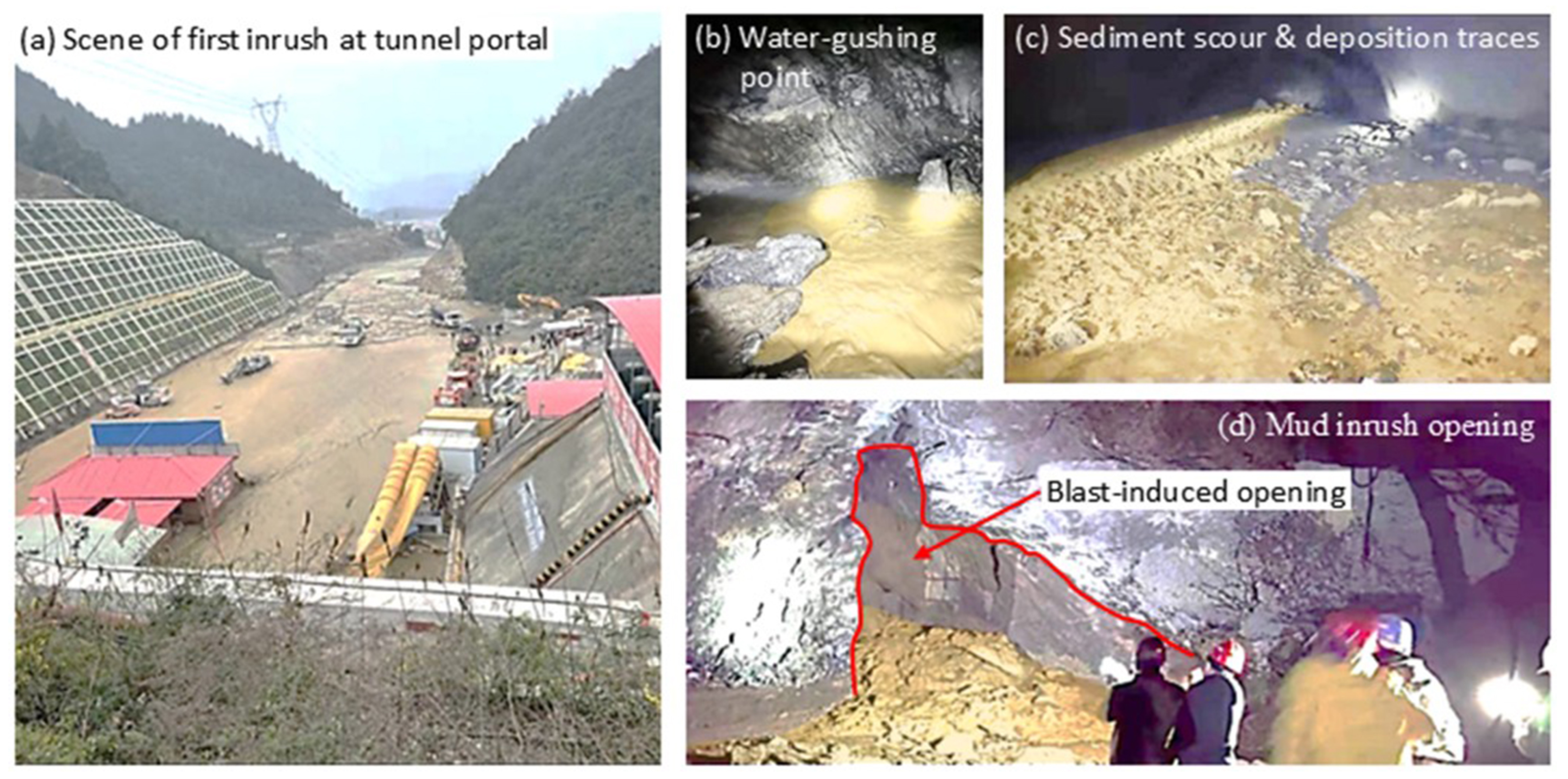
The first water inrush occurred at the upper bench of the right wall of the left tunnel face at pile ZK83+166, triggered by excavation blasting from February 27 to March 29, 2022. The blast instantly released approximately 150,000 m
3 of water along with 5000 m
3 of sediment. The inrushing water, as shown in
Figure 4, resembled a river gushing out of the tunnel portal. The flow was turbid and sediment-laden, extending several hundred meters downstream with a thickness ranging from 0.1 to 0.3 m, partially accumulating and blocking the tunnel portal. Intermittent water inrushes continued for nearly two months, ceasing only around the time when the second water inrush incident occurred.
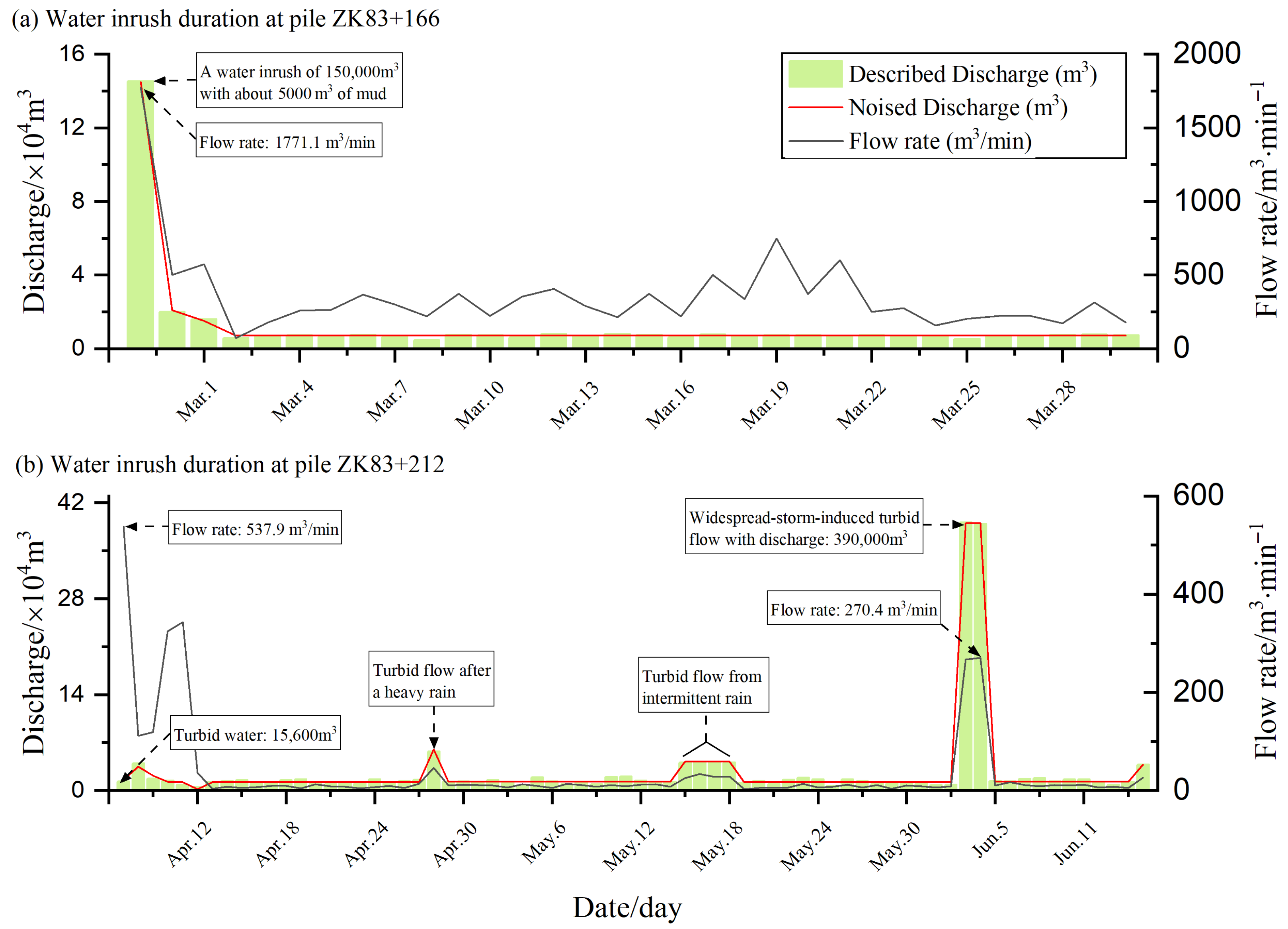
The second water inrush occurred at the face of the left tunnel at pile ZK83+212 from 30 March to 15 June 2022. This incident was caused by the tunnel excavation directly exposing a karst cavity, allowing groundwater to gush out from the underground river system connected to the cavity. The initial water inrush lasted for half an hour, with a discharge of 15,600 m3 and a small amount of sediment. Subsequently, similar intermittent water inrushes continued, gradually decreasing in volume. The event persisted for two and a half months until the initial support was installed at the location, and anti-inrush sealing measures were implemented.
3.2. Analysis of Water and Mud Inrush Discharge
Based on textual descriptions of two water and mud inrush phenomena documented on-site [
20], this study visually represents the two inrush processes using bar charts (
Figure 4). It is important to note that as the data were derived from descriptive records of geological events rather than actual monitoring measurements, and because field conditions during the inrush prevented precise quantification, the water volume estimates are subject to significant uncertainty. To quantitatively characterize this uncertainty, Gaussian noise, i.e., Gauss (0, 1000), was introduced into the flow data. Furthermore, while the volume of mud inflow was quantitatively recorded only during the initial event at the first water inrush point on 27 February 2022, descriptions of mud inflow at other times were primarily qualitative.
As can be seen from
Figure 5, the two water inrush events exhibited characteristics of intermittency and variability. Specifically, (1) the water inrushes typically occurred within a few hours, rather than persisting throughout the entire day; (2) the volume of water inrush could vary by more than tenfold. For example, at station ZK83+166, the initial water inrush event discharged approximately 150,000 cubic meters of water within 85 min, equivalent to an average flow rate of 1764.7 m
3/min. In contrast, subsequent water inrush events involved a water volume of only about 7000 cubic meters, accompanied by approximately 5000 cubic meters of mud inrush, resulting in a combined average flow rate of about 58.8 m
3/min; and (3) if the intensity of the inrush is expressed as flow rate per unit time, it is evident that the initial inrush events at both points essentially represent the maximum intensity and were released within a short period. As previously mentioned, the first inrush point had a flow rate of 1771.1 m
3/min. Similarly, the second inrush point discharged 15,600 m
3 of water in 29 min, resulting in a flow rate of 537.9 m
3/min, which was the second highest intensity after the first event.
3.3. Analysis on the Evolution Mechanism of Water and Mud Inrush Disaster
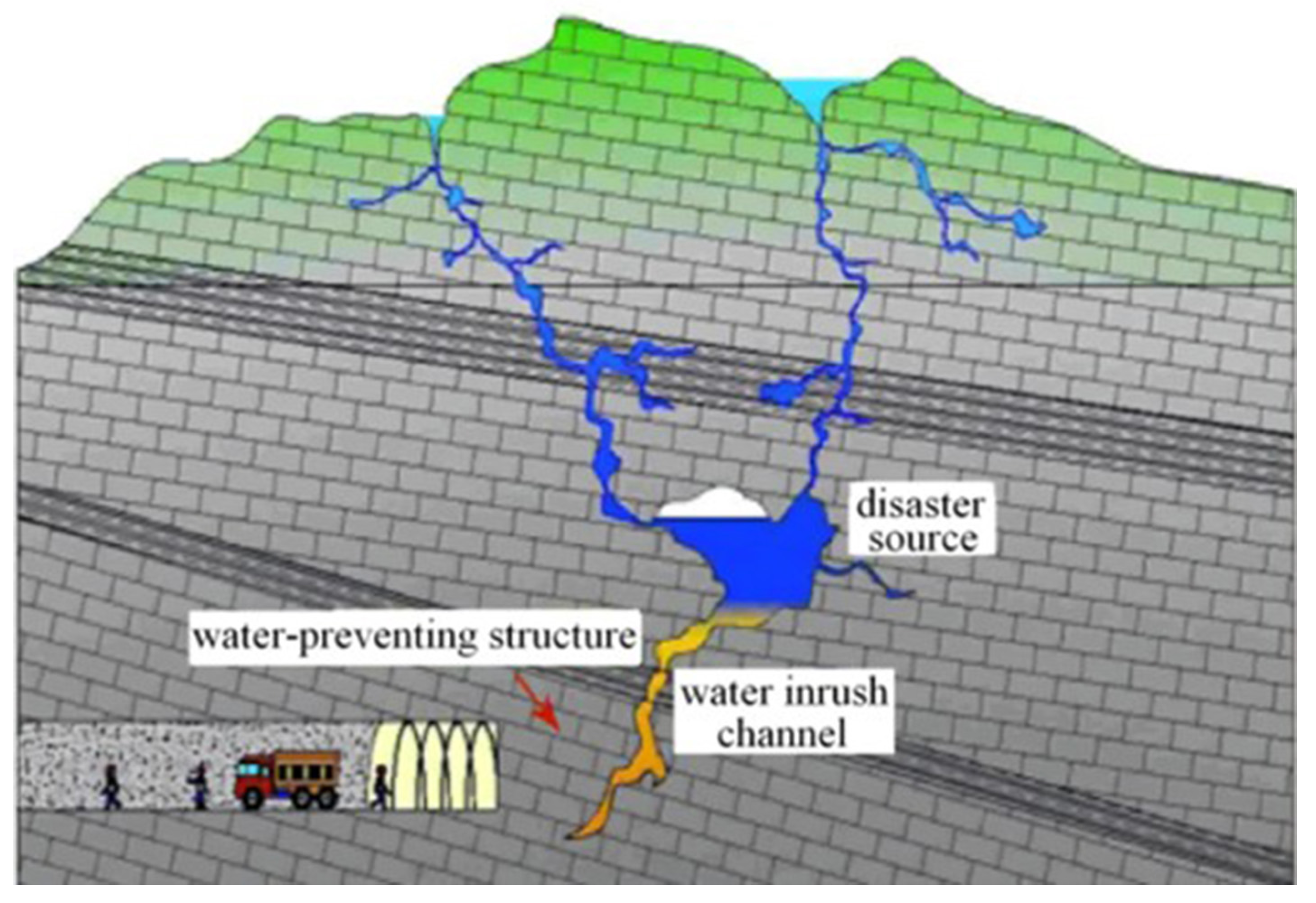
The water and mud inrush event at Baiyunshan Tunnel occurred on 27 February 2022 and represents a typical case of karst cave + conduit + tunnel-type water inrush triggered by dynamic disturbance of excavation. According to the study by Li et al. [
11], the water inrush disaster in tunnels consists of three components: the disaster source, the water inrush channel, and the impermeable barrier structure (as shown in
Figure 6).
① Disaster Source: The source of energy, which is a mixture of water, deposits, and cavities within a specific spatial area, exhibits distinct energy storage characteristics. The disaster source is the primary factor triggering the water inrush event.
② Water Inrush Channel: The dominant migration pathway of the disaster source, which is the location where the underground water, mud, sand, and other mixed materials couple and evolve in transit. The water inrush channel is an essential condition for the occurrence of the water inrush disaster.
③ Impermeable Barrier Structure: The final barrier preventing the disaster source from entering the tunnel, which is the structure where the final rupture and water inrush occur. The rupture leading to the water inrush is a dynamic failure process induced by both the migration of the disaster source and the disturbances caused by tunneling activities at the working face.
Based on the disaster chain model theory (
Figure 1), the water and mud inrush at Baiyunshan Tunnel exemplifies a classic composite disaster involving karst caves, subterranean rivers, and tunnel excavation. Its development conforms to a four-stage mechanism:
Predisposing Geological Environment (Upstream): The upstream area had unfavorable conditions, including karst conduits, water-bearing faults, weathered troughs, and sinkholes. The sinkhole at labelled BY14, along with faults F4 and F6 interconnected with an underground river, created a highly permeable flow path, with argillaceous infillings prone to water softening increasing instability.
Triggering Mechanism (Midstream): Tunnel excavation altered the in situ stress, potentially opening pre-existing fractures and allowing water ingress. Blast-induced vibrations may have raised the pore pressure, causing fractures to propagate and breach the tunnel.
Disaster Evolution (Downstream): A negative feedback loop developed between solid transport and conduit erosion. The mud–water mixture exhibited a shear-thinning Herschel–Bulkley rheological behavior, with flow velocity increasing as the conduit diameter expanded, i.e., v ∝ d 2, under same hydraulic gradient.
Aftermath: The initial inrush involved high-volume discharge that partially submerged the TBM and working platforms, lasting from 27 February to 1 March 2022. The event transitioned from continuous to intermittent flow. A subsequent inrush occurred between 30 March and 15 June 2022, with episodic water discharges carrying sediments, rock fragments, and pebbles, indicating a direct hydrologic connection between the tunnel and the surface-water–groundwater system via rainfall recharge.
5. Results and Analysis
5.1. Simulation Results of Flow Velocity in Tunnel
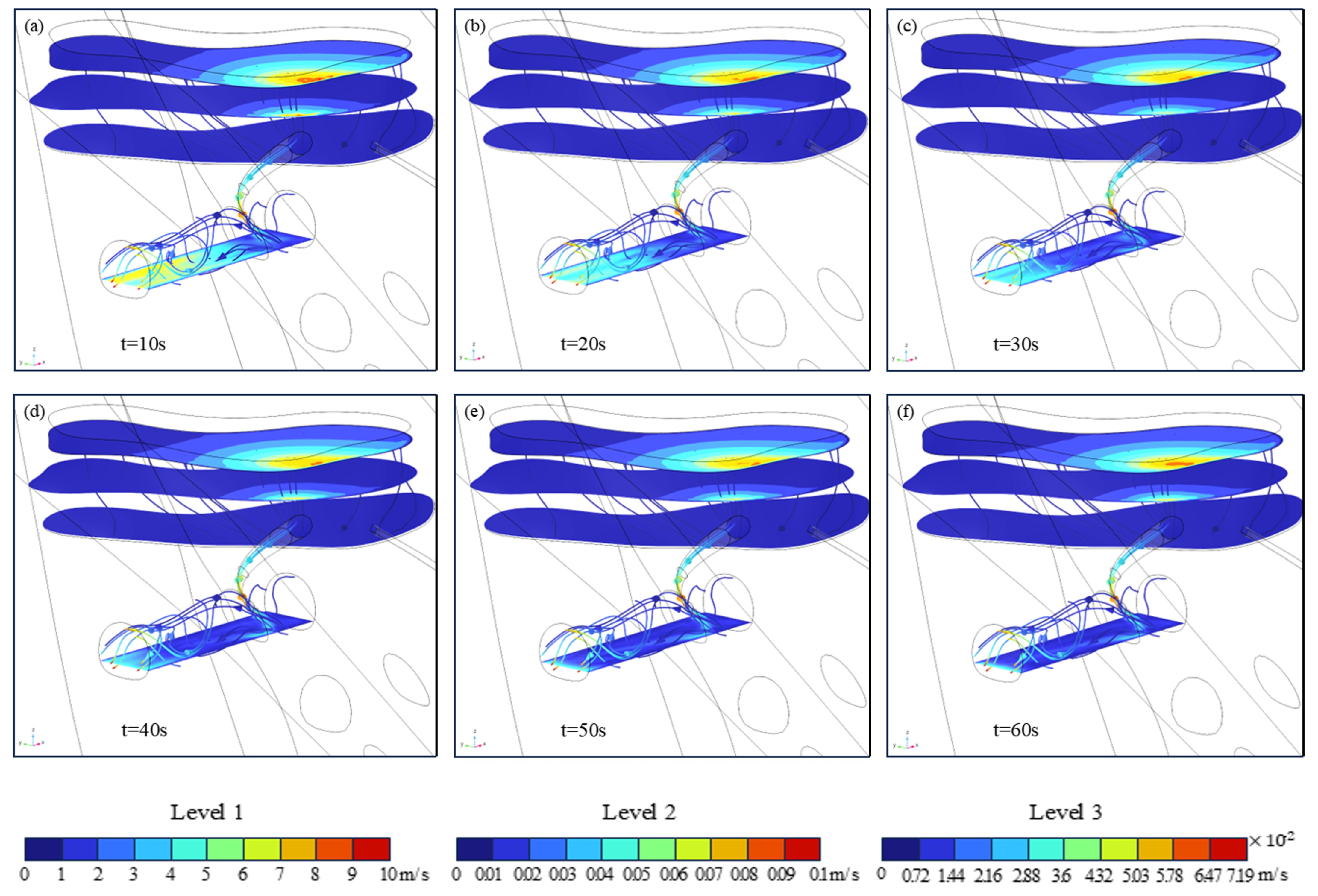
In the simulation results presented in
Figure 9a–f, three horizontal elevation planes are defined: Level 1 (606 m above reference) intersects both the karst cave and the tunnel; Level 2 (616 m) passes through the mid-height of the karst cave; and Level 3 (623.6 m) corresponds to the top of the karst cavity.
Notable discrepancies were observed in the magnitude ranges of the velocity fields across these elevation levels, as indicated by the respective scale legends. The velocity at Level 1 spanned from 0 to 10 m/s, representing the region of highest flow velocity. In contrast, Level 3 exhibited the most constrained velocity range, between 0 and 0.072 m/s, reflecting markedly lower flow intensities at this elevation.
As shown in
Figure 9, distinct annular zones of velocity variation were visible at different elevations within the karst cave, indicating the formation of a depression funnel. During this process, groundwater is channeled into the tunnel through subterranean conduits, establishing the tunnel as the primary drainage pathway. This mechanism ultimately triggers a water inrush disaster. Velocity readings at the junction between the tunnel and the conduit showed a maximum flow velocity of up to 10 m/s.
Simultaneously, the simulation results show that at the initial stage (t = 10 s), the flow velocity at the tunnel heading was relatively high, reaching 6~7 m/s. By t = 60 s, however, the velocity at the same location had decreased significantly to only 1~2 m/s. This temporal evolution of velocity is fully consistent with the characteristic flow behavior of a real fluid.
5.2. Simulation Results of Water and Mud Inrush Scenarios
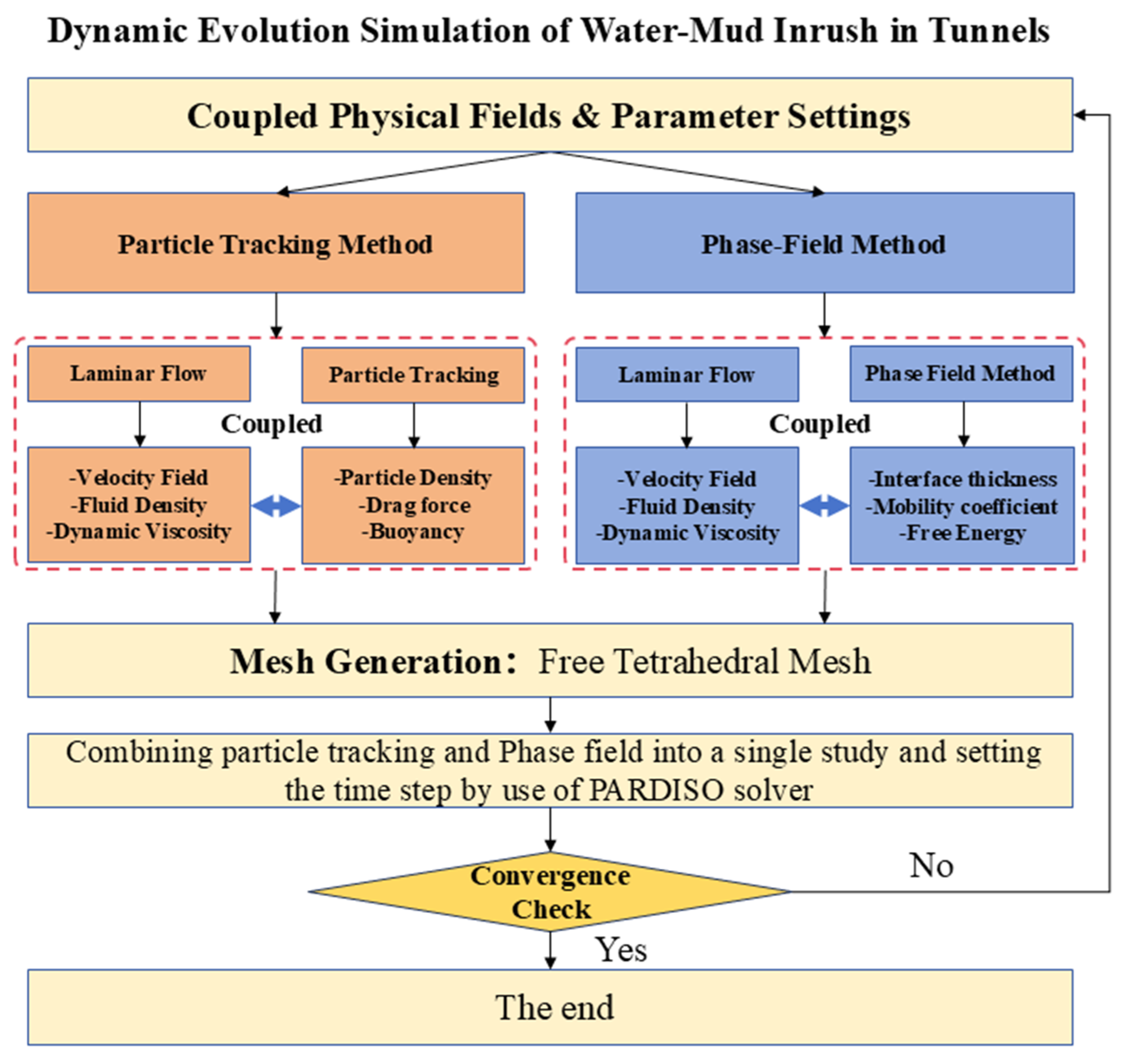
As previously described, the phase-field method is a thermodynamics-based mesoscale simulation approach that employs a continuous phase-field variable and a diffuse-interface model to describe the evolution of phase interfaces. Its core concept lies in replacing the traditional sharp interface with a smoothly varying order parameter (e.g., ϕ = ±1), forming a nanoscale transition region at the interface. The system evolution is governed by the Cahn–Hilliard or Allen–Cahn equations, which minimize the free energy functional comprising bulk and gradient energy terms, enabling the interface to spontaneously undergo complex topological changes such as nucleation, coalescence, and splitting.
In phase-field simulations conducted with COMSOL, the volume fraction of a fluid phase can be obtained by performing volume integration over regions where the order parameter corresponds to that phase (e.g., ϕ = 1). This allows precise identification and delineation of the interface in water–air two-phase flows. By visualizing the resulting phase distribution, it becomes possible to reconstruct realistic dynamic scenarios of fluid motion, thereby providing an intuitive and reliable numerical basis for the analysis of interface-dominated multiphysics processes.
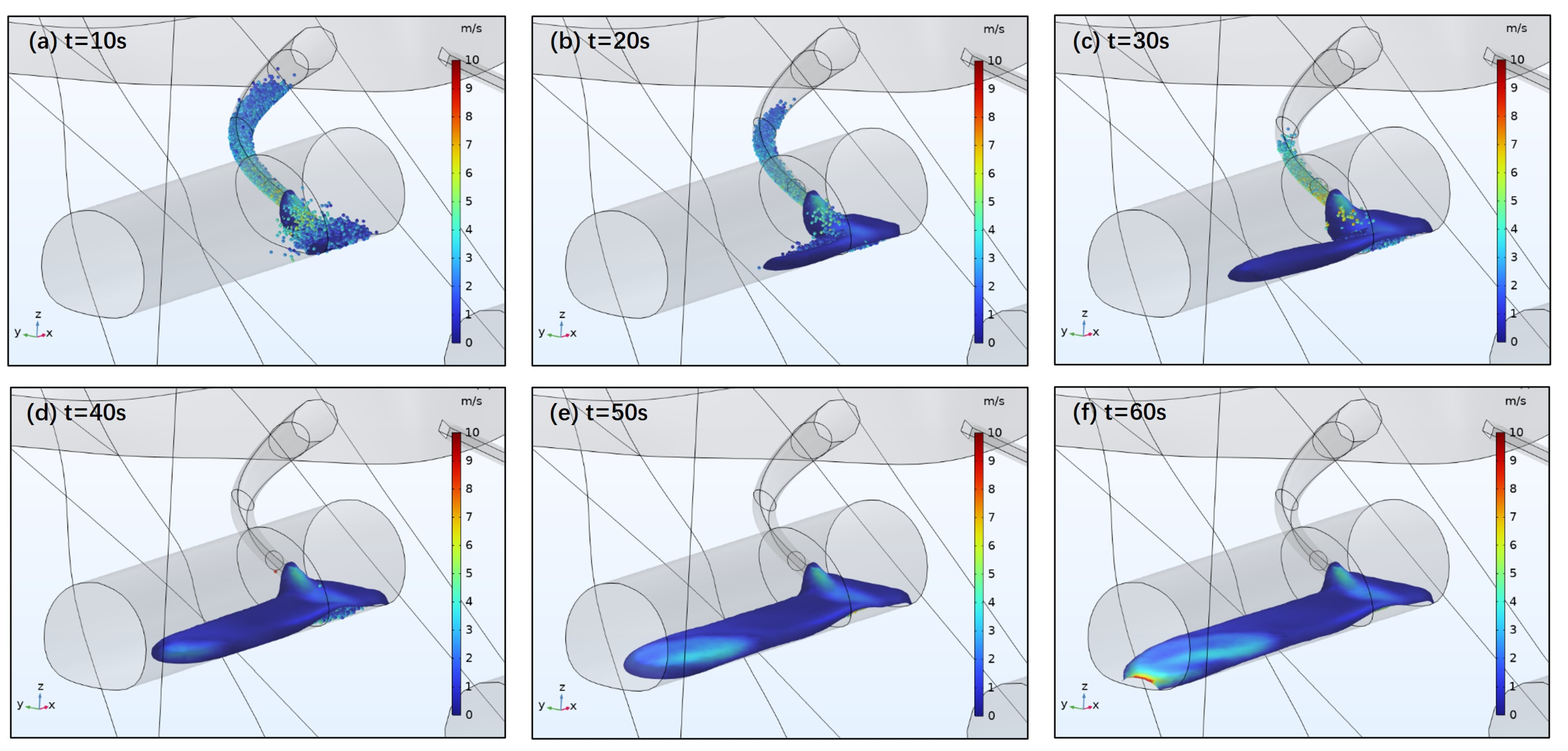
Figure 10a–f presents the simulation results of the water and mud inrush process in an underground pipeline–tunnel system at different time steps. The mud inrush process is reproduced using particle tracking technology, which models the mud as solid particles with volume, mass, and viscosity. Within the first 30 s, the simulated mud flow, driven by the fluid, initially gushes out and accumulates in the tunnel, indicating the occurrence of the mud inrush phenomenon (as shown in
Figure 10a–c).
Subsequently, the mud inrush process essentially concludes, and a particle-laden water flow is generated and gradually develops, eventually filling the 60-m tunnel section in the simulation domain with an average flow velocity of approximately 1.2 m/s (as shown in
Figure 10d–f). The legend represents the velocity range of the water flow, showing that the flow front exhibited a higher velocity and greater impact force, around 6~7 m/s, while the middle and rear sections of the flow slowed down to about 1~2 m/s, with localized vortex formation observed.
5.3. Hazard Mechanism Analysis in Relation to Water and Mud Gushing
When water–mud-bearing structures are exposed during excavation, the drainage of these structures into underground spaces can trigger water and mud inrushes [
31]. Such inrushes are typically sudden, posing immediate threats to the safety of personnel and equipment within underground chambers. A notable example is the Lingjiao tunnel, where direct exposure of karst caves led to sudden mud inrushes. The ejected mud destroyed all construction facilities and equipment at the working face, with two excavators, one loader, and one concrete pump being swept out of the tunnel [
32]. The occurrence of these phenomena signifies the entry into the third phase of the previously mentioned disaster chain for tunnel water–mud inrush—the phase of disaster evolution.
The numerical simulation results provide a relatively clear visualization of the water and mud inrush process. By adjusting the parameters, a certain degree of consistency with actual field disaster scenarios can be achieved. Given the challenges in obtaining on-site observational data for such disasters, a strategy of repeated simulations was adopted to summarize the motion characteristics and behavioral patterns of the water–mud–air three-phase fluid system under various conditions, which will contribute to a deeper understanding of the mechanisms behind water and mud inrush.
The limitations of the numerical approach mainly lie in the following aspects. First, the model simplifies the mud fluid as a homogeneous Newtonian fluid and treats solid particles as a discrete phase with interactions through drag force. However, in actual mud inrush events, the slurry often exhibits strong non-Newtonian fluid characteristics (such as Bingham plasticity or shear-thinning behavior), where the internal friction angle and cohesion play a controlling role in the initiation and transport processes. Second, the model does not account for the erosive effect of the fluid on the pipe wall or the subsequent dynamic changes in channel morphology, which may constitute a key positive feedback mechanism in the evolution of real disasters. Field investigations indicate that the main evolution of the water and mud inrush lasted approximately 90 min, whereas significant erosion-induced changes in karst conduits and the tunnel surrounding rock typically require much longer timescales. During the event, erosion was limited to the millimeter–centimeter scale and was negligible compared with the meter-scale dimensions of the conduits and tunnel; therefore, fluid-induced erosion and the associated evolution of conduit morphology can be neglected.
To gain a deeper understanding of the physical picture revealed by the simulation results despite these limitations, we theoretically compared the mud inrush process in tunnels with the movement of surface debris flows [
33,
34]. This analogy is reasonable, as both are essentially shear-driven flow processes of solid–liquid mixtures under gravity. Based on this, a key dimensionless number—the Reynolds number (Re)—can be introduced to bridge the microscopic fluid behavior with macroscopic transport characteristics. Based on dimensional analysis, the impact effect of debris flows—governed by kinetic energy (ρv
2) or potential energy (ρgh)—is primarily determined by both the Froude number (Fr) and the Reynolds number (Re), making it a function of these two dimensionless parameters.
where
P is the impact pressure of debris flows;
a,
b,
c,
d are empirical constants.
However, there are notable differences in the flow characteristics between tunnel mud inrushes and typical debris flows. First, mud inrushes generally occur in channels with relatively gentle slopes. Since their movement is not primarily driven by the conversion of gravitational potential or kinetic energy, the resulting impact effect is relatively limited. Second, the material composition of mud inrushes is dominated by clay particles, with a very low content of coarse grains such as gravel or cobbles, resulting in significantly higher viscosity. In such high-viscosity, low-gradient flows, viscous forces—in addition to inertia—play a key role in governing the flow behavior. Therefore, for this type of mud inrush, studying the impact effect alone offers limited practical value. Instead, in-depth analysis of the relationship among flow velocity, drag force, transport distance, and the Reynolds number holds greater significance for engineering guidance.
Therefore, the hazardous effects of high-viscosity tunnel mud inrushes—such as flow velocity and transport distance—are fundamentally governed by their flow regime. Accurately quantifying these effects requires a clear characterization of the intrinsic relationship between the Reynolds number and the drag force, that is, the resistance exerted by the fluid on particles. It serves as follows:
where
L is the characteristic length, such as particle size;
ρd is the particle density; ρ is the density of mud flow;
A is the reference area (typically the frontal projected area);
Cd is the drag coefficient. It is the function of Reynolds (
Re), i.e.,
.
5.4. Predicting Mud Conditions: Effects of Parameter Variations
This study investigated the influence of key parameters—mud density, particle size, and dynamic viscosity—on mudflow dynamics. Numerical simulation schemes were performed to quantify the runout distance, flow velocity, and drag force, and to establish their correlation with the Reynolds number. The parameter settings of different simulation designs are listed in
Table 4.
Based on the disaster characteristics described previously and the subsequent geological investigation results [
16], the material involved in the mud influx primarily originated from sediments stored within the karst cave–underground conduit system. The composition was dominated by muddy fluid, mixed with a certain amount of well-rounded gravel and cobbles. For parameter configuration, the fluid viscosity was set to represent a transition from the muddy flow type (dynamic viscosity: 1~10 Pa·s) to the water-stone flow type (dynamic viscosity: 0.1~5 Pa·s). Accordingly, three simulation schemes were designed based on the debris flow density parameters (dilute: 1500 kg/m
3, transitional: 1700 kg/m
3, dense: 1900 kg/m
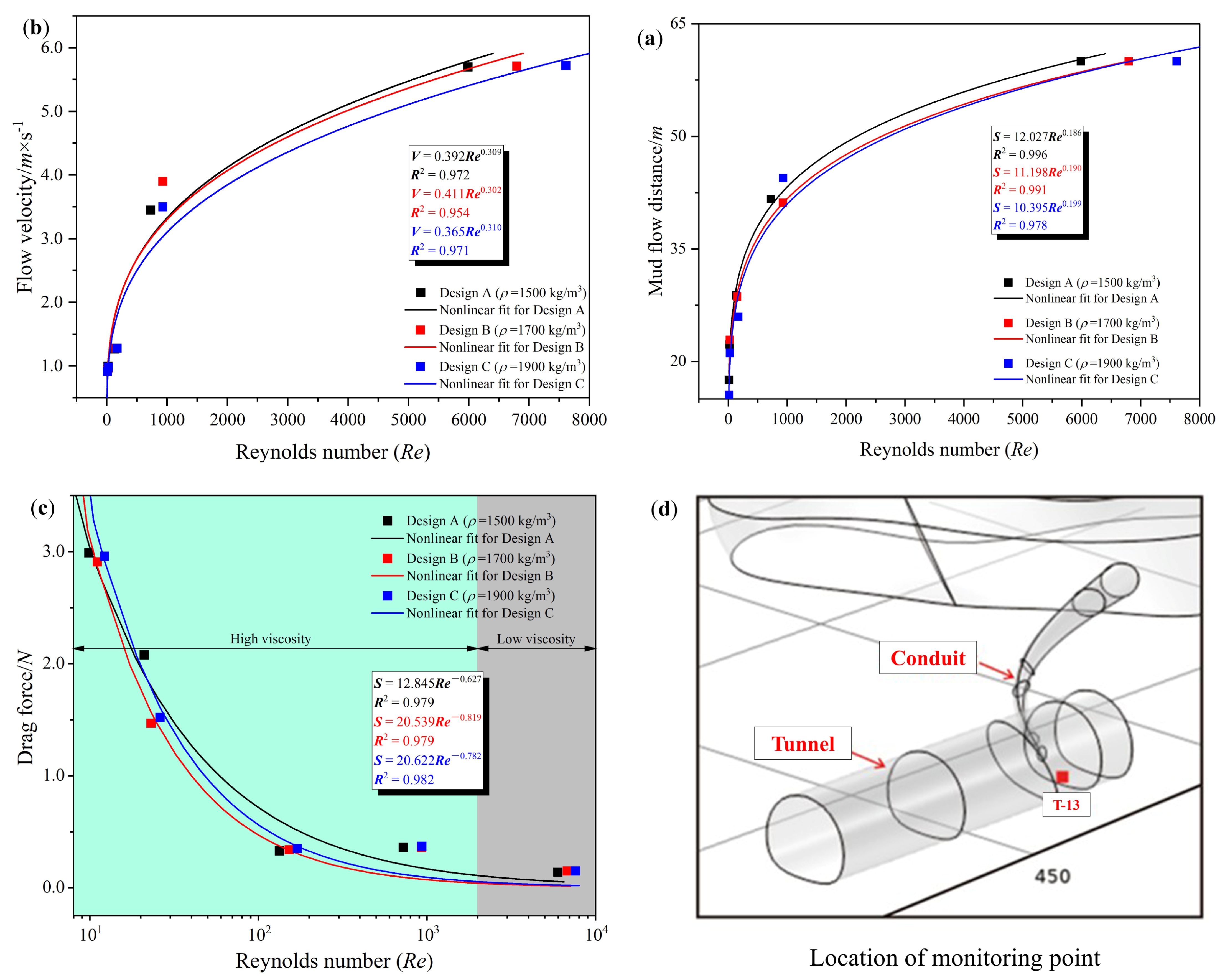
3). Due to the limited flow distance of muddy fluids, particularly the propensity for dense flows to deposit at tunnel exits, a simulation monitoring point (labelled T-13) was positioned near the tunnel entrance of the underground conduit (
Figure 11d) to acquire data on flow velocity and drag force.
Based on the current simulation results, the model effectively reproduced the main phenomena of the water and mud inrush disaster, with the fitting results showing a high degree of agreement with the scattered data. The coefficient of determination (R
2) reached above 0.90. As shown in
Figure 11a,b, both the travel distance and flow velocity of the mud flow exhibited a decelerating increasing trend with rising Re number.
Figure 11c presents a semi-logarithmic plot that demonstrates that the drag force on mud particles decays exponentially with increasing Re number, which is generally consistent with the theoretical exponential decay of the drag coefficient (C
d) with Re number. Furthermore, when analyzing density as a parameter representing inertial force, it was observed that under the same Re number conditions, higher density corresponded to shorter travel distance and lower flow velocity. In contrast, the drag force on particles showed little variation across different density conditions, indicating that it is less influenced by inertial forces and is primarily governed by viscous effects, particularly in the high-viscosity (low Re < 2000) regime. In the low-viscosity (high Re > 4000) regime, the drag force remained consistently at a low constant value. In the low Reynolds number range shown in
Figure 11c (Re < 10
2), the flow was in a viscosity-dominated Stokes flow regime. At this stage, the drag force on the particles is primarily contributed by the fluid’s viscosity and is weakly related to particle density. As a result, the simulation results under different density conditions almost overlapped, indicating that particle motion is relatively insensitive to density under low Reynolds number and high-viscosity conditions.
5.5. Predicting Mud Flow: Results of Parameter Variations
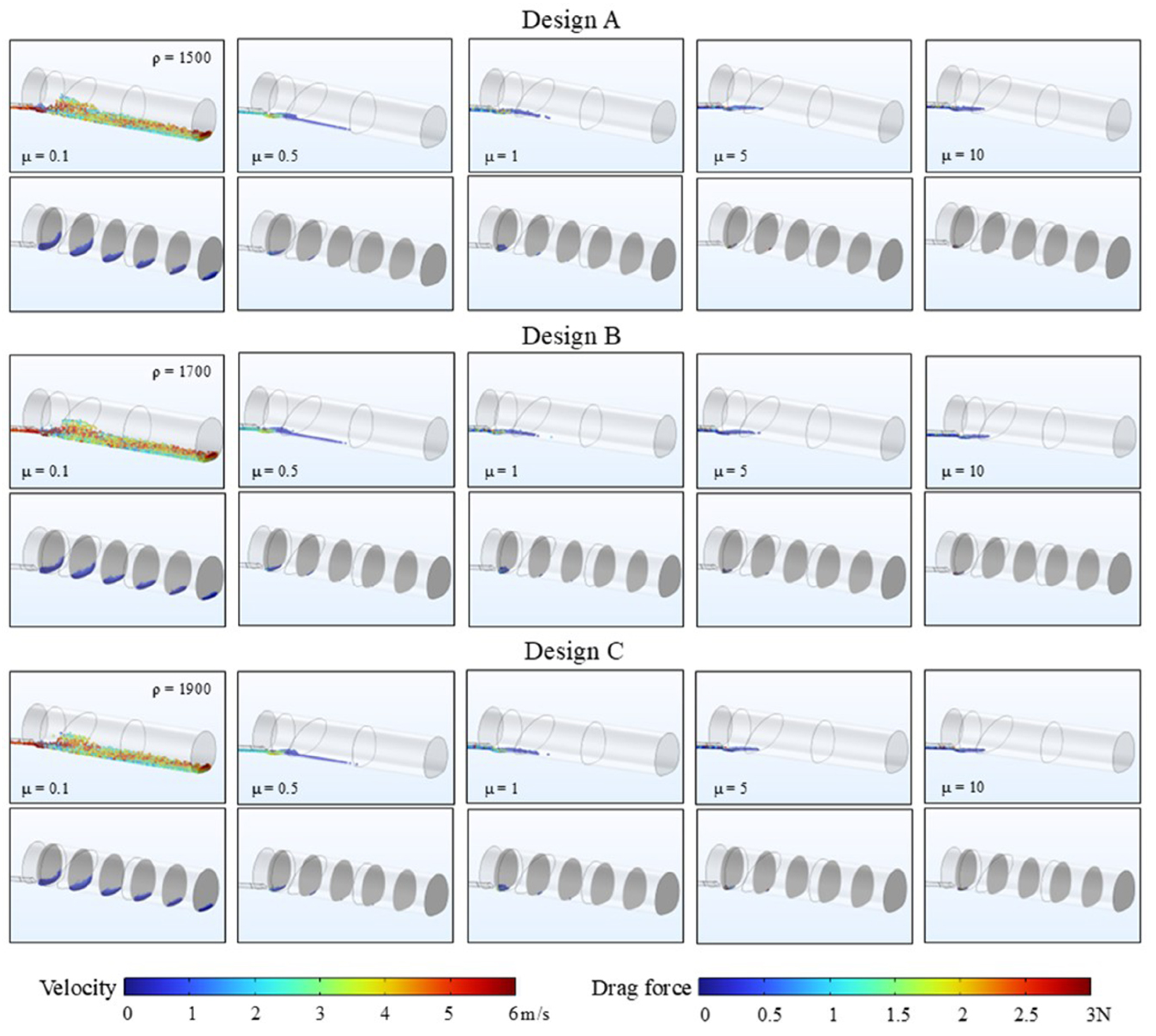
Through systematic parameter-variation simulations, this study clearly reconstructed the dynamic evolution of mudflow throughout its entire process, i.e., from initiation, transport, to deposition, visually demonstrating how its motion state is governed by key hydraulic and physical parameters.
Figure 12 presents the transport distance, flow velocity, and drag force of the mudflow under different simulation schemes. To facilitate a direct comparison, all data were extracted at a specific time instant of 30 s after the simulation start and are comprehensively presented in the form of a Poincaré plot of drag force, which integrates the results from combinations of three density values, corresponding to three simulation designs, with varied five dynamic viscosity coefficients.
Based on the graphical analysis, when the density is held constant, the transport distance of mudflow generally exhibits a decreasing trend as the dynamic viscosity coefficient increases. This behavior aligns with the general principle that “higher fluid viscosity leads to poorer flowability”, thereby validating the reliability of the simulation. Under a constant dynamic viscosity coefficient, an increase in density similarly results in a reduction in transport distance; however, the magnitude and sensitivity of this effect are less pronounced than those induced by variations in dynamic viscosity. Based on the results shown in
Figure 11,
Figure 12 can serve as a reference for fitting the field mudflow monitoring data. It should be noted that the relationship curve established in this study was based on a 60-m-long local model and was primarily intended to reveal the relative variations and trend characteristics of mudflow dynamics. Considering that the actual tunnel engineering scale is much larger and geological conditions are heterogeneous, directly extrapolating this dimensionless Reynolds number relationship has limitations. Therefore, when applying this relationship curve in engineering practice, it should be calibrated with field monitoring data and, if necessary, the prediction accuracy can be improved through multi-segment local simulations or on-site calibration. This enables the quantitative inversion of key physical parameters of the mudflow, thereby providing a theoretical basis for risk assessment and the design of preventive measures against water and mud inrushes during tunnel construction.
6. Discussion
This study aimed to simulate the initiation and progression of water inrush disasters in karst tunnels. The actual engineering case underpinning our research clearly indicates that the dominant material involved in the disaster process was water. Specific data show that a brief mud outburst occurred only during the initial onset, with a peak flow rate (58.8 m3/min) constituting less than 3.3% of the peak water inrush flow rate (1764.7 m3/min), and no subsequent mud outburst of comparable magnitude was observed. The intermittent water discharges over the following month resulted in only slightly turbid water. Therefore, the core physical process under investigation is a water-dominated hydrodynamic problem. Within this context, adopting an incompressible Newtonian fluid constitutive relation in the current model serves the primary purpose of revealing the flow mechanisms, energy evolution, and interaction with surrounding rock during large-scale water influx within a conduit structure. This simplification is reasonable and effective for focusing on the main research objective and establishing a foundational analytical framework.
Nevertheless, we fully understand and concur with the reviewers’ insightful points. Actual mud outburst slurries, especially high-concentration mixtures rich in debris, often exhibit significant non-Newtonian rheological properties such as yield stress and shear-thinning behavior, which are more accurately described by constitutive models like Herschel–Bulkley or Bingham. We fully acknowledge the limitations of the current model:
- (1)
Limited applicability to pure mud flows or inflows with high mud content: The Newtonian assumption neglects the “plug flow” effect caused by yield stress, potentially overestimating near-wall velocities and affecting predictions of flow stoppage mechanisms and final deposition morphology.
- (2)
Current state of parameter basis: Implementing precise non-Newtonian fluid simulation relies on obtaining reliable rheological parameters (e.g., yield stress τ_y, consistency coefficient K, flow index n) through field sampling or experimental measurement. Detailed rheological data specific to this case is currently not fully available.
Furthermore, the issue of model scale extrapolation warrants discussion here. To reveal the underlying mechanisms, this study utilized a 60-m-long typical conduit segment for localized, detailed simulation, from which dimensionless relationships for analysis were derived. However, actual tunnel engineering operates on a much larger scale within highly heterogeneous geological environments. Consequently, inherent limitations exist regarding geometric similarity and boundary condition representativeness when directly extrapolating relationships derived from a small-scale local model to full-scale engineering applications. For engineering reference, the quantitative relationships established herein require calibration and correction against specific field monitoring data, or necessitate adjustments for scale effects through methods like segmental simulation or inverse analysis.
In summary, the conclusions of this study regarding the evolution of water inrush dynamics, key influencing factors, and relative trends are robust within the specific disaster scenario of a “water-dominated” event under the Newtonian fluid assumption. Simultaneously, we explicitly state that: first, this model is not suitable for precise prediction centering on mud slurry rheology; second, quantitative extrapolation of the model requires careful consideration of scale effects. In future work, we will focus on collecting rheological data for typical slurries, incorporating more universal non-Newtonian constitutive models, and developing cross-scale simulation methodologies to construct a more comprehensive framework for simulating the entire process of water and mud inrush disasters.