Article

Entrepreneurial Orientation and Marketing Performance in SMEs: The Mediating Roles of Digital Marketing Capabilities and Digital Marketing Implementation in Oman


1
Institute of Postgraduate Studies, Karmi Campus, Girne American University, Kyrenia 99428, North Cyprus, Türkiye
2
Karmi Campus, Girne American University, Kyrenia 99428, North Cyprus, Türkiye
*
Author to whom correspondence should be addressed.
Sustainability 2026, 18(4), 1925; https://doi.org/10.3390/su18041925
Submission received: 9 December 2025 / Revised: 16 January 2026 / Accepted: 19 January 2026 / Published: 12 February 2026

Abstract

This paper investigates the relationship between entrepreneurial orientation (EO) and marketing performance (MP) in small and medium-sized enterprises (SMEs) in Oman, with specific focus on the mediating roles of digital marketing capabilities (DMC) and digital marketing implementation (DMI). Although there has been evidence of the performance benefits of EO, there has been limited empirical evidence to illustrate how entrepreneurial behavior translates into marketing performance through digital channels in emerging markets. Using the Resource-Based View and Dynamic Capabilities Theory, this study bridges this gap to examine the mediating dual roles of digital capabilities and implementation in an SME setting. The data for this study was collected from 402 SME employees using Partial Least Squares Structural Equation Modeling (PLS-SEM). The findings of this study reveal that EO has a positive direct impact on MP and also an indirect relationship with MP via both DMC and DMI, thus confirming that marketing performance in entrepreneurial firms becomes superior when digital readiness and implementation synergies become aligned. The implications of this study for SME managers and policy-makers who aim to improve digital competitiveness in SMEs in emerging markets such as Oman are provided. Further studies may investigate this model in different countries or use longitudinal approaches to analyze how changes in dynamic capabilities over time affect marketing performance.

1. Introduction

During the past decade, the digitalization of markets has changed the dynamics of competitiveness and the creation of value in small and medium-sized enterprises (SMEs). In the environment of rapidly changing technology, consumer demands, and technology-informed decision-making, the importance of digitalization has increased from being an important but secondary function to becoming the most important core competency in the future of SMEs [1,2]. In the emergent economy of the Sultanate of Oman, where the development of SMEs has been considered an important aspect of the country’s diversification strategy, the integration of entrepreneurial practice with digital marketing competency has been recognized as an opportunity as well as a necessity in the future of the economy [3,4].
Entrepreneurial orientation (EO), in short, embodies an organization’s attitude toward innovating, taking risk, and proactively responding to market opportunities. There is considerable literature that shows that EO positively influences organizational effectiveness by promoting innovation and learning from experience [5,6]. However, it is important to note that EO by itself might not always deliver superior effects without an underlying support system that helps entrepreneurs leverage ideas into market outcomes. In this connection, marketing and technology competencies act as facilitators that help entrepreneurs’ intentions yield concrete outcomes [7,8]. In an Oman setting, where a major segment of SMEs is still practicing traditional marketing, a lack of cutting-edge digital marketing competency often limits the effectiveness of entrepreneurial efforts [9,10].
The digital marketing capabilities (DMC) refer to the capabilities that enable businesses to use digital technologies to sense and respond to their customers [11,12]. By use of data analysis and online communication, DMC enables SMEs to reach a wider audience at a lower cost [13]. To small SMEs operating within small domestic markets such as Oman, digital platforms enable them to reach customers from their regions and other parts of the world, increasing their visibility and competitiveness [14]. With entrepreneurs’ initiative, digital marketing capabilities are the main drivers of growth and success of SMEs [15].
Although DMC indicates an organization’s readiness to capitalize on digital technologies from a strategic/analytical perspective, it does not necessarily ensure positive results in marketing without its implementation. In this regard, Digital Marketing Implementation (DMI) captures the practical aspect of digital marketing, which involves carrying out digital strategies by doing things such as social media management, content production, search engine optimization, advertising, customer relationship management, and data-driven campaign optimization [15]. Unlike DMC, which is focused on what an organization is capable of doing, DMI is a measure of how these things are done on a consistent basis [16].
Entrepreneurial orientation (EO) is a crucial determinant of digital marketing implementation processes, where innovativeness, risk-seeking behavior, and proactiveness facilitate the use of new digital tools, quick market responses, and continuous improvements of marketing implementation processes [17]. Empirical findings from emerging markets such as Oman have shown that SMEs with high EO are highly responsive to digital marketing strategies, resulting in increased engagement, conversion, and marketing effectiveness [3,4]. In this context, DMI is a new and important implementation mechanism that helps to transform EO and DMC into effective marketing outcomes.
SMEs have a significant function in the economic system of the Sultanate of Oman and form a key support pillar of development policies. As per the Ministry of Commerce, Industry, and Investment Promotion, SMEs represent over 90% of registered private sector enterprises in Oman and make a significant contribution towards employment creation and diversification of the economy in line with Oman Vision 2040 [18]. The sector comprises a wide variety of industries such as service, retail, tourism, logistics, and technology and is gradually being identified as a major innovation driver in the Omani economy. Despite their importance in the economy, SMEs continue facing challenges in terms of readiness and efficiency in marketing and resource limitations, thus pointing towards a need for research that explores how entrepreneurial orientation and digital marketing tools can improve marketing performance.

Underpinning Theories: The Resource-Based View and Dynamic Capabilities

The Resource-Based View (RBV) is a useful framework for analyzing the role of intangible resources like Entrepreneurial Orientation (EO) and Digital Marketing Capabilities (DMC) in gaining superior firm performance [19,20]. According to RBV, firms gain a competitive advantage when they have resources that are valuable, rare, hard to imitate, and well-organized. In this respect, EO may be seen as a behavioral resource that represents a firm’s innovativeness, proactivity, and risk-taking propensity, whereas DMC is a technological capability that assists in translating entrepreneurial ambitions into market-oriented activities. However, RBV is more of a static framework for gaining competitive advantage than a dynamic one because firms adapt their resource base in highly dynamic environments.
Dynamic Capabilities Theory: This theory further builds on RBV theory to highlight an organization’s ability to integrate, create, and reconfigure internal and external competencies in order to respond to changes in technology and markets [21,22]. From this theoretical viewpoint, digital marketing capabilities of SMEs help them to sense market opportunities using data analytics, seize these opportunities using digital customer engagement, and reconfigure resources to maintain competitiveness in digital intensive environments. Both RBV theory and Dynamic Capabilities Theory complement each other to form an effective theoretical base to understand how EO and DMC interact to improve business performance.
However, the role of entrepreneurial orientation and digital marketing practices also varies significantly between SMEs and large companies. Unlike large companies, SMEs often function with restricted financial, organizational, and formalization capabilities, thereby depending greatly on entrepreneurial activities for strategic decision-making purposes [1,2]. In the case of SMEs, it has been found that the owners and senior management of these organizations are directly involved in marketing activities, thereby having a greater impact of EO on digital capability development and implementation [23]. Additionally, it has been found that SMEs often prefer digital marketing because of its flexible and cost-efficient nature when compared to other marketing channels, while large companies often prefer digital marketing because of the existing brands and marketing departments [1,7]. It has been found that due to structural and resource constraints, the relationship between EO, DMC, and implementation becomes dynamic and prominent in the case of SMEs when compared to large companies [24].
This interdependence is confirmed by empirical studies conducted in emerging economies. Research carried out in Oman revealed that marketing capabilities play a mediating role between EO and business performance, confirming that digital technology enables and accentuates the EO effect on entrepreneurship through amplified strategic performance [3,4]. These observations made in Asia and the Middle East confirm that SMEs with higher levels of technology use perform better when it comes to marketing performance, and this is accentuated by EO [25,26]. However, some challenges exist for Omani SMEs and other businesses when it comes to digital technology and its utilization for maximum benefit. In today’s digital age, marketing performance goes beyond conventional financial ratios to include customer engagement and online presence [27]. The increasing use of analytics for marketing allows companies to track consumer activities in real-time and tailor marketing campaigns to distinct market segments. The importance of this responsiveness cannot be underestimated for resource-poor SMEs. Empirical studies suggest that companies with the ability to integrate entrepreneurial risk-taking with digital marketing analytics enjoy greater customer satisfaction and build stronger competitive advantages [28]. Thus, developing entrepreneurial orientation and digital marketing skills is crucial for SME success in today’s technology turbulent markets. Oman’s Vision 2040 identifies digital transformation and innovation as important drivers of the country’s development. Within the vision, SMEs are expected to promote productivity as well as economic diversification by virtue of innovation and the use of technology. Nevertheless, despite the various initiatives by the government in the form of ICT infrastructure development initiatives as well as e-commerce initiatives, it has been observed that SMEs in the country fail to integrate digital marketing strategies in their entrepreneurial activities [13]. It is important to note that the application of technology alone is insufficient; rather, a paradigm shift in the form of data-driven proactive marketing based on entrepreneurial culture is needed. Together, the literature points out the existence of a conceptual gap that has yet to be fully explored within the Omani setting, which is the mechanism that connects entrepreneurial orientation and its translation into the realm of marketing performance via digital marketing capabilities. In trying to address the gap, useful key insights are provided for policymakers and SME managers on how they can improve competitiveness within the digitalizing economy [25]. The purpose of this research work is to investigate the impact of entrepreneurial orientation on marketing performance in Omani SMEs, using digital marketing capabilities as the mediator. The study will help to explain how an entrepreneurial stance, in combination with digital expertise, underpins adaptability, innovation, and sustainable growth in the national setting of economic diversification in Oman.
This study has practical applications in applying an existing model to help SMEs harness digital technologies to deliver superior marketing performance in Oman. The rest of this paper will be organized as follows. Section 2 will introduce the relevant theories and develop the hypotheses based on the relationships among entrepreneurial orientation, digital marketing capability, digital marketing implementation, and marketing performance. Section 3 will introduce the methodology for this study and describe the sampling method and data collection process. Section 4 will present the results and analysis for this study based on the data collected. Section 5 will be devoted to the discussions and explanations based on the findings and comparisons among the theories and findings. Finally, Section 6 will conclude this study and point out the future directions for further studies.

2. Literature Review and Hypothesis Development

2.1. Entrepreneurial Orientation and Marketing Performance (H1)

“Entrepreneurial Orientation” (EO) refers to a set of cognitive and behavioral patterns that organizations display when facing environments characterized by uncertainty. The organization experiments, takes a controlled risk, and acts ahead of competitors. The three classic factors that define EO include product innovation, risk-taking, and proactiveness. These factors define marketing strategies in SMEs, including product and distribution strategies. Innovativeness is responsible for looking for innovative products and message formats. Risk-taking is responsible for justifying innovative or unproven marketing campaigns or technologies. Proactiveness is responsible for watching for weak signals emanating from potential changes in market needs and competitors. For many years, researchers have established that organizations that display high EO achieve better market performance than organizations that display a low EO. The high EO is not a personality characteristic of a founder or a firm’s market posture [1,2]. A firm with a high EO is likely to have a high “option value” when facing a turbulent market environment [7,8].
The evidence from the Gulf region and the broader MENA environment suggests that this mediating role is particularly relevant for SMEs operating under resource-poor and highly digital environments. In Oman, for instance, EO has been related to improved SME performance, as research suggests that seeking opportunities and prudent risk-taking allows firms to compensate for their limitations of size and reach [9,29,30]. The benefits are far from automatic and are magnified when entrepreneurial actions are accompanied by market-sensing and bonding activities that turn ideas into customer value. The pattern is consistent across the region: EO assists small firms to distinguish themselves and function better in competitive markets by triggering differentiation and responsiveness in their marketing mix [24].
For this research, entrepreneurial learning is not considered a separate variable, but it is considered an underlying behavioral process that is a part of entrepreneurial orientation by definition. EO represents an organizational approach to innovation, proactivity, and risk-seeking behavior, which are all part of continuous learning processes by experimentation, failure, and discovering new opportunities [2,15]. From previous studies, entrepreneurial learning is found to occur as a process by which entrepreneurial-oriented firms learn to absorb and implement new knowledge to enhance their strategic and marketing processes [31]. Based on this, any mention of entrepreneurial learning is considered to be part of entrepreneurial orientation by definition for this research.
From an RBV perspective, entrepreneurial orientation represents a valuable and intangible resource that enables superior marketing performance with regard to innovation, proactivity, and risk-taking capabilities [1,15]. With this engine focused on customers through sensing, positioning, communication, and channels, its payoff is seen through enhanced conversion, loyalty, and resilient revenue performance [7,8,24]. Besides the theoretical justification, the empirical literature also offers robust proof for the positive relationship between entrepreneurial orientation and the performance of marketing activities in SMEs. The previous literature has repeatedly indicated statistically significant β-values for the relationship between EO and market-related variables like customer acquisition, brand development, and sales performance. For example, Alshanfari & Jantan [3] indicated the positive impact of EO on the performance of SMEs in Oman, where the standardized path coefficients were all above β = 0.30. Moreover, Susanto et al. [24] also indicated the positive relationship between EO and performance in SMEs, where the EO variables explained more than 40% of the variance in the market-related variables. The empirical literature from emerging countries also supports the notion that the most innovative, proactive, and risk-taking firms outperform competitors in terms of market performance [7,24].
H1. 
Entrepreneurial Orientation is positively related to Marketing Performance.

2.2. Entrepreneurial Orientation and Digital Marketing Capabilities (H2)

Entrepreneurial Orientation (EO) is a critical factor in determining the capabilities of firms in building and enhancing digital marketing capabilities. Firms with high levels of innovativeness, proactiveness, and risk-taking are more likely to engage in the adoption of new digital technology, the use of data-driven digital marketing tools, and the development of new ways of engaging with customers in digital space [15,17]. It is through adopting this approach that firms with entrepreneurial orientation work to improve digital readiness and technological capabilities in digital marketing.
Organisationally, EO fosters learning, experimenting, and adapting, which are crucial for developing digital marketing competencies such as market analytics skills, content management skills, customer data skills, and digital communication skills [18,20]. The SMEs with higher entrepreneurial orientation usually invest their resources in developing their own digital skills and making use of external digital platforms regardless of the uncertain and constrained environment [12,25].
Empirical findings have always supported the positive association between EO and digital marketing capabilities. From existing literature, it has been identified that entrepreneurial orientation has a significant impact on the adoption of digital tools, marketing technology integration, and data-driven decision-making processes in organisations [1,23,31]. Findings from SMEs in emerging economies have also identified that entrepreneurial organisations have stronger agility in terms of digital capabilities, as they tend to adapt to market changes and technological advancements [32].
On the basis of this theoretical and empirical reasoning, it can be anticipated that entrepreneurial orientation has a positive effect on the development of digital marketing capability in SMEs. The following hypothesis can therefore be formulated:
H2. 
Entrepreneurial Orientation is positively related to Digital Marketing Capabilities.
The difference between digital marketing capabilities and digital marketing implementation is clearly made in this study. Digital marketing capabilities refer to the underlying skills and readiness of the firm to use digital technology for data interpretation, creation of insights for customers, and use of digital content. On the other hand, digital marketing implementation refers to the use of the capabilities through specific marketing efforts like social media marketing, digital advertising, and use of data analysis for decision-making. Capabilities and implementation are thus clearly different concepts, and both are required for understanding performance outcomes.

2.3. Entrepreneurial Orientation and Digital Marketing Implementation (H3)

Digital marketing implementation (DMI) refers to the “actual use of online marketing approaches such as social media interaction, search engine optimization, email automation, and data analytics to reach and convert customers.” For SMEs, effective implementation of digital marketing not only requires technology readiness but also an entrepreneurial orientation (EO), especially in terms of innovativeness, risk-taking propensity, and proactivity. This means that entrepreneurial firms tend to experiment with new digital technology, use innovative methods of communications, and quickly adapt to changes in consumer behavior. Evidence from Oman shows that SMEs with high EO tend to use social media marketing, online business solutions, and digital customer relationship management software in advance of and better than SMEs with low EO [3,4]. There appear to be similar findings in other emerging economies, where EO enables faster learning and experimentation in digital marketing campaign management, leading to greater levels of user engagement and sales [14,18].
From a theoretical point of view, EO is seen as the behavioral bridge that drives digital potential into actual performance. In relation to RBV, EO stimulates and enhances the activation of resources that make up digital marketing capability, while dynamic capabilities theory (DCT) describes how proactive firms scan for new digital opportunities that are then seized [20,23]. EO promotes adaptability, experimentation, and risk-taking that turns digital strategic intent into effective performance.
H3. 
Entrepreneurial Orientation is positively related to Digital Marketing Implementation.

2.4. Digital Marketing Capabilities and Marketing Performance

It is not argued here that having digital marketing capabilities automatically ensures their full and actual implementation. Digital marketing capabilities are an organization’s potential that remains latent and include technological support, analytical acumen, and digital knowledge that could be separate from actual implementation. Previous research has revealed that although firms possess digital capabilities and tools, they often fail to fully exploit them because of organizational inertia, risk-seeking aversion, other operational considerations, or lack of organizational coordination [17,23]. This becomes especially important when considering SMEs because of their time limitations, multitasking, and resource constraints that could prevent potential from being converted to action [12].
However, from the resource perspective, the digital marketing capabilities remain valuable to the organization even when their implementation is not complete or equal in the two groups of the study. This is because the digital marketing capabilities increase the market sensing, strategic awareness, and response readiness of the organization, thus having a direct effect on the marketing performance of the organization [5]. Therefore, the fourth hypothesis, Hypothesis H4, represents the hidden performance value of the digital marketing capabilities, considering that the complete performance effect of the digital marketing capabilities is enhanced when they are fully utilized in the digital marketing implementation.
Digital marketing capabilities (DMC) are referred to as an SME’s ability to coordinate, process, and capitalize on digital tools to deliver value to customers. These include readiness to use technology, analytics skills to process data, readiness to use digital communication channels effectively, and readiness to use online strategies to achieve business goals altogether [8]. From a resource-based view (RBV), DMC are considered valuable, rare, and not easily imitable by competitors, and they directly impact an organization’s superior market performance [20]. Their proficiency helps an organization to better understand customers, react to online market dynamics instantly, and enhance conversion and retention ratios simultaneously [7]. Research studies have shown that those SMEs performing better on DMC have greater sales growth, increased brand awareness, and increased customer loyalty even under a competitive or resource-deprived context, respectively [32,33,34].
Entrepreneurial Orientation (EO) acts as the behavioral antecedent that builds such abilities. Innovativeness encourages experimentation with new digital technology; proactiveness promotes adoption of new digital technology; and risk-taking behavior allows for the allocation of resources to uncertain but potentially valuable online approaches [15,25]. Over time, these habits become accumulated into dynamic abilities that improve marketing performance in an agile and data-driven manner [35]. This mediating relationship captures the learning-by-doing approach where entrepreneurial behavior translates into digital acumen, which in turn improves marketing responsiveness.
This mechanism is recently validated by research conducted in Oman: SMEs with a combination of EO and a strong DMC outperform their counterparts at lead generation, market share, and customer retention [4,10]. The same principle applies to emerging markets as a whole. Here, DMC mediates entrepreneurial actions and their performance as they facilitate analytics and communication with consumers [12,18]. The importance of this aspect of entrepreneurship lies in its realization of entrepreneurial insight into digital action. Therefore, DMC acts as both a direct driver of the success of marketing and a mediator that converts the entrepreneurial intentions into outcomes. Such companies are known to create a sense of digital trends, seize opportunities, and transform the marketing process for the purpose of ensuring competitiveness [36].
H4. 
Digital Marketing Capabilities positively influence Marketing Performance.
H5. 
Digital Marketing Capabilities mediate the relationship between Entrepreneurial Orientation and Marketing Performance.

2.5. Digital Marketing Implementation and Marketing Performance

By Digital Marketing Implementation (DMI), this refers to the extent to which businesses engage with and achieve digital marketing strategy implementation, such as through managing social media sites, launching digital advertising campaigns, interacting with customers automatically, and analyzing data to monitor and manage marketing efforts [18,33]. Implementation effectiveness is dependent on how well digital marketing efforts are achieved and result in operational impacts that influence customers.
In the context of small and medium-sized enterprises (SMEs), the effective implementation of digital marketing is even more important because it provides a cost-effective means for improving visibility and communication as well as reacting to changing market conditions. The companies that have been implementing digital marketing processes have been better placed to coordinate and customize marketing operations and campaigns [12,25].
There is empirical support available that validates the direct effect of the implementation of digital marketing on marketing performance. Existing literature shows that those organizations that score higher in terms of digital marketing execution are more successful in terms of consumer acquisition, market penetration, and sales success [7,8]. Successful execution helps in translating digital efforts into concrete marketing outcomes.
Based on the above, it is hypothesized that the implementation of digital marketing has a direct and positive impact on the performance of marketing. The following hypothesis is therefore proposed:
H6. 
Digital Marketing Implementation positively influences Marketing Performance.
Thus, while digital marketing capabilities provide the foundation for competitive advantage, digital marketing implementation determines the extent to which this potential is fully realized in observable marketing outcomes.

2.6. Research Model

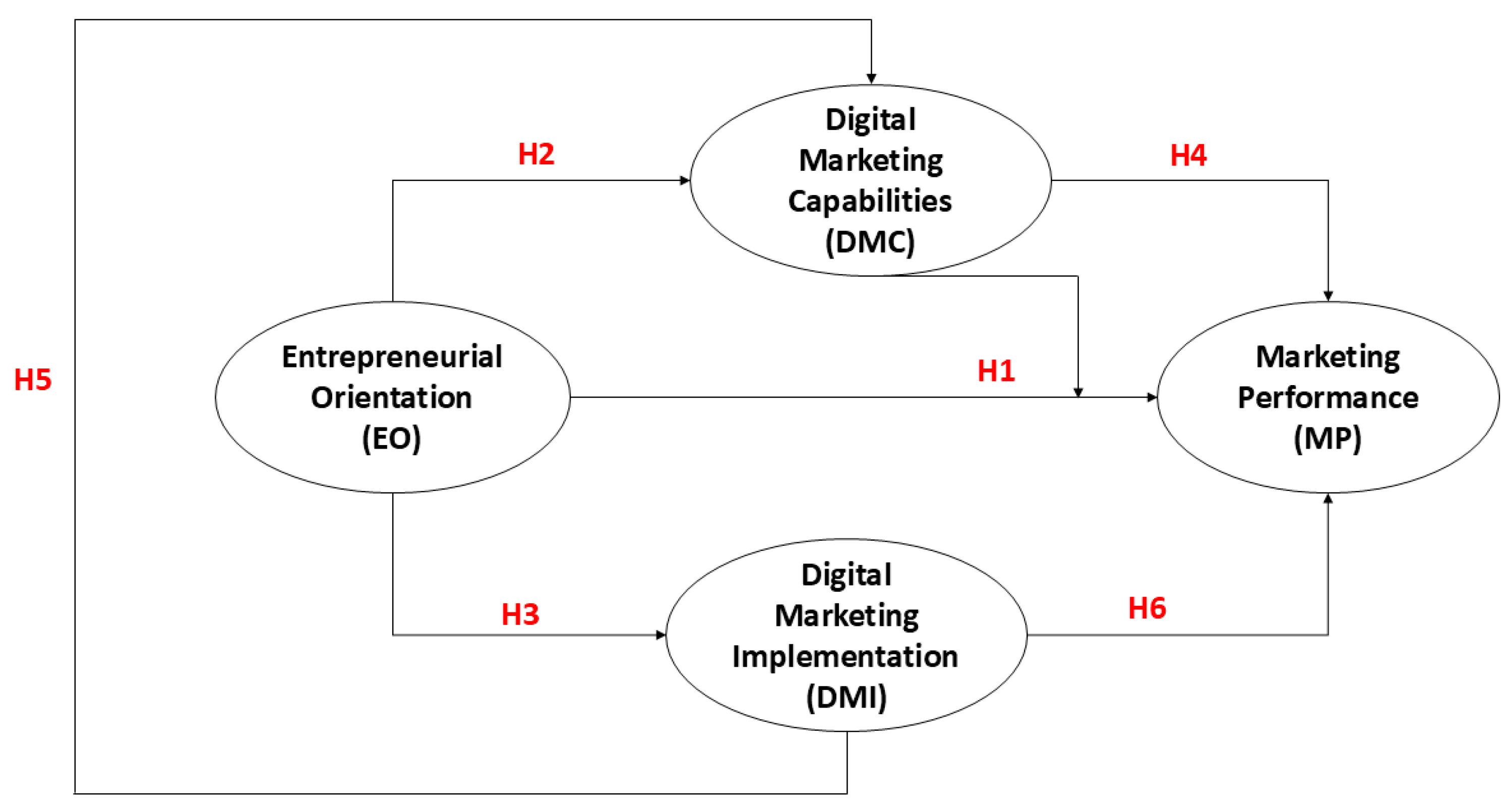
A representation of the proposed research model is shown in Figure 1. The proposed research model specifies the structural relationship that exists between Entrepreneurial Orientation (EO), Digital Marketing Capabilities (DMC), Digital Marketing Implementation (DMI), and Marketing Performance (MP) in Small and Medium-Sized Enterprises (SMEs) in the Sultanate of Oman. The proposed research model is expected to examine the direct and indirect associations that are proposed by existing research in the field of entrepreneurship and digital marketing [17,20] for the impact of EO on MP.
Entrepreneurial Orientation is considered the exogenous factor in the model, as it measures the strategic posture of firms regarding innovativeness, proactiveness, and risk-taking [15]. The ultimate outcome factor is Marketing Performance. The Digital Marketing Capabilities and Digital Marketing Implementation constructs are viewed as two separate endogenous constructs because they measure different firm behaviors related to digital marketing. Specifically, Digital Marketing Capabilities refer to the firm’s preparedness and ability to use digital technology and data-driven marketing, and Digital Marketing Implementation refers to the degree to which the former is implemented through actual marketing practices [18,23].
Five direct associations between the variables are investigated in the proposed framework: H1, H2, H3, H4, and H6, while one mediated relationship through Digital Marketing Capabilities is also investigated in the proposed framework: H5. The proposed framework facilitates the clear delineation of the strategic potential of digital marketing capabilities from their performance outcome contributions while also incorporating the mediating influence of entrepreneurial orientation in the processes of developing and executing these capabilities [33].

3. Methodology

3.1. Sample Size and Data Collection

In keeping with the aim of this study to investigate how entrepreneurial orientation affects marketing performance via digital marketing capabilities and digital marketing implementation in SMEs in the Sultanate of Oman, it is important to identify the target population and determine an ideal sample size. The target population includes managers, supervisors, owners, and marketing or administrative employees working in Omani SMEs in various industries such as services, retail, technology, tourism, hospitality, and other sectors classified under Oman’s SMEs [3,10]. SMEs in Oman represent over 90% of private sector firms in Oman and are the key engine behind Oman’s economic diversification initiatives in keeping with Oman Vision 2040, making them an ideal target population to study digital change and entrepreneurial dynamics.
Owing to the geographical spread of SMEs and size diversity of SMEs in Oman with varying levels of digital maturity [4], this research adopted a probabilistic random sampling technique to ensure that every SME worker had an equal chance of being approached. This reduces bias associated with non-probability samples and ensures that the collected data is representative. Random sampling is often encouraged in organizational and marketing research to ensure that results are free from bias and generalizable [37].
Data gathering was performed through the use of online electronic questionnaires, which is appropriate for the current study based on the literature on digital marketing capability and entrepreneurial orientation for the Gulf and Middle Eastern regions [12,25]. Using online questionnaires is helpful for providing access to the respondents across the whole country of Oman, and it is less costly and time-consuming compared to traditional data gathering methods.
For establishing the sample size needed in the study, the commonly acknowledged sampling table by Krejcie & Morgan [38] was used; it specifies the sample sizes needed based on the population sizes at a 95% confidence level with a 5% margin of error. Since the approximate number of employees in the SMEs in Oman is over 70,000 [19], the minimum sample size required is more than 384 study participants. The minimum sample size required is in line with the conventions in empirical SME literature as well as in the study of the behavioral capabilities using the PLS-SEM method [39].
The research employed a probabilistic random sampling method, where all eligible respondents were given an equal and non-zero probability of being chosen. The target population comprised those who were employed in SMEs operating in the Sultanate of Oman. A sampling frame was developed using business directories that contain SMEs that are registered in various sectors.
For random sampling in an online setting, random selection of SMEs was performed from the sampling frame through a computer-based randomization technique. Having selected the firms, potential respondents in these firms were approached either through official business emails, professional networking sites such as LinkedIn, or official contact sites in these firms. When more than one potential respondent in a firm was eligible for participation, they were selected randomly.
The data was collected through an online questionnaire conducted on a secured surveying site. The links for the questionnaires were accompanied by a short description of the study’s objectives and the criteria for selecting the respondents. The questionnaires ensured anonymity and confidentiality in order to avoid response biases. The links for the questionnaires were sent out at regular intervals of two weeks. This method ensured that the selection of the respondents was transparent and that the probabilistic character of the design of the sampling method was maintained despite the data being collected online. A total of 402 valid responses were collected for the final analysis.

3.2. Measurement Scales and Questionnaire Validation

In this way, to ensure that this research acquires valid and reliable results from this research, a structured self-administered questionnaire was developed. The instrument incorporated measurement scales from previous research studies. All of these items were based on a five-point Likert scale format with 1 = Strongly Disagree and 5 = Strongly Agree. The only exception was for those items related to benchmarking for the Digital Marketing Capabilities construct. The instrument used a comparative format, from 1 = Much Worse to 5 = Much Better, compared to their competition. The type of format allows for quantifiable and standardized results for advanced statistical analysis such as Partial Least Squares Structural Equation Modeling analysis [40].
The questionnaire has been organized around four key constructs, which correspond to the theoretical model:
(1)
Entrepreneurial Orientation (EO) as the independent variable,
(2)
Digital Marketing Capabilities (DMC) as a strategic mediating variable,
(3)
Digital Marketing Implementation (DMI) as an operational mediating variable, and
(4)
Marketing Performance (MP) as the dependent variable.
All constructs were based on previously validated scales and were adapted to ensure cultural, sectoral, and contextual suitability for SMEs in the Sultanate of Oman. Table 1 summarizes the constructs, item sources, and the number of indicators used in the final instrument.
Measuring constructs in this study uses a multiple dimension approach that considers entrepreneurial orientation, digital capabilities, implementation processes, and marketing performances of SMEs. The construct of Entrepreneurial Orientation (EO) consists of nine items that relate to innovation, proactivity, and risk-taking. These items have been adopted from existing constructs proposed in previous studies of Lumpkin and Dess and Covin and Slevin, and also from recent empirical studies in the context of Omani SMEs [1,4,44]. These items measure how SMEs focus on innovation, proactively respond to competition in their environment, and pursue ambitious strategic moves in uncertain situations.
The Digital Marketing Capabilities (DMC) are scored using ten items derived from previous research that emphasize digital capability development and digital market-oriented competencies [36,40,41,45]. The ten items capture important dimensions of digital capabilities, such as customer linking, developing digital relationships with suppliers and intermediaries, digital market sensing through digital analytics, and leveraging digital tools for improving customer retention and competitive advantage.
Implementation of Digital Marketing (DMI) represents the execution phase of digital marketing operations that is measured using eighteen factors that cover six key dimensions: digital strategy & planning, social media marketing, search engine optimization & content development, email marketing & customer relationship management, paid advertising & analytics, & adoption of digital technology. These factors are identified from proven models for implementing digital marketing in SMEs that focus on monitoring & leveraging current technology to enhance responsiveness & engagement with customers [46].
The performance of the marketing efforts is measured through eighteen items and six dimensions, including brand awareness, consumer engagement, lead generation and conversion, digital and social media performance, consumer loyalty, and overall marketing effectiveness. These items have been derived based on some widely accepted frameworks for performance measurement and some modern indicators for performance measurement related to digital marketing [43].
The questionnaire was first developed in English, based on the scales that were derived from previous studies, and was proven to have high reliability and accuracy. In order for the questionnaire to have the same accuracy and precision for the respondents from Oman, the questionnaire was translated from English into Arabic using the back translation technique. First, the translation from English into Arabic was performed by the bilingual expert, and the Arabic version was then translated back into English by another bilingual translator. To ensure content validity and suitability, a review of the translated questionnaire was also conducted with a group of academic experts and SME practitioners who were aware of the Omani environment. A pilot test was also performed with a small group of SME workers. The feedback received allowed some modifications to be made. These modifications were aimed at improving readability and ensuring that it is culturally and organizationally appropriate. The final questionnaire was found to be acceptable for use.

3.3. Common Method Bias

Since it was known that data were collected using self-administrated questionnaires, common method bias (CMB) was tested to see whether it affected results in terms of measurement artifacts. In accordance with established methodological best practices, several procedural remedies were used in designing the questionnaire to counter potential CMB. This included anonymizing/ensuring confidentiality, reducing apprehension, and emphasizing that there were no right or wrong answers to survey questions [40,44].
In addition to procedural analysis, statistical analysis was also performed to identify CMB. The single-factor test by Harman was done by subjecting all items for measurement to exploratory factor analysis. The analysis showed that none of the factors dominated the variation, with the largest factor explaining less than 50% of the variation, which meant that CMB did not present a significant threat to this research [6].
In addition, a thorough collinearity test has been conducted using the variance inflation factor, in accordance with recent suggestions concerning the detection of common method variance in PLS-SEM models [31]. The VIF measures of all variables stayed below the conservative threshold of 3.3, further indicating that CMB does not have any effect on the findings of this study.

3.4. Data Analysis Technique (PLS-SEM)

Partial Least Squares Structural Equation Modeling (PLS-SEM) was employed for the analysis of the proposed research model because of its aptness for predictive research and models that involve many latent variables and mediating relationships. The aptness of the technique for predictive models and its focus on explaining the variance of the key latent variables align with the purpose of the proposed study [47,48].
Moreover, PLS-SEM analysis also proves to be effective in studies involving small and medium-scale enterprises because it makes relatively less assumption about data distribution and also performs well in complex models with a larger number of indicators. The proposed model also includes various constructs, direct and indirect links, and mediations, making it suitable to use PLS-SEM analysis [49].
In addition, PLS-SEM has been widely advocated for use in exploratory and theory-building studies, especially in the emerging market environment, where the development of theories remains dynamic and evolving in nature [50]. This flexibility and predictive capability have made it widely used in the field of entrepreneurship, online marketing, and SME research using the same study designs as this study. Therefore, the adoption of PLS-SEM in this study follows established guidelines and previous studies.

3.5. Assessing the Measurement Model

The results of the measurement model for convergent validity, including the four primary constructs under study–Entrepreneurial Orientation (EO), Digital Marketing Capabilities (DMC), Digital Marketing Implementation (DMI), and Marketing Performance (MP)–are shown in Table 2. The values for all item loadings (λ) in these results far exceed the recommended cut-off of 0.70, thus indicating that all indicators have significant representation in their respective constructs. The values for Cronbach’s Alpha (α) and Composite Reliability (CR) for all constructs indicate internal consistency among the indicators at levels in excess of 0.90. In addition, Average Variance Extracted (AVE) for all constructs indicates that they explain in excess of 50% of variance in their respective indicators, ranging from 0.68 to 0.74. The average values for all items indicate that they were rated highly, suggesting that all respondents rated their respective organizations as proactive, digitally capable, or marketing-oriented.
Moreover, all VIF values are below the suggested cut-off point of 5.0, thus ensuring that there are no multicollinearity problems for the measurement items. On a combined basis, these findings offer strong confirmation on the convergent validity and reliability of the used constructs. The findings affirm that the measurement items are theoretically sound and statistically valid for assessing entrepreneurial orientation, digital marketing capabilities, implementation practices, and marketing performance within Omani SMEs. Thus, the measurement model meets the essential psychometric properties required for subsequent structural model analysis using PLS-SEM.
Table 3 presents the results of the discriminant validity analysis for the four main constructs of this study: Entrepreneurial Orientation (EO), Digital Marketing Capabilities (DMC), Digital Marketing Implementation (DMI), and Marketing Performance (MP). The analysis follows the Fornell–Larcker criterion and the Heterotrait–Monotrait (HTMT) ratio approach to confirm the distinctiveness of the constructs. As shown in the table, the square roots of the Average Variance Extracted (AVE)—represented by the italicized diagonal values—are all greater than their corresponding inter-construct correlations in the same row and column. This result shows that each construct correlates more with its own indicators than with the indicators of other constructs, and therefore, the Fornell and Larcker criterion for discriminant validity is met. In addition, the values of HTMT ratios (upper triangular values) among the constructs are less than the recommended value of 0.90 [20], which again supports the fact that the studied constructs are distinctly different from each other from an empirical point of view. The above findings have again reinforced the fact that Entrepreneurial Orientation, Digital Marketing Capabilities, Digital Marketing Implementation, and Marketing Performance are distinctly different concepts from each other from a practical point of view, within the context of Omani SMEs.

4. Results

4.1. Multicollinearity Assessment and Model Robustness

The structural model was estimated by means of Partial Least Squares Structural Equation Modeling (PLS-SEM) with SmartPLS 4.0. The path coefficients’ significances were assessed by a bootstrapping technique with 5000 subsamples with a two-tailed test at a 95% confidence interval. The default algorithm parameters were left unchanged, which is appropriate for a predictive PLS-SEM analysis.
The multicollinearity was checked to verify that the path coefficients estimated for the structural model were not biased due to high inter-correlations among the predictor constructs. The VIF values were checked for all direct paths of the structural model, as recommended for PLS-SEM analysis. As shown in Table 4, the VIF values for all the direct paths were found to range from 1.87 to 2.73, which is well below the cut-off point of 3.3, as recommended for the identification of possible issues of multicollinearity for variance-based structural equation modeling techniques. The above findings imply that the problem of multicollinearity is not evident within the current study and that all the constructs are providing unique contributions within the structural model.
The fact that there are no multicollinearity issues helps ensure that the results of the relationships between Entrepreneurial Orientation, Digital Marketing Capabilities, Digital Marketing Implementation, and Marketing Performance are valid. The result proves that there are no issues with the shared variance of the independent variables, which helps ensure that the results of the effects are valid. The model thus provides a valid means of examining the direct and indirect effects as well as the mediating effects of digital marketing capabilities and digital marketing implementation for Omani SMEs. The good results of the multicollinearity analysis further ensure that the results of the PLS-Sem analysis are valid.

4.2. Model Fit and Predictive Relevance

For the overall fitness of the model, the Standardized Root Mean Square Residual (SRMR) and the Normed Fit Index (NFI) were used. The SRMR value for the proposed model was 0.064, which was below the cut-off value of 0.08. The result was satisfactory because it indicated acceptable fitness between the empirical data and the proposed structural model. It indicated acceptable discrepancies in the observed and predicted correlations.
Further, the Normed Fit Index (NFI) was taken into account to further evaluate the model fit. The NFI for the model is 0.91, exceeding the threshold of 0.90. This outcome lends further support to the adequacy of the proposed model and ensures that the relationships among variables of Entrepreneurial Orientation, Digital Marketing Capabilities, Digital Marketing Implementation, and Marketing Performance have been adequately captured through the model.
The Stone-Geisser Q2 statistic was employed to evaluate the predictive fit of the model, and its results are provided in Table 5. The Q2 values of all endogenous constructs were positive (DMC: 0.29; DMI: 0.26; MP: 0.34), and this indicates that there is high predictive fit of the proposed model. This implies that not only is there an adequate fit of the proposed model to the data but also that it provides significant explanation and predictability with regard to SMEs’ marketing performance within the Sultanate of Oman.

4.3. Hypothesis Testing

Table 6 reports the results of the direct and indirect effects estimated using PLS-SEM and provides empirical support for the six hypothesized relationships. All hypothesized paths are statistically significant at the 0.001 level, confirming the robustness of the proposed research model. Entrepreneurial Orientation (EO) shows a significant direct effect on Marketing Performance (β = 0.284), indicating that SMEs with higher levels of innovativeness, proactiveness, and risk-taking achieve superior marketing outcomes. The effect size (f2 = 0.112) suggests a meaningful contribution of EO to marketing performance.
EO also exerts strong positive effects on Digital Marketing Capabilities (β = 0.611) and Digital Marketing Implementation (β = 0.487), with medium-to-large effect sizes. These findings highlight EO as a key driver of both digital readiness and the execution of digital marketing activities in SMEs. Firms with stronger entrepreneurial orientations are more likely to invest in digital skills and actively implement digital marketing practices.
Digital Marketing Capabilities have a significant positive effect on Marketing Performance (β = 0.328), confirming that firms with stronger digital competencies achieve better marketing outcomes. Similarly, Digital Marketing Implementation directly enhances Marketing Performance (β = 0.294), emphasizing the importance of effectively executing digital marketing activities.
The mediation analysis further supports the proposed mechanism. Digital Marketing Capabilities significantly mediate the relationship between EO and Marketing Performance (β = 0.201), indicating partial mediation. This result suggests that entrepreneurial orientation translates into improved marketing performance partly through the development of digital marketing capabilities. Significance levels are denoted as *** p < 0.001.

5. Discussion

5.1. Discussion of Hypotheses

The current study examines the direct and indirect associations of Entrepreneurial Orientation (EO), Digital Marketing Capabilities (DMC), Digital Marketing Implementation (DMI), and Marketing Performance (MP) in Small and Medium-Sized Enterprises (SMEs) in the Sultanate of Oman. Findings of the study have validated all six revised hypotheses and have added to the growing body of existing research on entrepreneurships and digital marketing practices in emerging markets.
H1 is supported, suggesting a positive direct relationship between EO and MP. This is consistent with previous studies showing innovativeness, proactivity, and risk-taking to be positively related to a company’s competitive approach and its resultant marketing performance [11,24]. Entrepreneurially oriented firms are in a stronger position to differentiate their products/services and act on market developments to improve their marketing performance [4].
Findings that support H2 indicate that EO has a strong positive impact on DMC. This is in line with research that indicates that more entrepreneurial companies are likely to make investments in digital capabilities for sensing and seizing market opportunities [32,39]. EO promotes experimentation and learning, which makes it easier for companies to build digital marketing capabilities [10].
H3 receives supporting evidence indicating that EO has a positive impact on DMI. This new finding builds on previous studies to show that EO not only contributes to digital capabilities but also to implementing digital marketing initiatives [40]. The entrepreneurial SMEs have greater chances of converting strategic intention into digital marketing action rather than staying in the planning stage.
For H4, the result shows that the positive impact of DMC on MP is statistically significant. The findings are in line with the existing literature in the sense that digital capabilities allow the firm to enhance customer engagement, targeting, and marketing efficiency [16,19].
The mediation results represented by H5 reveal that DMC partly mediates between EO and MP. This result is consistent with previous research that showed that EO positively impacts MP by facilitating the development of valuable and rare digital capabilities [32,39]. This result also highlights the importance of capability development as an underlying process that converts EO into MP. Lastly, evidence for H6 shows that DMI positively impacts MP directly. This result corroborates existing literature that emphasizes the importance of proper implementation of digital marketing initiatives for realizing performance improvements through digital capabilities [40,45]. Taken together, these findings underscore the synergistic effects of entrepreneurial orientation, digital capabilities, and implementation for influencing marketing performance of SMEs.

5.2. Theoretical Implications

This work offers a major addition to the body of knowledge in the fields of entrepreneurship, digital change, and the performance of marketing because it offers empirical insights about how Entrepreneurial Orientation (EO) positively impacts Marketing Performance (MP) directly and indirectly via Digital Marketing Capabilities (DMC) and Digital Marketing Implementation (DMI) in the SMEs of Oman. Although it has been found in previous works that EO is one of the most important drivers of innovation and performance in business, the present study offers a major addition to the body of knowledge because it positions the two mediating variables of the study—DMC and DMI—very clearly in the mediating process by which the entrepreneurial activities of the firm are converted into the performance of the firm’s marketing function [11,24]. The result shows that entrepreneurial firms outperform others in terms of marketing performance because of their orientation as well as their digital readiness [10,32].
Further, the findings strongly support the Resource-Based View (RBV) and Dynamic Capabilities Theory because they validate that digital marketing capabilities are important organizational resources that mediate between EO and performance [35]. The mediating effect of DMC indicates that having the ability to recognize customers’ demands, process digital data, and manage online relationships is an important and rare resource that enables entrepreneurs to transform their potential into a sustained advantage [32,39]. Similarly, the mediating effect of DMI indicates that to achieve performance gains, it is not only important to possess digital capabilities but also to use them effectively. This is consistent with previous research that argued that strategic intent should be followed by operational efficacy to attain superior performance [40].
From a theoretical point of view, the current research contributes to the field of digital entrepreneurship studies in that it incorporates the EO framework with the constructs of digital transformation in a unified model of explanation. The findings of this study show that the entrepreneurial orientation of the firm promotes the development of an experimental, innovative, and active marketing culture, which represents the essential elements of competitiveness in the digital economy [16,45]. This study also contributes to the field of marketing capability development in that it provides a more sophisticated model of the entrepreneurial initiatives of the firm, transforming them into the creation of value using digital channels of influence. This study further enhances the contextual knowledge of the entrepreneurial orientation framework in the context of the emerging economy of Oman, showing that the use of digital technology can help SMEs in this country compensate for their resource weaknesses and increase their market influence [4]. Lastly, this research makes a theoretical contribution with the conceptualization of DMC and DMI as sequential mediators that work in a complementary manner. The positive indirect relationship between DMI and DMC and then to MP indicates that successful digital implementation improves organizational learning and analytical capacities, which then positively impact marketing performance. Such a process indicates a processual approach to entrepreneurial performance that views continuous feedback between practice and development of capacities as critical to performance enhancement. The proposed theoretical framework combines entrepreneurial orientation with digital development and digital implementation for a coherent theoretical construct that can be applied to SMEs operating in a developing market environment.

5.3. Managerial Implications

From a managerial point of view, the following are some key takeaways for SME owners, managers, policymakers, and practitioners based on the findings of this study: Firstly, the fact that Entrepreneurial Orientation (EO) has a large impact on Digital Marketing Capabilities (DMC) and Digital Marketing Implementation (DMI) implies that having an entrepreneurial culture is a key prerequisite for the successful implementation of digital marketing in organizations [11,24]. It can be recommended that owners and managers of organizations should work on developing entrepreneurial attributes such as innovativeness, risk-taking propensity, and market proactivism to achieve success in digital marketing [32,33]. Such organizations will be able to test new digital platforms, make decisions based on analytics, and explore new market opportunities, ultimately leading to increased customer engagement and differentiation of brands [29,30].
Second, managers must recognize that digital transformation is more than just the procurement of digital technology and that there is a need for the systematic building of internal capabilities. SMEs are encouraged to invest in employee training programs that improve data literacy, digital content writing, and social media analysis skills, which are the building blocks of digital marketing capabilities [10,32,34,35]. In addition, for digital marketing strategies to be effectively implemented, there is a need for convergence of functions such as marketing, information technology, and operations. Encouraging collaboration and agility in the marketing function may help [40].
Third, the findings illustrate the crucial role that policy interventions can play in encouraging SME digitalization. With the constraints in terms of finances and technology that many SMEs in Oman face, public institutions and policymakers can play a crucial role in encouraging digitalization through initiatives such as digital skills development and collaborations with digital service firms. These will help reduce barriers and promote the adoption and diffusion of digital marketing among firms [19]. Finally, managers should view the importance of Digital Marketing Capabilities and Digital Marketing Implementation from a strategic point of view rather than seeing it from the perspective of operation. Investing in digital analytics tools, customer relationship management tools, and marketing automation tools helps to continuously generate insights for customers. By integrating digital implementation with the process of entrepreneurship, SMEs are therefore able to increase organizational flexibility. In conclusion, the results have shown that SMEs are able to obtain better marketing results by integrating their vision of entrepreneurship with digital implementation.

6. Limitations and Future Studies

However, despite its findings and contributions, this research also indicates several limitations that could be explored further by future research. First, because this research was based on cross-sectional data collected through self-reported methods, there could be concerns about common method bias and causality [43]. Second, because this research was based on a specific context of SMEs from Oman, this could limit its generalizability to other settings. However, because of different levels of digital readiness, competition, and cultural factors, factors such as EO could be perceived differently [50]. Comparative research could be explored between different GCC or other developing countries to add to knowledge of contextual factors of digital entrepreneurship.
Moreover, the study has not considered the moderating effect of organizational learning, innovation culture, and the size of the firm, which could influence the intensity of the relationship between the variables of EO, digital marketing competence (DMC), digital marketing intensity (DMI), and marketing performance (MP). The inclusion of moderators such as digital maturity could help in specifying the boundary conditions of the relationship postulated in the study [30]. The third limitation of the study arises from the use of subjective measures of performance, as opposed to the use of objective measures of financial performance.
Moreover, there is potential for further research in this area that involves incorporating other constructs that are more relevant in current contexts of digital transformation, such as technological readiness, innovation orientation, or data-driven decision-making [19]. In addition, qualitative research methods like interviews or case studies may provide more in-depth information on the experiences that small business managers face when applying digital marketing approaches. Lastly, since digital environments are developing very fast, there is a need for further research that investigates how new technological approaches like AI-based marketing, blockchain, or predictive analytics are influencing the EO-performance nexus.

7. Conclusions

Marketing performance (MP) of Small and Medium Enterprises (SMEs) in Oman will be explored through the empirical study of the effects of entrepreneurial orientation (EO) on marketing performance (MP) with indirect effects of digital marketing capabilities (DMC) and digital marketing implementation (DMI). Findings:
Innovative, proactive, and risk-seeking organizations with high entrepreneurial orientation (EO) will achieve greater marketing performance (MP) through the effective application of digital marketing capabilities (DMC) and digital marketing implementation (DMI) for sensing market needs through digital channels for effective campaign implementation and sustaining a competitive advantage over rivals in the market.
In particular, the study contributes to the development of theory in the field of entrepreneurship and digital transformation, as it provides a two-path mediation model that includes both the strategic and operational aspects of the study’s framework. In practice, the study’s findings highlight the importance of investing in the development of digital skills, leadership, and cross-functional working in improving marketing performance. Digital readiness initiatives and an entrepreneurial mindset must therefore be encouraged by policymakers and entrepreneurs in order to increase the adoption of digital technology in SMEs in Oman and in other emerging markets around the world.

Author Contributions

Conceptualization, W.A.B. and R.N.; methodology, W.A.B.; software, W.A.B.; validation, W.A.B. and R.N.; formal analysis, W.A.B.; investigation, W.A.B. and R.N.; resources, R.N.; data curation, W.A.B.; writing—original draft preparation, W.A.B.; writing—review and editing, W.A.B. and R.N.; visualization, W.A.B.; supervision, R.N.; project administration, W.A.B.; funding acquisition, not applicable. All authors have read and agreed to the published version of the manuscript.

Funding

This research received no external funding.

Institutional Review Board Statement

This study was conducted in accordance with the principles of the Declaration of Helsinki (1975, revised in 2013). Ethical approval was obtained from the Social Sciences Ethics Committee at Girne American University prior to data collection (Approval Code: 2024-25/031; Approval Date: 22 May 2025).

Informed Consent Statement

Informed consent was obtained from all participants involved in the study. Prior to completing the online questionnaire, respondents were provided with information about the purpose of the study, the voluntary nature of participation, and assurances of anonymity and confidentiality. Proceeding with the survey was taken as an indication of informed consent.

Data Availability Statement

The data supporting the findings of this study are available from the corresponding author upon reasonable request and subject to ethical and confidentiality restrictions.

Conflicts of Interest

The authors declare no conflicts of interest.

References

  1. Lumpkin, G.T.; Dess, G.G. Clarifying the entrepreneurial orientation construct and linking it to performance. Acad. Manag. Rev. 1996, 21, 135–172. [Google Scholar] [CrossRef]
  2. Wales, W.J.; Gupta, V.K.; Mousa, F.T. Empirical research on entrepreneurial orientation: An assessment and suggestions for future research. Int. Small Bus. J. 2013, 31, 357–383. [Google Scholar] [CrossRef]
  3. Alshanfari, K.S.; Jantan, M.D. The mediating effect of marketing capabilities on the relationship between entrepreneurial orientation and SMEs’ performance: An empirical study in Oman. Technium Soc. Sci. J. 2022, 36, 251–265. [Google Scholar]
  4. Morgan, N.A.; Vorhies, D.W.; Mason, C.H. Market orientation, marketing capabilities, and firm performance. Strateg. Manag. J. 2009, 30, 909–920. [Google Scholar] [CrossRef]
  5. Mele, G.; Capaldo, G.; Secundo, G.; Corvello, V. Revisiting the idea of knowledge-based dynamic capabilities for digital transformation. J. Knowl. Manag. 2024, 28, 532–563. [Google Scholar] [CrossRef]
  6. Arfi, W.B.; Hikkerova, L.; Sahut, J.M. Digital transformation and entrepreneurial orientation: The role of digital maturity. Technol. Forecast. Soc. Change 2023, 190, 122400. [Google Scholar]
  7. Oduro, S.; Mensah-Williams, E. Marketing capabilities and competitive performance in the SMEs context: A bi-theoretical perspective. J. Small Bus. Strategy 2023, 33, 17–35. [Google Scholar] [CrossRef]
  8. Alalawi, G.N.S. The Influence of Entrepreneurial Orientation on Omani SMEs’ Performance. Ph.D. Thesis, University of Plymouth, Plymouth, UK, 2020. [Google Scholar]
  9. Albimani, N.M. The Impact of Dynamic Capabilities on Small and Medium-Sized Enterprises (SMEs) Performance in Oman. Ph.D. Thesis, University of South Alabama, Mobile, AL, USA, 2022. [Google Scholar]
  10. Tiago, M.T.P.M.B.; Veríssimo, J.M.C. Digital marketing and social media: Why bother? Bus. Horiz. 2014, 57, 703–708. [Google Scholar] [CrossRef]
  11. Apasrawirote, D.; Yawised, K.; Muneesawang, P. Digital marketing capability: The mystery of business capabilities. Mark. Intell. Plan. 2022, 40, 477–496. [Google Scholar] [CrossRef]
  12. Kraus, S.; Vonmetz, K.; Orlandi, L.B.; Zardini, A.; Rossignoli, C. Digital entrepreneurship: The role of entrepreneurial orientation and digitalization for disruptive innovation. Technol. Forecast. Soc. Change 2023, 193, 122638. [Google Scholar] [CrossRef]
  13. Arshad, M.Z.; Meirun, T.; Javaid, M.; Ali, M.; Arshad, M.H.; Maneerat, C. The importance of learning orientation and entrepreneurial orientation on SMEs performance. Int. J. Disaster Recovery Bus. Contin. 2020, 11, 1220–1228. [Google Scholar]
  14. Phiri, M. Impact of digital marketing capabilities on market performance of small to medium enterprise agro-processors in Harare, Zimbabwe. Bus. Theory Pract. 2020, 21, 746–757. [Google Scholar]
  15. Yuwono, W.; Fitriyanti, S.D.; Nainggolan, F. The impact of digital marketing innovation and strategic orientation on firm performance: Mediation by marketing capability and moderation by risk management. Rev. Métodos Cuantitativos Econ. Empresa 2025, 39, 1–29. [Google Scholar] [CrossRef]
  16. Ministry of Commerce, Industry and Investment Promotion. SME Sector Performance Report: Annual Statistics and Sectoral Distribution in Oman; Government of Oman: Muscat, Oman, 2024. Available online: https://www.economy.gov.om/library/Oman%20Economic_%20Performance%20Bulletin%20March%202025.pdf (accessed on 15 November 2025).
  17. Barney, J.B.; Ketchen, D.J., Jr.; Wright, M. Resource-based theory and the value creation framework. J. Manag. 2021, 47, 1936–1955. [Google Scholar] [CrossRef]
  18. Zahra, S.A. The resource-based view, resourcefulness, and resource management in startup firms: A proposed research agenda. J. Manag. 2021, 47, 1841–1860. [Google Scholar] [CrossRef]
  19. Teece, D.J.; Peteraf, M.; Leih, S. Dynamic capabilities and organizational agility: Risk, uncertainty, and strategy in the innovation economy. Calif. Manag. Rev. 2016, 58, 13–35. [Google Scholar] [CrossRef]
  20. Hernández-Linares, R.; Kellermanns, F.W.; López-Fernández, M.C. Dynamic capabilities and SME performance: The moderating effect of market orientation. J. Small Bus. Manag. 2021, 59, 162–195. [Google Scholar] [CrossRef]
  21. Alshahrani, M.A.; Salam, M.A. Entrepreneurial orientation and SMEs performance in an emerging economy: The mediating role of absorptive capacity. J. Res. Mark. Entrep. 2024, 26, 1–24. [Google Scholar] [CrossRef]
  22. Zahara, Z.; Ikhsan, S.; Santi, I.N.; Farid. Entrepreneurial marketing and marketing performance through digital marketing capabilities of SMEs in post-pandemic recovery. Cogent Bus. Manag. 2023, 10, 2204592. [Google Scholar] [CrossRef]
  23. Nguyen, P.; Huynh, H.; Lam, L.; Le, T.; Nguyen, N. The impact of entrepreneurial leadership on SMEs’ performance: The mediating effects of organizational factors. Heliyon 2021, 7, e07326. [Google Scholar] [CrossRef]
  24. Susanto, P.; Hoque, M.E.; Shah, N.U.; Candra, A.H.; Hashim, N.M.H.N.; Abdullah, N.L. Entrepreneurial orientation and performance of SMEs: The roles of marketing capabilities and social media usage. J. Entrep. Emerg. Econ. 2023, 15, 379–403. [Google Scholar] [CrossRef]
  25. Pfajfar, G.; Mitręga, M.; Shoham, A. International dynamic marketing capabilities: Developments and a research agenda. Int. Mark. Rev. 2024, 41, 1–41. [Google Scholar] [CrossRef]
  26. Stefia, C.M.; Haryanto, B.; Wahyudi, L.; Setiawan, A.I. The impact of dynamic marketing capabilities and strategic information management on international start-up success: A meta narrative analysis. Heliyon 2024, 10, e34567. [Google Scholar] [CrossRef] [PubMed]
  27. Sudirman, I.D.; Astuty, E.; Aryanto, R. Enhancing digital technology adoption in SMEs through sustainable resilience strategy: Examining the role of entrepreneurial orientation and competencies. J. Small Bus. Strategy 2025, 35, 97–114. [Google Scholar] [CrossRef]
  28. Sanyal, S.; Hisam, M.W.; Baawain, A.M.S. Entrepreneurial orientation, network competence and human capital: The internationalization of SMEs in Oman. J. Asian Financ. Econ. Bus. 2020, 7, 473–483. [Google Scholar] [CrossRef]
  29. Flatten, T.C.; Engelen, A.; Zahra, S.A.; Brettel, M. A measure of absorptive capacity: Scale development and validation. Eur. Manag. J. 2015, 33, 146–163. [Google Scholar] [CrossRef]
  30. Phan, T. Digital Marketing Capability and Its Impact on Performance of Tourism Accommodation Small and Medium-Sized Enterprises in the Central Coast Region of Vietnam. Ph.D. Thesis, RMIT University, Melbourne, Australia, 2024. [Google Scholar]
  31. Kahveci, E. Digital transformation in SMEs: Enablers, interconnections, and a framework for sustainable competitive advantage. Adm. Sci. 2025, 15, 107. [Google Scholar] [CrossRef]
  32. Song, D.N.; Liu, C.C. The Effect of Digital Marketing Capabilities on Firm Performance. In Proceedings of the ECIS 2024 Proceedings, Paphos, Cyprus, 13–19 June 2024. [Google Scholar]
  33. Helfat, C.E.; Kaul, A.; Ketchen, D.J., Jr.; Barney, J.B.; Chatain, O.; Singh, H. Renewing the resource-based view: New contexts, new concepts, and new methods. Strateg. Manag. J. 2023, 44, 1357–1390. [Google Scholar] [CrossRef]
  34. Sekaran, U.; Bougie, R. Research Methods for Business: A Skill-Building Approach, 8th ed.; John Wiley & Sons: Hoboken, NJ, USA, 2020. [Google Scholar]
  35. Hair, J.F.; Hult, G.T.M.; Ringle, C.M.; Sarstedt, M. A Primer on Partial Least Squares Structural Equation Modeling (PLS-SEM), 3rd ed.; SAGE Publications: Thousand Oaks, CA, USA, 2022. [Google Scholar]
  36. Covin, J.G.; Wales, W.J. Crafting high-impact entrepreneurial orientation research: Some suggested guidelines. Entrep. Theory Pract. 2019, 43, 3–18. [Google Scholar] [CrossRef]
  37. Wang, Y. Digital marketing capability and firm performance: The moderating role of market turbulence. Ind. Mark. Manag. 2020, 90, 491–500. [Google Scholar] [CrossRef]
  38. Krejcie, R.V.; Morgan, D.W. Determining sample size for research activities. Educ. Psychol. Meas. 1970, 30, 607–610. [Google Scholar] [CrossRef]
  39. Dermonde, J.; Smith, L.; Kapoor, A. Digital capability integration and market responsiveness in SMEs. J. Digital Mark. Innov. 2024, 18, 144–162. [Google Scholar]
  40. Henseler, J.; Ringle, C.M.; Sarstedt, M. A new criterion for assessing discriminant validity in variance-based structural equation modeling. J. Acad. Mark. Sci. 2015, 43, 115–135. [Google Scholar] [CrossRef]
  41. Dermonde, T.; Kim, H.; Lamberti, F. Digital marketing capabilities and firm competitiveness in emerging economies. J. Bus. Res. 2024, 168, 114–128. [Google Scholar] [CrossRef]
  42. Wu, J.; Botella-Carrubi, D.; Blanco-González-Tejero, A. Digital marketing strategy and implementation: A multi-level capability perspective. Technol. Forecast. Soc. Change 2024, 199, 122510. [Google Scholar] [CrossRef]
  43. Handzic, M.; Ozlen, K.; Durmic, N. Customer relationship strategies and marketing performance in SMEs: Evidence from transitional economies. J. Mark. Dev. Compet. 2014, 8, 23–34. [Google Scholar]
  44. Creswell, J.W.; Creswell, J.D. Research Design: Qualitative, Quantitative, and Mixed Methods Approaches, 5th ed.; Sage Publications: Thousand Oaks, CA, USA, 2018. [Google Scholar]
  45. Omisakin, O.M.; Arasanmi, C.; Kularatne, I. Proactiveness, environmental munificence and environmental hostility and their impacts on the growth of SMEs. Int. J. Entrep. Innov. Manag. 2022, 26, 43–59. [Google Scholar] [CrossRef]
  46. Song, M. Innovation and marketing capabilities in high-tech firms. J. Mark. Theory Pract. 2007, 15, 127–141. [Google Scholar] [CrossRef]
  47. Podsakoff, P.M.; MacKenzie, S.B.; Podsakoff, N.P. Sources of method bias in social science research and recommendations on how to control it. Annu. Rev. Psychol. 2012, 63, 539–569. [Google Scholar] [CrossRef] [PubMed]
  48. Althubaiti, A. Sample size determination: A practical guide for health researchers. J. Gen. Fam. Med. 2023, 24, 72–78. [Google Scholar] [CrossRef] [PubMed]
  49. Arabeche, Z.; Soudani, A.; Brahmi, M.; Aldieri, L.; Vinci, C.P.; Abdelli, M.E.A. Entrepreneurial orientation, organizational culture and business performance in SMEs: Evidence from emerging economy. Sustainability 2022, 14, 5160. [Google Scholar] [CrossRef]
  50. Hair, J.F.; Risher, J.J.; Sarstedt, M.; Ringle, C.M. When to use and how to report the results of PLS-SEM. Eur. Bus. Rev. 2019, 31, 2–24. [Google Scholar] [CrossRef]
Figure 1. Conceptual framework of the study.
Sustainability 18 01925 g001
Table 1. Questionnaire Variables and Measurement Sources.
SectionVariableReferenceNumber of Items
Part 1Entrepreneurial Orientation (EO)Lumpkin & Dess [1]; Covin & Slevin [36]; adapted by Alshanfari & Jantan [3]9
Part 2Digital Marketing Capabilities (DMC)Wang [37]; Song [32]; Dermonde et al. [41]10
Part 3Digital Marketing Implementation (DMI)Wu et al. [42]; validated digital strategy and online marketing execution scales18
Part 4Marketing Performance (MP)Handzic et al. [43]; digital engagement, customer perception, and marketing effectiveness scales18
Table 2. Measurement model’s convergent validity (Source(s): Authors work).
Construct/ItemsλMeanS.D.VIF
Entrepreneurial Orientation (EO) (α = 0.93, CR = 0.94, AVE = 0.68)
EO1: There is a strong emphasis on R&D, technology leadership, and innovation.0.834.210.781.62
EO2: New product lines are introduced frequently.0.844.150.811.57
EO3: Changes in product lines are usually quite dramatic.0.794.090.831.44
EO4: The firm usually initiates actions to which competitors then respond.0.814.180.751.55
EO5: The firm is often the first to introduce new products or technologies.0.854.200.741.59
EO6: The firm typically adopts an aggressive posture to outperform competitors.0.804.120.791.47
EO7: The organization has a strong tendency toward high-risk projects.0.824.110.821.53
EO8: The business environment requires bold actions to achieve goals.0.844.230.771.56
EO9: The company generally adopts daring positions to exploit opportunities.0.834.190.761.54
Digital Marketing Capabilities (DMC) (α = 0.92, CR = 0.94, AVE = 0.71)
DMC1: Ability to connect and retain customers via digital platforms.0.864.250.731.61
DMC2: Ability to sense market trends and forecast customer preferences.0.874.220.751.58
DMC3: Ability to build strong relationships with distributors digitally.0.834.180.771.49
DMC4: Ability to manage supplier relationships through digital channels.0.814.200.801.45
DMC5: Use of digital marketing to retain existing customers.0.854.270.701.57
Digital Marketing Implementation (DMI) (α = 0.95, CR = 0.96, AVE = 0.74)
DMI1: Digital marketing goals align with overall business objectives.0.884.320.691.71
DMI2: Social media campaigns effectively engage customers.0.874.300.701.69
DMI3: SEO and content marketing are used to improve visibility.0.854.250.711.63
DMI4: Email marketing and CRM systems are well integrated.0.844.280.731.61
DMI5: Paid ads and analytics are used to optimize ROI.0.894.360.681.75
DMI6: The firm adopts innovative digital technologies regularly.0.864.330.701.67
Marketing Performance (MP) (α = 0.94, CR = 0.95, AVE = 0.72)
MP1: Marketing activities increased brand awareness.0.874.290.731.63
MP2: Customers recognize our brand more easily than competitors’.0.864.240.761.59
MP3: Marketing campaigns improved customer engagement.0.884.280.721.68
MP4: Digital activities generate qualified leads.0.854.260.751.64
MP5: Marketing efforts enhance customer loyalty.0.874.310.711.65
MP6: Overall marketing performance meets organizational expectations.0.864.330.691.60
Table 3. Discriminant Validity.
ConstructsEntrepreneurial
Orientation (EO)
Digital Marketing Capabilities (DMC)Digital Marketing
Implementation (DMI)
Marketing
Performance (MP)
Entrepreneurial Orientation (EO)0.820.7700.7900.760
Digital Marketing Capabilities (DMC)0.740.840.8100.780
Digital Marketing Implementation (DMI)0.710.760.860.830
Marketing Performance (MP)0.680.730.790.85
Table 4. Multicollinearity Assessment.
Predictor ConstructEndogenous ConstructVIF
Entrepreneurial Orientation (EO)Digital Marketing Capabilities (DMC)1.92
Entrepreneurial Orientation (EO)Digital Marketing Implementation (DMI)2.06
Entrepreneurial Orientation (EO)Marketing Performance (MP)2.73
Digital Marketing Capabilities (DMC)Marketing Performance (MP)2.58
Digital Marketing Implementation (DMI)Marketing Performance (MP)2.45
Digital Marketing Implementation (DMI)Digital Marketing Capabilities (DMC)1.87
Table 5. Predictive Relevance (Q2) of the Endogenous Constructs.
ConstructQ2
Digital Marketing Capabilities (DMC)0.29
Digital Marketing Implementation (DMI)0.26
Marketing Performance (MP)0.34
Table 6. Structural Model Results and Hypotheses Testing.
HypothesisStructural Pathβt-Valuep-Valuef2Effect Type
H1EO → MP0.284 ***6.910.0000.112Direct
H2EO → DMC0.611 ***14.320.0000.374Direct
H3EO → DMI0.487 ***10.570.0000.246Direct
H4DMC → MP0.328 ***7.440.0000.139Direct
H6DMI → MP0.294 ***6.090.0000.107Direct
H5EO → DMC → MP0.201 ***5.660.000Indirect
Disclaimer/Publisher’s Note: The statements, opinions and data contained in all publications are solely those of the individual author(s) and contributor(s) and not of MDPI and/or the editor(s). MDPI and/or the editor(s) disclaim responsibility for any injury to people or property resulting from any ideas, methods, instructions or products referred to in the content.