Hydrogen as a Carbon Neutral Fuel for Automotives in Sustainable Transportation


 ,
,
Abstract
1. Introduction
1.1. State of Art
1.2. Literature Review
1.3. Novelty Aspects of the Current Research
2. Experimental Investigations
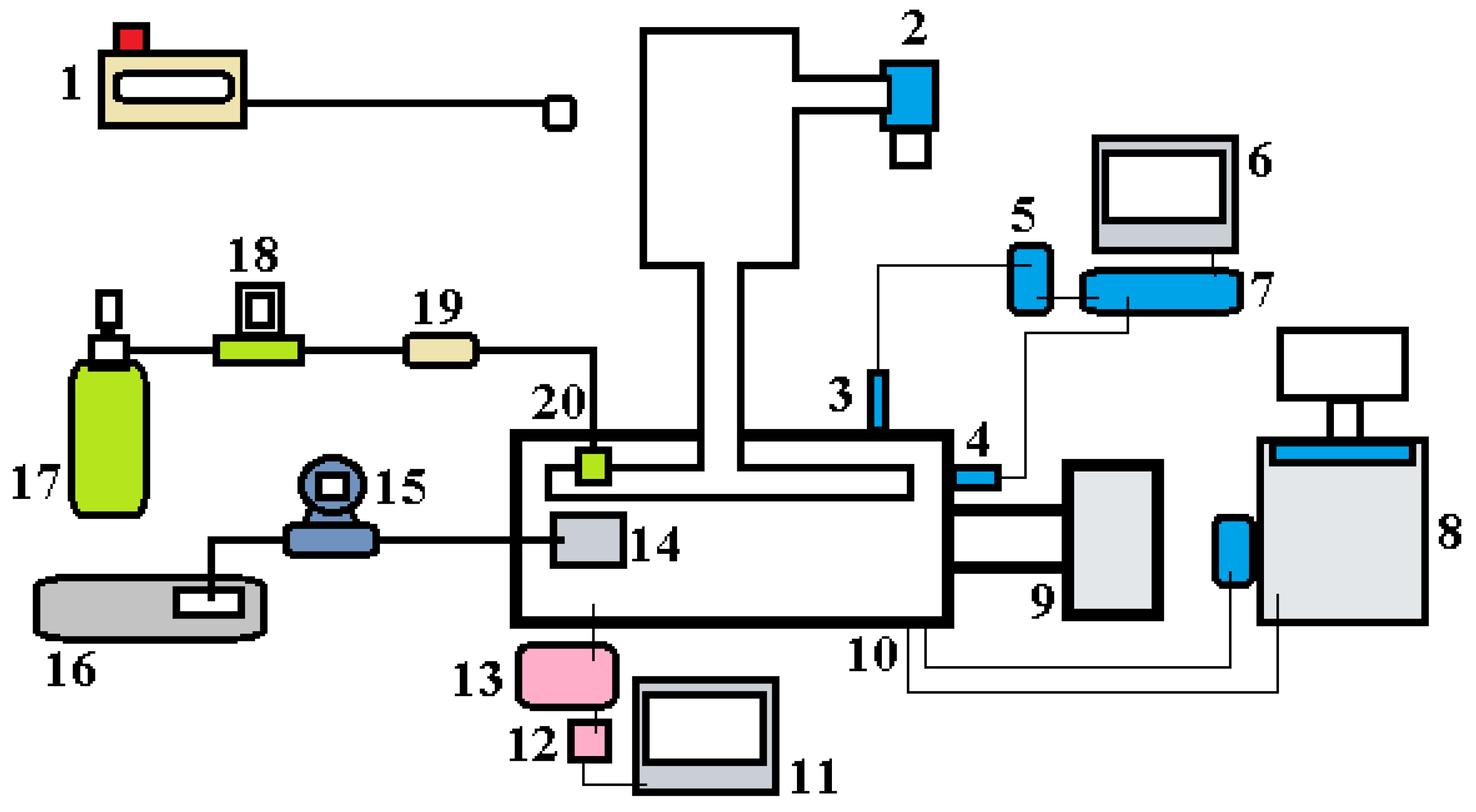
2.1. Experimental Investigations Setup
2.2. Experimental Investigations Methodology
3. Results
- –
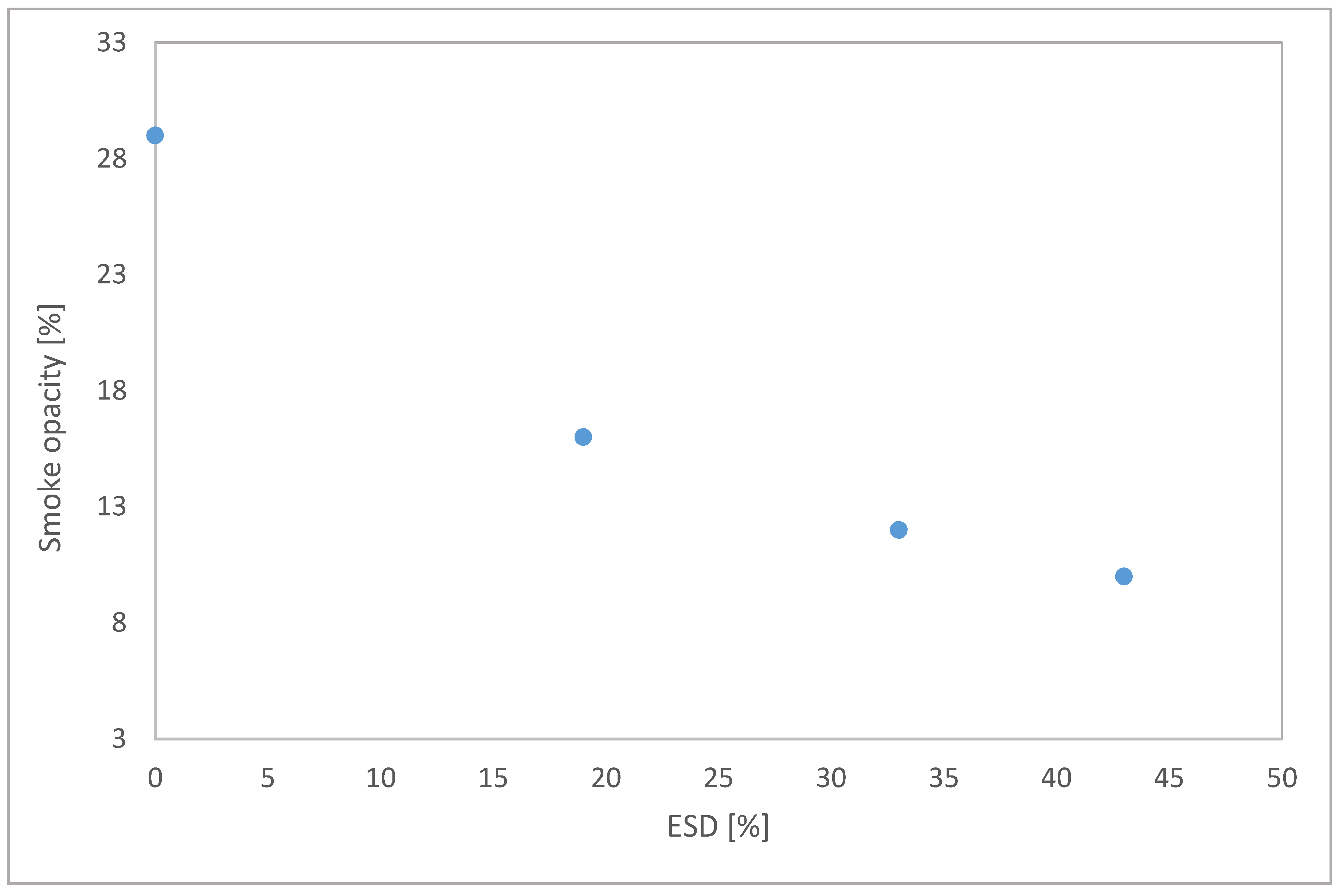
- white smoke (cold smoke) present when the engine is started, consisting of suspended liquid fuel particles, the colour being due to the droplet diameter of over 0.8 μm, wavelength corresponding to blue light, thus the drops appear white colour [30];
- –
- blue smoke, which appears later after startup, the engine heats up and the smoke turns blue as a result of the droplet diameter being reduced to below 0.8 μm and the drops appear colored in blue [30];
- –
- greyish-blue smoke which appears when oil enters the combustion chamber and is not related by hydrogen use or not [30];
- –
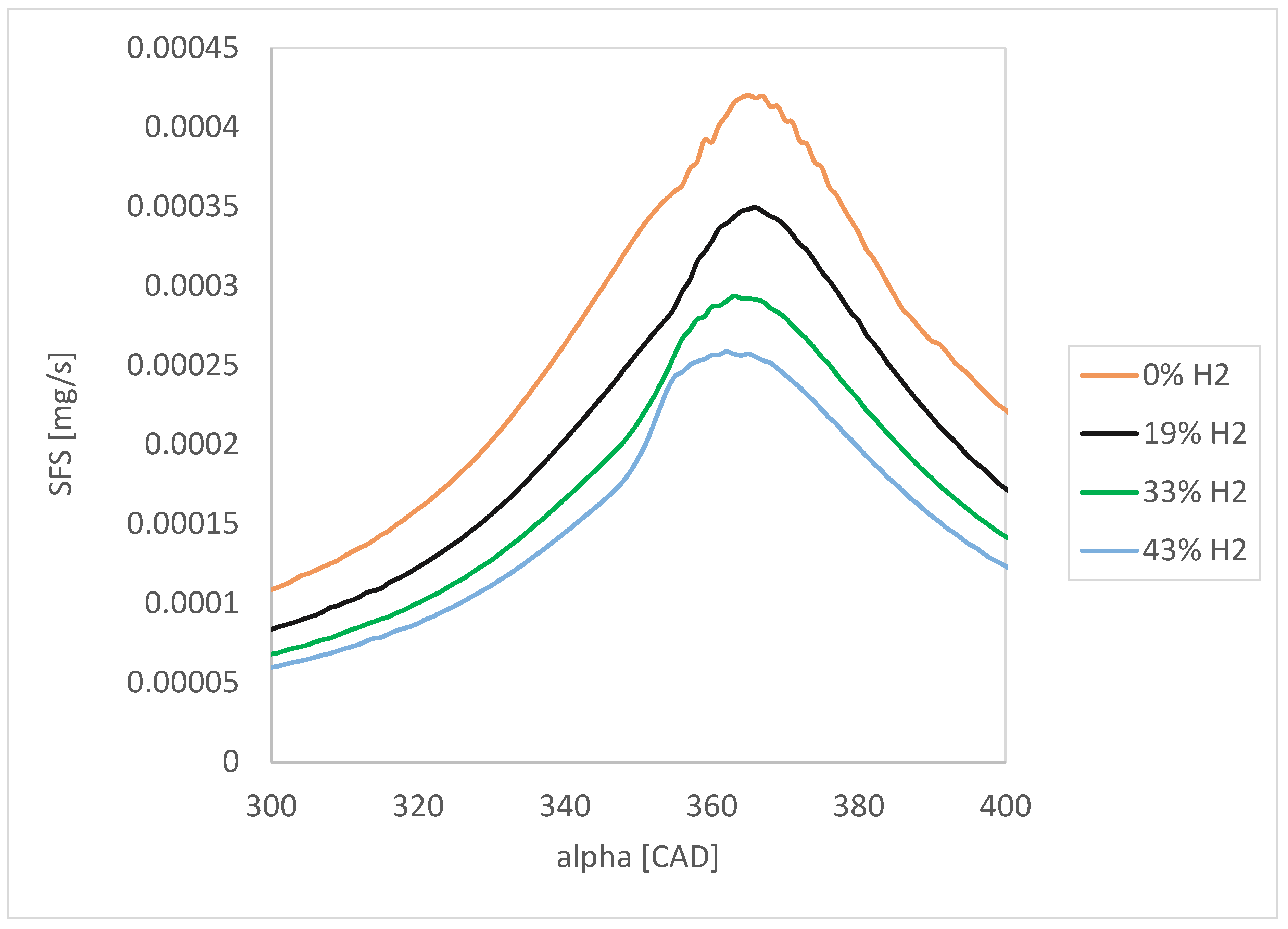
- black smoke (hot smoke) is formed by carbon particles resulting from the incomplete combustion because in the high temperature area, carbon complexes appear through a cracking process, which together with aromatic hydrocarbons and tars, through agglomeration, produce flakes that coagulate and form hot soot. The use of hydrogen may assure the decrease of the level for all types of smoke [30].
4. Conclusions
- –
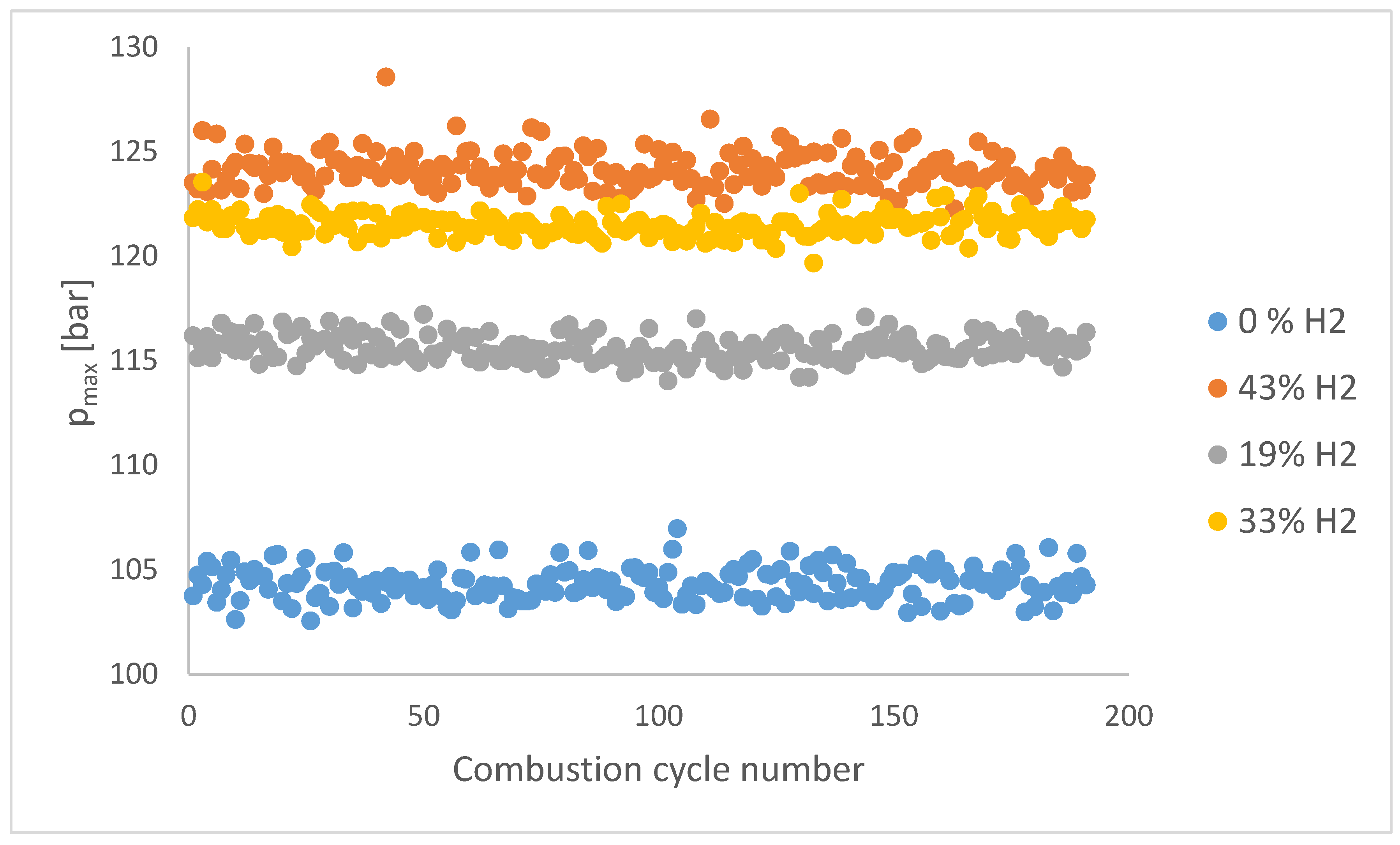
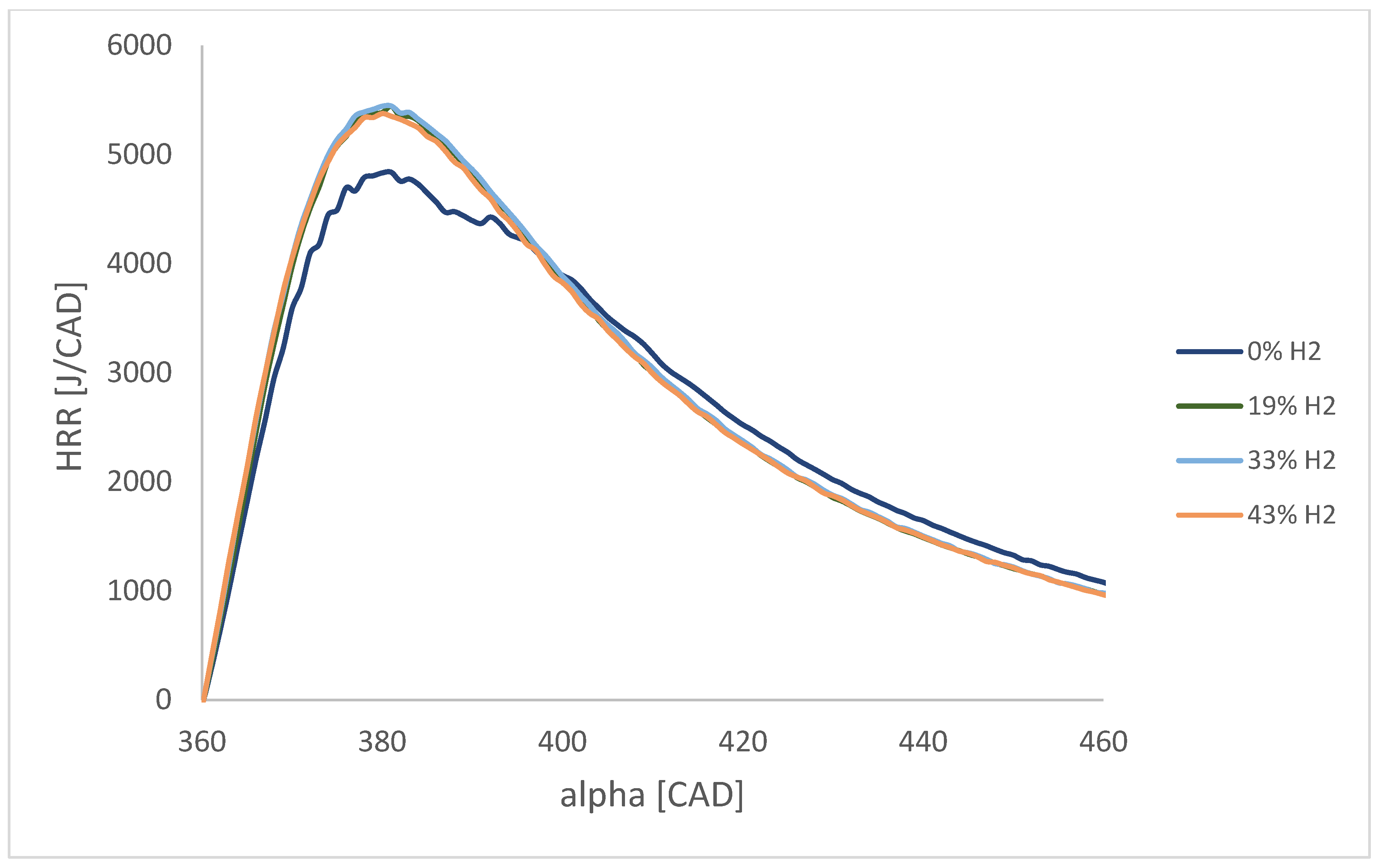
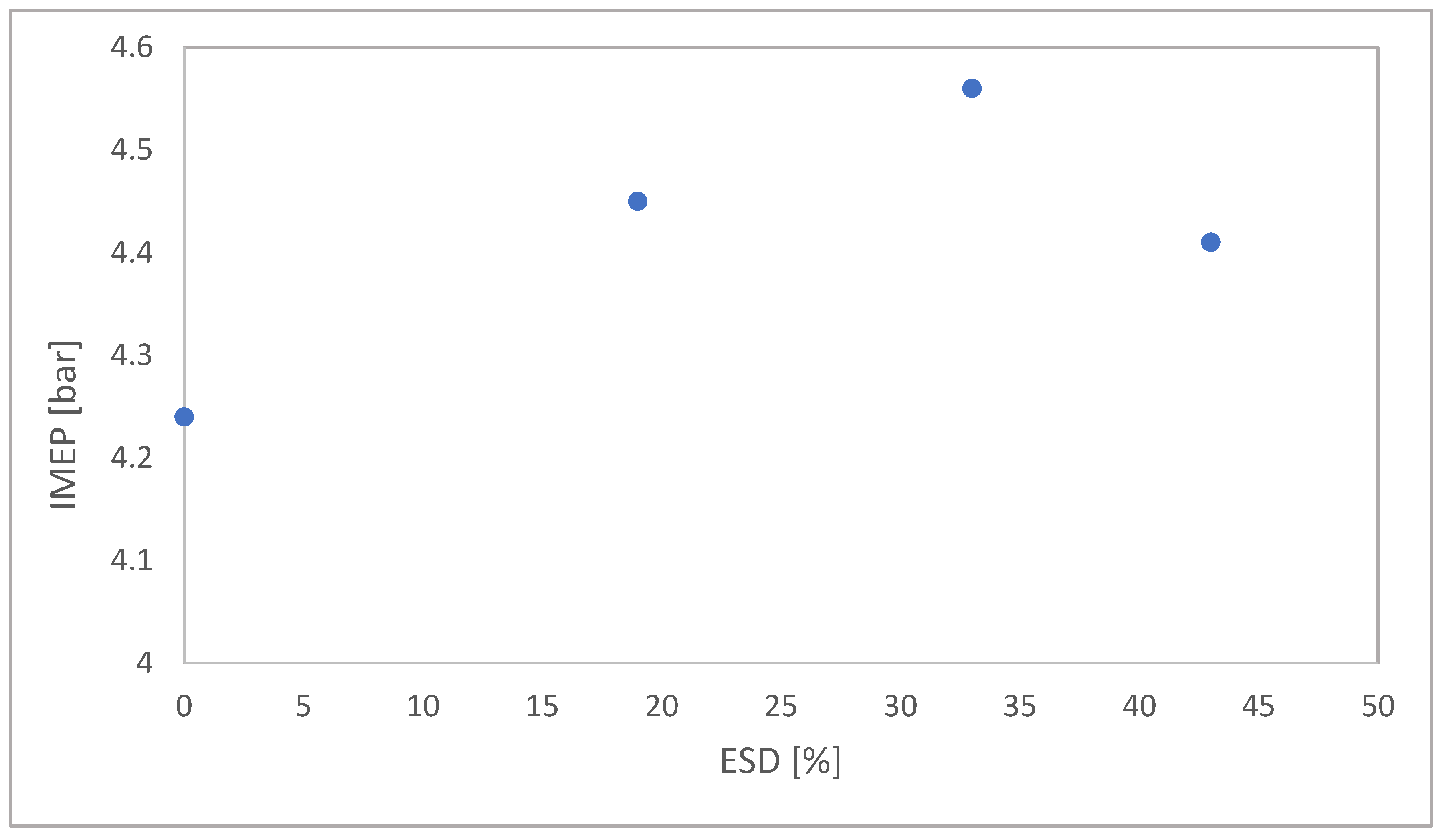
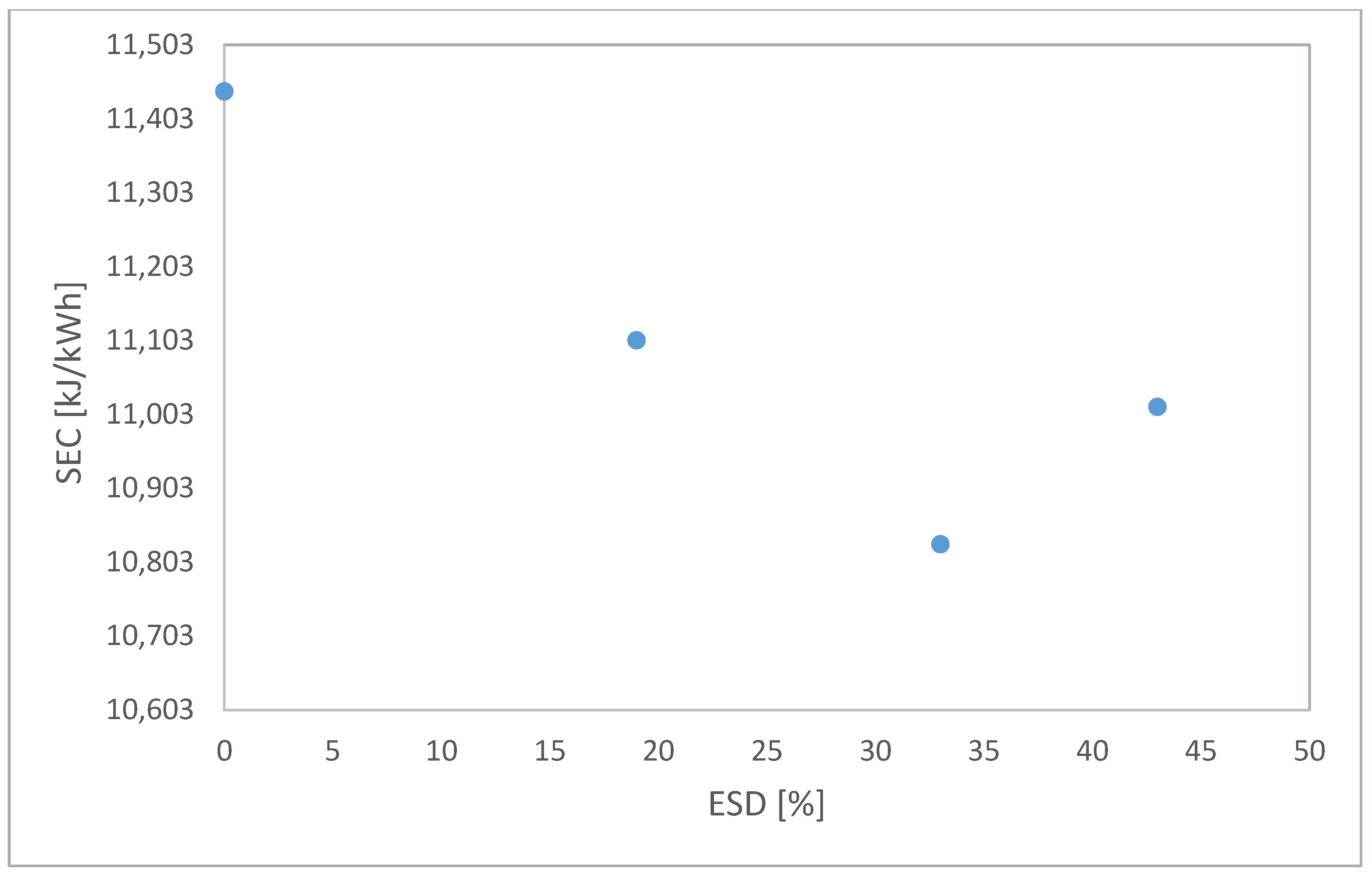
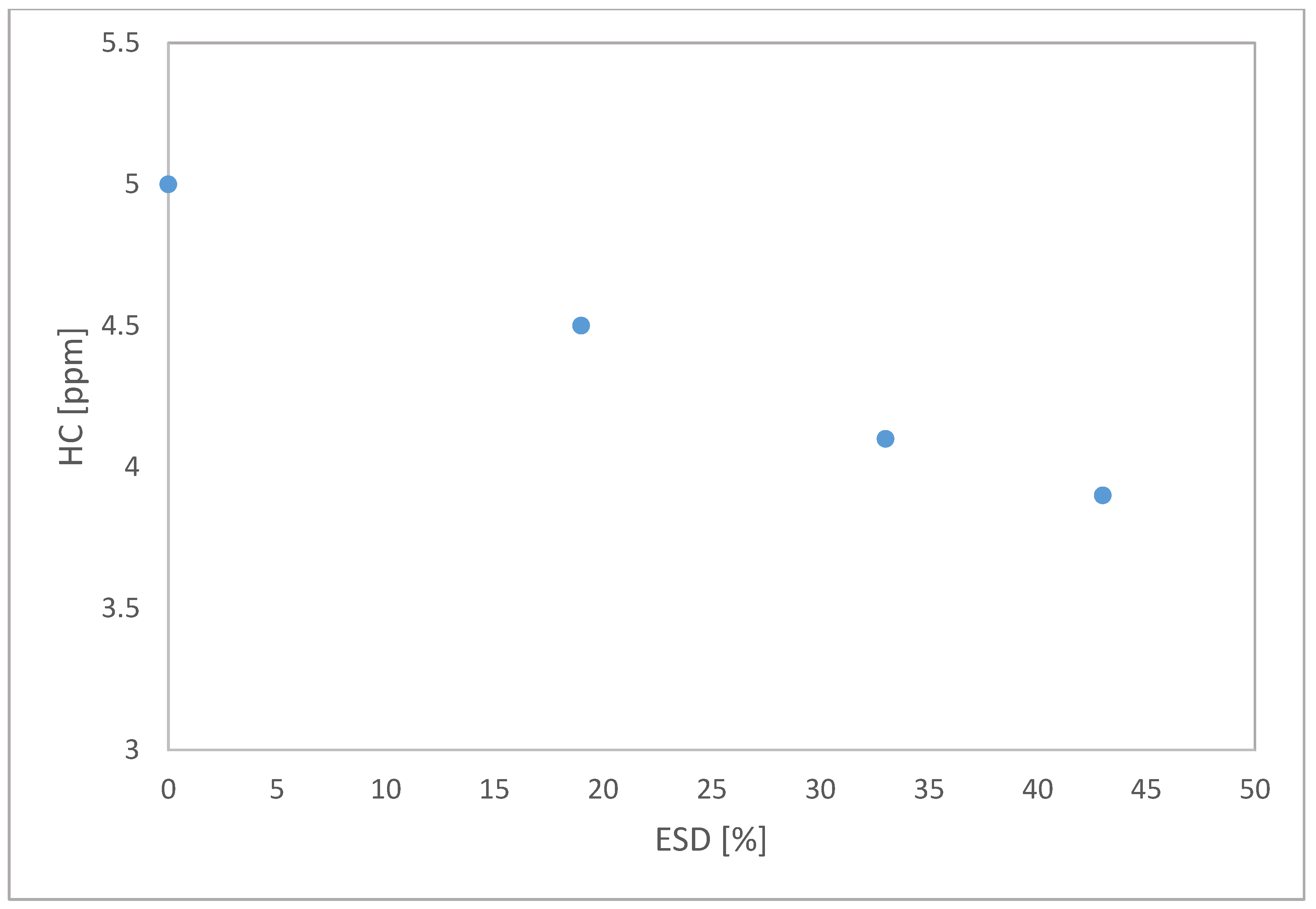
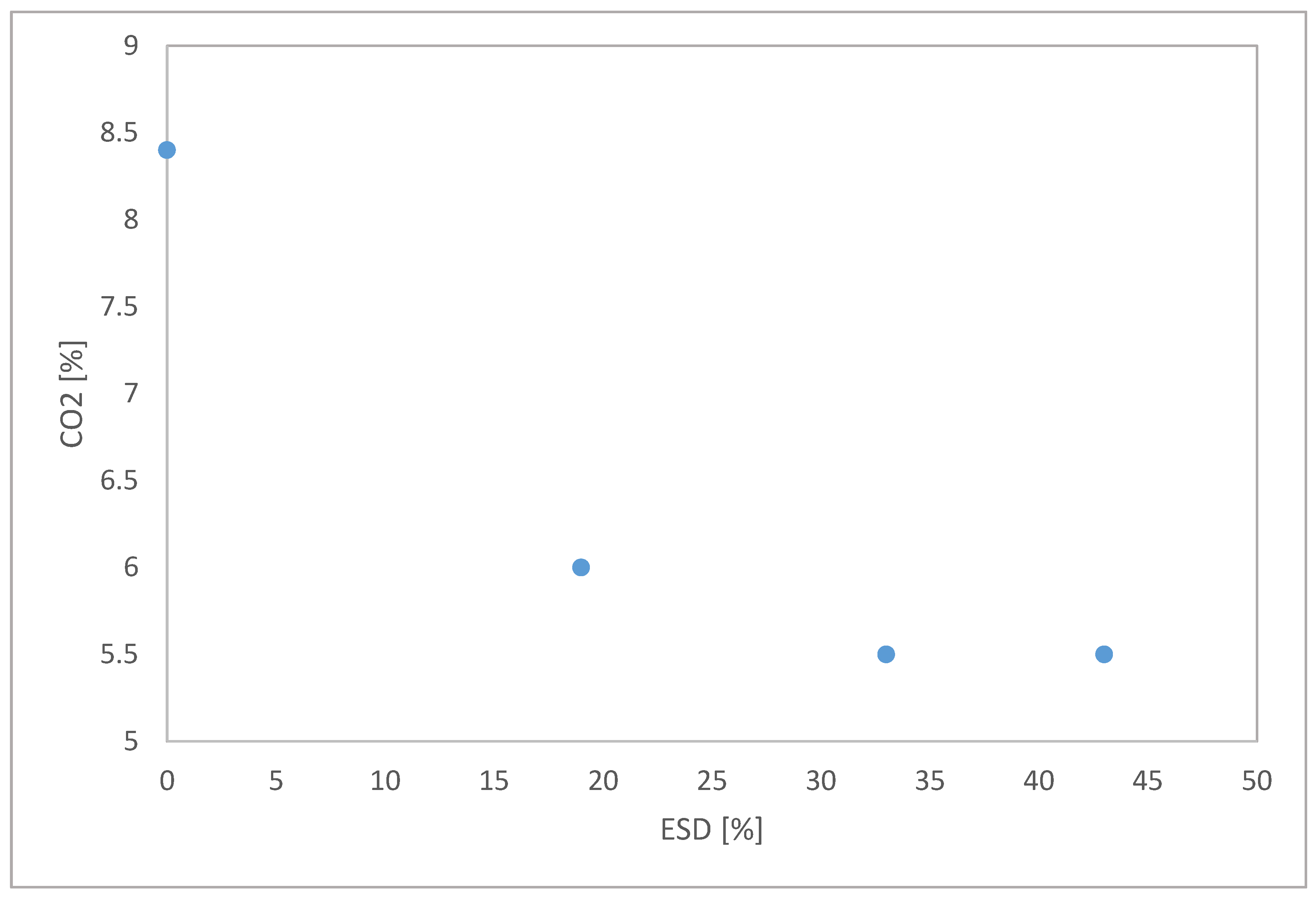
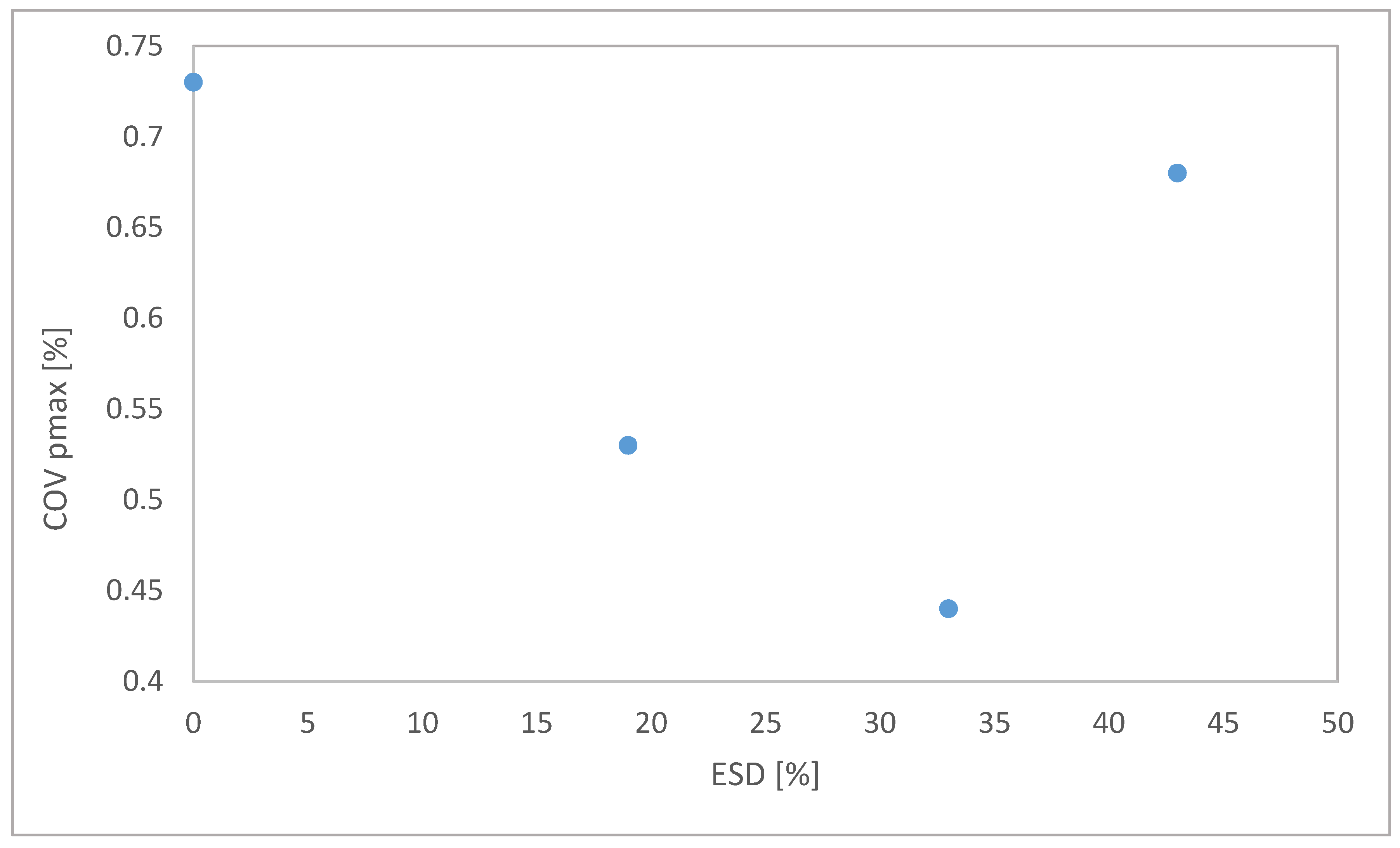
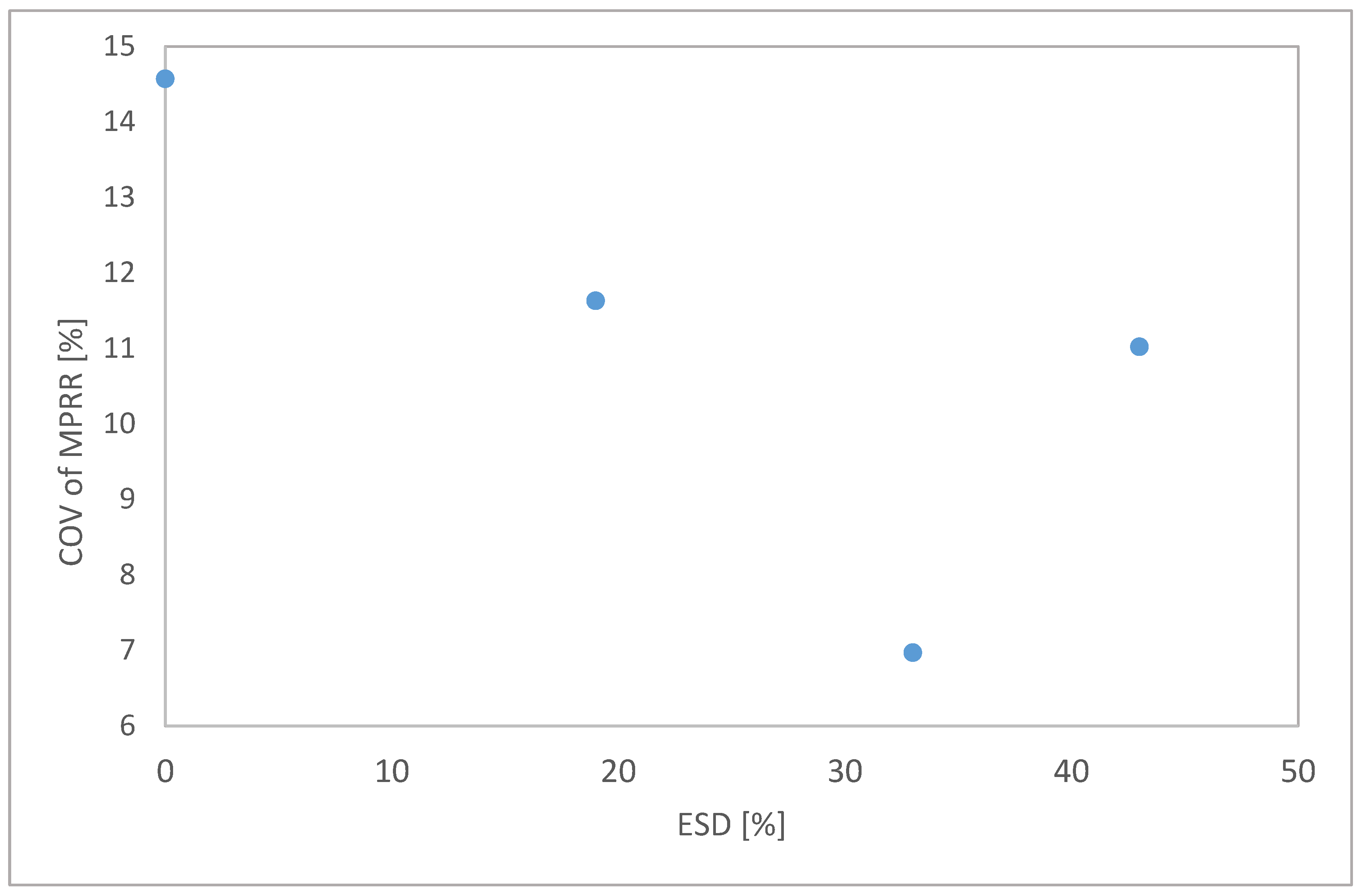
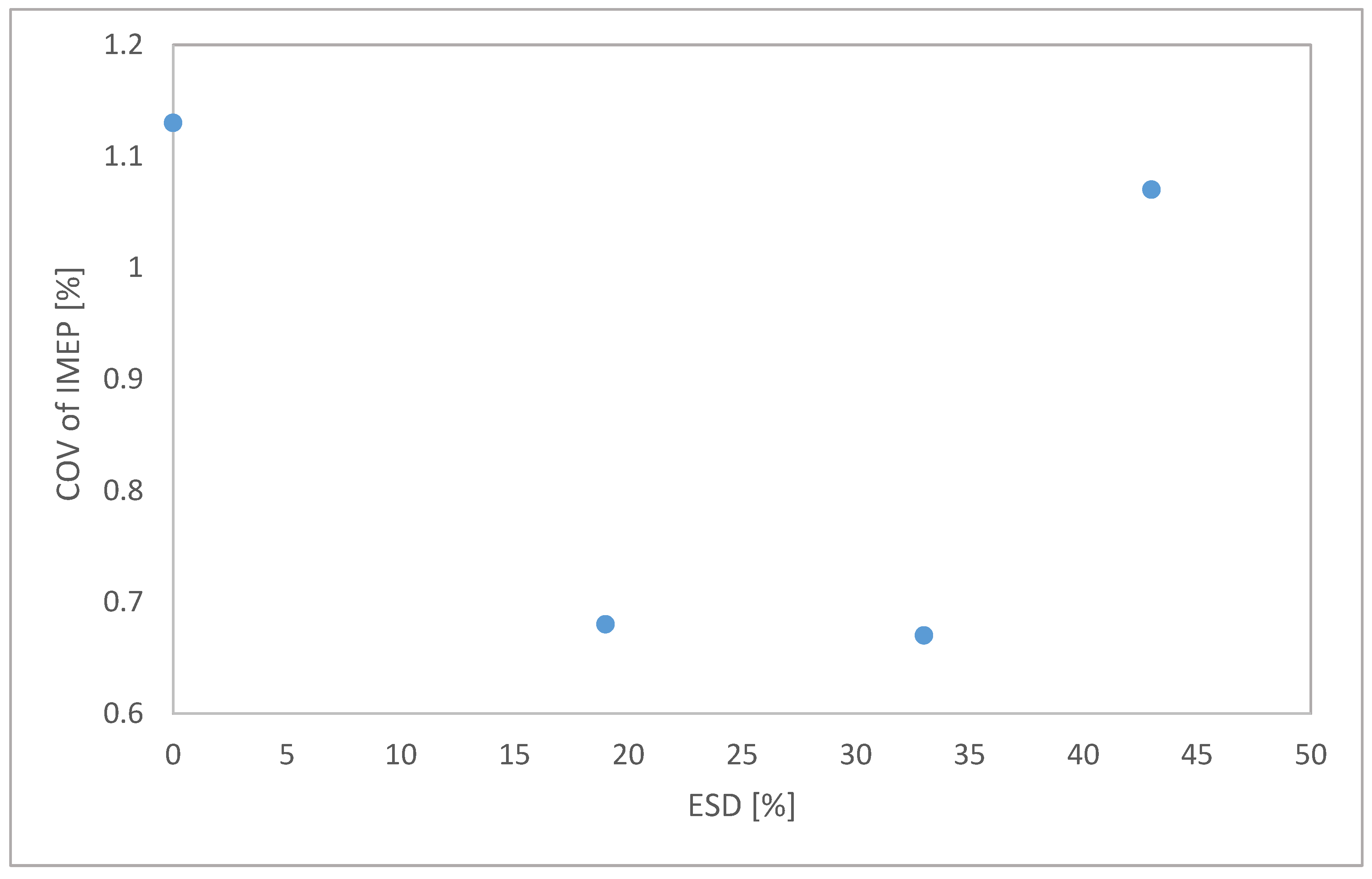
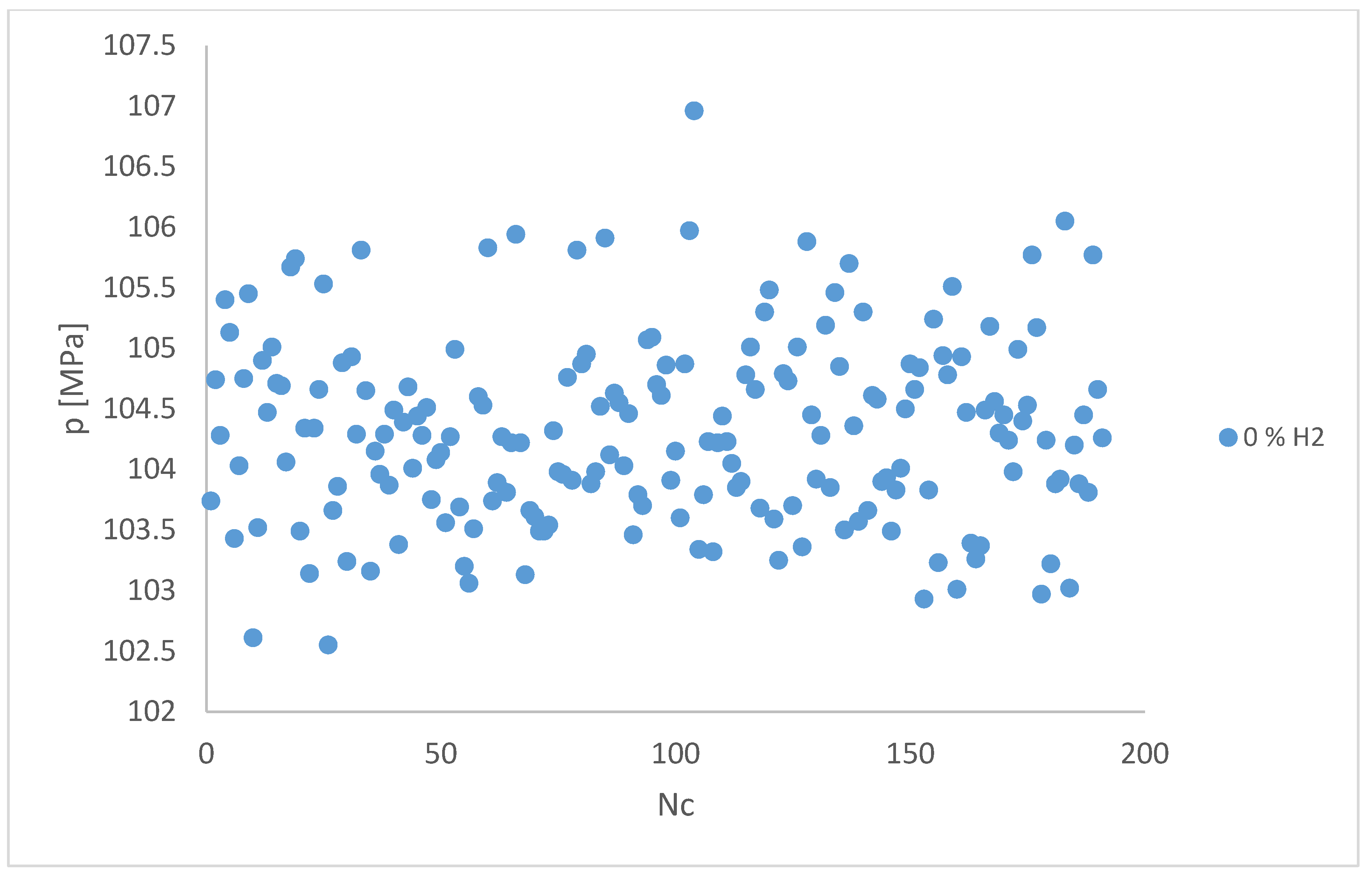
- if the hydrogen percent is limited at 33%ESD, then the maximum pressure is limited at average value of 121 bar, the IMEP at 0.456 MPa. In this case, at hydrogen fuelling, the HC decreases with 18%, the smoke opacity decreases with 58.6% and the CO2 decreases with 34.52% versus diesel fuel fuelling. These exhaust emissions reduction are ensured under the conditions of reducing the specific energy consumption with 5.36% comparative to classic fuelling case. For this limitation at 33%ESD, the (COV)Pmax is limited at 0.44% and the (COV)IMEP at 0.67%;
- –
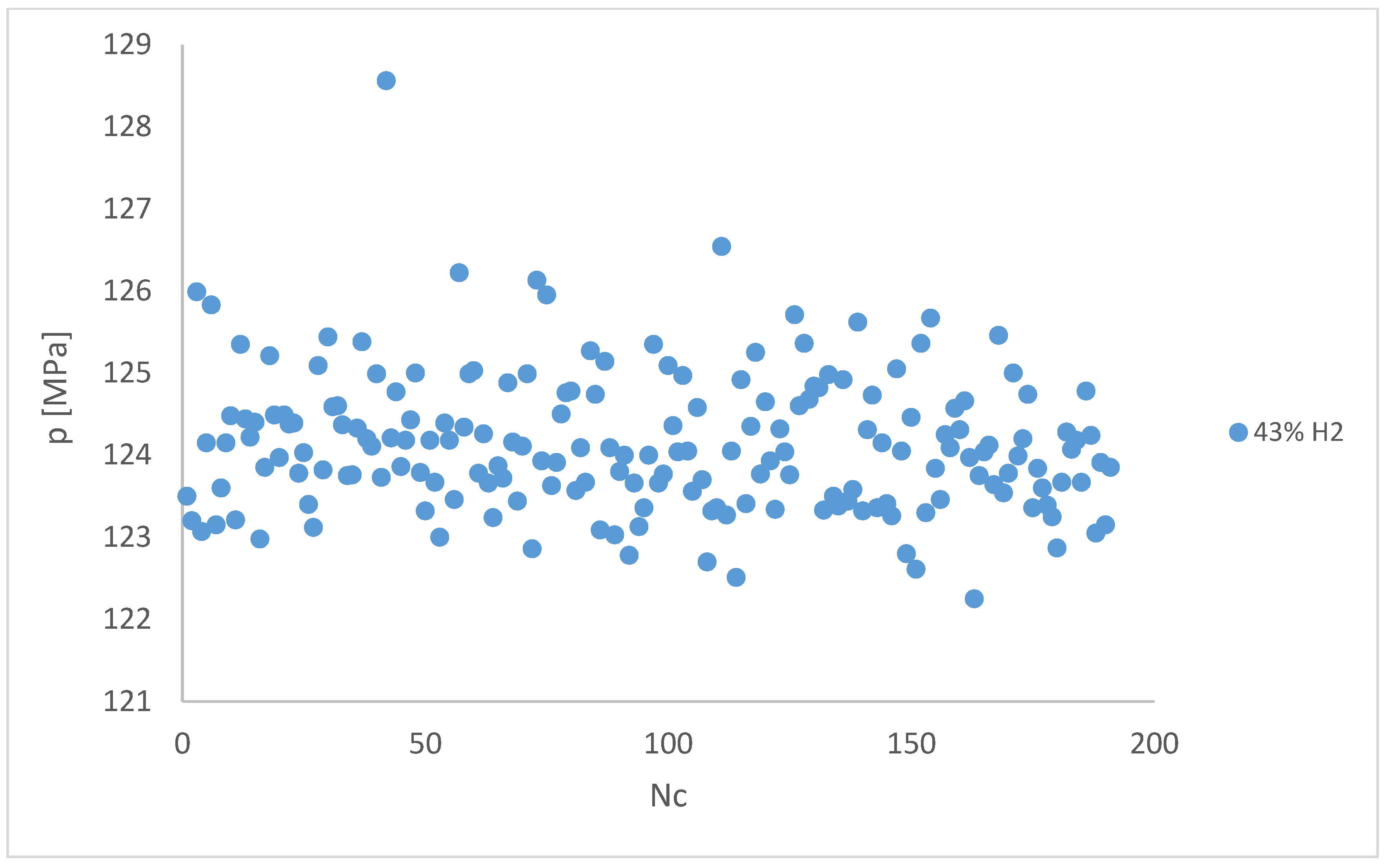
- if the hydrogen share is limited at 43%ESD, then the maximum pressure is limited at 125 bar, the IMEP at 0.456 MPa. In this limitation case, at hydrogen fuelling, the HC decreases with 22%, the smoke opacity decreases with 65.5% and the CO2 decreases with 34.52% versus diesel fuel use. These exhaust emissions reduction are ensured under the conditions of reducing the specific energy consumption with 3.73% comparative to classic fuelling case. For this limitation at 43%ESD, the (COV)Pmax is limited at 0.68% and the (COV)IMEP at 1.07%.
Author Contributions
Funding
Institutional Review Board Statement
Informed Consent Statement
Data Availability Statement
Acknowledgments
Conflicts of Interest
Abbreviations
| AVL | Anstalt für Verbrennungskraftmaschinen List automotive research institute Graz Austria |
| AMP | Angle Of Maximum Pressure |
| BTE | Brake Thermal Efficiency |
| BTDC | Before Top Dead Centre |
| BSFC | Brake Specific Fuel Consumption |
| C | Carbon |
| CAD | Crank Angle Degree |
| CD | Combustion Duration |
| CI Engine | Compression Ignition Engine |
| CH4 | Methane |
| C16H34 | Diesel Fuel (Or Cetane) |
| CNG | Compressed Natural Gas |
| CO | Carbon Monoxide |
| CO2 | Carbon Dioxide |
| COV | Coefficient Of Variability |
| CP | Combustion Parameter |
| DI | Direct Injection |
| ECU | Engine Control Unit |
| EGR | Exhaust Gas Recirculation |
| ESD | Energy Substitution Degree |
| FSE | Final Soot Emission |
| GHG | Greenhouse Gases |
| H2 | Hydrogen |
| HC | Unburned Hydrocarbons |
| HICE | Hydrogen Internal Combustion Engine |
| HRR | Heat Release Rate |
| hythane | Hydrogen and Methane |
| ICE | Internal Combustion Engine |
| IC Engine | Ignition Compression Engine (Or Diesel Engine) |
| IMEP | Indicate Mean Effective Pressure |
| K | Kelvin |
| kW | Kilo Watts |
| kg/h | Kilograms Per Hour |
| L | Litre |
| LHV | Lower Heating Value |
| lpm | Litre Per Minute |
| MDS | Modular Diagnostic System |
| MFB | Mass Fraction Burnt |
| MTB | Maximum Torque Brake |
| MPa | Mega Pascal |
| mJ | miliJoule |
| m/s | Meter/Second |
| MPRR | Maximum Pressure Rise Rate |
| mm | Millimetre |
| m3/h | Cubic Meters Per Hourly |
| Nm | Newton Metre |
| NOx | Nitrogen Oxides (Or NO, N2O) |
| PFI | Port Fuel Injection |
| pmax | Maximum Pressure |
| ppm | Parts Per Millions |
| rev/min | Revolutions Per Minute (Or rpm, RPM) |
| SIE | Spark Ignition Engine (Or SI Engine) |
| SCR | Selective Catalytic Reduction |
| SFS | Soot Forming Speed |
| Slpm | Standard Litre Per Minute |
| SOS | Soot Oxidation Speed |
| SOx | Sulfur Oxide |
| TDC | Top Dead Centre |
| T | In Cylinder Pressure |
| λ | Coefficient of Excess Air |
| λi | Inferior Limit of Inflammability |
| λs | Superior Limit of Inflammability |
| μm | Microns |
References
- European Commission. Communication from the Commission to the European Parliament, the Council, the European Economic and Social Committee and the Committee of the Regions. A Roadmap for Moving to a Competitive Low Carbon Economy in 2050. Brussels, 8.3.2011 COM (2011)112 Final. Available online: http://www.europarl.europa.eu/meetdocs/2009_2014/documents/com/com_com(2011)0112_/com_com(2011)0112_en.pdf (accessed on 3 November 2025).
- Markowska, K.; Wittek, K.; Kabiesz, P.; Stecuta, K.; Aydin, B.; Pawalak, S.; Markowska, A. Hydrogen-Powered Engines: A Study on Selected Technological and Emission Issues. Energies 2025, 18, 1675. [Google Scholar] [CrossRef]
- Ahad, M.T.; Bhuiyan, M.M.H.; Sakib, A.N.; Corral, A.B.; Siddique, Z. An Overview of Challenges for the Future of Hydrogen. Materials 2023, 16, 6680. [Google Scholar] [CrossRef]
- Albatayneh, A.; Juaidi, A.; Jaradat, M.; Manzano-Agugliaro, F. Future of Electric and Hydrogen Cars and Trucks: An Overview. Energies 2023, 16, 3230. [Google Scholar] [CrossRef]
- Sipos, G.; Bukovacz, K.; Istvanko, K.; Sebestyen, L.A. Hydrogen Engine Conversion Aspects. Eng. Proc. 2024, 79, 6. [Google Scholar]
- Hassouna, F.M.A.; Shin, K. The Environmental Impact of Future Global Sales of Hydrogen Fuel Cell Vehicles. Energies 2024, 17, 4930. [Google Scholar] [CrossRef]
- Cheng, X.; Lin, J. Is electric truck a viable alternative to diesel truck in long-haul operation? Transp. Res. Part D 2024, 129, 104119. [Google Scholar] [CrossRef]
- Hausfather, Z. Factchack: How electric vehicles help to tackle climate change, Update: 7 February 2020: The lifecycle emission figures were revised to reflect more recent data on electricity carbon intensity and battery manufacture. Carbon Brief, 13 May 2019. Available online: https://www.carbonbrief.org/factcheck-how-electric-vehicles-help-to-tackle-climate-change/ (accessed on 3 November 2025).
- Lee, J.; Kim, S.B.; Jung, I.; Lee, S.; Hwang, Y.W. Evaluating Greenhouse Gas Reduction Efficiency Through Hydrogen Ecosystem Implementation from a Life-Cycle Perspective. Sustainability 2025, 17, 9944. [Google Scholar] [CrossRef]
- Bayer, M.H.; Bilgili, L.; Alkan, S.; Atak, U.; Celik, V. Techno-Economic and Life-Cycle Assessment of Hydrogen-Ammonia Fuel Blends in Tugboat Engine for Sustainable Port Operation. Sustainability 2025, 17, 10285. [Google Scholar] [CrossRef]
- Abdelwahed, S.B.; Hamdi, F.; Gassoumi, M.; Yahya, I.; Moussa, N.; Alrasheedi, N.H.; Ennetta, R.; Louhichi, B. Enhancing Diesel Engine Performance Through Hydrogen Addition. Fire 2025, 8, 206. [Google Scholar] [CrossRef]
- Barreiros, R.C.S.; Siqueria-Filho, E.A.; Silva, A.I.R.D.; Barriros De Oliveira, F.W.; Barreiros, P.B.M.; Dimenstein, M.; Sarubbo, L.A.; Martins dos Santos, R.L.; Junior, V. Effect on diesel Engine Performance Parameters Using Hydrogen and Oxygen Produced on Demand. Energies 2022, 15, 7285. [Google Scholar] [CrossRef]
- Scrignoli, F.; Pisapia, A.M.; Savioli, T.; Mancaruso, E.; Mattarelli, E.; Rinaldini, C.A. Exploring Hydrogen-Diesel Dual Fuel Combustion in a Light-Duty Engine: A Numerical Investigation. Energies 2024, 17, 5761. [Google Scholar] [CrossRef]
- Xu, L.; Dong, H.; Liu, S.; Shen, L.; Bi, Y. Study of the Combustion Mechanism of Diesel/Hydrogen Dual Fuel and the Influence of Pilot Injection and Main Injection. Process 2023, 11, 2122. [Google Scholar] [CrossRef]
- Bajerlein, M.; Karpiuk, W.; Kurc, B.; Smolec, R.; Waligorski, M. Refining Combustion Dynamics: Dissolved Hydrogen in Diesel Fuel within Turbulent-Flow Environments. Energies 2024, 17, 2446. [Google Scholar] [CrossRef]
- Jamrozik, A. An Overview of Development and Challenges in the Use of Hydrogen as a Fuel for a Dual-Fuel Diesel Engine. Energies 2025, 18, 5793. [Google Scholar] [CrossRef]
- Muhssen, H.S.; Zoldy, M.; Bereczkey, A. A Comprehensive Review on the Hydrogen-Natural Gas-Diesel Tri-Fuel Engine Exhaust Emissions. Energies 2024, 17, 3862. [Google Scholar] [CrossRef]
- Rueda-Vazquez, J.M.; Serrano, J.; Pinzi, S.; Jimenez-Espadafor, F.J.; Dorado, M.P. A Review of the Use of Hydrogen in Compression Ignition Engines with Dual-Fuel Technology and Techniques for Reducing NOx Emissions. Sustainability 2024, 16, 3462. [Google Scholar] [CrossRef]
- Wang, L.; Li, X.; Hong, C.; Guo, P.; Guo, S.; Yang, Z. Research and Development of Hydrogen-Fueled Internal Combustion Engines in China. ACS Omega 2023, 8, 48590–48612. [Google Scholar] [CrossRef]
- Mancaruso, E.; Rossetti, S.; Vaglieco, B. Analysis of Dual Fuel Hydrogen/Diesel Combustion Varying Diesel and Hydrogen Injection Parameters in a Single Cylinder Research Engine; SAE Technical Paper 2024-01-2363; SAE International: Warrendale, PA, USA, 2024; pp. 1–13. [Google Scholar]
- Wright, M.L.; Lewis, A.C. Decarbonisation of heavy-duty diesel engines using hydrogen fuel: A review of the potential impact on NOx emissions. Environ. Sci. Atmos. 2022, 5, 852–866. [Google Scholar] [CrossRef]
- Panthi, N.; Sharma, P.; AlRamadan, A.S.; Cenker, E.; Magnotti, G. Hydrogen Combustion using Port-fuel Injections in a Heavy-Duty Optical Diesel Engine Converted to Spark Ignition Operation; SAE Technical Paper 2023-32-0043; SAE International: Warrendale, PA, USA, 2023; pp. 1–10. [Google Scholar]
- Hosseini, S.H.; Tsolakis, A.; Alagumalai, A.; Mahian, O.; Lam, S.S.; Pan, J.; Peng, W.; Tabatabaei, M.; Aghbashlo, M. Use of Hydrogen in a Dual-fuel Diesel Engines. Prog. Energy Combust. Sci. 2023, 98, 101100. [Google Scholar] [CrossRef]
- Sharkey, A.; Zare, A. The Impact of Water Injection and Hydrogen Fuel on Performance and Emissions in a Hydrogen/Diesel Dual-Fuel Engine. Energies 2024, 17, 5838. [Google Scholar] [CrossRef]
- Kiss, A.; Szabo, B.; Kun, K.; Weltsch, Z. Prediction of Efficiency, Performance, and Emissions Based on a Validated Simulation Model on Hydrogen–Gasoline Dual-Fuel Internal Combustion Engines. Energies 2024, 17, 5680. [Google Scholar] [CrossRef]
- Akhtar, M.U.S.; Asfand, F.; Khan, M.I.; Mishra, R. Assessment of geometric variations on efficiency and emissions of a Hydrogen-Diesel dual–fuel engine using CFD approach. Energy 2025, 335, 137960. [Google Scholar] [CrossRef]
- Karvounis, P. Parametric investigation of hydrogen-diesel combustion for a marine medium speed dual fuel engine. Paper no.475. In Proceedings of the Simulation Technologies, Digital Twins and Complex System Simulation, CIMAC Congress, Zurich, Switzerland, 19–23 May 2025; pp. 1–9. [Google Scholar]
- Menaa, A.; Amrouche, F.; Lounici, M.S.; Loubar, K. Experimental investigation of hydrogen use in dual fuel and like dual fuel mode. Fuel 2025, 393, 135031. [Google Scholar] [CrossRef]
- Candelaresi, D.; Valente, A.; Iribarren, D.; Dufour, J.; Spazzafumo, G. Comparative life cycle assessment of hydrogen-fuelled passenger cars. Int. J. Hydrogen Energy 2021, 46, 35961–35973. [Google Scholar] [CrossRef]
- Heywood, J.B. Internal Combustion Engine Fundamentals; McGraw-Hill Education: New York, NY, USA, 1988. [Google Scholar]
- Negurescu, N.; Pana, C.; Popa, M.C. Spark Ignition Engines. Processes; MatrixRom: Bucharest, Romania, 2009. [Google Scholar]
- Popa, M.G.; Negurescu, N.; Pana, C. Diesel Engines. Processes; MatrixRom: Bucharest, Romania, 2003. [Google Scholar]
- Technical Department of Dacia Plant. Dacia Logan MCV Service Manual; Dacia-Renault Plant: Mioveni, Romania, 2008. [Google Scholar]
- Technical Department of Horiba. Schenck Horiba Dyno Operator Manual; Horiba: Oberursel, Germany, 2001. [Google Scholar]
- Technical Department of Krohne. Optimass 3300 Coriolis Mass Flowmeters; Krohne: Duisburg, Germany, 2008. [Google Scholar]
- Technical Department of Alicat Scientific. Alicat Scientific MC 50 Flowmeter, Operating Manual for Standard Flow and Pressure Devices; Alicat Scientific: Tucson, AZ, USA, 2023. [Google Scholar]
- Technical Department of Krohne. Krohne H250 Air Flowmeter, Installation and Operating Instructions; Krohne: Duisburg, Germany, 2008. [Google Scholar]
- Technical Department of AVL List GmbH. AVL DiTEST MDS 450 Modular Diagnostic System; AVL List GmbH: Graz, Austria, 2024. [Google Scholar]
- Technical Department of AVL List GmbH. AVL GU12P Pressure Transducer, Calibration Record; AVL List GmbH: Graz, Austria, 2008. [Google Scholar]
- Technical Department of AVL List GmbH. AVL 365CC Angle Encoder; AVL List GmbH: Graz, Austria, 2008. [Google Scholar]









| Parameter | Value |
|---|---|
| Number of cylinders | 4 |
| Power/speed [kW]/[rev/min] | 50/4000 |
| Torque/speed [Nm]/[rev/min] | 210/2100 |
| Supercharging pressure [bar] | 1.8 |
| Bore [mm] | 76 |
| Stroke [mm] | 80.5 |
| Length of the connecting rod | 133.75 |
| Compression ratio | 18.5 |
| Number of valve per cylinder | 2 |
| Intake Valve Opening [CAD before TDC] | 9 |
| Exhaust Valve Closing [CAD before TDC] | 27 |
| Valves overlap [CAD] | 0 |
| Engine cooling system | liquid |
| Diesel fuel fuelling system | Common rail 1800 bar |
| Hydrogen fuelling system | Manifold injection 1.5 bar |
| Parameter | Precision |
|---|---|
| Engine power [kW] | ±0.2% |
| Engine torque [Nm] | ±0.2% |
| Diesel fuel flow [kg/h] | ±0.1% |
| Hydrogen flow [slpm] | ±0.2% |
| Intake air [m3/h] | ±0.3% |
| HC emission level [ppm] | ±1 ppm vol. |
| Smoke opacity [%] | ±0.1% |
| NO emission level [%] | ±1 ppm vol. |
| CO2 emission level [%] | ±0.65% vol. |
| In-cylinder pressure [bar] (including pmax, MPRR, IMEP) | ±0.05% |
| Angle of maximum pressure [CAD] | ±0.1% |
Disclaimer/Publisher’s Note: The statements, opinions and data contained in all publications are solely those of the individual author(s) and contributor(s) and not of MDPI and/or the editor(s). MDPI and/or the editor(s) disclaim responsibility for any injury to people or property resulting from any ideas, methods, instructions or products referred to in the content. |
© 2026 by the authors. Licensee MDPI, Basel, Switzerland. This article is an open access article distributed under the terms and conditions of the Creative Commons Attribution (CC BY) license.
Share and Cite
Panait, A.; Pana, C.; Cernat, A.; Negurescu, N.; Nutu, C.; Fuiorescu, D.; Nemoianu, L. Hydrogen as a Carbon Neutral Fuel for Automotives in Sustainable Transportation. Sustainability 2026, 18, 1919. https://doi.org/10.3390/su18041919
Panait A, Pana C, Cernat A, Negurescu N, Nutu C, Fuiorescu D, Nemoianu L. Hydrogen as a Carbon Neutral Fuel for Automotives in Sustainable Transportation. Sustainability. 2026; 18(4):1919. https://doi.org/10.3390/su18041919
Chicago/Turabian StylePanait, Andreea, Constantin Pana, Alexandru Cernat, Niculae Negurescu, Cristian Nutu, Dinu Fuiorescu, and Liviu Nemoianu. 2026. "Hydrogen as a Carbon Neutral Fuel for Automotives in Sustainable Transportation" Sustainability 18, no. 4: 1919. https://doi.org/10.3390/su18041919
APA StylePanait, A., Pana, C., Cernat, A., Negurescu, N., Nutu, C., Fuiorescu, D., & Nemoianu, L. (2026). Hydrogen as a Carbon Neutral Fuel for Automotives in Sustainable Transportation. Sustainability, 18(4), 1919. https://doi.org/10.3390/su18041919