Perceived Data and Privacy Security Threats for Stakeholders in the Context of Industry 5.0: Evidence from Poland



Abstract
1. Introduction
Motivation and Research Problem
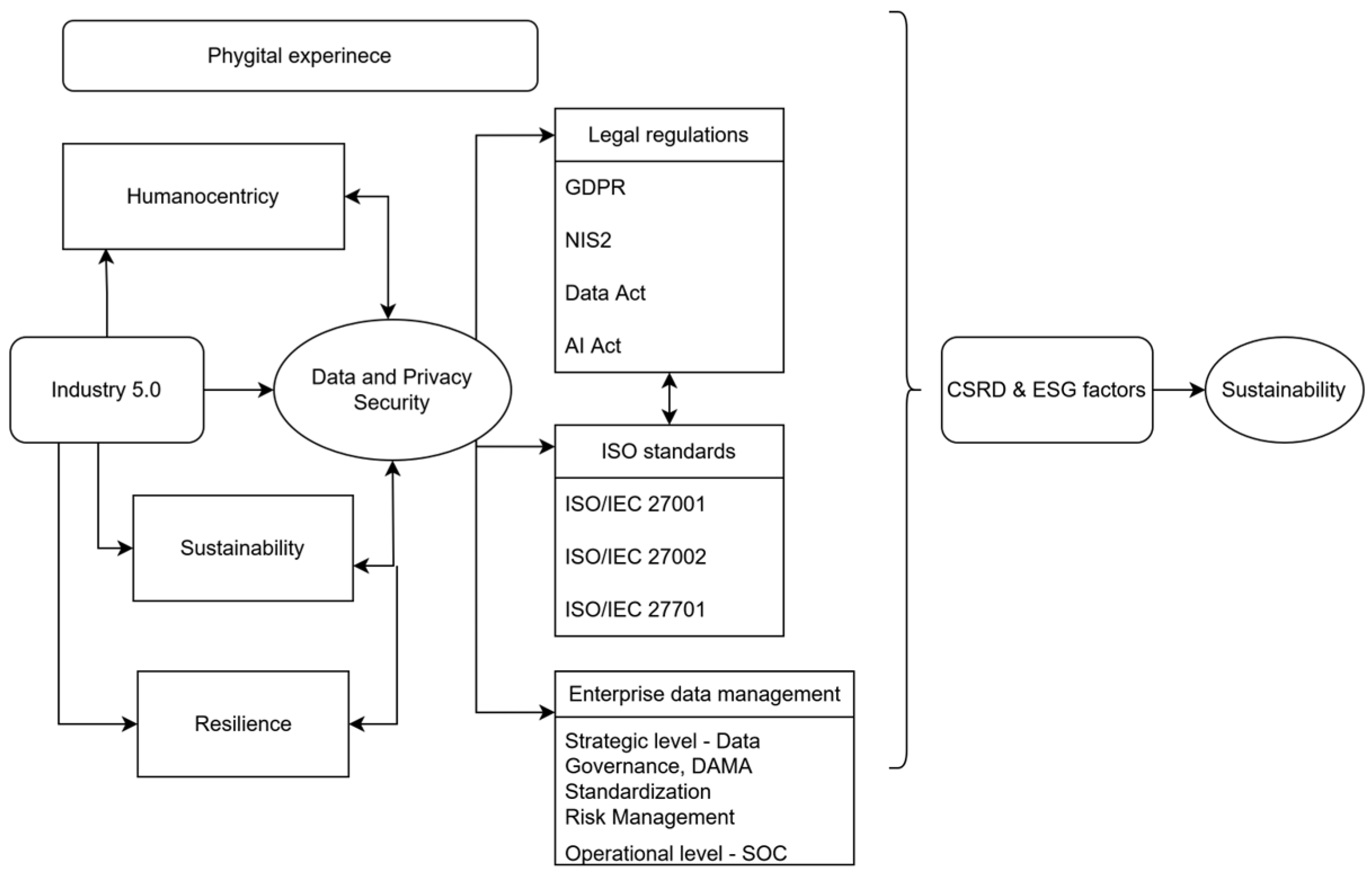
- Risks related to: inadequate protection of users’ personal data and privacy; threats to the security of networks and information systems; the threat of cybercrime and hacking;
- Preventive measures such as: strengthening the control and supervision of companies operating in the technology sector; educating the public about the risks of security and privacy in the online environment; introducing stricter penalties for data security and privacy breaches.
2. Background of Analysis
2.1. Enterprises in the Transition Towards Industry 5.0
2.2. Personal Data Security in the Context of Digital Transformation
- Critical entities—up to €10 million or 2% of global turnover;
- Important entities—up to €7 million or 1.4% of global turnover.
- Critical entities—organizations that provide services essential for the functioning of the economy and society, whose operations have a direct impact on the continuity of state functions, stability, and security;
- Important entities—organizations whose activities may have a significant impact on the continuity of state functions, economic stability, and societal security, particularly in the event of information security incidents, both virtual and physical.
- Line 1—The first point of contact for the entire organization, responsible for initial identification and analysis of reports, categorization and prioritization, and forwarding to the next support line.
- Line 2—A specialized team that performs detailed analysis and handles the resolution of security incidents; if necessary, incidents can be escalated to Line 3.
- Line 3—A team dedicated to advanced analysis of complex security incidents, including forensic examination of malware and in-depth network traffic analysis. This team also addresses the root causes of incidents as part of corrective actions.
2.3. Stakeholder Privacy in Digital Transformation
2.4. Frameworks for Technology Adoption in Organizations
- Coercive isomorphism—arising from external pressures such as legal, governmental, institutional, or social regulations.
- Normative isomorphism—resulting from professional standards and the adoption of similar procedures within specific sectors of activity.
- Mimetic isomorphism—stemming from the imitation of market leaders to reduce risks associated with business operations.
3. Materials and Methods
- RQ1: How do respondents evaluate their organization’s involvement in the ongoing transition towards Industry 5.0?
- RQ2: How is the perception of data security and stakeholder privacy threats shaped across different sectors in the context of transformation towards I5.0?
- RQ3: Does company size influence the perception of data security and stakeholder privacy threats during the transformation towards I5.0?
- RQ4: Does the origin of company capital affect the perception of data security and stakeholder privacy threats in the process of transformation towards I5.0?
4. Results
4.1. Transformation Engagement and Implementation Pace
- Fully aware;
- Have heard of it but do not have comprehensive knowledge;
- Not aware at all.
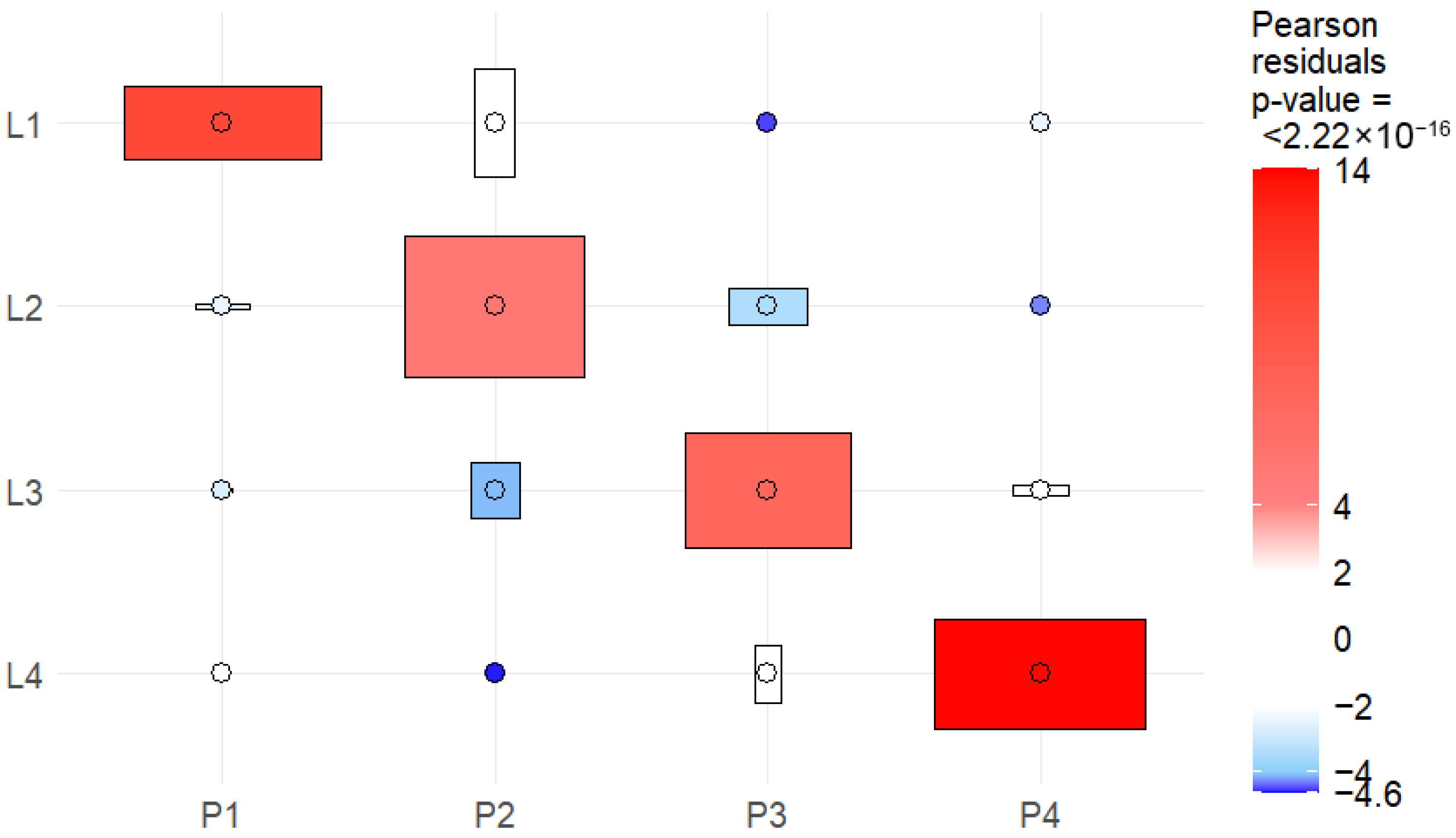
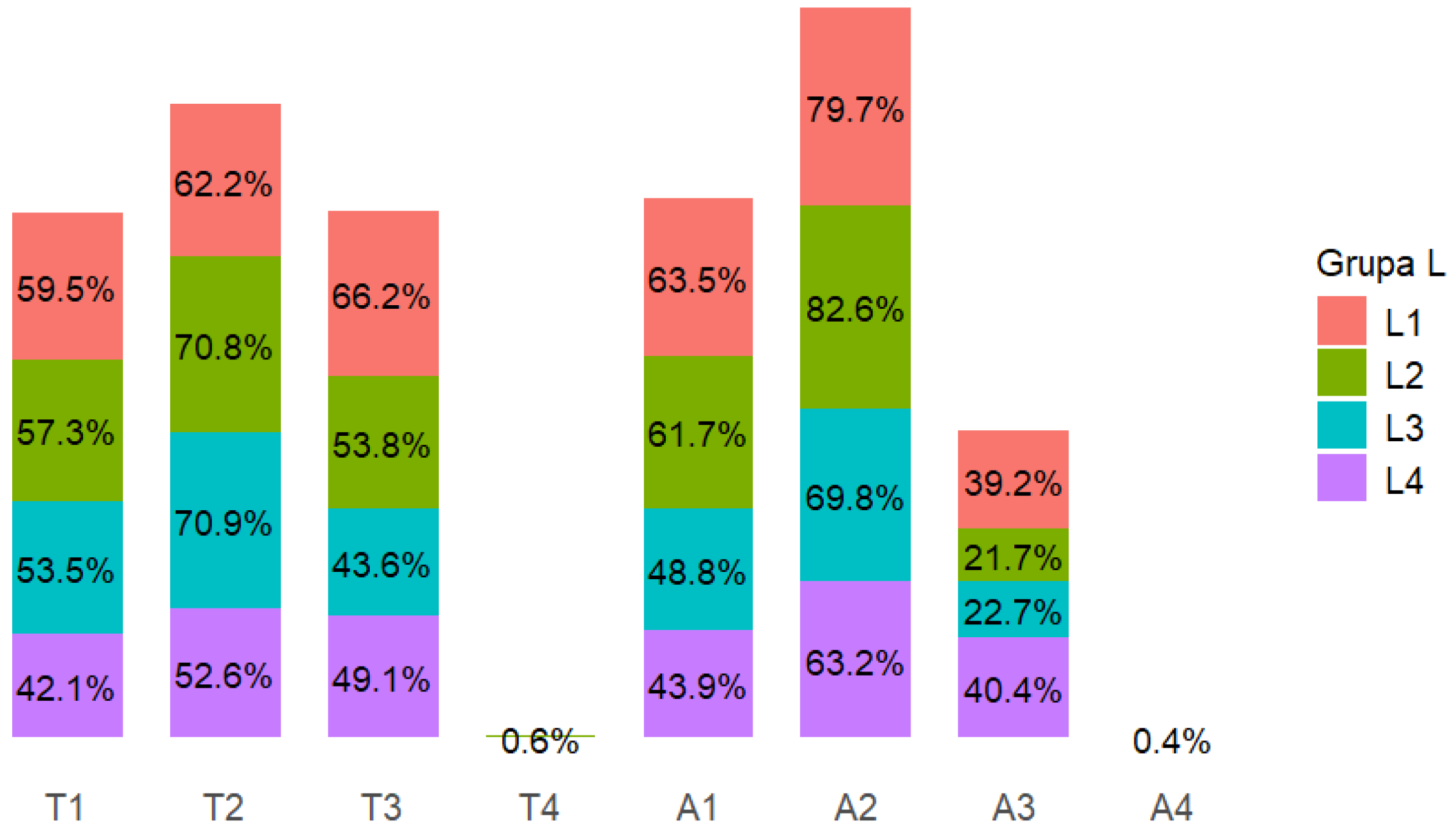
- 7.7% of respondents indicated that their company actively participates in the transformation process but does so gradually (L1, P2);
- 34.7% reported gradually starting the process (L2, P2);
- 9.2% stated that their company has started the process very slowly and believes that most companies are still not engaged (L2, P3);
- 19.4% are considering the implementation of the process, but the preparations are progressing slowly (L3, P3).
4.2. Security Challenges in the Transition Towards I5.0
4.3. Concerns About Data Privacy
4.4. Threats and Actions in the Transition Towards I5.0
4.5. Regression Models and Sectoral Effects
4.6. Answers to Hypotheses and Research Questions
- Conceptual determinants—perception of the degree of engagement in the enterprise transformation process towards Industry 5.0 (L).
- Organizational determinants—sector, company size, and capital origin.
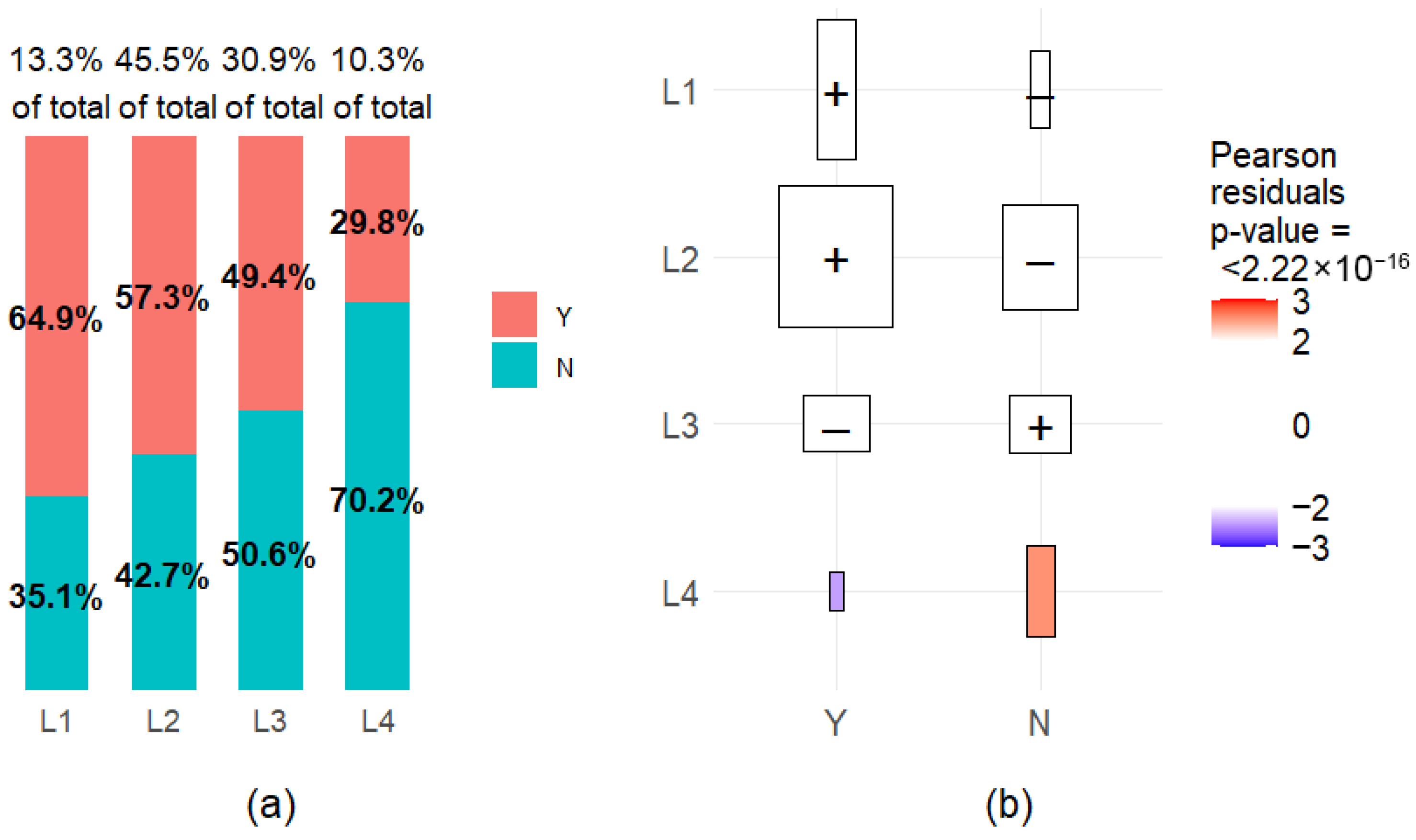
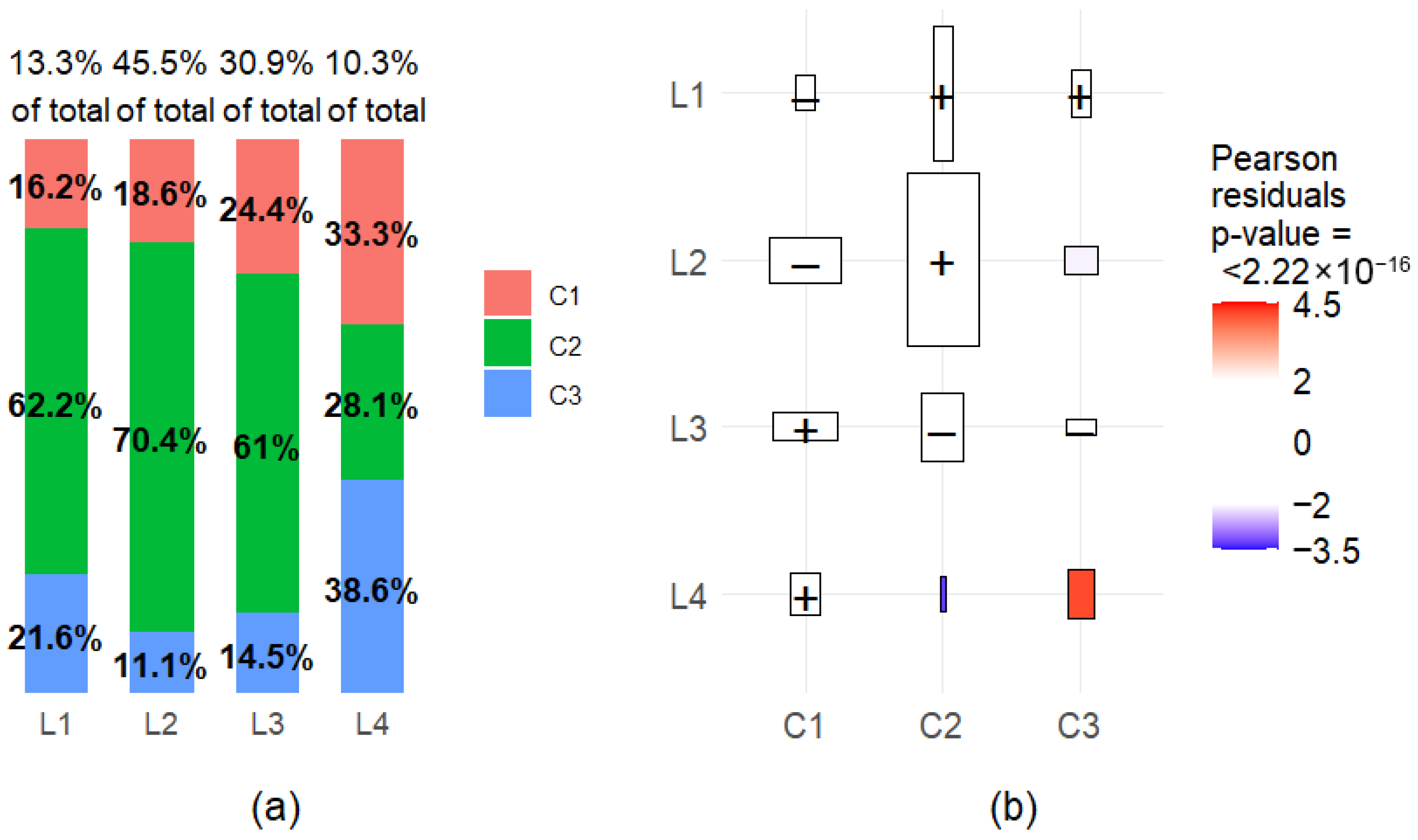
- RQ1—How do respondents evaluate their organization’s involvement in the ongoing transition towards Industry 5.0?: The results are presented in Table 1. According to the data, 13.3% of respondents indicated that their company actively participates in the transformation process, 45.5% reported that the process has just begun, 30.9% are not yet engaged but are considering taking steps in this direction, and 10.3% stated that the topic is not relevant to them.
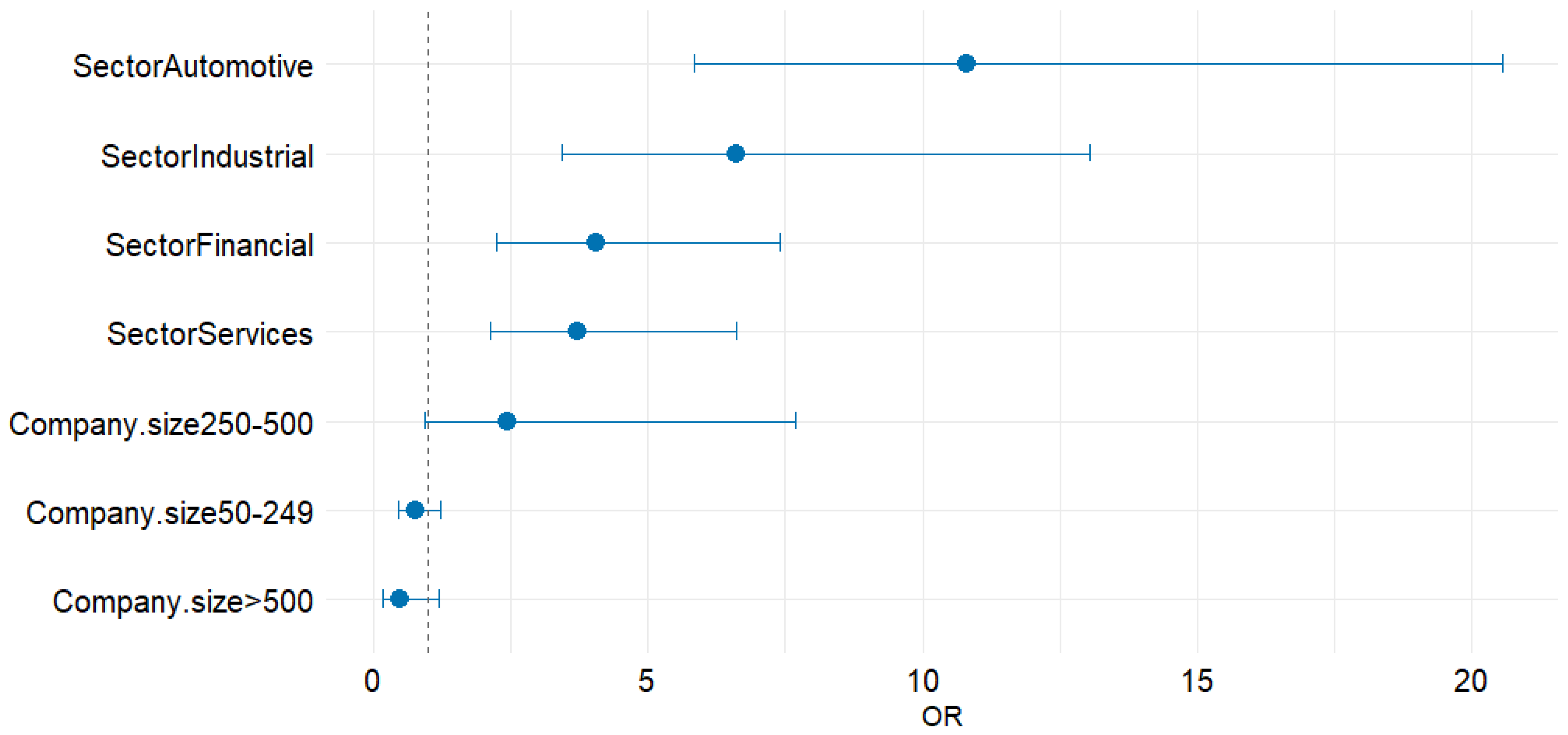
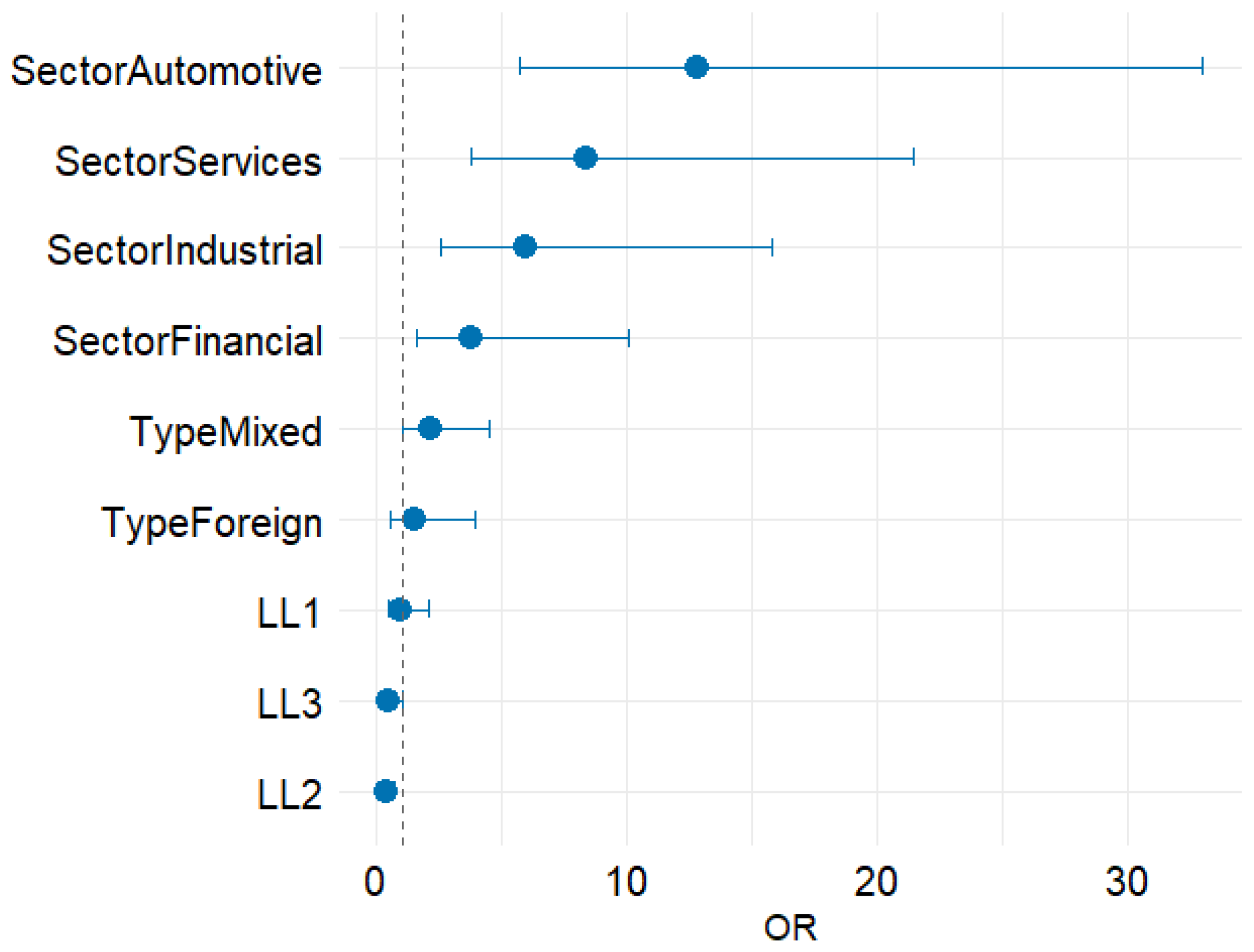
- RQ2—Perceived threats to data and privacy security related to Industry 5.0 transformation: The analysis did not allow for a definitive answer to this question. Perceived threats to stakeholder data and privacy depend on the sector in which the company operates. Statistically significant effects were observed only for cybercrime and hacking-related threats (T3) and for the actions (A3) that should be undertaken. The strength of the correlation for T3 is dependent on company size, whereas for A3, it depends on the level of engagement in the I5.0 transformation process (L) and Type (see Table 5). However, the tests indicated significance but not the direction of the relationship. According to Figure 6, the probability of recognizing T3 as significant is over three times higher for the service sector, four times higher for the financial sector, over six times higher for the industrial sector, and over ten times higher for the automotive sector, compared to the IT sector. Regarding the actions to be taken in response to information security threats, the choice of implementing stricter penalties for data and privacy breaches as significant also depends on the business sector (see Table 5). According to Figure 7, the probability of considering A3 as significant is over eight times higher for the service sector, over three times higher for the financial sector, almost six times higher for the industrial sector, and over twelve times higher for the automotive sector, compared to the IT sector. These results should be interpreted with caution due to moderate model fit and wide confidence intervals for the ORs. Moreover, the tests did not show that the level of company engagement in the I5.0 transformation significantly influenced these responses.
4.7. Robustness Check and Research Limitation
5. Discussion
- Lifelong learning, continuous improvement, and development of employees’ competencies in cybersecurity through the provision of up-to-date knowledge and the cultivation of awareness regarding threats, preventive measures, and best practices.
- Greater emphasis on public education regarding Internet safety and privacy threats.
- Introduction of stricter penalties for violations of data security and privacy.
- Protection of personal data and user privacy.
- Ensuring the security of ICT infrastructure in organizations.
- The information security management system in a company should be tailored to the specifics of its operations and organizational context.
- Technologies and security measures should be adapted to the current capabilities and size of the organization.
- To minimize the risk of cyberattacks in enterprises undergoing digital transformation within the framework of Industry 5.0, it is essential to establish robust internal regulations and continuously monitor the security of resources in all aspects, i.e., material, financial, human, and data.
- The design of ethical and transparent interactions with stakeholders in the context of phygital experiences is essential for building trust in the enterprise and its brand.
6. Conclusions
Supplementary Materials
Author Contributions
Funding
Institutional Review Board Statement
Informed Consent Statement
Data Availability Statement
Conflicts of Interest
References
- Ionescu, A.-M.; Ionescu, A.-C. Exploring the Future of Manufacturing: An Analysis of Industry 5.0’s Priorities and Perspectives. Sustainability 2025, 17, 7842. [Google Scholar] [CrossRef]
- Rusu, D.; Mantulescu, M. Development of an Application-Based Framework for Information Security Management in SMEs. Sustainability 2025, 17, 8314. [Google Scholar] [CrossRef]
- Sulaiman, N.S.; Fauzi, M.A.; Wider, W.; Rajadurai, J.; Hussain, S.; Harun, S.A. Cyber–Information Security Compliance and Violation Behaviour in Organisations: A Systematic Review. Soc. Sci. 2022, 11, 386. [Google Scholar] [CrossRef]
- Gratian, M.; Bandi, S.; Cukier, M.; Dykstra, J.; Ginther, A. Correlating human traits and cyber security behavior intentions. Comput. Secur. 2018, 73, 345–358. [Google Scholar] [CrossRef]
- FitzGerald, J.; Dennis, A.; Durcikova, A. Komunikowanie Danych i Zastosowanie Sieci Komputerowych w Biznesie, 13th ed.; Grażyński, A., Translator; Helion: Gliwice, Poland, 2020; pp. 413–480. ISBN 978-83-283-5768-6. [Google Scholar]
- KPMG; Microsoft. Monitor Transformacji Cyfrowej Biznesu. Edycja 2024. Available online: https://assets.kpmg.com/content/dam/kpmg/pl/pdf/2024/04/pl-Monitor-Transformacji-Cyfrowej-Biznesu-Edycja-2024-KPMG-Microsoft.pdf (accessed on 25 December 2025).
- CERT Polska. Available online: https://cert.pl/publikacje/ (accessed on 25 December 2025).
- Santos, B.; Costa, R.L.C.; Santos, L. Cybersecurity in Industry 5.0: Open Challenges and Future Directions. In Proceedings of the 2024 21st Annual International Conference on Privacy, Security and Trust (PST), Sydney, Australia, 28–30 August 2024; pp. 1–6. [Google Scholar] [CrossRef]
- Hassan, M.A.; Zardari, S.; Farooq, M.U.; Alansari, M.M.; Nagro, S.A. Systematic Analysis of Risks in Industry 5.0 Architecture. Appl. Sci. 2024, 14, 1466. [Google Scholar] [CrossRef]
- Vaidya, S.; Ambad, P.; Bhosle, S. Industry 4.0—A Glimpse. Procedia Manuf. 2018, 20, 233–238. [Google Scholar] [CrossRef]
- Gajdzik, B.; Wolniak, R. Influence of Industry 4.0 Projects on Business Operations: Literature and Empirical Pilot Studies Based on Case Studies in Poland. J. Open Innov. Technol. Mark. Complex. 2022, 8, 44. [Google Scholar] [CrossRef]
- Suleiman, Z.; Shaikholla, S.; Dikhanbayeva, D.; Shehab, E.; Turkyilmaz, A. Industry 4.0: Clustering of Concepts and Characteristics. Cogent Eng. 2022, 9, 2034264. [Google Scholar] [CrossRef]
- Industry 5.0, A Transformative Vision for Europe: Governing Systemic Transformations Towards a Sustainable Industry. Publications Office of the European Union. 2021. Available online: https://data.europa.eu/doi/10.2777/17322 (accessed on 22 October 2025).
- Fogaça, D.R.; Grijalvo, M.; Sacomano Neto, M. What Are Industry 4.0 and Industry 5.0 All About? An Integrative Institutional Model for the New Industrial Paradigms. Adm. Sci. 2025, 15, 118. [Google Scholar] [CrossRef]
- Zizic, M.C.; Mladineo, M.; Gjeldum, N.; Celent, L. From Industry 4.0 towards Industry 5.0: A Review and Analysis of Paradigm Shift for the People, Organization and Technology. Energies 2022, 15, 5221. [Google Scholar] [CrossRef]
- Ghobakhloo, M.; Iranmanesh, M.; Fathi, M.; Rejeb, A.; Foroughi, B.; Nikbin, D. Beyond Industry 4.0: A Systematic Review of Industry 5.0 Technologies and Implications for Social, Environmental and Economic Sustainability. Asia Pac. J. Bus. Adm. 2025, 17, 889–914. [Google Scholar] [CrossRef]
- Kassen, M. Adopting and managing open data: Stakeholder perspectives, challenges and policy recommendations. Aslib J. Inf. Manag. 2018, 70, 518–537. [Google Scholar] [CrossRef]
- Modrzejewska, D. Metamodel Komputerowego Wspomagania Innowacyjności Organizacji i Mikrofundamentów Innowacyjności; Wydawnictwo Uniwersytetu Ekonomicznego w Katowicach: Katowice, Poland, 2024; pp. 17–27. ISBN 978-83-7875-908-9. [Google Scholar]
- Keshvarparast, A.; Berti, N.; Chand, S.; Guidolin, M.; Lu, Y.; Battaia, O.; Xu, X.; Battini, D. Ergonomic Design of Human–Robot Collaborative Workstation in the Era of Industry 5.0. Comput. Ind. Eng. 2024, 198, 110729. [Google Scholar] [CrossRef]
- Martín-Gómez, A.M.; Agote-Garrido, A.; Lama-Ruiz, J.R. A Framework for Sustainable Manufacturing: Integrating Industry 4.0 Technologies with Industry 5.0 Values. Sustainability 2024, 16, 1364. [Google Scholar] [CrossRef]
- Grabowska, S.; Saniuk, S.; Gajdzik, B. Industry 5.0: Improving Humanization and Sustainability of Industry 4.0. Scientometrics 2022, 127, 3117–3144. [Google Scholar] [CrossRef]
- Bukowski, L.; Werbinska-Wojciechowska, S. Towards Maintenance 5.0: Resilience-Based Maintenance in AI-Driven Sustainable and Human-Centric Industrial Systems. Sensors 2025, 25, 5100. [Google Scholar] [CrossRef]
- Agote-Garrido, A.; Martín-Gómez, A.M.; Lama-Ruiz, J.R. Manufacturing System Design in Industry 5.0: Incorporating Sociotechnical Systems and Social Metabolism for Human-Centered, Sustainable, and Resilient Production. Systems 2023, 11, 537. [Google Scholar] [CrossRef]
- Gajdzik, B.; Wolniak, R.; Nagaj, R.; Žuromskaitė-Nagaj, B.; Grebski, W.W. The Influence of the Global Energy Crisis on Energy Efficiency: A Comprehensive Analysis. Energies 2024, 17, 947. [Google Scholar] [CrossRef]
- Cortés-Leal, A.; Cárdenas, C.; Del-Valle-Soto, C. Maintenance 5.0: Towards a Worker-in-the-Loop Framework for Resilient Smart Manufacturing. Appl. Sci. 2022, 12, 11330. [Google Scholar] [CrossRef]
- Czeczot, G.; Rojek, I.; Mikołajewski, D.; Sangho, B. AI in IIoT Management of Cybersecurity for Industry 4.0 and Industry 5.0 Purposes. Electronics 2023, 12, 3800. [Google Scholar] [CrossRef]
- Mammeri, Z.Z. Introduction to Computer Security. In Cryptography: Algorithms, Protocols, and Standards for Computer Security; Wiley: Hoboken, NJ, USA, 2024; pp. 1–32. [Google Scholar] [CrossRef]
- Avizienis, A.; Laprie, J.-C.; Randell, B.; Landwehr, C. Basic Concepts and Taxonomy of Dependable and Secure Computing. IEEE Trans. Dependable Secur. Comput. 2004, 1, 11–33. [Google Scholar] [CrossRef]
- European Parliament & Council of the European Union. Directive (EU) 2022/2464 (14 December 2022) Amending Regulation (EU) No 537/2014, Directive 2004/109/EC, Directive 2006/43/EC and Directive 2013/34/EU, as Regards Corporate Sustainability Reporting. Off. J. Eur. Union 2022, L322, 15–80. Available online: https://eur-lex.europa.eu/eli/dir/2022/2464/oj/eng (accessed on 13 October 2025).
- Meynier, T.; Mishkin, S.H.; Triggs, M. EU Finalizes ESG Reporting Rules with International Impacts. In Harvard Law School Forum on Corporate Governance; Harvard Law School: Cambridge, MA, USA, 2023; Available online: https://corpgov.law.harvard.edu/2023/01/30/eu-finalizes-esg-reporting-rules-with-international-impacts/ (accessed on 13 October 2025).
- KPMG. Cybersecurity in ESG. KPMG International. 2023. Available online: https://assets.kpmg.com/content/dam/kpmg/pl/pdf/2023/10/cybersecurity-in-esg.pdf (accessed on 13 October 2025).
- MSCI. ESG Ratings Methodology: Privacy & Data Security Key Issue. 2024. Available online: https://www.msci.com/documents/1296102/34424357/MSCI%20ESG%20Ratings%20Methodology%20-%20Privacy%20%26%20Data%20Security%20Key%20Issue.pdf (accessed on 13 October 2025).
- European Parliament and Council. Regulation (EU) 2016/679 of 27 April 2016 on the Protection of Natural Persons with Regard to the Processing of Personal Data and on the Free Movement of Such Data (General Data Protection Regulation). Off. J. Eur. Union 2016, L119, 1–88. Available online: https://eur-lex.europa.eu/legal-content/EN/TXT/PDF/?uri=CELEX:32016R0679 (accessed on 30 July 2025).
- Ustawa o Ochronie Danych Osobowych (Personal Data Protection Act), Dz. U. 2018 poz. 1000. Available online: https://isap.sejm.gov.pl/isap.nsf/DocDetails.xsp?id=WDU20180001000 (accessed on 30 July 2025).
- European Parliament and Council. Directive (EU) 2016/1148 of 6 July 2016 Concerning Measures for a High Common Level of Security of Network and Information Systems Across the Union. Off. J. Eur. Union 2016, L194, 1–30. Available online: https://eur-lex.europa.eu/legal-content/EN/TXT/PDF/?uri=CELEX:32016L1148 (accessed on 30 July 2025).
- European Parliament and Council. Directive (EU) 2022/2555 of 14 December 2022 on Measures for a High Common Level of Cybersecurity Across the Union, Amending Regulation (EU) No 910/2014 and Directive (EU) 2018/1972, and Repealing Directive (EU) 2016/1148 (NIS 2 Directive). EUR-Lex. Available online: https://eur-lex.europa.eu/eli/dir/2022/2555/2022-12-27/eng (accessed on 30 July 2025).
- European Parliament and Council. Regulation (EU) 2023/2854 of 13 December 2023 on Measures for a High Common Level of Cybersecurity Across the Union, Amending Regulation (EU) No 910/2014 and Directive (EU) 2018/1972, and Repealing Directive (EU) 2016/1148 (NIS 2 Directive). Off. J. Eur. Union 2023, L300, 1–44. Available online: https://eur-lex.europa.eu/eli/reg/2023/2854/oj/eng (accessed on 30 July 2025).
- PN-EN ISO/IEC 27001:2023-08/A1:2025-02; English Version: Information Security Management Systems—Requirements. Polski Komitet Normalizacyjny (PKN, Polish Committee for Standardization): Warsaw, Poland, 2025. Available online: https://sklep.pkn.pl/pn-en-iso-iec-27001-2023-08-a1-2025-02e.html?options=cart (accessed on 30 July 2025).
- ISO/IEC 27002; New Edition of the ISO/IEC 27002 Standard. Polski Komitet Normalizacyjny (PKN, Polish Committee for Standardization): Warsaw, Poland, 2023. Available online: https://www.pkn.pl/informacje/2023/01/nowa-edycja-normy-27002 (accessed on 30 July 2025).
- DAMA International. DAMA-DMBOK: Data Management Body of Knowledge. Available online: https://dama.org/learning-resources/dama-data-management-body-of-knowledge-dmbok/ (accessed on 13 October 2025).
- Ismail, A.; Suroso, A.I.; Hermadi, I. Data Governance Design with the DAMA-DMBOK Framework: A Case Study. Int. J. Res. Rev. 2024, 11, 23. [Google Scholar] [CrossRef]
- Karkošková, S. Data Governance Model to Enhance Data Quality in Financial Institutions: A Case Study. Int. J. Account. Inf. Manag. 2023, 31, 90–110. [Google Scholar] [CrossRef]
- IBM. What is a Security Operations Center (SOC)? Available online: https://www.ibm.com/think/topics/security-operations-center (accessed on 13 October 2025).
- Directive 2002/58/EC of the European Parliament and of the Council of 12 July 2002 on the Processing of Personal Data and the Protection of Privacy in the Electronic Communications Sector (Directive on Privacy and Electronic Communications). Available online: https://eur-lex.europa.eu/LexUriServ/LexUriServ.do?uri=CONSLEG:2002L0058:20091219:EN:HTML (accessed on 30 July 2025).
- European Parliament and Council. Regulation (EU) 2024/1689 of 13 June 2024 Laying Down Harmonised Rules on Artificial Intelligence and Amending Regulations (EC) No 300/2008, (EU) No 167/2013, (EU) No 168/2013, (EU) 2018/858, (EU) 2018/1139 and (EU) 2019/2144 and Directives 2014/90/EU, (EU) 2016/797 and (EU) 2020/1828 (Artificial Intelligence Act). Off. J. Eur. Union 2024, L1689, 1–30. Available online: https://eur-lex.europa.eu/eli/reg/2024/1689/oj/eng (accessed on 30 July 2025).
- PN-ISO/IEC 27701:2019; English Version: Security Techniques—Extension to ISO/IEC 27001 and ISO/IEC 27002 for Privacy Information Management—Requirements and Guidelines. Polski Komitet Normalizacyjny (PKN, Polish Committee for Standardization): Warsaw, Poland, 2019. Available online: https://www.iso.org/obp/ui/en/#iso:std:iso-iec:27701:ed-1:v1:en (accessed on 13 October 2025).
- Hadwer, A.A.; Tavana, M.; Gillis, D.; Rezania, D. A Systematic Review of Organizational Factors Impacting Cloud-based Technology Adoption Using Technology-Organization-Environment Framework. Internet Things 2021, 15, 100407. [Google Scholar] [CrossRef]
- Ahmad, S.F.; Alam, M.M.; Rahmat, M.K.; Shahid, M.K.; Aslam, M.; Salim, N.A.; Al-Abyadh, M.H.A. Leading edge or bleeding edge: Designing a framework for the adoption of AI technology in an educational organization. Sustainability 2023, 15, 6540. [Google Scholar] [CrossRef]
- Satyro, W.C.; Contador, J.C.; Gomes, J.A.; Monken, S.F.d.P.; Barbosa, A.P.; Bizarrias, F.S.; Contador, J.L.; Silva, L.S.; Prado, R.G. Technology-Organization-External-Sustainability (TOES) Framework for Technology Adoption: Critical Analysis of Models for Industry 4.0 Implementation Projects. Sustainability 2024, 16, 11064. [Google Scholar] [CrossRef]
- Tornatzky, L.; Fleischer, M. The Process of Technology Innovation; Lexington Books: Lanham, MD, USA, 1990. [Google Scholar]
- Badghish, S.; Soomro, Y.A. Artificial Intelligence Adoption by SMEs to Achieve Sustainable Business Performance: Application of Technology–Organization–Environment Framework. Sustainability 2024, 16, 1864. [Google Scholar] [CrossRef]
- Nguyen, T.H.; Le, X.C.; Vu, T.H.L. An Extended Technology-Organization-Environment (TOE) Framework for Online Retailing Utilization in Digital Transformation: Empirical Evidence from Vietnam. J. Open Innov. Technol. Mark. Complex. 2022, 8, 200. [Google Scholar] [CrossRef]
- Prakash, C. Evaluating the TOE Framework for Technology Adoption: A Systematic Review of Its Strengths and Limitations. Int. J. Recent Innov. Trends Comput. Commun. 2025, 13, 76–82. [Google Scholar]
- Gibbs, L.J.; Kraemer, K.L. A cross-country investigation of the determinants of scope of e-commerce use: An institutional approach. Electron. Mark. 2004, 14, 124–137. [Google Scholar] [CrossRef]
- Li, Y.H. An empirical investigation on the determinants of e-procurement adoption in Chinese manufacturing enterprises. In Proceedings of the 15th International Conference on Management Science & Engineering, Long Beach, CA, USA, 10–12 September 2008; Volume 1–2, pp. 32–37. [Google Scholar]
- Soares-Aguiar, A.; Palma-Dos-Reis, A. Why do firms adopt e-procurement systems? Using logistic regression to empirically test a conceptual model. IEEE Trans. Eng. Manag. 2008, 55, 120–133. [Google Scholar] [CrossRef]
- Lutfi, A.; Al-Hiyari, A.; Elshaer, I.A.; Alrawad, M.; Almaiah, M.A. Green environmental management system and environmental performance: Results from PLS-SEM and fsQCA. Sustain. Futures 2024, 8, 100276. [Google Scholar] [CrossRef]
- Berlilana; Noparumpa, T.; Ruangkanjanases, A.; Hariguna, T.; Sarmini. Organization Benefit as an Outcome of Organizational Security Adoption: The Role of Cyber Security Readiness and Technology Readiness. Sustainability 2021, 13, 13761. [Google Scholar] [CrossRef]
- Magnano, D.G.; Grimstad, S.M.; Glavee-Geo, R.; Anwar, F. Disentangling circular economy practices and firm’s sustainability performance: A systematic literature review of past achievements and future promises. J. Environ. Manag. 2024, 353, 120138. [Google Scholar] [CrossRef]
- Cochran, W.G. Sampling Techniques, 3rd ed.; John Wiley & Sons: New York, NY, USA, 1977; pp. 56–59. [Google Scholar]
- Kochański, B. Statystyka 2; Bookdown, GitHub Repository. 2022, pp. 45–48. Available online: https://bankonomia.nazwa.pl/statystyka2/ (accessed on 5 September 2025).
- Eurostat. Foreign Direct Investment (FDI) Inward Stock Relative to GDP in Poland. Available online: https://ec.europa.eu/eurostat/databrowser/view/bd_size__custom_18368065/default/table (accessed on 20 September 2025).
- Everitt, B.S. The Analysis of Contingency Tables, 2nd ed.; Chapman & Hall: London, UK, 1992; pp. 1–10. [Google Scholar]
- Agresti, A. Categorical Data Analysis, 3rd ed.; Wiley: Hoboken, NJ, USA, 2013; pp. 21–78. [Google Scholar]
- Moore, D.S.; McCabe, G.P.; Craig, B.A. Introduction to the Practice of Statistics, 9th ed.; W. H. Freeman and Company: New York, NY, USA, 2017; pp. 72–78. [Google Scholar]
- Agresti, A. Foundations of Linear and Generalized Linear Models; Wiley: Hoboken, NJ, USA, 2015; pp. 201–220. [Google Scholar]
- Menard, S. Applied Logistic Regression Analysis, 2nd ed.; SAGE Publications: Thousand Oaks, CA, USA, 2002; pp. 58–78. [Google Scholar]
- Zelterman, D. Applied Multivariate Statistics with R; Springer: Cham, Switzerland, 2022; pp. 45–120. [Google Scholar]
- Biecek, P. Exploratory Data Analysis with R; Publisher PWN: Warsaw, Poland, 2013. [Google Scholar]
- Agresti, A. An Introduction to Categorical Data Analysis, 2nd ed.; Wiley: Hoboken, NJ, USA, 2007; pp. 35–39. [Google Scholar] [CrossRef]
- Dobson, A.J.; Barnett, A.G. An Introduction to Generalized Linear Models, 4th ed.; CRC Press: Boca Raton, FL, USA, 2018; pp. 115–160. [Google Scholar]
- McFadden, D. Conditional Logit Analysis of Qualitative Choice Behavior. In Frontiers in Econometrics; Zarembka, P., Ed.; Academic Press: New York, NY, USA, 1974; pp. 105–142. [Google Scholar]
- Cisco. Cisco’s 2025 Data Privacy Benchmark Study: Privacy Landscape Grows Increasingly Complex in the Age of AI. Cisco Newsroom. 2025. Available online: https://newsroom.cisco.com/c/r/newsroom/en/us/a/y2025/m04/cisco-2025-data-privacy-benchmark-study-privacy-landscape-grows-increasingly-complex-in-the-age-of-ai.html (accessed on 3 December 2025).
- ENISA. Industry 4.0—Cybersecurity Challenges & Recommendations. 2019. Available online: https://www.enisa.europa.eu/sites/default/files/publications/Industry%204.0%20-%20Cybersecurity%20Challenges%20and%20Recommendations.pdf (accessed on 3 December 2025).
- Deloitte. Digital Trust Maturity Survey. 2023. Available online: https://www.deloitte.com/content/dam/assets-shared/docs/services/risk-advisory/2023/digital-trust-maturity.pdf (accessed on 3 December 2025).
- TrustArc. 2025 Global Privacy Benchmarks Report. 2025. Available online: https://trustarc.com/wp-content/uploads/2025/06/2025-trustarc-global-privacy-benchmarks-report.pdf (accessed on 3 December 2025).
- Liu, C. Corporate cybersecurity risk and data breaches: A systematic review of empirical research. Aust. J. Manag. 2024, 51, 03128962241293658. Available online: https://journals.sagepub.com/doi/10.1177/03128962241293658 (accessed on 3 December 2025). [CrossRef]
- Stefani, E.; Costa, I.; Gaspar, M.A.; Goes, R.d.S.; Monteiro, R.C.; Petrili, B.R.; Pereira, A.d.P. Information Security Risk Framework for Digital Transformation Technologies. Systems 2025, 13, 37. [Google Scholar] [CrossRef]
- Gündüzyeli, B. Cyber Resilience in Digital Marketing Within the Framework of Sustainable Management. Sustainability 2025, 17, 2080. [Google Scholar] [CrossRef]
- Mele, C.; Spena, T.R.; Marzullo, M.; Di Bernardo, I. The phygital transformation: A systematic review and a research agenda. Ital. J. Mark. 2023, 2023, 323–349. [Google Scholar] [CrossRef]
- Sukheeja, N.; Shekhawat, P. The rise of phygital marketing: How brands are merging physical and digital experiences for customer engagement. Int. J. Innov. Res. Anal. 2025, 5, 167–171. [Google Scholar] [CrossRef]
- Urdea, A.-M.; Constantin, C.P.; Purcaru, I.-M. Implementing Experiential Marketing in the Digital Age for a More Sustainable Customer Relationship. Sustainability 2021, 13, 1865. [Google Scholar] [CrossRef]
- Kumar, V.; Reinartz, W. Customer experience management in the age of phygital. J. Interact. Mark. 2023, 52, 30–49. [Google Scholar]





| L | Is the Company in Which You Work Engaged in the Transformation Process Towards I5.0? | Percentage of Respondents |
|---|---|---|
| L1 | Yes, actively participating in the transformation | 13.3% |
| L2 | Yes, but the process is only at an initial stage | 45.5% |
| L3 | No, but such actions are being considered | 30.9% |
| L4 | No, it is not relevant for us | 10.3% |
| P | How Do You Assess the Pace of I5.0 Implementation in Your Organization? | Percentage of Respondents |
|---|---|---|
| P1 | Fast | 7.2% |
| P2 | Gradually | 52.7% |
| P3 | Slowly | 32.2% |
| P4 | No opinion | 7.9% |
| C | Are You Concerned That the Development of Industry 5.0 Could Lead to Greater Risks to Personal Data Security and Privacy? | Percentage of Respondents |
|---|---|---|
| C1 | Yes, I have serious concerns regarding data security and privacy. | 21.6% |
| C2 | A little, but I don’t consider it a major issue. | 62.1% |
| C3 | No, I’m not concerned about it. | 16.4% |
| L~T, L~A | χ2 (3) | p-Value | Statistical Significance | Resid < −2 | Resid > 2 |
|---|---|---|---|---|---|
| T1 | 5.12 | 0.1631 | p > 0.05 | - | - |
| T2 | 8.87 | 0.0311 | p < 0.05 | - | (L4, N) |
| T3 | 11.34 | 0.01 | p < 0.05 | - | - |
| A1 | 11.98 | 0.0074 | p < 0.05 | - | - |
| A2 | 15.53 | 0.0014 | p < 0.05 | (L2, N) | (L4, N) |
| A3 | 16.045 | 0.0011 | p < 0.05 | - | (L1, Y), (L4, Y) |
| Model | Parameters | AIC | McFadden R2 | p-Value |
|---|---|---|---|---|
| T1 | Company size, Type | 756.8 | 0.027 | 0.001 |
| T2 | Sector | 683.79 | 0.036 | <0.001 |
| T3 | Sector, Company size | 701.79 | 0.109 | <0.001 |
| A1 | L, Sector, Type | 741.44 | 0.054 | <0.001 |
| A2 | L, Sector | 601.63 | 0.039 | 0.001 |
| A3 | L, Sector, Type | 586.84 | 0.115 | <0.001 |
| H | Reference to the Indicator, Type of Test or Model; Response |
|---|---|
| H1 | F2, χ2 (3) = 19.25, p < 0.001; statistically significant relationship (Figure 3) C1, χ2 (6) = 42.93, p < 0.001; statistically significant relationship (Figure 4) T1, χ2 (3) = 5.12, p > 0.05; statistically non-significant relationship (Table 4) T2, χ2 (3) = 8.87, p < 0.05; statistically significant relationship (Table 4) T3, χ2 (3) = 11.34, p < 0.05; statistically significant relationship (Table 4) A1, χ2 (3) = 11.98, p < 0.05; statistically significant relationship (Table 4) A2, χ2 (3) = 15.53, p < 0.05; statistically significant relationship (Table 4) A3, χ2 (3) = 16.045, p < 0.05; statistically significant relationship (Table 4) |
| H2 | T3, model M1, statistically significant relationship without including L (Table 5, Figure 6) A3, model M2, statistically significant relationship including L as a supporting factor (Table 5, Figure 7) |
| H3 | No statistically significant relationship was found (Table 5, Figure 6) |
| H4 | No statistically significant relationship was found (Table 5, Figure 7) |
Disclaimer/Publisher’s Note: The statements, opinions and data contained in all publications are solely those of the individual author(s) and contributor(s) and not of MDPI and/or the editor(s). MDPI and/or the editor(s) disclaim responsibility for any injury to people or property resulting from any ideas, methods, instructions or products referred to in the content. |
© 2026 by the authors. Licensee MDPI, Basel, Switzerland. This article is an open access article distributed under the terms and conditions of the Creative Commons Attribution (CC BY) license.
Share and Cite
Kansy, D.; Modrzejewska, D. Perceived Data and Privacy Security Threats for Stakeholders in the Context of Industry 5.0: Evidence from Poland. Sustainability 2026, 18, 1699. https://doi.org/10.3390/su18031699
Kansy D, Modrzejewska D. Perceived Data and Privacy Security Threats for Stakeholders in the Context of Industry 5.0: Evidence from Poland. Sustainability. 2026; 18(3):1699. https://doi.org/10.3390/su18031699
Chicago/Turabian StyleKansy, Dominika, and Dagmara Modrzejewska. 2026. "Perceived Data and Privacy Security Threats for Stakeholders in the Context of Industry 5.0: Evidence from Poland" Sustainability 18, no. 3: 1699. https://doi.org/10.3390/su18031699
APA StyleKansy, D., & Modrzejewska, D. (2026). Perceived Data and Privacy Security Threats for Stakeholders in the Context of Industry 5.0: Evidence from Poland. Sustainability, 18(3), 1699. https://doi.org/10.3390/su18031699