Article

Insights into the Combustion and Emission Characteristics of the Diesel Engine in the Cold Start Stage


School of Mechanical Engineering, Nantong University, Nantong 226019, China
*
Author to whom correspondence should be addressed.
Sustainability 2026, 18(3), 1680; https://doi.org/10.3390/su18031680
Submission received: 17 November 2025 / Revised: 15 January 2026 / Accepted: 3 February 2026 / Published: 6 February 2026

Abstract

With the widespread adoption of diesel engine technology, the problem of pollutant emissions has become increasingly prominent. Especially in the cold start stage of the diesel engine, the instantaneous pollutant emissions may be several times or even tens of times that of stable operation, which adds to deterioration of the environment. Therefore, the combustion characteristics and emissions of a two-cylinder diesel engine at high altitudes and low temperatures were explored and analyzed in this research. By adjusting the injection timing and compression ratio (CR) experimentally, the optimal combination of parameters to simulate the emission at high-altitude and low-temperature conditions was determined. The results show that advancing the injection timing can improve the combustion efficiency, but higher CR and injection timing significantly influence the hydrocarbon (HC)/nitrogen oxide (NOX) trade-off. While delaying the injection timing can reduce NOX emissions, it can increase HC emissions. Increasing CR from 18.5 to 20.5 raised peak instantaneous NOX emissions by approximately 27.7% but contributed to a reduction in HC emissions. In the cold start stage, HC concentration peaked sharply and gradually stabilized, while NOX concentration rose rapidly with more fluctuations. Under high altitude conditions, HC emission normally rises with altitude. When reaching 4000 m, the HC emissions increased by 27.9% compared with 0 m but the concentration decreased at 5000 m, the NOX emission decreased with elevation, and ambient temperature had little effect.

1. Introduction

Since energy conservation and emission reduction are two major themes nowadays, diesel engines are favored for their high thermal efficiency, low fuel consumption, and stable combustion [1,2,3,4,5]. So, diesel engines have become widely used in power generation, construction, marine, agriculture, forestry, locomotives, extended-range vehicles, and other fields [6,7,8,9,10]. However, with the widespread adoption of diesel engine technology, the issue of emission pollution has become increasingly prominent. Particularly, the large amount of pollutants that can be produced in the cold start stage of an engine, which refers to operating at low temperatures due to incomplete combustion and the catalytic converter not reaching its operating temperature. This emission issue has become a key focus of emission regulations, and multiple standards have listed it as a critical control content [11,12].
In the cold start stage of diesel engines, the instantaneous pollutant emission may be several to tens of times higher than that in stable operation, especially in the low-temperature environment at high altitudes [13]. At high altitudes, thin air and significantly reduced oxygen partial pressure severely impair fuel atomization and combustion efficiency. Low temperatures or thin air can decrease the cylinder temperature near the top dead center (TDC), worsening combustion and emission characteristics [14]. Moreover, with the rise in altitude, the engine ignition delay would typically increase and the thermal efficiency and power decrease [15,16,17]. The supercooled body temperature at low temperatures leads to increased heat loss, inhibits the flame propagation speed, affects ignition smoothness [18,19], and thus results in a deterioration of nitrogen oxide (NOX) emissions [20,21]. In the meantime, the increase in fuel viscosity at high altitudes and low temperatures further adversely affects the vaporization rate, resulting in incomplete combustion and significant pollutant emissions [22,23,24].
Therefore, controlling emissions during the cold start has become a major challenge in diesel-engine development, which involves multiple potential approaches. For instance, compared to traditional diesel, the use of oxygen-containing alternative fuels (bio-diesel, alcohol-based fuels) can significantly reduce the emissions of polycyclic aromatic hydrocarbons [25,26,27,28]. Intake heating increases the intake temperature, enhancing the engine response rate when the engine starts [29,30,31]. Optimization of the combustion chamber, such as the reduction of the compression ratio (CR), will make the combustion process more stable and efficient, thereby reducing the possibility of incomplete combustion and nitrogen oxide generation at high temperatures [32,33,34,35]. Optimization of the fuel injection can improve the fuel injection effect and reduce the fuel retention time, particulate matter, and NOX emissions during combustion [36,37]. Post-treatment technologies are also key means for controlling emissions, mainly including diesel oxidation catalysts (DOC), selective catalytic reduction (SCR), lean nitrogen oxide traps (LNT) or electrically heated catalysts (EHC) for the cold start stage [38,39,40,41,42].
Many researchers have published findings on reducing pollutant emissions in the cold start stage. Pacaud et al. [43] adjusted the combustion chamber to reduce a diesel engine’s CR to 13.7. It was found that NOX, particulate matter (PM) emissions, and power could be optimized under warm conditions, but engine performance would deteriorate during the cold start. Zare et al. [44] studied the cold start NOX emission from a six-cylinder turbocharged common rail diesel engine and found that NOX emission rises as the temperature increases. The low temperatures and low air density in high-altitude areas severely worsen the cold-start performance of diesel engines, resulting in unstable idle speed, increased ignition delay, increased NOX emissions, and reduced power output. Lu et al. [45] suggested that adopting a pre-injection strategy and reducing the pre-injection oil volume appropriately as altitude increases, along with advancing the injection timing, can improve the combustion environment within the cylinder, enhance starting performance, and reduce emissions. Fang et al. [14] confirmed through experiments and simulations that altitude and temperature significantly affect the fuel atomization and combustion process and suggested introducing altitude compensation into the electronic control unit (ECU) control parameters to optimize the cold-start performance. Hu et al. [46] compared the combustion and temperature characteristics of diesel burners under cold start and preheating conditions. The results showed that under preheating conditions, a combination of 5 Hz injection frequency and 20% duty cycle was found to improve combustion efficiency. Kan et al. [47] conducted experiments using heavy-duty, diesel engines, integrating zero-dimensional thermodynamics and detailed kinetic models to analyze the combustion characteristics during the acceleration stage and the impact of altitude on ignition. As the altitude increases, the reactions of hot flames and blue flames slow down, while the hydrogen atom extraction reaction can be intensified. Armas et al. [48] conducted a study and found that hydrocarbon (HC) and carbon monoxide (CO) emissions during the cold start of diesel engines were higher than those during the hot start. The exhaust gas recirculation (EGR) valve opening was delayed by 2 s, which led to an increase in smoke and particulate matter. During the warm-up condition, diesel emissions were the highest, while gas to liquid (GTL) fuel had the lowest emissions. Van et al. [49] conducted research and found that within the first minute after cold start, the CO, PM, and NOX emissions were approximately 10 times, 14 times, 2 times, and 1.5 times those of the second minute, respectively. He et al. [50] discovered that in high-altitude environments, HC, CO, and smoke emissions each increases by approximately 30%, 35%, and 34% per 1000 m elevation rise. The number of particulate matter increases, and the particle size becomes smaller. NOX emissions vary depending on the engine type and the operating conditions.
Existing studies on diesel engine cold-start emissions have primarily focused on the application of individual technologies or isolated control strategies, which have limited the potential for emission reduction, particularly under complex operating conditions and increasingly stringent emission regulations. To further mitigate diesel engine emissions during the cold start, a comprehensive integration of multiple technical approaches is therefore required. Moreover, investigations into cold-start emissions under extreme conditions, such as low ambient temperatures and high-altitude environments, remain relatively scarce in the literature.
In response to these research gaps, the present study proposes a multi-dimensional optimization strategy aimed at reducing cold-start emissions under extreme operating conditions, thereby effectively suppressing the formation of various pollutants. To systematically explore the emission characteristics of diesel engines during the cold start in high-altitude and low-temperature environments, key adjustable parameters, including fuel supply system parameters, CR, heating systems, and starting control strategies, are considered. Accordingly, orthogonal cold-start experiments and simulations are conducted using altitude, ambient temperature, injection timing, and CR as variables to identify the influence mechanisms and determine optimal parameter combinations.

2. Materials and Methods

2.1. Experimental Apparatus

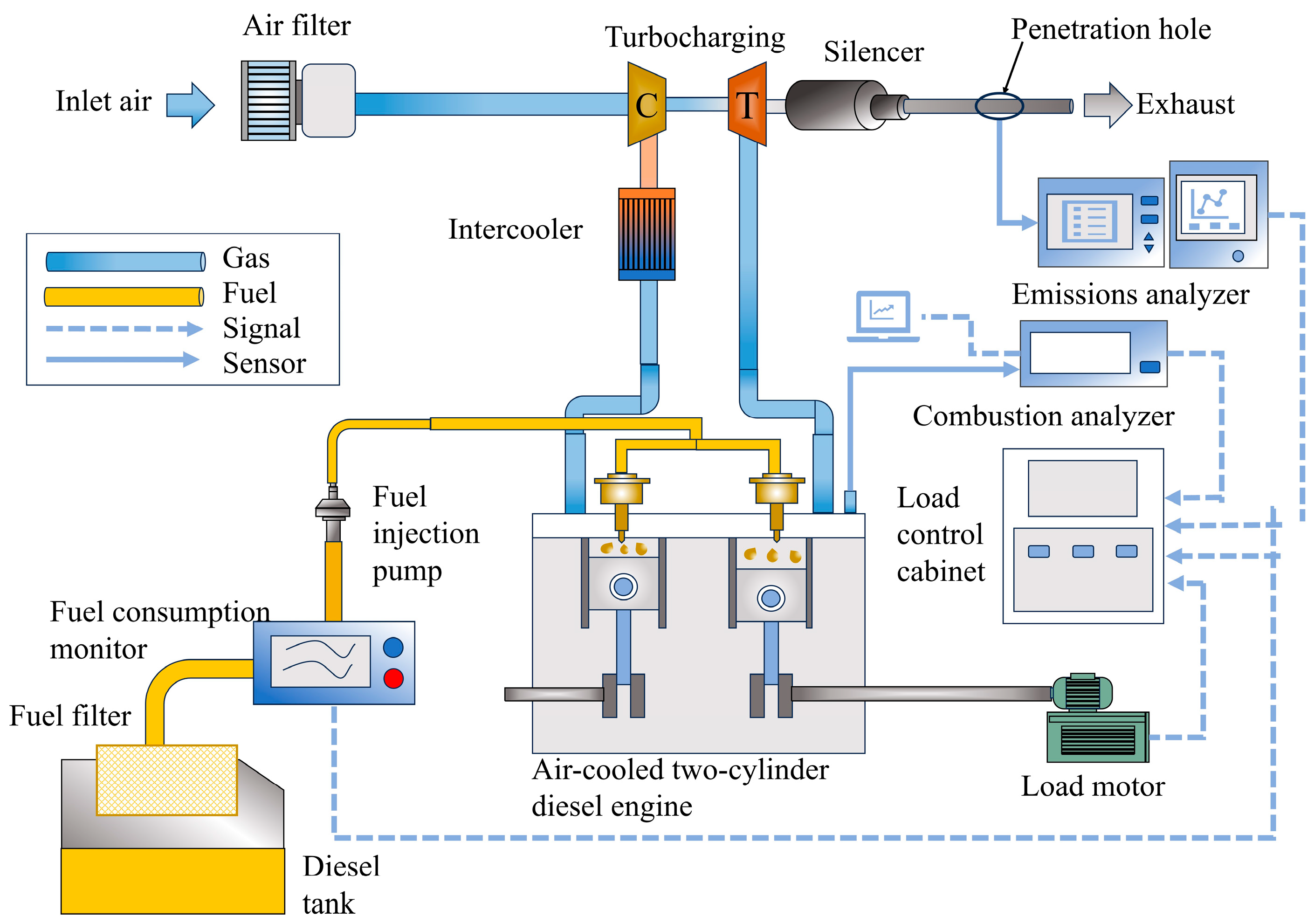
An air-cooled two-cylinder supercharged diesel engine was used in the cold start experiment. The engine parameters are shown in Table 1, and the schematic diagram of the test devices is shown in Figure 1. The test device mainly includes a two-cylinder turbocharged diesel engine, an electric dynamometer (Qice), a fuel consumption meter (Qice), a combustion analyzer (CA3004A21), and an exhaust emissions analyzer (Nanhua). The load motor (Senci SC18000) is connected to the output end of the diesel engine and is connected to the load motor through the output shaft cone. Moreover, the load control cabinet (Qice) is connected to the load motor to regulate its load parameters. A silencer is attached behind the turbine, and a long exhaust pipe is installed at the silencer outlet to install exhaust detection equipment. The test fuel used in this test was diesel and oil 15W-40. The laboratory is equipped with a ventilation system that can quickly remove the exhaust gas of the diesel engine. Hence, the intake of air is not affected by exhaust emissions during engine operation.
Combustion analysis was performed using a cylinder pressure sensor (Kistler 6050A) with an accuracy of ±1.5%. It was installed by machining threaded holes on the first cylinder head to ensure the smooth installation of the cylinder pressure sensor bushing and a good insulation seal. A combustion analyzer (CA3004A21) reads and analyzes the electrical signal generated by the cylinder pressure sensor and the electromagnetic signal generated by the speed sensor to form a waveform diagram.
In terms of exhaust gas detection, an NHA-6000 emission detector (Nanhua) was used to monitor exhaust emissions. The instrument can measure HC and NOX in exhaust emissions and the excess air coefficient λ in real-time, with a measurement accuracy of ±1%; the measurement is carried out at 0.5 m downstream of the exhaust system. In terms of exhaust gas measurement, an NHA-6000 emission analyzer (Nanhua) was employed to monitor exhaust emissions. The instrument is capable of measuring HC and NOx concentrations, as well as the excess air coefficient (λ), in real time, with a specified measurement accuracy of ±1%. The exhaust sampling location was positioned 0.5 m downstream of the exhaust system to ensure stable and representative measurements. An uncertainty assessment of key parameters, including in-cylinder pressure, HC concentration, and NOx concentration, indicated that the combined relative uncertainties are 3.5%, 3.8%, and 4.4%, respectively, all of which are within 5%. Therefore, the associated measurement uncertainties are not expected to have a substantive influence on either the qualitative trends or the quantitative conclusions presented in this study.

2.2. Experimental Method

According to the actual working condition of the diesel engine, the ambient temperature, oil temperature, and the speed of the starting stage were set to 273 K, 278 K, and 1500 rpm for all tests. After each cold start condition, a 5 min combustion analysis and emissions test were performed. Then, when the CR of the original machine was 18.5, the test was carried out under the conditions of 10, 15, 20, and 25 °CA BTDC, respectively, and the best injection timing selected. The fuel injection timing was regulated by the ECU using input signals from the crankshaft position sensor and the camshaft position sensor.
Under the condition that the optimal injection timing has been determined and other conditions remain unchanged, the CR was varied by adjusting the compression gap through the replacement of pistons with different crown heights. Specifically, pistons with increased crown heights were selected to reduce the compression gap, thereby increasing the geometric compression ratio, while the cylinder head, gasket thickness, and crank–connecting rod mechanism were kept unchanged. This approach ensured that variations in CR were achieved without introducing additional changes to the combustion chamber structure or thermal boundary conditions. During the piston replacement process, strict consistency of all experimental conditions was maintained, except for the piston configuration itself. After installation, the compression gap was measured using precision mechanical gauges at multiple crank angle positions near TDC to reduce the measurement uncertainty. Each piston configuration was measured repeatedly, and the averaged value was used to determine the final compression ratio, ensuring good repeatability and reliability. Subsequently, performance tests were conducted under compression ratios of 18.5, 19.5, and 20.5 to determine the optimal compression ratio. In order to minimize the error during the experiment, each experiment was tested three times.

2.3. Key Parameters

The injection timing and CR of the engine were quantitatively studied. The key combustion parameters such as maximum cylinder pressure (PM), maximum cylinder temperature (TM), the crank angle of maximum cylinder pressure (φPmax), and the crank angle of maximum cylinder temperature (φTmax) were systematically analyzed.
The combustion process of a diesel engine includes the combustion delay period, the combustion duration period, and the combustion late period. The delayed ignition timing affects the mixing uniformity of the diesel and air. The more evenly the fuel and air are mixed, the more thoroughly the combustion and the shorter the combustion time. However, excessive shortening of the combustion time may increase the explosion pressure in the cylinder and affect its durability. In this research, CA10 and CA90 are defined as the positions of the crankshaft when the 10% and 90% combustion process is completed, respectively. The ignition delay time is defined as the time from the start of injection to CA10, while the combustion duration is defined as the crankshaft angle between CA10 and CA90.

3. Simulation Model Establishment and Verification

Engine operating conditions are complex (high pressure, high temperature, high frequency), and it is difficult to obtain accurate statistical data. In addition, it is costly and challenging to test the cold start of diesel engines under extreme conditions. Therefore, in order to study the cold start performance, an engine simulation model was established for calculation in this research.
The one-dimensional solutions of the Navier–Stokes equations are used to predict the flow behaviors such as intake, fuel, products, and exhaust in internal combustion engines. The equations were used in the flow model, which assumes that the scalar variables (such as pressure, temperature, density, etc.) are uniform, while the vector variables (such as flux, velocity, etc.) were calculated at each boundary.
One of the commonly used heat release rate calculation models is the Wiebe model, which helps achieve the optimal balance between computational efficiency and model expressiveness, while maintaining high accuracy. By using the Wiebe combustion model, semi-empirical formulas were derived from chemical reaction kinetics in this research:
X = 1 e 6.908 φ φ B φ Z m + 1
Taking the derivative of both ends of the above formula φ yields the following:
d X d φ = 6.908 m + 1 φ z φ φ B φ z m e 6.908 φ φ B φ z m + 1
where X is the percentage of fuel combustion; m is the combustion quality index; φ is the instantaneous crankshaft angle; φ B is the starting angle of combustion; φ Z is the combustion duration angle.
In the process of engine operation, the working medium is based on the equations of energy conservation, mass conservation, and ideal gas.
The energy conservation equation is the following:
d U = d W + d Q i + j h j d m j
where U represents the internal energy of the system, W represents the mechanical work acting on the piston, Q i is the heat exchanged through the system boundary, h j is the specific enthalpy, and h j d m j is the energy brought into or brought out of the system by mass d m j .
The mass conservation equation is the following:
d m d φ = d m s d φ + d m e d φ + d m B d φ
where m represents the quality of the working medium in the system, m s represents the quality of air inflow in the cylinder, m e represents the quality of exhaust gas outflow in the cylinder, and m B represents the instantaneous injection quality of fuel in the cylinder. Since the known variables are often not direct mass values in actual calculation and numerical simulation, the above formula can be converted as follows. When the known diesel engine cycle injection volume is g f   ( k g / c y c ) and the fuel in the cylinder has been burned
d m d φ = d m s d φ + d m e d φ + g f d X d φ
Nitric oxide (NO) formation is highly sensitive to the peak in-cylinder temperature, making accurate temperature resolution essential in combustion modeling. Accordingly, when temperature zoning is available, a two-temperature-zone configuration is adopted, as single-zone temperature models fail to adequately capture the maximum cylinder temperature. The NO formation is predicted using the extended Zeldovich mechanism, in which the reaction rates of the three elementary reactions are evaluated using the corresponding rate constants k 1 , k 2 , and k 3 .
N2 oxidation rate equation: O + N2 = NO + N . N oxidation rate equation: N + O2 = NO + O. OH reduction rate equation: N + OH = NO + H.
k 1 = F 1 7.60 10 10 e 38000 * A 1 T b ; k 2 = F 2 6.40 10 6 T b e 3150 * A 2 / T b ; k 3 = F 3 4.10 10 10
where F 1 is N2 oxidation rate multiplier, F 2 is N oxidation rate multiplier, F 3 is OH reduction rate multiplier, A 1 is N2 oxidation activation temperature multiplier, A 2 is N oxidation activation temperature multiplier, T b is burned sub-zone temperature (K).
The kinetic HC calculation is based on the following rate equation:
R k = A 2000 R s [   Fuel   ] O 2 e 1600 K * B / T
where R k is kinetic burn rate (mass per volume per sec), R s is burn rate (mass per volume per sec), A is pre-exponent multiplier, B is activation temperature multiplier, T is mass-averaged overall cylinder temperature (K), [Fuel] = Mass fraction of fuel, [O2] = Mass fraction of O2.
According to the working principle of diesel engines, GT-Power v2016 simulation software (developed by Gamma Technologies) was used to perform the simulation by inputting the test control parameters to ensure the effectiveness of the model. By simulating the working conditions under various extreme climatic conditions and further studying the environmental conditions of high cold and high altitude, orthogonal tests were carried out in the simulation software with the ambient temperature set to 273 K, injection timing set to 5~25 °CA BTDC, and CR 15.5~21.5 to determine the best combination of injection timing and CR. At the same time, different intake pressures and temperatures were set to simulate the working conditions under different altitudes and temperatures. For every 1000 m increase in altitude, the intake pressure decreases by approximately 10 kPa. Specifically, the concentrations of HC and NOX at 263 K temperature and 0~5000 m altitude were simulated. In this research, high-altitude and low-temperature start-up were simulated and analyzed simultaneously. The emission concentration was simulated at the altitudes of 1000 m and 2000 m, and temperatures of 253 K and 263 K. At the same time, the emission concentrations at altitudes of 3000, 4000, and 5000 m, and at temperatures of 243, 253, and 263 K, respectively, were also simulated to explore the influencing factors of cold start emission of diesel engines.
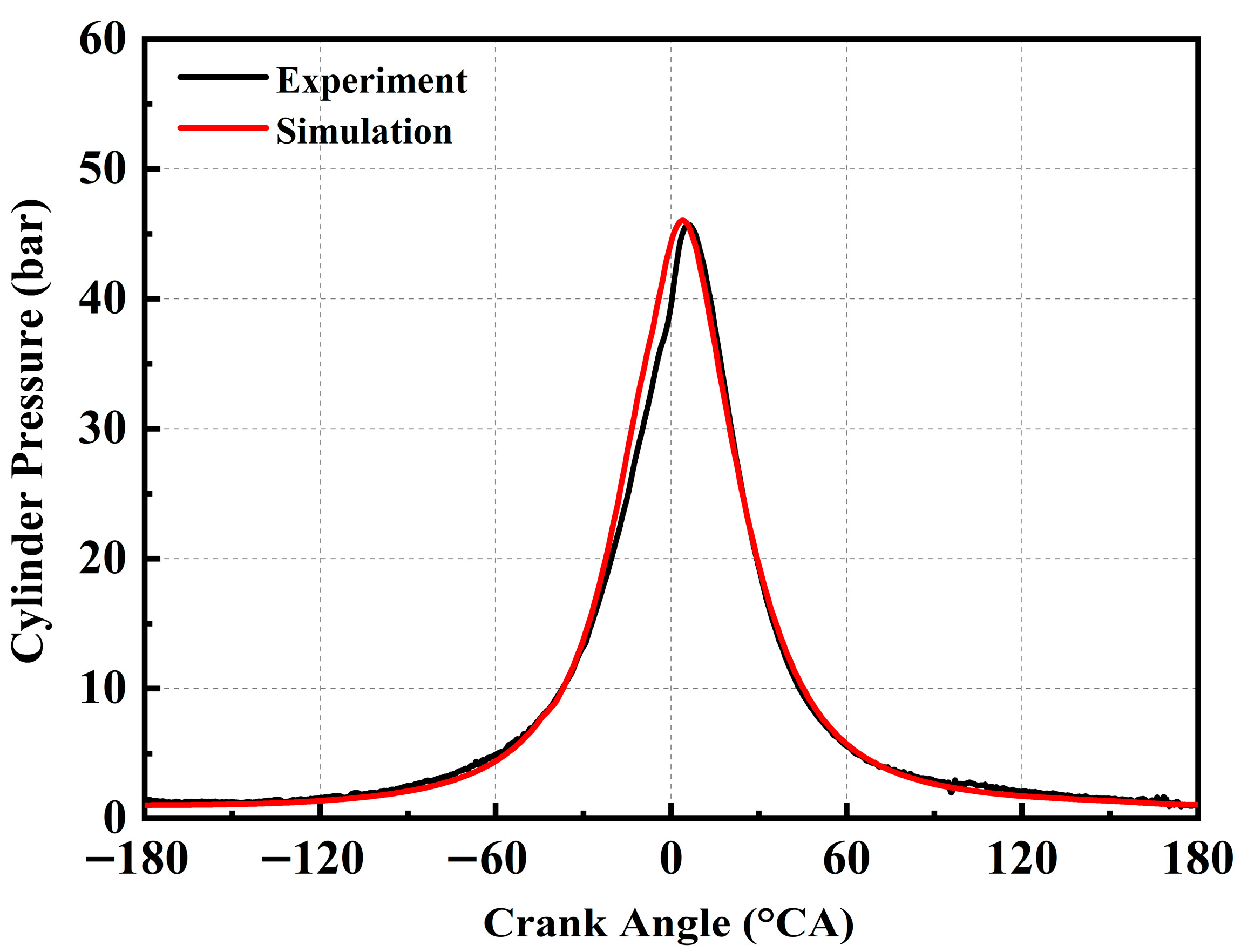
In order to verify the accuracy and reliability of the model, this simulation was based on the verification of cylinder pressure when the diesel engine speed was 1500 rpm under the cold start stage, as shown in Figure 2. It can be seen that the simulation curve is basically consistent with the experiment. The PM of the simulation is 45.70 bar, and the PM of the experiment is 43.87 bar, with a small error of about 4.2%. Moreover, as shown in Table 2, with the key performance parameters, including brake specific fuel consumption (BSFC), turbine inlet pressure (TIP), and turbine inlet temperature (TIT), all discrepancies between the simulation and experimental results are within 5%. This level of agreement indicates that the deviations fall within an acceptable range, demonstrating that the simulation model provides reliable predictions and that the calculated results can be effectively used for further analysis.
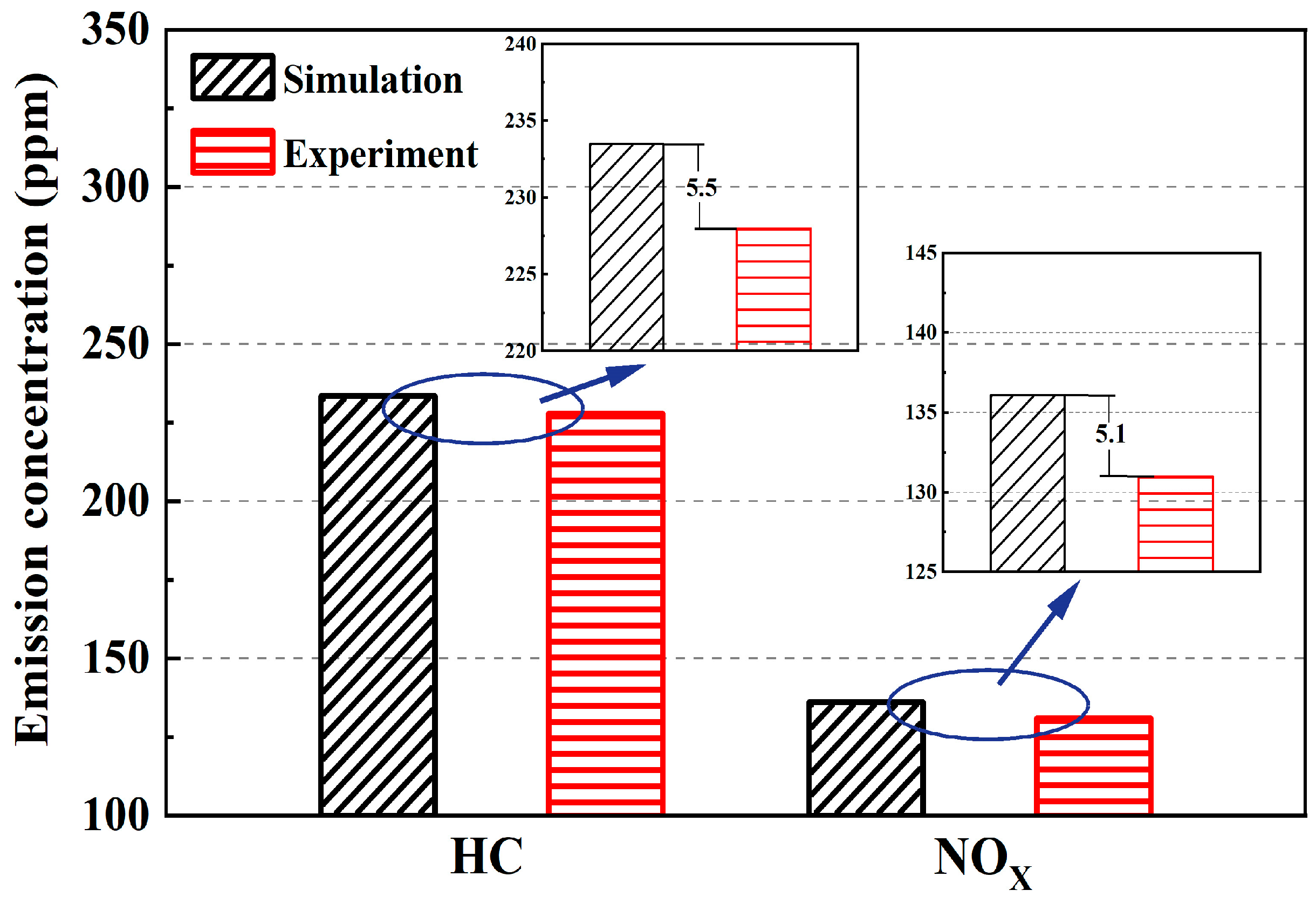
Furthermore, a simulation to validate the accuracy and reliability of the emission data was performed with a condition of an injection timing of 20 °CA BTDC and a compression ratio of 19.5 in the cold start stage, as shown in Figure 3. To account for potential experimental errors, the validation focused on the stable operation stage. The results indicate a discrepancy of 5.5 between the experimental and simulated NOX concentrations, corresponding to a relative error of approximately 2.3%. For HC emissions, the difference between the experimental and simulated values was 5.1, resulting in a relative error of about 3.8%. These discrepancies fall within an acceptable range, demonstrating that the model’s predictions are sufficiently accurate for practical utilization.

4. Results and Discussion

In this chapter, the optimal injection timing and CR combination are determined by the experimental results shown in Section 4.1 and Section 4.2, with the corresponding simulation analysis presented in Section 4.3. Then, in Section 4.4, simulation is used to further investigate the emission characteristics under the environmental conditions of high cold and high altitude by changing the temperature and pressure of the air inlet.

4.1. Effects of Injection Timing on Cold Start Performance

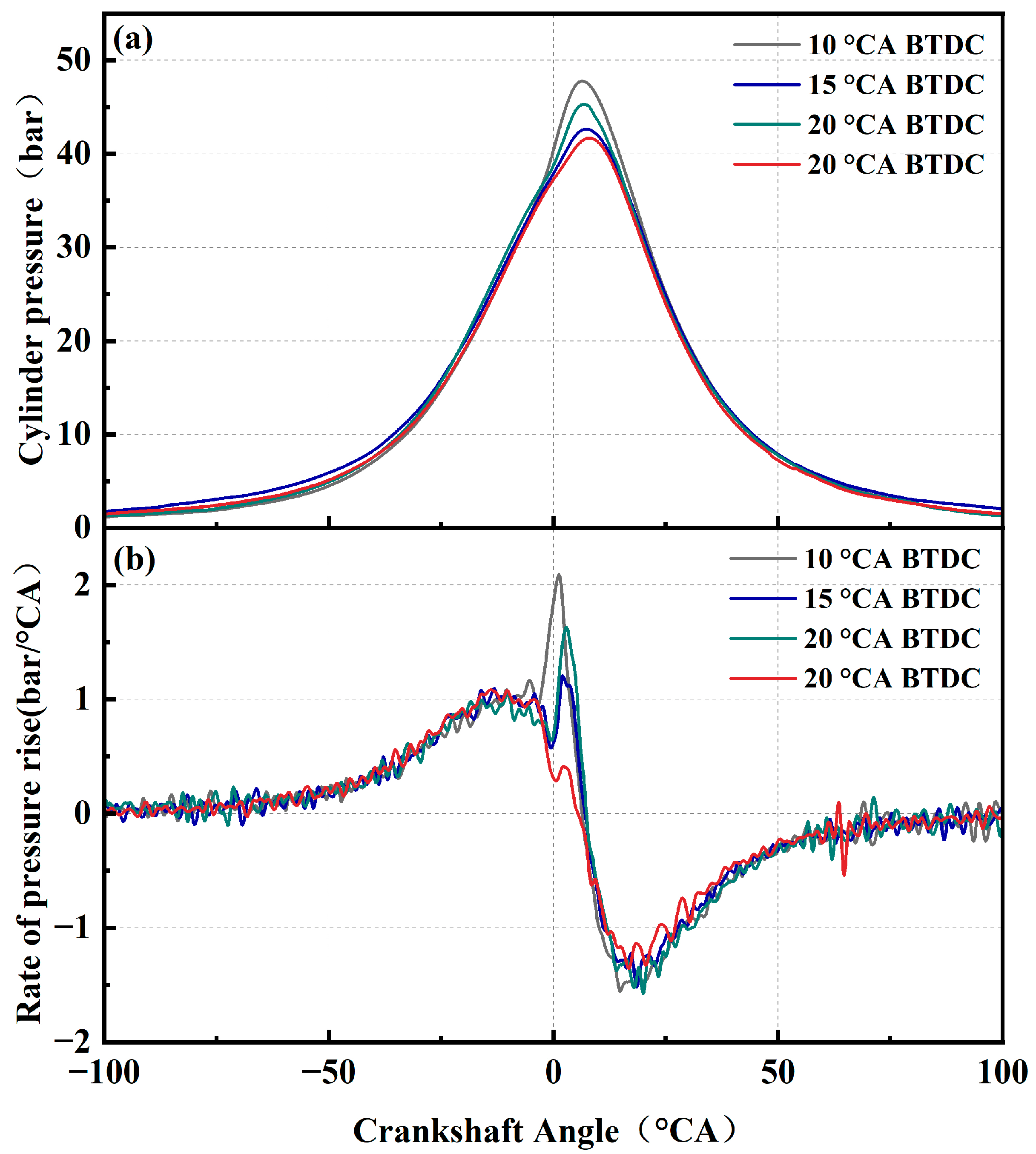
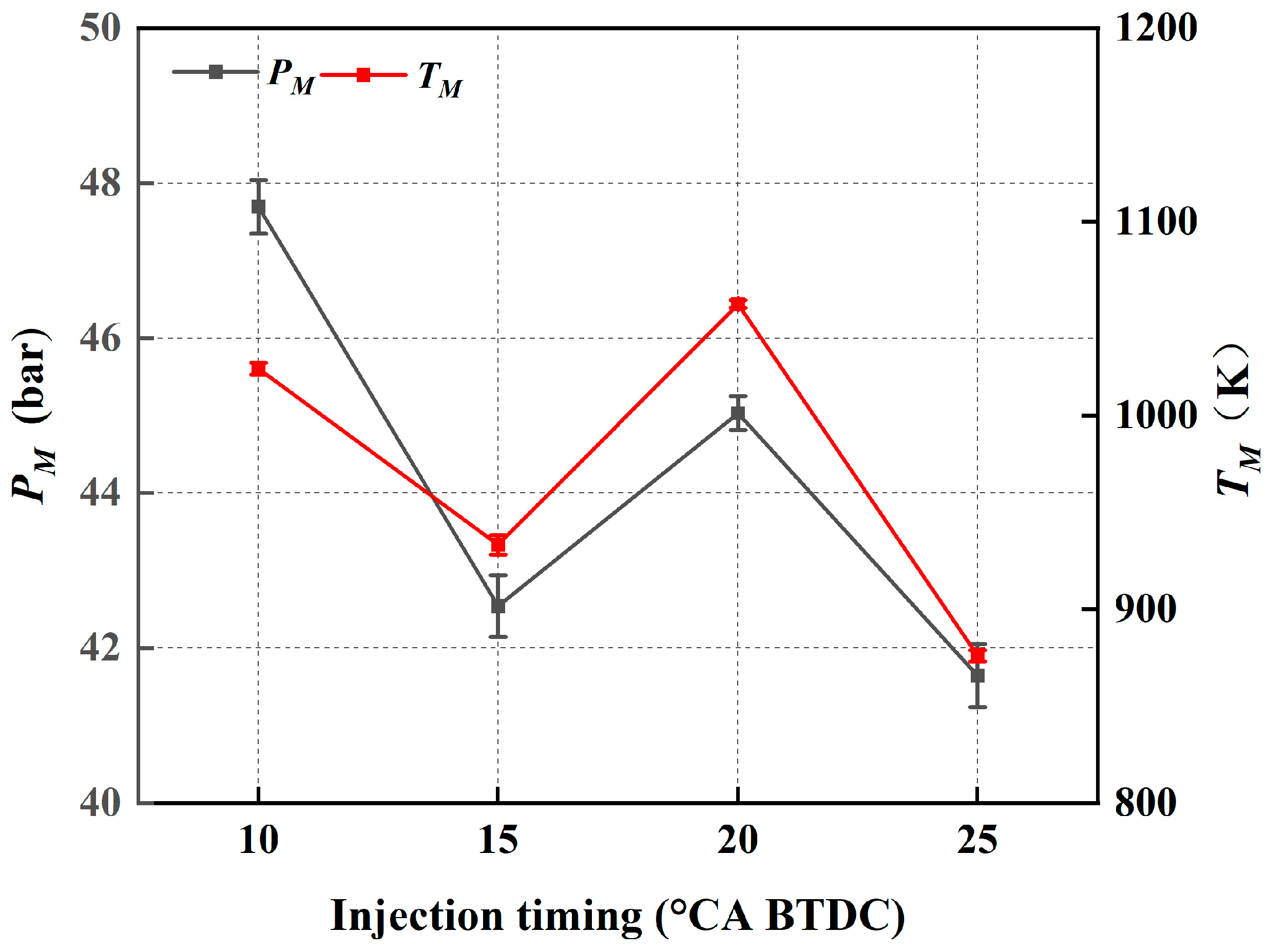
Figure 4 shows the influence of different injection timings on cylinder pressure, and Figure 5 shows PM and TM in detail.
It is observed that when the injection timing is 25 °CA BTDC and 20 °CA BTDC, the PM reaches 41.7 bar and 45.3 bar, respectively. When the injection timing is later than 15 °CA BTDC, the PM reaches 42.7 bar. This is because the delayed injection timing allows fuel to be injected late in the compression stroke or at the beginning of the expansion stroke, thereby delaying the start of combustion and extending the time of the compression stroke, which leads to higher cylinder pressure and increased combustion chamber pressure. However, when delayed to 10 °CA BTDC, the PM is 47.8 bar. This indicates that the delayed injection timing helps the fuel and air mix fully, and the mixing in the combustion chamber is more uniform, thus increasing the combustion efficiency and the maximum cylinder pressure. Figure 4b shows the pressure rise rate of the diesel engine after starting at different injection timings, reflecting the combustion efficiency. At the injection timing condition of 10 °CA BTDC, the higher rate of pressure rise indicates that the diesel engine can more efficiently convert fuel into useful work, thus reducing energy waste and heat loss.
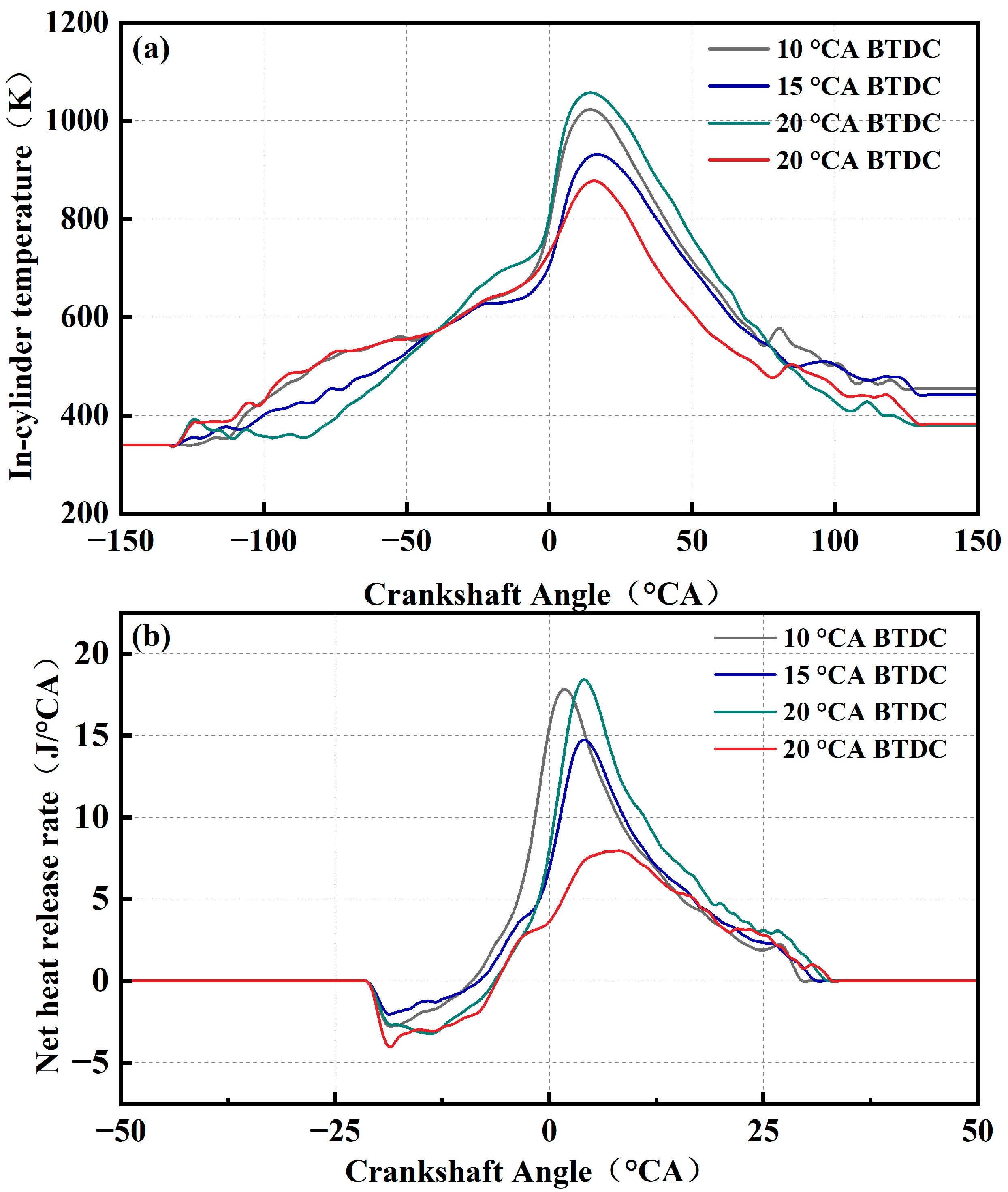
Figure 6a further shows that before the crankshaft reaches TDC, the temperature in the cylinder rises the slowest at 20 °CA BTDC. The highest rise occurs at 25 °CA BTDC. After the top dead center, the temperature rise rate is the fastest at 20 °CA BTDC, although the fuel injection timing is slightly later. In the late compression stroke, the ignition timing is synchronized with the rapid rise in pressure, accelerating the combustion rate and finally making the cylinder temperature reach the maximum of 1056 K as in Figure 5. Figure 6b shows the change law of the net heat release rate of the diesel engine, which is consistent with the trend of the cylinder temperature, indicating that the appropriate advance injection timing can make the fuel enter the cylinder in advance, which is conducive to the full mixing of the fuel and intake air, and achieves better combustion efficiency and heat release effect. However, excessive late injection timing can cause the fuel to fail to burn completely, reduce the net heat release rate, and increase the generation probability of pollutant emissions.
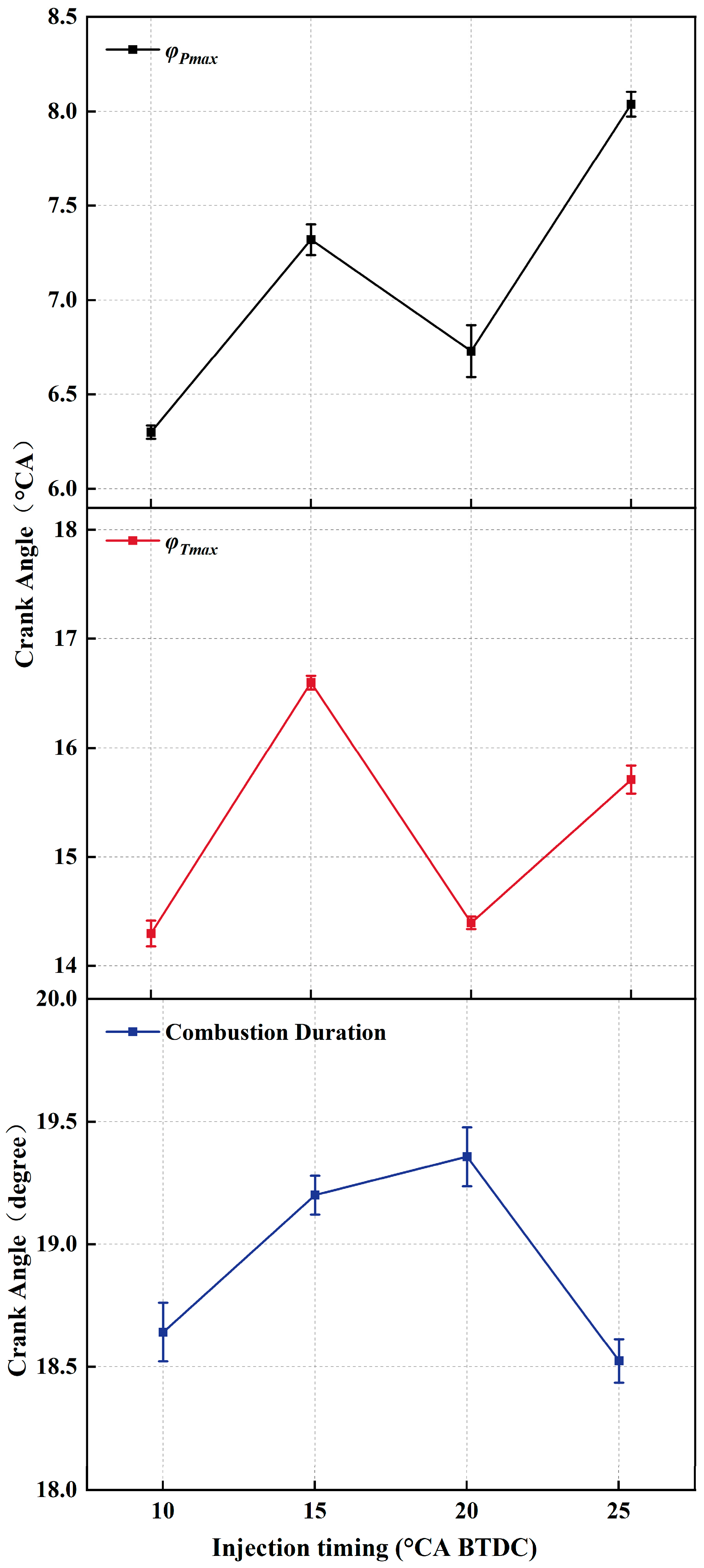
As can be seen from Figure 7, when the injection timing is set to 20 °CA BTDC, the mixing time of the fuel and air is extended, making the combustion process more complete, which helps to improve the heat release rate. This full mixing and combustion cause the cylinder to release a large amount of energy, thereby increasing the cylinder pressure. However, since combustion occurs earlier in the later part of the piston compression stroke, φPmax and φTmax appear earlier. At this time of fuel injection, although the combustion starts early, the progress of the whole combustion process is relatively slow. This may be because early combustion occurred in a low-temperature environment, resulting in slower flame propagation. Therefore, although the combustion start time is earlier, the whole process takes longer, resulting in a longer combustion duration. This also explains why, under this condition, despite the advance of φPmax and φTmax, the combustion duration reaches a maximum of 19.4 °CA. In addition, the combination of higher cylinder pressure and longer combustion duration indicates that although the combustion process is prolonged, the combustion efficiency is improved due to the injection timing adjustment, so the final cylinder pressure is maintained at a higher level. This shows that although the injection timing makes φPmax and φTmax appear in advance, the high efficiency and stability of combustion are ensured due to sufficient mixing and high-pressure combustion.
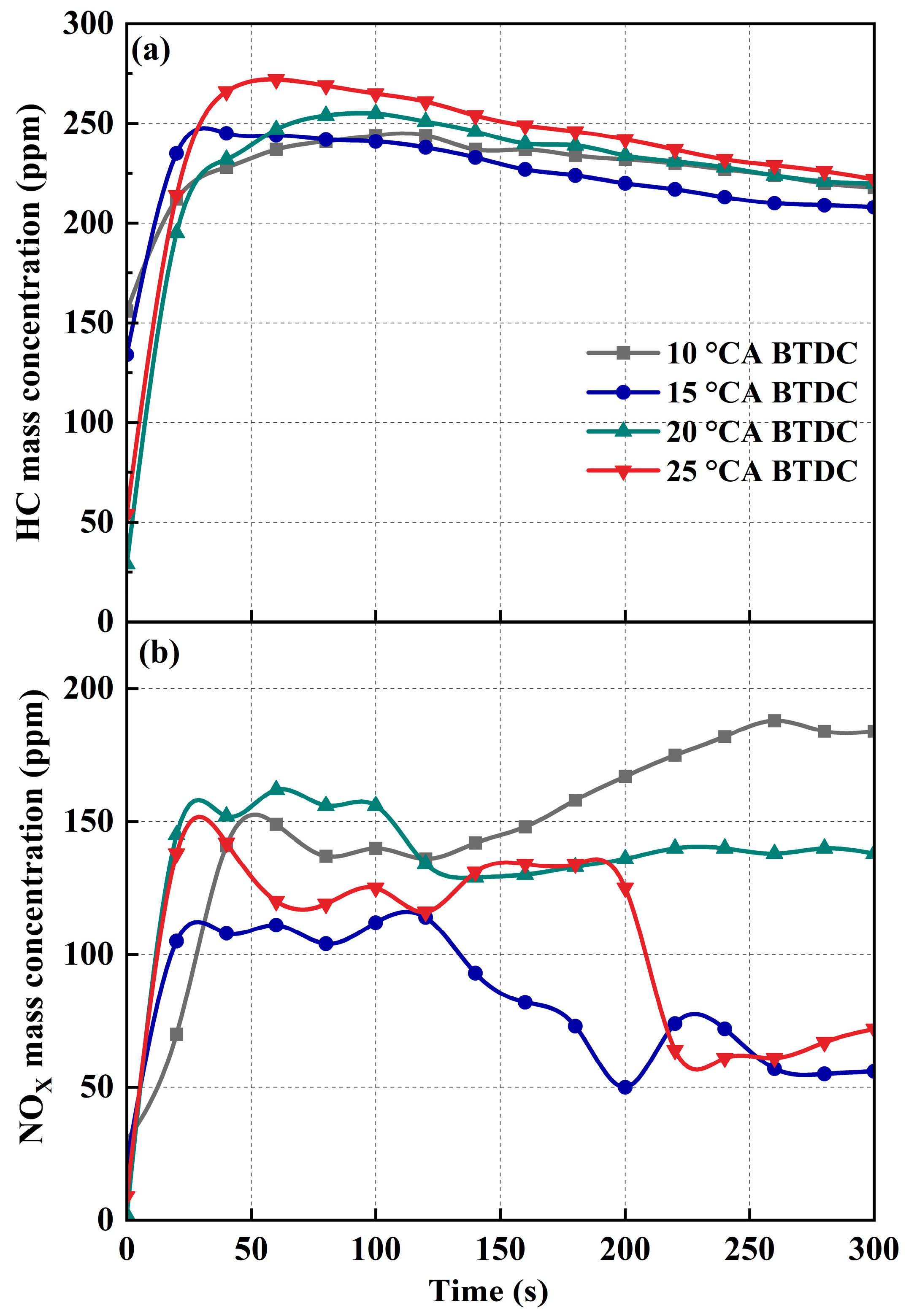
As shown in Figure 8a, the emission trend of HC increases first, reaches a peak, and then becomes stable. However, as the timing of the injection is delayed, the HC emissions increase. This is because the injector delays the injection of oil. On the one hand, the enfranchisement effects of the air in the combustion chamber during the fuel injection process are weakened, resulting in poor mixture uniformity, so some fuel cannot be fully burned. On the other hand, the amount of fuel injection during the diffusion combustion period is increased, and the combustion of the mixture is restricted by the diffusion rate and diffusion uniformity.
Figure 8b shows that at 15 °CA BTDC and 25 °CA BTDC the instantaneous emission of NOX gradually decreases after reaching a peak at about 40 s of operation. At 10 °CA BTDC and 20 °CA BTDC, the instantaneous emission of NOX increases in the initial stage, fluctuates between 40 s and 120 s, and finally increases. It is obvious that delayed injection timing can significantly reduce NOX emissions. Because the injection timing directly affects the combustion delay period and the amount of fuel injected during the period when the injection timing is delayed, the combustion delay period is shortened, the amount of fuel accumulated in the combustion chamber before firing is reduced, and the maximum temperature and pressure in the cylinder are reduced during the premixed combustion, resulting in a softer combustion process, suppressing NOX formation. In general, the impact of injection timing changes on HC is relatively small, and the impact on NOX emissions is larger; this is because, during the cold start process, the diesel engine operating load is low, the injection amount is less, the cylinder temperature is low, and the oxidation effect is weak, resulting in HC emissions with the injection timing being negatively correlated. However, in the cold start stage, incomplete combustion often leads to a large amount of instantaneous emissions. Hence, complete combustion and reduced emissions can be obtained due to the relatively high cylinder pressure and cylinder temperature at the start of the fuel atomization and mixing effect. Based on the above combustion and emission analysis, when the injection timing is 20 °CA BTDC, the diesel engine shows relatively better cold start combustion performance and emission effect.

4.2. Effects of CR on Cold Start Performance

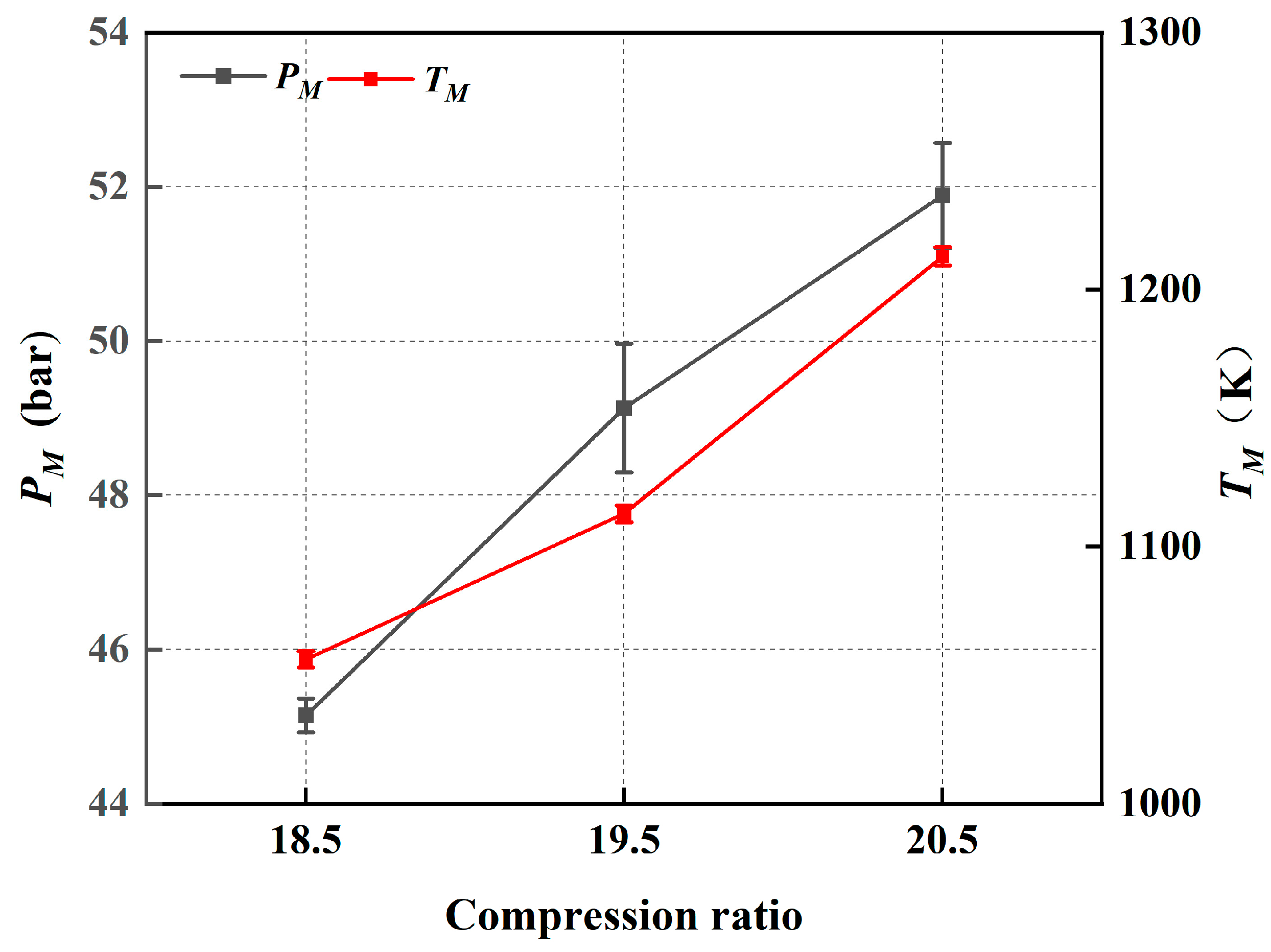
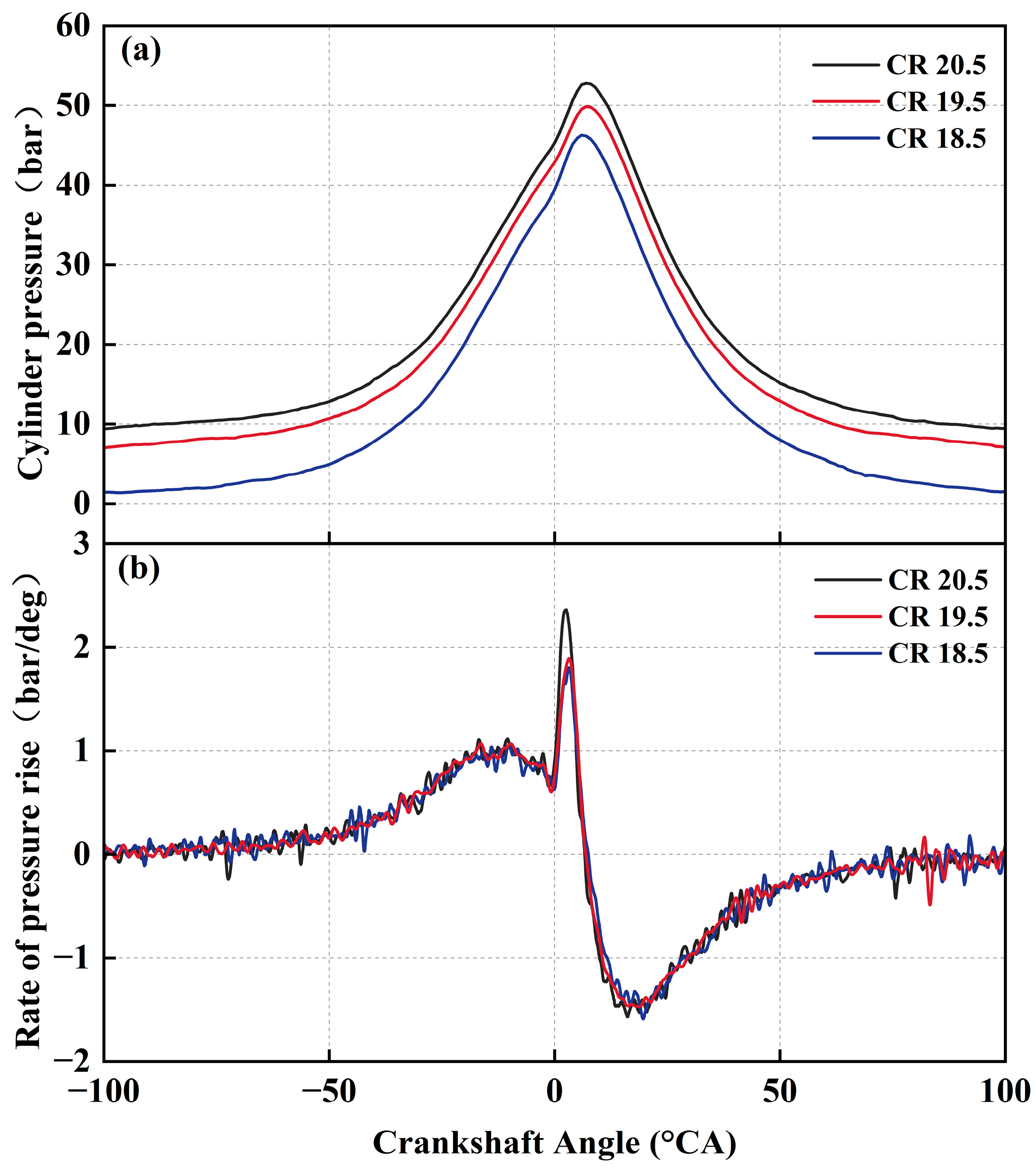
Figure 9 shows how the cylinder pressure changes as the CR changes. The variation trend of the peak cylinder pressure is shown in Figure 10. It can be seen from Figure 9a that when the CR is 20.5 and 19.5, the cylinder pressure curves almost coincide in the rising stage. In the range of crankshaft angle of −20 °CA to 20 °CA, the cylinder pressure difference between the two is not more than 5.5%. Therefore, when the CR reaches 20.5, the cylinder pressure and pressure growth rate reach the best state, which helps to improve the combustion efficiency in the cold start stage.
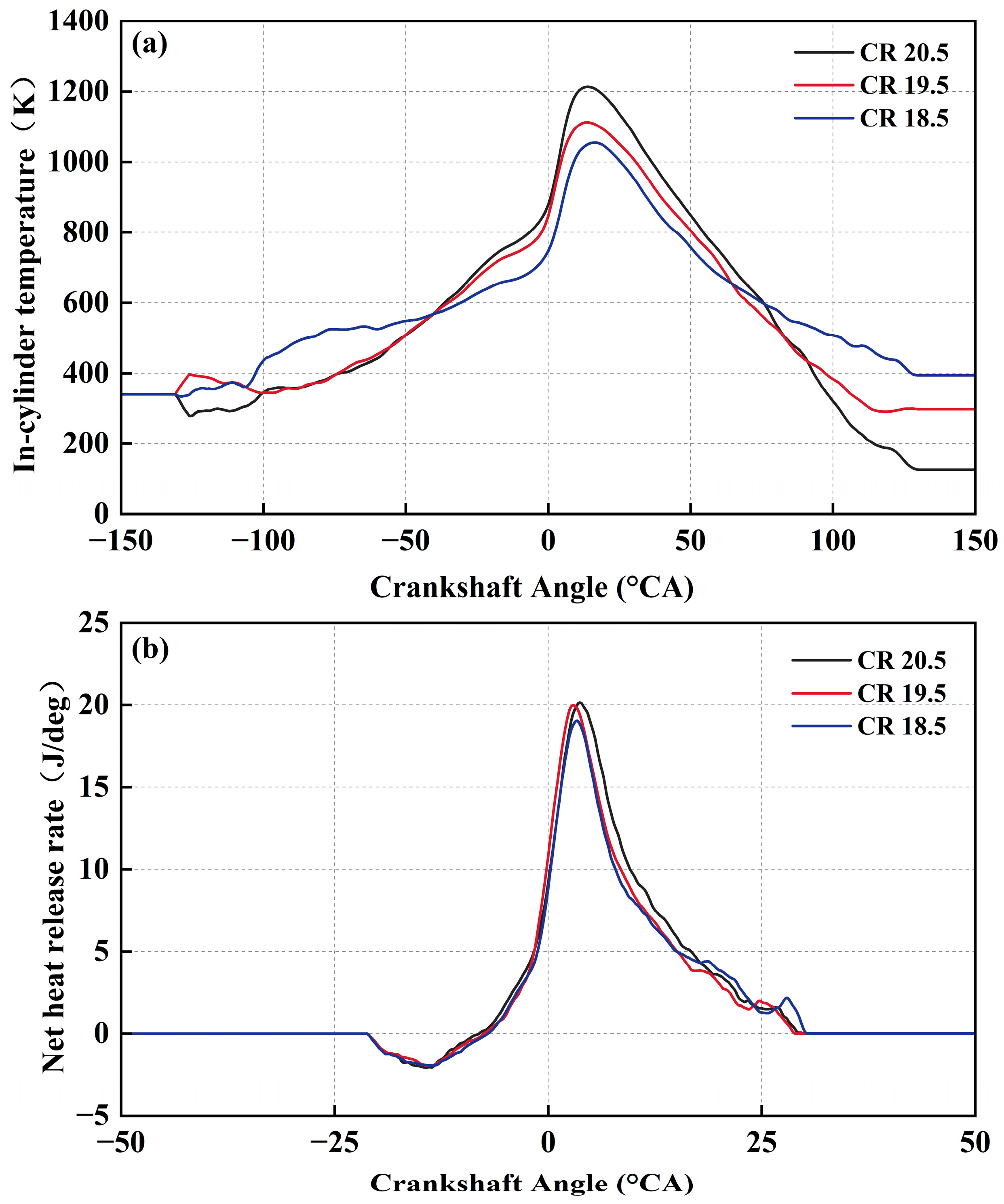
From Figure 10 and Figure 11a, it can be seen that as the CR increases, the peak temperature of the cylinder also increases. This is because, during the cold start process, the high cylinder pressure promotes the complete atomization and combustion of the fuel. In the cold start stage of low cylinder pressure, the cylinder pressure and temperature can be effectively increased by appropriately increasing the CR, thus significantly improving the cold start performance. Moreover, as shown in Figure 11b, the curves of net heat release rate under different CRs are similar, and the peak value is around 20.5 J/deg. This indicates that the CR has little effect on the net heat release rate.
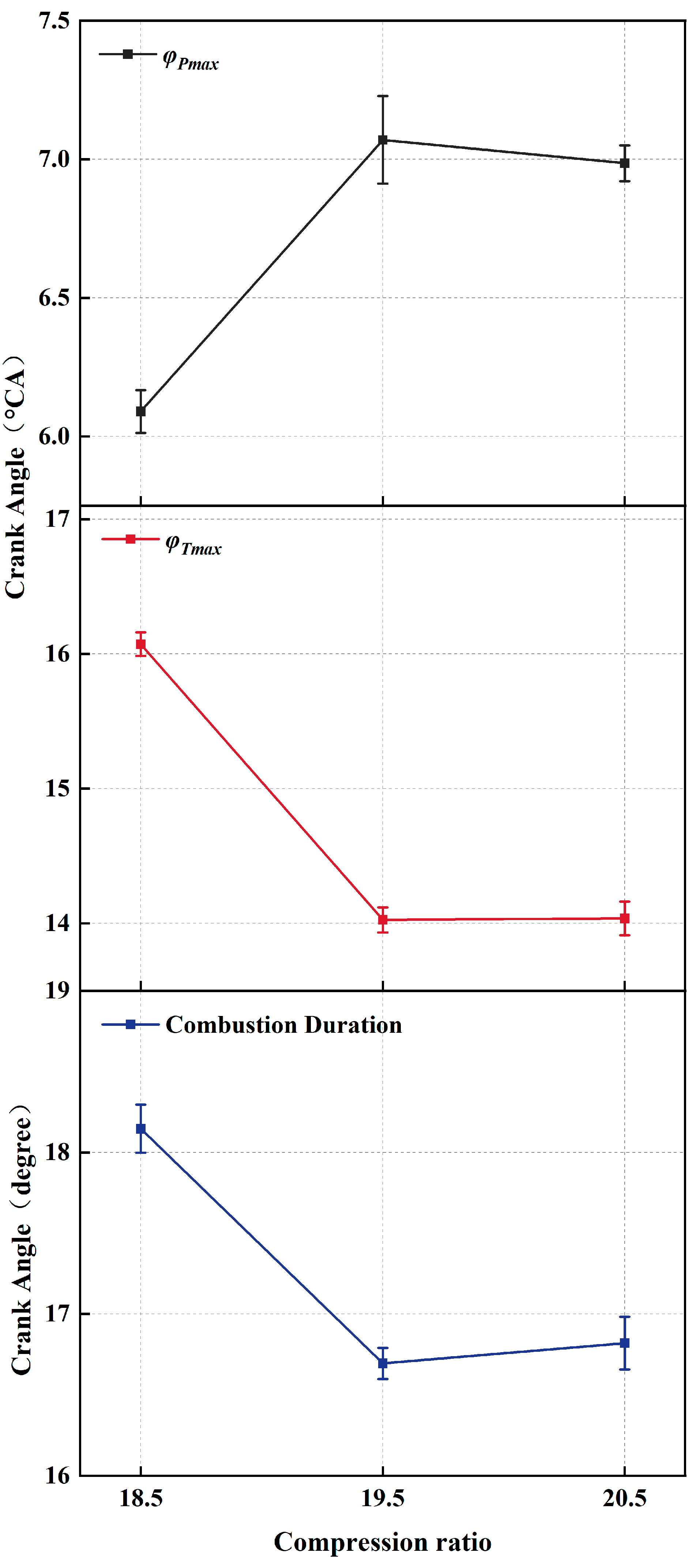
Figure 12 shows the φPmax, φTmax and combustion duration under different CRs. When the CR increases from 18.5 to 20.5, the pressure and temperature in the cylinder during the combustion process rise significantly, making the combustion process more intense and rapid. The peak of cylinder pressure in the later period of compression stroke leads to the advance of φPmax. In addition, the decrease of φTmax indicates that the peak of combustion temperature is also reached earlier. The shortened combustion duration is due to the higher CR, which accelerates the combustion reaction and improves the energy release efficiency. These phenomena show that by increasing the CR, the diesel engine can achieve higher combustion efficiency in the cold start stage, thereby improving the overall performance.
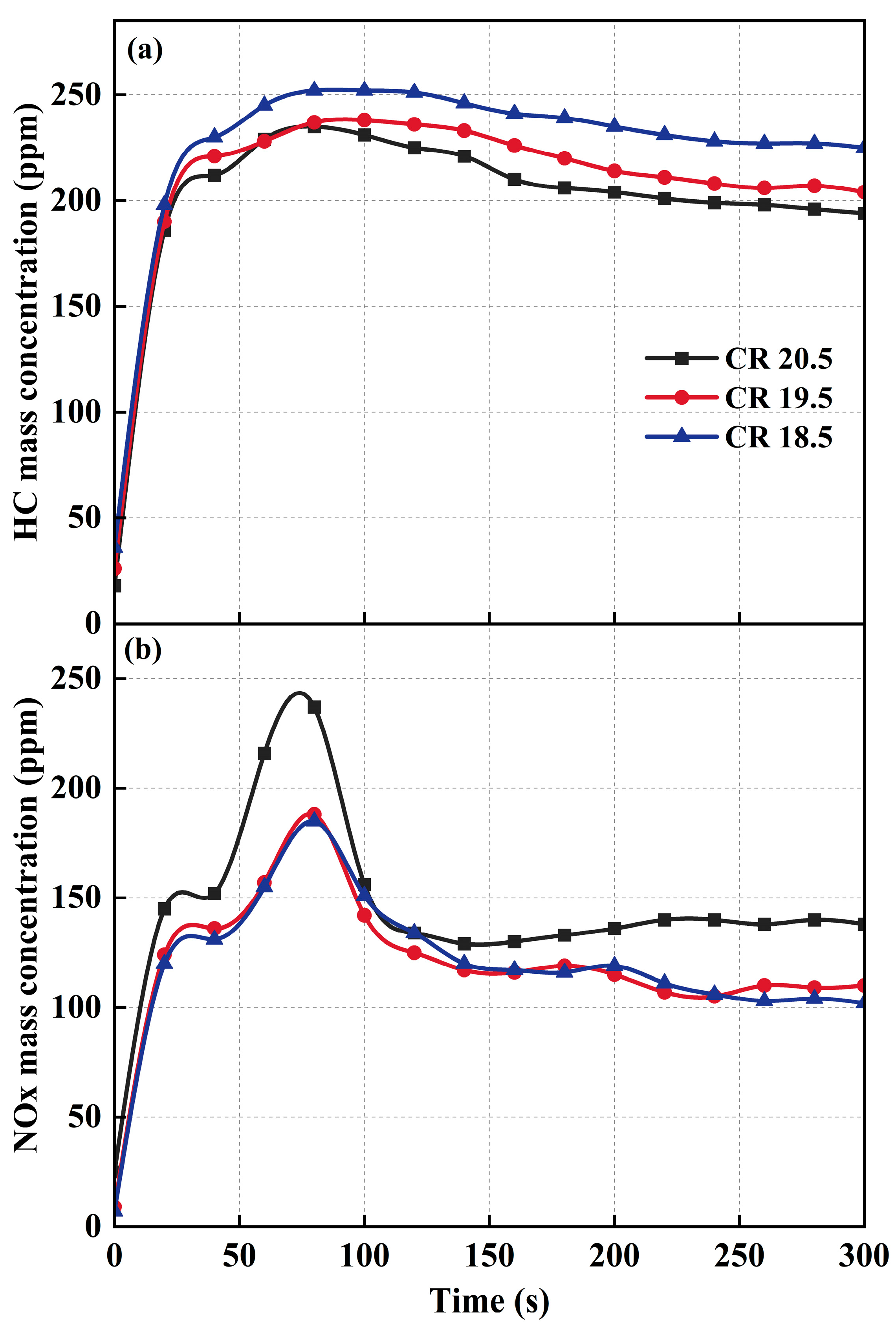
Figure 13 shows pollutant emissions under different CRs. It can be seen from Figure 13a that under different CRs, the instantaneous emission value of HC reaches its maximum value within 80–100 s. This indicates that increasing the CR can improve the combustion efficiency of the fuel, and the fuel is burned more completely, thus reducing the HC emissions.
As is noticeable from Figure 13b, when the CR is set at 19.5 and 18.5, the instantaneous emission of NOX is relatively close, and its peak values are 188 ppm and 185 ppm, respectively. However, when the CR is 20.5, the peak instantaneous NOX emission is greatly increased to 240 ppm, with an increase of about 27.7%. An increase in the CR leads to an increase in the temperature in the cylinder and promotes the combustion reaction, which may increase NOX emissions. At high temperatures, the reaction probability of N and O to form NOX increases. Although the overall combustion effect is optimal at 20.5, the rise in cylinder pressure and temperature also increases NOX emissions. A comprehensive analysis shows that the combustion and emission performance of the diesel engine is relatively good when the CR is 20.5 and 19.5. Hence, considering the emission level of HC and NOX, the CR is preferred to be 19.5 based on the experimental results of Section 4.2.

4.3. Influence of Different Injection Timing and CR on Cold Start Emission

4.3.1. HC Emission

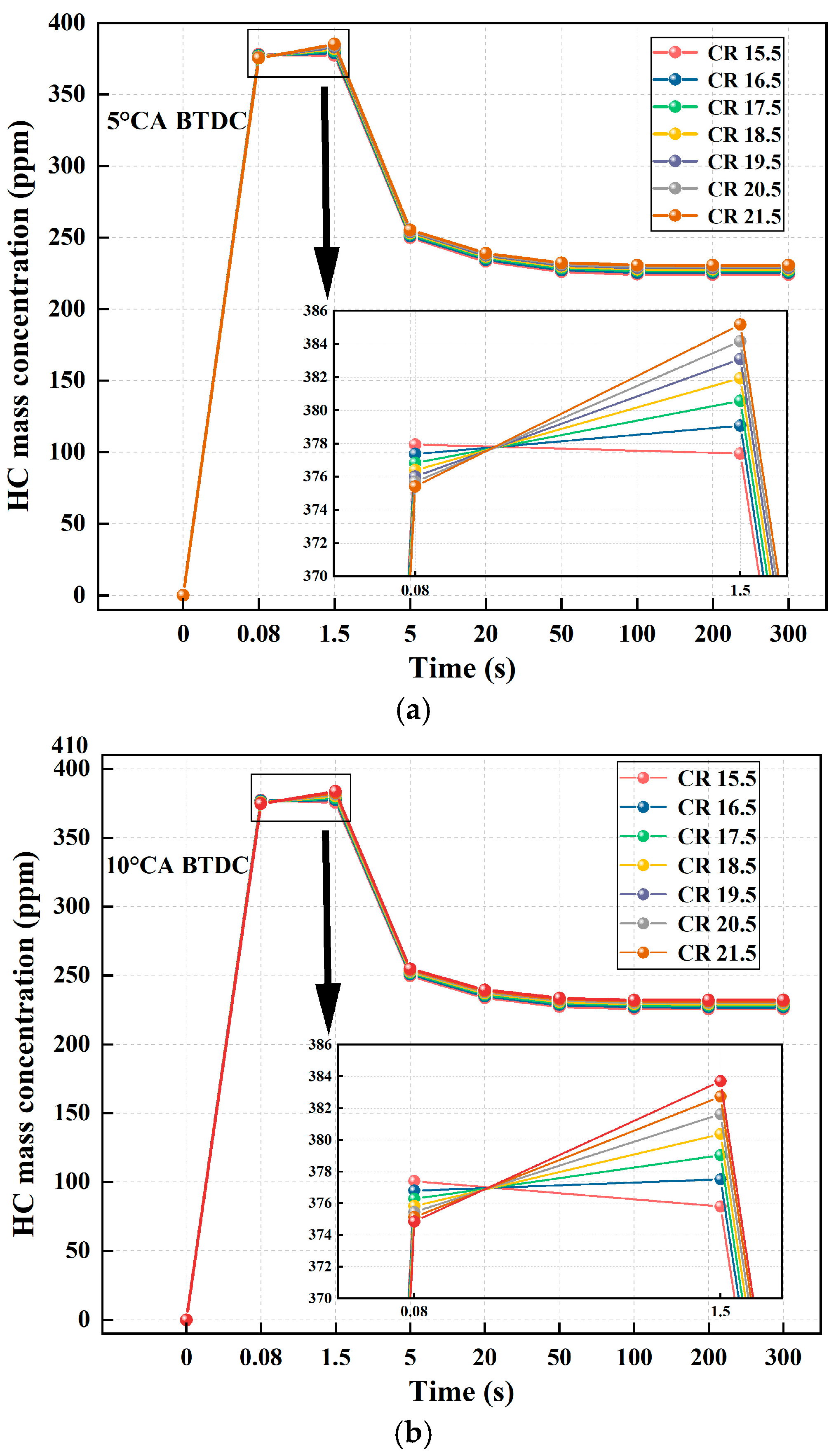
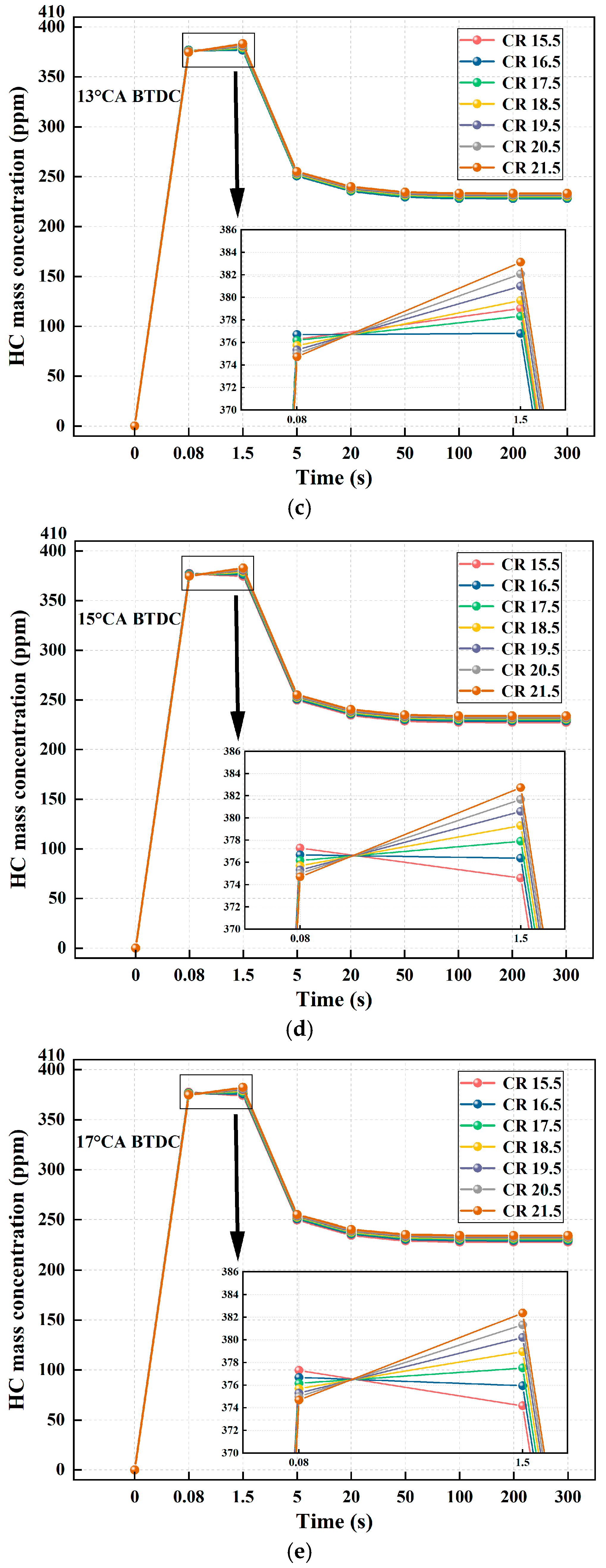
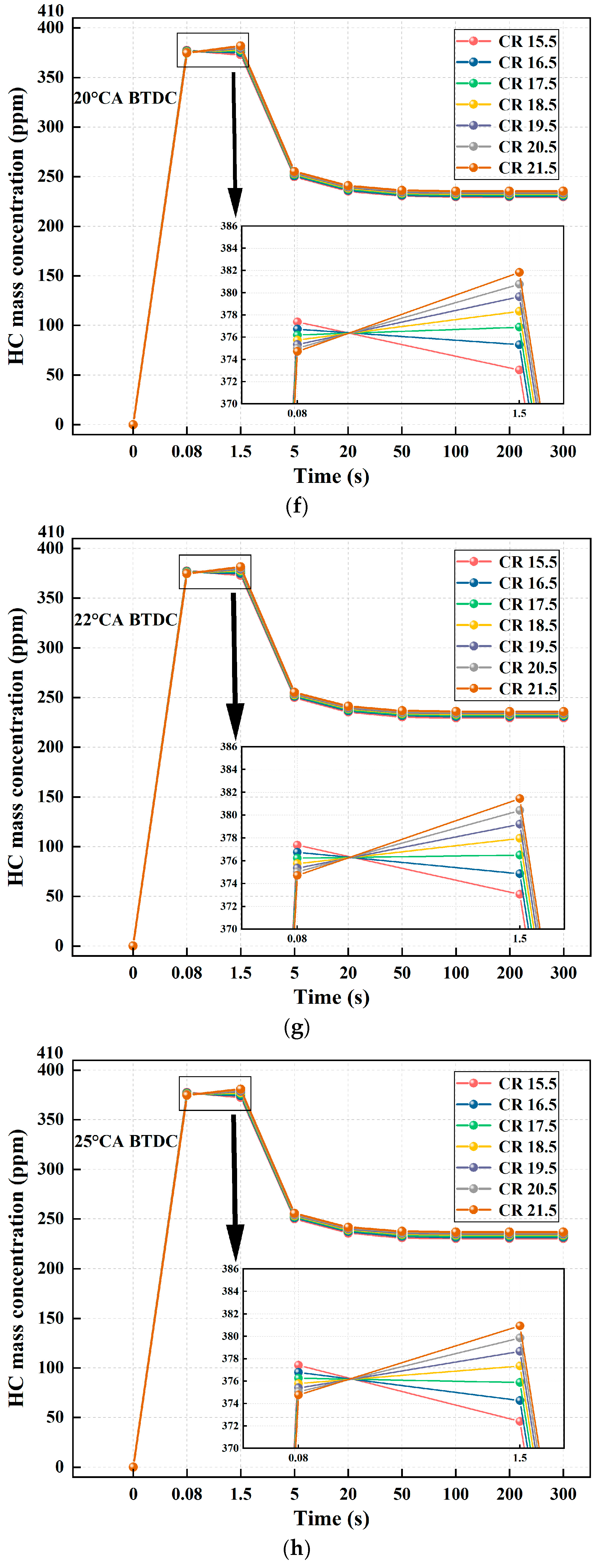
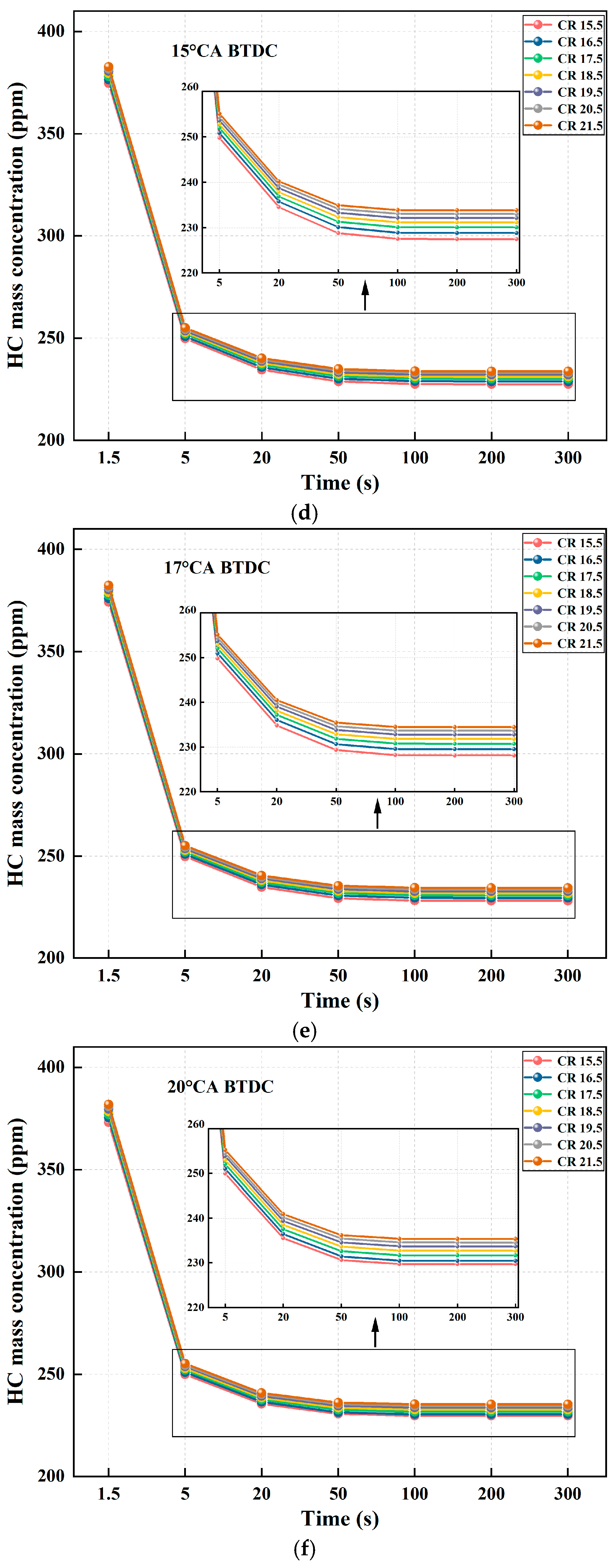
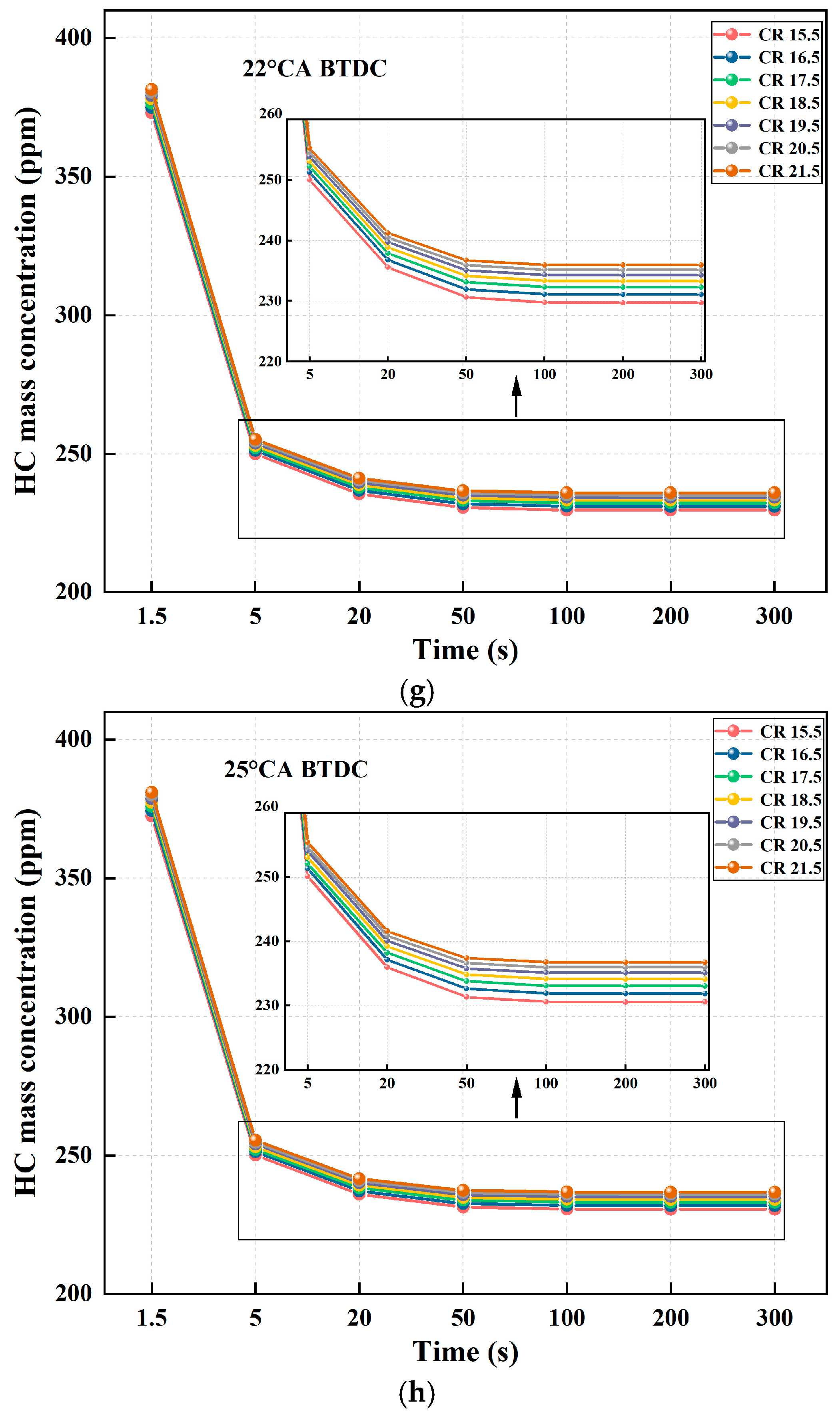
Figure 14 shows the influence of different injection timings and CR on HC mass concentration within 300 s. It can be seen that HC concentration reaches its peak immediately after the engine starts and then gradually decreases and becomes stable. This is due to the low temperature in the cylinder at the initial cold start of the diesel engine, which prevents the fuel from being fully atomized and burned, resulting in a large amount of unburned HC emissions [51]. With the engine’s operation, the temperature in the cylinder gradually increases, the fuel atomization effect and combustion efficiency slowly improve, and the HC emissions decrease and eventually stabilize.
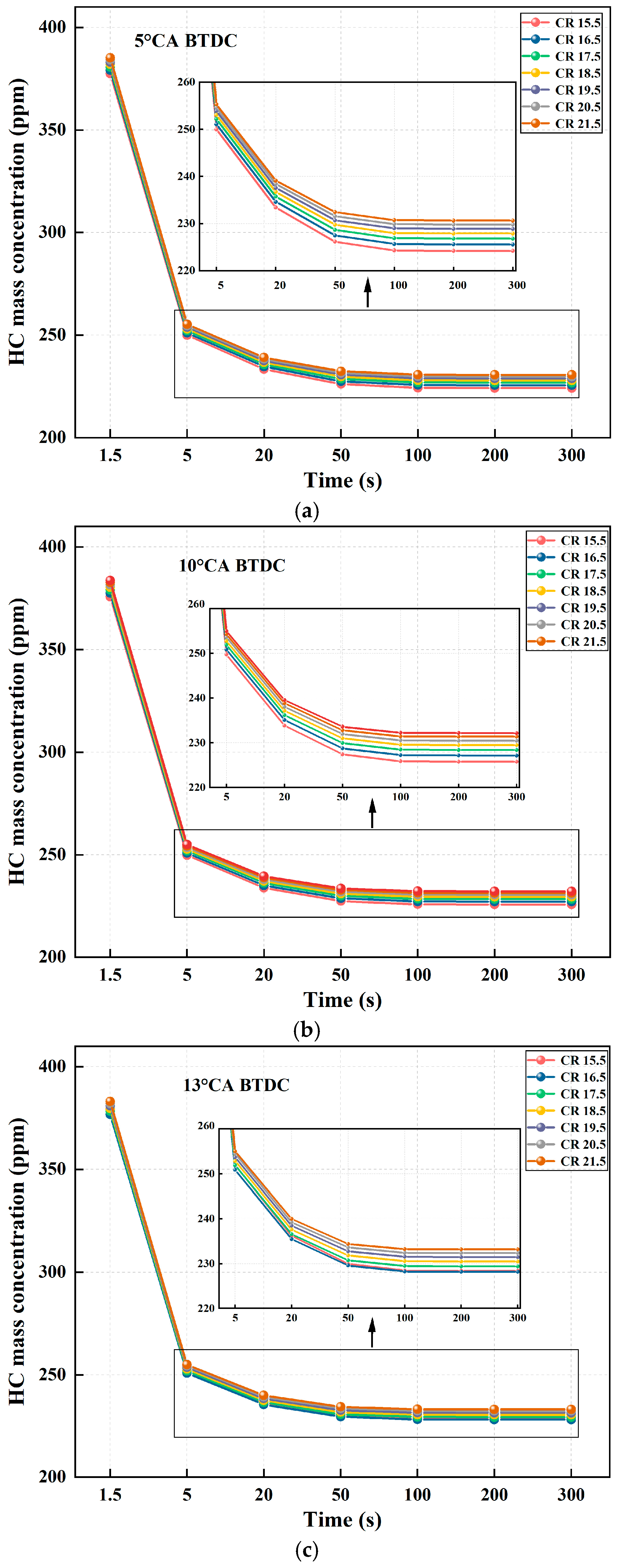
To present the changing trend more clearly, Figure 15 enlarges the HC emission within 1.5 s to 300 s of Figure 14. It is apparent that when the injection timing is advanced, the fuel is injected in advance, which may lead to inadequate mixing of fuel and air. In a cold start or low-temperature environment, premature injection can result in poor fuel atomization, and some fuels cannot be entirely burned, thus increasing HC emissions. At the same time, the emission value shows a gradual downward trend, and the HC emission decreases from 236 ppm to 230 ppm when the fuel injection is delayed from 25 °CA BTDC to 5 °CA BTDC. Although increasing CR can increase the temperature and pressure in the cylinder at the same injection timing and promote combustion, if the fuel and air are not mixed well, it will still lead to incomplete combustion of some fuel and increase HC emissions. It can be found that when CR increases from 15.5 to 21.5, the HC emissions at 3 s of cold start rise from 254 ppm to 260 ppm.
This shows that although increasing the CR helps to improve combustion conditions, the reduced time available for fuel–air mixing at advanced injection timings leads to poor mixing quality. This results in over-rich or over-lean regions within the cylinder, which is a primary reason for the increase in HC emissions.

4.3.2. NOX Emission

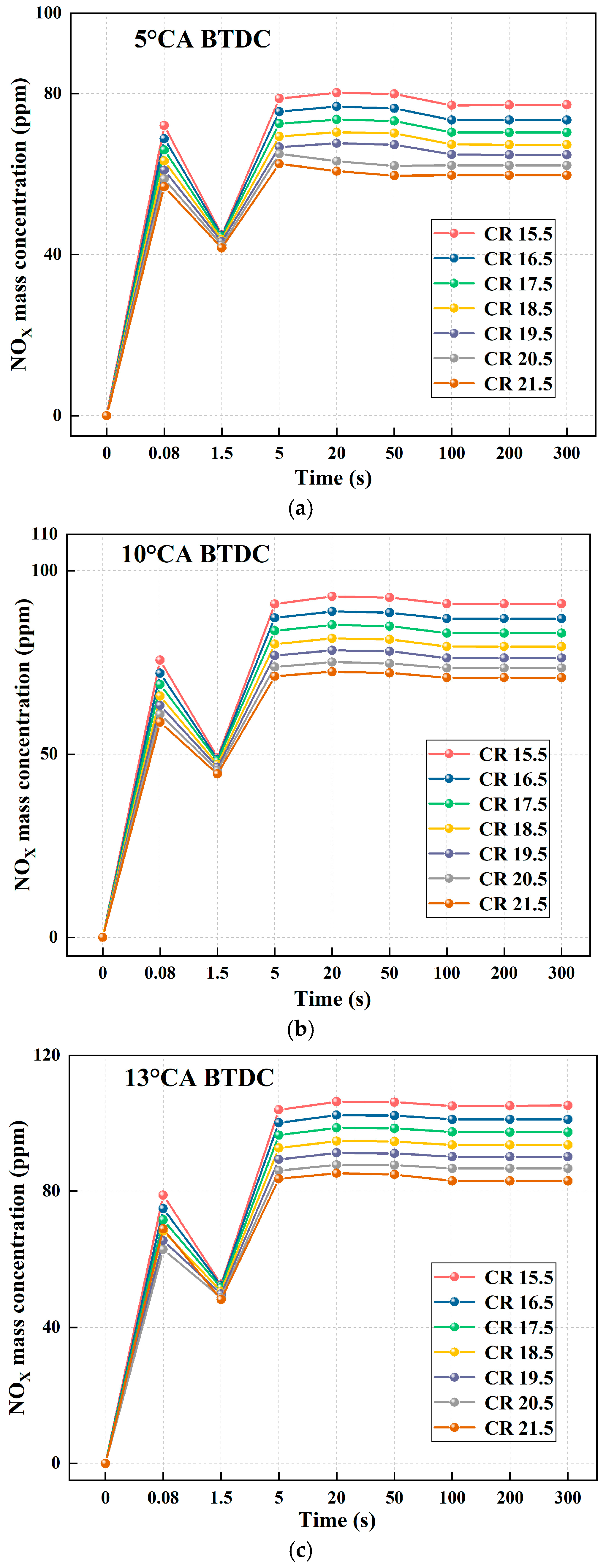
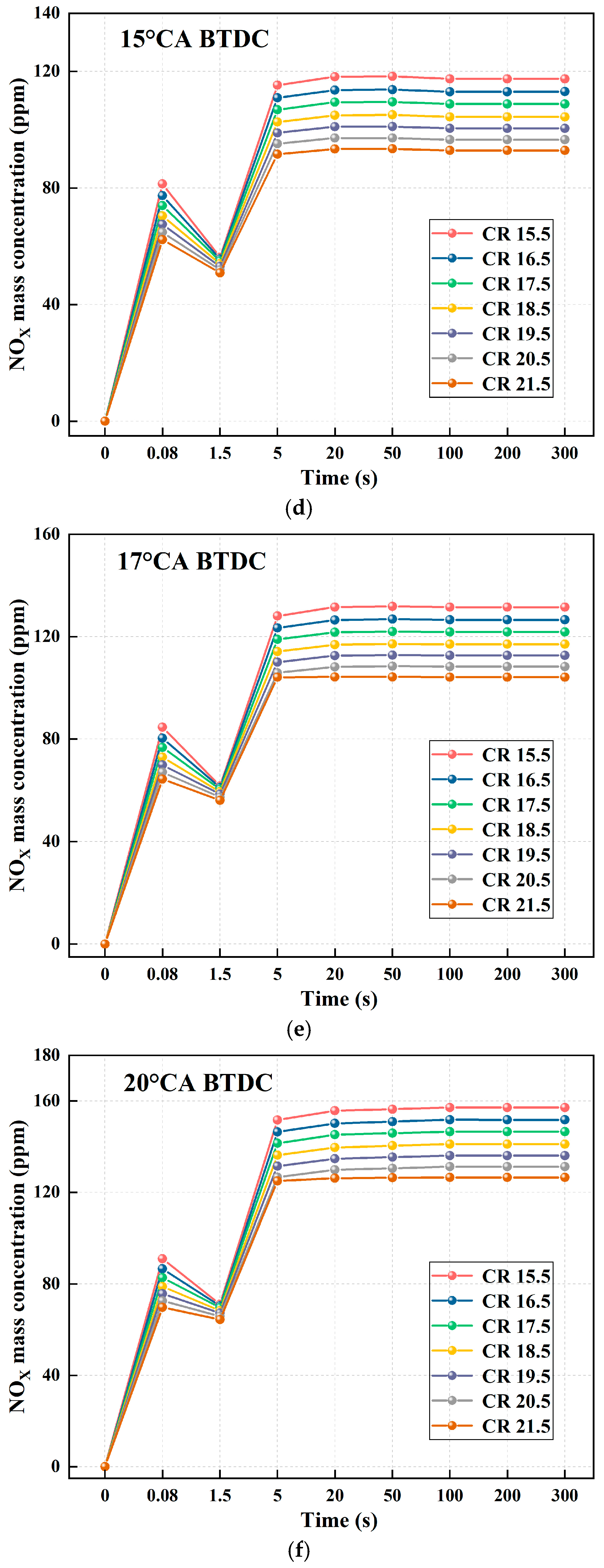
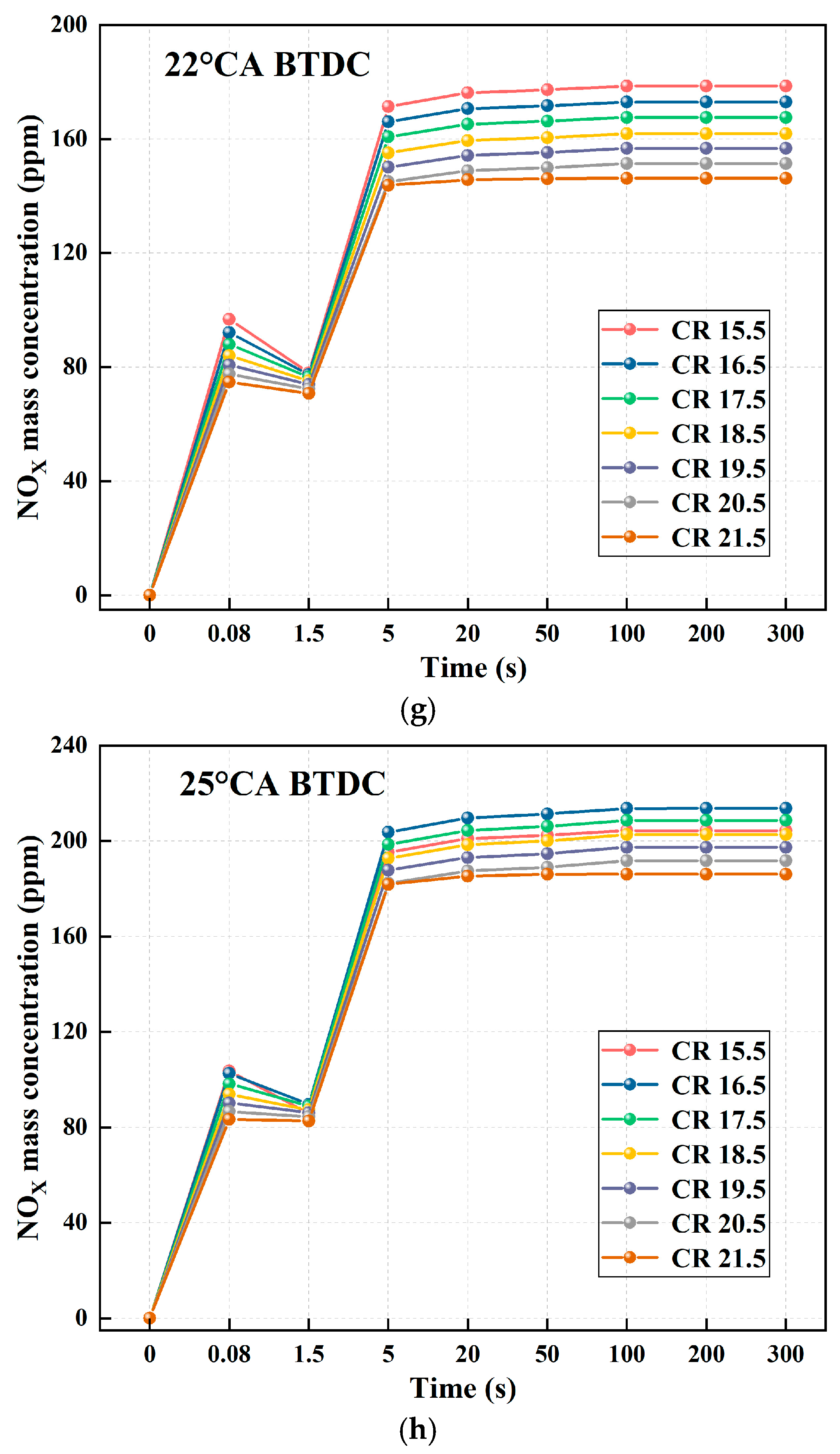
Figure 16 shows the concentration change of NOX within 300 S under the orthogonal test. At the moment of the engine cold start, due to incomplete combustion or a sharp rise in combustion temperature, the NOX concentration peaks instantaneously. For the same CR, the injection timing happens earlier, and the fuel injection timing is earlier, which occurs in the late compression stroke or the early expansion stroke, raising the temperature in the cylinder. Combustion at high temperatures will promote the formation of NOX, because when the temperature in the cylinder exceeds 1800 K, the N2 in the air will react with O2. When the injection timing is the same, the increase of CR will also increase the temperature and pressure of the compression process in the cylinder, increasing NOX emission. After entering the stabilization stage, at the 20 °CA BTDC, the NOX concentration at 19.5 CR is 141 ppm, higher than the NOX concentration at 18.5 CR (136 ppm).
This phenomenon may be due to the combined impact of a specific CR and the injection timing. The air and fuel in the cylinder are mixed more evenly, and the combustion process is more adequate and stable, thereby reducing some areas of incomplete combustion, avoiding the local high-temperature phenomenon, with better temperature control in the cylinder, reducing the generation of NOX.
In general, whether it is advanced injection timing or increased CR, the temperature in the cylinder will increase, thus promoting the generation of HC and NOX. Therefore, it is necessary to find a balance between the injection timing and the CR to improve the engine performance while the emissions are controlled within a reasonable range. According to the above conclusions, 20 °CA BTDC and a CR of 19.5 meet the requirements of a two-cylinder turbocharged diesel engine with stable and sufficient combustion in the cold start stage and relatively low HC and NOX emissions.

4.4. Effects of High-Altitude and Low-Temperature Environments on Cold Start Emission

Based on the above conclusions, the injection timing of 20 °CA BTDC and the CR of 19.5 were set as the basic conditions in the simulation model, and the intake air temperature and pressure were adjusted to simulate the low-temperature environmental conditions at high altitude, so as to observe the emission situation.
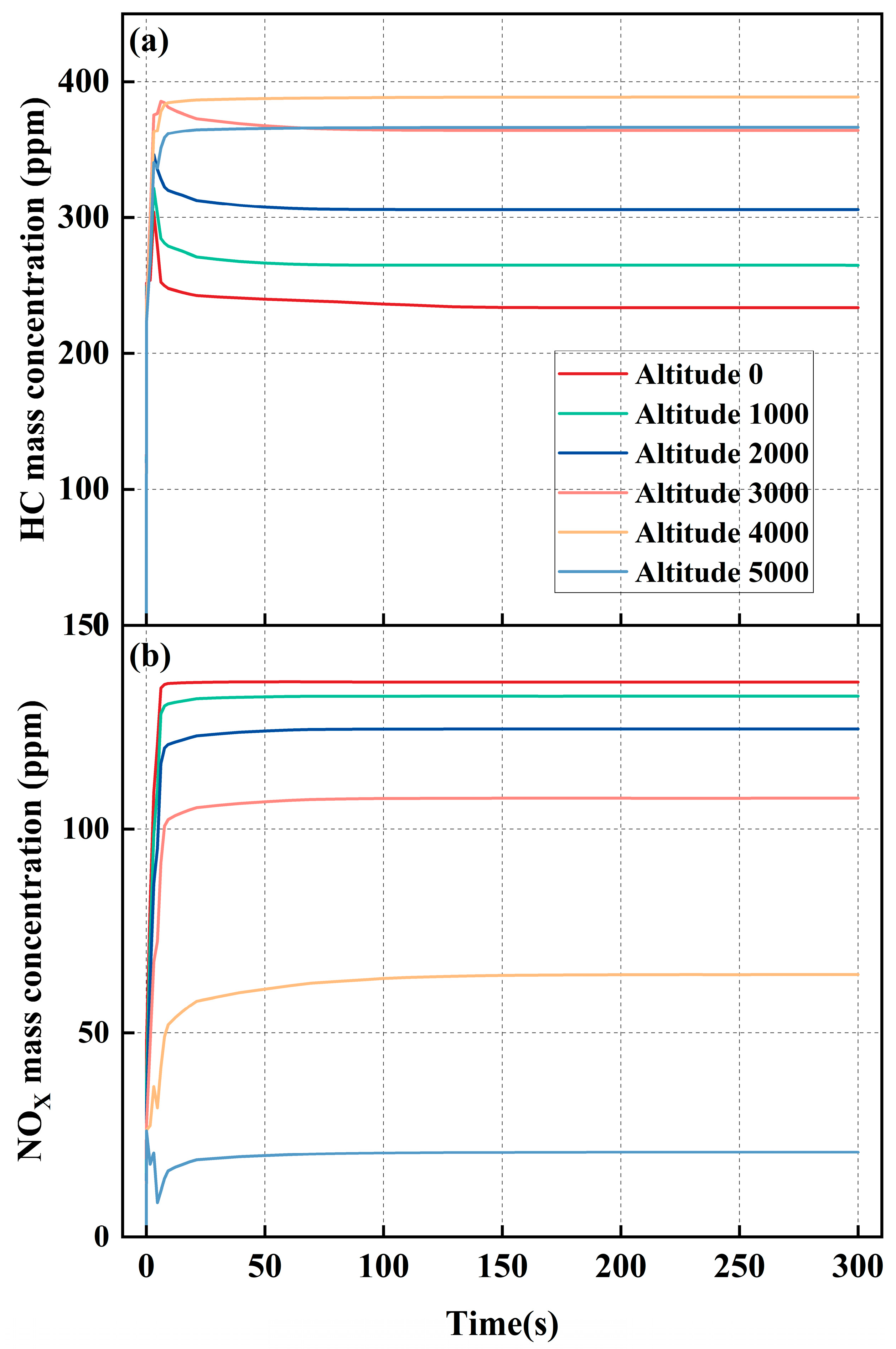
Figure 17 shows the mass concentrations of HC and NOX at different altitudes at 263 K temperature. It can be seen that with an increase in altitude, the HC concentration increases, while the NOX concentration decreases. At an altitude of 0 m, the peak HC concentration after engine stabilization was 303.9 ppm, while at 4000 m, the HC concentration rose to 388.7 ppm, an increase of 84.8 ppm, with an increase of about 27.9%. This phenomenon is due to the increase in altitude, which results in a decrease in the air density in the cylinder, resulting in an incomplete mixture of fuel and air, which leads to incomplete combustion. Incomplete combustion produces more unburned HC, causing its concentration to increase. However, the peak HC concentration decreases to 366.7 ppm at an altitude of 5000 m, which is lower than the peak value observed at 4000 m. At this extreme altitude, the ambient pressure drops to approximately 54 kPa, leading to a substantial reduction in intake air density and oxygen availability. Although the turbocharging system partially compensates for the reduced intake pressure, the absolute oxygen content within the cylinder remains severely limited, resulting in an extremely lean and oxygen-deficient mixture. Compared with the condition at 4000 m, the further reduction in oxygen availability at 5000 m fundamentally alters the combustion regime. The severely oxygen-limited environment suppresses high-temperature oxidation reactions and reduces the effective fuel conversion rate. As a result, the overall combustion intensity decreases markedly, as evidenced by prolonged combustion duration, reduced flame propagation speed, lower peak in-cylinder pressure, and weakened heat release intensity. While local ignition instability, partial combustion, and occasional flame extinction may occur under such conditions, the reduced availability of oxygen simultaneously limits the formation and accumulation of hydrocarbon species. Consequently, despite worsened combustion stability, the measured HC concentration at 5000 m does not increase further and instead becomes lower than that at 4000 m.
In contrast, NOX concentration showed a decreasing trend from 136.1 ppm at an altitude of 0 m to 26 ppm at an altitude of 5000 m, a decrease of 80.9%. This significant decrease was primarily attributed to the sharp drop in ambient air pressure and density at altitudes above 4000 m, which critically reduces the mass of air inducted per cycle. As a result, the in-cylinder oxygen concentration decreases, leading to a fuel-rich combustion environment. Under such oxygen-deficient conditions, NOX formation is markedly inhibited, as the reaction rates between nitrogen (N) and oxygen (O) atoms are suppressed due to the scarcity of O2. The reason is that as the altitude increases, the amount of air entering the cylinder decreases, resulting in a decrease in O2 concentration. When the O2 is insufficient, the reaction between N and O is weakened, decreasing NOX generation. In addition, the higher altitude reduces the air density, keeping the compression temperature inside the cylinder at a lower level compared to the lower altitude. Therefore, the combustion temperature is not enough to promote the formation of NOX, which usually requires a temperature above 1800 K. This low-temperature environment further inhibits the formation of NOX, resulting in a decrease in its concentration. Generally, these results highlight an HC/NOX trade-off under extremely high-altitude conditions. While severe oxygen deficiency and reduced combustion temperature effectively suppress NOX formation, this simultaneously promotes HC emissions as the altitude increases.
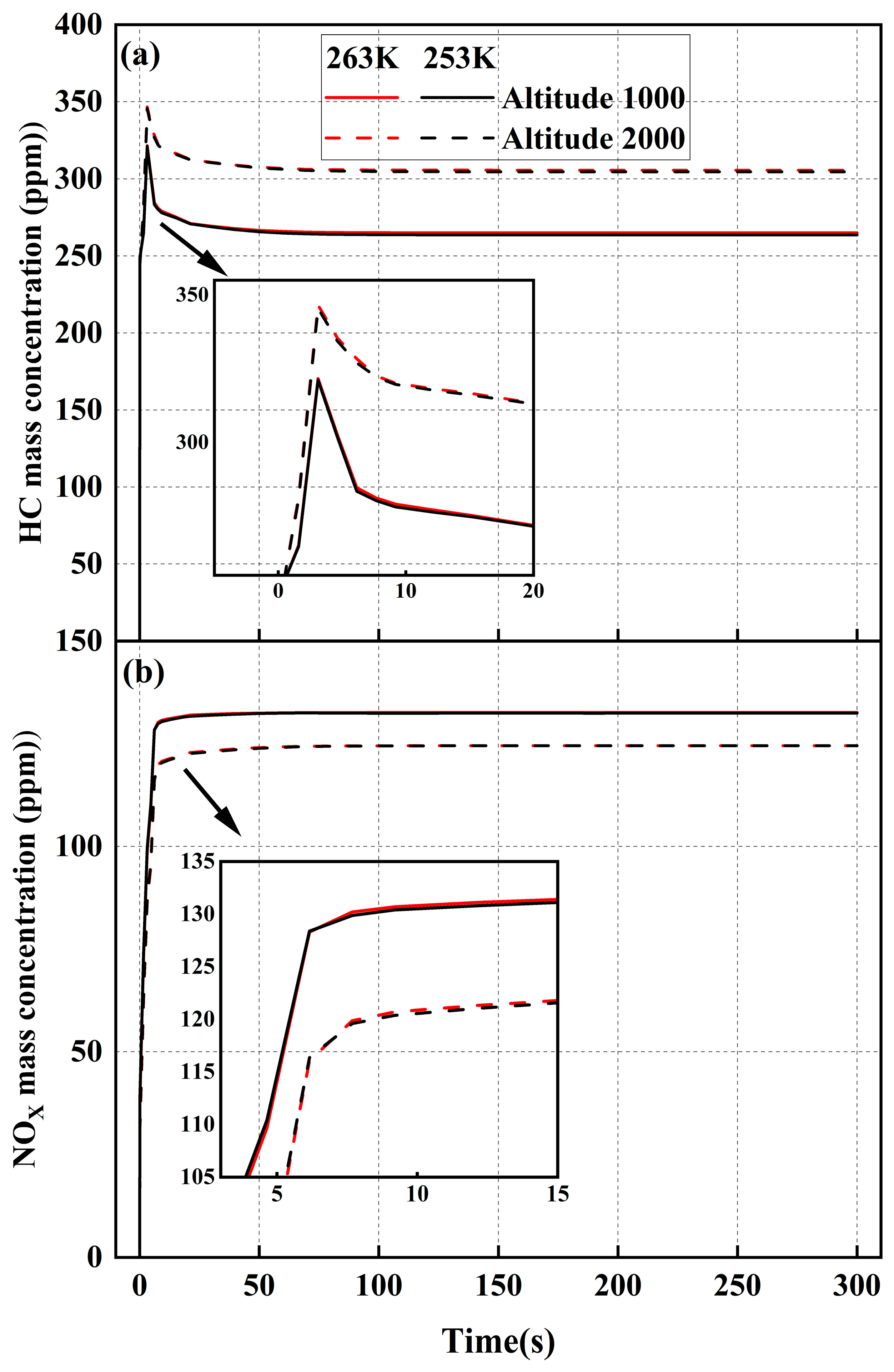
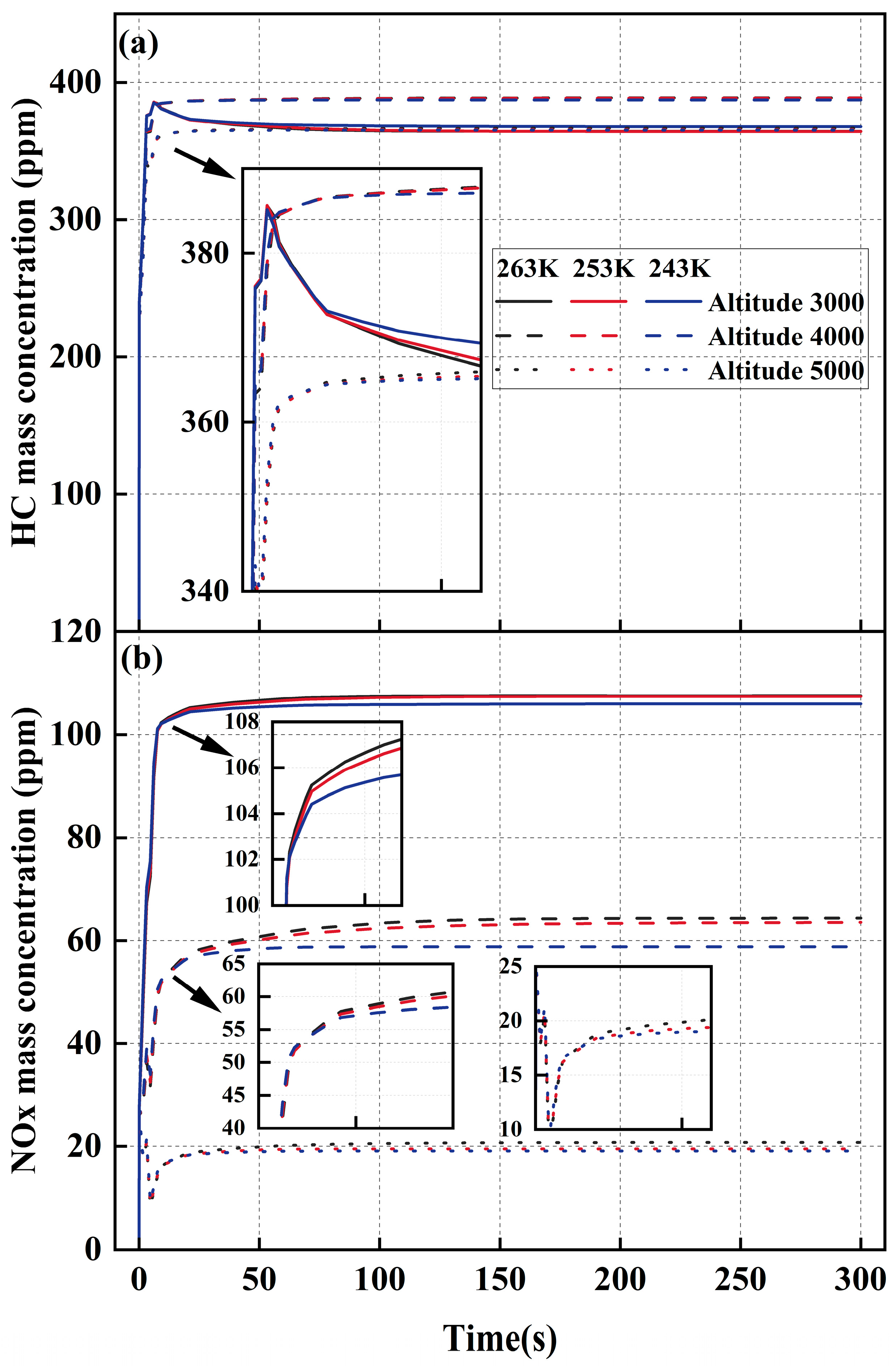
Figure 18 and Figure 19 illustrate the effects of different altitudes and temperatures on HC and NOX concentrations under simulated high-altitude and low-temperature conditions. As shown in Figure 19, when the ambient temperature drops from 263 K to 253 K, the concentration of HC and NOX does not change much. When the altitude rises from 1000 m to 2000 m, the peak HC concentration increases from 321.5 ppm to 345.5 ppm, while the peak NOX concentration decreases from 133 ppm to 125 ppm. Similarly, Figure 19 shows that at altitudes of 3000 m, 4000 m, and 5000 m the observed trend is consistent with Figure 18, with temperature changes having the least effect on emission concentrations. It is worth noting that when the altitude rises from 4000 m to 5000 m, the oxygen and temperature in the cylinder are further reduced, significantly inhibiting the formation of NOX, resulting in a sharp drop in NOX concentration to about 20 ppm at steady state.
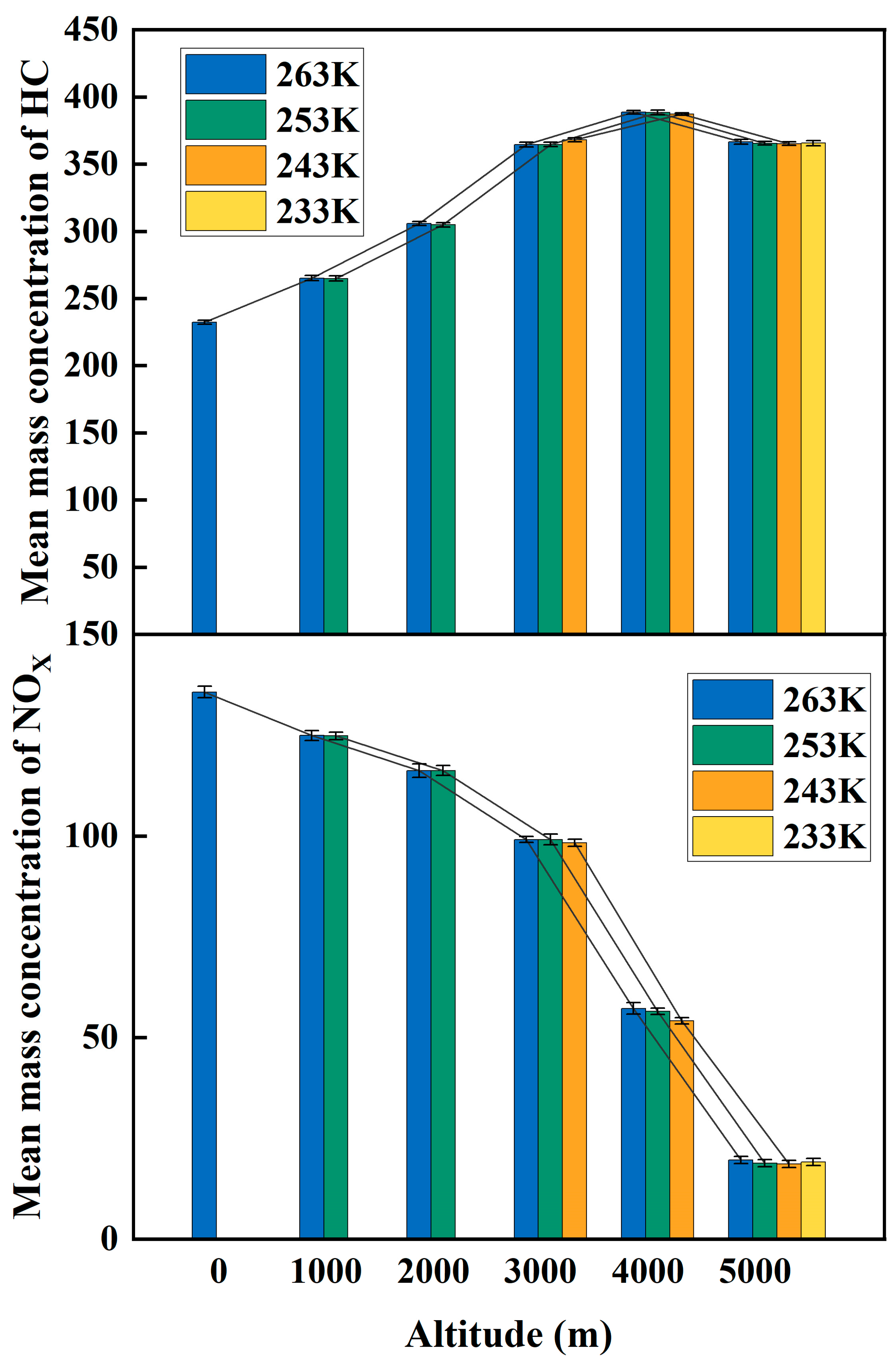
The average mass concentration of emissions can be seen more intuitively with the impact of altitude and the reduction of ambient temperature on HC and NOX. As shown in Figure 20, the effects of ambient temperature are quite modest. This is because, despite the low ambient temperature which can degrade fuel atomization quality, diesel engines rapidly heat up during cold start and operation, reaching an internal temperature sufficient to maintain combustion. The viscosity and surface tension of fuel increase, thereby suppressing its decomposition, evaporation, and mixing with air, maintaining good combustion efficiency and limiting the overall impact on pollutant formation.
Compared with the change in ambient temperature, the change in altitude significantly impacts emissions. The decrease in air density and oxygen concentration at high altitudes fundamentally alters the in-cylinder combustion process, leading to significant changes in the formation of pollutants such as hydrocarbons and nitrogen oxides. Consequently, adjusting engine operating parameters, such as injection timing, fuel supply, and boost pressure, according to altitude conditions, is crucial for effective emission control. Such optimization can mitigate the adverse effects of oxygen-deficient combustion on pollutant concentrations under these demanding operating conditions, which is essential for achieving efficient and clean operation.

5. Conclusions

This research took an air-cooled two-cylinder supercharged diesel engine as the research object, analyzed the combustion performance and emission characteristics of a diesel engine during the cold start, and determined the best combination of cold start parameters. At the same time, simulation software was used to simulate the influence of high-altitude and low-temperature environments on cold start emissions. The following conclusions can be drawn:
  • Proper injection timing advance helps fuel and air mix more fully, thereby improving combustion efficiency. Delayed injection timing reduces NOX emissions but increases HC emissions.
  • Increasing the CR can effectively increase the cylinder pressure and cylinder temperature, shorten the combustion duration, and improve the energy release efficiency. However, increasing CR from 18.5 to 20.5 raised peak instantaneous NOX emissions by approximately 27.7%. Conversely, higher CR contributes to a reduction in HC emissions.
  • The orthogonal experiment showed that during the starting stage of the diesel engine, the HC concentration reaches a peak instantaneously and then decreases and stabilizes: The advanced injection timing will increase HC emissions due to insufficient mixture; increasing the CR can raise the combustion temperature and cylinder pressure, but improper injection timing still increases HC. During the cold start, the NOX concentration surges sharply; advancing the injection timing or increasing the CR will raise the cylinder temperature, promoting the formation of NOX.
  • At high-altitude and low-temperature conditions, as the altitude increases, the air density in the cylinder decreases, and the fuel and air mix is incomplete, resulting in increased HC emissions. At 0 m above sea level, the HC concentration after engine stabilization was 303.9 ppm. At 4000 m, the HC concentration rose to 388.7 ppm, an increase of 27.9%. However, when the altitude was raised to 5000 m, the HC concentration dropped to 366.7 ppm due to less air supply. NOX emissions decreased by 80.9% from 0 m to 5000 m above sea level, mainly due to reduced oxygen limiting the production of nitrogen oxides. In contrast, ambient temperature had a smaller impact on emissions.
Regarding the future research directions, the collaborative optimization strategy of EGR, fuel injection timing, and CR can be explored to suppress NOX emissions in the cold start stage. In addition, the emission characteristics of different kinds of biodiesel should also be studied during cold starts at high altitudes and low temperatures as they may show promise.

Author Contributions

Conceptualization, X.Z., H.J. and X.L.; Methodology, X.Z., P.N. and X.L.; Formal analysis, X.Z., H.J., P.N. and Z.Z.; Investigation, Z.Z.; Writing—original draft, H.J.; Writing—review & editing, H.Q. and X.L.; Visualization, H.J. All authors have read and agreed to the published version of the manuscript.

Funding

This work is financially supported by Graduate Research and Innovation Projects of Jiangsu Province (Project No. SJCX24_2035).

Institutional Review Board Statement

Not applicable.

Informed Consent Statement

Not applicable.

Data Availability Statement

The original contributions presented in this study are included in the article. Further inquiries can be directed to the corresponding author.

Conflicts of Interest

The authors declare no conflicts of interest.

Abbreviations

The following abbreviations are used in this manuscript:
BSFCBrake Specific Fuel Consumption
COCarbon Monoxide
CRCompression Ratio
DOCDiesel Oxidation Catalysts
ECUElectronic Control Unit
EGRExhaust Gas Recirculation
EHCElectrically Heated Catalysts
GTLGas To Liquid
HCHydrocarbon
LNTLean Nitrogen oxide Traps
PMParticulate Matter
SCRSelective Catalytic Reduction
TDCTop Dead Center
TIPTurbine Inlet Pressure
TITTurbine Inlet Temperature
PMmaximum cylinder pressure
TMmaximum cylinder temperature
φPmaxmaximum cylinder pressure
φTmaxmaximum cylinder temperature

References

  1. Liu, H.; Wang, Z.; Wang, J.; He, X. Improvement of emission characteristics and thermal efficiency in diesel engines by fueling gasoline/diesel/PODEn blends. Energy 2016, 97, 105–112. [Google Scholar] [CrossRef]
  2. Chen, Z.; He, J.; Chen, H.; Geng, L.; Zhang, P. Experimental study on cycle-to-cycle variations in natural gas/methanol bi-fueled engine under excess air/fuel ratio at 1.6. Energy 2021, 224, 120233. [Google Scholar] [CrossRef]
  3. Wang, X.; Gao, J.; Chen, Z.; Chen, H.; Zhao, Y.; Huang, Y.; Chen, Z. Evaluation of hydrous ethanol as a fuel for internal combustion engines: A review. Renew. Energy 2022, 194, 504–525. [Google Scholar] [CrossRef]
  4. Huang, Q.; Yang, R.; Liu, J.; Xie, T.; Liu, J. Investigation of the mechanism behind the surge in nitrogen dioxide emissions in engines transitioning from pure diesel operation to methanol/diesel dual-fuel operation. Fuel Process. Technol. 2024, 264, 108131. [Google Scholar] [CrossRef]
  5. Huang, Q.; Liu, J. Preliminary assessment of the potential for rapid combustion of pure ammonia in engine cylinders using the multiple spark ignition strategy. Int. J. Hydrogen Energy 2024, 55, 375–385. [Google Scholar] [CrossRef]
  6. Yan, Y.; Liu, Z.; Liu, J. Computational analysis of ammonia-hydrogen blends in homogeneous charge compression ignition engine operation. Process Saf. Environ. Prot. 2024, 190, 1263–1272. [Google Scholar] [CrossRef]
  7. Lajunen, A.; Sainio, P.; Laurila, L.; Pippuri-Mäkeläinen, J.; Tammi, K. Overview of powertrain electrification and future scenarios for non-road mobile machinery. Energies 2018, 11, 1184. [Google Scholar] [CrossRef]
  8. Ju, K.; Kim, J.; Park, J. Numerical prediction of the performance and emission of downsized two-cylinder diesel engine for range extender considering high boosting, heavy exhaust gas recirculation, and advanced injection timing. Fuel 2021, 302, 121216. [Google Scholar] [CrossRef]
  9. Feng, R.; Chen, K.; Sun, Z.; Hu, X.; Li, G.; Wang, S.; Deng, B.; Sun, W. A comparative study on the energy flow of a hybrid heavy truck between AMT and MT shift mode under local driving test cycle. Energy Convers. Manag. 2022, 256, 115359. [Google Scholar] [CrossRef]
  10. Ou, J.; Zhang, Z.; Liu, Z.; Liu, J. Effect of ammonia reaction kinetics on the two-stage ignition mechanism of dimethyl ether. Fuel Process. Technol. 2024, 261, 108112. [Google Scholar] [CrossRef]
  11. Gao, J.; Huang, J.; Wang, S.; Wang, X.; Liu, J.; Li, D.; Tian, G.; Chen, H. The effect of deposit morphology on soot oxidation in non-catalytic and catalytic processes. J. Energy Inst. 2024, 116, 101754. [Google Scholar] [CrossRef]
  12. Meng, Z.; Bao, Z.; Wang, W.; Ou, J.; Liu, J. An assessment of the application of catalyst preheating prior to engine cold start to improve the filtration performance of CDPF on particulate emissions. Process Saf. Environ. Prot. 2024, 182, 345–356. [Google Scholar] [CrossRef]
  13. Liu, D. Combustion and Emissions of an Automotive Diesel Engine Using Biodiesel Fuels Under Steady and Start Conditions; University of Birmingham: Birmingham, UK, 2015. [Google Scholar]
  14. Fang, L.; Lou, D.; Hu, Z.; Tan, P.; Zhang, Y.; Yang, R. Study on the First-Firing-Cycle combustion characteristics of high-altitude and low-temperature environments during diesel engine cold start. Fuel 2022, 322, 124186. [Google Scholar] [CrossRef]
  15. Meng, Z.; Liu, Z.; Liu, J. Investigation of in-cylinder combustion deterioration of diesel engines in plateau regions. Fuel 2022, 324, 124824. [Google Scholar] [CrossRef]
  16. Jiao, Y.; Liu, R.; Zhang, Z.; Yang, C.; Zhou, G.; Dong, S.; Liu, W. Comparison of combustion and emission characteristics of a diesel engine fueled with diesel and methanol-Fischer-Tropsch diesel-biodiesel-diesel blends at various altitudes. Fuel 2019, 243, 52–59. [Google Scholar] [CrossRef]
  17. Liu, J.; Wang, B.; Meng, Z.; Liu, Z. An examination of performance deterioration indicators of diesel engines on the plateau. Energy 2023, 262, 125587. [Google Scholar] [CrossRef]
  18. John, D.; Gajarlawar, N. Experiences in cold start optimization of a multi-purpose vehicle equipped with 2.2 L common rail diesel engine. In SAE Technical Paper; SAE International: Warrendale, PA, USA, 2011. [Google Scholar]
  19. Park, Y.; Hwang, J.; Bae, C.; Kim, K.; Lee, J.; Pyo, S. Effects of diesel fuel temperature on fuel flow and spray characteristics. Fuel 2015, 162, 1–7. [Google Scholar] [CrossRef]
  20. Zhang, H.; Shi, L.; Deng, K.; Liu, S.; Yang, Z. Experiment investigation on the performance and regulation rule of two-stage turbocharged diesel engine for various altitudes operation. Energy 2020, 192, 116653. [Google Scholar] [CrossRef]
  21. Wu, M.; Zhao, Z.; Zhang, P.; Wan, M.; Lei, J.; Pan, B.; Xing, B. Environmental persistent free radicals in diesel engine exhaust particles at different altitudes and engine speeds. Sci. Total Environ. 2021, 796, 148963. [Google Scholar] [CrossRef]
  22. Pourhoseini, S.H.; Ghodrat, M.; Baghban, M.; Shams, Z. Effects of blending energetic iron nanoparticles in B20 fuel on lower CO and UHC emissions of the diesel engine in cold start condition. Case Stud. Therm. Eng. 2023, 41, 102658. [Google Scholar] [CrossRef]
  23. Tinprabath, P.; Hespel, C.; Chanchaona, S.; Foucher, F. Influence of biodiesel and diesel fuel blends on the injection rate under cold conditions. Fuel 2015, 144, 80–89. [Google Scholar] [CrossRef]
  24. Park, H.; Shin, J.; Bae, C. Spray and combustion of diesel fuel under simulated cold-start conditions at various ambient temperatures. In SAE Technical Paper; SAE International: Warrendale, PA, USA, 2017. [Google Scholar]
  25. Demirbas, A. Progress and recent trends in biodiesel fuels. Energy Convers. Manag. 2009, 50, 14–34. [Google Scholar] [CrossRef]
  26. Xu, Z.; Duan, X.; Liu, Y.; Deng, B.; Liu, J. Spray combustion and soot formation characteristics of the acetone-butanol-ethanol/diesel blends under diesel engine-relevant conditions. Fuel 2020, 280, 118483. [Google Scholar] [CrossRef]
  27. Yang, R.; Shang, T.; Li, L.; Liu, J.; Xie, T.; Liu, Z.; Liu, J. The mechanism of the increased ratio of nitrogen dioxide to nitrogen oxides in methanol/diesel dual fuel engines. Energy 2024, 312, 133701. [Google Scholar] [CrossRef]
  28. Liu, J.; Yang, R.; Liu, Z.; Liu, J. A CFD-assisted investigation into the mechanism behind the surge in NO2 emissions from methanol/diesel dual fuel engines. J. Clean. Prod. 2025, 489, 144750. [Google Scholar] [CrossRef]
  29. Li, Y.; Wang, D.; Shi, Z.; Chen, H.; Liu, F. Environment-adaptive method to control intake preheating for diesel engines at cold-start conditions. Energy 2021, 227, 120423. [Google Scholar] [CrossRef]
  30. Broatch, A.; Luján, J.M.; Serrano, J.R.; Pla, B. A procedure to reduce pollutant gases from Diesel combustion during European MVEG-A cycle by using electrical intake air-heaters. Fuel 2008, 87, 2760–2778. [Google Scholar] [CrossRef]
  31. Ramadhas, A.S.; Xu, H. Intake air heating strategy to reduce cold-start emissions from diesel engines. Biofuels 2018, 9, 405–414. [Google Scholar] [CrossRef]
  32. Bora, B.J.; Saha, U.K.; Chatterjee, S.; Veer, V. Effect of compression ratio on performance, combustion and emission characteristics of a dual fuel diesel engine run on raw biogas. Energy Convers. Manag. 2014, 87, 1000–1009. [Google Scholar] [CrossRef]
  33. Laguitton, O.; Crua, C.; Cowell, T.; Heikal, M.R.; Gold, M.R. The effect of compression ratio on exhaust emissions from a PCCI diesel engine. Energy Convers. Manag. 2007, 48, 2918–2924. [Google Scholar] [CrossRef]
  34. Rinaldini, C.A.; Mattarelli, E.; Golovitchev, V.I. Potential of the Miller cycle on a HSDI diesel automotive engine. Appl. Energy 2013, 112, 102–119. [Google Scholar] [CrossRef]
  35. Chen, H.; He, J.; Zhong, X. Engine combustion and emission fuelled with natural gas: A review. J. Energy Inst. 2019, 92, 1123–1136. [Google Scholar] [CrossRef]
  36. Liu, R.; Wei, M.; Yang, H. Cold start control strategy for a two-stroke spark ignition diesel-fuelled engine with air-assisted direct injection. Appl. Therm. Eng. 2016, 108, 414–426. [Google Scholar] [CrossRef]
  37. Zhao, L.; Lei, J.; Liu, Y.; Deng, W.; Yang, L. Energy-based cold-start strategies for diesel engines at extreme low temperature. Therm. Sci. Eng. Prog. 2024, 47, 102274. [Google Scholar] [CrossRef]
  38. Zhang, X.; Huang, X.; Ni, P.; Li, X. Strategies to reduce emissions from diesel engines under cold start conditions: A review. Energies 2023, 16, 5192. [Google Scholar] [CrossRef]
  39. Meng, Z.; Bao, Z.; Wu, D.; Deng, M.; Deng, H. Emission characteristics and microstructural changes of particulate matter from diesel engine after catalyst preheating under cold start conditions. Process Saf. Environ. Prot. 2024, 184, 1389–1399. [Google Scholar] [CrossRef]
  40. Huang, Y.; Liu, S.; Pei, M.M.; Li, J.Y.; Xu, H.D.; Chen, Y.Q. Unveiling H2O2-optimized NOX adsorption-selective catalytic reduction (AdSCR) performance of WO3/CeZrO2 catalyst. Rare Met. 2023, 42, 3755–3765. [Google Scholar] [CrossRef]
  41. Kim, H.; Lee, K.B. Enhanced low-temperature NOX storage and reduction performance using Cu-loaded lean NOX trap catalysts. Chem. Eng. J. 2023, 470, 143895. [Google Scholar] [CrossRef]
  42. Horng, R.F.; Chou, H.M.; Hsu, T.C. Reaction of the electrically-heated catalyst of a four-stroke motorcycle engine under cold-start conditions with additional enrichment of the intake mixture. Proc. Inst. Mech. Eng. Part D J. Automob. Eng. 2003, 217, 1117–1124. [Google Scholar] [CrossRef]
  43. Pacaud, P.; Perrin, H.; Laget, O. Cold Start on Diesel Engine: Is Low Compression Ratio Compatible with Cold Start Requirements? SAE Int. J. Engines 2008, 1, 831–849. [Google Scholar] [CrossRef]
  44. Zare, A.; Bodisco, T.A.; Jafari, M.; Verma, P.; Yang, L.; Babaie, M.; Rahman, M.M.; Banks, A.; Ristovski, Z.D.; Brown, R.J.; et al. Cold-start NOx emissions: Diesel and waste lubricating oil as a fuel additive. Fuel 2021, 286, 119430. [Google Scholar] [CrossRef]
  45. Lu, K.; Qiu, H.; Chen, Z.; Shi, L.; Deng, K. Environmental adaptability method for improving the cold start performance of the diesel engine based on pilot injection strategy. Energy 2023, 281, 128215. [Google Scholar] [CrossRef]
  46. Hu, Y.; Sun, Y.; Zhang, Q.; Ma, Q. Experimental analysis on the combustion performance of aftertreatment diesel burner under cold start and warm-up conditions. Appl. Therm. Eng. 2024, 253, 123783. [Google Scholar] [CrossRef]
  47. Kan, Z.; Hu, Z.; Lou, D.; Tan, P.; Cao, Z.; Yang, Z. Effects of altitude on combustion and ignition characteristics of speed-up period during cold start in a diesel engine. Energy 2018, 150, 164–175. [Google Scholar] [CrossRef]
  48. Armas, O.; Gomez, A.; Ramos, A. Comparative study of pollutant emissions from engine starting with animal fat biodiesel and GTL fuels. Fuel 2013, 113, 560–570. [Google Scholar] [CrossRef]
  49. Van, T.C.; Zare, A.; Jafari, M.; Bodisco, T.A.; Surawski, N.; Verma, P.; Suara, K.; Ristovski, Z.; Rainey, T.; Stevanovic, S.; et al. Effect of cold start on engine performance and emissions from diesel engines using IMO-Compliant distillate fuels. Environ. Pollut. 2019, 255, 113260. [Google Scholar] [CrossRef]
  50. He, C.; Ge, Y.; Ma, C.; Tan, J.; Liu, Z.; Wang, C.; Yu, L.; Ding, Y. Emission characteristics of a heavy-duty diesel engine at simulated high altitudes. Sci. Total Environ. 2011, 409, 3138–3143. [Google Scholar] [CrossRef]
  51. Fang, L.; Lou, D.; Hu, Z.; Tan, P. The emission characteristics of a diesel engine during start-up process at different altitudes. Energies 2019, 12, 3556. [Google Scholar] [CrossRef]
Figure 1. Schematic diagram of the test devices.
Sustainability 18 01680 g001
Figure 2. Model cylinder pressure verification.
Sustainability 18 01680 g002
Figure 3. Emission validation.
Sustainability 18 01680 g003
Figure 4. Influence of injection timing on cylinder pressure. (a) Cylinder pressure. (b) Rate of pressure rise.
Sustainability 18 01680 g004
Figure 5. Influence of injection timing on PM and TM.
Sustainability 18 01680 g005
Figure 6. Influence of injection timing on cylinder temperature. (a) In-cylinder temperature. (b) Net heat release rate.
Sustainability 18 01680 g006
Figure 7. Effects of injection timing on φPmax, φTmax and combustion duration.
Sustainability 18 01680 g007
Figure 8. Influence of injection timing on HC and NOX generation. (a) HC. (b) NOX.
Sustainability 18 01680 g008
Figure 9. Influence of CR on cylinder pressure. (a) Cylinder pressure. (b) Rate of pressure rise.
Sustainability 18 01680 g009
Figure 10. Effects of CR on PM and TM.
Sustainability 18 01680 g010
Figure 11. Influence of CR on cylinder temperature. (a) In-cylinder temperature. (b) Net heat release rate.
Sustainability 18 01680 g011
Figure 12. Effects of CR on φPmax, φTmax and combustion duration.
Sustainability 18 01680 g012
Figure 13. Influence of different CRs on HC and NOX generation. (a) HC. (b) NOX.
Sustainability 18 01680 g013
Figure 14. Influence of different injection timings and CR on HC mass concentration. (a) 5 °CA BTDC. (b) 10 °CA BTDC. (c) 13 °CA BTDC. (d) 15 °CA BTDC. (e) 17 °CA BTDC. (f) 20 °CA BTDC. (g) 22 °CA BTDC. (h) 25 °CA BTDC.
Sustainability 18 01680 g014aSustainability 18 01680 g014bSustainability 18 01680 g014c
Figure 15. HC mass concentration of 1.5 s to 300 s. (a) 5 °CA BTDC. (b) 10 °CA BTDC. (c) 13 °CA BTDC. (d) 15 °CA BTDC. (e) 17 °CA BTDC. (f) 20 °CA BTDC. (g) 22 °CA BTDC. (h) 25 °CA BTDC.
Sustainability 18 01680 g015aSustainability 18 01680 g015bSustainability 18 01680 g015c
Figure 16. Influence of different injection timings and CR on NOX mass concentration. (a) 5 °CA BTDC. (b) 10 °CA BTDC. (c) 13 °CA BTDC. (d) 15 °CA BTDC. (e) 17 °CA BTDC. (f) 20 °CA BTDC. (g) 22 °CA BTDC. (h) 25 °CA BTDC.
Sustainability 18 01680 g016aSustainability 18 01680 g016bSustainability 18 01680 g016c
Figure 17. Mass concentration changes of HC and NOX at different altitudes at 263 K temperature. (a) HC. (b) NOX.
Sustainability 18 01680 g017
Figure 18. Effects of altitude 1000 and 2000 m and ambient temperature 263 and 253 K on HC and NOX concentrations. (a) HC. (b) NOX.
Sustainability 18 01680 g018
Figure 19. Effects of altitude 3000, 4000, 5000 m and ambient temperature 263, 253, 243 K on HC and NOX concentrations. (a) HC. (b) NOX.
Sustainability 18 01680 g019
Figure 20. Average concentrations of HC and NOX in the stable stage at different altitudes and temperatures.
Sustainability 18 01680 g020
Table 1. Engine parameters.
ParametersValue
Engine typeTwo-cylinder, in-line, air-cooled, turbocharged
Fuel injector typeSingle-plunger injection pump
Bore (mm) × Stroke (mm)94 × 77
Displacement (L)1.069
Compression ratio18.5
Fuel injection pressure (MPa)70
Rated speed (rpm)3000
Rated power (kW)19
Maximum power (kW)21
Table 2. Model performance verification.
CategoryExperimentSimulationError
BSFC (g/kW·h)6016223.5%
TIP (bar)24.5625.734.8%
TIT (°C)155.48160.393.2%
Disclaimer/Publisher’s Note: The statements, opinions and data contained in all publications are solely those of the individual author(s) and contributor(s) and not of MDPI and/or the editor(s). MDPI and/or the editor(s) disclaim responsibility for any injury to people or property resulting from any ideas, methods, instructions or products referred to in the content.