1. Introduction
Sustainable infrastructure development occupies a central position in contemporary debates on economic transformation, yet development outcomes remain highly uneven across developing regions [
1]. As large-scale initiatives such as the Belt and Road Initiative (BRI) expand across the Global South, it has become increasingly evident that infrastructure performance cannot be evaluated solely through engineering efficiency or short-term economic outputs [
2,
3]. Accumulating evidence indicates that the long-term productivity, resilience, and spatial reach of built capital are fundamentally conditioned by the ecological carrying capacity of surrounding landscapes, shaping both local economic performance and regional spillovers [
4,
5,
6,
7]. This recognition exposes a critical analytical challenge: identifying the environmental conditions and thresholds beyond which physical connectivity ceases to generate proportional and sustainable economic returns. This challenge is particularly acute in Sub-Saharan Africa, where rapid infrastructure expansion intersects with ecologically vulnerable, climatically exposed, and spatially heterogeneous systems [
8,
9,
10].
In Tanzania, these dynamics are especially pronounced. The country’s BRI corridors traverse landscapes characterized by sharp contrasts in vegetation health, land degradation intensity, and climatic variability, all of which condition the capacity of infrastructure investments to catalyze sustained regional development [
11,
12]. Conventional infrastructure appraisal frameworks frequently abstract from these spatial and ecological differences, resulting in development outcomes where comparable investments yield markedly divergent economic returns across space [
13,
14]. As sustainability scholarship increasingly emphasizes pragmatic sustainability—defined by empirically verifiable interactions between economic performance and environmental integrity—there is a growing need to evaluate infrastructure through an integrated technological–ecological perspective rather than isolated sectoral metrics. Empirical approaches capable of quantifying how environmental systems mediate economic performance are therefore essential for advancing SDG 9 (Industry, Innovation and Infrastructure) while simultaneously safeguarding ecosystem integrity in line with SDG 15 (Life on Land) [
15].
This study is explicitly positioned within the framework of the 2030 Agenda for Sustainable Development and the scope of the “Development Goals towards Sustainability” section of Sustainability. The analysis contributes directly to SDG 9 by examining the conditions under which infrastructure investments generate durable and spatially diffused economic returns. It advances SDG 11 (Sustainable Cities and Communities) by analyzing how spatial spillovers transmit development benefits beyond immediate investment locations. By identifying ecological thresholds that condition infrastructure effectiveness, the study informs SDG 13 (Climate Action) through climate-resilient investment sequencing, while reinforcing SDG 15 by demonstrating the economic consequences of ecosystem degradation. Corridor-level analysis is particularly relevant for SDG monitoring because it reveals trade-offs and synergies between growth, environmental stability, and spatial equity, thereby supporting evidence-based prioritization rather than uniform and often inefficient capital allocation.
Despite a growing body of research on infrastructure-led development, the literature remains fragmented across economic and environmental disciplines [
16]. Many existing studies rely on linear modeling strategies that fail to capture non-linear ecological mediation, while spatial analyses frequently overlook the environmental thresholds that govern regional spillovers [
17,
18,
19]. Three persistent gaps can be identified: (i) spatial spillovers in development corridors are often examined without integrating environmental variability; (ii) high-resolution environmental indicators such as the Normalized Difference Vegetation Index (NDVI) are commonly employed descriptively rather than embedded within structural econometric frameworks; and (iii) the ecological breakpoints at which environmental degradation begins to erode infrastructure returns remain empirically underexplored [
20,
21]. These limitations constrain both theoretical understanding and the design of infrastructure strategies that are simultaneously spatially efficient and ecologically compatible.
To address these gaps, this study develops an integrated spatial–ecological analytical framework to test the hypothesis that infrastructure returns are conditionally mediated by environmental quality and exhibit non-linear threshold behavior across development corridors. A Spatial Durbin Model (SDM) incorporating an explicit infrastructure–environment interaction term is applied to 2680 spatial units along Tanzania’s BRI corridors, enabling the simultaneous estimation of direct effects, spatial spillovers, and ecological mediation. The analysis identifies a statistically robust environmental threshold at NDVI = −0.8σ, demonstrating that environmental quality functions as a modulating factor that amplifies or constrains infrastructure-driven economic activity, proxied by Night-Time Lights (NTL) [
22,
23]. This approach moves beyond correlation by revealing regime-dependent infrastructure performance across heterogeneous ecological contexts.
The study makes four interrelated contributions to sustainability science and SDG-oriented development research. Theoretically, it advances the infrastructure–environment complementarity hypothesis by empirically demonstrating that natural capital operates as a productive modulating factor rather than a passive externality. Analytically, it identifies a non-arbitrary ecological threshold using a structural break framework, providing a transparent basis for distinguishing restoration-first zones from investment-ready environments. Methodologically, it establishes a replicable workflow integrating remote sensing indicators within a Spatial Durbin Model to quantify both local impacts and spatial spillovers. At the policy level, the study develops a corridor-scale spatial prioritization framework aligned with SDGs 9, 11, 13, and 15, translating econometric evidence into actionable guidance for sustainable infrastructure sequencing.
Tanzania’s BRI corridors provide an appropriate empirical setting due to their strategic economic role and pronounced ecological heterogeneity. Identifying where environmental health supports strong spatial spillovers is essential for maximizing long-term development benefits while minimizing ecological risk. The remainder of the article is structured as follows:
Section 2 reviews the relevant literature;
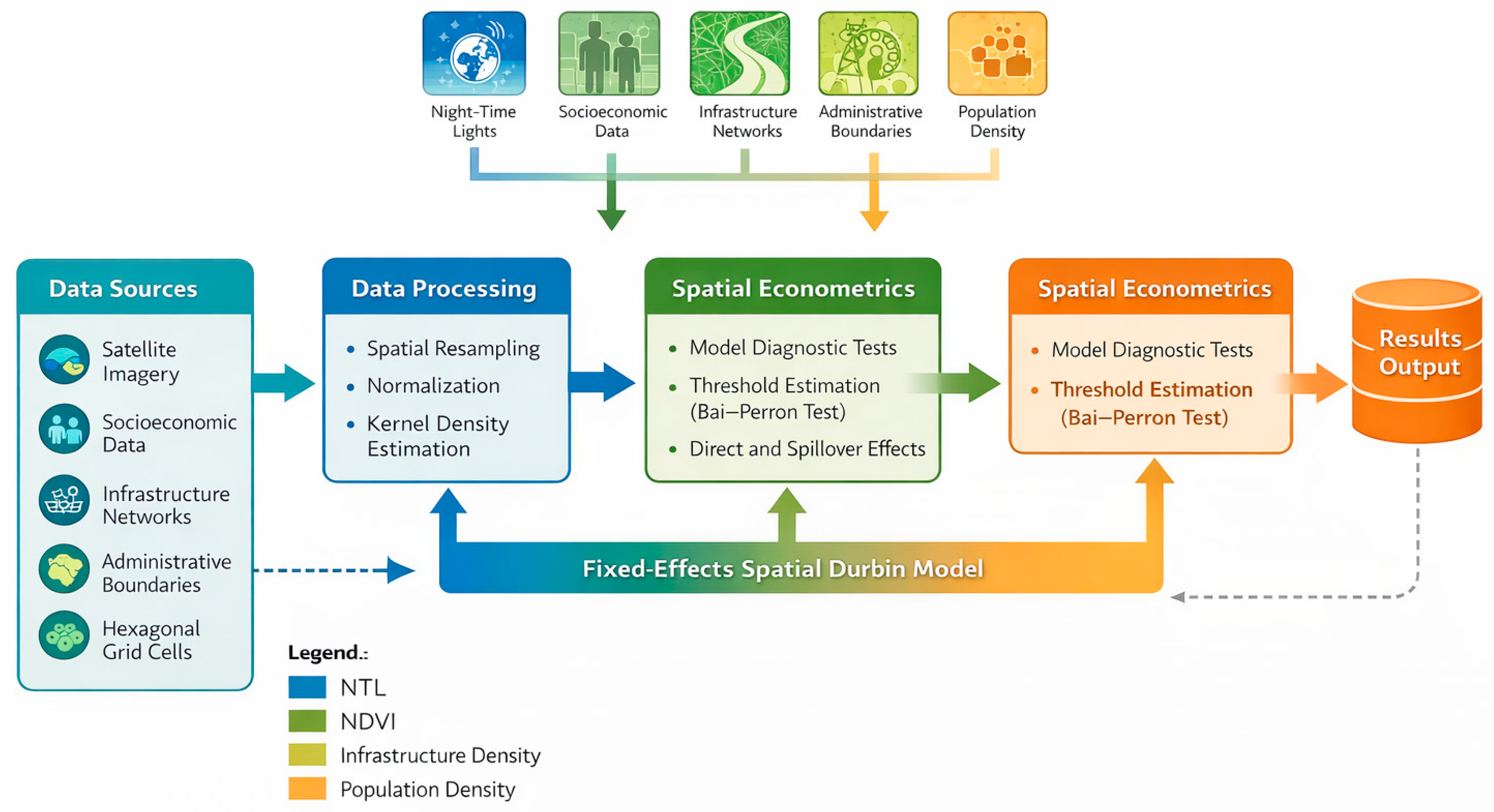
Section 3 outlines the data and methodological framework;
Section 4 presents the empirical results;
Section 5 discusses the findings in relation to sustainability and SDG-oriented corridor planning; and
Section 6 concludes with policy-relevant insights.
2. Literature Review
2.1. Infrastructure and Sustainable Development: Global and African Perspectives
Infrastructure-led development has shifted from a narrow emphasis on engineering feasibility and capital accumulation toward a multidimensional understanding of regional transformation, sustainability, and spatial equity [
1,
2]. Early growth models treated infrastructure as an autonomous driver of economic expansion, while environmental conditions were framed as external constraints [
3,
4]. This separation produced a conceptual divide between built capital and natural systems, obscuring their interdependence in shaping long-term development outcomes [
5,
8].
Recent sustainability-oriented research demonstrates that infrastructure effectiveness is conditioned by ecological integrity and natural-capital availability, which influence durability, resilience, and the spatial diffusion of development benefits [
11,
12]. In this perspective, ecosystems are repositioned as productive economic inputs rather than passive backdrops, aligning with contemporary models of pragmatic sustainability and climate-compatible development [
13,
14].
This study operationalizes that perspective within Tanzania’s BRI corridors—the Central Corridor, the Standard Gauge Railway (SGR) influence zone, and the Mtwara Development Corridor—connecting Dar es Salaam, Morogoro, Dodoma, and Mtwara as the country’s primary development spine. Their linear spatial configuration justifies a corridor-scale analytical boundary, as investment impacts are geographically concentrated along these routes rather than uniformly across the national territory.
Tanzania’s sustainability performance further underscores this need for conditional analysis. According to the 2024 Sustainable Development Report, Tanzania ranks 104th globally in SDG progress, reflecting structural vulnerability in which infrastructure expansion alone is insufficient to secure inclusive development outcomes. This elevates the relevance of SDG 11 (Sustainable Cities and Communities) within corridor planning and supports evaluating infrastructure returns as context-dependent rather than automatic.
Finally, current scholarship highlights the imperative to “planet-proof” infrastructure development by aligning investment sequencing with ecological thresholds and biophysical carrying capacity [
24]. This study responds directly by operationalizing infrastructure–environment complementarity as a measurable mechanism within SDG-oriented planning and corridor-level decision frameworks.
2.2. Spatial Spillovers and Corridor-Based Development
Contemporary assessments of large-scale transport corridors increasingly recognize that infrastructure investments generate spatial spillovers extending beyond immediate project locations, reshaping regional economic networks, accessibility patterns, and market integration processes [
15,
25]. Foundational contributions demonstrate that connectivity investments influence development through factor mobility, agglomeration economies, and the reorganization of production networks [
16,
17,
18]. However, many empirical studies remain constrained by coarse spatial aggregation, which masks cross-boundary interactions and leads to biased or incomplete estimates of economic returns [
19,
20].
In Sub-Saharan Africa, where infrastructural expansion intersects with heterogeneous ecological, institutional, and governance contexts, these limitations are especially pronounced [
21,
22]. Failure to explicitly model spatial dependence creates a policy blind spot, as identical infrastructure investments may yield sharply divergent outcomes across neighboring regions. The corridor literature increasingly conceptualizes development corridors as integrated spatial systems, in which spillovers, contiguity, and environmental heterogeneity jointly shape economic trajectories rather than operating independently. This study builds directly on this perspective by treating corridor development as a spatially interdependent and environmentally conditioned process.
2.3. Environmental Constraints, Natural Capital, and Economic Returns
The treatment of environmental quality in development research has shifted from Environmental Kuznets Curve logic toward a natural capital framework, in which ecosystems are understood as productive assets that support economic activity rather than costs to be minimized [
26,
27]. Ecological economics emphasizes that vegetation cover, soil stability, and hydrological regulation contribute directly to infrastructure durability, climate resilience, and long-term cost efficiency [
28,
29,
30]. Despite this conceptual progress, empirical evidence quantifying infrastructure–environment complementarity remains limited, particularly in African contexts characterized by rapid land-use change and environmental vulnerability [
31,
32,
33].
Evidence from transport infrastructure investments further demonstrates that economic returns are spatially uneven and highly sensitive to corridor structure and regional context, with spillover benefits extending well beyond immediate project footprints [
17]. These findings challenge the assumption of spatially uniform infrastructure productivity and highlight the need for environmentally conditioned evaluation frameworks. Most existing studies, however, adopt linear specifications that overlook non-linear ecological thresholds beyond which environmental degradation begins to undermine the economic effectiveness of built capital [
34,
35]. Identifying such thresholds is therefore essential for distinguishing correlation from conditional causality and for determining when infrastructure investment transitions from being growth-enhancing to yield-eroding [
36,
37].
2.4. Causal Mechanisms of Infrastructure–Environment Complementarity
A persistent critique in the literature concerns the absence of clearly articulated mechanisms linking environmental quality to infrastructure performance [
38,
39]. Environmental quality is inherently multidimensional, encompassing biodiversity, land stability, hydrological sustainability, and climate buffering capacity [
40,
41]. Without explicit causal articulation, empirical associations risk remaining descriptive rather than policy-informative. Two principal mechanisms are widely recognized. First, the cost-reduction channel operates through ecosystem services that mitigate erosion, flooding, and climate extremes, thereby reducing infrastructure maintenance costs and asset depreciation over time [
42,
43]. Second, the resource-security channel reflects the role of healthy ecosystems in sustaining water availability, agricultural productivity, and investment attractiveness within connected regions [
44,
45]. Where these mechanisms weaken, spatial spillovers and agglomeration effects deteriorate, providing a theoretical explanation for heterogeneous infrastructure returns across corridors. Explicit articulation of these channels transforms empirical analysis from reduced-form correlation into policy-relevant interpretation [
46,
47].
2.5. Methodological Frontiers: Remote Sensing and Spatial Econometrics
Recent methodological advances enable more rigorous testing of infrastructure–environment interactions through the integration of remote sensing indicators and spatial econometric models [
48,
49]. Night-time light (NTL) intensity has been widely validated as a proxy for localized economic activity, while the Normalized Difference Vegetation Index (NDVI) provides a scalable and consistent indicator of vegetation health across space and time [
7,
30,
50,
51]. Although these proxies do not capture the full multidimensionality of socio-ecological systems, they offer monitorable, transferable, and SDG-compatible indicators suitable for spatial sustainability assessment.
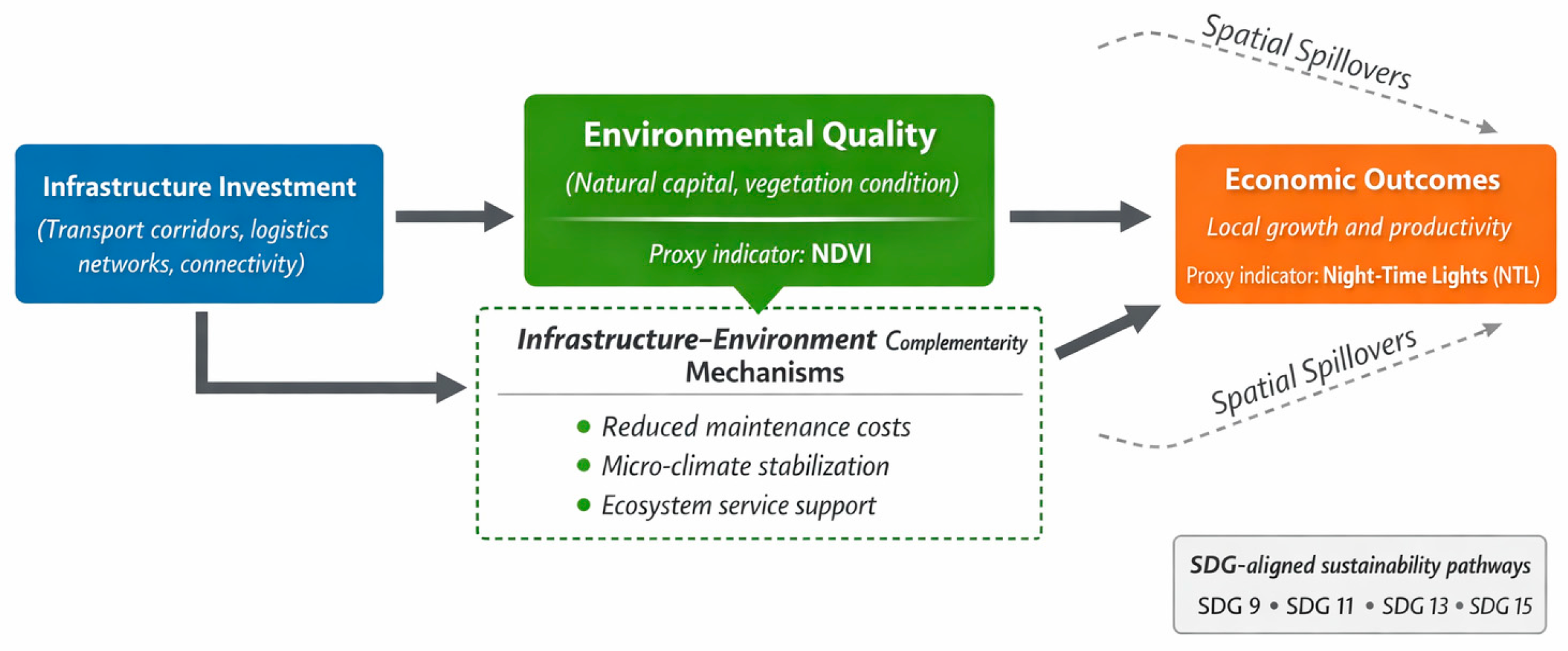
When embedded within a Spatial Durbin Model (SDM), these data enable the simultaneous estimation of direct effects, indirect spillovers, and interaction terms that capture regime-dependent infrastructure performance across heterogeneous ecological contexts [
52,
53,
54,
55]. This methodological integration directly informs the conceptual framework presented in
Figure 1, which theorizes infrastructure effectiveness as environmentally conditioned and spatially interdependent rather than uniformly additive.
2.6. SDGs, Pragmatic Sustainability, and Policy-Relevant Measurement
Aligning infrastructure investment with ecological readiness is critical for achieving SDG 9 (Industry, Innovation and Infrastructure), SDG 11 (Sustainable Cities and Communities), and SDG 15 (Life on Land). Corridor-level analysis is particularly relevant for SDG monitoring because it reveals trade-offs and synergies between growth, environmental stability, and spatial equity, thereby supporting evidence-based prioritization rather than uniform and often inefficient capital allocation [
56,
57,
58,
59].
Contemporary debates surrounding the Belt and Road Initiative increasingly emphasize that “Green Silk Road” strategies must move beyond carbon metrics to account for local environmental capacity and spatial heterogeneity in host countries [
60,
61,
62,
63]. The 2012–2023 observation window adopted in this study captures both pre-BRI baseline conditions and early implementation phases, enabling cautious assessment of spatial spillovers and ecological thresholds rather than deterministic causal attribution [
64,
65,
66]. Institutional quality and governance conditions remain influential but latent factors shaping infrastructure–environment interactions [
33,
67,
68,
69]. Accordingly, environmental quality is treated as a conditioning factor operating within a broader socio-economic system rather than as a standalone determinant, consistent with pragmatic SDG evaluation frameworks.
Despite substantial advances in infrastructure economics, environmental sustainability research, and spatial analysis, existing studies rarely integrate spatial spillovers, ecological thresholds, and infrastructure returns within a unified, SDG-oriented sustainability framework, particularly in the context of African development corridors. Most prior work examines these dimensions in isolation, either focusing on economic impacts without accounting for environmental mediation or assessing environmental degradation without quantifying its spatial economic consequences. As a result, policymakers lack empirically grounded tools for sequencing infrastructure investment in ways that balance economic efficiency, ecological resilience, and SDG coherence. This study addresses this gap by combining spatial econometrics, threshold analysis, and high-resolution geospatial indicators to evaluate infrastructure–environment complementarity in Tanzania’s BRI corridors.
4. Results
This section presents the empirical results through a structured progression: spatial pattern identification, spatial dependence diagnostics, econometric estimation, ecological threshold analysis, and spatial investment classification. This sequence establishes a coherent link between observed geographic patterns and model-based inference, demonstrating how ecological conditions shape the distribution, magnitude, and viability of infrastructure returns along Tanzania’s BRI corridors.
4.1. Spatial Distribution of Economic Activity, Infrastructure and Environmental Quality
To establish the geographic context of the analysis,
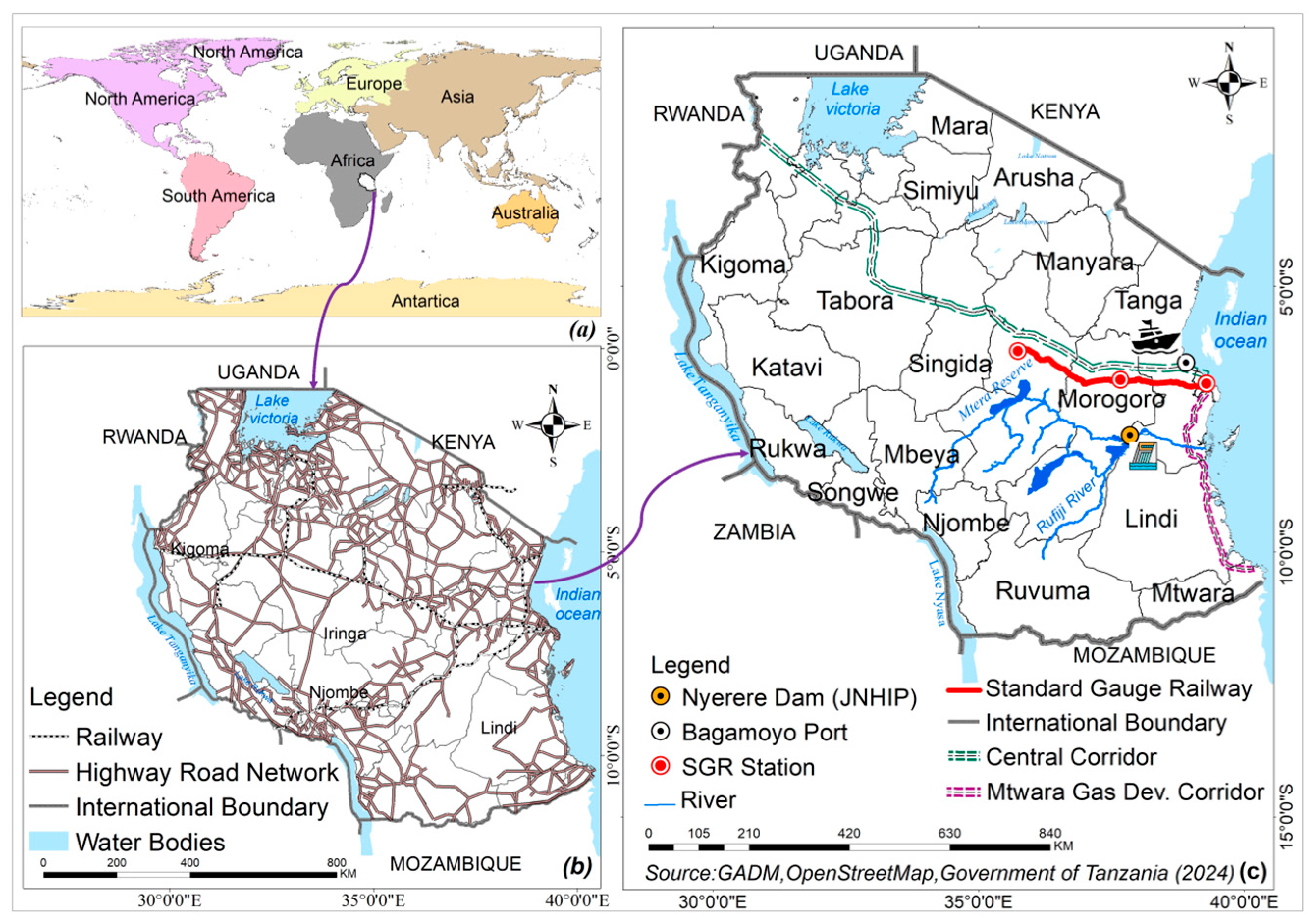
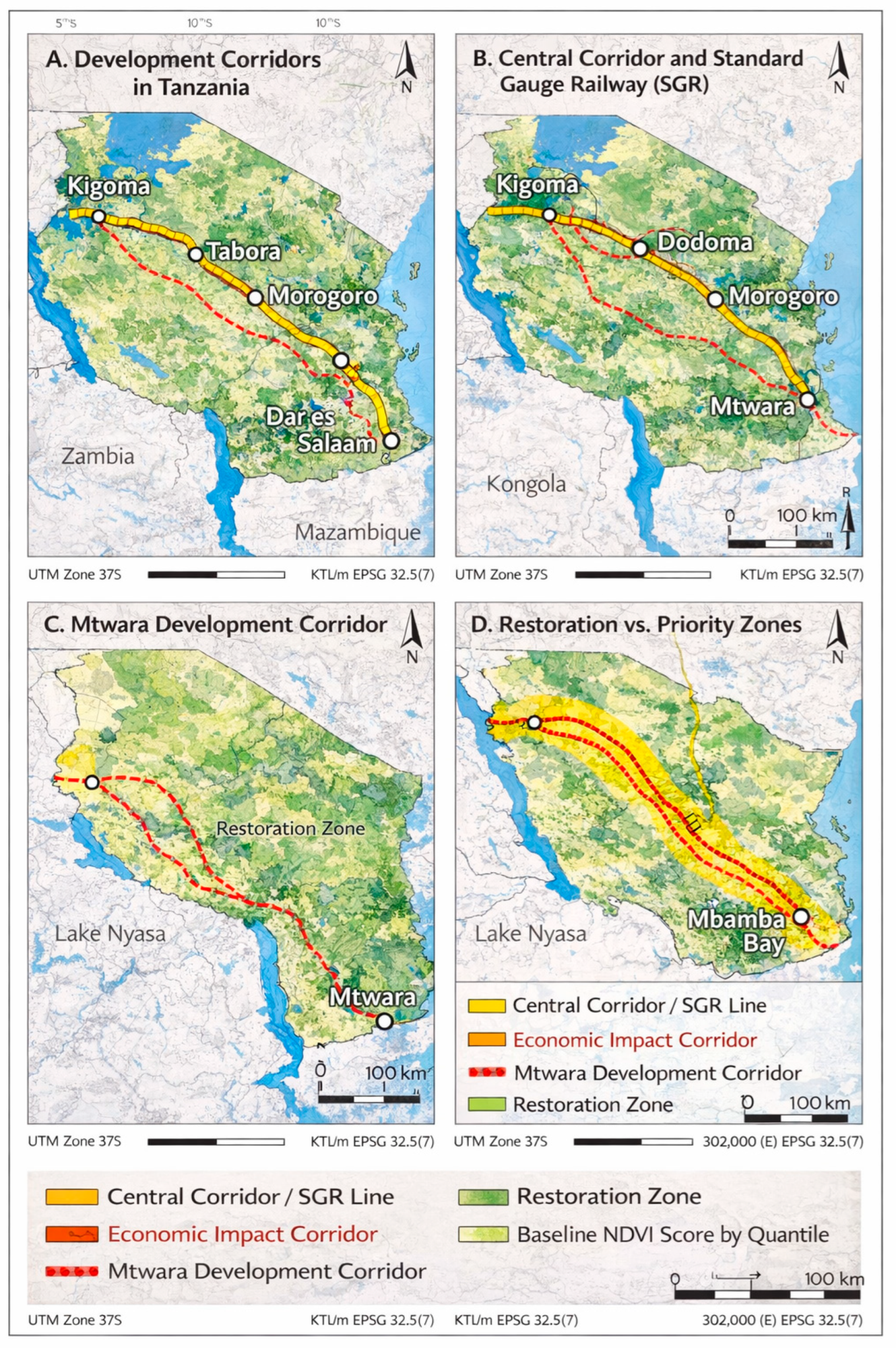
Figure 5 presents a corridor-scale locator map of Tanzania’s BRI system, delineating the Central Corridor, the Standard Gauge Railway (SGR) alignment from Dar es Salaam to Tabora and Kigoma, and the Mtwara Development Corridor extending toward Mbamba Bay. The figure defines the spatial boundary of the analytical sample used throughout
Section 4 and provides the geographic reference for all subsequent corridor-level interpretations.
Building on this spatial framework,
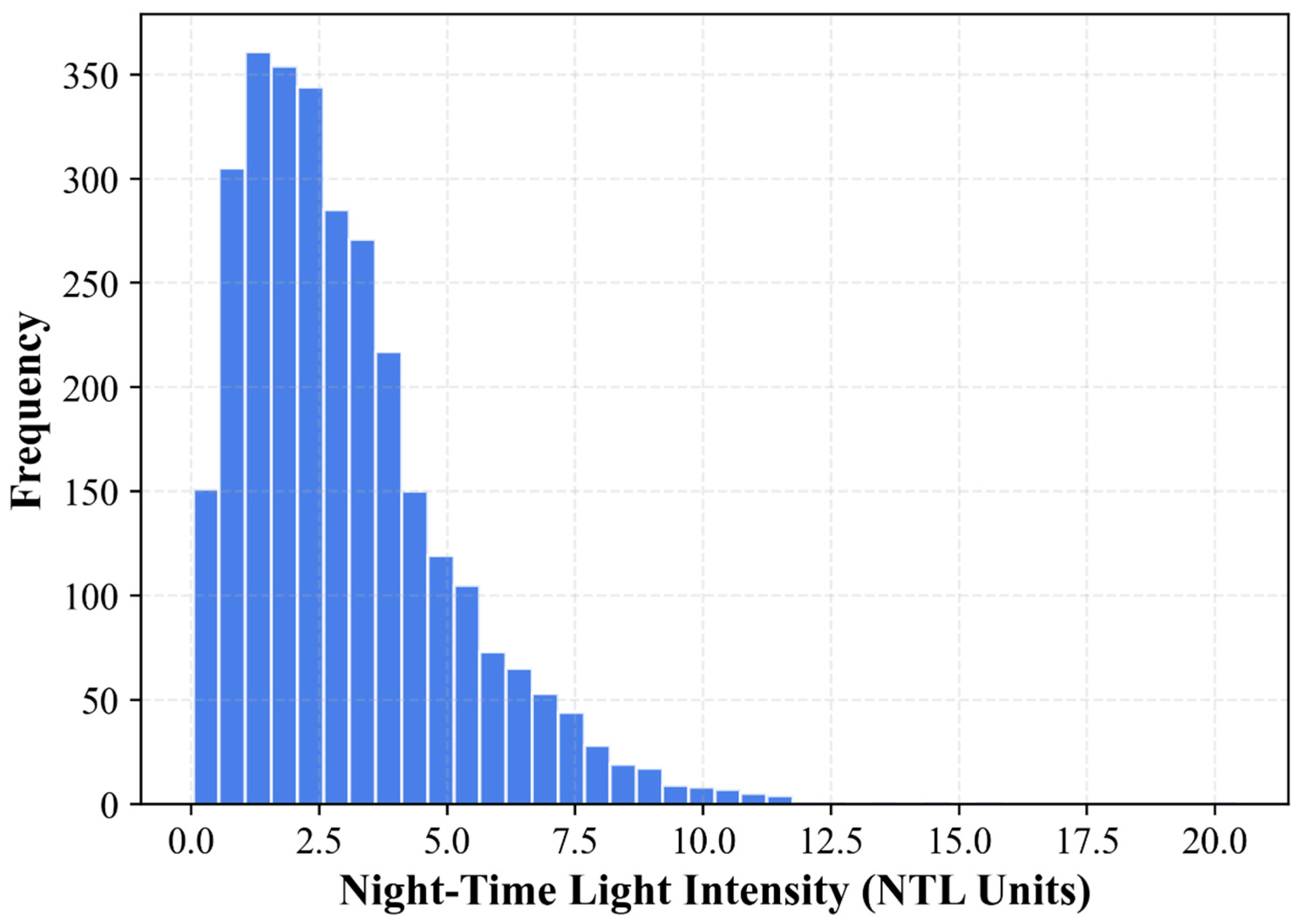
Figure 6 illustrates baseline patterns of economic activity, infrastructure density, and environmental quality across corridor grid cells. Economic activity, proxied by Night-Time Light (NTL) intensity, exhibits a corridor-concentrated distribution, with the Dar es Salaam–Morogoro–Dodoma–Tabora axis displaying the highest values (0.18–54.72 nW·cm
−2·sr
−1) and corresponding clusters of dense transport infrastructure. This spatial co-location confirms that operational corridor segments function as primary development nodes and supports the decision to model impacts at a corridor scale rather than through national aggregation.
Environmental quality displays a contrasting spatial pattern. Lower NDVI values are concentrated in the southern and coastal sections of the Mtwara Development Corridor, where infrastructure presence is not matched by comparable NTL intensity. This divergence indicates that physical investment alone does not guarantee spatial economic returns and motivates the non-linear ecological threshold analysis developed in
Section 4.4.
The distribution of economic activity follows a right-skewed structure, with a small number of high-performing nodes and a long tail of low-to-moderate values. This distributional asymmetry justifies the application of spatial dependence modelling and supports the subsequent use of the Spatial Durbin Model (SDM) to evaluate spillover transmission across neighboring grid cells.
4.2. Spatial Autocorrelation and Local Clustering of Economic Activity
Global spatial diagnostics confirm that economic activity is not randomly distributed but exhibits statistically significant spatial dependence across the BRI corridors. The Global Moran’s I for NTL is 0.148 (z = 12.45,
p < 0.001), indicating measurable spatial autocorrelation and justifying the use of spatial econometric estimation rather than non-spatial regression.
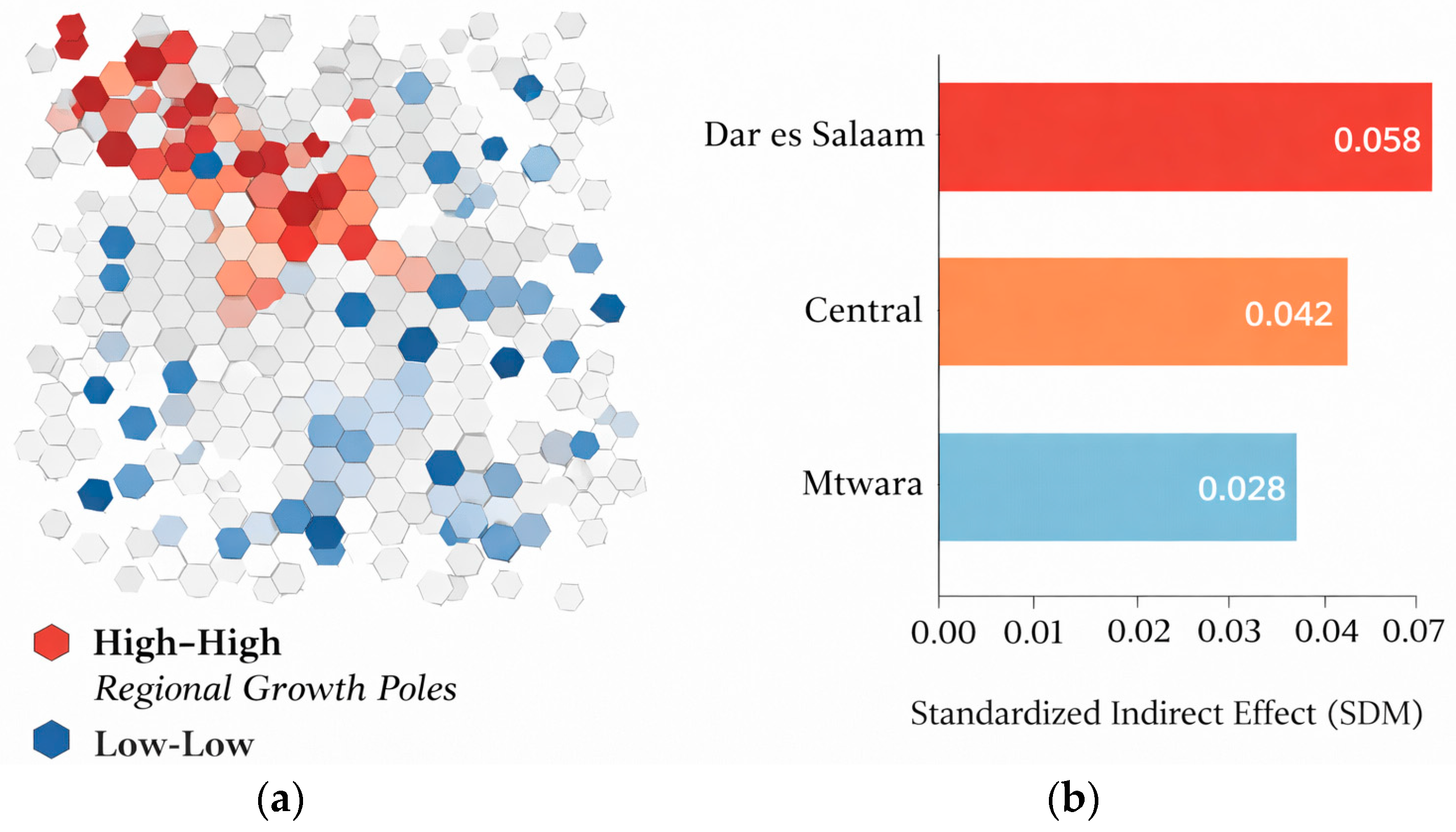
Figure 7 introduces the structure of this dependence by identifying where localized growth poles and underperforming zones emerge along the corridor network.
Figure 7.
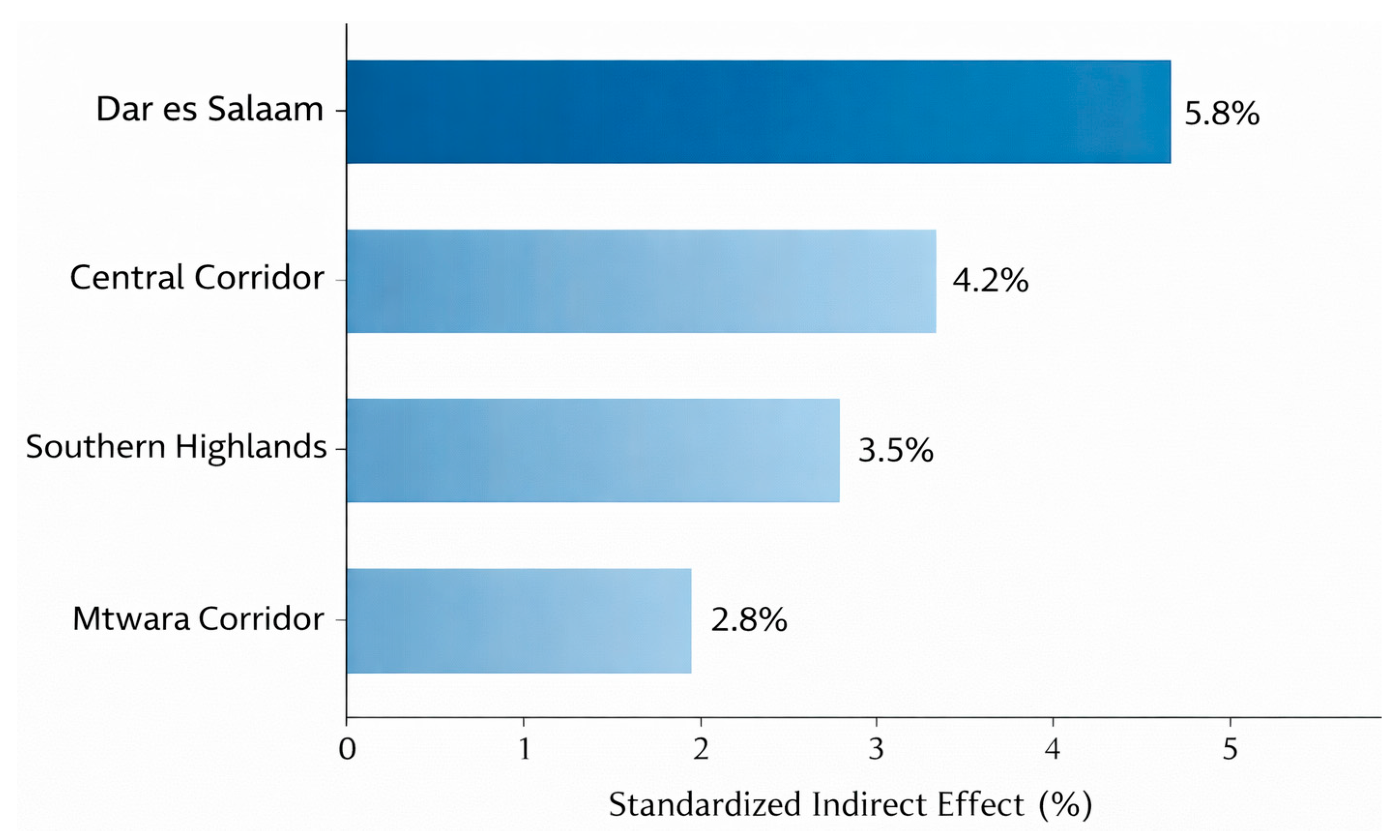
Spatial spillover dynamics and corridor-level integration effects. (a) Local Indicators of Spatial Association (LISA) identifying statistically significant High–High clusters (regional growth poles) and Low–Low clusters (economically isolated zones), (b) Standardized indirect effects from the Spatial Durbin Model illustrating corridor-specific variation in spillover strength across the Central Corridor, SGR alignment, and Mtwara Development Corridor.
Figure 7.
Spatial spillover dynamics and corridor-level integration effects. (a) Local Indicators of Spatial Association (LISA) identifying statistically significant High–High clusters (regional growth poles) and Low–Low clusters (economically isolated zones), (b) Standardized indirect effects from the Spatial Durbin Model illustrating corridor-specific variation in spillover strength across the Central Corridor, SGR alignment, and Mtwara Development Corridor.
High–High clusters are concentrated along the Central Corridor and the Standard Gauge Railway alignment—particularly between Dar es Salaam, Morogoro, and Dodoma—indicating reinforced regional growth poles where strong activity in one location is supported by high-performing neighbors. In contrast, Low–Low clusters are concentrated in the southern Mtwara segment, forming an underperformance belt where limited economic activity is spatially reinforced by adjacent low-performing areas. This spatial contrast illustrates how development advantages and constraints propagate along corridor geometry rather than remaining localized.
The patterns observed in panel (a) correspond directly with the magnitude of spatial spillovers in panel (b). Standardized indirect effects from the Spatial Durbin Model show higher spillover transmission in the Central Corridor (Dar es Salaam: 0.058; Morogoro–Dodoma: 0.042) compared to the Mtwara Development Corridor (0.028). This alignment between local clustering and spillover intensity demonstrates that spatial dependence is structural to corridor performance rather than incidental or noise-driven, confirming the analytical relevance of spillover-aware modeling strategies.
Additional diagnostics, including LISA statistics (
Supplementary Table S3) and extended cluster visualizations (
Supplementary Figure S1), further validate these patterns and provide spatial context for subsequent SDM impact estimation.
4.3. Spatial Durbin Model Results: Direct and Spillover Effects
Evidence of both localized and cross-boundary investment effects is estimated using the Spatial Durbin Model (SDM), with direct, indirect, and total impacts reported in
Table 3. The positive and statistically significant spatial autoregressive parameter (ρ = 0.047,
p < 0.01) confirms that economic outcomes in one grid cell are influenced by conditions in adjacent cells, indicating that the BRI corridors function as spatially interdependent development systems rather than isolated project sites. This spatial dependence supports the analytical relevance of corridor-scale modeling.
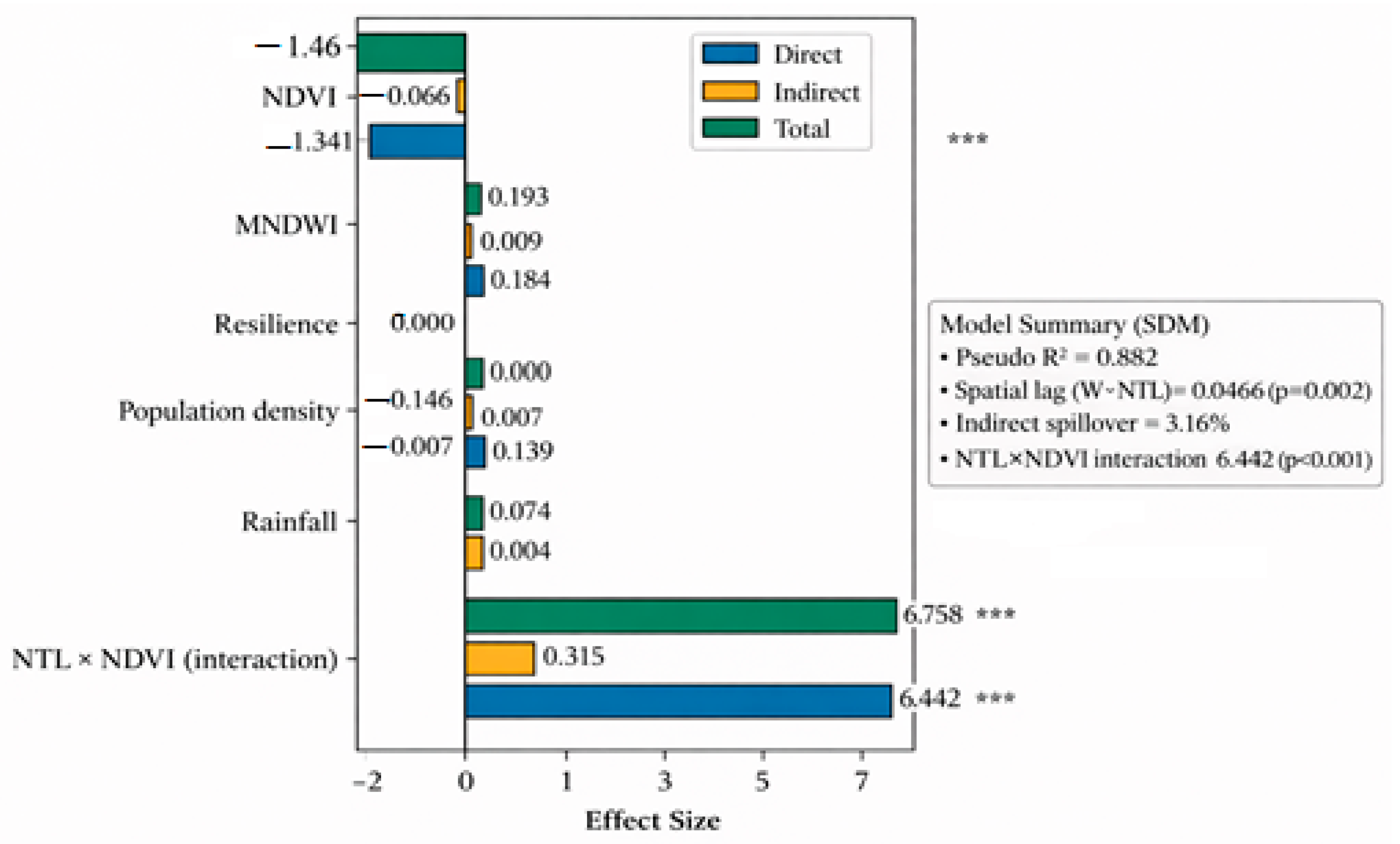
Infrastructure density exhibits a positive and statistically significant direct effect, demonstrating that improved transport connectivity enhances local economic performance. The interaction term with environmental quality (NDVI) is strongly positive (β = 6.442, p < 0.001), indicating that returns to infrastructure investment are conditional on ecological capacity rather than uniform across space. This validates the central proposition of infrastructure–environment complementarity by showing that productive outcomes strengthen in environmentally resilient areas and weaken in degraded conditions.
Impact decomposition highlights the dual structure of investment transmission: indirect (spillover) effects are substantial and frequently exceed direct effects, indicating that economic benefits propagate outward along the corridor network. These effects are geographically patterned—spillovers are strongest along the Dar es Salaam–Morogoro–Dodoma–Tabora segment of the Central/SGR alignment and progressively diminish toward the southern Mtwara portion of the network, where ecological conditions constrain transmission capacity. This alignment between spillover magnitude and corridor geography reinforces the need for spatially adaptive planning.
Figure 8 is referenced here to introduce the visual structure of this decomposition, illustrating the relative scale of direct, indirect, and total effects and confirming that spillover channels represent a major share of investment influence.
Figure 9 extends this interpretation by comparing spillover intensity across corridors, showing higher transmission efficiency along the Central Corridor/SGR spine and substantially weaker effects in the Mtwara segment. These differences reflect variations in ecological baselines, network continuity, and nodal development density. Full coefficient matrices are presented in
Supplementary Table S4, robustness specifications in
Supplementary Table S5, and extended impact decomposition statistics in
Supplementary Table S2.
Figure 8.
Decomposed direct, indirect (spillover), and total effects from the Spatial Durbin Model. The figure illustrates dual channels of performance—localized gains and spatially transmitted spillovers—whose magnitudes vary with environmental conditions and corridor connectivity. *** indicates statistical significance at p < 0.001.
Figure 8.
Decomposed direct, indirect (spillover), and total effects from the Spatial Durbin Model. The figure illustrates dual channels of performance—localized gains and spatially transmitted spillovers—whose magnitudes vary with environmental conditions and corridor connectivity. *** indicates statistical significance at p < 0.001.
Figure 9.
Comparative spillover intensity across BRI corridors. Higher propagation rates along the Central/SGR alignment and lower transmission toward Mtwara indicate that ecological quality and network structure jointly mediate spatial investment outcomes.
Figure 9.
Comparative spillover intensity across BRI corridors. Higher propagation rates along the Central/SGR alignment and lower transmission toward Mtwara indicate that ecological quality and network structure jointly mediate spatial investment outcomes.
4.4. Environmental Thresholds and Non-Linear Marginal Effects
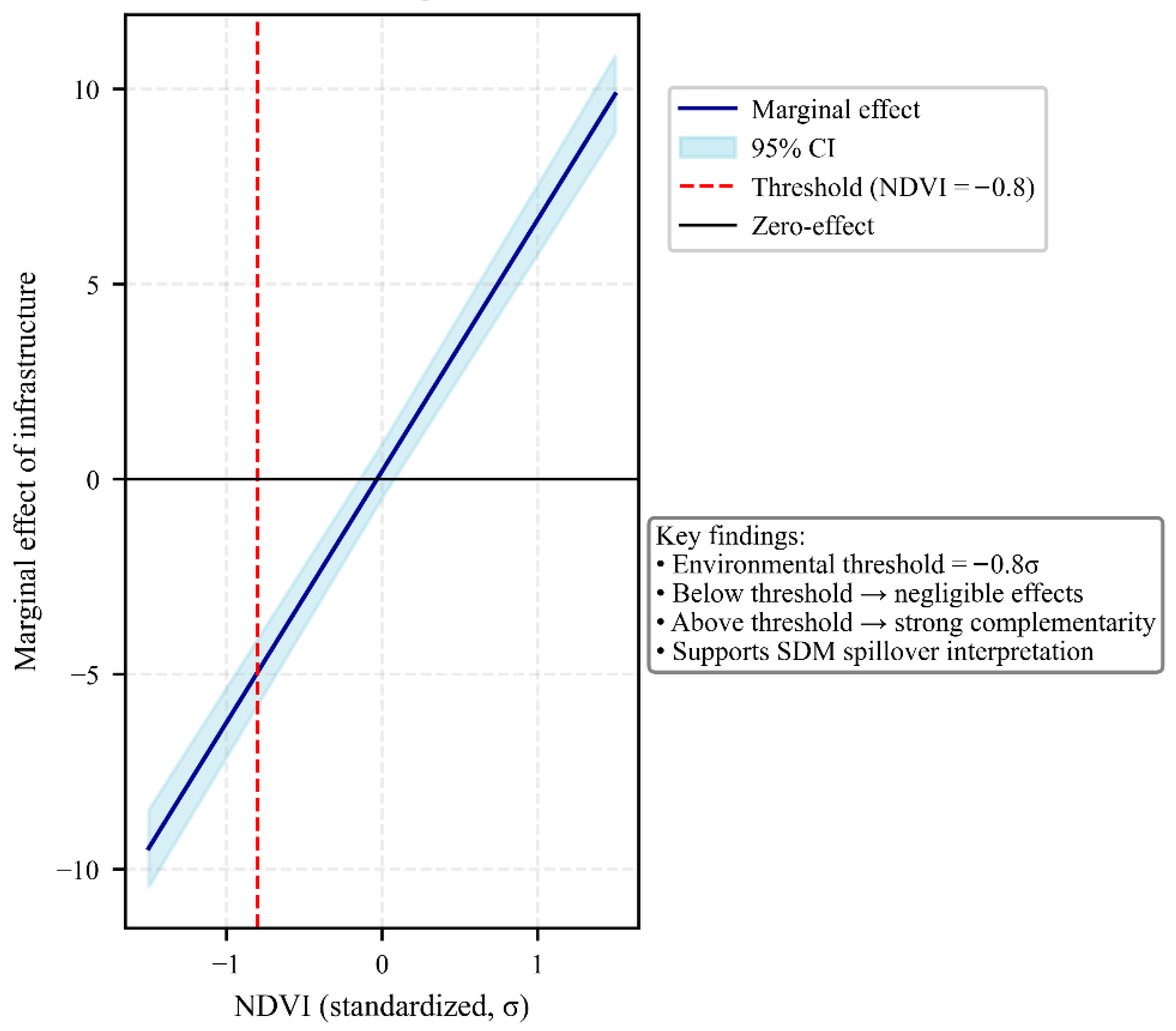
To relax linear-growth assumptions and reflect geographically conditioned investment performance, non-linear ecological thresholds were estimated using the Bai–Perron multiple structural break procedure. A statistically significant breakpoint is identified at NDVI = −0.8σ (F = 18.34, p < 0.01). Below this threshold, the estimated effects of infrastructure on economic activity converge toward zero, indicating that environmentally degraded locations produce returns traps in which capital deployment fails to generate measurable spatial economic gains.
Above the breakpoint, marginal returns increase sharply and non-linearly, demonstrating that infrastructure effectiveness is contingent on ecological capacity rather than spatially uniform. This transition is visualized in
Figure 4, which presents the estimated marginal effects and confidence intervals along the NDVI gradient. The inflection point marks a structural shift in investment responsiveness, providing a measurable ecological threshold with direct relevance for corridor planning.
The spatial expression of this threshold is consistent with observed performance: the Dar es Salaam–Morogoro–Dodoma–Tabora spine of the Central/SGR alignment lies predominantly above the threshold, where spillovers and direct effects reinforce each other, while extensive segments of the southern Mtwara corridor fall below it, where returns remain weak despite comparable infrastructure density. This divergence explains observed performance asymmetries and supports the interpretation that ecological conditions mediate the transmission of infrastructure benefits.
This breakpoint therefore functions as a policy-relevant minimum operating condition for sequencing infrastructure deployment, enabling the identification of areas where investment is likely to generate sustained returns versus locations requiring ecological rehabilitation prior to capital expansion. Robustness checks in
Supplementary Figures S2 and S3 and Supplementary Table S7 confirm the stability of the breakpoint across alternative model specifications, indicating that the threshold represents a structural ecological constraint rather than an artifact of estimation.
4.5. Spatial Investment Prioritization Zones
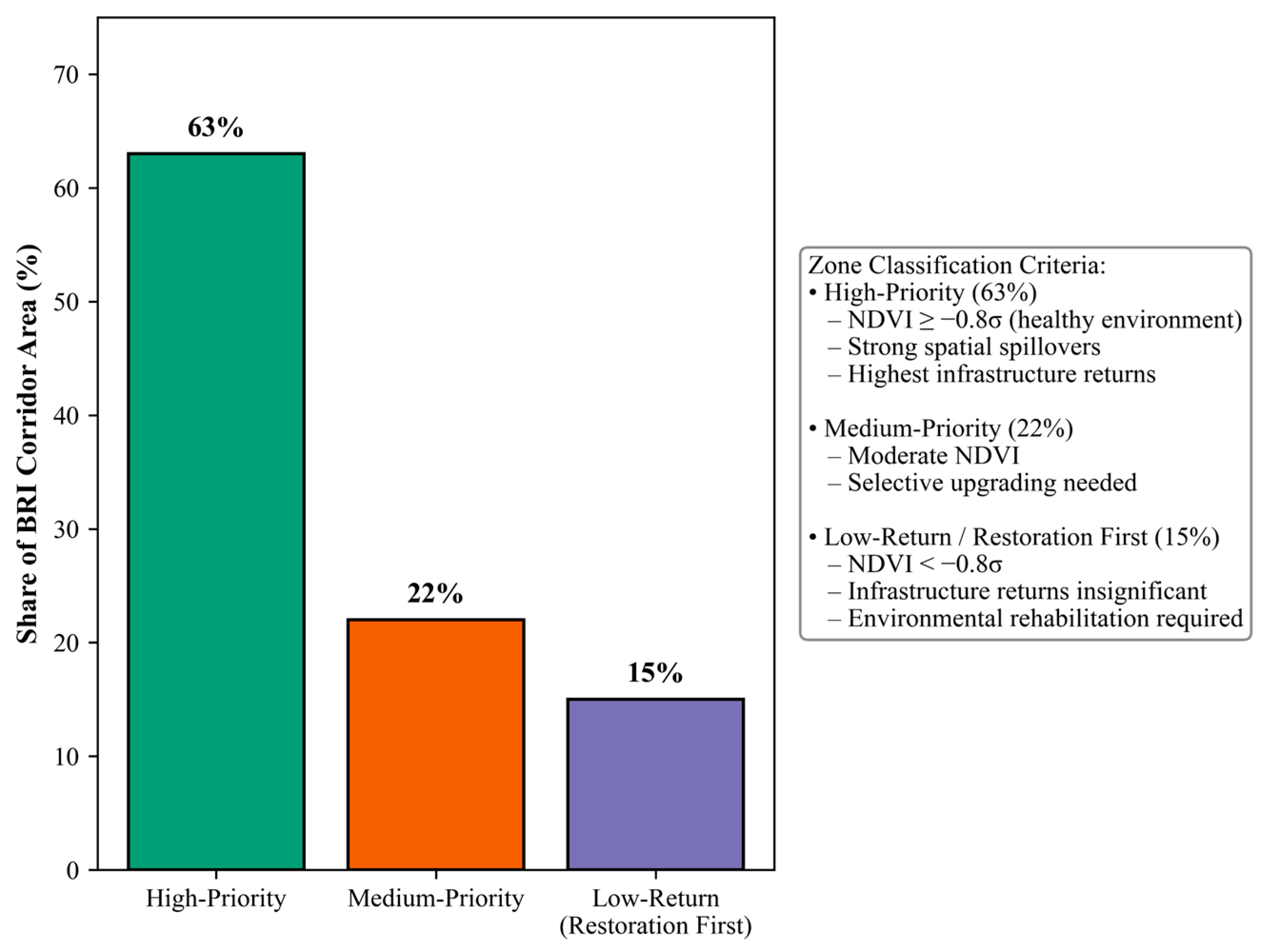
By integrating the ecological threshold (NDVI = −0.8σ) with corridor-level spillover estimates from the Spatial Durbin Model, a spatial investment prioritization framework is established to support phased and evidence-based infrastructure allocation. The classification, presented in
Figure 10, identifies three performance zones that reflect the varying capacity of corridor segments to convert infrastructure investment into measurable economic returns. High-priority zones (63%) are concentrated along the Dar es Salaam–Morogoro–Dodoma transit spine of the Central Corridor and the Standard Gauge Railway (SGR). These areas lie above the ecological threshold and exhibit the strongest indirect effects, indicating conditions where immediate infrastructure deployment yields accelerated return cycles and positive spatial spillovers.
Medium-priority zones (22%) are distributed across transitional districts such as Tabora and Singida, where NDVI values fluctuate around the threshold and spillover strength is moderate. These segments require targeted environmental interventions—such as watershed recovery, land restoration, and vegetation stabilization—to raise ecological capacity to an investment-ready level. Restoration-first zones (15%) are located predominantly within the southern Mtwara Development Corridor, where NDVI values fall below −0.8σ. In these segments, spillovers are negligible and direct effects are weak, indicating that infrastructure expansion without preliminary ecological rehabilitation would risk underperformance and potential stranded assets.
This classification introduces a sequenced operational logic for SDG-oriented corridor planning—build where returns are feasible; restore where investments would underperform—and provides a decision structure aligned with resource efficiency, climate adaptation, and equitable development. The statistical basis and spatial distribution of this framework are summarized in
Table 4, with cell-level values presented in
Supplementary Section S1 and extended diagnostics in
Supplementary Table S6.
Figure 10.
Spatial classification of corridor areas into High-Priority, Medium-Priority, and Restoration-First zones based on ecological threshold effects and spatial spillover dynamics. The classification supports environmentally adaptive sequencing of infrastructure investment.
Figure 10.
Spatial classification of corridor areas into High-Priority, Medium-Priority, and Restoration-First zones based on ecological threshold effects and spatial spillover dynamics. The classification supports environmentally adaptive sequencing of infrastructure investment.
4.6. Regional Heterogeneity in Infrastructure Performance
Regional variation in infrastructure performance demonstrates that investment outcomes along Tanzania’s BRI corridors are not spatially uniform but conditioned by ecological capacity and network integration.
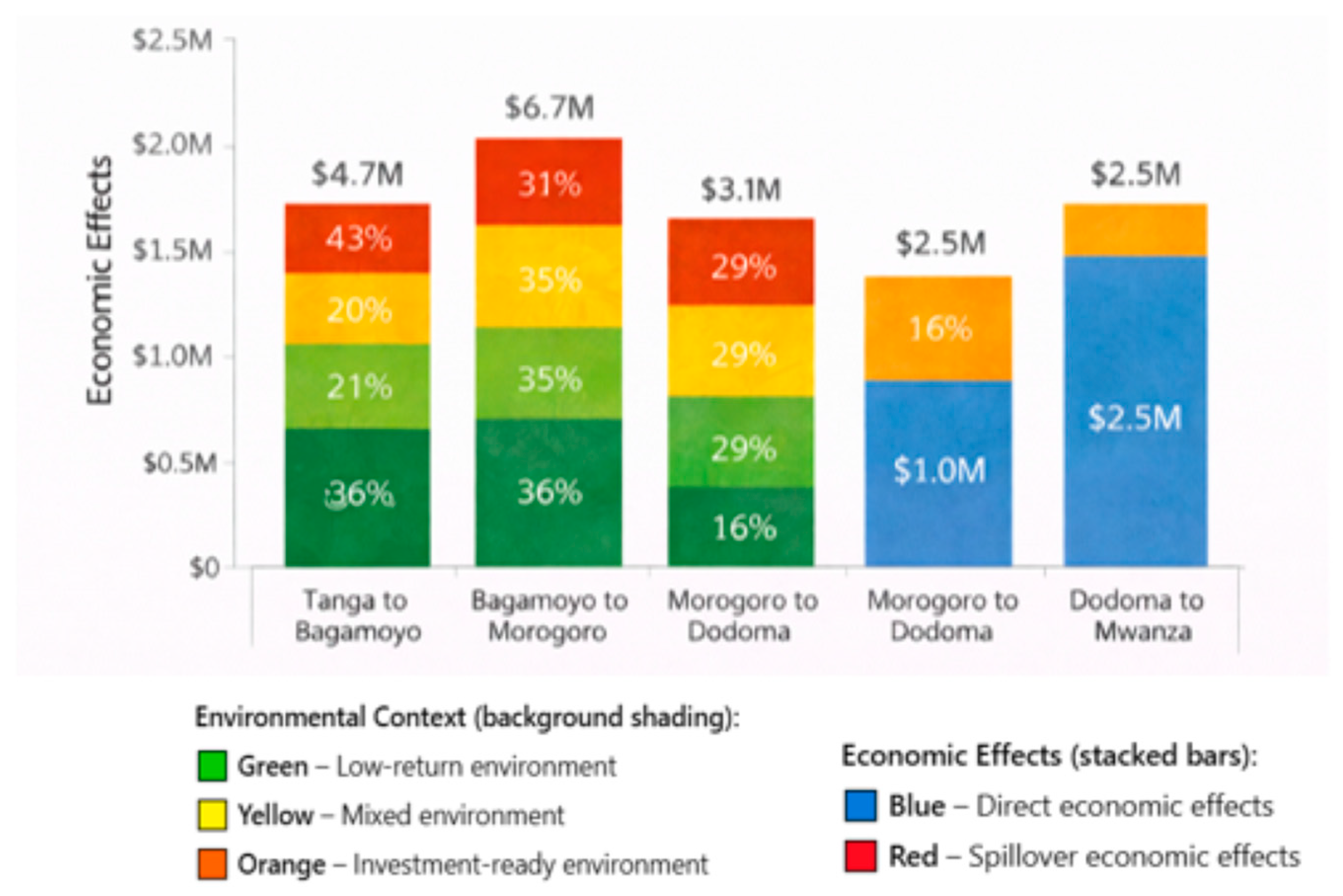
Figure 11 summarizes these differences, showing that the Central Corridor and the Standard Gauge Railway (SGR) spine record the highest direct and indirect effects, reflecting NDVI values above the −0.8σ threshold, stronger spatial linkages between urban nodes, and uninterrupted corridor connectivity. These areas also benefit from higher spillover transmission, indicating that economic gains extend beyond the immediate investment sites and propagate through the regional network, as operationalized by the comparison of corridor-specific impacts under varying ecological conditions.
In contrast, the Mtwara Development Corridor displays substantially weaker returns despite comparable infrastructure density. This performance deficit corresponds with below-threshold NDVI values and reduced spatial integration, limiting the diffusion of economic benefits to surrounding areas. The divergence between these corridors therefore illustrates that infrastructure effectiveness is a function of environmental capacity rather than capital input alone; infrastructure deployed in ecologically degraded segments does not consistently translate into measurable regional spillovers.
This pattern supports a sequenced investment strategy in which capital deployment prioritizes above-threshold environments, while restoration-first interventions prepare low-performing segments for future development. Extended diagnostics are provided in
Supplementary Figure S2, and robustness checks for corridor-specific effects are reported in
Supplementary Table S7.
Figure 11.
Comparison of direct and indirect economic effects across major BRI corridors, stratified by environmental context. The figure highlights differential corridor performance and the role of environmental quality in amplifying spatial spillovers. Colors indicate environmental context (green to orange) and economic effect types (blue for direct effects and red for spillover effects).
Figure 11.
Comparison of direct and indirect economic effects across major BRI corridors, stratified by environmental context. The figure highlights differential corridor performance and the role of environmental quality in amplifying spatial spillovers. Colors indicate environmental context (green to orange) and economic effect types (blue for direct effects and red for spillover effects).
5. Discussion
This study provides spatially explicit and empirically grounded evidence that the economic returns of infrastructure investments within African development corridors are systematically mediated by underlying ecological conditions, rather than being spatially uniform or environmentally neutral. While classical infrastructure-led growth models emphasize accessibility, market integration, and agglomeration effects [
8,
11,
26], the present findings demonstrate that these mechanisms operate conditionally, depending on environmental readiness. The significant interaction between infrastructure density and environmental quality confirms that natural capital functions as an active productive input, consistent with ecological economics and sustainability-oriented development theory [
27,
28,
29,
30]. By integrating spatial econometrics with ecological threshold analysis, the study advances corridor research beyond descriptive spatial correlation toward conditional causal inference, responding directly to gaps identified in recent Global South infrastructure literature [
31,
32].
5.1. Interpreting Infrastructure–Environment Complementarity in Corridor Systems
The results demonstrate that infrastructure–environment complementarity is a measurable and operational mechanism, rather than a purely conceptual proposition. The positive and highly significant infrastructure–NDVI interaction term (β = 6.442,
p < 0.001;
Table 4) indicates that environmental quality systematically amplifies the economic effectiveness of infrastructure investments. This finding challenges linear growth assumptions embedded in conventional transport appraisal frameworks, which implicitly assume proportional returns to capital expansion regardless of ecological context [
3,
34].
The identified NDVI threshold at −0.8σ (
Figure 9) represents a structural regime shift, below which infrastructure investments fail to generate statistically meaningful economic activity. Similar non-linear environmental constraints have been theorized in resilience and natural capital frameworks [
28,
29], but have rarely been quantified empirically at the corridor scale, particularly in African settings [
32,
33]. Importantly, the threshold should be interpreted as a sustainability signal rather than a purely statistical breakpoint, reflecting the minimum ecological capacity required for infrastructure systems to operate efficiently over space and time.
5.2. Causal Channels Linking Environmental Quality and Infrastructure Performance
The spatial heterogeneity observed across Tanzania’s development corridors supports two complementary causal channels identified in sustainability and spatial development theory. The first is a cost-reduction channel, whereby intact vegetation cover, soil stability, and hydrological regulation reduce infrastructure maintenance costs, asset degradation, and climate-related disruptions [
28,
30]. The second is a resource-security channel, through which ecosystems sustain agricultural productivity, water availability, and biomass inputs that underpin corridor-based logistics, processing, and trade activities [
27,
29].
Empirical evidence from transport and corridor development studies suggests that infrastructure investments generate higher and more persistent returns in environmentally stable regions, while degraded landscapes attenuate multiplier effects [
17,
33]. By quantifying these channels through spatial spillover effects, the study extends resilience-based development theory into an operational econometric framework applicable to large-scale investment planning.
5.3. Comparison with Existing Literature and the Tanzanian Context
Relative to existing studies on corridor development and infrastructure-led growth, the findings represent a substantive conceptual and empirical advance. Prior research has emphasized accessibility gains and agglomeration dynamics while treating environmental conditions as exogenous or secondary [
8,
11,
26]. In contrast, the significant indirect spillover effects associated with the infrastructure–environment interaction (
Table 4) demonstrate that environmental quality is a prerequisite for the spatial diffusion of economic benefits, rather than merely a contextual background factor.
This insight helps explain why comparable infrastructure investments have produced uneven outcomes across the Global South [
31,
32]. In Tanzania, strong multiplier effects along the Central Corridor coexist with persistent underperformance in the Mtwara Development Corridor despite comparable infrastructure density. The results indicate that connectivity alone is insufficient; ecological capacity is required to transmit economic gains across space, reinforcing recent calls to reconceptualize development corridors as coupled socio-ecological systems [
29,
33].
5.4. Implications for SDG-Oriented Corridor Planning
The spatial investment prioritization framework derived from the results (
Figure 4) translates the econometric findings into an operational tool for SDG-aligned corridor planning. By classifying grid cells into High-Priority, Medium-Priority, and Restoration-First zones, the framework links infrastructure sequencing to measurable ecological carrying capacity, thereby advancing a model of pragmatic sustainability in which development decisions respond to environmental conditions rather than proceed uniformly across space [
40,
42].
Restoration-First zones provide an economic justification for directing resources toward ecological rehabilitation before large-scale capital deployment, aligning with SDG 9 (Industry, Innovation and Infrastructure) and SDG 15 (Life on Land) by preventing underperformance and stranded assets in below-threshold environments. Medium-Priority zones highlight transitional areas where co-investment—combining infrastructure upgrades with watershed, vegetation, or soil restoration—can elevate system performance to an investable threshold. High-Priority zones demonstrate conditions where infrastructure investment is most likely to generate immediate productivity gains and spatial spillovers, optimizing fiscal efficiency and reducing long-run maintenance burdens.
This zoning logic contributes to SDG 11 (Sustainable Cities and Communities) by supporting spatially adaptive development pathways and strengthens SDG 13 (Climate Action) through the integration of threshold-based resilience indicators into investment sequencing [
16,
40]. District-level classifications and spatial diagnostics are provided in
Supplementary Section S1, enabling replication and policy translation.
Tanzania’s position at 104th globally in SDG performance (Sustainable Development Report, 2024) [
73] underscores the need for a planning model that extends beyond infrastructure provision alone. The findings indicate that sustainable outcomes are contingent on ecological readiness, suggesting that long-term gains depend on sequencing restoration → infrastructure deployment → capacity-building, rather than applying identical strategies across environmentally heterogeneous corridors. This evidence supports a planning model in which investments are prioritized not by geography alone but by measured environmental readiness and demonstrable return potential.
5.5. Constraints, Latent Factors and Directions for Future Research
Despite the robustness of the identified ecological threshold, environmental quality functions as a modulating factor rather than a singular determinant of infrastructure performance. Institutional quality, governance capacity, and human capital—widely recognized as key drivers of development outcomes [
17]—remain latent variables that shape how effectively natural and built capital interact. These factors are likely to influence the magnitude, but not the direction, of the observed complementarity effects.
From a measurement perspective, Night-Time Light intensity captures formal economic activity but may underrepresent informal and subsistence economies common in rural regions [
2,
5]. Temporally, the 2012–2023 observation window captures baseline conditions and early implementation phases of the Belt and Road Initiative in Tanzania, whereas infrastructure impacts often materialize over longer horizons [
31]. Future research should extend the temporal scope and explicitly model feedbacks between infrastructure expansion and environmental change, building on the robustness diagnostics reported in
Supplementary Figures S3 and S4.
6. Conclusions
This study demonstrates that infrastructure–environment complementarity functions as an empirically verifiable and economically decisive mechanism governing the performance of large-scale transport investments. By integrating spatial econometrics with ecological threshold estimation, the analysis shows that infrastructure returns are conditioned by biophysical capacity rather than spatially uniform. The identification of a statistically robust ecological threshold at NDVI = −0.8σ indicates a structural transition point beyond which capital deployment ceases to generate measurable economic gains, establishing environmental quality as a productive input to growth rather than a peripheral constraint. This advances infrastructure-led development research by moving beyond linear or correlational assumptions and demonstrating that investment outcomes depend on ecological readiness within corridor systems.
The study provides theoretical, methodological, and policy contributions to sustainability science and SDG-oriented planning. Theoretically, it bridges ecological economics and spatial development by evidencing that landscape resilience amplifies both local and spillover returns, reinforcing a model of pragmatic sustainability in which development outcomes emerge from the interaction of built and natural capital. Methodologically, it introduces a replicable spatial–ecological framework that combines spatial spillovers, remote sensing indicators, and non-linear threshold modeling to address limitations in conventional appraisal approaches that overlook ecological mediation. Practically, the findings support a sequencing logic in which restoration-first, targeted co-investment, and high-priority deployment correspond to differentiated spatial conditions. This aligns infrastructure planning with SDG 9, SDG 11, SDG 13, and SDG 15, offering an evidence-based pathway in which investment placement and timing are determined by ecological capacity, thereby strengthening long-term performance, reducing the risk of stranded assets, and supporting resilient and equitable development outcomes within Tanzania’s BRI corridors.