Article

NutriRadar: A Mobile Application for the Digital Automation of Childhood Nutritional Classification Based on WHO Standards in the Peruvian Amazon

by
Jaime Cesar Prieto-Luna
1,2,*,
Luis Alberto Holgado-Apaza
1,2,*,
David Ccolque-Quispe
1,2,
Nestor Antonio Gallegos Ramos
1,
Denys Alberto Jaramillo-Peralta
1,
Roxana Madueño-Portilla
3,
José Alfredo Herrera Quispe
4,
Aldo Alarcon-Sucasaca
1,
Frank Arpita-Salcedo
1 and
Danger David Castellon-Apaza
1
1
Departamento Académico de Ingeniería de Sistemas e Informática, Escuela Profesional de Ingeniería de Sistemas e Informática, Facultad de Ingeniería, Universidad Nacional Amazónica de Madre de Dios, Puerto Maldonado 17001, Peru
2
Amazon Data, Artificial Intelligence and Biodiversitech Research Group, Universidad Nacional Amazónica de Madre de Dios, Puerto Maldonado 17001, Peru
3
Departamento Académico de Medicina Veterinaria-Zootecnia, Facultad de Ingeniería, Universidad Nacional Amazónica de Madre de Dios, Puerto Maldonado 17001, Peru
4
Departamento Académico de Ciencia de la Computacion, Universidad Nacional Mayor de San Marcos, Lima 15081, Peru
*
Authors to whom correspondence should be addressed.
Sustainability 2026, 18(3), 1639; https://doi.org/10.3390/su18031639 (registering DOI)
Submission received: 19 November 2025 / Revised: 23 January 2026 / Accepted: 30 January 2026 / Published: 5 February 2026

Abstract

Acute malnutrition affects 3.1% of children under five years of age in Amazonian communities in Peru, where limited access to health services constrains timely nutritional assessment. In this context, this study aimed to develop, implement, and evaluate NutriRadar, a mobile application for automated childhood nutritional classification based on the anthropometric standards of the World Health Organization (WHO). The application was developed using a waterfall software development methodology and implements the calculation of the Weight-for-Height Z-score (WHZ) from basic anthropometric variables (weight, height, age, and sex). NutriRadar was designed with offline functionality, deferred data synchronization, and compatibility with low-end mobile devices to support operational use in Amazonian settings. Field validation was conducted in two early childhood education institutions in Puerto Maldonado, Peru, and included anthropometric assessments of 75 children aged 3–4 years. The application demonstrated stable offline operation, response times suitable for clinical practice, and nutritional classification results equivalent to the WHO Anthro reference tool. NutriRadar represents a viable and reproducible digital automation solution for the operational application of a deterministic WHO anthropometric protocol, contributing to the reduction of operational errors and strengthening standardized nutritional assessment in resource-limited Amazonian contexts.

1. Introduction

Child malnutrition remains one of the major global public health challenges. In 2024, more than 150 million children under five years of age experienced stunting, and approximately 42 million suffered from wasting, including over 12 million with severe wasting [1]. It is estimated that nearly 20% of child deaths in low- and middle-income countries are directly or indirectly associated with malnutrition [2]. In Latin America and the Caribbean, the prevalence of stunting reached 11.5% and wasting 1.4% in 2022, with a disproportionate impact on rural and indigenous populations [3]. In particular, the Amazon region exhibits high levels of nutritional vulnerability, affecting more than 420,000 children exposed to limited access to food, safe water, and basic health services [4].
Between 2018 and 2024, the sustained increase in global and regional food insecurity has intensified the risk of child malnutrition in vulnerable settings [5]. Amazonian regions, characterized by geographic isolation and structural weaknesses in health systems, have experienced increases in acute malnutrition, particularly among dispersed rural communities [1]. At the same time, unequal adoption of digital health technologies has widened gaps in clinical follow-up and nutritional surveillance, delaying the timely identification of cases among children under five years of age [6,7]. These trends highlight the need for early diagnostic strategies adapted to the real operational conditions of Amazonian territories.
In Peru, child malnutrition remains a substantial public health burden, with a higher concentration in the Amazon region [8,9]. Between 2020 and 2023, the prevalence of acute malnutrition among children under five ranged from 1.2% to 1.8%, while chronic malnutrition affected 11.5% of this age group, reaching levels above 22% in rural areas [10]. In Amazonian departments, acute malnutrition approaches 2.5%, primarily affecting Indigenous communities with limited access to health services [11]. These disparities reflect a heterogeneous situation that requires nutritional surveillance approaches sensitive to territorial context.
The consequences of child malnutrition extend beyond immediate clinical outcomes. Acute malnutrition and stunting increase the risk of child mortality and impair immune responses to infectious diseases [12,13,14]. Early nutritional deficiencies also affect essential neurocognitive processes, with long-term implications for academic performance, socioemotional development, and future productivity [15,16,17,18,19,20,21]. These effects contribute to the intergenerational transmission of social and economic inequalities, reinforcing child malnutrition as a structural barrier to sustainable development [22,23,24,25].
Despite its importance, field-based child nutritional assessment faces substantial operational limitations. Manual calculation of anthropometric z-scores using reference tables requires systematic procedures and continuous training, which increases the likelihood of errors and inter-observer variability [26]. This process is time-consuming and may delay the detection of acute malnutrition, thereby compromising the timeliness of interventions [27,28]. In resource-limited rural settings, shortages of trained personnel and limited availability of measurement instruments further exacerbate these challenges, reducing diagnostic accuracy and weakening nutritional surveillance systems [29].
Therefore, timely and reliable diagnosis of child malnutrition in remote settings is essential to reduce complications and mortality. Conventional approaches based on specialized clinical assessments and laboratory tests often involve high costs, complex technical requirements, and operational delays, which limit their applicability at the primary level of care in rural areas [30,31]. In this context, technological strategies aimed at automating structured diagnostic procedures can support health personnel by improving assessment consistency, reducing operational workload, and facilitating early interventions based on standardized criteria.
Child nutritional classification as defined by the World Health Organization (WHO) is based on the deterministic calculation of the weight-for-height z-score (WHZ) using the Lambda–Mu–Sigma (LMS) method. This standardized procedure requires the precise implementation of non-linear statistical functions, interpolation of age- and sex-specific parameters, plausibility checks, and rigorous handling of incomplete or noisy anthropometric data [32,33].
Within this framework, it is appropriate to explore digital automation solutions that enable the consistent execution of childhood nutritional classification in low-resource settings, where technical and operational constraints contribute to diagnostic errors and delays in care. The adoption of computational approaches aimed at standardizing the application of WHO anthropometric criteria can reduce variability associated with manual z-score calculations and facilitate their integration into primary healthcare workflows in Amazonian contexts, where trained personnel and reference materials are often scarce [34,35,36,37,38,39].
In this context, digital automation aims to ensure the faithful, efficient, and auditable execution of nutritional classification within real-world healthcare workflows. Evidence shows that the automation of deterministic clinical procedures reduces variability, improves traceability, and strengthens implementation fidelity, particularly in resource-limited settings [40,41]. However, validated mobile solutions specifically designed to support the operational application of WHO anthropometric standards in low-connectivity contexts remain limited, and many existing tools lack field-based operational evaluations, which constrains their real-world applicability [42,43].
Accordingly, this study developed and implemented NutriRadar, a mobile application for automated childhood nutritional classification based on WHO anthropometric standards, with offline functionality, delayed data synchronization, and compatibility with low-end mobile devices, designed for primary healthcare settings in resource-limited Amazonian contexts. The study further evaluated its operational feasibility and functional equivalence under real-world conditions of use.
Finally, childhood malnutrition is directly linked to the Sustainable Development Goals, particularly SDG 2 (Zero Hunger) and SDG 3 (Good Health and Well-Being), as delayed diagnosis widens inequalities in access to effective interventions [44]. By supporting the standardized and timely application of WHO nutritional criteria, digital automation has the potential to strengthen nutritional surveillance and contribute to more equitable and efficient health systems, aligned with national priorities for public health monitoring and digital transformation [45,46].

2. Literature Review

A set of theories, models, and key concepts from sustainability, environmental public health, and sustainable development that are closely related to the themes, objectives, and context of this study is presented below. These conceptual frameworks help demonstrate that malnutrition in the Amazon is not solely a biomedical problem, but rather a multidimensional sustainability challenge involving social inequality, environmental conditions, and systemic infrastructure limitations.

2.1. Ecosocial Theory

The ecosocial theory posits that health outcomes result from the interaction of political, environmental, and socioeconomic processes that become biologically embodied over time; thus, environmental degradation, land-use changes, climate change, and social exclusion generate unequal exposures that increase nutritional risk in vulnerable populations [47,48]. This approach is particularly relevant in the Amazon, where ecosystem disruption, instability in food systems, and structural limitations in health services directly affect child growth and exacerbate accumulated disadvantages across the life course [49,50]. In this context, NutriRadar aligns with the ecosocial perspective by providing timely nutritional assessments in territories facing geographic barriers and resource scarcity, strengthening equity and the adaptive capacity of local systems in response to environmental and social determinants [51,52].

2.2. Social Determinants of Health

The Social Determinants of Health (SDH) framework explains that nutritional outcomes depend not only on clinical factors but also on social, economic, cultural, and environmental conditions, including poverty, geography, education, food insecurity, and access to health services [53,54]. In the Amazon region, child malnutrition is intertwined with territorial inequalities, community isolation, and resource scarcity, reflecting structural vulnerability. NutriRadar operates within this context by providing a digital tool that improves nutritional diagnosis in remote areas, contributing not only to clinical care but also to reducing social inequality and promoting health equity.

2.3. Digital Divide

The concept of the digital divide refers to inequalities in access to digital technologies caused by socioeconomic, geographic, and infrastructural factors. When applied to the health sector, digital health equity requires that technological tools do not reproduce existing disparities, but instead be designed inclusively and with support adapted to vulnerable contexts [55,56]. In the Amazon region, where connectivity limitations, low digital literacy, and geographic isolation persist, these structural barriers affect the reach of healthcare services. NutriRadar is intended to help reduce this divide by providing a mobile application for nutritional diagnosis that is accessible to frontline workers in remote communities, thereby contributing to a more equitable and sustainable health system.

2.4. One Health

The One Health approach posits that human, animal, and environmental health are interconnected, meaning that interventions must consider the ecological dynamics that influence population-level risks [57,58]. In the Amazon region, this perspective is essential because deforestation, biodiversity loss, and climate variability affect food availability and heighten childhood nutritional vulnerability [59]. It also emphasizes that the sustainability of health technologies depends on their integration into socioecological systems in which environmental determinants shape long-term health outcomes [60]. From this standpoint, NutriRadar aligns with an integrative approach that recognizes that improving child nutrition requires addressing the environmental pressures shaping Amazonian food security risks.

3. Materials and Methods

3.1. Methodological Design of the Study

This study adopted an applied methodological design focused on the development, implementation, and validation of a digital health mobile application, following the waterfall software development methodology. This approach was selected because childhood nutritional classification based on WHO anthropometric standards constitutes a stable, well-defined, and deterministic procedure, with functional requirements that can be specified from the earliest stages of development.
The waterfall model was selected for its sequential structure, comprehensive documentation, and suitability for critical systems in healthcare contexts, where traceability, progressive verification, and strict change control are essential [61]. As shown in Figure 1, the development process was organized into five main phases: requirements analysis, system design, implementation, evaluation and validation, and deployment. Each phase incorporated established methodological techniques, including semi-structured interviews to identify operational needs [62], hierarchical task analysis [63] to model the workflow of the WHO anthropometric procedure, low-fidelity prototyping, black-box functional testing [64,65], and clinical expert reviews. This structured approach ensured that the digital automation of childhood nutritional classification was implemented in accordance with WHO standards, maintaining an auditable and reproducible process [32] suitable for primary healthcare settings with limited resources [66].

3.2. Development of the NutriRadar Mobile Application

NutriRadar was developed as a mobile application aimed at the digital automation of childhood nutritional classification, strictly based on WHO anthropometric standards. The design prioritized diagnostic reproducibility, operational efficiency, and feasibility of implementation in primary healthcare settings with limited infrastructure, particularly in the Peruvian Amazon.
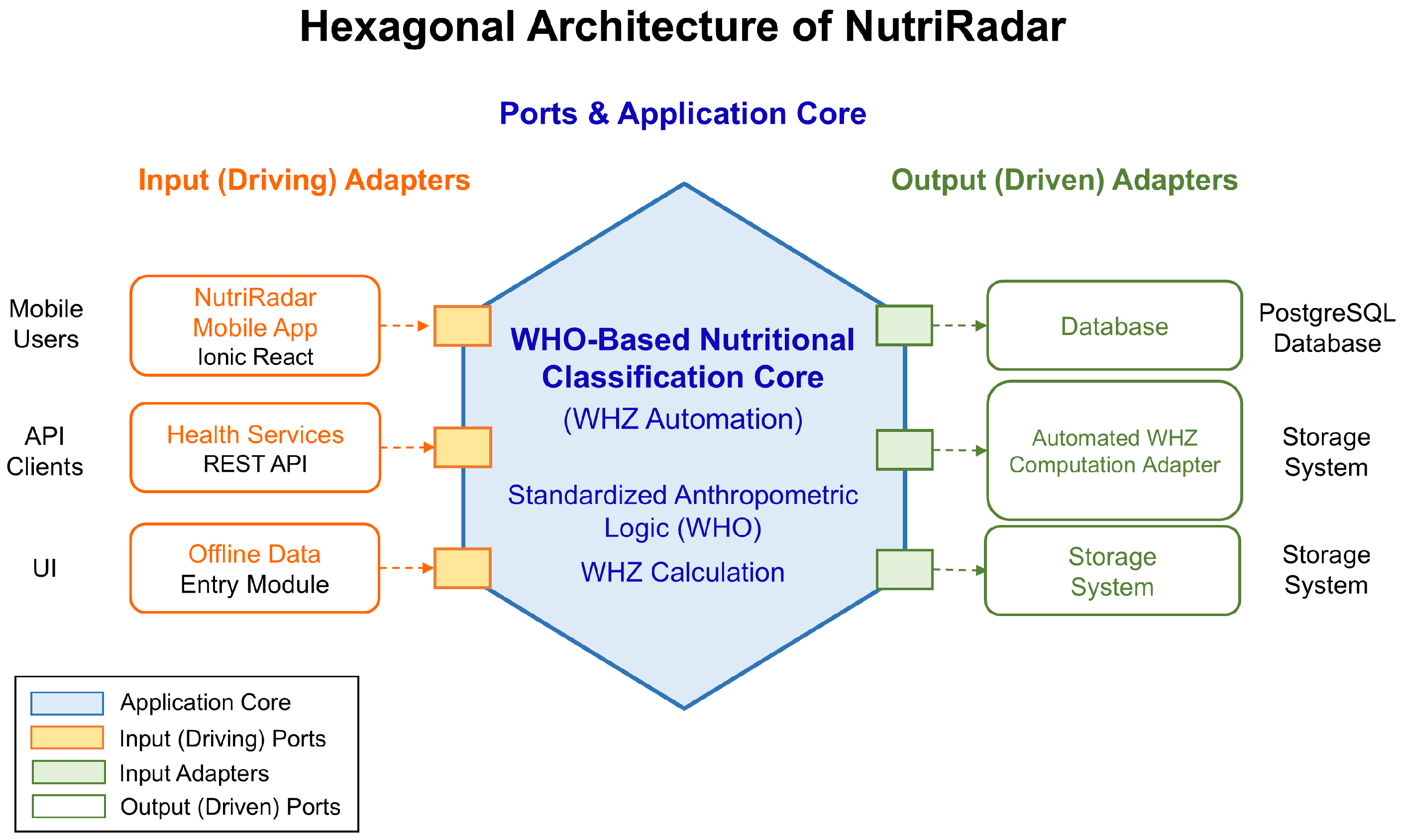
The software design approach used to build the application followed a hexagonal architecture (ports and adapters), which enables a clear separation between the core domain logic and external technological components [67,68]. This architectural approach improves maintainability, independent validation, and system traceability [69], which are essential characteristics for digital health applications. Figure 2 illustrates how the application core encapsulates the standardized WHO anthropometric logic, including the deterministic calculation of the weight-for-height z-score (WHZ). Interactions with the mobile interface, health services, offline data storage, and persistence systems are handled through well-defined input and output adapters. This architectural pattern allows the nutritional classification procedure to remain stable despite changes in the user interface, infrastructure, or deployment mechanisms, and supports reliable operation in low-connectivity environments [70].

3.2.1. Phase 1: Requirements Analysis

The requirements analysis phase aimed to identify and structure the system’s functional and operational needs. semi-structured interviews were conducted with faculty members from the Professional School of Nursing at the Universidad Nacional Amazónica de Madre de Dios (UNAMAD), following recommended approaches for requirements elicitation in clinical information systems [71]. These interviews identified operational difficulties associated with manual WHZ calculation, risks of error related to the use of printed reference tables, connectivity constraints in Amazonian settings, and the need for rapid and streamlined workflows for childhood nutritional assessment.

3.2.2. Phase 2: System Design

During the system design phase, the logical and functional architecture of the application was defined. This phase included the specification of the information architecture, the main menu structure, wireframes, and the preliminary user interface design.
Hierarchical Task Analysis (HTA) was applied as the core design technique [72] to decompose the childhood nutritional assessment process into clear and sequential steps, from the entry of anthropometric data to the generation of the WHZ-based nutritional classification. The use of HTA facilitated alignment between the digital workflow and established clinical procedures and contributed to minimizing operational errors.

3.2.3. Phase 3: System Implementation

The implementation phase involved the development of an initial functional prototype, followed by iterative revisions until the final version of the application was achieved. During this phase, faculty members from the Nursing program at UNAMAD conducted expert reviews to validate the correct implementation of the WHO deterministic algorithm, ensure the clinical coherence of the results, and assess the clarity and appropriateness of the user interface.
The application was developed using Ionic React for the mobile interface, Go and Python version 3.12.3 for the logical backend, and PostgreSQL 16.10 for data persistence. NGINX version 1.29.1 was used as a reverse proxy to manage security and concurrency.

3.2.4. Implementation of the WHO Deterministic Nutritional Classification Module

As part of the implementation phase, a module was developed to automate childhood nutritional classification based on WHO standards. This module computes the Weight-for-Height Z-score (WHZ) in strict accordance with the WHO methodology [32].
The WHZ calculation was implemented using the Lambda–Mu–Sigma (LMS) parameters provided in the WHO child growth reference tables [73]. These tables were organized into four independent datasets according to sex and age range (0–24 and 24–60 months). Prior to computation, height values were rounded to the nearest 0.5 cm, in line with WHO technical specifications. The WHZ was calculated using the standard equation.
z = w e i g h t M L 1 L · S ,
where w e i g h t is the child’s body weight, L (Lambda), M (Mu), and S (Sigma) are statistical parameters obtained from the World Health Organization growth reference tables according to the child’s age and sex. In this framework, L applies the Box-Cox transformation to account for distributional skewness, M represents the median of the reference population, and S denotes the generalized coefficient of variation. In cases where the parameter L was equal to 0, the logarithmic transformation recommended by the WHO was applied. The resulting WHZ values were classified into five nutritional status categories: severe acute malnutrition, moderate acute malnutrition, normal nutritional status, overweight, and obesity [74].
This classification represents a direct translation of the WHZ score without introducing additional criteria, ensuring computational accuracy, diagnostic reproducibility, and functional equivalence with reference tools such as WHO Anthro. The procedure used to assign nutritional status categories is described in Algorithm 1.
Algorithm 1: Classification of nutritional status based on WHZ
Require: 
Z-score value z
Ensure: 
Nutritional diagnosis label
1:
if z is missing then
2:
    return None
3:
else if   z > 3 then
4:
    return Obesity
5:
else if   2 < z 3   then
6:
    return Overweight
7:
else if   2 z 2   then
8:
    return Normal
9:
else if   3 z < 2   then
10:
    return Moderate acute malnutrition
11:
else
12:
    return Severe acute malnutrition
13:
end if

3.2.5. Phase 4: Evaluation and Validation

The evaluation and validation phase aimed to verify the functional behavior of the NutriRadar mobile application against the functional requirements defined during the analysis phase. This stage was conducted through black-box functional testing, with the participation of health professionals from the ISSIA, who interacted with the application from the end-user perspective without access to the system’s internal structure.
The tests were designed based on the Software Requirements Specification (SRS) document and applied to representative usage scenarios corresponding to primary healthcare settings. During test execution, participants provided general observations related to user interaction and visual presentation, which were considered for minor refinements in subsequent iterations.

3.2.6. Phase 5: Deployment and Field Validation

External validation was conducted in two early childhood education institutions in the city of Puerto Maldonado, Madre de Dios, Peru. Prior to implementation, nursing professionals from UNAMAD and ISSIA received structured training on the use of the application. Subsequently, parents were trained in the basic use of the application.
Field validation included 75 children aged 3 to 4 years. Anthropometric measurements were obtained using calibrated instruments, and the nutritional classifications generated by NutriRadar were individually compared with the results produced by the reference standard WHO Anthro.

4. Results

4.1. Phase 1: Requirements Analysis

The thematic analysis of interviews with eight health professionals from UNAMAD identified five categories of requirements, as shown in Table 1. Clinical functionality requirements prioritized the automation of WHZ calculation and the immediate generation of nutritional classifications. Operational constraints reflected the conditions of the Amazonian context, particularly intermittent connectivity and hardware limitations. Usability requirements emphasized streamlined workflows and response times compatible with primary healthcare settings. The security and interoperability categories focused on ensuring data protection and integration with existing health information systems. Based on this analysis, functional and non-functional requirements were specified in the Software Requirements Specification (SRS) document, which served as the foundation for subsequent development phases.

4.2. Phase 2: System Design

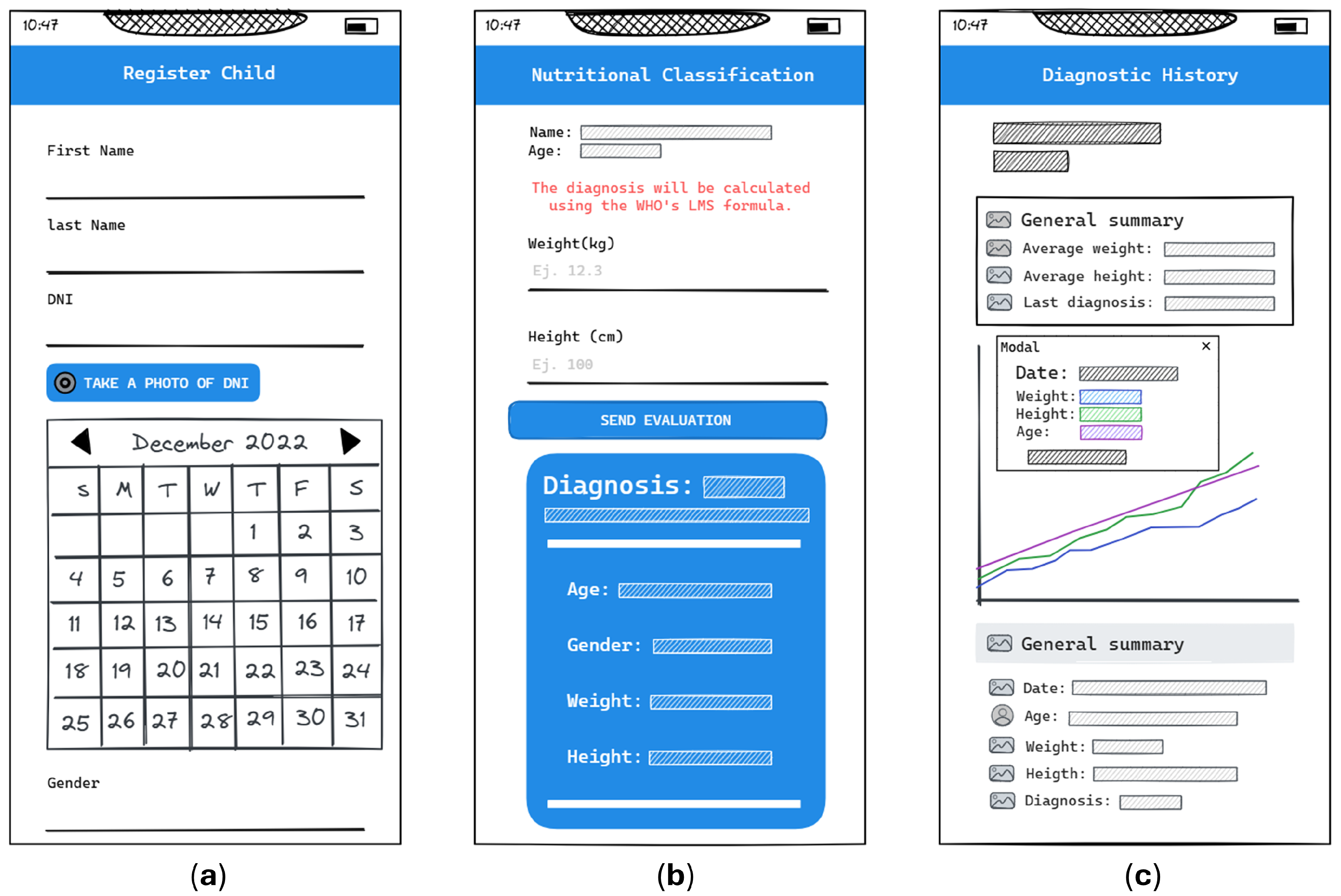
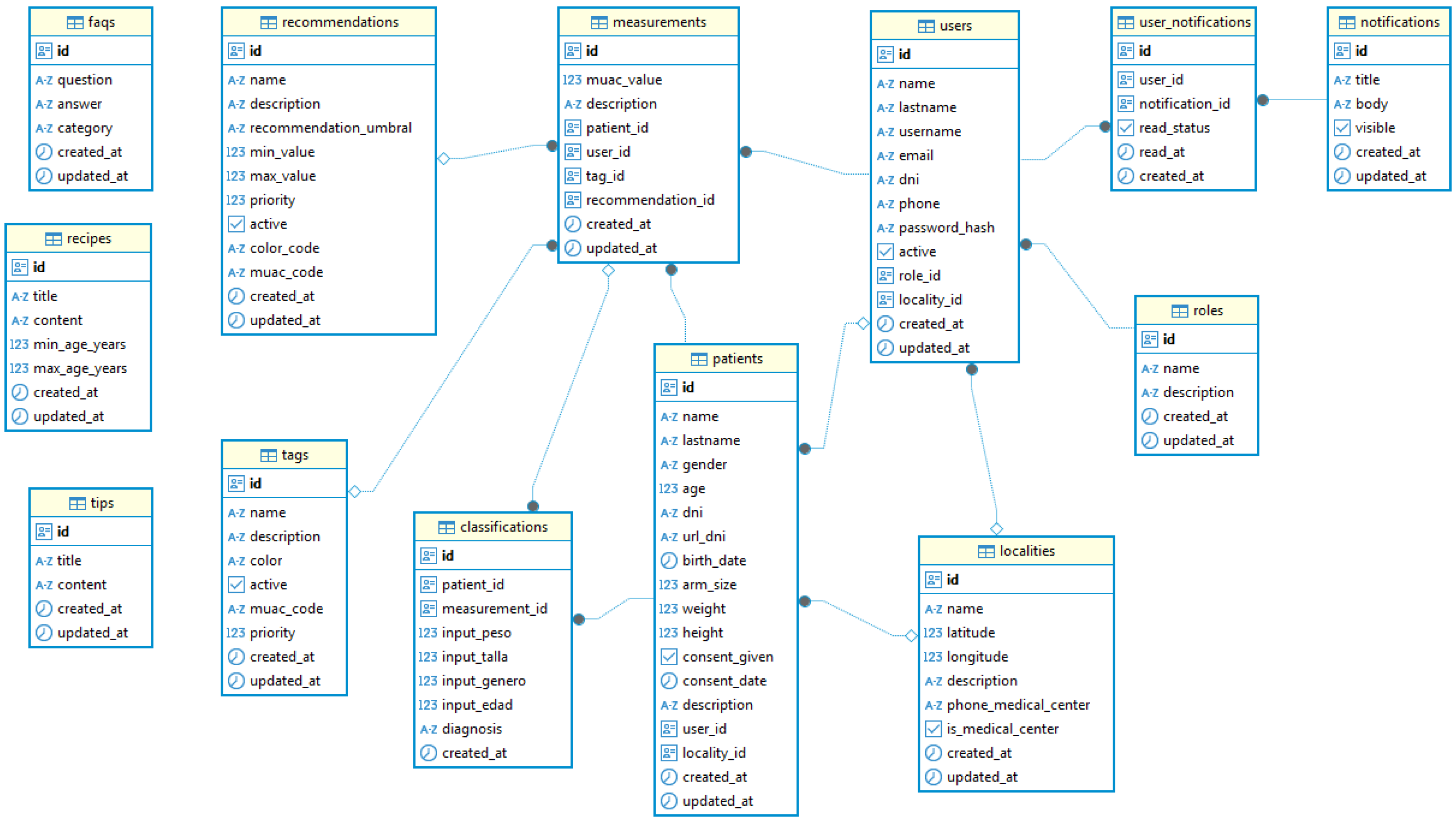
The system architecture was structured according to the hexagonal pattern, separating the domain core from the infrastructure components. The core encapsulated the nutritional classification logic based on the WHO methodology, while input and output adapters managed interactions with the mobile interface, offline storage, and synchronization services. In the implemented architecture, input ports receive validated anthropometric data, and output ports persist classifications and enable data export. The interface design prioritized minimizing operational steps, resulting in a workflow comprising three main screens: anthropometric data entry, classification visualization, and historical records. The developed wireframes defined the layout of visual elements and input controls, optimized for devices with 5–6 inch screens and variable resolutions, as illustrated in Figure 3. Finally, the data model was formalized through the physical database diagram shown in Figure 4, which specifies the main entities (Patients, Assessment, Classification), their structural relationships, and the referential integrity rules required to ensure consistency during deferred synchronization processes.

4.3. Phase 3: System Implementation

The mobile application was developed using Ionic React, enabling cross-platform deployment with a single codebase and the use of native web components to reduce resource consumption. The backend was implemented in Go for service management, while PostgreSQL 16.10 was configured as the persistence system with support for incremental synchronization. NGINX operated as a reverse proxy, managing authentication, load balancing, and response compression.
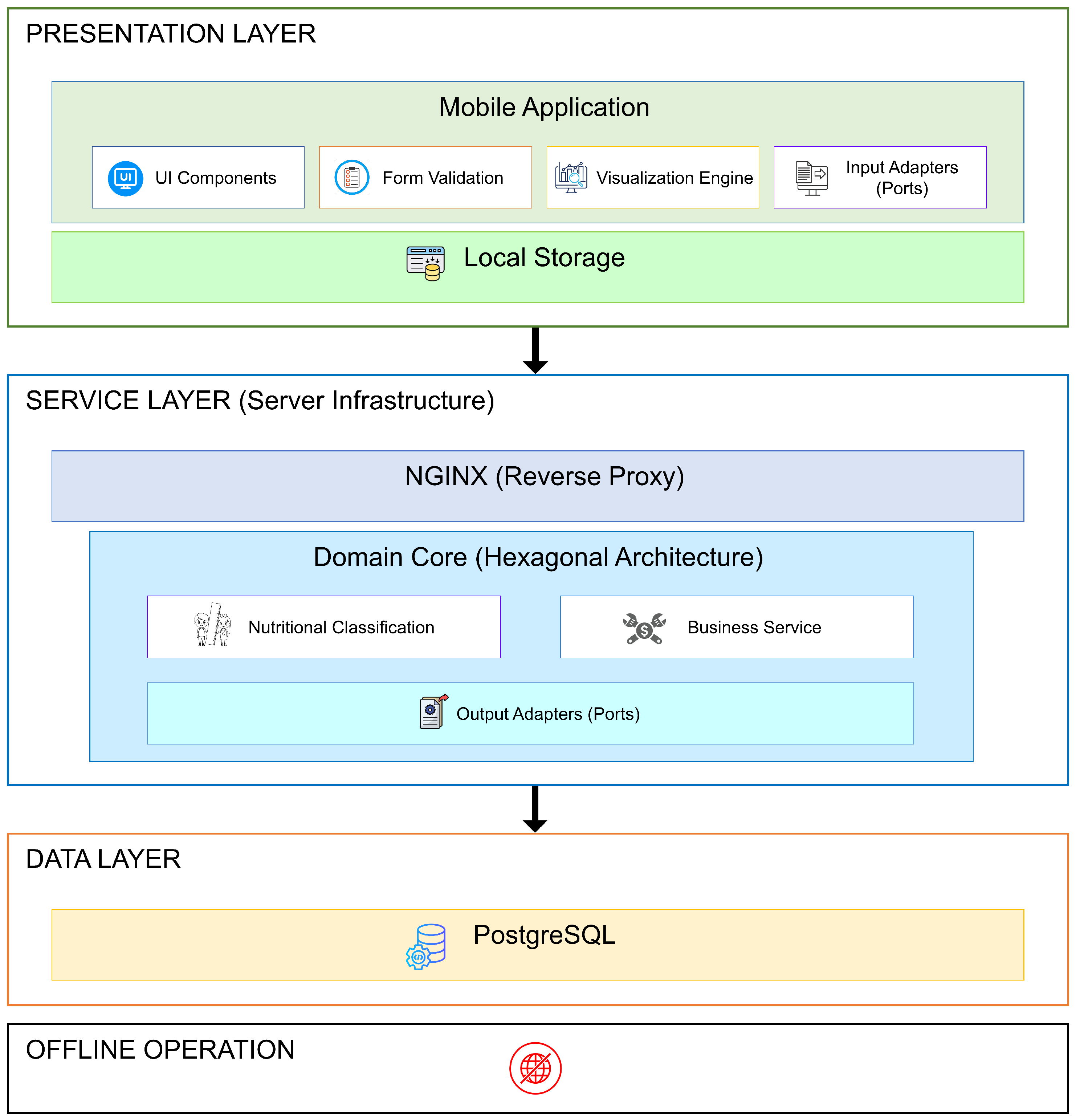
Figure 5 illustrates the deployed implementation architecture, which integrates three functional layers: a presentation layer on the mobile device with local cache storage for offline operation; a server-side services layer with load balancing and session caching; and a data layer with replication mechanisms for redundancy. Deferred synchronization was implemented through an event queue that resolves conflicts based on timestamps, ensuring eventual consistency without information loss during prolonged periods of disconnection.
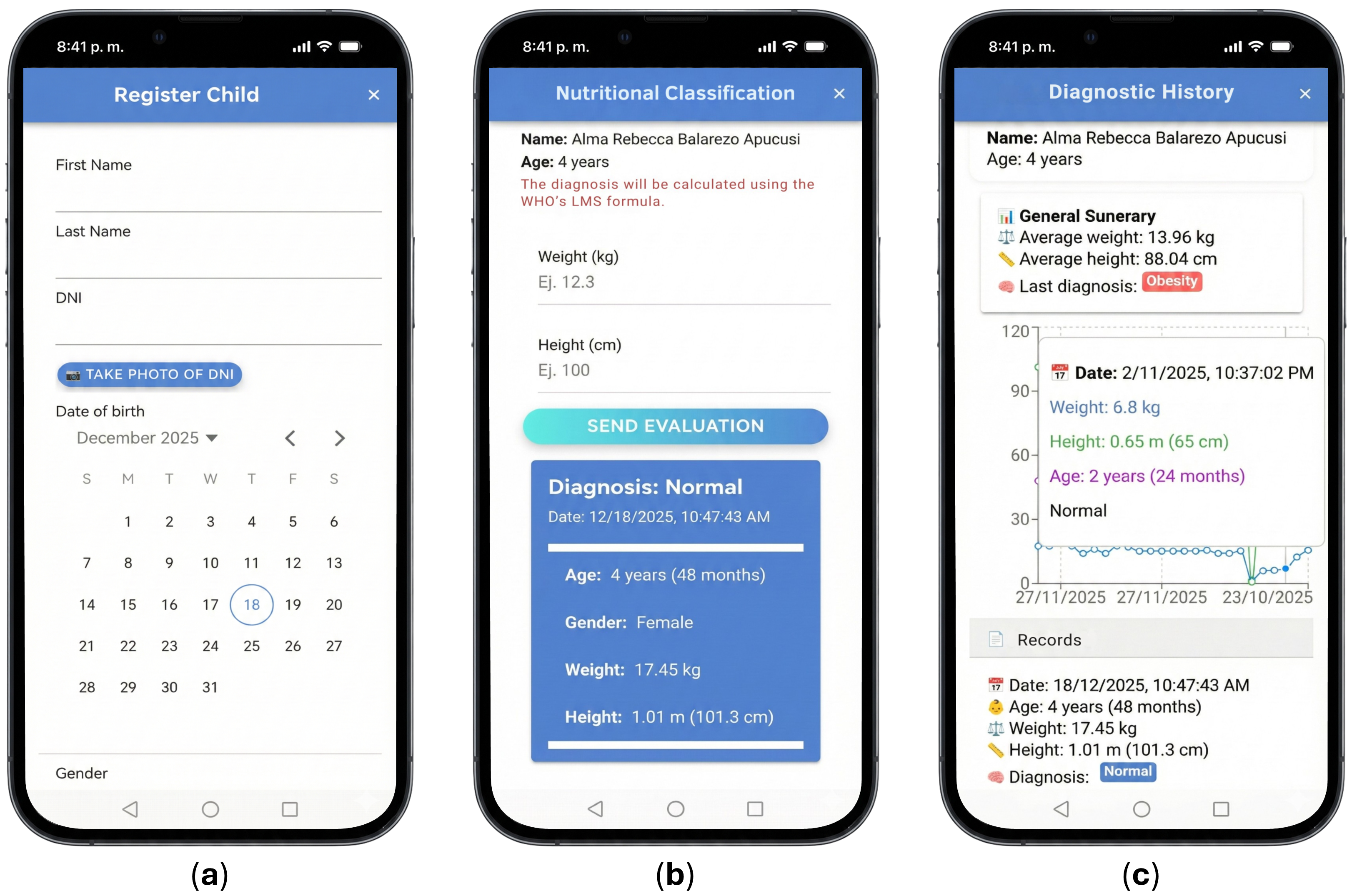
From a functional perspective, Figure 6 presents the automated childhood nutritional classification application implemented in NutriRadar, including the complete operational workflow of the system. Figure 6a shows the interface for recording basic anthropometric data, designed for rapid and field-validated data entry; Figure 6b illustrates the automatic generation of nutritional classification based on the calculation of the WHZ in accordance with WHO standards; and Figure 6c displays the stored nutritional diagnosis history, enabling longitudinal follow-up of the assessed children.

4.4. Phase 4: Evaluation and Validation

The results of the evaluation and validation phase were derived from the execution of black-box functional tests aimed at verifying compliance with the functional requirements defined in the Software Requirements Specification (SRS) document. These tests were conducted by nine health professionals from the Social Impact Innovative Solutions Association (ISSIA), who interacted with the NutriRadar application from the end-user perspective, without access to its internal structure.
Table 2 summarizes the results obtained for each evaluated requirement. Identifiers RF-FC-01 to RF-FC-04 correspond to requirements related to the system’s clinical functionality, while identifier RF-INT-05 is associated with interoperability. Across all defined test scenarios, the observed behavior of the application matched the expected behavior; therefore, all functional requirements were classified as approved.
During test execution, the evaluators reported general observations related to interaction and visual presentation aspects. These observations did not affect the functional compliance of the system and were considered for minor adjustments in subsequent iterations. Overall, the results confirm the functional stability of NutriRadar at this stage of development and its conformity with the operational requirements established for use in primary care settings.

4.5. Phase 5: Deployment and Field Validation

The final phase of the Waterfall model involved the deployment of the NutriRadar application in real-world settings and the evaluation of its performance under operational conditions. This phase included training end users—specifically nursing professionals and parents—as well as installing and using the application on mobile devices employed in educational institutions. Field validation was conducted with a sample of 75 children aged 3 to 4 years, for whom anthropometric measurements were obtained using calibrated instruments. The nutritional classifications generated by NutriRadar were compared individually with the results produced by the reference tool WHO Anthro, enabling the assessment of diagnostic concordance and the system’s operational stability under real conditions.
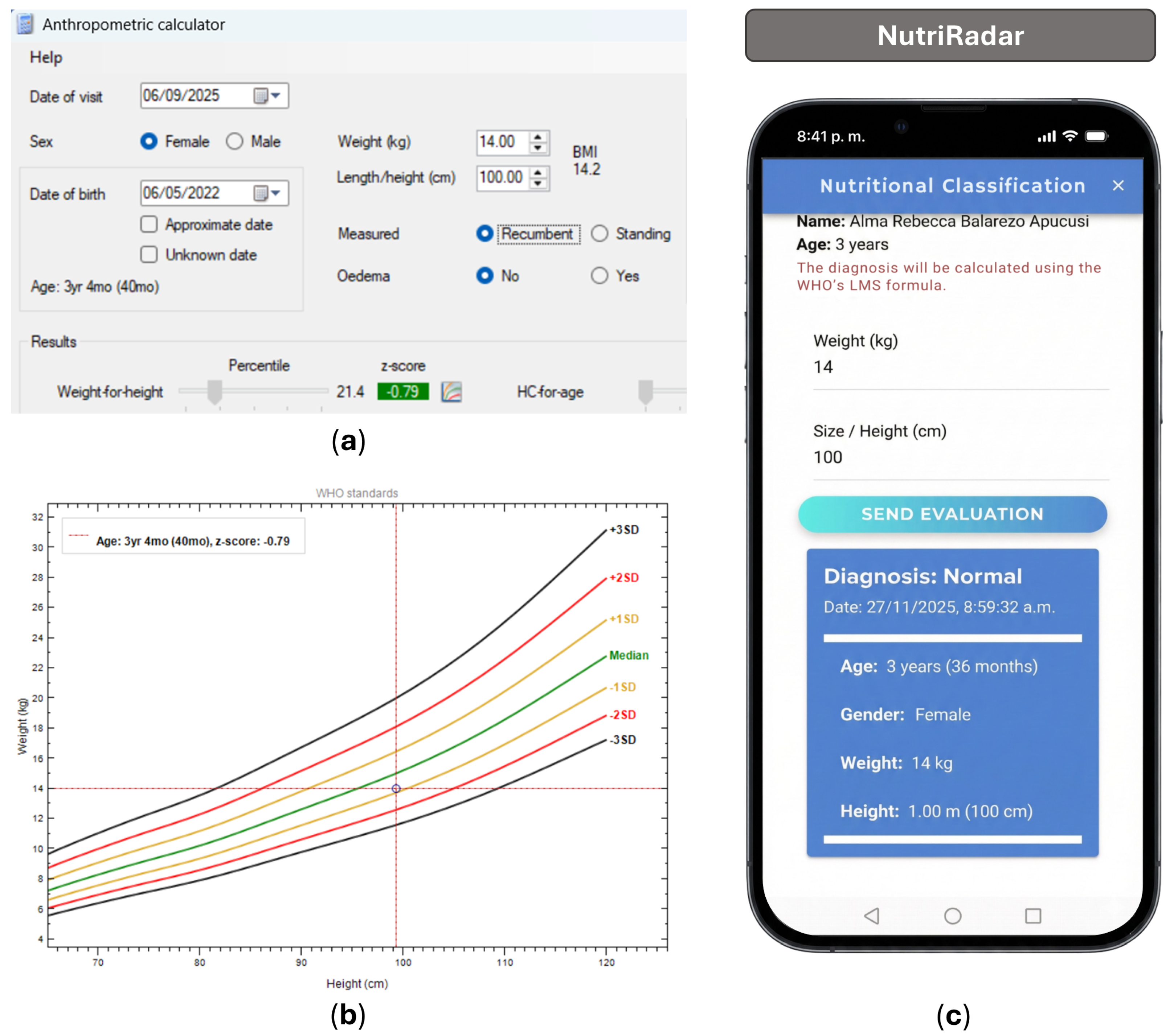
Within the evaluated population, all children were classified as having normal nutritional status according to WHO standards, and no cases of moderate or severe acute malnutrition were identified. These findings confirm the functional equivalence between NutriRadar and WHO Anthro for the nutritional classification of children without deficits; however, they do not allow extrapolation of system performance to deficit categories, which represents a relevant limitation of the study. Anthropometric results are presented in Table 3, while Figure 7a–c provide representative graphical comparisons of the obtained results.

5. Discussion

This study evaluated the feasibility, operational performance, and contextual applicability of NutriRadar, a mobile application designed to digitally automate childhood nutritional classification based on WHO anthropometric standards in the Peruvian Amazon. NutriRadar was explicitly conceived as a deterministic, auditable, and reproducible implementation of the WHZ calculation. Accordingly, the observed results reflect the fidelity of the digital automation to the WHO standard rather than the inference of novel clinical relationships.
The functional equivalence between NutriRadar and the reference tool WHO Anthro, demonstrated during field validation, confirms that WHZ calculation can be executed consistently on low-end mobile devices, even under conditions of limited connectivity. This finding aligns with the deterministic nature of the WHO anthropometric procedure, in which nutritional classification is directly derived from observable physical variables (weight, height, age, and sex) through predefined equations and standardized reference tables [32,73]. From this perspective, the methodological value of the study lies in the engineering of a robust digital solution that ensures faithful execution of the clinical standard in real-world operational contexts.
Compared with traditional approaches used in primary care—which rely on manual calculations, printed reference tables, and evaluator expertise—NutriRadar reduces cognitive load and the risk of operational errors associated with complex sequential procedures. Prior studies have shown that manual application of anthropometric standards may introduce interobserver variability, diagnostic delays, and omissions in high-demand settings with limited human resources [43,75]. The digital automation presented here transforms this process into a structured, verifiable, and rapid sequence that aligns with the workflows of nursing staff and community health workers.
A central contribution of the study is the system’s contextual adaptation. NutriRadar prioritizes features critical for Amazonian settings, including offline operation, deferred data synchronization, and compatibility with low-cost mobile devices. These design decisions respond to well-documented structural constraints in rural and hard-to-reach regions, where intermittent connectivity and limited technological infrastructure hinder the adoption of conventional digital solutions [42,76]. In this regard, NutriRadar aligns with recent recommendations on equity-oriented digital health, which emphasize solutions tailored to territorial and operational determinants of health systems [77].
From a social sustainability perspective, the participatory development process— conducted in collaboration with local health professionals and social organizations— facilitated alignment of the interface and usage flows with real clinical practices. However, the potential impact of digital automation on diagnostic equity remains conditioned by health system coverage. Thus, while automation reduces operational barriers at the micro level, its structural impact requires complementary strategies to strengthen territorial outreach and service coverage.
From an environmental standpoint, the feasibility of NutriRadar on low-power devices suggests indirect benefits associated with reduced use of paper forms, specialized equipment, and unnecessary travel for repeated assessments. Previous studies indicate that lightweight digital health solutions may help reduce the environmental footprint of health systems, although these effects require dedicated analyses of energy consumption and technology life cycles [78,79]. In the present study, these implications are identified as directions for future research rather than quantified outcomes.
Economically, automating nutritional diagnosis may optimize human resource use and reduce costs related to diagnostic errors, delayed referrals, and more complex treatments. Evidence indicates that early detection of acute malnutrition lowers health system costs and improves long-term clinical outcomes [80,81]. Within this framework, NutriRadar may support more efficient management of primary care services, although formal economic evaluations are needed to quantify this impact.
Finally, from a conceptual standpoint, NutriRadar’s design aligns with ecosocial and One Health approaches by recognizing that childhood malnutrition in the Amazon results from interactions among environmental, social, and structural factors. Digital automation of diagnosis is not proposed as a standalone solution, but as a tool that can strengthen the problem-solving capacity of health systems in territories affected by longstanding inequalities [58,82]. In this sense, the study’s contribution is fundamentally operational and implementation-focused, demonstrating that faithful digitalization of clinical standards can improve reproducibility, diagnostic timeliness, and equity in low-resource settings.
Overall, the results position NutriRadar as a deterministic digital automation solution aimed at ensuring consistent application of WHO anthropometric criteria in real-world primary care settings. This approach directly addresses the need for transparency, traceability, and methodological simplicity, and underscores the role of software engineering as a key component in advancing more efficient, equitable, and sustainable health systems.

6. Conclusions

In this study, we developed and validated NutriRadar, a mobile application for the digital automation of childhood nutritional classification, strictly based on WHO anthropometric standards. The proposed system operationalizes the deterministic calculation of WHZ through a standardized, auditable, and reproducible computational implementation, designed for routine use in primary healthcare centers in the Peruvian Amazon. By faithfully adapting the WHO methodology to a mobile environment, the system reduces reliance on manual calculations, printed reference tables, and sequential procedures that are prone to operational errors under field conditions.
The results show that automated execution of the WHO anthropometric procedure can be efficiently implemented on low-end mobile devices, with short response times and reliable offline operation. Local data storage combined with deferred synchronization facilitates longitudinal tracking of anthropometric records and ensures continuity of nutritional surveillance in settings with intermittent connectivity.
From a public health and equity perspective, NutriRadar provides a practical mechanism to reduce gaps in access to childhood nutritional diagnosis in rural and geographically isolated communities. By relying exclusively on objective anthropometric measurements and executing their interpretation according to WHO standards, the application supports standardized decision-making independently of specialized personnel or advanced technological infrastructure.
External field validation should be interpreted as preliminary, as the evaluated sample included only children classified with normal nutritional status. While this confirms functional equivalence between NutriRadar and the WHO Anthro reference for non-deficit cases, it does not allow extrapolation to moderate or severe malnutrition categories. Future studies should therefore extend validation to health facilities with higher prevalence of nutritional deficits and incorporate systematic assessments of usability, user acceptance, and integration into routine workflows to strengthen evidence on scalability and real-world implementation.
Overall, this study demonstrates that digital automation of a well-defined anthropometric standard can improve diagnostic reproducibility, reduce operational errors, and support timely decision-making in resource-limited primary care settings. Accordingly, NutriRadar should be understood as an implementation-oriented digital health solution that facilitates consistent application of established clinical standards. In this sense, it contributes to sustainable health system goals by promoting efficiency, equity, and responsible technological innovation, in alignment with Sustainable Development Goals 3 (Good Health and Well-Being) and 9 (Industry, Innovation and Infrastructure).

Author Contributions

Conceptualization, J.C.P.-L., L.A.H.-A., D.C.-Q., N.A.G.R., J.A.H.Q. and D.D.C.-A.; methodology, J.C.P.-L., L.A.H.-A., N.A.G.R. and D.D.C.-A.; software, L.A.H.-A., D.C.-Q., D.A.J.-P. and A.A.-S.; validation, J.C.P.-L., L.A.H.-A., F.A.-S. and R.M.-P.; formal analysis, J.C.P.-L., L.A.H.-A., F.A.-S. and J.A.H.Q.; investigation, J.C.P.-L., L.A.H.-A., N.A.G.R., D.A.J.-P., J.A.H.Q., A.A.-S. and D.D.C.-A.; resources, J.C.P.-L. and L.A.H.-A.; data curation, J.C.P.-L., L.A.H.-A., F.A.-S., R.M.-P. and A.A.-S.; writing—original draft preparation, J.C.P.-L., L.A.H.-A., D.C.-Q., F.A.-S., D.A.J.-P., R.M.-P., J.A.H.Q. and A.A.-S.; writing—review and editing, J.C.P.-L., L.A.H.-A., N.A.G.R., D.A.J.-P., R.M.-P., J.A.H.Q., A.A.-S. and D.D.C.-A.; visualization, L.A.H.-A. and N.A.G.R.; supervision, J.C.P.-L. and L.A.H.-A.; project administration, J.C.P.-L. and L.A.H.-A.; funding acquisition, J.C.P.-L. and L.A.H.-A. All authors have read and agreed to the published version of the manuscript.

Funding

This research was funded by Universidad Nacional Amazónica de Madre de Dios, grant number (2024-I-CGI18). The APC was funded by Universidad Nacional Amazónica de Madre de Dios.

Institutional Review Board Statement

Ethical review and approval were waived for this study due to compliance with the national regulatory framework for health research in Peru. According to Supreme Decree No. 021-2017-SA, which governs health research in the country, non-interventional observational studies that involve minimal risk and use fully anonymized data are exempt from ethics committee approval. This exemption is consistent with the official guidelines issued by the Peruvian Ministry of Health (MINSA).

Informed Consent Statement

Informed consent was obtained from all subjects involved in the study.

Data Availability Statement

The raw data supporting the conclusions of this article will be made available by the authors on request.

Conflicts of Interest

The authors declare no conflicts of interest.

References

  1. OMS. Levels and Trends in Child Malnutrition; Technical Report; Organización Mundial de la Salud: Geneva, Switzerland, 2025. [Google Scholar]
  2. UNICEF. La Infancia en Peligro: Emaciación Grave; Technical Report; Fondo de las Naciones Unidas para la Infancia: New York, NY, USA, 2022. [Google Scholar]
  3. FAO. América Latina y el Caribe. Panorama Regional de la Seguridad Alimentaria y la Nutrición 2024; FAO: Rome, Italy; FIDA: Rome, Italy; OPS: Washington, DC, USA; PMA: Rome, Italy; UNICEF: Copenhagen, Denmark, 2025; pp. 1–259. [Google Scholar] [CrossRef]
  4. UNICEF. Más de 420.000 Niños y Niñas Padecen una Sequía sin Precedentes en la Región Amazónica; UNICEF: Copenhagen, Denmark, 2024. [Google Scholar]
  5. FAO. El Estado de la Seguridad Alimentaria y la Nutrición en el Mundo 2024; FAO: Rome, Italy; FIDA: Rome, Italy; OMS: Geneva, Switzerland; PMA: Rome, Italy; UNICEF: Copenhagen, Denmark, 2024; pp. 1–304. [Google Scholar] [CrossRef]
  6. Woods, L.; Eden, R.; Macklin, S.; Krivit, J.; Duncan, R.; Murray, H.; Donovan, R.; Sullivan, C. Strengthening rural healthcare outcomes through digital health: Qualitative multi-site case study. BMC Health Serv. Res. 2024, 24, 1096. [Google Scholar] [CrossRef]
  7. Yi, S.; Yam, E.L.Y.; Cheruvettolil, K.; Linos, E.; Gupta, A.; Palaniappan, L.; Rajeshuni, N.; Vaska, K.G.; Schulman, K.; Eggleston, K.N. Perspectives of Digital Health Innovations in Low- and Middle-Income Health Care Systems From South and Southeast Asia. J. Med. Internet Res. 2024, 26, e57612. [Google Scholar] [CrossRef] [PubMed]
  8. Rivera, A.; Marín, V.; Romaní, F. Concurrence of anemia and stunting and associated factors among children aged 6 to 59 months in Peru. PLoS Glob. Public Health 2024, 4, e0002914. [Google Scholar] [CrossRef] [PubMed]
  9. del Carmen Segoviano-Lorenzo, M.; Trigo-Esteban, E.; Gyorkos, T.W.; St-Denis, K.; Guzmán, F.M.D.; Casapía-Morales, M. Prevalence of malnutrition, anemia, and soil-transmitted helminthiasis in preschool-age children living in peri-urban populations in the Peruvian Amazon. Cad. Saude Publica 2022, 38. [Google Scholar] [CrossRef]
  10. INEI. Encuesta Demográfica y de Salud Familiar 2023; Technical Report; Instituto Nacional de Estadística e Informática: Lima, Peru, 2024. [Google Scholar]
  11. INS. Informe Gerencial SIEN-HIS Niños Anual 2023; Technical Report; Instituto Nacional de Salud: Bogotá, Colombia, 2024. [Google Scholar]
  12. Gómez, J.C.; Fernández, T.F.G.; Ríos, A.S.V.; Palacios, M.R.P.; García, G.M.G.; Carrasco, C.G.; Requena, J.M.R.; Recio, J.M.F.; López-Alegría, L.N.; Amador, A.P.; et al. Malnutrition and sarcopenia worsen short- and long-term outcomes in internal medicine inpatients. Postgrad. Med. J. 2023, 99, 56–62. [Google Scholar] [CrossRef]
  13. Gizaw, G.; Wells, J.C.; Argaw, A.; Olsen, M.F.; Abdissa, A.; Asres, Y.; Challa, F.; Berhane, M.; Abera, M.; Sadler, K.; et al. Associations of early childhood exposure to severe acute malnutrition and recovery with cardiometabolic risk markers in later childhood: 5-year prospective matched cohort study in Ethiopia. Am. J. Clin. Nutr. 2025, 121, 343–354. [Google Scholar] [CrossRef]
  14. Victora, C.G.; Christian, P.; Vidaletti, L.P.; Gatica-Domínguez, G.; Menon, P.; Black, R.E. Revisiting maternal and child undernutrition in low-income and middle-income countries: Variable progress towards an unfinished agenda. Lancet 2021, 397, 1388–1399. [Google Scholar] [CrossRef]
  15. Dipasquale, V.; Cucinotta, U.; Romano, C. Acute Malnutrition in Children: Pathophysiology, Clinical Effects and Treatment. Nutrients 2020, 12, 2413. [Google Scholar] [CrossRef]
  16. Kirolos, A.; Goyheneix, M.; Eliasz, M.K.; Chisala, M.; Lissauer, S.; Gladstone, M.; Kerac, M. Neurodevelopmental, cognitive, behavioural and mental health impairments following childhood malnutrition: A systematic review. BMJ Glob. Health 2022, 7, 9330. [Google Scholar] [CrossRef] [PubMed]
  17. Ma, J.J.; Guo, Y.J.; Li, Z.; Chen, Y.; He, H.; Li, W.M. Prevalence and prognostic significance of malnutrition risk in patients with pulmonary tuberculosis: A hospital-based cohort study. Front. Public Health 2022, 10, 1039661. [Google Scholar] [CrossRef]
  18. Rocha, H.A.; Correia, L.L.; Leite, Á.J.M.; Rocha, S.G.; Machado, M.M.; Campos, J.S.; Cunha, A.J.; e Silva, A.C.; Sudfeld, C.R. Undernutrition and short duration of breastfeeding association with child development: A population-based study. J. Pediatr. 2022, 98, 316–322. [Google Scholar] [CrossRef]
  19. Sideropoulos, V.; Draper, A.; Munoz-Chereau, B.; Ang, L.; Dockrell, J.E. Childhood stunting and cognitive development: A meta-analysis. J. Glob. Health 2025, 15, 04257. [Google Scholar] [CrossRef] [PubMed]
  20. Suryawan, A.; Jalaludin, M.Y.; Poh, B.K.; Sanusi, R.; Tan, V.M.; Geurts, J.M.; Muhardi, L. Malnutrition in early life and its neurodevelopmental and cognitive consequences: A scoping review. Nutr. Res. Rev. 2022, 35, 136–149. [Google Scholar] [CrossRef] [PubMed]
  21. Trujillo-Rondan, M.; Roldan-Arbieto, L.; Talavera, J.E.; Perez, M.A.; Correa-Lopez, L.E.; de la Cruz-Vargas, J.A.; Trujillo-Rondan, M.; Roldan-Arbieto, L.; Talavera, J.E.; Perez, M.A.; et al. Factors Associated with Chronic Child Malnutrition in Peru. Horiz. Sanit. 2022, 21, 158–167. [Google Scholar] [CrossRef]
  22. Alao, R.; Nur, H.; Fivian, E.; Shankar, B.; Kadiyala, S.; Harris-Fry, H. Economic inequality in malnutrition: A global systematic review and meta-analysis. BMJ Glob. Health 2021, 6, 6906. [Google Scholar] [CrossRef]
  23. Rahman, S.M.; Ahmed, N.A.; Abedin, M.M.; Ahammed, B.; Ali, M.; Rahman, M.J.; Maniruzzaman, M. Investigate the risk factors of stunting, wasting, and underweight among under-five Bangladeshi children and its prediction based on machine learning approach. PLoS ONE 2021, 16, e0253172. [Google Scholar] [CrossRef] [PubMed]
  24. Seenivasan, S.; Talukdar, D.; Nagpal, A. National income and macro-economic correlates of the double burden of malnutrition: An ecological study of adult populations in 188 countries over 42 years. Lancet Planet. Health 2023, 7, e469–e477. [Google Scholar] [CrossRef]
  25. Siddiqui, F.; Salam, R.A.; Lassi, Z.S.; Das, J.K. The Intertwined Relationship Between Malnutrition and Poverty. Front. Public Health 2020, 8, 525026. [Google Scholar] [CrossRef]
  26. OMS. Primary Health Care Measurement Framework and Indicators: Monitoring Health Systems Through a Primary Health Care Lens; Organización Mundial de la Salud: Washington, DC, USA, 2022; pp. 1–48. [Google Scholar]
  27. Hulst, J.M.; Huysentruyt, K.; Gerasimidis, K.; Shamir, R.; Koletzko, B.; Chourdakis, M.; Fewtrell, M.; Joosten, K.F. A Practical Approach to Identifying Pediatric Disease-Associated Undernutrition: A Position Statement from the ESPGHAN Special Interest Group on Clinical Malnutrition. J. Pediatr. Gastroenterol. Nutr. 2022, 74, 693–705. [Google Scholar] [CrossRef]
  28. Murray, R.D.; Shaaban, S.Y.; Amrani, M.A.; Aldekhail, W.; Alhaffaf, F.A.; Alharbi, A.O.; Almehaidib, A.; Al-Suyufi, Y.; Al-Turaiki, M.; Amin, A.; et al. Protecting optimal childhood growth: Systematic nutritional screening, assessment, and intervention for children at risk of malnutrition in the Kingdom of Saudi Arabia. Front. Nutr. 2024, 11, 1483234. [Google Scholar] [CrossRef]
  29. Aanjankumar, S.; Sathyamoorthy, M.; Dhanaraj, R.K.; Kumar, S.R.S.; Poonkuntran, S.; Khadidos, A.O.; Selvarajan, S. Prediction of malnutrition in kids by integrating ResNet-50-based deep learning technique using facial images. Sci. Rep. 2025, 15, 7871. [Google Scholar] [CrossRef]
  30. de van der Schueren, M.A.; Keller, H.; Cederholm, T.; Barazzoni, R.; Compher, C.; Correia, M.I.; Gonzalez, M.C.; Jager-Wittenaar, H.; Pirlich, M.; Steiber, A.; et al. Global Leadership Initiative on Malnutrition (GLIM): Guidance on validation of the operational criteria for the diagnosis of protein-energy malnutrition in adults. Clin. Nutr. 2020, 39, 2872–2880. [Google Scholar] [CrossRef] [PubMed]
  31. Serón-Arbeloa, C.; Labarta-Monzón, L.; Puzo-Foncillas, J.; Mallor-Bonet, T.; Lafita-López, A.; Bueno-Vidales, N.; Montoro-Huguet, M. Malnutrition Screening and Assessment. Nutrients 2022, 14, 2392. [Google Scholar] [CrossRef] [PubMed]
  32. de Onis, M.; Onyango, A.W.; Borghi, E.; Siyam, A.; Nishida, C.; Siekmann, J. Development of a WHO growth reference for school-aged children and adolescents. Bull. World Health Organ. 2007, 85, 660–667. [Google Scholar] [CrossRef]
  33. OMS. WHO Anthro Survey Analyser and Other Tools; OMS: Washington, DC, USA, 2011. [Google Scholar]
  34. Alowais, S.A.; Alghamdi, S.S.; Alsuhebany, N.; Alqahtani, T.; Alshaya, A.I.; Almohareb, S.N.; Aldairem, A.; Alrashed, M.; Saleh, K.B.; Badreldin, H.A.; et al. Revolutionizing healthcare: The role of artificial intelligence in clinical practice. BMC Med. Educ. 2023, 23, 689. [Google Scholar] [CrossRef]
  35. Alqurashi, M.A.; Alshagrawi, S. Assessing the Impact of Artificial Intelligence Applications on Diagnostic Accuracy in Saudi Arabian Healthcare: A Systematic Review. Open Public Health J. 2025, 18, e18749445369173. [Google Scholar] [CrossRef]
  36. Fahim, Y.A.; Hasani, I.W.; Kabba, S.; Ragab, W.M. Artificial intelligence in healthcare and medicine: Clinical applications, therapeutic advances, and future perspectives. Eur. J. Med. Res. 2025, 30, 848. [Google Scholar] [CrossRef] [PubMed]
  37. Javaid, M.; Haleem, A.; Singh, R.P.; Suman, R.; Rab, S. Significance of machine learning in healthcare: Features, pillars and applications. Int. J. Intell. Netw. 2022, 3, 58–73. [Google Scholar] [CrossRef]
  38. Kumar, K.; Kumar, P.; Deb, D.; Unguresan, M.L.; Muresan, V. Artificial Intelligence and Machine Learning Based Intervention in Medical Infrastructure: A Review and Future Trends. Healthcare 2023, 11, 207. [Google Scholar] [CrossRef]
  39. Weissler, E.H.; Naumann, T.; Andersson, T.; Ranganath, R.; Elemento, O.; Luo, Y.; Freitag, D.F.; Benoit, J.; Hughes, M.C.; Khan, F.; et al. The role of machine learning in clinical research: Transforming the future of evidence generation. Trials 2021, 22, 537. [Google Scholar] [CrossRef]
  40. Carayon, P.; Wooldridge, A.; Hose, B.Z.; Salwei, M.; Benneyan, J. Challenges And Opportunities For Improving Patient Safety Through Human Factors And Systems Engineering. Health Aff. 2018, 37, 1862–1869. [Google Scholar] [CrossRef]
  41. OMS. WHO Guideline on the Prevention and Management of Wasting and Nutritional Oedema (Acute Malnutrition) in Infants and Children Under 5 Years; World Health Organization: Geneva, Switzerland, 2023; p. 208. [Google Scholar]
  42. Labrique, A.; Agarwal, S.; Tamrat, T.; Mehl, G. WHO Digital Health Guidelines: A milestone for global health. npj Digit. Med. 2020, 3, 120. [Google Scholar] [CrossRef]
  43. Myatt, M.; Khara, T.; Collins, S. A review of methods to detect cases of severely malnourished children in the community for their admission into community-based therapeutic care programs. Food Nutr. Bull. 2006, 27, S7–S23. [Google Scholar] [CrossRef]
  44. ONU. La Asamblea General Adopta la Agenda 2030 para el Desarrollo Sostenible; ONU: New York, NY, USA, 2015. [Google Scholar]
  45. MINSA. Plan Nacional para la Reducción y Control de la Anemia Materno Infantil y la Desnutrición cróNica Infantil en el Perú: 2017–2021; Technical Report; Ministerio de Salud: Lima, Peru, 2017. [Google Scholar]
  46. PCM. Política Nacional de Transformación Digital al 2030; Technical Report; Presidencia del Consejo de Ministros: Lima, Peru, 2023. [Google Scholar]
  47. Krieger, N. Measures of racism, sexism, heterosexism, and gender binarism for health equity research: From structural injustice to embodied harm-an ecosocial analysis. Annu. Rev. Public Health 2019, 41, 37–62. [Google Scholar] [CrossRef] [PubMed]
  48. Thomson, L.J.; Critten, A.; Hume, V.; Chatterjee, H.J. Common features of environmentally and socially engaged community programs addressing the intersecting challenges of planetary and human health: Mixed methods analysis of survey and interview evidence from creative health practitioners. Front. Public Health 2025, 13, 1449317. [Google Scholar] [CrossRef] [PubMed]
  49. Ellwanger, J.H.; Kulmann-Leal, B.; Kaminski, V.L.; Valverde-Villegas, J.M.; Veiga, A.B.G.D.; Spilki, F.R.; Fearnside, P.M.; Caesar, L.; Giatti, L.L.; Wallau, G.L.; et al. Beyond diversity loss and climate change: Impacts of Amazon deforestation on infectious diseases and public health. An. Acad. Bras. Ciências 2020, 92, e20191375. [Google Scholar] [CrossRef] [PubMed]
  50. Mastel, M.; Bussalleu, A.; Paz-Soldán, V.A.; Salmón-Mulanovich, G.; Valdés-Velásquez, A.; Hartinger, S.M. Critical linkages between land use change and human health in the Amazon region: A scoping review. PLoS ONE 2018, 13, e0196414. [Google Scholar] [CrossRef] [PubMed]
  51. Ansah, E.W.; Amoadu, M.; Obeng, P.; Sarfo, J.O. Health systems response to climate change adaptation: A scoping review of global evidence. BMC Public Health 2024, 24. [Google Scholar] [CrossRef]
  52. Myhre, S.L.; Frønsdal, K.B.; Ames, H.M.; Papadopoulou, E. A scoping review of climate resilient health system strategies in low-resource settings. Public Health 2025, 249, 106026. [Google Scholar] [CrossRef]
  53. Alvear-Vega, S.; Vargas-Garrido, H. Social determinants of malnutrition in Chilean children aged up to five. BMC Public Health 2022, 22, 44. [Google Scholar] [CrossRef]
  54. Bayati, M.; Arkia, E.; Emadi, M. Socio-economic inequality in the nutritional deficiencies among the world countries: Evidence from global burden of disease study 2019. J. Health Popul. Nutr. 2025, 44, 8. [Google Scholar] [CrossRef]
  55. König, L.M.; Krukowski, R.A.; Kuntsche, E.; Busse, H.; Gumbert, L.; Gemesi, K.; Neter, E.; Mohamed, N.F.; Ross, K.M.; John-Akinola, Y.O.; et al. Reducing intervention- and research-induced inequalities to tackle the digital divide in health promotion. Int. J. Equity Health 2023, 22, 249. [Google Scholar] [CrossRef]
  56. Vidal-Alaball, J.; Belmonte, I.A.; Zafra, R.P.; Escalé-Besa, A.; Oliva, J.A.; Perez, C.S. Abordaje de la transformación digital en salud para reducir la brecha digital. Atención Primaria 2023, 55, 102626. [Google Scholar] [CrossRef]
  57. Basheer, A.; Tran, M.; Khan, B.; Jentner, W.; Wendelboe, A.; Vogel, J.; Kuhn, K.; Wimberly, M.C.; Ebert, D. Comprehensive review of One Health systems for emerging infectious disease detection and management. One Health 2025, 21, 101253. [Google Scholar] [CrossRef]
  58. Destoumieux-Garzón, D.; Mavingui, P.; Boetsch, G.; Boissier, J.; Darriet, F.; Duboz, P.; Fritsch, C.; Giraudoux, P.; Roux, F.L.; Morand, S.; et al. The one health concept: 10 years old and a long road ahead. Front. Vet. Sci. 2018, 5, 306018. [Google Scholar] [CrossRef] [PubMed]
  59. Muluneh, M.G. Impact of climate change on biodiversity and food security: A global perspective—A review article. Agric. Food Secur. 2021, 10, 36. [Google Scholar] [CrossRef]
  60. Berger, M.; Ehlers, J.P.; Nitsche, J. Aligning With the Goals of the Planetary Health Concept Regarding Ecological Sustainability and Digital Health: Scoping Review. J. Med. Internet Res. 2025, 27, e71795. [Google Scholar] [CrossRef] [PubMed]
  61. McDermid, J.A. Software Safety: Where’s the Evidence? Australian Computer Society, Inc.: Brisbane, Australia, 2001; Volume 3, pp. 1–6. [Google Scholar]
  62. Kallio, H.; Pietilä, A.M.; Johnson, M.; Kangasniemi, M. Systematic methodological review: Developing a framework for a qualitative semi-structured interview guide. J. Adv. Nurs. 2016, 72, 2954–2965. [Google Scholar] [CrossRef]
  63. French, A.; Taylor, L.K.; Lemke, M.R. Task analysis. In Applied Human Factors in Medical Device Design; Privitera, M.B., Ed.; Academic Press: Cambridge, MA, USA, 2019; pp. 63–81. [Google Scholar] [CrossRef]
  64. Alshamaa, Z.M.; Saleem, N.N. Black box software testing techniques: A literature review. Passer J. Basic Appl. Sci. 2025, 7, 1001–1011. [Google Scholar] [CrossRef]
  65. Ayuningtyas, P.; Ayuningtyas, P.K.; WP, D.A.; Rachmadi, P. Performance And Functional Testing with The Black Box Testing Method. Int. J. Progress. Sci. Technol. 2023, 39, 212–218. [Google Scholar] [CrossRef]
  66. Topol, E.J. High-performance medicine: The convergence of human and artificial intelligence. Nat. Med. 2019, 25, 44–56. [Google Scholar] [CrossRef]
  67. Griffin, J. Hexagonal-Driven Development. In Domain-Driven Laravel; Springer: Berlin/Heidelberg, Germany, 2021; pp. 521–544. [Google Scholar] [CrossRef]
  68. Nunkesser, R. Using Hexagonal Architecture for Mobile Applications. In Proceedings of the 17th International Conference on Software Technologies (ICSOFT 2022), Lisbon, Portugal, 11–13 July 2022; pp. 113–120. [Google Scholar] [CrossRef]
  69. Alves, V.; Niu, N.; Alves, C.; Valença, G. Requirements engineering for software product lines: A systematic literature review. Inf. Softw. Technol. 2010, 52, 806–820. [Google Scholar] [CrossRef]
  70. Buschmann, F.; Henney, K.; Schmidt, D.C. Pattern-Oriented Software Architecture: On Patterns and Pattern Languages; Wiley: Hoboken, NJ, USA, 2007. [Google Scholar]
  71. Kushniruk, A.W.; Patel, V.L. Cognitive and usability engineering methods for the evaluation of clinical information systems. J. Biomed. Inform. 2004, 37, 56–76. [Google Scholar] [CrossRef]
  72. Stanton, N.A.; Salmon, P.M.; Rafferty, L.A.; Walker, G.H.; Baber, C.; Jenkins, D.P. Human Factors Methods: A Practical Guide for Engineering and Design; CRC Press: Boca Raton, FL, USA, 2017; pp. 1–627. [Google Scholar] [CrossRef]
  73. OMS. WHO Child Growth Standards based on length/height, weight and age. Acta Paediatr. 2006, 450, 76–85. [Google Scholar] [CrossRef]
  74. OMS. Guideline: Assessing and Managing Children at Primary Health-Care Facilities to Prevent Overweight and Obesity in the Context of the Double Burden of Malnutrition; Organización Mundial de la Salud: Ginebra, Suiza, 2017; pp. 1–88. [Google Scholar]
  75. Cogill, B. Anthropometric Indicators Measurement Guide; Food and Nutrition Technical Assistance Project, Academy for Educational Development: Washington, DC, USA, 2003. [Google Scholar]
  76. Hurt, K.; Walker, R.J.; Campbell, J.A.; Egede, L.E. mHealth Interventions in Low and Middle-Income Countries: A Systematic Review. Glob. J. Health Sci. 2016, 8, p183. [Google Scholar] [CrossRef]
  77. OMS. WHO Guideline Recommendations on Digital Interventions for Health System Strengthening; World Health Organization: Geneva, Switzerland, 2019; Volume WHO/RHR/19, p. p. 13. [Google Scholar]
  78. Alami, H.; Rivard, L.; Lehoux, P.; Ahmed, M.A.A.; Fortin, J.P.; Fleet, R. Integrating environmental considerations in digital health technology assessment and procurement: Stakeholders’ perspectives. Digit. Health 2023, 9. [Google Scholar] [CrossRef] [PubMed]
  79. Belkhir, L.; Elmeligi, A. Assessing ICT global emissions footprint: Trends to 2040 & recommendations. J. Clean. Prod. 2018, 177, 448–463. [Google Scholar] [CrossRef]
  80. Bhutta, Z.A.; Das, J.K.; Rizvi, A.; Gaffey, M.F.; Walker, N.; Horton, S.; Webb, P.; Lartey, A.; Black, R.E. Evidence-based interventions for improvement of maternal and child nutrition: What can be done and at what cost? Lancet 2013, 382, 452–477. [Google Scholar] [CrossRef] [PubMed]
  81. Black, R.E.; Victora, C.G.; Walker, S.P.; Bhutta, Z.A.; Christian, P.; Onis, M.D.; Ezzati, M.; Grantham-Mcgregor, S.; Katz, J.; Martorell, R.; et al. Maternal and child undernutrition and overweight in low-income and middle-income countries. Lancet 2013, 382, 427–451. [Google Scholar] [CrossRef]
  82. Krieger, N. Epidemiology and the People’s Health: Theory and Context. In Epidemiology and the People’s Health: Theory and Context; Oxford University Press: Oxford, UK, 2011; pp. 1–400. [Google Scholar] [CrossRef]
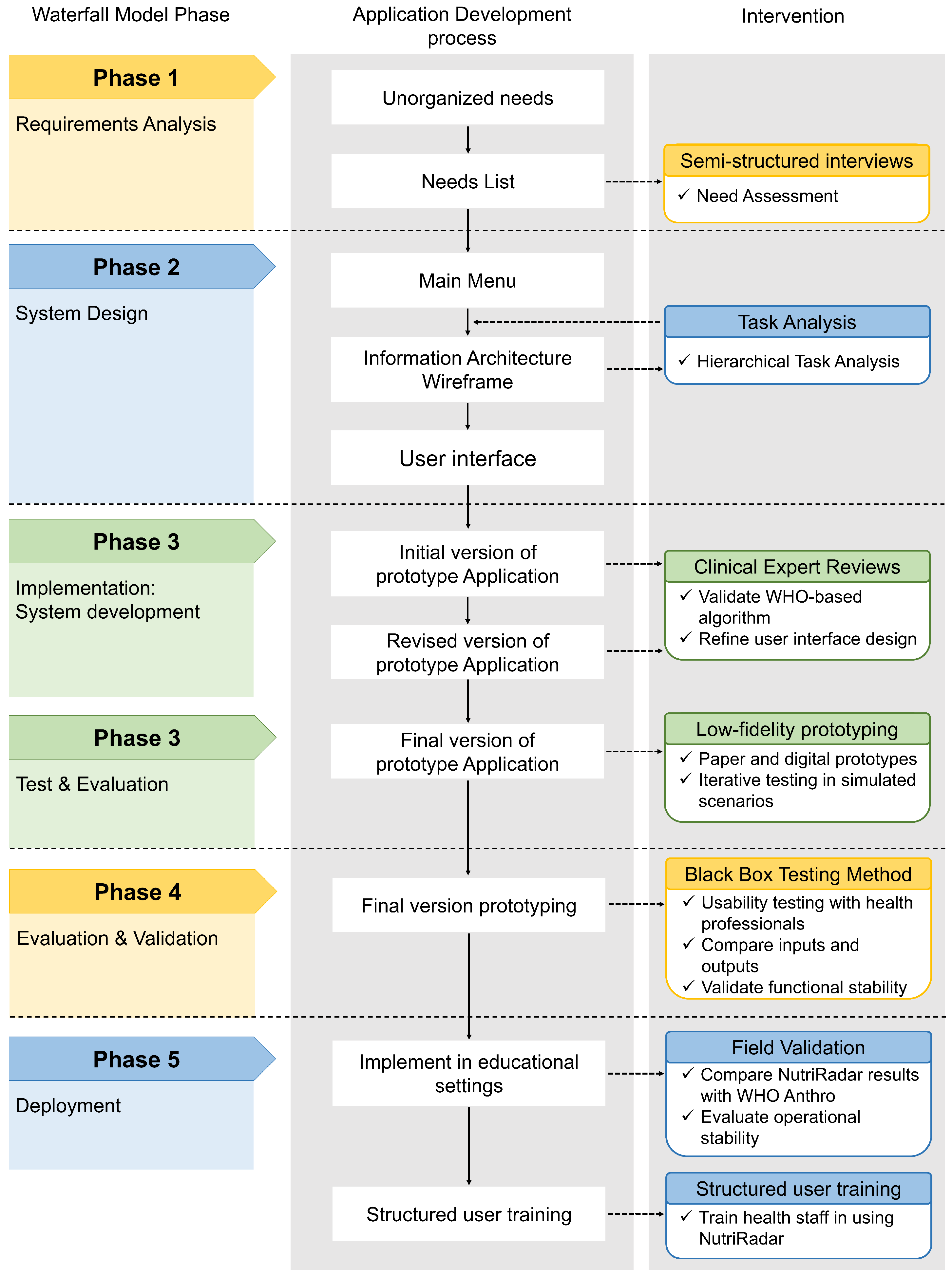
Figure 1. Waterfall-based software development process applied to NutriRadar.
Sustainability 18 01639 g001
Figure 2. Proposed hexagonal architecture for the NutriRadar mobile application.
Sustainability 18 01639 g002
Figure 3. User interface wireframes of the NutriRadar mobile application. (a) Child identification and anthropometric data entry. (b) Calculation and visualization of nutritional classification. (c) Nutritional diagnosis history.
Sustainability 18 01639 g003
Figure 4. Physical database model of the NutriRadar system. The white diamond symbol represents cardinality one (1), and the black circle symbol represents cardinality many (N).
Sustainability 18 01639 g004
Figure 5. Three-layer deployment architecture of the NutriRadar mobile health system.
Sustainability 18 01639 g005
Figure 6. Automated application for child nutritional classification. (a) Anthropometric data recording. (b) Automated nutritional classification. (c) Nutritional diagnosis history.
Sustainability 18 01639 g006
Figure 7. Comparative reference. (a) WHO Anthro Anthropometric Calculator. (b) WHO Anthro Weight-for-Height Growth Curve. (c) NutriRadar Mobile Application.
Sustainability 18 01639 g007
Table 1. Functional and non-functional requirements identified for the automated childhood nutritional classification system.
CategorySpecific Requirements
Clinical functionalityAutomated WHZ calculation according to WHO methodology; immediate nutritional classification; anthropometric plausibility validation; evaluation traceability.
Operational constraintsOffline operation; data synchronization; compatibility with low-end devices.
UsabilityMinimalist interface with simplified workflow (up to five steps); response time of up to 30 s; clear visual feedback of classification.
Security and privacyUser authentication; compliance with health data protection regulations.
InteroperabilityData export in standard format.
Table 2. Results of Black-Box testing applied to functional requirements.
IDFunctional RequirementInputActionExpected ResultObtained ResultStatus
RF-FC-01Automated WHZ calculation according to WHO methodologyValid anthropometric dataPress “Submit evaluation”Automatic WHZ calculationWHZ calculated correctlyApproved
RF-FC-02Immediate nutritional classificationWeight-for-height indexView resultNutritional status classificationClassification displayed correctlyApproved
RF-FC-03Anthropometric plausibility validationAnthropometric data out of rangePress “Submit evaluation”Warning message displayed indicating implausible dataWarning message displayed correctlyApproved
RF-FC-04Assessment TraceabilityNutritional assessment completedPress “Save”Assessment recorded and available in user historyAssessment successfully recorded in historyApproved
RF-INT-05Exporting ResultsSelected AssessmentPress “Export”File GeneratedFile Exported SuccessfullyApproved
Table 3. External validation: NutriRadar classification versus WHO Anthro.
No.Date of BirthSexWeight (kg)Height (cm)NutriRadar ClassificationWHO Anthro Classification
15 May 2021M15.295NormalNormal
26 May 2021F14.0100NormalNormal
329 June 2021M15.599.5NormalNormal
736 May 2022M14.0100NormalNormal
7417 July 2021F17.5102.8NormalNormal
7516 March 2021M21.0108NormalNormal
Disclaimer/Publisher’s Note: The statements, opinions and data contained in all publications are solely those of the individual author(s) and contributor(s) and not of MDPI and/or the editor(s). MDPI and/or the editor(s) disclaim responsibility for any injury to people or property resulting from any ideas, methods, instructions or products referred to in the content.