Article

Estimating the Preserved Value of Industrial Heritage Using the Contingent Valuation Method: A Case of Cheoram Coal-Mine History Town

1
Department of Leisure and Tourism Sciences, Kyonggi University, 24, Kyonggidae-ro 9-gil, Seodaemun-gu, Seoul 03753, Republic of Korea
2
Department of Tourism and Recreation, Kyonggi University, 24, Kyonggidae-ro 9-gil, Seodaemun-gu, Seoul 03753, Republic of Korea
*
Author to whom correspondence should be addressed.
Sustainability 2026, 18(3), 1615; https://doi.org/10.3390/su18031615
Submission received: 31 December 2025 / Revised: 31 January 2026 / Accepted: 3 February 2026 / Published: 5 February 2026

Abstract

This study aims to quantitatively estimate the non-market value of Cheoram Coal-Mine History Town (CCM), a modern industrial heritage site. CCM is valued highly as a modern industrial relic and a tourist destination for Korean coal mines. However, its existence and preservation are at risk due to insufficient preservation efforts following the cessation of its mining operations. The preservation of CCM necessitates systematic verification, and its economic value could serve as a strong criterion for preservation. However, since the economic value of non-market goods cannot be determined through market mechanisms, it is estimated using the CVM, which assesses the economic value based on individuals’ willingness to pay. In addition to evaluating the economic value, the study explored how nostalgia influences the willingness to pay for preserving CCM. The findings reveal that the average willingness to pay for CCM was 18,756 KRW (=12.71 USD). Furthermore, nostalgia significantly impacts the willingness to pay. These results can assist the decision-making of the managing entity by providing a justification for the preservation of CCM.

1. Introduction

The significance of industrial heritage, which serves to preserve the history of old industrial cities by repurposing abandoned industrial facilities, is increasingly acknowledged [1]. Industrial heritage can be described as a manifestation of industrial culture that holds historical, social, cultural, architectural, and scientific significance due to industrialization [2,3]. Interest in industrial heritage first emerged in the UK, where the employment structure in the manufacturing industry shifted, and since the 1950s, industrial heritage started to gain attention as it was transformed into unused spaces and industrial sites [4]. Beginning with the UK, other countries including France, Belgium, Germany, the United States, Russia, Japan, and China have recognized industrial heritage as a vital asset for urban regeneration, attempting to create new spaces that merge cultural and commercial functions [5]. Consequently, the industrial facilities, once neglected prior to revitalization projects, are now widely utilized as single or complex facilities for commerce, tourism, performing arts, and exhibitions, supporting strategic urban regeneration initiatives [6,7].
Industrial heritage enhances the local economy and serves as a resource for tourism and strengthening regional identity [8]. This is due to the deep connections of industrial heritage with the history, memories, and stories of local populations, as well as past social transformations [9]. Additionally, the role of industrial heritage in the tourism sector is growing in importance as it offers unique and memorable experiences by leveraging industrial resources that encapsulate a distinctive past and present [10]. Consequently, tourists visit these sites, driven by interest and curiosity about the heritage, despite being unfamiliar with the related historical processes.
Located in Cheoram-dong, Taebaek City, Gangwon Province, Korea, the Cheoram Coal-Mine History Town (CCM) was constructed by restoring the bracket-type building of Cheoram, designated as a modern historical and cultural property. It serves as a living history museum, preserving the old coal mine commercial street. The project, conducted in Gangwon Province in 2014, aimed to preserve and restore the living site of the coal mine area, counteract the decline of the coal mining industry, enhance settlement conditions for residents, and attract tourists. CCM displays the history of the old coal mine town from the 1970s and 1980s, and traces of the modern coal mine’s life history still remain. This is of great historical, cultural, and touristic value, as it strives to preserve its unique culture by rejuvenating the neglected heritage of the coal industry [11]. Additionally, exhibition spaces in CCM that depict the former appearance and life in the coal mine town stir nostalgia for tourists and facilitate cultural and historical experiences in Cheoram-dong, presenting significant potential for tourism.
However, despite the substantial historical, cultural, and tourist value of CCM [11], the buildings are aging, posing safety risks due to the potential collapse and corrosion of external structures. To address these issues, local governments need to allocate funds, but financial support is insufficient, resulting in lax follow-up management. Moreover, the lack of support stems from the high costs associated with repairing and reinforcing the restoration of old buildings. To sustain the CCM facilities in future, ongoing maintenance and management are required. However, views on their preservation or destruction are divided among Taebaek City Council members and residents, due to significant maintenance expenses.
Considering the value of various industrial heritages, including tourism resources, an economic value estimation is imperative as a reference before deciding on the preservation or demolition of CCM. Additionally, the value of industrial heritage is often overlooked in the current tourism field, and basic data can be employed in economic value estimation studies to highlight that CCM’s industrial heritage constitutes a significant asset that should not be readily demolished. Therefore, the primary aim of this study is to estimate the preservation value of CCM using the Contingent Valuation Method (CVM), a leading technique for appraising the economic value of non-market goods.
Existing literature suggests that consumer perceptions, which influence decisions to use specific products or services and their Willingness To Pay (WTP), are interconnected [12]. This study explores whether nostalgia, defined as a ‘sentimental longing or wistful affection for the past’ [13], which stimulates psychological function and fosters social connections that induce generational empathy [14], can influence WTP. Since the CCM connects the history of modern coal mining areas with the lives of miners and previous generations, it is hypothesized that visitors may experience nostalgia. Thus, the CCM plays a critical role in preserving the industrial heritage of the coal mining industry and holds emotional value; therefore, this study also focuses on the significance of nostalgia, constituting the second purpose of the study.
Since industrial heritage is a non-market good not traded in standard markets, the CVM may be suitable for estimating the value of the CCM. However, while advantageous, the CVM might overestimate values [15]. To address this issue, existing literature has applied a two-step approach to elicit respondents’ true responses, thus enabling a more accurate estimation of value. This approach verifies the authenticity of respondents’ initial reactions by posing additional questions (real-world questions) to minimize the hypothetical bias associated with the CVM [16]. Consequently, the third objective of this study aims to more accurately estimate the economic value of the CCM by reducing exaggerated bias using this two-step approach.

2. Literature Review

2.1. Industrial Heritage

The concept of industrial heritage was introduced during the mid-20th century in England amid the destruction of various industrial buildings and landscapes [17]. The International Committee for the Conservation of the Industrial Heritage [18] defines that “industrial heritage consists of remnants of industrial culture of historical, technical, social, architectural or scientific value” (p. 2). Additionally, ref. [19] conceptualized it “as a discursive space where the intangible industrial culture and collective memories of hundreds of thousands of ‘ordinary’ people are embedded” (p. 61).
Since the mid-1970s, the revitalization of industrial areas has emerged as an important task on the global urban policy agenda, establishing industrial heritage as a means for restructuring and reinventing the post-industrial economy [20,21,22]. Recent systematic reviews further highlight sustainable adaptive reuse as a key approach for conserving heritage assets while supporting regeneration outcomes [23]. In an era where the value of a cultural asset is measured by the economic value it generates, building a new social identity and developing industrial configurations as industrial heritage is becoming increasingly vital [24]. In this context, the aspect of ‘preservation’ that deals with destroyed or neglected heritage is more emphasized [25,26].
Since many buildings in industrial areas offer an opportunity to restore both the past [27] and a common human heritage that reflects the development of the Industrial Revolution and the lives of workers [28], the preservation of industrial heritage has been continuously debated. With regard to industrial heritage preservation, ref. [29] highlighted the cultural, historical, and economic significance of underutilized spaces and stated that they were converted into functional living spaces by assigning new functions. Ref. [30] argued that the preservation and reuse of historic industrial heritage promote concise and structured social development and support the implementation of actionable urban regeneration plans. Thus, preserving industrial heritage can involve transforming industrial buildings into tourist attractions or repurposing them with unique, new functions distinct from their original use [31]. As an example, the Zollverein Coal Mine Complex in Essen, Germany, known as ‘the most beautiful mine in the world,’ was declared a UNESCO World Heritage site in 2001 following meticulous restoration and adaptive reuse of the coal mine and coke plants [32]. Additionally, the Tate Modern Museum in London restored and adaptively reused the Bankside Power Station as a modern art museum, thereby preserving industrial heritage and transforming it into a cultural landmark [33].
The remains of industrial buildings serve as spatial landmarks that evoke the emotional and collective memories of modern society [24], and by transforming these into heritage attractions, they become “fields of history education” that enlighten tourists about the history of urban economic production [34]. The narratives of the industrialization period in industrial heritage reveal significant insights about the past and cultural identity, documenting the lives of workers [35]. In other words, interpreting the narratives of industrial facilities helps build local cultural identity by linking them to human experiences that extend beyond the memories of local communities and tourists [36]. Given the profound impact of cultural and heritage values on human life, identifying and rediscovering heritage values is increasingly crucial [37]. Consequently, this study sought to substantiate the need for CCM preservation by considering the comprehensive value of industrial heritage.

2.2. Contingent Valuation Method (CVM)

The CVM is a key method for estimating the value of non-market goods through an individual’s WTP [38] and offers two main advantages. First, it enables the estimation of the quality, quantity, and current state of the evaluated subject under a hypothetical scenario of change through WTP. Second, it facilitates measurement even when a tourist visits multiple destinations for varying purposes [39]. The CVM is categorized into open-ended or close-ended types, based on the survey method used. The dichotomous choice (DC) technique, a close-ended type, is commonly employed due to its simplicity in soliciting responses. In the DC technique, respondents answer ‘yes’ or ‘no’ to whether they would pay a specified amount under hypothetical conditions [40]. This method mimics decision-making in actual market transactions, thus offering high accuracy and reliability, in addition to ease of administration [41].
The CVM is extensively utilized in tourism research because these resources are typically non-market goods, and the instances of their degradation are increasing. For instance, ref. [15] calculated the WTP for sustainable management of lava as a tourism resource, yielding statistically significant findings from the causal relationship between the quality of the tour guide’s commentary and the respondents’ WTP. Ref. [42] assessed the preservation value of endangered folk games, verifying that cultural uniqueness positively influences WTP.
Despite these advantages, the CVM tends to exaggerate respondents’ WTP because it operates under a hypothetical situation [43,44]. Since no actual market exists to value non-market goods, a hypothetical scenario is assumed where respondents can pay, inevitably increasing the perceived value. To mitigate this issue, earlier CVM studies reduced estimation biases by adopting a ‘two-step approach’. A two-step approach involves a method that validates the respondent’s initial valuation of non-market goods to ascertain their ‘true response’ [45]. Previous research has labeled the additional questions as ‘real-world questions [16].’ Moreover, researchers must present realistic payment mechanisms in CVM surveys [44,46]. Such payment vehicles may include sales tax, license fees, electric bills, or special funds [47]. In our study, preservation funds were selected as the most suitable and realistic payment vehicle for assessing the economic value of industrial heritage [39,48].

2.3. Nostalgia

According to [49], nostalgia stems from a discontinuous experience and is defined as a ‘yearning and longing for the past’. Ref. [50] characterized it as a positive attitude or preference for memories (people, places, etc.) from childhood. Initially perceived as a negative emotion linked to sadness, anxiety, and loss, nostalgia is now seen as a positive emotion that enhances self-esteem and strengthens social bonds [51,52]. In this context, nostalgia serves as a mechanism that transforms negative emotions derived from challenging experiences or memories into positive ones.
In previous studies, extensive research has focused on nostalgia, particularly concerning consumer behaviors. Ref. [53] found that objects (music, family photos, food trademarks, etc.) associated with memories enhance emotional consumption and confirmed nostalgia’s significant role in consumer experiences. Furthermore, advertising that evokes nostalgia proves effective in brand marketing and elicits positive consumer responses [54,55]. Ref. [56] demonstrated that advertisements that evoke nostalgia increase self-reflection and participation in advertising. Additionally, ref. [57] empirically confirmed the impact of nostalgia induced by old songs in TV advertisements, noting a distinct effect on young consumers. The study also indicated that songs associated with personal nostalgia positively affect the advertising of low-involvement products.
Meanwhile, nostalgia is frequently used in tourism, and related studies are consistently conducted. Tourists visit various attractions to satisfy their nostalgic motives [58], and these individuals can be classified into two groups: those experiencing personal nostalgia and those experiencing historical nostalgia [59,60]. Tourists influenced by personal nostalgia are individuals who desire to revisit memories and relive the best times of their lives, such as memorable places [61]. In research related to personal nostalgia, ref. [62] discovered that recalling tourism experiences can evoke positive emotions like personal nostalgia and attachment, which in turn can affect tourists’ intentions to revisit. Ref. [63] demonstrated that existential authenticity and personal nostalgia significantly predict the sharing behavior of heritage tourists in heritage tourism contexts. Tourists influenced by historical nostalgia are those who seek to experience a historical or cultural atmosphere previously unknown to them [64]. Specifically, through historical nostalgia, tourists can indirectly experience historical events through the perspectives and stories of others [61]. A study by [65] revealed that various monuments commemorating the experiences of Polish children during World War II have the potential to foster historical nostalgia tourism in Isfahan. Reflecting the evidence from previous studies, tourists visiting the CCM can sense the unique historical atmosphere of the coal mining industry by observing the retail buildings of the former coal mining town and exhibition spaces that display the history of the coal mining industry. The CCM’s setting is based on the narrative of the coal mining town in the 1970s and 1980s, incorporating the history of the coal mining industry and miners’ lives. In essence, since the CCM contains various elements that evoke nostalgia, we attempted to empirically verify the relationship between nostalgia, a psychological variable, and the WTP of visitors.

3. Methodology

3.1. Research Design

3.1.1. Hypothetical Scenario

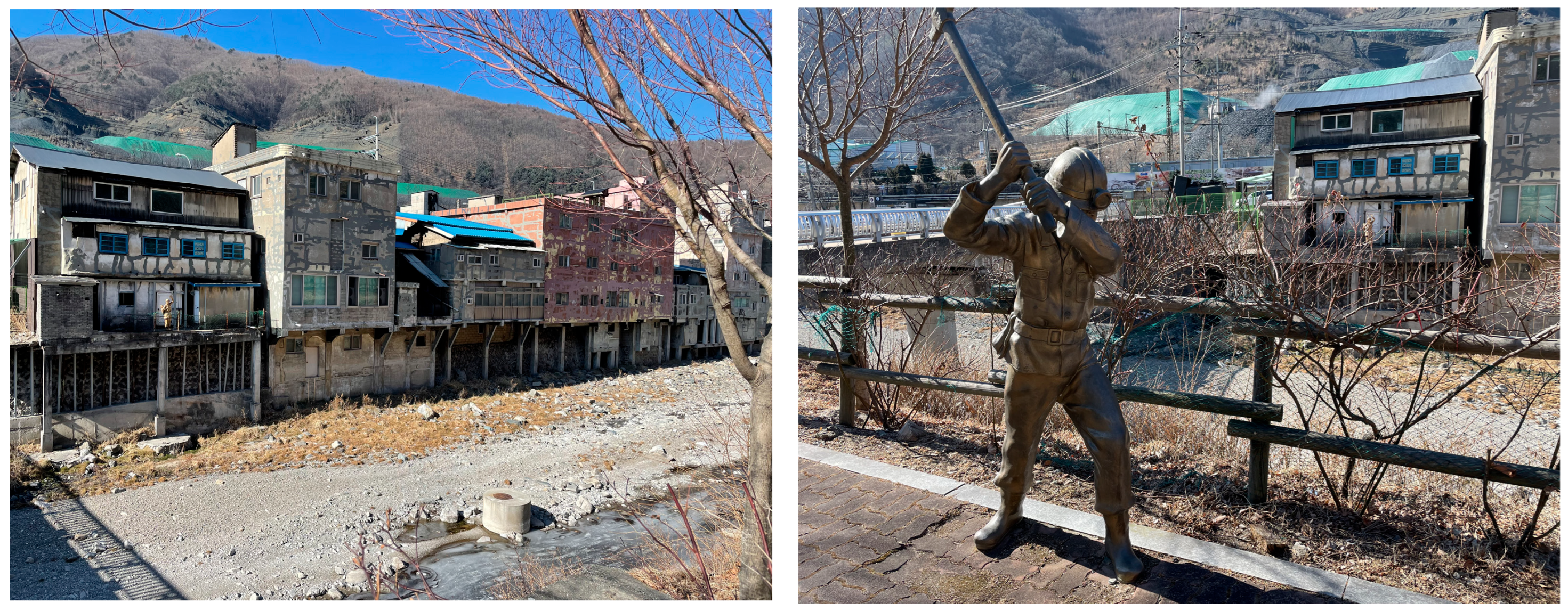
Non-market goods, such as tourism resources, are not priced because their benefits are not transacted in the market [41,44]. Thus, hypothetical scenarios are essential to estimate an individual’s WTP for the CCM. However, since these scenarios may not accurately mirror real situations, they could introduce hypothetical bias [66]. Therefore, scenarios that closely align with reality should be crafted to minimize bias. The hypothetical scenarios in this study are designed to closely replicate real-life situations. Additionally, to illustrate the on-site context of CCM, Figure 1 provides representative photographs taken by the authors in 2022.
Located in Cheoram-dong, Taebaek City, Gangwon Province, Korea, Cheoram Coal-Mine History Town (CCM) is a history museum constructed in 2014 as a project to preserve and restore living sites in coal mining areas. Inside the CCM, there is an exhibition hall and a complex cultural space that enables tourists to observe the real life of the Cheoram area. In addition, the old coal mining town’s unique architectural style, ‘bracket-type building’, has been restored to its original form and has symbolic value as it preserves Korea’s industrial coal mining heritage. However, the artworks are currently damaged due to negligence in the management of the CCM, and maintenance work is inevitable due to the building safety risk reports, but there is no support plan for continuous management. Therefore, it is necessary to provide additional funds for the future preservation of the CCM.

3.1.2. Price Categories and Real-World Setting

Grounded in a review of prior research [45] and preliminary surveys of expert views, nine price categories were established for potential contributions to a preservation fund in this study. These categories were set as follows: 100 KRW (=0.07 USD), 500 KRW (=0.34 USD), 1000 KRW (=0.68 USD), 3000 KRW (=2.03 USD), 5000 KRW (=3.39 USD), 10,000 KRW (=6.78 USD), 30,000 KRW (=20.33 USD), 50,000 KRW (=33.88 USD) (note that 1 USD was equivalent to 1476 KRW in December 2025), and 100,000 KRW (=67.76 USD). To assess individuals’ WTP, questionnaires featuring one of these amounts were randomly distributed, requiring a ‘yes’ or ‘no’ response. In order to validate the sincerity of responses for analysis, both a hypothetical and a ‘real-world’ scenario with equivalent affirmative responses were deemed a ‘true yes.’ More specifically, two real-world setting questions (whether a mobile bill is received and whether personal data is disclosed) were added to ascertain the genuineness of the respondents’ answers [67]. Should a respondent’s answer to any of the real-world scenarios be ‘no’, it is regarded as ‘not a true yes’, even if ‘yes’ was the response in the hypothetical scenario. The hypothetical question (Q1) and real-world setting questions (Q2 & Q3) are outlined below [48]. Additionally, before these questions, respondents were informed that the preservation fund would support major components of long-term conservation, including preservation and restoration, operation and maintenance of facilities, and management costs required for sustainable industrial heritage management. This description was provided to link the proposed contribution to realistic funding needs and to minimize misunderstanding of the study scope.
Q1. If a preservation fund were established for the Cheoram Coal-Mine History Town, would you be willing to voluntarily contribute a specified amount (A) per year?
➀ Yes ② No
Q2. If you answered ‘yes’ to question 1, do you consent to receiving a mobile bill for the amount you agreed to contribute?
➀ Yes ② No
Q3. If you answered ‘yes’ to question 2, are you willing to provide your name and phone number to facilitate the sending of the mobile bill?
➀ Yes ② No

3.2. Data Collection

From 4 February to 6 February 2022, a systematic sampling on-site survey was conducted at the CCM. A self-administered survey method was employed. This period was selected because CCM was operating under regular conditions, allowing the survey to capture typical visitor responses within the feasible fieldwork schedule. ‘Honam Super’, a historical gallery that replicates the exterior of miners’ houses and stores from the past and is part of the CCM, was chosen for the survey due to its popularity among visitors. In addition, the site was used as the primary survey point because it functions as a central attraction with high foot traffic, enabling broad coverage of visitors moving through the town. Every sixth participant, having experienced at least one of CCM’s attractions, was invited to take part in the survey. Systematic sampling was adopted to reduce interviewer discretion and to mitigate potential selection bias in on-site recruitment. Moreover, only one representative family member, aged over 18, participated. Prior to the survey, respondents were briefed on the background of the historic town and a hypothetical scenario following an explanation of the CCM by the researcher to minimize misinterpretations. A total of 268 questionnaires were distributed, out of which 258 were analyzable, excluding 10 due to invalidity or incompleteness.

3.3. Measurement: Nostalgia Scale

In this study, nostalgia was measured by categorizing it into three factors: general, personal, and historical. Nostalgia generally signifies a yearning for the past or an affinity for possessions and activities of the past [68,69]. According to [59,70], personal nostalgia refers to emotional responses from a personally remembered past, while historical nostalgia refers to emotional responses from a history never directly experienced by the individual or from a period before their birth.
Items for nostalgia were measured using the NOST scale [69] and the Antiquarianism Scale [71,72] to assess the nostalgic memories evoked by CCM. The NOST scale, developed based on the conceptualization of nostalgia by [49,69], and all items loaded into the Antiquarianism Scale aimed to gauge affinity for historical objects or items from the past [53]. The general nostalgia index included statements such as “I like nostalgic sensibility”, “Old places are more attractive than modern places”. The personal nostalgia index comprised “Old places remind me of the people I met in my childhood”. The historical nostalgia index featured “It makes me reminisce about the past that I haven’t experienced in old places”.

3.4. Model Specifications

The response to the CVM questionnaire relies on the utility maximization theory. For instance, if the utility obtained from paying a given amount exceeds the utility from not paying, survey participants decide to pay that amount. Conversely, if the utility is insufficient compared to the utility derived from payment, they opt not to pay [73,74]. In essence, under the utility maximization theory, individuals will pay the asking price for CCM if the utility gained from paying surpasses that of not paying. This relationship is formalized in Equation (1).
ν(1, YA, N, S) + ε1 ≥ ν(0, Y, N, S) + ε0
Here, ν represents the indirect utility, Y denotes an individual’s income, A is a specified fund, N stands for nostalgia, S indicates a socioeconomic variable, and ε1 and ε0 symbolize probability variables. These variables have an average of 0 and an independent, identical distribution. The likelihood that an individual will contribute to the preservation fund (A KRW) for the CCM is depicted in the subsequent Equation (2).
Δν = ν(1, YA, N, S) − ν(0, Y, N, S) + (ε1 − ε0)

3.5. Logit Model and WTP Estimation

Assuming that the individual’s WTP follows a logistic distribution according to the DC CVM, the probability of accepting the CCM preservation fund can be explained by the following logistic distribution (3) [75,76].
P i = F η Δ ν = 1 1 + e x p ( Δ ν ) = 1 1 + e x p ( α + β A + γ Y + δ N + λ S )
Here, P i represents the probability of a ‘yes’ response, F η is the cumulative density function, α is the constant, β represents the upper limit of the amount presented, γ denotes income, N signifies nostalgia, and λ is a demographic variable.
According to [39], the value of WTP can be estimated using three methods: (1) the WTP mean, which obtains the expected value of WTP through numerical integration from 0 to infinity, (2) the WTP overall mean, which calculates the expected value of WTP through numerical integration from negative infinity to positive infinity, and (3) the WTP truncated mean, which yields the expected value of WTP through numerical integration from 0 to the maximum bid. Among these, the WTP truncated mean is preferred for its consistency with theoretical constraints, statistical efficiency, and aggregability [39]. Therefore, this study adopts the WTP truncated mean to estimate the value of WTP. The maximum likelihood estimation (MLE) method, which estimates parameters by maximizing the probability of observations, is frequently used in logistic regression analysis. When parameters are determined through MLE, the expected WTP from 0 to maximum bid can be calculated using the following equation:
E W T P = 0 M a x . b i d F η ( Δ ν ) d A = 0 M a x . b i d F η ( α * + β A ) d A
Here, E(WTP) represents the expected WTP value, and α* is derived by multiplying the constant’s coefficient value with the average of the socioeconomic variables.

4. Results

4.1. Demographic Characteristics

The demographic characteristics of the survey participants are depicted in Table 1. Regarding revisit history, 111 participants had previously visited CCM, while 147 had not. Concerning the frequency of prior visits, 50 tourists (45.9%) had one previous visit, 25 tourists (22.9%) had two, 13 tourists (11.9%) had three, and 13 tourists (11.9%) had visited more than five times. There were 124 (48.1%) male and 134 (51.9%) female visitors. In terms of age, 63 participants (24.4%) were in their 40s, 60 (23.3%) in their 50s, 40 (15.5%) in their 20s, and 39 (15.1%) in their 30s. Regarding educational background, 147 participants (57.0%) had a university degree, 79 (30.6%) had a high school education or less, 23 (8.9%) had a graduate degree, and nine (3.5%) had a middle school education or less. The most common occupation was office worker, representing 54 participants (20.9%), followed by 47 self-employed individuals (18.2%), 42 civil servants (16.3%), and 36 housewives (14.0%). The average household monthly income showed 56 participants (21.7%) earning more than 3–4 million KRW (=2032–2710 USD), 49 (19.0%) earning 2–3 million KRW (=1355–2032 USD), and 47 (18.2%) earning over 4–5 million KRW (=2710–3388 USD).

4.2. Reliability Analysis Results

In this study, the measurement items for nostalgia were derived from the NOST scale [69] and the Antiquarianism Scale [71,72]. These items covered general, personal, and historical dimensions of nostalgia. The mean, standard deviation, and Cronbach’s α were calculated to confirm the reliability of each item, detailed in Table 2. The averages of the nostalgia items ranged from 3.91 to 4.07, and the Cronbach’s alpha exceeded 0.7, indicating reliable measurement scales.

4.3. ‘Yes’ Probability of WTP for the CCM

To minimize hypothetical bias, a two-step approach was employed to estimate respondents’ WTP for the CCM. Table 3 presents the number and probabilities of ‘yes’ responses for each presented preservation amount. ‘WTP1’, the initial question, queries the price for WTP. ‘WTP2’ aims for a more precise response by posing a more thoughtfully crafted scenario, reducing errors through this follow-up query to WTP1. Similarly, ‘WTP3’ aims to more accurately gauge the amended values of respondents’ answers by providing an even more cautious environment. Additionally, as the presented amount increases, the ‘yes’ ratio for WTP generally decreases, indicating that lower amounts lead to higher probabilities of a ‘yes’ for the CCM preservation fund, and vice versa.

4.4. Estimated Result of the Logit Model and WTP

Logistic analysis results (Table 4, Table 5 and Table 6) revealed that both the bid (offered amount) and nostalgia significantly influence respondents’ WTP. In contrast, variables such as gender, age, education, occupation, and household monthly income are not statistically significant predictors of WTP in our sample, suggesting that stated support is not strongly differentiated by these socio-demographic characteristics. Specifically, the bid exhibits a negative and highly significant coefficient across all specifications, indicating that as the proposed payment increases, respondents become less likely to answer ‘yes’ decision. This pattern reflects cost sensitivity and is consistent with the economic intuition that higher prices reduce acceptance of a payment request in contingent valuation settings. Conversely, nostalgia displays a positive and statistically significant coefficient in all models (p < 0.05), implying that respondents with stronger nostalgic feelings toward the industrial heritage resource are more likely to agree to pay. From a practical perspective, this finding suggests that strengthening emotional attachment and the perceived cultural meaning of the site (e.g., through interpretation, storytelling) may increase public support for preservation initiatives. Overall, the pseudo- R 2 values and classification accuracies reported in Table 4, Table 5 and Table 6 indicate moderate explanatory power and acceptable predictive performance, and the consistent sign and significance of the key variables across specifications supports the robustness of the results.

4.5. Valuation Using the WTP Truncated Mean

The WTP was estimated using the truncated mean method, a standard procedure that ensures compliance with theoretical constraints, statistical efficiency, and overall likelihood [48]. The calculated WTP values for the CCM using this method were 39,787 KRW (=26.96 USD) for WTP1, 22,228 KRW (=15.06 USD) for WTP2, and 18,756 KRW (=12.71 USD) for WTP3 per household annually. Given these results, WTP3 is considered the ‘true’ outcome, as it showed the most significant reduction in hypothetical bias. This estimate should be interpreted as respondents’ support for the preservation value as a non-market good rather than as tourism related spending. Although CCM may generate market related benefits through tourism consumption and local employment, the stated WTP in this study reflects cultural, historical and economic values that are not fully captured by market transactions.
To evaluate the reasonableness of our estimate (WTP3 = 18,756 KRW per household annually), we compared it with stated-preference values in related heritage conservation contexts. In Korea, CVM studies that focus on entrance fees or specific use values usually show WTP in the low thousands of KRW. For instance, the WTP for Suwon Hwaseong is 5267.5 KRW per visit [77]. On the other hand, conservation or adaptive reuse programs that encourage ongoing contributions can result in larger annual payments. For example, residents in Nara, Japan, estimated their WTP for adaptive reuse of cultural heritage buildings to be between JPY 4531 and 6036 per person annually [78]. These figures are not directly comparable because WTP depends on the object being valued, the beneficiary unit (household, individual, or visitor), the payment vehicle (annual contribution or entrance fee), and the survey format. Therefore, our WTP3 should be interpreted as the annual household-level support for the preservation (non-market) value of CCM, rather than tourism spending. Overall, this comparison suggests that our estimate is within a reasonable range for conservation-focused stated-preference studies.

5. Discussion

The significance of archiving industrial heritage has grown recently because it preserves elements of local politics, society, economy, and culture [2,8]. Accordingly, industrial heritage sites, such as abandoned mines, ought to be preserved and managed, as redevelopment projects that neglect local identity and context are likely to fail [79]. With the majority of coal mines in Korea now closed, the remnants of the coal industry, once a major driver of industrialization, are steadily vanishing. Recently, a decision was made to close two of the five remaining coal mines, accelerating the loss of industrial heritages connected to coal mining in Korea [80]. Yet, the CCM continues to preserve the lives and industrial heritage of miners who spearheaded the Korean coal industry. Particularly, the distinctive urban architectural style of Cheoram-dong, characterized by bracket-type buildings, epitomizes the peak of the modern and contemporary coal industry and underscores the imperative to preserve it as a vital industrial heritage of Korea. Furthermore, the CCM serves as a living history museum where visitors can immerse themselves in the culture and history of the Cheoram area, proving its significant value as a tourism resource.

5.1. Theoretical Implications

Although the CCM has significant historical value and serves as a tourism resource, it is at risk of disappearing due to inadequate funding and management. Therefore, the primary aim of this study was to estimate the economic value of the CCM to justify its preservation. Estimating this value revealed that the WTP of tourists visiting the CCM was 18,756 KRW (=12.71 USD) per household annually based on the truncated mean of WTP. This study introduced a more refined measure of WTP, marking the first theoretical implication, by adopting a two-step approach to eliminate hypothetical bias. Besides estimating the CCM’s economic value, the study explored whether nostalgia experienced during visits could influence WTP. The results indicate that nostalgia significantly enhances the likelihood of WTP for the CCM. In essence, the more the respondents connect with the CCM’s historical ambiance and the past lives of miners, the greater their likelihood of contributing to a CCM preservation fund. Thus, confirming a link between nostalgia as a psychological variable and payment-related behavioral intentions broadens the scope of related literature, representing the second theoretical implication of this research. The findings serve as fundamental data to maintain interest and support among CCM visitors for its preservation. They also provide quantitative data useful in calculating the preservation’s maintenance costs.

5.2. Practical and Policy Implications

The practical and policy implications of the research are as follows. First, since the economic preservation value of the CCM has been established using the CVM technique, it is imperative for CCM operators to implement a system that solicits donations, including modest contributions from tourists and residents, to support the preservation and efficient management of the CCM. Moreover, this study highlighted that the CCM holds significant value, thereby underscoring the importance of promoting industrial heritage vigorously and securing funding from sources such as state or provincial budgets. Second, there is a need to enhance and refine the tourism content to evoke nostalgia among visitors, given its crucial role in augmenting the WTP for industrial heritage. The management of the CCM should develop the narrative of the site as industrial heritage and organize events tied to the display area, such as costume rentals and old-fashioned photo opportunities. Such initiatives will help minimize tourist hesitancy and generate additional revenue. Third, amid a scarcity of funds for ongoing maintenance in Taebaek City (where the CCM is located), these research findings provide a solid justification for the upkeep expenses of the CCM. Notably, the Ruhr area in Germany, historically central to Europe’s coal mining industry, transformed into a cultural and recreational tourism hub after significant investment from both the European Union government and the private sector, acknowledging its industrial heritage [81,82]. Aside from revitalizing areas through tourism, industrial heritage also serves as a viable approach for urban rejuvenation and can significantly contribute to regional economic growth [83]. Consequently, robust public engagement and supportive policies geared towards sustainable development are essential. In this light, this study offers foundational data for policies aimed at preserving industrial heritage.
These implications come from evidence gathered in one case (CCM). The estimated WTP reflects annual household support for the preservation value of CCM based on the survey’s scenario and payment method. The amount should not be directly applied to all coal mining industrial heritage sites. However, the analytic approach and the identified impact of nostalgia offer a useful policy framework that can be tested and verified in other industrial heritage contexts.

5.3. Limitations and Future Research

This study is not devoid of limitations. First, although the researcher obtained 268 samples from the CCM, a larger sample size is needed to enhance the reliability of the findings. In addition, the survey was conducted over a relatively short period (three days) and at a single on-site location, which may introduce seasonal bias, location bias, and self-selection bias. Visitor composition and preferences may vary across seasons, weekdays versus weekends, and across different points within the site. Although a systematic sampling was applied, on-site surveys inevitably rely on individuals who are willing to participate, which may affect the external validity of the estimated WTP. Therefore, the results should be interpreted as representative of on-site visitors during the survey period rather than the entire population of potential visitors. Future research may strengthen generalizability by conducting surveys across multiple seasons, longer time windows, and multiple survey locations. Second, the scope of this study is confined to the CCM, meaning the findings do not encompass the entire economic value of coal industry heritage. Third, while nostalgia was utilized as an explanatory variable, other related factors may also influence the preservation value of industrial heritage. Thus, future research should address these limitations and broaden the inquiry to better ascertain the general economic value of coal industry heritage.

6. Conclusions

Industrial heritage preservation has become increasingly important as coal-mining communities face rapid industrial decline and the disappearance of historically meaningful landscapes. In this context, this study estimated the preservation value of the CCM using the CVM and examined whether nostalgia influences WTP for conservation.
Using a two-step approach, the study reports a mean WTP3 of 18,756 KRW per household annually, interpreted as the annual amount respondents are willing to contribute to a CCM preservation fund under a hypothetical scenario. This annual estimate provides new evidence from an industrial heritage town context in Korea. In addition, the results indicate that nostalgia significantly increases the likelihood of WTP, suggesting that affective attachment to historical settings is a key driver of public support for industrial heritage conservation.
These findings have practical implications for long-term conservation financing and management. Since sustainable preservation typically requires continuous funding, the estimated annual WTP can inform the design of recurring contribution mechanisms (e.g., annual donations or an annual preservation levy) and strengthen the justification for public budget allocation. Moreover, interpretation and storytelling programs that enhance nostalgic engagement may improve both conservation support and visitor experience. Furthermore, the applicability of the findings should be considered within the study scope (on-site visitors during the survey period and a single case setting). Future research should expand to multiple industrial heritage sites and compare visitor and resident samples across seasons to strengthen external validity and enable cross-case benchmarking.

Author Contributions

Conceptualization, G.H.; data curation, G.H.; methodology, W.L.; formal analysis, G.H.; investigation, G.H.; writing—original draft preparation, G.H.; writing—review and editing, W.L.; supervision, W.L.; project administration, W.L. All authors have read and agreed to the published version of the manuscript.

Funding

This work was supported by Kyonggi University (Research Grant, 2024). Grant number: not applicable.

Institutional Review Board Statement

This study is waived for ethical review as it involved expert interviews on non-sensitive, professional topics, where participants were not from a vulnerable population and no personal data was collected according to relevant Korean regulations.

Informed Consent Statement

Informed consent was obtained from all subjects involved in the study.

Data Availability Statement

The raw data supporting the conclusions of this article will be made available by the authors on request.

Conflicts of Interest

The authors declare no conflicts of interest.

References

  1. Gu, Y.; Yao, Y.; Yan, W.; Zhao, J.; Fei, T.; Ouyang, S. Examining the transformation of postindustrial land in reversing the lack of urban vitality: A paradigm spanning top-down and bottom-up approaches in urban planning studies. Heliyon 2024, 10, e27667. [Google Scholar] [CrossRef]
  2. Nikolić, M.; Drobnjak, B.; Kuletin Ćulafić, I. The possibilities of preservation, regeneration and presentation of industrial heritage: The case of Old Mint “AD” on Belgrade Riverfront. Sustainability 2020, 12, 5264. [Google Scholar] [CrossRef]
  3. Çeltekligil, A.; Arabacıoğlu, F.P. Adaptive Reuse in Industrial Heritage: A Bibliometric Review (2004–2024). In Proceedings of the International Conference of Contemporary Affairs in Architecture and Urbanism-ICCAUA, Alanya, Türkiye, 5 July 2025; Volume 8, pp. 850–862. [Google Scholar] [CrossRef]
  4. Sulimowska-Ociepka, A. Glass Structures in Post-Industrial Buildings and the Role of the Industrial Heritage in Shaping Creative Urban Spaces. Civ. Eng. Archit. 2021, 9, 281–292. [Google Scholar] [CrossRef]
  5. Zhang, J.; Cenci, J.; Becue, V.; Koutra, S. The overview of the conservation and renewal of the industrial Belgian heritage as a vector for cultural regeneration. Information 2021, 12, 27. [Google Scholar] [CrossRef]
  6. Lee, H.S.; Song, D.H. A Study on the Urban Landscape Formation through Industrial Heritage Recycling—Focusing on the Advanced Case of Overseas for Urban Regeneration. J. Reg. Assoc. Archit. Inst. Korea 2019, 21, 223–231. [Google Scholar]
  7. Vukmirović, M.; Nikolić, M. Industrial heritage preservation and the urban revitalisation process in Belgrade. J. Urban Aff. 2023, 45, 191–216. [Google Scholar] [CrossRef]
  8. Szromek, A.R.; Herman, K.; Naramski, M. Sustainable development of industrial heritage tourism—A case study of the Industrial Monuments Route in Poland. Tour. Manag. 2021, 83, 104252. [Google Scholar] [CrossRef]
  9. Vargas-Sánchez, A. Industrial heritage and tourism: A review of the literature. In The Palgrave Handbook of Contemporary Heritage Research; Springer: Berlin/Heidelberg, Germany, 2015; pp. 219–233. [Google Scholar] [CrossRef]
  10. Zazzara, G. Making sense of the industrial past: Deindustrialisation and industrial heritage in Italy. Ital. Contemp. 294 Suppl. 2020, 2020, 155–181. Available online: http://digital.casalini.it/10.3280/icYearbook-oa12266 (accessed on 1 January 2026). [CrossRef]
  11. Son, S.H. Tourism Assets and Fragmented Memories of the Industrial Heritage of Eunseong Coal Mine in Mungyeong. Korean J. Urban Hist. 2023, 33, 7–40. [Google Scholar] [CrossRef]
  12. Muhammad, S.; Fathelrahman, E.; Ullah, R.U. Factors affecting consumers’ willingness to pay for certified organic food products in United Arab Emirates. J. Food Distrib. Res. 2015, 46, 37–45. [Google Scholar] [CrossRef]
  13. Wildschut, T.; Sedikides, C. Psychology and nostalgia. In Nostalgia Now: Cross-Disciplinary Perspectives on the Past in the Present; Jacobsen, M.H., Ed.; Routledge: London, UK; New York, NY, USA, 2020; Volume 25. [Google Scholar]
  14. Wildschut, T.; Sedikides, C. Psychology and nostalgia: Towards a functional approach. In Intimations of Nostalgia; Bristol University Press: Bristol, UK, 2021; pp. 110–128. [Google Scholar] [CrossRef]
  15. Lee, W.S. A Study on the Value of Preserving a Parasitic Volcanic Sieve as a Tourism Good for Sustainable Management: Using the Contingent Valuation Method. Sustainability 2020, 12, 2825. [Google Scholar] [CrossRef]
  16. Jung, J.; Lee, W.S. Estimating the preservation value of the confucianism symbol tree: Application of the contingent valuation method. Anatolia 2021, 32, 375–386. [Google Scholar] [CrossRef]
  17. Yıldız-Kılıç, Ş. Industrial heritage making in Britain: The conservation, adaptation, and reinterpretation of the historic textile ındustry complexes. J. Humanit. Tour. Res. 2021, 11, 702–721. [Google Scholar] [CrossRef]
  18. Ticcih, P. The Nizhny Tagil Charter for the industrial heritage. In Proceedings of the TICCIH XII International Congress, Moscow, Russia, 17 July 2003; pp. 169–175. [Google Scholar]
  19. Leung, M.W.; Soyez, D. Industrial heritage: Valorising the spatial-temporal dynamics of another Hong Kong story. Int. J. Herit. Stud. 2009, 15, 57–75. [Google Scholar] [CrossRef]
  20. Günay, Z. The golden horn: Heritage industry vs. industrial heritage. Uludağ Üniv. Mühendislik Fakültesi Derg. 2014, 19, 97–108. [Google Scholar] [CrossRef]
  21. Tallon, A. Urban Regeneration in the UK; Routledge: London, UK, 2020. [Google Scholar]
  22. Ma, Y.; Roosli, R.; Cao, Z.; Zhang, X.; Gai, Y.; Ma, Z. From isolation to integration: A methodological review of adaptive reuse in industrial heritage buildings. Energy Build. 2025, 348, 116474. [Google Scholar] [CrossRef]
  23. Zhang, Q.; Ali, Z.M.; Abidin, N.Z. Sustainable adaptive reuse of historic buildings: Development of a framework from systematic review. npj Herit. Sci. 2025, 13, 619. [Google Scholar] [CrossRef]
  24. Xie, P.F. A life cycle model of industrial heritage development. Ann. Tour. Res. 2015, 55, 141–154. [Google Scholar] [CrossRef]
  25. Günçe, K.; Mısırlısoy, D. Questioning the adaptive reuse of industrial heritage and its interventions in the context of sustainability. Sociology 2015, 5, 718–727. [Google Scholar] [CrossRef]
  26. Arbab, P.; Alborzi, G. Toward developing a sustainable regeneration framework for urban industrial heritage. J. Cult. Herit. Manag. Sustain. Dev. 2022, 12, 263–274. [Google Scholar] [CrossRef]
  27. Binney, M.; Machin, F.; Powell, K. Bright future: The re-use of industrial buildings; SAVE Britain’s Heritage: London, UK, 1990. [Google Scholar]
  28. Feilden, B. Conservation of Historic Buildings; Routledge: London, UK, 2007. [Google Scholar] [CrossRef]
  29. Cho, M.; Shin, S. Conservation or economization? Industrial heritage conservation in Incheon, Korea. Habitat Int. 2014, 41, 69–76. [Google Scholar] [CrossRef]
  30. Vardopoulos, I. Industrial building adaptive reuse for museum. Factors affecting visitors’ perceptions of the sustainable urban development potential. Build. Environ. 2022, 222, 109391. [Google Scholar] [CrossRef]
  31. Xie, P.F. Developing industrial heritage tourism: A case study of the proposed jeep museum in Toledo, Ohio. Tour. Manag. 2006, 27, 1321–1330. [Google Scholar] [CrossRef]
  32. Oevermann, H. Good practice for industrial heritage sites: Systematization, indicators, and case. J. Cult. Herit. Manag. Sustain. Dev. 2020, 10, 157–171. [Google Scholar] [CrossRef]
  33. Hanapi, N.A.; Morrison, T.; Yusof, H. Performance-Based Framework to Prioritize Adaptive Reuse Gallery Design: A Case Study of Tate Modern Towards Architectural and Cultural Engagement along London Riverfront. Int. J. Sustain. Constr. Eng. Technol. 2022, 13, 315–325. Available online: https://penerbit.uthm.edu.my/ojs/index.php/IJSCET/article/view/8419 (accessed on 1 January 2026). [CrossRef]
  34. Timothy, D.J. (Ed.) Critical Essays: The Heritage Tourist Experience, Volume Two; Ashgate: Farnham, UK, 2007. [Google Scholar] [CrossRef]
  35. Cossons, N. Why preserve the industrial heritage? In Industrial Heritage Re-Tooled; Routledge: London, UK, 2016; pp. 6–16. [Google Scholar] [CrossRef]
  36. Mazeikiene, N. Learning the Nuclear: Educational Tourism in (Post) Industrial Sites; Peter Lang International Academic Publishers: Lausanne, Switzerland, 2021; p. 386. [Google Scholar] [CrossRef]
  37. Szromek, A.R.; Bugdol, M. Sharing Heritage through Open Innovation—An Attempt to Apply the Concept of Open Innovation in Heritage Education and the Reconstruction of Cultural Identity. Heritage 2024, 7, 193–205. [Google Scholar] [CrossRef]
  38. Cuccia, T. 14 Contingent valuation. In A Handbook of Cultural Economics; Towse, R., Ed.; Edward Elgar Publishing: Cheltenham, UK; Northampton, MA, USA, 2003; p. 119. [Google Scholar] [CrossRef]
  39. Lee, C.K.; Han, S.Y. Estimating the use and preservation values of national parks’ tourism resources using a contingent valuation method. Tour. Manag. 2002, 23, 531–540. [Google Scholar] [CrossRef]
  40. Lee, C.K. Valuation of nature-based tourism resources using dichotomous choice contingent valuation method. Tour. Manag. 1997, 18, 587–591. [Google Scholar] [CrossRef]
  41. Hanemann, W.M. Valuing the environment through contingent valuation. J. Econ. Perspect. 1994, 8, 19–43. [Google Scholar] [CrossRef]
  42. Choi, Y.J.; Lee, W.S.; Moon, J.; Kim, K.B. The value of preserving endangered folk games using the contingent valuation method. Curr. Issues Tour. 2021, 24, 1319–1330. [Google Scholar] [CrossRef]
  43. Portney, P.R. The contingent valuation debate: Why economists should care. J. Econ. Perspect. 1994, 8, 3–17. [Google Scholar] [CrossRef]
  44. Haab, T.; Lewis, L.Y.; Whitehead, J. State of the art of contingent valuation. In Oxford Research Encyclopedia of Environmental Science; Oxford University Press: Oxford, UK, 2020. [Google Scholar] [CrossRef]
  45. Park, S.; Chung, N.; Lee, W.S. Preserving the culture of Jeju Haenyeo (Women divers) as a sustainable tourism resource. Sustainability 2020, 12, 10564. [Google Scholar] [CrossRef]
  46. Amirnejad, H.; Khalilian, S.; Assareh, M.H.; Ahmadian, M. Estimating the existence value of north forests of Iran by using a contingent valuation method. Ecol. Econ. 2006, 58, 665–675. [Google Scholar] [CrossRef]
  47. Forster, B.A. Valuing outdoor recreational activity: A methodological survey. J. Leis. Res. 1989, 21, 181–201. [Google Scholar] [CrossRef]
  48. Lee, W.S.; Kim, J.; Graefe, A.R.; Chi, S.H. Valuation of an eco-friendly hiking trail using the contingent valuation method: An application of psychological ownership theory. Scand. J. Hosp. Tour. 2013, 13, 55–69. [Google Scholar] [CrossRef]
  49. Davis, F. Yearning for Yesterday: A Sociology of Nostalgia; Free Press: New York, NY, USA, 1979. [Google Scholar]
  50. Holbrook, M.B.; Schindler, R.M. Echoes of the dear departed past: Some work in progress on nostalgia. Adv. Consum. Res. 1991, 18, 330. Available online: https://www.semanticscholar.org/paper/Echoes-of-the-Dear-Departed-Past%3A-Some-Work-in-on-Holbrook-Schindler/d27b5dc6661d012e37ad0e6778359784a2ecf524 (accessed on 1 January 2026).
  51. Wildschut, T.; Sedikides, C.; Arndt, J.; Routledge, C. Nostalgia: Content, triggers, functions. J. Personal. Soc. Psychol. 2006, 91, 975. [Google Scholar] [CrossRef] [PubMed]
  52. You, C.; Zhong, Y. The effect of nostalgic contents on self-esteem: The mediating role of loneliness. Psychol. Res. Behav. Manag. 2022, 15, 1587–1599. [Google Scholar] [CrossRef]
  53. Schindler, R.M.; Holbrook, M.B. Nostalgia for early experience as a determinant of consumer preferences. Psychol. Mark. 2003, 20, 275–302. [Google Scholar] [CrossRef]
  54. Muehling, D.D.; Sprott, D.E.; Sprott, D.E. The power of reflection: An empirical examination of nostalgia advertising effects. J. Advert. 2004, 33, 25–35. [Google Scholar] [CrossRef]
  55. Özhan, Ş.; Akkaya, D.T. The effect of nostalgia proneness on ad-evoked nostalgia, brand attitude and purchase intention. Istanb. Bus. Res. 2020, 49, 380–386. [Google Scholar] [CrossRef]
  56. Muehling, D.D.; Pascal, V.J. An involvement explanation for nostalgia advertising effects. J. Promot. Manag. 2012, 18, 100–118. [Google Scholar] [CrossRef]
  57. Chou, H.Y.; Singhal, D. Nostalgia advertising and young Indian consumers: The power of old songs. Asia Pac. Manag. Rev. 2017, 22, 136–145. [Google Scholar] [CrossRef]
  58. Shi, Y.; Bettache, K.; Zhang, N.; Xue, L. Constructing nostalgia in tourism: A comparison analysis of genuine and artificial approaches. J. Destin. Mark. Manag. 2021, 19, 100488. [Google Scholar] [CrossRef]
  59. Stern, B.B. Historical and personal nostalgia in advertising text: The fin de siecle effect. J. Advert. 1992, 21, 11–22. [Google Scholar] [CrossRef]
  60. Wang, J.F. Nostalgia in tourism. Curr. Opin. Psychol. 2023, 49, 101552. [Google Scholar] [CrossRef]
  61. Baker, S.M.; Kennedy, P.F. Death by nostalgia: A diagnosis of context-specific cases. Adv. Consum. Res. 1994, 21, 169. Available online: https://www.semanticscholar.org/paper/Death-By-Nostalgia%3A-a-Diagnosis-of-Context-Specific-Baker-Kennedy/e3b1f59f3b57452872221e4fe5e3e75a656359fa (accessed on 1 January 2026).
  62. Kim, Y.; Ribeiro, M.A.; Li, G. Tourism memory, mood repair and behavioral intention. Ann. Tour. Res. 2022, 93, 103369. [Google Scholar] [CrossRef]
  63. Han, J.H.; Bae, S.Y. Roles of authenticity and nostalgia in cultural heritage tourists’ travel experience sharing behavior on social media. Asia Pac. J. Tour. Res. 2022, 27, 411–427. [Google Scholar] [CrossRef]
  64. Chi, O.H.; Chi, C.G. Reminiscing other people’s memories: Conceptualizing and measuring vicarious nostalgia evoked by heritage tourism. J. Travel Res. 2022, 61, 33–49. [Google Scholar] [CrossRef]
  65. Shiran, Z.; Farsani, N.T.; Rajaie Rizi, M.A. Isfahan as a destination for promoting historical nostalgia tourism with an emphasis on World War II memories. J. Herit. Tour. 2021, 16, 598–609. [Google Scholar] [CrossRef]
  66. Ann-Chyi, T.; Sheau-Ting, L. Methodological influences on ecosystem valuation: A systematic review of contingent valuation studies. J. Environ. Econ. Policy 2024, 13, 449–467. [Google Scholar] [CrossRef]
  67. Lee, C.K.; Mjelde, J.W. Valuation of ecotourism resources using a contingent valuation method: The case of the Korean DMZ. Ecol. Econ. 2007, 63, 511–520. [Google Scholar] [CrossRef]
  68. Holbrook, M.B. Nostalgia and consumption preferences: Some emerging patterns of consumer tastes. J. Consum. Res. 1993, 20, 245–256. [Google Scholar] [CrossRef]
  69. Pascal, V.J.; Sprott, D.E.; Muehling, D.D. The influence of evoked nostalgia on consumers’ responses to advertising: An exploratory study. J. Curr. Issues Res. Advert. 2002, 24, 39–47. [Google Scholar] [CrossRef]
  70. Havlena, W.J.; Holak, S.L. “The Good Old Days”: Observations on Nostalgia and Its Role in Consumer Behavior. Adv. Consum. Res. 1991, 18, 323. [Google Scholar]
  71. McKechnie, G.E. ERI Manual: Environmental Response Inventory; Consulting Psychologists Press: Palo Alto, CA, USA, 1974. [Google Scholar]
  72. McKechnie, G.E. The environmental response inventory in application. Environ. Behav. 1977, 9, 255–276. [Google Scholar] [CrossRef]
  73. Ji, S.; Choi, Y.; Lee, C.K.; Mjelde, J.W. Comparing willingness-to-pay between residents and non-residents using a contingent valuation method: Case of the Grand Canal in China. Asia Pac. J. Tour. Res. 2018, 23, 79–91. [Google Scholar] [CrossRef]
  74. McFadden, D. Conditional Logit Analysis of Qualitative Choice Behavior; UC Berkeley: Berkeley, CA, USA, 1972. [Google Scholar]
  75. Park, S.Y.; Lee, W.S. Valuation of the Jidong Mural Art alley using the contingent valuation method: An application of nostalgia. J. Tour. Sci. 2017, 41, 45–62. [Google Scholar] [CrossRef]
  76. Hanemann, W.M. Welfare evaluations in contingent valuation experiments with discrete responses. Am. J. Agric. Econ. 1984, 66, 332–341. [Google Scholar] [CrossRef]
  77. Park, C.-Y.; Song, H. The Estimation of Payment Value of Historical Tourism Resources for Admission Fee Using Contingent Valuation Method (CVM): A Case of Suwon Hwaseong Fortress. Korean J. Local Gov. Stud. 2016, 20, 255–271. [Google Scholar] [CrossRef]
  78. Li, H.; Chen, J.; Ikebe, K.; Kinoshita, T. Survey of Residents of Historic Cities Willingness to Pay for a Cultural Heritage Conservation Project: The Contribution of Heritage Awareness. Land 2023, 12, 2058. [Google Scholar] [CrossRef]
  79. Sun, M.; Chen, C. Renovation of industrial heritage sites and sustainable urban regeneration in post-industrial Shanghai. J. Urban Aff. 2023, 45, 729–752. [Google Scholar] [CrossRef]
  80. Han, S.; Roh, H.; Lee, Y.; Yun, C.; Lee, Y. A Study on Prospective Carbon Dioxide Storage Resources at Hwasun Coal Mine. J. Korean Soc. Miner. Energy Resour. Eng. 2023, 60, 366–376. [Google Scholar] [CrossRef]
  81. Ćopić, S.; ĐorđevićA, J.; Lukić, T.; Stojanović, V.; Đukičin, S.; Besermenji, S.; Tumarić, A. Transformation of industrial heritage: An example of tourism industry development in the Ruhr area (Germany). Geogr. Pannonica 2014, 18, 43–50. [Google Scholar] [CrossRef]
  82. Douet, J. Industrial Heritage Re-Tooled: The TICCIH Guide to Industrial Heritage Conservation; Routledge: London, UK, 2016. [Google Scholar]
  83. Hospers, G.J. Industrial heritage tourism and regional restructuring in the European Union. Eur. Plan. Stud. 2002, 10, 397–404. [Google Scholar] [CrossRef]
Figure 1. Typical Scenes of CCM. Source: Photos taken by the authors (2022).
Sustainability 18 01615 g001
Table 1. Demographic characteristics of respondents (N = 258).
ClassificationFreq. (%)
Revisit HistoryYes111 (43.0)
No147(57.0)
Number of Visits150 (45.9)
225 (22.9)
313 (11.9)
48 (7.3)
5 times more13 (11.9)
GenderMale124 (48.1)
Female134 (51.9)
Age18–19 years old17 (6.6)
20s40 (15.5)
30s39 (15.1)
40s63 (24.4)
50s60 (23.3)
60s25 (9.7)
70s14 (5.4)
EducationLess than Middle School9 (3.5)
Less than High School
Graduate
79 (30.6)
University Graduate147 (57.0)
Graduate School23 (8.9)
OccupationStudent31 (12.0)
Employee54 (20.9)
Civil Servant42 (16.3)
Self-Employed47 (18.2)
Homemaker36 (14.0)
Specialized job30 (11.6)
etc.18 (7.0)
Household Monthly IncomeLess than 1 million KRW37 (14.3)
1 million KRW to less than
2 million KRW
22 (8.5)
2 million KRW to less than
3 million KRW
49 (19.0)
3 million KRW to less than
4 million KRW
56 (21.7)
4 million KRW to less than
5 million KRW
47 (18.2)
5 million KRW to less than
6 million KRW
22 (8.5)
6 million KRW to less than
7 million KRW
12 (4.7)
Over 7 million KRW13 (5.0)
Table 2. Reliability analysis of nostalgia measurement items.
ItemsMeanStandard
Deviation
Cronbach’s α
NostalgiaOld places are more appealing
than modern ones
3.910.8480.702
Old places evoke memories of people from my childhood4.070.854
Old places prompt me to reminisce about experiences from the past4.000.937
I appreciate the sense of nostalgia3.920.921
Table 3. Probability of paying for the CCM preservation fund.
Bid
(KRW)
TotalWTP 1WTP 2WTP 3
YesNoWTP
(%)
YesNoWTP
(%)
YesNoWTP
(%)
1003024680.0%181260.0%141646.6%
5002825389.2%171160.7%161257.1%
10002827196.4%171160.7%151353.5%
30002720774.0%18966.6%171062.9%
50003023776.6%151550.0%141646.6%
10,00029171258.6%101934.4%92031.0%
30,00028101835.7%72125.0%62221.4%
50,0002781929.6%52218.5%52218.5%
100,0002962320.6%2276.8%1283.6%
Table 4. Result of Logistic Regression Analysis for WTP1.
VariableBS.E.WaldExp(β)p
Gender−0.2850.3010.8960.7520.344
Age−0.0480.1160.1690.9540.681
Education0.0650.2380.0751.0670.784
Occupation0.0630.1010.3931.0650.531
Household Monthly
Income
−0.0320.0870.1340.9690.715
Bid−0.0000.00039.2291.0000.000
Nostalgia0.4880.2354.3021.6290.038
Constant−0.2901.2190.0570.7480.812
−2 Log Likelihood: 278.255 Cox   &   Snell   R 2 : 0.221
Nagelkerke   R 2 : 0.300Percentage of Correct Predictions: 74.0%
Table 5. Result of Logistic Regression Analysis for WTP2.
VariableBS.E.WaldExp(β)p
Gender0.4370.2912.2561.3850.255
Age−0.0770.1120.4770.9650.748
Education−0.1320.2310.3240.8630.513
Occupation0.0060.0960.0041.0360.705
Household Monthly
Income
0.1330.0852.4561.0780.364
Bid−0.0000.00026.8001.0000.000
Nostalgia0.4810.2214.5231.5880.033
Constant−2.3221.1592.6930.1550.101
−2 Log Likelihood: 301.561 Cox   &   Snell   R 2 : 0.176
Nagelkerke   R 2 : 0.236Percentage of Correct Predictions: 67.8%
Table 6. Result of Logistic Regression Analysis for WTP3.
VariableBS.E.WaldExp(β)p
Gender0.4370.2912.2561.5480.133
Age−0.0770.1120.4770.9260.490
Education−0.1320.2310.3240.8770.569
Occupation0.0060.0960.0041.0060.951
Household Monthly
Income
0.1330.0852.4561.1420.117
Bid−0.0000.00023.9541.0000.000
Nostalgia0.4810.2214.7301.6180.030
Constant−2.3221.1594.0110.0980.045
−2 Log Likelihood: 291.853 Cox   &   Snell   R 2 : 0.175
Nagelkerke   R 2 : 0.239Percentage of Correct Predictions: 70.5%
Disclaimer/Publisher’s Note: The statements, opinions and data contained in all publications are solely those of the individual author(s) and contributor(s) and not of MDPI and/or the editor(s). MDPI and/or the editor(s) disclaim responsibility for any injury to people or property resulting from any ideas, methods, instructions or products referred to in the content.