Article

Climate Change-Driven Shoreline Dynamics and Sustainable Fisheries: Future Projections from the Lake Van Case (Türkiye)

Faculty of Fisheries, Van Yüzüncü Yıl University, 65080 Van, Türkiye
Sustainability 2026, 18(3), 1611; https://doi.org/10.3390/su18031611
Submission received: 2 January 2026 / Revised: 2 February 2026 / Accepted: 2 February 2026 / Published: 5 February 2026

Abstract

Shoreline variations in closed-basin lakes are closely linked to hydrological fluctuations and long-term changes in water balance, making them important indicators of environmental change. This study analyzes historical shoreline dynamics in Lake Van (Türkiye), the world’s largest soda lake, and provides scenario-based shoreline projections for 2032 and 2042 to support hydrological assessment and water-related management. Multi-temporal Landsat satellite images from 1982, 1992, 2002, 2012, and 2022 were processed using the Digital Shoreline Analysis System (DSAS 5.0) to quantify shoreline retreat and accretion, while future shoreline positions were estimated using the Kalman filter model. The results show pronounced spatial variability, with the most significant shoreline retreat observed in the Çelebibağ and Karahan regions, where sediment supplied by major inflowing streams contributes to shoreline instability through reworking and redistribution rather than stable accretion. Net shoreline movement values reached −2580.1 m for erosion and up to 1700 m for accretion. Model projections indicate an increasing trend of shoreline retreat by 2032 and 2042, accompanied by localized accretion zones. These hydrological-driven shoreline changes have potential implications for littoral habitats, water–land interactions, and human use of the shoreline, including fisheries infrastructure. The study demonstrates the value of integrating remote sensing and statistical forecasting for monitoring shoreline dynamics in closed-basin lake systems.

1. Introduction

As the largest inland fishery in Türkiye, Lake Van is home to the pearl mullet (Alburnus tarichi), a species that supports the livelihoods of approximately 30,000 people living around the lake. In 2023, 9993 tons of pearl mullet were harvested, contributing nearly 30% of Türkiye’s total inland fisheries production [1]. The pearl mullet (Alburnus tarichi), the endemic fish species of Lake Van, migrates from the lake to inflowing freshwater streams during the summer spawning period. After spawning in these streams, juveniles return to the lake and primarily occupy shallow nearshore zones, relying on littoral habitats during early life stages. Lake Van in Türkiye is the largest soda lake in the world, with a highly alkaline water composition and a pH of 9.8. It spans an area of 3712 km2 and has a salinity level of 19‰. There are more than 100 fishing boats and more than 10 fishing ports on the lake. The negative effects of global warming and climate change are manifesting themselves with increasing momentum in Türkiye and around the world. In recent years, due to decreased rainfall across Türkiye, lake water levels have dropped, and shorelines have receded like in the rest of the world. The shoreline, defined as the boundary between land and water, is one of the most dynamic and sensitive zones in an ecosystem. It is shaped by a combination of natural processes such as wave action, sediment transport, and wind activity, as well as human activities such as urbanization, industrialization, and agricultural practices [2]. In addition to this, changes in water levels due to climate change, which has increased its effect in recent years, cause changes in shorelines [3,4]. Climate-related changes in precipitation and temperature are known to strongly influence the water balance of lake systems, particularly in closed-basin environments [5]. In the Lake Van Basin, decreasing precipitation and increasing air temperatures have been reported in recent decades [6]. Consistent with these trends, Lake Van surface water temperatures show a significant long-term increase of approximately 0.043 °C yr−1, accompanied by enhanced evaporation rates [7,8]. These hydroclimatic changes provide a key physical basis for understanding recent and ongoing shoreline retreat in Lake Van. Shorelines serve as critical habitats for fish feeding, reproduction, and nursery grounds, while also supporting infrastructure such as fishing ports. Changes in shoreline morphology, whether through erosion or accretion, can disrupt these habitats, alter water quality, and ultimately impact fish populations and fishery productivity. Changing the shoreline of water bodies has negative effects on fishing ports and littoral zones suitable for fish [9,10]. Understanding and predicting shoreline changes is crucial for effective fisheries management and planning. Several studies have been carried out to determine shoreline changes. Using Landsat satellite images from 2004 to 2014, ref. [11] reported that changes in the 35 km-long shoreline of the Hersek Delta were primarily due to human activities. Similarly, a study utilizing Landsat satellite images from 1985 to 2020 analyzed shoreline changes in the Göksu Delta using the DSAS (Digital Shoreline Analysis System) method, reporting intensive shoreline erosion in the Altınkum, Göksu River mouth, and İncekum regions [12]. Furthermore, in a study employing Landsat satellite images from 1985 to 2023, shoreline changes in Türkiye’s Seyhan Basin were analyzed using the DSAS method. The analysis, conducted along approximately 50 km of shoreline, involved techniques such as Net Shoreline Movement (NSM) and End Point Rate (EPR) to determine shoreline positions and calculate rates of change. The findings indicated significant shoreline changes, particularly at the mouth of the Seyhan Delta [13]. Ref. [14] examined the geological changes in the shoreline of Lake Van using field observations, satellite imagery, and laboratory analyses. The author reported that the eastern coast of the lake was the most vulnerable region in terms of erosion and deposition. Calculating the lake line is one of the key elements in identifying lake accretion and erosion and studying the dynamics of changes in lake morphology. Analyzing prehistoric lake zones by using contemporary scientific technologies like GIS and remote sensing is highly effective [15]. More problems involving lake erosion and accretion are present along urban areas, and this has an impact on the local population [16]. There are only a few tools in the field of GIS that can be used to analyze changes in lake boundaries. For analyzing lake boundaries, the DSAS tool is crucial [17]. Researchers have conducted numerous lake analysis studies using the EPR, LRR, and NSM methodologies. Tools such as DSAS have become indispensable in analyses of shoreline dynamics and predictions of future changes. By leveraging remote sensing and GIS techniques, researchers can quantify erosion and accretion rates, identify vulnerable areas, and develop predictive models to inform sustainable management strategies [15,17,18]. In this study, multi-temporal Landsat satellite images for the years 1982, 1992, 2002, 2012, and 2022 were used. The DSAS (5.0) method was used to investigate the effects of shoreline changes on fisheries in Lake Van in Türkiye. Shoreline changes were estimated for 2032 and 2042 with the Kalman filter model. Increases in seasonal average temperatures also raise the temperatures of water bodies, leading to accelerated evaporation and significant drops in water levels, particularly in lotic and lentic systems characterized by closed basins. This decrease in water volume increases the salt concentration per unit volume, particularly in saline and brackish wetlands, creating various negative effects on the ecosystem, such as osmotic stress [19]. Increases in global average temperatures, coupled with increased evaporation and water volume reduction, can lead to problems such as increased stocking density and decreased dissolved oxygen levels [19,20,21]. This can increase fish mortality, leading to mass die-offs. This situation, which can pose significant problems for fish populations and therefore fishing activities, poses even more serious risks, particularly for Lake Van, which is a closed basin and has a saline–soda structure, as examined in this study. While previous studies have generally focused on coastal erosion and accretion trends, this study is unique in that it integrates shoreline changes into fisheries management and evaluates the effects of these changes on fisheries.

2. Materials and Methods

Lake Van, covering an area of 3712 km2, is a closed (endorheic) lake with highly alkaline water characteristics. The lake is of tectonic origin and was formed more than 600,000 years ago. Figure 1 shows the location of Lake Van.
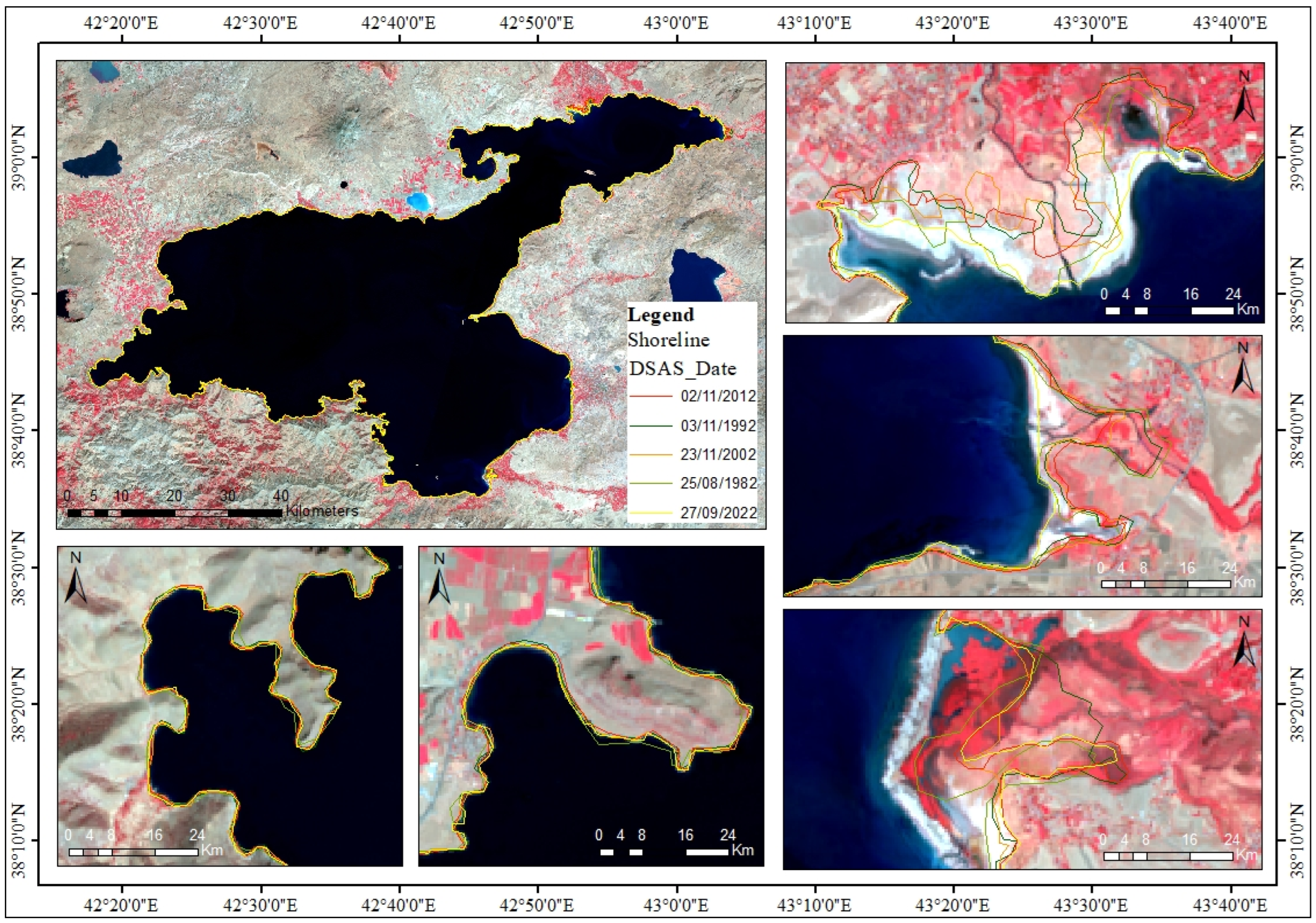
Earth Explorer was used to capture multitemporal Landsat data (MSS, TM, ETM+, OLI/TIRS) images for five different years (1982, 1992, 2002, 2012, and 2022) for the research site objectives specified by the USGS [19]. For better visual interpretation, the bands of MSS, TM, ETM+, and OLI/TIRS were used to generate the false color composite (FCC) and true color composite (TCC). Figure 2 displays a shoreline map of the study area.

2.1. DSAS

The open-source add-on program known as DSAS operates within the ESRI geographic information system (ArcGIS Pro v3.6.0 software, ESRI, Redlands, CA, USA) and aids in the analysis of multiple geometric line aspects of a chosen coastal zone, both present and historical [18]. To assess shoreline changes and predict changes in the forecasting period Digital Shoreline Analysis System (DSAS v5.0; USGS, Reston, VA, USA). Five multi-temporal shoreline datasets were digitized and stored in a personal geodatabase with standard DSAS attributes (DSAS_Date, DSAS_Uncy, DSAS_Type, and shape length). Using the DSAS version 5.0 user guide, the attribute table for the baseline was created using parameters such as shape length, ID, DSAS group, DSAS search, offshore, and castdir) [22]. The configuration of the baseline, shoreline, and metadata settings was finished once the two subsequent classes had been completed. The most basic method for the transect production procedure is to construct transects using default parameters when selection is complete [23]. The technique needs to be changed for better transect visualization, and the maximum search distance from the shoreline is 2000 m. Three hundred and sixty-five transects were created throughout the whole study region, and the information obtained from their future classes was used to compute changes using the statistical approach for calculating rates [16]. The analysis was based on satellite images from five different years representing the shoreline of Lake Van (Table 1). Shorelines delineated from these images were digitized in accordance with the DSAS 5.0 user guide. The attribute table for each shoreline included parameters such as the acquisition date (DSAS_Date), positional uncertainty (DSAS_Uncy), shoreline type (DSAS_Type), and geometric length. Following the definition of shoreline features, a baseline, which served as a reference line, was created within the same geodatabase. This baseline was positioned inland and parallel to the shoreline. Its attribute table included parameters such as length, identification number (ID), group code (DSAS_Group), transect orientation, offshore direction, and segment index [22]. Once the data structure was completed, the generation of transects was carried out. Transects were automatically created perpendicular to the baseline, with an interval of 250 m and a total length of 2500 m each. The maximum search distance from the baseline towards the shoreline was set to 2000 m. In total, 365 transects were generated throughout the study area [23]. Using the intersections of the transects with the multi-temporal shoreline data, rates of shoreline change were calculated. In this context, key statistical parameters such as Net Shoreline Movement (NSM), End Point Rate (EPR), and Linear Regression Rate (LRR) were derived using the DSAS tool. These metrics were employed to quantify both the direction and magnitude of shoreline retreat or accretion over time. The results of the analysis were stored within the same geodatabase and linked to the corresponding transects [16]. The net shoreline moment (NSM) technique was used for measuring distance. This statistical technique uses two separate methods to conduct the analysis: LRR, or linear regression rate, and EPR, or end point rate. The NSM with time between the oldest and most recent shoreline was divided to get the EPR.
EPR = (dₜd0)/(tₜt0) m/year
In this equation: dt and d0 represent the shoreline positions at the starting and ending years respectively (e.g., 1972 and 2020); tt and t0 are the total time intervals in years.
The result gives the average annual rate of change in shoreline position. The distances between the oldest and most recent shorelines for each transect were used to generate the NSM in units of meters. By applying the least square regression line to all shoreline sites of the transects, the LRR calculates the rate of variation (DSAS 5.0). According to [24], this is the perceptible approach to forecasting the next shoreline position and their corresponding confidence intervals [25]. The coastal changes related to either erosion or accretion are displayed by the EPR, LRR, and NSM values. The EPR and NSM values were calculated using the following formulae, respectively.
NSM = (dtd0) m
The expression NSM = (dₜd0) simply refers to the total linear distance between the earliest and the most recent shoreline positions along a transect. Here, d0 stands for the shoreline location at the beginning of the observation period (e.g., 1972), dₜ refers to the shoreline location at the end of the period (e.g., 2020), and NSM (Net Shoreline Movement) indicates the net spatial shift in meters. This calculation does not account for any intermediate shoreline positions and instead focuses solely on the positional difference between the two endpoints. It provides a clear indication of whether the shoreline has advanced (positive value, suggesting accretion) or retreated (negative value, suggesting erosion) over time.

2.2. Prediction of Forecasted Shoreline

The decision-making process for future shorelines in long-term planning for coastal management is challenging since it is difficult to predict the changes in a shoreline over the long run. First of all, a future shoreline is created using linear regression. To predict the future shoreline with an uncertainty band, the Rate along with the tool combine to measure the historical shoreline position and the model-derived shoreline position. To improve the forecast by including the rate and uncertainty, the Kalman filter analyses the difference between the modelled and observed shoreline location [26].

3. Results

3.1. Shoreline Change Rates Derived from DSAS Metrics

Shoreline change rates were calculated using the Digital Shoreline Analysis System (DSAS) based on the End Point Rate (EPR), Linear Regression Rate (LRR), and Net Shoreline Movement (NSM) metrics. For each transect, positive values indicate shoreline accretion, whereas negative values represent shoreline erosion [22]. Figure 2 illustrates the multi-temporal shoreline positions of Lake Van between 1982 and 2022. The results reveal distinct spatial variations, particularly along the eastern and northeastern parts of the lake.
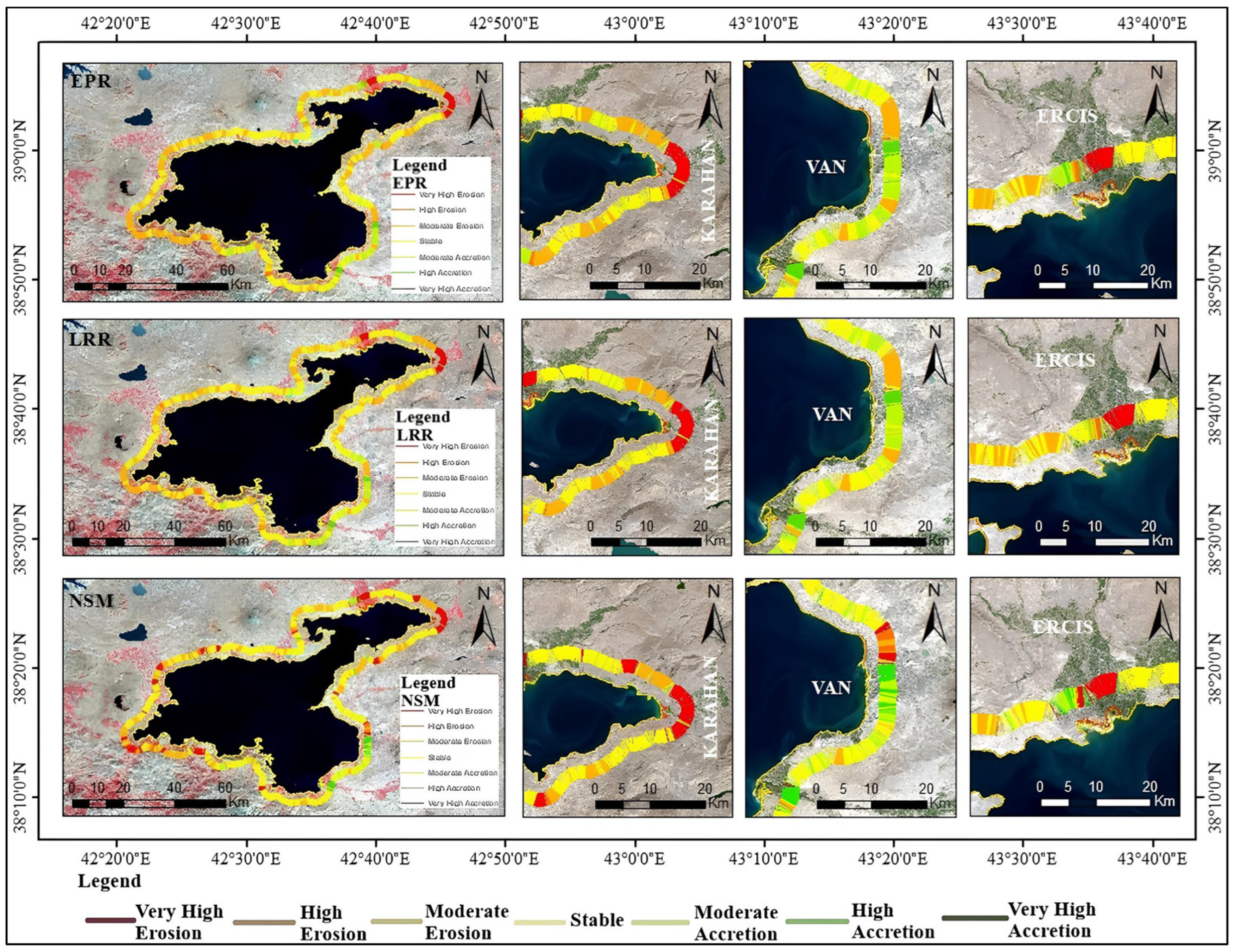
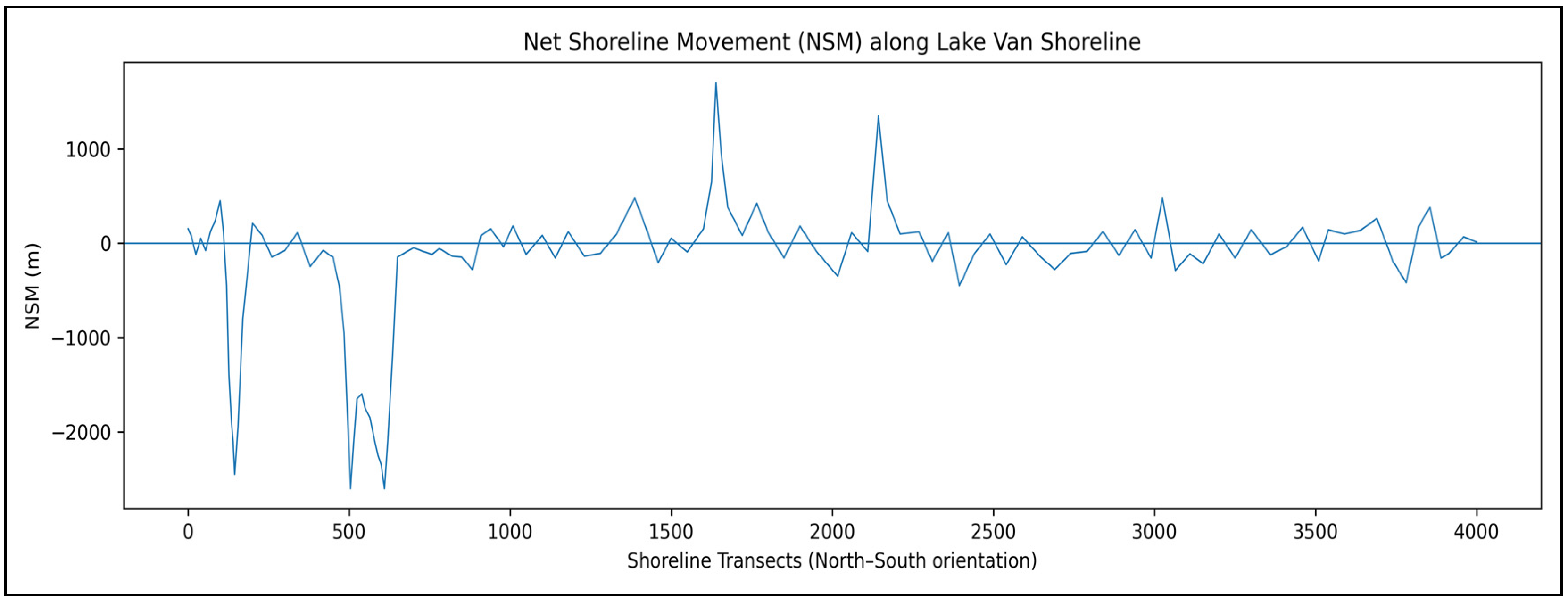
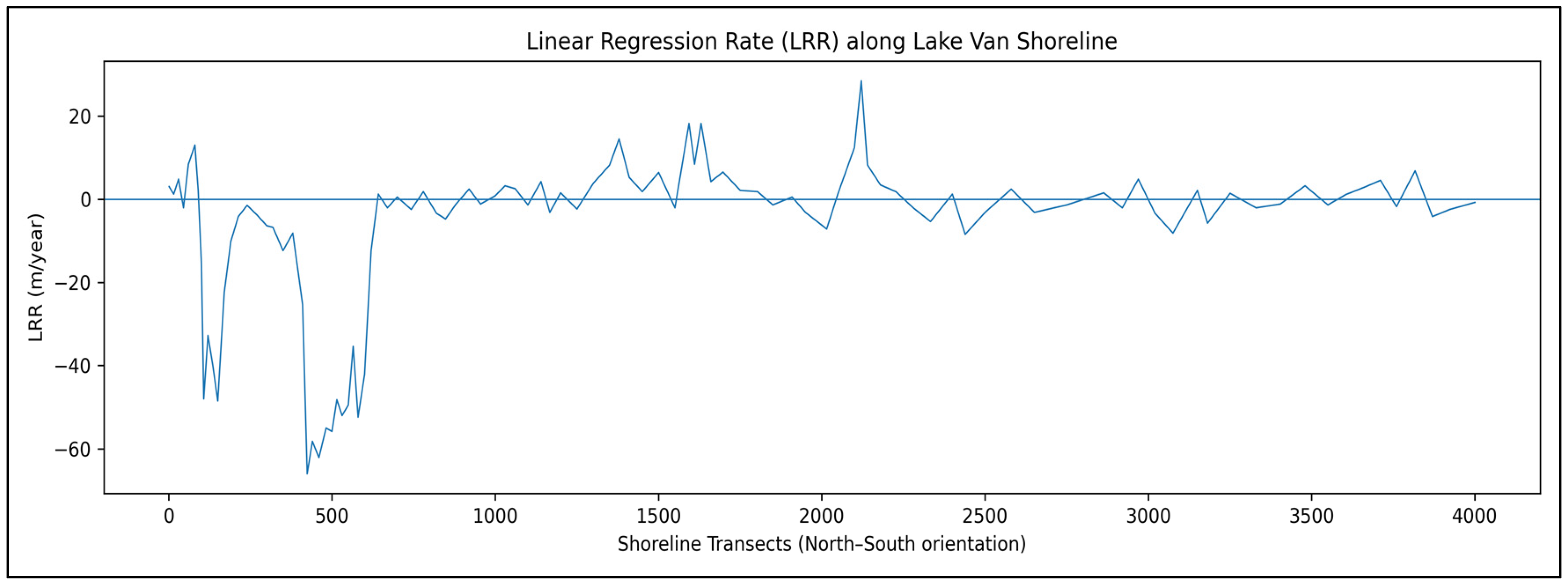
Within the study area, EPR analysis showed the highest erosion rate at −64.5 m/year and the lowest erosion rate at −0.01 m/year, while LRR calculations revealed a maximum erosion rate of −67.3 m/year and a minimum erosion rate of −0.01 m/year. In terms of accretion, the maximum rate based on EPR was 42.51 m/year, while the minimum accretion rate was 0.01 m/year. According to the LRR results, the highest accretion rate was 27.54 m/year, and the lowest was 0.01 m/year. The NSM analysis indicated a maximum erosion value of −2580.1 m and a minimum erosion value of −0.01 m, whereas maximum and minimum accretion values were calculated as 1700.58 m and 0.07 m, respectively (Figure 3).

3.2. Spatial Patterns of Erosion and Accretion Along the Lake Van Shoreline

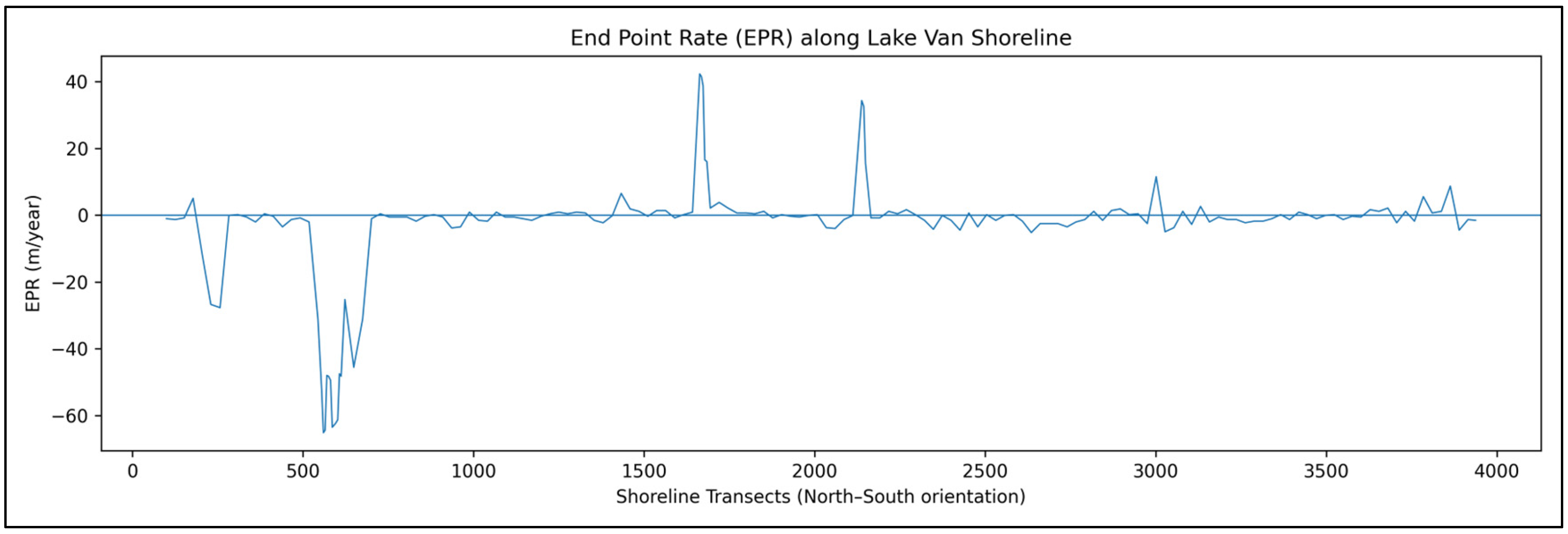
The spatial distribution of shoreline change revealed distinct regional differences along the Lake Van shoreline. Accretion was predominantly observed in the Altınsaç, Çiçekli, Van, and Çelebibağ regions, whereas erosion was mainly concentrated in areas near Karahan, Gölağzı, and Yelkenli (Figure 3). Significant shoreline retreat was observed in the Çiçekli, Gölağzı, and Karahan regions during the 1982–2022 period (Figure 2). The highest erosion rates were detected in the Çelebibağ and Karahan areas, corresponding to the discharge locations of the Bendimahi and Zilan streams. The spatial distribution of EPR, LRR, and NSM values along individual transects is illustrated in Figure 4, Figure 5 and Figure 6, which present erosion and accretion profiles for different shoreline segments. A total of 2738 erosion transects and 1284 accretion transects were identified across the study area.

3.3. Predicted Shoreline Positions for 2032 and 2042 Using Kalman Filter Modeling

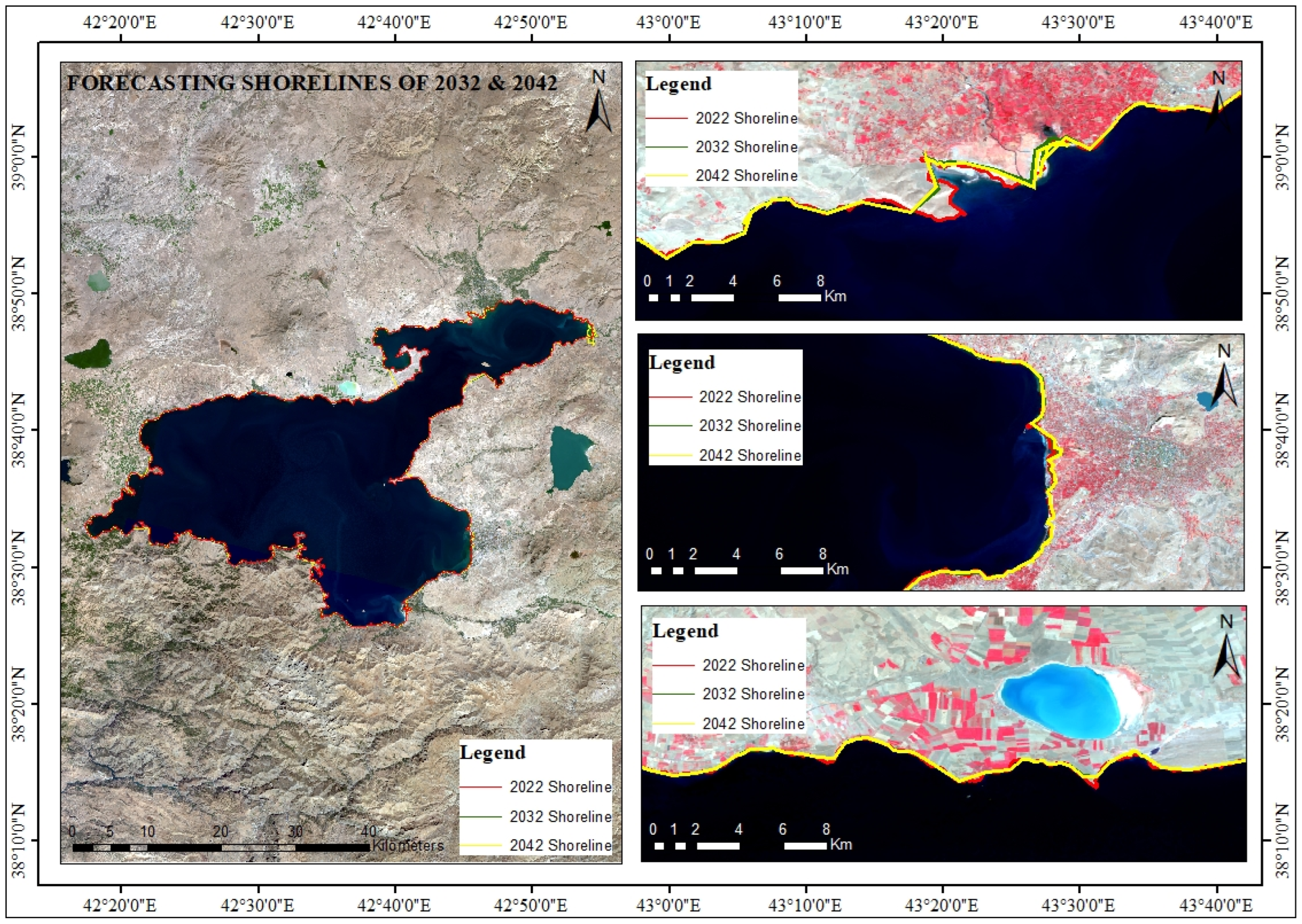
Future shoreline positions for the years 2032 and 2042 were estimated using Kalman filter-based scenario modeling at ten-year intervals. Shoreline change rates were calculated using three shoreline datasets: the observed shoreline for 2022 and the projected shorelines for 2032 and 2042. The model predicted erosion values of −1000.38 m for 2032 and −1500.68 m for 2042, while accretion values of 820 m and 889 m were projected for the same periods. The spatial distribution of predicted erosion and accretion zones is presented in Figure 7. According to the model outputs, accretion is projected to occur mainly in the Altınsaç, Çiçekli, Van, and Çelebibağ regions, whereas erosion is expected to dominate in areas near Karahan, Gölağzı, and Yelkenli (Figure 7).

4. Discussion

4.1. Interpretation of Shoreline Change Patterns in Lake Van

This study analyzed shoreline changes in Lake Van and their potential implications for fisheries, with a particular focus on the pearl mullet (Alburnus tarichi), an endemic and migratory species of the lake. The findings revealed pronounced erosion and accretion patterns along different sections of the shoreline, indicating spatially heterogeneous coastal dynamics. These shoreline changes have important implications for fish habitats, fisheries activities, and the local economy dependent on lake resources. The observed erosion and accretion processes directly influence fish habitats and breeding grounds. In this context, the results highlight the need for sustainable coastal management practices to support fisheries in Lake Van. The increasing use of geospatial technologies and remote sensing in fisheries-related studies provides valuable opportunities for monitoring such changes over large spatial and temporal scales. For a large inland water body such as Lake Van, the application of DSAS 5.0 enabled the effective monitoring of long-term shoreline changes between 1982 and 2022. The highest erosion rates were identified in the Erciş, Karahan, and Gölağzı regions, as indicated by EPR and LRR values of −64.5 and −67.3 m/year, respectively, and NSM values reaching −2580.1 m. In contrast, zones around Van, Erciş, and Kalecik exhibited NSM-based accretion values of up to 1700.01 m, suggesting a relatively depositional shoreline trend in these areas, potentially associated with lower construction intensity and more effective shoreline maintenance.

4.2. Sediment Dynamics, Coastal Processes, and Human Influences

Shoreline changes along Lake Van were particularly pronounced in the Çelebibağ and Karahan areas. The intense erosion observed in these regions is associated with sediment transported by major inflowing streams, such as the Bendimahi and Zilan streams. Similar findings have been reported in previous studies conducted in the Göksu Delta [12] and the Seyhan Basin [13], where shoreline dynamics were largely influenced by river-borne materials and human activities. These results underline the importance of regular monitoring of coastal dynamics and effective sediment management for sustaining fisheries in Lake Van. In areas where fishing ports are located, periodic dredging activities may be necessary to maintain operational capacity and reduce sediment-related impacts. The spatial comparison of shoreline changes further indicates that erosion intensity is generally lower in the southern part of the lake compared to the northern shoreline, particularly in the Erciş, Gölağzı, and Karahan regions. From a management perspective, this suggests that the southern shoreline may be more suitable for the development of new fishing ports. Accretion rates derived from EPR and LRR reached maximum values of 42.6 and 27.54 m/year, respectively. Scenario-based forecasting results for 2032 and 2042 indicate continued shoreline change, with projected erosion rates of −1000.38 and −1500.68 m/year and accretion values of 820 and 889 m/year, respectively. These projections emphasize the need for proactive coastal protection measures in erosion-prone areas.

4.3. Implications for Fisheries, Habitat Protection, and Climate Change Adaptation

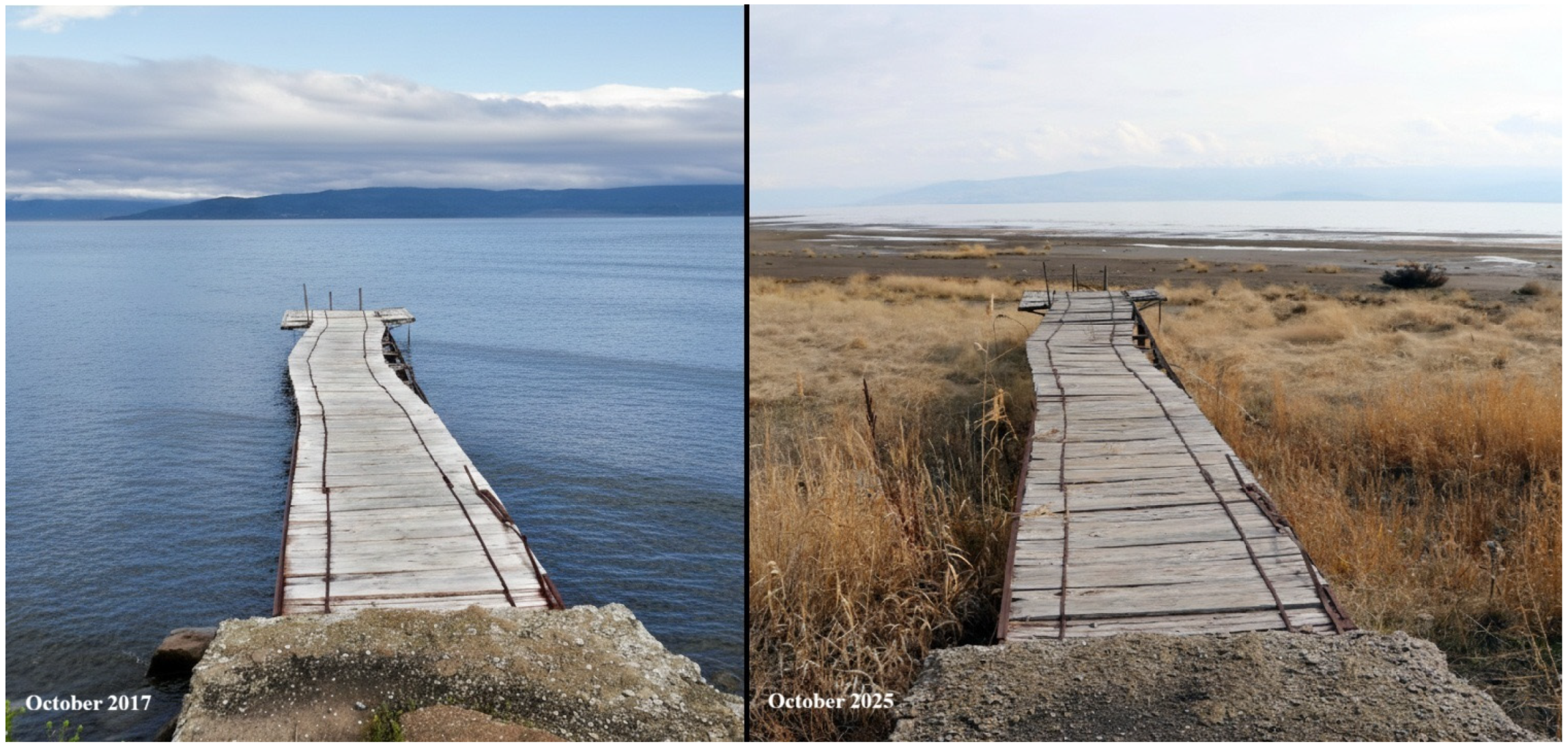
Various coastal protection strategies may be considered to mitigate shoreline erosion, including the placement of rip-rap, articulated concrete blocks, bulkheads, gabions, and geoweb matrices. Such measures are particularly relevant for high-risk areas such as Erciş and Karahan, where erosion threatens fisheries infrastructure and critical habitats (Figure 8). These structures are relatively easy to install and can function as effective filter barriers against sediment redistribution. The practical consequences of this retreat are evident in Figure 8, which shows a fishing port that has become dysfunctional due to the receding shoreline.
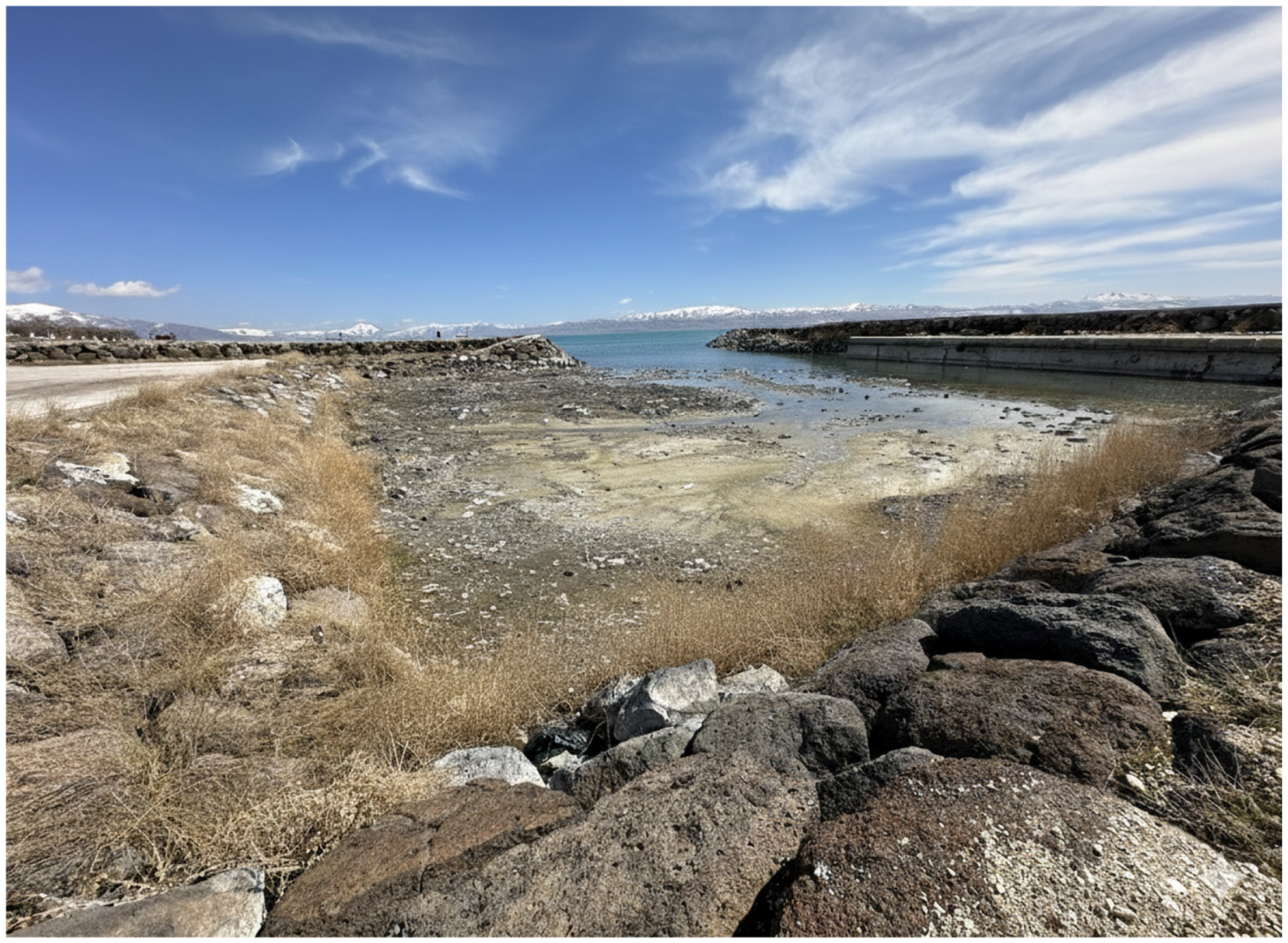
In addition to the spatial analyses presented above, shoreline retreat in Lake Van has also resulted in tangible and observable impacts on fisheries infrastructure. In particular, the progressive lowering of lake water levels has rendered several fishing port and pier structures functionally unusable, limiting access for fishing vessels and disrupting routine fishing operations. In Lake Van, small-scale fisheries constitute an important component of the local economy; therefore, shoreline retreat that limits access to fishing infrastructure and disrupts fishing activities may indirectly affect income generation and livelihood stability in coastal communities. An illustrative example of this infrastructure loss associated with shoreline retreat is presented in Figure 9.
Following erosion control efforts, certain areas around Van and Kalecik may also benefit from wetland restoration and rehabilitation. Although saltmarshes are among the most commonly restored wetland ecosystems and can reduce wave energy, they are generally insufficient as standalone solutions for shoreline protection in large lake systems. The pearl mullet, while residing in Lake Van, migrates to freshwater inflows during its breeding season between April and July. The results of this study indicate that breeding areas are increasingly under pressure due to shoreline narrowing and changes in migration routes. The Çelebibağ and Karahan regions are known to function as major migration corridors for the pearl mullet, particularly during the spawning season when fish move from Lake Van toward inflowing freshwater systems. Juveniles hatched in inflowing streams return to Lake Van and predominantly occupy shallow littoral zones during early life stages. Shoreline erosion and accretion directly affect these nearshore habitats by modifying water depth and substrate conditions, thereby influencing habitat availability. Moreover, shoreline retreat shifts stream–lake confluence points landward, effectively increasing migration distances for spawning adults and potentially raising energetic costs during the spawning period. Shoreline instability and erosion in these areas may therefore influence migration efficiency and accessibility rather than directly altering spawning habitats. This relationship is interpreted with reference to the spatial proximity of erosion-prone shoreline segments to known migration routes. Eastern shores of Lake Van are sensitive to erosion and accretion processes, directly affecting the migration pathways of the pearl mullet. Similar observations from other deltaic and coastal systems suggest that both natural processes and human activities play a role in shaping shoreline dynamics. To ensure sustainable fisheries, controlling shoreline erosion and managing sediment transport are therefore critical. Coastal stabilization measures, particularly in high-risk areas such as Çelebibağ and Karahan, should incorporate natural breakwaters and vegetation where feasible. Regular monitoring of shoreline changes using GIS and remote sensing techniques is essential for strengthening fisheries management. In semi-arid regions such as Türkiye, where the impacts of global warming are becoming increasingly evident, the shoreline change patterns observed in Lake Van reflect the growing influence of climate change on closed-basin lake ecosystems [6,7,8]. Variations in shoreline position directly affect littoral zones that function as key feeding habitats for fish, as well as fish migration routes and fishing harbors, thereby influencing the sustainability of fisheries. The results suggest that, under changing climatic conditions and increasing anthropogenic pressures, understanding the future dynamics of lake ecosystems is essential for sustainable fisheries management. The use of GIS-based analyses together with historical satellite imagery offers a practical means of monitoring the temporal evolution of shoreline changes. These approaches contribute to fisheries planning, the identification of suitable habitats, the early recognition of potential future problems, and the development of effective management strategies aimed at sustaining fisheries resources.

5. Conclusions

This study identified pronounced shoreline erosion along the Karahan, Gölağzı, and Çelebibağ coasts of Lake Van. These coastal zones are of particular importance for the feeding and migration of the pearl mullet (Alburnus tarichi), the lake’s only fish species and a key economic resource for the region. The results indicate that increasing air and water temperatures, enhanced evaporation, and declining water levels in this closed-basin lake have accelerated shoreline retreat. Under such hydrological conditions, sediments transported by inflowing rivers do not lead to stable shoreline accretion but instead contribute to shoreline instability through redistribution and reworking processes. Scenario-based projections derived from the Kalman filter model suggest that erosion will remain the dominant shoreline process over the next two decades. Continued shoreline retreat is therefore expected to pose increasing risks to fisheries infrastructure, littoral habitats, and coastal areas that support ecological productivity. These findings highlight the importance of regularly monitoring shoreline dynamics in Lake Van. The combined use of multi-temporal satellite imagery and GIS-based analyses provides an effective and practical approach for detecting shoreline changes and supporting sustainable fisheries management in Lake Van and similar closed-basin lake systems under ongoing climate change.

6. Patents

There are no patents resulting from the work reported in this manuscript.

Funding

This research received no external funding.

Institutional Review Board Statement

Not applicable.

Informed Consent Statement

Not applicable.

Data Availability Statement

All satellite imagery used in this research is publicly available through the USGS Earth Explorer platform.

Acknowledgments

The author gratefully acknowledges the United States Geological Survey (USGS) for providing access to the multi-temporal Landsat satellite imagery through the Earth Explorer platform, which served as a primary data source for shoreline analyses in this study.

Conflicts of Interest

The author declares no conflicts of interest.

Abbreviations

The following abbreviations are used in this manuscript:
DSASDigital Shoreline Analysis System
NSMNet Shoreline Movement
EPREnd Point Rate
LRRLinear Regression Rate

References

  1. Fisheries Statistics, 2023. Turkish Statistical Institute (TURKSTAT), Ankara, Türkiye, 2024. Available online: https://data.tuik.gov.tr/ (accessed on 9 November 2024).
  2. Maiti, S.; Bhattacharya, A.K. Shoreline change analysis and its application to prediction: A remote sensing and statistics based approach. Mar. Geol. 2009, 257, 11–23. [Google Scholar] [CrossRef]
  3. Sarwar, M.G.M.; Woodroffe, C.D. Rates of shoreline change along the coast of Bangladesh. J. Coast. Conserv. 2013, 17, 515–526. [Google Scholar] [CrossRef]
  4. Niya, A.K.; Alesheikh, A.A.; Soltanpor, M.; Kheirkhahzarkesh, M.M. Shoreline change mapping using RS & GIS. Int. J. Remote Sens. Appl. 2013, 3, 102–107. [Google Scholar]
  5. Winter, T. Relation of streams, lakes, and wetlands to groundwater flow systems. Hydrogeol. J. 1999, 7, 28–45. [Google Scholar] [CrossRef]
  6. Aydın, M.; Öz, A. Trend analysis of hydrometeorological data in the Lake Van Basin. Çukurova Univ. J. Fac. Eng. Archit. Gazi Univ. 2021, 36, 441–456. [Google Scholar] [CrossRef]
  7. Saracoglu, K.E.; Saracoglu, F.A. Trend analysis of Lake Van surface water temperatures. Nat. Hazards Environ. J. 2022, 8, 221–237. [Google Scholar] [CrossRef]
  8. Aydın, H.; Karakus, H. Estimation of evaporation for Lake Van. Environ. Earth Sci. 2016, 75, 1275. [Google Scholar] [CrossRef]
  9. Jayakumar, K.; Malarvannan, S. Assessment of shoreline changes, northern Tamil Nadu, South India using WebGIS techniques. J. Coast. Conserv. 2016, 20, 477–487. [Google Scholar] [CrossRef]
  10. Lewin, W.C.; Mehner, T.; Ritterbusch, D.; Brämick, U. The influence of anthropogenic shoreline changes on the littoral abundance of fish species in German lowland lakes varying in depth as determined by boosted regression trees. Hydrobiologia 2014, 724, 293–306. [Google Scholar] [CrossRef]
  11. Uzun, M. Coastline-coast area changes and effects in the delta of Hersek (Yalova). East. Geogr. Rev. 2014, 19, 27–48. [Google Scholar] [CrossRef]
  12. Kazı, H.; Karabulut, M. Monitoring the shoreline changes of the Göksu Delta (Türkiye) using geographical information technologıes and predictions for the near future. Int. J. Geogr. Educ. 2023, 50, 329–352. [Google Scholar] [CrossRef]
  13. Gümüş, M.G. Forecasting future scenarios of coastline changes in Türkiye’s Seyhan Basin: A comparative analysis of statistical methods and Kalman Filtering (2033–2043). Earth Sci. Inform. 2024, 17, 5207–5232. [Google Scholar] [CrossRef]
  14. Üner, S. Natural and anthropogenic driving forces on Holocene coastline evolution of Lake Van (Eastern Anatolia): A geological approach. Bull. Earth Sci. 2022, 43, 96–120. [Google Scholar] [CrossRef]
  15. Jayakumar, K. Analysis of shoreline changes along the coast of Tiruvallur district, Tamil Nadu, India. J. Geogr. Cartogr. 2021, 4, 12–20. [Google Scholar] [CrossRef]
  16. Natesan, U.; Parthasarathy, A.; Vishnunath, R.; Kumar, G.E.J.; Ferrer, V.A. Monitoring Longterm Shoreline Changes along Tamil Nadu, India Using Geospatial. Aquat. Procedia 2015, 4, 325–332. [Google Scholar] [CrossRef]
  17. Gomez-Pazo, A.; Payo, A.; Paz-Delgado, M.V.; Delgadillo-Calzadilla, M.A. Open Digital Shoreline Analysis System: ODSAS v1.0. J. Mar. Sci. Eng. 2022, 10, 26. [Google Scholar] [CrossRef]
  18. Oyedotun, T.D. Shoreline geometry: DSAS as a tool for historical trend. Geomorphol. Tech. 2014, 3, 1–12. [Google Scholar]
  19. Alkan, Z.; Karataş, B.; Sepil, A. Evaluation of global warming effects on juvenile rainbow trout: Focus on immunohistochemistry and osmoregulation. Fish Physiol. Biochem. 2025, 51, 15. [Google Scholar] [CrossRef]
  20. Isaak, D.J.; Luce, C.H.; Horan, D.L.; Chandler, G.L.; Wollrab, S.P.; Nagel, D.E. Global warming of salmon and trout rivers in the Northwestern US: Road to ruin or path through purgatory? Trans. Am. Fish. Soc. 2018, 147, 566–587. [Google Scholar] [CrossRef]
  21. Alfonso, S.; Gesto, M.; Sadoul, B. Temperature increase and its effects on fish stress physiology in the context of global warming. J. Fish Biol. 2021, 98, 1496–1508. [Google Scholar] [CrossRef]
  22. Raj, N.; Gurugnanam, B.; Sudhakar, V.; Francis, P.G. Estuarine shoreline change analysis along The Ennore river mouth, south east coast of India, using digital shoreline analysis system. Geod. Geodyn. 2019, 10, 205–212. [Google Scholar] [CrossRef]
  23. Leatherman, S.P.; Kearney, M.S.; Clow, B. Assessment of Coastal Responses to Projected Sea Level Rise: Galveston Island and Bay, Texas; Draft Report; ICF, EPA: College Park, MD, USA, 1983. [Google Scholar]
  24. Crowell, M.; Douglas, B.C.; Leatherman, S.P. On forecasting future US shoreline positions: A test of algorithms. J. Coast. Res. 1997, 12, 1245–1255. [Google Scholar]
  25. Douglas, B.C.; Crowell, M. Long-term shoreline position prediction and error propagation. J. Coast. Res. 2000, 14, 145–152. [Google Scholar]
  26. Long, J.W.; Plant, N.G. Extended Kalman Filter framework for forecasting shoreline. Geophys. Res. Lett. 2012, 39, L13603. [Google Scholar] [CrossRef]
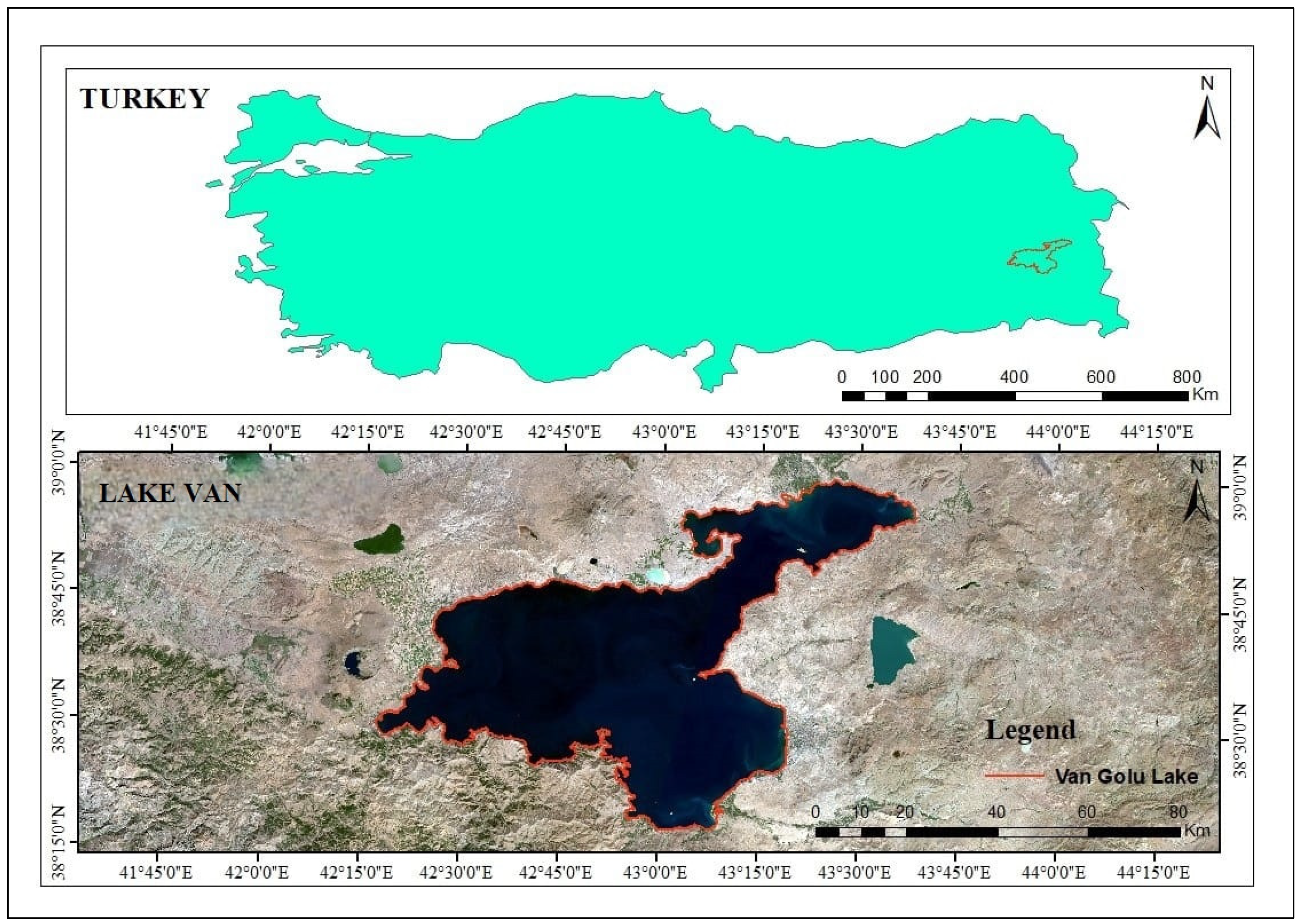
Figure 1. Location of Lake Van.
Sustainability 18 01611 g001
Figure 2. Map showing shorelines in five different years.
Sustainability 18 01611 g002
Figure 3. Calculated values of EPR, LRR, and NSM for selected zones around Lake Van between 1982 and 2022.
Sustainability 18 01611 g003
Figure 4. EPR values for the selected zones around Lake Van between 1982 and 2022.
Sustainability 18 01611 g004
Figure 5. NSM values for the selected zones around Lake Van between 1982 and 2022.
Sustainability 18 01611 g005
Figure 6. LRR values for the selected zones around Lake Van between 1982 and 2022.
Sustainability 18 01611 g006
Figure 7. Forecasting shorelines of Lake Van for 2032 and 2042.
Sustainability 18 01611 g007
Figure 8. Shoreline retreat impacts on fishing port infrastructure in Lake Van.
Sustainability 18 01611 g008
Figure 9. Fishing pier affected by shoreline retreat in Lake Van.
Sustainability 18 01611 g009
Table 1. Remote sensing data sources used for different years of examination.
NoData Source and SensorDate of Acquisition
1Landsat 1–5 MSS C2 L125 August 1982
2Landsat 1–5 MSS C2 L13 November 1992
3Landsat 4–5 TM C2 L123 November 2002
4Landsat 7 ETM+ C2 L12 November 2012
5Landsat 8–9 OLI/TIRS C2 L127 September 2022
Disclaimer/Publisher’s Note: The statements, opinions and data contained in all publications are solely those of the individual author(s) and contributor(s) and not of MDPI and/or the editor(s). MDPI and/or the editor(s) disclaim responsibility for any injury to people or property resulting from any ideas, methods, instructions or products referred to in the content.