2. Literature Review
Transportation, warehousing, inventory management, and distribution must be seamlessly coordinated in the logistics sector to ensure a steady and efficient flow of goods and services. The growth of the logistics industry has been driven by globalization, technology, and sustainability trends. The expansion of international markets has required businesses to develop global logistics systems. This has led to increased complexity in supply chain management, as companies must optimize the transportation and distribution of products across multiple countries with long distances and diverse legal regulations [
9]. In addition, technology has had a profound impact on logistics, including the use of supply chain management (SCM), the Internet of Things (IoT), artificial intelligence (AI), and blockchain. These technologies help improve transparency, optimize shipping processes, and manage inventory more efficiently [
10]. Studies have also shown that the application of technology not only helps reduce costs but also improves accuracy and delivery speed. The trend of sustainable development has focused on minimizing negative impacts on the environment [
11]. Numerous important issues, such as technology, globalization, climate change, and consumer demand, have an impact on the logistics sector. Research by Zhang [
12] emphasized how digital transformation can improve supply chain resilience and sustainability, particularly for companies confronting social and environmental challenges. The study also discovered that innovation in the logistics sector is being propelled by the need for individualized services and quick delivery. Operational efficiency in the logistics sector is evaluated using a variety of criteria. Operational efficiency is often defined as the ability to perform logistics activities at the lowest cost and in the shortest time, while achieving the set goals [
13]. Hazen [
14] has shown that data quality is a key factor influencing supply chain performance, from demand forecasting to inventory management and transportation optimization. Yan [
15] discussed the role of technology, especially automation systems and artificial intelligence (AI), in improving logistics performance. In addition, the study addressed how to integrate sustainable development goals into supply chain management through resource optimization and emissions reduction. Evaluating efficiency and sustainability in the logistics industry faces many challenges and limitations, especially when balancing economic efficiency and environmental responsibility. According to Hazen et al. [
14], data quality is an important factor, but businesses often face difficulties in collecting and analyzing complete and accurate data, particularly in the context of big data. In addition, the study by Issaoui et al. [
16] has shown that the application of smart logistics technology remains limited because businesses often lack the resources and skills required for effective implementation and face high initial investment costs. Moreover, Zhu et al. [
17] noted that measuring sustainability often requires integrating environmental, social, and governance indicators, which is much more complex than simply assessing economic performance. These challenges complicate the process of assessing and improving sustainability in logistics.
The logistics sector has seen major changes due to an explosion of many emerging trends, including digital technology applications, IoT, and sustainable solutions. Saurabh Pratap et al. [
18] have highlighted the importance of IoT and big data in optimizing logistics performance, helping to enhance decision-making and asset management. Green logistics has also emerged as one of the key sustainability solutions, seeking to reduce adverse effects on the environment. Logistics businesses are investing in electric vehicles, renewable energy technologies for warehouses, and process optimization to reduce CO
2 emissions. Feng et al. [
19] pointed out that these solutions not only meet the requirements of environmental regulations but are also a decisive factor in building a sustainable image of the enterprise. In addition, smart supply chains with the help of artificial intelligence (AI) and automation are changing the way warehouses, delivery, and distribution are managed. Research by Ferreira et al. [
20] has shown that AI is helping to forecast demand, optimize transportation, and improve overall supply chain performance, although implementation levels are still limited. These trends are not only reshaping the logistics industry but also opening up new opportunities to improve sustainability and operational efficiency in the context of globalization and climate change.
In the logistics and supply chain sector, performance evaluation can be performed in a number of ways to assess how effective companies and procedures are. Data Envelopment Analysis (DEA) is among the most widely used techniques for comparing the performance of decision-making units (DMUs), such as warehouses, transportation facilities, or different suppliers [
21]. DEA measures relative performance based on multiple inputs and outputs, helping businesses identify inefficient units for improvement. Qorri et al. [
22] used DEA to evaluate sustainable performance in supply chain systems, showing the differences in resource utilization between organizations and suggesting optimal solutions. In addition to DEA, Stochastic Frontier Analysis (SFA) was also applied to estimate the efficient frontier and consider random factors that may affect performance. This method helps to handle unpredictable factors, such as market fluctuations, thereby providing a more accurate view of performance [
23]. Balanced Scorecard (BSC) is also an important tool in measuring performance. BSC not only focuses on financial indicators but also extends to other aspects such as internal processes, learning and growth, and customer relationships [
24]. DEA has proven to be a valuable instrument for assessing performance across numerous industries, helping organizations optimize resource use and improve business operations. DEA measures the relative performance of units using the same inputs and outputs through a mathematical model, thereby helping businesses identify strengths and weaknesses in resource use. DEA has been applied to evaluate the efficiency of commercial banks. For example, research by Lin et al. [
25] employed DEA to assess the cost and scale effectiveness of 117 Taiwanese bank branches, showing which banks were most efficient in using financial and human resources. In the healthcare sector, DEA has been widely used to evaluate the performance of hospitals. Tarazona et al. [
26] conducted a review of DEA studies in healthcare and concluded that this method is effective in measuring and comparing performance between hospitals, especially in resource utilization and healthcare service delivery. Manufacturing firms also use DEA to evaluate efficiency in production and resource management [
27,
28]. Additionally, DEA has been used to assess the effectiveness of schools and other educational institutions [
29,
30]. In addition, many previous studies have also shown that DEA is an important and effective tool in evaluating and optimizing the performance of logistics companies, helping them identify weaknesses and improve operational performance [
31,
32].
To address ambiguous and uncertain elements in the decision-making process, fuzzy theory is incorporated into the FAHP method, which is a variant of the AHP (Analytic Hierarchy Process) approach. When the review process’s criteria and elements are hard to precisely measure, this approach is especially helpful [
33]. Fuzzy theory is used in the FTOPSIS approach of multi-criteria decision-making (MCDM) to address ambiguity and uncertainty issues. This approach was derived from the TOPSIS method proposed by Hwang and Yoon in 1981 (Technique for Order Preference by Similarity to Ideal Solution). FTOPSIS extends TOPSIS by using fuzzy numbers to represent uncertainty in criteria evaluation and alternative selection [
34]. The integration of FAHP and FTOPSIS in the logistics industry is a big step forward to solve complex problems related to decision-making [
35]. In logistics environments, decisions often depend on various criteria such as cost, time, reliability, service quality, and integrating these two approaches can help optimize the process [
36]. FAHP-FTOPSIS is commonly applied in the logistics industry to select transportation service providers. Fuzzy theory and the Multi-Criteria Decision-Making (MCDM) model have been integrated in research by Le and Nguyen [
37] to assess and choose possible third-party logistics (3PL) service providers. In addition, the AHP-TOPSIS combination is used to tackle the multi-objective mathematical model problem of constructing an ammunition distribution network [
38]. Studies employing DEA and multi-criteria decision-making (MCDM) techniques in the logistics sector are summarized in
Table 2.
An overview of the body of research on Vietnam’s logistics sector shows that most studies focus on factors such as infrastructure development, digital technology, and automation in the supply chain. Issues related to operating costs, human resources, and challenges from the legal environment are also widely discussed. However, few studies have focused on evaluating the performance of Vietnam’s logistics enterprises in a comprehensive and multi-faceted manner. This shows an important research gap, requiring practical assessments of the performance of enterprises in the industry to make appropriate improvement recommendations and enhance competitiveness in the international market.
Based on theoretical foundations and previous empirical findings, this study adopts an integrated approach combining DEA, FAHP, and FTOPSIS to evaluate logistics performance. This integration makes it possible to capture both operational efficiency and multiple qualitative dimensions relevant to logistics decision-making. The integration of DEA, FAHP, and FTOPSIS is grounded in the complementary nature of these methods. DEA objectively measures the relative efficiency of logistics firms by comparing inputs and outputs, but it does not account for qualitative aspects such as managerial practices, strategic priorities, or service quality. FAHP is therefore employed to incorporate expert judgment and to derive consistent weights for qualitative and quantitative criteria under uncertainty. FTOPSIS is subsequently used to aggregate these weighted criteria and produce a final ranking of firms according to their closeness to the ideal performance level. A brief comparison in
Section 4.3 with alternative hybrid models further highlights the added value of this framework. Overall, the combined use of DEA, FAHP, and FTOPSIS enables more effective handling of uncertainty while ensuring that efficiency measurement, criteria weighting, and ranking are coherently aligned, thereby strengthening methodological rigor and supporting practical decision-making in logistics performance evaluation.
3. Materials and Methods
Multi-criteria decision-making (MCDM) methods have been widely applied in logistics performance evaluation because they allow decision makers to consider multiple, often conflicting, criteria simultaneously. However, there is no single universally accepted MCDM technique. In fact, more than 200 MCDM methods are available today, and the rankings of alternatives can differ substantially when different methods are applied. This highlights the importance of carefully selecting and validating an appropriate method for each decision-making context [
47]. Therefore, this study integrates DEA, FAHP, and FTOPSIS to combine the strengths of quantitative efficiency measurement and qualitative expert-based evaluation. The proposed framework improves robustness by linking objective efficiency scores with a structured multi-criteria ranking process.
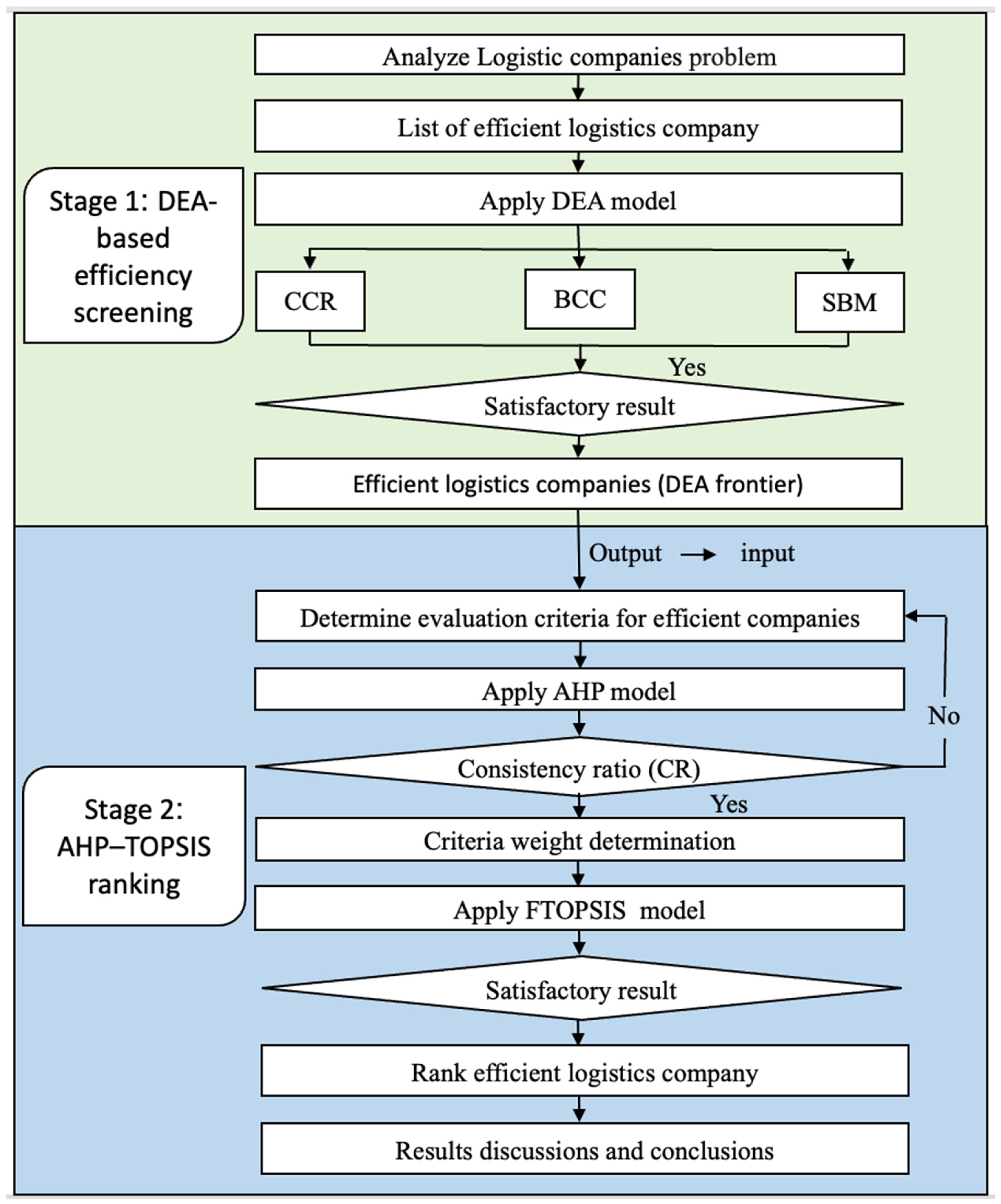
The present study adopts a structured methodological framework that integrates both quantitative and qualitative techniques. This integrated framework enables systematic efficiency measurement, weighting of qualitative criteria under uncertainty, and final ranking of logistics firms. Using both qualitative and quantitative criteria, the study evaluates the performance of 15 leading logistics firms in Vietnam. A two-layer analytical approach is proposed (
Figure 1). In Layer 1, firm efficiency is first assessed using DEA models, including CCR (Charnes–Cooper–Rhodes) [
48], BCC (Banker–Charnes–Cooper) [
49], SBM, and Super SBM [
50]. In Layer 2, firms identified as efficient are examined in greater detail. The weights of the evaluation criteria are determined using FAHP to ensure consistency, and the firms are subsequently ranked using the Fuzzy TOPSIS method, which accounts for uncertainty in expert judgments. The combined results from both layers yield an overall ranking of logistics firms, together with managerial insights regarding strengths, weaknesses, and improvement priorities. This integrated methodology provides a comprehensive and reliable assessment of logistics performance and supports the development of targeted optimization strategies. Thus, DEA provides the efficiency perspective, whereas FAHP–FTOPSIS supports decision-making on how performance can be enhanced. Although DEA and fuzzy MCDM originate from different theoretical traditions, they are compatible in this context because they address complementary questions: how efficient firms are (DEA) and which actions should be prioritized to improve performance (FAHP–FTOPSIS).
This study integrates DEA, FAHP, and FTOPSIS because of their different analytical functions and complementary theoretical underpinnings. DEA is a non-parametric method widely applied to evaluate the relative efficiency of decision-making units (DMUs) without the need for functional forms or predetermined weights. This paradigm makes it possible to identify logistics companies operating on or close to the efficiency frontier, as DEA is primarily used for efficiency screening rather than ranking. Nevertheless, DEA’s capacity to record managerial, strategic, and qualitative elements all crucial for assessing logistics performance is constrained. In the second step, a fuzzy multi-criteria decision-making (MCDM) approach is used to get around this restriction. While FTOPSIS is used to rank the options according to how near they are to the optimal solution, FAHP is used to calculate criteria weights under uncertainty by incorporating expert judgements in a fuzzy environment. Crucially, efficiency scores are not directly converted into fuzzy rankings during the switch from DEA to FAHP–FTOPSIS. Instead, by limiting the fuzzy MCDM analysis to a subset of operationally efficient businesses, DEA results function as a filtering and validation tool. By combining objective efficiency evaluation with qualitative differentiation, this sequential structure guarantees methodological coherence. Consequently, the integrated framework avoids theoretical conflict between fuzzy ranking methods and efficiency assessment while effectively utilizing the advantages of both approaches.
3.1. Data Envelopment Analysis Models
Based on the concept of production efficiency, Charnes, Cooper, and Rhodes (CCR) [
47] created the first Data Envelopment Analysis (DEA) model. This approach optimizes the ratio of weighted inputs to weighted outputs to assess the effectiveness of decision-making units (DMUs). Assume that n inputs and s outputs are used to assess the efficiency of m DMUs. Equations (1)–(4) explain a system of non-linear equations that must be solved in order to determine each DMU’s relative efficiency (
) [
48].
where
represents the ith input of the
th decision unit, and
represents the
th output of the jth decision unit. Meanwhile,
and
are virtual variables assigned to the rth output and the ith input, respectively.
In addition, in the CCR model, the slack variables (
) and surplus (
) play an important role in determining the directions for improving the efficiency of DMUs. The slack variable (
) represents the excess of inputs, indicating the extent to which they can be reduced while maintaining the same level of output. Meanwhile, the surplus variable (
) represents the shortage of output, suggesting the possibilities for increasing output without increasing inputs. These variables can be determined through the non-linear or linear Equations (5) and (6) [
48].
where
,
,
, and
denote the respective optimal values of
and
. According to the CCR model, a jth decision-making unit (DMU) achieves optimal performance when:
: The relative efficiency of DMU is 1, meaning that this unit is the most efficient compared to other units.
: There is no surplus input, that is, all input resources are being fully utilized.
: There is no output shortage, meaning that resources are producing the maximum possible output.
When the above conditions are all satisfied, DMU jth is considered to be operating efficiently and no further improvement in input utilization or output optimization is needed. The BCC model was created in 1984 by Banker, Charnes, and Cooper as an extension of the CCR model [
48]. Because the BCC model permits varying returns to scale (RTS), DMU efficiency may vary based on the size of its activities. In contrast, the CCR model implies constant returns to scale (CRS), which means that efficiency remains constant as scale varies. Equations (7)–(10) represent the BCC model. This model differs primarily in that it incorporates a constraint that permits variable returns to scale. This helps to differentiate between technical efficiency and scale efficiency by enabling the BCC model to more accurately assess the efficiency of DMUs functioning at various scales [
49].
In the BCC model, β represents the intercept value of the production frontier, i.e., an additional constant to adjust the efficient frontier when allowing for variable returns to scale (RTS). The value of β helps determine the direction and scale type at which DMUs operate.
With an emphasis on enhancing input surpluses and output shortages, Tone introduced the slack-based measure (SBM) model in DEA in 2001. This model measures the effectiveness of DMUs using slack variables [
49]. Equations (11)–(14) illustrate the input-oriented SBM model in a constant returns to scale environment (SBM-I-C). SBM-I-C measures efficiency by minimizing excess inputs while keeping outputs the same, more accurately handling cases with significant shortages or surpluses in variables [
50].
In the SBM model,
denotes the input-oriented efficiency value, and
is the weight coefficient of the
th DMU. The SBM-I-C model focuses on minimizing redundant inputs to maximize efficiency. For the output-oriented SBM (SBM-O-C), shown in Equations (15)–(18), the objective is to maximize output without increasing inputs. In this model, the ratio
represents the output-oriented efficiency value, which shows the ability to improve output without changing inputs.
In the non-directional SBM model, represented by Equations (19)–(22), the 0th DMU with input and output is considered SBM efficient when it satisfies three conditions:
: The SBM efficiency index reaches its maximum value.
: There is no input surplus (input slack variable is 0).
: There is no output shortage (output slack variable is 0).
When all three of these conditions are satisfied, the DMU is optimally efficient in the non-directional SBM model, i.e., there is no input surplus or output shortage.
To rank decision-making units (DMUs), Tone developed the Super-SBM model, an extension of the basic SBM model. The Super-SBM model allows for distinguish and ranking DMUs even if they are all optimally efficient (
= 1) in the original SBM model [
50]. This model is represented by the following equations:
The Super-SBM model turns into an input-oriented Super-SBM model when the denominator of the objective function is equal to one. In this case, the value of the objective function cannot be less than 1, as it represents the optimal level of efficiency. This means that all DMUs with an objective function value greater than or equal to 1 can be ranked and compared with each other, with DMUs with values greater than 1 considered to be more efficient in reducing inputs than other units.
In this study, DEA was implemented using several model specifications, including CCR, BCC, and SBM in order to compare results and examine their stability. Nevertheless, the primary analytical focus of the study relies on an input-oriented specification under BCC assumption, as this setting more accurately reflects the characteristics of the logistics sector. Logistics firms generally exert greater control over input factors such as operating costs, labor, vehicles, fuel, and warehouse capacity, whereas output levels are largely driven by market demand and contractual conditions. Moreover, the BCC assumption enables the model to account for differences in operating scale among firms, which the CCR model—assuming constant returns to scale—cannot fully capture. Accordingly, the combined use of CCR, BCC, and SBM allows the analysis to assess pure technical efficiency while also identifying scale inefficiencies and potential input redundancies, thereby improving the reliability and comparability of the DEA results.
3.2. Fuzzy Set Theory
Fuzzy set theory was developed to address problems that are ambiguous or uncertain, and is used to define performance and replacement criteria [
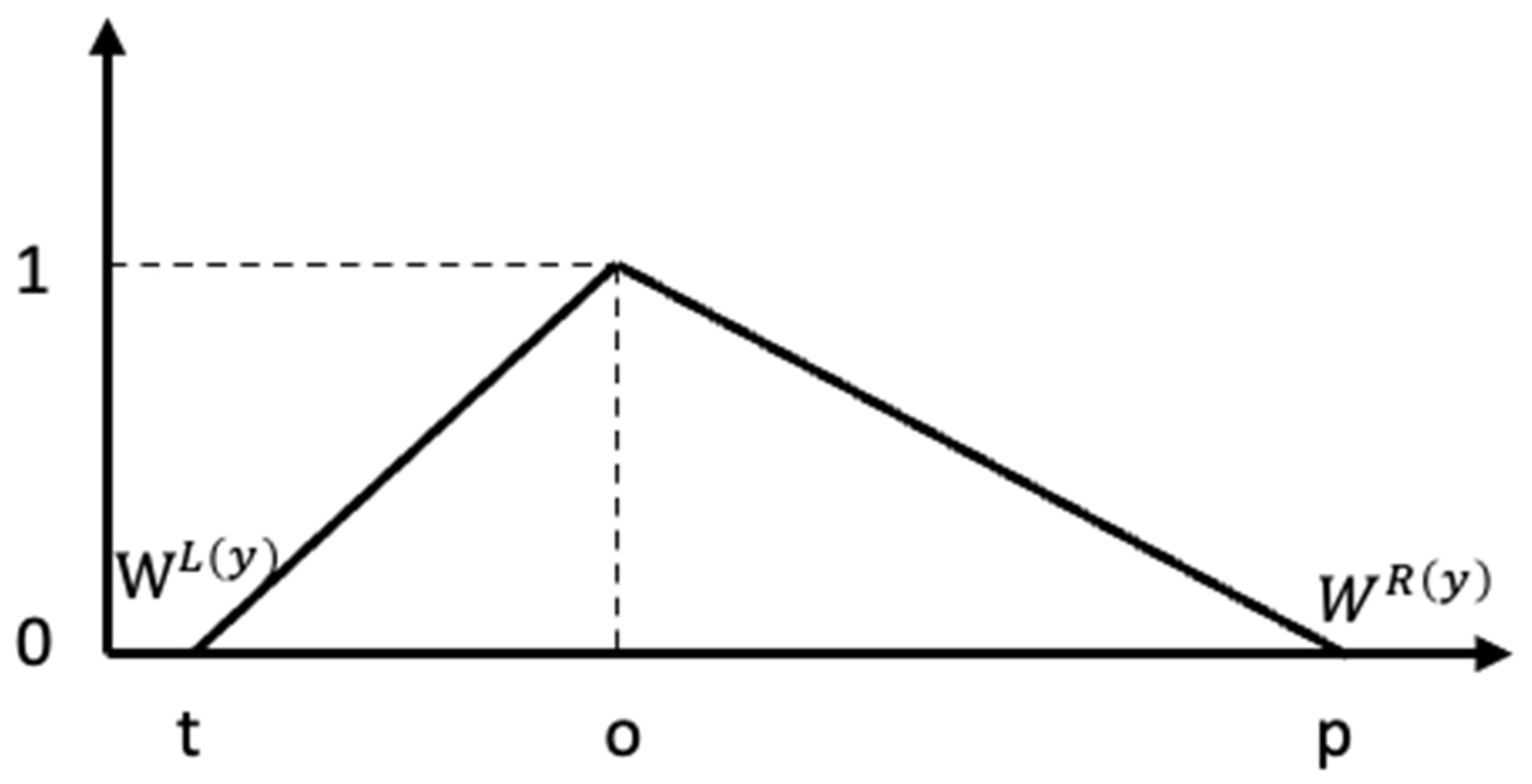
51]. Accordingly, the triangular fuzzy number (TFN) is defined by the triple (t, o, p) where
T represents the lowest value;
O represents the average value;
P represents the highest value.
Equation (29) and
Figure 2 illustrate how the TFN represents a range of values from pessimistic to optimistic, which helps to handle uncertain variables and provides a more flexible view in performance evaluation.
As illustrated in Equation (30), the triangular fuzzy number (TFN) is defined as follows:
where
represent the two sides of the triangular fuzzy number (TFN):
: Represents the left side of the fuzzy number, corresponding to the increasing part from the lowest value tt to the average value oo.
: Represents the right side of the fuzzy number, corresponding to the decreasing part from the average value oo to the highest value pp.
Both sides are used to fully describe the shape and properties of the triangular fuzzy number, helping to evaluate uncertain situations through pessimistic, feasible and optimistic values.
3.3. Fuzzy Analytical Hierarchy Process (FAHP)
AHP (Analytic Hierarchy) was naturally extended to address complicated and ambiguous decision-making situations using the FAHP (Fuzzy Analytical Hierarchy) technique [
52]. FAHP uses pairwise comparisons to rank the system’s levels according to a nine-point priority scale, as indicated in
Table 3.
The unique feature of FAHP is its ability to handle complex relationships between factors by incorporating fuzzy set theory. The process is carried out in six steps, which helps to make more accurate decisions under uncertain conditions, providing a more flexible and efficient approach than conventional AHP [
52]:
Step 1: As shown in Equation (31), the fuzzy pairwise comparison matrix
is constructed based on the criterion
. In which,
represents the importance level of criterion ith compared to criterion jth in the evaluation of factor kth.
Step 2: Equation (32) is applied to adjust the fuzzy pairwise comparison matrix
. In this process, K represents the number of decision makers or experts involved in the evaluation. This equation helps to integrate the opinions of experts, ensuring that the comparison matrix accurately reflects the relative importance of the evaluated criteria based on multidimensional perspectives. This adjustment increases the accuracy and reliability of the final result.
Step 3: As shown in Equation (33), this method calculates the fuzzy geometric mean value for each criterion, denoted as (
. This value is calculated based on pairwise comparisons in the fuzzy matrix, reflecting the aggregate importance of each criterion.
Step 4: Equation (34) is applied to calculate the fuzzy weight for each criterion, denoted as
. This weight is based on the fuzzy geometric mean
calculated in the previous step. The fuzzy weight (
) represents the relative importance of each criterion in the decision-making process, which helps to more accurately reflect the uncertainty and ambiguity in the data. This allows the priority of criteria to be determined based on multi-dimensional assessments from experts.
Step 5: The average value
, presented in Equation (35), is used to clarify and calculate the fuzzy weight of each criterion. This equation converts the fuzzy weight
into a specific average value, which makes it easier to compare and analyze the criteria. This process reduces ambiguity and provides a clearer assessment of the relative importance of each criterion, facilitating the next decision-making steps.
Step 6: Equation (36) is used to calculate the normalized weight for each criterion, denoted as (
). The normalized weight
is calculated by dividing the fuzzy weight of each criterion by the sum of the fuzzy weights of all criteria.
In conclusion, surveys and studies conducted by Vietnamese logistics professionals form the basis for defining the evaluation criteria. The importance of each criterion in the decision-making process is reflected by the standardized weights determined using the FAHP procedure, which is based on expert pairwise comparisons. Potential subjectivity-related bias is acknowledged as an issue because the FAHP and FTOPSIS stages depend on expert judgements. A number of actions were taken to lessen this problem. First, to lessen the influence of a single viewpoint, the expert panel was made up of people with a variety of professional backgrounds, including prominent practitioners in the logistics and supply-chain industry and university researchers. Second, fuzzy numbers were used to aggregate expert opinions in order to incorporate ambiguity and lessen the impact of extreme judgements. Third, objective DEA efficiency scores were combined with subjective expert-based MCDM judgements to use methodological triangulation. The consistency between DEA results and FAHP-FTOPSIS scores strengthens the whole assessment’s robustness and offers an extra validation method.
3.4. Fuzzy Technique for Order of Preference by Similarity to Ideal Solution (FTOPSIS)
The fuzzy negative ideal solution (FNIS) and fuzzy positive ideal solution (FPIS) distances are used by the FTOPSIS theory to calculate an overall score for alternatives. This method allows options to be evaluated and compared by measuring their closeness to the ideal solutions, leading to more efficient decision-making.
Table 4 presents the rankings for the linguistic values and the corresponding triangular fuzzy numbers (TFNs), illustrating how options are classified and evaluated based on this criterion [
53].
The seven steps of the FTOPSIS method are described as follows (
Table 5):
Step 1: Fuzzy weights for the criterion are determined using the computation results from layer 1 of the FAHP. These weights, which are determined by expert opinion and pairwise comparisons, represent the significance of each criterion in the decision-making process. This serves as the foundation for the FTOPSIS process’s subsequent phases.
Step 2: As shown in Equation (37), a fuzzy decision matrix of size
is constructed to represent the TFN score (Rij) of option aa with respect to criterion b. This matrix is constructed based on the linguistic evaluations from K experts. The notation
indicates the TFN score of the ith option with respect to the jth criterion as judged by the kth expert. As stated in Equation (1),
.
Step 3: Equations (38)–(40) are used to construct a fuzzy normalized decision matrix. This normalization helps to adjust the TFN values of each option to ensure consistency in the scale, making them comparable and consistent with the defined criteria.
Step 4: As illustrated in Equation (41), this step generates a normalized and weighted fuzzy decision matrix
. The weighted fuzzy value
is calculated by multiplying the normalized fuzzy value
with the corresponding fuzzy weight of the criterion
. This allows the fuzzy values to be adjusted according to the importance of each criterion in the evaluation process.
Step 5: The fuzzy negative ideal solution (
) and the fuzzy positive ideal solution
are determined according to Equations (42) and (43). These solutions correspond to the lowest and highest achievable values for each criterion, which serve as the basis for comparing and evaluating the options in the FTOPSIS process.
Step 6: Equations (44) and (45) are applied to calculate the deviation of each alternative from the fuzzy positive ideal solution (FPIS) and fuzzy negative ideal solution (FNIS). These deviations help measure the closeness of the alternatives to the ideal solutions, supporting the evaluation and selection process of the optimal alternative.
where d is the distance function,
is the fuzzy value of the ith alternative for the jth criterion, and
is the ideal value for the jth criterion. This Equation helps to determine how close the alternatives are to the positive ideal solution.
where d is the distance function,
is the fuzzy value of the iith alternative for the jth criterion, and
is the ideal value for the jth criterion in the negative case. This Equation helps to evaluate the degree of distance of the alternatives from the negative ideal solution.
Step 7: Equation (46) shows the relative difference in each alternative (
) based on the distances
and
. The alternative closer to FPIS and farther from FNIS will be considered better. Therefore, the larger the relative difference, the higher the evaluation of the alternative from the experts.
Table 5.
Illustrative summary of FTOPSIS steps.
Table 5.
Illustrative summary of FTOPSIS steps.
| Step | Purpose | Key Output | Example Interpretation |
|---|
| 1 | Build decision matrix | Raw performance
values | Data of firms under selected criteria |
| 2 | Normalize data | Comparable scale (0–1) | Larger values = better performance |
| 3 | Apply FAHP weights | Weighted normalized matrix | More important criteria receive higher influence |
| 4 | Define ideal solutions | Positive and negative ideal points | Best-possible vs. worst-possible performance |
| 5 | Compute distances | Distance to ideal and anti-ideal | How far each firm is from the best and worst cases |
| 6 | Calculate closeness coefficient | | indicates better performance |
| 7 | Rank alternatives | Final priority order | Firms ranked from most to least efficient |
4. Assessment of Vietnamese Logistics Firms for a Case Study
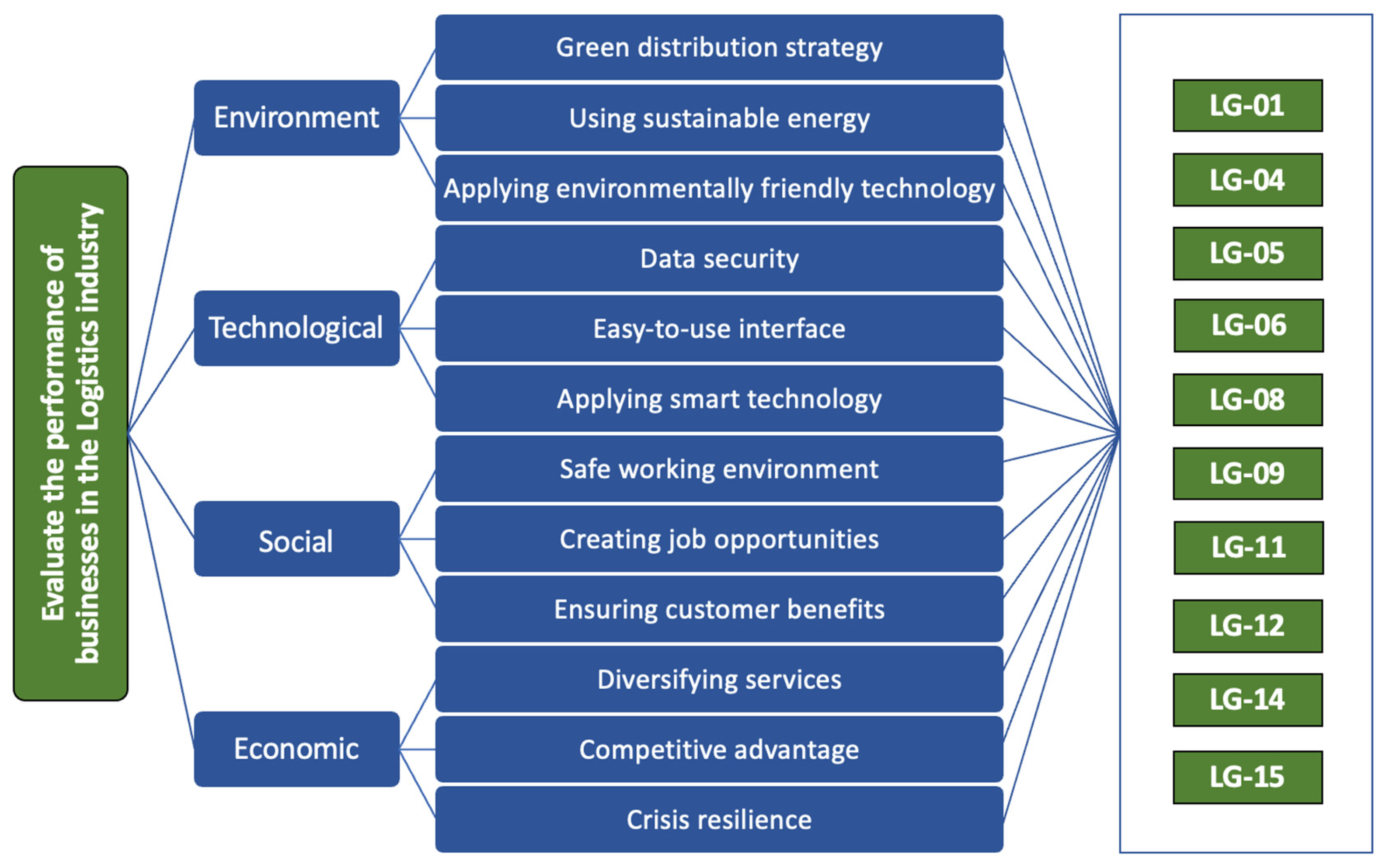
As shown in
Figure 3, 12 criteria were put forth in this study to assess logistics businesses in a variety of ways. Using the expertise of ten logistics specialists, the impact of the chosen criteria was assessed.
4.1. Data Envelopment Analysis Results
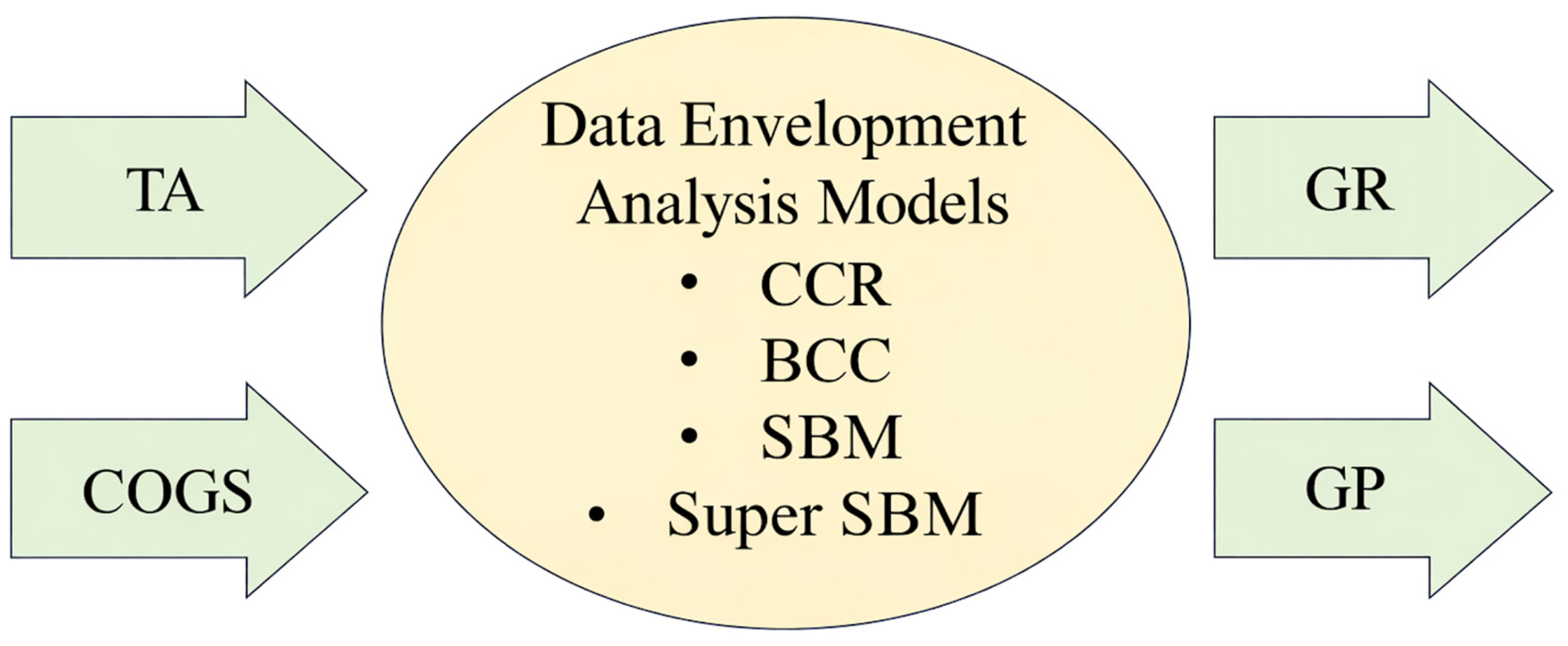
The DEA (Data Envelopment Analysis) method is used to measure the relative efficiency of Decision-Making Units (DMUs) such as logistics enterprises, ports, or distribution centers. To assess a DMU’s operational efficiency relative to other units, DEA examines input and output data. The resources needed to run the supply chain are called inputs. The outcomes that the supply chain produces are called outputs. The DEA shown in
Figure 4 includes two inputs (total assets and cost of goods sold) and two outputs (gross revenue and gross profit). Common inputs and outputs in the logistics sector and associated sectors serve as the basis for these inputs and outputs.
A transportation company’s Total Assets (TAs) include all assets the company owns, including fixed assets (e.g., vehicles, warehouses), current assets (e.g., cash, inventory), and intangible assets.
Cost of Goods Sold (COGS) is the total direct costs associated with providing transportation services, including fuel costs, vehicle maintenance, driver salaries, and other operating costs associated with the delivery process.
Gross Revenue (GR) is total revenue after deducting discounts, returns, and allowances.
Gross Profit (GP) in a logistics company is the difference between revenue from transportation services and cost of goods sold (COGS).
In the Data Envelopment Analysis (DEA) model, the selected inputs are those factors whose decrease will lead to an increase in the performance of the Decision-Making Unit (DMU). This implies that a DMU is considered more efficient when it can achieve the same output levels with fewer input resources. Conversely, indicators are considered outputs when higher values contribute to improved DMU performance. This reflects that, with the same level of inputs, if the DMU can produce more products or services, it will be considered to be operating more efficiently. The input–output data used in the DEA model were collected from Vietstock, a publicly available and reliable financial database that reports audited financial statements of listed Vietnamese companies. The dataset covers logistics enterprises for the year 2024. Inputs were selected as indicators whose reduction would contribute to improved performance (total assets and liabilities), while outputs were chosen as indicators whose increase would reflect better firm performance (net revenue and gross profit). Only firms with complete and consistent financial information for the entire study period were retained. Companies with missing key variables or inconsistent reporting were excluded to ensure comparability among decision-making units (DMUs). As a result, fifteen logistics enterprises were included in the final DEA evaluation, as presented in
Table 6.
Based on the input and output data presented in detail in
Table 6,
Table 7 summarizes the results of Data Envelopment Analysis (DEA) models used to evaluate the performance of logistics enterprises in Vietnam. The results from seven different DEA models allow the classification of logistics enterprises into three main groups based on the level of efficiency. The most efficient group includes Viettel Post, Vinalink Logistics, Aviation Logistics Corporation, Da Nang Port Logistics, Petec Logistics, while the next most efficient group includes Tan Cang Logistics, Portserco Logistics, Gemadept Corporation, VMIC Logistics JSC, Vicem Logistics. The least efficient group includes the remaining units.
However, a comprehensive assessment of enterprise performance cannot rely solely on DEA models and requires consideration of additional factors to fully reflect performance. Therefore, according to previous studies and opinions of experts in the logistics field, 12 additional criteria have been proposed in
Figure 1. These criteria include factors related to the environment, society, economy, and technology, aiming to provide more insight into the performance of the best-performing group of enterprises according to the results of the first layer of analysis. The addition of these criteria aims to overcome the limitations of using only DEA models, helping to comprehensively evaluate and consider more multidimensional aspects of business operations. This also illustrates the increasing importance of social and environmental considerations in contemporary supply chain and logistics management. This motivates the development of the second step of the proposed approach, which involves a multi-criteria evaluation procedure. This provides a strong motivation to further examine relevant factors and support informed decision-making for the long-term sustainable development of logistics enterprises.
4.2. Fuzzy AHP-Fuzzy TOPSIS Calculation Results
The objective of the study was to identify and rank the ten most effective enterprises based on the opinions of experts. In the FAHP stage, 10 experts were selected according to predefined criteria to ensure relevance and reliability. Selection was based on academic qualifications, number of years of professional experience, and managerial or professional position in logistics and supply-chain-related fields. To reduce bias arising from differences in expertise, these experts were ranked and assigned priority weights so that judgments provided by more experienced specialists had greater influence. Based on the literature review and expert consultation, twelve criteria were identified and grouped into four main dimensions: availability/operational factors, technological capability, economic considerations, and social implications. This structure ensures that both traditional performance indicators and broader sustainability aspects are captured in the evaluation process. Each criterion was carefully analyzed and weighted based on the importance given by the experts, and then multi-criteria decision-making methods were applied to conduct the final ranking.
The criteria groups are identified with different fuzzy weights, reflecting the priority and importance of each factor in evaluating the performance of logistics enterprises. The criteria with higher weights are the factors that need to be prioritized and invested more, while the criteria with lower weights are also valuable but are supportive and complementary.
Based on the data from
Table 8, the criteria are divided into three groups according to their priority and importance in evaluating the performance of logistics enterprises:
Group 1: High priority
This group includes the criteria with the highest fuzzy weights, reflecting the factors that enterprises need to pay special attention to in order to maintain competitiveness and sustainability. C1-1 (Green distribution strategy) has fuzzy weights of (0.221, 0.406, 0.726). This is the most important environmental criterion, emphasizing the need for businesses to develop an environmentally friendly distribution strategy. Green distribution activities will help businesses not only comply with environmental protection regulations but also build a friendly and socially responsible image. C2-1 (Data security) has fuzzy weights of (0.099, 0.194, 0.380). Data security is an essential factor for businesses to protect sensitive information, increase customer trust and minimize cybersecurity risks, which is especially important in today’s digital business environment.
Group 2: Medium Priority
This group includes criteria with medium weights, showing an important role but not requiring top-priority investment. However, these criteria still need to be maintained to ensure operational efficiency and customer satisfaction. C1-2 (Sustainable energy use) has fuzzy weights of (0.056, 0.110, 0.209). Enterprises need to invest in sustainable energy sources such as renewable energy to reduce costs and protect the environment, helping to improve long-term efficiency. C2-2 (Easy-to-use interface) has fuzzy weights (0.045, 0.088, 0.182). An easy-to-use interface can enhance the user experience, making it easier to interact with the enterprise system, thereby increasing operational efficiency and optimizing management. C3-1 (Safe working environment) has fuzzy weights (0.025, 0.052, 0.102). A safe working environment is an important factor to ensure the health and safety of employees, while contributing to improving labor productivity and the reputation of the enterprise.
Group 3: Low priority
This group includes criteria with lower weights, which are supportive and complementary, do not require high priority in the enterprise’s development strategy but still need to be considered to comprehensively improve operational efficiency. C1-3 (Applying environmentally friendly technology) has fuzzy weights (0.027, 0.050, 0.097). Although the application of environmentally friendly technology can support environmental protection, it is not the main criterion that needs to be invested in as a top priority. C3-2 (Creating job opportunities) has fuzzy weights (0.008, 0.017, 0.036). Creating more job opportunities is a good factor for the enterprise’s image and community development, but does not directly and significantly affect operational efficiency. C4-3 (Crisis resilience) has fuzzy weights of (0.002, 0.004, 0.007). Although important in a crisis, crisis resilience does not require too much investment unless the business perceives high risks from the market or business environment.
Table 8.
Final fuzzy weighted sub-criteria.
Table 8.
Final fuzzy weighted sub-criteria.
| Criteria | Direction | Final Fuzzy Weight |
|---|
| C1-1 | Maximize | (0.221, 0.406, 0.726) |
| C1-2 | Maximize | (0.056, 0.110, 0.209) |
| C1-3 | Minimize | (0.027, 0.050, 0.097) |
| C2-1 | Maximize | (0.099, 0.194, 0.380) |
| C2-2 | Maximize | (0.045, 0.088, 0.182) |
| C2-3 | Minimize | (0.011, 0.020, 0.039) |
| C3-1 | Maximize | (0.025, 0.052, 0.102) |
| C3-2 | Minimize | (0.008, 0.017, 0.036) |
| C3-3 | Minimize | (0.004, 0.008, 0.016) |
| C4-1 | Minimize | (0.021, 0.038, 0.077) |
| C4-2 | Minimize | (0.007, 0.013, 0.027) |
| C4-3 | Minimize | (0.002, 0.004, 0.007) |
The classification into three groups according to priority helps logistics businesses focus on investing and improving the most important factors first, while the remaining factors are maintained to support the overall development strategy.
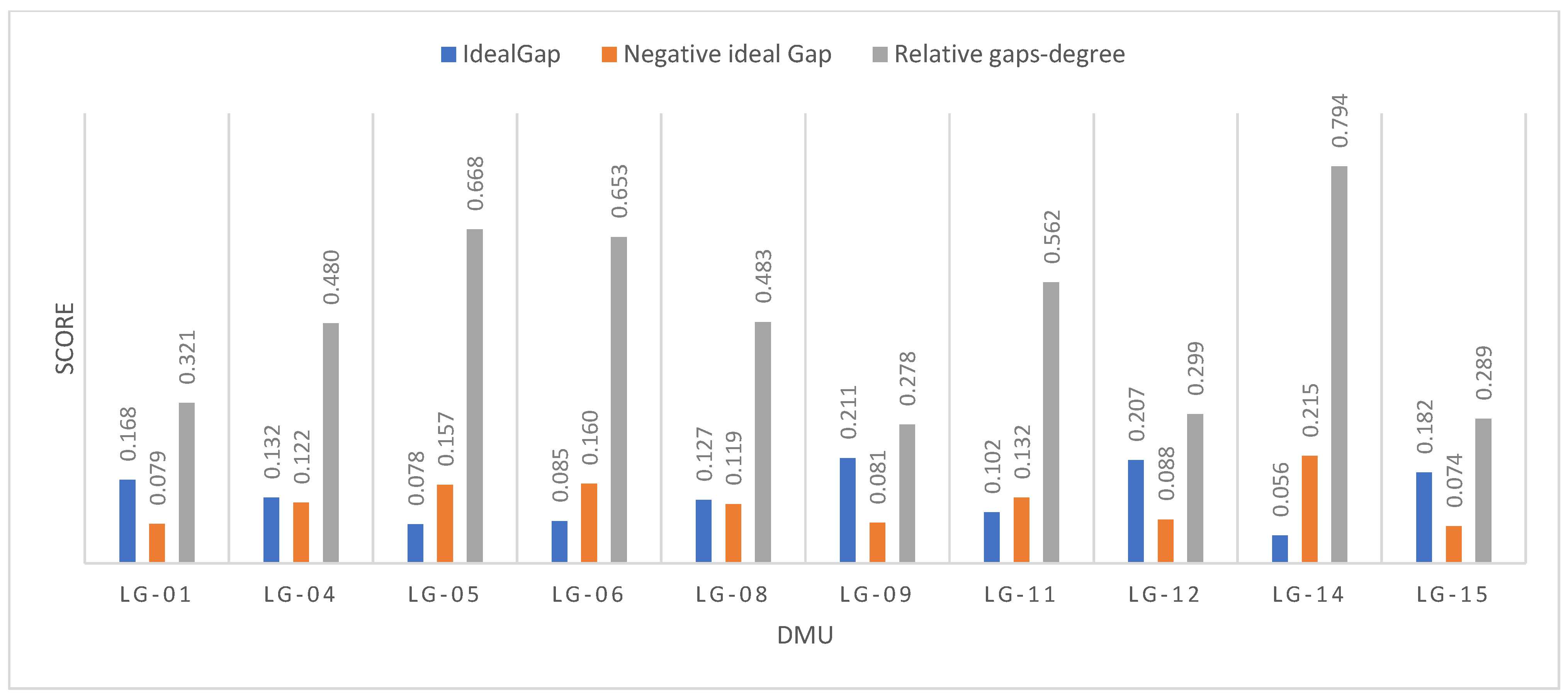
The fuzzy TOPSIS method in the second layer uses two important input parameters: the weight of the criteria and the outcome. By comparing the options with the ideal solution and the negative ideal solution, you can determine the optimal option more effectively as shown in
Figure 5. The results from 20 decision makers provide a multidimensional and in-depth view of the effectiveness of each option, thereby supporting more accurate decision-making, as shown in
Table 8.
The analysis results in
Figure 5 show that the logistics units have clear differences in performance. In particular, LG-14 exhibits the highest performance, characterized by the lowest Ideal Gap and the highest Negative Ideal Gap, indicating that it is the most efficient unit, close to the ideal solution and far from the inefficient condition. Next, LG-05 and LG-06 also show good performance, with a significant gap from the inefficient state. In contrast, units such as LG-01 and LG-09 exhibit lower relative gap degrees, indicating that further improvements are required to enhance their efficiency compared to the leading units. These results provide a strategic perspective for optimizing the operations of logistics units, thereby contributing to improvements in overall industry efficiency.
Table 9 shows the Relative Gaps-Degree values of logistics units across DMUs from DM-1 to DM-20, along with the Average Relative Gaps-Degree. The Relative Gaps-Degree index represents the level of efficiency compared to the ideal and least efficient states; higher values indicate better performance. The results provide a comprehensive view of the performance of logistics companies through the Relative Gaps-Degree index. This index not only reflects the efficiency level of each company compared to the ideal state but also highlights the units that need to improve to achieve higher efficiency. LG-14 achieved the highest Average Relative Gaps-Degree (0.798), outperforming the other units and demonstrating the best performance, being closest to the ideal state. LG-05 and LG-06 also recorded relatively high Average Relative Gaps-Degree values of 0.706 and 0.678, respectively, indicating good and stable performance across the DMUs. Units LG-11 (0.615) and LG-08 (0.552) have relatively good performance but lower than LG-14, LG-05, and LG-06, indicating that they have room for further improvement to achieve higher performance. Units LG-01 (0.379), LG-09 (0.295), LG-12 (0.316), and LG-15 (0.288) exhibit the lowest Average Relative Gaps-Degree values, with LG-15 showing the weakest performance (0.288). These units need measures to improve their performance. Based on these results, LG-14, LG-05, and LG-06 are the most efficient logistics units and can be considered models for other units to learn from. In contrast, units such as LG-01, LG-09, LG-12, and LG-15 need to focus on performance optimization strategies to improve operational efficiency and achieve performance close to industry leaders.
4.3. Comparative and Sensitivity Analysis
Table 10 presents the ranking comparison results among the three methods FTOPSIS, NAD, and FEDAS for logistics units. The findings indicate that five units (LG-06, LG-09, LG-11, LG-15, and LG-05) achieved identical rankings across all three methods, demonstrating a high level of consistency. Several units, such as LG-01, LG-04, and LG-14, achieved relatively similar rankings, suggesting a moderate degree of agreement among the methods. By contrast, units such as LG-08 and LG-12 exhibited noticeable ranking discrepancies, indicating that their evaluation outcomes are more sensitive to methodological differences. Overall, FTOPSIS and NAD showed more comparable results than FEDAS. Nevertheless, FTOPSIS is considered more appropriate in this study due to its theoretical clarity, ease of implementation, and robustness of the ranking results.
This section is used in conjunction with other methods to assess the sensitivity and stability of ranking results across different weighting scenarios. In MCDM applications, most input data tends to be dynamic rather than fixed or continuous. Therefore, sensitivity analysis serves as an effective tool to verify whether changes in criterion weights lead to significant variations in decision outcomes. In this study, the sensitivity analysis was conducted to examine the robustness of the ranking results with respect to changes in criterion weights. A set of alternative weighting scenarios was created, beginning with the base-case weights determined by the FAHP approach. One criterion’s weight was adjusted to zero in each scenario, and the weights of the other criteria were proportionately reallocated to maintain the total weight at one.
Table 11 reports the resulting weights under each scenario. In order to determine whether any single criterion dominates the ranking results,
Table 11 presents hypothetical but systematic alterations in the prominence of individual criteria. It is feasible to see how modifications to the weighting system affect the relative importance of criteria and, in turn, the evaluation results by contrasting these scenarios.
The results in
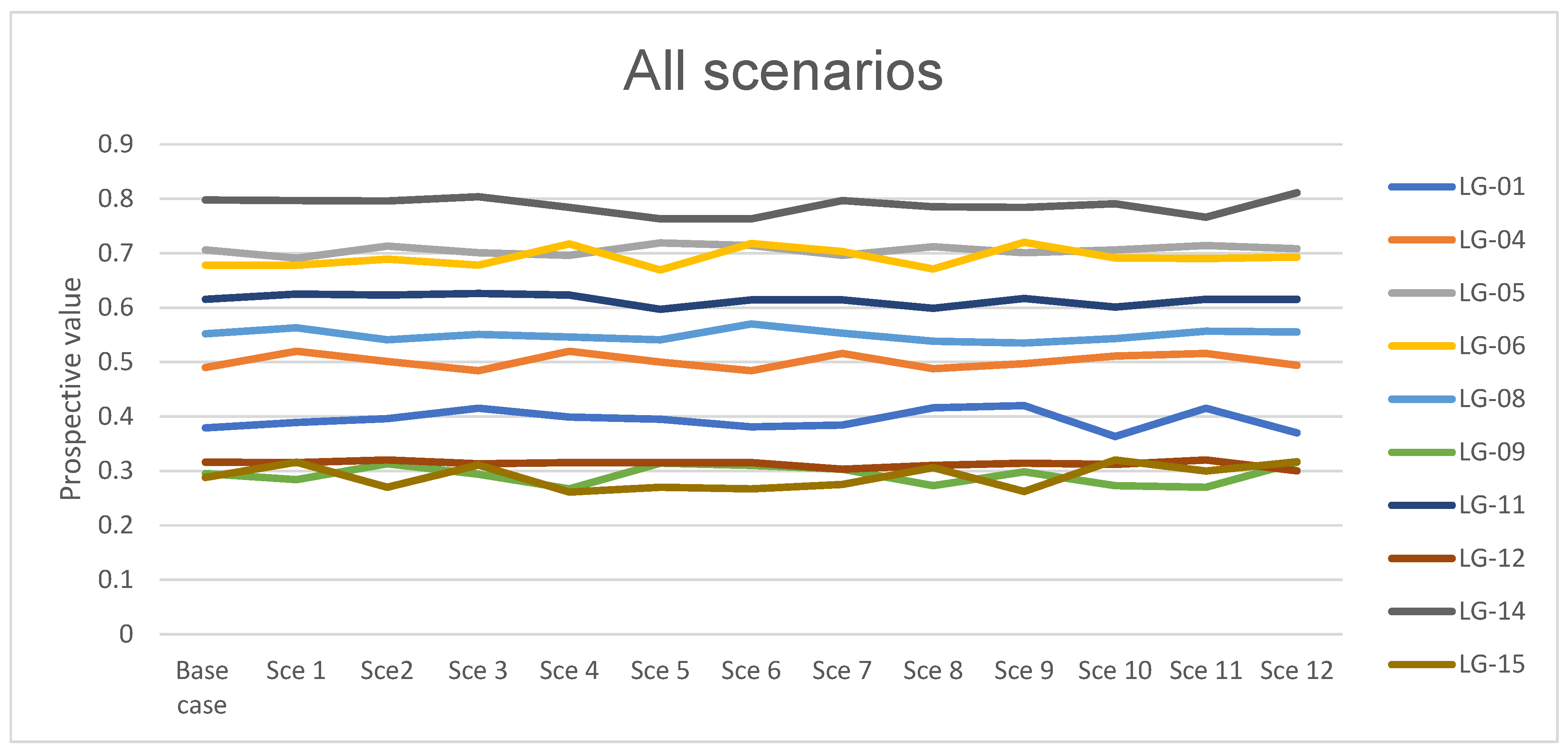
Table 12 indicate that although the prospective values of the alternatives fluctuate across scenarios, the final ranking structure remains largely unchanged. Notably, LG-05 consistently ranks first in all scenarios, confirming its superior performance. Conversely, alternatives such as LG-09 remain at the bottom of the ranking, demonstrating limited competitiveness regardless of weight adjustments. These findings suggest that the rankings are not dominated by any single criterion but instead reflect a balanced assessment across attributes. Overall, the sensitivity analysis demonstrates that the proposed FAHP–FTOPSIS framework exhibits high stability: changes in criterion weights do not significantly alter the final decision. This result reinforces the reliability and practical applicability of the model in real-world decision-making contexts where data and priorities may evolve over time.
Figure 6 visually illustrates the ranking variations in the alternatives across all weighting scenarios. The curve representing LG-05 remains consistently positioned at the top, reinforcing the conclusion that it is the optimal alternative in every case. Conversely, the curve of LG-09 generally stays at the bottom, indicating stable and consistently weak performance across scenarios. Alternatives such as LG-01, LG-04, and LG-08 exhibit minor fluctuations; however, these do not result in any substantial reversal in their overall ranking positions. Accordingly, the sensitivity analysis indicates that the proposed model demonstrates a high degree of stability, and the final ranking decisions are not overly dependent on any single weighting configuration.
4.4. Managerial and Policy Implications
This study provides important implications for logistics managers and policymakers. For managers, improving efficiency should not focus only on cutting costs but also on upgrading technology, digital systems, and service quality. Firms with lower efficiency can benchmark against efficient peers, particularly in fleet management, resource allocation, and warehouse operations. Applying data-driven tools and automation can help reduce unnecessary inputs while sustaining service performance.
From a policy perspective, sector-wide improvements are also necessary. Investments in transport infrastructure, logistics parks, and ICT platforms can ease operational bottlenecks. Supportive policies for sustainable logistics, workforce training, and digital transformation can help narrow performance gaps across firms. In addition, clearer regulations and stronger public–private coordination will enhance competitiveness.
Overall, the results highlight that logistics performance depends on both internal managerial decisions and external institutional conditions. Therefore, joint efforts between businesses and policymakers are essential to promote sustainable and long-term improvements in logistics efficiency.
5. Conclusions, Limitations, and Future Studies
This study provides insights into sustainable supply chain management in the logistics sector, moving beyond performance evaluation to provide a basis for policy and innovation incentives. The study assesses the performance of logistics businesses in Vietnam using a two-stage analytical model that combines the DEA method with the Fuzzy AHP–TOPSIS approach. The results show that this integrated framework not only offers a comprehensive view of business performance but also highlights influential criteria such as green distribution strategies and data security, helping firms move toward sustainable development and enhance competitiveness. The proposed model evaluates performance from a quantitative perspective (e.g., resource efficiency) while also incorporating qualitative sustainability-related factors. This combination provides new perspectives that go beyond financial outcomes and emphasize long-term sustainable value. The comparative analysis between high- and low-performing firms reveals that the most efficient organizations tend to invest more consistently in digital systems, green distribution practices, and human-resource development, while less efficient firms remain constrained by fragmented processes and limited technology adoption. These patterns suggest that efficiency in logistics is driven not only by resource utilization but also by managerial orientation toward sustainability and digital transformation. Therefore, the findings provide strategic insights for managers by indicating where structural and operational adjustments may yield the greatest improvements. Moreover, these results align with recent literature emphasizing the role of technological capability and sustainability orientation as critical drivers of logistics performance. In the current context of globalization, climate change, and increasing international integration pressure, building sustainable development strategies becomes essential. The identification and analysis of criteria such as data security and green logistics solutions represent important contributions, supporting firms in complying with regulations, strengthening reputation, and improving customer trust. In addition, the study provides practical recommendations for Vietnamese logistics enterprises, including adopting green logistics strategies to reduce emissions, upgrading information technology systems to protect customer data, and developing training programs to improve workforce skills. These practices improve operational efficiency and help firms meet international standards, thereby enhancing competitiveness in the global market. The study also offers a basis for government agencies to design supporting policies, such as tax incentives for green technologies, investment in logistics infrastructure, and promotion of public–private partnerships to reduce initial investment barriers. Scientifically, the study advances the literature by integrating DEA with FAHP–FTOPSIS to evaluate both efficiency and sustainability criteria within a unified framework. Beyond Vietnam, the flexibility of this framework allows it to be adapted to other developing and emerging economies facing similar challenges in logistics modernization, sustainability pressure, and digital transformation, making it a replicable decision-support tool in a broader global context. Socially, the findings contribute to more effective resource allocation, cost reduction, and improved competitiveness while supporting policymakers in promoting green logistics and digital transformation. Despite its contributions, this study has several limitations. It is based on one year of cross-sectional data, which may not fully reflect long-term changes in firms’ performance. In addition, the number of experts involved is relatively limited, which may introduce subjective bias into the weighting and evaluation process. Future research should therefore extend the dataset across multiple years, apply dynamic approaches such as dynamic DEA or Malmquist productivity indices, and involve a broader panel of experts. It should also incorporate additional determinants—including technological innovation, sustainability pressures, and evolving global supply-chain conditions—in order to improve generalisability and strengthen policy relevance.