1. Introduction
Ghana’s labour market continues to face a persistent youth employment challenge, reflected not only in headline unemployment but also in underemployment and the growing share of young people classified as NEET (Not in Employment, Education, or Training). Although overall unemployment declined from 14.9% in the first quarter of 2023 to 13.1% by the fourth quarter of 2024, youth unemployment remains disproportionately high. In 2024, unemployment averaged 32.0% among individuals aged 15–24 and 22.5% among those aged 15–35, with nearly seven out of every ten unemployed persons drawn from the youth cohort [
1]. This persistent imbalance indicates that formal schooling alone is insufficient to guarantee labour market integration and underscores the need for training pathways that translate education into sustainable employment outcomes [
2].
In this view, Technical and Vocational Education and Training (TVET) and apprenticeship pathways have become central to Ghana’s workforce development strategy. Ghana’s TVET reforms emphasise industry-led and competency-based training, strengthened workplace learning, and closer coordination between training institutions and employers [
3,
4]. The Ghana TVET Report (Second Edition, 2023) highlights structured industry linkages, Recognition of Prior Learning (RPL), and the implementation of Dual TVET models that integrate school-based instruction with firm-based practical experience as key mechanisms for reducing skills mismatch and improving employability [
5]. These reforms are further reinforced by national policy priorities for 2023–2027, including TVET digitalisation, graduate licencing, and the establishment of the Ghana Skills Development Fund in July 2023 to support workforce readiness and skills investment [
6].
Recent empirical evidence also demonstrates that apprenticeship is a productive learning pathway in Ghana’s predominantly informal and SME-dominated economy. Apprenticeship participation in urban informal enterprises has been shown to enhance technological capability and increase product innovativeness, indicating that apprenticeship is not only a mechanism for skills transmission but also a driver of firm-level productivity and competitiveness [
7]. However, despite these benefits, public perception and institutional weaknesses continue to constrain the effectiveness of TVET and apprenticeship systems [
8,
9]. Recent Ghana-based evidence shows that societal understanding of TVET remains limited, and enrolment attractiveness is weak, suggesting that the full labour market potential of apprenticeship pathways is undermined by inadequate institutional integration and signalling to employers and learners [
10,
11].
At the international level, the contemporary skills development literature confirms that apprenticeship systems yield the strongest employment and productivity outcomes when they are structured, quality-assured, and embedded within coherent skills ecosystems [
12]. The International Labour Organisation’s Quality Apprenticeships Recommendation (No. 208) emphasises that well-designed apprenticeships improve employability, reduce school-to-work transition gaps, and support decent work, particularly in economies with large informal sectors and youth-dominated labour markets [
13,
14]. Similarly, UNESCO-UNEVOC [
15] highlights the central role of integrated TVET and apprenticeship systems in preparing young people for digital and green economy transitions, reinforcing their contribution to long-term workforce sustainability [
16].
These developments clarify why apprenticeship integration is central to addressing youth unemployment and underemployment. By combining classroom learning with supervised workplace experience, apprenticeships reduce skills mismatch, improve job matching, and provide direct pathways into productive employment, thereby lowering the likelihood that young people remain unemployed or trapped in low-quality work [
17]. Moreover, apprenticeships enhance workforce adaptability by embedding learners in evolving production environments, enabling them to update skills and remain employable over time—key dimensions of a sustainable workforce [
5,
18].
The claim that “merging apprenticeship training into formal education has not been optimal” in earlier studies [
19] does not contradict the position of this paper. Rather, it reflects the historical weakness of informal, weakly regulated, and poorly coordinated apprenticeship arrangements. The present study advances the argument that what matters is not merely integration, but the quality and structure of integration, including industry participation, curriculum alignment, and quality assurance features now strongly emphasised in contemporary policy and international standards.
Although prior research and policy documents acknowledge the importance of apprenticeships, three important gaps remain. First, most studies examine apprenticeship systems descriptively without empirically modelling how integration strategies interact to produce labour market outcomes. Second, few studies validate apprenticeship integration as a coherent latent construct across students, teachers, and industry stakeholders. Third, there is limited application of advanced multivariate methods such as Structural Equation Modelling (SEM) to test the internal structure and effectiveness of apprenticeship strategies. This study addresses these gaps by developing and validating an SEM-based framework for apprenticeship integration, thereby providing rigorous evidence on how specific strategies contribute to the development of a sustainable, employable, and future-ready technical workforce in Ghana.
The purpose of this study is to develop and empirically validate an SEM-based model of apprenticeship integration in Ghana’s construction education system and to identify which integration strategies most strongly contribute to a sustainable and employable technical workforce. By modelling apprenticeship strategies as a latent construct measured across students, instructors, and industry stakeholders, the study provides quantitative evidence on how institutional, instructional, and industry-related factors interact to determine apprenticeship effectiveness.
To achieve this purpose, the study addresses the following research questions:
How do institutional support, practical training, and industry collaboration combine to form an integrated apprenticeship strategy in Ghana’s construction education system?
Which apprenticeship integration strategies exert the strongest influence on training effectiveness and workforce sustainability as measured through a Structural Equation Model?
This study is significant for three main reasons. Empirically, it is one of the first in Ghana to apply SEM to validate the structure and effectiveness of apprenticeship integration strategies in construction education. Methodologically, it moves beyond descriptive analysis by quantifying the relative contribution of different integration components within a single latent framework. Practically, the findings provide policymakers, CTVET, and industry stakeholders with evidence-based guidance on how to design apprenticeship systems that not only improve training quality but also support the long-term sustainability of Ghana’s construction workforce.
2. Literature Review
Integrating skilled apprenticeship training into the formal educational system is crucial for developing a competent workforce in the construction sector. In Ghana, this integration is particularly significant given the sector’s rapid growth and its vital role in the country’s infrastructure development. However, the current structure of apprenticeship training within formal educational frameworks has faced challenges, including inadequate practical experience and insufficient alignment with industry needs. This literature review examines effective strategies for enhancing the integration of skilled apprenticeship training into Ghana’s formal educational system, with a focus on the construction sector.
2.1. Importance of Practical Training in Construction Education
Effective apprenticeships and practice-oriented training are central to the development of a competent and sustainable construction workforce. Contemporary construction education research increasingly recognises that the industry’s productivity, safety, and sustainability performance depend not merely on formal qualifications but on the extent to which workers acquire hands-on, job-embedded competencies that reflect real production environments. In recent years, the construction sector has experienced rapid technological, safety, and regulatory changes, making purely classroom-based instruction insufficient for preparing graduates to meet industry demands [
20].
Recent empirical studies show that practical training significantly enhances graduates’ technical proficiency, safety awareness, and task efficiency, all of which are core determinants of employability and project performance. In a large-scale analysis of vocational construction training systems, ref. [
20] demonstrated that programmes with strong workplace learning components produce graduates who are better prepared for site operations, sustainability compliance, and digital construction tools. Similarly, UNESCO-UNEVOC (2024) [
15] reports that TVET systems integrating structured work-based learning generate higher job-placement rates and more stable employment trajectories, particularly in labour-intensive sectors such as construction.
The construction industry is particularly sensitive to the quality of practical training because of its reliance on procedural knowledge, safety-critical operations, and technology-intensive workflows. Contemporary research highlights that exposure to real projects enables trainees to internalise construction sequencing, materials handling, equipment operation, quality control, and occupational health and safety standards skills that cannot be fully acquired through simulation or theoretical instruction alone (ILO, 2024) [
21]. Studies conducted in construction-intensive economies further show that practical training improves not only individual employability but also firm-level productivity and innovation, since trained workers adapt more easily to new construction technologies and sustainability requirements [
21].
Recent SEM-based studies in construction also reinforce the importance of practical training as a latent driver of workforce and project outcomes. For example, ref. [
22] demonstrates that workforce competence, technology use, and organisational capability form interconnected systems that jointly determine construction performance and sustainability outcomes. In these models, hands-on training acts as a foundational mechanism through which workers acquire the operational skills necessary to translate organisational strategies and technological investments into tangible productivity and safety gains. Similarly, sustainability-oriented construction SEM studies show that training and skills development are key mediating variables linking policy frameworks and organisational practices to sustainable project delivery [
23,
24].
In the Ghanaian and broader Sub-Saharan African context, where informal and SME-dominated construction markets prevail, the role of practical training becomes even more critical. Apprenticeship-based learning provides a bridge between education and employment by embedding trainees in real production systems, thereby reducing skills mismatch and underemployment while enhancing career mobility. Recent evidence from informal construction-related enterprises in Ghana shows that apprenticeships significantly improve technological capability and innovative output, suggesting that practical training supports not only individual employability but also enterprise competitiveness [
7]. However, without structured integration into formal education and quality assurance mechanisms, these benefits remain uneven and difficult to scale.
2.2. Strategies for Effective Integration of Apprenticeships
Recent construction and TVET research emphasises that apprenticeship integration is most effective when it is supported by coordinated institutional, organisational, and policy-level strategies rather than fragmented or informal arrangements. Contemporary skills systems increasingly promote modular, flexible, and competency-based apprenticeship structures as a way of responding to rapidly changing construction technologies, sustainability requirements, and labour market needs. Modular and shorter apprenticeship programmes allow trainees to acquire stackable, occupation-specific competencies that can be accumulated over time, thereby improving accessibility, mobility, and responsiveness to employer demand [
25]. These structures are particularly important in construction, where digitalisation, green building practices, and advanced equipment require continuous upskilling rather than one-off training.
From an organisational and labour market perspective, the alignment between training providers and industry is a critical determinant of successful apprenticeship integration. Recent international and African evidence shows that apprenticeships that are co-designed with employers achieve significantly better employment, productivity, and retention outcomes than school-driven models alone [
6,
26,
27]. Industry participation in curriculum design, assessment, and supervision ensures that learning outcomes correspond to real construction site requirements, including safety compliance, quality control, digital tools, and sustainability standards. This alignment reduces skills mismatch and enhances the labour market credibility of apprenticeship credentials.
In construction economies dominated by small- and medium-sized enterprises (SMEs) and informal firms, targeted strategies are required to integrate these actors into apprenticeship systems. Recent research shows that SMEs provide the majority of practical training opportunities in developing construction markets, yet they often face financial, administrative, and technical barriers to participation [
21]. Policy instruments such as training subsidies, tax incentives, simplified regulatory frameworks, and shared training facilities have therefore become central strategies for expanding high-quality apprenticeship opportunities within SMEs and informal construction enterprises. Such measures not only increase training capacity but also improve equity and geographic coverage of skills development.
Recent SEM-based construction studies further confirm that multi-actor coordination and institutional support are decisive for the effectiveness of skills and technology adoption strategies [
22], and they show that organisational readiness, policy support, and industry engagement jointly determine how training and technology initiatives translate into performance and sustainability outcomes. Similarly, sustainability-oriented construction SEM models demonstrate that workforce training, institutional support, and firm-level engagement function as interconnected drivers of sustainable project delivery and long-term sector performance [
23,
24]. These findings imply that apprenticeship integration should be treated as a systemic process involving education authorities, firms, and policy institutions rather than as a stand-alone educational intervention.
In the Ghanaian context, where construction activity is dispersed across formal contractors, SMEs, and informal artisans, effective apprenticeship integration therefore requires a portfolio of complementary strategies: modular training structures, employer-driven curriculum alignment, financial and regulatory support for SMEs, and institutional mechanisms for quality assurance and certification. Together, these strategies create an enabling environment through which apprenticeship systems can support workforce sustainability, technological upgrading, and productivity growth objectives that are empirically examined in this study through the Effective Strategies (ESs) construct within the SEM framework.
2.3. The Role and Structure of Traditional Apprenticeship Training in Ghana
Traditional Apprenticeship Training (TAT) remains the dominant pathway for skills acquisition in Ghana’s construction and craft-based economy, particularly in trades such as masonry, carpentry, plumbing, electrical installation, and building finishing. Recent national and international assessments confirm that informal apprenticeship systems account for the largest share of youth skills formation in Sub-Saharan Africa, especially in sectors where formal TVET capacity is limited and small enterprises dominate employment [
27,
28]. In Ghana, TAT continues to absorb thousands of young people who may not progress beyond basic or junior high education, offering them practical access to the labour market through workplace-embedded learning.
Unlike school-based TVET, TAT operates primarily through master–apprentice relationships in small workshops and on construction sites, where learning occurs through observation, supervised practice, and gradual assumption of responsibility. Contemporary labour market studies show that this model provides strong experiential learning and rapid occupational socialisation, which improves early employment outcomes and work discipline among young entrants [
26]. In construction, this is particularly valuable because skills such as materials handling, equipment operation, site coordination, and safety compliance are best learned through direct exposure to real production environments rather than classroom simulation.
However, while TAT is effective in transmitting practical skills, recent research highlights structural weaknesses that limit its contribution to long-term workforce sustainability. Informal apprenticeships often lack standardised curricula, formal certification, quality assurance mechanisms, and links to technological upgrading, which restricts apprentices’ mobility, wage progression, and access to advanced construction techniques [
5]. In addition, employers and master craftsmen typically operate outside national qualification frameworks, making it difficult for apprentices to transition into higher-level training or formal employment pathways [
29].
These limitations explain why contemporary TVET and skills policy no longer treat traditional and formal systems as separate but instead promote hybrid and dual models that integrate TAT into national qualification and quality assurance frameworks. Recent evidence from African and Asian countries shows that when informal apprenticeships are aligned with formal standards, apprentices achieve better employment outcomes, higher productivity, and stronger career progression [
26,
30]. Ghana’s ongoing TVET reforms similarly seek to upgrade traditional apprenticeships by linking them to Recognition of Prior Learning (RPL), competency-based assessment, and structured industry partnerships [
31].
Within the construction sector, where SMEs and informal firms dominate project delivery, TAT therefore remains a critical foundation of skills supply, but its effectiveness depends increasingly on how well it is integrated into formal education and regulatory systems. A purely informal model may sustain basic skills reproduction, but it cannot adequately support the digitalisation, safety compliance, and sustainability demands of modern construction. Consequently, effective integration of TAT into formal TVET structures represents a strategic pathway for transforming Ghana’s large informal skills base into a certified, mobile, and future-ready construction workforce, a process that this study empirically examines using an SEM-based integration framework.
2.4. Theoretical and Conceptual Framework
This study is grounded in three complementary theoretical perspectives: Human Capital Theory, School-to-Work Transition Theory, and the Institutional Theory of Skills Formation. Together, these theories provide a coherent foundation for modelling how apprenticeship integration strategies influence the sustainability of Ghana’s construction workforce.
Human Capital Theory [
32] posits that investments in education and training increase workers’ productivity, employability, and lifetime earnings. In the construction sector, where skills are acquired primarily through practical learning, apprenticeship represents a critical mechanism for converting training investments into productive human capital. However, Human Capital Theory also implies that the quality, relevance, and structure of training determine whether such investments generate real labour market returns. This directly supports the study’s focus on Effective Apprenticeship Strategies (ESF) rather than on training participation alone.
School-to-Work Transition Theory explains how individuals move from education into stable employment through institutional pathways such as apprenticeships, internships, and employer-linked training [
33]. Weak or fragmented transitions result in unemployment, underemployment, and NEET outcomes. In Ghana, where formal employment is limited and informal firms dominate construction, structured apprenticeships provide one of the few mechanisms that link training directly to work. ESF in this study operationalises the strength of this transition mechanism through indicators such as workplace learning, industry involvement, and certification.
Institutional Skills Formation Theory by [
34] argues that training outcomes depend on how governments, training institutions, and firms coordinate to regulate skill development. Where coordination is weak, apprenticeships become informal, uncertified, and low value. Where coordination is strong, they produce high-quality, portable skills. This theory directly motivates the SEM structure of this study, in which ESF is a latent system reflecting institutional support, SME participation, curriculum alignment, and quality assurance.
The framework assumes that when Effective Apprenticeship Strategies (ESF) are strong, they are more likely to produce a sustainable construction workforce. In this study, “sustainable workforce” is defined in practical labour market terms: improved employability (school-to-work transition), better skill retention and progression (continued competence after training), higher productivity (work-ready performance on site), greater gender inclusion (broader labour supply and equity), and long-term adaptability to technological and market shifts (future-ready skills). This logic aligns with the ILO’s Quality Apprenticeships Recommendation (No. 208), which emphasises that apprenticeships contribute to employability, productivity, and inclusive growth only when they are designed with clear standards, stakeholder coordination, and quality assurance.
It also reflects UNESCO-UNEVOC’s [
15] recent emphasis that integrated TVET systems must explicitly prepare learners for digital and green transitions, implying that training must be structured to keep workers adaptable as job roles and technologies change. In Ghana’s reform context, this interpretation is consistent with CTVET’s focus on Dual TVET, Recognition of Prior Learning (RPL), and structured industry linkages as mechanisms for reducing skills mismatch and improving employability.
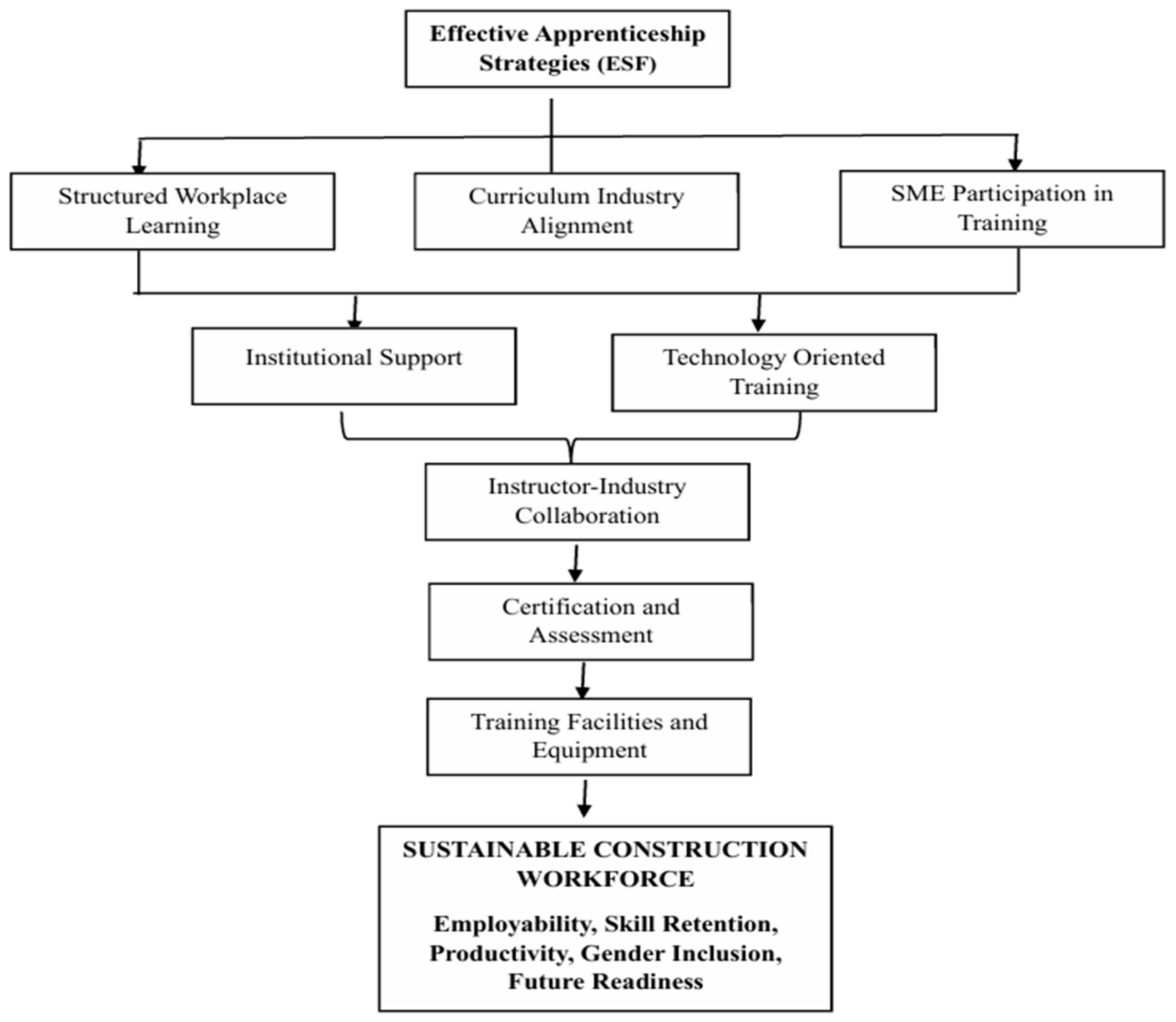
Figure 1 illustrates the conceptual framework for the study. It outlines the theoretical structure linking Effective Apprenticeship Strategies to the development of a sustainable construction workforce in Ghana, highlighting how institutional coordination, industry engagement, and practical training interact to strengthen employability, inclusiveness, and long-term workforce sustainability.
Conceptually, Effective Apprenticeship Strategies (ESF) function as the sustainability mechanism that converts training inputs into long-term labour market and workforce sustainability outcomes. Human Capital Theory explains why: investments in training increase productive capability, but their sustainability returns depend on training quality and relevance; thus, ESF captures the conditions under which apprenticeship investments translate into stable employability, productivity, and skill retention over time. School-to-work transition theory further supports this pathway by showing that well-structured apprenticeships reduce skills mismatch and unemployment through strong links between education and workplaces, thereby enhancing labour market resilience and decent work, which are core sustainability objectives. Institutional Skills Formation Theory clarifies how this sustainability mechanism operates in practice: durable workforce outcomes depend on coordination among regulators, training institutions, and firms, which is exactly what the ESF indicators (e.g., institutional support, curriculum–industry alignment, certification, and workplace learning) represent.
Within this framework, gender inclusion is treated as a central sustainability condition rather than an optional social outcome. A highly male-dominated training pipeline restricts future labour supply and weakens workforce resilience, innovation, and equity, thereby undermining long-term sector sustainability. Expanding women’s participation in technical trades therefore supports social sustainability and SDG 5 (Gender Equality) while strengthening Ghana’s future construction labour capacity.
Empirically, the SEM in this study tests this sustainability-oriented framework by modelling ESF as a latent system-level construct measured by observed indicators across students, instructors, and industry stakeholders. The CFA and SEM results therefore provide quantitative evidence that apprenticeship integration operates as a coherent institutional mechanism for building a resilient, inclusive, and future-ready construction workforce, rather than merely a set of isolated training activities.
3. Research Methodology
A quantitative research design was used to methodically evaluate effective strategies for integrating skilled apprenticeship training into the formal educational system within Ghana’s construction sector [
35]. This approach was selected for its capacity to deliver a statistical and impartial assessment of various strategies, which is crucial for understanding their impact and effectiveness [
36].
The study population consisted of 1879 respondents, comprising 1600 students, 129 industry and policy stakeholders, and 150 teachers and instructors involved in apprenticeship training. This multi-stakeholder population was deliberately selected to capture perspectives from learners, educators, and industry actors who collectively shape the apprenticeship ecosystem in Ghana. The inclusion of these diverse respondent groups strengthens the credibility, reliability, and external validity of the study, as it enables triangulation across educational, institutional, and labour market dimensions [
37].
The researchers employed a simple random sampling method to select participants, ensuring a thorough analysis with a suitable sample size. Participants were randomly chosen from a population of 1600 students without replacement, following the formula outlined by [
38].
where n = sample size, Z = Z-score corresponding to the desired confidence level, σ = population standard deviation (or estimate), N = population size, and E = desired margin of error. The student population was
. The sample size was determined using the finite population sample size formula [
38]:
where
for a 95% confidence level,
with maximum variability assumed
, and
as the allowable margin of error. Substituting
yields
Thus, 212 students were selected using simple random sampling. The researchers sent out 212 questionnaires and received 212 responses, all of which were valid and included in the analysis. Two hundred and twelve (212) students from various technical and vocational institutions in Ghana were selected using simple random sampling (SRS). This technique was adopted because the student population was large, relatively homogeneous, and formally enrolled within well-defined institutional registers, making it suitable for probability-based selection. SRS ensures that each student has an equal and known chance of being selected, thereby minimising selection bias and enhancing the statistical representativeness and generalisability of the findings [
39]. Given that students are the primary beneficiaries of apprenticeship training, the use of SRS strengthens the validity of inferences about learner experiences and perceptions across Ghana’s technical and vocational education system.
Teachers and instructors () and industry and policy stakeholders () were selected using purposive sampling because these groups possess specialised, non-randomly distributed expertise that is essential for evaluating apprenticeship integration in Ghana’s construction education system. Unlike students, whose population is large and relatively homogeneous, teachers and stakeholders represent small, role-specific populations embedded in institutions, regulatory agencies, training centres, and construction firms. Their inclusion depends on functional responsibility rather than numerical representation, making probability-based random sampling impractical and methodologically inappropriate.
Random sampling was not feasible for these groups for three main reasons. First, there is no comprehensive sampling frame listing all teachers actively involved in apprenticeship delivery or all stakeholders directly engaged in apprenticeship design, supervision, and policy implementation across Ghana. Second, only a subset of teachers and stakeholders have direct operational involvement in apprenticeship training, curriculum implementation, industry supervision, or policy oversight; randomly sampling from broader institutional staff lists would therefore introduce a high risk of including respondents without relevant expertise. Third, the study required information-rich cases capable of providing informed judgments on institutional arrangements, training quality, and industry–education linkages, which cannot be guaranteed through random selection.
Purposive sampling is therefore appropriate when a study seeks to obtain data from individuals with specific knowledge, professional roles, and experiential authority regarding the phenomenon under investigation. As noted by [
40], purposive sampling is suitable when “the researcher deliberately selects participants based on their knowledge, experience, or involvement with the subject of interest,” thereby improving the analytical relevance and validity of the data.
In this study, 40 questionnaires were distributed to teachers and instructors directly responsible for workshop supervision, curriculum implementation, and student assessment, of which 36 valid responses were returned, yielding a 90.0% response rate. For stakeholders including master craftsmen, training centre coordinators, industry supervisors, and government and policy officials, 140 questionnaires were distributed, and 129 valid responses were obtained, giving a 92.1% response rate. These high response rates indicate strong engagement from the targeted expert groups and enhance the reliability and credibility of the findings.
The main data collection instrument used in the study was a structured questionnaire designed to gather detailed information on participants’ perceptions of apprenticeship training strategies. Ref. [
41] describes a questionnaire as a survey instrument used to collect data from individuals on issues related to their social environment or professional experiences. The questionnaire featured closed-ended items measured on a five-point Likert scale to assess the effectiveness of key strategies, including practical skill integration, industry collaboration, and programme quality. It was administered both electronically and in paper format to reach students, teachers, and stakeholders through appropriate channels. Respondents indicated their level of agreement on a scale ranging from 1 (strongly disagree) to 5 (strongly agree). Although a formal pilot test was not conducted, the reliability and measurement adequacy of the instrument were verified using Cronbach’s alpha, with all constructs exceeding the recommended threshold of 0.70, indicating satisfactory internal consistency and supporting the validity of the questionnaire for SEM analysis.
Although data was collected from students, instructors, and industry and policy stakeholders, these groups were not analysed as separate subpopulations. Instead, all responses were pooled and modelled within a single SEM framework in which Effective Apprenticeship Strategies (ESF) represents a system-level latent construct capturing how apprenticeship integration operates across Ghana’s construction education and industry environment. Students provide evidence on training experience and learning exposure, instructors contribute information on curriculum implementation, facilities, and instructional practices, and stakeholders reflect institutional support, industry participation, and policy coordination. By combining these complementary perspectives within one measurement model, the SEM estimates the shared structure underlying apprenticeship integration, rather than isolated group opinions. This approach allows the ESF construct to represent the overall strength of apprenticeship integration in Ghana’s construction sector, improving the interpretability of the findings as reflecting cross-actor institutional and labour market dynamics rather than any single stakeholder group.
Data analysis was conducted using IBM SPSS Statistics 26 and AMOS 26. SPSS was used to perform descriptive statistics and Exploratory Factor Analysis (EFA), while AMOS was used for Confirmatory Factor Analysis (CFA) and Structural Equation Modelling (SEM). The SEM approach was adopted because it allows the simultaneous estimation of latent constructs and their observed indicators, making it suitable for modelling complex apprenticeship integration strategies.
The SEM framework was designed to validate the latent construct Effective Strategies Factors (ESFs), which represents the degree to which apprenticeship training is effectively integrated within Ghana’s construction education system. ESF was measured using eleven observed indicators (ES1–ES11) that were retained after EFA and CFA. These indicators capture key dimensions of apprenticeship integration, including structured workplace learning, curriculum–industry alignment, SME participation, institutional support, availability of modern training equipment, instructor–industry collaboration, certification systems, and technology-oriented skills training. Each indicator was measured using a five-point Likert-scale item in the questionnaire.
A first-order measurement model was specified in which ESF is the single latent variable and ES1–ES11 are its observed indicators. The model estimates the causal relationships between the latent construct and each indicator through standardised factor loadings, allowing the study to test whether the selected indicators reliably represent the underlying concept of effective apprenticeship strategies. The parameters were estimated using Maximum Likelihood Estimation (MLE), which is appropriate for continuous Likert-scale data and widely used in SEM applications.
Model adequacy was evaluated using multiple goodness-of-fit indices, including the Comparative Fit Index (CFI), Tucker–Lewis Index (TLI), Root Mean Square Error of Approximation (RMSEA), and Standardised Root Mean Square Residual (SRMR). The final model achieved CFI = 0.904 and RMSEA = 0.032, indicating an excellent fit between the hypothesised measurement model and the observed data. Reliability and validity were further confirmed through Cronbach’s alpha, Composite Reliability (CR), and Average Variance Extracted (AVE), all of which met recommended thresholds.
Data from students, teachers/instructors, and industry stakeholders were analysed within the same SEM framework because all three groups provide complementary perspectives on the same latent construct of apprenticeship integration. Pooling these responses allowed the model to estimate ESF as a system-level measure of how well apprenticeship strategies are implemented across Ghana’s construction education and industry environment, rather than as isolated perceptions from any single group.
The reliability and validity of the measurement model were rigorously evaluated. Cronbach’s alpha was used to assess internal consistency, with all constructs exceeding the 0.70 threshold. The retained indicators showed strong and statistically significant factor loadings, demonstrating their substantive contribution to the ESF construct. The estimated factor loadings quantify the influence of each indicator on the ESF latent variable, showing that structured workplace learning, institutional support, SME engagement, and technology-oriented training are the most influential components of effective apprenticeship integration.
Several model limitations are acknowledged. First, the study is based on self-reported questionnaire data, which may be subject to response bias. Second, although the total sample size is adequate for SEM, the subgroup sizes, especially for instructors, are relatively small, which may limit subgroup-specific generalisation. Third, the SEM assumes linear relationships and approximate multivariate normality, which may not fully capture the complexity of apprenticeship training environments in Ghana’s largely informal construction sector. These limitations were mitigated through multiple fit indices and robustness checks but should be considered when interpreting the results.
3.1. Relative Importance Index (RII)
The study used the Relative Importance Index (RII) to weight the contribution of each apprenticeship strategy and perception-based indicator to determine the relative contribution of each indicator (a mathematically defined weighting function applied to construction management and education research studies to transform ordinal Likert responses into a continuous measure of importance). The RII is expressed as follows:
where
= weight assigned to each response (1–5),
= highest possible weight (5), and
= total number of respondents.
This is a mathematical transformation that permits ordinal survey data to be interpreted in a more or less interval-like manner to facilitate meaningful ranking and comparison of apprenticeship strategies. The RII calculation therefore constitutes the initial mathematically based process of determining high-priority factors to incorporate.
3.2. Exploratory Factor Analysis (EFA)
Exploratory Factor Analysis was used to identify the underlying dimensional structure of the effective apprenticeship strategies. EFA is mathematically expressed as a factor model, where each observed variable is written as a linear combination of latent factors:
where
= vector of observed variables,
= matrix of factor loadings,
= vector of latent factors, and
= vector of measurement errors.
The goal of EFA is to estimate
by decomposing the covariance or correlation matrix of
. This is typically achieved using eigenvalue decomposition, where eigenvalues (
) determine the number of extractable factors:
Only factors with eigenvalues greater than 1.0 are retained according to Kaiser’s rule. Varimax rotation further simplifies the factor-loading structure by solving an optimisation problem that maximises the variance of squared loadings.
Thus, the identification of the single latent construct “Effective Strategies” in this study is a direct mathematical outcome of matrix decomposition and factor-loading optimisation.
3.3. Confirmatory Factor Analysis (CFA)
Confirmatory Factor Analysis (CFA) was used to validate the one-factor structure obtained from the EFA. CFA estimates how well the hypothesised measurement model reproduces the observed covariance matrix by minimising the discrepancy between the sample covariance matrix
and the model-implied covariance matrix
. The optimisation problem is as follows:
The CFA measurement model is given by the following:
where
= latent variable (Effective Strategies),
= factor-loading matrix, and
= vector of measurement errors. The parameters are estimated using Maximum Likelihood Estimation (MLE). Model fit indices such as CFI, RMSEA, and SRMR are functions of the residuals between
and
. The strong fit statistics obtained in this study (e.g., CFI = 0.904; RMSEA = 0.032) confirm that the hypothesised factor model adequately represents the observed data.
3.4. Structural Equation Modelling (SEM)
SEM extends CFA by modelling causal relationships among latent constructs. Although the present study focuses on one latent construct, SEM is still mathematically significant because it expresses relationships using a system of simultaneous linear equations. The structural model can be expressed as follows:
where
= vector of endogenous latent variables,
= vector of exogenous latent variables,
= matrix of regression coefficients among endogenous variables,
= matrix of coefficients linking exogenous to endogenous variables, and
= vector of error terms.
Model estimation involves finding parameter matrices
and
that minimise the discrepancy function:
where
is the number of observed variables. This requires advanced matrix algebra and numerical optimisation routines.
In this study, a high level of ethical standards was adhered to in order to protect, defend, and safeguard the rights and dignity of every respondent. The IRB in the university was approached to provide ethical approval prior to the start of data collection, and the entire research process was carried out in accordance with the ethical policies of research involving human subjects. The schools involved and other institutional leaders were also consulted to grant them access to their students, teachers, and other stakeholders. Before filling out the questionnaire, all participants were well informed about the purpose of the study, the nature of their participation, and their right to decline or to withdraw at any stage of the study without facing any repercussions. Participation was voluntary, and informed consent was obtained from all the respondents. In response to the issue of confidentiality expressed by the reviewers, the study managed to ensure that there was no collection of personally identifiable information, and anonymisation of responses was performed by coding. Institutional data protection protocols were followed by storing data in password-protected digital files that could be accessed only by the research team. Also, the respondents were assured that the information would be utilised for academic and research purposes only and that results would be presented in aggregate format to preserve the privacy of the individuals.
4. Data Analysis
The analysis presented focuses on evaluating the effectiveness of apprenticeship training strategies within Ghana’s technical and vocational education system. By examining responses from students, teachers, and industry stakeholders, the study aims to identify key factors that influence the integration of practical skills into formal education. The analysis will delve into the current state of apprenticeship programmes, assess their alignment with industry needs, and explore potential improvements.
Table 1 shows that the majority of the students across the various technical schools sampled for this study are males (87.7%). This aims to provide evidence in the literature that females tend to avoid technical schools unless the schools offer some form of people-related courses like catering, dressmaking, fashion, or apparel design. The rationale is that women are generally interested in people and nurturing in contrast to men, who are interested in things and manipulating their environment, such as building and construction, electrical works, carpentry, and other physically demanding activities. Moreover, it can be observed that most students are between the ages of 15 and 18. The students below 14 years were very few (9.4%) compared to those above 21 years, who were significantly more (50.7%).
In addition, thirty-six (36) teachers and instructors participated in the study, comprising thirty-four (34) male and two (2) female teachers, teaching in various courses in construction-related training. The table again reveals that out of the thirty-six (36) participants, twenty-eight are teachers from technical schools, and the remaining eight (8) are from purely secondary technical high schools.
In addition, when the students were asked to indicate the nature of their current schools, 47.6% said their schools were secondary technical schools, and 23.1% said theirs were NVTIs. Furthermore, 41% of the students reported being admitted into the school by choice, and 39.2% reported admission through the computer selection system. On the other hand, 18.9% of the students said they chose the school based on their parents’ recommendations, in contrast to 0.9% who listened to their friends’ recommendation. This result further indicates how students opt for technical education and the influence of friends and family.
When asked to specify the course they are pursuing, 25.5% said they were pursuing masonry, building, and construction. About 18.9% are engaged in electrical work, whilst 15.1% are pursuing plumbing work. This further attests to the limited participation of women in the technical education sector since most of these courses are physically demanding. Finally, 51.4% of the students are in their second year, 22.6% are in their first year, and 25.9% are in their final year of study. The students’ demographic information shows that technical education is male-dominated, and most students are in the later stages of adolescence. This makes technical education a more essential choice for them in building a career, since most courses involve highly demanding daily life services.
The study collected data from different stakeholders with different experience and knowledge in apprenticeship training. The aim was to ensure that they were able to provide valid and verifiable information regarding apprenticeship training and skills development of the youth. It can be observed from
Table 2 that 80.7% of the stakeholders were male compared to 19.3% female. This affirms the assertion in [
42] that the construction sector is dominated by males. Many studies have attributed this gender imbalance to the physically demanding nature of the construction sector or the fact that it requires a strong mathematical background [
43].
Evidence in the literature has shown that women tend to shy away from math and physically demanding jobs based on interest rather than capabilities [
44]. Also, 72.3% of the stakeholders said they work in government-related institutions compared to 20.2% who work in non-governmental organisations. About 7.6% said they work in the private sector. The literature shows that due to the cost incentive nature of the construction, most workers and stakeholders come from government-related employment [
45]. When the researcher asked the stakeholders to reveal the kind of schools they worked in or were affiliated with, close to 59.7% said they worked in technical and vocational schools, about 33.6% said they worked in secondary technical schools, and 6.7% said they were affiliated with training centres.
About 96.6% of the stakeholders said their affiliated schools have been involved in apprenticeship training and skills development over the past ten years. But when asked to indicate how they were involved in skills development and training, 19.3% said their institution accepted students for internship training. The majority of the stakeholders (63.9%) said they were involved in apprenticeship training and 16.8% said apprenticeship training and skills development were part of the school’s curriculum for teaching and learning. The characteristics of the stakeholders confirm that they have the knowledge and experience to contribute meaningful information on apprenticeship training and skills development for the youth.
Table 3 provides valuable statistical insights into students’ opinions on apprenticeship in Ghana, with a focus on the Relative Importance Index (RII) for each statement/variable. The table suggests that several indicators received positive ratings (mean values above 3.00), indicating that respondents generally agreed with them. While some variation in responses exists, it is minimal compared to the majority who expressed agreement. This highlights that respondents hold strong opinions regarding apprenticeship training. The RII is a useful measure to assess the relative importance of each statement based on respondents’ ratings.
The students believing and having a strong interest in apprenticeship craftsmanship received the highest rating of 0.924, indicating that a significant proportion of the students strongly believe in and have a keen interest in apprenticeship craftsmanship. The statement “Apprenticeship training is well known in my school.” (RII = 0.905) shows that the majority of the students reported that apprenticeship training was well known in their school, making it an important aspect of their education. Again, with an RII of 0.890, the students found it crucial that their programme included practical or apprenticeship training as part of their education. The awareness of apprenticeship training in the students’ communities was also considered important (RII = 0.877).
Moreover, the majority of students found that the practical placement exercises significantly contributed to their learning and skill development (RII = 0.875). Many students perceived apprenticeship training as an integral part of their education in the school (RII = 0.84). The students had heard of the word apprenticeship before entering the schools (RII = 0.706); while this statement is important, it received a lower RII compared to the previous ones, indicating that it is less crucial for the students. The students believed that classroom training had been as good as the apprenticeship training they underwent, with an RII of 0.672. This statement received a moderate RII, suggesting that students value both classroom and apprenticeship training. The statement “I have been sent by the school to go and practice under crafts masters in my area during vacation breaks.” received an RII of 0.672. This aspect of practical training during vacation breaks is also considered important by students. The integration of apprenticeship into the technical programme is perceived as valuable by students (RII = 0.670). The statement “As part of the training, the school has a well-equipped training workshop where students receive practical training.” received an RII = 0.511. While important, this statement received a lower RII compared to others, suggesting that some students may have concerns about the adequacy of the workshop facilities.
Furthermore, the students indicated that they had received enough training from the place of apprenticeship training that could help their career development in the near future (RII = 0.433). It is clear that students value receiving practical training that aids their career development, but this is relatively less important. The statement “Apprenticeship training is well known by my friends.” received an RII = 0.402. This shows that the awareness of apprenticeship training among friends is perceived as less important by students. Similarly, the awareness of apprenticeship training among family members is considered less significant by students (RII = 0.332).
Table 4 presents the statistical interpretation of teachers’ and instructors’ opinions on the integration of apprenticeship training. The RII values for each statement reflect the relative importance of these aspects in the context of apprenticeship training from the perspective of teachers and instructors. This shows that several indicators received positive ratings (mean values above 3.00), reflecting general agreement among respondents. Although there is some variation in the responses, it is minimal compared to the majority who agreed. This suggests that teachers and instructors hold strong opinions on the integration of apprenticeship training. The statement “Students are sent out on apprenticeship training with master craftsmen in the field of study.” (RII = 0.928) received a high RII, indicating that teachers and instructors highly value the practice of sending students for apprenticeship training with field experts. The statement “We have programmes for upgrading master craftsmen from the informal training sector in new technological advancements and modern practices.” (RII = 0.903) shows that the majority of teachers and instructors considered having programmes for upgrading master craftsmen as an important aspect of apprenticeship training.
Again, teachers and instructors emphasised the importance of students receiving practical training as part of their education (RII = 0.892). The integration of practical training within the school curriculum is highly valued by the educators (RII = 0.888). The provision of equipment and tools for skills development is seen as crucial by teachers and instructors, which was evident with an RII of 0.875. As part of the training, the school has a well-equipped training workshop and classroom blocks (RII = 0.860). Having well-equipped training facilities within the school is considered an essential factor for apprenticeship training. The statement “We are working on ongoing school and community projects.” (RII = 0.857) also received a high RII, indicating that teachers and instructors value projects that involve students working in their school and the community. Teachers and instructors believe that practical training in industries during vacation breaks is an important part of students’ education (RII = 0.855).
The statement “Students at all levels of their studies are introduced to practical training.” (RII = 0.845) shows that the introduction of practical training at all levels of students’ education is considered essential by educators. The statement “There is a linkage between students’ training and trade apprenticeship training in this school.” (RII = 0.835) shows that the connection between students’ training and trade apprenticeship is seen as valuable for their education. The statement “There is a formal training arrangement for students to spend some time with informal crafts masters for apprenticeship training.” (RII = 0.826) shows that teachers and instructors emphasise the importance of formal training arrangements with informal crafts masters. The statement “This training programme is based on a standard national planned programme.” (RII = 0.813) shows that having a training programme aligned with national standards is considered important by educators. The statement “Students receive appropriate practical training before leaving school by attaching students to informal master craftsmen in the form of apprenticeship training.” (RII = 0.810) shows that the practical training provided by informal master craftsmen is valued by educators. While still significant, the statement “Apprenticeship training has been a key part of secondary education training” (RII = 0.655) received a lower RII compared to others, suggesting that some teachers and instructors may see apprenticeship as a part but not the key part of secondary education.
Moreover, the development of physical infrastructure for skills training received a moderate RII of 0.515. The statement “The school monitors the informal apprenticeship sector.” (RII = 0.513) shows that monitoring the informal apprenticeship sector is considered moderately important by teachers and instructors. The statement “The current curriculum has apprenticeship training as a module.” (RII = 0.461) shows that the inclusion of apprenticeship training as a curriculum module received a lower RII compared to other statements, indicating that it might be seen as less important by some educators.
The results in
Table 5 are the stakeholders’ responses in order to determine the effective strategies for improving apprenticeship training. It can be observed that the stakeholders expressed varied opinions on apprenticeship training. It was revealed by the stakeholders that, indeed, the above indicators are strategies for improving apprenticeship training in the construction sector, since all the mean scores of the indicators were greater than 3.0.
These include technology-driven changes in apprenticeships, meeting the increasing demand for digital skills through apprenticeships, designating workshops and specific construction sectors for Ghana’s apprenticeship training, addressing the need for a high-level apprenticeship programme, implementing modular and shorter apprenticeship programmes, structuring apprenticeships to meet the requirements of SMEs, establishing a conducive environment for quality apprenticeships, enhancing the attractiveness of apprenticeships to enterprises, especially SMEs, increasing the appeal of apprenticeships to young individuals, fostering inclusivity in apprenticeships, and advocating for quality apprenticeships within the informal economy to determine the most effective strategies for improving apprenticeship programmes in the industry. The results are shown in the ensuing subsection.
Table 6 presents the results of the Exploratory Factor Analysis showing the total variance explained by the Effective Strategies construct. The table reports the eigenvalues and the proportion of variance accounted for by each component, providing statistical evidence for the unidimensionality of the construct and its suitability for subsequent Confirmatory Factor Analysis and Structural Equation Modelling.
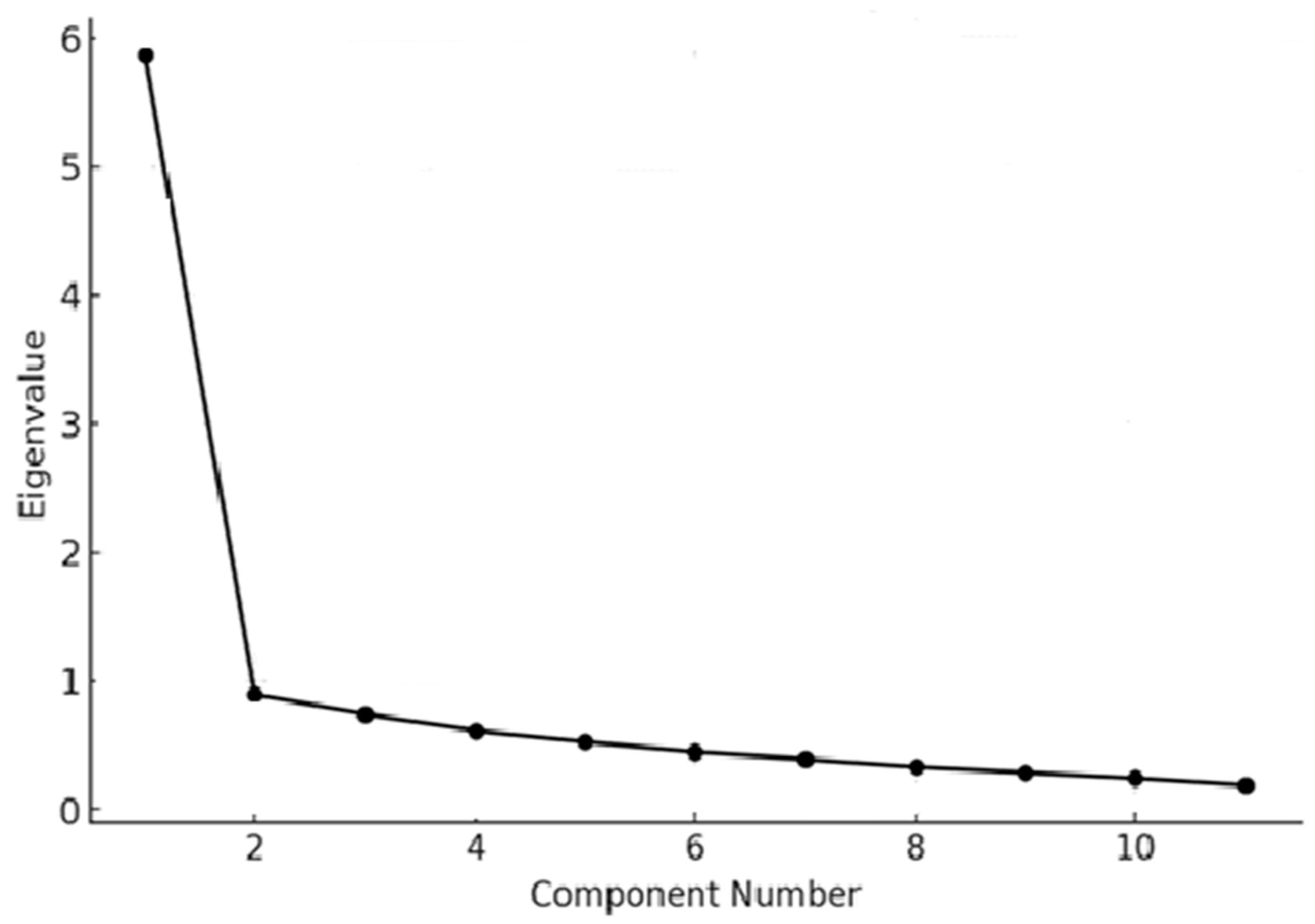
The results of the Exploratory Factor Analysis (EFA) reveal that the Effective Strategies (ESs) construct is unidimensional, as evidenced by the dominant eigenvalue of 5.874 for the first component, which explains 53.40% of the total variance. This exceeds the Kaiser criterion of retaining factors with eigenvalues greater than 1, indicating that only one substantive factor underlies the eleven measured items. The remaining components all recorded eigenvalues below 1 and contributed marginal individual proportions of variance, cumulatively accounting for the remaining 46.60%. Their low eigenvalues confirm that they do not represent distinct or meaningful factors. The substantial proportion of variance explained by the first component demonstrates that the items collectively measure a single latent dimension of Effective Strategies for Improving Apprenticeship Training. This supports the unidimensionality of the construct and validates its suitability for subsequent Confirmatory Factor Analysis (CFA) and Structural Equation Modelling (SEM).
Figure 2 displays the scree plot derived from the Exploratory Factor Analysis of the Effective Strategies construct. The figure illustrates the distribution of eigenvalues across extracted components and supports the retention of a single dominant factor, confirming the unidimensional structure of the construct for subsequent CFA and SEM analysis.
The scree plot clearly shows a sharp decline after the first component, with the first eigenvalue (5.874) standing out distinctly from the rest. All remaining components lie well below the eigenvalue threshold of 1.0 and form a relatively flat line, indicating that they do not represent meaningful underlying factors. This visual pattern confirms the unidimensionality of the construct, meaning that all eleven items measure a single latent factor—Effective Strategies for Improving Apprenticeship Training. The steep drop (“elbow point”) after Component 1 reinforces the decision to retain only one factor for subsequent CFA and SEM analysis.
Table 7 presents the results of the Exploratory Factor Analysis for the Effective Strategies construct. The table reports factor loadings, item total correlations, and reliability statistics, demonstrating the internal consistency, dimensionality, and suitability of the retained items for inclusion in the measurement model.
The reliability and one-dimensionality of the Effective Strategies construct were tested with the aid of Exploratory Factor Analysis. The extraction method employed was principal component analysis with Varimax rotation. The Effective Strategies construct was assessed using 11 factors. A KMO value of 0.862 and a Bartlett’s test of sphericity with a
p-value below 0.000 were obtained, indicating alignment with the recommended thresholds of a KMO value above 0.70 and a
p-value less than 0.05 for Bartlett’s test of sphericity as proposed by [
46]. From the above, there is clear indication that factor analysis can be conducted on the factors measuring the construct.
The eleven factor items, which were expected to measure the construct, loaded onto one component. Using a cut-off value of 0.5, which is greater than most recommended values, the eleven factors had loadings greater than 0.5 for the component. In the component, eleven (11) items surpassed the threshold of 0.5. They are “Making apprenticeships more attractive to young people”, “Making apprenticeships more attractive to enterprises and, in particular, to SMEs”, “Promoting quality apprenticeships in the informal economy”, “Modular and shorter apprenticeship programmes”, “Workshops and some selected construction sites should be assigned for Ghana’s apprenticeship training”, “Promoting inclusiveness in apprenticeships”, “Adapting apprenticeships to the needs of SMEs”, “Technology-driven transformations in apprenticeships”, “Addressing rising demand for digital skills to be delivered through apprenticeships”, “Creating an enabling environment for quality apprenticeships”, and “Higher-level or degree-level apprenticeships”. These items measure Effective Strategies (ESs). Therefore, they will be referred to as Effective Strategies (ESs).
The item–total correlations, adjusted for the items within the component, were extracted using the recommended threshold of 0.30 after conducting EFA to identify the component. The items demonstrated reliability in measuring the component, as evidenced by a Cronbach’s alpha coefficient of 0.884 for the Effective Strategies (ESs) construct, indicating strong internal consistency [
47].
5. Structural Equation Model (SEM) for Effective Strategies Factors (ESFs) Construct
The demonstration of sufficient evidence on one-dimensionality and reliability was accomplished by the use of a Structural Equation Model, a multivariate technique which examines the procedure for confirming the results. Assessing the construct’s dimensionality, validity, and reliability can be accomplished with the use of this method, which is called CFA.
According to ref. [
48], the validity of a study is determined by the thoroughness and accuracy of the conclusions that are derived from the findings of the study and the research technique. According to ref. [
49], it is essential to subject the research instrument to scrutiny and to have specialists study the instrument items and appraise their representativeness before employing statistical procedures to evaluate its reliability and validity. This ensures that the instrument used is representative of the population being studied, which is very important in research. The extent to which research data and the procedures used to obtain the data are considered reliable, honest, and on target is the determining factor in assessing the validity of the thought. For the purpose of determining the validity of the instrument, KMO was used to measure sampling adequacy. This measure measures the extent to which the research questions explain the study objectives. Additionally, the purpose of Bartlett’s test of sphericity was to demonstrate the considerable correlations that existed between the research question and the study objective. In conclusion, the researchers requested that the respondents provide their general opinion of the instrument’s clarity, delivery, engagement, and correctness. The purpose was to further demonstrate the effectiveness of the instrument. It is easier for the researcher to develop a questionnaire that is both successful and efficient for the purpose of data collection if they have gathered more diversified information regarding the research instrument [
50].
A three-statistics technique, as described by [
51], was utilised in the strategy analysis that was conducted in order to evaluate the degree of compatibility between the Effective Strategies Factor (ESFs) construct and the data. The sample data for the Effective Strategy (ES) model produced an S—Bχ
2, which is the most accurate way to define chi-square. This chi-square has a value of 4.46, with 20 degrees of freedom and
p = 0.0000.
According to [
51], a result of 0.90 indicates that the model that was adopted is a good match, with the Comparative Fit Index (CFI) value above the threshold of 0.90, which indicates that the model fits the data well. It was determined that all of the other model fit indices were satisfactory, and it was additionally determined that all of the parameter estimates were investigated, as shown in
Table 4. According to these fit indexes for the ES model, the suggested model appears to provide a sufficient description of the obtained sample data. The model fit is an assessment of the average size of the difference between the expected and the observed association as an absolute measure of fit, as stated by [
51]. This measure is used to determine whether or not the model fits the data. To achieve a decent match, a value that is less than 0.10 or equal to 0.08 is considered to be a more cautious estimate. With this information, it is sufficient to draw the conclusion that there is a direct connection between the results that were observed and the results that were anticipated based on the analysis of the model. Infinite chi-square values may be a result of the fact that many constructs had a small number of variables. It may be concluded that the study instrument has been successful in passing the reliability and validity test, despite the fact that there were some small difficulties with a few constructs. Therefore, the instrument is reliable, and it was utilised in the process of data collection for the study.
Table 8 presents the goodness-of-fit indices for the Confirmatory Factor Analysis of the Effective Strategies Factors (ESFs) construct. The table summarises key model fit statistics used to assess the adequacy of the measurement model and to confirm that the hypothesised structure provides an acceptable representation of the observed data.
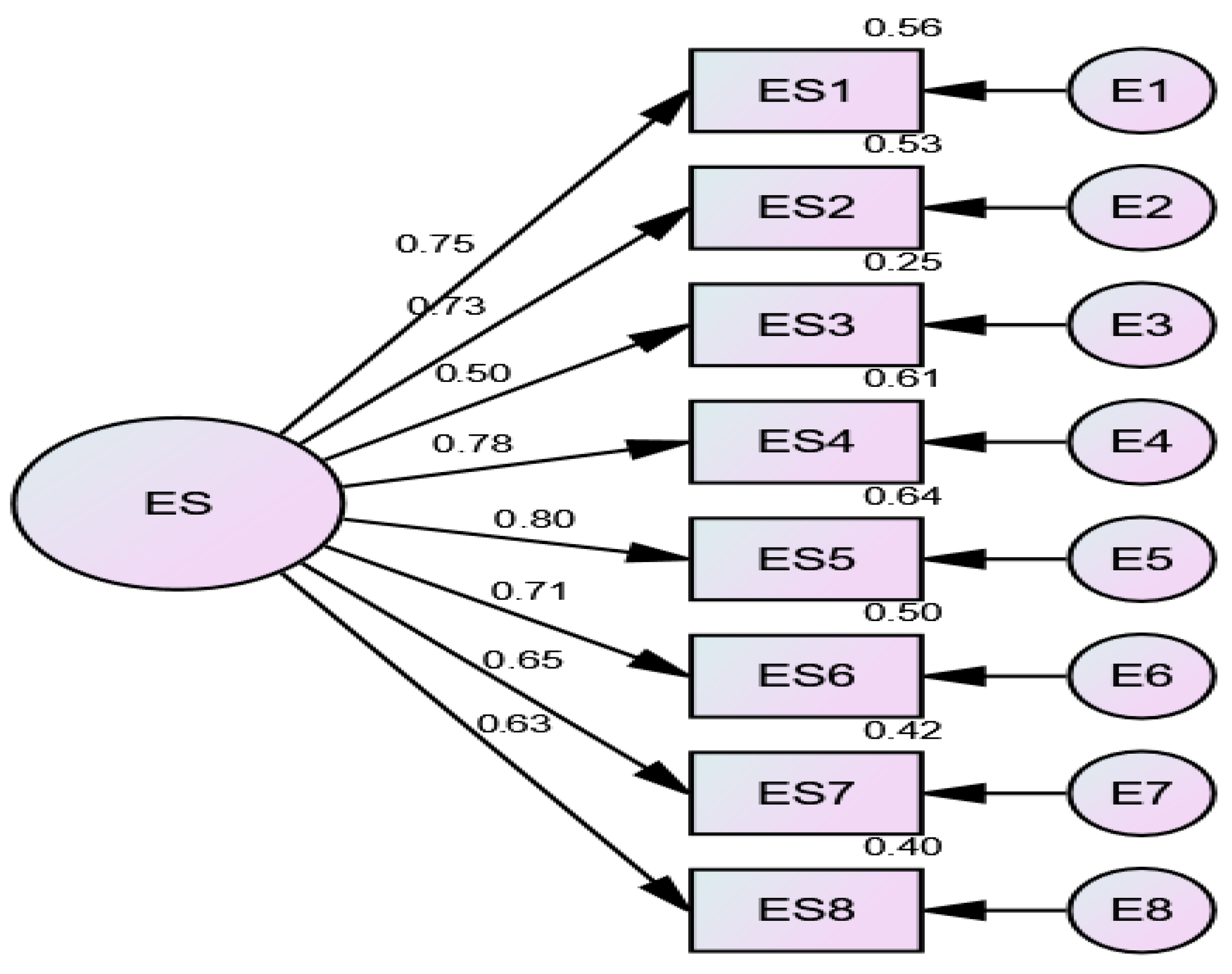
Features of the Effective Strategies Factors (ESFs) unidimensional model are shown in
Figure 3 and
Table 9. For the final CFA test, eight (8) of the eleven (11) indicator variables were obtained [
52,
53]. Eight (8) indicator variables, including one (1) component realised as ES (ES1, ES2, ES3, ES4, ES5, ES6, ES7, and ES8), were identified from the 129 instances examined for this construct.
Although eleven (11) indicators were initially identified to capture the broad domain of Effective Apprenticeship Strategies (ESF), only eight (8) were retained in the final CFA to ensure both theoretical coherence and measurement validity. The original item pool was designed to reflect the multidimensional nature of apprenticeship integration as conceptualised by Human Capital Theory, School-to-Work Transition Theory, and Institutional Skills Formation Theory, which emphasise labour market relevance, institutional coordination, firm engagement, technological alignment, and inclusiveness. During CFA, three indicators were removed not only because of weak statistical performance (low factor loadings or high error variances) but also because they showed weaker conceptual alignment with the core mechanisms through which apprenticeships translate into workforce sustainability. In contrast, the eight retained indicators directly correspond to the key theoretical pillars of the construct: labour market attractiveness (ES1, ES5), institutional and training infrastructure (ES2, ES4), quality and inclusion (ES3, ES7), and firm- and technology-level alignment (ES6, ES8). This dual criterion ensured that the final ESF construct represents a parsimonious, valid, and theoretically grounded model of apprenticeship integration, rather than a post hoc statistical artefact.
Table 9 presents the final indicator model of the eight variables, together with the statistical test, standard errors, and correlation value. All of the variables had correlation values less than 1, with a
p-value less than 0.05, making the estimations statistically significant and credible. With a standardised coefficient of 0.801, the indicator variable ES5 obtained the highest value.
Table 10 indicates that the associations among the estimates are close to one, clearly showing that there is a strong linear association among the indicator variables and the unobserved variables. Moreover, most of the factors had R-square values close to 1, suggesting that most of the variability among the indicator variables is explained by most of the factors. Therefore, the indicator variables can predict the unobserved components since there was a significant relationship among the measured variables and the component (ES) under Effective Strategies Factors.
6. Findings
A central empirical contribution of this study is its identification of extreme gender polarisation in Ghana’s apprenticeship pipeline, where 87.7% of students and 94.4% of teachers are male. From a sustainable workforce perspective, this finding has far-reaching implications. Ghana’s construction industry is projected to expand due to housing demand, public infrastructure, and climate-resilient development initiatives, yet the training system that feeds this sector is drawing from only a narrow segment of the population. Recent construction workforce research shows that gender-diverse labour pools are more resilient, innovative, and better able to adapt to technological and environmental transitions [
21,
54]. In contrast, a highly masculinised apprenticeship system constrains the future labour supply and weakens the sector’s ability to meet long-term skills demand.
The Ghanaian context makes this risk particularly acute. Cultural norms, workshop practices, and the absence of female role models in trades training reinforce a self-perpetuating cycle in which male instructors attract predominantly male trainees, who then dominate the future workforce. Recent Ghana-based evidence confirms that women in construction face discrimination, limited mentorship, and unsafe or unsupportive working environments, all of which discourage entry and retention [
55]. Without gender-responsive apprenticeship policies, Ghana’s construction workforce is likely to remain both numerically constrained and socially exclusionary, undermining its long-term sustainability.
Beyond gender, the SEM results show that how apprenticeships are integrated matters more than their mere existence. Although apprenticeships are widespread in Ghana, especially in informal and SME-dominated construction markets, the empirical model demonstrates that structured workplace learning, institutional support, and employer alignment significantly improve apprenticeship outcomes. This finding is particularly relevant for Ghana, where many apprentices acquire skills that are narrow, uncertified, and difficult to transfer across firms, contributing to underemployment even after years of training. Recent construction SEM research similarly shows that workforce competence, organisational readiness, and institutional support interact as a system to determine productivity and sustainability outcomes [
22,
23].
The study also reveals a persistent theory–practice imbalance within Ghana’s technical education system. While policies emphasise competency-based training, respondents’ experiences and the SEM structure indicate that practical exposure and industry-linked learning remain insufficiently institutionalised. In a construction sector characterised by rapid technological change, safety requirements, and green building standards, this disconnect limits the capacity of graduates to perform effectively on site. Recent international evidence shows that work-based learning and structured apprenticeships are critical for translating education into employability and productivity, particularly in economies with large informal sectors [
15,
56].
Importantly, the integration strategies identified in this study—modular training, SME engagement, institutional coordination, and technology-oriented skills development—are not simply theoretical ideals. The SEM results confirm that these strategies form a coherent system that significantly predicts apprenticeship effectiveness in Ghana. This moves the debate beyond earlier descriptive studies by providing quantitative evidence that targeted institutional reforms can convert apprenticeships from a survival-based training route into a strategic instrument for workforce sustainability.
7. Conclusions
This study examined how apprenticeship training can be more effectively integrated into Ghana’s pre-tertiary technical education system to support the development of a sustainable construction workforce. Using Structural Equation Modelling (SEM), the study developed and validated Effective Apprenticeship Strategies (ESF) as a latent, system-level construct representing how institutional, industry, and training arrangements jointly shape apprenticeship quality. The eight retained ESF indicators capture key dimensions of integration, including enterprise and SME engagement, modular and technology-oriented training, quality assurance, inclusiveness, and structured workplace learning.
The findings show that apprenticeship integration operates as a long-term sustainability mechanism rather than a short-term training reform. By strengthening employability, skill continuity, productivity, gender inclusion, and future readiness, the ESF framework links apprenticeship policy directly to the economic, social, and institutional pillars of sustainability in Ghana’s construction sector. The extreme gender imbalance identified in the training pipeline further demonstrates that inclusive apprenticeship systems are essential for sustaining future labour supply and workforce resilience, reinforcing the relevance of SDG 5 (Gender Equality) alongside SDG 4 (Quality Education) and SDG 8 (Decent Work and Economic Growth).
Methodologically, the SEM results reveal that enterprise and SME engagement is the strongest structural driver of apprenticeship effectiveness. While youth interest influences participation, the long-term viability of apprenticeship systems depends primarily on whether firms are willing and able to host, train, and invest in apprentices. This highlights the importance of enterprise-focused policy instruments, such as financial incentives, regulatory facilitation, and technology-linked training support for sustaining apprenticeship systems over time.
Theoretically, the study advances existing skills and labour market theories by reconceptualising apprenticeship integration as a coordinated sustainability system. By modelling ESF within a framework grounded in Human Capital Theory, School-to-Work Transition Theory, and Institutional Skills Formation Theory, the study demonstrates how coordinated action among education providers, firms, and policy institutions generates a resilient, inclusive, and future-ready construction workforce. This provides a sustainability-oriented SEM framework that can guide workforce development policy in Ghana and other construction-intensive developing economies.
8. Practical Implication
The practical implication of this study is that, to increase participation among young individuals, educational institutions and policymakers should implement strategies that make apprenticeships more appealing. This could include improving programme incentives, providing clearer career pathways, and integrating more engaging and relevant training components. Additionally, the study highlights the importance of making apprenticeships more attractive to businesses, particularly enterprises and SMEs. To achieve this, stakeholders should consider offering financial incentives, such as tax breaks or grants, to companies that participate in and support apprenticeship programmes. Simplifying regulatory requirements and providing additional resources or support for businesses can also encourage their involvement and commitment.
9. Implications for International Practice
According to the international literature on Technical and Vocational Education and Training (TVET), it is always emphasised that the problems that are observed in the Ghanaian system of apprenticeship are not unique to that country but instead manifest as structural problems in most developing nations. Research in sub-Saharan Africa, South Asia, and some of Latin America indicates that technical education systems tend to fail in balancing theoretical training with labour market-relevant training [
57,
58]. Just like in the case of Ghana, the overall criticism of the situation in the region is the systematic lack of connexion between school-based learning and employer-demanded competencies, especially in areas like construction, manufacturing, and artisans [
59,
60]. The plans found in this paper thus align well with the findings of international evidence and reforms.
There has been a sizeable body of international research highlighting the core role of informal economy within the skills ecosystem of developing nations. Informal apprenticeship systems in several African countries and Asian countries educate the greatest quantity of youths compared to formal TVET institutions, and they continue to be the primary system by which young people learn employable skills [
61,
62]. Research in countries such as Nigeria, Kenya, Tanzania, and India proves that informal apprenticeship is most effective in terms of practical experience but tends to be less standardised, less certified, and not exposed to new technologies [
63,
64]. The results of this research are thus in line with other studies across the globe that recommend the use of hybrid or dual-system models, which bring together the advantages of the formal and informal training systems. These models have been piloted successfully in Rwanda, Ethiopia, and Bangladesh, demonstrating strong competence development and school-to-work transitions [
65].
The increasing demand for digital skills and training using technology is another significant trend in the research of global TVET. As mentioned by the international organisations [
26,
66], rapid digitalisation and industrial transformation lead to the need to introduce ICT skills, training in simulation, and modern production technologies in the apprenticeship system. Cases in Germany, Singapore, and South Korea show that digital integration in apprenticeship programmes positively impacts business and helps young people to engage in contemporary economies [
65]. The emphasis on digital skills by the stakeholders in this study has been thus in line with the global trend, which points out the need for reforms that incorporate digital skills as a means of ensuring global competitiveness.
Moreover, cross-country studies emphasise the significant importance of SMEs in the growth of apprenticeship and alignment in the labour market. SMEs in Europe and Asia constitute most of the locations that train apprentices and are part of an effective policy on skills development [
67]. Nevertheless, SMEs are often involved in financial and technical constraints that limit their involvement. Specific incentives have been widely recorded to be recommended [
66]. The focus of this paper on the importance of making apprenticeships more appealing to SMEs consequently aligns with global policy trends and illuminates the need to strengthen supportive mechanisms that foster interactions at the enterprise level.
10. Policy Recommendations
To address the extreme gender imbalance identified in this study, Ghana’s apprenticeship and TVET authorities should introduce gender-responsive participation targets within construction training programmes. Establishing minimum female enrolment thresholds for publicly funded apprenticeships would expand the future skilled labour pool and help correct the structural exclusion of women from construction trades. This is not only a social equity measure but a workforce sustainability strategy, as broader participation increases labour supply, innovation, and long-term sector resilience.
The government should also establish a national apprenticeship certification framework that links informal and SME-based training to formal TVET qualifications. Such a framework would ensure that skills acquired through apprenticeships are portable, verifiable, and recognised across firms and regions. Certification would reduce the risk of underemployment by enabling apprentices to move more easily between employers and access higher-value construction projects that require documented competencies.
Given that much apprenticeship training occurs in small workshops and informal enterprises, financial incentives for SMEs are essential. Tax credits, equipment grants, and wage subsidies should be offered to firms that train apprentices under approved programmes, particularly those that include women or follow structured curricula. These incentives would offset training costs, encourage firm participation, and improve training quality across the sector.
To close the persistent theory–practice gap revealed by the study, Ghana should institutionalise a dual training model in which technical school students are required to complete a substantial portion of their programmes in supervised industry placements. Embedding workplace learning into all construction-related TVET programmes would ensure that graduates acquire job-ready skills, understand site operations, and transition more smoothly into employment.
The quality of apprenticeship training should also be strengthened through the registration and regulation of master craftsmen. Trainers who supervise apprentices should meet minimum standards, receive periodic pedagogical and safety training, and be monitored by CTVET or professional bodies. This would improve learning consistency, safety, and the transferability of skills, especially in the informal sector.
11. Originality
This study is among the first in Ghana to use Structural Equation Modelling (SEM) to empirically validate apprenticeship integration as a latent construct rather than treating it as a set of isolated factors. It provides new quantitative evidence on the relative importance of different apprenticeship strategies and shows that the effectiveness of integration depends on its quality and structure, not merely its existence. The study also introduces a workforce sustainability perspective by demonstrating how gender imbalance in apprenticeship training constrains the future construction labour supply.
12. Research Limitations
This study has several limitations that should be considered when interpreting the findings. First, although the overall sample size was adequate for Structural Equation Modelling, the number of instructors was relatively small compared to students and stakeholders, which may limit the precision of subgroup-specific inferences. Second, the study relied on self-reported questionnaire data, which may be affected by response bias or social desirability, particularly in assessments of training quality and institutional support. Third, the analysis focused on a first-order measurement SEM, which validates the structure of apprenticeship integration but does not model causal pathways among multiple latent constructs. Fourth, the model assumes approximate multivariate normality and linear relationships between latent variables and indicators, which may not fully capture the complexity of apprenticeship training environments in Ghana’s largely informal construction sector. Furthermore, although extensive validity and reliability tests were conducted, the cross-sectional design limits the ability to draw strong causal conclusions about long-term workforce outcomes.
This study employed simple random sampling for students and purposive sampling for instructors and industry stakeholders because these groups differ in size, accessibility, and functional role within Ghana’s apprenticeship system. While random sampling provides statistically representative estimates of student perceptions, purposive sampling was necessary to capture specialised institutional and industry knowledge that is not evenly distributed across the population. This mixed sampling design may introduce selection bias among instructors and stakeholders and therefore limits the full population-level generalisability of those subgroups. However, within the SEM framework, these respondents are used to inform a latent system-level construct (Effective Apprenticeship Strategies) rather than to estimate subgroup proportions. As a result, the findings should be interpreted as identifying structural relationships and integration mechanisms within Ghana’s apprenticeship system rather than as precise prevalence estimates for all institutions or firms.
13. Suggestions for Future Research
Future studies should extend this work by developing full structural SEM models that examine causal relationships between apprenticeship integration, employability, job performance, and long-term career outcomes. Longitudinal data would allow researchers to track apprentices over time and assess how training quality influences employment stability, income progression, and skill retention.
Further research should also apply multigroup SEM to compare gender, institutional type (public vs. private), and training pathways (formal TVET vs. traditional apprenticeship) to better understand how different groups experience apprenticeship integration. Given the strong gender imbalance observed in this study, qualitative and mixed-methods research is particularly needed to explore the barriers that limit female participation and retention in construction trades.
Also, future studies should expand the geographic scope beyond selected institutions and workshops to include rural areas and emerging industrial zones and incorporate employer productivity and project-level performance data. This would strengthen the external validity of the findings and deepen understanding of how apprenticeship systems contribute to workforce sustainability and national development.