Article

Exploring Olive Tourism in Greece: Unveiling the Profiles, Motives, and Expectations of Domestic Visitors


1
Department of History, Archaeology & Cultural Resources Management, University of the Peloponnese, 24100 Kalamata, Greece
2
Department of Statistics, School of Information Sciences and Technology, Athens University of Economics and Business, 10434 Athens, Greece
*
Author to whom correspondence should be addressed.
Sustainability 2026, 18(3), 1521; https://doi.org/10.3390/su18031521
Submission received: 23 December 2025 / Revised: 23 January 2026 / Accepted: 29 January 2026 / Published: 3 February 2026
(This article belongs to the Section Tourism, Culture, and Heritage)

Abstract

Although Greece is a leading olive oil producer, research on olive tourism (OT) remains limited, restricting the development of evidence-based policies and strategies. This study utilises primary data from 55 qualitative interviews conducted with OT visitors across Greece in 2023 to examine the sociodemographic characteristics, visiting behaviours, motivations, and expectations of domestic OT participants. These visitors are primarily mature, highly educated individuals with medium to high income levels. Their main motivations include acquiring specialised knowledge, cultivating a personal interest in olive-related culture, and seeking connections with local and familial heritage. They prefer experiences that highlight the sociocultural and culinary aspects of olives and olive oil, especially those that facilitate the practical application of new knowledge. Interactivity, experimentation, social engagement, and outdoor activities are highly valued. Comparative analysis with OT studies from Spain, Portugal, and Italy reveals similarities in visitor demographics but also identifies notable differences in motivations and expectations. By addressing a significant research gap, these findings offer policymakers, tourism operators, and producers strategic guidance for OT development in Greece, as well as transferable insights useful to other olive-producing countries. The study also demonstrates the potential for well-designed OT initiatives to promote sustainable rural development, preserve cultural and environmental heritage, extend the tourism season, and strengthen local economies.

1. Introduction

Olive tourism (also called olive oil tourism or oleotourism) represents an emerging form of special interest tourism (SIT) at the intersection of gastronomy, agriculture, rural development, heritage and landscape tourism [1,2,3]. Olive tourism (OT) encompasses tourist experiences centred on olives and olive oil from visiting groves and mills to participating in tastings and product activities. On the demand side, OT reflects visitors’ motivations to engage with olive-related products, landscapes, and heritage, driven by interests in gastronomy, authenticity, and sensory engagement [4,5,6]. On the supply side, OT involves strategic diversification of rural and agricultural resources, where producers design tourism experiences, such as tours, workshops, tastings, and festivals that promote local culture, generate income, and support rural development [5,6]. OT therefore presents both a demand-driven experiential phenomenon, in which visitors seek meaningful experiences with olive heritage, and a supply-driven development strategy, in which producers leverage olive-related resources to create tourism offerings. This dual nature emphasises value co-creation between visitors and producers.

2. Olive Tourism: Conceptual Foundations and Research Gap

Campón-Cerro et al. [3] identified OT research as scarce and methodologically weak in 2014, calling for greater academic and practical attention to this nascent field. More recently, the body of scientific literature has steadily grown, with studies examining demand and supply patterns as well as the economic and social potential of OT. This expansion has supported OT’s gradual emergence as a distinctive form of SIT in its own right [7,8]. The Universities of Western Sydney, Cordoba, and Extremadura are leading this research agenda, focusing primarily on Australian and Spanish contexts, while Italian and Portuguese contributions have more recently gained prominence [7,8]. Despite this progress, OT research remains limited and predominantly case-based, which restricts the generalisation of findings and hampers the establishment of statistical significance. As noted by Pulido-Fernández et al. [2] (p. 2), there remains a pressing need “to broaden existing knowledge about the demand of this type of tourism”.
Despite an expanding international research base, Greece, as one of the world’s leading olive oil producers and the third largest in Europe, remains notably understudied in OT literature [7,8]. This research gap is significant given Greece’s longstanding olive heritage, which dates back to prehistoric times and has shaped a complex cultural legacy that influences the economic, social, and cultural fabric of local communities. Recent scholarship has examined the olive’s historical trajectory, tangible and intangible heritage, commercial potential [9,10,11,12], trade-offs between traditional and intensive cultivation systems [13,14,15], and regional perspectives, particularly in the Peloponnese [16]. This body of work highlights the expertise of cooperatives, producers, bottlers, and researchers from multiple disciplines. In 2019, Greece formally acknowledged this heritage by inscribing Olive and Olive Oil Culture in its National Inventory of Intangible Heritage. Additionally, numerous studies have addressed the nutritional and quality attributes of Greek olive oil.
However, research that specifically situates olives and olive oil within a tourism context remains limited. Most existing studies address olives and olive oil within the broader domains of gastronomic or culinary tourism rather than as a distinct tourism segment. For example, Moira et al. [17] mapped tourism services and infrastructure related to Greece’s agricultural products in 2013, only occasionally referencing olives and olive oil as components of the “Greek breakfast,” as subjects of two specialised museums, and as spa ingredients in select locations. Similarly, Pavlidis and Markantonatou [18] identified olives and olive oil as one among several “distinctive” Greek products in their analysis of gastronomic tourism. The olive, in these studies, occupies a peripheral position compared to more established products such as wine, which benefits from dedicated tourism services including wine routes and tastings.
Consequently, olives and olive oil have not yet attained the strategic prominence in Greek tourism that their cultural and economic significance would suggest. Nevertheless, Kizos and Vakoufaris investigated the valorisation of Protected Geographical Indication (PGI) olive oil, both organic and conventional, on Lesvos Island, highlighting its economic and symbolic value for this peripheral and economically disadvantaged region [19]. Sabbatini et al. [20] examined tourists’ olive oil consumption behaviours in Crete and reviewed consumer preference literature to inform strategic tourism development. From a gastronomic tourism perspective, Passalis, in his master’s thesis, explored how hoteliers and local officials perceive the potential of Greek olive oil to create differentiated and authentic experiences that support sustainable tourism development [21]. Similarly, Bitsani et al. assessed expert opinions on the economic development potential of olive heritage in the Messenia region, considering its cultural and nutritional aspects [22]. Only recently have studies directly investigated OT visitors’ perceptions and attitudes toward Greece’s olive heritage [23] and evaluated OT’s potential for sustainable regional development in Messenia [24].
Against this backdrop, the strategic development of OT as a distinct tourism form capable of providing a competitive advantage for Greek destinations remains insufficiently explored. The limited availability of empirical research on both the demand and supply sides of OT constrains informed strategic planning and policy formulation, despite the sector’s clear potential to valorise olive heritage within sustainable tourism frameworks.
Addressing this gap, the present study conducts a qualitative investigation of OT visitors in Greece, focusing on visitor profiles, motivations, behaviours, and expectations. By examining these demand-side dynamics, the research provides evidence-based insights to inform destination planning, policy development, and the strategic mobilisation of olive heritage resources. Moreover, by documenting the specific characteristics of Greek OT demand, the study enables meaningful comparisons with other olive-producing destinations and supports the broader advancement of OT as a sustainable tourism practice within Mediterranean and international contexts.

3. Methods

3.1. Conceptual Framework and Research Objectives

This exploratory qualitative study examines OT visitors in Greece to address the established research gap in OT demand. Data were collected between February and April 2023 within the framework of the European project “OLIVE4ALL—Olive Heritage for Sustainable Development” (2021–2024), funded by JPI-Cultural Heritage. The methodological approach aligns with recent qualitative studies in other Mediterranean destinations, such as Italy and Portugal, which emphasise experiential value and visitor perspectives in tourism research [6,25].
Within the OLIVE4ALL framework, olives are understood as an element of intangible cultural heritage element that shapes the identities, traditions, customs and practices of local communities, while contributing to the economic, social, cultural, and environmental dimensions of sustainable development [26]. In this context, the term “olive tourism” is employed, rather than “oleotourism” or “olive-oil tourism”, in order to capture the broader sociocultural, environmental, and economic significance of the olive tree beyond oil production alone.
Given the limited availability of empirical data on OT visitors in Greece, the primary objective of this study is to generate initial insights into visitors’ demographic characteristics, behaviours, motivations, expectations, and perceptions of olive heritage, as well as highlight the links between olive heritage, tourism, and sustainable development. To this end, the research addresses the following questions: (1) What is the demographic profile of OT visitors in Greece? (2) What are visitors’ behaviours, motivations, and levels of satisfaction with OT experiences? (3) What beliefs, attitudes, and suggestions do visitors express regarding olive heritage and its enhancement? and (4) What expectations do visitors hold concerning OT products and services?

3.2. Instrument Development

A 26-item structured interview questionnaire was designed to facilitate this investigation. Spearheaded by Professor Francisco Dias of the Politécnico de Leiria, the development process integrated collaborative input from all project partners. The instrument was grounded in a comprehensive literature survey [3,7,27,28,29,30,31,32,33,34]. Following this, a pilot study was conducted to fine-tune the questionnaire’s phrasing and structure prior to full implementation.
The questionnaire primarily contained exploratory and open-ended questions. A five-point Likert scale (1 = strongly disagree; 5 = strongly agree) was used to assess visitor satisfaction. In addition, two multiple-choice questions addressed preferences for specific OT products derived from the literature review mentioned above, while closed-ended questions captured information on visiting behaviour.
The questionnaire comprised three sections:
  • Section 1 examined visiting experiences, including motivations, satisfaction, overall evaluation, and how visits influenced perceptions and expectations of olive heritage.
  • Section 2 explored meanings attributed to olive heritage, suggestions for enhancement of said heritage, and preferences for OT activities and workshops.
  • Section 3 captured socioeconomic characteristics (age, education, occupation, residence) and trip-related behaviours (accompaniment, accommodation, planning, duration of stay).
To ensure consistency between investigative objectives and the sampling strategy [35], the questionnaire was targeted at both domestic and international visitors to olive-related sites across Greece. Accordingly, the questionnaire was developed in Greek and English.

3.3. Sampling Strategy and Data Collection

A target sample of 55 participants was established, consistent with recommended sample sizes for achieving saturation in qualitative studies [36,37]. Given limited prior empirical data on OT visitor profiles in Greece, a hybrid purposeful-random sampling strategy was employed, combining purposeful selection of individuals who had visited OT sites with systematic random selection to reduce bias and capture diverse perspectives [38,39].
Face-to-face interviews occurred between February and April 2023 at OT sites, including the Museum of the Olive and Greek Olive Oil (Sparta), the Museum of Industrial Olive Production (Lesvos), the Olive Museum (Pelion), groves, mills, and tasting venues. Every fifth visitor was approached during randomly selected time blocks [38,40].
Due to off-season timing and limited visitor numbers, snowball sampling was used to supplement the primary strategy. Collaboration with the Kalamata Olive Oil Taste Laboratory (University of the Peloponnese), the Piraeus Bank Group Cultural Foundation, the Captain Vassilis and Carmen Constantakopoulos Foundation, and the Cultural Route of the Council of Europe “The Routes of the Olive Tree” (certified at the time) facilitated access to additional participants and provided broader cross-country coverage. While this approach may have introduced bias toward more information-rich or engaged participants, it enabled access to hard-to-reach segments of this emerging tourism market.
All 55 participants provided informed consent and were informed about data privacy protocols, ensuring methodological transparency and ethical compliance.

3.4. Data Analysis

The data were analysed using inductive (data-driven) thematic analysis following the six-phase approach outlined by Braun and Clarke [41,42]. Coding and theme development were conducted by a single researcher to preserve subtle nuances and differences in respondents’ expressions and to avoid commonalities. In line with the epistemological assumptions of reflexive thematic analysis, the aim was not to achieve intercoder reliability or coding consensus, but to generate a theoretically informed, contextually rich, and reflexive interpretation of patterns of meaning within the dataset. Repeated engagement with the data, detailed memo writing, and the maintenance of a transparent audit trail that documented all coding and theme development decisions ensured analytical rigour. This approach is widely recognised as scientifically legitimate in qualitative research, particularly when the focus is on the interpretive, experiential, and meaning-making aspects of the data [41,42,43].
For quantifiable data, descriptive statistics and graphs were generated using R statistical software (version 4.3.1) with the ggpubr package (version 0.6.0) and ggplot2 package (version 3.4.3) [44]. Summary statistics of the age variable provided information about its distribution. Contingency tables of categorical variable levels, along with their counts and proportions across observations, helped visualise relative frequency distributions. Density plots of the age variable and bar or clustered bar charts of categorical variables provided overviews of their respective probability distributions. Finally, we employed the nonparametric tests Mann–Whitney [45] and Kruskal–Wallis [46] to assess differences in occurrence counts by gender, age quartiles, and levels of a categorical variable.

4. Results and Analysis

4.1. Sociodemographic Characteristics

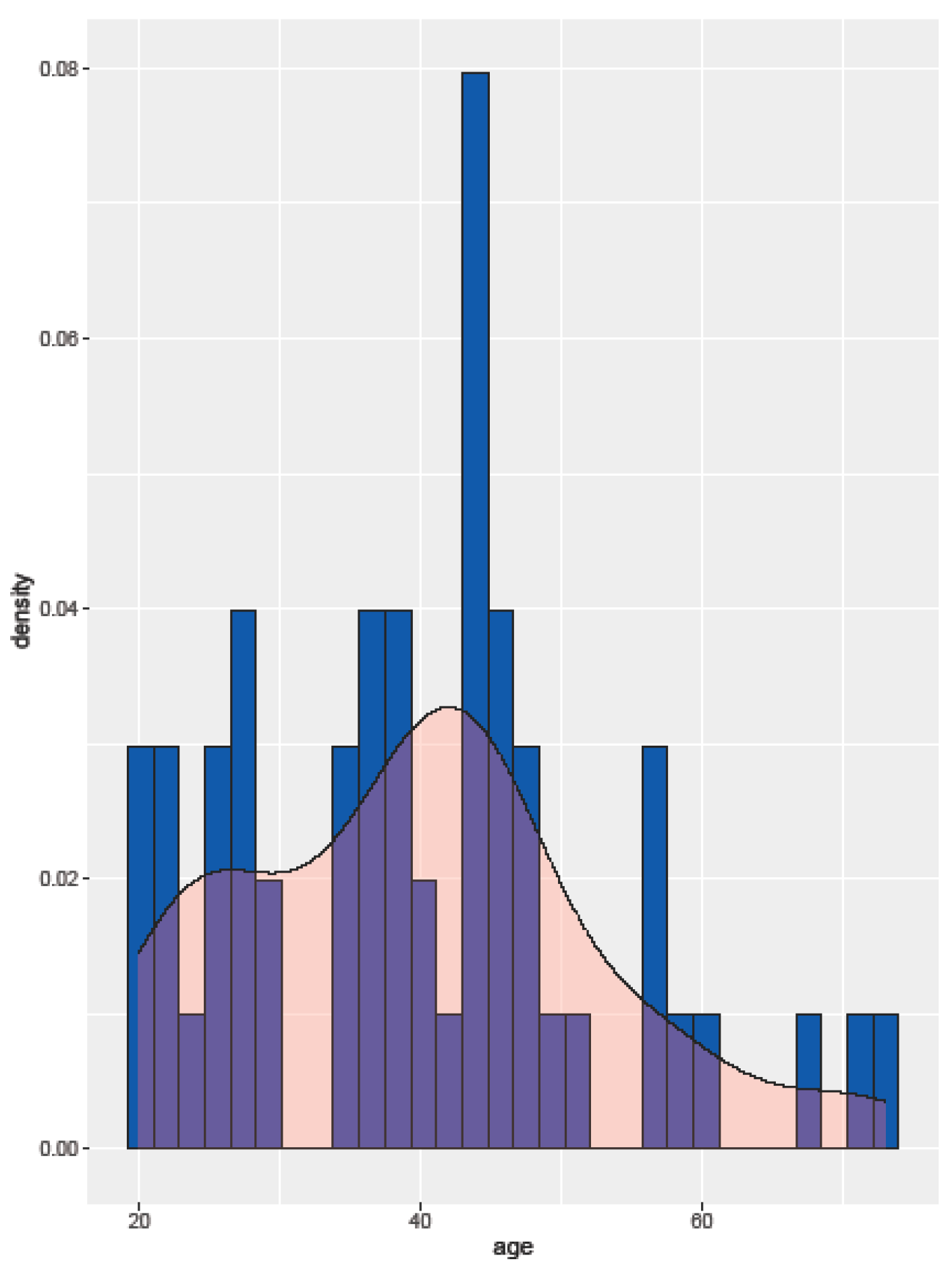
The sociodemographic characteristics indicate that the majority of respondents were female (61.8%), while males accounted for 38.2%. The age distribution of the sample exhibited a slight positive skewness (0.46) (Figure 1), while the Shapiro–Wilk test [47] confirmed a deviation from the normal distribution (p-value = 0.0409). The mean age of respondents was 39 years, with a standard deviation of 12.9 years. The middle 50% of the age distribution ranged from 28.5 to 45.5 years, corresponding to an interquartile range of 17 years.
The sample consisted predominantly of Greek respondents, with only one participant from France. Over 52% of respondents resided in Athens and Kalamata, while 13% and 9% reported Volos and Sparta, respectively. The gender ratio was nearly balanced in Athens and Kalamata, whereas in Volos, men outnumbered women by approximately 33%. Although additional Greek cities and islands were represented, they accounted for only a small number of respondents. These characteristics indicate that the sample primarily comprises domestic OT visitors.
Nearly 35% of respondents had completed undergraduate studies, while an additional 40% held postgraduate qualifications at the master’s or doctoral level. Among those with postgraduate education, male respondents slightly outnumbered females. These findings suggest that OT predominantly attracts individuals with higher educational attainment. In terms of professional status, respondents were mainly private-sector employees (33%), freelancers (9%), and retirees (7%), with an average monthly income of up to €1500, considered medium-to-high by Greek standards in 2023.

4.2. Visiting Behaviour

For 40% of respondents, visiting an olive site was the primary motivation for their trip, while 29.1% had included the visit in their travel itinerary before departure (Table 1). In contrast, only 14.5% reported visiting an olive site without prior planning. These results indicate that nearly 70% of respondents intentionally selected an olive or olive-heritage tourism experience, demonstrating a deliberate interest in this niche. This high proportion may be partially influenced by the snowball sampling method used to access the OT niche market. Conversely, approximately 30% of respondents visited an olive site spontaneously or incidentally (“casual”/”occasional visit”), either while passing by or choosing it as a convenient or appealing option during travel.
As indicated in Table 1, respondents most frequently visited OT sites with friends or colleagues (30.9%), family (29.1%), or a spouse/partner (25.5%), underscoring the social dimension of OT. Despite this preference for company, tour group participation was low (3.6%). Cross-analysis with age and education variables yielded no additional insights. The low rate of tour group attendance may reflect a limited availability of commercial, widely marketed olive heritage tours, suggesting that the OT market in Greece remains in an early developmental stage. Lone travellers constituted a small proportion (10.9%) and were predominantly female with at least postgraduate education.
Only 23.6% of respondents combined their visit with an overnight stay. This finding suggests that OT is often incorporated into daily excursion programmes. Alternatively, it may indicate a lack of relevant OT services and programmes, or the ineffectiveness of existing offerings, in encouraging longer stays and increased visitor spending in the destination area.

4.3. Motives of the Visit

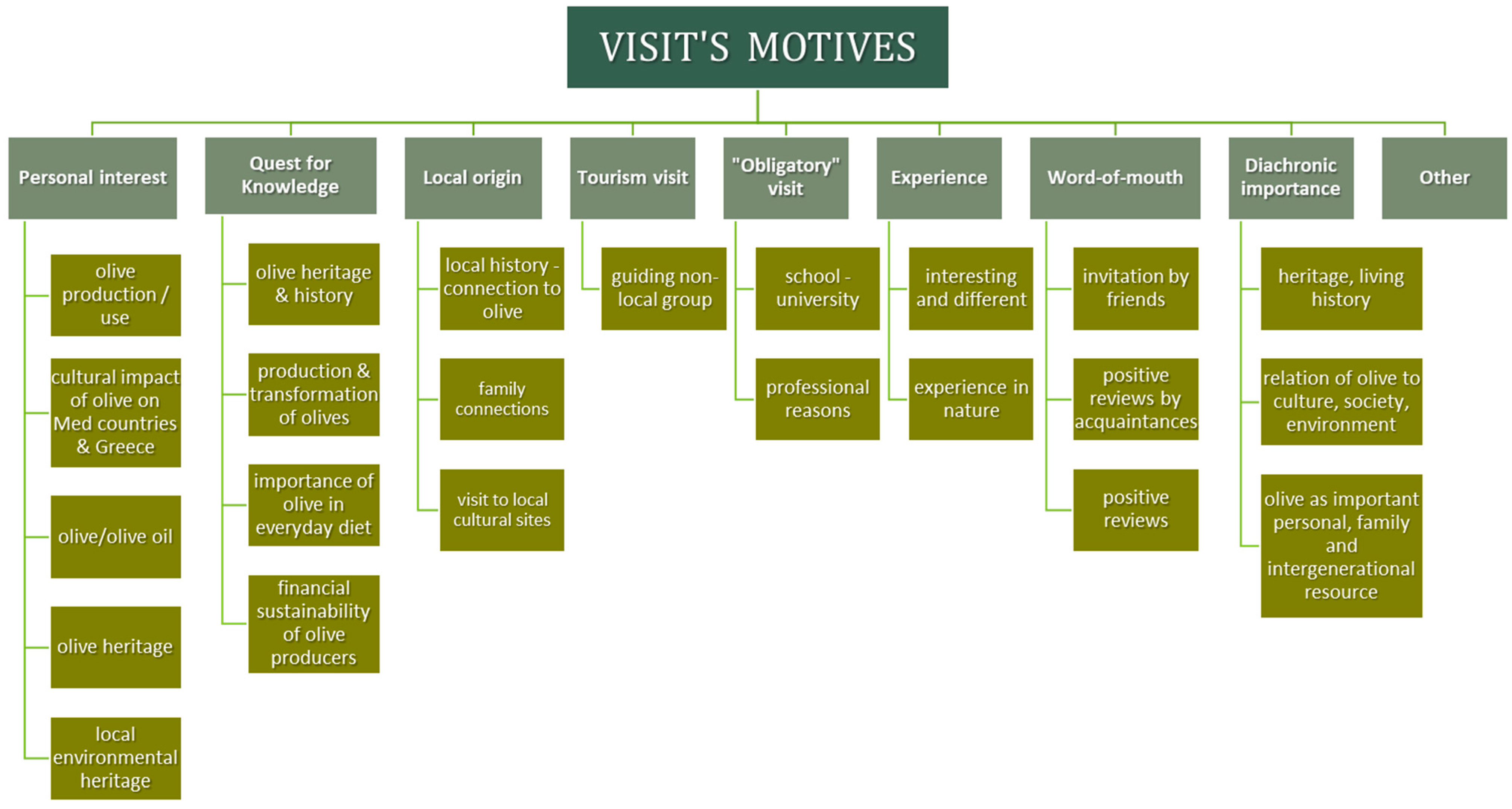
An open-ended question explored the respondents’ visit motivators. Codifying and quantifying the responses, the predominant motives for visiting an olive site are Personal interest, Quest for knowledge, and Local origins, each with a 15.6% share (Table 2).
Elaborating on the given answers (Figure 2), 15.6% of respondents expressed their “personal interest” to learn more about the olive/oil, the olive production and use, the olive as local environmental heritage, as well as about the olive heritage and its cultural impact across the Mediterranean countries and, in particular, Greece.
“Quest for knowledge” was the primary motive for another 15.6%, who yearned to learn more about the olive heritage/history, the production and transformation of olives, the importance of the olive in everyday diet, and the potential of olive farming to support farmers’ financial sustainability.
These results demonstrate that acquiring new knowledge, either by fulfilling personal interests or through intentional learning, serves as a significant motivator for more than one-third of respondents (36%).
Another 15.6% of respondents cited local roots and origins as their motivation, referencing connections between the olive tree and their community or family history. Some expressed a desire to visit olive sites within their local area. This preference may contribute to the limited selection of overnight accommodation observed earlier.
Tourism visits to cultural sites, whether as visitors or as guides for friends, and “obligatory” visits organised by educational or professional institutions were each cited as motives by 12.5% of respondents (Table 2, Figure 2). Additionally, 9.4% visited olive or olive heritage sites to live interesting, different experiences, particularly in natural landscapes. Positive word-of-mouth and favourable reviews were also influential. Respondents frequently referenced the perceived timelessness of the olive tree, highlighting its significance to culture, society, the environment, and its enduring value as heritage and a personal, familial, and intergenerational resource.
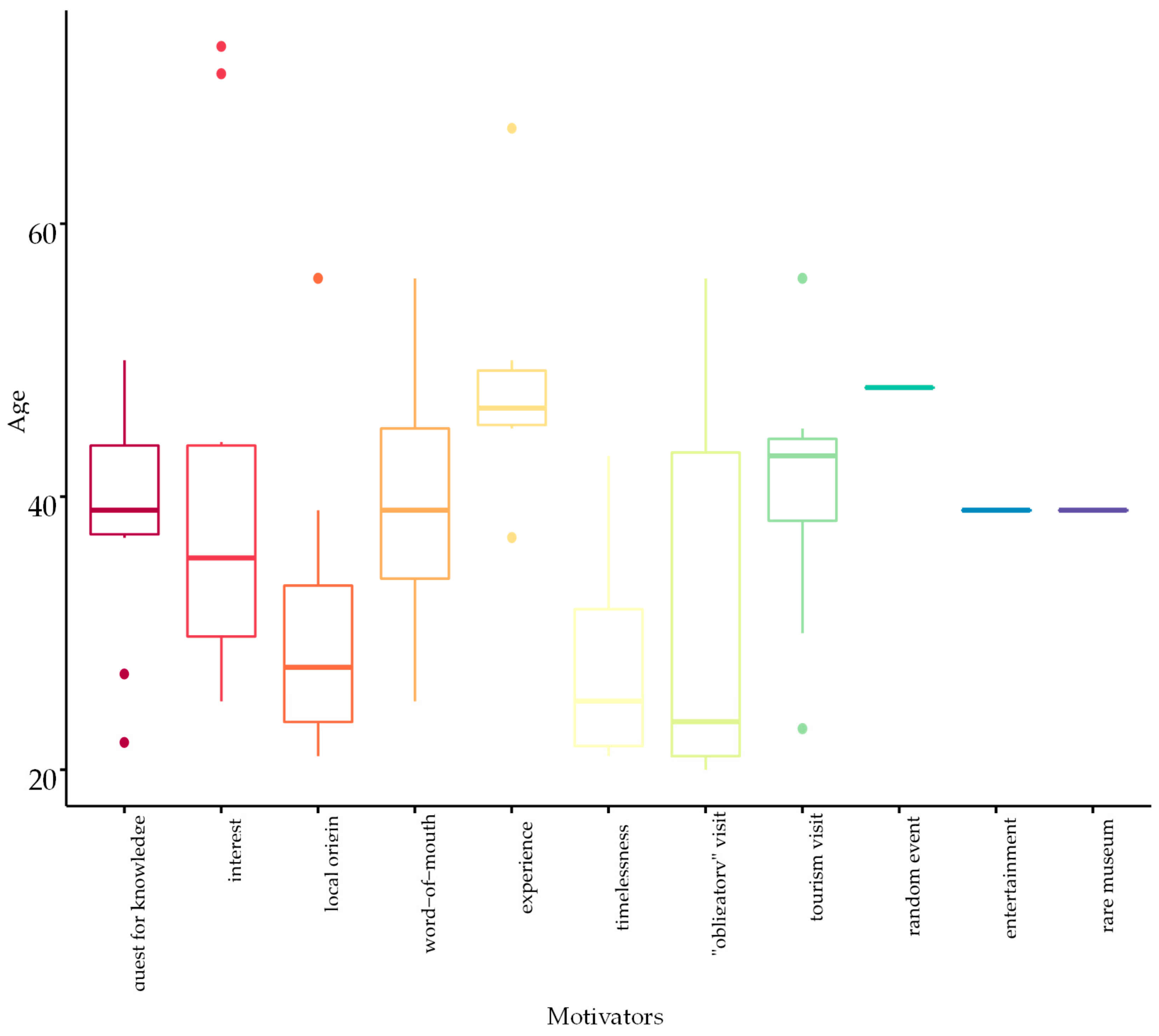
As regards the primary motives (“personal interest”, “quest for knowledge”, and “local origin”), there were no significant differences by gender (p-value 0.07) or age (p-value 0.13). The gender distribution mirrored that of the overall sample (61.8% female, 38.2% male). Older respondents were more likely to select “experience” as a motive, as indicated by the non-overlapping and higher-value box plot of age density in this category. In contrast, “local origin” and “timeliness” were more frequently cited by younger visitors, while “obligatory visit” was reported across all age groups (Figure 3). These findings suggest that younger OT visitors are drawn to olive heritage for connections to local roots and potential economic or personal interests. In contrast, older visitors are more inclined toward outdoor experiences in natural environments.

4.4. Visitors’ Preferences and Expectations Regarding Olive Tourism Programmes

To reveal OT visitors’ preferences and expectations regarding suggested OT programmes, two multiple-choice questions, combined with open-ended exploratory fields, were designed. In Question 10, respondents chose three (3) from a total of twelve (12) suggested OT activities, and in Question 11, two (2) from ten (10) given OT workshop topics. They also explained the reasons and expectations guiding their selection in the relevant open-ended fields.

4.4.1. Preferences and Expectations Regarding Olive Tourism Activities

As exhibited in Table 3, the most often (almost by 45% of the sample population) mentioned activities were the following:
  • “Guided visits to olive mills” (activity No. 9) dominated among aggregated occurrences and among the respondents’ first choice, while remaining a favourite activity as a third choice.
  • “Exploring an olive oil route” (activity No. 3) came second in aggregated occurrences and as a first choice. Still, it was a top choice both as a second and as a third choice in olive-related activities.
  • “Participation in olive harvest” (activity No. 7) came third among the overall preferences and was, for respondents, an excellent second option and a solid third.
Culinary activities, including “Cooking workshops related to the use of olives and associated products” (No. 1), “Participation in olive oil tasting sessions” (No. 6), and “Tasting of dishes prepared/harmonised with olive oil” (No. 8), were not top individual choices. Collectively, however, they were selected by nearly 22% of participants, resulting in a total of 35 responses. This indicates a general interest in gastronomic experiences involving olive oil. The relatively lower individual selection rates may be due to the integration of these activities into respondents’ daily routines, given the predominantly Greek sample. In other words, the familiarity of these activities within the Greek sociocultural context may have encouraged respondents to prefer more novel or experimental options.
Another preferred second choice included “Visit to museums and/or interpretive centers” (No. 10), while favoured third choices highlighted “Cooking workshops related to the use of olives and associated products” (No. 1) and “Workshops on olive/olive oil- based hygiene products” (No. 12). The least preferred activities were “Workshops on home production of olive oil” (No. 11) and “Olive oil-based massages and wellness treatments” (No. 5).
In general, there were no significant differences in OT activities between the gender (p-value 0.08) and age (p-value 0.13) groups, indicating that the gender ratio remains stable among the dominant choices. However, there was a difference between the third choices and the visitor’s gender (p-value = 0.04). For instance, men chose as third option “Exploring an olive oil route” (No. 3) and “Cooking workshops related to the use of olives and associated products” (No. 1). On the other hand, “Workshops on olive/olive oil-based hygiene products” (No. 12) were more common among women’s responses, ranking first and third, respectively.
Although nearly one-third of respondents had previously visited a museum, “Visit to museums and/or interpretive centers” (No. 10) ranked fourth in overall preferences and third as a second choice, reflecting a relatively modest selection rate. This finding, combined with the most preferred activities, suggests that respondents have a strong preference for experiential, outdoor activities with an exploratory component, particularly in natural environments.
To analyse respondents’ detailed justifications for their choices, the 12 proposed OT activities were grouped into 4 main categories (Table 4).
The thematic analysis of the given answers sheds light on the respondents’ expectations from OT activities, which motivated them to select specific activities over others (for a detailed analysis of each activity, see Appendix A).
In summary, most respondents selected Category I activities, perceiving them as opportunities to expand and deepen their knowledge about olive and olive oil production processes through experiential and interactive means. For many, these activities also fulfil a desire for exploratory, outdoor experiences, which some associate with psychosomatic benefits.
Respondents favouring Category II (culinary activities) were motivated by various expectations, namely, to increase their overall knowledge of and experience with olive oil through experiential learning, which involves experimenting, creating, and trying new tastes.
Similarly, visits to museums/interpretation centres (Category III) are strongly linked with the aim to increase one’s knowledge on different aspects of the olive and the olive heritage. Respondents who select visits to olive-related fairs and events also appreciate interaction and socialisation during the learning process.
Category IV activities were chosen by respondents interested in learning about the health and well-being benefits of olive oil. Relaxation was the primary motivator for selecting olive oil massage sessions. Additional expectations included applying this knowledge to daily practices, trying new experiences, and socialising with individuals who share similar interests.
A cross-examination of the justifications that the respondents gave for their activity choices in all Categories highlights the following trends:
  • The primary expectation of the majority of respondents who participate in an OT activity is to gain new knowledge about various aspects of olive/olive heritage.
  • A secondary motivator/expectation is the opportunity to participate in interactive, hands-on olive-related experiences.
  • A third motivator is the perception that olive trees, groves, and products provide mental and physical benefits, leading to expectations that OT visits will stimulate the senses and offer opportunities to experience new tastes and sensations.
  • Outdoor undertakings, exploration, and socialisation with people of common interests are additional motivators/expectations concerning OT visitors.

4.4.2. Preferences and Expectations Regarding Olive Tourism Workshops

Even though culinary and well-being activities involving olives/olive oil were not top choices in Q10, workshops on the nutritional properties of the olive oil and its use in healthy cooking, as well as on the multiple uses of the olive oil beyond gastronomy, gathered the most answers in Q11 (13.9% overall frequency, as exhibited in Table 5). In second place, the historical and cultural aspects of the olive trees/olive oil gained the interest of many respondents (13% frequency). The third most popular response pertained to olive oil as a core element of the Mediterranean diet (12% frequency), a theme that -interestingly- combines both the culinary-health and cultural aspects of the previously mentioned selections, highlighting the respondents’ expressed, palpable interest in these topics.
Other, less preferred choices included workshops, where a cultural element was also present, such as the olive tree as an element of the Mediterranean identity and rural landscape, as well as the preservation of traditional production methods vs. intensive production methods, both of which were primarily preferred by male respondents. Introduction to the sensory analysis of olive oils and choosing table olives were the participants’ weakest links.
There are no significant differences in respondents’ choices by gender or age, either overall (p-values 0.84 and 0.13, respectively) or within the two distinct choices (p-values 0.23 and 0.92, respectively). Nevertheless, it is interesting to note that workshops on cultural, cooking, and well-being topics were selected by a solid female majority, who are more prone to engage in hands-on activities. Men more strongly preferred workshops on technical and geomorphological topics.
Thematic analysis of respondents’ justifications for workshop choices revealed that the primary expectation is to gain new knowledge about olive and olive oil heritage, the intercultural significance of olives, and their contribution to health and well-being (see Appendix B for details). Respondents consistently preferred cultural, culinary, and health-related topics over technical or geomorphological subjects. Many participants also linked gastronomy, well-being, and health topics, as well as sensory analysis of olive oil, to their daily lives, emphasising a desire to apply newly acquired knowledge to routine practices and recognising the health benefits of olive products for themselves and their families.
Conversely, the low selection rate for workshop No. 10, “Preservation of traditional production methods and the conservation of the olive heritage in the face of competition from intensive production methods,” may indicate a lack of accessible information for non-specialists. This finding underscores the need for broader information campaigns and workshops, particularly to promote sustainable development practices in the olive production sector. The limited interest (8 out of 55 respondents) could be concerning if it reflects insufficient awareness or indifference to the potential negative impacts of intensive production methods on olive varieties, soil, and biodiversity.

5. Discussion

This study examined the demographic profiles, motivations, and expectations of OT visitors in Greece. The following discussion situates these findings within the broader context of research from other Mediterranean olive-producing countries, particularly Spain, Portugal, and Italy. These countries share comparable climatic conditions, agrarian traditions, and a longstanding olive heritage with Greece, facilitating meaningful cross-national comparisons.
The findings indicate that OT visitors in Greece are predominantly mature individuals with higher education and medium-to-high income. This demographic profile aligns with research from Spain and Portugal, where OT visitors are similarly described as older, well-educated, economically stable. These visitors are primarily motivated by interests in lifelong learning, gastronomy, and rural authenticity, representing a niche yet informed market segment [2,6,48,49,50]. These results also reflect broader trends among agritourism participants in Greece, who typically exhibit high levels of education and income [51].
OT visits are generally brief and pre-planned, with limited demand for accommodation, indicating that most visitors either participate in same-day excursions or stay overnight in private residences. The classification of these half- or one-day visits as “tourism” [2] (p. 5), is supported by the UNWTO’s definition of “tourism” as “the activity of visitors” and of “visitor” as “a tourist (or overnight visitor) if his/her trip includes an overnight stay, or as a same-day visitor (or excursionist) otherwise” [52] (§2.13). Therefore, the term “olive tourism” appropriately encompasses both tourists and same-day visitors engaged in olive-related activities in this study.
Within this broader conceptual framework, the brief and often excursionist nature of olive-related visits in Greece should be viewed as a defining structural feature of OT rather than a limitation. Also in Spain, OT activities typically serve as complementary experiences within broader tourism itineraries, such as cultural, gastronomic, and coastal tourism [49,50,52]. In Italy, OT is frequently integrated into wine tourism circuits or rural tourism packages, reinforcing its role as an experiential supplement rather than a primary travel motive [25]. Similarly, in Portugal, rural, nature, and wine tourism provide a supportive context for OT, underscoring the trend of associating OT with broader rural and cultural experiences [6].
The sociable nature of OT in Greece, where visitors predominantly travel with family, friends, or partners, mirrors patterns observed in Spain, where OT is established as a collective leisure and learning activity [49,50,53,54,55]. Research from Portugal similarly stresses the importance of shared experiences, particularly guided tours and tastings that promote social interaction and experiential value [6]. However, the presence of solo and unplanned visits in Greece indicates the emergence of new or underexplored visitor segments that warrant further study, especially in comparison to more mature OT destinations. Additionally, organised tour groups constituted a relatively small proportion of visitors in this study, despite the inherently social character of OT experiences.
Regarding the origins of visitors, Sabbatini et al. found that OT visitors who consume olive oil frequently originate from Northern European countries, particularly Scandinavia [20]. This finding is expected, given Crete’s status as a popular tourism destination and the study’s airport-based, summer-season sampling (whereas domestic tourists often use sea ferries to and from Crete). The existence of a domestic OT market in Greece during the off-season (February–April) parallels the case of Spain, where OT is primarily characterised as national tourism [56]. Similar patterns are observed in Portugal, where domestic visitors account for a significant share of OT demand, especially outside peak tourism periods [6]. In Italy, OT is expanding in central and northern regions as a niche market integrated with natural and cultural tourism, rather than mass, “sun-and-sea” tourism [25]. These similarities reinforce the potential of OT to mitigate seasonality and promote year-round rural tourism development across Mediterranean destinations.
Sabbatini et al. also reported that “Local food is considered very important in the selection of holidays for 81% of respondents” [20] (p. 142). Although such patterns were less pronounced in the present study—mainly because of its off-season timing and domestic focus—the strong appreciation for local food and olive-related gastronomy among respondents corresponds to findings from Italy and Portugal, where gastronomy is a primary gateway to OT engagement [6,25]. These results point to significant potential for the strategic development of inbound OT in Greece, particularly when integrated with culinary tourism narratives.
Greek OT visitors in this study exhibited substantial prior knowledge of olives and olive heritage, attributable to both cultural background and high educational attainment. Rather than serving as a barrier, this familiarity acts as a motivating factor for this highly skilled group. For these individuals, OT visits provide opportunities to deepen and expand their understanding of lesser-known aspects of olive heritage and production. Consequently, Greek domestic visitors are primarily motivated by personal interest, cultural rootedness, and the pursuit of advanced knowledge. Their selection of related OT activities and workshops further reflects the educational and heritage-oriented nature of OT demand. This pattern aligns with research from Spain and Portugal, where the acquisition of specific knowledge is a primary motive encompassing multiple aspects of olives and olive oil [6,49,50].
As analysed, domestic OT visitors seek to acquire new knowledge about olive heritage and history, production processes, beneficial attributes, diverse uses, and the self-production of olive goods. They are also motivated by hands-on participation, exploration, the opportunity to develop new tastes and skills, and to apply newly-gained knowledge to daily life. Additionally, OT visitors (particularly older ones) value outdoor experiences that engage their senses and emotions and opportunities to socialise with like-minded individuals. These results partially diverge from findings in Spain [2,48,49,50,54,55], where primary motivators more frequently include discovering specific geographic areas and their historical and cultural heritage, tasting and purchasing local products, and seeking entertainment and relaxation. However, similarities remain in the emphasis on learning about olives and visiting olive mills [25]. This indicates a shared experiential foundation across Mediterranean OT destinations, though the specific emphases in demand vary according to cultural context and market maturity.
The study indicates that age and gender are not decisive factors in overall OT participation. However, expectations and interests in specialised olive-related topics do vary by gender. An analysis of respondents’ preferences for OT activities and workshops reveals several key patterns in the interests and expectations of domestic visitors:
  • Respondents demonstrated a strong preference for workshops on perennial olive trees as symbols of traditional cultures (No. 1), the cultural, social, and spiritual aspects of olive oil (No. 4), and the olive tree as a defining element of Mediterranean identity (No. 9) (Table 5). This indicates significant market interest in the olive’s socio-cultural contributions, particularly among women. The role of the olive as a cultural marker, rather than solely an agricultural product, has also been documented in studies from Italy, Portugal, and Spain within the context of creative tourism [5,6,25,28]. These findings support interpretations of olive heritage that emphasise narratives, symbolism, and identity construction, which are especially relevant to domestic tourists [23].
  • The strong preference for Category I activities (direct contact with the olive tree and production process) underlines domestic OT visitors’ interest and desire to engage with the olive, enjoy the olive grove landscape, and participate interactively in olive production processes. Both men and women share this interest, with slightly higher engagement among women. These findings are consistent with earlier research in Spain [1].
  • Participants expressed consistent interest in the olive’s potential to foster entrepreneurship, innovation, and economic development at local, national, and Mediterranean levels. This is reflected in their preferences—though at lower rates—for activities and workshops focused on technical, entrepreneurial, and financial topics (e.g., activity No. 2, and workshops Nos. 2, 5, 8, and 10). Similar trends in Spain, Italy, and Portugal show small-scale producers organising unique experiences for visitors as a diversification strategy for rural economies [6,25]. The relatively lower selection rates in the Greek domestic market suggest that, while these topics are valued, they may require more targeted communication or experiential framing to increase visitor engagement.
  • The strong preference for Category II (culinary) activities and workshops focused on the nutritional aspects of olive oil and its use in healthy cooking reflects respondents’ desire to expand their knowledge of olive oil’s gastronomic applications and incorporate this knowledge into daily life. These findings are consistent with evidence from Spain, Italy, and Portugal, where gastronomy is a primary gateway to olive oil tourism and where tastings, cooking workshops, and food pairings are among the most popular activities [1,6,25,54]. This trend also corresponds with Millán and Agudo’s observation that consumers tend to include high-quality, certified food products in their diets [57], as well as Velissariou and Vasilaki’s findings on the strong interest of domestic tourists in gastronomy [58]. The preference for regional flavours and products among both domestic and inbound tourists [20] underscores the centrality of food for both groups. This also supports Henderson’s view of food as an essential tourism resource and product, and her argument regarding the importance of gastronomic components in destination selection [4].
  • Workshop No. 6 (multiple uses of olive-oil products beyond food) was the most preferred among respondents, despite a generally lower interest in Category IV activities (other uses of olive and olive oil). Both men and women selected these options, with women showing greater representation. The data reveal experiential interests in the cosmetic, therapeutic, and artisanal uses of olive oil in personal care, as documented in the literature [32,59]. This suggests opportunities to develop tourism offerings that emphasise olive oil’s health benefits. These findings further indicate that OT visitors seek to expand their knowledge and practical skills, highlighting the potential for diversified, cross-sectoral OT programmes beyond gastronomy.
The observed patterns in respondents’ preferences for OT activities and workshops can be interpreted through established theories of tourist motivation, as well as heritage, experiential, and creative tourism frameworks. The strong emphasis on learning, cultural meaning, and hands-on engagement aligns with “push–pull” theory in the context of pleasure vacation travel. In this framework, cultural motives (such as personal interest, self-development, and curiosity) and socio-psychological motives (including escapism, relaxation, and self-discovery) interact with destination attributes that provide authentic, educational, and participatory experiences [60,61].
Respondents’ preference for workshops focused on the cultural, social, and symbolic aspects of the olive tree reflects key principles of heritage tourism. This form of tourism emphasises meaningful engagement with living traditions, collective memory, and identity-bearing cultural resources, rather than passive consumption of attractions [62,63].
The strong interest in direct engagement with olive landscapes, production processes, participatory gastronomy, and wellness workshops aligns with the experiential tourism paradigm, which emphasises hands-on participation and emotional, physical, intellectual, and spiritual engagement [64]. The popularity of culinary, creative, and multi-use olive oil activities suggests that OT functions as a staged experience integrating education, escapism, and aesthetics, resulting in personal and memorable experiences consistent with the experience economy framework [64]. Additionally, OT can be viewed through a creative tourism lens, as it cultivates visitors’ creative skills through participatory, authentic experiences that foster connections with local communities and cultures, leading to co-creation of value between hosts and visitors [65]. Collectively, these findings position OT as a hybrid form of heritage, experiential, and creative tourism, driven by learning-oriented, culturally motivated visitors who seek to apply knowledge in everyday life, reinforcing its potential as a sustainable and value-rich tourism offering.

6. Practical Implications and Strategic Recommendations

This study addresses a recognised research gap by empirically examining OT demand in Greece. In response to Hernández-Mogollón’s call for future research to “identify the specific expectations that current tourists have about this tourism practice” [7] (p. 202), the findings contribute to the expanding scientific literature on OT demand, with a particular focus on the under-researched Greek context. Importantly, the study draws attention to the often-overlooked domestic dimension of OT demand in Greece.
The economic context further accentuates the relevance of domestic tourism. In 2024, the direct contribution of tourism to the Greek economy was estimated at €30.2 billion, corresponding to 12.7% of GDP, with inbound (international) tourism typically generating the largest share of tourism revenue, reaching 84.4% [66]. Domestic tourism contributes less, but still provides essential economic stimulus, especially in regions and seasons less dominated by international visitors. Indeed, domestic tourism has been a critical component of the country’s tourism sector, serving as a dependable complementary pillar to international tourism flows and supporting economic resilience. In 2024, approximately 5.1 million Greek residents undertook at least one domestic trip, with domestic tourism expenditure increasing by 7.5% from 2023 to €3.70 million, the highest level since 2018, according to the Hellenic Statistical Authority [67]. Of all trips, 85.7% were to domestic destinations, while only 14.3% were international. Furthermore, 77.5% of trips were motivated by rest, leisure, and holidays, predominantly during the summer months [67]. This pattern highlights the pronounced seasonality of domestic tourism and the ongoing challenge of achieving year-round economic benefits.
A comparison of 2024 data with research on Greek domestic tourism from 1985 to 2000 reveals that key patterns have remained consistent for nearly four decades. Preferences for domestic over international travel, high annual travel volumes, summer seasonality, shorter trips throughout the year, and diverse tourist motivations were already established by 2001 [68,69]. Previous studies also identified a structured demand for destinations with special and alternative tourism infrastructure, highlighting the role of alternative tourism in domestic tourism development and advocating for targeted policies to support the sector [68,69].
Accordingly, domestic tourism remains integral to Greece’s tourism system, generating significant regional economic activity. Enhancing domestic tourism can help redistribute demand beyond peak summer months and major coastal destinations, thereby alleviating seasonality, which poses persistent challenges for regional development and resource management [70]. By fostering tourism that connects residents with cultural heritage and landscapes, including culinary and rural experiences, Greece can achieve economic diversification, strengthen community well-being, and develop more resilient tourism systems that support local economies throughout the year.
Within this domestic context, OT—a niche segment grounded in Greece’s longstanding olive cultivation traditions—emerges as a strategic opportunity for rural development, cultural identity reinforcement, and seasonality mitigation. Olive heritage, encompassing groves, mills, traditional practices, and festivals, forms a cultural landscape that can be leveraged as a tourism asset. This approach reflects and sustains local identities while attracting domestic visitors to inland regions often overlooked in favour of mainstream coastal destinations, thereby reducing summer seasonality and supporting sustainable rural economies [24].
The findings of the present research suggest that OT in Greece constitutes a multidimensional experiential product, rooted in learning, participation, and sensory engagement. Respondents’ focus on knowledge acquisition, hands-on involvement, and interaction with olive landscapes aligns with core principles of experiential and heritage tourism, where meaning-making, interpretation, and co-creation are central [63]. Rather than serving solely as an agrotourism niche, OT functions as an experiential heritage practice, enabling visitors to engage cognitively, emotionally, and practically with olive-related cultural and environmental resources.
The results of this study are effectively interpreted through the Experience Economy framework, which encompasses all four experiential realms identified by Pine & Gilmore [64], though with varying degrees of emphasis. Recognising that OT experiences in Greece span educational, escapist, esthetic, and entertainment dimensions, these insights offer a practical foundation for targeted development strategies (Table 6). Visitors’ motives thus provide valuable guidance for the design and development of well-targeted tourism products [60].
The educational realm is especially prominent: visitors are primarily motivated to participate in OT activities and workshops to expand their knowledge and gain specialised understanding of olive heritage, production processes, nutritional properties, and alternative uses of olive oil. Consequently, producers, cooperatives, museums, and related organisations should develop participatory programmes focused on the sociocultural and historical dimensions of the olive, with particular attention to women, who have demonstrated heightened interest in these themes. Furthermore, in light of the increasing threats to olive landscapes and heritage from climate change and ultra-intensive cultivation, educational programmes addressing the ecological and economic significance of olives should be designed and actively promoted. Although fewer respondents selected these topics, they attracted notable interest and are increasingly important for raising awareness and fostering informed engagement with the urgent challenges facing olive heritage and rural sustainability.
The escapist realm is evident in the popularity of activities and workshops involving direct interaction with olive trees, participation in harvesting and production processes, and hands-on experimentation with new techniques and flavours. Tourism operators and service providers should therefore design creative, immersive, and interactive activities related to olive oil production, gastronomy, and innovative uses of olives and olive oil. Special emphasis should be placed on opportunities for participants to apply newly acquired knowledge in daily life, such as cooking, well-being practices, and do-it-yourself olive product creation.
The esthetic realm is reflected in respondents’ appreciation of olive landscapes, outdoor environments, well-being, and multisensory experiences. Olive groves and related sites serve as cultural landscapes imbued with symbolic meaning, fostering emotional attachment and authenticity. These qualities can be enhanced through outdoor, nature-based experiences that highlight the beauty and cultural significance of olive groves and incorporate well-being and psychosomatic activities such as mindfulness, olive spa treatments, yoga, and tasting sessions. This dimension is particularly relevant given the prevalence of modern, stressful lifestyles and the growing emphasis on self-care and wellness tourism.
Elements of the entertainment realm, though less prominent, are evident in the sociable nature of visits and the tendency for visitors to attend olive sites with family or friends. Tourism operators, producers, and cooperatives should capitalise on this entertainment dimension by designing activities that foster social interaction, storytelling, and shared experiences. Examples include guided tours with narrative components, communal tastings, participatory workshops, and experiences tailored for families or groups of friends. By emphasising conviviality and memorable experiences, these initiatives can complement the educational and experiential aspects of OT, enhance visitor engagement, promote repeat visits, and generate positive word-of-mouth.
Implementing these strategic recommendations necessitates coordinated engagement among olive producers, cooperatives, tourism operators, regional authorities, museums, and relevant cultural or wellness organisations. Collaboration among these stakeholders is essential to ensure the effective development, delivery, and long-term sustainability of OT products and experiences.

7. Limitations and Future Research Line

The limitations of this study include the potential impact of snowball sampling, which may have introduced a bias toward more information-rich or engaged participants. In addition, the predominantly domestic character of the sample limits the generalisability of the findings to international OT visitors. Nevertheless, the study was conducted using a structured and transparent methodology, making the research fully reproducible. Future research should expand the sample population and specifically investigate inbound visitors from diverse countries to provide a more comprehensive understanding of OT in Greece.

8. Conclusions

Concluding, the data from this study provide a practical foundation for stakeholders, policy-makers, and tourism providers to inform OT policies, adapt existing OT products and services, and design new, targeted experiences that encourage overnight stays near olive sites. These initiatives should address the needs of the specialised domestic OT market and, potentially, attract inbound tourists from countries where olive heritage is similarly significant or valued as a prestigious, symbolically rich resource. Importantly, the transferable insights from this research can assist other olive-producing nations in enhancing their OT offerings. By emphasising the cultural, historical, and economic nuances inherent to OT, other countries can tailor their strategies to appeal to both domestic and international tourists, creating distinctive tourism experiences with global resonance.
Beyond economic and market considerations, the results highlight OT’s potential to promote sustainable development in local communities and rural areas [24]. OT can extend the tourism season into autumn and winter, especially in non-coastal regions, thereby generating employment and supplementary income. By reinforcing the primary agricultural sector, OT encourages small-farm owners to maintain and cultivate their land, supporting population retention and countering rural depopulation. Additionally, OT incentivises the preservation of traditional olive groves, protecting biodiversity and sustaining long-standing farming practices. These efforts safeguard invaluable tangible and intangible heritage as well as diachronic knowledge. Collectively, such measures enhance the resilience and vitality of rural areas, supporting their economic, social, environmental, and cultural sustainability throughout the year.
In sum, the insights gained regarding domestic OT visitors offer a robust evidence base for stakeholders to develop targeted policies and experiences that address visitor needs while promoting the sustainable management of Greece’s rich and long-standing olive heritage.

Author Contributions

Conceptualisation, Methodology, Investigation, Supervision, Data Curation, Resources, Formal analysis (thematic analysis), Writing (original draft): M.K. (Maria Kouri); Formal analysis (statistical analysis): M.K. (Marios Kondakis); Visualisation, Writing—review and editing, M.K. (Maria Kouri) and M.K. (Marios Kondakis). All authors have read and agreed to the published version of the manuscript.

Funding

This research was funded by the project “Olive Heritage for Sustainable Development: Raising Community Awareness of Living Heritage” (355.20.121) under the Joint Programming Initiative on Cultural Heritage (JPI HERITAGE) through the General Secretariat for Research and Innovation (Greece).

Institutional Review Board Statement

This study did not require ethical review or approval under Greek law (Law 3418/2005; Law 4521/2018, ch. 5), as ethics committee approval is mandatory primarily for biomedical or clinical research involving medical interventions, biological material, or vulnerable populations. The study employed non-invasive qualitative interviews with adult participants and involved no medical intervention or collection of sensitive health data. The research complied with GDPR (EU) 2016/679 and Greek Law 4624/2019.

Informed Consent Statement

Informed consent was obtained from all subjects involved in the study.

Data Availability Statement

The datasets presented in this article are not publicly available because of the ongoing nature of the OLIVE4ALL project. Requests to access the datasets should be directed to Maria Kouri at mkouri@go.uop.gr.

Acknowledgments

The authors gratefully acknowledge the funding received from the Joint Programming Initiative on Cultural Heritage for the realisation of the “OLIVE4ALL—Olive Heritage for Sustainable Development” project. They also express their gratitude to the foundations and academic and cultural organisations mentioned in this paper for disseminating the research questionnaire, as well as to the anonymous informants who offered their invaluable insights. Finally, the authors thank the three anonymous reviewers for their insightful comments that helped strengthen this manuscript.

Conflicts of Interest

The authors declare no conflicts of interest. The funders had no role in the design of the study, in the collection, analysis, or interpretation of data, in the writing of the manuscript, or in the decision to publish the results.

Appendix A

Table A1. Elaboration of the visitors’ expectations from their preferred olive tourism activities.
CategoriesActivitiesVisitors’ Expectations
Category I
Direct contact with the olive tree—production process
#1: Guided visits to olive millsThe visit to an olive oil mill represents an opportunity to gain additional knowledge and understand in an experiential way the olive oil production process. The “experiential” element is stressed by almost one-third of respondents selecting this activity.
#2: Exploring an olive oil routeThe exploration of olive routes appeals to respondents wishing to increase their understanding of various aspects of the olive (natural and cultural landscape, olive quality and processes, etc). It also resonates with those who seek to explore new experiences and landscapes, learn new things interactively and experientially, and who favour outdoor activities.
#3: Participation in olive harvestFor most respondents, participating in olive harvesting is perfect for learning and grasping the olive production processes through active participation. A key-word stressed by most respondents is “experiential”, while for two respondents, this represents a novel albeit not widespread activity.
#11: Observation of the olive-growing landscapeThe few respondents selecting this activity emphasised mostly the psychosomatic benefits of observing an olive landscape and linked it with a sense of peace, beauty, stillness and with pleasing smells. One respondent also justified their choice through the activity’s outdoor character.
Category II
Culinary activities
#5: Participation in olive oil tasting sessionsThis activity is preferred by respondents who wish to increase their knowledge, mainly through experiential learning, and also by some who find it, plainly, interesting.
#6: Tasting dishes prepared/harmonized with olive oilRespondents expressed their wish to taste olive oil from different areas, try new foods and tastes and increase their overall knowledge and experiences on olive oil.
#8: Cooking workshops related to the use of olives and associated productsPersonal interest is the strongest motivator for this activity, in addition to the desire to create and taste delicious products and to participate in hands-on activities.
Category III
Visit to olive-related venues/events
#4: Visit to museums and/or interpretation centersFor the outweighing majority of respondents, an olive museum visit is provoked by the wish to increase one’s knowledge, highlighting perceptions on the museums’ authority and primary role as an educational institution. Individual justifications given, also include “interactive”, “new experiences”, and “wish to visit cultural spaces”.
#7: Fairs and events related to olives, olive oil and other olive productsOlive-related fairs and events are favoured by those appreciating an interactive, experiential and social element in activities. Moreover, the latter should arouse their interest and increase their knowledge.
Category IV
Other uses of olive/olive-oil
#9: Workshops about home production of olive oilRespondents expect from this activity to learn and to apply new knowledge in personal use.
#10: Massages and wellness treatments based on olive oilRelaxation/well-being, as well as knowing more on and experiencing first-hand the beneficial attributes of the olive oil on one’s health instigate the respondents’ choice. A third, weaker motivator is the wish to experience new elements.
#12: Workshops on olive/oil-based hygiene products (soaps, creams, scrubs…)For most respondents this activity offers the opportunity to increase their knowledge on the beneficial uses of the olive oil, which is considered useful, practical and linked to everyday use. Individual answers also include the wish to live a new experience and to socialise with friends of shared interests.

Appendix B

Table A2. Elaboration of the visitors’ expectations from their preferred olive tourism workshops.
Workshop TopicAggr. OccurrencesVisitors’ Expectations
#1. The nutritional properties of olive oil and its use in healthy cooking13.9%The overwhelming majority chose this workshop to gain new knowledge or to increase existing know-how on the correct and healthy use of the olive oil in everyday cooking. Clearly, these respondents form a knowledgeable group, who already use olive oil, but wish to fine-tune their cooking, so as to keep their families and selves healthy. Another repeated justification is “interest”, supporting this topic’s popularity.
#2. The multiple uses of olive oil products, beyond food: health and well-being, personal hygiene and aesthetics13.9%All respondents expressed their wish to learn more on the alternative uses of olive oil products, half of them also stressing the links of said products to their everyday routine and lives. Worth mentioning is Respondent 55, who stated that she had not thought about such alternative uses for the olive oil and would like to learn more on that. Respondent 26 underlined that such a workshop could inspire entrepreneurship ideas to young people.
#3. Centenarian and millenarian olive trees as testimonies of the perenniality of traditional cultures13%This quite popular thematic gathers respondents, who seek to gain or increase their knowledge on various aspects, such as traditions, the history of the olive and the olive trees, the local history and the history of the Mediterranean. Respondent 27 also mentioned the need for learning and gaining a better understanding of the olive tree’s history, in order for communities to become sensitised towards the olive trees’ protection.
#4. Olive oil in a civilizational perspective: cultural, social and spiritual aspects of the olive heritage since antiquity13%Once again, the most important motivator is to gain/increase knowledge on the olive’s history, cultural impact and role in the lives of the Mediterranean peoples. A significant number of respondents also declared their “interest” in the topic, while three individuals invoked academic and professional motives. Respondent 32 particularly mentioned the wish to combine her academic knowledge with her love for the olive tree, instilled through her local origins, in order to promote the natural landscape of her locality (Messenia).
#5. Olive oil as a core element of the Mediterranean diet12%Respondents choosing this workshop mainly stressed the olive oil’s significant value in the Mediterranean diet, which is recognised as one of the healthiest diets universally, also linking it to their personal and their family’s health. Indeed, the olive oil is linked to everyday use and respondents seek to gain or increase their knowledge on this topic, largely echoing the reasons justifying the choice of the most popular workshop “The nutritional properties of olive oil and its use in healthy cooking”.
#6. The olive tree as a distinctive element of identity of the peoples of the Mediterranean basin8.3%The expectations from this workshop are to gain or to increase one’s knowledge on cultures sharing common elements and on the olive’s role historically and culturally. Individual answers include that this workshop seems interesting.
#7. The olive grove as a constituent element of the rural landscape in the Mediterranean region7.4%The few respondents selecting this topic seek to gain/increase their knowledge and satisfy their interest. Respondent 32 also aimed to gain knowledge in order to protect and promote the natural landscape of their locality, while Respondent 14 linked this workshop with the European Union’s common agricultural policy.
#8. The preservation of traditional production methods and the conservation of the olive heritage in the face of competition from intensive production methods7.4%Respondents here expressed a general interest, but especially a need to gain more knowledge, particularly on how to preserve traditions, while moving towards industrialisation. Respondent 48 also stated a wish to experience the traditional ways of producing and preserving the olive and its products.
#9. Table Olives—making a good choice6.5%Most respondents chose this topic to gain or increase knowledge that is applicable to their everyday lives and linked to the history of the Mediterranean gastronomy. Nonetheless, this workshop topic proved rather unpopular among the survey population.
#10. Introduction to the sensory analysis of olive oils4.63%The least preferred workshop is chosen by very few respondents, who wish to increase their knowledge and ability to critically evaluate olive oil quality. None of these respondents are professionals in the olive sector, though, signifying the personal nature of their interest.

References

  1. Parrilla-González, J.A.; Murgado-Armenteros, E.M.; Torres-Ruiz, F.J. Characterization of olive oil tourism as a type of Special Interest Tourism: An analysis from the tourist experience perspective. Sustainability 2020, 12, 6008. [Google Scholar] [CrossRef]
  2. Pulido-Fernández, J.I.; Casado-Montilla, J.; Carrillo-Hidalgo, I. Understanding the behaviour of olive oil tourists: A cluster analysis in Southern Spain. Sustainability 2020, 12, 6863. [Google Scholar] [CrossRef]
  3. Campón-Cerro, A.M.; Di-Clemente, E.; Hernández-Mogollón, J.M.; De Salvo, P.; Calzati, V. Olive oil tourism in southern Europe: Proposals for tourism development of olive grove rural areas. Tur. Desenvolv. 2014, 21, 63–73. [Google Scholar]
  4. Henderson, J.C. Food tourism reviewed. Br. Food J. 2009, 111, 317–326. [Google Scholar] [CrossRef]
  5. Millán, G.; Arjona, J.; Amador, L. A new market segment for olive oil: Olive oil tourism in the south of Spain. Agric. Sci. 2014, 5, 179–185. [Google Scholar] [CrossRef]
  6. Dias, F.; Oliveira, F. Olive Tourism motivations, activities and experiences: Perspectives from a Portuguese Delphi Panel. Via 2024, 25. [Google Scholar] [CrossRef]
  7. Hernández-Mogollón, J.M.; Di-Clemente, E.; Folgado-Fernández, J.A.; Campón-Cerro, A.M. Olive oil tourism: State of art. Tour. Hosp. Manag. 2019, 25, 179–207. [Google Scholar] [CrossRef]
  8. Dias, F.; Soares, I.; Oliveira, F. Tourism and olive and olive oil heritage in Portugal: State of the art. In The Heritage Commitment: Modelling the Communitisation Process; Proceedings of the Kalamata Symposium; Vasilopoulos, S., Kouri, M., Eds.; University of Thessaly Press: Volos, Greece, 2023; pp. 75–92. [Google Scholar]
  9. Economou, A. The olive tree and the olive oil in the Laconian traditional society. In The Olive and the Olive Oil Since Antiquity to Today; Polymerou-Kamilaki, A., Kamilakis, P., Karapidaki, L., Eds.; Academy of Athens, Hellenic Folklore Research Centre: Athens, Greece, 2003; pp. 237–250. (In Greek) [Google Scholar]
  10. Karpodini-Dimitriadi, E. The production and consumption of olive oil: A contribution to the European cultural nutritional heritage. In The Olive and the Olive Oil Since Antiquity to Today; Polymerou-Kamilaki, A., Kamilakis, P., Karapidaki, L., Eds.; Academy of Athens, Hellenic Folklore Research Centre: Athens, Greece, 2003; pp. 297–320. (In Greek) [Google Scholar]
  11. Polymerou-Kamilaki, A. (Ed.) The Olive and the Olive Oil in Space and Time; Symposium Proceedings; Academy of Athens, Hellenic Folklore Research Centre: Athens, Greece, 2003. (In Greek) [Google Scholar]
  12. Polymerou-Kamilaki, A.; Kamilakis, P.; Karapidaki, L. (Eds.) The Olive and the Olive Oil Since Antiquity to Today; Proceedings of the International Conference; Academy of Athens, Hellenic Folklore Research Centre: Athens, Greece, 2003. (In Greek) [Google Scholar]
  13. Sfougaris, A.J.; Christopoulou, O. Les effets environnementaux du défrichement et de la culture de l’olivier dans une région montagneuse de Grèce. MEDIT 1997, 8, 49–51. [Google Scholar]
  14. Loumou, A.; Giourga, C. Olive groves: The life and identity of the Mediterranean. Agric. Hum. Values 2004, 20, 87–95. [Google Scholar] [CrossRef]
  15. Bousbouras, D. The olive grove landscape in the Peloponnese. In And the Area... Oil-Bearing. The Presence of the Olive in the Peloponnese; Beneki, E., Ed.; Piraeus Bank Group Cultural Foundation: Athens, Greece, 2007; pp. 160–179. (In Greek) [Google Scholar]
  16. Beneki, E. (Ed.) And the Area... Oil-Bearing. The Presence of the Olive in the Peloponnese; Piraeus Bank Group Cultural Foundation: Athens, Greece, 2007. (In Greek) [Google Scholar]
  17. Moira, P.; Mylonopoulos, D.; Kontoudaki, A. Gastronomy as a form of cultural tourism. A Greek typology. TIMS Acta 2015, 9, 135–148. [Google Scholar] [CrossRef]
  18. Pavlidis, G.; Markantonatou, S. Gastronomic tourism in Greece and beyond: A thorough review. Int. J. Gastron. Food Sci. 2020, 21, 100229. [Google Scholar] [CrossRef]
  19. Kizos, T.; Vakoufaris, H. Valorisation of a local asset: The case of olive oil on Lesvos Island. Greece. Food Policy 2011, 36, 704–7013. [Google Scholar] [CrossRef]
  20. Sabbatini, V.; Manthoulis, G.; Baourakis, G.; Drakos, P.; Angelakis, G.; Zopounidis, C. Tourists’ behavioural analysis on olive oil consumption: Empirical results. Int. J. Tour. Policy 2016, 6, 136–146. [Google Scholar] [CrossRef]
  21. Passalis, A. Olive Oil as an Important Asset for Greek Tourism Product Differentiation and Sustainable Development. Master’s Dissertation, School of Tourism, Bournemouth University, Poole, UK, 2016. [Google Scholar]
  22. Bitsani, E.; Agriopoulou, S.; Athanasopoulou, C. The cultural, nutritional and the socio-economic value of Greek Messinian olive oil. In Strategic Innovative Marketing and Tourism; Kavoura, A., Kefallonitis, E., Giovanis, A., Eds.; Springer Proceedings in Business and Economics; Springer: Cham, Switzerland, 2019; pp. 307–315. [Google Scholar] [CrossRef]
  23. Kouri, M.; Kondakis, M. “Green gold”—“Divine gift”—“The definition of family”: Perceptions and attitudes of domestic olive tourism visitors regarding the olive heritage in Greece. Via 2024, 25. [Google Scholar] [CrossRef]
  24. Kouri, M. Olive heritage and tourism in Messenia: A path to sustainable development. Sustain. Dev. Cult. Tradit. 2024, 4b, 16–35. [Google Scholar] [CrossRef]
  25. D’Auria, A.; Marano-Marcolini, C.; Čehić, A.; Tregua, M. Oleotourism: A comparison of three Mediterranean countries. Sustainability 2020, 12, 8995. [Google Scholar] [CrossRef]
  26. Hawkes, J. The Fourth Pillar of Sustainability: Culture’s Essential Role in Public Planning; Common Ground: Melbourne, VIC, Australia, 2001. [Google Scholar]
  27. Alonso, A.D.; Northcote, J. The development of olive tourism in Western Australia: A case study of an emerging tourism industry. Int. J. Tour. Res. 2010, 12, 696–708. [Google Scholar] [CrossRef]
  28. Bezerra, R.; Correia, A.I. The potential of olive oil for creative tourism experiences in the northern region of Portugal. Rev. Port. Estud. Reg. 2018, 51, 56–72. [Google Scholar]
  29. Campón-Cerro, A.M.; Folgado-Fernández, J.A.; Hernández-Mogollón, J.M. Rural destination development based on olive oil tourism: The impact of residents’ community attachment and quality of life on their support for tourism development. Sustainability 2017, 9, 2–16. [Google Scholar] [CrossRef]
  30. Ferreira, D.I.R.; Martín, J.M.S. O olival como oportunidade oara o turismo no parque natural do Tejo Internacional. Finisterra 2021, 56, 55–80. [Google Scholar]
  31. Millán-Vázquez de la Torre, M.G.; Arjona-Fuentes, J.M.; Amador-Hidalgo, L. Olive oil tourism: Promoting rural development in Andalusia (Spain). Tour. Manag. Perspect. 2017, 21, 100–108. [Google Scholar] [CrossRef]
  32. Murgado, E.M. Turning food into a gastronomic experience: Olive oil tourism. In Present and Future of the Mediterranean Olive Sector; Arcas, N., Arroyo López, F.N., Caballero, J., D’Andria, R., Fernández, M., Fernandez Escobar, R., Garrido, A., López-Miranda, J., Msallem, M., Parras, M., et al., Eds.; Options Méditerranéennes, Série A: No. 106; CIHAEM: Zaragoza, Spain, 2013; pp. 97–109. [Google Scholar]
  33. Toselli, C. Turismo, patrimonio cultural y desarrollo local. Evaluación del potencial turístico. PASOS Rev. Tur. Patrim. Cult. 2019, 17, 343–361. [Google Scholar]
  34. Tudisca, S.; Trapani, A.M.; Donia, E.; Sgroi, F.; Testa, R. The market reorientation of farms: The case of olive growing in the Nebrodi area. J. Food Prod. Mark. 2015, 21, 179–192. [Google Scholar] [CrossRef]
  35. Punch, F.K. Introduction to Social Research Quantitative and Qualitative Approaches, 2nd ed.; SAGE Publication Ltd.: London, UK, 2005. [Google Scholar]
  36. Mocănașu, D.R. Determining the sample size in qualitative research. In International Multidisciplinary Scientific Conferences on the Dialogue Between Sciences & Arts, Religion & Education; IFIASA: Târgoviște, Romania, 2020; pp. 181–187. [Google Scholar] [CrossRef]
  37. Hennink, M.; Kaiser, B.N. Sample sizes for saturation in qualitative research: A systematic review of empirical tests. Soc. Sci. Med. 2022, 292, 114523. [Google Scholar] [CrossRef] [PubMed]
  38. Patton, M.Q. Qualitative Research and Evaluation Methods, 3rd ed.; SAGE Publication Ltd.: Thousand Oaks, CA, USA, 2002. [Google Scholar]
  39. Creswell, J.W.; Poth, C.N. Qualitative Inquiry & Research Design: Choosing Among Five Approaches, 4th ed.; Sage: Los Angeles, CA, USA, 2018. [Google Scholar]
  40. Patton, M.Q. Humanistic psychology and humanistic research. Pers.-Centered Rev. 1990, 5, 191–202. [Google Scholar]
  41. Braun, V.; Clarke, V. Using thematic analysis in psychology. Qual. Res. Psychol. 2006, 3, 77–101. [Google Scholar] [CrossRef]
  42. Braun, V.; Clarke, V. Thematic Analysis: A Practical Guide; Sage: London, UK, 2021. [Google Scholar]
  43. Guest, G.; MacQueen, K.M.; Namey, E.E. Applied Thematic Analysis; SAGE Publications: Thousand Oaks, CA, USA, 2012. [Google Scholar]
  44. R Core Team. R: A Language and Environment for Statistical Computing; R Foundation for Statistical Computing: Vienna, Austria, 2023; Available online: https://www.r-project.org (accessed on 25 September 2023).
  45. Mann, H.B.; Whitney, D.R. On a test of whether one of two random variables is stochastically larger than the other. Ann. Math. Statist. 1947, 18, 50–60. [Google Scholar] [CrossRef]
  46. Kruskal, W.H.; Wallis, W.A. Use of ranks in one-criterion variance analysis. J. Am. Stat. Assoc. 1952, 47, 583–621. [Google Scholar] [CrossRef]
  47. Shapiro, S.S.; Wilk, M.B. An analysis of variance test for normality (complete samples). Biometrika 1965, 52, 591–611. [Google Scholar] [CrossRef]
  48. Cañero Morales, P.M.C.; Guzmán, T.J.L.G.; Cuadra, S.M.; Agüera, F.O. Análisis de la demanda del oleoturismo en Andalucía/Analysis of demand of olive tourism in Andalusia. Rev. Estud. Reg. 2015, 104, 133–149. [Google Scholar]
  49. López-Guzmán, T.; Cañero Morales, P.M.; Moral Cuadra, S.; Orgaz-Agüera, F. An exploratory study of olive tourism consumers. Tour. Hosp. Manag. 2016, 22, 57–68. [Google Scholar] [CrossRef]
  50. Orgaz, F.; Moral, S.; López-Guzmán, T.; Cañero, P. Estudio de la demanda existente en torno al oleoturismo. El caso de Andalucía. Cuad. Tur. 2017, 39, 437–453. [Google Scholar] [CrossRef]
  51. Belias, D.; Velissariou, E.; Kyriakou, D.; Varsanis, K.; Vasiliadis, L.; Mantas, C.; Sdrolias, L. Tourism consumer behavior and alternative tourism: The case of agrotourism in Greece. In Innovative Approaches to Tourism and Leisure; Katsoni, V., Velander, K., Eds.; Springer Proceedings in Business and Economics; Springer: Cham, Switzerland, 2018; pp. 465–478. [Google Scholar] [CrossRef]
  52. UN–UNWTO. International Recommendations for Tourism Statistics 2008; Studies in Methods Series M No. 83/Rev.1; Department of Economic and Social Affairs—Statistics Division, UN: New York, NY, USA, 2010. [Google Scholar]
  53. Millán, M.G.; Pablo-Romero, M.D.P.; Sánchez-Rivas, J. Oleotourism as a sustainable product: An analysis of its demand in the South of Spain (Andalusia). Sustainability 2018, 10, 101. [Google Scholar] [CrossRef]
  54. Millán, G.; Agudo, E.; Morales, E. Análisis de la oferta y la demanda de oleoturismo en el sur de España: Un estudio caso. Cuad. Desarro. Rural 2011, 8, 181–202. [Google Scholar]
  55. Morales-Fernández, E.; Lanquar, R.; Castro-Freire, M.S.; Trechera-Herreros, J.L. Una aproximación al perfil del oleoturista en las denominaciones de origen de Córdoba (España). Tour. Manag. Stud. 2015, 11, 31–38. [Google Scholar]
  56. Moral, S.; López-Guzmán, T.; Orgáz, F.; Cañero, P. Motivación y satisfacción de los oleoturistas en España. El caso de Andalucía. Espacios 2017, 38, 4–17. [Google Scholar]
  57. Millán, M.G.; Agudo, E. El turismo gastronómico y las denominaciones de origen en el Sur de España: Oleoturismo. Un estudio de caso. Pasos 2010, 8, 91–112. [Google Scholar] [CrossRef]
  58. Velissariou, E.; Vasilaki, E. Local gastronomy and tourist behavior: Research on domestic tourism in Greece. J. Tour. Res. 2014, 9, 120–143. [Google Scholar]
  59. Monteiro, B.; Salvado, J. Olive oil tourism experience (OOTE): A systematic literature review (SLR). Via 2024, 25. [Google Scholar] [CrossRef]
  60. Crompton, J.L. Motivations for Pleasure Vacations. Ann. Tour. Res. 1979, 6, 408–424. [Google Scholar] [CrossRef]
  61. Dann, G.M.S. Tourist Motivation: An Appraisal. Ann. Tour. Res. 1981, 8, 187–219. [Google Scholar] [CrossRef]
  62. Timothy, D.; Boyd, S. Heritage Tourism; Prentice Hall: Upper Saddle River, NJ, USA, 2003. [Google Scholar]
  63. Smith, L. Uses of Heritage; Routledge: London, UK, 2006. [Google Scholar]
  64. Pine, B.J.; Gilmore, J.H. Welcome to the Experience Economy. Harv. Bus. Rev. 1998, 76, 97–105. [Google Scholar]
  65. Richards, G. Creativity and tourism: The state of the art. Ann. Tour. Res. 2011, 38, 1225–1253. [Google Scholar] [CrossRef]
  66. Ikkos, A.; Koutsos, S. The Contribution of Tourism to the Greek Economy in 2024; Institute of the Hellenic Tourism Business Association (INSETE): Athens, Greece, 2025; Available online: https://insete.gr/wp-content/uploads/2025/05/25_05_Tourism_and_Greek_Economy_2023-2024-1.pdf (accessed on 10 January 2026). (In Greek)
  67. Hellenic Statistical Authority (ELSTAT). Survey on Qualitative Characteristics of Resident Tourists, Year 2024; Hellenic Statistical Authority: Piraeus, Greece, 2025. Available online: https://www.statistics.gr/documents/20181/2d00e32c-d4d4-5934-3f5a-3cfa6b072956 (accessed on 10 January 2026). (In Greek)
  68. Tsartas, P.; Manologlou, E.; Markou, A. Domestic tourism in Greece and special interest destinations: The role of alternative forms of tourism. Anatolia 2001, 12, 35–42. [Google Scholar] [CrossRef]
  69. Tsartas, P.; Manologlou, E.; Markou, A. Qualitative Characteristics and Demand Trends of Domestic Tourism; National Centre for Social Research (EKKE): Athens, Greece, 2001. (In Greek) [Google Scholar]
  70. Krabokoukis, T.; Tsiotas, D.; Polyzos, S. Detecting determinants in tourist seasonality of Greece: A binary logistic regression approach. Theor. Empir. Res. Urban Manag. 2021, 16, 5–19. [Google Scholar]
Figure 1. Age density histogram. The blue bars represent the age distribution frequency (histogram), while the solid black line and the light pink shaded area indicate the Kernel Density Estimation (KDE) of the distribution.
Sustainability 18 01521 g001
Figure 2. Hierarchical coding frame for the motives of olive tourism visits.
Sustainability 18 01521 g002
Figure 3. Visit motivators boxplots versus age density. A Spectral color palette is employed to provide visual distinction between the various motivation categories.
Sustainability 18 01521 g003
Table 1. Visiting behaviour.
Variables Total %Male %Female %
Visit classificationcasual visit, decided when I was (we were) already near the place14.5%62.5%37.5%
occasional visit, although it was already flagged as one of the possible options16.4%33.3%66.7%
planned visit, which was the main reason for this trip40.0%31.8%68.2%
scheduled visit, which was part of the travel itinerary prior to departure29.1%37.5%62.5%
Company during the visitFriends/Colleagues30.9%37.5%62.5%
I am travelling alone10.9%33.3%66.7%
My family29.1%37.5%62.5%
The spouse or partner25.5%42.9%57.1%
Tour group3.6%50.0%50.0%
AccommodationYes23.6%46.2%53.8%
No76.4%35.7%64.3%
Note. Values in bold indicate the maximum percentage within each category for the groups: Visit classification, Company during the visit, and Accommodation.
Table 2. Visit motivators.
Visit MotivatorsTotal %Male %Female %Frequencies
Personal interest 15.6%30.0%70.0%10
Quest for knowledge 15.6%20.0%80.0%10
Local origin15.6%20.0%80.0%10
Tourism visit12.5%37.5%62.5%8
“Obligatory” visit12.5%25.0%75.0%8
Experience 9.4%50.0%50.0%6
Word-of-mouth 7.8%40.0%60.0%5
Timelessness6.3%25.0%75.0%4
Entertainment1.6%0.0%100.0%1
Random event1.6%100.0%0.0%1
Table 3. Preferences regarding olive tourism activities.
Q. 10: Olive Tourism ActivitiesAggregated OccurrencesFirst ChoiceSecond ChoiceThird Choice
Freq.TotalTotalMaleFemaleTotalMaleFemaleTotalMaleFemale
#1 Cooking workshops related to the use of olives and associated products127.3%1.8%0.0%100.0%9.1%20.0%80.0%10.9%66.7%33.3%
#2 Fairs and events related to olives, olive oil and other olive products95.5%1.8%100.0%0.0%9.1%40.0%60.0%5.5%33.3%66.7%
#3 Exploring an olive oil route 2615.8%12.7%28.6%71.4%16.4%44.4%55.6%18.2%60.0%40.0%
#4 Observing the olive-growing landscape63.6%3.6%50.0%50.0%1.8%0.0%100.0%5.5%33.3%66.7%
#5 Olive oil-based massages and wellness treatments116.7%7.3%25.0%75.0%7.3%25.0%75.0%5.5%66.7%33.3%
#6 Participation in olive oil tasting sessions95.5% 7.3%0.0%100.0%9.1%20.0%80.0%
#7 Participation in olive harvest2012.1%10.9%33.3%66.7%16.4%55.6%44.4%9.1%40.0%60.0%
#8 Tasting of dishes prepared/harmonised with olive oil148.5%7.3%50.0%50.0%10.9%33.3%66.7%7.3%25.0%75.0%
#9 Guided visits to olive mills2817.0%40.0%36.4%63.6%1.8%100.0%0.0%9.1%40.0%60.0%
#10 Visit to museums and/or interpretation centers169.7%9.1%60.0%40.0%12.7%42.9%57.1%7.3%25.0%75.0%
#11 Workshops on home olive oil production53.0%1.8%100.0%0.0%5.5%33.3%66.7%1.8%0.0%100.0%
#12 Workshops on olive/olive oil-based hygiene products (soaps, creams, scrubs…)95.5%3.6%0.0%100.0%1.8%100.0%0.0%10.9%0.0%100.0%
Table 4. Categorisation of the suggested olive tourism activities and justification of preferences.
CategoriesActivitiesJustification of Preferences
Category I
Direct contact with the olive tree and the production process
#3 Exploring an olive oil route
  • increase of knowledge regarding olive/olive oil production process
  • experiential, hands-on, interactive forms of learning
  • exploratory, outdoor activities
  • psychosomatic and well-being benefits
#4: Observation of the olive-growing landscape
#7: Participating in olive harvest
#9: Guided tour to olive mills
Category II
Culinary activities
#1: Cooking workshops related to the use of olives and associated products
  • increase knowledge and acquire new experiences
  • experiential learning
  • experimentation, creation and testing of new tastes
#6: Participating in olive oil tasting sessions
#8: Tasting dishes prepared/harmonized with olive oil
Category III
Visit to olive-related venues/events
#2: Fairs and events related to olives, olive oil and other olive products
  • increase knowledge on various dimensions of the olive heritage
  • interaction and socialisation within learning contexts
#10: Visit to museums and/or interpretation centers
Category IV
Other uses of olive/olive oil
#5: Olive oil-based massages and wellness treatments
  • increase knowledge on the health attributes of olive oil
  • relaxation, experimentation, social interaction
  • application of newly acquired knowledge to everyday practices
#11: Workshops about home production of olive oil
#12: Workshops on olive/oil-based hygiene products (soaps, creams, scrubs…)
Table 5. Preferences regarding olive tourism workshops.
Q. 11: Olive Tourism WorkshopsAggregated OccurrencesFirst ChoiceSecond Choice
Freq.TotalTotalMaleFemaleTotalMaleFemale
#1 Centenarian and millennial olive trees as testimonies of the perenniality of traditional cultures1413.00%14.50%12.50%87.50%10.90%50.00%50.00%
#2 Introduction to the sensory analysis of olive oils54.63%1.80%100.00%0.00%7.30%50.00%50.00%
#3 Olive oil as a core element of the Mediterranean diet1312.00%18.20%60.00%40.00%5.40%0.00%100.00%
#4 Olive oil in a civilizational perspective: cultural, social, and spiritual aspects of the olive heritage since antiquity1413.00%7.30%0.00%100.00%18.20%10.00%90.00%
#5 Table Olives—making a good choice76.50%5.50%66.70%33.30%7.30%25.00%75.00%
#6 The multiple uses of olive oil products, beyond food: health and well-being, personal hygiene and aesthetics1513.90%12.70%14.30%85.70%14.50%50.00%50.00%
#7 The nutritional properties of olive oil and its use in healthy cooking1513.90%10.90%16.70%83.30%16.40%44.40%55.60%
#8 The olive grove as a constituent element of the rural landscape in the Mediterranean region87.40%14.50%75.00%25.00%1.80%0.00%100.00%
#9 The olive tree as a distinctive element of identity of the peoples of the Mediterranean basin98.30%9.10%20.00%80.00%9.10%80.00%20.00%
#10 The preservation of traditional production methods and the conservation of the olive heritage in the face of competition from intensive production methods87.40%5.50%66.70%33.30%9.10%40.00%60.00%
Table 6. Strategic recommendations for olive tourism based on study findings.
Key MotivatorsExperiential Realms [64]Strategic Recommendations for OT DevelopmentResponsible Parties
Primary visit motivators:
Acquire specialised knowledge
Fulfil personal interests
Educational realmDevelop specialised participatory programmes to deepen visitors’ existing knowledge of various olive-related topics, for example:
  • Sociocultural and historical aspects of the olive, with particular focus on women, who showed heightened interest in these themes.
  • Environmental and economic/developmental aspects, addressing both expressed visitor interest and the urgency of preserving olive culture and heritage, despite relatively low initial selection of these topics.
Producers
Cooperatives
OT operators
Regional authorities
Museums
Associations with cultural and environmental scope
Secondary visit motivator:
Participate in hands-on, experimental activities
Escapist realmDevelop creative, experiential activities focused on:
  • Olive oil production, gastronomy, and experimental uses of olives and olive oil.
  • Practical guidance on applying newly acquired knowledge to everyday life, such as cooking, well-being practices, or creating olive-based products.
Producers
OT operators
Cooperatives
Culinary schools
Local municipalities
Tertiary visit motivator:
Stimulate the senses and enhance well-being
Esthetic realm Enhance multisensory and well-being experiences.
Offer opportunities to explore new tastes, textures, and sensory impressions, leveraging perceptions of psychosomatic benefits.
Producers
OT operators
Wellness/spa providers
Local and regional authorities, including their developmental and tourism companies
Additional elements, appreciated by the visitors Escapist realm
Esthetic realm
Entertainment realm
Outdoor activities in olive landscapes
Exploration
Socialisation
Disclaimer/Publisher’s Note: The statements, opinions and data contained in all publications are solely those of the individual author(s) and contributor(s) and not of MDPI and/or the editor(s). MDPI and/or the editor(s) disclaim responsibility for any injury to people or property resulting from any ideas, methods, instructions or products referred to in the content.