Article

Reassessing Recreational Cannabis Cultivation Through a Sustainability Lens: Public Health Externalities and Agricultural Opportunity Costs in Canada


1
Department of Mechanical & Materials Engineering, Western University, London, ON N6A 3K7, Canada
2
Department of Electrical & Computer Engineering, Western University, London, ON N6A 3K7, Canada
3
Ivey School of Business, Western University, London, ON N6A 3K7, Canada
*
Author to whom correspondence should be addressed.
Sustainability 2026, 18(3), 1436; https://doi.org/10.3390/su18031436
Submission received: 19 December 2025 / Revised: 24 January 2026 / Accepted: 27 January 2026 / Published: 1 February 2026

Abstract

Canada was the first G7 country to legalize non-medical cannabis use, which rapidly expanded recreational cannabis consumption. This has implications for public health and land-use sustainability, particularly as agricultural systems face increasing pressure from land-use conflicts, which can cause food insecurity in a growing population. This study evaluates sustainability implications of recreational cannabis cultivation in Canada by integrating population-level health risk estimates with an agricultural land-use opportunity costs. Using published epidemiological studies, the population-attributable mortality associated with cannabis use across multiple health outcomes is estimated, including cardiovascular disease, neurocognitive disorders, cancer, injury-related mortality, suicide, and opioid-related poisoning. In parallel, counterfactual scenarios are modelled in which the >2 million m2 of land used for recreational cannabis cultivation is reallocated to nutrient-dense food crops to assess potential caloric availability. Results of the land-use analysis indicate that reallocating existing cannabis cultivation areas to food production could supply annual nourishment for >3600 people. In addition, cannabis-associated health risks account for ~28,000–30,000 premature deaths annually when aggregated, with cardiovascular disease and dementia representing the largest shares. From a sustainability perspective, the results underscore the need for continued evaluation of cannabis policy and production systems in relation to public health externalities, food security, and land-use opportunity costs.

1. Introduction

In North America cannabis (Cannabis is also referred to as marijuana, yarndi, pot, weed, hash, dope, gunja, joint, stick, chronic, cone, choof, mull, 420, dabs, dabbing, and BHO [1]) regulation and legalization have followed two paths. First, on 17 October 2018, Canada implemented the Cannabis Act, officially permitting and tightly regulating the cultivation, distribution, retail, import/export, and possession of cannabis for adults meeting the legal age requirement [2]. This move positioned Canada as the first major developed nation to allow non-medical cannabis access within a structured legal framework to allow mass legal cannabis business scaling, marking a departure from the reliance on prohibitive measures to deter cannabis use [2]. Contra wise the United States has maintained illegality at the federal level but has a patchwork of legalization efforts that creates business uncertainty, with 24 states, two territories, and the District of Columbia authorizing limited recreational cannabis use for adults [3].
Prior to legalization, cannabis consumption in Canada was relatively prevalent with 14.8% of the public using it in 2017 [4]. By 2021, as legal cannabis businesses grew rapidly approximately 22% of individuals aged 15 and older reported cannabis use within the previous year [4]. Legalization has been linked to a 26% increase in overall use, accompanied by notable rises in the sales and consumption of cannabis edibles (43%), smoking (34%), and concurrent use with alcohol (28%) [5]. In the post-legalization context, adult cannabis use in Canada has thus clearly increased [6], creating a substantial market. Annual use among individuals aged 25 to 44 increased post legalization, reaching 25% in 2021, as reported in the Canadian Cannabis Survey [6]. This regulatory shift and increase in use also corresponded with a decline in perceived risks associated with cannabis consumption [5]. Economically, the cannabis industry has expanded substantially, growing from an estimated $6.4 billion at the onset of legalization to $10.8 billion by 2023 [4].
Cannabis has had a complicated legal and business history in part because of its impact on health and social outcomes of users. Cannabis consumption impacts several neural regions involved in cognitive and emotional processing, including those responsible for memory retention, learning capacity, attentional control, and response latency [7,8]. Cannabis dependence has been linked to an elevated incidence of respiratory complaints and measurable declines in pulmonary function [9]. Moreover, data suggest a relationship between cannabis use and conditions marked by psychiatric disorders [10,11]. Several studies have noted an association between cannabis use and lower educational attainment [12]. Emotional health concerns have also been documented, with chronic users more likely to report depressive states compared to non-users [13], and prolonged heavy use associated with exacerbation of depressive symptoms [14]. In addition, concurrent use of cannabis and high volumes of alcohol significantly heightens the risk of developing substance dependence [15]. Individuals exhibiting cannabis dependence are more prone to fulfilling diagnostic criteria for alcohol dependence [16], and tend to report consuming larger quantities of alcohol per occasion [17].
Consumption of cannabis through smoking, vaping, or ingestion has been linked to a markedly increased risk of heart attack and stroke, even among individuals without pre-existing cardiovascular disease or tobacco use history [18]. In the immediate aftermath of use, cannabis has been associated with various physiological and psychological effects, including euphoria; cardiovascular abnormalities such as tachycardia, premature ventricular contractions, atrial fibrillation, and ventricular arrhythmias; bronchopulmonary issues like bronchitis; visual disturbances including blurred vision; cognitive impairments such as distorted judgment, dysphoria, heightened anxiety, and, at elevated doses, paranoia and psychosis; and compromised motor coordination [7,19,20,21]. Short-term memory deficits and enduring structural changes in the brain have been observed among cannabis users, with recent large-scale research involving over six million individuals in Canada also identifying an elevated risk of dementia [22]. From 2008 to 2021, the incidence of acute care visits linked to cannabis use rose substantially among older adults, increasing fivefold among individuals aged 45–64 years (from 10.16 to 50.65 per 100,000) and nearly 27 times among those aged 65 and above (from 0.65 to 16.99 per 100,000) [22]. Those requiring incident acute medical attention due to cannabis exposure faced a 1.5 times greater likelihood of receiving a dementia diagnosis within five years compared to peers with acute care for other causes, and a 3.9 times higher risk relative to the general population matched by age and sex [22]. Furthermore, cannabis exposure has been correlated with a higher incidence of cerebrovascular accidents [23]. Cannabis use is also linked to increased mortality from colon cancer [24], trauma [25], drug poisoning [25], suicide risk [26] and dementia [22]. Cannabis also possesses addictive properties, with frequent use associated with the development of cannabis use disorder (CUD) [27,28]. The prevalence of CUD, estimated at 30%, surpasses that of alcohol use disorder, which stands at approximately 17.5% in the U.S. [28]. Regular exposure, particularly during adolescence, has been implicated as a potential precursor to subsequent engagement in illicit drug use, hazardous alcohol consumption, and nicotine dependence in later stages of life [29,30,31].
Both Canada and the United States experienced rising rates of cannabis-related hospitalizations in the areas and populations for which it was legalized for recreational use [32]. Furthermore, both countries reported a rise in incidents of acute cannabis poisoning during the same period [33]. Following the introduction of retail cannabis outlets and commercial sales, there was a marked escalation in cannabis-related emergency department visits, poison control calls, and hospital admissions [6]. These increases were especially pronounced among women and individuals aged 45–64 years [32]. Notably, acute psychiatric episodes among young adults and accidental ingestion among children surged after edible cannabis products became legally accessible [6]. In Ontario, pediatric poisoning-related emergency department visits increased over ninefold post-commercialization of edibles compared to pre-legalization figures [6]. Perhaps most concerning to the public is the recent widespread news coverage of the research that has shown that “someone who has an emergency room visit or hospitalization due to cannabis has a 23% increased risk of dementia within five years compared to someone who was at the hospital for another reason” [34]. Thus, cannabis users have a 72% greater risk of dementia compared to the general population. An estimated 750,000 individuals in Canada are currently affected by Alzheimer’s disease or other forms of dementia [35]. Dementia is already a leading and rapidly increasing cause of death. In 2022, Alzheimer’s disease specifically ranked as the ninth-most common cause of death nationwide [36]. The total number of deaths attributed to all dementia types increased substantially, rising from 4557 in 2000 to 25,994 in 2022 [35]. There has already been discussion of de-legalizing cannabis for recreation because of the potential of a dementia epidemic [34,37].
Beyond its public health implications, the legalization of recreational cannabis has also introduced a new and rapidly expanding form of agricultural land use in Canada. This is because legalization of cannabis has substantially increased cannabis-related business in Canada. This legal cannabis sector has generated employment opportunities and economic activity in Canada [38]. Since legalization, the industry has supported direct and indirect jobs across various sectors, while also contributing financially in consumer spending and government tax revenues [39]. These economic benefits represent a clear trade-off relative to alternative land uses. Agricultural food production, likewise, generates employment across farming, processing, transportation, and retail supply chains [40]. Legalization of cannabis has also resulted in a substantial investment in marijuana cultivation and land area for both outdoor and controlled environment agriculture (CEA). Canada cannabis suppliers are expected to earn approximately $6 billion in revenue in 2025 [41] and the Canadian government is already pulling in more tax revenue from cannabis sales than either tobacco or alcohol [42]. Although retail cannabis businesses can turn a profit, investors have been losing heavily as Canadian cannabis sector investors have experienced cumulative losses surpassing $131 billion [43,44,45]. These investments have taken agricultural areas out of food production and have raised substantial public health concerns. In Canada, recreational cannabis sales accounted for $4.7 billion in total spending between 2022 and 2023 [39]. The industry tends to minimize potential harms [46], paralleling historical patterns observed in the tobacco sector [47,48,49,50]. This is intriguing because research has shown the conversion of tobacco land area to another use could be economically viable while inadvertently saving human lives [51]. Recent research has also argued that rather than making policy decisions using financial economics alone, human lives should be the figure of merit [52,53,54,55,56,57,58]. If this method becomes widespread, it has the potential of creating an existential risk for cannabis businesses.
To understand this business risk through the lens of sustainability, this study aims to quantify the potential human lives saved if cannabis cultivation in Canada were redirected toward food crop production. This quantification includes two parts: (1) lives saved from the increase in food and (2) lives saved from decrease in likely cannabis-related mortality. The first part quantifies deaths likely to be due to cannabis using current death rates with the increase from legalization added from motor vehicle accidents, lung cancer, heart disease, colon cancer, trauma, drug poisoning, suicide risk and dementia. For the second part the acres in Canada devoted to outdoor, greenhouse and CEA cultivation are quantified and then for each region appropriate and high caloric density food crops that are already cultivated in the region will be substituted. Using known crop yield values for the region and the caloric values of the crops, total calories and lives saved by those calories are computed. Both parts are corrected for medical marijuana use. In Canada, cultivation for both medical and recreational purposes is governed by the same federal regulations [59,60]. The distinction resides in the distribution channel rather than the horticultural process. In this study, the land area is reverse calculated based on the recreational cannabis use. This ensures that the analysis does not attribute land-use opportunity costs or associated health impacts to cannabis used for medical purposes. The results are presented, and the business and public policy ramifications are discussed.

2. Materials and Methods

2.1. Cannabis Land Use

This study assesses the potential public health and food security benefits of converting existing cannabis cultivation areas in Canada to food crop production to determine the cannabis-business related risks. Indoor and outdoor cannabis cultivation areas were obtained from national datasets [61]. Recreational cannabis consumption estimates were sourced from Statista [62]. Cannabis production yields were taken from agronomic estimates provided by Alberta’s provincial agriculture [63], with conversions to per-square-meter yields calculated to enable area-based analysis. The minimum, average, and maximum yields were used to estimate the maximum, average and minimum land area required to meet annual recreational consumption needs.
A m a x = R Y m i n   [ m 2 ]
A a v g = R Y a v g   [ m 2 ]
A m i n = R Y m a x   [ m 2 ]
The variable R denotes recreational cannabis consumption in grams, while Ymin, Yavg and Ymax represent the minimum, average, and maximum yield of cannabis in grams/m2, respectively. Correspondingly, Amin, Aavg and Amax refer to the minimum, average, and maximum land area required to meet the estimated recreational cannabis demand.
The proportional distribution of cannabis cultivation—18.82% (Pindoors) indoors and 81.18% (Poutdoors) outdoors—was applied to estimate the corresponding minimum, average, and maximum land area requirements for both indoor and outdoor cannabis production. Ax denotes the land area where x is the minimum, average, and maximum estimated using Equation (1a), (1b), and (1c), respectively.
A x i n d o o r s = P i n d o o r s A x   [ m 2 ]
A x o u t d o o r s = P o u t d o o r s A x   [ m 2 ]

2.2. Cannabis-Related Mortality

Estimates of cannabis-related mortality, including motor vehicle accidents and lung cancer deaths, were drawn from an epidemiological study [64]. The cannabis-consuming population in Canada for the year 2010 was obtained from Statistics Canada [65]. The population for Canada in 2024 was obtained from Worldometer [66]. The proportion of cannabis consumers who died due to motor vehicle accidents (MVA) and lung cancer was first calculated using both minimum and maximum historical estimates from the study conducted by Fischer et al. [64]. These mortality percentages were then applied to the projected cannabis-consuming population in 2024, under the assumption that mortality rates remain constant. The projected number of cannabis users was estimated considering 26% (PCU) of the Canadian population reported using cannabis [67].
( P c / m o r M V A ) m i n = ( M c / M V A 2010 ) m i n P c 2010   [ % ]
( P c / m o r L C ) m i n = ( M c / L C 2010 ) m i n P c 2010   [ % ]
( P c / m o r M V A ) m a x = ( M c / M V A 2010 ) m a x P c 2010   [ % ]
( P c / m o r L C ) m a x = ( M c / L C 2010 ) m a x P c 2010   [ % ]
Here, Pc/mor-MVA and Pc/mor-LC denote the percentage of cannabis-using individuals who died due to motor vehicle accidents and lung cancer, respectively, while PC-2010 represents the cannabis-consuming population in 2010.
P c 2024 = P C U P 2024
where PC-2024 denotes the estimated number of individuals consuming cannabis in Canada in 2024.
( M c / M V A 2024 ) m i n = ( P c / m o r M V A ) m i n P c 2024
( M c / L C 2024 ) m i n = ( P c / m o r L C ) m i n P c 2024
( M c / M V A 2024 ) m a x = ( P c / m o r M V A ) m a x P c 2024
( M c / L C 2024 ) m a x = ( P c / m o r L C ) m a x P c 2024
Mc/MVA-2024 and Mc/LC-2024 represent the projected number of deaths in 2024 among cannabis users attributable to MVAs and lung cancer, respectively.
To estimate dementia-related lives that could potentially be saved by preventing cannabis use, a proportional attribution approach was employed. First, the proportion of individuals requiring acute care in 2024 due to cannabis (PCUD-acute = 0.30%) was identified [22]. This proportion was then multiplied by the rate of dementia diagnosis in the identified population (Pdem = 5%) to estimate the incidence of dementia potentially attributable to cannabis exposure [22]. The resulting proportion was applied to the total population of Canada to project the number of dementia cases that could be averted through cannabis use reduction or prevention strategies. Mortality associated with these dementia cases was then used to quantify potential lives saved.
M C U D d e m = P C U D a c u t e P d e m P 2024
MCUD-dem represents the estimated number of cannabis users projected to be diagnosed with dementia.
Additionally, a history of CUD was associated with a mortality rate of approximately 55.6% (PM-CUD) among affected patients [24]. In 2024, the total number of individuals projected to be diagnosed with colon cancer in Canada is estimated at 26,300 (NCC) cases [68]. To estimate colon cancer-related mortalities attributable to CUD, the projected number of colon cancer cases was multiplied by the proportion of cannabis users within the Canadian population and then further adjusted by the mortality rate among colon cancer patients with a history of CUD as well as the proportion of cannabis users that develop CUD.
M C U D C C = P C U D P M C U D P C U N C C
MCUD-CC refers to the mortality rate among individuals with CUD who are also diagnosed with colon cancer.
To estimate the number of suicide-related deaths potentially preventable through interventions targeting cannabis use, national data from Canada in 2023 were utilized. The total number of suicides (n = 4447) [69] and the national population (n = 39,299,105) [66] were used to calculate the baseline suicide mortality ratio (Psuicide = 0.000113). Incident-based hospital care data indicated that 0.90% (PCUD-ic = 0.90%) of hospitalizations involved CUD [25]. A 9.7-fold increase in suicide risk among individuals with CUD—based on literature estimates—was then applied to derive an adjusted suicide mortality ratio among cannabis users [25]. This multiplier was applied to the baseline ratio to calculate the revised suicide risk for cannabis users.
M C U D s u i c i d e = 9.7 P s u i c i d e P C U D i c P 2024
MCUD-suicide denotes the estimated number of suicide-related deaths attributable to CUD.
To estimate the number of opioid-related deaths potentially attributable to cannabis use, national opioid mortality data from Canada for the year 2024 were analyzed. A total of 5626 opioid-related deaths was reported [70], resulting in a baseline mortality ratio of 0.0001416 (Popioid) relative to the national population. Evidence from existing literature indicates that individuals with CUD have a 5.03-fold increased risk of opioid poisoning compared to the general population [25]. This multiplier was applied to the baseline ratio to calculate the revised opioid mortality risk for cannabis users.
M C U D o p i o i d = 5.03 P o p i o i d P C U D i c P 2024
MCUD-opioid represents the estimated number of opioid-related deaths attributable to CUD.
To estimate the number of lives that could be saved from eliminating cannabis-related cardiovascular mortality, national mortality data for heart-related deaths in Canada from 2023 were utilized. The baseline heart disease mortality ratio was calculated by dividing the number of cardiovascular deaths (57,890) [71], by the total population (n = 39,299,105) [66], yielding a mortality ratio of approximately 0.00147 (Pcardio). This base ratio was then adjusted using an increased health risk (adjusted odds ratio) of 1.28 associated with cannabis use [18], resulting in a revised mortality ratio of approximately 0.00189 among cannabis users. The number of preventable deaths was estimated by applying it to the cannabis users within Canada.
M c c a r d i o = 1.28 P c a r d i o P c 2024
Mc-cardio refers to the estimated number of cardiovascular-related mortalities attributable to cannabis use.
Total mortality is calculated as the sum of deaths attributed to motor vehicle accidents, lung cancer, dementia, colon cancer, suicide, opioid abuse and cardiovascular diseases.
T m i n = ( M c / M V A 2024 ) m i n + ( M c / L C 2024 ) m i n + M C U D d e m + M C U D C C + M C U D s u i c i d e + M C U D o p i o i d + M c c a r d i o
T m a x = ( M c / M V A 2024 ) m a x + ( M c / L C 2024 ) m a x + M C U D d e m + M C U D C C + M C U D s u i c i d e + M C U D o p i o i d + M c c a r d i o
Here, T represents the combined number of deaths resulting from cannabis-associated MVA, lung cancer, dementia, colon cancer, suicide, opioid abuse and cardiovascular diseases.
The terms Min and Max refer to the minimum and maximum scenario values considered in each respective calculation or case.
An important consideration when extrapolating cannabis-associated risk estimates over time is the evolution of cannabis products and medical care. The present analysis applies published risk estimates, without assuming either increased harm due to rising potency or reduced harm due to medical advances. Similarly, epidemiological estimates linking cannabis use to specific health outcomes and causes of death may vary across studies. Where available, conservative assumptions and lower-bound risk estimates were applied. The mortality estimates presented should be interpreted as indicative rather than precise.

2.3. Agricultural Land Use Reallocation

The land reallocation scenarios presented in this analysis are estimates rather than predictive or policy-implementation scenarios. The analysis does not assume that cannabis cultivation would be converted to food production under existing regulatory or market conditions. Instead, it quantifies the opportunity cost associated with dedicating agricultural land to recreational cannabis rather than food crops. This is to illustrate the scale of foregone societal benefits under current allocation choices. Real-world transitions would be expected to occur gradually and would depend on regulatory changes, market incentives, infrastructure constraints, and grower behavior; however, these transition dynamics do not alter the underlying opportunity cost of the land itself.
The food production potential was assessed using lentils and green beans as representative crops for outdoor and indoor cultivation areas, respectively. For clarity, this analysis assumes that green beans are cultivated exclusively in indoor environments as they are not grown throughout the country outdoors, while lentils are allocated solely to outdoor agricultural land as they can be grown throughout the country. National data on total lentil and beans cultivation area and production in Canada were used to derive the yield per square meter [72,73]. Subsequently, the minimum, average, and maximum lentil yields were estimated based on the corresponding values for outdoor recreational cannabis cultivation area. For indoor areas, food production was calculated using green bean yield data. The total calorific output—categorized into minimum, average, and maximum scenarios—was then determined for both crops by multiplying estimated yields with their respective caloric values. Their calorific values [74,75] were used to determine the number of individuals who could be sustained with daily nutritional requirements of 2250 calories per person per day [76].

2.3.1. Indoors

B Y A = Y B B P A   [ grams / m 2 ]
Y c B m i n = Y B A A m i n o u t d o o r s   [ grams ]
Y c B a v g = Y B A A a v g o u t d o o r s   [ grams ]
Y c B m a x = Y B A A m a x o u t d o o r s   [ grams ]
C c B m i n = Y c B m i n C B   [ calories ]
C c B a v g = Y c B a v g C B   [ calories ]
C c B m a x = Y c B m a x C B   [ calories ]
D m i n = C c B m i n 2250
D a v g = C c B a v g 2250
D m a x = C c B m a x 2250
where BYA denotes the beans yield per unit area, YB refers to total beans yield in Canada, BPA refers to total beans production area in Canada, Yc-B represents the estimated beans yield from the land currently allocated to recreational cannabis cultivation, Cc-B refers to the total caloric output derived from beans hypothetically grown on this land, CB is the caloric value per unit mass of beans, and D indicates the number of one-day meals that could be provided using the beans produced on the area currently used for recreational cannabis cultivation.

2.3.2. Outdoors

L Y A = Y L L P A   [ grams / m 2 ]
Y c L m i n = Y L A A m i n o u t d o o r s   [ grams ]
Y c L a v g = Y L A A a v g o u t d o o r s   [ grams ]
Y c L m a x = Y L A A m a x o u t d o o r s   [ grams ]
C c L m i n = Y c L m i n C L   [ calories ]
C c L a v g = Y c L a v g C L   [ calories ]
C c L m a x = Y c L m a x C L   [ calories ]
D m i n = C c L m i n 2250
D a v g = C c L a v g 2250
D m a x = C c L m a x 2250
where LYA denotes the lentil yield per unit area, YL refers to total lentils yield in Canada, LPA refers to total lentils production area in Canada, Yc-L represents the estimated lentil yield from the land currently allocated to recreational cannabis cultivation, Cc-L refers to the total caloric output derived from lentils hypothetically grown on this land, CL is the caloric value per unit mass of lentils, and D indicates the number of one-day meals that could be provided using the lentils produced on the area currently used for cannabis cultivation.
The terms Min and Max refer to the minimum and maximum scenario values considered in each respective calculation or case.
The selection of lentils and green beans in this analysis is illustrative rather than exhaustive. These crops were chosen because they are already widely cultivated in Canada in their respective ways, have well-documented national yield data, and provide nutritionally meaningful caloric output. The analysis does not imply that these crops are optimal for all regions currently producing cannabis, nor that they represent the full range of agricultural possibilities. Instead, they provide data-supported benchmarks for estimating caloric opportunity costs.

3. Results

3.1. Land Requirements for Recreational Cannabis Production in Canada (2024)

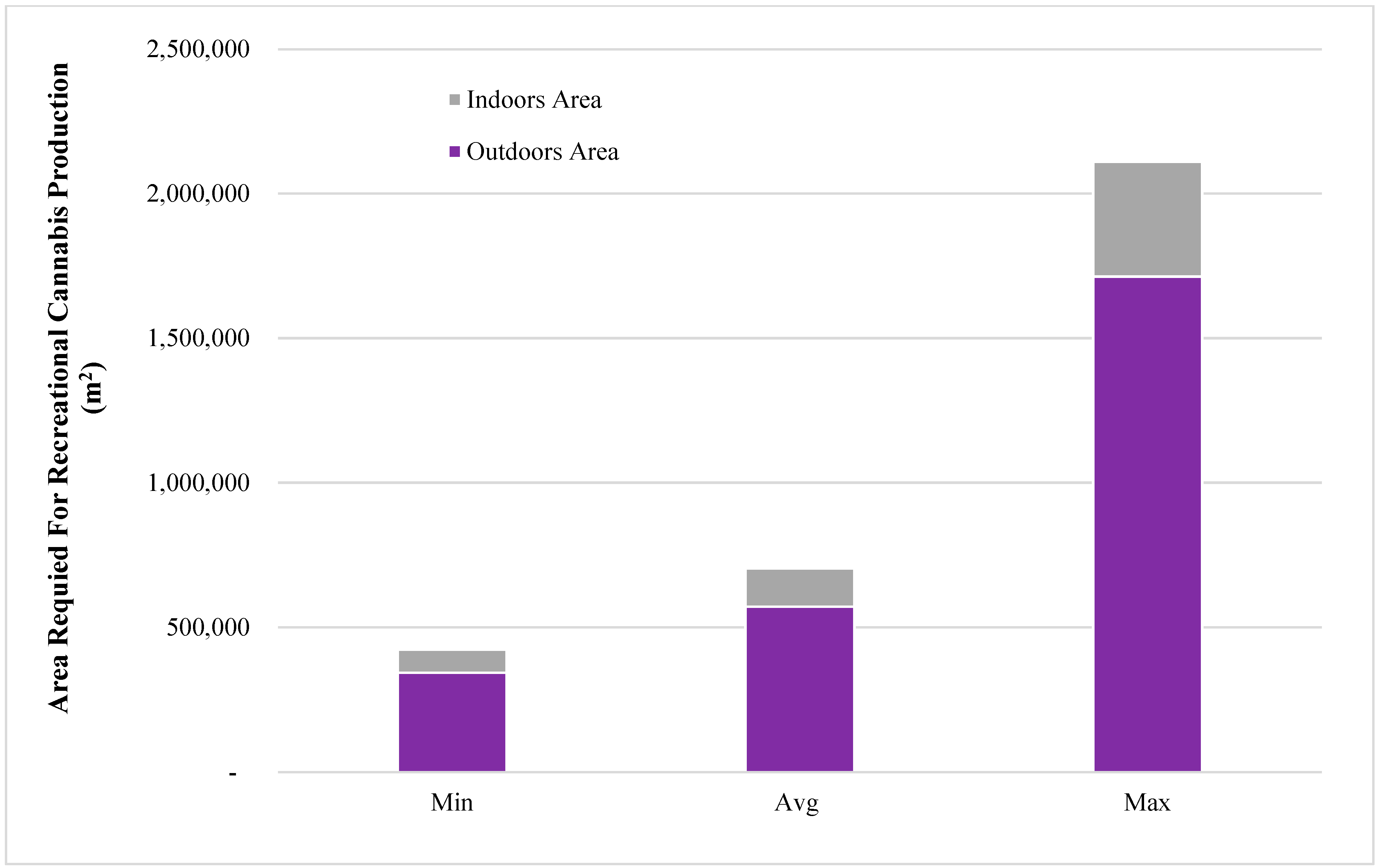
In 2024, the total recreational cannabis consumption in Canada was 422,083 kg. Based on cannabis yield rates of 2000 (minimum), 6000 (average) and 10,000 kg/ha (maximum) (equivalent to 0.2, 0.6 and 1.0 kg/m2), the land area required to satisfy this demand varies considerably. Under average yield conditions (6000 kg/ha or 0.6 kg/m2), the estimated land area required for recreational cannabis cultivation is approximately 703,472 m2, with 132,388 m2 potentially grown indoors and 571,083 m2 outdoors. Under maximum yield assumptions, only 422,083 m2 would be needed, with 79,433 m2 grown indoors and 342,650 m2 cultivated outdoors, whereas under minimum yield conditions, this requirement increases to 2,110,415 m2 (indoors: 397,165 m2 and outdoors: 1,713,250 m2) (Figure 1).

3.2. Indoor Space Reallocation: Green Beans Production Potential

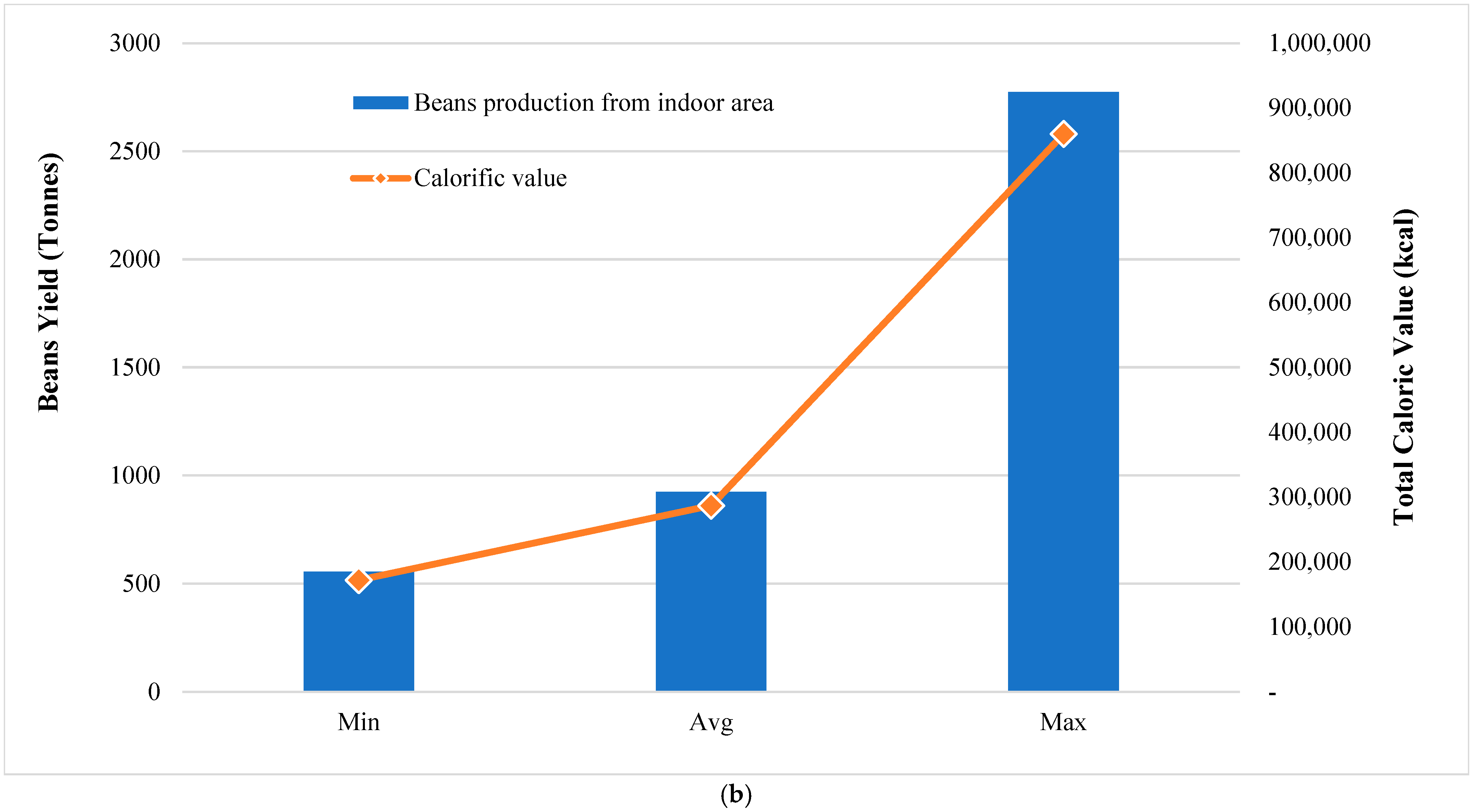
For indoor cannabis cultivation, assuming the space is converted to green bean production (with yields of 6985.57 g/m2 and a caloric value of 0.31 cal/g), the total bean production would range from 554.9 million to 2.77 billion grams (554.9 to 2774.4 tonnes), averaging 924.8 million grams (924.8 tonnes). This corresponds to a total caloric value of 172.0 million to 860.1 million calories, averaging 286.7 million calories (Figure 2). Under these conditions, indoor-grown beans could provide a one-day meal to 76,451 to 382,254 people, with an average of 127,418, and could sustain 209 to 1047 people annually, averaging 349.

3.3. Outdoor Space Reallocation: Lentils Production Potential

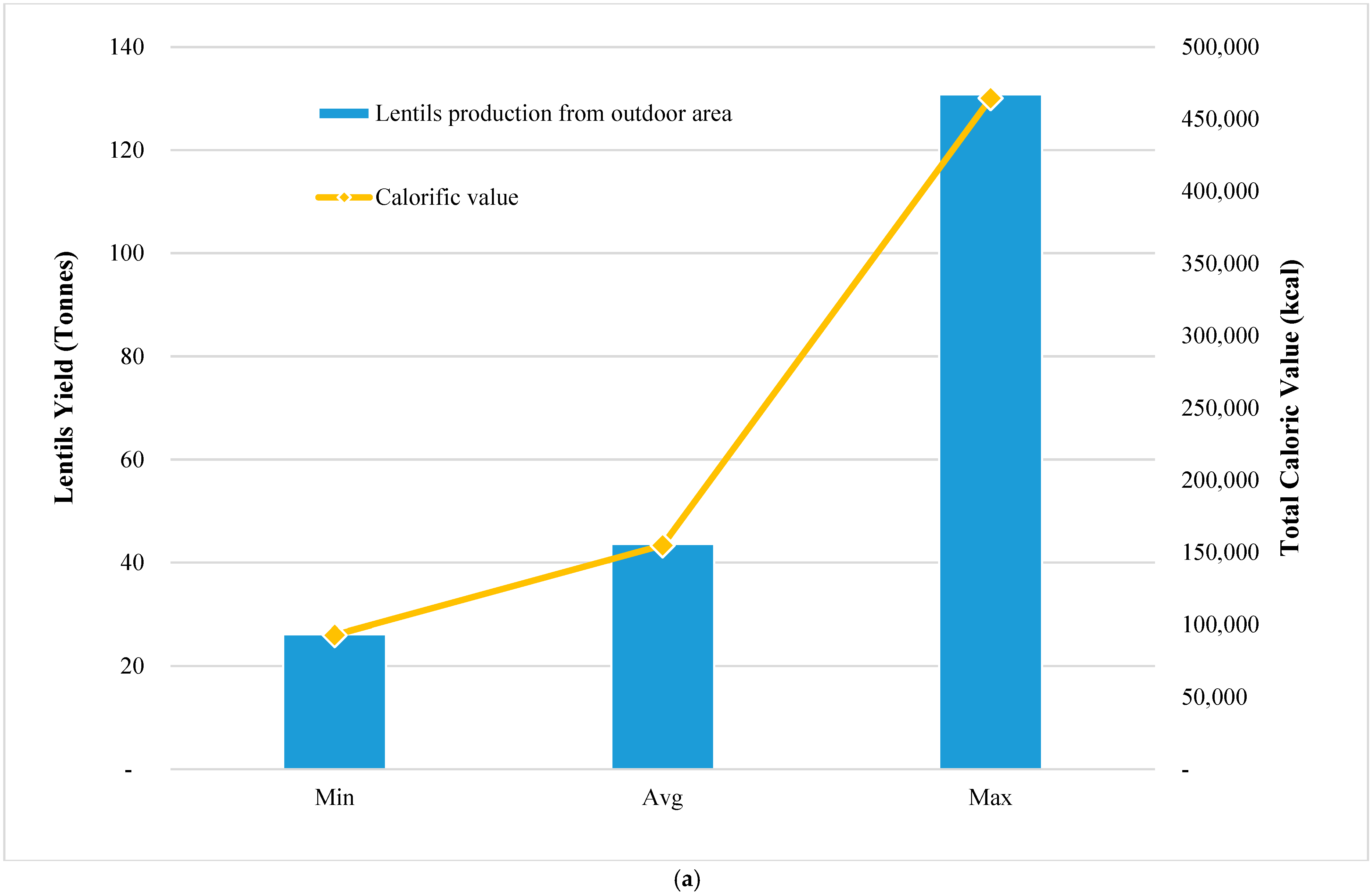
The potential opportunity cost of this land was analyzed by estimating lentil production if the same land were used for food crops. A total lentil cultivation area of 5.5 million acres (22,257,710,000 m2) yielded an estimated 1.7 million tonnes (1,700,000,000 kg) of lentils in total production. This translates to a national lentil yield of 76.38 g/m2, and with a caloric value of 4 cal/g, the outdoor land currently used for cannabis could produce between 26.2 and 130.9 million grams (26.2 to 130.9 tonnes) of lentils, averaging 43.6 million grams (or 43.6 tonnes). This would translate into a total caloric value ranging from 92.9 million to 464.5 million calories, averaging 154.8 million calories (Figure 2). Based on a daily caloric requirement of 2250 cal/person, this lentil production could provide one day’s meal to 41,292 to 206,460 people, with an average of 68,820 people fed. On an annual basis, this would support between 113 and 566 people per year. The average is 189 people.
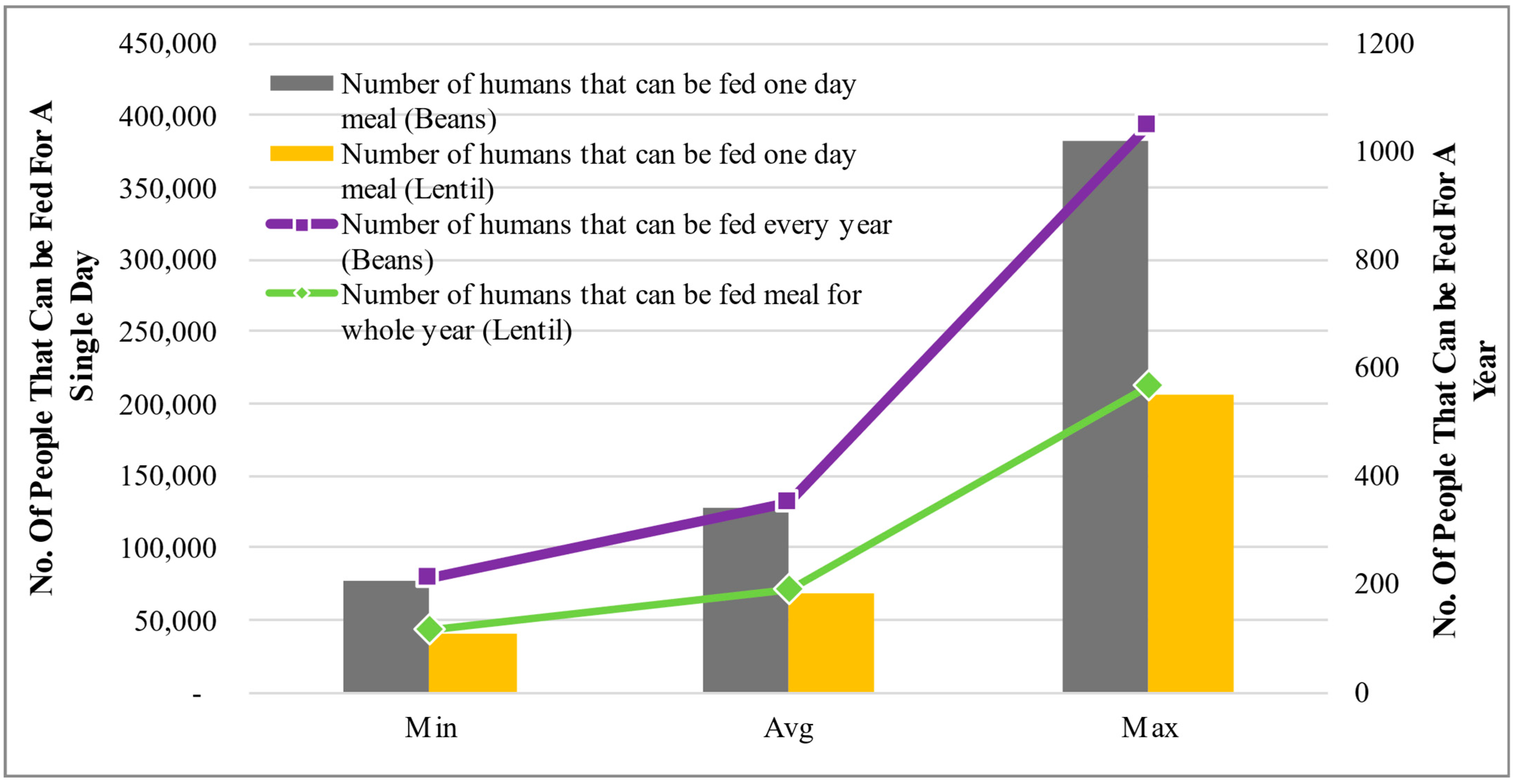
Overall, combining both indoor and outdoor production potential, replacing cannabis cultivation with food production could supply one day’s meal to between 117,743 and 588,714 people, with an average of 196,238. Annually, the same land could feed 323 to 1613 people, averaging 538 individuals per year (Figure 3).

3.4. Cannabis-Related Mortality Estimates in Canada

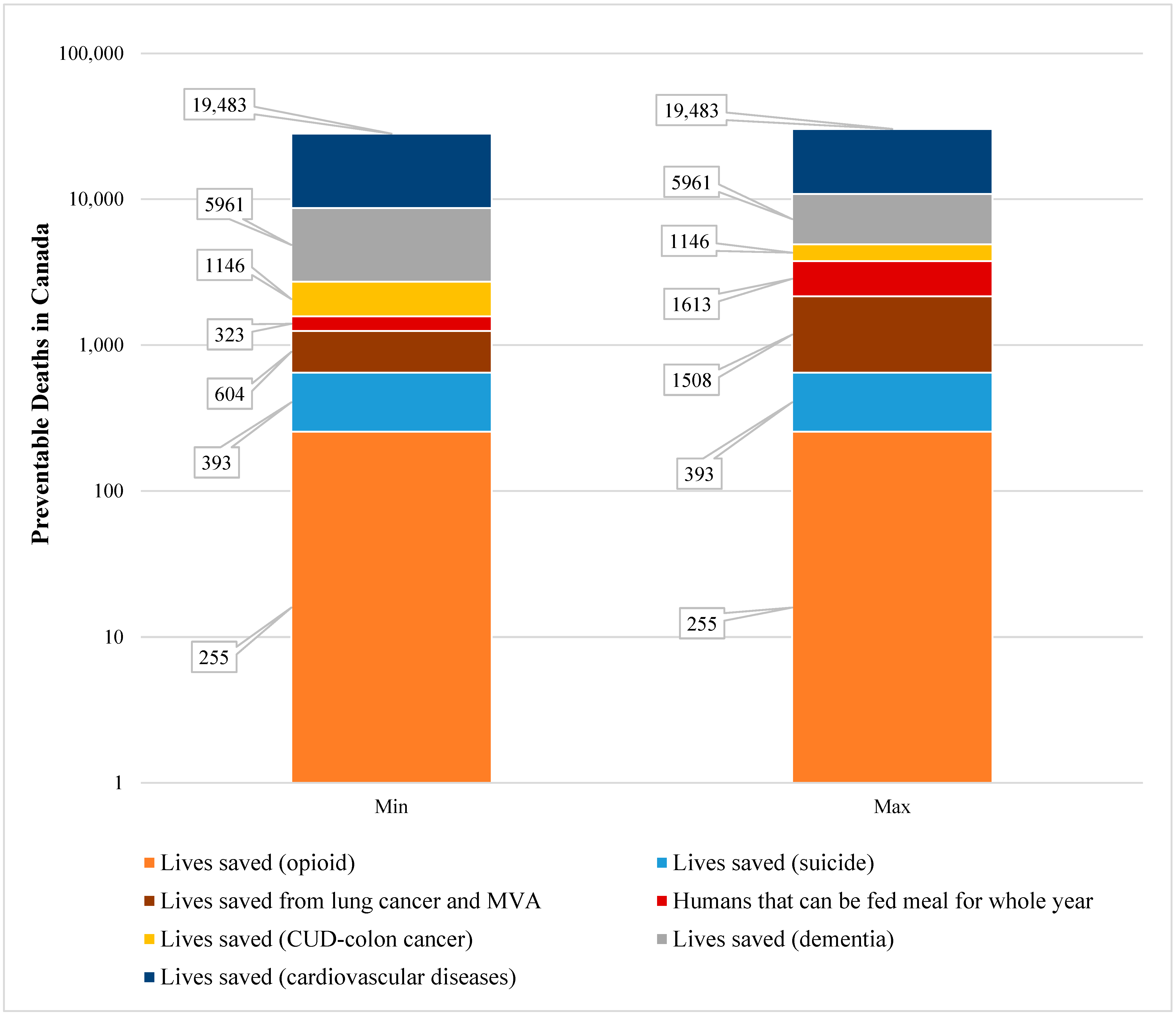
Early work on cannabis-related mortality focused only on MVA and lung cancer. According to a 2010 study, cannabis use in Canada was associated with an estimated 89 motor vehicle accident deaths and 130 lung cancer deaths under minimum impact assumptions. Under maximum impact scenarios, these figures increased to 267 motor vehicle deaths and 280 lung cancer deaths, resulting in a total estimated mortality range of 219 to 547 deaths annually attributable to cannabis use. Using 2010 population data (34,196,899), the percentage of cannabis users was approximately 10.96%, with mortality rates due to cannabis-related motor vehicle accidents ranging from 0.0024% to 0.0071%, and cancer mortality ranging from 0.0035% to 0.0075%. In 2024, with a projected national population of 39,742,430. Using the percentage mortality values from MVA and lung cancer, an estimated 245 to 736 deaths from motor vehicle accidents and 358 to 772 deaths from cancer, totaling between 604 and 1508 deaths occurred in 2024 due to cannabis use.
It is clear from the results of this study that such a narrow focus is incomplete and additional related deaths can be quantified for dementia, colon cancer, CUD-related suicide and opioid-related deaths. Based on the estimated acute care cases involving cannabis use and dementia diagnosis rate, approximately 5961 dementia-related deaths could be prevented by addressing cannabis use. Dementia was considered in this context due to its significant neurocognitive implications. For colon cancer, the estimated number of avoidable deaths was 1146. In relation to suicide, the projected number of lives that could be saved from CUD-related suicide was 393. Applying the increased risk of opioid poisoning among cannabis users, the analysis estimates that approximately 255 opioid-related deaths could potentially be prevented in 2024 if cannabis use was effectively addressed. In addition, it was estimated that approximately 19,483 lives could be saved annually if the elevated cardiovascular risks associated with cannabis use were prevented. The results of aggregating all the quantifiable annual deaths due to cannabis use in Canada as well as those lives that would be saved from hunger if cannabis growing was diverted to food is shown in Figure 4. As can be seen the largest threat from cannabis is increased neurodegenerative disease burden. The number of premature deaths per year in aggregate that can be attributed to recreational cannabis use in Canada is between 28,051 and 29,793, making cannabis the third leading cause of death within Canada.

4. Discussion

This study provides a novel quantitative assessment of the land requirements for recreational cannabis cultivation in Canada and explores the potential opportunity costs in terms of foregone food production and associated human nutrition. The findings suggest that while cannabis production occupies a relatively modest amount of land nationally, its reallocation to food crops—specifically lentils and green beans—could contribute meaningfully to food security, especially given the high caloric yields of these crops per unit area.
Under average yield assumptions, approximately 703,472 m2 of land is currently required to meet Canada’s annual recreational cannabis demand of 422,083 kg. Although this land footprint is small relative to Canada’s total agricultural area which covers 62.2 million hectares (622,000,000,000 m2) [77], it could alternatively be used to produce 43.6 tonnes of lentils and 924.8 tonnes of beans, yielding a combined 441.5 million calories on average. These food resources could provide a single day’s meal for nearly 200,000 individuals or sustain over 500 individuals per year. The maximum estimates indicate that repurposing land currently used for cannabis cultivation to lentil and bean production could sustain over 1600 individuals annually, underscoring the potential nutritional impact of reallocating even modest areas of land away from non-food to food crops. Based on a minimum caloric requirement of 1000 calories per person per day for basic human survival [78], it is estimated that the land currently allocated to recreational cannabis cultivation could instead produce sufficient food to sustain approximately 3629 individuals. This is especially relevant given the global burden of undernutrition: maternal and child undernutrition alone are estimated to account for over 220 million disability-adjusted life years (DALYs) in low- and middle-income countries, a figure that rises to nearly 340 million DALYs when other nutrition-related risk factors are included, representing almost half the disease burden in the developing world [79]. A broad approximation, based on allocating medical expenditures in low- and middle-income countries according to the share of disability-adjusted life years (DALYs) linked to maternal and child undernutrition, indicates that the associated direct healthcare costs amount to approximately US$30 billion annually [79].
This analysis underscores the distinct utility of indoor versus outdoor cultivation spaces. Indoor areas, when repurposed for green bean cultivation, offer high caloric returns per unit area due to substantially higher yields, despite the lower caloric density of the crop. These findings emphasize the importance of selecting crops that either maximize yield or provide high nutritional value to optimize land use efficiency. Such strategic crop selection is crucial for enhancing global food accessibility. The dual analysis reflects the broader issue of land use prioritization [80,81], particularly in a country like Canada where urban agriculture [82,83] and climate-resilient crop strategies [84] are increasingly relevant. Future work could extend this approach by identifying region-specific crop substitutions that maximize caloric, nutritional, or economic outcomes under local climatic and agronomic conditions. The current study does not attempt to compare employment intensity or wage structures across sectors but instead focuses on opportunity costs measured in food availability and public health outcomes. From a sustainability perspective, employment and economic gains must be evaluated alongside health externalities and essential human needs such as nutrition, rather than considered in isolation. Future work is needed in this area. Moreover, this study incorporates a public health perspective by quantifying cannabis-related mortality. Based on mortality data extrapolated from a 2010 study, cannabis use may be associated with between 604 and 1508 deaths annually in Canada due to motor vehicle accidents and lung cancer. In Canada, studies suggest that over a five-year period following initial hospital-based care for (CUD), 3.5% (3770 individuals) of patients died, compared to 0.6% (2550 individuals) in a matched general population cohort [25]. Those who received hospital-based CUD treatment faced significantly elevated risks of mortality across all assessed categories, with particularly heightened vulnerability to deaths resulting from suicide (ten times), traumatic injury, opioid overdose, other substance poisonings, and lung cancer [25]. Even after adjusting for coexisting health conditions, the mortality risk for individuals with CUD remained substantially higher than that of their general population counterparts [25]. These figures raise important concerns about the public health consequences of widespread use. When juxtaposed with the food security benefits of reallocating land, this dual burden—lost nutritional potential and increased mortality risk—warrants serious policy attention.
The mortality estimates associated with CUD underscore a significant and often overlooked public health burden, particularly considering its association with dementia, colon cancer, and suicide. Projections indicate that almost 6000 dementia-related deaths, over 1100 deaths from colon cancer, and approximately 393 suicides could potentially be prevented through interventions addressing cannabis use. Similarly, an estimated 20,000 cardiovascular-related deaths could potentially be prevented by addressing the elevated risks associated with cannabis use. When combined, these figures amount to over 29,000 preventable deaths—a total that is comparable and even exceeding in some cases to the annual mortality burden of Canada’s leading causes of death, including cancer (84,629), heart disease (57,890 deaths), accidents (20,597 deaths), cerebrovascular disease (13,833 deaths), chronic lower respiratory diseases (12,994) [71], and euthanasia/medical assistance in dying (MAiD), which accounted for 16,499 deaths in 2025 [85]. It is clear the risk to human health from the cannabis industry in Canada is much larger than the increased food insecurity caused by the land use change. These findings are especially relevant in the context of increasing cannabis use and the evolving regulatory landscape.
These findings contribute to broader debates on the societal trade-offs of legal cannabis production. While the legalization of cannabis has brought some economic benefits [4], the associated opportunity costs in land, food, and public health have remained underexplored. This study demonstrates that cannabis cultivation can displace meaningful food production. As climate change intensifies pressure on global food systems [86,87], reallocating land toward high-efficiency, calorie-dense crops may become increasingly important. In this context, sustainable agricultural innovations such as agrivoltaics—which combines crop cultivation with solar energy generation—offer promising solutions by simultaneously optimizing land use [88,89], and enhancing crop productivity [90,91,92,93,94], thus contributing to climate resilience.
Most importantly these results indicate that there is a substantial business risk from the inherent human life cost for widespread cannabis use. These risks are so large they could represent an existential risk for the entire industry. One area of concern is the question of whether businesses currently operating in the cannabis sector could be held liable for deaths associated with recreational cannabis consumption? As cannabis-related fatalities become more visible, one might also ask whether the industry will retain its moral legitimacy in public discourse. Research suggests that moral legitimacy is positively associated with industry performance [95]. Previous research has also explored business ethics in the face of grand challenges—such as climate change, financial crises, and global health emergencies—through an ethical lens [96]. A parallel can be drawn from debates surrounding the ethics of investing in tobacco companies, where similar concerns have been raised [97], including calls for industry-wide corporate death penalties [98]. Furthermore, what are the implications if cannabis production and sales become delegalized for recreational use in Canada? In this context, it is worth questioning whether corporate social responsibility (CSR) initiatives alone are sufficient to justify the continued operation of cannabis-related businesses. Studies on the tobacco industry indicate that standard CSR efforts have done little to legitimize such companies [99] suggesting that similar challenges may arise for the cannabis industry. Business leaders in the cannabis industry should consider how to minimize the toll on human lives caused by the industry as a whole and their own companies (e.g., percent of market share × overall life costs).
From an ethical standpoint, this study raises important questions about the responsible stewardship of cannabis businesses directly and finite land resources more broadly. In a world where hunger and malnutrition persist for millions [100,101,102], the use of arable land for non-essential, recreational crops such as cannabis must be critically examined. Ethical frameworks grounded in principles of justice and utility [103] suggest that land should be allocated in ways that maximize societal well-being, particularly when alternative uses—such as food production—can directly support human survival. The ethical imperative to prioritize food security over recreational consumption becomes even more compelling when considering that land reallocation could reduce preventable deaths and nourish vulnerable populations. These considerations strengthen the case for re-evaluating current land use priorities through a lens of equity, public health, and intergenerational responsibility.
In addition to structural and economic factors, rapidly evolving social norms and perceptions of cannabis safety may further influence patterns of use. Legalization and commercialization can normalize consumption and reduce perceived risk, particularly among younger populations, potentially increasing overall exposure even in the absence of changes in formal policy. Addressing these dynamics may require complementary public health strategies, including clear risk communication, evidence-based education campaigns, and regulatory approaches that limit misleading health claims or aggressive marketing. Such measures could help mitigate demand-side pressures while broader land-use and sustainability considerations are addressed.
Finally, while this study presents conservative estimates based on current yield data and consumption rates, future research should account for improvements in crop yield efficiency, and the environmental costs of indoor cannabis cultivation, particularly in terms of energy use and carbon emissions. An integrated life cycle analysis (LCA) would offer a more comprehensive understanding of cannabis’ true ecological footprint. In conclusion, the current allocation of land to cannabis cultivation, though limited in scope, presents an important policy and ethical dilemma. With modest reallocation, thousands could be fed annually, and avoidable deaths prevented.
To put things into perspective, in 2021, hunger impacted an estimated 828 million individuals across the globe [104]. Hunger is responsible for the annual deaths of approximately 9 million individuals worldwide [105]. Similarly, approximately 2.3 billion people worldwide—equating to 29.3% of the global population—experienced moderate to severe food insecurity in 2021 [104]. Moreover, in 2022, it was estimated that worldwide, 149 million children under the age of five experienced stunted growth (being too short for their age), while 45 million were affected by wasting (being too thin for their height) [106]. In addition, close to 50% of all deaths in children under the age of five are associated with undernutrition [106]. Thus, policymakers should consider these trade-offs in future regulatory and agricultural frameworks, ensuring that land use decisions align with broader goals of public health, sustainability, and food security.

5. Conclusions

As Canada reflects on over five years of legalized recreational cannabis, it may re-examine the broader societal costs—particularly in land use and public health. While cannabis cultivation has supported a new industry, it has also diverted valuable agricultural land from producing low-cost food in an era when millions go undernourished each day. In 2024, meeting Canada’s recreational cannabis demand required up to 2.1 million m2 of land; this area could alternatively produce enough food to provide one day’s meal for nearly 600,000 people or sustain over 1600 individuals annually. This substantial land footprint presents a critical opportunity cost, particularly in a global context marked by rising food insecurity and increasing pressure on agricultural systems from rising global populations.
These numbers, however, are completely overshadowed by the health burden associated with cannabis use as it is far greater than previously recognized. When expanding beyond earlier estimates focused narrowly on lung cancer and MVA, this analysis found that between 28,051 and 29,793 deaths in 2024 may be attributed to cannabis-related risks. This includes approximately 19,500 deaths from cardiovascular disease, nearly 6000 from dementia, 1100 from colon cancer, and hundreds more from suicide and opioid-related poisoning. These figures exceed the annual mortality burden of several major public health threats—and when considered in totality, cannabis-related mortality now appears to be the third leading cause of death in the country—surpassed only by cancer and cardiovascular disease. These numbers are so surprisingly large they represent a near and present existential business risk for the cannabis industry as a whole.
Taken together, the combined land and health costs of cannabis legalization warrant serious policy reconsideration at the individual firm level, industry level and for national policy. These results pose significant questions for policymakers and public health officials to consider the following:
(1)
At what point do the number of cannabis-related premature deaths become politically and socially unacceptable?
(2)
How many users would need to abstain in order to keep mortality below that threshold?
Addressing these questions should be a central focus of future research, enabling policymakers and business leaders to determine whether continued legalization remains viable or whether corrective measures—including de-legalization or recriminalization—are necessary to safeguard public health and national resources.

Author Contributions

Conceptualization, J.M.P.; methodology, U.J. and J.M.P.; validation, U.J. and J.M.P.; formal analysis, U.J. and J.M.P.; investigation, U.J.; resources, J.M.P.; data curation, U.J.; writing—original draft preparation, U.J. and J.M.P.; writing—review and editing, U.J. and J.M.P.; visualization, U.J.; supervision, J.M.P.; project administration, J.M.P.; funding acquisition, J.M.P. All authors have read and agreed to the published version of the manuscript.

Funding

This research received no external funding.

Institutional Review Board Statement

Not applicable.

Informed Consent Statement

Not applicable.

Data Availability Statement

The raw data supporting the conclusions of this article will be made available by the authors upon request.

Conflicts of Interest

The authors declare no conflicts of interest.

References

  1. Alcohol and Drug Foundation Cannabis—Alcohol and Drug Foundation. Available online: https://adf.org.au/drug-facts/cannabis/ (accessed on 27 April 2025).
  2. Health Canada. Taking Stock of Progress: Cannabis Legalization and Regulation in Canada. Available online: https://www.canada.ca/en/health-canada/programs/engaging-cannabis-legalization-regulation-canada-taking-stock-progress/document.html (accessed on 24 April 2025).
  3. Bryan, K. Cannabis Overview. Available online: https://www.ncsl.org/civil-and-criminal-justice/cannabis-overview (accessed on 25 April 2025).
  4. Government of Canada. The Daily—Five Years Since Legalization, What Have We Learned About Cannabis in Canada? Available online: https://www150.statcan.gc.ca/n1/daily-quotidien/231016/dq231016c-eng.htm (accessed on 25 April 2025).
  5. Mital, S.; Nguyen, H.V. Legalizing Youth-Friendly Cannabis Edibles and Extracts and Adolescent Cannabis Use. JAMA Netw. Open 2025, 8, e255819. [Google Scholar] [CrossRef] [PubMed]
  6. Hall, W.; Stjepanović, D.; Dawson, D.; Leung, J. The Implementation and Public Health Impacts of Cannabis Legalization in Canada: A Systematic Review. Addiction 2023, 118, 2062–2072. [Google Scholar] [CrossRef] [PubMed]
  7. National Academies of Sciences, Engineering, and Medicine; Health and Medicine Division; Board on Population Health and Public Health Practice; Committee on the Health Effects of Marijuana: An Evidence Review and Research Agenda. The Health Effects of Cannabis and Cannabinoids: The Current State of Evidence and Recommendations for Research; National Academies Press: Washington, DC, USA, 2017. [Google Scholar]
  8. Giedd, J.N. The Teen Brain: Insights from Neuroimaging. J. Adolesc. Health 2008, 42, 335–343. [Google Scholar] [CrossRef]
  9. Taylor, D.R.; Poulton, R.; Moffitt, T.E.; Ramankutty, P.; Sears, M.R. The Respiratory Effects of Cannabis Dependence in Young Adults. Addiction 2000, 95, 1669–1677. [Google Scholar] [CrossRef] [PubMed]
  10. Urits, I.; Gress, K.; Charipova, K.; Li, N.; Berger, A.A.; Cornett, E.M.; Hasoon, J.; Kassem, H.; Kaye, A.D.; Viswanath, O. Cannabis Use and Its Association with Psychological Disorders. Psychopharmacol. Bull. 2020, 50, 56–67. [Google Scholar] [CrossRef]
  11. Hasin, D.; Walsh, C. Cannabis Use, Cannabis Use Disorder, and Comorbid Psychiatric Illness: A Narrative Review. J. Clin. Med. 2021, 10, 15. [Google Scholar] [CrossRef]
  12. Lynskey, M.; Hall, W. The Effects of Adolescent Cannabis Use on Educational Attainment: A Review. Addiction 2000, 95, 1621–1630. [Google Scholar] [CrossRef]
  13. Bovasso, G.B. Cannabis Abuse as a Risk Factor for Depressive Symptoms. Am. J. Psychiatry 2001, 158, 2033–2037. [Google Scholar] [CrossRef]
  14. Degenhardt, L.; Hall, W.; Lynskey, M. Exploring the Association between Cannabis Use and Depression. Addiction 2003, 98, 1493–1504. [Google Scholar] [CrossRef]
  15. Smucker Barnwell, S.; Earleywine, M.; Gordis, E.B. Alcohol Consumption Moderates the Link Between Cannabis Use and Cannabis Dependence in an Internet Survey. Psychol. Addict. Behav. 2005, 19, 212–216. [Google Scholar] [CrossRef]
  16. Degenhardt, L.; Hall, W.; Lynskey, M. The Relationship between Cannabis Use and Other Substance Use in the General Population. Drug Alcohol Depend. 2001, 64, 319–327. [Google Scholar] [CrossRef]
  17. Degenhardt, L.; Lynskey, M.; Coffey, C.; Patton, G. ‘Diagnostic Orphans’ among Young Adult Cannabis Users: Persons Who Report Dependence Symptoms but Do Not Meet Diagnostic Criteria. Drug Alcohol Depend. 2002, 67, 205–212. [Google Scholar] [CrossRef]
  18. Jeffers, A.M.; Glantz, S.; Byers, A.L.; Keyhani, S. Association of Cannabis Use with Cardiovascular Outcomes Among US Adults. J. Am. Heart Assoc. 2024, 13, e030178. [Google Scholar] [CrossRef]
  19. Abramovici, H. Information for Health Care Professionals: Cannabis (Marihuana, Marijuana) and the Cannabinoids/Prepared by Health Canada; Health Canada: Ottawa, ON, Canada, 2013.
  20. Volkow, N.D.; Baler, R.D.; Compton, W.M.; Weiss, S.R.B. Adverse Health Effects of Marijuana Use. N. Engl. J. Med. 2014, 370, 2219–2227. [Google Scholar] [CrossRef]
  21. Monte, A.A.; Shelton, S.K.; Mills, E.; Saben, J.; Hopkinson, A.; Sonn, B.; Devivo, M.; Chang, T.; Fox, J.; Brevik, C.; et al. Acute Illness Associated with Cannabis Use, by Route of Exposure. Ann. Intern. Med. 2019, 170, 531–537. [Google Scholar] [CrossRef]
  22. Myran, D.T.; Pugliese, M.; Harrison, L.D.; Stall, N.M.; Webber, C. Risk of Dementia in Individuals with Emergency Department Visits or Hospitalizations Due to Cannabis. JAMA Neurol. 2025, 82, e250530. [Google Scholar] [CrossRef] [PubMed]
  23. DeFilippis, E.M.; Bajaj, N.S.; Singh, A.; Malloy, R.; Givertz, M.M.; Blankstein, R.; Bhatt, D.L.; Vaduganathan, M. Marijuana Use in Patients with Cardiovascular Disease. J. Am. Coll. Cardiol. 2020, 75, 320–332. [Google Scholar] [CrossRef]
  24. Cuomo, R.E. Cannabis Use Disorder and Mortality among Patients with Colon Cancer. Ann. Epidemiol. 2025, 106, 8–10. [Google Scholar] [CrossRef]
  25. Myran, D.T.; Pugliese, M.; McDonald, A.J.; Xiao, J.; Fischer, B.; Finkelstein, Y.; Tanuseputro, P.; Firth, J.; Pakpour, A.; Hsu, C.-W.; et al. Cannabis Use Disorder Emergency Department Visits and Hospitalizations and 5-Year Mortality. JAMA Netw. Open 2025, 8, e2457852. [Google Scholar] [CrossRef] [PubMed]
  26. Maffre Maviel, G.; Somma, C.; Davisse-Paturet, C.; Airagnes, G.; Melchior, M. The Role of Depression in the Relationship between Cannabis Use and Suicidal Behaviours: A Systematic Review and Meta-Analysis. Drug Alcohol Depend. 2025, 273, 112714. [Google Scholar] [CrossRef] [PubMed]
  27. Budney, A.J.; Sofis, M.J.; Borodovsky, J.T. An Update on Cannabis Use Disorder with Comment on the Impact of Policy Related to Therapeutic and Recreational Cannabis Use. Eur. Arch. Psychiatry Clin. Neurosci. 2019, 269, 73–86. [Google Scholar] [CrossRef]
  28. Hasin, D.S.; Kerridge, B.T.; Saha, T.D.; Huang, B.; Pickering, R.; Smith, S.M.; Jung, J.; Zhang, H.; Grant, B.F. Prevalence and Correlates of DSM-5 Cannabis Use Disorder, 2012–2013: Findings from the National Epidemiologic Survey on Alcohol and Related Conditions–III. Am. J. Psychiatry 2016, 173, 588–599. [Google Scholar] [CrossRef]
  29. Taylor, M.; Collin, S.M.; Munafò, M.R.; MacLeod, J.; Hickman, M.; Heron, J. Patterns of Cannabis Use during Adolescence and Their Association with Harmful Substance Use Behaviour: Findings from a UK Birth Cohort. J. Epidemiol. Community Health 2017, 71, 764–770. [Google Scholar] [CrossRef] [PubMed]
  30. Is Cannabis Use Associated with Increased Risk of Cigarette Smoking Initiation, Persistence, and Relapse? Longitudinal Data from a Representative Sample of US Adults. Available online: https://www.psychiatrist.com/jcp/cannabis-use-and-cigarette-smoking/ (accessed on 28 April 2025).
  31. Kristman-Valente, A.N.; Hill, K.G.; Epstein, M.; Kosterman, R.; Bailey, J.A.; Steeger, C.M.; Jones, T.M.; Abbott, R.D.; Johnson, R.M.; Walker, D.; et al. The Relationship Between Marijuana and Conventional Cigarette Smoking Behavior from Early Adolescence to Adulthood. Prev. Sci. 2017, 18, 428–438. [Google Scholar] [CrossRef] [PubMed]
  32. Walker, M.; Carpino, M.; Lightfoot, D.; Rossi, E.; Tang, M.; Mann, R.; Saarela, O.; Cusimano, M.D. The Effect of Recreational Cannabis Legalization and Commercialization on Substance Use, Mental Health, and Injury: A Systematic Review. Public Health 2023, 221, 87–96. [Google Scholar] [CrossRef]
  33. Allaf, S.; Lim, J.S.; Buckley, N.A.; Cairns, R. The Impact of Cannabis Legalization and Decriminalization on Acute Poisoning: A Systematic Review. Addiction 2023, 118, 2252–2274. [Google Scholar] [CrossRef] [PubMed]
  34. LaMotte, S. Marijuana Hospital Visits Linked to Dementia Diagnosis Within 5 Years, Study Finds. Available online: https://www.cnn.com/2025/04/20/health/marijuana-dementia-wellness/index.html (accessed on 26 April 2025).
  35. Government of Canada. Alzheimer’s Awareness Month. Available online: https://www.statcan.gc.ca/o1/en/plus/5374-alzheimers-awareness-month (accessed on 28 April 2025).
  36. Government of Canada. Leading Causes of Death, Total Population, by Age Group. Available online: https://www150.statcan.gc.ca/t1/tbl1/en/tv.action?pid=1310039401 (accessed on 28 April 2025).
  37. Alberta Municiplaities Strength in Numbers Repeal the Cannabis Act|Alberta Municipalities. Available online: https://www.abmunis.ca/resolution/repeal-cannabis-act (accessed on 28 April 2025).
  38. Deloitte Six Years of Legalization: The Economic and Social Impact of Canada’s Cannabis Sector|Deloitte Canada. Available online: https://www.deloitte.com/ca/en/Industries/consumer-products/research/an-industry-makes-its-mark.html (accessed on 23 January 2026).
  39. Statistics Canada Government of Canada. Alcohol and Cannabis Sales in Canada, April 2022 to March 2023. Available online: https://www150.statcan.gc.ca/n1/pub/11-627-m/11-627-m2024012-eng.htm (accessed on 28 April 2025).
  40. Government of Canada Overview of the Canadian Agri-Food System. Available online: https://agriculture.canada.ca/en/sector/canadian-food-system/overview-agri-food-system (accessed on 23 January 2026).
  41. Statista Cannabis-Canada|Statista Market Forecast. Available online: http://statista.com/outlook/hmo/cannabis/canada (accessed on 27 May 2025).
  42. Lamers, M. Canadian Federal Cannabis Tax Revenue Outpaces Beer, Wine. Available online: https://mjbizdaily.com/canadian-federal-cannabis-tax-revenue-outpaces-beer-wine/ (accessed on 6 May 2025).
  43. Ghobrial, A. Canadians Have Lost More than $131 Billion Investing in Cannabis Companies: Firm. Available online: https://www.ctvnews.ca/canada/article/canadians-have-lost-more-than-131-billion-investing-in-cannabis-companies-firm/ (accessed on 28 April 2025).
  44. Mc Govern, B. Cannabis Weekly Round-Up: Canadian Investors Have Lost C$131 Billion. Available online: https://investingnews.com/cannabis-weekly-canadians-lost-billions/ (accessed on 8 May 2025).
  45. Yousif, N. Canadian Cannabis Market Struggles Five Years After Legalisation. BBC, 17 October 2023. [Google Scholar]
  46. Sabet, K. Smokescreen: What the Marijuana Industry Doesn’t Want You to Know. Mo. Med. 2021, 118, 411–415. [Google Scholar]
  47. Bero, L.A. Public Health Chronicles. Public Health Rep. 2005, 120, 200–208. [Google Scholar] [CrossRef]
  48. STOP Tobacco Industry Allies. Available online: https://exposetobacco.org/tobacco-industry-allies/ (accessed on 28 April 2025).
  49. CourtListener United States v. Philip Morris USA, Inc.—CourtListener.Com. Available online: https://www.courtlistener.com/opinion/2509111/united-states-v-philip-morris-usa-inc/ (accessed on 28 April 2025).
  50. National Center for Chronic Disease Prevention and Health Promotion (US) Office on Smoking and Health Fifty Years of Change 1964–2014. In The Health Consequences of Smoking—50 Years of Progress: A Report of the Surgeon General; Centers for Disease Control and Prevention (US): Washington, DC, USA, 2014.
  51. Krishnan, R.; Pearce, J.M. Economic Impact of Substituting Solar Photovoltaic Electric Production for Tobacco Farming. Land Use Policy 2018, 72, 503–509. [Google Scholar] [CrossRef]
  52. MacKinnon, B. Pricing Human Life. Sci. Technol. Hum. Values 1986, 11, 29–39. [Google Scholar] [CrossRef]
  53. Hammitt, J.K. Valuing Changes in Mortality Risk: Lives Saved Versus Life Years Saved. Rev. Environ. Econ. Policy 2007, 1, 228–240. [Google Scholar] [CrossRef]
  54. Caney, S. Human Rights, Climate Change, and Discounting. Environ. Politics 2008, 17, 536–555. [Google Scholar] [CrossRef]
  55. Tasioulas, J. Towards a Philosophy of Human Rights. Curr. Leg. Probl. 2012, 65, 1–30. [Google Scholar] [CrossRef][Green Version]
  56. Nolt, J. Casualties as a Moral Measure of Climate Change. Clim. Change 2015, 130, 347–358. [Google Scholar] [CrossRef]
  57. Parncutt, R. The Human Cost of Anthropogenic Global Warming: Semi-Quantitative Prediction and the 1000-Tonne Rule. Front. Psychol. 2019, 10, 2323. [Google Scholar] [CrossRef]
  58. Pearce, J.M.; Parncutt, R. Quantifying Global Greenhouse Gas Emissions in Human Deaths to Guide Energy Policy. Energies 2023, 16, 6074. [Google Scholar] [CrossRef]
  59. Government of Canada Consolidated Federal Laws of Canada, Cannabis Act. Available online: https://laws-lois.justice.gc.ca/eng/acts/c-24.5/ (accessed on 23 January 2026).
  60. Government of Canada Consolidated Federal Laws of Canada, Cannabis Regulations. Available online: https://laws-lois.justice.gc.ca/eng/regulations/sor-2018-144/index.html (accessed on 23 January 2026).
  61. Health Canada Cannabis Market Data. Available online: https://www.canada.ca/en/health-canada/services/drugs-medication/cannabis/research-data/market.html (accessed on 30 April 2025).
  62. Statista Recreational Cannabis Consumption Canada 2020–2025. Available online: https://www.statista.com/statistics/1282790/canada-legal-recreational-cannabis-consumption/ (accessed on 28 April 2025).
  63. Government of Alberta Growing Hemp in Alberta. Available online: https://open.alberta.ca/publications/growing-hemp-in-alberta (accessed on 30 April 2025).
  64. Fischer, B.; Imtiaz, S.; Rudzinski, K.; Rehm, J. Crude Estimates of Cannabis-Attributable Mortality and Morbidity in Canada–Implications for Public Health Focused Intervention Priorities. J. Public Health 2016, 38, 183–188. [Google Scholar] [CrossRef]
  65. Government of Canada. Prevalence of Cannabis Consumption in Canada. Available online: https://www150.statcan.gc.ca/t1/tbl1/en/tv.action?pid=3610059701 (accessed on 29 April 2025).
  66. Worldometer Canada Population. 2025. Available online: http://www.worldometers.info/world-population/canada-population/ (accessed on 29 April 2025).
  67. Health Canada Key Findings: Cannabis Use (Non-Medical) in Canada. 2023. Available online: https://health-infobase.canada.ca/cannabis/ (accessed on 30 April 2025).
  68. Public Health Agency of Canada Colorectal Cancer. Available online: https://www.canada.ca/en/public-health/services/chronic-diseases/cancer/colorectal-cancer.html (accessed on 10 May 2025).
  69. Public Health Agency of Canada Suicide and Self-Harm-Suicide Mortality—Canada.Ca. Available online: https://health-infobase.canada.ca/mental-health/suicide-self-harm/suicide-mortality.html (accessed on 12 May 2025).
  70. Public Health Agency of Canada Key Findings: Opioid- and Stimulant-Related Harms in Canada. Available online: https://health-infobase.canada.ca/substance-related-harms/opioids-stimulants/ (accessed on 12 May 2025).
  71. Government of Canada. Top 10 Leading Causes of Death, Canada. 2023. Available online: https://www150.statcan.gc.ca/n1/daily-quotidien/250305/t001a-eng.htm (accessed on 11 May 2025).
  72. Statistics Canada Government of Canada. Lentil You Find a Better One, Here’s a Good Story. Available online: https://www.statcan.gc.ca/o1/en/plus/5878-lentil-you-find-better-one-heres-good-story (accessed on 30 April 2025).
  73. Agriculture and Agri-Food Canada. Statistical Overview of the Canadian Greenhouse Vegetable and Mushroom Industry. 2023. Available online: https://agriculture.canada.ca/sites/default/files/documents/2024-10/GH%20Vegetable_Report_2023_EN.pdf (accessed on 30 April 2025).
  74. CalorieKing Calories in Green Beans (Snap, String), Raw|CalorieKing. Available online: https://www.calorieking.com/us/en/foods/f/calories-in-fresh-or-dried-vegetables-green-beans-snap-string-raw/r_vT8ODgQNOHJi08CaCk6g (accessed on 30 April 2025).
  75. MyNetDiary. Calories in Canadian Lentils by Chtoura and Nutrition Facts. Available online: https://www.mynetdiary.com/food/calories-in-canadian-lentils-by-chtoura-cup-22145760-0.html (accessed on 30 April 2025).
  76. Meyer, T.K.; Pearce, J.M. How Easy Is It to Feed Everyone? Economic Alternatives to Eliminate Human Nutrition Deficits. Food Ethics 2022, 8, 3. [Google Scholar] [CrossRef]
  77. Agriculture and Agri-Food Canada. Overview of Canada’s Agriculture and Agri-Food Sector. Available online: https://agriculture.canada.ca/en/sector/overview (accessed on 8 May 2025).
  78. Cahill, G.F.; Owen, O.E. Starvation and Survival. Trans. Am. Clin. Climatol. Assoc. 1968, 79, 13–20. [Google Scholar] [CrossRef]
  79. Food and Agriculture Organization of the United Nations. The State of Food Insecurity in the World. Available online: https://www.fao.org/4/y5650e/y5650e03.htm (accessed on 9 May 2025).
  80. Francis, C.A.; Hansen, T.E.; Fox, A.A.; Hesje, P.J.; Nelson, H.E.; Lawseth, A.E.; English, A. Farmland Conversion to Non-Agricultural Uses in the US and Canada: Current Impacts and Concerns for the Future. Int. J. Agric. Sustain. 2012, 10, 8–24. [Google Scholar] [CrossRef]
  81. Caldwell, W.; Epp, S.; Wan, X.; Singer, R.; Drake, E.; Sousa, E.C. Farmland Preservation and Urban Expansion: Case Study of Southern Ontario, Canada. Front. Sustain. Food Syst. 2022, 6, 777816. [Google Scholar] [CrossRef]
  82. Huang, D.; Drescher, M. Urban Crops and Livestock: The Experiences, Challenges, and Opportunities of Planning for Urban Agriculture in Two Canadian Provinces. Land Use Policy 2015, 43, 1–14. [Google Scholar] [CrossRef]
  83. Haberman, D.; Gillies, L.; Canter, A.; Rinner, V.; Pancrazi, L.; Martellozzo, F. The Potential of Urban Agriculture in Montréal: A Quantitative Assessment. ISPRS Int. J. Geo-Inf. 2014, 3, 1101–1117. [Google Scholar] [CrossRef]
  84. Anderson, V.; Gough, W.A. Nature-Based Resilience: A Multi-Type Evaluation of Productive Green Infrastructure in Agricultural Settings in Ontario, Canada. Atmosphere 2021, 12, 1183. [Google Scholar] [CrossRef]
  85. Government of Canada. Sixth Annual Report on Medical Assistance in Dying in Canada—Canada.Ca. Available online: https://www.canada.ca/en/health-canada/services/publications/health-system-services/annual-report-medical-assistance-dying-2024.html (accessed on 19 December 2025).
  86. Zurek, M.; Hebinck, A.; Selomane, O. Climate Change and the Urgency to Transform Food Systems. Science 2022, 376, 1416–1421. [Google Scholar] [CrossRef]
  87. Myers, S.S.; Smith, M.R.; Guth, S.; Golden, C.D.; Vaitla, B.; Mueller, N.D.; Dangour, A.D.; Huybers, P. Climate Change and Global Food Systems: Potential Impacts on Food Security and Undernutrition. Annu. Rev. Public Health 2017, 38, 259–277. [Google Scholar] [CrossRef]
  88. Giri, N.C.; Mohanty, R.C. Design of Agrivoltaic System to Optimize Land Use for Clean Energy-Food Production: A Socio-Economic and Environmental Assessment. Clean Technol. Environ. Policy 2022, 24, 2595–2606. [Google Scholar] [CrossRef]
  89. Amaducci, S.; Yin, X.; Colauzzi, M. Agrivoltaic Systems to Optimise Land Use for Electric Energy Production. Appl. Energy 2018, 220, 545–561. [Google Scholar] [CrossRef]
  90. Jamil, U.; Rahman, M.; Pearce, J.M. Complexities in Agrivoltaic Policy Mandates Illustrated with Semitransparent Photovoltaic Yields. SSRN 2024. [Google Scholar] [CrossRef]
  91. Jamil, U.; Rahman, M.M.; Hayibo, K.S.; Alrayes, L.; Fordjour, E.; Thomas, R.; Pearce, J.M. Impacts of Transparency in Agrivoltaics Lettuce Cultivation Using Uniform or Non-Uniform Semitransparent Solar Photovoltaic Modules. SSRN 2024. [Google Scholar] [CrossRef]
  92. Jamil, U.; Givans, J.; Pearce, J.M. Impacts of Type of Partial Transparency on Strawberry Agrivoltaics: Uniform Illumination Thin Film Cadmium-Telluride and Non-Uniform Crystalline Silicon Solar Photovoltaic Modules. Renew. Energy 2025, 247, 122913. [Google Scholar] [CrossRef]
  93. Jamil, U.; Pearce, J.M. Experimental Impacts of Transparency on Strawberry Agrivoltaics Using Thin Film Photovoltaic Modules under Low Light Conditions. Sol. Energy 2025, 290, 113375. [Google Scholar] [CrossRef]
  94. Jamil, U.; Pearce, J.M. Strawberry Agrivoltaics in Canada: Comparing Uniform Thin Film and Non-Uniform Crystalline Silicon Semi-Transparent Solar Photovoltaic Modules in Controlled Environment Agriculture. Next Energy 2026, 10, 100474. [Google Scholar] [CrossRef]
  95. Aranda, A.M.; Simons, T. Clearing the Smoke: Regulations, Moral Legitimacy, and Performance in the U.S. Tobacco Industry. J. Bus. Ethics 2023, 187, 803–819. [Google Scholar] [CrossRef]
  96. Böhm, S.; Carrington, M.; Cornelius, N.; de Bruin, B.; Greenwood, M.; Hassan, L.; Jain, T.; Karam, C.; Kourula, A.; Romani, L.; et al. Ethics at the Centre of Global and Local Challenges: Thoughts on the Future of Business Ethics. J. Bus. Ethics 2022, 180, 835–861. [Google Scholar] [CrossRef]
  97. Wander, N.; Malone, R.E. Keeping Public Institutions Invested in Tobacco. J. Bus. Ethics 2007, 73, 161–176. [Google Scholar] [CrossRef]
  98. Pearce, J.M. Towards Quantifiable Metrics Warranting Industry-Wide Corporate Death Penalties. Soc. Sci. 2019, 8, 62. [Google Scholar] [CrossRef]
  99. Palazzo, G.; Richter, U. CSR Business as Usual? The Case of the Tobacco Industry. J. Bus. Ethics 2005, 61, 387–401. [Google Scholar] [CrossRef]
  100. Adeyeye, S.A.O.; Ashaolu, T.J.; Bolaji, O.T.; Abegunde, T.A.; Omoyajowo, A.O. Africa and the Nexus of Poverty, Malnutrition and Diseases. Crit. Rev. Food Sci. Nutr. 2023, 63, 641–656. [Google Scholar] [CrossRef] [PubMed]
  101. Roush, K. Global Hunger. AJN Am. J. Nurs. 2023, 123, 17. [Google Scholar] [CrossRef]
  102. World Health Organization. Hunger Numbers Stubbornly High for Three Consecutive Years as Global Crises Deepen: UN Report. Available online: https://www.who.int/news/item/24-07-2024-hunger-numbers-stubbornly-high-for-three-consecutive-years-as-global-crises-deepen--un-report (accessed on 8 May 2025).
  103. Taylor, P.W. Justice and Utility. Can. J. Philos. 1972, 1, 327–350. [Google Scholar] [CrossRef]
  104. World Health Organization. UN Report: Global Hunger Numbers Rose to as Many as 828 Million in 2021. Available online: https://www.who.int/news/item/06-07-2022-un-report--global-hunger-numbers-rose-to-as-many-as-828-million-in-2021 (accessed on 9 May 2025).
  105. World Food Program. In World of Wealth, 9 Million People Die Every Year from Hunger, WFP Chief Tells Food System Summit|World Food Programme. Available online: https://www.wfp.org/news/world-wealth-9-million-people-die-every-year-hunger-wfp-chief-tells-food-system-summit (accessed on 9 May 2025).
  106. World Health Organization. Fact Sheets—Malnutrition. Available online: https://www.who.int/news-room/fact-sheets/detail/malnutrition (accessed on 9 May 2025).
Figure 1. Estimated land area required for recreational cannabis cultivation based on current sales/consumption levels within Canada.
Sustainability 18 01436 g001
Figure 2. (a) Potential lentil production and associated caloric yield if the same outdoor area were used for lentil cultivation, and (b) Potential green bean production and caloric yield from indoor cultivation area.
Sustainability 18 01436 g002aSustainability 18 01436 g002b
Figure 3. Estimated total population that could be nutritionally sustained by lentil and bean production on agricultural land currently allocated to recreational cannabis cultivation within Canada.
Sustainability 18 01436 g003
Figure 4. Estimated number of lives that could be preserved annually through land reallocation—based on the number of individuals who could be sustained through food production and the reduction in mortality from motor vehicle accidents, lung cancer, opioid, suicides, colon cancer, dementia and cardiovascular diseases associated with cannabis use.
Sustainability 18 01436 g004
Disclaimer/Publisher’s Note: The statements, opinions and data contained in all publications are solely those of the individual author(s) and contributor(s) and not of MDPI and/or the editor(s). MDPI and/or the editor(s) disclaim responsibility for any injury to people or property resulting from any ideas, methods, instructions or products referred to in the content.