Systematic Review

Leveraging AI to Build Agile and Resilient Healthcare Supply Chains for Sustainable Performance: A Systematic Scoping Review and Future Directions


by
Senthilkumar Thiyagarajan
1,*,
Elizabeth A. Cudney
2,
Pranay Chimmani
3,
Lionel Henry D’silva
3 and
Chad M. Laux
3
1
Medline Industries, Northfield, IL 60093, USA
2
John E. Simon School of Business, Maryville University, St. Louis, MO 492010, USA
3
Computer Information Technology, Purdue University, 401 N. Grant St, Knoy Hall, West Lafayette, IN 47907, USA
*
Author to whom correspondence should be addressed.
Sustainability 2026, 18(3), 1434; https://doi.org/10.3390/su18031434
Submission received: 25 November 2025 / Revised: 16 January 2026 / Accepted: 21 January 2026 / Published: 1 February 2026

Abstract

Ongoing global disruptions, including pandemics, geopolitical tensions, and climate-driven events, have exposed vulnerabilities in healthcare supply chains (HSCs). This study examines how artificial intelligence (AI) is reshaping HSCs to improve agility, resilience, and sustainable performance. Using a systematic literature review with PRISMA-style screening across Scopus and Web of Science, the study is complemented by bibliometric analysis and latent Dirichlet allocation topic modeling to analyze peer-reviewed articles. The results indicate an exponential increase in AI-enabled HSC research, concentrated in a small number of journals and spanning a globally diverse author community. Three dominant thematic clusters emerged: (1) sustainability-oriented supply chain design, (2) disruption and resilience management, and (3) healthcare-focused digital transformation. Across these themes, AI, digital twins, Internet of Things, and simulation are evolving from efficiency tools to strategic enablers of decision intelligence, supporting real-time sensing, scenario analysis, and proactive risk mitigation. The study highlights a convergence of “triple transformation” in which digitalization, resilience, and sustainability are increasingly co-dependent capabilities in HSCs. However, persistent barriers exist, including data quality issues, legacy systems, workforce skill gaps, limited model interpretability, and incomplete governance frameworks, which constrain large-scale adoption. The findings indicate a need for longitudinal and multi-method studies on human–AI collaboration, trust calibration, and leadership in AI-enabled HSCs. This study provides practical guidance for healthcare organizations looking to leverage AI in developing agile, resilient, and sustainable supply chain ecosystems.

1. Introduction

Healthcare supply chains (HSCs) typically deliver life-saving products to hospitals and patients, operating with requirements for higher product availability and service levels [1]. These high requirements make HSCs one of the complex supply chains to manage. A typical HSC integrates multiple stakeholders, including manufacturers, distributors, hospitals, providers, and patients [2]. Despite their importance, HSCs face numerous challenges, including stringent regulatory requirements, dated systems within the supply chain, limited visibility, restricted information sharing across supply chains, and inefficient supply chain processes [3]. These complexities, combined with a volatile demand, often manifest operationally as stockouts and rising operational costs, ultimately compromising both supply chain performance and patient care [4]. Moreover, macro-level supply chain risks, such as pandemics and geopolitical disruptions further exacerbate vulnerabilities, impacting both the performance and financial stability of healthcare firms [5]. The COVID-19 pandemic exposed the fragility of HSCs and highlighted the urgent need for innovation, agility, and resilience [6].
Artificial intelligence (AI) is considered a significant emerging technology intervention for supply chains, helping organizations to mitigate traditional supply chain challenges [7]. In healthcare, AI has found applications in demand forecasting and prediction, inventory optimization, and procurement. Additionally, AI helps automate routine manual workflows, improving consistency, reducing human intervention, and enhancing productivity [4,7]. These capabilities strengthen supply chain responsiveness, improve process efficiency, and improve patient outcomes [8]. Beyond efficiency improvements, AI contributes to resilience by proactively anticipating disruptions and prescribing recovery pathways for faster and more effective responses [9]. An example of one such application is as follows: AI-based reinforcement learning and metaheuristic optimization have been used to schedule large-scale emergency medical distribution, improving fairness, reducing convergence time, and balancing supply–demand disparities during public health emergencies [10].
Building resilience and agility into HSCs is vital to address volatile demand, supply disruptions, and systemic risks embedded in the network [11]. For instance, hybrid AI approaches combining artificial neural networks with mathematical programming have been applied to predict demand surges during pandemics and support agile, cost-efficient recovery-oriented production planning in healthcare supply chains [12]. While agility emphasizes speed, flexibility, and the ability to rapidly reconfigure operations, resilience emphasizes robustness, adaptability, continuity, and the capacity to recover from disruptions [13,14]. Without developing agility and resilience into their networks, healthcare organizations make their own supply chains vulnerable to severe performance impacts during crises [14,15]. However, achieving agility and resilience remains difficult. Barriers include siloed operations, legacy information technology (IT) infrastructures, limited real-time data integration, regulatory constraints, and financial pressures [1,3]. AI has the potential to address these barriers.
AI enables healthcare organizations to enhance agility, improve resilience, and improve decision-making capability in uncertain and volatile environments [15,16]. Predictive models can anticipate demand surges, while machine learning algorithms optimize inventory allocation across multiple tiers [7]. AI, when integrated with digital twins, enables “what-if” scenario simulation to guide decision-making under uncertainty [17]. Risk mapping and prescriptive analytics can further support proactive supplier risk mitigation and rapid execution of corrective actions during disruptions [18].
Although a growing body of research exists on AI-enabled supply chain management, much of the evidence remains concentrated in manufacturing and retail contexts [9,19,20]. In healthcare, research on AI’s role in enhancing resilience and agility is still in its early stages, with studies primarily limited to case-based explorations and initial pilot projects [4,6,11]. Furthermore, the large-scale integration of AI into HSCs remains underexplored, with limited systematic guidance on best practices, governance models, or strategies for cross-functional adoption [4]. Compared with manufacturing supply chains, which benefit from mature digital infrastructures and standardized processes, healthcare faces unique barriers, including regulatory complexity, diverse stakeholder ecosystems, and ethical considerations related to patient safety [2].
Unlike manufacturing, HSCs operate under life-critical conditions, stringent regulatory requirements, and ethical constraints related to patient safety, which complicate large-scale AI adoption [2]. Industry 4.0 initiatives such as AI adoption in healthcare face barriers such as limited top management support, shortages of skilled AI-ready workforce, inadequate maintenance infrastructure, and industry dependence on policy and government support [21,22]. Additionally, healthcare AI implementation must address cybersecurity, data privacy, loss of managerial control, and intensive training requirements due to patient safety risks [23]. Regulatory approval processes further necessitate healthcare systems to assume active R&D and workforce upskilling roles to ensure responsible and effective AI integration [24]. Consequently, healthcare organizations must assume active roles in AI governance, workforce training, and technology validation to ensure safe, resilient, and scalable AI integration [4,24].
Given the central role of HSCs in safe-guarding human life and supporting well-being, it is imperative to advance a systematic understanding of how AI can enable agility and resilience in HSCs. This study aims to consolidate existing knowledge, identify key opportunities, and highlight critical research gaps that can inform both scholars and practitioners. Specifically, this study is guided by the following research questions:
RQ1. 
What is the current landscape of research on AI applications in HSCs?
RQ2. 
How can AI enable greater agility and resilience in HSCs?
RQ3. 
What gaps remain in the area of AI applications in HSCs, and what are the key directions for future research?
Building on the gaps identified in the existing literature, this paper aims to address four key objectives. First, it synthesizes the current body of knowledge on AI applications in HSCs, with a particular emphasis on agility and resilience. Second, it assesses the role of AI technologies, including predictive analytics, machine learning, digital twins, and prescriptive modeling, in addressing persistent challenges such as demand volatility, supply disruptions, and regulatory constraints. Third, the paper highlights practical implications by offering actionable insights for healthcare organizations, supply chain leaders, and policymakers on how AI may enhance responsiveness, operational efficiency, and patient outcomes. Finally, this study outlines a future research agenda by identifying unresolved gaps and proposing directions for advancing scholarly inquiry into AI-enabled agility and resilience within HSCs.
The remainder of this paper is organized as follows. Section 2 presents a comprehensive review of the relevant literature. Section 3 describes the research methodology and outlines the key steps undertaken in the study. Section 4 reports the results derived from the literature review, while Section 5 discusses these findings in relation to existing theory and practice. Section 6 and Section 6.1 concludes the paper by summarizing the main contributions and highlighting implications for both research and practice. Finally, Section 6.2 and Section 6.3 acknowledges the study’s limitations and suggests directions for future research.

2. Review of Relevant Literature

To address the research questions, the body of knowledge was reviewed with respect to the key concepts of AI, resilience, and sustainability in healthcare and related supply chains. The paper is structured in a way that maps the dimensions of the research questions: the diffusion of AI and advanced technologies across industrial supply chains, the role of AI-enabled tools in managing disruptions and stress-testing networks, the convergence of sustainability and operational resilience, and the specific digitization and AI adoption patterns within HSCs. These are dimensions that the researchers established as conceptual and are empirical foundations necessary to characterize the current state of research, examine how AI enables agility and resilience, and identify gaps for future research.

2.1. Supply Chain Disruptions, Simulations, and Digital Twins

HSCs are impacted by disruptions arising from pandemics, geopolitical instability, and climate-induced events [25,26]. These disruptions reveal the complex interconnectedness of global supply networks, where disturbances in one node can rapidly propagate across tiers, amplifying systemic risk and cascading impacts [26,27]. Healthcare and manufacturing supply chains are particularly exposed due to regulatory constraints, demand unpredictability, and dependence on critical raw materials [28,29]. Growing HSC complexity stems from globalization, just-in-time practices, and technological interdependencies, which, while optimizing efficiency, reduce buffers and increase fragility [30]. Moreover, disruptions are multidimensional, encompassing physical, informational, and cyber vulnerabilities that challenge traditional risk management models [16,31]. Enhancing resilience requires systemic visibility, data-driven anticipation, and sustainable network design to mitigate vulnerabilities [32,33]. Organizations are adopting more proactive strategies to disrupt mitigation through digitalization.
Stress-testing of supply chains is executed by integrating digital twins (DTs), digital simulation tools, and predictive analytics. A digital twin enhances supply chain efficiency, resilience, and decision-making speed and accuracy. Recent studies emphasize how DT applications are expanding from traditional manufacturing environments to complex transport and logistics systems. Werbińska–Wojciechowska, Giel, and Winiarska [34] conducted a comprehensive bibliometric review that highlighted the evolution of DT applications across various transportation sectors, including air, rail, road, and intermodal logistics. The researchers highlight wide usage of DT research focused on predictive maintenance, condition monitoring, and decision support, but also underline critical challenges such as data standardization, real-time data integration, and interoperability.
Simulation-based methods act as a practical mechanism for testing, validating, and improving production and logistics processes under uncertain conditions. More broadly, Ahmed, Olsen, and Page [35] demonstrate that integrating Lean Six Sigma methodologies with system dynamics, discrete-event simulation, and agent-based modeling improves process efficiency. Through improved machine utilization, the average processing time was reduced by 50%, and production output increased by 25%. These results demonstrate how hybrid simulation not only enhances operational control but also bridges continuous improvement methodologies and advanced digital tools, creating an empirical basis for digital twin integration in the supply chain. Similarly, Polo, Morillo–Torres, and Escobar [36] explored methods of simulation-based supply chain research, encompassing robust and multi-objective optimization, as well as bio-inspired and AI-driven frameworks, reflecting a paradigmatic shift toward more agile, viable, and intelligence-based supply chain models.
Simulation and digital twin approaches are being leveraged to model supply chain viability and resilience under disruption, incorporating sustainability and digitalization as interdependent drivers of resilience. Hashemi Petrudi et al. [27] conceptualized viability hierarchies, finding that digital engagement has the strongest influence on supply chain viability, followed by resource efficiency and worker safety. In addition, Industry 5.0 (I5.0) represents the next phase of the industrial revolution, with pillars of digitalization, human-centricity, sustainability, and resilience. Hsu et al. [28] developed a framework for the logistics of hazardous materials transport, demonstrating how I5.0 principles and digital twins can jointly strengthen resilience and safety in supply chain operations. Supply chain disruption mitigation is occurring through digitalization, such as stress-testing the supply chain through simulation, digital twin adoption, and I5.0 principle integration to support the development of more intelligent, adaptive, and human-centered supply chain systems that can balance agility, efficiency, and sustainability in an increasingly uncertain global supply chain environment.

2.2. Supply Chain Sustainability and Operational Resilience

Global supply chains have undergone a profound transformation in response to multiple disruptions, including pandemics, geopolitical instability, and climate-induced crises. These events exposed the vulnerability of efficiency-driven supply chain strategies. A growing body of research emphasizes that sustainability and resilience are no longer separate pursuits but co-evolving capabilities essential for long-term operational viability and efficiency. A paradigm shift from reactive risk management to regenerative operations, to integrate the principles of agility, visibility, redundancy, and collaboration, has become a resilience enabler [32]. Within this more integrated perspective, sustainable strategies such as Lean Green production, circular logistics, and localized sourcing can simultaneously contribute to operational continuity, and being environmentally mindful and socially focused. Grounded in systems thinking and the triple bottom line (TBL) framework, these studies outline causal linkages between resilience drivers, adaptive strategies, and sustainable outcomes, providing a normative framework for aligning firm-level decisions with the UN Sustainable Development Goals (SDGs) [37].
Outright sustainability-driven models exist and are gaining adoption. Building upon a sustainable conceptual foundation, Setyadi et al. [38] introduce the Green Lean operational excellence (GLOE) framework, which extends traditional Lean paradigms to address sustainability imperatives. This model bridges gaps between Lean practice and sustainability science, emphasizing that environmental and social returns must accompany efficiency gains. Complementarily, the integrated sustainable operational strategy (ISOS) framework [37] synthesizes circularity, localization, and digital resilience within a multi-scalar architecture that spans policy, organizational, and process levels.
Empirical advancements have also furthered the understanding of how social, digital, and organizational dimensions intersect with sustainability-oriented resilience. Reyna–Castillo et al. [39] investigated how social sustainability attributes such as labor rights, inclusivity, and health and safety evolve across pre-, mid-, and post-pandemic periods. Their findings reveal that social dimensions have a significant influence on supply chain resilience, underscoring the human and relational foundations of adaptive capacity. Fernández Miguel et al. [30] highlighted that reshoring, combined with digital transformation, provides a strategic pathway toward sustainable resilience. Winkelmann et al. [40] demonstrate that digital technologies, such as blockchain, AI, and IoT, enhance visibility and traceability, thereby reinforcing sustainability across economic, environmental, and social dimensions. Similarly, Karaoulanis [41] identified visibility as a key enabler of sustainable supply chain operations, mediated by new technologies that bridge the gap between efficiency and ecological goals.
From an I5.0 perspective, sustainability and resilience converge through technological and human collaboration, as well as systemic adaptability. Patalas–Maliszewska and Łosyk [33] demonstrate how I4.0 and I5.0 technologies, such as cyber–physical systems, additive manufacturing, and IoT, drive sustainable manufacturing transformations, integrating resilience with digitalized production ecosystems. Govindan et al. [25] investigated epidemic-induced disruptions, offering models for risk identification and mitigation that integrate sustainability criteria into resilience planning. Sustainable operational resilience is emerging as a dynamic capability, encompassing environmental responsibility, technological adaptation, and socio-organizational learning. This integrated approach reframes sustainability not as a compliance goal but as a strategic resilience architecture that enhances agility, continuity, and long-term value creation.

2.3. HSC Technology Digitization for Sustainability and Resilience

I4.0 triggered a significant transformation in healthcare and pharmaceutical supply chains, promoting digitalization, sustainability, and human-centric innovation. Technologies such as AI, IoT, blockchain, big data analytics, and digital twins have redefined HSC operations, including demand planning, forecasting, supplier management, and network optimization [28,42].
Digital transformation has also played a crucial role in enhancing HSC resilience, particularly during and after the COVID-19 pandemic. As highlighted by multiple studies, the pandemic exposed structural vulnerabilities but simultaneously accelerated AI-driven decision support, IoT-enabled visibility, and blockchain-based traceability, creating new pathways toward agility, continuity, and sustainable performance [29,43]. These technologies facilitate real-time risk assessment, supplier diversification, and scenario-based planning, enabling healthcare and logistics organizations to mitigate disruptions more effectively. The emerging concept of a Resilient Supply Chain 4.0 demonstrates that I4.0 technologies indirectly enhance resilience through flexibility, redundancy, and collaboration [44]. Resilient supply chain 4.0 enables real-time responsiveness, and ethical sourcing is critical for achieving sustainable outcomes in HSCs.
Furthermore, digitization contributes significantly to sustainability-driven performance in the healthcare and pharmaceutical industries. The adoption of smart manufacturing, data analytics, and IoT systems enhances efficiency, reduces waste, and supports eco-friendly operations, aligning with global sustainability goals [42,45]. The evolution toward I5.0 underscores not just automation but also the re-humanization of technology innovation, emphasizing collaboration between intelligent systems and human expertise. Decision-making frameworks further enable healthcare organizations to evaluate supplier viability, optimize resource allocation, and balance economic, environmental, and social dimensions of resilience [46].
In healthcare and pharmaceutical supply chains, these transformations manifest through the development of digitally enabled, adaptive systems that combine automation with human expertise. Deployed digital health ecosystems increasingly integrate Internet of Things (IoT), artificial intelligence (AI), and machine learning (ML) technologies to enable personalized, data-driven healthcare solutions [47]. Within healthcare and pharmaceutical supply chains, AI applications span IoT-enabled real-time data acquisition, ML-based demand forecasting and surge prediction, natural language processing (NLP) for crisis sensing, reinforcement learning and metaheuristic algorithms for emergency medical supply scheduling, and AI-enhanced stochastic and distributionally robust optimization models for resource allocation and patient flow management [10,12,47,48,49]. For instance, NLP and social media analytics have been effectively employed to detect critical supply shortages, prioritize urgent healthcare needs, and coordinate emergency responses during pandemic disruptions [48]. Similarly, AI-based investment and coordination models have been used to align decision-making across multi-tier healthcare supply chains under disruption, demonstrating improvements in resilience, profitability, and stakeholder collaboration [50].
The successful deployment of these technologies, however, depends on several organizational and infrastructural enablers. Debnath et al. [51] identify technological investment, digital infrastructure maturity, research and development capacity, and workforce readiness as critical success factors for Industry 4.0 adoption. Extending this perspective, Agrawal et al. [16] argue that Industry 5.0 technologies, including AI, IoT, robotics, and augmented reality, facilitate resilient human–machine collaboration, enabling faster recovery from disruptions such as pandemics, supply shocks, and climate-related events. Collectively, this body of research illustrates a shift from efficiency-driven, mechanistic systems toward cognitive, learning-oriented supply chains that balance adaptability, sustainability, and resilience through the integration of technological intelligence and human expertise.
The emergence of Pharmacy 5.0 and Digital Health 5.0 further reflects this paradigm shift toward human-centric healthcare systems. Lin et al. [52] conceptualize Pharmacy 5.0 as a patient-centered model that integrates AI, big data, automation, wearable technologies, and 3D printing to personalize therapy delivery and enhance pharmaceutical service quality. This transition expands the role of pharmacists from logistics-oriented functions to proactive health management supported by real-time data and augmented decision-making [47]. Nevertheless, these advances introduce significant workforce challenges, particularly related to digital literacy, cybersecurity, ethical decision-making, and innovation management.
Prior research emphasizes that education, leadership, and organizational adaptation are central to realizing the full potential of Industry 5.0 in healthcare. Pedagogical frameworks increasingly advocate the embedding of AI literacy and responsible technology use within academic and professional training. Empirical evidence highlights leadership-driven cultural transformation, sector-specific digital strategies, and human–machine collaboration as key enablers of Industry 5.0 adoption [53], aligning with findings on agility, sustainability, and flexibility in healthcare-related supplier and supply chain decision-making [54]. Together, these studies position Industry 5.0 as a strategic evolution toward adaptive, intelligent, and deeply human-centric healthcare supply chains.

2.4. Gaps in Existing Research

Despite increasing attention to Industry 4.0 and 5.0 in healthcare supply chains, the literature remains fragmented and largely descriptive. Prior studies predominantly examine individual technologies in isolation, with limited integrative analysis of how AI-enabled capabilities jointly support agility and resilience across end-to-end HSCs. Moreover, existing research emphasizes conceptual frameworks or pandemic-driven case-based evidence, offering limited systematic synthesis, governance insights, or guidance for large-scale, cross-functional adoption in highly regulated healthcare contexts. This study addresses these gaps by providing a structured synthesis of AI applications in HSCs, explicitly linking AI technologies to agility and resilience outcomes, advancing theory and practice. The next section covers the research methodology used in this study.

3. Research Methodology

A systematic literature review, combined with a scoping review, is warranted due to the limited studies available on the topic [1,55]. However, the systematic literature review approach is employed in data collection and article selection to enhance the transparency and repeatability of the method, thereby ensuring a robust methodology is followed during data collection [55,56]. To ensure methodological rigor and focus, a structured screening protocol was applied to identify studies relevant to the intersection of AI, supply chain resilience, and healthcare, as shown in Table 1. The inclusion and exclusion criteria were defined prior to the search process to maintain transparency and consistency.
The literature search followed a systematic and structured process using the following search terms: “Supply Chain” AND “Artificial Intelligence” AND “Agile” AND “Resilient supply chain” AND “Healthcare” AND “Industry 4.0.” Searches were conducted across EBSCO, Scopus, and Web of Science, yielding a total of 3653 records. After removing one duplicate and excluding 103 non-peer-reviewed items, 3550 records remained. Screening for full-text availability eliminated 2802 records, leaving 748 for further review. Applying filters for publication date and English language reduced the pool to 186 articles, which were assessed by title and abstract; 149 were excluded because they did not meet the inclusion criteria. Full-text retrieval was attempted for the remaining 39 studies, with two inaccessible. The final 37 full-text articles were reviewed in detail, and all met the inclusion criteria. The characteristics of the studies included in this systematic review are detailed in Appendix A. The database search was completed on 15 September 2025. The complete selection and screening process adhered to PRISMA guidelines (see Supplementary Materials) and is illustrated in Figure 1.
This systematic literature review focuses on studies published from 2020 onward because 2020 represents a structural inflection point in both supply chain practice and research. The COVID-19 pandemic exposed systemic vulnerabilities in efficiency-oriented global supply chains, prompting a decisive shift toward resilience, adaptability, and risk-aware decision-making [7]. In parallel, advances in artificial intelligence, cloud computing, and data infrastructure enabled the operational deployment of AI across supply chain functions [57]. Consequently, post-2020 studies conceptualize AI as a strategic capability for disruption sensing, predictive risk management, and adaptive response rather than as a purely automation-focused tool. Prior reviews similarly identify the field as nascent before 2020 and adopt 2020 as the starting point [7,58]. The same authors note a gap in comprehensive studies on AI implementation in healthcare supply chains consistent with the rationale for a systematic review covering recent (post-2020) developments.

Paper Selection and Agreement Index

An initial draft of papers was selected from the results of the search query via the Scopus and Web of Science databases. This draft was then subject to further abstract and keyword review by two raters. An agreement index (Cohen’s Kappa) was used via a contingency table to allow for asynchronous analysis of the initial literature. The following formula was used to calculate an agreement between the two raters:
O b s e r v e d   A g r e e m e n t E x p e c t e d   A g r e e m e n t T o t a l   O b s e r v a t i o n s E x p e c t e d   A g r e e m e n t
The contingency table was broken down into three possible answers among the raters based on predefined conditions before the review began. These answers were “Yes”, “No”, and “Moderate”—each representing the relevancy of the paper being reviewed in relation to the context of this study. A value of 0.96 (rounded up) was obtained as the agreement between both raters. As a result, the raters accepted 37 papers as relevant to this study and disqualified 154 papers on grounds of irrelevance. As shown above, interrater reliability and consensus among the rates supported the mitigation of bias of inclusion and exclusion of the studies. Selected papers were then reviewed for inclusion in the bibliometric section of our analysis. The selected articles information such as authors, published year, geography, abstract, and other information were created as a database in an excel sheet. This excel was utilized to conduct bibliometric analysis and the results are reported in the next section. This study was conducted in accordance with the Preferred Reporting Items for Systematic Reviews and Meta-Analyses (PRISMA) guidelines. The PRISMA framework was applied to systematically identify, screen, and select relevant studies, and each stage of the review process is explicitly documented to enhance transparency and reproducibility. Accordingly, the Methods section was designed to ensure rigor and full compliance with established systematic review standards [1,55].

4. Results

The results section is structured around two primary components. First, it presents an overview of the current research landscape, including trends in publications over time, leading publication outlets, geographic distribution of contributing authors, keyword frequency and co-occurrence patterns, and topic modeling results. Second, the section provides an in-depth analysis of the three dominant themes identified in the literature, culminating in the development and presentation of an integrated conceptual framework.

4.1. Summary of Current Literature Trends

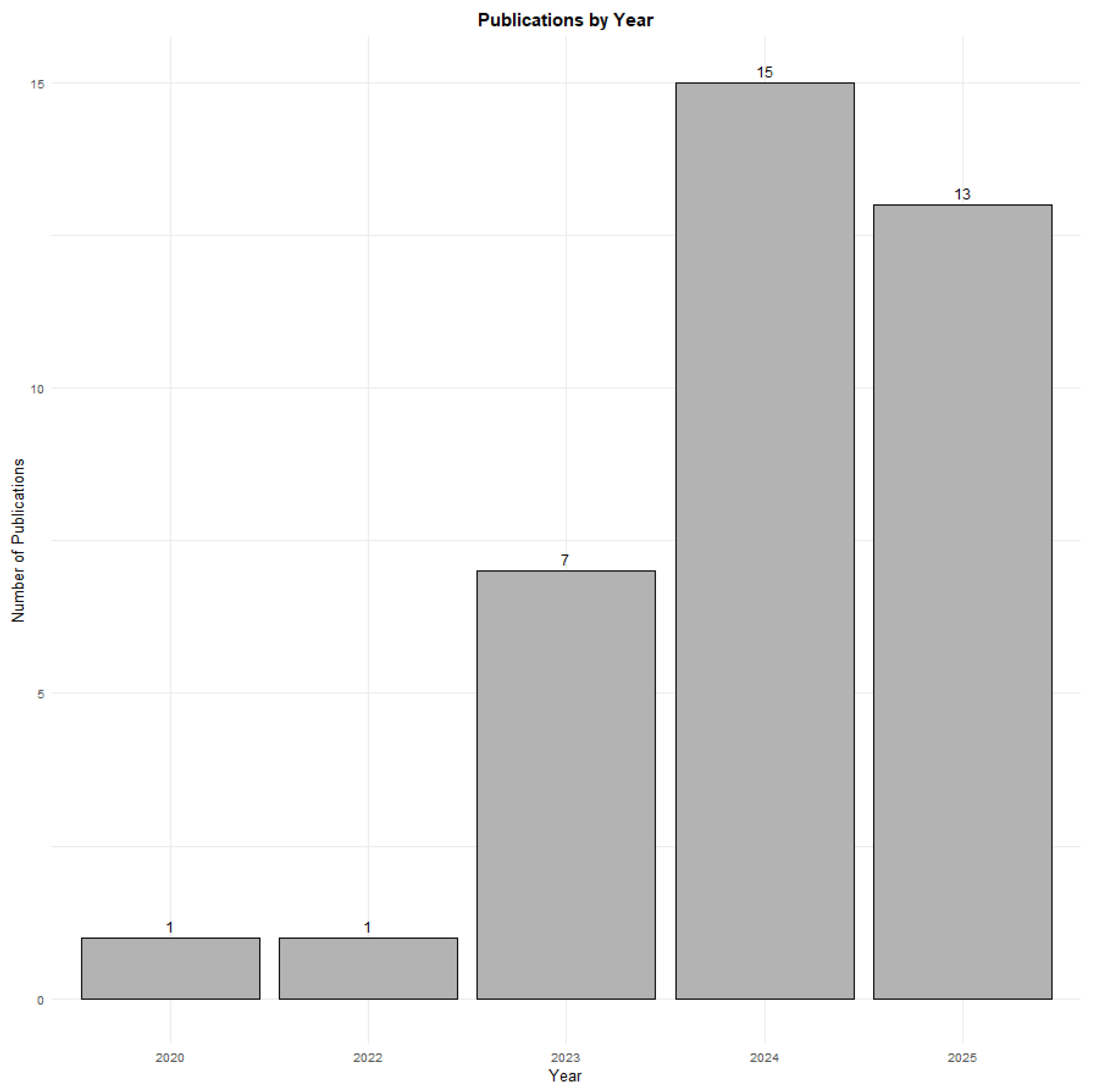
The publication trends indicate a strong, recent concentration of scholarly activity, as shown in Figure 2. Of the 37 papers included, 75.7% were published in 2024 and 2025 alone. Only one study appeared in 2020 (2.7%), with another in 2022 (2.7%). Publications increase noticeably in 2023 (seven papers, 18.9%) and then rise sharply in 2024 (fifteen papers, 40.5%), followed by a similarly high level in 2025 (thirteen papers, 35.1%). This steep upward trajectory demonstrates both the emerging relevance and the rapid expansion of research on AI-enabled HSC resilience during the post-pandemic digital transformation period.
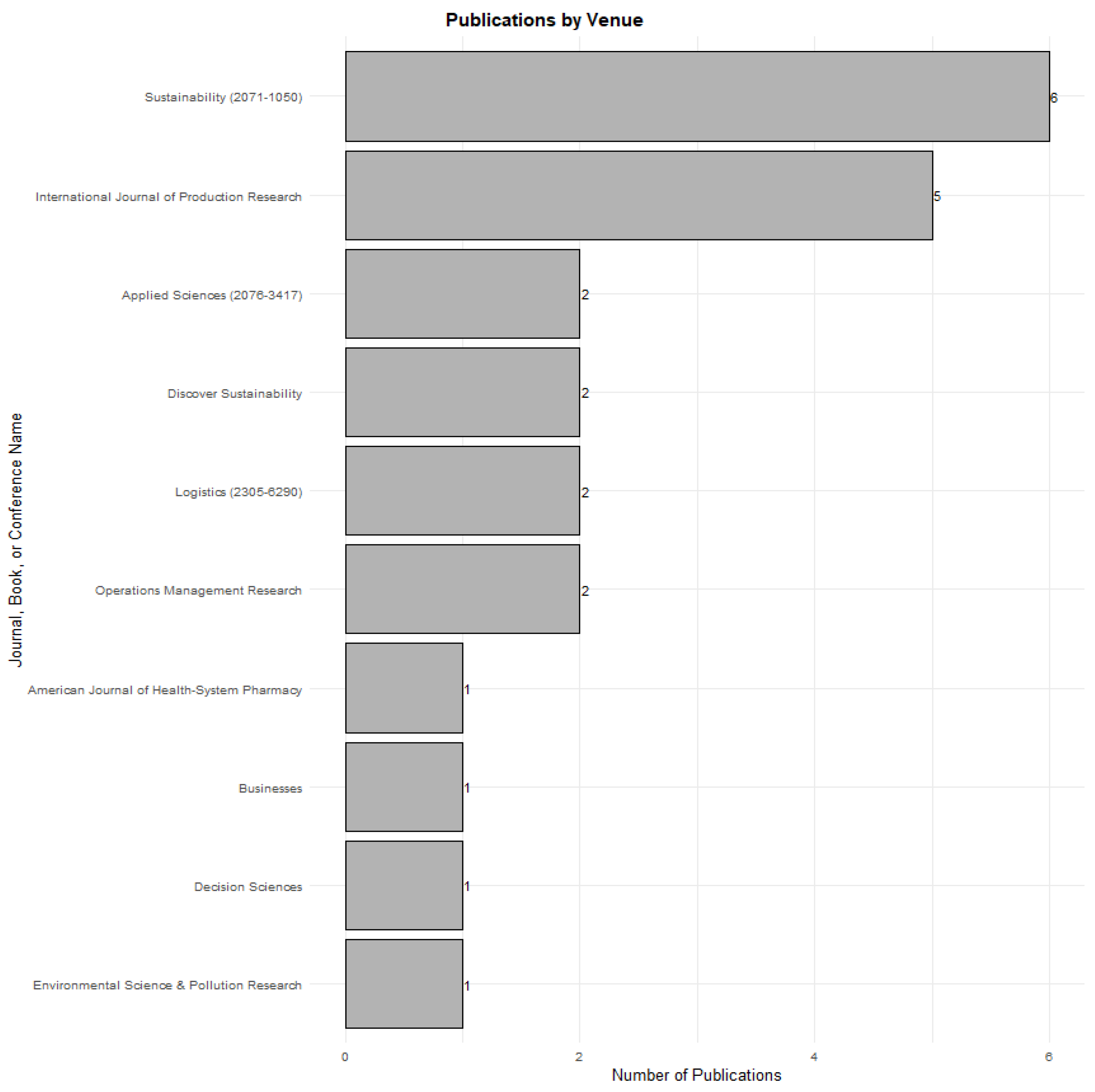
The distribution of publication venues indicates that research is concentrated among a small number of journals, as illustrated in Figure 3. Sustainability published the highest number of papers (six), followed by the International Journal of Production Research (five). These two outlets alone account for 29.7% of all studies included. Additional journals, including Applied Sciences, Logistics, Discover Sustainability, and Operations Management Research, contributed two papers each. Across the top ten venues, 23 of the 37 papers (62.2%) are represented, showing that while the topic is interdisciplinary, a core group of journals is emerging as the primary source of scholarship in this domain.
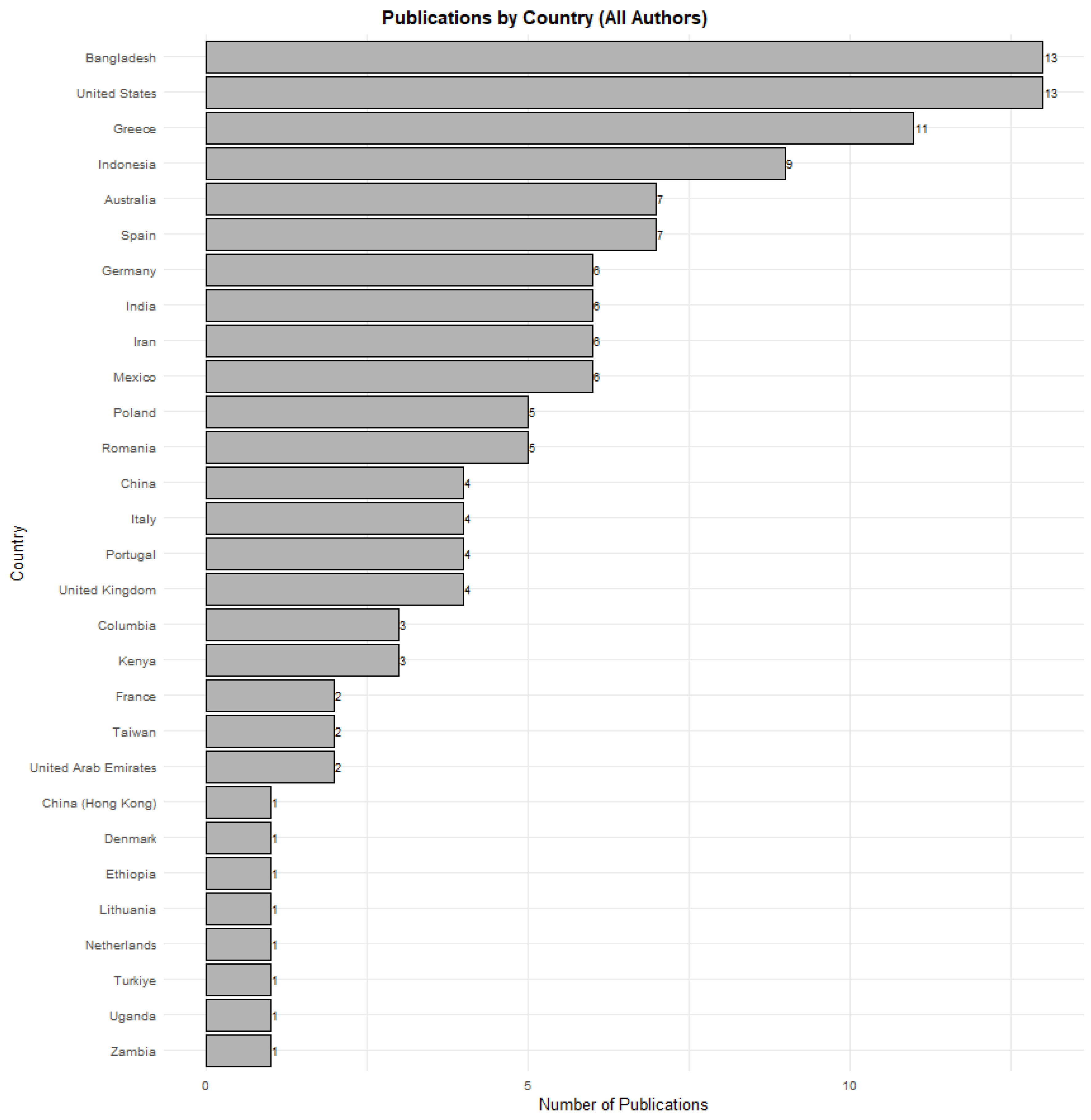
Author affiliation analysis identified 130 country appearances across all contributing authors. The United States and Bangladesh each appear 13 times (10%), followed by Greece with 11 occurrences (8.5%), as shown in Figure 4. Other active contributors include Indonesia (9; 6.9%), Spain (7; 5.4%), and Australia (7; 5.4%). The remaining appearances are distributed across more than a dozen additional countries. This broad geographic spread demonstrates global interest in HSC resilience and the widespread relevance of digital transformation challenges following the COVID-19 pandemic.
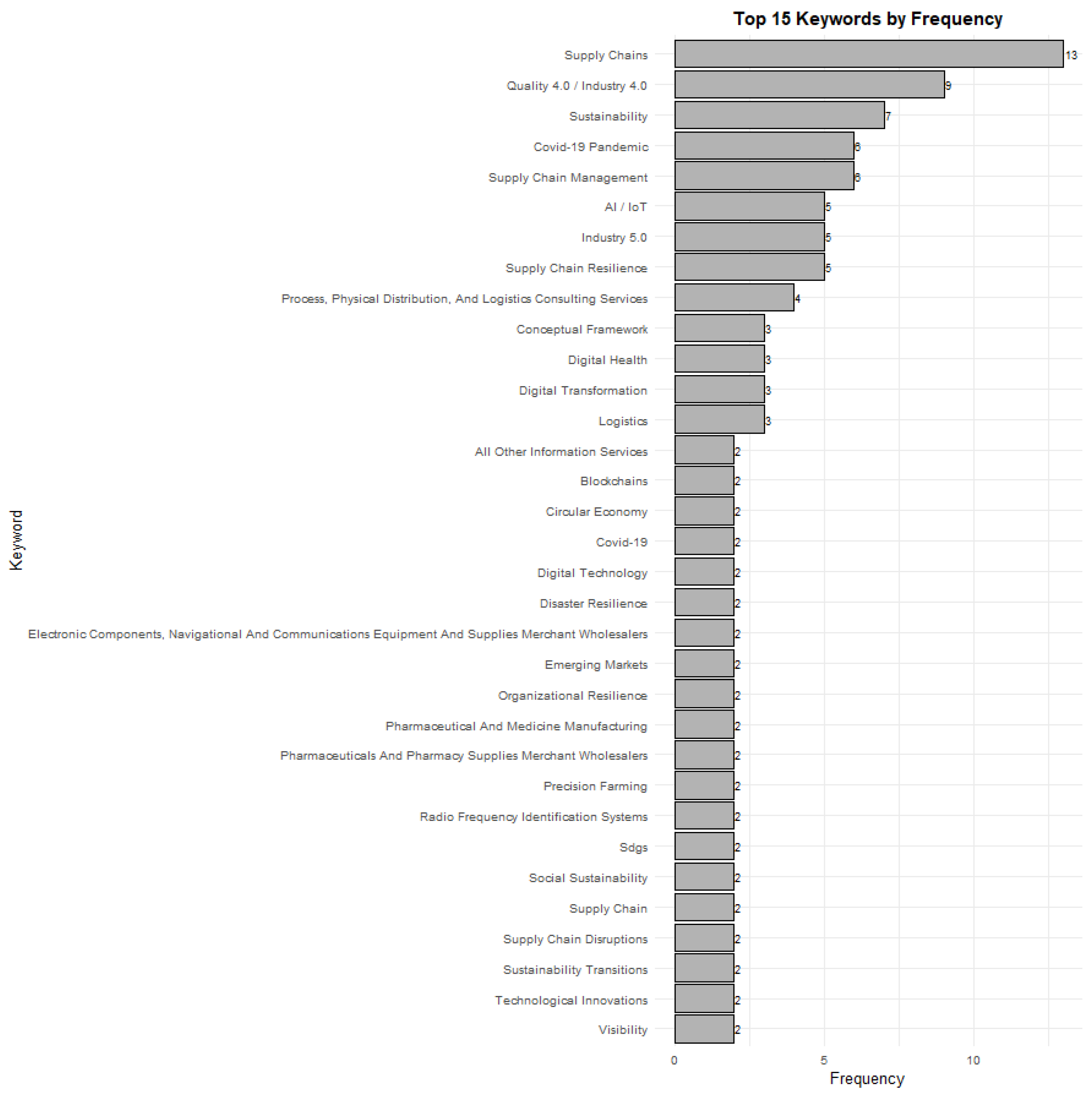
Keyword normalization and frequency analysis identified “supply chains” as the most common term (13 occurrences), as shown in Figure 5. Other frequently used keywords include “Industry 4.0” (9), “sustainability” (7), “supply chain management” (6), “COVID-19 pandemic” (6), and “Industry 5.0” (5). Together, these six terms account for nearly half of all observed keyword mentions. The emphasis on digitalization-related terms (I4.0 and I5.0), pandemic-related disruptions, and sustainability indicates that research is coalescing around the intersection of digital transformation, resilience, and sustainable supply chain operations.
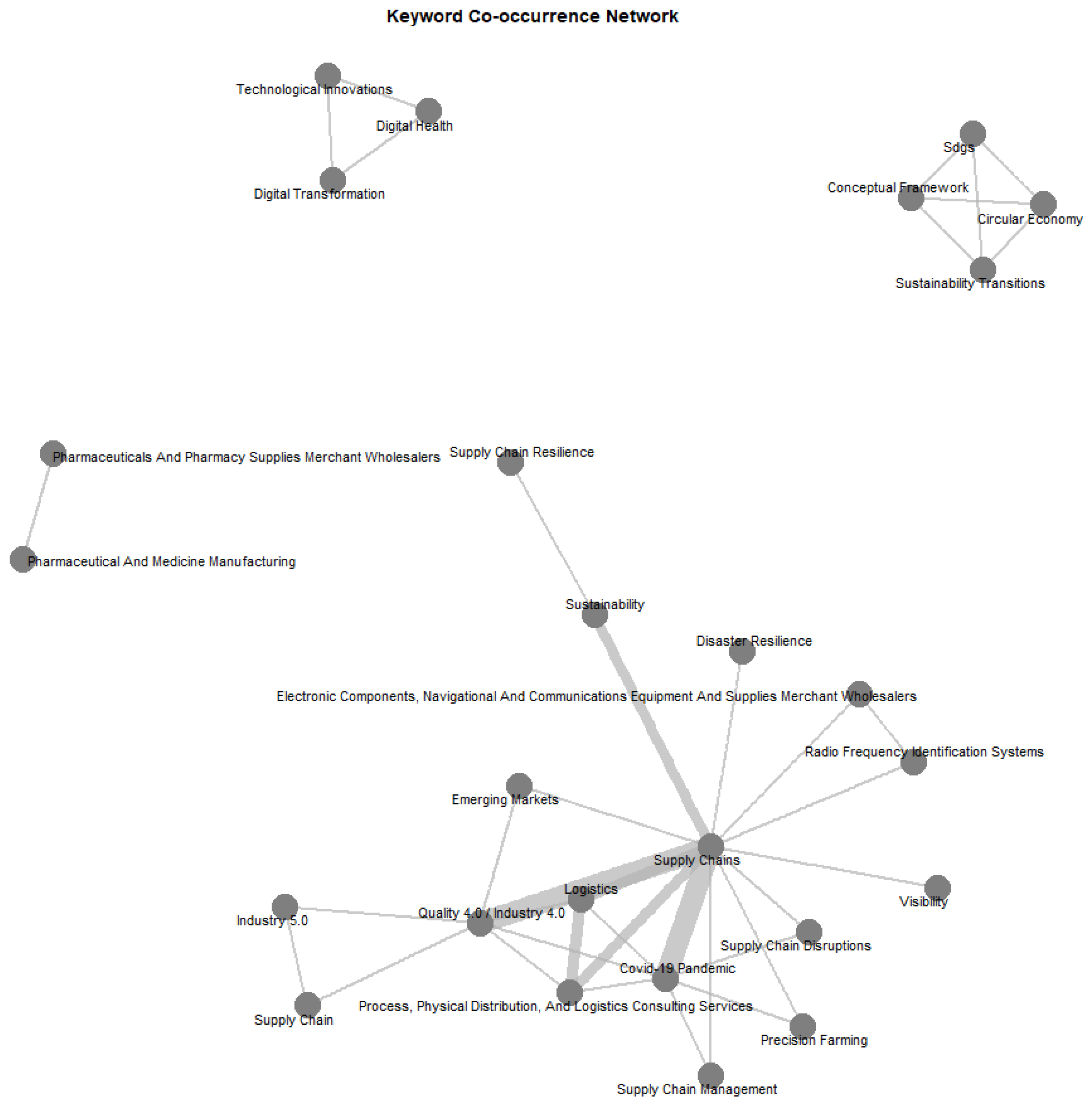
The co-occurrence network reinforces this thematic structure. The densest cluster centers around “supply chains,” which co-occur with I4.0 and the COVID-19 pandemic four times each, representing the strongest pairwise associations in the dataset, as shown in Figure 6. Additional frequently co-mentioned keyword pairs include supply chains × sustainability, logistics × supply chains, and logistics × process/physical distribution consulting (each occurring three times). These patterns reveal three dominant conceptual intersections: (1) supply chains and digital technologies, (2) pandemic risk and resilience, and (3) sustainability-oriented operations.
After removing stop-words, unifying terminology (e.g., collapsing “Industry 4.0,” “I4.0,” and “4.0”), and preserving multi-word technical phrases, “supply chain” emerged as the most frequent bigram (86 occurrences). Terms associated with I4.0 appear approximately 74 times, and terms related to I5.0 appear 77 times. Additional bigrams such as “decision-making” (11 occurrences) and “artificial intelligence” (10 occurrences) also occur frequently. These patterns confirm that the literature strongly emphasizes digital transformation frameworks, intelligent decision-support tools, and resilience-oriented supply chain design.

4.2. Major Themes from Topic Modeling

The topic modeling results reveal three coherent and thematically distinct clusters that characterize the current literature [59,60].
  • Topic 1: Supply Chain Sustainability
  • Topic 2: Supply Chain Disruptions
  • Topic 3: Healthcare Industry Technology Transformation
Topic 1 (Supply · Chain · Sustainability) is centered on sustainability-oriented supply chain management [53,61]. High-probability terms such as supply (β = 0.046), chain (β = 0.044), and sustainability (β = 0.018) demonstrate that environmental and social considerations remain a central emphasis in the literature [41,45]. Supporting terms, such as visibility, resilience, AI, and technology, highlight the increasing integration of digital tools to improve transparency, performance measurement, and sustainable decision-making [46,51].
Topic 2 (Supply · Chain · Disruptions) captures research on risk, uncertainty, and the propagation of disruptions [25,26]. The leading terms, including supply (β = 0.040), chain (β = 0.039), and disruptions (β = 0.014), reflect the continued influence of global shocks, particularly those related to pandemics, geopolitical tensions, and operational fragility [28,29]. Terms such as viability, resilience, strategy, and manufacturing point to themes of continuity planning, adaptive capability, and recovery-oriented supply chain design [16,32].
Topic 3 (Healthcare, Industry, Technology) focuses on the digital transformation of HSCs [35,47]. Terms such as healthcare (β = 0.021), technology (β = 0.016), industry (β = 0.016), and digital (β = 0.014) indicate a strong emphasis on data-driven methods, advanced analytics, and operational modernization within healthcare systems [52,62]. Additional terms, such as operational, simulation, and health, reinforce the ongoing interest in forecasting, planning, and patient-centered resource management [63].
Together, these term distributions demonstrate a field anchored around three central thematic pillars:
(1)
Sustainability and responsible systems design;
(2)
Disruptions and resilience planning;
(3)
Healthcare-focused digital transformation.
The relatively high β values for supply-, chain-, technology-, and sustainability-related terms affirm that these themes form the central conceptual core of the current body of research.
The sustainability- and disruption-focused topics (Topics 1 and 2) appear most frequently as the primary topic in the abstracts, reflecting ongoing interest in sustainable performance and post-disruption recovery [33,43]. Technology-focused themes (Topics 3) also appear regularly as the dominant topic, demonstrating a strong and sustained focus on digital transformation in both industrial and healthcare environments [62,64].
Taken together, the three-topic model shows that the literature is concentrated around sustainability, resilience, technological advancement, and healthcare-related supply chain innovation. At the same time, the spread across all three topics illustrates a diverse and methodologically rich research landscape that spans multiple industries, contexts, and analytical approaches [36,63].
Table 2 provides an overview of the selected papers included in the review, mapping each article to one of the three thematic topics identified through the analysis. This organization highlights how literature is distributed across the themes and demonstrates the basis for developing the thematic framework.
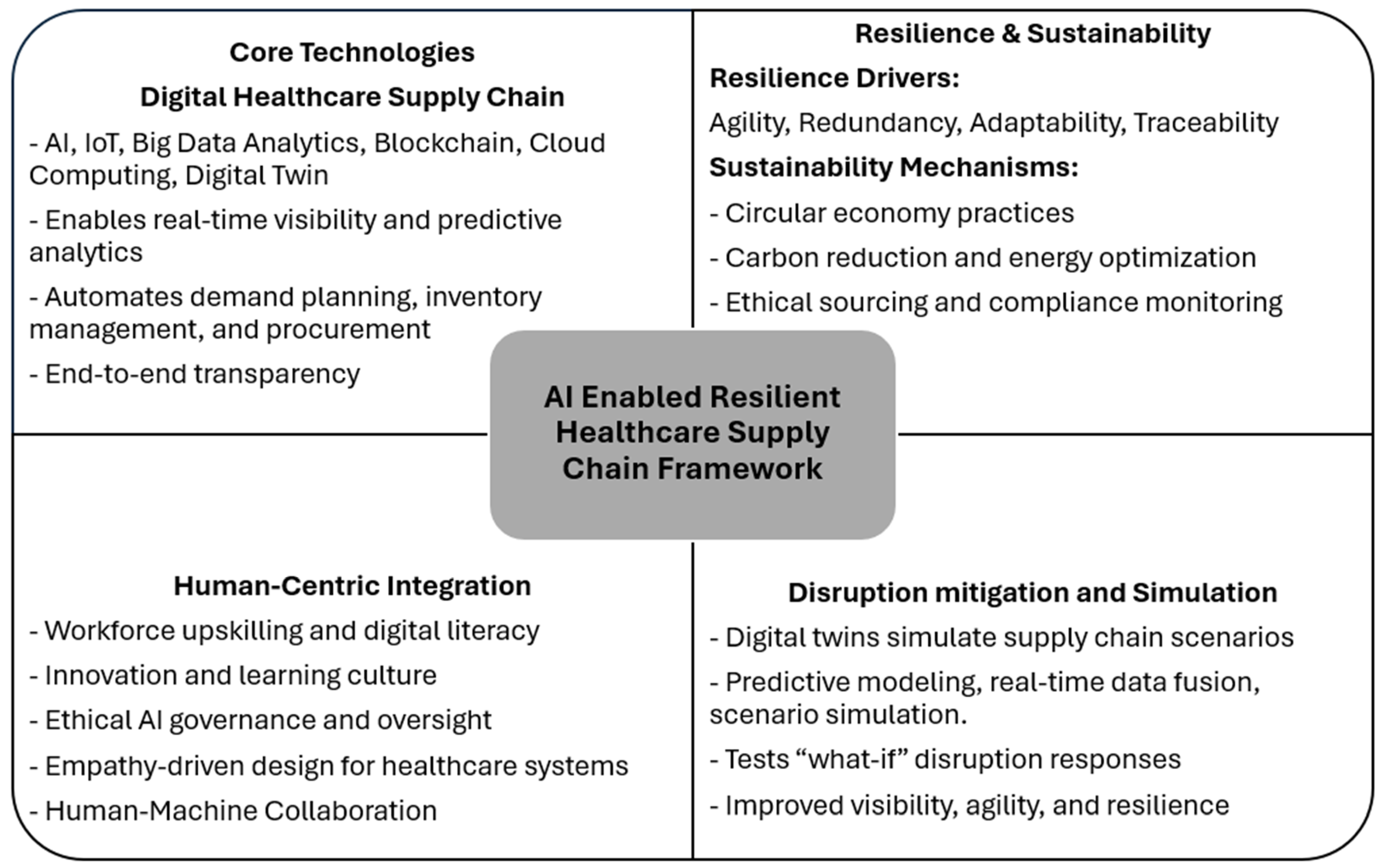
The proposed AI-enabled resilient HSC framework integrates four interconnected dimensions that collectively enhance agility, sustainability, and robustness in HSCs, as shown in Figure 7. At its foundation, core digital technologies, including AI, IoT, big data analytics, blockchain, cloud computing, and digital twins, enable real-time visibility, predictive analytics, automated planning, and end-to-end transparency. The disruption mitigation and simulation component leverages digital twins, predictive modeling, scenario simulation, and real-time data fusion to assess “what-if” scenarios, evaluate alternative response strategies, and strengthen proactive preparedness. Building on this digital foundation, the resilience and sustainability layers highlight key drivers such as agility, redundancy, adaptability, and traceability, supported by sustainability mechanisms including circular-economy practices, energy optimization, carbon reduction, and ethical sourcing. The framework also embeds a strong human-centric integration dimension, emphasizing the need for workforce upskilling, digital literacy, ethical AI governance, innovation culture, empathy-driven system design, and collaborative human–machine interaction, which are tenets of the I5.0 philosophy. Together, these dimensions illustrate how advanced technologies, human capabilities, and sustainability principles converge to create a resilient, adaptive, and future-ready healthcare supply chain.

5. Discussion

This study aimed to examine the role of AI in HSCs through the lens of resilience. The findings suggest that AI has evolved from serving as an automation tool focused on efficiency gains to becoming a strategic enabler of decision intelligence and organizational resilience. Some practical examples include machine learning-based demand forecasting and social media analytics support early disruption sensing and anticipation of shortages [12,48]. During disruptions, AI-enhanced stochastic optimization improves robust resource allocation and patient scheduling under uncertainty [49]. Adaptive recovery is enabled through reinforcement learning-based emergency logistics tools that dynamically rebalance medical supply distribution [10]. Together, these applications illustrate how AI enables decision intelligence that strengthens healthcare supply chain resilience across anticipation, response, and recovery phases.
A set of early studies emphasized AI’s role in optimizing operational efficiency, reducing costs, and improving service levels [34,35,66]. While these contributions remain relevant, this study, along with other emerging research [26,61], repositions AI as a core component of resilience-oriented supply chains. Such frameworks emphasize anticipation, absorption, and adaptation to disruptions, aligning with adaptive cycle theory and viability theory, which conceptualize supply chains as dynamic systems capable of learning and reconfiguration in the face of uncertainty and disruptions [64].
Recent advances in immune-inspired and generative AI models [36] illustrate this adaptive capability, as algorithmic self-learning and feedback loops mirror biological self-healing processes. This supports the notion that AI can transform supply chain risk management from a reactive to a more proactive stance. Section 4.1 and Section 4.2 synthesized the extant literature into an integrated framework for AI in healthcare supply chains (HSCs). This synthesis revealed three dominant themes that capture the scope and nature of AI’s role across HSC operations. By mapping these themes to sustainability, disruption and resilience management, and digital transformation, the study directly addresses the first research question by clarifying the current research landscape and focal areas of AI applications in HSCs.
The second research question (how AI enables greater agility and resilience) finds strong empirical grounding across the literature. Modgil [20] identified five dimensions in which AI strengthens supply chain resilience: transparency, last-mile assurance, personalized stakeholder solutions, disruption mitigation, and agile procurement. The present analysis corroborates these findings, showing that AI applications in HSCs foster agility through real-time analytics, prescriptive recommendations, and scenario-based decision support [9]. These mechanisms collectively enable organizations to sense disruptions earlier and reconfigure resources more effectively.
Furthermore, Belhadi et al. [18] demonstrated that rational and acting AI techniques reinforce supply chain reengineering and agility, while thinking techniques strengthen the risk management culture. This aligns closely with our findings that AI supports both structural agility (through predictive analytics) and cognitive agility (through augmented decision-making). Dai [5] identified that congruence between AI adoption and explorative learning amplifies resilience, whereas organizational inertia attenuates this effect. The present study supports this view, revealing that adaptability, data-driven culture, and human–AI trust calibration mediate resilience outcomes. These findings collectively underscore that AI’s contribution to resilience depends not only on technical sophistication but also on organizational learning capacity and behavioral adaptability.
A key insight emerging from this study is the centrality of human–AI collaboration in AI-augmented healthcare supply chains [5,64]. The findings highlight how human actors are increasingly positioned not as mere operators of technology but as active interpreters, validators, and orchestrators of AI outputs [47,62]. Consistent with the I5.0 paradigm, human cognition, ethical judgment, and contextual expertise converge with AI intelligence and digital infrastructure to create adaptive and resilient systems [52]. Human–AI interaction involves configuring confidence thresholds, validating predictions, and monitoring ethical alignment [16], illustrating a shift from purely operational control toward co-creative decision-making. Trust calibration emerges as a dynamic process, shaped by transparency, feedback loops, and performance validation [41]. Furthermore, managers should focus on creating workforce upskilling, digital literacy, and experimentation-friendly culture, which are crucial to translating AI adoption into tangible resilience outcomes [9]. This human–AI centric perspective emphasizes that resilient healthcare supply chains arise not solely from technology but from the synergistic integration of human expertise and AI capabilities.
Beyond organizational capability, the findings also highlight a convergence among sustainability, digital transformation, and resilience—a “triple transformation” that defines the next frontier of HSCs. Studies such as Setyadi [37] and Reyna–Castillo [39] demonstrate how Green Lean practices, circular economy principles, and digital traceability enhance the long-term viability of the system. Likewise, Winkelmann [40] emphasizes that I5.0 paradigms integrate human-centric and environmental objectives into digital transformation roadmaps. These developments align with this study’s conclusion that resilience today is measured not only by recovery speed but by the sustainability and adaptability of recovery pathways. AI-enabled tools such as digital twins and predictive simulations operationalize this perspective by enhancing visibility into interdependencies, emissions, and vulnerabilities. Ahmed et al. [35] similarly found that digital technologies enable the quantification of sustainability performance, thereby transforming it into a measurable dimension of resilience. The empirical convergence across these studies indicates that sustainability and resilience are increasingly co-dependent outcomes of digital maturity.
Addressing the third research question (what gaps remain), the study reveals several persistent challenges. Despite the promise of AI in enabling adaptive and sustainable supply chains, barriers such as data quality issues, skill shortages, limited interpretability of algorithms, and unclear economic returns hinder a broader implementation [66]. Moreover, there remains a limited understanding of the behavioral mechanisms at the human–technology interface, particularly how trust, interpretability, and organizational learning jointly influence resilience outcomes. These gaps underscore the need for longitudinal research designs that capture the evolution of AI maturity and its dynamic interaction with governance structures, sustainability initiatives, and decision intelligence architectures.
In summary, this discussion situates AI as both a technological catalyst and a cognitive partner in building resilient, sustainable HSCs. The findings extend the existing literature by illustrating that resilience in the AI era depends as much on organizational learning, cultural adaptability, human–AI integration, and ethical governance of computational capability. As healthcare systems confront growing volatility and interdependence, the integration of AI into supply chain design and decision-making represents a paradigm shift toward adaptive, sustainable, and resilient healthcare systems.
Challenges such as data quality, limited standardization, AI interpretability, and workforce skill gaps hinder effective AI adoption in HSCs. Moreover, the roles of human behavior, organizational learning, and trust in digital transformation remain underexplored. Future research should employ longitudinal studies and integrate socio-technical systems theory frameworks to examine how AI maturity, human–AI trust, and ethical governance co-evolve, enhancing resilience and agility. Other future directions are listed in the next section.

6. Conclusions, Implications, Limitations, and Future Directions

Healthcare supply chains play a critical role in delivering life-saving products to hospitals and patients and operate under high service-level requirements. This study examined the role of artificial intelligence (AI) and Industry 5.0 (I5.0) technologies in enhancing the resilience, agility, and sustainability of HSCs. Using a systematic scoping review of 37 peer-reviewed studies combined with topic modeling analysis, three dominant thematic areas were identified: supply chain sustainability, disruption management, and healthcare-focused technology transformation. Together, these themes provide a structured view of how digital technologies are being leveraged to address uncertainty, complexity, and performance limitations in healthcare supply networks.
Building on these insights, the study proposed an integrated framework for AI-driven resilience in HSCs, consisting of four interconnected dimensions: core digital technologies, disruption mitigation and simulation, resilience and sustainability, and human–AI integration. Persistent challenges such as stringent regulatory constraints, legacy information systems, limited visibility, information asymmetry, and inefficient processes continue to undermine performance and resilience. The proposed framework consolidates fragmented literature into a coherent structure, illustrating how AI, digital twins, IoT, and simulation technologies extend beyond efficiency gains toward strategic decision intelligence. These capabilities enable real-time sensing, scenario-based analysis, and proactive risk mitigation, thereby strengthening supply chain visibility, predictive capacity, and adaptive response.
By enhancing sensing, seizing, and reconfiguring processes, AI allows organizations to anticipate disruptions, allocate resources more effectively, and continuously adapt operations under changing conditions. Capabilities such as predictive demand sensing, simulation-driven planning, and adaptive logistics optimization improve performance across anticipation, response, and recovery phases under high uncertainty. A key conclusion is that AI-enabled technologies support the development of dynamic capabilities within HSCs. In this sense, AI functions not merely as a technological tool but as a strategic enabler of organizational learning and resilience.
Importantly, the findings emphasize that technological deployment alone is insufficient. Effective AI-driven transformation depends on integrating digital technologies into organizational processes, routines, and decision structures. Through the organizational perspective, a human-centered design requires change management, top management commitment, workforce upskilling, digital literacy, transparency, and trust to emerge as critical enablers, shaping how AI is adopted and embedded into daily operations and routines.
Finally, the study highlights a growing convergence between digital transformation, resilience, and sustainability. AI-enabled tools increasingly operationalize sustainability objectives such as Green Lean practices and circular economy strategies within resilience planning. Consequently, resilience is no longer defined solely by recovery speed, but by sustainability and responsible recovery pathways. Collectively, findings from this study position AI and I5.0 as foundational to building intelligent, adaptive, and future-ready healthcare supply chains.

6.1. Implications for Practitioners and Research

This study provides several important implications for both research and practice. From a managerial perspective, findings highlight a growing need to design human-centric and resilient supply chains that effectively integrate technological intelligence with human judgment. Management must proactively develop workforce upskilling strategies to build digital literacy and analytical capabilities that support AI-enabled decision-making. Establishing an innovative and learning-oriented organizational culture is critical for successful diffusion of AI within HSCs. Accordingly, top management should focus on fostering a culture that supports change, experimentation, and continuous learning as part of broader digital transformation initiatives. Adoption of AI-based tools for resilience can enhance not only adaptive capacity but also sustainability performance by improving visibility, forecasting accuracy, and scenario-based planning. Given the substantial investments required for AI adoption, firms should critically evaluate AI use cases and ensure alignment with long-term strategic objectives. Value-based adoption approaches, including return-on-investment assessments, are essential to justify and sustain AI initiatives. Digital transformation efforts, particularly given the sensitivity of healthcare data, must be based on HSC data governance, which incorporates data privacy, cybersecurity, and regulatory compliance and overall data management.
From a research perspective, this study reinforces and extends the existing literature by demonstrating how AI can function as both a technological enabler and a cognitive collaborator in building resilient and sustainable HSCs. The findings support emerging theoretical work linking AI adoption with resilience, sustainability, and human-centric implementation. By proposing an integrated framework, this study provides a foundation for future empirical validation and refinement. Theories such as information processing theory and dynamic capability theory offer valuable lenses for examining how digital and human capabilities co-evolve to enhance resilience and sustainability in healthcare logistics and operations within Industry 4.0 and 5.0 environments.

6.2. Limitations

Despite these contributions, several limitations must be acknowledged. First, the study relied primarily on a single data source for literature selection, which may limit the breadth of perspectives and empirical diversity. Future reviews could benefit from multi-database searches and cross-sectoral comparisons to capture a wider range of applications and contexts. Second, the current analysis focused primarily on conceptual and qualitative findings; empirical validation using case studies or mixed-method approaches would provide more substantial evidence for the proposed framework and relationships between AI, resilience, and sustainability. Third, this study did not explicitly account for leadership dynamics and how managerial styles influence AI-enabled transformation. Future research should examine the leadership role in developing AI-driven HSCs, with a particular focus on digital literacy, ethical leadership, and effective change management practices.

6.3. Future Research Directions

Future research should adopt longitudinal designs to examine how AI maturity evolves over time and how managerial decision-making adapts in increasingly digitalized healthcare supply chains (HSCs). Diverse theoretical lenses, including socio-technical systems theory, information processing theory, and dynamic capability frameworks, can be applied to capture the complex interactions between humans, technology, and organizational structures. Empirical studies such as case studies, mixed-method approaches, or experimental designs are needed to test the proposed framework for AI-driven resilience and create new frameworks of other constructs, particularly its human–AI-centric dimension, in real-world healthcare contexts. Dedicated investigations into adoption barriers, critical success factors, and organizational enablers will provide actionable insights for both scholars and practitioners. Additionally, future work should examine the relationships between leadership, workforce readiness, innovation capability, and organizational type to develop an evidence-based framework that drives successful adoptions. Expanding methodological diversity, deepening theoretical integration, and exploring human–AI interactions will advance understanding of how AI can sustainably enhance resilience, agility, and ethical decision-making in HSCs.

Supplementary Materials

The following supporting information can be downloaded at: https://www.mdpi.com/article/10.3390/su18031434/s1, PRISMA Checklist [67].

Author Contributions

Conceptualization, S.T., E.A.C. and C.M.L.; methodology, S.T., E.A.C., P.C. and L.H.D.; software, S.T., E.A.C., P.C. and L.H.D.; validation, S.T. and E.A.C.; formal analysis, E.A.C. and S.T.; investigation, S.T., E.A.C., P.C. and L.H.D.; resources, E.A.C. and C.M.L.; data curation, S.T., E.A.C. and C.M.L.; writing—original draft preparation, S.T. and E.A.C.; writing—review and editing, S.T., E.A.C. and C.M.L.; visualization, S.T., E.A.C., P.C. and L.H.D.; supervision, S.T., E.A.C. and C.M.L.; project administration, S.T.; funding acquisition, E.A.C. All authors have read and agreed to the published version of the manuscript.

Funding

This research received no external funding.

Institutional Review Board Statement

Not applicable.

Informed Consent Statement

Not applicable.

Data Availability Statement

No new data was created or analyzed in this study.

Conflicts of Interest

Author Senthilkumar Thiyagarajan is employed by Medline Industries. The remaining authors declare that the research was conducted in the absence of any commercial or financial relationship that could be considered as a potential conflict of interest. All authors declare that they have no known personal relationships or competing financial interests that could have appeared to influence the work reported in this paper.

Appendix A

Table A1. Characteristics of the studies included in review.
Author(s) & YearStudy Type & MethodTechnology/AI FocusKey Contributions/FindingsThematic Category
Agrawal et al., 2024 [16]Systematic literature reviewIndustry 5.0 (I5.0) technologiesI5.0 potential to mitigate pandemic, war, climate disruptionsTopic 3
Deveci, 2023 [22]Conceptual + Fuzzy decision-makingAI adoption in healthcare supply chainIdentified technology intensity, trialability, and government support as key factors driving AI adoption; policy and managerial recommendations providedTopic 3
Lee & Yoon, 2021 [23]Literature review + Case analysisAI applications in healthcareAI enhances diagnosis, treatment, nursing, and hospital management; adoption opportunities and challenges discussed; emphasizes structured implementation strategiesTopic 3
Govindan et al., 2023 [25]ReviewRisk mitigation modelsEpidemic disruption strategies and future research agendaTopic 2
Ivanov, 2025 [26]Conceptual + case illustrationIndustry 5.0, adaptability frameworkBio-inspired adaptability framework integrating resilience, sustainability, human-centricityTopic 2
Petrudi et al., 2024 [27]M-TISM + case studyDigitalization, viability modelingDigital engagement critical for supply chain viabilityTopic 2
Kashem et al., 2024 [28]Systematic literature reviewDigital SC technologiesPost-COVID digitization strategies for resilienceTopic 2
Monferdini & Bottani, 2024 [29]Literature review + case studyIndustry 4.0 (I4.0)I4.0 enhances risk management, resilience, sustainability post-COVIDTopic 2
Miguel et al., 2024 [30]ConceptualIndustry 5.0, digital transformationReshoring and glocalization enabled by digital/I5.0 for resilience & sustainabilityTopic 3
Vlachos & Graham, 2025 [31]Bibliometric + Systematic literature reviewIoT, GenAITCM-AIO-E framework; IoT evolution toward autonomous SCsTopic 2
Setyadi et al., 2025 [32]Conceptual frameworkResilience–sustainability integrationTypology linking resilience enablers, operational strategies, and SDGsTopic 1
Patalas-Maliszewska & Łosyk, 2024 [33]Systematic literature reviewI4.0/I5.0, AI, IoTDigitalization drives sustainable manufacturing transformationTopic 1
Werbińska-Wojciechowska et al., 2024 [34]Systematic literature reviewDigital TwinDigital twin framework for transport & SC operationsTopic 3
Ahmed et al., 2023 [35]Empirical case study (DMAIC + SD, DES, AB simulation)Simulation, Lean Six SigmaIntegrates hybrid simulation with Six Sigma; achieves 50% reduction in processing time, 25% production increase, and 8% cost reduction; demonstrates digital-supported operational resilienceTopic 3
Polo et al., 2025 [36]Systematic literature review + bibliometricAI, optimization, bio-inspired modelsModeling trends in viable/resilient SCsTopic 1
Setyadi et al., 2025b [37]Conceptual multi-level frameworkCircularity, localization, digital resilienceDevelops Integrated Sustainable Operational Strategy (ISOS) linking circular economy, localization, and digital resilience across macro–meso–micro levelsTopic 1
Setyadi et al., 2025a [38]Conceptual frameworkGreen Lean, sustainability integrationProposes Green Lean Operational Excellence (GLOE) framework integrating sustainability and resilience into lean systems; advances operational strategy under climate disruptionTopic 1
Reyna-Castillo et al., 2025 [39]Empirical survey + fuzzy modelingSocial sustainability analyticsSocial sustainability dimensions moderately enhance SC resilienceTopic 1
Winkelmann et al., 2024 [40]Systematic literature reviewBlockchain, AI, digital techDigital technologies (esp. blockchain) advance triple-bottom-line sustainabilityTopic 1
Karoulanis, 2024 [41]Systematic literature reviewRFID, blockchain, AITechnology-enabled visibility indirectly strengthens SC sustainabilityTopic 1
Mastrantonas et al., 2024 [42]PRISMA-based qualitative reviewIndustry 4.0 (pharma)I4.0 adoption linked to SDGs; COVID as inflection pointTopic 3
Sharma et al., 2022 [43]Empirical surveyVisibility, traceabilityVisibility mediates sustainability and performance under COVIDTopic 1
Marinagi et al., 2023 [44]Systematic reviewI4.0 technologies (AI, IoT, DT, BDA)I4.0 impact on KPIs for SC resilienceTopic 2
Shakur et al., 2024 [45]MCDM (Bayesian BWM)Industry 4.0Adoption challenges affecting SC resilience in FMCGTopic 2
Asadi et al., 2025 [46]MCDM + robust optimization + caseIndustry 5.0, stochastic modelingViable-sustainable supplier selection under uncertaintyTopic 1
Pang et al., 2023 [47]Conceptual education frameworkIndustry 5.0, AI, blockchain, MLProposes new digital health education paradigm embedding I5.0 technologies to build workforce capability for resilient, human-centric healthcare systemsTopic 3
Kumar et al., 2025 [48]Empirical + Social media data analysisAI-driven ML & NLP for disaster responseReal-time social media analytics can detect urgent supply shortages, classify needs, and locate victims to support crisis responseTopic 2
Liu et al., 2025 [49]Empirical + Optimization modelingAI-enhanced stochastic programming & DROAI improves computational efficiency and resource allocation; DRO model reduces waiting penalty cost 43 to 81%; outperforms benchmark policiesTopic 2
Debnath et al., 2023 [51]MCDM (Bayesian BWM)Industry 4.0CSFs for I4.0 adoption enhancing PSC sustainabilityTopic 1
Lin et al., 2024 [52]Conceptual frameworkPharmacy 5.0, CPS, analyticsFramework for personalized, digital pharmacy careTopic 3
Castillo et al., 2025 [53]Qualitative interviewsIndustry 5.0, digitalizationHuman-centric I5.0 adoption; leadership & resilienceTopic 1
ForouzeshNejad, 2022 [54]Hybrid MCDM case studyI4.0, leagile, sustainabilityIntegrates agility, sustainability, I4.0 in medical supplier selectionTopic 1
Singh et al., 2024 [61]Multi-methodAI-enabled SCTransparency-driven AI enhances resilience and customizationTopic 2
Basulo-Ribeiro & Teixeira, 2024 [62]Qualitative interviewsIndustry 5.0 in healthcareHuman-technology synergy reshapes patient-centered healthcareTopic 3
Popa et al., 2025 [63]Bibliometric analysisAI, ML, reinforcement learningMaps global research evolution linking AI to adaptability, agility, and resilience in management systems; highlights convergence of technical AI methods with managerial innovationTopic 2
Ivanov, 2023 [64]Conceptual frameworkIndustry 5.0 technologiesViability-based I5.0 integrating resilience, sustainability, human-centricityTopic 1
Hsu et al., 2024 [65]Hybrid QFD–MCDM frameworkIndustry 5.0, real-time analyticsIntegrates I5.0 drivers with supply chain resilience to mitigate hazardous material transportation risks; demonstrates synergy between resilience and advanced analyticsTopic 2

References

  1. Alemsan, N.; Tortorella, G.; Rodriguez, C.M.T.; Jamkhaneh, H.B.; Lima, R.M. Lean and resilience in the healthcare supply chain—A scoping review. Int. J. Lean Six Sigma 2022, 13, 1058–1078. [Google Scholar] [CrossRef]
  2. Jayaraman, R.; Salah, K.; King, N. Improving opportunities in healthcare supply chain processes via the Internet of Things and blockchain technology. Int. J. Healthc. Inf. Syst. Inform. 2019, 14, 49–65. [Google Scholar] [CrossRef]
  3. Kwon, I.-W.G.; Kim, S.-H.; Martin, D.G. Healthcare supply chain management: Strategic areas for quality and financial improvement. Technol. Forecast. Soc. Change 2016, 113, 422–428. [Google Scholar] [CrossRef]
  4. Tortorella, G.L.; Prashar, A.; Antony, J.; Fogliatto, F.S.; Gonzalez, V.; Filho, M.G. Industry 4.0 adoption for healthcare supply chain performance during COVID-19 pandemic in Brazil and India: The mediating role of resilience abilities development. Oper. Manag. Res. 2024, 17, 389–405. [Google Scholar] [CrossRef]
  5. Dai, J.; Geng, R.; Xu, D.; Shangguan, W.; Shao, J. Unveiling the impact of the congruence between artificial intelligence and explorative learning on supply chain resilience. Int. J. Oper. Prod. Manag. 2025, 45, 570–593. [Google Scholar] [CrossRef]
  6. Zamiela, C.; Hossain, N.U.I.; Jaradat, R. Enablers of resilience in the healthcare supply chain: A case study of U.S healthcare industry during COVID-19 pandemic. Res. Transp. Econ. 2022, 93, 101174. [Google Scholar] [CrossRef]
  7. Kumar, A.; Mani, V.; Jain, V.; Gupta, H.; Venkatesh, V.G. Managing healthcare supply chain through artificial intelligence (AI): A study of critical success factors. Comput. Ind. Eng. 2023, 175, 108815. [Google Scholar] [CrossRef]
  8. Le, T.T.; Behl, A. Linking Artificial Intelligence and Supply Chain Resilience: Roles of Dynamic Capabilities Mediator and Open Innovation Moderator. IEEE Trans. Eng. Manag. 2024, 71, 8577–8590. [Google Scholar] [CrossRef]
  9. Dey, P.K.; Chowdhury, S.; Abadie, A.; Vann Yaroson, E.; Sarkar, S. Artificial intelligence-driven supply chain resilience in Vietnamese manufacturing small- and medium-sized enterprises. Int. J. Prod. Res. 2024, 62, 5417–5456. [Google Scholar] [CrossRef]
  10. Xia, H.; Sun, Z.; Wang, Y.; Zhang, J.Z.; Kamal, M.M.; Jasimuddin, S.M.; Islam, N. Emergency medical supplies scheduling during public health emergencies: Algorithm design based on AI techniques. Int. J. Prod. Res. 2025, 63, 628–650. [Google Scholar]
  11. Senna, P.; Reis, A.; Dias, A.; Coelho, O.; Guimarães, J.; Eliana, S. Healthcare supply chain resilience framework: Antecedents, mediators, consequents. Prod. Plan. Control 2023, 34, 295–309. [Google Scholar] [CrossRef]
  12. Babazadeh, R.; Taraghi Nazloo, H.; Kamran, M.A. A hybrid ANN-MILP model for agile recovery production planning for PPE products under sharp demands. Int. J. Prod. Res. 2025, 63, 758–778. [Google Scholar] [CrossRef]
  13. Brandon-Jones, E.; Squire, B.; Autry, C.W.; Petersen, K.J. A contingent resource-based perspective of supply chain resilience and robustness. J. Supply Chain Manag. 2014, 50, 55–73. [Google Scholar] [CrossRef]
  14. Ivanov, D. Viable supply chain model: Integrating agility, resilience and sustainability perspectives—Lessons from and thinking beyond the COVID-19 pandemic. Ann. Oper. Res. 2020, 319, 1411–1431. [Google Scholar] [CrossRef]
  15. Spieske, A.; Gebhardt, M.; Kopyto, M.; Birkel, H.; Hartmann, E. The future of industry 4.0 and supply chain resilience after the COVID-19 pandemic: Empirical evidence from a Delphi study. Comput. Ind. Eng. 2023, 181, 109344. [Google Scholar] [CrossRef]
  16. Agrawal, S.; Agrawal, R.; Kumar, A.; Luthra, S.; Garza-Reyes, J.A. Can Industry 5.0 technologies overcome supply chain disruptions?—A perspective study on pandemics, war, and climate change issues. Oper. Manag. Res. 2024, 17, 453–468. [Google Scholar] [CrossRef]
  17. Ivanov, D. Intelligent digital twin (iDT) for supply chain stress-testing, resilience, and viability. Int. J. Prod. Econ. 2023, 263, 108938. [Google Scholar] [CrossRef]
  18. Belhadi, A.; Kamble, S.; Fosso Wamba, S.; Queiroz, M.M. Building supply-chain resilience: An artificial intelligence-based technique and decision-making framework. Int. J. Prod. Res. 2021, 60, 4487–4507. [Google Scholar] [CrossRef]
  19. Burgos, D.; Ivanov, D. Food retail supply chain resilience and the COVID-19 pandemic: A digital twin-based impact analysis and improvement directions. Transp. Res. Part E Logist. Transp. Rev. 2021, 152, 102412. [Google Scholar] [CrossRef]
  20. Modgil, S.; Singh, R.K.; Hannibal, C. Artificial intelligence for supply chain resilience: Learning from Covid-19. Int. J. Logist. Manag. 2022, 33, 1246–1268. [Google Scholar] [CrossRef]
  21. Ajmera, P.; Jain, V. Modelling the barriers of Health 4.0–the fourth healthcare industrial revolution in India by TISM. Oper. Manag. Res. 2019, 12, 129–145. [Google Scholar] [CrossRef]
  22. Deveci, M. Effective use of artificial intelligence in healthcare supply chain resilience using fuzzy decision-making model. Soft Comput. 2023, 1–14. [Google Scholar] [CrossRef]
  23. Lee, D.; Yoon, S.N. Application of artificial intelligence-based technologies in the healthcare industry: Opportunities and challenges. Int. J. Environ. Res. Public Health 2021, 18, 271. [Google Scholar] [CrossRef]
  24. Singh, R.P.; Hom, G.L.; Abramoff, M.D.; Campbell, J.P.; Chiang, M.F. Current challenges and barriers to real-world artificial intelligence adoption for the healthcare system, provider, and the patient. Transl. Vis. Sci. Technol. 2020, 9, 45. [Google Scholar] [CrossRef] [PubMed]
  25. Govindan, K.; Sethi, S.P.; Cheng, T.C.E.; Lu, S.F. Designing supply chain strategies against epidemic outbreaks such as COVID-19: Review and future research directions. Decis. Sci. 2023, 54, 365–374. [Google Scholar] [CrossRef]
  26. Ivanov, D. No risk, no fun? A bioinspired adaptation-based framework for supply chain resilience in Industry 5.0. Int. J. Prod. Res. 2025, 63, 7153–7173. [Google Scholar] [CrossRef]
  27. Petrudi, H.; Hamid, S.; Ahmadi, H.B.; Azareh, Y.; Liou, J.J.H. Developing a structural model for supply chain viability: A case from a developing country. Oper. Manag. Res. 2024, 17, 324–339. [Google Scholar] [CrossRef]
  28. Kashem, M.A.; Shamsuddoha, M.; Nasir, T. Digital-Era Resilience: Navigating Logistics and Supply Chain Operations after COVID-19. Businesses 2024, 4, 1–17. [Google Scholar] [CrossRef]
  29. Monferdini, L.; Bottani, E. Examining the response to COVID-19 in logistics and supply chain processes: Insights from a state-of-the-art literature review and case study analysis. Appl. Sci. 2024, 14, 5317. [Google Scholar] [CrossRef]
  30. Miguel, A.F.; Riccardi, M.P.; García-Muiña, F.E.; del Hoyo, A.P.F.; Veglio, V.; Settembre-Blundo, D. From Global to Glocal: Digital Transformation for Reshoring More Agile, Resilient, and Sustainable Supply Chains. Sustainability 2024, 16, 1196. [Google Scholar] [CrossRef]
  31. Vlachos, I.; Graham, G. The Internet of Things in supply chain management: Past, present, and future: A systematic literature review and implementation framework. Int. J. Prod. Res. 2025, 63, 10555–10585. [Google Scholar] [CrossRef]
  32. Setyadi, A.; Pawirosumarto, S.; Damaris, A. Toward a resilient and sustainable supply chain: Operational responses to global disruptions in the post-COVID-19 era. Sustainability 2025, 17, 6167. [Google Scholar] [CrossRef]
  33. Patalas-Maliszewska, J.; Łosyk, H. Changes in sustainable development in manufacturing in cases of unexpected occurrences: A systematic review. Sustainability 2024, 16, 717. [Google Scholar] [CrossRef]
  34. Werbińska-Wojciechowska, S.; Giel, R.; Winiarska, K. Digital twin approach for operation and maintenance of transportation system: Systematic review. Sensors 2024, 24, 6069. [Google Scholar] [CrossRef] [PubMed]
  35. Ahmed, A.; Olsen, J.; Page, J. Integration of Six Sigma and simulations in real production factory to improve performance—A case study analysis. Int. J. Lean Six Sigma 2023, 14, 451–482. [Google Scholar] [CrossRef]
  36. Polo, A.; Morillo-Torres, D.; Escobar, J.W. Toward adaptive and immune-inspired viable supply chains: A PRISMA systematic review of mathematical modeling trends. Mathematics 2025, 13, 2225. [Google Scholar] [CrossRef]
  37. Setyadi, A.; Pawirosumarto, S.; Damaris, A. Rethinking sustainable operations: A multi-level integration of circularity, localization, and digital resilience in manufacturing systems. Sustainability 2025, 17, 6929. [Google Scholar] [CrossRef]
  38. Setyadi, A.; Pawirosumarto, S.; Damaris, A. Sustainable operations strategy in the age of climate change: Integrating green Lean practices into operational excellence. Sustainability 2025, 17, 5954. [Google Scholar] [CrossRef]
  39. Reyna-Castillo, M.; Santiago, A.; Barrios-del-Ángel, A.X.; Balderas, F.; Anchondo-Pérez, J.I. Effect of social sustainability on supply chain resilience before, during, and after the COVID-19 pandemic in Mexico: A partial least squares structural equation modeling and evolutionary fuzzy knowledge transfer approach. Logistics 2025, 9, 50. [Google Scholar] [CrossRef]
  40. Winkelmann, S.; Guennoun, R.; Möller, F.; Schoormann, T.; van der Valk, H. Back to a resilient future: Digital technologies for a sustainable supply chain. Inf. Syst. E-Bus. Manag. 2024, 22, 315–350. [Google Scholar] [CrossRef]
  41. Karoulanis, A. Correlation between supply chain visibility, supply chain sustainability, and the use of new technologies. Int. J. Supply Oper. Manag. 2024, 11, 132–153. [Google Scholar] [CrossRef]
  42. Mastrantonas, A.; Kokkas, P.; Chatzopoulos, A.; Papoutsidakis, M.; Stergiou, C.; Vairis, A.; Kanetaki, Z. Identifying the effects of Industry 4.0 in the pharmaceutical sector: Achieving the sustainable development goals. Discov. Sustain. 2024, 5, 460. [Google Scholar] [CrossRef]
  43. Sharma, M.; Alkatheeri, H.; Jabeen, F.; Sehrawat, R. Impact of COVID-19 pandemic on perishable food supply chain management: A contingent Resource-Based View (RBV) perspective. Int. J. Logist. Manag. 2022, 33, 796–817. [Google Scholar] [CrossRef]
  44. Marinagi, C.; Reklitis, P.; Trivellas, P.; Sakas, D. The impact of Industry 4.0 technologies on key performance indicators for a resilient supply chain 4.0. Sustainability 2023, 15, 5185. [Google Scholar] [CrossRef]
  45. Shakur, M.S.; Lubaba, M.; Debnath, B.; Bari, A.B.M.; Rahman, M.A. Exploring the challenges of Industry 4.0 adoption in the FMCG sector: Implications for resilient supply chain in emerging economy. Logistics 2024, 8, 27. [Google Scholar] [CrossRef]
  46. Asadi, Z.; Aghajani, H.; Khatir, M.V.; Tirkolaee, E.B. Viable-sustainable supplier selection and order allocation problem considering Industry 5.0 pillars under mixed uncertainty. Int. J. Prod. Res. 2025, 63, 7591–7616. [Google Scholar] [CrossRef]
  47. Pang, T.Y.; Lee, T.-K.; Murshed, M. Towards a new paradigm for digital health training and education in Australia: Exploring the implications of the Fifth Industrial Revolution. Appl. Sci. 2023, 13, 6854. [Google Scholar] [CrossRef]
  48. Kumar, V.V.; Sahoo, A.; Balasubramanian, S.K.; Gholston, S. Mitigating healthcare supply chain challenges under disaster conditions: A holistic AI-based analysis of social media data. Int. J. Prod. Res. 2025, 63, 779–797. [Google Scholar] [CrossRef]
  49. Liu, Y.; Zhang, J.; Chan, F.T. AI-enhanced robust method for integrated healthcare resource pre-positioning and patient scheduling. Int. J. Prod. Res. 2025, 63, 729–757. [Google Scholar] [CrossRef]
  50. Adhikari, A.; Joshi, R.; Basu, S. Collaboration and coordination strategies for a multi-level AI-enabled healthcare supply chain under disaster. Int. J. Prod. Res. 2025, 63, 497–523. [Google Scholar] [CrossRef]
  51. Debnath, B.; Shakur, S.; Bari, A.B.M.M.; Saha, J.; Porna, W.A.; Mishu, M.J.; Islam, A.R.M.T.; Rahman, M.A. Assessing the critical success factors for implementing Industry 4.0 in the pharmaceutical industry: Implications for supply chain sustainability in emerging economies. PLoS ONE 2023, 18, e0287149. [Google Scholar] [CrossRef]
  52. Lin, A.C.; Lee, J.; Gabriel, M.K.; Arbet, R.N.; Ghawaa, Y.; Ferguson, A.M. The Pharmacy 5.0 framework: A new paradigm to accelerate innovation for large-scale personalized pharmacy care. Am. J. Health-Syst. Pharm. 2024, 81, e141–e147. [Google Scholar] [CrossRef] [PubMed]
  53. Castillo, C.; Otero-Romero Ty Álvarez-Palau, E.J. Navigating the transition to industry 5.0: Advancing sustainability, resilience, and human-centricity in Spanish supply chain management. Discov. Sustain. 2025, 6, 331. [Google Scholar] [CrossRef]
  54. ForouzeshNejad, A.A. Leagile and sustainable supplier selection problem in the Industry 4.0 era: A case study of the medical devices using hybrid multi-criteria decision making tool. Environ. Sci. Pollut. Res. 2022, 30, 13418–13437. [Google Scholar] [CrossRef] [PubMed]
  55. Denyer, D.; Tranfield, D. Producing a systematic review. In The Sage Handbook of Organizational Research Methods; Sage Publications Ltd.: Thousand Oaks, CA, USA, 2009; pp. 671–689. [Google Scholar]
  56. Moher, D.; Liberati, A.; Tetzlaff, J.; Altman, D.G. Preferred Reporting Items for Systematic Reviews and Meta-Analyses: The PRISMA Statement. PLoS Med. 2009, 6, e1000097. [Google Scholar] [CrossRef]
  57. Toorajipour, R.; Sohrabpour, V.; Nazarpour, A.; Oghazi, P.; Fischl, M. Artificial intelligence in supply chain management: A systematic literature review. J. Bus. Res. 2021, 122, 502–517. [Google Scholar] [CrossRef]
  58. Gulo, N.F.; Aini, N.; Jamal, S.A. Pharmaceutical supply chain optimization in healthcare: Insights from recent literature. Public Health Saf. Int. J. 2025, 5, 171–182. [Google Scholar]
  59. Laureate, C.D.P.; Buntine, W.; Linger, H. A systematic review of the use of topic models for short text social media analysis. Artif. Intell. Rev. 2023, 56, 14223–14255. [Google Scholar] [CrossRef]
  60. Mustaqim, I.Z.; Suryono, R.R. A Systematic Literature Review of Topic Modeling Techniques in User Reviews. J. Inf. Syst. Eng. Bus. Intell. 2025, 11, 238–253. [Google Scholar] [CrossRef]
  61. Singh, R.K.; Modgil, S.; Shore, A. Building artificial intelligence enabled resilient supply chain: A multi-method approach. J. Enterp. Inf. Manag. 2024, 37, 414–436. [Google Scholar] [CrossRef]
  62. Basulo-Ribeiro, J.; Teixeira, L. The future of healthcare with Industry 5.0: Preliminary interview-based qualitative analysis. Future Internet 2024, 16, 68. [Google Scholar] [CrossRef]
  63. Popa, I.; Ștefan, S.C.; Josan, A.; Mircioiu, C.; Căruceru, N. Artificial intelligence as a catalyst for management system adaptability, agility, and resilience: Mapping the research agenda. Systems 2025, 13, 47. [Google Scholar] [CrossRef]
  64. Ivanov, D. The Industry 5.0 framework: Viability-based integration of the resilience, sustainability, and human-centricity perspectives. Int. J. Prod. Res. 2023, 61, 1683–1695. [Google Scholar] [CrossRef]
  65. Hsu, C.; Yang, J.; Chang, A.; Liu, G. A new hybrid MCDM approach for mitigating risks of hazardous material road transportation. Math. Biosci. Eng. 2024, 21, 4210–4240. [Google Scholar] [CrossRef]
  66. Cannas, V.G.; Ciano, M.P.; Saltalamacchia, M.; Secchi, R. Artificial intelligence in supply chain and operations management: A multiple case study research. Int. J. Prod. Res. 2024, 62, 3333–3360. [Google Scholar] [CrossRef]
  67. Page, M.J.; McKenzie, J.E.; Bossuyt, P.M.; Boutron, I.; Hoffmann, T.C.; Mulrow, C.D.; Moher, D. The PRISMA 2020 statement: An updated guideline for reporting systematic reviews. BMJ 2021, 372, n71. [Google Scholar] [CrossRef]
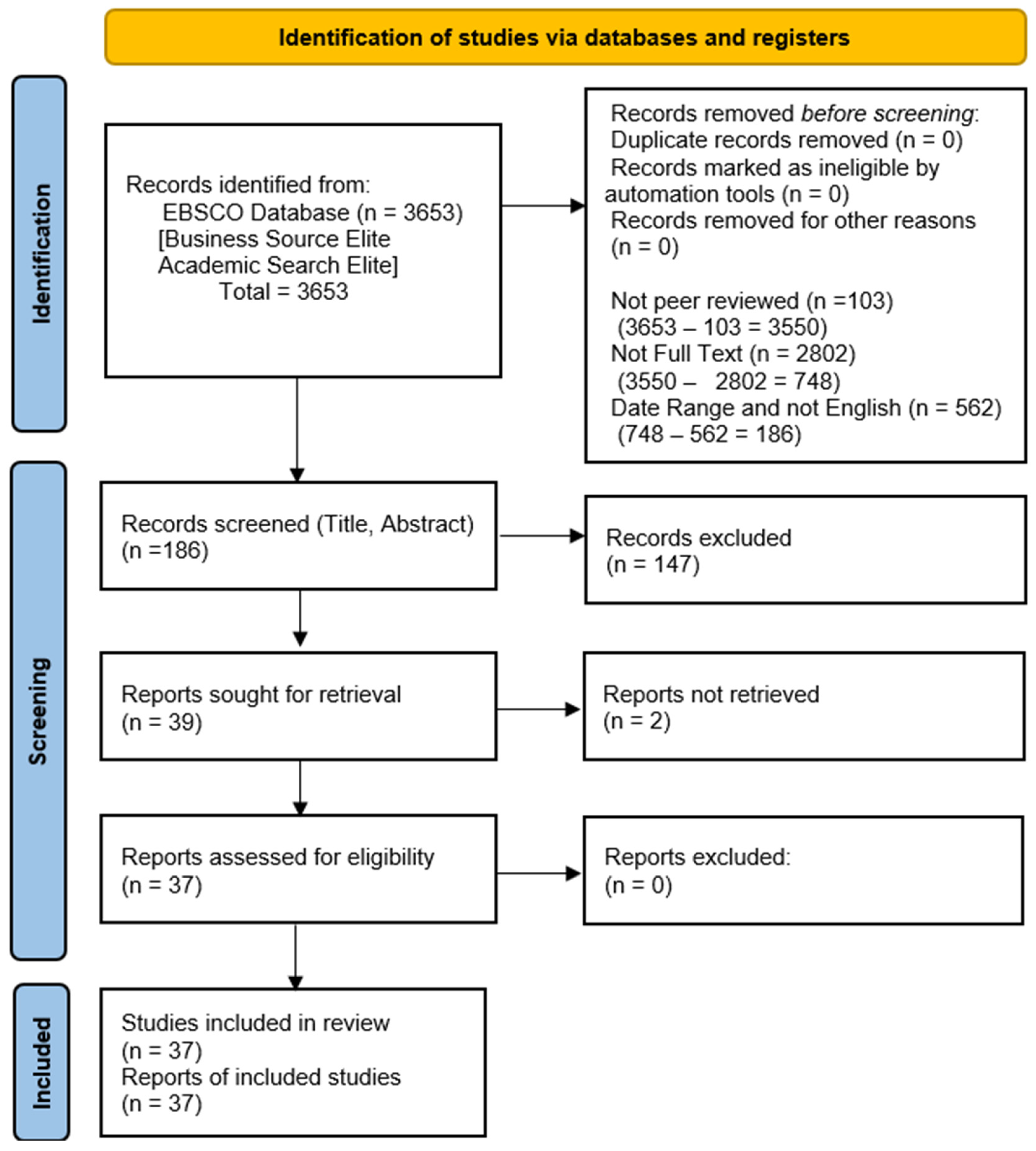
Figure 1. Steps followed for the literature search and article screening.
Sustainability 18 01434 g001
Figure 2. Publications by year.
Sustainability 18 01434 g002
Figure 3. Publications by venue.
Sustainability 18 01434 g003
Figure 4. Publications by country for all authors.
Sustainability 18 01434 g004
Figure 5. Keyword frequency.
Sustainability 18 01434 g005
Figure 6. Keyword co-occurrence network.
Sustainability 18 01434 g006
Figure 7. Integrated framework for AI-driven resilience in healthcare supply chains.
Sustainability 18 01434 g007
Table 1. Structured screening protocol and inclusion/exclusion criteria.
Criteria CategoryInclusion CriteriaExclusion Criteria
Topic ScopeStudies addressing AI applications that enhance supply chain resilience in healthcare (or related industries such as pharma, hospital logistics, med-tech).Studies unrelated to AI, resilience, or HSCs.
Publication TypePeer-reviewed journal articles.Gray literature (white papers, reports), conference papers, magazine articles, unpublished work.
Time PeriodPublished between January 2020 and August 2025.Published prior to 2020.
LanguageEnglish.Non-English publications.
Methodological ScopeConceptual, empirical, mixed-methods, simulation, or case study research with sufficient methodological detail.Studies lacking methodological clarity or rigor, as well as purely theoretical AI papers without practical applications in supply chains.
Disciplinary ScopeSupply chain, operations management, healthcare logistics, and industrial engineering.Disciplines unrelated to supply chain or operational resilience.
Quality AppraisalStudies meeting minimum research quality standards (e.g., clear objectives, methodology, results).Studies with weak or ambiguous methodology, lacking conceptual or empirical contribution.
Table 2. Topics and articles covering each topic.
Theme/TopicDescription
Supply Chain SustainabilityTopic 1 centers on sustainability-oriented supply chain management, emphasizing environmental performance, circular economic strategies, and long-term resilience [36,53]. Frequently associated terms point to decarbonization, waste reduction, and lifecycle optimization, reflecting growing scholarly attention to environmentally responsible, resource-minded, and circular supply chain practices [41,45,61]. This topic demonstrates how organizations are increasingly incorporating sustainability principles into supply chain design, planning, and strategic decision-making processes, supported by viable supply chain models, sustainable supplier selection, and Industry 4.0- and Industry 5.0-enabled integration [43,46,54].
Supply Chain DisruptionsTopic 2 represents research on risk, uncertainty, and disruption patterns in global and healthcare supply chains, particularly under conditions of extreme volatility [25,26]. The common high-probability terms relate to pandemic shocks, geopolitical risks, resource constraints, and operational disturbances, reflecting lessons learned from COVID-19 and other systemic disruptions [28,29,33]. The strong emphasis on agility, mitigation tactics, and business continuity planning highlights the growing prioritization of resilience as a strategic capability in the post-pandemic era [16,27,32]. Complementary studies examine risk assessment, reshoring strategies, hazardous material transportation, and adaptive response mechanisms, reinforcing resilience-oriented decision-making across diverse supply chain contexts [30,31,65].
Healthcare Industry TechnologyTopic 3 focuses specifically on digital transformation within healthcare supply chains, with prominent terms referencing hospitals, pharmaceuticals, medical supplies, and data-enabled decision tools [35,47]. This cluster highlights how advanced technologies improve forecasting accuracy, patient safety, inventory control, and resource allocation through AI-driven analytics, simulation, and digital health platforms [62,63,66]. The interplay between healthcare operations and digital innovation is especially prominent, emphasizing Industry 5.0 principles such as human-centricity, augmented decision-making, and personalized care delivery [37,38,52]. Collectively, this literature positions digital transformation as a critical enabler of adaptive, data-driven, and resilient healthcare supply chain ecosystems [64]. Prior studies further emphasize the role of digital twins, Industry 4.0 adoption readiness, and resilience-oriented performance metrics in enabling long-term resilience and sustainability outcomes [34,40,44,51,64].
Disclaimer/Publisher’s Note: The statements, opinions and data contained in all publications are solely those of the individual author(s) and contributor(s) and not of MDPI and/or the editor(s). MDPI and/or the editor(s) disclaim responsibility for any injury to people or property resulting from any ideas, methods, instructions or products referred to in the content.