1. Introduction
Rural tourism has gained increasing prominence over the past two decades as travelers deliberately move away from the standardized products of mass coastal tourism and crowded urban destination [
1,
2,
3]. What draws them to rural areas is no longer simply the promise of open space or lower prices, but a deeper search for authenticity, tranquility, meaningful contact with nature, and the chance to engage with living local cultures, traditions, and gastronomic practices. This evolution reflects broader shifts in traveler decision-making: people increasingly allocate their discretionary income and time to experiences that promise emotional resonance, identity reinforcement, and narrative richness rather than mere relaxation [
4,
5]. In policy terms, sustainable rural tourism has therefore become one of the most promising tools available to peripheral regions for stimulating local economic activity, preserving cultural and natural heritage, and building greater community resilience through diversified income sources [
3,
6,
7].
Cultural heritage—whether tangible monuments, intangible practices, or the cultural landscape itself—lies at the very heart of this transformation. It is the primary resource that lends rural destinations their distinctive character, enhances the perceived authenticity of the visitor experience, and enables meaningful differentiation in an otherwise saturated global market. At the same time, heritage is deeply embedded in community identity, providing a sense of continuity between past and present that residents themselves often draw upon when evaluating development options [
8,
9,
10]. Contemporary sustainable development frameworks no longer view cultural heritage solely as something to be passively preserved; they treat it as an active resource capable of generating economic, social, and cultural returns when strategically mobilized [
11,
12,
13]. When heritage is deliberately integrated into rural tourism offerings, a virtuous circle is formed: traditions are kept alive, local economies receive new impulses, and visitors encounter experiences that feel genuinely distinctive and memorable.
The link between rural tourism and cultural heritage is especially powerful because it directly addresses some of the most pressing structural challenges facing rural Europe [
14,
15,
16]. Depopulation, ageing populations, inadequate infrastructure, and chronically limited employment opportunities have become defining features of many inland regions. These problems are especially acute in Croatia’s Adriatic hinterland, where the extreme seasonality and spatial concentration of coastal tourism generate impressive aggregate statistics yet leave rural municipalities with only marginal trickle-down benefits. In such contexts, heritage-based rural tourism can serve as a real counterbalance—encouraging longer stays, generating year-round demand, supporting local entrepreneurship, and fostering cooperation among actors who might otherwise remain isolated [
2,
13,
17]. Sanagustin-Fons et al. [
18] argue that when rural tourism strategies are supported by coordinated policies and genuine stakeholder collaboration, they can simultaneously enhance economic vitality and social well-being.
Effective sustainable development, however, requires far more than goodwill or scattered projects. Geng et al. [
6] show that success depends on comprehensive strategic planning, ongoing stakeholder dialogue, and the ability to balance short-term revenue goals with long-term cultural and environmental integrity. Within this broader framework, cultural heritage emerges as one of the most powerful differentiating assets available to rural destinations. Its capacity to support off-season visitation, attract high-value niche segments, and create a strong, recognizable place identity makes it essential for regions pursuing resilient and inclusive growth [
3,
19,
20]. Failure to capitalize on this resource effectively traps many rural areas in a downward spiral of decline, out-migration, and fading cultural vitality.
Šibenik-Knin County illustrates both the opportunity and the challenge. The county possesses an extraordinary density of cultural and historical resources—archaeological sites, medieval fortresses, sacral architecture, protected intangible practices such as ojkanje singing, vernacular dry-stone structures (bunje), and a rich gastronomic tradition anchored by EU-protected products like Drniš prosciutto—yet its rural hinterland remains largely absent from mainstream tourism flows. Limited promotion, fragmented governance, insufficient horizontal and vertical coordination, and the continued dominance of coastal-oriented strategies all contribute to this underperformance. Mzembe et al. [
21] have noted that, despite a growing body of work on sustainable cultural heritage tourism, empirical studies that systematically examine stakeholder perceptions at the regional level remain surprisingly scarce, particularly in South-East Europe.
The existing research on Croatia tends to focus either on national-level policy or on individual flagship attractions, leaving county-scale dynamics largely unexplored [
22,
23,
24]. We could not identify any papers that integrate cultural heritage management, stakeholder perspectives, and practical tourism development into a single analytical framework. This gap is particularly problematic given how rapidly traveler expectations and competitive conditions are changing. Without a clearer understanding of local realities—of which heritage elements stakeholders consider most valuable, how these resources are currently interpreted and presented, and what concrete obstacles block more effective valorization—strategic interventions risk remaining generic and ineffective.
The present study therefore seeks to address these gaps by investigating the role of cultural heritage in rural tourism development in Šibenik-Knin County. Through a combination of literature review, secondary data analysis, and in-depth semi-structured interviews with key local stakeholders, the research aims to identify the most promising heritage resources, assess their current integration into the tourism offer, and pinpoint the main institutional, behavioral, and infrastructural barriers to further progress. To guide this exploration, the study is framed by the following research questions:
How do key stakeholders perceive the role of cultural heritage authenticity in differentiating rural tourism from mass coastal tourism?
What are the main institutional and financial barriers limiting the systematic valorization of cultural heritage in the rural areas of Šibenik-Knin County?
In what ways can enhanced cross-sectoral collaboration and local community engagement support the use of cultural heritage for rural revitalization?
The ultimate goal is to provide evidence-based insights that can inform more coherent strategies, strengthen community involvement, and contribute to policy debates on sustainable rural revitalization in Croatia and similar Mediterranean contexts.
2. Theoretical Divagations: Cultural Heritage and Tourism
Cultural heritage is a multidimensional, socially constructed phenomenon that cannot be reduced to a mere list of monuments or traditions [
25,
26,
27]. It comprises the material traces, immaterial practices, and landscape configurations through which communities articulate their identity and negotiate their relationship with the past. Heritage only acquires significance when it is socially recognized, interpreted, and continually re-enacted; it is never a static reflection of history but a living resource that evolves in response to contemporary needs, values, and power relations. Ashworth and Howard [
28] already pointed out a quarter-century ago that what becomes “heritage” at any given moment is ultimately decided by contemporary cultural attitudes rather than by objective historical importance.
The traditional distinction between tangible and intangible heritage, though increasingly criticized for being overly rigid, still offers a useful analytical lens. Tangible heritage includes buildings, monuments, archaeological sites, museum collections, cultural landscapes, and vernacular architecture—elements that typically serve as the most visible anchors of destination identity [
29,
30,
31]. Intangible heritage, by contrast, includes oral traditions, performing arts, ritual practices, gastronomic knowledge, craftsmanship, and social customs that are transmitted across generations and continue to structure everyday life [
9,
26,
27]. In reality, the two dimensions are inseparable [
27,
31,
32]: a dry-stone bunja or a medieval fortress derives much of its emotional power from the stories, techniques, and seasonal rhythms that surround it.
Within tourism development, cultural heritage has moved from being a peripheral attraction to a core competitive resource. Kumar [
33] emphasized that historical and cultural assets form fundamental pillars of tourism growth and, when responsibly managed, become powerful instruments of long-term sustainability. Modern traveler behavior strongly supports this view: visitors no longer settle for superficial sightseeing but actively seek experiences that provide learning, emotional involvement, and a real sense of connection with local ways of life [
34,
35,
36]. Such preferences align closely with findings that tourists often prioritize anticipated affective rewards and symbolic value over purely functional or hedonic considerations when choosing destinations [
37,
38,
39]. Empirical studies from varied geographical contexts confirm that well-preserved and well-interpreted heritage significantly boosts perceived authenticity and overall visitor satisfaction [
40,
41,
42].
Destination-management literature further highlights the central place of heritage in effective governance frameworks. The World Tourism Organization (UNWTO) [
43,
44] has long stressed that sustainable success depends on coordinated multi-stakeholder action to create offers that are simultaneously attractive, competitive, and respectful of local carrying capacities. Cultural heritage, precisely because of its uniqueness and emotional resonance, enjoys a privileged position in such strategies—especially in rural areas where living traditions are still embedded in daily practice.
Rural and cultural tourism development is driven by both demand-side and supply-side forces, yet it faces remarkably consistent obstacles across regions. Key drivers include growing consumer demand for authentic and experiential travel, heightened environmental awareness, the search for less crowded destinations, and policy support for diversification away from coastal mass tourism. The most common barriers, in turn, are inadequate transport and digital infrastructure, extreme seasonality, insufficient professional training, fragmented products, weak branding, and—crucially—the lack of integrated destination-management organizations able to connect coastal and hinterland visitor flows [
2,
45,
46]. Overcoming these barriers requires not only investment but also behavioral shifts among both residents and public institutions.
Rural areas possess comparative advantages that urbanized destinations find hard to replicate [
2,
47,
48]. Intangible heritage is often still actively performed rather than merely exhibited, making possible the immersive, co-created experiences that today’s travelers increasingly demand. These experiences generate multiple benefits: new income from craft sales, culinary tourism, guided interpretive tours, and cultural events, while simultaneously reinforcing community pride and helping safeguard practices at risk of disappearing [
49].
Effective valorization and promotion of cultural heritage for tourism therefore require deliberate, multi-channel strategies that go well beyond standard marketing [
50,
51,
52]. These include thematic routes and clusters, professional storytelling and interpretation training for local guides, systematic digitization and virtual presentation, co-branded gastronomy-and-music events, and slow-tourism products that encourage multi-day stays in the hinterland. Without such targeted efforts, even the richest heritage endowment risks remaining invisible to wider markets and under-appreciated by residents themselves.
Significant obstacles nevertheless remain. Inadequate infrastructure, fragmented product development, weak inter-institutional cooperation, low digital visibility, and the frequent absence of professional interpretation all constrain the effectiveness of heritage valorization [
53,
54,
55]. Behavioral factors add further complexity: local communities sometimes undervalue their own heritage because of over-familiarity, while visitors may arrive with idealized or stereotypical expectations that clash with reality. Overcoming these challenges calls for sustained investment, improved coordination, and deliberate programs to raise local awareness of heritage’s economic and symbolic potential—efforts that are strong predictors of lasting community support for tourism development.
In regions such as Šibenik-Knin County, where extraordinary cultural richness coexists with pronounced underuse in rural tourism, understanding these dynamics from the viewpoint of local actors becomes essential. Identifying which tangible and intangible elements stakeholders themselves regard as most promising, how they believe these resources should be interpreted and presented, and what concrete barriers they face in practice provides the foundation for more focused and effective strategies.
Building on the theoretical foundations outlined above—and aware of the research gaps noted in the introduction—the remainder of this paper presents an empirical examination of cultural heritage valorization in Šibenik-Knin County. The next section describes the methodological approach, followed by the presentation of findings and a discussion of their implications for theory, policy, and practice.
3. Materials and Methods
3.1. Study Area
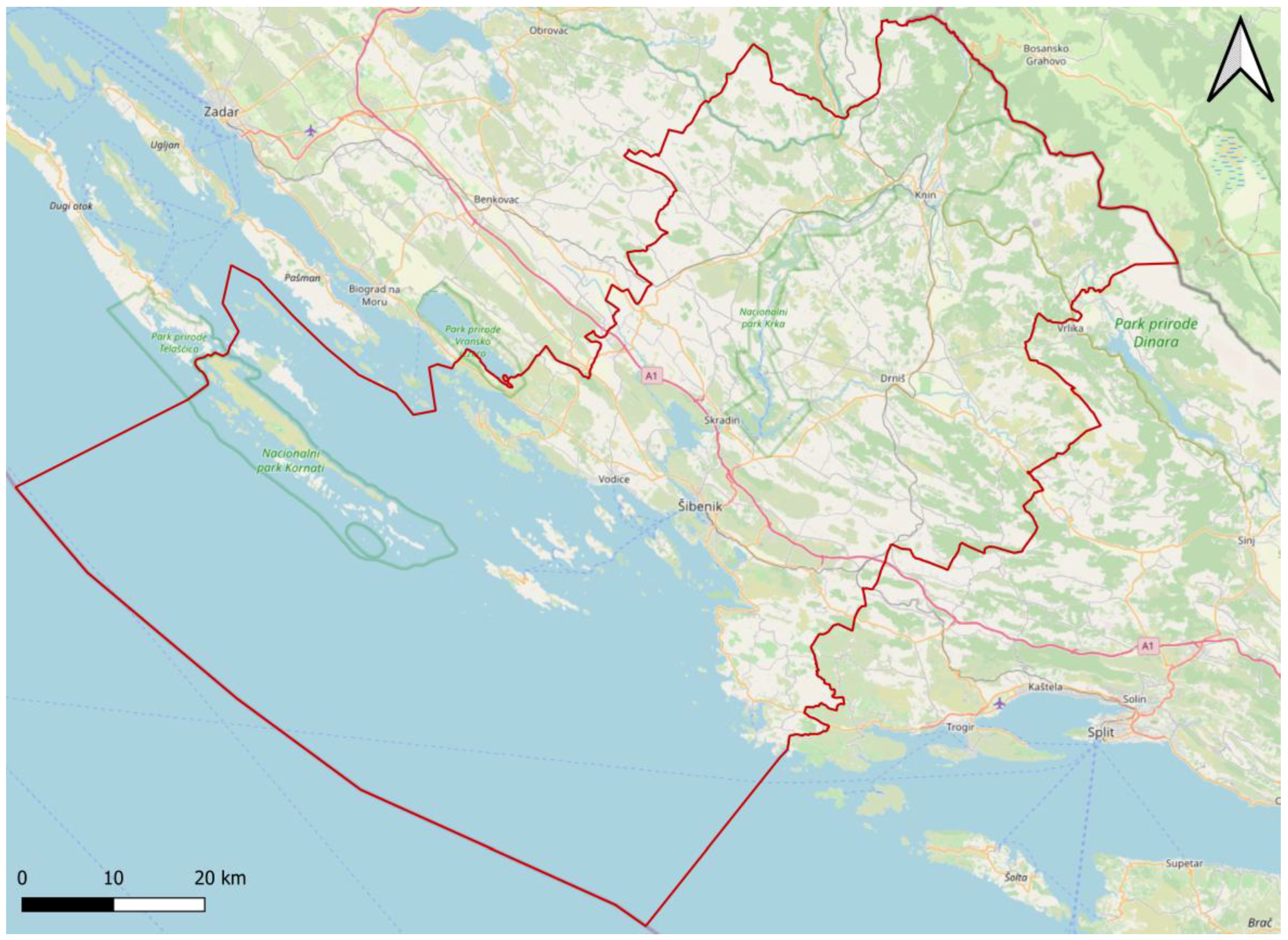
The research focuses on Šibenik-Knin County (
Figure 1), which is located in southern Croatia along the central Adriatic coast and consists of three distinct geographical zones: a narrow coastal strip with the cities of Šibenik and Vodice, an island zone that includes Murter, Zlarin, Prvić, and Kaprije, and a large rural hinterland of mountainous terrain and flatter valleys near the border with Bosnia and Herzegovina, where Knin and Drniš serve as the main inland centers surrounded by dozens of small rural settlements. The county enjoys a classic Mediterranean climate with hot, dry summers and mild, wet winters, creating favorable conditions for both seaside and inland tourism. This combination of climate, landscape variety, and historical depth provides an excellent platform for sustainable tourism that links cultural heritage with nature-based and rural products.
The county’s historical legacy is exceptionally rich and multilayered, shaped by Illyrian, Roman, early Croatian, Venetian, Ottoman-influenced, and Habsburg periods, as well as twentieth-century transformations. These successive layers have produced a remarkable concentration of architectural, archaeological, and intangible cultural assets spread across both coastal and inland areas, making the county’s heritage portfolio a highly valuable resource for heritage-led and rural tourism [
57]. Although it contains urban centers, most notably the city of Šibenik, the county is spatially and functionally dominated by its extensive rural hinterland and numerous remote villages, and is therefore classified as a predominantly rural region according to the OECD typology [
58]. The 2021 Census recorded approximately 96,722 inhabitants, with a continuing downward trend that is especially severe in rural areas [
59]. Like many rural parts of Mediterranean Europe, the county faces ageing populations, youth out-migration, depopulation of remote settlements, and limited infrastructural development in the interior—challenges that threaten community sustainability yet also create opportunities for tourism-driven revitalization.
Key attractions include natural heritage including protected sites such as Krka National Park with its waterfalls, monasteries, and historic mills (including Skradinski Buk, Roški Slap, and the Franciscan monastery on Visovac Island); the medieval town of Skradin and its waterfront old town; Topoljski Buk (Krčić Waterfall) near Knin as a scenic natural site; Kornati National Park; cultural heritage including the restored fortresses of Šibenik (Barone, St. Michael’s, and St. Nicholas) together with UNESCO-listed sacral monuments; Knin Fortress on Mount Spas, one of the largest fortified structures in Croatia offering panoramic views; the Cathedral of St James in Šibenik (UNESCO World Heritage Site); extensive dry-stone architecture (bunje and dry-stone walls); historic archaeological sites such as the Roman ruins at Burnum and the Gradina viewpoint in Drniš; protected intangible heritage such as traditional Dalmatian a cappella singing (klapa singing) and ojkanje singing; maritime and local traditions on the island of Krapanj, known for its historic sponge-diving culture; or EU-protected gastronomic products, most notably Drniš prosciutto and its associated international festival [
60]. In 2024 the county recorded more than 5.1 million overnight stays [
61]. Yet tourist activity remains overwhelmingly concentrated along the coast, while the rural hinterland continues to show substantial untapped potential.
Rural tourism in Šibenik-Knin County is still in its infancy despite the region’s extraordinary cultural, historical, landscape, and gastronomic richness. The Šibenik-Knin County’s Development Plan for 2021–2027 explicitly identifies, in the county’s development vision high potential for selective forms of tourism, including rural and cultural tourism [
62]. Most hinterland municipalities, however, still lack organized tourist infrastructure, interpretation centers, thematic routes, and systematic heritage management. Successful heritage-based projects remain largely limited to the coastal zone—notably the EU-funded revitalization of Šibenik’s fortresses—while rural areas suffer from weak stakeholder cooperation, the absence of a dedicated destination-management organization linking hinterland products to coastal flows, low digital visibility, and insufficient training of local residents in tourism and heritage valorization. This mix of abundant yet underutilized resources, stark spatial imbalances in tourism development, and persistent rural socio-economic difficulties made Šibenik-Knin County an ideal case for studying how cultural heritage can drive sustainable rural tourism.
3.2. Semi-Structured Interviews
The study employed a qualitative-dominant mixed-methods design [
63,
64], in which primary data were obtained through in-depth semi-structured interviews (
Appendix A.1 and
Appendix A.2) supplemented by a thorough analysis of secondary sources (national and county tourism strategies, statistical reports, heritage inventories, policy documents, academic literature, and grey literature) and the authors’ direct field observations conducted repeatedly throughout 2024–2025.
Ten key informants were purposively selected to represent the main stakeholder groups actively involved in culture, heritage preservation, tourism promotion, education, and rural entrepreneurship across Šibenik-Knin County.
Given the exploratory nature of the study and the focus on strategic and governance-related perspectives, priority was given to actors involved in policy formulation, heritage interpretation, destination management, and development support rather than to individual market actors. Final participation was also influenced by stakeholder availability and willingness to participate within the research timeframe, which is common in qualitative fieldwork.
All participants held senior managerial or expert positions, possessed relevant academic qualifications, and had accumulated extensive practical experience in their respective fields (
Table 1). They were chosen based on their direct engagement in cultural tourism development and cultural heritage preservation. Because no single institution or individual in the county formally bears responsibility for rural tourism development, the sample deliberately included respondents with deep expertise in closely related areas of cultural tourism and rural development, ensuring they were best positioned to provide authoritative and well-informed insights on the research topic.
In line with this methodological approach, and considering the emphasis on institutional and expert stakeholders, a relatively small sample size was deemed appropriate, as qualitative research prioritizes analytical depth and information richness over numerical representativeness [
65,
66,
67].
Interviews were conducted either face-to-face or online between July and September 2025 and were audio-recorded with prior verbal informed consent. Full anonymity and confidentiality of individual contributions were guaranteed in all research outputs. A flexible semi-structured interview protocol was employed, with the question guide carefully adapted to each respondent’s institutional role and specific area of expertise. Respondents were systematically asked about the most important tangible and intangible cultural resources capable of attracting rural tourists and enhancing rural tourism development in Šibenik-Knin County, the current role of cultural heritage in rural tourism development in the county, the present state of cultural heritage valorization in rural areas, the biggest challenges and obstacles (administrative, financial, infrastructural, and social) in using cultural heritage for rural tourism development, the degree to which local stakeholders recognize cultural heritage as an important factor in rural tourism, concrete activities needed to better promote and valorize cultural heritage for tourism purposes, current institutional activities aimed at promoting cultural heritage in rural tourism as well as planned future projects, and specific elements of cultural heritage that should be prioritized together with broader visions for the future development of rural tourism based on cultural heritage in Šibenik-Knin County over the next five to ten years.
Based on the semi-structured interview protocol, a set of core analytical themes was defined ex ante and addressed consistently across all interviews. These themes were derived from the research objectives.
Table 2 presents the main analytical themes, their focus within the interview guide. In addition to these core themes, each respondent was asked two additional questions tailored to their specific institutional role, area of expertise, or ongoing projects, in order to capture context-specific insights.
Additional qualitative insights were gathered from secondary documents and online resources. Secondary data were used mainly for contextualization rather than research questions testing. Statistical reports were used to describe tourism development trends, spatial imbalances between coastal and rural areas, and the basic demographic characteristics of the study area. Political and strategic documents were analyzed to identify institutional frameworks, development priorities, and policy objectives related to cultural heritage and rural tourism. These sources supported the interpretation of interview findings and enhanced the robustness of the qualitative analysis.
The combination of data from diverse stakeholder groups with documentary evidence and field observations ensured robust methodological triangulation, thereby strengthening the validity and richness of the finding [
2,
15,
68,
69,
70]. Data analysis followed a combined deductive–inductive content analysis approach [
71,
72,
73]. An initial coding framework was derived from the interview protocol and existing literature. Predefined categories were refined and supplemented by themes emerging directly from the participants’ narratives. The analytical process involved summarizing respondent perspectives for each category, identifying key patterns, commonalities, and variations across stakeholder groups, and linking the empirical insights directly to the research objectives.
4. Results
4.1. Key Cultural Resources with Potential to Attract Rural Tourists in Šibenik–Knin Count
All ten respondents unanimously emphasized the extraordinary richness and diversity of both tangible and intangible heritage as the county’s greatest strength for rural tourism development. Among tangible resources, the most frequently mentioned were major archaeological and historical sites (especially the medieval fortresses, sacral buildings, and Bribirska glavica—widely regarded as one of the most important archaeological localities in Dalmatia), restored historic mills, former mining complexes in Siverić, and immersive cultural attractions such as Etnoland in Pakovo Selo and the Ivan Meštrović Family Tomb in Otavice. Traditional rural settlements and reconstructed ethno-villages (for example Ethno Village Stari Primošten) were repeatedly highlighted for their ability to offer visitors an authentic glimpse into past ways of rural life.
Intangible heritage received equally strong emphasis, particularly local customs, folk dances, traditional singing, and gastronomic practices. As Respondent 1 put it, “we must not forget the folk dances and songs that are regularly performed at special events, because they are the ones that revive tradition and contribute to a unique visitor experience”. Respondent 2 stressed the holistic character of rural heritage: “the most important material resources of the historic core are tradition, old houses, and dry-stone walls, while the intangible resources include the preparation and consumption of traditional dishes, the cultivation of indigenous plants and fruit trees, and traditional jewellery”. Respondent 8 captured the emerging trend particularly well: “Intangible heritage, such as klapa singing, ojkanje and ganga, as well as local customs, folklore and gastronomic traditions provide an opportunity to create a holistic experience that tourists are increasingly seeking today—contact with local identity, authenticity and inclusion in community life”.
Several interviewees also pointed to religious pilgrimage routes and UNESCO-protected elements, underlining that it is precisely the synergy between cultural and natural resources that gives the county its competitive edge. Respondent 9 summarized this view succinctly: “It is precisely the combination of cultural and natural values that makes Šibenik-Knin County very attractive and competitive as a tourist destination”. The findings in this subsection directly address the first research question by highlighting how stakeholders perceive authenticity—embedded in both tangible sites and living intangible practices—as the core element differentiating rural tourism experiences from standardized coastal offerings.
4.2. Cultural Heritage in Rural Areas of the County
Cultural heritage was unanimously regarded as far more than a decorative backdrop—it is the primary motivator for visitors who seek authentic experiences blending nature, history, tradition, and local ways of life. Respondent 1 explained that “it is not enough for tourists to see nature—they want to feel the spirit of the place, learn about history and tradition, taste local specialties, and participate in customs. It is precisely cultural heritage that gives identity to our rural areas and makes them recognizable on the tourist map”.
When paired with genuine hospitality and high-quality gastronomy, heritage strengthens regional identity and directly supports local economies. Respondent 4 observed that “today, there are two gastronomic establishments at Knin Fortress that offer traditional products such as cheese from the mountain goat. In addition to promoting the destination itself, cultural heritage also directly influences the development of smaller family farms from the local area”. Respondents also noted that heritage-based content helps extend the tourist season and enriches the destination’s image. Respondent 5 stated plainly that, “cultural heritage is certainly one of the tools for extending the tourist year, creating tourist products, and enriching and creating the image of the destination”, while Respondent 8 added that “cultural heritage adds value to the tourism offer, differentiates a destination from others and helps create a story that attracts visitors. The authenticity that heritage carries becomes the main attraction—whether through local stories, songs, customs or culinary specialties”. These insights further illuminate the first research question, confirming stakeholders’ strong consensus on authenticity as the key differentiator driving demand for rural tourism over mass coastal alternatives.
4.3. The Current State of Valorization of Cultural Heritage in the County
While awareness of cultural heritage’s importance is widespread, systematic valorization remains highly uneven across the county. Well-developed examples include the restored fortresses and archaeological sites (Knin Fortress, Burnum, Bribirska glavica), the UNESCO-listed Cathedral of St James in Šibenik, ethno-villages, museums, and signature gastronomic specialties (Drniš prosciutto, Skradin risotto, dishes prepared under the baking bell). Intangible elements—folklore performances, klapa and ojkanje singing, traditional crafts, and local festivals—are also gradually being woven into the tourism offer, usually in partnership with national and nature parks.
Nevertheless, many outstanding resources are still severely underutilized. Respondent 10 observed that “the state of valorization varies: in some places it is already well developed, and in others it is still in its infancy. The problem often lies with local self-government and the population itself”. Chronic lack of funding, depopulation, and demographic ageing were cited again and again as core constraints. Respondent 3 stressed that “the potential of rural areas is enormous, but the current valorization is still not at a satisfactory level. We should systematically invest and develop projects that would enable the presentation of cultural heritage and rural life to visitors”, while Respondent 10 advocated interdisciplinary cooperation: “Valorization should be carried out by teams composed of experts from various institutions across the county. Such an approach would enable more systematic and efficient preservation and promotion of cultural resources”. This subsection primarily responds to the second research question, revealing the persistent institutional and financial barriers that hinder effective valorization despite widespread recognition of heritage potential.
4.4. The Biggest Challenges and Obstacles in the Use of Cultural Heritage in Rural Areas of the County
Despite the widely acknowledged potential, respondents identified a familiar set of structural and behavioral barriers. The most frequently mentioned obstacles were insufficient financial resources for restoration, promotion, and event organization, together with a severe shortage of qualified professional staff. Respondent 3 summarized the situation clearly: “the biggest challenge is the lack of financial resources including the renovation of facilities, the organization of events, and the education of local communities”, while Respondent 5 identified additional issues: “ownership, protection by conservators, financial resources for the restoration and valorization of these resources, and the lack of professional staff to deal with them”.
Interviewees also highlighted passive or risk-averse attitudes among parts of the local community and political leadership, the absence of interpretation centers, poor market visibility, and the lack of a coherent long-term vision. Respondent 1 pointed out that “cultural heritage is still not sufficiently recognized by local politicians and the Ministry of Tourism, who direct the development processes”, and Respondent 7 added that the main challenges include “lack of interpretation centers, weaker visibility on the market, and a passive attitude of the local community towards resources”. Respondent 9 also noted that “the biggest challenges lie primarily in the insufficiently high-quality valorization of cultural heritage and inadequate promotion”. The barriers outlined here provide detailed empirical evidence for the second research question, underscoring institutional fragmentation and chronic underfunding as the primary impediments to progress.
4.5. Future Development and Promotion of Cultural Heritage as an Element of Rural Tourism in Šibenik-Knin County
All respondents expressed cautious optimism: cultural heritage is an inexhaustible resource for sustainable rural tourism, provided development stays rooted in authenticity and local identity rather than artificial reconstruction. Respondent 3 emphasized that “the combination of tangible and intangible heritage creates a special experience that is more pronounced in rural areas than in urban areas”. Respondent 9 stressed the importance of preserving place identity and linking cultural with natural resources to tell the county’s full story, while warning that careful planning is needed to protect the environment.
A recurring message was that there is no need to invent new attractions—it is enough to present existing heritage in a professional, authentic, and engaging way. Greater inclusion of local products in restaurants and accommodation was strongly advocated. Respondent 4 argued: “Instead of importing other people’s products, I think we should include our local cheeses, homemade foods, and traditional recipes in the offerings of restaurants and catering establishments much more”. Respondent 9 added that “rural heritage could be better valorized through the organization of specific programs and events that connect the local community and visitors, and through the education and inclusion of local stakeholders in tourism projects”. Respondent 7 advocated the rapid creation of interpretation centers, thematic routes, digitization projects, and stronger collaboration with creative industries.
To further structure the findings, a policy–gap matrix was developed comparing strategic policy objectives with stakeholder perceptions of current practice (
Table 3). The matrix highlights systematic gaps between declared development goals and their implementation, particularly regarding rural hinterland integration, institutional coordination, and community involvement.
In summary, the interviewees agreed that cultural heritage can become the main engine of economic revitalization and demographic stabilization in the rural hinterland, but only through sustained investment, genuine county-wide interdisciplinary cooperation, long-term strategic planning, and unwavering respect for authenticity and local identity These forward-looking perspectives directly address the third research question, illustrating how stakeholders envision cross-sectoral collaboration and community engagement as essential pathways to leveraging heritage for rural revitalization.
5. Discussion
The results of this study clearly confirm what every stakeholder in Šibenik-Knin County already feels in their daily work: cultural heritage is universally seen as the single most important resource for building sustainable rural tourism. This complete consensus—reaching across museums, tourist boards, academia, cultural institutions, and rural entrepreneurship organizations—shows a shared conviction that tangible and intangible heritage elements, when combined with the county’s stunning natural landscape, can create an authentic, competitive, and genuinely year-round tourism offer [
74,
75,
76]. In relation to the first research question, this consensus underscores authenticity as the primary mechanism for differentiating rural offerings from mass coastal tourism, aligning with broader theoretical emphasis on experiential and affective traveler motivations. Such strong agreement gives local and county authorities a solid evidence base for updating tourism strategies, preparing destination-management plans, and applying for EU and national funding focused on rural regeneration.
The heritage resources identified as most promising—archaeological sites, sacral complexes, fortresses, dry-stone architecture, EU-protected gastronomic products, and living intangible expressions such as klapa, ojkanje, ganga, traditional crafts, and festivals—match closely with successful examples from other Mediterranean rural countries like Spain [
4,
17,
54], Italy [
13,
77], France [
14,
31], Croatia [
22,
23,
61], Turkey [
78] and other [
79]. Tourist boards and destination managers can immediately turn this stakeholder-validated list into practical tools: thematic routes, multi-day experience packages, and joint marketing campaigns that extend the season and guide visitors from the crowded coast into the hinterland. For local entrepreneurs—family farms, small accommodation providers, restaurants, and guides—these resources offer ready-made content for high-value, low-volume products that command better prices and keep more money circulating within rural communities [
78,
80,
81].
Despite this recognized richness, the systematic under-valorization of cultural heritage in rural areas remains the central problem—a pattern familiar across southern Europe’s peripheral regions [
82,
83,
84]. Addressing the second research question, the identified barriers—particularly chronic underfunding and institutional fragmentation—explain why valorization remains uneven, even in the presence of successful local models. Successful cases already exist within the county itself: the revitalized fortresses in Šibenik, ethno-villages, and gastronomic events built around Drniš prosciutto all show that targeted investment and professional management quickly bring more visitors, longer stays, and higher spending. These local examples serve as realistic, replicable models for inland municipalities such as Knin, Drniš, Skradin, Primošten, Unešić, and Ružić, and they can be directly referenced in project proposals for EU rural-development funds.
The overwhelming emphasis on authenticity as the county’s main competitive advantage supports broader theoretical arguments that perceived authenticity is the core appeal of heritage-based rural tourism in an age dominated by standardized coastal offers [
85,
86,
87]. This reinforces the response to the first research question, positioning authenticity not merely as a descriptive trait but as a strategic asset for market positioning. Tourism entrepreneurs and marketing teams should therefore focus on storytelling grounded in real local narratives. Museums and heritage interpreters can use these findings to justify continued investment in high-quality, place-specific interpretation rather than generic visitor centers. For today’s travelers—especially the growing segments looking for slow, experiential, and regenerative travel—guaranteed authenticity is the decisive reason to choose Šibenik-Knin County over mass destinations.
The barriers repeatedly highlighted—chronic underfunding, shortage of qualified staff, weak cooperation, and insufficient political priority for inland areas—are typical of rural territories sitting next to strong coastal tourism zones throughout the Mediterranean and Central-Eastern Europe [
87,
88,
89]. As evidenced in response to the second research question, overcoming these requires redirecting resources toward hinterland projects and building professional capacities. This study gives policymakers at county and national level concrete evidence to push for a much larger share of tourism-tax revenues and EU structural funds to be directed toward heritage-led projects in the interior. At the same time, it provides development agencies and NGOs with clear arguments for designing training programs that target both local officials and rural residents. Finally, the third research question is illuminated by stakeholders’ optimistic visions for interdisciplinary cooperation and community inclusion, which emerge as critical enablers for transforming heritage into a driver of economic and demographic revitalization.
For the academic community, the research offers several insights of wider relevance: (1) it documents near-complete stakeholder consensus on the centrality of cultural heritage in a region previously studied mainly through the lens of coastal mass tourism; (2) it shows how institutional differences can be turned into productive synergies rather than conflicts—an insight useful for multi-stakeholder governance studies elsewhere; (3) it highlights the crucial mediating role of gastronomy and living intangible heritage in connecting institutional offerings with community-based entrepreneurship, thereby enriching theoretical discussions on integrated rural tourism systems.
6. Limitations and Directions for Future Research
This study has several limitations that should be acknowledged. First, the research is based on a purposive and availability-based sample of key institutional and expert stakeholders, which reflects the exploratory and qualitative nature of the study. While this approach enabled in-depth insights into strategic and governance-related perspectives on cultural heritage and rural tourism, it does not allow statistical generalization of the findings. Future studies could expand the stakeholder scope to include individual SME entrepreneurs, local cultural associations, heritage protection and conservation bodies, and infrastructure management authorities in order to capture operational and implementation-level perspectives.
Second, the research focuses on a single case study region—Šibenik-Knin County—which limits the direct transferability of findings to other geographical contexts. However, the case-study approach provides rich, context-specific insights into heritage-based rural tourism in a Mediterranean setting. Comparative studies across multiple regions or countries would allow broader generalization and deeper understanding of common patterns and region-specific differences.
Finally, the study relies primarily on qualitative data. Although methodological triangulation was used to enhance robustness, future research could integrate quantitative approaches, such as surveys of local residents, entrepreneurs, or visitors, to further validate and extend the findings. Longitudinal research designs could also help assess how heritage-based rural tourism initiatives evolve over time and how policy interventions translate into concrete outcomes.
While this study focuses on cultural heritage valorization, governance, and stakeholder perspectives, it does not address tourism infrastructure and accommodation supply, which represent important enabling conditions for heritage-based rural tourism development. Future research could therefore examine how small-scale, locally embedded accommodation models can support heritage-led rural tourism, particularly from a sustainability perspective.
7. Conclusions
This study has clearly shown that local stakeholders unanimously recognize cultural heritage as one of the principal resources for the future of rural tourism in Šibenik-Knin County. At the same time, they consistently point out that this resource remains significantly underutilized in the hinterland, where tourism development still lags far behind the coastal zone. The main barriers identified—insufficient financial resources, lack of coordinated strategic planning, limited professional capacities, weak cross-sectoral cooperation, and a sometimes-passive attitude among parts of the local population and political leadership—remain significant challenges. Stakeholders also highlighted opportunities for coordinated actions, cross-sectoral collaboration, and community engagement as critical enablers for valorizing heritage in rural areas.
The key strengths of this research are several. It is one of the first studies to focus specifically on the role of cultural heritage in rural tourism development in Šibenik-Knin County, helping to fill an important gap in Croatian rural and cultural tourism literature. By conducting in-depth semi-structured interviews with representatives of all major stakeholder groups (museums, tourist boards, academia, cultural institutions, and rural entrepreneurship support organizations), the study provides a comprehensive, multi-perspective view that goes well beyond official strategies and dry statistics. The findings underscore strong consensus on the importance of heritage while also revealing differences in stakeholder priorities, creating a robust foundation for future planning and collaborative initiatives.
The practical value of the research is especially high for several audiences: local and county-level tourist boards who want to diversify and depersonalize their offer; public institutions responsible for culture and heritage protection who need strong arguments for continued investment in the hinterland; municipalities and development agencies searching for proven models of community-based tourism; and regional policymakers drafting the next generation of strategic documents for the period after 2030. At the national level, the results reinforce the urgent need for support mechanisms targeting rural areas adjacent to highly developed coastal zones.
In summary, cultural heritage in Šibenik-Knin County is not just an ornamental addition to the existing tourism product; it has the genuine potential to become the central pillar of sustainable rural tourism. It can extend the season, redirect visitor flows from the overcrowded coast toward the hinterland, generate new income for depopulating rural communities, and preserve the county’s unique identity for future generations. Achieving this transformation will demand systematic and long-term commitment, coordinated governance structures, continuous education of local actors, and targeted investment. If these conditions are met, Šibenik-Knin County can serve as a successful Croatian and Mediterranean example of how cultural heritage can effectively reverse negative demographic trends and breathe new life into rural areas without sacrificing their authenticity or environmental values.
Author Contributions
Conceptualization, M.C. and G.G.; methodology, G.G.; software, G.G.; validation, G.G.; formal analysis, G.G.; investigation, G.G.; resources, G.G.; data curation, G.G.; writing—original draft preparation, M.A.A., M.C. and G.G.; writing—review and editing, M.A.A. and M.C.; visualization, M.A.A.; supervision, M.C. and M.A.A.; project administration, M.C. and M.A.A.; funding acquisition, M.A.A. All authors have read and agreed to the published version of the manuscript.
Funding
This research was supported by founds granted by the Minister of Science of the Republic of Poland under the “Regional Initiative for Excellence” Programme for the implementation of the project The Poznań University of Economics and Business for Economy 5.0: Regional Initiative—Global Effects (RIGE).
Institutional Review Board Statement
Ethical review and approval were waived for this study due to no personal data being collected, in accordance with the decision of the Ethics Committee of the University of Zagreb Faculty of Agriculture (approval number: 251-71-29-02/11-26-1).
Informed Consent Statement
Informed consent was obtained from all subjects involved in the study.
Data Availability Statement
The raw data supporting the conclusions of this article will be made available by the authors on request.
Conflicts of Interest
The authors declare no conflicts of interest.
Appendix A. Semi-Structured Interview Guide
This appendix presents the semi-structured interview guide used for data collection. All interviews followed a common set of core questions to ensure comparability across stakeholders. In addition, each respondent was asked two role-specific questions tailored to their institutional role, professional background, or ongoing projects.
Appendix A.1. Core Questions (Asked to All Respondents)
Challenges and Barriers
- 4.
What are the main challenges in using cultural heritage for rural tourism development?
- 5.
Are there administrative, financial, or infrastructural barriers that limit this process?
- 6.
To what extent is cultural heritage recognized by local stakeholders as an important factor for rural tourism development?
Appendix A.2. Role-Specific Questions
References
- Reina-Usuga, L.; Camino, F.; Gomez-Casero, G.; Jara Alba, C.A. Rural tourism initiatives and their relationship to collaborative governance and perceived value: A review of recent research and trends. J. Destin. Mark. Manag. 2024, 34, 100926. [Google Scholar] [CrossRef]
- Rosalina, P.D.; Dupre, K.; Wang, Y. Rural tourism: A systematic literature review on definitions and challenges. J. Hosp. Tour. Manag. 2021, 47, 134–149. [Google Scholar] [CrossRef]
- Yanan, L.; Ismail, M.A.; Aminuddin, A. How has rural tourism influenced the sustainable development of traditional villages? A systematic literature review. Heliyon 2024, 10, e25627. [Google Scholar] [CrossRef]
- Sánchez-Oro, M.; Robina-Ramírez, R.; Portillo-Fernández, A.; Jiménez-Naranjo, H.V. Tourist expectations and motivations in visiting rural destinations. The case of extremadura (Spain). Rev. Esp. Investig. Sociol. 2021, 175, 105–127. [Google Scholar] [CrossRef]
- Soták-Benedeková, L.; Rybárová, J.; Tometzová, D.; Seňová, A.; Rybár, R. Comprehensive Analysis of Rural Tourism Development: Historical Evolution, Current Trends, and Future Prospects. Sustainability 2025, 17, 1045. [Google Scholar] [CrossRef]
- Geng, Y.; Zhao, S.; Zhang, X.; Li, J.; Yan, Y.; Gao, J. Bibliometric analysis of sustainable rural tourism. Humanit. Soc. Sci. Commun. 2025, 12, 788. [Google Scholar] [CrossRef]
- He, Y.; Gao, X.; Wu, R.; Wang, Y.; Choi, B.R. How does sustainable rural tourism cause rural community development? Sustainability 2021, 13, 13516. [Google Scholar] [CrossRef]
- Bitušíková, A. Cultural heritage as a means of heritage tourism development. Muzeol. Kult. Dedicstvo 2021, 9, 81–95. [Google Scholar] [CrossRef]
- Zuo, Y.; Lan, T.; Liu, S.; Zeng, H. The Post-Effects of the Authenticity of Rural Intangible Cultural Heritage and Tourists’ Engagement. Behav. Sci. 2024, 14, 302. [Google Scholar] [CrossRef] [PubMed]
- Stokowski, P.; Kuentzel, W.; Derrien, M.; Jakobcic, J. Social, Cultural and Spatial Imaginaries in Rural Tourism Transitions. J. Rural Stud. 2021, 87, 243–253. [Google Scholar] [CrossRef]
- Musialik, W.; Łukaniszyn-Domaszewska, K.; Karaś, E.; Malik, K. Cultural Heritage Capital As a Resilience Factor in Sustainable Development Policy of the Region. Econ. Environ. 2024, 91, 964. [Google Scholar] [CrossRef]
- Nocca, F. The role of cultural heritage in sustainable development: Multidimensional indicators as decision-making tool. Sustainability 2017, 9, 1882. [Google Scholar] [CrossRef]
- Candeloro, G.; Tartari, M. Heritage-led sustainable development in rural areas: The case of Vivi Calascio community-based cooperative. Cities 2025, 161, 105920. [Google Scholar] [CrossRef]
- Bourdin, A.; Wan, T.; Delbos, P. Tourism and Rural Heritage: A Win-Win Relation? The Conditions of Heritage Making in Touristic Rural Regions. Built Herit. 2019, 3, 24–36. [Google Scholar] [CrossRef]
- de Luca, C.; López-Murcia, J.; Conticelli, E.; Santangelo, A.; Perello, M.; Tondelli, S. Participatory process for regenerating rural areas through heritage-led plans: The ruritage community-based methodology. Sustainability 2021, 13, 5212. [Google Scholar] [CrossRef]
- Štastná, M.; Vaishar, A.; Ryglová, K.; Rašovská, I.; Zámečník, S. Cultural Tourism as a Possible Driver of Rural Development in Czechia. Wine Tourism in Moravia as a Case Study. Eur. Countrys. 2020, 12, 292–311. [Google Scholar] [CrossRef]
- Sánchez-Martín, J.M.; Gurría-Gascón, J.L.; García-Berzosa, M.J. The cultural heritage and the shaping of tourist itineraries in rural areas: The case of historical ensembles of extremadura, Spain. ISPRS Int. J. Geo-Inf. 2020, 9, 200. [Google Scholar] [CrossRef]
- Sanagustin-Fons, V.; Lafita-Cortés, T.; Moseñe, J.A. Social perception of rural tourism impact: A case study. Sustainability 2018, 10, 339. [Google Scholar] [CrossRef]
- Gocer, O.; Boyacioglu, D.; Karahan, E.E.; Shrestha, P. Cultural tourism and rural community resilience: A framework and its application. J. Rural Stud. 2024, 107, 103238. [Google Scholar] [CrossRef]
- Ibanescu, B.C.; Eva, M.; Gheorghiu, A.; Iatu, C. Tourism-Induced Resilience of Rural Destinations in Relation to Spatial Accessibility. Appl. Spat. Anal. Policy 2023, 16, 1237–1254. [Google Scholar] [CrossRef]
- Mzembe, A.N.; Koens, K.; Calvi, L. The institutional antecedents of sustainable development in cultural heritage tourism. Sustain. Dev. 2023, 31, 2196–2211. [Google Scholar] [CrossRef]
- Drpić, D.; Rudan, E. Event competitivness in heritage tourism in rural Croatia. Acad. Tur. 2019, 12, 161–172. [Google Scholar] [CrossRef]
- Grgić, I.; Hadelan, L.; Zrakić, M.; Krznar, S. Could rural tourism revitalize rural areas in Croatia? Agroecon. Croat. 2017, 7, 98–108. [Google Scholar]
- Maras Benassi, H. Enhancing Sustainable Tourism through Cross-Border Cooperation: Insights from Interreg Projects Croatia and Neighbouring Countries (2014–2020). Interdiscip. Descr. Complex Syst. 2025, 23, 182–196. [Google Scholar] [CrossRef]
- European Cultural Heritage Skills Alliance. Dynamics and Future Scenarios for the Cultural Heritage Sector; European Cultural Heritage Skills Alliance: Brussels, Belgium, 2024; Available online: https://errin.eu/system/files/2024-10/D4.4.-Dynamics-and-future-scenarios-for-the-cultural-heritage-sector.pdf (accessed on 4 December 2025).
- Melis, C.; Chambers, D. The construction of intangible cultural heritage: A Foucauldian critique. Ann. Tour. Res. 2021, 89, 103206. [Google Scholar] [CrossRef]
- Carboni, N.; de Luca, L. Towards a Conceptual Foundation for Documenting Tangible and Intangible Elements of a Cultural Object. Digit. Appl. Archaeol. Cult. Herit. 2016, 3, 108–116. [Google Scholar] [CrossRef]
- Howard, P.; Ashworth, G.J. European Heritage, Planning and Management; Intellect Books: Bristol, UK, 1999; Available online: https://books.google.com/books?hl=en&lr=&id=X9mhXFqd2DcC&pgis=1 (accessed on 4 December 2025).
- Güven Ulusoy, Ö. Integrated Documentation of Tangible And Intangible Cultural Heritage in Urban Historical Sites. Int. Arch. Photogramm. Remote Sens. Spat. Inf. Sci. 2023, XLVIII-M-2-2023, 701–707. [Google Scholar] [CrossRef]
- Hazler, V. Perception of cultural heritage and monument protection. Traditiones 2012, 41, 123–134. [Google Scholar] [CrossRef]
- Vecco, M. A definition of cultural heritage: From the tangible to the intangible. J. Cult. Herit. 2010, 11, 321–324. [Google Scholar] [CrossRef]
- Lassandro, P.; Fioriello, C.S.; Lepore, M.; Zonno, M. Analysing, modelling and promoting tangible and intangible values of building heritage with historic flame lighting system. J. Cult. Herit. 2021, 47, 166–179. [Google Scholar] [CrossRef]
- Kumar, D.A. Cultural and Heritage Tourism: A Tool for Sustainable Development. Glob. J. Commer. Manag. Perspect. 2017, 6, 56–59. [Google Scholar] [CrossRef]
- Eck, T.; Zhang, Y.; An, S. A Study on the Effect of Authenticity on Heritage Tourists’ Mindful Tourism Experience: The Case of the Forbidden City. Sustainability 2023, 15, 7756. [Google Scholar] [CrossRef]
- Rasoolimanesh, S.M.; Seyfi, S.; Hall, C.M.; Hatamifar, P. Understanding memorable tourism experiences and behavioural intentions of heritage tourists. J. Destin. Mark. Manag. 2021, 21, 100621. [Google Scholar] [CrossRef]
- Li, H.; Bibi, S.; Kanwel, S.; Khan, A.; Hussain, B. Understanding of cultural heritage tourists’ emotional experiences: How place attachment and satisfaction determine behavioral intentions. Acta Psychol. 2025, 259, 105429. [Google Scholar] [CrossRef]
- Yang, S.; Isa, S.M.; Yao, Y.; Xia, J. Cognitive image, affective image, cultural dimensions, and conative image A new conceptual framework. Front. Psychol. 2022, 13, 935814. [Google Scholar] [CrossRef] [PubMed]
- Ye, S.; Lee, J.A.; Sneddon, J.N.; Soutar, G.N. Personifying Destinations: A Personal Values Approach. J. Travel Res. 2020, 59, 1168–1185. [Google Scholar] [CrossRef]
- Qiu, N.; Li, H.; Pan, C.; Wu, J.; Guo, J. The study on the relationship between perceived value, satisfaction, and tourist loyalty at industrial heritage sites. Heliyon 2024, 10, e37184. [Google Scholar] [CrossRef]
- Park, E.; Choi, B.K.; Lee, T.J. The role and dimensions of authenticity in heritage tourism. Tour. Manag. 2019, 74, 99–109. [Google Scholar] [CrossRef]
- Perry, M. Role of Cultural Heritage Preservation in Destination Branding and Tourist Experience Enhancement. Hosp. Tour. J. 2023, 1, 36–47. [Google Scholar]
- Gao, J.; Lin, S.; Zhang, C. Authenticity, involvement, and nostalgia: Understanding visitor satisfaction with an adaptive reuse heritage site in urban China. J. Destin. Mark. Manag. 2020, 15, 100404. [Google Scholar] [CrossRef]
- World Tourism Organization (UNWTO). UNWTO Annual Report 2013; World Tourism Organization (UNWTO): Madrid, Spain, 2013. [Google Scholar]
- World Tourism Organization (UNWTO). UNWTO Tourism Highlights; World Tourism Organization (UNWTO): Madrid, Spain, 2013; Volume 4. [Google Scholar]
- Kurtyka-Marcak, I.; Janowska-Biernat, J. Opportunities and Barriers To the Development of Tourism in Rural Areas. Ann. Pol. Assoc. Agric. Agribus. Econ. 2020, XXII, 153–166. [Google Scholar] [CrossRef]
- Mohamed Al Matris, A. The Challenges of Rural Tourism Development. Int. J. Eco-Cult. Tour. Hosp. Plan. Dev. 2023, 6, 29–45. [Google Scholar] [CrossRef]
- Liu, Y.L.; Chiang, J.T.; Ko, P.F. The benefits of tourism for rural community development. Humanit. Soc. Sci. Commun. 2023, 10, 137. [Google Scholar] [CrossRef]
- Roman, M.; Roman, M.; Prus, P.; Szczepanek, M. Tourism competitiveness of rural areas: Evidence from a region in Poland. Agriculture 2020, 10, 569. [Google Scholar] [CrossRef]
- García-Delgado, F.J.; Martínez-Puche, A.; Lois-González, R.C. Heritage, tourism and local development in peripheral rural spaces: Mértola (Baixo Alentejo, Portugal). Sustainability 2020, 12, 9157. [Google Scholar] [CrossRef]
- Kumar, D.; Swain, S.K. A Systematic Review Of Heritage Tourism Branding Strategies: Trends, Challenges, And Opportunities. Int. J. Prof. Bus. Rev. 2025, 10, e05506. [Google Scholar] [CrossRef]
- Pinke-Sziva, I.; Keller, K.; Kovács, L. Smart positioning: How smart technologies can increase the attractiveness of heritage tourism destinations? The case of a small-scale Hungarian heritage city. J. Herit. Tour. 2024, 19, 762–780. [Google Scholar] [CrossRef]
- Rojas-Berrio, S.; Rojas-Berrio, S.I.; Robayo-Pinzón, Ó. Marketing, Internationalization and Heritage Tourism: Systematic Literature Review. J. Tour. Herit. Res. 2019, 2, 189–206. [Google Scholar]
- Pintossi, N.; Ikiz Kaya, D.; van Wesemael, P.; Pereira Roders, A. Challenges of cultural heritage adaptive reuse: A stakeholders-based comparative study in three European cities. Habitat Int. 2023, 136, 102807. [Google Scholar] [CrossRef]
- García-Hernández, M.; de la Calle-Vaquero, M.; Yubero, C. Cultural heritage and urban tourism: Historic city centres under pressure. Sustainability 2017, 9, 1346. [Google Scholar] [CrossRef]
- Besculides, A.; Lee, M.E.; McCormick, P.J. Resident’s perceptions of the cultural benefits of tourism. Ann. Tour. Res. 2002, 29, 303–319. [Google Scholar] [CrossRef]
- OpenStreetMap Contributors. Šibenik-Knin County. 2025. Available online: https://www.openstreetmap.org/copyright (accessed on 15 January 2026).
- Konsorcij Urbanex d.o.o.–Krutak d.o.o. Master Plan Turizma Šibensko-Kninske Županije; Konsorcij Urbanex d.o.o.–Krutak d.o.o.: Šibenik, Croatia, 2017; Available online: http://sibensko-kninska-zupanija.hr/upload/stranice/2016/07/2016-07-19/214/dokumenti/MPTSKZ.pdf (accessed on 6 December 2025).
- OECD. Towards Balanced Regional Development in Croatia from Strategy Design to Implementation; OECD: Paris, France, 2024. [Google Scholar] [CrossRef]
- Croatian Bureau of Statistics. Population Estimate of Republic of Croatia; Croatian Bureau of Statistics: Zagreb, Croatia, 2021; Available online: https://podaci.dzs.hr/2022/en/29031 (accessed on 6 December 2025).
- Boranić Živoder, S.; Beroš, I.; Kunst, I.; Klarić, Z.; Marković Vukadin, I.; Kožić, I.; Krešić, D. 251105-IT_Strategija-Turizma-ŠKŽ-do-2025_2034_Finalna-Verzija_3_11---Za-Javno-Savjetovanje. 2024. Available online: https://www.sibensko-kninska-zupanija.hr/DesktopModules/EasyDNNNews/DocumentDownload.ashx?portalid=0&moduleid=853&articleid=13988&documentid=279 (accessed on 15 December 2025).
- Croatian Bureau of Statistics. Tourizm, 2024; Croatian Bureau of Statistics: Zagreb, Croatia, 2025; Available online: https://podaci.dzs.hr/media/mrhlz3py/si-1739-turizam-u-2024.pdf (accessed on 6 December 2025).
- Regionalna Razvojna Agencija Šibensko-Kninske Županije. Plan Razvoja Šibensko-Kninske Županije za Razdoblje 2021.–2027. Godine. 2022. Available online: https://www.rra-sibenik.hr/wp-content/uploads/2023/09/Plan-razvoja-SKZ-od-2021.-do-2027.pdf (accessed on 15 December 2025).
- Creswell, J.W.; Clark, V.L.P. Designing and Conducting Mixed Methods Research; SAGE Publications Ltd.: London, UK, 2017; Available online: https://collegepublishing.sagepub.com/products/designing-and-conducting-mixed-methods-research-3-241842 (accessed on 6 December 2025).
- Creswell, J.W. Research Design, Qualitative, Quantitative, and Mixed Methods Approaches, 4th ed.; Sage: London, UK, 2018. [Google Scholar]
- Bouncken, R.B.; Czakon, W.; Schmitt, F. Purposeful sampling and saturation in qualitative research methodologies: Recommendations and review. Rev. Manag. Sci. 2025; in press. [Google Scholar] [CrossRef]
- Hennink, M.; Kaiser, B.N. Sample sizes for saturation in qualitative research: A systematic review of empirical tests. Soc. Sci. Med. 2022, 292, 114523. [Google Scholar] [CrossRef] [PubMed]
- Malterud, K.; Siersma, V.D.; Guassora, A.D. Sample Size in Qualitative Interview Studies: Guided by Information Power. Qual. Health Res. 2016, 26, 1753–1760. [Google Scholar] [CrossRef] [PubMed]
- Kim, W.; Lee, S.J.; Park, J.Y.; Lee, H.R.; Choi, N. Systematic review of review research in hospitality and tourism: Updates from 2017 to 2023. Int. J. Hosp. Manag. 2025, 131, 104310. [Google Scholar] [CrossRef]
- Huang, L.; Zan, J.; Lv, K.; Zhao, X. A systematic review of mixed methods research in tourism and hospitality. J. Hosp. Tour. Manag. 2025, 63, 163–176. [Google Scholar] [CrossRef]
- Mason, P.; Augustyn, M.M.; Seakhoa-King, A. Mixed Methods Research in Tourism: A Systematic Sequential Approach. Folia Tur. 2021, 56, 9–34. [Google Scholar] [CrossRef]
- Proudfoot, K. Inductive/Deductive Hybrid Thematic Analysis in Mixed Methods Research. J. Mix. Methods Res. 2023, 17, 308–326. [Google Scholar] [CrossRef]
- Vears, D.F.; Gillam, L. Inductive content analysis: A guide for beginning qualitative researchers. Focus Health Prof. Educ. A Multi-Prof. J. 2022, 23, 111–127. [Google Scholar] [CrossRef]
- Bingham, A.J. From Data Management to Actionable Findings: A Five-Phase Process of Qualitative Data Analysis. Int. J. Qual. Methods 2023, 22, 1–11. [Google Scholar] [CrossRef]
- Richards, G. Cultural tourism: A review of recent research and trends. J. Hosp. Tour. Manag. 2018, 36, 12–21. [Google Scholar] [CrossRef]
- Ioannides, M.; Neuts, B.; Martins, J. Advances in Cultural Tourism Research: Proceedings of the International Conference on Cultural Tourism Advances, June 2023, Belgium; Springer Nature: Cham, Switzerland, 2023; pp. 1–231. [Google Scholar] [CrossRef]
- Shakya, M.; Vagnarelli, G. Creating value from intangible cultural heritage—The role of innovation for sustainable tourism and regional rural development. Eur. J. Cult. Manag. Policy 2024, 14, 12057. [Google Scholar] [CrossRef]
- Parlato, M.C.M.; Valenti, F.; Porto, S.M.C. Sustainable Promotion of Traditional Rural Buildings as Built Heritage Attractions: A Heritage Interpretation Methodology Applied in South Italy. Sustainability 2022, 14, 16206. [Google Scholar] [CrossRef]
- Gökarslan, A.B.; Tuncer Pürselim, H. The Role of Cultural Heritage in Ecotourism Planning in Rural Areas: The Case of Isparta Sütçüler Beydilli Village. Sustainability 2025, 17, 133. [Google Scholar] [CrossRef]
- Mangion, M.L.; Schembri, J.; Pranić, L.; Najev Čačija, L. Why is the transition to sustainable tourism challenging for Mediterranean coastal destinations? Curr. Issues Tour. 2025, 1–21. [Google Scholar] [CrossRef]
- Maziliauske, E. Innovation for sustainability through co-creation by small and medium-sized tourism enterprises (SMEs): Socio-cultural sustainability benefits to rural destinations. Tour. Manag. Perspect. 2024, 50, 101201. [Google Scholar] [CrossRef]
- Kataya, A. The impact of rural tourism on the development of regional communities. IBIMA Bus. Rev. 2021, 2021, 652463. [Google Scholar] [CrossRef]
- Turtureanu, A.G.; Crețu, C.M.; Pripoaie, R.; Marinescu, E.Ș.; Sîrbu, C.G.; Talaghir, L.G. Sustainable Development Through Agritourism and Rural Tourism: Research Trends and Future Perspectives in the Pandemic and Post-Pandemic Period. Sustainability 2025, 17, 3998. [Google Scholar] [CrossRef]
- Randelli, F.; Martellozzo, F. Is rural tourism-induced built-up growth a threat for the sustainability of rural areas? The case study of Tuscany. Land Use Policy 2019, 86, 387–398. [Google Scholar] [CrossRef]
- Knapik, W.; Król, K. Inclusion of Vanishing Cultural Heritage in a Sustainable Rural Development Strategy–Prospects, Opportunities, Recommendations. Sustainability 2023, 15, 3656. [Google Scholar] [CrossRef]
- Mejjad, N.; Rossi, A.; Pavel, A.B. The coastal tourism industry in the Mediterranean: A critical review of the socio-economic and environmental pressures & impacts. Tour. Manag. Perspect. 2022, 44, 101007. [Google Scholar] [CrossRef]
- Fernández-Macho, J.; González, P.; Virto, J. How specialized are coastal tourism destinations in Europe? J. Destin. Mark. Manag. 2024, 31, 100856. [Google Scholar] [CrossRef]
- European Commission. Coastal Tourism—The EU Blue Economy Report 2025—Maritime Affairs and Fisheries (DG-MARE). 2025. Available online: https://op.europa.eu/webpub/mare/eu-blue-economy-report-2025/blue-economic-sectors/coastal-tourism.html (accessed on 6 December 2025).
- Marcinkowska, I.; Maj, A.; Sidło, K. Tourism and Rural Development; European Committee of the Regions: Brussels, Belgium, 2024. [Google Scholar] [CrossRef]
- Torres, I.; Teruel-Serrano, M.D.; Viñals, M.J. Spatial distribution and challenges in European Union funding: A perspective from tourism projects. Ann. Tour. Res. Empir. Insights 2025, 6, 100198. [Google Scholar] [CrossRef]
| Disclaimer/Publisher’s Note: The statements, opinions and data contained in all publications are solely those of the individual author(s) and contributor(s) and not of MDPI and/or the editor(s). MDPI and/or the editor(s) disclaim responsibility for any injury to people or property resulting from any ideas, methods, instructions or products referred to in the content. |