Article

How Digital Cultural Heritage Learning Affects Sustainable Tourism Practices: A Case Analysis of the Great Wall of China

by
Fang Ning
and
Wenjie Zhang
*
School of Architecture and Design, China University of Mining and Technology, Xuzhou 221116, China
*
Author to whom correspondence should be addressed.
Sustainability 2026, 18(3), 1401; https://doi.org/10.3390/su18031401
Submission received: 20 November 2025 / Revised: 25 January 2026 / Accepted: 27 January 2026 / Published: 30 January 2026

Abstract

The sustainable development of cultural heritage heavily relies on visitors’ sustainable practices, with education serving as the key to regulating visitor behavior and promoting their engagement in sustainable tourism. However, the mechanisms linking education and sustainable tourism remain unclear in the virtual context. This research aims to determine the potential of digital cultural heritage learning outcomes in supporting sustainable tourism behaviors (environmental, cultural, economic) among visitors. This study integrates the Generic Learning Outcomes (GLOs) with the Theory of Planned Behavior (TPB), collecting 642 valid samples and employing PLS-SEM analysis. Research findings indicate that knowledge and understanding (KU), skills (S), attitudes and values (AV), enjoyment, inspiration, and creativity (EIC), and activity, behavior, and progression (ABP) positively influence sustainable tourism practices. Cost perception (CP), however, weakens the conversion from intention to actual behavior. This provides empirical support for the development of digital cultural heritage projects and the sustainable management of heritage sites.

1. Introduction

Cultural heritage refers to tangible artifacts and intangible attributes passed down in a community or culture [1]. It plays a vital role in establishing identity, maintaining history, and promoting a sense of belonging [2]. Safeguarding cultural heritage entails the preservation of cultural diversity for future generations and the cultivation of social cohesion through collective recollections and common experiences [3,4]. The Sustainable Development Goals (SDGs) established in the United Nations 2030 Agenda emphasize that safeguarding cultural heritage for future generations is essential to ensuring its sustainability [5]. As practices evolve, the synergistic development of heritage conservation and tourism has emerged as a new approach to preservation. It is the purpose of heritage tourism that public awareness and appreciation of history and natural scenery are awakened through travel activities [6]. Cultural heritage tourism offers opportunities to understand historical sites, customs, and festivals [7], providing pathways for public access to heritage. It encourages visitors to actively participate in heritage dissemination and value creation while experiencing cultural diversity [8]. Furthermore, it serves as a vital channel for fostering cultural industry innovation, strengthening community cohesion, and revitalizing local economies [9]. However, overtourism negatively impacts the sustainability of tourism destinations and the quality of local residents’ lives [10]. Numerous challenges are faced when trying to develop cultural heritage sites in a sustainable way. Furthermore, gradual changes in temperature, precipitation, humidity, and wind conditions can accelerate the physical, chemical, and biological weathering processes affecting outdoor cultural heritage sites [11], as well as the comfort levels of visitors [12]. These include landscape fragmentation, community building, tourism development, and heritage management issues [13]. Yet, simply restricting visitor numbers and tourism development may impose economic burdens on underdeveloped regions [14]. How to develop sustainable tourism remains a subject of widespread attention among researchers and practitioners [15], particularly in the context of developing countries [16].
Sustainable tourism is a responsible approach that considers the impacts of tourism on environmental management, cultural continuity, and economic benefits [8]. The World Tourism Organization (WTO) has identified 11 key indicators of sustainable tourism, which are categorized into 4 domains: ecological, social, economic, and planning [16]. Ecological sustainability emphasizes the appropriate use of renewable and non-renewable natural resources while taking into account the constraints on resource utilization. Economic sustainability encompasses the construction and maintenance of man-made infrastructure (such as roads, railways, and housing) while promoting human rights’ protection, career development, and improved quality of life. The sustainability of social culture emphasizes the development of human resources (including awareness, skills, information, and attitudes) and respects fundamental rights. As the European Commission underscores, it is essential to recognize the diverse dimensions (cultural, material, environmental, human, and social) and values (intrinsic and economic) of cultural heritage [17]. These indicators are essential for assessing the “productivity” of cultural heritage across its various dimensions and for sustainable tourism development.
Moreover, technology serves as a vital means to accelerate heritage conservation and sustainable tourism development [6]. Nowadays, virtual experience technologies are increasingly applied in cultural heritage tourism [18]. Particularly, the outbreak of the pandemic has hastened the advancement of digital tourism [19]. Virtual tours not only encourage public participation in heritage preservation and transmission [20], but also significantly contribute to open access and engagement with cultural heritage while supporting Sustainable Development Goals. By breaking down the barriers of time and space, digital technology enables visitors to experience landscapes comprehensively, in detail, and up close at a lower cost. This helps them gain a deeper understanding of the history and knowledge of heritage sites, allowing them to truly appreciate the value of cultural heritage [21,22]. Digital open access further facilitates the widespread communication and sharing of cultural heritage, serving as a marketing tool for heritage sites [23,24]. This increases visitors’ desire and intention to explore destinations [25,26], injecting economic motivation into heritage areas. Despite the significant value of virtual preservation, physical sites remain crucial for their historical, cultural, and environmental significance [27]. Some scholars express concern that overreliance on digital experiences may diminish attention to physical cultural heritage, while relying solely on digital preservation risks overlooking the importance of physical management and failing to address the practical needs of heritage site conservation [28]. Therefore, digital technology should be used as a supplementary tool to promote the sustainable development of cultural heritage, rather than as a substitute for physical conservation. Additionally, the public must be educated to understand that digital reproductions serve only as supplements, not substitutes [18], and to recognize the importance of sustainable practices at heritage sites.
In recent years, there have been significant transformations in the integration of digital technology and cultural heritage. The educational potential of digital cultural heritage has garnered increasing attention. This shift has expanded the possibilities for learning about cultural heritage. Within tourism education, digital technology is recognized for its multifaceted contributions: enhancing knowledge acquisition and engagement [29], providing educational supplements and stimulating interest [30], and reducing cognitive overload and facilitating skill development [31]. Collectively, these studies indicate that digital tourism experiences effectively enhance visitors’ cultural engagement and learning experiences. Furthermore, research reveals that participation in relevant knowledge and cultural activities influences both visitor behavior and post-experience actions. However, previous research has often overlooked the important role that knowledge transfer and participation in cultural activities play in shaping tourists’ perceptions of destinations [32]. To advance sustainable tourism in cultural heritage regions, enhancing sustainability awareness through education, information dissemination, and incentive activities is essential [33]. This guides visitors to appreciate the importance of safeguarding heritage values and actively engage in disseminating and promoting these values.
Therefore, this study aims to determine the potential of virtual learning outcomes in cultural heritage to support sustainable tourism (environmental, cultural, and economic) among visitors. Specifically, it links knowledge transfer through digital experiences to the long-term vitality of cultural heritage tourism, emphasizing the impact of digital experiences on behaviors that promote sustainable cultural heritage development including environmental conservation, cultural documentation, and repeat visits. We constructed an integrated model combining the Generic Learning Outcomes and Theory of Planned Behavior, conducting empirical analysis using the digital cultural heritage tourism program “Virtual Tour of the Great Wall,” developed using the Great Wall of China as a prototype. This research addresses the following questions: What is the educational significance of cultural heritage in digital environments? How will post-experience learning outcomes influence visitors’ sustainable tourism practices?

2. Literature Review and Hypothesis Development

2.1. Online Digital Experience Program of “Virtual Tour of the Great Wall”

The Great Wall stands as a quintessential example of large-scale cultural heritage sites [34]. In 1987, the Great Wall became one of China’s first cultural sites inscribed on the World Heritage List. The Great Wall is a treasure trove of cultural resources. Its tangible heritage includes fortresses, walls, passes, crenellations, castles, moats, and ancient military installations. Its intangible heritage encompasses the construction techniques, literature, poetry, history, art, and folklore associated with the Great Wall corridor [35]. However, the Great Wall now faces multiple threats and destruction. As well as unscientific conservation practices, disorderly development and restorative destruction [36], climate change poses a universal threat to cultural heritage sites with stone and brick structures [37]. Furthermore, as certified by the Chinese Cultural Heritage Administration, the total length of Great Wall relics from various dynasties reached 21,196.18 km by June 2012 [38]. Yet, while tourist sites like the Badaling Great Wall in Beijing, the Juyongguan Great Wall, and the Jiayuguan Great Wall in Gansu attract throngs of visitors, most sections of the wall remain largely unknown to the public.
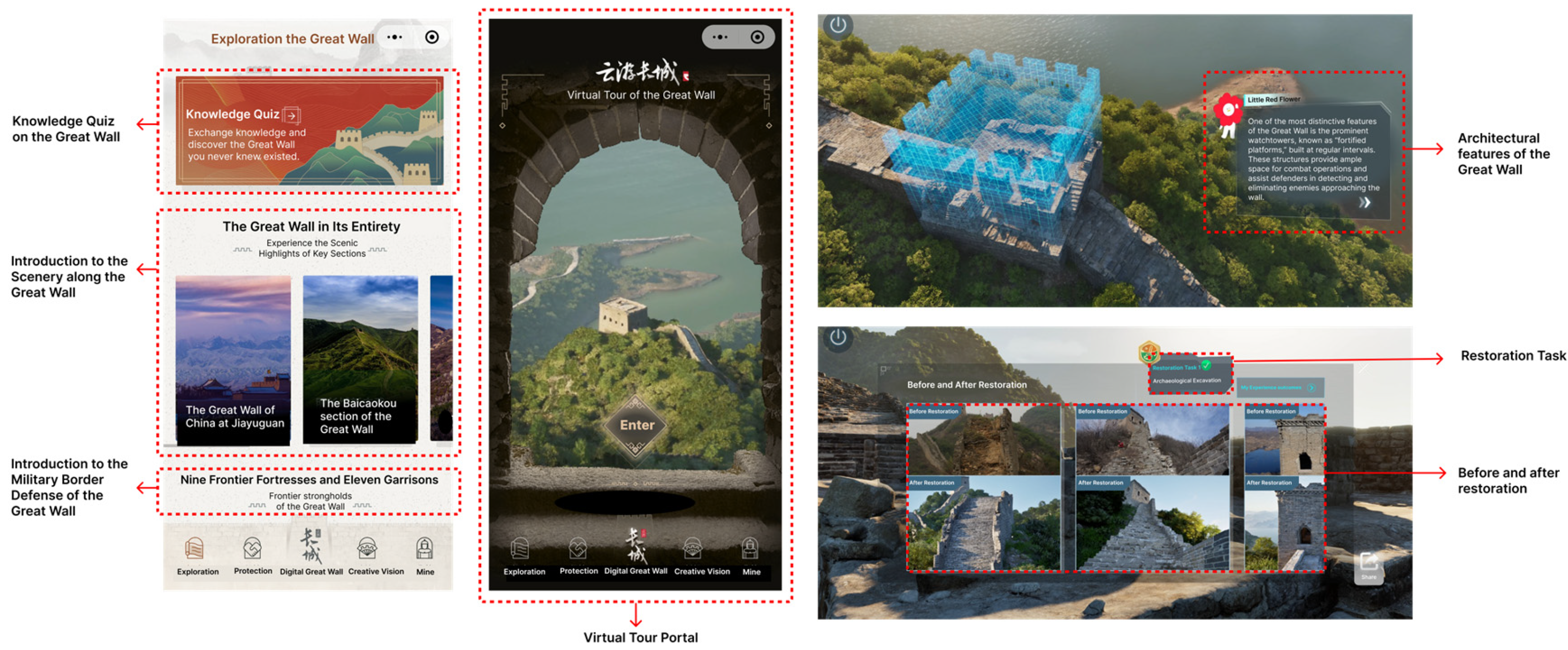
Against this backdrop, the China Cultural Heritage Foundation and Tencent Charity Foundation collaborated with the School of Architecture of Tianjin University, Great Wall Small Station, and numerous other institutions and organisations dedicated to protecting and researching the Great Wall to create the “Virtual Tour of the Great Wall” digital experience program. Currently, users can engage in virtual interactive experiences like “climbing the Great Wall” and “repairing the Great Wall” at the Xifengkou and Panjiakou sections via mobile devices. This marks the world’s first application of cloud gaming technology in digital restoration. It has enabled millimeter-level precision and immersive interaction for the world’s largest human cultural heritage site. The online platform enables visitors to virtually explore remote, typically inaccessible areas and even traverse time and space [39]. The program enables visitors to intuitively explore inaccessible sections of the Great Wall and its seasonal landscapes. Through engaging activities like archaeological excavation, debris clearance, bricklaying, restoration, and reinforcement, users gain insights into Great Wall history and conservation practices (Figure 1). Represented by “Cloud Tour of the Great Wall,” such digital heritage experiences popularize cultural knowledge through interactive engagement, narrowing the divide between the public and cultural heritage.

2.2. Assumptions Based on Generic Learning Outcomes

Cultural heritage and artifacts serve as invaluable educational resources [18], playing a vital role in enhancing cultural literacy and personal capabilities. The development of digital tourism projects contributes to enhancing the learning and understanding of history and knowledge related to cultural heritage [26] and improves learning outcomes in this area [16]. This knowledge acquisition further enables visitors to experience heightened autonomy and a sense of control during cultural heritage activities, thereby enhancing their willingness to participate and them to explore the value of cultural heritage further.
While formal schooling provides an effective means of acquiring knowledge, informal learning activities outside the classroom (such as visits to museums, art galleries, and travel) complement and supplement the limitations of school education [40]. The Learning Impact Research Project aims to investigate learning outcomes within informal learning activities. Its focus is on developing a method for measuring learning outcomes and impacts for all users of archives, libraries, and museums. Commissioned in 2001 by the Museums, Libraries and Archives Council to the Museum and Gallery Research Unit at the University of Leicester, the project ultimately proposed an interpretive framework considered a general classification method for assessing the scope of learning outcomes: five generic learning outcomes [41]. Specifically, these include: knowledge and understanding (KU), skills (S), attitudes and values (AV), enjoyment, inspiration, and creativity (EIC), and activity, behavior, and progression (ABP).
Knowledge and understanding lay the groundwork for action and expression. It is widely acknowledged that content is only given greater attention if it is fully understood [7]. As the knowledge deficit theory indicates, a lack of knowledge diminishes an individual’s concern for related issues, thereby weakening their willingness to take action [42]. Conversely, deep knowledge and understanding of an issue enable individuals to grasp the rationale and value of specific behaviors more clearly. For example, enhancing knowledge through health education allows community members to correctly understand the transmission mechanisms and dangers of COVID-19, thereby contributing to effective control of its spread [43]. When tourists acquire knowledge about cultural heritage sites from various perspectives, including history, landscape, and art, they develop a more comprehensive understanding of the destination. This familiarity increases their confidence in visiting the site [44]. In this process, tourists transform knowledge and understanding into positive attitudes and gain clearer insights into the effects of their own behaviors, reducing behavioral uncertainty. This cognitive shift leads tourists to form more positive evaluations of participating in sustainable tourism.
In terms of skills, skill outcomes stem from practical experience and can be categorized into cognitive or intellectual, affective, social, and material dimensions [45]. Research by Falk et al. [46] indicates that informal learning through tourism effectively promotes individuals’ practical skills and intellectual development. For instance, tourists can acquire information gathering and restoration skills in digital programs, develop social skills, learn to master digital tools, and cultivate emotional skills to manage avoidance tendencies during tours. Such skill training directly translates into the foundational capabilities for tourists’ practice. It is stated by Bandura that people’s behaviour is greatly affected by their confidence in what they are able to do [47]. Therefore, when tourists acquire relevant skills through online experiences, they can more easily see the feasibility of sustainable tourism, which significantly boosts their confidence in implementing sustainable practices.
Values and attitudes may develop unconsciously in learners [45]. As tourists acquire new information by participating in online cultural heritage projects, their attitudes and values towards heritage sites will change accordingly. For example, research suggests that promoting Taoist values that emphasise harmony between humanity and nature can effectively encourage civilized tourism intentions [48]. Furthermore, digital experiences can foster a heightened sense of cultural identity and history, awakening a greater engagement with cultural heritage among tourists [9]. In social psychology, Homer and Kahle [49] proposed that values influence behaviour via the mediating role of attitudes. The deepening of tourists’ recognition of heritage’s cultural value through online experiences will result in the extension of these values and sentiments to sustainable tourism behaviors, as well as an increased understanding of its historical significance as a national symbol. This intrinsic recognition of value reduces tourists’ psychological resistance to sustainable actions, prompting them to play a proactive role in the inheritance, protection, and development of cultural heritage.
Enjoyment, inspiration, and creativity emphasize the learner’s experience, encompassing enriched lives, the generation of new ideas or actions, and more. Once the sense of exploration has been satisfied, creativity and inspiration are likely to follow [50]. The fun and innovative nature of digital cultural heritage experiences can provide visitors with a positive experience. For example, positive online experiences of travel destinations can significantly increase visitors’ interest and affection for destinations [51]. This emotional enjoyment elevates visitor satisfaction and can lead to behavioral outcomes such as loyalty, recommendations, and reputation [52,53]. Moreover, inspiration plays a pivotal role in travelers’ exploration processes. The emergence of new ideas serves as a pivotal moment in motivating travelers to pursue novel destinations. Research indicates that VR technology can stimulate travel inspiration and visitation intent by evoking pleasure and emotional arousal in tourists [54]. Digital experiences that present immersive content, such as landscapes showcasing seasonal changes and vanished historical sites, as well as gamified interactive experiences, help to ignite potential travelers’ aspirations and fantasies about travel. This emotional motivation further strengthens travelers’ perceived behavioral control and behavioral attitudes, prompting them to engage more actively in sustainable tourism behaviors.
The activity, behaviour and progression dimension focuses on visitors’ interactive engagement, behavioral tendencies and long-term development within digital cultural heritage experiences. This reflects a shift in learning outcomes from internal cognition to practical application. As visitors complete these interactive tasks, they internalize the experience of this virtual practice into an awareness of their own behavioral capabilities. Additionally, virtual activities within digital experiences do not exist in isolation, but rather translate into long-term behavioral tendencies. For instance, effective museum learning can stimulate individuals’ desire for further learning and visits [45]. This extension of experiential activities to future behaviors deepens visitors’ recognition of the values of sustainable tourism through sustained participation. As these practices accumulate, visitors gradually recognize the tangible significance of sustainable tourism for heritage preservation, cultural continuity and economic support, thereby fostering more stable and positive attitudes towards sustainable tourism.
The following hypotheses are thus proposed by this article:
H1a–e. 
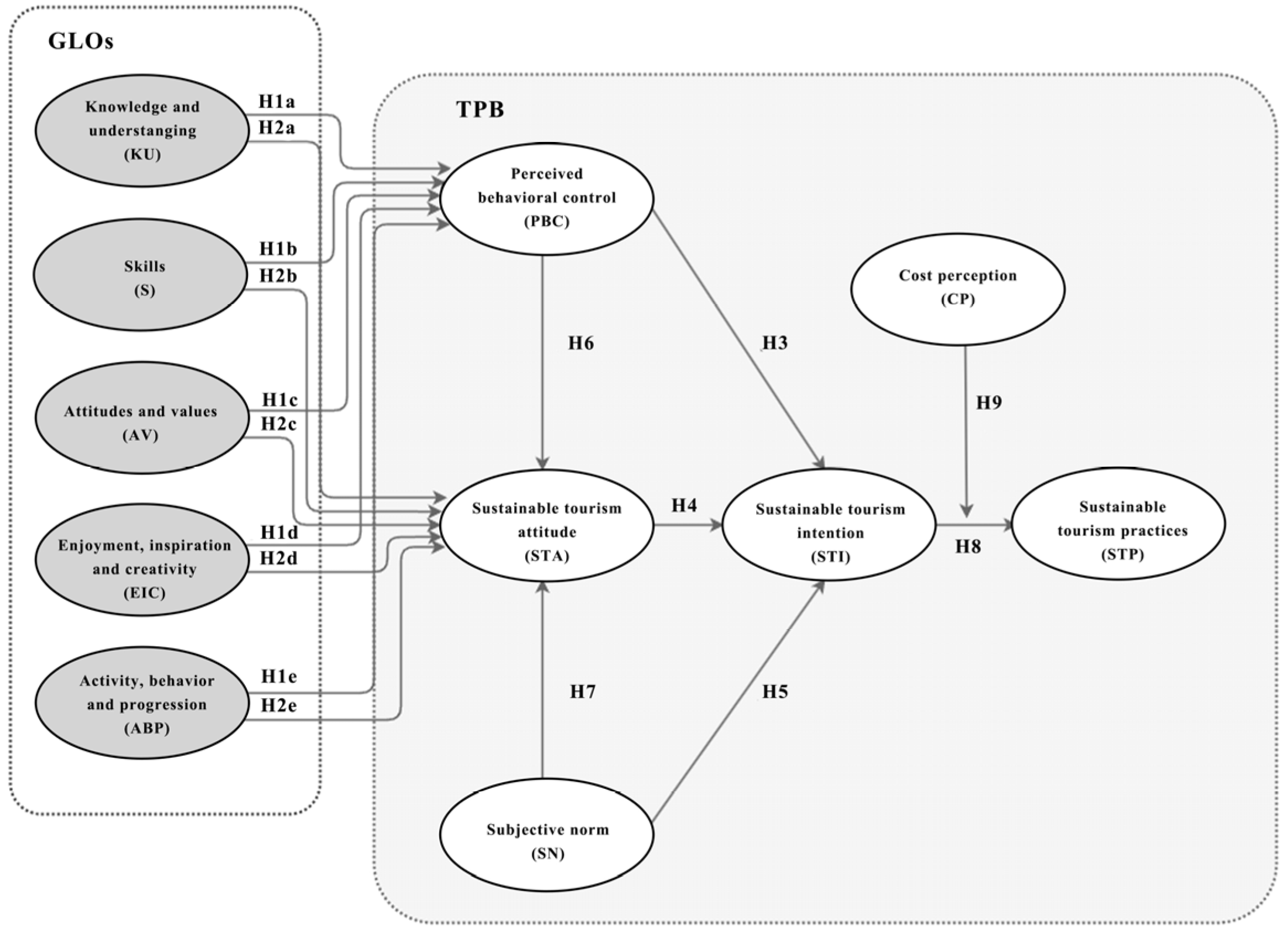
Knowledge and understanding (KU) (H1a), skills (S) (H1b), attitudes and values (AV) (H1c), enjoyment, inspiration, and creativity (EIC) (H1d), and activity, behavior, and progression (ABP) (H1e) positively influence perceived behavioral control (PBC).
H2a–e. 
Knowledge and understanding (KU) (H2a), skills (S) (H2b), attitudes and values (AV) (H2c), enjoyment, inspiration, and creativity (EIC) (H2d), and activity, behavior, and progression (ABP) (H2e) positively influence sustainable tourism attitude (STA).

2.3. Assumptions Based on the Theory of Planned Behavior

The Theory of Planned Behavior (TPB) is a classic analytical model for researching personal behavioral decision-making and has been widely adopted in the field of tourism behavior studies [55,56]. Proposed by Fishbein and Ajzen [57], this theory comprises five core elements: perceived behavioral control, attitude of behavior, subjective norm, behavioral intention, and behavior.
Perceived behavioral control describes a person’s assessment of their capacity to perform a specific behavior, reflecting their perceived ease or difficulty in executing that action. When tourists perceive themselves as capable of overcoming barriers to sustainable tourism, they are more likely to develop a clear intention to act. Ajzen’s seminal research has confirmed the positive influence of perceived behavioral control on behavioral intention [58]. Subsequent empirical studies in Kenya [59] and China [60] have also validated the applicability of these relationships within tourism contexts.
Behavioral attitude denotes a person’s positive or negative assessment of engaging in a certain behavior. In tourism research, sustainable tourism attitude represents individuals’ emotional inclination and value identification toward participating in sustainable tourism practices. Having a positive attitude can reduce the psychological cost of behavioral implementation and facilitate the transition from cognition to intention. The TPB explicitly identifies attitude as an antecedent of intention [58]. Research by Wang et al. reveals the positive influence of intrinsic motivation and environmental attitudes on green purchase intention from both consumer and corporate perspectives [61]. Tourism and hospitality research similarly finds that consumers with a higher interest in environmental protection are more likely to exhibit environmentally related behaviors [62].
Subjective norm refers to the perceived social influence an individual experiences when deciding whether to perform a certain behavior. Based on the Innovation diffusion theory [63], there are two types of social influence: interpersonal influence and external influence. Interpersonal influence concerns the impact of opinions expressed by acquaintances such as family members, friends, and colleagues. External influences include media coverage, expert comments, and other non-interpersonal information that can affect an individual’s decisions. In previous research on tourism behavior, the scope of subjective norms is usually limited to the influence of opinions from traditional interpersonal relationships [64]. However, many scholars in the field of digital economy have proven that external influences are also important considerations for subjective norm [65,66]. Additionally, social media exerts a significant influence on tourists’ travel planning [56]. Nowadays, online social media has become an emerging communication medium [67], and users’ interactive behaviors on social media platforms (asking, answering, liking, commenting, and sharing, etc.) can truly reflect customers’ attitudes toward the content of goods and services, and meanwhile influence consumers’ perceptions and behaviors to a certain extent. Therefore, this study adopts a more comprehensive approach to defining subjective norm as the combined influence of interpersonal relationships (significant family members, friends, and colleagues) and external information (online social media) on an individual’s perspective.
In addition, behavioral attitude has a mediating role between subjective norm and perceived behavioral control [68], which indicates that subjective norm and perceived behavioral control have a significant effect on behavioral attitude. Many scholars have demonstrated that perceived behavioral control and subjective norm predict behavior through behavioral attitudes [69,70].
Based on this, the following hypotheses are proposed:
H3. 
Perceived behavioral control (PBC) positively influences sustainable tourism intention (STI).
H4. 
Sustainable tourism attitude (STA) positively influences sustainable tourism intention (STI).
H5. 
Subjective Norm (SN) positively influences sustainable tourism intention (STI).
H6. 
Perceived behavioral control (PBC) positively influences sustainable tourism attitude (STA).
H7. 
Subjective norm (SN) positively influences sustainable tourism attitude (STA).
Encouraging on-site cultural participation, eco-friendly behaviors, and repeat visits are key objectives of sustainable tourism practices. However, intentions and actual behaviors remain two distinct concepts [71]. Therefore, it is essential to explore how cultural transfer impacts tourists’ actual sustainable tourism behaviors. In the model, sustainable tourism intention reflects an individual’s conscious willingness and readiness to engage in sustainable tourism behaviors. The Theory of Planned Behavior suggests that under conditions of sufficient actual control, behavioral intention directly determines actual behavior [66]. Specifically, travelers’ sustainable tourism intentions can be regarded as effective predictors of their future sustainable tourism practices. Stronger intentions correlate with a greater likelihood of executing sustainable tourism behaviors.
The following hypothesis is thus put forward:
H8. 
Sustainable tourism intention (STI) positively influences sustainable tourism practices (STP).

2.4. The Moderating Role of Cost Perception

The TPB incorporates an additional link from behavioral intention to actual behavior to explain that individuals’ behavioral choices are not entirely controlled by willpower. They may be compelled to act contrary to their intentions due to interference from external factors [66]. However, existing research has not sufficiently explored how intentions are further translated into actual behavior. Particularly in cultural heritage tourism contexts, tourists’ sustainable intentions (such as participating in heritage conservation, practicing low-carbon travel, or supporting local cultural consumption) may face challenges in realization due to constraints like time and finances.
In this context, this study introduces cost perception as a key moderating variable. Cost perception refers to tourists’ awareness of the additional costs required to engage in sustainable tourism behaviors, including time costs, energy costs, physical effort costs, and monetary costs [72]. These implicit costs constrain the conversion from intention to actual action. She [72] demonstrated that cost perception leads to negative emotions toward green consumption behaviors among tourists, thereby inhibiting such behaviors. Guo et al. [73] demonstrated that cost perception negatively impacts residents’ participation in mountain tourism. Therefore, we propose that tourists may abandon their intentions despite initial interest if they perceive significant additional costs required to explore and connect more deeply with diverse aspects of cultural heritage, including cultural contexts and natural landscapes. Conversely, the lower the perceived cost, the less resistance there is to converting that interest into action.
This leads us to put forward the following hypothesis:
H9. 
Cost perception (CP) exerts a negative moderating effect on the relationship between sustainable tourism intention (STI) and sustainable tourism practices (STP).
Guided by these hypotheses, this research develops a model illustrating how the learning outcomes of digital cultural heritage experiences influence sustainable tourism practices (Figure 2).

3. Materials and Methods

3.1. Questionnaire Survey

A quantitative research method employing a questionnaire was used in this research. The questionnaire was developed by referencing previous scholars’ studies. Subsequently, three experts in tourism management evaluated the surface validity of the scale, with all three experts rating the scale’s validity as good or above. The questionnaire included 4 demographic questions, 42 measurement items, and 1 lie detection item (Table 1). Except for demographic questions, all other questions were measured using a five-point Likert scale, with scores ranging from “1” to ‘5’ corresponding to “strongly disagree” to “strongly agree”.
The questionnaire consisted of three parts. Part One investigates participants’ demographic characteristics, including gender, age, education, and travel experience. Part Two consists of items measuring generic learning outcomes. The second part consists of general learning outcome measurement items, with references from Yan [64], Tien-Yu Hsu [74], and Tom Dieck [75], including knowledge and understanding (KU), skills (S), attitudes and values (AV), enjoyment, inspiration and creativity (EIC), and activity, behavior, and progression (ABP). The third section comprises items measuring the Theory of Planned Behavior, drawing references from Zhang et al. [76], Guo and Li [77], Zheng et al. [78], and Wang et al. [79]. These include Sustainable tourism attitude (STA), Subjective norm (SN), Perceived behavioral control (PBC), Sustainable tourism intention (STI), Sustainable tourism practice (STP), and Cost perception (CP).
This study collected samples through both online and offline channels. We utilized social media platforms (including Sina Weibo, TikTok, and Xiaohongshu) to attract users from different regions, age groups, and backgrounds to participate. Offline surveys were conducted by randomly inviting travelers at airports and train stations in Beijing and Xuzhou, Jiangsu Province, China (44%). To ensure the research results were broadly representative, we did not impose excessive restrictions on participant selection but required participants to be proficient in Simplified Chinese and spend at least five minutes experiencing the “Cloud Tour of the Great Wall” online program. We collected questionnaires through the “QuestionStar” website from 20 April 2025 to 25 June 2025. We ended up with 680 questionnaires. Following the exclusion of 38 questionnaires deemed to be invalid, a total of 642 were found to be valid.

3.2. Participants

Descriptive statistical analysis was first conducted to investigate the population’s demographic characteristics (Table 2). The sample included slightly more women (52.3%, 336 people) than men (47.7%, 306 people). In terms of age, the highest proportion of participants was aged 25–35 (38.6%, 248 people). With regard to educational attainment, bachelor’s degree holders (48.6%, 313 people) were the majority. In terms of travel experience, the majority of participants had never traveled to the Great Wall (56.5%, 363 people).

3.3. Research Tools

This study utilized SPSS 25.0 (IBM Corp., Armonk, NY, USA) for descriptive statistics. Due to the flexibility of partial least squares (PLS) in handling complex models and its ability to effectively handle moderator variables, SmartPLS 4.0 (SmartPLS GmbH, Monheim am Rhein, Germany) was used for PLS-SEM testing. In the validity evaluation of the model, convergent validity was tested using factor loadings and AVE (critical values of 0.5) [80]. The Fornell-Larcker Criterion was used to assess distinctive validity. This criterion requires that the square root of the AVE of each latent variable should be larger than its correlation coefficient with other variables [81]. Reliability was assessed using Cronbach’s Alpha and composite reliability (CR) (both with a critical value of 0.7) [80]. The significance of the path coefficients and moderating effects in the structural model was tested at a 0.05 significance level through the bootstrapping method. The explanatory power of exogenous variables on endogenous variables was measured using R2, and the predictive power of the model was verified using f2 and Q2 values [82].

4. Results

4.1. Measurement Model

The measurement model results indicate that all latent variables exhibit excellent reliability and validity. In terms of model reliability, each latent factor’s Cronbach’s Alpha exceeded 0.8 (minimum value: 0.883, maximum value: 0.940), and all composite reliability (CR) values were above 0.9 (minimum value: 0.928, maximum value: 0.961). These results indicate that the obtained data are highly reliable and stable. Regarding model validity, the factor loadings for all variables were above 0.8 (minimum value: 0.847, maximum value: 0.953), and the average variance extracted (AVE) were greater than 0.7 (minimum value: 0.770, maximum value: 0.892). The model’s convergent validity is indicated by these results (Table 3). Discriminant validity is substantiated by the evidence that the standardized correlation coefficients between each pair of variables are all less than the square root of the AVE value for each variable (Table 4), satisfying the Fornell-Larcker criterion.

4.2. Structural Model

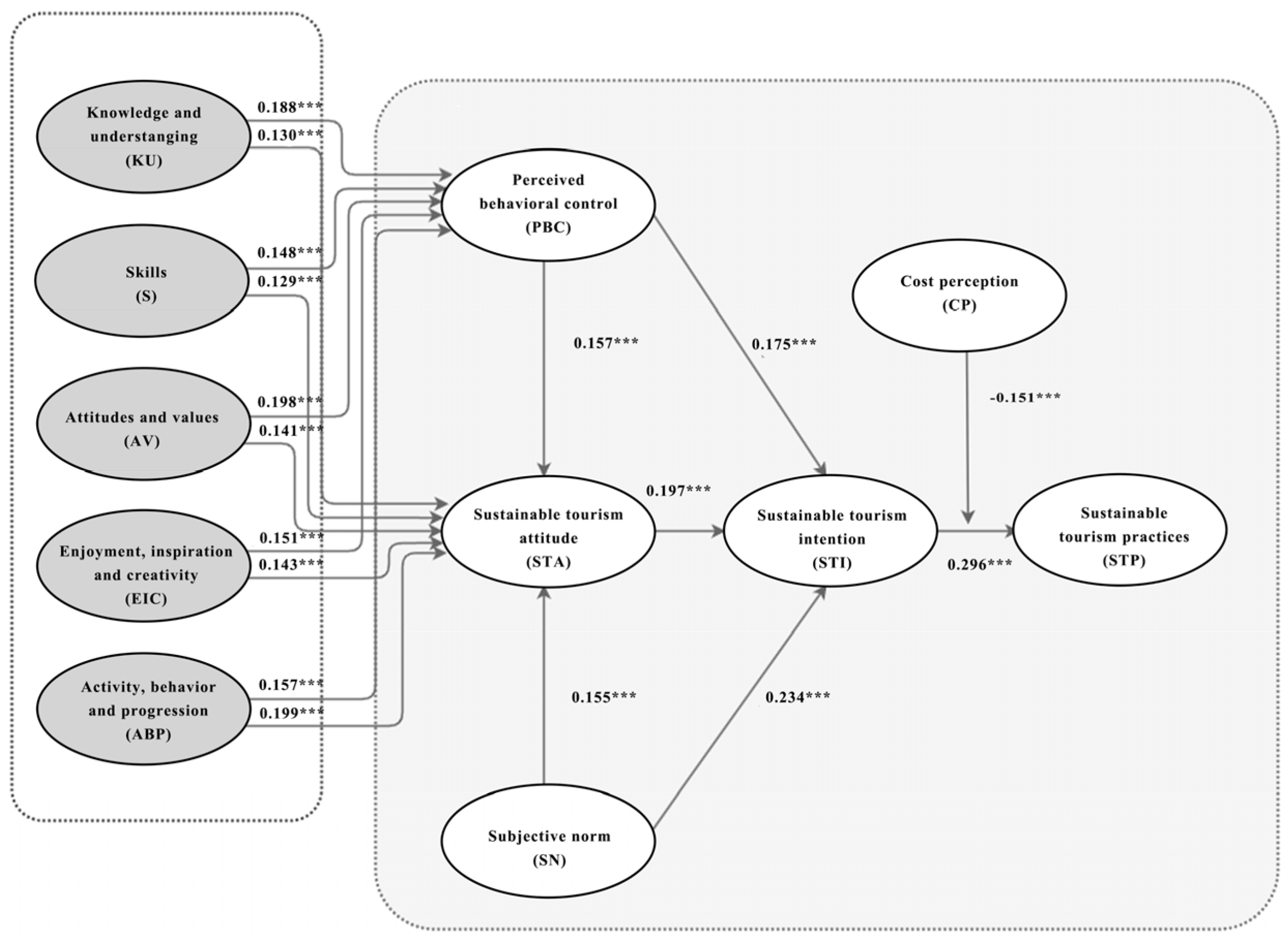
In the structural model assessment, path coefficients were examined through repeated sampling using the Bootstrapping method. The results indicated that knowledge and understanding (β = 0.188, p < 0.001), skills (β = 0.148, p < 0.001), attitudes and values (β = 0.198, p < 0.001), enjoyment, inspiration, and creativity (β = 0.151, p < 0.001), and activity, behavior, and progression (β = 0.157, p < 0.001) significantly and positively influenced perceived behavioral control, validating hypotheses H1a–H1e. Knowledge and understanding (β = 0.130, p < 0.001), skills (β = 0.129, p < 0.001), attitudes and values (β = 0.141, p < 0.001), enjoyment, inspiration, and creativity (β = 0.143, p < 0.001), and activity, behavior, and progression (β = 0.199, p < 0.001) significantly and positively influenced attitude toward sustainable tourism, confirming hypotheses H2a–H2e. Perceived behavioral control (β = 0.175, p < 0.001), sustainable tourism attitude (β = 0.197, p < 0.001), and subjective norm (β = 0.234, p < 0.001) significantly and positively influenced sustainable tourism intention, confirming hypotheses H3, H4, and H5. Perceived behavioral control (β = 0.157, p < 0.001) and subjective norm (β = 0.155, p < 0.001) exerted significant positive effects on sustainable tourism attitude, supporting hypotheses H6 and H7. Sustainable tourism intention (β = 0.296, p < 0.001) exerted a significant positive effect on sustainable tourism practice, confirming hypothesis H8 (Table 5 and Figure 3).
Regarding the model’s explanatory power, the R2 for perceived behavioral control was 0.353, indicating that 35.3% of its variance could be explained by the five learning outcomes variables. The R2 for sustainable tourism attitude was 0.515, the strongest explanatory power among all variables, suggesting that 51.5% of its variance could be jointly explained by learning outcomes, perceived behavioral control, and subjective norm. The R2 for sustainable tourism intention was 0.234, showing that 23.4% of the variance could be explained by perceived behavioral control, sustainable tourism attitude, and subjective norm. The R2 for sustainable tourism practice was 0.290, suggesting that sustainable tourism intention and subjective norm could explain 29.0% of the variance. To further assess explanatory strength, this study employed the Blindfolding algorithm to measure Q2 values. Given the sample size of 642, which is not divisible by 7, “7” was selected as the omission distance. The results showed all endogenous variables had Q2 values greater than 0 (minimum value: 0.186, maximum value: 0.398), indicating good model predictive validity. In terms of effect size, J. Cohen’s criteria [83] indicate that f2 values of 0.02, 0.15, and 0.35 correspond to small, medium, and large effect sizes, respectively, and all paths in the model achieved at least a small effect size (minimum value: 0.024, maximum value: 0.112). These results indicate that exogenous variables exert direct effects on endogenous variables, supporting the validity of the theoretical framework (Table 6).

4.3. Moderating Effect

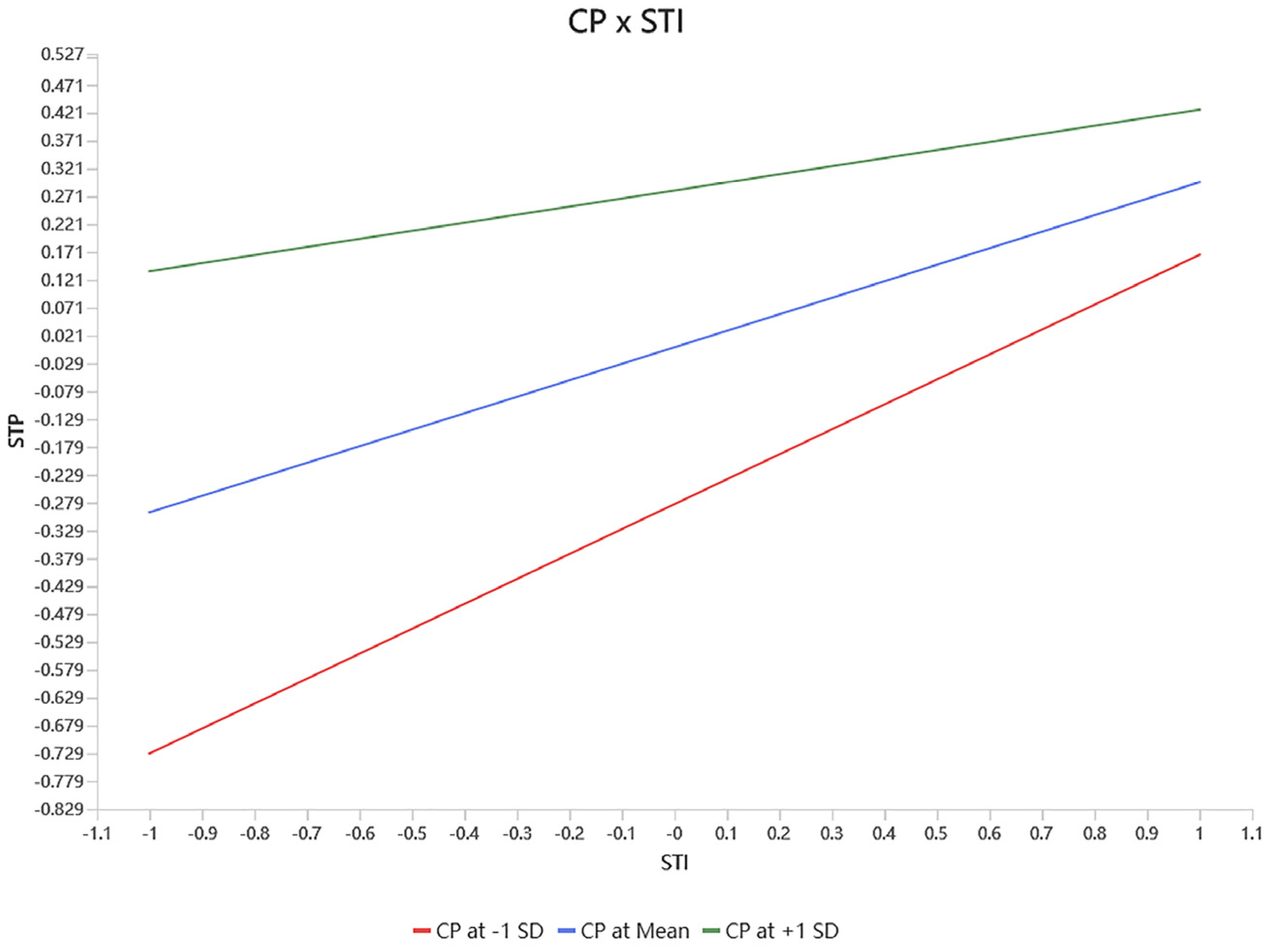
Using Bootstrap sampling (sample size = 5000), we tested the significance of the interaction term’s path coefficient. Table 7 shows that the regression coefficients for the main effect and interaction term have opposite signs and are both significant (β = −0.151, p < 0.001). Therefore, cost perception (CP) exerts a significant negative moderating effect on the relationship between sustainable tourism intention (STI) and sustainable tourism practice (STP). This implies that the positive influence of tourists’ intention to engage in sustainable tourism on their actual practices is weakened by their perception of additional costs. Furthermore, to elucidate the specific moderating mechanism of cost perception, the simple slope method was employed to illustrate its moderating effect under low-value and high-value (mean ± 1sd) cost perception conditions (Figure 4). This figure indicates that when tourists’ cost perception is at a low level (mean − 1sd), the predictive effect of sustainable tourism intention on actual practice is stronger; whereas at high levels (mean + 1sd), the motivational boost to behavior significantly diminishes. This indicates that even tourists with strong intentions to engage in sustainable tourism may abandon their original intentions and fail to translate them into action if they perceive such behaviors require additional costs in terms of time, money, effort, etc.

5. Discussion

This study integrates the Generic Learning Outcomes (GLOS) and the Theory of Planned Behavior (TPB). Based on a questionnaire survey of 642 users and PLS-SEM analysis, this study investigates the impact of learning outcomes from digital cultural heritage on tourists’ sustainable tourism practices. The core conclusions are as follows:
First, consistent with previous findings, this study highlights the socio-educational function of digital cultural heritage tourism in disseminating heritage knowledge and enhancing heritage engagement [30,84]. However, this study differs in its focus on exploring how learning outcomes across different dimensions influence sustainable tourism at cultural heritage sites. Furthermore, this study expands upon the research scope of Li et al. [85] and Yan et al. [64], who utilized generic learning outcomes to focus solely on user acceptance of digital cultural heritage programs. We reveal the intrinsic logic by which digital cultural heritage shapes visitors’ sustainable tourism cognition. Within the proposed model, knowledge and understanding, skills, attitudes and values, enjoyment, inspiration, and creativity, as well as activity, behavior, and progression, all positively influence visitors’ sustainable tourism attitude and perceived behavioral control. The learning outcomes across these dimensions enhance visitors’ tourism awareness, making them more willing to engage in deeper exploration and investment in cultural heritage sites. Notably, the shaping of attitudes and values exerts the most pronounced influence on visitors’ perceived behavioral control, aligning with the findings of Zheng et al. [48]. Meanwhile, activity, behavior, and progression demonstrate the strongest driving effect on sustainable tourism attitude, corroborating Falk et al.’s [46] assertion that informal learning can alter individual behavioral attitudes. This indicates that digital cultural heritage experiences not only convey knowledge but also profoundly transform visitors’ behavioral cognition and value orientations. Tourists form deep connections with cultural heritage when they gain insights into its historical context or immerse themselves in experiential activities. This fosters a greater willingness to devote more time and energy to actively participating in the dissemination, preservation, and innovation of cultural heritage [86]. As many tourists with previous Great Wall travel experiences indicated in test feedback, this virtual experience encourages them to revisit the Great Wall and pursue more in-depth “series tours” and “expert tours” of the site.
Second, the core decision variables within the Theory of Planned Behaviour (TPB) are crucial in mediating the relationship between learning outcomes in digital cultural heritage and intention to engage in sustainable tourism. Visitors’ attitudes toward sustainable tourism, social norm, and perceived behavioral control collectively determine the strength of their sustainable tourism intention. Moreover, perceived behavioral control and subjective norm indirectly influence intention by affecting attitudes, consistent with the original theoretical foundation of the TPB [57] and aligning with the empirical evidence from Li et al. [87] and Joo et al. [56]. This finding confirms that learning outcomes from digital cultural heritage do not directly translate into sustainable tourism intention. Instead, they gradually guide visitors toward sustainable tourism willingness by reshaping their behavioral attitudes, social cognition, and self-efficacy. This validates the transmission logic between knowledge transfer and behavioral intention.
Finally, sustainable tourism intention serves as a key predictor of actual sustainable tourism practices among visitors, though the conversion between the two is constrained by cost perception. The stronger a visitor’s sustainable tourism intention, the higher the likelihood of implementing related practices. While self-reported data cannot fully replace objective behavioral observation, the significant correlations between learning outcomes and these psychological variables authentically reflect the substantial influence of digital cultural heritage’s educational function in shaping tourists’ sustainable tourism cognition. This cognition will guide visitors to adjust behavioral tendencies and practice sustainable tourism concepts in actual travel scenarios. Moreover, the moderating effect of cost perception reveals a critical boundary condition for translating intention into action, aligning with Davison et al.’s [88] finding that fluctuations in travel costs significantly influence tourists’ travel decisions. When visitors perceive that adopting sustainable tourism requires greater time, effort, or monetary costs, the efficiency of converting intention into practice significantly diminishes. This provides a basis for understanding the implementation challenges in visitors’ sustainable tourism behaviors.

5.1. Theoretical Significance

First, traditional GLOs are primarily used to evaluate learning outcomes in offline cultural settings. This study integrates them with sustainable tourism behavior, emphasizing educational significance such as skill transfer and value internalization within digital tourism contexts. Second, aligning with digital-age characteristics, this research incorporates online social media information into the subjective norm construct, empirically demonstrating its significant impact on tourists’ sustainable tourism attitudes and intentions. This expands the implications of social influence factors in tourism research. Third, this study introduces cost perception as a moderating variable, revealing how non-volitional factors (implicit costs) constrain the conversion of intentions into practice. This addresses the traditional TPB theory’s limitation in insufficiently accounting for practical barriers during behavioral implementation. Fourth, while existing research often separately examines the educational value of cultural heritage or the factors influencing tourism sustainability, the interrelated mechanisms between these two areas lack systematic investigation. This study clarifies how learning outcomes from digital cultural heritage influence tourists’ behavioral decision variables, ultimately shaping sustainable tourism practices. The integrated model demonstrates strong fit and predictive efficacy, holding potential for application across similar research. It also provides methodological insights for interdisciplinary studies spanning heritage studies, tourism management, and education.

5.2. Practical Significance

This study confirms that digital cultural heritage experiences hold significant socio-educational value and can serve as a key driver for promoting the sustainable development of cultural tourism. We emphasize that the development of related digital tourism programs must transcend entertainment-oriented positioning and shift toward more educational objectives. This study clarifies that projects should incorporate multidimensional learning modules encompassing knowledge transfer, skill cultivation, and value formation to ensure the educational function of digital cultural heritage is effectively realized. While an overemphasis on educational content may diminish learner engagement, an excessive focus on entertainment design may reduce the appeal of learning materials [89,90,91]. Therefore, digital cultural heritage experience programs should prioritize the development of participants’ knowledge and skills, laying a more comprehensive foundation for subsequent travel. By conveying the historical, architectural, technical, aesthetic, and ecological contexts of cultural heritage, along with the impacts of multiple risks such as climate change, human activities, and natural disasters on heritage sites, visitors gain an experiential understanding of the intrinsic connection between sustainable tourism and heritage preservation. The presentation of significant heritage can also enhance visitors’ national pride, fostering voluntary protection, exploration, and engagement with cultural heritage by shaping values. The generation of inspiration and creativity, along with the promotion of subsequent behavioral activities, will influence visitors’ deepening passion for cultural heritage and their long-term engagement. These design directions offer guidance for balancing education and entertainment in digital experiences.
Additionally, cultural heritage sites must address the core issue of cost perception constraining behavioral change. For cost optimization, three key areas should be prioritized: enhancing low-carbon transportation, integrating cultural experience resources, and introducing sustainable behavior incentive policies (such as ticket discounts and creative cultural benefits). These measures aim to reduce the time, effort, and financial costs for visitors participating in sustainable tourism. In terms of social influence, disseminating expert insights and case studies of sustainable practices among tourists through online social media can strengthen the guiding role of social norm in shaping visitor behavior. This approach promotes the evolution of sustainable tourism from individual choices to collective consensus and voluntary action. Simultaneously, encouraging user-generated content and participatory discussions empowers visitors as active contributors to heritage preservation and narrative development. This approach is in line with the cultural aspect of sustainable development, which highlights participation, identity, and the long-term well-being of the community [9]. These measures will drive the coordinated development of cultural heritage preservation, tourism economic growth, and social-cultural transmission. This will contribute to achieving the United Nations’ 2030 Agenda for Sustainable Development goals relating to cultural heritage conservation and sustainable tourism.

5.3. Limitations and Prospects

This study also has certain limitations. First, since the “Virtual Tour of the Great Wall” is currently a mini program on WeChat, it only provides a Chinese interface and Chinese voice narration. As a result, 99% of users are Chinese. Additionally, due to the Great Wall’s high profile, foreign tourists’ intention and behavior to visit the Great Wall are primarily driven by its reputation rather than the use of this program. Therefore, this study only conducted research in China. Second, the theoretical model is only constructed based on GLOS and TPB. Although these two theories provide a solid framework, other theoretical models may exist that could enrich our research perspectives. Future studies may consider incorporating a more diversified theoretical foundation to more comprehensively explain and predict visitor behavior and learning outcomes in cultural heritage tourism. Third, this study relies on self-reported data from participants rather than objective observations of actual behavior. Self-assessment data may be influenced by factors such as social desirability bias. Therefore, future research could integrate objective behavioral observation data to further validate the models and conclusions presented herein. Finally, further research could explore how the presentation formats and educational content of various forms of digital cultural heritage impact visitor learning outcomes and the sustainable development of other types of heritage.


Author Contributions

Conceptualization, F.N. and W.Z.; methodology, F.N. and W.Z.; software, F.N. and W.Z.; validation, W.Z.; formal analysis, F.N.; investigation, F.N. and W.Z.; resources, F.N.; data curation, F.N. and W.Z.; writing—original draft preparation, W.Z.; writing—review and editing, F.N. and W.Z.; visualization, W.Z.; supervision, F.N. and W.Z.; project administration, F.N. All authors have read and agreed to the published version of the manuscript.

Funding

This research received no external funding.

Institutional Review Board Statement

This study was conducted in accordance with the Declaration of Helsinki. The questionnaire method employed in this study constitutes a routine empirical quality assessment project. As it does not involve human subjects, sensitive data collection, or potential ethical risks, it is classified as exempt from ethics review by China University of Mining and Technology and does not require a formal protocol number.

Informed Consent Statement

Informed consent was obtained from all subjects involved in this study.

Data Availability Statement

The data that support the findings of this study are available from the corresponding author upon reasonable request.

Acknowledgments

We extend our heartfelt gratitude to the School of Architecture and Design at China University of Mining and Technology for providing the research platform and academic support. We also thank the “Virtual Tour of the Great Wall” team for facilitating our fieldwork. Additionally, we sincerely appreciate all users who participated in this questionnaire survey and the valuable feedback from the expert reviewers.

Conflicts of Interest

The authors declare no conflicts of interest.

Abbreviations

The following abbreviations are used in this manuscript:
KUknowledge and understanding
Sskills
AVattitudes and values
EICenjoyment, inspiration, and creativity
ABPactivity, behavior, and progression
PBCperceived behavioral control
STAsustainable tourism attitude
SNsubjective norm
STIsustainable tourism intention
STPsustainable tourism practices
CPcost perception
GLOsThe Generic Learning Outcomes
TPBTheory of Planned Behavior

References

  1. UNESCO. Convention Concerning the Protection of the World Cultural and Natural Heritage; UNESCO: Paris, France, 1972. [Google Scholar]
  2. Gallou, E. Heritage and Pathways to Wellbeing: From Personal to Social Benefits, Between Experience Identity and Capability Shaping. Wellbeing Space Soc. 2022, 3, 100084. [Google Scholar] [CrossRef]
  3. Maldonado-Erazo, C.P.; Tierra-Tierra, N.P.; del Río-Rama, M.d.l.C.; Álvarez-García, J. Safeguarding Intangible Cultural Heritage: The Amazonian Kichwa People. Land 2021, 10, 1395. [Google Scholar] [CrossRef]
  4. Eichler, J. Intangible Cultural Heritage, Inequalities and Participation: Who Decides on Heritage? Int. J. Hum. Rights 2021, 25, 793–814. [Google Scholar] [CrossRef]
  5. Bokova, I.G. UNESCO Moving Forward the 2030 Agenda for Sustainable Development. Available online: https://unesdoc.unesco.org/ark:/48223/pf0000247785 (accessed on 23 July 2025).
  6. Zhang, Z.; Xiong, K.; Huang, D. Natural World Heritage Conservation and Tourism: A Review. Herit. Sci. 2023, 11, 55. [Google Scholar] [CrossRef]
  7. Guillén-Peñafiel, R.; Hernández-Carretero, A.M.; Sánchez-Martín, J.-M. Heritage Education as a Basis for Sustainable Development. The Case of Trujillo, Monfragüe National Park and Villuercas-Ibores-Jara Geopark (Extremadura, Spain). Land 2022, 11, 1183. [Google Scholar] [CrossRef]
  8. Lin, D.; Guo, X. Bringing Heritage Back to Life: The Way to Revitalize Cultural Heritage Tourism in the New Era. Tour. Trib. 2018, 33, 1–3. [Google Scholar] [CrossRef]
  9. Zhou, L.; Liu, X.; Wei, W. The Emotional Foundations of Value Co-Creation in Sustainable Cultural Heritage Tourism: Insights into the Motivation–Experience–Behavior Framework. Sustainability 2025, 17, 6961. [Google Scholar] [CrossRef]
  10. Mihalic, T.; Kuščer, K. Can Overtourism Be Managed? Destination Management Factors Affecting Residents’ Irritation and Quality of Life. Tour. Rev. 2022, 77, 16–34. [Google Scholar] [CrossRef]
  11. Sesana, E.; Gagnon, A.S.; Ciantelli, C.; Cassar, J.A.; Hughes, J.J. Climate change impacts on cultural heritage: A literature review. WIREs Clim. Change 2021, 12, e710. [Google Scholar] [CrossRef]
  12. Boqué-Ciurana, A.; Pozo, J.X.O.; Sevil, J.; Saladié, Ò. Rescheduling Summer Human Tower Exhibitions? Thermal Comfort Increases in the Evening. Geographies 2025, 5, 50. [Google Scholar] [CrossRef]
  13. Han, W.; Mo, Z.; Wang, W. Research on Living Conservation Strategies for the Ming-Guangwu Great Wall Based on the Grey Relational Analysis Model. Buildings 2025, 15, 1986. [Google Scholar] [CrossRef]
  14. Kang, M. Metaverse Tourism for Sustainable Tourism Development: Tourism Agenda 2030. Tour. Rev. 2023, 78, 381–394. [Google Scholar] [CrossRef]
  15. Rasoolimanesh, S.M.; Ramakrishna, S.; Hall, C.M.; Esfandiar, K.; Seyfi, S. A Systematic Scoping Review of Sustainable Tourism Indicators in Relation to the Sustainable Development Goals. J. Sustain. Tour. 2020, 31, 1497–1517. [Google Scholar] [CrossRef]
  16. Khan, I.; Khan, S.U.; Khan, S. Residents’ Satisfaction with Sustainable Tourism: The Moderating Role of Environmental Awareness. Tour. Crit. Pract. Theory 2022, 3, 72–87. [Google Scholar] [CrossRef]
  17. Nocca, F. The Role of Cultural Heritage in Sustainable Development: Multidimensional Indicators as Decision-Making Tool. Sustainability 2017, 9, 1882. [Google Scholar] [CrossRef]
  18. Buragohain, D.; Meng, Y.; Deng, C. Digitalizing Cultural Heritage Through Metaverse Applications: Challenges, Opportunities, and Strategies. Herit. Sci. 2024, 12, 295. [Google Scholar] [CrossRef]
  19. Manchanda, M.; Deb, M. Effects of Multisensory Virtual Reality on Virtual and Physical Tourism During the COVID-19 Pandemic. Curr. Issues Tour. 2021, 25, 1748–1766. [Google Scholar] [CrossRef]
  20. Büyüksalih, G.; Kan, T.; Özkan, G.E.; Meriç, M.; Isın, L.; Kersten, T.P. Preserving the Knowledge of the Past Through Virtual Visits: From 3D Laser Scanning to Virtual Reality Visualisation at the Istanbul Çatalca İnceğiz Caves. J. Photogramm. Remote Sens. Geoinf. Sci. 2020, 88, 133–146. [Google Scholar] [CrossRef]
  21. Verma, S.; Warrier, L.; Bolia, B.; Mehta, S. Past, Present, and Future of Virtual Tourism- A Literature Review. Int. J. Inf. Manag. Data Insights 2022, 2, 100085. [Google Scholar] [CrossRef]
  22. Allam, Z.; Sharifi, A.; Bibri, S.E.; Jones, D.S.; Krogstie, J. The Metaverse as a Virtual Form of Smart Cities: Opportunities and Challenges for Environmental, Economic, and Social Sustainability in Urban Futures. Smart Cities 2022, 5, 771–801. [Google Scholar] [CrossRef]
  23. Atzeni, M.; Chiappa, G.D.; Pung, J.M. Enhancing Visit Intention in Heritage Tourism: The Role of Object-Based and Existential Authenticity in Non-Immersive Virtual Reality Heritage Experiences. Int. J. Tour. Res. 2022, 24, 240–255. [Google Scholar] [CrossRef]
  24. Tsai, L. Factors That Influence Virtual Tourism Holistic Image: The Moderating Role of Sense of Presence. Sustainability 2022, 14, 467. [Google Scholar] [CrossRef]
  25. Yung, R.; Khoo-Lattimore, C.; Potter, L.E. Virtual Reality and Tourism Marketing: Conceptualizing a Framework on Presence, Emotion, and Intention. Curr. Issues Tour. 2021, 24, 1505–1525. [Google Scholar] [CrossRef]
  26. Camuñas-García, D.; Caceres-Reche, M.P.; Cambil-Hernandez, M.D.L.E. Mobile Game-Based Learning in Cultural Heritage Education: A Bibliometric Analysis. Educ. Train. 2023, 65, 324–339. [Google Scholar] [CrossRef]
  27. Daga, E.; Asprino, L.; Damiano, R.; Daquino, M.; Agudo, B.D.; Gangemi, A. Integrating Citizen Experiences in Cultural Heritage Archives: Requirements, State of the Art, and Challenges. J. Comput. Cult. Herit. 2022, 15, 1–35. [Google Scholar] [CrossRef]
  28. Trillo, C.; Aburamadan, R.; Mubaideen, S.; Salameen, D.; Makore, B.C.N. Towards a Systematic Approach to Digital Technologies for Heritage Conservation. Insights from Jordan. Preserv. Digit. Technol. Cult. 2020, 49, 121–138. [Google Scholar] [CrossRef]
  29. López, F.R.; Arias-Oliva, M.; Pelegrín-Borondo, J.; Marín-Vinuesa, L.M. Serious Games in Management Education: An Acceptance Analysis. Int. J. Manag. Educ. 2021, 19, 100517. [Google Scholar] [CrossRef]
  30. tom Dieck, M.C.; Jung, T.H. Value of Augmented Reality at Cultural Heritage Sites: A Stakeholder Approach. J. Destin. Mark. Manag. 2017, 6, 110–117. [Google Scholar] [CrossRef]
  31. Bower, M.; Howe, C.; McCredie, N.; Robinson, A.; Grover, D. Augmented Reality in Education–Cases, Places and Potentials. Educ. Media Int. 2014, 51, 1–15. [Google Scholar] [CrossRef]
  32. Chan, S.H.G.; Lee, W.H.H.; Tang, B.M.; Chen, Z. Legacy of Culture Heritage Building Revitalization: Place Attachment and Culture Identity. Front. Psychol. 2024, 14, 1314223. [Google Scholar] [CrossRef]
  33. Aytekin, A.; Keles, H.; Uslu, F.; Keles, A.; Yayla, O.; Tarinc, A.; Ergun, G.S. The Effect of Responsible Tourism Perception on Place Attachment and Support for Sustainable Tourism Development: The Moderator Role of Environmental Awareness. Sustainability 2023, 15, 5865. [Google Scholar] [CrossRef]
  34. Li, L.; Feng, R.; Xi, J. Ecological Risk Assessment and Protection Zone Identification for Linear Cultural Heritage: A Case Study of the Ming Great Wall. Int. J. Environ. Res. Public Health 2021, 18, 11605. [Google Scholar] [CrossRef] [PubMed]
  35. Li, Y.; Zhang, Y.K.; Li, Z.; Xu, L.Y. Strategies for the Comprehensive Protection of the Ming Great Wall Defense System. Chin. Cult. Herit. 2018, 3, 48–54. [Google Scholar]
  36. Xu, L.; Xu, Y.; Rao, Z. Real-Time 3D Reconstruction for the Conservation of the Great Wall’s Cultural Heritage Using Depth Cameras. Sustainability 2024, 16, 7024. [Google Scholar] [CrossRef]
  37. Huerto-Cardenas, H.E.; Aste, N.; Del Pero, C.; Della Torre, S.; Leonforte, F. Effects of Climate Change on the Future of Heritage Buildings: Case Study and Applied Methodology. Climate 2021, 9, 132. [Google Scholar] [CrossRef]
  38. Wen, B. Great Wall Protection Promotion and Great Wall Resource Survey and Identification Results Release Event Held. Available online: http://www.ncha.gov.cn/art/2012/6/7/art_722_107227.html (accessed on 9 May 2025).
  39. Garcia-Fernandez, J.; Medeiros, L. Cultural Heritage and Communication Through Simulation Videogames—A Validation of Minecraft. Heritage 2019, 2, 2262–2274. [Google Scholar] [CrossRef]
  40. Wang, Q.; Lin, Y.; Zhou, J. An Exploratory Study on the General Learning Outcomes of Primary School Students in Museums: A Case Study of the Summer Camp Activities at the Changsha Museum. Mus. Stud. Coll. 2018, 14, 385–397. (In Chinese) [Google Scholar]
  41. Hooper-Greenhill, E. Measuring Learning Outcomes in Museums, Archives and Libraries: The Learning Impact Research Project (LIRP). Int. J. Herit. Stud. 2004, 10, 151–174. [Google Scholar] [CrossRef]
  42. Waygood, E.O.D.; Avineri, E. Communicating Transportation Carbon Dioxide Emissions Information: Does Gender Impact Behavioral Response? Transp. Res. Part D 2016, 48, 187–202. [Google Scholar] [CrossRef]
  43. Puspitasari, I.M.; Yusuf, L.; Sinuraya, R.K.; Abdulah, R.; Koyama, H. Knowledge, Attitude, and Practice During the COVID-19 Pandemic: A Review. J. Multidiscip. Healthc. 2020, 13, 727–733. [Google Scholar] [CrossRef]
  44. Milman, A.; Pizam, A. The Role of Awareness and Familiarity with a Destination: The Central Florida Case. J. Travel Res. 1995, 33, 21–27. [Google Scholar] [CrossRef]
  45. Yang, X.W. Inspirations of “Generic Learning Outcomes” for Museum Education—A Book Review of Museum and Education: Purpose, Pedagogy, Performance. J. Nat. Sci. Mus. Res. 2018, 3, 81–86. [Google Scholar] [CrossRef]
  46. Falk, J.H.; Ballantyne, R.; Packer, J.; Benckendorff, P. Travel and Learning: A Neglected Tourism Research Area. Ann. Tour. Res. 2012, 39, 908–927. [Google Scholar] [CrossRef]
  47. Bandura, A. Social Foundations of Thought & Action: A Social Cognitive Theory; Prentice-Hall, Inc.: Englewood Cliffs, NJ, USA, 1986. [Google Scholar]
  48. Zheng, W.; Qiu, H.L.; Morrison, A.M. The Effects of Knowledge of Tourist Civility and Taoist Values on Tourist Civility Intentions Based on an Extended Theory of Planned Behavior. Sustain. Dev. 2024, 32, 6017–6032. [Google Scholar] [CrossRef]
  49. Homer, P.M.; Kahle, L.R. A Structural Equation Test of the Value-Attitude-Behavior Hierarchy. J. Pers. Soc. Psychol. 1988, 54, 638–646. [Google Scholar] [CrossRef]
  50. Wu, C.H. Investigation and Research on the Effectiveness of Primary School Library-School Cooperation Based on GLO Theory. Master’s Thesis, Fujian Normal University, Fuzhou, China, 2021. [Google Scholar] [CrossRef]
  51. Tussyadiah, I.P.; Wang, D.; Jung, T.H.; tom Dieck, M.C. Virtual Reality, Presence, and Attitude Change: Empirical Evidence from Tourism. Tour. Manag. 2018, 66, 140–154. [Google Scholar] [CrossRef]
  52. Hultman, M.; Skarmeas, D.; Oghazi, P.; Beheshti, H.M. Achieving Tourist Loyalty Through Destination Personality, Satisfaction, and Identification. J. Bus. Res. 2015, 68, 2227–2231. [Google Scholar] [CrossRef]
  53. Kim, J.-H. The Impact of Memorable Tourism Experiences on Loyalty Behaviors: The Mediating Effects of Destination Image and Satisfaction. J. Travel Res. 2017, 57, 856–870. [Google Scholar] [CrossRef]
  54. Assiouras, I.; Giannopoulos, A.; Mavragani, E.; Buhalis, D. Virtual Reality Facilitated Travel Inspiration: The Role of Pleasure and Arousal. Curr. Issues Tour. 2024, 28, 3851–3864. [Google Scholar] [CrossRef]
  55. Chai, H.; He, J.; Yang, Y. A Study on the Influence of Cultural Attachment on the Behavioral Intentions of Potential Tourists Based on the Extended Theory of Planned Behavior. Sci. Technol. Manag. Land Resour. 2024, 41, 118–127. (In Chinese) [Google Scholar]
  56. Joo, Y.; Seok, H.; Nam, Y. The Moderating Effect of Social Media Use on Sustainable Rural Tourism: A Theory of Planned Behavior Model. Sustainability 2020, 12, 4095. [Google Scholar] [CrossRef]
  57. Fishbein, M.; Ajzen, I. Belief, Attitude, Intention and Behavior: An Introduction to Theory and Research. Contemp. Sociol. 1977, 6, 6–10. [Google Scholar] [CrossRef]
  58. Ajzen, I. The Theory of Planned Behavior. Organ. Behav. Hum. Decis. Process. 1991, 50, 179–211. [Google Scholar] [CrossRef]
  59. Osiako, P.O.; Szente, V. Behavioral Intention in Domestic Heritage Tourism—An Extension of the Theory of Planned Behavior. Sustainability 2024, 16, 521. [Google Scholar] [CrossRef]
  60. Ashraf, M.S.; Hou, F.J.; Kim, W.G.; Ahmad, W.; Ashraf, R.U. Modeling Tourists’ Visiting Intentions Toward Ecofriendly Destinations: Implications for Sustainable Tourism Operators. Bus. Strategy Environ. 2019, 29, 54–71. [Google Scholar] [CrossRef]
  61. Wang, Y.; Zhao, J.C.; Pan, J.L. The Investigation of Green Purchasing Behavior in China: A Conceptual Model Based on the Theory of Planned Behavior and Self-Determination Theory. J. Retail. Consum. Serv. 2024, 77, 103667. [Google Scholar] [CrossRef]
  62. Han, H. Consumer Behavior and Environmental Sustainability in Tourism and Hospitality: A Review of Theories, Concepts, and Latest Research. J. Sustain. Tour. 2021, 29, 1021–1042. [Google Scholar] [CrossRef]
  63. Rogers, E.M. Diffusion of Innovations; Free Press: New York, NY, USA, 1995. [Google Scholar]
  64. Yan, S.; Yu, X.; Zhang, Z.; Gan, L. Understanding the Acceptance of Online Tourism Programs: Perspectives of Generic Learning Outcomes and Theory of Planned Behavior. Heliyon 2024, 10, e35500. [Google Scholar] [CrossRef]
  65. Bhattacherjee, A. Acceptance of E-Commerce Services: The Case of Electronic Brokerages. IEEE Trans. Syst. Man Cybern. Part A Syst. Hum. 2000, 30, 411–420. [Google Scholar] [CrossRef]
  66. Teo, T.S.H.; Pok, S.H. Adoption of WAP-Enabled Mobile Phones Among Internet Users. Omega 2003, 31, 483–498. [Google Scholar] [CrossRef]
  67. Li, J. The Impact of Multidimensional Interaction on Social Media on Consumer Purchase Intentions. Bus. Econ. Res. 2025, 3, 57–60. (In Chinese) [Google Scholar]
  68. Liang, C.R.; Li, S.Y.; Wang, M.H.; Yang, Y.; Wu, S. The Influence of Place Attachment on Value Co-Creation Behavior of Winter Sports Tourists. Arid Zone Resour. Environ. 2023, 37, 192–197. [Google Scholar] [CrossRef]
  69. Wang, L.H.; Yeh, S.S.; Chen, K.Y.; Huan, T.C. Tourists’ Travel Intention: Revisiting the TPB Model with Age and Perceived Risk as Moderator and Attitude as Mediator. Tour. Rev. 2022, 77, 877–896. [Google Scholar] [CrossRef]
  70. Zhang, Y.; Wang, L. Influence of Sustainable Development by Tourists’ Place Emotion: Analysis of the Multiply Mediating Effect of Attitude. Sustainability 2019, 11, 1384. [Google Scholar] [CrossRef]
  71. Zhang, Y.; Xiang, C.B.; Huang, Y.L.; Du, Q.; Mao, Y.Y.; Lu, H. Understanding the Intention-Behavior Gap in Sustainable Travel: A Two-Step Approach. J. Sustain. Tour. 2025, 33, 2345–2366. [Google Scholar] [CrossRef]
  72. She, B.L. Driving Mechanisms of Green Consumption Behavior Among Rural Tourists. Fujian Light Ind. Text. 2024, 8, 24–28. (In Chinese) [Google Scholar]
  73. Guo, Z.F.; Li, D.; Liu, Y. Exchange, Trust, and Support: Factors Influencing Support for Mountain Tourism in Ethnic Communities. J. Sichuan Tour. Univ. 2025, 2, 83–93. (In Chinese) [Google Scholar]
  74. Hsu, T.Y.; Kuo, F.R.; Liang, H.Y.; Lee, M.F. A Curriculum-Based Virtual and Physical Mobile Learning Model for Elementary Schools in Museums. Electron. Libr. 2016, 34, 997–1012. [Google Scholar] [CrossRef]
  75. tom Dieck, M.C.; Jung, T.H.; tom Dieck, D. Enhancing Art Gallery Visitors’ Learning Experience Using Wearable Augmented Reality: Generic Learning Outcomes Perspective. Curr. Issues Tour. 2018, 21, 2014–2034. [Google Scholar] [CrossRef]
  76. Zhang, Y.G.; Chen, X.; Yu, R.Z. The Impact of Self-Image Consistency on the Recreational Behavior Intentions of Rural Tourists: Theoretical Construction and Model Expansion. Tour. Trib. 2021, 36, 70–82. (In Chinese) [Google Scholar] [CrossRef]
  77. Guo, Y.Z.; Li, X.M. An Empirical Study on Consumers’ Willingness to Use Mobile Payment to Purchase Tourism Products: Based on the Technology Acceptance Model and the Theory of Planned Behavior. J. Sichuan Univ. Philos. Soc. Sci. Ed. 2018, 6, 159–170. (In Chinese) [Google Scholar]
  78. Zheng, C.H.; Zhang, J.; Wen, S.Y. Virtual and Real: Human-Place Emotional Attachment in Virtual Tourism and Intentions for Actual Travel. Tour. Trib. 2022, 37, 104–115. (In Chinese) [Google Scholar] [CrossRef]
  79. Wang, N.; Zhou, X.; Lu, X.Y. Factors Influencing the Gap Between Tourists’ Environmental Attitudes and Behaviors: The Moderating Roles of Hedonic Preference, Perceived Efficacy, and Environmental Behavioral Costs. Resour. Environ. Arid Areas 2023, 37, 175–182. (In Chinese) [Google Scholar] [CrossRef]
  80. Hair, J.F.; Anderson, R.E.; Tatham, R.L.; Black, W.C. Multivariate Data Analysis; Prentice Hall: Upper Saddle River, NJ, USA, 1998. [Google Scholar]
  81. Hair, J.F.; Hult, G.T.M.; Ringle, C.M. A Primer on Partial Least Squares Structural Equation Modeling (PLS-SEM), 2nd ed.; Sage: Los Angeles, CA, USA, 2016. [Google Scholar]
  82. Luo, L. Application of PLS-SEM Multivariate Statistical Analysis in the Field of Sports Audience Research. J. Shanghai Univ. Sport 2020, 44, 86–94. (In Chinese) [Google Scholar] [CrossRef]
  83. Cohen, J. Statistical Power Analysis for the Behavioral Sciences; L. Erlbaum Associates: Mahwah, NJ, USA, 1988. [Google Scholar]
  84. Caciora, T.; Herman, G.V.; Ilie, A. The Use of Virtual Reality to Promote Sustainable Tourism: A Case Study of Wooden Churches Historical Monuments from Romania. Remote Sens. 2021, 13, 1758. [Google Scholar] [CrossRef]
  85. Li, X.-Z.; Chen, C.-C.; Kang, X.; Kang, J. Research on Relevant Dimensions of Tourism Experience of Intangible Cultural Heritage Lantern Festival: Integrating Generic Learning Outcomes with the Technology Acceptance Model. Front. Psychol. 2022, 13, 943277. [Google Scholar] [CrossRef]
  86. Ropero-Padilla, C.; Rodriguez-Arrastia, M.; Martinez-Ortigosa, A.; Salas-Medina, P.; Folch Ayora, A.; Roman, P. A Gameful Blended-Learning Experience in Nursing: A Qualitative Focus Group Study. Nurse Educ. Today 2021, 106, 105109. [Google Scholar] [CrossRef]
  87. Li, B.; Choe, Y.; Kang, S.; Lee, J. Sustainable Event Tourism: Risk Perception and Preventive Measures in On-Site Attendance. Sustainability 2025, 17, 3455. [Google Scholar] [CrossRef]
  88. Davison, L.; Ryley, T. Tourism destination preferences of low-cost airline users in the East Midlands. J. Transp. Geogr. 2010, 18, 458–465. [Google Scholar] [CrossRef]
  89. Cesário, V.; Nisi, V. Lessons Learned on Engaging Teenage Visitors in Museums with Story-Based and Game-Based Strategies. J. Comput. Cult. Herit. 2023, 16, 1–20. [Google Scholar] [CrossRef]
  90. Liu, Y.; Lin, Y.; Shi, R.; Luo, Y.; Liang, H.-N. RelicVR: A Virtual Reality Game for Active Exploration of Archaeological Relics. In Proceedings of the Extended Abstracts of the Annual Symposium on Computer-Human Interaction in Play, Virtual Event, 18–21 October 2021; pp. 326–332. [Google Scholar]
  91. Koutsabasis, P.; Partheniadis, K.; Gardeli, A.; Vogiatzidakis, P.; Nikolakopoulou, V.; Chatzigrigoriou, P.; Vosinakis, S.; Filippidou, D.E. Co-Designing the User Experience of Location-Based Games for a Network of Museums: Involving Cultural Heritage Professionals and Local Communities. Multimodal Technol. Interact. 2022, 6, 36. [Google Scholar] [CrossRef]
Figure 1. “Virtual Tour of the Great Wall” digital program.
Sustainability 18 01401 g001
Figure 2. Assumed model.
Sustainability 18 01401 g002
Figure 3. Path verification diagram. The numbers in the figure represent path coefficients, with “***” indicating statistical significance.
Sustainability 18 01401 g003
Figure 4. Simple slope graph.
Sustainability 18 01401 g004
Table 1. Questionnaire items.
VariablesItems
Knowledge and Understanding (KU)KU1 I can learn new knowledge from this experience.
KU2 I have new insights into the Great Wall from this experience.
KU3 This experience can enhance my understanding of the history and natural scenery of the Great Wall.
KU4 This experience can improve my knowledge of cultural heritage protection.
Skills (S)S1 I have mastered a new tool for the tourism experience.
S2 This experience can help me to better understand the Great Wall.
S3 I have learned to use online experience programs to get information about tourist places.
S4 I can learn methods and techniques for protecting cultural heritage.
Attitudes and Values (AV)AV1 This experience makes me feel differently.
AV2 This experience can promote my interest in the Great Wall.
AV3 This experience can increase my understanding of the Great Wall’s value.
AV4 This experience can increase my interest in learning about cultural heritage through digital programs.
Enjoyment, Inspiration, and Creativity (EIC)EIC1 I think the experience is very interesting.
EIC2 This experience can inspire my passion for Great Wall tourism.
EIC3 This experience can spark new travel ideas for me.
EIC4 This experience can help me discover unique destinations and activities.
Activity, Behavior, and Progression (ABP)ABP1 This experience can change how I think or behave in the future.
ABP2 This experience can improve my motivation to care about cultural heritage.
ABP3 I will pay attention to other local cultures and artifacts.
ABP4 I will focus on the dissemination and development of the Great Wall culture.
Perceived Behavioral
Control (PBC)
PBC1 I have the ability to engage in sustainable tourism.
PBC2 I believe sustainable tourism is easy.
PBC3 I can quickly learn methods for preserving cultural heritage.
PBC4 I am confident that I can successfully implement sustainable tourism practices.
Subjective Norm (SN)SN1 The attitudes and behaviors of people around me and on social media influence me.
SN2 Recommendations from people around me and social media encourage my desires.
SN3 Trending topics and discussions among people around me and on social media spark my interest.
SN4 The opinions of people around me and on social media are a key factor in my decision-making.
Sustainable Tourism Attitude (STA)STA1 The process of sustainable tourism is enjoyable.
STA2 Sustainable tourism is a meaningful activity.
STA3 Sustainable tourism can benefit me.
STA4 Sustainable tourism is a very wise choice.
Sustainable Tourism Intention (STI)STI1 I am willing to engage in sustainable tourism practices.
STI2 I am willing to recommend others to engage in sustainable tourism practices.
STI3 I am willing to implement sustainable tourism practices in more scenic areas.
Sustainable Tourism Practice (STP)STP1 I am willing to visit more areas of the Great Wall and the surrounding historical sites.
STP2 I am willing to participate in activities to protect the Great Wall.
STP3 I am willing to actively explore and uncover the culture of the Great Wall.
Cost Perception (CP)CP1 Sustainable tourism practices cost more money.
CP2 Sustainable tourism practices take more time.
CP3 Sustainable tourism practices cause too much trouble or inconvenience.
CP4 Sustainable tourism practices sacrifice comfort and enjoyment.
Please select “Option 2”
Table 2. Sample demographics.
VariablesCategoriesFrequencyPercentage (%)
GenderMale30647.7
Female33652.3
AgeUnder 2012419.3
21–3524838.6
36–5019430.2
51 and over7611.8
EducationJunior high school7912.3
High school16225.2
bachelor’s degree31348.6
Master’s degree and above8913.9
Previous Visit to the Great WallYes27943.5
No36356.5
n = 642.
Table 3. Reliability and validity tests.
ConstructsItemsLoadingCronbach’s AlphaCRAVE
KUKU10.8720.9130.9390.793
KU20.897
KU30.896
KU40.898
SS10.9120.9080.9360.784
S20.893
S30.859
S40.879
AVAV10.8680.9040.9330.776
AV20.890
AV30.883
AV40.882
EICEIC10.8920.9120.9380.791
EIC20.897
EIC30.883
EIC40.885
ABPABP10.8990.9010.9310.771
ABP20.873
ABP30.847
ABP40.891
PBCPBC10.8810.9010.9310.770
PBC20.886
PBC30.878
PBC40.866
SNSN10.8950.9040.9330.776
SN20.881
SN30.876
SN40.871
STASTA10.8730.9070.9350.783
STA20.898
STA30.884
STA40.884
STISTI10.9020.8830.9280.811
STI20.892
STI30.907
STPSTP10.9460.9400.9610.892
STP20.935
STP30.953
CPCP10.8800.9130.9390.793
CP20.897
CP30.889
CP40.896
Table 4. Discriminant validity test.
ConstructsABPAVCPEICKUPBCSSNSTASTISTP
ABP0.878
AV0.3700.881
CP0.2340.2910.891
EIC0.3530.4040.2740.889
KU0.3480.4380.3040.3610.891
PBC0.3890.4560.3210.4080.4390.878
S0.2680.3810.2610.3630.3720.3900.886
SN0.3540.3580.2170.3970.3300.3650.3260.881
STA0.4970.5050.3420.4890.4800.5210.4480.4740.885
STI0.3070.3690.3090.2900.2980.3630.2690.3910.3990.900
STP0.3800.3630.4180.3190.3310.4040.3760.3750.4840.4060.945
The bolded diagonal values represent the square root of the corresponding variable’s AVE.
Table 5. Structural model verification results.
PathPath CoefficientsStandard DeviationCI LLCI HLT-Valuesp-ValuesResult
KU → PBC0.1880.0380.1140.2634.9370.000 ***H1a Supported
S → PBC0.1480.0400.0720.2263.7420.000 ***H1b Supported
AV → PBC0.1980.0400.1190.2764.9330.000 ***H1c Supported
EIC → PBC0.1510.0410.0710.2313.6670.000 ***H1d Supported
ABP → PBC0.1570.0370.0840.2314.2580.000 ***H1e Supported
KU → STA0.1300.0360.0590.2003.6060.000 ***H2a Supported
S → STA0.1290.0310.0660.1894.1800.000 ***H2b Supported
AV → STA0.1410.0330.0770.2054.3190.000 ***H2c Supported
EIC → STA0.1430.0340.0770.2124.1470.000 ***H2d Supported
ABP → STA0.1990.0330.1340.2636.0700.000 ***H2e Supported
PBC → STI0.1750.0390.0990.2544.4680.000 ***H3 Supported
STA → STI0.1970.0420.1110.2784.6480.000 ***H4 Supported
SN → STI0.2340.0400.1550.3135.7870.000 ***H5 Supported
PBC → STA0.1570.0370.0840.2294.2920.000 ***H6 Supported
SN → STA0.1550.0360.0830.2254.3400.000 ***H7 Supported
STI → STP0.2960.0360.2210.3648.1570.000 ***H8 Supported
***: p < 0.001, indicates statistical significance.
Table 6. Explanatory power results.
ConstructsSSOSSEQ2R2f2
PBC2568.0001878.3980.2690.353KU → PBC: 0.039
S → PBC: 0.026
AV → PBC: 0.042
EIC → PBC: 0.026
ABP → PBC: 0.030
STA2568.0001546.2750.3980.515KU → STA: 0.024
S → STA: 0.025
AV → STA: 0.027
EIC → STA: 0.029
ABP → STA: 0.061
PBC → STA: 0.033
SN → STA: 0.036
STI1926.0001568.1860.1860.234PBC → STI: 0.028
SN → STI: 0.054
STA → STI: 0.032
STP1926.0001437.1390.2540.290STI → STP: 0.112
Table 7. Results of the moderation effects.
PathPath CoefficientsStandard DeviationCI LLCI HLT-Valuesp-ValuesResult
STI → STP0.2960.0360.2210.3648.1570.000 ***H9 Supported
CP → STP0.2820.0320.2220.3478.7890.000 ***
CP × STI → STP−0.1510.026−0.201−0.0995.8260.000 ***
***: p < 0.001, indicates statistical significance.
Disclaimer/Publisher’s Note: The statements, opinions and data contained in all publications are solely those of the individual author(s) and contributor(s) and not of MDPI and/or the editor(s). MDPI and/or the editor(s) disclaim responsibility for any injury to people or property resulting from any ideas, methods, instructions or products referred to in the content.