Article

Indoor–Outdoor Particulate Matter Monitoring in a University Building: A Pilot Study Using Low-Cost Sensors


by
Mare Srbinovska
1,*,
Vesna Andova
1,
Aleksandra Krkoleva Mateska
1,
Maja Celeska Krstevska
1,
Maksim Panovski
1,
Ilija Mizhimakoski
1 and
Mia Darkovska
2
1
Faculty of Electrical Engineering and Information Technologies, Ss Cyril and Methodius University in Skopje, Rugjer Boskovic 18, P.O. Box 574, 1000 Skopje, North Macedonia
2
Department of Computer Science, University of Manchester, Oxford Rd, Manchester M13 9PL, UK
*
Author to whom correspondence should be addressed.
Sustainability 2026, 18(3), 1385; https://doi.org/10.3390/su18031385 (registering DOI)
Submission received: 29 December 2025 / Revised: 20 January 2026 / Accepted: 23 January 2026 / Published: 30 January 2026
(This article belongs to the Section Air, Climate Change and Sustainability)

Abstract

Sustainable management of indoor and outdoor air quality is essential for protecting public health, enhancing well-being, and supporting resilient urban environments. Low-cost air quality sensors enable continuous, real-time monitoring of key pollutants and, when combined with data analytics, provide scalable and cost-effective insights for smart building operation and environmental decision-making. This pilot study evaluates an indoor–outdoor air quality monitoring system deployed at the Faculty of Electrical Engineering and Information Technologies in Skopje, with a focus on: (i) PM2.5 and PM10 concentrations and their relationship with meteorological conditions and human occupancy; (ii) sensor responsiveness and reliability in an educational setting; and (iii) implications for sustainable building operation. From January to March 2025, two indoor sensors (a classroom and a faculty hall) and two outdoor rooftop sensors continuously measured PM2.5 and PM10 at one-minute intervals. All sensors were calibrated against a reference instrument prior to deployment, while meteorological data were obtained from a nearby station. Time-series analysis, Pearson correlation, and multiple regression were applied. Indoor particulate levels varied strongly with occupancy and ventilation status, whereas outdoor concentrations showed weak to moderate correlations with meteorological variables, particularly atmospheric pressure. Moderate correlations between indoor and outdoor PM suggest partial pollutant infiltration. Overall, this pilot study demonstrates the feasibility of low-cost sensors for long-term monitoring in educational buildings and highlights the need for adaptive, context-aware ventilation strategies to reduce indoor exposure.

1. Introduction

Indoor air quality (IAQ) is fundamental to public health and sustainable development because people spend most of their time indoors and indoor pollutant concentrations often exceed outdoor levels [1,2,3,4]. Educational buildings are key micro-environments where students and staff spend several hours each day [3,5,6]. Poor IAQ in classrooms and lecture halls has been associated with headaches, fatigue, impaired concentration, and reduced academic performance [6,7,8]. Naturally ventilated buildings in polluted urban areas are particularly vulnerable, as indoor air quality is strongly influenced by outdoor pollution levels, occupant activities, and building operation and maintenance [9,10,11]. Understanding IAQ dynamics in educational settings is therefore essential, especially in cities with persistently high particulate matter concentrations.
Recent advances in low-cost sensors and Internet of Things (IoT) technologies enable continuous, high-resolution monitoring of pollutants such as PM2.5, PM10, CO2, temperature, and humidity [12,13,14]. When appropriately calibrated against reference instruments, these affordable sensor networks provide reliable multi-pollutant measurements and support real-time ventilation management, overcoming the cost and operational constraints of conventional air-monitoring equipment [12,15,16]. Despite their potential, sustained monitoring campaigns in naturally ventilated university buildings remain limited, particularly in highly polluted urban environments [9,12,17].
This pilot study [18] addresses that gap by deploying a network of low-cost sensors in the Faculty of Electrical Engineering and Information Technologies in Skopje, North Macedonia—a city with persistently high particulate matter pollution. Two indoor nodes (faculty hall and large classroom) and two outdoor nodes (building façade) measured particulate matter and environmental parameters at one-minute intervals. The sensors were calibrated prior to deployment, positioned at breathing height, and shielded from environmental disturbances. The resulting dataset is analysed to:
(i)
characterise indoor and outdoor particulate levels in naturally ventilated university spaces;
(ii)
evaluate the influence of occupancy, ventilation, and meteorological conditions on indoor air quality; and
(iii)
assess the feasibility of low-cost sensor networks for sustainable IAQ management in educational buildings. As a pilot-scale investigation, this work offers context-specific insights and complements existing residential IAQ research by focusing on public buildings in a high-pollution urban setting.

1.1. Literature Review

Advances in Internet of Things (IoT) technologies have enabled the development of dense, low-cost sensor networks capable of continuous and resource-efficient air quality monitoring, supporting sustainable environmental management in buildings and cities. Widely used gas sensors, such as MQ-135 and MQ-7, are commonly embedded in ESP8266/ESP32-based units to measure CO2, CO, and VOCs, with data transmitted via Wi-Fi or LTE (MQTT/HTTP) to cloud servers [19]. Commercial solutions such as the Netatmo weather station further enable real-time tracking of temperature, humidity, and CO2 through mobile applications, facilitating user awareness and informed decision-making [20]. These networks typically rely on Wi-Fi, Bluetooth, ZigBee, or LoRaWAN to provide scalable coverage across buildings and urban environments, contributing to long-term, cost-effective monitoring strategies. Recent Sustainability studies confirm that such IoT-based sensing infrastructures provide reliable long-term IAQ trends when combined with appropriate calibration and data validation methods, enabling scalable deployment in educational and public buildings [13,14].
Recent research increasingly frames such sensing infrastructures within sustainability and Industry 5.0 paradigms. Authors in [21] introduced an Industry 5.0-oriented platform integrating commercial low-cost sensors for continuous indoor environmental monitoring in industrial settings, reporting improvements in worker well-being and enabling predictive maintenance of ventilation systems. Onboard data processing and user-oriented dashboards have become standard features, enhancing accessibility and supporting timely responses to air quality deterioration. Portable devices such as AirBeam3 integrate Wi-Fi/4G connectivity and interface with cloud platforms like AirCasting, enabling multi-site visualization and alert-based interventions when pollutant thresholds are exceeded. These systems have been widely deployed in dormitories, classrooms, offices, and residential buildings, demonstrating their applicability for sustainable indoor environment management [12]. Sustainability-oriented frameworks further emphasize the role of such systems in supporting data-driven decision-making and long-term environmental resilience in public institutions [13].
In parallel, engineering research emphasizes the role of ventilation control strategies in balancing indoor air quality improvement with energy efficiency. Studies have shown that optimized mechanical ventilation schemes can significantly enhance pollutant removal while reducing energy consumption, supporting sustainable building operation [22]. Similarly, HVAC system design strongly influences airflow patterns, thermal comfort, and indirectly IAQ dynamics, highlighting the need for integrated monitoring and adaptive control solutions [23]. Recent Sustainability research demonstrates that demand-controlled and sensor-driven ventilation strategies can simultaneously improve IAQ and reduce HVAC-related energy use in educational and office buildings, reinforcing the importance of coupling real-time IAQ monitoring with intelligent ventilation control [24,25].
Contemporary studies increasingly incorporate meteorological factors and occupant behavior to interpret IAQ patterns more comprehensively. Research has demonstrated that indoor activities such as cooking and humidifier use, combined with reduced ventilation during cold periods, can cause pronounced PM2.5 spikes [17]. School-based studies report chronic CO2 exceedances linked to inadequate ventilation, with outdoor PM levels influencing window-opening behavior. Behavioral interventions, including visual or LED-based prompts encouraging natural ventilation, have shown measurable improvements in indoor air quality with minimal energy penalties [26]. Sustainability-focused investigations further highlight that meteorological variability and occupant-driven behaviors jointly modulate indoor–outdoor pollutant exchange in naturally ventilated buildings, particularly in dense urban environments [9,27].
The literature consistently documents the adverse health effects associated with exposure to indoor air pollutants [8,10,28]. Ultrafine particles (<0.1 µm) dominate indoor particulate matter and pose particular risks due to their ability to penetrate deep into the respiratory system and bloodstream [28]. In naturally ventilated buildings, outdoor PM2.5 can infiltrate indoor spaces at levels reaching 70–80% of outdoor concentrations [10], while ventilation type—natural, mechanical, or hybrid—plays a decisive role in pollutant ingress and occupant exposure. Poorly designed or maintained systems may contribute to Sick Building Syndrome, undermining both health and sustainability goals [8].
From a regional sustainability perspective, Skopje experiences some of the highest particulate matter pollution levels in Europe, driven by traffic emissions, residential heating with solid fuels, construction activities, industrial sources, and unfavorable geographical conditions [29,30]. Recent studies in North Macedonia and Kosovo report elevated concentrations of VOCs and particulate matter in indoor environments, including schools and residential buildings [31,32].

1.2. Contribution to the State of the Art

Building on these Sustainability-focused studies, the present work extends existing knowledge by providing an integrated, real-time analysis of indoor–outdoor particulate matter dynamics, meteorological influences, and occupancy effects in a highly polluted urban context.
This study focuses on indoor–outdoor air quality dynamics in institutional buildings in North Macedonia, where such integrated analyses remain limited. While previous research has largely focused on outdoor air pollution, this work advances the state of the art by jointly examining indoor and outdoor particulate matter concentrations and their interactions with environmental and human-driven factors in real operating conditions.
The key novelties and contributions of this study are summarized as follows:
  • Integrated indoor–outdoor IAQ assessment: The work provides a synchronized analysis of indoor and outdoor PM2.5 and PM10 concentrations, offering new insights into pollutant infiltration and transmission in naturally ventilated university buildings.
  • Real-time, IoT-enabled monitoring framework: The study demonstrates the application of affordable, IoT-based sensing technologies for high-resolution, real-time IAQ monitoring, supporting scalable and resource-efficient solutions for sustainable building management.
  • Incorporation of occupancy and ventilation effects: By explicitly accounting for occupancy patterns and ventilation practices, the study highlights the critical role of human behavior in shaping indoor air quality in educational environments.
  • Quantitative evaluation of meteorological influences: The research assesses the impact of key meteorological parameters—such as temperature, relative humidity, and atmospheric pressure—on outdoor–indoor pollutant dynamics, particularly under high urban pollution loads.
  • Context-specific insights from a high-pollution urban area: Conducted in Skopje, one of Europe’s most polluted cities, the findings provide evidence-based guidance for optimizing ventilation strategies and improving sustainable IAQ management in educational institutions in North Macedonia and comparable urban settings.
The primary contribution of this pilot study is to assess the feasibility and limitations of affordable sensor-based monitoring for capturing indoor–outdoor air quality interactions under real operating conditions.

2. Methods

2.1. Test Location Description

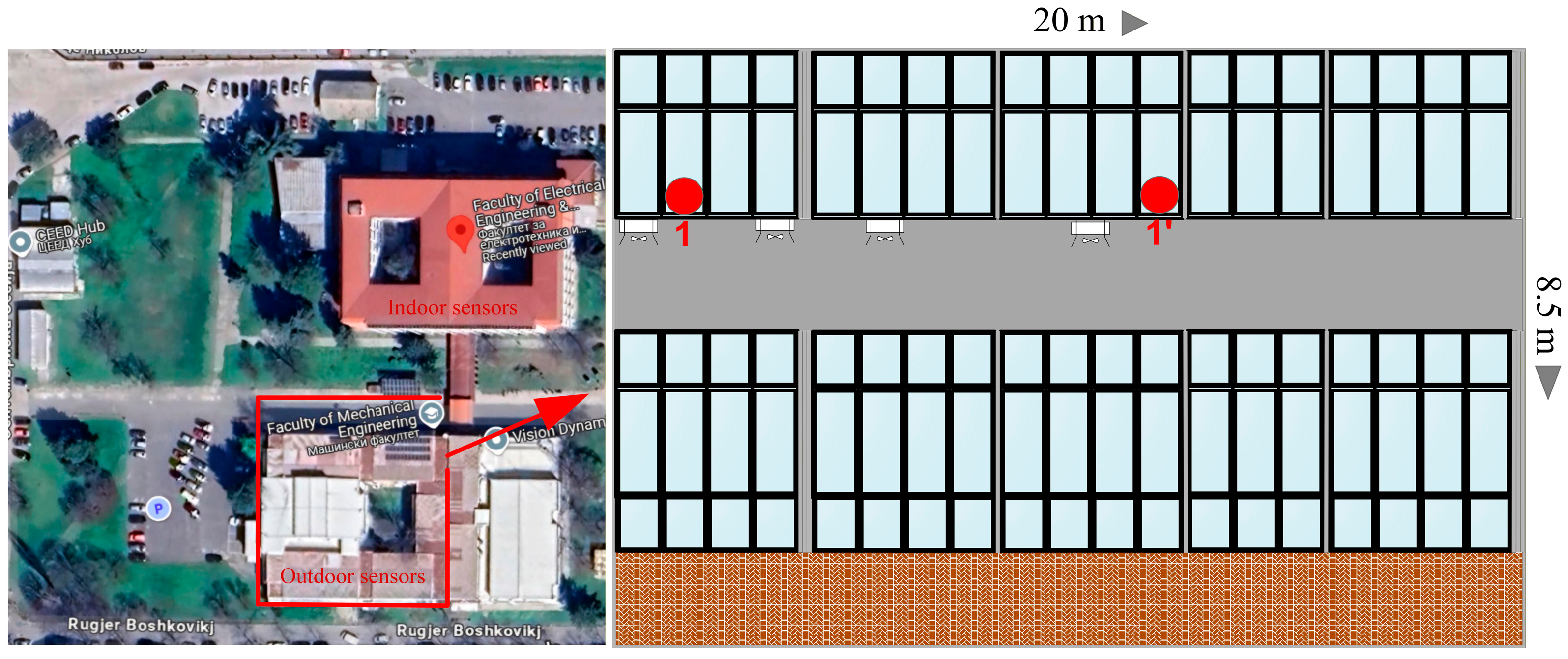
The measurement setup comprises four sensor nodes strategically deployed to capture both indoor and outdoor air quality conditions at the Faculty of Electrical Engineering and Information Technologies. Two of the nodes—Sensor 1 (n1) and Sensor 1′ (n1′)—are positioned outdoors at different locations across the Faculty campus, as presented in Figure 1, aiming to enable cross-validation of measurements and provide a reliable representation of ambient air pollution levels.
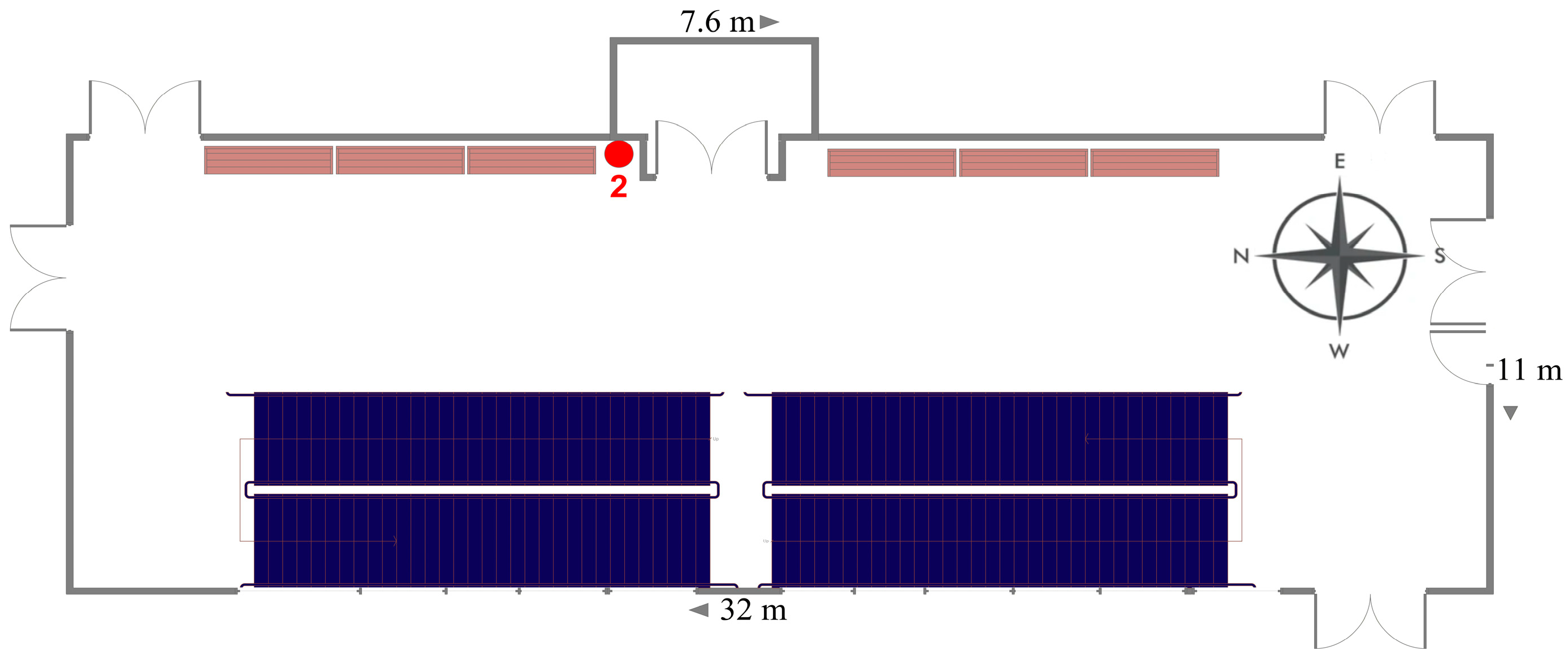
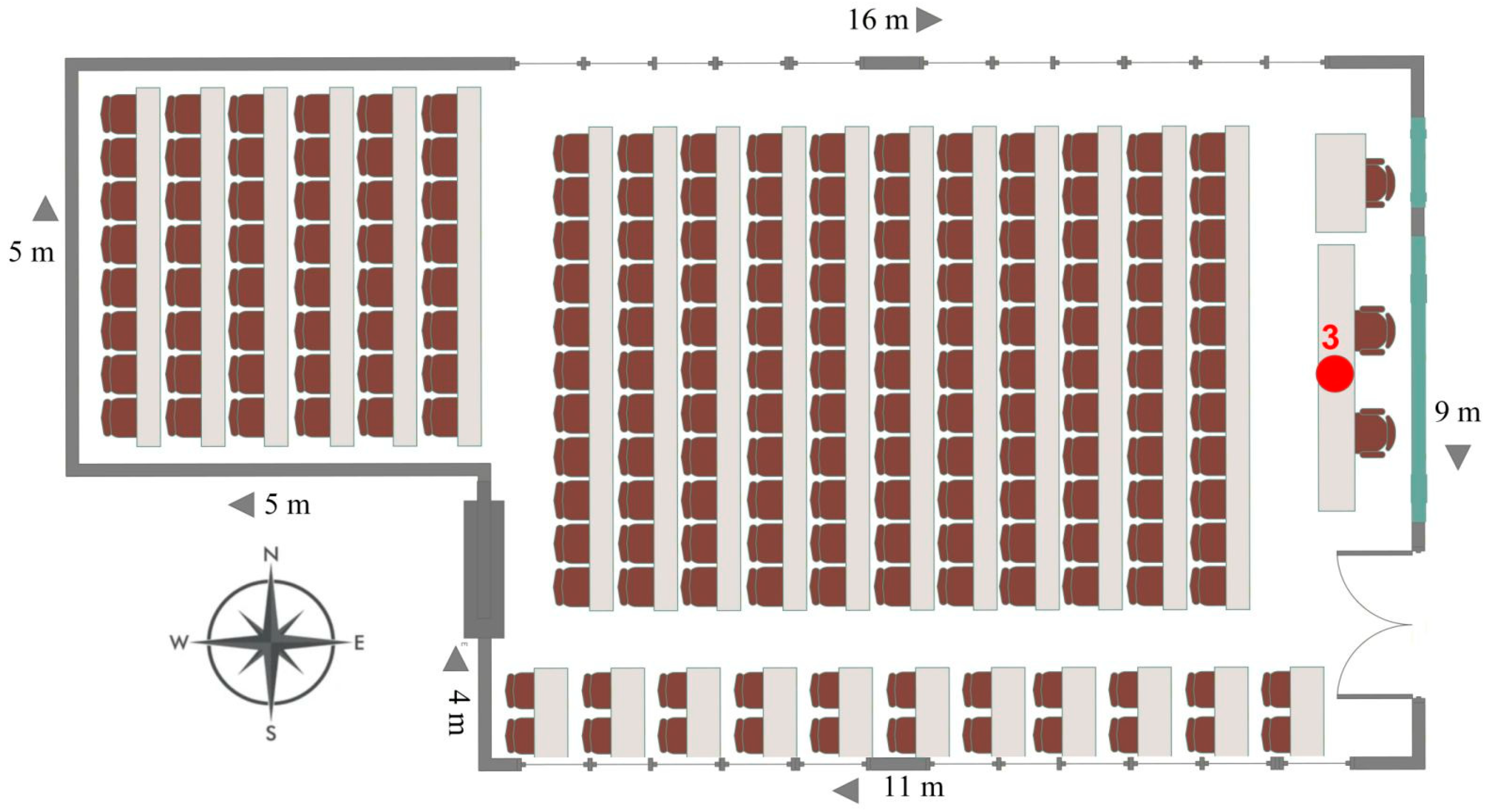
The remaining two nodes are installed indoors to monitor air quality under distinct occupancy and ventilation scenarios. Sensor 2 (n2) is located in the Faculty Hall, a central circulation area characterized by continuous and high foot traffic (see Figure 2), while Sensor 3 (n3) is placed in a large classroom that is frequently occupied by students, as shown in Figure 3.
When deploying the network, we selected sensor heights to match the approximate breathing zone of seated or standing occupants (≈1.3–1.5 m above the floor). Sensor 2 (n2), installed in the Faculty Hall, was mounted on a freestanding stand 1.4 m above the floor and positioned near the center of the corridor to avoid direct drafts from doors or windows. Sensor 3 (n3), located in the large classroom, was placed approximately 1.3 m above the floor on a desk near the center of the room. These height selections were guided by recent sensor validation studies recommending placement at about breathing height (~1.5 m) to reflect human exposure and to avoid floor-level resuspension or ceiling-level dilution [16,33]. Both indoor sensors were kept away from corners, heating radiators, and airflow obstructions to minimize boundary-layer effects. The outdoor sensor nodes (n1′) and (n1) were mounted on the external façade of the building at about 1.8 m height under a protective cover, aligned with the typical breathing zone of passersby and oriented toward open space to capture ambient air. Field measurements on a multi-storey building showed that PM2.5 concentrations dropped by only about 3–4% between ground level and 35 m [34], and other researchers found no significant vertical variation in outdoor PM2.5 because regional sources dominate [35]. These studies suggest that any height-related differences in the network are likely minimal, so it is sufficient to note that vertical gradients are modest and do not materially affect the results.
The influence of sensor positioning on measurement results was also considered. The study [33] demonstrated that wall-mounted sensors installed at 1.2 m height exhibit delays of up to 200 s and record lower peak concentrations compared with sensors placed near pollution sources or at breathing height. To mitigate such issues, all sensors in this study were positioned in unobstructed areas away from walls and obstacles. Nevertheless, subtle differences in airflow patterns and occupant activity around each sensor may still influence readings. These aspects are discussed in Section 4.

2.1.1. Indoor Environment Descriptions and Occupancy

The Faculty Hall is a long, narrow corridor approximately 20 m × 3 m with a ceiling height of 3 m. It functions as the main circulation area for students and staff, with continuous foot traffic throughout working hours. Sensor 2 was placed centrally in the hall at a height of 1.4 m. The large classroom covers roughly 70 m2 (≈10 m × 7 m) with a ceiling height of 3 m; Sensor 3 was positioned 1.3 m above the floor near the center of the room, intentionally avoiding direct proximity to windows or vents [33]. Both rooms rely solely on natural ventilation through periodically opened windows, and no mechanical ventilation system was installed. Occupancy varied during the study period: the hall regularly hosted transient gatherings of 27–83 people, whereas in the classroom, on average, 80 students attend lectures (the maximum number of students in a group is 120 students, and the capacity of the classroom is 150 students. The outdoor sensors (n1′) and (n1) were mounted on the façade at about 1.8 m height and shielded from direct rain and sunlight, with no nearby obstacles or vents.
Table 1 summarizes the sensor coordinates, heights, room dimensions, typical occupancy levels, and additional notes.

2.1.2. Influence of Sensor Position, Room Dimensions and Occupancy on Measurements

Variations in particulate measurements can partly be attributed to environmental parameters. First, the height at which sensors are placed influences the mixture of resuspended particles versus well-mixed air; sensors closer to the floor may record higher PM due to resuspension, whereas sensors near ceilings may underestimate exposure. By positioning the sensors at breathing height, we aimed to minimize these biases. Second, room dimensions affect ventilation efficiency and pollutant dispersion-larger volumes promote dilution, whereas narrow corridors like the hall can accumulate resuspended particles during high foot traffic. Third, occupant numbers directly influence particle concentrations through emission and resuspension. Empirical studies of university classrooms have reported strong positive correlations (Pearson r ≈ 0.98) between the number of occupants and CO2/particulate concentrations [6,11]. Our dataset similarly showed higher PM peaks during crowded periods (Section 4), underscoring the need to account for occupancy in sensor deployment and data interpretation.
The indoor sensor layout allows for comparative analyses across rooms that differ in usage patterns, ventilation, exposure characteristics, and their orientation with respect to the cardinal directions.
The performance of a ventilation system is shaped by several factors, including its type, placement, and operating schedule—all of which directly influence pollutant concentrations. By analyzing data from the deployed sensor nodes, this study examines how various ventilation conditions impact environmental parameters within the observed spaces. In the context of this research, ventilation relied exclusively on natural airflow. Windows were opened between 6:00 a.m. and 8:00 a.m. each working day by the cleaning staff, providing the primary means of fresh air exchange during the monitoring period. Therefore, three distinct visitor-frequency categories were defined. The high category corresponds to working days between 08:00 and 19:00 across all indoor sensor nodes, reflecting periods with varying levels of occupancy by technical staff, professors, and students. The low category is assigned to working days between 06:00 and 08:00, when only technical (cleaning) staff are typically present, resulting in reduced visitor activity. The none category includes all non-working days as well as working days from 20:00 to 06:00, representing periods with minimal or no human presence.

2.2. Measurement System Description

The monitoring system comprises multiple wireless sensor nodes, each integrating four sensing elements and a Wi-Fi communication module on a single controller board. The nodes measure key air quality parameters, including PM2.5, PM10, CO, and NO2.
The particulate matter sensor used in this study was the SDS011 laser dust sensor, manufactured by Nova Fitness Co., Ltd., Jinan, Shandong, China, which incorporates optical sensors capable of detecting particles in the 0.3–10 μm range. Gas pollutants are monitored using the MiCS-4514 unit, which includes dual sensing components dedicated to CO and NO2 detection. The main characteristics and performance specifications of these sensor units are summarized in Table 2.
These low-cost sensors rely on laser light-scattering and have been shown to provide linear responses (R2 > 0.95) at PM2.5 concentrations above 10 µg/m3, but they systematically overestimate absolute concentrations; laboratory tests suggest correction factors of ~0.3–0.5, meaning uncalibrated SDS011 readings are 2–3 × higher than reference values. Field evaluations report long-term mean accuracies of 80–98%, root-mean-square errors below 6 µg/m3, and strong inter-sensor correlations (R > 0.97).
The controller performs initial processing of the collected sensor data before transmitting it across the network. It is a highly versatile platform, capable of supporting low-power sensing applications as well as more computationally intensive tasks, including music streaming and voice encoding. The key technical characteristics of the controller are presented in Table 3.
The sensor nodes, equipped with integrated Wi-Fi modules, transmit real-time air quality measurements to the nearest routers within the Faculty building. The collected data is subsequently uploaded to an open IoT platform, where it can be visualized online or downloaded for further analysis. Detailed descriptions of the hardware configuration and system architecture are provided in earlier studies [36,37].
Calibration of the sensor nodes was performed using the MicroDust Pro Aerosol Monitoring System (Casella CEL Ltd., Bedford, UK), operated with the manufacturer-supplied Casella Insight Management Software (version V17), which provides an accuracy of 2%. This reference instrument employs an infrared light source with a wavelength of 880 nm and offers a measurement resolution of 0.001 mg/m3.
The averaged PM concentrations measured by the sensor nodes and the reference device at the location near Sensor 1 are summarized in Table 4.
In our deployment, we co-located the sensors with a reference monitor to derive calibration coefficients, applied these corrections to our data, and interpreted low-concentration results with caution due to reduced sensitivity below 10 µg/m3.
Ambient conditions across all three monitoring locations were generally comparable during the measurement campaign. The highest hourly PM concentration recorded by the sensor nodes was 53 µg/m3. It should be noted that seasonal variations may influence both the magnitude and the characteristics of PM concentrations.
Measurement errors were generally higher at lower PM concentrations, while accuracy improved as particulate levels increased. Elevated PM values were observed during the wet period, whereas the dry season exhibited more pronounced measurement deviations.
Because this pilot study prioritised affordability and deployment simplicity, the sensor network focused on particulate matter (PM2.5, PM10) and selected gaseous pollutants (CO and NO2). Volatile organic compounds (VOCs) were not included, as reliable long-term VOC monitoring typically requires more costly sensors with higher selectivity and calibration stability.

2.3. Study Area and Meteorological Conditions

During the analysed period (January–March 2025), meteorological conditions in Skopje were characteristic of the winter season and early spring. Average daily air temperatures were approximately 7 °C in January, 9 °C in February, and 19 °C in March, while average daily minimum temperatures were 1 °C, 2 °C, and 8 °C, respectively. Relative humidity showed a decreasing trend over the study period, from approximately 73% in January to 46% in March. Mean wind speeds increased gradually from 0.9 m/s in January to 1.6 m/s in February and 2.6 m/s in March. Wind direction at the sensor location was predominantly from the northeast (28.6%), east (22.5%), and southeast (14.7%), reflecting prevailing airflow patterns during the monitoring period.

2.4. Data Acquisition

2.4.1. Data Pre-Processing and Quality Control

Prior to analysis, sensor data were screened for missing values and outliers. Short data gaps were identified and excluded from statistical analysis, while extreme values inconsistent with physical plausibility or concurrent sensor behaviour were treated as outliers and removed. This quality-control procedure ensured the robustness of subsequent statistical analyses.

2.4.2. Data Processing

The dataset utilized in this study is derived from two main sources: sensor measurements and publicly available meteorological data. Throughout the monitoring period, all data was collected in CSV format, systematically organized, and prepared for analysis. Python 3.12.3, selected for its flexibility and strong analytical capabilities, served as the primary tool for data processing and computation.
Sensor readings were originally recorded at 30 s intervals; these values were subsequently aggregated into hourly averages to improve data interpretability and reduce noise by consolidating multiple measurements within each hour. Data from the three sensor nodes, along with corresponding weather records, were merged into a unified dataset to enable an integrated and comprehensive analysis. To ensure consistency and comparability across measurements, sensor outputs expressed in ohms (Ω) were converted into particulate matter concentrations (µg/m3). Key meteorological variables—including temperature and atmospheric pressure—were also extracted and incorporated into the dataset to support correlation and regression analyses. This rigorous data preparation workflow provides a robust foundation for the subsequent analytical stages of the study.

2.5. Statistical Tools

To analyze the collected data, standard statistical procedures as outlined by [38] including descriptive statistics, data visualization, correlation analysis, and hypothesis testing—were applied. A range of hypothesis tests [38] was conducted with a significance level set at α = 0.05. When assumptions required for parametric testing—such as normality or homogeneity of variance—were violated, nonparametric alternatives were employed [39,40,41,42]. These nonparametric tests were grouped into two categories: independent-sample tests (the Wilcoxon rank-sum test and the Kruskal–Wallis test) and paired-sample tests (the Wilcoxon signed-rank test and the Friedman test).
In cases where the null hypothesis was rejected, indicating statistically significant differences between conditions, the effect size was also assessed. The effect size r was calculated as shown in Equation (1):
r = Z N
where Z is the standardized test statistic and N is the total number of observations. Alternatively, with the same parameters, one can calculate η2 as shown in Equation (2)
η 2 = Z 2 N 1
The η2 evaluates the percentage of variability that is encountered by the conditions.

3. Results

Given the pilot-scale design of the study, the Section 3 reports statistically supported observations specific to the investigated sensor locations and measurement period, without generalising beyond the monitored spaces.
The dataset comprises measurements collected from four sensor nodes between January and March 2025, corresponding to the winter season, when air pollution levels in Skopje are typically elevated.
Saharan dust intrusions did occur between January and March 2025, affecting North Macedonia’s atmosphere on at least two occasions. No significant dust event was noted in January 2025 for the country, but early February brought a dust plume into the broader Balkan region (strongly impacting Greece, with minor effects possibly reaching North Macedonia) [43]. A more direct and tangible impact happened in late March 2025, when Saharan dust was clearly observed over North Macedonia, especially in western locales (and to a lesser extent in Skopje) [44]. These intrusions were part of a pattern of frequent Saharan dust transports in early 2025, as tracked by Copernicus Atmosphere Monitoring Service (CAMS) and satellites [44]. Each event temporarily degraded air quality and visibility in affected areas, underscoring that even countries as far north as North Macedonia can occasionally be touched by Sahara Desert dust. If no other intrusions are mentioned beyond these, we can confirm that aside from the early-February and late-March episodes, North Macedonia saw no additional Saharan dust events in Q1 2025. All available evidence therefore points to two dust intrusions in that timeframe–and confirms that Skopje and surrounding areas did experience some effects (hazy skies, elevated particulates) during those events, particularly the March 2025 incident.
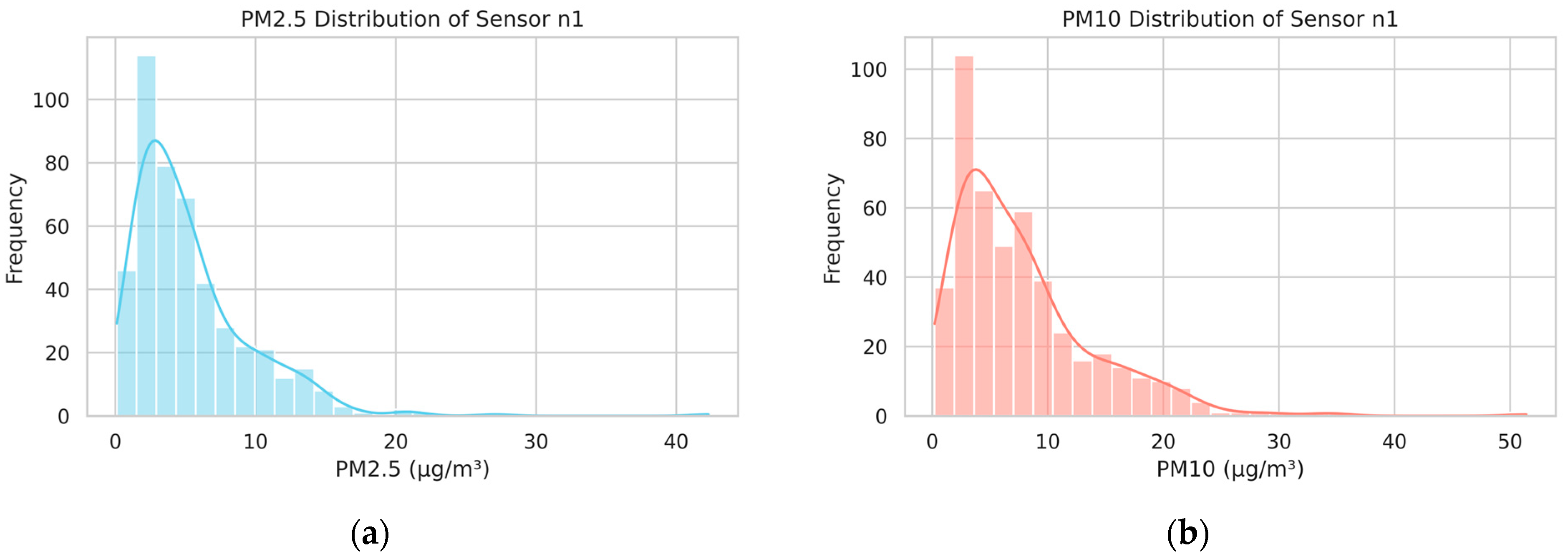
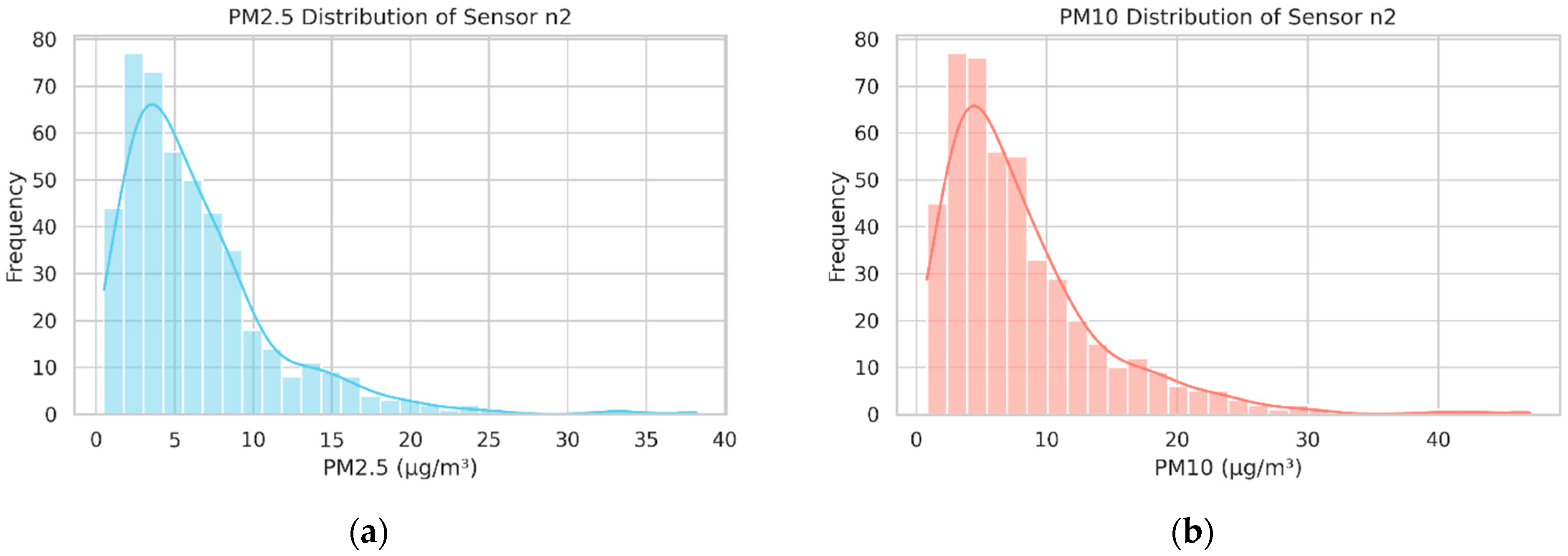
The analysis investigates correlations among sensor nodes across different times of the day, with particular emphasis on periods of high building occupancy, while also assessing relationships between indoor and outdoor sensors, as well as between outdoor particulate matter concentrations and relevant meteorological parameters. In addition, temporal variations in sensor readings were analysed to identify systematic differences across time periods, with the distributions of PM2.5 and PM10 concentrations for the outdoor sensor (Sensor 1, n1) illustrated in Figure 4 and (Sensor 2, n2) illustrated in Figure 5.
Prior to conducting inferential analyses, the distribution of each variable was evaluated. Because many statistical tests assume normally distributed data, distributional properties were assessed using the Shapiro–Wilk test. Normality testing was performed separately for each sensor node and each visitor-frequency category. The null hypothesis of normality was rejected in all cases except for PM data from Sensor 2 (n2) in low category.
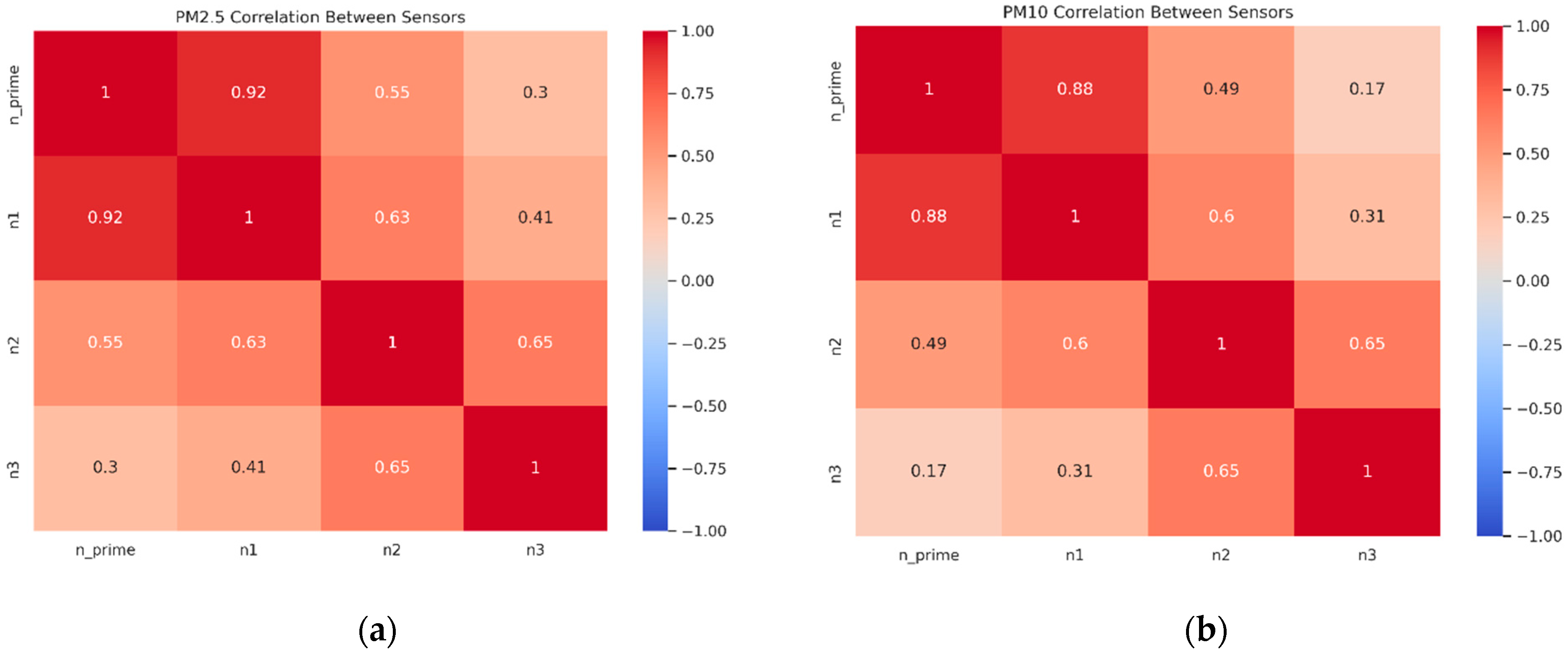
Consequently, non-parametric methods were applied, with Spearman’s rank correlation selected for subsequent analyses. When the correlation between the concentration of PM2.5 and PM10 is registered on the four analyzed sensors, one can confirm the high positive correlation between the outdoor Sensors 1 and 1′ for both pollutants (see Figure 6). When the correlation between the indoor and outdoor sensors is studied, slightly higher correlation is reported between the outdoor Sensor 1 and the indoor sensors than between Sensor 1′ and the indoor sensors (see Figure 6). The slightly higher correlation between outdoor Sensor 1 and the indoor sensors indicated that Sensor 1 better represents the outdoor air that infiltrates the indoor environment.
Differences in sensor placement and exposure to local outdoor conditions likely cause Sensor 1′ to capture more localized variability that is not transferred indoors, resulting in a lower correlation.
The observed weak negative correlations between wind speed and particulate matter concentrations are consistent with the meteorological conditions described in Section 2.3, where low wind speeds during winter favour pollutant accumulation.
Spearman correlation analysis was performed to assess the relationships between meteorological parameters (temperature, wind speed, pressure, and cloud cover) and PM concentrations (PM2.5 and PM10), to assess how meteorological parameters influence the major pollutants observed in indoor spaces. The results for Sensor 1 show that both temperature and wind speed exhibit negative correlations with PM2.5 (−0.27 and −0.21, respectively) and PM10 (−0.17 and −0.11, respectively). Cloud cover also demonstrated a weak negative correlation with PM2.5 (−0.034) and PM10 (−0.019). In contrast, atmospheric pressure showed a positive association with both pollutants, with correlation coefficients of 0.25 for PM2.5 and 0.13 for PM10. Dew point temperature displayed minimal correlation (−0.046 for PM2.5 and 0.045 for PM10). A summary of all correlation coefficients is provided in Table 5. Similar results are obtained for the second outdoor location, Sensor 1′, and they are presented in Table 5 as well.

3.1. Statistical Comparison of Sensor Measurements Across Occupancy Categories

Table 6 summarizes the descriptive statistics of PM2.5 and PM10 concentrations recorded by the four sensor nodes under different occupancy categories. Clear differences are observed between outdoor and indoor environments, as well as among indoor spaces with varying visitor frequency.
To evaluate whether PM measurements differed significantly between sensors under varying occupancy conditions, a series of non-parametric statistical tests was conducted. Because the PM2.5 and PM10 datasets did not satisfy the assumption of normality, the Wilcoxon signed-rank test (for paired samples) and the Mann–Whitney U test (for independent samples) were applied. The results reveal several clear patterns regarding indoor–indoor and indoor–outdoor differences under the low, none, and high visitor frequency categories. For both PM2.5 and PM10, indoor Sensors 2 and 3 (n2 and n3) differ significantly from outdoor Sensors 1 and 1′ across all occupancy categories. For the outdoor sensors (Sensor 1 and Sensor 1′), higher mean concentrations and larger variability are observed compared to the indoor sensors. In particular, Sensor 1′ consistently reports substantially higher mean PM2.5 (15.78 µg/m3) and PM10 (17.9 µg/m3) values than Sensor 1 (5.4 µg/m3 and 7.8 µg/m3, respectively). This difference is also reflected in the higher maximum values and standard deviations, indicating stronger exposure to ambient pollution sources and meteorological influences at the Sensor 1′ location. Across occupancy categories, outdoor concentrations tend to be highest during periods classified as no occupancy, which correspond to nighttime or early-morning hours when indoor activity is minimal but outdoor pollution accumulation can occur due to reduced atmospheric mixing.
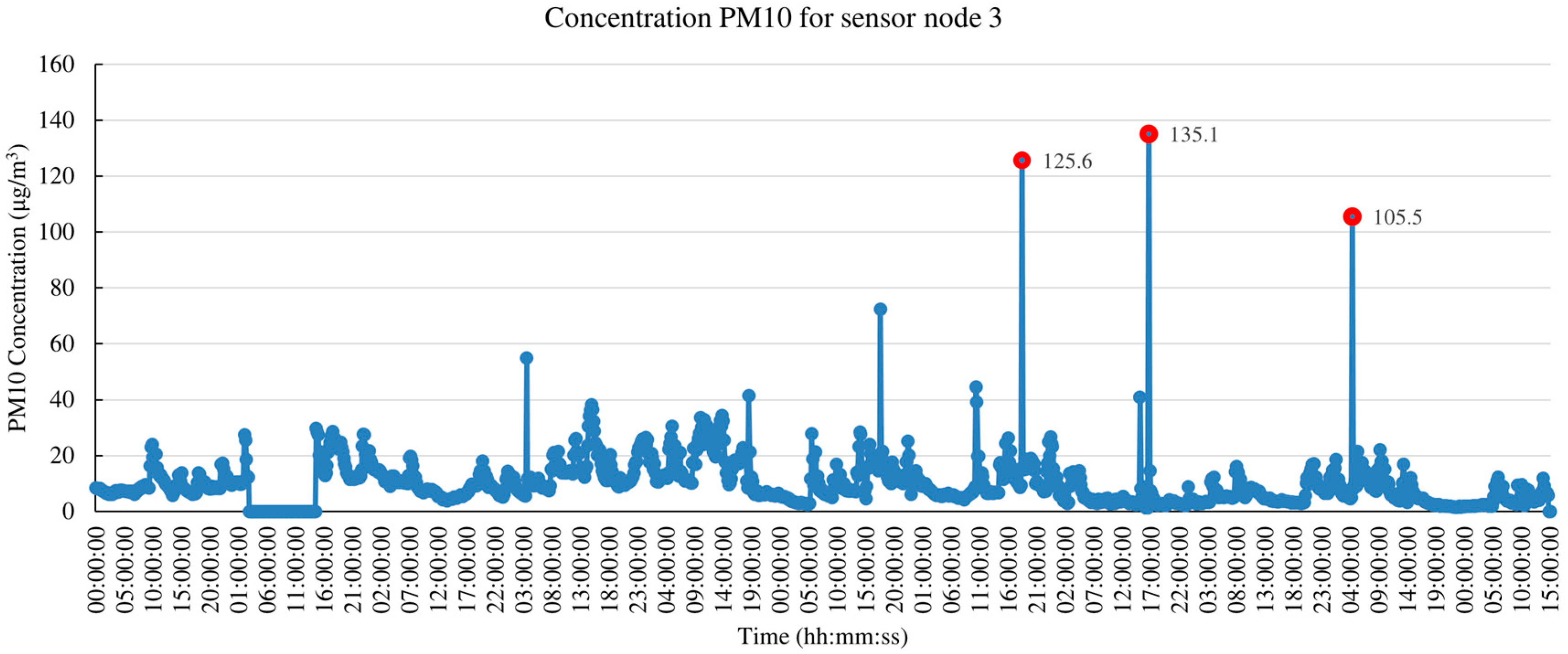
Indoor sensors (Sensors 2 and 3) exhibit generally lower mean concentrations than the outdoor sensors; however, a clear dependence on occupancy level is evident. For Sensor 2, both PM2.5 and PM10 mean values increase progressively from the none to high occupancy category, reaching mean values of 8.9 µg/m3 (PM2.5) and 11.6 µg/m3 (PM10) under high occupancy. This trend indicates the contribution of human presence and activity, such as resuspension of settled particles and increased movement within the space. A similar pattern is observed for Sensor 3, although with lower PM2.5 means overall. Notably, Sensor 3 shows occasional high PM10 maxima (up to 105.5 µg/m3) during low occupancy, which can be attributed to short-term events or localized disturbances, as reflected by the large standard deviation in this category.
Table 7 complements the descriptive analysis by presenting the results of non-parametric statistical tests assessing whether observed differences between sensor pairs are statistically significant across occupancy categories. For both PM2.5 and PM10, statistically significant differences are consistently found between the indoor sensors (Sensors 2 and 3) and the outdoor sensors (Sensors 1 and 1′) for none and high occupancy conditions. These results confirm that indoor particulate concentrations differ systematically from outdoor levels, even when natural ventilation is present, highlighting the role of indoor-specific sources and processes.
An important exception is observed for comparisons involving Sensor 1 and the indoor sensors during low occupancy, where no statistically significant differences are detected. This finding is consistent with the descriptive statistics in Table 6, which show similar mean values and overlapping concentration ranges for these conditions. As noted, the low-occupancy category represents a relatively short monitoring period with limited data points, which reduces statistical power and may mask subtle differences.
Comparisons between the two indoor sensors (Sensor 2 vs. Sensor 3) further underline the influence of occupancy. While statistically significant differences are detected for none and high occupancy, no significant differences are found during low occupancy for either PM2.5 or PM10. This suggests that, when human activity is minimal, particulate levels in different indoor spaces converge toward similar background concentrations, whereas increased occupancy amplifies room-specific characteristics such as size, usage patterns, and airflow conditions.
Overall, the combined interpretation of Table 6 and Table 7 demonstrates that:
(i)
outdoor particulate concentrations are consistently higher and more variable than indoor levels,
(ii)
indoor PM concentrations increase with occupancy, and
(iii)
statistically significant indoor–outdoor and indoor–indoor differences are strongly dependent on visitor frequency. These findings reinforce the importance of considering occupancy patterns when interpreting indoor air quality data and evaluating exposure in public buildings.
Similar comparison is done between the indoor sensors, and the results (given in Table 6) suggest that, again, the null hypothesis can’t be rejected when the occupancy is low. Observe that the low occupancy encompasses a very short period of time, and there is not much data for this case. When we compare data from the same indoor sensor but with different frequency, the obtained results are presented in Table 8.
Indoor sensors n2 and n3 show no significant difference during low occupancy, meaning that PM levels in these rooms behave similarly when few people are present. However, during no occupancy or high occupancy, significant differences emerge. This indicates that room-specific features (size, ventilation, activity patterns) strongly influence particulate levels during high use or complete inactivity. When the concentration of the PM is studied at the same location, the same pattern is detected: there is no significant difference between the period when the rooms are ventilated and when flour is mopped, and when the rooms are full of people (seating or moving), but in all other cases, there is a significant difference.
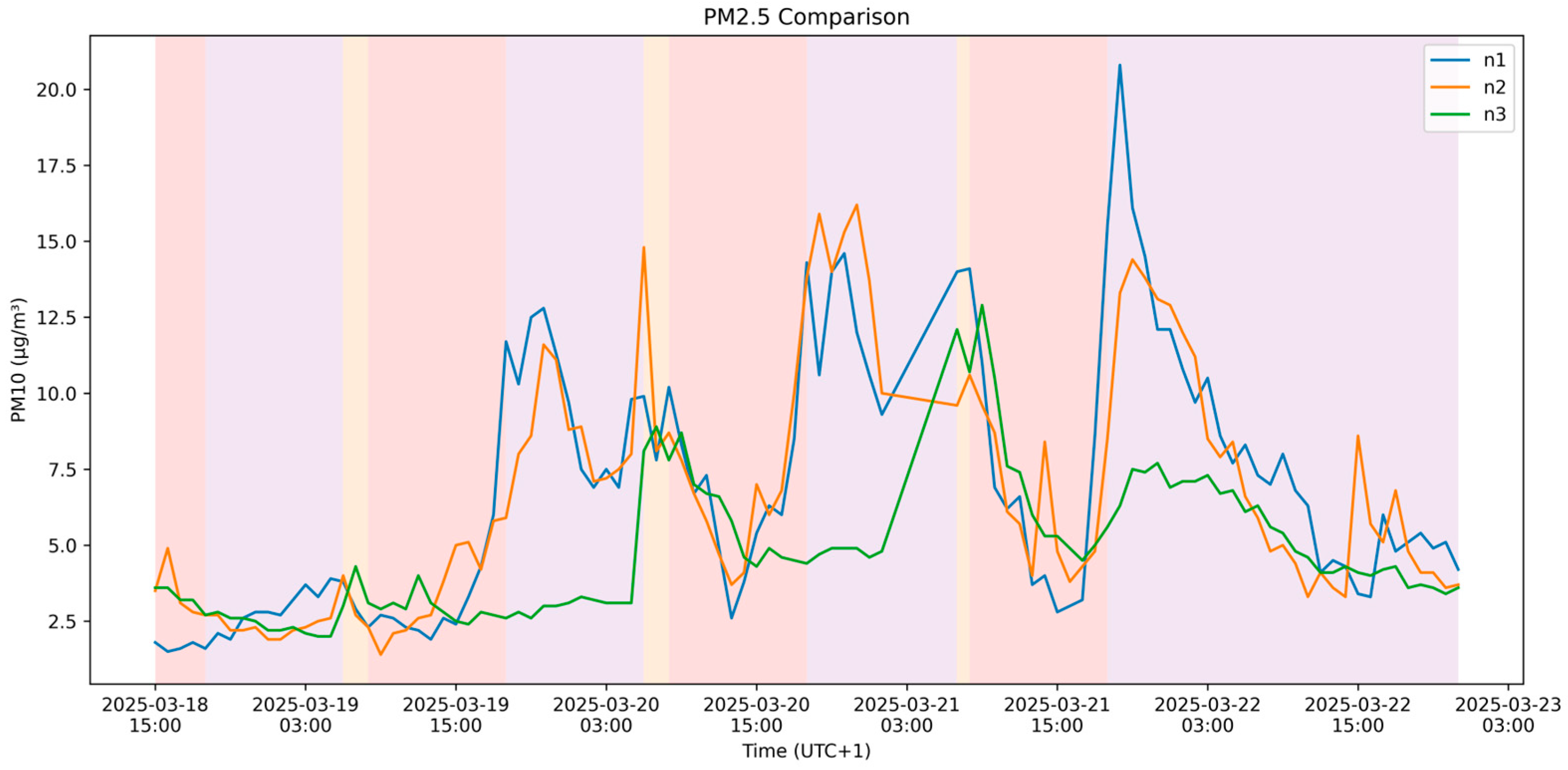
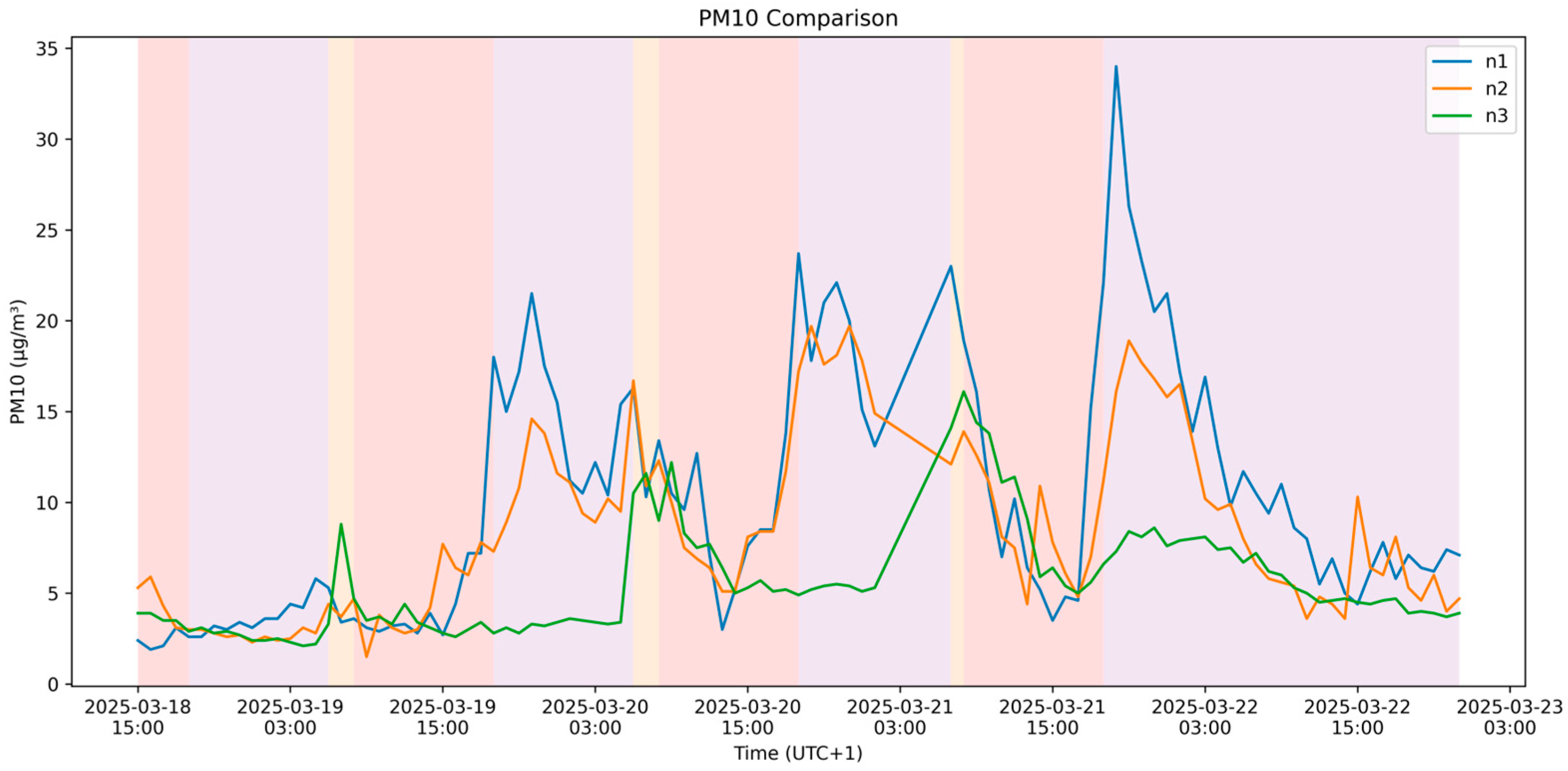
Figure 7 and Figure 8 show the concentration of PM2.5 and PM10 over one working week in March 2025. For better comparison light orange background presents period with low occupancy, light pink background stands for high occupancy, and for no occupancy, light purple is used.

3.2. Overall Synthesis

Across all statistical tests, three consistent patterns were observed in the particulate matter measurements collected during the monitoring period.
  • Statistically significant differences were detected between indoor and outdoor particulate matter concentrations across all occupancy categories. For the investigated rooms and sensor locations, indoor PM2.5 and PM10 levels differed from outdoor concentrations under low-, high-, and no-occupancy conditions, indicating that indoor particulate behavior was not solely determined by simultaneous outdoor pollution levels;
  • The two monitored indoor spaces exhibited similar particulate matter behavior during low-occupancy periods, whereas statistically significant differences emerged during high-occupancy and no-occupancy conditions. This suggests that room-specific factors—such as volume, airflow patterns, ventilation effectiveness, and usage characteristics—interacted with occupancy status to influence indoor particulate concentrations. Periods of increased activity are likely associated with particle generation and resuspension, while unoccupied periods reflect conditions dominated by infiltration, deposition, and residual indoor sources.
  • Transitions between occupancy categories were associated with measurable changes in indoor particulate concentrations. Comparisons involving no-occupancy conditions showed the largest statistical differences relative to occupied periods, whereas differences between low- and high-occupancy conditions were often not statistically significant. This indicates that the presence or absence of occupants had a stronger influence on particulate behavior than incremental changes in occupancy level.
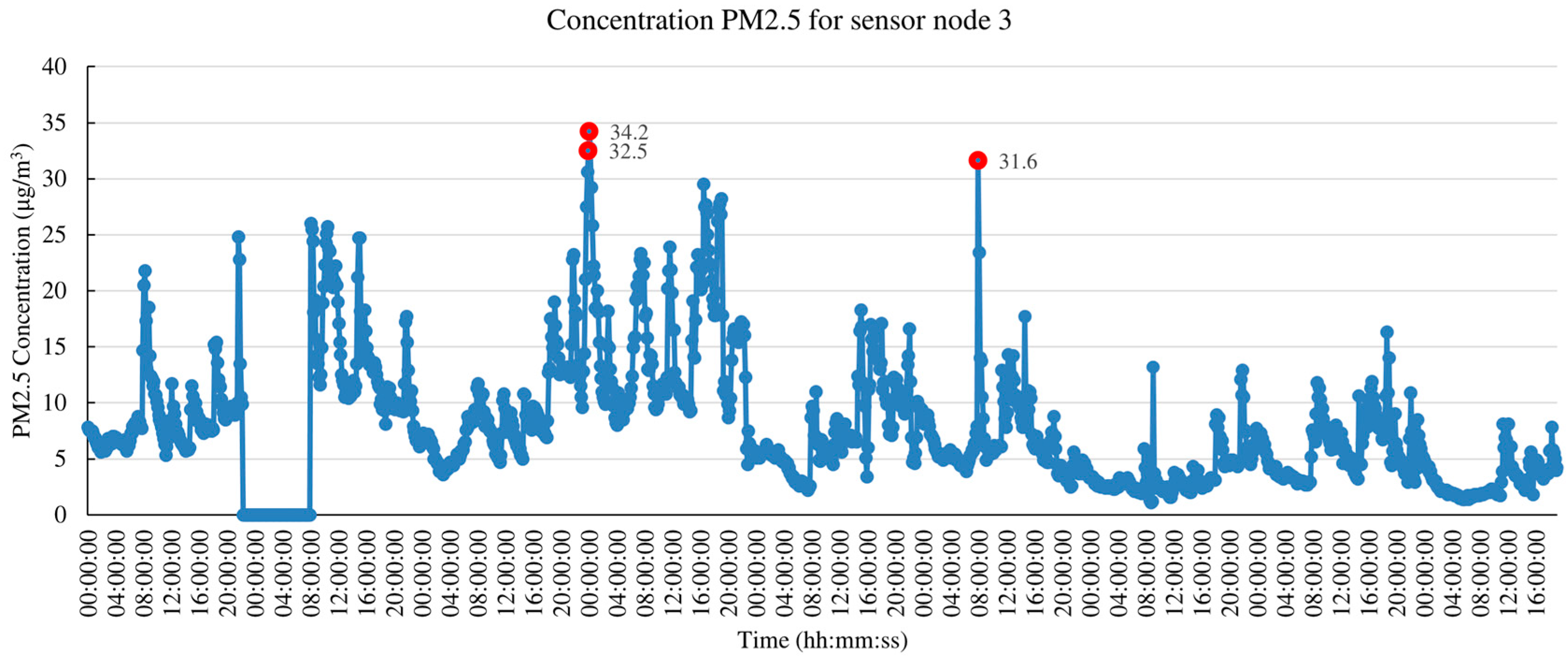
In addition to these patterns, short-term concentration peaks were observed in the room monitored by sensor n3 during the early morning period between 06:00 and 08:00. These peaks coincided with routine cleaning activities and are likely associated with window opening during this period, which may have introduced polluted outdoor air and disturbed settled particles through increased airflow. Figure 9 illustrates the corresponding PM2.5 peaks, while Figure 10 presents the PM10 peaks, highlighting the influence of short-term ventilation events on indoor particulate concentrations.

4. Discussion

4.1. Synthesis with Existing Literature

This pilot study provides preliminary evidence on indoor–outdoor particulate matter dynamics in a naturally ventilated university building in Skopje. The moderate correlations observed between outdoor PM2.5/PM10 concentrations and meteorological parameters such as temperature, wind speed, and atmospheric pressure indicate that local emission sources and micro-environmental conditions play a dominant role, which is consistent with findings from other urban indoor air quality (IAQ) studies [9,10,45].
The modest infiltration of outdoor particulate matter and the pronounced variability of indoor concentrations across different occupancy conditions align well with previous reports showing that naturally ventilated buildings can admit approximately 70–80% of outdoor fine particles and that indoor pollutant levels are strongly influenced by occupant activities, ventilation behaviour, and building characteristics [9,10].
The present results also corroborate earlier sensor placement studies demonstrating that measurements taken at breathing height better represent actual occupant exposure and avoid the delayed or attenuated concentration peaks often associated with wall-mounted devices [16,33]. Furthermore, the strong influence of occupancy on indoor particulate concentrations—particularly the contrast between unoccupied periods and periods of high visitor density—mirrors observations from other educational environments, where both CO2 and particulate matter levels have been shown to track student numbers and activity patterns [6,8].
Taken together, these consistencies suggest that the indoor–outdoor dynamics observed in this pilot study are broadly representative of naturally ventilated educational buildings, while also providing novel empirical data from a region where systematic IAQ monitoring has been limited.

4.2. Strengths and Limitations

By integrating low-cost Internet of Things (IoT) sensors into an institutional building, this study demonstrates the feasibility of generating high-resolution IAQ data in resource-constrained settings. The sensors were calibrated prior to deployment, positioned at breathing height, and shielded from direct drafts, enabling continuous monitoring without interfering with normal building use [12,13].
Nevertheless, several limitations constrain the interpretation of the findings. The investigation was conducted at a single site using a limited number of sensor nodes and focused exclusively on a winter period, which restricts spatial resolution and seasonal generalisability. Although the sensors were calibrated according to manufacturer recommendations, they were not co-located with reference-grade instruments during deployment, and residual measurement bias cannot be excluded [12,13].
In addition, ventilation rates, detailed occupant activity patterns, and atmospheric parameters such as planetary boundary layer height were not directly measured [46,47], and volatile organic compounds were intentionally excluded to avoid cross-sensitivity issues. These constraints, together with the pilot-scale sample size, mean that the statistical relationships identified here should be interpreted as indicative rather than definitive.

4.3. Implications for Policy and Practice

Despite these limitations, the findings have several practical implications for public institutions located in polluted urban environments. First, the strong influence of occupancy on indoor particulate concentrations suggests that relatively simple operational measures—such as managing class sizes, staggering occupancy schedules, and encouraging natural ventilation during peak use—can meaningfully reduce indoor exposures.
Real-time feedback from low-cost sensor networks could support facility managers in optimising window opening and ventilation scheduling, complementing demand-controlled ventilation strategies highlighted in previous IAQ studies [3,12]. Second, the observed infiltration of outdoor particulate matter underscores the importance of maintaining building envelopes and ventilation pathways to limit pollutant ingress, particularly during periods of elevated outdoor pollution. Regular maintenance of mechanical systems and periodic cleaning of natural ventilation openings can therefore contribute to healthier learning environments.
More broadly, integrating IAQ considerations into building design standards and public health policy—especially in regions with persistently high outdoor pollution—can help protect students and staff while supporting sustainable urban development goals [48,49].

4.4. Opportunities for Future Research

The pilot-scale nature of this study highlights several directions for future work. Expanding sensor networks to include additional indoor and outdoor locations and extending monitoring across multiple seasons would improve spatial and temporal coverage and allow investigation of seasonal variability. Co-locating low-cost sensors with reference-grade instruments would enable systematic calibration and uncertainty assessment.
Incorporating additional parameters such as CO2, volatile organic compounds, bioaerosols, occupancy metrics, and ventilation rates would provide a more comprehensive characterisation of IAQ dynamics. Finally, combining empirical monitoring with computational fluid dynamics simulations and atmospheric data—such as planetary boundary layer height—could improve understanding of pollutant transport mechanisms in naturally ventilated buildings and inform the design of adaptive control strategies. Such research would support the development of scalable, evidence-based policies for managing IAQ in educational buildings located in high-pollution urban environments.

5. Conclusions

This pilot study used a small network of calibrated low-cost sensors to explore indoor–outdoor particulate matter dynamics in a naturally ventilated university building in Skopje. The main finding is that human occupancy and room-specific characteristics exert a stronger influence on indoor PM2.5 and PM10 concentrations than outdoor meteorological conditions. Indoor sensors recorded pronounced peaks during periods of high visitor frequency and more stable levels when spaces were unoccupied, while correlations with temperature, wind speed and atmospheric pressure were generally weak. These results highlight the importance of considering occupancy and ventilation behaviour when assessing exposure and designing mitigation strategies.
Several limitations temper these findings. Measurements were collected at a single site during winter, and the four-node sensor network does not capture potential spatial heterogeneity or seasonal variation. Sensors were not co-located with reference instruments during deployment, and ventilation rates, occupancy counts and planetary boundary layer heights were not recorded. The small sample size limits the statistical power of correlation analyses. Consequently, the reported relationships should be interpreted cautiously and validated in larger, multi-season studies.
Despite these constraints, the study demonstrates the feasibility of deploying affordable sensor networks for continuous IAQ monitoring in educational buildings. From a policy and practice perspective, simple interventions—such as scheduling classes to reduce peak occupancy, encouraging natural ventilation when outdoor pollution levels are lower and maintaining ventilation systems—could help mitigate indoor particle exposure. For future research, expanding sensor networks, incorporating additional pollutants and meteorological data, and integrating occupancy and ventilation measurements will be essential to develop evidence-based guidelines for managing indoor air quality in polluted urban environments.

Author Contributions

Conceptualization, M.S. and A.K.M.; methodology, V.A. and M.C.K.; software, M.P.; validation, M.D. and M.S.; formal analysis, I.M. and V.A.; investigation, V.A. and I.M.; resources, M.S. and M.C.K.; data curation, M.P. and M.D.; writing—original draft preparation, M.S.; writing—review and editing, V.A. and A.K.M.; visualization, M.C.K. and I.M.; supervision, M.S.; project administration, M.S. All authors have read and agreed to the published version of the manuscript.

Funding

This research received no external funding.

Institutional Review Board Statement

Not applicable.

Informed Consent Statement

Not applicable.

Data Availability Statement

The data supporting the findings of this study are available upon reasonable request from the corresponding author.

Acknowledgments

The authors gratefully acknowledge the support of the Net4Clean Air initiative for providing expertise, collaboration, and technical support that contributed to this research.

Conflicts of Interest

The authors declare no conflicts of interest.

Abbreviations

The following abbreviations are used in this manuscript:
IAQIndoor Air Quality (air quality inside buildings).
PMParticulate Matter (airborne particles).
PM2.5Particulate matter with aerodynamic diameter ≤ 2.5 µm (fine particles).
PM10Particulate matter with aerodynamic diameter ≤ 10 µm (coarse + fine fraction).
CO2Carbon dioxide (commonly used as a ventilation/occupancy proxy indoors).
COCarbon monoxide (toxic gas pollutant).
NO2Nitrogen dioxide (traffic/combustion-related gas pollutant).
SO2Sulfur dioxide (combustion-related gas pollutant).
O3Ozone (secondary pollutant, oxidant).
VOCsVolatile Organic Compounds (a large class of gaseous organic pollutants).
TVOCTotal Volatile Organic Compounds (aggregate VOC indicator).
SBSSick Building Syndrome (symptoms linked to time spent in a building).
IoTInternet of Things (networked sensors/devices collecting and exchanging data).
Wi-Fiwireless local network technology (IEEE 802.11 family).
LTELong-Term Evolution (cellular 4G communications).
MQTTMessage Queuing Telemetry Transport (lightweight IoT messaging protocol).
HTTPHypertext Transfer Protocol (web communication protocol).
ZigBeelow-power wireless mesh networking standard (often for sensors).
LoRaWANLong Range Wide Area Network (low-power long-range IoT networking).
HVACHeating, Ventilation, and Air Conditioning.
MQ-135Common low-cost gas sensor module (often used as a broad “air quality/VOC” type sensor).
MQ-7Low-cost gas sensor module commonly used for CO sensing.
SDS011Optical particulate sensor module for PM2.5/PM10.
MiCS-4514Dual-gas sensing module (CO and NO2 channels).
ESP8266ESP8266—Wi-Fi microcontroller module family used in IoT nodes.
ESP32.Microcontroller + Wi-Fi/Bluetooth SoC used as the controller in your nodes.
AirBeam3Portable air-quality sensor device referenced as an example.
AirCastinga platform/app ecosystem used with AirBeam devices for visualization/sharing.
Netatmocommercial “weather station”/IAQ device referenced as an example.
MicroDust Proreference aerosol monitoring instrument used for calibration in the text.
UARTUniversal Asynchronous Receiver–Transmitter (serial communication).
SPISerial Peripheral Interface (serial bus).
I2CInter-Integrated Circuit (serial bus).
PWMPulse-Width Modulation (control signal method, e.g., motor control).
CAMSCopernicus Atmosphere Monitoring Service

References

  1. U.S. Environmental Protection Agency (EPA). The Inside Story: A Guide to Indoor Air Quality. Available online: https://www.epa.gov/indoor-air-quality-iaq/inside-story-guide-indoor-air-quality (accessed on 20 January 2026).
  2. National Academies of Sciences, Engineering, and Medicine. Exposures and Health Risks in Indoor Environments; National Academies Press: Washington, DC, USA, 2017. [Google Scholar]
  3. Elattar, S.M.; Abdullah, I.D.; Gebriel, A.S. Evaluation of the impact of air pollutants on university indoor air quality: A case study. Front. Built Environ. 2025, 11, 1552679. [Google Scholar] [CrossRef]
  4. Baker, M.; Keall, M.; Au, E.L.; Howden-Chapman, P. Home is where the heart is—Most of the time. N. Z. Med. J. 2007, 120, U2769. [Google Scholar] [PubMed]
  5. Ge, B.; Tieskens, K.; Vyas, P.; Martineza, M.P.B.; Yuana, Y.; Walshb, K.H.; Mainb, L.; Boltonb, L.; Yajimac, M.; Fabian, M.P. Decision tools for schools using continuous indoor air quality monitors: A case study of CO2 in Boston Public Schools. Lancet Reg. Health-Am. 2025, 48, 101148. [Google Scholar] [CrossRef]
  6. Sulistiyanti, S.R.; Komarudin, M.; Setyawan, F.X.A.; Dian, S.H.; Titin, Y.; Farid, A.M. Analyzing the impact of occupancy patterns on IAQ in university classrooms. Int. J. Adv. Comput. Sci. Appl. 2024, 15, 485. [Google Scholar] [CrossRef]
  7. Canha, N.; Correia, C.; Mendez, S.; Gamelas, C.A.; Felizardo, M. Monitoring indoor air quality in classrooms using low-cost sensors. Atmosphere 2024, 15, 1450. [Google Scholar] [CrossRef]
  8. Seppänen, O.; Fisk, W.J. Association of ventilation system type with SBS symptoms. Indoor Air 2002, 12, 98–112. [Google Scholar] [CrossRef]
  9. Bo, M.; Salizzoni, P.; Clerico, M.; Buccolieri, R. Assessment of indoor–outdoor particulate matter air pollution. Atmosphere 2017, 8, 136. [Google Scholar] [CrossRef]
  10. Chen, C.; Zhao, B. Review of relationship between indoor and outdoor particles. Atmos. Environ. 2011, 45, 275–288. [Google Scholar] [CrossRef]
  11. Korsavi, S.S.; Montazami, A.; Mumovic, D. IAQ in naturally ventilated primary schools. Build. Environ. 2020, 180, 106992. [Google Scholar] [CrossRef]
  12. Morawska, L.; Thai, P.K.; Liu, X.; Asumadu-Sakyi, A.; Ayoko, G.; Bartonova, A.; Bedini, A.; Chai, F.; Christensen, B.; Dunbabin, M.; et al. Applications of low-cost sensing technologies for air quality monitoring. Environ. Int. 2018, 116, 286–299. [Google Scholar] [CrossRef]
  13. Marques, G.; Saini, J.; Dutta, M.; Singh, P.K.; Hong, W.-C. Indoor air quality monitoring systems for enhanced living environments. Sustainability 2020, 12, 4024. [Google Scholar] [CrossRef]
  14. Schalm, O.; Carro, G.; Lazarov, B.; Jacobs, W.; Stranger, M. Reliability of lower-cost sensors in indoor air quality analysis. Atmosphere 2022, 13, 1579. [Google Scholar] [CrossRef]
  15. Alfano, B.; Barretta, L.; Del Giudice, A.; De Vito, S.; Di Francia, G.; Esposito, E.; Formisano, F.; Massera, E.; Miglietta, M.L.; Polichetti, T. A review of low-cost particulate matter sensors. Sensors 2020, 20, 6819. [Google Scholar] [CrossRef] [PubMed]
  16. Wenner, M.M.; Ries-Roncalli, A.; Whalen, M.C.R.; Jing, P. The relationship between indoor and outdoor fine particulate matter in a high-rise building in Chicago monitored by PurpleAir sensors. Sensors 2024, 24, 2493. [Google Scholar] [CrossRef]
  17. Afroz, R.; Guo, X.; Cheng, C.W.; Delorme, A.; Duruisseau-Kuntza, R.; Zhao, R. Investigation of indoor air quality in university residences. Environ. Sci. Atmos. 2023, 3, 347–362. [Google Scholar] [CrossRef]
  18. Srbinovska, M.; Andova, V.; Krkoleva, A.; Celeska, M.; Panovski, M.; Mizhimakoski, I.; Darkovska, M. Comprehensive Monitoring of Air Quality: Advancements and Applications of Indoor and Outdoor Sensors. In Proceedings of the 20th Conference on Sustainable Development of Energy, Water and Environment Systems, Dubrovnik, Croatia, 5–10 October 2025. [Google Scholar]
  19. Kelechi, A.H.; Alsharif, M.H.; Agbaetuo, C.; Ubadike, O.; Aligbe, A.; Uthansakul, P.; Kannadasan, R.; Aly, A.A. Design of a Low-Cost Air Quality Monitoring System Using Arduino and ThingSpeak. Comput. Mater. Contin. 2022, 70, 151–169. [Google Scholar] [CrossRef]
  20. Pop, A.; Fanca, A.; Gota, D.I.; Valean, H. Monitoring and Prediction of Indoor Air Quality for Enhanced Occupational Health. Intell. Autom. Soft Comput. 2023, 35, 925–940. [Google Scholar] [CrossRef]
  21. Cosmi, C.; Caggiano, R.; Di Leo, S.; Conte, D.; Marsico, A.; Porfido, A.; Bellucci, A.; Pace, M.L.; Santagata, A.; De Bonis, A.; et al. TECsPRO: An Integrated Platform Based on the Internet of Things for Sustainable Management of Work Environments and Production Processes. J. Sustain. Dev. Indic. 2025, 1, 2020602. [Google Scholar] [CrossRef]
  22. Miracco, G.; Nicoletti, F.; Ferraro, V.; Kaliakatsos, D. Innovative Mechanical Ventilation Control for Enhanced Indoor Air Quality and Energy Efficiency. Energy Eng. 2025, 122, 861–883. [Google Scholar] [CrossRef]
  23. Chang, L.; Luo, W.J.; Permana, I.; Prasetyo, B.Y.; Agharid, A.P.; Wang, F. Energy-Efficient Air Conditioning System with Combined a Ceiling Fan for Thermal Comfort in an Office. Energy Eng. 2025, 122, 1771–1787. [Google Scholar] [CrossRef]
  24. Persily, A.K.; Emmerich, S.J. Indoor air quality in sustainable, energy efficient buildings. HVACR Res. 2012, 18, 4–20. [Google Scholar] [CrossRef]
  25. Ferdyn-Grygierek, J.; Grygierek, K. Ventilation Methods for Improving the Indoor Air Quality and Energy Efficiency of Multi-Family Buildings in Central Europe. Energies 2024, 17, 2232. [Google Scholar] [CrossRef]
  26. Clinchard, S.; Haverinen-Shaughnessy, U.; Shaughnessy, R. Assessing ventilation performance in schools using continuous CO2 monitoring: Insights from renovation projects. Build. Environ. 2025, 269, 112406. [Google Scholar] [CrossRef]
  27. Haroon, M.U.; Ozarisoy, B.; Altan, H. Factors Affecting the Indoor Air Quality and Occupants’ Thermal Comfort in Urban Agglomeration Regions in the Hot and Humid Climate of Pakistan. Sustainability 2024, 16, 7869. [Google Scholar] [CrossRef]
  28. Thomas, S.; Morawska, L. Size-selected particles in an urban atmosphere of Brisbane, Australia. Atmos. Environ. 2002, 36, 4277–4288. [Google Scholar] [CrossRef]
  29. Srbinovska, M.; Andova, V.; Krkoleva Mateska, A.; Celeska Krstevska, M. The effect of small green walls on reduction of particulate matter concentration in open areas. J. Clean. Prod. 2021, 279, 123306. [Google Scholar] [CrossRef]
  30. Martinez, G.; Spadaro, J.; Chapizanis, D.; Kendrovski, V.; Kochubovski, M.; Mudu, P. Health Impacts and Economic Costs of Air Pollution in the Metropolitan Area of Skopje. Int. J. Environ. Res. Public Health 2018, 15, 626. [Google Scholar] [CrossRef] [PubMed]
  31. Mula, V.; Bogdanov, J.; Petreska Stanoeva, J.; Zeneli, L.; Berisha, A.; Zdravkovski, Z. Assessment of Volatile Organic Compounds in Indoor Environment Across North Macedonia and Kosovo Using Passive Sampling. Maced. J. Chem. Chem. Eng. 2024, 43, 207–218. [Google Scholar] [CrossRef]
  32. Vilčeková, S.; Apostoloski, I.; Mečiarová, L.; Krídlová Burdová, E.; Kiseľák, J. Investigation of Indoor Air Quality in Houses of Macedonia. Int. J. Environ. Res. Public Health 2017, 14, 37. [Google Scholar] [CrossRef] [PubMed]
  33. Adelodun, A.A.; Rezaei, M.; Ardkapan, S.; Jakobsen, N.N.; Johnson, M. Impact of sensor placement on indoor air quality monitoring: A comparative analysis. ChemRxiv 2024, preprint. [Google Scholar] [CrossRef]
  34. Zauli Sajani, S.; Marchesi, S.; Trentini, A.; Bacco, D.; Zigola, C.; Rovelli, S.; Ricciardelli, I.; Maccone, C.; Lauriola, P.; Cavallo, D.M.; et al. Vertical variation of PM2.5 mass and chemical composition, particle size distribution, NO2, and BTEX at a high-rise building. Environ. Pollut. 2018, 235, 339–349. [Google Scholar] [CrossRef] [PubMed]
  35. Liao, H.-T.; Lai, Y.-C.; Chao, H.J.; Wu, C.-F. Vertical characteristics of potential PM2.5 sources in the urban environment. Aerosol Air Qual. Res. 2023, 23, 220361. [Google Scholar] [CrossRef]
  36. Srbinovska, M.; Krkoleva, A.; Andova, V.; Celeska, M. Wireless Sensor Networks Implemented in Vertical Green Walls for Air Quality Improvement. In Proceedings of the 12th Conference on Sustainable Development of Energy, Water and Environment Systems, Dubrovnik, Croatia, 4–8 October 2017. [Google Scholar]
  37. Velkovski, B.; Srbinovska, M.; Dimchev, V. Implementation of a Green Wall Structure in Particulate Matter Reduction Using an Air Quality Monitoring System. In Proceedings of the IEEE EUROCON 2019—18th International Conference on Smart Technologies, Novi Sad, Serbia, 8–11 July 2019. [Google Scholar]
  38. Field, A. Discovering Statistics Using IBM SPSS Statistics; Sage Publications: Singapore, 2013. [Google Scholar]
  39. Conover, W.J. Practical Nonparametric Statistics, 3rd ed.; John Wiley & Sons: New York, NY, USA, 1999. [Google Scholar]
  40. Wilcoxon, F. Individual comparisons by ranking methods. Biom. Bull. 1945, 1, 80–83. [Google Scholar] [CrossRef]
  41. Kruskal, W.H.; Wallis, W.A. Use of ranks in one-criterion variance analysis. J. Am. Stat. Assoc. 1952, 47, 583–621. [Google Scholar] [CrossRef]
  42. Friedman, M. The use of ranks to avoid the assumption of normality implicit in the analysis of variance. J. Am. Stat. Assoc. 1937, 32, 675–701. [Google Scholar] [CrossRef]
  43. Time.mk. Saharan Dust Reaching North Macedonia. 2025. Available online: https://time.mk (accessed on 10 January 2026).
  44. Copernicus Programme. Saharan Dust Transported Over the Mediterranean Sea. 2025. Available online: https://www.copernicus.eu (accessed on 10 January 2026).
  45. Querol, X.; Alastuey, A.; Ruiz, C.R.; Artiñano, B.; Hansson, H.C.; Harrison, R.M.; Buringh, E.; Brink, H.M.T.; Lutz, M.; Bruckmann, P.; et al. Speciation and origin of PM10 and PM2.5 in selected European cities. Atmos. Environ. 2004, 38, 6547–6555. [Google Scholar] [CrossRef]
  46. Seibert, P.; Beyrich, F.; Gryning, S.E.; Joffre, S.; Rasmussen, A.; Tercier, P. Review and intercomparison of operational methods for the determination of the mixing height. Atmos. Environ. 2000, 34, 1001–1027. [Google Scholar] [CrossRef]
  47. Petäjä, T.; Järvi, L.; Kerminen, V.-M.; Ding, A.J.; Sun, J.; Nie, W.; Kujansuu, J.; Virkkula, A.; Yang, X.; Fu, C.B.; et al. Enhanced air pollution via aerosol–boundary layer feedback in China. Sci. Rep. 2016, 6, 18998. [Google Scholar] [CrossRef] [PubMed]
  48. World Health Organization (WHO). WHO Guidelines for Indoor Air Quality: Selected Pollutants; WHO Regional Office for Europe: Copenhagen, Denmark, 2010. [Google Scholar]
  49. United Nations Environment Programme (UNEP). Healthy Buildings, Healthy Cities: Policy Pathways for Sustainable Urban Development; UNEP: Nairobi, Kenya, 2021. [Google Scholar]
Figure 1. Position of the outdoor sensor nodes.
Sustainability 18 01385 g001
Figure 2. Position of the indoor sensor nodes (n2) in the hallway. The exterior doors are facing north and south.
Sustainability 18 01385 g002
Figure 3. Position of the indoor sensor node (n3) in the classroom.
Sustainability 18 01385 g003
Figure 4. Distribution of concentrations for the outdoor sensor, Sensor 1 (n1): (a) PM2.5; (b) PM10.
Sustainability 18 01385 g004
Figure 5. Distribution of concentrations for the indoor sensor, Sensor 2: (a) PM2.5; (b) PM10.
Sustainability 18 01385 g005
Figure 6. Correlation between the measured concentration of PM by the four sensors: (a) PM2.5; (b) PM10.
Sustainability 18 01385 g006
Figure 7. Comparison of the concentration of PM2.5 recorded by Sensors 1, 2 and 3 (n1, n2 and n3, respectively).
Sustainability 18 01385 g007
Figure 8. Comparison of the concentration of PM10 recorded by the Sensors 1, 2 and 3 (n1, n2 and n3, respectively).
Sustainability 18 01385 g008
Figure 9. PM2.5 Concentration for sensor node 3 located in the Faculty room.
Sustainability 18 01385 g009
Figure 10. PM10 Concentration for sensor node 3 located in the Faculty room.
Sustainability 18 01385 g010
Table 1. Sensor coordinates, heights, room dimensions, typical occupancy levels and additional notes.
Sensor NodeEnvironmentHeight Above Floor (m)Approximate DimensionsTypical OccupancyNotes
n1 and n1′ (Outdoor)Building façade (north-west side)1.8Outdoor open space near entrance; sensors mounted on exterior wallNot applicableProtected from direct rain and sunlight; oriented toward open area to capture ambient air; located away from vents
n2 (Hall)Faculty Hall (corridor)1.4≈20 m × 3 m × 3 m (height)27–83 people in a minute passing through, depending on the frequency; continuous foot traffic (The expected average number of people in the main hall is 83 during high frequencies hours (11–14), in the low frequency hours (after 17) is 27, and during normal frequencies (form 8–11 and from 14 to 17) 50 people.)Sensor placed centrally on stand, away from walls and radiators; natural ventilation through windows
n3 (Classroom)Large classroom1.3≈10 m × 7 m × 3 m (≈70 m2 floor area)On average, lectures are attended by about 80 students, with a maximum group size of 120 (max. capacity 150)Sensor placed on desk near centre; away from windows and vents; natural ventilation only
Table 2. Main features of the sensing units.
Sensing UnitMeasurement ParametersSupply Voltage [V]Operating Temperature Range [°C]Measurement Range [µg/m3]CO Detection Range [ppm]Sensing Resistance in Air [kΩ]Maximum Working Current [mA]
SDS011PM2.5, PM105−20 to 500.0 to 999.9220
MiCS-4514CO, NO24.9 to 5.1−30 to 851 to 1000100 to 1500
Table 3. Main characteristics of the controller.
FeatureController (ESP32)
Supply Voltage [V]2.7 to 3.6
Operating Temperature Range [°C]−40 to 85
Module InterfaceSD Card, UART, SPI, I2C, Motor PWM
Wi-Fi Frequency Range [GHz]2.4 to 2.5
Table 4. Summary of average PM Concentrations, Relative Humidity, and Temperature (±Standard Deviation).
PeriodPM Sensor [µg/m3]PM Reference Instrument [µg/m3]Temperature [°C]Relative Humidity [%]
Dry Period8.9 ± 2.311.2 ± 2.523.7 ± 5.950 ± 10.7
Wet Period16.1 ± 5.518.9 ± 4.520.2 ± 1.969.4 ± 9.5
Table 5. Correlation coefficients between meteorological parameters and particulate matter concentrations (PM2.5 and PM10) for the outdoor sensors.
Meteorological
Parameters
PM2.5PM10
Sensor 1Sensor 1′Sensor 1Sensor 1′
Temperature [°C]−0.27−0.35−0.17−0.35
Wind Speed [km/h]−0.21−0.057−0.11−0.058
Cloud cover [%]−0.0340.0065−0.0190.005
Pressure [Pa]0.250.390.130.39
Dew Point [°C]−0.0460.00460.0450.0053
Table 6. Descriptive statistics for the collected data.
PM2.5PM10
OccupancyMinMaxMeanStdMinMaxMeanStd
Sensor 1total0.142.35.44.30.251.47.86.2
none0.142.35.94.80.251.48.56.8
low0.7145.53.91238.16.1
high0.5154.33.10.620.56.44.5
Sensor 1′total0.165.915.7811.20.175.817.912.7
none0.165.917.711.70.175.820.113.6
low1.832.115.89.72.13718.111.3
high1.452.312.18.91.659.813.710.1
Sensor 2total0.538.26.45.00.847.08.06.3
none0.516.95.13.40.819.76.14.2
low1.816.56.74.02.5219.14.7
high1.438.28.96.61.54711.68.1
Sensor 3total1.516.34.52.31.6105.56.26.4
none1.511.93.71.71.614.64.22.1
low2.912.15.62.63.3105.511.419.1
high1.816.35.82.61.952.99.26.0
Table 7. Statistical differences between sensor pairs across occupancy levels (✔ denotes rejection of the null hypothesis, indicating a statistically significant difference (p < 0.05); ✖ denotes failure to reject the null hypothesis (p ≥ 0.05)).
Sensor PairOccupancyPM 2.5 Stat. Diff.PM10
Stat. Diff.
Sensor 1 vs. Sensor 2None
Sensor 1 vs. Sensor 2Low
Sensor 1 vs. Sensor 2High
Sensor 1 vs. Sensor 3None
Sensor 1 vs. Sensor 3Low
Sensor 1 vs. Sensor 3High
Sensor 1′ vs. Sensor 2None
Sensor 1′ vs. Sensor 2Low
Sensor 1′ vs. Sensor 2High
Sensor 1′ vs. Sensor 3None
Sensor 1′ vs. Sensor 3Low
Sensor 1′ vs. Sensor 3High
Sensor 2 vs. Sensor 3None
Sensor 2 vs. Sensor 3Low
Sensor 2 vs. Sensor 3High
Table 8. Statistical differences between indoor sensor pairs across occupancy levels (✔ denotes rejection of the null hypothesis, indicating a statistically significant difference (p < 0.05); ✖ denotes failure to reject the null hypothesis (p ≥ 0.05)).
Sensor PairPM 2.5 Stat. Diff.PM10
Stat. Diff.
Sensor 2: none vs. low
Sensor 2: none vs. high
Sensor 2: low vs. high
Sensor 3: none vs. low
Sensor 3: none vs. high
Sensor 3: low vs. high
Disclaimer/Publisher’s Note: The statements, opinions and data contained in all publications are solely those of the individual author(s) and contributor(s) and not of MDPI and/or the editor(s). MDPI and/or the editor(s) disclaim responsibility for any injury to people or property resulting from any ideas, methods, instructions or products referred to in the content.