Article

Two-Stage Extraction of Large-Area Water Bodies Based on Multi-Modal Remote Sensing Data

1
Research Center for Natural Resources Surveying and Monitoring, Chinese Academy of Surveying and Mapping, Beijing 100036, China
2
Faculty of Geomatics, Lanzhou Jiaotong University, Lanzhou 730070, China
3
College for Elite Engineers, China University of Geosciences, Wuhan 430074, China
4
Department of Land Planning, Hebei Institute of Cartography, Shijiazhuang 050031, China
*
Author to whom correspondence should be addressed.
Sustainability 2026, 18(3), 1362; https://doi.org/10.3390/su18031362
Submission received: 4 December 2025 / Revised: 23 January 2026 / Accepted: 26 January 2026 / Published: 29 January 2026

Abstract

In view of the current remote sensing-based water body extraction research mostly relying on single data sources, being limited to specific water body types or regions, failing to leverage the advantages of multi-source data, and having difficulty in achieving large-scale, high-precision and rapid extraction, this paper integrates optical images and Synthetic Aperture Radar (SAR) data, and adopts an adaptive threshold segmentation method to propose a technical approach suitable for high-precision water body extraction on a monthly scale in large regions, which can efficiently extract water body information in large regions. Taking Beijing as the study area, the monthly spatial distribution of water bodies from 2019 to 2020 was extracted, and the pixel-level accuracy verification was carried out using the JRC Global Surface Water Dataset from the European Commission’s Joint Research Centre. The experimental results show that the water body extraction results are good, the extraction precision is generally higher than 0.8, and most of them can reach over 0.95. Finally, the method was applied to extract and analyze water body changes caused by heavy rainfall in Beijing in July 2025. This analysis further confirmed the effectiveness, accuracy, and practical utility of the proposed method.

1. Introduction

As a fundamental natural resource sustaining Earth’s life systems, water resources possess irreplaceable strategic value in areas such as agricultural production, industrial manufacturing, ecological balance, and human settlements [1]. Water resource issues are typically regional, and their distribution is significantly influenced by factors such as season and climate change. In recent years, with intensifying global climate change and human activities, ecological vulnerability has become increasingly prominent, marked by a significant reduction in national wetland area and widespread shrinkage of inland lakes. Against this backdrop, obtaining timely and accurate information on the spatial distribution of water bodies is not only a core element for ensuring national water security and ecological civilization construction but also a critical pathway for achieving the United Nations Sustainable Development Goals (SDGs) [2]. To enhance the capability for large-scale dynamic monitoring of water bodies, this study proposes a water extraction method that integrates multi-source remote sensing data, aiming to establish a dynamic monitoring technical system for water bodies characterized by both high spatiotemporal resolution and strong anti-interference capabilities. This system serves critical national needs, including quantitative water resource assessment, ecological redline supervision, and flood-drought disaster emergency response. It also provides a reliable data and methodological foundation for scientifically understanding the evolution patterns of the water cycle under global change and supports the localized implementation of the United Nations Sustainable Development Goals (SDGs).
Traditional water body extraction primarily relied on manual visual interpretation, which was inefficient and highly subjective. With the development of remote sensing technology, automated extraction methods have matured significantly. Currently, commonly used remote sensing data mainly fall into two categories: optical imagery and synthetic aperture radar (SAR) imagery. Optical imagery, such as Landsat and Sentinel-2, offers rich spectral information, which is advantageous for distinguishing land cover types. However, it is susceptible to interference from weather conditions such as clouds and rain. SAR imagery, including Sentinel-1A/B, ALOS-2, GF-3, and LuTan-1 [3], provides all-weather imaging capability but is sensitive to topographic variations and prone to influences such as mountain shadows. Based on these data, current mainstream automated extraction methods can primarily be classified into object-oriented approaches, water index methods, and deep learning methods, among others [4]. For instance, Wang Qi et al. [5] proposed an object-oriented multi-feature optimization method for flood extraction from Synthetic Aperture Radar (SAR) images. This method involved multi-scale segmentation of SAR images, combined features like grayscale, texture, and shape, and constructed an extraction model based on the Random Forest algorithm, achieving good results. Liu Yibo et al. [6] proposed a Siam-FRNet model based on a siamese network and attention mechanism, effectively improving the extraction accuracy of flood inundation extent in SAR images. However, these methods still face challenges such as strong dependence on threshold setting, large sample requirements, and limited generalization capability [7]. In contrast, water index methods are widely adopted due to their simple calculation, high extraction efficiency, and good robustness. Since McFeeters [8] constructed the Normalized Difference Water Index (NDWI) based on TM imagery, drawing on the principles of vegetation indices, various water index methods tailored for different conditions have emerged, becoming a primary approach for water body extraction. For example, Li Wenkang et al. [7] used Sentinel-2 remote sensing imagery, applied the Automatic Water Index (AWEI) and Modified Normalized Difference Water Index (MNDWI) to extract water bodies, and combined auxiliary parameters to repair missing parts, ultimately obtaining relatively accurate water extraction results. Wu Qingshuang et al. [9] proposed a Vegetation Red Edge Water Index (RWI) algorithm based on Sentinel-2 data; comparative experiments showed its extraction performance surpassed other indices. In terms of SAR data, Jia Shichao et al. [10] utilized Sentinel-1 VV/VH dual-polarization data, incorporating the characteristics of water bodies in microwave imagery and drawing on the concepts of the Normalized Difference Vegetation Index (NDVI) and Normalized Difference Water Index (NDWI), to propose the SDWI index for Sentinel-1 dual-polarization data. This index effectively mitigates interference from soil and vegetation, demonstrating good performance. However, its extraction results may still be affected by mountain shadows caused by topographic variations.
While existing methods demonstrate high accuracy and reliability in small-scale studies, they still face significant challenges in extracting water bodies over large and complex environments. Optical images are susceptible to interference from weather conditions such as clouds and rain, while SAR images are sensitive to topographic variations such as mountain shadows and bare land. The use of either type alone often leads to false or missed extractions. Furthermore, most methods suffer from limited regional adaptability and insufficient temporal resolution, making them inadequate for large-scale, high-frequency, and long-term water body dynamic monitoring. Therefore, the fusion of optical and radar imagery has become a critical direction in remote sensing-based water resource surveys, aiming to enhance the accuracy and reliability of information extraction through multi-source data complementarity. Currently, the fusion of optical and SAR images is primarily achieved through methods such as weighted averaging, multi-scale feature fusion, and deep learning-based multi-branch networks. These approaches integrate the spectral and textural information of optical images with the structural and deformation features of radar images at the feature or decision level, and have demonstrated significant advantages in applications such as land use monitoring, forest fire warning, and impervious surface extraction [11,12,13,14]. However, existing fusion techniques still face challenges such as insufficient robustness in registration methods, complex fusion mechanisms, and low processing efficiency, which hinder their rapid and stable application in practical operations. Promoting breakthroughs in the interpretability of fusion mechanisms, computational efficiency, and environmental adaptability is of great significance for achieving efficient and accurate large-scale, long-term water body extraction.
This study integrates Sentinel-1 synthetic aperture radar (SAR) data and Sentinel-2 multispectral data to propose a synergistic water extraction method for large-scale areas (including all water bodies such as rivers and lakes). By effectively combining the cloud-penetrating and day-night imaging capabilities of radar with the rich spectral information of optical imagery, the method significantly overcomes the limitations of single-source data in terms of spatiotemporal continuity and land-cover differentiation accuracy. With high spatiotemporal resolution and strong anti-interference characteristics, the method currently supports operational dynamic monitoring at a monthly scale. Using the monthly water extraction results for Beijing from 2019 to 2020 as a case study, we compared and validated them against the JRC Global Surface Water dataset. A case application is also conducted focusing on water body changes caused by an extreme rainfall event in Beijing in July 2025.


2. Materials and Methods

2.1. Overview of the Study Area

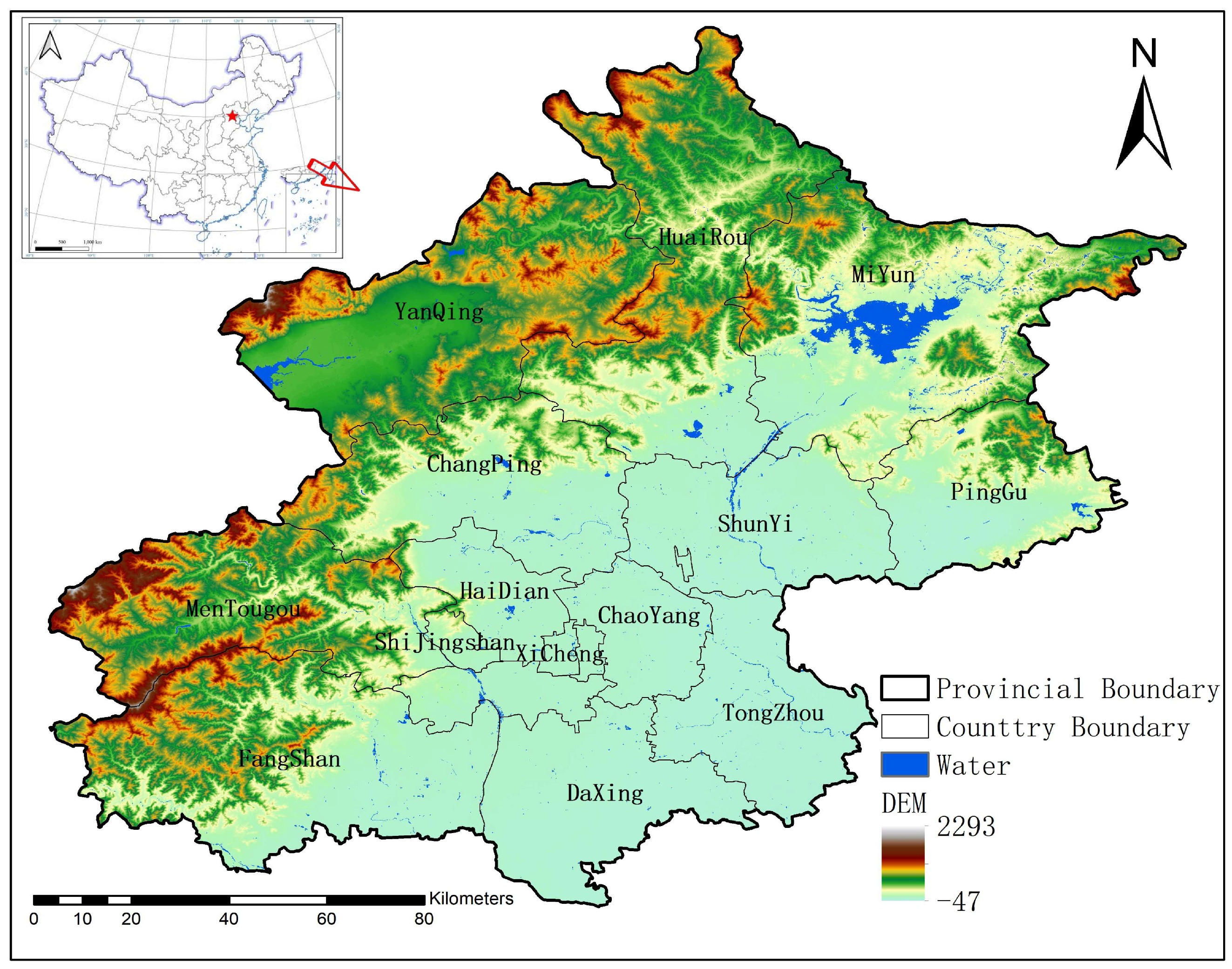
Beijing is located on the northwestern edge of the North China Plain (39°28′–41°05′ N, 115°25′–117°30′ E), with a total area of approximately 16,400 square kilometers. As shown in Figure 1, its topography exhibits a distinct “higher in the northwest, lower in the southeast” stepped distribution pattern, which significantly influences the regional water system layout and spatial heterogeneity of water bodies [15]. Under the influence of a temperate monsoon climate, the average annual precipitation is about 585 mm, with uneven seasonal distribution. This has further shaped five major water systems, including the Yongding River and the Chaobai River, and has driven the construction of a series of water conservancy projects such as the Miyun Reservoir, urban landscape lakes, and intensive irrigation channels. The region features a rich diversity of water body types, encompassing natural rivers, reservoirs, wetlands, as well as artificial channels and landscape ponds, all demonstrating notable spatial heterogeneity. This water system, shaped by the interplay of stepped topography, uneven precipitation, and significant human intervention, provides a unique and representative natural-artificial composite setting for the research and validation of water extraction methods. Selecting this area for methodological validation tests the adaptability of models to complex terrains and mixed water body types.

2.2. Main Data Sources

This study comprehensively employs optical remote sensing imagery, synthetic aperture radar (SAR) imagery, and authoritative validation datasets to achieve multi-level, multi-temporal water body extraction and validation.
The SAR image data were sourced from the Sentinel-1 satellite. This study employed its Level 1 Ground Range Detected (GRD) product (corresponding to the dataset ‘COPERNICUS/S1_GRD’). As an active microwave remote sensing system, this data provides all-weather and all-day imaging capabilities, is minimally affected by weather conditions, and possesses a certain degree of penetration through the surface. This data can acquire high-resolution surface information, is sensitive to parameters such as terrain, deformation, and soil moisture, and supports interferometric measurements for deformation monitoring. For the following reasons, this study selects the VH polarization band of Sentinel-1A as the data foundation for coarse water body extraction: (1) Sentinel-1 combines C-band observation capabilities with the advantage of being freely accessible; (2) image selection adheres to the Interferometric Wide Swath (IW) mode, Ground Range Detected (GRD) product type, VH polarization, and ascending orbit direction; (3) for large-scale water body extraction, traditional SDWI index methods are computationally inefficient, while VH polarization imagery can effectively enhance the scattering differences between water bodies and other ground objects: water bodies exhibit weak backscattering in the VH band, whereas non-water features (such as vegetation and buildings) exhibit stronger responses, resulting in distinct feature contrasts that improve water body identification accuracy in complex backgrounds [16].
The optical imagery data were sourced from Sentinel-2 satellite images. This study selected the Level-2A surface reflectance product (corresponding to the dataset ‘COPERNICUS/S2_SR_HARMONIZED’), which is generated from data acquired by the Sentinel-2 multispectral imaging instruments. The Sentinel-2 satellites are part of the European Union’s Copernicus Programme and were manufactured, launched, and operated under the management of the European Space Agency (ESA). The prime industrial contractor for the satellite manufacturing was Airbus Defence and Space, with major development and integration work conducted in Friedrichshafen, Germany. Acquired by the satellite’s onboard Multispectral Instrument (MSI), this product comprises 13 spectral bands covering the visible to shortwave infrared range and offers three spatial resolutions: 10 m, 20 m, and 60 m. As one of the highest-resolution open-access optical imagery datasets currently available, Sentinel-2 demonstrates significant advantages in the richness of multispectral information, ground object classification capabilities, and temporal sequence continuity, making it suitable for dynamic monitoring of land cover [17]. To ensure data quality, this study uniformly uses 10 m resolution imagery and selects data with cloud coverage below 10% to acquire high-quality surface reflectance information.
Validation data utilize the global surface water dataset published by the Joint Research Centre (JRC) of the European Commission for validation. This dataset is constructed based on Landsat imagery from 1984 to 2020, with a spatial resolution of 30 m, and includes monthly, annual, and long-term water body change information [18]. It is currently one of the publicly available water body products with the longest time series and highest accuracy globally. To ensure spatiotemporal consistency with the results of this study, the JRC water body data are extracted for corresponding months in the temporal dimension. In the spatial dimension, a bilinear sampling method is employed to resample the data to a 10 m resolution, achieving spatiotemporal alignment.

2.3. Research Methods

2.3.1. Technical Process

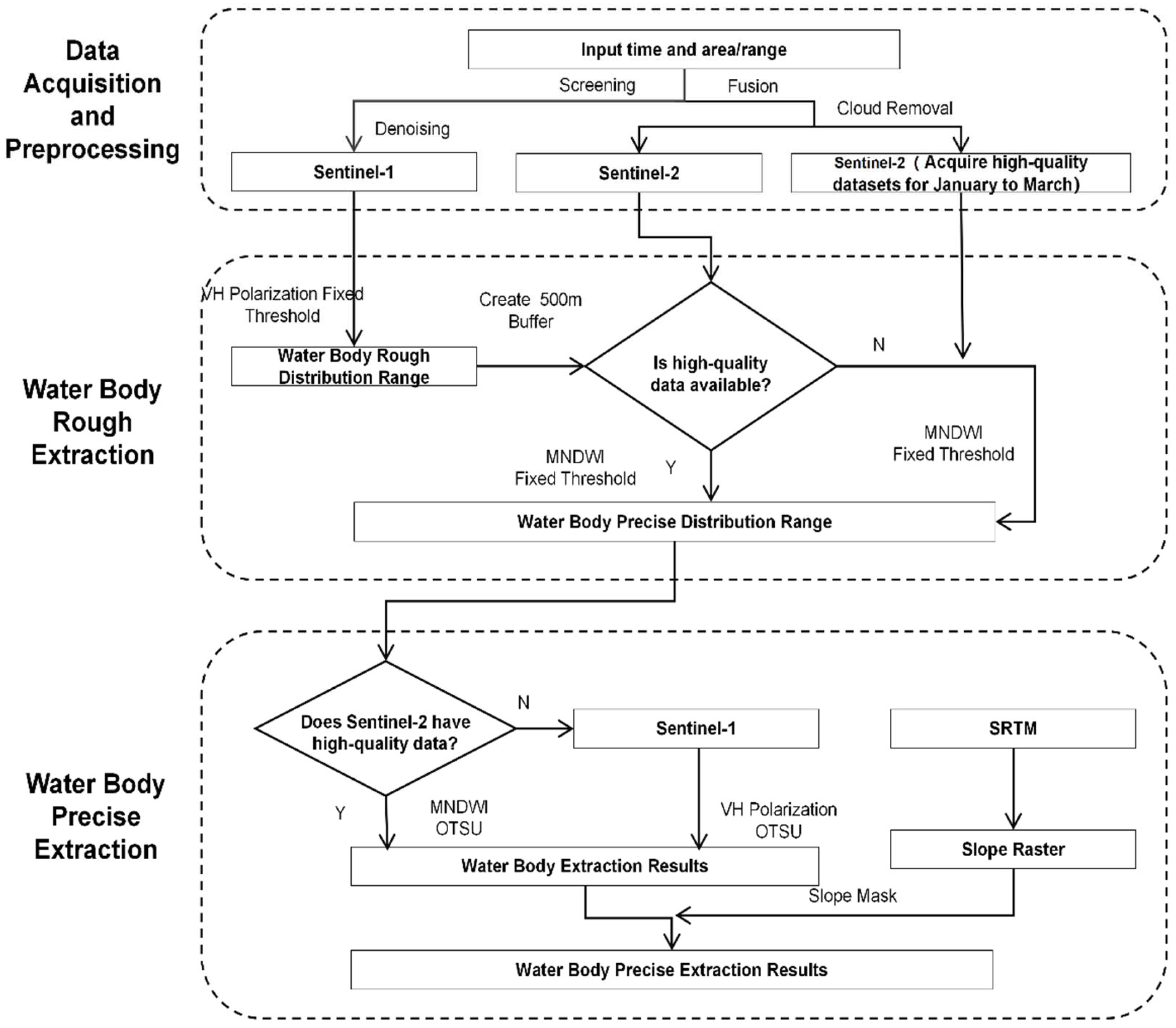
The technical flowchart of this study is shown in Figure 2, primarily divided into three parts: data acquisition and preprocessing, coarse water extraction, and refined water extraction. Data acquisition requires inputting the temporal and spatial scope for water body extraction, based on which fused images are filtered according to selection criteria. Data preprocessing includes using the Lee filter to remove speckle noise from SAR images and acquiring the QA60 band from optical imagery to create a cloud detection mask for filtering out cloud and cirrus pixels. Lee filtering is an adaptive spatial filtering method designed to address multiplicative speckle noise in SAR images, which effectively suppresses noise while preserving edge and texture features of the imagery [19]. The QA60 band is a cloud cover quality assessment band, primarily used for identifying high-confidence cloud pixels.
Considering the all-weather capability of SAR imagery and its minimal susceptibility to natural factors such as clouds and fog, Sentinel-1 imagery is first selected. A threshold segmentation method, using a given empirical threshold, is applied to perform coarse extraction of water bodies within the specified range, determining their distribution. Subsequently, it is determined whether usable Sentinel-2 imagery exists for the acquisition month of the coarse distribution. If available, the Modified Normalized Difference Water Index (MNDWI) is used with an empirical threshold to validate the coarse water distribution, yielding the precise water body distribution. If not available, it is assumed that the period from January to March of the acquisition year has the maximum annual water extent [20,21]. Therefore, Sentinel-2 data from January to March of the acquisition year that meets the selection criteria and cloud masking is used to validate the coarse water distribution.
In determining the initial extraction empirical threshold, considering the significant topographic differences across regions, using a fixed threshold directly for water body extraction may compromise accuracy. To address this issue, this study first selects a small number of representative water body spatial extents (represented as rectangular areas) within the study area based on existing foundational geographic data. Then, the OTSU (Otsu’s method) algorithm is applied to process these rectangular areas in batches, calculating their respective segmentation thresholds. Through statistical analysis of these thresholds, their average is taken as the global segmentation threshold for the study area, i.e., the empirical threshold, thereby enabling the preliminary extraction of large-scale water bodies. Whenever the study area changes or the extraction time period varies, this empirical threshold is recalculated to minimize subjective influence in the threshold determination process.
Next, the precise water body distribution ranges obtained from Sentinel-1 and validated by Sentinel-2 are extracted one by one. The extraction process first checks for the availability of usable Sentinel-2 data. If available, MNDWI is calculated, and the water extraction result is obtained using the OTSU algorithm. If not available, given that Sentinel-1 data inherently possesses high spatial resolution, the system will automatically select the VH polarization band of this data, apply the OTSU algorithm to calculate the segmentation threshold, and subsequently perform water body extraction accordingly.
Due to potential confusion between mountain shadows and water bodies, this study uses Shuttle Radar Topography Mission (SRTM) DEM data to calculate slope [22]. In moderately undulating terrain areas, regions with slopes greater than 5° are prone to producing mountain shadows due to topographic obstruction. Therefore, this study sets 5° as the slope threshold and removes water body pixels with slopes exceeding this value [23] to reduce the interference of mountain shadows on the extraction results, thereby obtaining refined water body extraction outcomes that meet the requirements.

2.3.2. Modified Normalized Difference Water Index

The Modified Normalized Difference Water Index (MNDWI) is a remote sensing image-based index used for detecting water bodies from satellite imagery. MNDWI is a modified version of the Normalized Difference Water Index (NDWI). Compared to the traditional NDWI, MNDWI can more accurately distinguish water bodies from other types of land cover, such as in urban environments or areas covered by buildings and bare soil. The green band exhibits higher reflectance for water bodies, while the short-wave infrared band shows weaker reflectance for water, making MNDWI more stable and effective in these areas [24]. Its calculation formula is as follows:
M N D W I = G r e e n S W I R G r e e n + S W I R ,
where Green represents the reflectance of the green band, and SWIR represents the reflectance of the short-wave infrared band. During the calculation process, since the resolution of the green band in Sentinel-2 data is 10 m while the resolution of the short-wave infrared band is 20 m, the nearest-neighbor resampling method is applied to resample the SWIR band resolution to 10 m before calculating the MNDWI.

2.3.3. OTSU Adaptive Optimal Threshold Segmentation Algorithm

The OTSU algorithm is widely used due to its simple computation, strong adaptability, and high efficiency in segmenting binary images. However, this method performs well when the target water body area exceeds 30% of the entire image but its performance declines rapidly when the area ratio decreases to 10%, and it is susceptible to noise interference [25]. Therefore, when applying the OTSU algorithm in this study, the formula is as follows:
P i = n i N , P i 0 , i = 0 L 1 P i = 1 ,
ω t = i = 1 t P i ,
μ t = i = 1 t i P i ,
μ T = i = 1 L 1 t i P i ,
σ B 2 = [ μ T ω ( t ) μ ( t ) ] 2 ω t 1 ω t ,
where P ( i ) is the probability of occurrence of each gray level; n ( i ) is the pixel value of the i gray level; N is the total number of pixels in the image; L represents the gray level; ω ( t ) represents the probability of being classified into one class; μ ( t ) and μ T represent the cumulative pixel values of the gray levels, respectively; σ B 2 is the inter-class variance. When this value is maximized, the corresponding t is the optimal segmentation threshold.

2.3.4. Accuracy Evaluation Metrics

To accurately assess the water body extraction results, this study employs three metrics for verification and accuracy evaluation: Precision, Recall, and Intersection over Union (IoU) [26]. Precision indicates the accuracy of the extracted water bodies, Recall primarily emphasizes the ability to capture all large-area water bodies, while IoU serves as a comprehensive evaluation metric, reflecting the degree of overlap between the extraction results and the actual water bodies.
The calculation of these three metrics involves four parameters: True Positive (TP), True Negative (TN), False Positive (FP), and False Negative (FN).
  • True Positive (TP) refers to the number of pixels correctly extracted as water bodies.
  • True Negative (TN) refers to the number of non-water pixels; that is, pixels that are actually non-water and were also not extracted as water.
  • False Positive (FP) refers to the number of non-water pixels incorrectly extracted as water bodies.
  • False Negative (FN) refers to the number of pixels that are actually water bodies meeting the extraction criteria but were not extracted.
Precision reflects the proportion of correctly extracted water bodies among all extraction results, evaluating the accuracy of the results.
Precision = TP TP + FP
Recall reflects the proportion of actual water bodies that were correctly extracted, evaluating the ability to identify water bodies correctly.
Recall = TP TP + FN
Intersection over Union (IoU) reflects the overlap between the extraction results and the ground truth data, calculated as the ratio of the intersection to the union of the extracted water bodies and the actual water bodies. A higher IoU value indicates a better match between the extraction results and the actual water bodies.
IoU = TP TP + FP + FN
For the quantitative analysis of the accuracy of the extraction results in this study, the JRC Global Surface Water dataset, which also provides monthly data, was selected as the validation set. Precision, Recall, and IoU were calculated to analyze both the extraction results for individual water bodies and the overall extraction results. Since the JRC Global Surface Water dataset is only updated until December 2020, this study extracted monthly water body data for Beijing for the years 2019 and 2020 to validate the effectiveness of the proposed method.

3. Results

3.1. Evaluation of Single Water Body Extraction Results

Water bodies from different regions and of varying areas within Beijing were selected to validate the extraction accuracy for individual water bodies. The results are shown in Table 1. Missing months in the table indicate that the JRC Global Surface Water dataset had no valid data for that specific month. The Precision results show that the accuracy of the single water body extraction is high, mostly greater than 0.9, with some even exceeding 0.95. The Recall rates for single water bodies are also mostly above 0.8, demonstrating the strong capability of this method for extracting individual water bodies. The Intersection over Union (IoU) values are relatively lower compared to the first two parameters. The primary reason is that the JRC data is derived from Landsat series satellite imagery with a 30 m resolution, while this study uses Sentinel satellite data with a 10 m resolution. The difference in resolution leads to discrepancies in the extracted water body boundaries. Furthermore, although imagery from the same time period was acquired, perfect alignment of the remote sensing image acquisition times cannot be guaranteed, which is another significant factor contributing to the differences.
Therefore, to further validate the accuracy of the water body extraction results, this study adopted a manual delineation approach for evaluation. Based on remote sensing imagery, we manually delineated the vector boundaries of Huairou Reservoir on a monthly basis from January to December 2020 and converted them into raster data with the same spatial resolution as the extraction results for accuracy validation. As shown in Table 2, the extraction results for Huairou Reservoir across all time phases achieved a Precision and Recall of above 0.96, with the Intersection over Union generally exceeding 0.95. This indicates a high degree of consistency between the extraction results of this study and the actual water body distribution in the imagery.
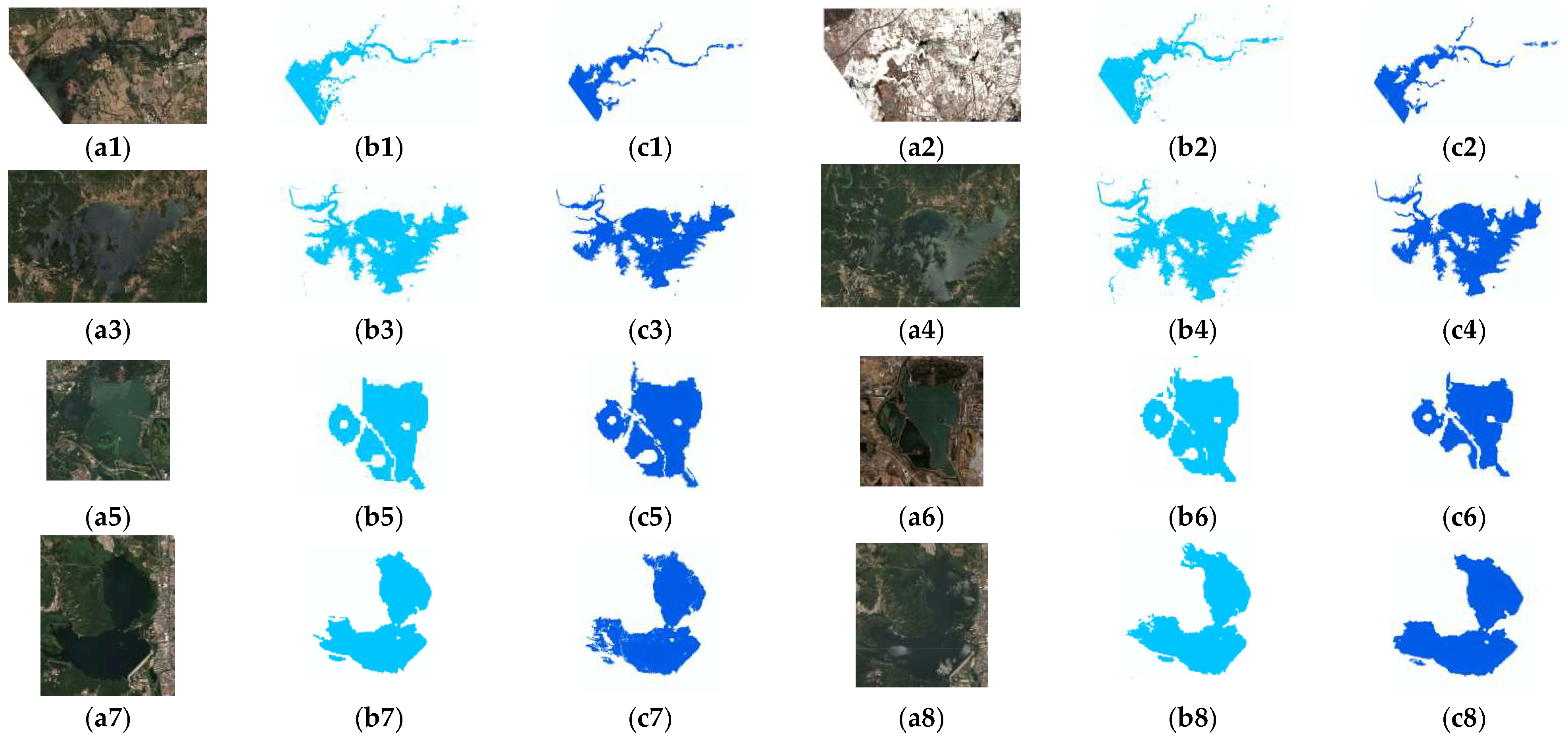
Additionally, the results for Guanting Reservoir in March 2019 show that while the Precision is high, the Recall and IoU are significantly lower than other validation results. Comparing the remote sensing image (a2 in Figure 3), the JRC data extraction result (b2 in Figure 3), and the extraction result from this study (c2 in Figure 3), it is evident that the JRC Global Surface Water result clearly includes snow surrounding the water body. In contrast, due to lower quality optical imagery for this period, this study utilized concurrent SAR imagery, thus accurately capturing the actual water body distribution. This highlights an advantage of the extraction method proposed in this study.
Overall, this method performs well for single water bodies. It demonstrates strong extraction capability and can accurately extract individual water bodies that meet the criteria within the specified area.

3.2. Evaluation of Overall Water Body Extraction Results

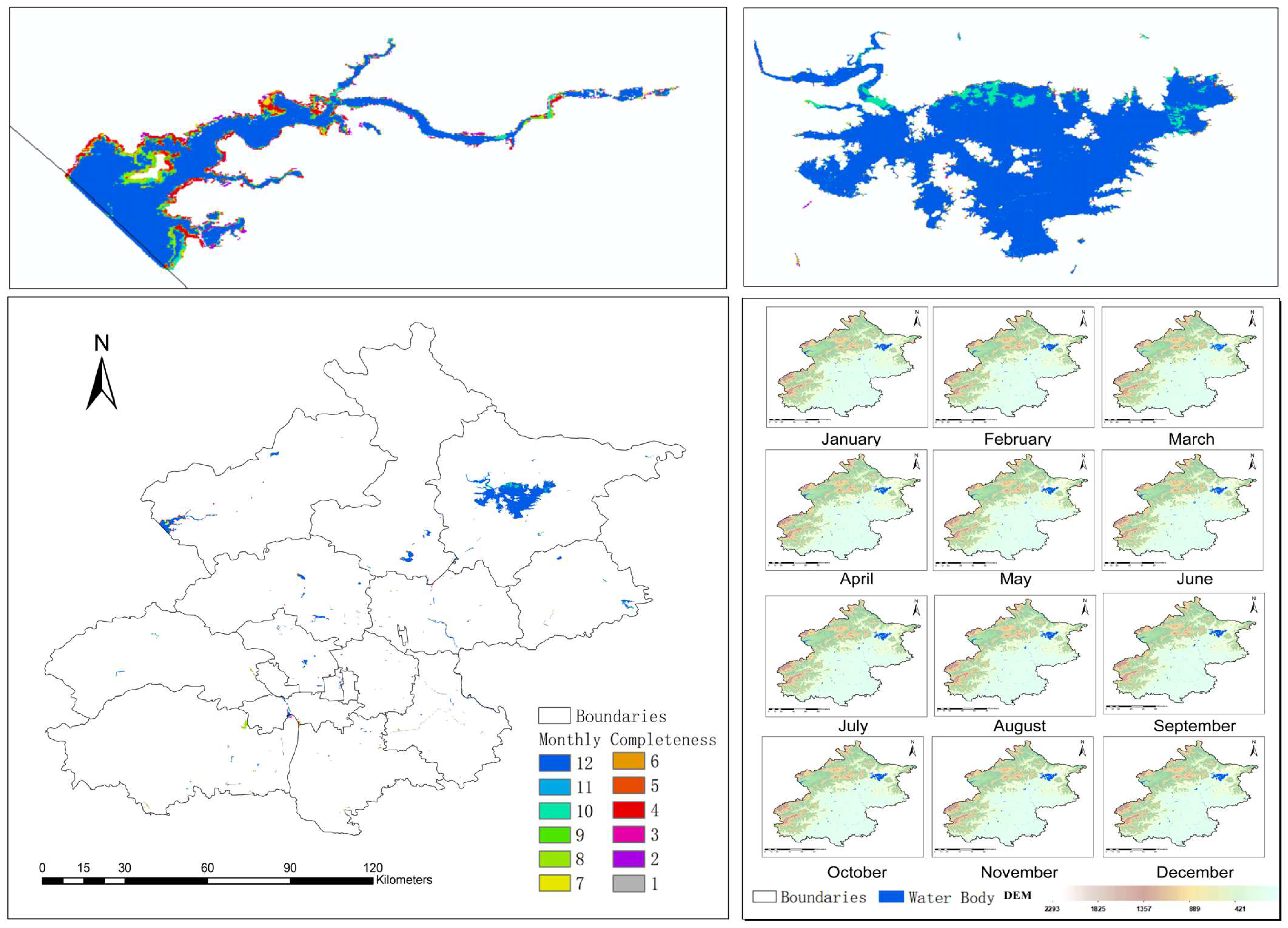
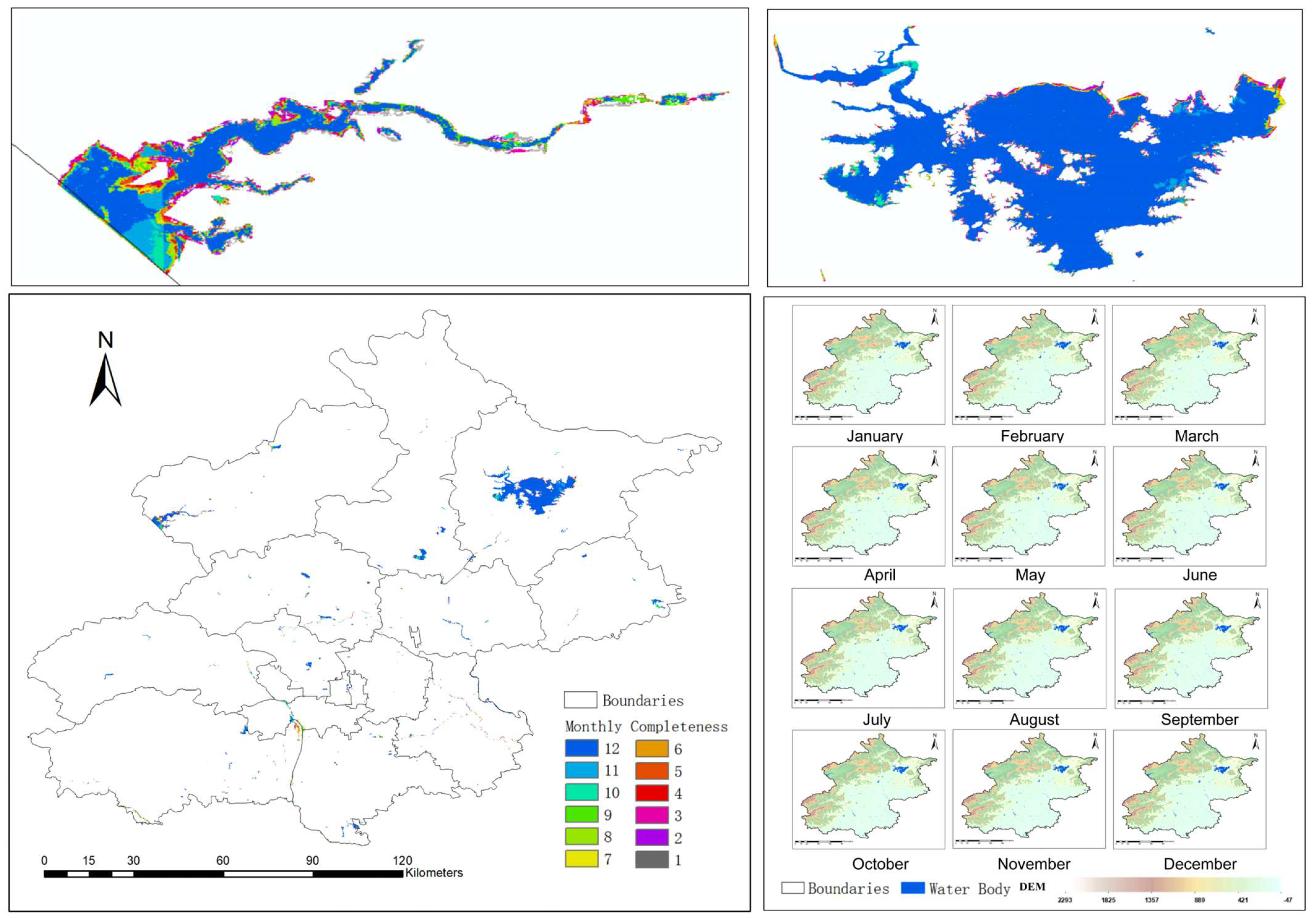
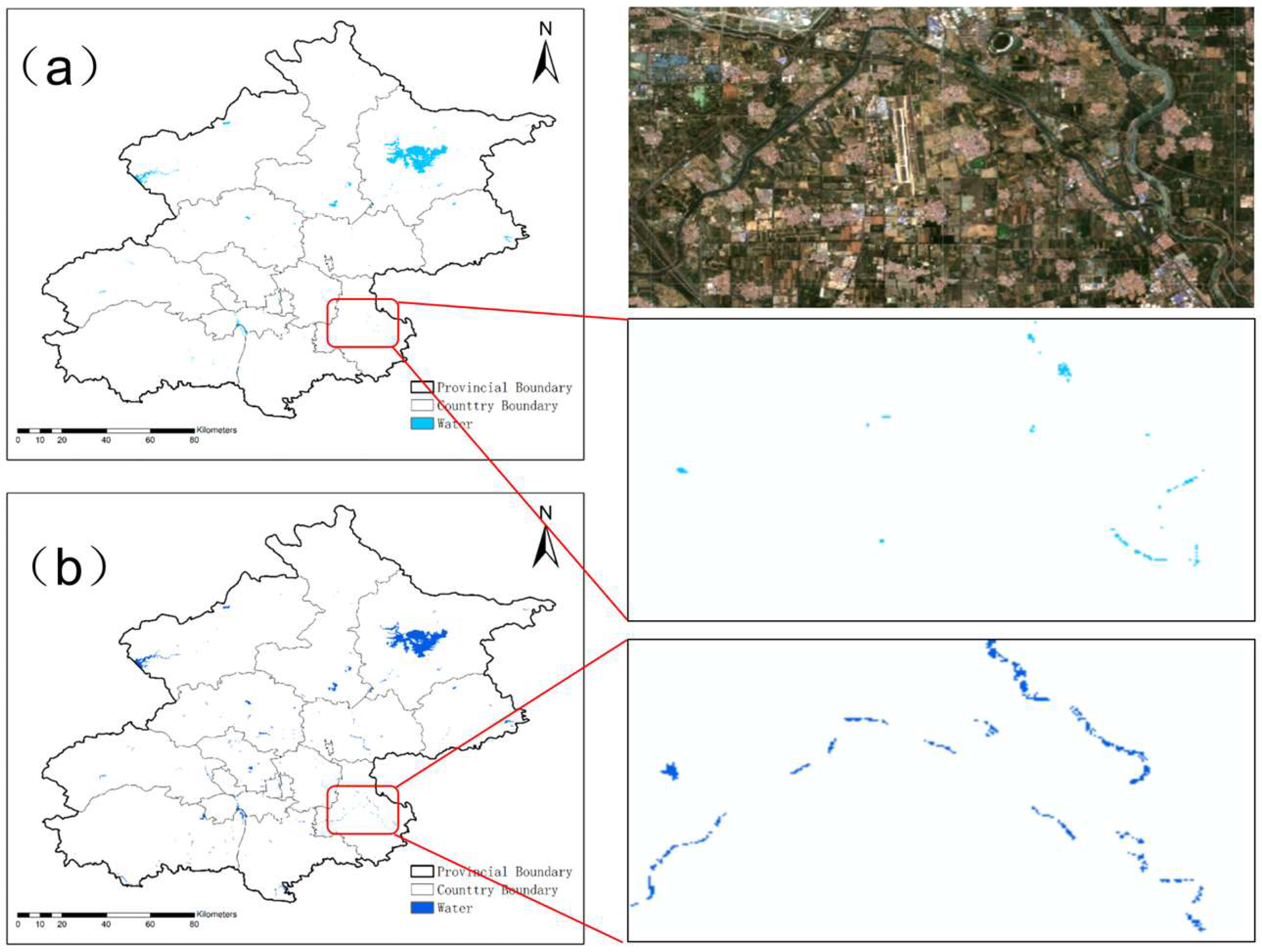
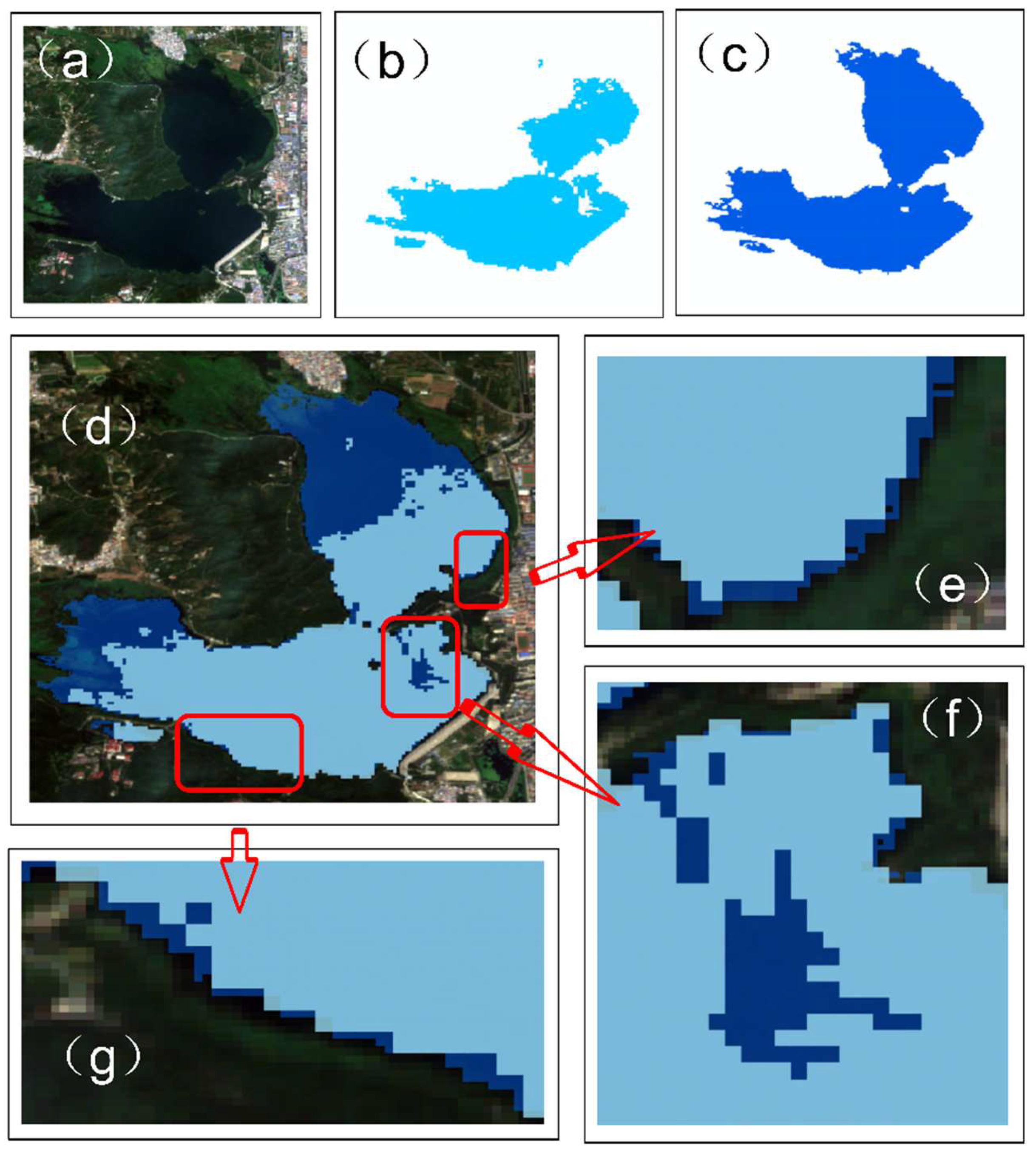
As shown in Figure 4 and Figure 5 below, this study completed the extraction of water bodies within Beijing for 2019 and 2020, respectively. To evaluate the temporal stability of the method, the monthly extraction results were overlaid to calculate the frequency (1–12) with which each pixel was identified as water over the 12 months. The results indicate that the vast majority of water bodies in the study area appeared with a frequency of 12, while those with frequencies below 12 were mostly rivers or boundary areas of large water bodies. This demonstrates that the method has reliable monthly monitoring capability and can relatively completely reflect the inter-monthly distribution characteristics of water bodies in the region. In terms of accuracy, the overall extraction results achieved precision, recall, and intersection over union (IoU) values all above 0.67, and in most cases remained above 0.75, although these metrics showed some decline compared to single water-body extraction results. Compared with the JRC Global Surface Water dataset, the proposed method performs better in the identification of narrow rivers and the extraction of boundaries of large water bodies. As illustrated in Figure 6, taking the June 2020 results as an example, a comparison with contemporaneous remote sensing imagery shows that the extraction completeness of narrow water bodies (such as river channels) in the JRC data is significantly lower than that of the method used in this study. Meanwhile, as shown in Figure 7, for the water extraction results of Huairou Reservoir in June 2020, visual interpretation indicates that the method proposed in this study (Figure 7c) performs notably well in terms of water body completeness, with overall accuracy being satisfactory. In the boundary regions (Figure 7e–g), as this study utilizes Sentinel series data with higher spatial resolution compared to the Landsat-based JRC dataset, the boundary delineation is more accurate. Visual comparative analysis confirms that the algorithm proposed in this paper is reliable in overall accuracy, consistent with the trends observed in the JRC data, while also demonstrating relative advantages in boundary accuracy. The extraction results align more closely with the actual conditions observed in the remote sensing imagery.

3.3. Comparative Validation

To verify the advantages of the water extraction method proposed in this study, comparative experiments were conducted with the involved VH polarization method, the MNDWI water index method, the widely used SDWI water index based on SAR imagery, the NDWI water index based on optical imagery, and the newly proposed Surface Water Index (SWI). Taking the monthly water body distribution in Changping District, Beijing, from 2019 to 2020 as an example, the JRC dataset was used as a reference for accuracy validation. The validation results are shown in the table below.
In terms of extraction accuracy, the Precision of the method proposed in this paper is generally higher than other methods. Compared to the standalone VH polarization and MNDWI methods, our method significantly improves extraction Precision by integrating the two, indicating higher reliability. Furthermore, the very low Precision of the VH polarization and SDWI methods also suggests that SAR imagery is not suitable for direct water extraction using the OTSU algorithm over large areas. Regarding Recall, although our method is slightly lower than SWI, it is significantly better than the VH polarization and SDWI methods and comparable to the NDWI and MNDWI methods. This demonstrates that our method can effectively identify real water bodies over large areas and possesses strong generalizability. Although the Intersection over Union (IoU) values for all methods are generally not high, a horizontal comparison shows that the IoU of our method still outperforms the others, indicating a higher degree of overlap between the extracted water bodies and the true water regions, as well as superior localization accuracy.
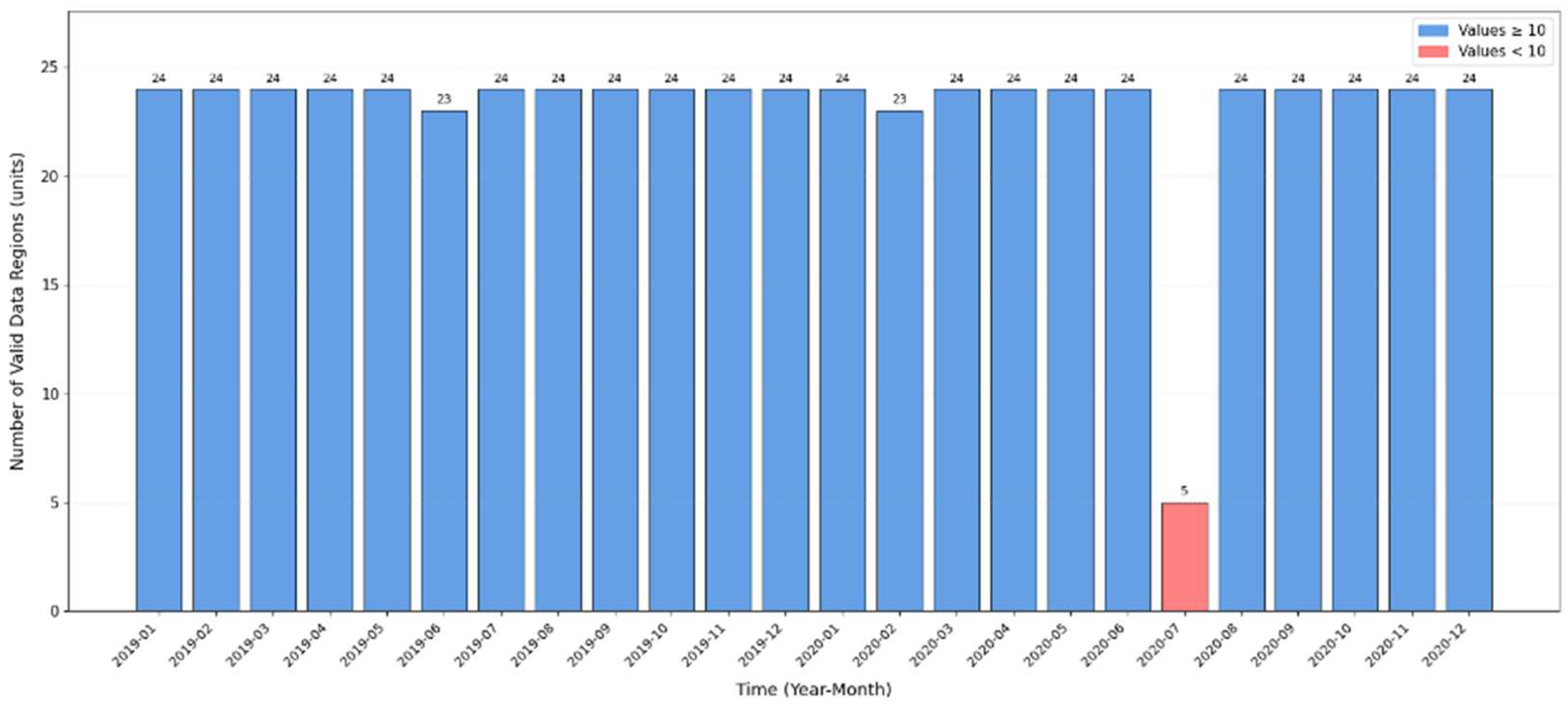
In the temporal scale analysis, to comprehensively evaluate the performance of different data sources in terms of temporal coverage, we divided the Changping District into 24 subregions and separately calculated the monthly valid data coverage when relying solely on optical imagery. The results are shown in Figure 8. The analysis reveals that during the extraction period from 2019 to 2020, if only optical imagery was used, only five subregions had valid data in July 2020, making it impossible to obtain a complete regional water body distribution for that month. Additionally, data for June 2019 and February 2020 were also partially missing. These findings indicate that methods relying exclusively on optical imagery and its derived water indices (such as NDWI, SWI, and MNDWI) are significantly affected by weather factors like cloud cover, making it difficult to ensure stable high-temporal-resolution monitoring capabilities over long time series. This underscores the necessity of integrating SAR data with all-weather observation capabilities to enhance temporal completeness and monitoring reliability.

3.4. Analysis and Discussion

This study proposes and validates a water extraction method based on the fusion of Synthetic Aperture Radar (SAR) and optical remote sensing data, fully leveraging the complementary characteristics of both data types. As shown in Table 1 and Table 2, this method demonstrates high accuracy in water body extraction: when validated against JRC data, the precision of water extraction exceeds 0.9 in most months, the single-water-body recall rate is above 0.9, and the Intersection over Union (IoU) is greater than 0.7. Meanwhile, through manual boundary delineation applied to monthly data from Huairou Reservoir, all three evaluation metrics reach above 0.9, with the precision generally reaching 0.98. Combined with Table 3, although the overall recall rate and IoU for water extraction show a slight decline, they remain above 0.7 in the vast majority of months. Furthermore, according to Figure 4 and Figure 5, the proposed method enables continuous monthly high-temporal-resolution monitoring of water body distribution in the study area, with its continuous monitoring capability surpassing that of the JRC Global Surface Water dataset used as the validation benchmark.
A comparative analysis (Table 4, Table 5 and Table 6) reveals significant limitations in traditional single-data-source methods. For large-scale water extraction, using only SAR data (e.g., VH polarization or SDWI index) can maintain a high recall rate but suffers from low precision and pronounced over-extraction. For instance, in March 2019, while the recall rate was 0.61, the precision was only 0.27, and the IoU was as low as 0.23. On the other hand, relying solely on optical indices (e.g., NDWI, MNDWI) is constrained by image quality, making it difficult to support continuous long-term monitoring. As shown in Figure 8, using only optical imagery in July 2020 failed to extract the complete water body distribution. Compared to machine learning methods that rely on complex model training, the two-stage fusion strategy proposed in this study demonstrates significant computational efficiency advantages while maintaining high accuracy. By adopting a mechanism of “broad-area preliminary screening based on SAR data and fine discrimination based on optical data,” this method utilizes a physically driven stepwise processing approach that substantially reduces computational complexity. It not only conserves computational resources but also significantly accelerates processing speed, thereby providing a more efficient and practical technical pathway for large-scale, operational dynamic water monitoring. At the mechanistic level, this approach achieves deep integration and complementary advantages of multi-source data, preserving the all-weather, day-and-night monitoring capability of SAR data while fully leveraging the high precision of optical data in spectral feature identification.
Notably, the method demonstrates outstanding performance in extracting narrow rivers and distinguishing special ground object scenarios. As shown in Figure 6, compared to the 30 m resolution JRC Global Surface Water dataset, the river network morphology extracted in this study based on 10 m resolution Sentinel data is more detailed and complete, which partially explains the relatively lower IoU values in the overall extraction results. In the case of Guanting Reservoir (Figure 3(c2)), the incorporation of synchronized SAR imagery effectively prevented the misclassification of surrounding snow cover as water bodies in the JRC data.
Compared with existing studies, the scientific value of this method lies not only in the improvement of accuracy metrics—where its precision and Intersection over Union (IoU) in most months surpass those of traditional single-source approaches—but also in establishing a stable and reliable optical-SAR synergistic technical framework. This framework fully leverages the advantages of Sentinel series data in terms of spatiotemporal resolution and open access. Compared to methods relying solely on medium-resolution optical data such as Landsat, it significantly enhances the continuous monitoring capability of water bodies in cloudy and rainy regions. The method is suitable for regional-scale dynamic water monitoring with medium-to-high resolution requirements, providing a feasible technical pathway for large-scale, long-term water monitoring. It holds significant application value in urban hydrological modeling, water resource management, and flood monitoring, offering a more efficient operational solution. Moreover, this study provides new technical references and data support for research on multi-source remote sensing collaborative water information extraction.
However, the current method still has certain limitations in the extraction accuracy of continuous narrow rivers, and its capability to depict complex river network branches and micro-morphologies needs further enhancement. Additionally, the method has yet to achieve deep fusion of optical and SAR data at the pixel-level spatial feature scale, and the potential for synergistic utilization of multi-source information remains to be fully explored.

4. Application

To validate the practicality of the proposed method, this study selects the precipitation event in Beijing at the end of July as a case study, comparing and analyzing changes in water body areas before and after the precipitation to demonstrate the application effectiveness of the method. According to reports from the Beijing Meteorological Bureau, a period of persistent heavy rainfall occurred citywide from 24 to 30 July, accompanied by heavy rain to torrential rain. As of 11:00 on the 29th, the city’s average precipitation was 210.4 mm, with the maximum precipitation reaching 543.4 mm (in Langfangyu and Zhujiayu, Miyun District), reaching the level of a torrential rain event. This intense precipitation process triggered severe flood disasters, causing widespread rising water levels in Beijing’s major rivers. Monitoring data from the Beijing Water Authority showed that on 31 July 2025, the water level at the Xiangyang Gate on the Chaobai River reached 31.93 m, which is 2.93 m higher than the historical average for the same period.
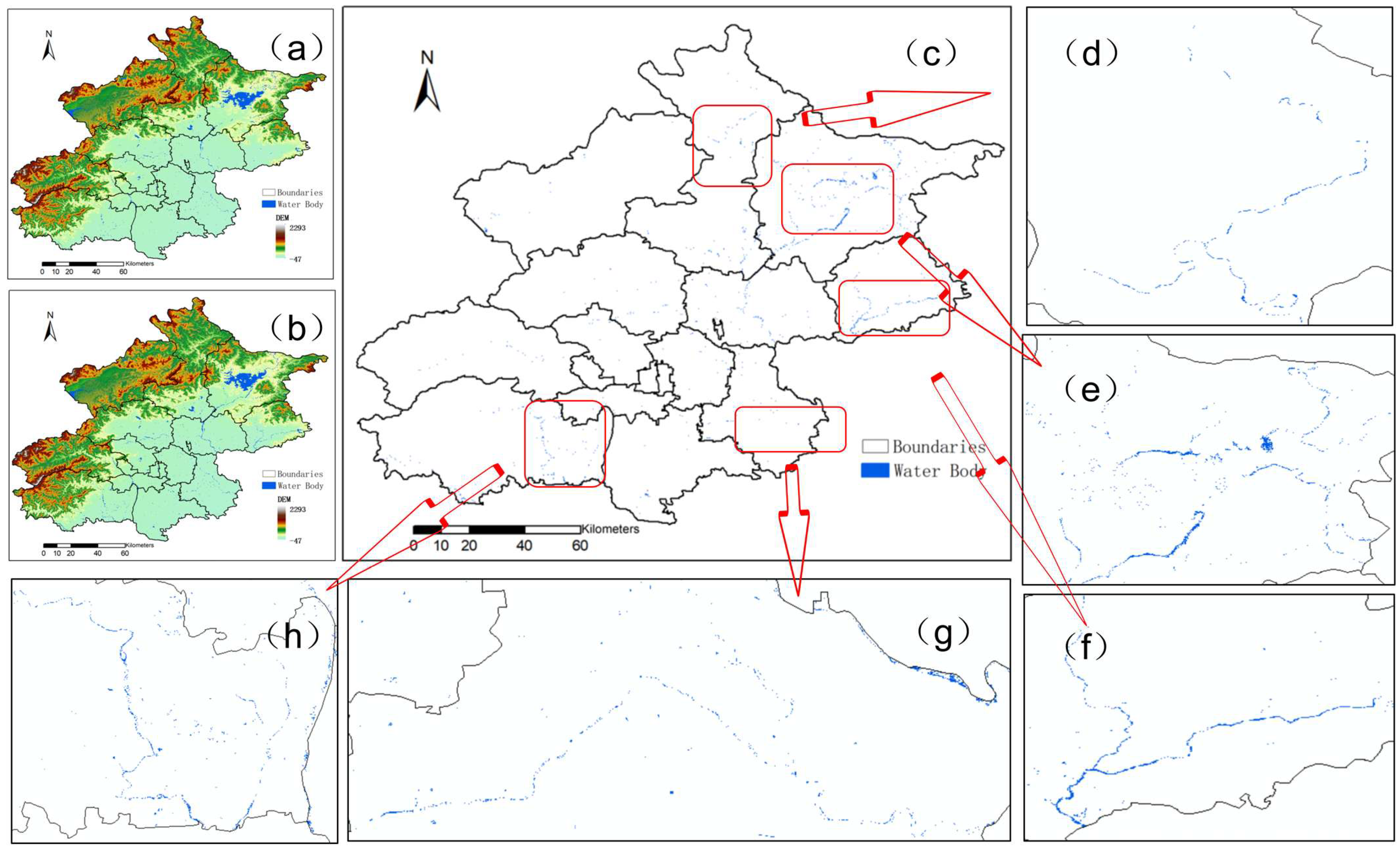
To monitor changes in the spatial distribution of water bodies following this precipitation event, enabling dynamic flood monitoring and identification, this study applied the proposed method to extract water bodies in Beijing using remote sensing images from two dates: 17 July 2025, and 31 July 2025. The spatial distribution results of water bodies for the respective periods were obtained (as shown in Figure 9). Area statistics indicated that the total water body area in the city increased significantly from 331.90 km2 to 404.45 km2.
Analyzing the water body change results by district (Table 7), the increase in water area was particularly pronounced in districts such as Fangshan, Huairou, Miyun, and Pinggu. In contrast, central urban districts like Dongcheng, Xicheng, Haidian, Fengtai, Shijingshan, and Chaoyang showed no significant change in water body area. This spatial distribution characteristic aligns with the reported spatial distribution of precipitation intensity from the meteorological department, further confirming the dominant influence of precipitation on water body expansion.
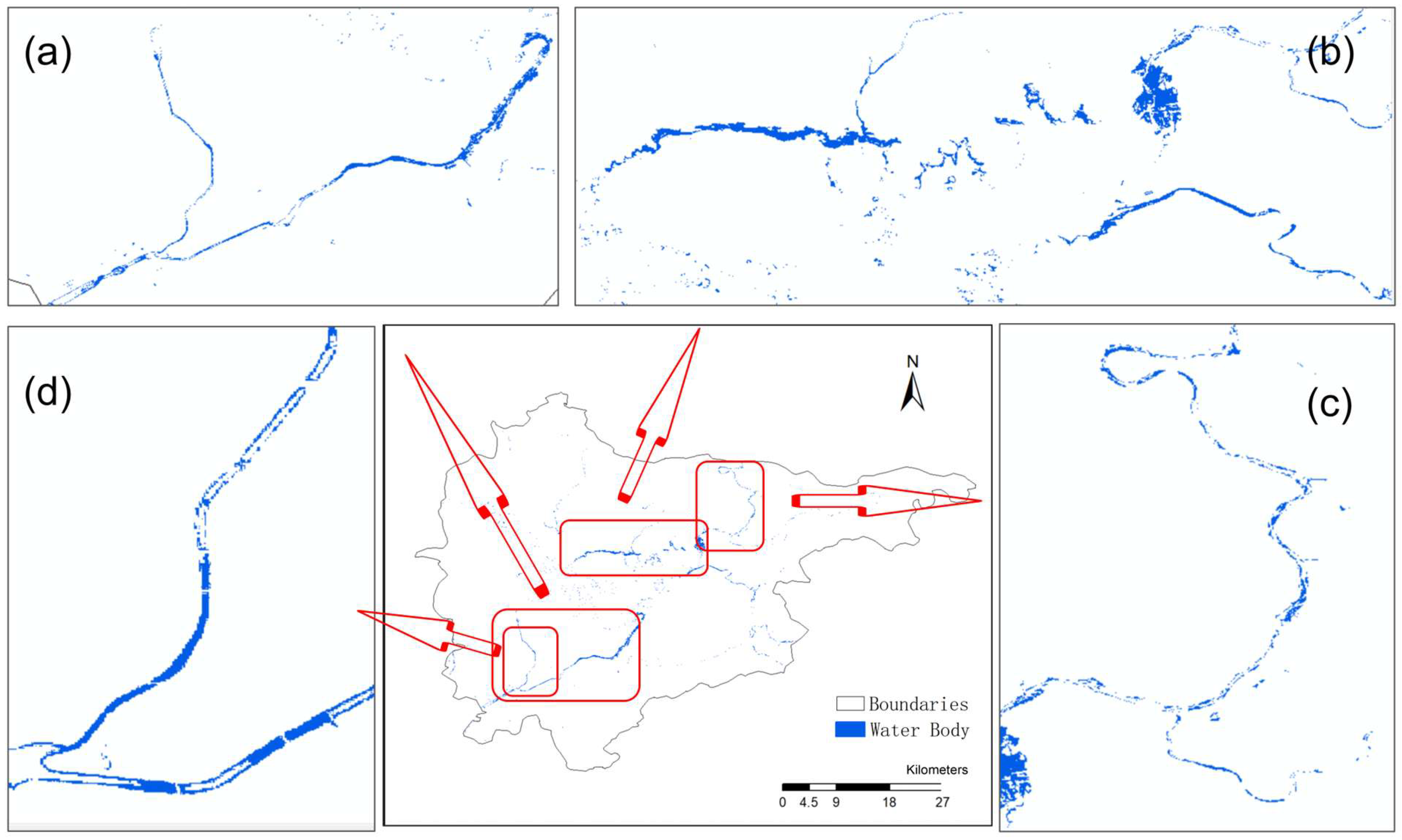
Taking Miyun District as an example (Figure 10), precipitation led to a significant expansion of water bodies in this area. Newly formed water bodies are evident north of Miyun Reservoir (Figure 10b), and Figure 10c shows a general increase in the water area of its upstream source, the Chao River. Data from the water resources department indicated a significant increase in inflow into Miyun Reservoir during this period, with the overall water level rising by 3.92 m. Simultaneously, the channel widths of main downstream rivers like the Chao River and Bai River increased noticeably (as shown in Figure 10d), submerging some riparian areas. In summary, this extreme precipitation event had a significant impact on the regional water body distribution pattern.
This method demonstrates promising potential for emergency monitoring, yet it still has certain limitations. First, the revisit cycle of the Sentinel series satellites is insufficient to meet the hourly or daily dynamic monitoring requirements during extreme weather events, and delays in data acquisition may affect real-time analysis of critical flood evolution stages. Second, cloud interference during heavy rainfall and radar signal distortion in complex terrain can still constrain the accuracy of local water body extraction. Future research could explore integrating higher spatiotemporal resolution satellite data and incorporating near-real-time rainfall forecast information to enhance the timeliness and stability of emergency monitoring.

5. Conclusions

To address the relatively limited application of data fusion in current water body extraction research and the tendency of existing methods to be applicable only to specific regions, this study proposed a more adaptable rapid water extraction method. Based on Sentinel-1 and Sentinel-2 imagery data, it leverages the strong cloud-penetrating capability of SAR data and the high spatial resolution of optical imagery, utilizing the Modified Normalized Difference Water Index (MNDWI) and an adaptive threshold segmentation algorithm. Using this method, monthly water body extraction for Beijing in 2019 and 2020 was completed, and pixel-level accuracy validation was performed against the JRC Global Surface Water data. Additionally, water bodies before and after the heavy rainfall event of 24–30 July 2025, in Beijing were extracted. The results demonstrate that this method can effectively extract water body information and satisfactorily reflect the spatial distribution characteristics of water bodies.
The method proposed in this paper integrates the advantages of optical and SAR imagery, enabling rapid and accurate localization of water bodies within the target area. It not only overcomes the limitation of optical imagery being susceptible to cloud and fog interference but also mitigates issues such as confusion between bare land (e.g., farmland, asphalt roads) and water bodies, as well as mountain shadow interference in SAR imagery. Furthermore, it improves the temporal resolution of water body extraction over large areas to some extent. Besides being applicable to conventional water body acquisition, identification, and mapping, this method is also suitable for disaster emergency monitoring, such as rapid flood identification. However, the method’s current capability for extracting continuous, narrow rivers remains insufficient, and spatial fusion of multi-modal data has not been achieved. These aspects require further improvement and refinement in subsequent research.

Author Contributions

Conceptualization, Q.Q. and L.L.; methodology, L.L.; validation, L.L.; formal analysis, W.H. and Q.Q.; investigation, L.L.; resources, Q.Q.; data curation, L.L.; writing—original draft preparation, L.L.; writing—review and editing, Q.Q. and W.H.; visualization, L.L.; supervision, Q.Q. and W.H.; project administration, Q.Q.; funding acquisition, Q.Q. All authors have read and agreed to the published version of the manuscript.

Funding

This research was funded by the Basic Scientific Research Operating Funds of the Chinese Academy of Surveying and Mapping (No. AR2507).

Institutional Review Board Statement

Not applicable.

Informed Consent Statement

Not applicable.

Data Availability Statement

The data that support the findings of this study are available from the corresponding author upon reasonable request.

Conflicts of Interest

The authors declare that the research was conducted in the absence of any commercial or financial relationships that could be construed as a potential conflict of interest.

Abbreviations

The following abbreviations are used in this manuscript:
SARSynthetic Aperture Radar
NDWINormalized Difference Water Index
AWEIAutomatic Water Index
MNDWIModified Normalized Difference Water Index
RWIRed Edge Water Index
OTSUOtsu’s method
SRTMShuttle Radar Topography Mission
NDVINormalized Difference Vegetation Index
SDWISentinel-1 Dual-Polarization Water Index
SWISurface Water Index
IoUIntersection over Union

References

  1. Huang, Y.; Xiao, C.; Su, B.; Xu, Z.H. Importance of cryospheric water resources to China’s socio-economy: A multi-level watershed scale analysis. Chin. Sci. Bull. 2020, 65, 2636–2650. [Google Scholar] [CrossRef]
  2. Guo, H.; Huang, L.; Luo, L.; Liu, J.; Li, X.S. Progress on achieving environmental SDGs assessed from Big Earth Data in China. Sci. Bull. 2023, 68, 3129–3132. [Google Scholar] [CrossRef] [PubMed]
  3. Li, C.; Xu, H.; Zhang, J.; Sun, B.; You, Y.N.; Liu, H. Research progress in spaceborne synthetic aperture radar technology. J. Image Graph. 2025, 30, 2257–2274. [Google Scholar] [CrossRef]
  4. Wang, H.; Qin, F. Summary of the research on water body extraction and application from remote sensing image. Sci. Surv. Mapp. 2018, 43, 23–32. [Google Scholar] [CrossRef]
  5. Wang, Q.; Di, L.; Zhang, W.; Liu, S.F.; Wang, X.; Li, J.T. An object-oriented multi-feature optimization method for SAR image flood extraction. Water Resour. Power 2025, 43, 1–5. [Google Scholar] [CrossRef]
  6. Liu, Y.; Ge, X. Deep Learning Based Extraction of Flood Inundation on Extent from SAR Images. Remote Sens. Inf. 2025, 40, 85–94. [Google Scholar] [CrossRef]
  7. Li, W.; Zhao, Q.; Jia, S.; Li, Y. Multi-feature and multi-level Sentinel-2 im-age extraction of lake and reservoir water bodies in Liaoning province. Bull. Surv. Mapp. 2024, 37–42+106. [Google Scholar] [CrossRef]
  8. Mcfeeters, S.K. The use of the normalized difference water index (NDWI) in the delineation of open water features. Int. J. Remote Sens. 1996, 17, 1425–1432. [Google Scholar] [CrossRef]
  9. Wu, Q.; Wang, M.; Shen, X.; Yao, Y.; Li, J.S.; Zhang, F.F.; Zhou, Y.M. Small water body extraction method based on Sentinel-2satellite multi-spectral remote sensing image. Natl. Remote Sens. Bull. 2022, 26, 781794. [Google Scholar] [CrossRef]
  10. Jia, S.; Xue, D.; Li, C.; Zheng, J.; Li, W.Q. Study on new method for water area information extraction based on Sentinel-1 data. Yangtze River 2019, 50, 213–217. [Google Scholar] [CrossRef]
  11. Zhang, X.; Jia, J.; Du, Y. Research on Land Use Change in Mining Areas by Fusing Multi-Source Remote Sensing Data and Support Vector Machines. Met. Mine 2025, 250–257. [Google Scholar] [CrossRef]
  12. Cao, Y.; Lei, R. Progress and Prospects of Multi-Source Remote Sensing in Forest Fire Monitoring. J. Remote Sens. 2024, 28, 1854–1869. [Google Scholar] [CrossRef]
  13. Sun, G.; Wang, X.; An, N.; Zhang, A.Z. A Deep Learning Method for Large-Scale and High-Resolution Impervious Surface Extraction Based on Multi-Source Remote Sensing. Acta Geod. Cartogr. Sin. 2023, 52, 272–282. [Google Scholar]
  14. Wei, Z.; Jia, K.; Jia, X. Water Body Extraction from Multi-Source Heterogeneous Remote Sensing Data Based on Multi-Scale Feature Fusion. Remote Sens. Inf. 2021, 36, 41–48. [Google Scholar]
  15. Qiao, K.; Zhu, W.; Hu, D.; Hao, M.; Chen, S.; Cao, S.S. Examining the distribution and dynamics of impervious surface in different function zones in Beijing. J. Geogr. Sci. 2018, 28, 669–684. [Google Scholar] [CrossRef]
  16. Zhang, K.; Huang, J.; Mansaray, R.L.; Guo, Q.Y.; Wang, X.Z. Developing a Subswath-Based Wind Speed Retrieval Model for Sentinel-1 VH-Polarized SAR Data Over the Ocean Surface. IEEE Trans. Geosci. Remote Sens. 2019, 57, 1561–1572. [Google Scholar] [CrossRef]
  17. Zhou, C.; Zhao, M.; Chen, N.; Du, Y.Z.; Huang, Y.Y.; Zhang, C.; Wang, X.; Xiao, Y.J.; Ye, S.; Huang, J.F.; et al. Tracking Intra-annual plasticulture covering cycles using dense Sentinel-2 time-series. Int. J. Appl. Earth Obs. Geoinf. 2025, 144, 104906. [Google Scholar] [CrossRef]
  18. Chen, S. Automatic Flood Information Extraction Integrating Multi-Source Water Body Distribution Datasets and Time-Series SAR Images. Master’s Thesis, Wuhan University, Wuhan, China, 2022. [Google Scholar] [CrossRef]
  19. Han, P.; Han, B. Lee filtering for PolSAR images based on typical scattering difference index. Syst. Eng. Electron. 2018, 40, 287–294. [Google Scholar]
  20. Wang, M. Remote Sensing Area Change Detection of Typical Reservoirs in Beijing-Tianjin-Hebei Region During 2014–2019. Master’s Thesis, Wuhan University, Wuhan, China, 2020. [Google Scholar] [CrossRef]
  21. Zhu, P. Study on Surface Water Extraction Method in Beijing-Tianjin-Hebei Region Based on Multi-Source Remote Sensing Data. Master’s Thesis, China Institute of Water Resources and Hydropower Research, Beijing, China, 2020. [Google Scholar] [CrossRef]
  22. Sun, Y.; Huang, S.; Li, J.; Li, X.T.; Ma, J.W.; Qu, W. The downstream flood monitoring application of Myanmar Irrawaddy River based on Sentinel-1A SAR. Remote Sens. Technol. Appl. 2017, 32, 28. [Google Scholar]
  23. Deng, Q.; Zhang, Y.; Liu, J.; Qiao, Q.H.; Zhai, L. Research on Extraction Model of Flood Inundation Range Based on Sentinel-1/2 Data. Yangtze River 2024, 55, 71–77. [Google Scholar] [CrossRef]
  24. Su, L.; Li, Z.; Gao, F.; Yu, M. A review of remote sensing image water extraction. Remote Sens. Land Resour. 2021, 33, 9–19. [Google Scholar]
  25. Feng, Q.; Wang, Q.; Huang, H.; Wang, Z.Q. Improved Otsu algorithm for water extraction based on Sentin-el-1 dual-polarization data. Remote Sens. Technol. Appl. 2022, 37, 1003–1011. [Google Scholar]
  26. Ankush, M.; Yasir, A.; Munish, B. Mapping of water bodies from sentinel-2 images using deep learning-based feature fusion approach. Neural Comput. Appl. 2022, 35, 9167–9191. [Google Scholar] [CrossRef]
Figure 1. Schematic diagram of the study area (The five-pointed star indicates its national geographic location).
Sustainability 18 01362 g001
Figure 2. Technical Workflow.
Sustainability 18 01362 g002
Figure 3. Comparison of extraction results. (a1,a2) Remote sensing images of Guanting Reservoir on different dates; (b1,b2) JRC data of Guanting Reservoir on different dates; (c1,c2) Extraction results of this study of Guanting Reservoir on different dates. (a3,a4) Remote sensing images of Miyun Reservoir on different dates; (b3,b4) JRC data of Miyun Reservoir on different dates; (c3,c4) Extraction results of this study of Miyun Reservoir on different dates. (a5,a6) Remote sensing images of Kunming Lake on different dates; (b5,b6) JRC data of Kunming Lake on different dates; (c5,c6) Extraction results of this study of Kunming Lake on different dates. (a7,a8) Remote sensing images of Huairou Reservoir. on different dates; (b7,b8) JRC data of Huairou Reservoir on different dates; (c7,c8) Extraction results of this study of Huairou Reservoir on different dates.
Sustainability 18 01362 g003
Figure 4. Schematic diagram of water body extraction completeness assessment for 2019 (Color scale 1–12 indicates the frequency of each pixel being identified as water within the year).
Sustainability 18 01362 g004
Figure 5. Schematic diagram of water body extraction completeness assessment for 2020 (Color scale 1–12 indicates the frequency of each pixel being identified as water within the year).
Sustainability 18 01362 g005
Figure 6. Comparison of extraction result. (a) JRC Data; (b) extraction results of this study.
Sustainability 18 01362 g006
Figure 7. Comparison of Extraction Results (Huairou Reservoir). (a) Remote sensing image; (b) JRC data; (c) extraction results of this study; (d) overlay of (ac); (eg) comparison of enlarged local details.
Sustainability 18 01362 g007
Figure 8. Monthly statistics of valid data area counts in Changping District from 2019 to 2020.
Sustainability 18 01362 g008
Figure 9. Comparison of water body extraction results and their spatial distribution in Beijing before and after the precipitation event: (a) before precipitation, (b) after precipitation, (c) newly added water bodies. (dh) Zoomed-in view of local details.
Sustainability 18 01362 g009
Figure 10. Distribution of local water bodies in Miyun District after the precipitation event. (ad) Zoomed-in view of local details.
Sustainability 18 01362 g010
Table 1. Single water body extraction accuracy.
NameTimePrecisionRecallIoUNameTimePrecisionRecallIoU
Guanting Reservoir2019.30.98650.87820.7751Kunming Lake2019.30.98420.82850.8176
2019.40.93290.81480.76982019.40.91220.90050.8287
2019.50.94120.81740.77762019.50.93780.91040.8586
2019.70.78190.95410.75352019.70.77340.92390.7271
2020.30.98310.68060.67282019.80.92630.91290.8511
2020.40.97540.74080.72732020.30.99230.80830.8033
2020.60.8490.95320.8152020.40.96880.84820.8256
2020.80.91260.91860.84432020.80.95080.8980.8581
2020.90.92780.91020.852020.90.96580.88960.8624
Miyun Reservoir2019.30.99870.8950.894Huairou Reservoir2019.30.98910.91130.9023
2019.40.99670.90290.90022019.40.97370.92740.9047
2019.50.99330.94330.93732019.50.94460.91560.869
2019.70.8750.96260.84632019.70.82270.98230.8107
2019.80.98650.95710.94472019.80.87590.97670.858
2020.30.99950.89480.89442020.30.99790.84780.8463
2020.40.99690.92650.92382020.40.99060.91270.9049
2020.60.95180.95220.90842020.60.62060.70890.4946
Table 2. Accuracy Assessment of Water Body Extraction Results Against Manual Vectorization for Huairou Reservoir.
TimePrecisionRecallIoUTimePrecisionRecallIoU
2020.10.96550.96160.92972020.70.98070.97330.9550
2020.20.97210.95850.93292020.80.98490.96170.9478
2020.30.98680.95530.94332020.90.98230.96310.9467
2020.40.99270.960.95332020.100.98380.97390.9585
2020.50.98990.96080.95162020.110.98710.9650.9529
2020.60.98680.96570.95482020.120.94820.9730.9239
Table 3. Accuracy of Monthly Extraction Results.
TimePrecisionRecallIoU
2019.30.970.69770.683
2019.40.9540.76910.7416
2019.50.95380.79840.7686
2019.70.80480.89940.7384
2019.80.93690.78850.7488
2020.30.94170.70550.6759
2020.40.92480.77550.7295
2020.60.74130.90550.6881
Table 4. Comparison of Precision across different methods.
TimeVH PolarizationSDWINDWISWIMNDWIOur Method
2019.30.27320.07520.88620.84620.84520.9561
2019.40.42890.13390.80840.73250.75410.8802
2019.50.45850.17020.85610.76850.76250.8988
2019.70.50650.13740.61260.47280.49220.6031
2019.80.78060.16800.92670.61780.59810.8468
2020.30.27260.10820.88560.80110.81150.8853
2020.40.38380.13590.96990.81450.82340.8241
2020.60.36610.12260.25750.11720.24340.2776
Table 5. Comparison of Recall across different methods.
TimeVH PolarizationSDWINDWISWIMNDWIOur Method
2019.30.61090.39080.56280.70190.63360.6813
2019.40.63950.65610.67970.83360.81310.8322
2019.50.70060.61070.48620.84310.8380.8380
2019.70.77530.5690.46930.92540.91950.9261
2019.80.71160.6920.42790.88530.88610.7144
2020.30.60670.64470.69210.74890.71670.7143
2020.40.59710.49850.51060.79710.77790.713
2020.60.76830.65820.44670.34670.88050.8777
Table 6. Comparison of Intersection over Union (IoU) across different methods.
TimeVH PolarizationSDWINDWISWIMNDWIOur Method
2019.30.23270.06730.55620.62240.56770.6656
2019.40.34540.12510.63610.63910.64270.7655
2019.50.38340.15360.60510.67230.66460.7787
2019.70.44170.12450.36190.45550.47190.614
2019.80.5930.15630.41390.5720.55540.6327
2020.30.23170.10210.64040.63140.61440.6609
2020.40.30490.16890.50260.67460.66670.6188
2020.60.32970.15730.10680.0960.23560.2672
Table 7. Statistics of water body area by district in Beijing before and after the precipitation event (Unit: km2).
Name7.17 Water Body Area7.31 Water Body AreaNewly Added Water Body AreaName7.17 Water Body Area7.31 Water Body AreaNewly Added Water Body Area
ChangPing11.7913.452.00MenTougong4.265.821.59
ChaoYang2.313.581.31MinYun209.35232.0124.92
DongCheng0.100.120.04PingGu6.5015.379.00
DaXing4.197.503.52ShiJingshan0.490.680.20
FangShan12.4224.4712.24ShunYi13.0218.875.95
FeiTai5.275.830.61TongZhou10.6415.374.88
HaiDian5.306.000.85XiCheng1.021.070.09
HuaiRou16.0823.117.10YanQing29.1631.202.22
Disclaimer/Publisher’s Note: The statements, opinions and data contained in all publications are solely those of the individual author(s) and contributor(s) and not of MDPI and/or the editor(s). MDPI and/or the editor(s) disclaim responsibility for any injury to people or property resulting from any ideas, methods, instructions or products referred to in the content.