Article

How Can Rural Governance Precisely Respond to Sustainable Rural Revitalization from a Multi-Scale Perspective?—Empirical Evidence from Nanning, China


1
School of Civil Engineering and Architecture, Guangxi University, Xixiangtang District, Nanning 530004, China
2
College of Forestry, Guangxi University, Xixiangtang District, Nanning 530004, China
3
Shuangqiao Town People’s Government, Wuming District, Nanning 530104, China
4
Subtropical Building Science Laboratory, School of Architecture, South China University of Technology, Room 607, Building A, Tianhe District, Guangzhou 510641, China
*
Author to whom correspondence should be addressed.
Sustainability 2026, 18(3), 1182; https://doi.org/10.3390/su18031182
Submission received: 8 December 2025 / Revised: 13 January 2026 / Accepted: 15 January 2026 / Published: 23 January 2026
(This article belongs to the Section Sustainable Urban and Rural Development)

Abstract

Rural governance is a key means of promoting sustainable rural development and is gradually evolving toward interdisciplinary research across multiple scales. How should governments at all levels implement precise policy to achieve rural revitalization goals? To reveal the multi-scale characteristics of rural spatial governance, this study proposes theoretical hypotheses and constructs a three-level analytical framework encompassing the municipal, functional area, and township dimensions. Taking Nanning City as a case study, it comprehensively employs global and local spatial autocorrelation methods to quantitatively analyze the spatial differentiation patterns and governance effectiveness across the five dimensions of rural revitalization at different scales. The results indicate that indicators such as ecological livability, industrial prosperity, life affluence, rural civilization, and effective governance all exhibit significant clustering patterns at various scales, with notable differences in the intensity of clustering across these scales. Specifically, the ecological livability indicator exhibits the strongest spatial agglomeration at the municipal level (Moran’s I = 0.578), industrial prosperity and affluent living show the strongest correlations at the functional area level (with average Moran’s I values of 0.281 and 0.414, respectively), while rural civilization and effective governance display the most pronounced clustering at the township level (Moran’s I values of 0.363 and 0.350). The findings provide direct evidence for implementing differentiated and precise rural spatial governance in Nanning City and similar regions, while also contributing to the optimization of cross-level policy resource allocation. Future research should further integrate multidisciplinary perspectives and expand the analysis of multi-stakeholder participation mechanisms.

1. Introduction

As the foundation of the national governance system, rural governance bears the important mission of maintaining social order and promoting rural development [1]. In the process of managing relationships among diverse groups and classes within rural society, as well as addressing cross-cutting issues to achieve the overall goal of national governance, rural governance has gradually formed a relatively stable structure [2]. Research on rural spatial governance primarily focuses on aspects such as spatial structure and characteristics [3], economic activities and physical space [4], or non-material dimensions and the diversity of rural groups [5], among others. It also attempts to establish frameworks like the “Rural Spatial Triadic Model” [6] to holistically understand rural space. In the field of rural governance scale, from an institutional perspective, there is a shift from a “top-down” approach to “horizontal governance”. Early governance was characterized by a “pyramid-type” [7] structure, with directives issued layer by layer from central or state governments. With the rise of “New Rural Governance”, scholars have observed a significant institutional scale shift. The scale structure has transitioned from the traditional “power hierarchy” dominated by elected local councils (such as county councils) to a horizontal network involving multiple stakeholders (public, private, voluntary) [8]. Under this system, certain forces gain priority in participating in internal policy formulation and implementation. Here, “partnerships” have become a core tool for reshaping rural governance scales, driving the transformation of rural governance frameworks from a rigid hierarchical system toward one that emphasizes facilitating or guiding self-organization among inter-organizational relationships [9]. From a spatial perspective, studies have identified both administrative scales and local identity scales. H. S. Quintanal argues that the spatial scale of rural governance is not solely determined by administrative boundaries, as “place identity” plays a key role in shaping it [10]. From the perspective of scale construction, MacLeod and Goodwin emphasize the importance of scale issues in analyzing local governance and economic restructuring [11]. Swyngedouw contends that entirely new and significant scales may sometimes be created [12]; Delaney D and Leitner H posit that scales are socially constructed and, once established, influence social, economic, and political processes [13]; Lynda Cheshire et al. argue that governance is a dynamic, evolutionary process that spans multiple spatial and temporal scales [14], with different concerns at each scale. However, overall, research on urban–rural governance at macro spatial and temporal scales, particularly from multi-scale and interdisciplinary perspectives [15]. Compared to urban areas, the field of rural governance suffers from an even greater lack of comprehensive discussion. What are the governance issues and priorities at various levels, and how can the effectiveness and relevance of policy measures be ensured in alignment with practical conditions and developmental needs? These questions urgently require further research. Zahra Dabiri and Thomas Blaschke emphasize that the concept of scale should not be restricted to specific disciplines but should support multidisciplinary and interdisciplinary applications [16]. Integrating multi-scale perspectives and interdisciplinary approaches into rural governance research can expand the boundaries of the field and effectively address the complex, multidimensional nature of contemporary urban–rural relations [1].
Globally, the connotation of rural governance varies across countries due to differences in historical contexts, institutional pathways, and social structures. For instance, rural governance in the United States emphasizes decentralization and cooperative governance. The government primarily acts as a regulator and service provider, while non-governmental organizations and the private sector play significant roles in public affairs. In the UK and the European Union, rural governance has transitioned from a post-Fordist approach to regeneration, emphasizing policy-driven spatial planning and coordinated industrial development. In India, rural governance is structured through a constitutional three-tier autonomous system (village, block, and district), aimed at extending democratic politics to rural areas. Rural governance in China is highly organized, with state power extending downward to the grassroots through various levels of government. A representative policy is the Rural Revitalization Strategy proposed in 2017 to address challenges such as imbalanced urban–rural development and insufficient rural progress [17], tailored to meet the practical needs of rural areas in China’s current development stage [18]. As a key objective of China’s national development [19], rural revitalization not only emphasizes the steady growth of the rural economy, but also places higher demands on spatial governance [20]. How to accurately address the goals of rural revitalization in rural governance will become an important contemporary issue. It is necessary to evaluate the achievements of existing rural revitalization governance, focusing on the responsiveness of policy implementation and resource allocation at different scales, in order to guide the government to provide efficient policy support.
There are three main shortcomings in current academic research. First, quantitative research on rural spatial governance mostly focuses on “space”, such as farmland, ecology, and environmental construction. However, for aspects such as rural civilization and prosperous living emphasized by the Rural Revitalization Strategy, data acquisition is often difficult, making it challenging to incorporate them into the evaluation system. This limitation restricts the discussion of rural spatial governance issues. How to expand the research scope from material spatial governance to include non-physical spatial governance areas, such as rural spatial ownership, resource distribution, and policy implementation, still needs to be studied. Second, most studies focus on a single scale, typically at the municipal or county level, when discussing the spatial distribution characteristics of rural space and their influencing factors. However, this often neglects the concept of scale itself, as well as the spatial heterogeneity introduced when scaling up or down. As a result, rural development strategies formulated at one scale may not be adaptable to conditions at other scales, leading to unsatisfactory implementation outcomes. Third, there is still a lack of in-depth discussion on the construction of rural governance evaluation systems. Rural development is a complex system involving economic, social, cultural, and ecological dimensions, with rich connotations and broad scope. While evaluation systems based on practical experience are somewhat operational, they often lack clear linkage with policy implementation, making it harder to inform and guide policymaking effectively.
The paper attempts to address the following three key questions: (1) How can reasonable evaluation indicators be developed in alignment with national strategies? (2) How can a multi-scale analytical framework for rural spatial governance be established? (3) How can an effective evaluation system for rural spatial governance be constructed under a multi-scale perspective?
Therefore, this paper constructs a multi-scale analytical framework for rural spatial governance, evaluates governance characteristics across three distinct scales, such as municipal area, functional area, and township, and conducts an empirical study based on Nanning City. The structure of this paper is as follows: (1) establish the theoretical assumptions and a multi-scale analytical framework for rural spatial governance; (2) using Nanning City as a case study, construct a five-dimensional evaluation system for rural revitalization to reveal its spatial differentiation and governance effectiveness; (3) through multi-scale spatial autocorrelation analysis, identify the spatial clustering characteristics of rural revitalization indicators in Nanning at the city, functional area, and township levels, explore the spatial autocorrelation results at each scale, and conduct comparative research; and (4) discuss the innovations of this study, summarize the findings on the multi-scale spatial characteristics of rural revitalization in Nanning City, and clarify governance priorities at each scale to promote sustainable rural development.

2. Theoretical Framework

2.1. Theoretical Assumptions

To reveal the multiscale characteristics of rural spatial governance, it is necessary to introduce multilevel governance theory, which explains the ongoing negotiations and interactions among administrative actors across multiple dimensions [21]. The contemporary multilevel governance framework has progressively incorporated both governmental and non-governmental actors, proving instrumental in analyzing various instances of multilevel governance [22]. From this perspective, rural governance manifests as a “three-dimensional, multi-faceted” system. This view complements earlier theoretical approaches such as “network governance”, “collaborative governance”, and “cooperative governance”, which tended to adopt more “two-dimensional, unidirectional” analytical frameworks [23]. To understand the complex relationships in policy formulation and implementation within this three-dimensional governance structure, we may introduce the concept of the politics of scale [24]. The production and reproduction of scales serve as tools for transforming political relationships, with the core mechanism being how various policy actors strategically select, control, and adjust the most advantageous scales to exert power and achieve their interests [25]. In fact, the very construction of “functional areas” constitutes a political practice of scale reconfiguration. It disrupts pre-existing administrative boundaries and redefines governance units in accordance with resource endowments and development objectives, with the aim of achieving specific policy goals—such as industrial agglomeration or ecological protection—more effectively. This exemplifies precisely how “scale politics” manifests concretely in spatial governance. This implies that political power exhibits distinct manifestations and operational logics at different scales. For policy actors, mastering the politics of scale involves navigating flexibly across different levels to identify optimal equilibrium points for their developmental objectives. In practical terms, this means that governmental bodies at different hierarchical levels should maintain differentiated priorities when addressing various rural issues. Based on the three-tier analytical framework of “municipal–functional area–township” constructed in this study, We predict that there will be priority differences in the governance of villages by governments at different levels and scales: the higher the governance level (e.g., municipal), the more their focus tends toward cross-regional and holistic macro-issues (such as ecological protection and regional coordination); the lower the governance level (e.g., township), the more their attention converges on local and embedded micro-issues (such as community culture and grassroots services). This study specifically examines the governance priorities of different administrative levels in rural contexts.
According to Waldo Tobler’s First Law of Geography, all things are interrelated, but nearer things are more closely related than distant things [26]. As fundamental political units, villages exhibit spatial interdependence and correlation in their governance processes, demonstrating measurable spatial autocorrelation that can be quantified using statistical indicators such as Moran’s I and Geary’s C coefficients. We further predict that the intensity and pattern of such spatial autocorrelation are not homogeneous but vary systematically according to the examined dimensions of rural revitalization indicators (such as ecological livability and industrial prosperity) and the spatial scales of analysis (municipal, functional area, township). Specifically, we hypothesize that rural revitalization indicators across different dimensions exhibit varying intensities of spatial clustering at different scales. For example, ecological livability indicators may display the strongest spatial autocorrelation at the municipal level, while indicators related to rural civilization and effective governance may demonstrate stronger spatial dependence at the township level. However, due to differences in scale precision, geographical environments, and socio-historical factors, significant spatial heterogeneity exists across different regions. Effective rural governance must therefore fully consider this spatial heterogeneity and the scale-specific patterns of spatial autocorrelation, while avoiding the simplistic application of generalized principles across all spatial scales.In summary, this study assumes that rural governance exhibits spatial autocorrelation, with varying strengths and patterns across different dimensions and analytical spatial scales of rural revitalization indicators.

2.2. A Multi-Scale Analytical Framework for Rural Spatial Governance

Combined with China’s policy research on rural revitalization, the key tasks of rural governance at this stage can be roughly summarized into five areas: revitalizing rural industries to ensure food security; improving livelihood standards to consolidate the achievements of poverty alleviation; promoting rural culture and preserving historical and cultural heritage; enhancing rural governance to achieve effective social management in the countryside; and revitalizing the rural ecology to ensure environmental conservation [27]. These key tasks must be broken down into clearly defined areas of responsibility and assigned to appropriate actors for implementation. Based on both China’s practical realities and academic research, the multi-scale analytical framework of rural spatial governance can be divided into the following scales:
  • Provincial level: Guided by the national rural revitalization strategy and provincial realities, specific implementation plans and policy measures are developed.
  • Municipal level: The municipal government is responsible for formulating and implementing rural revitalization policies, providing financial support, supervising county-level efforts, and ensuring policy execution.
  • County level: Specific implementation plans are designed based on municipal policies and adapted to local county conditions [28].
  • Functional area level: Based on resource endowment characteristics, this scale facilitates cross-regional allocation of resources and promotes coordinated regional development.
  • Township level: Responsible for upward feedback and downward service, townships mobilize and organize local residents to participate in rural revitalization efforts, aiming to improve their sense of inclusion and well-being.
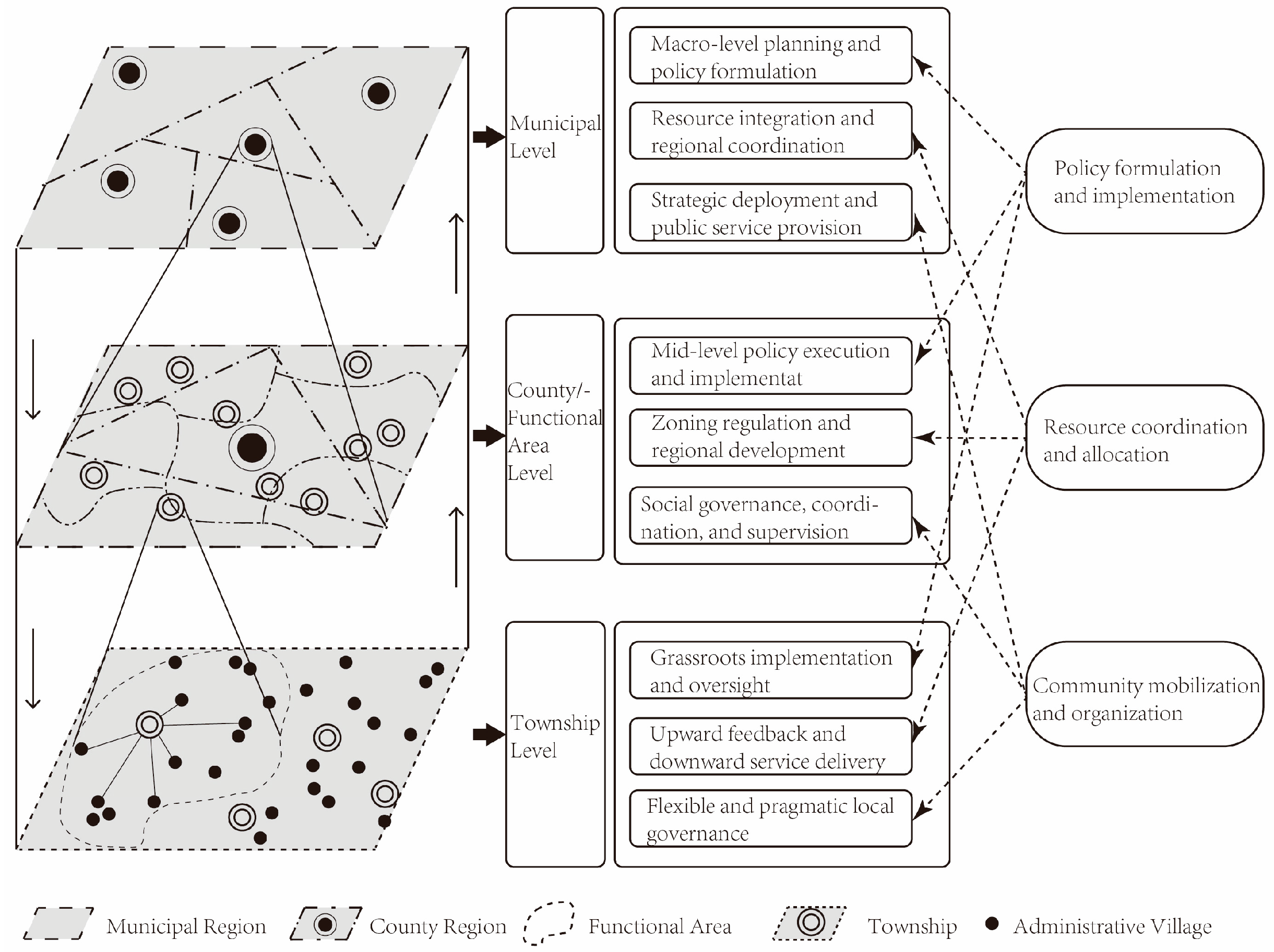
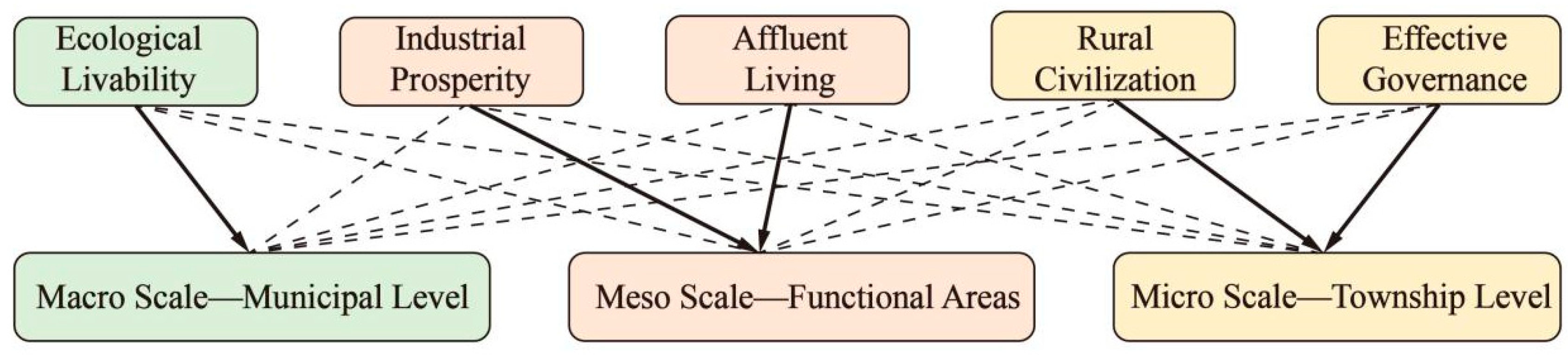
From a research perspective, studies at the county level are the most common [29]. According to Hypothesis 1, there are differences in governance focus across various administrative levels. Building on this perspective of governance heterogeneity, this paper retains the two original administrative scales—the municipal and township levels—and, drawing on the theory of “politics of scale”, introduces an innovative “functional area” level based on the unified characteristics of the “resource” management process. Ultimately, governance is conceptualized across three hierarchical levels: the municipal level focusing on “policy formulation and implementation”, the functional area level focusing on “resource coordination and allocation”, and the township level focusing on “mass mobilization and organization” (see Figure 1).
Municipal level:
The municipal level plays a pivotal role in the rural revitalization process [30]. On the one hand, it is responsible for carrying out the strategic intentions and objectives set by national and provincial plans to ensure alignment and consistency across levels [31]. On the other hand, municipal governments must guide spatial planning at the county and township levels, promoting urban–rural integration and advancing rural revitalization. Studying rural revitalization at the municipal level is especially important [32]. Municipal governments need to thoroughly analyze local conditions, including resource endowment, industrial base, and demographic structure, and formulate realistic rural revitalization plans to promote agricultural modernization, increase farmers’ incomes, and boost rural prosperity. In addition, municipal governments must strengthen coordination with both higher and lower levels of government to create synergies that support the overall revitalization effort.
Functional area level:
The level of functional areas does not currently exist in China. Based on the theory of politics of scale, this article divides regions according to the similarity of rural development characteristics and functions at the county level. It represents an elastic scale that comprehensively considers geographical location, functional positioning, and policy orientation. These functional areas form a comprehensive “geospatial + functional + policy space” system [33], serving as the foundational basis for all spatial governance policies, planning, and assessments [34]. This article argues that the scale plays a dual role—upward and downward. In the upward direction, the functional area undertakes the city level, coordinates with the spatial structure layout of economic development and resource distribution, and realizes the logical transformation from structural attributes to regional attributes. In the downward direction, functional areas provide scientific guidance for development positioning and spatial layout at the township level. Integrating the functional area level into the rural revitalization governance system helps to enhance the systemic nature of rural supporting policies and systems, and promoting the integration and interoperability of various policies between the scales [35].
Township level:
Townships are the most basic territorial units in China’s administrative system. They are the earliest sites for economic, social, and cultural activity [36], and as the foundational level among the five layers of government, they play a critical role in rural governance [37]. However, there is a lack of research focusing on the spatial autocorrelation of rural revitalization indicators from the micro-scale perspective of townships [38].

3. Overview of the Study Area and Methodology

3.1. Overview of the Study Area

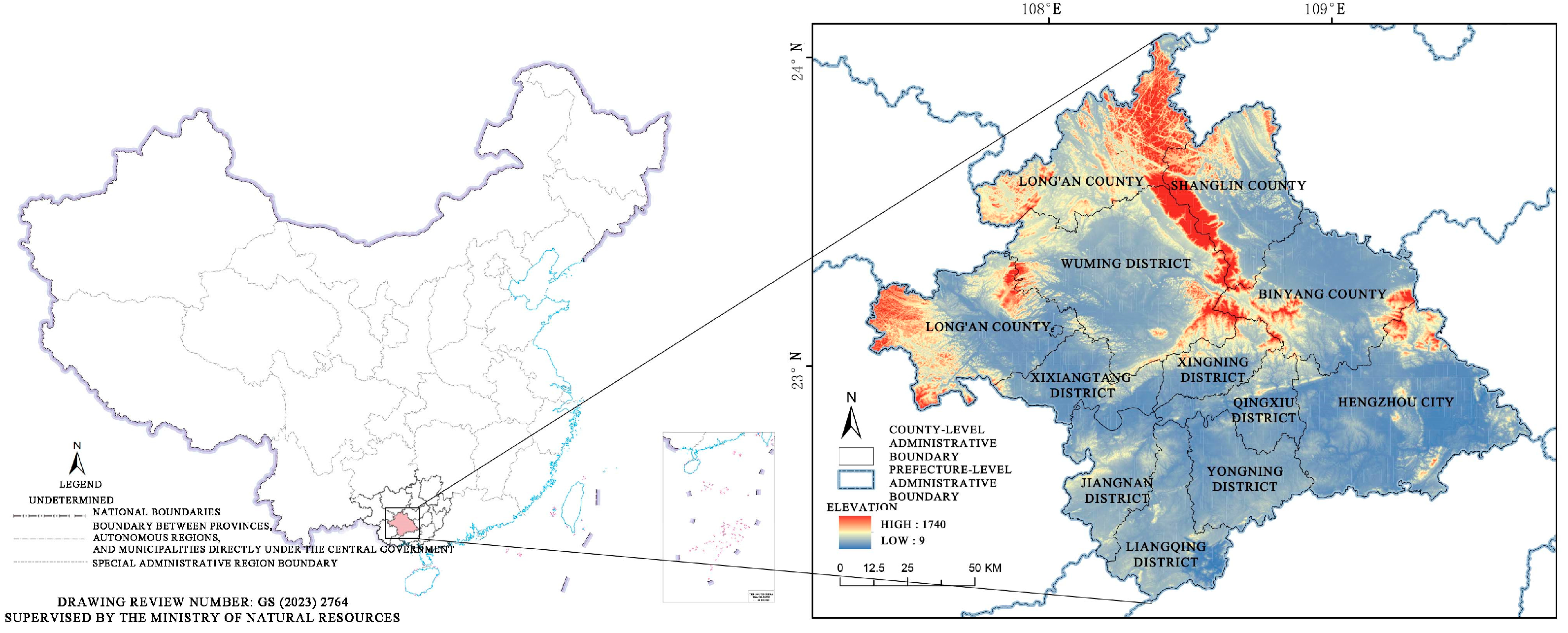
Nanning is the capital of the Guangxi Zhuang Autonomous Region, with seven districts, four counties, and one county-level city under its jurisdiction, covering a total area of 22,100 square kilometers. Nanning has a complex topography, with major terrain types including flatlands, low mountains, rocky hills, hills, and tablelands. According to the seventh population census, the rural population of Nanning was 2,560,000 at the end of 2023, accounting for 28.63% of the total population. The distribution of villages in Nanning shows a clustering trend in gently sloping and low-elevation areas [39]. According to the third national land survey, at present, Nanning had 1602 administrative villages and 12,800 natural villages, with a per capita cultivated land area of 0.92 mu, which is lower than the national average of 1.36 mu. Due to its diverse topography, the spatial distribution of rural settlements in Nanning takes on various forms. As a major agricultural city in one of China’s key agricultural provinces, Nanning shoulders the important mission of building a strong agricultural base and implementing the strong capital strategy, making it a representative area for rural spatial research (see Figure 2).
In recent years, Nanning has made remarkable progress in advancing the rural revitalization strategy. However, challenges in rural spatial governance remain. According to the Statistical Monitoring Report on Guangxi’s Rural Revitalization Strategy [40], progress in industrial prosperity and improving living standards has lagged behind that in ecological livability, rural civilization, and effective governance. Much remains to be done in these areas. While food production remains generally stable and secure, the driving force behind rural industrial revitalization is still weak. The integration of primary, secondary, and tertiary industries is low, industrial chains are incomplete, and rural value development is insufficient. Moreover, public service provision remains uneven between urban and rural areas.
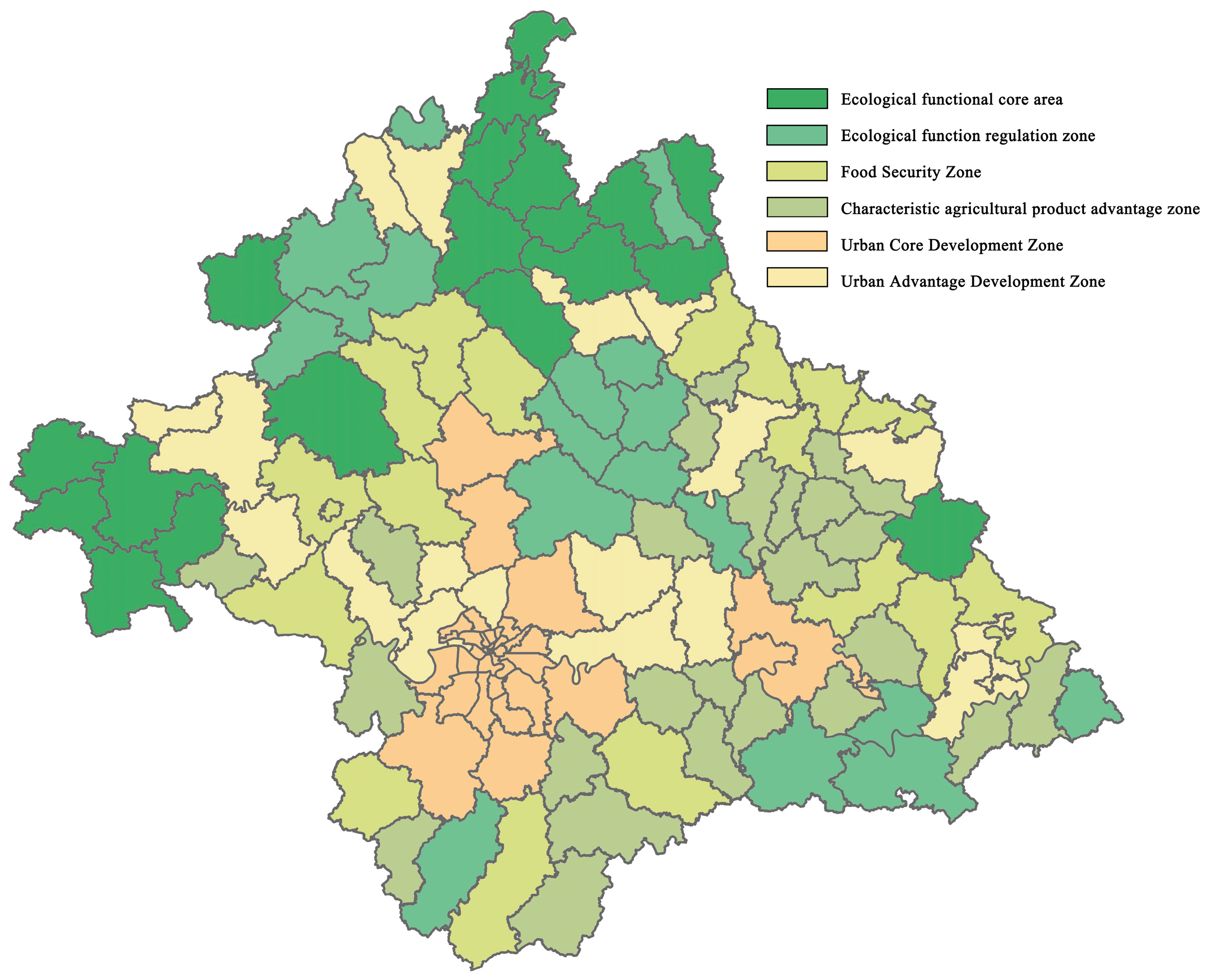
Based on the multi-scale analytical framework established earlier, this study divides the spatial scales of the research area into three levels: the municipal level, functional area level, and township level. The municipal level corresponds to the city’s full administrative boundary, while the township level refers to administrative units at the township (sub-district) level, which serve as the fundamental units constituting both the municipal and functional areas. functional areas are defined in accordance with the 2021 Nanning Territorial Spatial Master Plan, which integrates comprehensive evaluations of ecological, agricultural, and urban functional capacities with urban development strategies, thereby enabling a more refined and in-depth delineation of key functional areas. Specifically, under this plan, Nanning’s primary functional areas are further classified into six major categories at the township level [41] (see Figure 3).

3.2. Data Collection and Processing

The administrative boundary data of Nanning was obtained from the National Center for Basic Geographic Information (https://www.ngcc.cn/, accessed on 22 January 2024). This data is used to accurately define the geographic scope of Nanning at various scales, clearly display the distribution of administrative districts within the city, and provide foundational support for data visualization and statistical analysis. Transportation road network data was sourced from OpenStreetMap (OSM), an open-source mapping community, and includes detailed information on national roads, provincial roads, highways, and primary, secondary, and tertiary roads, with a reference year of 2023. Land-related information was primarily derived from Nanning’s Third Land Survey (updated in 2020), which includes detailed data on permanent basic farmland, ecological protection red lines, industrial land use, and land use for science, education, culture, and health.
Rural statistics and socio-economic data for Nanning in 2022 were collected from county and township statistical yearbooks and bulletins, as well as from the Nanning Village Construction Survey grassroots table. To ensure data accuracy and reliability, all raw data were carefully proofread and screened. Due to missing data in some administrative villages, the final sample for this study includes valid data from 1369 administrative villages.

3.3. Research Methodology

(1)
Global spatial autocorrelation
To analyze the spatial agglomeration of rural revitalization levels at different scales in Nanning City, and to better understand the spatial distribution of relevant attributes, the study applies the global spatial autocorrelation model to calculate the global Moran’s I index. This provides a basis for formulating appropriate policy responses. For example, if the Moran’s I indicates that areas with high values are adjacent to areas with low values, it may be necessary to introduce measures to balance resource distribution and optimize spatial layouts.
Global Moran’s I is a key metric for assessing whether an attribute exhibits spatial correlation with neighboring regions and to what extent. The index ranges from −1 to 1, and changes within this range directly reflect different patterns in spatial data distribution. A positive Moran’s I indicates positive spatial correlation—meaning that similar attribute values tend to cluster together. A negative value indicates negative spatial correlation, i.e., dissimilar values are dispersed. Moran’s I value of zero suggests a random spatial distribution with no clear clustering or dispersion.
Global Moran’s I is calculated as follows:
G l o b a l   M o r a n s   I = n n 1 n j = 1 n W i j ( x i x ¯ ) ( x j x ¯ ) ( n 1 n j 1 n W i j ) n 1 n ( x i x ¯ ) 2
Z value is used to carry out the test Global Moran’s I significance level, when Z > 1. 96 or Z < −1. 96, it indicates that there is significant spatial autocorrelation of spatial element attribute values in space. INVERSE_DISTANCE was used to define the spatial relationship, and EUCLIDEAN_DISTANCE was used for the distance method, and the distance threshold was adjusted according to the actual situation.
(2)
Local spatial autocorrelation
Local spatial autocorrelation analysis (Anselin Local Moran’s I) is used to identify clusters and outliers in spatial data. Cluster analysis, as a spatial statistical method, reveals the concentration of similar values in neighboring areas, indicating possible patterns or trends. Outlier analysis, on the other hand, detects data points that deviate significantly from the surrounding values, which may signal anomalies or unique conditions. Together, these methods enable a deeper understanding of spatial variability and provide a solid foundation for further spatial analysis and evidence-based decision-making.
The formula for local spatial autocorrelation is as follows:
I i = n ( x i x ¯ ) j n W i j ( x j x ¯ ) j n W i j j n ( x j x ¯ ) 2
Eventually, the degree of aggregation can be analyzed, and it is mainly divided into five categories: high–high-value aggregation area (H-H type), high–low-value aggregation area (H-L type), low–low-value aggregation area (L-L type), low–high-value aggregation area (L-H type), and non-statistically significant.
(3)
AHP-entropy weighting method combined weighting method
The AHP-entropy weighting method effectively avoids the shortcomings of single-assignment methods and enhances the scientific rigor and accuracy of indicator weighting [42]. This approach retains the subjectivity of the AHP method while incorporating the objectivity of the entropy weight method, resulting in more accurate and comprehensive weight determination. The combined weights were calculated based on the modified combination formula proposed by Haizhou Song and Zhijiang Wang [43].

3.4. Evaluation System Construction and Weight Determination

Evaluation research on spatial governance for rural revitalization supports the rural revitalization process by exploring its spatial development characteristics. This requires the selection of indicators for a comprehensive evaluation of spatial governance in rural revitalization. Specifically, this can be summarized by the five core dimensions: “ecological livability, industrial prosperity, affluent living, rural civilization, effective governance”. The connotation of this twenty-character guideline is interrelated and serves as the basis for selecting indicators from both governance process and governance outcome dimensions. Together, these form a multifaceted and integrated system aligned with the “five-in-one” overall layout, representing the core components of rural governance in the context of rural revitalization. This system provides concrete implementation for rural governance across the five key areas: economy, livelihood, culture, politics, and ecology [44]. Accordingly, with reference to the Opinions of the State Council of the Central Committee of the Communist Party of China on the Implementation of the Rural Revitalization Strategy, the National Rural Revitalization Strategic Plan (2018–2022), and relevant scholarly research, this study constructs a rural revitalization evaluation system. Using the five dimensions of revitalization as the indicator layer, the system comprises five subsystems. Indicator weights were determined through the AHP-entropy combined weighting method (see Table 1).

3.5. Indicator Description

Table 2 systematically elaborates on the calculation methods and conceptual connotations of the three-tier indicators. For indicators involving subjective evaluations, data are obtained through professional assessments conducted by relevant government staff from counties and districts, ensuring their quantifiability and reliability.

4. Results

4.1. Spatial Autocorrelation Analysis at the Municipal Level

Following global spatial autocorrelation analysis, the Z-values for each rural revitalization indicator within Nanning City were found to be significantly higher than 1.96, with p-values equal to 0. This indicates that the likelihood of this clustering pattern occurring randomly is less than 1%, confirming that rural revitalization in Nanning City exhibits a clear positive spatial correlation and significant spatial clustering trend in the multidimensional assessment (see Table 3).

4.2. Spatial Autocorrelation Analysis at the Functional Area Level

Through global spatial autocorrelation analysis of various rural revitalization indicators across these areas, all Z-values exceeded 1.96, passing the significance test at the 0.01 level. This means that the probability of these clustering patterns occurring randomly is less than 1%, demonstrating a strong positive spatial correlation and a significant spatial agglomeration pattern in the multidimensional evaluation of rural revitalization across the functional areas (see Table 4).

4.3. Spatial Autocorrelation Analysis at the Township Level

As the most basic territorial unit in China’s urban system, the township is both a key site for economic, social, and cultural activities [36] and the foundation of the five-tier government system. It links the district and county governments upward and connects with village-level organizations and farmers downward, playing a critical bridging role in implementing the rural revitalization strategy and managing territorial spatial planning [45].
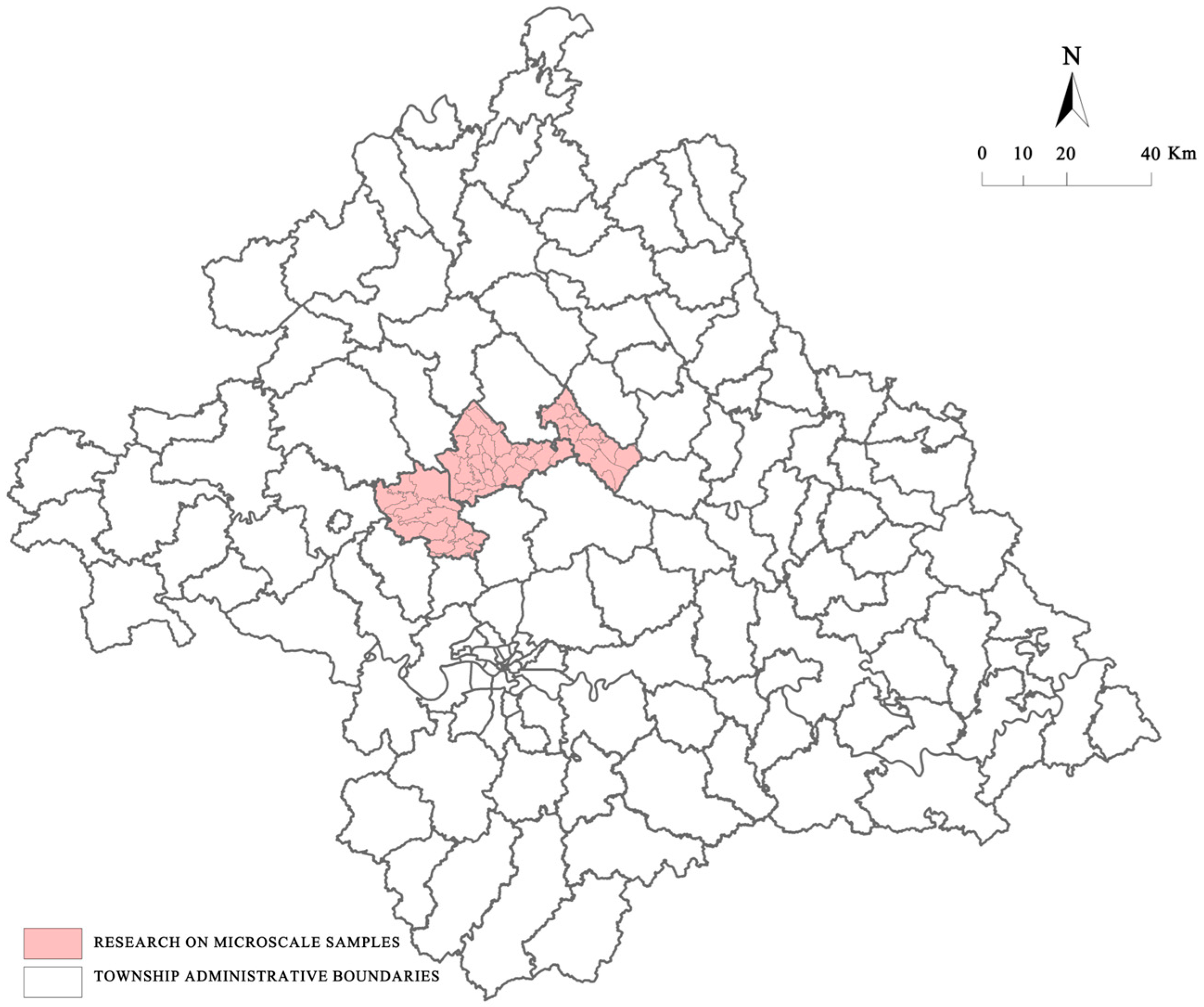
It is worth noting that there is currently a lack of research on the spatial autocorrelation of rural revitalization indicators at the micro-scale of townships. This is primarily because spatial autocorrelation analysis requires a sufficiently large sample size (typically more than 30 observations), a threshold often not met within individual townships under Nanning’s jurisdiction. To address this, and following the principles of typicality, representativeness, and data availability, this study examines 60 villages as case studies (see Figure 4). These townships are geographically adjacent and are representative in terms of Nanning’s economic, social, and cultural conditions. They are also located at the urban–rural interface and belong to different functional areas, offering rich and comprehensive characteristics.
The investigation of global spatial autocorrelation at the township level revealed that, apart from ecological livability, all other indicators demonstrated statistically significant spatial clustering tendencies. For industrial prosperity, affluent living, rural civilization, and effective governance, Z-scores were greater than 1.96, and p-values were below 0.05, indicating less than a 1% probability that these patterns arose by chance. These results suggest strong positive spatial correlations and significant clustering trends in these four dimensions across the selected townships. In contrast, the ecological livability indicator did not reach the threshold for statistical significance, indicating no evident spatial clustering pattern for this dimension at the township level (see Table 5).

4.4. Comparative Study on the Spatial Correlation of Rural Revitalization at Multiple Scales

After conducting spatial autocorrelation analysis of rural revitalization indicators at different scales, it is evident that these indicators exhibit varying spatial correlation characteristics across scales. This reflects that rural revitalization is a multi-level and multi-dimensional complex system project, with strong interconnections between different spatial scales.
For the industrial prosperity indicator, the Moran’s I values show the order: Municipal ≈ Functional Area > Township, and all passed significance tests. This indicates a spatial positive correlation at all three scales, with a clear clustering trend. Notably, the clustering is more prominent and consistent at the municipal and functional area levels, while it is relatively weaker at the township level.
For the rural civilization indicator, the order is: Township > Functional Area > Municipal, and all of them have been tested. This reveals a strong spatial positive correlation of all three scales, with the most pronounced aggregation at the township level, followed by the functional area, and the weakest at the municipal level.
For the affluent living indicator, the order is: Functional Area > Municipal > Township, and all of them have been tested. These indicators show a positive spatial correlation and a significant agglomeration pattern across the three scales, with the most obvious clustering at the functional area level, moderate at the municipal level, and relatively weak at the township level.
For the effective governance indicator, the order is: Township ≈ Functional Area > Municipal, and all of them have been tested. There is a notable spatial positive correlation at all three scales, with the strongest clustering observed at the functional area level, moderate at the municipal level, and weakest at the township level.
For the ecological livability indicator, the order is: Municipal > Functional Area > Township, but only the municipal and functional area levels passed the significance test. This indicates that ecological livability shows a spatial positive correlation and a concentrated distribution at the municipal and functional area levels, while no significant clustering trend is observed at the township level. Specifically, the municipal level shows the strongest clustering, followed by the functional area, with a much weaker trend at the township level (see Table 6).
By comparing the spatial correlation of rural revitalization indicators across different scales, we gain deeper insight into the internal logic and mechanisms of spatial correlation, the commonalities and differences between scales, and the spatial patterns and potential issues of rural revitalization. It can be concluded that ecological livability has the strongest spatial correlation at the municipal level, industrial prosperity and affluent living show the strongest spatial correlation at the functional area level, and rural civilization and effective governance exhibit the strongest spatial correlation at the township level (see Figure 5).
At the municipal level, ecological livability demonstrates a clear spatial agglomeration effect. With ecological macro-control at this level, the overall livability of the rural environment can be effectively enhanced, promoting a green transition.
At the functional area level, the clustering of industrial prosperity and affluent living is significant. Under the rural revitalization strategy, functional areas should leverage their unique advantages to enhance industrial clustering and promote diversified, high-quality rural development.
At the township level, it is more appropriate to focus on the advancement of rural civilization and the modernization of governance systems. Supported by scientific data, these efforts can help more accurately track rural revitalization trends and provide multi-scale guidance for the formulation and implementation of targeted rural revitalization policies.

4.5. Validation of Research Hypotheses

Hypothesis 1 Validation: Rural governance exhibits distinct priority differences across levels of government. Spatial analysis demonstrates significant differentiation in the clustering characteristics of governance effectiveness across scales. At the municipal level, the strongest clustering is observed in the ecological livability dimension (Moran’s I = 0.578), highlighting the priority given to macro-level ecological regulation. At the functional area level, the strongest correlations are found in the dimensions of industrial prosperity and affluent living (average Moran’s I = 0.281 and 0.414, respectively), reflecting its central role in resource coordination and economic development. At the township level, the most pronounced clustering occurs in the dimensions of rural cultural advancement and effective governance (Moran’s I = 0.363 and 0.350, respectively), underscoring its primary responsibility for grassroots cultural development and community governance. This confirms that different administrative levels possess distinct functional orientations and policy priorities.
Hypothesis 2 Validation: Rural governance demonstrates significant spatial autocorrelation. Moran’s I analysis indicates that at both municipal and functional area levels, all dimensions of rural revitalization exhibit strong positive spatial autocorrelation (p = 0.000). At the township level, all dimensions except ecological livability also show significant clustering (p < 0.05). This suggests that governance outcomes are not randomly distributed in space but follow the principle of geographical proximity, demonstrating clear spatial dependence and spillover effects. Moreover, the intensity of spatial autocorrelation varies across scales, revealing the scale sensitivity of governance patterns and implying that governance strategies must consider scale-specific spatial association patterns.

5. Discussion and Recommendations

5.1. Discussion

While the academic community and intergovernmental organizations have seen a surge in research and development of governance indicators since the 1990s, specific evaluations of rural governance remain relatively scarce in international studies. Existing research has primarily focused on rural community environmental governance [46], the effectiveness of rural governance public policies [47], the comprehensive performance of rural governance [48], and innovations in rural social governance—all predominantly approached from the perspective of grassroots governments. However, a comprehensive indicator framework for evaluation has yet to be established. For the research and evaluation of rural governance, most studies focus on the governmental perspective, and two basic consensuses have been formed: first, the construction of rural governance evaluation standards must highlight the country’s national conditions and characteristics to ensure the relevance and effectiveness of the evaluation criteria; second, it is essential to refer to current governance policies, which serve both as guidance and as a foundation for rural governance practices and their evaluation standards [47,49]. The indicators adopted in this paper also reflect diversified characteristics, evaluating rural governance through dimensions such as ecological environment, agricultural efficiency, and quality of life. These are based on China’s national rural revitalization policy and are consistent with the indicator selection logic of many scholars, who also base their indicators on policy orientation and localized contexts.
In addition to the commonly selected spatial indicators (such as ecological protection redlines and cultivated land area), economic indicators (such as average household collective operating income and per capita disposable income), and social indicators (such as net population mobility rate) in existing research, this study incorporates distinctive indicators based on the requirements of Chinese government management and the context of rural autonomy. For instance, Guangxi’s Beautiful Village Construction (C4), National-Level Characteristic Villages (C14), and the number of rural construction planning permits issued in 2022 (C20) reflect the government’s management preferences for rural areas. Meanwhile, indicators such as the number of trained rural construction craftsmen per thousand people (C17), the number of autonomous organizations like villager councils (C18), and villagers’ participation in village planning and construction (C21) reflect the autonomous governance of rural areas. The inclusion of these indicators represents an innovation of this study, providing a more comprehensive reflection of rural conditions.
This paper incorporates studies at different scales to validate the feasibility of a multi-scale analytical framework in rural governance, demonstrating that the multi-scale characteristics of rural spaces are intrinsically linked to locality [50]. Similar research includes Xiaoping Zhang et al., who studied the spatial distribution patterns and scale differences in rural settlements at the municipal, county, and town levels [51]. This study also identified significant scale variations in rural settlements. However, by introducing a ‘functional area’ scale, this research further reveals cross-administrative agglomeration patterns driven by economic activities, which were not fully demonstrated by previous studies based solely on administrative scales. Christoph Woiwode et al. identified entry points for adaptive governance in peri-urban areas of Chennai, India, using a multidimensional, multilevel, and multiscalar approach [52]. Huiya Yang et al., who proposed spatial planning and landscape strategies at multiple scales for rural suburban policy recommendations [53]. The multi-scale perspective has become a crucial entry point for analyzing the spatial characteristics of rural areas in the new era. Our research demonstrates that the manifestations and implications of rural issues vary across different scales. Similar studies include Flachs A.’s analysis of agricultural issues in India across three scales: International, National Charisma, and Community Charisma [54], as well as Ye C. et al.’s exploration of Rural–Urban Co-governance, which proposed distinct action plans at the national level, urban/rural or regional level, local scale, and community scale [1]. In terms of scale differences in evaluation units, mesoscale and macroscale approaches often use administrative divisions, such as countries, urban agglomerations, provinces, cities, counties, and villages, as evaluation units [55,56] while microscale studies may use polygons and grid pixels. Research methods include both land-use classification and index system calculation [57].
This article also proves the existence of spatial differentiation at multiple scales in rural revitalization; ecological livability levels show the most significant clustering at the municipal level. Ecosystems often exhibit non-equilibrium or “transient state” characteristics at small scales, but may resemble equilibrium models at larger scales. Relationships between ecosystems and the larger systems to which they belong can often buffer localized biofeedback instability [58]. Hongfeng Zhang et al. emphasized that ecosystem management decisions should be made at a sufficiently large scale to ensure that vital ecosystem services are adequately considered [59]. Since ecological issues are global in nature, prioritizing their management not only enhances rural ecological livability but also lays a solid foundation for sustainable rural development. The clustering of industrial prosperity and affluent living is most significant at the functional area level. Achieving these goals requires coordinated resources, capital, technology, talent, and markets, and functional areas are better positioned to coordinate and allocate these resources accurately and efficiently for rural industrial development. Finally, the clustering characteristics of rural civilization and effective governance are most pronounced at the township level, suggesting that these indicators are primarily influenced by the resource endowments, folk customs, and grassroots governance capacity of each township. Thus, improvements in these areas are best targeted at the micro scale.

5.2. Interpretation of the Formation Mechanisms of Multiscale Spatial Differentiation Patterns

At the municipal level, the strongest agglomeration of ecological livability is primarily driven by a “top-down” logic of administrative regulation. Municipal governments hold authority over ecological planning, cross-regional governance projects, and major financial resources. Their policies (such as ecological redline delineation) possess strong spatial integrity, resulting in a “block-like” distribution of ecological outcomes. The inherent externality and cross-regional nature of ecosystems also mean that their statistical significance becomes more prominent at larger scales.
At the functional area level, the strongest agglomeration of both industrial prosperity and wealth is fundamentally driven by the logic of “economic rationality and factor allocation”. functional areas transcend administrative boundaries, enabling industrial integration based on location and resources, which facilitates economies of scale and industrial chain clustering. Industrial prosperity directly drives regional income increases, and the two are highly coupled spatially, further amplified by industrial policies at the functional area level.
At the township level, the strongest agglomeration of civil culture and effective governance is deeply reliant on the logic of “social embeddedness and local practice”. Both aspects are highly dependent on local social capital, cultural customs, and grassroots governance capacity, exhibiting strong locality. Their outcomes are more easily disseminated and emulated among neighboring townships with similar cultural backgrounds, making the implementation capabilities of township governments and local knowledge the key factors in forming micro-scale agglomeration differences.

5.3. Policy Recommendations

5.3.1. The Municipal Government Is Responsible for Coordinating Ecological Governance

According to the results, the ecological livability indicator is more significant at the municipal level. This phenomenon not only reflects the leading role of municipal governments in ecological planning and resource coordination but also suggests that ecological resources themselves may exhibit large-scale spatial continuity. Ecosystems often transcend administrative boundaries, requiring regional coordination and holistic strategies for their protection and governance. Globally, many countries also emphasize regional or watershed-level ecological collaborative governance. For example, the European Union’s “Natura 2000” network and the United States’ interstate water management plans both reflect the necessity of large-scale ecological governance. Therefore, it is recommended that, under limited financial resources, municipal funding should be prioritized for ecological governance. This approach enables municipal governments to lead the coordination of regional ecological governance and achieve overall improvements in the rural ecological environment. The municipal level has the capacity to grasp the overall ecological situation of villages in the region. Through municipal-level coordination, it is possible to gain a comprehensive understanding of the current state of the ecological environment in villages, the problems present, and their causes. This enables the formulation of more holistic and systematic governance programs. Such an integrated approach helps to overcome the limitations of micro-scale governance and facilitates the overall improvement of the regional ecological environment.
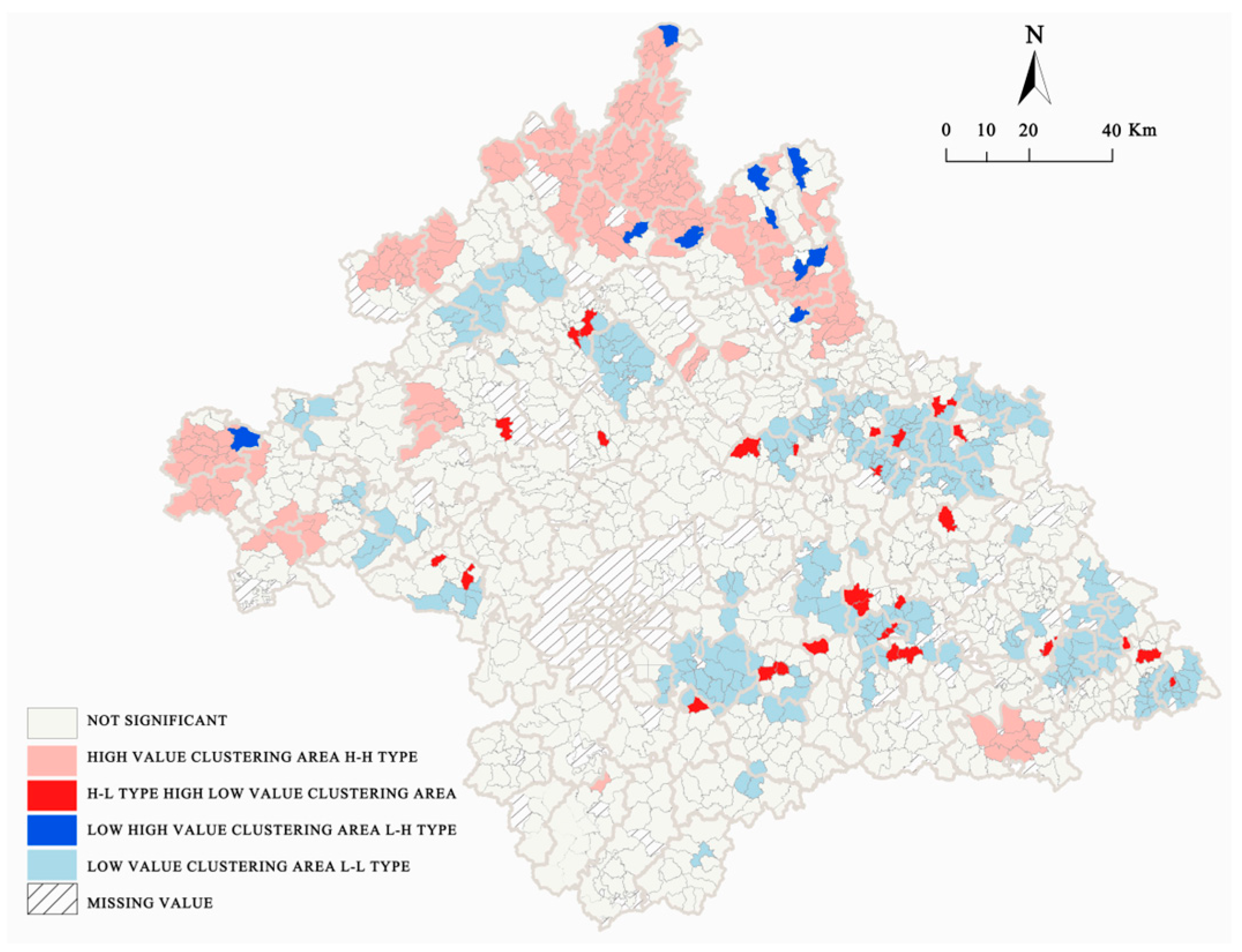
Further local spatial autocorrelation analysis of the city area was conducted to determine whether there is high- or low-value aggregation within the city, clarifying the clustering characteristics of ecological livability at the municipal level (see Figure 6). H-H type areas (spatial units all with high attribute values) and L-L type areas (spatial units all with low attribute values) should be designated as moderate improvement zones and managed uniformly. L-H type areas (low-scoring areas surrounded by high-value areas) and H-L type areas (high-value areas surrounded by low-value zones) should be classified as regulation zones to fully leverage the diffusion effect of high-value areas and optimize the ecological structure.

5.3.2. A New Administrative Body Has Been Established for the Functional Area, Focusing Primarily on Fostering Rural Industrial Clusters and Improving Residents’ Well-Being

According to the results, the indicators for industrial prosperity and affluent living are more significant at the functional area level with notable differences observed among various functional areas. This finding not only aligns with China’s policy practice of using functional areas to promote industrial agglomeration but also resonates with the governance concept of “functional regions” emphasized in international frameworks such as New Regionalism and local economic development theories. For instance, Europe’s “Territorial Cohesion Areas” and the United States’ “Economic Development Districts” both promote industrial collaboration and livelihood improvements through cross-administrative functional integration. It is recommended that the functional area be adopted as the primary governance unit. Since this introduces a new spatial scale, governance institutions should also be restructured accordingly. Approaches such as multi-county and multi-city joint coordination or the establishment of a rural management committee for functional areas are proposed to enable unified management and advancement of rural industrial prosperity and life enrichment. It is further suggested that the organizational departments within functional areas clearly define the guiding objectives for dominant industries and the development vision for the area. Enterprises and governments should cooperate closely and absorb social capital to carry out differentiated governance strategies.
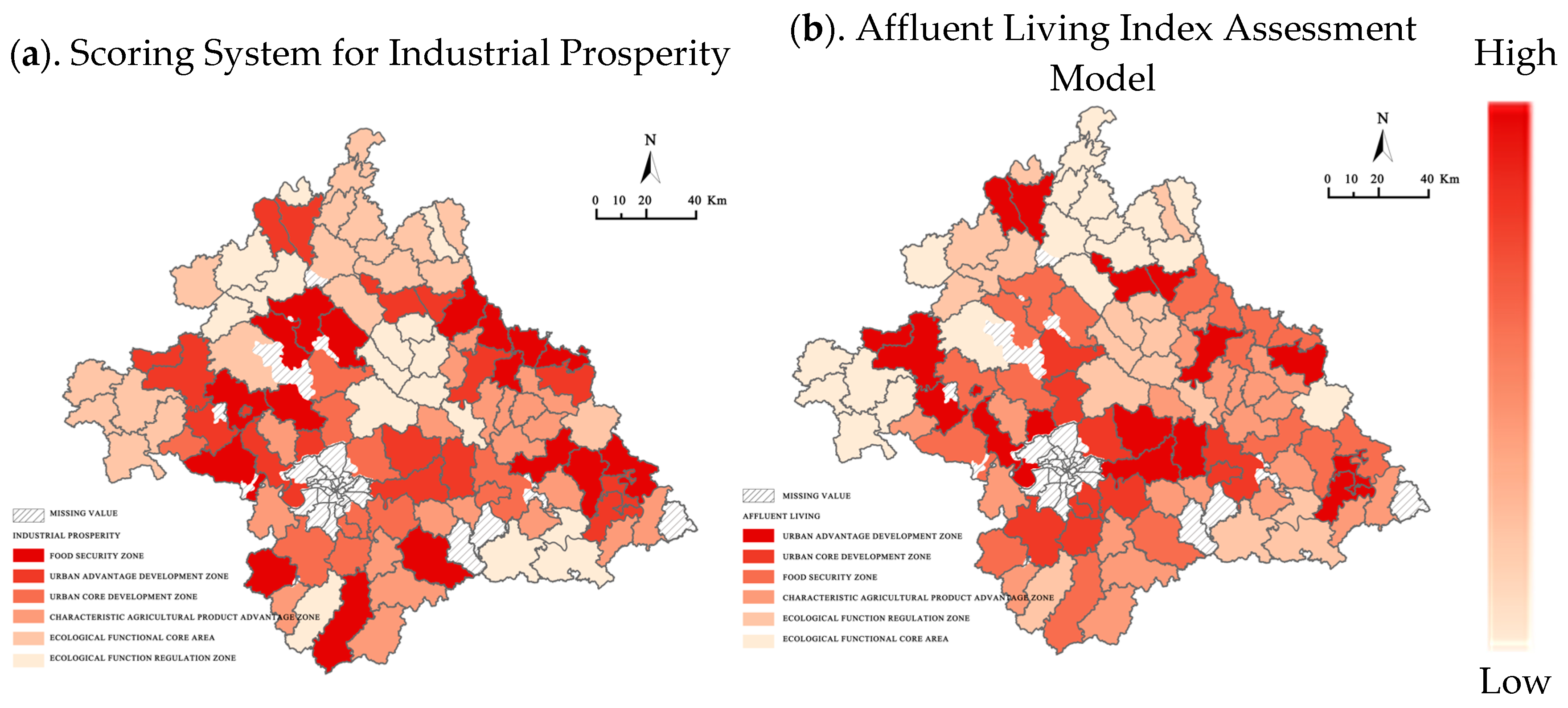
In the functional area Level assessment of rural revitalization, focusing on the development status of industrial prosperity and affluent living (see Figure 7), the spatial distribution of industrial prosperity indicators exhibits a “cluster + belt” pattern. High values are clustered in several areas: the Wuming Sub-city District in the northwest; Litang Town in Binyang County, a major industrial hub in the east; Jiaoyi Town in Hengzhou City, known for its clustering of advantageous industries such as jasmine; and the Southern Airport Economic Zone. These areas exhibit strong industrial clustering and linkage benefits. It is recommended to optimize industrial layout by orienting enterprises and social capital toward dominant industry targets and clustering them in key villages within functional areas to amplify industrial agglomeration effects. The scoring results of the affluent living index show a “circle-periphery” layout, with the main urban area at the center, gradually decreasing toward peripheral regions. The affluent living level exhibits clear central agglomeration, with a spatial fault zone characterized by discontinuous bands and point distributions toward the periphery. It is recommended to align with the functional area’s leading goals by introducing differentiated talents strategies focusing on ecological low-value regions. Functional areas should also establish horizontal ecological compensation mechanisms to expand farmers’ income channels. On the periphery of Nanning’s central urban area, the city’s radiating influence should be leveraged to further improve urban–rural infrastructure integration and realize shared resources and synergistic development. In Mashan County, Long’an County, Shanglin County, Binyang County, and Hengzhou City, county towns and surrounding townships should serve as key nodes for urbanization, forming dispersed urban–rural development corridors that promote local urbanization of rural populations.

5.3.3. Township Governments Primarily Focus on Fostering Rural Civilization and Ensuring Effective Governance

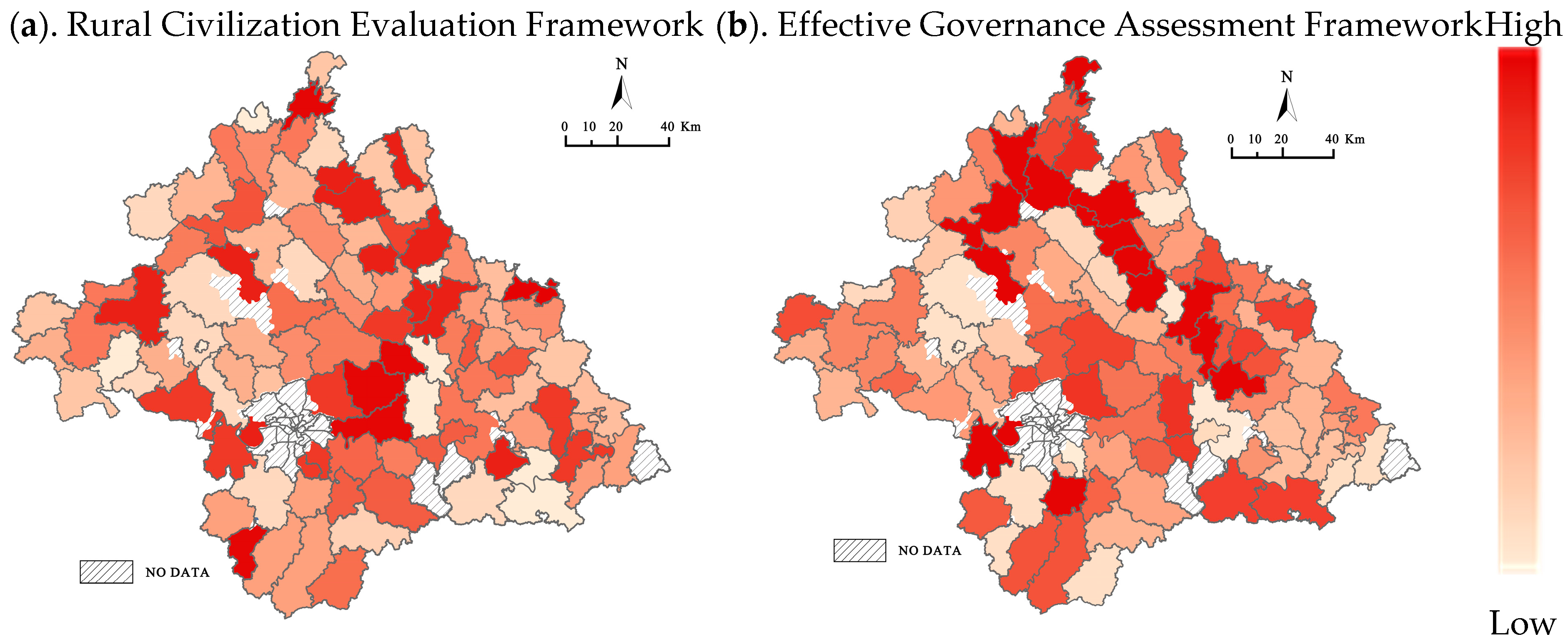
According to the results, the indicators for rural civilization and effective governance are more significant at the township level. This is closely related to the role of Chinese townships as fundamental units of grassroots governance and also reflects the universal importance of “local knowledge” and “community participation” in rural governance. Internationally, whether in the rural community governance of developed countries (such as town meetings in the United States and parish councils in the United Kingdom) or in the grassroots self-governance practices of developing countries (such as village councils in India), the critical role of the micro-scale in fostering social capital, promoting cultural heritage, and enhancing governance effectiveness is consistently emphasized. It is proposed that the township government should serve as the main body for the construction of rural civilization and effective governance, and that each township should formulate development rules based on local customs and characteristics to promote balanced rural development. From the spatial layout of the ratings (see Figure 8), the high values of rural civilization and effective governance exhibit a distribution pattern characterized by “fragmented, multiple small nuclei aggregation and peripheral scattering”. These “small nuclei” are typically demonstration sites or pioneer areas for rural governance and civilization construction, which have driven development in surrounding areas through early pilot implementations and exemplary practices. Given the observed phenomenon of “gathering of small nuclei in many places” in rural civilization construction, it is feasible to select representative and high-potential areas or townships as demonstration sites or pilot districts. Through innovative practices and the accumulation of experience, these areas can create a strong demonstration effect. As for the “peripheral scattering” phenomenon, it should be acknowledged that the relatively low ratings of most rural areas in rural civilization and effective governance are primarily due to limited resources, underdeveloped infrastructure, and significant talent outflow in certain regions. Therefore, it is essential to strengthen policy support, improve infrastructure, and enhance public service delivery. Additional measures should be taken to attract and cultivate talent, providing essential support for rural governance and the construction of rural civilization.

5.4. Contributions and Limitations

(1)
Innovation in selected research scale: Existing studies primarily use cities [60], counties [61], administrative villages [62], and other administrative units as the basic research units, with most assessing the level of rural development from a single scale [63]. This paper takes a multi-scale approach as the main entry point and introduces functional areas as a flexible scale to address the limitations of research based solely on administrative units. This better reflects the internal differences and diversity within rural areas, allowing for a more accurate measurement of the development status of rural revitalization.
(2)
Promoting Interdisciplinary Research: This study constructed an evaluation system for rural spatial governance under the framework of rural revitalization, and attempted to integrate the goal of rural revitalization into both the theoretical framework and practical pathways of rural spatial governance. It also provides guidance for the government on implementing precise spatial governance around the goal of rural revitalization.
Through the construction of a multi-scale rural spatial governance evaluation system, this study provides a theoretical basis and conclusions for the spatial governance needed to achieve rural revitalization in Nanning City. However, rural spatial governance is a multi-level and multi-dimensional complex system. Due to difficulties in data collection and the author’s academic limitations, this study has certain constraints:
First, the relationship between rural spatial governance and rural revitalization has not yet been clearly defined in academia, requiring further in-depth research to clarify their intrinsic link.
Second, due to space limitations, this study only discusses rural governance from the government’s perspective, even though the topic itself is broad.
Third, although rural revitalization is important at every scale, in order to optimize resource allocation and prioritize core areas, this paper proposes governance focuses for each scale, while other aspects are less elaborated. In addition, rural revitalization indicators span many domains, and data availability posed challenges, limiting the scope of the study.
Fourth, at the township level, although we analyzed 60 data points, these are concentrated in three geographic clusters, and the limited spatial distribution may affect the representativeness of the findings for broader areas.
To ensure the scientific nature of rural spatial governance and effectively achieve the goals of rural revitalization, the following outlook is proposed:
(1)
Integrate theories and methods from multiple disciplines such as sociology, geography, and economics to deeply examine the intrinsic connection between rural spatial governance and rural revitalization.
(2)
In addition to the governmental perspective, explore rural spatial governance mechanisms involving multiple stakeholders, including villagers, social organizations, and enterprises. Combine this with research on rural revitalization and sustainable development to propose more innovative and practical solutions.
(3)
Based on the identification of key areas and critical aspects of rural spatial governance, allocate resources rationally to ensure governance effectiveness and sustainability. While focusing on core areas, also address the development needs of other aspects to achieve comprehensive rural revitalization.
(4)
Deepen the theoretical study of rural revitalization, improve data collection through multiple channels, and enhance the completeness and accuracy of the data.

6. Conclusions

This study evaluates the spatial pattern of rural revitalization levels in Nanning City based on a three-tiered framework of “municipal area, functional areas, and townships”. The results reveal significant spatial clustering across all five dimensions—ecological livability, industrial prosperity, affluent living, cultured rural practices, and effective governance—with the intensity of clustering varying across scales. Specifically, ecological livability shows the strongest clustering at the municipal level, industrial prosperity and affluent living are most pronounced at the functional area level, while rural civilization and effective governance exhibit the highest clustering intensity at the township level. These findings confirm the scale-dependent differentiation of governance priorities and spatial correlations.
Based on this, the following governance recommendations are proposed: municipal-level authorities should coordinate ecological governance, functional areas should focus on the synergy between industry and livelihoods, and townships should strengthen cultural development and grassroots governance. This research not only provides differentiated governance pathways for Nanning City, but the multi-scale analytical framework it constructs also serves as a valuable reference for other regions with similar spatial structures or governance systems, contributing to the theoretical advancement and practical innovation of rural spatial governance.
The innovation of this study lies in the introduction of the functional area level, which advances the application of multi-scale analysis. However, limitations remain in terms of theoretical linkages, data completeness, and multi-stakeholder perspectives. Future research should integrate multidisciplinary theories, expand mechanisms for diverse participation, and leverage multi-source data to deepen dynamic analysis and cross-regional comparisons in rural spatial governance.

Author Contributions

Y.Z. (Conceptualization, Funding acquisition, Resources); L.Z. (Formal analysis, Writing—original draft); Y.Q. (Data curation, Investigation); Z.B. (Supervision). All authors have read and agreed to the published version of the manuscript.

Funding

This study was supported by the following funding: Regional Program of the National Natural Science Foundation of China, “Research on the Multi-Level Classification System of Multi-Ethnic Villages in Guangxi: ‘Zoning–Typology–Potentiality’” [Grant No. 52268007]; Research on Rural Spatial Classification Methods in Nanning City Based on an Evaluation and Screening Mechanism, Youth Program of the Science and Technology Department of Guangxi Zhuang Autonomous Region [Grant No. 2023GXNSFBA026351]; and Guangxi Philosophy and Social Science Planning Research Project, Office of Philosophy and Social Sciences of Guangxi Zhuang Autonomous Region, “Research on the Multi-Dimensional Rural Categorization Governance Method in Nanning City from the Perspective of Local Government: ‘Typology–Sequencing–Superposition’” [Grant No. 22FGL025].

Institutional Review Board Statement

Not applicable.

Informed Consent Statement

Not applicable.

Data Availability Statement

All data supporting the conclusions of this paper will be made publicly available on the Mendeley Data repository upon publication. The dataset, titled “How Can Rural Governance Precisely Respond to Rural Revitalization from a Multi-scale Perspective?—Empirical Evidence from Nanning City”, is assigned the Digital Object Identifier (DOI) 10.17632/8kx544c893.1 and can be accessed without restriction.

Conflicts of Interest

The authors declare no conflicts of interest.

References

  1. Ye, C.; Liu, Z. Rural-urban co-governance: Multi-scale practice. Sci. Bull. 2020, 65, 778–780. [Google Scholar] [CrossRef]
  2. Bai, Z.; Fan, X.; Na, H. A study on theoretical logic and capacity improvement of local governments’ governance and rural revitalization. J. Northwest. Univ. Natl. Philos. Soc. Sci. 2023, 4, 109–117. [Google Scholar] [CrossRef]
  3. Woods, M. Rural geography: Blurring boundaries and making connections. Prog. Hum. Geogr. 2009, 33, 849–858. [Google Scholar] [CrossRef]
  4. Hoggart, K. Let’s do away with rural. J. Rural Stud. 1990, 6, 245–257. [Google Scholar] [CrossRef]
  5. Phillips, M. The restructuring of social imaginations in rural geography. J. Rural Stud. 1998, 14, 121–153. [Google Scholar] [CrossRef]
  6. Halfacree, K. Trial by space for a ‘radical rural’: Introducing alternative localities, representations and lives. J. Rural Stud. 2007, 23, 125–141. [Google Scholar] [CrossRef]
  7. Goodwin, M. The governance of rural areas: Some emerging research issues and agendas. J. Rural Stud. 1998, 14, 5–12. [Google Scholar] [CrossRef]
  8. Edwards, B.; Goodwin, M.; Pemberton, S.; Woods, M. Partnerships, Power, and Scale in Rural Governance. Environ. Plan. C Gov. Policy 2001, 19, 289–310. [Google Scholar] [CrossRef]
  9. Jessop, B. The regulation approach, governance and post-Fordism: Alternative perspectives on economic and political change? Econ. Soc. 1995, 24, 307–333. [Google Scholar] [CrossRef]
  10. Salas Quintanal, H. Territorialización e identidades en el espacio rural. In Proceedings of the Encuentro de Latinoamericanistas Españoles: Viejas y Nuevas Alianzas Entre América Latina y España, Santander, Spain, 21–23 September 2006; pp. 1490–1499. Available online: https://shs.hal.science/halshs-00104339 (accessed on 20 January 2025).
  11. MacLeod, G.; Goodwin, M. Reconstructing an urban and regional political economy: On the state, politics, scale, and explanation. Political Geogr. 1999, 18, 697–730. [Google Scholar] [CrossRef]
  12. Swyngedouw, E.; Cox, K. Neither Global Nor Local: ‘Glocalization’ and the Politics of Scale. In Spaces of Globalization: Reasserting the Power of the Local; Guilford Press: New York, NY, USA, 1997; pp. 137–166. [Google Scholar]
  13. Delaney, D.; Leitner, H. The political construction of scale. Political Geogr. 1997, 16, 93–97. [Google Scholar] [CrossRef]
  14. Cheshire, L.; Higgins, V.; Lawrence, G. (Eds.) Rural Governance: International Perspectives, 1st ed.; Routledge: London, UK, 2006. [Google Scholar] [CrossRef]
  15. Ye, C.; Pan, J.; Liu, Z. The historical logics and geographical patterns of rural-urban governance in China. J. Geogr. Sci. 2022, 32, 1225–1240. [Google Scholar] [CrossRef]
  16. Dabiri, Z.; Blaschke, T. Scale matters: A survey of the concepts of scale used in spatial disciplines. Eur. J. Remote Sens. 2019, 52, 419–434. [Google Scholar] [CrossRef]
  17. Wang, Y.; Cheng, L.; Zheng, Y. Rural effectiveness evaluation: A new way of assessing village development status. Sustainability 2022, 14, 9059. [Google Scholar] [CrossRef]
  18. Zhou, L. The strategy of rejuvenating the countryside and China’s Centennial Rural Revival Practices. People’s Forume Trib. ·Acad. Front. 2018, 3, 4–13. [Google Scholar] [CrossRef]
  19. Shi, J.; Yang, X. Sustainable development levels and influence factors in rural China based on rural revitalization strategy. Sustainability 2022, 14, 8908. [Google Scholar] [CrossRef]
  20. Ge, D.; Lu, Y. A strategy of the rural governance for territorial spatial planning in China. J. Geogr. Sci. 2021, 31, 1349–1364. [Google Scholar] [CrossRef]
  21. Sbragia, A.M. (Ed.) Euro-Politics: Institutions and Policymaking in the “New” European Community; Brookings Institution: Washington, DC, USA, 1992; Available online: http://pi.lib.uchicago.edu/1001/cat/bib/1313856 (accessed on 23 January 2025).
  22. Li, Z.; Gao, W. Multi-level composite co-governance: How platforms empower city-level social governance—A perspective from the “hierarchy-unit” analytical framework. J. Political Sci. Res. 2025, 3, 121–134, 239–240. [Google Scholar]
  23. Lu, M.; Liu, Q. Driving force analysis and inspiration of rural spatial change in Europe. Planner 2019, 35, 32–38. [Google Scholar] [CrossRef]
  24. Smith, N. Uneven Development: Nature, Capital, and the Production of Space; University of Georgia Press: Athens, GA, USA, 2008. [Google Scholar] [CrossRef]
  25. Brenner, N. New State Spaces: Urban Governance and the Rescaling of Statehood; Oxford University Press: Oxford, UK, 2004. [Google Scholar]
  26. Tobler, W.R. A computer movie simulating urban growth in the Detroit region. Econ. Geogr. 1970, 46, 234. [Google Scholar] [CrossRef]
  27. Jiang, W.; Li, L.; Zhou, X. Study on the scientific connotation, main tasks and strategic priorities of rural revitalization in China. Soc. Policy Res. 2018, 2, 146–155. [Google Scholar] [CrossRef]
  28. Yang, W.; Li, W.; Wang, L. How should rural development be chosen? The mechanism narration of rural regional function: A case study of Gansu province. China. Heliyon 2023, 9, e20485. [Google Scholar] [CrossRef]
  29. An, Y.; Zhou, G.H.; He, Y.H.; Mao, K.B.; Tan, X.L. Research on the functional zoning and regulation of rural areas based on the production-life-ecological function perspective: A case study of Changsha-Zhuzhou-Xiangtan Area. Geogr. Res. 2018, 37, 695–703. [Google Scholar]
  30. Yao, K.; Yang, Y. Research on the transmission methodology of prefecture-level territorial spatial planning. South Archit. 2021, 2, 34–38. [Google Scholar] [CrossRef]
  31. Peng, H. Local market, central government support, and local governments’ homegrown development strategy in high-tech industries. Sci. Public Policy 2023, 50, 1073–1090. [Google Scholar] [CrossRef]
  32. Fu, H.; Wang, Y.; Mao, L.; Hong, N.; Wang, Z.; Zhao, S.; Liao, C. The spatial pattern and governance of Zhongyuan urban-rural system in its development trajectory. J. Geogr. Sci. 2022, 32, 1261–1280. [Google Scholar] [CrossRef]
  33. Li, H.; Xu, L.Y. Theoretical and practical dilemmas in the construction of major functional zones. Econ. Rev. J. 2013, 9, 20–23. [Google Scholar] [CrossRef]
  34. Yang, L.; Lin, J.; Li, D. Understanding the major function zoning: An analysis based on regional and elemental perspectives. J. West. Hum. Settl. 2020, 35, 1–6. [Google Scholar] [CrossRef]
  35. Yu, C.; Han, Z.; Gao, J.; Zheng, Q.; Zhang, X.; Gao, H. Mechanisms of rural sustainable development driven by land use restructuring: A perspective of "scale-space” interactions. Sustainability 2023, 15, 12600. [Google Scholar] [CrossRef]
  36. Fan, H. Urban-rural-enterprise collaboration for rural revitalization. Macroecon. Manag. 2019, 7, 10–12. [Google Scholar] [CrossRef]
  37. Huo, J. Exploring the optimization path of rural governance in the perspective of three governance integrations. Lect. Notes Educ. Psychol. Public Media 2023, 21, 227–235. [Google Scholar] [CrossRef]
  38. Chen, X. Rural collective economy, township planning and the rural revitalization strategy-case study for the suburbs of Beijing city. J. Invest. Manag. 2020, 8, 94–108. [Google Scholar] [CrossRef]
  39. Tu, S.; Jiang, Z.; Long, H.; Jian, D.; Gu, X. Spatial pattern and classification of rural settlements in Guangxi. Econ. Geogr. 2023, 43, 159–168. [Google Scholar] [CrossRef]
  40. Guangxi Zhuang Autonomous Region Bureau of Statistics. Guangxi Rural Revitalization Strategy Statistical Monitoring Report; Guangxi Zhuang Autonomous Region People’s Government: Nanning, China, 2023. Available online: http://tjj.gxzf.gov.cn/tjsj/yjbg/qq_267/t16444331.shtml (accessed on 18 November 2024).
  41. Mao, J.; Li, Y.; Lu, X.; Liu, X. Strategic Transmission Path of Main Functional Areas in Nanning Territory Spatial Master Plan. Planners 2021, 37, 30–37. [Google Scholar]
  42. Gao, D. Research on risk evaluation of SHEILSS management system based on Ahp-entropy weight method. Constr. Econ. 2023, 44, 624–629. [Google Scholar] [CrossRef]
  43. Song, H.; Wang, Z. The trade-off between objective weights and subjective weights. Technoecon. Manag. Res. 2003, 3, 62. [Google Scholar] [CrossRef]
  44. Gan, N.; Wang, H.; Chen, H. Research on the construction path of ‘‘five-in-one’’ rural community under the background of rural revitalization. Rural Econ. 2019, 11, 69–77. [Google Scholar]
  45. Pan, B.; Lu, J.; Shen, L.; Zhu, C. The orientation and compilation of township territorial space master plan. Planners 2022, 38, 109–117. [Google Scholar] [CrossRef]
  46. Nkengfack, H.; Njomgang, C.; Sarpe, D. An approach for the evaluation of rural governance in Cameroon: Are community forests really forests for the communities? Econ. Appl. Inform. 2009, XV, 85–100. [Google Scholar]
  47. Hasselmann, H. Indicator system for the evaluation of public policies in rural areas. J. Austrian Soc. Agric. Econ. 2011, 19, 31–40. Available online: https://www.researchgate.net/publication/294591876_Indicator_system_for_the_evaluation_of_public_policies_in_rural_areas (accessed on 13 March 2025).
  48. Romeo, G.; Marcianò, C. Performance Evaluation of Rural Governance Using an Integrated AHP-VIKOR Method-ology. In Agricultural Cooperative Management and Policy: New Robust, Reliable and Coherent Modelling Tools; Zopounidis, C., Kalogeras, N., Mattas, K., van Dijk, G., Baourakis, G., Eds.; Springer International Publishing: Cham, Switzerland, 2014; pp. 109–134. [Google Scholar] [CrossRef]
  49. Hwang, J.; Park, J.; Lee, S. The impact of the comprehensive rural village development program on rural sustainability in Korea. Sustainability 2018, 10, 2436. [Google Scholar] [CrossRef]
  50. Woods, M. Performing Rurality and Practising Rural Geography. Prog. Hum. Geogr. 2010, 34, 835–846. [Google Scholar] [CrossRef]
  51. Zhang, X.; Yu, L.; Wen, X.; Li, L.; Xiao, H.; Yin, X. Multi-scale spatial differentiation and formation mechanisms of rural settlements (RS): A Geodetector-based analysis in the middle-lower yellow river basin (ML-YRB), China. Front. Environ. Sci. 2025, 13, 1606333. [Google Scholar] [CrossRef]
  52. Woiwode, C.; Ramachandran, A.; Philip, T.; Rishika, D.; Rajan, S.C. Identifying entry points for adaptive governance in Peri-urban Chennai (India): A multi-dimensional, multi-level, and multi-scalar approach. Front. Sustain. Cities 2024, 6, 1368240. [Google Scholar] [CrossRef]
  53. Yang, H.; Jiang, H.; Wu, R.; Hu, T.; Wang, H. Dynamic evolution of multi-scale ecosystem services and their driving factors: Rural planning analysis and optimisation. Land 2024, 13, 995. [Google Scholar] [CrossRef]
  54. Flachs, A. Charisma and agrarian crisis: Authority and legitimacy at multiple scales for rural development. J. Rural Stud. 2021, 88, 97–107. [Google Scholar] [CrossRef]
  55. Yang, Y.; Bao, W.; Liu, Y. Coupling coordination analysis of rural production-living-ecological space in the Beijing-Tianjin-Hebei region. Ecol. Indic. 2020, 117, 106512. [Google Scholar] [CrossRef]
  56. Zhang, X.; Xu, Z. Functional coupling degree and human activity intensity of production–living–ecological space in under-developed regions in China: Case study of Guizhou Province. Land 2021, 10, 56. [Google Scholar] [CrossRef]
  57. Yin, Z.; Liu, Y.; Pan, Y. Evaluation and classification of rural multifunction at a grid scale: A case study of Miyun District, Beijing. Sustainability 2021, 13, 6362. [Google Scholar] [CrossRef]
  58. Xiao, D. Spatial ecology and landscape heterogeneity. Acta Ecol. Sin. 1997, 17, 453–461. [Google Scholar]
  59. Zhang, H.; Ouyang, Z.; Zheng, H. Spatial scale characteristics of ecosystem services. Chin. J. Ecol. 2007, 26, 1432–1437. [Google Scholar]
  60. Meng, B.; Zhang, S.; Deng, W.; Peng, L. Research on multilevel evaluations and zones of territorial spatial functions in Yibin, China. Front. Environ. Sci. 2023, 11, 1285020. [Google Scholar] [CrossRef]
  61. Wang, J.; Qu, L.; Li, Y.; Feng, W. Identifying the structure of rural regional system and implications for rural revitalization: A case study of Yanchi County in Northern China. Land Use Policy 2023, 124, 106436. [Google Scholar] [CrossRef]
  62. Wu, S.; Ma, L.; Tao, T.; Dou, H. Structure and governance model of rural social space quality: A case study of Longxi County in the Loess Hilly Area of China. J. Geogr. Sci. 2022, 32, 1297–1320. [Google Scholar] [CrossRef]
  63. Raudsepp-Hearne, C.; Peterson, G. Scale and ecosystem services: How do observation, management, and analysis shift with scale-lessons from Québec. Ecol. Soc. 2016, 21, 16. [Google Scholar] [CrossRef]
Figure 1. Multi-scale Relationships in Rural Spatial Governance (Source: Author).
Sustainability 18 01182 g001
Figure 2. Study Area Boundary (Source: Author’s work, based on the Standard Map [Approval No.: GS(2023)2764]).
Sustainability 18 01182 g002
Figure 3. Zoning Map of Major Functional Areas in Nanning (Source: Nanning City Land and Space Master Plan 2021–2035).
Sustainability 18 01182 g003
Figure 4. Sample Selection Area at Micro-scale (Source: Author based on the Standard Map (Approval No.: GS(2023)2764)).
Sustainability 18 01182 g004
Figure 5. Governance Priorities Across Scales (Source: Author).
Sustainability 18 01182 g005
Figure 6. Clustering Characteristics of Ecological Livability at the City-Region Scale (Source: Author based on the Standard Map [Approval No.: GS(2023)2764]).
Sustainability 18 01182 g006
Figure 7. Scoring Pattern Map at Functional Area Level (Source: Author based on the standard map (Approval No.: GS(2023)2764)).
Sustainability 18 01182 g007
Figure 8. Scoring Pattern Map at Township Level (Source: Author based on the Standard Map (Approval No.: GS(2023)2764).
Sustainability 18 01182 g008
Table 1. Evaluation System for Rural Revitalization Spatial Governance in Nanning City (Source: Author).
Primary IndicatorSecondary IndicatorTertiary IndicatorIndicator TypeUnitComprehensive Weight
Ecological Livability (A1)Ecological Environment (B1)Proportion of ecological protection redline area (C1)Objective statistics%0.4211
Village tree planting status (C2)Subjective evaluation0.1568
Livable Environment (B2)Status of black and odorous water bodies (C3)Objective + Subjective0.1006
Guangxi Beautiful Village Construction (C4)Objective statistics0.3216
Industrial Prosperity (A2)Agricultural Efficiency (B3)Proportion of households engaged in agriculture, forestry, animal husbandry, and fishing services (C5)Objective statistics%0.2085
Proportion of stable cultivated land area (C6)Objective statistics%0.1401
Industrial Progress (B4)Average household collective operating income (C7)Objective statisticsCNY0.2426
Proportion of industrial land area (C8)Objective statistics%0.1824
Location Economy (B5)Distance to roads (C9)Objective + Subjective0.2263
Affluent Living (A3)Quality of Life (B6)Tap water coverage rate (C10)Objective statistics%0.2323
Road hardening coverage rate (C11)Objective statistics%0.1489
Resident Affluence (B7)Per capita disposable income (C12)Objective statistics10,000 CNY0.4548
Net population mobility rate (C13)Objective statistics%0.1640
Rural Civilization
(A4)
Rural Culture (B8)Number of nationally designated characteristic villages (C14)Objective statisticsCount0.2866
Proportion of land for science, education, culture, and health (C15)Objective statistics%0.2490
Number of recreational facilities (C16)Objective + SubjectiveCount0.1467
Individual Civility (B9)Number of trained rural construction craftsmen per 1000 people (C17)Objective statisticsPersons/10000.3177
Effective Governance
(A5)
Governance Foundation (B10)Number of villager self-governance organizations (e.g., villager councils) (C18)Objective statisticsCount0.3351
Number of sanitation workers per 1000 people (C19)Objective statisticsPersons/10000.1282
Governance Performance (B11)Number of rural construction planning permits issued in 2022 (C20)Objective statisticsCount0.3672
Villager participation in village planning and construction (C21)Subjective evaluation0.1695
Table 2. Explanation of relevant indicators (Source: Author).
Secondary Indicator NameTertiary Indicator NameIndicator Calculation and Explanation
Ecological Environment (B1)Proportion of ecological protection redline area (C1)C1 = Ecological protection redline area/Total administrative area
Within the administrative village area, the proportion of the ecological protection redline area to the total area reflects the stability of the rural ecosystem service functions. A higher proportion indicates richer ecological functions.
Village tree planting status (C2)C2 = Tree planting status is divided into 4 levels, scored from high to low
Level 1: Trees are rarely seen
Level 2: Trees are sporadically scattered
Level 3: Trees provide ample shade
Level 4: Trees are ubiquitous
Livable Environment (B2)Status of black and odorous water bodies (C3)C3 = The status of black and odorous water bodies is divided into 4 levels, scored from high to low
Level 1: All water bodies are black and odorous
Level 2: More than half of the water bodies are black and odorous
Level 3: Less than half of the water bodies are black and odorous
Level 4: All water bodies within and around the village are clean and free of black and odor
Guangxi Beautiful Village Construction (C4)C4 = Whether it belongs to the Guangxi Beautiful Village Construction Project
Since 2013, Guangxi has carried out the “Beautiful Guangxi” rural construction campaign to promote the building of livable and workable villages.
Agricultural Efficiency (B3)Proportion of households engaged in agriculture, forestry, animal husbandry, and fishing services (C5)C5 = Number of households engaged in agriculture, forestry, animal husbandry, and fishing/Total number of households
Statistics on the total number of households in the administrative village and the number of households engaged in agriculture, forestry, animal husbandry, and fishing. A higher number indicates a richer agricultural sector, which is more conducive to the economic operation of agriculture.
Proportion of stable cultivated land area (C6)C6 = Stable cultivated land area/Total administrative area
Industrial Progress (B4)Average household collective operating income (C7)C7 = Total collective operating income of the administrative village/Total number of households
Using the village’s collective operating income, which refers to the total income from various production and service activities carried out by the collective. A higher per-household collective operating income indicates stronger support for the village’s economic development.
Proportion of industrial land area (C8)C8 = Industrial land area/Total administrative area
Within the administrative village area, the proportion of industrial land area relates to the rationality of industrial layout and the land resources available for industrial development.
Location Economy (B5)Distance to roads (C9)C9 = Cumulative score of distance to roads
Villages within a 0 km buffer zone of county roads score 1 point; within a 1 km buffer zone of provincial roads score 2 points; within 2 km of expressway entrances/exits score 2 points; within a 3 km buffer zone of national roads score 3 points. Overlapping areas are counted cumulatively.
Quality of Life (B6)Tap water coverage rate (C10)C10 = Number of households with tap water access/Total number of households
Based on field surveys, villages with tap water coverage also tend to have correspondingly improved infrastructure such as electricity and telecommunications. Using the tap water coverage rate to represent the level of infrastructure, a higher value indicates better livelihood construction in the village.
Statistics are based on the number of households with centralized water supply piped indoors. The ratio of this number to the total number of households represents the tap water coverage rate.
Road hardening coverage rate (C11)C11 = Number of villager groups with hardened road pavement/Total number of villager groups
The administrative village is divided internally by villager groups. The number of villager groups that have achieved hardened road pavement is counted. The ratio of this number to the total number of groups represents the road hardening coverage rate.
Resident Affluence (B7)Per capita disposable income (C12)C12 = Disposable income of rural residents (in 10,000 yuan)
Obtained directly from statistical data of each administrative village. It is used to measure villagers’ standard of living and purchasing power. Income is the source of a prosperous life.
Net population mobility rate (C13)C13 = (Resident population—Registered population)/Resident population
Net population mobility refers to the difference between the resident population and the registered population, indicating the direction of rural population migration. The ratio of net mobile population to the resident population is called the net mobility rate, reflecting the activity level of the population.
Rural Culture (B8)Number of nationally designated characteristic villages (C14)C14 = Count the number of villages designated as national characteristic villages
Nationally designated characteristic villages include national traditional villages, national “One Village, One Product” demonstration villages, ethnic minority characteristic villages, historical and cultural villages, etc. This reflects the village’s traditional cultural heritage and cultural development level, as well as the development level of “soft” aspects of civilization construction such as village facility management, maintenance, funding, and staffing.
Proportion of land for science, education, culture, and health (C15)C15 = Area of land for science, education, culture, and health/Total administrative area
Within the administrative village area, the proportion of land dedicated to science, education, culture, and health reflects the local government’s emphasis on education and cultural affairs, and is also an important factor affecting villagers’ quality of life and the development potential of the administrative village.
Number of recreational facilities (C16)C16 = Count the number of recreational facilities within the village
Facilities that serve functions such as entertainment, fitness, artistic appreciation, and cultural heritage for rural residents.
Individual Civility (B9)Number of trained rural construction craftsmen per 1000 people (C17)C17 = Number of trained rural construction craftsmen/Total rural resident population × 1000
Counting the number of trained rural construction craftsmen not only reflects individuals’ contributions to rural construction but also demonstrates the positive role of individual civility in promoting rural development.
Governance Foundation (B10)Number of villager self-governance organizations (e.g., villager councils) (C18)C18 = Count the number of rural mass self-governance organizations (excluding the village committee)
The number of rural self-governance organizations can reflect the actual effectiveness of governance in promoting rural development, maintaining social stability, and fostering ethnic unity.
Number of sanitation workers per 1000 people (C19)C19 = Number of supporting sanitation workers/Total rural resident population × 1000
An adequate number of sanitation workers in rural areas reflects sufficient attention paid by the local government or management bodies to the maintenance and improvement of the rural environment.
Governance Performance (B11)Number of rural construction planning permits issued in 2022 (C20)C20 = Number of rural construction planning permits issued in 2022
Rural construction planning permits are legal authorizations for various construction activities in rural areas. The quantity is directly related to the level of activity in rural construction and the government’s support for rural development.
Villager participation in village planning and construction (C21)C21 = Participation is divided into 6 levels, scored from high to low
Level 1: No participation
Level 2: Contribute labor (supervision, maintenance)
Level 3: Contribute funds and labor
Level 4: Participate in planning formulation and contribute labor
Level 5: Participate in planning formulation, contribute labor and funds
Level 6: Participate in planning formulation, undertake small-scale projects, contribute labor and funds
Table 3. Moran’s I Values for Rural Revitalization Assessment at Nanning City Scale (Source: Author).
Moran’ s I Indexz-Valuep-Value
Ecological Livability0.5782535.885650
Industrial Prosperity0.28028819.3686170
Affluent Living0.40793827.2023770
Rural Civilization0.31309419.6135080
Effective Governance0.25322215.8563660
Rural Revitalization Composite Index0.38351823.8267080
Table 4. Moran’s I Values for Rural Revitalization Assessment at Functional Area Level (Source: Author).
Ecological LivabilityIndustrial ProsperityAffluent LivingRural CivilizationEffective GovernanceRural Revitalization Composite Index
Ecological Function Core Zone0.584581 **0.231374 **0.335323 **0.288146 **0.608723 **0.48279 **
Ecological Function Buffer Zone0.246125 **0.369611 **0.457251 **0.446667 **0.246125 **0.406876 **
Grain Security Guarantee Zone0.334479 **0.382629 **0.375645 **0.311806 **0.008376 **0.255382 **
Specialized Agricultural Product Advantage Zone0.280649 **0.242455 **0.460753 **0.51461 **0.484525 **0.532792 **
Urban Core Development Zone0.188123 **0.198899 **0.425972 **0.103586 **0.378303 **0.407695 **
Township Advantage Development Zone0.549491 **0.262939 **0.429741 **0.411415 **0.137855 **0.306085 **
Mean Value0.363908 **0.281318 **0.414114 **0.346038 **0.310651 **0.398603 **
(Note: ** indicates that the Moran’s I index passes the significance test at the 1% level (i.e., p < 0.01)).
Table 5. Spatial Autocorrelation (Moran’s I) of Rural Revitalization Scores at Township-level Scale (Source: Author).
Moran’ s I Indexz-Valuep-Value
Ecological Livability0.183172.7614030.004755
Industrial Prosperity0.3394313.6265220.000287
Affluent Living0.3631844.2758260.000019
Rural Civilization0.3498772.1558330.031097
Effective Governance0.0450240.6554310.51219
Rural Revitalization Composite Index0.4266434.6428220.000003
Table 6. Multi-scale Comparison of Spatial Correlation (Source: Author).
DimensionMoran’ s I Pattern
Ecological LivabilityFunctional Area ≈ Municipal > Township
Industrial ProsperityFunctional Area > Municipal > Township
Affluent LivingTownship > Functional Area > Municipal
Rural CivilizationTownship ≈ Functional Area > Municipal
Effective GovernanceMunicipal > Functional Area > Township
Rural Revitalization Composite IndexTownship > Functional Area > Municipal
Sustainability 18 01182 i001
Disclaimer/Publisher’s Note: The statements, opinions and data contained in all publications are solely those of the individual author(s) and contributor(s) and not of MDPI and/or the editor(s). MDPI and/or the editor(s) disclaim responsibility for any injury to people or property resulting from any ideas, methods, instructions or products referred to in the content.