A Lightweight Edge AI Framework for Adaptive Traffic Signal Control in Mid-Sized Philippine Cities

Abstract
1. Introduction
- How effectively can an edge-based, camera-driven signal control system estimate real-time traffic density under mid-sized Philippine city conditions?
- To what extent does adaptive signal timing based on traffic density reduce idle loss time and improve throughput compared with fixed-time signal operation?
- How can edge-AI-enabled traffic signal control support cost-effective governance and performance reporting for LGUs with limited technical and infrastructural capacity?
2. Review of the Literature
2.1. Fixed-Time Signal Control and Operational Limitations
2.2. Adaptive and Intelligent Traffic Signal Control Systems
2.3. Transportation System Models (TSMs) and Macroscopic Control Abstraction
2.4. Computer Vision and Edge Artificial Intelligence in Traffic Management
2.5. Traffic Signal Control in Developing Cities and the Philippine Context
3. Methodology
3.1. Method–Research Question Alignment
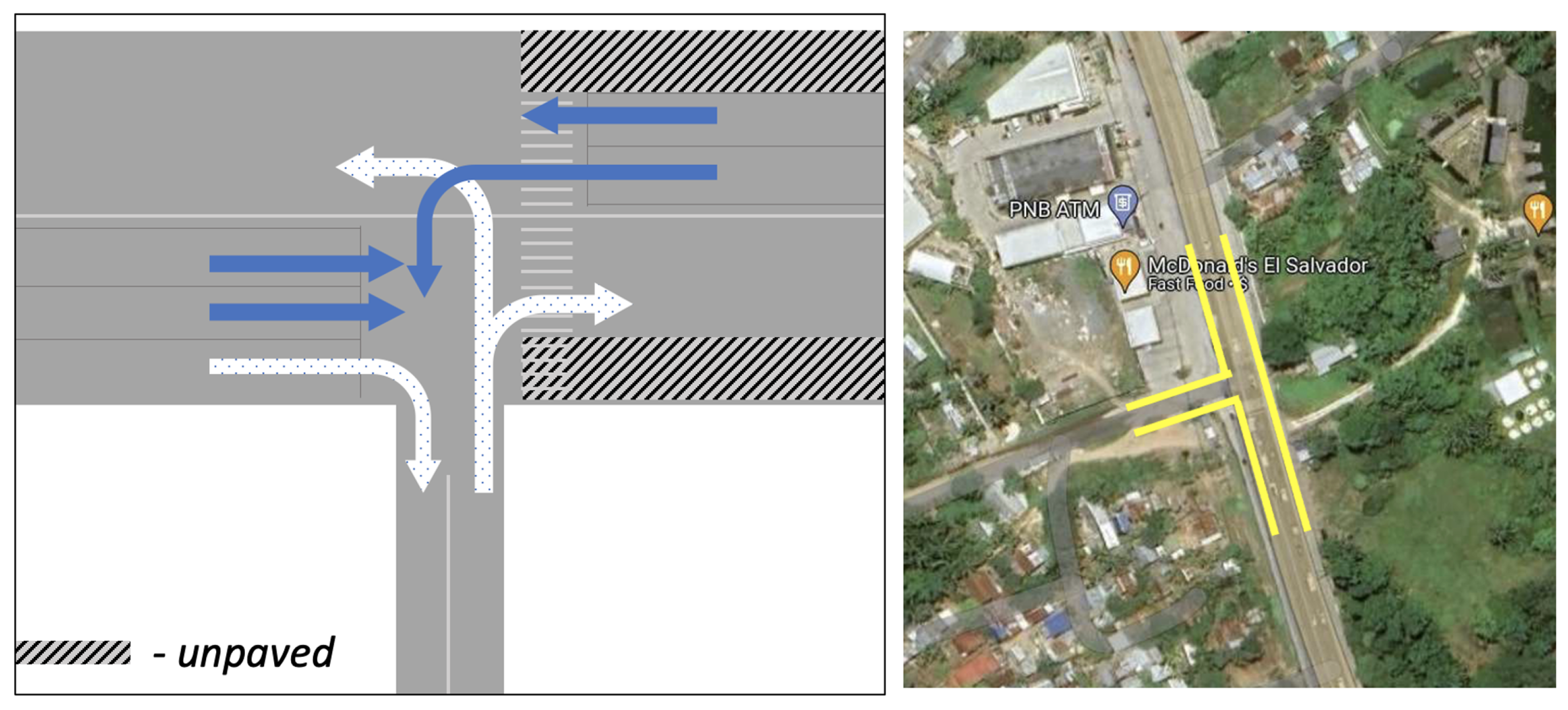
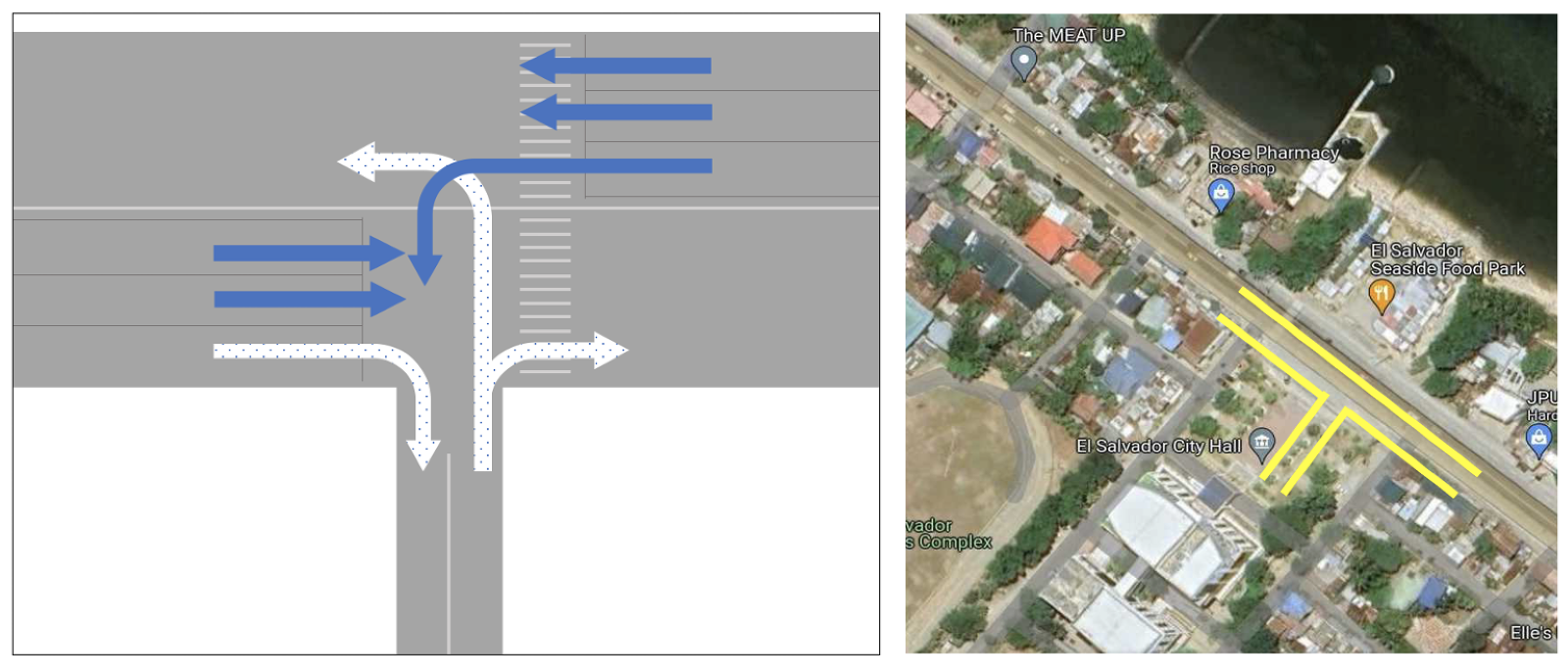
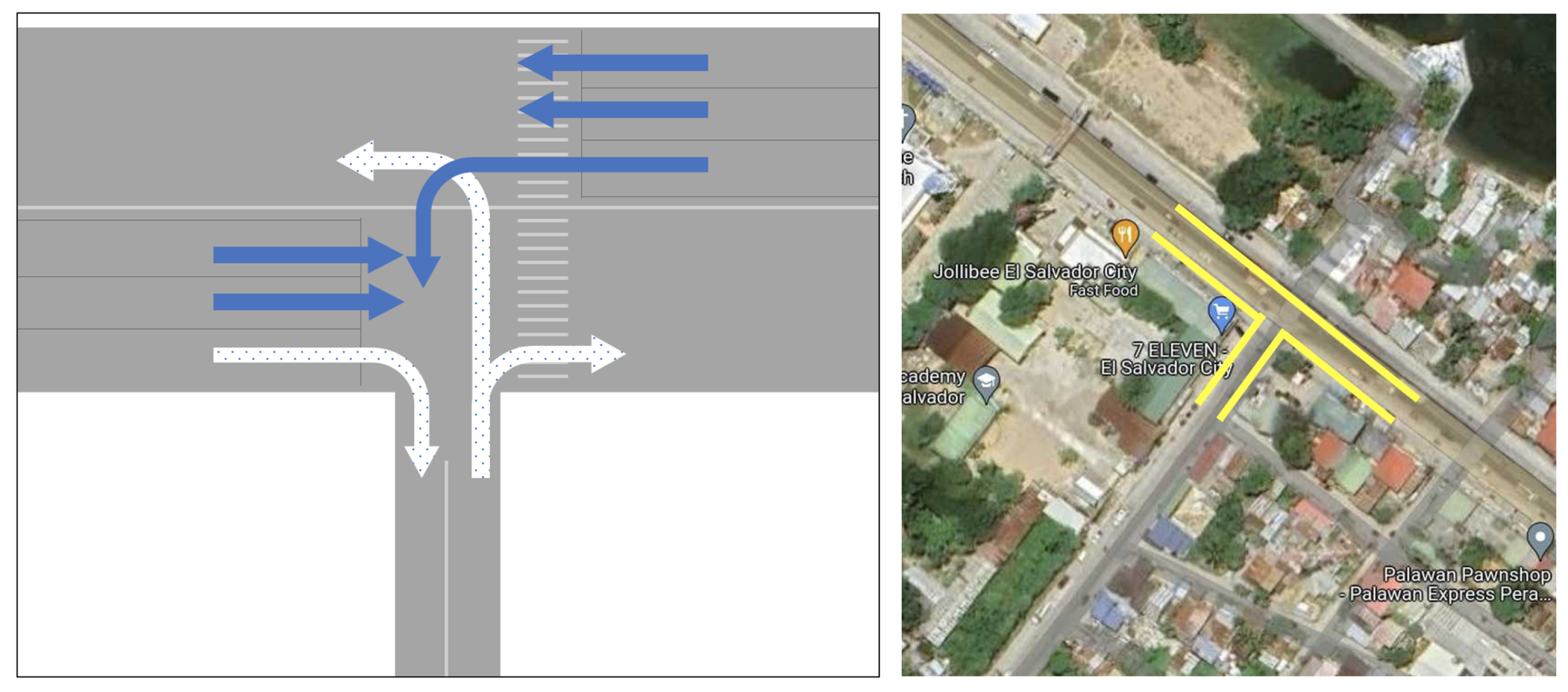
3.2. Study Area and Experimental Design
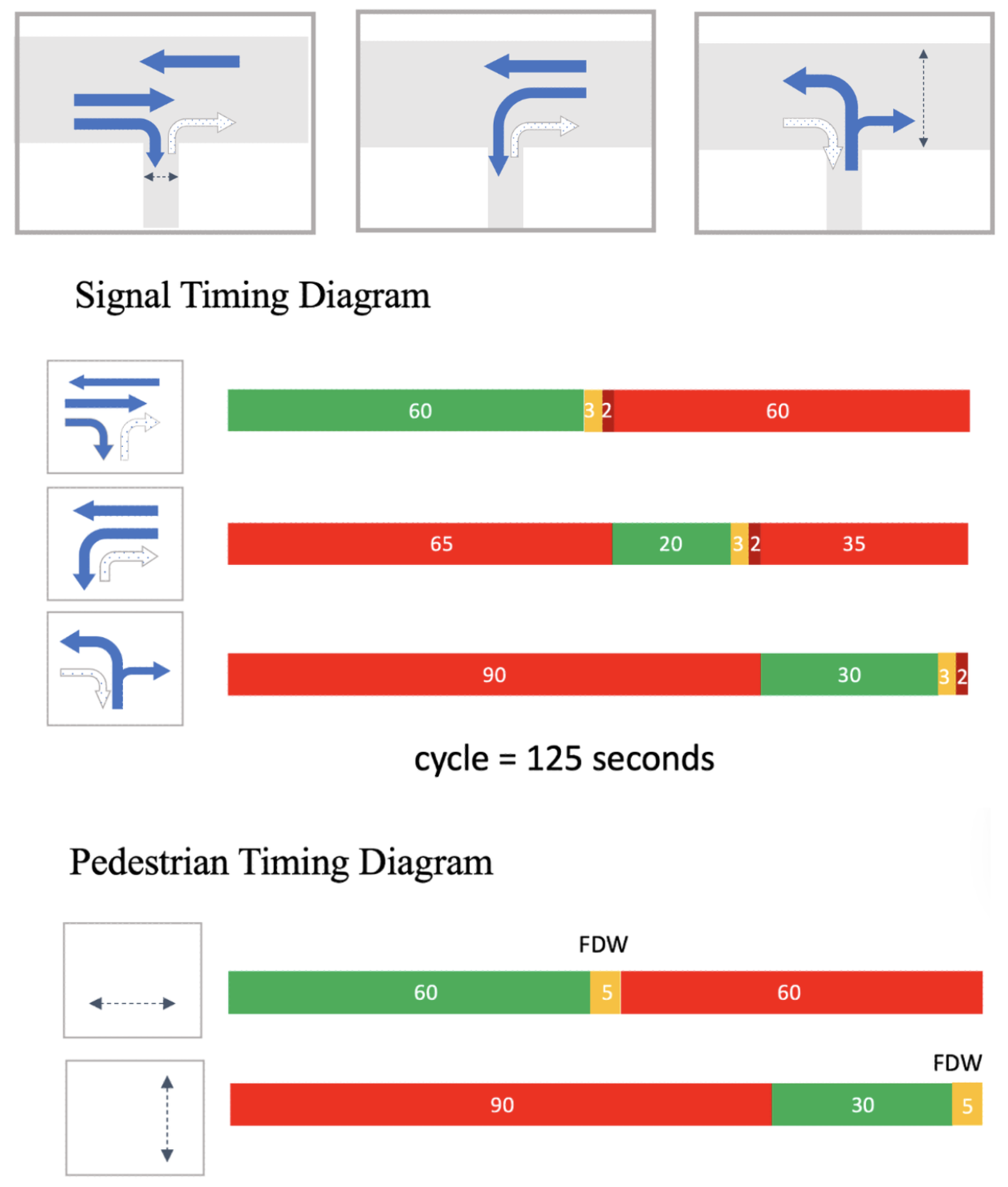
3.3. Baseline Fixed-Time Signal Operation
3.4. Data Collection
3.4.1. Manual Observations for Baseline Ground Truth
3.4.2. Sensing for Adaptive Operation
3.5. Adaptive Edge-Based Signal Control
3.5.1. Density-Based Timing Model
3.5.2. Macroscopic Traffic State Representation and Control Abstraction
3.5.3. Adaptive Signal Control Algorithm
| Algorithm 1 Adaptive Edge-Based Signal Control (AESC) |
|
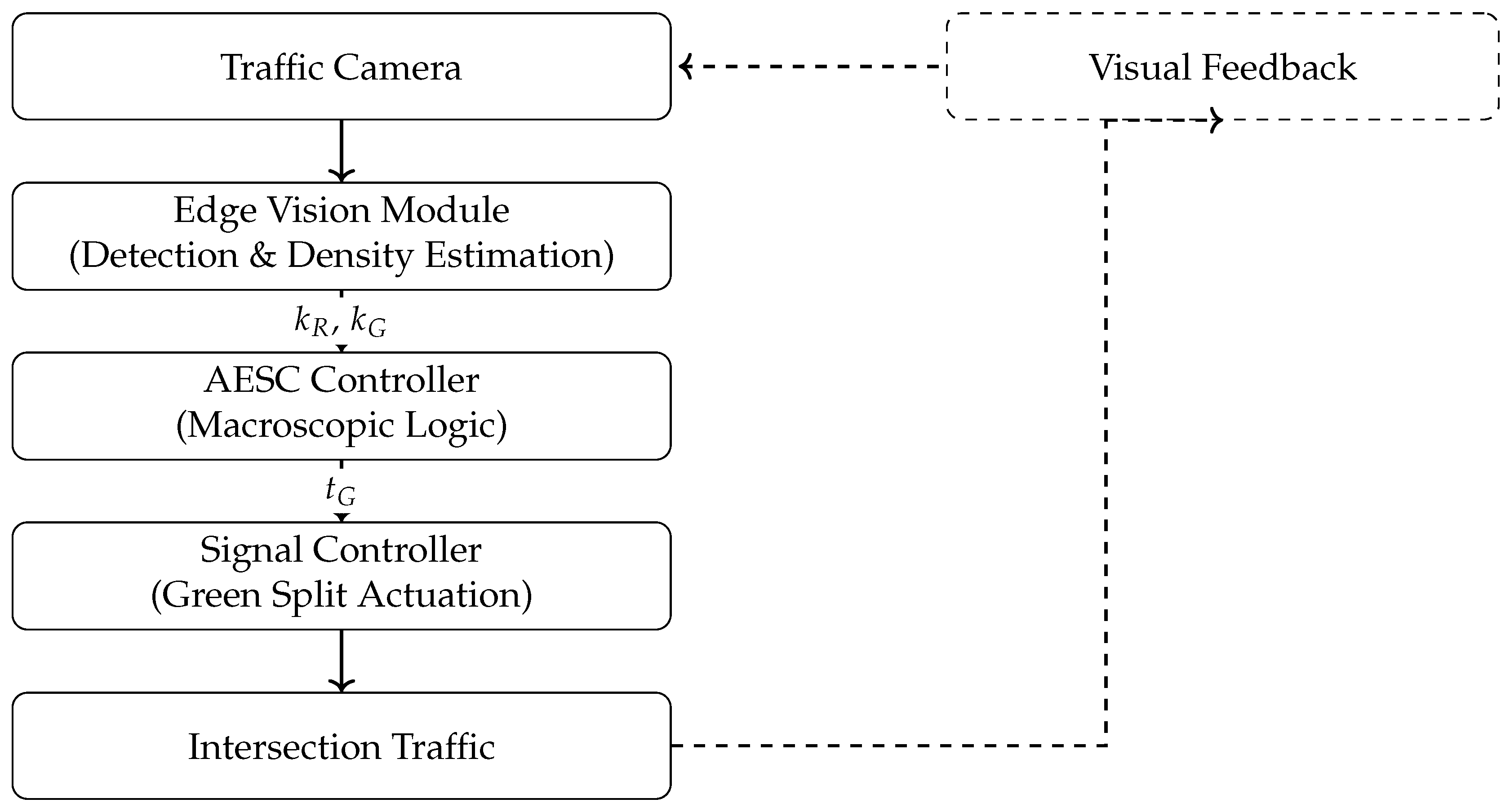
3.5.4. System Architecture and Data Flow
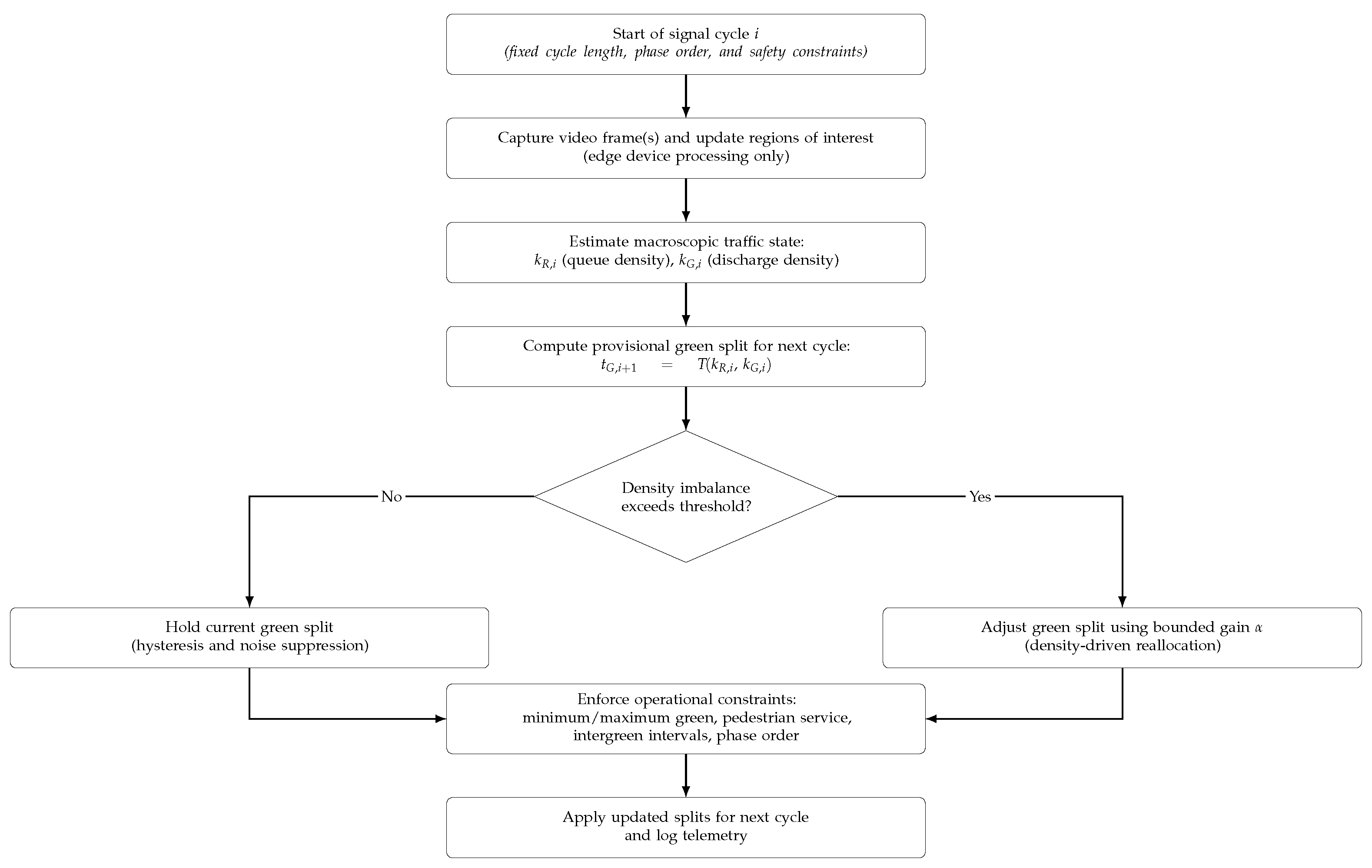
3.5.5. Per-Cycle Adaptive Control Logic
3.5.6. Edge-Based Computer Vision Pipeline
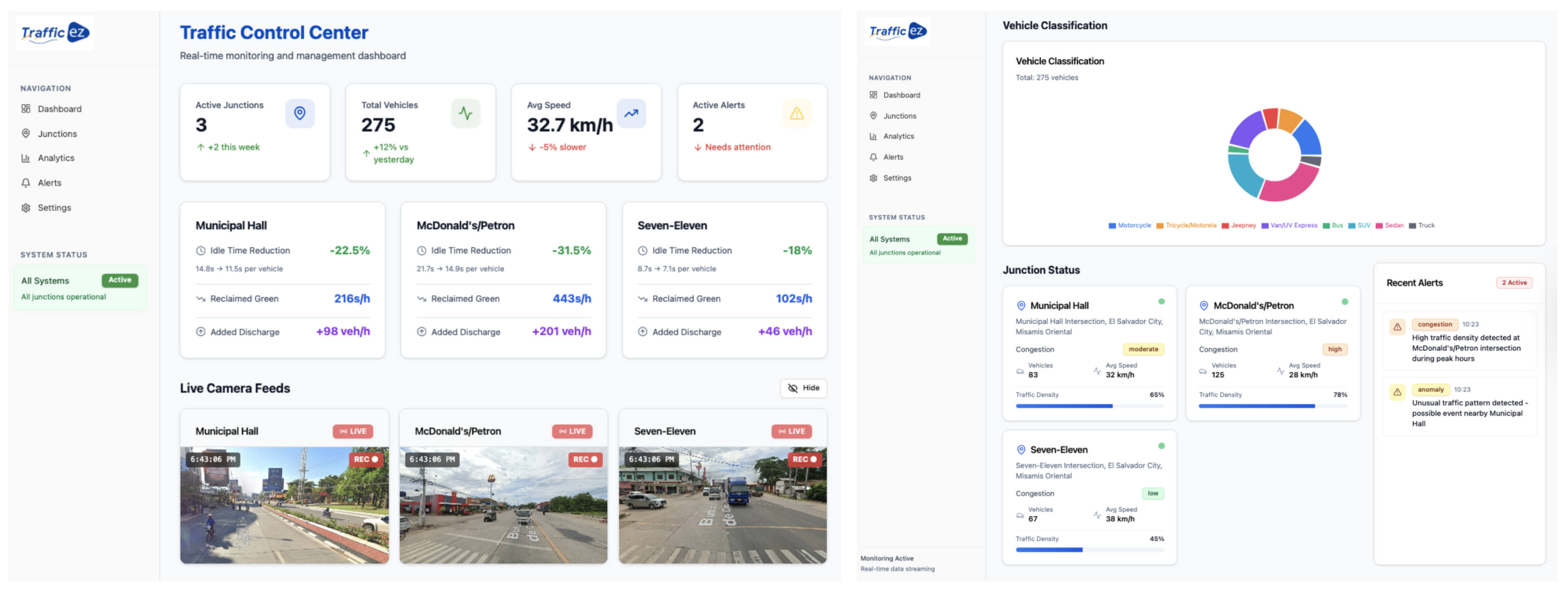
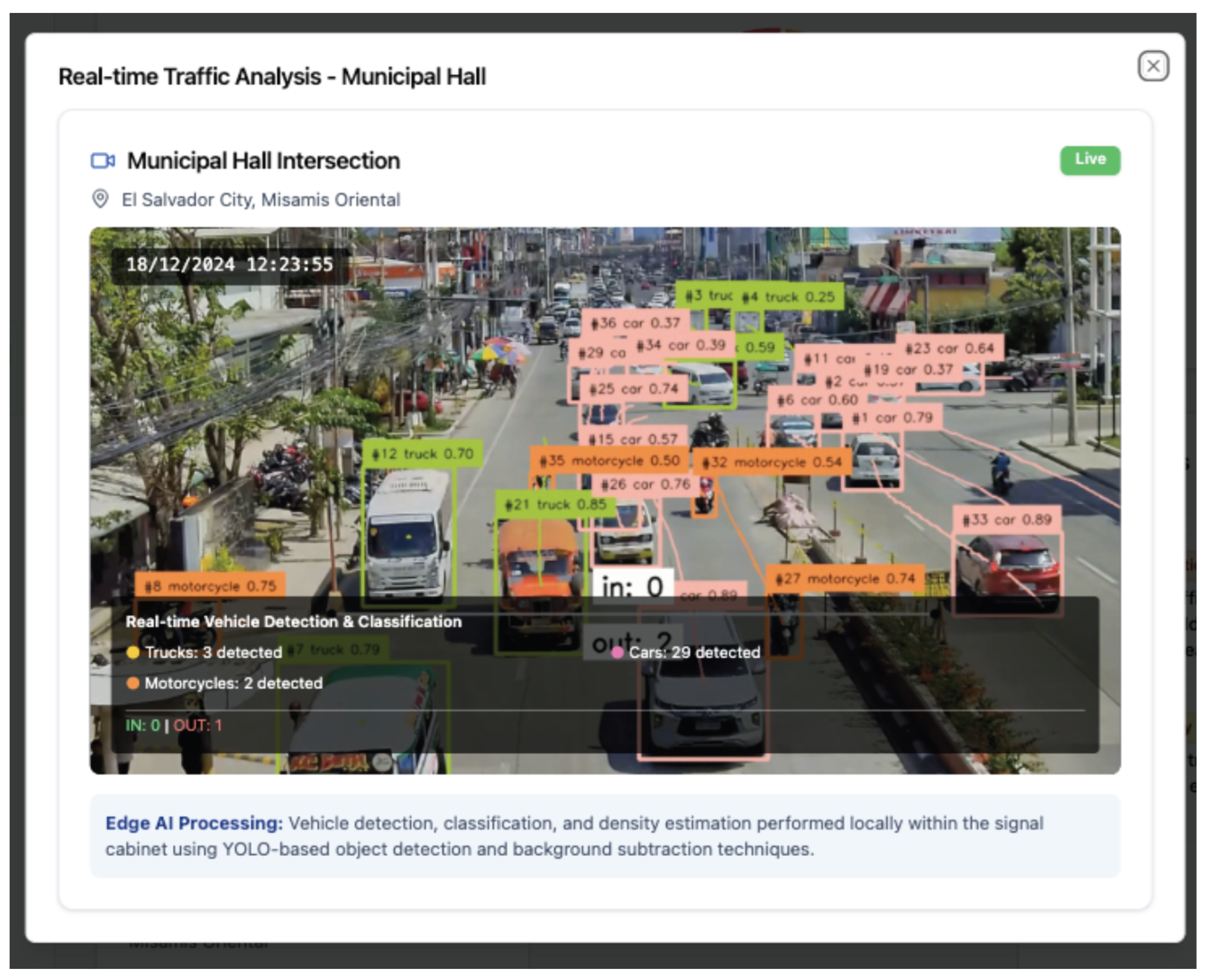
3.5.7. Edge AI System Interface and Real-Time Outputs
3.6. Calibration and Operational Safeguards
3.7. Experimental Protocol
3.8. Outcome Measures
3.9. Statistical Analysis
3.10. Governance, Safety, and Reproducibility
4. Results and Discussion
4.1. RQ1: Operational Performance of Edge-Based Density Estimation
Stability and Mechanism of Adaptive Control
4.2. RQ2: Impact of Adaptive Signal Control on Per-Vehicle Delay
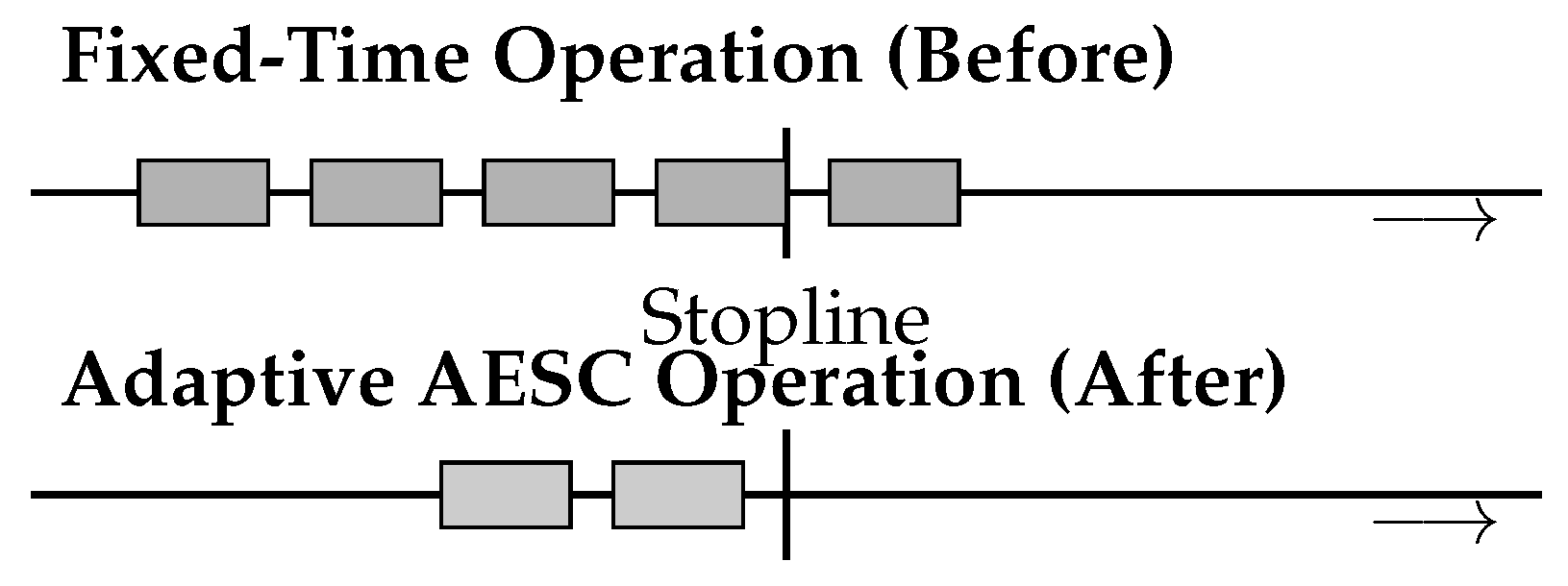
Red-Phase Idle Time Reduction
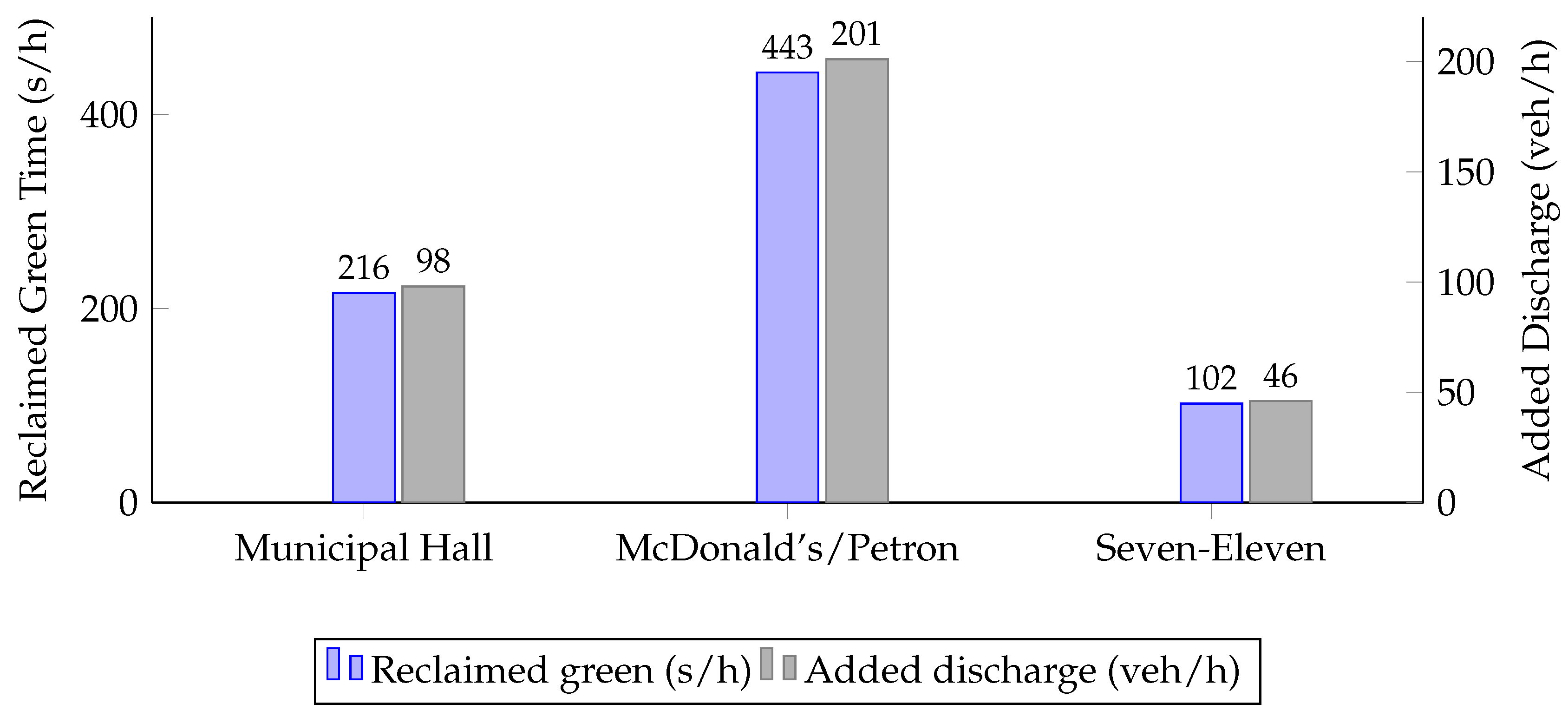
4.3. RQ2: Reclaimed Effective Green Time and Throughput Gains
4.3.1. Conversion of Idle Time into Productive Discharge
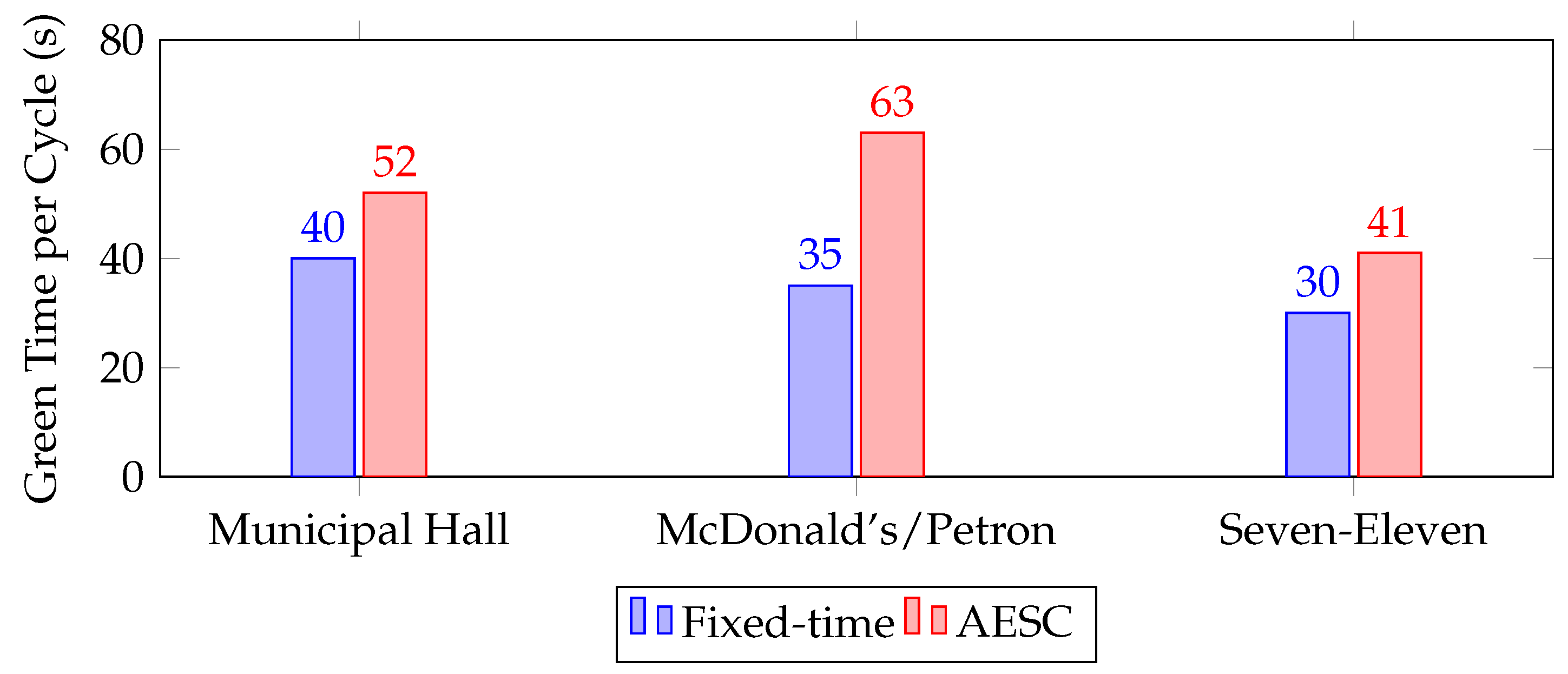
4.3.2. Per-Cycle Green Split Redistribution and Queue Response
4.4. Comparison with Existing Adaptive Signal Control Approaches
4.5. RQ3: Reliability, Pedestrian Service, and Governance-Relevant Outcomes
4.5.1. Reliability and Pedestrian Compliance
4.5.2. Environmental Proxy and Governance Implications
4.6. Implications for Mixed Traffic and Southeast Asian Operating Conditions
4.7. Limitations and Practical Implications
4.8. Measurement Validity
5. Conclusions and Recommendations
5.1. Conclusions
5.2. Recommendations and Future Work
Author Contributions
Funding
Institutional Review Board Statement
Informed Consent Statement
Data Availability Statement
Acknowledgments
Conflicts of Interest
Abbreviations
| AESC | Adaptive Edge-Based Signal Control |
| ATCS | Adaptive Traffic Control System |
| CO2 | Carbon Dioxide |
| DPWH | Department of Public Works and Highways (Philippines) |
| DOST | Department of Science and Technology (Philippines) |
| GAN | Generative Adversarial Network |
| IoT | Internet of Things |
| LGU | Local Government Unit |
| MMDA | Metropolitan Manila Development Authority |
| ROI | Region of Interest |
| RQ | Research Question |
| SCATS | Sydney Coordinated Adaptive Traffic System |
| SCOOT | Split Cycle Offset Optimization Technique |
| SEA | Southeast Asia/Southeast Asian |
| TDA | Traffic Density Approximation |
| V2P | Vehicle-to-Pedestrian Communication |
| V2V | Vehicle-to-Vehicle Communication |
| V2X | Vehicle-to-Everything Communication |
| YOLO | You Only Look Once (object detection framework) |
References
- Institute of Transportation Engineers. Traffic Signal Operations and Performance; ITE Excellence in Transportation: Washington, DC, USA, 2019. [Google Scholar]
- Day, C.M.; Bullock, D.M.; Li, H.; Remias, S.M.; Hainen, A.M.; Freije, R.S.; Stevens, A.L.; Sturdevant, J.R.; Brennan, T.M. Performance Measures for Traffic Signal Systems: An Outcome-Oriented Approach; Purdue University: West Lafayette, IN, USA, 2014; Volume 2438, pp. 96–104. [Google Scholar] [CrossRef]
- National Academies of Sciences, Engineering, and Medicine. Traffic Signal Timing Manual, 2nd ed.; The National Academies Press: Washington, DC, USA, 2020. [Google Scholar] [CrossRef]
- Federal Highway Administration. Automated Traffic Signal Performance Measures (ATSPMs); U.S. Department of Transportation: Washington, DC, USA, 2025. [Google Scholar]
- Sánchez, L.; Gutiérrez, V.; Galache, J.A.; Sotres, P.; Santana, J.R.; Casanueva, J.; Muñoz, L. SmartSantander: IoT experimentation over a smart city testbed. Comput. Netw. 2014, 61, 217–238. [Google Scholar] [CrossRef]
- Li, Y.; Wang, Z.; Chen, X. Edge-based intelligent traffic signal control using deep reinforcement learning. IEEE Trans. Intell. Transp. Syst. 2024; early access. [Google Scholar]
- Zhang, H.; Liu, Y.; Sun, J. Decentralized adaptive traffic signal control using multi-agent learning. Transp. Res. Part C 2024, in press. [Google Scholar]
- Papageorgiou, M.; Diakaki, C.; Dinopoulou, V. Review of road traffic control strategies. Proc. IEEE 2003, 91, 2043–2067. [Google Scholar] [CrossRef]
- Abbas, M.M.; Sharma, A. Traffic signal performance assessment: State-of-the-practice. Transp. Res. Rec. 2019, 2673, 13–26. [Google Scholar] [CrossRef]
- Hunt, P.B.; Robertson, D.I.; Bretherton, R.D. The SCOOT on-line traffic signal optimization technique. Traffic Eng. Control 1982, 23, 190–192. [Google Scholar]
- Sims, A.G.; Dobinson, K.W. The Sydney coordinated adaptive traffic (SCAT) system philosophy and benefits. IEEE Trans. Veh. Technol. 1980, 29, 130–137. [Google Scholar] [CrossRef]
- Akopov, A.S.; Beklaryan, L.A. Traffic Improvement in Manhattan Road Networks with the Use of Parallel Hybrid Biobjective Genetic Algorithm. IEEE Access 2024, 12, 19532–19552. [Google Scholar] [CrossRef]
- Prabuchandran, K.J.; Kumar, A.N.H.; Bhatnagar, S. Multi-agent reinforcement learning for traffic signal control. In Proceedings of the 17th International IEEE Conference on Intelligent Transportation Systems (ITSC), Qingdao, China, 8–11 October 2014; IEEE: Piscataway, NJ, USA, 2014; pp. 2529–2534. [Google Scholar] [CrossRef]
- Khamis, M.A.; Gomaa, W. Adaptive multi-objective reinforcement learning with hybrid exploration for traffic signal control based on cooperative multi-agent framework. Eng. Appl. Artif. Intell. 2014, 29, 134–151. [Google Scholar] [CrossRef]
- Cascetta, E. Transportation Systems Engineering: Theory and Methods, 2nd ed.; Springer: New York, NY, USA, 2013; 736p, ISBN 978-1475768749. [Google Scholar]
- Bochkovskiy, A.; Wang, C.-Y.; Liao, H.-Y.M. YOLOv4: Optimal speed and accuracy of object detection. arXiv 2020, arXiv:2004.10934. [Google Scholar] [CrossRef]
- Hou, Q.; Ai, C. An automated sound barrier inventory method using mobile LiDAR. J. Transp. Eng. Part A Syst. 2022, 148, 04022078. [Google Scholar] [CrossRef]
- Shi, W.; Cao, J.; Zhang, Q.; Li, Y.; Xu, L. Edge computing: Vision and challenges. IEEE Internet Things J. 2016, 3, 637–646. [Google Scholar] [CrossRef]
- Nogales, B.; Silva, M.; Vidal, I.; Luís, M.; Valera, F.; Sargento, S.; Azcorra, A. Using aerial and vehicular NFV infrastructures to agilely create vertical services. Sensors 2021, 21, 1342. [Google Scholar] [CrossRef] [PubMed]
- Kim, J.; Park, S. AI-TrafficLite: Edge intelligence for adaptive traffic signal control. Sustain. Cities Soc. 2022, 79, 103692. [Google Scholar] [CrossRef]
- Pettigrew, S.; Cronin, S. Urban traffic challenges in developing cities. Transp. Policy 2021, 103, 1–10. [Google Scholar] [CrossRef]
- Pham, T.H.; Nguyen, D. Vision-based adaptive traffic signal control in mixed traffic. Transp. Res. Part C 2023, 148, 104020. [Google Scholar] [CrossRef]
- Department of Science and Technology. Intelligent Transport Systems Roadmap for the Philippines; DOST–PCIEERD: Taguig City, Philippines, 2023. Available online: https://pcieerd.dost.gov.ph/wp-content/uploads/2026/01/Transportation_Roadmap.pdf (accessed on 14 January 2026).
- Department of Public Works and Highways. National Transport Infrastructure Program; DPWH: Manila, Philippines, 2023. [Google Scholar]
- Republic of the Philippines. Republic Act No. 11292: Seal of Good Local Governance Act of 2019; Official Gazette of the Republic of the Philippines: Manila, Philippines, 2019. [Google Scholar]
- Cempron, J.; Ilao, J. VEMON: Vision-based Vehicle Counter for Traffic Monitoring. In Proceedings of the DLSU Research Congress, Manila, Philippines, 19–21 June 2019. [Google Scholar]
- Agence France-Presse. Manila’s Car Counters Help Address ‘World’s Worst Traffic’. Philstar.com. 18 October 2024. Available online: https://www.philstar.com/headlines/2024/10/18/2393482/manilas-car-counters-help-address-worlds-worst-traffic (accessed on 14 January 2026).






| Intersection | Baseline (s/veh) | Adaptive (s/veh) | Δ | Change (%) |
|---|---|---|---|---|
| Municipal Hall | 14.8 | 11.5 | −3.3 | −22.5 |
| McDonald’s/Petron | 21.7 | 14.9 | −6.8 | −31.5 |
| Seven-Eleven | 8.7 | 7.1 | −1.6 | −18.0 |
| Intersection | Reclaimed Green (s/h) | Added Discharge (veh/h) |
|---|---|---|
| Municipal Hall | ∼216 | ∼98 |
| McDonald’s/Petron | ∼443 | ∼201 |
| Seven-Eleven | ∼102 | ∼46 |
Disclaimer/Publisher’s Note: The statements, opinions and data contained in all publications are solely those of the individual author(s) and contributor(s) and not of MDPI and/or the editor(s). MDPI and/or the editor(s) disclaim responsibility for any injury to people or property resulting from any ideas, methods, instructions or products referred to in the content. |
© 2026 by the authors. Licensee MDPI, Basel, Switzerland. This article is an open access article distributed under the terms and conditions of the Creative Commons Attribution (CC BY) license.
Share and Cite
Maureal, A.L.; Lorilla, F.M.A.; Andres, G.L. A Lightweight Edge AI Framework for Adaptive Traffic Signal Control in Mid-Sized Philippine Cities. Sustainability 2026, 18, 1147. https://doi.org/10.3390/su18031147
Maureal AL, Lorilla FMA, Andres GL. A Lightweight Edge AI Framework for Adaptive Traffic Signal Control in Mid-Sized Philippine Cities. Sustainability. 2026; 18(3):1147. https://doi.org/10.3390/su18031147
Chicago/Turabian StyleMaureal, Alex L., Franch Maverick A. Lorilla, and Ginno L. Andres. 2026. "A Lightweight Edge AI Framework for Adaptive Traffic Signal Control in Mid-Sized Philippine Cities" Sustainability 18, no. 3: 1147. https://doi.org/10.3390/su18031147
APA StyleMaureal, A. L., Lorilla, F. M. A., & Andres, G. L. (2026). A Lightweight Edge AI Framework for Adaptive Traffic Signal Control in Mid-Sized Philippine Cities. Sustainability, 18(3), 1147. https://doi.org/10.3390/su18031147