1. Introduction
The dairy industry is one of the key components of Ukraine’s agricultural sector; therefore, it requires considerable attention in terms of product quality and food safety in accordance with EU requirements. The International Farm Comparison Network (IFCN) [
1], in its forecasts of the global dairy industry, identifies Ukraine as one of the key countries for addressing the global protein deficit—a country with all the prerequisites for the successful development of dairy farming, and thus for ensuring food security and sustainable development.
The modernization of Ukraine’s dairy sector toward improving product quality and aligning it with EU standards is directly linked to the United Nations Sustainable Development Goals (SDGs). It also has a significant impact on the economic, social, and environmental development of rural areas. Outdated technologies create unsustainable production and consumption models. Globalization and the harmonization of quality standards facilitate market expansion, which, in turn, positively influences the development of the agri-industrial sector and enhances local, national, and regional resilience and stability.
The EU is one of the safest and most highly regulated markets in the world in terms of food quality and safety. Today, European retailers expect their suppliers to meet the demand for high-quality and safe food production. The EU dairy sector must comply with numerous regulations, including those related to hygiene, animal health and welfare, and official controls [
2,
3]. Achieving these standards requires substantial investment in the modernization of dairy production.
To increase product competitiveness and access specific markets—particularly EU markets—it is essential to improve product quality and safety indicators. Dairy enterprises, especially small and medium-sized ones, still do not widely apply internationally recognized production and hygiene methods such as HACCP (Hazard Analysis and Critical Control Points), Global GMP (Good Manufacturing Practice), Good Hygiene Practice (GHP), EU requirements, and Codex Alimentarius standards. Large dairy producers generally operate under better conditions and more complex production systems, yet they also do not sufficiently implement GMP- and HACCP-based systems and require production modernization. The quality of dairy products produced by small and medium enterprises has deteriorated due to low levels of technological advancement, with insufficient investment in innovation being one of the key contributing factors.
The issue of modernizing the dairy sector has become even more urgent in the context of Ukraine’s post-war economic recovery. The war has caused a decline in cattle numbers, destruction of infrastructure, logistical disruptions, and reduced production capacity. Restoring and further expanding production will require substantial investment, effective resource provision, and the introduction of modern technologies that can ensure stable sector functioning and enhance its resilience.
As of 2024, Ukraine had approximately 50 active dairy processing plants certified to freely export their products to the EU. Currently, around 50% of raw milk produced in Ukraine meets EU quality standards. A significant proportion of Ukrainian dairy enterprises require upgrading and modernization. They must introduce new technologies, improve sanitary and hygiene conditions, and certify their production in compliance with European standards. The main challenge for agricultural businesses on the path to European integration is the insufficient level of financing: the modernization of Ukrainian dairy processing enterprises requires significant investment in innovations that many companies currently lack [
4,
5]. Forecasting and assessing the investment needs for modernization would enable evaluation of the potential impact of these changes on sustainability-related development. Therefore, it is essential to assess the condition of these enterprises’ material and technological base, their investment attractiveness, and the required investment volumes needed to ensure European-level product quality.
The modernization of dairy enterprises directly correlates with the achievement of the UN SDGs, including responsible production and consumption, improved food security, economic growth, and rural development. Consequently, research on investment needs for the modernization of the dairy industry, assessment of its investment attractiveness, and evaluation of its material and technological capacity is crucial for developing scientifically grounded strategic decisions.
In this context, the relevance of the study is driven by the need to adapt Ukraine’s dairy sector to EU product quality standards and to ensure sustainable development.
2. Theoretical Exposition and Development of Hypotheses
On 23 June 2022, the European Parliament adopted a resolution granting Ukraine the status of a candidate for membership in the European Union. This implies that Ukraine must implement European standards across all sectors of the economy, including the agricultural sector. EU membership requires the adoption of EU legislation and the development of the capacity for the proper implementation, management, and monitoring of all relevant EU programmes. With regard to food safety, veterinary, and phytosanitary policy, Ukraine was assessed as “moderately prepared” in the Commission’s 2023 Progress Report [
6]. Therefore, Ukraine still needs to advance its agrarian European integration policy. This makes the present article both timely and relevant.
A number of scholars have analysed the strategic guidelines for the development of agriculture and rural areas of Ukraine until 2030 with respect to their alignment with EU policy and food security objectives [
7]. Key development directions have been identified; however, a critical assessment of the factors that may hinder the achievement of these goals is lacking. Other researchers have examined the factors of agricultural production aimed at improving the effectiveness of achieving the SDGs [
8]. Nevertheless, this analysis does not consider the potential reserves for increasing dairy production.
The authors predict that over the next 50 years, as the world struggles to feed a growing population, the dairy industry will address this challenge by applying advanced knowledge and technology to breed improved dairy cows and create more efficient and sustainable dairy farms. We fully concur with this view.
Sustainable agriculture is best defined as a balance of practices that promote economic viability, protect the natural environment, and build healthy communities in the present without compromising the future. The dairy industry has achieved significant progress in production efficiency after decades of working with these objectives in mind [
9]. Several authors examine the capacity of EU member states to implement the Green Deal and to adapt the relevant policies to the security architecture of the Eastern Partnership. Among the policy recommendations identified in this study [
10] are the improvement of food and energy security, environmental protection and industrial supply chains, as well as social protection and international cooperation. We consider this viewpoint highly relevant and concur with it.
The importance of studying the interrelation between efficiency, sustainability, and environmental risks in the European agricultural sector is emphasized by A. Mergoni [
11]. The authors provide evidence of the sector’s vulnerability and the challenges of reconciling efficiency, sustainability, and environmental objectives. However, they do not propose specific pathways for addressing these issues.
Alrhmoun et al. [
3] conducted a systematic literature review exploring the transition toward sustainable dairy systems across Europe, drawing on peer-reviewed studies published over the last ten years. The review highlights major obstacles to progress, such as fragmented policy frameworks, limited data availability, and inadequate incentives for farmers. The study offers both conceptual and practical insights to inform future research, policy development, and practical initiatives that promote resilient and sustainable dairy systems in Europe. However, the study mainly focuses on the sustainability of the dairy sector and the factors that hinder it, while not taking into account the impact of technological modernization in the industry.
Xiaofei Li [
12] emphasizes that monitoring quality and safety within the agricultural supply chain can address low levels of safety and transparency while also improving the consumer purchasing experience. In our view, this idea is highly relevant. Several other scholars have examined the implementation of quality and safety standards in Latin American countries [
13]. We consider this research particularly important, as it highlights the challenges and outcomes associated with the introduction of agricultural quality and safety standards across different countries and helps identify common issues. According to researchers [
14], prior to the early 1990s there were few scientific advancements in HACCP and modern quality management systems within the food industry. Therefore, the implementation of quality and safety standards must focus on improving food safety, quality, and sustainability, as well as adapting to evolving consumer demands, emerging risks, and regulatory requirements. Other researchers have investigated the challenges and prospects of implementing HACCP quality and safety standards in organic agricultural production [
15]. However, this research is narrowly focused and does not fully capture all challenges associated with the implementation of product quality standards. Escanchano [
16] analyzed the challenges of adopting ISO 22000 in the agricultural sector of EU countries [
17]. This study is highly relevant, as it identifies the technological processes involved and highlights the importance of innovation in production.
Zinchuk and Kutsmus [
18] examined the relevance of the EU Common Agricultural Policy (CAP) for 2023–2027 in the context of the Sustainable Development Goals and the fight against hunger. The authors identified a relationship and shared indicators between the CAP and the SDGs, the most important of which is production modernization. Budziak and Budziak [
19] emphasize that “domestic producers can significantly increase exports of dairy products to Southern Europe and raw milk to Western Europe, while markets in Asia and Africa also remain promising.” However, this requires modernization of production to ensure the necessary volumes of dairy products while considering domestic market needs. Hladiy and Prosovych [
20] analyzed the current state and future prospects of Ukraine’s dairy sector as of 2022. They also note that modernization and the implementation of EU quality standards are essential for further sectoral development. Kozak [
21] stresses that processes of concentration and, accordingly, specialization in milk production will intensify, which fully aligns with global trends. This implies that production volumes will grow, and thus the need for investment will also increase. At the same time, Chubak and colleagues [
22] highlight the potential conflicts and challenges associated with expanding Ukraine’s agri-food exports to the EU. These concerns stem from fears among some EU countries about losing their markets and about the possibility of low-quality imports. Therefore, modernization of production and the adoption of EU quality standards in Ukraine are crucial.
A number of authors emphasize that the modernization of agriculture is the foundation and backbone of national modernization, and that its security must not be overlooked. They argue that policymakers should aim to eliminate weaknesses in agricultural operations and services, develop differentiated agricultural development strategies, and promote knowledge exchange and technology dissemination. This is essential for building a modern agricultural system and supporting spatially balanced development of a modernized agricultural sector [
23]. We fully agree with this viewpoint and additionally stress the importance of state support and public regulation of investment in agricultural innovation. The dissemination of agricultural innovations at the local level has played a decisive role in the development of leading farmers and in the modernization of small-scale agriculture [
24]. Bilotchenko and colleagues [
25] highlight the important role of innovations in increasing the investment attractiveness of the agricultural sector, thereby facilitating further investment inflows. We fully support this conclusion.
Usman et al. [
26] investigated the role of the digital technology index, globalization, and natural resource rents in eco-innovation across the EU-27 during 1990–2021. The results show that digitalization significantly increases eco-innovation, whereas globalization considerably slows its pace in EU-27 countries. This is attributed to insufficient investment in innovation.
Vasavada and Seyler [
27] reviewed the provisions of the Food Safety Modernization Act (FSMA) and discussed changes in international regulations within the dairy sector, as well as hazards, risks, and mitigation strategies in the context of FSMA. This legislation is timely and relevant, as it will support the implementation of product quality standards.
Other scholars have examined both theoretical and applied aspects of the 2022–2023 global food crisis and its impacts on the world economy, concluding that the crisis has deepened under current conditions, thereby increasing the threat of global hunger [
28]. This research confirms the importance of implementing quality and safety standards for agri-food products, which can help mitigate hunger risks and promote progress toward the Sustainable Development Goals.
The Shortall et al. [
29] conducted an investment evaluation comparing automatic and conventional milking technologies within a pasture-based dairy system. Using a stochastic whole-farm budget simulation model, they integrated capital investment costs with annual labor and maintenance expenses for each scenario. Each investment option was then assessed using various financial indicators, including annual net profit, annual net cash flow, total discounted net profitability, total discounted net cash flow, and return on investment. However, this study considers the efficiency of different technologies only within narrow processes and does not take into account the dairy sector as a whole or its alignment with sustainability principles.
The use of innovations and advanced technologies is becoming increasingly important for addressing contemporary global challenges faced by many sectors of the food industry, including the dairy sector. A growing body of literature indicates that the adoption of Fourth Industrial Revolution technologies (known as “Industry 4.0”) holds significant potential for breakthroughs, new ideas, and expanded opportunities for development across various areas of food production [
30]. We fully concur with this view.
Other authors argue that in order to meet sustainability goals and reformulate traditional dairy products to enhance their nutritional value while lowering their carbon footprint, it is essential to adopt integrated strategies that embrace the “farm to fork” principle [
31]. We fully agree with this study; however, it focuses solely on the environmental friendliness and sustainability of the production technology and does not consider the impact of innovations within these technologies.
Recent scientific findings indicate the need for institutional reforms aimed at reducing entry barriers for small and medium-sized enterprises across various industrial sectors, implementing a targeted innovation policy to support modernization, and developing intellectual capital strategies aligned with the objectives of industrial transformation [
32]. We completely agree with this statement.
In their study, Williams et al. [
33] suggest that policymakers and managers should focus on minimizing excessive documentation, promoting innovative food technologies that enhance food safety, strengthening the capability and efficiency of testing laboratories, and raising consumer awareness about food safety. In this article, the authors will emphasize the dangers that forced modernization can bring in the absence of the necessary state strategy and policy. We consider this article to be quite relevant, however, it only describes modernization from the point of view of state regulation and covers farming in general, without taking into account the specifics of the dairy industry.
A number of authors (Koopmans et al.) [
34] emphasize the need for better coordination between farm modernization and sustainable rural development. Based on the empirical evidence of eleven case studies in a variety of national and regional context, they were able to distinguish five major strategies that are being developed in order to reconnect agricultural and rural development. Scientists say multi-stakeholder governance is the first step in promoting synergies between farm modernization and sustainable rural development. While such governance has been identified as necessary in recent CAP reforms, the study shows that there are still many obstacles that need to be overcome to successfully establish more territorially based, multi-stakeholder governance systems. This study is very interesting, but it considers the modernization of farms in general, without taking into account the specifics of the dairy industry.
According to research by other scholars [
35], agricultural modernization and rural development stem from farming practices. The analysis has contextualised agricultural modernisation and rural development processes in relation to changes in farming practices, and has identified four different farming trajectories—productivist, multifunctional, diverse and maintaining—which are dependent on one another at the level of cultivation practices. Interdependence requires a regional focus in policy development. This study is important from the point of view of analyzing the development of innovations in rural areas, but does not take into account the industry aspect.
Despite the considerable number of studies devoted to Ukraine’s agricultural sector, research that systematically examines investments specifically in the modernization of the dairy industry through the lens of sustainable development remains limited.
Existing academic works mostly address general issues of the investment climate in the agricultural sector or the introduction of innovations in agribusiness. However, the relationship between investments in the modernization of technological processes at dairy enterprises and the achievement of the Sustainable Development Goals has been scarcely explored. Most available studies rely on broader European or global trends. The Ukrainian context is unique, as it incorporates factors of integration into the EU market within the framework of post-war recovery.
Despite the existence of separate studies on investment support for the agricultural sector, the gap lies in the absence of comprehensive research that systematically considers investments in the modernization of Ukrainian dairy enterprises as a driver of sustainable development and the strengthening of European integration processes.
Research hypothesis: If large enterprises producing milk and cream exhibit the highest level of investment attractiveness and openness to innovation, then, provided that the necessary volume of investments for their modernization is ensured in 2026–2030, they will maintain stable growth in the production of milk and cream, despite negative external factors, including the impact of the war in Ukraine.
3. Materials and Methods
The empirical study was conducted according to a standard algorithm:
Organization—formulation of the research goals and objectives, selection of the research object and subject, and formulation of the research hypothesis;
Achievement of the research goal.
The information base of the study consists of the current regulatory and legal acts of Ukraine, as well as data on the economic activities of enterprises provided by the State Statistics Service of Ukraine [
36] and the Ministry of Agrarian Policy and Food of Ukraine [
37].
The following economic research methods were employed: the inductive method—for collecting, systematizing, and processing information; the deductive method—for the theoretical interpretation of the problem; analysis and synthesis—for assessing the investment attractiveness of enterprises in the dairy industry. The method of analysis and synthesis was also used to examine the components of sustainable development and their interrelationships.
This analysis considered enterprises engaged in the production and processing of dairy products, that is, those that include a full production cycle in their operations. These enterprises were classified as large, medium, or small according to the database of the State Statistics Service of Ukraine. The study focuses on the product category “milk and cream”.
The assessment of the investment attractiveness of dairy industry enterprises was carried out according to the following algorithm:
Identification of a system of indicators for evaluating the attractiveness of dairy enterprises (by enterprise types: large, medium, small);
Calculation of the selected indicators for the study period (2017–2023) by enterprise type;
Normalization of the indicators;
Calculation of the integral indicator of investment attractiveness of dairy enterprises.
The selection of indicators for assessing the investment attractiveness of dairy enterprises was based on the concept of a comprehensive approach, which enables the consideration of financial–economic, production, and performance characteristics of enterprise activity. The system of indicators included only those measures that
- -
Directly reflect the efficiency of resource utilization and the financial stability of the enterprise;
- -
Are available for calculation on the basis of official financial statements;
- -
Are widely used in economic research on investment attractiveness and possess analytical relevance;
- -
Have a uniform direction of influence on the integral result (all indicators are stimulators, i.e., an increase in their values indicates a higher level of investment attractiveness).
Since the selected indicators differ in units of measurement, economic content, and ranges of variation, a preliminary normalization procedure was applied to ensure their comparability. The purpose of normalization is to transform the original data into a dimensionless form while preserving relative differences among enterprises.
To ensure comparability and consistency of the data, a preliminary normalization of the selected indicators was performed. The main purpose of normalization is to bring the indicators to a common scale (dimensionless values) while preserving the relationships among them. The normalization of the indicators was conducted using the formula, given that all indicators are stimulators.
Iij—the normalized i-th indicator of the j-th type of enterprise;
xij—the value of the i-th indicator of the j-th type of enterprise;
xmaxi—the maximum value of the i-th indicator;
xmini—the minimum value of the i-th indicator.
The optimal value of the normalized indicator equals 0 (the absolute value of the indicator corresponds to its maximum value).
The integral indicator of the investment attractiveness of dairy enterprises was calculated as the arithmetic mean of the sum of normalized indicators for each type of enterprise separately:
Rcpj—the arithmetic mean of the sum of the normalized indicators for the j-th type of enterprises; n—the number of indicators used for the calculation.
For forecasting the production of milk and cream by large enterprises, as well as for estimating the investment needs for innovation, a quantitative forecasting approach was applied, since we possess information on previous time periods, namely the production volumes of milk and cream by large enterprises for 2014–2025.
Given that the forecast calculations are significantly influenced by the production volumes in recent years, when the war began, an adaptive forecasting method was selected. The adaptive method employs a model whose parameters are determined in the course of its construction. The initial estimation of the model parameters is based on the data of the initial time series using the exponential smoothing method. As new data are obtained at each subsequent step, the model parameters are adjusted over time, meaning that they are adapted to continuously changing conditions of the process’s development.
In constructing a model using the adaptive modelling method, a polynomial of no higher than the second order is generally sufficient [
38,
39].
The adaptive second-order polynomial model was determined using the following formula:
In the general case, it is assumed that the time series under investigation can be represented as an*n-th order parabola, and the forecast τ steps ahead is expressed as:
where the parameters a1, a2, …, an + 1 must be estimated.
The idea of exponential forecasting is based on the assumption that the forecast is generated by a polynomial containing (n + 1) terms of the series expansion of the process Yt.
For second-order polynomial models, the variance is a second-order polynomial in τ [
39]:
Here α1 is the equivalent smoothing constant, defined as α1 = 1 − β n (n = 1, 2), σ2—is the residual variance.
In this study, forecasting the volumes of milk and cream production by large enterprises in Ukraine was carried out using a quantitative approach based on an adaptive method of time series forecasting, which belongs to the class of extrapolation methods. A key feature of this approach is that external factors are not explicitly incorporated into the model as separate explanatory variables but are taken into account indirectly through the dynamics of the time series itself.
In particular, the influence of such external factors as
- -
The consequences of the COVID-19 pandemic;
- -
The onset and progression of the full-scale war;
- -
Changes in state agricultural policy;
- -
Fluctuations in prices for milk and dairy raw materials;
- -
Logistical constraints and the transformation of export channels,
Is reflected in the actual values of production volumes for the corresponding years. Since the model is constructed using historical data for the period 2014–2025, all these events are already “embedded” in the shape and parameters of the time series.
4. Results and Discussion
4.1. The Impact of Dairy Sector Modernization on the Advancement of the Sustainable Development Goals
The modernization of Ukraine’s dairy sector will contribute to improving product quality and ensuring compliance with EU standards and is directly linked to the United Nations SDGs. It also has a significant impact on the sustainable development of rural areas in economic, social, and environmental dimensions. Modernization efforts are often oriented toward harmonization with European Union regulations, which impose stringent requirements on emissions, waste management, and biodiversity protection. (
Table 1).
SDG 2: Zero Hunger Contribution: Strengthening food security and ensuring stable supplies of safe, high-quality dairy products.
Mechanisms in the study:
- -
Modernization of large dairy enterprises increases productivity and stabilizes milk and cream output, even under adverse conditions.
- -
Investments in production and processing reduce post-harvest losses and improve consistency of supply.
Examples:
- -
Upgraded milking, cooling, and storage technologies reduce bacterial contamination and spoilage, increasing the share of marketable milk.
- -
Expansion of processing capacity allows conversion of raw milk into longer-shelf-life products (cream, butter, cheese), improving domestic availability and export resilience.
- -
Stabilization of industrial production compensates for declining output from small-scale producers, maintaining national dairy supply.
SDG 3: Good Health and Well-Being Contribution: Improving food safety, nutritional quality, and consumer health outcomes.
Mechanisms in the study:
- -
Harmonization with EU sanitary and phytosanitary standards.
- -
Investment in quality control, certification, and traceability systems.
Examples:
- -
Introduction of Hazard Analysis and Critical Control Points (HACCP) systems reduces risks of zoonotic diseases and foodborne illnesses.
- -
Enhanced laboratory testing ensures compliance with EU limits on antibiotics and contaminants in milk.
- -
Higher-quality dairy products contribute to improved nutrition, particularly for children and vulnerable groups.
SDG 8: Decent Work and Economic Growth Contribution: Enhancing productivity, investment attractiveness, and employment in rural areas.
Mechanisms in the study:
- -
Higher integral investment attractiveness of large enterprises stimulates domestic and foreign investment.
- -
Technological modernization raises labor productivity and value added.
Examples:
- -
Adoption of automated milking and feeding systems creates demand for skilled technicians, veterinarians, and quality managers.
- -
Increased exports of value-added dairy products generate foreign exchange revenues.
- -
Stable large enterprises act as anchors for regional supply chains, supporting SMEs in logistics, feed production, and services.
SDG 9: Industry, Innovation, and Infrastructure Contribution: Promoting technological upgrading and innovation-driven industrial development.
Mechanisms in the study:
- -
Targeted investments (EUR 126 million by 2030 under the realistic scenario) focus on innovation and modernization.
- -
Use of integral indicators to identify enterprises capable of absorbing innovation effectively.
Examples:
- -
Deployment of energy-efficient cooling systems and automated processing lines.
- -
Digitalization of herd management, traceability, and logistics systems.
- -
Modernization of processing infrastructure enables compliance with EU technical regulations and export requirements.
SDG 12: Responsible Consumption and Production Contribution: Improving resource efficiency and reducing environmental and material waste.
Mechanisms in the study:
- -
Alignment with EU regulations on emissions, waste management, and production standards.
- -
Integration of sustainability indicators into investment decision-making.
Examples:
- -
Introduction of closed-loop water systems and manure management technologies reduces water pollution.
- -
Improved feed efficiency lowers resource use per unit of output.
- -
Reduction in product losses along the value chain due to better storage and processing technologies.
SDG 13: Climate Action Contribution: Mitigating greenhouse gas emissions and improving climate resilience of agricultural production.
Mechanisms in the study:
- -
Modernization encourages adoption of cleaner, more energy-efficient technologies.
- -
Large enterprises possess greater capacity to invest in climate-smart solutions.
Examples:
- -
Use of biogas installations based on manure reduces methane emissions and provides renewable energy.
- -
Energy-efficient equipment lowers the carbon intensity of milk and cream production.
4.2. Calculation of Integral Indicators of Investment Attractiveness of Enterprises in Ukraine
The possibility of effectively utilizing investments in innovation by an enterprise is based on an in-depth analysis of its performance. One of the directions of such analysis is the assessment of investment attractiveness indicators, which determine the enterprise’s potential to attract investment. In general, the management of enterprise efficiency and its evaluation are conducted using coefficients that reflect asset profitability, property status, solvency, and liquidity.
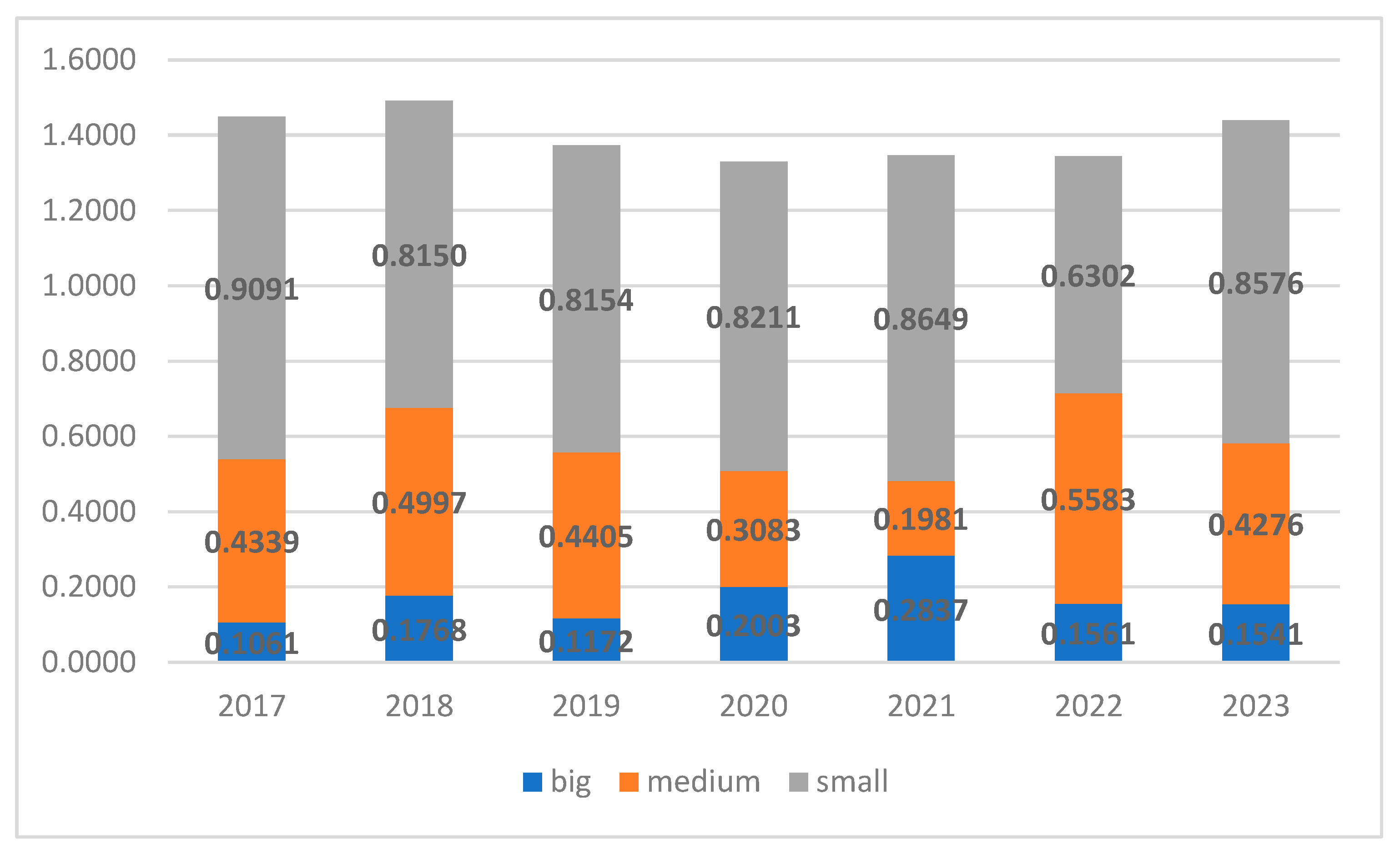
To determine which enterprises are most suitable for absorbing investments in innovation with the aim of upgrading production to EU quality standards, an analysis of investment attractiveness based on integral indicators was carried out (
Figure 1). The analysis used data from Ukrainian enterprises engaged in the production of milk and cream, categorized as large, medium, and small. The data sources included the State Statistics Service of Ukraine [
36], the Ministry of Agrarian Policy and Food of Ukraine [
37], as well as the Agrarian Political Report [
41].
The calculation took into account the key indicators that determine the stability of economic development of enterprises. The integral index was calculated based on the following sustainability coefficients for enterprises engaged in milk production: mobility coefficient, financial independence ratio, total capital turnover ratio, return on capital employed in fixed assets and other non-current assets, equity turnover ratio, labor productivity, return on capital based on net income, return on equity, operating profitability, profitability of all activities, and return on investment ratio.
The integral indicator of investment attractiveness for dairy industry enterprises was determined as the arithmetic mean of the sum of normalized indicators for each type of enterprise. Formulas (1) and (2) were used to calculate the indicators.
The present calculations pertain to a balanced system of sustainable development indicators. To ensure comparability and the correctness of juxtaposing enterprises, a preliminary normalization of the selected indicators was conducted. Its purpose is to bring all indicators to a common basis of comparison—a dimensionless scale that eliminates the influence of differing units of measurement and variations in indicator magnitudes. Normalization simultaneously preserves the internal relationships among the indicators, enabling an adequate assessment of their contribution to the overall integral result.
Since all selected indicators belong to the group of stimulative indicators, an increase in their values has a positive effect on the level of investment attractiveness. The best value of a normalized indicator equals “0,” which corresponds to the maximum absolute value among the enterprises under comparison. Thus, the closer the normalized indicator is to zero, the stronger the enterprise’s position according to the corresponding criterion.
The obtained research results made it possible to formulate several important conclusions regarding the investment attractiveness of enterprises producing milk and cream, taking into account their division into large, medium, and small categories. The constructed model clearly demonstrates that the potential of enterprises is largely determined by their scale. In particular, large producers exhibit a more stable structure of indicators and a higher level of adaptability to changes in the external environment, which ensures their leading positions in terms of integral assessments. Medium and small enterprises, although displaying certain competitive advantages in specific aspects, lag behind large enterprises in their overall level of investment attractiveness due to limited resources, lower innovation activity, and a more vulnerable market position.
Thus, the normalization of indicators and the subsequent integral analysis made it possible to obtain an objective picture of the distribution of investment potential among enterprises of different scales, which serves as an important tool for strategic planning and the development of an effective investment policy within the sector.
Large enterprises demonstrate significantly higher integrated indicators of investment attractiveness. This can be explained by their greater financial stability, established distribution channels, more advanced technological capabilities, and their ability to adapt more rapidly to European quality and safety standards.
Medium-sized enterprises show a moderate level of investment attractiveness. They possess development potential but require external support (from the state or investors), particularly in the form of tax incentives or access to low-interest loans for production modernization. Their innovative initiatives are often limited in scale but are characterized by a higher level of adaptability to change.
Small enterprises have the lowest integrated indicators. The main obstacles to investing in innovation include limited financial resources, a weak technological base, insufficient knowledge of EU requirements, and a low level of state support.
However, in the context of Ukraine’s European integration, enterprises of all categories must adapt to European standards, which requires substantial investments in innovation, production modernization, and the improvement of quality and food safety control systems.
4.3. Production Forecast
Given that large enterprises exhibit the highest investment attractiveness and therefore are best positioned to absorb investments, forecasts of dairy production and investment needs were subsequently based on the performance of large enterprises.
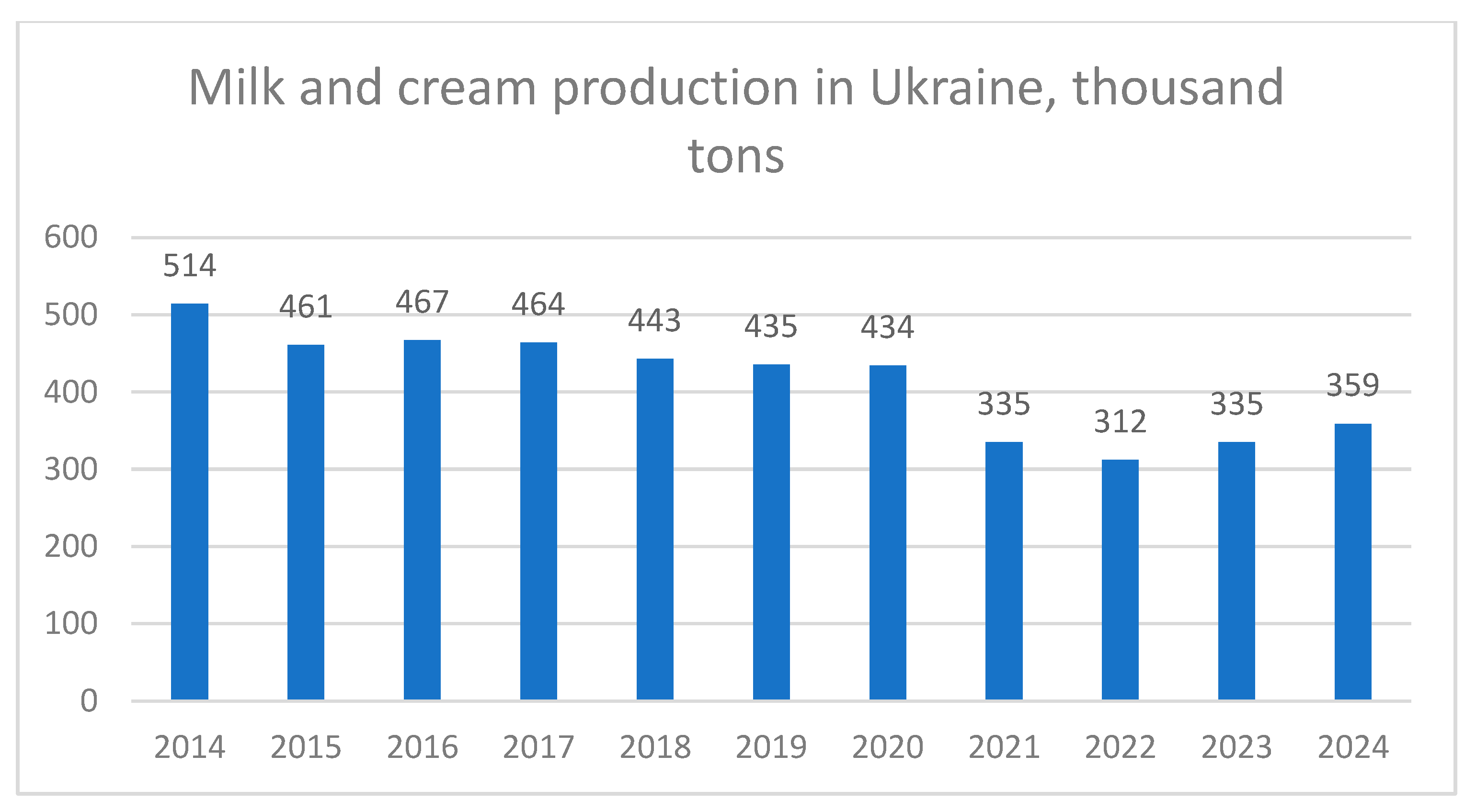
Figure 2 presents the volume of milk and cream production by large enterprises in Ukraine for the period 2014–2024.
As illustrated in
Figure 2, a decline in the production of milk and cream occurred in 2021, which was associated with the consequences of the COVID-19 pandemic. In 2022, the decline continued due to the outbreak of the war. However, in 2023–2024, production of milk and cream by large enterprises in Ukraine began to increase.
Based on the previous production volumes, a forecast of milk and cream output by large enterprises in Ukraine was calculated (
Table 2). In constructing the forecast, a quantitative forecasting approach was applied, specifically the time series forecasting method, since we possess data for past periods—namely, the volume of milk and cream production by large enterprises for 2014–2025.
Based on the data presented in
Table 2 and the adaptive second-order polynomial model (Formula (4)), a forecast of milk and cream production by large enterprises was calculated (
Table 3).
Adaptive second-order polynomial model:
Impact of factors on the pessimistic forecast: The continuation of military activity and the escalation of conflicts in key agricultural regions will lead to additional losses of livestock, disruptions in logistics, and a decline in investment attractiveness. Under these conditions, annual milk production is expected to decrease by approximately 2–6% per year during 2026–2030.
Impact of factors on the realistic forecast: The war will continue to exert influence, although without large-scale expansion into the main dairy-producing regions. Government policies and investment projects will partially offset the losses. The expected dynamics for dairy production include a slight decline in 2025–2026 (1–3%), followed by stabilization or a gradual recovery at a rate of 0–1.5% annually in 2027–2030 as the industrial sector undergoes modernization.
Impact of factors on the optimistic forecast: A relative reduction in hostilities within production and logistic corridors combined with effective government policies (processing incentives, credit programs, and logistical support) will contribute to sector recovery. Under this scenario, production is expected to grow by 1.5–4% annually over 2026–2030. Cumulatively, this results in a 5–25% increase by 2030 compared to the 2024 level, reaching approximately 8.5–10.5+ million tons depending on the baseline. In the optimistic case, industrial farms expand their output and compensate for the decline of small-scale producers.
4.4. Calculation of Investment Needs for Innovation
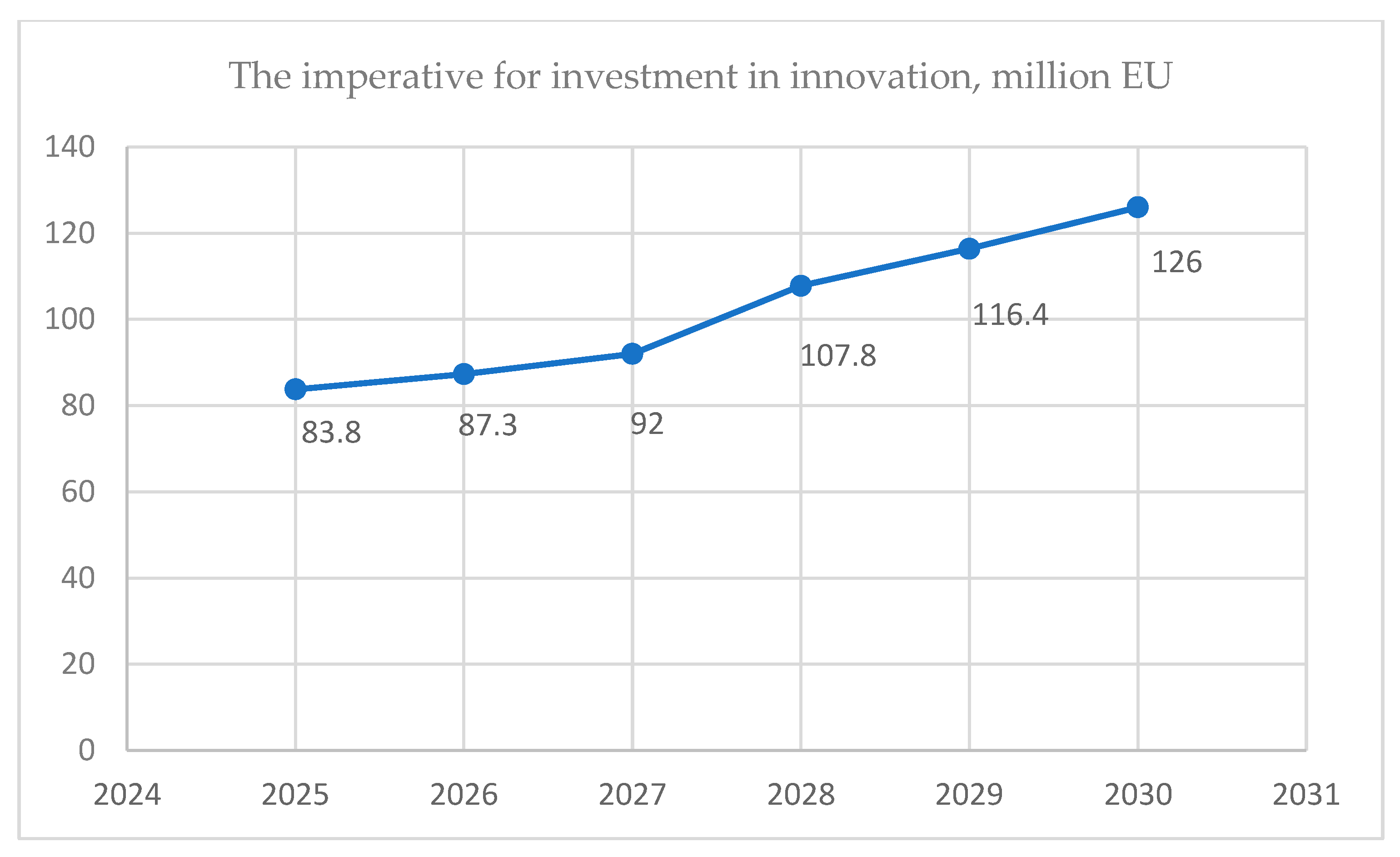
Since the factors affecting production can be most comprehensively incorporated into the realistic scenario, the calculation of investment needs for the modernization of large enterprises engaged in the production of milk and cream is based on the realistic production forecast (
Figure 3).
As shown in
Figure 3, the need for investment increases each year in line with the realistic forecast for milk and cream production by large enterprises in Ukraine. Under the realistic scenario, the synergy effect is significant: the modernization of farms improves the quality and stability of raw materials, while investments in processing enable the production of higher value-added products (cream, butter, cheese) for export, which enhances food security and sustainable development. Thus, the estimated investment requirement for the modernization of large enterprises producing milk and cream—aimed at ensuring compliance with EU production quality standards by 2030—amounts to 126 million euros.
When performing the calculations, certain inaccuracies may arise due to limitations in the availability and quality of information and data. Data for the period 2022–2024 were compiled under wartime conditions, which may have resulted in reporting errors, particularly for enterprises located in frontline regions. Aggregated data for large enterprises were used without regional disaggregation, without differentiation by product types (raw milk, cream, processing activities), and without accounting for differences in the technological level of enterprises. Owing to the high degree of uncertainty in the external environment, it is not possible to accurately forecast the duration and intensity of hostilities, the pace of logistics recovery, or the volume of foreign investment and international assistance. Moreover, the period 2014–2021 does not fully reflect the current operating conditions of the sector, as significant structural breaks occurred after 2022.
Potential consequences of forecasting errors include inaccurate estimates of investment needs (either underestimation or overestimation), a mismatch between production capacity and market demand, increased investment risks for the private sector, and a reduction in the overall investment attractiveness of the industry.
4.5. Political Implications
The forecast of investment needs for the modernization of large Ukrainian enterprises engaged in the production of milk and cream provides a foundation for shaping the government’s future policy agenda. A portion of state programs (state guarantees, co-financing) should be directed toward R&D and the implementation of technologies that increase productivity. Compliance with standards (sanitary regulations, certification) becomes a political priority for access to EU export markets. Policies supporting modernization will reduce farmers’ operational costs. Consequently, Ukraine’s adaptation to the requirements of the Common Agricultural Policy and the Sustainable Development Goals will accelerate.
4.6. Research Contribution
Based on a dynamic analysis of milk and cream production by large enterprises over a ten-year period, new empirical data have been obtained, revealing both downward and upward trends, which form the basis for strategic forecasting. The proposed forecasting model makes it possible to assess sectoral development under different scenarios and incorporates both economic and institutional factors. This provides a foundation for government decision-making in the field of food policy.
The study provides a quantitative assessment of the volume of investment required for technological modernization, productivity enhancement, cost reduction, and compliance with international standards. This makes it possible to identify the actual “innovation gap” within the sector.
This strengthens the practical value of the research for government agencies and industry associations. The study integrates three groups of indicators into a single analytical model: (1) investment attractiveness, (2) actual production dynamics, and (3) forecast scenarios and innovation needs. This approach ensures analytical consistency and increases the accuracy of policy recommendations. The results enable enterprises to evaluate their position in the sector, identify risks and opportunities, and plan investments, modernization activities, and production diversification in the medium and long term.
The results of the study generally align with the conclusions of international scholarly research on the modernization of the dairy industry, which emphasizes the role of investment, technological upgrading, and institutional support as key drivers of productivity growth and sectoral competitiveness. At the same time, in contrast to studies focusing on stable economic systems in the European Union or North America, this paper places particular emphasis on the functioning of the dairy sector under conditions of a multifactor crisis caused by the COVID-19 pandemic and the full-scale war. This perspective makes it possible to extend existing approaches to the analysis of industry modernization by accounting for the impact of exogenous shocks on investment dynamics and firms’ production decisions.
Unlike the majority of existing studies, which consider dairy industry modernization primarily through the lens of technological innovation or environmental efficiency, the approach proposed in this article is based on the integration of three interrelated analytical blocks: actual production dynamics, the investment attractiveness of enterprises, and forecast scenarios of innovative development. Such integration enables not only an assessment of the current state of the industry but also the formation of a systemic understanding of the long-term trajectories of its transformation, representing an important contribution to the development of the theory of sectoral modernization in the agri-food sector.
The obtained results corroborate the findings of international studies indicating that large dairy enterprises exhibit a higher level of investment attractiveness and greater capacity for innovation adoption compared to small and medium-sized producers. Similar patterns are observed in European Union countries, where production concentration facilitates faster technological upgrading and compliance with international quality standards. At the same time, the results of this study demonstrate that under Ukrainian conditions such asymmetry is amplified by the limited access of small enterprises to financial resources and public support programs, highlighting the need for differentiated policies to stimulate modernization.
The study enriches the existing body of literature that examines dairy sector modernization in the context of sustainable development by providing a quantitative substantiation of the relationship between investments in technological upgrading and the achievement of the Sustainable Development Goals. In contrast to conceptual or descriptive approaches, the proposed model allows for the estimation of the volume of investment required to simultaneously enhance economic efficiency, reduce environmental pressure, and strengthen the social impact of enterprise activities. This expands theoretical understanding of the role of innovation in transforming agri-food systems under conditions of a transition economy.
5. Conclusions
For Ukrainian dairy enterprises to effectively implement international quality and safety standards, it is essential to attract investment aimed at modernizing their material infrastructure and upgrading production technologies.
Investment in the modernization of dairy production simultaneously promotes economic growth, social development, and environmental sustainability. From an economic perspective, such investments stimulate productivity, facilitate access to EU markets, and attract capital through innovation and infrastructure development, thereby aligning with Sustainable Development Goals (SDGs) 8 and 9. Socially, modernization strengthens rural employment, increases farmers’ incomes, and ensures access to safe and high-quality food products, supporting SDGs 2 and 3. From an environmental standpoint, technological upgrades reduce emissions, optimize resource use, and encourage climate-resilient practices, consistent with SDGs 12 and 13.
The volume of milk and cream production by large enterprises in Ukraine declined in 2021 due to the consequences of the COVID-19 pandemic. In 2022, the decline continued as a result of the onset of the war. However, in 2023–2024, production of milk and cream by large Ukrainian enterprises began to increase.
The calculation and analysis of integral indicators of investment attractiveness for enterprises engaged in milk and cream production revealed that large enterprises demonstrate the highest investment attractiveness, whereas small enterprises show the lowest values. Thus, large enterprises are the most suitable for absorbing investments aimed at production modernization.
According to the forecasting model, the need for such investments for innovation in large Ukrainian enterprises engaged in the production of milk and cream will exceed 126 million euros by 2030. The effectiveness of governmental instruments for stimulating innovation in the dairy sector remains an issue of debate. Under conditions of wartime and economic instability, the state must determine priority sectors for support, among which milk and dairy production hold a significant position due to their crucial role in ensuring national food security.
Forecasts may be subject to inaccuracies due to limitations in the availability and quality of information and data. Significant forecasting errors may also arise as a result of military actions. In addition, the calculations were based on aggregated data for large enterprises, without regional disaggregation, product-type differentiation, or consideration of differences in the technological level of enterprises.
Investment in the modernization of technological processes within dairy enterprises has both direct and indirect effects on the achievement of several Sustainable Development Goals. Equipment upgrades, the implementation of energy-efficient technologies, automation, and the digitalization of quality control and production management systems contribute to a new operational model for dairy enterprises—one that integrates economic efficiency, environmental responsibility, and social orientation.
Thus, the modernization of the dairy sector not only enhances competitiveness but also becomes a driving force for balanced sustainable development by integrating economic performance, social well-being, and environmental responsibility.
Future research should focus on analyzing external factors that influence investment activity in the sector (such as changes in EU markets, inflationary processes, and currency risks), as well as on developing specific mechanisms for stimulating innovation across different types of dairy enterprises.




 ,
,