Pathways for SDG 6 in Japan: Challenges and Policy Directions for a Nature-Positive Water Future


Abstract
1. Introduction
- (1)
- (2)
- (3)
- (4)
- Synthesizes existing evidence on six strategic directions for completing the “second half” of SDG 6, including the potential and constraints of nature-based solutions (NbS) such as grassland restoration [37], artificial recharge [35], and eelgrass bed conservation [38,39], alongside green–gray hybrid portfolios [40].
- (5)
2. Materials and Methods
2.1. Materials
- Ministry of Agriculture, Forestry and Fisheries (MAFF): Surveys on groundwater quality with a focus on agricultural impacts [17].
2.2. Literature Search Strategy
- Search Criteria: The search strategy employed combinations of “Japan” with specific keywords such as “SDG 6”, “water quality”, “eutrophication”, “groundwater”, “nitrate”, “hypoxia”, “ecosystem”, “sewerage”, “johkasou”, and “integrated water resources management (IWRM)”.
- Grey Literature: In addition to peer-reviewed articles, relevant grey literature—including MOE and MLIT white papers, basic plans for water cycle policy, and statistical yearbooks—was screened directly from the official websites of the relevant ministries and agencies to capture the latest policy directives and local case studies not yet covered in academic journals.
2.3. Analytical Framework
- Indicator Mapping: Domestic statistics (e.g., BOD/COD compliance rates) were mapped onto the SDG 6 global monitoring framework to assess alignment and identify gaps between national achievements and global targets.
- Trend Analysis: Long-term time-series data were analyzed to identify trends and structural changes in water quality, specifically calculating simple structural breaks to evaluate the effectiveness of historical pollution control measures.
- DPSIR Assessment: The Drivers–Pressures–State–Impacts–Responses (DPSIR) framework was applied to structure the review, linking socio-economic drivers (e.g., urbanization, climate change) to environmental states (e.g., groundwater contamination, ecosystem loss) and evaluating the sufficiency of current policy responses.
3. Progress on SDG 6 Indicators
3.1. SDG 6.1 and 6.2: Universal Access and Emerging Risks
3.2. SDG 6.3: Water Quality and Wastewater Management
3.3. SDG 6.4: Water Use Efficiency and Scarcity
3.4. SDG 6.5: Integrated Water Resources Management (IWRM)
3.5. SDG 6.6: Protection of Water-Related Ecosystems
3.6. SDG 6.a and 6.b: International Cooperation and Participation
4. Challenges
4.1. Drivers: Climate Change and Demographic Shifts
- Climate Variability: Pseudo-global warming simulations for the Kanto region predict a decrease in minimum annual precipitation and an increase in intense rainfall events, heightening the risk of both droughts and floods [26,33]. In snow-dominated basins like the Tedori River, climate change is projected to significantly reduce snow water equivalent, threatening the stability of water resources during the spring melt season [27,46].
- Socio-economic Factors: Urbanization continues to drive the “heat island” effect, altering subsurface temperatures and groundwater flow systems in megacities like Osaka and Tokyo [32]. Additionally, foreign land acquisition in headwater regions has raised concerns, requiring transparent management plans to alleviate public anxiety [65].
4.2. Pressures: Diffuse Pollution and Changing Loads
- Nutrient Loads: Intensive agriculture remains a significant pressure, delivering high loads of nitrogen to groundwater and surface waters. Studies in the Miyakonojo River Basin show that agricultural land use is strongly correlated with elevated groundwater nitrogen levels [66].
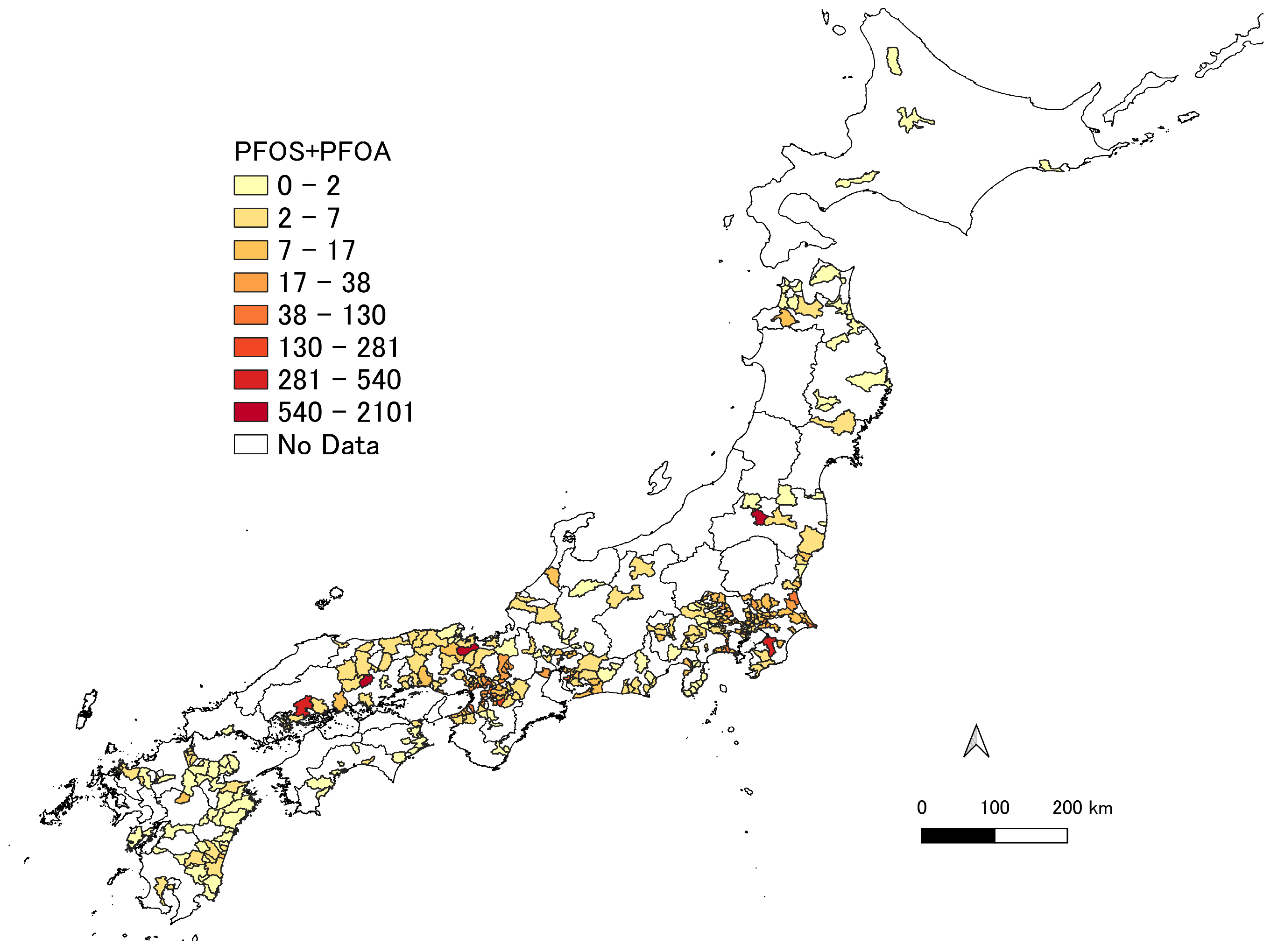
- Emerging Contaminants: Urban runoff acts as a pressure for new chemical pollutants. Specifically, first-flush stormwater in separated sewerage systems has been identified as a significant source of perfluorinated compounds (PFAS) [20]. Furthermore, high concentrations of antibiotics have been detected in river systems, driven by human and livestock waste, exerting pressure on microbial ecosystems [21].
4.3. State: Complex Groundwater Dynamics and Coastal Hypoxia
- Groundwater Quality: Long-term monitoring reveals widespread nitrate contamination in groundwater, often exceeding environmental standards [16,17,18]. In addition to anthropogenic inputs, natural geogenic factors contribute to the state of water quality, such as high fluoride concentrations derived from water-rock interactions in granitic and volcanic aquifers (e.g., Mizunami, Aso) and arsenic in specific sedimentary basins [68,69,70,71].
- Coastal Environments: Enclosed coastal seas exhibit a degraded state due to eutrophication. Long-term trends in Hiroshima Bay show increasing hypoxia driven by seawater stratification and organic loads, which is further complicated by climate warming [23]. Similarly, circulation patterns in Ise Bay trap nutrients, maintaining hypoxic conditions in bottom waters [59].
4.4. Impacts: Ecosystem Vulnerability and Socio-Economic Risks
- Ecological Impacts: Hypoxia and acidification pose severe risks to marine life. In Osaka Bay, environmental factors including hypoxia have been linked to fluctuations in the recruitment of the gazami crab [22]. In subarctic lagoons, warming and acidification threaten Pacific oyster production, although eelgrass beds can mitigate some of these negative impacts [25,38].
- Disaster-Related Impacts: The Great East Japan Earthquake demonstrated the vulnerability of coastal ecosystems to tsunamis, causing soil salinization that hampers vegetation recovery [39].
- Social Resilience: Groundwater contamination and supply disruptions impact critical infrastructure. However, during the 2016 Kumamoto earthquakes, access to well water proved vital for maintaining hospital functions when municipal supplies failed, highlighting the impact of groundwater availability on disaster resilience [72].
4.5. Responses: Toward Integrated and Nature-Based Solutions
- Nature-Based Solutions (NbS): There is growing adoption of NbS, such as restoring grasslands to enhance groundwater recharge and utilizing paddy fields for artificial recharge during non-irrigation periods [35,37]. Integrated coastal management concepts like Satoumi represent a holistic response to balance human use and conservation [49].
5. Policy Directions
5.1. Climate-Resilient Water Systems
- Diversifying Water Sources: Groundwater should be strategically positioned as a resilient backup source for emergencies. The experience of the 2016 Kumamoto earthquakes demonstrated that well water is critical for maintaining hospital functions when centralized systems fail [72].
5.2. Infrastructure Renewal and Smart Asset Management
- Digital Transformation: The adoption of “digital twins” and smart sensors is essential to optimize the operation of water supply and sewerage systems, reducing leakage and maintenance costs [41].
- Water Reuse and Recycling: Promoting water reuse technologies is vital for closing the loop in the urban water cycle [78].
- Marine Safety: Recent engineering investigations on ballast tank flow phenomena and drainage system design provide foundational understanding of advanced ballast technologies. For example, analytical and experimental studies have detailed fluid flow behaviors within ballast tanks and performance implications for drainage systems [79].
5.3. Advanced Pollution Control and Emerging Contaminants
- Agricultural Runoff: Addressing nitrate pollution from agriculture is particularly challenging in Japan. Unlike the EU’s Nitrates Directive, which mandates strict controls, Japan lacks legally binding regulations on agricultural nutrient inputs (e.g., fertilizer application rates). Current measures primarily rely on voluntary guidelines, which have proven insufficient given the widespread detection of nitrates in groundwater [16,17,18]. Therefore, policy must shift from relying on voluntary cooperation to creating structural incentives. This includes linking agricultural subsidies to environmental compliance (cross-compliance) and promoting slow-release fertilizers [81]. Additionally, utilizing underground dams in island regions like Okinawa offers a technical solution to secure water resources while managing nitrate flux [74].
5.4. Deepening IWRM and Groundwater Governance
- Land-Water Linkages: Policies should explicitly recognize the link between land use and water quality. Studies in the Chugoku district and Yamaguchi Prefecture have shown that integrating landscape metrics into water management plans significantly improves water quality prediction and management [55,56,57].
- Social Coordination: Successful IWRM requires managing social dynamics. Case studies like the Makio Dam highlight the importance of fostering “harmony” and consensus between upstream and downstream communities to resolve conflicts [47,48]. Additionally, understanding Japan’s virtual water trade structure is crucial for global responsibility [82].
5.5. Enhancing Data Transparency and Citizen Engagement
- Community Involvement: Local stakeholders should be active participants in water management. The communal use of groundwater for snow melting in Obama City illustrates how local practices can balance economic benefits with resource sustainability [67].
- Satoumi Initiatives: The concept of Satoumi (coastal seas managed by local communities) in the Seto Inland Sea provides a model for participatory management that enhances both biodiversity and biological productivity [49].
5.6. Mainstreaming Nature-Based Solutions (NbS)
- Coastal Protection: Conserving and restoring eelgrass beds is a dual-benefit strategy that mitigates local ocean acidification while reducing the risk of malformation in oyster aquaculture [49].
- Artificial Recharge: Utilizing agricultural lands, specifically paddy fields, for artificial groundwater recharge during non-irrigation periods is a proven method to replenish aquifers and improve water quality.
- Forest Management: Proper thinning and management of forests are essential to maintain low-flow water resources, although the trade-offs with dam development must be carefully balanced [74].
6. Discussion
6.1. Bridging the Gap Between Infrastructure and Ecosystems
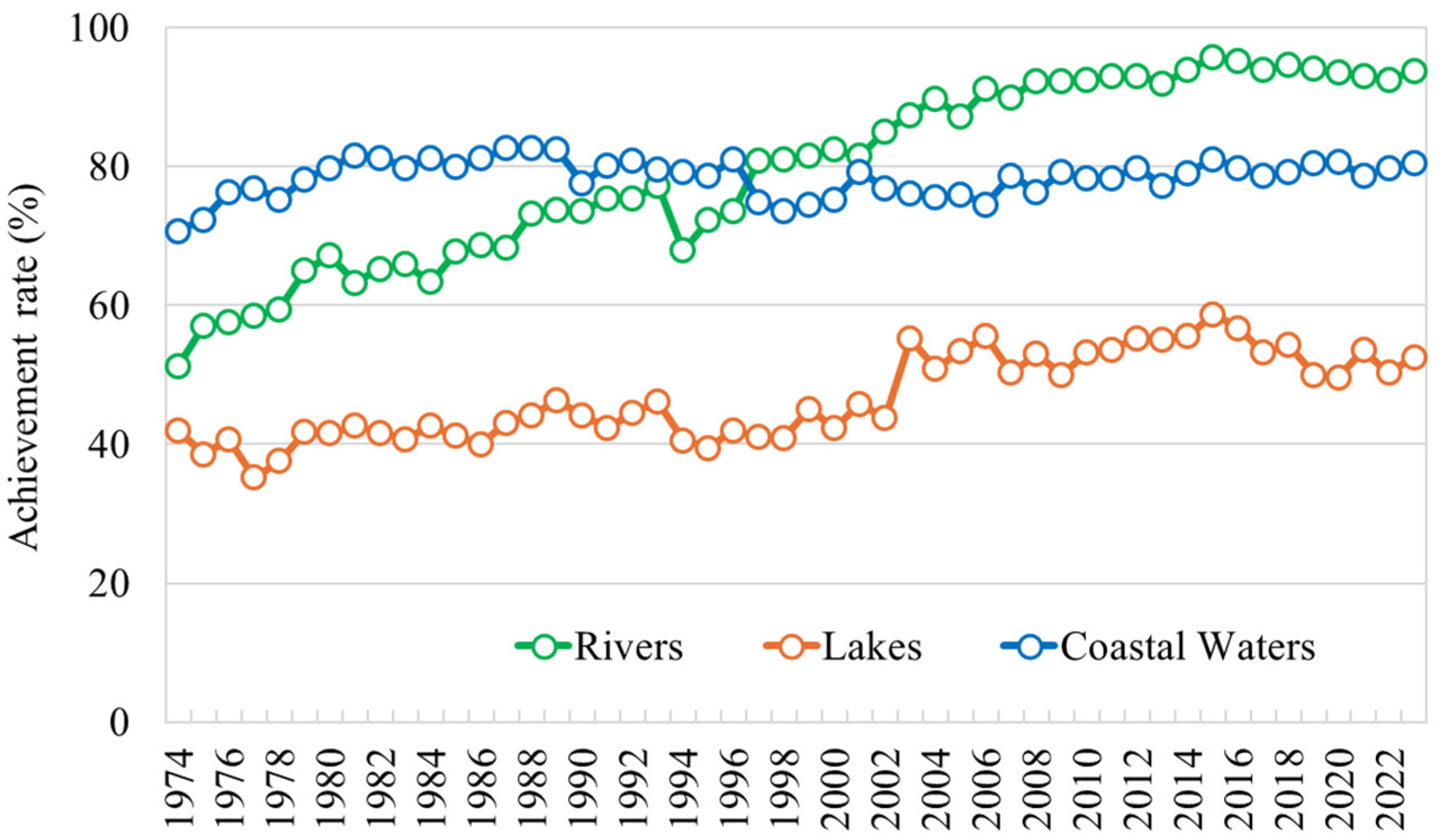
- Limits of Gray Infrastructure: The stagnation in BOD/COD compliance rates since the early 2000s suggests that the marginal utility of traditional point-source control measures (e.g., expanding sewerage systems) is diminishing [10,32]. The persistent issues of hypoxia in enclosed bays [22,67,84] and nutrient loads from agriculture [81] indicate that “gray” infrastructure alone cannot solve diffuse pollution or restore complex ecological functions.
- Trade-offs and Synergy: Managing water resources often involves trade-offs. For instance, while dams provide stable water supply and flood control, they can alter river flow regimes and sediment transport, impacting downstream ecosystems [47,72]. Conversely, Nature-based Solutions (NbS), such as the restoration of grasslands in Aso [37] or the conservation of eelgrass beds [38], offer synergistic benefits by enhancing groundwater recharge, sequestering carbon, and providing habitats, aligning water security with biodiversity goals.
6.2. The Invisible Resource: Mainstreaming Groundwater Governance
- Resilience: The usage of well water during the Kumamoto earthquakes highlighted groundwater as a vital lifeline during disasters [23].
- Quality Management: Addressing nitrate contamination requires a shift from end-of-pipe treatment to source control in agriculture, potentially utilizing denitrification functions in aquifers and artificial recharge zones [64].
6.3. Global Implications
- For Developing Economies: Countries like Nigeria and Bangladesh, currently focusing on basic access (SDG 6.1/6.2) [11,12], can anticipate future challenges. Japan’s experience suggests that integrating wastewater treatment with ecosystem conservation early in the development phase prevents long-term environmental debts.
- For Water-Scarce Regions: Japan’s advances in water reuse [78] and leakage control offer technical solutions for arid regions like Bahrain [13]. Conversely, Japan must learn from global best practices in transboundary aquifer management and water diplomacy to secure its virtual water interests [27].
7. Conclusions
- From Sectoral to Integrated Management: Breaking down silos between river, forest, agricultural, and coastal management to implement true basin-scale IWRM (SDG 6.5) that accounts for groundwater and SGD.
- From Gray to Green-Gray Hybrid: Systematically incorporating NbS (grasslands, wetlands, tidal flats) into infrastructure planning to enhance climate resilience and biodiversity.
- From Static to Adaptive Governance: Leveraging digital twins and real-time monitoring to adaptively manage water resources amidst rapid climate change and demographic shifts.
Author Contributions
Funding
Institutional Review Board Statement
Informed Consent Statement
Data Availability Statement
Conflicts of Interest
Abbreviations
| BOD | Biochemical Oxygen Demand |
| CCS | Carbon Capture and Storage |
| COD | Chemical Oxygen Demand |
| DO | Dissolved Oxygen |
| DPSIR | Drivers–Pressures–State–Impacts–Responses |
| EC | Electrical Conductivity |
| IWRM | Integrated Water Resources Management |
| MAFF | Ministry of Agriculture, Forestry and Fisheries |
| MLIT | Ministry of Land, Infrastructure, Transport and Tourism |
| MOE | Ministry of the Environment |
| NbS | Nature-based Solution |
| ODA | Official Development Assistance |
| PFAS | Per- and Polyfluoroalkyl Substance |
| PFOA | Perfluorooctanoic Acid |
| PFOS | Perfluorooctanesulfonic Acid |
| SDG | Sustainable Development Goal |
| SGD | Submarine Groundwater Discharge |
References
- Harada, M. Minamata disease: Methylmercury poisoning in Japan caused by environmental pollution. Crit. Rev. Toxicol. 1995, 25, 1–24. [Google Scholar] [CrossRef]
- Ministry of the Environment, Japan (MOE). Environment White Paper 2006; MOE: Tokyo, Japan, 2006. [Google Scholar]
- Iwasaki, H. Overcoming Pollution in Japan and the Lessons Learned; MOE: Tokyo, Japan, 2008; Available online: https://wepa-db.net/archive/pdf/0810forum/paper36.pdf (accessed on 1 January 2026).
- Ministry of the Environment, Japan (MOE). Environment White Paper 2018; MOE: Tokyo, Japan, 2018. [Google Scholar]
- Tokyo Metropolitan Government (TMG). Sewerage in Tokyo; TMG: Tokyo, Japan, 2001; Available online: https://www.narbo.jp/data/04_materials/ma_sewerage.pdf (accessed on 1 January 2026).
- Ministry of Land, Infrastructure, Transport and Tourism (MLIT). Sewerage Statistics and Sewerage in Japan 2023/2024; MLIT: Tokyo, Japan, 2024; Available online: https://www.mlit.go.jp/mizukokudo/sewerage/crd_sewerage_tk_000104.html (accessed on 1 January 2026).
- UN-Water. SDG 6 Data Portal—Japan; UN-Water: Geneva, Switzerland, 2024; Available online: https://www.sdg6data.org/country-or-area/Japan (accessed on 1 January 2026).
- Japan Water Works Association (JWWA). Water Supply in Japan 2023; JWWA: Tokyo, Japan, 2023; Available online: http://www.jwwa.or.jp/english/ (accessed on 1 January 2026).
- Ministry of Land, Infrastructure, Transport and Tourism (MLIT). Statistics on Water Supply and Demand; MLIT: Tokyo, Japan, 2024; Available online: https://www.mlit.go.jp/mizukokudo/mizsei/ (accessed on 1 January 2026). (In Japanese)
- Ministry of the Environment, Japan (MOE). Public Water Body Water Quality Survey Results (FY2023); MOE: Tokyo, Japan, 2024. [Google Scholar]
- Addie, O. The Status of Water and Sanitation Facilities in Public Primary Schools in Oyo State, Nigeria: Progress toward Achieving the SDG 6. Environ. Health Insights 2025, 19, 11786302251332045. [Google Scholar] [CrossRef]
- Akhter, T.; Naz, M.; Salehin, M.; Arif, S.T.; Hoque, S.F.; Hope, R.; Rahman, M.R. Hydrogeologic Constraints for Drinking Water Security in Southwest Coastal Bangladesh: Implications for Sustainable Development Goal 6.1. Water 2023, 15, 2333. [Google Scholar] [CrossRef]
- Al-Noaimi, M.A. SDG goal 6 monitoring in the Kingdom of Bahrain. Desalin. Water Treat. 2020, 176, 406–427. [Google Scholar] [CrossRef]
- UNESCO. UN World Water Development Report 2022: Groundwater—Making the Invisible Visible; UNESCO: Paris, France, 2022; Available online: https://www.unesco.org/reports/wwdr/2022/en (accessed on 1 January 2026).
- Ministry of the Environment, Japan (MOE). White Paper on the Environment, Sound Material-Cycle Society and Biodiversity 2024; MOE: Tokyo, Japan, 2024; Available online: https://www.env.go.jp/policy/hakusyo/r06/index.html (accessed on 1 January 2026). (In Japanese)
- Watanabe, M. Groundwater nitrate pollution and agriculture in Japan. J. Jpn. Soc. Hydrol. Water Resour. 2015, 28, 135–146. [Google Scholar]
- MAFF; MOE. Nationwide Groundwater Quality Survey Results; Government of Japan: Tokyo, Japan, 2023; Available online: https://www.env.go.jp/water/chikasui/ (accessed on 1 January 2026). (In Japanese)
- Sugimoto, Y.; Toyomitsu, Y.; Muto, I.; Hirata, M. Factors Associated with Well-to-Well Variation in Nitrate Concentration of Groundwater in a Nitrate-Polluted District in Miyakonojo Basin, Southern Kyushu, Japan. Water Air Soil Pollut. 2009, 199, 23–32. [Google Scholar] [CrossRef]
- Abeynayaka, A.; Werellagama, I.; Yamasaki, K.; Nguyen, T. Rapid sampling of suspended and floating microplastics in riverine environments in Japan. Water 2020, 12, 1903. [Google Scholar] [CrossRef]
- Zushi, Y.; Masunaga, S. First-flush loads of perfluorinated compounds in stormwater runoff from Hayabuchi River basin, Japan served by separated sewerage system. Chemosphere 2009, 76, 833–840. [Google Scholar] [CrossRef]
- Tanaka, M.; Takahashi, Y.; Suzuki, Y. Source and fate of antibiotics in a river in Japan. Environ. Sci. Technol. 2019, 53, 14457–14466. [Google Scholar]
- Ariyama, H.; Secor, D.H. Effect of environmental factors, especially hypoxia and typhoons, on recruitment of the gazami crab Portunus trituberculatus in Osaka Bay, Japan. Fish. Sci. 2010, 76, 315–324. [Google Scholar] [CrossRef]
- Doi, H. Long-term trend of hypoxia in Hiroshima Bay, Japan: Possible role of Pacific oyster aquaculture and climate change. Mar. Pollut. Bull. 2020, 160, 111663. [Google Scholar]
- Ichikawa, Y.; Takao, Y.; Tanimoto, T. Long-term effect of iron supply on phytoplankton community structure in a eutrophic estuary in Japan. Estuar. Coast. Shelf Sci. 2013, 120, 31–39. [Google Scholar]
- Abe, H. Climate warming promotes Pacific oyster production in a subarctic lagoon and bay, Japan: Projection of future trends using a three dimensional physical-ecosystem coupled model. Reg. Stud. Mar. Sci. 2021, 47, 102026. [Google Scholar] [CrossRef]
- Kuroda, T. Climate change impacts on river flow and water temperature in the Nagara River basin, Japan. J. Hydrol.-Reg. Stud. 2017, 9, 221–235. [Google Scholar]
- Shirotani, K. Climate change impacts on snow water equivalent and water resources storage in the Tedori River basin, Japan. J. Hydrol.-Reg. Stud. 2017, 9, 171–182. [Google Scholar]
- Kudo, G. (Ed.) Structure and Function of Mountain Ecosystems in Japan: Biodiversity and Vulnerability to Climate Change; Springer: Tokyo, Japan, 2016. [Google Scholar]
- OECD. OECD Environmental Performance Reviews: Japan 2025; OECD Publishing: Paris, France, 2025. [Google Scholar] [CrossRef]
- IPCC. Climate Change 2023: Synthesis Report; IPCC: Geneva, Switzerland, 2023; Available online: https://www.ipcc.ch/report/ar6/syr/ (accessed on 1 January 2026).
- FAO. AQUASTAT Database—Japan; FAO: Rome, Italy, 2024; Available online: https://data.apps.fao.org/aquastat/ (accessed on 1 January 2026).
- Ye, L.; Kameyama, Y. Structural changes in water quality management in Japan. Environ. Sci. Policy 2020, 108, 45–56. [Google Scholar]
- Baba, K.; Tanaka, T. Climate change impacts on hydrological variables and drought conditions in the Tone River basin, Japan. J. Hydrol.-Reg. Stud. 2017, 9, 205–220. [Google Scholar]
- Abe, H.; Yoshida, M.; Igarashi, T. Influence of Seasonal Pumping on Groundwater Sources and Flow System, Nagaoka Plain, Japan. Groundwater 2018, 56, 470–481. [Google Scholar] [CrossRef]
- Nakada, Y.; Hosono, T.; Shimada, J. Groundwater recharge function of paddy fields: A case study in the Shirokawa River midstream basin, Kumamoto, Japan. Hydrol. Process. 2019, 33, 353–366. [Google Scholar]
- Yamashita, K.; Hosono, T.; Yasumoto, J. Impact of groundwater use on land subsidence in the Chikugo and Saga Plains, Japan. Water Resour. Manag. 2018, 32, 4429–4443. [Google Scholar]
- Amano, H.; Nakagawa, K.; Ichikawa, T.; Berndtsson, R. Potential Effects of Grassland Restoration on the Water Resources in Nango-Dani, Aso, Japan. Water 2025, 17, 2466. [Google Scholar] [CrossRef]
- Abe, H.; Kanematsu, Y.; Kurita, Y. Eelgrass beds can mitigate local acidification and reduce oyster malformation risk in a subarctic lagoon, Japan: A three-dimensional ecosystem model study. Ocean Model. 2022, 173, 101997. [Google Scholar] [CrossRef]
- Sato, K.; Takada, T. Effects of tsunami-induced soil salinization on the recovery of coastal vegetation in Japan. Ecol. Res. 2018, 33, 555–566. [Google Scholar]
- Xu, L.; Cheng, L.; Li, Y.; Chen, Y. Nature-based solutions for water quality improvement. Environ. Res. Lett. 2024, 19, 045012. [Google Scholar]
- Pedersen, A.N.; Borup, M.; Brink-Kjær, A.; Christiansen, L.E.; Mikkelsen, P.S. Digital twins for water and wastewater systems. Water Res. 2021, 204, 117597. [Google Scholar]
- Ministry of the Environment, Japan (MOE). White Paper on Water, Soil, Ground and Marine Environment Conservation; MOE: Tokyo, Japan, 2024. (In Japanese) [Google Scholar]
- Ministry of the Environment, Japan (MOE). Environment White Paper 2023; MOE: Tokyo, Japan, 2023; Available online: https://www.env.go.jp/policy/hakusyo/r05/index.html (accessed on 1 January 2026). (In Japanese)
- Buesseler, K.O. Fishing for Answers off Fukushima. Science 2012, 338, 480–482. [Google Scholar] [CrossRef] [PubMed]
- Normile, D. The Pacific Swallows Fukushima’s Fallout. Science 2013, 340, 547. [Google Scholar] [CrossRef]
- Nakamura, F.; Ishiya, M.; Nojiri, K.; Okadera, T. Prediction of water resources as snow storage under climate change in the Tedori River basin of Japan. Paddy Water Environ. 2013, 11, 463–471. [Google Scholar]
- Cunningham, E.J. Dam Close Water Resources and Productions of Harmony in Central Japan. Nat. Cult. 2016, 11, 69–92. [Google Scholar] [CrossRef]
- Stoll, J. Water Conflicts and the Production of Harmony: An Ethnography of the Makio Dam in Central Japan. J. Polit. Ecol. 2014, 21, 462–480. [Google Scholar]
- Takizawa, S.; Takao, K.E. Integrated water resources management in the Seto Inland Sea, Japan: Current status and future challenges for Satoumi management. Mar. Pollut. Bull. 2020, 154, 111168. [Google Scholar]
- Otsuka, H.; Tano, T.; Arakawa, H.; Yagi, H.; Hasegawa, K. Long-term water quality and eutrophication in Tokyo Bay. Mar. Pollut. Bull. 2021, 168, 112456. [Google Scholar]
- Ishii, Y.; Yokoyama, K.; Nakamura, M. Long-term trends in nutrient concentrations in the Seto Inland Sea. Mar. Pollut. Bull. 2008, 57, 524–532. [Google Scholar]
- Nakano, T.; Arakawa, H. Long-term changes in nutrient concentrations in Tokyo Bay. J. Oceanogr. 2022, 78, 123–138. [Google Scholar]
- Zhao, S.; Liu, S.; Yu, X. Global PM2.5 assessment for SDG 11.6.2. Ecol. Indic. 2023, 155, 110996. [Google Scholar]
- Government of Japan. Basic Act on the Water Cycle; Act No. 16 of 2014, amended 2021; Ministry of Justice: Tokyo, Japan, 2014; Available online: https://www.japaneselawtranslation.go.jp/en/laws/view/2691 (accessed on 1 January 2026).
- Amiri, B.J.; Nakane, K. Entire catchment and buffer zone approaches to modeling linkage between river water quality and land cover—A case study of Yamaguchi Prefecture, Japan. Chin. Geogr. Sci. 2008, 18, 85–92. [Google Scholar] [CrossRef][Green Version]
- Amiri, B.J.; Nakane, K. Modeling the Linkage Between River Water Quality and Landscape Metrics in the Chugoku District of Japan. Water Resour. Manag. 2009, 23, 931–956. [Google Scholar] [CrossRef]
- Amiri, B.J.; Suder, N.; Nakane, K. Linkage between in-Stream Total Phosphorus and Land Cover in Chugoku District, Japan: An Ann Approach. J. Hydrol. Hydromech. 2012, 60, 33–44. [Google Scholar] [CrossRef][Green Version]
- Bahar, M.M.; Ohmori, H.; Yamamuro, M. Relationship between river water quality and land use in a small river basin running through the urbanizing area of Central Japan. Limnology 2008, 9, 19–26. [Google Scholar] [CrossRef]
- Fujiwara, T.; Sanford, L.P.; Nakatsuji, K.; Sugiyama, Y. The role of circulation in the development of hypoxia in Ise Bay, Japan. Estuar. Coast. Shelf Sci. 2002, 54, 19–31. [Google Scholar] [CrossRef]
- Grigoryeva, N.I. Investigation of hypoxia in the Eastern Bosporus (the Peter the Great Gulf, the Sea of Japan). Russ. Meteorol. Hydrol. 2017, 42, 717–722. [Google Scholar] [CrossRef]
- Grigoryeva, N.I.; Zhuravel, E.V. The First Detection of Hypoxia in Vostok Bay (the Sea of Japan). Russ. Meteorol. Hydrol. 2024, 49, 537–545. [Google Scholar] [CrossRef]
- Mino, Y.; Sukigara, C.; Ishizaka, J. Enhanced oxygen consumption results in summertime hypoxia in Mikawa Bay, Japan. Environ. Sci. Pollut. Res. 2023, 30, 26120–26136. [Google Scholar] [CrossRef]
- Zhang, J.; Satake, H. The chemical characteristics of submarine groundwater seepage in Toyama Bay, central Japan. In Land and Marine Hydrogeology; Taniguchi, M., Wang, K., Gamo, T., Eds.; Elsevier: Amsterdam, The Netherlands, 2003; pp. 45–60. [Google Scholar]
- Onodera, S. Submarine groundwater discharge and its implications for coastal ecosystem in the Japan Sea. J. Hydrol. 2018, 557, 297–307. [Google Scholar]
- Cho, S.; Oki, H. Impacts of foreign land acquisition on water source regions and the creation of an effective management plan for the water source region in Japan. Asia-Pac. J. Reg. Sci. 2019, 5, 625–642. [Google Scholar]
- Otsubo, K.; Miyashita, Y.; Ichinose, T. Impact of citrus farming on groundwater quality in Osaki-shimojima Island, Seto Inland Sea, Japan. Water Sci. Technol. 2018, 78, 208–217. [Google Scholar]
- Kato, T.; Kuroda, H.; Nakano, T. Effect of seasonal groundwater utilization for snow melting on regional economic balance: A case study of Obama city, Japan. Water Resour. Manag. 2018, 32, 3139–3151. [Google Scholar]
- Abdelgawad, A.M.; Watanabe, K.; Takeuchi, S. The origin of fluoride-rich groundwater in Mizunami area, Japan—Mineralogy and geochemistry implications. Eng. Geol. 2009, 108, 76–85. [Google Scholar] [CrossRef]
- Sato, T.; Shimano, Y.; Nakagawa, K. Effect of deep groundwater flow on the distribution of fluoride in the Kumamoto region, western Japan. Water Resour. Manag. 2019, 33, 3415–3430. [Google Scholar]
- Takahashi, A.; Shibata, T.; Takizawa, S. High concentrations of fluoride in groundwater and springs in the Aso caldera, Japan: The role of magmatic gas. Chem. Geol. 2019, 520, 22–31. [Google Scholar]
- Even, E.; Masuda, H.; Shibata, T.; Nojima, A.; Sakamoto, Y.; Murasaki, Y.; Chiba, H. Geochemical distribution and fate of arsenic in water and sediments of rivers from the Hokusetsu area, Japan. J. Hydrol.-Reg. Stud. 2017, 9, 34–47. [Google Scholar] [CrossRef]
- Sekiyama, T.; Terada, H.; Fukushi, K. Hospital water resilience during the 2016 Kumamoto earthquakes in Japan: The role of wells as an independent water source. Water Policy 2018, 20, 522–535. [Google Scholar]
- Miyamoto, M.; Gomi, T.; Sidle, R.C. Impact of forest management on low flow and water resources: A comparative study of dam reservoir development and forest management in Japan. J. Hydrol.-Reg. Stud. 2017, 9, 195–204. [Google Scholar]
- Machida, K.; Ishida, S.; Tsuchihara, T. Water management system in Oki-Daito Island, Japan: A case study of underground dam for water resource development. Water 2019, 11, 2047. [Google Scholar]
- Mito, S.; Xue, Z.; Kita, J. Geochemical modeling of CO2-water-rock interaction during CO2 injection experiment in Nagaoka, Japan. Energy Procedia 2011, 4, 4945–4952. [Google Scholar]
- Aizawa, K.; Yokoo, A.; Ogawa, Y. Phreatic volcanic eruption preceded by observable shallow groundwater flow at Iwo-Yama, Kirishima Volcanic Complex, Japan. Commun. Earth Environ. 2022, 3, 187. [Google Scholar] [CrossRef]
- Yonezawa, M. Hydrogeological and geochemical controls on groundwater flow and chemistry in the Toki uranium deposit area, central Japan. J. Hydrol.-Reg. Stud. 2017, 9, 147–157. [Google Scholar]
- Shimizu, K. Water reuse and recycling in Japan—History, current situation, and future perspectives. Water Cycle 2023, 4, 1–13. [Google Scholar]
- Liu, G.; Shinoda, T.; Watanabe, T.; Kuroki, K.; Nakamori, T.; Obata, H. Investigation of Flow Phenomena and Improvement of Drain Course in Ship Ballast Tank Based on Two Phase Flow Model. J. Jpn. Soc. Nav. Archit. Ocean Eng. 2023, 38, 165–178. [Google Scholar] [CrossRef]
- Fujinaga, T.; Nakayama, T.; Watanabe, M. Assessment of the effects of climate change on agricultural water resources in Japan. Agric. Water Manag. 2018, 208, 271–282. [Google Scholar]
- Yoshida, K. Ecosystem-based fisheries management for a sustainable marine environment in Japan. Mar. Pollut. Bull. 2018, 135, 391–402. [Google Scholar]
- Nitta, K. Virtual water trade in Japan from 1980 to 2000: Decomposition analysis of the change in virtual water exports. Sustainability 2020, 12, 4757. [Google Scholar]
- Mitamura, M.; Hori, T. Characterization of groundwater based on δ2H, δ18O and Cl− concentration beneath the Osaka Plain, Southwest Japan. Geochem. J. 2019, 53, 235–247. [Google Scholar]
- Suzuki, S.; Sasaki, J.; Imamura, F. Assessment of ecological degradation and recovery of Tokyo Bay based on ecosystem health indicators. Ocean Coast. Manag. 2018, 165, 35–46. [Google Scholar]



| Indicator | Description | Current Value (Approx.) | Trend | Key Challenges & Drivers | References |
|---|---|---|---|---|---|
| 6.1.1 | Safely managed drinking water | 99% | Stable (High) | Aging infrastructure, seismic resilience, radioactive contamination risks. | [8,9,44,45] |
| 6.2.1 | Safely managed sanitation | 99% | Stable (High) | Population decline affecting maintenance costs, rural-urban disparities. | [6,9,11] |
| 6.3.1 | Wastewater treatment | 92% | Improving | Optimization of johkasou (on-site systems), advanced treatment for nutrients. | [6,9] |
| 6.3.2 | Ambient water quality | 57% (UN) ~90% (Domestic) | Stagnating | Diffuse pollution (nitrate), emerging contaminants (PFAS, antibiotics), hypoxia. | [7,10,16,20,21] |
| 6.4.1 | Water-use efficiency | $56.2/m3 (FAO AQUASTAT, 2024) | Improving | Economic growth driving efficiency, but low in agriculture; need for sector-specific strategies. | [7,31] |
| 6.4.2 | Water stress | 21.6% | Fluctuating | Climate variability, declining snow water storage, agricultural demand; high stress in certain regions. | [7,27,33,46] |
| 6.5.1 | IWRM implementation | 91/100 | Moderate | Cross-sectoral coordination, groundwater governance, stakeholder consensus; insufficient finance and gender mainstreaming. | [29,43,47,48] |
| 6.6.1 | Water-related ecosystems | Rapid changes in 3% of basins (2020 data) | Degrading | Hypoxia in enclosed bays, loss of wetlands/tidal flats, climate impacts on biodiversity; regional degradation. | [7,15,22,25,49] |
| Feature | SDG 6.3.2 (Good Ambient Water Quality) | Domestic Environmental Standard Achievement (BOD/COD) |
|---|---|---|
| Primary Focus | Comprehensive water quality status relative to natural background or target conditions. | Organic pollution control for protecting human health and living environments. |
| Core Parameters | Five Core Parameter Groups: 1. Dissolved Oxygen (DO) 2. Electrical Conductivity (EC) 3. Nitrogen (Total Nitrogen or Nitrate/Ammonia) 4. Phosphorus (Total Phosphorus or Orthophosphate) 5. pH | Organic Pollution Indicators: Biochemical Oxygen Demand (BOD) for rivers. Chemical Oxygen Demand (COD) for lakes and coastal seas. |
| Aggregation Rule | “One-Out, All-Out” Principle: A water body is classified as “good” only if at least 80% of monitoring values for all core parameters meet their targets. Failure in a single parameter (e.g., nitrogen) results in a failure classification. | Parameter-Specific Compliance: Typically reported as the percentage of measurement points achieving the standard for a specific parameter (e.g., “BOD compliance rate”). It does not usually fail a site based on a single exceedance in the headline statistic. |
| Sensitivity to Nutrients | High: Explicitly includes Nitrogen and Phosphorus as core parameters for all water body types. Many water bodies fail due to nutrient levels despite good BOD. | Variable: Nitrogen and Phosphorus standards exist but are applied primarily to lakes and coastal seas to prevent eutrophication, not universally to all river sections in the headline BOD/COD statistic. |
| Resulting Value (approx.) | ~57% (2020 reporting) Reflects strict aggregation where nutrient or DO failures in specific samples downgrade the entire assessment. | ~90% (Recent years) Reflects high success in controlling organic pollution (BOD/COD) from wastewater, potentially masking issues with nutrients or other specific parameters. |
| Implication | Highlights persistent issues in nutrient management, diffuse pollution, and hydro-morphological alterations that don’t necessarily spike BOD. | Demonstrates success in sanitation and point-source control (sewerage expansion) but may overestimate overall ecosystem health. |
| Strategic Direction | Key Focus Areas | Proposed Actions & Technologies | Primary SDG Targets | References |
|---|---|---|---|---|
| 1. Climate-Resilient Water Systems | Adaptation to altered precipitation, snowmelt decline, and disaster resilience. | • Positioning groundwater as a strategic emergency backup (e.g., hospital resilience). • Real-time monitoring of groundwater for volcanic/seismic precursors. • Adaptive reservoir operations for flood/drought extremes. | 6.4, 6.1 | [27,33,46,72,76,77] |
| 2. Infrastructure Renewal & Smart Asset Management | Aging infrastructure, population decline, circular economy. | • Digital Twins: Virtual simulation for leak detection and optimization. • Water Reuse: Closing the loop in industrial/urban cycles. • Marine Tech: “No-water-ballast tankers” to stop invasive species/pollution. | 6.1, 6.3, 6.4 | [41,78,79] |
| 3. Advanced Pollution Control & Emerging Contaminants | Diffuse pollution, new chemical threats beyond organic load. | • Advanced treatment for PFAS and antibiotics in urban runoff/rivers. • Underground dams for securing resources and managing nitrate flux. • Precision fertilizer management. | 6.3 | [20,21,71,74] |
| 4. Deepening IWRM & Groundwater Governance | Vertical/horizontal coordination, land-water linkage, transboundary issues. | • Landscape-based Management: Integrating land use metrics into water planning. • Ridge-to-Reef: Managing Submarine Groundwater Discharge (SGD) zones. • Social Harmony: Consensus building between upstream/downstream users. | 6.5, 6.6 | [47,48,55,63,64] |
| 5. Enhancing Data Transparency & Citizen Engagement | Stakeholder participation, local knowledge integration. | • Satoumi: Community-based coastal management. • Public dashboards for real-time water quality/quantity data. • Local resource sharing models (e.g., groundwater for snow melting). | 6.b | [7,49,67] |
| 6. Mainstreaming Nature-Based Solutions (NbS) | Ecosystem services, biodiversity, green-gray hybrid infrastructure. | • Grassland Restoration: Enhancing groundwater recharge in headwaters. • Artificial Recharge: Using paddy fields during non-irrigation periods. • Blue Carbon: Conserving eelgrass beds to mitigate acidification and hypoxia. | 6.6, 6.4 | [35,37,38,39,80] |
Disclaimer/Publisher’s Note: The statements, opinions and data contained in all publications are solely those of the individual author(s) and contributor(s) and not of MDPI and/or the editor(s). MDPI and/or the editor(s) disclaim responsibility for any injury to people or property resulting from any ideas, methods, instructions or products referred to in the content. |
© 2026 by the authors. Licensee MDPI, Basel, Switzerland. This article is an open access article distributed under the terms and conditions of the Creative Commons Attribution (CC BY) license.
Share and Cite
Wang, Q.; Okadera, T.; Kameyama, S.; Huang, X. Pathways for SDG 6 in Japan: Challenges and Policy Directions for a Nature-Positive Water Future. Sustainability 2026, 18, 994. https://doi.org/10.3390/su18020994
Wang Q, Okadera T, Kameyama S, Huang X. Pathways for SDG 6 in Japan: Challenges and Policy Directions for a Nature-Positive Water Future. Sustainability. 2026; 18(2):994. https://doi.org/10.3390/su18020994
Chicago/Turabian StyleWang, Qinxue, Tomohiro Okadera, Satoshi Kameyama, and Xinyi Huang. 2026. "Pathways for SDG 6 in Japan: Challenges and Policy Directions for a Nature-Positive Water Future" Sustainability 18, no. 2: 994. https://doi.org/10.3390/su18020994
APA StyleWang, Q., Okadera, T., Kameyama, S., & Huang, X. (2026). Pathways for SDG 6 in Japan: Challenges and Policy Directions for a Nature-Positive Water Future. Sustainability, 18(2), 994. https://doi.org/10.3390/su18020994