Article

Identification of Six Phytotoxic Compounds as Plant Growth Inhibitors from Afzelia xylocarpa Leaves


1
Department of Agronomy, Faculty of Agriculture, Kasetsart University, Bangkok 10900, Thailand
2
Department of Applied Biological Science, Faculty of Agriculture, Kagawa University, Takamatsu 761-0795, Kagawa, Japan
3
The United Graduate School of Agricultural Sciences, Ehime University, 3-5-7 Tarumi, Matsuyama 790-8566, Ehime, Japan
4
Graduate School of Engineering and Science, University of the Ryukyus, 1 Senbaru, Nishihara 903-0213, Okinawa, Japan
5
Faculty of Education, University of the Ryukyus, 1 Senbaru, Nishihara 903-0213, Okinawa, Japan
*
Author to whom correspondence should be addressed.
Sustainability 2026, 18(2), 995; https://doi.org/10.3390/su18020995 (registering DOI)
Submission received: 5 November 2025 / Revised: 18 December 2025 / Accepted: 15 January 2026 / Published: 19 January 2026
(This article belongs to the Special Issue Sustainable Agricultural Production and Crop Plants Protection)

Abstract

Plant-derived phytotoxins are widely investigated as sustainable alternatives to synthetic herbicides; however, a major limitation is the insufficient chemical characterization of active constituents in many promising candidate species, including Afzelia xylocarpa (Kurz) Craib. In this study, the phytotoxicity of A. xylocarpa leaves and their phytotoxic compounds were investigated to evaluate their potential value as a bioherbicide. The results showed the A. xylocarpa leaf extracts suppressed the seedling growth of Lepidium sativum L., Lactuca sativa L., and Lolium multiflorum Lam. Six compounds were obtained from the A. xylocarpa leaf extracts using bio-guided fractionation and were identified as (+)-dehydrovomifoliol (1), (3R,6R,7E)-3-hydroxy-4,7-megastigmadien-9-one (2), (+)-3-hydroxy-β-ionone (3), (S)-N-(1-hydroxy-3-phenylpropan-2-yl) benzamide (4), isololiolide (5), and (+)-lariciresinol (6). Compounds 1 to 6 significantly reduced seed germination, seedling growth, and dry biomass accumulation into different extents (p < 0.05). L. sativum roots were more susceptible to all the obtained compounds than other growth parameters, except for compound 4. Based on the doses of six compounds required for 50% growth inhibition (defined as EC50 value), compound 3 (EC50 values = 227.4 to 582.3 µM) and compound 5 (EC50 values = 53.8 to 200.8 µM) were the most toxic against all the growth parameters of L. sativum and may be the principal active compounds of the A. xylocarpa leaf extracts. Such phytotoxic effects indicate that these six compounds could be candidates for bioherbicides.

1. Introduction

In agricultural practices, the application of synthetic herbicides has long been established because of their accessibility and effectiveness in weed management [1,2]. Nevertheless, the overuse of synthetic herbicides has resulted in major health problems for humans, environmental pollution, and the destruction of biodiversity [3]. To avoid the negative consequences of synthetic herbicides, researchers have been seeking alternatives derived from natural sources [4,5]. In sustainable agriculture, plant-derived phytotoxins offer an attractive alternative to conventional synthetic herbicides. They are typically biodegradable, structurally diverse, and less persistent in the environment, thereby reducing risks to non-target organisms and human health [6,7]. Investigating the specific bioactive constituents of locally sourced phytotoxins provides a foundation for formulating bioherbicides. These natural products are vital for advancing integrated weed management, decreasing dependence on synthetic chemicals, and enhancing the ecological function of agricultural systems [8,9].
Phytotoxic compounds impede plant development at all stages from seed germination to maturity, thus inhibiting seed sprouting, seedling development, dry matter accumulation, and the synthesis of various biochemicals [10,11]. Numerous earlier investigations have shown that different biochemicals have different phytotoxic effects on target species. Lun et al. [12] noted that two compounds from the stems of Plumbago rosea, 7,4,5-tri-O-methyl dihydroquercetin and 7,4,5-tri-O-methylampelopsin, prohibit L. sativum from growing shoots and roots. Soriano et al. [13] showed that bartsioside, various glycosides, melampyroside, and mussaenoside from Bellardia trixago inhibit the growth of Orobanche cumana radicles. Moreover, some phytotoxic compounds have been developed as commercialized herbicides. For instance, the leptospermone triketone generated by Callistemon citrinus and Leptospermum scoparium is the source of triketone herbicides that block hydroxyphenylpyruvate dioxygenase (HPPD) [14]. After being altered to increase phytotoxicity, the phytotoxic monoterpene 1,8-cineol from the labdanum of Cistus ladanifer L. was commercialized as Cinmethylene [15,16]. Consequently, many scholars seek to isolate and identify bioactive compounds with high efficiency for developing natural herbicides. Screening bioassays are crucial tools for evaluating the phytotoxic potential of plant extracts and for assaying activity levels during phytotoxin purification prior to identification [17,18,19].
Afzelia xylocarpa (Kurz) Craib. (Fabaceae family) is one of the most important forest species in Thailand, Vietnam, Cambodia, Laos, and Burma [20]. Extracts of A. xylocarpa have shown anti-inflammatory, antibacterial, antidiabetic, and antioxidant properties [21,22]. In addition, its chemical composition has been widely studied and many compounds have been identified; these compounds include chlorogenic, caffeic, rosmarinic, isovanillic, cinnamic, and p-coumaric acids, as well as cholesterine, campesterol, campestanol, stigmasterol, kaempferol-7-O-β-D-glucopyranoside, friedelin, β-sitosterol, butyl benzoate, stigmas-ta-4, 25-dien-3-one, epifriedelanol, stigmasterol, palmitic acid, linoleic acid, and α-linolenic acid [23,24]. Previous research on A. xylocarpa has primarily concentrated on its pharmacological activities and general phytochemical characteristics, with limited attention given to its phytotoxic potential. Only a few phenolic acids isolated from the leaves of A. xylocarpa have been reported to exhibit plant growth inhibitory effects [25], while most of the potentially active molecules remain unidentified. Consequently, the specific secondary metabolites accountable for the phytotoxic action of the plant leaves, together with their dose–response relationships in model plants, are still inadequately characterized. Thus, the aims of study were (1) to evaluate the phytotoxic activity of aqueous methanol leaf extracts of A. xylocarpa against representative dicotyledonous and monocotyledonous test species; (2) to isolate and structurally identify the main phytotoxic constituents of the leaf extract using a bioassay-guided fractionation approach; and (3) to characterize the dose–response relationships and effective concentrations of the isolated compounds on L. sativum biomass accumulation, seed germination, and seedling growth.

2. Materials and Methods

2.1. Preparation of A. xylocarpa Leaf Extracts

Afzelia xylocarpa leaf were collected from Phitsanulok province, Thailand (16°49′ N, 100°16′ E) (Phytosanitary Certificate No. 2017TH 005497/BE). After being cleaned with tap water, the leaves were dried in the shade and then finely crushed. A solution of distilled water and methanol (MeOH) (30:70 v/v; 500 mL) was combined with 100 g of powdered leaf samples, allowed to soak in the dark for 48 h, and then filtered through a Buchner funnel using filter paper No. 2 (Toyo Roshi Kaisha Ltd., Tokyo, Japan). After that, the residue was re-mixed for 24 h with 500 mL of MeOH. Following filtering, a rotary evaporator (Yamato Scientific Co. Ltd., Tokyo, Japan) was used to combine the two solutions and evaporate them to dryness at 40 °C. The crude extracts were diluted with MeOH to produce bioassay concentrations ranging from 1 to 300 mg plant dry weight (DW) equivalent extract/mL. The concentration of the crude leaf extract is expressed as mg DW equivalent extract/mL, which represents the amount of A. xylocarpa leaf dry matter used to obtain the extract corresponding to 1 mL of solution.

2.2. Bioassays of A. xylocarpa Leaf Aqueous MeOH Extracts

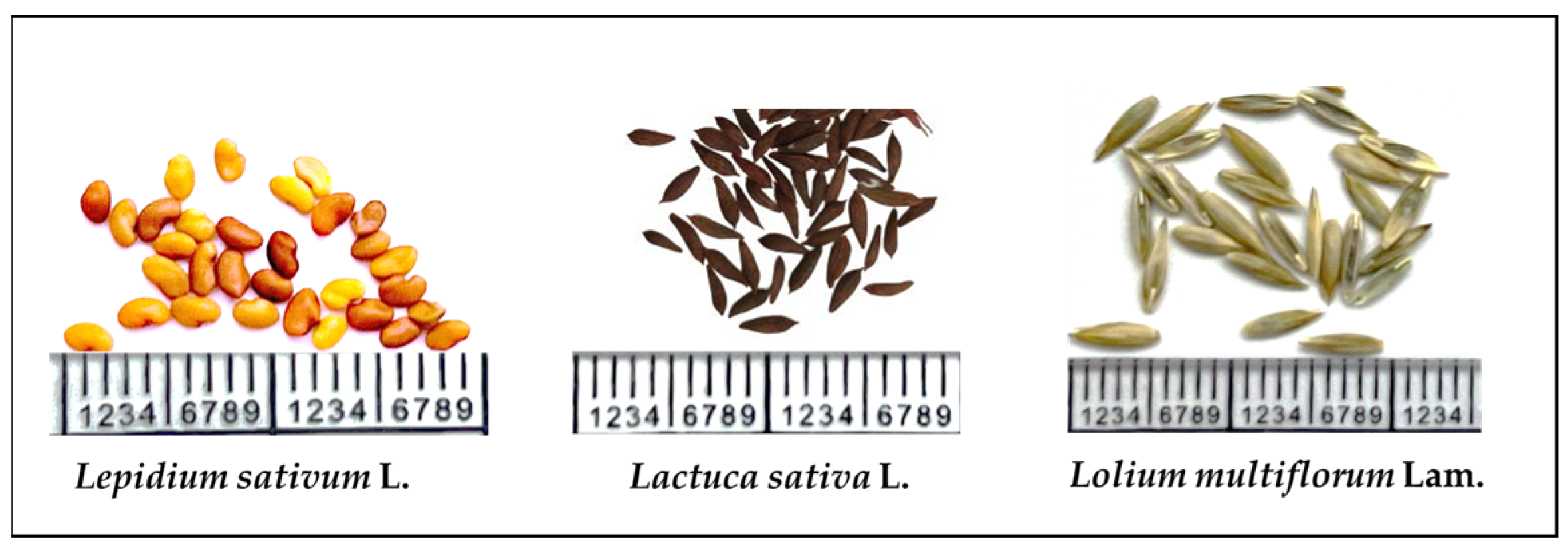
The leaf extracts were further assayed for their biological activity against the test plant species (dicotyledons L. sativum and L. sativa and monocotyledon L. multiflorum) (Figure 1), following the technique described by Rob et al. [26]. Petri dishes lined with filter paper (No. 2, 28 mm; Toyo Roshi Ltd., Tokyo, Japan) were filled with solutions of different concentrations (0.6 mL), and extract-free solvent served as the control. Then methanol solvent on all Petri dishes was completely evaporated to preclude any phytotoxic interference with seed germination, following the method of Seifu et al. [27]. A 0.6 mL aqueous solution of polyoxyethylenesorbitan monolaurate (Tween 20, 0.05% v/v; Nacalai Tesque, Kyoto, Japan) was used to hydrate ten L. sativum and L. sativa seeds or ten pre-emergent L. multiflorum seeds on the filter paper in each Petri dishes. Following treatment, the Petri dishes were kept in a dark, 25 ± 2 °C incubator for the duration of the experiment. Following a 48-h incubation period, the test plants’ shoot, and root lengths were assessed. All results are relative to the seedling lengths of the corresponding control [28].

2.3. Isolation and Identification of the Active Compounds

2.3.1. Bioassay-Guided Fractionation and Identification of the Phytotoxic Substances

The phytotoxic substances in the A. xylocarpa extracts were isolated following the procedure described previously by Krumsri et al. [25]. Figure S1 shows a flowchart of the phytotoxic compounds’ isolation process. Biological activities of the fractions obtained during each isolation step were tested using the L. sativum bioassay. Dried A. xylocarpa powder (1.4 kg) was extracted with 70% (v/v) aqueous MeOH and MeOH at room temperature as described in preparation of plant extracts section. After filtering, the combined aqueous MeOH and MeOH extracts were dried under reduced pressure to obtain aqueous solutions, which were then partitioned in a separator funnel with ethyl acetate (EtOAc) (1:1, v/v) after being adjusted to pH 7 using 1 M phosphate buffer. The residue obtained from the EtOAc fraction was then separated from the active substances via column chromatography (Ø = 1.6 cm, h = 30 cm). Column chromatography was conducted at room temperature (22 ± 2 °C) with solvent flow controlled at approximately 1–2 mL/min using gravity flow. The column chromatography was prepared using silica gel (60 g, silica gel 60, spherical, 70 to 230 mesh; Nacalai Tesque Inc., Kyoto, Japan) as the stationary phase, with EtOAc and n-hexane (2:8 to 10:0 v/v, 150 mL) and methanol (300 mL) as the eluents. Nine fractions were obtained (A1 to A9). Five fractions (B1 to B5) were obtained by further chromatography of the active fraction A6 on a Sephadex-LH 20 column (100 g; GE Healthcare, Bio-Sciences AB, SE-751 84 Uppsala, Sweden), which was eluted with MeOH and distilled water (2:8 to 0:10 v/v, 150 mL). Nine fractions (C1 to C9) were produced by loading the residue from fraction B2 into reverse-phase C18 SPE cartridges (150 × 2.1 mm, 40 to 60 μm, YMC Dispo SPE; YMC Ltd., Kyoto, Japan). The cartridges were then eluted with MeOH and distilled water (2:8 to 10:0 v/v, 30 mL).
Three active fractions (C1, C3, and C4) were found, and their active substances were purified via high-performance liquid chromatography (HPLC; Shimadzu, Kyoto, Japan) coupled to an HPLC pump (LC-20AT; Shimadzu) and UV/VIS detector (SPD-20A; Shimadzu) set at 220 nm. Chromatographic separation was achieved on a reverse-phase HPLC column (500 mm × 10 mm I.D., S-5 μm; ODS AQ-325; YMC Ltd.), eluted at a flow rate of 1.5 mL/min. The mobile phase was MeOH (solvent A) and distilled water (solvent B). Fraction C1 was eluted with 40% (v/v) aqueous MeOH; the retention times of the active substances were 72 to 75 min (substance 1), 228 to 236 min (substance 2), and 238 to 247 min (substance 3). Fraction C3 was eluted with 35% (v/v) aqueous MeOH to obtain an active substance (substance 4) at a retention time of 138 to 142 min. Fraction C4 was eluted with 45% (v/v) aqueous MeOH to obtain active substances at retention times of 70 to 74 min (substance 5) and 196 to 200 min (substance 6).
High-resolution electrospray ionization mass spectrometry (HRESIMS), 1H-nuclear magnetic resonance (NMR) spectroscopy, and specific rotation were used to determine the chemical structures of the six compounds. The optical rotations of the compounds were measured using a digital polarimeter (P-1010; Jasco, Tokyo, Japan). A Bruker Avance III 500 MHz NMR spectrometer (Bruker BioSpin, Rheinstetten, Germany) was used to record all NMR spectroscopic data. In relation to the residual solvent signal, chemical shifts were expressed as δ values in parts per million (CDCl3: δH 7.26, δC 77.16) and (CD3OD: δH 3.31, δC 49.0). A Thermo Scientific Orbitrap Exploris 240 mass spectrometer (Thermo Fisher Scientific, Bremen, Germany) was used for HRESIMS.

2.3.2. Bioassays of the Isolated Substances

The six isolated substances were individually dissolved in MeOH to prepare stock solutions. The initial dilutions ranged from 30 to 6000 µM depending on the compound. The effects of all the compounds were evaluated using a model plant, L. sativum, a standard target species used in biological studies. The bioassay technique was similar to that of the extract protocol described in bioassays section. After 48 h of treatment, seed germination, seedling growth (shoot and root lengths), and dry biomass were measured and calculated as percentages of control [29]. The EC50 values of the compounds against L. sativum growth were calculated according to the regression equation of the concentration-response curve. Moreover, the treated seedlings were photographed using a stereo microscope (SMZ1270i; Nikon, Tokyo, Japan) fitted with a digital camera.

2.4. Statistical Analysis

Each bioassay experiment included three replications (n = 30) and a completely randomized design. SPSS software (version 21.0; IBM Corp., Armonk, NY, USA) was used to analyze all the data. Tukey’s HSD test was used to determine the significance levels of among treatment comparisons with a probability of 0.05. Using SPSS software, principal component analysis (PCA) was performed on the data obtained for all parameters. GraphPad Prism version 6.0 (GraphPad Software Inc., La Jolla, CA, USA) was employed to show the test plants’ EC50 values.

3. Results

3.1. Biological Activities of Aqueous MeOH Leaf Extracts

The root and shoot lengths of L. sativum, L. sativa, and L. multiflorum were significantly reduced by the A. xylocarpa leaf extracts (p < 0.01) (Table 1). Significant growth inhibition of all the species was evident at extract concentrations of >3 mg plant DW equivalent extract/mL. Extracts at a concentration of 30 mg plant DW equivalent extract/mL completely inhibited the shoot lengths of L. sativum and L. sativa (100%) and reduced the shoot lengths of L. multiflorum to 32.4% of control. At the same concentration, the root lengths of L. sativa (100%) were completely inhibited and that of L. sativum and L. multiflorum were reduced to 10.8 and 21.3% of control, respectively. All seedling growth was completely inhibited by extracts at concentrations of >100 mg plant DW equivalent extract/mL.

3.2. Identification of Bioactive Compounds Derived from the Aqueous MeOH Leaf Extract of A. xylocarpa

The compounds in the A. xylocarpa leaf extracts were isolated via bioassay-guided fractionation and purified by HPLC analysis. The chemical structures of the isolated compounds were identified based on spectroscopic analysis with the aid of published data (Figure 2). The detailed data of each compound are as follows:
Compound 1: colorless oil; [α]26D = +154.5 (c 0.11, MeOH) based on HRESIMS data, the compound’s formula was found to be C13H18O2 (m/z 223.1328 [M + H]+, calcd for C13H18O2, 223.1334). Four methyl proton signals at δH 2.31 (3H, s), 1.90 (3H, d, J = 1.4), 1.06 (3H, s), and 1.02 (3H, s); three olefinic proton signals at δH 6.99 (1H, d, J = 15.8), 6.43 (1H, d, J = 15.8), and 5.94 (1H, br s); and two methylene proton signals at δH 2.60 (1H, d, J = 17.2) and 2.28 (1H, d, J = 17.2). By comparing these results with those published in the literature, the molecule was determined to be (+)-dehydrovomifoliol [30].
Compound 2: colorless oil; [[α]26D = +11.8 (c 0.15, CH2Cl2) HRESIMS data (m/z 209.1536 [M + H]+, calcd for C13H21O2, 209.1542) revealed its chemical formula to be C13H20O2. Four methyl proton signals were detected in the 1H NMR spectra recorded in CDCl3 at δH 2.26 (3H, s), 1.62 (3H, s), 1.03 (3H, s), and 0.89 (3H, s); three olefinic proton signals were detected at δH 6.54 (1H, dd, J = 15.8, 10.2), 6.10 (1H, d, J = 15.8), and 5.63 (1H, m); two methylene proton signals at δH 1.84 (1H, dd, J = 13.5, 5.9) and 1.41 (1H, dd, J = 13.5, 6.3); and two methine proton signals at δH 4.27 (1H, m) and δH 2.50 (1H, d, J = 10.2). Compound 2 was determined to be (3R,6R,7E)-3-hydroxy-4,7-megastigmadien-9-one.by comparing these data with those published in the literature [31].
Compound 3: colorless oil; the compound was assigned the molecular formula C13H20O2, as determined by HRESIMS (m/z 209.1535 [M + H]+, calcd for C13H21O2, 209.1542). The 1H NMR spectrum of the compound as measured in CDCl3 showed the presence of four methyl proton signals at δH 2.30 (3H, s), 1.77 (3H, s), 1.12 (3H, s), and 1.11 (3H, s); two olefinic proton signals at δH 7.21 (1H, br d, J = 16.5) and 6.11 (1H, d, J = 16.5); four methylene proton signals at δH 2.43 (1H, dd, J = 17.3, 5.4), δH 2.08 (1H, dd, J = 17.3, 10.0), δH 1.79 (1H, ddd, J = 12.1, 3.7, 2.2), and δH 1.49 (1H, t, J = 12.1); and a methine proton signal at δH 4.00 (1H, m). This led to the identification of the chemical as (+)-3-hydroxy-β-ionone [32].
Compound 4: amorphous powder; [α]27D = −60.0 (c 0.14, pyridine) the compound displayed a [M + H]+ ion peak at m/z 256.1331 (calcd for C16H18NO2, 256.1338) in HRESIMS, consistent with a molecular formula of C16H17NO2. The 1H NMR spectrum of the compound as measured in CD3OD showed the presence of ten aromatic proton signals at δH 7.74–7.70 (2H, m), 7.50 (1H, t, J = 7.4), 7.44–7.39 (2H, m), 7.30–7.24 (4H, m), and 7.17 (1H, t, J = 6.9); one methine proton signal at δH 4.34 (1H, m, m); and four methylene proton signals at δH 3.65 (2H, d, J = 5.5), 3.03 (1H, dd, J = 13.7, 6.1), and 2.87 (1H, dd, J = 13.7, 8.5). Consequently, the compound was elucidated as (S)-N-(1-hydroxy-3-phenylpropan-2-yl) benzamide [33].
Compound 5: amorphous powder; the HRESIMS of the compound exhibited a [M + H]+ at m/z 197.1172 (calcd for C11H17O3, 197.1178), corresponding to a molecular formula of C11H16O3. The 1H NMR spectrum of the compound as measured in CDCl3 showed the presence of three methyl proton signals at δH 1.58 (3H, s), 1.31 (3H, s), and 1.27 (3H, s); one olefinic proton signal at δH 5.71 (1H, s); one methine proton signal at δH 4.13 (1H, m); and four methylene proton signals at δH 2.54 (1H, ddd, J = 11.9, 3.8, 2.3), 2.04 (1H, ddd, J = 12.9, 4.2, 2.3), 1.51 (1H, t, J = 11.6), and 1.33 (1H, t, J = 12.1). The 1H NMR spectrum of the compound was in agreement with the reported data as isololiolide [34].
Compound 6: amorphous powder; [α]27D = +21.0 (c 0.08, CHCl3); its molecular formula was determined to be C20H24O6 by HRESIMS (m/z 383.1463 [M + Na]+, calcd for C20H24O6, 383.1471). The 1H NMR spectrum of the compound as measured in CD3OD showed the presence of six aromatic proton signals at δH 6.91 (1H, d, J = 1.3), 6.80 (1H, d, J = 1.8), 6.79–6.74 (2H, m), 6.72 (1H, d, J = 8.0), and 6.65 (1H, dd, J = 8.0, 1.8); two methyl proton signals at δH 3.85 (3H, s) and 3.83 (3H, s); three methine proton signals at δH 4.75 (1H, d, J = 7.0), 2.74 (1H, m), and 2.38 (1H, m); and six methylene proton signals at δH 3.99 (1H, dd, J = 8.4, 6.4), 3.84 (1H, dd, J = 10.9, 8.0), 3.73 (1H, dd, J = 8.4, 5.9), 3.64 (1H, dd, J = 10.9, 6.5), 2.93 (1H, dd, J = 13.4, 4.8), and 2.50 (1H, dd, J = 13.4, 11.3). By comparing these results with those published in the literature, the substance was determined to be (+)-lariciresinol [35].
The chirality of the isolated compounds was inferred from the sign and magnitude of their specific optical rotations in combination with detailed comparison of their NMR spectroscopic data with those reported for enantiomerically defined reference compounds in the literature. For compounds 2, 3, 5, and 6, the absolute configurations at the stereogenic centers were assigned by matching both the specific rotation values and the complete set of H1 and 13C NMR data with previously published data, which report the same configurations. For compound 4, the S configuration at the C-2 position was adopted from the original report describing S-N-1-hydroxy-3-phenylpropan-2-yl benzamide, because our optical rotation and NMR data coincided with those values.

3.3. Biological Activities of the Six Compounds Towards L. sativum

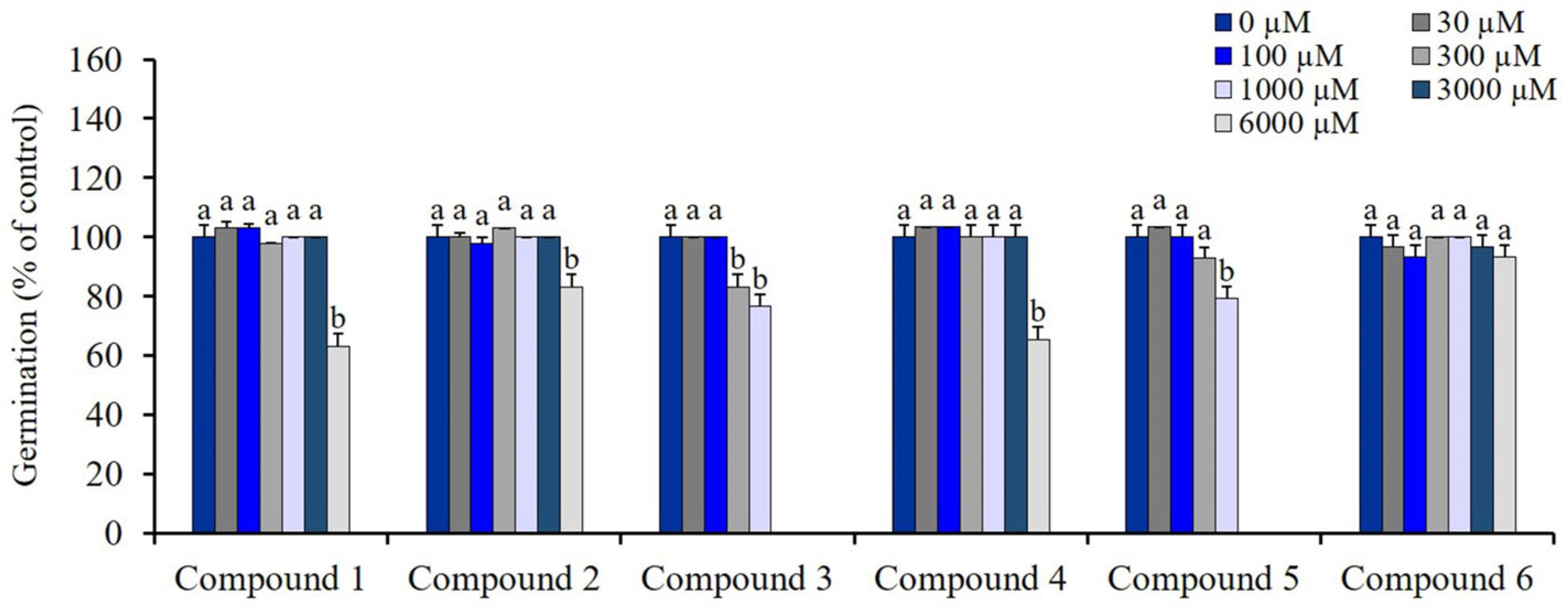
The results showed compounds 1 to 6 inhibited L. sativum growth at different levels (Figure 3 and Figure 4). Five compounds were found to slightly inhibited L. sativum seed germination (Figure 2). The inhibitory effect of compounds 1 to 5 against seed germination was >70% of control, even at the highest tested concentration, while compound 6 did not affect seed germination at any concentration. Compounds 1 to 6 reduced seedling growth, although clear differences were observed in the dose response (Figure 4). At 300 μM of compounds 2, 3, and 5, shoot growth decreased to 58.6, 24.6, and 27.7% of control, respectively, and the root lengths decreased to 48.6, 32.6, and 27.5% of control, respectively. The other compounds decreased seedling growth by >70% of control. In all cases, the root length of L. sativum was more markedly inhibited than its shoot length, particularly by compounds 2 (1.9-times) and 5 (2.1-times), except for compound 4. Dry biomass was similarly affected, in which the inhibitory activities gradually increased as the concentrations of the compounds increased. In terms of the EC50 values, compound 5 was the most toxic against L. sativum growth (EC50 = 53.8 to 200.8 µM) followed by compound 3 (EC50 = 227.4 to 582.3 µM), compound 2 (EC50 = 597.2 to 2659.2 µM), and the other compounds (EC50 = 887.8 to 5051.3 µM) (the values are given in Figure 3).
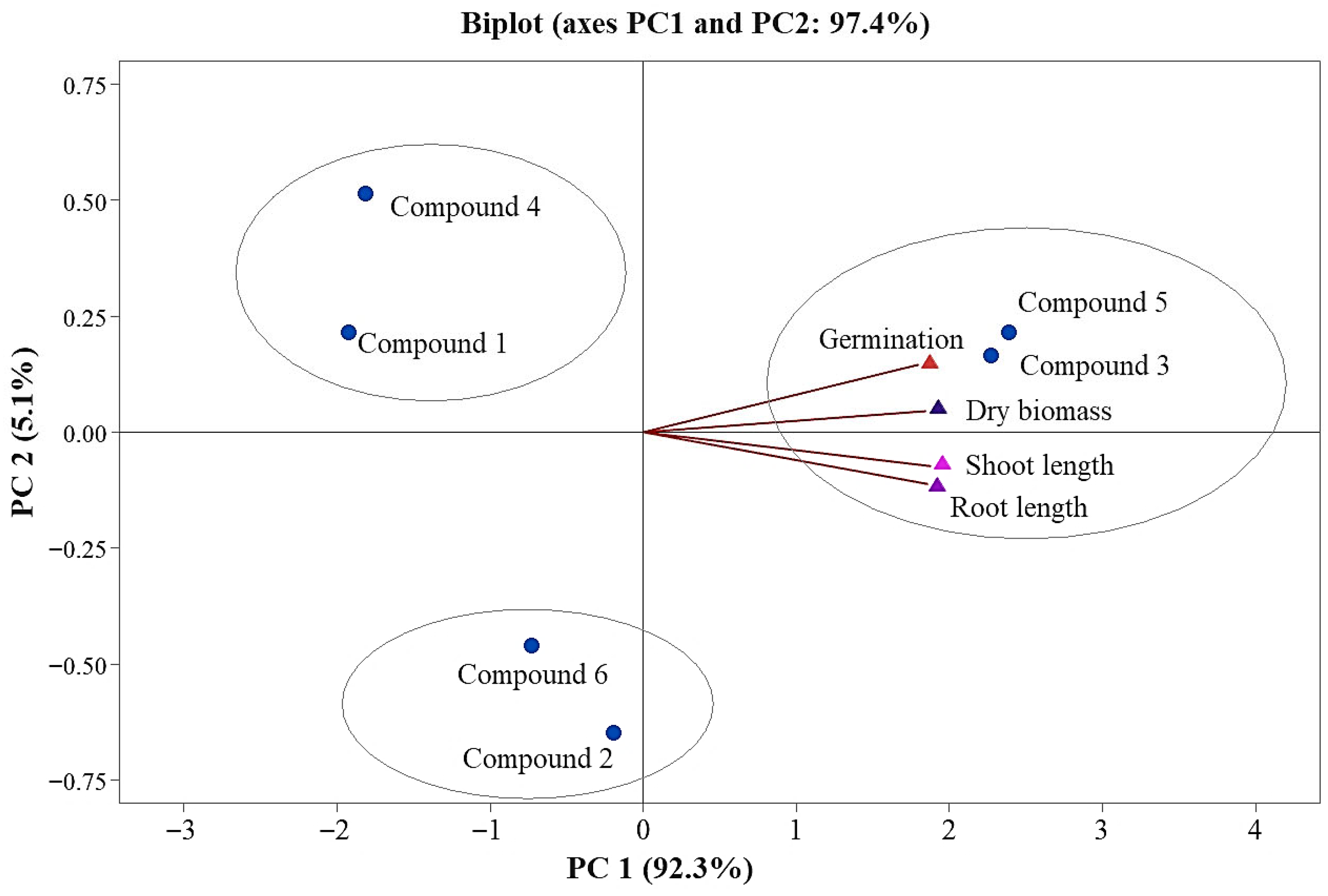
All data obtained were subjected to PCA to better understand the seedling growth responses of L. sativum to six compounds. PC1 (the vertical axis) accounted for 92.3% of the total variance, and PC2 (the horizontal axis) accounted for 5.1% (Figure 5). The results showed all seed growth parameters were positively related to PC1. Compounds 3 and 5 exhibited were related to all L. sativum growth parameters. On the other hand, compounds 2 and 6 were positively related to PC2, which indicated similar effects. Compounds 1 and 4 were weaker than the others. Moreover, the L. sativum seedlings treated with compounds 3 and 5 showed different effects (Figure 6). The roots of L. sativum treated with compound 3 showed necrosis, a lack of root hairs, blackening, and fragility. The seedlings treated with compound 5 showed roots that were shorter and thicker than the control roots.

4. Discussion

The aqueous MeOH leaf extract of A. xylocarpa was phytotoxic against L. sativum, L. sativa, and L. multiflorum (Table 1). Six phytotoxic compounds were isolated and identified as (+)-dehydrovomifoliol (1), (3R,6R,7E)-3-hydroxy-4,7-megastigmadien-9-one (2), (+)-3-hydroxy-β-ionone (3), (S)-N-(1-hydroxy-3-phenylpropan-2-yl) benzamide (4), isololiolide (5), and (+)-lariciresinol (6) (Figure 2). Compounds 1, 2, 3, and 5 are norisoprenoids [36,37], carotenoid-derived oxidation products that perform critical physiological functions in plants. These compounds have been previously isolated from Portulaca oleracea L., Chenopodium album, and Tradescantia albiflora Kunth, and various biological effects have been reported with IC50 values ranging from 1.6 to 29.4 µg/mL [38,39]. Compound 4 is an alkaloid that has a role as a plant metabolite and a fungal metabolite [40,41,42]. It is a natural product in Diospyros quaesita that shows antimalarial activity with IC50 values in the low micromolar range (0.98–1.40 µM) [43]. Mathpal et al. [44] reported that compound 4 exhibited anti-HIV activity (IC50 values = 13.6 µg/mL). Compound 6 is a member of a class of lignans reported to have several biological activities [45]. A similar compound from the herb Sambucus williamsii has been found to disrupt fungal plasma membranes, showing therapeutic potential [46]. A comparable compound demonstrated antifungal activity against Candida albicans with a minimum inhibitory concentration (MIC) of 25 µg/mL and antibacterial activity against Staphylococcus aureus and Escherichia coli with MIC values ranging from 125 to 250 µg/mL [47]. Ma et al. [48] reported that compound showed significant antitumor effects, inhibiting HepG2 cell proliferation (IC50 value = 2.31 µg/mL) and inducing apoptosis. All compounds in the present study have been reported for plant growth regulatory activity [49,50]. To the best of our knowledge, these six compounds have not previously been isolated from A. xylocarpa leaves.
In this study, the effects of the six isolated compounds on seed germination and visible seedling growth of L. sativum were determined. Seed germination and the early growth stage of plants constitute primary steps in the development and propagation of most plant species and are essential parameters for evaluating phytotoxic activity [51]. Our results found that compounds 1 to 6 significantly suppressed the seed germination and development of L. sativum to different extents (Figure 3 and Figure 4). The variation in phytotoxic activity among these compounds reflects differences in both chemical scaffold and functional group positioning. Among the norisoprenoid compounds (compounds 13), which share a common C13 apocarotenoid backbone, the type and position of substituents (particularly hydroxyl and ketone groups at C-3 and C-9, and the configuration of the double bond system). In contrast, compounds 4, 5, and 6 belong to distinct chemical classes—an alkaloid amide, an α,β-unsaturated lactone, and a lignan, respectively.
Moreover, it was clear that root length was more affected than shoot length or germination; overall the compounds inhibited seedling growth rather than seed germination. Ghimire et al. [52] and Bashar et al. [53] also found that certain inhibitory phytotoxic compounds principally affect primary roots rather than shoot development or germination, perhaps because the root is the first seedling organ in direct contact with the toxins. Moreover, a reduction in root volume limits the nutrient and water supplies in shoots, decreasing shoot growth [54,55]. Of the six isolated compounds, compound 5 (EC50 53.8 to 200.8 µM) and 3 (EC50 227.4 to 582.3 µM) inhibited L. sativum seedling growth significantly more than the other four compounds (Figure 3 and Figure 4). These two compounds are norisoprenoids with ketone groups at functional locations and hydroxy groups at C-3 (Figure 2). There have been reports that monoketones, or compounds containing one ketonic carbonyl, exhibit weed-killing properties [56,57]. Several studies have found that compounds with ketone groups have potential herbicidal effects; such compounds include xanthoxyline, 3-acetylindole, 3-acetyl-7-azaindole, and usnic acid [58]. Many norisoprenoids that have oxo or hydroxy groups at position C-3 interfere with the growth of plants [59,60].
The compounds triggered different morphological changes in the L. sativum roots (Figure 6). Compound 3 blackened the roots and was thus necrotic; root hairs were also lost (Figure 6). The darkening and necrosis observed in roots treated with compound 3 resemble typical symptoms of phytotoxin-induced oxidative damage, in which excessive reactive oxygen species (ROS) disrupt membrane integrity and lead to cell death [61]. Several studies have demonstrated that phytotoxic compounds can perturb ROS metabolism in receptor plants, causing increased lipid peroxidation, altered antioxidant enzyme activity, and characteristic necrotic lesions in root tissues [62,63]. Thus, although the precise molecular targets of compound 3 were not examined here, the root symptoms we observed are in agreement with ROS-related mechanisms proposed for other phytotoxiccompounds. In contrast, compound 5 reduced the root length and triggered morphological abnormalities, in which the roots were shorter, thicker, and fewer, and had fewer hairs than the control (Figure 6). These results are consistent with those of Chon and Kim [64], who reported that certain phytotoxic compounds inhibited root elongation and cell division, abnormally enlarging seminal root thickness by inhibiting longitudinal root growth. Compound 5 (isololiolide) has been reported to possess cytotoxic and regulatory activities in several biological systems [65]. In human tumor cell lines, isololiolide disrupts the normal cell cycle and induces apoptosis by modulating apoptosis-related proteins [66], indicating that it can interfere with highly conserved cellular processes. Although these studies were not conducted in plants, they support the idea that isololiolide can target cell division and proliferation, which is consistent with the shorter, thicker roots and reduced root hair formation we observed in L. sativum seedlings treated with compound 5.
Future investigations will incorporate quantitative assessments of root morphological parameters (including root hair density, root hair length variation, and tissue necrosis scoring) combined with biochemical markers of oxidative damage to further elucidate the specific modes of action of these compounds and enable more rigorous mechanistic comparisons across plant species.

5. Conclusions

In the present research, the six compounds isolated from the leaf extracts of A. xylocarpa showed significantly restricted seed germination, seedling growth, and dry biomass to different extents. All six compounds affected the seedling growth of L. sativum rather than germination. Of the six isolated compounds, compounds 3 (+)-3-hydroxy-β-ionone) and 5 (isololiolide) strongly inhibited all the tested growth parameters of L. sativum with different toxic actions. Compound 3 reduced the number of root hairs and induced root necrosis. Compound 5 triggered root misshaping, in which the roots were shorter and thicker than normal roots. The findings imply that the activity of these six isolated compounds, of which compounds 3 and 5 may be the primary inhibitors in the A. xylocarpa leaves, may be responsible for the inhibitory activity of the leaf extracts. As a result of their phytotoxic effects, these six phytotoxic compounds found in the leaf extracts of A. xylocarpa could be candidates for natural herbicide development. However, our future studies need to explore the sites of action of these compounds on target plants where possible natural herbicides act.

Supplementary Materials

The following supporting information can be downloaded at: https://www.mdpi.com/article/10.3390/su18020995/s1, Figure S1: Procedure for extraction and isolation of six phytotoxic substances from A. xylocarpa leaf extracts. The letters or numbers in bold indicate the highest inhibitory activity in fractions obtained from each isolation step.

Author Contributions

Conceptualization, R.K. and H.K.-N.; methodology, R.K., Y.A., S.T., T.T. and H.K.-N.; software, R.K.; validation, Y.A., S.T., T.T. and H.K.-N.; formal analysis, R.K.; investigation, H.K.-N.; writing (original draft preparation), R.K. and H.K.-N.; writing (review and editing), R.K. and H.K.-N.; supervision, R.K. All authors have read and agreed to the published version of the manuscript.

Funding

The Ministry of Education, Culture, Sports, Science, and Technology (MEXT), Japan scholarship (grant number MEXT 172586) provided funding for this study.

Institutional Review Board Statement

Not applicable.

Informed Consent Statement

Not applicable.

Data Availability Statement

Data are contained within the article.

Acknowledgments

The authors are grateful to Dennis Murphy, The United Graduate School of Agricultural Sciences, Ehime University, Japan, for editing the English of the manuscript.

Conflicts of Interest

The authors declare no conflicts of interest.

References

  1. Damalas, C.A.; Koutroubas, S.D.; Abdollahzadeh, G. Herbicide use in conventional cereal production in northern Greece: An appraisal through the theory of planned behavior. Pest Manag. Sci. 2022, 78, 4668–4678. [Google Scholar] [CrossRef]
  2. Nath, C.P.; Singh, R.G.; Choudhary, V.K.; Datta, D.; Nandan, R.; Singh, S.S. Challenges and alternatives of herbicide-based weed management. Agronomy 2024, 14, 126. [Google Scholar] [CrossRef]
  3. Ghazi, M.I.; Zulkifli, N.S.; Alipah, N.; Ibrahim, S.; Abu Bakar, N.H.; Anuar, F.H. Health effects of herbicides and its current removal strategies. Environ. Sci. Pollut. Res. 2023, 30, 158594–158617. [Google Scholar] [CrossRef]
  4. He, B.; Wu, F.X.; Yu, L.K.; Wu, L.; Chen, Q.; Hao, G.F.; Yang, W.C.; Lin, H.Y.; Yang, G.F. Discovery of novel pyrazole–quinazoline-2, 4-dione hybrids as 4-hydroxyphenylpyruvate dioxygenase inhibitors. Agric. Food. Chem. 2020, 68, 5059–5067. [Google Scholar] [CrossRef] [PubMed]
  5. Poonpaiboonpipat, T.; Krumsri, R.; Kato-Noguchi, H. Allelopathic and herbicidal effects of crude extract from Chromolaena odorata (L.) R.M. King and H. Rob. on Echinochloa crus-galli and Amaranthus viridis. Plants 2021, 10, 1609. [Google Scholar] [CrossRef]
  6. Islam, A.K.M.M.; Karim, S.M.R.; Kheya, S.A.; Yeasmin, S. Unlocking the potential of bioherbicides for sustainable weed management. Heliyon 2024, 10, e36088. [Google Scholar] [CrossRef] [PubMed]
  7. Ammar, E.E.; Elmasry, S.A.; Ghosh, S.; Al-Farga, A.; Ghallab, Y.K.; Eldeen, A.M.F.; Aioub, A.A. Insightful review of bioherbicides derived from plants (phyto-herbicides). J. Chil. Chem. Soc. 2023, 68, 5847–5852. [Google Scholar] [CrossRef]
  8. Araniti, F.; Landi, M.; Laudicina, V.A.; Abenavoli, M.R. Secondary metabolites and eco-friendly techniques for agricultural weed/pest management. Plants 2021, 10, 1418. [Google Scholar] [CrossRef]
  9. Hasan, M.; Ahmad-Hamdani, M.S.; Rosli, A.M.; Hamdan, H. Bioherbicides: An eco-friendly tool for sustainable weed management. Plants 2021, 10, 1212. [Google Scholar] [CrossRef]
  10. Synowiec, A.; Drozdek, E.; Krajewska, A.; Bocianowski, J.; Kesik, T. Modern approaches for the development of new herbicides for weed management. Int. J. Mol. Sci. 2023, 24, 595. [Google Scholar] [CrossRef]
  11. Masi, M.; Cimmino, A.; Evidente, A. Natural compounds as active ingredients for potential new bioherbicides towards sustainable agriculture. Plants 2023, 12, 2824. [Google Scholar] [CrossRef]
  12. Lun, T.L.; Iwasaki, A.; Suenaga, K.; Kato-Noguchi, H. Two allelopathic substances from Plumbago rosea stem extracts and their allelopathic effects. Agronomy 2022, 12, 2020. [Google Scholar] [CrossRef]
  13. Soriano, G.; Siciliano, A.; Fernández-Aparicio, M.; Cala Peralta, A.; Masi, M.; Moreno-Robles, A.; Guida, M.; Cimmino, A. Iridoid glycosides isolated from Bellardia trixago identified as inhibitors of Orobanche cumana radicle growth. Toxins 2022, 14, 559. [Google Scholar] [CrossRef]
  14. Knudsen, C.G.; Lee, D.L.; Michaely, W.J.; Chin, H.L.; Nguyen, N.H.; Rusay, R.J.; Cromartie, T.H.; Gray, R.; Lake, B.H.; Fraser, T.E.M.; et al. Discovery of the triketone class of HPPD inhibiting herbicides and their relationship to naturally occurring β-triketones. In Allelopathy in Ecological Agriculture and Forestry; Narwal, S.S., Ed.; Kluwer Academic Publishers: Dordrecht, The Netherlands, 2000; pp. 101–111. [Google Scholar]
  15. Duke, S.O. Why have no new herbicide modes of action appeared in recent years? Pest Manag. Sci. 2012, 68, 505–512. [Google Scholar] [CrossRef] [PubMed]
  16. Vyvyan, J.R. Allelochemicals as leads for new herbicides and agrochemicals. Tetrahedron 2002, 58, 1631–1646. [Google Scholar] [CrossRef]
  17. Boonmee, S.; Suwitchayanon, P.; Krumsri, R.; Kato-Noguchi, H. Investigation of the allelopathic potential of Nephrolepis cordifolia (L.) C. Presl against dicotyledonous and monocotyledonous plant species. Theor. Exp. Plant. Physiol. 2020, 30, 129–139. [Google Scholar] [CrossRef]
  18. Jiang, C.; Zhou, S.; Liu, L.; Toshmatov, Z.; Huang, L.; Shi, K.; Zhang, C.; Shao, H. Evaluation of the phytotoxic effect of the essential oil from Artemisia absinthium. Ecotoxicol. Environ. Saf. 2021, 226, 112856. [Google Scholar] [CrossRef]
  19. Moh, S.M.; Iwasaki, A.; Suenaga, K.; Kato-Noguchi, H. Allelopathic activity of a novel compound, 5, 6-dihydrogen-11α-O-acetyl-12β-O-tigloyl-17β-marsdenin, and a known steroidal glycoside from the leaves of Marsdenia tenacissima (Roxb.) Moon. Agronomy 2022, 12, 1536. [Google Scholar] [CrossRef]
  20. Cai, X.; Liu, J.X.; Song, Q.S.; Chen, K.L.; Lu, Z.Y.; Zhang, Y.M. Chemical constituents of Afzelia xylocarpa. Chem. Nat. Compd. 2018, 54, 764–765. [Google Scholar] [CrossRef]
  21. Akinpelu, D.A.; Aiyegoro, O.A.; Okoh, A.I. The in vitro antioxidant property of methanolic extract of Afzelia africana (Smith). J. Med. Plant. Res. 2010, 4, 2022–2027. [Google Scholar] [CrossRef]
  22. Oyedemi, S.O.; Adewusi, E.A.; Aiyegoro, O.A.; Akinpelu, D.A. Antidiabetic and haematological effect of aqueous extract of stem bark of Afzelia africana (Smith) on streptozotocin-induced diabetic Wistar rats. Asian Pac. J. Trop. Med. 2011, 1, 353–358. [Google Scholar]
  23. Akah, P.A.; Okpi, O.; Okoli, C.O. Evaluation of the anti-inflammatory, analgesic and antimicrobial activities of bark of Afzelia africana. Niger. J. Nat. Prod. Med. 2007, 11, 48–52. [Google Scholar]
  24. Phuong, D.L.; Thuy, N.T.; Long, P.Q.; Kuo, P.C.; Thang, T.D. Composition of fatty acids, tocopherols, sterols, total phenolics, and antioxidant activity of seed oils of Afzelia xylocarpa and Cassia fistula. Chem. Nat. Compd. 2019, 55, 242–246. [Google Scholar] [CrossRef]
  25. Krumsri, R.; Ozaki, K.; Teruya, T.; Kato-Noguchi, H. Isolation and identification of two potent phytotoxic substances from Afzelia xylocarpa for controlling weeds. Appl. Sci. 2021, 11, 3542. [Google Scholar] [CrossRef]
  26. Rob, M.M.; Hossen, K.; Iwasaki, A.; Suenaga, K.; Kato-Noguchi, H. Phytotoxic activity and identification of phytotoxic substances from Schumannianthus dichotomus. Plants 2020, 9, 102. [Google Scholar] [CrossRef]
  27. Seifu, A.; Lulekal, E.; Demissew, S.; Woldu, Z. Allelopathic potential of root and leaf aqueous extracts of invasive alien plant species, Cryptostegia grandiflora, on germination and seedling growth of Linum usitatissimum and Guizotia abyssinica. Front. For. Glob. Change 2023, 6, 1131815. [Google Scholar] [CrossRef]
  28. Bari, I.N.; Kato-Noguchi, H. Phytotoxic effects of Cerbera manghas L. leaf extracts on seedling elongation of four monocot and four dicot test species. Acta. Agrobot. 2017, 70, 1720. [Google Scholar] [CrossRef]
  29. Krumsri, R.; Iwasaki, A.; Suenaga, K.; Kato-Noguchi, H. Phytotoxic effects of Senna garrettiana and identification of phytotoxic substances for the development of bioherbicides. Agriculture 2022, 12, 1338. [Google Scholar] [CrossRef]
  30. Kai, H.; Baba, M.; Okuyama, T. Two new megastigmanes from the leaves of Cucumis sativus. Chem. Pharm. Bull. 2007, 55, 133–136. [Google Scholar] [CrossRef]
  31. D’Abrosca, B.; DellaGreca, M.; Fiorentino, A.; Monaco, P.; Oriano, P.; Temussi, F. Structure elucidation and phytotoxicity of C13 nor-isoprenoids from Cestrum parqui. Phytochemistry 2004, 65, 497–505. [Google Scholar] [CrossRef]
  32. DellaGreca, M.; Previtera, L.; Zarrelli, A.; D’Abrosca, B. Isolation and phytotoxicity of apocarotenoids from Chenopodium album. J. Nat. Prod. 2004, 67, 1492–1495. [Google Scholar] [CrossRef]
  33. Abrams, M.L.; Foarta, F.; Landis, C.R. Asymmetric hydroformylation of Z-enamides and enol esters with rhodium-bisdiazaphos catalysts. J. Am. Chem. Soc. 2014, 136, 14583–14588. [Google Scholar] [CrossRef]
  34. Junji, K.; Noritsugu, M. New loliolide derivatives from the brown alga Undaria pinnatifida. J. Nat. Prod. 2002, 65, 57–58. [Google Scholar] [CrossRef]
  35. Xie, L.H.; Akao, T.; Hamasaki, K.; Deyama, T.; Hattori, M. Biotransformation of pinoresinol diglucoside to mammalian lignans by human intestinal microflora, and isolation of Enterococcus faecalis strain PDG-1 responsible for the transformation of (+)-pinoresinol to (+)-lariciresinol. Chem. Pharm. Bull. 2003, 51, 508–515. [Google Scholar] [CrossRef]
  36. Machida, K.; Kikuchi, M. Norisoprenoids from Viburnum dilatatum. Phytochemistry 1996, 41, 1333–1336. [Google Scholar] [CrossRef]
  37. Zan, K.; Chen, X.Q.; Zhao, M.B.; Tu, P.F. Sesquiterpenoids from aerial parts of Artemisia myriantha. China J. Chin. Mater. Medica 2016, 41, 2833–2837. [Google Scholar] [CrossRef] [PubMed]
  38. Tu, P.C.; Tseng, H.C.; Liang, Y.C.; Huang, G.J.; Lu, T.L.; Kuo, T.F.; Kuo, Y.H. Phytochemical investigation of Tradescantia albiflora and anti-inflammatory butenolide derivatives. Molecules 2019, 24, 3336. [Google Scholar] [CrossRef]
  39. Xu, W.; Wang, J.; Ju, B.; Lan, X.; Ying, X.; Stien, D. Seven compounds from Portulaca oleracea L. and their anticholinesterase activities. Nat. Prod. Res. 2022, 36, 2547–2553. [Google Scholar] [CrossRef] [PubMed]
  40. Doerfler, D.L.; Bird, B.A.; Campbell, I.M. N-benzoylphenylalanine and N-benzoylphenylalaninol, and their biosynthesis in Penicillin Brevicompactum. Phytochemistry 1981, 20, 2303–2304. [Google Scholar] [CrossRef]
  41. Du, D.S.; Cheng, Z.H.; Chen, D.F. Anti-complement alkaloids from whole plants of Viola yedoensis. China J. Chin. Mater. Medica 2017, 42, 4794–4800. [Google Scholar] [CrossRef]
  42. Silva, D.P.D.; Cardoso, M.S.; Macedo, A.J. Endophytic fungi as a source of antibacterial compounds—A focus on gram-negative bacteria. Antibiotics 2022, 11, 1509. [Google Scholar] [CrossRef]
  43. Ma, C.Y.; Musoke, S.F.; Tan, G.T.; Sydara, K.; Bouamanivong, S.; Southavong, B.; Soejarto, D.D.; Fong, H.H.; Zhang, H.J. Study of antimalarial activity of chemical constituents from Diospyros quaesita. Chem. Biodivers. 2008, 5, 2442–2448. [Google Scholar] [CrossRef]
  44. Mathpal, D.; Almeleebia, T.M.; Alshahrani, K.M.; Alshahrani, M.Y.; Ahmad, I.; Asiri, M.; Kamal, M.; Jawaid, T.; Srivastava, S.P.; Saeed, M.; et al. Identification of 3-((1-(Benzyl (2-hydroxy-2-phenylethyl) amino)-1-oxo-3-phenylpropan-2-yl) carbamoyl) pyrazine-2-carboxylic Acid as a Potential Inhibitor of Non-Nucleosidase Reverse Transcriptase Inhibitors through InSilico Ligand-and Structure-Based Approaches. Molecules 2021, 26, 5262. [Google Scholar] [CrossRef]
  45. Consonni, R.; Ottolina, G. NMR characterization of lignans. Molecules 2022, 27, 2340. [Google Scholar] [CrossRef]
  46. Hwang, B.; Cho, J.; Hwang, I.S.; Jin, H.G.; Woo, E.R.; Lee, D.G. Antifungal activity of lariciresinol derived from Sambucus williamsii and their membrane-active mechanisms in Candida albicans. Biochem. Biophys. Res. Commun. 2011, 410, 489–493. [Google Scholar] [CrossRef]
  47. du Preez-Bruwer, I.; Mumbengegwi, D.R.; Louw, S. In vitro antimalarial properties and chemical composition of Diospyros chamaethamnus extracts. S. Afr. J. Bot. 2022, 149, 290–296. [Google Scholar] [CrossRef]
  48. Ma, Z.J.; Lu, L.; Yang, J.J.; Wang, X.X.; Su, G.; Wang, Z.L.; Chen, G.H.; Sun, H.M.; Wang, M.Y.; Yang, Y. Lariciresinol induces apoptosis in HepG2 cells via mitochondrial-mediated apoptosis pathway. Eur. J. Pharmacol. 2018, 821, 1–10. [Google Scholar] [CrossRef] [PubMed]
  49. Islam, M.; Iwasaki, A.; Suenaga, K.; Kato-Noguchi, H. Isolation and identification of two potential phytotoxic substances from the aquatic fern Marsilea crenata. J. Plant Biol. 2017, 60, 75–81. [Google Scholar] [CrossRef]
  50. Kyaw, E.H.; Iwasaki, A.; Suenaga, K.; Kato-Noguchi, H. Assessment of the phytotoxic potential of Dregea volubilis (L.f.) Benth. ex Hook. f. and identification of its phytotoxic substances for weed control. Agriculture 2022, 12, 1826. [Google Scholar] [CrossRef]
  51. Hussain, M.I.; El-Sheikh, M.A.; Reigosa, M.J. Allelopathic potential of aqueous extract from Acacia melanoxylon R. Br. on Lactuca sativa. Plants 2020, 9, 1228. [Google Scholar] [CrossRef]
  52. Ghimire, B.K.; Ghimire, B.; Yu, C.Y.; Chung, I.M. Allelopathic and autotoxic effects of Medicago sativa—Derived allelochemicals. Plants 2019, 8, 233. [Google Scholar] [CrossRef]
  53. Bashar, H.K.; Juraimi, A.S.; Ahmad-Hamdani, M.S.; Uddin, M.K.; Asib, N.; Anwar, M.P.; Karim, S.R.; Rahaman, F.; Haque, M.A.; Hossain, A. Documentation of phytotoxic compounds existing in Parthenium hysterophorus L. leaf and their phytotoxicity on Eleusine indica (L.) Gaertn. and Digitaria sanguinalis (L.) Scop. Toxins 2022, 14, 561. [Google Scholar] [CrossRef] [PubMed]
  54. Levizou, E.F.I.; Karageorgou, P.; Psaras, G.K.; Manetas, Y. Inhibitory effects of watersoluble leaf leachates from Dittrichia viscosa on lettuce root growth, statocyte development and graviperception. Flora Morphol. Distrib. Funct. Ecol. Plants 2002, 197, 152–157. [Google Scholar] [CrossRef]
  55. Aslani, F.; Juraimi, A.S.; Ahmad-Hamdani, M.S.; Alam, M.A.; Hashemi, F.G.; Omar, D.; Hakim, M.A. Phytotoxic interference of volatile organic compounds and water extracts of Tinospora tuberculata Beumee on growth of weeds in rice fields. S. Afr. J. Bot. 2015, 100, 132–140. [Google Scholar] [CrossRef]
  56. Fu, Q.; Cai, P.P.; Cheng, L.; Zhong, L.K.; Tan, C.X.; Shen, Z.H.; Han, L.; Xu, T.M.; Liu, X.H. Synthesis and herbicidal activity of novel pyrazole aromatic ketone analogs as HPPD inhibitor. Pest Manag. Sci. 2020, 76, 868–879. [Google Scholar] [CrossRef] [PubMed]
  57. Wang, M.M.; Huang, H.; Shu, L.; Liu, J.M.; Zhang, J.Q.; Yan, Y.L.; Zhang, D.Y. Synthesis and herbicidal activities of aryloxyacetic acid derivatives as HPPD inhibitors. Beilstein J. Org. Chem. 2020, 16, 233–247. [Google Scholar] [CrossRef]
  58. Romagni, J.G.; Meazza, G.; Nanayakkara, N.D.; Dayan, F.E. The phytotoxic lichen metabolite, usnic acid, is a potent inhibitor of plant p-hydroxyphenylpyruvate dioxygenase. FEBS Lett. 2000, 480, 301–305. [Google Scholar] [CrossRef]
  59. Macías, F.A.; Lacret, R.; Varela, R.M.; Nogueiras, C.; Molinillo, J.M.G. Bioactive apocarotenoids from Tectona grandis. Phytochemistry 2008, 69, 2708–2715. [Google Scholar] [CrossRef]
  60. Kato-Noguchi, H.; Yamamoto, M.; Tamura, K.; Teruya, T.; Suenaga, K.; Fujii, Y. Isolation and identification of potent allelopathic substances in rattail fescue. Plant Growth Regul. 2010, 60, 127–131. [Google Scholar] [CrossRef]
  61. Khalid, M.; Bilal, M.; Iqbal, H.M.; Huang, D. Biosynthesis and biomedical perspectives of carotenoids with special reference to human health-related applications. Biocatal. Agric. Biotechnol. 2019, 17, 399–407. [Google Scholar] [CrossRef]
  62. Hayat, S.; Ahmad, H.; Ali, M.; Ren, K.; Cheng, Z. Aqueous garlic extract stimulates growth and antioxidant enzymes activity of tomato (Solanum lycopersicum). Sci. Hortic. 2018, 240, 139–146. [Google Scholar] [CrossRef]
  63. Mecina, G.F.; Chia, M.A.; Cordeiro-Araújo, M.K.; do Carmo Bittencourt-Oliveira, M.; Varela, R.M.; Torres, A.; Molinillo, J.M.G.; Macías, F.A.; da Silva, R.M.G. Effect of flavonoids isolated from Tridax procumbens on the growth and toxin production of Microcystis aeruginos. Aquat. Toxicol. 2019, 211, 81–91. [Google Scholar] [CrossRef] [PubMed]
  64. Chon, S.U.; Kim, J.D. Biological activity and quantification of suspected allelochemicals from alfalfa plant parts. J. Agron. Crop Sci. 2002, 188, 281–285. [Google Scholar] [CrossRef]
  65. Lima, M.L.; Romanelli, M.M.; Borborema, S.E.; Johns, D.M.; Migotto, A.E.; Lago, J.H.G.; Tempone, A.G. Antitrypanosomal activity of isololiolide isolated from the marine hydroid Macrorhynchia philippina (Cnidaria, Hydrozoa). Bioorg. Chem. 2019, 89, 103002. [Google Scholar] [CrossRef]
  66. Vizetto-Duarte, C.; Custodio, L.; Gangadhar, K.N.; Lago, J.H.G.; Dias, C.; Matos, A.M.; Neng, N.; Nogueira, J.M.F.; Barreira, L.; Albericio, F.; et al. Isololiolide, a carotenoid metabolite isolated from the brown alga Cystoseira tamariscifolia, is cytotoxic and able to induce apoptosis in hepatocarcinoma cells through caspase-3 activation, decreased Bcl-2 levels, increased p53 expression and PARP cleavage. Phytomedicine 2016, 23, 550–557. [Google Scholar] [CrossRef]
Figure 1. The seeds of the three test plant species employed in the investigation.
Sustainability 18 00995 g001
Figure 2. Chemical structures of the six compounds separated from A. xylocarpa’s aqueous MeOH leaf extracts.
Sustainability 18 00995 g002
Figure 3. Effects of six compounds on L. sativum seed germination after 48 h of treatment. Bars with different letters indicate significant differences (Tukey’s HSD at p < 0.05). The error bars are the standard errors of the means of three replicates (n = 30).
Sustainability 18 00995 g003
Figure 4. Effects of six compounds on L. sativum growth. (A) Shoot length, (B) root length, (C) dry biomass, (D) the inhibitory EC50 values of each compound. Bars with different letters show significant differences (Tukey’s HSD at p < 0.05). The error bars represent the standard errors of the means from three replicates (n = 30).
Sustainability 18 00995 g004
Figure 5. Biplot of the principal component analysis (PCA) data based on L. sativum growth parameter responses to six compounds from A. xylocarpa’s aqueous MeOH leaf extracts.
Sustainability 18 00995 g005
Figure 6. Photographs showing the different responses of L. sativum treated with six compounds after 48 h of treatment (A). Control displays abundant root hairs (B). Necrosis is evident in the piliferous root zone after treatment with compound 3 (C), and the root shape is abnormal after treatment with compound 5 (D).
Sustainability 18 00995 g006
Table 1. Effects of an aqueous MeOH leaf extract of A. xylocarpa on L. sativum, L. sativa, and L. multiflorum seedlings after 48 h treatment.
TreatmentL. sativum %L. sativa %L. multiflorum %
Shoot LengthRoot LengthShoot LengthRoot LengthShoot LengthRoot Length
control100.0 ± 0.4 a100.0 ± 0.9 a100.0 ± 0.6 a100.0 ± 0.5 a100.0 ± 0.7 a100.0 ± 1.2 a
1 mg/mL91.4 ± 1.9 ab91.2 ± 1.4 ab88.6 ± 1.4 ab76.9 ± 1.5 b103.8 ± 1.2 a102.8 ± 0.9 a
3 mg/mL88.8 ± 1.5 b90.3 ± 1.8 ab76.1 ± 1.3 b70.6 ± 1.2 b85.6 ± 0.6 b94.6 ± 1.0 a
10 mg/mL51.5 ± 2.1 c46.9 ± 1.1 c20.7 ± 0.4 c13.1 ± 1.2 c53.8 ± 0.7 c60.7 ± 0.8 b
30 mg/mL0.0 ± 0.0 d10.8 ± 0.4 d0.0 ± 0.0 d0.0 ± 0.0 d32.4 ± 0.4 d21.3 ± 0.5 c
100 mg/mL0.0 ± 0.0 d0.0 ± 0.0 e0.0 ± 0.0 d0.0 ± 0.0 d0.0 ± 0.0 e0.0 ± 0.0 d
300 mg/mL0.0 ± 0.0 d0.0 ± 0.0 e0.0 ± 0.0 d0.0 ± 0.0 d0.0 ± 0.0 e0.0 ± 0.0 d
p-value<0.001<0.001<0.001<0.001<0.001<0.001
Means with the same letter in each column are not substantially different, according to Tukey’s HSD test with a significance level (p < 0.05). The values are means and standard deviations (n = 30).
Disclaimer/Publisher’s Note: The statements, opinions and data contained in all publications are solely those of the individual author(s) and contributor(s) and not of MDPI and/or the editor(s). MDPI and/or the editor(s) disclaim responsibility for any injury to people or property resulting from any ideas, methods, instructions or products referred to in the content.