Performance of CuTiO3 Photocatalytic Oxidation for Treating Organic Peroxide Production Wastewater Under Visible Light


Abstract
1. Introduction
2. Materials and Methods
2.1. Chemicals and Wastewater
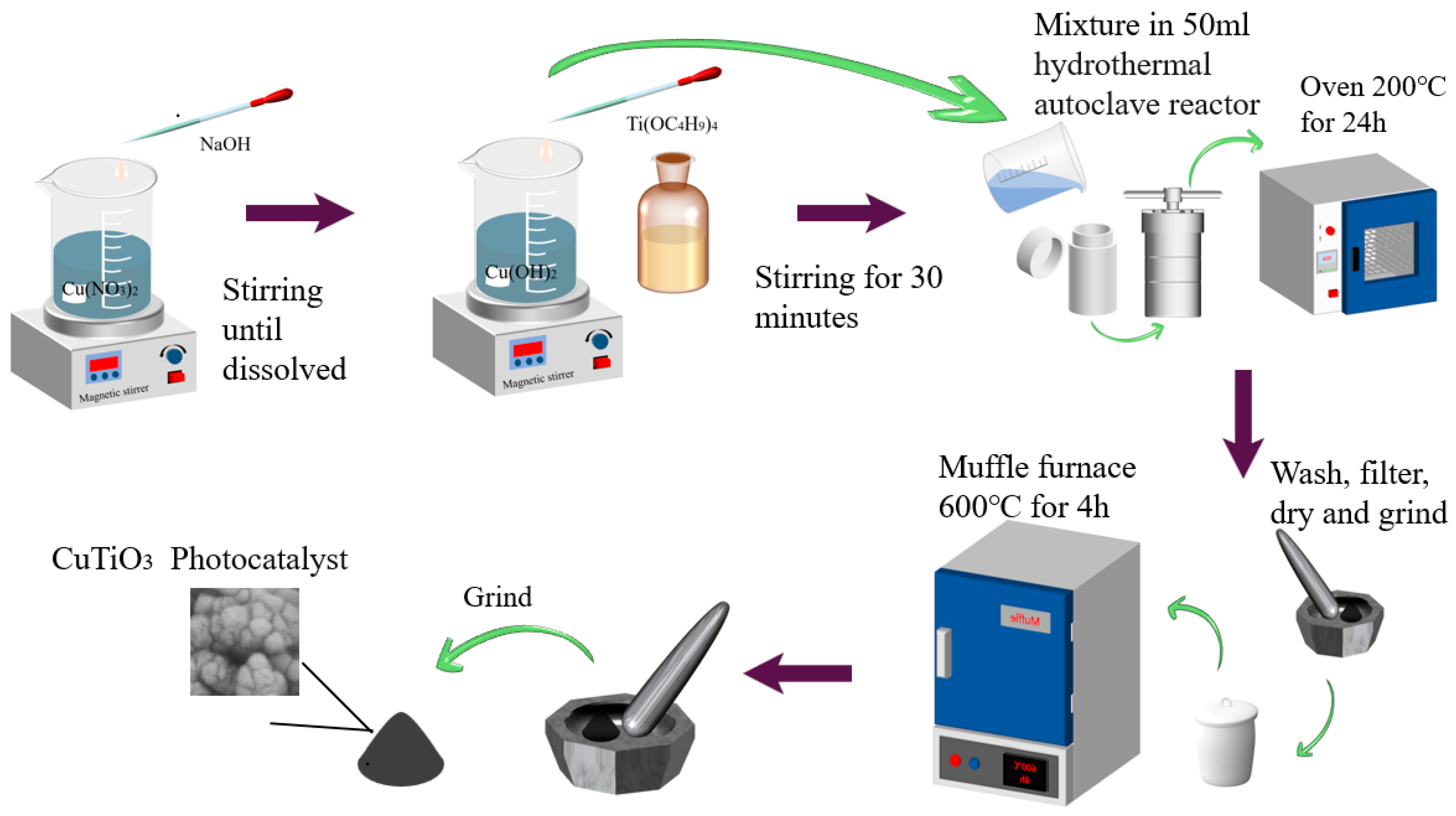
2.2. Preparation of CuTiO3
2.3. Properties of Photocatalyst
2.4. Experimental Procedure for Photocatalytic Degradation of Organic Peroxide Production Wastewater
2.5. Analytical Methods for Wastewater
3. Results and Discussion
3.1. Characterization of CuTiO3
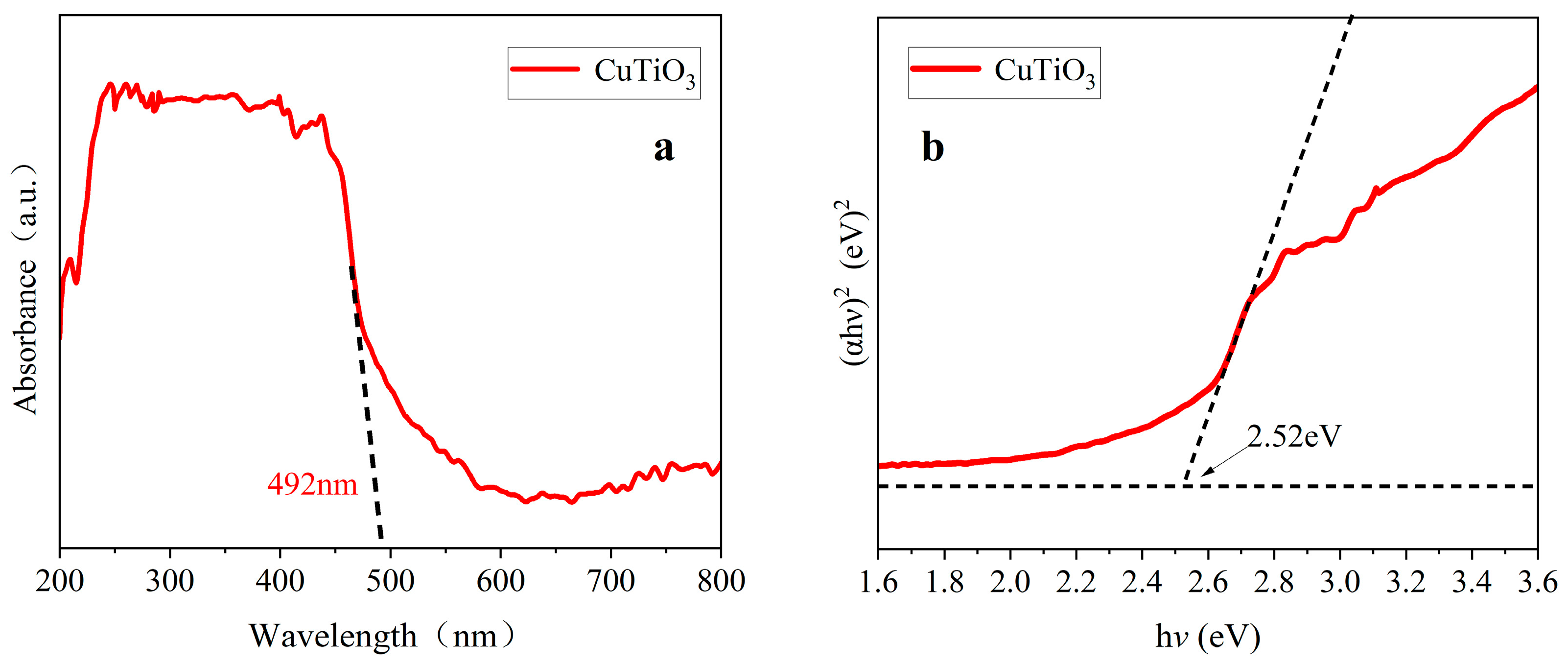
3.1.1. Uv-Vis DRS Characterization of CuTiO3
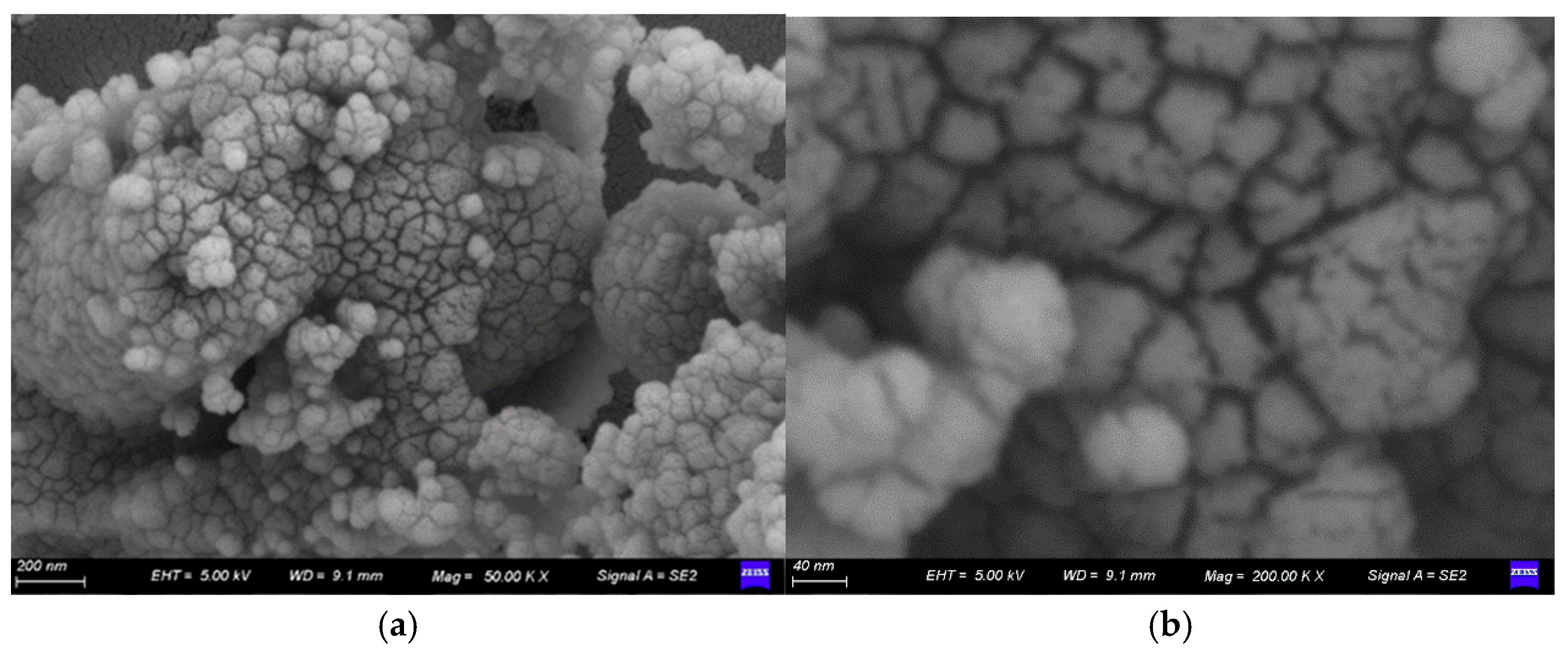
3.1.2. SEM Characterization of CuTiO3
3.2. Performance of CuTiO3 Photocatalysis in Treating Organic Peroxide Production Wastewater
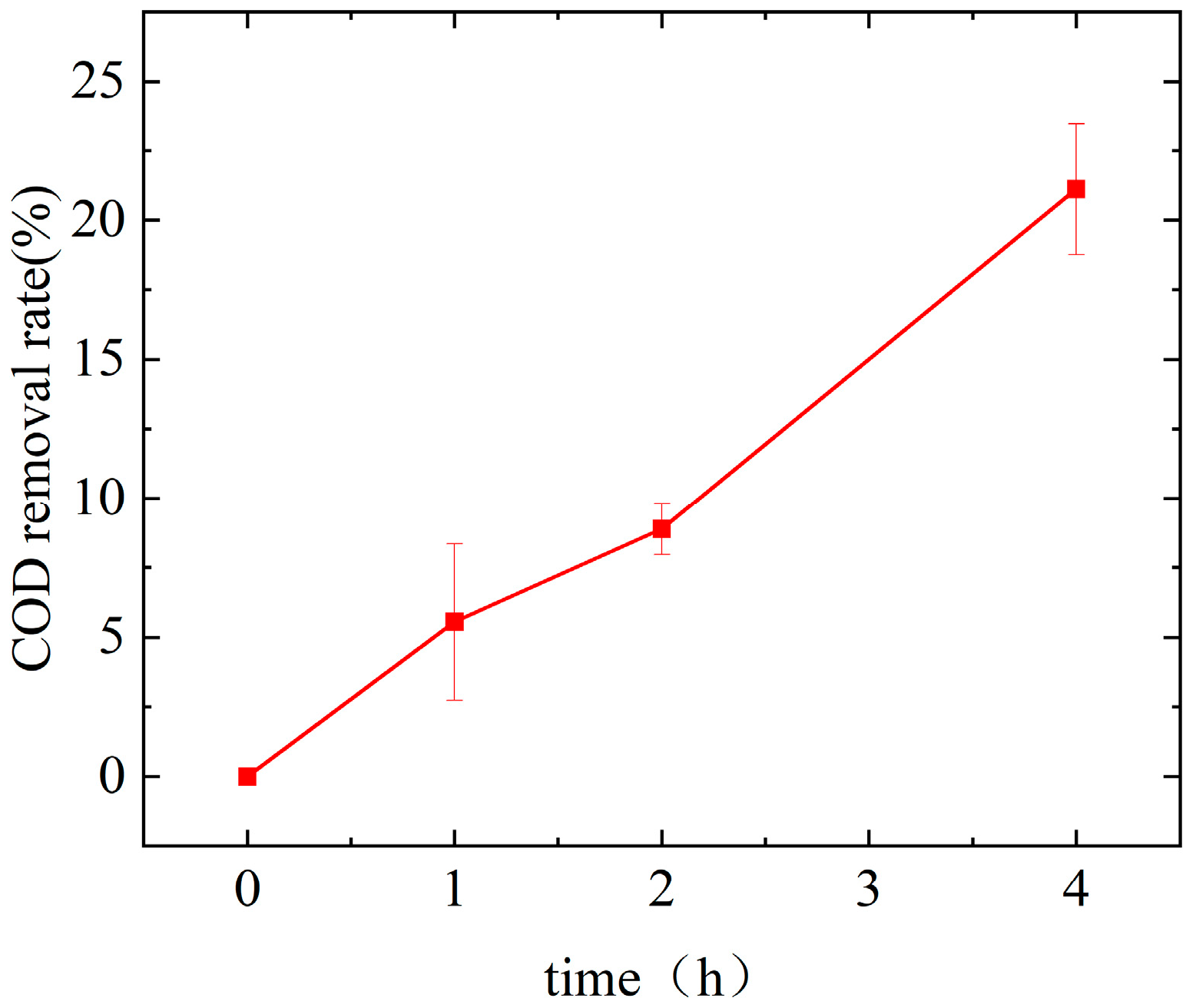
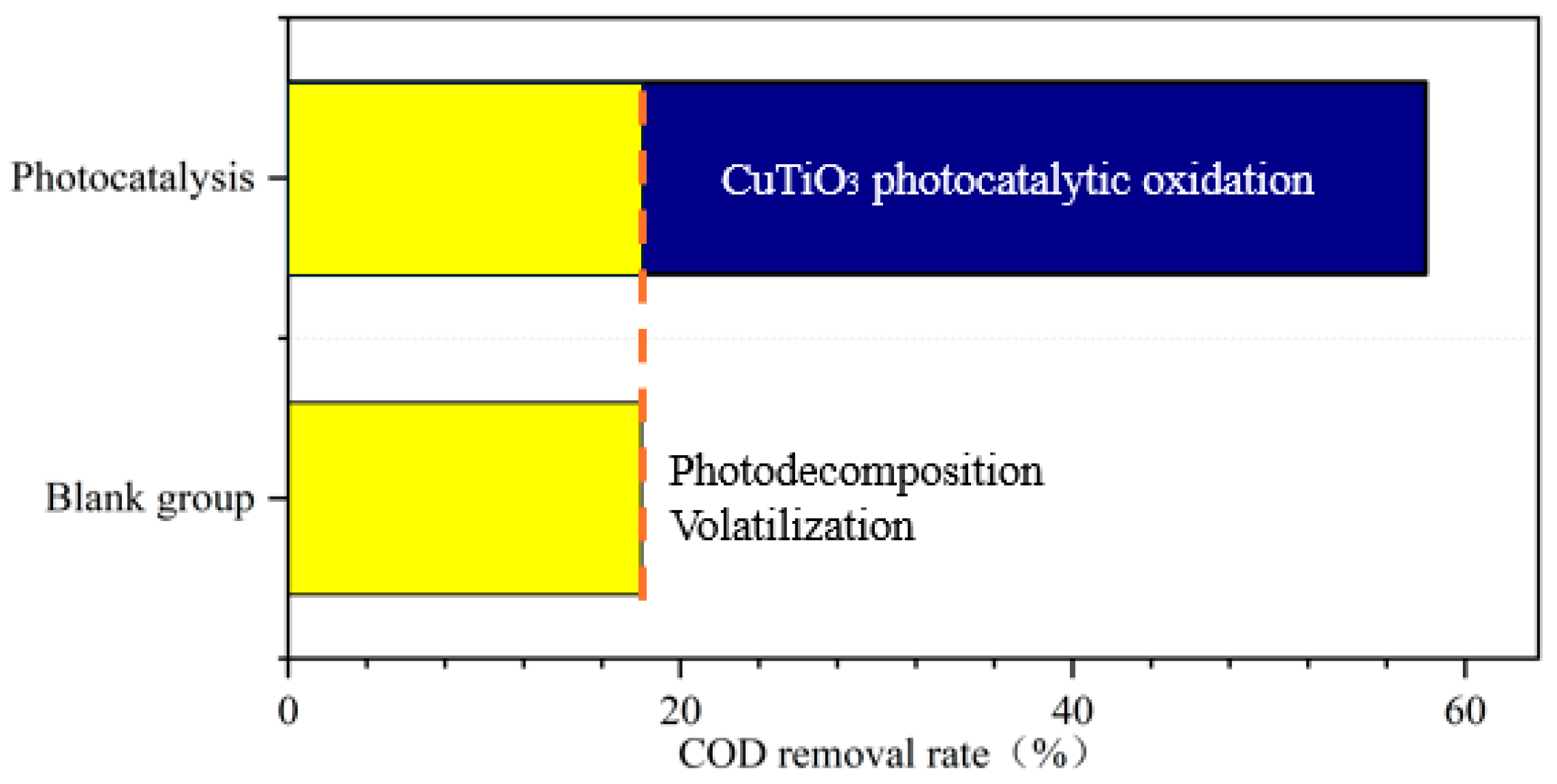
3.2.1. Control Experiment on Photocatalytic Treatment of Organic Peroxide Production Wastewater
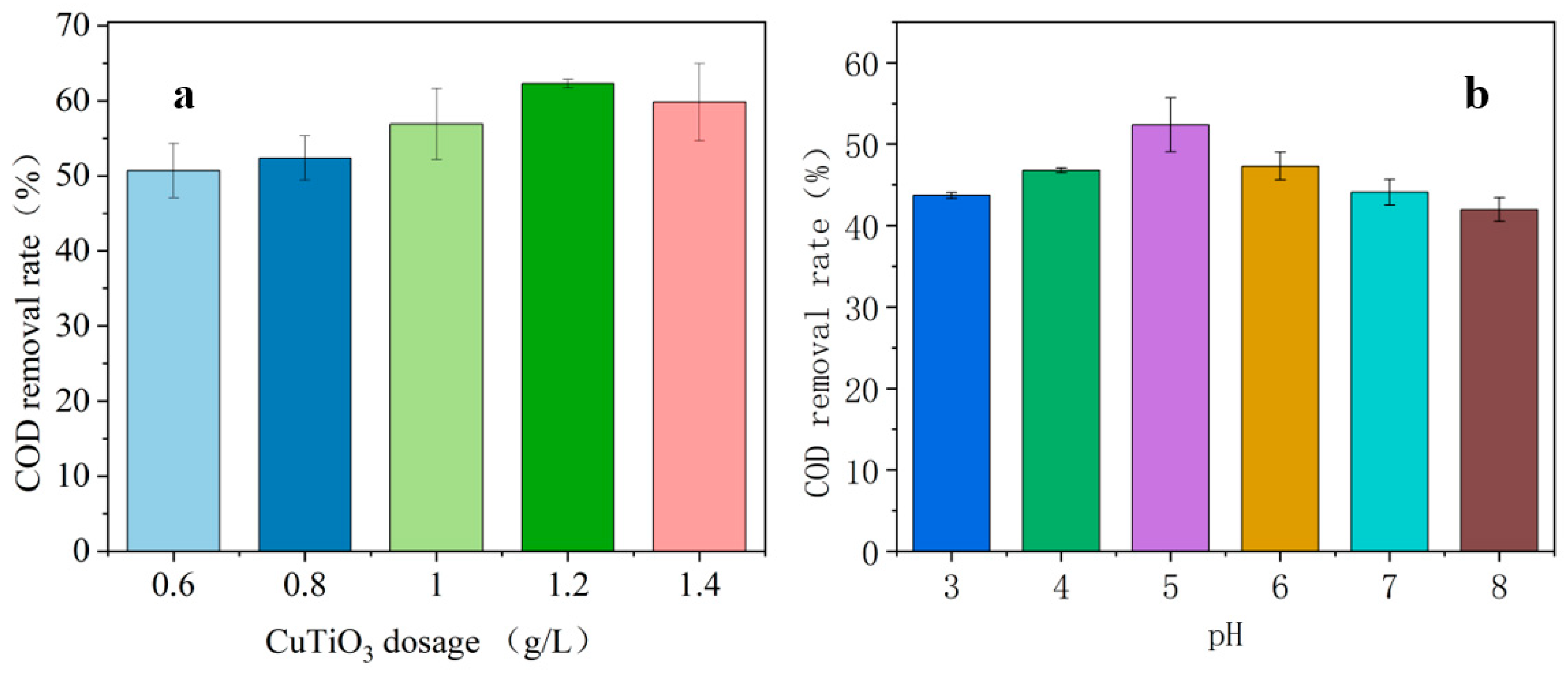
3.2.2. Effect of CuTiO3 Dosage
3.2.3. Effect of pH
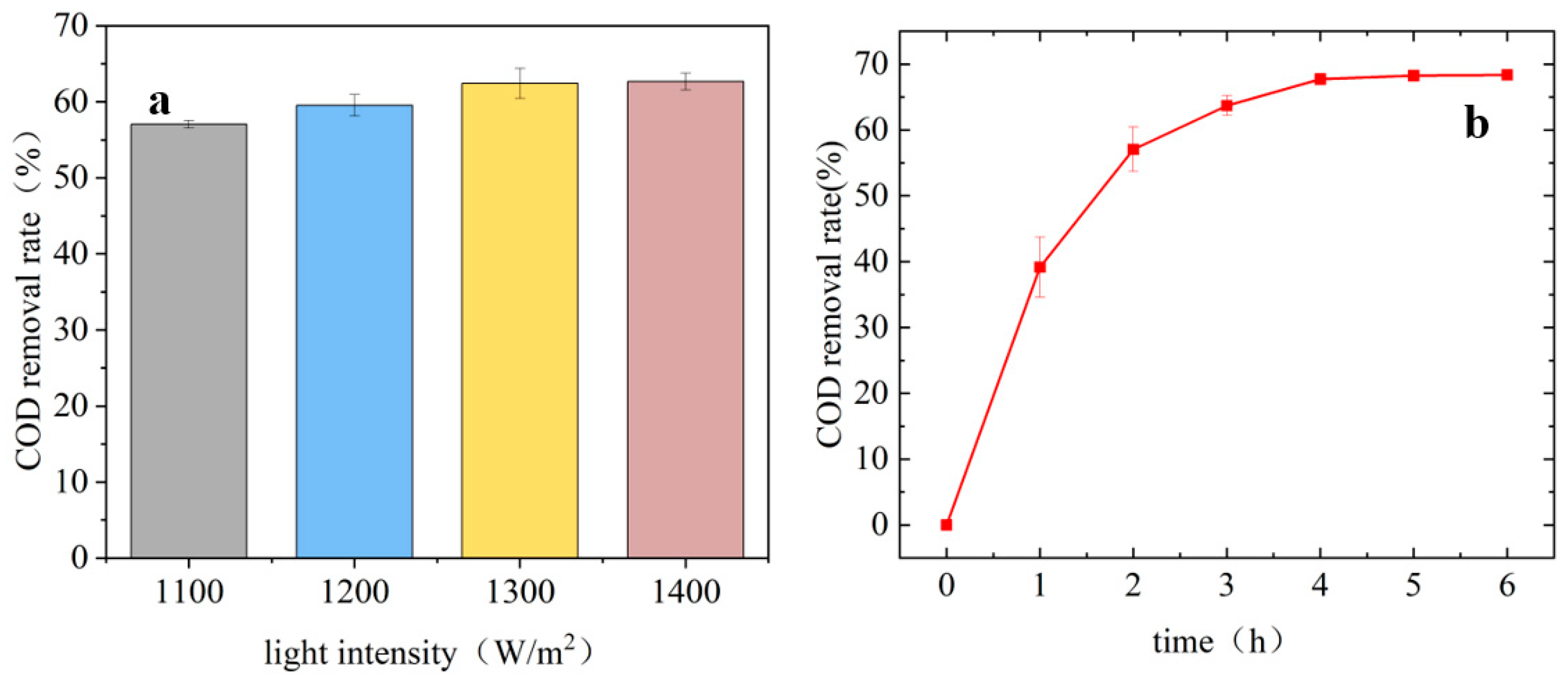
3.2.4. Effect of Light Intensity
3.2.5. Effect of Reaction Duration
3.2.6. Performance of Photocatalysis on Wastewater Treatment Under Optimized Conditions
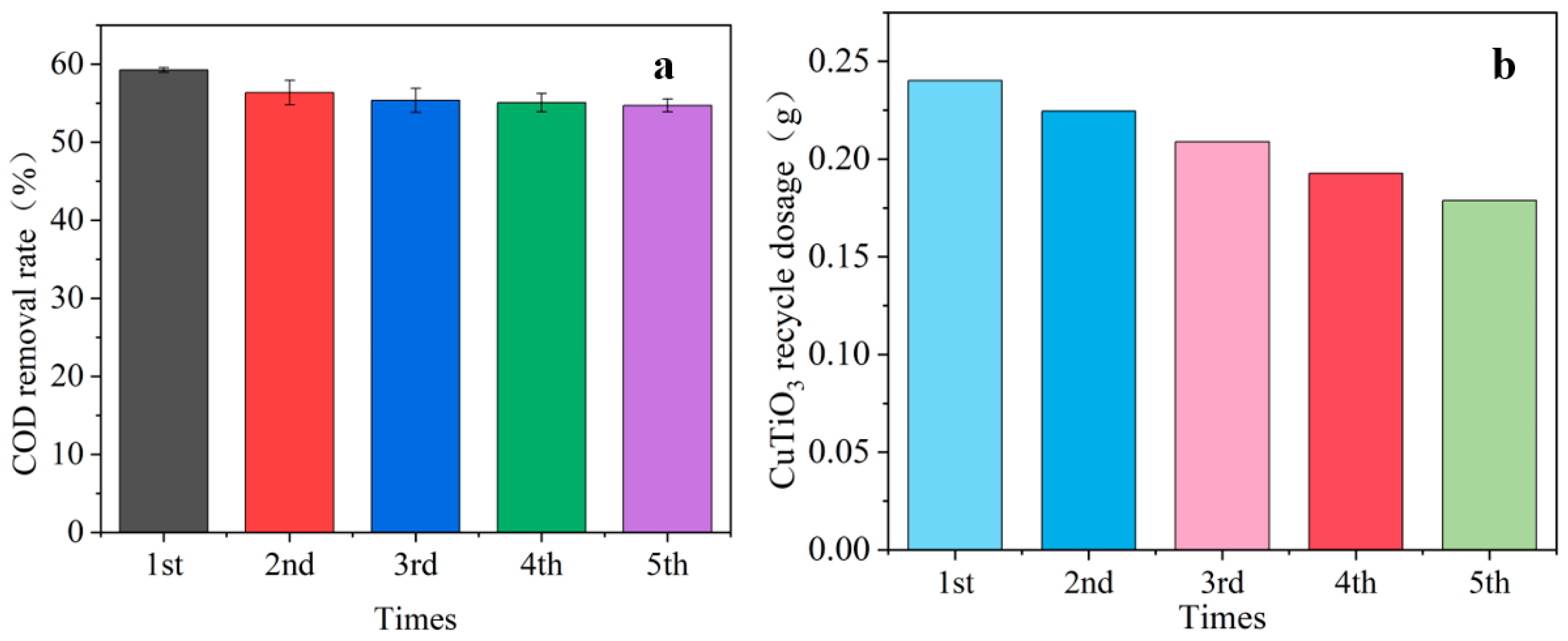
3.3. Reusability of CuTiO3 Photocatalyst
3.4. Transformation of Organic Compounds and Reaction Mechanism in Photocatalytic Treatment of Organic Peroxide Production Wastewater
3.4.1. Uv-Vis Analysis
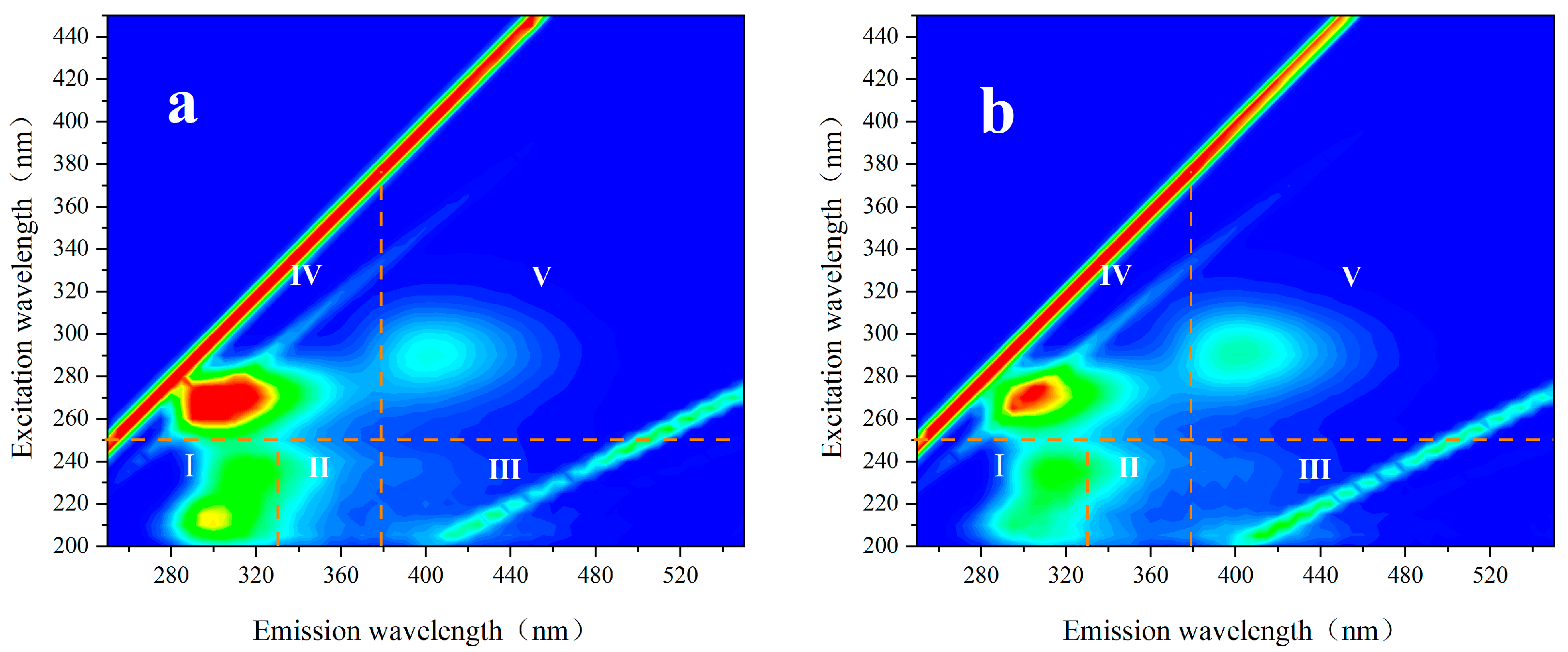
3.4.2. 3D-EEM Analysis
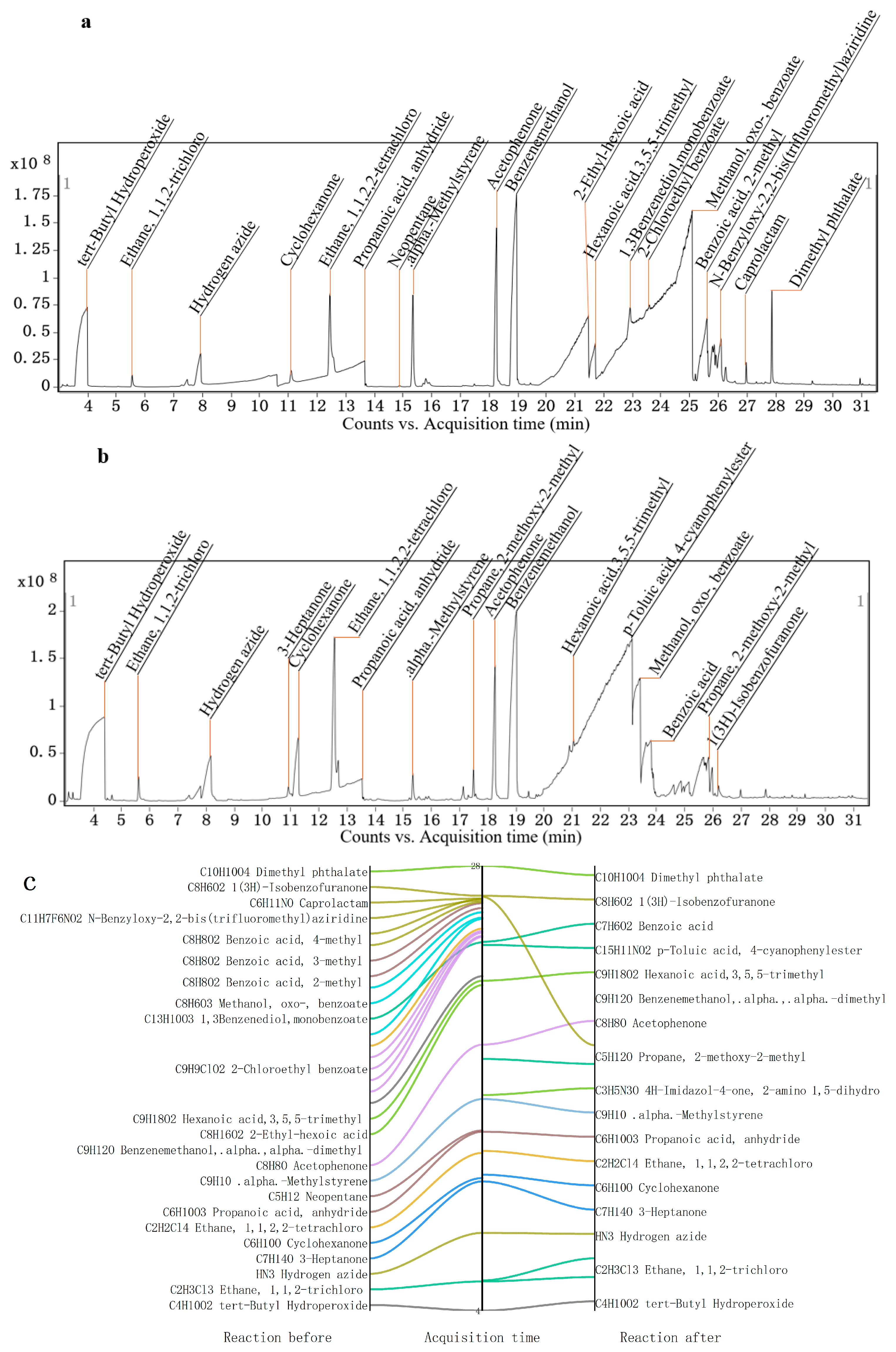
3.4.3. GC–MS Analysis
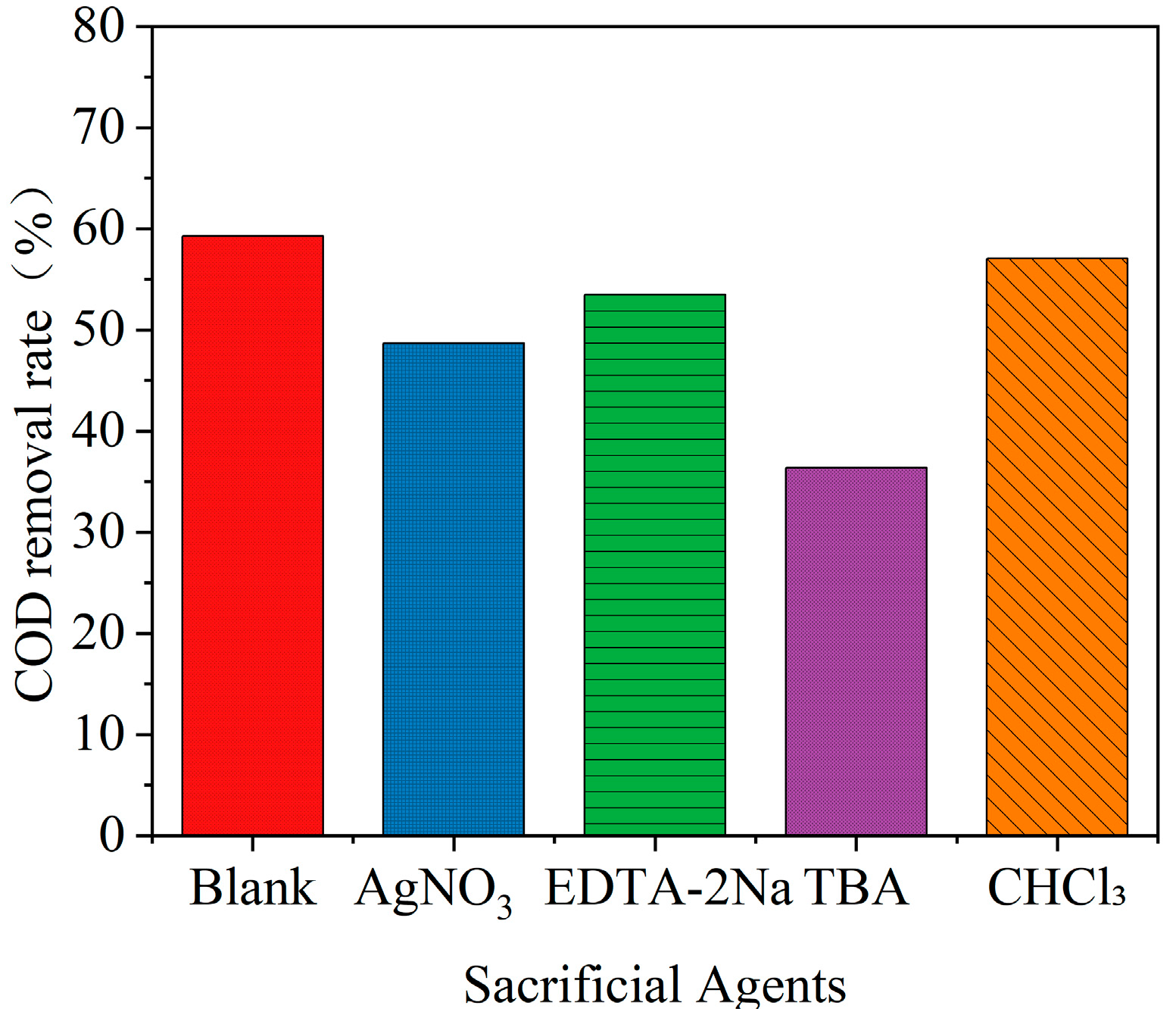
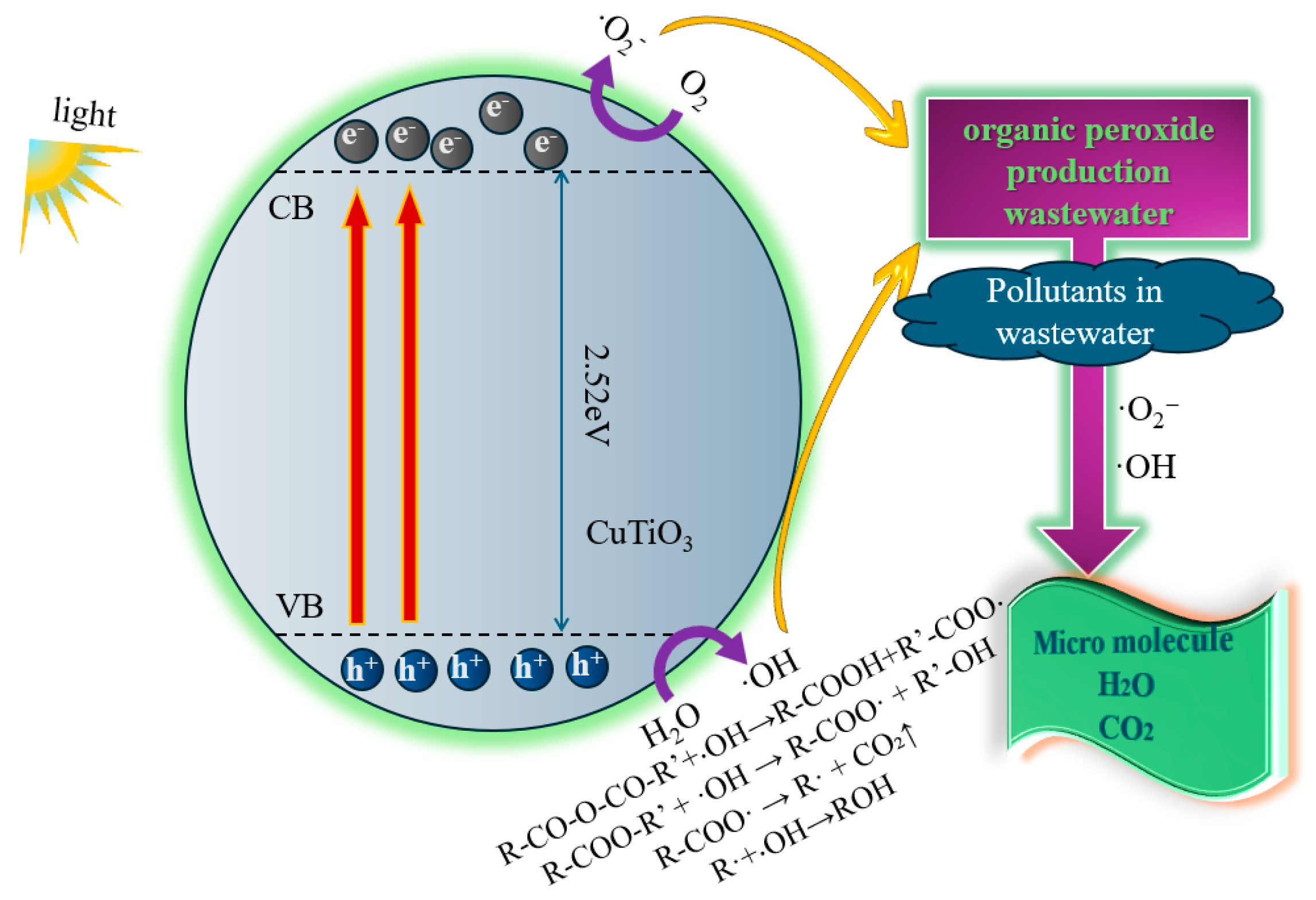
3.4.4. The Mechanism of Degradation Pollutants in Organic Peroxide Production Wastewater
4. Conclusions
- (1)
- Under optimized conditions (initial pH = 5.0, catalyst dosage = 1.2 g/L, light intensity = 1300 W/m2, reaction time = 4 h), the CuTiO3 photocatalytic system achieved a COD removal rate of 58%. More importantly, the biodegradability (B/C ratio) of the wastewater was significantly enhanced, increasing from 0.112 to 0.221. This demonstrates that the process effectively converts recalcitrant organic compounds into more biodegradable forms, providing an excellent pretreatment strategy for subsequent biological treatment.
- (2)
- DRS characterization confirmed the strong visible-light response of CuTiO3, with an absorption edge at 492 nm and a bandgap of 2.52 eV, enabling efficient utilization of visible-light energy. The catalyst also exhibited robust stability and reusability, maintaining a high COD removal efficiency of 54.71% after five consecutive reaction cycles, indicating its potential for long-term practical application. A multi-method analytical approach (3D-EEM, Uv-Vis, and GC-MS) revealed the effective degradation and transformation of diverse refractory organic pollutants. 3D-EEM showed a significant reduction in tyrosine-like and tryptophan-like substances. GC-MS analysis confirmed the effective removal or transformation of esters, amides, and anhydrides (e.g., caprolactam). Radical quenching experiments unequivocally identified the hydroxyl radical (OH) as the primary active species responsible for the degradation, elucidating the underlying reaction mechanisms.
Author Contributions
Funding
Data Availability Statement
Acknowledgments
Conflicts of Interest
References
- Yan, Z.; Xie, S.; Yang, M. Effect and mechanism of iron-carbon micro-electrolysis pretreatment of organic peroxide production wastewater. Environ. Sci. Pollut. Res. 2024, 31, 11886–11897. [Google Scholar] [CrossRef] [Scilit] [PubMed]
- Manna, M.; Sen, S. Advanced oxidation process: A sustainable technology for treating refractory organic compounds present in industrial wastewater. Environ. Sci. Pollut. Res. 2023, 30, 25477–25505. [Google Scholar] [CrossRef] [Scilit]
- Ma, D.; Yi, H.; Lai, C.; Liu, X.; Huo, X.; An, Z.; Li, L.; Fu, Y.; Li, B.; Zhang, M.; et al. Critical review of advanced oxidation processes in organic wastewater treatment. Chemosphere 2021, 275, 130104. [Google Scholar] [CrossRef] [Scilit]
- Jabbar, Z.H.; Graimed, B.H. Recent developments in industrial organic degradation via semiconductor heterojunctions and the parameters affecting the photocatalytic process: A review study. J. Water Process Eng. 2022, 47, 102671. [Google Scholar] [CrossRef] [Scilit]
- Zhang, X.; Fan, Y.; Hao, T.; Chen, R.; Zhang, T.; Hu, Y.; Li, D.; Pan, Y.; Li, Y.-Y.; Kong, Z. Insights into current bio-processes and future perspectives of carbon-neutral treatment of industrial organic wastewater: A critical review. Environ. Res. 2024, 241, 117630. [Google Scholar] [CrossRef] [Scilit]
- Pazdzior, K.; Bilinska, L.; Ledakowicz, S. A review of the existing and emerging technologies in the combination of AOPs and biological processes in industrial textile wastewater treatment. Chem. Eng. J. 2019, 376, 120597. [Google Scholar] [CrossRef] [Scilit]
- An, W.; Li, X.; Ma, J.; Ma, L. Advanced treatment of industrial wastewater by ozonation with iron-based monolithic catalyst packing: From mechanism to application. Water Res. 2023, 235, 119860. [Google Scholar] [CrossRef] [Scilit]
- An, Y.C.; Gao, X.-X.; Jiang, W.L.; Han, J.-L.; Ye, Y.; Chen, T.M.; Ren, R.-Y.; Zhang, J.-H.; Liang, B.; Li, Z.-L.; et al. A critical review on graphene oxide membrane for industrial wastewater treatment. Environ. Res. 2023, 223, 115409. [Google Scholar] [CrossRef] [Scilit]
- Guo, W.; Li, C.; Zhao, J.; Ding, Y.; Yang, Q.; Guan, H. The treatment of petrochemical wastewater via ozone-persulfate coupled catalytic oxidation: Mechanism of removal of soluble organic matter. Environ. Sci. Pollut. Res. Int. 2024, 31, 29400–29414. [Google Scholar] [CrossRef] [Scilit] [PubMed]
- Jain, B.; Singh, A.K.; Kim, H.; Lichtfouse, E.; Sharma, V.K. Treatment of organic pollutants by homogeneous and heterogeneous Fenton reaction processes. Environ. Chem. Lett. 2018, 16, 947–967. [Google Scholar] [CrossRef] [Scilit]
- Cheung, K.P.S.; Sarkar, S.; Gevorgyan, V. Visible Light-Induced Transition Metal Catalysis. Chem. Rev. 2022, 122, 1543–1625. [Google Scholar] [CrossRef] [Scilit]
- Zhang, F.; Wang, X.; Liu, H.; Liu, C.; Wan, Y.; Long, Y.; Cai, Z. Recent Advances and Applications of Semiconductor Photocatalytic Technology. Appl. Sci. 2019, 9, 2489. [Google Scholar] [CrossRef] [Scilit]
- Yuan, L.; Han, C.; Yang, M.-Q.; Xu, Y.-J. Photocatalytic water splitting for solar hydrogen generation: Fundamentals and recent advancements. Int. Rev. Phys. Chem. 2016, 35, 1–36. [Google Scholar] [CrossRef] [Scilit]
- Cheng, W.-M.; Shang, R. Transition Metal-Catalyzed Organic Reactions under Visible Light: Recent Developments and Future Perspectives. Acs Catal. 2020, 10, 9170–9196. [Google Scholar] [CrossRef] [Scilit]
- Mahalingam, S.; Ramasamy, J.; Ahn, Y.-H. Enhanced Photocatalytic Degradation of Synthetic Dyes and Industrial Dye Wastewater by Hydrothermally Synthesized G-CuO-Co3O4 Hybrid Nanocomposites Under Visible Light Irradiation. J. Clust. Sci. 2018, 29, 235–250. [Google Scholar] [CrossRef] [Scilit]
- Bukhari, S.A.S.; Zafar, M.; Mazhar, F.; Ahmed, A.; Fazal, T.; Rehman, F.; Razzaq, A.; Kim, W.Y. Development of nickel doped graphitic carbon nitride (GCN) photocatalyst for enhanced degradation of textile pollutant under visible light irradiation. J. Saudi Chem. Soc. 2024, 28, 101801. [Google Scholar] [CrossRef] [Scilit]
- Wu, M.; Sun, W.; Meng, X.; Kang, J.; Yang, Y. Natural marmatite photocatalyst for treatment of mineral processing wastewater to help zero wastewater discharge. J. Environ. Sci. 2024, 142, 83–91. [Google Scholar] [CrossRef] [Scilit] [PubMed]
- Ilyas, A.; Rafiq, K.; Abid, M.Z.; Rauf, A.; Hussain, E. Growth of villi-microstructured bismuth vanadate (Vm-BiVO(4)) for photocatalytic degradation of crystal violet dye. RSC Adv. 2023, 13, 2379–2391. [Google Scholar] [CrossRef] [Scilit]
- Lang, X.; Chen, X.; Zhao, J. Heterogeneous visible light photocatalysis for selective organic transformations. Chem. Soc. Rev. 2014, 43, 473–486. [Google Scholar] [CrossRef] [Scilit]
- Marzo, L.; Pagire, S.K.; Reiser, O.; Koenig, B. Visible-Light Photocatalysis: Does It Make a Difference in Organic Synthesis? Angew. Chem. Int. Ed. 2018, 57, 10034–10072. [Google Scholar] [CrossRef] [Scilit] [PubMed]
- Schultz, D.M.; Yoon, T.P. Solar Synthesis: Prospects in Visible Light Photocatalysis. Science 2014, 343, 1239176. [Google Scholar] [CrossRef] [Scilit]
- Li, F.; Xie, S.; Zhou, Y.; Wu, Z.; Wang, Q.; Wu, P.; Huang, H.; He, Q.; Li, F.; Zhao, K.; et al. Fabrication of directly 2D Z-scheme CuTiO3/g-C3N4 with high photocatalytic activities for CO2 reduction and hydrogen production. J. Solid State Chem. 2024, 329, 124399. [Google Scholar] [CrossRef] [Scilit]
- Murtaza, G.; Khan, M.S.; Tahir, K.; Khan, A.U.; Zaki, M.E.A.; Almarhoon, Z.M.; Alanazi, A.A.; Al-Shehri, H.S.; Al-Saeedi, S.I.; Hassan, H.M.A. Photocatalytic applications of A5-mPmH-Zr/CuTiO3 nanocomposite synthesized by simple hydrothermal method. J. Environ. Chem. Eng. 2024, 12, 113345. [Google Scholar] [CrossRef] [Scilit]
- Ziembowicz, S.; Kida, M. Limitations and future directions of application of the Fenton-like process in micropollutants degradation in water and wastewater treatment: A critical review. Chemosphere 2022, 296, 134041. [Google Scholar] [CrossRef] [Scilit] [PubMed]
- HJ/T 924-2017; Technical Requirement and Test Procedures for Rapid COD Photometric Analyzer. Ministry of Environmental Protection of the People’s Republic of China: Beijing, China, 2017.
- Liu, J.; Duan, L.; Gao, Q.; Zhang, H.; Yu, H.; Zhang, J. Three-dimensional fluorescence characteristics analysis of DOMs in water treated by the ultrafiltration-reverse osmosis process. J. Mol. Liq. 2024, 398, 124297. [Google Scholar] [CrossRef] [Scilit]
- Zhong, W.; Wang, D.; Xu, X.; Wang, B.; Luo, Q.; Kumaran, S.S.; Wang, Z. A gas chromatography/mass spectrometry method for the simultaneous analysis of 50 phenols in wastewater using deconvolution technology. Chin. Sci. Bull. 2011, 56, 275–284. [Google Scholar] [CrossRef] [Scilit]
- Zhang, W.; Yang, X.; Wang, D. Complete Removal of Organic Contaminants from Hypersaline Wastewater by the Integrated Process of Powdered Activated Carbon Adsorption and Thermal Fenton Oxidation. Ind. Eng. Chem. Res. 2013, 52, 5765–5771. [Google Scholar] [CrossRef] [Scilit]
- Chiang, C.F.; Wu, Y.S.; Young, J.C. Analyzing the uncorrected error of dilution water demand for the dilution biochemical oxygen demand method. Water Environ. Res. Res. Publ. Water Environ. Fed. 2004, 76, 238–244. [Google Scholar] [CrossRef] [Scilit]
- Guo, X.; Liu, L.; Xiao, Y.; Qi, Y.; Duan, C.; Zhang, F. Band gap engineering of metal-organic frameworks for solar fuel productions. Coord. Chem. Rev. 2021, 435, 213785. [Google Scholar] [CrossRef] [Scilit]
- Hfayedh, N.; Saidi, W.; Haouari, M.; Autret-Lambert, C.; Roger, S.; Megriche, A.; El Maaoui, M. HRTEM study of the variation of TNTs morphology synthesized via hydrothermal method at different reaction times. Curr. Appl. Phys. 2016, 16, 1308–1314. [Google Scholar] [CrossRef] [Scilit]
- Pourali, S.; Amrollahi, R.; Alamolhoda, S.; Masoudpanah, S.M. In situ synthesis of ZnO/g-C3N4 based composites for photodegradation of methylene blue under visible light. Sci. Rep. 2025, 15, 462. [Google Scholar] [CrossRef] [Scilit] [PubMed]
- Hasham Firooz, M.; Naderi, A.; Moradi, M.; Kalantary, R.R. Enhanced tetracycline degradation with TiO2/natural pyrite S-scheme photocatalyst. Sci. Rep. 2024, 14, 4954. [Google Scholar] [CrossRef] [Scilit] [PubMed]
- Rana, S.; Kumar, A.; Dhiman, P.; Mola, G.T.; Sharma, G.; Lai, C.W. Recent advances in photocatalytic removal of sulfonamide pollutants from waste water by semiconductor heterojunctions: A review. Mater. Today Chem. 2023, 30, 101603. [Google Scholar] [CrossRef] [Scilit]
- Zhang, C.; Yang, A.; Qin, B.; Zhao, W.; Kong, C.; Qin, C. pH dependence of reactive oxygen species generation and pollutant degradation in Fe(II)/O2/tripolyphosphate system. J. Hazard. Mater. 2024, 480, 136174. [Google Scholar] [CrossRef] [Scilit]
- Gao, M.; Li, W.; Su, X.; Li, Z.; Ding, X.; Du, X.; Ren, Y.; Zhang, H.; Feng, J.; Wei, T. A regenerable Cu2O/BiOBr S-scheme heterojunction photocatalysts for efficient photocatalytic degradation of mixed organic pollutants. Sep. Purif. Technol. 2023, 313, 123447. [Google Scholar] [CrossRef] [Scilit]
- Ma, L.; Zhang, Z.; Duan, J.; Li, J.; Lin, Q.; Jiang, Y.; Zhu, K.; Fang, Z.; Ji, B.; Yang, Z. Optimize the preparation process of m-TiO2@CdS by response surface methodology to enhance the light intensity adaptability of photocatalytic degradation of tetracycline. J. Alloys Compd. 2025, 1010, 177979. [Google Scholar] [CrossRef] [Scilit]
- Baygi, N.J.; Beidokhti, S.M.; Khaki, J.V.; Niazmand, H. Synthesis and post-heat treatment of complex compositions in Cu-Ti-O system: Phase investigation and optical properties. Mater. Sci. Eng. B 2023, 292, 19. [Google Scholar] [CrossRef] [Scilit]
- Hou, Z.; Zhou, X.; Zhao, Z.; Dong, W.; Wang, H.; Liu, H.; Zeng, Z.; Xie, J. Advanced aromatic organic compounds removal from refractory coking wastewater in a step-feed three-stage integrated A/O bio-filter: Spectrum characterization and biodegradation mechanism. J. Environ. Manag. 2022, 322, 116140. [Google Scholar] [CrossRef] [Scilit]
- Yang, H.M.; Gu, J.C.; Ran, M.J.; Zhang, D.H.; Ou, Y.J. Degradation Kinetics and Organic Matter Removal Characteristics of Anaerobic Treatment of Pickle Cleaning Wastewater. Appl. Ecol. Environ. Res. 2018, 16, 3501–3516. [Google Scholar] [CrossRef] [Scilit]
- Li, Y.; Yuan, X.; Wu, Z.; Wang, H.; Xiao, Z.; Wu, Y.; Chen, X.; Zeng, G. Enhancing the sludge dewaterability by electrolysis/electrocoagulation combined with zero-valent iron activated persulfate process. Chem. Eng. J. 2016, 303, 636–645. [Google Scholar] [CrossRef] [Scilit]
- Feng, J.; Tang, H.; Guo, H.; Ding, A. Visible-light-induced dehydrogenation of dihydroquinolinones via the combination of energy transfer and hydrogen atom transfers. Org. Chem. Front. 2024, 12, 1183–1188. [Google Scholar] [CrossRef] [Scilit]
- Lopat’eva, E.R.; Krylov, I.B.; Terent’ev, A.O. t-BuOOH/TiO2 Photocatalytic System as a Convenient Peroxyl Radical Source at Room Temperature under Visible Light and Its Application for the CH-Peroxidation of Barbituric Acids. Catalysts 2023, 13, 1306. [Google Scholar] [CrossRef] [Scilit]
- El Kfoury, M.-T.; Chub, O.V.; Boffito, D.C.; Patience, G.S. Tert-butanol and hydrogen peroxide react over Amberlyst-15 to form tert-butyl hydroperoxide. Can. J. Chem. Eng. 2024, 102, 1583–1591. [Google Scholar] [CrossRef] [Scilit]
- Al-dolaimy, F.; Kumar, A.; Saleh, Z.M.; Hamoody, A.-h.M.; Altimari, U.S.; Shaghnab, M.L.; Abid, M.K.; Alkhathami, A.G.; Abudahish, A.A.; Alawadi, A.; et al. Construction and structural of p-CeCuO3/n-CeO2 hybrid nanostructures for the photocatalysis driven by LED light system and industrial textile wastewater remediation. Inorg. Chem. Commun. 2024, 170, 113418. [Google Scholar] [CrossRef] [Scilit]
- Sun, S.; Zhang, H. Theoretical study on the reaction mechanism of 2,4-D butyl ester with OH radical. Theor. Chem. Acc. 2016, 135, 109. [Google Scholar] [CrossRef] [Scilit]
- Amiri, H.; Martinez, S.S.; Shiri, M.A.; Soori, M.M. Advanced oxidation processes for phthalate esters removal in aqueous solution: A systematic review. Rev. Environ. Health 2023, 38, 197–218. [Google Scholar] [CrossRef] [Scilit] [PubMed]
- Mieden, O.J.; von Sonntag, C. Peptide Free-Radicals: The Reactions of OH Radicals with Glycine Anhydride and its Methyl Derivatives Sarcosine and Alanine Anhydride. A Pulse Radiolysis and Product Study. Z. Naturforschung B 1989, 44, 959–974. [Google Scholar] [CrossRef] [Scilit]






Disclaimer/Publisher’s Note: The statements, opinions and data contained in all publications are solely those of the individual author(s) and contributor(s) and not of MDPI and/or the editor(s). MDPI and/or the editor(s) disclaim responsibility for any injury to people or property resulting from any ideas, methods, instructions or products referred to in the content. |
© 2026 by the authors. Licensee MDPI, Basel, Switzerland. This article is an open access article distributed under the terms and conditions of the Creative Commons Attribution (CC BY) license.
Share and Cite
Yan, Z.; Li, H.; Yang, H.; Li, S. Performance of CuTiO3 Photocatalytic Oxidation for Treating Organic Peroxide Production Wastewater Under Visible Light. Sustainability 2026, 18, 983. https://doi.org/10.3390/su18020983
Yan Z, Li H, Yang H, Li S. Performance of CuTiO3 Photocatalytic Oxidation for Treating Organic Peroxide Production Wastewater Under Visible Light. Sustainability. 2026; 18(2):983. https://doi.org/10.3390/su18020983
Chicago/Turabian StyleYan, Zichun, Hongfu Li, Hao Yang, and Shuo Li. 2026. "Performance of CuTiO3 Photocatalytic Oxidation for Treating Organic Peroxide Production Wastewater Under Visible Light" Sustainability 18, no. 2: 983. https://doi.org/10.3390/su18020983
APA StyleYan, Z., Li, H., Yang, H., & Li, S. (2026). Performance of CuTiO3 Photocatalytic Oxidation for Treating Organic Peroxide Production Wastewater Under Visible Light. Sustainability, 18(2), 983. https://doi.org/10.3390/su18020983