Article

Toward Sustainable Learning: A Multidimensional Framework of AI Integration, Engagement, and Digital Resilience in Saudi Higher Education

by
Basma Jallali
1,*,
Sana Hafdhi
2,
Alaa Mohammed Eid Aloufi
2,
Bayan Khalid Masoudi
2 and
Awatif Mueed Alshmrani
3
1
Business Department, College of Business Administration in Yanbu, Taibah University, Yanbu 42353, Saudi Arabia
2
Department of Information System, College of Management Information System in Yanbu, Taibah University, Yanbu 42353, Saudi Arabia
3
Accounting Department, College of Accountant in Yanbu, Taibah University, Yanbu 42353, Saudi Arabia
*
Author to whom correspondence should be addressed.
Sustainability 2026, 18(2), 944; https://doi.org/10.3390/su18020944
Submission received: 13 December 2025 / Revised: 9 January 2026 / Accepted: 13 January 2026 / Published: 16 January 2026

Abstract

This study aims to (1) examine the impact of AI-driven learning tools (AI-LTs) on educational sustainability (EDS) and (2) investigate the mediating role of students’ engagement (SE) and the moderating effect of digital resilience (DR) in this relationship. Based on sociotechnical systems theory (STS), self-determination theory (SDT), and resilience theory, and (3) developing a multidimensional framework to explore how technological, psychological, and contextual factors interact to shape sustainable learning outcomes. Data were gathered from 387 university students in Saudi universities using a standardized questionnaire and subsequently analyzed utilizing SPSS version 28 and PROCESS Macro Version 4.0. The study performed multiple regression and moderated mediation to evaluate the proposed relationships. The results confirmed that AI-LTs significantly enhance educational sustainability. Based on the findings, AI-LTs significantly improve the long-term viability of education, particularly when it is tailored to individual students, encourages active participation, and is logical from a pedagogical perspective. Student engagement was found to influence the relationship, suggesting that when AI tools are utilized effectively, they foster a sustained commitment to education and improved learning outcomes. Furthermore, digital resilience has a significant influence on the connection between AI-LT–EDS, indicating that students who exhibited improved adaptability to digital challenges reaped considerable benefits. The research enhances the existing literature by integrating three complementary frameworks—STS, SDT, and resilience theory—to provide a comprehensive understanding of AI’s role in sustainable education. Practically, the study underscored the importance of AI integration strategies that improve digital resilience, student engagement, and structural imbalance. The results demonstrated that AI usage necessitates significant institutional support and improved technology to establish educational environments that are adaptable, resilient, and easily accessible to students.

1. Introduction

The swift progression of artificial intelligence (AI) in education is revolutionizing learning settings through the facilitation of adaptive, personalized, and data-driven instruction. AI-powered educational solutions, including intelligent tutoring systems, recommendation algorithms, and adaptive content platforms, provide significant potential to enhance learning outcomes and democratize educational access [1,2]. Nonetheless, despite immediate efficiency improvements, a fundamental inquiry emerges: Do AI-driven technologies foster long-term educational sustainability? Educational sustainability involves cultivating resilient, engaged, and future-ready learners and is increasingly regarded as a strategic goal for educational systems in the digital era [3,4]. Although there is increasing focus on AI in education, research has not thoroughly examined how these tools promote sustainable learning environments and the psychological and contextual conditions under which they are most effective [5,6].
To fill this gap, the current study combines sociotechnical systems theory (STS), self-determination theory (SDT), and resilience theory. STS provides a foundational paradigm for examining the interaction between technology (AI tools) and the social system (learners and institutions), asserting that optimal outcomes occur when technical systems align with human needs and organizational structures [7]. However, technology alone is inadequate; student learning engagement is a pivotal feature that influences the effectiveness of AI tools in achieving significant educational outcomes [8,9]. This study, informed by self-determination theory (SDT), which highlights autonomy, competence, and relatedness as psychological motivators [10], places learning engagement as a mediating mechanism via which AI technologies impact educational sustainability. The growing complexity and volatility of digital learning environments necessitate that learners exhibit the adaptive capacity to manage technological uncertainty, as outlined by resilience theory [11,12]. This study presents digital resilience as a mediator that can either enhance or diminish the relationship between AI and sustainability, contingent upon learners’ capacity to adapt to and overcome digital challenges.
Despite theoretical progress, substantial empirical deficiencies persist. Many current studies focus on the technical effectiveness of AI tools, neglecting to analyze how learner characteristics and engagement behaviors influence their long-term educational impact [9,13]. The existing literature does not provide a comprehensive model that integrates internal psychological mechanisms, such as engagement, with external contextual buffers, like resilience, to elucidate the intricate dynamics of AI-supported sustainable education [14]. Furthermore, educational institutions and technology developers are pursuing evidence-based strategies to ensure that AI implementations transcend traditional pedagogy, fostering sustained, equitable, and meaningful learning outcomes. In this context, comprehending the relationship among technology, learner engagement, and resilience is crucial for the development of effective and inclusive educational systems [15,16].
Therefore, the study seeks to investigate the relationship between AI-driven learning tools and educational sustainability, investigate the mediating impact of student learning engagement, and assess the moderating role of digital resilience. Based on STS, SDT, and resilience theory, this study develops a moderated mediation model that provides a theoretically sound and empirically supported framework to further discussion on sustainable education in the context of intelligent technology.

2. Research Objectives

  • To examine the relationship between AI-driven learning tools and educational sustainability.
  • To examine the relationship between student learning engagement and educational sustainability.
  • To investigate the mediating role of student learning engagement between AI-driven learning tools and educational sustainability.
  • To analyze the moderating role of digital resilience between AI-driven learning and educational sustainability.

3. Research Hypotheses

H1. 
There is a relation between AI-driven learning tools and educational sustainability.
H2. 
There is a relation between student learning engagement and educational sustainability.
H3. 
Student learning engagement mediates the relationship between AI-driven learning tools and educational sustainability.
H4. 
Digital resilience moderates the relationship between AI-driven learning and educational sustainability.

4. Literature Review

4.1. Dependent Variable

Educational Sustainability

Educational sustainability has gained significant attention as a foundational element in advancing long-term global well-being through education. In this study, educational sustainability focused on individual-level aspects such as lifelong learning, critical thinking, and adaptability. Educational sustainability refers to the process of developing learners’ capacity for lifelong learning, enabling individuals to continuously acquire and apply knowledge in challenging contexts throughout their lives [17]. Additionally, educational sustainability is concerned with learners’ ongoing development of skills, attitudes, and values that enable continuous learning and adaptation over the lifespan [18]. Furthermore, educational sustainability emphasized learning processes that support lifelong learning and enable individuals to respond effectively to social, technological, and environmental changes [19]. Educational sustainability refers to the cultivation of critical thinking and problem-solving abilities that empower learners to address complex and evolving challenges now and in the future [20].
Also, education sustainability refers to an education approach that aims to develop students, schools, and communities with the values and motivation to take action for sustainability, now and in the future. Education sustainability enables individuals to acquire the knowledge, abilities, attitudes, and values required to build a sustainable future [21]. Furthermore, rather than teaching sustainability as a stand-alone subject, educational sustainability entails integrating sustainability principles and practices into the very fabric of education, transforming institutions to serve as role models for social justice, ecological systems understanding, waste reduction, and resource efficiency [22]. Additionally, sustainable education equips students with the values, attitudes, practices, and knowledge that promote social, economic, and environmental prosperity. It motivates people to make responsible, well-informed decisions that help ensure a sustainable future for everybody [23]. This study describes educational sustainability as a dynamic, transforming learning process. This process develops the information, skills, attitudes, behaviors, and values required for individuals to think critically, adapt continuously, and make responsible choices that contribute to a more sustainable future. It promotes ongoing learning and improves comprehension of sustainability issues spanning the social, economic, and environmental sectors, allowing students to adequately address current and future challenges.

4.2. Mediator Variable

Student Engagement

A key component of educational sustainability is student engagement, which is generally recognized. Student engagement is the time and effort students invest in activities empirically linked to positive academic outcomes and the institutional practices designed to foster such participation [24]. Furthermore, it indicates the degree of learners’ active engagement in the academic process via cognitive investment, emotional commitment, and behavioral participation [20,25]. High levels of engagement are associated with enhanced motivation, deeper learning, and the development of lifelong learning competencies, core pillars of sustainable education. According to recent findings, engaged students are more likely to internalize sustainability-related values, such as responsibility, ethical awareness, and critical thinking, which are essential for promoting long-term educational outcomes [26]. Engagement also strengthens self-regulated learning, persistence, and resilience, enabling learners to adapt to changing educational demands and contribute positively to sustainable academic communities.
Alongside academic success, student engagement is essential for fostering transformative and inclusive learning experiences that adhere to the tenets of educational sustainability. Participation in activities prompts knowledge acquisition and cultivates a sense of agency and purpose, motivating learners to address real-world environmental, social, and economic challenges [27,28]. Students who are emotionally and cognitively engaged are more likely to adopt values of equity, collaboration, and the global citizenship aspects that are essential to the sustainability agenda in education. Furthermore, institutions that promote student-centered engagement generally cultivate inclusive environments that address diverse learning needs, thereby fostering resilience and ensuring sustained academic achievement. Thus, student participation functions as a vital catalyst linking sustainability and pedagogy, ensuring that educational systems are both future-ready and adaptive [29].

4.3. Independent Variable

AI-Driven Learning Tool

These technologies provide personalized instruction that is customized to the unique learning characteristics of the individual, resulting in a reduction in dropout rates, an increase in digital literacy, and the development of self-regulated learning skills, which are essential indicators of long-term educational success [14,30]. Additionally, the adaptability of AI offers a promising way to provide fair access to high-quality education, especially in diverse or under-resourced learning situations.
AI-driven learning tools (AI-LTs) represent significant advancements in educational sustainability, providing personalized, adaptive, and student-centered learning experiences. Through technologies such as intelligent tutoring systems, real-time feedback mechanisms, and performance-based recommendations, AI-LTs promote key dimensions of sustainable education, particularly learner autonomy, engagement, and academic persistence [3,31]. These AI-driven learning tools provided differentiated instruction corresponding to individual learning characteristics, resulting in reduced dropout rates, improved digital literacy, and the cultivation of self-regulated learning skills, which are essential for long-term educational success [14,30]. Additionally, the flexibility of AI provided a practicable approach to ensuring equitable access to high-quality education, particularly for learners from diverse backgrounds or in educational settings with low resources.
Empirical studies have demonstrated the effectiveness of AI-driven adaptive systems in adapting instructional materials and enhancing learning outcomes. According to a meta-analytical study, approximately 86% of adaptive AI learning interventions produce favorable results in terms of engagement, knowledge retention, and access equity [32]. Global surveys conducted in 45 countries indicated that AI tools, especially those utilizing immersive simulations, significantly improve sustainability literacy and critical thinking within the realm of environmental and sustainability education [3]. Research on domain-specific applications, such as AI-powered chatbots in physics education, indicates that these tools improve student motivation, reduce stress, and support deeper cognitive processing, ultimately fostering more resilient and sustainable learners [33].
Artificial intelligence-driven learning tools are an essential component in the process of increasing student engagement, which is an essential mechanism for delivering sustainable educational outcomes. According to recent research, AI-LTs promote more responsive and individualized learning environments, which improve engagement in a variety of domains, including cognitive, behavioral, and emotional [34]. Based on self-determination theory, these tools address fundamental psychological needs, including autonomy, competence, and relatedness, by incorporating features such as customized feedback, adaptive learning paths, and personalized content delivery [35,36]. These characteristics enhance emotional connection, improve learner focus, and foster the development of independent learning practices. Further, by eliminating complex materials and adjusting the instructional pace, AI-LTs decreased cognitive load, enhancing students’ focus and academic persistence essential for long-term engagement [37].
In addition to personalization, AI tools enhance affective and metacognitive engagement by incorporating interactive features, including simulations, gamification, and conversational agents. These characteristics promote learners being independent in their learning experiences by encouraging reflective thinking, establishing objectives, and interest [38,39]. Nevertheless, the impact of AI on engagement is highly variable. In optimally designed AI environments, students exhibiting low motivation, limited digital skills, or negative prior experiences may experience disengagement. Therefore, the effectiveness of AI-LTs in sustaining student engagement is contingent upon its integration into supportive, learner-centered educational frameworks, digital preparedness, and equitable access.
As shown in Table 1, The AI-driven learning tools examined primarily fall under AI-powered educational support systems integrated within learning management systems (LMSs) and standalone intelligent platforms.

4.4. Moderator Variable

Digital Resilience

In technology-enhanced education, digital resilience has become increasingly acknowledged as a critical learner attribute. Digital resilience denotes learners’ ability to manage technological obstacles and sustain involvement in online education amidst changing trends in higher education [40]. Also, digital resilience refers to the capabilities developed via digital technologies to absorb major shocks, adapt to disruptions, and transform into a new, stable operational state. It emphasizes not just recovery, but adaptive transformation following crisis [41]. Besides that, digital resilience is an evolving process by which individuals learn to identify, manage, and recover from online risks. Key attributes include knowing risks, being aware of coping strategies, acquiring digital skills, bouncing back from stress, and maintaining self-efficacy [42].
Also, digital resilience is “a dynamic process in which individuals and groups learn to recognize, manage, and recover from online risks at individual, home, community, and societal levels”. This occurrence is recognized as a continuous cycle operating across various layers of influence [10]. Digital resilience is the capacity to effectively navigate digital environments, adapt to technological challenges, and recover from disruptions in a manner that promotes psychological well-being and sustained learning [43]. This study defines digital resilience as a dynamic and adaptive capacity through which learners proactively respond to digital disruption, regulate their motivation and emotions, and continuously adjust their learning behaviors to remain engaged and effective in a technology-enhanced learning environment. Rather than merely enabling recovery from digital challenges, digital resilience actively shapes learners’ persistence, problem-solving strategies, and self-directed engagement as educational systems undergo rapid digital transformation.
Within the field of AI-enhanced education, digital resilience empowers learners to adapt to algorithmic inaccuracies, complex user experiences, or evolving digital demands frequently encountered in intelligent educational technology [40]. Instead of evading risk, digitally resilient learners engage with technology, derive lessons from setbacks, and modify their learning strategies, thus fostering enduring skills that align with the objectives of educational sustainability [21]. Therefore, digital resilience is an active ability that promotes fair treatment, inclusivity, and adaptability in digitally mediated learning contexts rather than only being a coping mechanism.
Digital resilience is a moderating factor in the relationship between educational sustainability (EDS) and AI-driven learning tools (AI-LTs) by affecting the efficacy with which learners utilize and benefit from AI technologies. AI-LTs offer adaptive learning paths, personalized feedback, and efficient content delivery, all of which are associated with sustainable educational outcomes such as learner autonomy, self-regulation, and long-term competence [35,36]. Nevertheless, these tools’ advantages are not universally perceived by all students. Learners who exhibit high levels of digital resilience are more likely to constructively interpret AI-based feedback, persist through technological obstacles, and engage critically with adaptive learning systems, thereby enhancing the beneficial effects of AI on sustainability [20]. In contrast, the sustainability impact of AI integration may be compromised by students who are disengaged, overburdened, or reliant on surface-level interactions due to their low digital resilience.

5. Theory

In order to explain the mechanisms connecting AI-driven learning tools to educational sustainability, this study embraced the linkages between sociotechnical systems theory (STS), self-determination theory (SDT), and resilience theory. STS was employed to frame AI not solely as a technical instrument but as an integral element within a multifaceted educational system comprising students, educators, infrastructure, and institutional support. It emphasized that attaining long-term achievements requires effective technology integration with organizational and human elements. SDT was implemented to illustrate how AI-driven learning fulfills students’ fundamental psychological requirements for autonomy, competence, and relatedness, thereby enhancing student engagement. This interaction was positioned as a crucial mediation mechanism that promoted deeper learning and long-term sustainability outcomes, including perseverance and self-directed learning. Resilience theory contributed to considering the variation in students’ abilities to adapt to digital educational environments. Also, it particularly underscored digital resilience as a moderating variable that either amplifies or diminishes the impact of AI tools on engagement and sustainability, dependent on students’ ability to navigate technological demands and interruptions.
To enhance clarity, sociotechnical system theory (STS) provided the systemic foundation by emphasizing that educational sustainability emerged from the interaction between technological infrastructure, human actors, and institutional arrangements. Within this sociotechnical context, self-determination theory (SDT) explained the psychological mechanism through which AI-driven learning tools (AI-LTs) enhance student engagement by supporting learners’ needs for autonomy, competence, and relatedness. Digital resilience, which is grounded in resilience theory (RT), interacted dynamically within this system, shaping how learners respond to technological demands, disruption, and evolving AI environments. Rather than functioning as a fixed personal trait, digital resilience operated as a context-sensitive and adaptive capability that strengthens or weakens the effects of AI-LTs on engagement and educational sustainability. When AI tools are embedded in supportive sociotechnical systems and aligned with SDT principles, the higher levels of digital resilience enable learners to sustain motivation, maintain engagement, and adapt productively to challenges. Consequently, RT acts as a dynamic moderating force that links systemic conditions (STS) and motivational processes (SDT) to long-term educational sustainability outcomes.

6. Framework

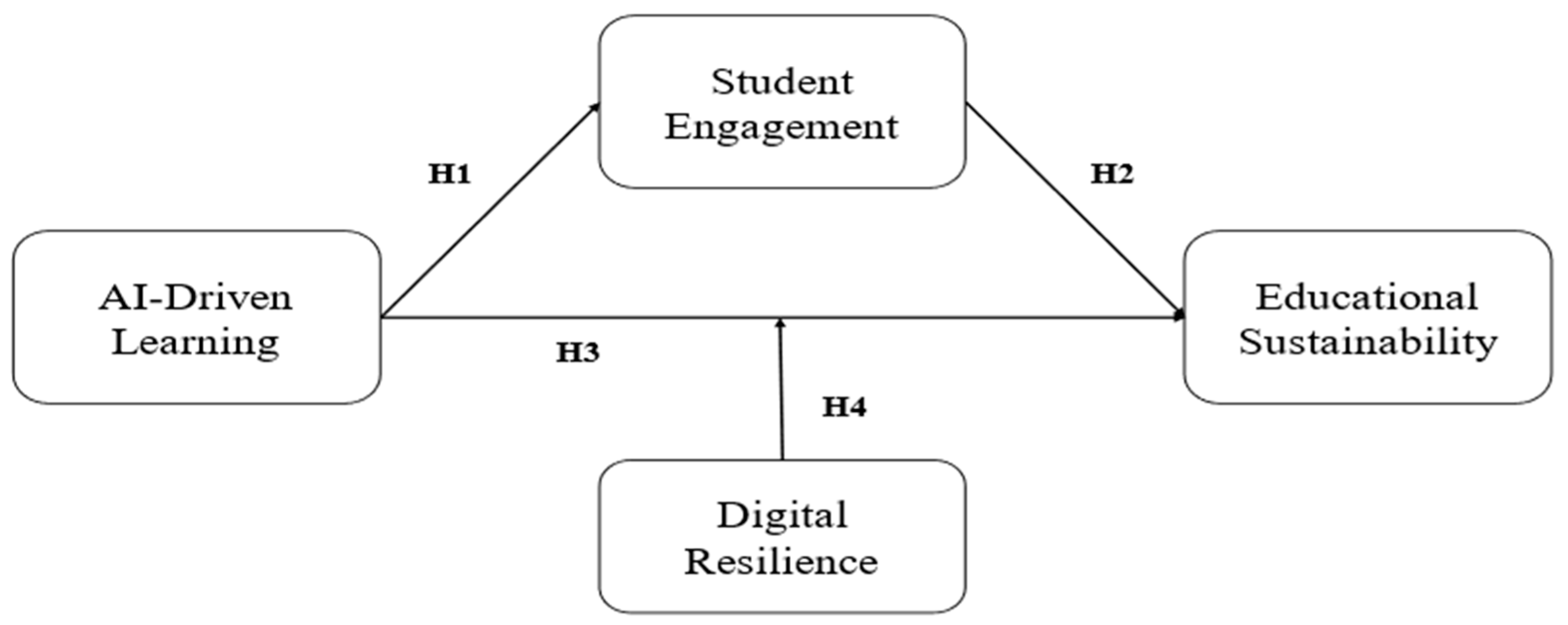
As shown in Figure 1 proposed framework, This conceptual model developed an educational framework to illustrate the mediating and moderating interactions between AI-LTs, SE, DR, and EDS, which in turn showed how these four concepts collaborate with each other. Also, hypothesis H1 suggests that the use of AI-driven learning tools positively influences student engagement, hypothesis H2 proposes that higher engagement leads to greater educational sustainability, and hypothesis H3 suggests a direct effect of AI-driven learning on sustainable education outcomes. Hypothesis H4 suggests digital resilience as a moderator between AI-driven learning and educational sustainability.

7. Methodology

This research employed a quantitative methodology to examine the correlation between educational sustainability and AI-driven learning instruments. Furthermore, it investigated the mediating function of student learning engagement and the moderating effect of digital resilience. A sample of 387 university students from Saudi Arabia, including Jeddah, such as King Abdulaziz University (KAU) and Dar Al-HEKMA University; Madinah, such as Taibah University and Islamic University of Madinah; Makkah, such as King Abdullah University of Science and Technology (KAUST), and Yanbu; such as Taibah University, engaged in several academic programs, was utilized for data collection. Also, the AI-powered learning tools investigated at these universities are broadly classified as AI-powered educational assistance systems integrated into learning management systems (LMSs) and standalone intelligent platforms. The simple random sampling was implemented. A structured questionnaire was implemented, which consisted of scales that had been previously validated. Each item was evaluated on a five-point Likert scale, with one representing firm disagreement and five representing strong agreement. AI-driven learning tools were evaluated using items adapted from [44]. These items include the following: the AI tools utilized in my learning environment personalize my educational experience, I receive prompt and valuable feedback from AI-based platforms, AI systems modify learning materials according to my performance and progress, I find AI-powered tools facilitate my comprehension of challenging subjects, AI systems suggest learning content that aligns with my needs and I regularly employ AI tools to assist with my academic tasks and overall, and AI integration has enhanced the quality of my learning experience.
Student learning engagement was assessed using the scale developed by [45] with these items: I put a lot of effort into learning tasks that involve AI, I feel emotionally involved when interacting with AI-based learning tools, I try to relate what I learn through AI tools to my everyday life, I participate actively in AI-assisted learning activities, I stay focused when using AI tools for learning, I feel more curious and interested when AI is part of the learning process, and I often seek out extra resources based on recommendations from AI platforms. Digital resilience was evaluated using items adapted from [46,47]. These items included the following: I can stay calm when faced with technical difficulties during online learning, I am confident in my ability to adapt to new digital learning platforms, I can solve most technical problems that arise during AI-based learning, I remain motivated even when technology fails or creates challenges, I learn from past digital setbacks to perform better in future learning tasks, I believe I can overcome obstacles when using unfamiliar AI tools, and I can maintain focus and productivity despite digital disruptions.
Educational sustainability was evaluated using items adapted from [48]. These items included the following: My current education helps me develop skills needed for lifelong learning, I am learning to think critically and solve real-world problems, My education prepares me to contribute to a more sustainable future, I am encouraged to consider social and environmental issues in my learning, I believe the knowledge I gain now will remain valuable in the future, I am developing adaptability and resilience as part of my learning process, and My learning environment promotes inclusion, equity and long-term growth. This reflects the enduring effects of learning, social responsibility, and sustainable thinking cultivated via education. A pilot test confirmed the clarity and reliability of all items, with Cronbach’s alpha values exceeding the 0.70 threshold for each construct. The study intended to use the Structural Equation Modeling application to utilize more robust analytical techniques, but the team members lack experience in the AMOS application. Therefore, SPSS and the PROCESS macro were used to analyze the data. To test the proposed associations, bootstrapping approaches were used for mediation and moderated mediation analyses through Models 4 and 7, respectively. The appropriate institutional review board provided ethical permission, and each participant was made to understand that their participations were completely voluntary and private.
As shown in Table 2, AI-driven learning tools by universities, this structured description provides comprehensive information on the AI-driven learning tools employed in the selected universities.

8. Data Analysis and Result

As shown in Table 3, the descriptive statistics, the study sample comprised 387 university students from four principal cities in Saudi Arabia, which are Jeddah, such as King Abdulaziz University (KAU) and Dar Al-HEKMA University; Madinah, such as Taibah University and Islamic University of Madinah; Makkah, such as King Abdullah University of Science and Technology (KAUST); and Yanbu, such as Taibah University. The responses indicated that 54.3% were males and 45.7% were females, with the gender distribution relatively balanced. The majority of participants (50.4%) were aged between 18 and 24, followed by 42.6% aged between 25 and 30, with a lower proportion (7.0%) aged 31 or older. This indicates that the majority of participants were young students. The preponderance of the students was at advanced stages of their studies. While 25.8% were in their fourth year of undergraduate studies, 33.6% were enrolled in master’s degree programs, and 7.8% of the sample consisted of first- or second-year undergraduates. That indicates students are aware of AI learning tools. 46.5% of respondents reported using AI learning tools for 1–2 years, 31.0% for less than a year, and 22.5% for three years or more. Jeddah had the highest percentage of participation (40.8%), followed by Madinah (26.4%), Makkah (24.6%), and Yanbu (8.3%).
As shown in Table 4, the descriptive statistics indicated that participants recorded elevated mean scores across all categories, with student engagement (M = 3.98) ranking highest, followed by AI-driven learning tools (M = 3.89), educational sustainability (M = 3.81), and digital resilience (M = 3.78). The lowest standard deviations were between 0.24 and 0.30, signifying restricted variability in answers. The skewness and kurtosis values for all variables are within the permissible range of ±1, indicating that the data were approximately regularly distributed and appropriate for parametric analyses.
As shown in Table 5, the Shapiro–Wilk test was applied to examine whether the distributions of the four key constructs, AI-driven learning tools (AI-LTs), student engagement (SE), digital resilience (DR), and educational sustainability (EDS), conformed to the assumption of normality. The findings indicated that all p-values were beyond the conventional criterion of 0.05, namely AI-LTs (p = 0.186), SE (p = 0.757), DR (p = 0.501), and EDS (p = 0.572). These non-significant values suggested that the null hypothesis of normality is retained for each variable, indicating that their distributions do not significantly deviate from normality. Consequently, the data for all four constructs can be considered approximately normally distributed.
As shown in Table 6, the reliability analysis demonstrated that all four constructs in the study demonstrated strong internal consistency, with Cronbach’s alpha values exceeding 0.70. Student engagement (SE) had the highest reliability (α = 0.902, average loading = 0.754), followed by digital resilience (DR) (α = 0.897, loading = 0.744), AI-driven learning tools (AI-LTs) (α = 0.881, loading = 0.743), and educational sustainability (EDS) (α = 0.849, loading = 0.728). These results confirm that the measurement instruments used were reliable and consistently captured each construct’s intended dimensions.
As shown in Table 7, the Exploratory Factor Analysis (EFA) revealed that a clear four-factor structure corresponded to AI-driven learning tools (AI-LTs), student engagement (SE), digital resilience (DR), and educational sustainability (EDS). All items demonstrated strong construct validity (≥0.70) with minimal cross-loadings, as evidenced by their strong loadings on their intended constructs.
As shown in Table 8, the correlation matrix, which revealed that AI-driven learning tools (AI-LTs) are moderately and positively associated with student engagement (SE) (r = 0.520, p < 0.01) and educational sustainability (EDS) (r = 0.470, p < 0.01), suggested that the use of AI tools enhances both learner involvement and perceptions of sustainable educational outcomes. Student engagement also showed a strong positive correlation with EDS (r = 0.610, p < 0.01), indicating its potential mediating role in translating the benefits of AI integration into long-term educational value. Further, digital resilience (DR) exhibited a moderate correlation with both SE (r = 0.460, p < 0.01) and EDS (r = 0.490, p < 0.01), therefore confirming its conceptual function as a moderator that may either mitigate or enhance the influence of AI tools and engagement on sustainability outcomes. All correlations were below the 0.70 threshold, confirming discriminant validity and the structural integrity of the constructs for further multivariate analysis.
Correlation is significant at the 0.01 level (2-tailed). Values are Pearson correlation coefficients (r).
As shown in Table 9, the multiple regression analysis revealed that all three predictors, AI-driven learning tools (AI-LTs), student engagement (SE), and digital resilience (DR), significantly contribute to educational sustainability (EDS). Student engagement was identified as the most significant predictor (β = 0.428, p < 0.001), underscoring its essential function in promoting sustainable learning. Digital resilience significantly influenced outcomes (β = 0.227, p = 0.001), indicating that students capable of adapting to technological hurdles are more effectively equipped for enduring learning. AI-LTs significantly contributed (β = 0.212, p = 0.004), confirming the positive effects of intelligent, personalized learning environments. These results endorsed a comprehensive approach that combines technological and psychological components to improve the education sustainability. These findings also supported a comprehensive approach where both technological and psychological elements collaboratively enhance educational sustainability.
As shown in Table 10, the model summary indicates that the multiple regression analysis revealed a statistically significant model explaining educational sustainability (EDS) through AI-driven learning tools (AI-LTs), student engagement (SE), and digital resilience (DR). The model demonstrated a robust overall relationship (R = 0.695) and accounted for 48.3% of the variance in EDS (R2 = 0.483 and Adjusted R2 = 0.478). The predictive validity of the model was verified by the F-statistic (119.29, p < 0.001). These results indicated that the combined influence of AI-LTs, SE, and DR significantly contributes to understanding and predicting sustainable educational outcomes.
As shown in Table 11, the mediation analysis, which was conducted using the PROCESS Macro (Model 4), revealed that student engagement (SE) significantly mediates the relationship between AI-driven learning tools (AI-LTs) and educational sustainability (EDS). The total effect of AI-LTs on EDS was significant (B = 0.372, p < 0.001). The direct effect declined but stayed significant when SE had been considered (B = 0.182, p = 0.004), suggesting partial mediation. The indirect effect through SE was also significant (B = 0.190; 95% CI [0.123, 0.270]). These findings show that AI tools enhance educational sustainability both directly and indirectly by fostering student engagement, which acts as a critical psychological pathway in sustainable learning.
As shown in Table 12, the moderation analysis using PROCESS Macro Model 1 revealed that digital resilience (DR) significantly strengthens the positive relationship between AI-driven learning tools (AI-LTs) and educational sustainability (EDS). The whole model was robust (R2 = 0.521, p < 0.001), and the interaction term was significant (B = 0.103, p = 0.003). These results indicate that students with higher digital resilience benefit more from AI tools, enhancing sustainable learning outcomes, whereas those with lower resilience may not experience the same advantages, emphasizing the critical role of resilience in AI-supported education.

9. Discussion

The results validated Hypothesis 1, which stated that educational sustainability (EDS) and AI-driven learning tools (AI-LTs) are positively correlated. AI-driven learning tools (AI-LTs) are increasingly recognized as vital components in the advancement of modern sustainable education systems [3,31]. Students’ capacity to generate personalized and adaptable learning experiences allows them to engage with content that is tailored to their unique needs, abilities, and developmental stages. Not only do these features enhance academic outcomes, but they also promote inclusivity and equity in the educational process, including performance-based recommendations, prompt and actionable feedback, and AI assistance in understanding complex subjects. These tools reduce the one-size-fits-all limitation of traditional instruction by adapting content in real time, thereby increasing engagement and minimizing dropout risk [49,50].
Additionally, consistent use of AI tools to assist with academic assignments fosters the growth of digital literacy, self-directed learning, and long-term self-control, all of which are critical for maintaining learning in fast-paced, technologically advanced settings. This aligns with broader goals of educational sustainability, which emphasize not just access to education, but its adaptability, continuity, and long-term impact [14,30,51]. The effective deployment of AI-driven learning tools (AI-LTs) presents a feasible strategy for fostering lifelong learners capable of excelling in contemporary and future knowledge economies, as the digital revolution persistently transforms education [31,52]. The empirical evidence supporting Hypothesis H1 supports the idea that AI technologies can significantly advance sustainable teaching practices when they are carefully developed and applied.
Nevertheless, certain studies contend that AI tools, despite theoretical promise, frequently underperform in practice due to pedagogical misalignment, technological biases, or inadequate integration into existing curricula [53,54]. While students may report advantages such as personalized content or real-time feedback, these experiences may be superficial or task-oriented, lacking the depth required for transformational, sustainable learning [55]. Furthermore, excessive dependence on AI systems may diminish human connection and critical discourse, which are essential components of comprehensive education [56]. In addition, there are concerns that the AI’s advantages are unequally distributed, favoring students in institutions with adequate resources while marginalizing those with inadequate digital access or support. Thus, while AI-LTs hold potential for enhancing educational sustainability, their actual impact depends heavily on ethical design, equitable implementation, and meaningful pedagogical integration [57,58].
This study’s findings also offer strong empirical evidence for the Hypothesis H2 that student engagement greatly enhances educational sustainability. The findings indicate a robust positive correlation between the two dimensions, with student involvement identified as the most significant predictor of educational sustainability in the regression model. This implies that when students are emotionally, behaviorally, and cognitively engaged, they are more likely to acquire critical thinking skills, absorb sustainable values, and engage in learning activities that tackle long-term societal, environmental, and economic prosperity issues [27,28]. The findings showed a significant influence, highlighting the fact that encouraging engagement is a strategic approach to incorporating sustainability into education rather than only an academic objective [25]. These results align with contemporary educational frameworks that emphasize experiential learning, learner-centered environments, and the integration of real-world problem-solving as essential components for achieving the goals of education for sustainability (ESD) [20]. Consequently, educational institutions seeking to advance sustainability should emphasize tactics that enhance student engagement, motivation, and interaction with significant future-focused material.
Moreover, this study proposed Hypothesis H3 that student learning engagement serves as a mediating mechanism in the relationship between AI-driven learning tools and educational sustainability. The concept of engagement is recognized as a pivotal psychological conduit through which educational technologies, particularly AI-based tools, impact sustained learning outcomes [36,59]. Learners are more likely to exhibit behaviors and perspectives that are conducive to educational sustainability when they engage with AI systems in an active and meaningful manner, such as a dedication to lifelong learning, reflective thinking, and perseverance. When learners interact actively and meaningfully with AI systems, they are more likely to display behaviors and mindsets conducive to educational sustainability, including perseverance, reflective thinking, and a commitment to lifelong learning. For example, students who proactively engage with AI-generated content, establish emotional connections with digital platforms, or invest effort in AI-supported tasks tend to demonstrate a greater level of engagement in their learning journey. These engagement patterns facilitate the enduring acquisition of knowledge and the development of independent, future-oriented learning practices [39].
Furthermore, when learners connect AI-assisted experiences to real-world situations or autonomously seek further knowledge based on AI recommendations, they exhibit self-directed and future-oriented learning, which are essential traits of sustainable education [38,60]. This perspective is based on self-determination theory (SDT), which posits that learners are more likely to engage meaningfully when their needs for autonomy, competence, and relatedness are met, conditions frequently satisfied by adaptive, personalized AI environments [35]. Also, the affective and behavioral dimensions of engagement, such as feeling curious when using AI and maintaining focus during AI-supported learning, are not just indicative of satisfaction but are predictors of sustainable cognitive outcomes. AI-LTs, when well-designed, create interactive and personalized experiences that can stimulate learners’ intrinsic motivation and metacognitive awareness. Thus, engagement functions as a mediator, converting the technological advantages of AI into tangible educational sustainability results, including critical reflection, adaptive learning, and ongoing knowledge application [14]. This study asserts that the efficacy of AI-LTs in promoting educational sustainability depends on its ability to enhance student engagement, which subsequently encourages sustainable learning practices.
However, the mediation role of engagement lacks broad support. Critics argued that mere involvement may not reliably clarify the influence of AI technologies on sustainable learning. Engagement is a multifaceted construct that can manifest superficially, for example, as task completion or time-on-task without indicating genuine understanding or long-term learning transfer [56]. Although students who frequently utilize AI tools or heed their suggestions may appear engaged, these behaviors can be the product of novelty effects or performance-based incentives rather than deep learning motivation. Also, engagement is influenced by various external factors such as instructional quality, evaluative pressure, and institutional culture, which AI solutions may not adequately address. Therefore, depending on SE as an intermediary may minimize the intricate relationships between technology utilization and sustainability results. Furthermore, not all students derive comparable advantages from AI-enhanced participation; individuals with limited digital literacy, apprehension about AI, or adverse previous experiences may withdraw despite the presence of intelligent technologies [32].
In conclusion, although there is significant theoretical and empirical evidence supporting the mediating function of student engagement in the AI–sustainability link, its effect is contingent. Engagement can effectively bridge AI capabilities and sustainable learning, but only when AI tools are pedagogically grounded, culturally relevant, and equitably implemented. Therefore, educators and developers must go beyond surface-level interaction metrics and design AI systems that cultivate authentic, deep, and inclusive engagement to fully realize educational sustainability [3]. Furthermore, the findings of this study supported hypothesis H4, which posited the moderating effect of digital resilience on the relationship between AI-driven learning tools and educational sustainability. Also, digital resilience emerged as a critical individual capacity that influences the effectiveness of AI-driven learning tools in fostering educational sustainability. Digital resilience, which is defined as a learner’s capacity to manage, adjust to, and bounce back from digital problems, can amplify the benefits of AI technologies by guaranteeing that students continue to be involved and productive despite technological setbacks [61]. Digital resilience has been proposed to function as a moderator, strengthening the relationship between AI-LTs and EDS so that students with high levels of digital resilience benefit more from AI-driven learning.
Learners who report that they can stay calm during technical difficulties, adapt confidently to new platforms, and solve most technical problems are better equipped to navigate the dynamic nature of AI-based learning environments. These abilities not only prevent disruption in learning continuity but also promote self-efficacy and digital autonomy, key pillars of sustainable learning [62]. Moreover, students who remain motivated despite technical failures, learn from digital setbacks, and overcome obstacles with unfamiliar AI tools demonstrate a growth mindset and long-term learning orientation, both of which are essential to sustaining academic development in uncertain or evolving digital contexts [63,64]. These behaviors corresponded with resilience theory, which asserted that sustainable outcomes are predicated on the presence of adaptive capacity in the presence of disruption, rather than the absence of it. Although AI tools are robust, they are susceptible to user friction and system failures. Students’ ability to stay focused and productive in the face of digital distractions can impact the long-term educational benefits of these tools [11,65].
Nevertheless, the moderating function of digital resilience is not without criticism. Although theoretically compelling, some scholars contend that the emphasis on resilience may inadvertently transfer responsibility for successful AI integration onto individual learners, thereby disregarding structural and systemic barriers that impede equitable technology use [66]. For instance, even students who are resilient may encounter difficulties if they are confronted with persistent infrastructure issues, inadequate institutional support, or inadequately designed AI systems. In such instances, resilience alone is insufficient to address the broader contextual deficiencies [67]. Additionally, measuring digital resilience through self-reports of confidence or coping may not accurately capture students’ actual abilities to resolve technical issues or sustain learning. Critics also caution against treating resilience as a static trait, when in fact it is situational and socially influenced, dependent on factors such as peer support, digital literacy training, and prior experiences with technology [68].
Moreover, overemphasizing resilience risks normalizing technological dysfunction. If students are frequently forced to adjust to poorly executed systems or frequent disruptions, they may become fatigued, disengaged, or experience digital burnout. In such contexts, resilience may mask systemic failures and undermine the objectives of educational sustainability [69,70]. Consequently, although digital resilience can improve students’ access to AI technologies, its moderating effect depends on the availability of inclusive digital regulations, well-designed platforms, and encouraging learning environments.


10. Conclusions

The research demonstrated that educational sustainability is considerably enhanced by AI-driven learning tools, particularly when they are tailored to be pedagogically effective, inclusive, and personalized. Student engagement serves as an essential facilitator, transforming AI skills into meaningful learning experiences. This impact, however, is dependent on the quality of implementation and the degree of learner involvement. Digital resilience serves as a beneficial mediator, enhancing AI’s influence on students capable of adapting to technological difficulties. Reliance on individual resilience excessively can conceal structural issues like poor design and unequal access. The study advocated for the use of ethically grounded, context-aware AI in conjunction with effective pedagogy, institutional support, and inclusive policies to ensure long-term digital education sustainability.

11. Theoretical Contribution

This study provided a comprehensive framework for comprehending the ways in which AI-driven learning aids promote educational sustainability by integrating sociotechnical systems theory (STS), self-determination theory (SDT), and resilience theory. STS frames AI not as a standalone tool but as part of a broader educational ecosystem involving human, technical, and institutional elements. SDT clarified how AI improves student engagement and positions engagement as a mediating mechanism by meeting the fundamental psychological demands of autonomy, competence, and relatedness. Resilience theory adds nuance by identifying digital resilience as a moderating factor that influences how effectively students can benefit from AI in the face of digital challenges. These theories, when combined, provide a multifaceted perspective that encompasses the external circumstances and internal incentives required for long-term AI-assisted learning.

12. Practical Contribution

The study offered valuable perspectives for educators, policymakers, and Ed-tech developers. First, the study underscored the significance of developing AI tools that encourage genuine and profound engagement, rather than merely superficial interaction. Educators need to receive training on how to use AI features that support autonomy, competence, and relatedness, three essential components that keep students motivated. Second, the findings emphasize the necessity of fostering digital resilience in learners through specific interventions, including digital literacy programs, adaptive coping strategies, and peer support systems. Institutional leaders and policymakers are encouraged to consider digital resilience as contextually dependent, necessitating the incorporation of culturally responsive AI, inclusive policies, and robust infrastructure. It is crucial to note that the study cautions against an excessive reliance on student adaptability and promotes systemic reforms that guarantee equitable, stable, and supportive learning environments for the sustainable implementation of AI.

13. Originality of the Study

This research is one of the initial empirical examinations of a moderated mediation model that incorporates AI-driven learning tools, student engagement, digital resilience, and educational sustainability within a unified framework. It distinctly frames digital resilience not merely as an outcome or characteristic, but as a moderating influence that enhances the efficacy of AI technologies in promoting sustainable education. Additionally, it offers a unique perspective by confronting the critical constraints of resilience discourse, such as its capacity to obfuscate structural inequities and normalize technological dysfunction. The study combined psychological, technological, and systemic viewpoints to provide a thorough and contextually aware understanding of AI’s role in education. This approach is both conceptually innovative and practical in an evolving digital landscape.

14. Research Limitations and Implications

The study confirmed the positive impact of AI-driven learning aids, student engagement, and digital resilience on educational sustainability, although this study acknowledged some limitations. These include relying excessively on resilience to make up for institutional shortcomings, using self-reported statistics, and ignoring contextual factors like infrastructure or teacher preparedness. Future studies should internally integrate variables such as teacher digital competency, instructional design quality, and student digital literacy, as these may directly influence the perception and utilization of AI tools. Externally, significant aspects, including institutional digital infrastructure, regulatory support for EdTech integration, students’ socio-economic backgrounds, and fair access to technology, must be evaluated to understand the broader systemic implications on educational sustainability. It is advised that future research utilize mixed-method designs, objective measures (system records, performance analytics), and multi-level analysis to more effectively account for the interaction between learner-level characteristics and institutional or policy-driven variables. Also, future research could utilize inclusive, pedagogically aligned, ethically constructed systems backed by robust infrastructure and substantial teacher training for fully realizing AI’s potential in sustainable education.

Author Contributions

Conceptualization, B.J.; Methodology, A.M.A.; Validation, S.H.; Formal analysis, B.K.M.; Resources, A.M.A.; Data curation, A.M.E.A.; Supervision, B.J. All authors have read and agreed to the published version of the manuscript.

Funding

This research received no external funding.

Institutional Review Board Statement

The study was conducted in accordance with the Declaration of Helsinki and approved by the Scientific Research Ethics Committee, College of Business Administration, TAIBAH University, Yanbu (protocol code CBA-14461572856-06 and date of 2 April 2025 approval.

Informed Consent Statement

Informed consent was obtained from all subjects involved in the study.

Data Availability Statement

The original contributions presented in this study are included in the article. Further inquiries can be directed to the corresponding author.

Conflicts of Interest

The authors declare no conflicts of interest.

References

  1. Mariyono, D.; Nur Alif, H.D.A. AI’s role in transforming learning environments: A review of collaborative approaches and innovations. Qual. Educ. All 2025, 2, 265–288. [Google Scholar] [CrossRef]
  2. Amin, M.R.M.; Ismail, I.; Sivakumaran, V.M. Revolutionizing education with artificial intelligence (AI)? Challenges, and implications for open and distance learning (ODL). Soc. Sci. Humanit. Open 2025, 11, 101308. [Google Scholar] [CrossRef]
  3. Leal Filho, W.; Kim, E.; Borsatto, J.M.L.S.; Marcolin, C.B. Using artificial intelligence in sustainability teaching and learning. Environ. Sci. Eur. 2025, 37, 124. [Google Scholar] [CrossRef]
  4. Allam, H.M.; Gyamfi, B.; AlOmar, B. Sustainable Innovation: Harnessing AI and Living Intelligence to Transform Higher Education. Educ. Sci. 2025, 15, 398. [Google Scholar] [CrossRef]
  5. Fu, Y.; Weng, Z.; Wang, J. Examining AI use in educational contexts: A scoping meta-review and bibliometric analysis. Int. J. Artif. Intell. Educ. 2024, 35, 1388–1444. [Google Scholar] [CrossRef]
  6. Nikolopoulou, K. Generative artificial intelligence and sustainable higher education: Mapping the potential. J. Digit. Educ. Technol. 2025, 5, ep2506. [Google Scholar] [CrossRef]
  7. Xu, W.; Gao, Z. An intelligent sociotechnical systems (iSTS) framework: Enabling a hierarchical human-centered AI (hHCAI) approach. IEEE Trans. Technol. Soc. 2024, 6, 31–46. [Google Scholar] [CrossRef]
  8. Yaseen, H.; Mohammad, A.S.; Ashal, N.; Abusaimeh, H.; Ali, A.; Sharabati, A.A.A. The impact of adaptive learning technologies, personalized feedback, and interactive AI tools on student engagement: The moderating role of digital literacy. Sustainability 2025, 17, 1133. [Google Scholar] [CrossRef]
  9. Zhou, M.; Peng, S. The usage of AI in teaching and students’ creativity: The mediating role of learning engagement and the moderating role of AI literacy. Behav. Sci. 2025, 15, 587. [Google Scholar] [CrossRef]
  10. Hammond, S.P.; Polizzi, G.; Duddy, C.; Bennett-Grant, Y.E.; Bartholomew, K.J. Children’s, parents’ and educators’ understandings and experiences of digital resilience: A systematic review and meta-ethnography. New Media Soc. 2024, 26, 3018–3042. [Google Scholar] [CrossRef]
  11. Hügel, S.; Davies, A.R. Expanding adaptive capacity: Innovations in education for place-based climate change adaptation planning. Geoforum 2024, 150, 103978. [Google Scholar] [CrossRef]
  12. Dickson, R.K. Organizational Resilience as the Springboard for Organizational Success in a Turbulent Business Environment. Eur. J. Manag. Econ. Bus. 2025, 2, 3–24. [Google Scholar] [CrossRef]
  13. Chen, D.; Liu, W.; Liu, X. What drives college students to use AI for L2 learning? Modeling the roles of self-efficacy, anxiety and attitude based on an extended technology acceptance model. Acta Psychol. 2024, 249, 104442. [Google Scholar] [CrossRef] [PubMed]
  14. LAN, M.; Zhou, X. A qualitative systematic review on AI empowered self-regulated learning in higher education. NPJ Sci. Learn. 2025, 10, 21. [Google Scholar] [CrossRef]
  15. Ifenthaler, D.; Majumdar, R.; Gorissen, P.; Judge, M.; Mishra, S.; Raffaghelli, J.; Shimada, A. Artificial intelligence in education: Implications for policymakers, researchers and practitioners. Technol. Knowl. Learn. 2024, 29, 1693–1710. [Google Scholar] [CrossRef]
  16. Sposato, M. Artificial intelligence in educational leadership: A comprehensive taxonomy and future directions. International J. Educ. Technol. High. Educ. 2025, 22, 20. [Google Scholar] [CrossRef]
  17. Buckler, C.; Creech, H. Shaping the Future We Want: UN Decade of Education for Sustainable Development; Final Report; UNESCO: Paris, France, 2014. [Google Scholar]
  18. Sterling, S. Transformative learning and sustainability: Sketching the conceptual ground. Learn. Teach. High. Educ. 2011, 5, 17–33. [Google Scholar]
  19. UNESCO. Education for Sustainable Development (ESD) Overview. Retrieved from UNESCO Website. 2024. Available online: https://www.unesco.org/en/sustainable-development/education?utm_source=chatgpt.com (accessed on 7 December 2025).
  20. Wiek, A.; Withycombe, L.; Redman, C.L. Key competencies in sustainability: A reference framework for academic program development. Sustain. Sci. 2011, 6, 203–218. [Google Scholar] [CrossRef]
  21. Kılıç, G.N.; Kocabaş, İ. Sustainable education and degrowth: International trends. Discov. Sustain. 2025, 6, 491. [Google Scholar] [CrossRef]
  22. Elegbede, I.O.; Matti-Sanni, R.O.; Moriam, O.; Emily Osa, I. Sustainability Education and Environmental Awareness. In Encyclopedia of Sustainable Management; Springer International Publishing: Cham, Switzerland, 2023; pp. 3270–3277. [Google Scholar]
  23. Tafese, M.B.; Kopp, E. Embedding social sustainability in education: A thematic review of practices and trends across educational pathways from a global perspective. Sustainability 2025, 17, 4342. [Google Scholar] [CrossRef]
  24. University College London (UCL). Sustainable Education at UCL. UCL Sustainability. 2025. Available online: https://www.ucl.ac.uk/sustainable/what-ucl-does/sustainable-education (accessed on 7 December 2025).
  25. Prananto, K.; Cahyadi, S.; Lubis, F.Y.; Hinduan, Z.R. Perceived teacher support and student engagement among higher education students. A systematic literature review. BMC Psychol. 2025, 13, 112. [Google Scholar] [CrossRef]
  26. Wang, Q. Re-discover student engagement from the perspective of definition and influencing factors. Front. Psychol. 2025, 15, 1428668. [Google Scholar] [CrossRef]
  27. Rashed, R.Q.G.; Abubakar, A.A.; Madani, O.; Al-Mamary, Y.H. Enhancing Student Engagement and Motivation for Sustainable Education: The Role of Internship and Institutional Support. Sustainability 2025, 17, 5291. [Google Scholar] [CrossRef]
  28. Homer, S.T.; Chuen, P.W.; Chuah, C. Sustainable development education through student engagement: Findings from a comprehensive study. Qual. Quant. 2025, 1–31. [Google Scholar] [CrossRef]
  29. Tarrant, M.; Schweinsberg, S.; Landon, A.; Wearing, S.L.; McDonald, M.; Rubin, D. Exploring student engagement in sustainability education and study abroad. Sustainability 2021, 13, 12658. [Google Scholar] [CrossRef]
  30. Uzorka, A.; Akiyode, O.; Isa, S.M. Strategies for engaging students in sustainability initiatives and fostering a sense of ownership and responsibility towards sustainable development. Discov. Sustain. 2024, 5, 320. [Google Scholar] [CrossRef]
  31. Yavich, R. Will the Use of AI Undermine Students Independent Thinking? Educ. Sci. 2025, 15, 669. [Google Scholar] [CrossRef]
  32. Strielkowski, W.; Grebennikova, V.; Lisovskiy, A.; Rakhimova, G.; Vasileva, T. AI-driven adaptive learning for sustainable educational transformation. Sustain. Dev. 2025, 33, 1921–1947. [Google Scholar] [CrossRef]
  33. Létourneau, A.; Deslandes Martineau, M.; Charland, P.; Karran, J.A.; Boasen, J.; Léger, P.M. A systematic review of AI-driven intelligent tutoring systems (ITS) in K-12 education. NPJ Sci. Learn. 2025, 10, 29. [Google Scholar] [CrossRef]
  34. Vieriu, A.M.; Petrea, G. The Impact of Artificial Intelligence (AI) on Students’ Academic Development. Educ. Sci. 2025, 15, 343. [Google Scholar] [CrossRef]
  35. Garcia, M.B.; Goi, C.L.; Shively, K.; Maher, D.; Rosak-Szyrocka, J.; Happonen, A.; Damaševičius, R. Understanding student engagement in AI-powered online learning platforms: A narrative review of key theories and models. In Cases on Enhancing P-16 Student Engagement with Digital Technologies; IGI Global: Hershey, PA, USA, 2025; pp. 1–30. [Google Scholar]
  36. Chen, M. The Impact of AI-assisted Personalized Learning on Student Academic Achievement. US-China Educ. Rev. 2025, 15, 441–450. [Google Scholar]
  37. Bai, Y.; Wang, S. Impact of generative AI interaction and output quality on university students’ learning outcomes: A technology-mediated and motivation-driven approach. Sci. Rep. 2025, 15, 24054. [Google Scholar] [CrossRef]
  38. Martin, A.J.; Collie, R.J.; Kennett, R.; Liu, D.; Ginns, P.; Sudimantara, L.B.; Rüschenpöhler, L.G. Integrating generative AI and load reduction instruction to individualize and optimize students’ learning. Learn. Individ. Differ. 2025, 121, 102723. [Google Scholar] [CrossRef]
  39. Younas, M.; El-Dakhs, D.A.S.; Jiang, Y. A comprehensive systematic review of AI-driven approaches to self-directed learning. IEEE Access 2025, 13, 38387–38403. [Google Scholar] [CrossRef]
  40. Wang, J.; Fan, W. The effect of ChatGPT on students’ learning performance, learning perception, and higher-order thinking: Insights from a meta-analysis. Humanit. Soc. Sci. Commun. 2025, 12, 621. [Google Scholar] [CrossRef]
  41. Eri, R.; Gudimetla, P.; Star, S.; Rowlands, J.; Girgla, A.; To, L.; Li, F.; Sochea, N.; Bindal, U. Digital resilience in higher education in response to COVID-19 pandemic: Student perceptions from Asia and Australia. J. Univ. Teach. Learn. Pract. 2021, 18, 239702848. [Google Scholar] [CrossRef]
  42. Breidbach, C.F.; Joshi, A.M.; Twigg, A.; Dickens, G. Orchestrating Digital Resilience: A Clinical IS Study of an Everything-as-a-Service Technology Strategy. Eur. J. Inf. Syst. 2024, 34, 781–798. [Google Scholar] [CrossRef]
  43. Qi, C.; Yang, N. Digital resilience in Chinese adolescents: A portrayal of the current condition, influencing factors and improvement strategies. Front. Psychiatry 2024, 15, 1278321. [Google Scholar] [CrossRef]
  44. Sun, H.; Yuan, C.; Qian, Q.; He, S.; Luo, Q. Digital resilience among individuals in school education settings: A concept analysis based on a scoping review. Front. Psychiatry 2022, 13, 858515. [Google Scholar] [CrossRef]
  45. Jin, S.H. Measures of Learner-Generative AI Relationships. Comput. Educ. Open 2025, 8, 100258. [Google Scholar] [CrossRef]
  46. Desai, R.; Chaudhary, V.; Dandale, D.; Darekar, R.; Dhane, D. The Impact of AI-Powered Educational Tools on Student Engagement and Education. Int. J. Contemp. Issues Soc. Sci. 2025, 3, 2842–2852. [Google Scholar]
  47. Makrakis, V. Teachers’ resilience scale for sustainability enabled by ICT/Metaverse learning technologies: Factorial structure, reliability, and validation. Sustainability 2024, 16, 7679. [Google Scholar] [CrossRef]
  48. Susiani, K.; Suranata, K.; Suartama, I.K.; Satyawan, I.M.; Apriliana, I.P.A.; Bakar, A.Y.A. Development and initial psychometric properties of digital literacy and resilience scale among university students. Int. J. Inf. Educ. Technol. 2025, 15, 1377–1383. [Google Scholar] [CrossRef]
  49. Xiao, C.; Wan, K.; Kwong, T. Developing and validating a scale to measure tertiary students’ sustainability competence in extracurricular settings in Asia. Cogent Educ. 2024, 11, 2334107. [Google Scholar] [CrossRef]
  50. Saleem, S.; Aziz, M.U.; Iqbal, M.J.; Abbas, S. AI in education: Personalized learning systems and their impact on student performance and engagement. Crit. Rev. Soc. Sci. Stud. 2025, 3, 2445–2459. [Google Scholar]
  51. Khushalani, B. Empowering Student Success through AI-Driven Collaboration. Educause Review (Online). 2025. Available online: https://www.proquest.com/openview/b6d2da7a4a9f7033c1acafa14e6d6199/1?pq-origsite=gscholar&cbl=7213897 (accessed on 7 December 2025).
  52. Polat, E. Artificial intelligence literacy, lifelong learning, and fear of innovation: Identification of profiles and relationships. Educ. Inf. Technol. 2025, 30, 20183–20214. [Google Scholar] [CrossRef]
  53. Garzón, J.; Patiño, E.; Marulanda, C. Systematic Review of Artificial Intelligence in Education: Trends, Benefits, and Challenges. Multimodal Technol. Interact. 2025, 9, 84. [Google Scholar] [CrossRef]
  54. Wan, Y.; Li, R.; Li, W.; Du, H. Impact Pathways of AI-Supported Instruction on Learning Behaviors, Competence Development, and Academic Achievement in Engineering Education. Sustainability 2025, 17, 8059. [Google Scholar] [CrossRef]
  55. Filiz, O.; Kaya, M.H.; Adiguzel, T. Teachers and AI: Understanding the factors influencing AI integration in K-12 education. Educ. Inf. Technol. 2025, 30, 17931–17967. [Google Scholar] [CrossRef]
  56. Bauer, E.; Greiff, S.; Graesser, A.C.; Scheiter, K.; Sailer, M. Looking beyond the hype: Understanding the effects of AI on learning. Educ. Psychol. Rev. 2025, 37, 45. [Google Scholar] [CrossRef]
  57. Zhai, C.; Wibowo, S.; Li, L.D. The effects of over-reliance on AI dialogue systems on students’ cognitive abilities: A systematic review. Smart Learn. Environ. 2024, 11, 28. [Google Scholar] [CrossRef]
  58. Hadar Shoval, D. Artificial Intelligence in Higher education: Bridging or widening the Gap for diverse student populations? Educ. Sci. 2025, 15, 637. [Google Scholar] [CrossRef]
  59. Merino-Campos, C. The Impact of Artificial Intelligence on Personalized Learning in Higher Education: A Systematic Review. Trends High. Educ. 2025, 4, 17. [Google Scholar] [CrossRef]
  60. Alkhawaja, L.; Idris, M.; Sayyed, S.I.; Al Jaber, A.M. Exploring the Impact of Artificial Intelligence on Students’ Skills for Sustainable Development in Education. Front. Educ. 2025, 10, 1691148. [Google Scholar] [CrossRef]
  61. Alruwaili, N.M.; Ali, Z.; Siddiqui, M.S.; Butt, A.H.; Ahmad, H.; Ali, R.; Alsalem, S.H. Exploring the Impact of Female Student’s Digital Intelligence on Sustainable Learning and Digital Mental Well-Being: A Case Study of Saudi Arabia. Sustainability 2025, 17, 6632. [Google Scholar] [CrossRef]
  62. Lee, A.Y.; Hancock, J.T. Developing digital resilience: An educational intervention improves elementary students’ response to digital challenges. Comput. Educ. Open 2023, 5, 100144. [Google Scholar] [CrossRef]
  63. Deng, Y.; Liu, H. To overcome test anxiety in on-line assessment: Unpacking the mediator roles of techno competencies, teacher support, self-efficacy, and autonomy. BMC Psychol. 2025, 13, 192. [Google Scholar] [CrossRef] [PubMed]
  64. Sarwar, M.N.; Javed, Z.; Farooq, M.S.; Nazar, M.F.; Wasti, S.H.; Butt, I.H.; Ansari, G.J.; Basri, R.; Kulsoom, S.; Ullah, Z. Impact of a Digital Growth Mindset on Enhancing the Motivation and Performance of Chemistry Students: A Non-Cognitive Approach. Societies 2024, 14, 133. [Google Scholar] [CrossRef]
  65. Zhao, W.; Shi, X.; Jin, M.; Li, Y.; Liang, C.; Ji, Y.; Tian, Y. The impact of a growth mindset on high school students’ learning subjective well-being: The serial mediation role of achievement motivation and grit. Front. Psychol. 2024, 15, 1399343. [Google Scholar] [CrossRef]
  66. Awad, J.A.; Martín-Rojas, R. Digital transformation influence on organizational resilience through organizational learning and innovation. J. Innov. Entrep. 2024, 13, 69. [Google Scholar]
  67. Varsik, S.; Vosberg, L. The Potential Impact of Artificial Intelligence on Equity and Inclusion in Education; OECD Publishing: Paris, France, 2024. [Google Scholar]
  68. Parambil, M.M.A.; Rustamov, J.; Ahmed, S.G.; Rustamov, Z.; Awad, A.I.; Zaki, N.; Alnajjar, F. Integrating AI-based and conventional cybersecurity measures into online higher education settings: Challenges, opportunities, and prospects. Comput. Educ. Artif. Intell. 2024, 7, 100327. [Google Scholar] [CrossRef]
  69. Naeem, N.I.K.; Mushibwe, C.P. Navigating digital worlds: A scoping review of skills and strategies for enhancing digital resilience among higher education students on social media platforms. Discov. Educ. 2025, 4, 39. [Google Scholar] [CrossRef]
  70. AlQashouti, N.; Yaqot, M.; Franzoi, R.E.; Menezes, B.C. Educational system resilience during the COVID-19 pandemic review and perspective. Educ. Sci. 2023, 13, 902. [Google Scholar] [CrossRef]
Figure 1. Proposed framework.
Sustainability 18 00944 g001
Table 1. The AI-driven learning tools examined.
1System Type
  • Intelligent Tutoring Systems (ITSs).
  • AI-supported learning management systems.
  • Adaptive learning and recommendation systems.
  • Automated assessment and feedback systems.
2Software/Platforms
  • Learning management systems enhanced with AI features (Blackboard, Moodle, Canvas).
  • AI-based content recommendation engines.
  • Virtual academic assistants and chatbots for student support.
  • Automated grading and plagiarism detection tools.
3Parameters and Features
  • Student performance analytics.
  • Adaptive content delivery based on learner behavior.
  • Personalized learning pathways.
  • Predictive analytics for student engagement and risk detection.
  • Natural Language Processing (NLP) for chatbot interaction and feedback.
4Interaction Design
  • Student–AI interaction through dashboards, chatbots, and recommendation panels.
  • Instructor–AI interaction via analytics reports and performance insights.
  • Real-time feedback mechanisms for assignments and quizzes.
  • Asynchronous interaction embedded within LMS platforms.
5Duration of Use
  • Continuous use throughout the academic semester.
  • Integrated into daily teaching and learning activities.
  • Utilized across multiple courses over one or more academic terms.
Table 2. AI-driven learning tools by universities.
King Abdulaziz University (Jeddah)Dar Al-HEKMA University (Jeddah)Taibah University (Madinah) and (YANBU)Islamic University of Madinah (Madinah)King Abdullah University (Makkah)
System Type
  • AI-enhanced learning management system (LMS).
  • Intelligent academic support systems.
  • Adaptive learning systems.
  • AI-supported digital learning platforms.
  • AI-supported learning management system.
  • Intelligent assessment and monitoring systems.
  • AI-enhanced LMS.
  • Digital learning support systems.
  • Advanced AI-supported learning and research systems.
  • Adaptive and data-driven learning platforms.
Software/Platform
  • Blackboard Learn with AI-supported analytics tools.
  • Automated assessment and plagiarism detection systems (e.g., AI-based similarity detection).
  • AI-supported virtual academic support tools integrated within the LMS.
  • Moodle-based LMS with AI plugins.
  • AI-powered content recommendation and assessment tools.
  • Intelligent plagiarism detection and writing-support systems.
  • Blackboard Learn with learning analytics capabilities.
  • AI-supported examination and assessment tools.
  • Automated attendance and participation tracking systems.
  • Moodle-based LMS with AI-assisted assessment tools.
  • Automated content management and evaluation systems.
  • AI-enhanced LMS (e.g., Blackboard or Canvas)
  • Intelligent data analytics and research-support tools.
  • AI-powered virtual assistants for academic support.
Parameters and Features
  • Learning analytics to monitor student engagement and performance.
  • Automated grading for objective assessments.
  • Predictive indicators for identifying at-risk students.
  • AI-supported feedback on assignments and quizzes.
  • Personalized learning pathways based on student progress.
  • Adaptive release of learning materials.
  • Automated feedback on assignments.
  • Learning analytics for course-level improvement.
  • Student performance tracking.
  • Automated quiz and test grading.
  • Engagement monitoring and reporting.
  • Data-driven course evaluation.
  • AI-assisted grading for structured assessments.
  • Learning analytics for monitoring student participation.
  • Content organization and digital resource optimization.
  • Personalized learning recommendations.
  • Predictive analytics for academic performance.
  • Automated feedback and assessment tools.
  • Support for research-oriented and project-based learning.
Interaction Design
  • Student interaction through Blackboard dashboards and automated feedback.
  • Instructor interaction via performance analytics reports and course insights.
  • Asynchronous AI feedback embedded in course activities.
  • Student–AI interaction through adaptive content and feedback tools.
  • Instructor–AI interaction via analytics dashboards.
  • Emphasis on blended and student-centered learning environments.
  • Student interaction through LMS-based quizzes and feedback.
  • Faculty interaction through analytical reports and alerts.
  • Primarily asynchronous interaction with AI-supported tools.
  • Student interaction via LMS learning modules and assessments.
  • Instructor interaction through course analytics and reports.
  • Asynchronous learning environment with limited real-time AI interaction.
  • Student interaction through adaptive learning dashboards.
  • Faculty interaction via advanced analytics and AI insights.
  • Combination of synchronous and asynchronous AI-supported learning.
Duration of Use
  • Used continuously throughout the academic semester.
  • Applied across undergraduate and postgraduate courses.
  • Implemented throughout the academic term.
  • Integrated into both on-campus and blended-learning courses.
  • Used on a semester basis.
  • Applied across general and specialized academic courses.
  • Utilized throughout academic semesters.
  • Integrated mainly in theoretical and knowledge-based courses.
  • Continuous use across academic programs.
  • Employed throughout multiple semesters.
Table 3. Descriptive statistics.
VariableCategoryFrequencyPercent
GenderMale21054.3%
Female17745.7%
Age Group18–24 years19550.4%
25–30 years16542.6%
31+ years277.0%
Education LevelFirst year307.8%
Second year307.8%
Third year6015.5%
Fourth year10025.8%
Master’s degree13033.6%
PhD degree379.6%
Experience with AI ToolsLess than 1 year12031.0%
1–2 years18046.5%
More than 3 years8722.5%
University LocationJEDDAH15840.8%
MAKAH9524.6%
MADINAH10226.4%
YANBU328.3%
Table 4. Descriptive statistics.
ConstructNMeanStd. DeviationSkewnessKurtosis
AI-Driven Learning Tools (AI-LTs)3873.890.24−0.180.06
Student Learning Engagement (SE)3873.980.26−0.19−0.21
Digital Resilience (DR)3873.780.25−0.060.1
Educational Sustainability (EDS)3873.810.3−0.20.21
Table 5. Shapiro–Wilk normality test results.
ConstructNW Statisticp-ValueNormality
AI-Driven Learning Tools (AI-LTs)3870.9910.186Normal
Student Engagement (SE)3870.9940.757Normal
Digital Resilience (DR)3870.9920.501Normal
Educational Sustainability (EDS)3870.9930.572Normal
Table 6. Reliability analysis.
ConstructNumber of ItemsAverage LoadingCronbach’s Alpha
AI-LTs60.7430.881
SE70.7540.902
DR70.7440.897
EDS50.7280.849
Table 7. Exploratory Factor Analysis (EFA).
Item CodeItem Description (Short)AI-LTsSEDREDS
AI1Personalizes my learning experience.0.720.260.210.29
AI2Provides immediate and useful feedback.0.760.300.230.25
AI3Adjusts materials based on performance.0.740.280.220.27
AI4Helps understanding of difficult subjects.0.780.330.260.24
AI5Recommends content suited to needs.0.750.310.240.21
AI6Used regularly for academic tasks.0.710.290.280.26
SE1Puts effort into AI-related tasks.0.280.750.320.40
SE2Feels emotionally involved with AI tools.0.260.780.350.42
SE3Relates AI learning to life.0.250.720.310.38
SE4Actively participates in AI-assisted learning.0.320.800.330.41
SE5Maintains focus using AI tools.0.240.740.360.39
SE6Feels curiosity and interest in AI.0.270.760.340.45
SE7Follows AI recommendations for extra resources.0.290.730.320.43
DR1Remains calm during technical problems.0.190.300.730.32
DR2Adapts to new platforms.0.220.320.740.36
DR3Solves technical problems during AI learning.0.210.280.710.30
DR4Stays motivated despite tech failure.0.200.260.750.33
DR5Learns from past digital setbacks.0.180.290.780.37
DR6Overcomes obstacles with unfamiliar AI tools.0.230.330.760.39
DR7Maintains productivity despite tech disruptions.0.220.310.740.34
EDS1Develops lifelong learning skills.0.270.390.350.75
EDS2Encourages critical thinking and problem-solving.0.260.410.330.74
EDS3Prepares to contribute to a sustainable future.0.220.420.310.72
EDS4Encourages social/environmental issue consideration.0.200.380.280.73
EDS5Believes knowledge will remain valuable.0.250.360.290.70
Table 8. Correlation matrix.
CorrelationsAI-LTsSEDREDS
AI-Driven Learning Tools (AI-LTs)1.0000.5200.4300.470
Student Engagement (SE)0.5201.0000.4600.610
Digital Resilience (DR)0.4300.4601.0000.490
Educational Sustainability (EDS)0.4700.6100.4901.000
Table 9. Multiple regression table: predicting educational sustainability (EDS).
PredictorB (Unstd.)SE Bβ (Std.)tSig. (p)
(Constant)1.2030.1876.430.000
AI-Driven Learning Tools0.1820.0630.2122.890.004
Student Engagement0.3650.0580.4286.290.000
Digital Resilience0.1990.0610.2273.260.001
Table 10. Model summary.
RR2Adjusted R2FdfSig. (p)
0.6950.4830.478119.29(3, 383)0.000
Table 11. Mediation analysis (PROCESS Macro Model 4).
Effect TypePathUnstandardized Coefficient (B)SEtp95% CI (LLCI—ULCI)Significant?
Total EffectAI-LTs → EDS (c)0.3720.0546.890.000[0.266, 0.478]Yes
Direct EffectAI-LTs → EDS (c′)0.1820.0632.890.004[0.057, 0.307]Yes
Indirect EffectAI-LTs → SE → EDS (a × b)0.1900.038[0.123, 0.270]Yes Bootstrapped
Path aAI-LTs → SE0.5200.04511.560.000[0.431, 0.609]Yes
Path bSE → EDS0.3650.0586.290.000[0.251, 0.479]Yes
Table 12. Moderation analysis table: (PROCESS Macro Model 1).
PredictorBSEtp95% CI
Constant1.1070.1756.330.000[0.763, 1.451]
AI-LTs (X)0.1740.0573.050.002[0.062, 0.286]
DR (Moderator, W)0.2290.0534.320.000[0.125, 0.333]
AI-LTs × DR (X × W)0.1030.0343.030.003[0.036, 0.170]
Disclaimer/Publisher’s Note: The statements, opinions and data contained in all publications are solely those of the individual author(s) and contributor(s) and not of MDPI and/or the editor(s). MDPI and/or the editor(s) disclaim responsibility for any injury to people or property resulting from any ideas, methods, instructions or products referred to in the content.