Alkaline Mycoremediation: Penicillium rubens and Aspergillus fumigatus Efficiently Decolorize and Detoxify Key Textile Dye Classes


Abstract
1. Introduction
2. Materials and Methods
2.1. Chemicals
2.2. Isolation of Dyes Degrading Fungi
2.3. Screening Dye Decolorization Efficiency of the Isolated Fungi
2.4. Identification of the Fungal Isolates
2.5. Optimization of the Dye Decolorization Process
2.6. Fungal Extracellular and Intracellular Enzyme Preparation
2.7. Oxidative and Reductive Enzymes Analysis
2.7.1. Oxidative Enzymes Analysis
2.7.2. Reductase Enzymes Analysis
2.8. Phytotoxicity Test
2.9. Determination of COD and BOD
2.10. Statistical Analysis
3. Results and Discussion
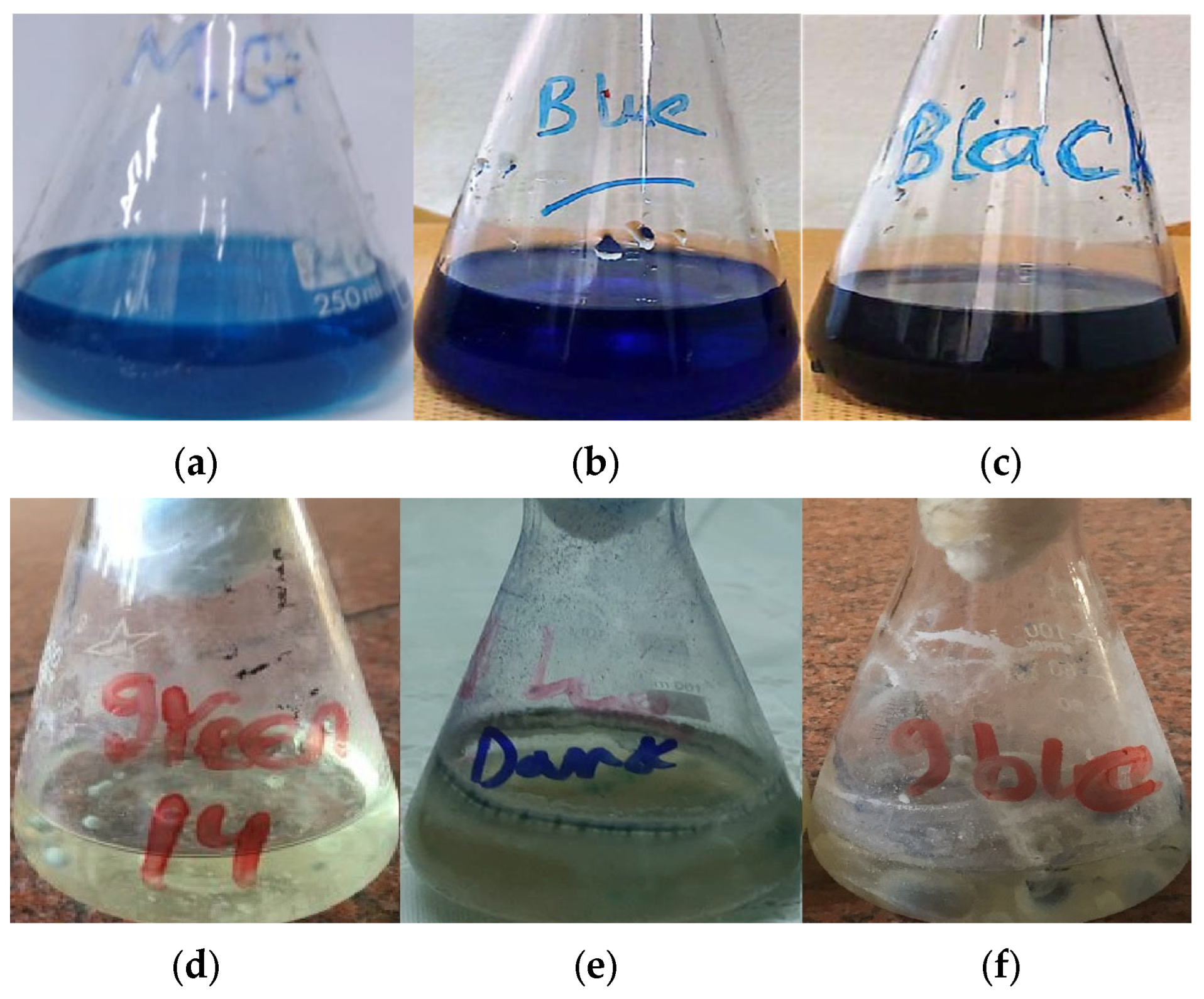
3.1. Fungal Isolation and Their Dye Decolorization Efficiency
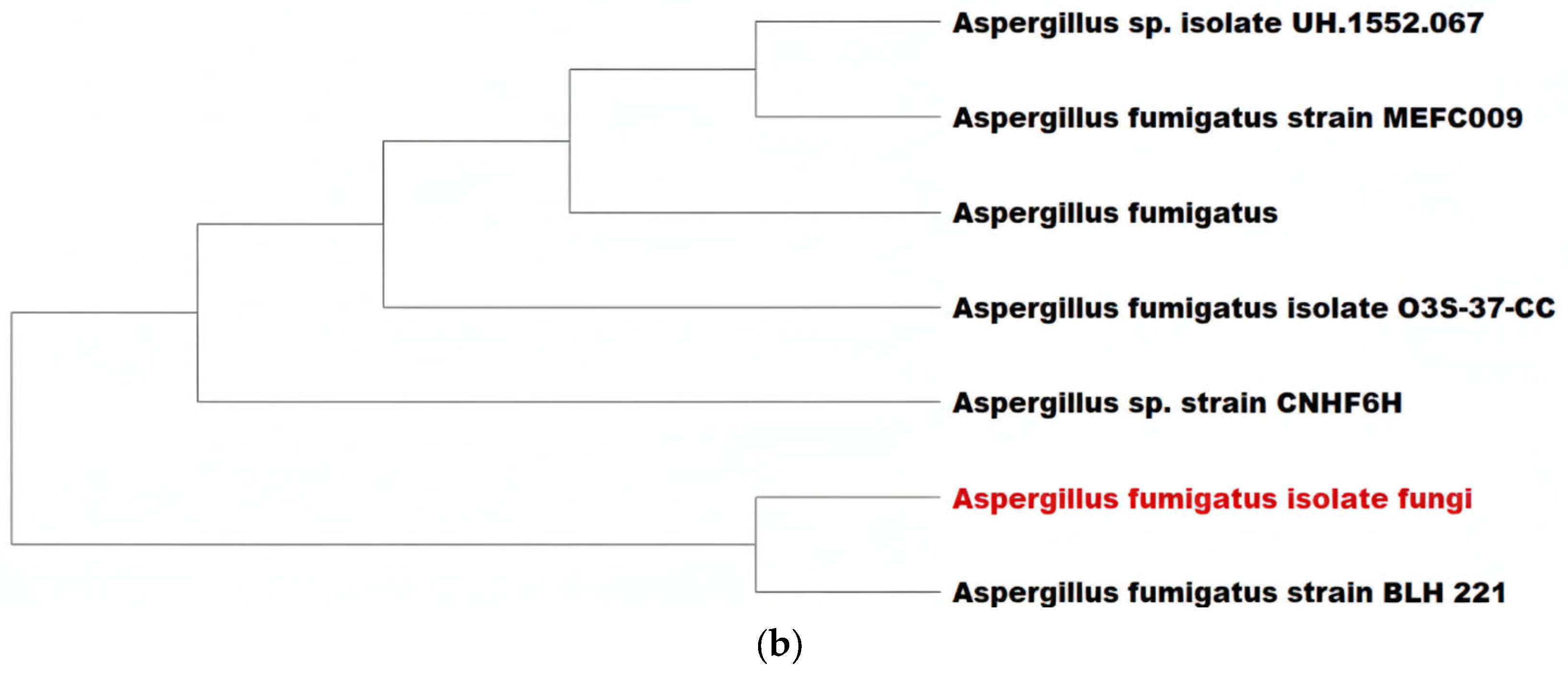
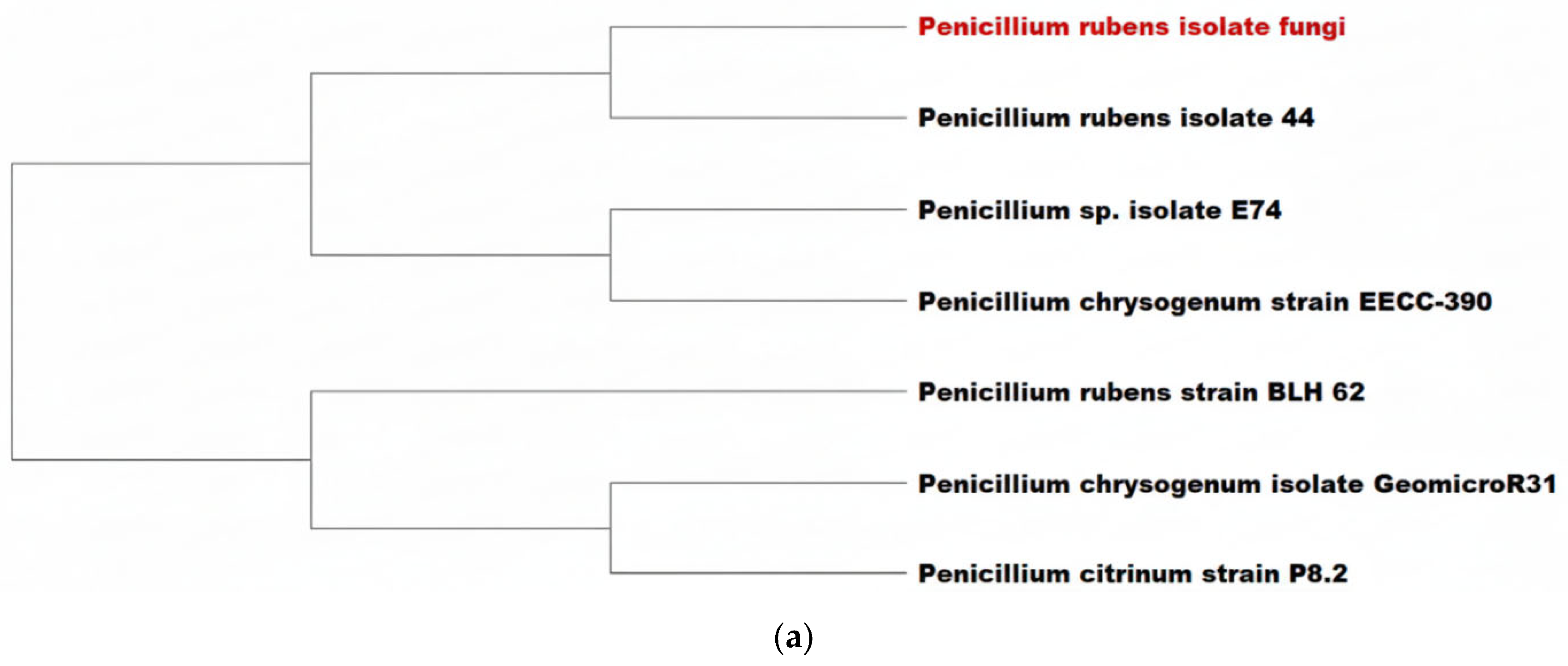
3.2. Identification of the Promising Dye Decolorizing Fungi
3.3. Optimization of Fungal Growth Conditions for Dye Decolorization
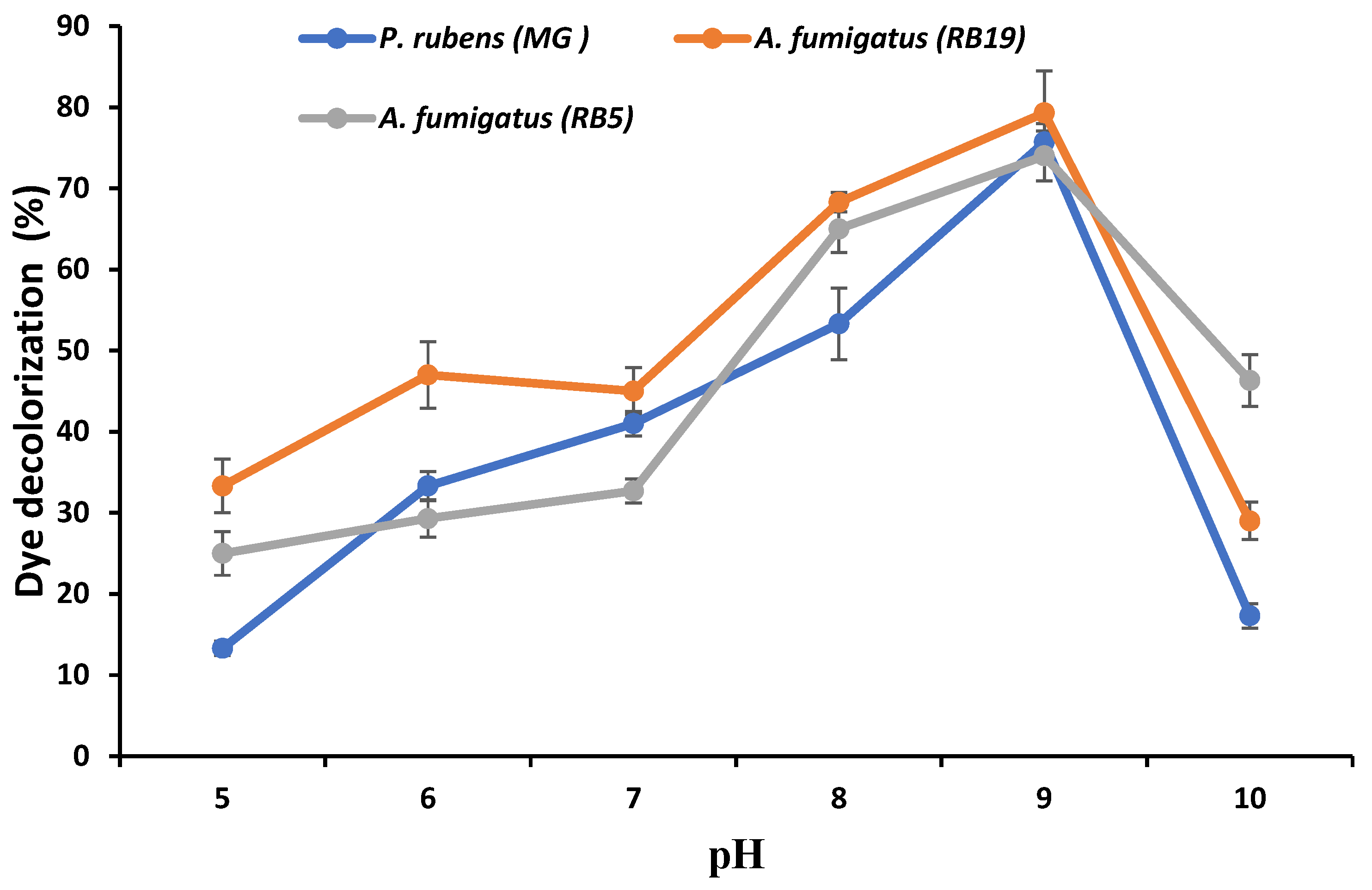
3.3.1. Effect of pH
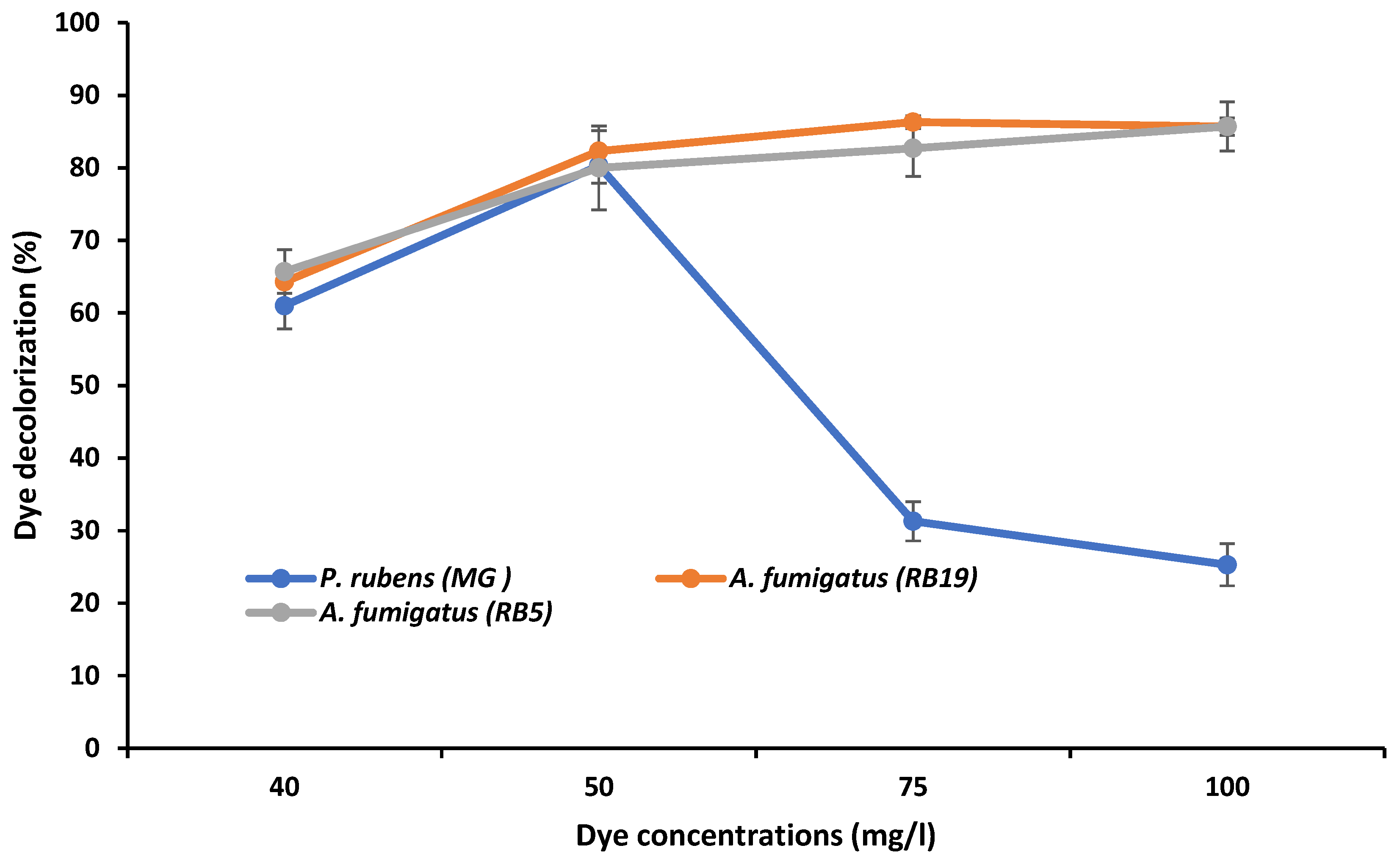
3.3.2. Effect of Dye Concentration
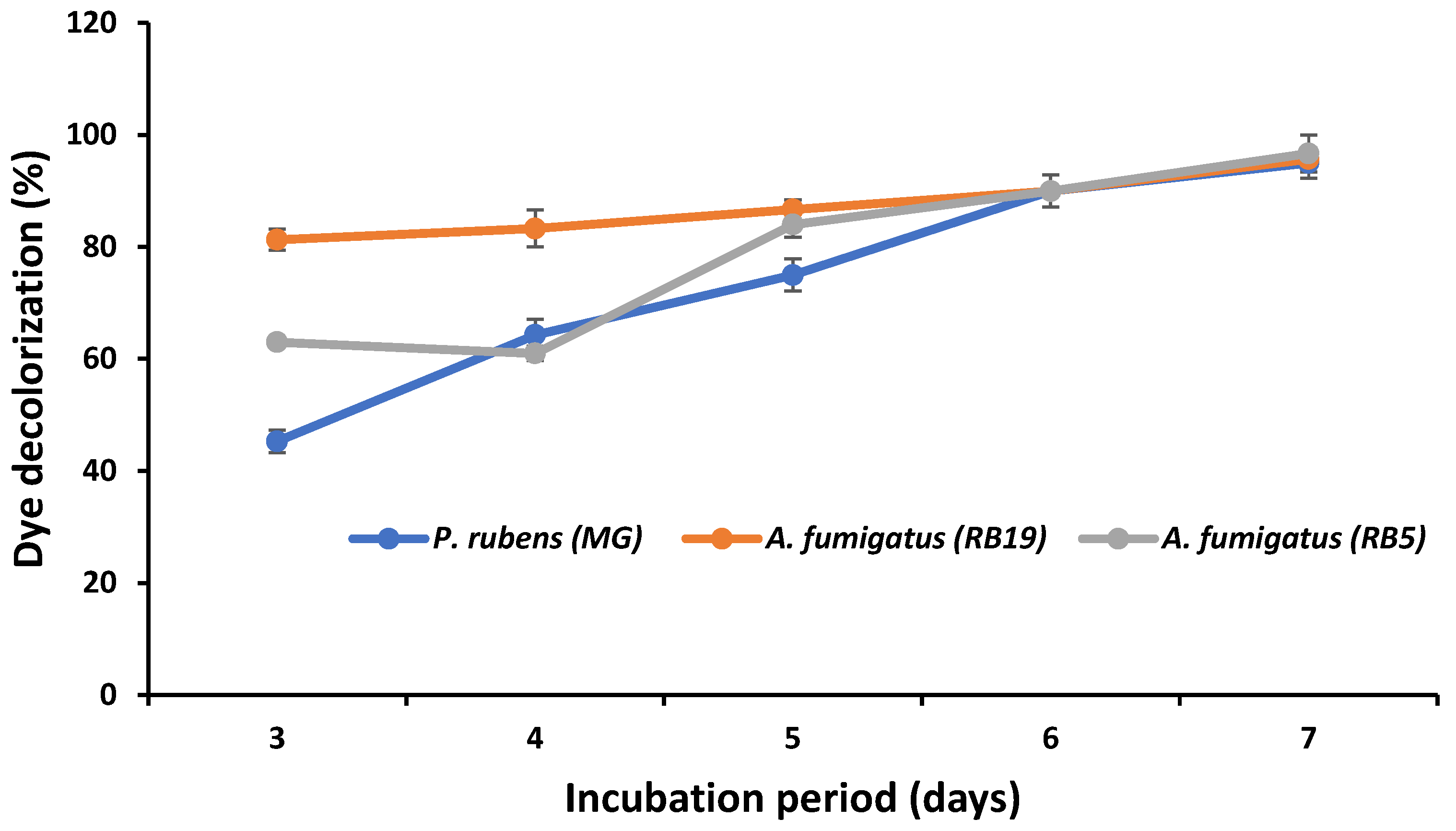
3.3.3. Effect of Incubation Period
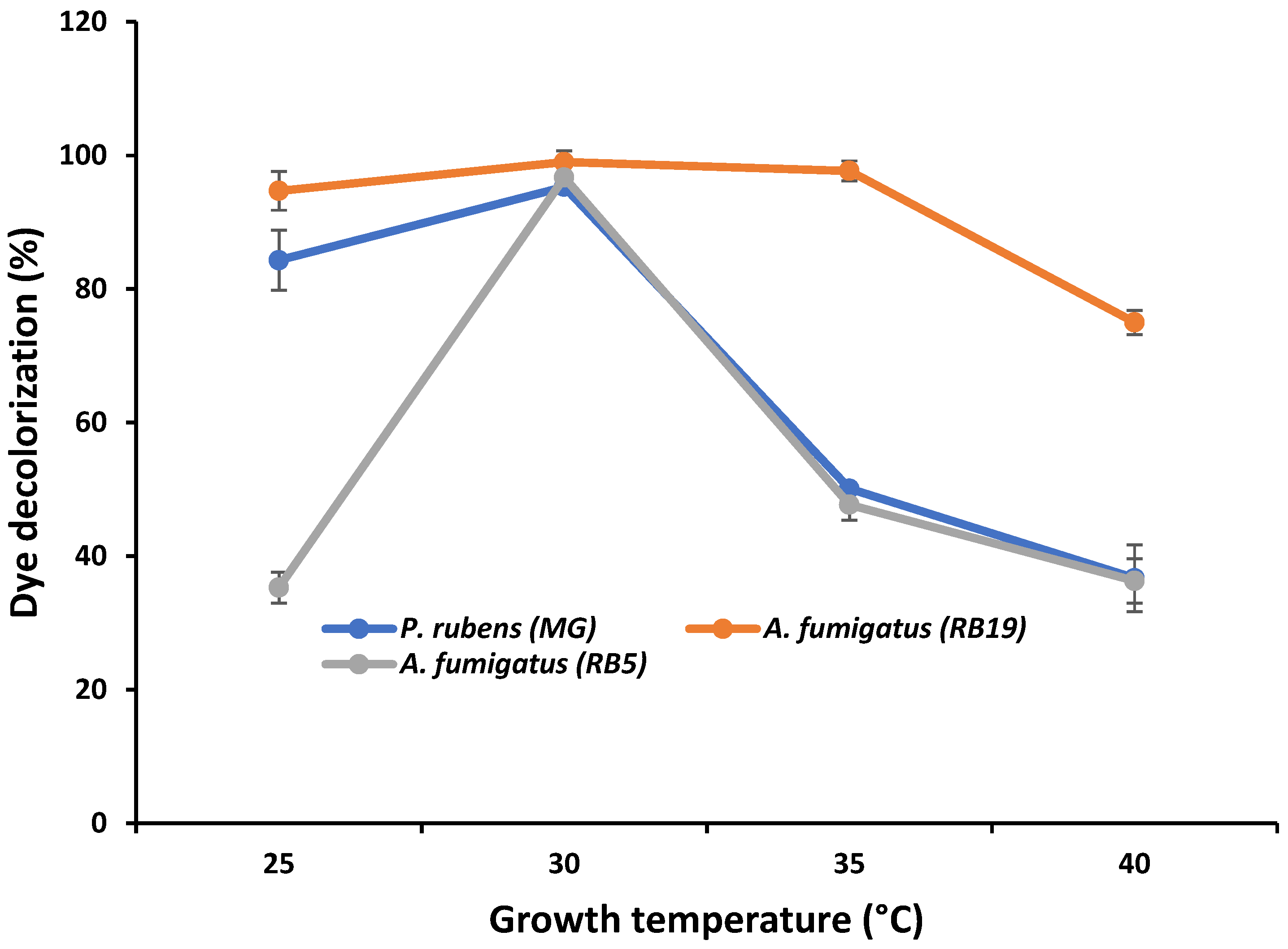
3.3.4. Effect of Temperature
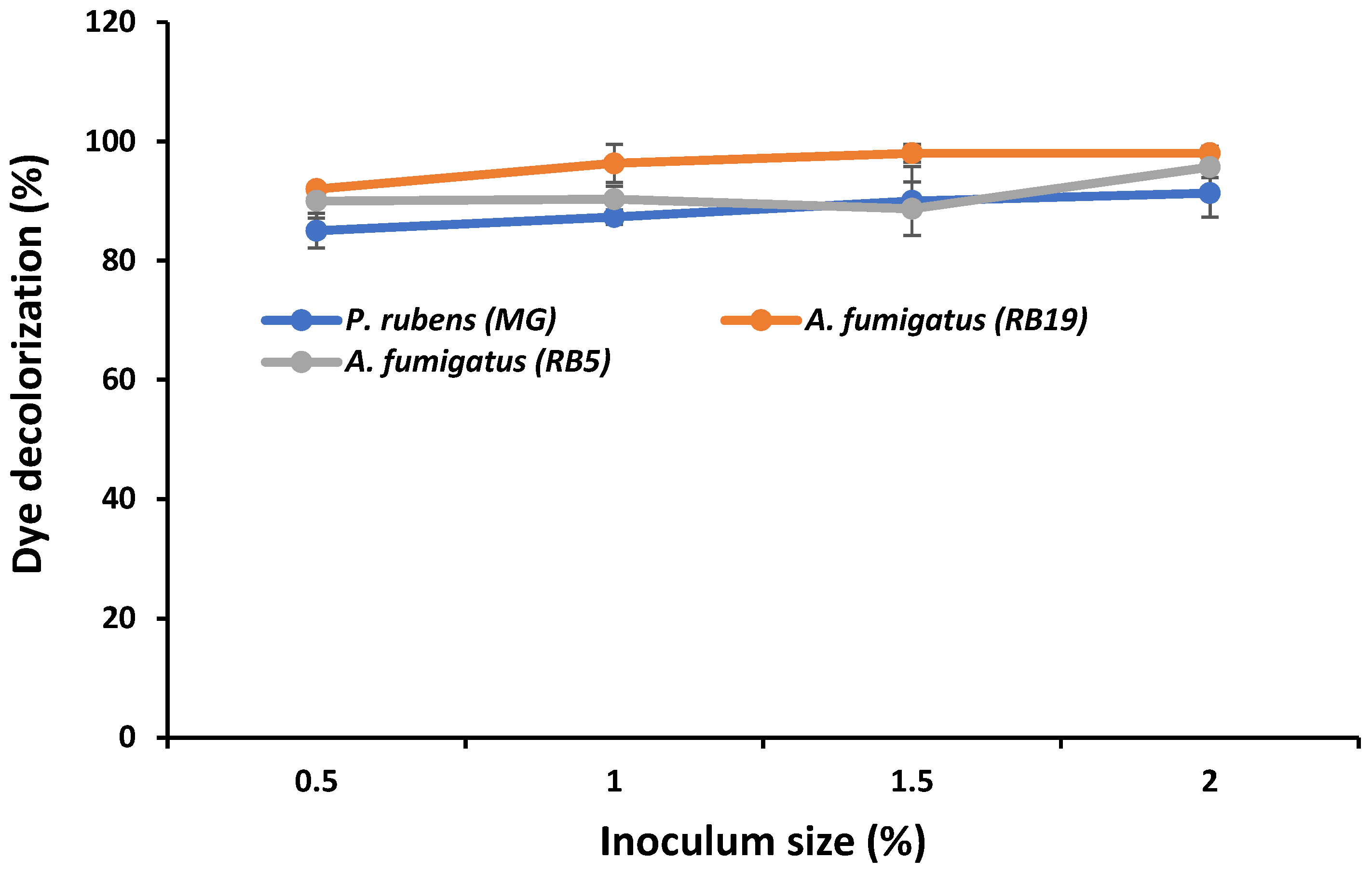
3.3.5. Effect of Inoculum Size
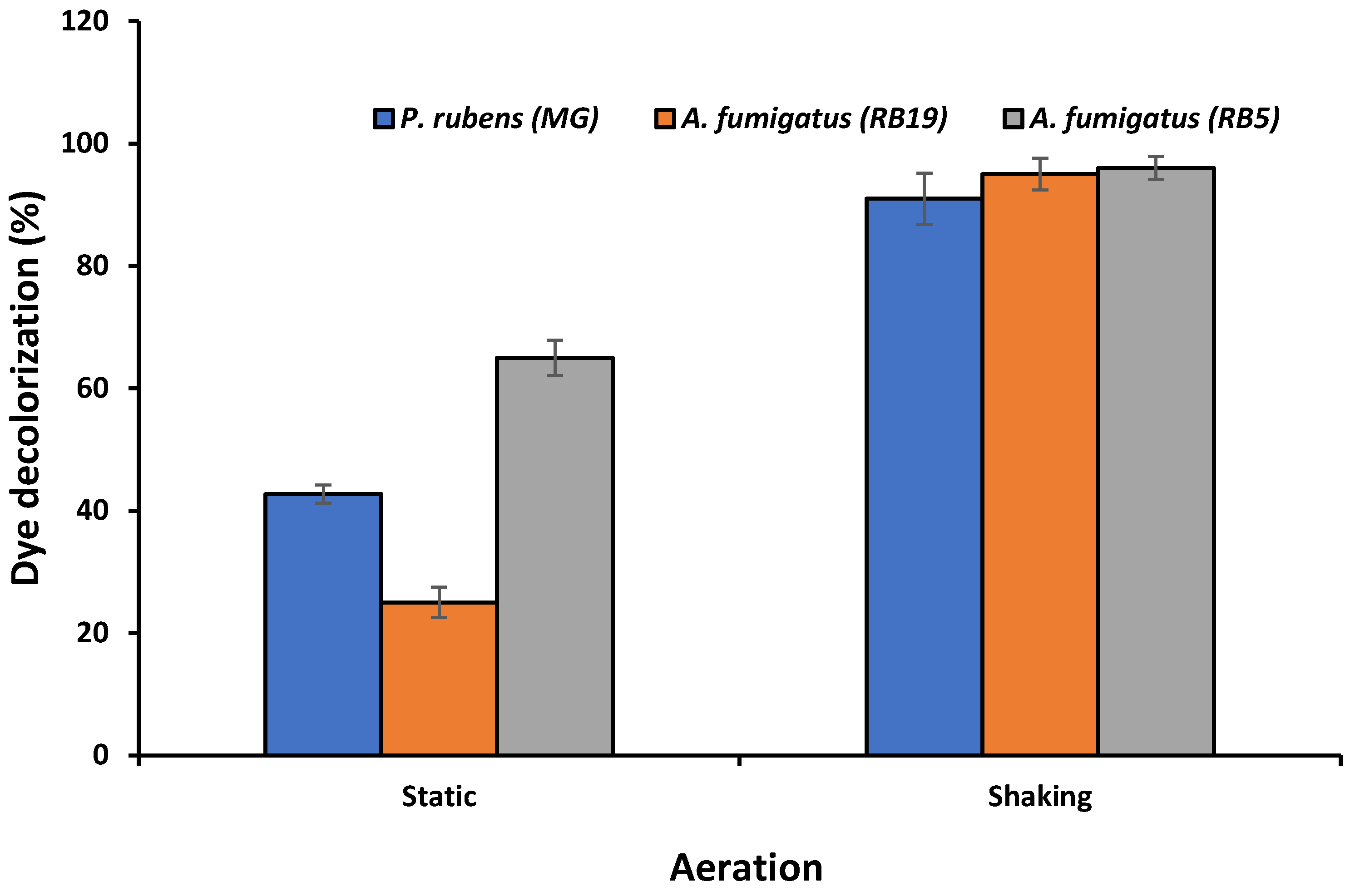
3.3.6. Effect of Shaking and Stationary Conditions on Dye Decolorization
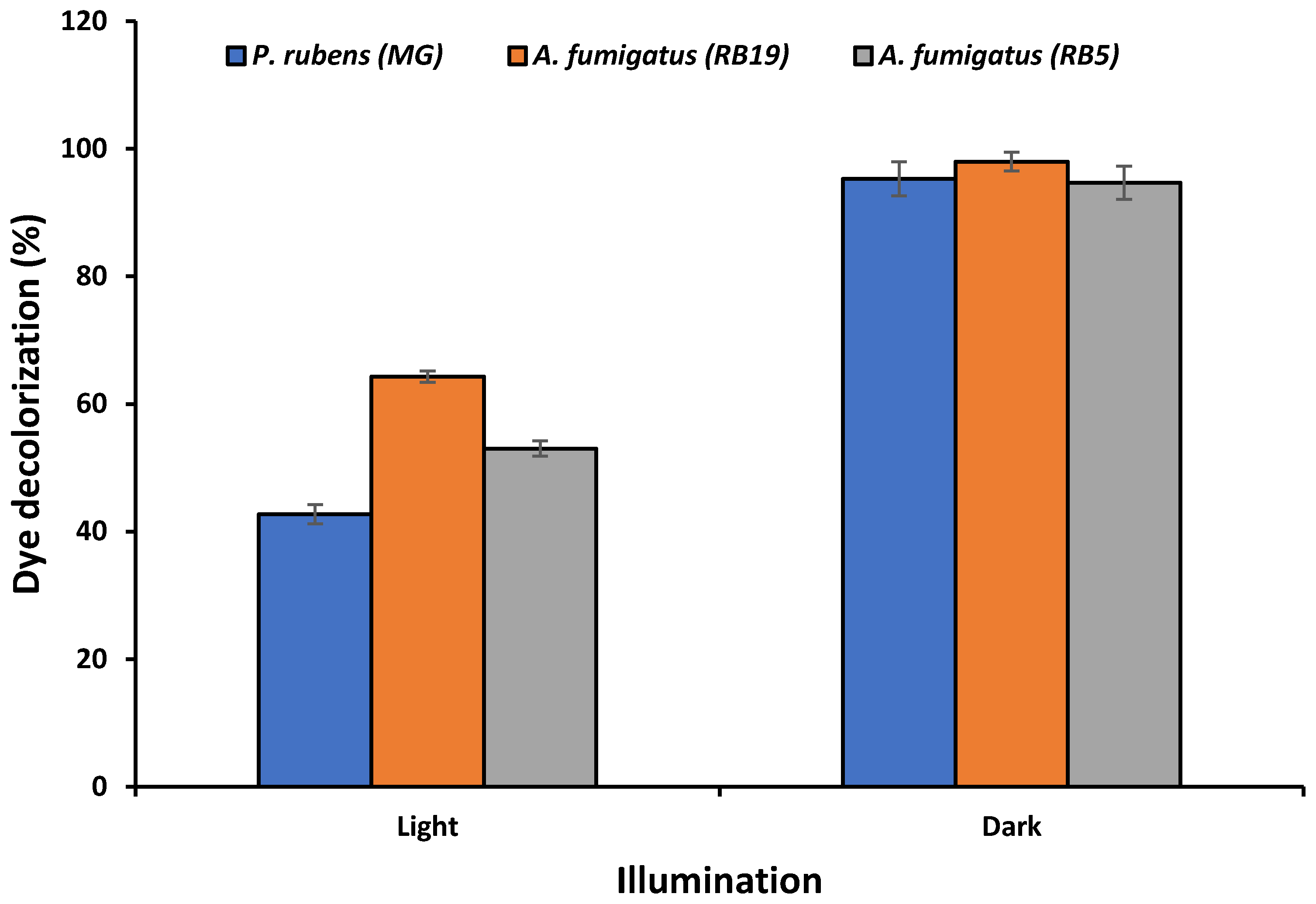
3.3.7. Effect of Illumination
3.4. Enzyme Analysis
3.5. Phytotoxicity
3.6. COD and BOD
4. Conclusions
Author Contributions
Funding
Institutional Review Board Statement
Informed Consent Statement
Data Availability Statement
Acknowledgments
Conflicts of Interest
References
- Tian, Y.; Wu, K.; Lin, S.; Shi, M.; Liu, Y.; Su, X.; Islam, R. Biodegradation and decolorization of Crystal Violet dye by cocultivation with fungi and bacteria. ACS Omega 2024, 9, 7668–7678. [Google Scholar] [CrossRef] [Scilit]
- El-Bendary, M.A.; Ewais, E.A.; Ezzat, S.M.; Al-Zalama, M.A. Process optimization of the bio-decolorization of textile dyes by spore-bound laccase of Bacillus amyloliquefaciens. Microbiology 2019, 13, 23–33. [Google Scholar]
- Ibrahim, G.S.; Abdelhamid, S.A.; Elmansy, E.A.; Asker, M.M.; El Shall, F.N. Red pigment from isolated Serratia marcescens SEM: Structure, antimicrobial and antioxidant activity. Biocatal. Agric. Biotechnol. 2023, 54, 102932. [Google Scholar] [CrossRef] [Scilit]
- Yan, J.; Wang, P.; Wang, L.; Jin, Q.; Ali, A.S.; He, Y.; Han, X. Bio-decolorization of synthetic dyes by a novel endophytic fungus Penicillium janthinellum LM5 from blueberry pulp. Biochem. Eng. J. 2023, 195, 108909. [Google Scholar] [CrossRef] [Scilit]
- Lata, K.; Singh, R.P.; Ambade, B.; Kumar, A. Biodecolorization of Reactive Red 120 Azo Dye by Metal-Ion Tolerant Lysinibacilluscapsici PB300 (T) Bacteria Bacteria and its Application Potential in Textile Effluents Treatment. Front. Environ. Sci. 2024, 13. [Google Scholar] [CrossRef] [Scilit]
- Kishor, R.; Purchase, D.; Saratale, G.D.; Saratale, R.G.; Ferreira, L.F.R.; Bilal, M.; Chandra, R.; Bharagava, R.N. Ecotoxicological and health concerns of persistent coloring pollutants of textile industry wastewater and treatment approaches for environmental safety. J. Environ. Chem. Eng. 2021, 9, 105012. [Google Scholar] [CrossRef] [Scilit]
- Shah, H.; Yusof, F.; Alam, M.Z. A new technique to estimate percentage decolorization of synthetic dyes on solid media by extracellular laccase from white-rot fungus. Bioremediat. J. 2023, 27, 66–74. [Google Scholar]
- Behera, M.; Nayak, J.; Banerjee, S.; Chakrabortty, S.; Tripathy, S.K. A review on the treatment of textile industry waste effluents towards the development of efficient mitigation strategy: An integrated system design approach. J. Environ. Chem. Eng. 2021, 9, 105277. [Google Scholar] [CrossRef] [Scilit]
- Aritonang, B.; Ritonga, A.H.; Harefa, K. Reduction of BOD, COD, and TSS in Textile Wastewater Using Bentonite Activated Charcoal Adsorbent. J. Farm. 2025, 7, 381–389. [Google Scholar]
- Liu, Y.; Shao, Z.; Reng, X.; Zhou, J.; Qin, W. Dye-decolorization of a newly isolated strain Bacillus amyloliquefaciens W36. World J. Microb. Biot. 2021, 37, 8. [Google Scholar] [CrossRef] [Scilit]
- Gasmi, A.; Ibrahimi, S.; Elboughdiri, N.; Tekaya, M.A.; Ghernaout, D.; Hannachi, A.; Mesloub, A.; Ayadi, B.; Kolsi, L. Comparative study of chemical coagulation and electrocoagulation for the treatment of real textile wastewater: Optimization and operating cost estimation. ACS Omega 2022, 7, 22456–22476. [Google Scholar] [CrossRef] [Scilit]
- Darwesh, O.M.; Li, H.; Matter, I.A. Nano-bioremediation of textile industry wastewater using immobilized CuO-NPs myco-synthesized by a novel Cu-resistant Fusarium oxysporum OSF18. Environ. Sci. Pollut. Res. 2023, 30, 16694–16706. [Google Scholar] [CrossRef] [Scilit]
- Younas, M.; Javed, T. Exploring the efficiency of sugarcane bagasse (Saccharum officinarum) for decontamination of wastewater containing Congo red dye. J. Dispers. Sci. Technol. 2024, 45, 1049–1060. [Google Scholar]
- Henagamage, A.; Peries, C. Degradation and decolorization of textile azo dyes by effective fungal-bacterial consortium. Mol. Biol. Rep. 2023, 50, 8901–8914. [Google Scholar] [CrossRef] [Scilit]
- Yagub, M.T.; Sen, T.K.; Afroze, S.; Ang, H.M. Dye and its removal from aqueous solution by adsorption: A review. Adv. Colloid Interface Sci. 2014, 209, 172–184. [Google Scholar] [CrossRef] [Scilit]
- Ghanaim, A.M.; Mahdy, O.M.E.; Mohamed, H.I. Biodegradation of azo dyes by Aspergillus flavus and its bioremediation potential using seed germination efficiency. BMC Microbiol. 2025, 25, 7. [Google Scholar] [CrossRef] [Scilit]
- Costa, F.C.; Brito, F.S.; Grandi, M.J.R.; Daniel, J.F. White Rot Fungi for Biodegradation of Dyes: Potential for Industrial Uses-A Review. J. Braz. Chem. Soc. 2025, 36, e-20250024. [Google Scholar]
- Rajhans, G.; Barik, A.; Sen, S.K.; Raut, S. Degradation of dyes by fungi: An insight into mycoremediation. Biotechnol. Acta 2021, 102, 445. [Google Scholar] [CrossRef] [Scilit]
- Al-Tohamy, R.; Ali, S.S.; Xie, R.; Schagerl, M.; Khalil, M.A.; Sun, J. Decolorization of reactive azo dye using novel halotolerant yeast consortium HYC and proposed degradation pathway. Ecotoxicol. Environ. Saf. 2023, 263, 115258. [Google Scholar] [CrossRef] [Scilit]
- Dinakarkumar, Y.; Ramakrishnan, G.; Gujjula, K.R.; Vasu, V.; Balamurugan, P.; Murali, G. Fungal bioremediation: An overview of the mechanisms, applications and future perspectives. J. Environ. Chem. Ecotoxicol. 2024, 6, 293–302. [Google Scholar]
- Udayadevi, M.; Sureshkumar, P. Optimization of lignin peroxidase production from a haolphilic Salinococcus roseus isolated from marine biofilm. J. Exp. Zool. India 2023, 26, 1893. [Google Scholar]
- Abbas, A.; Mushtaq, A.; Cheema, A.I.; Mahmood, F.; Khan, M.A.; Naqqash, T.; Khurshid, M.; Manzoor, I.; Muhammad, S.; Shahid, M. Heterologous expression of azoreductase-encoding gene azrS of Bacillus sp. MR-1/2 for enhanced azo dye decolorization and wastewater treatment. Arch. Microbiol. 2020, 202, 2135–2145. [Google Scholar]
- Agarwal, P.; Singh, M.; Singh, J.; Singh, R. Microbial tyrosinases: A novel enzyme, structural features, and applications. In Applied Microbiology and Bioengineering; APPL; Academic Press: Cambridge, MA, USA, 2019; pp. 3–19. [Google Scholar]
- Moreno, A.D.; Ibarra, D.; Eugenio, M.E.; Tomás-Pejó, E. Laccases as versatile enzymes: From industrial uses to novel applications. J. Chem. Technol. Biotechnol. 2020, 95, 481–494. [Google Scholar]
- Fouda, A.H.; Hassan, S.E.-D.; Eid, A.M.; Ewais, E.E.-D. Biotechnological applications of fungal endophytes associated with medicinal plant Asclepias sinaica (Bioss.). Ann. Agric. Sci. 2015, 60, 95–104. [Google Scholar] [CrossRef] [Scilit]
- Robinson, M.; Riov, J.; Sharon, A. Indole-3-acetic acid biosynthesis in Colletotrichum gloeosporioides f. sp. aeschynomene. Appl. Environ. Microbiol. 1998, 64, 5030–5032. [Google Scholar] [CrossRef] [Scilit]
- Roy, D.C.; Biswas, S.K.; Saha, A.K.; Sikdar, B.; Rahman, M.; Roy, A.K.; Prodhan, Z.H.; Tang, S.S. Biodegradation of Crystal Violet dye by bacteria isolated from textile industry effluents. PeerJ 2018, 6, e5015. [Google Scholar] [CrossRef] [Scilit]
- Culberson, W.L. Ainsworth & Bisby’s Dictionary of the Fungi; JSTOR: New York, NY, USA, 1972. [Google Scholar]
- Christensen, M.; Raper, K.B. Synoptic key to Aspergillus nidulans group species and related Emericella species. Trans. Br. Mycol. Soc. 1978, 71, 177–191. [Google Scholar] [CrossRef] [Scilit]
- Klich, M.; Tiffany, L.; Knaphus, G. Ecology of the Aspergilli of Soils and Litter; CABI: Wallingford, UK, 1992. [Google Scholar]
- Ramirez, C. Manual and Atlas of the Penicillia; CABI: Wallingford, UK, 1982. [Google Scholar]
- Pitt, J.I. Geosmithia gen. nov. for Penicillium lavendulum and related species. Can. J. Bot. 1979, 57, 2021–2030. [Google Scholar] [CrossRef] [Scilit]
- Pitt, R.; Muck, R.; Leibensperger, R. A quantitative model of the ensilage process in lactate silages. Grass Forage Sci. 1985, 40, 279–303. [Google Scholar] [CrossRef] [Scilit]
- Sharma, M.; Schmid, M.; Rothballer, M.; Hause, G.; Zuccaro, A.; Imani, J.; Kampfer, P.; Domann, E.; Schafer, P.; Hartmann, A.; et al. Detection and identification of bacteria intimately associated with fungi of the order Sebacinales. Cell. Microbiol. 2008, 10, 2235–2246. [Google Scholar] [CrossRef] [Scilit]
- Tamura, K.; Dudley, J.; Nei, M.; Kumar, S. MEGA4: Molecular evolutionary genetics analysis (MEGA) software version 4.0. Mol. Biol. Evol. 2007, 24, 1596–1599. [Google Scholar] [CrossRef] [Scilit]
- Lade, H.S.; Waghmode, T.R.; Kadam, A.A.; Govindwar, S.P. Enhanced biodegradation and detoxification of disperse azo dye Rubine GFL and textile industry effluent by defined fungal-bacterial consortium. Int. Biodeterior. Biodegrad. 2012, 72, 94–107. [Google Scholar]
- El-Bendary, M.A.; Ezzat, S.M.; Ewais, E.A.; Al-Zalama, M.A. Optimization of spore laccase production by Bacillus amyloliquefaciens isolated from wastewater and its potential in green biodecolorization of synthetic textile dyes. Prep. Biochem. Biotechnol. 2021, 51, 16–27. [Google Scholar] [CrossRef] [Scilit]
- Jadhav, J.; Govindwar, S. Biotransformation of malachite green by Saccharomyces cerevisiae MTCC 463. Yeast 2006, 23, 315–323. [Google Scholar] [CrossRef] [Scilit]
- Järvinen, J.; Taskila, S.; Isomäki, R.; Ojamo, H. Screening of white-rot fungi manganese peroxidases: A comparison between the specific activities of the enzyme from different native producers. AMB Express 2012, 2, 62. [Google Scholar] [CrossRef] [Scilit]
- Salokhe, M.; Govindwar, S. Effect of carbon source on the biotransformation enzymesin Serratia marcescens. World J. Microbiol. Biotechnol. 1999, 15, 259–263. [Google Scholar] [CrossRef] [Scilit]
- Gomare, S.S.; Parshetti, G.K.; Govindwar, S.P. Biodegradation of malachite green by Brevibacillus laterosporus MTCC 2298. Water Environ. Res. 2009, 81, 2329–2336. [Google Scholar] [CrossRef] [Scilit]
- Raposo, F.; De la Rubia, M.; Borja, R.; Alaiz, M. Assessment of a modified and optimised method for determining chemical oxygen demand of solid substrates and solutions with high suspended solid content. Talanta 2008, 76, 448–453. [Google Scholar] [CrossRef] [Scilit]
- Johnston, L.; Cullimore, R.; Singh, K. Field Trials of the BOD-BART System™ for the Rapid Determination of Biochemical Oxygen Demand in Secondary and Tertiary Effluents; Droycon Bioconcepts Inc.: Regina, SK, Canada; University of New Brunswick: Fredericton, NB, Canada, 1990. [Google Scholar]
- Pundir, A.; Thakur, M.S.; Prakash, S.; Kumari, N.; Sharma, N.; Parameswari, E. Fungi as versatile biocatalytic tool for treatment of textile wastewater effluents. Environ. Sci. Eur. 2024, 36, 185. [Google Scholar] [CrossRef] [Scilit]
- Khan, S.A.; Mehmood, S.; Shabbir, S.B.; Ali, S.; Alrefaei, A.F.; Albeshr, M.F. Efficacy of fungi in the decolorization and detoxification of remazol brilliant blue dye in aquatic environments. Microorganisms 2023, 11, 703. [Google Scholar] [CrossRef] [Scilit]
- Moreira Neto, S.L.; Esteves, P.J.; Santos, V.T.; Paranhos, A.P.; Cescato, F.; Vitali, V.M. Novel salt and alkali tolerant neotropical basidiomycetes for dye decolorisation in simulated textile effluent. World J. Microbiol. Biotechnol. 2011, 27, 2665–2673. [Google Scholar] [CrossRef] [Scilit]
- Aydogan, M.N.; Arslan, N.P. Removal of textile dye reactive black 5 by the cold-adapted, alkali-and halotolerant fungus Aspergillus flavipes MA-25 under non-sterile conditions. Desalination Water Treat. 2015, 56, 2258–2266. [Google Scholar]
- Ponraj, M.; Jamunarani, P.; Zambare, V. Isolation and optimization of culture conditions for decolorization of true blue using dye decolorizing fungi. Asian J. Exp. Biol. Sci. 2011, 2, 270–276. [Google Scholar]
- Nagraj; Chaurasia, P.K.; Bharati, S.L.; Sharma, N.; Kumar, J.; Sivalingam, A.M. Degradation of dyes by fungi: An overview on recent updates. Microbe 2025, 6, 100232. [Google Scholar] [CrossRef] [Scilit]
- Das, S.; Cherwoo, L.; Singh, R. Decoding dye degradation: Microbial remediation of textile industry effluents. Biotechnol. Notes 2023, 4, 64–76. [Google Scholar] [CrossRef] [Scilit] [PubMed]
- Ramya, M.; Anusha, B.; Kalavathy, S.; Devilaksmi, S. Biodecolorization and biodegradation of Reactive Blue by Aspergillus sp. Afr. J. Biotechnol. 2007, 6, 1441–1445. [Google Scholar]
- Forgacs, E.; Cserháti, T.; Oros, G. Removal of synthetic dyes from wastewaters: A review. Environ. Int. 2004, 30, 953–971. [Google Scholar] [CrossRef] [Scilit]
- Khan, R.; Bhawana, P.; Fulekar, M. Microbial decolorization and degradation of synthetic dyes: A review. Rev. Environ. Sci. Bio/Technol. 2013, 12, 75–97. [Google Scholar]
- de Almeida, A.P.; Macrae, A.; Ribeiro, B.D.; do Nascimento, R.P. Decolorization and detoxification of different azo dyes by Phanerochaete chrysosporium ME-446 under submerged fermentation. Braz. J. Microbiol. 2021, 52, 727–738. [Google Scholar] [CrossRef] [Scilit]
- Karaca, H.; Kısaoğlan, B.; Koparal, A.T.; Kıvanç, M. Decolorization of reactive blue 13 by Sporotrichum sp. and cytotoxicity of biotreated dye solution. Water Environ. Res. 2022, 94, e1686. [Google Scholar] [CrossRef] [Scilit]
- Ergene, A.; Ada, K.; Tan, S.; Katırcıoğlu, H. Removal of Remazol Brilliant Blue R dye from aqueous solutions by adsorption onto immobilized Scenedesmus quadricauda: Equilibrium and kinetic modeling studies. Desalination 2009, 249, 1308–1314. [Google Scholar] [CrossRef] [Scilit]
- Yusuf, F.; Yakasai, H.M.; Usman, S.; Muhammad, J.B.; Yaú, M.; Jagaba, A.H. Dyes-decolorizing potential of fungi strain BUK_BCH_BTE1 locally isolated from textile industry effluents: Characterization and LC-MS analysis of the metabolites. Case Stud. Chem. Environ. Eng. 2023, 8, 100453. [Google Scholar] [CrossRef] [Scilit]
- Kaushik, P.; Malik, A. Fungal dye decolourization: Recent advances and future potential. Environ. Int. 2009, 35, 127–141. [Google Scholar] [CrossRef] [Scilit]
- Rigas, F.; Dritsa, V. Decolourisation of a polymeric dye by selected fungal strains in liquid cultures. Enzym. Microb. Technol. 2006, 39, 120–124. [Google Scholar] [CrossRef] [Scilit]
- Martínez-Trujillo, M.; Domínguez-Morales, D.; García-Rivero, M. Aeration regime modifies ligninolytic enzyme production and biodegradation of reactive black 5 by immobilized Trametes versicolor. Int. J. Environ. Sci. Technol. 2024, 21, 9341–9352. [Google Scholar] [CrossRef] [Scilit]
- Ali, N.; Hameed, A.; Ahmed, S. Role of brown-rot fungi in the bioremoval of azo dyes under different conditions. Braz. J. Microbiol. 2010, 41, 907–915. [Google Scholar] [CrossRef] [Scilit]
- Bettin, F.; Cousseau, F.; Martins, K.; Zaccaria, S.; Girardi, V.; Silveira, M.M. Effects of pH, temperature and agitation on the decolourisation of dyes by laccase-containing enzyme preparation from Pleurotus sajor-caju. Braz. Arch. Biol. Technol. 2019, 62, e19180338. [Google Scholar]
- Gomaa, O.M.; Linz, J.E.; Reddy, C. Decolorization of Victoria blue by the white rot fungus, Phanerochaete chrysosporium. World J. Microbiol. Biotechnol. 2008, 24, 2349–2356. [Google Scholar] [CrossRef] [Scilit]
- Sharma, B.; Tiwari, S.; Kumar, R.; Kumar, M.; Tewari, L. Eco-friendly detoxification of hazardous Congo red dye using novel fungal strain Trametes flavida WTFP2: Deduced enzymatic biomineralization process through combinatorial in-silico and in-vitro studies. J. Hazard. Mater. 2023, 455, 131503. [Google Scholar] [CrossRef] [Scilit]
- Mendes, S.; Farinha, A.; Ramos, C.G.; Leitão, J.H.; Viegas, C.A.; Martins, L.O. Synergistic action of azoreductase and laccase leads to maximal decolourization and detoxification of model dye-containing wastewaters. Bioresour. Technol. 2011, 102, 9852–9859. [Google Scholar] [CrossRef] [Scilit] [PubMed]
- Srinu, A.; Vijaya, L.; Murali, S.; Prasad, D. Decolorization of anthraquinone dyes by Aspergillus strains and also optimization of lignolytic enzymes. Int. J. Rec. Sci. Res. 2017, 8, 18547–18553. [Google Scholar]
- Hammel, K.E.; Gai, W.Z.; Green, B.; Moen, M.A. Oxidative degradation of phenanthrene by the ligninolytic fungus Phanerochaete chrysosporium. Appl. Environ. Microbiol. 1992, 58, 1832–1838. [Google Scholar] [CrossRef] [Scilit] [PubMed]
- Casieri, L.; Varese, G.; Anastasi, A.; Prigione, V.; Svobodova, K.; Filippelo Marchisio, V. Decolorization and detoxication of reactive industrial dyes by immobilized fungi Trametes pubescens and Pleurotus ostreatus. Folia Microbiol. 2008, 53, 44–52. [Google Scholar] [CrossRef] [Scilit]
- Rani, B.; Kumar, V.; Singh, J.; Bisht, S.; Teotia, P.; Sharma, S. Bioremediation of dyes by fungi isolated from contaminated dye effluent sites for bio-usability. Braz. J. Microbiol. 2014, 45, 1055–1063. [Google Scholar] [CrossRef] [Scilit]
- Chatterjee, S.; Pandey, S. Degradation of Complex Textile Dyes by Some Leaf-Litter Dwelling Fungi. Proc. Nat. Acad. Sci. India B-Biol. Sci. 2023, 93, 213–223. [Google Scholar]
- Guo, G.; Liu, C.; Hao, J.; Tian, F.; Ding, K.C. Development and characterization of a halo-thermophilic bacterial consortium for decolorization of azo dye. Chemosphere 2021, 272, 129916. [Google Scholar] [CrossRef] [Scilit]
- Cong, J.; Xie, X.; Liu, Y.; Qin, Y.; Fan, J.; Fang, Y. Biochemical characterization of a novel azo reductase named BVU5 from the bacterial flora DDMZ1: Application for decolorization of azo dyes. RSC Adv. 2022, 12, 1968–1981. [Google Scholar] [CrossRef] [Scilit]
- Halaouli, S.; Asther, M.; Sigoillot, J.C.; Hamdi, M.; Lomascolo, A. Fungal tyrosinases: New prospects in molecular characteristics, bioengineering and biotechnological applications. J. App. Microbiol. 2006, 100, 219–232. [Google Scholar]
- Durán, N.; Rosa, M.A.; D’Annibale, A.; Gianfreda, L. Applications of laccases and tyrosinases (phenoloxidases) immobilized on different supports: A review. Enzym. Microb. Technol. 2002, 31, 907–931. [Google Scholar] [CrossRef] [Scilit]
- Abd-Elrahim, A.; Hosseny, E.; Abdelhamid, S.; Amin, B.; Hamed, S. Bio-degradation of diazo dye direct red 81 by fungi isolated from dyes industrial effluents. Bull. Pharm. Sci. 2025, 48, 547–566. [Google Scholar]
- Lach, C.E.; Pauli, C.S.; Coan, A.S.; Simionatto, E.L.; Koslowski, L.A.D. Investigating the process of electrocoagulation in the removal of azo dye from synthetic textile effluents and the effects of acute toxicity on Daphnia magna test organisms. J. Water Process Eng. 2022, 45, 102485. [Google Scholar]






| Dye Name | Wavelength λmax (nm) | Chemical Structure, Molecular Formula and Molecular Weight (g/mol) |
|---|---|---|
| Malachite green (CAS No: 569-64-2) | 620 |  |
| MF: C23H25ClN2; MW: 364.911 | ||
| Reactive blue 19 (CAS NO: 2580-78-1) | 595 |  |
| MF: C22H16N2Na2O11S3; MW: 626.51 | ||
| Reactive black 5 (CAS NO:17095-24-8) | 597 |  |
| MF: C26H21N5Na4O19S6; MW: 991.82 |
| Isolate Code | Scientific Name | Dye Decolorization (%) Mean ± SE of | ||
|---|---|---|---|---|
| MG | RB19 | RB5 | ||
| SRH1 | Aspergillus flavus var. columnaris | - | 29.7 ± 2.4 cd | 45.3 ± 2.0 b |
| SRH2 | Aspergillus niger | - | 33.7 ± 1.8 c | - |
| SRH3 | Aspergillus niger | - | 51.0 ± 1.7 b | - |
| SRH4 | Aspergillus sulphureus | - | - | - |
| SRH5 | Penicillium janthinellum | - | - | 50.7 ± 3.4 b |
| SRH6 | Penicillium simplicissimum | - | - | - |
| SRH7 | Penicillium citrinum | - | - | - |
| SRH8 | Aspergillus parasiticus | - | - | - |
| SRH9 | Aspergillus fumigatus | 30.7 ± 2.3 c | 58.0 ± 1.7 a | 58.7 ± 2.0 a |
| SRH10 | Absidia sp. | - | - | - |
| SRH11 | Aspergillus terrus | - | 50.0 ± 2.9 b | 32.3 ± 1.9 c |
| SRH12 | Rhizopus sp. | 10.0 ± 1.2 d | 44.3 ± 2.3 b | - |
| SRH13 | Penicillum sp. | 40.3 ± 2.6 b | - | - |
| SRH14 | Penicillium rubens | 55.3 ± 2.9 a | 25.3 ± 2.4 d | - |
| Tested Enzymes | Enzyme Activity (U/mL) in Filtrates of | |||||
|---|---|---|---|---|---|---|
| P. rubens After Growth in the Medium | A. fumigatus After Growth in the Medium | |||||
| Without MG | with MG | Without RB19 | with RB19 | Without RB5 | with RB5 | |
| Exo-laccase | 9.39 ± 0.07 b | 1.98 ± 0.22 d | 17 ± 0.15 a | 1.26 ± 0.15 e | 17 ± 0.15 a | 8.09 ± 0.31 c |
| Endo-laccase | 3.29 ± 0.28 c | 1.34 ± 0.05 d | 7.09 ± 0.08 b | 8.21 ± 0.08 a | 7.09 ± 0.08 b | 0.54 ± 0.04 e |
| Exo-LiP | 4.27 ± 0.09 e | 20.31 ± 0.20 a | 10.04 ± 0.11 d | 11.05 ± 0.13 c | 10.04 ± 0.11 d | 12.03 ± 0.16 b |
| Endo-LiP | 10.52 ± 0.40 a | 6.69 ± 0.16 d | 7.36 ± 0.11 d | 9.69 ± 0.06 b | 7.36 ± 0.11 d | 8.51 ± 0.3 c |
| Exo-MnP | 22.26 ± 1.40 b | 16.18 ± 0.11 c | 15.95 ± 0.21 c | 21.29 ± 0.40 b | 15.95 ± 0.21 c | 27.85 ± 0.17 a |
| Endo-MnP | 26.33 ± 1.30 d | 36.61 ± 0.38 b | 17.84 ± 0.54 e | 71.33 ± 0.75 a | 17.84 ± 0.54 e | 29.30 ± 0.34 c |
| Exo-tyrosinase | 25.25 ± 0.56 c | 46.08 ± 0.52 a | 3.26 ± 0.16 e | 30.84 ± 0.18 b | 3.26 ± 0.16 e | 16.03 ± 0.12 d |
| Endo-tyrosinase | 18.83 ± 0.85 d | 17.24 ± 0.18 d | 55.62 ± 0.38 a | 25.13 ± 0.11 c | 55.62 ± 0.38 a | 43.41 ± 0.92 b |
| Exo-MG reductase | 10.69 ± 0.23 c | 19.29 ± 0.40 b | 21.18 ± 0.34 a | 8.47 ± 0.34 d | 21.18 ± 0.34 a | 20.16 ± 0.46 ab |
| Endo-MG reductase | 17.39 ± 0.49 c | 24.42 ± 0.41 ab | 12.24 ± 2.18 d | 26.89 ± 0.52 a | 12.24 ± 2.18 d | 22.39 ± 0.55 b |
| Exo-RB19 reductase | 102.93 ± 1.10 b | 144.09 ± 0.61 a | 39.69 ± 0.29 d | 31.64 ± 0.41 e | 39.69 ± 0.29 d | 68.46 ± 0.61 c |
| Endo-RB19 reductase | 55.82 ± 0.82 b | 152.02 ± 1.15 a | 35.18 ± 0.25 c | 23.58 ± 0.72 d | 35.18 ± 0.25 c | 13.47 ± 0.28 e |
| Exo-RB5 reductase | 11.66 ± 0.58 b | 0.46 ± 0.06 d | 4.49 ± 0.24 c | 5.09 ± 0.54 c | 4.49 ± 0.24 c | 15.12 ± 0.74 a |
| Endo-RB5 reductase | 7.30 ± 0.03 d | 2.05 ± 0.28 e | 9.59 ± 0.49 c | 16.45 ± 0.35 a | 9.59 ± 0.49 c | 10.86 ± 0.29 b |
| Exo-NADH-DCIP reductase | 7.4 ± 0.23 a | 2.91 ± 0.20 b | 8.09 ± 0.06 a | 8.24 ± 0.60 a | 8.09 ± 0.06 a | 2.11 ± 0.12 b |
| Endo-NADH-DCIP reductase | 10.84 ± 0.29 a | 11.53 ± 0.40 a | 8.54 ± 0.28 b | 6.04 ± 0.07 c | 8.54 ± 0.28 b | 1.13 ± 0.11 d |
| Parameter Studied | Germination (%) | Shoot Length (cm) | Root Length (cm) | Relative Shoot Length (%) | Relative Root Length (%) | Relative Seed Germination (%) | Germination Index (%) |
|---|---|---|---|---|---|---|---|
| Water | 80 ± 2.89 ab | 2.5 ± 0.2 b | 1 ± 0.06 ab | 100 | 100 | 100 | 100 |
| MG (50mg/L) | 75 ± 1.73 bc | 1.5 ± 0.12 c | 0.8 ± 0.05 b | 60 | 80 | 94 | 48 |
| Decolorized MG solution | 80 ± 1.73 ab | 2 ± 0.25 c | 1.2 ± 0.06 a | 80 | 120 | 100 | 96 |
| RB19 (100mg/L) | 70 ± 1.53 c | 0.6 ± 0.06 d | 0.3 ± 0.03 c | 24 | 30 | 106 | 7.2 |
| Decolorized RB19 solution | 85 ± 1.53 a | 3.2 ± 0.21 a | 1.2 ± 0.26 a | 128 | 120 | 88 | 153.6 |
| RB5 (100mg/L) | 75 ± 2.08 bc | 0.8 ± 0.06 d | 0.2 ± 0.06 c | 32 | 20 | 94 | 6.4 |
| Decolorized RB5 solution | 85 ± 2.08 a | 1.6 ± 0.15 c | 0.9 ± 0.08 ab | 64 | 90 | 106 | 57.60 |
| Sample | COD (mg O2/L) Mean ± SE | BOD (mg O2/L) Mean ± SE |
|---|---|---|
| MG dye (50 mg/L) | 36,055 ± 25 | 14,330 ± 11 |
| Decolorized MG by P. rubens | 19,583 ± 31 | 8975 ± 22 |
| RB19 (100 mg/L) | 47,166 ± 9 | 19,675 ± 66 |
| Decolorized RB19 by A. fumigatus | 17,250 ± 27 | 7931 ± 11 |
| RB5 (100 mg/L) | 35,611 ± 25 | 13,502 ± 6 |
| Decolorized RB5 by A. fumigatus | 17,944 ± 10 | 8093 ± 78 |
Disclaimer/Publisher’s Note: The statements, opinions and data contained in all publications are solely those of the individual author(s) and contributor(s) and not of MDPI and/or the editor(s). MDPI and/or the editor(s) disclaim responsibility for any injury to people or property resulting from any ideas, methods, instructions or products referred to in the content. |
© 2026 by the authors. Licensee MDPI, Basel, Switzerland. This article is an open access article distributed under the terms and conditions of the Creative Commons Attribution (CC BY) license.
Share and Cite
El-Bendary, M.A.; Hamed, S.R.; Abdelhamid, S.A. Alkaline Mycoremediation: Penicillium rubens and Aspergillus fumigatus Efficiently Decolorize and Detoxify Key Textile Dye Classes. Sustainability 2026, 18, 921. https://doi.org/10.3390/su18020921
El-Bendary MA, Hamed SR, Abdelhamid SA. Alkaline Mycoremediation: Penicillium rubens and Aspergillus fumigatus Efficiently Decolorize and Detoxify Key Textile Dye Classes. Sustainability. 2026; 18(2):921. https://doi.org/10.3390/su18020921
Chicago/Turabian StyleEl-Bendary, Magda A., Shimaa R. Hamed, and Sayeda Abdelrazek Abdelhamid. 2026. "Alkaline Mycoremediation: Penicillium rubens and Aspergillus fumigatus Efficiently Decolorize and Detoxify Key Textile Dye Classes" Sustainability 18, no. 2: 921. https://doi.org/10.3390/su18020921
APA StyleEl-Bendary, M. A., Hamed, S. R., & Abdelhamid, S. A. (2026). Alkaline Mycoremediation: Penicillium rubens and Aspergillus fumigatus Efficiently Decolorize and Detoxify Key Textile Dye Classes. Sustainability, 18(2), 921. https://doi.org/10.3390/su18020921