Towards Sustainable Health Management in the Kingdom of Saudi Arabia: The Role of Artificial Intelligence—A Systematic Review, Challenges, and Future Directions


Abstract
1. Introduction
- This research integrates diverse knowledge regarding AI applications across multiple healthcare sectors in Saudi Arabia, encompassing disease prediction, diagnosis, treatment optimisation, patient monitoring, and resource allocation.
- The study assesses the alignment of AI-powered healthcare programmes with the main goals of Saudi Vision 2030, specifically on the improvement of healthcare quality, availability, and sustainable development.
- The paper offers actionable recommendations for subsequent research and policy, including the creation of national AI ethics frameworks, investment in workforce training, and the formulation of modular AI solutions to guarantee scalability and cost-effectiveness.
- This review thoroughly identifies and examines the barriers that impede the effective application of AI in Saudi Arabia’s medical sector.
- This review highlights an agenda for forthcoming advancements in AI-powered health management in Saudi Arabia, based on the identified challenges and potential.
2. Research Method
2.1. Research Question
- RQ1:
- What are the current applications of AI in health management within the Kingdom of Saudi Arabia, and how have these applications impacted healthcare delivery and patient outcomes?
- RQ2:
- How does the integration of AI in health management align with the Saudi Vision 2030 goals, particularly in terms of improving healthcare services and achieving sustainable development?
- RQ3:
- What are the ethical, legal, and regulatory considerations associated with the use of AI in health management in the Kingdom of Saudi Arabia, and how are these considerations being managed?
- RQ4:
- What are the key performance metrics used to evaluate the effectiveness of Artificial Intelligence (AI) in enhancing healthcare management in the Kingdom of Saudi Arabia?
- RQ5:
- What are the challenges and barriers to the adoption and implementation of AI technologies in health management in the Kingdom of Saudi Arabia, and how can these challenges be addressed?
2.2. Search Strategy

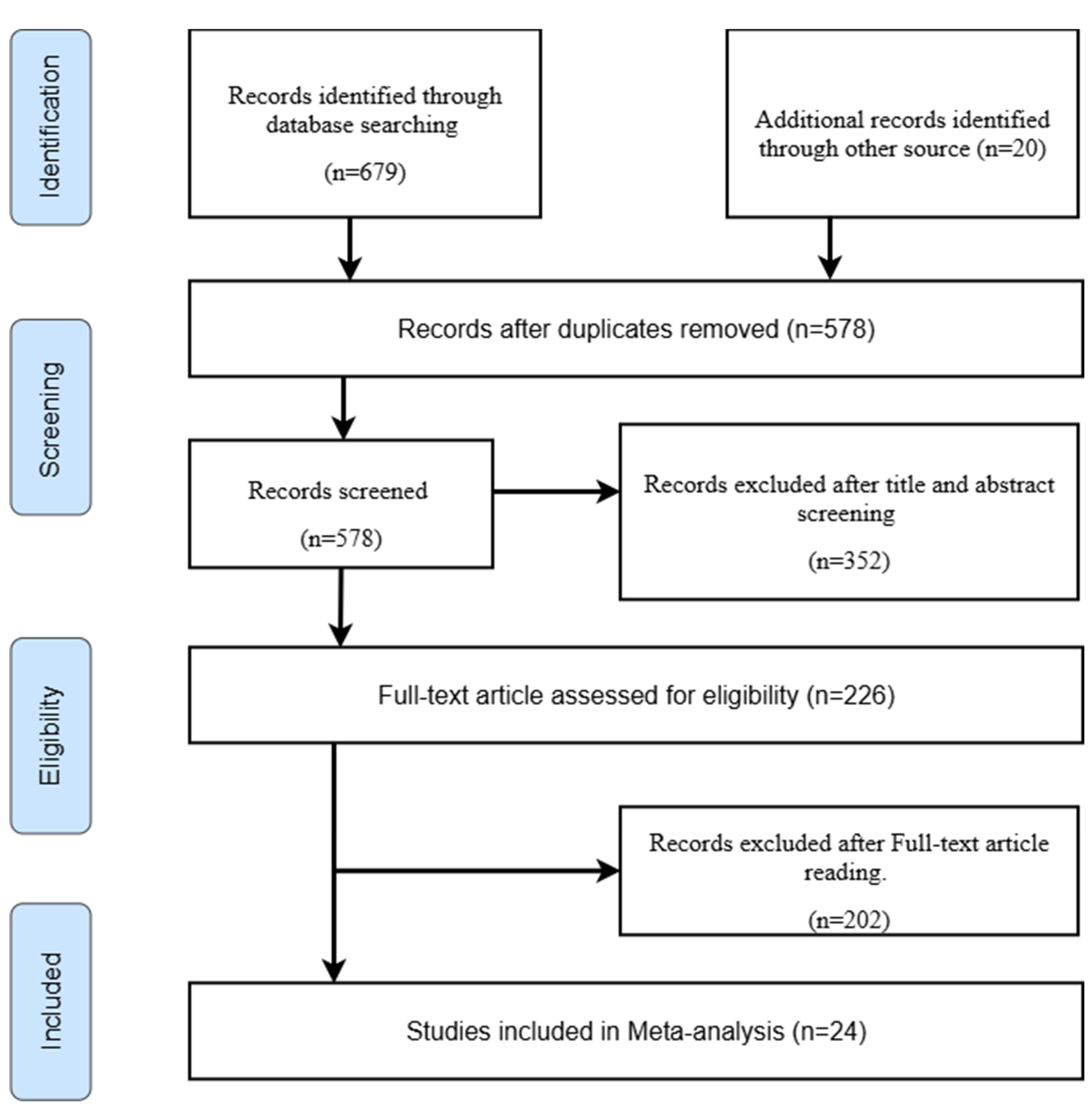
| Bibliographical Database | Initial Search Results | Selected Papers |
|---|---|---|
| IEEE Xplorer | 86 | 2 |
| Science Direct | 112 | 4 |
| Wiley Online | 83 | 1 |
| Springer | 97 | 1 |
| Google Scholar | 66 | 2 |
| Taylors and Francis | 56 | 1 |
| MDPI | 101 | 8 |
| ProQuest | 36 | 1 |
| PubMed | 42 | 4 |
| Snowballing | 20 | 0 |
| Total | 699 | 24 |
2.3. Articles Selection Criteria
2.4. Screening Process and Results
2.5. Quality Assessment
2.6. Data Extraction and Synthesis
3. Findings and Discussions
3.1. What Are the Current Applications of AI in Health Management Within the Kingdom of Saudi Arabia, and How Have These Applications Impacted Healthcare Delivery and Patient Outcomes? (RQ1)
3.1.1. Medical Imaging and Diagnosis
3.1.2. AI-Powered Virtual Health Assistants and Chatbots
3.1.3. Predictive Analysis and Patient Care
3.1.4. Remote Monitoring and Telemedicine
3.2. How Does the Integration of AI in Health Management Align with the Saudi Vision 2030 Goals, Particularly in Terms of Improving Healthcare Services and Achieving Sustainable Development? (RQ2)
3.2.1. Measurable Impact of AI on Vision 2030 Goals
3.2.2. Interdisciplinary Integration of AI in Healthcare: Complementary Roles, Overlaps, and Sustainability Implications
3.3. What Are the Ethical and Regulatory Considerations Associated with the Use of AI in Health Management in the Kingdom of Saudi Arabia, and How Are These Considerations Being Managed? (RQ3)
3.3.1. Ethical Considerations
3.3.2. Regulatory Considerations
3.3.3. Management of Ethical and Regulatory Considerations
3.4. What Are the Key Performance Metrics Used to Evaluate the Effectiveness of Artificial Intelligence (AI) in Enhancing Healthcare Management in the Kingdom of Saudi Arabia? (RQ4)
3.4.1. Diagnostic Accuracy and Precision
3.4.2. Operational Efficiency and Resource Utilisation
3.4.3. Patient Outcomes and Satisfaction
3.4.4. System Responsiveness and Innovation
3.4.5. Financial and Economic Impact
3.4.6. Human Capital Development and Workforce Efficiency
3.5. What Are the Challenges and Barriers to the Adoption and Implementation of AI Technologies in Health Management in the Kingdom of Saudi Arabia, and How Can These Challenges Be Addressed? (RQ5)
3.5.1. Data Privacy and Security Issue
3.5.2. Insufficient Skilled Workforce
3.5.3. Implementation Cost
3.5.4. Resistance to Change
3.5.5. Regulatory and Ethical Challenges
3.5.6. Algorithmic Bias and Local Relevance
3.5.7. Infrastructure and Technological Inefficiencies
4. Potential Future Directions for AI Research and Development Within the Saudi Healthcare System
4.1. Drug Discovery and Development
4.2. Healthcare Workforce Optimisation
4.3. Health Data Management and Security
4.4. Public Health and Epidemiology
4.5. AI Ethics and Governance
4.6. AI in Chronic Disease Management
4.7. Advancements in AI Technology
5. Limitations of the Study
6. Conclusions and Recommendations
Supplementary Materials
Author Contributions
Funding
Data Availability Statement
Conflicts of Interest
References
- Al Khashan, H.; Abogazalah, F.; Alomary, S.; Nahhas, M.; Alwadey, A.; Al-Khudhair, B.; Alamri, F.; Aleisa, N.; Mahmoud, N.; Hassanein, M. Primary health care reform in Saudi Arabia: Progress, challenges and prospects. East. Mediterr. Health J. 2021, 27, 1016–1026. [Google Scholar] [CrossRef]
- Al Yami, S.M.A.; Alyami, A.H.K.; Algobry, B.Y.; Shabeh, H.A.; Shaibah, R.A.; Hamaim, M.A.B.; Alyami, M.S.H.; Al Mreah, H.G.M.; Al Hattab, H.M.H.; Al Yami, S.M.A. Challenges and Opportunities in Healthcare Delivery in Saudi Arabia. J. Int. Crisis Risk Commun. Res. 2024, 7, 1907. [Google Scholar]
- Mani, Z.A.; Goniewicz, K. Transforming healthcare in Saudi Arabia: A comprehensive evaluation of vision 2030’s impact. Sustainability 2024, 16, 3277. [Google Scholar] [CrossRef]
- Brindley, C. Health Inequalities, Healthcare Demand and Waiting Times. Doctoral Thesis, Erasmus University Rotterdam, Rotterdam, The Netherlands, 2024. [Google Scholar]
- Le, D.; Quach, S.; Thaichon, P. Introduction to artificial intelligence (AI). In Artificial Intelligence for Marketing Management; Routledge: London, UK, 2022. [Google Scholar]
- Alhazmi, A.; Mahmud, R.; Idris, N.; Abo, M.E.M.; Eke, C. A systematic literature review of hate speech identification on Arabic Twitter data: Research challenges and future directions. PeerJ Comput. Sci. 2024, 10, e1966. [Google Scholar] [CrossRef] [PubMed]
- Alhazmi, A.; Mahmud, R.; Idris, N.; Mohamed Abo, M.E.; Eke, C.I. Code-mixing unveiled: Enhancing the hate speech detection in Arabic dialect tweets using machine learning models. PLoS ONE 2024, 19, e0305657. [Google Scholar] [CrossRef] [PubMed]
- Eke, C.I. Multi-Feature Fusion Framework for Automatic Sarcasm Identification in Twitter Data. Ph.D. Thesis, University of Malaya, Kuala Lumpur, Malaysia, 2021. [Google Scholar]
- Al-Shamayleh, A.S.; Adwan, O.; Alsharaiah, M.A.; Hussein, A.H.; Kharma, Q.M.; Eke, C.I. A comprehensive literature review on image captioning methods and metrics based on deep learning technique. Multimed. Tools Appl. 2024, 83, 34219–34268. [Google Scholar] [CrossRef]
- Chinnaiyan, B.; Balasubaramanian, S.; Jeyabalu, M.; Warrier, G.S. AI Applications–Computer Vision and Natural Language Processing. In Model Optimization Methods for Efficient and Edge AI: Federated Learning Architectures, Frameworks and Applications; Wiley: Phoenix, AZ, USA, 2025; pp. 25–41. [Google Scholar]
- Eke, C.; Norman, A.A.; Shuib, L.; Long, Z.A. Random forest-based classifier for automatic sarcasm classification on twitter data using multiple features. J. Inf. Syst. Digit. Technol. 2022, 4, 125–145. [Google Scholar] [CrossRef]
- Jiang, F.; Jiang, Y.; Zhi, H.; Dong, Y.; Li, H.; Ma, S.; Wang, Y.; Dong, Q.; Shen, H.; Wang, Y. Artificial intelligence in healthcare: Past, present and future. Stroke Vasc. Neurol. 2017, 2, 230–243. [Google Scholar] [CrossRef]
- Topol, E.J. High-performance medicine: The convergence of human and artificial intelligence. Nat. Med. 2019, 25, 44–56. [Google Scholar] [CrossRef]
- Eke, C.I.; Shuib, L. The role of explainability and transparency in fostering trust in AI healthcare systems: A systematic literature review, open issues and potential solutions. Neural Comput. Appl. 2025, 37, 1999–2034. [Google Scholar] [CrossRef]
- Suleiman, A.K.; Ming, L.C. Transforming healthcare: Saudi Arabia’s vision 2030 healthcare model. J. Pharm. Policy Pract. 2025, 18, 2449051. [Google Scholar] [CrossRef] [PubMed]
- Pasumarti, S.S.R.; El Hajj, C. AI for Sustainable Development: MENA Strategies. In AI in the Middle East for Growth and Business: A Transformative Force; Springer: Cham, Switzerland, 2025; pp. 43–60. [Google Scholar]
- Almalki, M.; FitzGerald, G.; Clark, M. Health care system in Saudi Arabia: An overview. East. Mediterr. Health J. 2011, 17, 784–793. [Google Scholar] [CrossRef] [PubMed]
- Alotaibi, S.F.; Al-khuraym, A.M.A.; Al-Shehri, K.M.A.; Al Fuhayd, J.H.J.; Alotaibi, A.A.; Alrabiah, H.A.A.; Buges, R.A.; Alghahtani, M.S.; Alhuwaykim, Z.A.E.; Alsweed, F.J.H. Health Informatics in Saudi Arabia: Transforming Patient Care through Technology. J. Int. Crisis Risk Commun. Res. 2024, 7, 3044. [Google Scholar]
- Eldesoky, H.A.M.; AlThubaity, D.; Shalby, A.Y.M.; Mohammed, F.A. Solicitude toward artificial intelligence among health care providers and its relation to their patient’s safety culture in Saudi Arabia. BMC Health Serv. Res. 2025, 25, 889. [Google Scholar] [CrossRef]
- Barakat, A.A.; Mobarak, O.; Javaid, H.A.; Awad, M.R.; Hamweyah, K.; Ouban, A.; Al-Hazzaa, S.A. The application of artificial intelligence in diabetic retinopathy screening: A Saudi Arabian perspective. Front. Med. 2023, 10, 1303300. [Google Scholar] [CrossRef]
- Esteva, A.; Kuprel, B.; Novoa, R.A.; Ko, J.; Swetter, S.M.; Blau, H.M.; Thrun, S. Dermatologist-level classification of skin cancer with deep neural networks. Nature 2017, 542, 115–118. [Google Scholar] [CrossRef]
- Shen, D.; Wu, G.; Suk, H.-I. Deep learning in medical image analysis. Annu. Rev. Biomed. Eng. 2017, 19, 221–248. [Google Scholar] [CrossRef]
- Xing, Z.; Ma, G.; Wang, L.; Yang, L.; Guo, X.; Chen, S. Towards visual interaction: Hand segmentation by combining 3D graph deep learning and laser point cloud for intelligent rehabilitation. IEEE Internet Things J. 2025, 12, 21328–21338. [Google Scholar] [CrossRef]
- Xing, Z.; Meng, Z.; Zheng, G.; Yang, L.; Guo, X.; Tan, L.; Jiang, Y. Human-computer interactive rehabilitation: A 3D graph deep learning method for non-contact gesture recognition in post-epidemic and aging societies. Measurement 2025, 257, 118794. [Google Scholar] [CrossRef]
- Almansour, M.M.; Shaman Al-mansour, H.M.; Almansour, F.H.H.; Saleh Al-Yami, H.H.; Almansour, H.H.H.; Hennan Almansour, S.H.; Saleh Almansour, S.H.; Hassin Almansour, M.H.; Saleh AL Hannan, H.H.; Ali Alshaman, F.N.; et al. The Role of Health Technology in Improving Healthcare Services in Saudi Arabia. J. Int. Crisis Risk Commun. Res. 2024, 7, 812–831. [Google Scholar]
- Al-Jehani, N.B.; Hawsawi, Z.A.; Radwan, N.; Farouk, M. Development of artificial intelligence techniques in Saudi Arabia: The impact on COVID-19 pandemic. Literature review. J. Eng. Sci. Technol. 2021, 16, 4530–4547. [Google Scholar]
- Kitchenham, B.; Charters, S. Guidelines for performing systematic literature reviews in software engineering. Inf. Softw. Technol. 2007, 1, 57. [Google Scholar]
- Kitchenham, B.; Brereton, P. A systematic review of systematic review process research in software engineering. Inf. Softw. Technol. 2013, 55, 2049–2075. [Google Scholar] [CrossRef]
- Papamitsiou, Z.; Economides, A.A. Learning analytics and educational data mining in practice: A systematic literature review of empirical evidence. J. Educ. Technol. Soc. 2014, 17, 49–64. [Google Scholar]
- Taylan, O.; Alkabaa, A.S.; Alqabbaa, H.S.; Pamukçu, E.; Leiva, V. Early prediction in classification of cardiovascular diseases with machine learning, neuro-fuzzy and statistical methods. Biology 2023, 12, 117. [Google Scholar] [CrossRef] [PubMed]
- Rathee, G.; Garg, S.; Kaddoum, G.; Alzanin, S.M.; Hassan, M.M. Enhanced healthcare using generative AI for disabled people in Saudi Arabia. Alex. Eng. J. 2025, 124, 265–272. [Google Scholar] [CrossRef]
- AlMuhaideb, S.; Alswailem, O.; Alsubaie, N.; Ferwana, I.; Alnajem, A. Prediction of hospital no-show appointments through artificial intelligence algorithms. Ann. Saudi Med. 2019, 39, 373–381. [Google Scholar] [CrossRef]
- Dahan, F.; Alroobaea, R.; Alghamdi, W.; Hajjej, F.; Raahemifar, K. A smart IoMT based architecture for E-healthcare patient monitoring system using artificial intelligence algorithms. Front. Physiol. 2023, 14, 1125952. [Google Scholar]
- Colucci, E.; De Ruvo, V.; Lingua, A.; Matrone, F.; Rizzo, G. HBIM-GIS integration: From IFC to cityGML standard for damaged cultural heritage in a multiscale 3D GIS. Appl. Sci. 2020, 10, 1356. [Google Scholar] [CrossRef]
- Almutairi, E.S.; Abbod, M.F. Machine learning methods for diabetes prevalence classification in Saudi Arabia. Modelling 2023, 4, 37–55. [Google Scholar] [CrossRef]
- Elhazmi, A.; Al-Omari, A.; Sallam, H.; Mufti, H.N.; Rabie, A.A.; Alshahrani, M.; Mady, A.; Alghamdi, A.; Altalaq, A.; Azzam, M.H. Machine learning decision tree algorithm role for predicting mortality in critically ill adult COVID-19 patients admitted to the ICU. J. Infect. Public Health 2022, 15, 826–834. [Google Scholar] [CrossRef]
- Alanazi, A.; Aldakhil, L.; Aldhoayan, M.; Aldosari, B. Machine learning for early prediction of sepsis in Intensive Care Unit (ICU) Patients. Medicina 2023, 59, 1276. [Google Scholar] [CrossRef]
- Alnaim, A.K.; Alwakeel, A.M. Machine-learning-based IoT–edge computing healthcare solutions. Electronics 2023, 12, 1027. [Google Scholar] [CrossRef]
- Qaffas, A.A.; Hoque, R.; Almazmomi, N. The internet of things and big data analytics for chronic disease monitoring in Saudi Arabia. Telemed. e-Health 2021, 27, 74–81. [Google Scholar] [CrossRef] [PubMed]
- Alshammari, T.; Ramadan, R.A.; Ahmad, A. Temporal variations dataset for indoor environmental parameters in Northern Saudi Arabia. Appl. Sci. 2023, 13, 7326. [Google Scholar] [CrossRef]
- Zrieq, R.; Kamel, S.; Boubaker, S.; Algahtani, F.D.; Alzain, M.A.; Alshammari, F.; Alshammari, F.S.; Aldhmadi, B.K.; Atique, S.; Al-Najjar, M.A. Time-series analysis and healthcare implications of COVID-19 pandemic in Saudi Arabia. Healthcare 2022, 10, 1874. [Google Scholar] [CrossRef]
- Alharbi, M.T.; Almutiq, M.M. Prediction of dental implants using machine learning algorithms. J. Healthc. Eng. 2022, 2022, 7307675. [Google Scholar] [CrossRef]
- Daghistani, T.A.; Elshawi, R.; Sakr, S.; Ahmed, A.M.; Al-Thwayee, A.; Al-Mallah, M.H. Predictors of in-hospital length of stay among cardiac patients: A machine learning approach. Int. J. Cardiol. 2019, 288, 140–147. [Google Scholar] [CrossRef]
- Daghistani, T.; Alshammari, R. Comparison of statistical logistic regression and random forest machine learning techniques in predicting diabetes. J. Adv. Inf. Technol. 2020, 11, 78–83. [Google Scholar] [CrossRef]
- Alkattan, A.; Al-Zeer, A.; Alsaawi, F.; Alyahya, A.; Alnasser, R.; Alsarhan, R.; Almusawi, M.; Alabdulaali, D.; Mahmoud, N.; Al-Jafar, R. The utility of a machine learning model in identifying people at high risk of type 2 diabetes mellitus. Expert Rev. Endocrinol. Metab. 2024, 19, 513–522. [Google Scholar] [CrossRef]
- Ragab, M.; Kateb, F.; Al-Rabia, M.W.; Hamed, D.; Althaqafi, T.; Al-Ghamdi, A.S.A.-M. A machine learning approach for monitoring and classifying healthcare data—A case of emergency department of KSA hospitals. Int. J. Environ. Res. Public Health 2023, 20, 4794. [Google Scholar] [CrossRef] [PubMed]
- Alsulami, N.; Almasre, M.; Sarhan, S.; Alsaggaf, W. Deep Learning Models for Type 2 Diabetes Detection in Saudi Arabia. J. Pioneer. Med. Sci. 2024, 13, 60–72. [Google Scholar] [CrossRef]
- Ahmad, S.; Khan, S.; AlAjmi, M.F.; Dutta, A.K.; Dang, L.M.; Joshi, G.P.; Moon, H. Deep Learning Enabled Disease Diagnosis for Secure Internet of Medical Things. Comput. Mater. Contin. 2022, 73, 965–979. [Google Scholar] [CrossRef]
- Mengash, H.A.; Alharbi, L.A.; Alotaibi, S.S.; AlMuhaideb, S.; Nemri, N.; Alnfiai, M.M.; Marzouk, R.; Salama, A.S.; Duhayyim, M. Deep learning enabled intelligent healthcare management system in smart cities environment. Comput. Mater. Contin. 2023, 74, 4483–4500. [Google Scholar] [CrossRef]
- Alruwaili, F.F. Artificial intelligence and multi agent based distributed ledger system for better privacy and security of electronic healthcare records. PeerJ Comput. Sci. 2020, 6, e323. [Google Scholar] [CrossRef]
- El-Sherif, D.M.; Abouzid, M.; Elzarif, M.T.; Ahmed, A.A.; Albakri, A.; Alshehri, M.M. Telehealth and artificial intelligence insights into healthcare during the COVID-19 pandemic. Healthcare 2022, 10, 385. [Google Scholar] [CrossRef]
- Amin, R.; Al Ghamdi, M.A.; Almotiri, S.H.; Alruily, M. Healthcare techniques through deep learning: Issues, challenges and opportunities. IEEE Access 2021, 9, 98523–98541. [Google Scholar] [CrossRef]
- Alkomah, B. Abuse Detection in Medical Claims Using NLP and Deep Learning Techniques. Master’s Thesis, University of Idaho, Moscow, ID, USA, 2022. [Google Scholar]
- Canzone, A.; Belmonte, G.; Patti, A.; Vicari, D.S.S.; Rapisarda, F.; Giustino, V.; Drid, P.; Bianco, A. The multiple uses of artificial intelligence in exercise programs: A narrative review. Front. Public Health 2025, 13, 1510801. [Google Scholar] [CrossRef]
- Tsuneki, M. Deep learning models in medical image analysis. J. Oral Biosci. 2022, 64, 312–320. [Google Scholar] [CrossRef]
- Perri-Moore, S.; Kapsandoy, S.; Doyon, K.; Hill, B.; Archer, M.; Shane-McWhorter, L.; Bray, B.E.; Zeng-Treitler, Q. Automated alerts and reminders targeting patients: A review of the literature. Patient Educ. Couns. 2016, 99, 953–959. [Google Scholar] [CrossRef]
- Radionova, N.; Ög, E.; Wetzel, A.-J.; Rieger, M.A.; Preiser, C. Impacts of symptom checkers for laypersons’ self-diagnosis on physicians in primary care: Scoping review. J. Med. Internet Res. 2023, 25, e39219. [Google Scholar] [CrossRef]
- Fischer, G.S.; da Rosa Righi, R.; de Oliveira Ramos, G.; da Costa, C.A.; Rodrigues, J.J. ElHealth: Using Internet of Things and data prediction for elastic management of human resources in smart hospitals. Eng. Appl. Artif. Intell. 2020, 87, 103285. [Google Scholar] [CrossRef]
- Amjad, A.; Kordel, P.; Fernandes, G. A review on innovation in healthcare sector (telehealth) through artificial intelligence. Sustainability 2023, 15, 6655. [Google Scholar] [CrossRef]
- Alfahad, A.H.; Alabbas, Y.S.; ALabbas, H.S.M.; Abukhashbah, T.H.; Alabdali, A.A.; Alfatieh, Q.M.H.; Bashawri, E.A.; Hadidi, H.T.H.; Junaid, R.M.A.; Alhazmi, K.M.A. Evaluating the Impact of Saudi Vision 2030 on Healthcare Investment: A Comprehensive Review of Progress and Future Directions. J. Ecohumanism 2024, 3, 870–880. [Google Scholar] [CrossRef]
- Alomari, A.S.; Alomari, A.S.S.; Alsuhaymi, A.M.; Alghamdi, A.M.A.; Alomari, A.S.A.; Al Zahrani, M.M.A.; Alzhrani, K.S.M.; Alomari, A.S.M. Advancement of Telehealth Services in Saudi Arabia: A Comprehensive Review. J. Int. Crisis Risk Commun. Res. 2024, 7, 855–863. [Google Scholar]
- Sim, J.-A.; Huang, X.; Horan, M.R.; Stewart, C.M.; Robison, L.L.; Hudson, M.M.; Baker, J.N.; Huang, I.-C. Natural language processing with machine learning methods to analyze unstructured patient-reported outcomes derived from electronic health records: A systematic review. Artif. Intell. Med. 2023, 146, 102701. [Google Scholar] [CrossRef]
- Sharma, A.; Kumar, A. NLP in Medicine: Enhancing Diagnostics and Patient Care. In Transformative Natural Language Processing: Bridging Ambiguity in Healthcare, Legal, and Financial Applications; Springer: Cham, Switzerland, 2025; pp. 23–50. [Google Scholar]
- Khalate, P.; Gite, S.; Pradhan, B.; Lee, C.-W. Advancements and gaps in natural language processing and machine learning applications in healthcare: A comprehensive review of electronic medical records and medical imaging. Front. Phys. 2024, 12, 1445204. [Google Scholar] [CrossRef]
- Fan, Z.; Yan, Z.; Wen, S. Deep learning and artificial intelligence in sustainability: A review of SDGs, renewable energy, and environmental health. Sustainability 2023, 15, 13493. [Google Scholar] [CrossRef]
- Alhazmi, A.; Maswadi, K.; Eke, C.I. A Systematic Review of Advances in Deep Learning Architectures for Efficient and Sustainable Photovoltaic Solar Tracking: Research Challenges and Future Directions. Sustainability 2025, 17, 9625. [Google Scholar] [CrossRef]
- Oyeniyi, J.; Oluwaseyi, P. Emerging trends in AI-powered medical imaging: Enhancing diagnostic accuracy and treatment decisions. Int. J. Enhanc. Res. Sci. Technol. Eng. 2024, 13, 81–94. [Google Scholar]
- Chau, M.; Rahman, M.; Debnath, T. From black box to clarity: Strategies for effective AI informed consent in healthcare. Artif. Intell. Med. 2025, 167, 103169. [Google Scholar] [CrossRef]
- Tzeng, I.-S.; Hsieh, P.-C.; Su, W.-L.; Hsieh, T.-H.; Chang, S.-C. Artificial Intelligence-assisted chest X-ray for the diagnosis of COVID-19: A systematic review and meta-analysis. Diagnostics 2023, 13, 584. [Google Scholar] [CrossRef] [PubMed]
- Muafa, A.M.; Al-Obadi, S.H.; Al-Saleem, N.A.I.; Taweili, A.A.; Al-Amri, A.G. The impact of artificial intelligence applications on the digital transformation of healthcare delivery in Riyadh, Saudi Arabia (opportunities and challenges in alignment with vision 2030). Ajrsp 2024, 5, 61–102. [Google Scholar] [CrossRef]
- Singh, R.P.; Hom, G.L.; Abramoff, M.D.; Campbell, J.P.; Chiang, M.F. Current challenges and barriers to real-world artificial intelligence adoption for the healthcare system, provider, and the patient. Transl. Vis. Sci. Technol. 2020, 9, 45. [Google Scholar] [CrossRef] [PubMed]
- Alkhamsi, N.N.; Alqahtani, S.S. Compliance Framework for Personal Data Protection Law Standards. Int. J. Adv. Comput. Sci. Appl. 2024, 15, 512. [Google Scholar] [CrossRef]
- Holland, S.; Cawthra, J.; Schloemer, T.; Schröder-Bäck, P. Trust and the acquisition and use of public health information. Health Care Anal. 2022, 30, 1–17. [Google Scholar] [CrossRef]
- Padmanaban, H. Privacy-preserving architectures for AI/ML applications: Methods, balances, and illustrations. J. Artif. Intell. Gen. Sci. (JAIGS) 2024, 3, 235–245. [Google Scholar]
- Shafik, W.; Kalinaki, K.; Fahim, K.E.; Adam, M. Safeguarding data privacy and security in federated learning systems. In Federated Deep Learning for Healthcare; CRC Press: Boca Raton, FL, USA, 2024; pp. 170–190. [Google Scholar]
- Ahmad, Z.; Rahim, S.; Zubair, M.; Abdul-Ghafar, J. Artificial intelligence (AI) in medicine, current applications and future role with special emphasis on its potential and promise in pathology: Present and future impact, obstacles including costs and acceptance among pathologists, practical and philosophical considerations. A comprehensive review. Diagn. Pathol. 2021, 16, 24. [Google Scholar] [CrossRef]
- Esmaeilzadeh, P. Challenges and strategies for wide-scale artificial intelligence (AI) deployment in healthcare practices: A perspective for healthcare organizations. Artif. Intell. Med. 2024, 151, 102861. [Google Scholar] [CrossRef]
- El-Gazar, H.E.; Abdelhafez, S.; Ali, A.M.; Shawer, M.; Alharbi, T.A.F.; Zoromba, M.A. Are nurses and patients willing to work with service robots in healthcare? A mixed-methods study. BMC Nurs. 2024, 23, 718. [Google Scholar] [CrossRef]
- Satwekar, A.; Volpentesta, T.; Spagnoletti, P.; Rossi, M. An orchestration framework for digital innovation: Lessons from the healthcare industry. IEEE Trans. Eng. Manag. 2022, 70, 2465–2479. [Google Scholar] [CrossRef]
- Joshi, S. E-supply chain collaboration and integration: Implementation issues and challenges. In E-Logistics and e-Supply Chain Management: Applications for Evolving Business; IGI Global Scientific Publishing: Hershey, PA, USA, 2013; pp. 9–26. [Google Scholar]
- Akhtar, M.; Kumar, M.; Nayyar, A. Towards Ethical and Socially Responsible Explainable AI; Springer: Cham, Switzerland, 2024. [Google Scholar]
- Bendary, M.G.; Rajadurai, J. Emerging Technologies and Public Innovation in the Saudi Public Sector: An analysis of Adoption and challenges amidst Vision 2030. Innov. J. 2024, 29, 1–42. [Google Scholar]
- Aminizadeh, S.; Heidari, A.; Dehghan, M.; Toumaj, S.; Rezaei, M.; Navimipour, N.J.; Stroppa, F.; Unal, M. Opportunities and challenges of artificial intelligence and distributed systems to improve the quality of healthcare service. Artif. Intell. Med. 2024, 149, 102779. [Google Scholar] [CrossRef] [PubMed]
- Tiwari, P.C.; Pal, R.; Chaudhary, M.J.; Nath, R. Artificial intelligence revolutionizing drug development: Exploring opportunities and challenges. Drug Dev. Res. 2023, 84, 1652–1663. [Google Scholar] [CrossRef]
- Harrer, S.; Shah, P.; Antony, B.; Hu, J. Artificial intelligence for clinical trial design. Trends Pharmacol. Sci. 2019, 40, 577–591. [Google Scholar] [CrossRef]
- Wong, F.; de la Fuente-Nunez, C.; Collins, J.J. Leveraging artificial intelligence in the fight against infectious diseases. Science 2023, 381, 164–170. [Google Scholar] [CrossRef]
- Chawda, S.G.; Fatima, H. Revolutionizing Healthcare: The Power and Potential Of AI Enablement. J. Nonlinear Anal. Optim. 2023, 14, 549–559. [Google Scholar]
- Baron, H.; Aguilar, R.; Bustos, C.; Ferreira, L.; Sharma, B.P.; Méndez, D. Developing AI-Powered Clinical Decision Support Tools for the Real-Time Management of Upper Gastrointestinal Bleeding. TheSciConsortium Publ. 2025, 5, 1–14. [Google Scholar]
- Alanazi, S.D.; Alanazi, F.M.L.; Alateeq, S.S.S.; Alharbi, A.S.; Alghufaili, R.S. The Implications of Artificial Intelligence on Healthcare Data and Information Management: Ensuring Patient Privacy and Data Security. Saudi J. Med. 2024, 9, 159–162. [Google Scholar]
- Alwakeel, M.M. AI-Assisted Real-Time Monitoring of Infectious Diseases in Urban Areas. Mathematics 2025, 13, 1911. [Google Scholar] [CrossRef]
- Etli, D.; Djurovic, A.; Lark, J. The Future of Personalized Healthcare: AI-Driven Wearables For Real-Time Health Monitoring And Predictive Analytics. Curr. Res. Health Sci. 2024, 2, 10–14. [Google Scholar]
- Samiappan, D. Deep learning for medical image segmentation. In Machine Learning for Medical Applications: Computer Vision, Image Processing, Disease Detection; Walter de Gruyter GmbH: Berlin, Germany, 2025; p. 51. [Google Scholar]
- Page, M.J.; McKenzie, J.E.; Bossuyt, P.M.; Boutron, I.; Hoffmann, T.C.; Mulrow, C.D.; Shamseer, L.; Tetzlaff, J.M.; Akl, E.A.; Brennan, S.E.; et al. The PRISMA 2020 statement: An updated guideline for reporting systematic reviews. BMJ 2021, 372, n71. [Google Scholar] [CrossRef]


| Inclusion Criteria (ICCs) | |
|---|---|
| ICC1 | Studies that focused on the role of AI in health management within the KSA. |
| ICC2 | Only published peer-reviewed journals, conference proceedings, and grey literature such as these were considered to ensure the quality of the selected publications. |
| ICC3 | The implementation of artificial intelligence within the healthcare sector should align with each study. |
| ICC4 | Considers only the primary study. |
| ICC5 | Considered and included only English language-based research. |
| ICC6 | Papers published from 2019 to 2025 |
| Exclusion Criteria (ECCs) | |
| ECC1 | Research unrelated to AI in healthcare was not conducted within the Saudi Arabian region. |
| ECC2 | Articles that cannot be accessed were excluded to improve the overall quality of the chosen articles. |
| ECC3 | Research that did not implement AI in healthcare |
| ECC4 | Non-recent papers, duplicate papers, and those not published in the English language were excluded. |
| ECC5 | Secondary study papers |
| ECC6 | Papers published before the year 2019 |
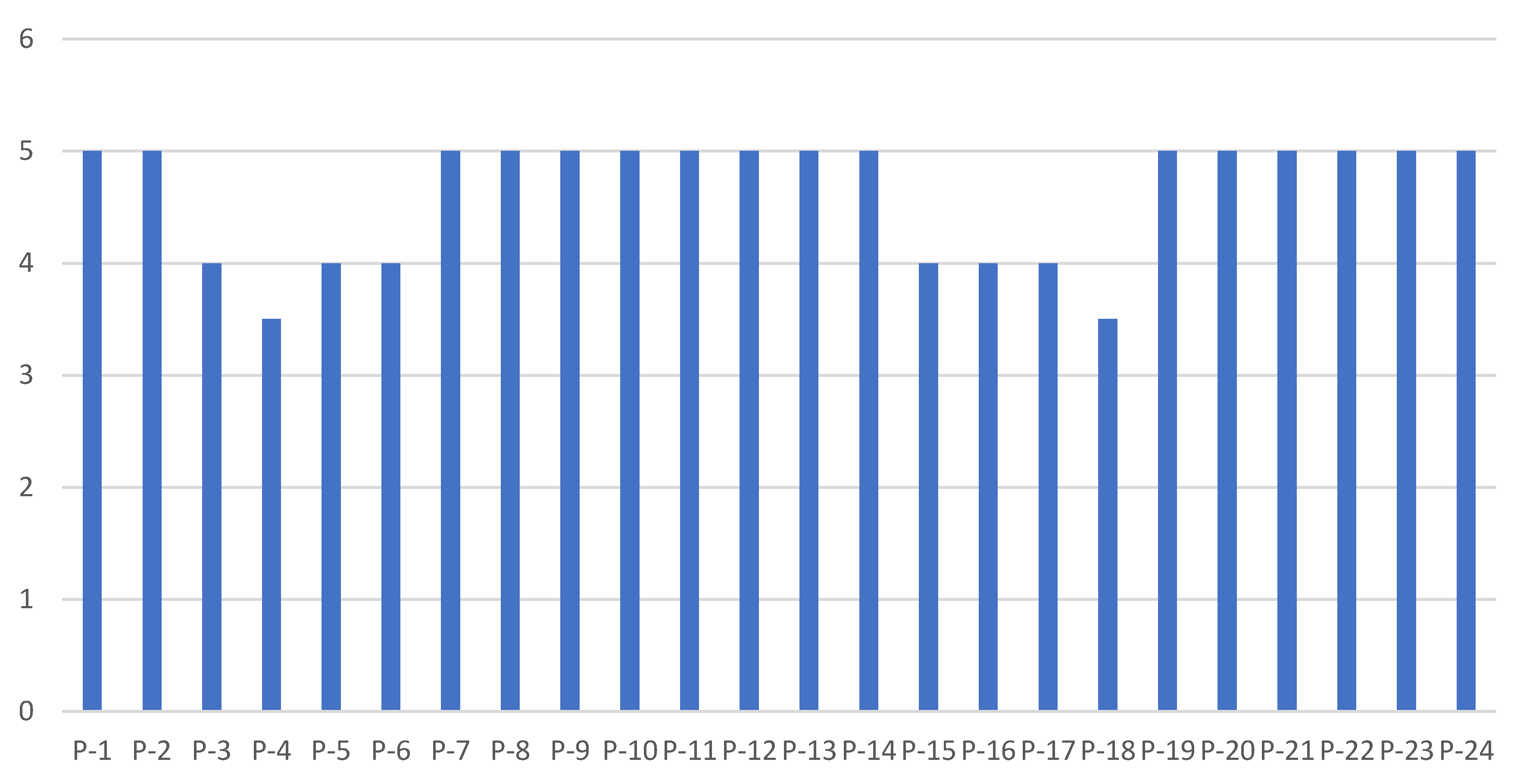
| S/N | QA Criteria |
|---|---|
| QA1 | Is the aim of the study explicitly articulated? |
| QA2 | Is the research method adequately reported? |
| QA3 | Are the findings relevant to the research questions? |
| QA4 | Does the detailed specification of AI employed in the selected studies? |
| QA5 | Were key performance metrics employed to evaluate the effectiveness of the AI application? |
| Paper ID | References | AI Application | Architecture | Inputs | Dataset | Metrics | Key Findings | Challenges | Database |
|---|---|---|---|---|---|---|---|---|---|
| P1 | Taylan, Alkabaa [30] | Disease prediction | Support vector regression, Multivariate Adaptive Regression Splines (MARS), M5 Tree | 17 input variables (e.g., gender, age, nationality, BMI, systolic blood pressure). | CVDs health data from KSA | RMSE, SD | SVR achieved a prediction accuracy of 91.95% for the training process. Outperformed other ML models in terms of accuracy and robustness. | Data Heterogeneity, small dataset, issue of model interpretability | Science Direct |
| P2 | Rathee, Garg [31] | Resource allocation | Hybrid Generative-AI framework: Reinforcement Learning from Human Feedback (RLHF) + Analytic Network Process (ANP) over a pre-trained language model and reward model | Images and text from mobile devices; user feedback; multi-criteria health factors | MNIST image set. Kaggle indoor object image. Custom Saudi disabled people dataset (demographics, disability type, etc.) | Accuracy, Precision, Recall, F1-score, Delay, Computation and Communication overhead | RLHF + ANP system achieves 98.8% accuracy with markedly lower delay (0.05 ms) and overhead versus CNN, LSTM, RNN, vanilla GAI; provides faster, more personalised, patient-centred services aligned with Vision 2030 | Noise in raw data; need for real-time adaptation and security; limited prior Saudi datasets; integration complexity of RLHF with ANP | Science Direct |
| P3 | AlMuhaideb, Alswailem [32] | Disease prediction, patient remote monitoring | JRip rule learner (separate-and-conquer) Hoeffding Tree/VFDT (stream decision tree) | 11 predictors: prior no-show rate, appointment location, specialty, registration type, age, day-of-week, slot description, region, time-slot, gender, nationality | 1,087,979 outpatient appts. (KFSHRC Riyadh) for 1 Jan–31 Dec 2014; 11.3% no-shows | JRip: Accuracy 76.4%, AUC 0.776 Hoeffding: Accuracy 77.1%, AUC 0.861; sensitivity, specificity also given | Prior no-show history strongest predictor (info gain 0.36). Models achieve acceptable–excellent discrimination; enable real-time flagging of high-risk slots for targeted interventions. | Single tertiary centre; only 1-year of data. Class imbalance handled by resampling. Generalizability not tested beyond the site. | PubMed |
| P4 | Dahan, Alroobaea [33] | Remote patient monitoring |
| Vital signs: heart rate, blood pressure, oxygen saturation, body temp, blood glucose; demographic and sensor data | 50 patients (ages 50–70) from Rajiv Gandhi Hospital, Chennai; 500 data records each; sensor-based data | Accuracy: 99.69% Recall: 98% Precision: 98% F1-score: 98.1% Computation Time: 0.81 min | HRGC model outperforms traditional classifiers (VGG16, AlexNet, GoogleNet, ANN) in accuracy, efficiency, and training time; an effective early alert system for patient monitoring | Small sample size; noise and missing values required extensive preprocessing; limited to one hospital; does not yet support video inputs as proposed for future work. | PubMed |
| P5 | Colucci, De Ruvo [34] | Therapy optimisation | Big data pipeline on Apache Spark 2.4.0 with 4 modules (collection, preprocessing, classification, validation)
| Arabic tweet text, geo location (bounding box KSA), health-related keywords (symptoms/diseases), tweet metadata | 18.9 million tweets collected Nov 2018–Sep 2019 (≈195 days) from Saudi Arabia | 1st level (related vs. unrelated) NB + Tri gram: Accuracy 78.2% LR + Tri gram: F1 best 2nd level (awareness vs. afflicted) LR + HashingTF: Accuracy 86.7%, F1 85.6% |
|
| MDPI |
| P6 | Almutairi and Abbod [35] | Disease prediction | Linear Discriminant (LD) SVM (linear, quadratic, cubic, Gaussian kernels) K NN (fine, weighted) Neural Network Pattern Recognition (2-layer feed-forward, SCG training) | 5 predictors: age, gender, smoking status, obesity (BMI ≥ 30), physical inactivity | National Saudi surveys 1999 2013; 1272 records (men and women ≥ 25 yrs). 840 train/432 test. Prevalence is discretised into 5 classes. Implemented with MATLAB R2022a Classification Learner. | Accuracy (primary); prediction speed and training time |
|
| MDPI |
| P7 | Elhazmi, Al-Omari [36] | Disease Prediction | Decision Tree (DT) (compared with logistic regression) |
| Prospective multicenter study 1468 adult ICU patients from 14 Saudi hospitals (Mar–Oct 2020) | Not explicitly stated (likely accuracy/AUC for model comparison) |
|
| Science Direct |
| P8 | Alanazi, Aldakhil [37] | Disease prediction | Survival analysis (Cox model), Logistic Regression, SMO (SVM), Naïve Bayes, JRip, KNN (via WEKA) | Vitals (HR, RR, Temp, SBP, SpO2), labs (lactic acid, blood sugar, WBC), time, gender | ICU data from KAMC, Riyadh, 2018 (n = 1182 ICU patients, 14+ years old) | Accuracy, Precision, Recall, F1, ROC, Confusion Matrix | Logistic regression showed the highest accuracy (89.19%), key predictors: temperature, lactic acid, and time. ML models are moderately successful, better at predicting non-sepsis than sepsis cases. | Class imbalance (few positive sepsis cases), limited attributes (no medications or CRP), single-centre data, moderate ROC values, and generalizability are limited. | MDPI |
| P9 | Alnaim and Alwakeel [38] | Therapy optimisation | IoT framework + Edge Computing + Cloud + Distributed Ledger + Hybrid Voting Classifier (XGBoost + Logistic Regression) | Sensor data (vitals, transactions), network traffic, edge node data | Simulated environment with edge nodes | Accuracy (up to 99.7%), TPS, throughput, and communication cost | A hybrid voting classifier achieved 99.7% accuracy in detecting DDoS attacks; privacy was preserved with AES, RSA, and Blowfish encryption; edge computing enhances response time and security; supports secure, scalable, and decentralised healthcare data analytics via edge-IoT integration. | High communication overhead with signcryption; potential for bottlenecks in computation; vulnerability to modern cryptographic attacks; real-time constraints not fully validated in live healthcare systems. | MDPI |
| P10 | Qaffas, Hoque [39] | Disease prediction | Four module framework: (1) IoT data collection via smart wristband and sensors; (2) HBase storage; (3) Hadoop/Apache Spark cluster for Map Reduce analytics; (4) Google Cloud (GCSql + Firebase) back end; ML algorithms: SVM and C4.5 decision tree | Vital sign streams (heart rate, BP) from wristband; user-entered risk factors (age, diabetes, kidney disease, sleep, stress, smoking, salt intake) | 140 participants; Saudi cohort; 20% training, 80% test | Accuracy, Precision, Recall SVM: 71.15% Acc.; Prec = 76.98%; Rec = 66.30% C4.5: 68.80% Acc.; Prec = 61.70%; Rec = 60.01% | Age and diabetes strongest predictors of hypertension. SVM outperformed C4.5. The framework demonstrates the potential of IoT + big data analytics for early chronic disease detection aligned with Saudi Vision 2030. | Small sample size, short training duration.
| PubMed |
| P11 | Alshammari, Ramadan [40] | Disease prediction, Therapy optimisation | Arduino-based IoT data acquisition pipeline: six sensors (DHT11/22 temp humidity, LDR light, barometric pressure and altitude), 5 min sampling; data stored as CSV; workflow: sensor integration, Arduino sketch serial/wireless transfer, storage and cleaning | Timestamp, light intensity, temperature (°C), humidity (%), pressure (Pa), altitude (m) | 31 daily files (July 2022) merged ⇒ 8910 records; indoor room in northern Saudi Arabia; public CSV dataset | Descriptive stats (mean, median, mode, SD, range, skewness, kurtosis); no ML model metrics |
|
| MDPI |
| P12 | Zrieq, Kamel [41] | Disease prediction | Two univariate time series models: (1) ARIMA (several orders, e.g., 1,0,7; 1,1,0; 0,0,9) and (2) Facebook Prophet ML approach; baseline “naïve” model for comparison | Daily counts of confirmed, recovered, and death cases (2 Mar 2020–22 Jun 2022) | Official Saudi Ministry of Health COVID-19 dashboard; > 2 years data | RMSE, MAE, R2 |
|
| MDPI |
| P13 | Alharbi and Almutiq [42] | Disease prediction |
| Survey-based patient factors: age, past dental crowns, level of oral care, food type, health insurance, comorbid diseases (6 variables; categorical states) | 107 completed questionnaires (Qassim, Saudi Arabia); split 70% train/30% test | Classification accuracy: BN 72.8%; RF 77.8%; AdaBoost 86.1%; Improved AdaBoost 91.7% | Improved AdaBoost markedly increased predictive accuracy; BN handles missing values; the model can assist dentists and managers in targeting patients for implant care | Small self-reported dataset; possible noise/outliers; privacy limits access to larger clinical records; algorithms (AdaBoost/RF) sensitive to data quality | Wiley Online Library |
| P14 | Daghistani, Elshawi [43] | Disease prediction | RF, ANN, SVM, BN | 21 top-ranked features, including: Demographics (age, gender), Vitals (HR, BP), Risk factors (diabetes, HTN, dyslipidemia, obesity, smoking), Labs (creatinine, HDL, EF), Diagnoses (CHF, ACS, AMI), Admission criteria (insurance, season, physician experience) | 16,414 cardiac admissions (12,769 unique patients) at King Abdulaziz Cardiac Center (Saudi Arabia), 2008–2016 |
| RF outperformed all others (80% accuracy, AUROC 0.94). Top predictors: HR, BP, age, and insurance status. The model can support bed/resource management. | Single-centre study limits generalizability, Model built without external validation, and Population skewed to sicker cases | Science Direct |
| P15 | Daghistani and Alshammari [44] | Disease prediction |
| 18 routinely collected risk factors:
| 66,325 adult patient records from Ministry of National Guard Health Affairs (KSA); HgbA1c ≥ 7% labelled diabetic (prevalence 64.5%) | RF: Precision 0.883, Recall 0.880, F score 0.876, AUROC 0.944 LR: Precision 0.692, Recall 0.703, F score 0.675, AUROC 0.708 | RF markedly outperformed LR across all metrics; AUROC 0.944 vs. 0.708. Demonstrates utility of ML over traditional statistics for diabetes risk identification. |
| PubMed |
| P16 | Alkattan, Al-Zeer [45] | Diagnosis, disease prediction | Compared six algorithms; Logistic Regression chosen (acc 81%, recall 76%). Others tested: Random Forest, Linear SVC, Decision Tree, Gradient Boosted Trees, Naïve Bayes | Age, gender, 30 ICD 10 coded risk factors (e.g., hypertension, dyslipidemia, obesity, CKD, heart failure, gestational diabetes, etc.) | Training: National Health Information Centre (Saudi Arabia) EMR; 6.7 M no diabetics + 688k diabetics (2022). External validation: 679 non-diabetic adults from 3 primary care centres (out of 3400 invited) | Internal: Accuracy 0.81, Recall 0.76, AROC 0.788. External: AROC 0.803 (95% CI 0.779–0.826); Sens 77.9%, Spec 75.1% at ≥0.5 cutoff; Youden 0.531 |
|
| Taylor & Francis |
| P17 | Ragab, Kateb [46] | Disease prediction | MLMDMC ED pipeline:
| Structured EHR data from KSA hospital EDs: demographics, CTAS triage level, LOS, clinical history, textual notes (converted to features) | Two public cardiac datasets used for validation: UCI Cleveland (n = 297) and Statlog Heart (n = 270); split 70/30 and 80/20 train–test | Accuracy, Precision, Recall, F1, MCC; learning curves (TR/VAL acc and loss) | The proposed model outperformed 9 baselines (SVM, DT, ELM, etc.); best accuracy = 91.87% (Statlog 80/20 split) and 88.91% (Cleveland). MCC up to 0.85. | Small public datasets (not actual Saudi ED data); only cardiac features; potential overfitting; real-time deployment not yet tested | MDPI |
| P18 | Alsulami, Almasre [47] | Disease prediction | Deep Neural Network (DNN); Auto encoder (AE); 1 D Convolutional Neural Network (CNN)—benchmarked against Decision Forest (DF) | 10 survey-based non-invasive attributes (region, age group, sex, BMI, waist size, physical activity, fruit/vegetable intake, hypertension treatment, family history, smoking, prior high blood glucose); second experiment uses the top 6 features | Saudi Dataset (SD) collected at King Abdulaziz University; 4896 subjects (990 high-risk, 3906 low risk); imbalanced and SMOTE balanced versions | Accuracy, Precision, Recall, F1 Score, AUC ROC | Case 1 (all 10 features): AE best (Acc = 81.12% imbalanced; 79.16% balanced). Case 2 (6 features): AE best on imbalanced (81.01%); DF best on balanced (82.10%). AE is consistently superior on imbalanced data. | Limited publicly available Saudi T2D data; class imbalance; CNN and DNN show low recall on imbalanced data; need larger, more diverse datasets, additional variables (e.g., genetics, diet); future work on data augmentation and transfer learning. | IEEE Access |
| P19 | Ahmad, Khan [48] | Disease prediction, Diagnosis, and therapy optimisation | GRU, CNN, | Medical data | Medical dataset | Sensitivity, Specificity, Accuracy, F1-score | Effective in reducing computational complexity and enhancing diagnosis accuracy | High computational requirements for deploying deep learning models on IoMT devices with limited resources | Springer |
| P20 | Mengash, Alharbi [49] | Disease prediction | GRU, AIDSS-CDDC | 303 CVD samples with 14 features | 303 CVD samples with 14 features | Sensitivity Specificity Accuracy F-score MCC Jaccard index | The proposed model demonstrated high classification accuracy (up to 98.35%) and efficiency in detecting and classifying CVD. | Ensuring the accuracy of non-invasive diagnostic techniques and balancing data privacy concerns with effective data utilisation. | Google Scholar |
| P21 | Alruwaili [50] | Resource allocation, | Intelligent multi agents, Digital Ledger technology (DLT) | EHR data. | EHR data. | Not applicable. | The integration of AI-based intelligent agents and blockchain significantly improves the security and privacy of EHR systems. | Complexity in implementing and scaling the integration of AI, multi-agent systems, and blockchain in existing EHR infrastructure | Google scholars |
| P22 | El-Sherif, Abouzid [51] | Disease prediction, remote patient monitoring | Various AI types: machine learning, deep learning, GeoAI, artificial neural networks, predictive models | Patient data (clinical symptoms, chest X-ray images, laboratory and clinical evidence, geotagged tweets, EHRs) | Multiple datasets: COVID-19 patient records (n = 51,500), chest radiographs (n = 3661), geotagged tweets, Google Flu Trends, EHRs | Accuracy, AUC (0.786 for emergency prediction model; AUC = 0.82 and accuracy = 84% for chest radiograph model; AUC range = 0.892–0.905 for symptom-based model) | AI improved prediction and monitoring of COVID-19; AI-assisted chest X-ray and symptom-based models showed high accuracy; telehealth expanded access to care and reduced exposure risks; AI supported diagnosis, prognosis, and outbreak prediction. | Privacy, security, data sharing challenges; lack of standardised regulations; technical, ethical, and organisational barriers; risk of misinterpretation; inequities in access to digital health | MDPI |
| P23 | Amin, Al Ghamdi [52] | Diagnosis, disease prediction | Various DL models: CNN, Deep CNN, ANN, RNN, SAE, Autoencoders, LSTM, Boltzmann Machines | Medical images (CT, MRI, X-ray), ECG/EEG signals, genomic data, EHR, physiological signals, speech/text data | NHANES, K-NHANES, GEO, TCGA, PhysioNet 2017, China Physiological Signal Challenge 2018, LIDC, CheXNeXt, multiple disease-specific datasets | Accuracy (up to 98.5% in heart disease), Sensitivity, Specificity, AUC, F1-score | DL models achieved strong performance in diagnosing Alzheimer’s, Parkinson’s, stroke, arrhythmia, asthma, COPD, pneumonia, influenza, and cancer | Challenges: data collection and quality, domain complexity, interpretability of DL models, limited annotated datasets, and integration into clinical practice | IEEE Access |
| P24 | Alkomah [53] | Disease prediction. | Rule-based approach with Named Entity Recognition (NER) using scispaCy; compared ICD-10 codes with predicted ICD-10 codes; models discussed include CRF, AL-CRF, Naive Bayes, Random Forest, KNN, GLM, GBM, Neural Networks | Medical claim data fields: Service_code, Services_Description, Diagnosis, Specialty, Temperature, Vitals, ICD-10 code | 334 real claim samples from a private insurance company (58 unique diseases, 35 ICD-10 codes); NER model trained on BC5CDR dataset (PubMed articles annotated with diseases and chemicals | Accuracy, Confusion Matrix, F1-score (reported rule-based accuracy = 0.20) | High suspicion of abuse detected: 266 out of 334 claims flagged; main issues were miswritten ICD-10 codes, overly general codes, or poorly written diagnoses | Limited/highly imbalanced dataset (only 0.3% fraud cases) Low accuracy of the rule-based approach Data availability and reliability issues Difficulty obtaining annotated medical claim data | University of Idaho (Thesis repository) |
Disclaimer/Publisher’s Note: The statements, opinions and data contained in all publications are solely those of the individual author(s) and contributor(s) and not of MDPI and/or the editor(s). MDPI and/or the editor(s) disclaim responsibility for any injury to people or property resulting from any ideas, methods, instructions or products referred to in the content. |
© 2026 by the authors. Licensee MDPI, Basel, Switzerland. This article is an open access article distributed under the terms and conditions of the Creative Commons Attribution (CC BY) license.
Share and Cite
Maswadi, K.; Alhazmi, A. Towards Sustainable Health Management in the Kingdom of Saudi Arabia: The Role of Artificial Intelligence—A Systematic Review, Challenges, and Future Directions. Sustainability 2026, 18, 905. https://doi.org/10.3390/su18020905
Maswadi K, Alhazmi A. Towards Sustainable Health Management in the Kingdom of Saudi Arabia: The Role of Artificial Intelligence—A Systematic Review, Challenges, and Future Directions. Sustainability. 2026; 18(2):905. https://doi.org/10.3390/su18020905
Chicago/Turabian StyleMaswadi, Kholoud, and Ali Alhazmi. 2026. "Towards Sustainable Health Management in the Kingdom of Saudi Arabia: The Role of Artificial Intelligence—A Systematic Review, Challenges, and Future Directions" Sustainability 18, no. 2: 905. https://doi.org/10.3390/su18020905
APA StyleMaswadi, K., & Alhazmi, A. (2026). Towards Sustainable Health Management in the Kingdom of Saudi Arabia: The Role of Artificial Intelligence—A Systematic Review, Challenges, and Future Directions. Sustainability, 18(2), 905. https://doi.org/10.3390/su18020905