1. Introduction
Global climate change has become one of the most critical challenges of the 21st century. According to the IPCC Sixth Assessment Report, global temperatures have risen by approximately 1.1 °C above pre-industrial levels, which leads to increased frequency of extreme weather events, sea-level rise, and ecosystem disruption, all of which profoundly impact human societies and natural systems [
1]. Urban and rural regions, especially coastal cities and rapidly urbanizing areas, concentrate populations, economic activities, and infrastructure, thereby facing heightened risks from compound disasters such as floods, heatwaves, and droughts [
2]. Projections indicate that by 2050, over one billion people worldwide may reside in high-risk coastal zones, an alarming figure that underscores the urgency of climate adaptation [
3]. In this context, equipping professionals with adaptive capacities through education has become a strategic priority for sustainable development globally [
4]. Education must not only transmit knowledge but also foster interdisciplinary thinking and practical competencies. At the same time, informal education is also an important means of guiding climate change and sustainable development [
5].
However, existing research has significant gaps in the field of climate change adaptation education: most of the literature focuses on macro-policy analysis or technical solutions, lacking systematic empirical exploration of educational innovation mechanisms, particularly in-depth research on how to cultivate urban and rural planning professionals through interdisciplinary alliances and practice-oriented teaching models. This gap limits the effective connection between educational practice and climate response needs and makes it difficult to provide replicable educational intervention models globally.
Located in the East Asian monsoon region with inherent geographical vulnerabilities, Taiwan initiated the “Climate Change Adaptation Education and Teaching Alliance Program.” This program leverages higher education as a platform to integrate multidisciplinary resources and develop a distinctive educational model aligned with the United Nations Sustainable Development Goals, particularly SDG 11. Through systematic educational interventions, it aims to enhance societal resilience [
6]. Taiwan’s experience not only supports local disaster risk reduction but also offers a transferable model for climate education worldwide, highlighting the central role of education in climate action and providing a viable pathway toward climate-resilient societies.
The core innovation of Taiwan’s Alliance lies in its systematic, cross-sector integration mechanism, which breaks down traditional disciplinary barriers and facilitates knowledge sharing and collaboration [
7]. Beyond developing specialized teaching materials, the program promotes inter-institutional cooperation, industry–government–academia linkages, and international exchanges through its network, and it forms a multi-layered educational ecosystem. For instance, the Southern Alliance involves 26 universities and colleges, including leading institutions such as National Cheng Kung University and National Sun Yat-sen University. It incorporates climate adaptation content into 57 courses across four key areas, such as land use, transportation systems, coastal management, and public health, engaging over ten thousand students. This alliance-based approach strengthens students’ practical skills through hands-on workshops, cross-campus exchanges, and industry site visits. Innovation is also evident in curriculum design, which integrates local cases, such as post-Morakot typhoon reconstruction, alongside international best practices, enabling students to connect theory with real-world applications [
8]. Furthermore, the Alliance emphasizes digital resource development, including online video lectures and interactive platforms, which enhance the accessibility and engagement of instruction [
9]. This model underscores the proactive role of higher education in addressing global challenges and offers insights for other regions on how education can drive social transformation. Through continuous iteration and evaluation, the Alliance ensures the relevance and effectiveness of its educational offerings, establishing itself as a notable example in global climate education.
Globally, especially in developing regions, urban and rural planning education has long been engineering-oriented [
10], with curricula heavily focused on physical spatial planning while lacking systematic integration of climate change adaptation. This gap limits graduates’ capacity to address complex environmental challenges [
11,
12]. Concrete manifestations of these issues include outdated curricula, as most institutions have yet to incorporate cutting-edge topics like climate risk assessment and resilient urban design into their core course offerings. Moreover, interdisciplinary collaboration remains weak, with planning disciplines often siloed from fields such as ecology and sociology [
13]. Practical training components are lacking, leaving hands-on instruction disconnected from authentic community needs. Furthermore, there is insufficient policy alignment, limiting the linkage between academic instruction and national climate response goals. These structural deficiencies stem from systemic problems, including uneven resource allocation and inadequate teacher training [
14]. Planning education can draw lessons from Taiwan’s experience to address these gaps through curriculum renewal, strengthened practical training, and deeper industry–education integration.
This article aims to provide an in-depth analysis of the operational mechanisms of Climate Change Adaptation Education and Teaching Alliance Program (Southern Region), distilling its practical experience to inform and inspire educational innovation for climate change adaptation worldwide. The study examines the Alliance’s organizational structure, teaching materials, and activity models, evaluates the outcomes of specific initiatives such as the SDG 11 workshops, summarizes the Taiwan experience, and proposes actionable pathways for enhancing urban and rural planning education globally. The findings are intended to offer practical insights for educational policymakers, instructors, and students, supporting the broader dissemination and deepening of climate adaptation education and ultimately cultivating a new generation of professionals equipped with climate-adaptive literacy. To clarify the research focus, this paper raises the following three key questions: (1) How do the policy-driven mechanism and networked governance structure of the Taiwan Climate Change Adaptation Education and Teaching Alliance work together to ensure the sustainability of educational innovation? (2) How do the modular courses and practical teaching materials developed by the alliance effectively improve students’ practical ability in climate adaptation through cross-disciplinary integration and project-based learning? (3) What are the key success factors and practical obstacles of this educational innovation model, and what replicable promotion paths can it provide for urban and rural planning education (especially in developing countries) worldwide?
2. Research Methods
This study employs a qualitative research paradigm, using a hybrid approach combining case studies and document analysis [
15] to conduct an in-depth investigation of the Taiwan Climate Change Adaptation Education and Teaching Alliance Program. This dual-method design aims to achieve triangulation and cross-verification, understanding this complex educational innovation practice from multiple perspectives (
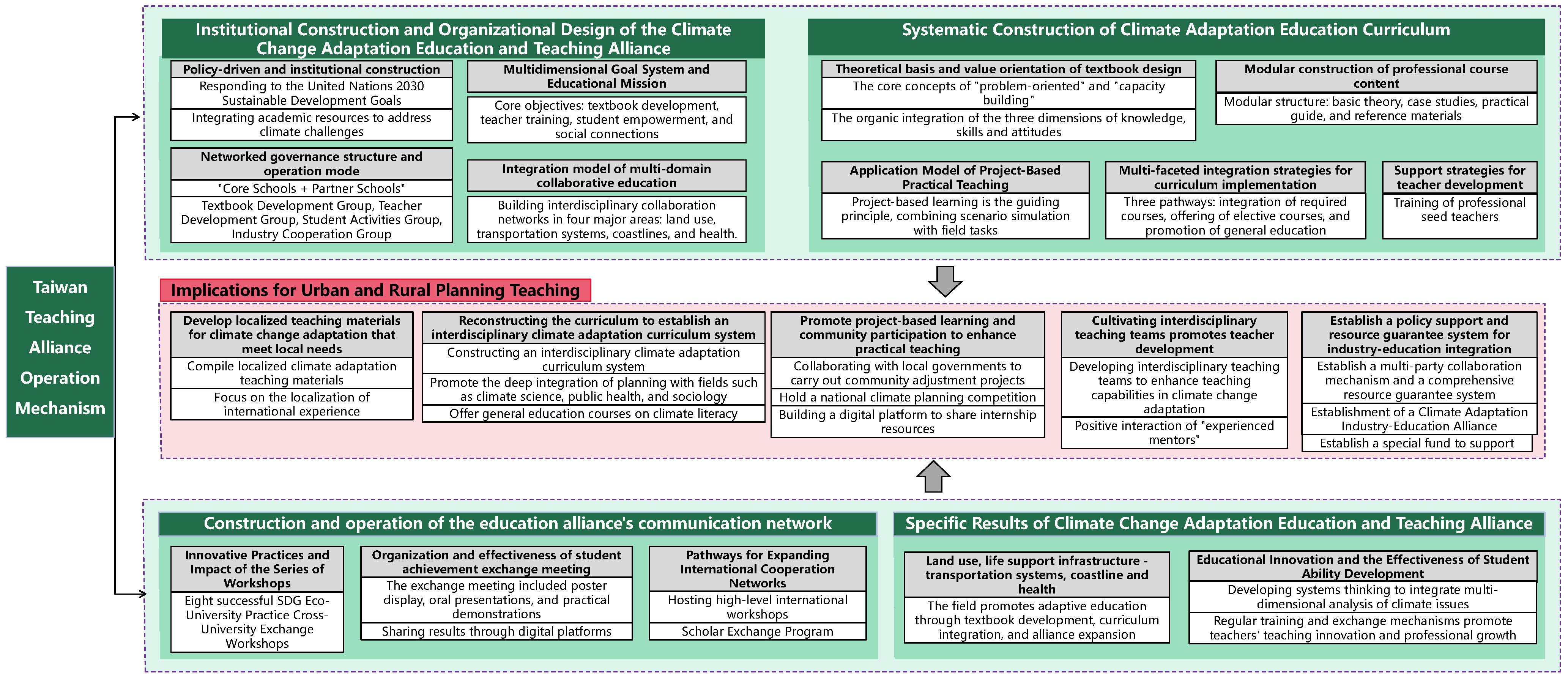
Figure 1), ensuring higher validity and persuasiveness of the research findings.
This paper selects the Taiwan Climate Change Adaptation Education and Teaching Alliance Program (with a focus on the Southern Region Alliance) as the core case. This selection is based on its typicality and representativeness: the alliance is large-scale, involving 26 institutions, and has formed a systematic educational intervention system in four professional fields (land use, transportation systems, coastlines, and health), providing an excellent field for studying how educational innovation addresses climate challenges. The study uses the alliance’s institutional structure, curriculum system, and communication network as embedded analytical units, thereby collecting rich empirical data at different levels to deeply answer the “how” and “why” questions regarding its operational mechanisms and effectiveness.
To compensate for the potential limitations of a single case and to cross-validate the case study, this study systematically collected and analyzed a large number of documents related to the alliance. These documents mainly fall into three categories: first, policy frameworks and planning documents, such as the “Policy Framework for Climate Change Adaptation”; second, the alliance’s own operational records and outputs, including teaching materials, course outlines, and workshop outcome reports in various fields; and third, relevant effectiveness evaluation data and student achievement records. The analysis process followed the standard steps of qualitative content analysis, extracting key patterns and core insights through text coding, thematic refinement, and summarization.
3. Operational Mechanism of the Taiwan Climate Change Adaptation Education and Teaching Alliance
3.1. Institutional Construction and Organizational Design of Taiwan’s Climate Change Adaptation Education and Teaching Alliance
- (1)
Policy Drivers and Institutional Establishment
The establishment of the Climate Change Adaptation Education and Teaching Alliance was driven by multiple policy imperatives and the urgent global need to address climate change. In 2013, Taiwan’s executive authorities adopted the Climate Change Adaptation Policy Framework, which explicitly mandated the integration of climate adaptation into the education system to enhance overall societal resilience. This policy aligns with the United Nations 2030 Sustainable Development Goals (SDGs), particularly SDG 11 (Sustainable Cities and Communities), emphasizing locally grounded practices promoted through education. Accordingly, the Ministry of Education launched the Teaching Alliance Program in 2014, and advanced it through three regional divisions: North, Central, and South. The Southern Alliance, led by National Cheng Kung University (Program Convener: Hsueh-Sheng Chang), focuses on the adaptation education needs of high-risk regions.
The impetus for the Alliance stems from Taiwan’s location within the East Asian monsoon zone, which exposes it to multiple climate risks such as typhoons, floods, droughts, and coastal erosion. This context creates a pressing need to cultivate professionals through higher education. The policy background also reflects the influence of international agreements like the Paris Agreement, as well as lessons from local disaster events such as Typhoon Morakot. Together, these factors drove the formation of the Alliance, aimed at integrating academic resources to tackle climate challenges.
- (2)
Multi-dimensional Goal System and Educational Mission
The Alliance’s core mission is to cultivate professionals with climate adaptation literacy and advance sustainable development through systematic education. Its key objectives span four dimensions, which are teaching material development, instructor training, student empowerment, and societal engagement. Teaching material development emphasizes creating interdisciplinary resources that integrate theory, case studies, and practical guides, balancing academic rigor with applicability. Instructor training involves regular workshops to enhance teachers’ knowledge of climate science and pedagogical skills. Student empowerment is achieved through cross-institutional exchanges, academic competitions, field surveys, and other hands-on activities that strengthen the application of theory. Societal engagement actively promotes collaboration with government agencies, enterprises, and non-governmental organizations to translate educational outcomes into policy recommendations and community practices. These initiatives reflect a deep integration of education, research, and practice, which together construct a complete educational ecosystem that extends from the classroom to society.
- (3)
Networked Governance Structure and Operational Model
The Southern Alliance adopts a “core school + partner school” network structure, with National Cheng Kung University serving as the central coordinating unit. A multi-level management system is formed through appointed lead teachers and seed instructor teams in each specialized field. The Alliance operates through four core working groups: the Teaching Material Development Group, responsible for compiling practical guides that incorporate both local cases and international experience; the Teacher Development Group, which enhances interdisciplinary teaching capacity through regular seminars and expert lectures; the Student Activities Group, organizing interactive learning events such as cross-campus workshops, academic contests, and field visits; and the Industry Collaboration Group, actively engaging government departments and relevant enterprises to introduce real-world case resources. Such an organizational framework optimizes resource allocation and ensures operational effectiveness through continuous evaluation and feedback mechanisms. It significantly enhances the Alliance’s environmental adaptability and long-term sustainability, providing solid institutional support for training professionals in climate adaptation.
- (4)
Integrated Model of Multi-domain Collaborative Education
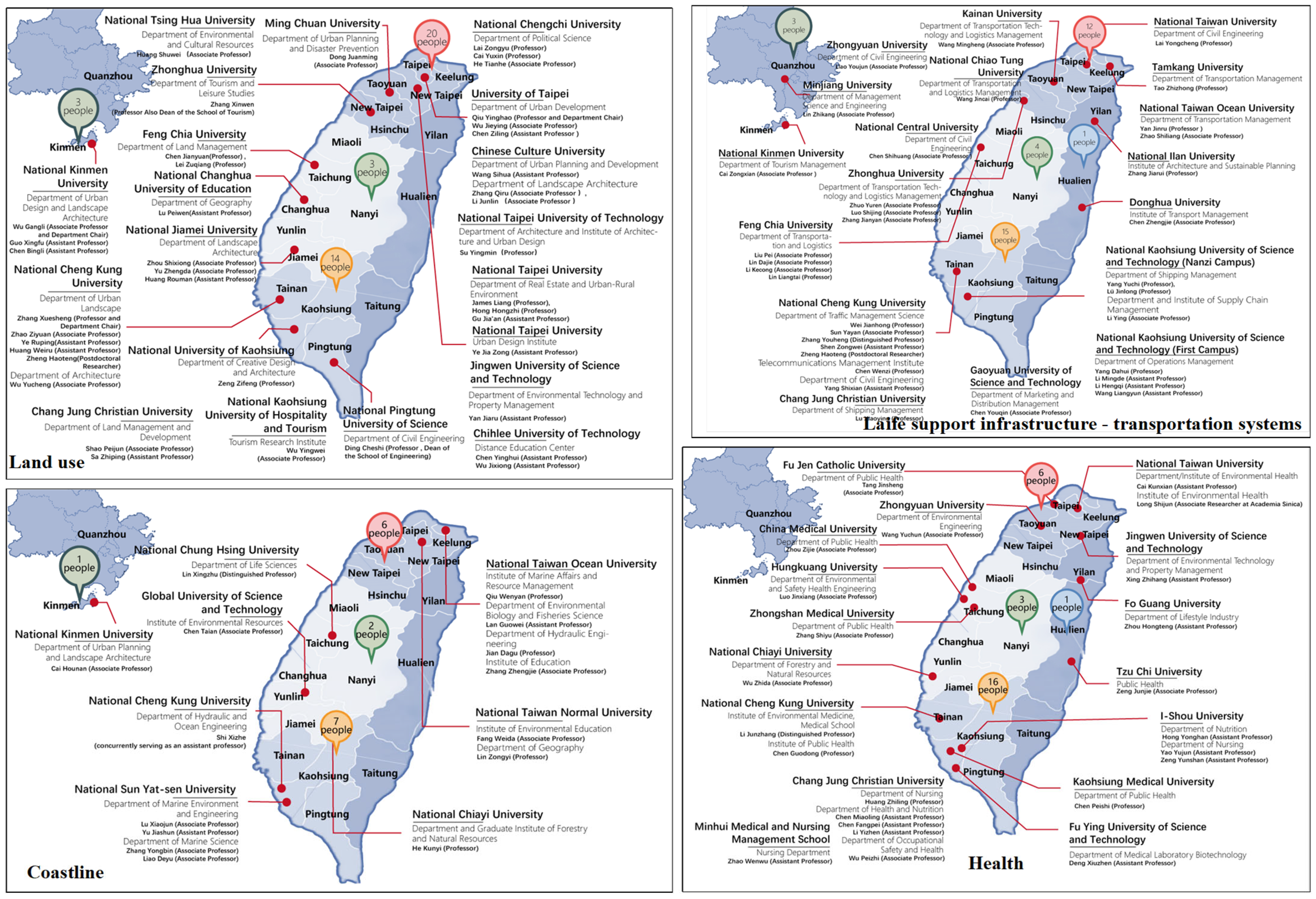
The Southern Alliance brings together 26 universities and colleges, including National Cheng Kung University, to form an interdisciplinary cooperation network spanning four key domains, i.e., Land Use, Transportation Systems, Coastal Management, and Public Health (
Figure 2). The Land Use domain focuses on spatial planning adaptation, employing tools like GIS in urban planning programs to analyze flood risks. The Transportation Systems domain emphasizes infrastructure resilience, with transportation management departments assessing disaster preparedness under extreme weather. The Coastal domain integrates fields such as ocean engineering to conduct research on shoreline management, including mangrove restoration. The Health domain addresses climate-related health risks through public health and related disciplines. This cross-domain collaboration breaks down traditional disciplinary boundaries. Member institutions share course resources, research data, and practical experience, creating a synergistic mechanism for knowledge sharing and innovation. This approach has significantly improved the overall effectiveness of climate adaptation education.
- (5)
Multi-source Funding Model and Optimized Resource Allocation
The operation funds of the Alliance mainly come from the dedicated grants from the Ministry of Education, and are supplemented through industry–government–academia collaborative projects. On average, it receives NT $5 million per year for teaching materials printing, activity development and teacher allowance, thereby facilitating curriculum delivery and cross-institutional exchange programs. The Alliance has established an integrated digital resource-sharing platform, which collects course syllabus, case base and multimedia materials and is open to member colleges free of charge. Furthermore, it has actively promoted the cooperation with government departments and enterprises, carried out the pilot project of disaster prevention technology, and fed back the practice results to the teaching content. This resource integration mode not only optimizes the efficiency of capital use, but also strengthens the organic combination of education and practice, laying a solid foundation for the sustainable development of the alliance.
3.2. Systematic Construction of the Climate Adaptation Education Curriculum System
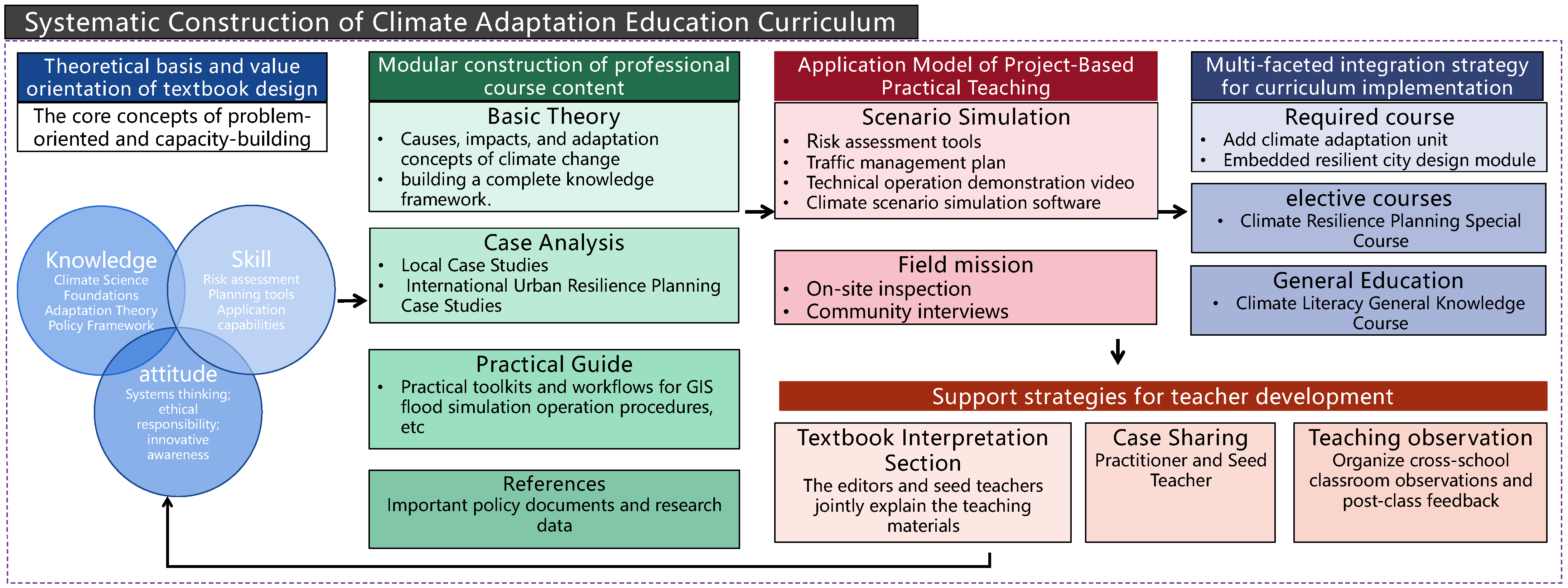
The overall implementation approach for teaching material development and curriculum integration is illustrated in
Figure 3.
- (1)
Theoretical Foundations and Value Orientation in Teaching Material Design
The Alliance establishes the core concept of “problem-oriented learning” and “capacity building“ in the development of teaching materials, and systematically responds to the complex challenges of climate change through the organic integration of knowledge, skills and attitudes. The knowledge dimension covers fundamentals of climate science, adaptation theories, and policy frameworks to ensure that students have a solid academic foundation. The skills dimension provides practical methods such as risk assessment and planning tools, and pays attention to the cultivation of application ability. The attitude dimension concentrates on the shaping of systematic thinking, ethical responsibility and innovative consciousness, and guides students to form sustainable values. For example, in Land Use teaching materials, students are guided to analyze practical adjustment strategies by combining local cases such as urban heat island effect, which embodies the principle of integrating theory with practice. The design of teaching materials fully draws on international frameworks such as the IPCC report and the United Nations sustainable development goals, while integrating local experience such as Morakot disaster, to ensure that the content balances a global perspective with local relevance. For students with different professional backgrounds, teaching materials are also designed differently: engineering focuses on the application of technical tools, while social sciences focuses on policy analysis and community participation, showing strong pertinence.
- (2)
Modular Construction of Professional Course Content
The supplementary teaching materials developed by the Alliance for integration into professional courses adopt a modular structure, which can be divided into four parts: Foundational Theory, Case Studies, Practical Guides, and Reference Materials. These four parts form a systematic and practical pedagogical system. The Foundational Theory chapter systematically explains the causes, impacts and adaptation concepts of climate change, and constructs a complete knowledge framework. The Case Studies chapter selects local cases such as Morakot disaster reconstruction and international urban resilience planning cases to promote the combination of theory and practice. The Practical Guides chapter provides GIS flood simulation operation steps and other practical toolkits and workflow. The Reference Materials chapter summarizes important policy documents and research data. The language used balances academic rigor with accessibility to ensure that learners from different backgrounds can effectively master it. The materials emphasize localization and timeliness, for instance by incorporating field data on coastal erosion in Western Taiwan and case studies on remote sensing applications. A cross-disciplinary perspective integrates knowledge from multiple fields, such as discussing both infrastructure resilience and social equity issues within transportation system materials. The materials also established a dynamic update mechanism to continuously optimize the content according to teaching feedback and emerging issues, showing strong adaptability and practicability.
- (3)
Application Model of Project-Based Practical Teaching
The Alliance’s practical teaching materials are oriented toward Project-Based Learning (PBL), which are designed to strengthen students’ climate adaptation capabilities through a combination of scenario simulations and field tasks. For the Transportation Systems domain, materials design the task of formulating the response plan for highway interruption in extreme weather, and require students to use the risk assessment tool to formulate the traffic evacuation plan in the typhoon situation. In the Coastal domain, materials organize practical ecological engineering projects like mangrove restoration, aiming to guide students to complete planning proposals through multi-stakeholder collaboration involving field surveys and community interviews. To enhance learning outcomes, the materials are supported by rich online resources, including technical demonstration videos and climate scenario simulation software. Moreover, technological tools such as drone surveying and sensor networks are incorporated to assist with data collection and analysis. During the second SDG Eco-Urban-Rural Practice Workshop, students applied these materials to participate in a flood hotspot rehabilitation project in Kaohsiung City, and the results were adopted and applied by the local government. This “learning by doing” model has significantly improved students’ problem-solving abilities and teamwork skills. The Alliance has also established a regular feedback mechanism to continuously optimize the content of teaching materials and ensure the close integration of teaching and practice.
- (4)
Multi-faceted Integration Strategies for Curriculum Implementation
The Alliance systematically promotes the integration of climate adaptation education through the triple path of integrating compulsory courses, offering elective courses and promoting general education. In terms of compulsory courses, the Alliance advocates for adding climate adaptation modules to core courses like Urban Planning and Environmental Engineering. For instance, a resilience urban design module is embedded within “Principles of Urban Planning.” For the development of elective courses, specialized elective courses such as “Climate Resilient Planning” are offered to explore cutting-edge topics in depth. Regarding the promotion of general courses, climate literacy courses are provided for non-specialist students to cultivate civic awareness. At present, 57 courses in the Southern District have been successfully integrated into the teaching materials, and the proportion of compulsory courses, elective courses and general courses is 60%, 30% and 10%, respectively, reflecting the balance of the curriculum. In the implementation process, the Alliance adopts a phased promotion strategy, including initial promotion of materials through teacher training and workshops, mid-term piloting of curriculum reforms, and later stages aiming for institution-wide integration. To address resource disparities among member institutions, the Alliance provides tailored support such as simplified teaching materials and remote tutoring to less-resourced colleges. The effectiveness of this multiple implementation path has been verified in several sessions of SDG 11 workshops. Through the display of project-based learning results, it is proved that the curriculum integration has a significant effect on improving students’ practical ability.
- (5)
Support Strategies for Faculty Development
Teacher training is a crucial link for the effective integration of teaching materials. The Alliance regularly organizes workshops covering material interpretation, case study sharing, and teaching observations, aiming to enhance instructors’ pedagogical capabilities and innovative mindset. A core component is the cultivation of specialized “seed teachers.” Promising scholars, doctoral candidates, and industry experts from various domains (e.g., Land Use, Transportation Systems, Coastal, Health) are recruited and trained to become backbone instructors providing pedagogical support. In material interpretation sessions led by material compilers and seed teachers, key points and teaching methods are explained, such as how to combine theoretical modules with practical tasks. In case study sharing, practitioners and seed teachers share experiences from adaptation projects, enhancing the practicality of the content. As for teaching observations, mutual learning among teachers is promoted by organizing inter school lectures and after-school feedback. Regarding support mechanisms, the Alliance also provides one-to-one mentoring and maintains online resource databases, such as instructional videos and lesson plan templates, to help both faculty and seed teachers flexibly apply teaching materials.
3.3. Development and Operation of the Alliance’s Communication Network
- (1)
Innovative Practice and Impact of the Workshop Series
Since 2017, Taiwan’s Climate Change Adaptation Education and Teaching Alliance has successfully organized eight consecutive cross-institutional SDG Eco-Urban-Rural Practice Workshops, and built a complete education practice system. The theme of the first workshop was “Land Use in Response to Climate Change—Resilient Cities,” which explored strategies for mitigating urban heat island effects and flood prevention through case analysis and field visits. The second workshop was held in Yantian community, Annan District, Tainan. It integrated four major professional fields, organized 61 trainees to carry out special lectures, base surveys and group discussions, and put forward a number of innovative schemes, including mangrove restoration plan. Subsequent workshops progressively deepened and expanded their focus. The third and fourth sessions introduced scientific and technological tools such as UAV surveying and mapping to strengthen community participation and international vision. The fifth workshop, under the theme “Cross-boundary Empowerment,” fostered in-depth integration of industry, government and education. The sixth, hosted at Chang Jung Christian University, explored the development of green energy science cities. The seventh focused on “Net-Zero Emissions and Nature-based Solutions,” aligning with the latest IPCC findings. The most recent eighth workshop in 4 innovatively adopted a debate format to facilitate in-depth discussions on green energy development in Qigu areas. This series has cumulatively engaged over 3000 participants and generated more than a hundred innovative proposals with practical value, many of which have been adopted by local governments or enterprises. The planning emphasizes progressive innovation, with each workshop’s content continuously refined based on feedback from previous iterations. This approach fully embodies the organic integration of theoretical instruction and practical application, highlighting the significant role of educational innovation in addressing climate change.
- (2)
Organization and Outcomes of the Student Achievement Exchange
The Student Achievement Exchange is an important platform for the Alliance to promote climate adjustment education. It is held regularly every year to show students’ learning achievements, promote inter-school exchanges and strengthen practical competencies. Each Exchange features various forms of activities, including poster presentations, oral reports, and hands-on demonstrations, covering multiple dimensions such as planning scheme, technological invention and policy suggestions. The organization emphasizes interactivity and feedback mechanisms. After each presentation, sessions for judge commentary and audience Q&A are held. Scholars, industry experts and government officials are invited to serve as reviewers, providing constructive feedback to help students refine their proposals. In terms of outcomes, the event not only enhances students’ presentation skills and teamwork but has also facilitated several industry-academia collaboration projects. Examples include the joint development of climate risk assessment tools with the Environmental Protection Administration and pilot projects on green building materials with construction companies. Furthermore, the Exchange amplifies its reach by sharing outcomes through digital platforms, such as online portfolios and video recordings, demonstrating the enduring value of these educational achievements.
- (3)
Pathways for Expanding the International Collaboration Network
The Alliance actively organizes high-level international workshops, such as the “Wulai Vision Workshop” conducted in collaboration with the Harvard Graduate School of Design. Focusing on resilient planning under climate challenges, these workshops combine field studies with online collaboration, enabling students to jointly explore disaster response and ecological design strategies with international experts. Through scholar exchange programs, the Alliance invites renowned international experts to Taiwan for lectures and research evaluations. Such interactions enrich teaching content and have led to several joint research initiatives. Collaboration also extends to international organizations like the UN Sustainable Development Solutions Network (SDSN), involving co-developed training courses and sharing Taiwan’s experiences in areas like coastal management and urban resilience. Additionally, the Alliance leverages digital platforms to conduct online seminars and virtual exchanges. It has established partnerships with institutions in Southeast Asia and Europe to co-develop teaching materials and promote student exchanges. These efforts introduce cutting-edge knowledge and technologies while fostering cultural exchange and conceptual innovation. Ultimately, these international activities have led to the inclusion of Taiwan’s climate education outcomes in international case libraries and have effectively contributed to the optimization and informed adaptation of local policies.
3.4. Implementation Outcomes of Taiwan’s Climate Change Adaptation Education and Teaching Alliance Program
- (1)
Implementation Outcomes and Practical Innovations across the Four Core Domains
The Climate Change Adaptation Education and Teaching Alliance Program in Taiwan has yielded concrete outcomes across its four core domains (Land Use, Lifeline Infrastructure–Transportation Systems, Coastal, and Health). Each domain has advanced adaptation education through teaching material development, curriculum integration, and network expansion. All four domains operate with a rolling feedback mechanism for continuous improvement, establishing a solid foundation for talent cultivation.
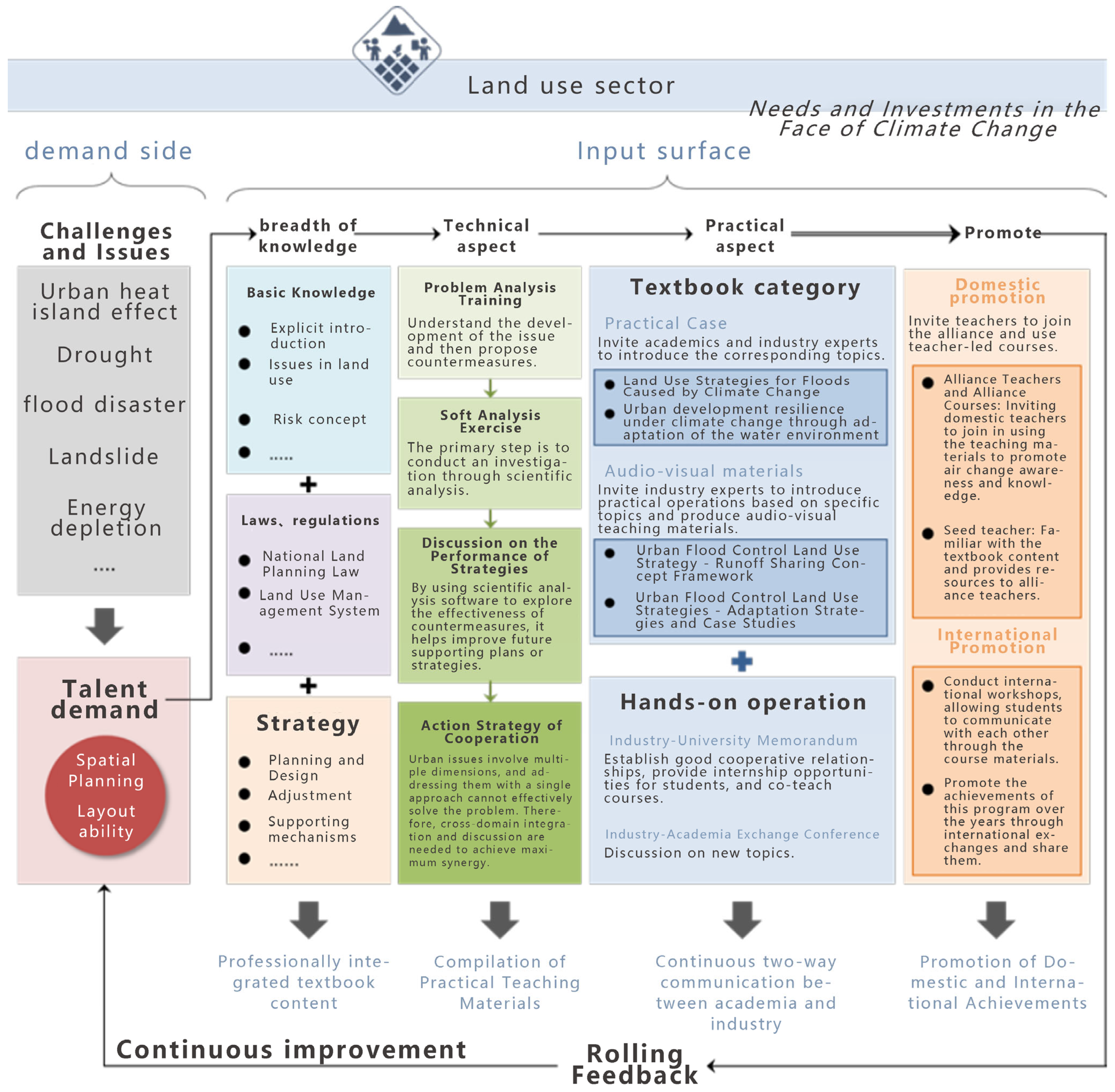
In the Land Use domain, significant progress has been achieved in climate adaptation education, systematically advanced across four dimensions: knowledge, technology, practice, and dissemination (
Figure 4). The knowledge dimension builds a comprehensive framework covering climate change impacts, policies/regulations, and adaptation strategies. The technology dimension focuses on cultivating scientific analytical skills, enhancing spatial planning capabilities through tools like GIS. The practice dimension strengthens industry-academia collaboration by developing case-based materials and promoting field application. The dissemination dimension expands influence through teacher training and international exchanges. This multi-dimensional educational model has effectively enhanced the adaptive capacity of professionals, providing crucial support for tackling climate challenges.
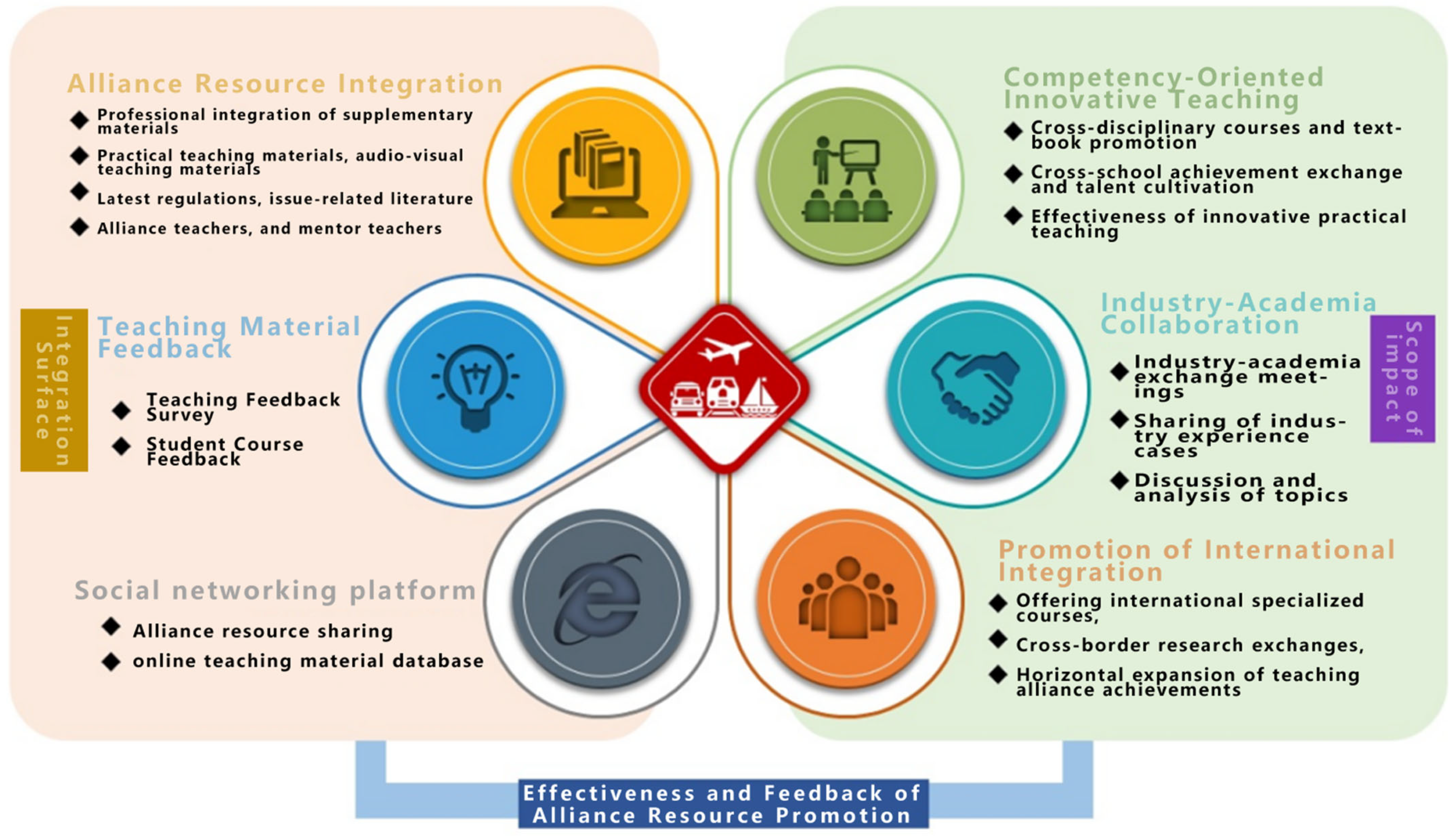
The Lifeline Infrastructure–Transportation Systems domain, addressing impacts from extreme climate events, has achieved notable results across three areas: resource integration, literacy-oriented teaching, and expanded influence (
Figure 5). In resource integration, diverse teaching materials were compiled, including 12.5 h of specialized supplementary content and practical handbooks, while the teaching alliance expanded to 39 members. In teaching, interdisciplinary course design was implemented across 59 courses, reaching 3317 students. In influence, industry–government–academia collaboration and international exchanges were promoted, effectively supporting the development of low-carbon smart transportation. This capacity-building-focused educational model provides professional talent support for climate-resilient transportation systems.
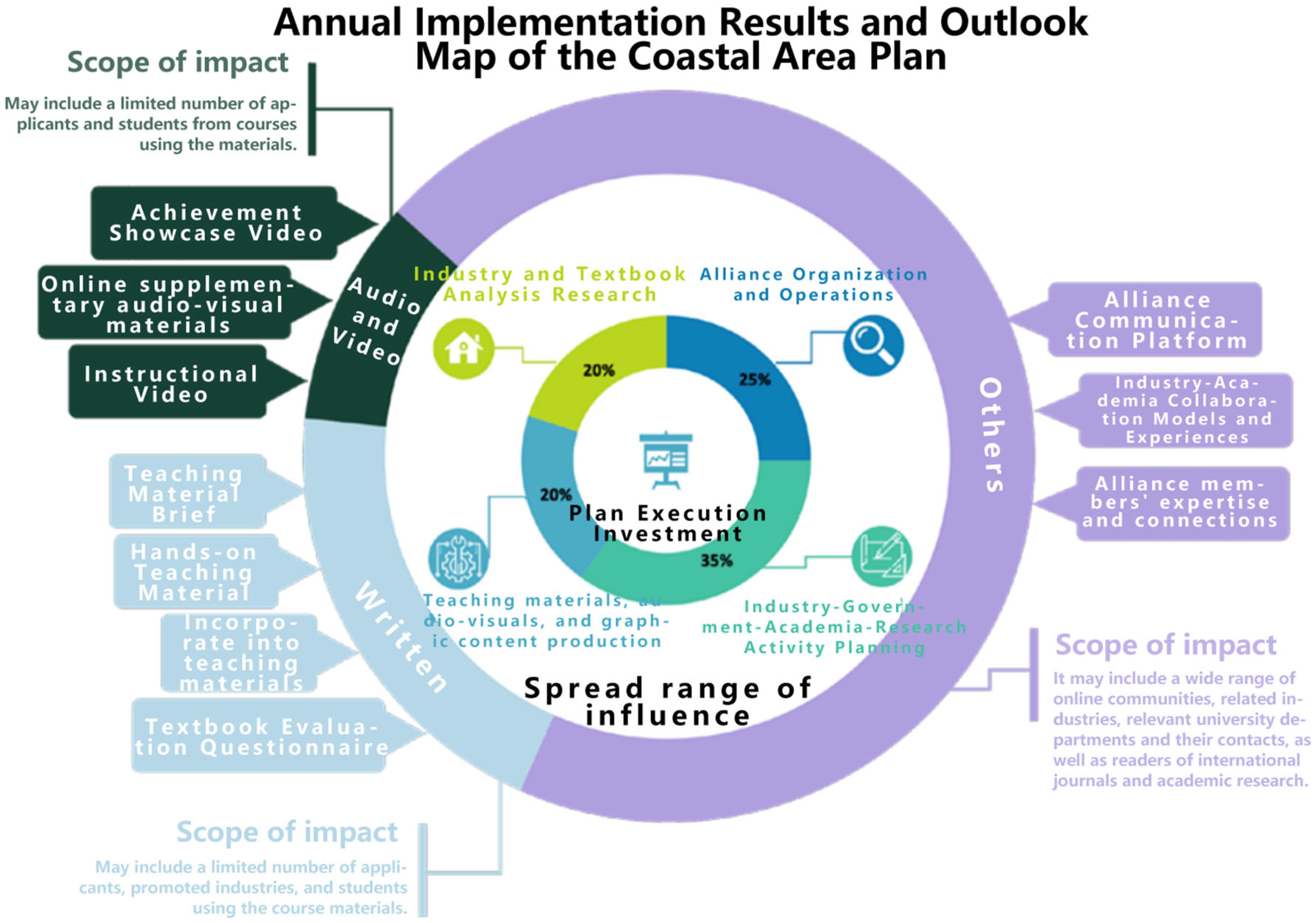
The Coastal domain, tackling issues like sea-level rise and storm surges, has progressed across three fronts: program implementation inputs, alliance resource cultivation, and scope of impact diffusion (
Figure 6). Implementation inputs include teaching material analysis, planning of industry–government–academia–research activities, and production of audiovisual materials. Alliance resource cultivation encompasses material integration, practical handbooks, and industry-academia collaboration models—for example, completing 14 h of core materials and supporting online videos. Impact diffusion has extended to university departments, industry, and the international community, sharing outcomes via Facebook groups and international workshops. Several industry-academia collaboration cases have been completed, and materials have been adjusted to strengthen adaptive capacities.
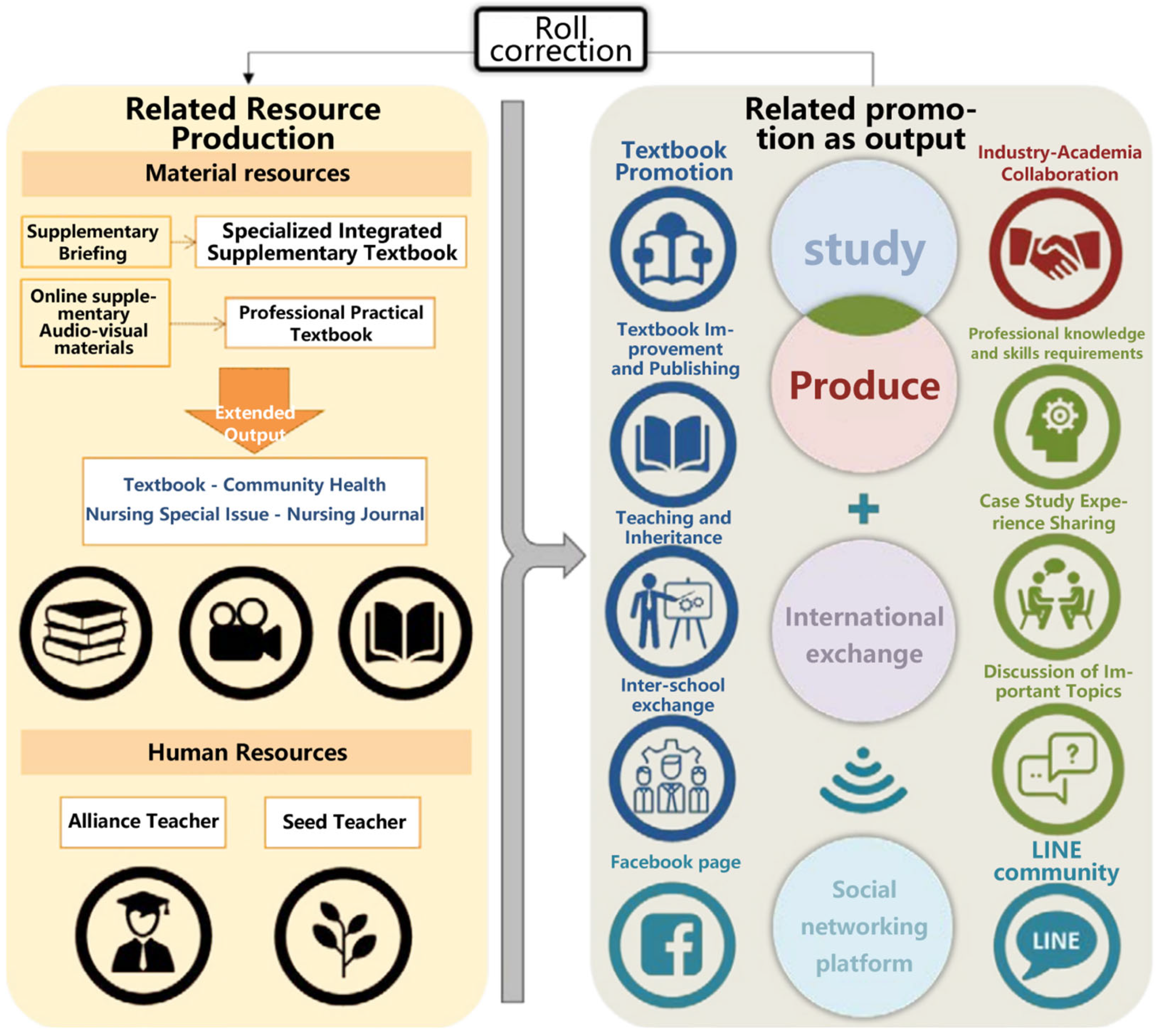
The Health domain, focusing on the direct and indirect health impacts of climate change, has delivered outcomes in resources, impact, and core competencies (
Figure 7). On the resources front, it developed core and practical teaching materials, produced 5 instructional videos, and engaged 26 alliance teachers and 8 seed teachers. Regarding impact, it promoted the integration of content into 57 courses taken by 2487 students (From 2014 to 2024), and incorporated climate-health knowledge into teaching materials and journal publications. In core competencies, it cultivated five key literacies: professional knowledge, communication, collaboration, problem-solving, and lifelong learning. International visibility was enhanced through lectures and exchange channels, promoting the cultivation of professionals in health adaptation.
- (2)
Outcomes in Educational Innovation and Student Competency Development
Regarding the enhancement and cultivation of student competencies, the Alliance Program has successfully integrated climate adaptation content into 57 courses spanning the four core domains, engaging a cumulative total of 2487 students and thus demonstrating the program’s broad educational reach. Student capabilities have improved significantly, because most have developed systems thinking and can integrate multi-dimensional analyses to address climate issues. For instance, during the SDG Eco-Urban-Rural Practice Workshop in the Land Use domain, students proposed resilience planning solutions through interdisciplinary collaboration. They also demonstrated innovative thinking by devising feasible adaptation proposals such as low-carbon transportation system designs, flood early-warning devices, and community disaster prevention plans. Due to the Alliance’s close ties with industry, outstanding student performance in these workshops has directly led to internship or job offers from enterprises. In terms of teaching innovation and professional development, the Alliance’s regular training and exchange mechanisms have fostered pedagogical innovation and professional growth among faculty, thereby elevating overall education quality. Over 80% of participating teachers have successfully integrated climate adaptation content into their core courses. For example, adding resilience urban design modules in Urban Planning departments and incorporating practical handbooks to enhance interactivity. Teaching innovation is evident in course design through the adoption of Project-Based Learning (PBL) and case analysis methods, often tied to local issues like post-Morakot typhoon reconstruction, allowing students to connect theory directly to application. The social impact is notable, with several faculty members serving as government advisors and contributing to policy formulation, such as assisting in the revision of the National Spatial Planning Act to incorporate climate adaptation strategies into the legal framework. The seed teacher mechanism further promotes experience transfer, using a mentorship model to help new faculty quickly master interdisciplinary teaching methods.
4. Discussion
This study, through a systematic analysis of the practices of the Taiwan Climate Change Adaptation Education and Teaching Alliance, reveals an effective path for cultivating climate resilience professionals through systematic educational innovation and an innovative path for urban and rural planning education that integrates climate change response.
4.1. Developing a Systematic Curriculum Integration Mechanism
Urban and rural planning education must establish a robust mechanism for integrating climate change adaptation into the curriculum [
16]. First, core professional courses should systematically incorporate key topics such as climate change risk assessment, resilient urban planning, and low-carbon infrastructure design. For example, a module on climate-adaptive planning could be added to foundational courses like “Principles of Urban and Rural Planning,” using case studies to teach students how to incorporate climate considerations throughout the entire planning process. Second, developing modular climate adaptation teaching units that can be flexibly embedded into various specialized courses creates a “core courses + modular units” curriculum system. This approach ensures the systematic delivery of climate education while maintaining the integrity of individual courses. Drawing on Taiwan’s experience, forming interdisciplinary teaching teams is crucial. Planning faculty should collaborate with experts in climate science, environmental engineering, and public management to co-design course content and teaching methods. For instance, when teaching urban flood control planning, inviting hydrology experts to participate can help students understand the impacts of climate change on urban water systems from multiple disciplinary perspectives. Such collaboration enriches teaching content and cultivates students’ systems-thinking skills.
4.2. Innovating Practical Teaching Models
Practical teaching serves as a crucial component in cultivating students’ climate adaptation competencies. Urban and rural planning education should establish a multi-tiered practical teaching system, encompassing three levels: classroom exercises, field research, and project-based practice [
17]. At the classroom exercise level, instructors can introduce scenario-based simulation methodologies. By designing planning decision-making scenarios under extreme climate events, students engage in role-playing to experience authentic planning deliberation processes. The field research level involves organizing student visits to representative climate adaptation case studies, such as sponge city construction projects or coastal protection engineering works. On-site observation serves to deepen theoretical understanding through direct engagement with real-world applications. Project-based practice represents the most advanced form of hands-on learning and can be effectively conducted through a “university-community partnership” model. By establishing collaborative relationships between academic institutions, local governments, and communities, students gain the opportunity to participate in genuine climate adaptation projects. Examples include tasking student teams with developing climate resilience retrofit plans for aging neighborhoods or formulating low-carbon transportation plans for new urban development zones. Such authentic project work not only hones students’ professional skills but also facilitates the translation of academic insights into practical applications. During project implementation, a “faculty mentor and student team” working model is recommended. Under the guidance of a professional instructor, the student team assumes responsibility for specific tasks, thereby fostering essential team collaboration and project management capabilities.
4.3. Strengthening Digital Technology Application Skills
In the digital era, planning education must enhance teaching on the application of digital tools for climate response. Firstly, instruction in tools like GIS, remote sensing, and big data analytics should be integrated into the curriculum. Students need skills to use these tools for climate risk identification, vulnerability assessment, and planning scenario simulation—for example, creating flood risk maps with GIS software, analyzing urban heat island effects with big data, or simulating the climate adaptability of planning proposals with specialized software. Secondly, focus on integrating digital technology with other teaching methods. Developing virtual simulation experiment platforms allows students to practice climate-adaptive planning in virtual environments. These platforms offer advantages like low cost, high repeatability, and minimal risk, supplementing limitations of field practice. Furthermore, establishing online collaboration platforms can support remote collaborative learning, breaking spatial and temporal barriers to encourage exchange among students from different regions.
4.4. Improving the Teaching Resource Support System
A robust teaching resource support system is fundamental for advancing climate education innovation. As a foundational step, there is a need to develop systematic teaching resources, including teaching materials, case study libraries, and teaching software. Teaching materials development should balance theory and practice, incorporating both cutting-edge climate science knowledge and practical planning methodologies. Case libraries must encompass urban examples from diverse regions and scales, with particular emphasis on including representative local cases to enhance the relevance and specificity of instruction. Secondly, implementing a graduate tracking mechanism to understand career progression in the climate adaptation field can test educational outcomes and inform necessary curriculum adjustments. Concurrently, it is important to systematically summarize and disseminate effective teaching practices. Regularly organizing teaching seminars to share successful instructional cases and innovative methods, along with establishing incentives for teaching innovation to recognize and promote impactful reforms, fosters a culture of continuous improvement. Additionally, maintaining alignment with international advanced standards is vital. Staying attuned to the latest global developments in climate education allows for the timely integration of advanced concepts and methodologies. This continuous improvement mechanism ensures that educational innovation remains current and adaptive, continually meeting new challenges posed by climate change. It provides an institutional guarantee for cultivating highly skilled professionals in climate-adaptive planning. Through systematic curriculum integration, innovative practical teaching, digital technology application, resource support, and continuous improvement, urban and rural planning education will be better equipped to address the challenges of climate change, providing essential talent for building climate-resilient societies.
4.5. Establishing a Mechanism for Continuous Improvement
Educational innovation is a continuous process, which needs to establish a perfect evaluation and improvement mechanism. To this end, a diversified teaching evaluation system should be implemented, incorporating feedback from multiple dimensions, including students, peer instructors, and broader societal stakeholders [
18]. By regularly collecting feedback from all parties, problems in teaching can be found in time to provide basis for improvement. Furthermore, establishing a graduate tracking mechanism is essential to understand alumni career progression in the field of climate adaptation. This long-term feedback serves as a critical measure of educational effectiveness and informs necessary curricular adjustments. Concurrently, the systematic summarization and dissemination of teaching experiences are vital. Organizing regular teaching seminars to share successful instructional cases and innovative practices, coupled with creating incentive mechanisms for teaching innovation, such as merit-based recognition and support for impactful reforms, helps cultivate a culture of excellence. Additionally, maintaining alignment with international best practices is crucial. It is necessary to monitor global developments in climate education and promptly integrates advanced concepts and methodologies. Such a robust mechanism for continuous improvement ensures that educational innovation remains dynamic and responsive, constantly adapting to the evolving challenges posed by climate change. It provides the institutional foundation for cultivating highly competent professionals in climate-adaptive planning. Through systematic curriculum integration, innovative practical teaching, the application of digital technologies, robust resource support, and a commitment to continuous refinement, urban and rural planning education can be significantly strengthened to address the challenges of climate change, thereby contributing skilled talent towards building climate-resilient societies.
4.6. Cross-Regional Promotion of the Case Study Model
Based on the successful experience of the Taiwan case, when promoting its educational alliance model to different regions, it is necessary to face the challenges posed by differences in institutional environment, resource base, and cultural context. Compared with European standardized curricula, North American technology-oriented approaches, and decentralized practices in the Asia-Pacific region, the Taiwan model is unique in its “local implementation” and “system integration.” Effective promotion strategies do not lie in formal replication, but in the adaptive transformation of core concepts: in resource-constrained regions, phased demonstrations and digital resource sharing can be adopted; in regions with weak policy support, specific projects can be used to demonstrate its value; the key is to “re-localize” the teaching content and governance model, learning its core concepts of “practice-oriented and networked collaboration,” rather than mechanically copying its organizational form, thereby achieving a creative transformation from an excellent case to a universally applicable path.
While this study provides in-depth insights, it still has several limitations. First, this study mainly relies on document analysis and case retrospection. Future research could adopt a longitudinal study approach to track graduates’ career development over the long term to more accurately assess the long-term impact of education. Secondly, this study focuses on the overall operation of the alliance. In the future, in-depth interviews or questionnaires can be conducted with participating students, teachers and partner institutions to reveal individual learning processes and collaborative motivations from a micro perspective.
5. Conclusions
The practical outcomes of Taiwan’s Climate Change Adaptation Education and Teaching Alliance Program highlight that its success is fundamentally rooted in constructing a comprehensive educational innovation ecosystem. This system, underpinned by proactive policy guidance, utilizes a “core school + partner school” network structure to achieve deep integration of multidisciplinary collaborative education. In curriculum development, the Alliance innovatively employs modular teaching material design, organically blending knowledge transmission, skill cultivation, and value formation, and ensures educational impact through diversified implementation pathways. The program’s most distinctive feature is its systematic implementation framework. From policy leadership exemplified by the Climate Change Adaptation Policy Framework, to the establishment of a multi-level organizational management system, and down to the deep integration of content into 57 courses, it forms a complete chain of educational innovation. The coordinated advancement across the four core domains (Land Use, Transportation Systems, Coastal, and Health) not only breaks down disciplinary silos but also, through its practice-oriented teaching model, enables students to translate theoretical knowledge into practical problem-solving capabilities. This successful educational model provides a replicable template for global climate education.
The Alliance’s innovative practices offer significant insights for urban and rural planning education, particularly in developing contexts. Firstly, its adoption of PBL, refined across eight consecutive SDG Eco-Urban-Rural Practice Workshops, validates the effectiveness of the “learning-by-doing” approach in fostering climate adaptation competencies. Secondly, the digital resource-sharing platform and teacher cultivation mechanism established by the Alliance guarantee the sustainable utilization of educational resources. More importantly, through industry–government–academia collaboration, the Alliance directly translates educational outcomes into community practice, creating a positive feedback loop between education and society.
Building on the Alliance’s successful experience, future innovation in urban and rural planning education should prioritize the following directions: (I) Developing more flexible and open curriculum systems that allow students from different disciplines to take cross-domain courses. (II) Further strengthening the application of digital technologies in teaching, including developing more virtual simulation experiment platforms. (III) Refining educational outcome evaluation mechanisms, establishing a comprehensive tracking system that monitors progress from course learning to career development. (IV) Enhancing international exchange and cooperation to absorb global advanced experiences and promote the iterative upgrading of educational innovation.
Education plays an irreplaceable role in addressing climate change. Through sustained educational innovation and practical exploration, we can cultivate more professionals equipped with climate adaptation literacy, making active contributions to building climate-resilient societies and achieving sustainable development goals. Looking ahead, the collective efforts of the education sector, industry, and government departments are essential to propel climate education forward continuously.