

Article

The Mediterranean Paradox: Knowledge, Attitudes, and the Barriers to Practical Adherence of Sustainable Dietary Behavior Among Future Educators—A Case Study of Teacher Education Students at the University of Split


1
Department of Teacher Education, Faculty of Humanities and Social Studies, University of Split, Poljička Cesta 35, 21000 Split, Croatia
2
Department of Biology, Faculty of Science, University of Split, Ruđera Boškovića 33, 21000 Split, Croatia
*
Author to whom correspondence should be addressed.
Sustainability 2026, 18(2), 831; https://doi.org/10.3390/su18020831
Submission received: 18 November 2025 / Revised: 9 January 2026 / Accepted: 12 January 2026 / Published: 14 January 2026

Abstract

This paper investigates the knowledge, attitudes, and practical adherence to the Mediterranean Diet (MD) among students of the Teacher Education Study Program in Split. Recent trends indicate a decline in adherence within Mediterranean regions, a phenomenon known as the Mediterranean paradox. Studying the relationship between students’ knowledge and practice is critical within the context of SDG 3 and SDG 4, as it highlights the role of future educators in promoting healthy communities. A quantitative approach was employed using the MDNK methodology, supplemented with the MEDAS test, to assess adherence to the Mediterranean Diet. Statistical analysis included p-values and effect size measures to assess practical relevance. Students averaged 13.39/18 on the MDNK test, with most showing moderate MEDAS adherence and only 5 reaching high adherence. The year of study or employment status has not been shown as an influential factor. While most students possess a high level of knowledge on the MD’s key components and express a positive attitude toward this dietary pattern, a significant knowledge-practice gap exists, confirming the Mediterranean paradox among future teachers. The need for nutritional and food education within the university curriculum is essential to move beyond theoretical instruction and actively promote food literacy and practical skills.

1. Introduction

The Anthropocene, the geological era of human dominance, is marked by global change and constant challenges. Humanity, as a planetary, almost omnipotent force, has drastically altered the Earth’s surface and influenced the global changes that shape human lives today. The remarkable progress of human civilization is reflected in numerous scientific discoveries and the development of advanced technologies in industrial and agricultural production, with a special emphasis on digital development. However, negative consequences such as the exploitation of nature, air, water, and soil pollution, biodiversity loss, and, especially, climate change are increasingly evident in everyday life, impacting human health [1,2]. A significant effect on the Earth system and the leading cause of environmental deterioration is food production [3,4,5].
The accelerated pace of life in the 21st century has posed new nutritional problems for modern man: fast and processed food, excessive meat consumption, and lack of time to prepare quality meals have become significant risk factors. This eating pattern not only threatens individual health associated with chronic diseases such as obesity, diabetes, and cardiovascular diseases but also directly contributes to the ecological burden on the planet through intensive agriculture and inefficient food production [1,4,6,7,8,9,10,11,12]. In the Anthropocene, the goal of the nutrition framework must reflect both public health and planetary health [3,5,13].
A global scientific framework for human nutrition, the EAT-Lancet Planetary Health Diet, promotes and is led by dual objectives: enhancing human health and guaranteeing the planet’s sustainability by 2050, ensuring the achievement of the Sustainable Development Goals (SDGs) and Agenda 2030 [4,14]. A shift in primary protein sources from red meat to legumes and nuts would reduce current global annual dietary emissions by 17% [5]. Transformation to improved, sustainable food production will not only ensure healthy diets but also provide high-quality primary health care, which will influence education on healthy diets and other scientific SDGs targets on climate, oceans and land, biodiversity, and water resources [4].
The Mediterranean Diet (MD), recognized by UNESCO as an intangible world heritage, is emerging as one of the most powerful models of sustainable nutrition [15]. The MD naturally meets most of the global scientific framework for human nutrition, EAT-Lancet recommendations: high intake of fruits, vegetables, legumes, nuts, and olive oil, with low consumption of red meat [4,11,16].
The Mediterranean Diet is not just a dietary pattern but an entire lifestyle that promotes health and environmental sustainability [17]. The basis for a general analysis of the Mediterranean Diet comes from the primary characteristics of the dietary practices of people in the Mediterranean region [14], where biodiversity and the seasonality of locally grown food are main features [15]. The MD pattern, a sustainable dietary model, has been shown to reduce the risk of chronic diseases by promoting sustainable dietary habits [10,16]. It is based on local, seasonal foods and reduced consumption of red meat, which is a significant source of CO2 emissions [18]. MD promotes traditional, environmentally friendly agricultural practices, confirming its sustainable, environmentally friendly foundation [16], with significantly lower negative environmental effects [4,19,20]. Reductions of more than 70% in greenhouse gases (GHG) and land-use emissions, as well as 50% in water use, can be achieved by switching to environmentally sustainable dietary patterns in place of meat-based Western diets [21]. An indispensable part of MD is active participation in food preparation, which is preferable to buying ready-made, processed meals, as well as eating meals with family or friends and socializing around the table. Eating habits are linked to lifestyle factors, such as sleep patterns, physical activity, and social and cultural values that favor commensalism and thriftiness [22]. Besides the digital competencies necessary for functioning in the modern world, nutritional and food literacy are equally important. While nutritional literacy focuses on the physiological and biochemical impact of food and nutrients on human health, food literacy is a practical tool. It encompasses the knowledge, skills, and attitudes necessary for an individual to make informed, healthy, and sustainable decisions about food and its impact on personal health in everyday life [23]. For decades, the Mediterranean Diet, a traditional eating pattern built on an abundance of natural and unprocessed foods, has been acknowledged as one of the best models for preventing chronic non-communicable diseases, maintaining vitality, and encouraging healthy, sustainable living [8,9,17,24], with a crucial impact on students’ academic achievement [25]. In the context of higher education, especially among students of Teacher Education, the application of the Mediterranean Diet principles has a double significance: it directly contributes to preserving the health of future educational workers, and it shapes their attitudes and competencies related to the transfer of sustainable dietary habit knowledge to new generations.
Young people are at a stage in their lives when food patterns shift from reproducing family routines to becoming the result of independent decisions. For future educators, the educational environment plays an important role in shaping these choices. Teacher Education students are not only recipients of knowledge but also future bearers of educational health, ethical, and cultural values. The way they understand nutrition directly affects their ability to transfer sustainable messages to children. Brulotte and Di Giovine highlighted nutritional transformative potential in developing critical awareness of social inequalities, relationships with the environment, and the role of community in shaping food practices [26]. The benefits of the Mediterranean Diet (MD) extend beyond physical health, significantly impacting mental well-being. The high tryptophan content in plant-based food, an amino acid that increases serotonin levels, confirms its role as precursor to serotonin, often referred to as the happiness hormone. Along with physical activity, the MD contributes to a reduced risk of everyday stress, anxiety, and depression [27]. These mental and physical benefits are especially relevant for university students, a population known to face high levels of academic stress and mental health challenges.
A significant and increasingly evident challenge is the Mediterranean paradox, characterized by the decline of traditional dietary patterns among young people in the very regions where these patterns originated. This phenomenon describes populations in Mediterranean countries, historically and culturally rooted in this dietary pattern, increasingly abandoning it in favor of Westernized, highly processed diets. Teacher training students, as future educators, have a pivotal role in reversing this trend by transmitting knowledge about healthy and sustainable habits. Therefore, this research focuses on analyzing students’ food literacy within the Teacher Education Study Program in Split, a typical Mediterranean city in the Republic of Croatia, to understand the gap between their cultural heritage and modern dietary practices.
The main goal of this study was to investigate the knowledge, attitudes, and practical application of the Mediterranean Diet among students of the Teacher Education Study Program in Split, with an emphasis on their food literacy and potential for sustainable dietary behavior. Specifically, this research aims to determine whether future teachers in a traditional Mediterranean environment are part of the Mediterranean paradox, a phenomenon in which high theoretical awareness of the diet’s benefits does not translate into practical adherence to it. Given their role as future educators, their training represents a key opportunity for Education for Sustainable Development (ESD), particularly regarding food choices. Specific study objectives focus on (1) assessing students’ understanding of the Mediterranean Diet’s principles, components, and health effects; (2) exploring students’ attitudes toward the Mediterranean Dietary pattern in their daily lives and professional practice; and (3) analyzing their practical adherence. Furthermore, this study aims to evaluate the practical relevance of the observed data by incorporating effect size measures. The gathered results could provide insights for designing educational interventions that bridge the knowledge-practice gap among future teachers.

2. Materials and Methods

2.1. Participants

The study was conducted in April 2025 on a sample of 100 respondents, students of the integrated undergraduate and graduate Teacher Education Study Program at the University of Split. Teacher Education students were chosen as a critical population given their future role as health and nutrition role models for children and youth. Participation in the research was voluntary and anonymous, in accordance with the ethical principles of research. Students completed the questionnaire on paper during regular classes. In the introductory part, the students were informed about the purpose of the research, how to complete the questionnaire, and the confidentiality of the data. The research was conducted in accordance with the Code of Ethics of the Faculty of Humanities and Social Sciences in Split.
The inclusion criteria for this study included being a full-time student enrolled in the Teacher Education Study Program and providing informed consent to participate. Students with special diets for health reasons and those with incompletely completed questionnaires were excluded.
Initially, 110 paper questionnaires were distributed to the students. After collection and manual screening of the forms, 10 questionnaires were excluded from the study due to significant missing data or incomplete responses. Therefore, the final analysis was conducted on 100 participants who provided complete datasets.

2.2. Research Methodology

A quantitative approach with a structured survey questionnaire was used in this study. The instrument was developed by combining the internationally recognized Mediterranean Diet Nutrition Knowledge (MDNK) methodology [28] with the Mediterranean Diet Adherence Screener (MEDAS) test [29,30]. The combination of these instruments enabled a reliable, scientifically grounded assessment of students’ knowledge and adherence to the principles of the Mediterranean Diet. For the purposes of this study, the MDNK and MEDAS instruments were translated into Croatian using a double-translation method. Two independent bilingual researchers translated the items into Croatian, and the versions were consolidated to ensure linguistic and cultural relevance to the local dietary context.

Research Instrument

The questionnaire consisted of two main sections. Socio-demographic data, which included information on the participants’ gender, age, year of study, and employment status, and the data on assessment of dietary knowledge, attitudes, and eating habits, which were further divided into three sub-sections:
  • Knowledge of the Mediterranean Diet (MDNK Test): This sub-section consisted of 18 questions designed to assess students’ knowledge of the Mediterranean Diet. The questions covered topics such as the standard and healthy types of fats, the most used oils, the recommended frequency of fish consumption, and the basic food groups at the base of the Mediterranean pyramid. Representative items included identifying olive oil as the primary source of fat and determining the correct frequency of fish consumption (e.g., ‘How many times per week is fish consumption recommended in the Mediterranean diet?’). Additionally, participants were asked to recognize which foods should be consumed at every main meal to evaluate their understanding of the pyramid’s foundation. The total knowledge score was calculated as the sum of correct responses, ranging from 0 to 18. Responses were marked as either true or false, with each correct answer receiving one point [28].
  • Attitudes towards the Mediterranean Diet: This sub-section assessed students’ attitudes regarding the benefits and usefulness of the Mediterranean Diet. The statements were designed based on a review of relevant scientific literature on the Mediterranean dietary pattern, its health effects, sustainability, and its potential for application in everyday life. The students’ level of agreement with 10 statements was measured using a 5-point Likert scale, where 1 = strongly disagree, 2 = disagree, 3 = neutral, 4 = agree, and 5 = strongly agree.
  • Self-Reported Dietary Habits (MEDAS Test): This sub-section included 14 questions focused on the self-assessment of students’ dietary habits. The MEDAS questionnaire comprises 14 closed-ended questions with predefined criteria for awarding 1 point per affirmative response. The maximum score a participant could achieve was 14, with a higher score indicating a higher level of adherence to the Mediterranean Diet. Scoring criteria were based on the frequency of consuming specific food groups (e.g., olive oil, vegetables, fruits, fish, legumes, nuts). For instance, participants were awarded 1 point if they consumed at least 4 tablespoons of olive oil per day; ≥2 servings of vegetables and ≥3 servings of fruit per day, but also for the restriction of unhealthy food categories (e.g., less than 1 serving of butter, margarine, or cream per day; for consuming < 1 serving of processed meat per day or <1 sugar-sweetened beverage daily). MEDAS scores were subsequently categorized into three distinct levels: low adherence (0–5 points), moderate adherence (6–9 points), and high adherence (10 points or more) [29,30].

2.3. Statistical Analysis

Both descriptive and inferential statistics were used to analyze data. A descriptive statistical analysis included the arithmetic mean (M) and standard deviation (SD) for students’ knowledge (MDNK questionnaire) and attitudes towards the Mediterranean Diet. In addition to descriptive analyses, the Mann–Whitney test for independent samples was used to compare the percentage of total scores on the knowledge test between junior (1st–3rd year) and senior (4th–5th year) students. Fisher’s exact test was performed to compare students’ results for each of 18 questions, and Odds Ratios (OR) with 95% confidence intervals (CI) were calculated as a measure of effect size for categorical data comparisons. To analyze the difference in MD adherence between junior and senior students, categorical variables were compared using Fisher’s exact test (utilizing the Freeman-Halton extension for 2 × 3 tables). One-way ANOVA with Tukey’s post hoc test was employed to assess differences among three groups based on employment status. Statistical significance was set at p < 0.05. All statistical procedures were carried out using IBM SPSS Statistics 29.0 and GraphPad Prism 10.

3. Results

3.1. Sample Structure

Participants included students from all five academic years of the Teacher Education Study Program. Demographic data, including distribution by age, gender, year of study, and employment status, are presented in Table 1.
Most of the respondents were women, representing as much as 97% of the total sample, while men made up 3% (Table 1). This distribution is expected given the feminized profession of teaching. The total student population at the Teacher Education Program in the academic year 2024/25 was 243 students, of which 8 were male. Given the extremely unequal gender ratio in the sample and the consequent lack of statistical power for comparison, differences in knowledge, attitudes, and adherence to the Mediterranean Diet by gender were not investigated.
Half of the students were between 21 and 23 years old (50%), and the remainder were distributed across other age groups (Table 1). Since students were at various stages of their education, different viewpoints and experiences can contribute to the study by broadening the understanding of the research topic.
The Teacher Education Program in Split is an integrated undergraduate and graduate study; therefore, students in the 1st–3rd year are classified as junior students, and students in the 4th and 5th years as seniors. This distribution provided an evaluation of knowledge and attitudes across different educational levels.
Most participants were not employed while studying, and 45% were full-time or occasionally employed students (Table 1). These data showed that almost half of the students had additional obligations outside of their studies, which, along with the financial availability, could affect their eating habits and lifestyle.

3.2. Students’ Knowledge About the Mediterranean Diet

A group of 18 questions tested students’ knowledge of the Mediterranean Diet (MDNK test). A descriptive analysis of overall MD knowledge across the entire sample (N = 100) is presented in Table 2.
The average MDNK score was 13.39 ± 1.63 (range: 10–18), as shown in Table 2. These data showed that students across the entire sample demonstrated a moderately high level of knowledge of the principles of the Mediterranean Diet, given the maximum possible number of correct answers (18). The results within the sample are homogeneous (the relatively small standard deviation, SD = 1632; SEM = 0.1632), showing that most students have a similar level of knowledge.
Students showed a high level of knowledge in recognizing fundamental Mediterranean principles. For clarity, specific items from the MDNK questionnaire are hereafter referred to as Q1, Q2, through Q18. Over 75% of participants correctly identified healthy fats (Q1 and Q16), olive oil as the primary fat source (Q2), and the pyramid’s base consisting of grains, fruits, and vegetables (Q4, Q14). High accuracy (over 85%) was also noted regarding the restriction of refined sugars (Q15) and the importance of nuts and seeds (Q18).
Moderate knowledge (70–77%) was observed concerning fish consumption frequency (Q3), dairy choices (Q6), the preference for whole-meal bread (Q10), and the moderate role of red wine (Q13). Furthermore, approximately three-quarters of students correctly identified healthy cooking methods (Q9) and the cardiovascular benefits of the MD (Q12).
In contrast, significant knowledge gaps and misconceptions were identified regarding specific nutrient compositions. Only 40% of students knew that olive oil is not a primary source of omega-3 fatty acids (Q17), while only half of them were aware of the recommended frequency for plant-based proteins such as legumes (Q5). Additionally, most students knew the need to limit red meat (Q11), while 15% misleadingly believed it should be entirely excluded (Figure 1).

Differences in Knowledge of Junior and Senior Students About the Basic Principles of the Mediterranean Diet

The comparison of knowledge levels about the Mediterranean Diet between students in lower (1st–3rd year) and higher (4th–5th year) years of study was carried out using the Mann–Whitney U test for independent samples. To compare overall performance between junior and senior students, the median percentage of correct answers on the knowledge test was analyzed (Table 3).
The results (Table 3) did not show a statistically significant difference in knowledge levels between the two groups (U = 140.5, p = 0.5046, r = 0.13). The difference between medians includes zero (CI: −5.00 to 11.00), confirming the non-significant finding (p > 0.05). Although seniors achieved a slightly higher median score of correct answers (77.50%) compared to juniors (76.00%), the level of knowledge was similar among juniors and seniors. The difference between medians includes zero (CI: −5.00 to 11.00), confirming the non-significant finding (p > 0.05). Despite some differences across individual cases, and based on a small effect size (r = 0.13), the year of study was not a significant factor in overall students’ knowledge of the Mediterranean Diet.
To compare the level of knowledge for each of the 18 MDNK test questions between junior and senior students, Fisher’s exact test was conducted.
The results (Table 4) showed that there are no statistically significant differences in the percentages of correct answers for most questions. Statistically significant differences between senior and junior students were observed for only two questions. On Q2 (What is the most used oil in the Mediterranean Diet?), senior students demonstrated a significantly higher level of knowledge (p < 0.0001, OR = 0.1163). Senior students are significantly more likely to identify the primary oil in the Mediterranean Diet correctly, based on the strong effect size (OR = 0.0001, significantly below 1). Additionally, seniors were significantly more likely to provide the correct answer than juniors concerning the recommended frequency of legume consumption (Q5), as revealed by the moderate effect size (p < 0.001, OR = 0.444). For the remaining 16 questions, the lack of practical difference between the two groups was shown by odds ratios close to 1.0 and the 95% confidence interval encompassing the value 1.0.

3.3. Students’ Attitudes on the Benefits and Usefulness of the Mediterranean Diet

To analyze students’ attitudes toward the benefits and usefulness of the Mediterranean Diet, they were presented with 10 statements and rated their agreement on a five-point Likert scale ranging from strongly disagree to strongly agree (Table 5).
The results (Table 5) showed students’ strongly positive attitudes towards most statements, with arithmetic means (AS) ranging from 4.0 to 4.4, except for the I5 (the significant lifestyle changes), which recorded a significantly lower mean (AS = 2.95) and the highest standard deviation (SD = 1.21). Students’ attitudes toward the practicality of dietary change were heterogeneous, as evidenced by the broad distribution of responses across the Likert scale. The highest mean score (AS = 4.40; SD = 0.60) is recorded for MD’s positive impact on the health of young people (I1) and its role in disease prevention and overall well-being (I2) (AS = 4.25; SD = 0.67). Furthermore, students expressed strong support for the Mediterranean Diet’s sustainability (I10) (AS = 4.17; SD = 0.64) and the need for its more intensive promotion within the education system (I9) (AS = 4.36; SD = 0.59).

Comparison of Junior and Senior Students’ Attitudes on the Benefits and Usefulness of the Mediterranean Diet

Students’ perceptions and attitudes toward the benefits and usefulness of the Mediterranean Diet may differ as they progress through the study. This part of the analysis examined differences in attitudes between students in the lower and higher years of the Teacher Education Study Program (Table 6).
The results on students’ attitudes toward the Mediterranean Diet (MD) did not differ significantly by year of study (Table 6). Average scores were remarkably consistent across most items, particularly regarding the MD’s positive impact on physical health (Items 1–4), mental health (I7), and environmental sustainability (I10). Although slight variations were noted for Item 5, concerning the difficulty of dietary transition (2.91 vs. 3.09), and statement 9, regarding MD promotion through the education system, none reached statistical significance. The effect size of the year of study on attitudes is consistently small to negligible, based on the calculated Cohen’s d values, which ranged from 0.00 to 0.33. Both junior and senior students have shown uniform and positive orientation toward Mediterranean principles.

3.4. Students’ Self-Assessment of Dietary Habits (MEDAS Test)

The results of the MEDAS test showed that the largest number of students fell into the moderate-adherence group (Table 7). In contrast, only five students showed high adherence, and one-third showed low adherence to the Mediterranean Diet.
According to MEDAS test results, a significant number of the students do not practice MD, and the other half partially apply its principles, while full compliance with the MD recommendations has not been achieved. Although most students have basic knowledge of the Mediterranean Diet, their dietary practices do not fully reflect their knowledge.
According to the MEDAS test, most students prefer poultry (chicken, turkey), and veal, aligning partially with Mediterranean principles. However, fish consumption remains critically low, with one-third of students avoiding it entirely and the remainder consuming only 1 or 2 portions per week. The results regarding the frequency of meals incorporating vegetables, grains, olive oil, and aromatics like tomatoes, onions, and garlic revealed a moderate consumption pattern; the largest number of students consumed this combination 3–4 times weekly. Most students (82%) choose olive oil as their main fat when preparing meals, but the amount used varies from 1 to 3 tablespoons daily. The intake of fruits and vegetables varies significantly, with some students reporting no daily consumption at all. As for the total number of butter, margarine, and cream servings per day, students are very moderate; one-quarter of students do not consume this unhealthy source of fat at all. Additionally, one-third of students do not drink sodas with added sugar, but they eat cakes and sweets 3–4 times per week. Half of the students do not drink red wine at all, while the other half drink 1–2 glasses per day. Students have recognized nuts as a valuable source of energy, as they consume them mostly 1–4 times per week.

3.4.1. Comparison of Self-Assessment of Dietary Habits (MEDAS Test) in Junior and Senior Students

To determine whether there is a statistically significant difference in adherence to the Mediterranean Diet between junior and senior students, Fisher’s exact test was performed. By dividing students into junior and senior groups, a better understanding of how maturation and experience gained during study influence dietary patterns can be achieved. The results of the MEDAS test are shown in Table 8.
No statistically significant association was found between the year of study and the adherence category (p = 0.2512). Descriptive analysis (Table 8) showed that the largest proportion of students in both groups falls into the moderate-adherence category (57.57% vs. 55.88%). While five junior students have shown a high adherence to MD, no senior students belong to the highest-adherence category. Although older students descriptively showed lower adherence, these differences were considered coincidental and do not represent a statistically significant difference in the population. To interpret the practical relevance, the calculated effect size reached a value of Cramér’s V = 0.18, showing a small effect size.
A detailed analysis of student answers on the MEDAS test revealed some differences between juniors and seniors. Junior students demonstrated more consistent adherence to Mediterranean principles. They use olive oil more frequently, consume vegetables and fish more regularly, and consume sweetened beverages and sweets less often. Regarding protein sources, they prefer chicken and turkey, while pork and processed meats appear less frequently. They also tend to choose dairy products with a lower fat content. In contrast, seniors reported a higher consumption of fast food, sweets, and sweetened drinks, and less fish and vegetables. Although these descriptive differences point toward more mature eating habits in the junior group, the overall association between the year of study and adherence levels remained small (Cramér’s V = 0.18, p = 0.251).

3.4.2. Comparison of Adherence to the Mediterranean Diet (MEDAS) According to the Employment Status of Students

To analyze whether employment status influences adherence to the Mediterranean Diet, the results of the MEDAS test were compared across three employment categories (not working, occasionally working, and permanently employed) among students (Table 9).
All three groups showed generally moderate adherence to the Mediterranean Diet, with average values around 6 points (the lower limit for moderate adherence) out of a possible 14 points. The most considerable dispersion and individual differences in dietary habits are found in the non-working group (SD = 1.882). The most homogeneous group is the occasionally employed group (SD = 1.413). Individuals with optimal adherence are present exclusively in the group without a workload. Despite minimal numerical differences between groups, the non-working group is the most heterogeneous and the only one to include individuals with high adherence (Table 9).
To assess whether there is a statistically significant difference between these groups, a one-way ANOVA with Tukey’s post hoc test was used.
One-way analysis of variance (ANOVA) showed no statistically significant difference in the average MEDAS score by students’ employment status (F (2, 97) = 0.3050, p = 0.7378) (Table 10). Furthermore, the calculated effect size was negligible (η2 = 0.006), showing that employment status accounted for less than 1% of the total variance in Mediterranean Diet adherence scores.
Since the primary ANOVA did not show a statistically significant difference, a post hoc analysis using Tukey’s test was performed to check for partial differences (Table 11).
The results of the Tukey test (Table 11) confirmed the lack of significance. No pairwise comparisons of employment categories showed a statistically significant difference in the average MEDAS score (all adjusted p-values were greater than 0.05). The largest numerical difference was observed between the occasionally employed and permanently employed groups (Mean Diff = −0.4000), but this difference was not statistically significant (p = 0.7431). Therefore, students’ employment status did not affect their average adherence to the Mediterranean Diet.
To examine whether there is an association between students’ employment status and adherence to the Mediterranean Diet, Fisher’s exact test on a contingency table (3 × 3) was used (Table 12).
The Fisher’s exact test results (Table 12) showed no statistically significant association between work status and adherence category (p = 0.3391). The employment status did not significantly affect a student’s adherence to the Mediterranean Diet, which was confirmed by the calculated effect size (Cramér’s V = 0.14), showing a small association.
Although no statistically significant association was found, descriptive analysis (Table 12) revealed that moderate adherence predominated across all employment groups. The highest proportion in the moderate adherence category was observed among non-working students (49.1%). No employed students (whether occasional or permanent) achieved the high-adherence category; all students with high adherence (N = 5) came exclusively from the non-working group.

4. Discussion

The results of this study on students’ knowledge, attitudes, and practices regarding the Mediterranean Diet at the Teacher Education Study Program in Split provide a valuable basis for analyzing educational, cultural, and health aspects of young people’s diet. Our findings reveal a high average level of nutritional knowledge (13.39/18 on the MDNK test), yet a significant knowledge-practice gap was observed, as only 5% of students demonstrated high adherence to the MD. This confirms the existence of the Mediterranean paradox among future educators, where theoretical awareness does not translate into practical dietary habits. The research highlights that while students recognize fundamental MD principles, notably regarding olive oil and plant-based foods, their understanding remains fragmented. Our study underscores that future educators serve as pivotal role models; the study focused on them not just as individuals but as essential health and nutritional ambassadors who will influence children’s dietary habits during a critical developmental stage. The obtained data opens the door to considering possible interventions through the educational system, local policies, and individual engagement.
In addition, our study revealed an unexpected trend in students’ eating habits. Juniors’ eating habits are more mature and better aligned with the Mediterranean Diet, while seniors tend towards unhealthier choices. These results contrast with other reported data showing that higher adherence to MD was associated with older students [28,31,32]. It is interesting that, although seniors showed a significantly higher knowledge of certain questions (Q2 and Q5), their actual practice and adherence decreased compared to younger students. The habits of our seniors may be related to intensive study, a faster pace of life, and lower awareness of the importance of a balanced diet during this period. The most compelling finding is that both groups demonstrated almost poor overall adherence, indicating general low compliance with the Mediterranean Diet. Practicing the Mediterranean Diet, students have the potential to incorporate its multidimensional framework, not only valuable, sustainable nutritional and health habits, but also contribute to low environmental impact and develop positive economic and sociocultural values [17]. Introducing the principles of the Mediterranean Diet into the education of future teachers directly promotes SDG3 and SDG4 but also supports SDG13. By positioning food literacy as one of the necessary competencies acquired through quality education, the opportunity arises to reduce the gap between theoretical knowledge of the Mediterranean lifestyle and its practical application in the education environment. Consequently, adherence to the MD and lifestyle habits urgently calls for more comprehensive and sustainable strategies to be incorporated into university curricula [33].
Lastly, while our students’ work status is not a statistically significant predictor of overall adherence, the absence of high adherence in the employed group suggests that a workload may act as a barrier to optimal dietary practices. This contrasts with the Lebanese University findings, where employed students achieved higher MD scores, likely due to an economic capital source that enables healthier food choices and more sustainable dietary patterns [32]. Nevertheless, in our study, employment status emerged as a limiting factor, with work obligations potentially compromising the students’ ability to maintain a high-quality Mediterranean dietary pattern.
However, our study’s results revealed both favorable trends and significant challenges that require a methodical and strategic approach. The high average score on the MDNK test and high accuracy rates (over 75%) on items related to healthy fats, olive oil, and staples suggest a level of knowledge and awareness of the benefits of the Mediterranean Diet beyond the basic level. In contrast to our findings, a comprehensive review of MD adherence among university student populations found that adherence to the MD is not at the required level despite university courses on healthy eating patterns [34]. Our study aligns with this global trend; despite a good understanding of Mediterranean Diet principles, our students did not adhere to the MD completely. Only five students were categorized as high-adherence, and most were in the moderate-adherence group. According to the MEDAS test results, our students are clearly moving away from red meat and toward white meat, which is consistent with the sustainability characteristics of the Mediterranean Diet (MD) and contemporary health recommendations [11,17,19,24,35]. Despite the high adoption of core MD elements [15,36,37] overall, more than one-third of students still showed low adherence to the MD. Practicing MD is associated with academic success [38], suggesting an opportunity to target education to encourage these students to adopt the MD fully. This persistent knowledge-practice gap highlights a need for interventions that bridge this gap between knowing about the healthy diet and consistently applying it in daily life.
Proper nutrition affects students’ lifestyles as well as their physical and mental health. Our finding that only five students demonstrated high adherence to the MD is concerning when viewed alongside evidence from Antonopoulou et al. [34], who confirmed that increased adherence to the Mediterranean Diet was associated with a reduced risk of depression and a lower perceived stress score [34]. Additionally, the predominantly moderate-to-low adherence observed in our sample could have broader implications for student well-being, as Yurtdaş Depboylu and Şimşek demonstrated that low MD adherence in early adolescence was significantly correlated with increased hedonic hunger, poor sleep quality, and shorter sleep duration [39]. Given that healthy eating habits, such as MD, may be a major modifiable factor against university students’ perceived stress and poor sleep quality [40], the shift away from high MD adherence among future teachers in Split represents not only a nutritional loss but also a potential risk to their future professional resilience.
O’Leary et al. showed that, in general, a healthier diet was substantially associated with greater knowledge [41]. Our findings align with studies from Spain, Italy, and Greece, which consistently report a knowledge-behavior gap among Mediterranean university students [34,39,42,43,44]. Such a phenomenon is well-known and not uncommon among student populations in Mediterranean environments [42]. In contrast to a Spanish study where almost 30% of students showed high adherence to the Mediterranean Diet [38], only 5% of our participants reached this level, highlighting a more severe trend of nutritional transition in the Split student population. Moreover, an improvement in the adherence score to a Mediterranean Diet was noted among US students following a three-week visit to Italy. An impressively high number of 94% of students indicated that their food choices were influenced by the availability of food [45]. This discrepancy is largely driven by a modern cultural environment, which emphasizes speed, socialization, financial efficiency, and globalized trends, and represents a more substantial obstacle to MD adherence than geographical proximity to the Mediterranean region. For our students, the influence of a Western diet and lack of time for food preparation override their cultural heritage. Although the Mediterranean Diet, at its core (cereals, legumes, seasonal fruits, and vegetables), can be affordable, some key components, such as high-quality olive oil and fish, can be expensive for a student’s budget. Consequently, cheap and fast-processed food has become part of the student subculture and the broader economic environment. where demanding academic obligations and often a lack of culinary skills obstructs the preparation of complex traditional Mediterranean dishes. Practicing an MD requires planning and cooking [22], which placed it in direct conflict with a globalized fast food culture [46].
Enhancing students’ food literacy calls for a holistic, comprehensive approach. Inclusion of specific healthy eating topics is a sensible move to enhance the skills of prospective educators. Beyond theoretical knowledge, new thematic modules, elective courses, or cross-curricular content that includes nutrition and food education, health ecology, practical cooking workshops, and the psychosocial aspects of nutrition could strengthen students’ food literacy. Furthermore, cooperation with health institutions and nutritional professionals could provide students with hands-on experience in meal planning and preparation. Moreover, it is important to highlight the potential of digital tools in nutrition and food education, especially for a generation that uses smartphones, social networks, and other digital platforms every day. Digital nutrition and food education through diet-tracking apps, quizzes, digital guides, and gamified education can further increase motivation to acquire new knowledge and change behavior towards sustainable dietary patterns.
Like any research, this one has its methodological limitations. The first and foremost relates to the size and structure of the sample, which is limited to one department of the University of Split and a relatively homogeneous group of respondents. Although the gathered data are helpful for an initial understanding of the food literacy and adaptation of sustainable dietary patterns among Teacher Education students, generalizing the results to a broader student population requires additional research across multiple universities, different educational programs, and regional contexts. Second, the research is based on students’ self-assessments, which always entail the possibility of socially desirable responses and subjective interpretations of behavior. Our students may overestimate the consistency of their habits with the Mediterranean Diet, either out of a sense of social desirability or because they fail to distinguish between occasional and regular dietary behavioral patterns. The next limitation relates to the time dimension—the research provides a cross-section of the situation at a certain point in time, without the possibility of insight into changes that could occur due to educational interventions, seasonal factors, or changes in life circumstances. Monitoring changes in students’ attitudes and behaviors over several academic years would enable a deeper understanding of the dynamics of dietary habits and the effectiveness of interventions. Future longitudinal research including variables such as family eating habits, peer influence, social media use, and attitudes towards sustainability could provide a deeper understanding of the wider social role of food.

5. Conclusions

In times of widespread insecurity and digital overload, a shift to sustainable behavior is imperative. The complex relationship among knowledge, attitudes, and behaviors related to the Mediterranean Diet among future teachers in Split confirmed the Mediterranean paradox. The students achieved a high average score on the MDNK test, yet most demonstrated only moderate adherence to the MD, as evidenced by only 5% of students reaching high adherence in the MEDAS test. While students demonstrated a fundamental awareness, the discrepancy between their theoretical knowledge and practical adherence remains significant, suggesting that nutritional and food literacy remains fragmented. Furthermore, the year of study or employment status was not identified as an influential factor, highlighting a persistent knowledge-practice gap among students. Our findings on the practical relevance, based on the calculated small effect size for overall students’ knowledge and MD adherence, suggest that only knowledge-based interventions are inadequate to overcome the socio-economic barriers of the Mediterranean paradox.
Although a positive orientation towards the Mediterranean Diet cannot be completely ruled out, our students need support in the practical implementation and maintenance of more sustainable dietary practices. The data obtained in this research could serve not only as a diagnostic tool but also as a basis for planning concrete measures to improve nutrition and food literacy, as well as the health of future generations of educational workers. Given the influence teachers have on children’s lifestyle habits, the next generation’s adoption of sustainable practices is indirectly modeled and relies on their knowledge, attitudes, and dietary choices. Therefore, this issue has wider educational, infrastructural, and social implications than just individual liability for future times.

Author Contributions

Conceptualization, I.R.; methodology, I.R.; validation, I.R.; formal analysis, I.R., A.J. and N.K.; investigation, I.R., A.J. and N.K.; data curation, I.R., A.J. and N.K.; writing—original draft preparation, I.R. and A.J.; writing, I.R., A.J. and N.K.; visualization, I.R.; supervision, I.R. All authors have read and agreed to the published version of the manuscript.

Funding

This research received no external funding.

Institutional Review Board Statement

The study was conducted in accordance with the Declaration of Helsinki, in accordance with the Code of Ethics of the Faculty of Humanities and Social Sciences, University of Split, Croatia with the approval of the Ethics Committee (approval number: CLASS: 029-06/24-03/00002; REGISTRATION NUMBER: 2181-190-25-00011, 19 February 2025) for studies involving humans.

Informed Consent Statement

Informed consent was obtained from all subjects involved in the study.

Data Availability Statement

The data presented in this study is available on request from the corresponding author.

Conflicts of Interest

The authors declare no conflicts of interest.

References

  1. Whitmee, S.; Haines, A.; Beyrer, C.; Boltz, F.; Capon, A.G.; de Souza Dias, B.F.; Ezeh, A.; Frumkin, H.; Gong, P.; Head, P.; et al. Safeguarding human health in the Anthropocene epoch: Report of The Rockefeller Foundation-Lancet Commission on planetary health. Lancet 2015, 386, 1973–2028. [Google Scholar] [CrossRef]
  2. Mirzabaev, A.; Olsson, L.; Kerr, R.B.; Pradhan, P.; Ferre, M.G.R.; Lotze-Campen, H. Climate Change and Food Systems. In Science and Innovations for Food Systems Transformation; von Braun, J.A.K., Fresco, L.O., Eds.; Springer: Cham, Switzerland, 2023. [Google Scholar]
  3. Wilkins, J. Nutrition Education in the Anthropocene: Toward Public and Planetary Health. J. Agric. Food Syst. Community Dev. 2020, 9, 59–69. [Google Scholar] [CrossRef]
  4. Willett, W.; Rockström, J.; Loken, B.; Springmann, M.; Lang, T.; Vermeulen, S.; Garnett, T.; Tilman, D.; DeClerck, F.; Wood, A.; et al. Food in the Anthropocene: The EAT–Lancet Commission on healthy diets from sustainable food systems. Lancet 2019, 393, 447–492. [Google Scholar] [CrossRef]
  5. Li, Y.; He, P.; Shan, Y.; Li, Y.; Hang, Y.; Shao, S.; Ruzzenenti, F.; Hubacek, K. Reducing climate change impacts from the global food system through diet shifts. Nat. Clim. Change 2024, 14, 943–953. [Google Scholar] [CrossRef]
  6. WHO. Global Health Observatory (GHO) Data: Overweight and Obesity; WHO: Geneva, Switzerland, 2018. [Google Scholar]
  7. Kanellopoulou, A.; Giannakopoulou, S.P.; Notara, V.; Antonogeorgos, G.; Rojas-Gil, A.P.; Kornilaki, E.N.; Konstantinou, E.; Lagiou, A.; Panagiotakos, D.B. The association between adherence to the Mediterranean diet and childhood obesity; the role of family structure: Results from an epidemiological study in 1728 Greek students. J. Nutr. Health 2021, 27, 39–47. [Google Scholar] [CrossRef]
  8. Sofi, F.; Cesari, F.; Abbate, R.; Gensini, G.F.; Casini, A. Adherence to Mediterranean diet and health status: Meta-analysis. BMJ 2008, 337, a1344. [Google Scholar] [CrossRef]
  9. D’Alessandro, A.; De Pergola, G. The Mediterranean Diet: Its definition and evaluation of a priori dietary indexes in primary cardiovascular prevention. Int. J. Food. Sci. Nutr. 2018, 69, 647–659. [Google Scholar] [CrossRef]
  10. Perrone, P.; D’Angelo, S. Gut Microbiota Modulation Through Mediterranean Diet Foods: Implications for Human Health. Nutrients 2025, 17, 948. [Google Scholar] [CrossRef]
  11. Kiani, A.K.; Medori, M.C.; Bonetti, G.; Aquilanti, B.; Velluti, V.; Matera, G.; Iaconelli, A.; Stuppia, L.; Connelly, S.T.; Herbst, K.L.; et al. Modern vision of the Mediterranean diet. J. Prev. Med. Hyg. 2022, 63, e36–e43. [Google Scholar] [CrossRef]
  12. Roglic, G. WHO Global report on diabetes: A summary. Int. J. Noncommunicable Dis. 2016, 1, 3–8. [Google Scholar] [CrossRef]
  13. Capel, S.L.R.; Allan, B.F.; Favela, A.; Clem, C.S.; Ooi, S.K.; Virrueta Herrera, S.; Wilson, L.J.; Strickland, L.R. Education in the Anthropocene: Assessing planetary health science standards in the USA. Proc. Biol. Sci. 2023, 290, 20230975. [Google Scholar] [CrossRef]
  14. UN. Resolution Adopted by the General Assembly on 25 September 2015; General Assembly Resolution 70/1; UN: New York, NY, USA, 2015; p. 35. [Google Scholar]
  15. Bonaccio, M.; Iacoviello, L.; Donati, M.B.; de Gaetano, G. The tenth anniversary as a UNESCO world cultural heritage: An unmissable opportunity to get back to the cultural roots of the Mediterranean diet. Eur. J. Clin. Nutr. 2022, 76, 179–183. [Google Scholar] [CrossRef]
  16. Perrone, P.; Landriani, L.; Patalano, R.; Meccariello, R.; D’Angelo, S. The Mediterranean Diet as a Model of Sustainability: Evidence-Based Insights into Health, Environment, and Culture. Int. J. Environ. Res. Public Health 2025, 22, 1658. [Google Scholar] [CrossRef]
  17. Dernini, S.; Berry, E.M.; Serra-Majem, L.; La Vecchia, C.; Capone, R.; Medina, F.X.; Aranceta-Bartrina, J.; Belahsen, R.; Burlingame, B.; Calabrese, G.; et al. Med Diet 4.0: The Mediterranean diet with four sustainable benefits. Public Health Nutr. 2017, 20, 1322–1330. [Google Scholar] [CrossRef]
  18. Macdiarmid, J.I. Is a healthy diet an environmentally sustainable diet? Proc. Nutr. Soc. 2013, 72, 13–20. [Google Scholar] [CrossRef]
  19. Tilman, D.; Clark, M. Global diets link environmental sustainability and human health. Nature 2014, 515, 518–522. [Google Scholar] [CrossRef]
  20. Bucciarelli, V.; Moscucci, F.; Cocchi, C.; Nodari, S.; Sciomer, S.; Gallina, S.; Mattioli, A.V. Climate change versus Mediterranean diet: A hazardous struggle for the women’s heart. Am. Heart J. Plus 2024, 45, 100431. [Google Scholar] [CrossRef]
  21. Tepper, S.; Kissinger, M.; Avital, K.; Shahar, D.R. The Environmental Footprint Associated With the Mediterranean Diet, EAT-Lancet Diet, and the Sustainable Healthy Diet Index: A Population-Based Study. Front. Nutr. 2022, 9, 870883. [Google Scholar] [CrossRef]
  22. Godos, J.; Scazzina, F.; Paternò Castello, C.; Giampieri, F.; Quiles, J.L.; Briones Urbano, M.; Battino, M.; Galvano, F.; Iacoviello, L.; de Gaetano, G.; et al. Underrated aspects of a true Mediterranean diet: Understanding traditional features for worldwide application of a “Planeterranean” diet. J. Transl. Med. 2024, 22, 294. [Google Scholar] [CrossRef]
  23. Silva, P.; Araújo, R.; Lopes, F.; Ray, S. Nutrition and Food Literacy: Framing the Challenges to Health Communication. Nutrients 2023, 15, 4708. [Google Scholar] [CrossRef]
  24. Micheloni, G.; Cocchi, C.; Sinigaglia, G.; Coppi, F.; Zanini, G.; Moscucci, F.; Sciomer, S.; Nasi, M.; Desideri, G.; Gallina, S.; et al. Sustainability of the Mediterranean Diet: A Nutritional and Environmental Imperative. J. Sustain. Res. 2025, 7, e250036. [Google Scholar] [CrossRef]
  25. López-Gil, J.F.; Victoria-Montesinos, D.; García-Hermoso, A. Is higher adherence to the mediterranean diet associated with greater academic performance in children and adolescents? A systematic review and meta-analysis. Clin. Nutr. 2024, 43, 1702–1709. [Google Scholar] [CrossRef] [PubMed]
  26. Brulotte, R.L.; Di Giovine, M.A. (Eds.) Edible Identities: Food as Cultural Heritage; Routledge: London, UK, 2014; p. 252. [Google Scholar]
  27. Baldassano, S.; Alioto, A.; Amato, A.; Rossi, C.; Messina, G.; Bruno, M.R.; Stallone, R.; Proia, P. Fighting the Consequences of the COVID-19 Pandemic: Mindfulness, Exercise, and Nutrition Practices to Reduce Eating Disorders and Promote Sustainability. Sustainability 2023, 15, 2120. [Google Scholar] [CrossRef]
  28. Bottcher, M.R.; Marincic, P.Z.; Nahay, K.L.; Baerlocher, B.E.; Willis, A.W.; Park, J.; Gaillard, P.; Greene, M.W. Nutrition knowledge and Mediterranean diet adherence in the southeast United States: Validation of a field-based survey instrument. Appetite 2017, 111, 166–176. [Google Scholar] [CrossRef]
  29. García-Conesa, M.-T.; Philippou, E.; Pafilas, C.; Massaro, M.; Quarta, S.; Andrade, V.; Jorge, R.; Chervenkov, M.; Ivanova, T.; Dimitrova, D.; et al. Exploring the Validity of the 14-Item Mediterranean Diet Adherence Screener (MEDAS): A Cross-National Study in Seven European Countries around the Mediterranean Region. Nutrients 2020, 12, 2960. [Google Scholar] [CrossRef]
  30. Martínez-González, M.A.; García-Arellano, A.; Toledo, E.; Salas-Salvadó, J.; Buil-Cosiales, P.; Corella, D.; Covas, M.I.; Schröder, H.; Arós, F.; Gómez-Gracia, E.; et al. A 14-Item Mediterranean Diet Assessment Tool and Obesity Indexes among High-Risk Subjects: The PREDIMED Trial. PLoS ONE 2012, 7, 43134. [Google Scholar] [CrossRef]
  31. Franchini, C.; Biasini, B.; Sogari, G.; Wongprawmas, R.; Andreani, G.; Dolgopolova, I.; Gómez, M.I.; Roosen, J.; Menozzi, D.; Mora, C.; et al. Adherence to the Mediterranean Diet and its association with sustainable dietary behaviors, sociodemographic factors, and lifestyle: A cross-sectional study in US University students. Nutr. J. 2024, 23, 56. [Google Scholar] [CrossRef]
  32. Karam, J.; Bibiloni, M.D.M.; Serhan, M.; Tur, J.A. Adherence to Mediterranean Diet among Lebanese University Students. Nutrients 2021, 13, 1264. [Google Scholar] [CrossRef]
  33. Tomás-Gallego, G.; Dalmau-Torres, J.M.; Jiménez-Boraita, R.; Ortuño-Sierra, J.; Gargallo-Ibort, E. Adherence to the Mediterranean Diet in Spanish University Students: Association with Lifestyle Habits, Mental and Emotional Well-Being. Nutrients 2025, 17, 698. [Google Scholar] [CrossRef]
  34. Antonopoulou, M.; Mantzorou, M.; Serdari, A.; Bonotis, K.; Vasios, G.; Pavlidou, E.; Trifonos, C.; Vadikolias, K.; Petridis, D.; Giaginis, C. Evaluating Mediterranean diet adherence in university student populations: Does this dietary pattern affect students’ academic performance and mental health? Int. J. Health Plann. Manag. 2020, 35, 5–21. [Google Scholar] [CrossRef]
  35. WHO/EURO:2021-4007-43766-61591; Plant-Based Diets and Their Impact on Health, Sustainability and the Environment: A Review of the Evidence: WHO European Office for the Prevention and Control of Noncommunicable Diseases. World Health Organization, Regional Office for Europe Copenhagen: Copenhagen, Denmark, 2021; p. 11.
  36. Bôto, J.M.; Rocha, A.; Miguéis, V.; Meireles, M.; Neto, B. Sustainability Dimensions of the Mediterranean Diet: A Systematic Review of the Indicators Used and Its Results. Adv. Nutr. 2022, 13, 2015–2038. [Google Scholar] [CrossRef] [PubMed]
  37. Vallverdú-Queralt, A.; de Alvarenga, J.F.; Estruch, R.; Lamuela-Raventos, R.M. Bioactive compounds present in the Mediterranean sofrito. Food Chem. 2013, 141, 3365–3372. [Google Scholar] [CrossRef]
  38. Alfaro-González, S.; Garrido-Miguel, M.; Fernández-Rodríguez, R.; Mesas, A.E.; Bravo-Esteban, E.; López-Muñoz, P.; Rodríguez-Gutiérrez, E.; Martínez-Vizcaíno, V. Higher adherence to the Mediterranean Diet is associated with better academic achievement in Spanish university students: A multicenter cross-sectional study. Nutr. Res. 2024, 126, 193–203. [Google Scholar] [CrossRef]
  39. Yurtdaş Depboylu, G.; Şimşek, B. The interplay between sleep quality, hedonic hunger, and adherence to the Mediterranean diet among early adolescents. Appetite 2025, 206, 107845. [Google Scholar] [CrossRef]
  40. Dakanalis, A.; Papadimitriou, K.; Alexatou, O.; Deligiannidou, G.E.; Pappa, M.; Papadopoulou, S.K.; Louka, A.; Paschodimas, G.; Mentzelou, M.; Giaginis, C. Mediterranean Diet Compliance Is Related with Lower Prevalence of Perceived Stress and Poor Sleep Quality in University Students: A Cross-Sectional Study in Greece. Nutrients 2025, 17, 2174. [Google Scholar] [CrossRef] [PubMed]
  41. O’Leary, M.; Mooney, E.; McCloat, A. The Relationship Between Nutrition Knowledge and Dietary Intake of University Students: A Scoping Review. Dietetics 2025, 4, 16. [Google Scholar] [CrossRef]
  42. Saulle, R.; Del Prete, G.; Stelmach-Mardas, M.; De Giusti, M.; La Torre, G. A breaking down of the Mediterranean diet in the land where it was discovered. A cross sectional survey among the young generation of adolescents in the heart of Cilento, Southern Italy. Ann. Ig. 2016, 28, 349–359. [Google Scholar] [CrossRef] [PubMed]
  43. Ünal, G.; Özenoğlu, A. Association of Mediterranean diet with sleep quality, depression, anxiety, stress, and body mass index in university students: A cross-sectional study. Nutr. Health 2025, 31, 659–666. [Google Scholar] [CrossRef]
  44. Theodoridis, X.; Grammatikopoulou, M.G.; Gkiouras, K.; Papadopoulou, S.E.; Agorastou, T.; Gkika, I.; Maraki, M.I.; Dardavessis, T.; Chourdakis, M. Food insecurity and Mediterranean diet adherence among Greek university students. Nutr. Metab. Cardiovasc. Dis. 2018, 28, 477–485. [Google Scholar] [CrossRef]
  45. Petroka, K.; Dinu, M.; Hoover, C.; Casini, A.; Sofi, F. Short-term Exposure to a Mediterranean Environment Influences Attitudes and Dietary Profile in U.S. College Students: The MEDiterranean Diet in AMEricans (A-MED-AME) Pilot Study. J. Am. Coll. Nutr. 2016, 35, 621–626. [Google Scholar] [CrossRef]
  46. Sáez-Almendros, S.; Obrador, B.; Bach-Faig, A.; Serra-Majem, L. Environmental footprints of Mediterranean versus Western dietary patterns: Beyond the health benefits of the Mediterranean diet. Environ. Health 2013, 12, 118. [Google Scholar] [CrossRef] [PubMed]
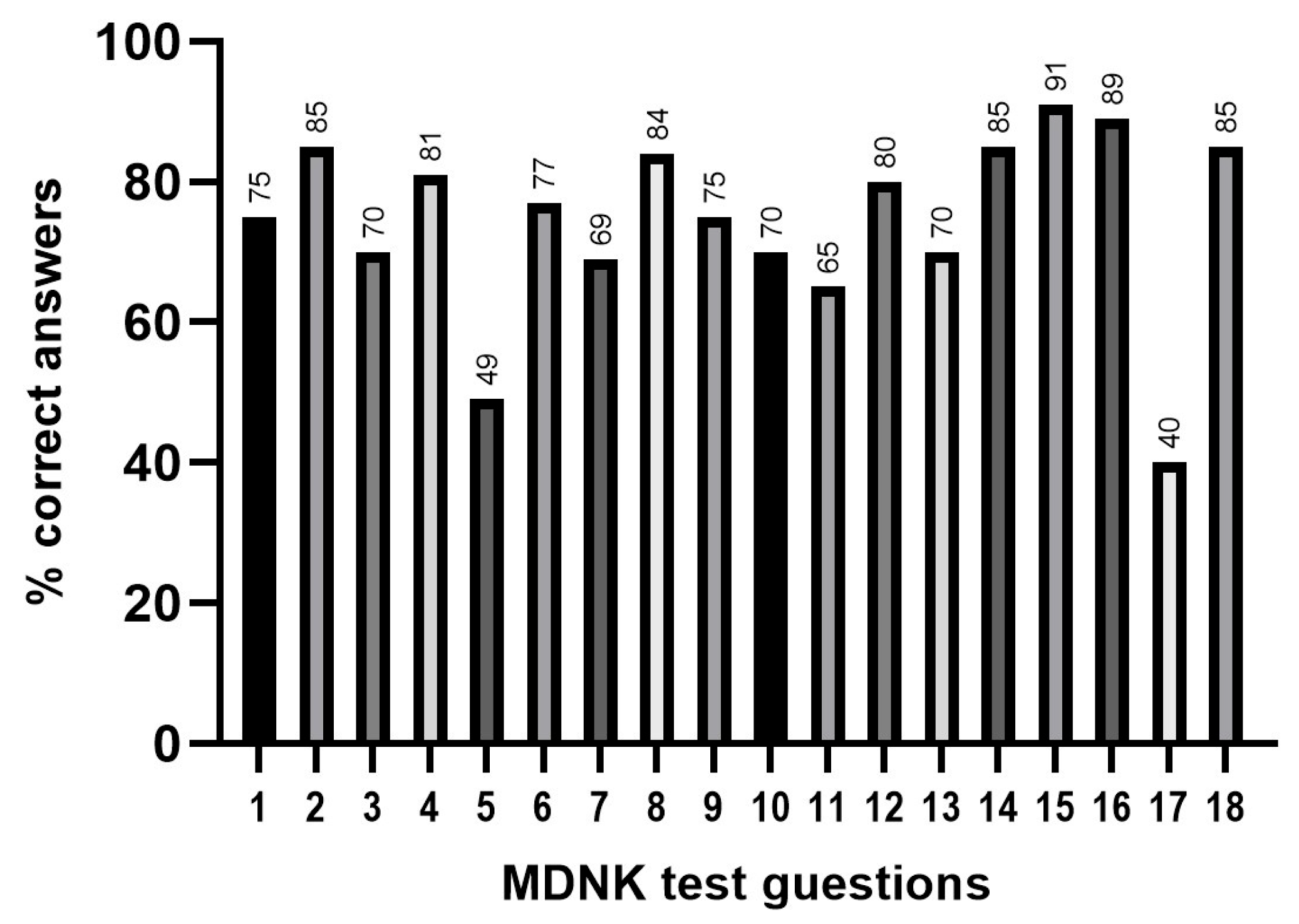
Figure 1. Descriptive statistics with the mean values (above each bar) of students correct answers to each of the 18-item MDNK questionnaire (N = 100). The numbers 1–18 on the x-axis correspond to the specific questionnaire items (Q1–Q18).
Sustainability 18 00831 g001
Table 1. The participants’ demographic data (N = 100).
Demographic DataCharacteristicsFrequency (N) Percentage
(%)
GenderF9797
M33
Age 18–202929
21–235050
24–261818
27 and more33
Year of the study11717
22525
32424
41717
51717
The employment status not working while studying5555
occasionally employed3030
permanent employed1515
Table 2. Descriptive statistics of students’ knowledge (MDNK test).
Number of values100
Minimum10.00
Maximum18.00
Range8.000
Mean (AS)13.39
Std. Deviation (SD)1.632
Std. Error of Mean (SEM)0.1632
Table 3. Analysis of junior and senior students’ MDNK test results based on median accuracy scores (%).
StatisticJuniorsSeniors
Sum of ranks311.5354.5
Median score of correct answers (%)76.0077.50
number of items (n)1818
Mann–Whitney U140.5
p value0.5046
Difference: Actual1.500
Difference: Hodges-Lehmann3.000
Rank-biserial correlation (r)0.13
95.29% CI of difference−5.000 to 11.00
Rank-biserial correlation, r—measure of effect size (0.1 = small, 0.3 = medium, 0.5 = large); CI—Confidence Interval.
Table 4. Analysis of junior and senior students’ knowledge based on the MDNK test.
Question Correct Answers,
(%)
(1st–3rd Year)
Correct Answers,
(%)
(4th–5th Year)
p-Value
Fisher’s Exact Test
OR
(95% CI)
Q176.074.00.87041.113
(Healthy fats)(0.5837–2.143)
Q2 79.097.0*** 0.00010.1163
(Olive oil)(0.03584–0.3668)
Q3 68.074.00.43600.7466
(Fish frequency)(0.4088–1.406)
Q4 79.085.00.35760.6639
(Pyramid base)(0.3151–1.407)
Q5 42.062.0** 0.00700.4438
(Legumes frequency) (0.2545–0.7868)
Q6 76.079.00.73510.8418
(Dairy consumption)(0.4389–1.597)
Q7 67.074.00.35230.7166
(Eggs frequency)(0.3920–1.335)
Q8 86.079.00.23401.633
(Drinks) (0.7566–3.360)
Q9 73.079.00.40790.7187
(Cooking method)(0.3817–1.391)
Q10 70.071.01.00.9531
(Type of bread)(0.5321–1.748)
Q11 61.074.00.06960.5495
(Red meat restriction) (0.3067–1.000)
Q12 82.076.00.38561.439
(Cardiovascular benefits) (0.7393–2.936)
Q13 68.074.00.43600.7466
(Vine consumption) (0.4088–1.406)
Q14 86.082.00.56341.348
(Fruit and vegetables)(0.6367–2.763)
Q15 89.091.00.81430.8002
(Refined sugars)(0.3348–1.995)
Q16 88.088.01.01.000
(Unsaturated fats) (0.4341–2.303)
Q17 39.041.00.88530.9200
(Olive oil fatty acids)(0.5335–1.651)
Q18 86.082.00.56341.348
(Nuts and seeds)(0.6367–2.763)
Juniors (1st–3rd year); Seniors (4th–5th year); Q1, Q2, …-Q18—specific items from the MDNK questionnaire; OR = Odds Ratio; CI = Confidence Interval; ** p < 0.01; *** p < 0.001.
Table 5. Descriptive statistics on students’ attitudes toward the benefits and usefulness of the Mediterranean Diet.
Item No.Statement ASSD
I1The Mediterranean Diet has a positive impact on the health of young people.4.400.60
I2Regular consumption of Mediterranean foods can prevent the development of chronic diseases.4.250.67
I3The Mediterranean Diet is suitable for people of all ages.4.240.70
I4The Mediterranean Diet helps maintain optimal body weight.4.200.60
I5Switching to a Mediterranean Diet requires significant lifestyle changes.2.951.21
I6Information about the Mediterranean Diet is accessible and easy to understand for students.3.550.96
I7The Mediterranean Diet has a positive impact on mental health.4.000.76
I8The Mediterranean Diet is easy to implement in student life.3.270.88
I9The Mediterranean Diet should be more widely promoted through the education system.4.360.59
I10The Mediterranean Diet encourages responsible, sustainable behavior towards the environment.4.170.64
I1, I2, …-I10—items number; AS—arithmetic mean; SD—standard deviation.
Table 6. Comparison of mean values of attitudes between junior and senior students.
Item
No
AS
(Juniors)
AS
(Seniors)
p-Value
t-Test
Cohen’s d
I14.384.380.9780.0
I24.264.090.1970.25
I34.154.030.4170.17
I44.174.090.5290.13
I52.913.090.486−0.15
I63.563.740.392−0.19
I73.944.090.372−0.20
I83.232.940.1590.33
I94.244.290.684−0.08
I104.054.090.767−0.06
AS—arithmetic mean; Cohen’s d—measure of effect size (0.2 = small, 0.5 = medium, 0.8 = large).
Table 7. Students’ self-assessment of eating habits (MEDAS test).
Adherence CategoryNumber of Students
Low adherence
(0–5)
38
Moderate adherence
(6–9)
57
High adherence
(10–14)
5
Table 8. Self-assessment of eating habits (MEDAS test) among junior and senior students.
Years of
Study
AS
Score
Low
Adherence
N/%
Moderate
Adherence
N/%
High
Adherence
N/%
p-Value
Fisher’s
Exact Test
Cramér’s V
Juniors
(1st–3rd year)
5.9323/34.8438/57.575/7.570.25120.18
Seniors
(4th–5th year)
5.7915/44.1119/55.880/0
N—number of students; %—percentage of students; Cramér’s V—effect size (interpretation: <0.07 negligible, 0.07–0.21 small, 0.21–0.35 medium, >0.35 large).
Table 9. Descriptive statistics of students’ adherence to the Mediterranean Diet (MEDAS test) according to the employment status of students.
Employment StatusNot Working
While Studying
Occasionally
Employed
Permanent
Employed
Number of students553015
Minimum3.0004.0004.000
Maximum10.009.0009.000
Range7.0005.0005.000
Mean6.2916.0676.467
Std. Deviation (SD)1.8821.4131.642
Std. Error of Mean (SEM)0.25380.25790.4239
Table 10. Results of Analysis of Variance (ANOVA) for the average MEDAS score in relation to the three employment categories.
ANOVASSDFMSF
(DFn, DFd)
p-ValueEta-Squared
η2
Treatment
(Between columns)
1.80520.9023F (2, 97) = 0.3050p = 0.7378
Residual
(Within columns)
286.9972.958 0.006
Total288.899
SS—Sum of Squares; DF—Degrees of Freedom; MS—Mean Square; DFn—Numerator Degrees of Freedom; DFd—Denominator Degrees of Freedom; Eta-squared (η2)—effect size (interpretation: <0.01—negligible; 0.01 < 0.06—small; 0.06 < 0.14—medium; 0.14 < 1—large).
Table 11. Tukey’s post hoc test for comparing average MEDAS scores across pairs of employment status.
Tukey’s Multiple Comparisons TestMean Diff.95.00% CI of Diff.Adjusted p-Value
not working while studying vs. occasionally employed0.2242−0.7049 to 1.1530.8341
not working while studying vs. permanently employed−0.1758−1.368 to 1.0170.9345
occasionally employed vs. permanently employed−0.4000−1.695 to 0.89460.7431
Table 12. Fisher’s exact test for comparison of adherence to MD according to students’ employment status.
Fisher’s Exact Test Low
Adherence
Moderate
Adherence
High
Adherence
p-ValueCramér’s V
Not working (N = 55)222850.3391
Occasionally employed (N = 30)111900.14
Permanent employed (N = 15)5100
Cramér’s V—Effect size (interpretation: <0.07 negligible, 0.07–0.21 small, 0.21–0.35 medium, >0.35 large).
Disclaimer/Publisher’s Note: The statements, opinions and data contained in all publications are solely those of the individual author(s) and contributor(s) and not of MDPI and/or the editor(s). MDPI and/or the editor(s) disclaim responsibility for any injury to people or property resulting from any ideas, methods, instructions or products referred to in the content.


