
Article

Challenging School Journeys: How Does Bussed Education Contribute to Access to Quality Education?

by
Yurdagül Doğuş
Department of Educational Administration, Kocaeli University, İzmit 41001, Türkiye
Sustainability 2026, 18(2), 664; https://doi.org/10.3390/su18020664
Submission received: 18 November 2025 / Revised: 23 December 2025 / Accepted: 5 January 2026 / Published: 8 January 2026

Abstract

This article discusses the policy of Bussed Education in Türkiye in the context of the fourth Sustainable Development Goal, “quality education”. The contributions made by the policy of Bussed Education, which aims to facilitate the access of students living in disadvantaged areas to education under equal conditions, to quality education were examined. The sample of the study, which was carried out using a qualitative research method, consisted of 38 teachers and 39 school principals (77 participants in total) selected via purposeful sampling. The participants were working at schools in different regions of Türkiye where education by busing was being implemented. Data were collected in interviews carried out using a semi-structured interview form. The results revealed four themes in the context of which the policy of Bussed Education supported Sustainable Development Goal 4. It was concluded that the policy of Busing in Education was a policy that facilitated the access of students living in disadvantaged areas to schools and supported access to quality education in terms of equal opportunities, sustainability, inclusivity, and employment. Recommendations made for policymakers included the acknowledgment of the shortcomings of busing in education and the resolution of arising challenges by the consideration of contextual conditions.

1. Introduction

Access to quality education is one of the most important tools for individuals to achieve their potential and reach better living standards. For students, the first step of accessing quality education is the ability to attend school. However, some students need to overcome much greater challenges to take this first step in comparison to others [1]. The challenging journeys to school taken on by students living in disadvantaged school zones, some even portrayed in documentaries (e.g., Most Dangerous Ways to School), are among the important problem areas for politicians and scientists [2,3,4]. For this reason, in most countries, governments implement various policies to facilitate the access of students living in disadvantaged school zones to quality education [5,6,7,8]. Nevertheless, little is known about how these policies contribute to access to quality education, which is the fourth of the Sustainable Development Goals (SDG) adopted by members of the United Nations [4,9,10,11].
The quality of education is a multi-component structure influenced by, but not limited to, adopted policies, the teaching process, teacher qualifications, the resources available to schools, and the relationships they establish with their environment [12,13]. Within this structure, students of teachers who establish positive relationships with their students, use class time actively, and motivate them are more successful in academic and non-cognitive skills [14,15,16,17,18]. Qualified teachers can produce more qualified student outcomes, especially in developing countries [18]. Qualified schools with sufficient teachers in terms of quality and quantity, educational materials [19], physical conditions [20], effective leadership practices, strong family involvement [12], and a disciplined environment [16], and allocate extra time for student learning create a positive difference in student outcomes [16,21,22]. Access to these high-quality schools and the quality education they offer for students living in disadvantaged areas depends primarily on their physical access to these schools and the transportation options that make this possible [9]. Rural areas, in particular, have very limited school diversity and suffer from deficiencies in infrastructure, educational materials, and teacher resources [23,24]. As Pfeffer [25] determines, improvements in access to education can also contribute to access to quality education.
Countries consider their well-educated young populations to be the most notable advantage and the main building block of global competition in terms of long-term development and growth [26,27,28]. Similarly, schooling and access to education have significant implications for the current and future quality of life of individuals [4,27,29,30]. Despite this importance, how students participate in education and commute to school is often neglected [31]. According to the results of a study conducted in Türkiye, one of the most important reasons for not sending girls to high school was distance to the school [32]. In another study carried out with a large dataset, it was determined that being able to graduate from university in Türkiye was associated with geographical factors [26]. In other words, the access of students to school, especially in disadvantaged areas, is not merely a logistics issue but bears highly important meanings, including equal opportunities, justice, development, and the right to education.
The United Nations considers education one of the most powerful instruments of sustainable development [33,34]. On the other hand, researchers who studied transportation in education argued that although transportation for school had an important place in the access of students to school, it could be considered an unimportant issue in the literature [35]. It was emphasized that bussed education policies are not researched sufficiently, and it is needed to discover the unique challenges of the journeys of students living in different countries and regions to school [4,36]. Gottfried et al. [10] stated that qualitative studies should be carried out to demonstrate the importance of transportation to school, especially for students living in rural areas and other disadvantaged zones. Sustainable Development Goals are a product of a global effort focusing on providing a sustainable future for everyone [37], and access to education by all students appears to be the most critical component that will support this effort.
This study, which aims to determine how a policy designed to facilitate access to education for students living in disadvantaged areas by transporting them free of charge using public resources would contribute to Sustainable Development Goal 4 (SDG 4), may be considered important for various reasons. First, the results to be obtained in this study and the recommendations to be made may attract the attention of policymakers and make the achievement of SDG 4 easier. This is because the lack of vision regarding an issue in policymakers may prevent them from forming the political will necessary to achieve SDGs [38]. Other countries implementing similar practices may make improvements in their current policies by utilizing the results obtained in this study. Second, this study may enhance the current literature by helping various stakeholders better understand the outcomes of a policy regarding access to quality education. Considering the inductive nature of qualitative studies, this study may provide a theoretical basis for future research [39]. With its context-specific findings, it can offer a voice to voiceless groups. The results of this study may also support the quantitative findings of previous studies examining the factors acting as barriers to and facilitators of access to quality education (e.g., [31]) with qualitative data. Finally, the literature review conducted for this study revealed no previous study directly addressing how a policy of bussed education contributed to SDG 4. This is why this study may contribute to filling this gap in the literature. Accordingly, the following research question guided this study:
RQ: What are the views of teachers and school principals working at schools where bussed education is implemented regarding the achievement of SDG 4 through bussed education?
Literature Review
Education is critical because it has structural and long-term implications for the well-being of individuals and the wealth of countries [4,33]. Accordingly, policies for access to education and improvements in education have become an important agenda item for all nations [40]. Education has been known as the “great equalizer” for a long time [41]. Regardless of their background and conditions, all children must have access to quality education [29,42]. Despite these considerations, the main determinant of access to education for students living in disadvantaged areas is still their ability to find transportation to school [4,7,11,32]. Gottfried et al. [10] stated that the school bus serves as a lifeline for students, especially those living in rural areas. This is why it is important to achieve SDG 4 and investigate school transportation policies that will facilitate the access of all students to education.
Sustainable Development Goals
The concerning scale of the rapid exhaustion of resources for the future of the world has led to the emergence of the concept and understanding of sustainability [43]. Sustainability is defined as meeting the needs of the present without compromising the ability of future generations to meet their own needs [34]. This difficult task requires the balanced use of resources to ensure the continuity of social, environmental, and economic systems [44,45]. United Nations, gathering the nations of the world, provided normative standards to actualize sustainable development and ensure the implementation of identified policies [38,46]. It identified 17 Sustainable Development Goals aimed at ending poverty and hunger, facilitating complete access to clean water, hygiene conditions, clean energy, decent jobs, sustainable cities, and living areas for all people, ensuring gender equality, protecting the physical and mental health of individuals, reducing inequalities, and providing a sustainable climate, economic growth, peace, and justice and 169 targets and indicators to monitor the progress of these goals [42]. The fourth of these goals (SDG 4) focuses on the access of all individuals to quality education.
The UN acknowledged access to quality education as a main facilitator of all other goals [33]. There is also a consensus in the literature that quality education has critical functions in various fields such as economic growth, social equality, individual well-being, and democratic participation [37,38,47,48]. In this sense, SDG 4 has seven outcome targets and three means of implementation targets to promote inclusive, fair, and lifelong education for all individuals. In summary, these targets envision access to education on all levels for all individuals (children, youths, and adults) by the year 2030. They also involve the possession of literacy and mathematics skills by all individuals, the prevalence of sustainable development, the acquisition of occupational and technical skills for access to decent employment, the establishment of safe, non-violent, inclusive, and effective educational environments for everyone, and the facilitation of a culture of peace. Enhancing teacher qualifications and expanding scholarship opportunities for individuals by 2030 are also among the targets of SDG 4 [42]. Thus, the access of students living in disadvantaged areas to education is important for the success of SDG 4.
Transportation to School in Disadvantaged Areas
In the literature, school zones in rural areas and the peripheries of cities and those used by the children of minorities, impoverished families, and immigrants are known as disadvantaged school zones [35,49]. Students living in rural areas have some common problems, such as living in a small area, being far from the cultural and artistic activities of urban areas, insufficient resources, and low educational and financial status [4,50,51]. Other common problems are distance to schools and the challenges experienced by students while trying to attend schools [2,4,5,7,10]. The transportation problems of disadvantaged areas and the remoteness of schools are among the significant causes of low participation in education [7,52,53,54]. Bouoiyour et al. [55] found that children living in homes farthest from the school were less likely to keep attending school. This problem is seen in students from both developed and developing countries [51,56]. The transportation of students to school is among the most significant issues in terms of education in a country like Brazil, where a large part of the population lives in small settlements that can be considered rural [4,5]. In rural areas of India, proximity and transportation are the critical determinants of the ability of students to attend school [7]. Indeed, in some countries, the access of students from rural areas to school is dependent on the employment of their parents in other countries as immigrants [55].
The importance of transportation in access to education is also a problem area for the disadvantaged parts of urban areas. Individuals living on the outskirts of cities have fewer educational opportunities and higher rates of dropping out of school and absenteeism [8]. In particular, studies conducted in the United States of America have shown that school selection is largely dependent on transportation conditions, and an accessible and free-of-charge transportation system is crucial in the enrollment of students in quality schools [31,57,58,59,60]. For this reason, many families of color move to suburbs for their children to be able to receive quality education. Moreover, families with financial issues living in underdeveloped parts of urban areas face the option of not sending their children to school due to transportation costs if they are unable to walk to school [11]. Studies carried out in Türkiye showed that the discrepancy between urban and rural schools in terms of opportunities, including transportation, was one of the greatest causes of inequality in access to education in the country [61,62].
Similar practices are implemented in various countries to facilitate the access of students living in disadvantaged areas to quality education [8]. Particularly, closing schools with decreasing numbers of students in rural areas and gathering students in more central schools is a prevalent practice implemented in several countries (e.g., USA, Australia, New Zealand, Brazil, France, Finland, Türkiye) [4,51,56,63]. In Finland, due to concerns about rationalization measures, economic sustainability, and quality of education, more than 1600 schools with decreasing numbers of students, most of which were in rural areas, were shut down or merged between 1990 and 2015 [8], and transportation to school was made free for students living in rural areas [51]. Between 2000 and 2010, the number of primary schools in villages in China was cut in half [8]. In Brazil, a busing program funded by the government is implemented in settlements in rural areas [5]. A similar policy is adopted in Türkiye, and students living in rural areas, those living in disadvantaged settlements, and those facing the risk of interruptions in their education in parts of the country affected by natural disasters like earthquakes are transported to their schools free of charge on school vehicles funded by the state [6].
Context and Background
According to 2022 data, Türkiye has a population of more than 85 million people. Approximately 17% of the population lives in rural areas, which constitute a very large proportion (93.5%) of the total area of the country. Additionally, 15% of the population of children in the age group of 0–14, corresponding to basic education, live in rural areas [64]. Statistics show that domestic migration continues in Türkiye. Education is the reason for the migration of approximately 19% of people who migrate. In 2022, more than half a million citizens migrated to another province for education [65]. This situation leads to a further decline in the population of people living in rural areas and makes it more difficult for students to access quality education and educational opportunities.
Türkiye is a country that has adopted SDGs and included these goals in its development plans [66]. In this context, it implements some reformist practices to achieve equal opportunities in education and ensure that students have access to quality education. For example, since 2012, basic education and high school education for 12 years are compulsory for all boys and girls, and it is free of charge in public schools [67]. Families who cannot afford to send their children to school are given financial aid (Conditional Cash Transfer) to meet the education-related needs of their children. Within the scope of the Movement for Enhancing Opportunities Improving Technology in Education (FATİH) project, the technological resources of schools were improved, and thousands of tablet computers were distributed to students for free [68]. In addition to this, students with limited financial resources are offered the opportunity to apply for state boarding schools and scholarships [69]. Another important policy implemented to facilitate equal opportunities in education is bussed education, which is the topic of this study. Bussed education has become a necessity in Türkiye because of the decreasing population in rural areas, the dispersed nature of geographical settlement features, and other socioeconomic reasons [36]. Bussed education, which was first initiated as a pilot practice in two provinces in the 1989–1990 academic year, was later made available in the rest of the country [63]. This way, in the 2023–2024 academic year, 1,123,182 students reached their schools in line with the bussed education policy [70].
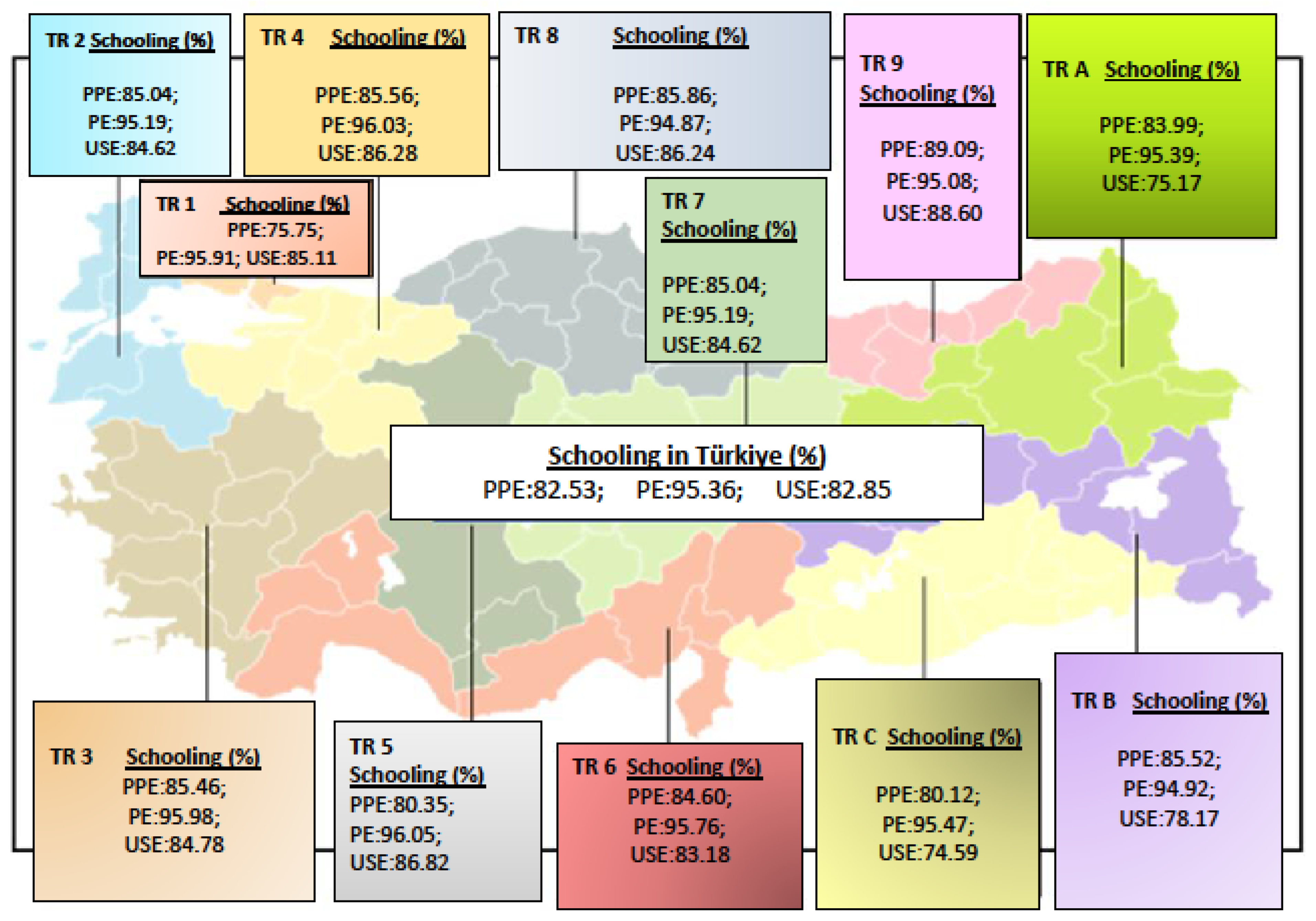
Despite significant progress in recent years in improving access to education and increasing inclusiveness, the Turkish education system still faces critical problems [26,32,71,72]. Firstly, the Turkish education system has a rigidly centralized structure, with the Ministry of National Education responsible for all processes from policy formulation to implementation. This makes it difficult to adequately identify local needs and ensure that the policies formulated are implemented with the same quality across the country [73]. Inequalities between regions in access to education and the quality of education persist [71,74,75,76,77]. The latest statistics show that approximately 9 million 123 thousand people in Turkey have no school experience. This means that 11.69% of the population over the age of six does not have any diploma [74]. Figure 1 shows the locations of the sub-regions at NUTS Level 1 and the schooling rates for the 2024–2025 academic year.
TR1 (Istanbul) is the most developed region in the country and is home to approximately one-fifth of the country’s population [78,79]. TR2 (Western Marmara), TR3 (Aegean), TR4 (Eastern Marmara) and TR5 (Western Anatolia) sub-regions are sub-regions with high development performance and high levels of development in the country. These regions (except for TR5’s secondary schooling rate) have schooling rates in preschool, primary, and secondary education that are above the Turkish average [78,79,80]. TR6 (Mediterranean) is one of the sub-regions with a high level of development performance in the country. The region’s schooling rates in preschool and high school education are above the Turkish average, while its primary education rates are close to the Turkish average [78,79]. TR7 (Central Anatolia) consists of eight provinces [78]. The capital city of Ankara is located in this sub-region. Ankara is the second most developed province in the country [79]. TR8 (Western Black Sea) and TR9 (Eastern Black Sea) sub-regions have schooling rates above the Turkish average in preschool and high school education and below the Turkish average in primary education [78]. The TRA (Northeast Anatolia), TRB (Central Anatolia), and TRC (Southeast Anatolia) sub-regions are the regions with the lowest development performance and the least level of development in the country. TRA, the region with the lowest population density in the country, has schooling rates above the Turkish average in preschool and primary education, but well below the Turkish average in secondary education [79]. The schooling rates of the TRB and TRC regions are below the Turkish average at all education levels [78]. In addition, the TRC region, where approximately 11% of the country’s population lives, has the highest number of illiterate and nongraduate individuals in the country, the lowest high school schooling rates, and is the least developed region in terms of income, health, and employment [74,78,79,80].
As can be understood from the above explanations, there are significant inequalities between western and eastern Turkey in terms of access to education and schooling rates. As mentioned earlier, bussed education is one of the policies implemented to increase equal opportunities in education. The positive and negative aspects of the bussed education policy have been reported in various studies [36,81,82,83]. This study aims to support the relevant literature by determining how the bussed education policy contributes to the targets of SDG 4.

2. Materials and Methods

Research Design
This study was conducted using a qualitative method and employed a basic qualitative research design. Qualitative research focuses on the in-depth exploration of the experiences of individuals concerning a particular phenomenon or event. When existing knowledge on a subject is limited, qualitative methods are considered the most appropriate approach. The basic qualitative research design aims to reveal the experiences of the participants regarding phenomena and events and the meanings they derive from these experiences [39]. Since this study seeks to explore and gain a deeper understanding of how the policy of “bussed education,” implemented to facilitate access to education for students living in disadvantaged areas, contributes to the targets of SDG 4 from the perspectives of participants, the basic qualitative research design was deemed most suitable. Accordingly, the views of teachers and school principals working at schools where bussed education is implemented were investigated, and the deeper meanings embedded in their experiences were explored.
Participants
The criterion and snowball sampling techniques were used to determine the participants. The criterion was that participants had to be working at schools where bussed education was implemented. Initially, 6 teachers and 2 school administrators working at such schools were contacted. Through these individuals, additional teachers and principals working in schools implementing bussed education in different regions were reached. A sufficient number of participants were included in the study, and data saturation was achieved [39]. Thus, teachers and principals from all 12 regions at the Nomenclature of Territorial Units for Statistics (NUTS) Level 1 were included in the study. The research working group consisted of teachers and school principals working in schools where transport-based education was implemented because they were the direct implementers of the bussed education policy in schools and had the closest observations on how the bussed education policy contributed to achieving SDG 4. They were also qualified to provide in-depth insights into how a locally implemented policy contributes to a global policy. Thus, the study group comprised 38 teachers and 39 school principals, totaling 77 participants. The distribution of participants by region is presented in Table 1. The participants, consisting of 32 women and 45 men, had 2 to 40 years of professional experience.
Data Collection Instrument
The data were collected using a semi-structured interview form developed by the researcher specifically for this study. The development of the interview form followed recommendations in the literature [39,84]. The form was deliberately designed with a small number of concise questions to allow the participants to express their views without being led. The draft form was reviewed by two subject-matter experts and two language experts. Based on their feedback, the final version of the form included two main questions: “What are your thoughts on bussed education? How do you evaluate this practice?” and “In your opinion, how does the practice of bussed education contribute to the access of students to quality education?” To collect more in-depth responses, follow-up prompts such as “Could you elaborate on that?” and “Can you provide examples?” were also used.
Data Collection
The data collection process began after obtaining ethical approval from Gazi University under decision number 2021-480. Interviews are among the most important data collection methods in qualitative research [85]. This is why the data to be analyzed in this study were collected in semi-structured interviews. Appointments were scheduled with the participants for interviews. Face-to-face interviews were conducted with 36 participants, while 41 interviews were conducted online due to geographical distance. Face-to-face interviews were mostly held in suitable spaces within the schools of the participants (e.g., empty classrooms, school libraries). Online interviews were conducted via the Zoom platform. The purpose of the study was explained to the participants, and their informed consent was obtained. The participants were informed that they could withdraw from the study at any time. Each participant was interviewed once, and each interview lasted approximately 40–60 min. Audio recordings were made during the interviews. These recordings were later transcribed and transferred to a Microsoft Word document. The transcripts were shared with the participants for verification. Some participants also requested to see the final version of the academic article. Their contact information was collected for this purpose.
Data Analysis
The transcribed data were transferred into an analysis table. Each row of the table contained a single sentence, and three additional columns were reserved for coding. The data were coded independently by the researcher and an external researcher with a doctoral degree. The data units were read multiple times and segmented into smaller units for sentence-by-sentence content analysis. The coding paradigm proposed by Strauss and Corbin was adopted. Open coding was followed by axial coding and then selective coding [86]. This process led from codes to categories and then to main themes.
To ensure the validity and reliability of the study, strategies recommended in the literature were followed [84,87,88]. Diversity was ensured by including participants from different cities, genders, professional experiences, and occupational roles [88]. The participants were asked to verify their interview transcripts. Member checking is a method used to test the accuracy of data representation and enhance internal validity [87]. To reduce interpretive subjectivity and increase internal reliability, the data were coded independently by the researcher and an external coder. Inter-coder agreement was examined, and discrepancies were resolved through consensus [89]. To ensure participant confidentiality, each participant was assigned a code and sequence number. Teachers were coded with “T”, and principals were coded with “P” [87]. The contextual credibility of the study was enhanced by frequently including direct quotations from the participants in the presentation of results [90]. The data collection and analysis processes were transparently reported [91].

3. Results

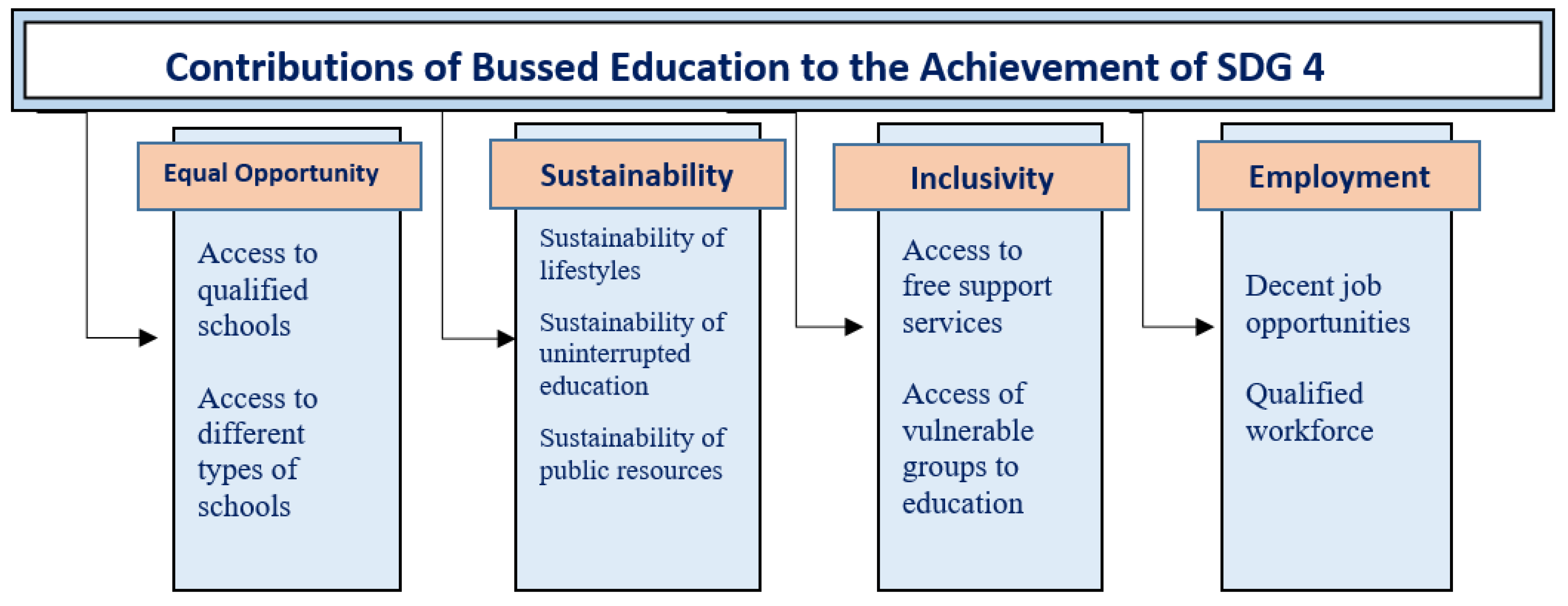
In this study, the central research problem was defined as understanding how bussed education contributes to the achievement of SDG 4. The analysis of the data revealed four main themes through which bussed education supports SDG 4: equal opportunity, sustainability, inclusivity, and employment. These themes and their associated categories are presented in Figure 2 and visualized in Table 2.
Equal Opportunity
The results showed that the practice of bussed education supported equal opportunities in education. The emphasis of the participants was that through bussed education, students living in disadvantaged areas were able to access qualified schools and different types of schools.
Access to qualified schools
Before the implementation of bussed education in Türkiye, primary school students living in rural areas were mostly educated in multi-grade classrooms. This meant that students at different grade levels received education in the same classroom from a single teacher. The participants expressed views indicating that students living in disadvantaged areas were able to receive education together with their peers and access schools with a sufficient number of teachers in terms of quality and quantity thanks to bussed education. Additionally, they stated that students could receive education in schools that were better equipped in terms of physical conditions and educational materials. Moreover, according to the participants, teachers in schools where bussed education is implemented may have better welfare conditions. According to the participants, in schools where bussed education is implemented, unlike single-teacher schools, teachers work together with colleagues who are more experienced and from different disciplines. This way, teachers learn from each other, establish social relationships, and have greater motivation to teach. According to the participants, this situation contributes positively to the welfare and happiness of teachers. Students of happy teachers with better welfare conditions are also positively affected by this, and they can receive education in classrooms taught by happy teachers with high levels of welfare. T-34 and T-37, who emphasized teacher welfare, shared their experiences regarding the professional satisfaction they felt from being teachers of disadvantaged students in schools where bussed education is implemented. Similarly, P-3 and P-28 pointed out that thanks to the practice of bussed education, teachers were able to work in central schools where many teachers are employed, engage in professional and social exchanges with other teachers, and reside in city centers, which increased their welfare and quality of life. T-10, with the statement “Thanks to bussed education, students are safely picked up from their homes and brought to their schools, and then after classes, they are taken back to their homes in the same way. They are not affected by the absence of teachers or the lack of schools,” emphasized that through bussed education, students had the opportunity to receive education in schools that were well-equipped and had a sufficient number of teachers. T-13 explained their experience regarding how students could learn better through bussed education with the words “When students are in the same classroom with their peers, they understand the subjects better, and I can devote more time to each of them for learning.” P-36 explained their experience regarding how students were able to receive education in well-equipped schools from experienced teachers through bussed education with the following statement:
“Through bussed education, I observed that students learned to read and write in a short time due to receiving education in separate classrooms and in a better environment. Students’ knowledge about subjects, their ability to perform certain activities, and their competence in using educational tools and materials show greater and faster development. Moreover, being together with peers coming from different places greatly affects the children’s speaking skills. Students use Turkish more effectively.”
(P-36)
Access to different types of schools
The participants explained that bussed education enabled students to access different types of schools in line with their interests and abilities. Before the policy of bussed education, students living in rural areas and disadvantaged parts of cities lacked the opportunity to choose schools according to their interests in vocational education due to transportation difficulties. Students living in disadvantaged areas gained the opportunity to attend different types of high schools in addition to basic education. The participants stated that students gained access to arts and sports high schools and a wide variety of vocational education opportunities. Additionally, they reported that students with higher academic skills gained the opportunity to attend different academic high schools through the centralized examination implemented for high school placement in Türkiye. A school principal (P-22) said the following on this matter:
“If there were no school bus service, for example, these children would not be able to study at an Anatolian High School [academic high school]. They would go to whatever is available in their village or town, and in most cases, there isn’t even a school. If there is, it’s a vocational high school. Those schools are insufficient for the goals these children aspire to. Two of the students in my school who come through bussed education are in the science track, and they want to become doctors. For example, it is very difficult to achieve that goal in a village setting. There are no facilities, no opportunities.”
(P-22)
The views of school principal P-23, who worked at a vocational high school in a small settlement in the TR2 region, exemplified how students were able to benefit from vocational education in line with their interests through the practice of bussed education. Some views of P-23 were as follows:
“…in districts like this one with low populations, a sufficient number of students do not enroll in our fields, some fields are not opened or are closed due to lack of students. In this sense, the practice of bussed education contributes to our students from villages being able to reach the school and to the opening of fields that are needed but could not be opened. Bussed education is not limited to İpsala. If the field the student wants to study is not available in our district but is available in Keşan, then inter-district cooperation is established, and transportation to the other district is arranged.”
(P-23)
Sustainability
The results showed that bussed education made a very significant contribution to the sustainability of lifestyles, uninterrupted education, and the effective use of public resources. Thus, it contributed to access to quality education.
Sustainability of lifestyles
In Türkiye, domestic migration has been a highly significant phenomenon for more than half a century, initially from rural to urban areas and later between cities due to economic and social reasons. The views of the participants showed that bussed education provided important gains, such as preventing migration from villages to cities and between cities, ensuring social balance and societal peace, allowing students to receive education in the same classroom with peers from different family backgrounds, and increasing the social capital of students. A significant portion of the participants (23 participants) expressed views indicating that bussed education prevented migration, and families did not have to leave their villages for their children’s education thanks to bussed education. Moreover, the participants thought that with bussed education, students did not have to attend boarding schools, could continue living with their families, and family unity was preserved, which contributed to the maintenance of social balance and the establishment of a peaceful environment in society. The participants shared their experiences regarding students who lived with their families and were able to continue their education, showing positive psychosocial development. Furthermore, the participants pointed out that through bussed education, students could receive education in the same classroom with peers from different family backgrounds, interact with different teachers, and participate in various activities provided by the school, thus increasing their social capital. For example, on this matter, T-22 shared the following experience:
“…bussed students [students benefiting from bussed education] come to school in a place different from their village. This is a very important journey for them. …because I closely observe that making friends with children other than their village friends makes them happy. I witness that they feel self-confident and have a positive mood. They come to a culturally more developed environment. This leads to an improvement in the children’s behaviors, clothing, and attention to personal hygiene.”
(T-22)
Similarly, T-8’s words “…students go to a different environment and meet new people. This different environment broadens the student’s horizon. They make friends, learn to express themselves” showed that students benefiting from bussed education were able to go beyond the limited environment they lived in, be together with students from different family backgrounds, and this way, experience both healthy personality development and expand their social capital.
Sustainability of uninterrupted education
It is known that one of the significant reasons for school dropouts in primary and secondary education is problems with access to school. The views of the participants showed that through bussed education, the academic achievement, school attendance, and enrollment rates of students could be increased. T-20, working in the TR9 region, stated the following:
“…students who come to school through bussed education receive education in independent classrooms instead of multi-grade classrooms. They enter a larger social structure. The school has a gymnasium, cultural activities are held, and students can benefit from guidance and psychological counseling services. This significantly increases the academic achievement of these students.”
(T-20)
From these words, it is understood that the facilities of schools where bussed education is implemented increase the academic achievement of students. Furthermore, some participants explained that transporting students from their homes to schools using public resources saved time, which positively reflected on their academic achievement. Moreover, almost all participants expressed views suggesting that bussed education increased school attendance and enrollment rates. The participants emphasized that especially girls living in rural areas and economically disadvantaged students were able to continue their education thanks to bussed education. T-32, working in the Malatya province in the TRB region, expressed this situation by saying, “…with bussed education, girls can continue school, they are saved from becoming child brides.” P-37, working in the Şanlıurfa province in the TRC region, had similar views: “…thanks to bussed education, school attendance increased, especially for girls, and it provided a significant opportunity for them to receive education in the East and Southeast.”
Sustainability of public resources
The views expressed by the participants indicated that bussed education ensured the sustainability of public resources through effective use. The results showed that the participants thought the practice of bussed education reduced public expenditures related to personnel costs, school buildings, and educational materials. In addition to this, among the results was that bussed education ensured accountability and facilitated the supervision of education. Furthermore, it was understood that the participants thought bussed education sustained agricultural employment, and this helped the state in its fight against unemployment. From T-3’s view, “…if there were no bussed education, the state would have to build dormitories and boarding facilities on a massive scale” and T-4’s view “…it is not financially feasible to open a high school and middle school in every village. Due to the low number of students, continuity cannot be ensured, and the idea of building a school in every village is not realistic,” it is understood that bussed education reduces public expenditures. As seen from P-4’s statement, “…with bussed education, the state gathered the very dispersed education network at a certain point and brought it to a point where supervision can be carried out,” it can be stated that bussed education facilitates the supervision of education and ensures accountability.
Inclusivity
Inclusivity in the context of education reflects an understanding in which all children, through structural and systemic arrangements, can access all the support they need and fully participate in educational processes together. The results showed that through the practice of bussed education, students were able to benefit from free support services, it facilitated access to education for vulnerable groups, and it increased inclusivity and made a significant contribution to the access of all students to quality education.
Access to free support services
All participants believed that students benefiting from the practice of bussed education were able to access free educational support services. The participants expressed views that students could reach school through a comfortable and safe journey by using the free school bus service and maintain a balanced and healthy diet through free lunch. For example, T-24, working in the Çorum province located in the TR8 region, believed that through bussed education, students were transported to school safely and comfortably free of charge. Some statements of T-24 were as follows:
“…school journeys in many parts of the world can be dangerous, just like in our country. The fact that this service is provided free of charge by the state is a great comfort for students. Children used to have to walk with a heavy backpack full of books in the middle of winter. This reflected on the education they received, on their achievement… Bussed education is the easiest way for children living in rural areas to reach school.”
(T-24)
P-21, working in a district in the TRB region, pointed out the importance of students benefiting from free lunch through the practice of bussed education. A part of P-21’s experiences was as follows:
“…we currently have 15 students who come through bussed education in our school. Their lunch arrives at noon. The meals are both warm and filling. I go to the cafeteria every day, I check, I ask the students. The students are satisfied with the meals, they eat them with pleasure, they are happy… At the very least, with this opportunity, they eat meals similar to those their mothers make at home. They eat warm meals, fruit, dessert… They eat healthy meals prepared by dietitians. Their families feel at ease, and so do we. After all, they are our children, our students.”
(P-21)
Access of vulnerable groups to education
The results showed that bussed education is an important policy for the access of vulnerable groups to quality education. The participants shared opinions and experiences explaining that girls, those with economic hardship, those living in rural and disadvantaged urban areas, migrants, nomads, and children of seasonal agricultural worker families, which are groups considered vulnerable, were able to access quality education through the bussed education policy. The participants emphasized that especially girls and those experiencing economic hardship were able to access quality education and continue their education up to higher levels thanks to the practice of bussed education. Based on their experiences, T-4, T-38, P-10, P-13, and P-19 explained that most families would not send their children to school if there were no free school bus and lunch. The experiences of school principal P-29, working in the Siirt province in the TRC region, comprehensively exemplified how vulnerable groups were able to access quality education through bussed education. P-29 explained their experiences as follows:
“…There are many students in my school who come through bussed education. Most are children from poor families. Especially for children living in villages, bussed education is an opportunity. If the student is a girl, she would never be able to go [before bussed education]. Girls would attend primary school at most. Then, this practice began, and a few families sent their children. Other families saw that there was no problem, no trouble, and said let us send our child too, let them study in a good school, let them realize their dream… This practice is the most important factor that opened the way for girls to continue their education. There are still people living as nomads around here. The children of these people also participate in education through bussed education. Our country has received many migrants. There are many migrant children in our school, and they benefit from bussed education just like other local children, they come to school, they continue their education. …and there are children of seasonal agricultural workers. We have pistachio production here, people come here with their children and families to work. The children of these families can also continue school through this practice. Bussed education is an indicator that the Turkish education system does not leave any student behind and gives equal opportunities to all. For this reason, my perspective on this practice has always been positive.”
(P-29)
Employment
According to the results, through the practice of bussed education, enabling all students to access quality education made significant contributions to employment. Under the theme of employment, decent work opportunities and the cultivation of a qualified workforce came to the fore.
Decent job opportunities
The participants believed that through bussed education, agricultural employment could be sustained, and new fields of employment emerged. For example, T-19, working in the Akşehir district of the Konya province in the TR5 region, thought that after the implementation of bussed education, migration from the village to the city decreased, local people did not have to leave their places of residence for education, and agricultural activities could be sustained. A part of T-19’s statement was as follows:
“Türkiye is an agricultural country. Development in agriculture is also valuable for our societal development. Due to the urbanization policy that began in the eighties [1980s], many of our people living in villages migrated to cities. In general, elderly people and families engaged in agriculture remained in the villages. Before bussed education, parents abandoned agriculture, animal husbandry, in short, farming and village life, and migrated to cities. Bussed education became one of the important steps that prevented leaving the village. Bussed education enabled village children to access education and partially prevented migration from the village to the city. For a family from a rural area to move to the district center means the disruption of the agricultural order they established in their village, selling their animals. It means an increase in unemployed individuals in the district center.”
(T-19)
The participants also reported that with the implementation of bussed education, student transportation vehicles became widespread, and with the employment of more bus drivers and bus guide personnel, a new field of work and employment was created. T-21, working in the Van province in the TRB region, stated that the transport service provided decent work opportunities with the following words:
“Both the primary and middle school sections of my school consist entirely of students who come through bussed education. There are a considerable number of local people who make their living from this transport work. The provincial or district centers [Directorates of National Education] conduct bus service tenders, and the company that wins the tender transports those students. The people who work as drivers or bus guide personnel for these companies are locals. Some make their living entirely from this work, some do it as a supplementary source of income alongside farming. Most of them used to work as laborers, porters… Now they work without using much physical labor, in clean clothes, and go home in the evenings.”
(T-21)
Qualified workforce
Based on the results, students who were able to access quality education through the bussed education policy also contributed to the development of the qualified workforce capacity of the country. The experiences of P-16, working in the Kars province in the TRA region, indicated how the practice of bussed education contributed to the cultivation of a qualified workforce.
“Students go to science high schools, Anatolian high schools [high schools providing academic education], vocational high schools based on to their achievement levels. There are two very successful children in my school who come from villages. These children want to become doctors. If this system did not exist, it would be very difficult for these children to achieve their dreams. They have no means. We support students who come through bussed education and are successful like these two children. We buy supplementary books, and since the teachers in our school cannot attend the support and training courses, they implement a study program during lunch breaks. Now these children will become doctors. If there were no bussed education, not only would the children not be able to achieve their dreams, but the country would also fail to cultivate such capable children. Girls benefited the most from bussed education. In the past, they were not even sent to school. Especially in our region. With this practice, now girls continue school, and they are more successful than boys. They become doctors, nurses, teachers.”
(P-16)

4. Discussion

This study aimed to investigate in depth how the policy of bussed education implemented in Türkiye contributes to quality education, which is the fourth of the Sustainable Development Goals, based on the experiences of teachers and school administrators working at schools where bussed education is practiced. The results of the study revealed four main themes emphasizing that the policy of bussed education plays an important role in the access of students to quality education: equal opportunity, sustainability, inclusivity, and employment.
Participants’ views indicate that the bussed education policy significantly supports equal opportunity by enabling all school-age children to access better-equipped schools from rural schools and continue their education at different school levels and types. In village schools where bussed education is not implemented, education is conducted in multigrade classrooms, as is the case in most countries, including Turkey. While multigrade classrooms have some important advantages, they present various structural and pedagogical challenges in terms of educational opportunity equality. For example, in multigrade classrooms, teachers must divide the lesson time among different grade levels. This means that students have to share their learning time with other classes [23]. Furthermore, teachers in combined classes are often inexperienced teachers in the early years of their careers [51]. The schools that students reach by transportation are located in more central areas. These schools may have teachers with varying levels of experience [83]. Furthermore, it can be said that these schools are relatively better equipped in terms of teacher numbers and educational materials [6,83,92]. This result is similar to the results of some studies in the literature [36,61,93,94].
Fast [35] argued that the time students spend commuting to school is a component of educational inequality. Equal opportunity in education, from a general perspective, refers to giving all students an equal chance to receive quality education and develop their abilities [95]. Through the policy of bussed education, it is aimed that students in disadvantaged parts of rural and urban areas who are at risk of being deprived of the right to education are transported to better-equipped schools in terms of human and material resources using publicly funded vehicles [6]. However, as previously stated, low schooling rates and the quality of education remain significant problems in Turkey [96]. Geographical inequalities continue to pose serious challenges for access to quality education for those living in the country’s less developed regions [74,76,77,78]. In fact, empirical studies show that the region where students live, demographic and family characteristics are related to school participation and success [76,97]. Suburbs, the east, the southeast, rural areas, low socioeconomic families, and female students have higher dropout rates and lower enrollment and achievement rates [97]. For example, Aslan [92] determined that those living in villages constitute the most disadvantaged group in terms of academic achievement.
The individual characteristics and family backgrounds of students are quite important in their academic success [98]. However, this does not tell the whole story in explaining the difference between successful and unsuccessful students [76,92,99,100,101]. Success involves complex dynamics including school characteristics, teacher qualifications, and how students reach school [62,92,102,103]. Indeed, the results of previous studies have indicated that students who continue their education through bussed education are more successful than students in boarding schools and develop more positive attitudes toward education and learning [93,94,104]. Cordes et al. [100] found that students with long school commutes (45–60 min) and very long bus rides (over 60 min) performed better academically than those with short bus rides. The researchers suggested that this difference in achievement may stem from more motivated students being willing to travel to schools farther from home and attending high-quality schools despite the long distance [100]. In contrast, Blagg et al. [105] found no difference in test scores between students attending the same school but traveling different distances in their study.
It is known that there is a positive relationship between school attendance and academic achievement [103]. Some studies show that long school journeys and the time spent traveling to school have a negative effect on student attendance, with those who have a long commute to school being more likely to be absent than those with a short commute [100,105]. For example, Marct et al. [57] found that the increased complexity and length of students’ commutes to school increased their absenteeism by more than one and a half days. In contrast, some studies indicate that students who commute to school by school bus have lower rates of school absenteeism than others [31,106]. It is emphasized that students who come to school by their own means are more likely to be absent due to irresponsible behavior on their part or that of their parents, while students who continue their education through transportation tend to attend school because bussed education provides systematic school transportation [106].
Students living in disadvantaged school zones fall outside the school system when they cannot reach school using family resources or public transportation [4,10]. In other words, school dropout is common among students who experience difficulties in accessing school [32,107,108]. The ability of Turkish students to reach qualified schools through the practice of bussed education is a highly significant gain. This is because schools that offer quality education possess teacher and material resources that are crucial for qualified education and successful student outcomes [49,62]. It is known that more experienced and more qualified teachers are the most important school resource for student success [109,110]. The results of a recent study conducted using PISA and TALIS 2018 data on Turkish high schools also showed that the location of schools, the educational materials they possess, and the experience of teachers are decisive in student success [111].
The current literature also highlights significant shortcomings in the implementation of transportation-based education [83,92,112]. For example, in their meta-synthesis study, which included 47 studies conducted in Turkey on the bussed education practice, Çetinkaya and Üzümcü [113] found that bussed education has significant problems in terms of student nutrition, school transport vehicles, travel time to school, student adaptation, and success. Aslan [92], in his study investigating the effect of school-external variables on students’ academic achievements and high school entrance exam scores, showed that students benefiting from school transportation had lower achievements than others. In addition, it is known that the school bus transportation system reduces parental involvement due to the increased distance to school [36,106,112,114], and it is known that students benefiting from bussed education cannot participate in extracurricular activities [6,36,83,112,114,115]. Furthermore, while significant common problems are experienced in the implementation of bussed education, some problems differ between regions [83,106,112]. For example, while poor roads, mountainous terrain, and long distances may contribute to school buses arriving late in eastern and southeastern Turkey, problems in western regions may stem from issues related to the planning of school buses rather than road conditions [83].
The results of this study revealed that the policy of bussed education is important for the sustainability of uninterrupted education, lifestyles, and the effective use of public resources. This result was quite significant because the targets of SDG 4 emphasize the sustainability of uninterrupted education, in other words, the access of all individuals to free and quality primary education, secondary education, vocational education, and lifelong learning. In addition to this, this goal prioritizes gender equality, human rights, cultural diversity, peace, and refraining from a culture of violence, or in other words, the sustainability of lifestyles. Furthermore, the advancement of sustainable development is related to the effective use of public resources, just like other resources [42]. The existing literature also supports the results obtained in this study and shows that bussed education facilitates access to uninterrupted education for disadvantaged groups [31,82]. In most countries, families migrate from rural to urban areas for the education of their children [8,11,65]. Migration not only causes significant changes in the lifestyles of individuals but also makes educational planning difficult. Bussed education, which transports students to school, can prevent migration and therefore contribute to the sustainability of lifestyles [8]. Additionally, students engage in a process of socialization with their peers during school journeys and gain very important experiences such as friendship, cooperation, and sharing [116]. Moreover, other studies have also demonstrated that bussed education reduces the need for school building construction and the costs of electricity and water in schools, and it allows for the effective use of public resources [8,51,106].
Although rural locations cover a large geographical area, they are places with very low populations in terms of student numbers [35]. Scarcity of resources and the challenges posed by rapid technological and environmental changes create major inequalities in access to quality education [38,92,117]. Previous studies have shown that students living in economically disadvantaged rural areas have a very low probability of continuing school [55], and one of the significant reasons for school dropout in primary and secondary education is problems with access to school [118,119]. For example, Kerr et al. [53], in an intervention program conducted by school nurses to determine the real reasons for student absenteeism, found that transportation problems were the second most common reason for any absenteeism. On the other hand, studies conducted in different countries have found that publicly provided school transportation in both rural and urban areas increases school attendance [5,10] and improves student performance [5]. Based on the results of this study and the results of other studies in the literature, it can be argued that the policy of bussed education is an important tool for the sustainability of uninterrupted education.
The results indicated that through the policy of bussed education, vulnerable groups were able to access education, students were able to benefit from free educational support services, and thus, inclusivity increased. This was highly consistent with the target of SDG 4 for all disadvantaged and vulnerable groups to access safe and inclusive learning environments [42]. Especially in the case of the access of girls to education, transportation problems have a significant share [2,32,55]. Therefore, the policy of bussed education is important for enabling all vulnerable groups and girls to access quality education and for their empowerment [29,82,120]. Thus, it can be stated that the results of this study were also supported by empowerment theory [121].
Finally, this study shows that participants believe that bussed education provides decent job opportunities and contributes significantly to the development of a skilled workforce. This was highly consistent with the fourth target of SDG 4, which aims to significantly increase the number of young people and adults with relevant skills, including technical and vocational skills, for employment and entrepreneurship in decent jobs [42]. This is especially important for the access of women and girls to education, their empowerment, and their participation in employment [29,32,44,121]. Indeed, it is known that there is a relationship between the adequate access of women and girls to education and sustainable economic development [120,121]. The results of this study were also in agreement with human capital theory, which emphasizes that there is a positive relationship between the access of individuals to education and their lifelong earnings curve, and individuals with higher levels of education can be employed in more qualified jobs [30]. However, it is a well-known fact that girls in Turkey are still at risk in terms of access to and continuation of education [76,101]. According to 2024 statistics, approximately 2.23% of the total population over the age of 6 in the country is illiterate. Moreover, the number of illiterate women (3.8%) is five times higher than illiterate men (0.7%) [74]. The absence of schools in their area is a significant reason why girls cannot attend school [32,122]. Policy makers should develop policies that increase the opportunities for students living furthest from the center to continue their education in their local areas. Some countries are pursuing policies in this direction and keeping rural schools open [8].
In this study, the opinions of teachers and school principals working in schools where bussed education is implemented were examined, as this was considered most appropriate for the main objective of the study. Therefore, the findings do not provide information from the students’ perspective about whether the school they attend is of high quality, whether they can maintain their lifestyle, or whether free educational support meets their needs. Similarly, it does not explain that school transportation is one of the key factors preventing migration from the parents’ perspective, or that school transportation enables them to participate in employment. This is because we do not know exactly how many families have abandoned the idea of migration or how many local people have been employed as a result of school transportation. In Turkey, rural and urban areas are significantly different in terms of demographic, social, cultural, and economic characteristics. Therefore, detailed statistics on population, education, employment, income, health, migration, and technological infrastructure are needed to gain a deeper understanding of the needs of rural and urban areas [123]. Statistics released to the public in Turkey tend to group large regions together. Detailed statistics explaining the needs of each rural community are not accessible [74,78,124]. Turkish Statistical Institute and MoNE data go down to the deepest provincial level (NUTS3). Local Administrative Units (LAU), classified as a sub-section of NUTS3 sections, show local-level typologies [125]. In Turkey, there are 957 districts at LAU1 and 37,176 towns and villages at LAU2. The detailed statistics to be disclosed at the LAU levels can guide the socio-economic policies to be implemented to reduce development disparities between regions [126] and can contribute to meeting the needs of each rural area, particularly in terms of education and employment.
Theoretical Implications
The results of this study have several important policy implications. First, it can be stated that bussed education is an effective policy for enabling students, especially those living in disadvantaged areas, to access a school. Second, the policy of bussed education can support the achievement of SDG 4 in the contexts of equal opportunity, sustainability, inclusivity, and employment. Finally, bussed education emphasizes the importance of inclusive policies in ensuring access to quality education for all individuals.
Policy Implications
The results of the study showed that the practice of bussed education is a policy that transports students living in disadvantaged areas to their schools and supports the achievement of SDG 4 in the contexts of equal opportunity, sustainability, inclusivity, and employment. However, the policy of bussed education also has certain shortcomings that hinder the achievement of SDG 4. For example, although the second target of SDG 4 is defined as ensuring that all girls and boys have access to quality early childhood development, care, and pre-primary education so that they are ready for primary education by 2030 [42], the policy in question does not cover preschool education for all children [6]. Through the policy of bussed education, individuals in need of special education can access lifelong learning activities and adult education courses. However, this is not valid for other individuals. This is not compatible with the targets of SDG 4, which include creating inclusive learning environments, ensuring that all individuals are literate, acquire mathematical skills, access technical and vocational education at all levels to be employed in decent jobs, and develop their skills in these areas [42]. To maintain sustainable development, it is important to expand lifelong learning opportunities through which individuals can develop their skills [34]. In the 12th Development Plan, which is one of the most fundamental policy and strategy documents of Türkiye currently in force, “ensuring that all individuals have equal access to quality education and lifelong learning opportunities on the basis of the principle of inclusivity” is listed among the main objectives [66]. It may be recommended to resolve the contradictions between policy documents and actual practices.
The existing literature shows that bussed education has some significant problems that hinder its ability to ensure equal opportunities (for example, students within the scope of bussed education not being able to participate in extracurricular academic, cultural, and sports activities) [3,5,10,36,94,114]. These significant problems of bussed education lead to the inability of students to participate in educational activities outside the school day. Studies have shown that extracurricular activities have a positive effect on the educational performance, socio-emotional development, and social capital of students, especially those of low socioeconomic status [16,60,106,127]. Considering that the fundamental principle of SDGs is to leave no one behind [128], it may be recommended to policymakers that they address these problems of the bussed education policy, which offers very important opportunities for disadvantaged students to access quality education. A practical recommendation may be to introduce different transportation services for students who will participate in extracurricular educational activities and adjust transportation schedules accordingly.
In this study, it was seen that the practice of bussed education is an important policy for delivering education to students living in disadvantaged areas. However, reaching a school is only the starting point for the goals of access to quality education [34]. Quality education emphasizes that individuals first achieve their own development and then contribute to the development of society. Therefore, policies aimed at improving the suitability of conditions for access to education at all levels and increasing the quality of education are important [34,110]. SDGs serve as a reference point in the determination of governance policies [42]. Achieving SDGs in all countries is dependent on policymakers fulfilling their commitments completely [29,32,38,44]. In one of the latest reports prepared by the European Commission, it is recommended that Türkiye further improve inclusive education by giving special attention to girls and children from disadvantaged groups and continue efforts to reduce school dropout rates [129]. For policymakers, it may be recommended that they maintain their commitment to achieving SDGs and produce solutions that take contextual conditions into account in addressing local-level problems.
Limitations
Some limitations of this study should be acknowledged. It should be noted that using a qualitative research design, the study focused on a unique context such as Türkiye, which has a large school-age youth population, hosts a significant number of migrants, and encompasses extensive rural areas. The researcher took necessary precautions to control research biases, establish trust with the participants, and obtain in-depth data. The researcher conducts qualitative research and teaches graduate-level courses on qualitative research. In addition to this, the researcher’s experience as a psychological counselor provided an advantage in building trust with people and managing personal biases. The researcher has worked in schools with students benefiting from bussed education for a significant part of his career and has extensive observations on the advantages and disadvantages of bussed education. However, the possibility that participants may have expressed opinions aimed at pleasing the researcher and that the study may contain researcher bias should be taken into account when interpreting the findings. The qualitative nature and context of the study prevent the generalization of its results to other countries. Future studies may expand the scope to further examine the subject, focusing on other countries with similar and different characteristics and discussing different student transportation practices. Moreover, it may be valuable to investigate student transportation in disadvantaged areas of Western and Eastern societies through comparative research. This study examines how the policy of bussed education contributes to achieving SDG 4 based on the views of teachers and school administrators working in schools where bussed education is implemented. It is possible for the implementers of a policy to provide in-depth information about the policy. However, the fact that the study did not include the views of the beneficiaries of the school busing policy, namely the students, parents, and those who shape this policy, constitutes a limitation. When interpreting the findings of the study, it should be borne in mind that they may reflect the culture of the teaching and school administration professions. This study may be complemented by qualitative research that includes politicians, student and parent perspectives in further studies. Further research may be conducted through quantitative studies with larger samples that incorporate cultural contexts. Additionally, while quality education is a goal in itself for the Sustainable Development Goals, it is at the intersection of other SDGs because it is based on the idea of lifelong learning for all. This characteristic makes SDG 4 a driving force for achieving other goals [42]. The study examined how a policy related to the transportation of primary and secondary school students to school using public resources contributed to the achievement of SDG 4. Due to the design of the study, the fact that very important SDG 4 components such as access to higher education, higher education scholarship opportunities, teacher qualifications, and the construction of inclusive school buildings were not examined can be considered a shortcoming. Finally, the fact that the data of the study were obtained solely through semi-structured interviews and that focus group interviews and other data collection techniques were not utilized constitutes a limitation.

Funding

This research received no external funding.

Institutional Review Board Statement

The study was conducted in accordance with the Declaration of Helsinki, and approved by Gazi University Ethics Commission (Protocol code 2021-480; Date of approval: 26 April 2021).

Informed Consent Statement

Informed consent was obtained from all subjects involved in the study.

Data Availability Statement

Dataset available on request from the author.

Acknowledgments

The author would like to thank the participants in the study group of the research.

Conflicts of Interest

The author declares no conflicts of interest.

Abbreviations

The following abbreviations are used in this manuscript:
SDGSustainable Development Goals
MoNEMinistry of National Education
NUTSNomenclature of Territorial Units for Statistics
PISAProgramme for International Student Assessment
TALISTeaching and Learning International Survey

References

  1. Aboudahr, S.M.F.M.; Jiali, L. The relationship between distributed leadership and teachers’ organizational commitment in Guangzhou city, China. J. Educ. Manag. Stud. 2019, 9, 1–9. [Google Scholar] [CrossRef]
  2. Fute, A.Z.; Massawe, B.F.; Sele, E.E.; Richard, M.B. Free and compulsory primary education in Tanzania: Challenges to a girl child in rural areas. Res. Humanit. Soc. Sci. 2019, 9, 36–73. [Google Scholar] [CrossRef]
  3. Lopes, S.G.; Xavier, I.M.C.; Silva, A.L.S. School performance: A comparative study between rural and urban students in a public school of Piauí. Ens. Avaliação Políticas Públicas Educação. 2020, 28, 962–981. [Google Scholar] [CrossRef]
  4. Vasconcellos, E.A. Rural transport and access to education in developing countries: Policy issues. J. Transp. Geogr. 1997, 5, 127–136. [Google Scholar] [CrossRef]
  5. de Almeida Nascimento, M.V.L.; de Andrade, M.O. School transportation program as means to improve public education in a minor rural town in Northeastern Brazil. Avaliação Políticas Públicas Educ. 2022, 30, 182–206. [Google Scholar] [CrossRef]
  6. Ministry of National Education [MoNE]. Ministry of National Education Regulation on Access to Education by Transportation [Milli Eğitim Bakanlığı Taşıma Yoluyla Eğitime Erişim Yönetmeliği]. 2014. Available online: https://www.mevzuat.gov.tr/mevzuat?MevzuatNo=20040&MevzuatTur=7&MevzuatTertip=5 (accessed on 1 August 2025).
  7. Singh, S.S.; Sarkar, B. Accessibility as the determinant of attending educational opportunities in rural India. Proc. Inst. Civ. Eng.–Munic. Eng. 2023, 176, 106–121. [Google Scholar] [CrossRef]
  8. United Nations Educational Scientific and Cultural Organization [UNESCO]. Global Education Monitoring Report Summary 2019: Migration, Displacement and Education: Building Bridges, not Walls. 2019. Available online: https://unesdoc.unesco.org/ark:/48223/pf0000265996 (accessed on 1 August 2025).
  9. Bierbaum, A.H.; Karner, A.; Barajas, J.M. Toward mobility justice: Linking transportation and education equity in the context of school choice. J. Am. Plan. Assoc. 2020, 87, 197–210. [Google Scholar] [CrossRef]
  10. Gottfried, M.A.; Ozuna, C.S.; Kirkseyc, J.J. Exploring school bus ridership and absenteeism in rural communities. Early Child. Res. Q. 2021, 56, 236–247. [Google Scholar] [CrossRef]
  11. Sanderson-Edwards, D. Another one rides the bus: The ımpact of school transportation on student outcomes in Michigan. Educ. Financ. Policy 2022, 19, 1–31. [Google Scholar] [CrossRef]
  12. Doran, J.A. Effective School Characteristics and Student Achievement Correlates as Perceived by Teachers in American-Style International Schools. PhD. Thesis, University of Central Florida, Orlando, FL, USA, 2004. [Google Scholar]
  13. Martinez-Abad, F.; Gamazo, A.; Rodriguez-Conde, M.J. Educational data mining: Identification of factors associated with school effectiveness in PISA assesment. Stud. Educ. Eval. 2020, 66, 100875. [Google Scholar] [CrossRef]
  14. Chetty, R.; Friedman, J.N.; Rockoff, J.E. Measuring the impacts of teachers I: Evaluating bias in teacher value-added estimates. Am. Econ. Rev. 2014, 104, 2593–2632. [Google Scholar] [CrossRef]
  15. Hanushek, E.A.; Piopiunik, M.; Wiederhold, S. The value of smarter teachers international evidence on teacher cognitive skills and student performance. J. Hum. Resour. 2019, 54, 857–899. [Google Scholar] [CrossRef]
  16. Agasisti, T.; Avvisati, F.; Borgonovi, F.; Longobardi, S. What School Factors are Associated with the Success of Socio-Economically Disadvantaged Students? An Empirical Investigation Using PISA Data. Soc. Indic. Res. 2021, 157, 749–781. [Google Scholar] [CrossRef]
  17. Rivkin, S.G.; Schiman, J.C. Instruction time, classroom quality, and academic achievement. Econ. J. 2015, 125, 425–448. [Google Scholar] [CrossRef]
  18. Wedel, K. Instruction time and student achievement: The moderating role of teacher qualifications. Econ. Educ. Rev. 2021, 85, 102183. [Google Scholar] [CrossRef]
  19. Lafortune, J.; Rothstein, J.; Schanzenbach, D.W. School finance reform and the distribution of student achievement. Am. Econ. J. Appl. Econ. 2018, 10, 1–26. [Google Scholar] [CrossRef]
  20. Tanner, C.K. Explaining relationships among student outcomes and the school’s physical environment. J. Adv. Acad. 2008, 19, 444–471. [Google Scholar] [CrossRef]
  21. Lavy, V. Do differences in schools’ instruction time explain international achievement gaps? Evidence from developed and developing countries. Econ. J. 2015, 125, 397–424. [Google Scholar] [CrossRef]
  22. Figlio, D.; Holden, K.L.; Ozek, U. Do students benefit from longer school days? Regression discontinuity evidence from Florida’s additional hour of literacy instruction. Econ. Educ. Rev. 2018, 67, 171–183. [Google Scholar] [CrossRef]
  23. Yılmaz, S.; Culha, A. Challenges and solutions in multigrade classrooms: Teachers’ insights. Int. J. Incl. Educ. 2025, 1–15. [Google Scholar] [CrossRef]
  24. Durrani, N.; Qanay, G.; Mir, G.; Helmer, J.; Polat, F.; Karimova, N.; Temirbekova, A. Achieving SDG 4, equitable quality education after COVID-19: Global evidence and a case study of Kazakhstan. Sustainability 2023, 15, 14725. [Google Scholar] [CrossRef]
  25. Pfeffer, F.T. Equality and quality in education. A comparative study of 19 countries. Soc. Sci. Res. 2015, 51, 350–368. [Google Scholar] [CrossRef]
  26. Ataç, E. Reading educational inequalities in Turkey: Statistics and geographic distributions. Educ. Sci. 2017, 42, 59–86. [Google Scholar] [CrossRef]
  27. World Bank. Education. 2025. Available online: https://www.worldbank.org/en/topic/education/overview (accessed on 10 November 2025).
  28. Hanushek, A.E.; Woessmann, L. The role of cognitive skills in economic development. J. Econ. Lit. 2008, 46, 607–668. [Google Scholar] [CrossRef]
  29. Almugren, H.Z.; Kijas, A.C.M.; Sarabdeen, M.; Binsuwadan, J. Does quality education and governance matter for women’s empowerment? The role of structural factors and governance in the MENA region. Sustainability 2024, 16, 10277. [Google Scholar] [CrossRef]
  30. Mincer, J. Investment in human capital and personal ıncome distribution. J. Political Econ. 1958, 66, 281–302. [Google Scholar] [CrossRef]
  31. Gottfried, M.A. Linking getting to school with going to school. Educ. Eval. Policy Anal. 2017, 39, 571–592. [Google Scholar] [CrossRef]
  32. Aslan, G. Vital problems of primary and secondary schools and solution suggestions: A qualitative analysis based on the opinions of school administrators. J. Qual. Res. Educ. 2021, 9, 198–234. [Google Scholar] [CrossRef]
  33. United Nations Educational Scientific and Cultural Organization [UNESCO], (2019b). 40th General Conference. Framework for the Implementation of Education for Sustainable Development for the Period of 2020–2030. Available online: https://unesdoc.unesco.org/search/b51cec93-7f72-4f41-a5bc-0cbf2536e21a (accessed on 1 August 2025).
  34. World Commission on Environment and Development [WCED]. Report of the World Commission on Environment and Development: Our Common Future. 1983. Available online: https://sustainabledevelopment.un.org/content/documents/5987our-common-future.pdf (accessed on 1 August 2025).
  35. Fast, I. Unequal traveling: How school district and family characteristics shape the duration of students’ commute to school. Travel Behav. Soc. 2020, 20, 165–173. [Google Scholar] [CrossRef]
  36. Kazak, E.; Tür, F. School administrators’ opinions about difficulties and reflections of transported education. J. Inst. Soc. Sci. 2025, 16, 1–19. [Google Scholar]
  37. Tafese, M.B.; Kopp, E. Education for sustainable development: Analyzing research trends in higher education for sustainable development goals through bibliometric analysis. Discov. Sustain. 2025, 6, 51. [Google Scholar] [CrossRef]
  38. Franco, I.B.; Derbyshire, E. SDG 4 Quality Education. In Actioning the Global Goals for Local Impact. Science for Sustainable Societies; Franco, I., Chatterji, T., Derbyshire, E., Tracey, J., Eds.; Springer: Berlin/Heidelberg, Germany, 2020. [Google Scholar] [CrossRef]
  39. Merriam, S.B. A Guide to Qualitative Research, Design and Implementation; Turan, S., Translator; Nobel Akademik Yayıncılık: Ankara, Türkiye, 2018. [Google Scholar]
  40. Bellibaş, M.Ş.; Çalışkan, Ö.; Gümüş, S. Validity and Reliability of Teacher Agency Scale. Trak. J. Educ. 2019, 9, 1–11. [Google Scholar]
  41. Mann, H. Report No. 12 of the Massachusetts School Board. 1848. Available online: https://usinfo.org/enus/government/overview/16.html (accessed on 1 August 2025).
  42. United Nations [UN]. Transforming Our World: The 2030 Agenda for Sustainable Development. 2015. Available online: https://sdgs.un.org/2030agenda (accessed on 1 August 2025).
  43. Kaynak, N.E.; Altan, A.E.; Abbak, Y.; Alp, Z.A.; Yavuz, E.; Toprak, E. A Theoretical Perspective on Quality Education from the Perspective of Sustainable Development. Iğdır Üniversitesi Sos. Bilim. Derg. 2023, 12, 592–609. [Google Scholar] [CrossRef]
  44. Malhotra, A.; Schuler, S.R.; Boender, C. Measuring Women’s Empowerment as a Variable in International Development. World Bank. 2002. Available online: https://www.academia.edu/17726621/Measuring_womens_empowerment_as_a_variable_in_international_development (accessed on 1 July 2025).
  45. Teodorescu, A.M. Sustainable development, a multidimensional concept. Annals of the Constantin Brâncuşi University of Târgu Jiu, Economy Series; pp. 82–86. Available online: https://www.utgjiu.ro/revista/ec/pdf/2015-03%20Special/14_Teodorescu%20A1.pdf (accessed on 1 July 2025).
  46. Pauw, J.B.-d.; Gericke, N.; Olsson, D.; Berglund, T. The effectiveness of education for sustainable development. Sustainability 2015, 7, 15693–15717. [Google Scholar] [CrossRef]
  47. Goczek, Ł.; Witkowska, E.; Witkowski, B. How does education quality affect economic growth? Sustainability 2021, 13, 6437. [Google Scholar] [CrossRef]
  48. Hanushek, E.A.; Woessmann, L. The Knowledge Capital of Nations: Education and the Economics of Growth; MIT Press: Cambridge, MA, USA, 2015. [Google Scholar]
  49. Torres, D.G. Distributed leadership, professional collaboration, and teachers’ job satisfaction in U.S. schools. Teach. Teach. Educ. 2019, 79, 111–123. [Google Scholar] [CrossRef]
  50. Barthes, A.A.; Alpe, Y. The rural school, a polysemous object with significant: Societal Challenges? Current research contexts and positions. In Evolutions of the Complex Relationship Between Education and Territories; Barthes, A., Champollion, P., Alpe, Y., Eds.; Wiley: Hoboken, NJ, USA, 2018; pp. 207–220. [Google Scholar]
  51. Ferreira, J. Primary school challenges in rural areas in Finland, France, and Portugal. Educ. Sociétés 2011, 28, 109–130. [Google Scholar] [CrossRef]
  52. Caiado, K.R.M.; Gonçalves, T.G.G.L. Public transportation for rural school students with special educational needs. Teor. Prática Educ. 2014, 17, 119–130. [Google Scholar]
  53. Kerr, J.; Price, M.; Kotch, J.; Willis, S.; Fisher, M.; Silva, S. Does contact by a family nurse practitioner decrease early school absence? J. Sch. Nurs. 2012, 28, 38–46. [Google Scholar] [CrossRef] [PubMed]
  54. Earlyanti, N.I.; Mayastinasari, V. Literature review: The ımpact of public transportation in public management of education access and participation. J. Tambusai Educ. 2022, 6, 17162–17168. [Google Scholar]
  55. Bouoiyour, J.; Miftah, A.; Mouhoud, E.M. Education, male gender preference and migrants’ remittances: Interactions in rural Morocco. Econ. Model. 2015, 57, 324–331. [Google Scholar] [CrossRef]
  56. Massalon, J.L. Rural Schools in France: How Inclusive Are They? Available online: https://world-education-blog.org/2020/11/17/rural-schools-in-france-how-inclusive-are-they/ (accessed on 1 July 2025).
  57. Marc, L.; Stein, M.L.; Grigg, J.A. Missing bus, missing school: Establishing the relationship between public transit use and student absenteeism. Am. Educ. Res. J. 2019, 56, 1834–1860. [Google Scholar] [CrossRef]
  58. Mitra, R. Independent Mobility and Mode Choice for School Transportation: A Review and Framework for Future Research. Transp. Rev. 2013, 33, 21–43. [Google Scholar] [CrossRef]
  59. Scott, M.R.; Marshall, D.T. Public transit and school choice in Philadelphia: Exploring spatial equity and social exclusion. J. Sch. Choice 2019, 13, 177–197. [Google Scholar] [CrossRef]
  60. Preis, D. Transportation access in U.S. suburban schools: A tool for equity or a revelation of race, class and privilege disparity? Race Ethn. Educ. 2022, 27, 1047–1067. [Google Scholar] [CrossRef]
  61. Aslan, G. An analysis regarding the equality perceptions of educational administrators. Anthropologist 2015, 20, 40–49. [Google Scholar] [CrossRef]
  62. Bilican Demir, S.; Yıldırım, Ö. Student and school characteristics explaining the rural- urban achievement gap: TIMSS 2019 analysis. Bogazici Univ. J. Educ. 2022, 39, 335–356. [Google Scholar] [CrossRef]
  63. Karakütük, M. The Practice and Problems of Transported Elementary Education. Educ. Sci. 1998, 22, 16–21. Available online: https://educationandscience.ted.org.tr/article/view/346/332 (accessed on 1 July 2025).
  64. Turkish Statistical Institute [TURKSTAT], (2023a). Urban-Rural Population Statistics 2022 [Kent-Kır Nüfus Istatistikleri 2022]. Available online: https://data.tuik.gov.tr/Bulten/Index?p=Kent-Kir-Nufus-Istatistikleri-2022-49755 (accessed on 1 July 2025).
  65. Turkish Statistical Institute [TURKSTAT], (2023b). Internal Migration Statistics 2022 [Iç Göç Istatistikleri, 2022]. Available online: https://data.tuik.gov.tr/Bulten/Index?p=Ic-Goc-Istatistikleri-2022-49727 (accessed on 1 July 2025).
  66. Strategy and Budget Directorate. Twelfth Development Plan [On Ikinci Kalkınma Planı], (2024–2028). 2023. Available online: https://www.sbb.gov.tr/wp-content/uploads/2023/12/On-Ikinci-Kalkinma-Plani_2024-2028_11122023.pdf (accessed on 1 July 2025).
  67. Ministry of National Education [MoNE]. Fundamental Law of National Education [Milli Eğitim Temel Kanunu]. 1973. Available online: https://www.mevzuat.gov.tr/MevzuatMetin/1.5.1739.pdf (accessed on 1 July 2025).
  68. Tabak, H. Türk Eğitim Sisteminde Eğitimde Fırsat Eşitliğine Kuramsal Bakış: Roller ve Sorumluluklar. Türk Eğitim Bilim. Derg. 2019, 17, 370–393. [Google Scholar]
  69. Ministry of National Education [MoNE]. Regulation on Boarding, Scholarship, Social Aid and School Boarding Houses in Public Schools Affiliated to the Ministry of National Education [Milli Eğitim Bakanlığına Bağlı Resmi Okullarda Yatılılık, Bursluluk, Sosyal Yardımlar ve Okul Pansiyonları Yönetmeliği]. 2016. Available online: https://mevzuat.gov.tr/mevzuat?MevzuatNo=20169487&MevzuatTur=21&MevzuatTertip=5 (accessed on 1 July 2025).
  70. Ministry of National Education [MoNE]. National Education Statistics Formal Education 2023–2024. 2024. Available online: https://sgb.meb.gov.tr/meb_iys_dosyalar/2024_10/11230736_meb_istatistikleri_orgun_egitim_2023_2024.pdf (accessed on 1 July 2025).
  71. Köseleci, N. Progress towards good-quality education for all in Turkey: A qualified success? Comp. Educ. 2015, 51, 555–574. [Google Scholar] [CrossRef]
  72. World Bank. Improving Quality and Equity in Basic Education in Turkey: Challenges and Options [Türkiye’de Temel Eğitimde Kalite ve Eşitliğin Geliştirilmesi Zorluklar ve Seçenekler]. 2011. Available online: http://abdigm.meb.gov.tr/projeler/ois/egitim/007.pdf (accessed on 1 July 2025).
  73. Gümüş, S.; Hallinger, P.; Cansoy, R.; Bellibaş, M.Ş. Instructional leadership in a centralized and competitive educational system: A qualitative meta-synthesis of research from Turkey. J. Educ. Adm. 2021, 59, 702–720. [Google Scholar] [CrossRef]
  74. Turkish Statistical Institute [TURKSTAT], (2025b). National Education Statistics, 2024. Available online: https://data.tuik.gov.tr/Bulten/Index?p=Ulusal-Egitim-Istatistikleri-2024-53937 (accessed on 1 July 2025).
  75. UNESCO. Education for All Global Monitoring Report 2010: Reaching the Marginalized. Paris: UNESCO. 2010. Available online: https://unesdoc.unesco.org/ark:/48223/pf0000186606 (accessed on 1 July 2025).
  76. Gümüş, S.; Chudgar, A. Factors affecting school participation in Turkey: An analysis of regional differences. Comp. A J. Comp. Int. Educ. 2016, 46, 929–951. [Google Scholar] [CrossRef]
  77. Gultekin, D.; Yildiz, S. Multifaceted regional educational inequality: Evidence from Türkiye. Comp. A J. Comp. Int. Educ. 2025, 55, 603–622. [Google Scholar] [CrossRef]
  78. Ministry of National Education [MoNE]. National Education Statistics 2024/25. 2025. Available online: https://sgb.meb.gov.tr/istatistik_k/2425.pdf (accessed on 1 August 2025).
  79. Ünsal, A.; Sülkü, S.N. Determination and comparison of development levels’ across regions: Turkey case. Bilig 2020, 95, 177–209. [Google Scholar] [CrossRef]
  80. Karaalp-Orhan, H.S. Regional disparities in Turkey: A socio-economic perspective. Eur. J. Sustain. Dev. 2020, 9, 103. [Google Scholar] [CrossRef]
  81. Avcı, M.; Güçlü, S.; Koç Can, S.; Can, M.; Karakaya, M.V.; Asoğlu, A.Y. School principals’ suggestions to the problems encountered in Secondary Schools within the scope of bussed education. Int. Soc. Sci. Stud. J. 2023, 108, 5442–5447. [Google Scholar] [CrossRef]
  82. Kan, M.; Alataş, O.; Mengüç, S.; Çinar, T.; Karaalp, T.; Sanal, Y.; Özgürkurtoğlu, M. Problems encountered by duty teachers in bussed education. Acad. J. Hist. Idea 2023, 10, 1414–1424. [Google Scholar]
  83. Yengin Sarpkaya, P.; Dal, S. Difficulties of transported education application: A case study. Int. J. Curric. Instr. Stud. 2020, 10, 83–118. [Google Scholar]
  84. Patton, M.Q. Qualitative Research and Evaluation Methods; Bütün, M.; Demir, S.B., Translators; Sage Publications: Thousand Oaks, CA, USA, 2018. [Google Scholar]
  85. Hermanowicz, J.C. The great interview: 25 strategies for studying people in bed. Qual. Sociol. 2002, 25, 479–499. [Google Scholar] [CrossRef]
  86. Kuckartz, U. Qualitative Text Analysis: A Guide to Methods, Practice and Using Software; Sage Publications: Thousand Oaks, CA, USA, 2014. [Google Scholar]
  87. Creswell, J.W. Nitel Araştırma Yöntemleri: Beş Yaklaşıma Göre Nitel Araştırma Deseni; Bütün, M.; Demir, S.B., Translators; Siyasal Kitapevi Yayınları: Ankara, Turkey, 2020. [Google Scholar]
  88. Yin, R.K. Case Study: Research Design and Methods, 4th ed.; Sage Publications: Thousand Oaks, CA, USA, 2009. [Google Scholar]
  89. Miles, M.B.; Huberman, A.M. Qualitative Data Analysis, 2nd ed.; Sage Publications: Thousand Oaks, CA, USA, 1994. [Google Scholar]
  90. Lincoln, Y.S.; Guba, E.G. Naturalistic Inquiry; Sage Publications: Thousand Oaks, CA, USA, 1985. [Google Scholar]
  91. Nowell, L.S.; Norris, J.M.; White, D.E.; Moules, N.J. Thematic analysis: Striving to meet the trustworthiness criteria. Int. J. Qual. Methods 2017, 16, 1–13. [Google Scholar] [CrossRef]
  92. Aslan, G. Determinants of student successes in transition from basic education to secondary education (TEOG) examination: An analysis related to non-school variables. Educ. Sci. 2017, 42, 211–236. [Google Scholar] [CrossRef]
  93. Şimşek, A.; Büyükkıdık, S. Evaluation of bussed education ımplementation withteachers’ and students’ opinions: Example of Bozova district. Elem. Educ. Online 2017, 16, 15–34. [Google Scholar] [CrossRef]
  94. Polatlı, B. Thematic Analysis of Postgraduate Theses in the Field of Transported Education in Turkey. Master’s Thesis, Bartın University, Bartın, Turkey, 2023. [Google Scholar]
  95. Joseph, L.B. Some ways of thinking about equality of opportunity. West. Political Q. 1980, 33, 393–400. [Google Scholar] [CrossRef]
  96. Organization for Economic Cooperation and Development [OECD]. Education at a Glance 2021: OECD Indicators; OECD Publishing: Paris, France, 2021. [Google Scholar] [CrossRef]
  97. Somel, R.N. A Relational Approach to Educational Inequality: Theoretical Reflections and Empirical Analysis of a Primary Education School in Istanbul; Springer: Berlin/Heidelberg, Germany, 2019. [Google Scholar] [CrossRef]
  98. Coleman, J.S.; Campbell, E.Q.; Hobson, C.J.; McPartland, J.; Mood, A.M.; Weinfeld, F.D.; York, R.L. Equality of Educational Opportunity; Department of Health, Education and Welfare: Washington, WA, USA, 1966.
  99. Jarl, M.; Andersson, K.; Blossing, U. Organizational characteristics of successful and failing schools: A theoretical framework for explaining variation in student achievement. Sch. Eff. Sch. Improv. 2021, 32, 448–464. [Google Scholar] [CrossRef]
  100. Cordes, S.A.; Rick, C.; Schwartz, A.E. Do long bus rides drive down academic outcomes? Educ. Eval. Policy Anal. 2022, 44, 689–716. [Google Scholar] [CrossRef]
  101. Bayrakçeken, E.; Çinici, M.; Alkan, Ö. School dropout among children aged 5–17 in Türkiye and related factors: A logistic regression analysis. BMC Pediatr. 2025, 25, 661. [Google Scholar] [CrossRef] [PubMed]
  102. Burroughs, N.; Gardner, J.; Lee, Y.; Guo, S.; Touitou, I.; Jansen, K.; Schmidt, W. A review of the literature on teacher effectiveness and student outcomes. In Teaching for Excellence and Equity; Springer: Berlin/Heidelberg, Germany; pp. 7–14. [CrossRef]
  103. Edgerton, E.; McKechnie, J. The relationship between student’s perceptions of their school environment and academic achievement. Front. Psychol. 2023, 13, 959259. [Google Scholar] [CrossRef]
  104. Gürbey, S.; Ezberci Çevik, E.; Şahin, A. Education in settled, transported and regional boarding school in primary education and the effect of this education on students’ attitudes towards science course: The case of Yahyalı district. West. Anatolia J. Educ. Sci. 2020, 11, 445–459. [Google Scholar]
  105. Blagg, K.; Rosenboom, V.; Chingos, M.M. The Extra Mile: Time to School and Student Outcomes in Washington, DC [Research report]. Urban Institute. 2018. Available online: https://files.eric.ed.gov/fulltext/ED592622.pdf (accessed on 1 July 2025).
  106. Çavuşoğlu, D.; Dönmez, B. Transported education application in Pazarcık according to the views of the managers, teachers, students and parents. J. Theor. Educ. Sci. 2018, 11, 646–675. [Google Scholar] [CrossRef]
  107. Razia, B. Causes of Deprivation of Elementary Education in Children Living in Slums. Eur. J. Educ. Pedagog. 2021, 2, 141–144. [Google Scholar] [CrossRef]
  108. Blose, S.; Mbatha, A. Wrestling with complexities of rural school contexts: Learning from deputy principals’ leadership experiences. Educ. Citizsh. Soc. Justice 2024, 20, 616–633. [Google Scholar] [CrossRef]
  109. Harris, D.N.; Sass, T.R. Teacher training, teacher quality and student achievement. J. Public Econ. 2011, 95, 798–812. [Google Scholar] [CrossRef]
  110. Organisation for Economic Co-Operation and Development [OECD]. How Is Equity in Resource Allocation Related to Student Performance? PISA in Focus; OECD: Paris, France, 2014. [Google Scholar] [CrossRef]
  111. Kılınç, A.Ç.; Özdemir, N. Does distributed leadership matter for student achievement? Evidence from a centralised education system. Educ. Stud. 2022, 51, 1–21. [Google Scholar] [CrossRef]
  112. Demirci, R. Problems encountered in bussed education and solution suggestions according to the opinions of managers and teachers working in transportation-centered schools in Türkiye. J. Educ. Theory Pract. Res. 2022, 8, 293–306. [Google Scholar]
  113. Çetinkaya, M.; Üzümcü, M. Investigation of the studies on bussed education. Siirt J. Educ. 2021, 1, 1–16. [Google Scholar]
  114. Jimerson, L. Slow Motion: Traveling by School Bus in Consolidated Districts in West Virginia. 2007. Available online: https://files.eric.ed.gov/fulltext/ED499440.pdf (accessed on 1 July 2025).
  115. Bilek, E.; Kale, M. Application of mobile education according to the views of teachers working in transportation-centred schools. Gazi Univ. J. Educ. Fac. 2012, 32, 609–632. [Google Scholar]
  116. Galliger, C.C.; Tisak, M.S.; Tisak, J. When the wheels on the bus go round: Social interactions on the school bus. Soc. Psychol. Educ. 2009, 12, 43–62. [Google Scholar] [CrossRef]
  117. Kıbrıslıoğlu Uysal, N.; Gelbal, S. Inequality in education in Turkey in the scope of PISA and TSI. Kastamonu Educ. J. 2018, 26, 1195–1206. [Google Scholar] [CrossRef]
  118. Eryılmaz-Ballı, F.; Kartal, S. School dropout studies: A systematic analysis study. Kırıkkale Univ. J. Soc. Sci. 2020, 10, 257–278. [Google Scholar]
  119. Şahin, S.; Arseven, Z.; Kiliç, A. causes of student absenteeism and school dropouts. Int. J. Instr. 2016, 9, 195–210. [Google Scholar] [CrossRef]
  120. Cooper, R. Why it’s Imperative to Invest in Education for Adolescent Girls. 2017. Available online: https://blogs.worldbank.org/en/education/why-it-s-imperative-invest-education-adolescent-girls (accessed on 1 April 2025).
  121. Kabeer, N. Resources, agency, achievements: Reflections on the measurement of women’s empowerment. Dev. Change 1999, 30, 435–464. [Google Scholar] [CrossRef]
  122. Kaya, H. The reasons for don’t attend formal secondary education according to the opinions of parents and students of girls in rural sections. Int. Soc. Sci. Stud. J. 2022, 8, 4011–4025. [Google Scholar]
  123. Özlü, S.; Dedeoğlu Özkan, S.; Beyazlı, D. Clustering of rurality based on selected sosyo-demographic variables and their variations over time. Planlama 2021, 31, 31–46. [Google Scholar] [CrossRef]
  124. Turkish Statistical Institute [TURKSTAT], (2025a). Address-Based Population Registration System Results, 2024 [Adrese Dayalı Nüfus Kayıt Sistemi Sonuçları, 2024]. Available online: https://data.tuik.gov.tr/Bulten/Index?p=Adrese-Dayali-Nufus-Kayit-Sistemi-Sonuclari-2024-53783 (accessed on 5 October 2025).
  125. Eurostat Local Administrative Units (LAU). 2024. Available online: https://ec.europa.eu/eurostat/web/nuts/local-administrative-units (accessed on 5 October 2025).
  126. Sertkaya Doğan, Ö.; Gökburun, İ. A road map to facilitate geographical ınterpretation of the population data in nuts implementation. East Geogr. Rev. 2019, 24, 39–60. [Google Scholar]
  127. Grigoroiu, M.C.; Tescașiu, B.; Constantin, C.P.; Țurcanu, C.; Tecău, A.S. Extended learning through after-school programs: Supporting disadvantaged students and promoting social sustainability. Sustainability 2024, 16, 7828. [Google Scholar] [CrossRef]
  128. United Nations [UN]. The Sustainable Development Goals Report 2023: Special Edition. 2023. Available online: https://unstats.un.org/sdgs/report/2023/ (accessed on 5 October 2025).
  129. European Commission. Türkiye report 2024. 2024. Available online: https://enlargement.ec.europa.eu/turkiye-report-2024_en (accessed on 5 October 2025).
Figure 1. Türkiye’s 2024–2025 academic year NUTS Level 1 schooling rates. (PPE: Pre Primary Education (5 age); PE: Primary Education [primary school+lower secondary school]; USE: Upper Secondary Education). (Figure 1 was created by the researcher with the help of Ministry of National Education [MoNE]), 2025 [78]).
Sustainability 18 00664 g001
Figure 2. Contributions of bussed education to the achievement of SDG 4.
Sustainability 18 00664 g002
Table 1. Distribution of participants by region.
ParticipantTR1TR2TR3TR4TR5TR6TR7TR8TR9TRATRBTRCTotal
Teacher33344334323338
Principal43444333114539
Total76 788667437877
Table 2. Contributions of bussed education to the achievement of SDG 4.
ThemesCategories Codes
Equal
opportunity
Access to qualified schoolsAccess to schools with sufficient numbers of teachers; Access to qualified and experienced teachers; Access to teachers with high levels of welfare; Access to schools well-equipped with instructional materials; Access to schools with adequate physical environments
Access to different types of schoolsAccess to primary schools, middle schools, vocational middle schools, and different types of high schools; Access to vocational schools and qualified vocational and technical schools; Access to art schools and sports schools
SustainabilitySustainability of lifestylesPrevention of migration from rural to urban areas; Achievement of social balance and societal peace; Students receiving education in the same classroom as peers from different family backgrounds; Raising the social capital of students
Sustainability of uninterrupted educationRaising academic success; Raising schooling rates; Increasing student attendance
Sustainability of public resourcesReducing public expenditure; Accountability; Easier inspection of education; Reducing personnel and school expenditure; Making the fight against unemployment easier
InclusivityAccess to free support servicesFree school buses; Free lunch
Access of vulnerable groups to educationAccess of girls to education; Access of those living in rural areas and disadvantaged parts of urban areas to education; Access of those with financial problems to education; Access of immigrants to education;
Access of nomadic people to education; Access of children of seasonal agricultural workers to education
EmploymentDecent job opportunitiesEmployment of service workers for school buses (bus drivers, supervisory personnel; Contribution to the continuity of agricultural employment
Qualified workforceDeveloping the technical skills of students; Developing the technological skills of students; Developing the vocational skills of students; Developing the creativity skills of students; Developing the adaptation skills of students
Disclaimer/Publisher’s Note: The statements, opinions and data contained in all publications are solely those of the individual author(s) and contributor(s) and not of MDPI and/or the editor(s). MDPI and/or the editor(s) disclaim responsibility for any injury to people or property resulting from any ideas, methods, instructions or products referred to in the content.