Article

Spatiotemporal Trade-Offs in Ecosystem Services in the Three Gorges Reservoir Area: Drivers and Management Implications


1
Key Laboratory of Water Environment Evolution and Pollution Control in Three Gorges Reservoir, School of Environmental and Chemical Engineering, Chongqing Three Gorges University, Chongqing 404020, China
2
School of Geographical Sciences, Southwest University, Chongqing 400715, China
*
Author to whom correspondence should be addressed.
Sustainability 2026, 18(2), 658; https://doi.org/10.3390/su18020658
Submission received: 6 November 2025 / Revised: 17 December 2025 / Accepted: 6 January 2026 / Published: 8 January 2026
(This article belongs to the Special Issue Ecology, Environment, and Watershed Management)

Abstract

The Three Gorges Reservoir Area (TGRA) faces mounting pressures from urbanization and hydrological regulation, threatening the sustainability of its ecosystem services (ESs). The InVEST model, coupled with optimal parameter geographical detector (OPGD) and geographically and temporally weighted regression (GTWR), was employed to assess spatiotemporal changes, trade-offs/synergies, and driving mechanisms of four ESs, water yield (WY), habitat quality (HQ), carbon storage (CS), and soil conservation (SC), from 2000 to 2020. Results revealed that WY and SC increased significantly by 24.54% and 5.75%, respectively, while HQ declined by 3.02% and CS remained relatively stable, with high-value ES zones mainly concentrated in the eastern and northern forest-dominated areas. Regarding interactions, strong synergies existed among HQ, CS, and SC, whereas WY exhibited persistent trade-offs with other services, particularly in the central agricultural-urban transitional zone. Furthermore, landscape diversity increased linearly, driven by forest expansion and urban growth. Mechanistically, land use type (LUT) dominated the spatial distribution of WY, HQ, and CS, while slope primarily controlled SC patterns, with all driver interactions demonstrating enhanced effects. By coupling OPGD with GTWR, this study uniquely elucidates the spatiotemporal instability of ES trade-offs/synergies and the spatial heterogeneity of their driving mechanisms, providing a novel scientific basis for implementing spatially differentiated management strategies in large-scale reservoir-impacted regions.

1. Introduction

The expansion of large-scale hydrological engineering worldwide has fundamentally altered mountain ecosystem functioning, intensifying conflicts between integrated water management and biodiversity conservation [1,2,3]. In reservoir-affected regions, dam operations abruptly reshape hydrological regimes, inundate productive lands, and displace millions of residents, forcing rapid land use transitions that disrupt ecosystem service (ES) provision [4] and pose long-term challenges to regional ecological security and sustainable development.
ESs, which encompass the multiple forms of value and advantages that ecosystems confer upon human societies, serve as an essential conceptual lens for interpreting the interconnected dynamics between natural processes and social systems. Existing research indicates that ES assessments have been conducted at multiple scales globally [5], nationally [6], provincially [7], and at county [8], urban [9], and watershed [10] levels, covering diverse ecosystem types such as forests [11], farmlands [12], and lakes [13]. Different services form networked relationships through energy flow and material cycling: under resource competition and spatial conflicts, one service may decline while another increases (trade-off), or multiple services may be enhanced simultaneously (synergy) [14]. This interactive structure is regarded as a concentrated manifestation of the integration of ecosystem functions and changes in human well-being, and also serves as a key entry point for current research on ecosystem management and spatial planning [15].
As research has deepened, the academic community has shifted from single-indicator assessments to multidimensional, comprehensive quantification of ESs. The InVEST model, with its modular structure and strong compatibility with multi-source data, has become the standard tool for quantifying ESs across multiple scales, with its scientific rigor and applicability widely validated [16,17,18,19]. Building upon this foundation, analyzing trade-offs and synergies among services has emerged as a research hotspot. Early studies predominantly employed Pearson or Spearman’s coefficients for holistic analysis [19]. However, these non-spatial statistical methods yield only qualitative or global conclusions, failing to capture the spatial differentiation of service relationships within heterogeneous habitats [20]. To overcome this limitation, some scholars have introduced spatial analysis techniques such as bivariate local spatial autocorrelation (BLSA) [21] analysis and geographically weighted regression (GWR) model [19], enabling localized quantitative expressions of trade-off/synergy relationships and significantly enhancing our understanding of the spatial heterogeneity of ecological processes.
Meanwhile, the driving mechanisms of ESs are crucial for elucidating their formation processes and regulatory strategies. Yuan et al. [22] identified thresholds of human activities affecting services in the Loess Plateau, Tang et al. [23] found that climate change exerts a stronger influence than land use change on water yield in southwestern China, and Xu et al. [24] evaluated the differential impacts of ESs and urbanization interactions on the Sustainable Development Goals. However, these studies rely on geographical detectors with subjective discretization schemes [25], potentially misidentifying key drivers and masking nonlinear interactions [26]. Therefore, in regions with highly complex geographical environments, the interactive mechanisms among multiple drivers warrant further in-depth investigation to clarify the contributions of each driver to ESs and their interrelationships.
The Three Gorges Reservoir Area (TGRA), as the site of the world’s largest hydropower complex, provides a globally representative “natural experiment” site for investigating the response mechanisms of ESs to multiple disturbances. This region epitomizes the simultaneous effects of multiple drivers, including reservoir inundation, resettlement of millions of people, rapid urbanization, and ecological restoration through the “Grain-for-Green” program, which converts sloping cropland to forests to mitigate erosion [4,27]. This compound pressure triggers complex ecological feedback mechanisms. On one hand, intensive development activities degrade regional habitat quality and carbon storage; on the other, vegetation restoration significantly enhances soil retention functions but may also reduce water yield due to increased evapotranspiration. However, existing research predominantly focuses on static assessments of single services or specific time points [25,28,29,30], often overlooking how service relationships may undergo qualitative shifts over time under long-term cumulative environmental pressures (e.g., transitioning from synergistic to trade-off dynamics) and the spatial evolution patterns of such conflicts.
Addressing the existing knowledge gaps regarding the spatiotemporal instability and nonlinear driving mechanisms of service relationships, this study focuses on the TGRA. Utilizing high-resolution remote sensing imagery from 2000 to 2020, it reveals the characteristics of land use change in the reservoir region. Simultaneously, the InVEST model is employed to quantitatively assess four ESs—water yield (WY), habitat quality (HQ), carbon storage (CS), and soil conservation (SC)—within the study area. This further delineates trade-offs and synergies among different ESs, along with their driving mechanisms. Building on this foundation, the study focuses on addressing the following scientific questions: First, under the concurrent advancement of ecological restoration and urbanization, do different ESs exhibit convergent or divergent evolutionary trajectories? Second, to identify trade-offs and synergies among ESs, to test their stability or transformation characteristics, and to locate spatial areas where conflicts intensify or synergies strengthen. Third, how do climate, topography, vegetation, and socioeconomic factors interact to drive service changes? Is this interaction a simple linear summation or a nonlinear amplification? The innovations of this study are: (a) it overcomes the limitations of static correlation analysis by revealing the temporal instability of ES relationships through long-term analysis; (b) it employs the optimal parameters-based geographical detector (OPGD) model to overcome the discretization flaws of traditional methods. Combined with the geographically and temporally weighted regression (GTWR) model, it precisely analyzes the spatiotemporal heterogeneity and nonlinear interaction mechanisms of driving factors. Ultimately, our findings, based on the spatial heterogeneity within the reservoir area, offer actionable guidance for balancing multiple service demands in reservoir-affected mountainous regions and inform sustainable development strategies in an era of intensifying human-environment conflicts.

2. Materials and Methods

2.1. Study Area

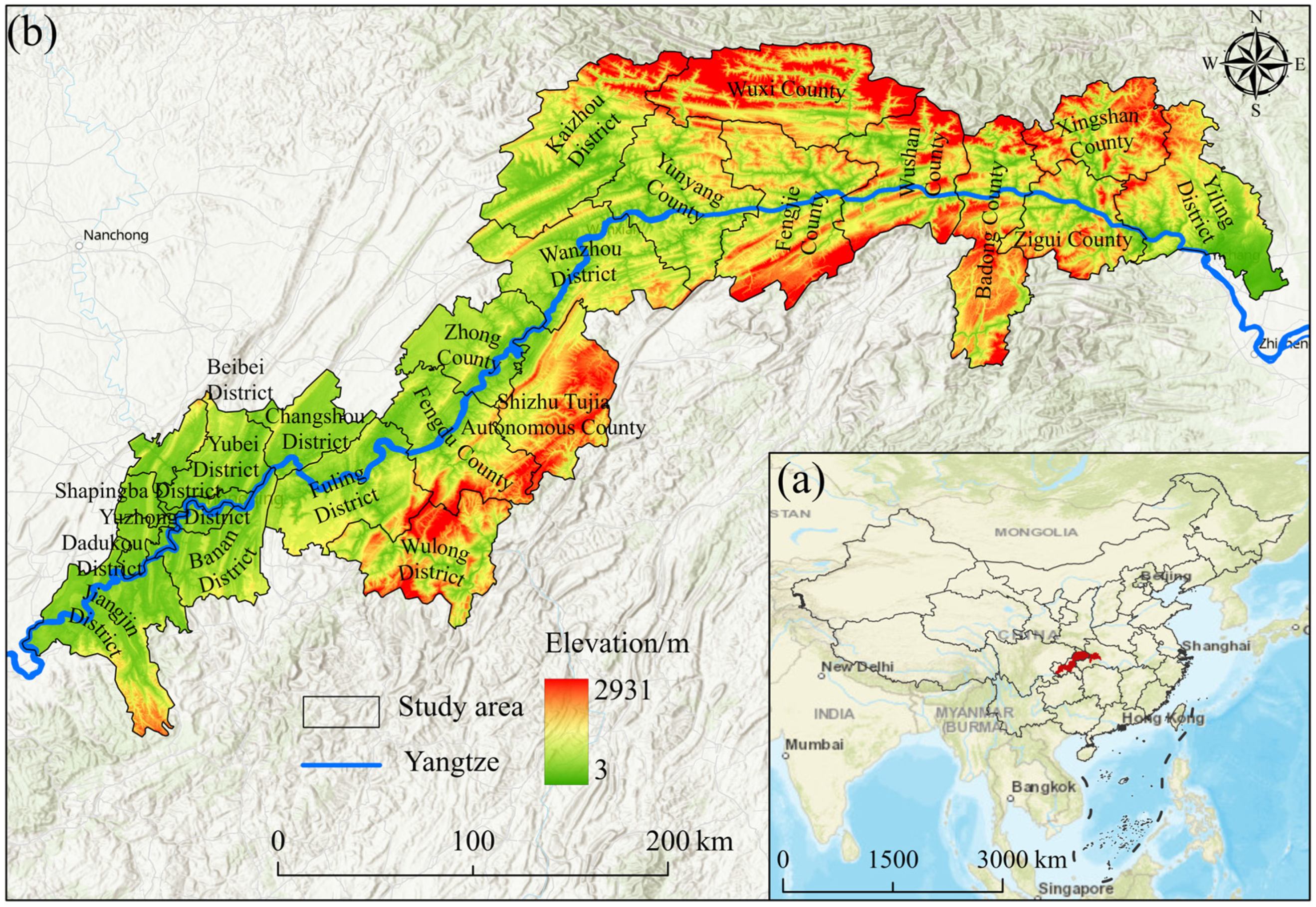
TGRA (28°28′ N–31°44′ N, 105°49′ E–110°12′ E) encompasses 26 county-level administrative regions influenced by the 175 m normal storage level of the Three Gorges Dam, including 22 districts and counties in Chongqing Municipality and 4 in Hubei Province (Figure 1). The reservoir underwent a critical phased impoundment process: initial filling to 135 m in 2003, raising to 156 m in 2006, and finally reaching its full 175 m storage level in 2010. This regulation creates a seasonal fluctuation zone that fundamentally alters local hydrology. It spans an area of approximately 58,000 km2, comprising 5% urban land, agricultural ecosystems for 11%, forests and managed woodlands for 69%, 1% wetlands, and 14% inland water [30]. The region slopes generally from east to west, with the highest elevation reaching 2931 m. The area features complex topography and diverse vegetation types. TGRA is situated in a humid subtropical climate zone characterized by rich water resources. The long-term mean annual temperature ranges between 17 and 19 °C, while annual precipitation varies from 900 to 1400 mm. The frost-free period lasts about 300–340 days, and relative humidity remains between 72% and 83% throughout the year, averaging 77%. The mean daily sunshine duration is about 25% [4], indicating that TGRA belongs to the high-humidity zone of the Yangtze River Basin. Furthermore, the TGRA exhibits a pronounced imbalance between natural resource endowments and socioeconomic development. This tension arises from the combined effects of a fragile ecological system and highly variable climatic conditions, compounded by dense population pressure and a comparatively underdeveloped economic base.

2.2. Data Sources and Processing

Based on previous studies and the availability of regional data, datasets from 2000, 2005, 2010, 2015, and 2020 were selected for analysis (Table 1). All datasets were processed using ArcGIS Pro 3.0.2, with spatial resolution uniformly resampled to 30 m and the coordinate reference system defined as WGS_1984_UTM_Zone_49N.

2.3. Research Methodology

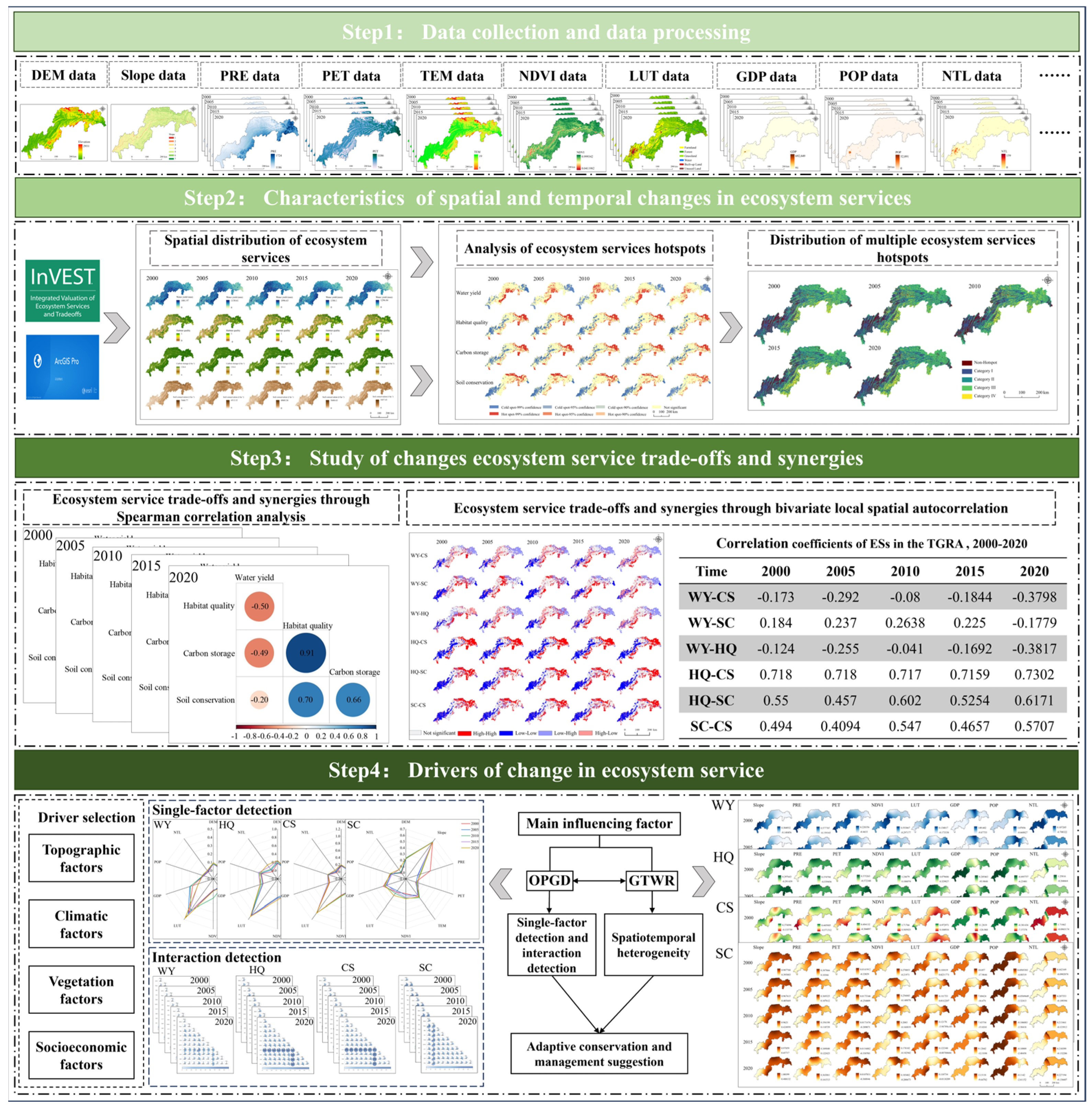
Land-use change and four key ESs in the TGRA were systematically assessed based on multi-source data. The analysis identified spatial hotspot patterns, examined the trade-off and synergy relationships among ESs, and investigated the main factors responsible for their spatial heterogeneity (Figure 2).

2.3.1. Assessment of Landscape Pattern Changes

Fragstats 4.2 was applied to multi-temporal LULC classification maps to quantify landscape pattern dynamics by computing a suite of indices at the patch, class, and landscape levels, thereby enabling a comprehensive evaluation of spatial landscape structure and its temporal variation [32]. In this study, five representative indices were selected, including the number of patches (NP), patch density (PD), Landscape Shape Index (LSI), Shannon’s Diversity Index (SHDI), and Perimeter–Area Fractal Dimension (PAFRAC). Together, these metrics characterize landscape fragmentation, spatial heterogeneity, and the configuration and distribution patterns of different landscape types within the TGRA [32]. Specifically, LSI reflects the continuity of ecological processes and system stability by characterizing the morphological complexity and boundary features of landscape patches, providing significant indicative value for regulating and supporting ESs. SHDI, meanwhile, reveals the functional structure and resilience level of ESs from the perspective of landscape composition diversity and balance. Together, these two metrics characterize ESs provision capacity and long-term sustainability at both spatial and functional structural levels. The specific formulas are shown in Table 2.

2.3.2. Estimation of ESs

Based on the InVEST model, we quantitatively assessed the spatiotemporal evolution of ESs in the TGRA. Four specific modules—annual water yield, habitat quality, carbon storage and sequestration, and sediment delivery ratio—were used to estimate WY, HQ, CS, and SC for the years 2000, 2005, 2010, 2015, and 2020 (Table 3).

2.3.3. Measurement of Trade-Offs and Synergies Among ESs

The Spearman’s coefficient method was applied to quantify the trade-offs and synergies among ESs [39]. This non-parametric method was selected for its robustness in handling non-normal data distributions and nonlinear relationships, offering a more reliable assessment than standard linear methods. The formula, which is used for this purpose, is expressed as follows:
r = i ( x i j x ¯ ) ( y i j y ¯ ) i ( x i j x ¯ ) 2 ( y i j y ¯ ) 2
where r is the Spearman’s coefficient, r ∈ [−1, 1], xij and yij denote the ESs values; when r > 0, it means that there is a synergistic relationship between the two ESs; when r < 0, it means that there is a trade-off relationship between the two ESs, and the larger the |r| indicates that the correlation between the two ESs is stronger. In this study, r is categorized into three levels: weak (0.1 ≤ |r| < 0.3), moderate (0.3 ≤ |r| < 0.5), and strong (|r| ≥ 0.5).
BLSA is based on the probability of spatial dependence and correlation, and it aims to explore the spatial interdependence, strength, and patterns between two different geographic variables [40]. In this study, GeoDa software 1.20.0.36 was used to conduct BLSA analysis to investigate the trade-off and synergy relationships among ESs. The resulting local indicators of spatial association (LISA) clustering map was classified into four types: High-High (H-H) and Low-Low (L-L) clusters were regarded as synergies, while High-Low (H-L) and Low-High (L-H) clusters were regarded as trade-offs.

2.3.4. OPGD Model and Drivers

The OPGD model is a spatial statistical method used to detect spatial heterogeneity and reveal its driving factors, and has been widely applied in driver analysis [41]. In this study, the OPGD model was applied to determine the key driving factors and to explore how they interact with one another. Based on the actual conditions in the TGRA and the experience gained from previous research, four categories of driving factors were selected: climate, socio-economic, vegetation, and topography (Table 4). The q value is calculated as follows:
q = 1 h = 1 L N h σ h 2 N σ 2 = 1 S S W S S T
σ 2 = 1 N 1 i = 1 N Y i Y ¯ 2
σ h 2 = 1 N 1 i = 1 N h Y h , i Y h ¯ 2
where ranges between 0 and 1, a higher q-value indicates that the factor has stronger explanatory power for ESs; h represents the stratum of the explanatory or dependent variables, while Nh and N denote the number of units in stratum h and in the entire study area, respectively. σ h 2 and σ 2 are the variances of stratum h and the entire region; Yi and Y ¯ represent the value of sample i and the mean value of Y in the study area, respectively. Yh,i and Y h ¯ indicate the value of sample i and the mean value of Y with stratum h, respectively.

2.3.5. GTWR Model

In spatial analysis, the GTWR model extends the traditional GWR model by incorporating the temporal dimension. This enhancement effectively overcomes the limitation of GWR, which considers only spatial heterogeneity, and allows for a more comprehensive analysis of spatiotemporal nonstationarity among variables. The GTWR model reveals the dynamic association mechanisms between driving factors and dependent variables. The specific formula of the model is as follows:
y i = β u i , v i , t i + k = 1 p β k ( u i , v i , t i ) x i k + ε i
where ui and vi represent the longitude and latitude coordinates of sample point i; ti denotes time; (ui, vi, ti) represents the spatiotemporal coordinates of point i; yi and xik denote the observed values of the dependent and independent variables at sample point i, respectively; β0 (ui, vi, ti)is the intercept term at point i; βk (ui, vi, ti) represents the k-th regression coefficient at point i; and ɛi denotes the residual of the model.

3. Results

3.1. Analysis of Land-Use Change

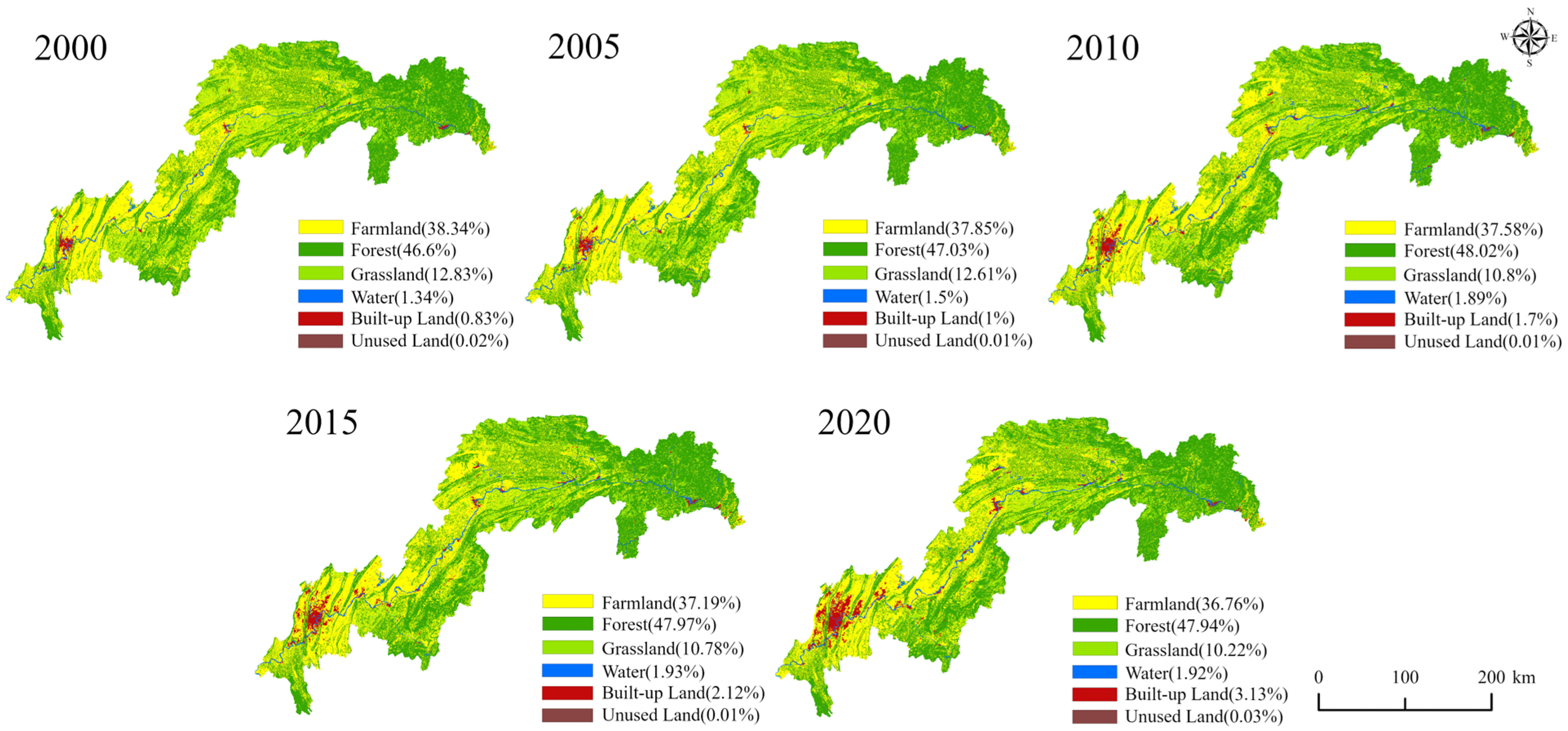
From 2000 to 2020, forest and farmland constituted the main land-use types in the TGRA (Figure 3). Combined, these two types accounted for 84.94%, 84.88%, 85.60%, 85.16%, and 84.70% of the region as a whole in 2000, 2005, 2010, 2015, and 2020, respectively. Forest remained dominant throughout the study period, showing a slight upward fluctuation overall, whereas farmland steadily declined from 38.34% in 2000 to 36.76% in 2020. The built-up land increased by about 2.3%. Water bodies exhibited relative stability under the influence of the reservoir’s hydrological regime and regulation, while unused land accounted for the smallest proportion and experienced only minor changes.
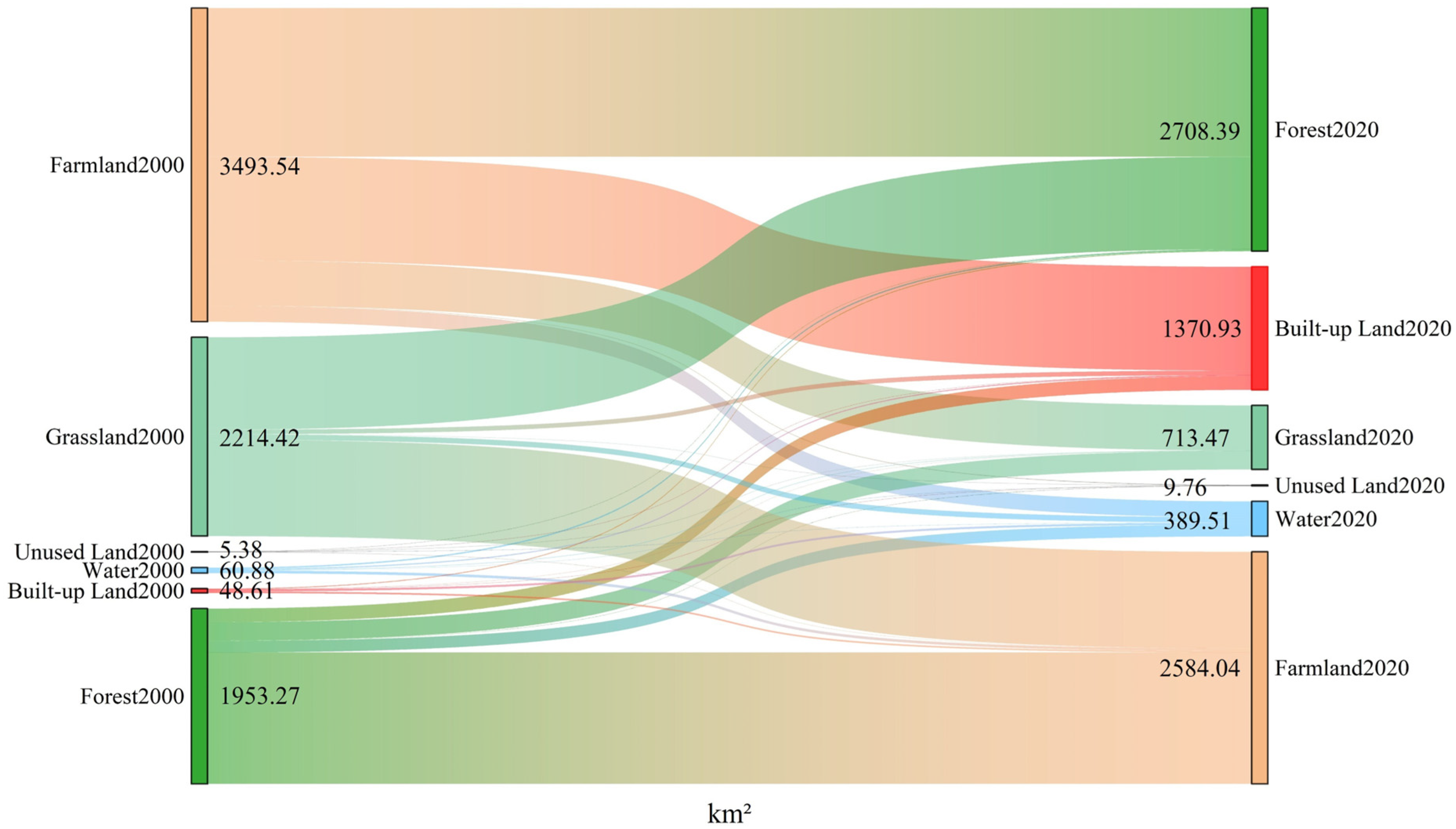
During the study period, a total of 7776.08 km2 of land was transferred (Figure 4). Farmland had the largest transferred-out area, totaling 3493.54 km2, and was primarily transformed into forest and built-up land, reflecting the combined influence of accelerated urban expansion and the execution of the “Grain for Green Project”. Forest transferred out 1953.27 km2, primarily to farmland and built-up land, indicating the dual demands of agricultural expansion and urban development. Grassland, serving as a reserve resource for both farmland and forest, was mainly converted to forest and farmland under ecological restoration measures such as reforestation and afforestation. Built-up land expanded continuously, with urban areas extending from the core zones to the periphery to accommodate population growth and economic development. In contrast, water bodies remained largely stable, while unused land, mostly located in marginal areas with unfavorable natural conditions and limited development potential, experienced the smallest degree of conversion.
The growth of agricultural and urban areas led to declines in WY and SC, whereas the rise in forest and grassland promoted improvements in HQ and CS, thereby enhancing ecosystem stability and carbon sequestration capacity. The spatial heterogeneity of ESs was further intensified by the differing distributions of land-use types: areas in the southern TGRA dominated by forest exhibited higher levels of WY and CS, while the central and western regions characterized by farmland and urban expansion showed lower levels of SC and WY.

3.2. Spatiotemporal Changes in Landscape Patterns

The landscape pattern showed clear spatial and temporal differentiation in the TGRA during 2000–2020 (Table 5). In general, both the NP and PD of farmland showed a continuous decline, indicating a shift from fragmentation to concentration and scale expansion, as small farmland patches were gradually integrated into larger areas with greater spatial continuity. The NP and PD of the forest exhibited a slight increase, reflecting vegetation restoration and expansion in sub-watersheds and along riverbanks and foothills, with stronger aggregation overall. The number and density of grassland patches declined until 2005, then increased slightly and eventually stabilized, mainly due to local land-use conversions. NP and PD for water bodies changed little but showed a slight increase, mainly influenced by water-level fluctuations and shoreline adjustments resulting from the operation of the Three Gorges Project. The NP and PD of built-up land increased persistently, especially between 2000 and 2010, due to fast-paced urban development and infrastructural advancements. The NP and PD of unused land changed only slightly, mainly affected indirectly by the transformation among other land-use categories.
From the perspective of landscape shape indices, LSI and PAFRAC for all landscape types exhibited a trend of transformation from regular to complex patterns during the 2000–2020 period (Table 5). The LSI of farmland decreased while its PAFRAC increased, indicating that farmland patches became smaller and their boundaries more complex during urban expansion. The LSI of the forest increased slightly, while its PAFRAC remained relatively stable, indicating that forest patches were mainly distributed along mountains and rivers, maintaining stable shapes and good connectivity. The LSI of grassland rose briefly after 2005 and then declined, while its PAFRAC increased slightly overall, indicating local degradation and rising fragmentation. The LSI of water bodies increased while their PAFRAC decreased, suggesting more complex boundaries but a more regular overall shape. The LSI of built-up land increased, and its PAFRAC decreased, indicating the coexistence of boundary complexity and structural regularity during urban expansion. LSI and PAFRAC for unused land changed little, showing an overall stable spatial structure.
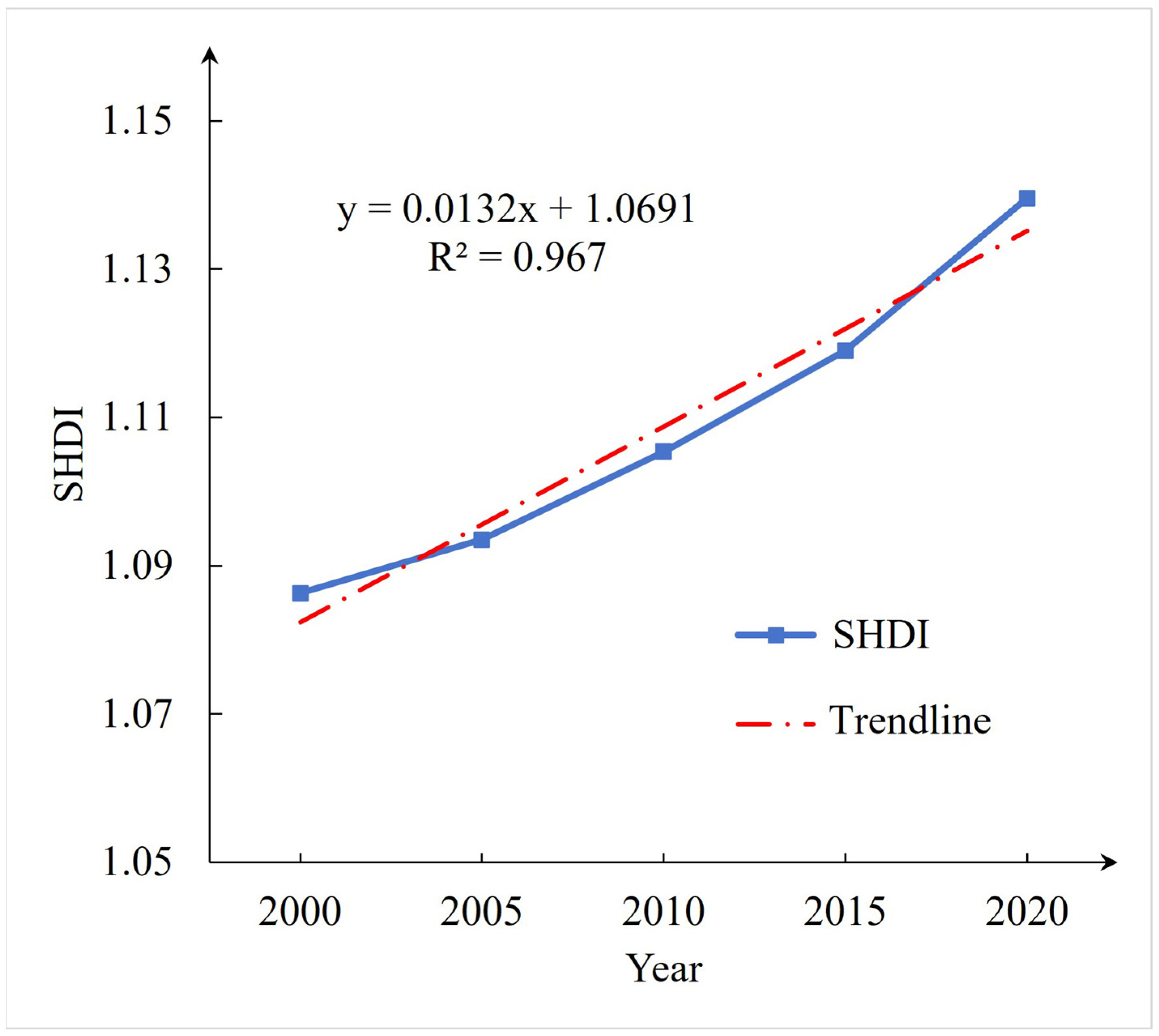
Regarding landscape diversity, the SHDI of the TGRA exhibited a steady increase from 2000 to 2020 (Figure 5), showing a significant positive correlation with time. The SHDI increased from 1.0863 in 2000 to 1.1396 in 2020, indicating a tendency toward landscape diversification. Between 2000 and 2010, the rapid rise of built-up land and the adjustments of farmland and forest patterns collectively promoted landscape heterogeneity, leading to a continuous increase in SHDI. During this period, the NP of built-up land increased by 76.1%, and its PD rose from 0.0169 to 0.0296, while the NP of farmland decreased by 11.4%, reflecting the strong reshaping of the landscape structure by human activities. Between 2010 and 2015, the expansion rate of built-up land slowed down, while ecological restoration and vegetation recovery strengthened, maintaining a steady growth in SHDI. After 2015, SHDI further increased, and the shape complexity of water bodies and built-up land increased, showing a trend toward a more integrated landscape structure.

3.3. Characteristics of Spatial and Temporal Changes in ESs

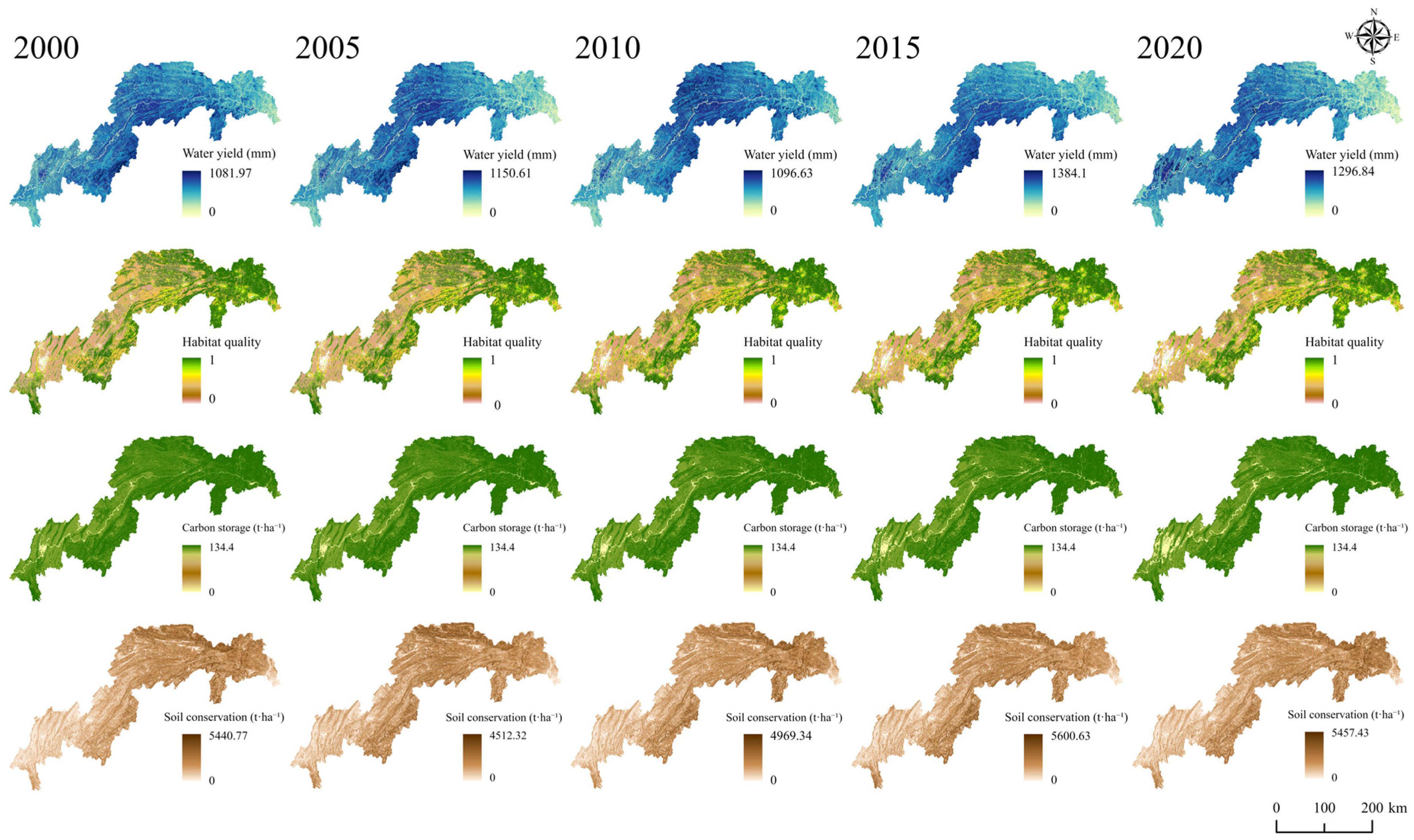
Evaluation of ES in the TGRA revealed several key trends (Table 6, Figure 6). From a spatiotemporal perspective, WY exhibited a clear increasing trend from 2000 to 2020, rising from 347.2394 × 10⁸ m3 to 432.4350 × 10⁸ m3, with a total growth rate of 24.54%. The trend was generally consistent with fluctuations in precipitation over the same period. WY displayed a “central-high and peripheral-low” pattern, with higher values concentrated in the central and southern parts of the reservoir, where precipitation was abundant, vegetation coverage was good, and topography was moderately undulating, favoring water infiltration and accumulation. Conversely, areas with lower values were primarily located in urbanized zones, including Chongqing’s main city, Yiling, and Jiangjin, suggesting that impervious surfaces and soil disturbance can reduce regional water conservation capacity. After 2010, changes in reservoir water level and water surface extent may have further influenced the spatial distribution of WY, especially in riparian zones.
HQ showed an overall slow decline over the 20 years, with a decrease of approximately 3.02%. The steepest decline was observed between 2010 and 2020, with a reduction of 0.0132, coinciding with the period when the reservoir reached and maintained its normal storage level. The spatial configuration of HQ was “low in the west, high in the east.” High values were concentrated in forested eastern mountains, whereas low-value regions were primarily found in central and western zones dominated by farmland and built-up land. This indicates that human activities, including urban expansion, farmland reclamation, and road construction, have increased landscape fragmentation, weakening habitat integrity and connectivity, and consequently reducing habitat quality. In addition, the permanent inundation of low-lying areas and the formation of the hydro-fluctuation zone after reservoir impoundment may have contributed to habitat degradation in certain locations.
CS remained relatively stable throughout the study period, with a slight increase from 5.3474 × 10⁸ t in 2000 to 5.3592 × 10⁸ t in 2020. The spatial distribution exhibited a west-to-east gradient. High CS potential concentrated in the eastern, southern, and southeastern forests, whereas low CS potential was predominantly observed in central and western farmland, water bodies, and built-up land, indicating the strong influence of land cover on carbon sequestration potential.
SC exhibited a gradual increasing trend, rising from 39.4101 × 10⁸ t in 2000 to 41.6767 × 10⁸ t in 2020, with a growth rate of 5.75%, indicating that soil erosion was partially mitigated during the study period. Spatially, SC was closely associated with vegetation cover. High-value areas were concentrated in well-forested regions in the eastern and northern parts of the reservoir, where developed root systems and thick litter layers enhanced surface stability and runoff regulation. By contrast, regions in the central and western parts, characterized by agricultural and urban land, with limited vegetation cover combined with recurrent soil disruption, elevated the susceptibility to erosion.

3.4. Spatial Correlation of ESs

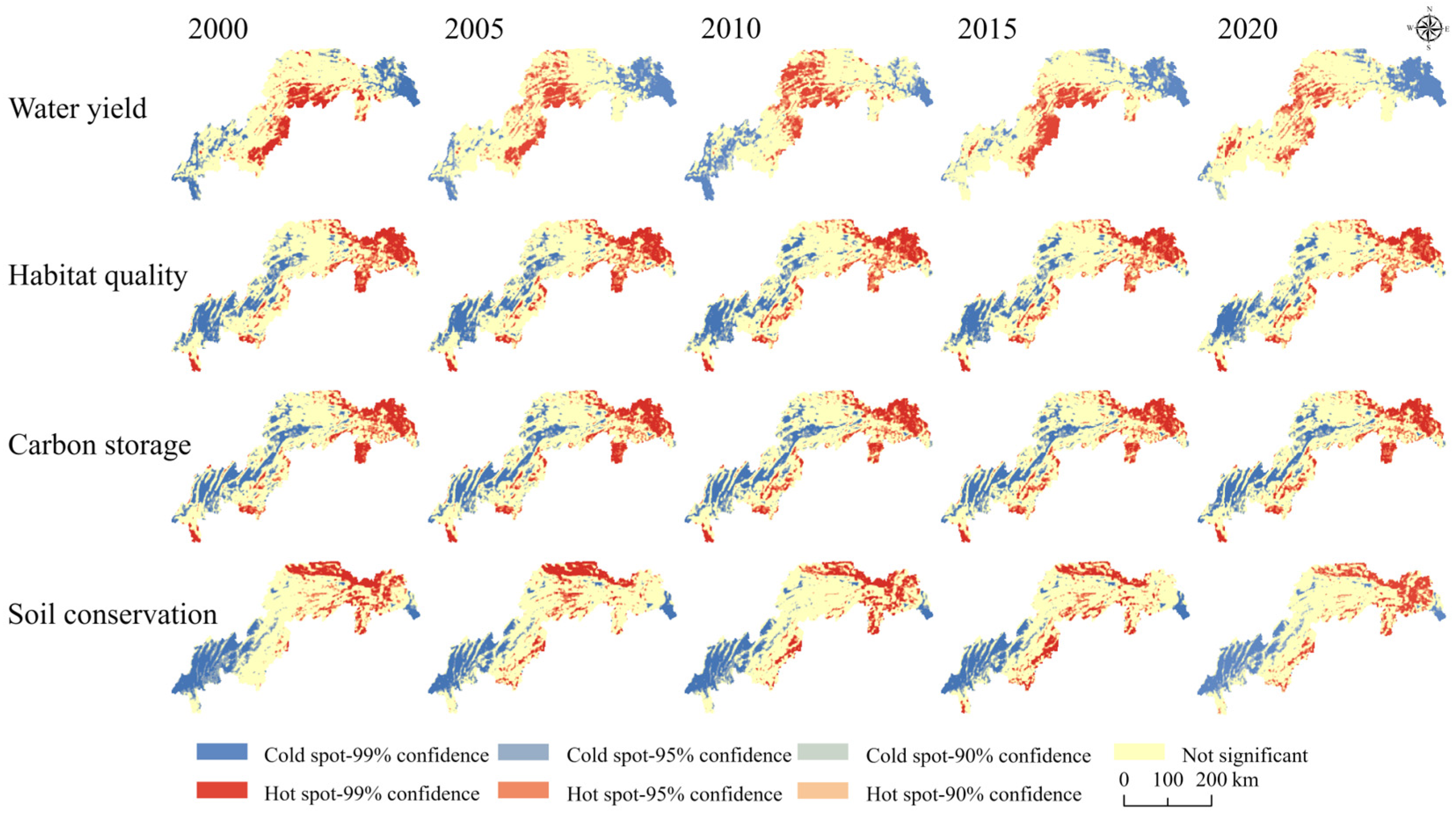
The four types of ESs exhibited a generally consistent trend of spatial clustering, but differences existed in the distribution and spatial intensity of their hotspots (Figure 7). The hotspots of HQ, CS, and SC were mainly concentrated in the northern and eastern areas with high forest cover, showing clear spatial aggregation, whereas WY hotspots were mainly distributed in the central region, where precipitation is abundant, and vegetation cover is moderate.
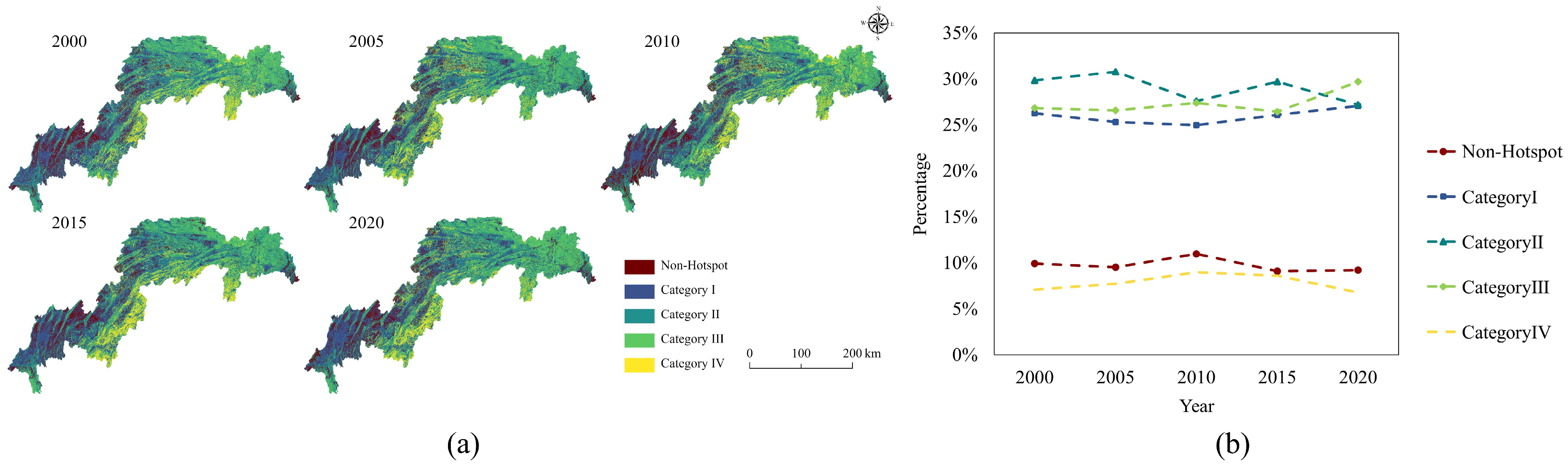
An overlay analysis of the four ES hotspot areas was conducted (Figure 8a). Category II hotspots were the most widely distributed, mainly located in the central region, with Fengjie, Wuxi, and Yunyang counties as typical representatives. Category I hotspots were concentrated in western Chongqing, centered on the city’s main urban area. Category III hotspots were primarily found in the eastern region, including Xingshan County, Zigui County, and Yiling District. In contrast, Category IV hotspots and non-hotspot areas accounted for a relatively small proportion. Category IV hotspots were located in Shizhu Tujia Autonomous County, Fengjie County, and Badong County along the southern periphery, while non-hotspot areas were situated in the northeastern marginal areas of Changshou District, Fuling District, and Beibei District. The time series analysis (Figure 8b) further showed that the proportions of non-hotspot areas, Category II hotspots, and Category IV hotspots decreased, while Category I and Category III hotspots expanded. On one hand, the growth of built-up areas increased impervious surfaces and reduced ecological land, such as forests, thereby diminishing certain ESs. On the other hand, initiatives like the conversion of farmland to forest encouraged forest cover expansion, offering positive reinforcement for regional ecosystems.

3.5. Analysis of Trade-Offs/Synergies in ESs

3.5.1. Overall Scale

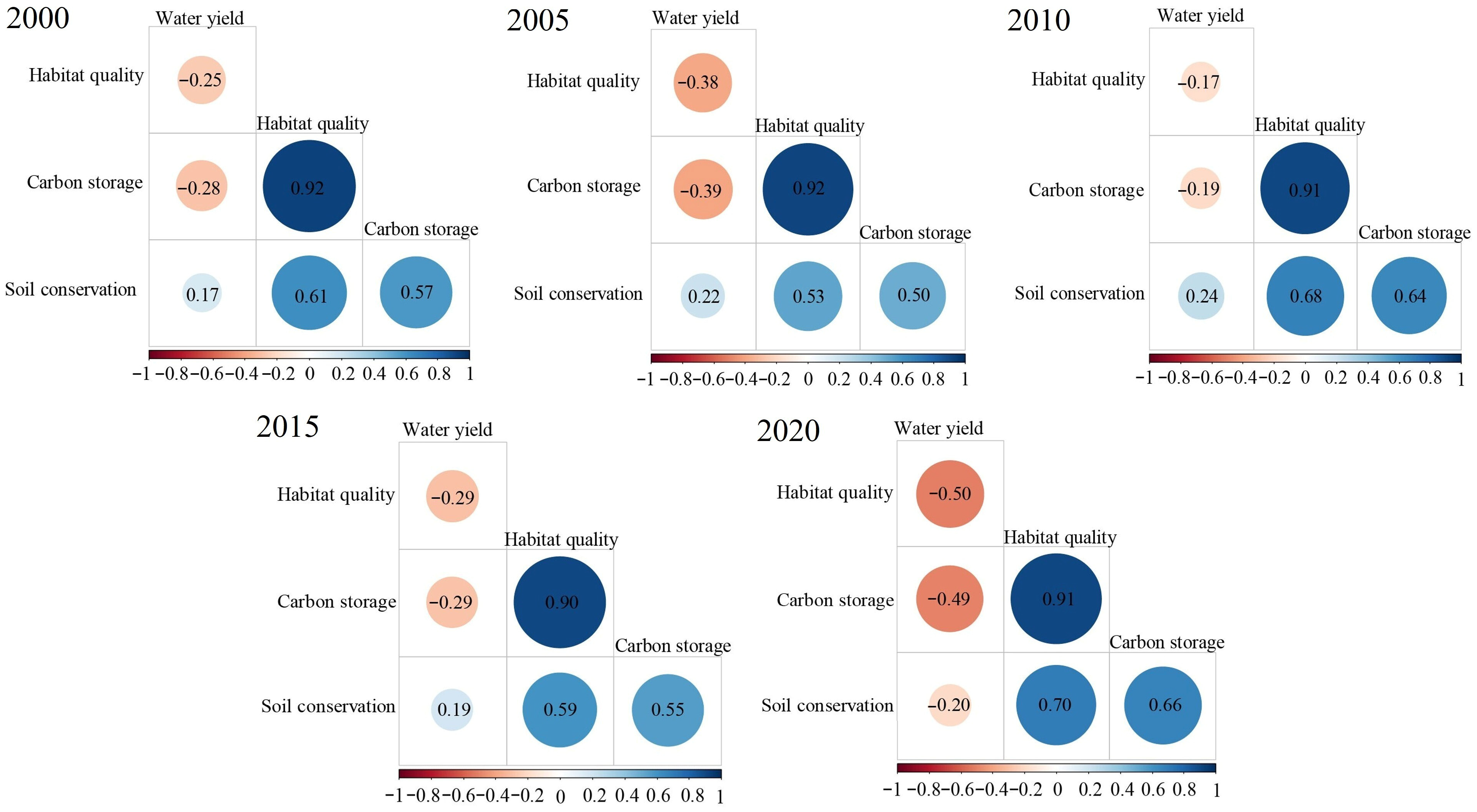
Throughout the 2000–2020 period, ESs in the TGRA exhibited marked spatiotemporal heterogeneity in their interactions, as shown in Figure 9 (p < 0.01). A strong positive correlation was identified among HQ, CS, and SC (r > 0, p < 0.01), reflecting a stabilizing synergistic effect. By contrast, WY showed consistently negative correlations with CS and HQ (r < 0, p < 0.01), indicating persistent trade-off relationships. A weak but temporary synergistic relationship was also observed between WY and SC during the 2000–2015 period.
Among the synergistic service pairs, HQ-CS displayed the strongest correlation, remaining above 0.90 throughout the study period. Areas with higher vegetation cover tend to maintain better habitat quality, while dense vegetation contributes to greater carbon storage. The correlations of HQ-SC and SC-CS also strengthened, rising from 0.61 and 0.57 in 2000 to 0.70 and 0.66 in 2020, respectively. In contrast, the interaction between WY and SC exhibited a dynamic transformation, shifting from synergy to trade-off over time. Overall, the analysis showed that both trade-offs and synergies among the four ES types became more pronounced between 2000 and 2020.

3.5.2. Raster Scale

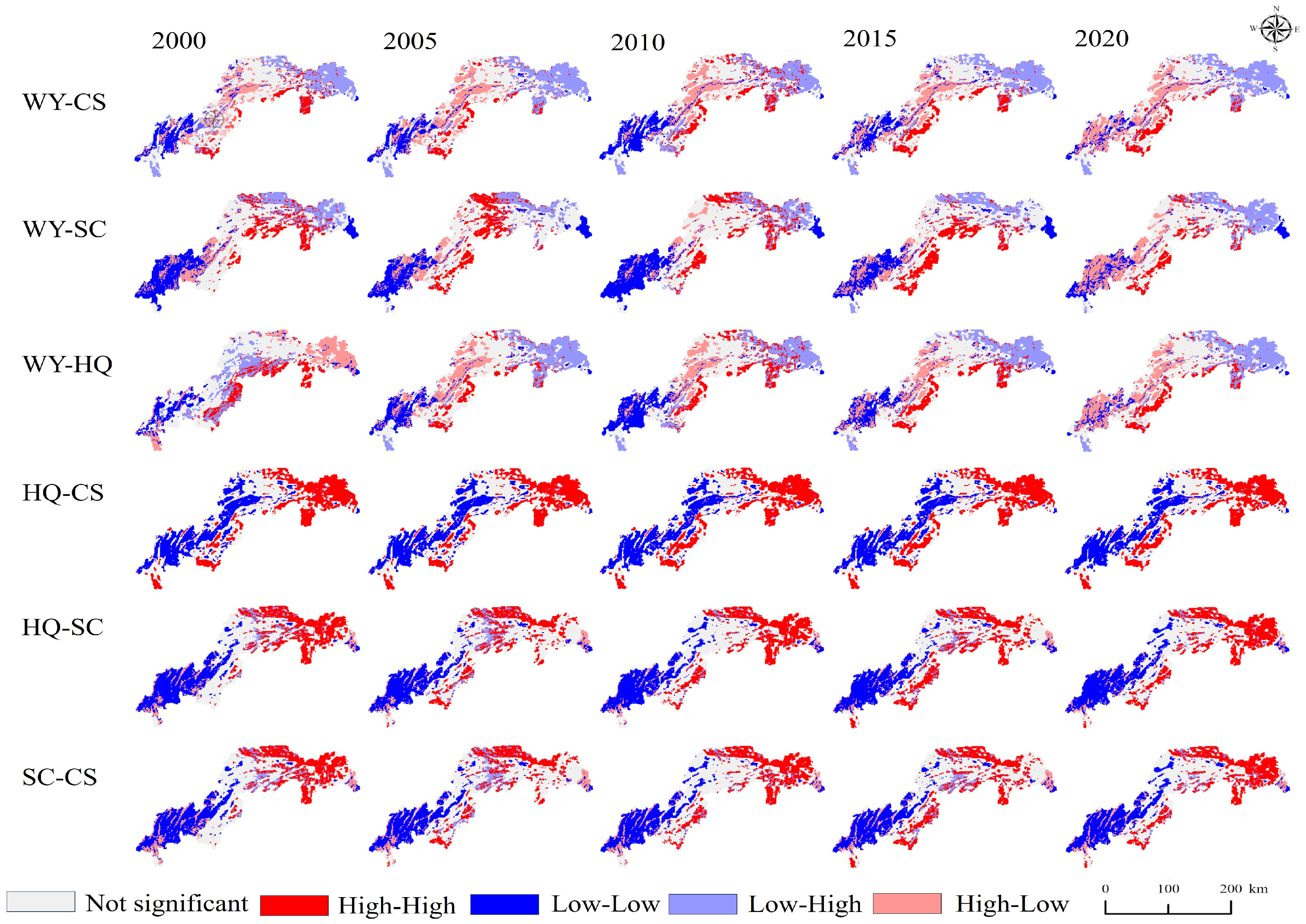
The ES raster scale was quantified by GeoDa software, and the results obtained under the check condition of significance of 95% are shown in Table 7 and Figure 10, so as to examine the spatial differentiation characteristics of the trade-offs and synergistic relationships among ESs.
WY-SC exhibited fluctuating spatial correlations that alternated between positive and negative values, whereas WY maintained consistently negative correlations with CS and HQ (Moran’s I < 0). In contrast, the remaining service pairs maintained positive spatial associations, indicating an overall dominance of synergistic relationships. Specifically, HQ-CS exhibited the strongest synergy, with Moran’s I peaking at 0.7302 in 2020. HQ-SC showed the second-highest level of synergy, with index values ranging from 0.4570 to 0.6171. Remarkably, the spatial correlation between WY and SC demonstrated marked spatiotemporal variability, shifting from synergy to trade-off after 2015. The trade-offs between WY-CS and WY-HQ remained relatively stable, with Moran’s I values ranging from −0.3817 to −0.041, while SC-CS consistently exhibited synergy, with values between 0.4094 and 0.5707.
The spatial patterns of trade-offs and synergies among ESs were highly heterogeneous in both space and time. The combinations of ESs within each grid unit displayed clear spatial differentiation in both the rate and direction of change. Over time, these relationships showed a tendency toward convergence, with synergies dominating in the western and southeastern regions, trade-offs prevailing in the central region, and synergistic effects generally exceeding trade-offs across most services. Specifically, trade-offs dominated the WY-CS relationship in the central and northeastern TGRA, whereas localized synergies were observed in the northwest; by 2020, areas characterized by trade-offs comprised 41.09% of the total. The WY-SC relationship was overall synergistic, although synergy and trade-off areas were interspersed. Over the 20 years, the synergistic area decreased by 39.25%, whereas the trade-off area increased by 45.48%. The WY-HQ relationship was largely defined by trade-offs, primarily concentrated within the eastern and central parts of the reservoir region. HQ-CS consistently showed strong synergy, with synergistic zones primarily in the northwest and eastern regions and scattered trade-off areas surrounding them, reflecting a gradual strengthening of synergy over time. HQ-SC relationship exhibited a dynamic alternation between synergies and trade-offs in the central region, showing marked interannual fluctuations. SC-CS remained strongly synergistic, with synergistic areas in the northern and western reservoir regions and trade-offs in the central region, and an overall trend of gradually strengthening synergies over time.

3.6. Analysis of the Driving Factors of ESs

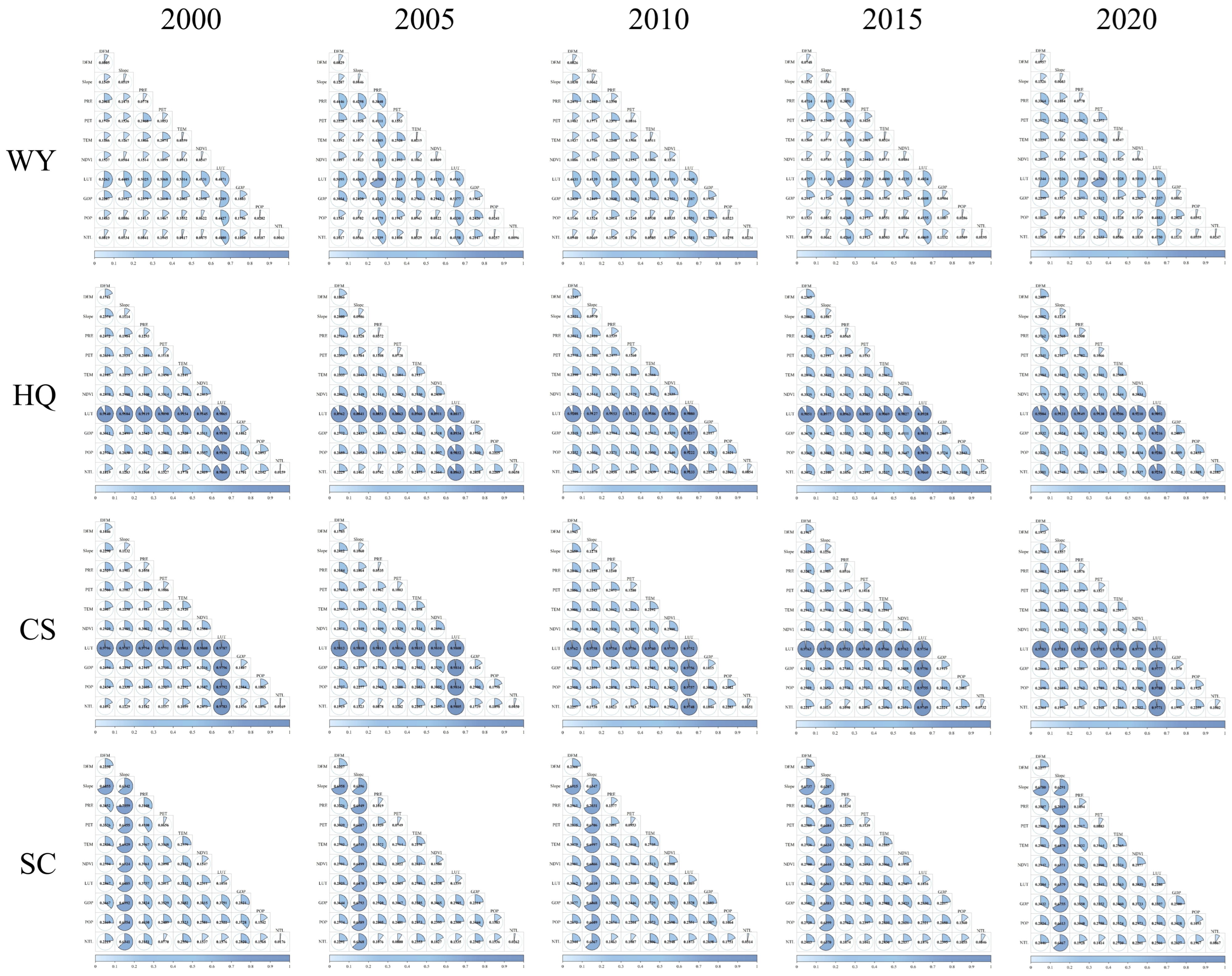
Through a multiscale analysis combined with the Geodetector model, this study systematically identified the dominant driving factors responsible for the spatial differentiation of four key ESs (Figure 11). All influencing factors were statistically significant (p < 0.01), indicating that the model results are robust and suitable for subsequent analyses. Univariate analysis further highlighted substantial variation in the explanatory power (q-values) of different factors across categories and years. Among them, LUT emerged as the key determinant shaping the spatial patterns of WY, HQ, and CS, underscoring the important role of land-use change in regulating ES distribution. For WY, LUT, PRE, and PET demonstrated relatively high explanatory power, with LUT reaching its peak value (q = 0.4801) in 2020. In contrast, HQ and CS were consistently dominated by LUT, NDVI, and TEM, whose influences steadily increased over time. This upward trend suggests that improvements in HQ and CS mainly resulted from land-use optimization and vegetation restoration, reflecting an enhanced ecosystem response to both human activities and climatic variability. Slope was the primary factor influencing spatial heterogeneity in SC, peaking in 2005 (q = 0.6396), followed by GDP and TEM. The analysis using the interaction detector further showed that the combined effects of driving factors, which appeared as nonlinear or bivariate enhancements, exerted a substantially greater influence than that of any individual factor alone. Throughout the study period (2000–2020), LUT demonstrated the most prominent interactive influence with other variables across WY, HQ, and CS. Specifically, the interaction between LUT and PRE produced the greatest explanatory power for WY (q = 0.7149), followed by LUT-PET (q = 0.6706) and LUT-GDP (q = 0.5289). For HQ, the dominant driving mechanism evolved from anthropogenic disturbance to climatic stress, as the leading interaction shifted from LUT-POP in the early stage (2000–2015) to LUT-TEM by 2020. Similarly, for CS, the interaction between LUT and PET exhibited the greatest explanatory power, followed by LUT-NDVI and LUT-POP. In the case of SC, the synergistic effect between slope and PRE remained the most significant throughout the two decades, with slope-DEM as the next most influential combination.
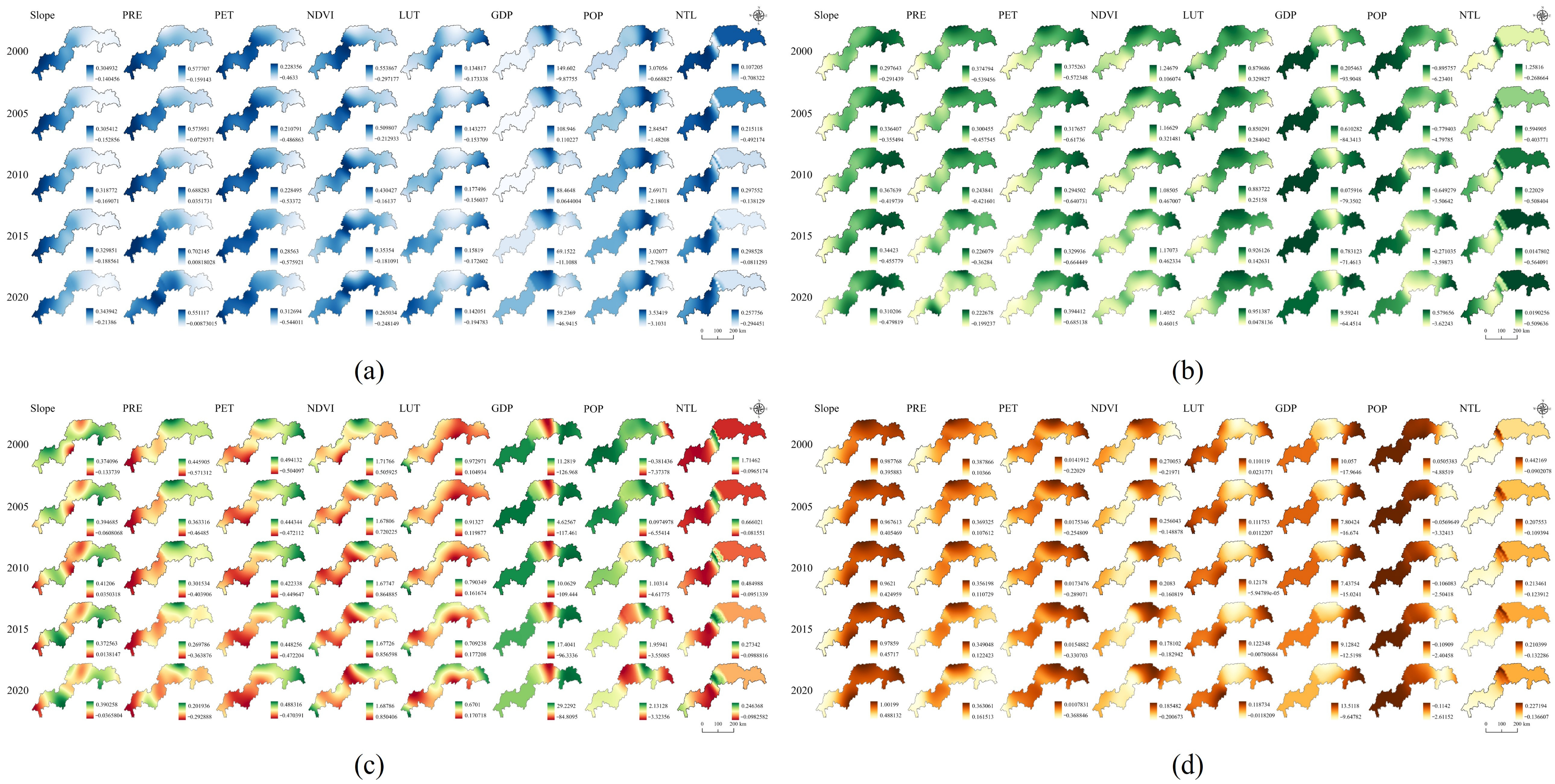
To further examine the spatiotemporal heterogeneity of the factors affecting ESs in the TGRA, a multicollinearity test (VIF < 7.5) was first conducted to ensure the independence of explanatory variables. Based on the test results, eight key variables—slope, PRE, PET, NDVI, LUT, GDP, POP, and NTL—were selected for inclusion in the GTWR model. As shown in Table 8, the model demonstrated relatively high fitting performance for HQ and SC, and the spatial distribution of the regression coefficients (Figure 12) intuitively revealed distinct spatial variations in the influence of these driving factors. For WY, the spatial distribution patterns of slope, PRE, PET, and NDVI were largely consistent, exhibiting a clear east–west differentiation characterized by significant negative effects in the east and strong positive effects in the west. In contrast, LUT, GDP, and POP displayed the opposite pattern. The influence of NTL showed pronounced spatiotemporal variability: between 2010 and 2020, its effect evolved from an initially insignificant relationship to a “western positive–eastern negative” configuration.
In the case of HQ, NDVI, and LUT consistently exerted positive effects across the region, with their influence strengthening from west to east and peaking in the central–eastern subregions. This pattern indicates that vegetation restoration and land-use optimization substantially enhanced HQ, particularly in the eastern areas, reflecting higher ecological responsiveness and governance effectiveness. Slope, PRE, and PET exhibited similar spatial gradients-strongly positive in the east and markedly negative in the west. GDP’s influence increased gradually over time, showing a significant positive effect in the western TGRA between 2000 and 2015. Similarly, NTL exerted a clear positive effect in the West from 2015 to 2020, further confirming the growing contribution of human-induced factors in that region. Regarding CS, both NDVI and LUT showed positive regression coefficients, indicating their enhancing effects on carbon sequestration. NDVI had a strong positive effect in the northern region, whereas LUT contributed positively but more weakly overall. In contrast, PRE and PET had negative impacts on CS across the western and central–western parts, while exerting positive effects in the eastern region. This pattern reveals a clear spatial differentiation in CS responses to climatic conditions: moderate hydrothermal conditions in the east favored carbon accumulation, whereas excessive moisture or drought stress in the west inhibited carbon sink formation. The negative influence of NTL weakened over time, transitioning from strong inhibition to mild suppression in the central and eastern areas. For SC, slope and PRE generally had positive effects, promoting SC across most regions except the west, where their impact was relatively weak. LUT had a positive influence on SC between 2000 and 2005, but became negative in the central region after 2005, reflecting a shift in land-use dynamics from ecological restoration to urban expansion. This transition reduced SC function in the central TGRA, illustrating the negative consequences of intensified human activities on ecosystem regulation capacity. POP had positive effects in most regions except the east, while NTL showed mainly negative effects in the west and other non-central areas. Overall, these findings emphasize that the combined effects of topography, climate, land-use transitions, and socioeconomic activities collectively shape the mechanisms underlying the spatiotemporal heterogeneity of ESs in the TGRA.

4. Discussion

4.1. Analysis of the Spatiotemporal Dynamics of ESs

The spatiotemporal evolution of ESs in the TGRA from 2000 to 2020 was primarily driven by a “nature-society” composite mechanism, reflecting a shift in regional ecological governance from single-factor restoration to systematic and comprehensive regulation [27]. During the study period, land use was primarily dominated by forest and farmland, with built-up land continuing to expand. Forest land long held a dominant position, reflecting the remarkable success of ecological initiatives such as the Grain-for-Green Program and Mountain Enclosure for Forest Regeneration. The former converts cultivated land on slopes greater than 25° into forest or grassland to prevent soil erosion, while the latter restricts human activities in mountainous areas and promotes both natural regeneration and artificial afforestation, thereby systematically improving surface structures, vegetation root characteristics, and enhancing ecosystem functions. These efforts, together with the introduction and advancement of China’s integrated conservation and restoration concept for “mountains, waters, forests, farmlands, lakes, grasslands, and deserts” [15], landscape diversity and balance continued to improve (as reflected by rising SHDI values). This progress has laid the foundation for spatial differentiation of ESs, building upon a stable overall landscape pattern.
WY exhibited an overall upward trend, with high-value areas primarily located in the southern and northeastern TGRA, characterized by dense forests and complex terrain. This finding is consistent with previous studies [25]. Results from the OPGD and GTWR models revealed that LUT was the primary driver of spatial differentiation in WY, exhibiting significantly higher explanatory power than PRE and slope. Mechanistically, vegetation succession from farmland to forest substantially enhances canopy interception and soil infiltration capacity, thereby strengthening the watershed’s hydrological regulation function [42]. However, the expansion of impervious surfaces on built-up areas blocked natural infiltration. This resulted in a reduction of the local water retention capacity. This indicates that human activities regulate hydrological processes to some extent by altering the land surface [4]. Moreover, unlike natural river basins, the seasonal water level fluctuations in the TGRA create a submerged zone that modulates the regional water balance to some extent, reflecting the superimposed effects of artificial water control structures on the natural hydrological cycle [43]. HQ showed a slight overall decline during the study period, with strong spatial heterogeneity, consistent with previous studies [27]. Driving force analysis indicated that HQ was primarily driven by LUT and NDVI, with the interaction between NDVI and GDP significantly enhancing explanatory power. This suggests a nonlinear synergistic relationship between economic growth and ecological restoration, which jointly shape the spatial differentiation pattern of HQ by influencing vegetation cover and landscape structure [44]. Central and northeastern areas where forests are concentrated were positively affected by ecological restoration projects, resulting in increased connectivity, reduced fragmentation, and improved HQ. However, in the riverfront zones and western urban expansion areas, the rapid growth of built-up land increased NP and PD, which in turn caused habitat fragmentation and ecological deterioration. In this study, CS showed a general upward trend over the 20 years, and the high CS areas were concentrated in the southern and northeastern high-elevation regions with dense forest cover and large PAFRAC values, while farmland and built-up land were predominantly characterized by low values. Forests possess higher carbon sequestration capacity compared to other land types, a finding consistent with relevant watershed studies [45]. Analysis of driving mechanisms revealed that CS variation was collectively influenced by LUT, NDVI, and TEM. The sustained increase in NDVI reflects the significant promotion of vegetation growth and carbon sequestration capacity by ecological engineering [46], while the enhanced influence of TEM indicated that climate change exerts indirect effects on CS by regulating vegetation growth cycles and photosynthetic efficiency [47]. SC increased by 5.75%, its high-value areas overlapped with zones of forest expansion, confirming the positive role of vegetation restoration and improved surface cover in reducing soil erosion and enhancing ecological stability. SC was primarily shaped by topography, with slope serving as the most influential factor. The interaction between slope and PRE significantly strengthened SC, revealing the amplifying effect of topography-precipitation coupling on erosion intensity [48]. Meanwhile, the structural optimization of grassland and sloping farmland also contributed to SC, demonstrating a positive feedback between landscape pattern optimization and ecological function enhancement. Overall, optimizing land use structure and adjusting landscape patterns are, therefore, key pathways to enhance ES supply capacity.

4.2. Analysis of ESs Trade-Offs/Synergies

The findings revealed that trade-off relationships mainly occurred between WY-CS, WY-SC, and WY-HQ, with these patterns concentrated in the central and eastern parts of the reservoir area. This observation is generally in line with previous studies [49]. Mechanistically, enhanced SC capacity may be accompanied by soil layer thickening, which reduces rainwater infiltration. As a result, vegetation access to soil moisture declines, ultimately leading to decreased WY. Conversely, reduced WY weakens the scouring effect of runoff on surface soils, thereby enhancing SC capacity [50]. Moreover, while increased vegetation cover boosts CS, it simultaneously elevates evapotranspiration and reduces groundwater availability, further constraining WY [51]. Such complex trade-off mechanisms reflect the long-term and complex coupling between the operation of the Three Gorges Project, intensive human activities, and ecosystem responses. It is also noteworthy that other studies [27,44] have suggested synergistic relationships between WY and some Ess. This finding highlights the spatial heterogeneity and scale dependence of ESs interactions. Different spatial scales, such as local, regional, or watershed levels, may reveal distinct patterns of trade-offs or synergies among ESs. Therefore, analyses of ES relationships should take spatial and scale effects into account, and ecological conservation and resource management should adopt more targeted and scale-sensitive strategies. In contrast, synergistic relationships dominated between HQ, CS, and SC, showing high spatial consistency. Between 2000 and 2020, ecological restoration initiatives led to increased vegetation cover, effectively reducing erosion and soil loss caused by rainfall. Compared with farmland and grassland, forests have deeper roots and higher root biomass density, both of which enhance soil retention services and improve SC [50]. This conclusion corroborates the findings of Huang et al. [13] in the Dongting Lake Basin, where greater root density and soil organic matter were associated with stronger erosion resistance. Furthermore, expanding forest area strengthens carbon storage and sink capacity [13]. Therefore, land-use change centered on forest vegetation restoration not only enhances soil conservation but also substantially increases carbon sequestration, resulting in strong synergies between CS and SC.

4.3. Management and Policy Implications

Based on the spatial heterogeneity and trade-offs/synergies patterns of ESs in the TGRA, a zonal ecological management framework is proposed to promote the coordinated development of ecosystem functions and socio-economic activities [13]. The northeastern and high-altitude areas, dominated by forest and grassland ecosystems and exhibiting strong synergies among HQ, CS, and SC, can be identified as priority zones for ecological conservation. Management should focus on maintaining ecological stability by restricting human disturbances, enhancing vegetation connectivity, and optimizing forest structure. Ecological redline control and ecological compensation mechanisms are recommended. The Central Region, which experiences strong trade-offs between WY-SC and WY-HQ, can be defined as an ecological restoration and regulation zone. Restoration measures such as reforestation, slope closure, and soil-water conservation projects are essential to reduce erosion and enhance hydrological regulation capacity. The central mosaic of farmland and forest, which shows significant WY-CS trade-offs, can be defined as an agriculture-ecology coordination zone. Promoting eco-friendly agriculture, constructing terraces, and controlling the expansion of sloping farmland can help mitigate runoff and soil erosion while maintaining crop productivity. The western and low-altitude regions near urban areas, where human disturbances are pronounced, can be defined as an eco-economic synergy optimization zone. Land-use control, the establishment of green buffer zones, and the promotion of low-carbon industries should be implemented to balance economic development and ecosystem sustainability. Overall, adopting a zonal differentiation strategy—reducing trade-offs in imbalance zones and enhancing synergies in synergy zones—can ensure the long-term stability and coordinated supply of multiple ESs in the TGRA.

4.4. Limitations and Future Studies

Complex mountainous terrain and associated mixed pixels of elevation and land cover can further increase uncertainties in remote sensing data [52]. Regarding anthropogenic influences, this study primarily employed macro-level indicators such as GDP and NTL, which may not fully capture deeper socioeconomic processes, including population migration, policy implementation, and local livelihoods, that affect ESs. Future studies should therefore integrate high-spatial-resolution remote sensing datasets and long-term observational datasets with quantitative models or observed measurements for comparative analyses. Additionally, integrating land-use data, socioeconomic surveys, population movement, and policy implementation records can provide a more comprehensive depiction of human impacts on ESs. Moreover, the long-term impacts of both natural and human-induced factors on ESs should be quantitatively assessed by constructing different land-use and climate scenarios, while sensitivity analysis can be used to identify key drivers. Finally, adopting an interdisciplinary approach that integrates ecology, geography, economics, and social science perspectives will deepen understanding of ES trade-offs and synergies and provide robust scientific evidence to inform regional ecological management and policy decisions.

5. Conclusions

This study investigated the evolving spatiotemporal patterns of ESs and their driving mechanisms in the TGRA from 2000 to 2020, revealing significant restructuring in service provision and underlying determinants. The findings underscore the profound effect of large-scale hydrological engineering on mountain ecosystems, providing insights into human-environment interactions and offering a framework for spatially differentiated management strategies.
Our analysis reveals that ESs diverged markedly over two decades, driven by competing land use pressures. WY and SC increased substantially by 24.54% and 5.75%, reflecting precipitation increases and the Grain for Green Project’s outcomes. However, HQ declined 3.02% as urbanization expanded, fragmenting landscapes despite 1655 km2 of farmland-to-forest conversion. This polarization reflects a structural shift from “conservation-production balance” to “engineered hydrological dominance.” Particularly during reservoir operation, strong enhancement of water regulation contrasted sharply with biodiversity erosion in urbanizing zones, revealing the complexity of post-impoundment ecosystem reconfiguration.
Crucially, our findings confirm that service interactions exhibit significant spatiotemporal heterogeneity. Trade-offs between WY and other services intensified in central agricultural–urban zones, while synergies among HQ, CS, and SC strengthened in forested regions. Notably, the WY-SC relationship shifted from synergy (2000–2015) to trade-off (2015–2020), signaling potential ecosystem destabilization.
Our results also demonstrate that driver interactions consistently exceeded individual effects, primarily exhibiting nonlinear enhancement patterns. The interplay between PRE and GDP strengthened significantly, reflecting how economic intensification amplifies climate variability. Similarly, the NDVI and LUT interaction surpassed additive contributions, indicating that forest composition matters as much as total cover. These findings emphasize the need for adaptive, spatially-informed conservation strategies addressing nonlinear dynamics, including targeted restoration in trade-off zones, connectivity planning to counter fragmentation, and integrated management to mitigate reservoir operation impacts.

Author Contributions

Conceptualization, Y.Y. and Y.S.; methodology, Y.Y., Y.S. and X.G.; software, Y.Y.; validation, Y.Y., Y.S. and X.G.; formal analysis, Y.Y.; investigation, Y.Y.; resources, Y.Y.; data curation, Y.Y.; writing—original draft preparation, Y.Y.; writing—review and editing, Y.Y., Y.S. and X.G.; visualization, Y.Y., Y.S. and X.G.; supervision, Y.Y.; project administration, Y.Y. and Y.S.; funding acquisition, X.G. All authors have read and agreed to the published version of the manuscript.

Funding

This research was funded by the National Sociology Foundation of China (No. 21BMZ141).

Institutional Review Board Statement

Not applicable.

Informed Consent Statement

Not applicable.

Data Availability Statement

Publicly available data sources are detailed in the Data Sources and Descriptions (Section 2.2) and can be accessed via the links provided in Table 1. Processed data used in this study are available from the corresponding author on reasonable request.

Acknowledgments

We express our heartfelt thanks to all individuals and institutions that contributed to this work.

Conflicts of Interest

The authors declare no conflicts of interest.

References

  1. Bai, Y.; Huang, Q.; Inostroza, L.; Xu, H.; Yin, D.; Liu, Z.; Zhang, L.; Xu, F. Residents’ perceptions of ecosystem services in an urbanizing basin: A case study in the Guanting Reservoir basin, China. Geogr. Sustain. 2024, 5, 430–444. [Google Scholar] [CrossRef]
  2. Cetin, M. Sustainability of urban coastal area management: A case study on Cide. J. Sustain. For. 2016, 35, 527–541. [Google Scholar] [CrossRef]
  3. Fu, B. Ecological and environmental effects of land-use changes in the Loess Plateau of China. Chin. Sci. Bull. 2022, 67, 3769–3779. [Google Scholar] [CrossRef]
  4. Li, Q. Study on the Spatiotemporal Changes and Trade-Offs of Ecosystem Services in the Three Gorges Reservoir Area; Chinese Academy of Forestry Sciences: Beijing, China, 2020. [Google Scholar]
  5. Zhang, Z.; He, Z.; Su, K.; Wu, S.; Liu, L. Global evolution of ecosystem services research in watersheds: Insights from large language models. Land Use Policy 2026, 160, 107849. [Google Scholar] [CrossRef]
  6. Zhang, Y.; Chen, W.; Wang, G.; Wu, J.; Zeng, J.; Liu, Z. Multi-scenario simulation of ecosystem services trade-offs and synergies in Chinese urban agglomerations. China Environ. Sci. 2025. [Google Scholar]
  7. Sun, Y.; Qi, M.; Wang, W.; Cai, J.; Tian, F. Exploration of the multi-scenario spatiotemporal evolution, trade-off and synergy relationships, and driving factors of ecosystem services in Henan Province, China, under the background of land use change. Front. Ecol. Evol. 2025, 13, 1565632. [Google Scholar] [CrossRef]
  8. Li, Y.; Luo, H. Trade-off/synergistic changes in ecosystem services and geographical detection of its driving factors in typical karst areas in southern China. Ecol. Indic. 2023, 154, 110811. [Google Scholar] [CrossRef]
  9. Wei, S.; Hou, J.; Zhang, Y.; Tai, Y.; Huang, X.; Guo, X. Analysis of the Trade-Off/Synergy Effect and Driving Factors of Ecosystem Services in Hulunbuir City, China. Agronomy 2025, 15, 1883. [Google Scholar] [CrossRef]
  10. Zhang, H.; Wang, L.; Jiang, S.; Li, K.; Xin, X.; Huang, X.; Chen, J.; Zhou, L.; Li, Z. Impacts of rice–crayfish co-culture on ecosystem service trade-offs/synergies in agricultural watersheds: A case exploration in Sihu Lake Basin, China. Agric. Water Manag. 2025, 310, 109389. [Google Scholar] [CrossRef]
  11. Mir, K.; Brouwer, R. Testing the effect of ecosystem service and land classification on global values of forested watershed ecosystem services. For. Policy Econ. 2025, 181, 103667. [Google Scholar] [CrossRef]
  12. Liu, H.; Zhao, H.; Feng, X.; Han, W. Trade-offs and synergy relationship of agricultural ecosystem services in Heilongjiang Province. J. China Agric. Univ. 2023, 28, 160–171. [Google Scholar]
  13. Huang, Y.; Chen, X.; Zhu, L. Exploring Trade-Offs/Synergies and Drivers of Ecosystem Services in the Dongting Lake Area, China. Sustainability 2025, 17, 1650. [Google Scholar] [CrossRef]
  14. Dang, L.; Zhao, F.; Teng, Y.; Teng, J.; Zhan, J.; Zhang, F.; Liu, W.; Wang, L. Scale dependency of trade-offs/synergies analysis of ecosystem services based on Bayesian Belief Networks: A case of the Yellow River Basin. J. Environ. Manag. 2025, 375, 124410. [Google Scholar] [CrossRef] [PubMed]
  15. Wang, B.; Che, L.; Dai, C.; Zheng, L.; Li, Z.; Wang, X. The Impacts of China’s Shan-Shui Initiative on Ecosystem Services: A Case Study in the Three Gorges Reservoir Area. Ecosyst. Health Sustain. 2025, 11, 0398. [Google Scholar] [CrossRef]
  16. Chen, Y.; Qiao, X.; Yang, Y.; Zheng, J.; Dai, Y.; Zhang, J. Identifying the spatial relationships and drivers of ecosystem service supply–demand matching: A case of Yiluo River Basin. Ecol. Indic. 2024, 163, 112122. [Google Scholar] [CrossRef]
  17. Chen, Z.; Wei, K.; Hu, L.; Yi, C.; Liu, S. Spatiotemporal variation and driving forces of carbon storage in the Fuhe river basin, China. Sci. Rep. 2025, 15, 30224. [Google Scholar] [CrossRef]
  18. Hu, B.; Li, Z.; Wu, H. Spatially Non-stationary Responses of Ecosystem Service Trade-offs to Anthropogenic and Natural Drivers on the Loess Plateau. Environ. Sci. 2025. [Google Scholar]
  19. Tu, G.; Lu, Q.; Zhang, F.; Xia, Y.; Yan, B. The spatio-temporal interactions between rapid urbanization and multiple ecosystem services at the county scale in the Poyang Lake Basin. Geomat. Nat. Hazards Risk 2025, 16, 2480252. [Google Scholar] [CrossRef]
  20. Li, Q.; Bao, Y.; Wang, Z.; Chen, X.; Lin, X. Trade-offs and synergies of ecosystem services in karst multi-mountainous cities. Ecol. Indic. 2024, 159, 111637. [Google Scholar] [CrossRef]
  21. Li, Z.; Shen, Y.; Fu, W.; Qi, Y.; Wei, X. The Spatial and Temporal Heterogeneity of Ecosystem Service Trade-Offs and Synergies, and Their Implications for Spatial Planning and Management: A Case Study of the Tarim River Basin. Forests 2025, 16, 1024. [Google Scholar] [CrossRef]
  22. Yuan, X.; Shi, L.; Yang, Y.; An, Q. Impacts of human activities and vegetation cover on key ecosystem services in the Loess Hilly-Gully region of Northern Shaanxi, China. Chin. J. Appl. Ecol. 2024, 35, 3235–3246. [Google Scholar]
  23. Tang, S.; Zhu, C.; Gao, J.; Bian, H. Spatial-Temporal Variations and Influencing Factors of Water-related Ecosystem Services in Southwest China Under Complex Terrain. J. Soil Water Conserv. 2024, 38, 244–252. [Google Scholar]
  24. Xu, Z.; Peng, J.; Liu, Y.; Qiu, S.; Zhang, H.; Dong, J. Exploring the combined impact of ecosystem services and urbanization on SDGs realization. Appl. Geogr. 2023, 153, 102907. [Google Scholar] [CrossRef]
  25. Liu, L.; Wang, D.; Liu, Q.; Erina, O.; Zhang, C. Evolution and Driving Factors of Water Conservation Function in the Three Gorges Reservoir Area, China. Chin. Geogr. Sci. 2025, 35, 600–611. [Google Scholar] [CrossRef]
  26. Liu, H.; Liu, W.; Wan, M.; Ma, F.; Wu, N.; Liu, J. Analysis and Prediction of Spatiotemporal Evolution of Carbon Storage in Ningxia Hui Autonomous Region Based on the PLUS-InVEST-OPGD Model. Environ. Sci. 2025. [Google Scholar]
  27. Meng, H.; Zhou, Q.; Li, M.; Zhou, L.; Liu, X.; Peng, C. Study of the Spatio-temporal Changes in Ecosystem Services and Trade-offs/Synergies Relationship in the Three Gorges Reservoir Area. J. Ecol. Rural Environ. 2021, 37, 566–575. [Google Scholar]
  28. Liu, S.; Liao, Q.; Xiao, M.; Zhao, D.; Huang, C. Spatial and Temporal Variations of Habitat Quality and Its Response of Landscape Dynamic in the Three Gorges Reservoir Area, China. Int. J. Environ. Res. Public Health 2022, 19, 3594. [Google Scholar] [CrossRef]
  29. Hu, X.; Xiao, Z.; Qin, C.; Cheng, X.; Cheng, J.; Ju, J. Multi-Scenario Prediction of Land Use Changes and Soil Erosion in Three Gorges Reservoir Region Based on PLUS-InVEST Model. J. Soil Water Conserv. 2025. [Google Scholar]
  30. Li, Q.; Kou, X.; Niu, L.; Xia, X.; Xiao, W.; Zhu, J. Spatiotemporal variations and its driving factors of soil conservation services in the Three Gorges Reservoir area in China. Front. Environ. Sci. 2023, 11, 1266169. [Google Scholar] [CrossRef]
  31. Yan, F.; Shangguan, W.; Zhang, J.; Hu, B. Depth-to-bedrock map of China at a spatial resolution of 100 meters. Sci. Data 2020, 7, 2. [Google Scholar] [CrossRef]
  32. Lv, G.; Wang, Y.; Ma, X.; Han, Y.; Luo, C.; Yu, W.; Liu, J.; Du, Z. Trade-Offs and Synergies of Ecosystem Services in Terminal Lake Basins of Arid Regions Under Environmental Change: A Case Study of the Ebinur Lake Basin. Land 2025, 14, 1240. [Google Scholar] [CrossRef]
  33. He, S.; Qian, H.; Liu, Y.; Zhao, X.; Su, F.; Ma, H.; Guan, Z.; Zhang, T. Water conservation assessment and its influencing factors identification using the InVEST and random forest model in the northern piedmont of the Qinling Mountains. J. Hydrol. Reg. Stud. 2025, 57, 102194. [Google Scholar] [CrossRef]
  34. Gao, Y.; Ma, L.; Liu, J.; Zhuang, Z.; Huang, Q.; Li, M. Constructing Ecological Networks Based on Habitat Quality Assessment: A Case Study of Changzhou, China. Sci. Rep. 2017, 7, 46073. [Google Scholar] [CrossRef] [PubMed]
  35. Peng, C.; Wang, Y.; Dong, J.; Huang, C. Impact of Land Use Change on the Habitat Quality Evolution in Three Gorges Reservoir Area, China. Int. J. Environ. Res. Public Health 2023, 20, 3138. [Google Scholar] [CrossRef] [PubMed]
  36. Li, G.; Cheng, G.; Liu, G.; Chen, C.; He, Y. Simulating the Land Use and Carbon Storage for Nature-Based Solutions (NbS) under Multi-Scenarios in the Three Gorges Reservoir Area: Integration of Remote Sensing Data and the RF–Markov–CA–InVEST Model. Remote Sens. 2023, 15, 5100. [Google Scholar] [CrossRef]
  37. Wan, Q.; Shao, J. Land Use and Carbon Storage Estimation in the Chongqing Section of the Three Gorges Reservoir Area from 2000 to 2020. J. Chongqing Norm. Univ. (Nat. Sci.) 2023, 40, 52–64. [Google Scholar]
  38. Wang, T. Research on Ecological Compensation in the Three Gorges Reservoir Area Based on the Supply and Demand of Ecosystem Services; Chongqing Technology and Business University: Chongqing, China, 2023. [Google Scholar]
  39. Zhou, J.; Yang, J.; Tang, Z.; Xue, L.; Zhang, W.; Zhang, J. Driving mechanisms of ecosystem services and their trade-offs and synergies in the transition zone between the Qinghai-Tibet Plateau and the Loess Plateau. Ecol. Indic. 2025, 171, 113148. [Google Scholar] [CrossRef]
  40. Zhao, H.; Liu, Q.; Zhang, M.; Li, J. Analysis of Spatial Patterns and Driving Factors of Ecosystem Services in Beijing Based on XGBoost-SHAP Model. Environ. Sci. 2025. [Google Scholar]
  41. Song, Y.; Wang, J.; Ge, Y.; Xu, C. An optimal parameters-based geographical detector model enhances geographic characteristics of explanatory variables for spatial heterogeneity analysis: Cases with different types of spatial data. GISci. Remote Sens. 2020, 57, 593–610. [Google Scholar] [CrossRef]
  42. Qi, W.; Li, H.; Zhang, Q.; Zhang, K. Forest restoration efforts drive changes in land-use/land-cover and water-related ecosystem services in China’s Han River basin. Ecol. Eng. 2019, 126, 64–73. [Google Scholar] [CrossRef]
  43. Xie, Y.; Wang, S.; Xiang, S.; Wang, Z.; Li, Y.; Wang, Z.; Zhou, M.; Wang, Y.; Gao, M. Ecological zoning and dynamic assessment of effectiveness in the Three Gorges Reservoir Area, China. Ecol. Model. 2024, 487, 110563. [Google Scholar] [CrossRef]
  44. Yang, J.; Hu, R.; Zhao, H.; Gou, M.; Ouyang, S.; Liu, C.; Xiao, W. Analysis of Trade-offs and Driving Forces of Ecosystem Services in Ecological Barrier Zone of Three Gorges Reservoir Area Based on XGBoost-SHAP Model. J. Soil Water Conserv. 2025. [Google Scholar]
  45. Wang, Y.; Dai, E. Spatial-temporal changes in ecosystem services and the trade-off relationship in mountain regions: A case study of Hengduan Mountain region in Southwest China. J. Clean. Prod. 2020, 264, 121573. [Google Scholar] [CrossRef]
  46. Zhu, K.; He, J.; Tian, X.; Hou, P.; Wu, L.; Guan, D.; Wang, T.; Huang, S. Analysis of Evolving Carbon Stock Trends and Influencing Factors in Chongqing under Future Scenarios. Land 2024, 13, 421. [Google Scholar] [CrossRef]
  47. Cheng, J.; Zhu, C. Spatiotemporal characteristics of typical ecological carbon sequestration capacity and its correlation with ecological patterns in Jinan City. Water Resour. Hydropower Eng. 2025. [Google Scholar]
  48. Zhou, J.; Cai, H.; Zhang, X. Temporal and spatial changes of ecosystem services and their tradeoffs and synergies in Changjiang River Basin in the Changjiang River Basin. Geol. Bull. China 2025. [Google Scholar]
  49. Han, P.; Yang, G.; Wang, Z.; Liu, Y.; Chen, X.; Zhang, W.; Zhang, Z.; Wen, Z.; Shi, H.; Lin, Z.; et al. Driving Factors and Trade-Offs/Synergies Analysis of the Spatiotemporal Changes of Multiple Ecosystem Services in the Han River Basin, China. Remote Sens. 2024, 16, 2115. [Google Scholar] [CrossRef]
  50. Zi, R.; Zhao, L.; Fang, Q.; Qian, X.; Fang, F.; Fan, C. Path analysis of the effects of hydraulic conditions, soil properties and plant roots on the soil detachment capacity of karst hillslopes. CATENA 2023, 228, 107177. [Google Scholar] [CrossRef]
  51. Filoso, S.; Bezerra, M.O.; Weiss, K.C.B.; Palmer, M.A. Impacts of forest restoration on water yield: A systematic review. PLoS ONE 2017, 12, e0183210. [Google Scholar] [CrossRef]
  52. Shao, Q.; Han, L.; Lv, L.; Shao, H.; Qi, J. Spatiotemporal Variation and Factors Influencing Water Yield Services in the Hengduan Mountains, China. Remote Sens. 2023, 15, 4087. [Google Scholar]
Figure 1. Location of the study area: (a) China, (b) Three Gorges Reservoir Area.
Sustainability 18 00658 g001
Figure 2. Technology roadmap.
Sustainability 18 00658 g002
Figure 3. Land-use type of TGRA from 2000 to 2020.
Sustainability 18 00658 g003
Figure 4. Land use type transitions from 2000 to 2020.
Sustainability 18 00658 g004
Figure 5. Shannon’s Diversity Index of the TGRA land-use landscapes during 2000–2020.
Sustainability 18 00658 g005
Figure 6. Spatiotemporal Dynamics of ESs in the TGRA from 2000 to 2020.
Sustainability 18 00658 g006
Figure 7. Hotspot analysis of ESs in the TGRA from 2000 to 2020.
Sustainability 18 00658 g007
Figure 8. (a) Distribution of multiple ESs hotspots and (b) proportion of multiple ESs hotspots in the TGRA from 2000 to 2020.
Sustainability 18 00658 g008
Figure 9. ESs trade-offs and synergies in the TGRA from 2000 to 2020.
Sustainability 18 00658 g009
Figure 10. BLSA analysis of different ESs from 2000 to 2020.
Sustainability 18 00658 g010
Figure 11. The results of the factor detection and interaction detection of the OPGD.
Sustainability 18 00658 g011
Figure 12. Spatiotemporal pattern of GTWR-derived coefficients from 2000 to 2020. (a) WY; (b) HQ; (c) CS; (d) SC.
Sustainability 18 00658 g012
Table 1. Summary of the primary data.
Data TypeFormat/Spatial ResolutionData Sources
Monthly average temperatureRaster (1 km)National Tibetan Plateau/Third Pole Environment Data Center (http://data.tpdc.ac.cn, accessed on 9 July 2025)
Monthly total precipitationRaster (1 km)
Monthly potential evapotranspirationRaster (1 km)
Depth to bedrockRaster (100 m)Refer to Yan et al. [31]
Soil textureRaster (1 km)National Cryosphere Desert Data Centre (http://www.ncdc.ac.cn/portal, accessed on 9 July 2025)
Vegetation typeRaster (1 km)Resource and Environmental Sciences Data Platform
(https://www.resdc.cn, accessed on 9 July 2025)
Normalized difference
vegetation index (NDVI)
Raster (250 m)National Tibetan Plateau/Third Pole Environment Data Center (http://data.tpdc.ac.cn, accessed on 9 July 2025)
Land-useRaster (30 m)Resource and Environmental Sciences Data Platform
(https://www.resdc.cn, accessed on 9 July 2025)
Population distributionRaster (1 km)World pop (https://www.worldpop.org, accessed on 10 July 2025)
Gross domestic productRaster (1 km)Resource and Environmental Sciences Data Platform
(https://www.resdc.cn, accessed on 10 July 2025)
Nighttime LightsRaster (500 m)National Earth System Science Data Centre (http://www.geodata.cn, accessed on 10 July 2025)
Digital elevation model (DEM)Raster (30 m)Geospatial data cloud (http://www.gscloud.cn, accessed on 10 July 2025)
SlopeRaster (30 m)
Table 2. Meanings and calculation formulas of landscape pattern indices.
Landscape Pattern IndicesFormula
NP N P = n (1)
Here, NP represents the total number of patches in the landscape and reflects the degree of landscape fragmentation.
PD P D = n A (2)
Here, PD denotes patch density, representing the NP per unit area. n is the total NP, and A is the total landscape area, typically measured in hectares (ha) or square meters (m2).
LSI L S I = 0.25 E A (3)
Here, LSI represents the Landscape Shape Index; E is the total length of landscape edges (m)
SHDI S H D I = i = 1 n P i ln P i (4)
Here, SHDI refers to Shannon’s Diversity Index, and pi is the proportion of the i-th landscape type (or species).
PAFRAC P A F R A C = 2 n i j = 1 n ln p i j 2 j = 1 n ln p i j 2 n j j = 1 n ( ln p i j ln a i j ) j = 1 a ln p i j j = 1 n ln a i j (5)
Here, PAFRAC represents the Perimeter–Area Fractal Dimension; pij is the perimeter of the j-th patch; and aij is the area of the j-th patch.
Table 3. Meanings and calculation formulas of the four ESs.
ESsSignificanceFormula
WYIt is an important indicator of water resources management and regional water-related ecological security. Y x i = 1 A E T x i P x × P x (6)
where Yxi denotes the annual WY of raster cell x with land use type i, Px represents the average annual precipitation at raster cell x, and AETxi is the actual average annual evapotranspiration. Relevant indicators were selected with reference to previous research experience and modified with the situation of the study region [33].
HQIt acts as a proxy for biodiversity and ecosystem integrity. Unlike species diversity indices, it assesses habitat suitability based on land use types and the degradation caused by external threats, reflecting the landscape’s capacity to support species survival. Q x i = H i 1 ( D x i z D x i z + k z ) (7)
where Qxi denotes the HQ of grid cell x with land type i; Hi represents the habitat suitability of land type i, with values ranging from 0 to 1; Dxi is the total stress level to which grid x of land type i is exposed; the normalization coefficient z (set to 2.5 [34]) and the semi-saturation parameter k (typically set to 50% of the maximum degradation level). Furthermore, Threat factor data were determined based on existing literature and expert consultation, while sensitivity values were assigned by referencing relevant studies and calibrated according to TGRA’s actual conditions [35].
CSIt is an important indicator of ecosystem carbon sequestration and the region’s capacity for carbon balance. C s = C i _ a b o v e + C i _ b e l o w + C i _ s o i l + C i _ d e a d × A i (8)
where CS is the total CS, i represents the land type, Ci_above, Ci_below, Ci_soil, and Ci_dead represent the above-ground, below-ground biomass, soil, and mortality carbon densities of land type i, respectively; and Ai is the area of land type i. The current land cover status map and the corresponding carbon pool value were used to estimate the carbon stock size, which was determined with reference to previous research and the conditions in TGRA [36,37]
SCIt is an important indicator for soil erosion prevention, soil fertility maintenance, and the overall stability of the ecosystem. S D x = R x × K x × L S x × ( 1 C x × P x ) (9)
where SDx is the SC of grid x; Rx is the precipitation erosion factor, Kx is the soil erodibility factor, LSx is the topographic factor, Cx is the vegetation cover factor, and Px is the soil conservation practice factor. Among these, the values of Cx and Px were determined based on previous studies [38] and taking into account the actual characteristics of the TGRA.
Table 4. Driver type selection.
CategoryDriving FactorAbbreviation
Topographic FactorsElevationDEM
Slope-
Climatic factorsAnnual precipitationPRE
Annual evapotranspirationPET
Annual mean temperatureTEM
Vegetation FactorsNormalized difference vegetation index NDVI
Land-use typeLUT
Socioeconomic factorsPopulation densityPOP
Gross domestic productGDP
Nighttime lightsNTL
Note: - indicates no statistical significance.
Table 5. Table of changes in NP, PD, LSI and PAFRAC for land use types in the TGRA.
Landscape TypeFarmlandForestGrasslandWaterBuilt-Up LandUnused Land
2000NP21,7147492463357197258
PD0.37680.130.08040.00990.01690.001
LSI308.4626230.6433204.808152.236745.614213.5714
PAFRAC1.56961.46011.51871.57061.44861.4433
2005NP20,29075424447569113036
PD0.35080.13040.07690.00980.01950.0006
LSI313.9794234.3951209.546553.566250.663110.3446
PAFRAC1.60231.46161.51421.55711.46041.4902
2010NP19,22876164728568171232
PD0.33250.13170.08180.00980.02960.0006
LSI295.507227.813191.713356.746457.67079.6987
PAFRAC1.56861.45031.52061.5721.38521.5248
2015NP19,71677164769596186433
PD0.34090.13340.08250.01030.03220.0006
LSI291.9789223.7562188.535156.827660.55859.6323
PAFRAC1.53951.44171.51871.5441.36221.3922
2020NP19,59877104773640222448
PD0.33890.13330.08250.01110.03850.0008
LSI303.4123232.5181188.267462.408761.40813.6627
PAFRAC1.57381.45951.52191.50571.34811.4493
Table 6. Total ESs value in the TGRA from 2000 to 2020.
TimeWY/m3HQCS/tSC/t
2000347.2394 × 1080.72775.3474 × 10839.4101 × 108
2005356.5274 × 1080.72825.3783 × 10833.2396 × 108
2010348.4197 × 1080.71895.3919 × 10836.9178 × 108
2015432.7158 × 1080.71455.3806 × 10840.3480 × 108
2020432.4350 × 1080.70575.3592 × 10841.6767 × 108
Table 7. Correlation coefficients of ESs in the TGRA from 2000 to 2020.
TimeWY-CSWY-SCWY-HQHQ-CSHQ-SCSC-CS
2000−0.1730.184−0.1240.7180.550.494
2005−0.2920.237−0.2550.7180.4570.4094
2010−0.080.2638−0.0410.7170.6020.547
2015−0.18440.225−0.16920.71590.52540.4657
2020−0.3798−0.1779−0.38170.73020.61710.5707
Table 8. GTWR fitting results for ESs and driving factors.
VariablesWYHQCSSC
AICc−312.301−1664.04−4264.71−5276.04
R20.40980.53530.49860.6992
R2.ad0.40810.53390.49720.6984
Disclaimer/Publisher’s Note: The statements, opinions and data contained in all publications are solely those of the individual author(s) and contributor(s) and not of MDPI and/or the editor(s). MDPI and/or the editor(s) disclaim responsibility for any injury to people or property resulting from any ideas, methods, instructions or products referred to in the content.