1. Introduction
As a key regulatory ecosystem service, water yield services directly influence water resource availability, regional hydrological cycles, and water balance [
1]. These services not only ensure human water supply but also play a critical role in agricultural irrigation, water resource allocation, and other aspects. Their stability is essential for sustainable river basin development, as well as for achieving economic and ecological balance [
2]. As a significant water conservation area, the stability and effectiveness of water yield services in the Yangtze River Economic Belt (YREB) are pivotal for water resource management, ecological protection, and disaster prevention [
3].
The YREB is one of the most critical economic regions in China, serving as a key agricultural, industrial, and transportation hub. Its water resources not only sustain regional economic development but also play vital roles in national food security, ecological integrity, and social stability [
4]. Effective allocation and utilization of water resources are therefore essential for maintaining the economic vitality and environmental quality of the YREB [
5]. Water yield services are indispensable for ensuring regional water balance, fostering social development, and supporting ecological stability, forming a cornerstone of the YREB’s sustainable development [
6].
In recent years, the frequency of extreme weather events has increased due to global climate change [
7]. This has accelerated the hydrological cycle, leading to changes in precipitation and evaporation processes and a rise in extreme hydrological events such as floods and droughts [
8]. The YREB has experienced such challenges, including major floods in 2020 and extreme heat and drought in 2022 [
9]. Studies have shown that the duration, severity, and intensity of droughts and floods in the middle and lower reaches of the Yangtze River are increasing [
10]. Deng et al. highlighted that the YREB faces long-standing issues such as water scarcity, uneven distribution, and low utilization efficiency, with these challenges being significantly influenced by socioeconomic and spatial factors [
11].
While hydrological ecosystem service assessment has become a mature field, much of the existing research focuses on spatiotemporal heterogeneity and the driving roles of natural and human factors. These studies provide valuable insights for water resource management and ecological conservation in watersheds [
12]. For example, Huang et al. evaluated water yield services in Guizhou Province from 2000 to 2020, exploring ecosystem service tradeoffs and spatial patterns [
13]. Hu et al. investigated the impacts of land use changes on water yield in the Yangtze River Basin from 1990 to 2015, identifying key influencing factors [
14]. However, the long-term impact of climate change on water yield services in the YREB remains uncertain [
15]. Given the increasing pressures of climate change, it is crucial to assess its future impacts on water yield services to inform regional adaptation strategies and ecological restoration efforts.
The Integrated Valuation of Ecosystem Services and Tradeoffs (InVEST) model is widely used to assess ecosystem services. Its Annual Water Yield (AWY) module, based on the Budyko hydrological framework, integrates data on climate, soil, topography, and land use to simulate hydrological processes and quantify water resource output. This module has been effectively applied in various studies. For instance, Corrêa et al. used the AWY module to evaluate water resource sustainability in the Uruguai River Basin, Brazil, under scenarios of deforestation and climate variability [
16]. Valencia et al. applied it to assess water yield in Colombia’s Meta River Basin and to analyze the potential impacts of future climate change [
17]. Similarly, Basha et al. utilized the module to examine the response of water yield to climate change in the Upper Ganga River Basin, India [
18].
This study aims to assess the long-term impacts of climate change on water yield services in the YREB by: (i) constructing climate change scenarios based on SSPs and integrating them with the InVEST model to simulate water yield services; (ii) analyzing the spatiotemporal evolution of water yield services from 2000 to 2060; and (iii) quantifying the impacts of climate change on water yield services to provide scientific guidance for ecological restoration and water resource management in the YREB.
2. Study Area and Methodology
2.1. Study Area
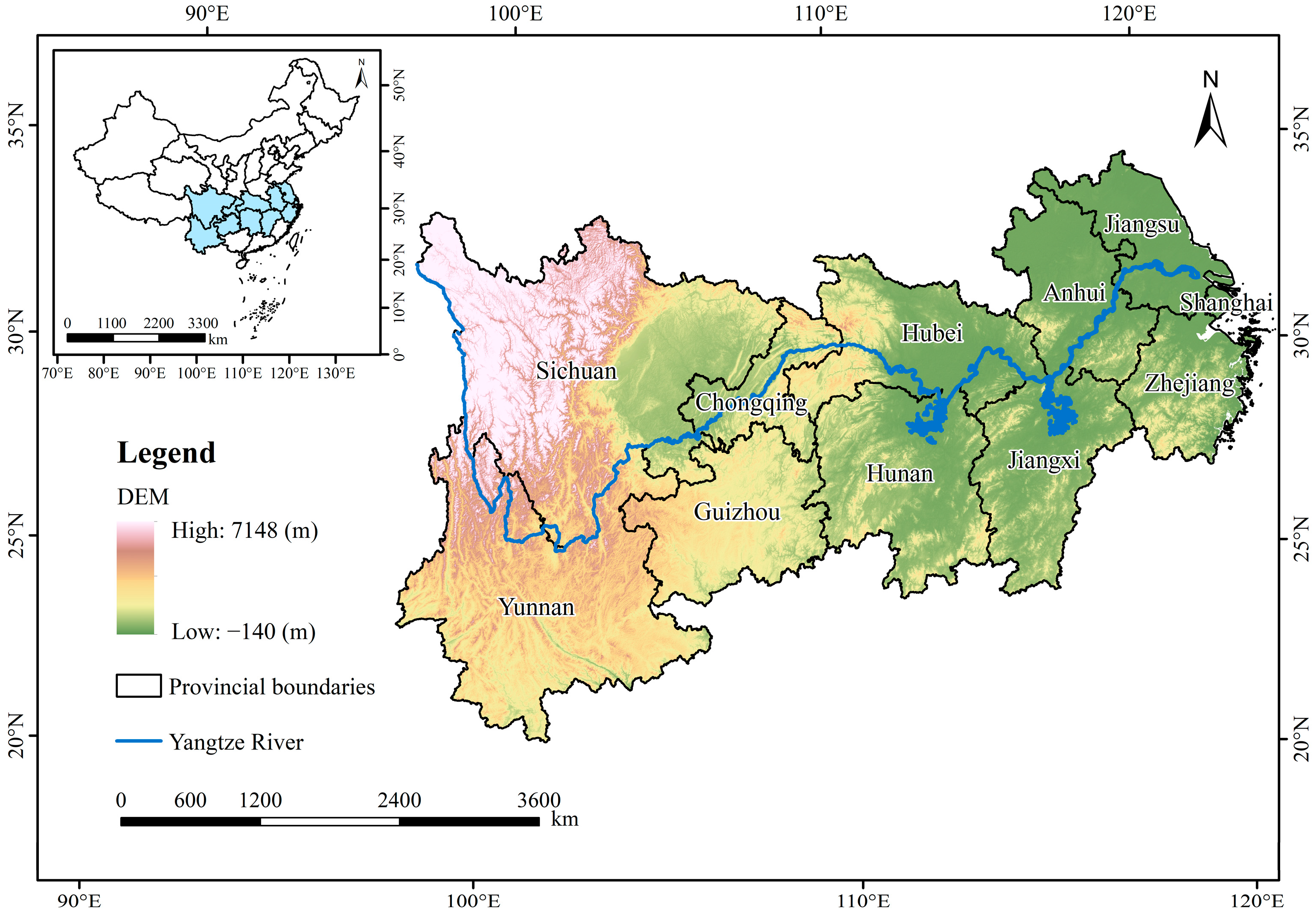
The Yangtze River Economic Belt (YREB) is a vital economic region in China, encompassing the Yangtze River Basin and covering 11 provinces and cities, including Shanghai, Jiangsu, Zhejiang, Anhui, Jiangxi, Hubei, Hunan, Chongqing, Sichuan, Guizhou, and Yunnan [
19]. The total area of the YREB is approximately 2,052,300 km
2, accounting for 21.4% of China’s land area [
20]. As a key agricultural, industrial, and transportation hub, the YREB contributes over 40% of China’s GDP and total population [
21,
22].
The Yangtze River Basin, the largest water system in China, plays a critical role in supporting agricultural irrigation, industrial production, urban water supply, and ecological health. Beyond its functional importance, the basin also regulates regional climate and serves as a foundation for national food security, ecological stability, and social development [
23]. Against the backdrop of global climate change and growing water scarcity, water yield services in the YREB have become increasingly important. They are essential for water resource allocation, water quality protection, and flood prevention, playing a strategic role in ensuring the sustainable development of the region [
24] (
Figure 1).
2.2. Data Sources and Processing
- (i)
Data source
The data used in this study primarily included historical precipitation and evapotranspiration records for the YREB from 2000 to 2020, global climate model projections from CMIP6, and environmental datasets required by the AWY and NDR modules of the InVEST framework. Specifically:
Historical climate data: Precipitation and evapotranspiration data for the historical period (2000–2020) were sourced from the ECMWF Reanalysis 5th Generation (ERA5) dataset for baseline correction purposes.
Future climate scenarios: Climate data under four SSPs (SSP1-2.6, SSP2-4.5, SSP3-7.0, and SSP5-8.5) were derived from three global climate models (CanESM5, MIROC6, and MRI-ESM2-0) in the CMIP6 dataset to simulate future water yield conditions in the YREB.
Environmental data: Data for the AWY modules, including precipitation, evapotranspiration, elevation, land use, and soil properties, were obtained from sources such as the Global Drought Index and the Potential Evapotranspiration Database [
25]. The resolution and sources of all datasets are summarized in
Table 1.
- (ii)
Data preprocessing
Given that data from different sources may exhibit variations in accuracy and resolution, further preprocessing of the aforementioned data is required. The specific processing methods are as follows:
Spatially, all data were transformed into a common projection coordinate system (WGS_1984_UTM_Zone_50N). Furthermore, considering that most data possessed a 1 km resolution, a 1 km raster was adopted as the base resolution to minimize excessive intervention in the original data. Specifically, the DEM underwent resampling via bilinear interpolation; land use data was resampled using the mode method, whereby the land type occurring most frequently within each 1 km area was assigned as the land use type for that area.
For the input climate data, as this study selected data from three climate models within the CMIP6 global climate model ensemble, and considering that the representativeness and validity of data for the study region may differ across models, the average precipitation and average evapotranspiration values from these three models under the same socioeconomic scenario were used as inputs to the AWY model. The use of a multi-model mean for precipitation and evapotranspiration inputs is a recognized strategy to dampen inter-model variability and reduce projection uncertainty. This approach is often considered more reliable than individual model outputs for large-scale trend analysis. Additionally, for the data required by the AWY and NDR modules within the InVEST model, daily values must be processed into annual values to enable input into the AWY module for calculation.
2.3. Climate Change Simulation Methods
Climate change refers to long-term variations in temperature and weather patterns on a global scale. The Global Climate Model (GCM) is a key tool for simulating future climate scenarios. This study utilized data from the sixth Coupled Model Intercomparison Program (CMIP6), which is widely recognized for its accuracy in simulating large-scale climate states [
27]. The sixth Coupled Model Intercomparison Program (CMIP6) is the most widely used. However, considering variations in data from different sources, this study designates the period from 2000 to 2020 as the historical period. Using precipitation and evapotranspiration data from EAR5 as the baseline, the Delta downscaling method is employed to forecast precipitation and evapotranspiration data for the years 2021 to 2060. The specific methodology is as follows.
In the formula, Pf and Ef represent the future precipitation and evapotranspiration annual series reconstructed using the Delta method. PGf and EGf refer to the annual precipitation and evapotranspiration variations in the CMIP6 climate model. PGo and EGo represent the annual average precipitation and evapotranspiration simulated by climate models during the historical period. Po and Eo are the average annual precipitation and evapotranspiration of meteorological stations during the historical period.
2.4. Water Yield Service Model
The water yield service was simulated using the Annual Water Yield (AWY) module of the InVEST model. This module is based on the Budyko hydrological framework and calculates water yield using the water balance equation [
28].
where
Yx is the annual water yield of the grid unit
x (mm), and
AETx refers to the actual evapotranspiration of grid unit
x (mm).
Px is the annual precipitation of grid unit
x.
PETx represents the potential evapotranspiration (mm), and
Acx is the reference crop evapotranspiration coefficient.
ET0x is used as a reference for evapotranspiration (mm), and
ω(
x) represents the non-physical parameter of soil properties under natural climate conditions.
AWCx is the available water content.
Z is the Zhang coefficient.
MSD is the maximum root depth, and
SD is the root depth.
PAWC is the available water content for plant.
The above parameters are determined based on recommendations from the InVEST-AWY user guide [
29]. Within the model, the Z parameter is iteratively adjusted to generate the corresponding WY. The simulated data is then compared and validated against observed data to ensure model accuracy. Model evaluation is conducted using Nash–Sutcliffe efficiency coefficient (NSE = 0.85) and mean absolute percentage error (MAPE = 7.46%). Through iterative simulations, the Zhang coefficient is ultimately determined as 18, which aligns well with measured data, thereby verifying the model’s validity.
2.5. Construction of an Evaluation Index for Water Yield Services in Response to Climate Change
The existing methods for evaluating water yield only provide a statistical evaluation of changes in its numerical values. However, there are various situations in which water yield changes due to climate change. To quantitatively assess the impact of climate change on water yield services, two evaluation indices (
K and
K*) were established. The specific formulas are as follows.
where
Kij is the water yield change index of the
ith grid under the
jth climate mode under the given climate.
hij represents the water yield in the
ith grid under the
jth climate model in the future simulation period (mm).
hi0 refers to the water yield of the
ith grid in the historical experimental period (mm).
Kj* is the comprehensive water yield change index of each province under the
jth climate mode, and
n is the total number of grids in each province.
Sx is the area of each province (km
2), and
Si is the area of the
ith grid in each province (km
2).
The index
K quantifies the relative rate of change in water yield between a future period and a historical baseline at the grid level, while the index
K* represents an aggregated rate of change at the provincial scale. Both are expressed as dimensionless ratios, providing a direct measure of the positive or negative impact of climate change on water yield. The mean precipitation and mean evapotranspiration values from the three models (CanESM5, MIROC6, and MRI-ESM2-0) are input into the AWY model to calculate the water yield under each SSP scenario. The indices
Kij and
Kj* are then derived using Equations (8) and (9). The range of
Kj* is shown in
Table 2.
2.6. Summary
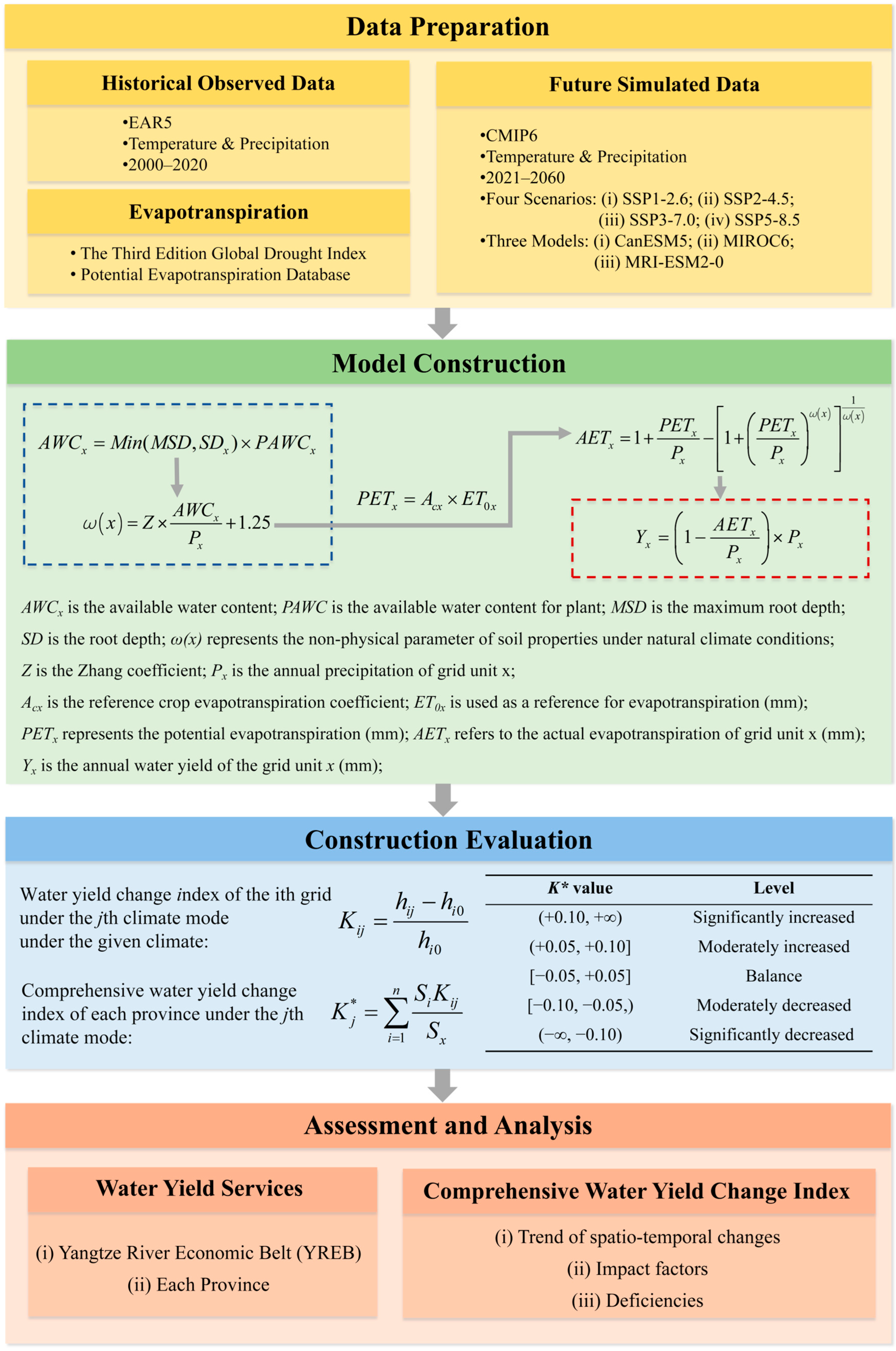
As shown in
Figure 2, the evaluation of the impact of climate change on Water Yield (WY) services in the Yangtze River Economic Belt (YREB) is conducted through the following steps: (i) Data Preparation: The historical period (2000–2020) uses observational data from ECMWF Reanalysis v5 (ERA5), while future projections (2021–2060) are derived from Coupled Model Intercomparison Project Phase 6 (CMIP6). The climate data for the future time period covers four scenarios: SSP1-2.6, SSP2-4.5, SSP3-7.0 and SSP5-8.5. The Delta downscaling method is used to predict precipitation and temperature data from 2021 to 2060. The evapotranspiration data are derived from the Third Edition Global Drought Index and Potential Evapotranspiration Database. (ii) Model Construction: Precipitation and temperature series under the different scenarios are integrated into the WY module of the InVEST model to calculate WT services. (iii) Construction Evaluation: Quantitative analysis of WY variations is performed. The change index of WY is calculated, and the comprehensive change index of WY is then obtained. (iv) Assessment and Analysis: The spatiotemporal evolution characteristics of WY services in the YREB under climate change are examined, providing a scientific basis for regional water resource management and ecological planning.
3. Result Analysis
3.1. Spatiotemporal Variations in Water Yield Services in the Yangtze River Economic Belt Under Climate Change
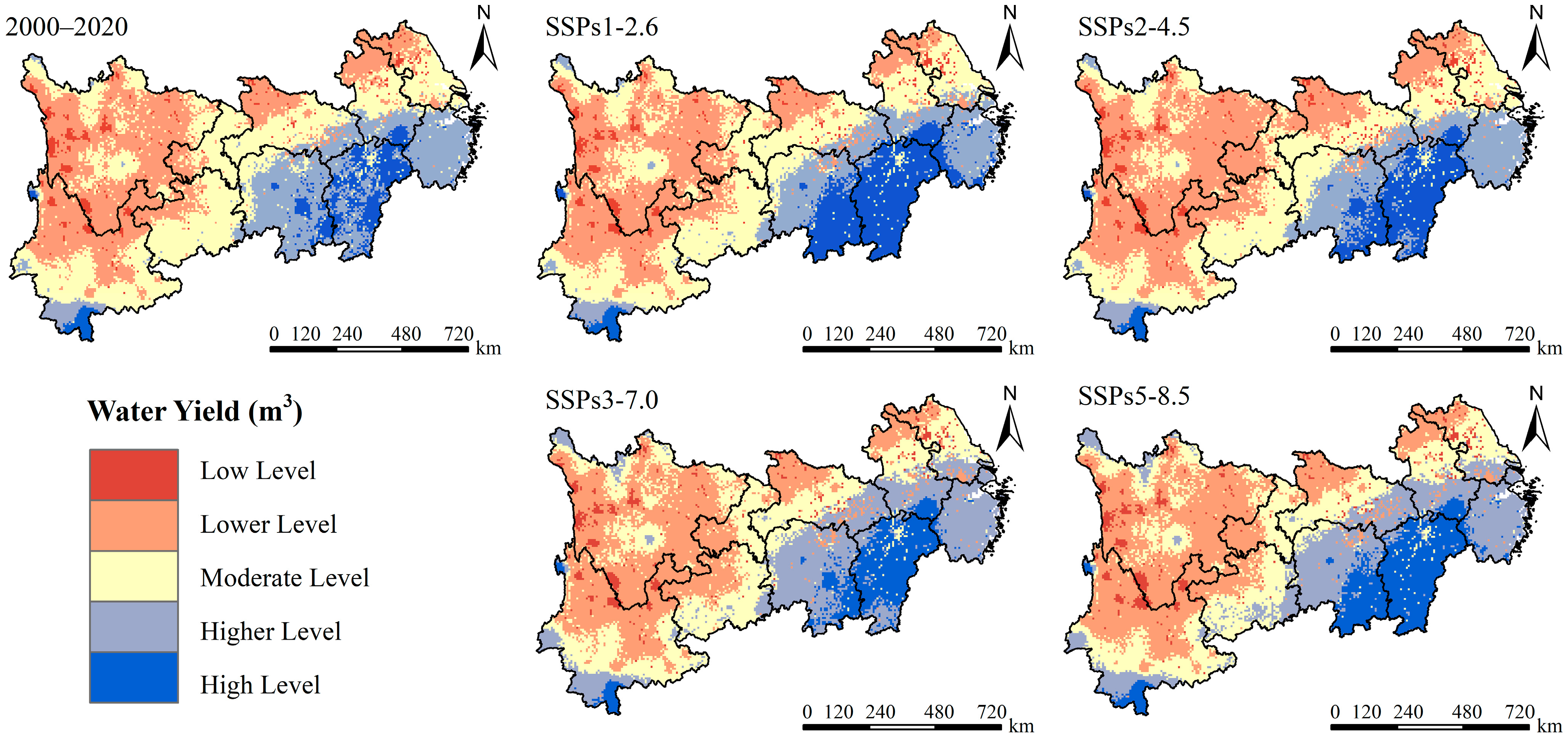
Based on precipitation, potential evapotranspiration, and land use data from 2000 to 2060, the Annual Water Yield (AWY) module of the InVEST model was used to calculate the annual water yield of the YREB under both historical (2000–2020) and future (2021–2060) scenarios. The spatial distribution of water yield is illustrated in
Figure 3.
From 2000 to 2020, the total water yield of the YREB was 1.68 × 10¹² m3, with an average water yield depth of 854.39 mm. Spatially, the water yield was lower in the upper reaches (e.g., western Sichuan and northern Yunnan) and higher in the middle and lower reaches, with Jiangxi Province exhibiting the highest water yield of 2.39 × 10¹¹ m3 and a maximum water yield depth of 1978.86 mm.
Compared to the historical period, the total water yield of the YREB under the four future SSP scenarios shows an increasing trend, with total water yields of 1.82 × 10¹² m3, 1.73 × 10¹² m3, 1.76 × 10¹² m3, and 1.78 × 10¹² m3 for SSP1-2.6, SSP2-4.5, SSP3-7.0, and SSP5-8.5, respectively. However, the spatial distribution of water yield remains consistent, with lower levels in the upper reaches and higher levels in the middle and lower reaches. Notably, regions with historically low water yield (e.g., Guizhou, central Hubei) remain at low levels across all future scenarios, while high water yield regions (e.g., Jiangxi, Hunan, Zhejiang) generally exhibit improvements.
In terms of water yield depth, the annual average across provinces in the Yangtze River Economic Belt during the historical period (2000–2020) ranged from 657.66 mm (Sichuan) to 1289.24 mm (Jiangxi), indicating a notable spatial disparity within the basin. This spatial heterogeneity persists under future climate scenarios. Under the SSP1-2.6 scenario, the projected water yield depth ranges from 672.31 mm (Sichuan) to 1420.35 mm (Jiangxi). Under SSP2-4.5, the range is from 694.79 mm (Chongqing) to 1331.11 mm (Jiangxi). For the SSP3-7.0 scenario, the values span from 724.00 mm (Chongqing) to 1334.29 mm (Jiangxi), while under SSP5-8.5, the range is from 720.21 mm (Chongqing) to 1378.00 mm (Jiangxi).
Among the scenarios, the SSP1-2.6 scenario shows the most significant increase in water yield, particularly in Hunan, Jiangxi, and Zhejiang, where high-value areas expand in both extent and intensity. This can be attributed to increased precipitation and relatively moderate warming, which suppresses excessive evapotranspiration growth. Under this scenario, water yield increases by 8.10% compared to the historical period, with an average depth of 855.02 mm. For the SSP5-8.5 scenario, although precipitation also increases, the significant warming leads to enhanced evapotranspiration, resulting in a smaller water yield increase of 5.80%, with an average depth of 870.26 mm.
Under the SSP3-7.0 and SSP2-4.5 scenarios, water yield increases are relatively modest. Low water yield areas expand in the middle and lower reaches, while high water yield regions in Hunan and southern Jiangsu experience localized improvements. Total water yield increases by 4.53% and 2.54%, with average depths of 859.86 mm and 843.58 mm, respectively.
3.2. Temporal and Spatial Distribution of Water Yield Services Across Different Provinces in the Yangtze River Economic Belt
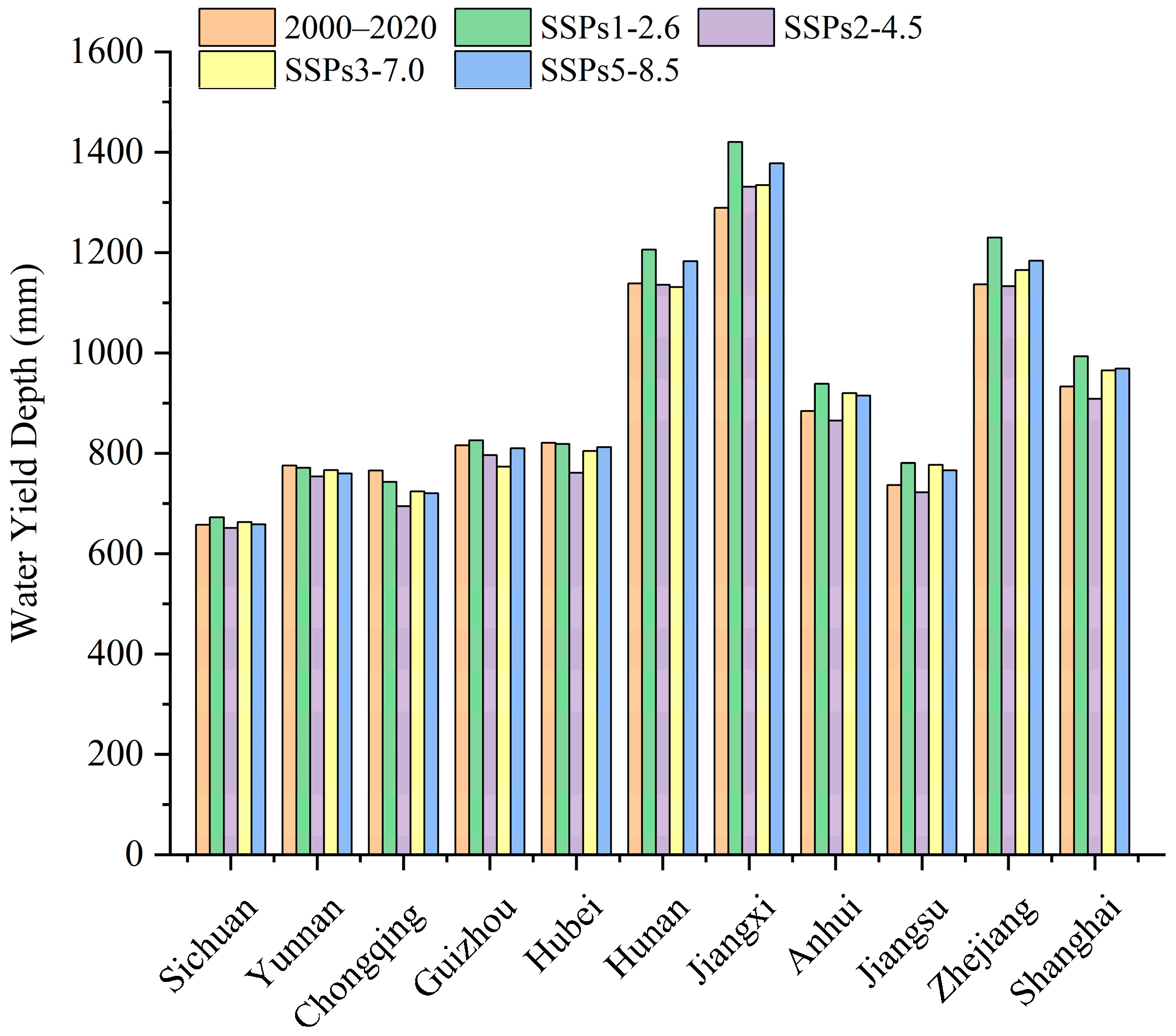
The average water yield depth from 2000 to 2060 was simulated using the SSPs–InVEST coupling model and analyzed on a provincial basis. The results are illustrated in
Figure 4.
During the historical period, the average water yield depths of provinces in the YREB were generally moderate to low. The ranking of average water yield depth is as follows: Jiangxi > Hunan > Zhejiang > Shanghai > Anhui > Hubei > Guizhou > Yunnan > Chongqing > Jiangsu > Sichuan. Jiangxi Province exhibited the highest average water yield depth at 1289.24 mm, followed by Hunan (1138.26 mm) and Zhejiang (1136.49 mm). Sichuan Province had the lowest average depth at 657.66 mm.
In the SSPs1-2.6-based climate scenario, Jiangxi Province shows the largest increase in average water yield depth, reaching 1420.35 mm. Zhejiang and Hunan also experience significant increases, with average depths of 1230.07 mm and 1205.69 mm, respectively. In contrast, Sichuan Province shows only a slight increase, with an average depth of 672.31 mm.
Under the SSPs2-4.5-based climate scenario, the average water yield depth decreases in most provinces, except for Jiangxi, which increases slightly to 1331.11 mm. The most significant decrease occurs in Chongqing, where the average depth drops to 694.79 mm, representing a 9.23% reduction compared to the historical period.
For the climate scenarios based on SSPs3-7.0 and SSPs5-8.5, water yield depth shows varying increases and decreases. Jiangxi maintains the highest water yield depth (1334.29 mm in SSP3-7.0-based climate scenario and 1378.00 mm in SSP5-8.5-based climate scenario), while Chongqing and Sichuan exhibit consistent declines. For example, under the SSP5-8.5-based climate scenario, the average depth in Chongqing decreases to 720.21 mm, a 5.90% reduction compared to the historical period.
3.3. Changes in Water Yield Services Across Provinces Due to Climate Change
Using the evaluation method described in
Section 2.5, the spatial distribution of the water yield service change index for each province under the four climate scenarios was calculated. The results are shown in
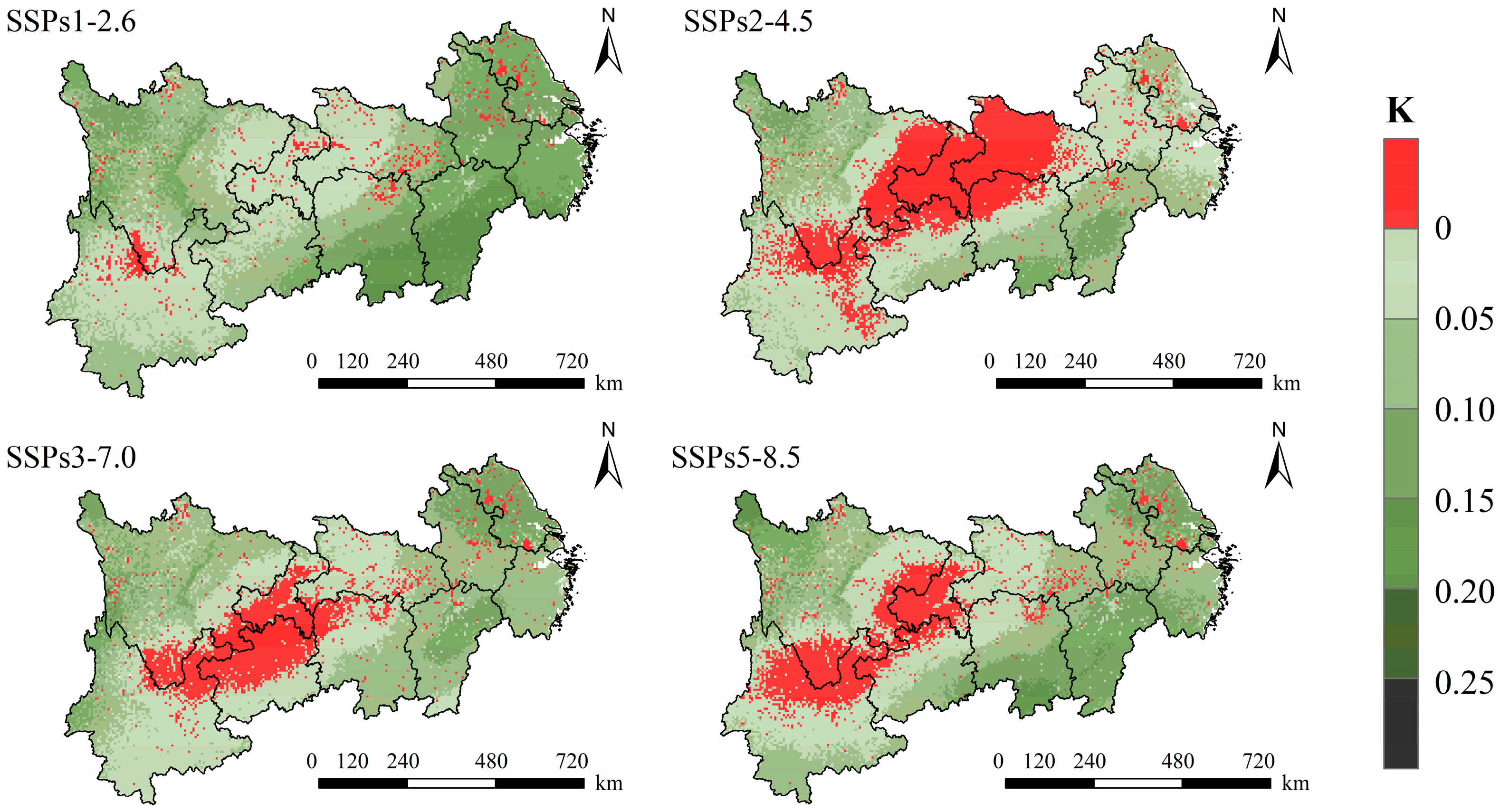
Figure 5.
Overall, the results reveal fluctuating trends in water yield changes across the YREB. The middle reaches generally show a decline, while the upper and lower reaches exhibit varying degrees of increase. Specifically, Chongqing, northern Guizhou, and northeastern Yunnan experience declines in water yield across all scenarios. While Hunan, Jiangxi, Zhejiang, Shanghai, and Jiangsu show an upward trend, Jiangxi exhibits the largest increases, followed by Anhui and Zhejiang.
Among the scenarios, SSP1-2.6-based climate scenario shows the most significant increases in water yield, particularly in the middle and lower reaches (e.g., Jiangxi, Anhui, Hunan). Conversely, SSP2-4.5-based climate scenario shows the smallest increases, with some areas experiencing declines in the middle reaches (e.g., Chongqing, eastern Sichuan, northern Guizhou). A moderate increase in water yield is observed under SSP3-7.0 and SSP5-8.5-based climate scenarios, with the latter showing pronounced increases in the lower reaches (e.g., Jiangxi and Zhejiang) but declines in the upper and middle reaches.
3.4. Comprehensive Change Index of Water Yield Services Across Provinces
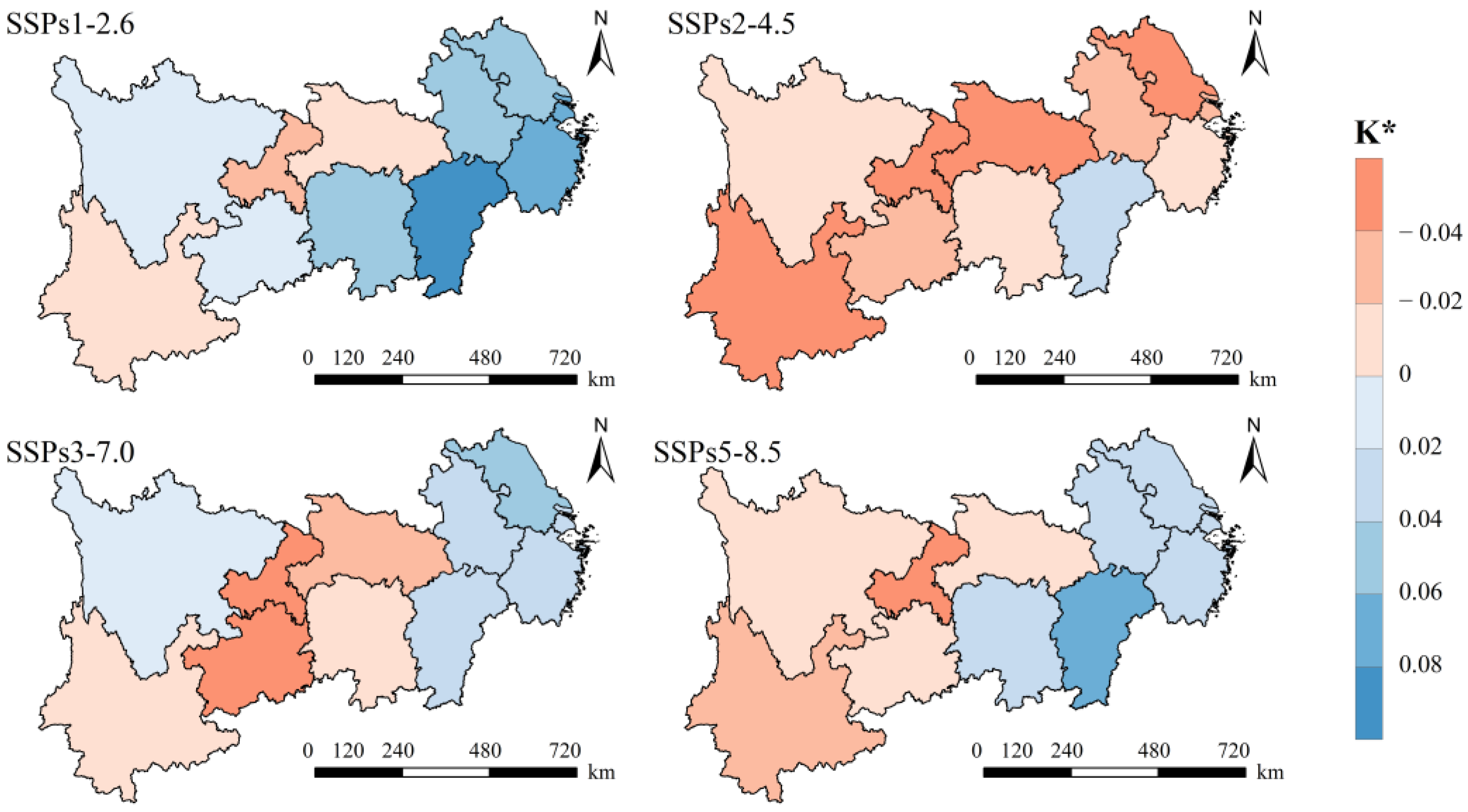
The spatial distribution of the comprehensive change index K* for water yield services under climate change is presented in
Figure 6.
From
Figure 6, under the SSPs1-2.6-based climate scenario, water yield services in the YREB initially exhibit a spatial differentiation characterized by “high in the east and low in the west.” The K* values for Jiangxi and Zhejiang are 0.1004 and 0.0796, respectively, which are relatively high. Following these are Hunan, Anhui, Jiangsu, and Shanghai in the middle and lower reaches, with K* values ranging from 0.0585 to 0.0606. In contrast, the K* values for Chongqing, Hubei, and Yunnan in the upper reaches are negative, ranging from −0.115 to −0.0324. The east–west disparity under this scenario may be related to regional topography and climatic background: the eastern plains receive abundant precipitation with relatively stable hydrothermal conditions, while the complex terrain in the west makes it more sensitive to climate change.
Under the SSPs2-4.5-based climate scenario, water yield services in the YREB are generally negatively affected. Only Jiangxi maintains a positive K* value (0.0308), while the K* values of other provinces are negative, ranging from −0.0954 to −0.0043. This shift indicates that the moderate emission pathway may exacerbate moisture stress across the YREB, particularly in the middle and upper reaches. Changes in precipitation patterns and increased evapotranspiration may contribute to an overall decline in water yield capacity.
Under the SSPs3-7.0-based climate scenario, the K* values across the YREB are slightly higher than those under SSPs2-4.5, yet the spatial pattern remains “high in the east and low in the west.” The K* value in Jiangsu is 0.0457, the highest in the YREB. The K* values for Anhui, Jiangxi, Shanghai, and Zhejiang are positive (from 0.0237 to 0.0398). At the same time, Chongqing, Guizhou, and Hubei in the middle and upper YREB continue to show negative K* values, ranging from −0.0569 to −0.0282. This variation suggests that increased climate change does not linearly intensify water yield decline in all regions. The lower reaches demonstrate certain climate resilience, whereas the upper reaches still exhibit a weakening trend in water yield services.
Under the SSPs5-8.5-based climate scenario, the spatial trend of “high in the east and low in the west” becomes more pronounced. Jiangxi (0.0673) and Zhejiang (0.0396) exhibit high K* values. Provinces in the lower reaches generally show better performance. In contrast, most provinces in the middle and upper reaches display negative K* values, ranging from −0.0632 to −0.0038. This pattern can be attributed to the amplified regional response differences under the high-emission scenario, driven by changes in precipitation distribution and intensity, along with increased evapotranspiration. The lower reaches benefit from a humid climate and stronger water regulation capacity. However, the middle and upper reaches remain constrained by topography and ecological fragility, leading to persistently limited water yield services.
4. Discussion
By analyzing the impacts of climate change on water yield services in the YREB, three key findings emerged: (i) Overall increase in water yield under climate change: Across the four SSP scenarios, water yield services in the YREB show an overall increasing trend. The ranking of water yield changes among the four scenarios is as follows: SSP1-2.6 > SSP5-8.5 > SSP3-7.0 > SSP2-4.5. The SSP1-2.6 scenario, characterized by low emissions and sustainable development, achieves the highest increase in water yield services. (ii) Spatial heterogeneity: Significant spatial variations exist in the distribution of water yield changes. Provinces such as Jiangxi and Hunan show substantial increases in water yield, while regions like Chongqing experience marked declines. Overall, the spatial distribution of water yield changes follows a pattern of “high in the east, low in the west.” (iii) Impact of climate change on water yield services: The comprehensive change index (K*) for the 11 provinces and cities ranges from −0.0954 to 0.1005 under the four SSP scenarios. Climate change positively impacts water yield services in downstream areas, such as Jiangxi and Zhejiang, while negatively affecting upstream and midstream regions, including Chongqing and Hubei.
4.1. Model Validity
Compared with existing observational data and literature, the validity analysis of this study’s assessment results is as follows:
- (i)
The Validity of Input Data. Gao et al. found that the precipitation trend displays a pattern of “drier ones, wetter ones” in the context of global warming [
30]. This aligns with the prevailing trend of higher precipitation in the future climate change scenarios simulated in this study compared to historical periods, indicating that the use of a multi-model mean for precipitation and evapotranspiration inputs can scientifically simulate future changes in water yield within the study area, thereby validating the effectiveness of the model data inputs. Moreover, among the four future societal scenarios, the water yield services under the SSPs1-2.6-based climate scenario were the most pronounced, whereas the water yield services under climate conditions in the other three scenarios were markedly lower. This may be attributable to the SSPs1-2.6-based climate scenario representing a low-carbon, environmentally friendly, and sustainable development model, consistent with the findings of Li et al. [
31]. This further validates the model’s reliability and scientific validity.
- (ii)
The Validity of Model Calculations. Zhang et al. employed the InVEST model to calculate the annual water yield in the YREB from 2000 to 2015, yielding corresponding average water yield figures of 764.77 mm and 915.54 mm [
32]. These values are comparable to the average annual water yield depth of 854.39 mm for the YREB from 2000 to 2020 obtained in this study. Furthermore, Yang et al. employed the same methodology to simulate the water yield for the YREB in both 2000 and 2020, revealing a water yield depth of 716.28 mm for 2020 and an increase of 101.48 mm compared to 2000 [
29]. The pattern of increasing followed by decreasing water yield in the YREB from 2000 to 2020 further corroborates the validity of this study’s findings. Moreover, the ‘higher in the east, lower in the west’ distribution of water yield depth observed in this study aligns closely with the conclusions reached by Hu et al. [
14].
- (iii)
The Validity of Water Production Service Evaluation. Yang et al.’s research indicates that future increases in water yield will primarily occur in the southeastern Yangtze River basin, whilst reductions will be observed in the northwestern regions [
33]. This aligns with the findings of this study, which indicate that water yield is declining in the upper and middle reaches of the YREB while exhibiting an upward trend in the lower reaches. This demonstrates that the water yield model designed for this study can effectively simulate future water yields in the study area, with the model results exhibiting significant validity. Moreover, climate change impacts ecosystems in various ways, with both worsening and improving impacts. In this study, the future forecast shows an overall increase in water yield, but due to differences in precipitation distribution across regions, water yield in the lower reaches of the YREB increases while it decreases in the upper and middle reaches. This finding is consistent with the predictions of Zhao et al. [
34].
4.2. Management Implications and Application Prospects
This study employed a coupled SSPs–InVEST model to examine changes in water yield ecosystem services between 2000 and 2060, establishing a quantitative impact assessment framework to analyze their implications. The research not only revealed the sensitivity and spatial variation patterns of water yield services in the YREB to climate change but also provided scientific tools for refined basin management and adaptive governance through modeling techniques.
On the one hand, water yield along the Yangtze River Economic Belt exhibits a stable spatial pattern characterized by higher levels in the east and lower levels in the west. Furthermore, climate change is projected to benefit the downstream regions while adversely affecting the middle and upper reaches. Consequently, differentiated management approaches tailored to distinct river basin zones are required [
35]. Downstream areas may optimize water resource efficiency whilst safeguarding ecological thresholds, whereas middle and upper reaches must prioritize investments in ecological restoration and adaptive water-saving projects to mitigate the negative impacts of climate change [
36].
On the other hand, the increase in water yield varies significantly across different climate change scenarios (SSPs), with the most pronounced growth occurring under the sustainable development pathways (SSP1-2.6). This indicates that relevant departments should adopt the SSP1-2.6 pathways as a guiding principle, coordinating efforts to advance both emissions reduction and ecological conservation [
37].
Moreover, according to the results of the water yield service change index (K*), downstream provinces such as Zhejiang have benefited significantly, while upstream provinces like Chongqing and Sichuan have suffered relatively pronounced losses. Consequently, future management processes should further establish cross-provincial horizontal ecological compensation and coordinated scheduling mechanisms, encouraging beneficiary regions to compensate protected areas. This approach will maximize water resource benefits across the entire basin while ensuring shared risk management [
38].
In conclusion, based on the findings of this study’s assessment model, a robust scientific foundation and practical governance tools can be provided to support the efficient utilization, equitable distribution, and long-term security of water resources within the Yangtze River Economic Belt. This will thereby underpin the advancement of ecological civilization and high-quality development across the basin.
4.3. Research Limitations
This article explores the impact of climate change on water yield services in the YREB using the SSPs–InVEST coupling model and generating some valuable research findings that have been confirmed by relevant data. Nevertheless, there are still the following shortcomings:
- (i)
The inherent errors in climate change simulations may introduce uncertainty into assessment outcomes. To mitigate the uncertainties associated with individual climate models, this study employed the ensemble mean of three widely used CMIP6 GCMs (CanESM5, MIROC6, and MRI-ESM2-0) as climatic inputs for the InVEST-AWY model. The multi-model averaging approach helps to offset model-specific biases and capture a more robust signal of future climate change, thereby reducing the reliance on any single model’s projection and enhancing the reliability of the simulated water yield trends. A comprehensive sensitivity or uncertainty analysis, involving running the InVEST model with outputs from each individual GCM, could further delineate the uncertainty range. Such an analysis, while beyond the scope of this scenario-focused assessment, is a recommended and important avenue for future research to provide probabilistic projections of water yield services.
- (ii)
The current water yield service model operates on an annual basis, to some extent overlooking intra-year variations (seasonal or monthly) within the study area. The core design of the water yield module (Annual Water Yield) within the InVEST model focuses on estimating long-term annual average water yields; consequently, only annual-scale data inputs are employed during simulation. To address this limitation, future research will introduce more sophisticated coupled models upon the existing framework, thereby enhancing the precision of outcomes.
- (iii)
The current simulation considers only variations in meteorological factors. Climate change may also influence land use. Consequently, future research will delve into the synergistic effects of meteorological elements and land use on ecosystem services.
5. Conclusions
This study systematically evaluated the spatiotemporal evolution of water yield services and their response to climate change in the Yangtze River Economic Belt from 2000 to 2060 by coupling SSPs-based climate scenarios with the InVEST-AWY model. The results indicate that the total water yield in the region shows an increasing trend across different climate scenarios, yet exhibits significant spatial heterogeneity. The increase is most pronounced under the SSP1-2.6-based climate scenario, particularly in Hunan, Jiangxi, and Zhejiang, where both the extent and intensity of high-value areas expand considerably. This phenomenon is largely attributable to the unique combination of precipitation and evapotranspiration under this scenario—significant precipitation increase coupled with relatively moderate warming that curbs excessive evapotranspiration growth. In contrast, under the SSP5-8.5-based climate scenario, although precipitation also increases, the accompanying substantial warming leads to markedly enhanced evapotranspiration, resulting in a comparatively limited increase in water yield.
Spatially, changes in water yield services demonstrate a distinct “high in the east, low in the west” pattern. Downstream provinces such as Jiangxi and Zhejiang mostly benefit from the positive effects of climate change, experiencing enhanced water yield services, while mid- and upper-stream regions, particularly Chongqing and Hubei, face pressures from relatively diminished water yield capacity. This spatial variation reflects the differential sensitivity of various regions to climate change and underscores the complexity of future water resource management.
It should be noted that the conclusions of this study are based on a specific methodological framework and thus have corresponding limitations. First, the assessment results rely on the simulation outputs of CMIP6 climate models and the Delta downscaling method, which inherently contain uncertainties that may affect the precision of the findings. More importantly, the current research focuses on the analysis of annual totals and has yet to reveal the seasonal variation characteristics of precipitation and evapotranspiration. Such intra-annual dynamics are crucial for water resource management and flood-drought disaster risk prevention and control. Additionally, the model primarily considers the influence of climatic factors and has not yet fully incorporated synergistic influencing factors such as future land use changes and human water use activities.
Based on the above understanding, future research could further investigate the following aspects: First, developing higher spatiotemporal resolution climate–hydrology coupled models, particularly to analyze the variation patterns of water yield services at seasonal scales, in order to enhance early warning capabilities for extreme hydrological events. Second, constructing a comprehensive assessment framework driven by multiple factors, integrating the compound effects of climate change, land use transitions, and human water use activities. Third, promoting the translation of assessment outcomes into management practices by combining the spatial patterns of water yield service changes with regional water resource allocation, ecological protection redline management, and adaptive planning, thereby providing more actionable decision support for water security and sustainable development in the Yangtze River Economic Belt.
In summary, this study reveals the response characteristics and spatial differentiation patterns of water yield services in the Yangtze River Economic Belt to future climate change by constructing a coupled SSPs–InVEST model. Despite methodological limitations, the established assessment framework and the understanding of spatial patterns obtained can still provide a scientific basis for formulating regionally differentiated climate adaptation strategies and enhancing the resilience of water resource systems.