1. Introduction
Phenols are aromatic compounds in which the hydroxyl groups (OH) replace hydrogen atoms on the aromatic rings [
1]. This class of chemicals includes quinones, phenolic acids, halogenated phenols, flavonoids, synthetic phenols, and bisphenols [
1]. They can be chlorinated, nitrated, or alkylated to produce a series of corresponding derivative compounds [
2]. A wide range of phenols are found in nature as a result of biological activity and are generally derived from roots, stems, leaves, fruits, and other parts of plants or crops [
2]. However, phenolic compounds are also exploited in different industrial fields, such as papermaking, oil refining, plastics, pesticides, pharmaceutical synthesis, and others [
3]. Effluents from these industries can contain high levels of phenolic species [
4]. The wet residues from the olive oil production process, which is a very widespread activity in the Mediterranean region, are also characterized by massive quantities of polyphenols [
5]. Another anthropogenic source of phenols is represented by household and municipal wastewater [
1,
4]. Phenols and their derivatives are soluble in water and therefore can easily spread into the environment if wastewater is improperly disposed of or inadequately treated [
1,
4]. Furthermore, the use of pesticides in the agricultural sector causes these contaminants to enter the water [
4].
The presence of phenols in the environment is a matter of concern because they can be harmful to both humans and ecosystems. Indeed, these compounds are difficult to degrade over relatively long periods of time and tend to accumulate in the environment [
2]. In particular, the uncontrolled disposal of waste and wastewater containing phenols causes serious pollution problems, such as deterioration of natural water bodies’ characteristics and soil quality [
6]. Moreover, although some phenolic compounds seem to have beneficial effects on human health, others are characterized by high toxicity [
7]. Inhalation and dermal exposure to phenol in humans causes irritation to the eyes, skin, and mucous membranes [
8]. Furthermore, ingestion of even 1 g of phenol may lead to severe health problems [
8]. Phenol poisoning was reported to provoke headaches, dryness of the throat, dyspnea, nausea, and vomiting [
7].
Due to the environmental and health concerns caused by phenolic compounds, several methods have been tested for their removal, such as adsorption, membrane processes, solvent extraction, biological degradation, reverse osmosis, and advanced oxidation processes (AOPs) [
4]. Among these, AOPs have been widely investigated in recent years [
4]. Various AOPs have been applied, such as ozonation, ultraviolet (UV) radiation, sonocatalysis, ultrasound, Fenton oxidation, photocatalysis, and photo-Fenton oxidation [
4]. However, such treatments are costly and often hardly applicable in field conditions [
9]. As an alternative to the above-mentioned techniques, a different approach based on the use of zero-valent metals has recently gained increasing interest. These materials are strong reductive agents able to degrade complex organic compounds, leading to the formation of simpler and less harmful molecules. Moreover, metallic materials can act as an absorbent for several pollutants. Indeed, the use of these reactants has significant advantages, ensuring a low-energy, rapid, and quantitative degradation of contaminants [
10]. Among the different zero-valent metals, zero-valent iron (ZVI) is the most commonly exploited in various processes for water remediation and treatment. In this context, some authors have investigated the effectiveness of zero-valent iron in the removal of phenolic compounds [
10,
11,
12]. In particular, Katayama et al. [
10] studied the removal of alkylphenols with ZVI in acidic wastewater. The authors reported a successful reductive treatment in which the initial phenols were converted into cyclohexanols (major product) and cyclohexanones. Nanoscopic zero-valent iron was also exploited for chlorinated phenols removal [
9]. The process is supposed to consist of dechlorination, followed by cleavage of the benzene ring, with the electron-transfer process being the major mechanism [
9]. A phenol abatement of 91% was achieved using zero-valent iron powder at pH 3 in the presence of dissolved oxygen [
11]. In this case, the authors hypothesized the occurrence of Fenton reactions alongside adsorption/precipitation on the ZVI surface. Indeed, under acidic and oxic conditions, both Fe
2+ and H
2O
2 are spontaneously formed from the corrosion of Fe
0, promoting the occurrence of Fenton reactions without the necessity of external addition of H
2O
2 [
11].
Despite several positive aspects, ZVI needs strong acid conditions and is subject to intense corrosion phenomena with the release of high quantities of Fe2+/Fe3+ ions. These drawbacks can hinder its applicability, in particular for environmental processes such as the remediation of contaminated aquifers.
Therefore, nowadays, an essential goal in the field of environmental remediation is the identification of effective reactive materials that do not require severe operating conditions and do not pose risks of secondary pollution. In this context, zero-valent magnesium (ZVMg) is a non-toxic metal characterized by a greater redox potential (−2.363 V) than ZVI (−0.44 V) and fewer passivation phenomena [
13]. Zero-valent magnesium has been efficiently tested for the removal of nitrate [
14], hexavalent chromium [
15], boron [
16], and chlorinated compounds [
17,
18,
19]. However, only a few works have focused on the removal of phenolic compounds through zero-valent magnesium [
17]. Moreover, in these studies, the decontamination treatment was conducted in an alcohol solvent system, which is unlikely to be applicable in conventional purification processes. To the best of our knowledge, the use of zero-valent magnesium (ZVMg) for the removal of phenolic compounds from natural water or wastewater has not been properly addressed. To overcome this research gap, the present study explores the potential effectiveness of zero-valent magnesium (Mg
0) in removing gallic acid (GA), selected as a model phenolic compound, from aqueous solutions. Several tests were conducted to evaluate the effects of pH, temperature, and the amount of magnesium used. The regeneration and reuse of the material were also assessed.
2. Materials and Methods
2.1. Reagents
Gallic acid ((HO)3C6H2CO2H) was used to prepare the standard solutions treated during the experiments. Hydrochloric acid (37%) and sodium hydroxide (1 M) were employed for pH adjustment.
Magnesium turnings particles were used to conduct the experiments. The reactive material showed an irregular shape with a mildly rough and jagged surface (
Figure S1, Supplementary Materials). The particle size was approximately 1532.5 μm, and the specific surface area was 1.16 m
2/g. The material was predominantly composed of Mg
0 (96.3 ± 2.1%), with traces of oxygen (2.3 ± 1.5%) and other elements in smaller proportions (1.4 ± 0.6%) (
Figure S2, Supplementary Materials). This was also confirmed through the XRD diffraction analysis, which showed only the peaks of Mg
0, as evident from the comparison with the ICDD (International Centre of Diffraction Data) standard (ICDD 96-900-8507) (
Figure S3, Supplementary Materials).
ZVMg particles were stored in airtight containers to prevent oxidation by air.
The chemicals were of analytical grade, and the solutions were prepared using distilled water.
2.2. Experimental Procedure
The experiments were conducted with the aim of identifying the effects of the magnesium amount, pH, and temperature of the solution on gallic acid removal. Furthermore, the reuse of the material was assessed.
The first set of tests was carried out at room temperature (T = 20 ± 2 °C) using 0.05, 0.1, 0.3, and 0.6 g of magnesium, with no pH correction. Once the optimal Mg amount was identified, further experiments were conducted by adjusting the pH of the solution to the values of 3, 5, 7, 10, and 12 at room temperature. After this, the effect of temperature was considered by carrying out tests at 40 ± 2 °C and 60 ± 2 °C, with no pH correction.
The final series of experiments was conducted to assess the longevity of ZVMg. In this regard, several consecutive tests were conducted by reusing the material recovered at the end of each test. After the fifth reuse, the material was washed with a solution of HCl (1 N) for 1 h at room temperature under stirring conditions. The regenerated magnesium was used for three additional cycles. This set of tests was performed using an initial amount of Mg0 equal to 0.3 g, at 20 °C, and without pH adjustment.
All experiments were performed by treating 100 mL of standard solutions of gallic acid with a concentration of 1 g/L. In each test, the gallic acid solution was poured into a beaker placed on a magnetic stirrer. The temperature of the solution was regulated by means of a heating plate that was connected to a temperature probe. In the experiments conducted at controlled pH, the pH of the solution was corrected using hydrochloric acid (37%) and sodium hydroxide (1 M). The tests lasted 180 min, during which pH and temperature were continuously monitored.
To assess the evolution of the process, samples of the treating solution were periodically withdrawn, filtered, and analyzed. The phenol concentration was measured in each sample taken. Furthermore, the chemical oxygen demand (COD) of the solution was determined at the end of every test.
2.3. Analytical Methods and Presentation of Results
Temperature and pH were monitored using bench analyzers. The concentration of phenols was measured through spectrophotometric analysis [
6]. The chemical oxygen demand (COD) was determined after digestion at 150 °C for two hours with potassium dichromate (K
2Cr
2O
7) and titration with Mohr’s salt solution [
20].
The specific surface area was estimated by means of the BET-N2 (Brunauer–Emmett–Teller) adsorption method (ThermoFisher, Sorptomatic 1990—Waltham, MA, USA). X-ray diffraction (GNR, APD 2000 pro—Novara, Italy), scanning electron microscopy (SEM), and energy dispersive spectroscopy (EDS) (JEOL, JXA-8230—Peabody, MA, USA) were applied to analyze the reactive materials before and after the GA removal.
Each analysis was carried out in triplicate, and the mean values are reported in the graphs. The relative standard deviation was always below 5%.
3. Results
3.1. Effect of Material Amount
The first series of experiments was conducted to evaluate the effect of zero-valent magnesium quantity on gallic acid removal. Four tests were conducted at room temperature and uncontrolled pH by varying Mg
0 amount from 0.05 to 0.6 g. The initial concentration of gallic acid was equal to 1 g/L, which is representative of the level of polyphenols detectable in contaminated water and wastewater [
5,
6]. In
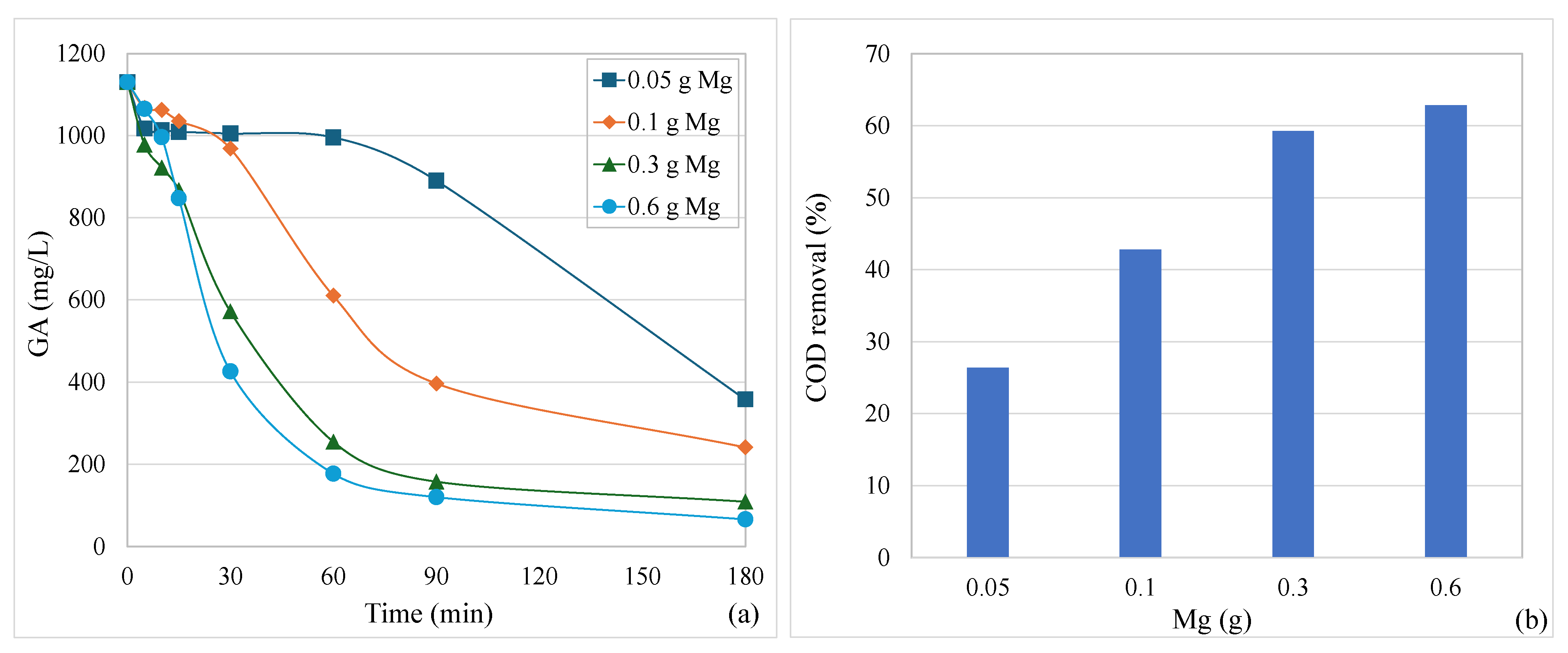
Figure 1a, the concentrations of gallic acid detected during the treatment are shown. In the test conducted with the lowest amount of magnesium, equal to 0.05 g, a slight decrease in gallic acid concentration was observed in the first five minutes of treatment. Thereafter, the removal yield stabilized at approximately 10% for the subsequent 60 min and then varied quickly, reaching an abatement of about 68% at the end of the test.
The reaction rates rapidly increased in response to the increase in material quantity. Indeed, for magnesium amounts between 0.1 and 0.6 g, rapid time-decreasing trends characteristic of batch processes were observed (
Figure 1a). The removal rates increased to 79% and 90%, respectively, in the tests conducted with 0.1 and 0.3 g of magnesium (
Figure 1a). When the Mg amount was further increased to 0.6 g of Mg
0, a final removal of 94% was achieved.
The benefit of increasing the reactive material amount is more evident up to a value that ensures very high pollutant abatement. Indeed, the experimental findings show an attenuation of the GA removal beyond a ZVMg quantity corresponding to a ratio of about 0.33 g
GA/g
Mg, which is able to guarantee a yield of 90%. This threshold value is of the same order of magnitude as those reported in other works using different materials with nanoscopic size [
21]. Kadhum et al. [
21], who exploited nanoscopic zero-valent iron synthesized from modified green tea bio-waste and supported on silty clay for phenol removal, observed an increase in the abatement with the amount of ZVI, followed by a decline beyond a given reactive material threshold. In particular, an increase in the removal rate of up to 1 g/L of reactive material was reported, while, after this dose, a significant decrease in the phenol abatement rate was observed. The decline in the performance at elevated dosages was ascribed to aggregation phenomena among the nanoparticles and to enhanced passivation phenomena of the material surface [
21].
The asymptotic growth in the GA removal yield achieved at the end of each test with the increase in material amount was also confirmed by the COD abatement. Indeed, an increase in the removal percentages was observed as the magnesium amount increased (
Figure 1b). For each amount of ZVMg, the difference between the efficiencies in terms of COD abatement and GA removal (
Figure 1a,b) clearly indicates the formation of intermediate compounds during the process, as widely discussed in the following paragraphs. The lowest COD abatement, equal to 26.4%, was observed in the test conducted with 0.05 g of magnesium. Efficiencies of 42.8% and 59.3% were achieved, respectively, with 0.1 g and 0.3 g of magnesium (
Figure 1b). With the maximum amount of Mg
0 (0.6 g), the final removal percentage was 62.8%. However, this value corresponds to a percentage increase of about 3.5% compared to the removal obtained with an Mg
0 dose of 0.3 g. Given the small increase in removal performance, both in terms of GA and COD, observed by increasing the dosage from 0.3 g to 0.6 g, the amount of 0.3 g was considered optimal. This dosage facilitates high removal rates while minimizing the consumption of reactive material. This amount of magnesium, which corresponds to a ratio between the initial gallic acid concentration and Mg
0 dose of 0.33 g
GA/g
Mg, was exploited in the subsequent set of experiments.
3.2. Effect of pH
Once the optimal dosage of reactive material was identified, the effect of pH was investigated in a wide range of values (3–12) to examine the applicability in real systems. In
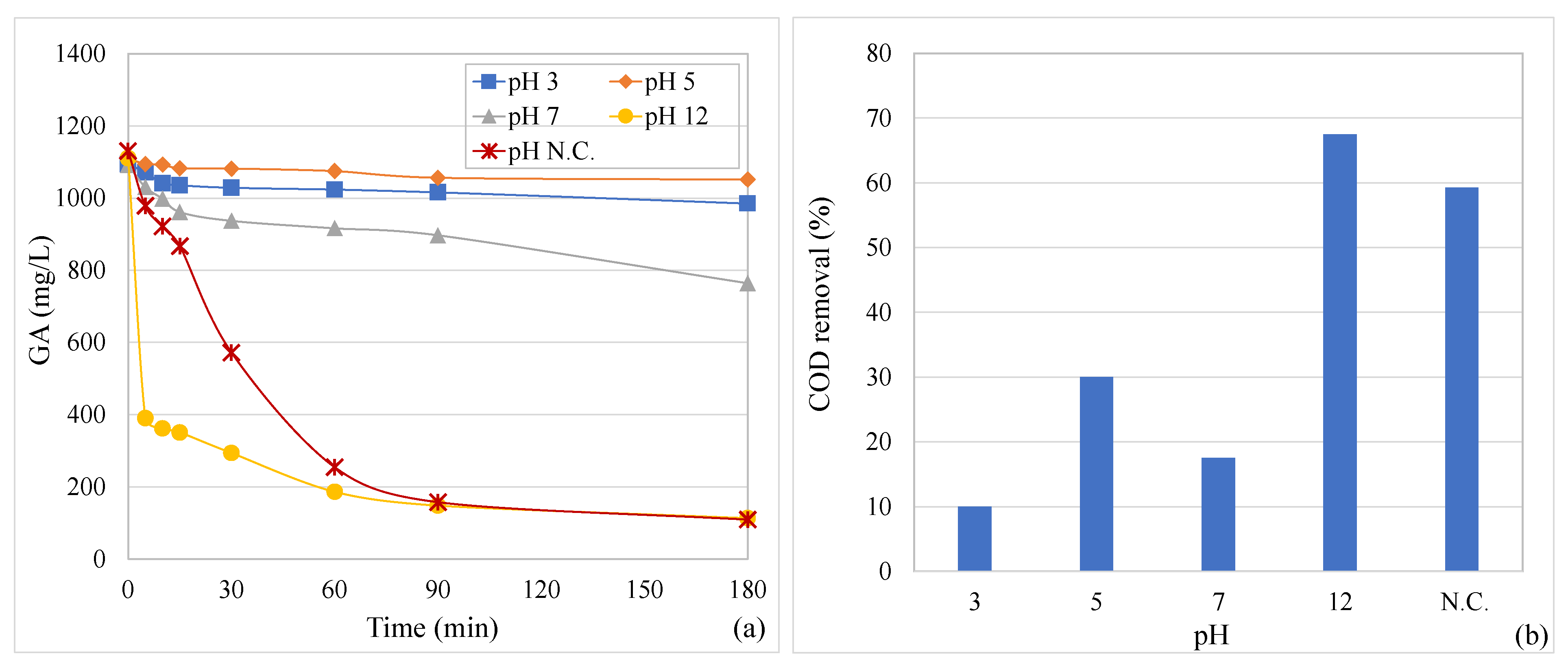
Figure 2a, the curves representative of the tests conducted at pH 3, 5, 7, and 12 are reported. For comparison,
Figure 2a also shows the curve achieved in the test conducted at pH not controlled (pH N.C.), as already discussed. In this last case, the initial pH of the solution was approximately equal to 4. During the treatment, the pH increased, reaching alkaline conditions up to a threshold value of about 11 (
Figure S4, Supplementary Materials).
The tests conducted at pH 3 and 5 were characterized by negligible removal rates. Indeed, only 10% and 5% of gallic acid were removed at pH 3 and 5, respectively (
Figure 2a). A slight increase in the abatement, equal to 30%, was observed when the pH of the solution was increased to 7 (
Figure 2a). The best performance was achieved at pH 12 and uncontrolled pH. As can be seen from the experimental trends, with a pH of 12, a very rapid decrease in GA concentration was reached within the first five minutes of treatment. After this period, the concentration kept on decreasing up to a final value of 113 mg/L, which corresponds to a removal rate of about 90% (
Figure 2a). On the other hand, when the pH of the solution was left free to evolve, a slightly slower reduction in GA concentration was observed, but the final removal yield (90%) was equal to that at pH 12 (
Figure 2a).
The COD removal rates also confirmed the best performance at higher pH levels (
Figure 2b). Indeed, the abatement was between 10% and 30% for pH values between 3 and 7. Higher performance of 67.5% and 56.8% was achieved at pH 12 and with uncontrolled pH, respectively.
The results obtained contrast with those reported by other authors who have studied the removal of phenolic compounds using zero-valent iron. Kadhum et al. [
21] reported maximum phenol removal with an initial pH of 2.5 and 3 for unsupported and supported NZVI, respectively. Similar results were observed when persulfate activated with nanoscale zero-valent iron was exploited for phenol removal [
22]. The pH levels were set to 2, 3, 4, 5, and 5.85 (which was the natural pH of the solution), and the highest removal rates were achieved at pH 2 and 3. This result was ascribed to an enhanced release of Fe
2+ ions in the solution and to the precipitation of Fe
3+ at pH higher than 4.
Based on the detected results, it must be emphasized that ZVMg is a very competitive material for phenolic compound removal, as it can be effectively used for water and wastewater purification under mild operating conditions without pH control.
3.3. Effect of Temperature
Further experiments were conducted with the purpose of evaluating the effect of temperature. To this end, a series of experiments was carried out at 40 °C and 60 °C. In both sets, the Mg
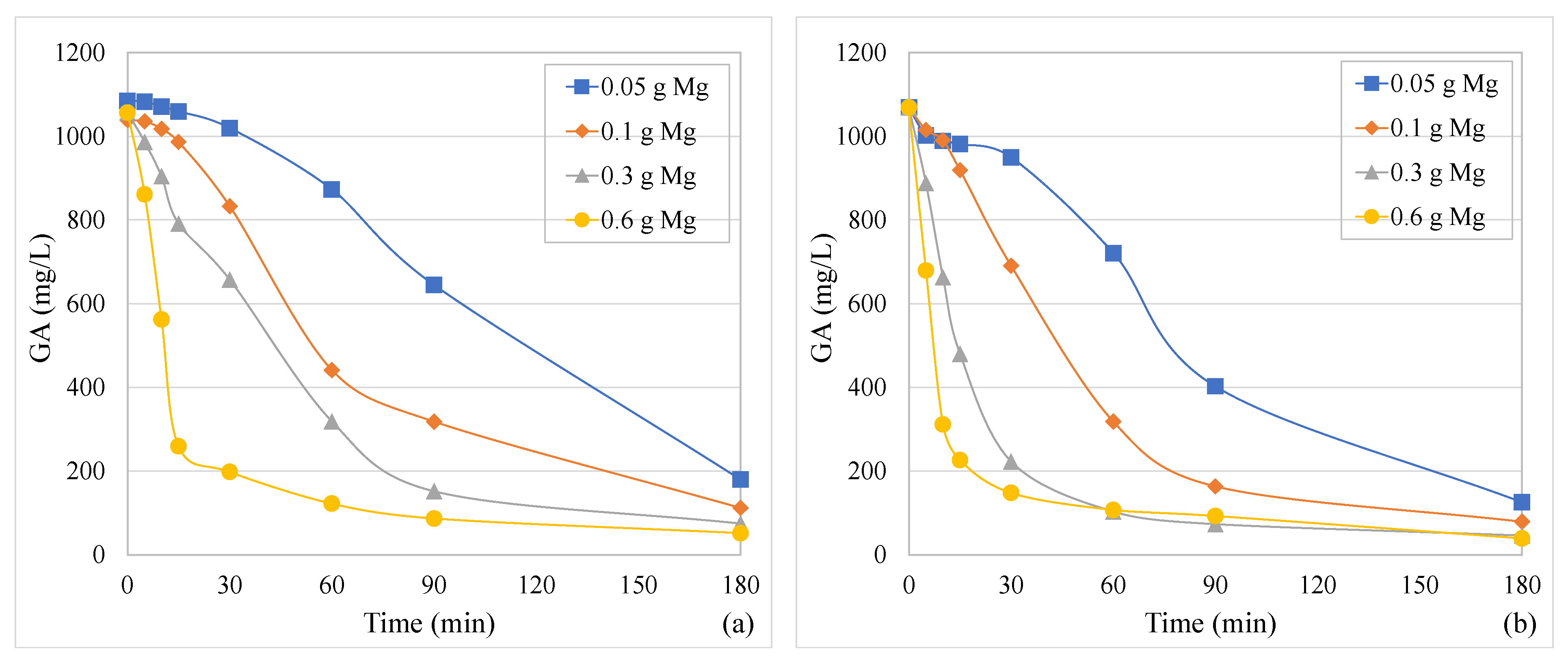
0 amount varied between 0.05 and 0.6 g, and the pH was left uncontrolled during the treatment. As in the tests at 20 °C, an improvement in process performance was detected with increasing amounts of magnesium (
Figure 3a,b). By comparing the curves obtained at different temperatures, it can be noted that, for each amount of ZVMg, a faster removal of GA concentration occurred with the rise in temperature. This result agrees with the findings of other researchers who studied phenol removal through zero-valent iron. Kadhum et al. [
21] reported an improved adsorption of phenol onto the surface of nanoscopic Fe
0 when the solution temperature was raised from 15 °C to 45 °C. The result was ascribed to the enhanced mobility of the contaminant at higher temperatures. Sanchez et al. [
23] exploited zero-valent iron and EDTA for phenol removal, observing an enhancement in the reaction rate with an increase in temperature from 20 °C to 50 °C [
23].
Despite the notable increase in the reaction rate at the highest dose of Mg
0, in terms of the overall abatement at the end of the treatment, the effect of temperature was more evident with low amounts of reactive material. Indeed, a substantial growth in the removal yield with increasing temperature was detected only in the test conducted with 0.05 g of magnesium, corresponding to a ratio of 2 g
GA/g
Mg. In this case, the GA abatement clearly grew from 68% at 20 °C to 88.2% at 60 °C (
Figure 1a and
Figure 3a,b). By enhancing the amount of reactive material, it was no longer possible to identify a specific trend of the final removal yield in response to temperature rise. These findings are quite predictable, as with high doses of ZVMg, the removal of GA already reached around 90% at 20 °C; consequently, only a small further increase in overall abatement can occur by increasing the temperature. Indeed, the rise in temperature accelerates the reaction mechanisms, reducing the time to complete the process to reach the final concentration, which, for doses of Mg
0 higher than 0.05 g, was quite similar in each of the tests conducted (
Figure 1a and
Figure 3a,b).
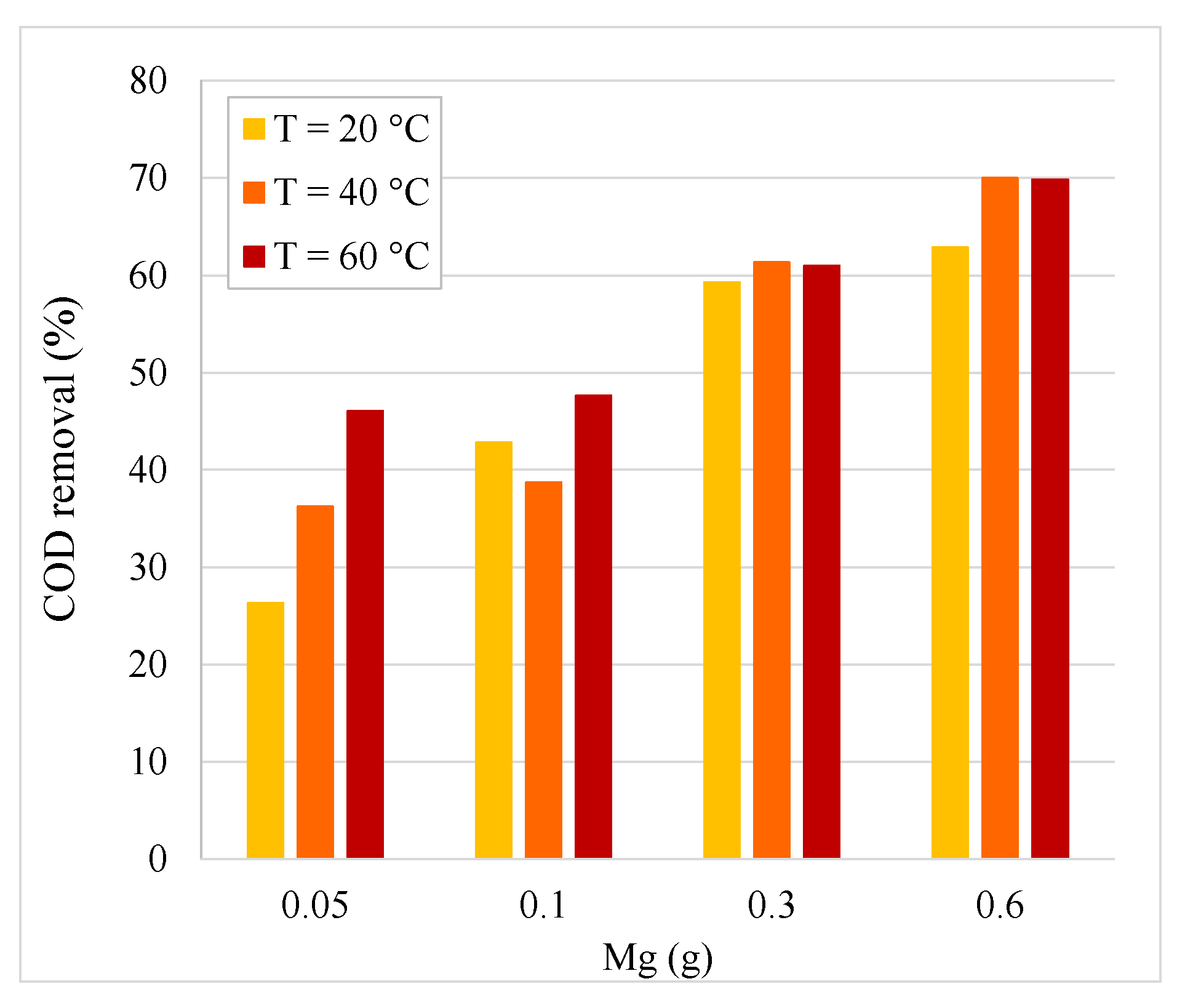
These results were also confirmed by the COD abatement, depicted in
Figure 4. Indeed, considering an Mg
0 amount of 0.05 g, an increase in the removal from 26.4% to 46% was detected by raising the temperature from 20 °C to 60 °C. However, the tests conducted with higher dosages of reactive material showed no marked improvements at higher temperatures (
Figure 4).
It must be emphasized that the improvement in the overall yield produced by the temperature working with a low amount of Mg0 would allow for a reduction in the quantity of material used during the treatment. Clearly, this positive aspect would have the downside of increased energy consumption to maintain a higher temperature.
3.4. Kinetic Analysis
Based on the experimental results, a kinetic analysis was conducted to further describe the effects of operating parameters on the gallic acid removal through ZVMg. In particular, considering the negligible removal detected at neutral conditions and acidic pHs, the kinetic analysis was focused on the tests carried out by varying the Mg amount and temperature under uncontrolled pH.
For this purpose, several kinetic expressions were applied to interpolate the experimental curves, obtaining the best match with the following pseudo-first-order law:
where C is the gallic acid concentration (mg
GA/L) at time t (min), C
e is the residual concentration at the equilibrium state, and K (min
−1) is the first-order observed kinetic constant.
The resolution of Equation (1) leads to the following expression:
where C
i is the initial gallic acid concentration (mg
GA/L). The graphs showing the conducted modeling are reported in the
Supplementary Materials (Figure S5).
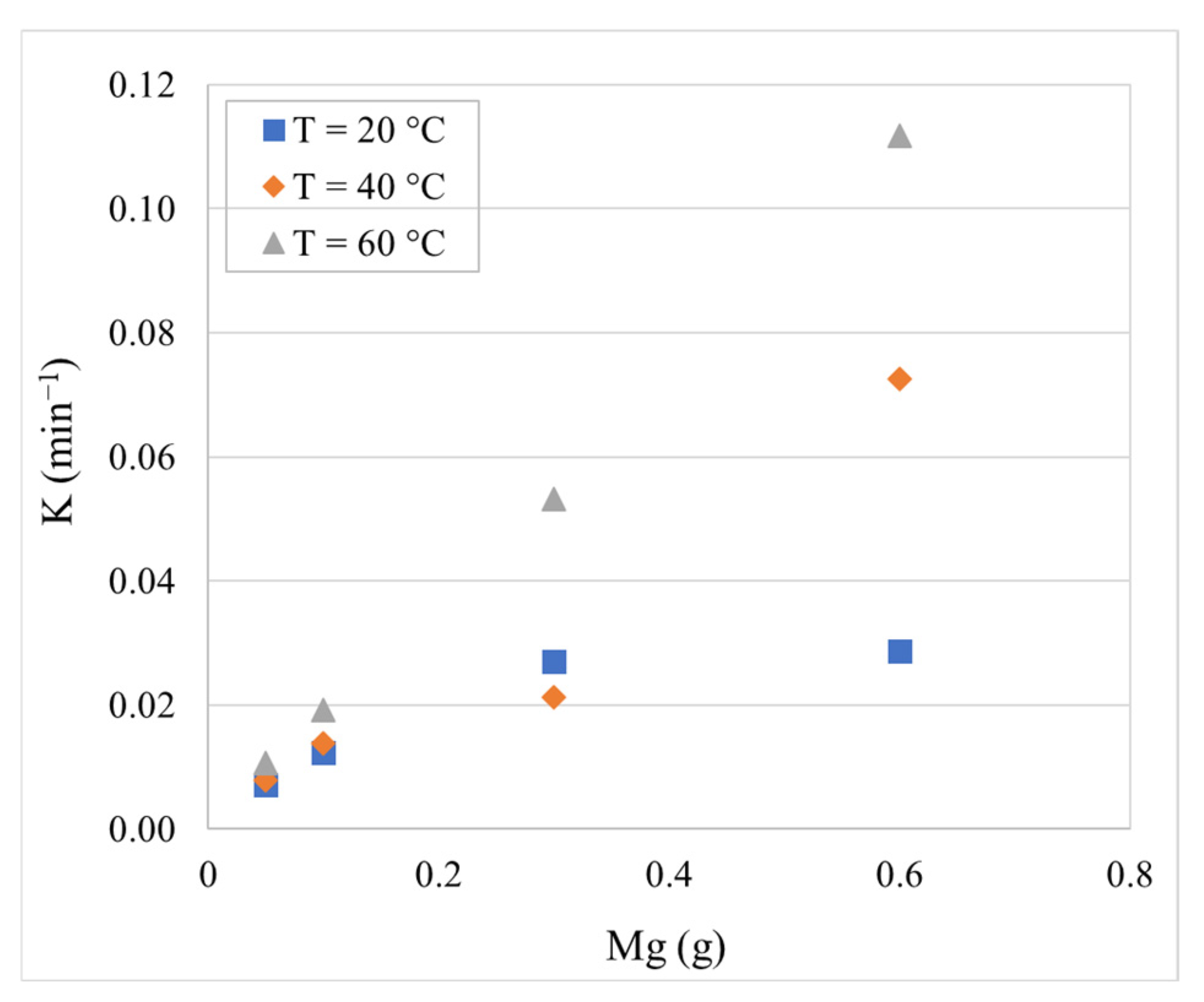
The trends of the observed kinetic constants obtained from the interpolation of the experimental curves clearly show that the reaction rate grows with the amount of ZVMg (
Figure 5). Indeed, since the pollutant removal relies on phenomena that occur on the metal surface, it is easily understandable that a larger amount of reactive material leads to an increase in the observed reaction rate. The values of kinetic constants were also positively affected by the temperature growth (
Figure 5). Moreover, it is interesting to note that the increase in K values with the temperature becomes more marked when using high quantities of reactive material (0.3 g, 0.6 g). This is attributed to the fact that the temperature rise improves the reactivity of Mg
0 external surface and increases the solubility of the corrosion products; therefore, this effect is enhanced with the increase in the reactive material amount.
3.5. Discussion and Reaction Mechanisms
The experimental results clearly prove that the reaction rate and efficiency are influenced by the ratio between gallic acid and zero-valent magnesium. This can be attributed to the fact that, when the quantity of reactive material is low with respect to the pollutant, the material rapidly reaches a state of saturation unfavorable for the process performance. On the contrary, the increase in Mg
0 amount leads to an increase in the number of active sites and promotes the intensification of the overall reaction mechanisms involved in the pollutant removal. As stated above, the threshold ratio (0.33 g
GA/g
Mg) at which the maximum removal yield was reached is of the same magnitude as those reported in other works using zero-valent iron in nanoscopic form [
21]. This result is particularly significant, taking into account the fact that Mg
0 particles of microscopic size (1532.5 μm) were exploited in this study, and it is very likely that the use of smaller particles would allow for a reduction in the amount of reactive material necessary to reach maximum efficiency.
pH was also proven to notably affect the process performance, with the highest efficiencies reached in alkaline conditions. This behavior is opposite to that observed for the removal of phenolic compounds using zero-valent iron, which was favored by strongly acidic conditions [
21,
22]. The difference between our observations and those of other researchers lies in both the GA behavior with pH variation and the reaction mechanisms occurring during the treatment. Gallic acid has been proven to undergo a series of transformations when the pH of the solution is increased [
24,
25]. Tóth et al. [
25] measured the changes in the UV–vis spectra of aqueous GA solutions in response to an increase in pH from 4 to 11. The authors observed a change in the color of the solution, which was associated with the variation in GA spectra. The color changes in gallic acid solution with increasing pH were ascribed to the combination of parallel processes of OH dissociation, radical formation, and GA oxidation to hydroquinone, semiquinone, and quinone. In particular, the quinone–hydroquinone transformation was found to be not reversible [
25]. The study of Tóth et al. [
25] agrees with the results previously found by Friedman and Jürgens [
24].
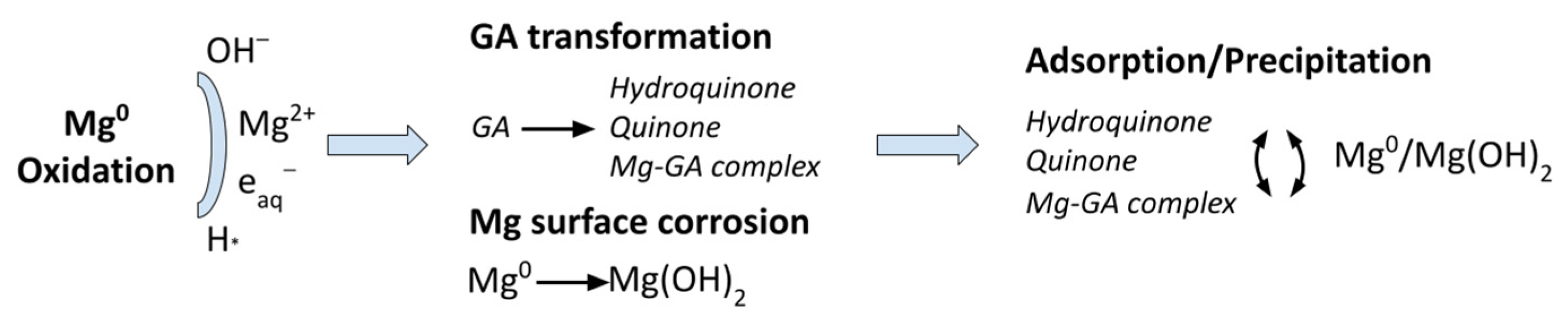
In our process, the transformation of gallic acid (
Figure 6) that occurs in alkaline conditions is probably accentuated by the behavior of the reactive material and its reaction in water. Indeed, zero-valent magnesium in water is subject to oxidation phenomena, resulting in the release of Mg
2+ ions [
26]:
Mg
2+ has been demonstrated to notably promote the autoxidation of gallic acid [
27]. Indeed, a change in the color of the GA solution was also observed in our tests at pH 12 and uncontrolled. In particular, in the experiment without pH control, the solution was colorless at its natural pH, but it changed to a dark orange-brown color. Therefore, it is conceivable that the formation of quinone happened as indicated by the spectra shown in the
Supplementary Materials (Figure S6). Furthermore, a change in the color of the reactive material was noted at the end of the treatment. The original bright silver color of the ZVMg transformed into a brownish hue. This phenomenon may be explained by the adsorption of the formed quinone onto the surface of the reactive material. The adsorption of the pollutant (
Figure 6) was confirmed by the presence of carbon on the surface of the reactive material (
Figure S7, Supplementary Materials). Considering all these aspects, it can be stated that the increase in pollutant removal with increasing pH, proved by the GA concentration trends and the COD abatement yield (
Figure 2a,b), is attributable to a better adsorption affinity toward ZVMg of compounds resulting from the transformation of gallic acid in alkaline conditions and in the presence of Mg
2+ ions.
However, the presence of magnesium ions in the solution could also be responsible for two additional reaction mechanisms. First of all, the formation of metal complexes between GA and Mg
2+ should be taken into account. Indeed, gallic acid was shown to form metal complexes with both Fe
2+ [
28] and Mg
2+ [
29]. This phenomenon could contribute to the sequestration of gallic acid from the solution. The release of magnesium ions in the solution is enhanced under acidic pH conditions but can also occur in an alkaline medium. Furthermore, several authors have suggested the spontaneous generation of hydrogen peroxide during processes mediated by zero-valent metals [
12,
30,
31]. The potential formation of H
2O
2 during our tests could have promoted the oxidative degradation of gallic acid through alkaline hydrogen peroxide oxidation, which has been proven to be an effective process in the degradation of phenolic compounds [
5,
6].
Besides the formation of Mg
2+, ZVMg is also hypothesized to produce reactive species in water, namely the hydrated electron (e
−aq) and the hydrogen atom (H*) [
26,
31]:
In particular, according to Katayama et al. [
10], the generation of nascent hydrogen (H*) on the metal surface is responsible for the reduction of the substrate adsorbed. The author postulated that this mechanism could possibly also induce the reduction of the aromatic ring of the pollutant. Melo et al. [
32] also proved the role of hydrated electron (e
−aq) and the hydrogen atom (H*) in the degradation of gallic acid.
As an additional aspect of the overall process, it must be considered that the oxidation of ZVMg can generate hydroxides as corrosion products [
33] (
Figure S7, Supplementary Materials):
This condition was confirmed by the characterization of ZVMg conducted after the treatment. Indeed, the EDS analysis revealed the presence of oxygen on the reactive material (
Figure S7, Supplementary Materials), and the XRD diffractogram showed the typical peaks of magnesium (Mg
0) and magnesium hydroxide (Mg(OH)
2) (
Figure S8, Supplementary Materials), as is clear from
Figure S8, which shows a match with the ICDD standards (ICDD 96-210-1439). The generation of hydroxides induces the formation of a layer on the outer surface of the ZVMg particles (
Figure S9, Supplementary Materials), which has adsorptive capacities [
34]. Moreover, it is also likely conceivable that the formation of Mg(OH)
2 flocs in the solution can incorporate and adsorb the pollutants (
Figure 6) [
34].
The influence of temperature on the process evolution is related to the effects of this parameter on the different mechanisms occurring during treatment. As previously discussed, GA removal can evolve by several mechanisms, including conversion to hydroquinone, semiquinone, and quinone; degradation mediated by intermediate reactive species (e−eq, H*); and metal complexation by Mg2+ ions, adsorption, and precipitation. The adsorption mechanism may be positively influenced by increasing the temperature, since it should boost the mobility and diffusion of the pollutant towards the reactive material. Moreover, the production of reactive intermediates, which promotes the GA degradation, could be accelerated and enhanced by temperature rise. The temperature rise also increases the solubility of corrosion products, improving the reactivity of the ZVI external surface, and accentuates the release of Mg2+ ions, which contribute to the complexation and spontaneous oxidation of GA. Clearly, these phenomena are more intense when high quantities of ZVMg are used, as demonstrated by the trends of the observed kinetic constants.
3.6. Reuse and Regeneration of the Reactive Material
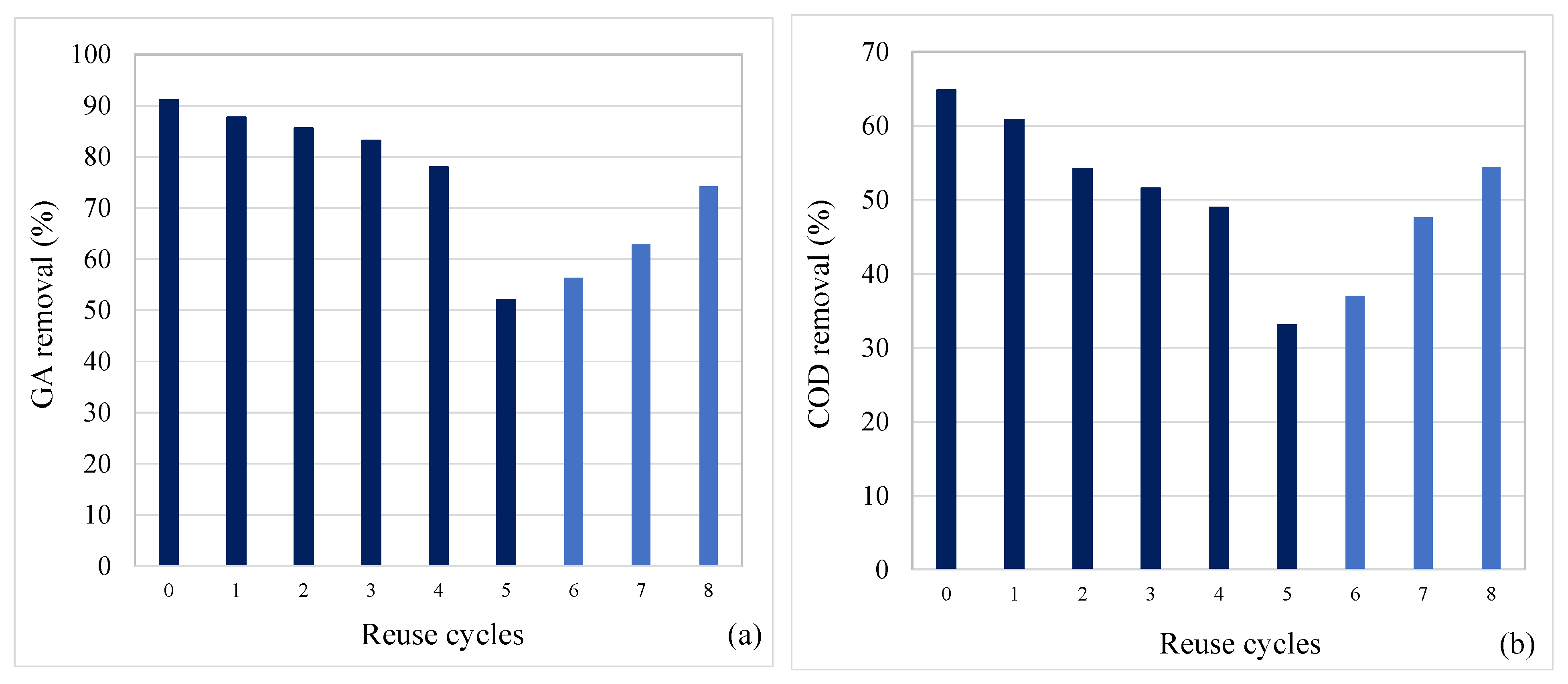
The last set of tests was carried out to evaluate the feasibility of reusing ZVMg in subsequent treatment cycles. These experiments were performed using an initial ZVMg amount of 0.3 g, at a temperature of 20 °C, and under uncontrolled pH. As can be seen from
Figure 7a, the gallic acid removal slightly decreased with each reuse of the material, attaining a still high abatement of 78% during the fourth reuse. After the fifth reuse, however, the removal rate markedly decreased to 52%. A similar trend was detected for the COD removal, as shown in
Figure 7b. Satisfactory removal percentages were achieved up to the fourth reuse (48.9%), after which they decreased to 33.1% at the fifth reuse. Based on these findings, it can be stated that ZVMg can be efficiently exploited up to four times, yielding satisfactory results. This aspect is noteworthy for optimizing the operating costs of the treatment and preventing material waste.
In order to further prolong its activity, after the fifth cycle, the reactive material was subjected to an acid washing procedure for three more cycles. Indeed, acid washing has been demonstrated to be an efficient technique to enhance the reactivity of materials and has been employed in various studies to regenerate zero-valent metals [
35,
36]. Zero-valent aluminum was efficiently exploited for phenol removal following an acid washing with sulfuric acid for three hours to remove the native oxide layer on its surface [
35]. The applied washing was found to increase the specific surface area due to the removal of the oxide layer. The material was also reused in six treatment cycles, achieving high efficiencies up to the fifth reuse. In another work, zero-valent iron was regenerated with a citric acid washing solution after its use in zinc removal from water [
36]. The washed material was then exploited in four subsequent cycles, resulting in efficiencies similar to those of virgin Fe
0. The results of our tests confirmed the positive effects of acid washing to regenerate the activity of the reactive materials. In fact, after washing, the abatement increased again and was equal to 56.3% after the sixth reuse, reaching 72.1% after the eighth reuse (
Figure 7a). Also, material washing led to an increase in the removal of COD, which increased to about 56.5% after the last reuse cycle (
Figure 7b).
Considering these results, it is conceivable that acid washing of the material has more than one beneficial effect, namely the removal of the passivation layer formed after the treatment, an increase in the specific surface area for adsorption, and an improved release of Mg2+. These factors all contribute to the overall removal of gallic acid. Moreover, it is conceivable that if acid washing is applied after the first use, the yield will remain stable at the maximum values.
4. Conclusions
The present study investigated the use of microscopic zero-valent magnesium (ZVMg) as a reactive material for the removal of gallic acid (GA), employed as a model phenolic compound, from aqueous solutions. Several experimental tests were conducted under different process conditions. The results obtained clearly demonstrated the high reactivity and efficiency of magnesium in the abatement of GA under mild operating conditions. The process performance was found to be affected by several operating parameters, including the amount of magnesium, the pH of the solution, and the temperature. Increasing the Mg0 dosage enhanced both the removal rate and the final efficiency, confirming the influence of the amount of reactive material on the mechanisms of pollutant elimination; the optimal condition was reached for a ratio of 0.33 gGA/gMg. The pH of the solution was identified as a key factor influencing both the removal mechanism and the overall efficiency. The process was favored by an alkaline environment, which can be achieved under uncontrolled pH conditions, reaching a final GA abatement of about 90%. The ability to effectively operate under natural pH conditions makes ZVMg particularly advantageous, as it clearly promotes its applicability in real conditions. The increase in temperature from 20 °C to 60 °C accelerated the removal process, particularly at higher Mg0 dosages, due to enhanced molecular diffusion, faster corrosion of magnesium, and a greater generation of reactive intermediates. The kinetic modeling showed pseudo-first-order behavior, with the apparent kinetic constant increasing with both temperature and magnesium quantity. The reuse experiments demonstrated the good longevity of ZVMg. The material maintained satisfactory removal performance up to four consecutive cycles before showing a decline in efficiency due to surface passivation and accumulation of corrosion products. Importantly, the regeneration of ZVMg through acid washing effectively restored its reactivity, leading to a notable recovery of removal capacity. This finding highlights the potential of acid treatment as a simple and effective method for extending the operational lifetime of ZVMg. Overall, the results of this research provide strong evidence that zero-valent magnesium is a highly promising, sustainable, and environmentally friendly material for the remediation of water contaminated with phenolic compounds and represents an attractive alternative to traditional zero-valent metals. Nevertheless, future research should focus on analyzing the influence of the size of the reactive material. Indeed, reducing particle size could further increase the reactivity of zero-valent magnesium. Furthermore, specific studies on the formation of reaction products should be conducted to obtain a detailed classification of the molecules generated during the process. This would provide information on their characteristics and the potential environmental impact if they are not completely removed. Furthermore, it would allow for a better understanding of the role of the various chemical species involved in the reaction mechanisms leading to the degradation of gallic acid. The effect of the presence of competing organic and inorganic species that could interfere with the degradation mechanisms should also be studied. Finally, the application of ZVMg in continuous-flow systems should be explored.





 ,
,