Next Article in Journal
An Economic and Environmental Assessment of High-Temperature Technologies in the Energy Transition: A Cross-Country Study of Divergent ESG Strategies
Previous Article in Journal
Multi-Objective Collaborative Allocation Strategy of Local Emergency Supplies Under Large-Scale Disasters
error_outline You can access the new MDPI.com website here. Explore and share your feedback with us.
 
 
Article

From Lab to Real-World: Unraveling Coconut Shell Activated Carbon’s Efficiency for Low-Concentration TCE/PCE in Indoor Air


Tianjin Key Laboratory of Indoor Air Environmental Quality Control, School of Environmental Science and Engineering, Tianjin University, Tianjin 300350, China
*
Author to whom correspondence should be addressed.
Sustainability 2026, 18(2), 570; https://doi.org/10.3390/su18020570
Submission received: 18 November 2025 / Revised: 30 December 2025 / Accepted: 31 December 2025 / Published: 6 January 2026

Abstract

Low-concentration trichloroethylene (TCE) and tetrachloroethylene (PCE) indoors pose a significant threat to human health due to their potent carcinogenic properties. However, existing research has predominantly focused on high-concentration scenarios in industrial settings, offering limited guidance for indoor air purification. This study investigated the adsorption mechanisms and performance regulation of coconut shell activated carbon for TCE/PCE through experimental analysis, molecular simulations, and dynamic modeling. Experimental results demonstrated that PCE, characterized by its non-polar nature and high boiling point, exhibited a substantially higher adsorption capacity than TCE. Increased humidity induced competitive adsorption between water molecules and pollutants, reducing the adsorption capacity of PCE by approximately 30%. Molecular simulations validated that water molecules occupied the active sites of oxygen-containing functional groups and pores, impeding the diffusion of TCE/PCE, while the non-polar surface of activated carbon preferentially adsorbs PCE. A dynamic prediction model developed in this study accurately forecasted breakthrough curves under varying pollutant concentrations, temperatures, humidities, and air velocities and quantified the service life of activated carbon. Response surface methodology revealed that controlling inlet concentrations (TCE < 7 ppb, PCE < 30 ppb), air velocity (<1 m/s), humidity (<50%), and temperature (<25 °C) can extend the service life of activated carbon to 3–5 months.

1. Introduction

Indoor environments serve as the predominant setting for human activities, with occupants spending approximately 80~90% of their time indoors [1]. Airborne contaminants, particularly volatile organic compounds (VOCs) and semi-volatile organic compounds (SVOCs), have become a critical concern recognized by the World Health Organization (WHO) due to their strong associations with respiratory disorders and cancers [2,3]. Notably, trichloroethylene (TCE) and tetrachloroethylene (PCE), classified by the International Agency for Research on Cancer (IARC) as Group 1 and Group 2A carcinogens, respectively, are two major chlorinated pollutants that are ubiquitous in indoor environments, originating from building materials, dry-cleaning agents, industrial solvents, and household cleaning products [4,5]. Compared with European and American countries, investigations on the concentrations of TCE and PCE in buildings across various cities of China revealed that these concentrations exceeded the concentration limits specified in Chinese standards by dozens of times [6,7,8,9,10,11,12]. Long-term exposure to TCE/PCE can cause dizziness, convulsions, liver and kidney damage, and increase the risk of premature birth and fetal weakness in pregnant women [13]. Therefore, the control of TCE/PCE is of great significance to human health, whereas the research on the removal of these two pollutants in the environment remains limited.
Adsorption is a common method for removing gaseous pollutants due to its advantages of high removal efficiency, no harmful by-products, and low cost. Some adsorbents have been used for the removal of TCE/PCE in industrial applications. Nagarajan et al. examined the adsorption behavior of α-antimonene phosphorene nanosheets for TCE/PCE, providing valuable insights into the adsorption energy, charge transfer, and bandgap modulation during the adsorption process [14]. Feng et al. [15] prepared an Fe3O4-CaO2 nanocomposite to achieve simultaneous adsorption and degradation of TCE, demonstrating 63.9% and 68.0% adsorption efficiency obtained under conditions with/without H2O2 release. Additionally, Abolhassani et al. conducted a comprehensive comparison of carbon-based materials for TCE removal, and the results underscored the importance of specific surface area and micropore volume in determining adsorption performance, indicating that activated carbon and biochar could achieve a comparable removal efficiency of TCE compared to other expensive carbon materials. However, most research has focused on industrial scenarios characterized by high-concentration TCE/PCE pollution with an emphasis on adsorbent modifications to enhance adsorption capacity. These strategies are less effective in indoor environments where pollutant concentrations are at ppb levels. Industrial adsorbents perform well at high-concentration gradients, whereas the efficiency is reduced under low-concentration conditions due to insufficient driving forces. In contrast, activated carbons are widely used in indoor environments due to their superior adsorption efficiency for various hazardous gases, especially at low concentrations [16]. Existing studies have predominantly concentrated on high-concentration industrial settings and water treatment, with a lack of systematic research on the adsorption mechanisms and performance prediction of coconut shell activated carbon for indoor ppb-level TCE/PCE gases under complex environmental conditions (temperature, humidity, and flow rate).
Coconut shell activated carbon (CSAC) is a prevalent adsorbent for gas purification due to its favorable textural properties. Derived from a renewable precursor, CSAC is typically characterized by a high specific surface area (>1000 m2/g), a well-developed microporous structure with a significant volume of micropores and mesopores, and relatively high mechanical hardness. Its surface, primarily composed of a non-polar graphitic basal plane, grants hydrophobicity and affinity for non-polar VOCs [17]. However, the presence of oxygen-containing functional groups (e.g., carbonyl, hydroxyl) introduced during activation or from the precursor itself imparts localized polarity and hydrophilicity [18]. This combination of a high-surface-area microporous network and a dual-nature surface makes CSAC a versatile, cost-effective and sustainable candidate for adsorbing low-concentration chlorinated hydrocarbons such as TCE and PCE in indoor air. Utilizing agricultural waste-derived adsorbents like CSAC aligns with circular economy principles, reducing dependence on non-renewable or chemically intensive purification materials.
Mastering the adsorption mechanisms of the materials can significantly enhance their application potential. Molecular simulation methods have been adopted for exploring the adsorption in porous materials. For instance, Li et al. [19] utilized the Density Functional Theory (DFT) and Grand Canonical Monte Carlo (GCMC) simulations to investigate the adsorption and separation of CO2 from flue gas on single-layer graphene sheets, focusing on the impact of surface functional groups on CO2 adsorption. Chen et al. [20] developed a slit-pore model consisting of three-layer graphene sheets and employed GCMC and Molecular Dynamics (MD) simulations to examine the adsorption behavior of N2 and CH4 on activated carbon, thereby determining saturation adsorption capacities and diffusion coefficients. Wang et al. [21] revealed that acidic functional groups on activated carbon enhanced the adsorption of polycyclic aromatic hydrocarbons through GCMC simulations. An et al. [22] integrated GCMC, MD, and DFT methods to demonstrate that formaldehyde was preferentially adsorbed in 4–7 Å micropores and formed a bilayer adsorption structure near carboxyl groups, driven by hydrogen bonding and van der Waals forces. Wu et al. [23] used GCMC simulations to demonstrate that CO2 exhibited the strongest interaction energy among the gases studied in coal seams, while moisture significantly inhibited gas adsorption, with the most pronounced inhibitory effect on CO2 adsorption. These studies collectively highlight the potential of molecular simulation in elucidating the adsorption mechanisms of porous materials by analyzing key parameters such as pore structure, surface functional groups, and diffusion coefficients, which is a useful tool for revealing the microscopic mechanisms of activated carbon adsorption for complex chlorinated hydrocarbons.
The performance of activated carbon in adsorbing gaseous pollutants is influenced by various factors. Shin et al. found that the saturated adsorption capacity of benzene decreased with relative humidity (RH), particularly when RH exceeded 60%. In the study by Cal et al. [24], it was shown that water vapor adsorption by activated carbon was apparent when the RH exceeded 30%. In humid environments, water vapor competes with target VOCs for adsorption sites. This competition is particularly pronounced at hydrophilic sites, such as oxygen-containing functional groups, where water molecules can form strong hydrogen bonds. Furthermore, at high relative humidity, capillary condensation of water in micropores can lead to pore blocking, effectively reducing the accessible surface area and impeding the diffusion of larger VOC molecules [25]. It is evident that operating conditions have a substantial impact on the adsorption performance of activated carbon. Chen et al. [26] studied the impact of temperature on the adsorption capacity for ethanol, cyclohexane, and toluene mixtures at temperatures of 298–328 K. Pei et al. [27] demonstrated that toluene adsorption (0.1–100 ppm) followed Langmuir isotherm behavior, with Henry’s law applicability below 1.5 ppm. Dynamic adsorption analyses by Shiue et al. [28] revealed predictable toluene breakthrough curves (10–70 ppm, 0.076–0.152 m/s air velocity) via the Yoon–Nelson model. Therefore, analyzing the optimal parameter relationships for activated carbon adsorption of TCE/PCE is crucial for its proper application. COMSOL Multiphysics enables the precise construction of an activated carbon adsorption model. For instance, Shafeeyan et al. [29] implemented a mass balance model combined with Avrami and Toth equations to simulate CO2 breakthrough curves, achieving prediction errors for adsorption capacity and service life below 6% and 4%, respectively. Elsayed et al. [30] found that increasing activated carbon particle size significantly reduced ethanol adsorption efficiency. These studies highlight the software’s efficiency and applicability in simulating and optimizing complex adsorption processes.
Therefore, this research systematically investigated the adsorption characteristics of activated carbon for low-concentration TCE/PCE via a multi-scale approach integrating experimental tests, molecular simulations, and dynamic modeling. It aimed to fill the critical knowledge gap concerning the mechanistic understanding and predictable performance of widely used coconut shell activated carbon under realistic indoor conditions—specifically for ppb-level contaminants influenced by variable temperature, humidity, and airflow. The developed predictive model and optimized operational parameters derived from this study provide direct practical guidance for the design, lifespan prediction, and energy-efficient operation of activated carbon filters in indoor air purification systems and air-handling units, bridging the gap between laboratory insights and engineering applications.

2. Materials and Methods

2.1. Adsorbent Material and Characterization

The adsorbent utilized in this study was coconut shell activated carbon. It was obtained from Xingguang Active Carbon Co., Ltd., Wenchang, Hainan, China. According to the manufacturer’s specifications, the material was produced via physical (steam) activation at temperatures above 800 °C. No chemical activation agents were used. As received, the activated carbon was sieved to obtain a particle size fraction of 0.6–0.9 mm. It was then washed repeatedly with deionized water to remove fine dust and water-soluble impurities, followed by drying in an oven at 110 °C for 12 h.
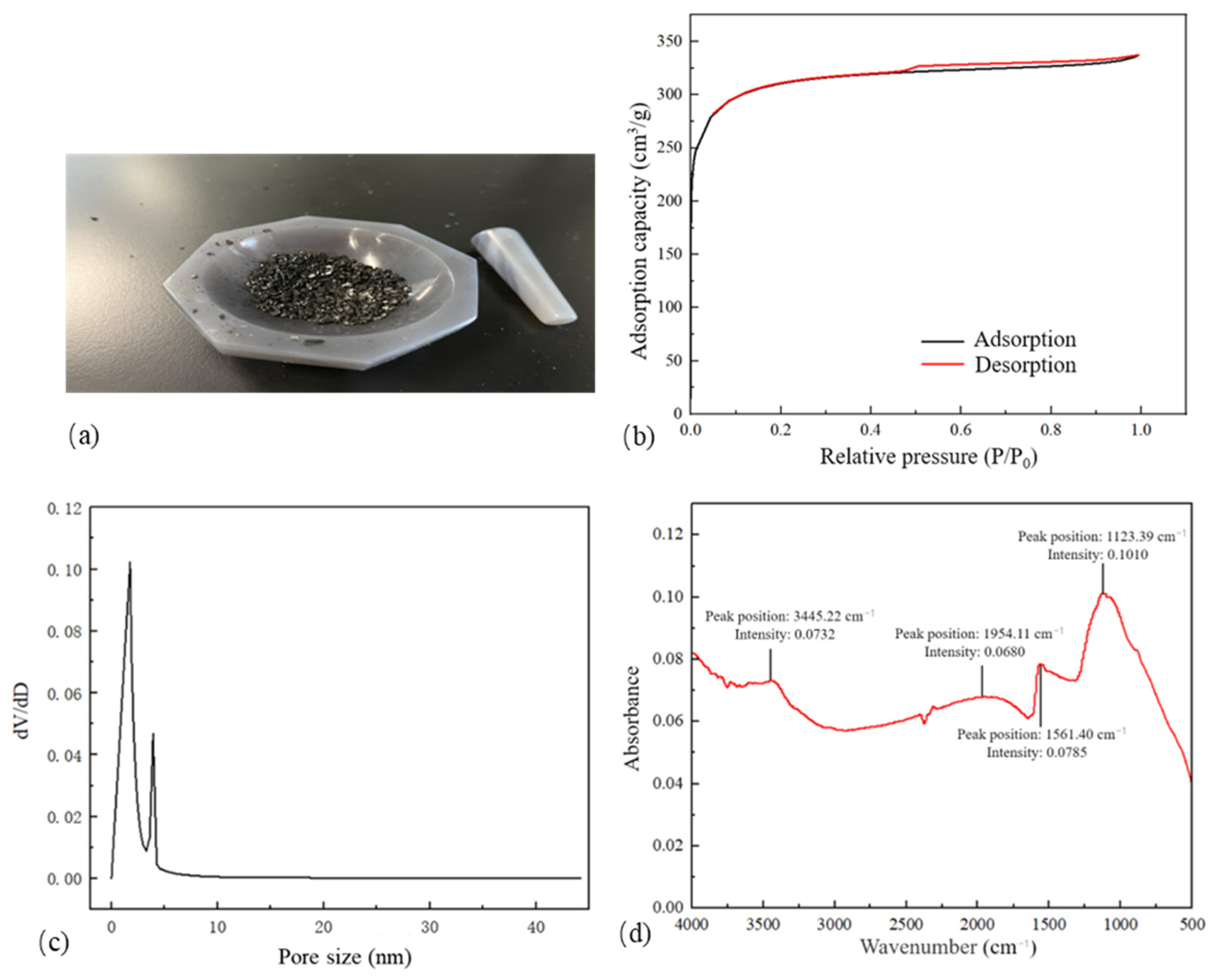
Its appearance is shown in Figure 1a. Characterization of the activated carbon was performed using Brunauer–Emmett–Teller (BET) analysis and infrared spectroscopy. The adsorption and desorption isotherms of activated carbon samples were determined at 77 K using nitrogen as the adsorbate, which was conducted using a Micromeritics ASAP 2020 device(Micromeritics Instrument Corporation, Norcross, GA, USA). The sample was pretreated at 300 °C under vacuum conditions for 10 h to remove impurities. The adsorption–desorption isotherm (Figure 1b) indicated that the sample had a typical microporous structure in which adsorption capacity surged at low pressures and plateaued with increasing pressure.
The BJH method (Figure 1c) demonstrated a pore size distribution ranging from 0 to 44 nm, dominated by micropores (<5 nm) and mesopores, with an average pore diameter of 1.79 nm. The specific surface area reached 1143.9 m2/g, and the total pore volume was 0.1020 cm3/g, where micropores and mesopores contributed 34.90% and 65.1% to the total volume, respectively.
Figure 1d shows the Fourier Transform Infrared Spectroscopy (FTIR) spectrum of the activated carbon sample. FTIR exhibited characteristic absorption bands at 3445.22 cm−1 (hydroxyl, –OH), 1954.11 cm−1 (carbonyl, C=O), 1561.40 cm−1 (C=C bond), and 1123.39 cm−1 (C–H bond). The hydroxyl-to-carbonyl peak intensity ratio of 1.08 (0.0732 vs. 0.0680) suggested similar concentrations of these functional groups.

2.2. Methods

A multi-scale methodology was adopted in this study, integrating experimental measurements, molecular simulations, and engineering-scale dynamic modeling to comprehensively investigate the adsorption of TCE/PCE on coconut shell activated carbon. The adsorption test provided macroscopic performance data, serving as the essential benchmark for validating both molecular and engineering-scale models. The molecular simulations revealed the microscopic adsorption mechanisms and provided crucial parameters as input parameters for the higher-scale dynamic prediction model. The engineering-scale dynamic modeling upscaled the microscopic insights and parameters into a predictive engineering tool.

2.2.1. Experimental System and Adsorption Test

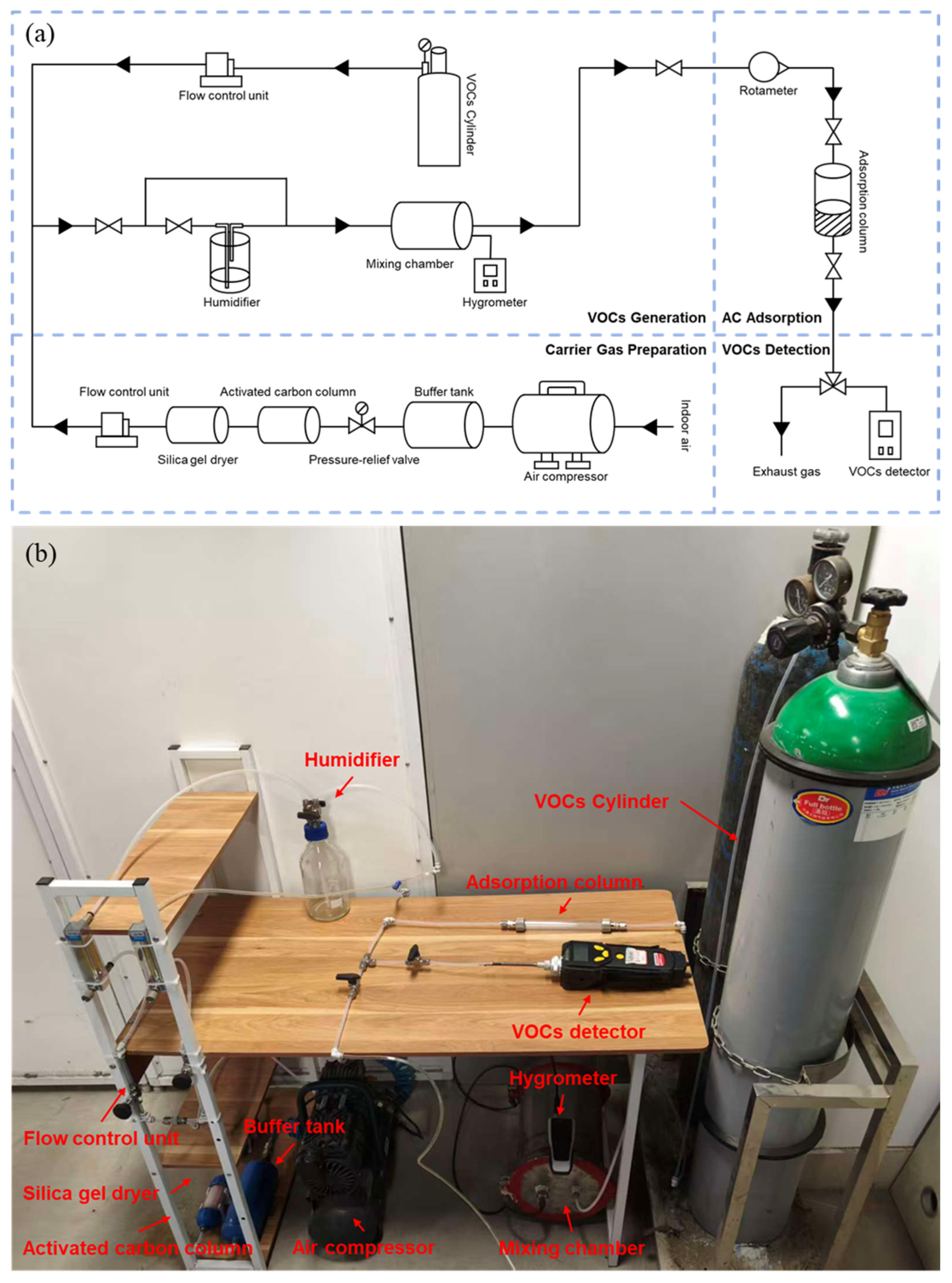
In accordance with the test methodologies outlined in ASHRAE Standard 145.2-2015 [31] and ISO 10121-1:2014 [32], an activated carbon adsorption experimental system was built as shown in Figure 2. The system comprised four key components: the carrier gas preparation unit, the VOCs generation unit, the activated carbon adsorption unit, and the VOCs concentration detection unit. Table 1 lists the specifications of main instruments utilized in this experiment.
The concentration of gaseous pollutants indoors is generally at ppb levels. If experiments were conducted at such concentrations, the duration of the experiments would be several months. To accurately assess the adsorption performance of adsorbents, both ASHRAE Standard 145.2-2015 [31] and ISO 10121-1:2014 [32] recommend conducting accelerated experiments, suggesting a pollutant concentration of 9.0 ppm. The air temperature and humidity were set at 23 °C and 50% RH, respectively. The gas flow rate was established at 2.5 L/min to ensure the smooth passage of the gas through the adsorption column. To serve as a control group, an experiment was conducted under otherwise identical conditions but with an RH of 0%.

2.2.2. Molecular Simulation and Mechanism Analysis

To further elucidate the underlying causes of the experimental phenomena, we developed a computational model based on nanoporous structures of activated carbon for adsorption simulation, thereby providing insights into the associated mechanisms.
Models
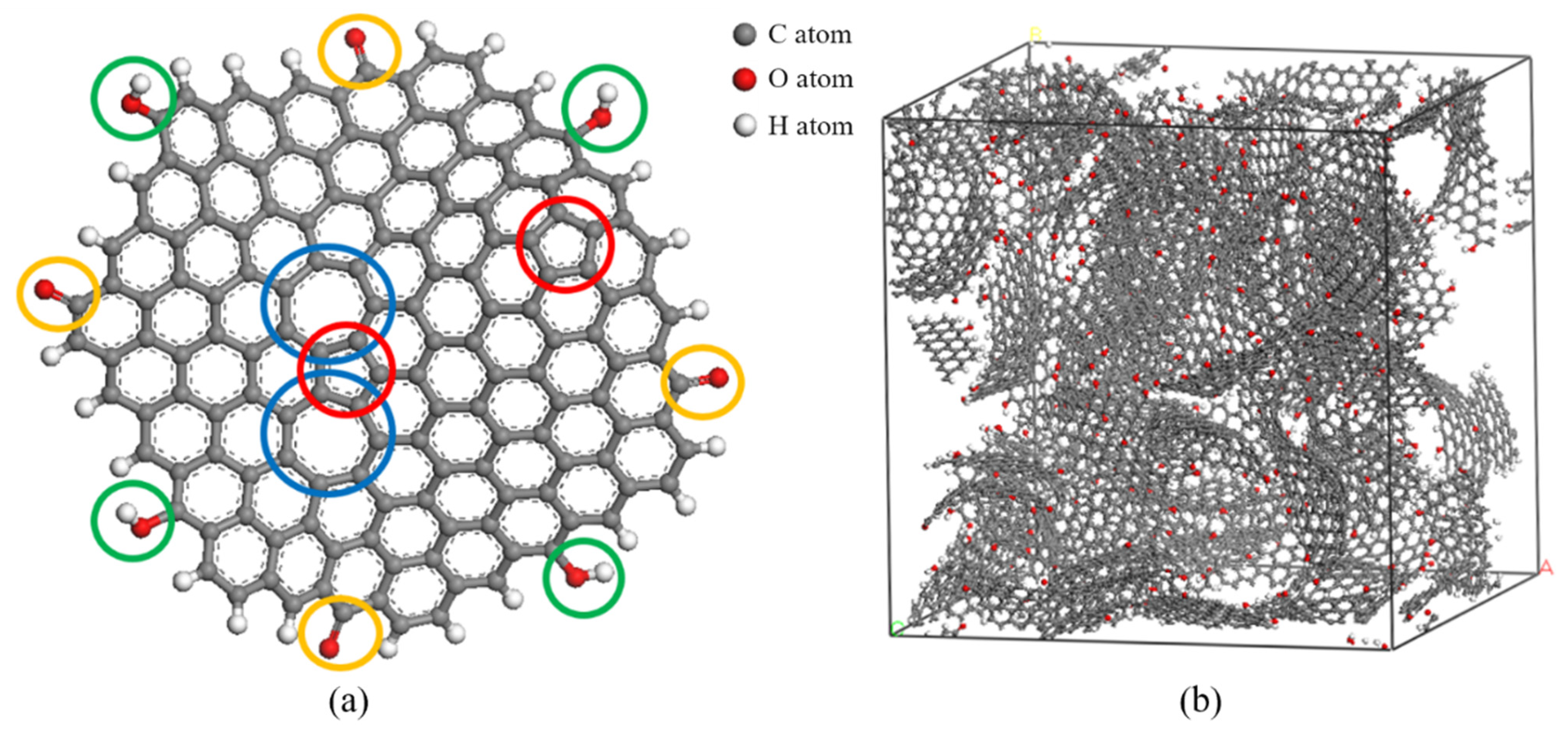
Figure 3 illustrates the structural characteristics of a graphite slice and the corresponding nanoporous carbon model. Figure 3a shows examples of the positions of 5-rings and 7-rings on a graphite slice. Additionally, functional groups are indicated on the surface. Figure 3b presents the model of nanoporous carbon, which demonstrates the three-dimensional structure derived from the two-dimensional graphite slice configuration shown in Figure 3a. A nanoporous carbon model was established with a size of 7 × 7 × 7 nm cubic cell. A 6-ring graphite slice was constructed as the fundamental element to build ten types of graphite slices (17-, 22-, 35-, 42-, 59-, 63-, 74-, 86-, 105- and 130-ring). 8% of 5- and 7-rings were randomly implanted to induce surface curvature in the graphene slices as shown in Figure 3a. 1.8% carbonyl and hydroxyl functional groups were added to simulate the functional groups on the surface of activated carbon. The functional groups were incorporated by substituting hydrogen atoms at the periphery of the graphene slice. All the graphite slices were packed into the cubic cell to simulate the complex internal structure of activated carbon. The density was set to 0.5 g/cm3, and the process was completed in the Amorphous Cell module in Material Studio (MS) software (v2020). We conducted geometric optimization and dynamic annealing optimization on the initial configuration to achieve a stable structure. The Smart algorithm was employed to refine the initial configuration, eliminating unreasonable structures and optimizing local configurations. The Anneal function was utilized to optimize the dynamic annealing process, ensuring that the global energy of the model reached its minimum, thereby forming a stable structure.
The model was characterized using the Poreblazer 4.0 software package. Nitrogen molecules (R = 1.84 Å) served as probes to determine pore size distribution, specific pore volume, and porosity. Table 2 contrasts the nanoporous carbon model with the activated carbon used in the experiments. The model’s porosity, apparent density, and average pore size matched the experimental values, while its microporous fraction was slightly higher and its mesoporous fraction slightly lower than those of the tested activated carbon. Because enlarging the model would demand orders of magnitude more computational power, its size was constrained, and only small mesopores were represented. It was also for this reason that, correspondingly, the simulated data of specific surface area was slightly higher than the characterization data. These reasons also led to a certain error between the simulated adsorption capacity and the experimental data, but it could still be controlled within 10% (based on the data in Table 2).
The structures of TCE, PCE, and water molecules were obtained from the PubChem database provided by the National Institutes of Health. Their geometries were optimized in the Dmol3 module using the Density Functional Theory (DFT) method, with the generalized gradient approximation (GGA) and the Perdew–Wang (PW91) exchange–correlation function used for the calculation of potential energy.
The validation of models was performed by comparing the simulated adsorption data with the experimental results of coconut shell activated carbon adsorbing TCE/PCE (based on the data in Section 3.1 Experimental results). As shown in Table 3, the relative error between the calculated adsorption capacity and the experimental values was less than 10%. When RH = 50%, the simulated adsorption capacity of the nanoporous carbon model for TCE was only 3.36% and 7.43% for PCE. These results confirmed the validity and reliability of the nanoporous carbon model for simulating the activated carbon adsorption process of TCE/PCE.
Simulation Method and Evaluation Parameters
Based on the experimental data, water molecules exerted a significant influence on the gas-phase adsorption of activated carbon. Then the underlying mechanisms were then investigated using Grand Canonical Monte Carlo (GCMC) simulations. In the initial phase, the Sorption module was utilized to configure parameters and execute the adsorption simulation. Because the adsorption process was carried out under constant temperature and pressure, an isothermal–isobaric (NPT) ensemble was employed. The GCMC calculations were performed with the Metropolis algorithm at 296 K, using the COMPASS force field and a fugacity of 1 × 10⁻⁴ kPa. Electrostatic interactions were evaluated with the Ewald-group method, while van der Waals interactions were treated with an atom-based scheme and a cutoff distance of 12.5 Å. The mixing rule was 6–9 LJ. Each simulation consisted of 2 × 10⁶ Monte Carlo steps, during which adsorbate molecules underwent insertion, deletion, translation, and rotation moves. The initial half of the steps was used to allow the system to reach equilibrium, and the remaining steps were utilized to quantify the number of adsorbed molecules and thereby determine the adsorption sites, adsorption isotherms, adsorption heat, and potential distribution. The convergence criteria were as follows: energy tolerance 1.0 × 10⁻⁵ kcal/mol, force tolerance 0.001 kcal/mol/Å, and displacement tolerance 1.0 × 10⁻⁵ Å. The concentration of each component was determined by partial pressure. At a temperature of 23 °C, the partial pressure corresponding to 9.0 ppm of TCE/PCE was 9 × 10⁻⁴ kPa. For relative humidity values of 10%, 30%, 50%, 70%, and 90%, the respective partial pressures of water vapor were 0.281, 0.843, 1.405, 1.967, and 2.529 kPa.
In the subsequent phase, the lowest-energy frame from the initial adsorption configuration was selected, and the structure underwent further geometric optimization to attain a more stable configuration. Molecular dynamics (MD) simulation aimed to reveal the movements of adsorbate molecules in the activated carbon. The Dynamics function within the Forcite module was then employed to calculate the structure, yielding the radial distribution function and diffusion coefficient. Molecular dynamics (MD) simulations were performed in the NVT ensemble over 105 steps. The simulation conditions were set to 296 K and 0.1 MPa, with a total duration of 100 ps and a time step of 1 fs. Initial velocities were randomly assigned. The Nose thermostat and Berendsen barostat were employed. Non-bonded interaction parameters matched those used in the GCMC simulations.

2.2.3. Dynamic Prediction Model Development

The development of the dynamic adsorption model for the adsorption of TCE/PCE by activated carbon was conducted in COMSOL Multiphysics 5.5 software. In the experiment, the diameter of the activated carbon packing bed in the adsorption column was set to 10 mm, with a thickness of 5 mm. Given that the adsorption column was an axially symmetric cylinder, the airflow through the column was uniformly distributed. Consequently, the three-dimensional structure of the adsorption column was simplified as a two-dimensional rectangle for modeling purposes. Environmental parameters utilized in the simulation primarily included air temperature, air pressure, and air velocity, which were set to T = 23 °C, p = 1 atm, and v = 0.53 m/s, respectively. The characteristic parameters of the activated carbon packing bed are summarized in Table 4.
During the process of the adsorbate being transported to the adsorbent through the carrier gas, material and energy exchanges were involved, which included changes in the velocity field, temperature field, and concentration fields in both the gas and solid phases. These processes were described using four modules in the software: free and porous media flow, dilute species transport in porous media, heat transfer in porous media, and general form partial differential equations.
(1)
Free and porous media flow module
This module was used to describe the velocity field of the gas flow during the adsorption process, and the corresponding equation is:
ρ f ε b u t + ρ f ε b u u ε b = P I + K N + F
where ρ f is the air density, kg/m3, ε b is the porosity of the adsorption bed, u is the air velocity, m/s, K is the momentum loss corresponding to the shear stress, N is the momentum sink, F is the momentum loss corresponding to the volume force.
(2)
Dilute species transport in porous media module
The gas-phase concentration field of the adsorbate during the adsorption process was described by the equation:
ε b C t + D D C + u C = R + S
where C is the concentration of the adsorbate in the gas phase, mol/m3, D D is the diffusion coefficient of the adsorbate, m2/s, R is the reaction term; S is the source term. R and S equal 0 in this study.
(3)
Heat transfer in porous media module
The variation of the temperature field during the adsorption process was described through the heat transfer module of porous media, and the relevant equation is:
c v T t + ρ f c p f u T + k e f T = S h
where c v is the comprehensive specific heat capacity of the adsorption bed, J/(kg·K), T is the temperature, K, ρ f is the density of air, kg/m3; c p f is the specific heat capacity of air at constant pressure, J/(kg·K), k e f is the comprehensive thermal diffusivity, including the radial thermal diffusivity k r and the axial thermal diffusivity k x , m2/s, S h is the heat source.
(4)
General form partial differential equations module
This study employed this module to add equations to describe the process of gaseous adsorbate transferring to the solid phase. According to the principle of mass conservation, the decrease in the number of adsorbate molecules in the gas phase was equal to the increase in the number of adsorbate molecules in the solid phase. The corresponding equation is
c s t = k m c s e c s
where k m represents the reaction rate constant, 1/s; c s is the concentration of the adsorbate in the solid phase at time t , mol/m3; c s e is the concentration of the adsorbate in the solid phase at adsorption equilibrium.
The initial and boundary conditions for the four modules were set as listed in Table 5. The upper boundary of the two-dimensional model was set as the inlet, and the lower boundary was set as the outlet. The saturated adsorption capacities of TCE/PCE at a concentration of 9 ppm at the relative humidity of 0% and 50% were obtained through the molecular simulation elaborated in Section 2. By inputting the saturated adsorption capacities into the dynamic adsorption model of activated carbon, the breakthrough curves of TCE/PCE on activated carbon at different relative humidities were obtained.
The relative error of the prediction model in average was calculated by comparing the gap between the experimental data and simulated values of the penetration concentration at the same time point on the penetration curve, thereby evaluating the accuracy of the prediction model. The relative error was expressed as:
d = i = 1 n | y s i y y i y s i | × 100 %
where y s i represents the experimental data of the penetration concentration at time i ppm, y y i represents the simulated value of the penetration concentration at time i , ppm, i ranges from 1 to n, n is the termination time of penetration, min.
During the model-solving process, the physical field control grid was utilized for mesh generation, and the optimal grid count was determined via a grid independence test. When the grid count was set to 128,000, the relative error between the simulated data of the activated carbon service life and the experimental results was 2.66%, indicating that further grid refinement would have minimal impact on the calculation results. Given the high accuracy of the model, this grid count was selected for subsequent simulations.
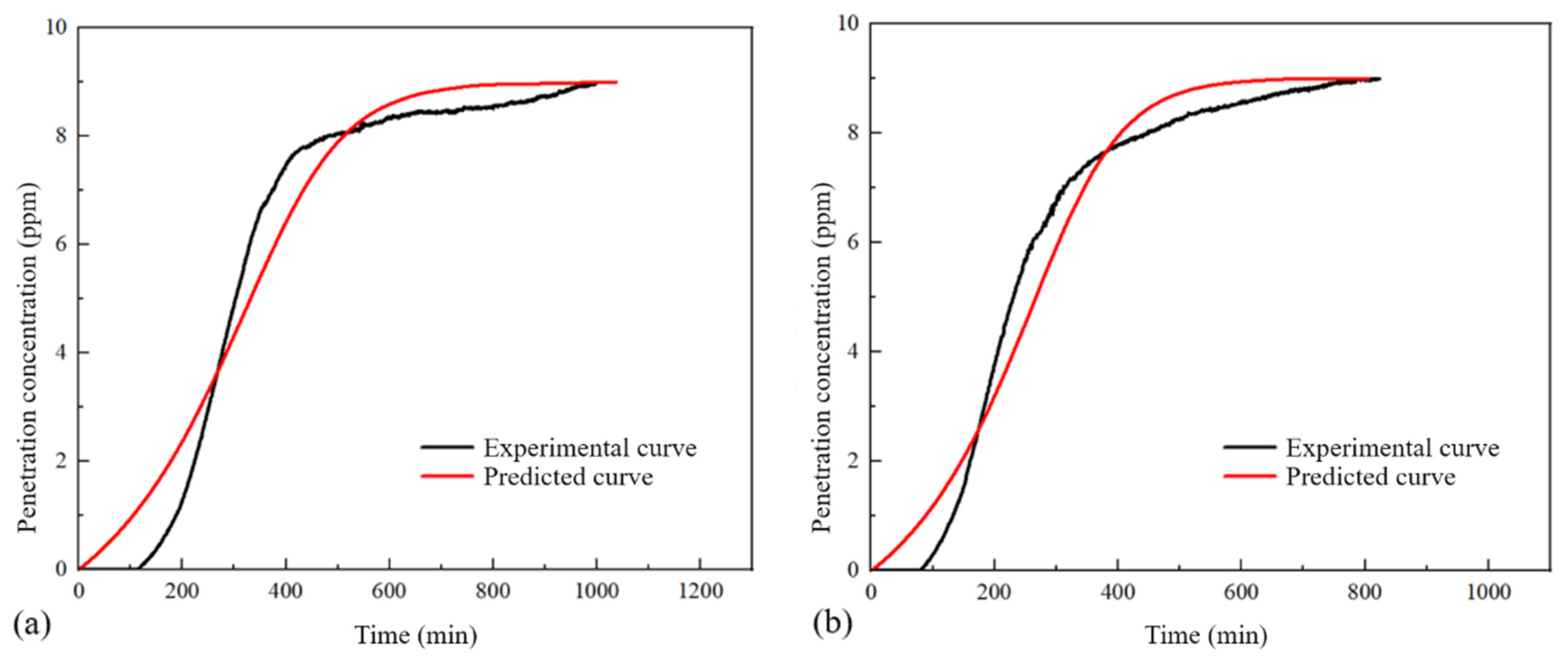
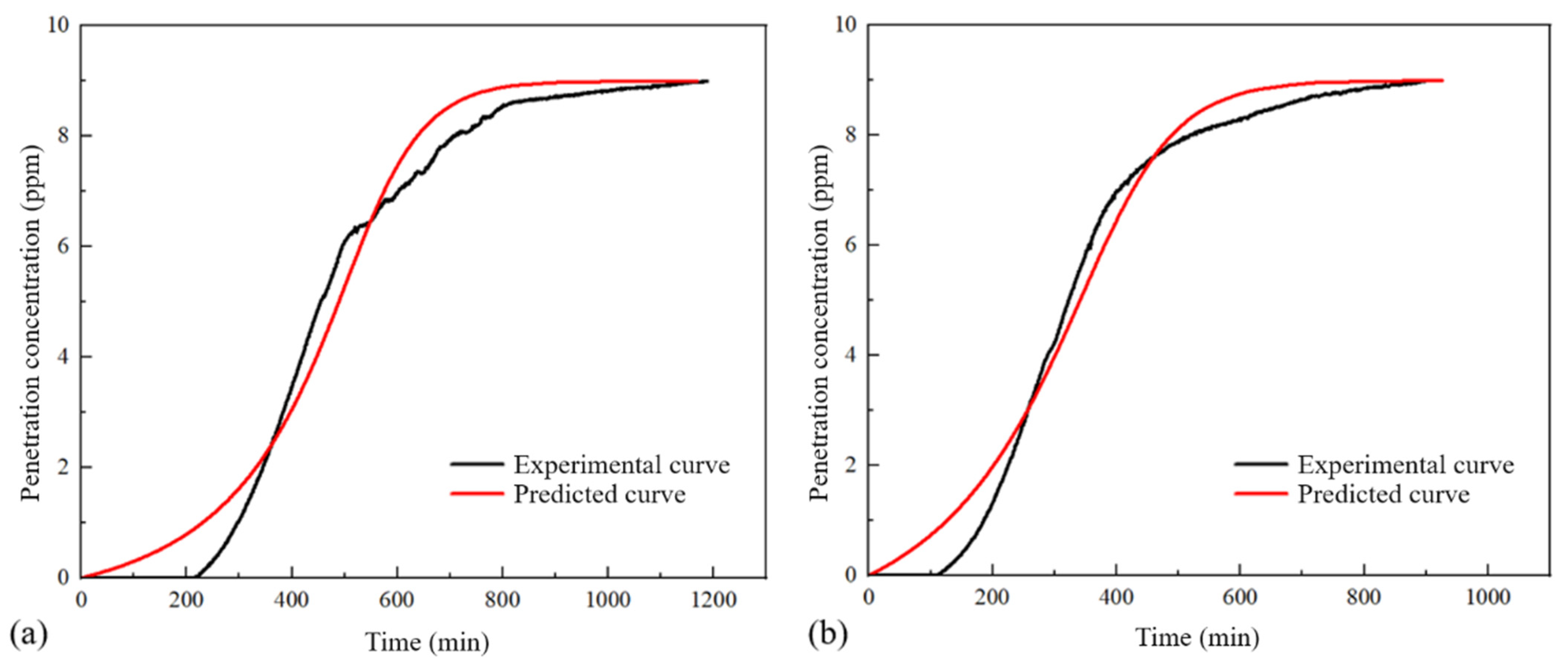
Figure 4 presents a comparison of the predicted breakthrough curve with the experimentally obtained breakthrough curve for TCE at an initial concentration of 9 ppm under relative humidity conditions of 0% and 50%, respectively. Both the predicted and experimental curves demonstrate an S-shaped trend, reflecting consistent adsorption behavior. The discrepancy observed in the initial stage arose because activated carbon possessed sufficient adsorption sites to fully capture gaseous pollutants in the experiment, whereas the simulation assumed a constant adsorption rate, which did not fully account for the actual adsorption dynamics. Consequently, the data utilized for assessing the accuracy of the dynamic prediction model were derived from the breakthrough stage, ranging from 15% to 100%. The model was considered validated if the average relative error (ARE) against experimental data was below 10%. At the relative humidities of 0% and 50%, the average relative errors were 7.20% and 6.82%, respectively, indicating that the model can accurately represent the dynamic adsorption of TCE by activated carbon. Figure 5 illustrates a comparable analysis for PCE at the same relative humidity conditions and an initial concentration of 9 ppm. During the stable adsorption phase, the relative errors on average were 5.97% and 5.23% at the relative humidities of 0% and 50%, respectively, both below 6%, confirming the accuracy of the model in simulating the adsorption of PCE by activated carbon.

3. Results

3.1. Experimental Results

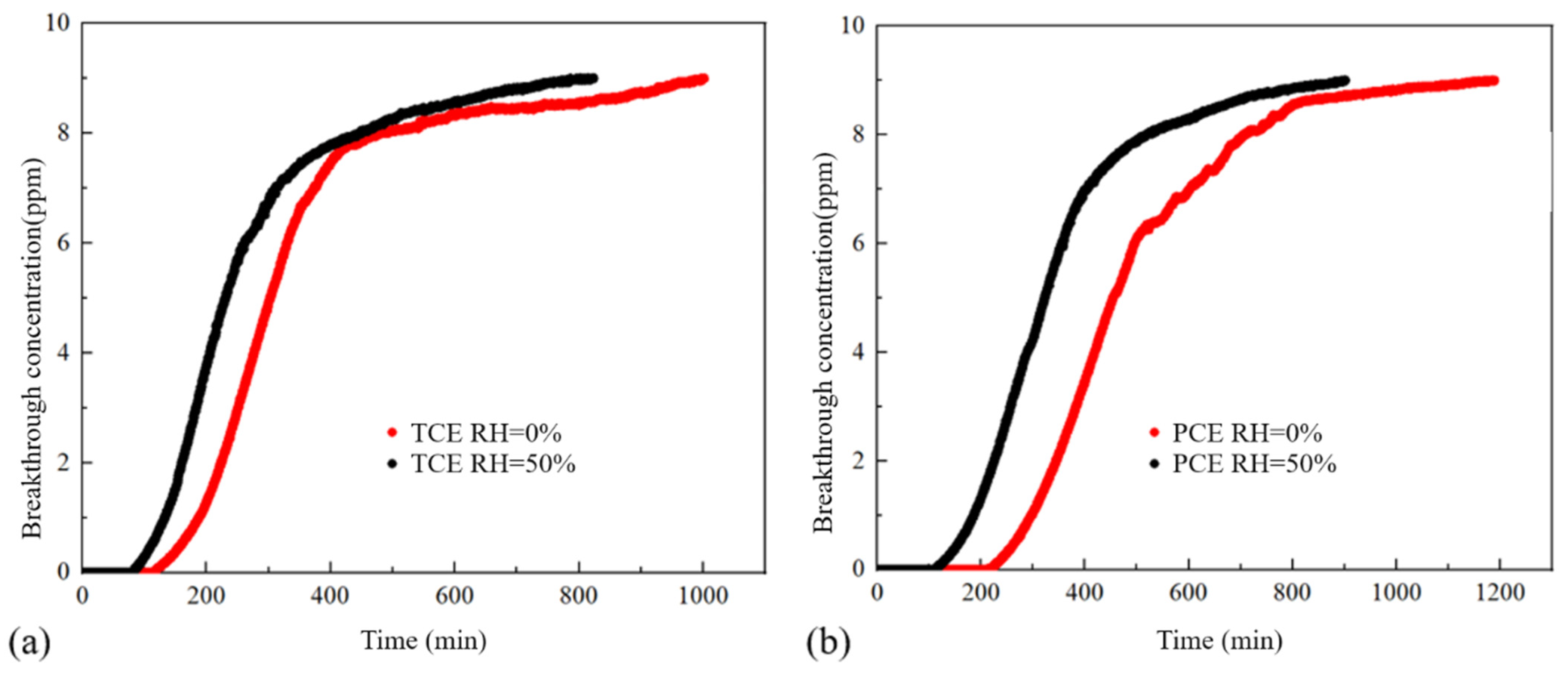
Figure 6a,b illustrate the breakthrough curves of TCE/PCE adsorption on activated carbon at a concentration of 9.0 ppm. In the absence of moisture, the saturated adsorption capacity of PCE (368.16 mg/g) was significantly higher than that of TCE (200.49 mg/g), and the breakthrough time for PCE was longer (1188 vs. 1001 min), which indicated that activated carbon is more effective at adsorbing non-polar PCE gas properly due to its molecular structure and boiling point. Moisture markedly reduced the adsorption capacity of activated carbon for both TCE and PCE, with a more pronounced effect on PCE. When the RH was 50%, the breakthrough times for TCE and PCE decreased by 17.8% and 24.2%, and the saturated adsorption capacities decreased by 21.5% and 30.0%, respectively, which indicated that a competitive adsorption occurred between water molecules and gaseous pollutants, resulting in the adsorption inhibition of TCE and PCE since the water molecules occupied adsorption sites. During the initial adsorption phase of TCE/PCE, substantial adsorption sites were available for rapid adsorption. As the adsorption progressed, these sites became increasingly occupied, leading to a gradual decrease in the adsorption rate until saturation was eventually reached. The presence of water vapor increased the mass transfer resistance for TCE/PCE gases and reduced the number of available adsorption sites on activated carbon, thereby decreasing the adsorption efficiency of activated carbon for these harmful gases.

3.2. Molecular Simulation Results

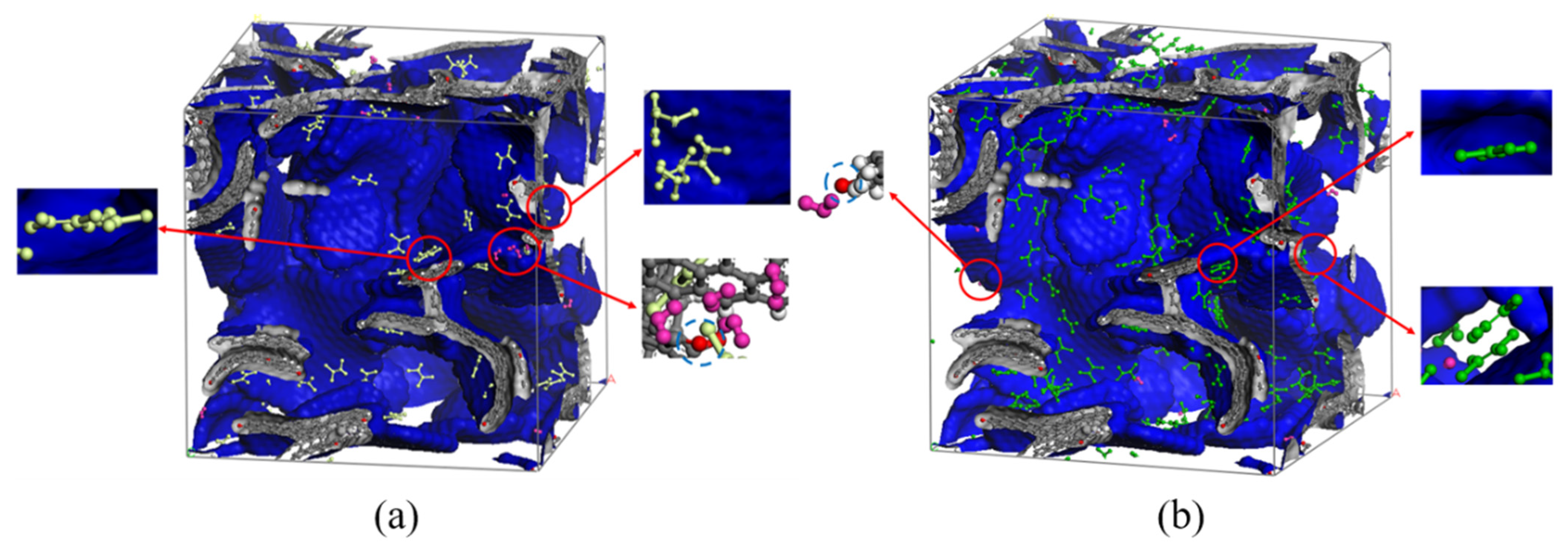
The Atom Volumes & Surfaces tool was employed to visualize the adsorption of TCE/PCE on activated carbon at RH = 50%, as shown in Figure 7. The gray region represents the graphite layer, which corresponds to the structural framework of activated carbon, while the blue surface denotes the pore structure of activated carbon. TCE/PCE molecules are adsorbed onto the surface of activated carbon in an approximately parallel orientation, and they are densely distributed within the surface pores of activated carbon. Additionally, overlapping between TCE/PCE molecules is evident, suggesting the occurrence of multilayer adsorption on activated carbon. Water molecules are concentrated near oxygen-containing functional groups and are further stabilized through hydrogen bonding with neighboring water molecules.
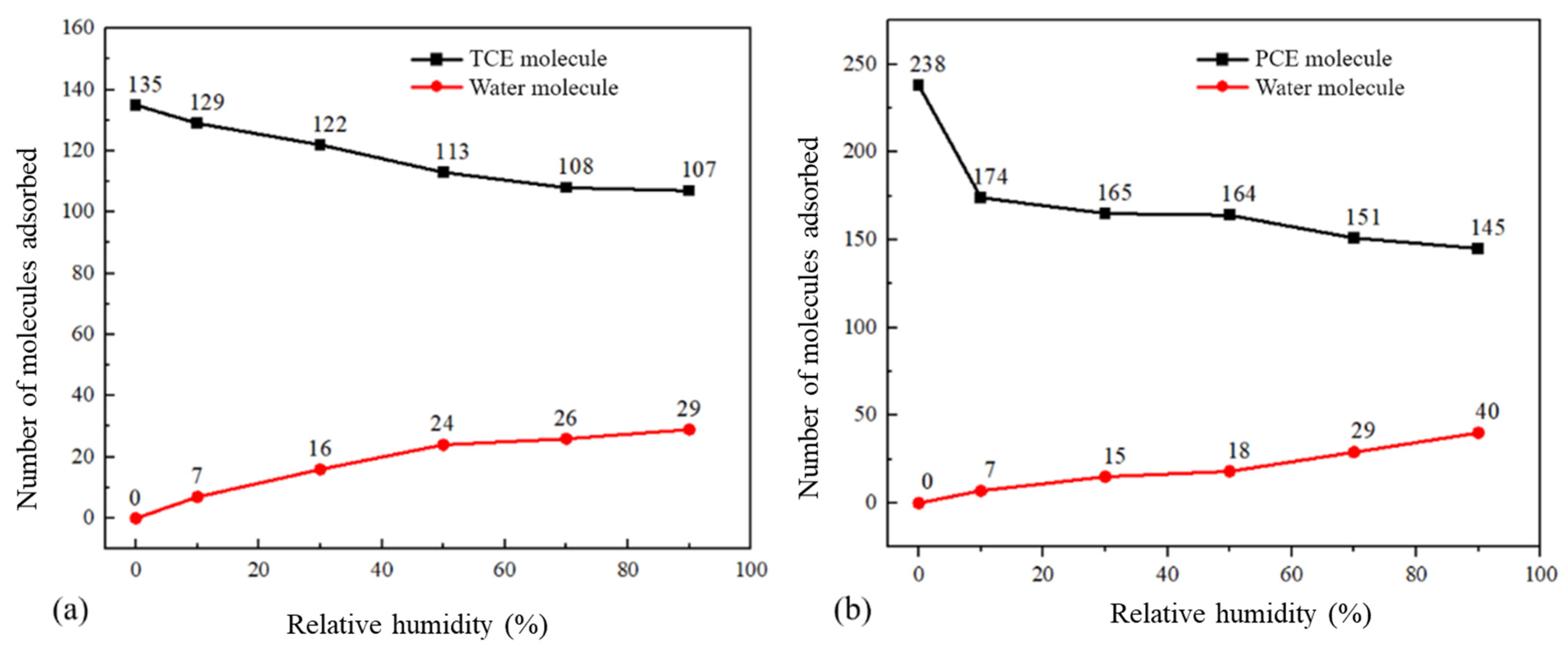
Figure 8 illustrates the number of TCE, PCE, and water molecules adsorbed under different relative humidity conditions. It indicated that the presence of water molecules negatively impacted the adsorption capacity of activated carbon for TCE/PCE. As the relative humidity increased, the number of TCE/PCE molecules adsorbed by activated carbon decreased, while the adsorption of water molecules increased. Activated carbon, containing hydrophilic adsorption sites such as oxygen-containing functional groups, simultaneously adsorbed VOC and water molecules. When the concentration of water molecules was high, they competed with TCE/PCE molecules for adsorption sites. Water molecules bound to oxygen-containing functional groups, thereby disrupting the adsorption of TCE/PCE molecules at nearby adsorption sites and reducing the available adsorption sites for these compounds. Additionally, water molecules occupied the pore spaces within the activated carbon, hindering the diffusion of TCE/PCE molecules into deeper pores, which further reduced their adsorption.
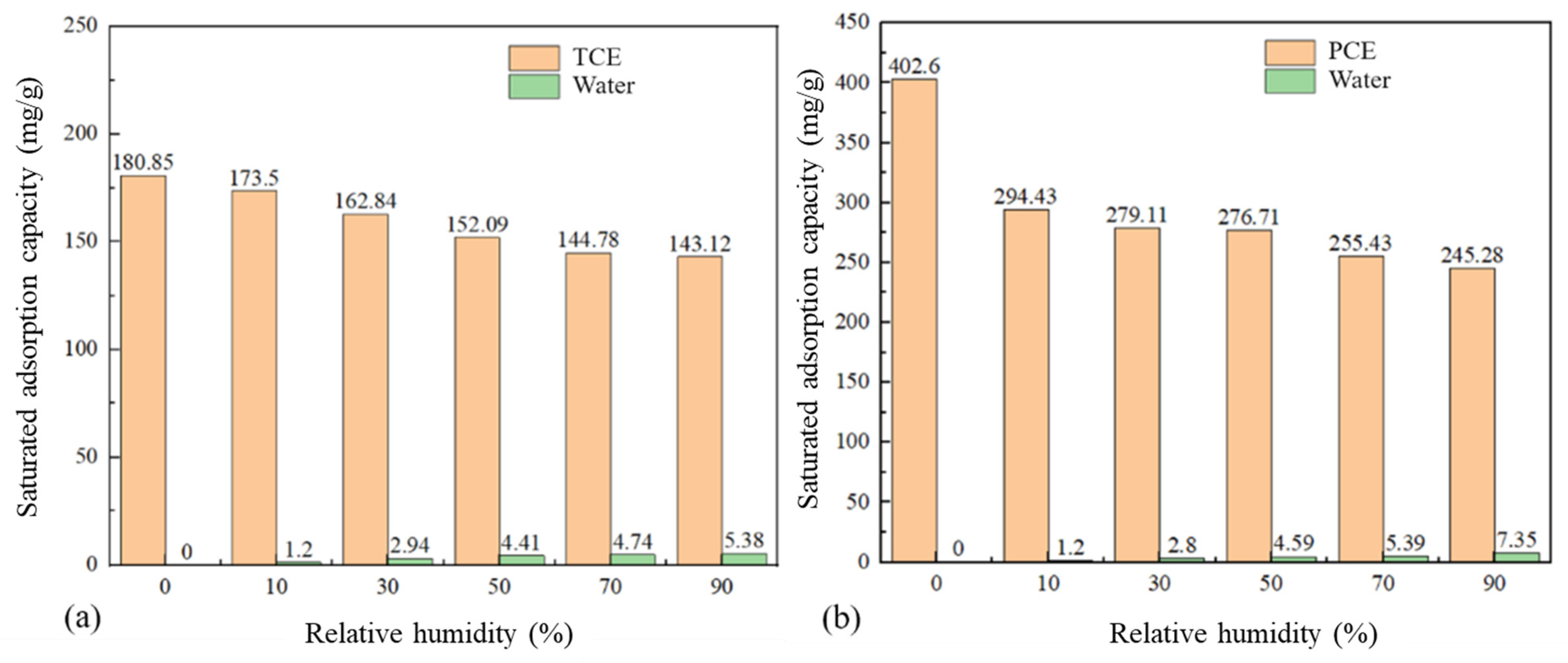
Figure 9 shows the variation of the saturated adsorption capacity of TCE/PCE with relative humidity (RH). As the RH increased, the saturated adsorption capacities of both TCE and PCE gradually decreased, while that of water was gradually increased. The saturated adsorption capacity of TCE/PCE exceeded that of water, indicating their dominance in competitive adsorption, which was mainly attributed to the significant influence of molecular polarity on the adsorption by activated carbon. For PCE, the largest decrease in saturated adsorption capacity occurred at RH = 10%, possibly because water molecules were mainly adsorbed around the oxygen-containing functional groups on the surface of activated carbon, occupying some adsorption sites and reducing the available sites for PCE. As RH was further increased, water molecules continued to be adsorbed around the oxygen-containing functional groups or aggregated near water molecules. However, due to the low oxidation of activated carbon, the available adsorption positions were limited; thus, the decrease in the saturated adsorption capacity of PCE gradually slowed down.
The radial distribution function (RDF) g (r) is explained as a measure of the probability density that describes finding two carbon atoms with a separation distance r. It is the ratio of the local density to the average density, showing the variation in the density of atoms in the system. Table 6 lists the simulated values of the radial distribution function for TCE/PCE. For TCE, two distinct peaks were observed, with the main peak appearing at 4.53–4.91 Å and the secondary peak at 7.31–7.75 Å, suggesting a double-layer adsorption phenomenon on activated carbon. The adsorption of water molecules reduced the effective adsorption sites for TCE, resulting in a slight increase in the peak values of the radial distribution function at higher humidity. Despite the competitive adsorption, the saturated adsorption capacity of TCE was still significantly higher than that of water, highlighting the dominant position in the adsorption process. However, as the relative humidity increased, the adsorption capacity of activated carbon for TCE weakened, manifested as a decrease in the saturated adsorption capacity and adsorption enthalpy, as well as a reduction in the diffusion coefficient. Water molecules occupied the adsorption sites on the surface of activated carbon, increasing the gas-phase mass transfer resistance and further reducing the diffusion coefficient of TCE, ultimately lowering the adsorption efficiency of activated carbon. The same analysis applied to PCE as well and is not elaborated here.
Overall, the activated carbon had a stronger adsorption capacity for PCE. This is because the activated carbon with non-polar surface preferred to adsorb the non-polar PCE in nature, thereby enhancing the adsorption efficiency. The saturated adsorption capacity of PCE is more significantly affected by relative humidity. When RH increased from 10% to 90%, the saturated adsorption capacity of PCE decreased by 26.87–39.08%. In contrast, within the same range of relative humidity, the saturated adsorption capacity of TCE was only decreased by 4.06–20.86%. The diffusion coefficient of TCE (7.39–8.54 × 10⁻⁹ m2/s) was higher than that of PCE (5.25–6.32 × 10⁻⁹ m2/s), mainly because the size of TCE was smaller, which enabled it to diffuse faster in the pores of activated carbon.

3.3. Predictive Results of Dynamic Model

To assess service life under realistic conditions, concentration scenarios were based on health standards and reported measurements. We conducted a comprehensive investigation into the permissible limits of TCE and PCE in global indoor air quality standards.
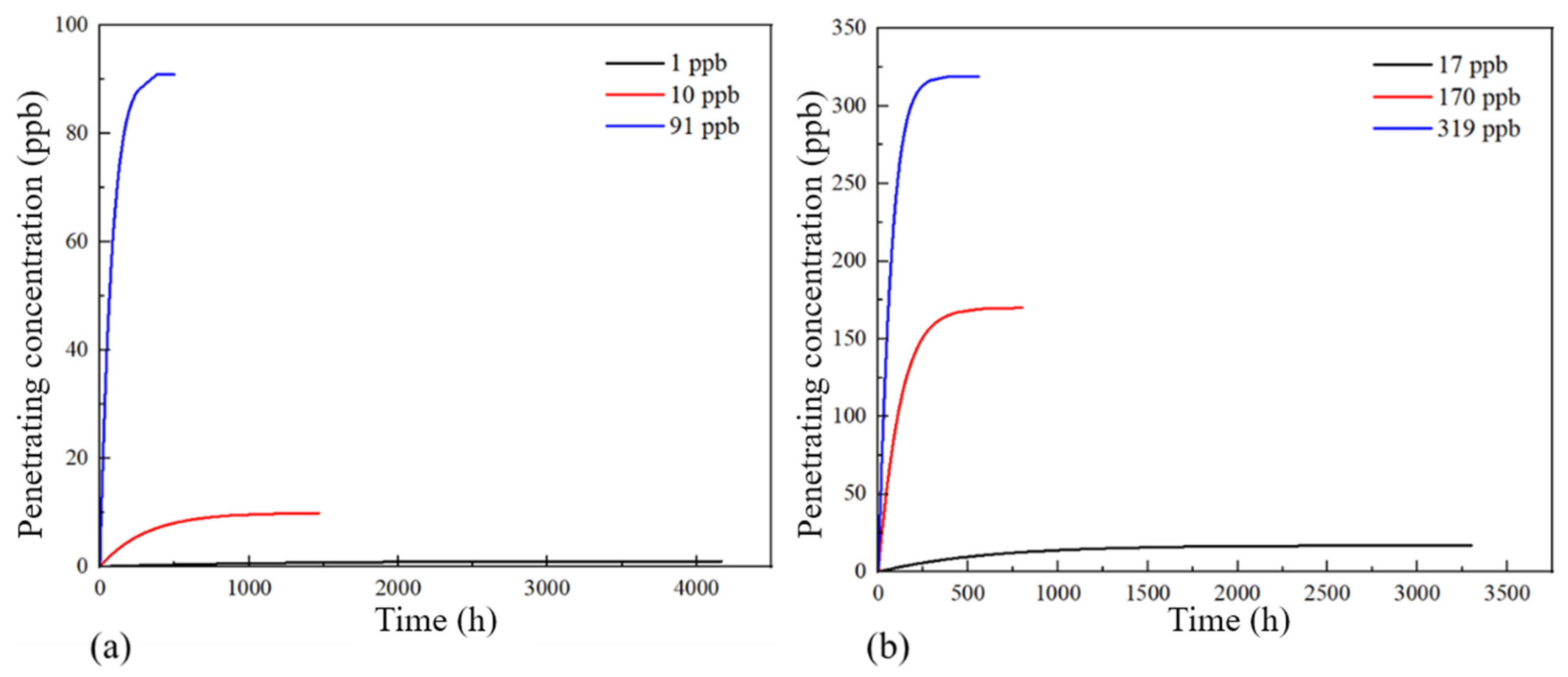
WHO indicates that exposure to TCE at an air concentration of 230 μg/m3 corresponds to a 0.01% lifetime cancer risk. An exposure limit of 0.25 mg/m3 per year has been set for PCE based on the lowest concentration level associated with kidney damage in dry-cleaning workers [33]. The limits specified in the Chinese standard GB/T 18883-2022 [34] are the most stringent, with values of 6 μg/m3 (1.09 ppb) for TCE and 120 μg/m3 (17.39 ppb) for PCE. A review of existing literature on indoor concentration surveys of TCE and PCE indicates maximum exceedance levels of 91 ppb for TCE and 318.96 ppb for PCE. Based on these standard limits and the observed ranges of indoor concentrations, this study established three concentration scenarios for both compounds: the standard limit, ten times the standard limit, and the highest recorded indoor concentration. Specifically, the concentrations were set at 1 ppb, 10 ppb, and 91 ppb for TCE and 17 ppb, 170 ppb, and 319 ppb for PCE. These scenarios were utilized to evaluate the service life of activated carbon in adsorbing TCE and PCE under varying indoor concentrations. As shown in Figure 10 that when the concentration of TCE is within the range of 1 to 91 ppb, the predicted service life of activated carbon is 550 to 4166.7 h. When the concentration range of PCE is between 17 and 319 ppb, the predicted service life of activated carbon is 560 to 3300 h. The results demonstrate that even at concentrations near the strictest health standards, activated carbon filters require replacement every few months, highlighting the persistent challenge of low-level exposure and the need for effective, maintained filtration.
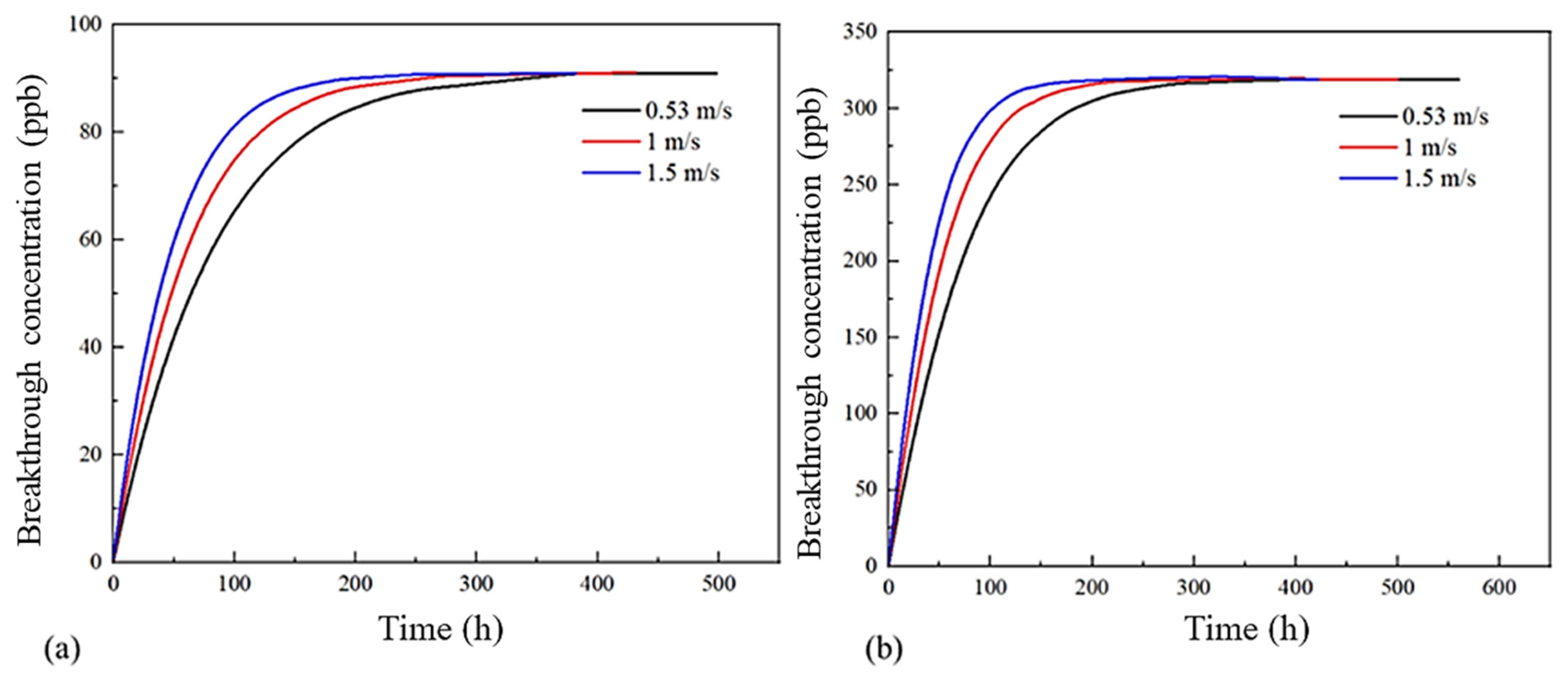
In air conditioning systems, the airflow passing through activated carbon varies depending on the system’s operations. This variation in air velocity has a significant impact on the adsorption performance of the activated carbon. To assess the influence of different air velocities on the service life of activated carbon, simulations were performed at two distinct air velocities (1 m/s and 1.5 m/s), and the results were compared with the experimental data obtained at air velocity of 0.53 m/s. The breakthrough curves are presented in Figure 11. The findings demonstrated that as the air velocity increased, the breakthrough rates of TCE and PCE accelerated, resulting in a corresponding reduction in the service life of the activated carbon.
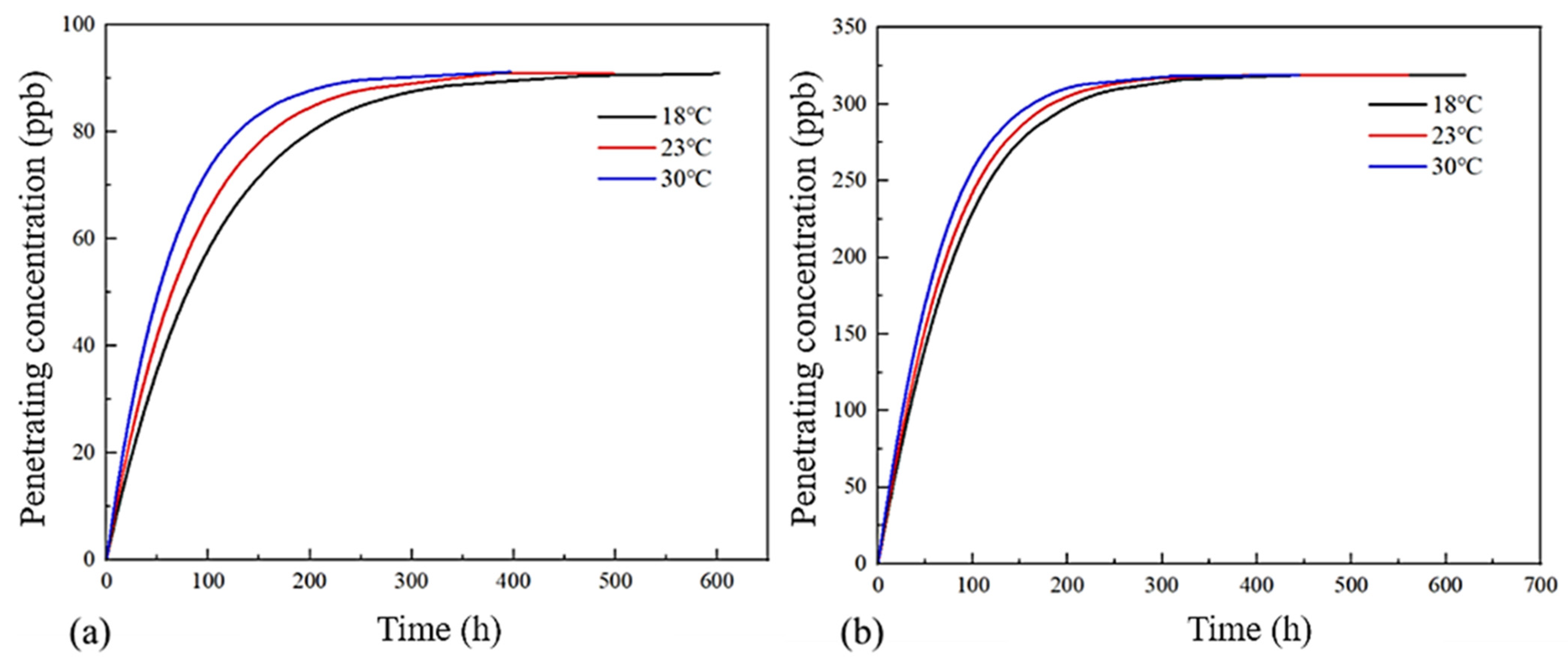
Indoor temperature is varied as a result of seasonal changes and indoor environmental conditions, which in turn influence the adsorption capacity of activated carbon. To investigate the effect of temperature on adsorption performance, the adsorption of activated carbon was performed at temperatures of 18 °C, 23 °C, and 30 °C. As depicted in Figure 12, the service life of activated carbon decreased with increasing temperature. This phenomenon occurred because the penetration rate of TCE/PCE accelerated, causing activated carbon to reach saturation more rapidly. By comparing the service life under different temperatures, it was determined that the impact of temperature on the service life of activated carbon was relatively minor. For TCE, within the temperature range of 18–30 °C, the service life of activated carbon remained between 0.97 and 1.2 times that observed at 23 °C. In contrast, variations in relative humidity had a more pronounced impact on the service life of activated carbon. When relative humidity ranged from 0% to 90%, the service life of activated carbon varied between 0.77 and 1.24 times that observed at 50% relative humidity. For PCE, similarly, when relative humidity increased from 0% to 90%, the service life of activated carbon varied between 0.93 and 1.28 times that observed at 50% relative humidity. Within the operational temperature range of 18 °C to 30 °C, the service life of activated carbon remained between 0.79 and 1.11 times that observed at 23 °C.
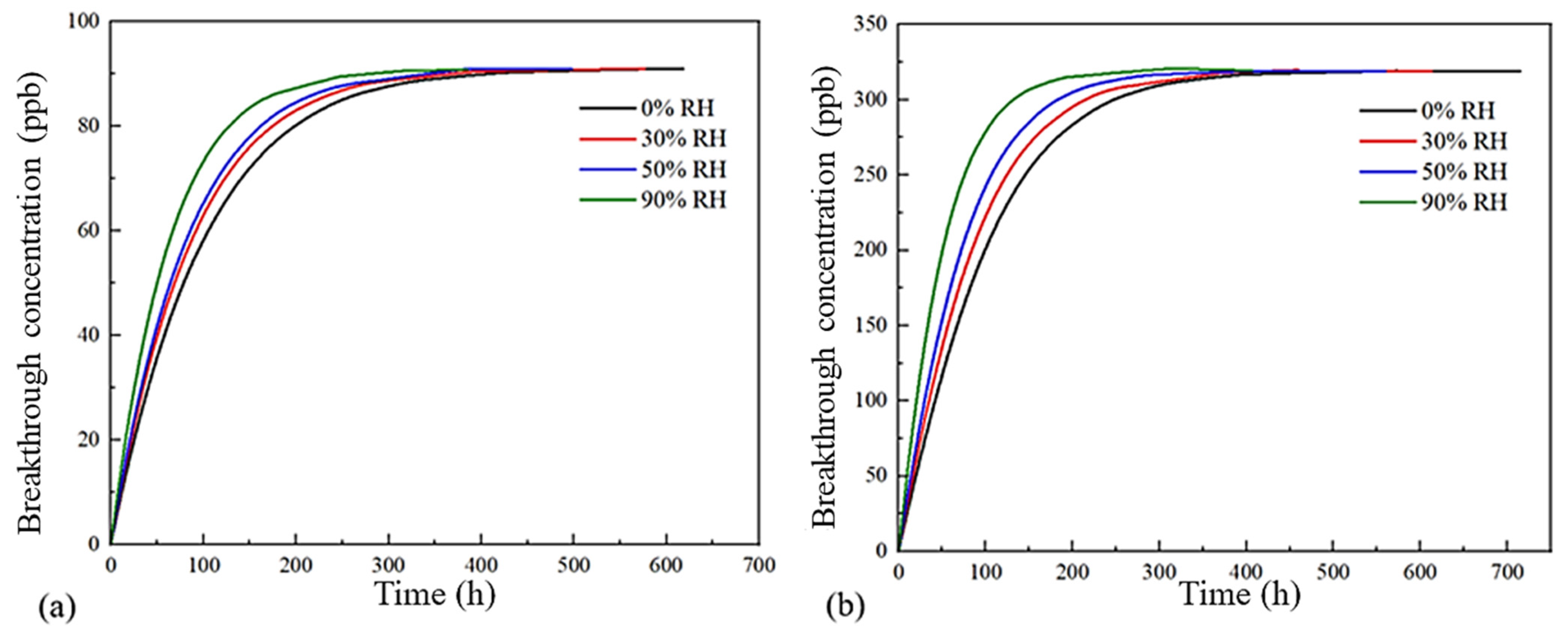
The breakthrough curves of TCE/PCE on activated carbon at different relative humidities are shown in Figure 13. The results indicated that as relative humidity increased, the breakthrough rate of TCE/PCE accelerated, suggesting that the adsorption capacity of activated carbon decreased with increasing relative humidity. Additionally, variations in relative humidity had a significant impact on the service life of activated carbon for adsorbing TCE. When relative humidity increased from 0% to 30%, the service life of activated carbon decreased from 618.3 to 576.7 h, a reduction of 6.73%. When relative humidity reached 90%, the service life decreased by 37.73%. The adsorption of PCE exhibited a similar phenomenon, with the service life decreasing by 14.78% and 43.12% at relative humidity levels of 30% and 90%, respectively.

4. Discussions

The aforementioned content investigated how factors such as pollutant concentration, air velocity, air temperature, and relative humidity influence the performance of activated carbon during the TCE/PCE adsorption process. However, in practical operation, it is not always feasible to adjust all factors to their optimal states. Furthermore, complexity arises from the frequent interdependencies and interactions among these factors. Consequently, gaining an in-depth understanding of the interactions among various parameters is crucial for developing optimal operational and control strategies under multi-factor conditions.
The Box–Behnken design within the framework of Response Surface Methodology (RSM) was employed to assess the service life of activated carbon during the TCE/PCE adsorption process. Temperature (A), relative humidity (B), air velocity (C), and pollutant concentration (D) were identified as critical independent variables, while the breakthrough time (T) of activated carbon was designated as the response variable. The design parameter range included air temperature between 18 °C and 30 °C, relative humidity from 0% to 90%, air velocity ranging from 0.53 to 1.5 m/s, and gas concentration levels of TCE from 1 to 91 ppb and PCE from 17 to 319 ppb. The regression equation for the breakthrough time of activated carbon is as follows:
TCE:
T = 623.68 191.05 A 218.48 B 202.63 C 1786.87 D 67.92 A B + 27.08 A C + 143.95 A D + 104.18 B C + 185.00 B D + 155.83 C D 76.22 A 2 + 86.18 B 2 8.42 C 2 + 1572.96 D 2
PCE:
T = 543.87 103.06 A 309.58 B 183.22 C 1320.03 D + 30.00 A B 26.67 A C + 105.83 A D + 67.08 B C + 485.00 B D + 264.08 C D + 64.26 A 2 + 17.80 B 2 45.16 C 2 + 1063.80 D 2
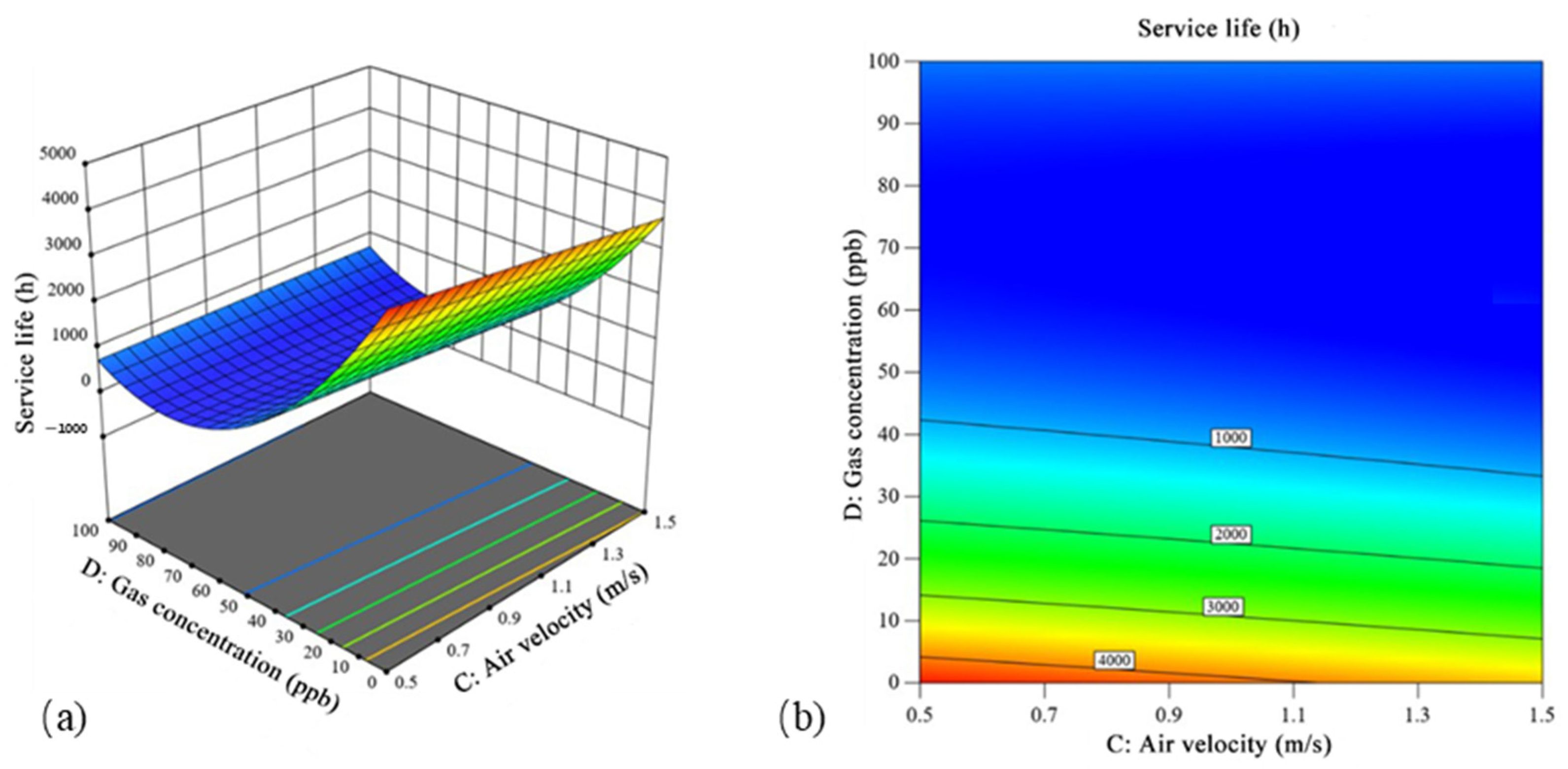
The significance and reliability of Equation (6) were assessed using the analysis of variance method. The p-value of the regression model was less than 0.0001, indicating that the model has extremely high statistical significance. The p-value ranking for factors A, B, C, and D was as follows: D (<0.0001) = B (<0.0001) < C (0.0002) < A (0.0003). The corresponding F-value ranking was D (2009.97) > B (30.05) > C (25.85) > A (22.98). Based on these results, the order of influence of each factor on the service life of activated carbon was determined to be D (TCE concentration) > B (relative humidity) > C (air velocity) > A (air temperature). The same analytical method was applied to Equation (3), and for PCE, an identical significance ranking of the factors was obtained. Indoor environments are generally maintained within the comfort range, and the air temperature and humidity remain relatively stable through the regulation of heating and cooling equipment. Therefore, we first determined the maximum service life of activated carbon for TCE/PCE at 25 °C, 50%, 0.53 m/s and 1 ppb/17 ppb (TCE/PCE) and then examined the influence of gas concentration and air velocity on the service life of activated carbon.
Figure 14 illustrates the three-dimensional response surface and corresponding contour plot of air velocity (C) and TCE concentration (D) at 25 °C, 50%. As both air velocity and TCE concentration decreased, the service life of activated carbon was gradually extended. Notably, the influence of concentration on the service life of activated carbon was more pronounced. The maximum service life of 4278.2 h was achieved when the air velocity was 0.53 m/s and the TCE concentration was 1 ppb. When the service life exceeded 80% of the maximum service life (i.e., 3422.7 h), the activated carbon operated in an optimal adsorption state, allowing for extended use. As depicted in Figure 14b, when the air velocity and TCE concentration fell within the triangular region in the lower-left corner of the image, the activated carbon performed optimally. Taking all factors into account, it indicated that controlling the inlet TCE concentration below 7 ppb, air velocity below 0.85 m/s, air temperature below 25 °C, and relative humidity below 50% could effectively balance adsorption efficiency and service life.
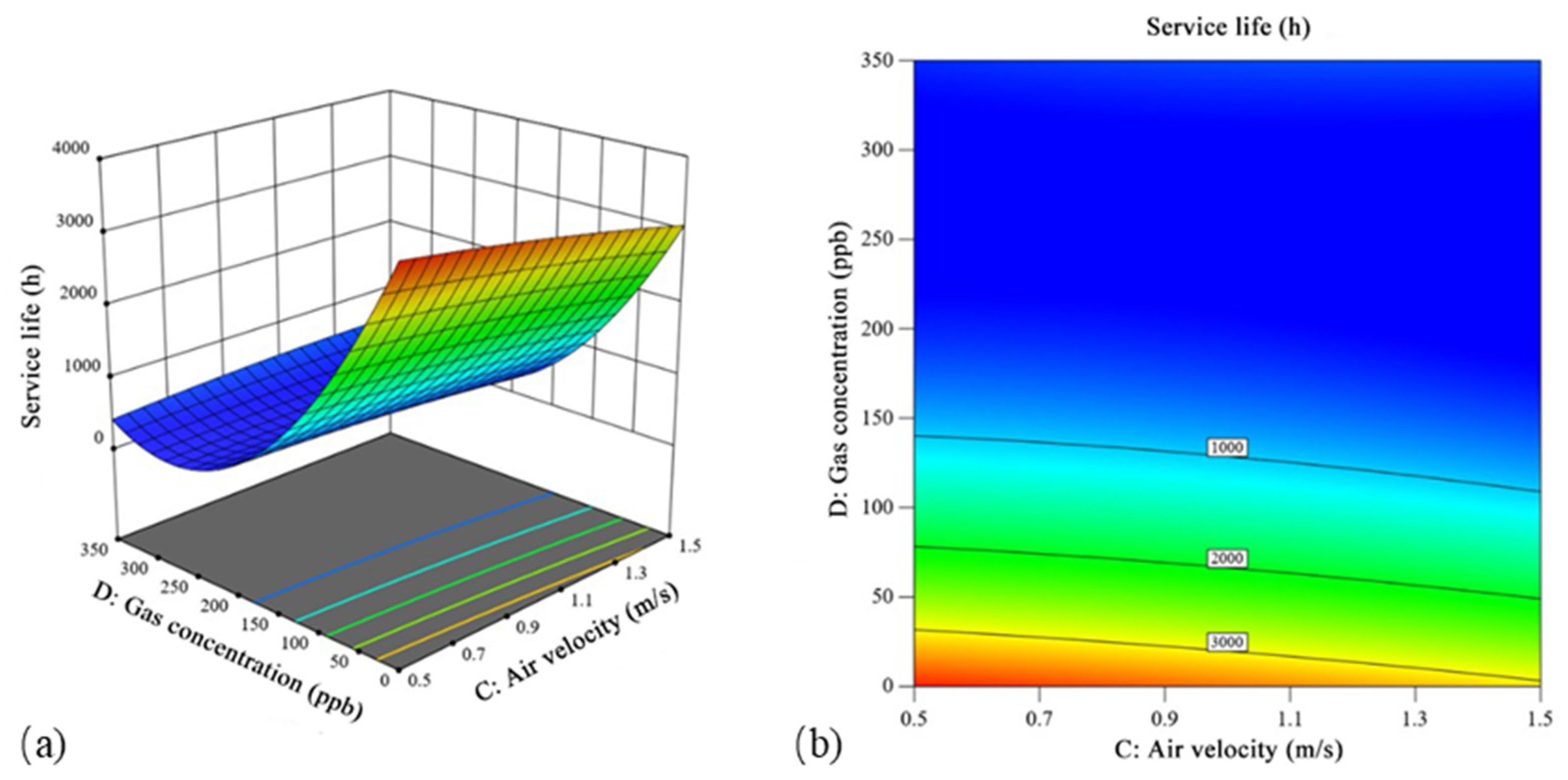
Figure 15 illustrates the three-dimensional response surface and corresponding contour plot of air velocity (C) and PCE concentration (D) at 25 °C, 50%. By using the same method as that used for TCE adsorption analysis, it could be concluded that when the PCE concentration was less than 30 ppb and the air velocity was less than 1.1 m/s, activated carbon was in an optimal state for PCE adsorption, with an adsorption duration of 2677.0 to 3346.3 h. Activated carbon could be replaced every 3 to 4 months during use.
In general, the parametric studies provide a direct link between operational conditions and the service life. For instance, controlling conditions within the identified optimal ranges (TCE < 7 ppb, PCE < 30 ppb, RH < 50%, v < 1 m/s, T < 25 °C) can extend the service life to approximately 3400–4300 h (about 4–6 months) for TCE and 2700–3300 h (about 3.5–4.5 months) for PCE, respectively. Extending the replacement cycle from a typical 1–3 months to this range offers significant benefits in terms of reduced maintenance frequency, lower operational costs, and less waste generation.

5. Conclusions

This study elucidated the adsorption mechanisms and performance characteristics of activated carbon for low-concentration TCE and PCE using a multi-scale approach, including experimental investigations, molecular simulations, and dynamic prediction modeling. The key findings are summarized as follows:
(1)
Coconut shell-based activated carbon exhibited effective adsorption of gaseous chlorinated hydrocarbons, exhibiting a substantially higher adsorption capacity for perchloroethylene (PCE) compared to trichloroethylene (TCE). However, its performance was more sensitive to humidity, with the adsorption capacity decreasing by approximately 30% at a relative humidity (RH) of 50%. This behavior can be attributed to the non-polar nature of PCE and the preferential adsorption of water molecules at oxygen-containing sites on the activated carbon surface. Further investigation into functional modifications of activated carbon, such as hydrophobic surface treatments, is warranted to mitigate the adverse effects of humidity on its adsorption efficiency.
(2)
A parameterized model of saturated adsorption capacity, developed based on molecular simulations and implemented in COMSOL, accurately predicted breakthrough behavior under various operating conditions with an error margin of less than 7.2%. This model provides a robust tool for estimating the service life of activated carbon in practical applications.
(3)
Response surface methodology analysis revealed that the relative influence of operating parameters on TCE/PCE adsorption decreases in the following order: pollutant concentration > relative humidity > air velocity > temperature. Maintaining inlet concentrations (TCE < 7 ppb, PCE < 30 ppb), air velocity (<1 m/s), temperature (<25 °C), and relative humidity (<50%) can effectively balance purification efficiency and activated carbon lifetime (3–5 months).
Collectively, this study not only advances the mechanistic understanding and predictive modeling of VOC adsorption but also underscores the potential of biomass-based adsorbents in sustainable indoor air quality management. The extended service life of activated carbon filters under optimized conditions, as determined here, directly contributes to resource efficiency by reducing material replacement frequency and associated waste.
While this study provided comprehensive insights into the adsorption of TCE and PCE on coconut shell activated carbon, certain limitations should be acknowledged. The research focused on single-component adsorption, whereas real indoor air comprises complex mixtures of VOCs that may exhibit competitive, synergistic, or antagonistic adsorption behaviors. Furthermore, the activated carbon used was unmodified; its performance, especially in high humidity, could potentially be enhanced through surface functionalization (e.g., hydrophobization) or composite formation.
Future work should therefore focus on: (1) investigating the co-adsorption dynamics of TCE/PCE with other prevalent indoor VOCs (e.g., formaldehyde, benzene, toluene) to develop predictive models for multi-component systems; (2) engineering the surface chemistry of activated carbon, for instance by nitrogen-doping or polymer coating, to improve its selectivity and moisture resistance; and (3) integrating the validated dynamic model with building energy management systems (BEMS) to enable smart, demand-based control of air purification units, optimizing both indoor air quality and energy consumption.

Author Contributions

Conceptualization, Y.S.; methodology, Y.S. and Q.D.; software, Q.D.; validation, Q.D. and S.Z.; formal analysis, Q.D.; data curation, Q.D.; writing—original draft preparation, Y.S. and Q.D.; writing—review and editing, Y.S., Q.D. and S.Z.; supervision, Y.S.; funding acquisition, Y.S. All authors have read and agreed to the published version of the manuscript.

Funding

This research was funded by National Natural Science Foundation of China (No. 51908402).

Institutional Review Board Statement

Not applicable.

Informed Consent Statement

Not applicable.

Data Availability Statement

The data that support the findings of this study are available on request from the corresponding author, Ying Sheng, upon reasonable request.

Conflicts of Interest

The authors declare no conflict of interest.

Abbreviations

BETBrunauer–Emmett–Teller
BJHBarrett–Joyner–Halenda
CFDComputational Fluid Dynamics
CSACCoconut Shell Activated Carbon
DFTDensity Functional Theory
FTIRFourier Transform Infrared Spectroscopy
GCMCGrand Canonical Monte Carlo
IARCInternational Agency for Research on Cancer
MDMolecular Dynamics
PCETetrachloroethylene (Perchloroethylene)
RDFRadial Distribution Function
RHRelative Humidity
RSMResponse Surface Methodology
SEMScanning Electron Microscopy
SVOCSemi-Volatile Organic Compound
TCETrichloroethylene
VOCVolatile Organic Compound
WHOWorld Health Organization

References

  1. Mannan, M.; Al-Ghamdi, S.G. Indoor Air Quality in Buildings: A Comprehensive Review on the Factors Influencing Air Pollution in Residential and Commercial Structure. Int. J. Environ. Res. Public Health 2021, 18, 3276. [Google Scholar] [CrossRef] [PubMed]
  2. Bhoonah, R.; Maury-Micolier, A.; Jolliet, O. Indoor Air Pollution, Integrated empirical and modelled determination of the human health impacts of building material VOCs. Build. Environ. 2023, 242, 110523. [Google Scholar]
  3. Maryam, S.; Ali Asghar, N.; Hosein, A.; Shamsara, J.; Amiri, H.; Andrea, T.; Kariminejad, F. Indoor Air Quality associations with sick building syndrome: An application of decision tree technology. Build. Environ. 2021, 188, 107446. [Google Scholar] [CrossRef]
  4. Bingham, Q.G.; Lutes, C.; Grand, R.; Quadri, S.; Dollhopf, R.; Posavatz, N.; Birkett, E. Emissions of Trichloroethylene from Bedroom Furniture Set as a Source of Indoor Air Contamination. Ground Water Monit. Remediat. 2023, 43, 78–83. [Google Scholar] [CrossRef]
  5. Archer, N.P.; Bradford, C.M.; Villanacci, J.F.; Crain, N.E.; Corsi, R.L.; Chambers, D.M.; Burl, T.; Blount, B.C. Relationship between vapor intrusion and human exposure to trichloroethylene. J. Environ. Sci. Health Part A 2015, 50, 1360–1368. [Google Scholar] [CrossRef]
  6. Mandin, C.; Trantallidi, M.; Cattaneo, A.; Canha, N.; Mihucz, V.G.; Szigeti, T.; Mabilia, R.; Perreca, E.; Spinazzè, A.; Fossati, S.; et al. Assessment of indoor air quality in office buildings across Europe—The OFFICAIR study. Sci. Total Environ. 2017, 579, 169–178. [Google Scholar] [CrossRef]
  7. Edwards, R.D.; Jurvelin, J.; Saarela, K.; Jantunen, M. VOC concentrations measured in personal samples and residential indoor, outdoor and workplace microenvironments in EXPOLIS-Helsinki, Finland. Atmos. Environ. 2001, 35, 4531–4543. [Google Scholar] [CrossRef]
  8. Martin, A.; Simmons, M.B.; Ortiz-Serrano, M.; Kendrick, C.; Gallo, A.; Campbell, J.; Jeff, F. Environmental Exposure of a Community to Airborne Trichloroethylene Sheppard. Arch. Environ. Occup. Health 2005, 60, 314–316. [Google Scholar] [CrossRef]
  9. Kwon, J.; Weisel, C.P.; Turpin, B.J.; Zhang, J.; Korn, L.R.; Morandi, M.T.; Stock, T.H.; Colome, S. Source Proximity and Outdoor-Residential VOC Concentrations: Results from the RIOPA Study. Environ. Sci. Technol. 2006, 40, 4074–7082. [Google Scholar] [CrossRef]
  10. Dodson, R.E.; Levy, J.I.; Spengler, J.D.; Shine, J.P.; Bennett, D.H. Influence of basements, garages, and common hallways on indoor residential volatile organic compound concentrations. Atmos. Environ. 2008, 42, 1569–1581. [Google Scholar] [CrossRef]
  11. Pennell, K.G.; Scammell, M.K.; McClean, M.D.; Ames, J.; Weldon, B.; Friguglietti, L.; Suuberg, E.M.; Shen, R.; Indeglia, P.A.; Heiger-Bernays, W.J. Sewer Gas: An Indoor Air Source of PCE to Consider During Vapor Intrusion Investigations. Ground Water Monit. Remediat. 2013, 33, 119–126. [Google Scholar] [CrossRef]
  12. Du, Z.; Mo, J.; Zhang, Y. Risk assessment of population inhalation exposure to volatile organic compounds and carbonyls in urban China. Environ. Int. 2014, 73, 33–45. [Google Scholar] [CrossRef]
  13. de Courville, S.B.; Roulet, A.; Droupy, S.; Thuret, R. Kidney cancer following occupational exposure to trichloroethylene: Clinical case series and review of the literature. Fr. J. Urol. 2025, 35, 102795. [Google Scholar] [CrossRef] [PubMed]
  14. Nagarajan, V.; Bhuvaneswari, R.; Chandiramouli, R. Trichloroethylene and tetrachloroethylene adsorption studies on α-antimony phosphorous nanosheets—A first-principles study. Comput. Theor. Chem. 2024, 1241, 114861. [Google Scholar] [CrossRef]
  15. Feng, M.; Xu, Z.; Bai, X.; Lin, K.; Zhang, M. Al–Fe pillared bentonite−Fe3O4–CaO2 nanocomposite for efficient adsorption and degradation of trichloroethylene. Sustain. Chem. Pharm. 2023, 32, 100995. [Google Scholar] [CrossRef]
  16. Gil, E.R.; Ruiz, B.; Lozano, M.S.; Martín, M.J.; Fuente, E. VOCs removal by adsorption onto activated carbons from biocollagenic wastes of vegetable tanning. Chem. Eng. J. 2014, 245, 80–88. [Google Scholar] [CrossRef]
  17. Haider, R.; Sagadevan, S.; Al-Adaileh, N.A.; Fatimah, I.; Paiman, S.; Le, M.V.; Johan, M.R. Sustainable activated carbon derived from coconut shell and betel nuts for energy storage and environmental remediation. Diam. Relat. Mater. 2025, 154, 112243. [Google Scholar] [CrossRef]
  18. Mallick, M.K.; Panigrahi, P.; Mohanty, S.; Palai, A.K. Coconut shell-derived porous activated carbon materials: Role of activating agent on physico-electrochemical properties and photovoltaic performances. Biomass Convers. Biorefin. 2025, 1, 15. [Google Scholar] [CrossRef]
  19. Li, Q.; Xu, W.; Liang, X.; Liu, B.; Wu, Q.; Zeng, Z.; Li, L.; Ma, X. Specific alkali metal sites as CO2 traps in activated carbon with different pore size for CO2 selective adsorption: GCMC and DFT simulations. Fuel 2022, 325, 124871. [Google Scholar] [CrossRef]
  20. Chen, G.; An, Y.; Shen, Y.; Wang, Y.; Tang, Z.; Lu, B.; Zhang, D. Effect of pore size on CH4/N2 separation using activated carbon. Chin. J. Chem. Eng. 2020, 28, 1062–1068. [Google Scholar] [CrossRef]
  21. Wang, J.; Cao, W.; Wei, W.; Jin, H. Adsorption characteristic analysis of PAHs on activated carbon with different functional groups by molecular simulation. Environ. Sci. Pollut. Res. 2023, 30, 32452–32463. [Google Scholar] [CrossRef]
  22. An, K.; Wang, Z.; Yang, X.; Qu, Z.; Sun, F.; Zhou, W.; Zhao, H. Reasons of low formaldehyde adsorption capacity on activated carbon: Multi-scale simulation of dynamic interaction between pore size and functional groups. J. Environ. Chem. Eng. 2022, 10, 108723. [Google Scholar] [CrossRef]
  23. Wu, S.; Deng, C.; Wang, X. Molecular simulation of flue gas and CH4 competitive adsorption in dry and wet coal. J. Nat. Gas Sci. Eng. 2019, 71, 102980. [Google Scholar] [CrossRef]
  24. Cal, M.P.; Rood, M.J.; Larson, S.M. Gas Phase Adsorption of Volatile Organic Compounds and Water Vapor on Activated Carbon Cloth. Energy Fuels 1997, 11, 311–315. [Google Scholar] [CrossRef]
  25. Li, J.J.; Yin, T.Y.; Cheng, T.; Chen, H.; Yang, L.; Wu, H. Superior pore size for enhancing the competitive adsorption of VOCs under high humid conditions: An experiment and molecular simulation study. J. Environ. Chem. Eng. 2023, 11, 111091. [Google Scholar] [CrossRef]
  26. Chen, Z.; He, R. Competitive adsorption characteristics of gasoline evaporated VOCs in microporous activated carbon by molecular simulation. J. Mol. Graph. Model. 2023, 121, 108444. [Google Scholar] [CrossRef]
  27. Pei, J.; Zhang, J.S. Determination of adsorption isotherm and diffusion coefficient of toluene on activated carbon at low concentrations. Build. Environ. 2012, 48, 66–76. [Google Scholar] [CrossRef]
  28. Shiue, A.; Den, W.; Kang, Y.; Hu, S.-C.; Jou, G.-T.; Lin, C.; Hu, V.; Lin, S. Validation and application of adsorption breakthrough models for the chemical filters used in the make-up air unit (MAU) of a cleanroom. Build. Environ. 2011, 46, 468–477. [Google Scholar] [CrossRef]
  29. Shafeeyan, M.S.; Daud, W.M.A.W.; Shamiri, A.; Aghamohammadi, N. Modeling of Carbon Dioxide Adsorption onto Ammonia-Modified Activated Carbon: Kinetic Analysis and Breakthrough Behavior. Energy Fuels 2015, 29, 6565–6577. [Google Scholar] [CrossRef]
  30. Elsayed, A.; Mahmoud, S.; Al-Dadah, R.; Bowen, J.; Kaialy, W. Experimental and Numerical Investigation of the Effect of Pellet Size on the Adsorption Characteristics of Activated Carbon/Ethanol. Energy Procedia 2014, 61, 2327–2330. [Google Scholar] [CrossRef]
  31. ASHRAE Standard 145.2-2015; Method of Testing General Ventilation Air-Cleaning Devices for Removal of Gaseous Pollutants. ASHRAE: Peachtree Corners, GA, USA, 2015.
  32. ISO 10121-1:2014; Test Method for Assessing the Performance of Gas-Phase Air Cleaning Media and Devices for General Ventilation—Part 1: Gas-Phase Air Cleaning Media. International Organization for Standardization: Vernier, Switzerland, 2014.
  33. World Health Organization. WHO Guidelines for Indoor Air Quality: Selected Pollutants; World Health Organization: Geneva, Switzerland, 2010. [Google Scholar]
  34. GB/T 18883-2022; Standards for Indoor Air Quality. State Administraion for Market Regulation, National Standardization Administration: Beijing, China, 2022.
Figure 1. Characterization of Coconut Shell Activated Carbon. (a) Appearance of coconut shell activated carbon. (b) Adsorption–desorption isotherms of activated carbon in pure nitrogen: adsorption curve in black and desorption curve in red. (c) Pore size distribution of activated carbon: dV/dD represents the rate of pore volume with respect to pore size. (d) Fourier Transform Infrared Spectroscopy (FTIR) spectrum of the activated carbon sample: residual oxygen-containing functional groups on activated carbon.
Sustainability 18 00570 g001
Figure 2. Experimental facility. (a) Schematic of the experimental system; (b) Photograph of the experimental facility.
Sustainability 18 00570 g002
Figure 3. Examples of the positions of the 5-rings and 7-rings on a graphite slice (7-rings circled in blue, 5-rings circled in red) and functional groups (carbonyl in yellow, hydroxyl in green) (a) and the nanoporous carbon model (b).
Sustainability 18 00570 g003
Figure 4. Comparison of the experimental and simulated breakthrough curves of TCE: (a) curves obtained at the relative humidity of 0%; (b) curves obtained at the relative humidity of 50%.
Sustainability 18 00570 g004
Figure 5. Comparison of the experimental and simulated breakthrough curves of PCE: (a) curves obtained at 0% relative humidity; (b) curves obtained at 50% relative humidity.
Sustainability 18 00570 g005
Figure 6. Breakthrough curves of (a) TCE and (b) PCE adsorption on activated carbon.
Sustainability 18 00570 g006
Figure 7. Microscopic images of (a) TCE and (b) PCE adsorption (TCE molecules in yellow, PCE molecules in green, water molecules in fuchsia, and oxygen-containing functional groups marked by blue circles).
Sustainability 18 00570 g007
Figure 8. The number of (a) TCE/(b) PCE and water molecules adsorbed at different relative humidity values.
Sustainability 18 00570 g008
Figure 9. Saturated adsorption capacity of (a) TCE/(b) PCE at different relative humidity values.
Sustainability 18 00570 g009
Figure 10. Predicted breakthrough curves of (a) TCE/(b) PCE adsorption on activated carbon at different gas concentrations (T = 23 °C, RH = 50%, v = 0.53 m/s).
Sustainability 18 00570 g010
Figure 11. Predicted breakthrough curves of (a) TCE/ (b)PCE adsorption on activated carbon at different air velocities: breakthrough curve obtained at a temperature of 23 °C, a relative humidity of 50%, with an initial concentration of TCE at 1 ppb and an initial concentration of PCE at 17 ppb.
Sustainability 18 00570 g011
Figure 12. Predicted breakthrough curves of (a) TCE/(b) PCE adsorption on activated carbon at different air temperatures: breakthrough curve obtained at an air velocity of 0.53 m/s, a relative humidity of 50%, with an initial concentration of TCE at 1 ppb and an initial concentration of PCE at 17 ppb.
Sustainability 18 00570 g012
Figure 13. Predicted breakthrough curves of (a) TCE/(b) PCE adsorption on activated carbon at different relative humidities: breakthrough curve obtained at a temperature of 23 °C, an air velocity of 0.53 m/s, with an initial concentration of TCE at 1 ppb and an initial concentration of PCE at 17 ppb.
Sustainability 18 00570 g013
Figure 14. Air velocity (C) vs. gas concentration (D) for TCE adsorption (T = 25 °C, RH = 50%): (a) surface plot and (b) contour plot.
Sustainability 18 00570 g014
Figure 15. Air velocity (C) vs. gas concentration (D) for PCE adsorption (T = 25 °C, RH = 50%): (a) surface plot and (b) contour plot.
Sustainability 18 00570 g015
Table 1. Specifications of experimental instruments.
InstrumentsTypeMeasuring RangeAccuracy
VOCs DetectorppbRAE 30001 ppb~10,000 ppm1 ppb
ThermohygrographRotronic−50~100 °C, 0~100% RH±0.8% RH, ±0.1 °C
Mass Flow meter 1ACU10FA-LC0~2 L/min1% of full scale
Mass Flow meter 2ACU10FA-LC0~10 L/min1% of full scale
Table 2. Comparison of physical characterization.
ParameterValues from the
Characterization of
the Model
Data of the
Characterization of
Activated Carbon Used in
the Experiment
Porosity (%)53.3850.10
Microporous porosity (%)24.2817.49
Mesoporous porosity (%)28.0332.61
Apparent density (g/cm3)0.540.51
Specific surface area (m2/g)1315.491143.9
Average pore size (nm)1.801.79
Table 3. Comparison of simulated and experimental adsorption capacities for TCE/PCE at 23 °C and 9.0 ppm.
AdsorbateRelative Humidity (%)Simulated Adsorption Capacity
(mg/g)
Experimental Adsorption Capacity (mg/g)Relative Error (%)
TCE0180.85200.499.80
TCE50152.09157.383.36
PCE0402.60368.169.36
PCE50276.71257.567.43
Table 4. Values of parameters for the activated carbon packing bed.
ItemUnitValue
Average size of activated carbon particlemm 0.75
Pore volume of adsorption bed cm3/g0.5
Density of adsorption bed kg/m3509
Density of activated carbonkg/m31018
Porosity of adsorption bed(-)0.5
Porosity of activated carbon (-)0.509
Table 5. Initial and boundary conditions.
Physical FieldInitial ValueInlet ValueOutlet Value
Velocity u = 0 u 0 = 0.53 m/sp = 1 atm
Temperature T = 296 K T = 296 K n k e f T = 0
Gas-phase concentration C = 0 C 0 = 9 ppm n D D C = 0
Solid-phase concentration c s = 0 c s 0 = 0 n c s = 0
Table 6. Simulated values of radial distribution function for TCE and PCE.
CompoundRelative Humidity (%)Main PeakSecondary Peak
r (Å)g (r) (-)r (Å)g (r) (-)
TCE04.731.887.651.50
104.911.907.311.56
304.451.917.511.64
504.651.887.591.57
704.771.917.751.56
904.531.967.591.64
PCE04.531.377.831.33
104.511.507.711.34
304.651.507.691.40
504.651.507.791.39
704.491.517.791.36
904.351.547.891.38
Disclaimer/Publisher’s Note: The statements, opinions and data contained in all publications are solely those of the individual author(s) and contributor(s) and not of MDPI and/or the editor(s). MDPI and/or the editor(s) disclaim responsibility for any injury to people or property resulting from any ideas, methods, instructions or products referred to in the content.