Developing an NSD Process for Sustainable Community-Based Tourism Under Uncertainty: A Case Study from Thailand

Abstract
1. Introduction
2. Literature Review and Theoretical Framework
2.1. Community-Based Tourism in Thailand
2.2. The Concept of Resilience and VUCA World
2.3. New Service Development for CBT
2.4. Theoretical Framework
3. Methodology
3.1. Phase 1: Expert Interviews to Explore Current Practices and Field Challenges
3.2. Phase 2: Iterative Development with a Best-Practice CBT Community and a Trial CBT Community
3.2.1. Action Research with a Best-Practice CBT Community
3.2.2. Action Research with a Trial CBT Community to Test Adaptability
3.3. Phase 3: Validation
3.3.1. Pre-Test and Post-Test Surveys
3.3.2. Expert Validation Interviews
4. Results
4.1. Phase 1: Findings from Expert Interviews
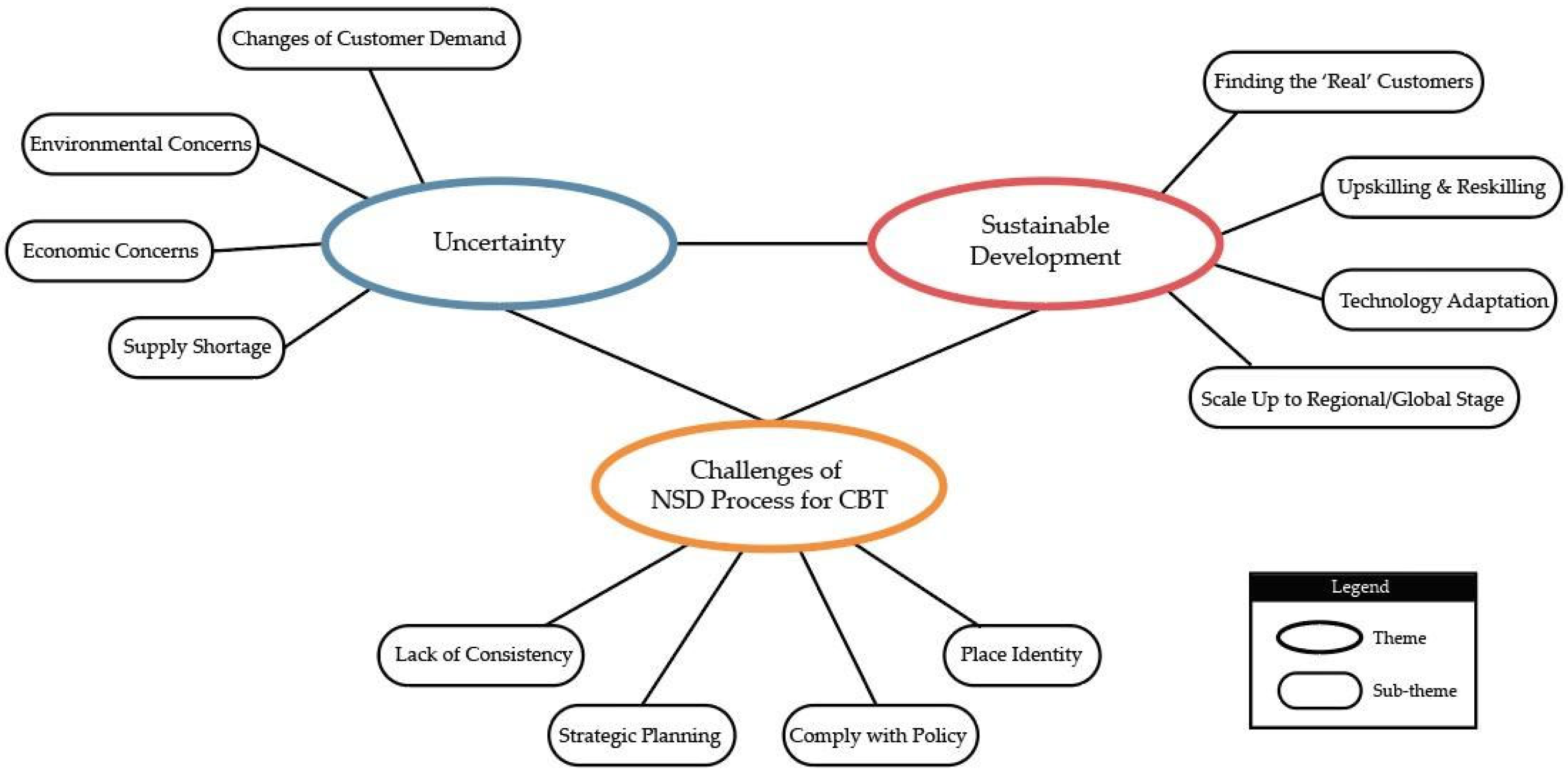
- Challenges in existing NSD process for CBT: Experts highlighted that many CBT communities either lacked a formal service development framework or relied on fragmented, reactive approaches. The most critical gaps identified were in strategic planning and place identity development, with experts consistently emphasizing that most CBT communities engaged only in short-term, project-based thinking rather than comprehensive long-term development planning, resulting in scattered and inconsistent initiatives. While various tools for place identity development existed, these resources remained fragmented, diverse, and inaccessible to resource-constrained communities, lacking a unified, community-appropriate approach. Moreover, current place identity development adopts a one-sided perspective, either prioritizing community viewpoints or visitor viewpoints, failing to achieve the balanced integration that addresses both community identity and visitor experience. Additionally, experts noted the lack of consistency in CBT practices and poor alignment with government policies, where existing CBT often failed to connect with national development directions and available support programs. These deficiencies often led to inconsistent visitor experiences and inefficient resource use, necessitating the development of a comprehensive NSD process that would begin with foundational assessment and planning phases.
- Impact of uncertainty on CBT operations: Respondents underscored the disruptive effects of the COVID-19 pandemic, seasonal flooding, and tourism market volatility. These uncertainties revealed the fragility of CBT models that did not incorporate risk planning, adaptive service mechanisms, or diversified income streams. In particular, a key challenge for CBT was the rapidly shifting customer demand patterns and evolving tourist behaviors. Communities frequently reported their inability to keep pace with these dynamic changes in market preferences, which have accelerated significantly since the outbreak of COVID-19. Tourist expectations were found to shift quite often within mere months. This velocity of change far exceeds the adaptive capacity of most rural communities, which lack both the resources and expertise to conduct regular market assessments or consumer behavior analysis. Consequently, even CBT initiatives that successfully completed their initial development phases often failed to generate sustainable outcomes, as their offerings became misaligned with actual market demands by the time of implementation due to the disconnection between community capabilities and the speed of consumer behavior change.
- Integration of sustainable development: Experts identified significant barriers in Thai CBT communities’ understanding and implementation of sustainability principles. Most communities lacked a comprehensive understanding of how to integrate sustainability practices into their tourism development, often relying on traditional approaches that failed to account for long-term environmental, social, and economic impacts. The most critical challenge was the lack of technology adaptation, with communities struggling to integrate appropriate digital tools and platforms that could enhance service delivery, market reach, and operational efficiency. Additionally, communities faced difficulties in adapting to changing market demands, often failing to respond effectively to evolving tourist preferences and tourism trends. Other significant challenges included targeting incorrect customer segments due to inadequate market research, insufficient upskilling and reskilling of community members to meet modern tourism service standards, and limited capacity to scale development beyond local markets toward regional and global opportunities.

4.2. Phase 2: Results from Action Research
4.2.1. Results from Action Research in Ko Kerd Community
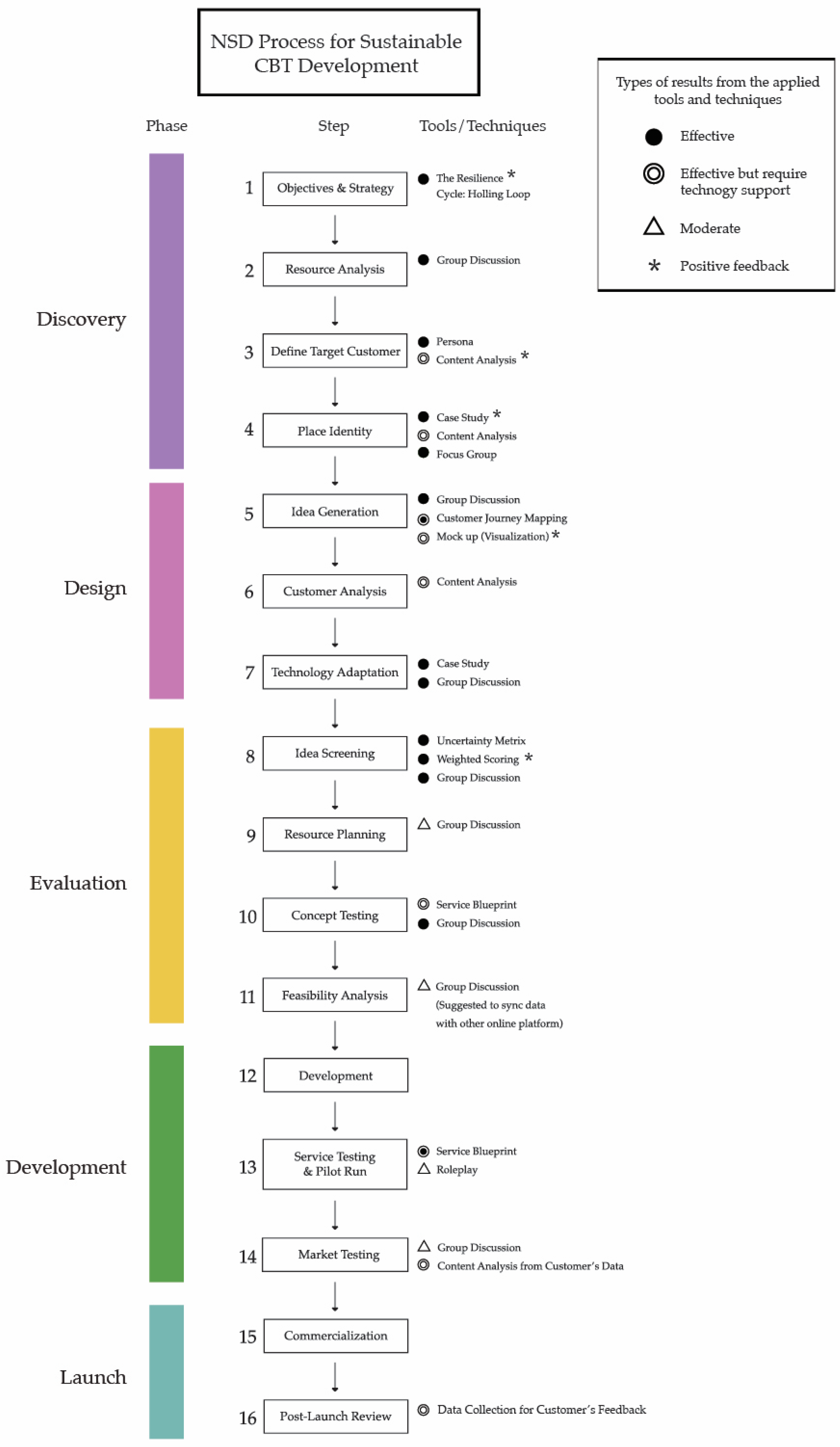
- Strategic planning tool adoption and capacity gaps: Community members successfully engaged with multiple strategic planning tools, including vision-setting frameworks, resource mapping exercises, and the Resilience Cycle Holling Loop. The Holling Loop was particularly well-received, enabling the community to identify their current development phase—Growth, Equilibrium, Creative Destruction, or Renewal—and align priorities accordingly, with clear guidance on resource optimization for each stage [41]. However, the process revealed significant capacity gaps: participants tended to wait for external funding rather than developing self-sustaining business models, reflecting limited experience with business planning perspectives. Additionally, when working with standard strategic planning tools that divided goals into multiple timeframes (short-term, medium-term, and long-term) [30], participants struggled to differentiate between these timeframes, often conflating medium and long-term planning. Communities expressed stronger interest in understanding relevant government policies to align CBT directions, enabling easier access to available support systems.
- Market-aligned strategy through customer persona development: The community adapted generic persona frameworks into a tourism-specific version [67,68] that examined visitor motivations, travel behaviors, and spending patterns. This process yielded two distinct target segments: existing clients characterized as urban eco-travelers seeking authentic agricultural experiences, and a new desired audience of young cultural learners interested in traditional knowledge exchange. Using another approach, participants analyzed existing visitor reviews and travel content for a deeper understanding. However, this approach provided limited new insights as most content reflected information originally provided by the community itself or mirrored their own promotional messaging. Participants particularly valued the specificity of tourism-focused personas, noting that abstract concepts like sustainable tourism became more actionable when translated into detailed profiles with specific motivations and behavioral patterns.
- Defining place identity through case study exploration: The community explored various place identity tools, initially producing ideas that closely resembled their existing activity offerings. Through a separate identity-mapping approach, community members identified both tangible assets (riverside location, organic farming, traditional architecture) and intangible qualities (local language, rituals, festivals) as integrated identity elements [69]. The breakthrough came when participants engaged with physical case study cards from recognized sources like UNWTO Best Tourism Villages [70,71], showcasing diverse and previously unfamiliar successful CBT initiatives with similar community characteristics. This exposure enabled the community to discover alternative development pathways they had not previously considered, most notably inspiring the reconceptualization of their annual flooding challenge as a potential distinctive experiential feature, transforming a perceived operational constraint into a unique selling point. AI-generated images were used to support this ideation process by helping community members visualize unfamiliar concepts and potential developments, bridging abstract planning discussions with concrete visual representations that facilitated shared understanding across participants with varying educational backgrounds.
- Weighted-scoring matrix for systematic idea prioritization: The community generated multiple development ideas and narrowed them down to three top ideas. To select the most appropriate direction, participants employed a weighted-scoring matrix evaluating five dimensions: the four pillars of sustainability (Economic, Social, Cultural, and Environmental) plus Management capacity [55,72,73]. The matrix helped communities identify hidden trade-offs and ensured sustainability was designed-in, not added-on, preventing overemphasis on short-term economic goals. Critically, the community determined their own priority weightings for each sustainability dimension based on their unique context and aspirations. For instance, communities rich in cultural resources might assign higher weights to the Cultural dimension, while others might prioritize Environmental considerations or distribute weights equally across all four pillars. The Management dimension remained unweighted as a universal requirement across all communities. This customized assessment approach enabled the community to systematically evaluate their three top ideas and select one aligned with both their sustainability priorities and operational capabilities. The community assigned the following weights: Economy 40%, Social 20%, Cultural 15%, and Environmental 25%. Through this assessment, the winning idea emerged as an integrated community tourism route connecting existing diverse activities into station-based experiences. This concept scored highest due to strong performance in Social criteria (equitable benefit distribution across all community members) and Management feasibility (high confidence in implementation capability). Notably, the idea of seasonal flooding tourism experience, which had generated significant excitement during brainstorming, scored lowest, as scores revealed uncertainty about their capacity to manage and operationalize this innovative but challenging concept.
- Technology acceptance patterns revealing adoption factors: Ko Kerd participants demonstrated varied ease-of-use perceptions. Familiar frameworks led to rapid engagement, while some novel instruments like the Tourism Model Canvas [40] and scenario planning [30] initially posed challenges, with participants noting that they appeared “too theoretical”. However, participants found these new tools “interesting compared to informal discussions which we used normally”. Iterative simplification of frameworks throughout the engagement improved accessibility across the community’s diverse educational backgrounds. Perceived usefulness was strongly endorsed, with participants highlighting time savings, novel ideation, comprehensive planning coverage, and deeper understanding of their target customers. Attitudes evolved from initial hesitation around academic complexity toward active engagement as tools were simplified. Behavioral intention to continue using tools was evident, with participants expressing interest in studying tourist analysis further and exploring ways to integrate technology into their planning processes. Overall, the community expressed satisfaction with the outcomes achieved within the nine-week workshop timeframe.
4.2.2. Results from Action Research in Ban Phuan Community
- Strategic planning visualization through icon-based simplification: Among the strategic planning tools introduced, Ban Phuan community members responded most positively to the Resilience Cycle Holling Loop, similar to Ko Kerd. The Holling Loop’s development stage selection mechanism enabled them to identify their community’s current phase and receive phase-specific, actionable guidance aligned with their circumstances. Implementation required substantial adaptation from text-heavy to highly visual formats. For instance, policy alignment discussions, which Ko Kerd members could navigate through written descriptions, necessitated icon-based representations in Ban Phuan. Relevant national and global policies, such as government support for gastronomy tourism and cultural heritage preservation initiatives, were visualized through simple icons, enabling participants to grasp policy landscapes without dense textual content. This visual translation proved essential for facilitating clear communication and comprehension across participants with varying literacy levels, ensuring all community members could actively engage throughout the process.
- Market intelligence through AI-enhanced tools: Community members engaged with market demand analysis through tourism-specific persona frameworks similar to Ko Kerd. However, Ban Phuan participants lacked the capacity to independently fill in personas with detailed market data. To address this limitation, AI tools were employed to generate persona profiles by generation, providing foundational information on typical characteristics, including occupations, preferred activities, spending patterns, and social media platform usage, across different age groups. Additionally, AI-powered social listening tools extracted tourism trend insights from curated content [31] of ten popular Thai travel influencers (Appendix A) representing diverse styles and platforms. These approaches proved essential for small communities lacking resources and capabilities for comprehensive market research.
- Place identity development through expanded digital case study collection: Whereas Ko Kerd successfully utilized physical case study cards with brief information, Ban Phuan’s lower baseline understanding required substantially more contextual detail and visual support. The case study tool was, therefore, transitioned to a digital format. Each case study provided expanded information, including detailed background on community development, multiple photographs for visual context, implementation strategies, explicit explanations of how place identity was leveraged, and customer journey mapping examples from actual operations [32]. This digital expansion enabled community members to deeply examine how communities with similar characteristics had successfully developed tourism offerings, providing concrete reference points that physical cards could not accommodate. The enhanced format proved particularly valuable for helping participants envision practical implementation pathways, especially for a community with limited independent development experience, having relied primarily on external facilitators for past developments.
- Weighted-scoring matrix adapted to community-specific priorities: After ideation, the community shortlisted three concepts for prioritization assessment using the same weighted-scoring matrix. Ban Phuan set their own priorities and assigned the following weights: Economy 40%, Social 10%, Cultural 20%, and Environmental 30%. The relatively high Environmental weighting (30%) reflected the community’s intention to both prioritize and preserve this dimension, recognizing that while their cultural assets were already strong, environmental sustainability deserved greater attention. Through this assessment, the winning idea emerged as online sales of tie-dyed silk with customizable options. This concept scored highest as it directly addressed a critical constraint in which the community sold tie-dyed silk only at their physical shop, remotely located and difficult for customers to access. This winning idea created new market reach while leveraging existing weaving expertise, generating additional revenue streams while minimizing environmental impact from visitor traffic and allowing better preservation of the local environment. Notably, the idea of constructing a new landmark archway scored lowest, as scores revealed weak performance in Economic criteria (requiring external contractors rather than utilizing community resources or creating internal employment) and Management feasibility, since most community members were female and had low confidence in their capacity to oversee such infrastructure development.
- Technology acceptance trajectory toward independent development: Initially, perceived ease of use, as well as perceived usefulness, was very low among Ban Phuan’s elderly members, who expressed uncertainty (“never had tools before, worth trying”, “not sure if the team is ready… we tried before but couldn’t do it”). However, adaptations emphasizing visual interfaces and applying technology improved both dimensions. Participants recognized how digital tools could enable previously externally-dependent activities. Attitudes shifted from hesitant uncertainty toward cautious engagement as visual approaches proved more accessible. They commented the adapted framework was quite useful (“normally, we would need other people to do for us, either universities or public offices”). Unlike Ko Kerd’s autonomous adoption, Ban Phuan’s sustained use intentions showed promising development, with participants expressing willingness to continue if given more time and practice, which was considered a sign that resource-constrained contexts could move toward greater self-independence.
4.3. Phase 3: Results from Validation
4.3.1. Results from Action Research in Ko Kerd and Ban Phuan Communities
4.3.2. Results from Expert Validation Interviews
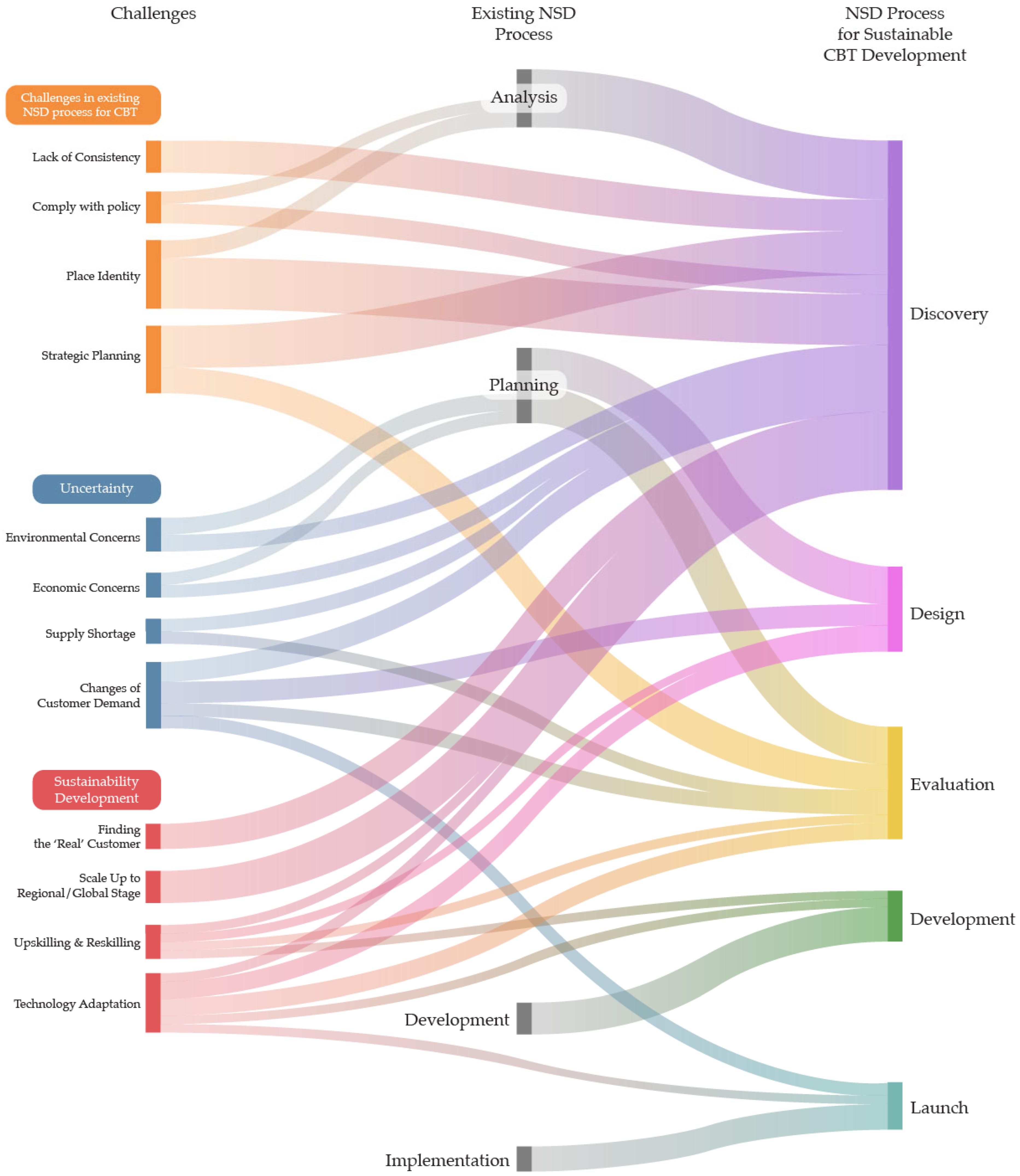
- Validation of resilience-based strategic planning as critical innovation: The Resilience Cycle Holling Loop received strong expert endorsement for introducing adaptive planning mechanisms that adjust to community development phases. Experts highlighted its value in helping communities identify their current phase and align priorities accordingly, preventing mismatched strategies such as pursuing expansion when consolidation is needed. This innovation addresses multiple Phase 1 challenges: short-term project-based thinking through systematic long-term planning; uncertainty management via resource allocation; policy alignment by guiding communities toward relevant support; and sustainable development through human skill set and resource planning that prepares communities for larger markets. The tool’s ability to shift communities from reactive responses to proactive, phase-appropriate planning was recognized as addressing fundamental gaps in existing CBT approaches.
- Recognition of market intelligence integration as a demand–supply bridge: The systematic integration of market demand understanding through personas, influencer content analysis, and AI-supported social listening received validation as addressing the critical disconnect between community capabilities and tourist expectations. Experts emphasized that accessible tools for understanding visitor preferences had been absent from CBT approaches, forcing communities to rely on intuition or expensive research. This tackles Phase 1 challenges where communities could not keep pace with rapidly shifting customer demands. The technology-enabled yet facilitator-mediated approach was praised as pragmatic, addressing sustainable development through technology adaptation that enables correct customer targeting, enhanced market reach, and evidence-informed decision-making aligned with actual demands.
- Place identity framework validated through comprehensive case study library: Experts strongly endorsed the digital case study database, particularly its AI-powered features, including automated extraction of implementation details and intelligent filtering by community characteristics to discover relevant examples. The library enables communities to discover relevant precedents and mix elements from multiple successful examples rather than wholesale replication, fostering authentic identity development. This resolves Phase 1 challenges where place identity tools remained fragmented and inaccessible, while addressing one-sided perspectives by showing how similar destinations balance authenticity with market expectations. The framework enhances competitiveness through similar successful examples, previously unavailable to small communities, supporting sustainable development by preparing them to scale beyond local markets toward regional and global opportunities.
- Context-specific sustainability scoring validated: Experts affirmed the weighted scoring matrix as departing from one-size-fits-all frameworks, recognizing that enabling communities to assign customized weights to sustainability dimensions based on their unique values empowers genuine local ownership rather than mechanical compliance. This addresses Phase 1 concerns about limited understanding of sustainability integration by letting communities define what sustainability means in their context. The customization mechanism supports sustainable development while reducing dependency on external facilitators, as communities develop internalized capability to evaluate options independently, building toward self-sustaining improvement beyond initial facilitation.
- Expert assessment of framework viability using IDEO criteria: Beyond addressing Phase 1 challenges, experts evaluated the framework’s potential for broader adoption using IDEO’s three-dimensional assessment. For desirability, experts confirmed strong market need, noting that fragmented CBT development practices created genuine demand for standardized yet adaptable processes. Regarding feasibility, experts affirmed the framework’s technical and practical implementability, observing that field testing across contrasting community capacities demonstrated successful adaptation through visual tools, facilitated implementation, and progressive simplification, proving the framework could function effectively in real CBT contexts despite resource constraints. On viability, experts recognized economic sustainability potential, highlighting that reduced dependency on external consultants, faster service development cycles, and improved market alignment could generate sufficient value to justify implementation costs, while the standardized process remained consistent with flexible content customization based on available resources. Several experts noted the framework’s potential for digital transformation into an interactive platform that could enhance accessibility and scalability, supporting broader adoption across Thailand’s CBT sector.
5. Discussion and Conclusions
Limitations and Future Research
Author Contributions
Funding
Institutional Review Board Statement
Informed Consent Statement
Data Availability Statement
Acknowledgments
Conflicts of Interest
Abbreviations
| CBT | community-based tourism |
| NSD | new service design |
Appendix A

| No. | Sector | Gender | Years of Experience with CBT | Expertise |
|---|---|---|---|---|
| 1 | CBT Leader | Male | 8 | CBT management |
| 2 | CBT Leader | Male | 23 | CBT management |
| 3 | CBT Leader | Male | 25 | CBT management |
| 4 | CBT Leader | Male | 24 | CBT management |
| 5 | Public | Male | 7 | Uncertainties |
| 6 | Public | Male | 6 | Uncertainties |
| 7 | Public | Female | 26 | Uncertainties |
| 8 | Public | Male | 14 | NSD development |
| 9 | Academic | Male | 12 | NSD development |
| 10 | Academic | Male | 15 | NSD development |
| 11 | Private | Male | 8 | Business development |
| 12 | Private | Male | 6 | Business development |
| No. | Account | Platform | Followers | Content Style |
|---|---|---|---|---|
| 1 | Influencer 1 | Youtube | 2,800,000 | Travel vlog, local culture |
| 2 | Influencer 2 | 1,800,000 | Storytelling, local culture | |
| 3 | Influencer 3 | Youtube | 1,130,000 | Authentic rural experience |
| 4 | Influencer 4 | 2,600,000 | Backpack travel | |
| 5 | Influencer 5 | Youtube | 1,510,000 | Authentic rural experience |
| 6 | Influencer 6 | 850,000 | Travel vlog | |
| 7 | Influencer 7 | 1,600,000 | Backpack travel | |
| 8 | Influencer 8 | Youtube | 637,000 | Travel vlog |
| 9 | Influencer 9 | 1,900,000 | Storytelling, local culture | |
| 10 | Influencer 10 | 550,000 | Storytelling, local culture |
References
- Office of the National Economic and Social Development Council. Summary Report on the Implementation of the National Strategy for the Year 2021, Issue 05, Tourism. 2022. Available online: https://www.nesdc.go.th/wordpress/wp-content/uploads/2025/10/05-NS64-05.pdf (accessed on 6 June 2022).
- Office of the National Economic and Social Development Council. The 13th National Economic and Social Development Plan (2023–2027). 2022. Available online: https://www.nesdc.go.th/wordpress/wp-content/uploads/2025/02/article_file_20230615134223.pdf (accessed on 10 June 2022).
- United Nations World Tourism Organization (UNWTO). Rural Tourism. 2020. Available online: https://www.unwto.org/rural-tourism (accessed on 15 April 2022).
- Kowsurat, W. Former Thailand Minister of Tourism and Sports. Department of Tourism. Thai Tourism: Using It as a “Tool” to Reach the Goal. Prachachat Gazette, 2020. Available online: https://www.prachachat.net/tourism/news-458963 (accessed on 18 January 2026).
- Aven, T. On the meaning of a black swan in a risk context. Saf. Sci. 2013, 57, 44–51. [Google Scholar] [CrossRef]
- Ministry of Tourism and Sports. Summary of Tourism Receipts from International Tourist Arrivals 2020. Available online: https://www.mots.go.th/news/category/742 (accessed on 18 January 2026).
- Saichan, P. Community-Based Tourism: An Alternative Opportunity|Khun Lao Rao Khayai [Internet]. Thai PBS; 2023 Jan 5. Available online: https://www.youtube.com/watch?v=86dLbHHXEmw (accessed on 2 May 2023).
- Lee, T.H.; Jan, F.H. Can community-based tourism contribute to sustainable development? Evidence from residents’ perceptions of the sustainability. Tour. Manag. 2019, 70, 368–380. [Google Scholar] [CrossRef]
- Kontogeorgopoulos, N. Community-based ecotourism in Phuket and Ao Phangnga, Thailand: Partial victories and bittersweet remedies. J. Sustain. Tour. 2005, 13, 4–23. [Google Scholar] [CrossRef]
- Schott, C.; Nhem, S. Paths to the market: Analysing tourism distribution channels for community-based tourism. Tour. Recreat. Res. 2018, 43, 356–371. [Google Scholar] [CrossRef]
- Nye, J.S., Jr. Get smart: Combining hard and soft power. Foreign Aff. 2009, 88, 160–163. [Google Scholar]
- Nye, J.S. Soft power. Foreign Policy 1990, 153–171. [Google Scholar] [CrossRef]
- Stetar, J.; Coppla, C.; Guo, L.; Nabiyeva, N.; Ismailov, B. Soft power strategies: Competition and cooperation in a globalized system of higher education. In Higher Education, Policy, and the Global Competition Phenomenon; Rust, V., Portnoi, L., Bagley, S., Eds.; Springer: Dordrecht, The Netherlands, 2010; pp. 191–203. [Google Scholar]
- Department of Cultural Promotion. Sustainable Community-Based Cultural Tourism Management for Sustainability. Designated Areas for Sustainable Tourism Administration (DASTA) [Internet]. 2017. Available online: http://magazine.culture.go.th/2017/4/index.html (accessed on 5 May 2025).
- Millar, C.C.J.M.; Groth, O.; Mahon, J.F. Management innovation in a VUCA world: Challenges and recommendations. Calif. Manag. Rev. 2018, 61, 5–14. [Google Scholar] [CrossRef]
- Cascio, J. BANI and Chaos. March 2020. Available online: https://ageofbani.com/2022/04/bani-and-chaos/ (accessed on 28 December 2022).
- Taleb, N.N. Antifragile: Things That Gain from Disorder; Random House: New York, NY, USA, 2012; Volume 3. [Google Scholar]
- Tseitlin, A. The antifragile organization. Commun. ACM 2013, 56, 40–44. [Google Scholar] [CrossRef]
- Johnson, S.P.; Menor, L.J.; Chase, R.B.; Roth, A.V. A critical evaluation of the new services development process: Integrating service innovation and service design. In New Service Development: Creating Memorable Experiences; Fitzsimmons, J.A., Fitzsimmons, M.J., Eds.; Sage Publications: Thousand Oaks, CA, USA, 2000; pp. 1–32. [Google Scholar]
- Zeithaml, V.A.; Bitner, M.J.; Gremler, D.D. Services Marketing: Integrating Customer Focus Across the Firm; McGraw-Hill/Irwin: New York, NY, USA, 2006. [Google Scholar]
- Vargo, S.L.; Lusch, R.F. Evolving to a new dominant logic for marketing. In The Service-Dominant Logic of Marketing; Routledge: London, UK, 2014; pp. 3–28. [Google Scholar]
- Vargo, S.L.; Lusch, R.F. Institutions and axioms: An extension and update of service-dominant logic. J. Acad. Mark. Sci. 2016, 44, 5–23. [Google Scholar] [CrossRef]
- Design Council. The Double Diamond [Internet]. 2005. Available online: https://www.designcouncil.org.uk/our-resources/the-double-diamond/ (accessed on 21 December 2025).
- Simon, H.A. The Sciences of the Artificial; MIT Press: Cambridge, MA, USA, 1969. [Google Scholar]
- Schmarzo, B. Design Thinking Bootleg [Internet]; Hasso Plattner Institute of Design at Stanford University: Stanford, CA, USA, 2017; Available online: https://dschool.stanford.edu/resources/design-thinking-bootleg (accessed on 21 December 2025).
- Department of Tourism. Online Training: Transforming Tourism 2022, Course 3 “Local Le’Kha... Community Charm Towards Sustainable Tourism” [Internet]. February 2022. Available online: https://www.facebook.com/Deptourism/posts/pfbid0GK32U8uyzLK5g1MdptZNzVfG5f4LjtuGBYpa3uoRvCvvHxj8JbuWH6gRdME9BRqLl (accessed on 17 February 2022).
- Cohen, M.A.; Agrawal, N.; Agrawal, V. Winning in the aftermarket. Harv. Bus. Rev. 2006, 84, 129. [Google Scholar]
- Pan, H.; Chen, M.; Shiau, W.-L. Exploring post-pandemic struggles and recoveries in the rural tourism based on Chinese situation: A perspective from the IAD framework. J. Hosp. Tour. Technol. 2021. ahead of print. [Google Scholar] [CrossRef]
- Lenao, M. Challenges facing community-based cultural tourism development at Lekhubu Island, Botswana: A comparative analysis. Curr. Issues Tour. 2015, 18, 579–594. [Google Scholar] [CrossRef]
- Seyitoğlu, F.; Costa, C. A scenario planning framework for (post-) pandemic tourism in European destinations. Eur. Plan. Stud. 2022, 30, 2554–2574. [Google Scholar] [CrossRef]
- Peng, J.; Strijker, D.; Wu, Q. Place identity: How far have we come in exploring its meanings ? Front. Psychol. 2020, 11, 294. [Google Scholar] [CrossRef]
- Threesides Marketing. Customer Journey Mapping for Tourism & Destination Marketing. ACT Tourism. 2016. Available online: https://tourism.act.gov.au/wp-content/uploads/2016/11/Threesides-Customer-Journey-Mapping-for-distribution.pdf (accessed on 21 December 2025).
- Rosenbaum, M.S.; Otalora, M.L.; Ramírez, G.C. How to create a realistic customer journey map. Bus. Horiz. 2017, 60, 143–150. [Google Scholar] [CrossRef]
- Von Hippel, E. Democratizing Innovation; MIT Press: Cambridge, MA, USA, 2006. [Google Scholar]
- Kohler, T.; Fueller, J.; Matzler, K.; Stieger, D.; Füller, J. Co-creation in virtual worlds: The design of the user experience. MIS Q. 2011, 35, 773–788. [Google Scholar] [CrossRef]
- El-Jarn, H.; Southern, G. Can co-creation in extended reality technologies facilitate the design process ? J. Work Appl. Manag. 2020, 12, 48–62. [Google Scholar] [CrossRef]
- Yodsurang, P.; Kiatthanawat, A.; Sanoamuang, P.; Kraseain, A.; Pinijvarasin, W. Community-based tourism and heritage consumption in Thailand: An upside-down classification based on heritage consumption. Cogent. Soc. Sci. 2022, 8, 2096531. [Google Scholar] [CrossRef]
- United Nations World Tourism Organization (UNWTO). Digital Tools to Revitalize Tourism. 2021. Available online: https://www.unwto.org/news/digital-tools-to-revitalize-tourism (accessed on 15 April 2022).
- Setiawan, J.; Budiastuti, M.S.; Gravitiani, E.; Setyono, P. Business model canvas (BMC) approach for tourism management strategy of the top selfie kragilan, Mt. Merbabu National Park. Geoj. Tour. Geosites 2021, 35, 297–303. [Google Scholar] [CrossRef]
- Palupi, S.; Abdillah, F. Local Cuisine as a Tourism Signature: Indonesian Culinary Ecosystem. In Delivering Tourism Intelligence: From Analysis to Action; Emerald Publishing Limited: Leeds, UK, 2019; pp. 299–312. [Google Scholar]
- Espeso-Molinero, P.; Pastor-Alfonso, M.J. Governance, community resilience, and indigenous tourism in Nahá, Mexico. Sustainability 2020, 12, 5973. [Google Scholar] [CrossRef]
- Grudin, J.; Pruitt, J. Personas, participatory design and product development: An infrastructure for engagement. In PDC; University of Victoria: Victoria, BC, Canada, 2002; pp. 144–152. [Google Scholar]
- Orthel, B.D.; Day, J.K. Processing beyond drawing: A case study exploring ideation for teaching design. SAGE Open 2016, 6, 2158244016663285. [Google Scholar]
- Sarantou, M.; Kugapi, O.; Huhmarniemi, M. Context mapping for creative tourism. Ann. Tour. Res. 2021, 86, 103064. [Google Scholar] [CrossRef]
- Pongsakornrungsilp, S.; Pongsakornrungsilp, P.; Pusaksrikit, T.; Wichasin, P.; Kumar, V. Co-creating a sustainable regional brand from multiple sub-brands: The Andaman tourism cluster of Thailand. Sustainability 2021, 13, 9409. [Google Scholar] [CrossRef]
- Johansen, R. Leaders Make the Future: Ten New Leadership Skills for an Uncertain World; Berrett-Koehler Publishers: Oakland, CA, USA, 2012. [Google Scholar]
- Odu, G.O. Weighting methods for multi-criteria decision making technique. J. Appl. Sci. Environ. Manag. 2019, 23, 1449–1457. [Google Scholar] [CrossRef]
- Wunker, S. Plan for 2021 Using the Uncertainty Matrix [Internet]. Forbes; 2021. Available online: https://www.forbes.com/sites/stephenwunker/2021/01/04/plan-for-2021-using-the-uncertainty-matrix/?sh=1c11f7be6142 (accessed on 22 March 2023).
- Swangkong, K.; Tatiyanantakul, W.; Subhimaros, P. Sustainable management of community-based tourism, OTOP INNO-LIFE: A process and successful story of Ban Koh-Kerd community, Bang Pa-In, Phra Nakhon Si Ayutthaya Province. J. Legal Entity Manag. Local Innov. 2022, 8, 362–373. [Google Scholar]
- Bae, S.Y.; Han, J.H. Considering cultural consonance in trustworthiness of online hotel reviews among generation Y for sustainable tourism: An extended TAM model. Sustainability 2020, 12, 2942. [Google Scholar] [CrossRef]
- Jaziri, R.; Miralam, M. Modelling the crowdfunding technology adoption among novice entrepreneurs: An extended TAM model. Entrep. Sustain. Issues 2019, 7, 353. [Google Scholar] [CrossRef]
- Puangpejara, K. Cultural tourism promotion with local wisdom and cultural capital of Thai Phuan community at Thanon Yai, Lop Buri Province. J. Humanit. Soc. Sci. Mahasarakham Univ. 2022, 41, 49–65. (In Thai) [Google Scholar]
- Puangpejara, K.; Klahan, S.; Panyapong, W.; Kathintad, T. Management and participation for cultural tourism development: A case study of Thai Phuan ethnic group, Ban Mi District, Lop Buri Province. Romphruek J. Humanit. Soc. Sci. 2012, 30, 59–78. (In Thai) [Google Scholar]
- WTO. Making Tourism More Sustainable—A Guide for Policy Makers (English Version); WTO: Geneva, Switzerland, 2005.
- European Commission. The European Tourism Indicator System (ETIS) Toolkit for Sustainable Destination Management; Publications Office of the European Union: Luxembourg, 2016. [Google Scholar]
- Dupeyras, A.; MacCallum, N. Indicators for Measuring Competitiveness in Tourism; Organisation Economy Cooperation and Development (OECD) Publishing: Paris, France, 2013. [Google Scholar]
- United Nations Educational, Scientific and Cultural Organization (UNESCO). Culture|2030 Indicators [Internet]; UNESCO: Paris, France, 2019; Available online: https://unesdoc.unesco.org/ark:/48223/pf0000371562 (accessed on 21 December 2025).
- Morrison, J.L. Organizational change for corporate sustainability—A guide for leaders and change agents of the future. J. Educ. Bus. 2003, 79, 124. [Google Scholar]
- Wang, W.; Chen, J.S.; Prebensen, N.K. Market analysis of value-minded tourists: Nature-based tourism in the Arctic. J. Destin. Mark. Manag. 2018, 8, 82–89. [Google Scholar] [CrossRef]
- Lee, C.K.; Reisinger, Y.; Ahmad, M.S.; Park, Y.N.; Kang, C.W. The influence of Hanok experience on tourists’ attitude and behavioral intention: An interplay between experiences and a Value-Attitude-Behavior model. J. Vacat. Mark. 2021, 27, 449–465. [Google Scholar] [CrossRef]
- Sun, B.; Mao, H.; Kang, M. Research on the relationship between cross-level motivation, integrated emotion, and virtual knowledge community commitment. Front. Psychol. 2021, 12, 563024. [Google Scholar] [CrossRef]
- Wongsuchat, P.A.; Ngamyan, A. A study of relation among perceived consumption value and customer satisfaction of boutique hotel in Thailand. Int. J. Sci. Res. Publ. 2014, 4, 1–7. [Google Scholar]
- Alghamdi, M. An Integrated Design for Six Sigma-Based Framework To Align Strategy, New Process Development, and Customer Requirements in the Airlines Industry. Ph.D. Thesis, University of Central Florida, Orlando, FL, USA, 2016. [Google Scholar]
- Lager, T.; Frishammar, J. Collaborative development of new process technology/equipment in the process industries: In search of enhanced innovation performance. J. Bus. Chem. 2012, 9, 67–84. [Google Scholar]
- Carlgren, L.; Rauth, I.; Elmquist, M. Framing design thinking: The concept in idea and enactment. Creat. Innov. Manag. 2016, 25, 38–57. [Google Scholar] [CrossRef]
- Schraven, D.F.; Arghandeh Jouneghani, P.; Jonkers, H.M.; Hertogh, M.J. Design to market thinking: Exploring the merits of strategic niche management in design thinking. Technol. Anal. Strateg. Manag. 2023, 35, 767–784. [Google Scholar] [CrossRef]
- 3 Ways in Which Personas Can Help the Tourism Industry During and After the Pandemic [Internet]. The Persona Blog. 12 January 2021. Available online: https://persona.qcri.org/blog/how-personas-help-in-pandemic-covid19/ (accessed on 21 December 2025).
- Stojković, M. How to Create a “Buyer Persona” in Tourism. Etourism Consulting. Available online: https://www.etourismconsulting.com/blog/buyer-persona/ (accessed on 21 December 2025).
- Głąbiński, Z.; Duda, T. The local community perception of tourism development. The case study of Gryfino County-Western Pomerania, Poland. Bull. Geogr. Socio-Econ. Ser. 2017, 10, 7–23. [Google Scholar] [CrossRef]
- UN Tourism. ‘Best Tourism Villages’ of 2022 Named by UNWTO. UN Tourism. 20 December 2022. Available online: https://www.untourism.int/news/best-tourism-villages-of-2022-named-by-unwto (accessed on 21 December 2025).
- UN Tourism. UNWTO Names Its Best Tourism Villages 2023. UN Tourism. 19 October 2023. Available online: https://www.untourism.int/news/unwto-names-its-best-tourism-villages-2023 (accessed on 21 December 2025).
- Sólnes, J. Environmental quality indexing of large industrial development alternatives using AHP. Environ. Impact Assess. Rev. 2003, 23, 283–303. [Google Scholar] [CrossRef]
- Korez-Vide, R. Promoting sustainability of tourism by creative tourism development: How far is Slovenia? Innov. Issues Approaches Soc. Sci. 2013, 6, 77–102. [Google Scholar] [CrossRef]
- McCambridge, J.; Witton, J.; Elbourne, D.R. Systematic review of the Hawthorne effect: New concepts are needed to study research participation effects. J. Clin. Epidemiol. 2014, 67, 267–277. [Google Scholar]
- Wickström, G.; Bendix, T. The “Hawthorne effect”—What did the original Hawthorne studies actually show? Scand. J. Work. Environ. Health 2000, 26, 363–367. [Google Scholar] [CrossRef]


| Theme | Tools/Techniques | Reference |
|---|---|---|
| Sustainable Development (Week 1–3) | Scenario Planning | [17,30] |
| SWOT | [39] | |
| Business Model Canvas (BMC) | [39] | |
| Tourism Model Canvas | [40] | |
| The Resilience Cycle: Holling Loop | [41] | |
| Persona | [42] | |
| Place Identity (Week 4–6) | Self-Documentation | [25] |
| 5 Whys | [25] | |
| Value Analysis | [25] | |
| Brainwriting | [25] | |
| Storytelling | [25] | |
| Customer Journey Mapping | [25,32,33] | |
| Case Study | [43] | |
| Narrative | [25,44] | |
| Test Marketing | [26] | |
| Projective Technique | [45] | |
| Place Slogan Reflection Technique | [26] | |
| Framework-Based Mapping | [31] | |
| Content Analysis | [31] | |
| Uncertainty (Week 7–9) | Scenario Planning | [17] |
| Barbell Strategy | [17] | |
| VUCA Prime | [46] | |
| Role Play | [18] | |
| Weighting Score | [47] | |
| Uncertainty Metrix | [48] |
| Step | Phase 1 (Literature and Interview) | Phase 2 Ko Kerd (Week 1–9) | Phase 2 Ban Phuan (Week 1–9) |
|---|---|---|---|
| Discovery Phase | |||
| 1. Objectives and Strategy | Scenario Planning SWOT BMC Tourism Model Canvas Holling Loop | ○ Scenario Planning ○ SWOT ○ BMC ○ Tourism Model Canvas ● Holling Loop | ○ Scenario Planning ○ SWOT ○ BMC ○ Tourism Model Canvas ● Holling Loop (Visual) |
| 2. Resource Analysis | - | △ Group Discussion | ● Visual Mapping (with Holling Loop) |
| 3. Define Target Customer | Generic Persona | △ Generic Persona ● Tourism Persona | ○ Generic Persona ● Tourism Persona + AI |
| 4. Place Identity | Storytelling Case Study (Card) Narrative Test Marketing Projective Technique Place Slogan Reflection Technique Framework-Based Mapping Content Analysis | ○ Storytelling ● Case Study Physical Cards ● Narrative ○ Test Marketing ○ Projective Technique ○ Place Slogan Reflection Technique △ Framework-Based Mapping ○ Content Analysis | ○ Storytelling △ Case Study Physical Cards ● Digital Cases + AI ○ Narrative ○ Test Marketing ○ Projective Technique ○ Place Slogan Reflection Technique ○ Framework-Based Mapping ● Content Analysis + AI |
| Design Phase | |||
| 5. Idea Generation | Self-Documentation 5 Whys Value Analysis Brainwriting Storytelling Customer Journey Mapping Case Study (Card) Roleplay Content Analysis | ○ Self-Documentation ○ 5 Whys ○ Value Analysis ○ Brainwriting ○ Storytelling ○ Customer Journey Mapping ● Case Study Physical Cards ○ Roleplay ○ Content Analysis | ○ Self-Documentation ○ 5 Whys ○ Value Analysis ○ Brainwriting ○ Storytelling ● Customer Journey Mapping + AI △ Case Study Physical Cards ● Digital Cases + AI ○ Roleplay ● Content Analysis + AI |
| 6. Customer Analysis | - | ○ Content Analysis | ● Content Analysis + AI |
| 7. Technology Adaptation | - | ● Digital Cases + AI (Visualization) | ● Digital Cases + AI (Visualization) |
| Evaluation Phase | |||
| 8. Idea Screening | Scenario Planning Barbell Strategy VUCA Prime Role Play Weighting Score Uncertainty Metrix | △ Scenario Planning ○ Barbell Strategy ○ VUCA Prime ○ Role Play ● Weighting Score ● Uncertainty Metrix | ○ Scenario Planning △ Barbell Strategy ○ VUCA Prime ○ Role Play ● Weighting Score ● Uncertainty Metrix |
| 9. Resource Planning | - | △ Group Discussion | △ Group Discussion |
| 10. Concept Testing | - | △ Group Discussion | △ Role Play △ Service Blueprint |
| 11. Feasibility Analysis | Group Discussion | ○ Group Discussion | ○ Group Discussion |
| Development Phase | |||
| 12. Development | Group Discussion | ● Group Discussion | ● Group Discussion |
| 13. Service Testing and Pilot Run | - | - | △ Role Play ● Service Blueprint + AI |
| 14. Market Testing | - | △ Group Discussion | △ Content Analysis |
| Launch Phase | |||
| 15. Commercialization | Group Discussion | ● Group Discussion | ● Group Discussion |
| 16. Post-Launch Review | - | - | ● Group Discussion |
| Dimension | Pre-Test (SD) | Post-Test (SD) | Change | t | p |
|---|---|---|---|---|---|
| Sustainable Tourism and Impact Assessment | 3.93 (0.53) | 4.36 (0.65) | +0.43 | −7.96 | <0.001 |
| Competitiveness | 3.86 (0.57) | 4.50 (0.59) | +0.64 | −11.40 | <0.001 |
| Sustainable Culture | 4.02 (0.47) | 4.58 (0.51) | +0.56 | −8.52 | <0.001 |
| Sustainable Business | 4.01 (0.51) | 4.51 (0.54) | +0.50 | −8.99 | <0.001 |
| Dimension | Pre-Test (SD) | Post-Test (SD) | Change | t | p |
|---|---|---|---|---|---|
| Overall Experienced Value | 3.51 (1.20) | 4.05 (0.64) | +0.54 | −8.38 | <0.001 |
| Sustainable Culture | 3.55 (1.21) | 4.01 (0.46) | +0.46 | −6.26 | <0.001 |
| Customer Satisfaction | 3.61 (1.16) | 4.03 (0.55) | +0.42 | −6.33 | <0.001 |
| Brand Loyalty | 3.60 (1.19) | 4.03 (0.57) | +0.43 | −6.18 | <0.001 |
| Sustainable Business | 3.51 (1.19) | 4.01 (0.63) | +0.50 | −7.60 | <0.001 |
Disclaimer/Publisher’s Note: The statements, opinions and data contained in all publications are solely those of the individual author(s) and contributor(s) and not of MDPI and/or the editor(s). MDPI and/or the editor(s) disclaim responsibility for any injury to people or property resulting from any ideas, methods, instructions or products referred to in the content. |
© 2026 by the authors. Licensee MDPI, Basel, Switzerland. This article is an open access article distributed under the terms and conditions of the Creative Commons Attribution (CC BY) license.
Share and Cite
Rukpollmuang, S.; Israsena, P.; Choemprayong, S.; Pattaratanakun, A. Developing an NSD Process for Sustainable Community-Based Tourism Under Uncertainty: A Case Study from Thailand. Sustainability 2026, 18, 1107. https://doi.org/10.3390/su18021107
Rukpollmuang S, Israsena P, Choemprayong S, Pattaratanakun A. Developing an NSD Process for Sustainable Community-Based Tourism Under Uncertainty: A Case Study from Thailand. Sustainability. 2026; 18(2):1107. https://doi.org/10.3390/su18021107
Chicago/Turabian StyleRukpollmuang, Sarinla, Praima Israsena, Songphan Choemprayong, and Ake Pattaratanakun. 2026. "Developing an NSD Process for Sustainable Community-Based Tourism Under Uncertainty: A Case Study from Thailand" Sustainability 18, no. 2: 1107. https://doi.org/10.3390/su18021107
APA StyleRukpollmuang, S., Israsena, P., Choemprayong, S., & Pattaratanakun, A. (2026). Developing an NSD Process for Sustainable Community-Based Tourism Under Uncertainty: A Case Study from Thailand. Sustainability, 18(2), 1107. https://doi.org/10.3390/su18021107