1. Introduction
Climate change has emerged as one of the most pressing global challenges of the 21st century, with long-term effects for environmental sustainability, socio-economic development, and human well-being [
1,
2,
3]. Climate-related extremes, such as rising temperatures, precipitation variability, and extreme weather events, including floods, droughts, and heatwaves, have been attributed to increasing greenhouse gas concentrations [
4,
5]. These climate events disrupt food and water systems worldwide [
6,
7,
8]. The majority of these impacts have occurred in developing countries and arid/semi-arid regions, where agriculture depends on climate-related factors and adaptation capacity is limited [
9,
10,
11]. This has resulted in reduced agricultural output, lower incomes, and increased food insecurity among many small-scale farmers in Sub-Saharan Africa [
12,
13,
14].
Agriculture in Eswatini is primarily rain-fed and subject to a wide range of climate variability, consistent with broader regional trends [
15,
16,
17]. In this context, the Lubombo region is particularly at risk for several reasons. Firstly, it has a semi-arid climate with recurring droughts and irregular rainfall, which disrupt cropping systems, reduce yields, and place additional pressure on the region’s already limited water resources [
18,
19,
20,
21]. Additionally, underlying structural issues affect smallholder farmers’ adaptation, including a lack of irrigation infrastructure, poor-quality or weak extension services, and limited access to credit and other necessary agricultural inputs [
22,
23]. Therefore, many smallholders experience low productivity, increased water stress, and increased overall livelihood vulnerability [
18,
20,
24].
These vulnerabilities are also exacerbated by observed climatic trends in Eswatini. Average temperatures increased by approximately 3 °C between 1961 and 2020, accompanied by more frequent heatwaves, erratic rainfall, long-term droughts, and other climatic extremes [
15,
21]. This climate variability has led to lower crop yields, shorter growing periods, and reduced livestock production, ultimately increasing both food insecurity and water stress [
22,
25,
26,
27]. These highlight the issues of limited adaptive capacity, which is reflected in Eswatini policies, including the Nationally Determined Contributions (NDC), National Drought Plan, Initial Adaptation Communication, National Adaptation Plan (NAP), and National Communications to the UNFCCC, which prioritise agriculture and water as key sectors for climate adaptation [
20,
22,
28].
Intense climatic conditions exacerbate drought risks and place additional pressure on the agriculture and water supply sectors [
29,
30]. Although early warning systems exist, they are often inaccessible or not effectively used by end users due to limited training and weak application of climate information [
27,
28]. As a result, rural farmers face barriers to adapting to climate change, leading to poor crop production, reduced household income, and limited access to food supplies and markets [
15,
20]. In Eswatini, where the diet primarily consists of staple crops such as maize, the reduced availability and income from these crops limit access to a variety of nutrient-rich foods, resulting in micronutrient deficiencies [
17,
22,
31,
32]. Therefore, households may engage in negative coping mechanisms, including reducing the number of meals per day and decreasing food variety, and consequently further degrading their nutritional status, especially for women and children [
31].
Water availability is one of the major pathways through which climate change affects rural livelihoods [
20,
29,
33,
34]. Drought and increased rainfall variability decrease the reliability of both groundwater and surface water. This affects irrigation, livestock production, and household water use [
20,
35], thereby influencing food security and nutrition [
35,
36]. As a result, the limited availability of water extends to other areas, including food preparation, sanitation, and hygiene, further strengthening the association between water scarcity and poor nutrition [
17,
31,
32,
37]. The combined effect of water stress with declining agricultural output increases food insecurity, particularly in smallholder systems with limited adaptive capacity [
10,
20]. Households are often forced to prioritise competing water needs at the expense of agricultural production and dietary quality [
38]. In addition, reliance on unsafe or distant water sources increases exposure to waterborne diseases [
39]. These burdens mostly affect women and children due to their active participation in water collection and heightened nutritional vulnerability [
31,
40]. This reinforces cycles of vulnerability, poverty, and food insecurity, a pattern evident in Eswatini, where water scarcity continues to constrain agricultural production and household welfare [
20,
21].
The combined effects of climate variability on agriculture and water systems also influence both the availability and accessibility of food [
15,
20]. In smallholder contexts, declining production reduces nutritional diversity and increases reliance on purchased foods. However, many households cannot consistently afford these foods, which deepens nutritional vulnerability and inequality, particularly among vulnerable groups [
17,
22,
31]. These dynamics are embedded within the food–water–nutrition nexus, where changes in one component directly influence the others [
41,
42]. However, despite the interconnections, existing studies in Eswatini largely examine agriculture, water, and nutrition in isolation. This limits a holistic understanding of climate impacts across interdependent systems and hinders the development of integrated resilience strategies.
Against this backdrop, there is a need for an integrated empirical assessment of climate change impacts within the food–water–nutrition nexus in smallholder systems in vulnerable areas such as Lubombo in Eswatini. The overall objective of this study was to assess the impacts of climate change on agricultural production, food security, water availability, and access to nutritious food among rural households in the Lubombo Region. Specifically, the study sought to: (i) assess the impacts of climate change on agricultural production, food security, water availability, and access to nutritious food; (ii) examine the relationships between climate variability, water security, and household food security outcomes; (iii) identify key climate-related, water security, and socio-economic factors associated with household food insecurity; and (iv) explore household perceptions and experiences of climate change impacts on food and water security. Using both quantitative and qualitative evidence, the study provides an integrated assessment of the dynamics of the climate–food–water–nutrition nexus and identifies context-specific pathways to strengthen resilience, sustainability, and nutrition-sensitive development.
2. Theoretical and Conceptual Framework
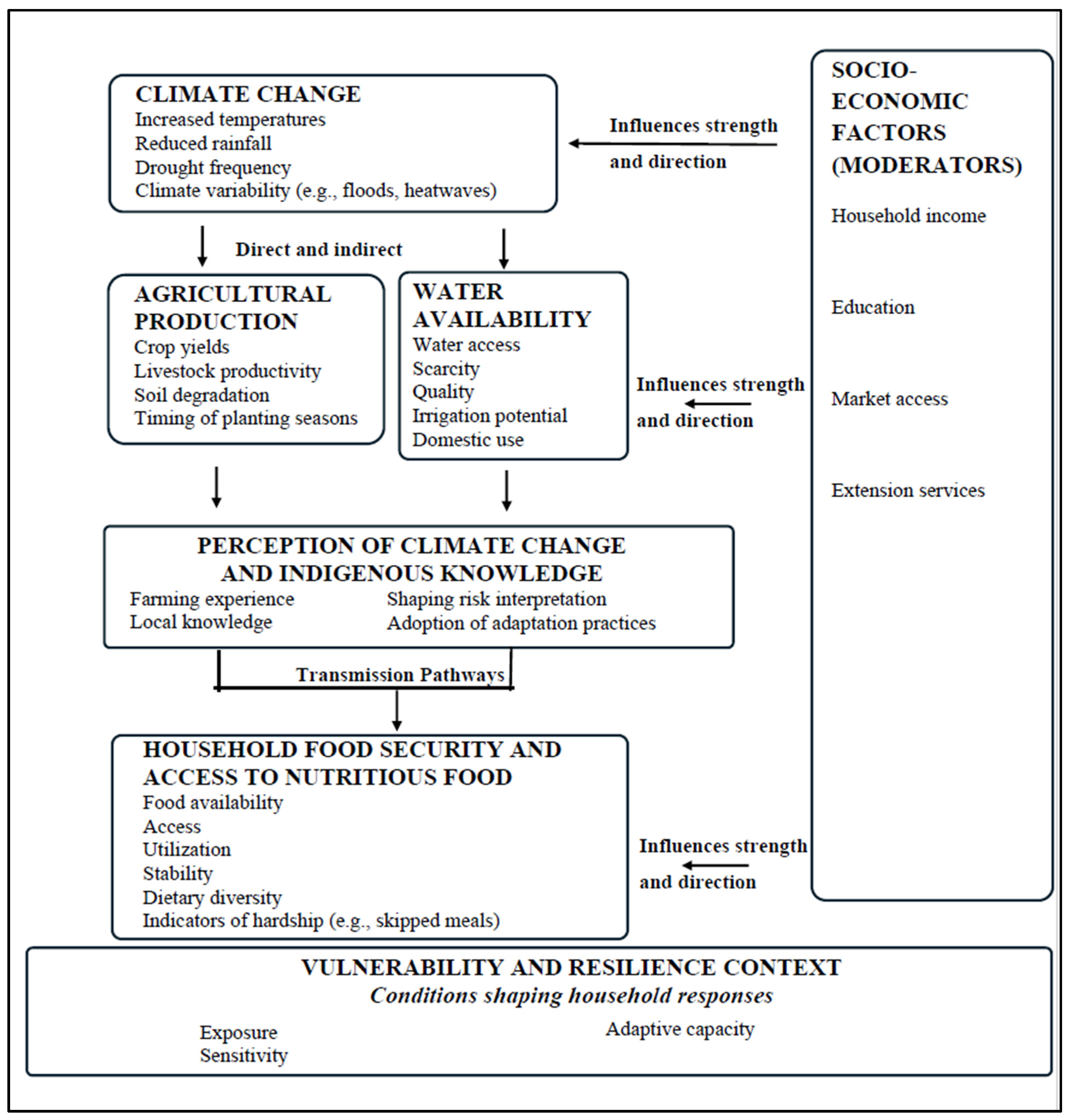
The Food–Water–Nutrition (FWN) nexus recognises the interdependence of food production, water resources, and nutritional outcomes. Climate change affects these systems simultaneously, creating cascading impacts that single-sector assessments often fail to capture. Consequently, integrated approaches are increasingly recommended for understanding climate-related challenges in smallholder farming systems, particularly in vulnerable regions of Sub-Saharan Africa. Against this background, this study adopts an integrated theoretical framework that combines the Food Security Framework [
43,
44,
45], the Climate Change Impact Pathways Framework [
35,
36,
46], and Vulnerability and Resilience Theory [
47,
48,
49,
50,
51,
52]. Collectively, the frameworks provide an integrated systems perspective for analysing how climate change influences agricultural production, water systems, and food and nutrition security among rural households in Lubombo, Eswatini (
Figure 1).
The Food Security Framework conceptualises food security through four interrelated pillars: availability, access, utilisation, and stability [
43,
44,
53,
54]. In this study, these dimensions are influenced by climate-sensitive agricultural production, income and market access, and water availability, all of which affect nutritional outcomes [
20,
31,
35]. The framework is widely applied in studies on climate variability and household food security in developing countries. However, the framework provides limited insight into the climatic drivers of food insecurity and household adaptation responses. The Climate Change Impact Pathways Framework explains how climate variability affects food systems through direct and indirect mechanisms. Direct impacts include temperature increases, rainfall variability, and extreme events that affect crop and livestock productivity; indirect impacts operate through water scarcity, market disruptions, and livelihood constraints [
11,
35,
36,
46]. These pathways link climate change to agricultural production, water availability, and household food and nutrition outcomes [
55]. The framework has been extensively used in climate adaptation research to trace the pathways through which climatic hazards affect food systems, water resources, and rural livelihoods. However, while it effectively explains impact mechanisms, it provides less insight into variations in household vulnerability and adaptive capacity.
Vulnerability and Resilience Theory emphasises the adaptive dimension, conceptualising vulnerability as exposure, sensitivity, and adaptive capacity [
35,
47,
48,
49]. Resilience, on the other hand, is the ability to absorb, adapt to, and recover from climate shocks [
48,
49,
52,
56,
57]. In Eswatini, smallholder households are highly vulnerable to climate change due to their dependence on rain-fed agriculture and constrained access to infrastructure and institutional support [
23,
25]. Resilience is informed by livelihood diversification, access to water, and social and institutional support systems. The three frameworks are combined to provide a holistic understanding of climate change impacts within the food–water–nutrition nexus. This integration enables the study to simultaneously examine food security outcomes, the pathways through which climate variability affects agricultural and water systems, and the socio-economic factors that shape household vulnerability and resilience. Together, the frameworks capture food security dimensions, climate-impact pathways, and adaptive capacity, offering a comprehensive analytical lens for examining vulnerability and resilience in smallholder farming systems in the Lubombo Region of Eswatini.
To translate this conceptual understanding into an empirical framework, climate change is specified as the independent variable, characterised by rising temperatures, rainfall variability, and extreme events. Its effects on household food and nutrition security are conceptualised as operating through two mediating pathways: agricultural production (crop yields and livestock productivity) and water availability (access, reliability, and quality). These mediating mechanisms jointly shape household food and nutrition security outcomes, which constitute the dependent variables, including food availability, access, utilisation, stability, dietary diversity, meal frequency, and nutrient adequacy. Socio-economic characteristics (e.g., income, education, household size, farming experience, market access, and institutional support) are incorporated as moderating variables that influence the strength of these relationships by shaping household adaptive capacity and resilience. These relationships form the basis for the empirical models examined in this study.
3. Materials and Methods
3.1. Description and Study Area Selection
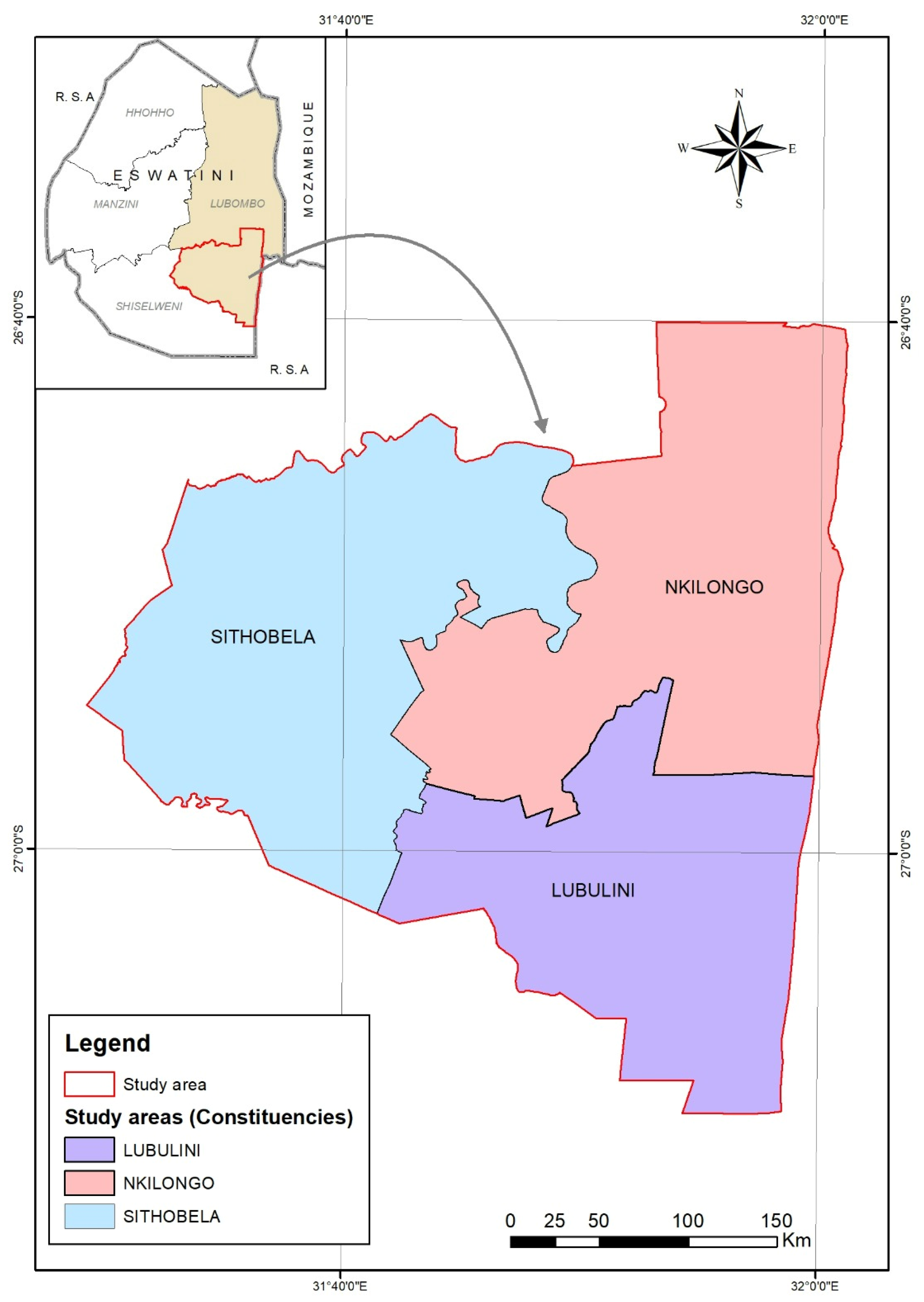
The study was conducted in the Lubombo Region in eastern Eswatini (
Figure 2), covering approximately 5849 km
2 with an estimated population of about 300,000 people [
58,
59,
60]. The region is semi-arid, characterised by low and highly variable rainfall, high temperatures, and recurrent droughts, making it one of the most climate-vulnerable areas in Eswatini [
21,
61]. These environmental conditions have intensified water scarcity and placed continuous pressure on already fragile agricultural systems, heightening rural livelihood vulnerability [
19,
61,
62]. These conditions are analytically relevant because they create a context of climatic uncertainty that shapes household decision-making, requiring continuous adjustments to agricultural practices and the evaluation of adaptation strategies. Agriculture is the dominant livelihood activity, with most households engaged in rain-fed subsistence farming. However, productivity remains low due to rainfall variability and extreme heat, which negatively affect crop and livestock production [
24,
59,
63,
64].
Beyond subsistence agriculture, the regional economy is also shaped by commercial farming, particularly large-scale sugarcane production and processing, which contribute to national exports and GDP [
22,
66]. In addition, livestock rearing and citrus farming form important components of both household livelihoods and local economic systems [
19,
24,
30,
64]. The economy is further supported by tourism and conservation activities linked to Hlane Royal National Park and Mlawula Nature Reserve [
67]. Furthermore, informal trade, small-scale enterprises, public-sector employment, and mining activities, such as anthracite coal extraction at Maloma [
22,
68,
69,
70], are among the region’s economic activities. All these activities provide supplementary sources of income in areas where agricultural returns are unstable.
Despite this, the regional economy remains highly dependent on climate-sensitive sectors. This vulnerability is reinforced by structural issues that limit households’ capacity to adapt to climate change. These include poor access to water infrastructure, weak market integration, inadequate economic diversification, and rural development service [
22,
24,
70]. The Lubombo Region was therefore purposively selected for its high exposure to climate variability and its relevance to the study objectives, as it represents a hotspot where the interactions among climate change, agricultural production, water availability, and food security are most evident. Within the region, three constituencies (Nkilongo, Lubulini, and Sithobela) were selected based on documented severity of climate impacts, particularly drought incidence, water scarcity reports, and agricultural loss records from local disaster management and agricultural extension offices. From each constituency, two communities were selected: Lunkhuntfu and Phafeni (Nkilongo), Mabantaneni and Ntuthwakazi (Lubulini), and Mamisa and Luhlanyeni (Sithobela), resulting in six study sites. The selection of communities was conducted in consultation with local leadership to ensure accurate identification of affected areas and community accessibility. To minimise selection bias, this consultation was combined with empirical secondary data sources.
This selection strategy is justified and ensures the inclusion of high-exposure and high-sensitivity contexts necessary for an in-depth analysis of climate–agriculture–water–food security linkages at the household level.
3.2. Research Design
This study adopted a concurrent, triangulated, mixed-methods, cross-sectional design to assess the impacts of climate change on agricultural production, water availability, and food security in the Lubombo Region. The mixed-methods approach was used to combine quantitative evidence (e.g., prevalence of food insecurity and water shortages) with qualitative perceptions of household experiences, thereby enabling triangulation [
71,
72,
73]. A cross-sectional design was appropriate as the study focused on current conditions rather than temporal change. It is widely used in climate–food–water nexus studies for its efficiency and policy relevance under limited resources [
71,
72,
74]. Structured questionnaires containing both closed and open-ended questions were used to generate comparable quantitative data while capturing contextual qualitative insights. Concurrent data collection facilitated the integration of quantitative and qualitative findings [
75]. The study design ensured alignment with the research objectives and questions. Quantitative methods measured climate change impacts and examined statistical relationships among key variables, while qualitative methods provided contextual insights into household experiences and perceptions. The integration of both approaches enabled triangulation and a more comprehensive understanding of the dynamics of the climate–food–water–nutrition nexus. Given the exploratory and mixed-methods nature of the study, no formal hypotheses were formulated. Instead, the study was guided by research questions and empirical analysis to explore relationships, determinants, and experiences associated with climate variability and food–water–nutrition outcomes. A limitation of the cross-sectional design is that it does not permit causal inference. Therefore, the findings are interpreted as associations among climate variability, agricultural production, water availability, and food and nutrition security outcomes rather than as evidence of causal relationships.
Research Questions
The study was guided by the following research questions derived from the study objectives:
- (i)
How are climate variability, agricultural production, water availability, and food and nutrition security outcomes related among smallholder households in the Lubombo Region?
- (ii)
What relationships exist between climate variability, water security, and household food security outcomes?
- (iii)
Which climate-related, water security, and socio-economic factors are significantly associated with household food insecurity?
- (iv)
How do smallholder households perceive and experience the impacts of climate variability on food and water security?
These research questions informed the selection of quantitative and qualitative analytical methods used in the study.
3.3. Sampling Technique and Data Collection
The study population comprised households within six (6) selected communities in the Lubombo Region. The total number of households in each community was obtained from the 2017 national population and household census [
76], which served as the sampling frame. A simple random sampling technique was applied to ensure equal selection probability and minimise bias [
77]. The sample size was 880 households. Proportional allocation was used to ensure that each community was represented in proportion to its population size, improving comparability across study sites and reducing sampling distortion. The sample size was determined using Cochran sample size formula [
78,
79,
80,
81];
where:
Z = 1.96 (95% confidence level);
p = 0.5 (maximum variability);
N = 1545 (total households);
e = 0.0217 (margin of error, approximately 2.17%).
Solving for
n yields approximately 880 households. The sample was then proportionally distributed across the six communities based on their respective household populations (
Table 1). Households represented the unit of analysis, as they are the primary unit through which food security, water access, and livelihood decisions are experienced [
82].
Inclusion and exclusion criteria were applied to ensure that participating respondents were appropriate for the study objectives. Within selected households, eligible respondents were adults (18 years and above) who were permanent residents with knowledge of household food, water, and livelihood conditions. Households without eligible respondents or outside the study area were excluded. Eligibility was confirmed during household screening by the trained research assistants through a structured screening question included at the beginning of the questionnaire. Respondents were considered eligible if they met at least one of the following criteria: participation in farming activities (crop or livestock production), involvement in household food security decisions, or management of water use or agricultural inputs at the household level. The screening process was administered consistently across all households using a standardised checklist completed by enumerators prior to questionnaire administration.
The structured questionnaire captured socio-economic characteristics, perceptions of climate change, food and water security conditions, adaptation strategies, and institutional and technology factors. It was administered in SiSwati, the local language, to guarantee clarity, reduce misunderstanding, and minimise response bias. Before the main survey, a pilot study involving 10% of the sample (88 households) was conducted in communities outside the study area to assess the instrument’s clarity and reliability [
83]. As part of quality control procedures, the pilot study was used to identify ambiguities, assess question consistency, and improve the questionnaire’s overall reliability. Based on pilot results, revisions were made to improve wording, sequencing, and structure. Pilot households were excluded from the final analysis to prevent bias. Ethical procedures were followed, including voluntary participation, informed consent, and confidentiality of responses.
3.4. Data Management
Data management followed a structured process to ensure data quality, accuracy, consistency, and reliability of both quantitative and qualitative data. Rigour was ensured through double checking of entries against original questionnaires, cross-validation of related variables, and systematic consistency checks to identify errors. A standardised coding framework was used, and all data cleaning procedures were documented to ensure consistency and transparency. Quantitative responses were initially entered into Microsoft Excel for cleaning, including checks for completeness, handling missing values, detecting outliers, and coding categorical and Likert-scale responses. The cleaned dataset was exported to SPSS (Version 29) and R (Version 4.3.2) for statistical analysis. Qualitative data from open-ended responses were transcribed verbatim, organised into text files, and analysed using NVivo (Version 14). A thematic analysis approach was applied to facilitate systematic coding and identification of key themes related to climate change impacts, agricultural production, water availability, and food security. The total sample comprised 880 households; however, after data cleaning and validation, the final analytical sample comprised 859 households. Variations between the total sample (N = 859) and individual analytical samples reflect item-level non-response, where some respondents did not answer specific questions, and in certain cases, questions were not applicable to all households. Analyses were therefore conducted using valid responses for each variable.
To ensure data integrity and confidentiality, all datasets were securely stored on password-protected devices, with personal identifiers removed during cleaning. Access to the data was strictly restricted to the researcher throughout the study to safeguard respondent anonymity.
3.5. Data Analysis
This study assessed the impacts of climate change on agricultural production, food security, water availability, and access to nutritious food in Eswatini using a mixed analytical approach, including descriptive statistics, correlation analysis, binary logistic regression, and thematic analysis. Although the study relies on household-reported perceptions of climate variability and agricultural outcomes, such approaches are widely used in climate vulnerability and food security research in data-scarce rural contexts where long-term meteorological and farm-level production data are limited. These perception-based indicators are considered reliable proxies of experienced climate stress, as they reflect direct exposure to environmental change. To strengthen the interpretation of the findings, the perceptions were not analysed in isolation but were integrated with inferential statistical methods, including Spearman’s rank correlation and binary logistic regression, to examine statistically significant relationships between climate variability, water insecurity, and food security outcomes.
3.5.1. Descriptive Statistics
Descriptive statistics were used to summarise respondents’ socio-economic characteristics and key study variables. Frequencies and percentages were applied to categorical variables (e.g., climate change perceptions, food shortages, water access challenges), while means and standard deviations were used for continuous variables. Ordinal (Likert-scale) data were summarised using distributional patterns. Results were presented in tables and formed the basis for subsequent analyses. Food security was measured using experiential indicators, including household food shortages, skipped meals, and worry about food. These indicators reflect core dimensions of household food insecurity commonly captured in validated instruments such as the Household Food Insecurity Access Scale (HFIAS) and the Food Insecurity Experience Scale (FIES), and were used as proxy measures appropriate for the study context.
3.5.2. Correlation Analysis
Spearman’s rank correlation coefficient (
p) was used to examine the strength and direction of relationships between climate change observation variables and household-level food and water security indicators [
84,
85]. This nonparametric approach was appropriate given the ordinal and dichotomous nature of the data and because it does not assume linearity or normal distribution [
85]. Correlation coefficients were interpreted as weak (
p < 0.30), moderate (
p = 0.30–0.50), or strong (
p > 0.50). Statistical significance was assessed at the 0.05 and 0.01 levels. Three sets of relationships were examined: (i) climate change and food security, (ii) climate change and water security, and (iii) water and food security linkages.
3.5.3. Binary Logistic Regression
Binary logistic regression was used to examine determinants of household food insecurity, allowing estimation of the likelihood of binary outcomes using odds ratios [
85,
86,
87]. This method is commonly applied in studies on the interaction between climate and agriculture, due to its suitability for categorical outcomes and policy interpretation [
88,
89,
90,
91,
92,
93]. To ensure the robustness of the binary logistic regression models and confirm the absence of multicollinearity among predictor variables, Variance Inflation Factor (VIF) and Tolerance (1/VIF) diagnostics were conducted for both models. Multicollinearity occurs when independent variables are highly correlated, which can inflate standard errors and compromise the reliability of coefficient estimates [
94,
95]. Following established guidelines, VIF values exceeding 10 or tolerance values below 0.10 indicate problematic multicollinearity, while VIF values between 1 and 5 suggest acceptable correlation among predictors [
85,
94,
95] (
Table 2A,B).
Binary logistic regression analysis was used to identify determinants of household food insecurity. Two separate models were estimated:
Model 1: Dependent variable—experience of food shortages in the past five years (1 = yes, 0 = no).
Model 2: Dependent variable—occurrence of meal skipping due to lack of food (1 = yes, 0 = no).
Independent variables included climate factors (reduced rainfall, increased temperatures, drought frequency), water security indicators (water shortage frequency and climate-affected access), and socio-economic controls (household size, farming experience, and log-transformed income). The full descriptions and measurements of the variables are presented in
Table 2C.
The logistic regression model estimates the probability of food insecurity occurring (
p) as a function of the predictor variables, expressed as:
where:
represents the probability of the outcome (food shortages or meal skipping);
is the intercept;
to are the coefficients associated with each predictor variable;
X1 to Xk represent the independent variables included in the model.
Results were reported as odds ratios (Exp (B)) with 95% confidence intervals. Model fit was assessed using the Hosmer–Lemeshow test (
p > 0.05 indicates good fit), Nagelkerke R
2, and chi-square statistics [
86,
96].
3.5.4. Thematic Analysis
Thematic analysis was applied to open-ended survey responses following Braun and Clarke’s (2006) six-phase framework (familiarisation, coding, theme development, review, definition, and reporting) [
97]. Coding combined deductive categories from study objectives (e.g., temperature change, rainfall variability, crop failure, water scarcity) and inductive codes emerging from the data (e.g., loss of traditional foods, psychological stress, and fear of planting). NVivo 14 was used to manage and code qualitative responses. Respondent quotations were anonymised using unique identifiers (e.g., R33C3C5 representing Respondent 33 from Constituency 3, Community 5), preserving confidentiality whilst preserving contextual detail. The qualitative findings were used to complement and contextualise the quantitative results through methodological triangulation. In particular, qualitative evidence was used to provide explanatory insights into the statistical relationships observed between climate variability, water scarcity, and food insecurity outcomes.
Thematic analysis identified three key themes: Perceptions of climate change and its indicators (including increasing temperatures, shifting rainfall patterns, and disrupted seasonality); impacts on agricultural production (like crop failure, yield reductions, pest and disease outbreaks, and livestock losses); and food security impacts (including decreased food availability, loss of traditional foods, skipped meals, and food-related anxiety). Collectively, these themes illustrate how households perceive and experience the interconnected effects of climate variability, agricultural challenges, and food insecurity within the food–water–nutrition nexus.
The analytical procedures applied in this study were directly aligned with the study objectives and research questions. Specifically, descriptive statistics were used to assess climate variability impacts and household conditions; Spearman’s rank correlation analysis was used to examine relationships among key variables; binary logistic regression was used to identify factors associated with household food insecurity; and thematic analysis was used to explore household perceptions and experiences. The integration of these methods enabled a comprehensive assessment of climate–food–water–nutrition linkages at the household level.
4. Results and Discussion
The findings are discussed in relation to the existing literature on climate change impacts on agriculture, water security, and food systems. While the results align with established evidence on climate vulnerability in sub-Saharan Africa, they also highlight context-specific dynamics within the Lubombo Region, particularly the compounding effects of climate variability and limited adaptive capacity. The analysis is structured around the food–water–nutrition nexus framework, beginning with socio-economic characteristics, followed by perceptions of climate change, impacts on agricultural production and water availability, household food security outcomes, and thematic evidence from respondents’ experiences.
4.1. Demographic and Socio-Economic Characteristics of Smallholder Farmers
Table 3 presents the demographic and socio-economic characteristics of smallholder farmers in the Lubombo Region of Eswatini (N = 859).
The results show a predominantly female (59.8%) and ageing farming population, with 57.2% aged 46 years and above and 31.4% aged 61 years or older. This population pattern indicates the feminisation and ageing of rural agriculture, which have implications for labour availability, climate adaptation capacity, and household food security [
20,
98,
99,
100]. Most respondents were married (63.7%) and resided in relatively large households, with 43.5% living in households of 4–6 members and 26.3% in households of 7–9 members. Although larger households may provide additional labour for agricultural activities, they also increase pressure on food and water resources, notably under climate stress [
36,
101]. Educational attainment was generally low to moderate, with only 11.4% possessing tertiary education and 12.6% having no formal education, possibly constraining access to climate information, adoption of improved farming practices, and nutritional awareness [
35,
93,
102,
103,
104,
105].
The socio-economic profile reveals high vulnerability, with 62.6% of respondents unemployed and 66.8% dependent on farming as their primary livelihood. Income levels were generally low, with more than half of households earning below R2000 per month, limiting their capacity to invest in climate adaptation technologies such as irrigation, improved seeds, and inputs [
20,
36,
106]. Reliance on informal activities and social grants provides supplementary income, but these sources are insufficient to buffer climate-related shocks. Farming experience among respondents was relatively high, with a mean of 23.8 years and 61.0% reporting more than 10 years, suggesting strong local knowledge systems [
107,
108,
109,
110]. However, traditional practices are increasingly constrained by climate variability, including erratic rainfall and extended droughts, which reduce their effectiveness under current conditions [
24,
35,
111,
112]. All these findings illustrate a rural population that is ageing, female-dominated, low-income, and highly dependent on rain-fed agriculture, factors that heighten vulnerability within the climate–food–water nexus in the Lubombo Region. Overall, the socio-economic profile provides important context for interpreting subsequent findings on climate, water, and food security, as vulnerability is strongly shaped by age structure, income levels, and livelihood dependence on rain-fed agriculture.
4.2. Climate Change Awareness and Observed Changes
4.2.1. Overall Recognition of Climate Change
Table 4 shows a very high level of climate change awareness in the Lubombo Region (90.4%), with respondents reporting observed changes in weather patterns over the past 10–20 years, while the rest were uncertain or reported no changes. This indicates that a large number of households reported experiencing climate variability, including shifting rainfall patterns, prolonged dry spells, and rising temperatures, which respondents associated with changes in agricultural production and water availability. The high awareness observed in these findings is important within the food–water–nutrition nexus, as it influences household adaptation behaviours related to farming, water use, and food consumption. However, households’ capacity to adapt to climate change remains constrained by resource and institutional limitations. This suggests that high climate change awareness in the study area does not necessarily translate into effective adaptive capacity, given persistent socio-economic and institutional constraints affecting smallholder households. This finding is consistent with Vulnerability and Resilience Theory, which emphasises that awareness of environmental risks does not necessarily translate into adaptive capacity when households face resource and institutional constraints. Similar findings have been reported in Sub-Saharan Africa, including Ethiopia and Zimbabwe, where climate change awareness is largely driven by direct environmental experience [
113,
114].
4.2.2. Specific Changes in Weather Patterns Observed
Table 5 shows that the most commonly observed climate changes were increased temperatures (87.7%) and reduced rainfall (76.1%), indicating that many respondents perceive climatic conditions as becoming warmer and drier, consistent with national evidence [
21,
22,
115]. These changes are commonly associated with reduced soil moisture, shorter growing seasons, and lower agricultural productivity, thereby increasing vulnerability within the food–water–nutrition nexus. Other reported changes include increased pest and disease incidence (40.6%) and more frequent droughts (39.1%), reflecting growing ecological stress. Although fewer respondents reported experiencing intense floods (25.6%), drought remains the dominant climate stressor in the region. These patterns are consistent with major climatic events such as the 2014–2016 El Niño drought in Eswatini, which severely affected agricultural production [
115,
116,
117].
4.2.3. Level of Concern About Climate Change Impacts
Table 6 indicates a very high level of concern about climate change impacts in the Lubombo Region, with 61.2% of respondents reporting being very concerned and the rest expressing at least some concern. Climate change is widely perceived as an immediate threat to agriculture and water-dependent livelihoods (Mean = 3.41). This high level of concern reflects strong awareness of climate risks affecting interconnected food and water systems. Similar patterns are reported across Sub-Saharan Africa, where farmers’ perceptions are shaped by direct exposure to rainfall variability, droughts, and declining agricultural productivity [
57,
118,
119]. Evidence from Ethiopia, Zimbabwe, and the broader Southern Africa shows that recurrent droughts and erratic rainfall, particularly events such as the 2015–2016 El Niño episode, have considerably increased climate risk awareness among smallholder farmers due to crop failures and water shortages [
20,
113,
120]. Similar conditions are also observed in Eswatini, where persistent drought and rainfall variability continue to pose challenges to rain-fed agriculture and rural water access [
21,
22,
115].
Despite this high level of awareness and concern, climate change adaptation responses continue to be constrained by factors such as poverty, weak extension services, inadequate irrigation infrastructure, and limited financial capacity [
10,
35,
36,
121]. This highlights a persistent gap between high perceptions of climate risk and limited adaptive capacity, reinforcing vulnerability within the climate–food–water–nutrition nexus.
These perceptions of climate variability provide important context for examining reported changes in agricultural production and water availability, which are discussed in the following sections.
4.3. Perceived Impacts of Climate Change on Food Production and Water Access
4.3.1. Perceived Impacts on Food Production and Water Access
Table 7 shows that the vast majority of respondents (96.2%) perceived that climate variability had negatively affected food production and access to water. From a food–water–nutrition nexus perspective, these perceptions suggest that climate change simultaneously disrupts agricultural production and water access, both of which are important components of rural livelihoods. Reduced crop production limits food availability and income, while constrained access to water affects irrigation, livestock survival, food preparation, and hygiene [
32,
61,
122,
123,
124]. Respondents’ perceptions, therefore, indicate interconnected challenges linking water scarcity, constraints on agricultural production, and food insecurity. This emphasises the need for national and regional integrated adaptation strategies addressing both water and agricultural systems [
28,
125].
4.3.2. Climate Change Impacts on Food Production
Table 8 shows that respondents perceive climate variability to affect food production through multiple pathways. The most reported impact is reduced crop yields (89.8%), reflecting high sensitivity of rain-fed systems to drought, temperature increases, and rainfall variability, consistent with national trends in Eswatini [
25,
64,
126,
127]. Households perceived these changes to be associated with reduced food availability and income. These findings are consistent with the Climate Change Impact Pathways Framework, which proposes that climatic shocks can influence agricultural production and, in turn, affect household food security [
11,
35,
46]. Reduced livestock productivity (68.9%) reflects drought-induced feed shortages, heat stress, and declining pasture quality [
15,
63], with severe losses observed during major drought episodes such as 2015–2016 [
31,
117]. In addition, increased pest and disease incidence (46.7%) and shorter or unpredictable growing seasons (43.8%) may reflect growing agro-ecological instability, which can disrupt farming calendars and constrain adaptation efforts [
128].
Lower but important impacts include effects on nutrition and health (27.7%) and soil degradation (22.5%), indicating longer-term systemic consequences beyond immediate production losses. Respondents associated these impacts with declining dietary quality and potential health risks [
10,
28,
31], as well as reduced soil fertility and future productivity risks [
31,
35,
36]. Within the food–water–nutrition nexus, these interacting impacts suggest that respondents perceive climate variability as influencing not only agricultural output but also the nutritional quality and sustainability of rural livelihoods. Overall, the findings indicate that respondents associate climate variability with declining agricultural productivity and livelihood stress, emphasising the interconnected nature of climate, agriculture, and nutrition within the food–water–nutrition nexus.
4.3.3. Climate Change Impacts on Water Availability
Table 9 shows that respondents perceive water scarcity as the most common climate-related impact (83.8%), reflecting perceived drying conditions associated with reduced rainfall and rising temperatures. This finding aligns with earlier results on unpredictable rainfall (76.1%) and increasing temperatures (87.7%), and with national evidence from events such as the 2015–2016 El Niño drought, which affected water availability and the reliability of rural water sources [
21,
36]. These perceptions highlight water stress as a major concern within the food–water–nutrition nexus.
Nearly half of respondents reported more frequent droughts (49.7%) and declining groundwater and surface water (49.0%), suggesting persistent concerns regarding water insecurity in the region. These findings are consistent with projections indicating increasing drought frequency and reduced streamflow in Southern Africa [
21,
129]. Additional impacts include poor water quality (35.3%), more frequent floods (30.9%), and increased water demand and competition (24.6%), highlighting the multidimensional nature of water stress. Poor water quality increases health risks [
31,
116,
130], while extreme events such as Cyclone Eloise (2021) have been reported to disrupt water systems [
20]. Rising demand pressures may further compound existing water challenges, particularly given projections of future increases in water demand [
115,
116]. These findings suggest that climate change is perceived to be intensifying both water scarcity and variability, emphasising the need for integrated water resource management strategies.
The reported impacts on agricultural and water systems highlight the interconnected nature of climate-related challenges within smallholder farming systems and provide important context for examining household food security outcomes in the following section.
4.4. Household Food Security Status
Table 10 shows high levels of food insecurity in the Lubombo Region, with 79.5% of households reporting food shortages over the past five years and 69.0% indicating that household members skipped meals. These results suggest persistent food insecurity, reflecting challenges in food availability, access, and utilisation, and indicating compromised dietary quality and nutrition. From a food–water–nutrition nexus perspective, the results highlight the prevalence of food insecurity within a context characterised by climate variability and socio-economic constraints. Previous studies have shown that food insecurity in rain-fed agricultural systems is often associated with climate variability, reduced agricultural productivity, disrupted food supplies, and limited income-generating opportunities [
28,
32,
59,
61,
131]. Similar patterns are observed across Sub-Saharan Africa, where climate variability, poverty, and limited livelihood diversification reduce resilience [
10,
20,
36]. In the Lubombo Region, extended dry spells and erratic rainfall have been associated with declining agricultural yields and increased reliance on food assistance programmes [
24,
59,
131,
132]. Overall, the findings indicate that food insecurity remains a significant concern within the study population, emphasising the importance of integrated interventions that strengthen climate resilience, livelihood opportunities, and household economic capacity.
4.4.1. Frequency of Worry About Food Insufficiency
Table 11 shows that the majority of the households experienced some degree of food-related anxiety (Mean = 2.27). Overall, 87.6% of respondents indicated some level of worry about not having enough food, while only 12.4% reported no concern. These findings suggest that food insecurity in the study area is reflected not only in reported food shortages but also in concerns about future access to food. When considered alongside earlier findings on food shortages (79.5%) and meal skipping (69.0%), the results indicate a consistent pattern of both experienced and anticipated food insecurity among households. The high prevalence of food-related worry may reflect broader livelihood challenges commonly associated with rural, climate-sensitive environments, including income insecurity, dependence on rain-fed agriculture, and exposure to climate variability. In rural contexts like Lubombo, where livelihoods are closely tied to climate-sensitive agricultural systems, even short-term production disruptions may heighten perceived risk, leading households to adopt coping strategies such as reduced consumption and dietary changes. These findings are consistent with the broader literature, which highlights that food insecurity encompasses both material and psychological dimensions, with anxiety about future food access recognised as an important aspect of household vulnerability [
36,
133,
134,
135,
136].
The findings also have important nutrition-related implications. High levels of food shortages, meal skipping, and reduced access to nutritious foods suggest potential risks to dietary quality and nutritional well-being among vulnerable households. Although direct measures of nutritional status were not collected, these indicators provide indirect evidence of possible nutritional vulnerability. Consequently, the findings highlight the importance of integrating nutrition-sensitive interventions into climate adaptation, food security, and water management programmes.
4.4.2. Trend of Crop Yields over Time
Table 12 shows a clear perceived decline in agricultural productivity: 56.5% of respondents reported decreased crop yields, compared with 15.0% reporting increases and 28.5% indicating no change. This suggests that declining yields are widely reported among farming households in the study area, with potential implications for household food availability and income. Respondents frequently associated these changes with climate-related stressors such as erratic rainfall, extended dry spells, and recurrent droughts, consistent with earlier findings that identified reduced crop yields as a major perceived climate-related impact (89.8%). These findings are consistent with the Climate Change Impact Pathways Framework, which proposes that climate variability can influence agricultural productivity and, consequently, household food systems.
Similar trends are reported in Eswatini and across Sub-Saharan Africa, where smallholder agriculture is increasingly affected by climate variability and limited adaptive capacity [
24,
35,
126]. Overall, the findings suggest that declining crop yields are perceived by households as an important contributor to food insecurity and livelihood vulnerability, reinforcing the interconnected nature of the climate–agriculture–food security nexus.
4.4.3. Perceived Impact of Climate Change on Food Availability
Results presented in
Table 13 indicate a strong perception that climate change has worsened food availability, with 96.1% of respondents reporting increased difficulty in accessing food and only 3.9% reporting no impact. This finding is consistent with earlier evidence of declining crop yields, food shortages, and meal skipping, reinforcing a pattern in which climate variability reduces agricultural productivity and food access in rain-fed systems. Respondents commonly associated climate variability with reduced agricultural productivity and challenges in accessing food. These results align with broader evidence from Sub-Saharan Africa, where rising temperatures, rainfall variability, and recurrent droughts affect agricultural production and food security [
10,
14,
35,
36,
137]. Overall, climate change is perceived as a direct driver of food insecurity in the study area, highlighting the need for integrated adaptation strategies, including climate-smart agriculture, improved water management, and institutional support.
4.4.4. Perceptions of Water Availability and Quality Changes
Table 14 shows that the majority of households perceived that water conditions are worsening: 76.7% report changes in water availability, 77.4% in water quality, and 97.9% indicate that climate change has affected water access. These findings suggest widespread perceptions of deterioration in both the quantity and quality of water available for domestic and agricultural use. This pattern is consistent with evidence from Eswatini and Sub-Saharan Africa, where rainfall variability, droughts, and rising temperatures reduce surface water availability and stress groundwater systems, particularly in rural areas with inadequate infrastructure [
14,
21,
26,
115]. Weak water infrastructure further constrains access to safe and reliable supply [
10,
31,
138]. Overall, the results highlight the need for integrated water resource management to improve sustainable water security.
4.4.5. Frequency of Experiencing Water Shortages
Table 15 shows that the majority of households (83.7%) experience water shortages at least sometimes, with 53.9% reporting that shortages occur often or always. This suggests that water insecurity is a common experience in the study area rather than a rare occurrence. These findings align with earlier results on declining water availability, quality, and access and reflect reliance on climate-sensitive, often unreliable sources such as rivers, boreholes, and standpipes. Similar trends are reported in Eswatini and across Sub-Saharan Africa, where climate variability and weak infrastructure reduce the reliability of rural water systems [
21,
26,
116,
138]. Persistent water shortages may also affect agricultural production and household food access, highlighting the interconnected nature of the water–food nexus [
138].
All these results collectively demonstrate that food insecurity in the study area is not only associated with reduced agricultural production but is also strongly mediated by water scarcity and household socio-economic constraints.
4.5. Correlation Results
4.5.1. Correlation Analysis of Climate Change Observations and Food Security Indicators
This section examines relationships between climate change observations and household food and water security indicators using Spearman’s rank correlation (ρ), appropriate for ordinal and binary data.
Table 16 shows statistically significant positive correlations between all climate variables and food security indicators, indicating that adverse climate-related observations are associated with higher levels of reported household food insecurity. However, the correlation coefficients are generally weak (
p = 0.079–0.251), suggesting that although climate-related factors contribute to food insecurity, they account for only a limited proportion of the variation observed in food security indicators. Among the climate variables, more frequent droughts exhibited the strongest and most consistent associations with food shortages (
p = 0.214), skipped meals (
p = 0.188), worry about food (
p = 0.176), and perceived climate impacts on food availability (
p = 0.251). Reduced rainfall also showed relatively stronger correlations, particularly with perceived impacts on food availability (
p = 0.224). These findings indicate that households reporting more frequent droughts and reduced rainfall are also likely to report poorer food security outcomes.
In contrast, more intense floods demonstrated the weakest associations (p = 0.079–0.112), possibly reflecting their less frequent occurrence and more localised impacts. Although statistically significant, the weak effect sizes indicate that factors beyond climate perceptions and observations contribute substantially to household food insecurity. Household income, access to markets, livelihood diversification, agricultural inputs, and social support systems may additionally influence food security conditions. Therefore, climate variability should be viewed as one of several interacting determinants of food insecurity rather than the sole driver. These findings are consistent with the Climate Change Impact Pathways Framework, which proposes that climatic stressors such as drought and rainfall variability can influence agricultural production and food systems through multiple pathways. While correlation analysis does not establish causality, the observed associations support the relevance of climate-related factors within the broader food–water–nutrition nexus. Overall, the results indicate that climate variability, particularly drought and reduced rainfall, is significantly associated with food insecurity; however, the relatively weak correlations suggest that broader socio-economic conditions also contribute to household vulnerability and resilience in the study area.
4.5.2. Correlation Between Climate Change Observations and Water Security Indicators
This section presents Spearman’s rank correlation coefficient results examining relationships between observed climate variables (temperature, rainfall, droughts, floods, and seasonal variability) and household water security indicators (water availability, quality, access, and shortage frequency). This approach is appropriate for ordinal and binary data and provides insight into how climate variability shapes water security outcomes.
The results presented in
Table 17 show statistically significant positive correlations between all observed climate change variables and water security indicators, indicating that households reporting greater climate variability also reported higher levels of water insecurity. However, the correlation coefficients were generally weak to modest (
p = 0.098–0.312), indicating that climate-related factors explain only a limited proportion of the variation in water security outcomes. Among the climate variables, more frequent droughts exhibited the strongest and most consistent associations with water security indicators, particularly climate-affected water access (
p = 0.312), perceived changes in water availability (
p = 0.291), and water shortage frequency (
p = 0.267). Reduced rainfall also demonstrated relatively stronger correlations with climate-affected water access (
p = 0.289) and perceived changes in water availability (
p = 0.268). These findings suggest that drought and declining rainfall are the climate factors most strongly associated with household water insecurity in the study area. In contrast, more intense floods showed the weakest correlations (pw = 0.098–0.156), indicating comparatively limited associations with perceived water security outcomes.
Although statistically significant, the relatively small effect sizes suggest that factors beyond climate variability contribute substantially to household water insecurity. Water infrastructure, reliability of supply systems, groundwater availability, institutional capacity, water governance, and household socio-economic conditions are also likely to influence water access, availability, and quality. Consequently, climate variability should be viewed as one of several interacting determinants of water security rather than the sole explanatory factor. The weaker correlations with increased temperatures and seasonal unpredictability suggest indirect impacts on water security through increased evaporation, changes in water demand, and disruptions to seasonal water availability. Consistent with the Climate Change Impact Pathways Framework, the findings indicate that drought and reduced rainfall are more strongly associated with household water insecurity than other observed climate variables. However, the modest correlation strengths suggest that broader structural, institutional, and socio-economic factors also play important roles in shaping water security and household resilience.
4.5.3. Correlation Between Water Security and Food Security Indicators
This section presents Spearman’s rank correlation coefficient results examining relationships between water security indicators (water availability, shortage frequency, climate-affected access, and water quality) and household food security outcomes (food shortages, skipped meals, food-related worry, and crop yields). The analysis highlights the interdependence between water and food systems.
The results presented in
Table 18 reveal statistically significant positive associations between all water security indicators and household food security outcomes, indicating that greater water insecurity is associated with higher levels of food insecurity. However, the correlation coefficients are generally weak to modest (
p = 0.143–0.341), suggesting that water security factors explain only part of the variation in household food security outcomes. Among the water security indicators, water shortage frequency exhibited the strongest associations with food insecurity indicators, particularly decreased crop yields (
p = 0.341), food shortages (
p = 0.312), skipped meals (
p = 0.287), and food-related worry (ρ = 0.265). Climate-affected water access also showed relatively stronger correlations with decreased crop yields (
p = 0.312) and food shortages (
p = 0.289), suggesting that disruptions in water availability may contribute to both agricultural production challenges and household food access constraints.
Perceived changes in water availability were similarly associated with all food security indicators, while water quality changes demonstrated weaker correlations (ρ = 0.143–0.198). This pattern suggests that, within the study context, water quantity-related challenges may be more closely associated with food security outcomes than water quality concerns. Although statistically significant, the relatively modest effect sizes indicate that factors beyond water security also contribute substantially to household food insecurity. Household income, agricultural inputs, market access, livelihood diversification, and adaptive capacity are likely to influence food security outcomes alongside water availability and access. Consequently, water insecurity should be viewed as an important, but not exclusive, pathway linking climate variability to food insecurity. Consistent with the Food–Water–Nutrition nexus perspective, the findings demonstrate significant associations between water insecurity and food security outcomes. However, the modest correlation strengths suggest that strengthening food security requires integrated interventions that address both water-related challenges and broader socio-economic constraints affecting household resilience [
10,
116,
127,
138].
4.6. Empirical Analysis
To identify key drivers of food insecurity, a binary logistic regression was applied to examine the effects of multiple climate-related and household factors simultaneously. Unlike correlation, which only shows associations, regression estimates the probability (odds) of binary outcomes (e.g., food shortages, meal skipping) while controlling for other variables. This approach enables the identification of the most influential determinants of food insecurity, including climate variability, water security, and socioeconomic conditions.
4.6.1. Factors Influencing Household Food Shortages
A binary logistic regression model was used to examine determinants of household food shortages, with “experienced food shortages in the past five years” as the dependent variable and climate variables (reduced rainfall, increased temperatures, and more frequent droughts), water security indicators, and demographic factors as predictors. This approach is widely applied in food security and climate studies to model dichotomous outcomes, such as food insecurity [
41,
87,
139,
140]. The results indicate that the model is statistically significant overall, with a likelihood ratio chi-square of 187.34 (
df = 9,
p < 0.001), confirming that the included predictors jointly provide a meaningful explanation of variations in household food shortage outcomes, consistent with standard interpretations of model significance in logistic regression analysis [
43,
56,
86]. It also showed strong explanatory power (Nagelkerke R
2 = 0.5342), meaning that about 53.4% of the variation in food shortages is explained by the included variables, reflecting the complexity of food insecurity shaped by climatic, socioeconomic, and structural factors [
85,
86,
141]. It also showed strong explanatory power (Nagelkerke R
2 = 0.5342), meaning that about 53.4% of the variation in food shortages is explained by the included variables, reflecting the complexity of food insecurity shaped by climatic, socioeconomic, and structural factors [
142,
143]. Importantly, the Hosmer–Lemeshow goodness-of-fit test is not statistically significant (χ
2 = 8.234,
df = 8,
p = 0.412), indicating that the model fits the data well and provides no evidence of poor calibration between observed and predicted probabilities [
86].
The results shown in
Table 19, indicate that more frequent droughts were the strongest climate-related predictor associated with household food shortages (
B = 0.912,
p < 0.001,
OR = 2.489), with affected households being nearly 2.5 times more likely to experience food shortages. This reflects the impacts of drought on crop failure, livestock losses, and declining resilience. Reduced rainfall also significantly increased food shortages (
B = 0.845,
p < 0.001,
OR = 2.328), highlighting its role in disrupting planting cycles and lowering productivity. Increased temperatures had a weaker but significant effect (
B = 0.456,
p = 0.02,
OR = 1.578), mainly through higher evapotranspiration, reduced soil moisture, and crop heat stress.
Water security variables were also strong predictors. Frequent water shortages (B = 0.567, p < 0.001, OR = 1.763) increased food insecurity by reducing irrigation, increasing livestock stress, and increasing household labour burdens. Climate-affected water access had a strong and statistically significant association with food shortages (B = 0.789, p = 0.001, OR = 2.201), suggesting that water insecurity may play an important role in the relationship between climate variability and food shortages. In the study area, climate-sensitive sources (e.g., rivers and boreholes) become unreliable under unpredictable rainfall and extended droughts, decreasing water for agriculture and household use.
Among socioeconomic factors, household size was associated with increased food insecurity (B = 0.123, p < 0.001, OR = 1.131), reflecting greater consumption pressure in households with fewer resources. Farming experience reduced food shortages slightly (B = −0.019, p = 0.018, OR = 0.981), suggesting that indigenous knowledge improves adaptation capacity. Monthly income had a strong protective effect (B = −0.456, p < 0.001, OR = 0.634), showing that households with higher income are less likely to experience food insecurity due to better purchasing power and adaptive capacity. Overall, the findings indicate that climate variability, water insecurity, and household socio-economic characteristics are all significantly associated with household food shortages. Among the variables included in the model, drought, reduced rainfall, and water insecurity exhibited the strongest associations with food shortages, while income, farming experience, and household size were important socio-economic factors associated with household vulnerability and resilience. These findings support the interconnected relationships among climate variability, water security, and food security within the food–water–nutrition nexus.
4.6.2. Factors Influencing Skipped Meals as a Coping Strategy
A second binary logistic regression model was used to examine factors associated with household meal skipping due to food shortages, including climate variables, water security indicators, and demographic controls (
Table 20). Binary logistic regression is commonly applied in food security studies to analyse dichotomous coping outcomes [
141,
144], and is supported by evidence linking rainfall variability, drought, and temperature increases to food insecurity in smallholder systems [
129,
139,
145]. The model is statistically significant (χ
2 = 156.78,
df = 9, *
p* < 0.001) and explains 29.8% of the variation in skipped meals (Nagelkerke R
2), indicating moderate explanatory power for a complex, multi-factor outcome [
86,
89,
144,
146]. The Hosmer–Lemeshow test confirms good model fit (χ
2 = 9.876,
df = 8, *
p* = 0.574), showing no evidence of poor calibration. Overall, the model is statistically robust and well specified for explaining variation in household meal-skipping outcomes in the context of food insecurity.
The results for observed reduced rainfall show a statistically significant positive relationship with skipped meals (B = 0.678,
p < 0.001, OR = 1.970), indicating that households reporting reduced rainfall are nearly twice as likely to have members skip meals due to lack of food. This association may reflect the effects of reduced soil moisture, disrupted crop cycles, and lower agricultural yields in rain-fed systems, which are commonly linked to reduced food availability and consumption [
129,
139,
145]. Observed more frequent droughts also emerged as a strong and highly significant predictor of skipped meals (B = 0.745,
p < 0.001, OR = 2.107), suggesting that households affected by drought are more than twice as likely to skip meals. This association may be linked to crop and livestock losses, reduced food stocks, and food rationing during prolonged dry periods, reinforcing the importance of drought as a factor associated with food insecurity in the study area.
Increased temperatures are also significant (B = 0.389, p = 0.038, OR = 1.475), raising the likelihood of skipped meals by about 47.5%. These findings suggest that temperature increases may be associated with food insecurity through mechanisms such as heat stress, increased evapotranspiration, and reduced water availability, which can adversely affect agricultural productivity. Water insecurity appears to be an important pathway through which climate variability is associated with household food insecurity. Frequent water shortages (B = 0.456, p < 0.001, OR = 1.578) increase the likelihood of skipping meals by about 1.6 times due to reduced irrigation potential, lower yields, and the time burden of water collection. Over time, these combined effects reduce food availability and force households to adopt coping strategies such as reducing meal frequency. Climate-affected water access also showed a strong positive association with skipped meals (B = 0.623, p = 0.003, OR = 1.865), suggesting that climate-driven disruptions in water systems directly reduce both food production and household food preparation capacity.
The demographic variables show significant but varying influences on households’ likelihood of skipping meals, reflecting how the socioeconomic structure influences vulnerability to food insecurity. Household size (B = 0.098, p = 0.002, OR = 1.103) has a positive, statistically significant effect, indicating that larger households are more likely to skip meals, reflecting greater pressure on limited food resources. Farming experience (B = −0.014, p = 0.046, OR = 0.986) shows a small but statistically significant negative relationship with skipped meals, suggesting adaptive knowledge improves resilience. In other words, accumulated farming knowledge provides a protective buffer against food insecurity. Higher income is strongly protective (B = −0.378, p < 0.001, OR = 0.685), reducing skipped meals by about 31.5% through improved purchasing power and adaptive capacity.
These findings suggest that income functions as an important resilience factor by strengthening household food access and reducing reliance on coping strategies such as meal skipping. The regression results complement the descriptive and correlation analyses by identifying the factors most strongly associated with household food insecurity after controlling for socio-economic characteristics. Drought frequency, reduced rainfall, and water insecurity consistently exhibited significant positive associations with meal skipping, highlighting the interconnected nature of climate variability, water security, and household food insecurity within the food–water–nutrition nexus.
4.7. Thematic Results
A thematic analysis was also conducted to explore household experiences of climate change, its impacts on food and water security, and coping strategies. The analysis followed established approaches [
97,
147,
148] and used NVivo software to code and organise open-ended survey responses. To ensure anonymity and not compromise the responses, each participant was assigned a unique identification code in the format R (Respondent)—C (Constituency)—C (Community). For example, R33C3C5 refers to Respondent 33 from Constituency 3, Community 5. This coding system enabled the identification of spatial patterns in responses while safeguarding participant confidentiality and supporting linkage with quantitative data where applicable.
The thematic analysis of qualitative data from 859 household respondents followed Braun and Clarke’s (2006) [
97] six-phase framework: familiarisation with the data through repeated reading of transcripts; systematic coding using NVivo 14 software; theme development through identification of patterns and relationships; theme review to ensure coherence and distinctiveness; theme definition and naming; and final reporting of findings with supporting quotations. The coding process employed a hybrid approach, combining deductive coding based on the study objectives (climate change perceptions, agricultural impacts, and food security outcomes) with inductive coding, to allow emergent themes to arise directly from the data. Through this systematic process, a total of 735 qualitative responses yielded codable data, with responses excluded only when participants provided non-substantive answers or incomplete responses. Coding was conducted iteratively until thematic saturation was reached, as no new codes or themes emerged in the final stages of analysis.
The analysis identified three overarching themes with the following frequencies across the coded responses: Climate Change Perceptions was the most frequently coded theme, appearing in 623 responses (84.8% of coded responses), with sub-themes including temperature changes (reported by 87.7% of respondents in quantitative data), rainfall patterns (76.1%), and seasonality shifts (40.6%). Agricultural Impacts was coded in 589 responses (80.1%), encompassing crop failure experiences reported by 89.8% of households, pest and disease outbreaks noted by 46.7%, and livestock effects cited by 68.9% of respondents. Food Security Impacts was coded in 512 responses (69.7%), capturing reduced food availability reported by 79.5% of households, dietary changes and loss of traditional foods documented through qualitative accounts, and hunger-related anxiety mentioned by 87.6% of respondents. The high frequencies across all three themes demonstrate that climate change is perceived by households as a pervasive threat affecting multiple dimensions of household livelihoods, with the interconnected nature of these themes revealing how climate stressors cascade from environmental changes through agricultural production to household food security outcomes. The coding framework developed from the analysis is summarised in
Table 21.
4.8. Theme 1: Perceptions of Climate Change and Its Manifestations
Participants across all communities demonstrated strong awareness of climate change, particularly rising temperatures, changing rainfall patterns, and increasing seasonal unpredictability. These perceptions reflect patterns of environmental change and provide important context for understanding household vulnerability.
4.9. Temperature Increases
A dominant theme was the perception of increasing temperatures, commonly described as a “scorching” or “very hot” sun, affecting agricultural production. For example, one respondent noted:
“Yes, because the sun is getting warmer and the rains are getting more severe, so the harvest is reduced because these conditions cause drought.”
(R33C3C5)
“The heat from the sun reduces the quality of the harvest; we get poor maize cobs.”
(R74C1C2)
Respondents frequently associated high temperatures with reduced crop performance and poorer harvest outcomes, often in combination with reduced rainfall:
“Scorching sun destroys crops whilst reduced rain reduces yield.”
(R185C2C4)
These findings reinforce the quantitative results, which show that 87.7% reported increased temperatures, and align with national evidence of rising temperatures and heat extremes in Eswatini [
21,
22,
28].
These findings suggest a perceived pattern in which climate variability is associated with changes in household agricultural productivity and food security outcomes.
4.10. Rainfall Patterns
Changes in rainfall patterns emerged as a central concern, with participants highlighting unpredictable rainfall, increased variability, and more intense rainfall events. These changes were widely perceived as disrupting agricultural activities and increasing production risks.
“Sometimes we plant thinking that it will rain, but it doesn’t, and it burns our crops.”
(R49C3C5)
“Yes, it makes it difficult because it’s very hot and the rains are now extreme and they are concentrated in shorter periods, which means that the harvest will be lower.”
(R48C3C6)
Respondents described rainfall as increasingly erratic, occurring in short, intense bursts rather than being evenly distributed, thus reducing soil moisture and affecting crop growth. At the same time, extreme events such as heavy rainfall and hailstorms were reported to damage crops:
“Too much rainfall damages crops, and too much heat results in a poor crop yield.”
(R445C1C1)
These accounts indicate that both insufficient and excessive rainfall are perceived to negatively affect agricultural production. The findings are broadly consistent with the quantitative results, which show that 76.1% of respondents reported reduced rainfall and 25.6% reported flood-related impacts. They also align with the existing literature identifying rainfall variability as an important driver of agricultural instability in rain-fed systems [
128,
149].
Overall, the narratives suggest perceived linkages between climate variability, agricultural conditions, and household food security outcomes.
4.11. Seasonality Shifts
Participants also reported significant shifts in seasonal patterns, particularly in the timing and predictability of rainfall and planting seasons.
“Rain doesn’t fall during the usual known times, for instance, in the past, rain was expected in August.”
(R360C3C5)
“People should know the ploughing season has shifted due to climate change; hence, they should cultivate their crops wisely.”
(R202C1C2)
These changes are perceived as undermining traditional knowledge used in agricultural planning, increasing uncertainty around planting decisions, and raising the risk of crop failure. Although some farmers are beginning to adapt, these efforts are still hindered by limited resources and a lack of access to climate information.
These findings align with quantitative results showing that 40.6% reported unpredictable growing seasons and they reflect broader evidence that shifting rainfall timing and shortened seasons are perceived by households to reduce agricultural productivity in semi-arid regions [
64,
150].
The findings indicate that respondents perceive climate change to be associated with declining agricultural and food security conditions at the household level.
4.12. Theme 2: Impacts on Agricultural Production
The qualitative findings show that climate change is perceived as disrupting agricultural production, directly affecting both crop and livestock systems. Participants consistently reported declining yields, crop failures, and reduced productivity, suggesting that they perceive climate variability to be closely associated with household food insecurity.
4.13. Crop Failure and Yield Reduction
Reduced yields and, in some cases, complete crop failure were the most prominent impacts. Respondents linked extreme heat and prolonged dry conditions to crop loss, as reflected in statements such as:
“Crops dried by the sun.”
(R2C3C6)
Others highlighted the recurring and unpredictable nature of crop productivity:
“I usually plant every year, and whatever small harvest I get, I stretch it throughout the years with my family, as the yearly harvest will not be the same.”
(R22C3C5)
Climate stress was also reported to affect crop quality and growth cycles, for example:
“The heat from the sun reduces the quality of the sweet potatoes, leading to stagnant growth of the sweet potatoes.”
(R78C2C3)
Maize, the staple crop, was identified as highly vulnerable to both drought and excessive rainfall by the respondents:
“Stagnant growth of maize due to long periods of rain.”
(R186C1C2)
“Maize is affected by sihlava due to heavy rains.”
(R179C2C4)
These accounts indicate that participants associated both insufficient and excessive rainfall with crop production challenges, including waterlogging, disease (e.g., sihlava, commonly known as maize cob rot), and disrupted crop growth. The narratives reflect experiences of increasing climate variability and multiple farming risks. These findings are consistent with quantitative results showing that 89.8% of respondents reported reduced yields and with regression results indicating associations between drought, reduced rainfall, food shortages, and coping strategies such as meal skipping. Collectively, the findings suggest that declining agricultural production is perceived as an important factor in household experiences of food insecurity.
Overall, the results indicate that respondents perceive climatic changes to be associated with declining agricultural conditions and food security challenges at the household level.
4.14. Pest and Disease Outbreaks
Participants widely associated climate change with increased pest and disease infestations, further constraining production:
“Increase in undersoil pests that destroy crops.”
(R80C3C6)
“It becomes very difficult because there is a widespread spread of pests that feed on agricultural produce, which makes it difficult to get a good harvest.”
(R76C2C3)
The prevalence of sihlava (maize cob rot) was frequently noted:
“When you harvest your maize, you find that the maize has sihlava (maize cob rot).”
(R495C1C2)
These narratives support the quantitative finding that 46.7% of respondents reported increased pests and diseases, while providing insight into specific infestations linked to climate factors such as rising temperatures and irregular rainfall patterns. This finding reinforces earlier evidence of declining yields and highlights pests and diseases as an additional pathway through which climate change reduces agricultural productivity and intensifies food insecurity. Similar patterns are documented across sub-Saharan Africa, where climate change influences pest distribution and disease spread [
35,
151,
152].
Overall, these findings highlight the interconnected nature of climate variability, agricultural challenges, and food security experiences at the household level.
4.15. Livestock Impacts
Livestock systems were also significantly affected, particularly through reduced water and pasture availability:
“When we are unable to plant due to reduced or no rain, the livestock also die.”
(R206C2C4)
“Grass is drying due to high temperatures; our livestock therefore fail to find or have enough food.”
(R505C3C5)
These accounts complement quantitative findings (68.9% reporting reduced livestock production) by showing how climate variability is perceived to be affecting livestock through interconnected pathways, including reduced pasture, fodder scarcity, water shortages, and increased mortality. Participants frequently described livestock losses in the context of drought, heat stress, and declining feed availability, suggesting that these factors often occur together and are perceived to contribute to livestock production challenges. These accounts are consistent with earlier evidence identifying drought and reduced rainfall as important sources of stress in livestock systems and highlight the vulnerability of livestock production in semi-arid, grazing-dependent environments. Similar impacts have been observed nationally, particularly during the 2015–2016 El Niño drought, when about 14% of Eswatini’s cattle herd was lost [
17,
31,
117,
132].
Overall, the findings indicate that participants commonly associate climate variability with changes in agricultural production, including crop and livestock systems.
These accounts suggest that agricultural challenges, food access constraints, and coping strategies are perceived as interconnected within household experiences of food insecurity.
4.16. Theme 3: Food Security Impacts
Participants frequently described food security challenges in the context of climate-related and agricultural changes, reflected in reduced food availability, dietary changes, and concerns about nutritional adequacy. These qualitative findings complement the quantitative results and suggest associations between climate-related stressors, agricultural production challenges, and household food security experiences.
4.17. Reduced Food Availability
Respondents consistently described associations between declining agricultural productivity and reduced food access:
“Climate change affects crop yields.”
(R81C3C6)
Others highlighted the interaction between climate and socio-economic vulnerability:
“Low unemployment intensified by low rains reduces crop yield.”
(R176C2C4)
Beyond production challenges, respondents frequently associated reduced yields with difficulties in accessing food. Many participants described greater reliance on food purchases during periods of low agricultural production, while also reporting concerns about limited household income and rising food prices. Participants also expressed uncertainty about future climatic conditions, which they associated with reluctance to invest in agricultural activities:
“It is hard to get enough harvest because of the weather conditions, which makes us scared to grow something because of the fear of no harvest.”
(R51C1C2)
In response to these challenges, households adopt coping strategies such as reducing meal sizes or limiting food intake, highlighting the severity of food insecurity and how agricultural stress translates into immediate household adjustments. These narratives support quantitative findings (79.5% reporting food shortages; 69.0% skipping meals) and reflect unstable food systems under climate stress, where uncertainty in production and access persists throughout the agricultural season. Beyond reduced production, a behavioural dimension emerges, as uncertainty about rainfall and harvests discourages planting and investment, reinforcing a cycle of low output and limited food access. Similar patterns are observed in climate-vulnerable regions, where climate uncertainty undermines decision-making and household resilience [
128,
149].
These findings highlight the close association between climate variability, agricultural productivity, and household food security outcomes.
4.18. Loss of Traditional Foods, Dietary Diversity, and Nutritional Implications
Participants reported a decline in traditional foods that previously supplemented diets:
“The change of climate means that it is hard to grow food these days, whilst even the food we used to get from the forests, naturally, can no longer be found, like mahala, makhowa, and others”
(R396C3C5)
“We no longer get nourished umbhidvo (leafy vegetable), and now we depend on maize alone.”
(R411C3C6)
Participants associated the loss of traditional foods with reduced dietary diversity and greater reliance on staple crops such as maize, which they perceived as limiting the variety of foods available for household consumption. Foods like umbhidvo (leafy vegetable), makhowa (cauliflower), and mahala (edible aloe) are rich in micronutrients (vitamins A and C, iron, and fibre), so their reduced availability lowers diet quality and raises the risk of micronutrient deficiencies, especially among children and other vulnerable groups. Building on this, some households also reported shifts from traditional diversified diets to more limited, repetitive consumption patterns due to declining production and reduced access to diverse foods in local markets, making it difficult to maintain balanced nutrition.
These narratives indicate that climate-related agricultural disruptions are commonly associated with perceived changes in both food quantity and quality, alongside reduced dietary diversity and concerns about nutritional adequacy. This finding aligns with evidence that reductions in crop diversity and the availability of wild foods are key mechanisms through which climate change undermines nutrition in rural African communities [
21,
28,
31].
The results indicate perceived linkages between climatic changes and declining agricultural and food security conditions at the household level.
4.19. Food-Related Anxiety
Food-related anxiety arises from uncertainty in food availability, perceived to be causing psychological stress, emotional distress, and fear of crop failure linked to unpredictable rainfall and agricultural outcomes. Respondents noted:
“Due to climate change, you are never sure if your crops will grow or fail.”
(R532C3C5)
“People should know the ploughing season has shifted due to climate change, hence they should cultivate their crops wisely.”
(R202C2C3)
These narratives suggest a state of anticipatory food insecurity, in which households are constantly uncertain about future harvests and forced to make agricultural decisions under conditions of risk and limited predictability. This uncertainty not only affects planning decisions, such as planting time and crop choice, but also discourages investment in agriculture due to fear of loss. These narratives reinforce the quantitative finding that 87.6% of respondents are worried about food availability. They illustrate that food insecurity encompasses both household resource constraints and psychosocial stress, consistent with broader evidence linking climate variability, crop uncertainty, and household anxiety [
10,
133]. Overall, the findings suggest that participants perceive climate-related changes in agricultural production to be associated with reduced food availability, dietary changes, and concerns about household food access. These narratives highlight the interconnected nature of climate variability, agricultural conditions, and food security experiences at the household level.
Overall, the study’s findings show that climate variability, primarily drought and rainfall changes, affects household food security through agricultural and water systems, with water insecurity serving as a key mediating pathway. However, the impacts vary according to socio-economic conditions such as income, household size, and farming experience, highlighting differences in household vulnerability and adaptive capacity. The results provide a coherent contribution to understanding the food–water–nutrition nexus within smallholder livelihood systems in Eswatini.
5. Limitations
This study has several limitations. Firstly, the cross-sectional design limits causal inference about the relationships among climate variability, water insecurity, and food insecurity. Secondly, the findings are based primarily on self-reported perceptions, which may be subject to recall bias and subjective interpretation. In addition, although secondary literature and national reports were used to contextualise observed trends in temperature, rainfall variability, droughts, and floods, meteorological, hydrological, and farm-level production data were not directly incorporated into the empirical analysis. As a result, household-reported climate impacts were not independently verified using objective climate or production datasets. Furthermore, since the predictor and outcome variables were collected from the same respondents in a single survey, common method variance cannot be entirely ruled out.
The modelling approach also introduced certain constraints. Water security variables were included as separate predictors rather than as mediating factors as suggested in the conceptual framework. Without a formal mediation analysis, the study cannot distinguish direct climate effects from indirect effects mediated by water insecurity. Therefore, water-related findings are interpreted as associations rather than confirmed causal pathways. Furthermore, although nutrition-related indicators such as food shortages, meal skipping, and access to nutritious foods were considered, direct measures of nutritional status and dietary diversity were not included. Therefore, the findings primarily reflect food security and nutrition-related access outcomes rather than comprehensive nutritional outcomes. Lastly, the analysis did not explicitly account for household clustering within communities, which may have led to an underestimation of standard errors due to intra-cluster correlation. Future research should incorporate longitudinal data, objective climate indicators, and comprehensive nutrition measures to strengthen understanding of climate–food–water interactions.
6. Conclusions and Recommendations
The findings indicate that climate variability influences household food insecurity primarily through its effects on agricultural production and water availability. Reduced rainfall and recurrent droughts emerged as the most important climate stressors, contributing to declining crop yields, frequent water shortages, and increased food insecurity among smallholder households. Correlation, regression, and qualitative evidence consistently show that water insecurity functions as a critical pathway linking climate stress to food insecurity outcomes, while socio-economic factors such as income, household size, and farming experience influence the degree of household vulnerability. The study contributes to the food–water–nutrition nexus literature by providing integrated empirical evidence from a climate-vulnerable region of Eswatini and demonstrating how climate, water, and food systems interact within smallholder farming livelihoods. The results suggest that strengthening food security requires simultaneous attention to climate adaptation, water management, and household adaptive capacity rather than isolated sectoral interventions.
The findings support the implementation of integrated adaptation strategies that address both agricultural and water-system vulnerabilities. Priority should be given to strengthening drought-resilient agricultural practices, expanding small-scale water harvesting and irrigation infrastructure, and improving access to climate information and extension services. Particular attention should be given to low-income and highly vulnerable households, whose limited adaptive capacity increases their exposure to climate-related food insecurity. Policy interventions should promote coordinated planning across the agriculture, water, and food security sectors to enhance resilience within the food–water–nutrition nexus and improve the sustainability of rural livelihoods amid increasing climate variability.