2. Materials and Methods
2.1. Chemicals and Reagents
Phloretic acid (3-(4-hydroxyphenyl)propanoic acid, 98%), geraniol (98%), myrtenol (98%), and immobilized lipase B from Candida antarctica (CALB) on acrylic resin were purchased from Sigma-Aldrich (St. Louis, MO, USA). According to the supplier, the recombinant lipase (product L4777) was expressed in Aspergillus niger, immobilized on acrylic resin, and had a declared activity of ≥5000 U/g. Methyl tert-butyl ether (MTBE, HPLC grade), isooctane (2,2,4-trimethylpentane, 99.5%), sodium bicarbonate, anhydrous magnesium sulfate and dichloromethane were obtained from Avantor Performance Materials Poland S.A. (Gliwice, Poland). Silica gel 60 for column chromatography was obtained from Merck KGaA (Darmstadt, Germany). All chemicals and solvents were used as received without further purification.
2.2. Microorganisms and Culture Conditions
The antimicrobial activity of the tested compounds was evaluated against six microorganisms, including four bacterial strains and two yeasts. The bacterial strains Enterobacter cloacae PCM 2848, Serratia marcescens PCM 549, Bacillus cereus PCM 482, and Staphylococcus aureus PCM 2054 were obtained from the Polish Collection of Microorganisms of the Hirszfeld Institute of Immunology and Experimental Therapy, Polish Academy of Sciences (Wrocław, Poland). The yeast strain Y. lipolytica KKP 379 was obtained from the Collection of Industrial Microorganisms of the Institute of Agricultural and Food Biotechnology—State Research Institute (Warsaw, Poland). Rhodotorula mucilaginosa was isolated at the Department of Chemistry, Institute of Food Sciences, Warsaw University of Life Sciences—SGGW (Warsaw, Poland). The in-house R. mucilaginosa isolate was identified through sequencing of the internal transcribed spacer (ITS) region. The isolate was not assigned a separate laboratory strain designation and was not deposited in a public culture collection.
The microorganisms were stored at −20 °C until use. Microbial cultures were maintained as glycerol stocks at −20 °C. Before antimicrobial testing, bacterial strains were revived on Mueller–Hinton agar for 24 h at 37 °C, whereas yeast strains were revived on potato dextrose agar (PDA) for 48 h at 28 °C. Two successive passages were performed under the corresponding microorganism-specific culture conditions before preparation of the test inocula.
The following microbiological media were used in the study: Mueller–Hinton broth and agar, potato dextrose agar (PDA), tryptic soy agar (TSA), and tryptic soy broth (TSB). All microbiological media were purchased from Graso Biotech (Starogard Gdański, Poland) and prepared according to the manufacturer’s instructions using distilled water unless otherwise stated. Sabouraud broth was prepared using glucose at 40 g/L and peptone at 10 g/L, and the pH was adjusted to 5.6 before sterilization. Sabouraud agar contained the same concentrations of glucose and peptone supplemented with 15 g/L agar. All media were sterilized by autoclaving at 121 °C for 15 min.
2.3. Lipase-Catalyzed Esterification of Phloretic Acid
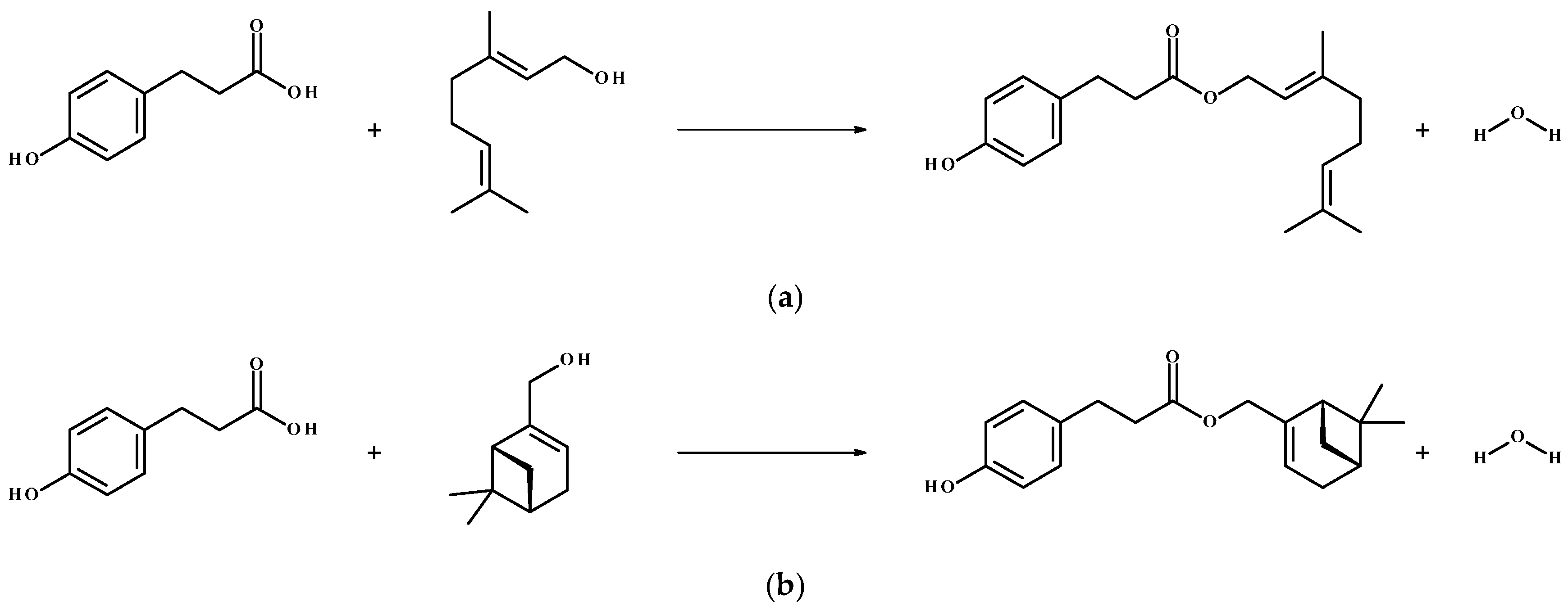
Lipase-catalyzed esterification of phloretic acid with geraniol or myrtenol was carried out using the commercial immobilized CALB preparation described in
Section 2.1. The corresponding reaction schemes are presented in
Figure 1. Phloretic acid (0.005 mol) and the corresponding terpenoid alcohol (0.0075 mol) were introduced into 100 mL Erlenmeyer flasks to obtain an acid-to-alcohol molar ratio of 1:1.5. The commercial immobilized CALB preparation was added at 10% of the total substrate mass, corresponding to approximately 0.199 g for the reaction with geraniol and 0.197 g for the reaction with myrtenol. These values refer to the total mass of the commercial immobilized preparation and not to the mass of pure enzyme. The reaction medium consisted of 30 mL of an MTBE/isooctane mixture (1:1,
v/
v). This solvent composition was selected based on preliminary work as a practical compromise between substrate solubility and the catalytic performance of the immobilized CALB preparation. The solvent ratio was not systematically re-optimized in the present study. The flasks were fitted with glass stoppers, additionally sealed with Parafilm, and incubated in an orbital shaker at 37 °C and 250 rpm for 120 h. After completion of the reaction, the immobilized biocatalyst preparation was removed by filtration, and the solvent was evaporated under reduced pressure. Yield values were obtained from three independently prepared reaction batches, each of which was subjected separately to the same work-up, chromatographic isolation, and yield determination procedure. No enzyme-free reaction control was performed; therefore, uncatalyzed background conversion under the applied conditions was not experimentally evaluated.
2.4. Chromatographic Isolation and 1H NMR Characterization of the Ester Products
After removal of the reaction solvent, the crude reaction mixture was treated with 10 mL of 8% aqueous sodium bicarbonate and 10 mL of dichloromethane and stirred for 30 min. After phase separation, the aqueous phase was extracted twice more with 10 mL portions of dichloromethane. The combined organic phases were washed with distilled water and dried over approximately 2 g of anhydrous magnesium sulfate for 10 min. The drying agent was removed by filtration, and the organic phase was concentrated under reduced pressure. The resulting crude product was subjected to silica-gel column chromatography using a glass column measuring 400 mm in length and 20 mm in internal diameter, with a nominal capacity of 125 mL. Approximately 35 g of silica gel 60 (0.040–0.063 mm; 230–400 mesh) was used as the stationary phase. Dichloromethane was used as the isocratic eluent. Fractions of 10 mL were collected and monitored by thin-layer chromatography using dichloromethane as the mobile phase. The TLC plates were visualized under UV light at 254 nm. Fractions exhibiting the TLC profile assigned to the target ester were combined and concentrated under reduced pressure to obtain the isolated ester products. G4HPP and M4HPP were obtained as viscous liquids. Based on the mean isolated yields, the corresponding mean isolated product masses were approximately 0.991 g for G4HPP and 0.819 g for M4HPP. The isolated products were weighed and used to determine the yield (Equation (1)):
where m
isolated product is the mass of the isolated ester product, and m
theoretical product is the theoretical mass of the product calculated from the stoichiometry of the reaction.
The isolated ester products were characterized by
1H NMR spectroscopy. Spectra were recorded on a Bruker AVANCE 300 MHz spectrometer (Bruker, Billerica, MA, USA) using CDCl
3 as the solvent. The obtained spectroscopic data were consistent with the proposed structures. Complete spectra, integrations, enlarged spectral regions, and coupling constants for clearly resolved signals are provided in the
Supplementary Materials. Proton chemical shifts in the obtained esters are reported below as δ values (ppm) relative to tetramethylsilane (TMS) as the internal standard.
Geranyl 3-(4-hydroxyphenyl)propanoate (G4HPP):
1H NMR (300 MHz, CDCl3) δ 7.06 (d, J = 8.4 Hz, 2H, ArH), 6.74 (d, J = 8.7 Hz, 2H, ArH), 5.31 (m, 1H, CH=), 5.08 (m, 1H, CH=), 4.80 (s, 1H, OH), 4.59 (d, J = 7.2 Hz, 2H, CH2OCO), 2.88 (t, J = 7.8 Hz, 2H, ArCH2), 2.59 (t, J = 7.7 Hz, 2H, CH2COO), 2.11–2.00 (m, 4H, 2 × allylic CH2), 1.69 (s, 6H, 2 × CH3), 1.60 (s, 3H, CH3).
Myrtenyl 3-(4-hydroxyphenyl)propanoate (M4HPP):
1H NMR (300 MHz, CDCl3) δ 7.06 (d, J = 8.4 Hz, 2H, ArH), 6.75 (d, J = 8.7 Hz, 2H, ArH), 5.52 (m, 1H, CH=), 4.72 (br s, 1H, OH), 4.45–4.44 (m, 2H, CH2OCO), 2.88 (t, J = 7.8 Hz, 2H, ArCH2), 2.59 (t, J = 7.7 Hz, 2H, CH2COO), 2.42–2.02 (m, 5H), 1.28 (s, 3H, CH3), 1.17 (m, 1H), 0.81 (s, 3H, CH3).
2.5. Green Metrics and Process Descriptors
Atom economy (AE, Equation (2)) was calculated as:
where MW
product is the molecular weight of the ester product and ∑MW
reactants is the sum of molecular weights of the stoichiometric reactants participating in the esterification reaction.
Reaction mass efficiency (RME) was calculated as follows:
where m
isolated product is the mass of the isolated ester product and ∑m
reactants is the total mass of stoichiometric reactants charged into the reaction.
Catalyst productivity was expressed as micromoles of isolated product obtained per gram of immobilized
C. antarctica lipase B (CALB) preparation per hour and was calculated according to Equation (4):
where n
product is the amount of isolated ester expressed in micromoles, m
CALB is the mass of immobilized enzyme preparation used in the reaction, and t is the reaction time.
Partial reaction-stage process mass intensity (PMI, Equation (5)) was calculated as follows:
where ∑m
all input materials is the total mass of materials included in the reaction-stage calculation and m
product is the mass of isolated product. In the present study, partial reaction-stage PMI was calculated using the masses of the stoichiometric reactants, the commercial immobilized CALB preparation, and the reaction solvents. The aqueous sodium bicarbonate solution, dichloromethane used during work-up, anhydrous magnesium sulfate, silica gel, and chromatographic eluent were not included. No solvent-recovery credit was applied, and the reaction solvents included in the calculation were conservatively assumed to become waste.
The partial reaction-stage E-factor (Equation (6)) was calculated as:
where m
waste is the difference between the total mass of the materials included in the reaction-stage calculation and the mass of the isolated product. Because the same system boundaries were applied to both metrics, the partial reaction-stage E-factor was numerically equivalent to the partial reaction-stage PMI minus one.
2.6. Antimicrobial Activity Assay
The antimicrobial activity of phloretic acid, geraniol, myrtenol, and their corresponding synthesized esters was evaluated using an adapted broth microdilution procedure in sterile 96-well microplates. Individual stock solutions of each tested compound were prepared in ethanol at a concentration of 640 mM. To prepare the highest test concentration, 10 µL of the corresponding ethanolic stock solution was mixed with 90 µL of the appropriate liquid growth medium. An 11-step twofold dilution series was then prepared. Each well initially contained 100 µL of the corresponding compound dilution. Subsequently, 10 µL of microbial inoculum was added, resulting in a final well volume of 110 µL.
Following inoculation, the final compound concentration series was 58.18, 29.09, 14.55, 7.27, 3.64, 1.82, 0.909, 0.455, 0.227, 0.114, and 0.0568 mM. The maximum final ethanol concentration in the wells was 9.09% (v/v). The vehicle control contained ethanol at 9.09% (v/v), corresponding to the maximum concentration present in the test wells, and showed growth comparable to the untreated growth control. Microbial suspensions were prepared from fresh cultures and adjusted turbidimetrically to a 0.5 McFarland standard. The suspensions were then diluted tenfold in the appropriate growth medium, and 10 µL of the diluted suspension was added to each test well. The final viable inoculum density was not independently verified by colony counting.
Bacterial strains were tested in Mueller–Hinton broth and incubated at 37 °C for 16–18 h. Yeast strains were tested in Sabouraud broth and incubated at 28 °C for 48 h. MIC was determined visually as the lowest nominal concentration of the tested compound at which no visible microbial growth was observed relative to the corresponding growth control. Growth controls containing inoculated medium without the tested compound, sterility controls containing uninoculated medium, vehicle controls, and compound-only controls containing medium and the tested compound without microbial inoculum were included. No reference antibiotic or antifungal agent was included. Occasional compound-related turbidity, precipitation, or surface-film formation was observed during the assays, although their occurrence was not systematically recorded for individual compound–concentration combinations. Compound-only controls were used to distinguish compound-related optical effects from visible microbial growth during visual endpoint assessment. Because the extent of compound dissolution or dispersion in the assay media was not quantified, the reported concentrations are presented as nominal assay concentrations. All assays were conducted in three independent biological replicates. Identical MIC and operational MMC endpoints were obtained in all three replicates for every compound–microorganism combination. Therefore, the values reported represent both the modal endpoints and the complete observed replicate ranges, with no between-replicate variation.
Following MIC determination, 3 µL aliquots from wells showing no visible microbial growth were transferred directly onto the corresponding agar medium without prior dilution or chemical neutralization. The plates were incubated under the microorganism-specific conditions described above. The operational minimum microbicidal concentration (MMC) was defined as the lowest nominal compound concentration from which no colonies were recovered. Because samples were plated without prior dilution or neutralization, antimicrobial carry-over onto the agar surface cannot be excluded.
2.7. Time-Kill Assay and Growth Curves
The time-kill assay was conducted with geranyl 3-(4-hydroxyphenyl)propanoate (G4HPP) against S. aureus PCM 2054. G4HPP was selected for further kinetic characterization because of its higher isolated yield and a slightly lower geometric mean MIC across the tested microorganism panel. Experiments were conducted in 500 mL flat-bottom round flasks containing 100 mL of tryptic soy broth (TSB). A separate 100 mM stock solution of G4HPP was prepared in ethanol, corresponding to 30.24 mg/mL. Aliquots of 250 and 500 µL of this stock solution were added to obtain final G4HPP concentrations of 0.25 and 0.50 mM, corresponding to 75.6 and 151.2 mg/L, respectively. The corresponding final ethanol concentrations were 0.25 and 0.50% (v/v). A bacterial suspension prepared from a fresh culture was adjusted turbidimetrically to a 0.5 McFarland standard. One milliliter of the undiluted suspension was added to each experimental culture. The volume of TSB was adjusted so that the final culture volume, including the G4HPP stock solution and bacterial inoculum, was 100 mL. The viable cell count measured immediately after inoculation was approximately 6.32 log CFU/mL. An untreated bacterial culture and an ethanol vehicle control containing 0.50% (v/v) ethanol, corresponding to the maximum solvent concentration used in the G4HPP-treated cultures, were incubated under identical conditions. The vehicle control showed growth comparable to that of the untreated control. The MIC of G4HPP was not independently determined in TSB; therefore, the time-kill conditions are reported exclusively as the absolute concentrations of 0.25 and 0.50 mM.
Cultures were incubated aerobically at 37 °C with orbital shaking at 150 rpm. Samples were collected at 0, 2, 4, 8, and 24 h. At each sampling time, decimal serial dilutions were prepared in sterile physiological saline. Aliquots of 1 mL were analyzed using the pour-plate method on tryptic soy agar (TSA). One plate was prepared for each selected dilution from each biological replicate. Plates were incubated at 37 °C for 16–18 h, after which colonies were counted. Viable cell counts were expressed as log CFU/mL.
In parallel, bacterial growth was monitored by measuring optical density at 600 nm. Samples collected at the same time points were transferred to cuvettes and measured spectrophotometrically. TSB containing G4HPP without bacterial inoculum and TSB containing the corresponding amount of ethanol without bacteria served as optical blanks. These controls showed no detectable contribution to OD600 under the conditions used. Nevertheless, viable cell counts were considered the primary endpoint, whereas OD600 served as a complementary indicator of culture turbidity. All experiments were performed in three independent biological replicates, and the results are presented as mean ± SD.
2.8. In Silico Physicochemical Analysis
Physicochemical descriptors of phloretic acid, geraniol, myrtenol, and their corresponding esters were predicted using the SwissADME web tool [
23]. The descriptors analyzed included molecular weight (MW), number of rotatable bonds, topological polar surface area (TPSA), Consensus Log P, ESOL Log S, and ESOL solubility class. These parameters were used to support the interpretation of the observed antimicrobial activity and to assess changes in lipophilicity, polarity, and predicted aqueous solubility associated with esterification.
2.9. Calculations and Descriptive Analysis
The operational MMC/MIC ratio (Equation (7)) was calculated for each compound–microorganism pair as follows:
where MIC is the nominal minimum inhibitory concentration and MMC is the operational minimum microbicidal concentration determined under the applied spot-plating conditions. The operational MMC/MIC ratios were calculated solely as descriptive numerical parameters. Because MMC was determined by direct spot plating without prior dilution or chemical neutralization, potential antimicrobial carry-over cannot be excluded. Therefore, the calculated ratios were not used to assign definitive microbicidal or microbiostatic classifications. When the operational MMC exceeded the highest final concentration evaluated, namely 58.18 mM, the corresponding MMC/MIC ratio was expressed as a lower-bound inequality rather than as an exact numerical value.
To summarize the antimicrobial activity of each compound across all tested microorganisms, the geometric mean MIC (Equation (8)) was calculated as follows:
where n is the number of tested microorganisms and MIC
i is the MIC value obtained for the i-th microorganism.
The effect of esterification on antimicrobial activity was expressed as fold change in MIC and calculated according to Equation (9):
In this study, fold change was calculated relative to the parent terpenoid alcohol and, separately, relative to phloretic acid. Values above 1 indicated improved activity after esterification, values equal to 1 indicated no change, and values below 1 indicated reduced activity.
Antimicrobial activity against
S. aureus was additionally expressed as pMIC (Equation (10)), calculated as the negative decimal logarithm of MIC values expressed in molar concentration (mol/L):
For descriptive summarization of the mean time-kill trajectories, the reduction in viable cell counts was expressed relative to the initial inoculum according to Equation (11):
where R
t is the log reduction at time t, logCFU
0 is the mean initial viable count, and logCFU
t is the mean viable count at time t.
The time required to reach a 3-log reduction (
t3 log) was estimated by linear interpolation between two adjacent time points surrounding the 3-log reduction threshold according to Equation (12):
where t
1 and t
2 are consecutive sampling times, and R
1 and R
2 are the corresponding log reduction values. Because
t3 log was estimated from the mean viable-count trajectory rather than calculated separately for each biological replicate, it was treated solely as a descriptive estimate and was reported to one decimal place.
The overall viable-count trajectory was summarized using the area under the time-kill curve (AUC), calculated by the trapezoidal rule according to Equation (13):
where y
i is the mean viable count expressed as log CFU/mL at time t. AUC values are reported as (log
10CFU/mL)⋅h.
The percentage reduction in the area under the time-kill curve relative to the untreated control was calculated according to Equation (14):
where AUC
control is the AUC calculated from the mean viable-count trajectory of the untreated control and AUC
treated is the AUC calculated from the corresponding mean trajectory of the G4HPP-treated culture.
Log reductions, t3 log, AUC values, and percentage AUC reductions were calculated from the mean viable-count data obtained in three independent biological experiments. These parameters were used as descriptive summaries of the mean kinetic trajectories and were not subjected to inferential statistical comparison between the tested concentrations. A formal detection limit was not prospectively established; therefore, no censoring or substitution based on an assumed detection threshold was applied.
2.10. Statistical Analysis
All quantitative data are presented as mean ± standard deviation (SD), where applicable. Differences in isolated yields among the synthesized esters were evaluated using one-way analysis of variance (ANOVA) with Tukey’s post hoc test. Differences were considered statistically significant at p < 0.05. Statistical analyses were performed using Statistica 13.3 (TIBCO Software Inc., Palo Alto, CA, USA).
Spearman’s correlation coefficients were calculated solely to visualize rank-order patterns between selected predicted physicochemical descriptors and antimicrobial endpoints within the investigated dataset. The analysis included only five structurally related compounds that did not constitute an independent or systematically varied chemical series, and several antimicrobial endpoints contained tied values. No correction for multiple comparisons was applied. Therefore, the coefficients were treated exclusively as descriptive, dataset-specific values and were not used to infer general associations, causal relationships, predictive performance, quantitative structure–activity relationships, or antimicrobial mechanisms. The graphical presentation of the Spearman correlation matrix was prepared using the online platform ChiPlot [
24].
3. Results and Discussion
In recent years, considerable attention has been devoted to hydroxycinnamic acids, the synthesis of their esters and other derivatives, and the evaluation of their biological activity [
25,
26,
27]. In contrast, other phenolic acids, such as phloretic acid, have attracted much less interest, even though their chemical structure suggests potential antioxidant and antimicrobial properties. In the present study, phloretic acid esters with selected terpenoid alcohols were synthesized via lipase-catalyzed esterification. The selection of geraniol and myrtenol as substrates was based on their natural origin and suitability for biocatalytic esterification, because primary alcohols are generally more favorable substrates for lipase-catalyzed esterification than secondary or tertiary alcohols [
28].
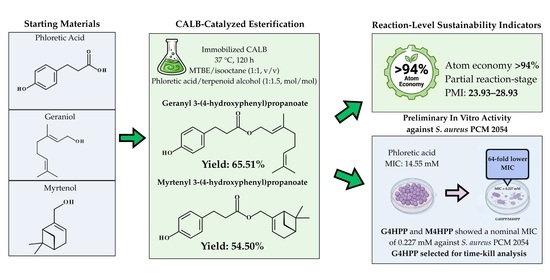
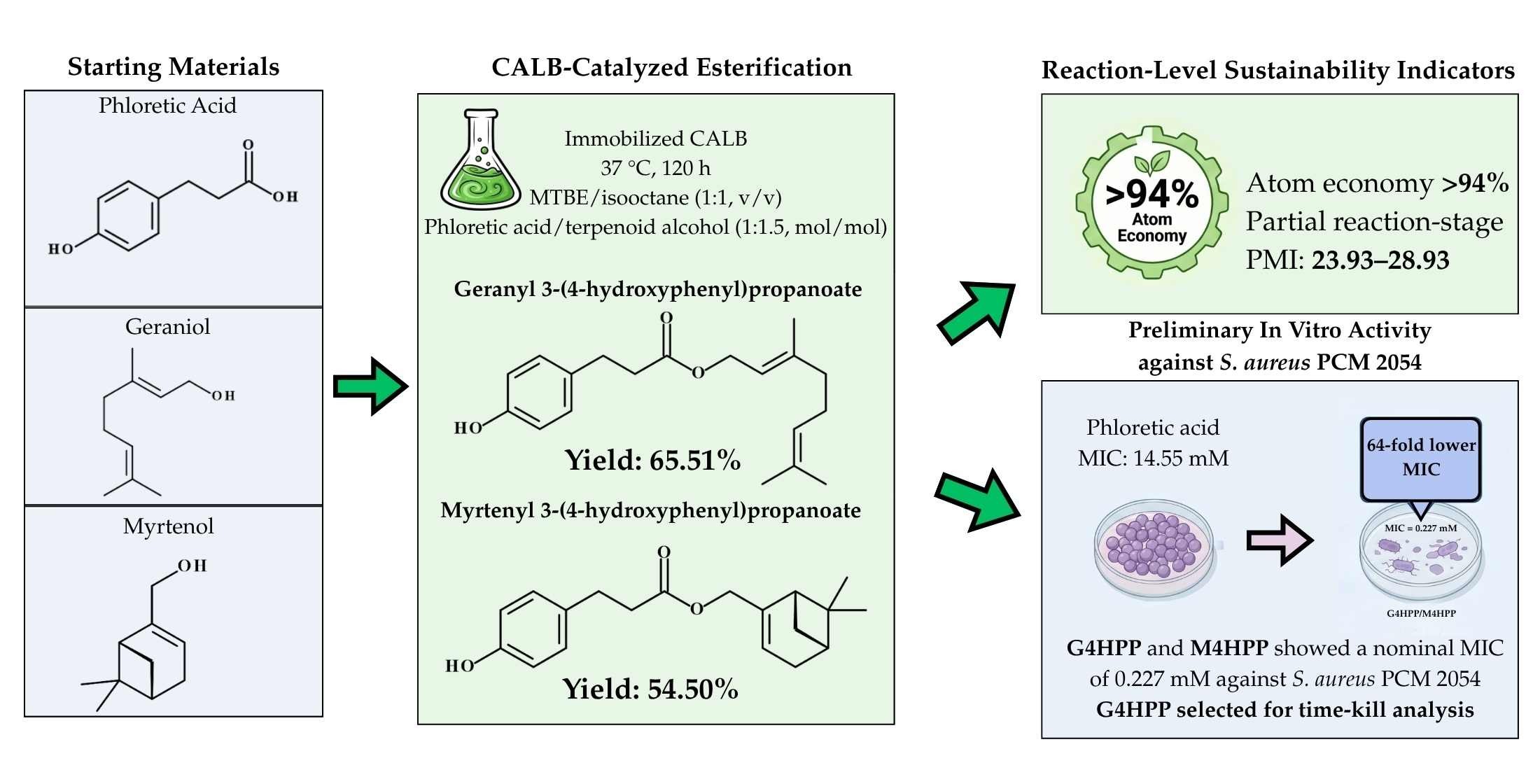
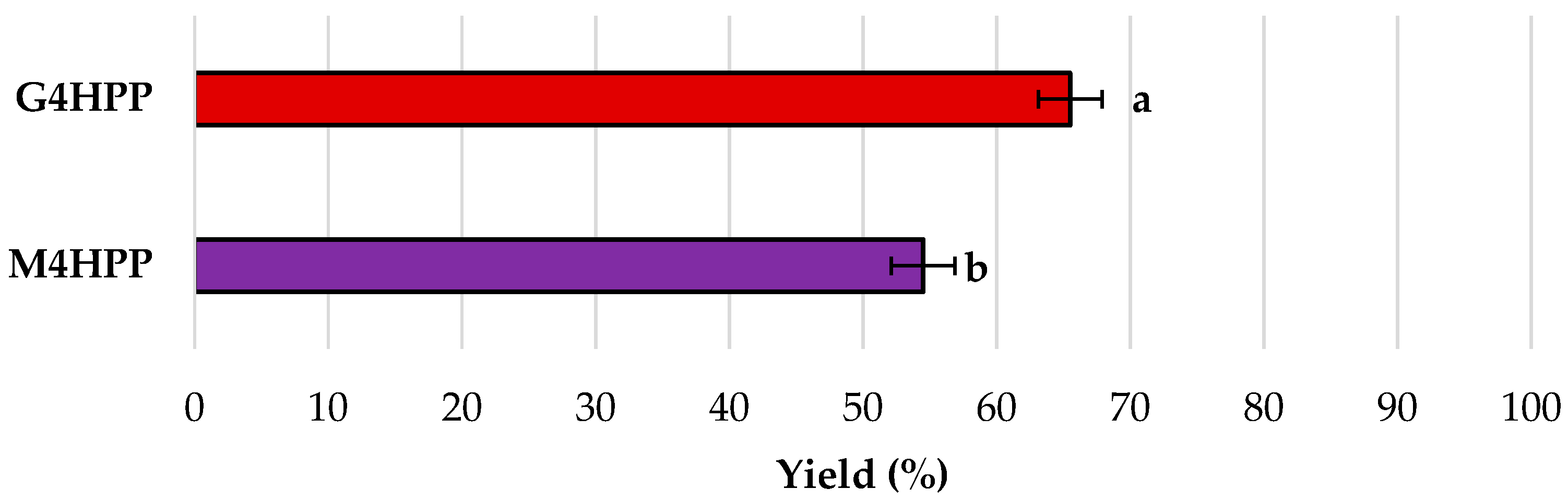
As shown in
Figure 2, both esters were obtained in moderate isolated yields. Geranyl 3-(4-hydroxyphenyl)propanoate (G4HPP) was obtained in a significantly higher yield than myrtenyl 3-(4-hydroxyphenyl)propanoate (M4HPP), at 65.51 ± 1.85% and 54.50 ± 2.39%, respectively. Under the applied reaction and isolation conditions, geraniol afforded a higher mean isolated ester yield than myrtenol. The higher yield of G4HPP may be related to the more flexible acyclic structure of geraniol, which could facilitate enzyme–substrate interactions compared with the more rigid bicyclic structure of myrtenol. This interpretation agrees with reports that CALB-catalyzed transformations are affected by steric factors and that bulky substituents can limit efficient binding in the lipase stereospecificity pocket [
28].
Crystallographic studies of CALB have revealed a relatively restricted active-site entrance and a stereospecific alcohol-binding pocket, indicating that substrate geometry and productive positioning are key determinants of catalytic performance [
29,
30]. Structural studies have also demonstrated conformational mobility in the helices surrounding the active-site entrance, which may influence substrate access to the catalytic pocket [
31]. The flexible acyclic structure of geraniol may allow it to sample a broader range of conformations and facilitate productive positioning of its hydroxyl group near the catalytic center. In contrast, the rigid bicyclic framework of myrtenol may limit the number of accessible productive orientations and impose greater steric constraints during binding. However, no docking, molecular dynamics simulations, or enzyme–substrate structural analyses were performed for these alcohols in the present study. This explanation should therefore be regarded as a plausible structural interpretation rather than a demonstrated binding mechanism. Moreover, because the reported values represent isolated yields, differences in product recovery and chromatographic isolation may also have contributed to the observed results.
A preliminary evaluation of the synthesis using green metrics is presented in
Table 1. In both cases, the calculated atom economy exceeded 94%, reflecting the favorable stoichiometry of the esterification reaction. However, the remaining metrics revealed differences between the two esters. G4HPP showed a higher reaction mass efficiency (49.75%) than M4HPP (41.52%), consistent with its higher isolated yield. Similarly, catalyst productivity was higher for G4HPP (136.40 µmol/g immobilized CALB preparation/h) than for M4HPP (113.46 µmol/g immobilized CALB preparation/h), indicating more efficient use of the biocatalyst in the synthesis of the geranyl ester.
The calculated partial reaction-stage mass metrics were lower for G4HPP than for M4HPP. The partial reaction-stage PMI values were 23.93 and 28.93, and the corresponding partial E-factor values were 22.93 and 27.94, respectively. These differences primarily reflected the higher isolated yield of G4HPP under otherwise comparable reaction conditions. These values should not be interpreted as a complete sustainability assessment because they exclude the aqueous work-up, extraction, drying, and chromatographic isolation stages. They also do not account for solvent hazard, energy consumption, catalyst reuse, or potential solvent recovery. At the same time, the obtained PMI and E-factor values indicate that, despite the advantages of the enzymatic route, the current protocol still involves substantial material input, mainly due to the use of organic solvents. From a sustainability perspective, the relevance of the present approach should be assessed primarily at the reaction-concept level. Green chemistry principles provide an important conceptual framework, but several authors have emphasized that the greenness of a process should be supported by quantitative metrics rather than inferred solely from the use of a catalyst or bio-based substrates. In particular, mass-based indicators such as PMI and E-factor are widely used to evaluate process material intensity and waste generation and to guide future optimization [
32,
33].
In this context, the lipase-catalyzed synthesis described here remains relevant to sustainability because it combines bio-based substrates with a biocatalytic route performed under mild reaction conditions. Similar sustainability-oriented studies on enzymatic esterification have shown that biocatalytic processes can be framed as biocatalytic alternatives that may offer operational advantages under appropriately optimized process conditions, especially when they reduce catalyst-related hazards, operate under milder conditions, and limit by-product formation [
34,
35]. At the same time, the literature shows that the actual green profile of such processes depends strongly on the complete process design, including solvent use, work-up, and purification strategy [
34].
In contrast to recent examples of biocatalytic ester synthesis performed in solvent-free media or in recyclable reaction systems designed to reduce downstream waste, the present procedure still relies on organic solvents and chromatographic purification. Therefore, while the reaction itself is conceptually aligned with green catalysis, additional improvements in solvent selection, solvent loading, and downstream processing would be necessary to strengthen the method’s overall sustainability profile.
The antimicrobial activity data in
Table 2 indicate that esterifying phloretic acid with terpenoid alcohols did not uniformly increase activity across all tested microorganisms but instead produced a marked shift in the activity profile. Phloretic acid itself showed only moderate activity, with MIC values ranging from 3.64 to 14.55 mM, whereas the parent terpenoid alcohols displayed distinct activity patterns. Geraniol was the most active against the tested yeasts, with MIC values of 0.227 mM against
Y. lipolytica and 0.455 mM against
R. mucilaginosa, while myrtenol showed a broader but overall weaker activity profile. In contrast, esterification improved antibacterial activity against
S. aureus under the tested conditions. Both geranyl 3-(4-hydroxyphenyl)propanoate and myrtenyl 3-(4-hydroxyphenyl)propanoate exhibited identical MIC and MMC values of 0.227 and 0.455 mM, respectively, representing the highest anti-
S. aureus activity observed in the tested group.
The antimicrobial results should also be considered in light of the limited aqueous solubility predicted for the synthesized esters. Although ethanol vehicle controls and compound-only controls were included, complete dissolution of the compounds in the assay media was not experimentally demonstrated. Occasional turbidity, precipitation, or surface-film formation was observed during the assays, but these effects were not systematically documented for individual compound–concentration combinations. Therefore, the reported MIC and MMC values refer to nominal concentrations, and the freely dissolved concentrations may have been lower than the amounts added to the wells. Limited and variable compound dispersion may also have affected the visual assessment of microbial growth.
At the same time, the esters did not outperform the parent compounds against all microorganisms. For B. cereus, no improvement was observed after esterification, as all terpenoid-derived compounds showed the same MIC of 3.64 mM and MMC values above 58.18 mM. Likewise, the antifungal activity of geraniol decreased after esterification, particularly against Y. lipolytica, where the MIC increased from 0.227 mM for geraniol to 1.82 mM for its phloretic acid ester. These findings indicate that esterification did not generally enhance antimicrobial potency but produced a microorganism-dependent change in the activity profile, with the most pronounced improvement observed against the tested S. aureus PCM 2054 strain.
Esterification produced the largest decrease in nominal MIC against
S. aureus PCM 2054, whereas no comparable improvement was observed against
B. cereus PCM 482. This difference indicates that the observed response cannot be explained solely by the Gram-positive character of the tested microorganisms or by the absence of a lipopolysaccharide-containing outer membrane. In
S. aureus, wall teichoic acids contribute to cell-surface physicochemical properties and can influence interactions with and susceptibility to lipophilic antimicrobial compounds [
19,
36]. By contrast, members of the
B. cereus group possess structurally diverse secondary cell-wall polysaccharides, and some strains additionally form S-layers whose protein composition can modify surface charge, hydrophilicity, and interactions with the surrounding environment [
37,
38]. These differences may influence the adsorption and availability of lipophilic compounds at the bacterial surface, but they do not provide a direct mechanistic explanation for the susceptibility pattern observed in the present study.
The increased predicted lipophilicity of G4HPP and M4HPP may promote association with the cytoplasmic membrane once the compounds reach it. However, increased lipophilicity was also accompanied by lower predicted aqueous solubility, which may reduce compound dispersion and the freely available concentration in the assay medium. Lipophilicity alone therefore cannot account for the different responses of S. aureus and B. cereus. The present findings should be interpreted as a microorganism-dependent activity pattern rather than as evidence of general selectivity toward Gram-positive bacteria.
The mechanism underlying the greater susceptibility of the tested S. aureus strain was not examined experimentally. Confirmation would require studies of cellular uptake, membrane permeabilization, membrane potential, leakage of intracellular components, and additional strains of both species.
The operational MMC/MIC ratios summarized in
Table 3 ranged from 1 to 4 for most compound–microorganism combinations. For
B. cereus PCM 482, the operational MMC exceeded the highest concentration evaluated for all tested compounds, and the corresponding ratios were expressed as lower-bound inequalities. Because the MMC procedure involved direct spot plating without prior dilution or neutralization, these ratios are presented only as descriptive numerical parameters and do not establish whether the observed effects were definitively microbicidal or microbiostatic.
A contrasting activity pattern was observed against
Y. lipolytica, for which esterification was associated with higher nominal MIC values than those of the corresponding parent compounds. This observation further indicates that increased lipophilicity does not uniformly enhance antimicrobial activity. The yeast cell wall is a multilayered, cross-linked structure composed predominantly of glucans, mannoproteins, and chitin, which surrounds the plasma membrane [
39]. In
Y. lipolytica, glucan-linked and glycosylated cell-wall proteins additionally contribute to the organization and surface properties of the cell envelope [
40].
Increased lipophilicity may favor partitioning into the plasma membrane once a compound reaches it. However, esterification also increased molecular size and predicted lipophilicity while decreasing polarity and predicted aqueous solubility. These changes may have reduced the dispersion and freely dissolved concentrations of G4HPP and M4HPP in the aqueous assay medium, thereby limiting their availability at the yeast plasma membrane. Studies of homologous phenolic esters have similarly shown that antifungal activity does not increase continuously with lipophilicity and may exhibit a microorganism-dependent optimum [
41].
Nevertheless, compound uptake, binding to the yeast cell wall, membrane accumulation, and membrane damage were not evaluated in the present study. Therefore, reduced aqueous availability and restricted access to the plasma membrane should be regarded as possible explanations rather than demonstrated mechanisms.
However, the most informative parameter was the geometric mean MIC, which highlighted differences in overall activity profiles. Geraniol showed the lowest geometric mean MIC (1.62 mM), followed by geranyl ester (1.82 mM), whereas phloretic acid displayed the weakest overall activity (8.16 mM). This confirms that although geraniol retained the strongest broad-spectrum activity, particularly owing to its pronounced antifungal effect, esterification yielded derivatives with more selective antibacterial activity.
The MIC ranges in
Table 3 also reflect this shift in selectivity. Geraniol showed the broadest activity range at lower concentrations (0.227–3.64 mM). In contrast, both esters ranged from 0.227 to 7.27 mM, indicating that they retained high activity against selected strains but did not universally improve. The combined analysis of
Table 2 and
Table 3 shows that phloretic acid esterification with terpenoid alcohols is best interpreted not as a strategy for broadly enhancing antimicrobial activity, but as a means of modifying microorganism-dependent activity profiles. Within the microbial panel evaluated, the most pronounced increase was observed against
S. aureus PCM 2054. Among the two esters, the geranyl derivative was especially attractive as a lead compound because it combined the same high anti-
S. aureus potency as the myrtenyl ester with a lower geometric mean MIC and stronger activity against the tested yeasts.
Such a pattern aligns with earlier reports indicating that esterification of phenolic acids may enhance antimicrobial activity by increasing lipophilicity and, consequently, strengthening interactions with microbial cell envelopes. In a previous study on geranyl 4-hydroxyphenylpropanoate, esterification of 4-hydroxyphenylpropanoic acid with geraniol also increased antibacterial activity relative to the precursor acid [
22]. In this context, the present results suggest that lipophilization of phloretic acid was accompanied by greater activity against the tested
S. aureus PCM 2054 strain, which might be associated with altered interactions between the more hydrophobic ester derivatives and the bacterial cell envelope [
42,
43]. However, the absence of a comparable improvement against
B. cereus PCM 482 indicates that the observed effect cannot be generalized to Gram-positive bacteria and cannot be explained by Gram classification alone.
As shown in
Table 4, the effect of esterification varied strongly with the reference compound and the tested microorganism. Relative to the parent terpenoid alcohols, both esters produced the most pronounced improvement against
S. aureus, with a 16-fold decrease in MIC, whereas no improvement was observed against
B. cereus, and activity was reduced in some other cases, particularly for the geranyl ester against yeasts. In contrast, relative to phloretic acid, both esters showed a 64-fold improvement against
S. aureus and a 2-fold improvement against
B. cereus. The geranyl ester also showed greater gains against the tested yeasts than the myrtenyl ester. These results indicate that esterification did not produce a universal increase in antimicrobial potency. Instead, the largest decrease in MIC within the tested microbial panel was observed against
S. aureus PCM 2054.
The selected physicochemical descriptors predicted using SwissADME (
Table 5) showed that esterification of phloretic acid with terpenoid alcohols markedly altered the molecular profiles of the resulting derivatives. Compared with the parent compounds, both esters had substantially higher molecular weights and more rotatable bonds, reflecting increased structural complexity. At the same time, esterification increased lipophilicity, as indicated by higher Log P values, and decreased predicted aqueous solubility, as reflected by lower Log S values.
The predicted decrease in aqueous solubility provides possible physicochemical context for the antimicrobial results but cannot be directly related to the nominal MIC values because the dissolved compound concentrations were not experimentally determined.
These changes align with the biological data and suggest that esterification did not merely produce larger molecules but shifted the balance between polarity and hydrophobicity in a way that may influence microbial interactions. In particular, the two esters showed the lowest measured MIC values against S. aureus PCM 2054 among the tested compounds and also displayed higher predicted Consensus Log P values than phloretic acid and the parent alcohols. Thus, esterification clearly shifted the compounds toward a more hydrophobic physicochemical profile.
Geraniol retained the lowest geometric mean MIC value, which was largely driven by its pronounced antifungal activity, even though its predicted lipophilicity was lower than that of the esters. This indicates that an increase in Log P alone did not guarantee stronger activity across all tested microorganisms. Instead, the physicochemical changes introduced by esterification appear to have favored a more selective antibacterial profile, particularly against S. aureus, rather than a general enhancement of antimicrobial potency.
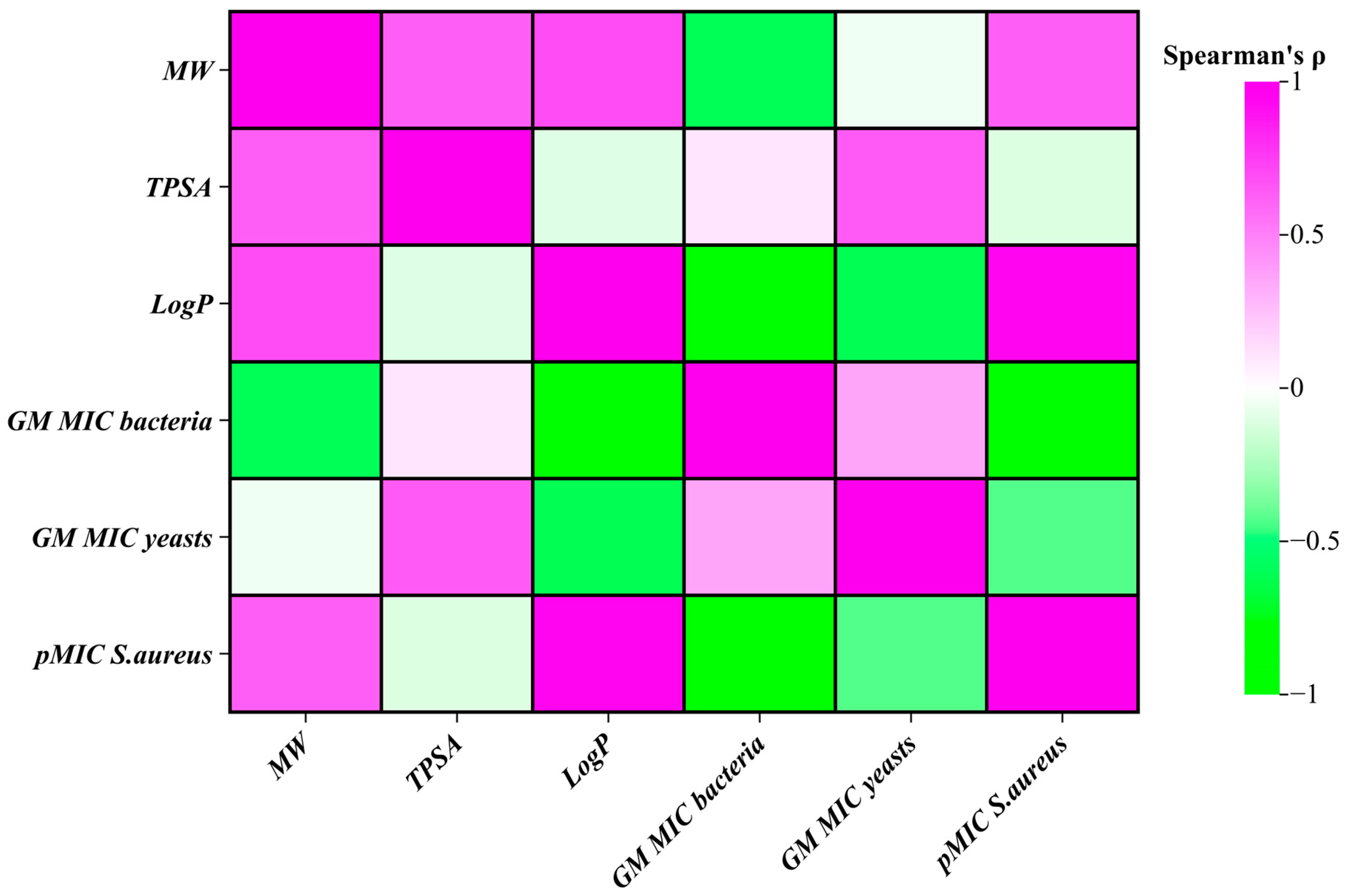
An exploratory Spearman analysis was used to visualize rank-order patterns between selected predicted physicochemical descriptors and antimicrobial endpoints within the investigated five-compound dataset (
Figure 3). The largest absolute coefficients involved Consensus Log P, pMIC against
S. aureus PCM 2054, and the geometric mean MIC for bacteria. Consensus Log P showed a coefficient of ρ = 0.949 with pMIC against
S. aureus PCM 2054, and a coefficient of ρ = −0.900 with the geometric mean MIC for bacteria. These values describe only the ordering of the five compounds included in the present dataset. Because the compound set was very small, structurally related, and not systematically varied, and because several antimicrobial endpoints contained tied values, the coefficients do not establish a general physicochemical–activity relationship, predictive model, causal association, or antimicrobial mechanism.
Within this five-compound dataset, the coefficient between Consensus Log P and the geometric mean MIC for yeasts was numerically smaller in absolute magnitude (ρ = −0.616) than the coefficients involving the bacterial endpoints. However, these numerical differences should not be interpreted as evidence that lipophilicity is more closely related to antibacterial than antifungal activity, because the analysis lacks sufficient sample size and statistical power for such comparisons.
Lipophilization of phenolic compounds has been recognized as a simple and effective strategy for modifying their physicochemical and biological properties, particularly by improving their performance in hydrophobic systems and altering their antimicrobial behavior [
15]. As highlighted in the review by Arzola-Rodríguez et al. [
44], phenolipids are amphiphilic derivatives in which the phenolic core retains the beneficial biological properties of the parent compound, while the lipophilic moiety enables stronger interactions with nonpolar environments, including cellular membranes. This interpretation is supported by the experimental study by Ham et al. [
45], which showed that lipophilizing
p-coumaric and ferulic acids significantly enhanced antimicrobial activity, with MIC values for the corresponding esters decreasing from 64–98 mM for the parent acids to 0.9–12 mM for selected phenolipids. The authors concluded that lipophilization increased antimicrobial activity 80–100-fold, depending on the derivative and the tested microorganism [
45]. In the context of the current study, these reports provide broader literature context for considering lipophilicity as one of several factors that may influence antimicrobial activity. However, the present five-compound dataset does not establish that the increase in predicted lipophilicity caused the observed differences in susceptibility. The antimicrobial changes observed after esterification were microorganism-dependent rather than universal, indicating that predicted lipophilicity alone was insufficient to explain or predict the complete activity profile.
Both terpenoid esters showed the same measured nominal MIC and operational MMC values against S. aureus PCM 2054, namely 0.227 and 0.455 mM, respectively. Therefore, the selection of G4HPP for time-kill analysis was not based on superior activity against the target strain. G4HPP was selected because it was obtained in a higher isolated yield, showed more favorable calculated reaction-stage process descriptors, and had a slightly lower geometric mean MIC across the tested microbial panel than M4HPP (1.82 versus 2.89 mM). These criteria supported its selection for extended kinetic evaluation but should not be interpreted as evidence of a substantially broader antimicrobial spectrum.
As shown in
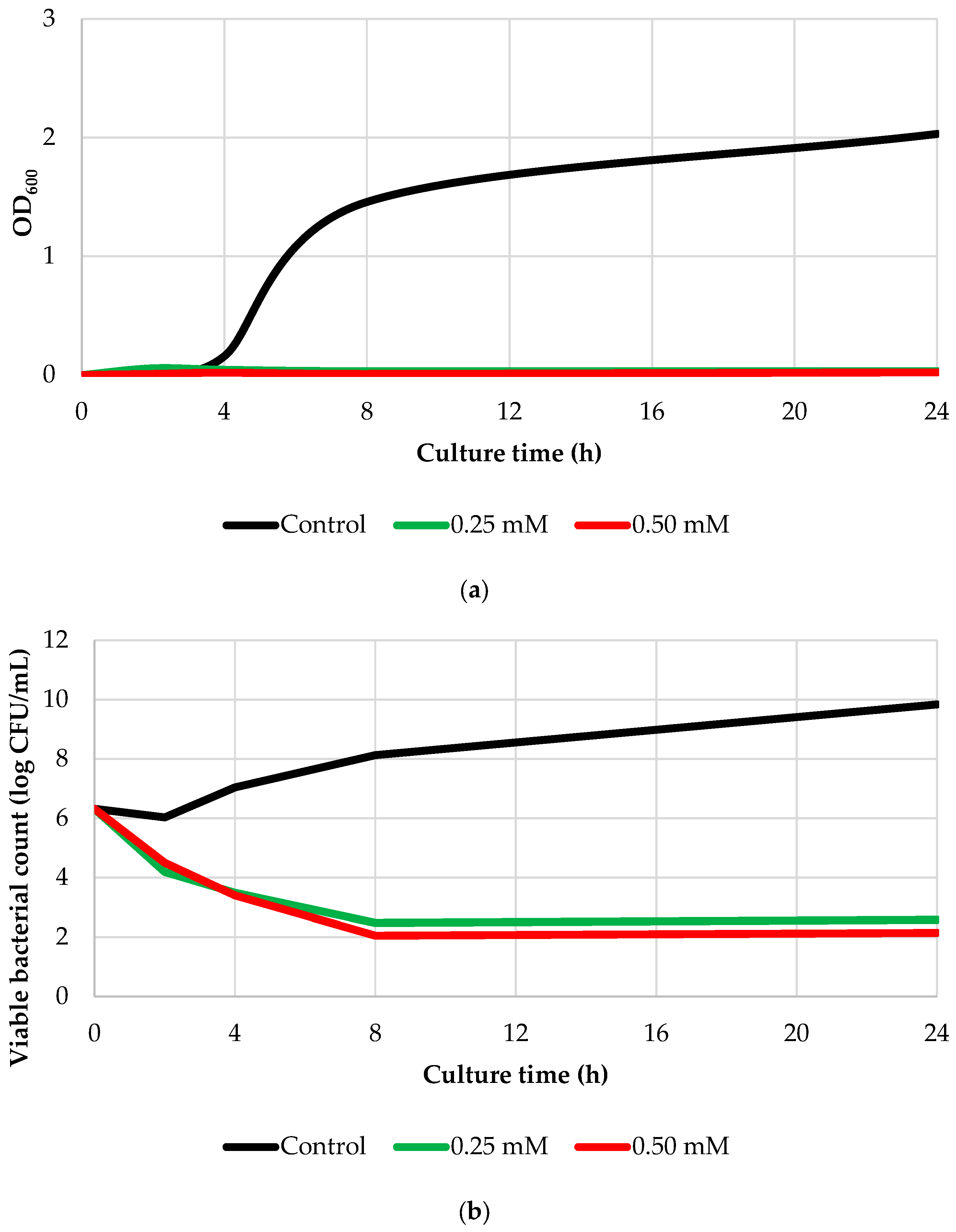
Figure 4a, G4HPP clearly suppressed the growth of
S. aureus PCM 2054, as monitored by optical density measurements. In the untreated control, OD
600 increased progressively over time, indicating normal bacterial growth. In contrast, cultures treated with G4HPP at both 0.25 and 0.50 mM showed a marked reduction in turbidity throughout the experiment, confirming substantial inhibition of biomass development. The inhibitory effect was evident during the early stages of incubation and persisted up to 24 h. Only a small difference was observed between 0.25 and 0.50 mM, suggesting that even the lower concentration was sufficient to substantially suppress bacterial growth under the applied conditions.
The OD600 measurements showed lower culture turbidity in the presence of G4HPP than in the untreated control and were qualitatively consistent with the viable-count results. Compound-only and vehicle blanks did not produce a detectable contribution to OD600 under the applied conditions. Nevertheless, because optical density does not distinguish viable cells from non-viable cells or cellular debris, the CFU measurements were treated as the primary measure of the antibacterial effect.
Viable-count measurements confirmed a pronounced reduction in the number of culturable cells in the G4HPP-treated cultures. At 0.25 mM, the viable count decreased by 2.13, 2.83, and 3.84 log units after 2, 4, and 8 h, respectively, relative to the initial inoculum. At 0.50 mM, the corresponding reductions were 1.82, 2.91, and 4.26 log units. Thus, a reduction exceeding 3 log units was observed between 4 and 8 h at both tested concentrations. Between 8 and 24 h, a small increase in viable counts was observed in both treated cultures. Consequently, the reductions after 24 h were 3.73 log units at 0.25 mM and 4.17 log units at 0.50 mM. Although the viable counts remained substantially below the initial inoculum and the untreated control, this slight increase indicates that the reduction was not completely sustained at the maximum level observed after 8 h.
These kinetic effects are summarized in
Table 6. Based on linear interpolation between the experimental sampling points, the estimated times required to achieve a 3-log reduction were 4.7 h at 0.25 mM and 4.3 h at 0.50 mM. The numerically shorter estimated time at 0.50 mM suggests a modest concentration-related difference under the applied conditions; however, these descriptive estimates were not subjected to confirmatory statistical comparison. In addition, compared with the untreated control, the differences were 5.64 and 7.25 log units at 8 and 24 h, respectively, for 0.25 mM, and 6.07 and 7.68 log units for 0.50 mM. The overall antibacterial effect over time, expressed as AUC, was lower for the treated cultures than for the control, with AUC values of 70.64 and 63.24 (logCFU/mL)⋅h at 0.25 and 0.50 mM, respectively. This corresponded to AUC reductions of 64.58% and 68.29% relative to the untreated control. Taken together, the results shown in
Figure 4 and
Table 6 indicate that G4HPP produced a rapid reduction in viable counts of
S. aureus PCM 2054 under the experimental conditions tested. A ≥3-log reduction was achieved between 4 and 8 h at both tested concentrations. However, a small increase in viable counts was observed between 8 and 24 h, indicating limited regrowth or reduced maintenance of the maximal effect during prolonged incubation. Because compound stability and bacterial persistence were not investigated, the basis of this observation cannot be determined from the present data.
Taken together, the results obtained for G4HPP demonstrate that this ester exerts a rapid and sustained antibacterial effect against
S. aureus. The low MIC and MMC values were further supported by growth-curve and time-kill analyses, which showed marked suppression of bacterial growth, a rapid decline in viable counts, and high AUC reductions relative to the untreated control. These findings characterize the time-dependent activity of G4HPP against the tested
S. aureus PCM 2054 strain but do not demonstrate that esterification improved killing kinetics relative to phloretic acid, geraniol, or M4HPP, because those compounds were not included in the kinetic experiment. Previous studies on other phenolic esters have reported time-dependent antibacterial effects and membrane-related mechanisms. These literature observations provide context for the present findings but do not establish that G4HPP acts through the same mechanism or that its killing kinetics are superior to those of its parent compounds. Experimental studies on alkyl ferulate esters showed that hexyl ferulate exhibited strong antibacterial activity against
Listeria monocytogenes, and both growth curves and time-kill assays confirmed substantial inhibition of bacterial growth, accompanied by cell lysis and membrane disruption [
46]. Likewise, alkyl gallates displayed chain-length-dependent antibacterial activity, with octyl gallate exerting a pronounced bactericidal effect associated with membrane damage and intracellular oxidative stress [
47].
Comparable trends were also reported for rosmarinic acid esters. Suriyarak et al. [
48] demonstrated that esterification of rosmarinic acid markedly altered antimicrobial performance in a chain-length-dependent manner, with dodecyl rosmarinate showing the strongest activity against
S. carnosus. Importantly, time-kill assays revealed that the ester reduced viable counts more efficiently than the parent acid and that its effect varied with the bacterial growth phase. In a subsequent study [
49], the same authors further showed that esterification increased the compound’s affinity for bacterial membranes and reduced its dependence on environmental factors such as pH and salt concentration.
Additional support comes from studies on gallic acid derivatives, in which methyl gallate was evaluated against
S. aureus strains using time–kill analysis. Although this derivative offers only a modest increase in lipophilicity relative to longer-chain phenolipids, it still confirms that phenolic esters can produce time-dependent anti-staphylococcal effects and induce bacterial surface damage [
50]. More recently, octyl gallate has also been shown to fit this broader pattern of phenolipid-like antimicrobial behavior. Xu et al. [
51] reported potent anti-MRSA activity of octyl gallate, including a low MIC, rapid killing, inhibition of biofilm formation, and practical efficacy in pork preservation. Multi-omics and computational analyses suggested a multi-target mechanism involving membrane transport, ribosomes, and amino acid metabolism [
51]. Together with earlier studies on alkyl gallates and ferulate or rosmarinate esters, these reports show that lipophilic phenolic derivatives may display strongly microorganism-dependent antibacterial properties. In the present study, however, enhanced activity was demonstrated only against the tested
S. aureus PCM 2054 strain and should not be generalized to Gram-positive bacteria or to other
Staphylococcus strains.
A limitation of the present study is that structural characterization of the synthesized products relied solely on 1H NMR spectroscopy, without complementary 13C NMR or high-resolution mass spectrometric analysis. Furthermore, no objective chromatographic or quantitative NMR purity assessment was available for the exact batches used in the antimicrobial assays. Although the products were isolated by silica-gel column chromatography and their 1H NMR spectra were consistent with the proposed structures, the presence of minor residual substrates or purification-related impurities cannot be completely excluded. Therefore, the antimicrobial findings should be regarded as preliminary and should be confirmed in future studies using compounds subjected to orthogonal structural identification and quantitative purity assessment.
A further limitation is that the microbial panel included only one S. aureus strain. Consequently, the greater activity observed against S. aureus PCM 2054 cannot be generalized to S. aureus as a species, to other Staphylococcus species, or to Gram-positive bacteria more broadly. Future studies should evaluate a broader panel of food-associated and clinical isolates, including biofilm-forming and antimicrobial-resistant strains, to assess the reproducibility and practical relevance of the observed activity.
The antimicrobial evaluation was limited to broth-based assays using a small panel of laboratory strains. Food-matrix performance, stability, toxicity, sensory effects, effective food dose, and regulatory feasibility were not evaluated. Furthermore, the time-kill experiment included only G4HPP and an untreated control; consequently, it did not allow direct comparison of killing kinetics with the parent compounds, M4HPP, or a reference preservative. The results should therefore be interpreted as preliminary in vitro evidence requiring further food-related validation.
The antimicrobial assay also had methodological limitations. The actual dissolved concentrations of the tested compounds were not quantified, and occasional turbidity, precipitation, or surface-film formation may have affected compound availability and visual MIC assessment. Moreover, the final viable inoculum density was standardized turbidimetrically but was not independently verified by colony counting. MMC was determined by direct transfer of 3 µL aliquots onto agar without prior dilution or neutralization, and antimicrobial carry-over could therefore have contributed to the apparent absence of colony growth. Accordingly, the MIC values represent nominal concentrations, whereas the MMC values and MMC/MIC classifications should be regarded as preliminary operational estimates.
From a process-development perspective, future work should evaluate deep eutectic solvents as alternative reaction media for CALB-catalyzed synthesis of phloretic acid esters. Such systems could reduce the use of volatile organic solvents and improve the solubilization of phenolic substrates [
52]. However, their environmental advantage should be verified experimentally by assessing enzyme performance, viscosity and mass-transfer limitations, product isolation, solvent recovery and reuse, energy demand, and complete process mass indicators [
53].




 ,
,