1. Introduction
The worldwide move to climate neutrality has fundamentally shifted the car industry’s strategic ambitions. Increasing regulatory pressure, commitments to the Paris Agreement, rapid technological development, and rising societal expectations have shifted vehicle manufacturers’ priorities from incremental efficiency improvements to comprehensive sustainable product innovation and circular value creation [
1,
2,
3,
4]. As a result, automotive companies’ competitiveness is no longer determined solely by vehicle performance or production costs, but rather by their ability to design products that reduce environmental burdens throughout the entire life cycle while also supporting resource efficiency and low-carbon energy transitions [
2,
3,
4,
5].
The transportation industry contributes significantly to global greenhouse gas emissions and fossil energy consumption, accounting for about 25% of all energy-related CO
2 emissions [
6,
7,
8,
9]. Although electrification is commonly regarded as one of the key approaches to transportation decarbonization, the environmental performance of alternative powertrain technologies is determined by much more than exhaust emissions. The development of innovative materials, traction batteries, hydrogen systems, energy generation, fuel production routes, and end-of-life management all have a substantial impact on modern cars’ overall environmental footprint [
10,
11,
12]. As a result, evaluating vehicle sustainability just via the operating phase offers an incomplete picture and may lead to incorrect judgments about the environmental advantages of future propulsion systems [
13,
14].
Recent research emphasizes that sustainable mobility cannot be realized exclusively by the technological replacement of internal combustion engines with electric powertrains [
15,
16]. Instead, environmental gains are dependent on the simultaneous interplay of vehicle design, material selection, energy systems, recycling technologies, and strategic resource management within a circular-economy framework [
17,
18,
19,
20,
21,
22,
23,
24]. The shift to circular manufacturing has become a critical component of sustainable product innovation because it reduces reliance on virgin raw materials, lowers cumulative energy demand, lowers greenhouse gas emissions, and improves material security for critical resources used in batteries and fuel cell systems [
25,
26,
27,
28,
29].
Sport Utility Vehicles (SUVs) are one of the world’s fastest-growing passenger vehicle sectors [
30,
31]. Despite ongoing engine efficiency improvements, their growing popularity has had a significant impact on worldwide fuel consumption, material demand, and carbon emissions [
27,
29]. SUVs are particularly well-suited to studying how alternative propulsion systems and circular-economy tactics influence overall environmental performance due to their larger vehicle mass, increased material intensity, and higher energy consumption [
32]. Nonetheless, many previous studies have focused primarily on operational emissions or single vehicle technologies, while fewer studies have evaluated multiple propulsion systems under future energy transition scenarios and various end-of-life management strategies using comprehensive life cycle methodologies [
28,
33,
34].
This viewpoint is strongly related to the growing notion of sustainable strategic orientation, in which product innovation, circular-economy implementation, and low-carbon transformation are mutually reinforcing components of long-term competitive advantage [
33,
34,
35]. Within this paradigm, product architecture is developed not just to meet consumer needs, but also to enhance environmental performance through recycling, material efficiency, renewable energy integration, and closed-loop resource management [
23,
25,
27,
28,
36]. As a result, environmental assessment has evolved into a strategic decision-support tool for businesses and governments seeking to pick technologies that can achieve both economic competitiveness and sustainability goals.
Against this backdrop, the current study creates a decision-oriented life cycle assessment framework for evaluating sustainable product innovation in Sport Utility Vehicles equipped with six propulsion technologies: gasoline, diesel, compressed natural gas internal combustion engine vehicles (ICEVs), gasoline plug-in hybrid electric vehicles (PHEVs), battery electric vehicles (BEVs), and fuel cell electric vehicles (FCEVs). The research incorporates two end-of-life scenarios (landfilling and recycling), numerous fuel and energy paths, including Well-to-Tank (WTT) and Tank-to-Wheel (TTW) emissions, and future energy scenarios consistent with the Paris Agreement for 2050. Environmental performance is evaluated using the ReCiPe 2016 and IPCC 2021 Cumulative Energy Demand (CED) methodology. The research provides complete decision assistance for sustainable product development and strategic environmental management in the automobile industry by integrating technical innovation, circular-economy strategies, and long-term energy transition scenarios into a single LCA framework.
Although life cycle assessment is largely known as an environmental assessment tool, its importance goes beyond quantifying environmental consequences. In the context of sustainable transportation development, LCA provides a scientifically sound foundation for long-term strategic decisions on technology selection, resource usage, circular-economy implementation, and transport decarbonization. Rather than acting primarily as an environmental accounting tool, LCA allows for the identification of environmental hotspots across a product’s life cycle and the evaluation of various technical routes based on consistent methodological assumptions. As a result, the LCA results provide vital decision-support information for policymakers, manufacturers, and other stakeholders involved in the development of future transportation systems.
The current study fills a critical research vacuum by conducting a standardized comparative evaluation of several passenger car technologies within a unified methodological framework. Although numerous previous studies have assessed the environmental performance of individual propulsion systems, direct comparison of their results is frequently difficult due to differences in system boundaries, functional units, inventory datasets, electricity mixes, end-of-life assumptions, geographical conditions, and impact assessment methods. As a result, numerical results given in the literature are rarely directly comparable and must be evaluated within the methodological framework of the specific research. As a result, the literature evaluation given in this study is largely concerned with identifying methodological trends, current research areas, and unresolved scientific issues, rather than comparing exact environmental effect figures published by various authors.
To address these constraints, all of the vehicle technologies examined in this study were evaluated using the same modeling assumptions, harmonized life cycle limits, uniform inventory datasets, and life cycle effect assessment methodologies. This unified analytical methodology allows for a scientifically valid comparison of conventional and alternative powertrain systems while reducing methodological bias caused by inconsistent modelling assumptions. As a result, the findings provide solid environmental information that can be used to inform strategic decisions about future vehicle technologies, resource recovery techniques, and routes to a low-carbon and circular transportation industry.
3. Results
3.1. ReCiPe 2016
In the first stage of the assessment, the ReCiPe 2016 model was applied to quantify the potential environmental consequences associated with the life cycle of SUV passenger cars representing different powertrain technologies. Six propulsion configurations were analysed: internal combustion engine vehicles (ICEVs) fuelled with gasoline, diesel oil and compressed natural gas (CNG), gasoline plug-in hybrid electric vehicles (PHEVs), battery electric vehicles (BEVs), and fuel cell electric vehicles (FCEVs) [
110,
111]. Two post-consumer management pathways were considered: maximum practicable landfill disposal; maximum practicable recycling-oriented material recovery. In addition, two time horizons were adopted, corresponding to vehicles registered in 2025 and vehicles projected for registration in 2050. The assessment presented in this subsection refers to the life cycle of materials, components and technical systems of the analysed vehicles. The fuel and energy cycles are discussed separately in
Section 3.6.
The ReCiPe 2016 analysis was used not only as a conventional environmental comparison of powertrain options, but also as a decision-support instrument for strategic sustainable product design. From this perspective, the environmental performance of an SUV is treated as the result of mutually linked design and management decisions, including powertrain architecture, material composition, product complexity, recyclability and the adopted end-of-life model. This approach strengthens the interpretation of LCA results in the context of sustainable product innovation, because it demonstrates that the environmental hierarchy of vehicle technologies depends not only on the propulsion principle itself, but also on the strategic orientation of the product system toward circularity and resource recovery.
The ReCiPe 2016 model enabled the assessment of twenty-two midpoint impact categories and three endpoint damage areas [
112,
113]. In this paper, only the most decision-relevant results are discussed. The results are expressed in environmental points (Pt). A value of 1000 Pt corresponds to the environmental load associated with one average person over one year.
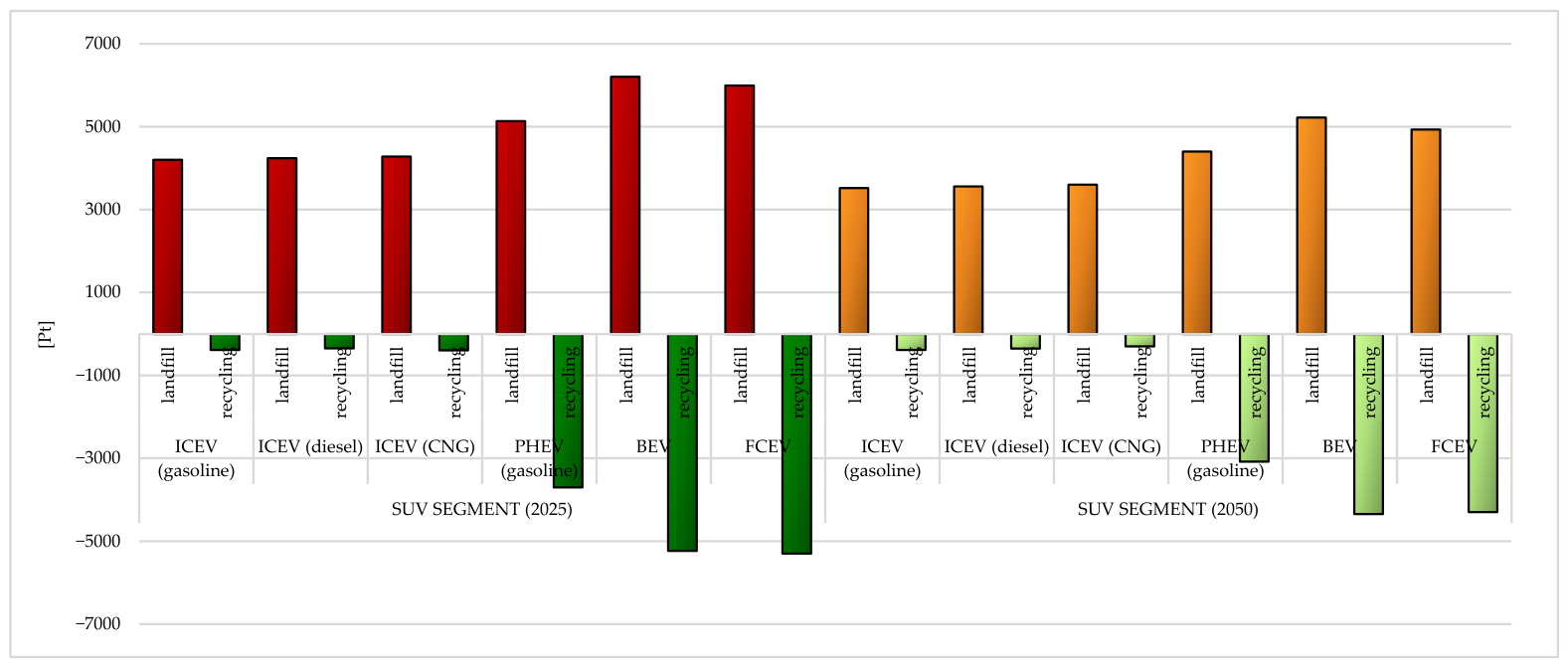
Figure 4 presents the grouping and weighting results for the predicted environmental impacts generated over the life cycle of the analysed SUV passenger cars, considering different powertrain technologies, two post-consumer management pathways and two registration horizons, 2025 and 2050. The comparison reveals two important structural patterns. First, vehicle configurations corresponding to the 2025 horizon generally generate higher total environmental impacts than their 2050 counterparts. This indicates the expected relevance of long-term technological progress, improved material efficiency and systemic transformation in reducing product-related environmental burdens. Second, the end-of-life strategy substantially changes the total weighted result and, consequently, the environmental ranking of the analysed powertrain concepts.
The landfill disposal scenario leads to markedly higher total environmental burdens than the recycling-oriented scenario. The difference between these two post-consumer pathways reaches approximately 210–290%, which confirms that end-of-life management cannot be treated as a marginal stage of the product life cycle. The highest total weighted impacts were obtained for BEVs under the landfill disposal scenario: 6.21 × 10³ Pt for vehicles registered in 2025 and 5.22 × 10³ Pt for vehicles projected for 2050. This result does not undermine the strategic importance of electrification, but it shows that highly material-intensive low-emission powertrains require a coherent circular product strategy, especially in relation to battery systems, critical materials and component recovery.
In contrast, the recycling-oriented pathway substantially reduces the overall environmental burden and, in several cases, results in negative total scores. This effect can be interpreted as an environmental credit associated with avoided primary material production and the substitution of virgin raw materials by secondary resources. The strongest absolute benefits are observed for more complex and material-intensive powertrain technologies, particularly BEVs and FCEVs. Among ICEV configurations, the total weighted results are relatively similar. The lowest values are generally observed for gasoline-powered ICEVs, whereas the highest are obtained for CNG-powered ICEVs. This can be associated with the greater technical complexity of the CNG system and the presence of additional fuel-storage and supply components.
The results shown in
Figure 4 therefore have clear strategic and innovation-related implications. They indicate that the transition toward sustainable SUVs should not be limited to replacing one propulsion technology with another. Instead, it requires the integration of propulsion innovation with design for disassembly, design for recycling, material selection, modularity, component recovery and circular value-chain development. In this sense, the novelty of the presented assessment lies in identifying the interaction between powertrain technology and post-consumer management as a decisive determinant of environmental performance and sustainable product innovation.
Table 1 presents the grouping and weighting results disaggregated into the three ReCiPe 2016 endpoint damage areas: Human Health, Ecosystems, and Resources. The comparison confirms that the 2025 variants are generally associated with higher environmental burdens than the 2050 variants, particularly in the landfill disposal scenario. In the total weighted score, the highest impacts are obtained for BEVs directed to landfill disposal, reaching 6.21 × 10
3 Pt in 2025 and 5.22 × 10
3 Pt in 2050. Among the landfill variants, the lowest total results are observed for gasoline ICEVs, with 4.20 × 10
3 Pt in 2025 and 3.52 × 10
3 Pt in 2050.
The same comparison shows that PHEV and FCEV configurations generate higher total impacts than conventional ICEVs under the landfill disposal scenario. For example, in 2025, the total weighted results amount to 5.14 × 10³ Pt for gasoline PHEVs and 5.99 × 10³ Pt for FCEVs. This confirms that the environmental performance of advanced propulsion technologies is strongly affected by product complexity, material structure and the end-of-life pathway. From the perspective of sustainable product innovation, this finding is particularly important: advanced technologies can deliver long-term sustainability benefits only if their product architecture is designed for efficient material recovery and low-impact circular management.
The adoption of recycling improves the total result for all analysed technologies and, in many cases, generates negative total scores due to avoided environmental burdens. The greatest total benefits are obtained for BEVs and FCEVs: −5.23 × 10³ Pt and −5.30 × 10³ Pt, respectively, in 2025, and −4.34 × 10³ Pt and −4.29 × 10³ Pt, respectively, in 2050. For PHEVs, the total values are −3.70 × 10³ Pt in 2025 and −3.08 × 10³ Pt in 2050. In the ICEV group, the positive effect of recycling is smaller, but still environmentally relevant. For example, gasoline ICEVs reach −3.86 × 10² Pt in 2025 and −3.88 × 10² Pt in 2050, whereas CNG ICEVs reach −3.93 × 10² Pt in 2025 and −2.98 × 10² Pt in 2050.
A detailed analysis of the endpoint damage areas shows that Human health dominates the total result, with values generally in the order of 103 Pt. Ecosystems contribute values in the order of 102 Pt, whereas Resources usually range from 100 to 101 Pt. This structure identifies Human health as the primary endpoint area requiring strategic mitigation, while also showing that ecosystem quality and resource depletion remain important for product-design decisions. The results therefore provide a quantitative basis for defining priority areas in sustainable product development, including material substitution, reduction in toxicological burdens, improved recyclability and optimisation of powertrain architecture.
Overall, the ReCiPe 2016 results provide strong evidence that sustainable product innovation in the SUV segment requires a transition from a disposal-oriented product model to a circular product model. The environmental advantage of recycling is especially pronounced for powertrain technologies characterised by high material intensity and technical complexity, such as BEVs, FCEVs and PHEVs. This means that the strategic orientation of automotive companies should combine low-carbon propulsion development with circular material strategies, design for recovery and the creation of secondary-resource value chains. The findings are therefore significant not only as an environmental comparison of SUV powertrains, but also as a basis for strategic decisions on product innovation, circular-economy implementation and long-term sustainable development in the automotive sector.
3.2. IPCC
In the second stage of the assessment, the IPCC 2021 model was applied to quantify greenhouse gas (GHG) emissions associated with the life cycle of the analysed SUV passenger cars. This stage of the study is particularly important from the perspective of strategic sustainable product innovation, because climate performance has become one of the key criteria shaping regulatory compliance, market competitiveness, investment decisions and long-term product development strategies in the automotive sector. Three climate-related impact categories were considered, and the most decision-relevant results are discussed in this subsection. The results are expressed in kilograms of carbon dioxide equivalent (kg CO2 eq).
Greenhouse gases are atmospheric constituents that, due to their physicochemical properties, absorb and retain part of the energy emitted from the Earth’s surface, thereby contributing to the greenhouse effect. The most important greenhouse gases include water vapour, carbon dioxide, nitrous oxide, methane and fluorinated gases. Some of these compounds are natural components of the atmosphere and have contributed to the formation of climatic conditions enabling the development of life on Earth. However, anthropogenic activity has significantly increased their atmospheric concentrations. In addition, industrial development has introduced synthetic gases with strong radiative properties that do not occur naturally in the atmosphere.
The contemporary increase in the mean near-surface air temperature is primarily associated with the intensification of the anthropogenic greenhouse effect. Although water vapour is an important contributor to the natural greenhouse effect, its atmospheric content is strongly variable in time and space and is governed mainly by the hydrological cycle, including evaporation, condensation, sublimation and resublimation. In contrast, carbon dioxide is directly affected by human activity, including transport, fuel combustion, industrial processes and energy production. Since the beginning of the industrial era, its concentration in the atmosphere has increased systematically. Methane, nitrous oxide and fluorinated gases also contribute to climate change and are emitted mainly from industrial, transport-related and agricultural activities [
82,
85,
86].
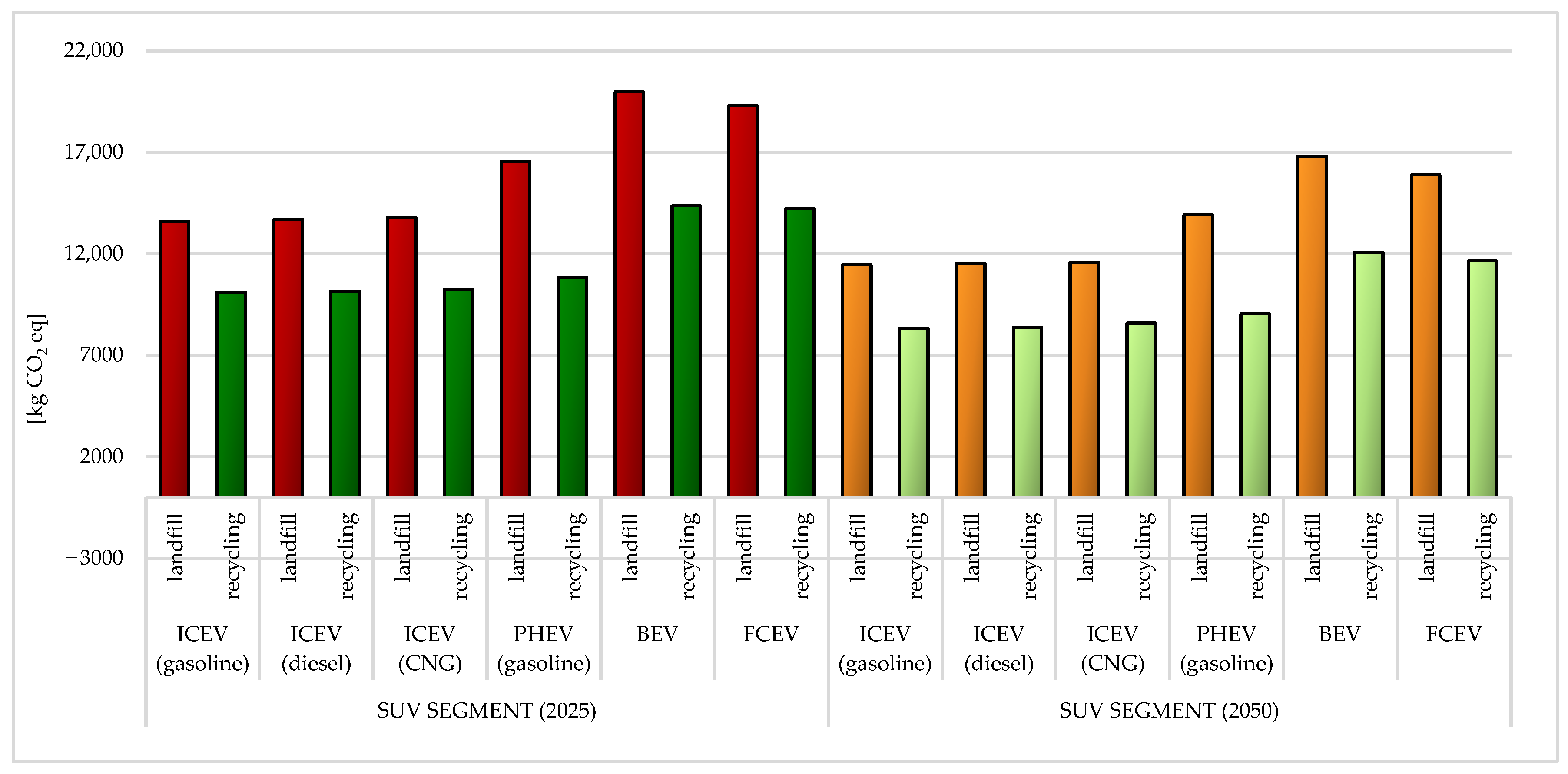
Figure 5 presents the characterisation results for greenhouse gas emissions generated over the life cycle of the analysed SUV passenger cars, taking into account different powertrain technologies and alternative post-consumer management pathways. The results clearly indicate that, for every analysed propulsion configuration, landfill disposal leads to higher GHG emissions than recycling-oriented material recovery. The difference between these two pathways is substantial and ranges from approximately 26% to 35%. This confirms that the end-of-life strategy is not a secondary operational issue, but a strategic component of low-carbon product design and circular value-chain management.
The comparison of time horizons shows that vehicle configurations projected for 2050 are characterised by lower GHG emissions than the corresponding 2025 variants. This trend reflects the expected influence of long-term technological progress, improvements in material and manufacturing efficiency, decarbonisation of industrial processes and the gradual transformation of supply chains. From the perspective of the Special Issue, this result is highly relevant because it demonstrates that the climate performance of automotive products is shaped not only by the choice of propulsion technology, but also by the strategic alignment of product innovation with broader systemic transformation.
The highest GHG emission values were obtained for BEVs under the landfill disposal scenario: 2.00 × 10⁴ kg CO2 eq for vehicles registered in 2025 and 1.68 × 10⁴ kg CO2 eq for vehicles projected for 2050. This finding is particularly significant from an innovation and product-design perspective. It shows that electrified powertrains, although essential for the low-carbon transition during the use phase, may generate considerable climate burdens in the material and product life cycle if they are not supported by effective circularity strategies. In particular, battery systems, advanced electronic components and material-intensive architectures require design solutions that facilitate disassembly, material recovery and high-quality recycling.
In the group of ICEV configurations, the level of GHG emissions is relatively similar across fuel types. Nevertheless, the lowest values are observed for gasoline-powered ICEVs, whereas the highest values are obtained for CNG-powered ICEVs. This differentiation can be associated with the material structure and technical complexity of the respective powertrain and fuel-storage systems. The results indicate that even within conventional technologies, product architecture and component configuration remain relevant factors influencing climate performance.
The obtained results provide a strong argument for integrating circular-economy principles into the strategic orientation of automotive enterprises. Recycling reduces the climate burden of all analysed SUV powertrain technologies and should therefore be treated as an enabling condition for sustainable product innovation rather than only as a post-consumer waste-management option. This is especially important for BEVs, FCEVs and PHEVs, whose material intensity and technological complexity increase the importance of recovery-oriented design. In this sense, the novelty of the analysis lies in showing that the climate benefits of powertrain innovation depend on the simultaneous optimisation of product architecture, material selection, recyclability and post-consumer management.
From a strategic perspective, the results confirm that the transition toward sustainable SUVs requires an integrated approach combining low-carbon propulsion development, circular product design, recycling technologies, responsible supply-chain management and supportive public policy. Such an approach can reduce life-cycle greenhouse gas emissions, improve the environmental credibility of automotive innovation and strengthen the contribution of the sector to sustainable development.
3.3. CED
In the third stage of the assessment, the Cumulative Energy Demand (CED) model was applied to quantify the life-cycle energy requirements of the analysed SUV passenger cars. Six energy-related impact categories were considered. However, this subsection presents only the most decision-relevant results. The results are expressed in megajoules (MJ) of cumulative energy demand.
The CED analysis provides an important complement to the climate-oriented results obtained using the IPCC 2021 model. While greenhouse gas emissions indicate the climate consequences of product systems, cumulative energy demand allows the identification of the energy intensity embedded in material production, component manufacturing, powertrain architecture and end-of-life management. From the perspective of strategic sustainable product innovation, this indicator is particularly relevant because it links engineering design decisions with energy efficiency, resource productivity and the long-term competitiveness of low-carbon vehicle technologies.
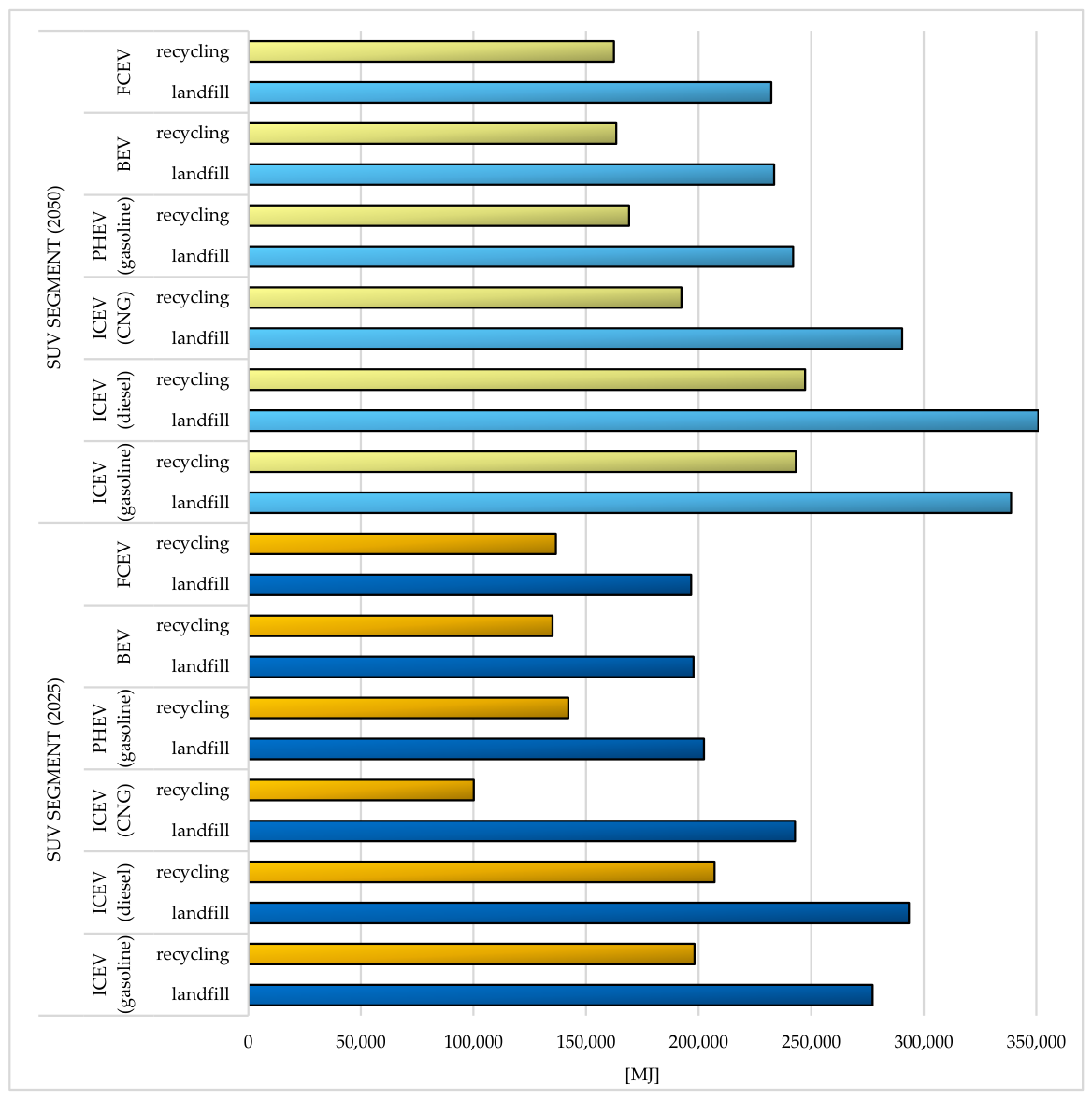
Figure 6 presents the characterisation results for cumulative energy demand over the life cycle of the analysed SUV passenger cars. The comparison shows that vehicle configurations corresponding to the 2025 registration horizon are generally characterised by higher cumulative energy demand than the scenarios projected for 2050. This trend can be associated with expected improvements in manufacturing efficiency, technological development, material optimisation and systemic changes in the energy environment. The results therefore confirm that long-term reductions in the energy intensity of automotive products require not only the development of alternative powertrains, but also strategic improvements across the whole product value chain.
The adopted post-consumer management scenario has a substantial influence on the total energy balance. In the landfill disposal scenarios, cumulative energy demand is approximately 28–59% higher than in the corresponding recycling-oriented scenarios. This confirms that end-of-life management is a strategically important component of sustainable product design. Recycling reduces the need for primary material production and, consequently, decreases the energy burden associated with material supply. Therefore, circularity should be understood not only as a waste-management solution, but as a product innovation strategy capable of improving energy performance across the entire life cycle.
The highest cumulative energy demand was obtained for battery electric vehicles (BEVs) under the landfill disposal scenario, reaching 3.51 × 10⁵ MJ for the 2025 horizon and 2.93 × 10⁵ MJ for the 2050 horizon. This result is particularly important for the interpretation of electrification as a sustainable innovation pathway. BEVs remain a key technology for low-carbon mobility, especially during the use phase, but their life-cycle energy profile is strongly affected by material intensity, battery production, component complexity and the quality of post-consumer management. Consequently, electrification should be accompanied by design for disassembly, high-efficiency recycling of batteries and components, and the development of circular material flows.
In the group of internal combustion engine vehicles (ICEVs), cumulative energy demand remains relatively similar across the analysed fuel options. Nevertheless, the highest energy demand is observed for CNG-powered ICEVs, whereas the lowest values are obtained for gasoline-powered ICEVs. This differentiation indicates that even within conventional propulsion technologies, energy performance is shaped by the technical configuration of the powertrain, the fuel-storage system and the material structure of the vehicle.
From an application-oriented perspective, the CED results support the identification of powertrain configurations and end-of-life strategies that can strengthen both decarbonisation and circular-economy objectives. The preference for recycling over landfill disposal has a direct positive effect on the cumulative energy balance, especially in technologies characterised by high material intensity and technical complexity. Therefore, the results demonstrate that sustainable product innovation in the SUV segment cannot be reduced to the selection of a low-emission propulsion system alone. It requires an integrated strategic orientation combining energy-efficient product architecture, material recovery, recycling technologies, supply-chain transformation and investment decisions supporting circular value creation.
The novelty and significance of these findings lie in showing that cumulative energy demand is a critical criterion for evaluating sustainable product innovation in the automotive sector. The results demonstrate that powertrain innovation, circular end-of-life management and energy-system transformation should be treated as mutually dependent elements of one strategic product-development framework. Such an approach is essential for designing SUV technologies that are not only lower in emissions, but also less energy-intensive and more consistent with long-term sustainable development goals.
3.4. CML-IA
In the fourth stage of the assessment, the CML-IA baseline model was applied to evaluate selected environmental impact categories associated with the life cycle of the analysed SUV passenger cars. Eleven impact categories were considered in the model. However, this subsection discusses only the most decision-relevant results. The results are presented as emissions of reference substances: kilograms of sulphur dioxide equivalent (kg SO2 eq) for acidification potential; kilograms of phosphate equivalent (kg PO4 eq) for eutrophication potential.
The CML-IA baseline assessment provides a complementary perspective to the ReCiPe 2016, IPCC 2021 and CED results, because it enables the identification of environmental trade-offs that may not be fully visible when only aggregated indicators are considered. From the perspective of strategic sustainable product innovation, this is particularly important. Automotive product development should not be assessed solely through climate performance or total environmental points, but also through impact categories that reflect air quality, water quality, ecosystem vulnerability and the environmental consequences of post-consumer management processes. Such an approach supports more robust strategic decisions on product architecture, material selection, recycling technologies and circular value-chain development.
Acidification is a process involving the progressive decrease in the pH of environmental compartments. It results from disturbances in the ecological balance of matter and energy exchange within and between geospheres, including the atmosphere, hydrosphere and pedosphere. Acidification may be caused by natural processes, such as volcanic eruptions, respiration and humification, but it is also strongly associated with anthropogenic emissions, including sulphur dioxide, nitrogen oxides and ammonia. One of the consequences of acidification is the alteration of species composition and population abundance in natural ecosystems. Acidification therefore contributes to both local and global environmental degradation. Particularly important effects include soil and water acidification, ocean acidification and the formation of acid precipitation. Acidifying substances, especially sulphur oxides, also contribute to the formation of London-type smog, which has harmful effects on the human respiratory and cardiovascular systems [
114,
115,
116].
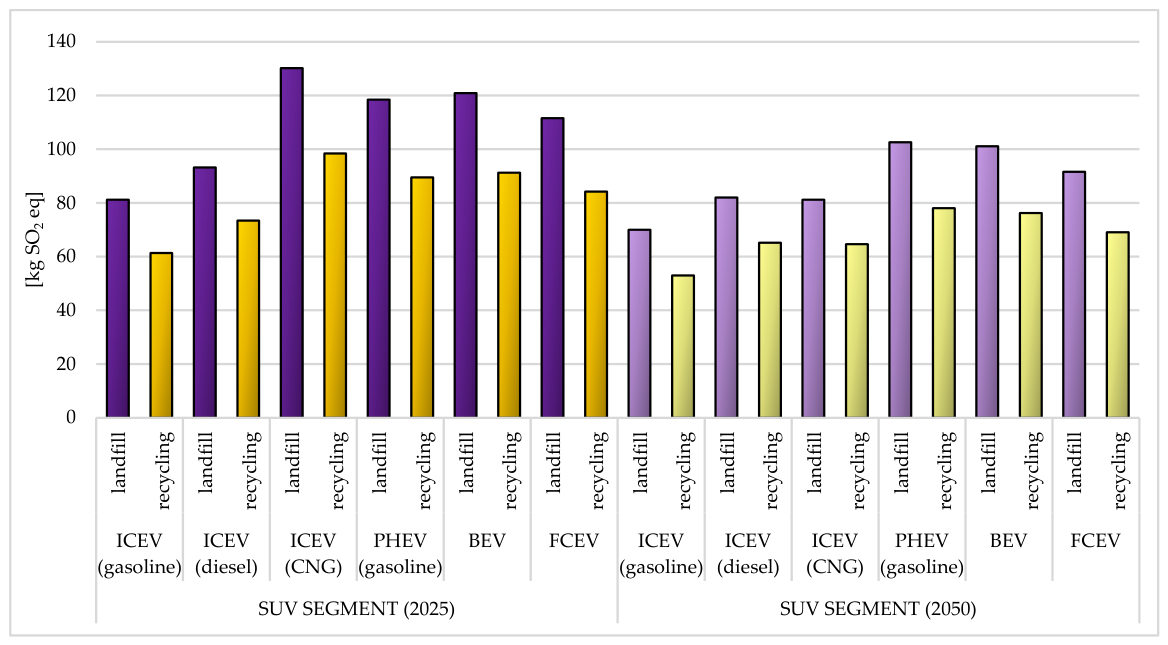
Figure 7 presents the characterisation results for acidifying emissions occurring in the life cycle of the analysed SUV passenger cars, with differentiation by powertrain technology, time horizon and post-consumer management scenario. The comparison shows that vehicle configurations corresponding to the 2025 horizon generate higher acidification impacts than the corresponding 2050 variants. This decrease in the long-term horizon can be interpreted as the expected effect of technological progress, improved environmental standards, cleaner energy systems and more efficient material and component supply chains.
The end-of-life strategy is also a relevant factor shaping acidification potential. Landfill disposal consistently results in higher acidifying emissions than recycling-oriented management. The increase in the landfill scenario relative to recycling is approximately 20–25%, which confirms that post-consumer management should be treated as a strategic element of sustainable product design rather than as a purely operational waste-management stage. The highest acidification impacts were obtained for BEVs under the landfill disposal scenario, reaching 1.21 × 10² kg SO2 eq in 2025 and 1.01 × 10² kg SO2 eq in 2050. When recycling is applied, the corresponding values decrease to 9.12 × 101 kg SO2 eq in 2025 and 7.63 × 101 kg SO2 eq in 2050. This indicates the potential of circular strategies to reduce selected external environmental costs associated with technologically advanced and material-intensive powertrain systems.
Among ICEV configurations, the lowest acidification impacts were obtained for gasoline-powered vehicles: 8.12 × 101 kg SO2 eq under landfill disposal in 2025 and 7.00 × 101 kg SO2 eq in 2050, as well as 6.14 × 101 kg SO2 eq under recycling in 2025 and 5.30 × 101 kg SO2 eq in 2050. These results show that the environmental performance of SUV powertrain technologies depends not only on the propulsion concept, but also on the material structure, component complexity and the adopted end-of-life pathway.
From the perspective of strategic orientation and product innovation, the acidification results demonstrate that the selection of powertrain technology and the organisation of post-consumer management are interdependent design and management decisions. Recycling-oriented strategies, supported by design for disassembly, material recovery and cleaner recycling processes, can reduce acidification-related pressures and strengthen the environmental credibility of low-carbon automotive innovation. Therefore, the results provide evidence that sustainable SUV development requires the integration of product-level eco-innovation with circular supply-chain strategies and regulatory risk management, particularly in areas related to air quality and emission control.
Eutrophication is a process involving the excessive enrichment of water bodies and watercourses with nutrients, mainly nitrogen and phosphorus, but also potassium and sodium. This enrichment causes excessive biomass production by algae and cyanobacteria, observed as algal blooms, and leads to eutrophic conditions. Increased phosphorus inflow is associated not only with wastewater discharge, including industrial wastewater, but also with the presence of detergents and other phosphorus-rich substances. Excessive nitrogen input is primarily linked to increasing emissions of nitrogen oxides to the atmosphere and, consequently, their deposition with precipitation. Eutrophication changes water properties, including colour, odour, turbidity, oxygen concentration and pH variability in the upper water layer. In deeper layers, oxygen-deficient conditions may develop, leading to the death of aquatic organisms, especially fish. This process promotes anaerobic organisms and the accumulation of organic matter, which may gradually transform a water body into a pond, wetland or low peatland [
93,
117,
118].
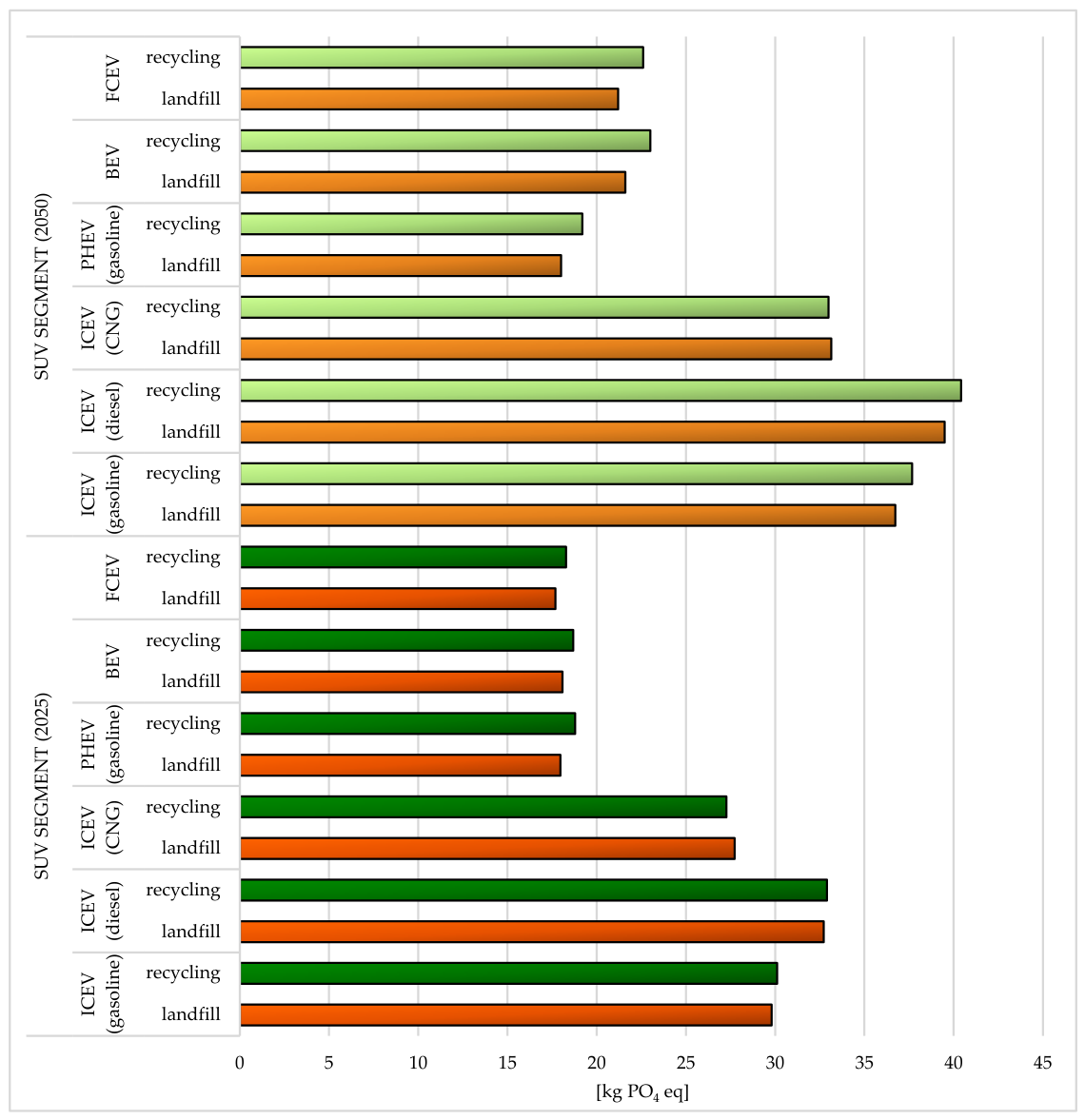
Figure 8 presents the characterisation results for eutrophication-related emissions occurring in the life cycle of the analysed SUV passenger cars. In contrast to many other impact categories discussed in this study, the highest eutrophication potentials are observed in most variants for the recycling scenario, whereas the lowest values are generally associated with landfill disposal. This result is particularly important from the perspective of strategic sustainable product innovation, because it reveals a category-specific environmental trade-off. It demonstrates that circularity should not be understood as an automatically beneficial strategy in all impact categories, but as a direction that requires continuous technological optimisation and impact-sensitive process design.
The higher eutrophication potential observed for recycling results from the process-specific character of this management pathway. Recycling may require additional energy, water and chemical inputs, and it may generate indirect emissions associated with wastewater treatment and auxiliary operations. This indicates that the real environmental advantage of recycling depends on the technological quality of recycling processes, including closed-loop water systems, reduction in wet processing stages, cleaner chemicals, improved wastewater treatment and low-carbon energy supply. From a strategic perspective, this finding strengthens the need to combine product innovation with process innovation. Design for recycling must therefore be accompanied by innovation in recycling technologies themselves.
The comparison of time horizons shows that the 2050 variants generally generate lower eutrophication potentials than the corresponding 2025 configurations. This can be associated with expected transformations in energy systems, material supply chains, manufacturing processes and recycling technologies. The highest eutrophication values were obtained for BEVs under the recycling scenario, reaching 4.04 × 101 kg PO4 eq in 2025 and 3.29 × 101 kg PO4 eq in 2050. In the analysed configurations, landfill disposal was associated with eutrophication impacts approximately 1–6% lower than those obtained for recycling. This relatively small but consistent difference indicates that some recycling pathways may still require further environmental optimisation in water-sensitive impact categories.
The interpretation of these results is important for the positioning of the article within the field of sustainable product innovation. The findings show that an effective circular-economy strategy in the automotive sector should not focus exclusively on increasing recycling rates. It should also improve the environmental quality of recycling processes and ensure that material recovery does not transfer burdens from one impact category to another. In this context, the novelty of the analysis lies in identifying both the environmental benefits and the potential trade-offs of circular end-of-life management for advanced SUV powertrain technologies. This provides a more nuanced basis for strategic decision-making than a simple comparison between landfill disposal and recycling.
Consequently, the eutrophication results support the formulation of recommendations for automotive enterprises and public policies oriented toward low-emission and low-impact post-consumer management pathways. Strategic orientation toward circularity should be combined with eco-innovation in recycling processes, the reduction in water and chemical intensity, decarbonisation of recycling energy supply and product architectures that enable cleaner material recovery. Such an approach allows circular-economy strategies to contribute more consistently to sustainable development across the entire automotive value chain.
3.5. Ecological Scarcity
In the fifth stage of the assessment, the Ecological Scarcity 2021 model was applied to evaluate selected environmental pressures associated with the life cycle of the analysed SUV passenger cars. Nineteen impact categories were considered in the model. However, this subsection focuses on the most decision-relevant results related to emissions of selected groups of chemical substances into the atmospheric environment, with particular attention to carcinogenic effects, as well as impacts on the soil environment associated with heavy-metal emissions and land-use change. The results are expressed in ecological scarcity points (UBP).
The Ecological Scarcity 2021 assessment provides an important extension of the previous impact models because it allows the analysis to move beyond aggregated climate and energy indicators toward toxicity-related and land-use-related environmental pressures. From the perspective of strategic orientation and sustainable product innovation, this is particularly relevant. Automotive companies increasingly need to demonstrate that low-carbon product development does not merely shift environmental burdens from greenhouse gas emissions to other impact domains, such as toxic emissions, soil contamination or biodiversity-related land transformation. Therefore, the Ecological Scarcity results provide a broader basis for assessing whether SUV powertrain innovation can be considered environmentally robust and strategically aligned with sustainable development.
According to the definition of the International Agency for Research on Cancer (IARC), operating under the World Health Organization (WHO), a carcinogenic substance is a chemical compound or a mixture of chemical compounds capable of initiating the formation of a malignant tumour or increasing the frequency of its recurrence. As a result of metabolic activation in the human body, mutagenic substances may interact with DNA nucleic acids, potentially causing changes in the genetic code. If such damage is not repaired, mutation, excessive gene expression and uncontrolled division of cancer cells may occur, ultimately leading to tumour development. Disorders in gene function may be caused by physical factors, such as ultraviolet radiation, chemical compounds, including environmental pollutants, or biological vectors, such as viruses, bacteria and parasites. It is estimated that environmental factors may be responsible for approximately 70–90% of cancer cases [
4,
115,
119].
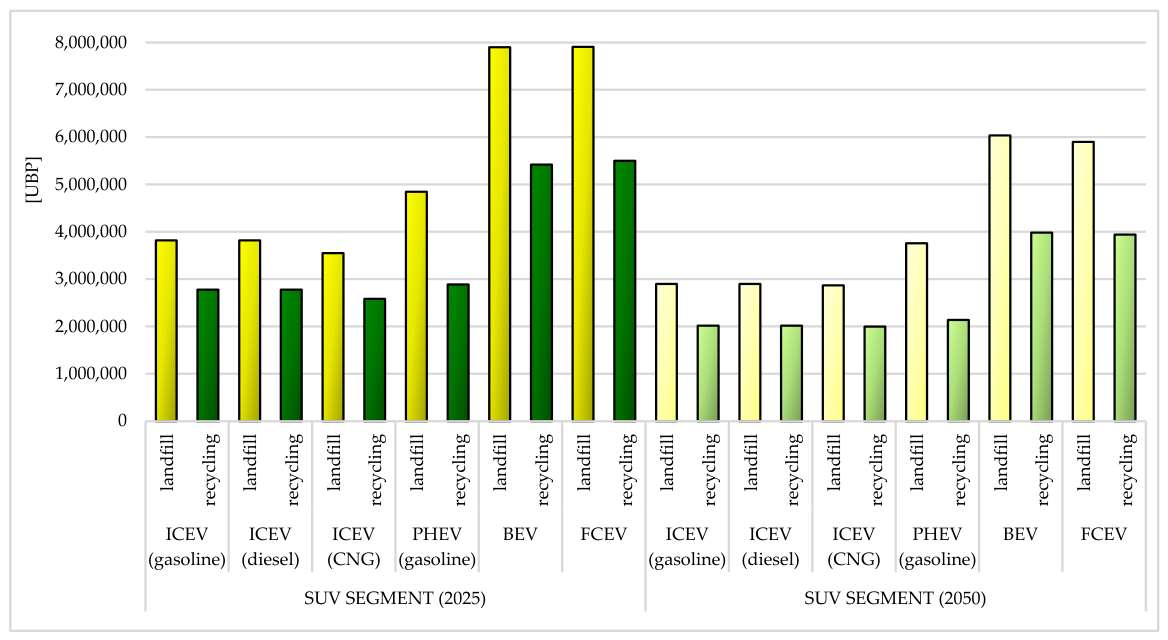
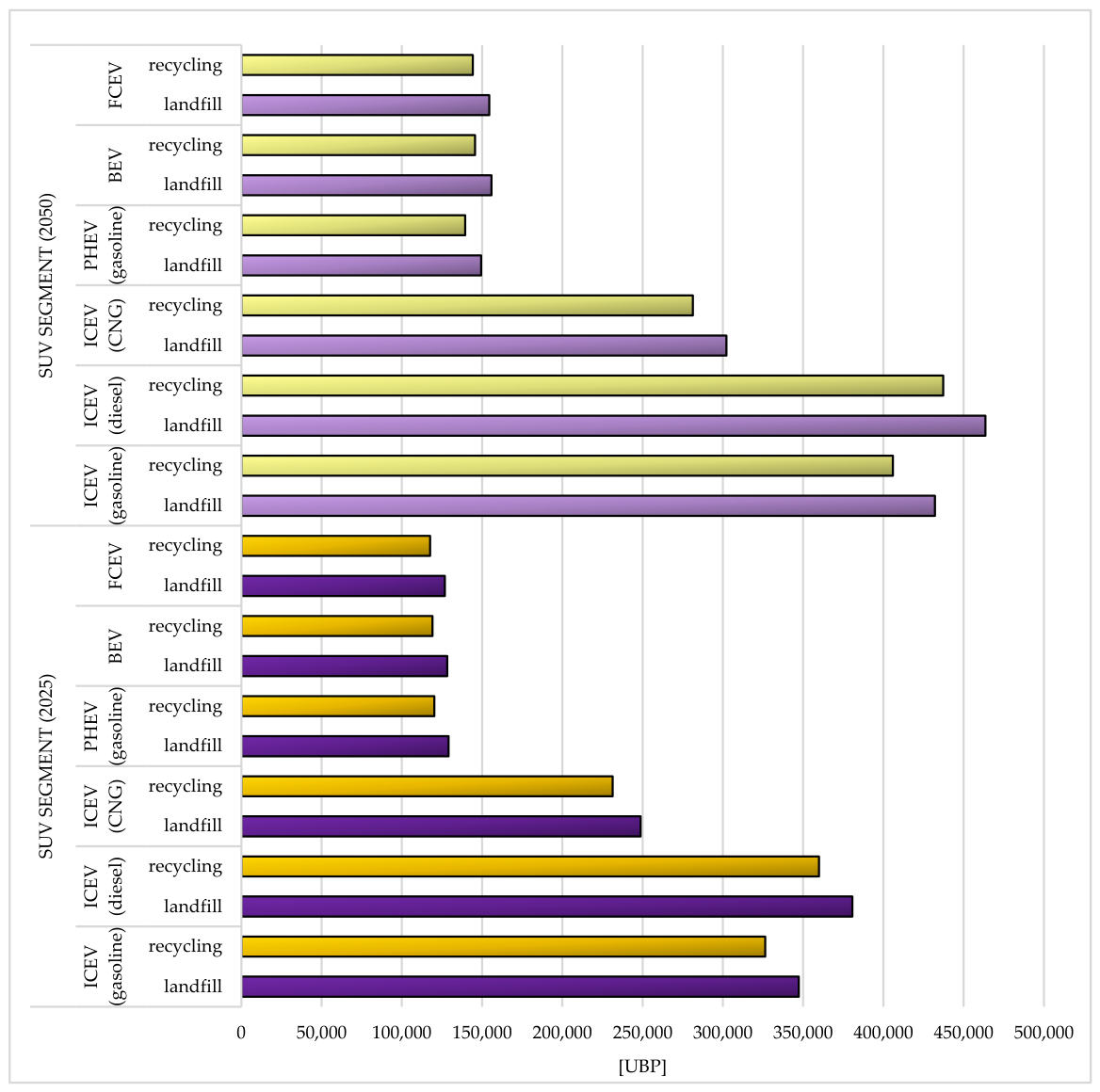
Figure 9 presents the grouping and weighting results for emissions of carcinogenic substances to the atmospheric environment over the life cycle of the analysed SUV passenger cars. Vehicle configurations corresponding to the 2025 horizon are characterised by higher burdens in this category than the variants projected for 2050. This indicates the potential effect of long-term technological and energy-system transformation, including cleaner manufacturing, improved supply chains, stricter emission standards and more advanced material management systems.
The adopted post-consumer management pathway also has a significant influence on the results. Landfill disposal generates higher values of the carcinogenic-emission indicator than recycling-oriented management, with differences of approximately 27–43%. This confirms that the end-of-life stage can materially affect toxicological burdens and should therefore be treated as an integral component of strategic sustainable product design. The highest values were obtained for BEVs under the landfill disposal scenario, reaching 7.90 × 10⁶ UBP in 2025 and 6.04 × 10⁶ UBP in 2050. At the same time, gasoline-, diesel-, and CNG-powered ICEVs show relatively similar levels of impact, suggesting that, within the conventional propulsion group, this category is less sensitive to the fuel type itself than to the broader material and process structure of the vehicle life cycle.
These results have important implications for product innovation in the automotive sector. They show that electrification and advanced propulsion technologies should be accompanied by systematic strategies aimed at reducing toxicological burdens associated with material extraction, component production, battery systems, electronic components and end-of-life treatment. Strategic orientation toward circularity, especially the preference for recycling over landfill disposal, can substantially reduce carcinogenic air-emission burdens. However, this requires product and process innovation, including safer material selection, design for controlled disassembly, cleaner recovery technologies and improved monitoring of emissions in recycling and waste-treatment chains.
In the next stage, heavy-metal emissions affecting the soil environment were analysed. Heavy-metal contamination is one of the most important environmental threats to human health and ecosystem quality. As a consequence of global industrial development, the risk of environmental contamination with heavy metals has increased. Heavy metals include elements with a density greater than 4.5 g/cm
3, which tend to donate electrons in chemical reactions and form simple cations. They may enter the human body through inhalation, food consumption and skin absorption. Their transfer to subsequent links of the food chain is limited by biological barriers. However, when concentrations are excessive, these barriers may become less effective. This creates a risk of negative effects on the environment and human health. Depending on their potential hazard level, heavy metals may be classified into four groups: very high-risk elements, such as cadmium, mercury, lead, copper and zinc; high-risk elements, such as molybdenum, manganese and iron; medium-risk elements, such as nickel and cobalt; and low-risk elements, such as strontium and zirconium. They may cause acute poisoning, for example, in the case of arsenic, zinc, cadmium, copper and mercury, or chronic conditions associated with elements such as arsenic, zinc, cadmium, chromium, copper, mercury, lead, tin, cobalt, nickel, manganese, selenium, iron and silver. Chronic exposure may remain latent for a long time and subsequently contribute to dangerous mutagenic changes or damage to the central nervous system [
36,
120].
Figure 10 presents the grouping and weighting results for heavy-metal emissions to the soil environment over the life cycle of the analysed SUV passenger cars. The results show that the 2025 vehicle configurations are associated with higher impacts in this category than their 2050 counterparts. This may be linked to expected technological and organisational changes in supply chains, improved environmental standards, cleaner production processes and more efficient post-consumer management in the long-term horizon.
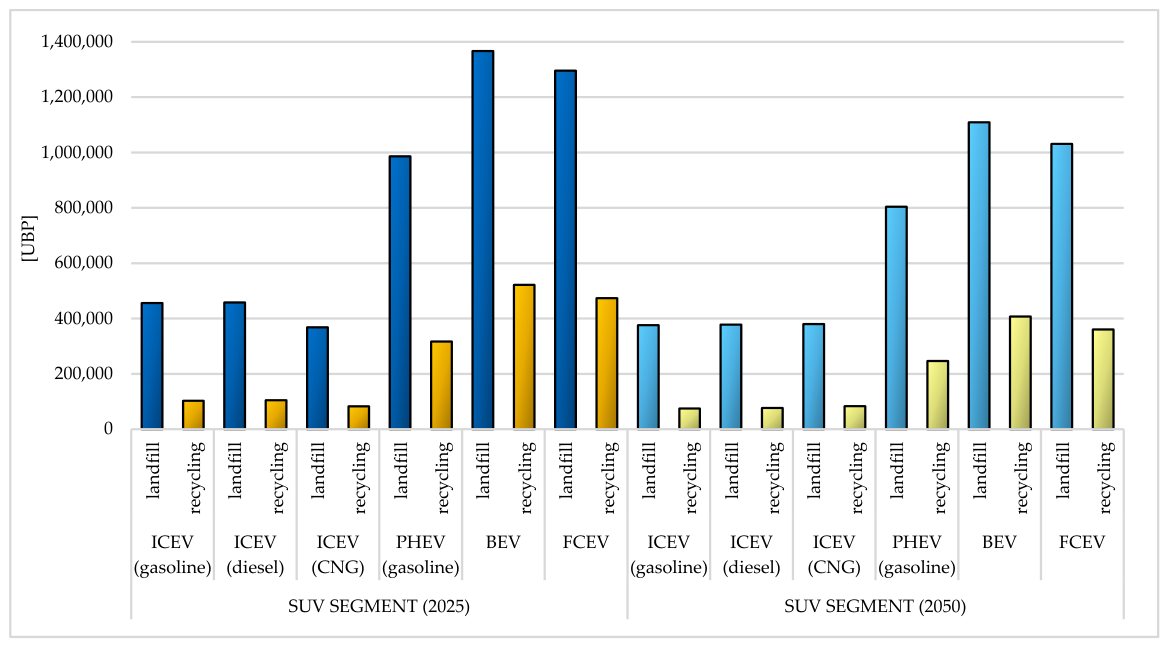
The post-consumer management scenario strongly differentiates the results. Recycling leads to a substantial reduction in heavy-metal-related soil impacts, by approximately 62–80% compared with landfill disposal. The highest values were obtained for BEVs under the landfill disposal scenario: 1.37 × 10⁶ UBP in 2025 and 1.11 × 10⁶ UBP in 2050. Application of recycling considerably reduces these impacts, with corresponding BEV values of 5.22 × 10⁵ UBP in 2025 and 4.07 × 10⁵ UBP in 2050. In the ICEV group, the results remain relatively similar across gasoline, diesel and CNG variants, which suggests comparable pressure in this impact category for the analysed conventional powertrain configurations.
From the perspective of strategic sustainable product innovation, the results confirm that technologies with greater material intensity and higher component complexity, particularly BEVs, require more advanced circular strategies than conventional vehicle architectures. Heavy-metal impacts are directly connected with material selection, battery and electronic component systems, metallurgical processes, component recovery and the environmental quality of recycling operations. Therefore, sustainable SUV innovation requires more than propulsion-system substitution. It requires deliberate design choices aimed at reducing hazardous material content, improving traceability of critical and toxic elements, enabling high-quality recovery and limiting uncontrolled releases to the soil environment.
The significance of these findings lies in demonstrating that circular-economy strategies can substantially mitigate toxicological soil-related burdens when they are integrated into product design and value-chain management. Strategic orientation toward recycling, supported by eco-innovation in materials, product architecture and recovery technologies, can reduce the environmental risks associated with heavy metals and strengthen the sustainability profile of advanced automotive products. This is particularly relevant for long-term product strategies in which electrification, circular material flows and responsible supply-chain governance must be developed simultaneously.
The impact category related to land-use change in life cycle assessment describes the environmental consequences of land occupation, transformation and management by human activities. Land use may involve long-term occupation, for example, for agricultural purposes, or transformation from one land-use type to another, such as conversion of natural areas into urban or built-up areas. This category includes environmental effects resulting from land-use processes, such as the reduction in landscape elements, establishment of monocultures or sealing of soil surfaces with asphalt, concrete or other impermeable materials. A particularly important ecological consequence of land-use change is the reduction in habitat availability and biodiversity, leading to the degradation of landscape naturalness [
28,
35,
121,
122,
123].
Figure 11 presents the grouping and weighting results for environmental impacts associated with land-use change over the life cycle of the analysed SUV passenger cars, differentiated by powertrain technology, time horizon and post-consumer management scenario. The comparison of time horizons indicates that the 2050 variants generate lower impacts in this category than the 2025 variants. This can be interpreted as the expected effect of systemic changes, including energy transition, modification of supply chains and improvements in production and organisational processes.
The post-consumer management pathway remains a relevant differentiating factor. Landfill disposal consistently generates higher land-use-related impacts than recycling, with differences of approximately 5–7% to the disadvantage of landfill disposal. Although the magnitude of this difference is smaller than in the case of heavy-metal emissions, it is still strategically meaningful. It shows that end-of-life management affects not only emissions and toxicity, but also land occupation, land transformation and pressure on ecosystems. The highest values are again associated with BEVs under landfill disposal, reaching 4.64 × 10⁵ UBP in 2025 and 3.81 × 10⁵ UBP in 2050. In the ICEV group, differences between fuel variants are relatively small, which suggests that, in this impact category, the strategic priority should extend beyond the choice of propulsion technology and include circular management, material recovery and reduction in land-intensive processes across the product life cycle.
The land-use results are particularly important for the broader interpretation of sustainable product innovation. They indicate that the environmental consequences of SUV design are not limited to emissions generated during production, use or waste treatment. They also include spatial and ecological pressures arising from material extraction, industrial infrastructure, energy systems, waste management and recycling chains. Consequently, strategic orientation toward sustainable automotive products should integrate product innovation with supply-chain spatial efficiency, material circularity, land-use-conscious sourcing and recovery-oriented end-of-life systems.
Overall, the Ecological Scarcity 2021 results demonstrate that sustainable product innovation in the SUV segment must be evaluated through a broad environmental lens. Climate and energy indicators are essential, but they do not fully capture toxicological and land-use-related risks. The results show that recycling-oriented post-consumer management can significantly reduce carcinogenic emissions, heavy-metal impacts and land-use pressures, especially for complex and material-intensive powertrain technologies. At the same time, the analysis highlights the need for continuous eco-innovation in materials, component design, recycling processes and supply-chain governance. This integrated interpretation provides a stronger basis for strategic decision-making and supports the development of automotive products aligned with the low-carbon transition, circular-economy implementation, and long-term sustainable development.
3.6. Analysis of Fuel and Energy Cycles
For the transport sector to effectively contribute to the achievement of the objectives of the Paris Agreement, including limiting global warming to well below 2 °C and pursuing efforts to limit it to 1.5 °C above pre-industrial levels, greenhouse gas emissions from transport must be substantially reduced by 2050. According to projections reported by the International Council on Clean Transportation (ICCT), this requires an approximately 80% reduction in emissions associated with fuel combustion and the production of fuels and electricity in the transport sector compared with current levels. The largest share of this reduction is expected to concern passenger cars. At present, the production and combustion of transport fuels account for a significant share of anthropogenic greenhouse gas emissions worldwide, while increasing mobility demand may further intensify this pressure unless systemic transformation is implemented [
124,
125,
126].
For this reason, the present subsection extends the product-oriented life cycle assessment presented in
Section 3.1,
Section 3.2,
Section 3.3,
Section 3.4 and
Section 3.5 by including fuel and energy cycles. This extension is essential from the perspective of strategic sustainable product innovation, because the environmental performance of a vehicle is not determined solely by its material structure, manufacturing processes or end-of-life management. It also depends on the energy and fuel systems that support its operation. Therefore, the assessment integrates product architecture with well-to-tank and tank-to-wheel emissions, allowing powertrain technologies to be interpreted as elements of broader low-carbon mobility systems.
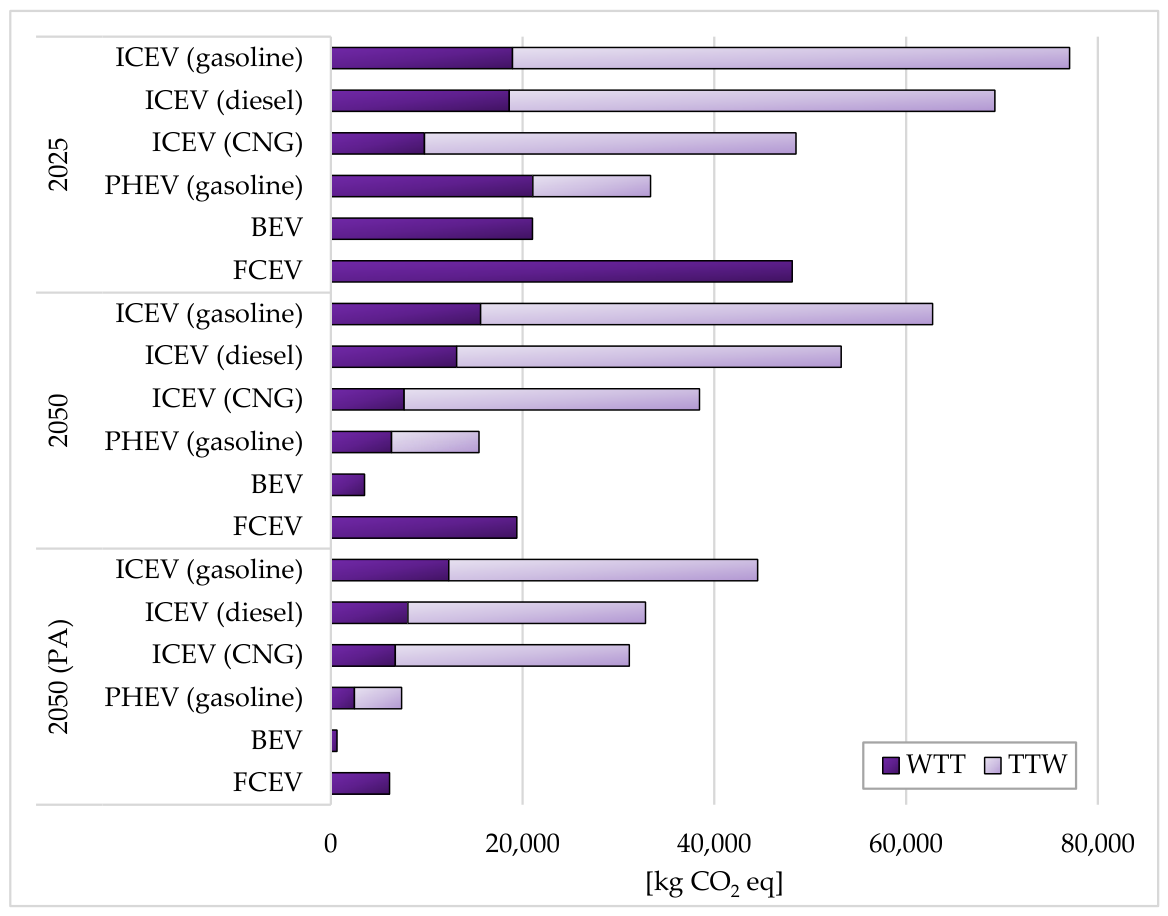
The analysis was conducted for all considered SUV passenger cars, representing six powertrain technologies: internal combustion engine vehicles (ICEVs) fuelled with gasoline, diesel oil and compressed natural gas (CNG), gasoline plug-in hybrid electric vehicles (PHEVs), battery electric vehicles (BEVs), and fuel cell electric vehicles (FCEVs). Three time-horizon scenarios were adopted. The first referred to vehicles registered in 2025, the second to vehicles projected for registration in 2050, and the third to vehicles projected for registration in 2050 under assumptions consistent with the main objectives of the Paris Agreement. Greenhouse gas emissions in fuel and energy cycles were divided into two stages. The first stage, well-to-tank (WTT), covers the production and supply cycle of fuel or electricity, from the generation or extraction of the energy carrier to its delivery to the charging point or fuel dispenser. The second stage, tank-to-wheel (TTW), covers emissions generated during the operational use of the vehicle, including emissions resulting from fuel combustion or direct energy use during driving. The assessment was performed using the IPCC 2021 model, and the results are expressed in kilograms of carbon dioxide equivalent (kg CO2 eq).
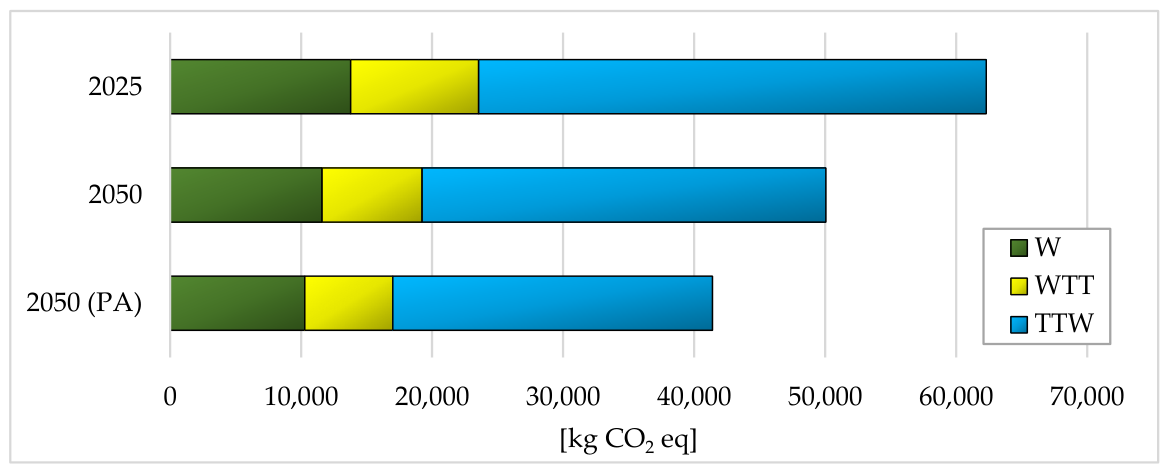
Figure 12 presents the characterisation results for greenhouse gas emissions in the fuel and energy cycles of the analysed SUV passenger cars, differentiated by powertrain technology and time horizon. Vehicles registered in 2025 are characterised by higher greenhouse gas emissions in their fuel and energy cycles than the corresponding future variants. In the 2025 horizon, the highest total emissions were obtained for gasoline-powered ICEVs, whereas the lowest values were observed for BEVs. In all three ICEV configurations, the TTW stage is the dominant source of greenhouse gas emissions, which confirms that the operational combustion of fossil fuels remains the principal climate burden of conventional powertrain systems.
A different emission profile is observed for electrified and hydrogen-based technologies. In the case of BEVs and FCEVs, TTW emissions are marginal or absent, while the total climate burden is determined primarily by the WTT stage. This means that the environmental effectiveness of these technologies is strongly dependent on the carbon intensity of electricity generation and hydrogen production. For PHEVs, the result is more complex, because the climate profile depends on the relative contribution of electric driving and combustion-engine operation. In the 2025 scenario, WTT-related burdens remain substantial, whereas in the 2050 scenarios their reduction reflects the assumed decarbonisation of the energy system.
The comparison of the 2050 and 2050 Paris Agreement-aligned (2050 PA) scenarios shows systematic reductions in greenhouse gas emissions for all analysed powertrain technologies. The most pronounced improvements are observed for BEVs and FCEVs, because these technologies are particularly sensitive to the decarbonisation of electricity and hydrogen supply. For FCEVs, future reductions are associated with the assumed increase in the production of green hydrogen, generated through electrolysis based on renewable electricity, and blue hydrogen, produced with carbon dioxide capture and storage. At present, hydrogen is still produced predominantly from steam methane reforming of natural gas, referred to as grey hydrogen, or from coal gasification, referred to as black hydrogen.
These results demonstrate that the climate effectiveness of automotive product innovation is strongly conditioned by the systemic context. Powertrain innovation alone is insufficient if it is not accompanied by the transformation of fuel and energy supply chains. Consequently, the strategic orientation of automotive enterprises and public policies should integrate propulsion-system development with electricity decarbonisation, low-carbon fuel pathways, hydrogen infrastructure, circular end-of-life management and value-chain governance. The distinctive significance of this analysis lies in showing that sustainable SUV development requires a joint optimisation of product-level innovation and system-level transition.
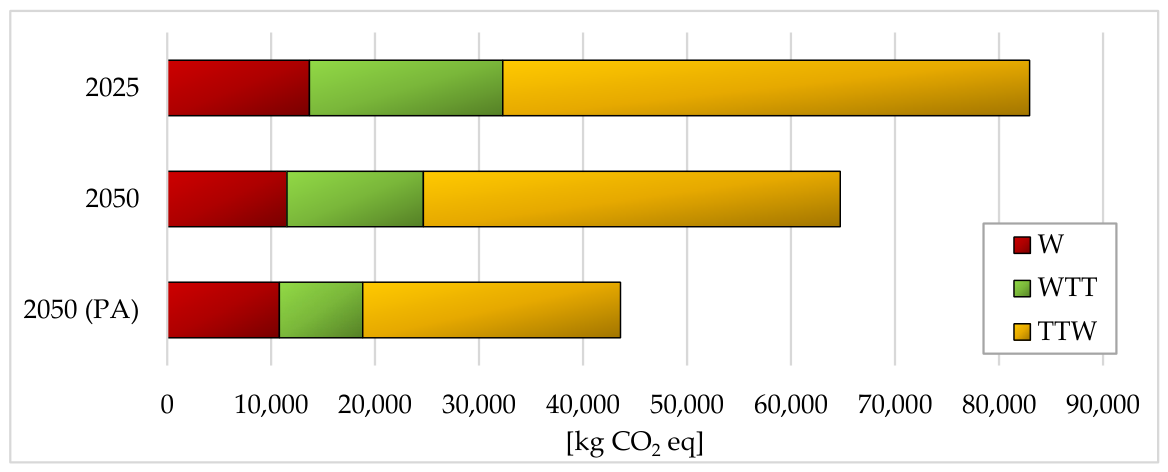
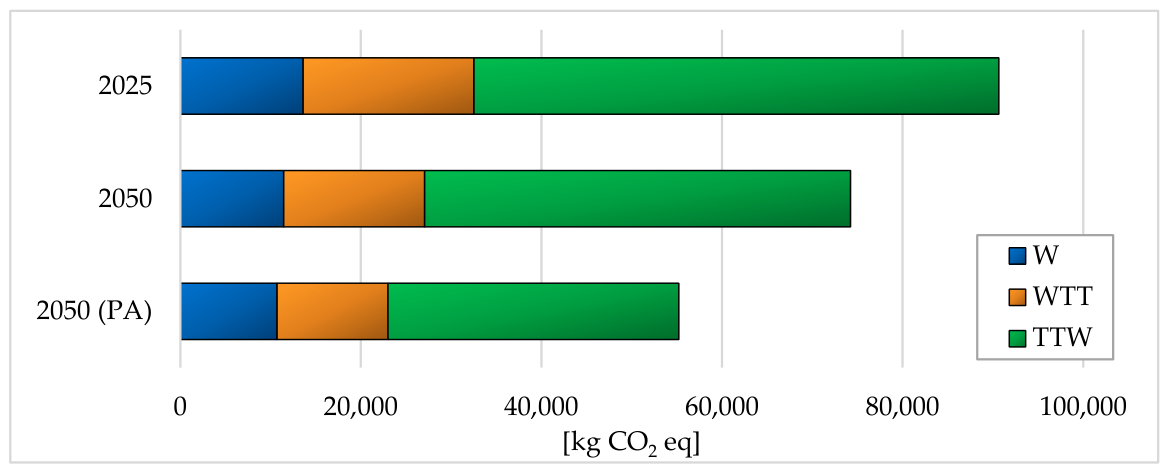
Figure 13 presents the characterisation results for greenhouse gas emissions in the life cycle of gasoline-powered ICEV passenger cars, divided into three stages: vehicle manufacturing (W), well-to-tank processes (WTT), and tank-to-wheel operation (TTW). The comparison includes the 2025, 2050 and 2050 PA scenarios.
The results show that TTW emissions dominate the total climate balance of gasoline-powered ICEVs in all analysed time horizons. This confirms the central role of the operational phase in shaping the carbon footprint of conventional gasoline vehicles. The contribution of WTT remains lower than TTW, but it is still relevant because it reflects emissions associated with fuel extraction, processing, distribution and supply. The manufacturing stage also contributes to the total result, although its relative share is smaller than the operational fuel-combustion burden.
A clear decrease in total greenhouse gas emissions is observed in the 2050 horizon, with the strongest reduction occurring in the 2050 PA scenario. This indicates that even conventional technologies may benefit from systemic changes in the fuel and energy environment. However, the dominance of TTW emissions also shows that the long-term sustainability potential of gasoline ICEVs is structurally limited unless operational emissions are substantially reduced. From a strategic perspective, this result confirms that sustainable product innovation in conventional powertrains must focus not only on vehicle design, but also on fuel efficiency, low-carbon fuels, reduced energy losses and broader value-chain decarbonisation.
Figure 14 presents the characterisation results for greenhouse gas emissions in the life cycle of diesel-powered ICEV passenger cars. As in the gasoline ICEV variant, the results are divided into vehicle manufacturing (W), fuel production and supply (WTT) and vehicle operation (TTW).
The total carbon footprint of diesel-powered ICEVs is determined primarily by TTW emissions. This confirms that the use phase remains the key source of climate pressure in conventional fossil-fuel powertrains. The WTT stage has a lower but non-negligible contribution, reflecting upstream emissions generated during the production, refining and distribution of diesel fuel. The manufacturing stage is also relevant from a life-cycle perspective, particularly when product innovation is considered in terms of material selection, production efficiency and component optimisation.
The results indicate a decreasing trend in greenhouse gas emissions from 2025 to 2050, with the strongest reduction under the Paris Agreement-aligned scenario. This trend reflects the expected influence of improvements in energy systems, fuel supply chains, vehicle efficiency and climate-policy implementation. Nevertheless, the persistent dominance of TTW emissions shows that the strategic decarbonisation of diesel-powered SUVs would require big changes in both operational performance and the fuel system. Therefore, product innovation in this area should be interpreted within a broader strategic framework, including improved engine efficiency, reduced vehicle mass, low-carbon fuel alternatives and systematic reduction in upstream burdens.
Figure 15 presents the characterisation results for greenhouse gas emissions in the life cycle of CNG-powered ICEV passenger cars. The assessment again distinguishes between vehicle manufacturing (W), fuel production and supply (WTT) and vehicle operation (TTW).
The results show that the operational stage remains the dominant contributor to the total greenhouse gas emissions of CNG-powered ICEVs. However, the WTT stage and vehicle manufacturing are also relevant for the total balance. This is particularly important because CNG systems require specific fuel-storage and supply components, which may influence both manufacturing burdens and upstream fuel-cycle impacts. Therefore, the climate performance of CNG vehicles should be assessed not only in terms of tailpipe emissions, but also in terms of the complete fuel and product value chain.
A gradual decrease in total emissions is observed in the 2050 horizon, and the most favourable result is achieved under the Paris Agreement-aligned scenario. This suggests that the reduction potential of CNG vehicles depends on systemic changes, including cleaner energy supply, improved production and distribution processes, lower methane leakage, and technological solutions reducing emissions during operation. From the perspective of strategic orientation, the results indicate that CNG may contribute to transitional decarbonisation only if vehicle-level improvements are combined with strict upstream emission control and broader energy-system transformation.
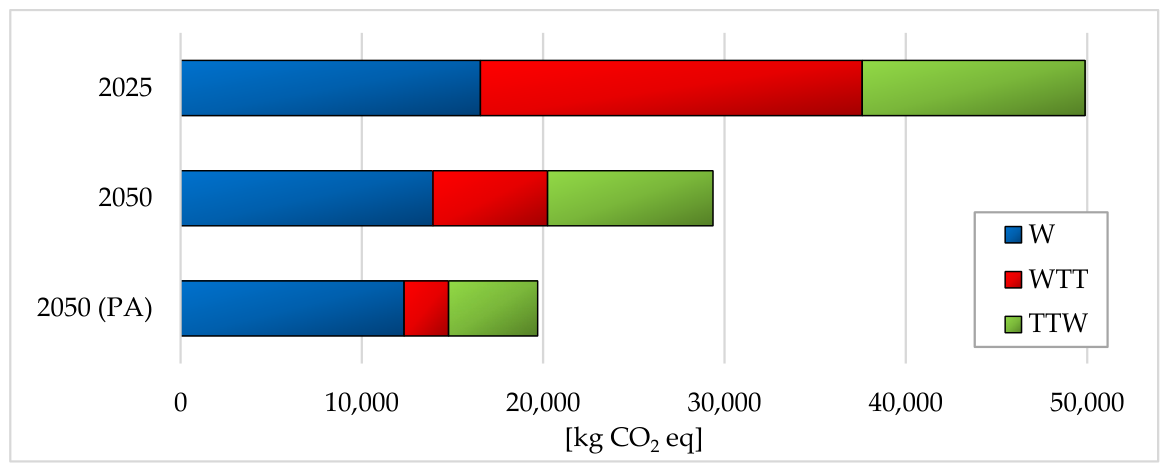
Figure 16 presents the characterisation results for greenhouse gas emissions in the life cycle of gasoline-powered PHEV passenger cars. In the 2025 horizon, the total carbon footprint remains relatively high, and its structure is shaped primarily by the WTT and TTW stages. This reflects the dual nature of plug-in hybrid technology, in which the climate result depends simultaneously on the carbon intensity of electricity and fuel supply chains, the efficiency of the combustion engine, and the proportion of distance driven in electric and combustion modes.
In the 2050 scenarios, a clear reduction in total greenhouse gas emissions is observed, with the most favourable result again obtained under the Paris Agreement-aligned scenario. The decreasing contribution of WTT and TTW indicates that the climate performance of PHEVs is strongly dependent on the decarbonisation of both electricity generation and liquid-fuel production. At the same time, the actual use pattern of the vehicle remains strategically important. A high share of electric driving can strengthen the environmental benefits of PHEVs, whereas frequent operation in combustion mode may considerably reduce their climate advantage.
The relatively stable manufacturing component highlights that vehicle design and production remain important complementary areas for innovation. Product-level improvements should include material optimisation, reduced mass, improved battery sizing, efficient powertrain integration and design strategies that reduce manufacturing burdens while preserving functional performance. From the perspective of sustainable product innovation, PHEVs should therefore be regarded as system-dependent transition technologies whose benefits depend on coordinated progress in product design, user behaviour, charging infrastructure and energy decarbonisation.
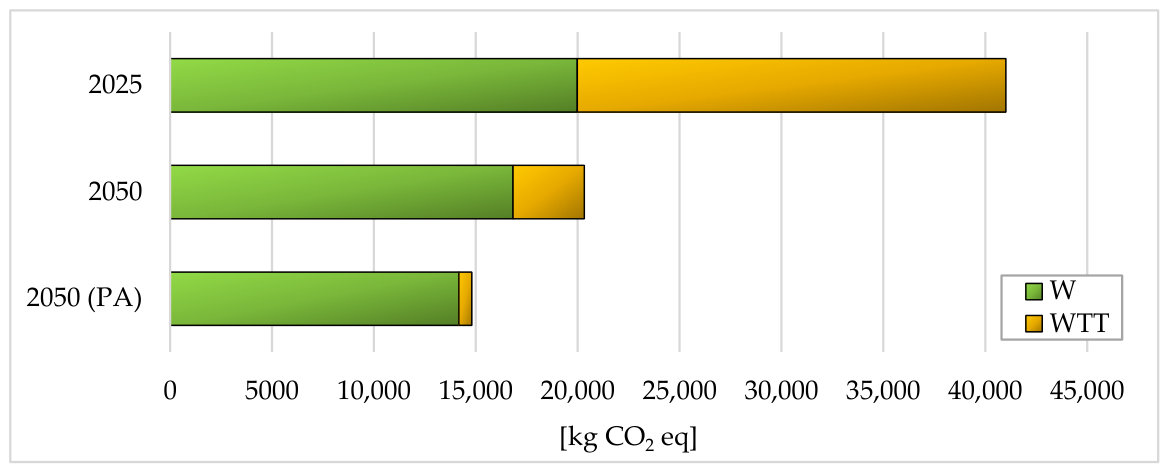
Figure 17 presents the characterisation results for greenhouse gas emissions in the life cycle of BEV passenger cars. For battery electric vehicles, the total climate balance is shaped primarily by vehicle manufacturing (W) and the WTT stage associated with electricity generation and supply. TTW emissions are marginal in comparison, because BEVs do not generate direct exhaust emissions during vehicle operation.
In the 2025 horizon, the significant contribution of WTT confirms the strong dependence of BEV climate performance on the electricity mix. This is a crucial finding from the perspective of strategic product innovation. Electrification can reduce operational emissions, but its full life-cycle benefits are achieved only when electricity production is progressively decarbonised. In the 2050 scenarios, and particularly in the Paris Agreement-aligned pathway, the reduction in WTT-related emissions leads to a substantial improvement in the total climate profile of BEVs.
At the same time, the manufacturing stage remains a significant component of the total result. This reflects the material and energy intensity of battery systems, electric drivetrains, and electronic components. Therefore, further reductions in the carbon footprint of BEVs require innovation not only in the energy system, but also in product architecture, battery chemistry, material sourcing, manufacturing efficiency, modular design and high-quality recycling. From a strategic perspective, BEVs represent a key pathway for low-carbon mobility, but their long-term sustainability depends on the integration of electrification with circular material strategies and decarbonised electricity supply.
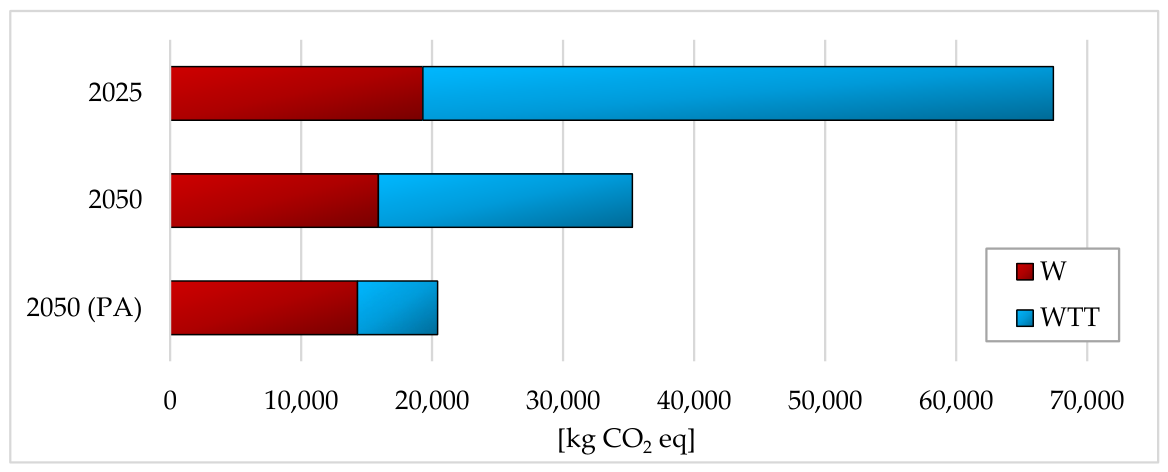
Figure 18 presents the characterisation results for greenhouse gas emissions in the life cycle of FCEV passenger cars. In the 2025 and 2050 horizons, the total carbon footprint is determined primarily by the WTT stage. This means that the climate performance of FCEVs depends mainly on the hydrogen production pathway, the energy source used for hydrogen generation, and emissions associated with hydrogen compression, storage, distribution and supply.
The vehicle manufacturing stage has a smaller share than WTT, but it remains important from a full life-cycle perspective. This is particularly relevant because FCEVs require technically complex components, including fuel-cell systems, hydrogen tanks and specific balance-of-plant elements. Their material intensity and manufacturing energy demand must therefore be considered when assessing the strategic sustainability of hydrogen-based mobility.
A gradual decrease in total greenhouse gas emissions is observed in the 2050 horizon, with the most favourable performance achieved in the Paris Agreement-aligned scenario. The reduction is mainly associated with lower WTT burdens, reflecting the assumed development of low-carbon hydrogen pathways, increased renewable electricity availability and broader transformation of the energy system. However, the results also indicate that improving hydrogen production alone is insufficient. Further progress requires parallel product innovation, including rational material selection, reduction in vehicle mass and system complexity, improved component durability, cleaner manufacturing processes and recycling-oriented design.
From the perspective of strategic orientation and sustainable product innovation, FCEVs should be interpreted as technologies whose environmental benefits are highly dependent on external system conditions. Their future contribution to sustainable development will depend on whether hydrogen supply chains become genuinely low-carbon and whether vehicle design is aligned with circular-economy principles. The results therefore support a broader strategic conclusion: the environmental value of advanced SUV powertrains is created not by propulsion technology alone, but by the coordinated transformation of product architecture, energy carriers, supply chains, end-of-life systems and public policy frameworks.
Overall, the analysis of fuel and energy cycles confirms that sustainable product innovation in the SUV segment cannot be assessed solely at the level of vehicle technology. The environmental performance of each powertrain depends on the interaction between vehicle design, material and manufacturing burdens, energy-carrier production, operational emissions and the decarbonisation trajectory of the wider transport-energy system. This finding is central to the strategic orientation of automotive innovation. It shows that low-carbon product development must be integrated with electricity decarbonisation, low-emission hydrogen production, fuel-system transformation, circular material management and supportive regulatory frameworks. Consequently, the results provide a decision-oriented basis for aligning automotive product innovation with long-term sustainable development goals.
4. Discussion
The results obtained in this study confirm that the environmental performance of SUV passenger cars cannot be interpreted solely through the nominal type of propulsion system. Instead, it is determined by the interaction between powertrain architecture, material intensity, end-of-life management, energy and fuel supply chains, and the long-term decarbonisation trajectory of the transport-energy system. This finding is central to the strategic orientation of sustainable product innovation in the automotive sector. It shows that a transition toward sustainable SUVs requires a coordinated transformation of product design, circular material management and low-carbon energy systems rather than a single technological substitution.
The working assumption of the study was that the environmental consequences of SUV product innovation are strongly dependent on both propulsion technology and post-consumer management strategy. The results support this assumption. Across the analysed impact assessment models, recycling-oriented material recovery generally outperformed landfill disposal, although the magnitude of this advantage differed between impact categories and powertrain technologies. This confirms that circularity should be treated as a strategic design principle embedded in product development, not merely as a downstream waste-treatment option. In particular, the ReCiPe 2016 results showed that the transition from landfill disposal to recycling substantially reduced the total weighted environmental burden and, in several cases, generated negative total scores due to avoided impacts related to the substitution of primary materials by secondary resources. This effect was especially pronounced for more material-intensive and technically complex powertrains, such as BEVs, FCEVs and PHEVs.
These findings are consistent with previous life cycle assessment studies indicating that electrified and hydrogen-based powertrains often shift part of the environmental burden from the use phase to vehicle manufacturing, material supply and energy-carrier production [
20,
35,
127]. However, the present study extends this interpretation by demonstrating that the environmental hierarchy of SUV powertrains is not fixed but rather strongly conditioned by the end-of-life scenario. In product-cycle results, BEVs and FCEVs may show high burdens under landfill assumptions because of their material and component complexity. However, when recycling is introduced, these technologies exhibit the highest potential for avoided environmental burdens. This indicates that the sustainability value of advanced propulsion technologies depends on whether they are developed within a circular product system.
From the perspective of sustainable product innovation, this result is particularly important. Electrification and hydrogen technologies are often discussed primarily as low-emission use-phase solutions. The present results show that their full environmental potential can be achieved only when product architecture is designed for disassembly, high-quality material recovery, battery and component recycling, and the creation of secondary-resource value chains. Therefore, the novelty of the study lies in showing that low-carbon propulsion innovation and circular end-of-life management should be considered as mutually dependent strategic decisions. A powertrain technology cannot be classified as sustainable solely on the basis of its operational emissions if its material system and post-consumer pathway are not environmentally optimised.
The climate-oriented results obtained using the IPCC 2021 model further confirm the importance of integrating circularity into low-carbon product strategies. Recycling reduced greenhouse gas emissions in all analysed powertrain configurations, whereas landfill disposal consistently generated higher climate burdens. The results therefore support the interpretation that end-of-life management can contribute measurably to the decarbonisation of automotive products. At the same time, the highest life-cycle product-related GHG emissions were obtained for BEVs under the landfill disposal scenario. This does not contradict the strategic role of BEVs in decarbonising road transport. Rather, it highlights that electrified vehicles, due to their battery systems, electronic components and material structure, require advanced circular strategies if their environmental benefits are to be maximised across the full life cycle.
The analysis of fuel and energy cycles provides an additional and necessary layer of interpretation. For conventional ICEV technologies, the TTW stage dominates the climate balance, confirming that direct fuel combustion remains the primary source of greenhouse gas emissions. In contrast, for BEVs and FCEVs, the WTT stage is decisive, because the environmental performance of these technologies depends mainly on the carbon intensity of electricity and hydrogen production. This result is in line with the broader literature on transport decarbonisation, which shows that the climate benefits of electrification and hydrogen mobility are strongly dependent on the decarbonisation of energy systems [
128,
129,
130]. The present study adds a product-innovation perspective to this discussion by showing that the environmental effectiveness of future SUVs depends on the simultaneous optimisation of vehicle design and the energy systems that support vehicle operation.
The comparison of the 2025, 2050 and Paris Agreement-aligned 2050 scenarios demonstrates that systemic transformation can significantly improve the environmental profile of advanced powertrains. BEVs and FCEVs benefit particularly strongly from low-carbon electricity and hydrogen supply chains. However, the persistence of manufacturing-related burdens indicates that energy transition alone is insufficient. Sustainable SUV development must therefore combine decarbonised energy carriers with material-efficient product design, lower manufacturing intensity, cleaner component production, battery and fuel-cell recycling, and supply-chain governance focused on environmental traceability.
The CED results provide a complementary perspective by showing that cumulative energy demand is an important criterion for evaluating product innovation. The highest cumulative energy demand was observed for BEVs under landfill assumptions, reflecting the energy intensity of material production, battery manufacturing and technologically complex components. At the same time, recycling substantially reduced cumulative energy demand in comparison with landfill disposal. This finding confirms that circular material recovery can reduce not only emissions, but also the energy embedded in automotive product systems. It also indicates that sustainable innovation should be evaluated using multi-criteria indicators rather than climate metrics alone. From a strategic perspective, an energy-efficient SUV is not only a vehicle with low operational energy consumption, but also a product whose materials, components and end-of-life pathways are designed to minimise cumulative energy demand across the value chain.
The CML-IA results reveal an important trade-off that strengthens the scientific significance of the study. In the acidification category, recycling generally reduced impacts compared with landfill disposal, confirming the environmental value of circular strategies. However, in the eutrophication category, recycling scenarios showed slightly higher impacts in most analysed variants. This result is important because it prevents an overly simplified interpretation of circularity. Recycling is not automatically beneficial in every impact category—its environmental performance depends on the technological quality of the recycling process, including energy use, water demand, chemical inputs and wastewater treatment. This finding is consistent with previous studies showing that circular-economy strategies may generate burden-shifting effects if recycling systems are not designed and operated under strict environmental standards [
26,
28,
29,
30,
31,
131].
The eutrophication results therefore have practical implications for both automotive companies and policymakers. Increasing recycling rates should not be the only objective. Equally important is the development of low-impact recycling technologies, closed-loop water systems, cleaner auxiliary chemicals, improved wastewater treatment and low-carbon energy supply for recycling facilities. In this sense, the study shows that sustainable product innovation must be accompanied by process innovation. Design for recycling should be integrated with the environmental optimisation of recycling operations themselves.
The Ecological Scarcity 2021 results broaden the discussion by incorporating toxicological and land-use-related pressures. Recycling reduced carcinogenic emissions to the atmospheric environment, heavy-metal impacts on soil and land-use-related burdens compared with landfill disposal. The reduction in heavy-metal-related impacts was particularly substantial, indicating that controlled material recovery can be an effective strategy for limiting soil contamination risks. This is especially relevant for advanced powertrains that contain batteries, electronic systems, fuel-cell components and other material-intensive subsystems. The results show that circular product design can reduce environmental risks associated not only with climate change and resource use, but also with toxic emissions and land-related pressures.
This broader environmental perspective is essential for assessing the real sustainability of automotive innovation. A vehicle technology that performs well in terms of operational emissions may still generate substantial burdens in other impact categories if material extraction, component manufacturing or end-of-life treatment are not properly managed. Therefore, the present study supports a more comprehensive understanding of sustainable product innovation. It demonstrates that low-carbon vehicle development should be aligned with eco-design, hazardous material reduction, component durability, modularity, repairability, recyclability and responsible sourcing.
The results also have implications for strategic value creation in the automotive sector. Sustainable product innovation can become a source of competitive advantage only if it is supported by coherent product and supply-chain strategies. For manufacturers, this means that the development of future SUVs should include design for disassembly, material substitution, battery recycling, recovery of critical raw materials, environmental traceability of suppliers and integration with low-carbon energy systems. For policymakers, the results indicate the need for regulatory frameworks that support high-quality recycling, extended producer responsibility, low-carbon electricity generation, low-emission hydrogen production and transparent assessment of life-cycle environmental performance. For consumers and fleet operators, the findings show that the sustainability of a vehicle depends not only on the declared propulsion technology, but also on the upstream and downstream systems in which the vehicle is embedded.
The general significance of the study lies in its integrated approach. The analysis combines multiple LCA models, several SUV powertrain technologies, alternative post-consumer pathways and future-oriented time horizons. This makes it possible to identify not only which technologies perform better under specific assumptions, but also why their performance changes when circularity and energy-system transformation are considered. Such an approach is particularly relevant for strategic decision-making because it links environmental assessment with long-term product planning, innovation management and sustainable development objectives.
Several limitations should be acknowledged. First, the 2050 and Paris Agreement-aligned scenarios are based on prospective assumptions regarding energy systems, hydrogen production, technology development and end-of-life management. These assumptions are necessary for long-term assessment, but they involve uncertainty. Second, the study focuses primarily on environmental life cycle indicators and does not provide a full life cycle cost assessment or social life cycle assessment. Economic feasibility, social acceptance, labour conditions, raw-material criticality and infrastructure readiness should be incorporated in future research. Third, the results may be sensitive to assumptions regarding vehicle lifetime, mileage, electricity mix, hydrogen production pathways, recycling efficiency and the allocation of avoided burdens. Therefore, future work should include uncertainty analysis, sensitivity analysis and dynamic LCA modelling.
Future research should extend the present framework in several directions. First, prospective and dynamic LCA should be applied to model the temporal evolution of electricity mixes, hydrogen pathways, battery technologies and recycling processes in greater detail. Second, environmental LCA should be integrated with life cycle costing and social life cycle assessment to support life cycle sustainability assessment of SUV product strategies. Third, future studies should investigate different battery chemistries, hydrogen storage systems, vehicle mass-reduction concepts, modular architectures and closed-loop recycling technologies. Fourth, the behavioural dimension of vehicle use should be considered, particularly for PHEVs, where the share of electric driving has a decisive effect on climate performance. Finally, greater attention should be paid to regional differences in energy systems, recycling infrastructure and policy frameworks, because the sustainability of powertrain technologies is strongly context dependent.
Overall, the results confirm that sustainable SUV innovation requires strategic alignment between product design, circular-economy implementation and low-carbon energy-system transformation. The study demonstrates that the environmental performance of future automotive products cannot be determined by propulsion technology alone. It depends on the entire configuration of the product system, including materials, components, manufacturing, use-phase energy carriers, post-consumer management and policy conditions. This integrated interpretation provides a stronger basis for positioning SUV powertrain development within the broader agenda of sustainable product innovation and strategic orientation for sustainable development.
5. Conclusions
This study demonstrated that sustainable product innovation in the SUV segment cannot be assessed solely through the nominal type of propulsion system. The environmental performance of future automotive products is determined by the interaction between powertrain architecture, material intensity, manufacturing burdens, post-consumer management, fuel and energy supply chains, and the long-term decarbonisation trajectory of the transport-energy system. Therefore, the strategic orientation of automotive product development should integrate low-carbon propulsion technologies with circular-economy principles and value-chain transformation.
The comparative life cycle assessment of six SUV powertrain technologies showed that the end-of-life strategy is a decisive factor shaping environmental results. Recycling-oriented material recovery generally provided substantially better environmental performance than landfill disposal. This effect was visible in aggregated ReCiPe 2016 results, greenhouse gas emissions, cumulative energy demand, acidification, carcinogenic emissions, heavy-metal impacts and land-use-related pressures. The strongest benefits were observed for technologically complex and material-intensive vehicles, especially BEVs, FCEVs and PHEVs. These findings confirm that advanced propulsion technologies require circular product architectures, design for disassembly, high-quality recycling and secondary-resource value chains to fully realise their sustainability potential.
The results also showed that electrification and hydrogen-based mobility should not be interpreted as automatically sustainable without considering the entire life cycle. BEVs and FCEVs displayed high sensitivity to material production, component complexity, battery or fuel-cell systems and energy-carrier supply. Under landfill assumptions, these technologies generated high product-cycle burdens in several impact categories. However, when recycling was introduced, they also revealed the greatest potential for avoided environmental impacts. This confirms that their long-term environmental value depends on the simultaneous development of low-carbon energy systems and circular material management.
The interpretation of the acquired data should be reviewed in light of the end-of-life situations used in the study. The “maximum landfilling” and “maximum recycling” alternatives were purposefully designed as reference boundary scenarios illustrating two opposing material management techniques, rather than actual projections of future waste management systems. Their major goal was to isolate and quantify the environmental impact of post-consumer material recovery by comparing two severe but methodologically similar end-of-life circumstances while making the same assumptions for all other life-cycle phases.
The use of boundary scenarios is a well-established method in life cycle assessment, especially when the goal is to test the sensitivity of environmental performance to various end-of-life strategies rather than forecast future recycling practices. This technique identifies the highest theoretical environmental improvement associated with circular material management and informs decision-makers about the top limit of prospective environmental advantages achievable through enhanced material recovery.
As a result, the environmental disparities stated between the landfill and recycling scenarios should not be taken as projected future performance, but rather as the potential environmental range caused by various end-of-life management techniques. A variety of factors impact real-world recycling systems, including collection efficiency, material purity, technological restrictions, economic viability, regional infrastructure, and market demand for secondary raw materials. These limitations necessarily diminish achievable environmental benefits when compared to idealized border situations. Nonetheless, analyzing the limiting situations sheds light on the relative contribution of end-of-life management to the overall environmental profile of solar power plants and makes it easier to identify life-cycle stages with the highest improvement potential.
As a result, the proposed analytical framework should be viewed as a comparative decision-support tool for assessing the environmental value of circular-economy initiatives, rather than a forecast of future waste management performance. This viewpoint is congruent with the goals of comparative LCA, which commonly uses reference scenarios to investigate the environmental impacts of various system configurations under controlled modeling assumptions.
The analysis of fuel and energy cycles confirmed the different environmental logic of conventional and alternative powertrains. For ICEV configurations, greenhouse gas emissions were dominated by the tank-to-wheel stage, which reflects the continuing importance of direct fuel combustion. For BEVs and FCEVs, the well-to-tank stage was decisive, indicating strong dependence on the carbon intensity of electricity and hydrogen production. The 2050 and Paris Agreement-aligned scenarios showed substantial improvement, particularly for BEVs and FCEVs, but also confirmed that product innovation must be coordinated with systemic decarbonisation of electricity generation, hydrogen supply and fuel production pathways.
An important contribution of the study is the identification of environmental trade-offs associated with circular strategies. Although recycling was generally preferable to landfill disposal, the eutrophication results indicated that recycling processes may generate higher burdens in water-sensitive impact categories. This finding demonstrates that circularity should not be treated as a purely quantitative objective based only on increasing recycling rates. Instead, it should be developed as a qualitative innovation strategy, involving cleaner recycling technologies, reduced water and chemical intensity, closed-loop process systems, improved wastewater treatment and low-carbon energy supply for recovery operations.
From a strategic perspective, the findings indicate that sustainable SUV development requires coordinated action at several levels. At the product level, manufacturers should focus on material selection, modularity, design for disassembly, reduction in hazardous substances, lower manufacturing intensity and recovery-oriented architectures. At the value-chain level, priority should be given to responsible sourcing, traceability of critical materials, battery and component recycling, and the development of secondary raw material markets. At the policy level, effective support is needed for low-carbon electricity, low-emission hydrogen, extended producer responsibility and high-quality recycling infrastructure.
The novelty of this study lies in connecting comparative LCA results with the strategic orientation of sustainable product innovation. The analysis shows that the environmental hierarchy of SUV powertrains is not fixed but rather depends on the configuration of the entire product system, including end-of-life management and energy-system assumptions. This provides a more comprehensive basis for decision-making than assessments limited to tailpipe emissions or single environmental indicators. Consequently, the study contributes to the development of an integrated framework for evaluating automotive product innovation in the context of sustainable development, circular-economy implementation, and low-carbon transition.
Future research should extend this approach by applying dynamic and prospective LCA models, incorporating regional electricity mixes, hydrogen pathways, battery chemistries, recycling efficiencies and infrastructure constraints. Further work should also integrate environmental LCA with life cycle costing and social life cycle assessment to support a broader life cycle sustainability assessment of SUV technologies. Such research would strengthen decision support for manufacturers, policymakers and stakeholders seeking to align automotive innovation with long-term climate, resource-efficiency and sustainable development objectives.