Article

Community Restaurants: Evaluation of the Strategic Effect of Promoting Access to Food in the North and Northeast Regions of Brazil

by
Mateus Santana Sousa
1,
Rita de Cássia Akutsu
1,2,
Calliandra Maria de Souza Silva
3,4 and
Izabel Cristina Rodrigues da Silva
3,5,*
1
Postgraduate Program in Food, Nutrition and Health, Nutrition School, Federal University of Bahia, Salvador 40110-909, Brazil
2
Department of Nutrition, Faculty of Health Sciences, Campus Universitario Darcy Ribeiro, University of Brasília, Brasilia 70910-900, Brazil
3
Postgraduate Program in Health Sciences and Technologies, Faculty of Ceilândia, University of Brasília (UnB), Brasília 72220-900, Brazil
4
Academic Unit of Biotechnology Engineering (UAEB), Center for Sustainable Development of the Semi-Arid Region (CDSA), Sumé Campus, Federal University of Campina Grande, Sumé 58540-000, Brazil
5
Clinical Analysis Laboratory, Molecular Pathology Sector, Pharmacy Department, Faculty of Ceilândia, University of Brasília (UnB), Brasília 72220-900, Brazil
*
Author to whom correspondence should be addressed.
Sustainability 2026, 18(15), 7762; https://doi.org/10.3390/su18157762
Submission received: 9 December 2025 / Revised: 23 March 2026 / Accepted: 24 March 2026 / Published: 31 July 2026
(This article belongs to the Section Sustainable Food)

Abstract

In Brazil, Community Restaurants (CRs) are regarded as an essential public initiative to expand food access for groups experiencing severe social vulnerability. This cross-sectional study analyzed the strategic effect of CRs as an indirect mechanism to ensure food availability in municipalities with more than 100,000 inhabitants, located in the North and Northeast regions of the country, using the CR evaluation matrix system of structural and process indicators as proxies to classify units as “not very effective,” “effective,” or “very effective,” rather than direct outcome impacts. Of the 94 CRs assessed (North: n = 23; Northeast: n = 71), most were rated as effective or very effective (95.6% in the North, 95.8% in the Northeast), with only one CR in Pará and three in the northeast (two in Bahia and one in Sergipe) classified as not very effective. The North region showed strong performance in financial resources, monitoring, location, physical structure, menu planning, incorporation of regional foods, volume of meals served to the attending public, and intersectoral actions. The Northeast excelled in financial resources, food security, physical structure, menu planning, and integration of regional foods, though it scored lower in education and volume of meals served to the attending public. This study represents the first structured application of the Oliveira matrix in the North and Northeast, providing new evidence on regional disparities and management challenges. These findings underscore CR’s strategic effectiveness in supporting regional efforts to improve food access and mitigate food and nutritional insecurity in historically vulnerable regions. However, outcome indicators such as dietary diversity, nutritional adequacy, and user health outcomes were not assessed. Future studies should incorporate these measures, alongside longitudinal designs and onsite evaluations, to better understand the broader impact of CRs on food and nutrition security.

1. Introduction

The effectiveness criterion has become fundamental in public administration, as it assesses the impact of public policies on society by focusing on the tangible, enduring effects of implemented policies [1,2,3]. Evaluating the effectiveness of public policy is crucial not only to ensure they achieve their objectives but also to confirm they promote expected positive impacts for the benefit of society. What makes this type of evaluation indispensable is the fact that if the expected impact is not achieved, evaluation provides the basis for corrective measures or adjustments to adopted models [4,5,6].
Assessing effectiveness requires a continuous evaluation and monitoring process that involves using tools to determine whether implemented public policies improve the population’s quality of life and well-being, and to ensure the proper use of allocated resource [4,5,6,7]. In Brazil, the principle of effectiveness in public administration gained prominence with the implementation of the public governance model, formalized by Constitutional Amendment No. 19 of 1998 [8]. This amendment introduced the effectiveness principle into Article 37 of the Brazilian Federal Constitution, aiming to ensure a higher quality of services provided by public administration. Notably, effectiveness is also strongly linked to the adaptability of policies to changing social needs and diverse regional contexts. Policies that are effective in a given context may require adjustments to maintain their suitability across different scenarios, as is the case in Brazil, which has five completely distinct geographical regions from a structural perspective [3,5,9].
In this context, Brazil has encountered substantial food and nutritional security, yet has demonstrated notable progress. According to the United Nations Report on the State of World Food Insecurity 2024 [10], the country achieved an 85% reduction in severe food insecurity in 2023, representing 14.7 million fewer people facing hunger. This improvement occurred after the departure of a denialist government administration, during which Brazil experienced a concerning 58.7% rate of food and nutritional insecurity—reaching 68.0% in the northern region and 71.6% in the northeast [11]. This recent progress can be attributed to public policies and social assistance programs designed to ensure food accessibility and availability for the entire population [10,12,13,14,15].
Despite recent progress, significant challenges persist. The Food and Agriculture Organization (FAO) report that over 70 million Brazilians continue to experience moderate or severe food insecurity, and 10 million are malnourished [10]. To address these issues, the Brazilian government continues collaborating with international and local organizations to strengthen food and nutrition security networks, promote sustainable agriculture, and support the most vulnerable communities in overcoming food insecurity and achieving food security for all [14,16].
Among the Brazilian federal government’s food access policy and program initiatives are Community Restaurants (CRs), which aim to provide nutritionally adequate meals at affordable prices for low-income and socially vulnerable populations [13,15,17,18,19,20,21,22,23,24]. These restaurants are integral to the country’s food and nutritional security policies by combating hunger and fostering healthy, balanced diets. Their creation arose from the need to ensure that people facing food insecurity had access to quality meals [25,26].
Community Restaurants are typically established in large urban centers and operate mainly on weekdays, serving meals at lunchtime [27]. The menus are designed by nutritionists in accordance with the recommendations of the Brazilian Food Guide [27], ensuring nutritional adequacy and cultural relevance. The management of these facilities falls under local governments—either municipal or state—while the federal government provides resources for infrastructure and equipment. Daily operations and maintenance are delegated to local authorities, which may contract specialized companies to oversee management, often through concession or loan-for-use agreements [28,29,30,31,32].
Access to CRs is universal, meaning anyone can use this service. However, the priority audience for these restaurants is populations experiencing social vulnerability and food insecurity, including homeless individuals. Therefore, the CR program is essential to guarantee access to food for those without reliable access [26].
Evaluating these policies is crucial to ensure that the objectives of improving the Brazilian population’s food, nutrition, and health conditions are achieved. Despite the advances made in recent decades, there are still significant challenges to be overcome, especially in the northern and northeast regions—geographic regions that face profound socioeconomic problems reflected in vast social inequalities and development difficulties, amplified by severe climate conditions and long periods of drought [33,34,35,36,37,38,39], when compared to the most developed geographic regions of the country. Furthermore, society’s constant demands for efficient public services push managers to address social needs at the lowest cost while ensuring maximum effectiveness [9,40].
Continuous evaluation of food policies is essential for reducing food insecurity and ensuring responsiveness to the evolving needs of Brazilian society. This study adopts a strategic effectiveness perspective that integrates political–organizational aspects, such as direction, governance, and coordination, with technical–operational dimensions, including processes, resources, and execution [35,41]. This comprehensive approach enables a thorough assessment of Community Restaurants, evaluating their ability to align political and structural decisions with daily management and service delivery. While outcome indicators such as nutritional status, dietary diversity, and food insecurity prevalence are commonly used to assess policy impact, this evaluation emphasizes operational and strategic effectiveness by analyzing structural and process indicators as proxies for food access.
Based on this, we identified a lack of systematic evaluations of Community Restaurants in the North and Northeast of Brazil. This study is the first to apply the Oliveira matrix—a comprehensive assessment tool for food service evaluation—in a structured way in these regions. This enabled a comparative, consistent analysis of strategic and operational effectiveness. The research brings new evidence from these regions, expands understanding of local specificities, and offers new perspectives. It contributes to strengthening public policies and advancing the literature on food access and social sustainability.
The objective of this study is to evaluate the strategic effectiveness of Community Restaurants in promoting food access in the northern and northeastern regions of Brazil.

2. Materials and Methods

2.1. Study Design and Population

The study adopted a cross-sectional design and included all Community Restaurants (CRs) located in municipalities with populations of 100,000 or more. The analysis covered states from both the North (Acre, Amapá, Amazonas, Pará, Rondônia, Roraima, and Tocantins) and Northeast (Alagoas, Bahia, Ceará, Maranhão, Paraíba, Pernambuco, Piauí, Rio Grande do Norte, and Sergipe) regions of Brazil, according to data from the 2022 population census conducted by the Brazilian Institute of Geography and Statistics [11].

2.2. Data Source and Collection

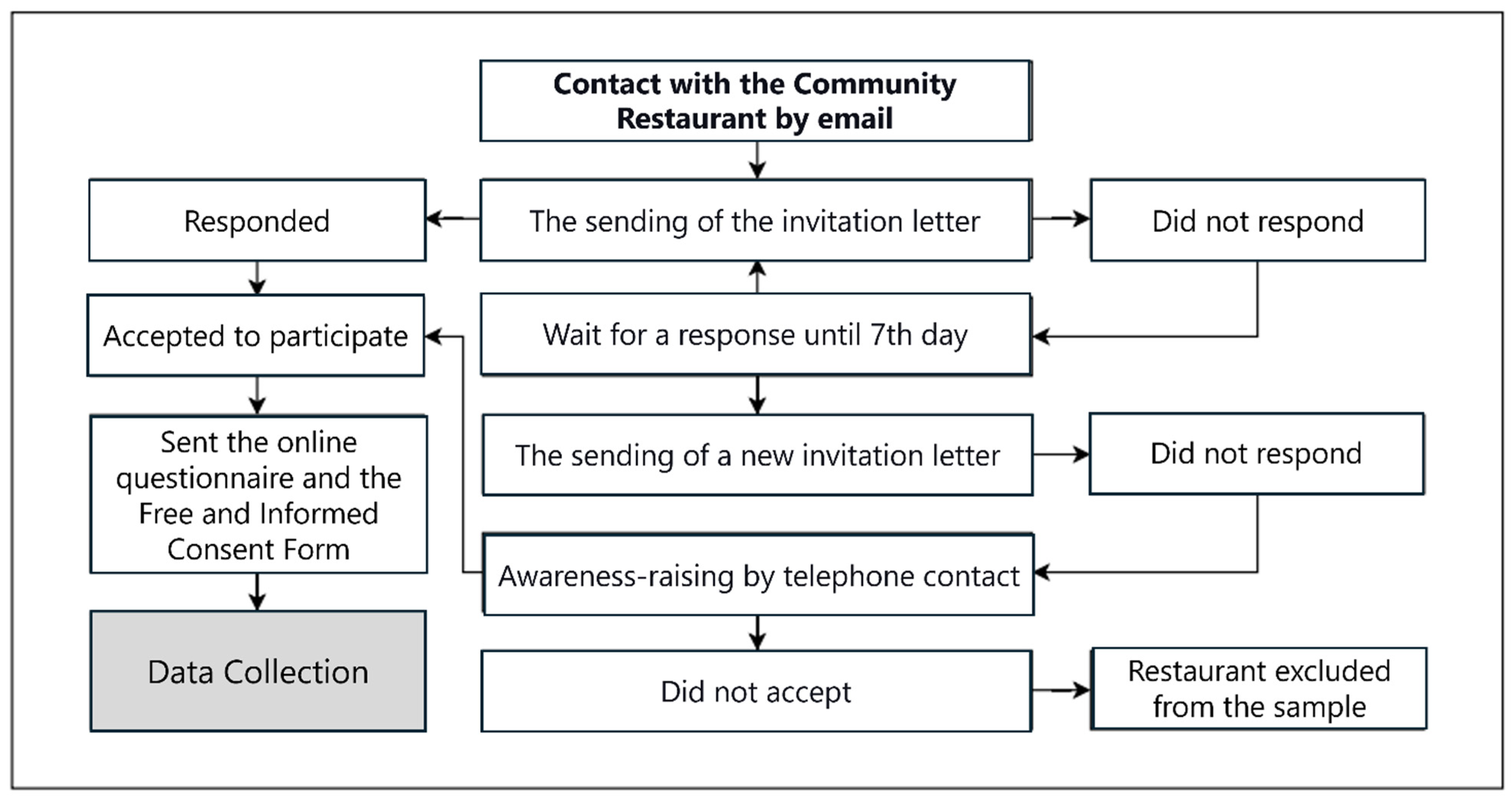
This investigation used a census-based approach. The procedure for identifying eligible Community Restaurant (CR) units followed the protocol established in a previous study [21], and the data collection steps are illustrated in Figure 1. From this initial survey, 106 CRs managed by municipal or state authorities were considered eligible—28 (26.4%) in the North and 78 (73.6%) in the Northeast—located in municipalities with populations of at least 100,000, in accordance with the guidelines of the Federal Government’s Manual for Implementing Community Restaurants [26].
Like the previous study, data collection took place between April and June 2024 and involved the application of an adapted version of the evaluation and judgment matrix, reformulated into an online self-administered questionnaire using Google Forms® (Google, Mountain View, CA, USA) for the technical managers or CR managers to answer (for questionnaire structure see [42]. Responses were cross-checked for internal consistency, and managers were contacted to clarify ambiguous answers. All participants provided informed consent via a Free and Informed Consent Form (FICF) prior to participation.
The overall response rate was 88.7% (94 of 106 eligible CRs). To minimize bias from non-responders, all eligible units were contacted multiple times, and participation was encouraged by emphasizing confidentiality and the importance of evaluation for program improvement. Although non-response may introduce bias if less effective CRs were underrepresented, the high response rate across both regions reduces this risk. Furthermore, the distribution of respondents was consistent with the geographic distribution of eligible CRs, supporting the representativeness of the final sample.

2.3. Instruments

To assess the strategic effectiveness of CRs in promoting food access, the study applied the Community Restaurant Evaluation Matrix proposed by Oliveira et al. [43]. This instrument was developed in alignment with Brazilian legislation and prior reference studies [25,26,44,45,46,47,48,49,50,51], offering a comprehensive framework for comparing theoretical models with practical implementation. The matrix is organized into two dimensions—political–organizational and technical–operational—encompassing six subdimensions, 24 indicators, and 29 measures, and emphasizes observation and monitoring to analyze the behavior of the study object [43]. By integrating governance and organizational aspects (direction, power, and coordination) with technical–operational dimensions (processes, resources, and execution), the matrix enables a systemic evaluation of CRs’ capacity to align strategic decisions with everyday management and service delivery. Table 1 presents the evaluation matrix.
The instrument used in this study comprises 2 dimensions (political–organizational and technical–operational), 6 subdimensions (management, infrastructure, users, adequate nutrition, food and nutrition education, and comprehensive support for users), 24 indicators (availability, human resources, meal pricing, coordination with Food and Nutrition Security (FNS) policies, evaluation and monitoring, location, physical structure, maintenance, user profile, prioritization of specific populations, menu nutritional planning, food safety, availability of regional foods and/or preparations, volume of meals produced for users, user satisfaction with the meals provided, food and nutrition education related to FNS, promotion of other social assistance initiatives, FNS status after implementation of the program, socialization activities, and intersectoral actions), and 29 measures (Operating days, Number of people served daily, Number of staff involved in meal production, Staff training, Source of funding, Access scheduling, Meal price, Existence of coordination with other FNS initiatives, Waste disposal, Existence of local evaluation and monitoring mechanisms, Location adequacy, Minimum operational infrastructure, Dining area capacity, Equipment maintenance, User characterization, Priority service for socially vulnerable populations experiencing food and nutrition insecurity (FNIS), Nutritional adequacy of served menus, Existence of safe meal production processes, Regional foods and preparations, Procurement of food from family farming, Partnerships related to Agriculture and Supply, Meal production adequacy in relation to demand, User satisfaction surveys, Food and nutrition education initiatives for users, Actions to encourage user participation in other social assistance programs, Assessment of FNS conditions after CR program implementation, Promotion of socialization activities, and Intersectoral initiatives) [43].

2.4. Classification

To evaluate the CR matrix, all indicators were equally weighted to avoid privileging certain domains without empirical justification and classified as ‘good,’ ‘regular,’ or ‘bad’ based on 63 questions developed to address the 29 measures (indicators) [42,43]. Of these, 44 questions were used to evaluate the measures, while the remaining questions characterized the restaurants. The responses collected during data collection determined the classification (value judgments) of each measure for each CR.
The same scoring system was applied for the classification and assignment of value judgments: 10 points for ‘good,’ 5 points for ‘regular,’ and 0 points for ‘bad.’ The value of 5 was used as a neutral midpoint, distinguishing between adequate and inadequate performance. Indicator scores were calculated as the average of their corresponding measures. For indicators with only two measures, the judgment was considered good when the score ≥5 (5.0 to 10.0), and bad when the score <5 (0.0 to 4.9). For all other indicators, subdimensions, dimensions, and the final CR evaluation, the value judgment was classified as good when >7.0, regular when ≥5.0 and ≤7.0, and bad when <5.0 (Table 2). Thus, the average of the measures resulted in the evaluation of the indicators; the average of the indicators determined the evaluation of the subdimensions; the average of the subdimensions determined the evaluation of the dimensions; and finally, the average of the dimensions produced the overall evaluation of the CRs [42,43]. Further details are available in the evaluation matrix proposed by Oliveira et al. [43].

2.5. Data Analysis

We applied the indicator system methodology developed by Jannuzzi and Patarra [52] to evaluate the strategic effectiveness of CRs in promoting access to food, focusing on their ability to produce long-term effects and impacts. The structural and process effect indicators considered included the number of operational days, the daily number of individuals served, the prioritization of specific populations, and the volume of meals provided. Based on the criteria proposed by Hartz and Silva [2], restaurants were deemed “effective” if their evaluation score exceeded 50% (Table 3).
A simple relative frequency was used to estimate the strategic effectiveness of CR units. Outliers were excluded to avoid distortion of regional averages and classifications. Outliers were defined a priori as values falling more than 3 standard deviations from the regional mean for quantitative indicators (e.g., volume of meals served to the attending public per day). This criterion was applied consistently across both regions. Exclusion was limited to extreme values implausible given CRs’ operational capacity, and sensitivity analyses confirmed that their removal did not alter overall classification patterns. By applying this transparent criterion, the analysis preserved the integrity of the evaluation while reducing the influence of anomalous data points. Three outliers were excluded: two in the Northeast and one in the North, all related to the variable ‘volume of meals served per day.’ Sensitivity analysis confirmed that their exclusion did not alter classification patterns, with regional averages and effectiveness categories remaining stable.
Mean effect indicators were calculated, and comparative analyses were conducted across the two geographic regions, the states within the regions, and the municipalities. The mean and median volume of meals served to the attending public were also calculated. In addition to descriptive statistics, inferential analyses were performed to enhance regional comparisons. Confidence intervals (95%) were calculated for subdimension scores, chi-square tests were used to compare categorical classifications, and t-tests or ANOVA were applied to assess differences in continuous indicators such as meal volume. Effect sizes were reported using Cohen’s d for mean differences, Cramér’s V for chi-square associations, and eta-squared for ANOVA models (see Supplementary Tables S1 and S2). These procedures ensured consideration of both statistical significance and practical relevance. All analyses were conducted using the Statistical Package for Social Sciences for Windows (SPSS 23.0, IBM Corporation, Armonk, NY, USA).

2.6. Ethical Aspects

The Ethics Committee of the Federal University of Bahia School of Nutrition accepted this study under opinion number 5.613.160 (National Ethics and Research Commission Resolution 466/2012). The dataset used for the study contained no personally identifiable information.

3. Results

This study identified 106 eligible municipal or state-operated Community Restaurants (CRs) across Brazil’s North and Northeast regions. Of these, 94 units participated in the study, yielding an overall response rate of 88.7% (23 out of 28 in the North; 71 out of 78 in the Northeast). The final sample comprised 94 CRs located in cities with populations of ≥100,000 inhabitants, with 24.5% (n = 23) in the North and 75.5% (n = 71) in the Northeast. Within the North region, the majority of evaluated CRs were concentrated in the state of Amazonas (n = 15), while in the Northeast, the highest concentrations were found in Maranhão (n = 24) and Rio Grande do Norte (n = 20) [21].
Evaluation of strategic effectiveness using the subdimensions and indicators of the CR evaluation matrix revealed that the North region achieved the highest performance in financial resources (95.7%), quality assessment and monitoring (91.3%), location (100.0%), physical structure (95.7%), prioritization of specific populations (73.9%), menu planning (95.7%), regional foods and recipes (100.0%), volume of meals served to the attending public (95.7%), education in food and nutrition and Food and Nutrition Security (FNS) (73.9%), promotion of other social assistance initiatives (82.6%), intersectoral actions (91.3%) and visibility of restaurants (100.0%). Lower results were observed in articulation with other programs and FNS (78.3%), waste management (91.2%), maintenance (91.3%), users (91.3%), food security (60.9%), preference for regional ingredients (60.9%), user satisfaction (74.0%), local food and nutritional security index (87.0%) and socialization activities (47.8%).
The Northeast region, on the other hand, achieved the highest scores in financial resources (100.0%), articulation with other programs and FNS (70.4%), quality assessment and monitoring (94.4%), location (100.0%), physical structure (97.2%), prioritization of specific populations (78.9%), menu planning (95.8%), food safety (100.0%), regional foods and recipes (98.6%), preference for regional ingredients (63.4%), volume of meals served to the attending public (57.8%), education in food and nutrition and FNS (50.7%), intersectoral actions (62.0%), and visibility of restaurants (87.3%). Lower scores were observed in waste management (74.7%), maintenance (95.8%), users (93.5%), user satisfaction (85.9%), promotion of other social assistance initiatives (90.1%), and socialization activities (94.4%) (Table 4).
Summary of subdimension scores showed means consistently above 7.0, with narrow 95% confidence intervals, indicating stable estimates (Table S1). No statistically significant differences were found between the North and Northeast in administration, structure, target groups, meal quality, food and nutrition education, or social support (all p > 0.05). Small effect sizes (Cohen’s d) further suggest broadly similar strategic effectiveness across regions.
The assessment of strategic effectiveness in promoting food access found that most CRs in the North region are classified “effective” or “very effective,” except for one in Pará. In the Northeast region, most states also had their CRs classified as “effective” or “very effective,” with only two CRs in Bahia and one in Sergipe rated as “not very effective” (Table 5). These findings reflect the integrated performance of political–organizational and technical–operational dimensions, reinforcing the systemic role of CRs in food and nutrition security. While the high response rate reduces the risk of non-response bias, it remains possible that some poorly performing CRs were underrepresented. Outliers were excluded based on predefined statistical criteria, and sensitivity analyses confirmed that their removal did not alter classification patterns.
When comparing classification distributions (Table S2), we found no significant differences between the North and Northeast regions (χ2 = 1.82, df = 2, p = 0.40), and the small effect size (Cramér’s V = 0.10) reinforces that both regions achieved comparable effectiveness, with most CRs rated as “effective” or “very effective” (Table S2).

4. Discussion

The evaluation of Community Restaurants (CRs) in Brazil’s North and Northeast regions reveals a high operational success rate, with most facilities classified as “effective” or “very effective” in promoting food access. Only a small minority—one unit in Pará, two in Bahia, and one in Sergipe—were rated as “not very effective,” highlighting the consistency of results across both regions. Strategic effectiveness was assessed as an indirect measure of food access, utilizing structural and process indicators to capture the intervention’s capacity to establish favorable conditions for achieving intended outcomes. By confirming that CRs are meeting their structural and process-related objectives, the findings reinforce their role as a robust policy instrument in Brazil’s most vulnerable regions.
Implementing and maintaining effective public food policies in Brazil is critical for guaranteeing the right to food, promoting health, and combating social inequality [8,53]. Given the Brazilian context, where abundant natural resources coexist with high rates of food insecurity, these policies play a central role in combating food insecurity, where families face difficulties in accessing quality food in sufficient quantities. Policies such as meal distribution, basic food baskets, subsidies for family farming and school meals help to mitigate this reality [12,15,24,54,55,56].
However, it is important to emphasize that CRs demonstrating low strategic effectiveness in outcomes must carefully assess the root causes of their shortcomings, including planning, execution, and impact. Based on this diagnosis, adjustments can be made, such as redefining objectives, reallocating resources, or reformulating strategies [3,9]. Engaging in social participation and consulting experts in social policies and programs, as well as in food are critical steps to align the policy with the population’s actual needs. Moreover, continuous monitoring of results, ensuring transparency throughout the process, and investing in the training of responsible teams are key to fostering sustainable and effective improvements [3,5,57,58,59].
Among the Brazilian public policies whose outcomes are considered effective, we can mention the National School Feeding Program (PNAE) [60,61,62], the Family Allowance Program [63], the National Immunization Program [64], and the Unemployment Insurance [65]. The PNAE, considered one of Brazil’s oldest and most consolidated food policies, is a Brazilian initiative that aims to guarantee food and nutritional security for students in basic education, providing nutritionally balanced meals throughout the school year. It aims to promote biopsychosocial development, learning, and the formation of healthy eating habits, and to encourage family farming by purchasing food from local producers. A study using methods similar to ours revealed that the PNAE’s effectiveness in reducing school dropout rates, improving academic performance, and combating child malnutrition [62]. Nonetheless, it highlights the importance of corrections and adaptations across Brazil [60,62].
The Family Allowance Program, essential to reducing extreme poverty in Brazil, provides financial assistance to families in exchange for commitments such as school attendance and student vaccination in the public school system. The initiative helped to improve health, education and social inequality indicators [34,63,66]. The National Immunization Program, recognized as one of the most comprehensive vaccination programs in the world, is responsible for eradicating diseases such as polio and for drastically reducing other preventable diseases [64]. Lastly, Unemployment Insurance, which in several countries allows workers to support their families while they look for a new job, helps avoid individual financial collapses and stimulates the local economy [65]. Despite these programs’ longevity, a continuous evaluation and monitoring process is necessary to make corrections and identify any possible deviations from the proposed objectives.
When evaluating the CR distribution across the two regions, it is notable that the states of Amazonas (northern region), Maranhão, and Rio Grande do Norte (northeastern region) had the highest CR concentrations in the sample. Amazonas has 44 CR units distributed across 18 municipalities [67], Maranhão has 175 CR units across 158 municipalities [68], and Rio Grande do Norte has 56 CR units across 34 municipalities [69].
The Maranhão state stands out for having the largest number of CRs in Brazil, driven by a combination of strategic and social factors. Facing high rates of food insecurity (63.3%) [16] and significant social inequality, Maranhão has prioritized implementing public policies, particularly those aimed at guaranteeing access to food. Accordingly, the Government of Maranhão has prioritized expanding these restaurants as part of broader initiatives to combat hunger and promote food security, as they not only offer nutritious meals but also support the local economy by purchasing food from regional producers [56,70].
When assessing the Brazilian CR evaluation matrix effect indicators, the CRs in the North region presented promising results in financial resources, quality assessment and monitoring, location, physical structure, prioritization of specific populations, menu planning, regional foods and recipes, volume of meals served to the attending public, education on food and nutrition and Food and Nutrition Security (FNS), promotion of other social assistance initiatives, intersectoral actions and visibility of restaurants.
Regarding meals, it is noteworthy that the indicator volume of meals served to the attending public was rated good, reflecting the adequacy of CRs to local demand. However, when analyzing the average daily volume of meals served to the attending public, regional differences emerged: in the North, this indicator was classified as poor (mean 486.5 meals/day; median 450, Q1 = 340–Q3 = 500), while in the Northeast it was rated good (mean 926.9 meals/day; median 900 meals/day, Q1 = 560–Q3 = 1100), since several units reached or exceeded the minimum of 1000 meals/day established in the Community Restaurants Manual [26].
Conversely, CRs in the North presented negative results in articulation with other programs and FNS, waste management, maintenance, users, food safety, preference for regional ingredients, user satisfaction, local food and nutrition security index and socialization activities. Taken together, these findings reinforce the results: while strategic effectiveness is broadly similar across regions, operational scale and service capacity differ substantially, underscoring the need for region-specific interventions.
At the same time, the Northeast Region achieved better performance in financial resources, articulation with other programs and FNS, quality assessment and monitoring, location, physical structure, prioritization of specific populations, menu planning, food security, food and regional recipes, preference for regional ingredients, volume of meals served to the attending public, food and nutrition education and FNS, intersectoral actions, and restaurant visibility. On the other hand, the region performed more weakly in waste management, maintenance, consumers, user satisfaction, promotion of other social assistance initiatives, and socialization activities. Comparing our data with the Oliveira et al. study [71] in southern Brazil, using the same instrument and the CR effect indicators matrix, the restaurants received the same positive assessment for the financial resources, location, and physical structure indicators, and the worst assessment for the maintenance and socialization activities indicators.
The CR administration in Brazil runs through planning, organization, direction, and control, which, in turn, is used for human resources, materials, and technicians. This type of public action requires a global decision-making process oriented to effectively achieve its objectives through the execution of planning, organization, and integration of people involved in management and control [1,3,25,26]. In this way, when implementing a CR, management must assess its capacity for maintenance and solid subsidies in the medium and long term [25]. The Financial Resources indicator assessment was positive, as most CRs reported having a stable resource source for the program since its implementation. Another important factor that management should develop is coordination with other FNS actions. This articulation must focus on developing its promotion so that different sectors can work in an interconnected and coordinated manner, enhancing actions [25,31,37].
On a positive note, the CRs evaluated have processes for evaluating and monitoring their actions. Performing this evaluation and monitoring process is a predominant factor in ensuring FNS strategies and actions, as it is of the utmost importance to assess results and understand local and global needs and limitations to advance adjustment and correction processes [5,72,73].
The data indicate that most CRs were implemented in central areas with high pedestrian traffic. Other studies in Brazil [19,30,33,74,75,76,77,78,79,80,81] reported that most of the CR evaluated were also implemented in central areas. The Manual for Implementing Community Restaurants [26] recommends that these restaurants be located in central areas of cities, preferably close to mass transit, to reach workers, particularly low-income workers, formal and/or informal. In addition to this public, the program also aims to serve the elderly, the unemployed and students. It is, therefore, up to management to assess the need for implementation in metropolitan regions and peripheral areas, where there is a higher concentration of people at risk of food and nutritional vulnerability [26].
Brazilian legislation (RDC No. 275/2002 of the National Health Surveillance Agency [82], Code of Works and Buildings [83], Work Safety Standard NR-24 [74] recommends that the construction of Food and Nutrition Units be composed of a technical team formed of architects, engineers, nutritionists and social professionals to plan structures and facilities that are suitable, safe, efficient and in line with public health standards. Therefore, the land must have basic urban infrastructure, including public water and electricity supply networks, and sewage and rainwater collection networks. In addition, accesses and their immediate surroundings must be paved [74,82,83]. Dining rooms must be designed to be functional and to provide a comfortable, pleasant environment for users [25].
Studies conducted in Brazil, which aimed to assess the infrastructure of Food and Nutrition Units, highlighted that the main inadequacies were insufficient or inadequate physical infrastructure due to reduced spaces, poorly distributed or incompatible with the workflow, poor equipment maintenance, inadequate sanitary conditions due to the lack of ventilation, lighting or adequate exhaust systems, which can impact on the hygiene and comfort of workers, and poor waste management. These inadequacies can directly impact the quality of the food offered, the efficiency of the service and the safety of workers and consumers [75,76].
Another positive factor presented by the evaluated CRs was the prioritization of specific populations. This fact aligns with the guidance of the National Council for Food and Nutrition Security, which states that Food and Nutrition Security programs and policies should prioritize individuals in situations of social and economic vulnerability [50]. Studies carried out in Brazil, which aimed to characterize CR users, mostly describe them as composed of low-income workers, unemployed individuals, homeless people, students, older adults, and pensioners [22,29,32,77,78,79,80,81,84,85,86]. In this way, the evaluated CRs have followed the guideline of prioritizing care for individuals or urban/rural population segments in vulnerable conditions.
In addition to prioritizing specific populations, the CRs have presented menu planning. CRs are responsible for serving nutritionally balanced meals; therefore, they can be crucial in promoting public health and ensuring FNS [21,87]. By serving nutritionally balanced meals, CRs go beyond simply satisfying hunger; they promote dignity [88,89]. Studies conducted in Brazil [19,24,90,91,92,93], which analyzed the nutritional quality of the meals served, found that the meals are nutritionally balanced, accessible, and of high quality, usually consisting of legumes, vegetables (root and leaf), animal protein, fruits, or sweets as dessert and refreshment. They also highlighted the purchase of food from family farms and the use of regional and seasonal foods, both of which are important factors in maintaining each region’s food culture.
Regardless, they suggested some corrections to improve the nutritional quality of the meals served, such as increasing food variety, reducing ultra-processed foods, and incorporating regional and socio-biodiversity foods, in order to promote health and prevent health problems [19,24,90,91,92,93].
The volume of meals produced by the evaluated CRs is adequate and generally planned to meet the demands of their target audience [20,21]. Within our sample, the CRs varied in the volume of meals served to the attending public, influenced by their location and capacity to reach their target population. Neighborhood CRs tended to serve fewer meals than CRs in large urban centers. Nonetheless, the Community Restaurants Manual recommends that each restaurant provide at least 1000 meals daily [26].
Another important factor presented was actions to promote Food and Nutrition Education. CRs should act as promoters of food education initiatives that contribute to food and nutritional security, preserve and rescue food culture, combat waste and promote health. This promotion can be accomplished through activities designed to encourage society to combat hunger and adopt healthier eating habits [31,49,94,95]. In order to achieve this goal, CRs have established partnerships with various entities, including municipal and state secretariats, food and/or nutrition councils, universities, non-governmental organizations (NGOs), civil society organizations of public interest (OCIPs), industries, supply centers, and companies, among others. Additionally, CRs are encouraged to collaborate with the Social Assistance Secretariat to help guide the development of social programs within restaurant spaces, such as registration services, mapping of vulnerable populations, and dissemination of program-related information [31,57,96].
CRs have successfully developed visibility actions that are essential to strengthening their social mission and broadening their impact on the community. Many people in vulnerable situations may not be aware of the services offered by these restaurants, so visibility helps ensure who the public that needs the service most is reached. In addition, visibility can help attract resources from partners, such as companies and NGOs that want to support initiatives with a proven impact. Visibility campaigns also help integrate CR with the community, strengthening networks of support and collaboration [50].
Among the majority of effect indicators presented as successful, the evaluated CRs also have poorly classified indicators: waste management, maintenance, users, user satisfaction, the local Food and Nutrition Security index and socialization activities. Correcting negatively considered items in a public policy is essential as they can represent failures, inefficiencies or gaps that hinder the effectiveness of the proposed actions [56,97,98]. Correcting these points makes public policy more effective, fair and sustainable. In addition, this critical analysis demonstrates a commitment to transparency, continuous improvement and responsibility for meeting social demands [59].
The statistical analyses confirm that Community Restaurants (CRs) in both the North and Northeast regions exhibit similar levels of strategic effectiveness, with no significant differences across subdimensions such as administration, structure, target groups, meal quality, food and nutrition education, or social support. Consistently small effect sizes indicate that governance and operational practices are broadly aligned across regions. However, the significant difference in the volume of meals served to the attending public per day, with the Northeast operating at nearly twice the scale of the North, highlights a key operational divergence. This large effect size suggests that, although both regions achieve comparable strategic outcomes, the Northeast’s greater service capacity necessitates differentiated policy priorities, such as mechanisms to sustain high demand, enhance user satisfaction, and diversify menus to reflect local food cultures. In contrast, the North, where geographic dispersion and infrastructure limitations restrict scale, requires investments in logistics, outreach, and peripheral service expansion. These findings underscore the importance of interpreting strategic effectiveness in conjunction with operational scale, ensuring that policy interventions are adapted to regional contexts. On an international level, the Brazilian CR model demonstrates that aligning governance structures with operational capacity can strengthen food security strategies, providing valuable insights for other countries aiming to balance equity, efficiency, and sustainability in urban food systems.
Taken together, these findings show that while Community Restaurants in both regions achieve comparable strategic effectiveness, the Northeast’s larger operational scale and the North’s infrastructural constraints demand differentiated policy responses. This statistical evidence provides the foundation for the following discussion and informs the policy implications presented later in the manuscript.
Analysis of the interventions highlights the need to integrate key sustainability dimensions, aligning with SDGs 2, 3, 11, and 12. Within this framework, waste management practices reduce environmental impacts and reinforce responsible production systems, while sourcing from family farms supports food and nutritional security and local economies. Furthermore, environmental assessments help monitor and mitigate negative effects on urban ecosystems. Together, these elements show the importance of aligning food access strategies with sustainable governance to enhance enduring social, environmental, and economic benefits.
CRs are relevant to promoting access to food, especially for people with social vulnerabilities, thereby guaranteeing their right to food. This type of public policy is an effective tool for fighting hunger and promoting greater social equity. Public policy evaluation studies fulfill their role by analyzing the effectiveness, efficiency, and impact of implemented actions, ensuring they meet their goals and society’s needs [5,89]. This process allows for identifying well-functioning policies, adjusting those that require improvement, and evaluating how public resources are utilized. Our study focuses explicitly on assessing CR strategic effectiveness and aims to produce contextualized data that can guide CR management in optimizing these instruments.

4.1. Limitations and Future Studies

Despite its promising results, this study has certain limitations due to its cross-sectional design, which limits the ability to infer causality. Additionally, the online data collection method prevented researchers from observing the research object in situ. While the evaluation provides critical insights into program implementation, the CR evaluation matrix may have restricted the inclusion of vital outcome indicators—such as dietary diversity, nutritional adequacy, and user health outcomes. Furthermore, the uniqueness of the Brazilian Community Restaurant program’s objectives makes international comparisons difficult. To address these gaps, future research should refine the evaluation model by incorporating new indicators that capture the broader effects of CRs on food and nutritional security, enabling a more comprehensive assessment of their effectiveness. Future studies should adopt longitudinal designs to assess sustainability over time, conduct on-site visits to validate self-reported data, and incorporate outcome indicators such as dietary diversity, nutritional adequacy, and user health outcomes.

4.2. Policy Implications and International Relevance

The Brazilian Community Restaurants (CRs) model demonstrates that strategic effectiveness in food policy requires integrating political and organizational factors—such as governance, financing, and coordination—with technical and operational elements, including infrastructure, menu planning, and service delivery. In the North, geographic dispersion and limited infrastructure present significant barriers, while in the Northeast, persistent high demand and deep social inequalities remain challenges. Targeted policy interventions are therefore necessary: increased investment in logistics and outreach for the North, and the enhancement of user satisfaction mechanisms and local menu diversity in the Northeast.
Internationally, the CR model offers a valuable framework for strengthening urban food security. By providing nutritious, subsidized meals, CRs reduce food insecurity among vulnerable populations. Partnerships with family farming support local economies and encourage the consumption of fresh, minimally processed foods. Successful implementation in other contexts depends on three key factors: sustained public financing, culturally and regionally appropriate menus, and robust systems for monitoring and evaluating social, economic, and nutritional outcomes.
CRs represent not only a response to emergency hunger, but also a foundational, long-term strategy for securing the right to food. Aligning governance and operational practices with sustainability goals further enhances their impact, contributing to SDGs 2 (Zero Hunger), 3 (Good Health and Well-being), 11 (Sustainable Cities and Communities), and 12 (Responsible Consumption and Production). The Brazilian experience illustrates that aligning governance, operations, and sustainability is critical for effective food policy, offering practical insights for countries seeking to address urban food and nutrition security.

5. Conclusions

Community Restaurants (CRs) have demonstrated significant strategic effectiveness in promoting access to food in Brazil’s North and Northeast regions. CRs integrate political and organizational components, such as governance, financing, and coordination, alongside technical and operational elements, including infrastructure, menu planning, and service delivery. This comprehensive approach positions CRs as a robust policy instrument for addressing food and nutritional insecurity in vulnerable urban settings, and effectiveness is crucial for ensuring well-being, as it produces measurable improvements in quality of life, reinforces trust in public management, and reflects a government’s commitment to social transparency.
Although most operational and effectiveness indicators were classified as “good,” specific challenges persist in waste management, facility maintenance, user satisfaction, the local Food and Nutrition Security index, and socialization activities. The findings reveal region-specific challenges and opportunities. In the North, geographic dispersion and limited infrastructure necessitate significant investment in logistics, transportation, and outreach to peripheral communities. Conversely, the Northeast experiences higher demand and more pronounced socioeconomic inequalities, underscoring the need to improve user satisfaction mechanisms and diversify menus to better reflect local food cultures. These differentiated recommendations emphasize the importance of tailoring strategies to regional contexts to maximize policy effectiveness.
The CR model offers valuable insights for countries aiming to enhance urban food security beyond Brazil. CRs deliver nutritionally adequate meals at subsidized prices, thereby reducing food insecurity among socioeconomically vulnerable groups. Integration with family farming programs further strengthens short supply chains, supports local economies, and encourages the consumption of fresh, minimally processed foods. Successful replication of this model in other contexts requires sustained public financing, adaptation of menus to cultural and regional dietary preferences, and the implementation of comprehensive monitoring and evaluation systems to assess social, economic, and nutritional impacts.
Therefore, CRs should not be regarded solely as emergency responses to hunger. Policymakers and practitioners are encouraged to incorporate them into integrated, long-term strategies to ensure the human right to adequate food. Brazil’s experience demonstrates that strategic effectiveness is achieved when governance structures and technical operations are aligned. These findings provide guidance for refining national policies and replicating successful programs in international contexts.

Supplementary Materials

The following supporting information can be downloaded at https://www.mdpi.com/article/10.3390/su18157762/s1, Table S1: Mean, median, and 95% confidence intervals of Community Restaurant (CR) evaluation matrix subdimension scores in the North and Northeast regions of Brazil, with p-values and effect sizes (Cohen’s d); Table S2: Classification of Community Restaurants (CRs) in the North and Northeast regions of Brazil regarding strategic effectiveness, with chi-square test results and effect sizes (Cramér’s V).

Author Contributions

Conceptualization, M.S.S. and R.d.C.A.; methodology, M.S.S. and R.d.C.A.; validation, M.S.S., I.C.R.d.S. and R.d.C.A.; formal analysis, M.S.S.; investigation, M.S.S. and R.d.C.A.; writing—original draft preparation, M.S.S., R.d.C.A. and I.C.R.d.S.; writing—review & editing, M.S.S., R.d.C.A., C.M.d.S.S. and I.C.R.d.S.; visualization, M.S.S., R.d.C.A. and I.C.R.d.S.; supervision, R.d.C.A. and I.C.R.d.S.; financing acquisition, R.d.C.A. and I.C.R.d.S.; project administration, R.d.C.A. All authors have read and agreed to the published version of the manuscript.

Funding

This research was CAPES—Finance Code: 001; SEI nº 00193-00002187/2023-24—Notice 09/2023—Spontaneous Demand FAPDF and the National Council for Scientific and Technological Development (CNPq) with the Ministry of Health/Department of Science and Technology (MS/Decit), Finance Code: 444755/2023-3. UnB-DPG-DPI—0022022.

Institutional Review Board Statement

This study was approved under opinion No. 5.613.160 by the Ethics Committee of the School of Nutrition of the Federal University of Bahia under Resolution 466/2012 of the National Ethics and Research Commission [99]. No personally identifiable information was included in the dataset used for analysis.

Informed Consent Statement

Informed consent was obtained from all subjects involved in the study.

Data Availability Statement

The original contributions presented in this study are included in the article. Further inquiries can be directed to the corresponding author.

Acknowledgments

We thank the Coordination for the Improvement of Higher Education Personnel (CAPES) for funding M.S.S.’s doctoral scholarship and the School of Nutrition of the Federal University of Bahia for the support and structure provided. During the preparation of this manuscript/study, the author(s) used Grammarly Inc. (version 3.3) and Mendeley v2.144.0 (Mendeley Reference Manager) for the purposes of superficial text editing (e.g., grammar, spelling, and punctuation) and reference management, respectively. The authors have reviewed and edited the output and take full responsibility for the content of this publication.

Conflicts of Interest

The authors declare no conflicts of interest.

References

  1. Cohen, E.; Franco, R. Avaliação de Projetos Sociais; Editora Vozes: Petrópolis, Brazil, 2004. [Google Scholar]
  2. da Hartz, Z.M.A.; da Silva, L.M.V. Avaliação Em Saúde: Dos Modelos Teóricos à Prática Na Avaliação de Programas e Sistemas de Saúde; EDUFBA; Editora FIOCRUZ: Rio de Janeiro, Brasil, 2005. [Google Scholar] [CrossRef]
  3. Vieira-da-Silva, L.M. Avaliação de Políticas e Programas de Saúde; Editora Fiocruz: Rio de Janeiro, Brazil, 2014; Volume 1, pp. 1–110. [Google Scholar]
  4. Contandriopoulos, A.-P.; Champagne, F.; Denis, J.-L.; Pineault, R. Conceitos, Abordagens e Estratégias Para a Avaliação Em Saúde. In Avaliação em Saúde: Dos Modelos Teóricos à Prática na Avaliação de Programas e Sistemas de Saúde; Hartz, Z.M.A., Silva, L.M.V., Eds.; Editora Fiocruz: Rio de Janeiro, Brazil, 1997; Volume 22, p. 132. [Google Scholar]
  5. Medina, M.G.; Aquino, R. (Eds.) Avaliação em Saúde: Elementos Teóricos e Recomendações para a Elaboração de Projetos; EDUFBA: Salvador, Brazil, 2021; ISBN 978-65-5630-256-0. [Google Scholar]
  6. Serapioni, M. Conceitos e Métodos Para a Avaliação de Programas Sociais e Políticas Públicas. Sociol. Rev. Fac. Let. Univ. Porto 2016, XXXI, 59–80. [Google Scholar] [CrossRef]
  7. Pedrosa, J.I.S. Perspectivas na Avaliação Em Promoção Da Saúde: Uma Abordagem Institucional. Cien. Saude Colet. 2004, 9, 617–626. [Google Scholar] [CrossRef]
  8. Brasil, Constituição da República Federativa do Brasil; Senado Federal: Brasília, Brazil, 1988; pp. 1–498. [CrossRef]
  9. da Silva, H.M.N.G.; Pedelhes, M.O.; de Costa, A.J.B. Avaliação da Efetividade de Funções Sociais de Governo Nas Capitais Estaduais. Bol. Governet Adm. Pública Gestão Munic. 2016, 53, 1689–1699. [Google Scholar] [CrossRef]
  10. FAO, Food and Agriculture Organization of the United Nations; IFAD, International Fund for Agricultural Development; UNICEF, United Nations Children’s Fund; WFP, World Food Programme; WHO, World Health Organization. The State of Food Security and Nutrition in the World 2024—Financing to End, Food Insecurity and Malnutrition in All Its Forms; Food and Agriculture Organization of the United Nations: Rome, Italy, 2024; pp. 1–286. [Google Scholar] [CrossRef]
  11. Brasil Censo Brasileiro de 2022. População e Domicílios: Primeiros Resultados/IBGE, Coordenação Técnica Do Censo Demográfico; Instituto Brasileiro de Geografia e Estatística: Rio de Janeiro, Brazil, 2022.
  12. Martins, M.C.; Machado, M.L.; de Hinnig, P.F.; de Machado, P.M.O.; Gabriel, C.G. Recurso Público Na Agenda Brasileira Da Segurança Alimentar e Nutricional de 2000 a 2022. Rev. Saude Publica 2024, 58, 54. [Google Scholar] [CrossRef]
  13. Moraes, S.D.R.; Godoy, K.; de Oliveira, K.S. Diagnóstico Da Insegurança Alimentar e Do Estado Nutricional Dos Usuários Dos Restaurantes Populares Das Regiões Nordeste e Sul Do Brasil. Tempus Actas Saúde Coletiva 2015, 9. [Google Scholar] [CrossRef]
  14. Brasil Instituto Brasileiro de Geografia e Estatística. Diretoria de Pesquisas, Coordenação de Pesquisas Por Amostra de Domicílios, Pesquisa Nacional Por Amostra de Domicílios Contínua 2019/2023. Diretória Pesqui. Brasília 2023, 1, 1–16. [Google Scholar]
  15. de Oliveira, J.T.C.; Gabriel, C.G.; Machado, M.L.; Martins, M.C.; Bricarello, L.P.; de Assis Guedes, F. Popular Restaurants as Strategies to Fight Hunger and to Promote Food and Nutrition Security: An Integrative Review of Scientific Publications in the Period 2011-2021. Rev. De Nutr. 2023, 36, 1–19. [Google Scholar] [CrossRef]
  16. Brasil Plano Brasil Sem Fome. Câmara Interministerial de Segurança Alimentar e Nutricional (CAISAN). Ministério Desenvolv. Assist. Soc. Família Combat. Fome 2023, 1, 1–46. [Google Scholar]
  17. de Sousa, J.R.; de Akutsu, R.C.; Zandonadi, R.P.; Botelho, R.B.A. Breakfast Characterization and Consumption by Low-Income Brazilians: Food Identity and Regional Food. Sustainability 2020, 12, 4998. [Google Scholar] [CrossRef]
  18. Sousa, M.S.; Teixeira, C.S.S.; Souza, J.C.; de Costa, P.R.F.; Zandonadi, R.P.; Botelho, R.B.A.; Han, H.; Raposo, A.; Ariza-Montes, A.; Araya-Castillo, L.; et al. Evaluation of the Effectiveness of Brazilian Community Restaurants for the Dimension of Low-Income People Access to Food. Nutrients 2021, 13, 2671. [Google Scholar] [CrossRef]
  19. de Carrijo, A.P.; Botelho, R.B.A.; de Akutsu, R.C.C.A.; Zandonadi, R.P. Is What Low-Income Brazilians Are Eating in Popular Restaurants Contributing to Promote Their Health? Nutrients 2018, 10, 414. [Google Scholar] [CrossRef]
  20. Sousa, M.S.; de Lira, C.R.N.; Nakano, E.Y.; Botelho, R.B.A.; de Akutsu, R.C.C.A. Evaluation of Community Restaurants Linked to Government Food and Nutrition Safety Programs: A Scope Review. Foods 2023, 12, 4009. [Google Scholar] [CrossRef]
  21. Sousa, M.S.; de Akutsu, R.C.; de Silva, C.M.S.; Teixeira, C.S.S.; da Silva, I.C.R. Food Security in Brazil: Evaluation of the Effectiveness of Community Restaurants in the North and Northeast Regions. Int. J. Environ. Res. Public Health 2025, 22, 315. [Google Scholar] [CrossRef]
  22. Branquinho, A.S.; de Oliveira, K.E.S.; de Akutsu, R.C.; da Silva, E.F. Salud y Perfil Sócio-Demográfico de La Clientela de Restaurantes Vinculados a Programa Social Brasileño. Rev. Chil. Nutr. 2015, 42, 14–22. [Google Scholar] [CrossRef]
  23. Godoy, K.; Sávio, K.E.D.O.; Akutsu, R.D.C.; Gubert, M.B.; Botelho, R.B.A. Insegurança Alimentar e Estado Nutricional Entre Indivíduos Em Situação de Vulnerabilidade Social No Brasil. Ciência Saúde Coletiva 2017, 22, 607–616. [Google Scholar] [CrossRef]
  24. de Santana, M.S.; Mota, D.M.; Santos, J.E.B.; Neiva, G.S.; de Oliveira, P.F.; Silva, S. Avaliação Da Composição de Menu de Restaurantes Populares de Um Município Do Interior Paulista. Acta Port. Nutr. 2023, 32, 42–47. [Google Scholar] [CrossRef]
  25. Brasil Ministério do Desenvolvimento Social e Combate àFome. Manual do Programa de Restaurantes Populares; Brasil Ministério do Desenvolvimento Social e Combate à Fome: Brasília, Brazil, 2004.
  26. Brasil Manual de Implantação de Restaurante Popular; Ministério do Desenvolvimento Social e Combate à Fome: Brasília, Brazil, 2007; pp. 90–92.
  27. Brasil Secretaria de Atenção à Saúde. Departamento de Atenção Básica. Guia Alimentar Para a População Brasileira, 2nd ed.; Ministério Da Saúde, Secretaria de Atenção à Saúde, Departamento de Atenção Básica: Brasília, Brazil, 2014; pp. 1–158.
  28. Calazans, D.L.M.e.S.; Pequeno, N.P.F.; de Pereira, L.C.A.; de Freitas, J.F. Equipamentos Públicos Para Promoção Da Alimentação Adequada e Saudável: Um Estudo Nos Restaurantes Populares Do Rio Grande Do Norte. Rev. Assoc. Bras. Nutr. 2018, 9, 32–42. [Google Scholar]
  29. Lima, V.T.; Gouveia Pessoa, M.T.; Ribeiro, A.A.; Valdejane, C.; Souza, S.; Soares Bezerra, D. Perfil Antropométrico e de Doenças Crônicas Não Transmissíveis de Idosos Frequentadores de Restaurantes Populares Do Interior Do Rio Grande Do Norte-RN. Rev. Bras. Ciências Saúde 2020, 24, 33–44. [Google Scholar] [CrossRef]
  30. Braun, M.B.S.; de Costa, F.F. Impacto Dos Restaurantes Populares Na Saúde e No Desenvolvimento Social Dos Usuários: O Caso de Toledo (PR). Redes 2019, 24, 310–334. [Google Scholar] [CrossRef]
  31. Gonçalves, M.P.; de Campos, S.T.; Sarti, F.M. Políticas Públicas de Segurança Alimentar No Brasil: Uma Análise Do Programa de Restaurantes Populares. Rev. Gestão Políticas Públicas 2011, 1, 92–111. [Google Scholar] [CrossRef]
  32. Minuzzi, S.K.; Alves, M.K.; Vicenzi, K.; Zanette, C.A. Estado Nutricional e Perfil Sociodemográfico de Usuários de Restaurantes Populares Em Caxias Do Sul. Rev. Bras. Obesidade Nutr. Emagrecimento 2018, 12, 190–195. [Google Scholar]
  33. Pitombeira, D.F.; de Oliveira, L.C. Poverty and Social Inequality: Tensions between Rights and Austerity and Its Implications for Primary Healthcare. Ciência Saúde Coletiva 2020, 25, 1699–1708. [Google Scholar] [CrossRef]
  34. de Viveiros, K.F.M. Educação, Pobreza e Desigualdades Sociais: Estudos Comparados Na Íbero-América. Holos 2023, 2, 27–57. [Google Scholar]
  35. Vaz, C.R.; Tasca, J.E.; Ensslin, L.; Ensslin, S.R.; Selig, P.M. Avaliação de Desempenho Na Gestão Estratégica Organizacional: Seleção de Um Referencial Teórico de Pesquisa e Análise Bibliométrica. Rev. Gestão Ind. 2012, 8. [Google Scholar] [CrossRef]
  36. de Cavalcanti, I.F.A.; Ferreira, N.J. Clima das Regiões Brasileiras e Variabilidade Climática; Oficina de Textos: São Paulo, Brazil, 2021; Volume 1, pp. 1–29. [Google Scholar]
  37. Cohn, A. Políticas Sociais e Pobreza No Brasil; Planejamento e Políticas Públicas: Brasília, Brazil, 2009; pp. 1–19.
  38. de Oliveira Netto, P.D. Políticas Fiscais e o Combate à Desigualdade de Renda: A Redistribuição Da Riqueza Como Elemento de Desenvolvimento Social. Rev. Jurídica Seção Judiciária Pernamb. 2020, 12, 287–304. [Google Scholar]
  39. Pochmann, M.; da Silva, L.C. Concentração Espacial Da Produção e Desigualdades Sociais. Rev. Bras. Estud. Urbanos Reg. 2020, 1–25. [Google Scholar] [CrossRef]
  40. Sano, H.; Filho, M.J.F.M. As Técnicas de Avaliação Da Eficiência, Eficácia e Efetividade Na Gestão Pública e Sua Relevância Para o Desenvolvimento Social e Das Ações Públicas. Desenvolv. Questão 2013, 11, 35. [Google Scholar] [CrossRef]
  41. Falqueto, J.M.Z.; Hoffmann, V.E.; de Cancellier, É.L.P.L.; da Miranda Júnior, N.S. Avaliação Da Implantação Do Planejamento Estratégico Em Uma Universidade Pública: Barreiras, Facilitadores e Eficácia. Avaliação Rev. Avaliação Educ. Super. Camp. 2019, 24, 357–378. [Google Scholar] [CrossRef]
  42. de Oliveira, J.T.C. Avaliação Dos Restaurantes Populares No Âmbito Da Segurança Alimentar e Nutricional; Biblioteca Digital de Teses e Dissertações, Universidade Federal de Santa Catarina: Florianópolis, Brazil, 2018. [Google Scholar]
  43. Oliveira, J.T.C.; Gabriel, C.G.; Machado, M.L.; Réos, M.F.; Soar, C.; Venske, D.K.R. Government-Subsidized Restaurants as Promoters of the Realization of the Human Right to Adequate Food: Proposal of an Evaluation Model. Rev. Nutr. 2019, 32, 1–16. [Google Scholar] [CrossRef]
  44. Anvisa, A.N.d.V.S. Resolução RDC No 216. Dispõe Sobre Regulamento Técnico de Boas Práticas Para Serviços de Alimentação; Diário Oficial da União; Agência Nacional de Vigilância Sanitária, Poder Executivo: Brasília, Brazil, 2004; Volume 1.
  45. Brasil Políticas Públicas Para Agricultura Familiar; Ministério do Desenvolvimento Agrário: Brasília, Brazil, 2013; pp. 1–84.
  46. Brasil Alimentos Regionais Brasileiros—2o Edição; Ministério da Saúde, Secretaria de Atenção à Saúde, Departamento de Atenção Básica: Brasília, Brazil, 2015; pp. 1–484.
  47. Burity, V.; Franceschini, T.; Valente, F.; Recine, E.; Leão, M.; Carvalho, M.F.d. Direito Humano à Alimentação Adequada no Contexto da Segurança Alimentar e Nutricional. Brasília DF ABRANDH 2010, 91, 204. [Google Scholar]
  48. Conselho Federal de Nutricionistas. Resolução CFN nº 380, de 28 de Dezembro de 2005. Dispõe Sobre a Definição das Áreas de Atuação do Nutricionista e Suas Atribuições, Estabelece Parâmetros Numéricos de Referência, por Área de Atuação, e dá Outras Providências; Brasília: CFN: Brasília, Brazil, 2005. Available online: https://cfn.org.br/wp-content/uploads/repositorirob/pdf/res/2005/res380.pdf (accessed on 10 November 2025).
  49. CONSEA Conselho Nacional de Segurança Alimentar e Nutricional. Subsídios Para a Construçãoo da Política Nacional de Segurança Alimentar e Nutricional; CONSEA Conselho Nacional de Segurança Alimentar e Nutricional: Brasília, Brasil, 2009.
  50. Rabelo, M.M.; Ruckert, I.N. A Construção Da Política de Segurança Alimentar e Nutricional: O Caso de Porto Alegre. Indicadores Econômicos FEE 2014, 41, 85–100. [Google Scholar]
  51. dos Santos, S.M.C.; de Sampaio, M.F.A. Contexto Do Planejamento e Da Avaliação Da Segurança Alimentar e Nutricional. In Segurança Alimentar e Nutricional: Perspectivas, Aprendizados e Desafios Para as Políticas Públicas; Rocha, C., Burlandy, L., Eds.; Editora Fiocruz: Rio de Janeiro, Brazil, 2013; Volume 1, pp. 147–168. [Google Scholar]
  52. de Jannuzzi, P.M.; Patarra, N.L. Manual Para Capacitação em Indicadores Sociais Nas Políticas Públicas e em Direitos Humanos; Oficina Editorial: São Paulo, Brazil, 2006; ISBN 9788560583003. [Google Scholar]
  53. Organização das Nações Unidas. Declaração Universal dos Direitos Humanos [Internet]. Assembleia Geral das Nações Unidas; 10 December 1948. Paris. Available online: https://www.un.org/en/about-us/universal-declaration-of-human-rights (accessed on 10 November 2025).
  54. Cavalcante, A.F. A Eficiência Na Governança Pública e a Percepção de Valor Pelos Cidadãos: Desafios, Estratégias e Impactos Da Nova Governança Pública No Século XXI. Rev. Políticas Públicas Cid. 2024, 13, e868. [Google Scholar] [CrossRef]
  55. Oliveira, M.L.M. Combate à Fome e Políticas Compensatórias. Restaurantes Populares Na Cidade de São Paulo. Ph.D. Thesis, Universidade de São Paulo, São Paulo, Brazil, 2020; pp. 1–187. [Google Scholar]
  56. dos Santos, S.M.C.; Ramos, F.P.; de Medeiros, M.A.T.; da Mata, M.M.; de Vasconcelos, F.A.G. Avanços e Desafios Nos 20 Anos Da Política Nacional de Alimentação e Nutrição. Cad. Saúde Pública 2021, 37. [Google Scholar] [CrossRef]
  57. Magalhães, R. Avaliação de Políticas e Iniciativas Públicas de Segurança Alimentar e Nutricional: Dilemas e Perspectivas Metodológicas. Cien. Saude Colet. 2014, 19, 1339–1346. [Google Scholar] [CrossRef]
  58. Sperling, A.K.; de Mello, E.V.; de Brida, E.G.; Borba, L.D.O.; Mezamo, L.R.; do Prado, M.S.; da Silveira, M.B.; Lucio, M.D.A.; Lazzarotto, P.R.R.; Osorio, R.S.E. Eficiência e Eficácia Na Gestão Pública: Práticas Para a Melhoria Dos Serviços Públicos. Rev. FT 2023, 27, 1–10. [Google Scholar] [CrossRef]
  59. Pereira, J.M. Gestão Pública Eficaz: Princípios e Reflexões Para Administradores Públicos, 5th ed.; Atlas: São Paulo, Brazil, 2020; pp. 1–150. [Google Scholar]
  60. Brasil Ministério Da Educação. Fundo Nacional de Desenvolvimento da Educação (FNDE); Programa Nacional de Alimentação Escolar (PNAE): Brasília, Brazil, 2009.
  61. Peixinho, A.M.L. A Trajetória Do Programa Nacional de Alimentação Escolar No Período de 2003-2010: Relato Do Gestor Nacional. Cien. Saude Colet. 2013, 18, 909–916. [Google Scholar] [CrossRef]
  62. Porrua, P.; Colussi, C.F. Avaliação do Programa Nacional de Alimentação Escolar (PNAE): Subsídios para Uma Gestão Equânime do Programa; Fundo Nacional de Desenvolvimento da Educação: Brasília, Brazil, 2023; Volume 1, pp. 1–2010.
  63. Brasil Ministério Do Desenvolvimento e Assistência Social, Família e Combate à Fome. Programa Bolsa Família; MDS: Brasília, Brazil, 2025.
  64. Brasil Ministério Da Saúde. Programa Nacional de Imunizações: Histórico e Estrutura; Ministério da Saúde: Brasília, Brazil, 2025.
  65. Brasil Lei No 7.998, de 11 de Janeiro de 1990. Dispõe Sobre o Programa Do Seguro-Desemprego, o Abono Salarial e Institui o Fundo de Amparo Ao Trabalhador (FAT); Diário Oficial da União: Brasília, Brazil, 1990.
  66. Viveiros, K.F.M.d. O Acesso e Permanência à Escola Como Estratégia de Diminuição Das Desigualdades Sociais e de Gênero: Um Olhar Para o Feminino. Holos 2024, 4, 1–9. [CrossRef]
  67. Governo do Estado do Amazonas. Restaurantes Populares do Governo do Amazonas Serviram 1,2 Milhão de Refeições em 2021; Secretaria de Estado de Assistência Social: Florianópolis, Brazil, 2021.
  68. Governo do Estado do Maranhão. Restaurantes Populares; Secretaria de Estado de Desenvolvimento Social: Porto Alegre, Brazil, 2024.
  69. Governo do Estado do Rio Grande do Norte. Programa de Restaurante Popular do Estado do Rio Grande do Norte; Secretaria de Estado do Trabalho, da Habitação e da Assistência Social: Natal, Brazil, 2024.
  70. Governo do Estado do Maranhão. Expansão da Rede de Restaurantes Populares Faz Parte do Fortalecimento do Municipalismo Firmado Entre Governo e Famem; Secretaria de Estado do Desenvolvimento Social: Porto Alegre, Brazil, 2023.
  71. de Oliveira, J.T.C.; Gabriel, C.G.; de Vasconcelos, F.A.G.d.; Machado, M.L.; Soar, C.; Fagundes, A. Government-Subsidized Restaurants in Brazil: An Evaluation within the Framework of Food and Nutrition Security. Rev. Nutr. 2020, 33, 1–12. [Google Scholar] [CrossRef]
  72. de Silva, J.R.S.; Barros, V. Avaliação de Políticas e Programas Sociais: Um Destaque Ao Sentido Das Variáveis Contextuais. Rev. Políticas Públicas 2015, 8, 10–24. [Google Scholar]
  73. Cunha, C.G.S.d. Avaliação de Políticas Públicas e Programas Governamentais: Tendências Recentes e Experiências No Brasil. Rev. Estud. Planej. 2018, 1–41. Available online: https://revistas.planejamento.rs.gov.br/index.php/estudos-planejamento/article/view/4298 (accessed on 10 November 2025).
  74. Brasil Ministério Do Trabalho e Emprego. Norma Regulamentadora No 24: Condições Sanitárias e de Conforto Nos Locais de Trabalho. Portaria No 3.214, de 8 de Junho de 1978; Diário oficial da União: Brasília, Brazil, 1978.
  75. Viana, S.S.S.; Esquivel, L.F.; Campos, L.M.S.; Freitas, F.M.N.d.O.; Figueiredo, R.S. Análise de Conformidades Em Unidades de Alimentação e Nutrição No Brasil. Res. Soc. Dev.ss 2021, 10, 1–9. [Google Scholar] [CrossRef]
  76. Susin, V.; Pereira, F.B.; de Gregoletto, M.L.O.; Cremonese, C. Condições Higiênico-Sanitárias, Estruturais e de Funcionamento de Unidades de Alimentação e Nutrição. Vigilância Sanitária Debate 2017, 5, 60–68. [Google Scholar] [CrossRef]
  77. Darley, C.L.; Zanete, M.E.; Fochesatto, A.; Bonatto, S. Perfil Nutricional de Usuários de Um Restaurante Popular. Rev. Bras. Obesidade Nutr. Emagrecimento 2021, 2, 1486–1494. [Google Scholar]
  78. Portella, E.D.A.; Basso, C.; Medina, V.B. Perfil Do Usuário Do Restaurante Popular Da Cidade de Santa Maria-RS. Discip. Sci. Saúde 2013, 14, 101–107. [Google Scholar]
  79. Gobato, R.C.; Panigassi, G.; Villalba, J.P. Identificação Do Perfil de Usuários de Um Restaurante Popular Do Município de Campinas. Segurança Aliment. Nutr. 2010, 17, 14–25. [Google Scholar] [CrossRef]
  80. Godoy, K.C.; Sávio, K.E.O.; de Akutsu, R.C.; Gubert, M.B.; Botelho, R.B.A. Perfil e Situação de Insegurança Alimentar Dos Usuários Dos Restaurantes Populares No Brasil. Cad. Saúde Pública 2014, 30, 1239–1249. [Google Scholar] [CrossRef]
  81. Amorim, S.S.; Silva, M.M.S.; Gomes, S.T. Investimento Social e Perfil Dos Usuários Do Primeiro Restaurante Popular de Belo Horizonte-MG. Rev. Reun. 2007, 12, 21–37. [Google Scholar]
  82. de Anvisa, A.N.V.S. Resolução—RDC No 275, de 21 de Outubro de 2002. Estabelece Procedimentos Operacionais Padronizados Que Contribuam Para a Garantia Das Condições Higiênico-Sanitárias Necessárias Ao Processamento/Industrialização de Alimentos, Complementando as Boas Práticas de Fabricação; Diário Oficial da União: Brasília, Brazil, 2002.
  83. Prefeitura de São Paulo. Código de Obras e Edificações. Lei No 16.402, de 9 de Maio de 2017. Decreto No 57.776, de 7 de Julho de 2017; Prefeitura de São Paulo: São Paulo, Brazil, 2017; pp. 1–158.
  84. Machado, Í.E.; Costa, K.A.; Pereira, S.C.L.; Abreu, M.N.S.; Dias Júnior, C.S. Estado Nutricional e Perfil Socioeconômico e Demográfico Dos Usuários de Um Restaurante Popular. Rev. Enferm. Cent. Oeste Min. 2012, 2, 243–253. [Google Scholar]
  85. de Souza, F.R.; Dorr, A.C.; Saldanha, P.; Tonetto, T.D.S.; Guse, J.C. Perfil Dos Usuários Do Restaurante Popular Da Região Centro Do Estado Do Rio Grande Do Sul. Rev. Eletrônica Gestão Educ. Tecnol. Ambient. 2014, 18. [Google Scholar] [CrossRef]
  86. Assunção, R.C.L.N.; Bastos, P.V.; Silva, B.P.L.; Percegoni, N.; Mendes, L.L.; Binoti, M.L. Perfil Socioeconômico, Demográfico E Alimentar Dos Usuários Do Restaurante Popular De Juiz De Fora—MG. DEMETRA Aliment. Nutr. Saúde 2017, 12, 289–304. [Google Scholar] [CrossRef]
  87. Brasil Conselho Federal de Nutricionistas—CFN. Resolução CFN No 600, de Fevereiro de 2018. Dispõe Sobre a Definição Das Áreas de Atuação Do Nutricionista e Suas Atribuições; Distrito Federal: Brasília, Brazil, 2018. [Google Scholar]
  88. FAO. O Direto Humano à Alimentação. Cadernos de Trabalho Sobre o Direito à Alimentação; FAO: Rome, Italy, 2014. [Google Scholar]
  89. de Araújo, F.R.; de Araújo, M.A.D.; Batista Maia, P.; Medeiros, G.C.B.S.; de Souza, F.J.V. Programa Restaurante Popular: Uma Alternativa Para Promover o Direito Humano à Alimentação Adequada? Emancipação 2016, 15, 143–154. [Google Scholar] [CrossRef]
  90. Ramos, S.A.; da Lima, J.F.C.; de Carvalho, A.C.M.; Soares, G.C.; Batista, J.A. Avaliação Da Qualidade Das Refeições Servidas Em Um Restaurante Popular. HU Revista 2020, 45, 13–21. [Google Scholar] [CrossRef]
  91. Poluha, R.L.; Motta, C.C.; Gatti, R.R. Avaliação Nutricional de Refeições e Análise de Estrutura Física Em Restaurante Popular de Sorocaba-SP. Arch. Health Investig. 2016, 5. [Google Scholar] [CrossRef]
  92. Ramírez, Y.P.G.; Moreira, R.R.D.; de Oliveira, J.R.S. Avaliação de Cardápio e Identificação de Alimentos Funcionais: Estudo Qualitativo de Restaurante Popular de Araraquara, São Paulo, Brasil. Segurança Aliment. Nutr. 2016, 23, 859. [Google Scholar] [CrossRef]
  93. Duarte, I.A.E.; Botelho, R.B.A.; de Akutsu, R.C. Regional Food Consumption in the Northeast of Brazil by the Low-Income Population. J. Culin. Sci. Technol. 2019, 17, 155–169. [Google Scholar] [CrossRef]
  94. Brasil Rede Integrada de Segurança Alimentar e Nutricional. Equipamentos Públicos de Segurança Alimentar e Nutricional; Ministério do Desenvolvimento Social e Combate à Fome: Brasília, Brazil, 2011.
  95. Ribeiro, C.J.; Ávila, J.S.d.; Marques, F. Da Segurança a Soberania Alimentar: Problematizando as Políticas de Combate à Fome. Soc. Debate 2018, 24, 9–24. [Google Scholar]
  96. Maluf, R.S.; dos Reis, M.C. Conceitos e Princípios de Segurança Alimentar e Nutricional. In Segurança Alimentar e Nutricional—Perspectivas, Aprendizados e Desafios Para as Políticas Públicas; Editora Fiocruz: Rio de Janeiro, Brazil, 2013. [Google Scholar]
  97. de Jannuzzi, P.M. A Importância Do Contexto Institucional, Político e Ideacional Na Avaliação de Políticas Públicas. Rev. Bras. Avaliação 2022, 11, e113722. [Google Scholar] [CrossRef]
  98. Pinto, H.S. A Segurança Alimentar e Nutricional No Brasil (Parte 1): A Modernização do Estado e Os Avanços na Superação da Fome; Núcleo de Estudos e Pesquisas/CONLEG/Senado: Brasília, Brazil, 2014; Volume 1, pp. 188–194. [Google Scholar]
  99. Brasil Resolução 466/2012. Diretrizes e Normas Regulamentadoras de Pesquisas Envolvendo Seres Humanos; Ministério da Saúde/Conselho Nacional de Saúde: Brasília, Brazil, 2012; pp. 1–47. [CrossRef]
Figure 1. Description of the data collection process [21].
Sustainability 18 07762 g001
Table 1. Evaluation matrix for Community Restaurants (CRs), Brazil, 2019 [43].
DimensionsSubdimensionsIndicatorsMeasures
CR OperationPolitical–OrganizationalAdministration710
Structure34
Visiting public22
Technical–OperationalAdequate nutrition66
Food and Nutrition Education12
Extended assistance to visitors55
Total Indicators and Measures2429
Table 2. The Community Restaurants evaluation matrix indicator scores, Brazil, 2020 [42,43].
ClassificationScore
(Indicators with 2 Measures)
Score
(General Evaluation *)
Points Assigned
Good≥5>7.010
RegularNA5.0 ≤ score ≤ 75
Bad<5.0<5.00
* Applies to indicators with >2 measures, subdimensions, dimensions, and final CR score. NA: nothing to report.
Table 3. Criteria for evaluating strategic effectiveness in health programs and systems [2].
PercentageClassificationEffectiveness
<50%LowNot very effective
50 to 70%AdequateEffective
>70%HighVery effective
Table 4. Community Restaurants (CRs) distribution in the North and Northeast of Brazil, according to their scores in the subdimensions and indicators of the CR evaluation matrix, Brazil, 2025.
Subdimension/IndicatorScoring Category
Northern RegionNortheast Region
GoodRegularBadGoodRegularBad
N%n%N%N%n%n%
S1. Administration
   I1. Availability14.42295.7--3346.53853.5--
   I2. Human resources521.71773.914.42535.24462.022.8
   I3. Financial resources2295.714.3--71100.0----
   I4. Meal price00.01565.2834.8--6084.51111.5
   I5. Coordination with other programs and FNS521.7--1878.35070.4--2129.6
   I6. Waste management14.414.42191.21723.911.45374.7
   I7. Quality assessment and monitoring2191.3--28.76794.4--45.6
S2. Structure
   I8. Location23100.0----71100.000.000.0
   I9. Physical structure2295.714.3--6997.222.800.0
   I10. Maintenance28.7--2191.334.200.06895.8
S3. Target groups
   I11. Users28.7--2191.357.0--6693.0
   I12. Prioritization of specific populations1773.9--626.15678.9--1521.1
S4. Meal quality
   I13. Menu planning2295.714.3--6895.834.2--
   I14. Food safety939.1--1460.971100.0----
   I15. Regional foods and recipes23100.0----7098.611.4--
   I16. Preference for regional ingredients28.7730.41460.94563.41014.11622.5
   I17. Volume of meals served to the attending public2295.7--14.34157.8--3042.2
   I18. User satisfaction313.0313.01774.045.668.56185.9
S5. Food and nutritional education
   I19. Food and nutrition education and FNS1773.928.7417.43650.72636.6912.7
S6. Social support
   I20. Promotion of other Social Assistance Initiatives1982.600.0417.41723.900.05476.1
   I21. Local Food and Nutrition Security Index313.000.02087.079.900.06490.1
   I22. Socialization activities1043.528.71147.811.434.26794.4
   I23. Intersectoral actions2191.300.028.74462.000.02738.0
   I24. Visibility of restaurants23100.000.000.06287.300.0912.7
Note: S: Subdimension; I: Indicator; FNS: Food and Nutrition Security; Indicator I17 (Volume of meals served to the attending public”) refers to adequacy of supply relative to demand (i.e., whether all attending users received meals). This differs from the absolute daily volume of meals served, which is classified separately according to the 1000-meals/day threshold established in the Community Restaurants Manual [25]. Assessment of individual indicators revealed that CRs in both regions operated at least five days a week (100%), which was classified as good. However, the average daily service volume was below 1000 meals in most cases, particularly in the North (93.3%), which was classified as poor. In the Northeast, although 53.5% of units reported fewer than 1000 meals/day, several units reached or surpassed this threshold, resulting in a positive classification overall. Specifically, the North region served a mean of 486.5 meals/day (±290.3) with a median of 450 meals/day (Q1 = 340–Q3 = 500), while the Northeast served a mean of 926.9 meals/day (±446.0) with a median of 900 meals/day (Q1 = 560–Q3 = 1100). According to the Community Restaurants Manual [25], daily service volumes below 1000 meals are classified as poor, whereas volumes equal to or above 1000 meals are classified as good. Thus, the North region did not meet the minimum threshold, while the Northeast approached or exceeded it in several units, justifying its positive classification. Both regions prioritize service to specific populations (North: 73.9%; Northeast: 78.9%), including people experiencing social vulnerability and food and nutritional insecurity, which is a positive characteristic of the CRs program [25]. This difference was statistically significant (p < 0.01) with a large effect size (Cohen’s d = 1.05), highlighting the Northeast’s greater service capacity (Table S1). This finding underscores the importance of tailoring interventions to regional realities: while strategic effectiveness is similar, operational scale differs substantially.
Table 5. Classification of Community Restaurants in Brazil’s north and northeast regions regarding their strategic effectiveness in health programs and systems, 2024.
Region/State Classification
NNot Very EffectiveEffectiveVery Effective
North
  Acre1--1 (100.0%)
  Amapá 1-1 (100.0%)-
  Amazonas 15-2 (13.3%)13 (86.7%)
  Pará 31 (33.3%)-2 (66.7%)
  Rondônia2-1 (50.0%)1 (50.0%)
  Tocantins 1-1 (100.0%)-
Northeast
  Alagoas 4-2 (50.0%)2 (50.0%)
  Bahia 82 (25.0%)1 (12.5%)5 (62.5%)
  Ceará 2--2 (100.0%)
  Maranhão 24--24 (100.0%)
  Paraíba 6--6 (100.0%)
  Pernambuco3--3 (100.0%)
  Piauí2--2 (100.0%)
   Rio Grande do Norte 20-19 (95.0%)1 (5.0%)
  Sergipe21 (50.0%)-1 (50.0%)
Disclaimer/Publisher’s Note: The statements, opinions and data contained in all publications are solely those of the individual author(s) and contributor(s) and not of MDPI and/or the editor(s). MDPI and/or the editor(s) disclaim responsibility for any injury to people or property resulting from any ideas, methods, instructions or products referred to in the content.