1. Introduction
Green bonds have become one of the most visible instruments of sustainable finance. Their appeal lies in a simple promise: issuers raise debt capital while signalling that proceeds will be allocated to environmentally beneficial projects, assets or expenditures. For investors, green bonds combine fixed-income exposure with sustainability preferences, portfolio mandates or regulatory expectations. For issuers, they may provide access to sustainability-oriented capital, reputational benefits and, in some cases, lower financing costs [
1,
2,
3].
However, the expansion of green-bond markets has intensified concerns about credibility. A green bond is not green because of its conventional financial structure; it is green because a label claims that its proceeds are connected to environmental objectives. Investors cannot directly observe whether proceeds are allocated as promised, whether eligible projects are genuinely environmentally beneficial, whether reported impacts are comparable, or whether the bond finances new environmental activity rather than refinancing assets that already exist. The credibility problem is therefore central to the product itself.
The academic literature has examined this credibility problem from several angles. Pricing studies ask whether investors value the green label through a yield discount, commonly referred to as the greenium [
2,
4,
5,
6,
7]. Disclosure studies examine whether environmental information reduces uncertainty and improves financing conditions [
8,
9,
10]. Certification and external-review studies analyse whether second-party opinions, verification and assurance strengthen investor confidence or market response [
11,
12,
13]. Environmental-performance studies ask whether green bonds are associated with lower emissions, improved ratings or substantive outcomes, but the evidence remains mixed and sensitive to refinancing, issuer behaviour and impact-reporting assumptions [
1,
14,
15,
16,
17].
Taken together, this literature shows that credibility matters, but it often examines credibility through separate strands: pricing, disclosure, greenwashing, certification, regulation and environmental performance. The contribution of this article is to connect these strands to the institutional design of the frameworks themselves. This is an important gap because the green label does not operate in isolation. Its meaning depends on the framework that defines eligible projects, structures disclosure, recommends or requires external review, supervises reviewers or issuers, governs refinancing and clarifies whether environmental additionality is expected or demonstrated.
Accordingly, this study asks: How do major green-bond frameworks differ in the institutional mechanisms through which they support the credibility of the green label? The objective is to compare how selected frameworks organise credibility through four mechanisms: external review, supervision, refinancing governance and environmental additionality. In this article, credibility dimensions refer to the strands identified through the literature synthesis, credibility mechanisms refer to the four comparative categories, and credibility models refer to the typological synthesis derived from the framework comparison.
The central argument is that green-bond frameworks increasingly converge in product grammar but diverge in credibility architecture. Product grammar refers to the common vocabulary through which green bonds are described and marketed: use of proceeds, eligible green projects, project evaluation and selection, management of proceeds, allocation reporting, impact reporting and external review. Credibility architecture refers to the institutional arrangement through which a framework makes those claims more or less verifiable, enforceable and informative for investors.
The article makes three contributions. First, it reframes green bonds as labelled green financial products whose marketability depends on credibility, rather than as a homogeneous sustainable-finance asset class [
18,
19,
20,
21]. Second, it develops the concept of credibility architecture to show how mechanisms often studied separately—market valuation, disclosure, assurance, regulation, refinancing and environmental outcomes—are institutionally combined within green-bond frameworks. Third, it provides a structured comparison of seven major green-bond frameworks, showing how they differ in four core credibility mechanisms.
Methodologically, the article combines focused bibliometric positioning, scoping synthesis and structured comparative document analysis. The bibliometric component uses 460 English-language journal articles and reviews indexed in Web of Science and Scopus between 2016 and 2026 to locate the credibility debate. The comparative analysis examines the EU European Green Bond Standard, ICMA Green Bond Principles, Japan Green Bond Guidelines, ASEAN Green Bond Standards, China’s catalogue-plus-principles framework, India’s Sovereign Green Bond Framework and China’s Sovereign Green Bond Framework 2025.
The findings show that the strongest forms of current green-bond credibility are generally procedural. Frameworks increasingly make the label more transparent, comparable, reviewable and verifiable, but they do not necessarily demonstrate environmental additionality. The key challenge is therefore not only to make the green label more visible or standardised, but to make clearer what the label verifies, what it assures and what it does not prove. The rest of the article develops the conceptual framework, methods, bibliometric positioning, comparative results, discussion and conclusions.
2. Theoretical Framework
2.1. Green Bonds as Labelled Financial Products
Green bonds are usually defined as fixed-income instruments whose proceeds are allocated to projects, assets or expenditures with environmental benefits. However, from a management and financial-product perspective, their distinctive feature is not only the use of proceeds, but the presence of a green label. This label transforms a conventional debt instrument into a differentiated financial product aimed at investors with sustainability preferences, regulatory constraints, mandate-driven allocation strategies or reputational objectives. This demand-side logic is consistent with broader evidence on sustainable investment choices, showing that investors may value non-financial sustainability attributes [
2,
4,
22,
23]. The label therefore has both a financial and a symbolic function: it can affect investor demand, issuer reputation, product marketability and the perceived contribution of capital markets to the green transition [
1,
2,
3].
This product-label logic explains why green bonds cannot be understood only as financing instruments. They are also market signals. The existence of a greenium, even when modest and context-dependent, indicates that investors may value the green label under certain conditions [
2,
4,
6,
7]. At the same time, evidence that the greenium can disappear under strict matching conditions shows that the label does not automatically create financial value once risk, maturity, liquidity and payoff structures are held constant [
5]. This ambiguity is central: the green label may be marketable, but its value depends on whether investors perceive it as credible, informative and institutionally supported.
Theoretically, labelled green bonds resemble products whose relevant quality attributes are difficult for buyers to observe directly. Information-asymmetry and signalling perspectives explain why labels create value only when they credibly reduce uncertainty about otherwise hard-to-observe quality [
18,
19]. Green bonds also have features of credence goods: investors may not be able to verify environmental quality even after purchase without relying on disclosure, external review, regulation or specialised expertise [
20,
24].
2.2. Credibility, Information Asymmetry and Greenwashing
Credibility is central to labelled financial products because the market value of the label depends on trust. In green-bond markets, issuers make environmental claims about the allocation and expected effects of capital, while investors must decide whether those claims are reliable. This creates a structural information asymmetry. Issuers generally have better information about project selection, internal allocation decisions, refinancing practices and impact-reporting assumptions than investors or external stakeholders. Without credible disclosure and verification, investors face higher due-diligence costs and may discount the informational value of the green label [
10,
13].
Disclosure is the first mechanism through which credibility is constructed. The literature shows that higher-quality environmental information disclosure can reduce financing costs, indicating that transparency has market value when it mitigates uncertainty around the green claim [
10]. This finding is consistent with broader disclosure theory: credible reporting reduces information asymmetry, improves comparability and helps external users interpret otherwise opaque organisational claims [
25,
26]. In green-bond markets, disclosure is especially important because use-of-proceeds claims, allocation reports and impact reports are the primary channels through which investors observe whether the labelled product is being managed according to its stated environmental purpose.
Yet disclosure alone does not eliminate the credibility problem. The literature on greenwashing shows that sustainability communication can be selective, symbolic or strategically designed to improve perceptions without corresponding changes in environmental performance [
21,
27]. In green-bond markets, this risk is particularly acute because the label itself may create reputational and financial benefits. Recent empirical studies suggest that green-bond issuance can be associated with market mispricing or opportunistic signalling in some contexts, while textual approaches indicate that disclosure tone and language may serve as warning signals for greenwashing [
8,
9]. These findings reinforce the idea that credibility depends not only on whether information is disclosed, but on whether disclosed information is reliable, comparable, verifiable and linked to substantive environmental outcomes.
2.3. Assurance, External Review and Product Trust
External review, certification, second-party opinions and assurance reports are designed to strengthen trust in the green label. In signalling terms, they convert an issuer’s environmental claim into a more externally validated product attribute. In institutional terms, they create a bridge between voluntary sustainability communication and more structured market confidence. Prior research shows that third-party verification and certification can influence investor response, liquidity or pricing, and that external reviews can reduce information asymmetry, especially when other credibility devices are weak or absent [
11,
12,
13,
28,
29].
However, external review is not a homogeneous mechanism. Its credibility depends on its scope, timing, independence, reviewer competence, regulatory backing and consequences for misleading claims. A pre-issuance opinion on framework alignment does not perform the same function as post-issuance verification of allocation. A voluntary review does not have the same institutional meaning as a mandatory review embedded in a supervised legal regime. A market-based certification does not produce the same form of accountability as sovereign-budget reporting or public-law supervision. This distinction matters because the literature often treats external review as a binary variable, whereas in practice it represents a range of assurance arrangements with different levels of institutional depth [
13,
30].
2.4. Verifiability, Environmental Performance and Additionality
A central distinction in green-bond markets is the difference between verifiability and additionality. Verifiability concerns whether the green claim can be checked: whether proceeds are allocated to eligible projects, whether reporting is transparent, whether external review has been performed and whether the bond complies with a framework. Additionality concerns a stronger question: whether the bond generates environmental benefits that would not have occurred otherwise. A bond can be verifiable without being additional.
This distinction is fundamental because many green-bond frameworks are designed primarily around use of proceeds, allocation reporting and eligibility. These mechanisms can make the product more transparent and reduce greenwashing risk, but they do not automatically demonstrate incremental environmental impact. The literature reflects this tension. Some studies find that green-bond issuance is associated with improved environmental performance, lower emissions or changes in ownership structure toward more environmentally oriented investors [
1]. Aggregate evidence also suggests that green-bond density can be associated with reductions in emissions across jurisdictions [
14]. These findings indicate that green bonds can matter environmentally under certain conditions.
At the same time, the evidence is mixed. Other studies find limited or no superior environmental improvement among green-bond issuers relative to conventional issuers, raising questions about whether the label itself is a reliable indicator of near-term environmental performance [
16]. Broader critiques argue that growth in labelled sustainable-finance products does not necessarily translate into additional green capital flows at the macro level [
31]. Post-issuance impact reporting also remains methodologically fragile. Reported environmental benefits commonly rely on baselines and counterfactuals chosen by the issuer, use emissions-avoided metrics without system-boundary comparability, lack life-cycle assessment verification, and are vulnerable to double-counting when multiple instruments finance overlapping activities. As a result, reported impacts may exceed what independent or life-cycle-based verification would support [
17].
Refinancing is one of the clearest reasons why verifiability and additionality diverge. Green bonds may finance new projects, but they may also refinance existing assets, repay earlier green debt or support expenditures already planned within a budget. These uses can be compatible with a green-bond framework, but they do not imply the same environmental contribution. Evidence that environmental effects are weaker when proceeds are used for refinancing rather than new projects supports the view that allocation credibility and environmental additionality are not equivalent [
15]. This distinction is central for investors, issuers and regulators because it affects the product meaning of the green label. A bond that refinances existing assets may still be transparent and eligible, but it communicates a different sustainability proposition from a bond that finances new environmental activity.
2.5. From Credibility Mechanisms to Credibility Architectures
The preceding concepts point to the need for an institutional view of green-bond credibility. Individual mechanisms such as disclosure, external review, taxonomy alignment, reporting or refinancing transparency are important, but they do not operate in isolation. Their meaning depends on how they are combined within a framework. This is where the concept of credibility architecture becomes useful.
In this article, a credibility architecture refers to the institutional arrangement through which a green-bond framework connects eligibility rules, disclosure obligations, external review, supervision or enforcement, refinancing transparency and safeguards related to environmental additionality. Signalling theory explains why credibility mechanisms may reduce uncertainty, whereas institutional theory explains why the strength of the same signal varies according to its legal, supervisory and normative embedding [
19,
32,
33,
34]. Legitimacy theory is complementary because frameworks help issuers present environmental claims as socially acceptable, marketable and aligned with recognised standards [
34].
This distinction is important because green-bond markets increasingly share a common product grammar. Across frameworks, green bonds are commonly described through use of proceeds, eligible green projects, project evaluation and selection, management of proceeds, allocation reporting, impact reporting and external review. This shared vocabulary facilitates market growth, comparability and cross-border recognition. Yet common vocabulary does not imply common credibility. The same term, such as external review, reporting, taxonomy alignment or refinancing, may refer to different institutional arrangements depending on whether it is voluntary, mandatory, supervised, legally enforceable, budget-based or reputation-driven.
The analysis uses three related but distinct concepts. Credibility dimensions are the literature-derived strands identified through the scoping synthesis: market, informational, assurance, regulatory, impact and institutional credibility. Credibility mechanisms are the four categories used for comparison: external review, supervision, refinancing governance and environmental additionality. Credibility models are the typological patterns derived from the comparison of frameworks. The core question is therefore not only whether a green bond is labelled, disclosed or externally reviewed, but how these mechanisms are organised within a framework.
This article uses this conceptual background to compare green-bond frameworks as credibility architectures. The analysis focuses on four mechanisms that are especially relevant for labelled financial products: external review, supervision, refinancing governance and environmental additionality. These mechanisms capture the movement from product communication to product assurance, from voluntary signalling to institutional accountability, and from procedural verifiability to environmental additionality.
3. Methods
3.1. Research Design
This article uses a qualitative comparative research design combining three complementary components: focused bibliometric positioning, scoping synthesis and structured comparative document analysis. The bibliometric component is used to position the credibility debate within the green-bond literature. The scoping synthesis identifies the main credibility dimensions and unresolved tensions discussed in prior research. The comparative document analysis then examines how selected green-bond frameworks institutionalise the four selected credibility mechanisms.
This design is appropriate because the article does not primarily ask whether green bonds generate environmental outcomes or whether they command a greenium in financial markets. Rather, it asks how different institutional frameworks attempt to make green-bond labels more credible, verifiable and marketable. The unit of analysis is therefore not the individual bond, issuer or investor, but the green-bond framework as a credibility architecture. A credibility architecture, as defined in
Section 2.5, denotes the institutional arrangement through which a framework connects these mechanisms into a coherent system for making the green label verifiable and accountable.
3.2. Bibliometric Corpus and Scoping Procedure
The bibliometric corpus combines records retrieved from Web of Science Core Collection and Scopus on 15 June 2026. Web of Science was searched by topic field and Scopus by title, abstract and keywords. The search strategy was designed to capture research on green bonds and credibility-related issues, including pricing, greenium, disclosure, certification, external review, greenwashing, taxonomies, regulation, environmental performance, refinancing and additionality. The full database search strings are reported in
Appendix A.
After merging, deduplication and filtering, the final corpus comprised 460 English-language journal articles and reviews, including early-access records, published between 2016 and 2026. Conference papers, book chapters, notes, editorials and other non-article document types were excluded. Records were deduplicated using DOI, title, author and year information, followed by manual inspection of near-duplicate records. The bibliometric analysis was conducted using Bibliometrix 5.4.0 through Biblioshiny 5.2.1 and VOSviewer 1.6.19 [
35,
36]. Keyword cleaning involved harmonising spelling variants, singular and plural forms, and conceptually equivalent terms. Generic expressions, JEL codes, methodological labels and standalone geographic terms were excluded when they did not add substantive interpretive value. Thematic maps were interpreted following the centrality-density logic of co-word analysis [
37].
The brief bibliometric component was not intended as a standalone bibliometric review. Its purpose was to locate the credibility debate and identify the main thematic streams relevant to the article. For this reason, the keyword maps were complemented with a scoping reading of representative papers within each stream. This reading focused on six credibility dimensions: market credibility, informational credibility, assurance credibility, regulatory credibility, impact credibility and institutional credibility. The scoping synthesis was used to identify the main substantive claims of the literature, the tensions that remain unresolved and the analytical gap addressed by the comparative framework analysis.
3.3. Framework Corpus
The comparative analysis is based on a purposive sample selected for maximum institutional variation. Frameworks were included when they were official, publicly available, relevant to green-bond issuance and capable of illustrating a distinct credibility logic: market-governance standards, public regulatory labels, regional standards, state-linked eligibility systems or sovereign issuer frameworks. Frameworks were excluded when they concerned sustainability-linked bonds rather than green use-of-proceeds bonds, were purely private product policies, or did not add a structurally distinct credibility model to the comparison.
Thirteen documents were collected, including primary framework documents and supporting documents used for contextual verification. The corpus was closed when the selected documents covered the major credibility logics identified through the scoping phase. The primary analysis focuses on seven green-bond frameworks:
The EU European Green Bond Standard, established by Regulation (EU) 2023/2631 [
38];
The ICMA Green Bond Principles 2025 [
39];
The Japan Green Bond Guidelines 2024 [
40];
The ASEAN Green Bond Standards 2018 [
41];
China’s Green Bond Endorsed Projects Catalogue 2021 and China Green Bond Principles 2022 [
42,
43];
India’s Sovereign Green Bond Framework 2022 [
44];
China’s Sovereign Green Bond Framework 2025 [
45].
The frameworks are organised into two analytically distinct panels. Panel A includes five market-governance frameworks: the EU European Green Bond Standard, ICMA Green Bond Principles, Japan Green Bond Guidelines, ASEAN Green Bond Standards and China’s catalogue-plus-principles framework. Panel B includes two sovereign issuer frameworks: India’s Sovereign Green Bond Framework and China’s Sovereign Green Bond Framework 2025. The panels are not treated as functionally equivalent rankings; they are compared because both organise green-bond credibility, but through different institutional channels.
The analysis does not include jurisdiction-specific frameworks from the United States or Australia. The absence of a federal green-bond standard in the United States and the market-led character of the Australian framework place them closer to market-reputation credibility models rather than adding a structurally distinct public green-bond standard. Their exclusion is therefore a delimitation decision, although future work could test whether advanced markets without dedicated public green-bond standards converge toward market-reputation credibility or develop hybrid arrangements. Details are given in
Appendix A.
3.4. Coding Procedure
The document analysis proceeded in two steps. First, an exploratory reading was conducted across eleven regulatory dimensions: taxonomy alignment, use of proceeds, refinancing, environmental additionality, external review or verification, allocation reporting, impact reporting, greenwashing or integrity safeguards, supervision or sanctions, interoperability or harmonisation, and transition finance.
After this exploratory reading, the analysis was narrowed to a verified core matrix of 28 observations: seven frameworks across four credibility mechanisms. These mechanisms—external review or verification, supervision or sanctions, refinancing governance and environmental additionality—were retained because they most directly capture how frameworks transform a green claim into a credible product signal. Each cell in the verified matrix was checked against primary-source text and supported by documentary evidence anchors provided in the
Supplementary Materials.
The coding was conducted by the first author and independently reviewed by the three coauthors. The initial exploratory reading served as a calibration stage before the four-mechanism matrix was finalised. Ambiguous cases and discrepancies were discussed and resolved by mutual agreement through reassessment of the relevant primary-source passages. Given the small purposive corpus and the interpretive nature of the coding, reliability was supported through independent review, consensus resolution and primary-text evidence anchoring rather than a statistical inter-coder agreement coefficient. The four core mechanisms were coded using a High/Medium/Low scale. These codes measure textual and institutional intensity: the degree to which a framework structures, obliges, supervises or constrains a given credibility mechanism. They do not measure environmental quality, realised impact, investor demand or the actual performance of issued bonds. The coding rules are listed in
Table 1.
Environmental additionality was capped at Medium because none of the frameworks analysed imposes a binding counterfactual additionality test or minimum new-activity threshold. The unused High level is retained as a theoretical reference category: it indicates the stronger form of additionality governance that would be required to demonstrate incremental environmental benefit rather than procedural eligibility alone.
3.5. Comparative Analytical Strategy
The analysis combines within-framework interpretation with cross-framework comparison. First, each framework was examined to identify its common green-bond vocabulary: use of proceeds, project eligibility, project evaluation and selection, management of proceeds, allocation reporting, impact reporting and external review. This stage established the extent to which the frameworks converge in product grammar.
Second, the four core credibility mechanisms were compared across frameworks. This horizontal comparison assessed whether external review is mandatory or voluntary, whether supervision or sanctions support the label, how refinancing is governed and whether environmental additionality is addressed beyond eligibility. The analysis therefore moves from formal vocabulary to institutional architecture.
Third, the findings were synthesised into credibility models. These models are not rankings of environmental quality. Rather, they identify the main institutional logic through which each framework attempts to make the green label informative, verifiable and marketable. The resulting typology distinguishes regulated credibility, market-reputation credibility, technical soft-law credibility, regional-label credibility, state-linked eligibility credibility and sovereign-budget credibility.
3.6. Trustworthiness and Limitations
This methodology has three main limitations. First, it analyses formal frameworks rather than actual bond-level implementation. It therefore evaluates designed credibility, not realised environmental outcomes, pricing effects or investor behaviour. Actual credibility depends on implementation, issuer behaviour, reviewer practice, supervisory enforcement, investor interpretation and bond-level outcomes, which remain outside the scope of the documentary analysis. Second, the High/Medium/Low codes are interpretive measures of institutional intensity, not quantitative scores of environmental quality. Although the coding was reviewed by the author team and anchored in primary documents, alternative interpretations of borderline cases remain possible. Third, the analysis provides a snapshot of frameworks available at the time of data collection. Green-bond regulation is evolving rapidly, and future revisions of standards, taxonomies or sovereign frameworks may alter the relative strength of specific credibility mechanisms.
Despite these limitations, the method is appropriate for the purpose of the article. The objective is not to measure whether one framework is environmentally superior to another, but to compare how different frameworks organise credibility. The methodological contribution lies in treating green-bond frameworks as institutional architectures that shape the marketability, verifiability and perceived integrity of labelled green financial products.
4. Bibliometric Positioning and Scoping Synthesis
4.1. Descriptive Evolution and Thematic Structure
This section provides focused bibliometric positioning of the green-bond literature. The purpose is not to develop an exhaustive bibliometric review, but to locate the credibility debate within a rapidly expanding field and to identify the research streams that motivate the comparative framework analysis. The bibliometric evidence is therefore used as a framing device.
The bibliometric corpus combines 460 English-language journal articles and reviews from Web of Science and Scopus, including early-access records, published between 2016 and 2026. Keywords were harmonised with a thesaurus to merge variants and remove generic or non-substantive terms. This cleaning was necessary because unprocessed keywords overrepresent broad expressions such as “green bonds,” “green finance,” “sustainable finance” and “sustainable development,” which obscure the more specific credibility mechanisms examined in this article.
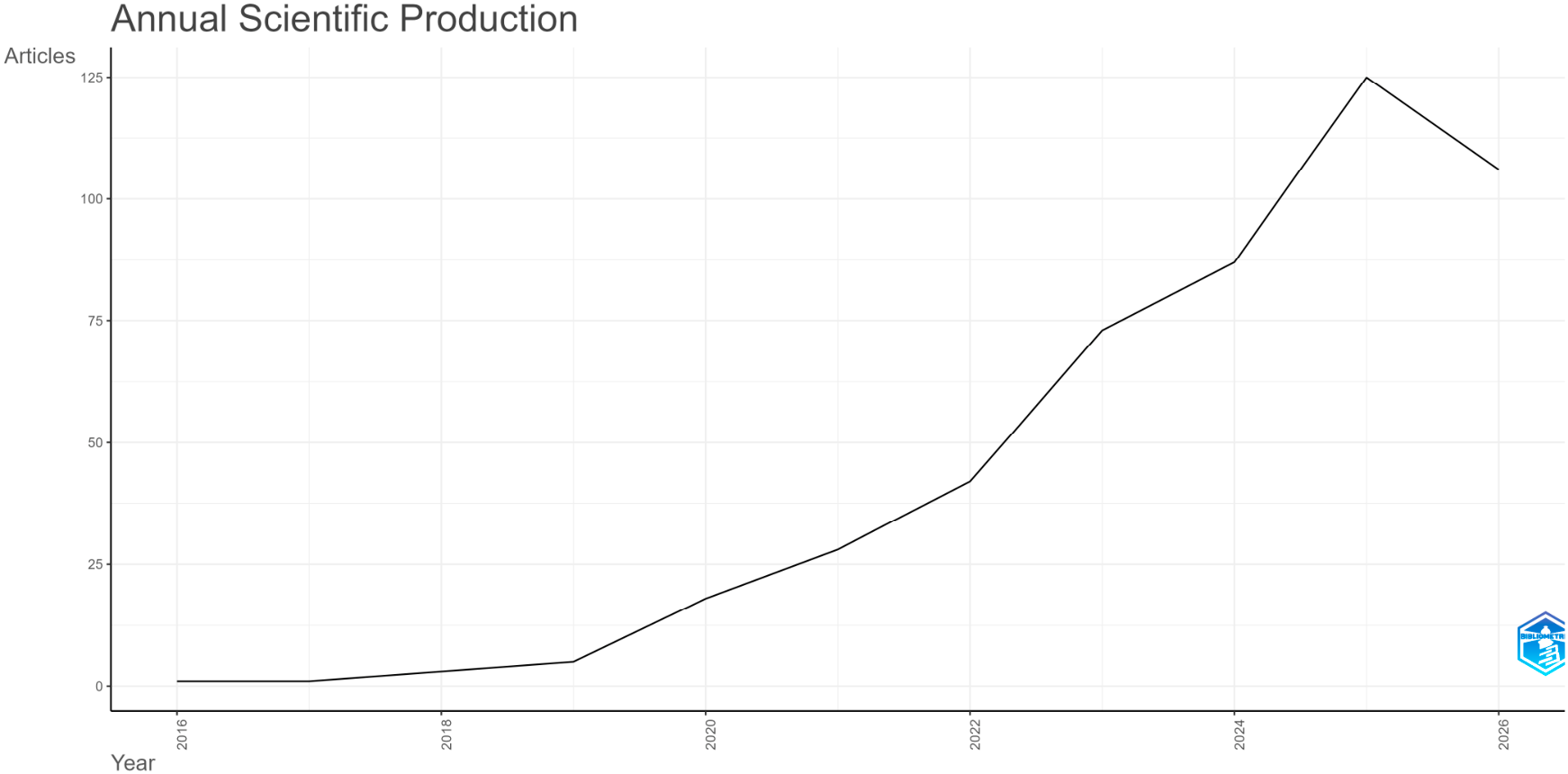
Figure 1 shows the annual evolution of the corpus. The temporal pattern is one of the clearest bibliometric findings. The field was very small before 2020, with only a few publications per year. From 2020 onward, credibility-related green-bond research expanded rapidly. Annual output increased from 16 documents in 2020 to 37 in 2022, 68 in 2023, 82 in 2024 and 122 in 2025. The 2026 count should be interpreted cautiously: it represents only a partial year.
This growth pattern is important for the argument of the article. It suggests that green bonds have moved from being studied primarily as a new sustainable-finance instrument to being analysed as a credibility-sensitive financial product. Earlier work focused strongly on whether investors accept lower yields for green bonds, the so-called greenium, and whether green bonds differ from conventional bonds in pricing, liquidity or investor response [
4,
5]. More recent research has expanded this agenda toward disclosure, greenwashing, external review, certification, environmental performance, regulatory taxonomies and market-development barriers [
2,
3]. The rapid expansion shown in
Figure 1 therefore supports the need for synthesis: the field has grown quickly, but it has also diversified into multiple partially connected debates.
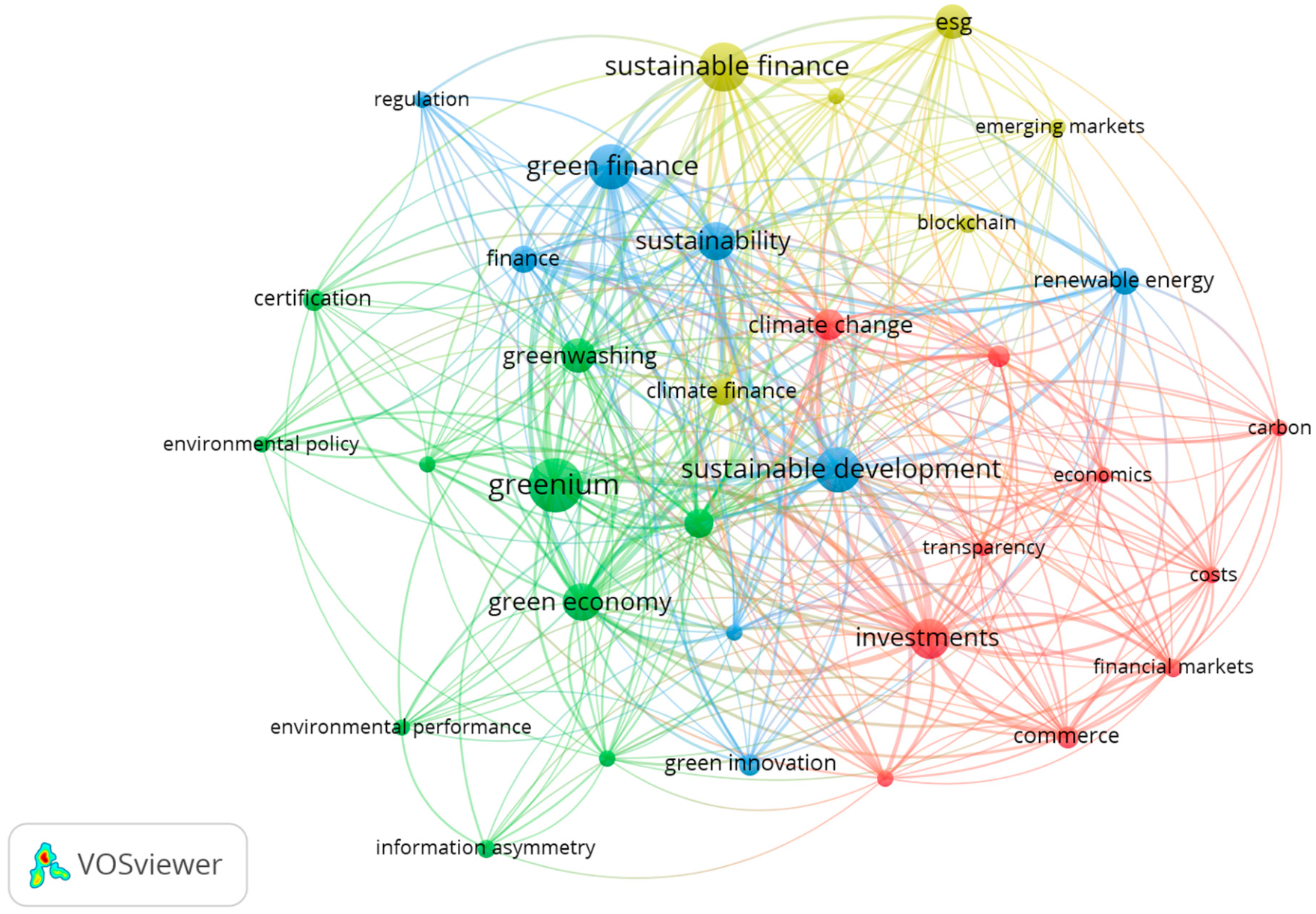
Figure 2 presents the keyword co-occurrence network for the corpus after synonym harmonisation, using a minimum keyword occurrence threshold of eight to retain the most substantively connected terms. The map should be interpreted as exploratory evidence of thematic structure, not as a complete representation of the intellectual organisation of the field.
At this threshold, the network resolves into four colour-coded clusters. The green cluster, centred on greenium, greenwashing, certification, environmental performance and information asymmetry, is the most directly relevant because it connects pricing, assurance and greenwashing concerns. Other clusters situate green bonds within broader sustainable-finance, ESG, investment-market and climate-finance debates. Taken together, the clusters indicate that green-bond research has become thematically diversified, while the mechanisms most relevant to credibility architecture remain distributed across pricing, assurance, disclosure, regulation and environmental-performance debates.
The position of greenwashing alongside greenium, certification, environmental performance and information asymmetry shows that greenwashing is not peripheral. It appears close to the pricing and assurance vocabulary of the field, which is precisely the intersection addressed in this article. Similarly, the proximity of certification and information asymmetry indicates that external assurance is understood as a mechanism for reducing investor uncertainty, although its institutional depth has not been systematically compared across frameworks in the way this article attempts.
One visible limitation of the map is that several terms central to this article—external review, additionality, refinancing, supervision and taxonomy—do not appear as dominant nodes. This does not mean that they are absent from the corpus. Rather, they function as specialised vocabulary within subsets of the literature. Their relative absence supports the view that the literature has examined components of credibility, but has less systematically integrated them into a comparative analysis of credibility architectures.
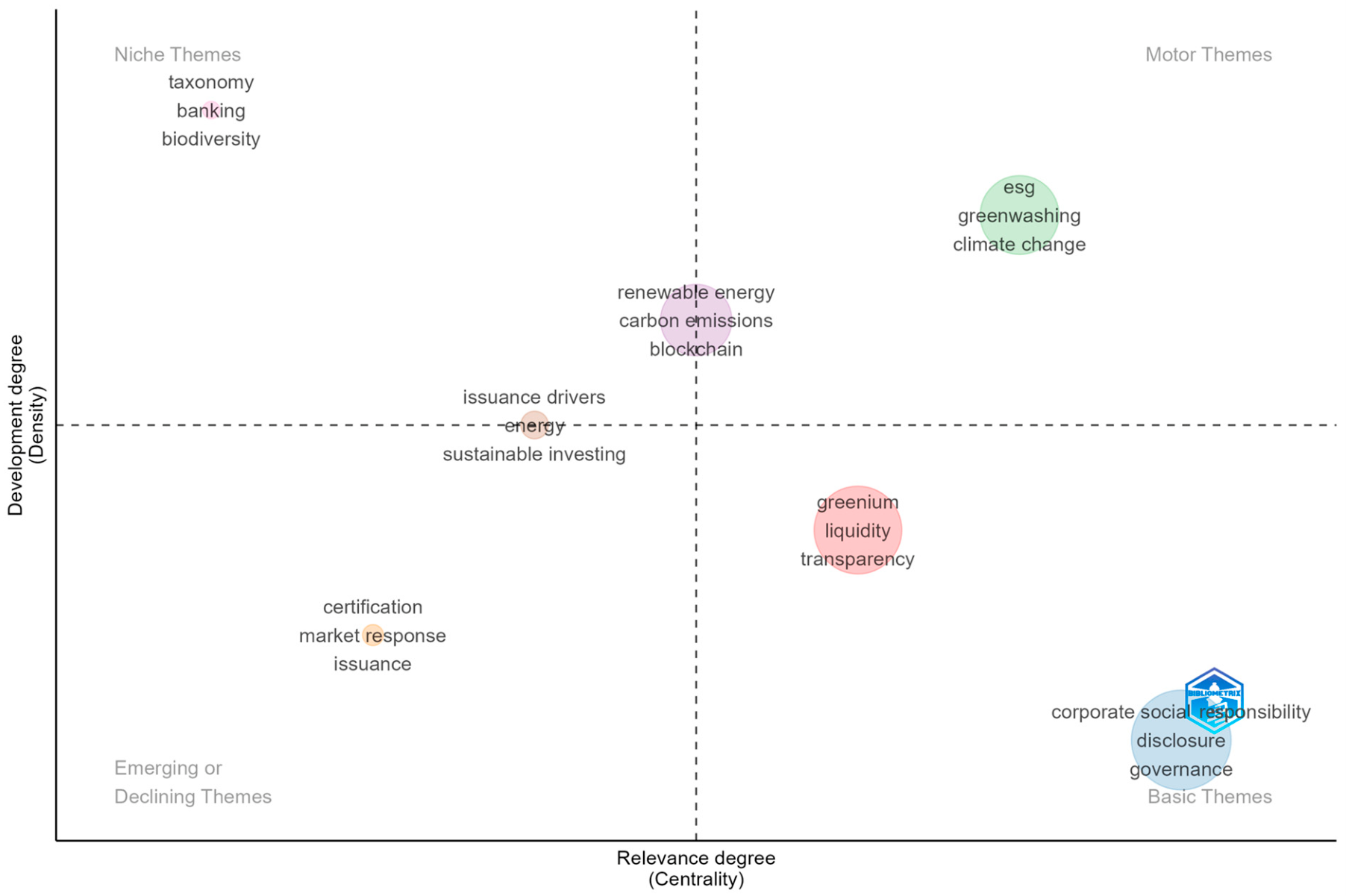
Figure 3 complements the co-occurrence network by positioning keyword clusters according to centrality and density [
37]. It is interpreted only as a diagnostic map of thematic structure, not as a ranking of importance.
The thematic map reinforces the same conclusion. ESG, greenwashing and climate change appear as Motor Themes, while greenium, liquidity and transparency appear as Basic Themes. Taxonomy-related terms are more specialised and less connected to the rest of the field. This pattern supports the article’s positioning: credibility concerns are central, but the mechanisms that produce credibility have not yet been integrated into a framework-level comparative analysis.
4.2. Geographic Positioning as Institutional Context
The geographic distribution of the literature also matters because different regions tend to function as empirical settings for different credibility concerns. China and Hong Kong are frequently associated with state support, greenwashing, regulatory arbitrage and environmental performance; Europe and the EU with transparency, taxonomy alignment and formal regulation; Asia and ASEAN with regional market development; and emerging markets with institutional constraints and market-formation barriers. A compact geographic synthesis is provided in
Supplementary Table S1. In the main text, the implication is that credibility architecture is not only a technical design issue; it is also shaped by institutional context and market maturity.
4.3. Scoping Synthesis: From Credibility Dimensions to Credibility Architectures
The bibliometric maps show that green-bond research has diversified across pricing, sustainability, disclosure, greenwashing, assurance and environmental-performance debates. However, they do not by themselves explain how these debates relate to the credibility problem addressed in this article.
Table 2 synthesises the main credibility dimensions identified through the scoping reading and shows how they motivate the comparative framework analysis.
The bibliometric maps identify the main thematic areas of green-bond research, but a scoping reading of representative papers shows a deeper pattern. The literature has progressively decomposed green-bond credibility into several distinct dimensions: market credibility, informational credibility, assurance credibility, regulatory credibility, impact credibility and institutional credibility. Each dimension explains one part of how the green label becomes valuable, interpretable and trustworthy. However, each dimension also leaves an unresolved tension. The result is a literature that has become increasingly sophisticated in studying the components of credibility, but less explicit in explaining how these components are combined within different green-bond frameworks.
The first dimension is market credibility. The greenium literature asks whether investors assign a monetary value to the green label. This stream is important because it shows that green bonds are not only sustainable-finance instruments, but also labelled financial products that may be differentiated in capital markets. Several studies find a modest yield discount for green bonds, although the magnitude varies across samples, issuers, markets and methodologies [
2,
6,
7]. At the same time, strict matching approaches show that the greenium can become economically small or disappear when green and conventional bonds are made comparable in terms of risk and payoffs, especially in efficient municipal-bond settings [
5]. This mixed evidence should not be read simply as inconsistency. Rather, it reveals the nature of the greenium itself: it is not a direct measure of environmental impact, but a market valuation of a label whose credibility depends on issuer characteristics, investor demand, scarcity, information quality and institutional context.
This distinction matters for the present article. A greenium may indicate that investors value green-labelled instruments, but it does not demonstrate why a particular label is trusted, whether proceeds are allocated to genuinely green projects, or whether the financed activity is environmentally additional. The greenium therefore captures the marketability of the label more directly than its environmental effectiveness. In product-market terms, it shows that the label can generate financial differentiation, but it does not explain the institutional architecture that makes the label credible. Pricing evidence is therefore necessary for understanding green-bond markets, but insufficient for understanding green-bond credibility.
The scoping reading shows that the literature has decomposed green-bond credibility into several dimensions: market credibility, informational credibility, assurance credibility, regulatory credibility, impact credibility and institutional credibility. Each dimension explains one part of how the green label becomes valuable, interpretable and trustworthy, but each also leaves an unresolved tension.
Pricing studies show whether the label is valued by markets; disclosure studies show how information asymmetry is reduced or reproduced; greenwashing studies show how the label can fail as a quality signal; assurance studies show how external verification can strengthen perceived trust; regulatory studies show how standards stabilise eligibility; environmental-performance studies show the limits of procedural credibility; and institutional studies show that market context affects viability.
The synthesis therefore leads to an operational definition of green-bond credibility architecture as the institutional arrangement through which a framework connects eligibility rules, disclosure obligations, external review, supervision or enforcement, refinancing transparency and safeguards related to environmental additionality. The contribution is not to show that credibility matters; the literature already demonstrates that it does. The contribution is to examine how credibility is institutionally organised.
5. Results
5.1. Common Vocabulary
The comparative analysis shows that the green-bond frameworks examined in this study increasingly share a common product vocabulary. Across market-based standards, regulatory frameworks and sovereign issuer frameworks, green bonds are generally described through a similar set of elements: use of proceeds, project evaluation and selection, management of proceeds, reporting, and some form of external review or verification. These elements are especially visible in the ICMA Green Bond Principles, which have become the main voluntary reference point for green-bond market practice, but they also appear, with different degrees of legal force and institutionalisation, in the EU European Green Bond Standard, the Japan Green Bond Guidelines, the ASEAN Green Bond Standards, China’s Green Bond Principles and Catalogue, and the sovereign frameworks of India and China [
38,
39,
40,
41,
42,
43,
44,
45].
However, convergence in vocabulary does not imply convergence in credibility. The same terms often refer to very different institutional arrangements. For example, external review may refer to a mandatory and supervised pre-issuance review, a recommended second-party opinion, a voluntary market practice, or an issuer-level verification process. Similarly, reporting may be embedded in a legally enforceable disclosure regime, in a voluntary market standard, or in a sovereign budget-accountability framework. As shown in
Table 3 and
Table 4, green bonds may therefore look similar to labelled financial products while relying on substantially different credibility infrastructures.
This distinction is central to understanding green bonds as marketable sustainable financial products. The green label does not operate as a homogeneous signal. Its credibility depends on the institutional architecture that supports it: whether the use of proceeds is linked to a taxonomy or eligibility catalogue, whether external review is required or merely recommended, whether reviewers are supervised, whether refinancing is transparently disclosed, and whether environmental additionality is addressed beyond procedural eligibility. These mechanisms shape the extent to which investors can interpret the green label as a credible signal rather than as a broad sustainability claim.
The results therefore suggest a distinction between product grammar and credibility architecture. Product grammar refers to the common language through which green bonds are described and marketed: proceeds, eligible projects, impact, reporting and review. Credibility architecture refers to the institutional mechanisms that make those claims more or less verifiable, enforceable and informative for investors. The frameworks analysed in this study converge strongly in the former, but diverge substantially in the latter.
This divergence is also reflected in the two-panel structure of the analysis. Panel A includes market-governance frameworks: the EU European Green Bond Standard, ICMA Green Bond Principles, Japan Green Bond Guidelines, ASEAN Green Bond Standards and China’s catalogue-plus-principles framework. These frameworks shape credibility at the level of market rules, voluntary standards, eligibility definitions or regulatory labels. Panel B includes sovereign issuer frameworks: India’s Sovereign Green Bond Framework and China’s Sovereign Green Bond Framework 2025. In these cases, credibility is produced less through market-wide regulation and more through public-expenditure governance, eligible-expenditure lists, internal registers, reporting commitments and post-issuance verification.
The key finding is that green-bond markets are becoming more standardised in language but not necessarily more uniform in signal quality. For issuers and financial intermediaries, this means that the marketability of a green bond depends not only on its financial characteristics or on the presence of a green label, but also on the credibility architecture behind that label. For investors, it implies that green bonds cannot be treated as a homogeneous product category. Similar labels may embed different levels of assurance, accountability, transparency and protection against greenwashing.
Table 3 maps the framework elements against the credibility question each raises and its significance for green financial products, while
Table 4 reports the four credibility mechanisms in detail: external review (
Section 5.2), supervision and sanctions (
Section 5.3), refinancing governance (
Section 5.4), and environmental additionality (
Section 5.5).
Section 5.6 synthesises these findings into a typology of green-bond credibility models.
5.2. External Review
External review is present in all frameworks, but its institutional meaning differs substantially. The strongest divergence concerns whether review is simply encouraged as a market practice or embedded in a legal or sovereign-governance architecture. The EU European Green Bond Standard is coded High because external review is mandatory for key EuGB documents and external reviewers are subject to registration and supervision. China’s Sovereign Green Bond Framework 2025 is also coded High because it combines second-party opinions with annual external verification in a sovereign framework.
The ICMA, Japan, ASEAN, China catalogue-plus-principles and India sovereign frameworks are coded Medium, but for different reasons. ICMA relies on voluntary market expectations; Japan provides detailed reviewer-conduct guidance; ASEAN requires disclosure of reviewer expertise when review is used; China’s general framework encourages third-party evaluation and verification; and India embeds assurance in sovereign allocation and post-issuance reporting. These differences show that “external review” is not a homogeneous product attribute.
For investors, the relevant question is therefore not only whether a bond has been externally reviewed, but what the review covers, when it occurs, who performs it and whether it is supported by supervision or accountability. External review reduces information asymmetry only to the extent that its scope, independence and institutional embedding are clear.
5.3. Supervision and Signal Credibility
Supervision is the mechanism in which the frameworks diverge most sharply. The EU European Green Bond Standard is coded High because it links use of the EuGB label to a dedicated public-law architecture, including external-reviewer registration, supervision and sanctions. In this model, the green label becomes more than a voluntary communication device: it is backed by public institutions and enforcement mechanisms.
Most other market-governance frameworks rely on weaker forms of supervision. ICMA and ASEAN are coded Low because they depend mainly on voluntary compliance, reputation and investor due diligence. Japan is also coded Low because its guidelines are technically detailed but not supported by a dedicated sanctions regime. China’s catalogue-plus-principles framework and the sovereign frameworks are coded Medium because credibility is supported by state-linked oversight, regulatory governance or public-budget accountability rather than by a dedicated market-wide green-label enforcement regime.
The result is not a simple hierarchy of good and bad frameworks. Rather, it shows that supervision changes the type of credibility being produced: legal-supervisory credibility in the EU case, reputational credibility in voluntary standards, state-linked eligibility credibility in China’s general framework and sovereign-budget credibility in India and China’s sovereign frameworks.
5.4. Refinancing Transparency
Refinancing governance is a neglected but important product-quality signal. A green bond may finance new environmental projects, refinance existing assets, repay prior debt or reimburse past public expenditures. These uses may all be compatible with a green-bond framework, but they do not communicate the same additionality proposition.
The EU, Japan and China’s Sovereign Green Bond Framework 2025 are coded High because they provide comparatively stronger refinancing governance. The EU framework links proceeds to taxonomy-aligned allocation and reporting and includes timing constraints for certain expenditures. Japan explicitly recognises that refinancing existing green projects differs from financing new projects in terms of additionality. China’s sovereign framework combines fiscal-year windows, current and future expenditure requirements and double-financing exclusions.
ICMA, ASEAN and India are coded Medium because they recognise refinancing and provide disclosure expectations, tracking mechanisms or budgetary controls, but without strong timing, share or anti-double-financing rules. China’s general catalogue-plus-principles framework is coded Low because it permits refinancing and debt repayment but provides limited dedicated transparency on refinancing share, timing, project age or additionality implications. The main implication is that refinancing disclosure helps prevent overinterpretation of the green label.
5.5. Environmental Additionality
Environmental additionality is the weakest and least institutionalised mechanism across the frameworks analysed. No framework imposes a binding counterfactual additionality test or a minimum new-activity threshold. For this reason, no framework receives a High code on this mechanism. This result marks the boundary between procedural credibility and substantive environmental contribution.
Most frameworks rely primarily on eligibility, allocation reporting and impact reporting. These mechanisms can show that proceeds are assigned to environmentally beneficial categories, but they do not demonstrate that the activity would not have occurred without the bond. ICMA, ASEAN, China’s general framework and India’s sovereign framework are therefore coded Low for additionality. They improve transparency and label clarity, but do not require counterfactual evidence of incremental environmental benefit.
Japan and China’s Sovereign Green Bond Framework 2025 are coded Medium because they include additionality-adjacent safeguards. Japan explicitly distinguishes the additionality profile of refinancing from new financing. China’s sovereign framework includes fiscal-year refinancing windows, current and future expenditure allocation and double-financing exclusions. These provisions strengthen the credibility of additionality-related claims, but they still do not amount to a binding counterfactual additionality test.
The cross-framework pattern is therefore clear: green-bond frameworks are increasingly sophisticated at regulating eligibility, reporting, review, supervision and refinancing transparency, but they remain much weaker at proving incremental environmental impact. Investors and intermediaries should distinguish three claims: the bond is eligible under a framework; the allocation and reporting are verified; and the financed activity is environmentally additional. Current frameworks generally support the first two claims more strongly than the third.
5.6. Typology of Green-Bond Credibility Models
The preceding subsections show that green-bond credibility is not produced through a single institutional model.
Table 5 synthesises these differences into a typology of green-bond credibility models. The typology should not be read as a ranking of environmental quality. Rather, it identifies the main institutional logic through which each framework attempts to make the green label more informative, verifiable and marketable.
The typology distinguishes regulated credibility (EU), market-reputation credibility (ICMA), technical soft-law credibility (Japan), regional-label credibility (ASEAN), state-linked eligibility credibility (China’s catalogue-plus-principles framework) and sovereign-budget credibility (India and China 2025). These models clarify why green bonds should not be treated as a homogeneous product category simply because they share a green label.
Different credibility models imply different due-diligence needs. A regulated label may reduce procedural uncertainty, while a voluntary standard requires closer attention to issuer reputation, external-review quality and post-issuance reporting. A sovereign framework requires attention to budgetary governance, expenditure tracking and refinancing rules. A catalogue-based model requires attention to eligibility definitions and their relationship to additionality.
The typology closes the results section by clarifying the central contribution of the analysis. Green-bond frameworks are converging as a product category, but remain institutionally heterogeneous as credibility systems. This distinction matters for issuers designing green financial products, intermediaries marketing them and investors assessing their sustainability claims.
6. Discussion
This discussion interprets the combined bibliometric, scoping and comparative findings. The bibliometric positioning showed that green-bond research has expanded rapidly across pricing, disclosure, greenwashing, certification, regulation and environmental-performance debates. The scoping synthesis showed that these debates identify the building blocks of credibility. The comparative analysis adds the institutional step: it shows how frameworks combine those building blocks into different credibility architectures.
6.1. Label Heterogeneity and Institutional Design
The first implication is that green bonds should not be treated as a homogeneous asset class. The same green label may be supported by a legally supervised framework, a voluntary market principle, a technically detailed soft-law guideline, a regional standard, a state-linked eligibility catalogue or a sovereign-budget framework. These are different credibility systems, not minor variations in the same product.
This heterogeneity helps explain why empirical evidence on greenium, liquidity or investor response is context-dependent [
2,
4,
5,
6,
7]. If green bonds embed different credibility architectures, markets should not be expected to price all labels equally. Future empirical work should therefore move beyond binary green-versus-conventional classifications and incorporate framework-level features such as supervised review, refinancing disclosure, post-issuance verification and additionality safeguards.
The same logic also extends beyond formal rules and issuer disclosure. Reputable underwriters, external reviewers, rating agencies, index providers, media actors and short sellers may validate, intermediate or challenge the green label [
49,
50,
51]. Green-bond credibility is therefore a multi-actor institutional outcome: formal frameworks matter, but their credibility is also tested by market intermediaries and sceptical monitoring.
For emerging and developing markets, this point is especially important. Credibility architecture is not merely a technical compliance issue, but part of market formation: weaker disclosure infrastructure, limited reviewer capacity, higher transaction costs and lower investor familiarity may make the green label less credible even when formal eligibility rules exist. Sovereign issuers face related challenges because investors must interpret the label through budgetary procedures, public-expenditure controls and policy continuity rather than market-wide enforcement alone.
6.2. External Review and Procedural Credibility
The second implication concerns external review. The results show that external review is not a binary product attribute. It can be mandatory or voluntary, supervised or reputational, pre-issuance or post-issuance, focused on framework alignment or allocation, linked to market discipline or embedded in sovereign accountability. Product documentation should therefore specify what was reviewed, by whom, when, against which criteria and with what consequences.
This distinction matters because regulation is generally better at strengthening procedural credibility than proving environmental additionality. Clear eligibility rules, allocation reporting, external review and supervision reduce ambiguity and greenwashing risk. They make the product more transparent, comparable and auditable. However, a taxonomy-aligned, reviewed and reported bond may still finance activities that would have occurred without the bond, refinance existing assets or support expenditures already planned in public budgets. Eligibility is not additionality; allocation is not impact; verification is not transformation.
Environmental-performance evidence reinforces this distinction. Some studies associate green bonds with improved environmental performance or lower emissions [
1,
14], whereas others question whether green-bond issuers consistently outperform comparable conventional issuers or whether reported environmental claims fully reflect realised impact [
15,
16,
17]. The problem is not only empirical uncertainty, but also measurement architecture: impact estimates often depend on issuer-specific baselines, system boundaries, counterfactual scenarios and asset-life assumptions. Life-cycle assessment and standardised greenhouse-gas accounting can strengthen impact credibility, but they are not yet consistently embedded across frameworks [
17,
52,
53].
For investors and intermediaries, due diligence should therefore move beyond the presence of a green label or external review. It should examine whether review is embedded in a framework that also structures supervision, refinancing transparency and post-issuance accountability. For regulators, the priority is to clarify the strength and limits of the claims supported by each label.
6.3. Additionality, Claim Differentiation and Adaptive Credibility
The strongest unresolved challenge is environmental additionality. The market can move beyond procedural credibility only if frameworks and product documentation distinguish weaker claims from stronger ones. A practical additionality assessment should examine the financing/refinancing share, look-back period, asset age and remaining useful life, project status before issuance, counterfactual baseline, double-financing safeguards, impact-measurement quality and explicit claim differentiation.
Supplementary Table S2 summarises these criteria.
Refinancing governance is central to this assessment. A short and transparent look-back period, disclosure of refinancing share, information on asset age and remaining useful life, and exclusions of double financing do not prove additionality by themselves. However, they reduce the risk that procedurally credible bonds are interpreted as financing new environmental activity when they mainly refinance past or already planned expenditures. The policy priority is therefore not to require every green bond to prove transformative impact, but to prevent the strongest environmental claims from being attached to frameworks that support only procedural credibility.
Sovereign issuers require particular care. Their credibility architectures do not operate through the same channels as market-governance frameworks. They rely on public-budget governance, eligible-expenditure lists, internal committees, proceeds tracking and sovereign reporting. For this reason, sovereign frameworks should make especially clear whether proceeds finance current and future expenditures, refinance prior expenditure or reimburse already planned budgetary activity.
More broadly, credibility architectures should be understood as adaptive institutional arrangements. Their robustness depends not only on verifying current compliance, but also on anticipating evolving regulatory expectations, technological infrastructures, transition risks and social concerns associated with sustainable finance [
54]. This adaptive view supports the central implication of the article: credible green finance begins where the boundaries of the green label are made explicit.
7. Conclusions
Green bonds have become visible instruments of sustainable finance and the green transition, but their credibility cannot be inferred from the green label alone. This article has argued that green bonds should be understood as labelled financial products whose marketability depends on the institutional architecture supporting the label. The central finding is that frameworks converge in product grammar but diverge in credibility architecture: similar terms such as use of proceeds, reporting, impact and external review are embedded in different legal, supervisory, reputational, state-linked or sovereign-budget arrangements.
The article contributes by connecting previously separate strands of green-bond research—greenium, disclosure, assurance, greenwashing, regulation, refinancing and environmental performance—to the institutional design of frameworks. The concept of credibility architecture clarifies how frameworks organise eligibility, disclosure, external review, supervision, refinancing transparency and additionality safeguards. It also clarifies why the most important distinction is not simply voluntary versus mandatory standards, but whether frameworks make the label procedurally verifiable and whether they also support stronger claims about environmental additionality.
The main implication is that green-bond markets are becoming more verifiable, but not necessarily more additional. This does not mean that green bonds are ineffective or purely symbolic. It means that current frameworks are generally better designed to make green claims traceable, comparable and reviewable than to demonstrate that financed activities would not have occurred otherwise. Investors should therefore examine the architecture behind the label; issuers and intermediaries should distinguish eligibility, allocation, verification, impact and environmental additionality; and regulators should clarify the strength and limits of the claims that each label supports.
The article has limitations. It analyses formal frameworks rather than bond-level implementation, pricing outcomes or realised environmental performance. The High/Medium/Low coding captures institutional intensity, not environmental quality or actual impact, and involves interpretive judgement even though the coding was reviewed by the author team and anchored in primary documents. The comparison is also a snapshot of a rapidly evolving regulatory field and does not include bond-level evidence on investor interpretation, greenium or environmental outcomes.
Future research should test whether different credibility architectures affect greenium, liquidity, investor demand, greenwashing risk and environmental outcomes. Empirical studies could move beyond binary classifications of green versus conventional bonds and incorporate framework-level features such as supervised external review, refinancing disclosure, post-issuance verification and additionality safeguards.
Future research could also extend the framework to intermediaries, digital reporting infrastructures, AI-assisted greenwashing detection, taxonomy interoperability and social safeguards. This article has focused on the environmental credibility of green-bond labels, but that boundary should not imply that social and rights-based issues are secondary. A green financial product may become procedurally credible from an environmental perspective while remaining normatively fragile if the projects it finances generate social harms, weaken community rights or disconnect climate objectives from human-rights considerations [
55].
Ultimately, the relevance of green bonds for the green transition will depend less on the diffusion of the label than on the credibility architecture behind it. A larger market can improve visibility, comparability and investor participation, but market growth alone cannot guarantee environmental contribution. Credible green finance begins where the boundaries of the green label are made explicit: what is eligible, what is verified, what is supervised, how refinancing is disclosed and when additionality is actually supported.




 ,
,